February College Search Guide

Originally published on 1 February 2021 in the Pasadena Independent, Arcadia Weekly, and Monrovia Weekly
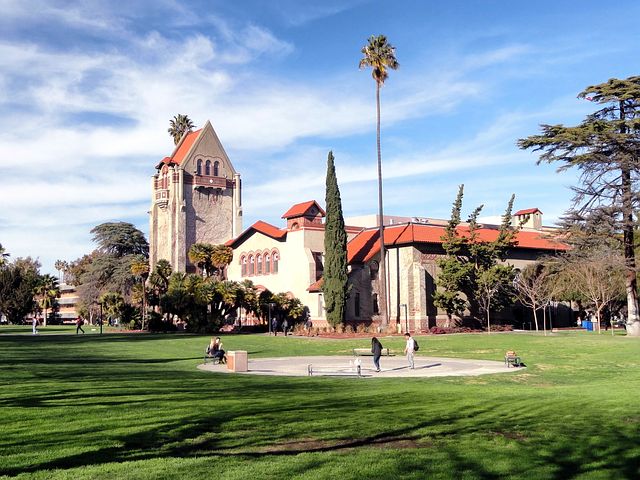
San Jose State University | Courtesy Photo

The road to college

It’s been 13 months since the first signs of coronavirus in the United States were reported. To date, there have been more than 25.45 million cases of infection and over 425,000 deaths, with January being the pandemic’s deadliest month. While the Moderna and Pfizer vaccines are now available, getting most of the population vaccinated is still several months ahead.            

Students have been learning remotely beginning last spring; teachers have never been busier  preparing for the day’s lessons and trying to engage distracted learners during virtual class; and parents are struggling to keep their job and helping their young kids keep up with school work all at once.

In an effort to get students back on campus, Gov. Newsom unveiled last month a $2-billion plan called ‘Safe Schools for All.’ However, it wasn’t ratified by the California Legislature. In an L.A. Times article on January 24, John Myers wrote that the mechanics of the proposal weren’t the only challenge. Education advocates argued that most of the funds would have been used to provide COVID-19 testing for staff and students instead of going towards educational and social-emotional services to benefit students. Several school districts are going their own way in deciding when and how to open their campus safely.

There are several tutoring services available if you and your children require help with school work. Find one which offers options that fit your children’s specific need and your family’s budget. A company called Mundo Academy provides excellent tutoring services in the Pasadena and San Gabriel Valley area. Likewise, some high school and college students have created free tutoring services and learning platforms to help children during the coronavirus pandemic. Two of these organizations include Sailors Learning and Wave Learning Festival.                     
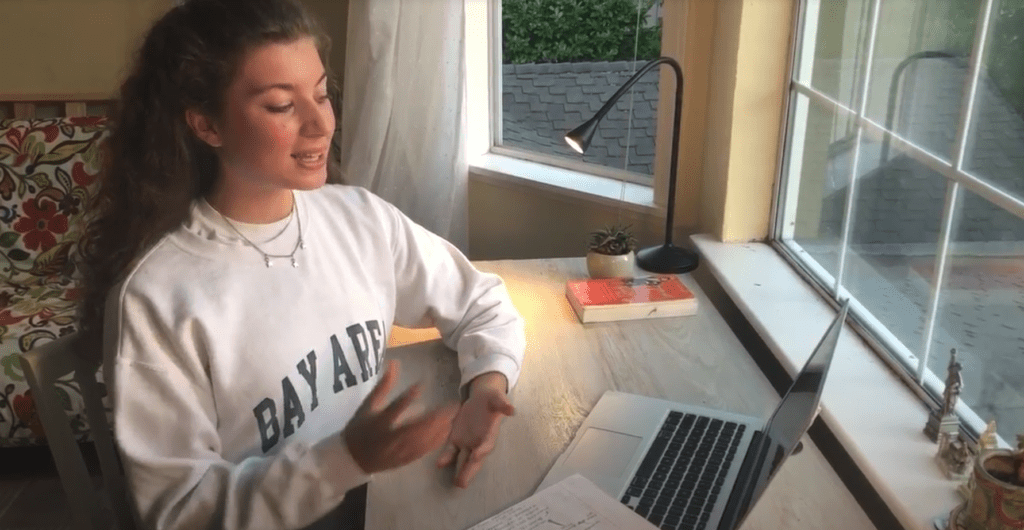
Photo courtesy of Wave Learning Festival

If you’re exhausted, as most of us are at this time, please reach out for assistance. The CDC has put together a resource kit for parents, divided by age group, to help them ensure their children’s well-being. The site also has links to other resources that cover various concerns. Another CDC website is dedicated to helping parents manage stress during the coronavirus pandemic.           

Meanwhile, COVID-19 has resulted in changes to the college application process. The biggest upheaval was doing away with standardized testing for this cycle. Ivy schools received an unprecedented number of applications because of this, and will be delaying sending out acceptances to process them. The College Board had to cancel multiple rounds of testing last year, which meant a significant revenue loss. This week, it announced the elimination of the SAT subject tests and essay. It added that APs – which are widely available – showcase students’  knowledge, and there are other ways students can demonstrate writing ability. But even before the pandemic, many universities were no longer requiring SAT and ACT scores as part of college applications; scrapping standardized testing altogether might not be far behind. The coronavirus could only hasten the inevitable.      

FRESHMAN

Your children are well into the second semester of 9th grade and are now fully engaged in the academic life at their school. With grades as the only benchmark for an applicant’s merit for  acceptance, the student’s GPA is the single most important component of their college application. If their first semester marks need improvement, now is the time to turn things around.

Admissions officers will not expect your children to have extra-curricular activities during the  coronavirus pandemic. However, they will be interested to know how students spent their time outside of remote learning. Encourage your children to find virtual volunteer work or earn online certificates to put on their curriculum vitae. Hopefully, this time next year we’ll have some normalcy in our lives and students can resume some of the activities they have put on hold.              

SOPHOMORE

Your children need to really understand and learn the courses they’re taking so that the final grades on their transcript are the best they could earn. The schools they will be applying to will only see the grades in their three years in high school. If their first semester grades weren’t stellar, they need to improve this semester. They need to ‘meet’ with their grade class dean to make sure their grades and courses are on the right track for graduation. While the SAT and ACT are no longer required by universities, AP scores are still being used as a gauge of college-readiness and your children should register for the tests (www.collegeboard.com; http://www.act.org).

JUNIOR

I cannot emphasize this enough – junior year is the last complete year that college admissions officers will be looking at when your children send their application. They need to maintain their good grades and the pursuits that replaced their extra-curricular activities. If they had good study habits back in 9th grade and have established a routine, they shouldn’t be feeling overwhelmed right now.    

For most students, meeting frequently with their school’s counselors isn’t always a possibility. In some high schools where there are as many as 400 seniors to four full-time counselors, a junior may not even get any face-to-face time with a counselor. This puts the onus on your children to be very resourceful, take the initiative in gathering their research material, and plan their course of action as they embark on the college application process. This was a pre-pandemic fact that has become all the more glaring with COVID-19. Seek the services of an independent counselor if you need help.      

Meanwhile, as the parent of a junior, you should also make sure your child is on track – has taken all the courses the high school requires for graduation and is taking all the courses to complete the UC and Cal State requirements.                

You and your children should do a virtual college tour. They might also want to make a phone call or have a Zoom chat with a current student to learn more about the school. More often than not, current college students and alums are happy to talk about their alma mater.    

SENIOR

Your children should not take for granted that they are all done with schoolwork because they have sent in their college application. Don’t let them succumb to ‘senioritis’ – they still have to submit their final transcript. Unlike last school year when teachers cut students a lot of slack because of the pandemic, they are more strict now that everyone has settled to the ‘new normal.’ Universities can rescind their acceptance if admissions officers see a drastic drop in the student’s grades. In fact, a single lower mark can trigger some questions. Moreover, third quarter grades are critical in case they are waitlisted. And, in the unfortunate event they realize the school they were accepted to isn’t the right fit for them, senior-year grades will be crucial if they decide to apply for a transfer.

Additionally, seniors need to be mindful of their social activities. Schools are tech-savvy – they check social media profiles of students they have accepted and can rescind that offer if they find unacceptable behavior. Your children should be mindful of what may end up online.         

If your children have received new awards or commendations, or have accomplished something significant since they sent in their college application, they should email this important update to the admissions officer or the area representative of the school they applied to.

Your children should confirm with the colleges to make sure they have all the documents they require. They should continue applying for scholarships (www.scholarships.com; www.collegexpress.com; www.scholarships360.org, www.fastweb.com,

www.studentaid.ed.gov, http://www.affordablecollegesonline.org/graduating-debt-free) and getting their FAFSA (www.fafsa.ed.gov) ready for submission.

The months following the end of the college application process are usually as anxiety-ridden for seniors as well as parents. While everyone has breathed a sigh of relief that the mad rush is over, the waiting period is just as nerve-wracking. In the next few weeks, some college decisions will be trickling in.

Remind your children to be careful how they share their good news as their friends might be getting some bad news at the same time. If they have been accepted to their ‘safety school’ but aren’t planning on attending it, they should resist the urge to boast about it as it might be someone else’s ‘dream school.’

Most of all, your children need to be patient – the answer will eventually arrive and nothing can hurry it up. Colleges notify at different times and in different ways. They shouldn’t read into the timing of the decision letters; their friends getting good news early doesn’t necessarily mean a bad outcome for them.       

‘Sailors Learning’ Tutors Free of Charge

Originally published on 16 July 2020 in the Pasadena Independent, Arcadia Weekly, and Monrovia Weekly

| Courtesy photo

Remote learning became the default method of delivering teaching when the coronavirus lockdown was enforced in mid-March. Students, who thought this was a short-term measure, were all excited to get an extended spring break. It was cause for celebration!  

However, that thrill wore off as the reality of studying from home for an extended period of time became apparent – they missed social interaction with friends, guidance from teachers, and support from school administrators. It also brought to light a very basic problem – students were having a hard time keeping up with their classwork.

Monish Muralicharan, 14 years old, Sanjay Adhikesaven, and Abyan Das, both 15-year-olds, who were then freshmen at Foothill High School in Pleasanton, were talking with a parent of an elementary schooler who found out that their child was having trouble grasping topics and adjusting to distance learning. That chance discovery mobilized them to take action – they were going to match these children with appropriate tutors and founded an organization called ‘Sailors Learning.’

Their mandate is to provide the service free of charge to make it accessible to parents of all backgrounds whose elementary- and middle-school children need a tutor. They ensure students are matched with tutors who fit their schedules, academic needs, and areas of struggle. Additionally, they offer extra-curricular classes to students interested in science, math, coding, and history.

While their parents are involved in a small capacity – re-sharing posts on Facebook and LinkedIn to spread the word – Monish, Sanjay, and Abyan claim joint ownership of ‘Sailors Learning.’ Via email, they relate whose brainchild it was and why they named it such.

Sanjay begins, “At the beginning of quarantine, we all were on a call and thought of providing tutoring. We understood we were struggling in distance learning so the struggles would be the same or even harder for elementary schoolers. We wanted to pick an interesting name, and we  thought ‘Sailors’ was a cool name because it also represents reaching new depths, which is what we want to do here at ‘Sailors Learning.’ At first, we had the idea for us to tutor children to help them out. However, we decided to make a platform to allow other students to also be tutors so we can help more people.”

“We are using tools such as Wix, Google Meets, Gmail and many other messaging sites,” Monish describes. “Since we are an online tutoring service, we use many different ways to communicate with our tutors and parents which is mostly email. We use Google Meets as our main platform for extracurricular classes. However, in one-on-one tutoring, the parent and tutor can choose to use other platforms such as Zoom. Wix has been a big part to our success as we use it to make a great website. A website is a core to having an online service and Wix has helped us make that possible.”

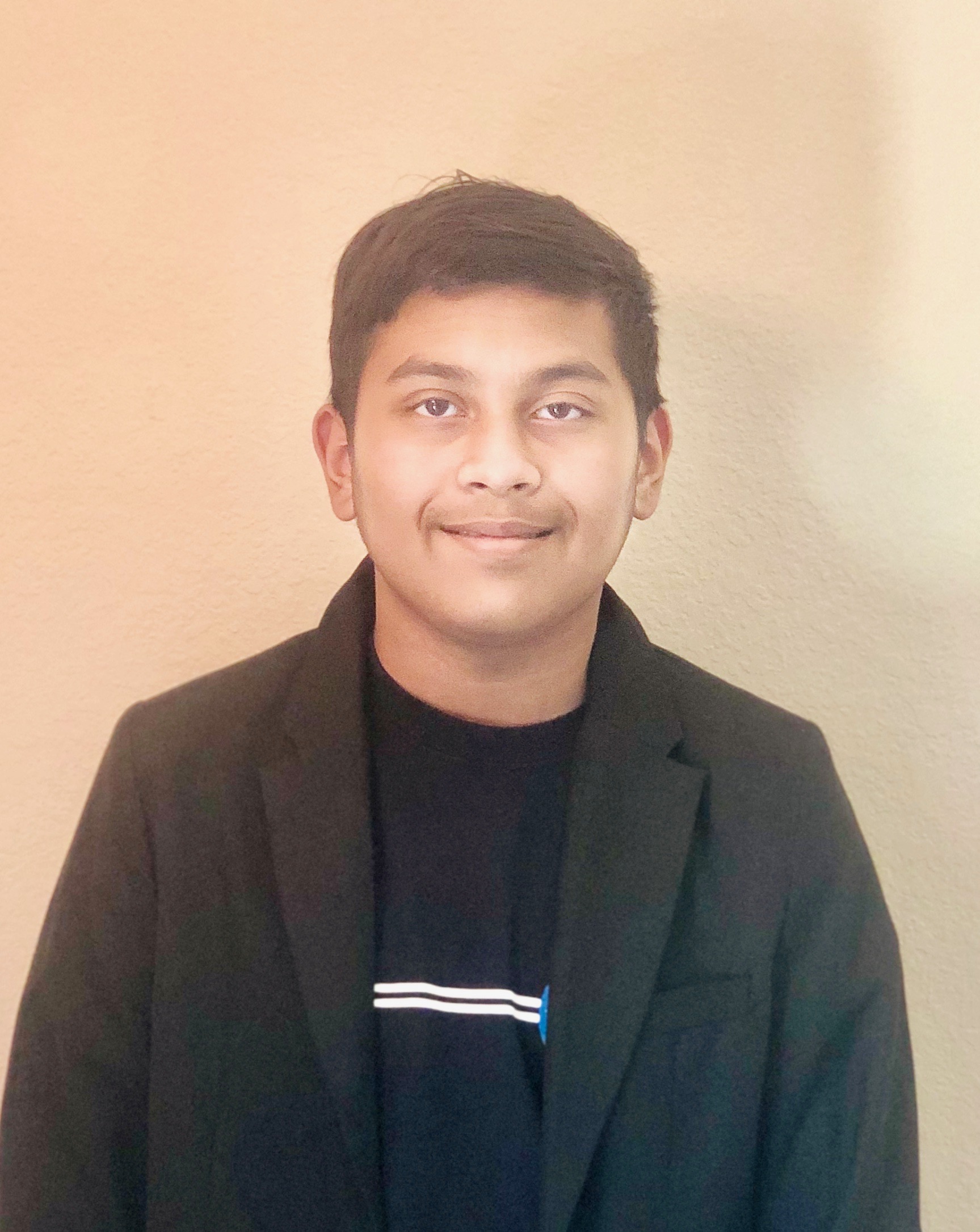
Monish Muralicharan | Courtesy photo / Sailors Learning

Continues Monish, “Currently, we do not have a supervisor because we wanted to have an independent nonprofit as high schoolers. As for curriculum, in our extracurricular classes we stray away from the common core and basic topics taught in school. Having a teacher will not help as they would be looking for school-related topics. The whole point of our group classes is to teach out of school subjects, that way the students who enroll are signing up for things they want to learn, not things they need for school. For our one-on-one tutoring service, the tutor helps the student with whatever they need, so the curriculum does not need to be supervised. As for the service itself, we only have qualified tutors – we have an interview process and we pick the best teachers. We have seen many other tutoring organizations where they accept anyone but we wanted our students to have the best quality learning. Finally, we pride ourselves on creating this nonprofit from the ground independently.”

And it was getting started that proved to be the greatest challenge. Monish discloses, “I believe that for most businesses, nonprofits, and companies that is the first step, and the same is true for ‘Sailors Learning.’ We had no previous experience running anything so we struggled at the start. But soon we split the work up into parts for each founder and we got going and led to the point where we are now.”

‘Sailors Learning’ currently has about 50 students and 17 tutors they found through word of mouth, Facebook, LinkedIn, and friends. They’re growing the tutor base and looking to expand it further as they plan on continuing to use their resources to help other children after remote learning is lifted. They are thinking of expanding to help high schoolers as well.

Abyan supplements, “We are a nonprofit organization so that means that tutors will receive volunteer hours. ‘Sailors Learning’ offers coding, science, three levels for math, history, a book club, and we are opening new classes for summer including engineering and a creative writing class.”

These ‘sailors’ are regular teenagers. Monish enjoys playing the clarinet, table tennis, chess,  video games, and participating in debate tournaments. In his free time, he plays games, watches TV, exercises, and listens to music.

Monish tutors coding on Fridays and science on Saturdays. He explains, “I love science because of the wide variety of subjects and learning about the world. I love coding because it is fun to type words and solve a problem or create a game. I allocate about two hours a day managing ‘Sailors Learning’ over my other commitments. For tutoring, I spend three to four hours a week creating content and teaching.

“We didn’t think about volunteer hours when we started ‘Sailors Learning’ – we just wanted to help children. That, for me, has been rewarding. First, I get to run a nonprofit with my friends and it has strengthened my relations with them. Second, I love to tutor children in specifically science and coding. Finally, the most important is how we all make a platform for not only children to learn but for tutors to teach.”                       

College isn’t too far off Monish’s mind – he’s aiming to get into either Berkeley, UCLA, or Stanford.

Sanjay Adhikesaven | Courtesy photo / Sailors Learning

Sanjay, like Monish, counts playing games and table tennis as his major interests. In his free time he goes on walks or participates in debate tournaments. He spends two to three hours a day working on the management part of the organization and about three hours a week tutoring and creating classes in coding and history.

Adding to what Monish mentioned, Sanjay says, “There were a few challenges that we encountered. First, there was the nonprofit application process, which was new to us since this was the first time we created a nonprofit. Second, we saw the problems that can arise, such as a tutor not being available and having to find a substitute.”

“I think ‘Sailors Learning’ has helped me in many ways. I developed better relationships with my friends. And while I like to tutor, I also enjoy making this platform for students and teachers, which can reach a much broader scope,” concludes Sanjay.

He plans to pursue something STEM-related in college, and has looked into schools he could possibly apply to.

Abyan Das | Courtesy photo / Sailors Learning

Abyan allots two hours a day working to improve the organization he co-founded. He also tutors the extra-curricular history group class once a week for three to four hours. His hobbies are soccer, tennis, and debate. When he has a bit of free time, he plays video games, reads, or participates in debate. The head marketer for ‘Sailors Learning,’ he is looking to pursue marketing or business and hopes to get into a UC college. Besides the early challenge of filing for a nonprofit, he says getting their name out in the world has proven to be daunting.     

“I don’t get anything out of ‘Sailors Learning’ except spreading learning,” expresses Abyan. “The whole point of this organization was to help children learn, especially now due to COVID-19. However, we want to make this a long-term plan and continue helping children.”

It doesn’t matter that they live in Pleasanton, California – they are happy to tutor kids in all the markets they can reach. As they emphatically point out “Education is education and shouldn’t be limited to the local area.” And since it’s all done online, it doesn’t matter if the student lives 350 miles away.              

Monish, Sanjay, and Abyan would like ‘Sailors Learning’ to be a long-term endeavor and they might have that wish granted – Los Angeles and San Diego USD announced this week that campuses will not reopen this fall and remote learning will continue into the foreseeable future. More tutors, not fewer, will be needed and will be greatly appreciated by all students struggling with their coursework.