The Huntington Holds First Sunday Supper Series: This Filipino American Life

Also published on 29 July 2026 on Hey SoCal
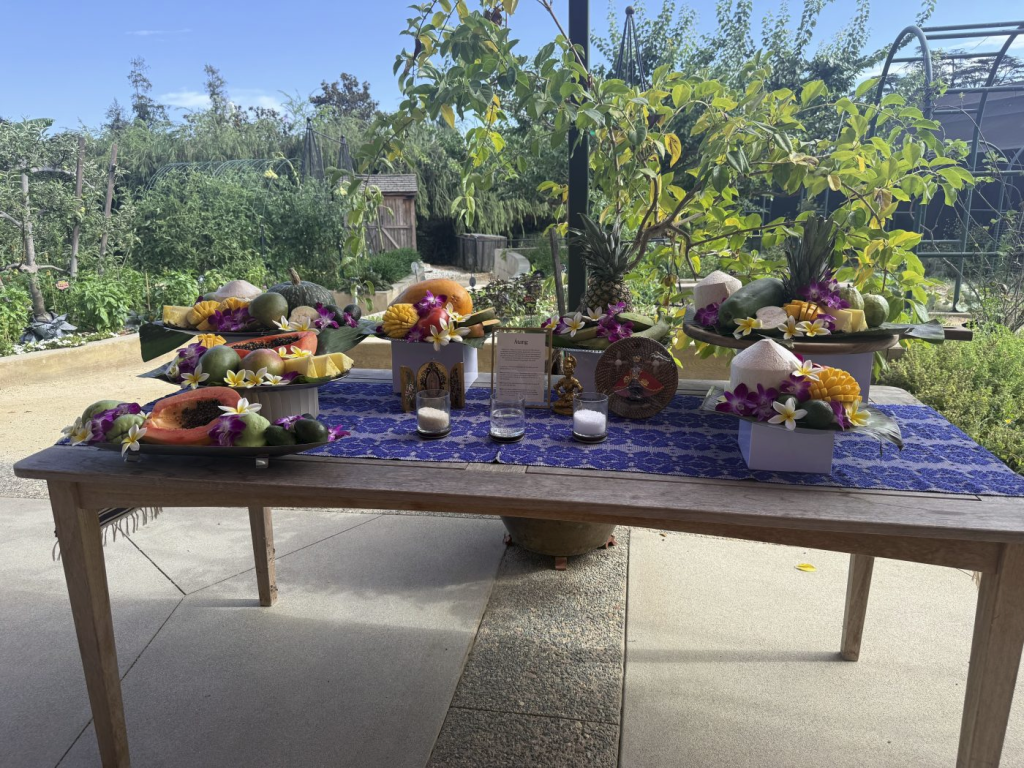
A table holds a display of atang, a food offering to ancestors. | Photo by Brianna Chu / Hey SoCal

The Huntington’s opening program in its This Land Is … Sunday Supper and  Conversation Series was held on July 26 from 5 to 7 pm. Featuring This Filipino American Life, the event explored Philippine culture and Filipino American food, storytelling, and legacy through historical archives, discussion, artmaking, and a tasting menu by Justin Foronda of HiFi Kitchen.

Co-presented by The Huntington and the Smithsonian Folklife Festival, the event was hosted by the team from This Filipino American Life podcast. Attendees pondered on the theme of This Land Is … and shared their lived Filipino experience in the United States.

This Land Is … Sunday Supper and Conversation series was conceived by Nenette Luarca-Shoaf, The Huntington’s Director of Education and Public Engagement. By email she discussed how it came about, her collaborators, and what programs are in the series, among other things.
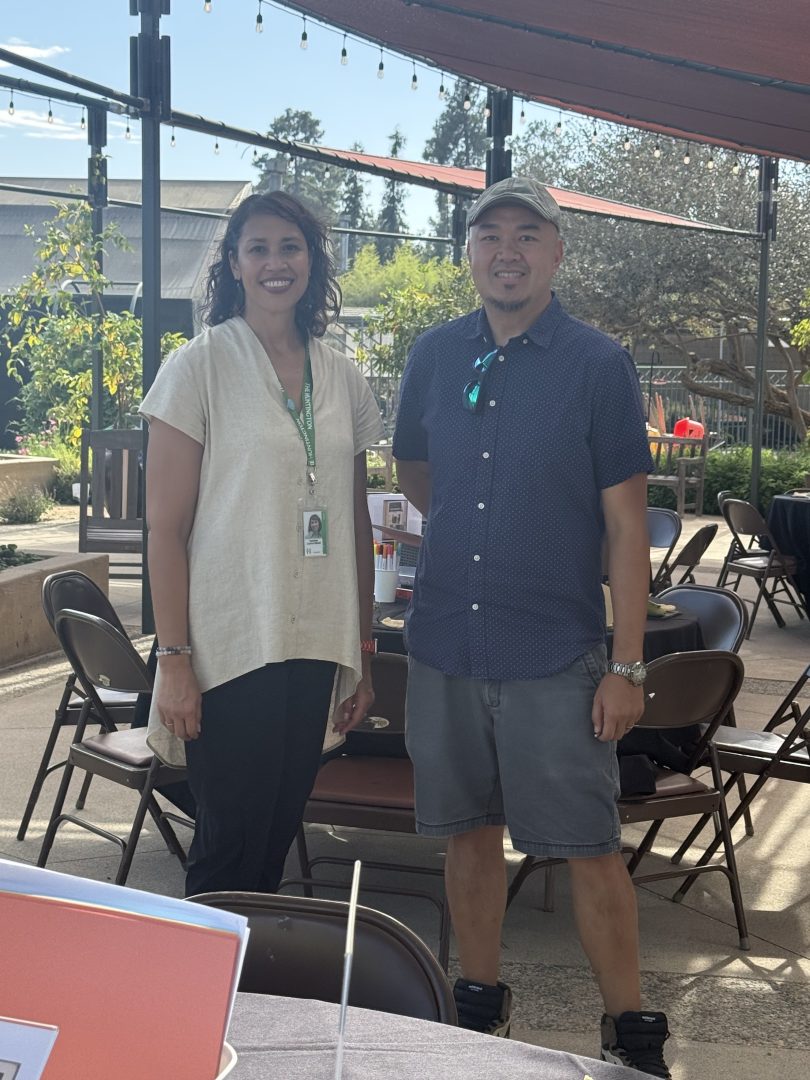
Nenette Luarca-Shoaf and Joseph Bernardo. | Photo by May S. Ruiz / Hey SoCal

“I first had the idea for the series a little more than a year ago as we brainstormed programs for The Huntington’s THIS LAND IS… initiative,” Luarca-Shoaf recalled. “Institutionally and within the Education division, we wanted to create opportunities for learning history while also reflecting on how those histories have shaped who we are today. I kept thinking about a family dinner or kitchen table and the way that current events and serious issues can be discussed by people with differing opinions, and how food can help to soften the edges of those encounters.”

“We always knew we wanted the programs to be co-created with local partner organizations so that we could tell a wide range of stories and bring together existing Huntington audiences with other communities,” continued Luarca-Shoaf. “It was also a great opportunity to partner with the Smithsonian Institution Folklife Festival, and they were especially keen for us to delve into Southern California traditions and culture. It is because of their co-sponsorship that we can make the series free to participants.”

“As plans developed for the ‘Filipino Food Magic’ program in March, I had the chance to meet Joe Bernardo over lunch with research fellow Cathy Ceniza Choy and Huntington curator Linde Lehtinen,” Luarca-Shoaf said further. “I floated the idea of partnering with the This Filipino American Life podcast on one of the Sunday Suppers and we continued to develop the program with our teams virtually and in-person.”
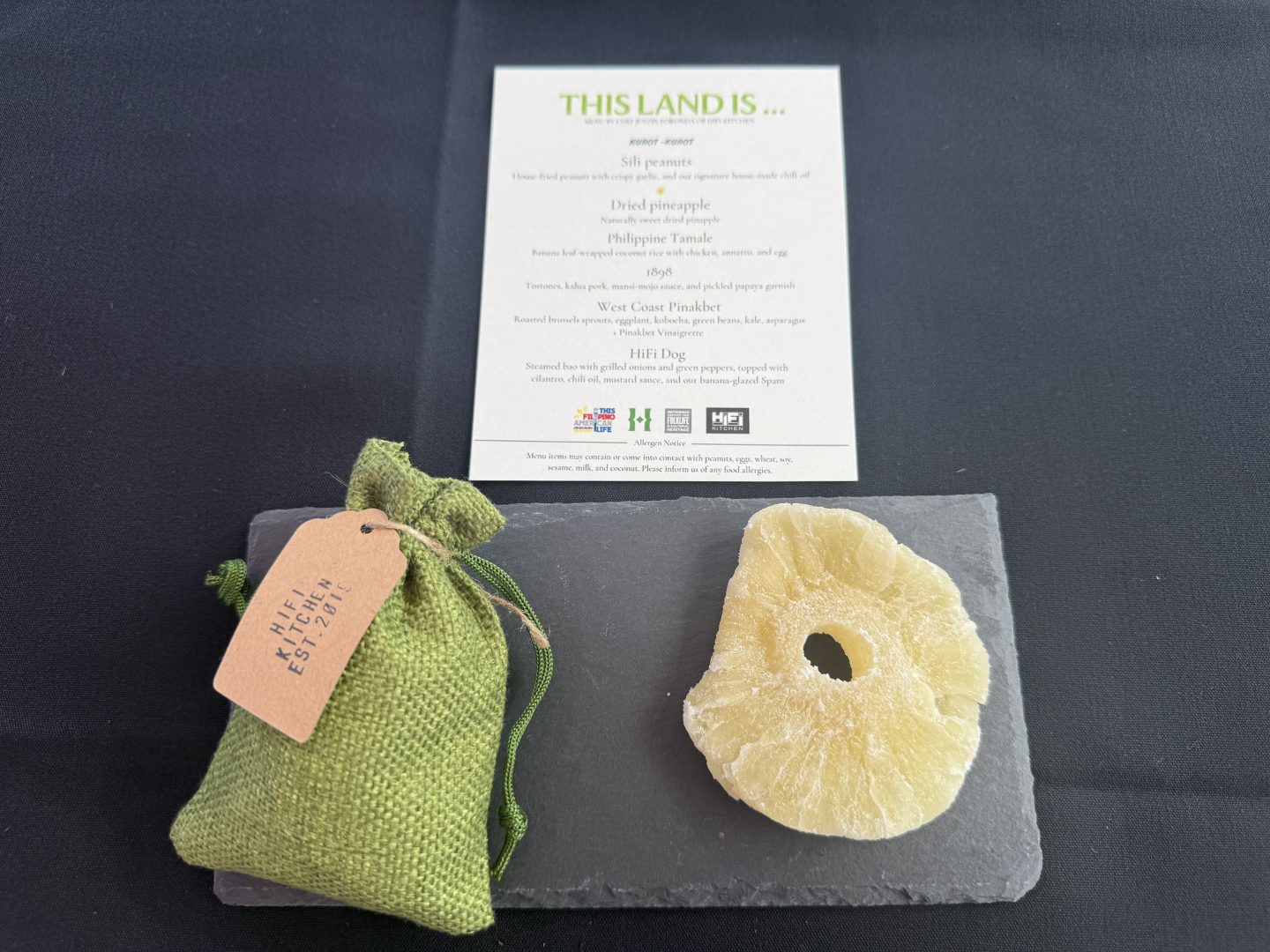
The Tasting menu card, a bag of peanuts, and dried pineapple on each place setting. | Photo by Brianna Chu / Hey SoCal

“We explored working with several different organizations and the Filipino supper turned out to be first because of scheduling,” explained Luarca-Shoaf. “However, it worked out well because of the way that the topic will survey centuries of history, dating back to the earliest cultural exchanges between the Philippines and the Americas. It allows us to show that American history is not just 250 years old, and that we need to think about how we are ‘setting the table’ for those who come after us.”

Luarca-Shoaf expanded on how the partnership with the This Filipino American Life podcast and Lehtinen informed The Huntington’s program.

“We drew a lot on Joe’s knowledge of Filipino diasporic history and were inspired by objects in The Huntington’s collection that photography curator Linde Lehtinen – one of the curators of the exhibition and someone who has been adding to the depth of our library collection relating to the Philippines – brought to our attention. One example is a scrapbook in The Huntington collection that visitors can see in the This Land Is… exhibition. It belonged to Domingo Salas, a Filipino chauffeur working in the first half of the 20th century and includes clippings from his life in Southern California as well as memories of home in the Philippines. We thought about the ways in which different generations document their lives and share their stories with the next generations, and also the way that food connects us to our memories and our heritage.”
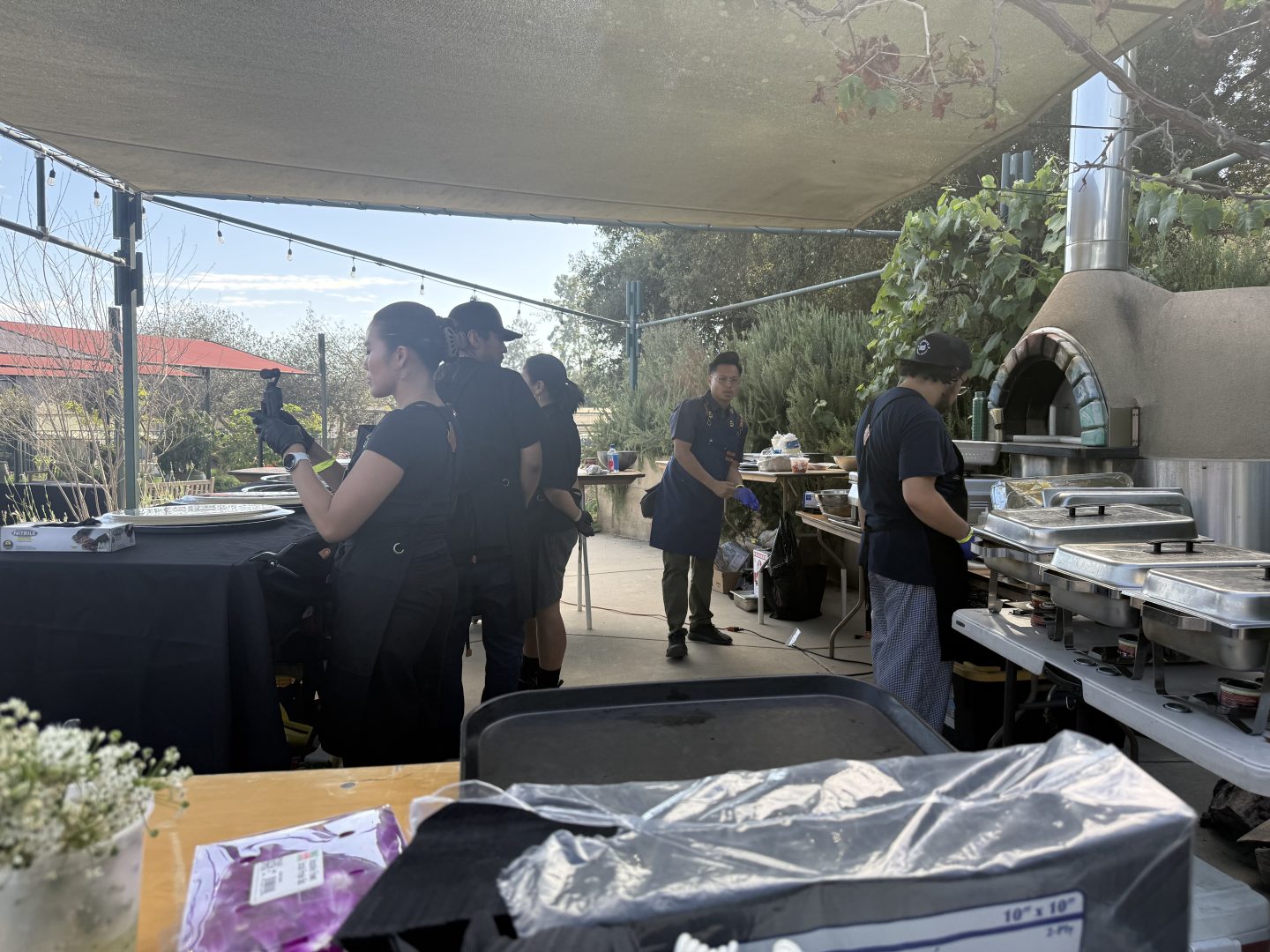
The HiFi Kitchen team busy at work. | Photo by May S. Ruiz / Hey SoCal

“Working with Justin Foronda of HiFi Kitchen has been exciting as well, as he understood what we were trying to do in showing how culture continues but also evolves, and he was able to create dishes that accompany each era of Filipino American history,” added Luarca-Shoaf.

Through the series, Luarca-Shoaf wants to bring together people from diverse backgrounds to learn from one another’s stories, find their common ground, and use history and creativity to look ahead. She hopes that partaking in a meal will help people create a sense of community and joy in the process. Taking their cue from Salas, her team will be making their own scrapbook pages during the program to document the evening and the ideas, memories, and experiences from their time together.

A total of three suppers and conversations have been planned for this year. On the last week of August, the program will feature Zocalo Public Square and discuss community-based agriculture. The LA Commons will take center stage on the first Sunday in October and look into healing in relationship to land and the connections between Leimert Park and Altadena.
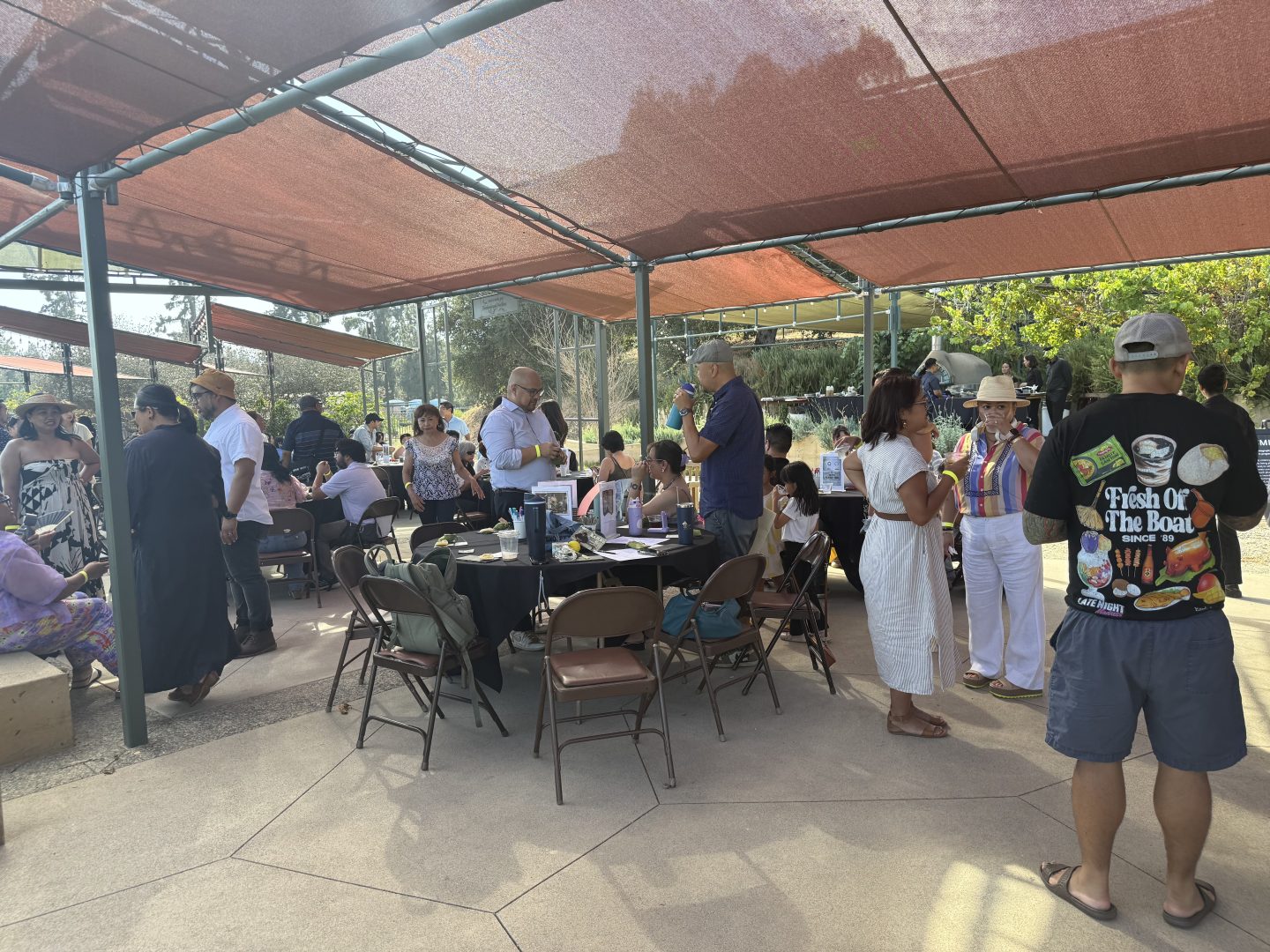
Attendees and participants at the This Filipino American Life event. | Photo by Brianna Chu / Hey SoCal

Luarca-Shoaf’s collaborator on this program, Joseph Bernardo, was one of the three original founders of the This Filipino American Life podcast. He earned a doctorate degree in Filipino American history and culture, a subject he had been studying for years. After leaving academia, he discovered podcasting as an ideal forum to share ideas and discuss issues affecting the Filipino American community in a fun and entertaining way. He approached Ryan Carpio, who worked with him at Mayor Garcetti’s Office, about starting a podcast; Carpio loved the idea at the outset.

Elaine Dolalas, who ran her own podcast – the now-defunct Oblivious Nerd Girl’s Great Idea –  joined the team as a counterpart to Bernardo and Carpio’s perspective. She also brought on board her husband Mike, who had helped produce her previous podcasts and, like her, was also involved in L.A.’s Filipino American community. This Filipino American Life podcast was born and the three have been co-hosting it since. In 2024, Carpio stepped down and the team brought on Kat Carrido-Bonds.                           

“In the podcast, we explore the numerous experiences of being Filipino in the United States,” Bernardo stated by email. “Each of us have certain interests and we take turns coordinating an episode. If you look at our archive of episodes, we’ve covered so many political issues affecting our community or cultural phenomena we just want to dive into. We can discuss a certain topic like gentrification, Catholicism, undocumented immigration, or karaoke among ourselves or bring in an expert to interview. Our hope is that our discussions spark even more discussion and education in our community. Usually each episode runs 45 minutes to sometimes an hour-and-a-half, depending on the topic.”
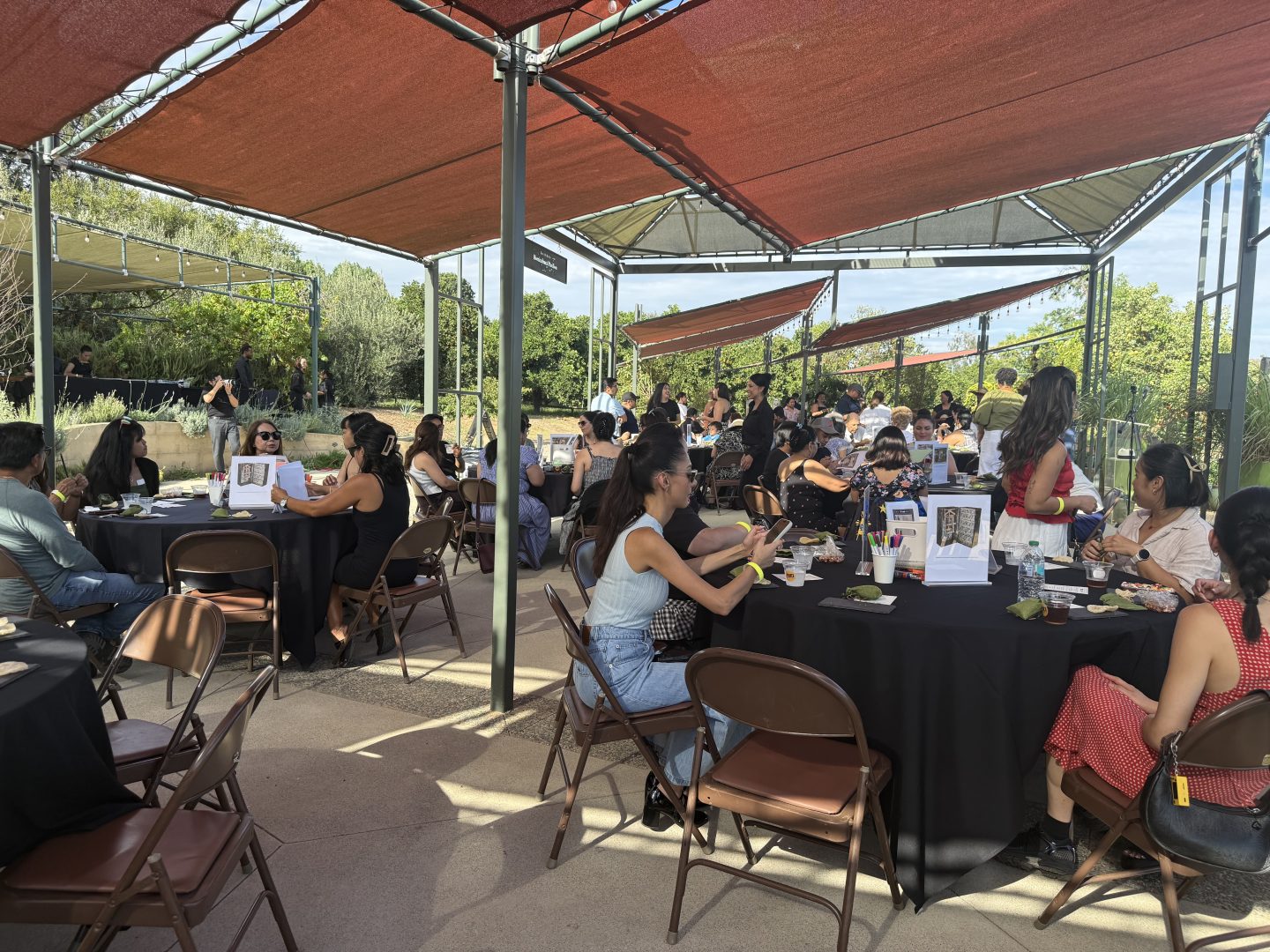
Attendees at the event. | Photo by Brianna Chu / Hey SoCal

The team examines a specific topic on the podcast only once. Explained Bernardo, “There are very few issues that we come back to after we covered it. Not to say that there isn’t much to talk about something in view of a new set of political and social context. I think we’re just ready to move on after we finish one episode. However, we covered Filipino gangs twice – one from a member’s perspective, and the other from a cop’s perspective – and I think that’s the only time we returned to the same topic.”

Asked if there has been an episode that stood out for him in the years that he’s been hosting, Bernardo replies, “I’d say our interview with Maria Ressa, journalist and Nobel Peace Prize recipient, was the most star struck we’ve ever been. To think that someone that important and vital to both Filipinos, and the wider world, came to our podcast was something that will stick with us forever.”

This Filipino American Life podcast enjoys a loyal following and listeners frequently give them feedback. Bernardo said, “We used to get voicemails and play them on an episode, but folks stopped doing that. Maybe because nobody really leaves voicemails in general anymore? We’d regularly receive messages from Filipinos living in the Midwest or the South, where there aren’t too many Filipino American communities. They say that our podcast is one of the few ways that they connect to their heritage, which makes us feel honored and responsible for delivering meaningful content…. And having done the podcast for ten years, teaming with The Huntington and working on a project that helps spread awareness of the history and culture of Filipino Americans gives us reassurance that our work remains vital and necessary.”
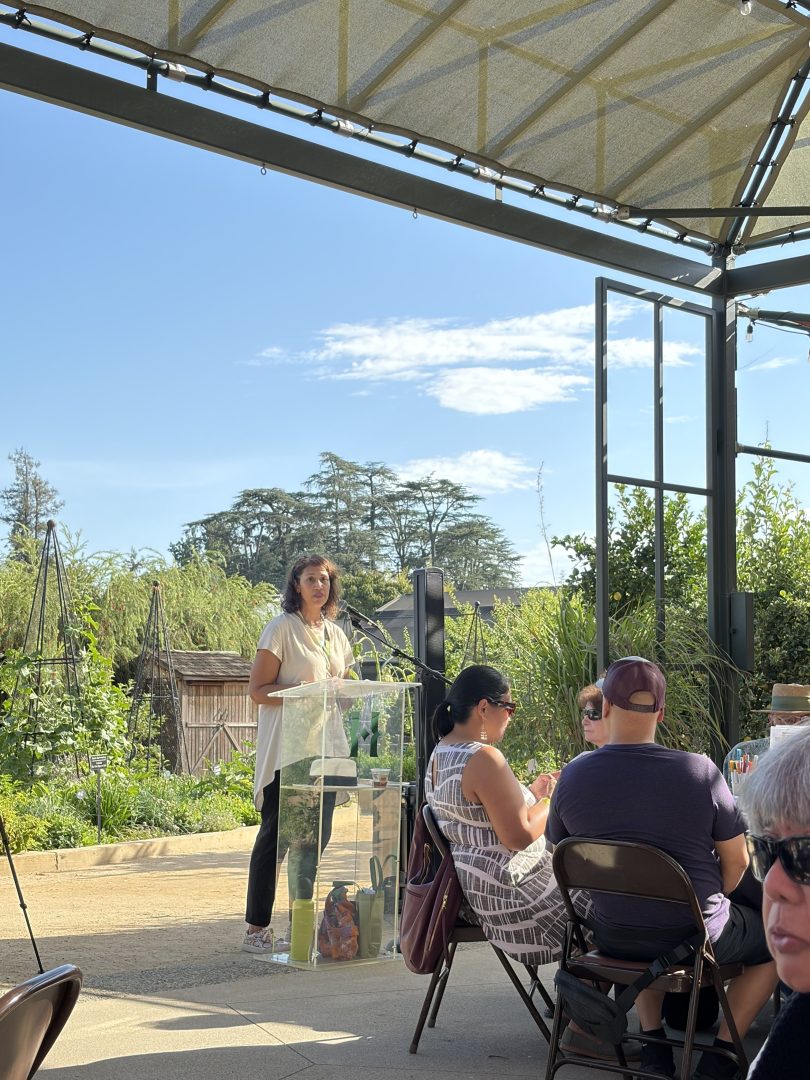
Nenette Luarca-Shoaf. | Photo by May S. Ruiz / Hey SoCal

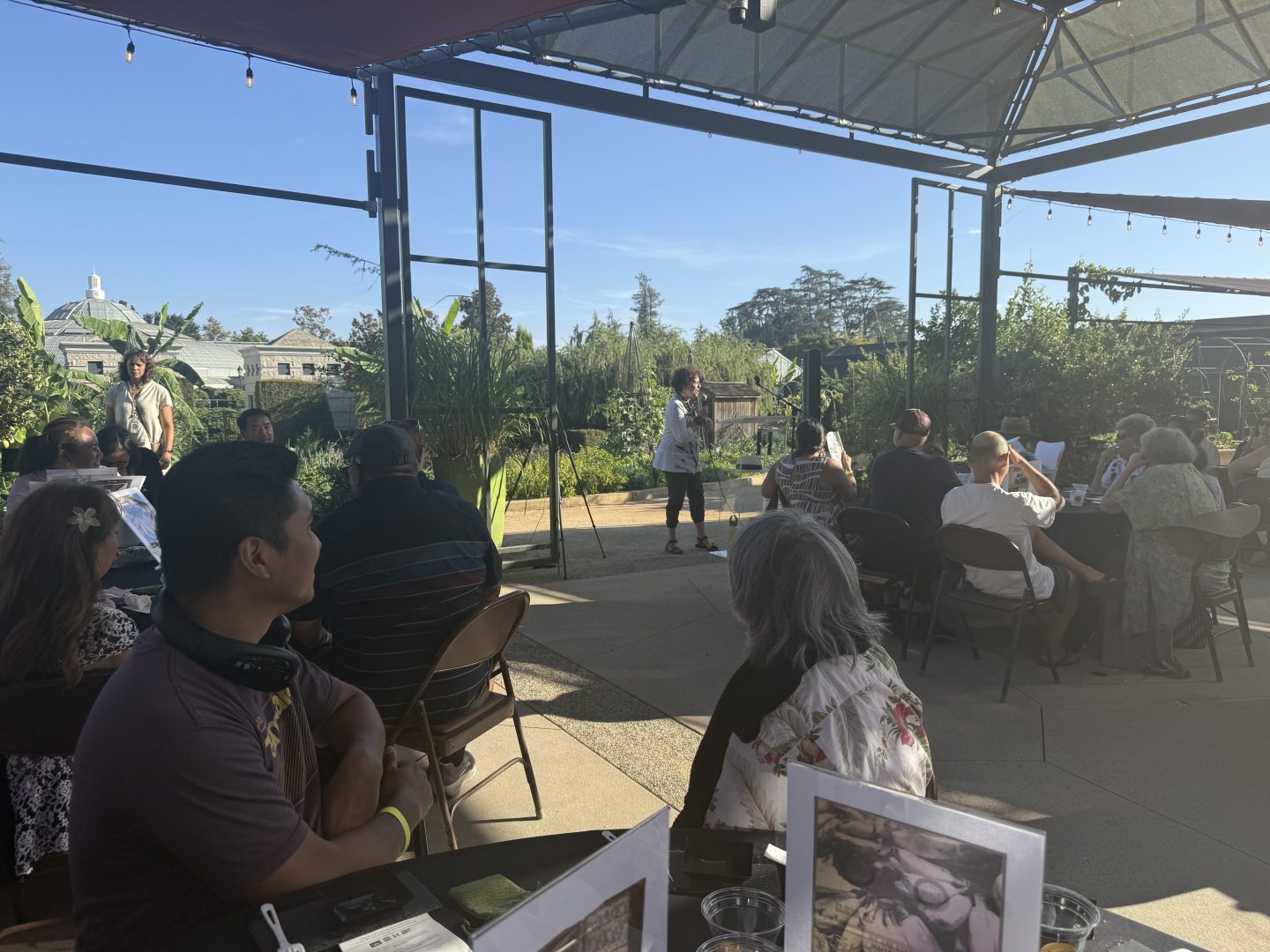
The Sunday Supper and Conversation featuring This Filipino American Life was a sold out event and had a long wait list. It took place at an outdoor venue – The Huntington’s Kitchen Garden – on a sweltering evening. The temperature was 93 degrees F but seemed even hotter because of the humidity. While one of the speakers commented on the Manila weather, everyone just laughed; not one of the 90 attendees complained.                

In the spirit of exchange and sharing, Luarca-Shoaf asked us to take a few minutes to meet the people at our table and answer the question “What specific food or dish helps you feel connected to your family’s history?”

A few agreed on one particular food – kare-kare; other dishes mentioned were adobo, pinakbet, pochero, sinigang, and sisig. An animated conversation of which version of the dish one preferred, ingredients, and recipes ensued.

Before leading us into the shared history of the United States and the Philippines, Bernardo introduced his This Filipino American Life co-hosts. A trivia question started off the program: When was the first documented presence of Filipinos in what is now known as the United States?

It was on October 18, 1587 that Filipinos landed on Morro Bay and it was the theme of the first dish on Foronda’s tasting menu – Philippine tamale. Bernardo also informed us the bag of peanuts and dried pineapple on each place setting represented the fruits and vegetables that were introduced to Filipinos at the time of the Manila Galleon Trade.   
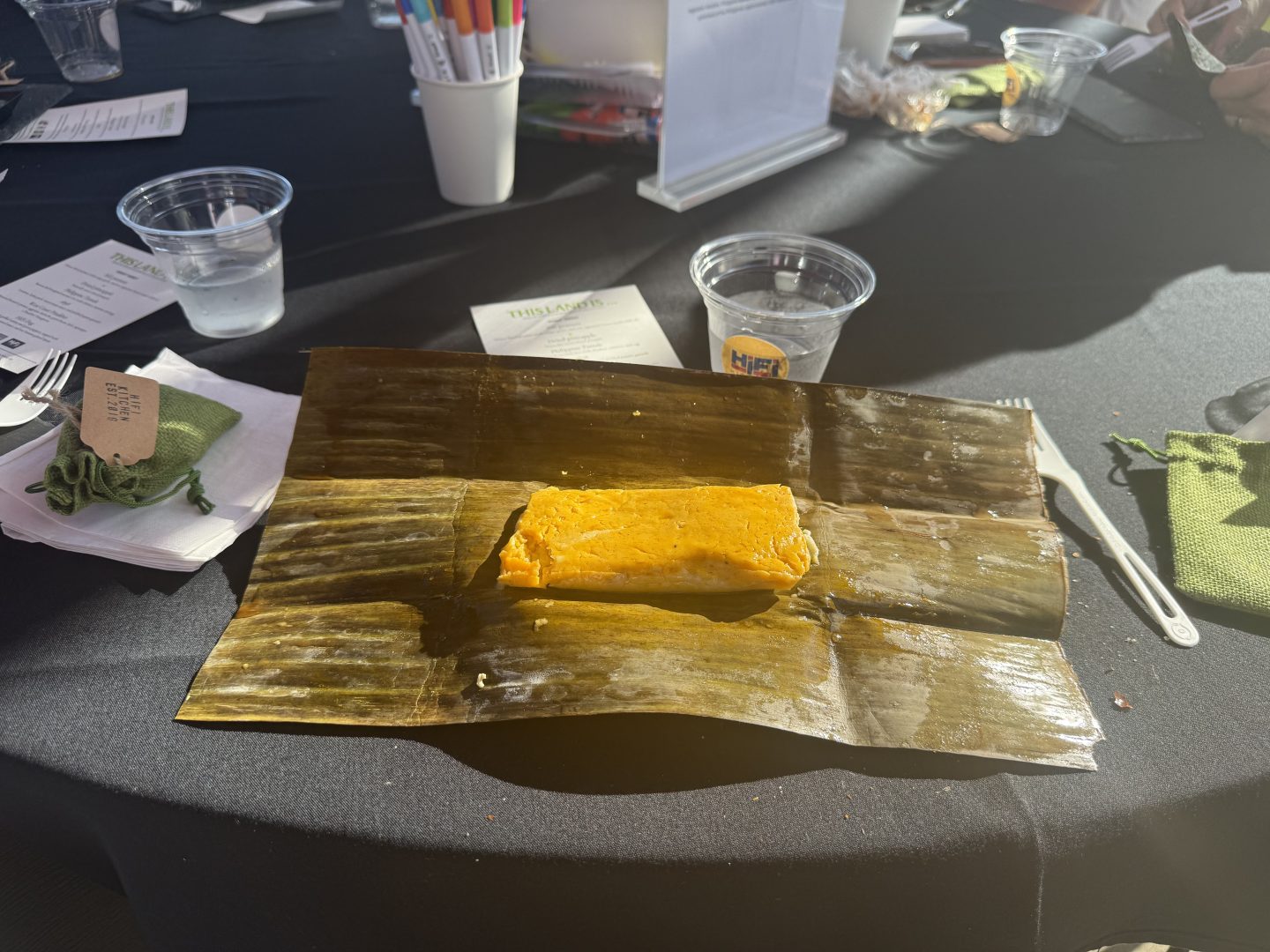
Philippine tamale; the first dish on the tasting menu.| Photo by Brianna Chu / Hey SoCal

Filipinos built the ships for the galleon trade established by the Spaniards. The economic trade route linked Asia, the Americas, and Europe from 1565 through 1815, according to Bernardo. The trade route brought goods from Asia to Acapulco, Vera Cruz, and onto Spain. It was one of the reasons Spain wanted to keep the Philippines as a colony.

Lehtinen provided imagery pertaining to that time period. On each table there was photograph in a Plexiglas which had a map of Asia and the ship that Magellan was on when he discovered the Philippines in 1521. It also visualized the spice trade and emphasized how Manila became the collecting hub for the trading activity.

Before the second course was served, a This Filipino American Life podcast co-host asked the next trivia question, “Besides the Philippines, name the other nations America colonized at the turn of the 20th century?”
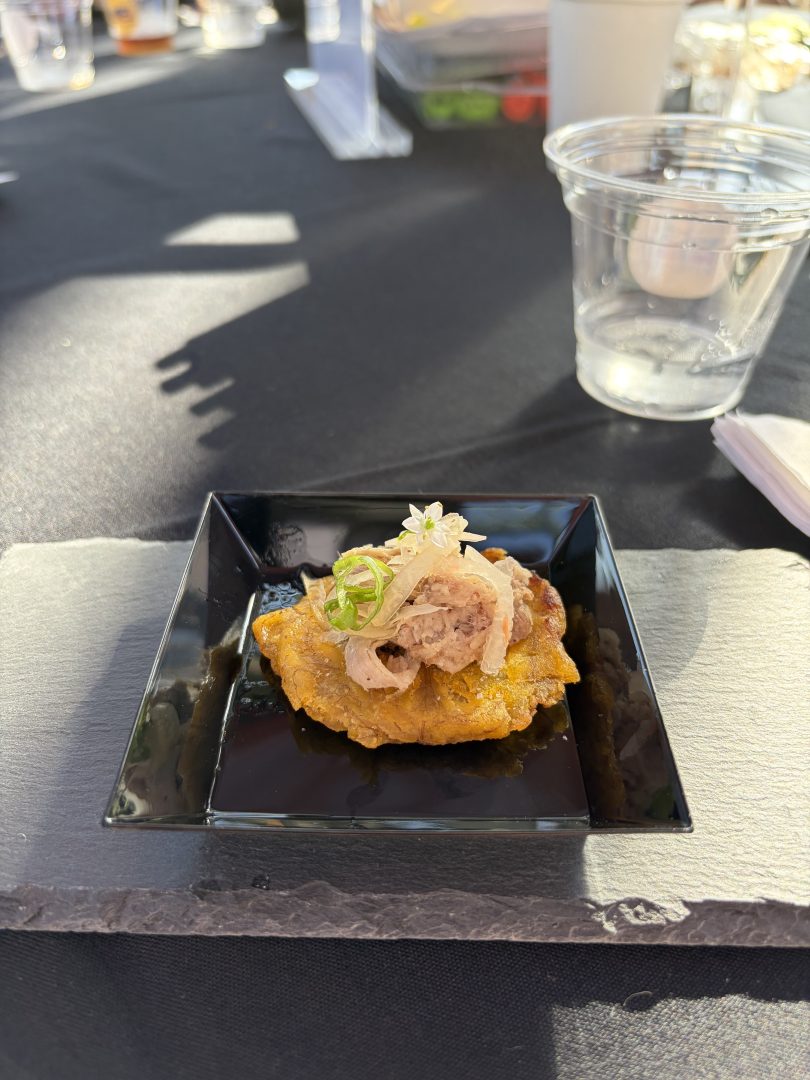
1898: tostones, Kalua pork, mansi-mojo sauce, and pickled papaya garnish. | Photo by Brianna Chu / Hey SoCal

Cuba, Guam, and Puerto Rico were also colonized by the U.S. in 1898. Bernardo discussed American Expansionism when it acquired the Philippines from Spain for $20M at the Treaty of Paris. At the same time that the United States was fighting the Spaniards, Filipino revolutionaries were engaged in its own war for independence against this new colonizer. Approximately 200,000 Filipinos died during the Filipino-American War.

The United States prevailed and reigned for 48 years and shaped Philippine culture and society. Examples of this are the form of government, Filipino economic dependence on the U.S., English as the medium of instruction, industries like nursing, and popular culture including food and food science, music, and sports.

Such was the long introduction to the next course – fittingly called 1898. Foronda informed us that it was influenced by Cuba, Guam, and Puerto Rico, and is eaten like a pizza.

In the spirit of community, Bernardo gave us the next table discussion question: “How did this history that we learned in course number 1 and 2 broaden your understanding of the United States?”

This prompted a lively discussion at our table that went beyond the scope of what was asked. Someone suggested that U.S. global trading was the precursor to globalization. Another posited that the two dishes were an amalgamation of cultures, to which someone supplemented that it started multiculturalism. A GenZer then argued that going down that line of reasoning meant nothing is indigenous anymore. Yet one person – an authority on Filipino Language, Literature, and Culture – referenced anthropologist Franz Boas’s historical particularism to argue her point.
Karen R. Lawrence, president of The Huntington. | Photo by May S. Ruiz / Hey SoCal

A special guest that afternoon was native Californian Sam Vong, who came all the way from Washington D.C. He talked about an exhibition he curated called “How Can You Forget Me: Filipino American Stories” currently on view at the Smithsonian’s Asian American Center at the National Museum of American History. It shines a light on Filipino migrant labor, community-building, and history in Stockton, California – the home of one of the largest Filipino communities outside of the Philippines in the 1930s.

Between the food tasting and history lesson, music by Filipino American artists played in the background while attendees got up to mingle or get a drink from a selection of spa water on a side table. Kat Carrido-Bonds, podcast co-host, acknowledged the individual who created the playlist for the evening. She then invited us to join them to celebrate This Filipino American Life podcast’s 10th anniversary party on August 8 at Hello Stranger in Little Tokyo. She also announced the next trivia question: “What is the name of the U.S. legislation that led to Philippine independence?”

Bernardo provided context for this next historical discussion. When the Philippines became a U.S. possession, Filipinos come to this country freely. A large wave of Filipinos – particularly men from the Ilocos region – migrated to the U.S. during the 1920s and 1930s to provide immigrant labor on the West Coast.
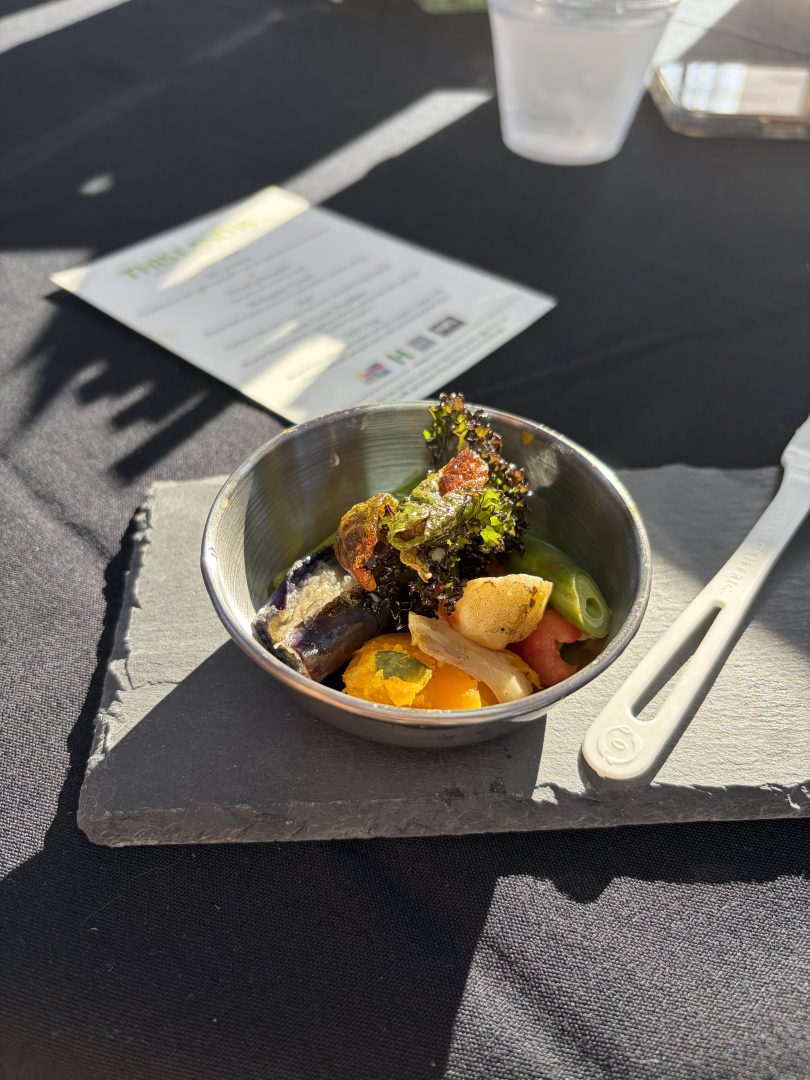
Foronda’s West Coast Pinakbet. | Photo by Brianna Chu / Hey SoCal

These Filipinos resettled in Los Angeles and neighboring areas like Orange County, the San Gabriel Valley, and the San Fernando Valley. They worked on the farms alongside the Mexicans, but also in the service industry as domestics, hotel workers, and restaurant busboys. Eventually, a Little Manila in L.A. was established and then later a Historic Filipino Town. This generation of Filipino Americans were the Manongs, an Ilocano term of respect that’s taken from the Spanish word for brother, hermano.               

The passage of the Tydings-McDuffie Act in 1934 set the date for Philippine independence and the primary reason for that was to curb immigration.

One of the photographs on the tables was of an archival object in The Huntington’s collection – a scrapbook made by Domingo Salas. Lehtinen explained that it contained pictures that told the story of the man who compiled it. He was a Filipino who worked as a chauffeur in Pasadena in the early 20th century and was part of the Manong generation. He was a U.S. veteran and served in both WWI and WWII. He was born in 1899 and died in 1985; he is buried at Riverside National Cemetery.  
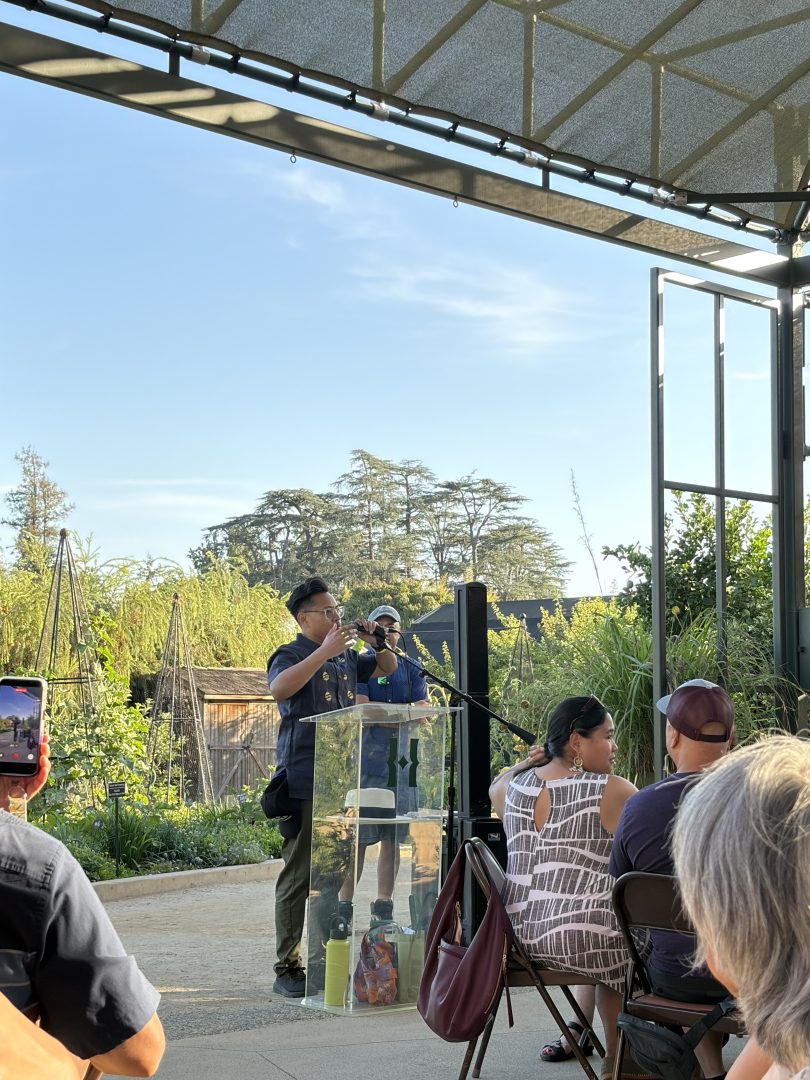
Justin Foronda. | Photo by Brianna Chu / Hey SoCal

Lehtinen pointed out that the scrapbook reflected the anti-racial sentiments at that time. Salas had several photographs that showed him with white girlfriends, yet the U.S. Census records showed him as never having married – probably due to anti-miscegenation laws. 

To discuss the present day, which Bernardo jokingly said was 1985, he invited his co-host Elaine Dolalas to ask the final trivia question: “What metropolitan area has the largest population of Filipinos in the United States?”                    

The answer is Los Angeles. Bernardo informed us there are over 700,000 Filipino Americans in the Greater L.A. area, which includes Orange, Riverside, Ventura counties, etc. Filipino immigration to the U.S. increased dramatically because of the 1965 Immigration Act which is the basis of immigration policies today. It prioritized family reunification as well as employment-based immigration. Many Filipinos came here as skilled professionals and their family members joined them later through sponsorships.

“As a result of the 1965 Immigration Act, many second generation Filipinos came of age in the 1980s and 1990s” Bernardo expounded. “We established many institutions and became leaders in respected fields, fighting for representation and social justice.… Many second and third generation Filipinos have developed a unique Filipino American culture and identity influenced by multi-ethnic environment, especially in California. Our food, culture, and sensibilities reflect that.”

Today’s Filipino Americans were the inspiration for Foronda’s last tasting menu course, which he called HiFi Dog and he put in a bao.
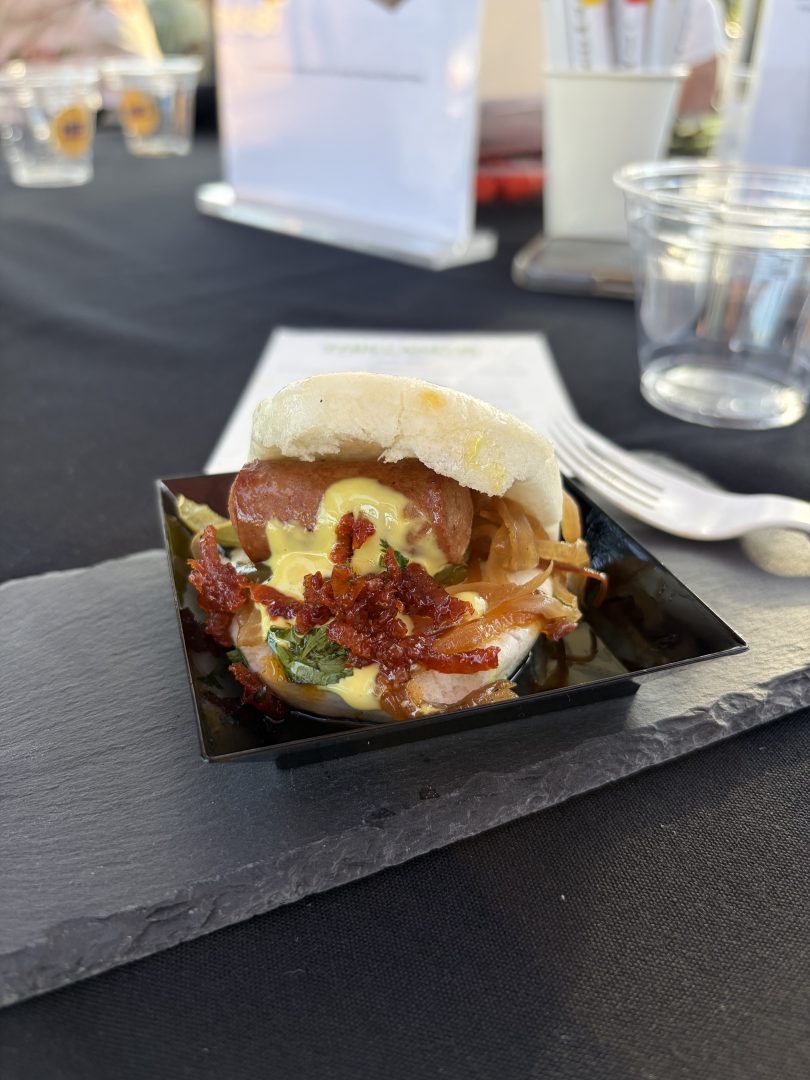
HiFi Dog, Foronda’s version of the L.A. hot dog. | Photo by Brianna Chu / Hey SoCal .

Domingo Salas’s scrapbook was the inspiration for the artmaking project at close of the event. Luarca-Shoaf invited us to create our own scrapbook about the afternoon’s experience to share with others. They provided an instant camera, some sharpies, scissors, glue, and decorative paper for the project.

Luarca-Shoaf and her collaborators – Lehtinen, Bernardo and his This Filipino American Life podcast co-hosts, Foranda and his HiFi Kitchen team – methodically planned each segment of the event and made it such a success. They even managed to import Manila weather that reminded some of us of our homeland.

It’s worth noting that the Sunday Supper and Conversation series is part of The Huntington’s celebration of the 250th anniversary of the U.S. Declaration of Independence from British rule and, incidentally, marks the day the Philippines gained independence from American sovereignty on July 4, 1946. 

The United States freed the Philippines 80 years ago, but many Filipinos today still feel a deep connection to America. For while the U.S. relinquished its hold on the Philippines, the ties that bind the two countries are forged within the hearts of the Filipino people.              
Chaaste Family Market in Pasadena Keeps Filipino Culture Alive

Also published on 18 May 2026 on Hey SoCal

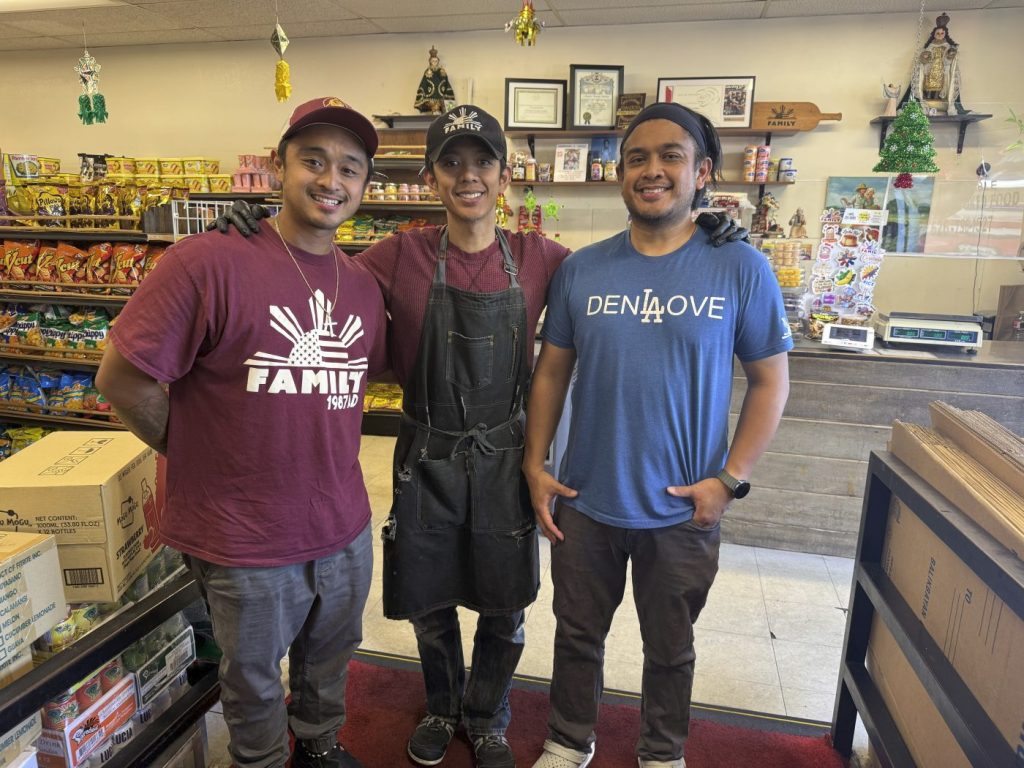
The Esteban brothers, also known as the Chaaste Brothers (from left): Gabriel, Christian, and Abraham. | Photo by May S. Ruiz / Hey SoCal

On October 5,1978, President Jimmy Carter signed a joint resolution for a week-long celebration of Asian American and Pacific Islanders’ contributions to the United States. The month of May was chosen for two historic events – on May 7, 1843, the first Japanese immigrant, Nakahama Manjirō, arrived in the United States. More than two decades later, on May 10, 1869, the golden spike was driven into the first transcontinental railroad, which was completed using Chinese labor.

In 1990, George H. W. Bush signed a bill passed by Congress to extend Asian-American Heritage Week to a month; May was officially designated as Asian/Pacific American Heritage Month two years later.

President Barack Obama signed a proclamation on May 1, 2009, recognizing the month of May as Asian American and Pacific Islander Heritage Month. Under President Joe Biden it became Asian American, Native Hawaiian, and Pacific Islander Heritage Month.

According to the U.S. Census Bureau, the AANHPI population in the U.S. is the fastest-growing racial group, with over 25 million people (nearly 8% of the total population) as of 2023. This diverse group includes around 25.8 million Asian Americans (alone or in combination) and roughly 1.6 million Native Hawaiian and Other Pacific Islander (NHPI) individuals.

There are 7 million to 7.2 million Asian Americans living in California as of 2023-2025, according to Pew Research Center. They make up approximately 18%-18.4% of the state’s total population, representing the largest Asian population in the continental United States.

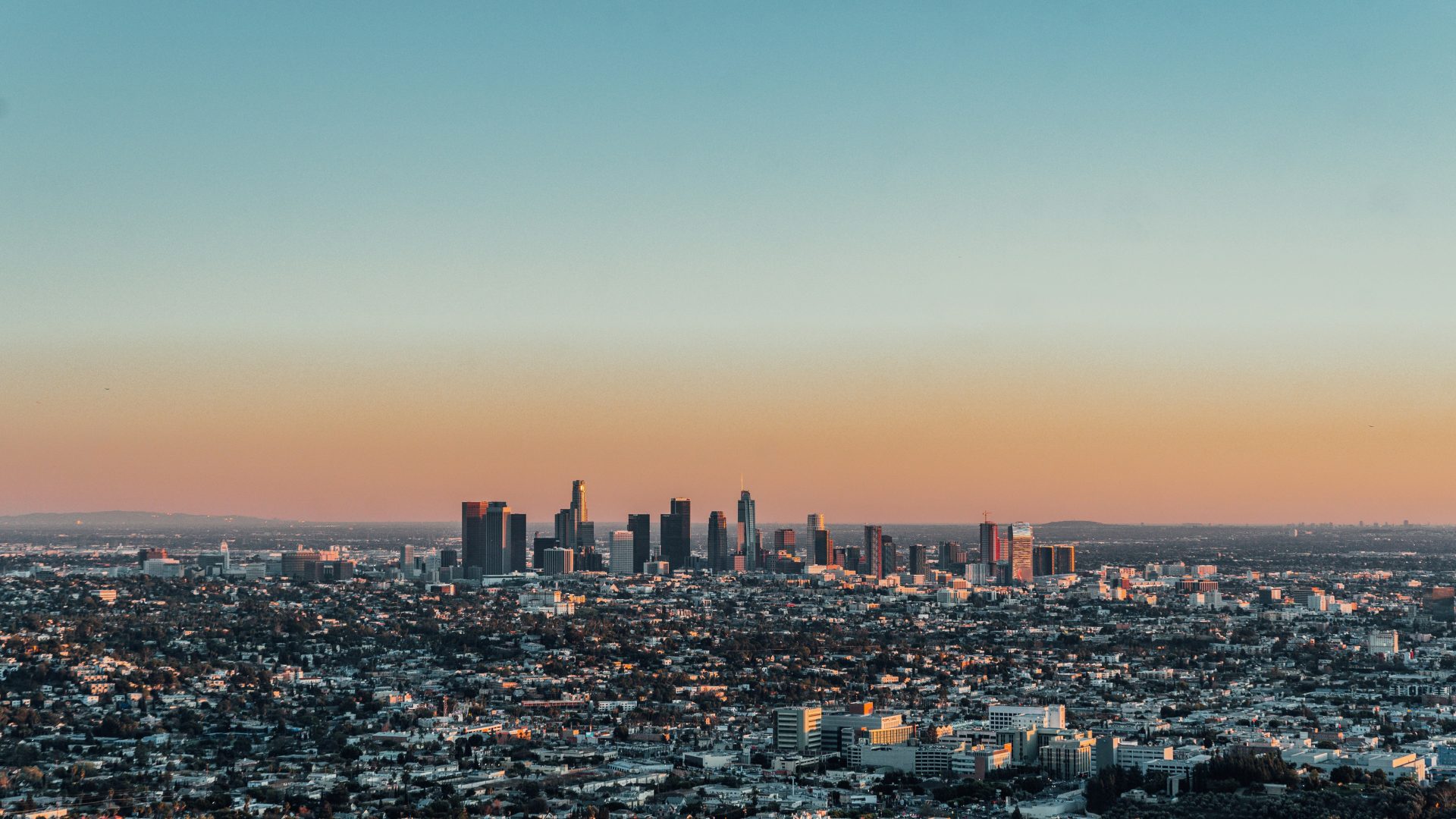
L..A. Skyline. | Photo by Josh Miller on Unsplash

Los Angeles County has the highest concentration of Filipinos in any U.S. county, often cited as the largest population outside of the Philippines. Filipinos were the earliest recorded Asian immigrants to the United States who landed on October 18, 1587 on what is now Morro Bay – a significant event that is commemorated as Filipino American History Month (FAHM). Based on Neilsberg Census estimates, L.A. county is home to approximately 416,221 Filipino residents, representing about 4.23% of county’s population as of 2025.

There is no official statistic on the Filipino population in the San Gabriel Valley and Pasadena, in particular. However, Asian Americans make up approximately 15.5% to 17.4% of the total city population according to the U.S. Census Bureau. While representing a smaller percentage of the overall city population than neighboring L.A., the Filipino community in the San Gabriel Valley is a visible and significant presence, with heavy representation in healthcare, nursing, and service industries.    

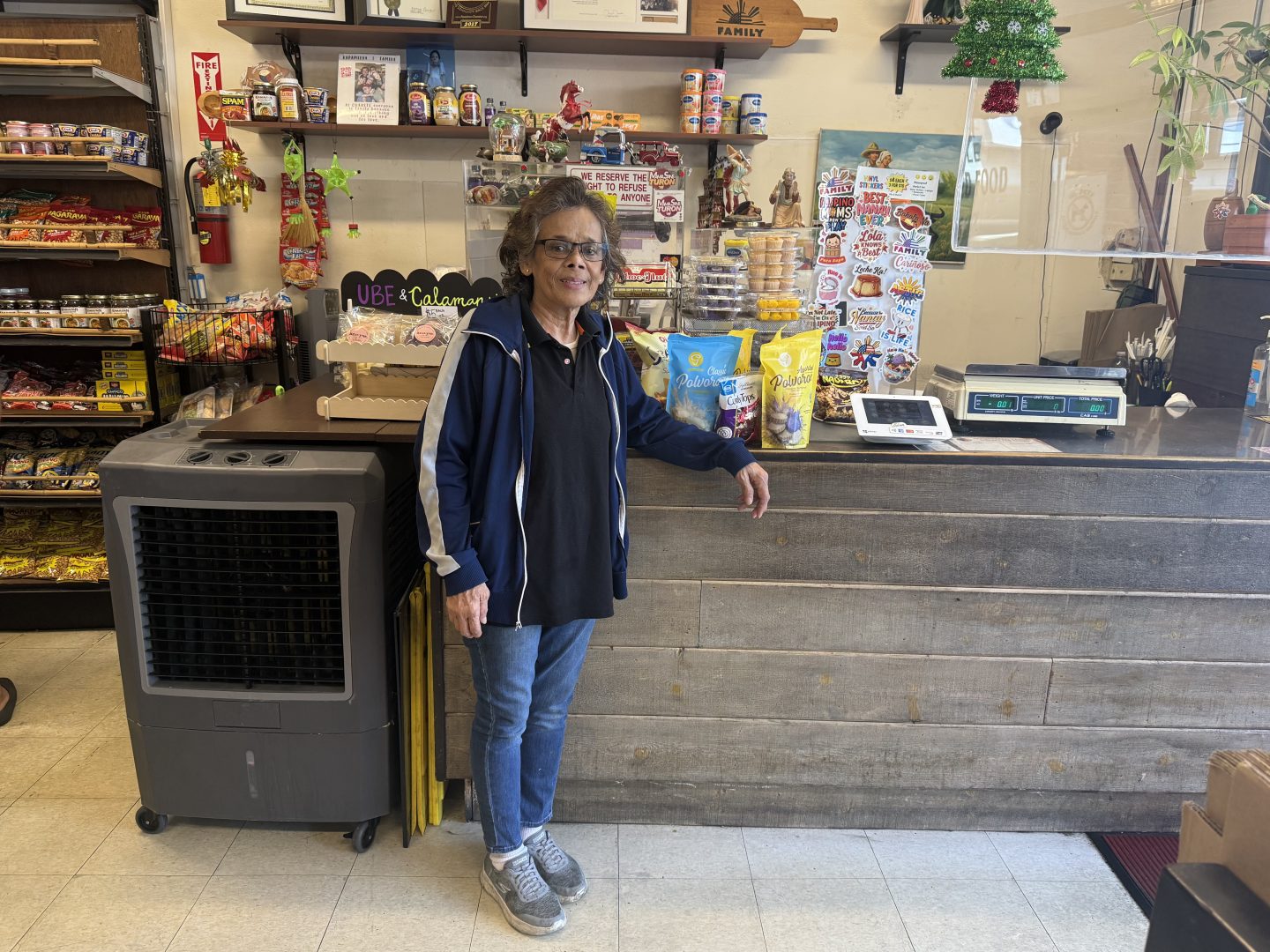
Susan Esteban, founder of Chaaste Family Market. | Photo by May S. Ruiz / Hey SoCal

Chaaste Family Market in Pasadena has been serving the Filipino community since 1987 when it was founded by Susan Esteban. Beginning in 2015, her three children – Christian, Abraham, and Gabriel – have been carrying on her legacy.

The Esteban family has deep roots in Pasadena, as Christian relates. “My grandfather was a POW in WWII when he arrived in Pasadena in 1949. He was one of the manongs (a term of respect for older brother or older male relative in the Philippine province of Ilocos) in Pasadena and was the first Asian to own a house in Loma Vista.”  

“Several of our relatives were workers in Delano but they weren’t just farm pickers,” continues Christian. “They knew agriculture and planting seasons, were educated and conversant in both English and Spanish. They moved to Pasadena in the 1950s and formed one of the earliest Filipino working class communities here. They were able to acclimatize to the new place and do other jobs – they were jacks-of-all-trades and reliable employees. My uncle ‘Apo’ Ordinario, who was one of the first Filipinos born at The Huntington Hospital, worked for the Ballard family.”

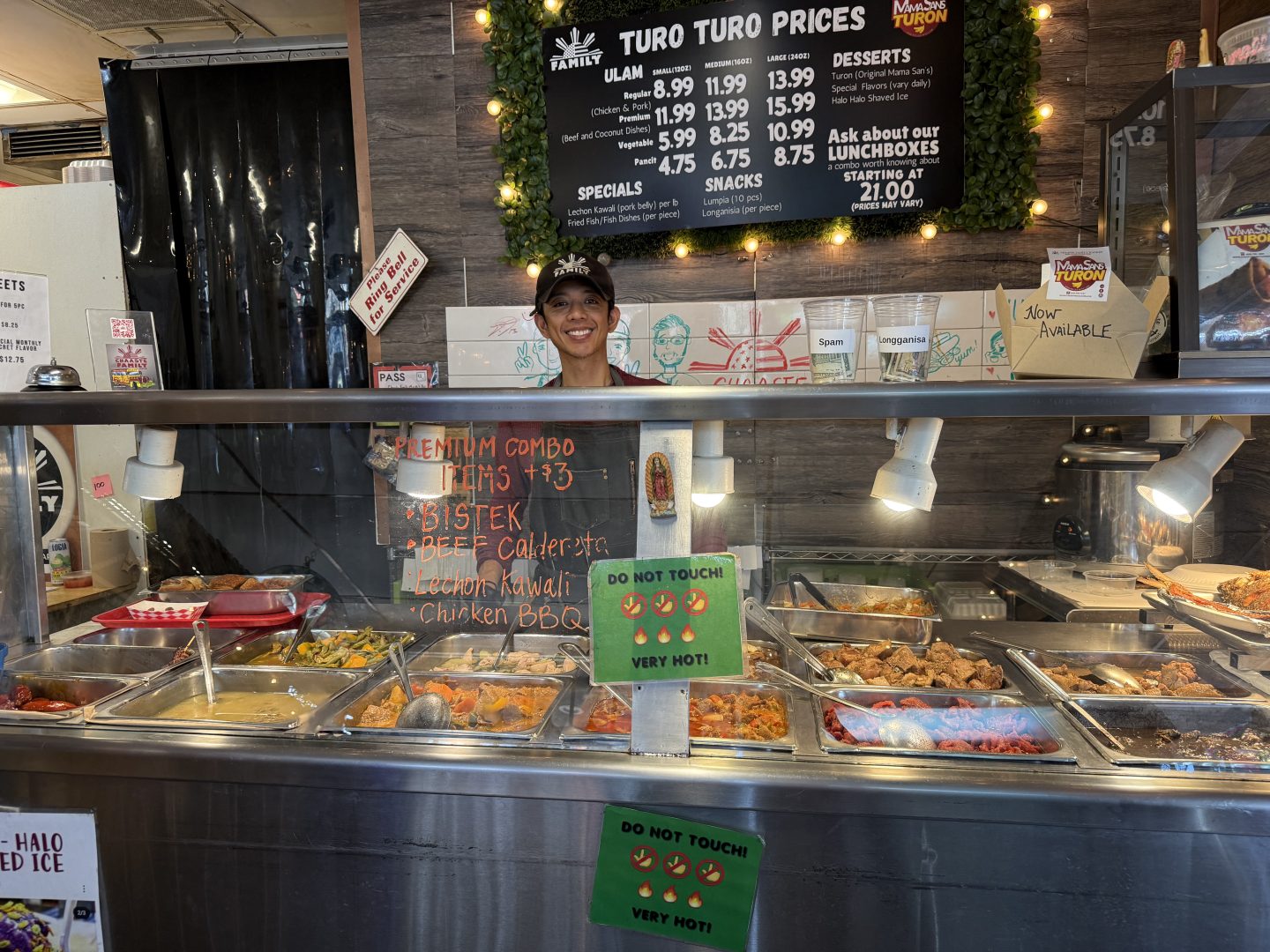
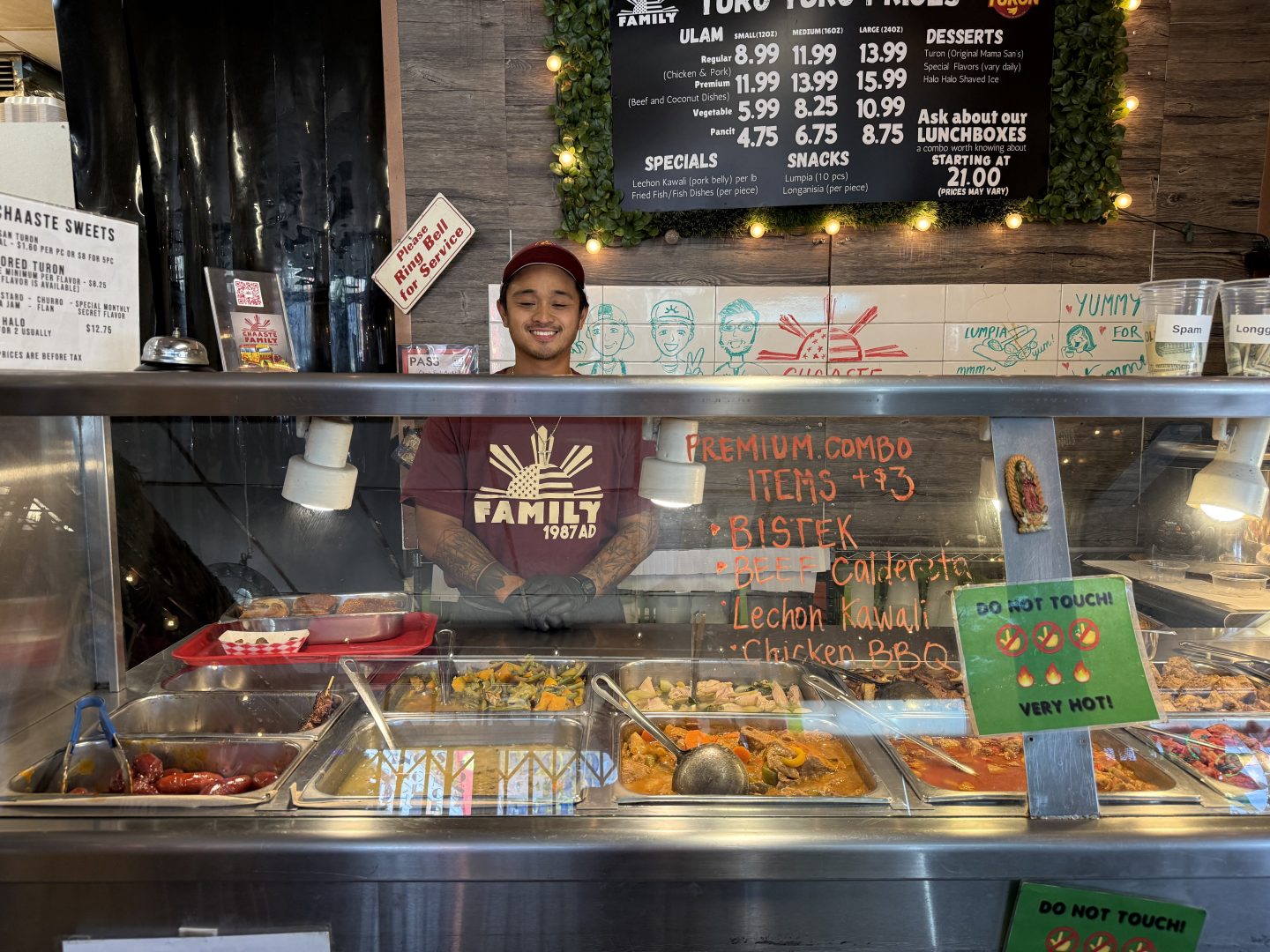
Christian Esteban and Chaaste Market’s hot food counter. | Photo by May S. Ruiz / Hey SoCal

“While my grandfather was given American citizenship by the U.S. government, his family was not,” Christian goes on to say. “He had to petition them separately and my dad, Arturo, arrived here when he was nine years old. My dad served in the Air Force and fought in Vietnam; he graduated from Cal State LA. He worked as an auditor at mostly aerospace companies – first at Lockheed, which moved to Phoenix, but he didn’t want to relocate; so he went to work for Northrop; then he was recruited by JPL, where he worked for about 25 years as senior auditor until he retired.” 

Susan Torres (later Esteban) was able to immigrate to the U.S. through her uncle, who was an engineer. He was one of the Filipinos who took advantage of the 1965 Immigration and Nationality Act. She and Arturo met through mutual friends.  

“My mom was a pioneering woman,” Christian claims proudly. “She was one of the first three Asians to work at Warner Brother Records. She was still employed there when she had me and when my brother was born three years later. After ten years, it became hard for her to raise two difficult boys – we were a handful. She had been entrepreneurial even at a young age, so she decided to open a store. Because Pasadena didn’t have a large Filipino population, she thought Eagle Rock would have been the ideal spot for it. But my dad insisted that it be located in Pasadena, and he prevailed.”

Chaaste Family Market opened its doors in 1987 in a nondescript corner on Allen Avenue and Corson Street, right next to the 210 freeway. The name is derived from their names – C for Christian, A for Abraham, the other A for Arturo, S for Susan, T for Torres (her maiden name) E for Esteban – and is pronounced “chaste.” Susan could have simply named it Esteban Family Market but Filipinos have a penchant for combining their first and second names like Marivic for Maria Victoria, for instance. She is also a devout Catholic so it was vital for her to practice Christian virtues and integrate them into all her endeavors.

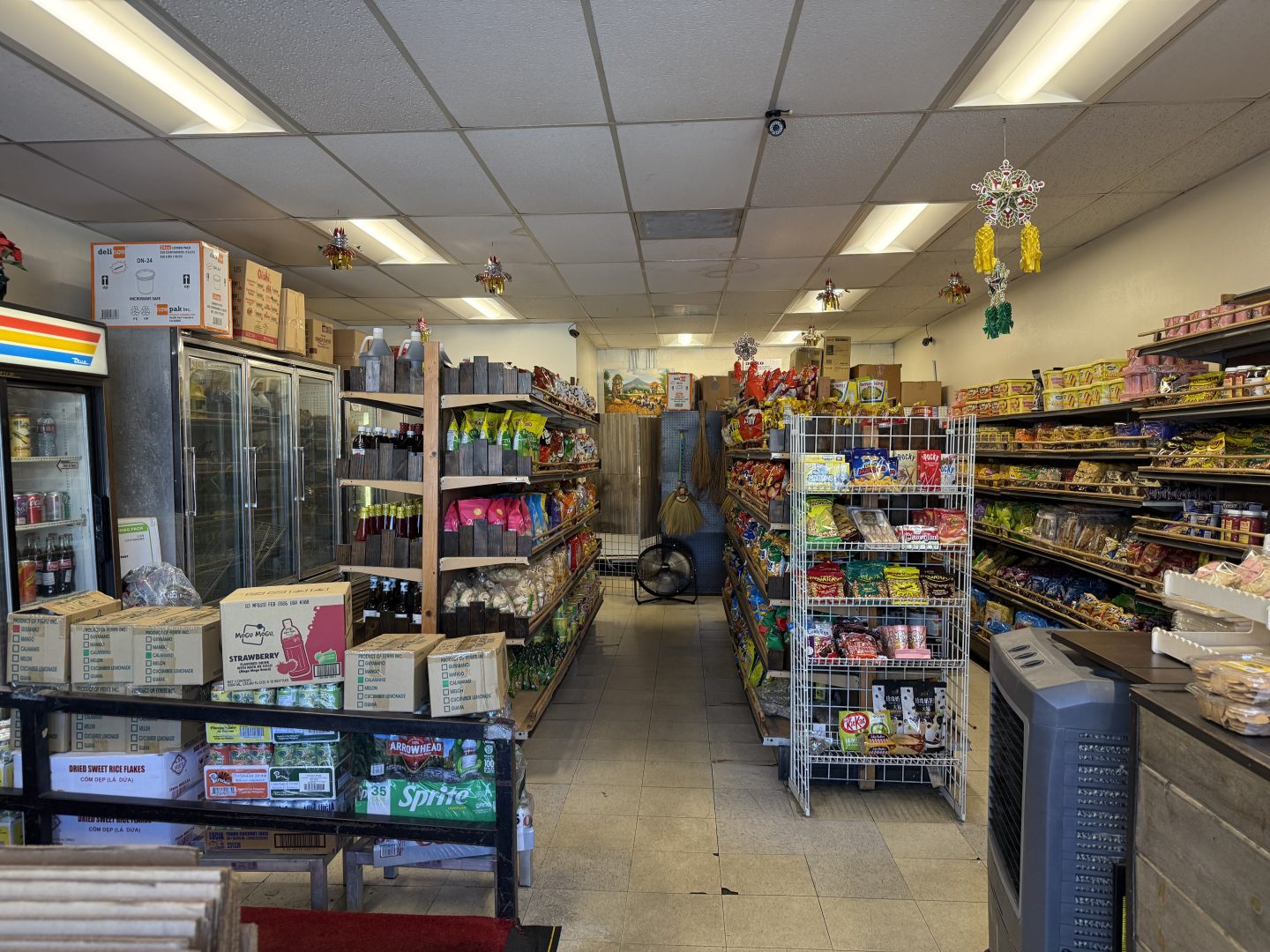
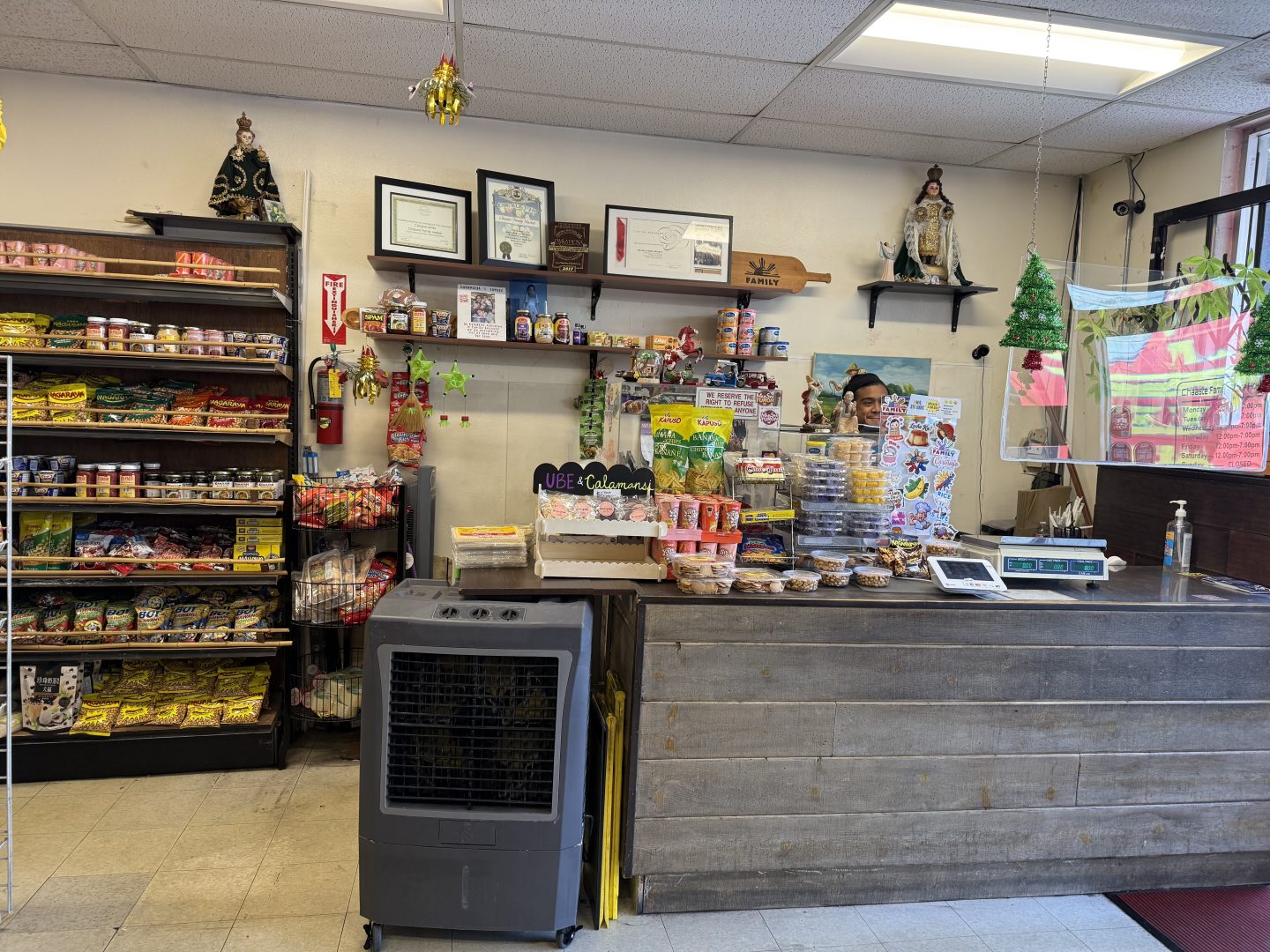
Chaaste Market’s displays and shelves of food and household items from the Philippines. | Photo by May S. Ruiz / Hey SoCal

Always someone to take things into her own hands, Susan did the marketing herself in the early days. Christian recalls, “Filipinos and Hispanics are mostly Catholic so my mom would go to the churches with flyers promoting the store. The Hispanic community kept us afloat; they came for our fresh produce – we didn’t have the hot food till 1995. This strip mall was a mini business hub for the Filipino community. My cousin owned the first video store two doors away; my uncle George had the small restaurant next door. The tax preparing business, the doctor’s office, and insurance company were Filipino-owned.”                     

Christian explains how Chaaste Market started offering hot food, known as turo-turo (literally point-point because customers point to the food). “People who were employed at the hospitals and in the healthcare field, the post office, and other private companies would get out from work too tired to cook after a long day. They would stop at my Uncle George’s restaurant to pick up food on their way home. But he closed early and those who had to leave work a bit later had no place to get hot food, so they asked my mom to offer turo-turo in the store. While she could cook, she wasn’t a professional chef and didn’t know how to prepare food for a hundred people. But she learned through hard work and trial and error.”

The youngest Esteban, Gabriel, was born a few years after the market opened. Being a close-knit family, the entire family was involved in the business. Their relatives – uncles, aunt, cousins – helped out and Chaaste Market flourished. In the intervening years, the Filipino restaurant and video store closed. There are now only two remaining Filipino-owned businesses but Chaaste still acts as the glue the binds the Filipino American community in the western San Gabriel Valley.              

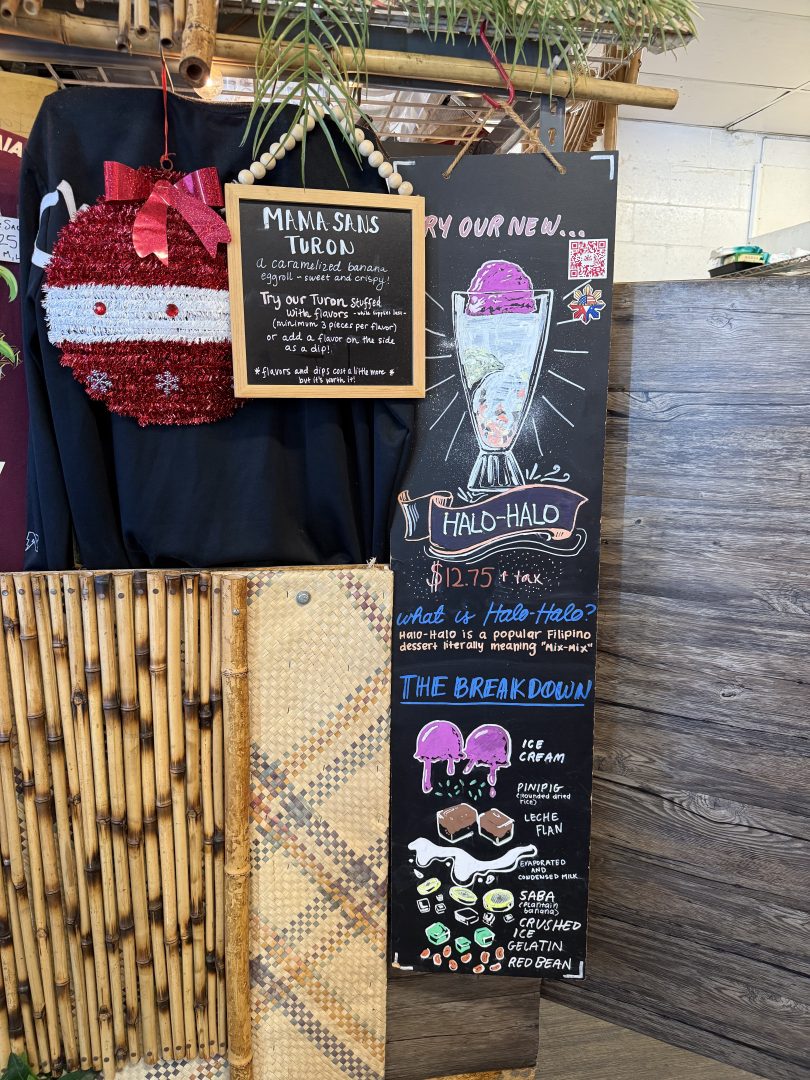
Drawing and explanation of halo-halo, a Filipino shaved ice dessert. | Photo by May S. Ruiz / Hey SoCal

Christian says about his upbringing, “My brothers and I have always been proud of being Filipino. But we were raised in Pasadena where the majority of the population is White, with some Blacks, Hispanics, and Asians. We went to private Catholic schools and grew up around non-Filipinos and we wanted to be like them, to fit in, to belong. So we had to adapt to our surroundings and to the way the kids we spent most of the day with ate, moved, and talked.”

Susan felt the only way for her children to really know what it meant to be Filipino was for them to live in the Philippines. “My mom sent us back to the Philippines in 2007 to attend university there and to learn about our culture,” Christian discloses. “I studied Film in Baguio where it’s cool and then worked in News and Public Affairs for GMA-7, traveling all over the country. The experience opened my eyes to a whole different world, the beauty of the Philippines, and the talent of Filipinos.”

“Being Filipino American and being Filipino are two distinct things,” clarifies Christian. “I thought I knew what it was to be Filipino, but it was only when I lived there that I recognized that it was a very different culture. I’m conversational in Tagalog and then I heard what the real Tagalog language is. I saw first-hand that Filipinos value education and have exceptional work ethic. Looking back now, it was that realization that gave me the passion to carry on my mom’s legacy through her store. I’m very proud of my heritage.”          

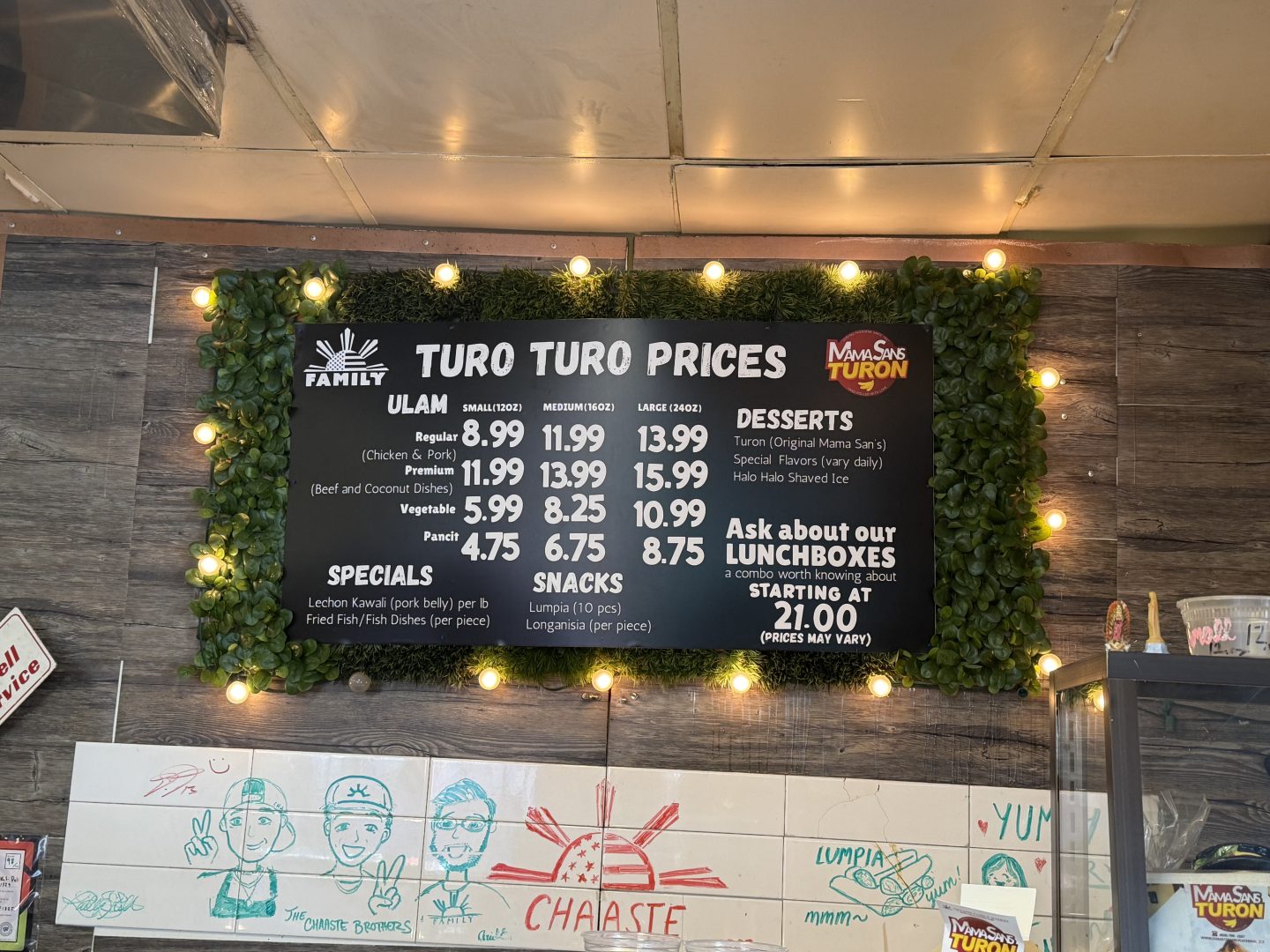
Hot food and dessert prices. | Photo by May S. Ruiz / Hey SoCal

When Arturo showed early signs of dementia (he has since passed away), Susan asked her children to come back to California. The store had been struggling to stay financially viable and she planned to close it. However, her children insisted they would take over and she could focus on their dad’s care.

“I really just wanted them to be here for emotional support,” Susan says. “With their excellent education, they were able to get wonderful jobs in the Philippines. They had enough work experience so it would have been easy for them to find professional employment here and earn good salaries.”

“It took a bit of convincing for my brothers, especially Abe, to go back to California,” admits Christian. “He attended Ateneo de Manila, and after graduation he was employed as systems operations manager at Hewlett Packard in the Philippines working with international companies.”

“But in the end, we love the store my mom built and we grew up thinking of it as our second home,” Christian emphasizes. “As kids my mom brought us back here from school and the parking lot was where we skateboarded. We’re connected to the store emotionally and spiritually; we grew up here with our cousins.”

Abraham behind the cashier by the store entrance, | Photo by May S. Ruiz / Hey SoCal

Abraham echoes Christian’s words. “HP offered to have me work remotely so I could stay on the job, which was very kind. But I declined because I also wanted to continue what Mom started 39 years ago. We’ve had a couple of proposals from people to buy the store and that would have been an opportunity for me and my brothers to find regular jobs, have weekends off, take a two-week vacation annually. However, the buyers weren’t Filipinos and they were going to convert it into something else altogether. And that outcome wasn’t something we wanted to see. It’s important for us to ensure that Filipino Americans in Pasadena and beyond have a place to come together as a community.”                    

That coming together as a community was on display last year after the Eaton Fire broke out. Chaaste Market organized a donation drive and filled half of the store with clothes and toiletries from Filipino Americans who wanted to help. The brothers posted it on Instagram and very quickly fire survivors came to avail themselves of the much-needed items.

Filipinos are, by nature, big-hearted and generous to a fault. But they are also very low-key; they don’t want to call attention to themselves and they avoid public accolades. They want to give quietly, even anonymously.

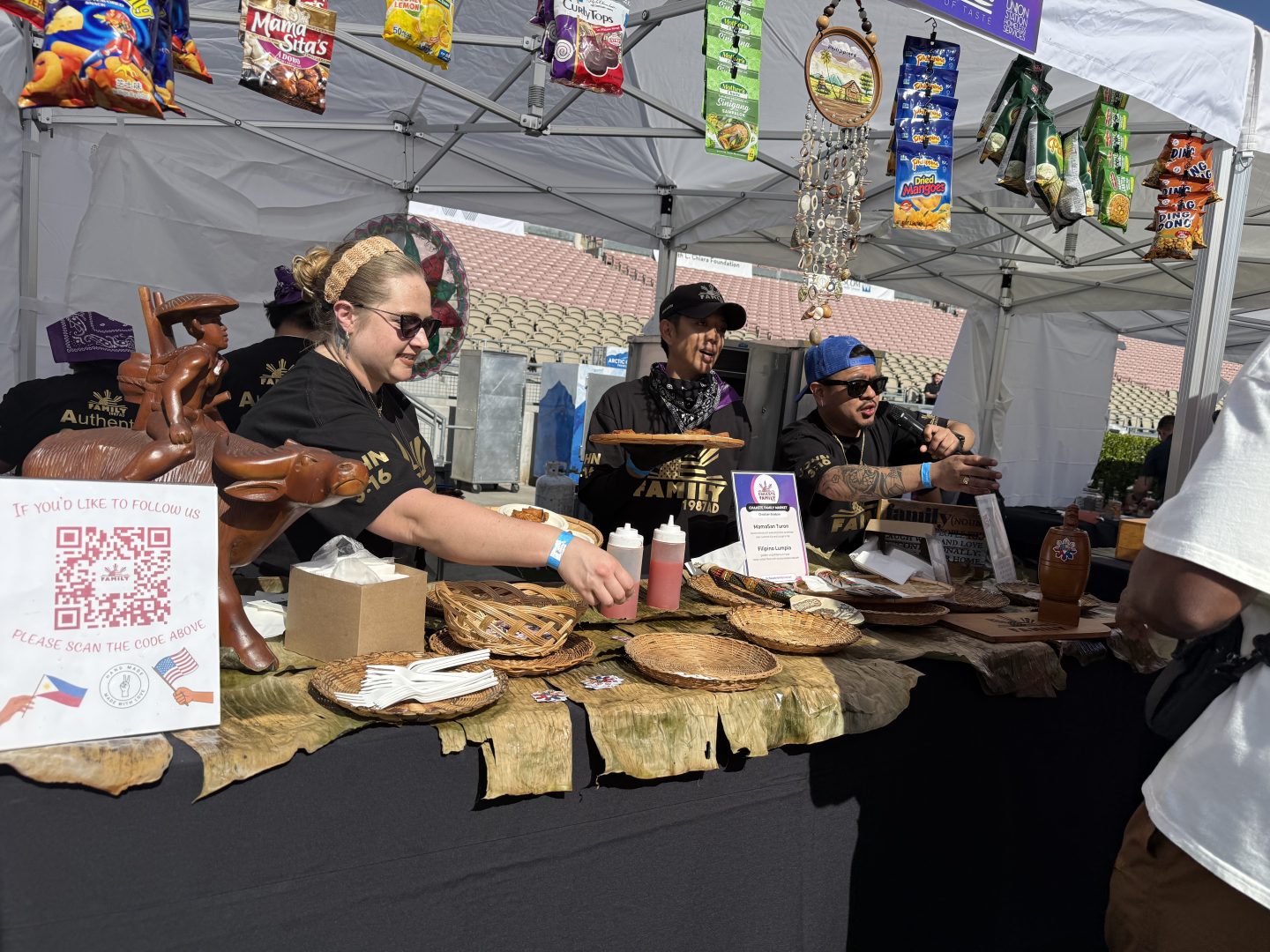
Chaaste Market table at Masters of Taste 2026 at the Rose Bowl. | Photo by May S. Ruiz / Hey SoCal

But the Esteban brothers broke the mold this past spring when Chaaste Market participated in Masters of Taste 2026, an annual event that attracts thousands of foodies from all over Southern California and gets much media coverage. They brought their own sound system to play Filipino music and Abraham talked about their store, to the delight of those who were in the long queue to sample their lumpiá and signature Mama San’s turón.       

The pride in their heritage is the philosophy behind the store. Christian describes, “Chaaste Market is all about the Filipinos’ way of life, our attitudes, generosity, and openness. We always invite people to eat with us – kain na (let’s eat) is an everyday phrase we use. And my mom wanted to share that with our customers.”     

Chaaste Market is open from Monday to Saturday. During the pandemic, they stopped carrying produce, removed the lunch/dinner tables, and shortened the hours to 12 pm to 7 pm (from the previous 11 am to 8 pm). Customers come primarily for the hot food and the store sells between 70 to 100 “to-go” boxes daily.     

Gabriel behind the hot food counter. | Photo by May S. Ruiz / Hey SoCal

Susan is still actively involved and, to this day, Chaaste Market uses her recipes. Gabriel explains, “Initially, I wanted to do fusion so I could incorporate what I learned in culinary school but my mom was adamant about keeping it traditional. My mom didn’t teach me how to cook Filipino food; I picked it up from observing and watching her. But my two brothers and I spent several years in the Philippines so I was able to try all kinds of Filipino food. Now that I’ve been cooking over ten years, I’m inclined to keep it as it is, but working the kitchen more efficiently.”

“While some Filipino chefs put their own spin on Filipino food, I focus on different techniques in keeping the food hot,” Gabriel says further. “It took me about two to three years to learn that some dishes have to be prepared a certain way so they don’t spoil. Pasadena has very strict health inspection requirements. Health inspectors want food to be at a specific temperature and they don’t understand that a lot of our food are cooked with vinegar. For example, chicken adobo keeps cooking after it leaves the fire so there’s a potential for the chicken to get too dry and tough. That’s one of the reasons we stopped making pork barbecue, which was a very popular item.”

According to Gabriel beef steak is a favorite among customers and is one of Chaaste Market’s mainstays. He thinks the dish is popular because beef is expensive so it isn’t something being offered in most turo-turo places; it’s usually available only for catering. Other mainstay dishes are pork adobo and chicken adobo.     

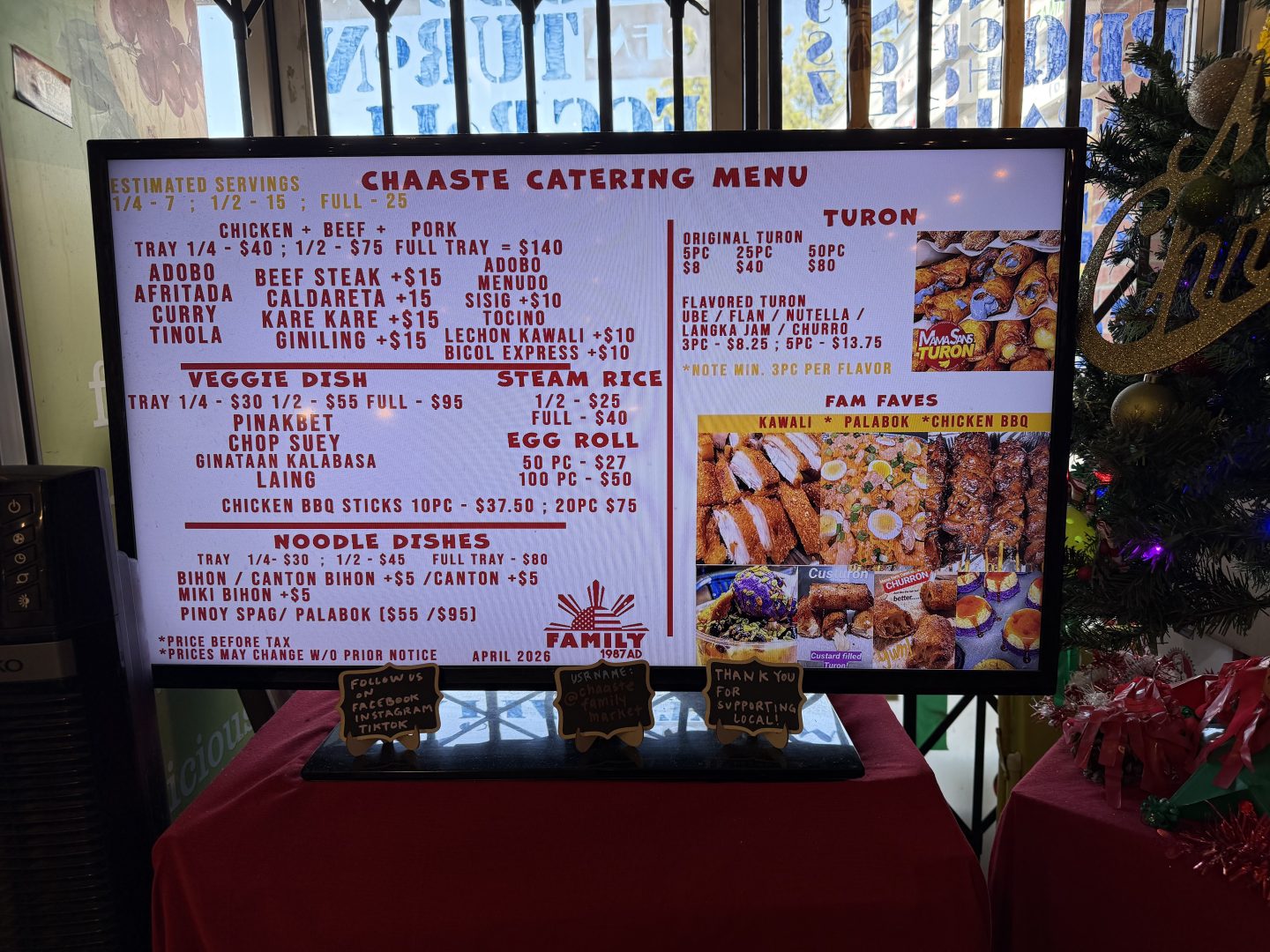
Chaaste Market’s catering menu board. | Photo by May S. Ruiz / Hey SoCal

“We have many vegetarian customers now so we have adjusted our menu to offer what the community wants,” adds Gabriel. “Most Filipino vegetable dishes are cooked with meat to give them more flavor. It took us a while to transition and offer a variety of dishes that vegetarians can eat. They’ve been surprisingly popular and we’re getting more customers in.”

The store has been getting media attention in recent years which has really boosted business. Gabriel recounts, “About ten years ago, a Filipino actress living here had a show in Echo Park and she asked us to cater turón. That’s how people first heard about us and customers started coming to Chaaste Market from the exposure. It’s such a blessing and a grace of God – we don’t advertise or promote the store. We don’t really know how to use social media and we’re busy working in the store that we have no time to post regularly.”

“It’s quite miraculous when bloggers and influencers come over,” says Gabriel in amazement. “A few months ago, Richard Antablian, who has a blog called ‘1 Hour Lunch Break’ on Instagram, Tik Tok, and YouTube showed up and just got food – which he ate in his car – and posted videos. About three days after he posted his blog, we got an influx of customers and we sold out in a couple of hours. A food blog called ‘The Infatuation’ has also been one of our supporters – we’re consisently on the top 10 on the list of food places in Pasadena. The LA Times has run a few articles about our food, and some local publications have featured us.” 

“Fridays and Saturdays are our busiest days because we have both the catering and the turo-turo business,” Gabriel states further. “The media coverage has been bringing us catering customers from almost everywhere, who initially request our chicken barbecue, lumpiá, and turón. And when they come to pick up their order, they decide to get other dishes from our turo-turo.”

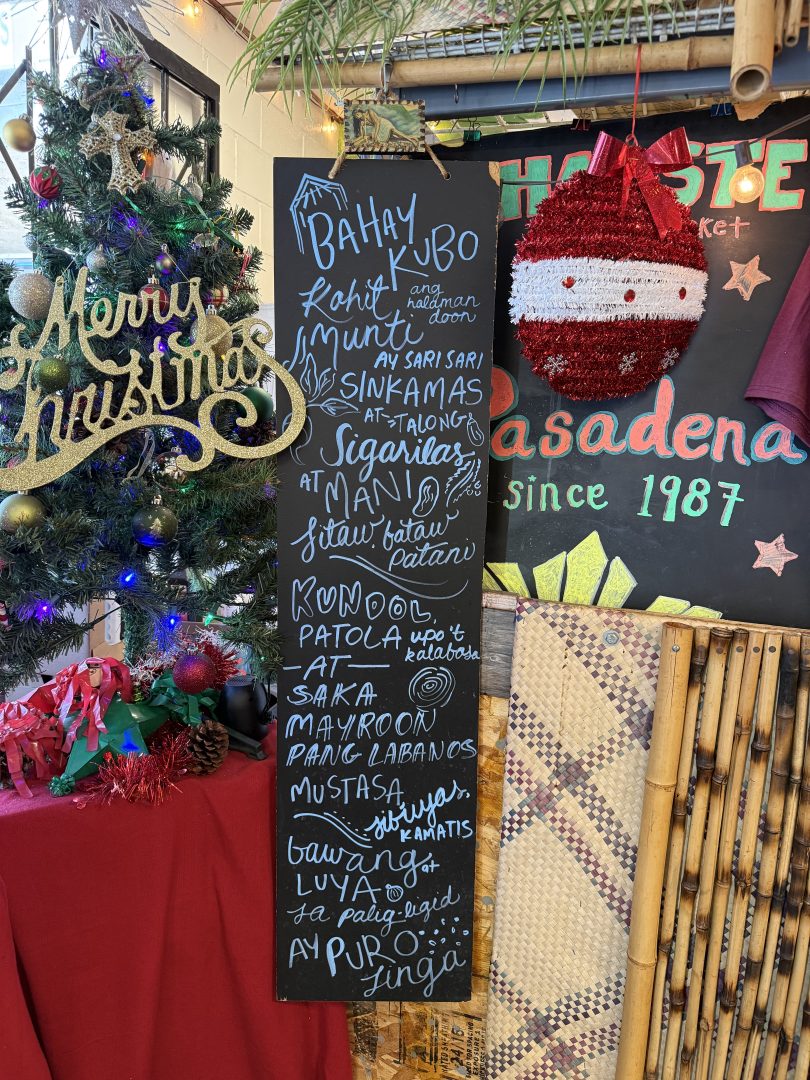
Blackboard with lyrics to Bahay Kubo (Nipa Hut), a Filipino folk song. | Photo by May S. Ruiz / Hey So Cal

For all the popularity Chaaste Market has gained and the success their business has reaped, the Esteban brothers never take anything or anyone for granted – they are humble and grateful, always. They greet all their patrons with a warm welcome. They happily chat with shoppers, many of whom they know by name. And they thank people for coming when they pay for their purchase.

The store is never empty of customers – Filipinos and non-Filipinos. There’s a constant stream of people from Pasadena and neighboring cities and from as far away as Santa Clarita, coming for the turo-turo and other Filipino items. For the majority of its customers, Chaaste Market is a regular stop from work on their drive home to buy hot food for their family.

But for some Filipinos, Chaaste Market is the place that brings back fond memories of their homeland – with the familiar objects and aromas. The lyrics of the long-forgotten first song they learned as toddlers, written on a blackboard in one corner, bring a smile. On the walls, drawings and references to-all-things-Filipino are nostalgic reminders of their youth all those years ago. Chaaste Family Market keeps the Filipino culture and traditions alive.