M. G. Rawls Completes Series with Third Book ‘The Sorts of Pasadena Hollow: Henry’s Hopes’

Also published on Hey SoCal on 14 September 2023
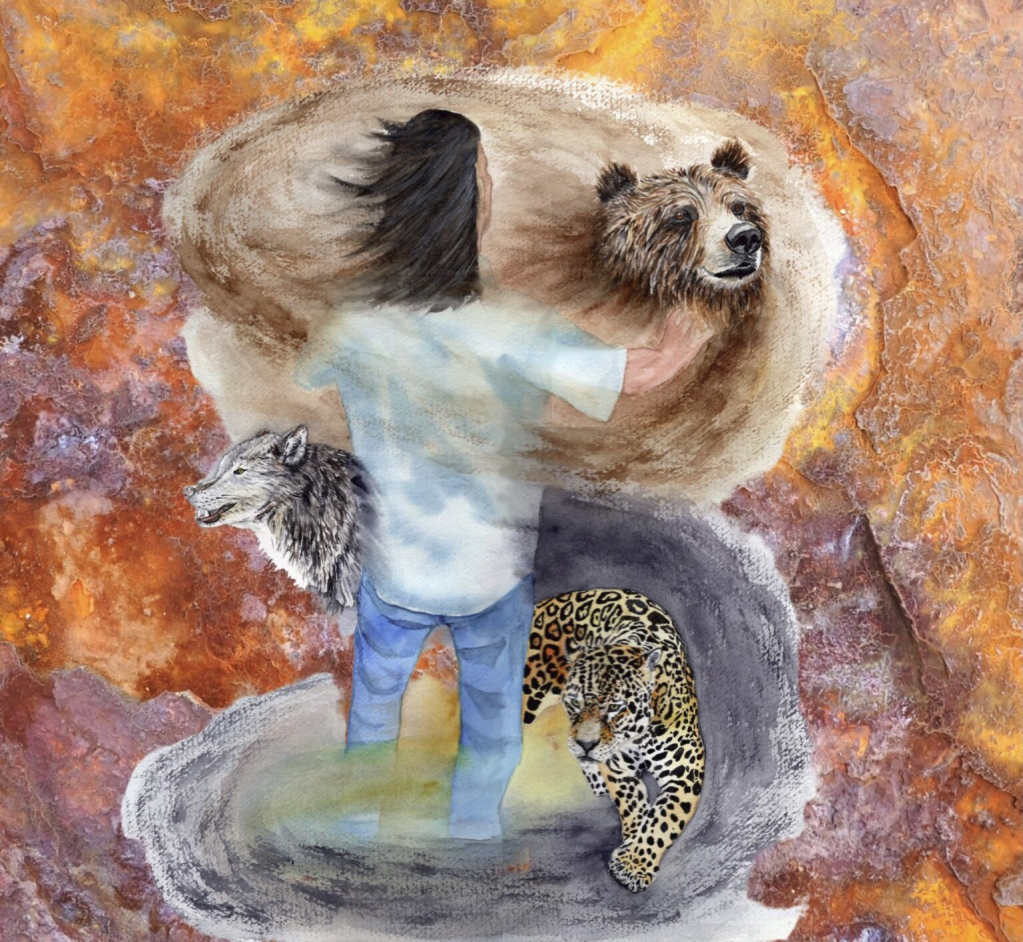
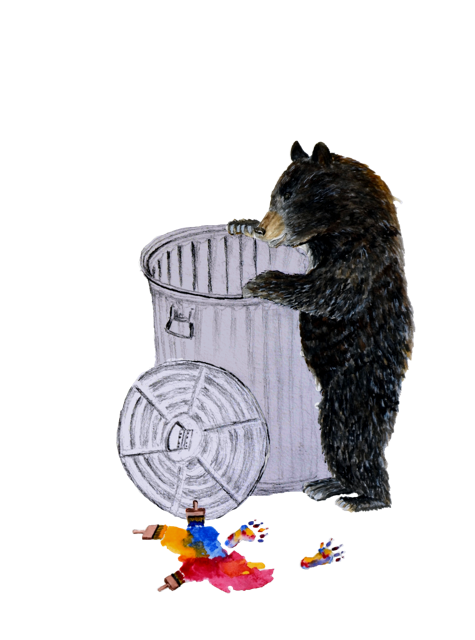
Chapter 28 ‘Extirpation’ illustration by J.J. Dunn | Rawls says, “I’m fascinated with the idea that there are extirpated animals and it makes me wonder whether they’ll come back | Photo courtesy of M.G. Rawls

While enjoying a refreshing glass of iced tea – and maybe a sandwich – on the balcony of M.G. Rawls’s home, you may get a sighting of a black bear. Or maybe a mountain lion. A review of her security camera from the previous night’s outdoor activity might show nocturnal creatures having free run of the creek that abuts her property.

They are the inspirations for the characters that inhabit The Sorts of Pasadena Hollow, a trilogy of young adult books created by Rawls in 2019 (Sorts are people who can transform into animals). Her first book, Hannah’s Fires, at 166 pages, follows a teenager’s story as she settles into her new home in Pasadena Hollow. The second installment, Tony’s Tales, is 224 pages and focuses on Hannah’s first friend there. The last in the series is Henry’s Hopes, which is 332 pages long and has just been released on Amazon as an ebook (order it here). It chronicles the life of an elderly Tongva shaman, one of the earliest residents in the area, who also serves as mentor for the young Sorts.
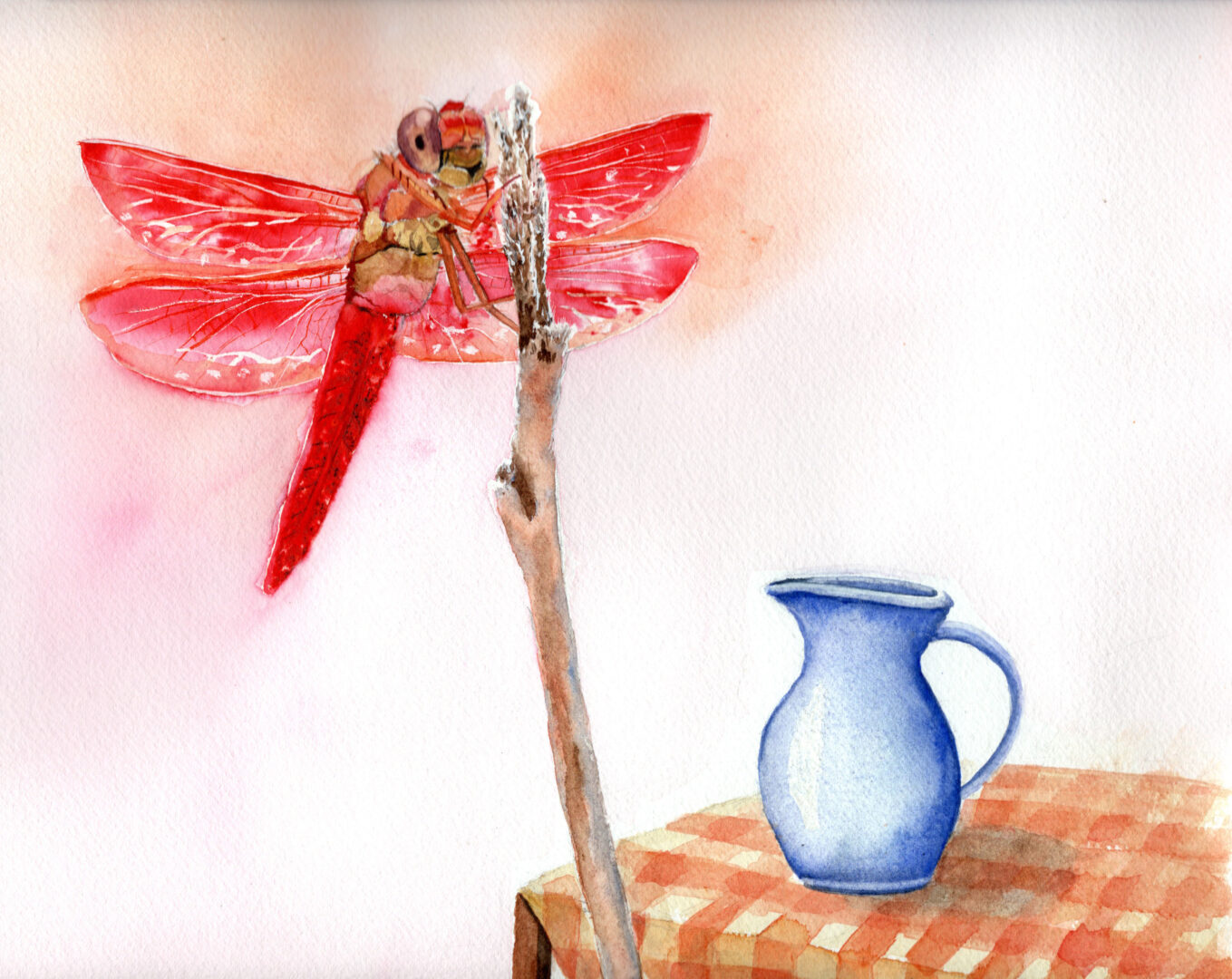
Chapter 1 ‘A Red Dragonfly and Birch Beer’ illustration by J. J. Dunn | Rawls says, “This red dragonfly landed on a single upright branch of a small apple tree in my yard. His face was so expressive, I couldn’t resist including him in my story. Birch beer (non-alcoholic) was a staple of my New England childhood and later visits.” / Photo courtesy of M. G. Rawls

Rawls graciously invites me for lunch followed by a short interview for a second article about her books (read first article here). I mention that each of the three books became increasingly longer, and ask if she planned it that way or if more ideas just came to her as she wrote.

“My initial thought was always to have three books but the audience would start at 5th grade and they would mature as I went along,” Rawls replies. “At the same time, it would help me, since I was a new writer, to be able to write in a way that I was comfortable with with each book. So you can see my progression through my work – it starts out simpler, then gets more complicated. I was always hoping that the reader who liked the book in 5th grade would like the next in 6th, and so on, as they were reading. I was writing it for middle schoolers and older.”

“With the exception of a few supporting characters, the main people in Henry’s Hopes were already part of the first,” Rawls adds. “One of the comments I received from readers is that there are so many to keep track of, so I included a list and description of characters at the beginning of each book.”  

Rawls kept to a fixed idea about how each book will flow. She explains, “Consistent with I told you in the first interview, the concept was the same with all three books. I created the chapter titles first and then built the story for each section. And what I wrote inspired me as I fleshed out that chapter. I pretty much stayed with the same titles I started out with; I made very little deviation from them.”          
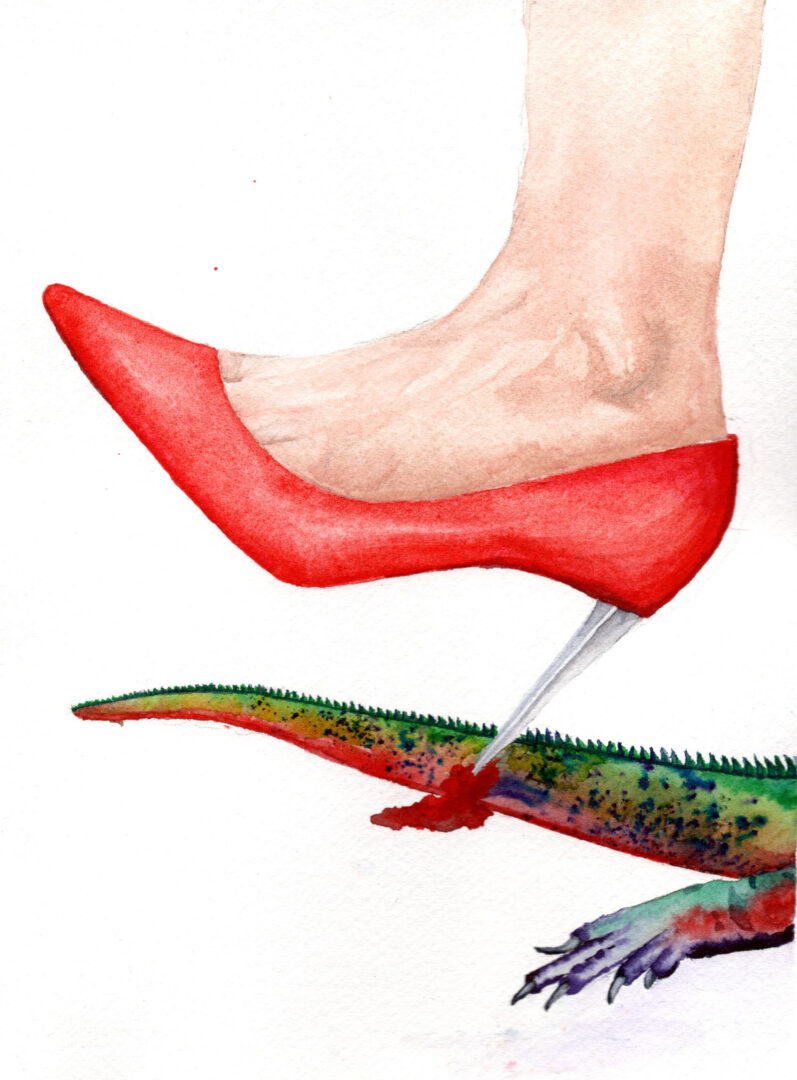
Chapter 3 ‘Till Death Do Part’ illustration by J. J. Dunn| Rawls claims, “This one is pure fantasy. Thankfully, no one I know (except for Sparkle Bitters) ever sliced off the tail of a marine iguana.” / Photo courtesy of M. G. Rawls

I then ask if she has a favorite character in her books, and Rawls responds, “You had a similar question the first time you wrote an article about The Sorts of Pasadena Hollow and my answer is: if I did, I wouldn’t say. Although each book has its own unique characters. In the first, there’s Hannah, the young adult girl with the emotional constraints within her. In the second, there’s Tony, who’s somewhat reckless; I meant for Tony’s Tales to be a boys’ book; and in the third – the adult book – there’s Henry, the Tongva spiritual leader. He wants the best for everybody but he doesn’t necessarily go about it the right way; he tends to be Machiavellian.”    

“Did the idea to write a book set in your neck of the woods happen organically or was there a particular moment or instance when it occurred?” I query. Rawls replies, “The inspiration for this series came from an article in the L.A. Times – which I included in Hannah’s Fires – about an engineer who was convinced there were half-lizards living deep under the ground with a cache of gold and arranged to dig for it. I was so intrigued by that article and it motivated me to create these characters.

“Besides that, we live next to a creek and I can hear the water running – especially when the door is open at night. Most (not all) of the animal events in my books have their genesis in reality. In the first book, for example, there’s a raven who tries to steal Hannah’s bracelet and pretends he hurt his wing to try to get sympathy from her because he likes her. About 10 or 15 years ago, my husband found what he thought was an injured juvenile raven. We took it in for the night and the next morning there was such a squawking outside, it woke us up. Dozens of ravens were on our fence and across the street staring at us – it was clear what they wanted. We brought out the juvenile and he flew off unhurt. My daughter named that raven Nicky and she would look for it at her school. I later heard that ravens are very smart and will sometimes feign injury to get attention.”

“As I said during your first interview, I had been nurturing this story in my mind since we moved here in 1988. When the idea to write these books happened, all the stories that have accumulated over the years living here started coming back to me,” she continues. “In 2019, I began writing them as notes on my iPhone in the early morning and they got longer and longer. Finally I started pruning it out and thought ‘Oh, this is interesting.’ It gave me comfort – it was a world I could escape into.”   
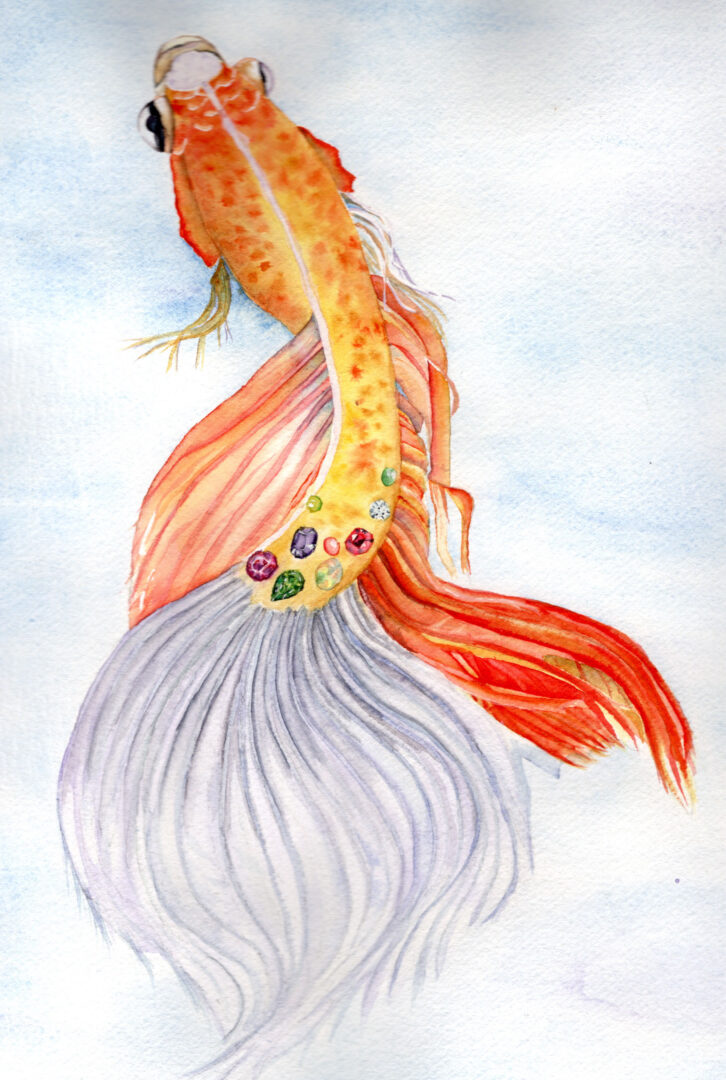
Chapter 11 ‘The Jeweled Koi’ illustration by J. J. Dunn | Rawls states, “I had a number of goldfish growing up including one named ‘Goldy’ who lived for several years until one day she jumped out and the consequences were tragic. The jewels were inspired by a book I read where the rulers kept giant kois in ponds and they attached precious jewels to their tails.” / Photo courtesy of M. G. Rawls

Unlike some popular fantasy young adult books set in dystopian worlds, the Sorts live in a utopian society. Rawls intentionally created an inclusive world where everyone is accepted. Without calling attention to it, she ensured there was representation for people of diverse race, age, and sexual orientation.                            

While some authors say they wish they had written something differently, Rawls stands by what she has created. “I’m fine with how they all turned out. If there was something I put in the book that sent me on a different path, I went along where that led me. That’s not to say I abandoned an idea or that I didn’t have a particular destination – I had the chapter titles to guide me – but the road wasn’t restricted.”

The ending to her third book wasn’t planned in advance. Rawls reveals in jest, “A writer I know once told me that every story needs to have an arc. Until she said that I hadn’t heard of the word. I didn’t know what it meant; I think I had to look it up because I was embarrassed. So I worked on my arc. Seriously, though, I had an idea how I wanted it to end, but not the specifics. It only came to me as I got there.”          
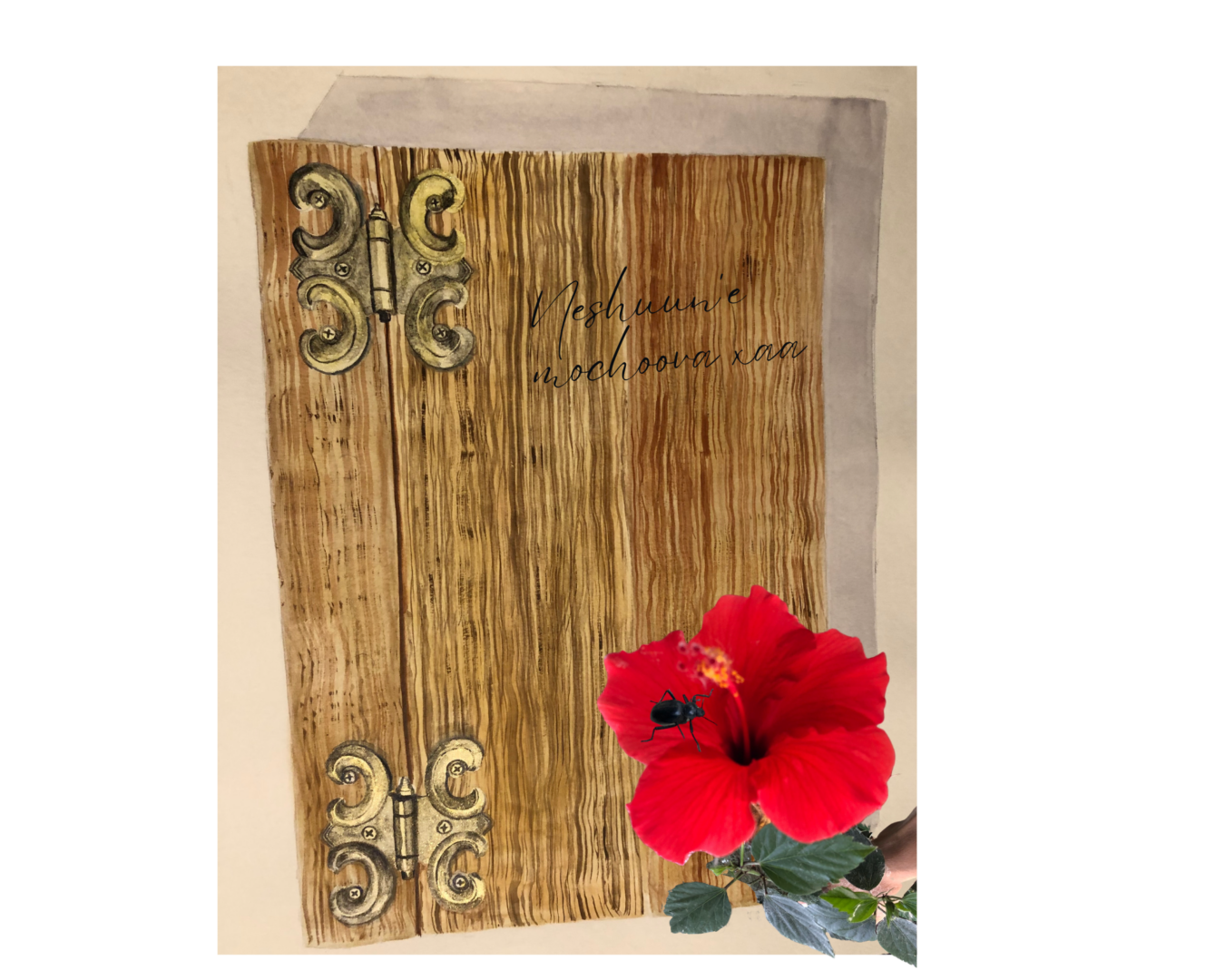
Chapter 33 “Wedding of Sorts’ illustration by J. J. Dunn | Rawls describes, “I thought the Tongva phrase ‘My heart is with you’ was appropriate for a wedding book. J. J. Dunn based her painting on her husband’s German family book. I added the stink bug and hibiscus from my yard.” / Photo courtesy of M. G. Rawls

When I ask her to describe how she felt after completing the last book in the trilogy, Rawls simply answers, “These characters have taken a life of their own – my job is done!”

At the end of Henry’s Hopes, we find Lydia as the voice for the characters and the narrator of events we’ve been following. It comes as a surprise. And yet it’s because she isn’t a Sort – not in spite of it – that makes her the logical storyteller. As Rawls says, “The events that happen are everyday occurrences for the Sorts so they don’t find them interesting. But they’re not normal activities for Lydia so she’s fascinated by them. Being an investigative reporter, she thinks of them as a mystery to be unraveled.”

Rawls’s characters grow with her as she matures in her writing. While she starts out tentative in Hannah’s Fires, she gets more confident in Tony’s Tales, and reaches her stride in Henry’s Hopes. In the same vein, a reader slowly gains insight about them and inevitably becomes invested in Hannah, Tony, Henry, and all the Sorts in Pasadena Hollow… and feels sad that there won’t be another book to look forward to. But Rawls also leaves a huge gap where a reader can infer that events will have transpired, leaving the possibility open for her to pick up where she left off.

As with painters and other artists, authors cede control of their work once it’s out there for the public to make of it what they will. So we can imagine for ourselves milestones happening during that gap – or
‘The Sorts of Pasadena Hollow’ Features Local History and Wildlife

Originally published on 12 November 2020 in the Pasadena Independent, Arcadia Weekly, and Monrovia Weekly

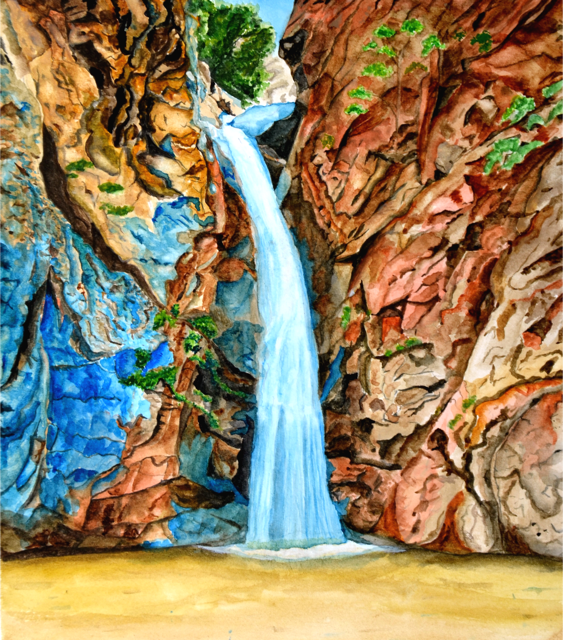
Illustration by J.J. Dunn | Courtesy photo / M.G. Rawls

Pasadena is only 12 miles from the hustle and bustle of downtown Los Angeles, but you’d never know it if you are a resident of its canyon area. Here, busy activity comes from the bears, mountain lions, and exotic wildlife that call it home. Human residents are used to observing animals we would otherwise only see at the zoo go about their daily existence.

In a newly published young adult book called ‘The Sorts of Pasadena Hollow: Hannah’s Fires,’ (available on Amazon) humans and the wildlife share equal billing as well as the locale’s physical space. Readers will be excited to read on and find out what creatures are lurking in the book’s pages.

‘The Sorts of Pasadena Hollow’ is an unexpected offering from M. G. Rawls, a former lawyer who spent her working career battling with contractors who had failed to pay pension and fringe benefit contributions on behalf of their union employees. Let me add that I am also her friend and, in all the years I’ve known her, never imagined she would come up with this book. But, as this article will reveal, there is a logical explanation for the theme choice.

Conducting the interview by email, I start by remarking, “I’ve heard of previous lawyers who ended up writing legal thrillers, proving the adage that you write what you know. And that begs the question – why fantasy? Have you been harboring an interest in the genre for a while?”

“Great question!” answers Rawls. “I’ve wondered about this myself. Before retiring in 2013, I represented union trust funds in breach of contract actions. I enjoyed what I did, but it’s probably not an exciting basis for a novel.”

“What inspires and continues to inspire me is living in the foothills of the San Gabriel Mountains in the Angeles Crest Forest and watching bears with cubs, deer, coyotes, skunks, mountain lions, foxes, miner’s cats (bet most have never heard of those stripe-tailed and raccoon-eyed nocturnal animals), the list of sightings is endless. Many of the descriptions in my fantasy story have their genesis in real events that happened and most of the wild animals I write about are local to the Pasadena and surrounding areas. I have been nurturing this story in my mind since I moved here in 1988,” reveals Rawls.

“Did the ideas about what animals to include in the books come before the people?” I ask, and Rawls replies, “No, generally the people came first and then as I developed their characters, their animal forms emerged.”

Illustration by J.J. Dunn | Courtesy photo / M.G. Rawls

One of Rawls’s characters is a Tongva man and I ask what compelled her to write about the tribe. She responds, “I first learned about the Tongva, an indigenous people that inhabited the area thousands of years before the Europeans settlers, through docent training at the Pasadena Museum of History. Their descendants exist today and their language continues to be taught. I love history, especially local history and wanted to learn more, so in researching the Tongva, I discovered that they believe in a spiritual connection between themselves, animals, and the land. That is fascinating to me, given the little canyon where I live. There is so much more I want to learn; I hope to do further research on this.”

The book includes real events that transpired in Pasadena and I ask if she investigated major events that made the news to build around and if there were places she wanted to include beforehand.

“I did both,” discloses Rawls. “It was fun to put the pieces together as I wrote the story. Having been an attorney, I worked to make my fantasy story as logical as possible. For example, there was a small discovery of gold in Southern California in 1842 before the major discovery in Northern California in 1848 at Sutter’s Sawmill in Coloma. I found that idea fascinating and built a small subplot around it. Also, one of the largest solar storms to hit the earth, known as the Carrington event, occurred in 1859. It was so bright, it was reported that gold prospectors got up thinking it was morning. That event is an important part of my books, but written in a way that I hope readers will remember. As for local places, between the three books, I think I will have written about every place of interest in the Pasadena area from the Cawston Ostrich Farm in South Pasadena (closed in 1935) to Pasadena City College and the Huntington Library in San Marino.

“Why did you chose to make it a fantasy story and why did you give your characters extraordinary powers?” I inquire. “Every writer is different of course,” Rawls states. “But for me, writing fantasy allowed me to expand my love of history in a creative manner. I wanted to include local history, but also have the flexibility to invent when needed. Wrapping local history with fantasy is my sneaky way of making history interesting and memorable to younger readers.

“I forgot to mention that I’m also a volunteer in the Junior Docent program at the Museum, training seventh and eighth graders in tours of the historic Fenyes mansion. So I’ve had some experience seeing what works and doesn’t work in retaining information.”

Illustration by J.J. Dunn | Courtesy photo / M.G. Rawls

Then I inquire how she decided on who her protagonists were going to be, whether training young people had any bearing on her choice, and if she thought the Z Generation had more compelling life challenges to overcome.

Rawls says, “In this first book, I knew it was going to be a young female. In that regard, I guess you do write what you know, since I was once 19. Though I want to stress this is a fictional story. I don’t know that training the junior docents influenced me other than hearing what interests them – like the stuffed owl and marmoset monkey cage in the Mansion’s studio. You may see these in Henry’s Hopes. I think young or old we all have life challenges to overcome, though the young may have the additional burden of not knowing where they’re headed, having so much of their life in front of them.”

“Why did you give them extraordinary powers?” I ask. “That’s an easy one,” declares Rawls. “In Hannah’s case, she is a 19-year-old girl who’s had a tough life, with no real family, and an evil stepfather. She suffers from nightmares and real life demons that she cannot get rid of. But there is hope as she enters this magical place called Pasadena Hollow.”

Curious about her process, I inquire, “Did you already have all the components planned out before you set out to write the books or did you make them up as you went along? Did you base some of your characters on people you know or have met or are they purely imagined?”

Replies Rawls, “Essentially, what I did is title my chapters and then write the story around the names of the chapters. I have no idea if this is how it’s supposed to be done. But it was important to me to get chapter names I was happy with. All three books are the same, chapter headings first and no outline. My characters are fictional! Even if there was a connection with a real person, living or deceased, I don’t know that I would say who it was.”

Asked what was the most difficult hurdle to overcome as she wrote, Rawls confesses, “Probably myself. I didn’t even tell my husband I’d written a book, until I handed him a near final draft. He took it in good stride and was very supportive, but he read it so fast I went back and lengthened it!”       

Illustration by J.J. Dunn | Courtesy photo / M.G. Rawls

“Where did the name ‘sorts’ for these fantasy characters come from?” I query. And Rawls says, “It’s from the phrase ‘It takes all sorts,’ that I’ve been fascinated with forever. I couldn’t figure if the phrase was positive or negative, so I’ve used it for both and included it in my prologue. I don’t know the origin – maybe one of your savvy readers does.

“I’ve even taken to sometimes calling the creatures we see on a daily basis, ‘Sorts.’ You know, the grasshopper that clings to the screen door, the cricket that chirps inside the house or apartment, but you cannot locate, even the friendly jumping spider with the inquisitive eyes and red body I found in my house and relocated outside. Even if we don’t live near the forest, I think we’ve all wondered about these everyday creatures. – what they’re thinking and who they really are…”

‘Hannah’s Fires’ is the first installment in a planned trilogy. I ask her how far the characters’ arcs go and if the books will span several years as they grow older. Rawls replies, “In book two, ‘The Sorts of Pasadena Hollow: Tony’s Tales,’ the characters only age a few months, but you learn more about their back stories and personalities. And this second book takes a deep look, literally, as to what lives or rather lurks deep under Pasadena. I met with a Caltech geologist and despite my insistent prodding, he assures me that absolutely nothing like I imagined lives under Pasadena. But who knows? Haven’t we only gone down about seven miles? As you can probably tell, I’m a big fan of Jules Verne, having read ‘Journey to the Center of the Earth.’

“The third book, ‘Henry’s Hopes,’ continues the same time period, but just might have a brief flash forward at the end. ‘Tony’s Tales’ is nearing final edits and will appear first as an e-book without illustrations. I have also completed the first draft on ‘Henry’s Hopes,’ which should be online by late next year.”

‘The Sorts of Pasadena Hollow’ is aimed at readers from middle-school age to adults. Rawls asserts, “There is no reason why adults can’t enjoy fantasy or, in my case, enjoy fantasy writing. I want my readers to be able to escape, even if only for a brief period.”

Readers, young and old, will be treated to beautiful full-color drawings that begin each chapter in the ebook and a colored edition of the paperback, which is now an available option (order here). Rawls enthuses, “I want to give a shout out to the  illustrator, JJ Dunn. JJ has been a friend since our children were in preschool, but I never knew she could draw until she gave me a picture for Christmas a couple of years ago. Her pictures are amazing! I hope you enjoy them as much as I have.”

Having been a Pasadena resident close to four decades, I was fascinated to discover its history through Rawls’s book. It gave me such a thrill that some of the landmarks where the events happen are places I frequent and know very well. I had fun figuring out what a fictional location’s real name is and trying to guess who a character is based on. It’s almost like an insider’s view of Pasadena and its residents. And that’s fantastic!