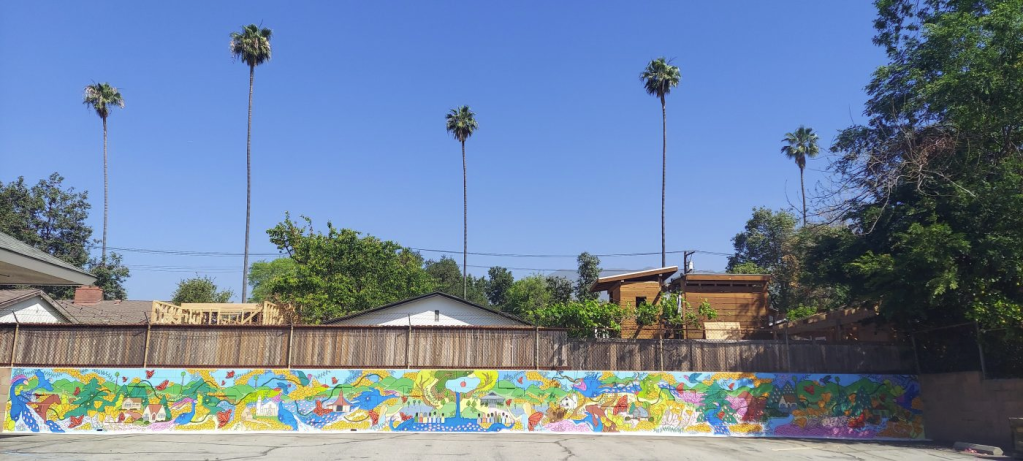
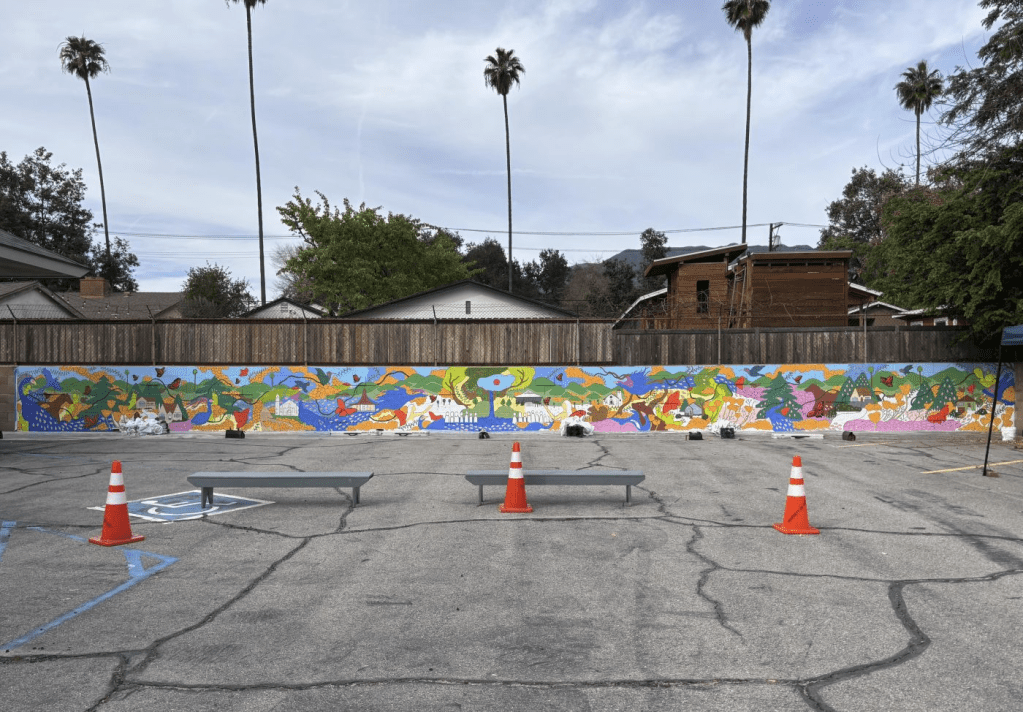
The completed “Healing and Hope” mural unveiled. | Photo courtesy of the Pasadena Buddhist Temple
The Pasadena Buddhist Temple celebrated the completion of the “Healing and Hope” mural at 3 pm on Sunday, March 22. The brainchild of Kyoko Gibbs, wife of the temple’s spiritual leader Rev. Gregory Gibbs, who collaborated with Miki Yokoyama, an artist and Eaton Fire survivor – it was a way of restoring the community after their life-shattering experience.
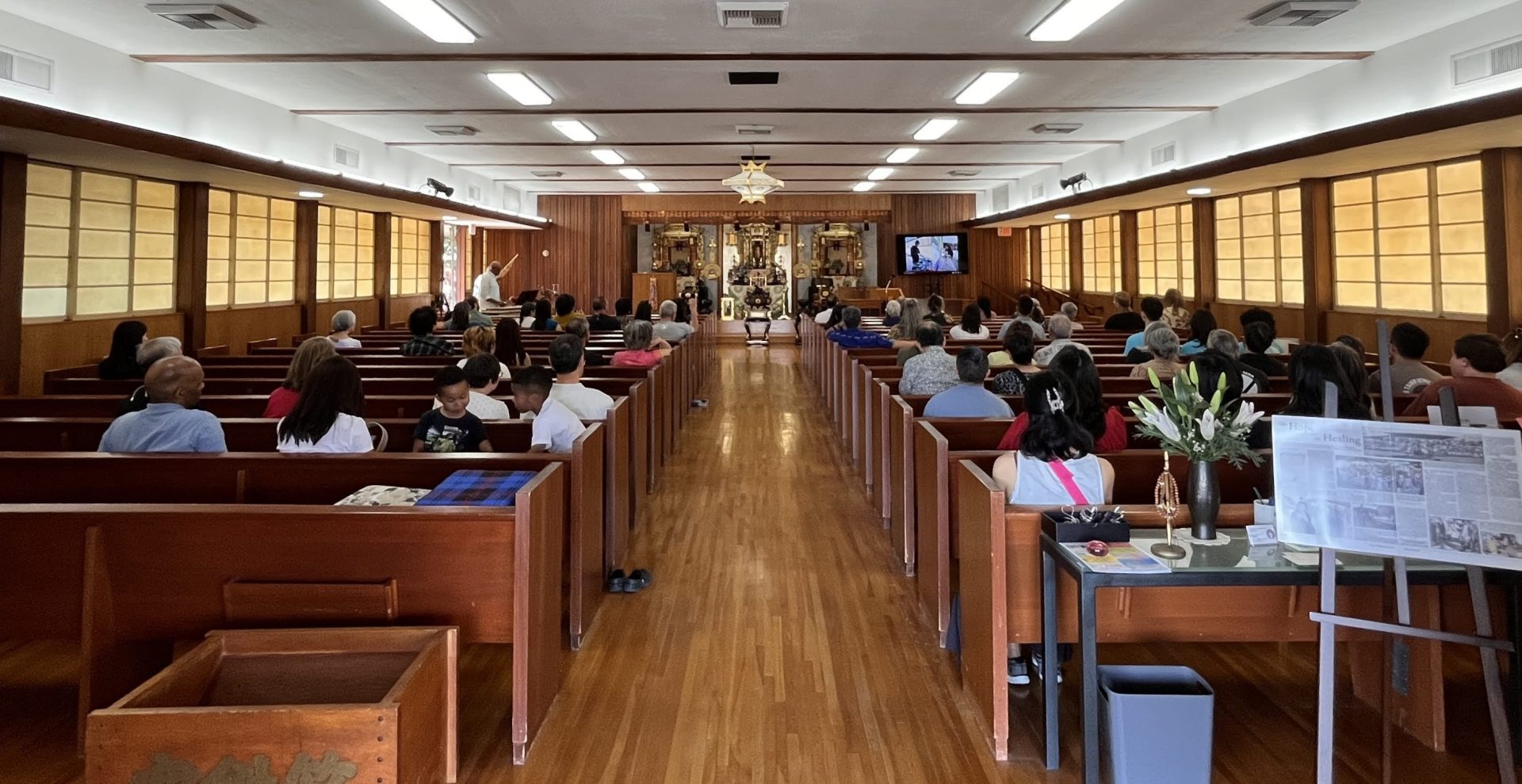
It was a festive occasion with about 70 people in attendance. A video about the progress of the mural was shown, after which attendees were invited to gather outside for the unveiling of the completed mural.
About 70 people attended the celebration at the Pasadena Buddhist Temple. | Photo courtesy of the Pasadena Buddhist Temple
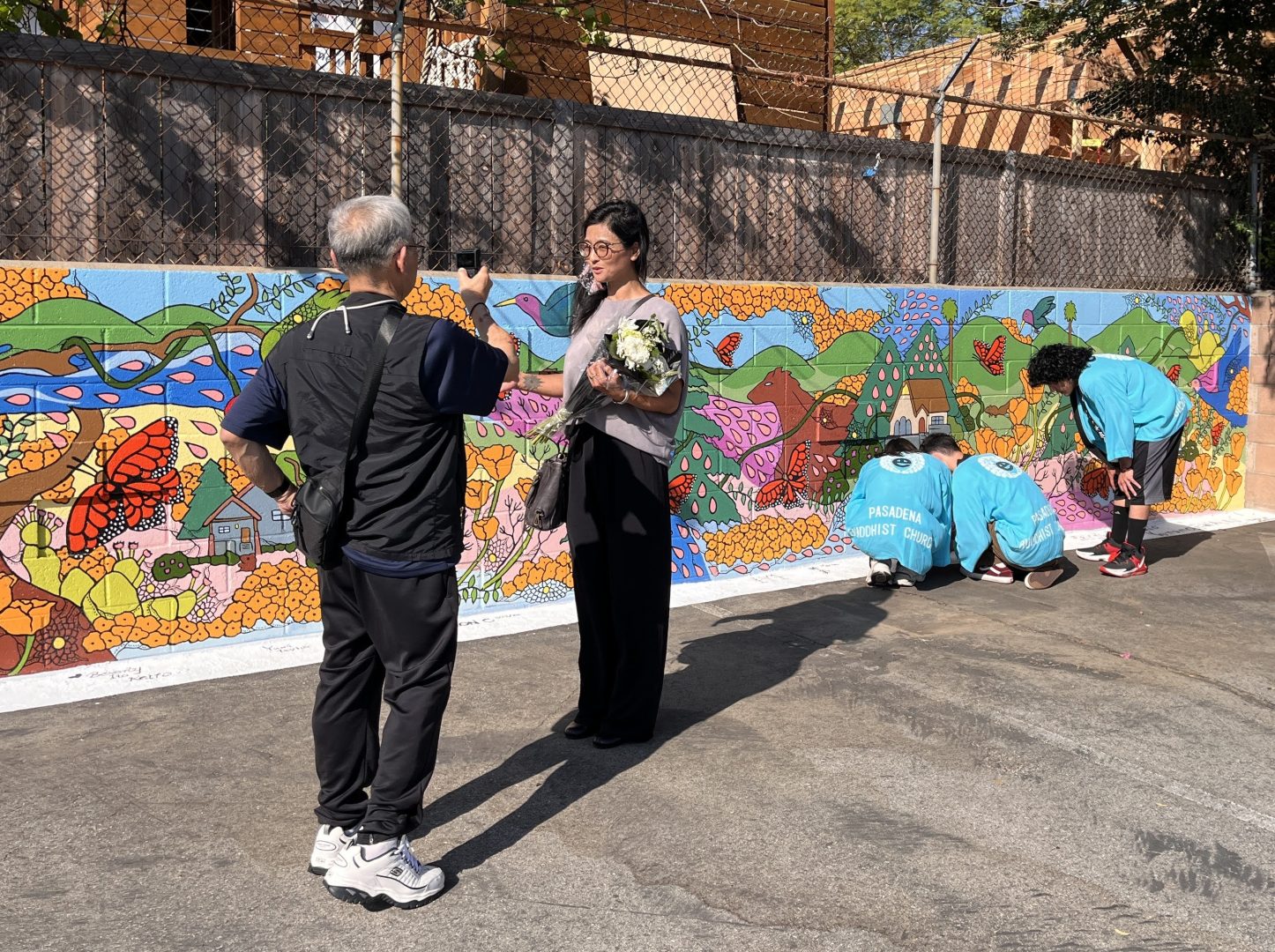
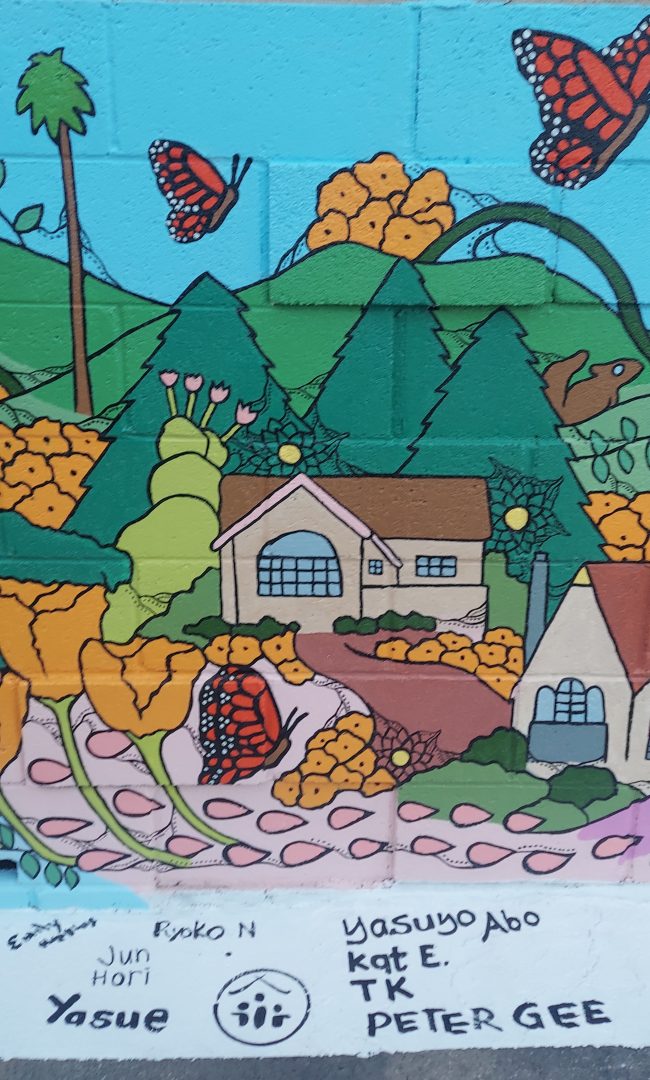
Gibbs’s younger son Ren and his friends Winston and Felix – fittingly attired for the occasion in happi (a tube-sleeved Japanese coat) – walked rapidly as they uncovered the mural. Their fast-walking provided a light-heartened moment for the mothers present who found it entertaining. Keiro and Little Tokyo Service Center were recognized for their compassionate support. Yokoyama shared her story in creating the mural with the community and invited everyone to sign their names on the painted primer area, the ground part.
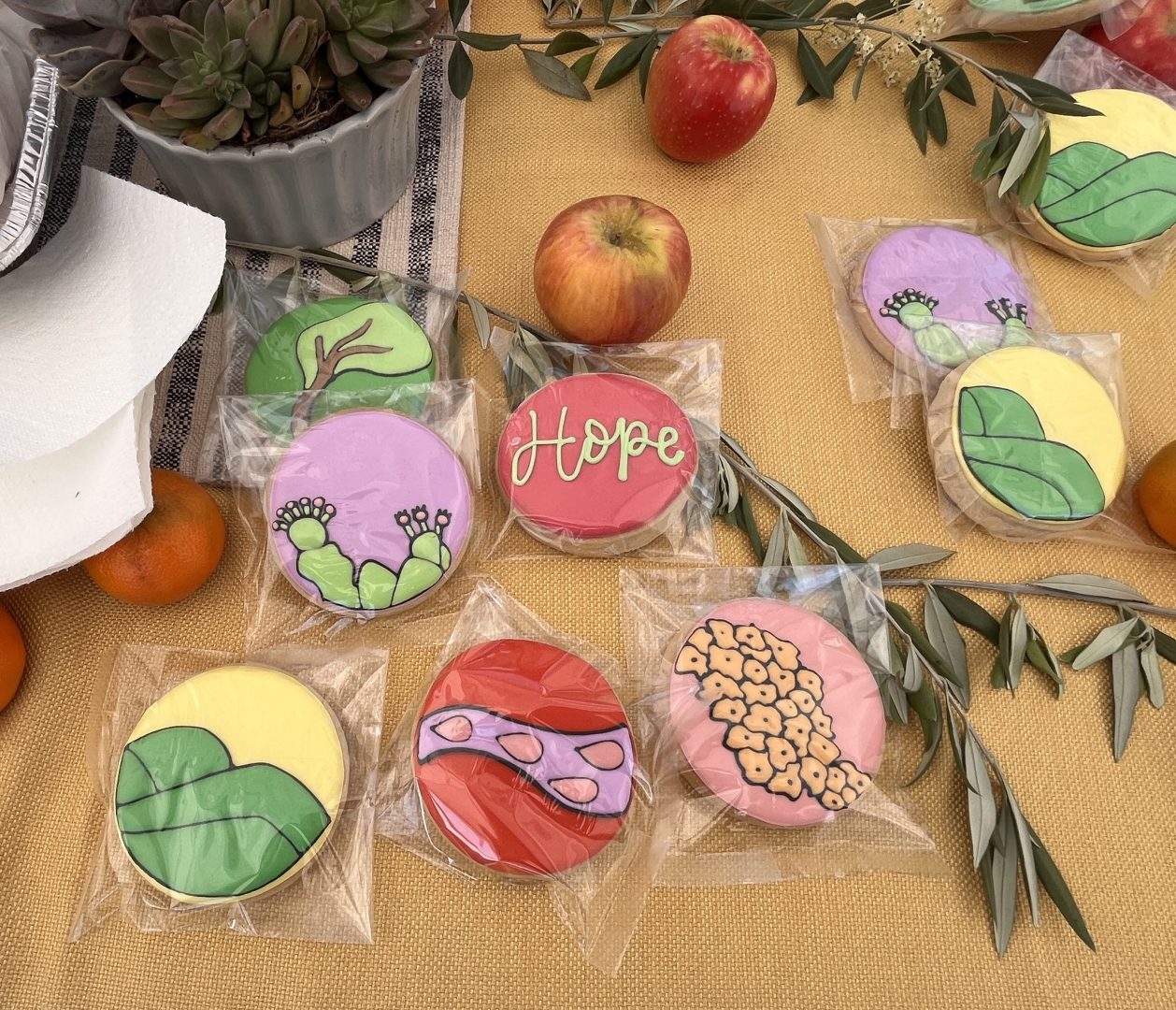
“Judicanti Responsura,” the music duo formed in 1984 by tubaist William Roper and percussionist Joseph Mitchell – who were fire survivors as well – set the stage beautifully to welcome people in the Hondo, the main building. The Altadena Cookie Company provided custom cookies for the event.
Miki Yokoyama, at right. | Photo courtesy of the Pasadena Buddhist Temple
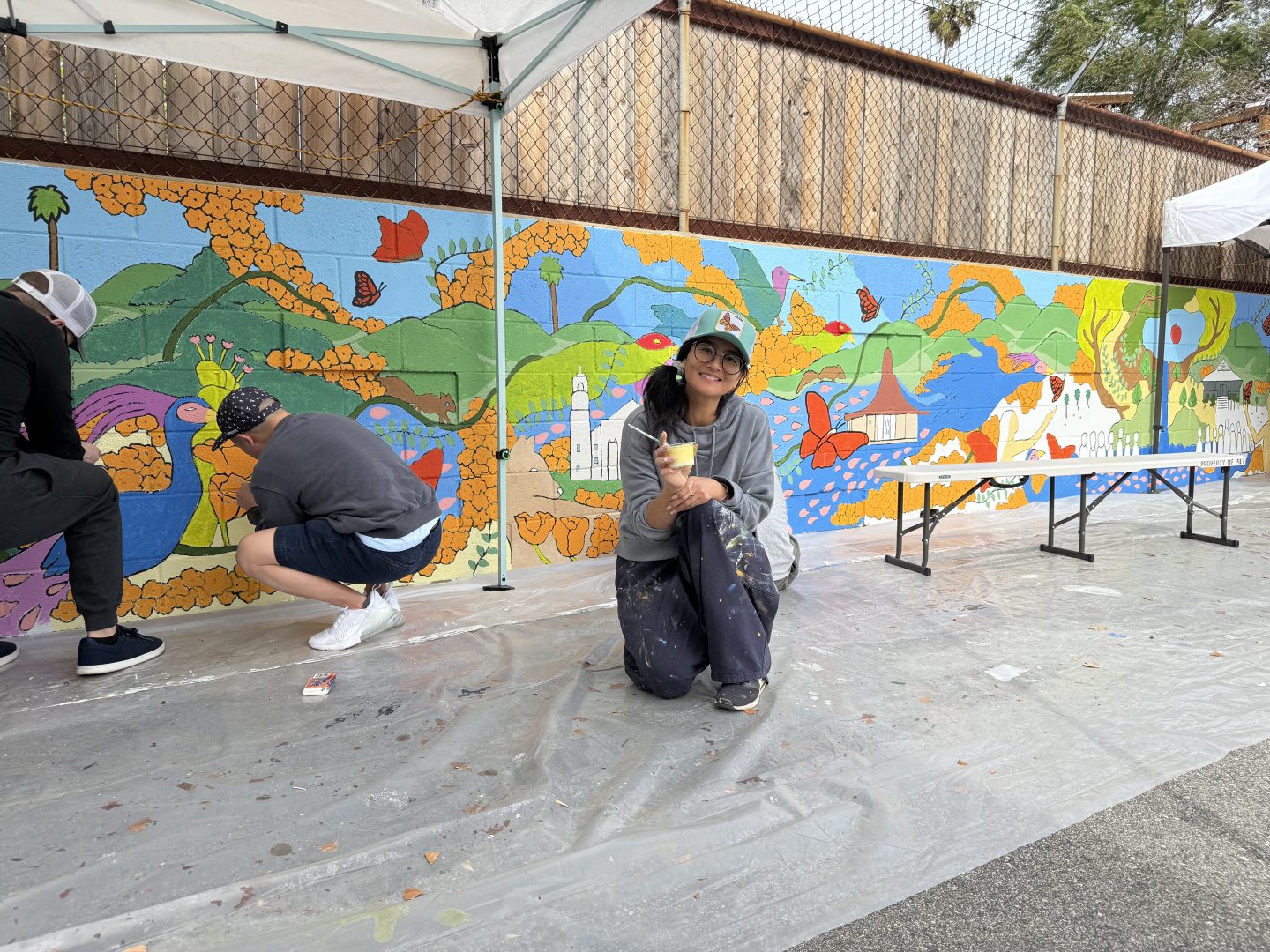
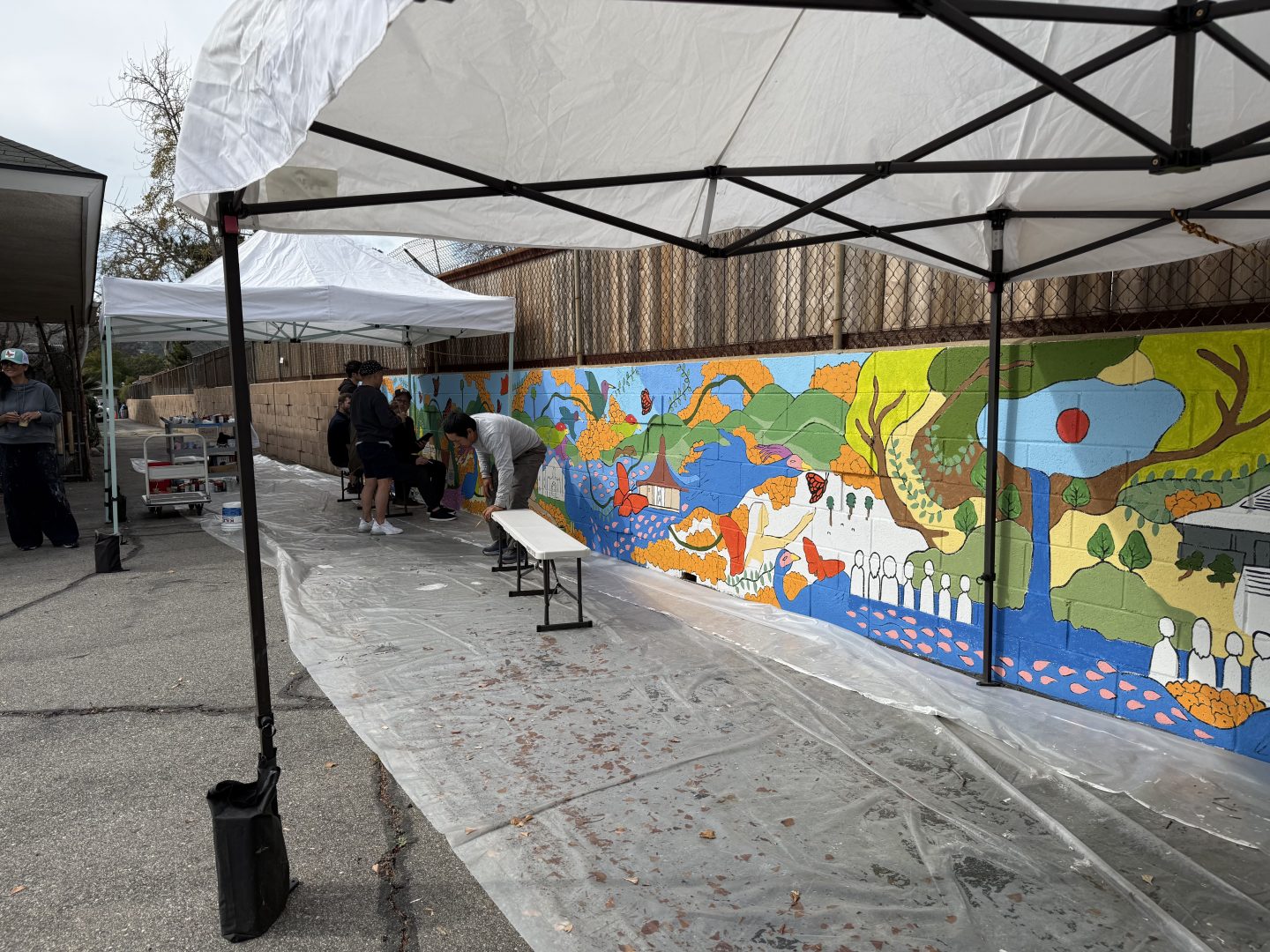
The “Healing and Hope” mural took a few months to paint, with Eaton Fire survivors participating in the project. In mid-March, the mural was almost done.
Yokoyama recounts, “I completed the final touches on the mural last Sunday, the 15th. This week, I have been applying a top coat over the finished painting, painting the ground directly below the wall white, and preparing a space where everyone who participated in the mural can add their signatures.”
People’s signatures on the mural. | Photo courtesy of the Pasadena Buddhist Temple
For Yokoyama, the completion of the project is as joyful as it is bittersweet. “This experience has been incredibly meaningful to me,” states Yokoyama. “Working together with everyone on a single mural was something that truly helped and supported me. I had been struggling mentally over the past year since the fire, so I am very grateful to Kyoko for proposing this project. The time spent painting with everyone allowed me to focus on both the creative process and connecting with others. Each day, I felt that these moments were healing my heart. Seeing everyone working so hard on their parts of the mural gave me strength and courage.”
“My feelings right now are quite complex,” Yokoyama discloses. “I am very happy that we were able to complete the mural. At the same time, I feel a deep sense of sadness knowing that this time of creating together has come to an end. Since Kyoko and I first began discussing the location of the mural, I have been coming to the site five days a week for about two months, so it has been a very special part of my life.”
Custom cookies from the Altadena Cookie Company
Those sentiments are echoed by Gibbs, “I already miss the sense of togetherness from working together. It brought me happiness and strength. The bond we formed through the mural project, and of course during last year’s gatherings and activities, will stay in my heart and help me move forward! I will cherish all the encounters.”
“Feeling the results of the community’s teamwork is truly empowering,” adds Gibbs. “We are stronger together, and I am deeply thankful to be part of this caring and supportive community! This mural gives me a deep sense of hope, seeing how something beautiful and empowering has emerged from such a devastating event.”
Indeed the Eaton Fire, as tragic as it has been, provided the impetus for Altadenans to unite – whether to fight for accountability from county officials or to work on an artistic endeavor that commemorates their shared experience. And that is a wonderful outcome to celebrate.
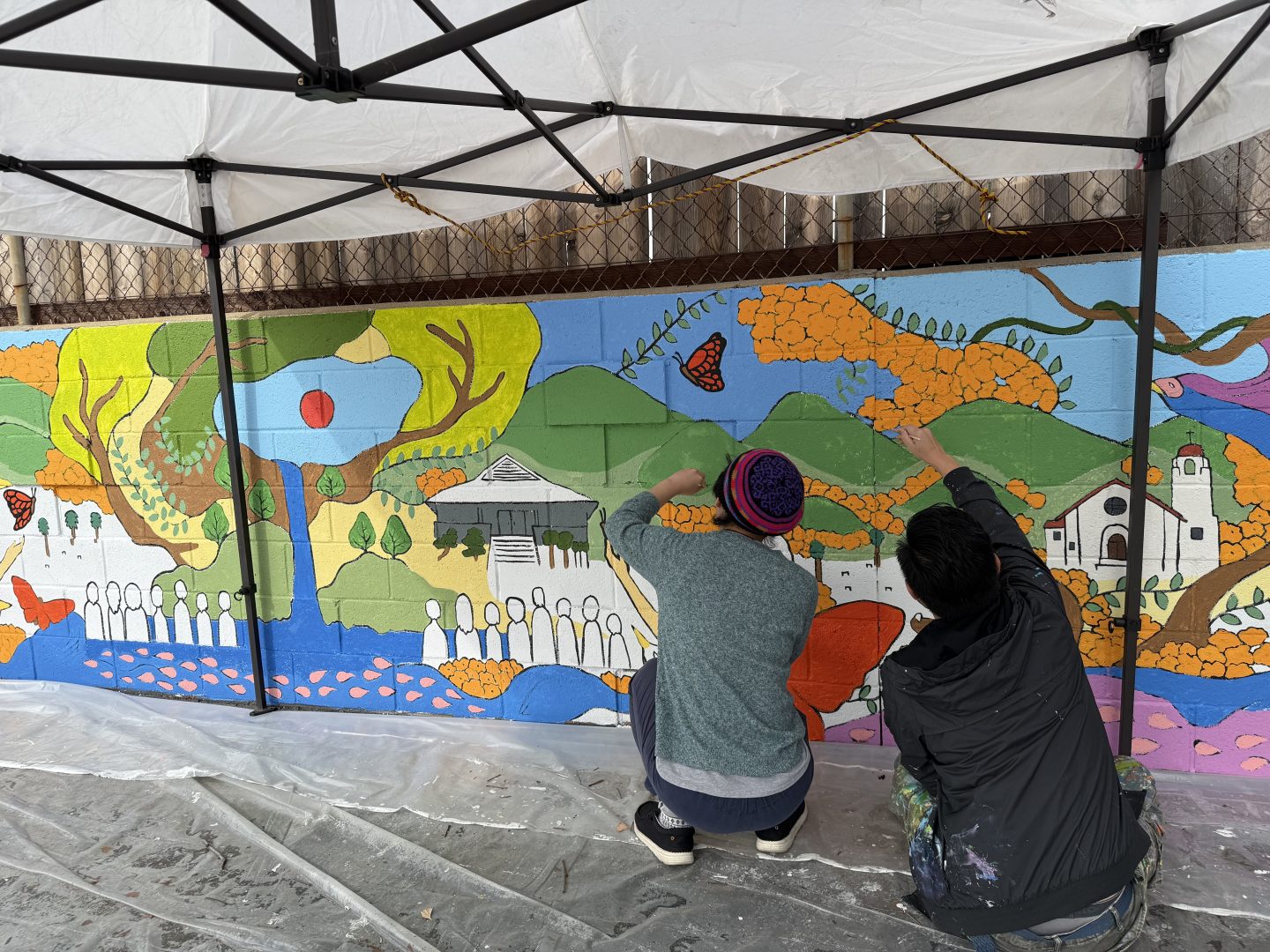
The Healing and Hope Mural painting in progress. | Photo courtesy of Miki Yokoyama / Pasadena Buddhist Temple
The Eaton Fire killed 19 people, destroyed over 9,000 structures, and brought untold grief to the community. More than a year later, displaced Altadena and Pasadena residents are still reeling from the trauma. There are constant reminders of what they lost and memories of that fateful day are still fresh in their mind.
As much anguish as the Eaton Fire wrought, there have also been many instances of a community coming together in their shared experience. The most recent of such moments is a group painting initiated by Miki Yokoyama who created a mural at the Pasadena Buddhist Temple. The brainchild of Kyoko Gibbs, wife of the temple’s spiritual leader Reverend Gregory Gibbs, the mural symbolizes what she thinks everyone needs – healing and hope.
The temple almost became a casualty of the fire had it not been for the bravery of neighbors who put out the flames. Gibbs recalls, “Greg and I, along with our younger son, live in the temple residence, so we followed the evacuation order in the very early morning of Jan. 7 and drove to a hotel. Watching the news at the hotel, we recognized the temple’s neighbors getting burned down despite the efforts of firefighters. Feeling urged to return to the temple, we drove back there to find our ‘heroes’ and some other temple members trying to extinguish the flames that had landed between the tea garden and the edge of the main building, Hondo.”
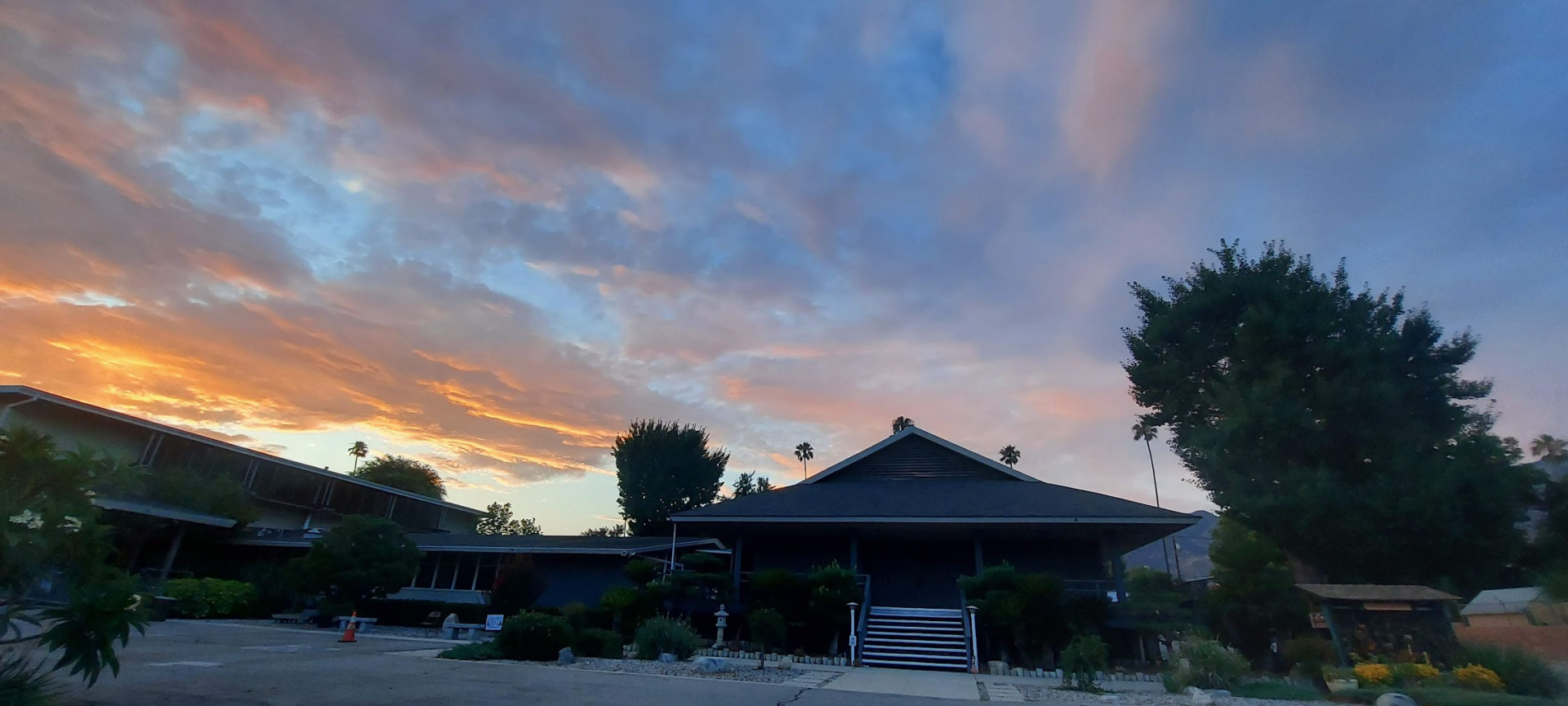
The Pasadena Buddhist Temple at night. | Photo courtesy of the Pasadena Buddhist Temple
“As we heard and learned about the temple members, associated friends, and neighbors’ loss and damage due to the fire, we were deeply hurt – not just physically but also emotionally,” continues Gibbs. “No words were spoken; we cried while holding and hugging them.”
Immediately, the temple community collaborated on events and efforts to help fire survivors. “Since two days after the fire, the restaurants in Little Tokyo (Azay and Far Bar) and San Gabriel (Yama Sushi), Little Tokyo Service Center, Keiro, Pasadena Japanese Cultural Institute, and the churches and temple in the affected Altadena and Pasadena areas, along with many others such as Buddhist Churches of America, Tanaka Farms, King’s Bakery, Go For Broke, and many more, have stepped up to the plate. Each individual person and organization gave them a hand in a selfless and compassionate way. As we continue to move forward, I am truly grateful for everyone’s kindness.”
The Gibbses themselves have been the recipient of people’s generosity. “During the remediation process for all the temple facilities, we needed to relocate to the temple’s friends’ house for about two months,” Gibbs says. “We were so fortunate to receive their kind offer. The temple is now fully restored and I am very thankful for those two temple board members who tirelessly worked with the insurance and intensive cleaning companies.”
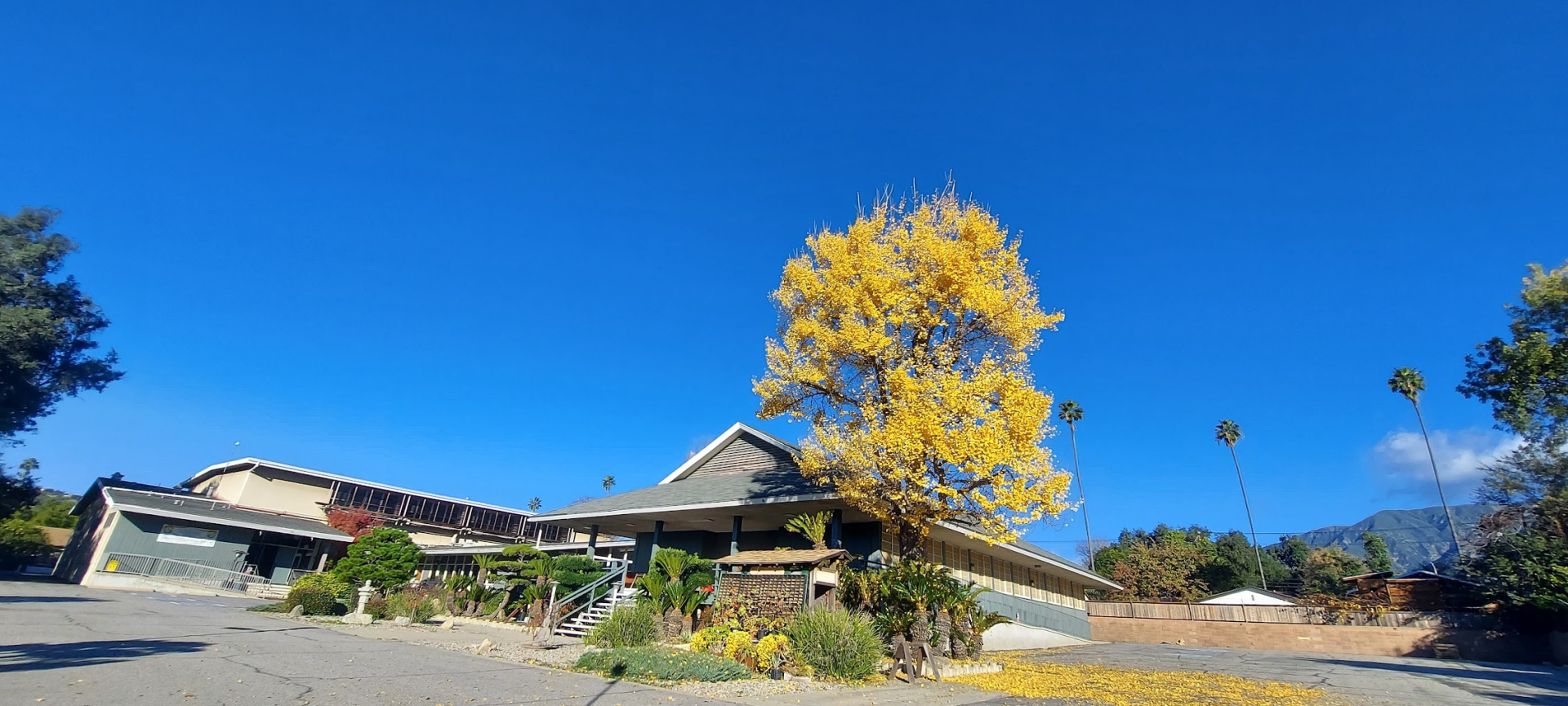
The temple is now fully restored. | Photo courtesy of the Pasadena Buddhist Temple
For its part, the temple raised and distributed close to $90,000 to fire victims and actively continues to raise funds for them. “On the first anniversary of the fire, we presented them with a card and a small monetary gift. We wanted them to know that we are thinking of them. Additionally, we will be holding a White Elephant Sale, which opens to them first for free before the general public. We will also have a Girls’ Day Celebration with the tea ceremony, which they will be invited to join. More financial support will be distributed soon from the social welfare committee of Buddhist Churches of America (Pasadena Buddhist Temple is a part of BCA).”
Another activity that took place one year after the Eaton Fire was the creation of a mural. Recalls Gibbs, “As the first anniversary of the fire approached, I was thinking about what we – as the whole affected community – could do to help heal and inspire hope. Then, SOGs (Sons of Gardeners), who volunteer twice a week to maintain the temple grounds, were discussing painting a concrete section of the ramp outside. And it hit me with the idea of creating a mural instead of just painting. I brought up this concept with them and shared it with the temple board, and they all rallied behind it right away!”
“Fortunately, Keiro, which has been a financial supporter of activities and events for fire survivors, also agreed to continue its support,” Gibbs says further. “I knew who I needed to ask to lead the mural designs – Miki. She isn’t a member of the temple but I met her through the meal program for fire survivors.”
In mid-November, Gibbs reached out to Yokoyama and proposed crafting a mural and inviting the participation of those who had lost their homes in the fire as a way to help restore the town. They discussed what kind of wall painting they wanted to create and developed the concept together. To signify what it represents, they called it Healing and Hope Mural.
Miki Yokoyama. | Photo by May S. Ruiz / Hey SoCal
The Eaton Fire decimated Yokoyama’s home and all her artwork, and wreaked havoc on her mental health. She discloses, “The emotional shock was immense; I struggled with symptoms of PTSD for a long time. During the first year after the disaster, I believe that painting truly saved me. Now, through this project, I find healing in creating together with the temple community and others who were also affected by the disaster. Realizing that I am not alone and receiving strength from everyone involved fills me with deep gratitude.”
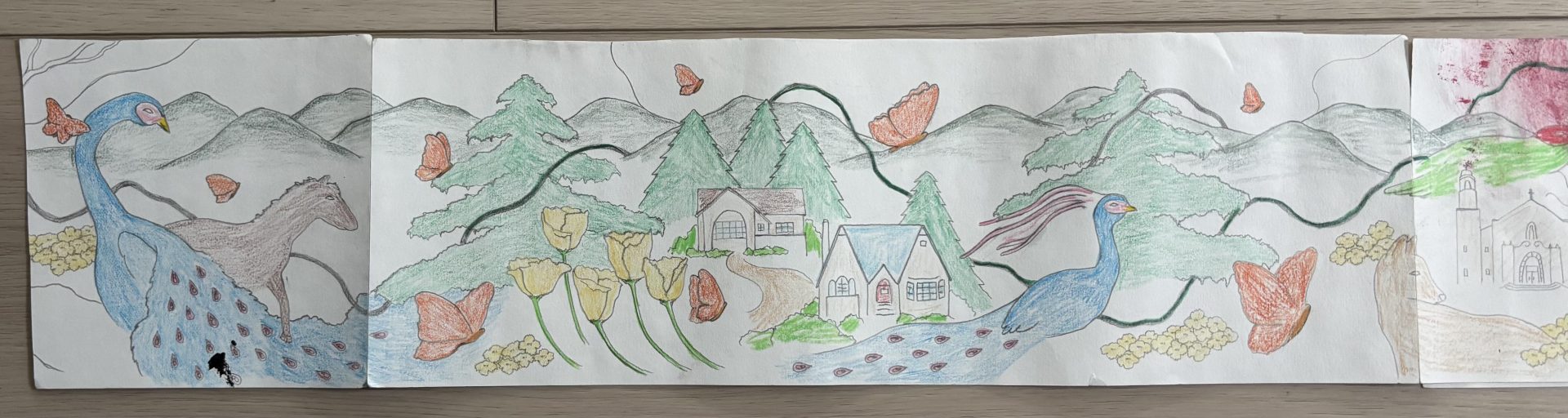
Yokoyama describes how she transferred the painting – measuring approximately 70 feet long by 56 inches tall – on the wall. “I first created a rough sketch on paper and then projected it onto the wall. However, many of the finer details will be added freehand while looking at the actual wall. From here, I plan to add more delicate lines and dots to develop the piece further.”
Yokohama’s drawings of the mural. | Photo courtesy of Miki Yokoyama
“This project is open to everyone, regardless of artistic experience,” explains Yokoyama. “Before we began painting together, I prepared the mural by drawing the outlines in black ink. Although I predetermined the colors, my hope is simply that everyone enjoys the process. I tell participants that it is perfectly fine if they paint outside the lines or even cover the black outlines. I will make any necessary corrections afterward, so everyone is free to add color as they wish.”
“At present, the mural is about halfway complete,” Yokoyama adds. “Much of the white space has been filled, and the next steps are to apply a second layer to the lighter areas of ink, retrace the black outlines, and then add finer lines and dots. By layering these delicate details, I hope to bring greater depth and subtlety to the work. Even if it takes time, I am committed to leaving behind the best possible piece.”
“As we continue working together with the community – shaping it according to our shared intentions – I am also excited to see how the mural will ultimately come together,” Yokoyama says further. “I am very much looking forward to its completion.”
One of the Eaton Fire survivors who went to the temple to paint heard about it through her mom who is a member of the temple. She asks that her name not be mentioned but graciously agrees to talk about her participation.
“Miki was there and she showed me where to paint, provided paint and brush, and instructions,” she begins. “I painted the windows on the house light blue as she instructed. She explained that it was okay to paint over lines as these will be repainted after the color is applied; the community painters are adding color and the artists are adding detail. While I was there one of the artists was refining with details. She used a Q-tip to add white spots to a red butterfly. The mural is a representation of the local community and the hope that exists in the Eaton Fire area to rebuild the physical and emotional aspects of the community.”
Photo by May S. Ruiz / Hey SoCal
Painting the mural offered a brief respite from her daily stresses in the aftermath of the fire. She says, “The consequences of the fire a year later are still part of a continuing domino effect in various ways that will remain for many years. Growth and hope are also results of this effect. Projects and institutions such as the Pasadena Buddhist Temple bring the community together for positive focus and forward momentum.”
It is exactly what compelled Gibbs to come up with a community endeavor. She declares, “Through this experience – coloring in the mural while chatting with others or working quietly – I would like all to feel connected and empowered. You are not alone. We are stronger together.”
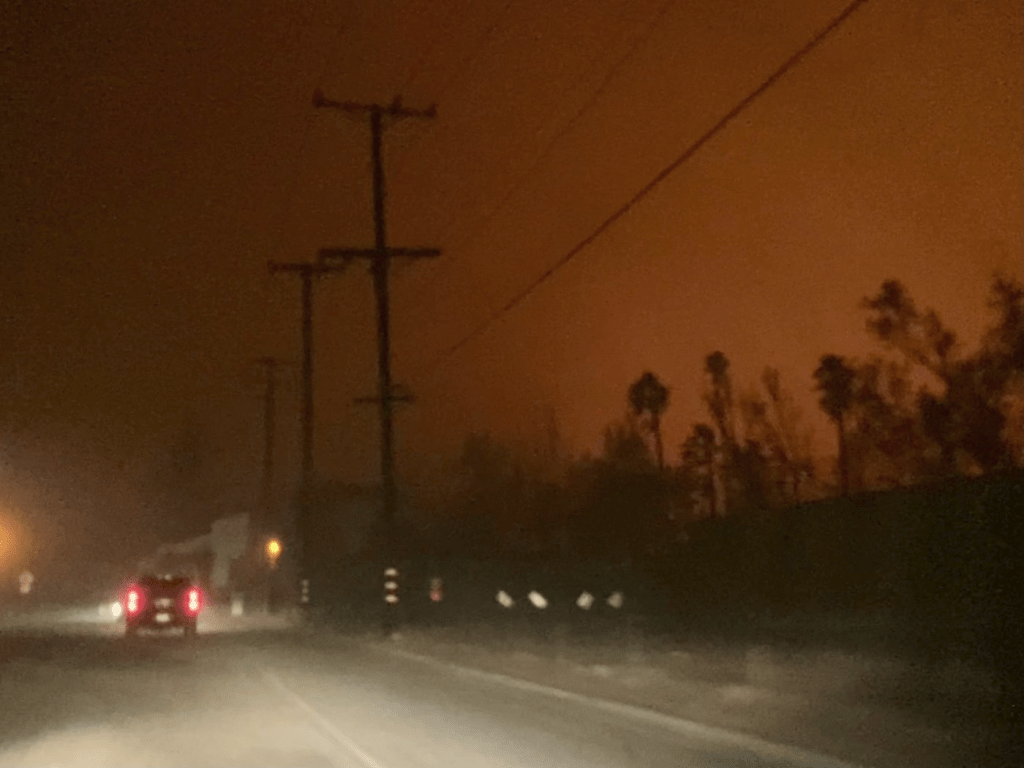
A view of the Eaton Fire on Washington Blvd. in north Pasadena. | Photo courtesy of Grigory Heaton/Wikimedia Commons (CC BY-SA 4.0)
Jan. 7, 2025, dawned bright, clear, and very windy in the San Gabriel Valley, with the mountain peaks clad in snow. Most Altadenans and Pasadenans went about their usual chores and workday despite the windstorm. But by the end of that fateful day the lives of several thousand people in these two towns would be upended.
According to news reports, shortly after 6 p.m., residents observed flames on a hillside in Eaton Canyon. While the fire itself was not large, 59 mph wind gusts pushed sparks across the canyon. The wind shifted the embers west into central Altadena and decimated a large swath of the unincorporated L.A. county area.
The Eaton Fire was the fifth deadliest and second most destructive wildfire in California’s history. Approximately 7,000 residential and commercial structures burned to the ground overnight, with 19 deaths reported. Most of the residents are still temporarily housed, residing in motels and extended-stay hotels in Pasadena and neighboring cities.
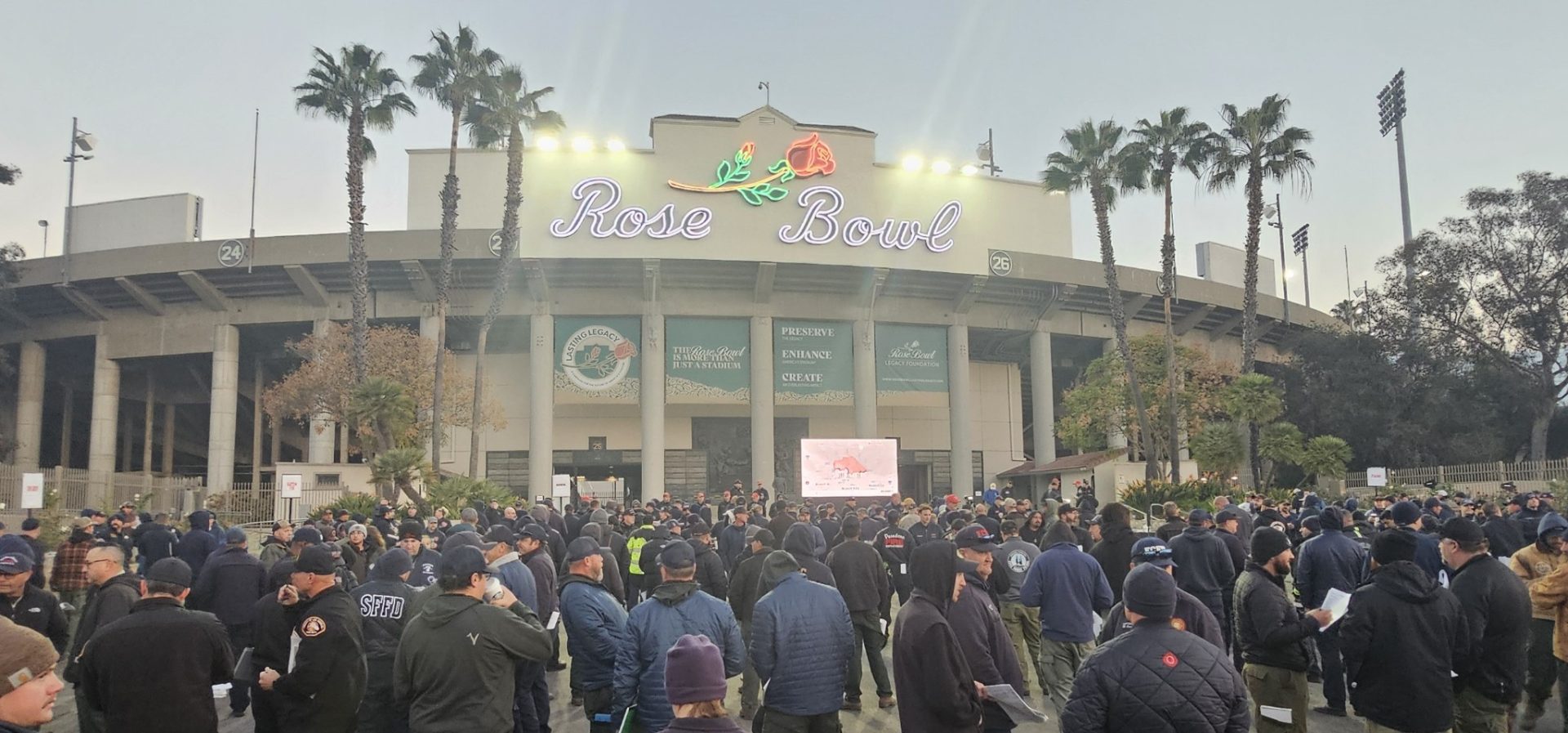
The Rose Bowl parking lot serves as the base for hundreds of firefighters. | Photo courtesy of Tom Stokesberry of the Forest Fire Service/Wikimedia Commons
An Altadena man, David Ly, and his family were among those who were displaced. He recalls the horrors they experienced.
“Jan. 7 started for us like a normal day,” says Ly. “We heard about a fire, but at first we didn’t think much of it. Fires happen, and you assume it’ll be contained. Later that day, my brother, who lives in the Highland Oaks area of Arcadia, called and said he could see the fire raging behind his house. He told us he was evacuating to our parents’ place and that we should do the same because the wind could turn at any moment. That’s when it became real and was truly one of the most traumatizing days of my life.”
“I remember going back on the morning of Jan. 8 thinking the fire was done because as I drove up Lake Avenue, everything seemed quiet,” Ly continues. “I had no idea I was literally driving into an area still burning. I saw homes on fire, and it was this surreal scene of memories literally disappearing. When I reached my own street, the power lines were down, and there was just this heavy sense of disbelief. I locked eyes with neighbors who were also there, and we just stood silently crying. By the time I got to where my house had been, it was all gone. You could still smell the smoke. I’ll never forget that feeling of seeing everything just, gone.”
Ly and his family proceeded to drive out to Dana Point that same day. Then they went to Phoenix to stay with family, to get some distance, and breathe. While it was a moment of disbelief and trauma, for him it was also when he began to realize how many others needed help. The past year had been a difficult journey, but it also gave him purpose — help others rebuild.
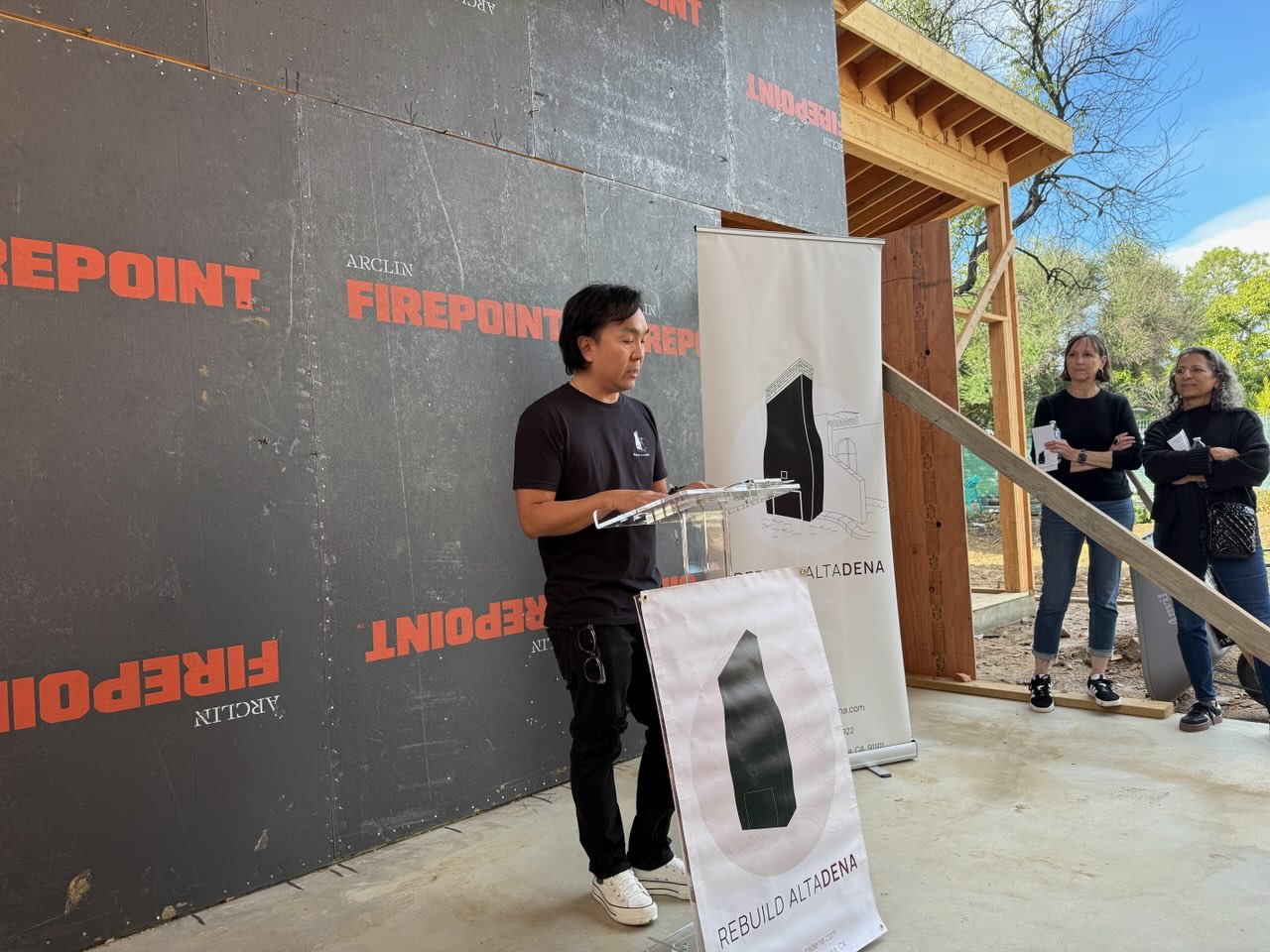
David Ly at one of the rebuild sites. | Photo courtesy of Rebuild Altadena
“Rebuild Altadena was born from the ashes of this fire, so we are not business as usual,” declares Ly. “Our focus is on rebuilding smarter and more fire-resilient, based on what this community has lived through. The concept behind it is rebuilding as a community. After the fire, it became clear that families were overwhelmed trying to navigate everything on their own — the County process, insurance, engineering, timelines, and rising construction costs.”
“We bring together a coordinated network of designers, engineers, and contractors who are focused almost entirely on Altadena,” Ly explains. “Just like our organization, their priority is helping this community rebuild – not chasing projects across Los Angeles. That’s where our Group Build approach comes in. It means our entire network is concentrated on the same area, working under the same County requirements and fire-rebuild conditions. By staying local, our partners are able to respond faster; keep pricing lower and more stable, even as tariffs and material costs fluctuate; reduce inefficiencies caused by labor shortages; share real-time knowledge from project to project; and move families through the rebuild process together. That level of coordination simply doesn’t happen when a contractor has job sites scattered across multiple cities.”
Rebuild Altadena uses bulk purchasing to protect homeowners from sudden cost spikes. By buying materials — including cabinets, tile, FirePoint plywood, HVAC systems, and lighting — in volume, the company can lock in pricing and reduce exposure to shortages and supply-chain disruptions.
“At the heart of everything we do is a neighbor-first philosophy,” emphasizes Ly. “Rebuild Altadena exists to make sure families who want to come home can do so with a rebuild that is reliable, locally built, transparent, and fire-resilient. This isn’t about shortcuts or volume — it’s about rebuilding Altadena smarter, safer, and with accountability that lasts long after construction is complete.”
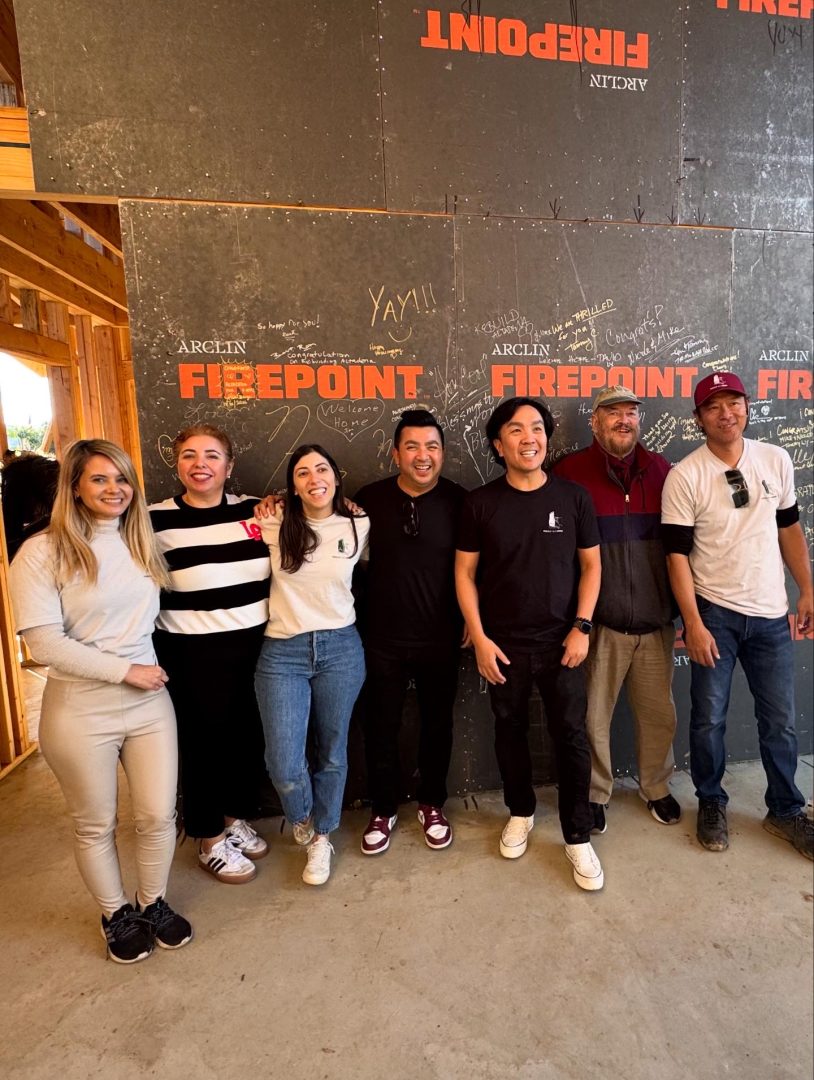
The company is supported by a network of about 25 building professionals, comprised of contractors, designers, structural and civil engineers, surveyors, permit expeditors, and specialists in fire-hardening and resilient construction.
“We also have key staff members who bring deep lived experience and local leadership to the work,” Ly says. “One example is Steve Lamb, a fifth-generation Altadenan who lost his home in the Eaton Fire. Steve previously served on the Altadena Town Council and is a residential designer whose career has focused on historical preservation. His background reflects the values of this community — respecting Altadena’s architectural character while helping it rebuild stronger and safer. People like Steve don’t just contribute professional expertise; they carry the history, pride, and long-term vision of Altadena.”
David Ly and the Rebuild Altadena team. | Photo courtesy of Rebuild Altadena
“And our network continues to grow every day,” adds Ly. “More individuals and companies reach out because they want to help. They see the need, they believe in the mission, and they want to be part of rebuilding our town the right way.”
Since its founding, there have been four Rebuild Altadena Fairs, each growing dramatically as the community and industry partners have rallied behind the effort. Each Fair brings in 50 to 70 building professionals — architects, designers, engineers, builders, SBA representatives, county officials, material suppliers, and fire-hardening specialists. These events have drawn up to 2,000 attendees, making them one of the largest community rebuild gatherings in the region.
“When we first started, the goal was simple: give fire-affected families a place to meet architects,designers, the SBA, the County, and builders — all in one room, without barriers or confusion. But the Fairs have evolved into something much bigger,” Ly explains. “Our most recent event included: fire-hardening materials; 3D visual walkthroughs of rebuild designs; Vicon exterior fire-sprinkler demonstrations; a full Rebuild Zone where homeowners could see, feel, and compare real materials; windows and doors; tile and flooring options; roofing systems; lighting by Maison Enterprises; and other essential components of a resilient rebuild. It’s become a true one-stop experience where families can get educated, meet their teams, and touch the materials that will become their future homes. For many residents, the Fair is the first moment they feel clarity and hope again.”
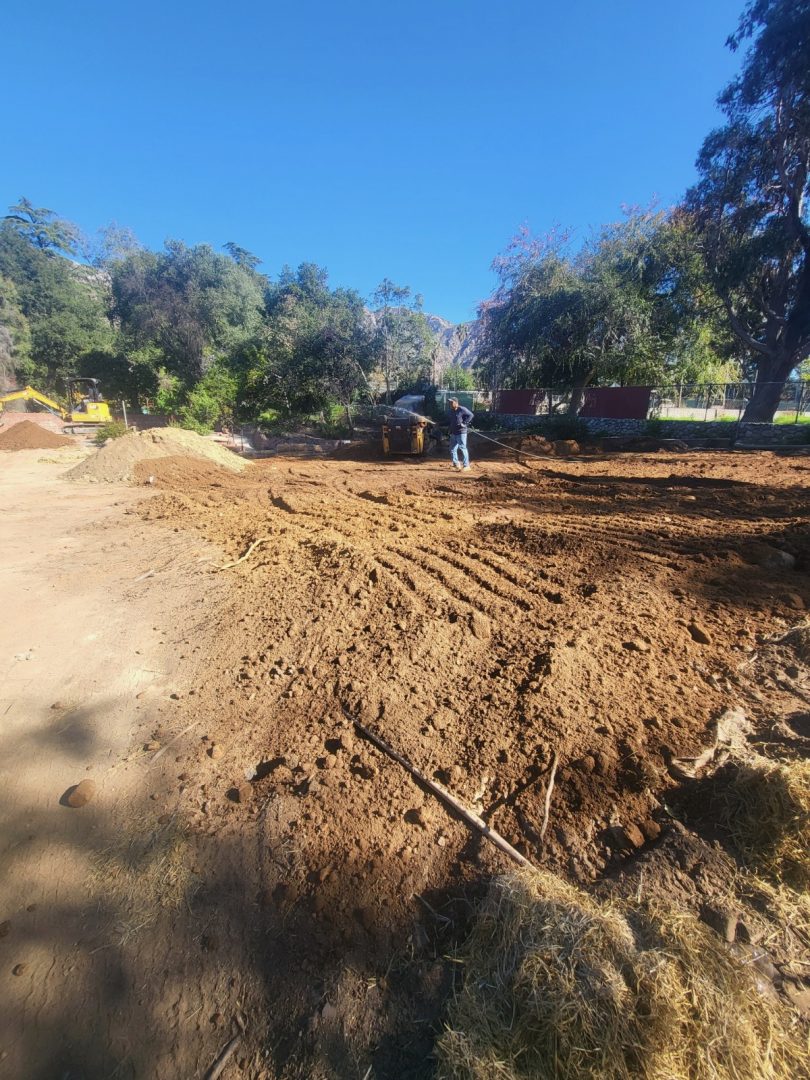
The site gets ready for rebuilding. | Photo courtesy of Rebuild Altadena
Starting in the new year, one major Rebuild Altadena Fair every three months is being planned. These quarterly events allow Ly’s team to keep homeowners updated, introduce new technologies, and bring in additional experts as the rebuild landscape evolves.
“Families are still facing very complex concerns in the rebuild process, and these Fairs help address the biggest challenges we hear every day,” states Ly. “These include navigating the County process which is unfamiliar and stressful, especially for families who lost everything overnight. People are overwhelmed by engineering corrections, plan-check timelines, fire-zone requirements, inspections, knowing what to submit and when.”
“Additionally, homeowners are concerned about rising construction costs and insurance gaps,” Ly says further. “Many homeowners worry their insurance payout won’t cover today’s costs. They need guidance on budgeting, materials, and how to avoid unnecessary expenses.”
“Fire-hardening and long-term safety are also major concerns,” declares Ly. “Residents want to rebuild stronger but often don’t know which materials are best, what new codes require, and how exterior fire sprinklers, roofing, windows, doors, and siding work together. This is why we bring FirePoint sheathing, Vicon exterior fire sprinklers, and other fire-resilient products to the Fairs.”
“And then there are temporary housing pressures,” Ly cites. “Families are still paying rent out of pocket. Delays hurt not just emotionally but financially, creating urgency for clear timelines and dependable teams.”
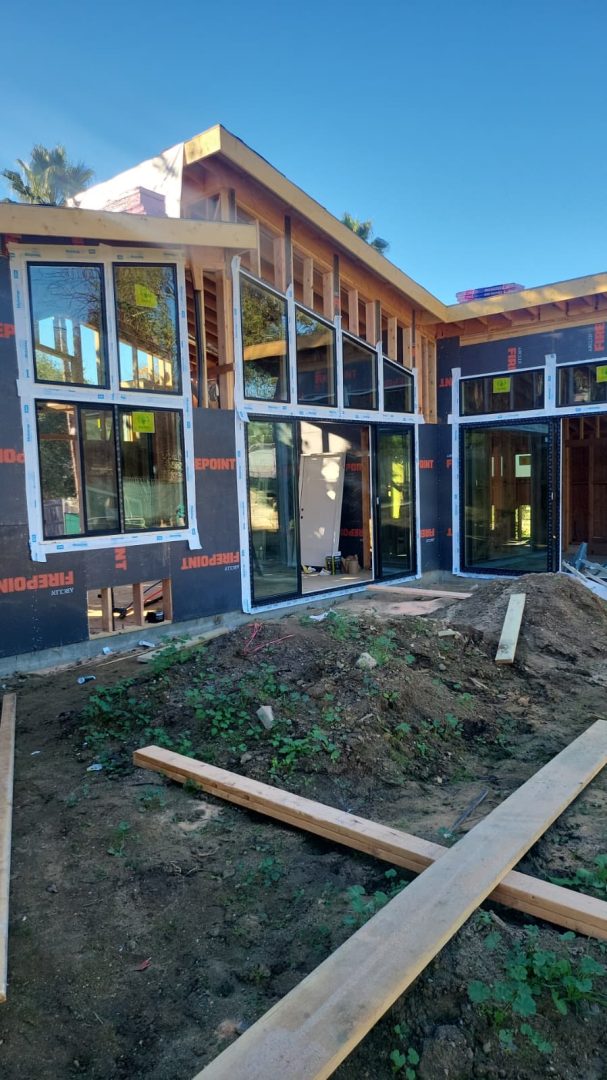
The first fire-resilient rebuild.| Photo courtesy of Rebuild Altadena
“Another worry is knowing who to trust,” says Ly. “After a disaster, homeowners are approached by dozens of contractors and consultants. Many fear choosing the wrong people. Rebuild Altadena was created so residents have vetted, local professionals they can rely on. The quarterly Fairs give families a place to get answers, explore materials in person, meet trustworthy experts, and move forward with confidence.”
Out of roughly 4,500 single-family homes lost in the Eaton Fire, Ly estimates that about 60% to 70% of residents intend to rebuild, though everyone is moving at a different pace depending on insurance, finances, and the County process.
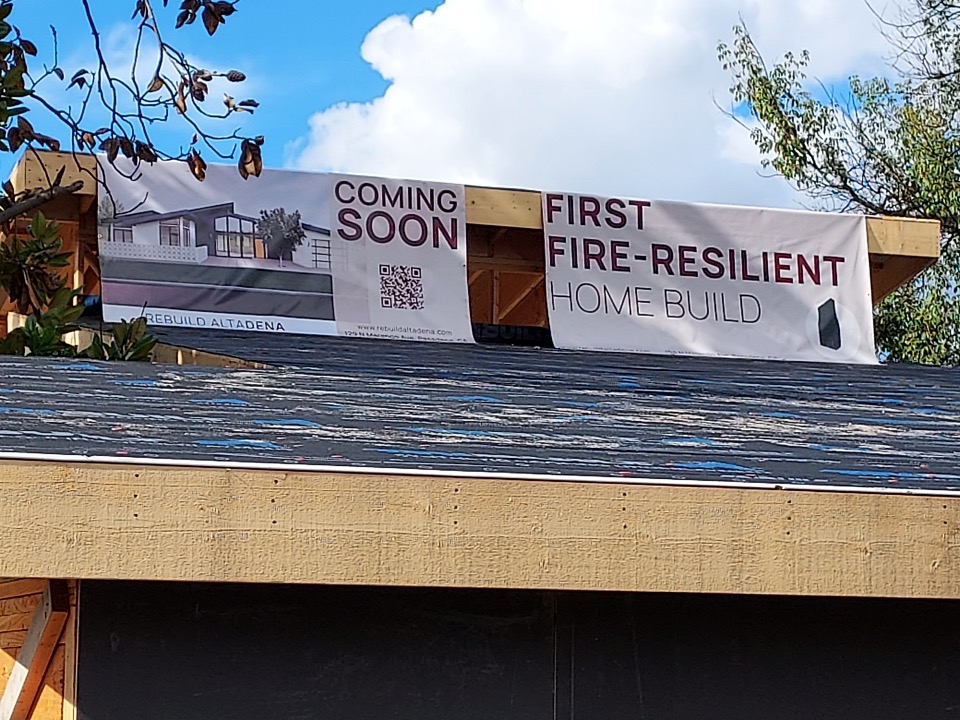
“Most families are still in the design, engineering, or plan-check stages, working through approvals and corrections,” Ly says. “A smaller number have reached construction. And we’re very proud that one of the very first rebuilds in Altadena is a Rebuild Altadena project. By the one-year anniversary of the fire, that home will be in painting and finishing stages.”
“Not only is it among the first to rise from the fire, it’s also the first home in the entire burn zone to use fire-resilient materials like FirePoint Sheathing, which is designed specifically to withstand extreme heat exposure,” Ly explains. “For many families, that home represents hope — a sign that rebuilding is possible, and that we can do it smarter and more resilient than before.”
Rebuild Altadena is currently supporting more than 30 homes in the design and planning phase, which includes architectural design, engineering, and county plan check.
The first Altadena Rebuild home is expected to be completed around the first anniversary of the Eaton Fire. | Photo courtesy of Rebuild Altadena
“On the construction side, two homes began construction in mid-December,” Ly says further. “We anticipate three additional homes breaking ground in the first half of January, assuming permitting and utility coordination stay on track. Aside from the first home that will be in finishing stages, the timelines for the other rebuilds vary based on lot conditions, design complexity, utilities, and fire-hardening requirements. For most projects, a realistic expectation is 12 to 18 months from permit issuance to completion.”
Ly is also rebuilding. And being one of the first rebuilds in Altadena comes with its own unique set of challenges, one that every family after him will face as well.
“For example, we’re dealing with major utility uncertainties,” Ly explains. “Southern California Edison still hasn’t confirmed whether they’re going overhead or underground with the new electrical system, which affects design, trenching, and timelines.”
“Because of new fire codes, many homes — including mine — now require interior fire sprinklers,” cites Ly. “That means a lot of families must upgrade their water meters, and one of our clients was quoted an astronomical price by the water company just to make that change. These are things no homeowner planned for.”
“And that’s why Rebuild Altadena has taken on a strong advocacy role,” Ly declares. “We’ve already helped the community win important battles: eliminating unfair fire hydrant flow test fees for each individual home; challenging cross-lot drainage requirements that didn’t make sense for wildfire survivors; pushing back on County fees and conditions that were originally designed for single new homes being built in an established neighborhood — not for a town where thousands of homes burned overnight.”
“We didn’t ask for this disaster,” asserts Ly. “We lost our homes, our stability, and in many ways our sense of place in a single night. Families should not be burdened with excessive fees and code upgrade costs that were never intended for a mass-rebuild situation. So yes, I’m rebuilding — but I’m also fighting every day for the families behind me, making sure the path gets a little clearer and a little fairer for all of us.”
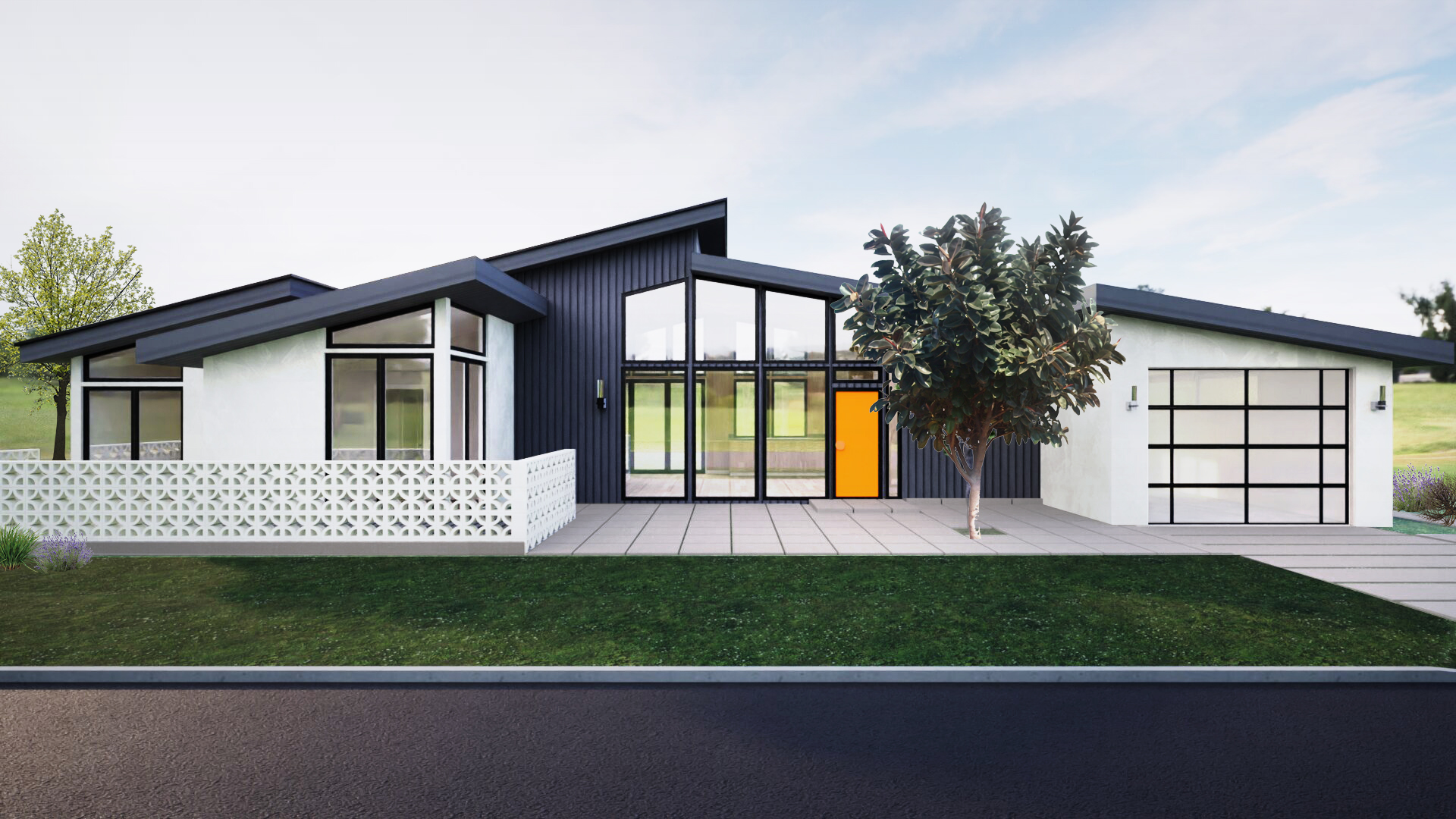
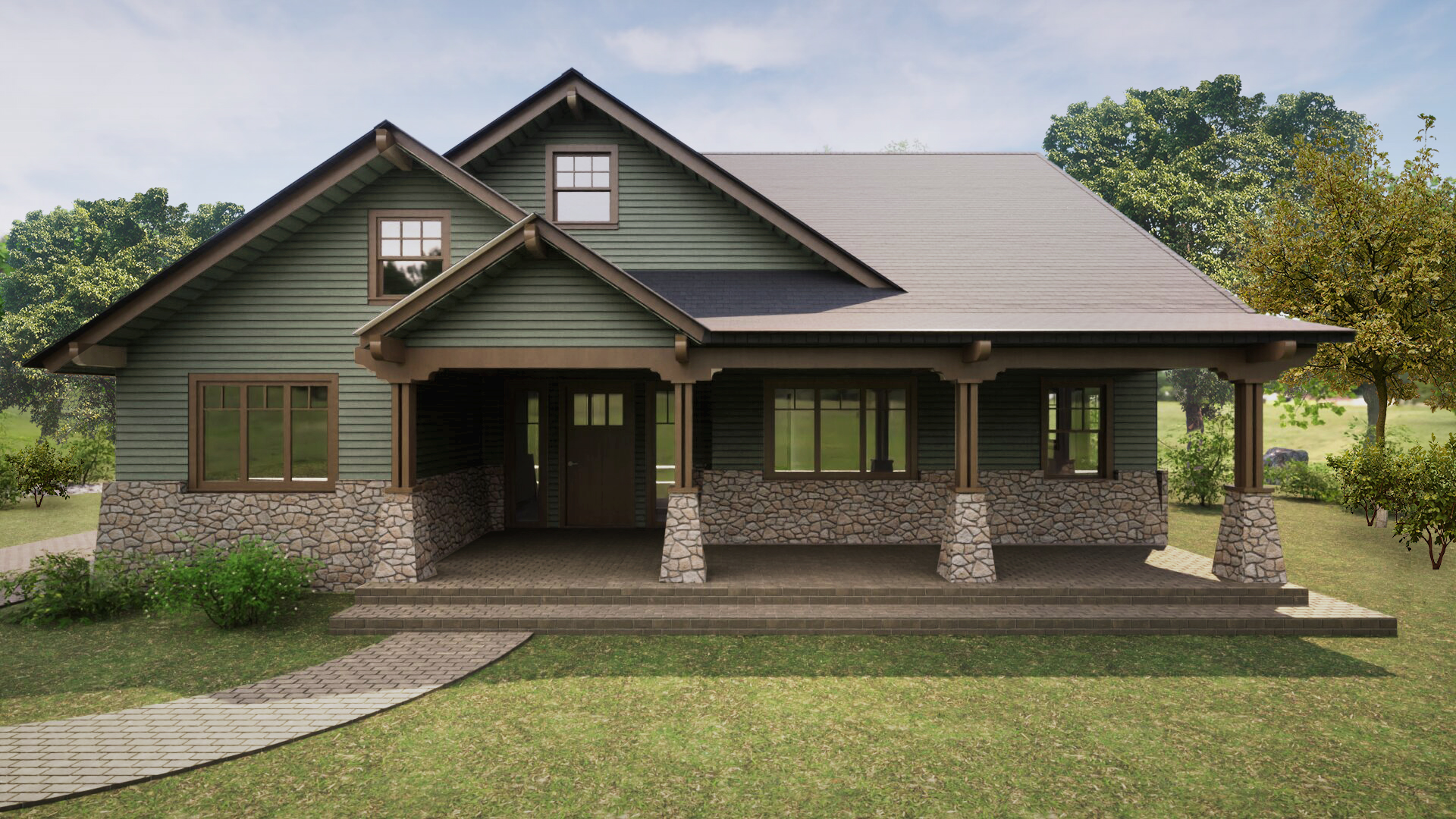
Rendering of a future rebuild. | Photo courtesy of Rebuild Altadena
“Altadena is in a complicated place right now,” Ly says further. “There’s a mix of grief, frustration, determination, and hope all happening at once. Physically, many lots are still empty, and that can make it feel like time has stood still. Simultaneously, there’s real movement happening — plans being approved, foundations going in, and the first homes starting to rise. Progress is uneven, but it’s real.”
“Emotionally, people are tired,” laments Ly. “Many families are still displaced, paying rent, navigating insurance, and waiting on approvals. There’s frustration with the pace of utilities and permitting, and uncertainty about what comes next. But there’s also a strong sense of resolve. Neighbors are more connected than they were before the fire. People are sharing information, showing up for one another, and pushing for fair treatment together. You see it at community meetings, at the Rebuild Altadena Fairs, and even just on the street.”
An article in the Los Angeles Times in November 2025 featured the first house that was rebuilt after the Palisades Fire. The developer-owned showcase home, which was constructed within six months, was an advertisement of sorts for Thomas James Homes. The company has a library of home plans available for faster rebuilds and claims a rebuild typically takes 12 months.
Asked if this can be done in Altadena, Ly replies, “I saw that article, and it’s an impressive accomplishment. But comparing the Palisades rebuild to Altadena isn’t exactly apples to apples. In the Palisades example, the contractor rebuilt his own model home — a single property, on a standardized lot, with no insurance complications, and no displaced family depending on it. That allowed him to fast-track the process and present a ‘template’ home.”
The Rebuild Altadena office on Marengo Avenue in Pasadena. | Photo courtesy of Rebuild Alatdena
“But Altadena is different,” expounds Ly. “We pride ourselves on our diversity — our lots, our architecture, and our neighborhoods are not cookie-cutter. Many of us don’t want pre-designed, identical boxes placed across the community. People want to rebuild homes that reflect who they are, not a one-size-fits-all model. And with that individuality comes complexity: unique slopes and topography; older utility systems; unanswered questions from SCE about overhead vs. underground power; interior sprinkler requirements that force water meter upgrades; soils, drainage, and grading challenges; insurance delays; and County processes that were never designed to handle over 4,500 rebuilds at once.”
“So while it’s inspiring to see a house rebuilt in six months, making that promise in Altadena would be unrealistic — even irresponsible,” Ly continues. “False promises give families hope in the short term, but they cause real pain when they fall apart. What we are focused on is speed with integrity — rebuilding smarter, stronger, and with fire-resilient materials. Our goal is to eventually streamline to a point where 12-month rebuilds become achievable.”
What would success look like and what accomplishments does Ly envision for Rebuild Altadena?
“Success for Rebuild Altadena isn’t measured by how fast we rebuild homes,” states Ly. “It’s measured by whether families feel supported, empowered, and protected throughout one of the hardest experiences of their lives. Success is thousands of families back home, living in a safer, stronger, more unified Altadena. That’s what we’re fighting for every day.”
Very soon now, a Rebuild Altadena house will be completed. It will most probably be celebrated not only by the family that moves in, but by the thousands of other families who are still displaced. Each house that rises from the ashes of the Eaton Fire provides them with a glimmer of certainty that one day in the not-too-distant future they will be back — exhausted by the ordeal they’ve been through, but very happy to return to the town they call home.
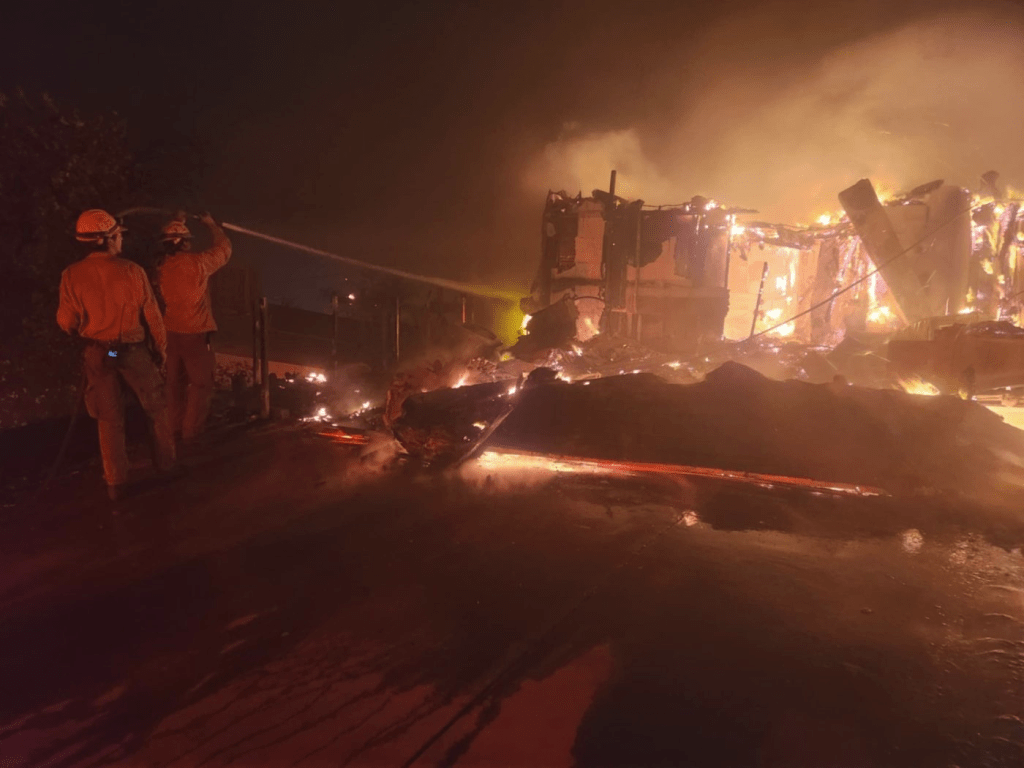
Firefighters spray water from a hose during the Eaton Fire. | U.S. Forest Service photo taken by Capt. Jason Benton / Courtesy of Wikimedia Commons
The Eaton Fire of January 7, 2025 will be endlessly seared in the collective memories of the Pasadenans and Altadenans who experienced the largest blaze in the history of the San Gabriel Valley. Overnight 19 people died and 9,000 structures were reduced to ashes, among them 80 homes at Upper Hastings Ranch in Pasadena and over 4,500 in Altadena.
Large corporations and private citizens across the country responded immediately to the disaster – sending cash, food, personal items, and other basic necessities to the various collection sites that opened during the days following the fire.
All through the year, several non-profit organizations emerged in Altadena to continue to support those who were affected even as the rest of the country moved on to other important matters. Community leaders have worked ceaselessly to keep the momentum going and thought of ways to ensure we didn’t forget that thousands of Altadenans are still grappling with the aftermath.
Two individuals – Victoria Knapp and Ethan Marquez – are collaborating on an event to benefit those who were affected by the Eaton Fire. They are co-chairing the Altadena Forever Run which will be held at 8:00 am on Sunday, January 4, 2026 at the Mariposa Junction in Altadena.
Thousands of runners and community members will gather for a10K, 5K and 1K family run raising critical funds for residents still recovering from the Eaton Fire – including individuals and families who remain displaced, are living in vehicles, or are running out of short-term rental assistance.
Victoria Knapp is a longstanding Altadena community leader and organizer whose civic work has focused on connection, recovery, and purposeful engagement. A former Pasadenan, she made Altadena her home in 2011, where she spent the next 15 years deeply involved in community life. She played a central role in crisis communication and community coordination after the fire, helping residents navigate loss while fostering collaboration among neighbors, small businesses, and local organizations throughout the recovery period. She is a firm advocate for community-based initiatives that bring people together with purpose and meaning, including the Altadena Forever Run, which reflects her belief that shared action – like running together – can be a powerful force in healing and resilience.
Ethan Marquez is a 26-year veteran of the Los Angeles County Sheriff’s Department with a career spanning custody, patrol, training, and command assignments. He was on the scene during the Eaton Fire, playing a critical role in emergency response and community coordination. In August 2025, he was promoted to Captain of Altadena Station, where he continues to emphasize operational excellence, public safety, and community partnership. A dedicated endurance runner and philanthropist, he runs marathons while pushing his son in a wheelchair to raise awareness and funding for Duchenne Muscular Dystrophy research, using running as both advocacy and a deeply personal expression of service.
“The Altadena Forever Run is about honoring what we’ve lost, supporting those still recovering, and reaffirming our commitment to one another,” state Knapp and Marquez. “After the Eaton Fire, our community showed that resilience isn’t just about rebuilding homes, it’s about standing together, staying connected, and moving forward with purpose. This run reflects the heart of Altadena: strong, compassionate, and forever connected.”
The course passes through neighborhoods and foothill corridors impacted by the fire, featuring on-course storyboards that highlight survivor experiences and ongoing recovery efforts. Organizers say one of the most meaningful aspects of the event is the regional turnout, with runners traveling from across Southern California and beyond to stand in solidarity with Altadena residents.
Community leaders and first responders are expected to attend – including Robert Luna and Kathryn Barger. The Los Angeles Laker Girls will also be on site to cheer on runners and support the event atmosphere. The Altadena Forever Run is supported by corporate and community partners, including SoCalGas, GoFundMe, East West Bank, First City Credit Union, and Toyota of Pasadena.
Proceeds from the event directly support Altadena residents who continue to face housing instability and are seeking viable pathways to rebuild and return home. Although the emergency response has ended, many residents continue to recover in the long term with limited resources.
But through the tireless efforts of dedicated individuals and the support of the community, Altadenenas will get through this unfathomable tragedy and get back on their feet stronger than ever before.
 A San Gabriel Valley Inquirer