Danny Feldman of the Pasadena Playhouse Honored for Leadership in Theatre

Also published on 8 July 2024 on Hey SoCal
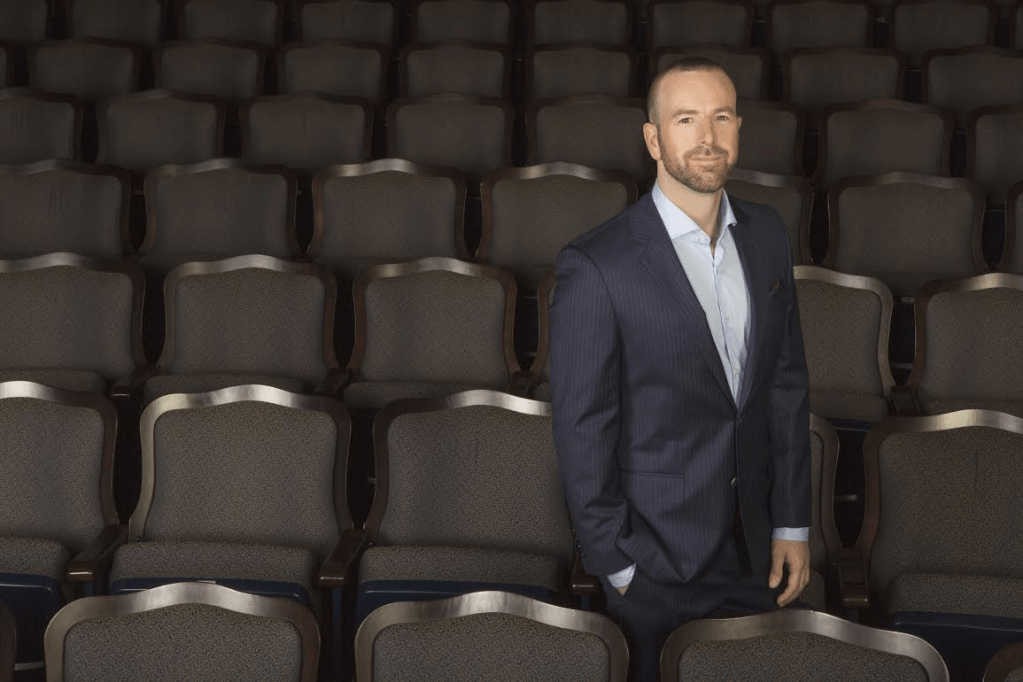
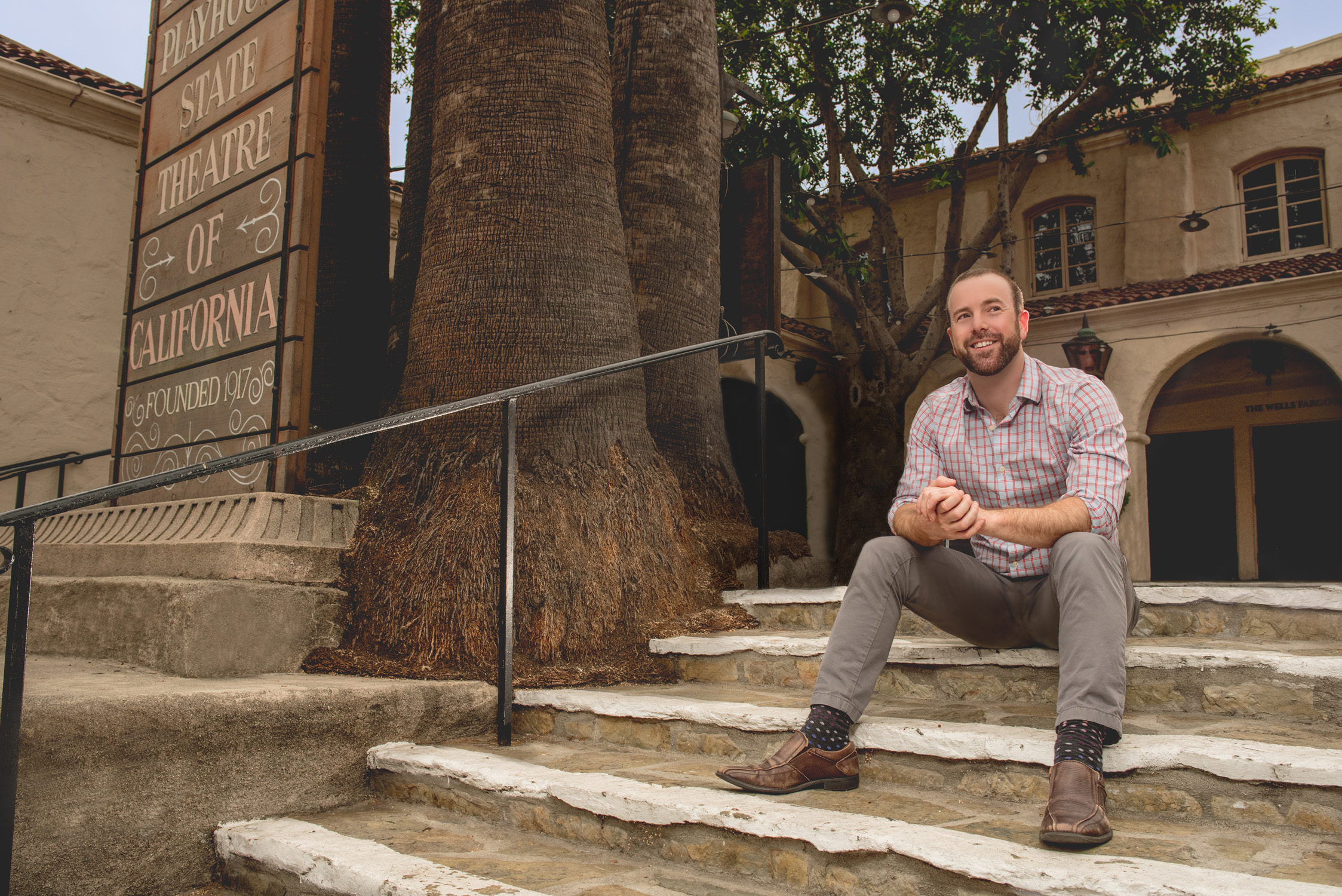
Danny Feldman | Photo by Jim Cox / Pasadena Playhouse

The Los Angeles Times recently launched L.A. Influential and Pasadena Playhouse’s Producing Artistic Director Danny Feldman was called one of The Creators – a group of outstanding individuals who are leaving their mark in film, art, music, and more. He was listed with fourteen others across all of the arts, joining an esteemed company that includes Eva Longoria, Ava DuVernay, Shonda Rhimes, Ryan Murphy, Jordan Peele, Mindy Kaling, Steven Yeun, and others. In the accompanying write-up, theatre critic Charles McNulty hailed him “The man who saved L.A. theatre.”       

“It’s a little bit of an exaggeration,” says Feldman during a phone interview. He then recalls when he was informed of the honor. “They reached out a little less than a year ago to say I’ve been selected for this influencer list, so I’ve had time to digest it. I didn’t know who else was on this and the full context exactly, but I was a little shocked.”

Feldman clarifies, “I’m very pleased and grateful, but it’s really less about me than The Playhouse – I just get to be the face of it. The tribute is a sign or symbol that the work we’re doing at Pasadena Playhouse is getting noticed. This happened around the time The Playhouse won the (2023) Tony for Best Regional Theatre, which was a major achievement for us. It was an embarrassment of riches!”
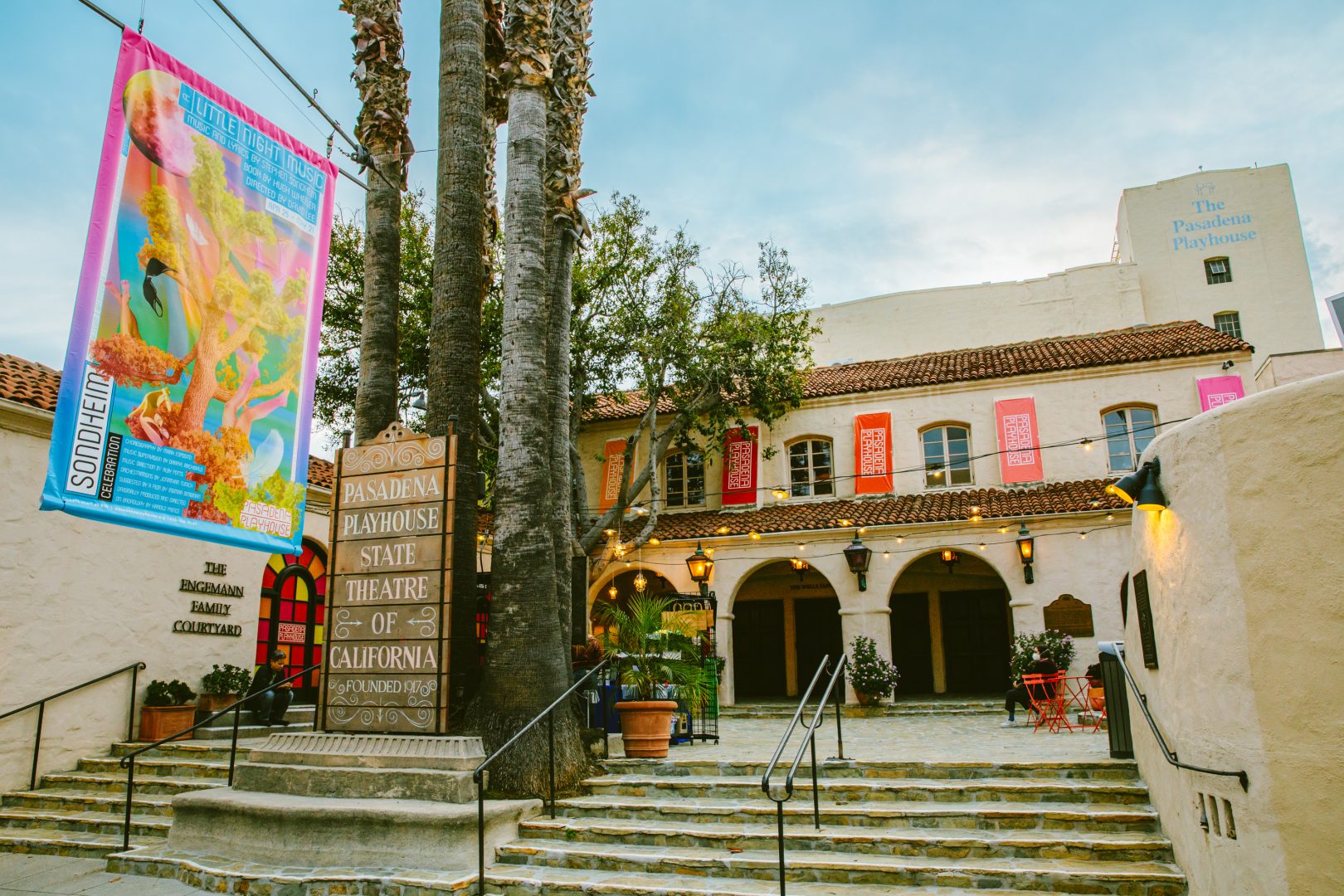
The exterior of Pasadena Playhouse | Photo by Jeff Lorch / Pasadena Playhouse

“The Tony award had a tremendous impact,” emphasizes Feldman. “The Playhouse has a storied history with lots of ups and downs. The award honored the legacy and the unique history of the Pasadena Playhouse as one of the most important theatres in America. At the same time, we were recognized at a high point – when we were firing on all cylinders, when we were rising artistically.”

“Financially, we were at one of the more solid places we’ve been in our entire history; we were finding our stride and were on the eve of an expansion,” continues Feldman. “To receive a national recognition, like a Tony Award, for our body of work and for our impact of excellence in the world of theatre was overwhelming. So many of us have been working so hard for so long, to be acknowledged with a Tony Award was very fulfilling.”

In May 2025, The Playhouse’s building will celebrate its centennial and its programming will reflect its history.

Feldman states, “The Pasadena Playhouse is an iconic building and institution in our Los Angeles community as well as in the American theatre. That’s the theme throughout  2024-2025 so we’re calling it our iconic season. I was aiming for big shows that were iconic in their way –epic presentations that look like New York coming here and having a moment in our theatre.”

The Playhouse’s historic stage will feel alive with a sizzling Martin Crimp adaptation of one of the greatest plays of all time, Cyrano de Bergerac; a fresh new revival of Jerry Herman and Harvey Fierstein’s Tony Award winner for Best Musical, La Cage aux Folles; a new production of Suzan-Lori Parks’ Pulitzer Prize and Tony Award-winning classic, Topdog/Underdog – one of the best new American plays written in the last 25 years, as Feldman asserts.
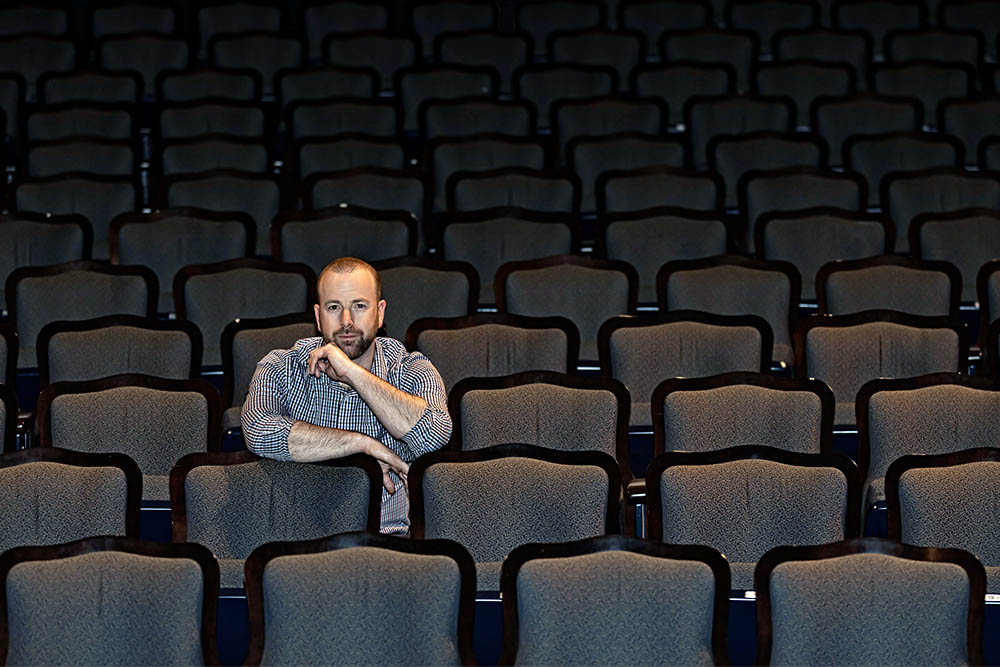
Danny Feldman | Photo by Jim Cox / Pasadena Playhouse

“We’ll have special musical performances with the Civic Auditorium for two consecutive weekends of concerts featuring two of the most enduring musicals of all time: Anything Goes in Concert, starring Jinkx Monsoon as Reno Sweeney and Follies, an encore to our recent Sondheim celebration,” Feldman adds. “It’s a robust slate of shows that are sort of the greatest hits in a way, to honor our extraordinary achievement of having one of the oldest operating theatres in America. These special theatrical events will expand our initiative exploring classic American musicals with our community. ”

According to Feldman, musicals are rarely performed by non-profit theatres because they’re cost prohibitive. While the Pasadena Playhouse had staged musicals in the past, in 2019 he launched the American Musical Project – a bold and financially risky move. He discloses the reasoning behind the expensive venture, “We feel that it’s important because musical theatre is one of our contributions to the world. And we realize there’s a danger that the next generation and the generation after may not be able to experience these shows the way they’re intended in a 650-seat theatre in our community. We started with ‘Ragtime,’ ‘Little Shop of Horrors,’ and, of course, our Sondheim celebration. ‘Jelly’s Last Jam’ closing this week is the latest. We’re really showing folks our commitment and dedication to the American musical. We do them quite well, I have to say. People are really enjoying the artists and responding to them.”

Watching Broadway musicals at The Playhouse is a singularly unique experience. Feldman explains, “We love Broadway tours! It’s wonderful that our community gets to see these great shows from New York when they come to the Ahmanson or the Pantages. But those shows were created for a commercial purpose for Broadway and they go on tour with mainly New York performers. We do something very different at Pasadena Playhouse – we start with a blank page. I put together a team and they make the show from scratch. ‘Jelly’s Last Jam’ has over a hundred local employees working on it; the scale of it is pretty fantastic. I think they’re so successful artistically because of the group of hardworking people who are making it just for the audience that comes to see the show at the Pasadena Playhouse.” 

Not surprisingly, the back-to-back accolades of The Playhouse’s Best Regional Theatre Tony Award and Feldman being named “The man that kept L.A. theatre alive” have put pressure on Feldman. “I try not to think about that,” quips Feldman. “But, of course I feel a lot of pressure from my daily job – I’m in a very privileged position of running a very important theatre in American history and our community. We’ve got to keep raising the bar with every decision we make, every show we decide to put on. Pasadena Playhouse is on the forefront of the American theatre, which means there are a lot of eyes on all the things we do. But it’s always been that way.”

“We take the responsibility of being the state theatre of California very seriously,” stresses Feldman. “And I think you see that in the quality of our work. I’m assembling teams of some of the top theatre-makers in America, whether they’re the most experienced – Alfred Molina is on our board and performs on our stage often – or the most exciting new talent. But regardless, these are some of the hardest-working and talented people in theatre coming to create extraordinary theatre. We operate with the thought that if we don’t get this right it may be our last. Maybe that’s not true now but it used to be true, and that’s what drives us. And while these accolades are great and we feel deeply proud and honored by them, we have a lot more to do.”
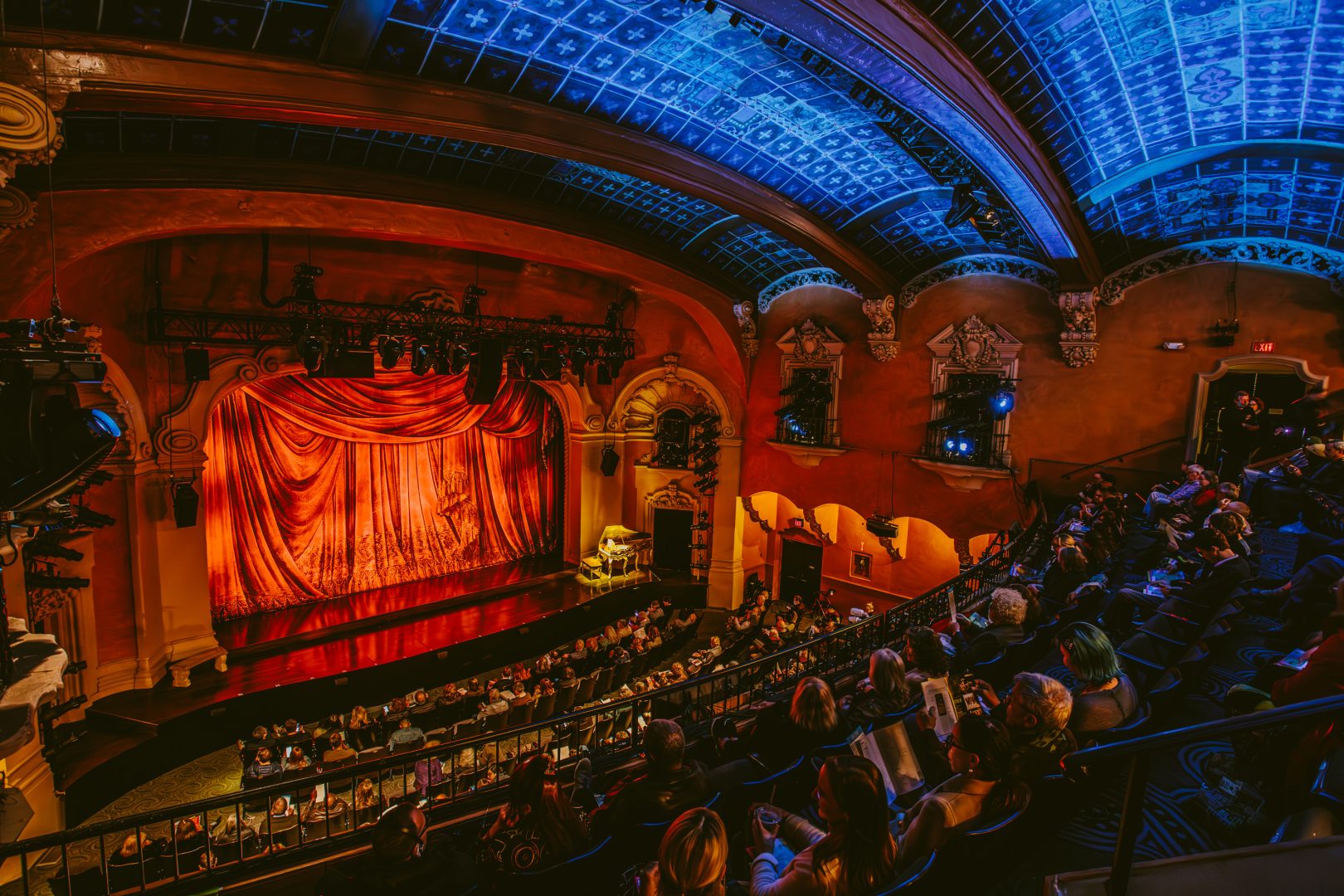
The interior of Pasadena Playhouse | Photo by Jeff Lorch / Pasadena Playhouse

Feldman expounds, “We have a big vision for Pasadena Playhouse; we’re setting the theatre up for now as well as in the next hundred years. Today we have the luxury of not just thinking about the next show, but about where the American theatre is going – how do we lead the way on that – and what it will look like two or three decades from now.”

To that end, The Playhouse will present The Next Stage Immersive Summit 2025 in January in partnership with The Immersive Experience Institute, the main service organization for immersive theater artists. The premiere gathering of creators of immersive art & entertainment will draw international guests from the fields of performing arts, themed entertainment, XR, and gaming. This is the largest gathering of its kind in the world.

“This year we expanded our audience in a dramatic way with the inauguration of a major youth and family ecosystem – classes and professional shows for kids. Keep your eye out on that programming because that’s only going to grow in the future. Theatre education is core to who we are. The school at the Pasadena Playhouse was built in the 1920s and by the 1930s the College of Dramatic Arts was one of the top schools in America,” explains Feldman.

The public’s involvement is crucial to the realization of Feldman’s ambitious plans. He exhorts, “The lifeblood of our theatre is the people in the community and we urge folks to become members – you get to come along for the whole ride, you get to see all the shows. I think the folks who have been coming recently feel the new energy at The Playhouse and they understand that. But for those who may think it’s not for them or haven’t been here in a while, we encourage you to come take a look at us, come check out the shows, come look at our education program – we’ve really become a force in the world of theatre.”

Feldman will mark eight years of stewardship of the Pasadena Playhouse this fall. He took over as producing artistic director when the venerable institution was at its nadir financially and was struggling to get traction in the community. That he even took on such a daunting challenge is remarkable enough. That he then led the way in turning its fortunes around and flourishing during these particularly trying times for American theatre is an astounding feat.                                                                                                                                                                                                                                                   
Danny Feldman Leads the Pasadena Playhouse into its Next Hundred Years

Originally published on 5 June 2018 in the Pasadena Independent, Arcadia Weekly, and Monrovia Weekly

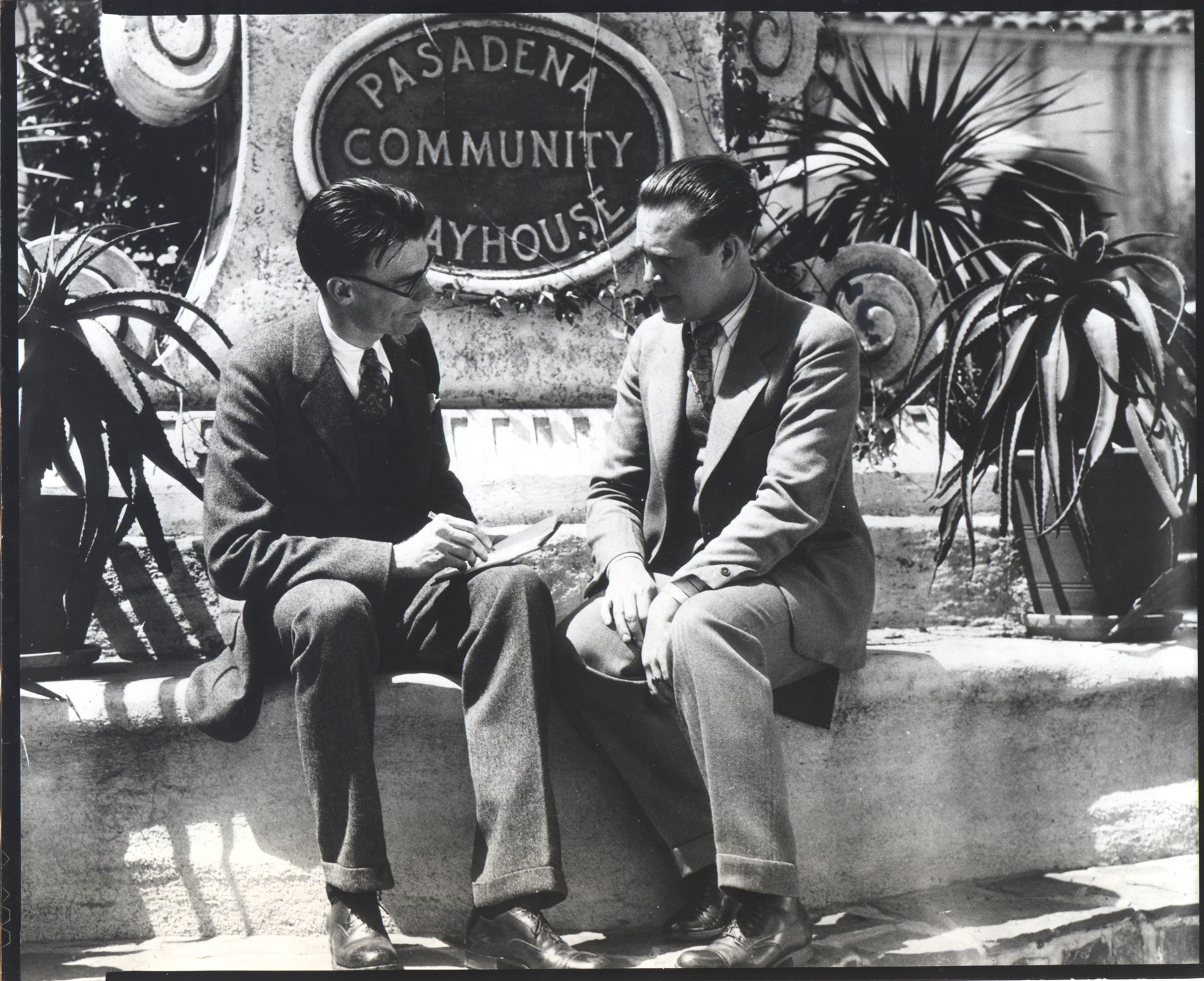
Gilmore Brown and Charles Prickett (Early Playhouse) | Courtesy photo / Pasadena Playhouse Archives

The venerable Pasadena Playhouse, the State Theatre of California, is observing its centennial. It is a milestone only a handful of theatre institutions in the country have reached, which is why Producing Artistic Director Danny Feldman can’t help but speak in awe of its past as well as its place in history.

“We’re celebrating three significant events – the centennial, the 90th anniversary of the founding of the Playhouse College of Theatre Arts, and the 80th year of the Playhouse’s designation as the State Theatre of California – and that’s extraordinary when you compare it to the Center Theatre Group, for instance, which is turning 50 this year,” states Feldman. “They’re babies compared to the Playhouse! Very few, if any, professional theatres in this country can claim similar distinction of history, impact, and longevity.”

“The Playhouse has survived world wars and has weathered financial challenges to continue to bring productions that enrich the community. It has been a leading center for theatre arts in America for a century but very few people realize its importance. It’s my job to tell people about it; it’s incumbent upon us to tell our story and history. And I’m excited to be taking us back to that journey.”

Feldman continues, “Any time there’s a new artistic director, which is a very healthy and natural evolution, you get someone who’s coming in with a new lens as to what they interpret their mission to be. I stand on the very broad shoulders of Gilmore Brown and Sheldon Epps who dedicated big chunks of their career into making this place thrive.

“Gilmore Brown founded the Pasadena Playhouse in 1917 when he was only in his 30s and basically operated the theatre until his death in 1960. He defined the greatness and international acclaim of the Playhouse. It was here that world premieres of the works of Tennessee Williams and Eugene O’Neill were presented. It was the venue for women playwrights to stage their creations in those early years when it wasn’t the norm.

“He was the entrepreneurial man who galvanized this community into buying the land where the Playhouse sits now and build this theater. It belongs in the hierarchy of monumental buildings. At the time its cornerstone was laid, it was the only structure of its kind among orange groves. Variety called it a world-class facility, a true original.

“An energetic and fascinating man, Gilmore put the entire community to work in the Playhouse. They made costumes and they were part of the chorus in the shows. There was a blurring of the lines between professional and non-professional theatre artists. What resulted was a community that fell in love with this enterprise and gave themselves for many, many years in establishing it and taking great pride in making it one of the foremost theaters in the country.”

Producing Artistic Director Danny Feldman | Courtesy photo / Ben Gibbs

“The Playhouse had a lot of ups and downs after this death when the theater was dark for a period of time,” relates Feldman. “The next great chapter in its history was when Sheldon Epps came on board. He was really ahead of his time in reinterpreting the Playhouse’s role. The community wasn’t what it looked like back in 1917 and it was him who burst open the doors of who the stage is for and what kinds of stories are being told. I think he made a permanent change to the Playhouse in saying ‘we are an inclusive place.’ It’s not a place about one segment but several segments of our community. I’m so inspired by that and am building on it.

“When I took over, not only did the artistic director change after 20 years, but it was a change right at the cusp of its new century. On top of the financial challenges, we have a new artistic focus through my lens, my love and passion. And at the same time we are defining what a theater is going to be in the age of Netflix and Hulu. We can’t function as we did back in 1917, the world is different now. So the question is how are we going to make theater flourish? What are the core values and ideas that worked back then that were important to the community and how do they translate today?”

“We want to have relevance which isn’t a new idea because it’s how it has always been,” Feldman says further.  “Even when doing a classic like ‘Romeo and Juliet,’ if it doesn’t connect to your audience and it doesn’t make them see themselves, it isn’t alive. Great theatre or art is about making an audience of strangers a community. It’s sitting next to someone you’ve never met before and having that great moment when you realize everyone around you is engaged in the same personal experience. Theatre is the ultimate master class in empathy.

“That is profound and it’s why theaters have always thrived, and will continue to, even with the inventions of radio, television, movies, and the Internet. Theater unites people in a way you don’t get with any other medium. No one can contrive something that can replace that. It’s worked with the ancient Greeks and it will do so now for a reason. The desire to be around other people is innate in human beings and we crave it in a way that’s hard to articulate in words but it’s important for humanity.”

Feldman remarks, “When the Playhouse was first established there was a great level of investment particularly in Pasadena and the San Gabriel Valley that went on for a long time. People went door-to-door to raise money to build this structure because they were deeply attached to the work the theatre was doing. They were an active part of it and felt ownership of this. But over time, some of that connectivity was lost.

“Our challenge is to do a much better job of broadening the definition of what our community is and we started some initiatives to address that. We’re sending out a message loud and clear that it isn’t just those who belong to an economic class that can afford to buy tickets. So one of the things we did right away was to lower our ticket prices. You can come to any show at the Playhouse for $25 and get good seats. We have a substantial portion of our tickets for that and they sell out first.

“We also launched a program called ‘Community at play,’ which is a free ticket initiative. We identified that there are groups in the community that have barriers to coming to see a play because of cost, or transportation, and so on. To get this population to be with the rest of our audience and be a part of our community, we gave away thousands of tickets to social service groups and after-school programs.”

“Studies show that young people who had an art experience in school have a greater likelihood of them coming back as adults, which bodes well for us,” Feldman adds. “A generous donor has enabled us to bring the entire 7th grade of the Pasadena Unified School District come to watch ‘Pirates of Penzance’ and I’m excited to say they’re all coming back next season for ‘Woman in Black.’ Our goal is for everyone who attends public schools in Pasadena to be able to see a show at their theater.

“Last night, for our ‘Community at Play’ program, a group of predominantly Latino students who did a workshop beforehand, came with their teachers to watch ‘Bordertown Now.’ Their experience was so moving that it brought tears to my eyes. They heard their voices on our stage which elevated them. The State Theater of California should rightfully be the place where Latino voices are amplified in the same way that Tennessee Williams’s or William Shakespeare’s voices were. It’s one of the ways we’re enriching our community and showing our relevance to it.”

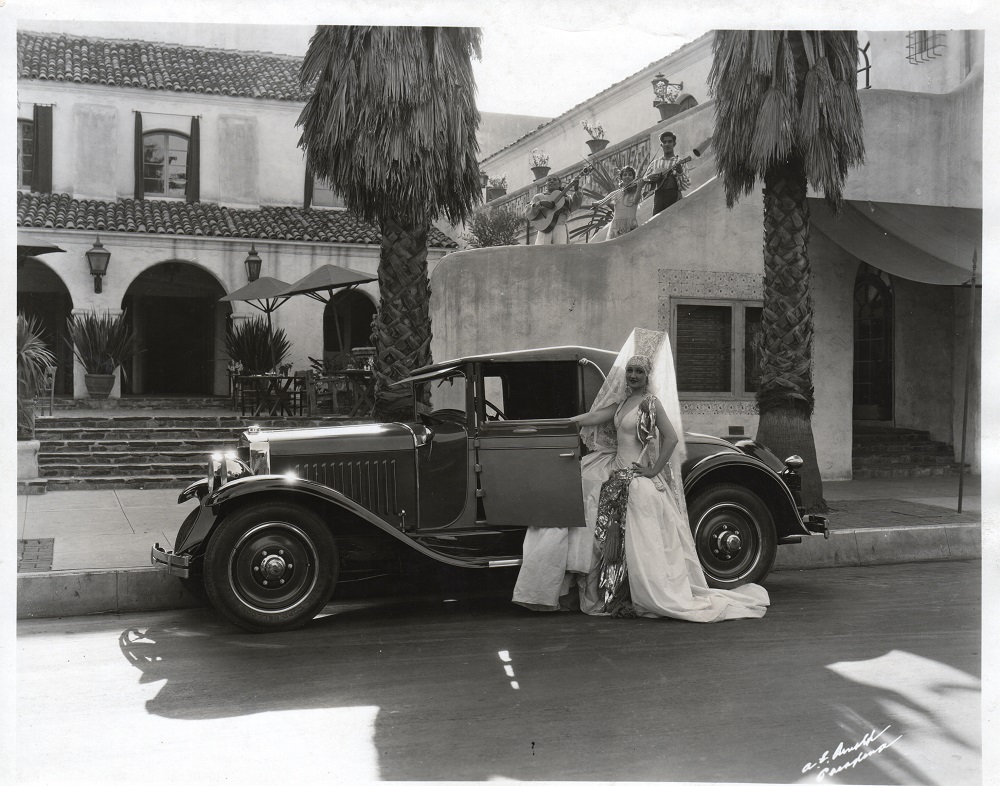
Senorita with Car (1936) | Courtesy photo / Pasadena Playhouse Archives

Feldman pronounces, “I want to think of the Playhouse’s next chapter as a transformation and I want to be careful when I talk about it. We’re firmly rooted in the past and we’ve had some real challenges that we’ve addressed head-on. I’m not someone who turns a corner and says ‘let’s forget the past’ because I want to remember it – there’s value to it. We’re a historical theater and we have to honor our past but look at it with the lens of the future.

“I think of myself as bridging those worlds and our programming demonstrates that. The first  show we put on for our centennial season was ‘Our Town,’ which is a play about community. But what does that community look like today? So we reinterpreted it to reflect our changing world.”

“In the 1920s Gilmore Brown produced new plays here and in the 1940s he put on Tennessee Williams plays,” Feldman expounds. He championed contemporary playwrights and I’m continuing that. We have ‘Bordertown Now,’ a play refreshed and rewritten by modern-day artists from their work 20 years ago, to show the world we live in today. In a way it’s a transformation in taking core values deeply rooted in the past but aware of where we’re going in the future. We want to find the spirit that prevailed in the 1940s to the 1970s, which was the period the Playhouse had the most growth, and put our own distinctive stamp on it.

“My previous post in New York was with an artist-driven theater, established by Philip Seymour Hoffman and other exciting artists, that created space and opportunities for those who are being marginalized and being left out of the conversation. I was very much inspired by that and I’ve brought that here, particularly as we expand the scope of our work. It deeply resonates with me because my father wasn’t born here. I realize that America is a tapestry of different cultures and people.”

“California is one of the most diverse places on the planet and the Playhouse is its State Theater.  I’m responsible for ensuring that our values and programs demonstrate the core values of inclusion, diversity, and providing a space for more than just one thing. That’s inherent in who are as an institution and I want to carry on that legacy,” declares Feldman.

So how does an institution that is one of the most prolific drama-producing organizations in the history of American theatre – having commissioned over 550 new works, produced upwards of 1,200 shows, spearheaded over 500 world premieres, developed several shows that went on to Broadway, and welcomed more than one million audience members – commemorate a milestone?

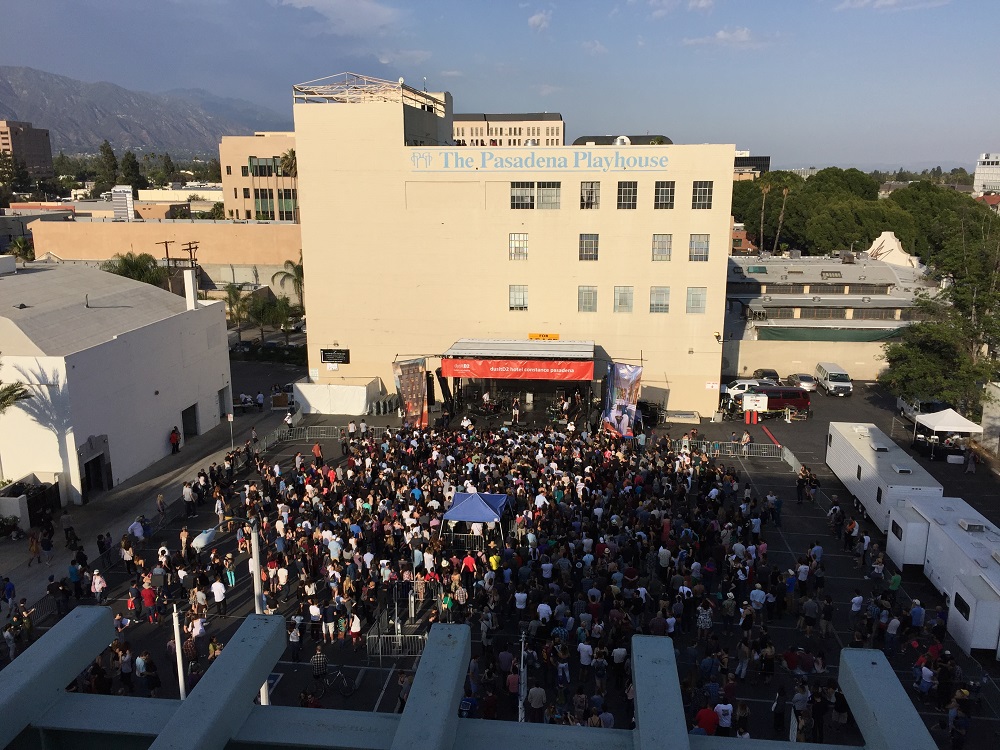
Pasadena Playhouse will celebrate its centennial with a block party | Courtesy photo / Chris Molina

“There was a great deal of discussion about it and a great many ideas were thrown around, including having a black-tie dinner,” discloses Feldman. And, quite frankly, I wrestled with it for a long time because I want to make sure that whatever we do, it has to be something that’s engaging our community the way it has in the past and building on that heritage.

“One day, when I was in a heated debate on it, someone asked ‘If money weren’t an issue, what would you want to do?’ And I said ‘We’d close all the streets around the Playhouse and invite everyone to come so we can say ‘thank you.’ And my Marketing Director said, ‘Okay, let’s do it.’

“It’s a huge undertaking to close El Molino Street, the parking lot, and the Playhouse Alley. But we decided that instead of having a self-congratulatory event, having a block party was the best way to honor everyone who has supported us. It would be an opportunity to reintroduce the Playhouse to the community, to say that this isn’t our space but your space. It has served as a gathering place for a community for a hundred years and we want to be a part of their lives for the next century.”

Brown established Pasadena Playhouse in 1917 and named it Pasadena Community Playhouse, safeguarding the entire neighborhood’s investment in it. And while it has achieved an international renown in the years hence, Danny Feldman is making it his mission to ensure that the community spirit on which it was founded lives on into its next century. Gilmore Brown would have been pleased.