A Noise Within Goes Virtual

Originally published on 15 May 2020 in the Pasadena Independent, Arcadia Weekly, and Monrovia Weekly

A Noise Within’s virtual gala performance on Zoom (clockwise, L-R): Erika Soto, Kasey Mahaffy, and Rafael Goldstein | Courtesy Photo / A Noise Within

The unprecedented stay-at-home orders that were put in place mid-March following the coronavirus outbreak caused a closure of all businesses deemed non-essential. Venues where people usually gather, like theatres, had to shut down practically overnight; events were cancelled and performances were rescheduled. 

For A Noise Within (ANW), however, the show goes on – virtually. Speaking with me by phone, Producing Artistic Directors Geoff Elliott and Julia Rodriguez-Elliott disclose that work doesn’t stop despite the lockdown.   

“We’re essentially doing everything that needs to be done from home – lots of Zoom meetings with the various departments, the executive committee, the board. It’s a different kind of busy but it’s busy,” says Rodriguez-Elliott.

Stay-at-home orders notwithstanding, ANW recently held their first-ever virtual gala. Elliott explains, “A lot of planning went into holding a virtual gala in lieu of having our fundraising annual dinner on stage event. In the past, obviously, the money raised from the dinner on stage went to the educational department. This year it’s a little different because there are other challenges, so it was an overall ask to our supporters that they be a part of the gala. We didn’t know what to expect but it actually went very well – we hit our goal, which was wonderful.” 

Describes Rodriguez-Elliott, “People were able to join Facebook Live for the event. People who purchased tables for the event pre-COVID donated it back to the theatre. That was really incredibly generous. And then pretty much all the activities that we usually would do during the dinner on stage were all done virtually. We had a paddle auction which lasted 48 hours, we had performances of scenes from ‘Alice in Wonderland,’ which people were able to view through Facebook Live and also through Vimeo. Geoff and I paid tribute to the honorees, as we usually do every year during the dinner on stage event. Everything that we would have done at the dinner on stage, we tried to duplicate except that it was all virtual. It was a different experience but it was a wonderful way to stay connected. It’s not a substitute for being together in a room but it was a playful way to do it. I think people appreciate the opportunity – I know we do – to connect even if we’re doing it in a little box.”

“You’re trying to be as normal as possible virtually,” I comment. And Elliott, who thankfully hasn’t lost his sense of humor, quips, “As normal as possible for people who are abnormal generally.”               

Alicia Green at the virtual gala | Courtesy Photo / A Noise Within

After two months in lockdown, Californians are slowly coming out of isolation. But our world will be vastly different from life as we know it. Even when restrictions are lifted for theatres at last, our new normal will probably involve wearing masks in public spaces and distancing in large gatherings. So how will theatre companies navigate this uncharted territory?    

Rodriguez-Elliott says, “Various scenarios for the fall and spring seasons are one of the many things we talk about with our staff, with each other, and with Michael, our executive director. We’re crunching numbers and looking at half capacity – for instance, having every other seat, every other row. And if that were the case, we could have longer runs. We think that’s what’s going to be the scenario for a while in our line of business. We’ll just have to see how it plays out. We’re looking to Gov. Newsom as to the different phases of reopening and we’re paying close attention to the advice of the experts. It’s a day-to-day situation which changes constantly.”

“And we expect that when all is said and done, there will be very specific guidelines that we’ll follow – whether they’re based on national directives or at the local level – about places where people assemble in terms of what you can and can’t do,” Rodriguez-Elliott adds. “As Geoff said we’re trying to determine what that might look like for us. Traffic-wise, how do you get people in, how do you get people to the bathrooms, etc.”

I inquire how they’ll handle the season schedule and Rodriguez-Elliott asserts, “The schedule that we announced is what we’ll uphold and anticipate we’ll be following. That said, things are shifting on a daily basis so we have to be able to adapt to that. We’re looking at multiple contingencies, various plans that would address changes in our ability to get into the space, or in the number of audience members that we’ll be able to accommodate.”

“What message do you want to impart to your audience,” I ask. “We will honor tickets and subscriptions, if and when the schedule changes,” replies Rodriguez-Elliott. “Also, people can help their local arts organizations during these very challenging times by either contributing if they’re able to or by purchasing a subscription.”

“I want to add one thing that picks up on something Julia said earlier,” Elliott interjects. “We’re not going anywhere. We’ll be back healthy and strong. There’s something about live theatre that can’t be duplicated. We’ve been in caves, and rooms, and around fires, for tens of thousands of years telling stories to each other and relating the human experience. And that’s something that’s always going to be with us. We personally are in a very good place – we have a lot of support and supporters. At this moment in time we’ve been able to keep our whole staff on without having to furlough anybody. We have a full staff working from home. Who knows what the future holds, but that’s where we are right now. But we’re feeling pretty confident about it.”

“We have a lot of online content,” continues Rodriguez-Elliott. “We’re hosting classes online. Our ‘Summer with Shakespeare’ (SWS) program is going virtual this year, which should be interesting. We’re doing as much as we possibly can until we can get back into the theatre.”

From June 15 through July 17, students attending SWS can access the dynamic and immersive classes safely while under the tutelage of professional artists working at ANW.
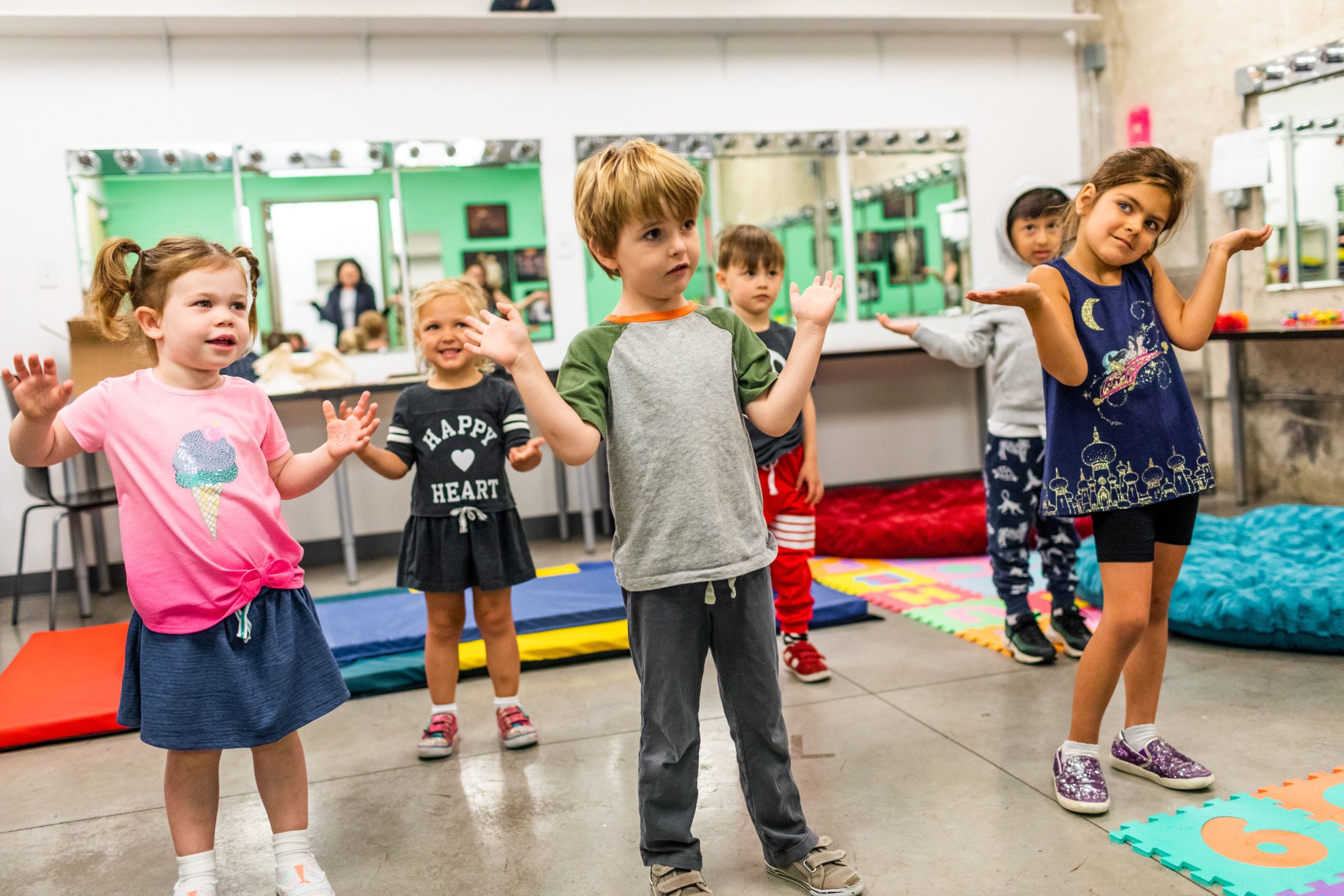
Little kids participating during ‘Summer with Shakespeare’ camp | Photo by Brian Feinzimer / A Noise Within

“Connecting with our community has always been a key component of A Noise Within,” pronounces Alicia Green, Director of Education and Community Outreach. “With health and safety at the forefront of our strategy, we decided to transform our schedules and programming so we can engage with our students from their homes. The online program has been designed so that it can continue to provide unique exposure to a variety of classic plays and guide students through the intricacies of the world of theatre.”

As in years past, the classes will cover a wide range of topics to enrich students and teach them about all aspects of stagecraft and what goes into a stage performance. Campers will learn about swords/stage combat, magic, mask work, voice work, stagecraft and design, and movement. Beyond expanding traditional theatre skills, SWS helps students with public speaking, builds their self-confidence, and connects them with pedagogically trained professionals.

“We’re offering several options for each of our tracks,” Green says. “It’s very flexible so that anyone can do it, and we make it work for every student. With everything being so unknown, we want to make sure to do what we can to provide top-tier theatre education while understanding that a full five weeks is not viable for everyone. Our program is structured so that families can choose what works best for their family, whether that be one week, or three, or attending our entire five-week camp. We want to give children the chance to be creative and collaborate with their peers while still being safe.” 
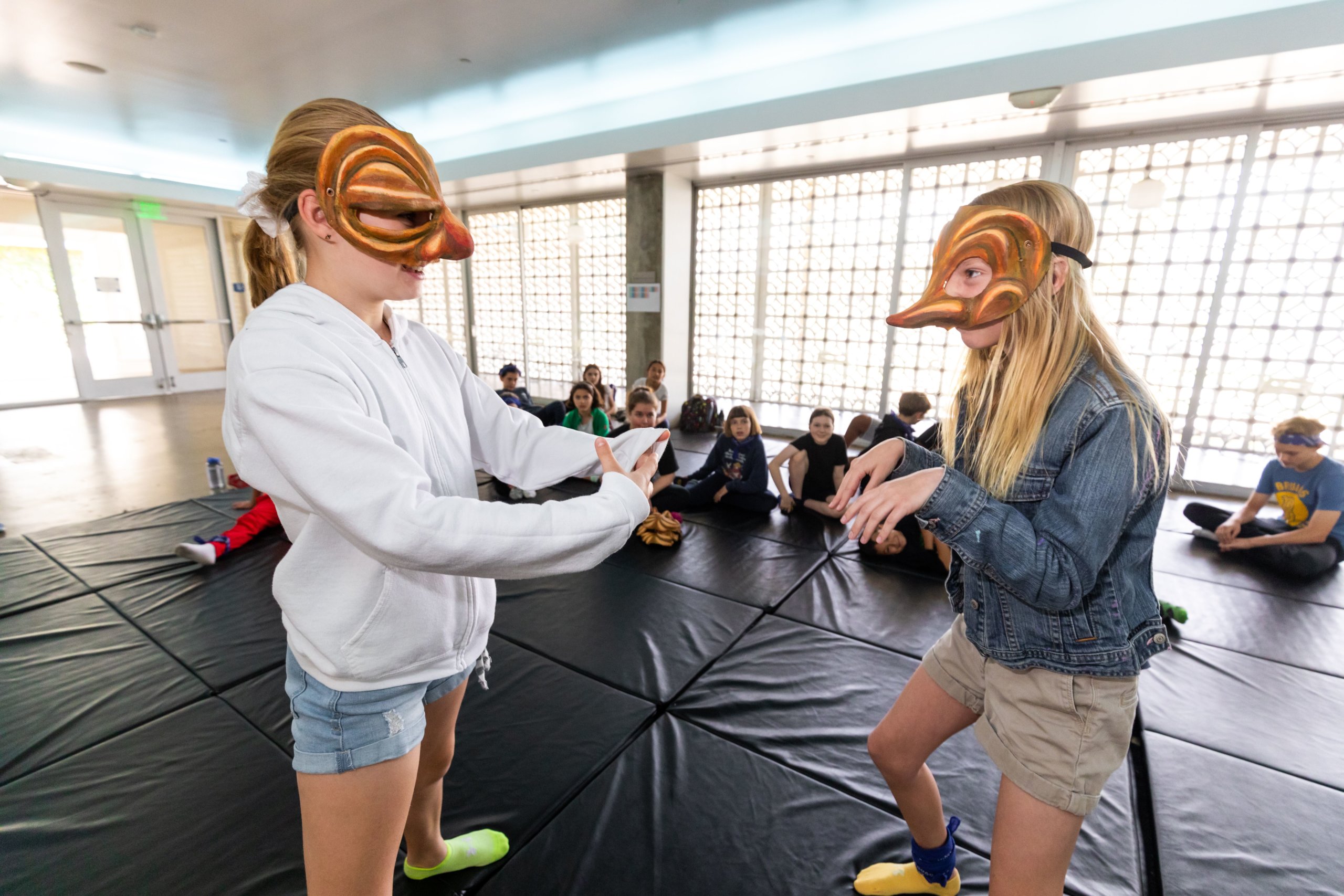
Even older students have fun at the summer acting camp | Photo by Brian Feinzimer / A Noise Within

There are three tiers of the program broken down into age ranges. Track 1 is for students aged 14 through 18, Track 2 is for students aged 10 through 13, and Track 3 is for students aged 6 through 9. Each track is curated specifically to the age group and can even offer class credit for certain schools. The summer acting camp culminates in a final performance that will be livestreamed on YouTube to share with students’ friends and family.

“Students and families can expect the same quality they have always known with Summer with Shakespeare,” assures Green. “But now we are able to welcome families from across the country and incorporate technical elements via the magic of the digital age we didn’t have available before. Classes are both live and pre-recorded (utilizing platforms that are still engaging even when not live) and the schedule is flexible to allow students breaks from screen time and also provide ease of sharing computers and space. We have built in unstructured fun time to allow students to engage socially. While it’s not the same as being in the same room together, the social component of camp and youth is so important that we did our best to replicate it online!”

By now, parents have spent over eight weeks essentially home-schooling their children. They can take a break by sending their kids to ‘Summer with Shakespeare’ online camp (enroll here). Come fall, maybe schools will reopen and we can slowly get back to normal, whatever that looks like. We may even be able to once again see a play – A Noise Within’s ‘Alice in Wonderland’ would be a great escape from our new reality.
Pasadena Schools Embrace Remote Learning

Originally published on 16 April 2020 in the Pasadena Independent, Arcadia Weekly, and Monrovia Weekly

This image has an empty alt attribute; its file name is PUSD-1.jpg
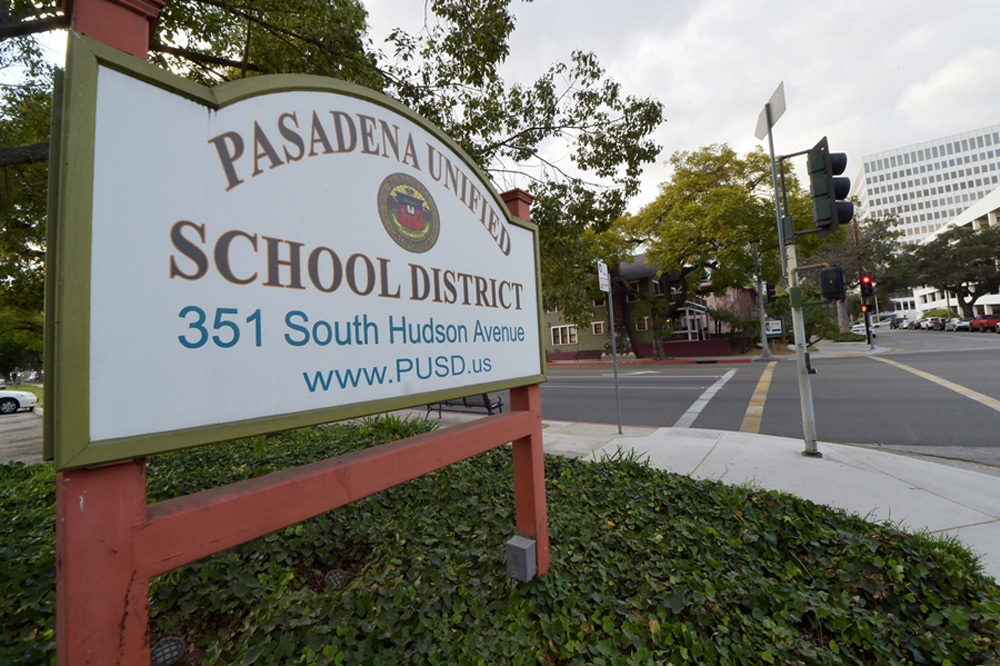
Pasadena Unified School District Office | Photo by Terry Miller / Beacon Media News

In the midst of health concerns caused by the coronavirus outbreak, safe distancing has been implemented. Schools closed to ensure the safety of students and to help curb the spread of the disease. I set out to determine if there is a system in place to handle this sudden change and how equipped administrators, teachers, and students in Pasadena are to switch to remote learning.

Pasadena Unified School District’s (PUSD) Director of Curriculum, Instruction, and Professional Development, Helen Chan Hill, informs me by email that PUSD initiated its remote learning plan in earnest very shortly prior to the school closures on March 13.

Hill expounds, “We laid out a three-stage plan: Stage 1 would be general, standards-based content that would be made available online and in print, with enough material that students could engage in reinforcement of learning for 2-3 weeks – we were able to get these up and running by March 16. Stage 1 work was completed by a central team of Curriculum & EdTech specialists, with the intent to buy a few weeks of time for teachers to build out their own online classrooms in PowerSchool Learning.

“Stage 2 began officially on April 6, following PUSD’s Spring Break. At this stage, all online classrooms are active and students should be able to take in content and lessons that are custom created for them by their teachers.

“Stage 3 is our transition to interactive learning, with the use of meeting apps and tools that allow for livestreams and more bi-directional communication between the teacher/student/ content.”

“PUSD, fortunately, had three key systems in place for several years that has helped with our readiness,” Hill continues. “The first of these is a network of Instructional Coaches in every school. They are the crux of our professional development design and have been instrumental in providing clarity and training to teachers. While teachers were planning prior to April 6, our Instructional Coaches and Principals/APs have been attending custom tutorials on remote learning that they can use with their staff.

“We have a network of TechLeaders that are early adopters of technology integration in the classroom. These are teachers who are in the classroom, but receive monthly training on apps, tools and best practices for instruction with technology. They too have been key in supporting teachers in this time!”

This image has an empty alt attribute; its file name is school-417612_1920-1.jpg
The school hallway, once a beehive of activity, is eerily quiet | Courtesy Photo

Asked if there are any assessments in place to determine if students are learning, Hill replies, “We have analytics on each online classroom in PowerSchool Learning with respect to usage, but as for assessment, that has not yet been fully determined. In alignment with CDE’s updates, we will be suspending nearly all of our local assessments. However, we want to help teachers to check on student progress and understanding through other means still to be determined.

“Furthermore, we have created a resource page to support our teachers and parents. We also want to emphasize that the well-being of our students and families is the utmost priority – while we are dedicating much work to ensure students’ academic opportunities, we are likewise encouraging grace, patience, and understanding around all of it. We know that families’ (as well as teachers’) lives have been uprooted and we need to take care of each other before we make demands for schoolwork.”

I’ve read articles that highlighted the plight of some students who don’t have computers at home or laptops and, even when they do have them, don’t have WiFi and I ask Hill if this is a problem at PUSD.

“Because of our techequity initiative that began in 2018, our students are already one to one with chromebooks,” Hill responds. “Sixth to 12th grade have already been taking them home, and K – 5 use them in the classroom. Therefore on March 13 when we dismissed, we asked elementary schools to dispatch the chrome books from the classroom for students to take home. We are still working on students with no Internet access – we have deployed all of our hotspots to the majority of those families in need, and are working with others on a solution.”

Speaking with me by email, Dr. Benita Scheckel, principal of Altadena Arts Magnet School, says, “Teachers had two weeks to finish creating their virtual classrooms; students began remote learning four weeks ago with general academic content loaded by our district onto PowerSchool Learning. Our school’s instructional coach, Ms. Hanh Le has really been doing the heavy lifting of training teachers to use all the available online apps to support student learning. The district is working closely with each campus’s administrative team and instructional coach to collect data on how teachers are managing their virtual classroom set up.

“I am trying to keep everything as normal as possible – I am continuing to send them my Sunday updates for staff. I am checking in on them every day formally via email and virtual staff meetings and then informally via text and phone calls.” 

Dr. Scheckel adds, “I’m just so impressed by PUSD’s ability to move from in-person to virtual learning so quickly and seamlessly.  I am also incredibly inspired by our teachers’ aptitude and willingness to jump right in and learn so many new things in such a short amount of time. My teachers and so many across the district are commenting on how sad they are to not be able to see their students in person every day.”  

Ashley Butler teaches World History and AP World History to around 120 mostly sophomore students at John Muir High School Early College Magnet.

She says, “I have been communicating with students through email; surveys and all work is being posted and submitted by students on a Learning Management System called PowerSchool. Next week, after our spring break, I will conduct digital lessons and hold virtual office hours via Google Hangout Meet.

“I am working to create (and modify in real time, due to the situation) lessons and activities to best support student learning and support student needs in this uncertain time. I don’t have a model or a template that I follow, per se, but I am trying to provide instruction that supports my students in the most effective way possible.”

Adds Butler, “I can’t speak for all high school teachers in this case, but speaking for myself, I am learning to communicate with my students in different ways. I am used to in-class conferencing to support student learning. However, with remote learning, this one-on-one time has changed. Now, instead of supporting students individually during class hours, students are being supported at all times during the day.

“Student engagement really depends on the class. Virtual discussions can still take place on various learning management systems and other digital resources like flip grid or padlet. Student engagement can be achieved with different types of assessments, projects, research activities about which students are passionate, or assignments/activities that relate to their lives.

“It is hard to say if high school students are better able to adapt to remote learning, I think time will tell. However, many students have explained that they miss the in-person support their peers and their teachers provide. I think that all students, no matter their age, are able to adapt to remote learning when they have teachers who have integrated technology into their classroom regularly. I think one of the greatest challenges high school students are facing is that many have familial responsibilities outside of school work.”

Asked what has been the biggest hurdle for her, Butler remarks, “Not sure I have had to overcome anything yet; I feel like every day I am faced with a new challenge, but the challenges and new learning experiences are what make education such an enjoyable profession.

Students are adapting to learning from home | Courtesy Photo

Armenui Manasarian, who is one of PUSD’s TechLeaders, teaches at Sierra Madre Middle School. She describes how she conducts her virtual classes. “For about ten years now, I have been using the LMS (Learning Management System) called Powerschool Learning. I post my assignments and content on my class pages; I record myself giving the lessons on screencastify and post them on my page for my students to listen to it and view it. To establish as much connection as possible, I check in with them by conducting polls and using discussion boards on Powerschool. I have embed Nearpod lessons, Listewise lessons, videos, etc. Eventually, I will be using Google Meets to connect to the class for live instruction.”

Continues Manasarian, “I teach five periods – two classes of English, two classes of History, and one elective that is a tech class/Hawk News with a total of 167 students. My elective does the school news broadcast and we are trying to do this remotely and sending them out to the school as a means for all of us to connect.” 

“Every Monday, I post an agenda for the week so students are clear about expectations and are able to manage their time; I film tutorial videos which I send to parents and students to help them along and as to what my expectations are. I create a Dropbox so that students know where to turn in the assignments. My students use various tools such as Kami (lets them type on PDF) so that they can do the work and turn it in. I am also emailing my students/parents. I am available on Google Hangouts whenever students and parents have questions or are confused about lessons.”

“I look for interesting topics to cover. Some discussions are lecture types with only me; some are interactive where they can respond to each other in the class; and there are times when they record their voice response or, using animation, they record a face response. 

“Not being able to explain things in person is a struggle at times, especially since this happened so suddenly that we didn’t really have adequate time to prepare the kids. They all have various types of households with different schedules. Their parents might not be able to help as much or they might not have the best access to internet. I try to make things very clear and set norms, guidelines, and routines so that everyone can follow along. I give them a suggested schedule, but it is up to the family to enforce them.”

While this pandemic brought to light the limitations of remote learning, it also brought out the best in the PUSD. Manasarian notes, “I am proud of my district for the pace, teamwork, and efficiency with which they dealt with the situation. They set up learning materials for two weeks for teachers who needed time to learn, and to transition and plan all of this. They made sure all students had Chromebooks so that they can all access the content and curriculum. Everyone worked together to ensure this to be a success for both teachers and students. We really came together as district leaders and teachers in this time of crisis.”

If teachers are sometimes challenged engaging middle-schoolers, those who teach the youngest learners have their work cut out for them. Five-year-olds need hand-holding and getting solid educational foundation is crucial.

This image has an empty alt attribute; its file name is classroom-2093744_1920-1.jpg
A classroom devoid of students | Courtesy photo

Chelsea Eshnaur is a kindergarten teacher at Madison Elementary and has 19 students in her class. She expounds on how she delivers remote learning, “Using the PowerSchool, my students are able to log on to my page and see the assignments for the week; I am hoping in the upcoming weeks to try out a Google Hangout Meet. I don’t think I can use this to actually teach content because not everyone would be available at the same time to log on. In the past two weeks of online learning, I’ve only had about six students actually log on. But I’m hoping to just do a daily read aloud and just say ‘Hi’ to those who are available.

“As we have switched to this online platform for teaching, I have mostly just been creating my own method for pushing out content. Being in kindergarten has made it harder to adapt my content to a digital platform, but there are so many resources out there from other educators that have made it pretty seamless.

“I have created additional resources on my page that include ‘Enrichment’ and ‘Intervention Practice.’ The goal of the ‘Enrichment’ page is to provide resources that would engage the students outside of the core academics. For example: art, science, social studies, P.E., etc…. In the ‘Intervention Practice’ page, I have a plethora of resources for the students to work on in areas that they might be struggling in, outside of weekly content.”

“Because my students are so young, I cannot expect them to engage the content independently,” Eshnauer says further. “They need the help of someone at home to log on and work through everything with them (reading directions, etc…). I know that this model of school work has been an adjustment, not just for me and my students but for their families as well, many of whom are still working during the day.

“I’ve had a handful of parents reach out for clarification. I’ve sent out emails, phone blasts, and messages on Remind (messaging system), with very few responses. This is the most frustrating part because, like I said earlier, for the younger students, they need someone to help them access all of this. And when I have 4 out of 19 parents respond to any updates, it makes me think that the other 15 students aren’t getting anything.

How do you know if the children are actually taking in the lessons you’re posting online? I query. Eshnaur replies, “That’s a good question! Because I don’t have every student logging on daily, I cannot guarantee that all students are accessing the content. I include an online ‘quiz’ at the end of the week for each main content area (phonics, reading and math).”

While it’s still early days and there isn’t much data available, I nevertheless ask Eshnauer what has worked well and what hasn’t since remote learning has been put in place. She says, “So far I have found that I just need to be as available as possible. For parents that are accessing the content during the ‘school day,’ I’m trying to check emails and messages as often as possible in case of any questions. Also, be willing to troubleshoot everything! Online learning is new for all of us. So I’m constantly checking links and asking parents to let me know if they’re not working on their end, etc…

“What makes me nervous since going to online learning is just the lack of data that I will have. I know people might think, ‘it’s just kindergarten,’ but this part of the year is critical. I still have about half my class that are struggling to master the alphabet (ID and sound). This part of the year would have been more intensive as I worked with them to get them where they need to be. But so far, most of those students are not even logging on. And now they’re going to go to first grade at a disadvantage and the gap will just get wider and wider the more they progress through the grades.”

These are unprecedented times we live in. The world as we know it has been upended and most normal activities have practically ground to a halt. As disconcerting as our conditions are at the moment, however, life has to go on and so we persevere.

And as we have seen on television and read in the papers, during these extraordinarily dire times when our resources are diminished and our spirits are tested, we manage to make the best of our circumstances. Our collective will to fight the odds prevails and makes us soar above adversities.