February College Search Guide

Originally published on 4 February 2019 in the Pasadena Independent, Arcadia Weekly, and Monrovia Weekly

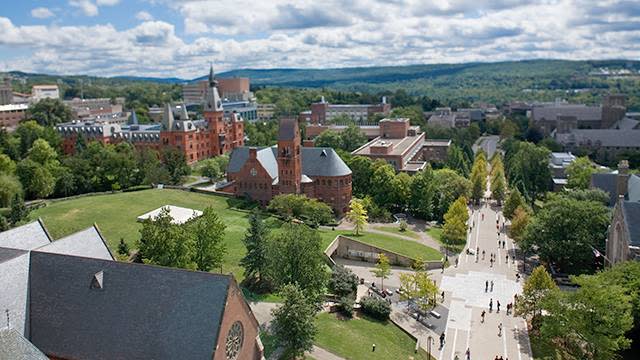
San Diego State University | Courtesy Photo

The road to college

After several years of drought and rainless months, we’re finally getting much drenching which may be affecting your family schedule. Maybe some sports events are being postponed or canceled and getting your children to all their after-school activities could be taking longer than usual. But don’t stress over the rain we’re getting; we can be thankful that we don’t live in Chicago where it’s colder than the North Pole. 

By this time, winter break is a distant memory and your children’s emphasis should have shifted back to school work. Hopefully, they have also done well in their first semester and are actively involved in this phase of their learning.  

FRESHMAN

Your children are well into the second semester of 9th grade and are now fully engaged in the academic and extra-curricular life at their school. They should continue focusing on maintaining good grades. If their first semester marks need improvement, now is the time to turn things around. Time management is of paramount importance as schedules could prove to be challenging with their course load, sports and extra-curriculars all vying for their attention and time.  

Encourage your children to start thinking about their summer community service activity. Your student’s college counselor may have some recommendations on community service and other clubs and organizations to develop his or her interests and abilities. I have to emphasize that your children should pursue an activity they are truly passionate about and be involved in it throughout their four years in high school. This shows admissions officers genuine interest and zeal.   

SOPHOMORE

Make sure your children are staying on top of their grades so that the final grades that go on their transcript are the best they could earn. The schools they will be applying to will only get to see all the marks in their first three years in high school. If their first semester grades weren’t stellar, they need to improve their grades this semester. They need to meet with their grade class dean to make sure their grades and courses are on the right track for graduation. They should know what tests they need to take and register for them (www.collegeboard.com; http://www.act.org).

It would be a smart move for them to take the SAT subject test the year they take the course while it is still fresh in their mind. My daughter took her SAT II Chemistry test as well as the AP test in May of her sophomore year.

JUNIOR

I cannot emphasize this enough – junior year is the last complete year that college admissions officers will be looking at when your children send their application. They need to maintain their good grades and continue their extra-curricular activities. If they had good study habits back in 9th grade and have established a routine, they shouldn’t be feeling overwhelmed right now.    

Recently, I was reminded of the fact that for most students meeting frequently with their school’s counselors isn’t always a possibility. In some high schools where there are as many as 400 seniors to four full-time counselors, a junior may not even get any face-to-face time with a counselor. This puts the onus on your children to be very resourceful and to take the initiative in gathering their research material and plan their course of action as they embark on the college application process. 

Outside independent resources are also available for you and your children if you need assistance. One particular organization I heard about is called CollegeVine in Cambridge, Massachusetts. Its near-peer mentoring method pairs high school students with highly-qualified college student “peers” who have had recent success navigating this same road, which is challenging and daunting for teens. This model works  because students relate to mentors closer to their own age who truly get them, communicate the same way, and are already on the campuses of the top universities with access to real-time information and tools. Peer mentors confer with students via video conferencing.

Photo by Annie Spratt for Unsplash

If you want an independent counselor who can sit down with you face-to-face during the initial meetings, Greg Kaplan would be a good resource. He grew up in and attended Southern California schools and has written an excellent book called “Earning Admission: Real Strategies for Getting into Highly Selective Colleges.” He is very much aware of the competitiveness in the local schools and offers free workshops in the San Gabriel Valley. He will guide your student through the four years of high school and strategize how to best present your child to admissions officers. He does Skype conferencing after the first meeting.  

Meanwhile, as the parent of a junior, you should also make sure your child is on track – has taken all the courses the high school requires for graduation and are taking all the courses to complete the UC and Cal State requirements.                

They need to be aware of what standardized tests they should be registering for and taking (SAT I in March, ACT in April or June, SAT II exams in May or June.  www.collegeboard.com, www.act.org).

Your children’s plans for spring break college visits should be finalized. If they are visiting the colleges on their own (not the high school’s group-arranged tour), they need to call the admissions office to schedule their visit. It would be very ill-advised for parents to be scheduling the college visit for their students. As much as you want to be hands-on, relinquish control and have your children make the appointments. Most universities have a morning and an afternoon tour at 10:00 am and 2:00 pm.  There is usually an information session for an hour and a walking tour afterwards. If they are thinking of applying through early action or early decision, they might want to make an interview appointment with an admission officer (if it is a requirement for application). They might also want to schedule to meet with a current student to learn more about the school, or ask to see the rooming arrangements.

SENIOR

Your children should not take for granted that they are all done with schoolwork because they have sent in their college application. Don’t let them succumb to “senioritis” as third quarter grades are very important in case they are waitlisted. Also, in the unfortunate event that they realize the school they have been attending as college freshmen isn’t the right fit for them, senior-year grades will be crucial in the transfer decision.  

If your children have received new awards or commendations, or have accomplished something significant since they sent in their college application, they should email this important update to the admissions officer or the area representative of the school they applied to.

The months following the end of the college application process are usually as anxiety-ridden for seniors as well as parents. While everyone has breathed a sigh of relief that the mad rush is over, the waiting period is just as nerve-wracking. In the next few weeks, some college decisions would be trickling in.

Remind your children to be careful how they share their good news as their friends might be getting some bad news at the same time. If they have been accepted to their “safety school” but aren’t planning on attending it, they should resist the urge to boast about it as it might be someone else’s “dream school.”

Most of all, your children need to be patient – the answer will eventually arrive and nothing can hurry it up. Colleges notify at different times and in different ways. They shouldn’t read into the timing of the decision letters; their friends getting good news early doesn’t necessarily mean a bad outcome for them.       

Your children should confirm with the colleges to make sure they have all the documents they require. They should continue applying for scholarships (www.scholarships.com; www.collegexpress.com; www.scholarships360.org, www.fastweb.com,

www.studentaid.ed.gov, http://www.affordablecollegesonline.org/graduating-debt-free) and getting their FAFSA (www.fafsa.ed.gov) ready for submission.

January College Search Guide

Originally published on 3 January 2019 in the Pasadena Independent, Arcadia Weekly, and Monrovia Weekly

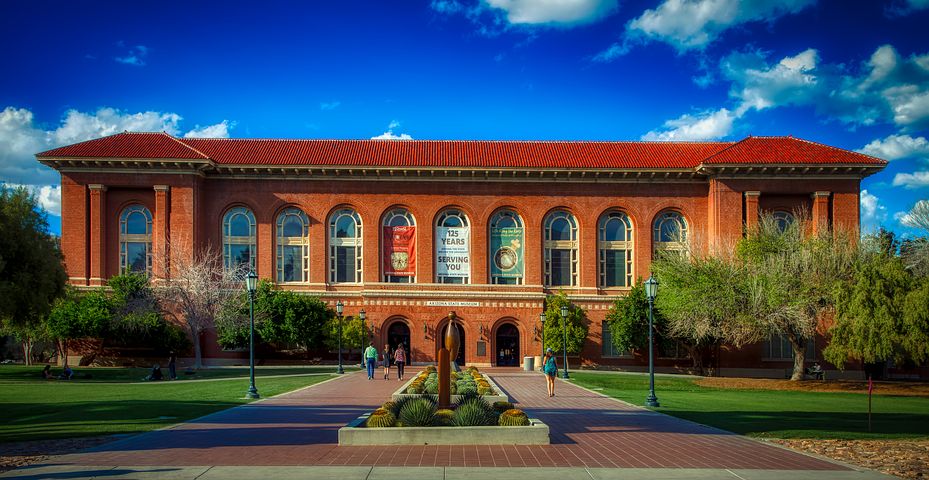
London University | Courtesy Photo

The road to college

Happy New Year! By this time, winter break is over and students are heading back to school I hope your children got the opportunity to de-stress and refresh, enjoyed time away from school, and just delighted in being teenagers. The years between middle and high school aren’t that long and, once gone, will never come back. Give your children the chance to relish this period in their lives.      

It amazes me how much driving parents do during the school year taking their kids to school, after-school sports practice and events, AP or SAT classes, weekend music lessons, etc. If all that running around makes parents stressed out I can only imagine how it must be for children who are juggling all these activities on top of going through puberty.

Parents can help their children by showing their support and guiding them through their high school years. Starting preparations for college admissions in 9th grade, instead of during the spring of your children’s junior year makes this process more manageable.    

Private high schools have counselors to give personal attention to students during the college application process. But many public schools do not have the staff for individualized guidance and it falls largely to parents to help their children. 

There are independent counselors you can consult for advice as you and your children navigate the admissions process. Sometimes just having someone you can call to answer some of your concerns or questions takes off much of the burden.

Greg Kaplan, a Southern California native, offers counseling via Skype. He has written a book called Earning Admission: Real Strategies for Getting into Highly Selective Collegesthat enlightens you on the process; he also offers college counseling workshops in the San Gabriel Valley.

An educational service called CollegeVine, based in Cambridge, Massachusetts, whose counselors are current university students, is also a good resource. These peer mentors can give your children the most current information about what the colleges are looking for since they are still in school themselves. Consultation is also done via video conferencing.                                             

FRESHMAN 

Typically, the beginning of the year marks the halfway point in the schoolyear.  First semester grades would soon be released, if they had not been sent out yet. If your 9th graders’ marks are not great, they would need to use the second semester to better them as it’s the end-of-year grades that show on the transcript. A student’s GPA is a very important, if not the single most influential, component of the college application. 

Make sure your children are continuing their extra-curricular activities in arts or sports, with concentration on one or two where they excel. Finding something they are truly passionate about and doing it throughout their high school years show their commitment. My daughter realized she loved acting only when she reached 11th grade. Thus, she didn’t have enough time to engage in it, and her resume reflected that. 

SOPHOMORE 

This is your student’s second year and by this time he/she should have fully transitioned into high school. He/she needs to put extra effort into weak subjects and solidify grades for the second semester. Your children should continue their focus on academic performance skills, sports participation and arts involvement. They should also start studying for the PSAT (www.collegeboard.com). Taking a practice PSAT in 10th grade gives them the chance to identify weaknesses then work on them before taking the NMSQT (www.nationalmerit.org) in 11th grade. At my daughter’s alma mater, students meet with their grade level dean in the winter of 10th grade to discuss year-end testing options and junior-year course options.

Sophomores enrolled in Advanced Algebra and Pre-Calculus register to take the SAT II Math Level 2 exam in June of their sophomore year. Those enrolled in Functions, Trigonometry and Advanced Algebra (FTAA) take this same exam in June of their junior year, after completing the Advanced Topics and An Introduction to Calculus-Honors (ATIC-Honors) course. Sophomores who are thinking of going into science, medicine, architecture, and engineering are encouraged to take the SAT II exam in Chemistry in May or June of their sophomore year. Your student should also start lining up summer activities.

JUNIOR 

The second semester of junior year is significant as it is the beginning of the college application process. From their research, students are now ready to start planning a visit to colleges. They can even do their initial campus virtual tours online www.campustours.com, www.CollegeProwler.com, www.SmartCollegeVisit.com, www.YOUniversity.com. Counselors usually recommend that students use their spring break to go to several different types of schools. A good list should include a small liberal arts college, a medium-sized research university, and a large state university to let them have a feel for what “small” or “large” school means.

Your children should be able to experience firsthand if a large city like New York makes them feel alive and vibrant, or if it totally overwhelms and scares them. They need to experience if a campus with 20,000 students is the right setting for them. While they don’t necessarily have to visit the schools they are actually considering applying to, this trip should give them ideas about what they are looking for in a university. Once they’ve established  the elements they are looking for, they can start making a record of schools they would put on their list of colleges to apply to. 

SENIOR 

All college applications should have already been sent out for the January 1st regular decision/admission deadline. Some universities, like Georgetown, have a later deadline. Some schools also have ED (Early Decision) II. Parents should already have filed their income tax returns; get ready to submit FAFSA (www.fafsa.ed.gov). Apply for scholarships. There are several websites to help you with your search like www.scholarships.com, http://www.collegexpress.com, www.scholarships360.org, http://www.affordablecollegesonline.org/graduating-debt-free.

As much as I am tempted to say “Tell your kids to breathe a sigh of relief because the hard part is over,” the reality is that they will be anxious because all that’s left now is the wait. And, oftentimes, the waiting is more difficult than the application process. Just be there for your kids to remind them that they have done a great job and they should let the admissions professionals do theirs.

The months from January through March can still be a time for your children to do something to help their cause. Mid-January is when high schools get their first semester grades finalized. If your student’s mid-year report is particularly spectacular, this could be a very good development especially if he/she is applying to a highly selective college. When your children’s high school sends the grades, have your children follow up with an email to the area representative telling them about their hard work and interest in that college.

If your children have been deferred at a college when they applied through early action or early decision, it is advisable for them to send in an additional teacher recommendation, but only if this supports their application. Likewise, if your student has received any notable honors or made any significant achievement, he/she should let the admissions officers know by email.     

Having done all these, you and your children will now just have to wait patiently for the process to play itself out.           

Greg Kaplan Teaches Effective College Application Strategies

Originally published on 13 April 2017 in the Pasadena Independent, Arcadia Weekly, and Monrovia Weekly

Right about now, high school seniors across the United States are getting their acceptance (or dreaded rejection) letters from the universities to which they applied. 

As many of these students have found out, getting into one’s their dream college has gotten increasingly difficult. The admissions process has become a cause of much angst among stressed-out twelfth graders and their equally weary parents. But with careful planning and well-thought out approach, you and your child will come out of it with your sanity intact.

Greg Kaplan, an admissions strategist, has written a book called ‘Earning Admission: Real Strategies for Getting Into Highly Selective Colleges’ to give tips to parents as they, in turn, guide their children through this daunting process. It is an excellent resource for students to stand out in a sea of equally academically strong applicants.  

Working as an independent counselor in Southern California for the past year and a half (and informally while he was in law school at UC Irvine), Kaplan has helped over 85 students and their families. But his strategy doesn’t cover merely getting into college. When he meets with students he begins the conversation by asking where they want to be in ten years.

“It allows them to understand that college is where it fits in – it’s not the end-all be all, but a means to achieving something greater than just a degree,” Kaplan explains. “I want them to see that there’s a life beyond college or beyond a name.”

Kaplan meets with his students in L.A. and Orange County in person at least once week. He supplements that with conversations via phone or Skype; emails with families when planning activities during the course of high school; and uses Google Docs to help them with essays.

The most important guidance he offers is assembling a really compelling application using a strong theme, picking what classes to take, figuring when and how to prepare for the ACT or SAT, planning extra-curricular activities. During the application process he works hand-in-hand with his students in creating a personal statement that demonstrates perspective, maturity, and shows personality and assets.

It greatly helps students to work with Kaplan beginning in ninth because they’re growing up through the process. It’s good for them to know what they’re working for and to orient all the hard work that comes in high school to the college application process and beyond. They have a more persuasive application if it’s planned.             

Kaplan, himself, had been through this not too long ago which makes him a relatable counselor, and his book more effective as he recounts examples from personal experience. His language is relatable and counsel realistic.

“I draw a lot of experience from attending a very competitive high school in Southern California, similar to Arcadia and San Marino,” states Kaplan. “My book and workshop are most relevant to students in these high-achieving areas where people feel the most loss. They’re competing with peers who have outstanding GPAs and perfect test scores so they want to know how to separate themselves from all the excellent students.”

“After I gained admission to the University of Pennsylvania back in 2005, people started asking me what I did to get accepted to multiple Ivy League universities,” Kaplan continues. “From there I gave a lot of advice and it turned into an informal, casual business where I helped mostly family friends and children of colleagues at a private equity firm where I worked while I was going to law school.”

Image of the University of Pennsylvania taken online

“My in-depth research culminated in me writing ‘Earning Admission’ because I wanted to provide families a blueprint and the material to make informed decisions. I didn’t like seeing  students who are stressed out and engaged in a million different activities, taking six to eight AP classes in sophomore and junior year. That’s not necessarily the winning formula to achieve the goals that we want our children to go for when it comes to higher education. This book is my response to all the anxiety I see. It is my desire to give back to the community for the opportunity to come from a great public school in California, which I wanted to share with people,” Kaplan expounds. 

‘Earning Admission’ is divided into three parts, the first of which discusses the high school transcript and the ACT or SAT scores – the two most important components of your children’s application. These objective elements will give a university admissions officer the reason to read the rest of the submission.   

The second part of Kaplan’s book delves into the subjective pieces of the college application.  He divides this into eight chapters: application theme; personal statement; extracurricular activities; responses to the application form questions; letters of recommendation; and admissions interview. Throughout these chapters, he offers guidelines on how to use all the elements in marketing your child as a compelling applicant.

The last part touches on the application strategy – where and when to apply; scholarships and financial aid; and getting admitted from the waitlist.

A very useful appendix shows the college admissions timeline, which has tables on what activities your child should be involved in starting from the summer before ninth grade. The high school timeline is divided by months and covers tests your children should be taking; researching and finding test prep courses; planning their summer internships, community service, school and college course enrolment, and international experience.

Image of Stanford University taken online

Kaplan engages his readers as he talks about his experience applying to college. While he went to a terrific public school, he also was in a large class and the counselor didn’t have too much time to spend creating a specific plan to market each student. His counselor told him to go to a community college.

“I was at the top of my class, got good SAT test scores, was very involved in the community, and had extra-curricular activities that showcased my leadership abilities. That was definitely not the best support from my guidance counselor,” Kaplan quips.

A funny anecdote Kaplan includes towards the end of his book is about visiting colleges on the east coast with his mom. As he relates it, he and his mom were in Philadelphia and were hoping to see the University of Pennsylvania. But they couldn’t find it on their map and decided to go to the mall instead; he essentially blew off his future alma mater. 

Kaplan also shares with his readers some of the things he did and later regretted: he applied to so many schools that, in hindsight, he shouldn’t have since he had no intention of matriculating even if he were accepted; he also needlessly went on more than one college tour for which his parents paid thousands of dollars – money which would have been better spent on test prep courses. 

An important message Kaplan wishes to impart is that life teaches lessons and it’s up to students to make the most of them, “I didn’t want to go to Penn when I was accepted. I couldn’t even find Penn when I tried to visit it. However, at Penn I learned first-hand that anything was possible if I set my mind to it. My college experience, at a college I almost did not apply to, shaped the person I am today.”  

“Your child’s college experience will also shape her into the person she is destined to be. Whether it is at Penn or Penn State, your child will learn that anything is possible for her if she has the will and vision to achieve it. Even if your child does not have the outcome she envisions with the college application process, she will succeed in college and beyond,” Kaplan concludes.                  

Kaplan will be holding two free book talk and workshops in the San Gabriel Valley on Saturday, April 15 at 11:30 am at the San Marino Public Library, and Saturday, May 20, at 2:00 pm at the San Gabriel Public Library.  

Parents and students who are interested in getting college counseling from Kaplan can contact him at greg@earningadmission.com; or his cell phone (858) 204-6553. His website is www.earningadmission.com. The first meeting when they create the admission plan is free.

Near-Peer Mentoring for College Applicants

Originally published on 23 February 2017 in the Pasadena Independent, Arcadia Weekly, and Monrovia Weekly

A year ago, Emma Li was a 17-year-old high school senior at Arcadia High School, eagerly yet nervously waiting to hear from the colleges and universities to which she had applied. Today she is a freshman at Cornell University and a near-peer mentor to teenagers who are going through this same mind-numbingly complicated process called college applications.

Arcadia, where Li spent her childhood, is one of the San Gabriel Valley’s most sought after  districts because of its excellent schools. Indeed she was very fortunate to have attended Arcadia High School whose graduates are admitted to very selective universities – the class of 2016 had students who were accepted into every Ivy League university in the country. However, it also has a large enrollment. 

According Ryan Foran, Public Information Officer for the Arcadia Unified School District, there are 9.5 counselors at the high school. While every student from 9th through 12th grade is assigned a counselor, it is also a stretch for all 3,500 students to get face-to-face time with their counselor on a regular basis.  

Li says, “I actually started meeting with my counselor during freshman year because I needed assistance on applying to summer programs, which required a letter of recommendation to apply for. If I hadn’t wanted to attend these programs, I probably would have met with my counselor much later on. However, there are only two counselors assigned to each class and there were approximately 850 students in mine.”

“When we were seniors, we were assigned a counselor who would write the recommendations for our college applications, and that counselor might not have been the one designated to our class year,” Li adds. “I was lucky enough to have requested that my counselor for all four years write my counselor recommendation; I know that this wasn’t the case for many of my peers.”          

Still, Li felt it had been an impersonal experience for her. She explains, “There has to be an active effort on the students’ part to meet with their counselor or they will just get lost in the crowd. If I didn’t proactively seek it out, I wouldn’t get any time with the counselors. As it was, I didn’t see or speak with mine that often.”

“Most of my college application experience was on my own,” expounds Li. “My counselor gave me a few recommendations when I had my interview with her; she told me to look at some more schools. On a few occasions, my teachers suggested universities that might be a good fit; another helped narrow my choices after I received acceptance letters. Older students also helped with my essay.”

A first generation Asian-American whose parents are immigrants from China, Li didn’t get much guidance from them. She states, “My parents have only been here for two decades and didn’t have any experience in U.S. college application. So I was pretty much on my own. I did a lot of research and applied to 15 schools – five UCs and ten private universities – but I only visited a handful of them.”   

Li was accepted to UC Berkeley, Williams and Cornell. She didn’t visit Cornell but decided to matriculate there based on a friend’s recommendation. She says, “I think that being in college is  overwhelming for almost all of the people I met. Before coming here, I had expected to be intellectually challenged, to meet people who’ve done incredible things, to join clubs and organizations that would allow me to pursue the interests I had in high school or to explore new passions. In that respect, Cornell lived up to what I had anticipated, but at the same time, so could any other college that I had applied to. The way I see it, my expectations were about college itself than about this school in particular. I don’t think visiting Cornell would have altered what I hoped to experience, although I would have been able to picture myself walking to class or eating in the dining halls.”

Cornell University | Image taken from Cornell University’s website

From Cornell’s Facebook page, Li learned about a company called CollegeVine (CV), which helps families navigate the path to the best schools. She applied to one of the jobs and internships it was offering for Cornell students and was accepted.

Asked why she decided to become a CV mentor, Li answers, “It’s probably a mix of two reasons. Firstly, I was a tutor for many years and I enjoyed doing it; but there aren’t too many similar programs in college. Secondly, when I was in high school, a lot of the help I got with my essays came from older students who were attending the schools to which I was applying.”

“There are many college prep companies in Arcadia to help students through the process, but I find that they are primarily staffed with older people,” adds Li. “What’s really appealing for CollegeVine clients is that the counselors helping them are in their age group. In that sense,  CollegeVine is more effective because the consultants recently applied to college, know what it’s like and share a common experience of the pressure of applying.”

Li went through intensive training – on completing the common application, writing a compelling essay, interviewing techniques – to become a CV mentor. She got her first client, an international student, in September last year. 

Because the academic system in other countries isn’t the same as in the U.S., Li’s first job required her to do a lot of paperwork and research. She spent three hours a week working – one-and-a-half hours doing research and the other one-and-a-half hours video chatting with her client. She checked her student’s essay for grammatical errors and organized it, while ensuring it still had her client’s voice.   

“My client applied to seven U.S. schools and a few in her home country,” relates Li. “She concentrated on colleges with rolling admissions so she sent her first application early on and was accepted to her first choice school in mid-November. I was very excited for her! On top of that, she got a half-ride scholarship which her parents didn’t think they would qualify for.”

College counselors in private schools discourage their students from hiring independent consultants to help them through the application process. By necessity, though, those who are in large, public schools who can’t see their counselor regularly have to seek additional assistance.

As Li emphasizes, “I definitely think that getting outside help will make students more successful, just because they can have the personalized attention they don’t receive in school.  Independent counselors like me can better assess students’ strengths and weaknesses to find the best way to present them to college admissions officers.”

“It also benefits students to have someone who can recommend ways to handle less-than-ideal scenarios,” Li says further. “As a counselor, I provide an alternative point of view if they’re deferred, waitlisted, or rejected. Having gone through this process recently, I can honestly tell my clients not to make senior year more stressful than it already is. While it might be the culmination of everything they’ve worked for 12 years, it all comes together in the end.”

College application is a rite-of-passage for most teenagers in this country. And as Li could personally attest to, it is at once nerve-wracking and thrilling. Now, as a counselor, the most rewarding aspect of her job is being able to relive its best moments.                            

January College Search Guide

Originally published on 7 January 2016 in the Pasadena Independent, Arcadia Weekly, Monrovia Weekly, and Sierra Madre Weekly

The road to college

FRESHMAN 

Typically, the beginning of the year marks the halfway point in the schoolyear.  First semester grades would soon be released, if they had not been sent out yet. If your 9th grader’s marks are not great, he/she would need to use the second semester to better them as it’s the end-of-year grades that show on the transcript. A student’s grades are a very important, if not the single most important, component of the college application. 

Make sure your children are continuing  their extra-curricular activities in arts or sports, with concentration on one or two where they excel. They shouldn’t attempt to dazzle college admissions directors with their range of interest, unless they are a budding Leonardo da Vinci and have mastered every single craft. Finding something they are truly passionate about and doing it throughout their high school years show their commitment. My daughter realized she loved acting only when she reached 11th grade. Thus, she didn’t have enough time to engage in it, and her resume reflected that. 

SOPHOMORE 

This is your student’s second year and by this time he/she should have fully transitioned into high school. He/she needs to put extra effort into weak subjects and solidify grades for the second semester. Your children should continue their focus on academic performance skills, sports participation and arts involvement. They should also start studying for the PSAT (www.collegeboard.com). Taking a practice PSAT in 10th grade gives them the chance to identify weaknesses then work on them before taking the NMSQT (www.nationalmerit.org) in 11th grade.

At my daughter’s alma mater, students meet with their grade level dean in the winter of 10th grade to discuss year-end testing options and junior-year course options. Sophomores enrolled in Advanced Algebra and Pre-Calculus register to take the SAT II Math Level 2 exam in June of their sophomore year. Those enrolled in Functions, Trigonometry and Advanced Algebra (FTAA) take this same exam in June of their junior year, after completing the Advanced Topics and An Introduction to Calculus-Honors (ATIC-Honors) course. Sophomores who are thinking of going into science, medicine, architecture and engineering are encouraged to take the SAT II exam in Chemistry in May or June of their sophomore year. Your student should also start lining up summer activities.

JUNIOR 

The second semester of junior year is significant as it is the beginning of the college application process. From their college research, students are now ready to start planning a visit to colleges. They can even do their initial campus virtual tours online www.campustours.com, www.CollegeProwler.com, www.SmartCollegeVisit.com, www.YOUniversity.com. College

counselors usually recommend that students use their spring break to go to several different types of schools. A good list should include a small liberal arts college, a medium-sized research university and a large state university to let them have a feel for what “small” or “large” school means. They should be able to experience firsthand if a large city like New York makes them feel alive and vibrant or if it totally overwhelms and scares them. They need to experience if a school with 20,000 students is the right setting for them. They don’t necessarily have to visit the schools they are actually considering applying to, this trip should give them ideas about what they are looking for in a university. Once they’ve established  the elements they are looking for, they can start making a record of schools they would put on their list of colleges to apply to. 

SENIOR 

All college applications should have already been sent out for the January 1st regular decision/admission deadline. Some universities, like Georgetown, have a later deadline.

Parents should already have filed their income tax returns; get ready to submit FAFSA (www.fafsa.ed.gov). Apply for scholarships. There are several websites to help you with your search like www.scholarships.com, http://www.collegexpress.com, www.scholarships360.org, http://www.affordablecollegesonline.org/graduating-debt-free.

 As much as I want to say “Tell your kids to breathe a sigh of relief because the hard part is done,” the reality is that they will be anxious because all that’s left now is the wait. And, oftentimes, the waiting is more difficult than the application process. Just be there for your kids to remind them that they have done a great job and they should let the admissions professionals do theirs.

The months from January through March can still be a time for your children to do something to help their cause. Mid-January is when high schools get their first semester grades finalized. If your student’s mid-year report is particularly spectacular, this could be a very good thing especially if he/she is applying to a highly competitive college. When your children’s high school sends the grades, have your children follow up with an email to the area representative telling them about their hard work and interest in that college.

If your children have been deferred at a college when they applied through early action or early decision, it is advisable for them to send in an additional teacher recommendation, but only if this supports their application. Likewise, if your student has received any notable honors or made any significant achievement, he/she should let the admissions officers know by email.     

Having done all these, you and your children will now just have to wait patiently for the process to play itself out.           

December College Search Guide

Originally published on 3 December 2015 in the Pasadena Independent, Arcadia Weekly, Monrovia Weekly, and Sierra Madre Weekly

The road to college

Cool and brisk weather, with wispy clouds scattered on clear blue skies, usually characterize December in California. Children are eagerly anticipating the Christmas season and winter break.  As we head towards the end of the year, some students are finishing up on the first semester, grateful that they are halfway through this school year.

FRESHMAN

What a relief it must be for your 9th grader – he or she has survived the first semester of high school. While your children’s thoughts may be all about Christmas vacation, this would be a good time to evaluate their progress. Remind them that while first semester grades don’t show on the final transcript, these are barometers of their academic strengths and weaknesses. Encourage them to use the winter break to plan how to improve where needed and how to build on their successes going into the second semester.

SOPHOMORE

If your children are taking AP courses they should also have taken the AP and SAT II exams.  They should take the time to meet with their college counselors for guidance on how to improve their test scores, if necessary. Now is the time to look at their interests to determine what college course they might be suited for. Based on their aptitude and grades, they will have to start planning on their course options for 11th grade. They can also start looking at which colleges offer the course they might want to pursue.

JUNIOR

This is an all-important year for your 11th grader and it is one of the busiest of their high school career. Your children should be able to successfully balance their academic and extra-curricular responsibilities. They should have already taken rigorous course loads, participated in campus activities and moved into positions of leadership in whatever extra-curricular endeavor they chose.

Your children should start preparing for the ACT or SAT exams either by taking practice tests online or by taking a prep course. By this time, college counselors have met with you and your children and given you an overview of the college application process. They should already have been to at least one College Fair and have met with a few admissions officers.

It might also be an opportune time to visit some colleges, at least the ones in California, before the spring break when you might consider going to out-of-town universities. If you haven’t thought about college visits, now is the time to put it on your calendar. I cannot emphasize enough how important it is for your children to see the campus for themselves. There is nothing more unfortunate than for them to matriculate to a college only to be miserable after the first few months. Adjusting to life away from one’s parents and the reality of college life is bad enough, finding out they are in the wrong school is just an added worry.

SENIOR

While kids all around are excited about the Christmas holidays – thinking about what movies they want to watch, and where to spend their time during their winter vacation – your high school senior is sweating over his or her personal essay or feverishly writing all the supplemental essays colleges are requiring when they submit their college application.  

This is a crucial time for every senior. He or she needs as much encouragement as elbow room to get their college applications ready for sending. Your children should be in constant communication with the school counselor to ensure that all transcripts, teacher recommendations and supplemental material are sent to all the colleges to which they are applying.  hey should be on top of application deadlines for all the schools to which they plan to apply.    

If your 12th grader has received an acceptance letter from his or her first choice – whether through Early Action (EA) or Early Decision (ED), then he or she must be ecstatic. An ED means your child is legally bound to matriculate to that university, and his or her college search is over. Whew!  If your child was accepted to a school through EA, he or she can either accept that offer or still go on to apply to other schools.

Accepting an EA offer relieves your children of pressure so they can enjoy the Christmas holidays but it doesn’t give them leverage if they are qualified for scholarships. The best scenario is to apply to and get accepted to several colleges so your children can pick and choose where they get the best financial offer or scholarship.

If your children are fortunate enough to have heard from their school, and have been offered admission, it would be thoughtful of them not to brag about their acceptance. Some of his or her classmates may have applied to the same school and are hoping for admission. The university to which your child was accepted might be his or her classmate’s first choice. It would be very hurtful to then boast that he or she has been accepted but is not planning on attending that college.

On the other hand, if your children have been deferred on the EA or ED round, there are some things they can do to enhance their chances during the regular round. They can write a strong letter of interest and intent – all colleges and universities are concerned about their yield. If they are assured that your child will matriculate if accepted, they will look at him or her in a more favorable light (that is, if your child fits the profile they are looking for). They can send any updates on any significant changes since they sent their application – a letter from a counselor about their first semester work or a letter from a senior teacher. They can also send in their first semester grades, especially if they have received some As in the meantime.   

Provide encouragement to your children if they have been deferred – the school isn’t rejecting them, they have just been put in the pool for the regular round. Remember that these admission officers have thousands of applications to read. They wouldn’t want to go through your children’s application again if they weren’t interested in the first place: they would have just outright rejected them.        

Your children should research all available scholarships, and start completing the FAFSA.

Some useful websites are: Affordable Colleges Online (http://www.affordablecollegesonline.org/graduating-debt-free); CollegeXpress (www.collegexpress.com); Fastweb (www.fastweb.com); Free Application for Federal Student Aid (www.fafsa.ed.gov); National Merit Scholarship Corporation (www.nationalmerit.org);  Scholarships.com (www.scholarships.com); Scholarships360 (www.scholarships360.org); Student Aid on the Web (www.studentaid.ed.gov).

Mayfield Senior School Empowers Young Women

Originally published on 19 November in the Pasadena Independent, Arcadia Weekly, Monrovia Weekly, and Sierra Madre Weekly

Enter the gates of Mayfield Senior School of the Holy Child Jesus, and you will understand why it’s a highly sought-out institution among hundreds of girls. It is a quiet, peaceful setting, away from the chaos and noise of the city, where young minds can focus unencumbered. A former grand residence near Pasadena’s Millionaires’ Row (Orange Grove Blvd.), it is now home to about 330 students who learn as much about academics as service to each other and the community.

Kate Morin, who became Mayfield’s Head of School this year, puts much emphasis on this esteemed institution’s motto “Actions Not Words”. She states, “The mission of the school is to find and seek the divine in each of us; when we believe that there is a higher power within us, it informs our actions. It’s about sisterhood and compassion – taking care of each other.”

As she recalls the first time she visited the school a year ago, Morin says “When I first stepped on campus I felt as if I’ve come home – this is where I’m being called to be in and it’s  wonderful that they agreed too. It was such a blessing because I knew this was the right place for me.”

Three months into her stewardship, Morin’s presentiment has deepened and she voices this observation, “The school is living its mission of where girls could find themselves .. .with lots of support from their teachers, the administration, and each other. My first impression has been reinforced as I spent more time here.”

College counselors, Abigail Shaw and Lori Holtrust, wholeheartedly agree with Morin’s assertion about the support Mayfield offers its students. As Holtrust puts it, “The teacher/student relationship is a beautiful thing to witness. We pride ourselves in creating relationships with each individual student.”

Shaw and Holtrust exemplify Mayfield’s commitment to advancing their charges’ best interest.  They have a markedly different approach to college counseling, apart from all other schools’ method. They work in tandem – every student gets to meet both counselors.

The college application process starts in earnest in 11th grade, according to Shaw. “The girls are ready to step into the world of college admissions and they have a Junior College Night where all parents come. We meet with each junior individually, with her parents; we offer two college tours – one on the east coast and another on the west coast.”

“In junior year the goal is for students to ask themselves what they’re looking for in a college, and do some serious self-reflection,” continues Shaw. “We support them in asking questions, helping them find the qualities they’re looking for. The discernment is the beginning of the college application process.”   

Morin points out, when girls first arrive on campus, they’re still little 13- and 14-year olds. “We don’t talk about college early on; we want them to be in the moment of high school. We first make sure we create a healthy balance and a mindfulness. When the time comes, we’ll work with them step by step, line by line, as our foundress Cornelia Connelly taught us.”

“The joy of our job is looking at what they think they want, and seeing where they end up in,” Shaw chimes in. “Sometimes where they end up isn’t what they started out with.” 

This seeming disparity is evident even in the school’s diverse enrollment. Shaw illustrates this, “Twenty years ago we had a duchess from Portugal and a girl from South Central L.A. who bussed herself here. We pull from all walks of life, we have breadth in our community, and our students get exposed to a global society.”

Service is integral to The Society of the Holy Child Jesus’ teaching. Mayfield students live the motto ‘Actions Not Words’ by volunteering their time throughout their four years on campus. They perform a certain number of service hours as part of their ministry and every student participates in a beloved annual tradition known as Cornelia Connelly Day (Annual Service Day). Morin says this year they went to 34 sites in Los Angeles and Pasadena to work with the developmentally disabled, at the Downton Mission, and other such organizations.

These experiences leave a lasting impression on these young women as they set about starting non-profit service clubs aimed at helping the less fortunate. The embodiment of the school’s mission informs the choices Mayfield students make as they think about college.      

In the same vein, a spirit of mindfulness applies as they go through the self-reflection process and keep all their options open. Holtrust says, “Two years ago, 68 seniors went on to attend 58 colleges and universities – a very broad spectrum.”

But the one common quality every student will take with her as she leaves Mayfield is her sense of empowerment. Morin confidently pronounces, “Each of them is armed with the knowledge that she is a powerful agent of change for the good, who has the wisdom to know how to use her skills to make the world a better place.” 

November College Search Guide

Originally published on 5 November 2015 in the Pasadena Independent, Arcadia Weekly, Monrovia Weekly, and Sierra Madre Weekly

The road to college

FRESHMAN

Your children have come this far into their 9th grade and should be fully settled in on their courses and their teachers’ teaching style. Hopefully, they have found some new friends among their classmates, and have adjusted to high school life in general. 

Encourage your children to focus on their studies and to make use of all the resources available at their school to accomplish all the work required to pass their course. The goal is not just to pass, however, but to make the best grade they are capable of getting. Ideally, they should be up-to-speed in all their classes but if there is anything about the course they can’t grasp, they need to seek assistance from teachers. Most of them will meet with students after class to provide the necessary tutorial lesson. They have to ask right away or they will fall behind all the more as the school year wears on.  All the grades they earn are reported and their GPA is the single most important component of the academic picture they present to the universities to which they will apply. It will show how well they did in high school and how prepared they are to go into college. 

By now they should have participated in some sports events their school competes in; they should have identified other extra-curricular activities they want to be involved in. 

SOPHOMORE

Most schools look at 10th grade as a fundamental year in high school. Your children should have already made a smooth transition from their middle school life and are actively exploring their various interests and are applying these towards extra-curricular work. They should be actively participating in sports, or arts, their school newspaper or their yearbook. 

The class deans should be working with your children in evaluating their class performance and workload to make sure they are on track and are making the grade. Together with their class dean, your children should be addressing preparations for standardized testing and junior year course options. 

Additionally, your children can start looking at various colleges offering the course they might consider taking.

JUNIOR

This is an important year for your children. They should register for all the standardized tests required for college application.  They need to be in constant communication with their counselor to ensure they on track for graduation and college admission. 

Encourage your children to focus on getting good grades. This year is the last complete school year grades the college admissions officers will see when your children send in their application.  Their GPA is the most reliable and significant predictor of how well they are ready for college work.

Most high schools in the area have held college fairs on campus and you and your children have met the representatives of the various colleges and universities to which they might consider applying. Your children should be researching these schools’ requirements and keeping track of the schools which offer the courses they are interested in pursuing.

SENIORS

Your children should take the SAT Subject Test if the college they’re applying to requires it They also should have already sent or should be ready to dispatch their application if they were trying for Early Action (EA) or Early Decision (ED). They should notify the colleges of any honors they received since mailing their application, and they have to make sure their school sends out a recent transcript, and all their standardized test results have been forwarded. As they await word from the college, they might want to keep writing all the supplemental essays required by the universities to which they will apply if they don’t get into their EA/ED school.  Acceptance to their EA school isn’t binding so they can still apply to other colleges, thus not limiting their options.

In the meantime, you children should make sure they are doing well academically. Some universities require the first semester grades, or the first quarter grades if they’re applying for EA/ED. In fact, your children shouldn’t let up on academics because a college can still rescind their offer of acceptance if students grades’ have fallen below acceptable level. 

Likewise, make sure your children are continuing to participate in athletics and extra-curricular activities. These sometimes help them relieve the stress of the college application process.  

This is also the time to research scholarships.  Some websites that could prove useful are:  Affordable Colleges Online (http://www.affordablecollegesonline.org/graduating-debt-free; CollegeXpress (www.collegexpress.com); Fastweb (www.fastweb.com); Free Application for Federal Student aid (www.fafsa.ed.gov); National Merit Scholarship Corporation (www.nationalmerit.org); Scholarships.com (www.scholarships.com); Scholarships360 (www.scholarshops360.org); Student Aid on the Web (www.studentaid.ed.gov). You and your children should talk to their school’s financial aid officer for guidance on willing out financial aid applications.

October College Search Guide

Originally published on 1 October 2015 in the Pasadena Independent, Arcadia Weekly, Monrovia Weekly, and Sierra Madre Weekly

The road to college

As we settle into cooler temperatures and look forward to fall holidays, so should your children be getting into the rhythm of school life and activities. After they have put behind the excitement of the new school year, they should now concentrate on the job at hand.

FRESHMAN

Encourage your children to keep their focus on their schoolwork. By this time, they should have figured out what extra-curricular activities they are interested in pursuing and what sports they want to participate in. Give them guidance as they navigate this new phase in their school life, and support the choices they make.

SOPHOMORE

Depending on your children’s course choices and load, there could be standardized testing required of them. Your children should be taking AP and SAT II exams following completion of the course so they need to retain the knowledge they gained in class. The best preparation for  both AP and SAT II exams is for your children to make sure they understand the subject matter and do well in all tests the teachers give in class. If there is something they didn’t understand, they should right away speak to the teacher to ask for clarification or, possibly, find a tutor for additional help. The results of these standardized exams are required for college applications.       

JUNIORS

Your children should be aware that junior year is the last complete year of high school performance that college admissions officers will see. They have to put more effort at doing well and getting good marks.

They should register for and take the PSAT, which is also the qualifying exams for the National Merit Scholarship. It is also a good time for your children to meet with their school counselor to make sure they are taking all the courses they need to graduate and apply to college.

Your children should also be keeping up with their extra-curricular and sports activities. College admissions officers look at several components as they try to assemble an incoming class made up of the best candidates to add to their student body. 

Several area high schools hold College Fairs on campus. This is an excellent opportunity for you to see what the different colleges and universities are offering. Your children will get to meet and speak to admissions officers – they are usually the same people who will be reviewing your children’s application, reading your children’s essay, and sitting around the table, making their case for your children during the all-important decision-making rounds. They have a say on whether your children get accepted or denied admission to the school of their choice.  

SENIORS

Your children should now be in the process of completing the common app, and finalizing their essay topic or personal statement. They should have provided the teachers who are writing their letters of recommendation with stamped envelopes.

If your children are sending supplementary material (auditions or portfolios) with their application, they need to be getting these ready soon. Audition tapes for Arts Performance, for instance, can be uploaded on YouTube for easy access; some schools no longer accept CDs or DVDs. Your children should check the website of the college or university to which they are applying about supplement material requirements. Your children’s school counselors are also a great resource as they are always in contact with college admissions officers.

If your children’s high school offers interview advice and guidance, they should take advantage of it. Basic things like what clothes and shoes to wear, in addition to how to answer questions, all help towards giving your children confidence. While this is not an expert advice, I am going to say that in most cases, interviewers are not as concerned about what answer they give, but how they answer. Also, if your children are visiting a campus and an interview with an admissions officer is a requirement for application, they should take the opportunity to schedule the interview at that time. Admissions officers like to see demonstrated interest – a campus visit and interview will be remembered and noted.

Be on top of application deadlines; most schools offering Early Action or early Decision have to receive your children’s application in November.  

You and your children should be researching scholarships. A website called Affordable Colleges Online is a good resource to look into (http://www.affordablecollegesonline.org/graduating-debt-free).  Other websites include: CollegeXpress (www.collegexpress.com); Fastweb (www.fastweb.com); Free Application for Federal Student Aid (www.fafasa.ed.gov); National Merit Scholarship Corporation (www.nationalmerit.org); Scholarships.com (www.scholarships.com); Scholarships360 (www.scholaships360.org); Student Aid on the Web (www.studentaid.ed.gov). You should also attend the financial workshops being offered at your children’s high school.

Your responsibilities as parents are limited to offering encouragement, guidance and moral support as your children go through this stressful time. But while you need to let your children manage this process, you should also express your concerns and expectations. Communicate with your child, the counselors and the teachers when you have questions. 

Be there for your children but learn when to get out of their way. Never try to communicate with the college admission officers as it is the surest way to sabotage your children’s chances for admission. Do not be overzealous about getting your children accepted to their dream university; there is a school out there that’s the right place for them. While this may sound hollow now, the counselors at your children’s school and the admissions officers at the colleges or universities to which your children are applying are actually the experts at finding the best fits.         

September College Search Guide

Originally published on 3 September 2015 in the Pasadena Independent, Arcadia Weekly, Monrovia Weekly, and Sierra Madre Weekly

The road to college

September marks the beginning of the fall season and, for most students, the beginning of a brand-new school year. Hopefully, for your children, it is a time of great anticipation and excitement. In our household, the days before the new school year were spent getting all the books, school supplies, and backpacks ready. My daughter always looked forward to receiving the school packet from the director which contained her class schedule, roster, and teachers. This was when her mind finally got set for the upcoming year.

FRESHMAN

If your children didn’t develop good study habits in lower and middle school, they need to hunker down and be serious about academics. Encourage them to immerse themselves in the culture of their high school and get involved in various extra-curricular activities that support their interests, and which they can carry on into the next three years.

Your children should find the time to meet with their school’s counselor to map out a four-year curriculum that meets all the requirements for graduating and going into college. They should take the most challenging courses they could handle. Some high schools offer Advanced Placement subjects in 9th grade and they have to be ready to take the exams after they complete the AP course.

SOPHOMORE

By this time, your children should be fully transitioned into high school. They should be picking up where they left off – taking advanced placement courses, working on extra-curricular activities they had identified in their freshman year, playing sports for their school, etc.

Practice exams for standardized tests are given in your children’s sophomore year so make sure they are registered for the PSAT. Taking these tests will help them identify their weaknesses and study for them. Several companies and organizations offer test preparation courses; your children should register to one if they need help getting ready for these exams (ACT: www.act.org; PSAT: www.collegeboard.com; Educational Testing Service: www.ets.org; Kaplan: www.com; National Association for College Admission Counseling: www.nacacnet.org; The Princeton Review: www.princetonreview.com)

It may seem too early to do this, but your children can start looking at colleges that offer courses in their fields of interest; or are considering all possible options, if they haven’t determined what they are thinking of taking in college.

JUNIOR

This is a very hectic, even stressful, time in your children’s high school life. It is also the last complete year that college admissions officers will see your students’ grades and accomplishments. It is a decidedly important year for them; they need to put the effort to show admission officers that they are capable of doing the work and are qualified for admission to the university to which they will be applying. If your children are thinking of applying to universities through early action/decision, their junior year grades and work will become all the more significant.

Aside from the rigors of school, sports, extra-curricular activities, there are standardized tests to take. Your children should be taking the Preliminary SAT/National Merit Scholarship Qualifying Test (PSAT/NMSQT) early next month. I would like to remind parents not to put extra pressure on their children as they get ready for the standardize exams – they are stressed enough as it is and a higher than average SAT score does not guarantee admission to their dream university.        

You and your children should be going to College Fairs being held at their high school. They should be gathering information about colleges and universities – courses and diplomas offered; standardized test requirements for admission; deadlines for early action/admissions, if being offered, and for regular admission. 

SENIOR

It is going to be a marathon  for your children! From the moment they get in the doors of the school, they are going to be putting much of their focus on college applications. If your children are applying for early action/decision, they should have taken all the standardized exams required by the university during their summer after junior year. 

By this time, they should be ready to write their personal statement. They should have given stamped envelopes to the teachers giving them recommendations and have their final list of the colleges and universities to which they will be applying. 

You and your children should also be researching scholarships that are available. There are  many private companies offering financial aid that might fit your children’s particular interest and talent. One particular organization you might look into is called Affordable Colleges Online.  The founders of this entity have developed a guidebook, with the professional assistance of Sean Martin, who is the Director of Financial Services at Connecticut College (http://www.affordablecollegesonline.org/graduating-debt-free). This online site gives you and your children alternative ways to pay for college, such as military benefits, employer benefits, and work study programs. It also cites ways to save on textbooks; and gives advice for military service members and veterans.

It goes without saying that your children should make sure they are doing their best in their academics. All admissions officers require the first quarter grades if your children are applying for early action/decision.