Local Man Founds Rebuild Altadena from the Ashes of Eaton Fire

Also published on 5 January 2026 on Hey SoCal
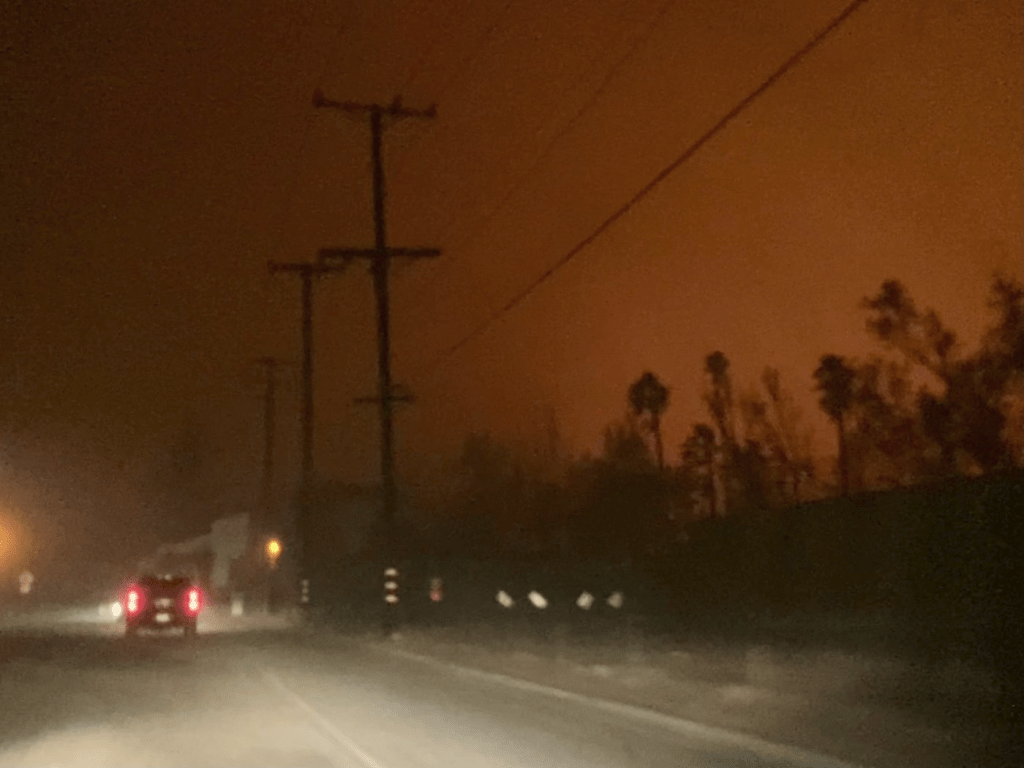
A view of the Eaton Fire on Washington Blvd. in north Pasadena. | Photo courtesy of Grigory Heaton/Wikimedia Commons (CC BY-SA 4.0)

Jan. 7, 2025, dawned bright, clear, and very windy in the San Gabriel Valley, with the mountain peaks clad in snow. Most Altadenans and Pasadenans went about their usual chores and workday despite the windstorm. But by the end of that fateful day the lives of several thousand people in these two towns would be upended.

According to news reports, shortly after 6 p.m., residents observed flames on a hillside in Eaton Canyon. While the fire itself was not large, 59 mph wind gusts pushed sparks across the canyon. The wind shifted the embers west into central Altadena and decimated a large swath of the unincorporated L.A. county area.     

The Eaton Fire was the fifth deadliest and second most destructive wildfire in California’s history. Approximately 7,000 residential and commercial structures burned to the ground overnight, with 19 deaths reported. Most of the residents are still temporarily housed, residing in motels and extended-stay hotels in Pasadena and neighboring cities.               
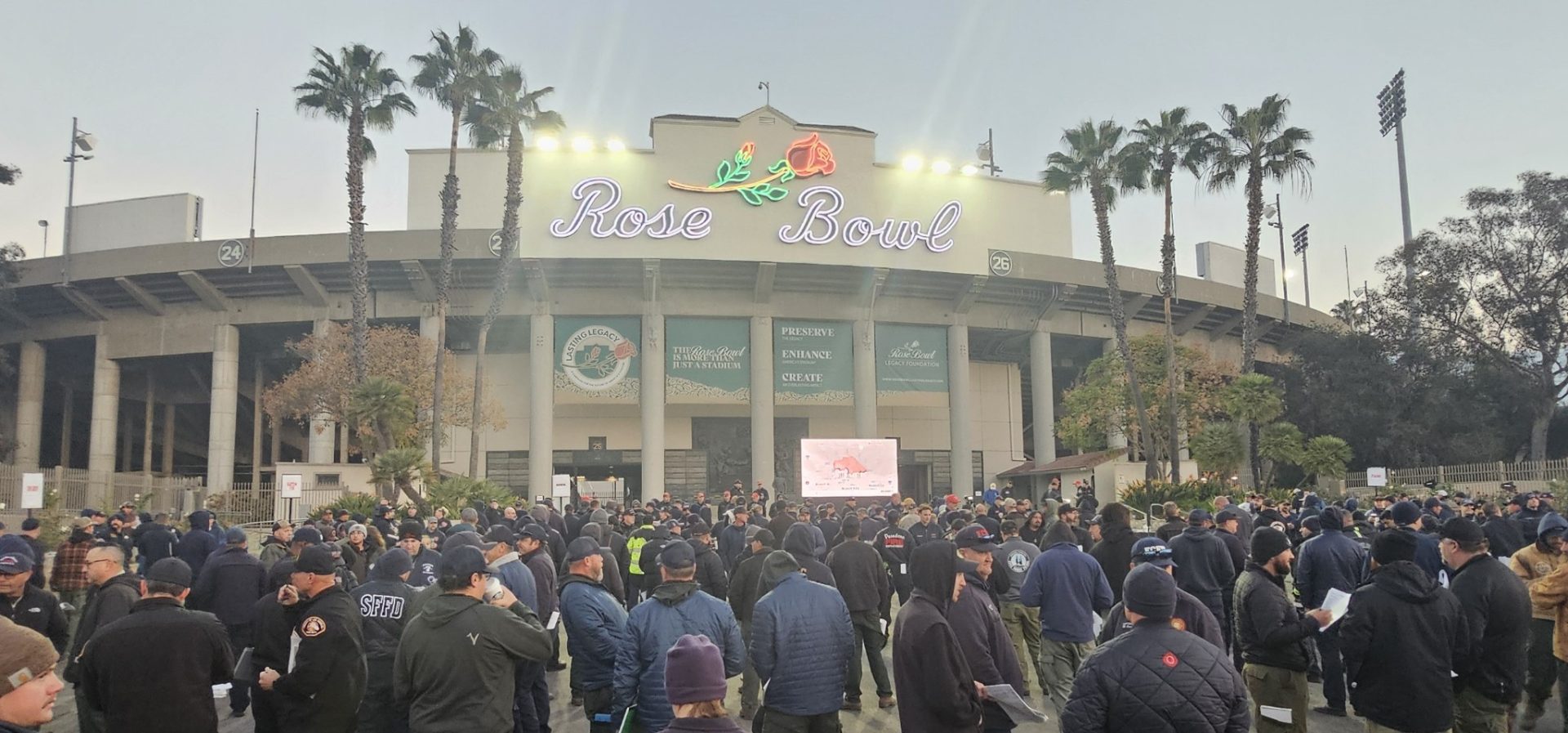
The Rose Bowl parking lot serves as the base for hundreds of firefighters. | Photo courtesy of Tom Stokesberry of the Forest Fire Service/Wikimedia Commons

An Altadena man, David Ly, and his family were among those who were displaced. He recalls the horrors they experienced.

“Jan. 7 started for us like a normal day,” says Ly. “We heard about a fire, but at first we didn’t think much of it. Fires happen, and you assume it’ll be contained. Later that day, my brother, who lives in the Highland Oaks area of Arcadia, called and said he could see the fire raging behind his house. He told us he was evacuating to our parents’ place and that we should do the same because the wind could turn at any moment. That’s when it became real and was truly one of the most traumatizing days of my life.”

“I remember going back on the morning of Jan. 8  thinking the fire was done because as I drove up Lake Avenue, everything seemed quiet,” Ly continues. “I had no idea I was literally driving into an area still burning. I saw homes on fire, and it was this surreal scene of memories literally disappearing. When I reached my own street, the power lines were down, and there was just this heavy sense of disbelief. I locked eyes with neighbors who were also there, and we just stood silently crying. By the time I got to where my house had been, it was all gone. You could still smell the smoke. I’ll never forget that feeling of seeing everything just, gone.”

Ly and his family proceeded to drive out to Dana Point that same day. Then they went to Phoenix to stay with family, to get some distance, and breathe. While it was a moment of disbelief and trauma, for him it was also when he began to realize how many others needed help. The past year had been a difficult journey, but it also gave him purpose — help others rebuild.
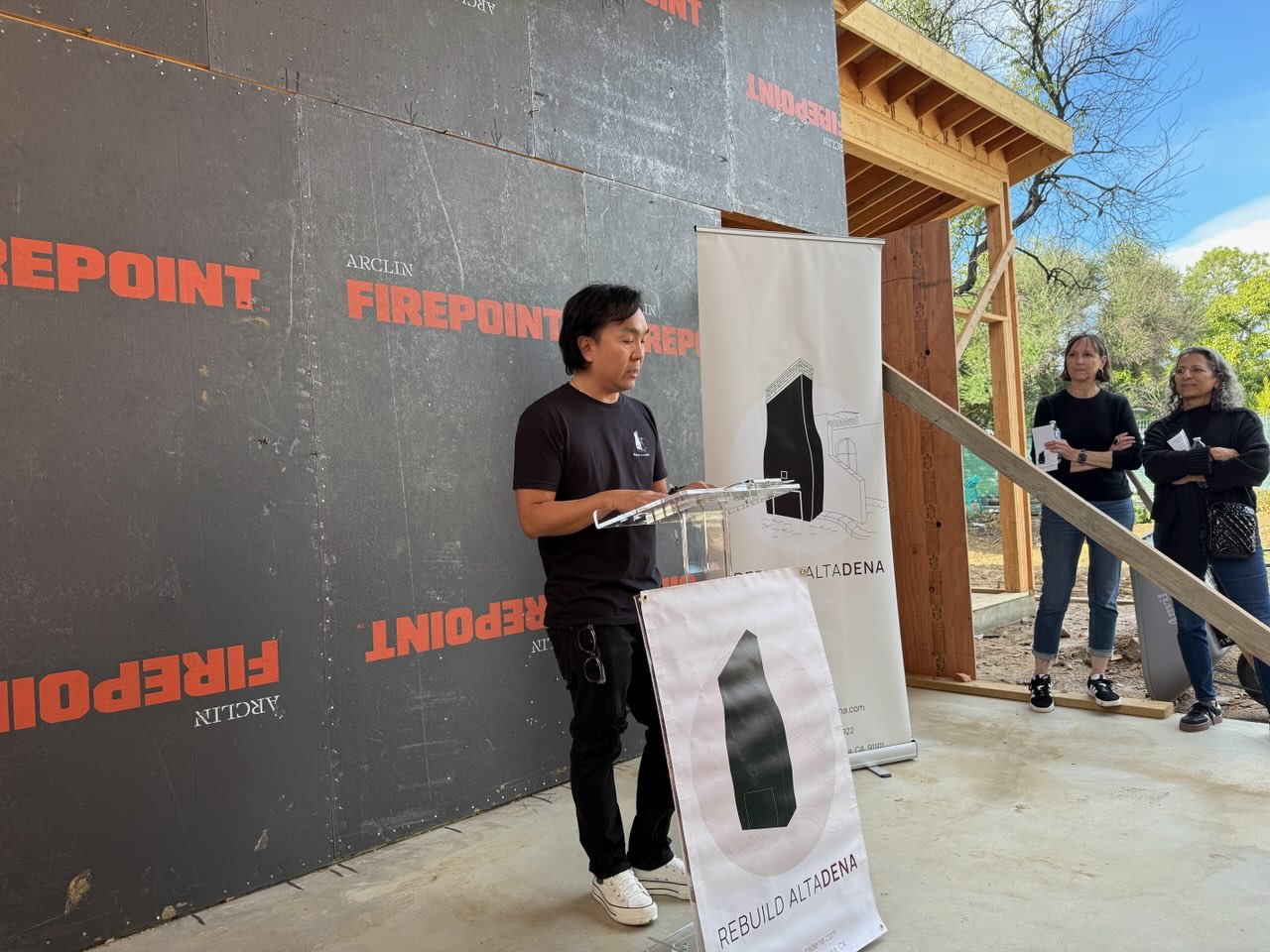
David Ly at one of the rebuild sites. | Photo courtesy of Rebuild Altadena

Rebuild Altadena was born from the ashes of this fire, so we are not business as usual,” declares Ly. “Our focus is on rebuilding smarter and more fire-resilient, based on what this community has lived through. The concept behind it is rebuilding as a community. After the fire, it became clear that families were overwhelmed trying to navigate everything on their own — the County process, insurance, engineering, timelines, and rising construction costs.”

“We bring together a coordinated network of designers, engineers, and contractors who are focused almost entirely on Altadena,” Ly explains. “Just like our organization, their priority is helping this community rebuild – not chasing projects across Los Angeles. That’s where our Group Build approach comes in. It means our entire network is concentrated on the same area, working under the same County requirements and fire-rebuild conditions. By staying local, our partners are able to respond faster; keep pricing lower and more stable, even as tariffs and material costs fluctuate; reduce inefficiencies caused by labor shortages; share real-time knowledge from project to project; and move families through the rebuild process together. That level of coordination simply doesn’t happen when a contractor has job sites scattered across multiple cities.”

Rebuild Altadena uses bulk purchasing to protect homeowners from sudden cost spikes. By buying materials — including cabinets, tile, FirePoint plywood, HVAC systems, and lighting — in volume, the company can lock in pricing and reduce exposure to shortages and supply-chain disruptions.

“At the heart of everything we do is a neighbor-first philosophy,” emphasizes Ly. “Rebuild Altadena exists to make sure families who want to come home can do so with a rebuild that is reliable, locally built, transparent, and fire-resilient. This isn’t about shortcuts or volume — it’s about rebuilding Altadena smarter, safer, and with accountability that lasts long after construction is complete.”

The company is supported by a network of about 25 building professionals, comprised of  contractors, designers, structural and civil engineers, surveyors, permit expeditors, and specialists in fire-hardening and resilient construction.

“We also have key staff members who bring deep lived experience and local leadership to the work,” Ly says. “One example is Steve Lamb, a fifth-generation Altadenan who lost his home in the Eaton Fire. Steve previously served on the Altadena Town Council and is a residential designer whose career has focused on historical preservation. His background reflects the values of this community — respecting Altadena’s architectural character while helping it rebuild stronger and safer. People like Steve don’t just contribute professional expertise; they carry the history, pride, and long-term vision of Altadena.”
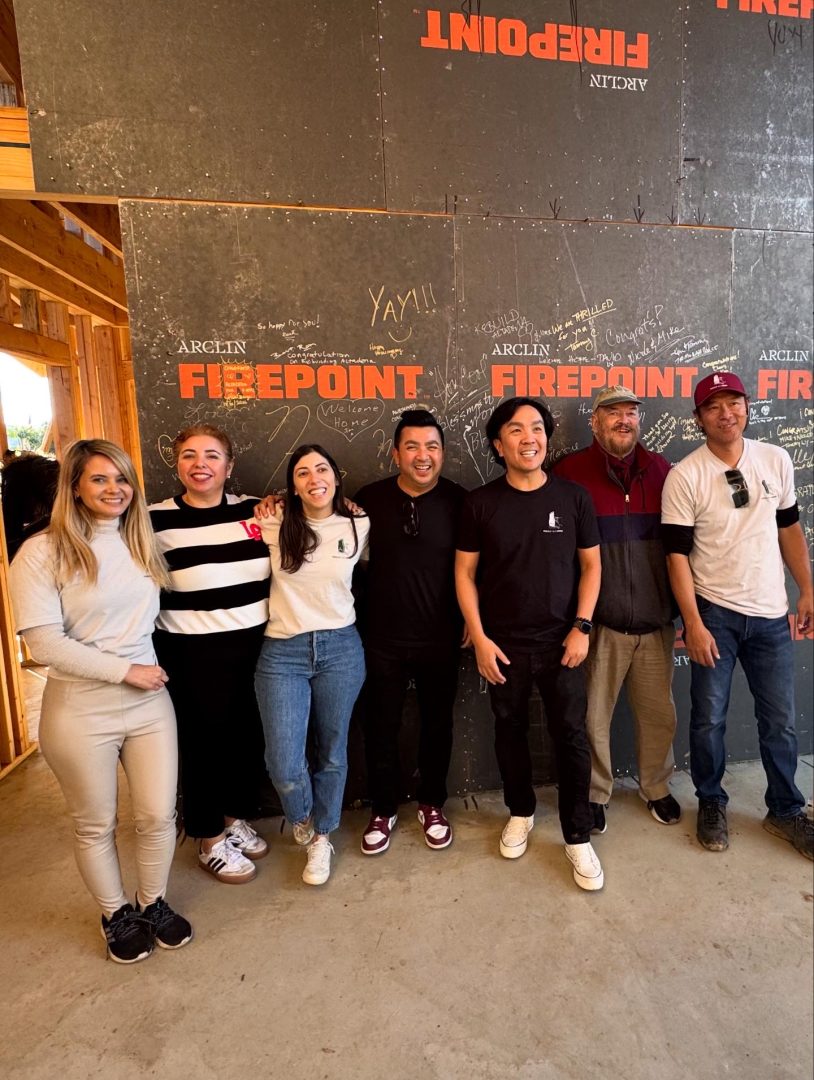
David Ly and the Rebuild Altadena team. | Photo courtesy of Rebuild Altadena

“And our network continues to grow every day,” adds Ly. “More individuals and companies reach out because they want to help. They see the need, they believe in the mission, and they want to be part of rebuilding our town the right way.”

Since its founding, there have been four Rebuild Altadena Fairs, each growing dramatically as the community and industry partners have rallied behind the effort. Each Fair brings in 50 to 70 building professionals — architects, designers, engineers, builders, SBA representatives, county officials, material suppliers, and fire-hardening specialists. These events have drawn up to 2,000 attendees, making them one of the largest community rebuild gatherings in the region.

“When we first started, the goal was simple: give fire-affected families a place to meet architects,designers, the SBA, the County, and builders — all in one room, without barriers or confusion. But the Fairs have evolved into something much bigger,” Ly explains. “Our most recent event included: fire-hardening materials; 3D visual walkthroughs of rebuild designs; Vicon exterior fire-sprinkler demonstrations; a full Rebuild Zone where homeowners could see, feel, and compare real materials; windows and doors; tile and flooring options; roofing systems; lighting by Maison Enterprises; and other essential components of a resilient rebuild. It’s become a true one-stop experience where families can get educated, meet their teams, and touch the materials that will become their future homes. For many residents, the Fair is the first moment they feel clarity and hope again.”
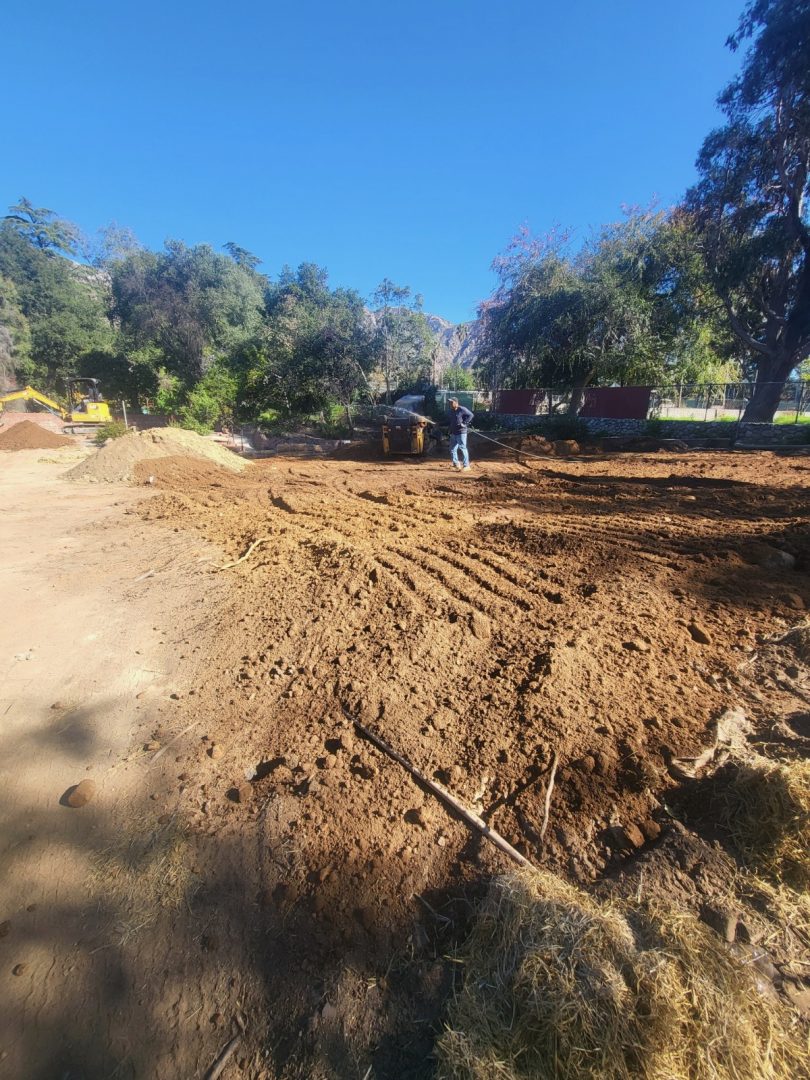
The site gets ready for rebuilding. | Photo courtesy of Rebuild Altadena

Starting in the new year, one major Rebuild Altadena Fair every three months is being planned. These quarterly events allow Ly’s team to keep homeowners updated, introduce new technologies, and bring in additional experts as the rebuild landscape evolves.

“Families are still facing very complex concerns in the rebuild process, and these Fairs help address the biggest challenges we hear every day,” states Ly. “These include navigating the County process which is unfamiliar and stressful, especially for families who lost everything overnight. People are overwhelmed by engineering corrections, plan-check timelines, fire-zone requirements, inspections, knowing what to submit and when.”

“Additionally, homeowners are concerned about rising construction costs and insurance gaps,” Ly says further. “Many homeowners worry their insurance payout won’t cover today’s costs. They need guidance on budgeting, materials, and how to avoid unnecessary expenses.”

“Fire-hardening and long-term safety are also major concerns,” declares Ly. “Residents want to rebuild stronger but often don’t know which materials are best, what new codes require, and how exterior fire sprinklers, roofing, windows, doors, and siding work together. This is why we bring FirePoint sheathing, Vicon exterior fire sprinklers, and other fire-resilient products to the Fairs.”

“And then there are temporary housing pressures,” Ly cites. “Families are still paying rent out of pocket. Delays hurt not just emotionally but financially, creating urgency for clear timelines and dependable teams.”
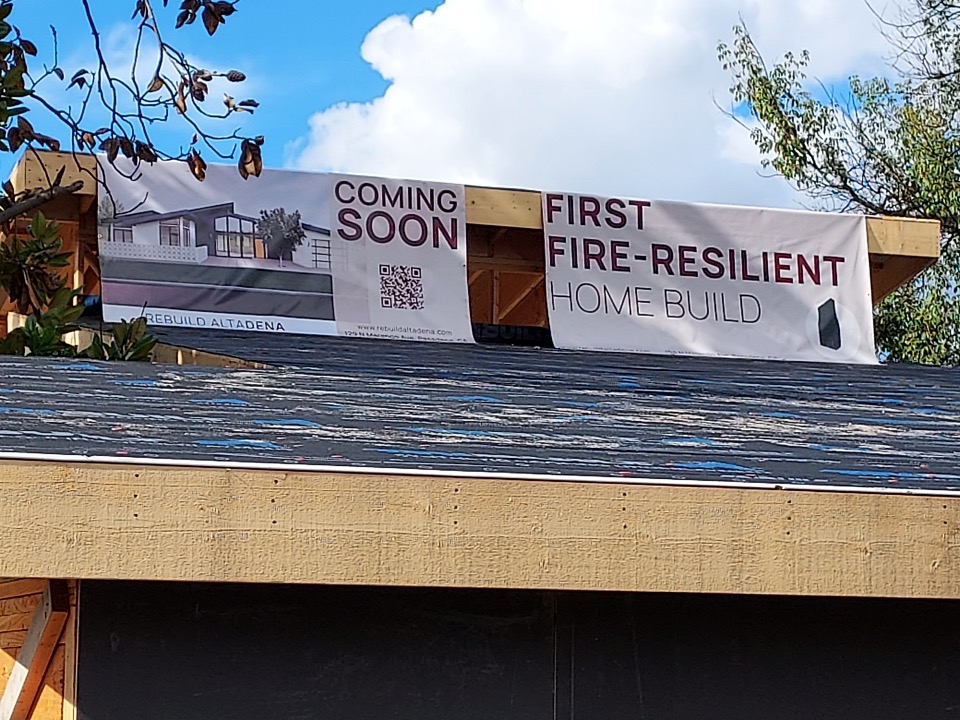
The first fire-resilient rebuild.| Photo courtesy of Rebuild Altadena

“Another worry is knowing who to trust,” says Ly. “After a disaster, homeowners are approached by dozens of contractors and consultants. Many fear choosing the wrong people. Rebuild Altadena was created so residents have vetted, local professionals they can rely on. The quarterly Fairs give families a place to get answers, explore materials in person, meet trustworthy experts, and move forward with confidence.”

Out of roughly 4,500 single-family homes lost in the Eaton Fire, Ly estimates that about 60% to 70% of residents intend to rebuild, though everyone is moving at a different pace depending on insurance, finances, and the County process.

“Most families are still in the design, engineering, or plan-check stages, working through approvals and corrections,” Ly says. “A smaller number have reached construction. And we’re very proud that one of the very first rebuilds in Altadena is a Rebuild Altadena project. By the one-year anniversary of the fire, that home will be in painting and finishing stages.”

“Not only is it among the first to rise from the fire, it’s also the first home in the entire burn zone to use fire-resilient materials like FirePoint Sheathing, which is designed specifically to withstand extreme heat exposure,” Ly explains. “For many families, that home represents hope — a sign that rebuilding is possible, and that we can do it smarter and more resilient than before.”

Rebuild Altadena is currently supporting more than 30 homes in the design and planning phase, which includes architectural design, engineering, and county plan check.
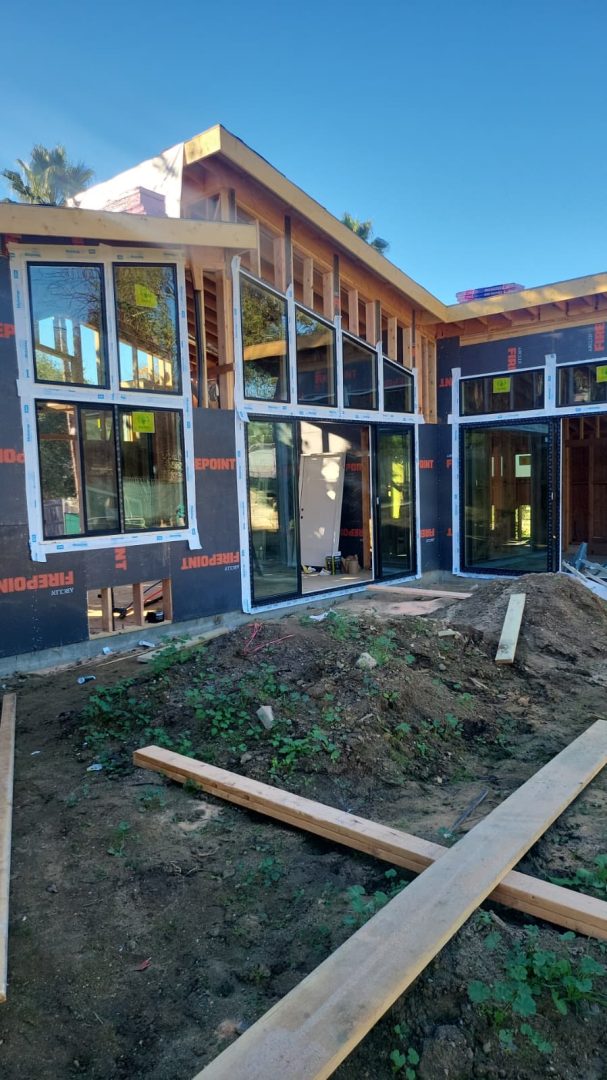
The first Altadena Rebuild home is expected to be completed around the first anniversary of the Eaton Fire. | Photo courtesy of Rebuild Altadena

“On the construction side, two homes began construction in mid-December,” Ly says further. “We anticipate three additional homes breaking ground in the first half of January, assuming permitting and utility coordination stay on track. Aside from the first home that will be in finishing stages, the timelines for the other rebuilds vary based on lot conditions, design complexity, utilities, and fire-hardening requirements. For most projects, a realistic expectation is 12 to 18 months from permit issuance to completion.”

Ly is also rebuilding. And being one of the first rebuilds in Altadena comes with its own unique set of challenges, one that every family after him will face as well.

“For example, we’re dealing with major utility uncertainties,” Ly explains. “Southern California Edison still hasn’t confirmed whether they’re going overhead or underground with the new electrical system, which affects design, trenching, and timelines.”

“Because of new fire codes, many homes — including mine — now require interior fire sprinklers,” cites Ly. “That means a lot of families must upgrade their water meters, and one of our clients was quoted an astronomical price by the water company just to make that change. These are things no homeowner planned for.”

“And that’s why Rebuild Altadena has taken on a strong advocacy role,” Ly declares. “We’ve already helped the community win important battles: eliminating unfair fire hydrant flow test fees for each individual home; challenging cross-lot drainage requirements that didn’t make sense for wildfire survivors; pushing back on County fees and conditions that were originally designed for single new homes being built in an established neighborhood — not for a town where thousands of homes burned overnight.”

“We didn’t ask for this disaster,” asserts Ly. “We lost our homes, our stability, and in many ways our sense of place in a single night. Families should not be burdened with excessive fees and code upgrade costs that were never intended for a mass-rebuild situation. So yes, I’m rebuilding — but I’m also fighting every day for the families behind me, making sure the path gets a little clearer and a little fairer for all of us.”
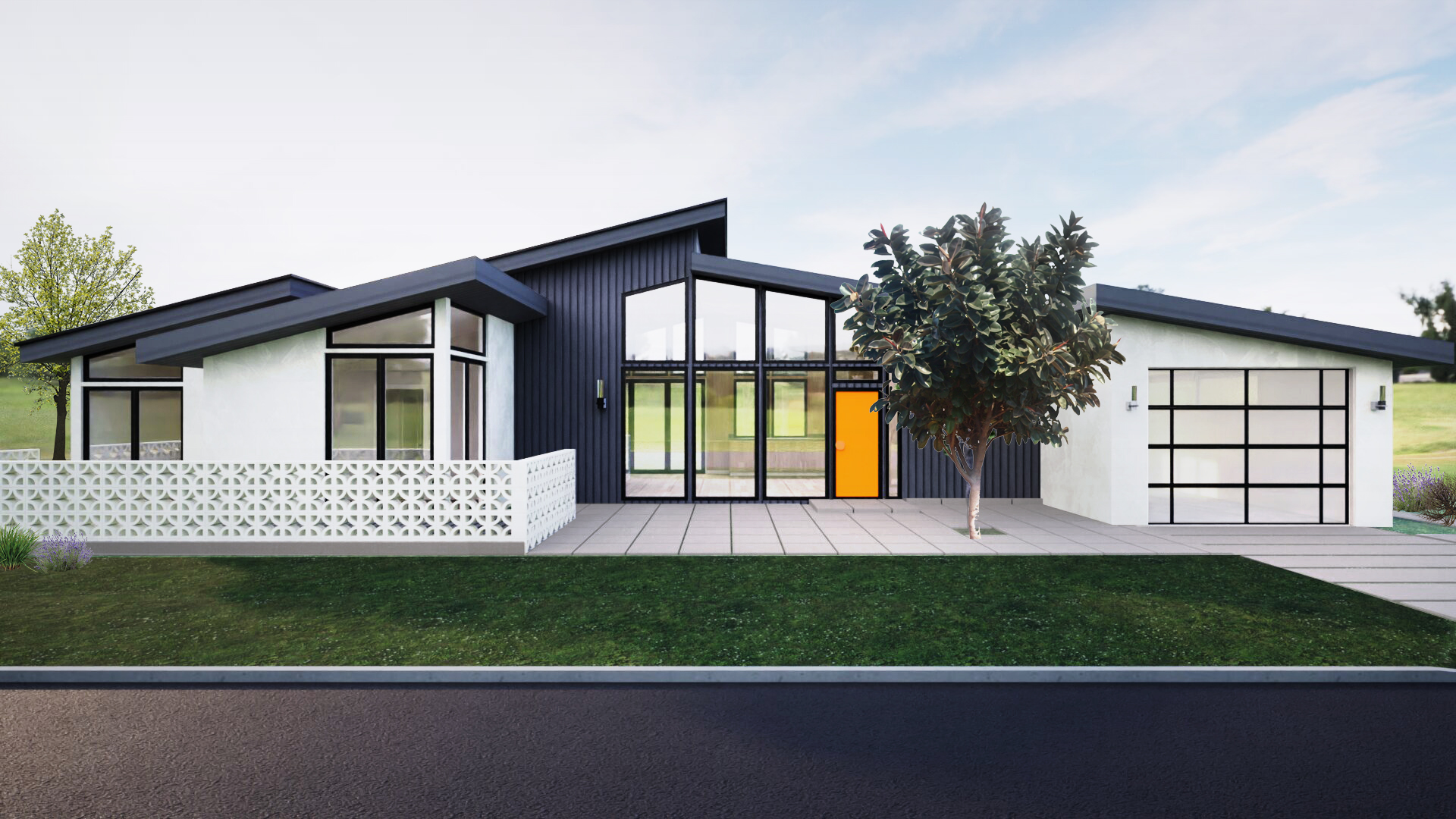
Rendering of a future rebuild. | Photo courtesy of Rebuild Altadena

“Altadena is in a complicated place right now,” Ly says further. “There’s a mix of grief, frustration, determination, and hope all happening at once. Physically, many lots are still empty, and that can make it feel like time has stood still. Simultaneously, there’s real movement happening — plans being approved, foundations going in, and the first homes starting to rise. Progress is uneven, but it’s real.”

“Emotionally, people are tired,” laments Ly. “Many families are still displaced, paying rent, navigating insurance, and waiting on approvals. There’s frustration with the pace of utilities and permitting, and uncertainty about what comes next. But there’s also a strong sense of resolve. Neighbors are more connected than they were before the fire. People are sharing information, showing up for one another, and pushing for fair treatment together. You see it at community meetings, at the Rebuild Altadena Fairs, and even just on the street.”

An article in the Los Angeles Times in November 2025 featured the first house that was rebuilt after the Palisades Fire. The developer-owned showcase home, which was constructed within six months, was an advertisement of sorts for Thomas James Homes. The company has a library of home plans available for faster rebuilds and claims a rebuild typically takes 12 months.           

Asked if this can be done in Altadena, Ly replies, “I saw that article, and it’s an impressive accomplishment. But comparing the Palisades rebuild to Altadena isn’t exactly apples to apples. In the Palisades example, the contractor rebuilt his own model home — a single property, on a standardized lot, with no insurance complications, and no displaced family depending on it. That allowed him to fast-track the process and present a ‘template’ home.”
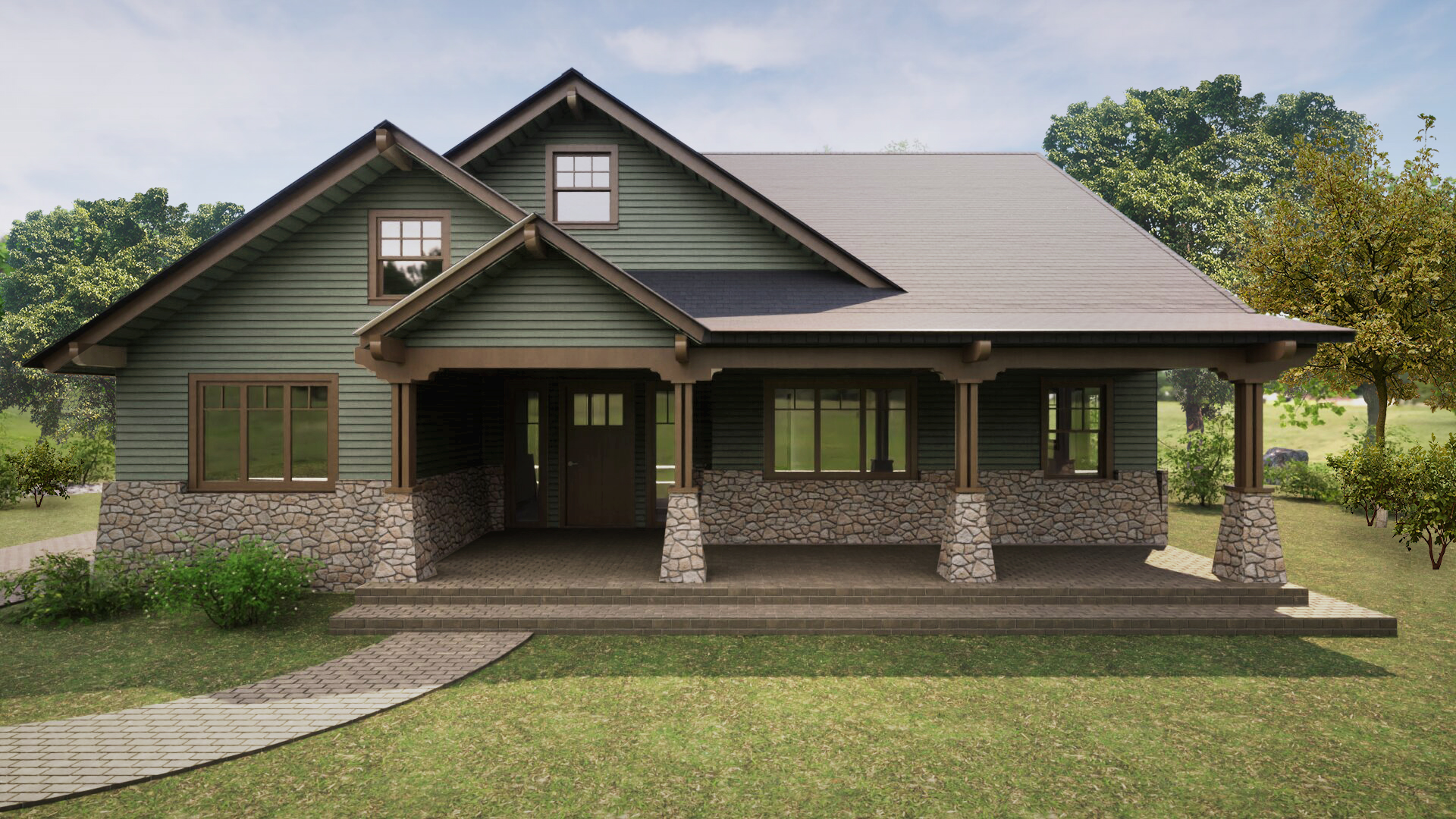
The Rebuild Altadena office on Marengo Avenue in Pasadena. | Photo courtesy of Rebuild Alatdena

“But Altadena is different,” expounds Ly. “We pride ourselves on our diversity — our lots, our architecture, and our neighborhoods are not cookie-cutter. Many of us don’t want pre-designed, identical boxes placed across the community. People want to rebuild homes that reflect who they are, not a one-size-fits-all model. And with that individuality comes complexity: unique slopes and topography; older utility systems; unanswered questions from SCE about overhead vs. underground power; interior sprinkler requirements that force water meter upgrades; soils, drainage, and grading challenges; insurance delays; and County processes that were never designed to handle over 4,500 rebuilds at once.”

“So while it’s inspiring to see a house rebuilt in six months, making that promise in Altadena would be unrealistic — even irresponsible,” Ly continues. “False promises give families hope in the short term, but they cause real pain when they fall apart. What we are focused on is speed with integrity — rebuilding smarter, stronger, and with fire-resilient materials. Our goal is to eventually streamline to a point where 12-month rebuilds become achievable.”

What would success look like and what accomplishments does Ly envision for Rebuild Altadena?

“Success for Rebuild Altadena isn’t measured by how fast we rebuild homes,” states Ly. “It’s measured by whether families feel supported, empowered, and protected throughout one of the hardest experiences of their lives. Success is thousands of families back home, living in a safer, stronger, more unified Altadena. That’s what we’re fighting for every day.”

Very soon now, a Rebuild Altadena house will be completed. It will most probably be celebrated not only by the family that moves in, but by the thousands of other families who are still displaced. Each house that rises from the ashes of the Eaton Fire provides them with a glimmer of certainty that one day in the not-too-distant future they will be back — exhausted by the ordeal they’ve been through, but very happy to return to the town they call home.
Day One’s Resiliency Studio Hosts Altadena Community Brunch

Also published on 1 October 2025

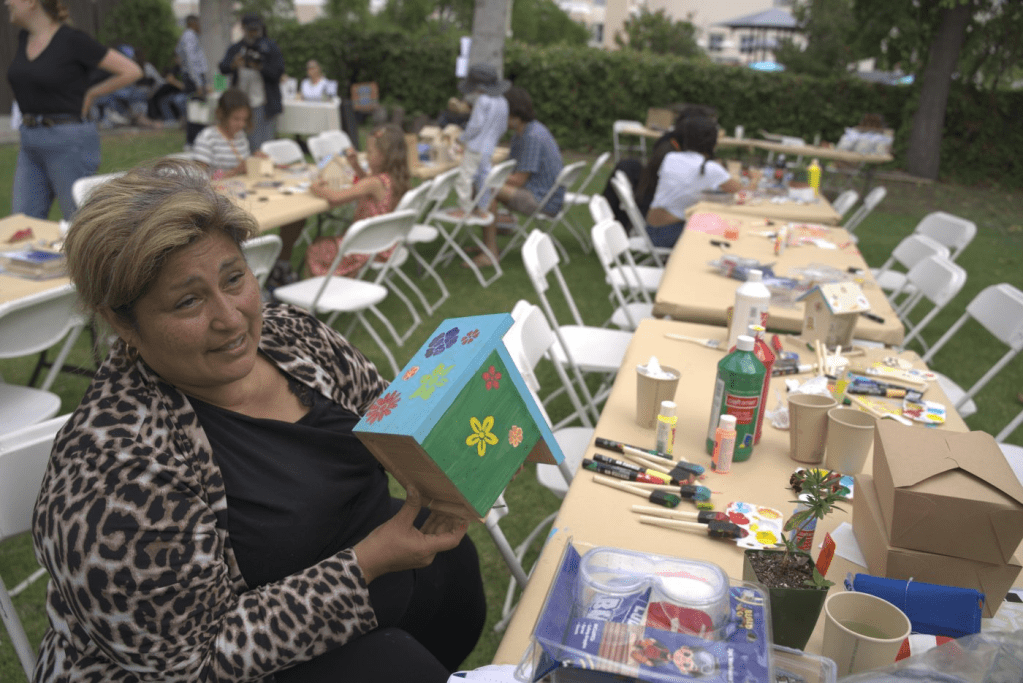
A brunch attendee shows off her handiwork. | Photo courtesy of Day One

Day One, a non-profit organization in Pasadena, held an Altadena Community Brunch and DIY Workshops for Recovery and Sustainable Living on Sunday, September 28. Hosted by its Resiliency Studio, the event took place from 11 am to 2 pm at the Day One Lawn on 175 N. Euclid Avenue in Pasadena.

One of the many associations in the Eaton Fire Collaborative working together to support families affected by the fire, Day One focuses on youth empowerment, healthy cities, and policy development. Local government  assistance also comes in various ways – including opportunities to collaborate on community events and initiatives.

This past Sunday’s Resiliency Studio Brunch and DIY Workshops was a free, family friendly event that combined a  community connection through food with hands-on workshops that support recovery and sustainable living following the Eaton Fire.    

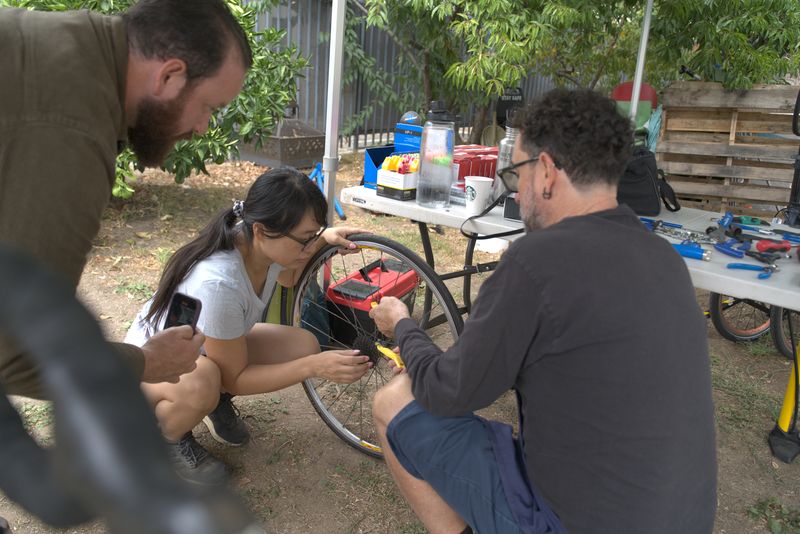
Bicycle repair demonstration. | Photo courtesy of Day One

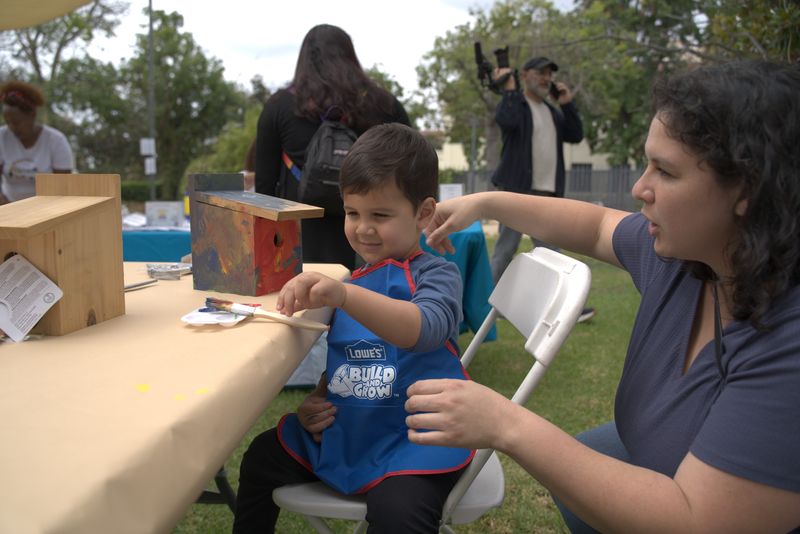
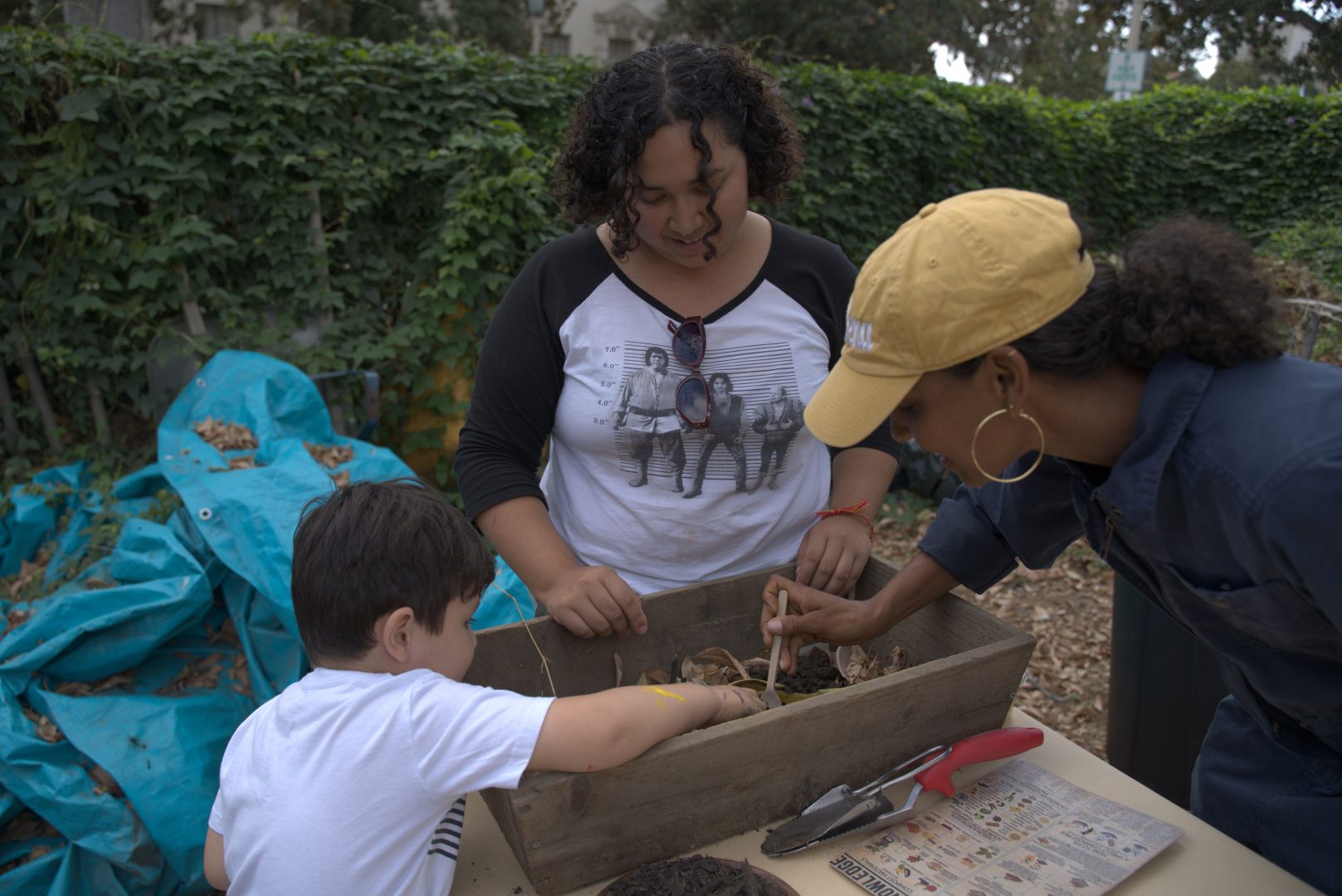
Workshops included: bike care and repair for affordable, eco-friendly mobility; composting and soil health to restore land and grow food after fire; healthy cooking with energy-efficient appliances; DIY rain gardens and rain capture systems; wildlife-friendly landscaping with native plants and birdhouse building. But the event was about more than skills – it’s about neighbors coming together to rebuild stronger, healthier, and more resilient.

“The Resiliency Studio began as a vision for a hub where families could learn about sustainability,” explained Nancy Verdin, Day One’s Director of Environmental Education and Engagement. “In the aftermath of the Eaton Fire, we reimagined how this hub could directly support families in rebuilding with sustainable strategies.”

Verdin said further, “The workshops are led by a mix of community partners (such as Community Compound, Crop Swap LA, Pulse Arts, Altadena Farmers Market), Day One staff with expertise in advocacy, public health policy and community engagement, and skilled volunteers such as bike mechanics. Together, they bring a diverse range of knowledge and experience to support our community.“ 

Birdhouse building. | Photo courtesy of Day One

According to Verdin, Day One has 30 years of experience working alongside residents, young people, elected officials, and other stakeholders to strengthen and build healthy, vibrant communities by advancing public health, advocating for public policies, meaningfully engaging youth, and igniting community-level and behavioral change. Comprised of a team of 24 employees, the organization is primarily grant-funded through local, state, and federal sources.

“Our programming focuses on public health, youth leadership, community engagement, and advocacy,” Verdin emphasized. “We offer youth leadership programs, provide drug prevention and education, and lead local efforts in transportation and environmental policy. Our Resiliency Studio events, however, bring together fire-impacted families as well as other local residents who want to learn more about sustainable rebuilding and recovery. Attendees come from both Pasadena and surrounding communities. We want participants to leave knowing that sustainability is tangible and within reach. As families rebuild, we hope to inspire them to imagine and implement sustainable solutions that strengthen resilience for the future.”

Composting. | Photo courtesy of Day One

“The Legacy Project Resiliency Studio Brunch was a meaningful day for our community,” declared Verdin. “Families and partners came together for hands-on workshops and resources provided by Altadena Farmers Market, Crop Swap LA, Pulse Art, Community Compound, and Oak Tree Comics, alongside our dedicated Day One staff and volunteers. Activities included bike repair, composting, cooking, native plants, and birdhouse-making, each designed to give families practical tools and strategies for sustainable rebuilding.”

“This work was supported by U.S. Greenbuild, who provided the seed funding that helped us create the Resiliency Studio,” Verdin said. “That effort has now evolved into the Collaboratory, a broader vision that brings together many organizations dedicated to supporting fire-impacted families with long-term recovery resources. With the generous contribution from Lowe’s, we are now able to provide tangible tools that will remain available to the community as they continue rebuilding.”

“It was a powerful reminder that resilience is built not only through tools and resources, but also through partnerships and community connection,” concluded Verdin.

Last Sunday’s brunch was quite a success! It would be gratifying for the Day One team if a good number of people came away encouraged by the connections they made and buoyed by the skills they gained. How heartening it would be if they left with renewed confidence that the resolve and spirit of Altadenans have not been scorched by the fire and that they w

‘Digital Nature 2019’ Display Dazzles at The Arboretum

Originally published on 22 February 2019 in the Pasadena Independent, Arcadia Weekly, and Monrovia Weekly

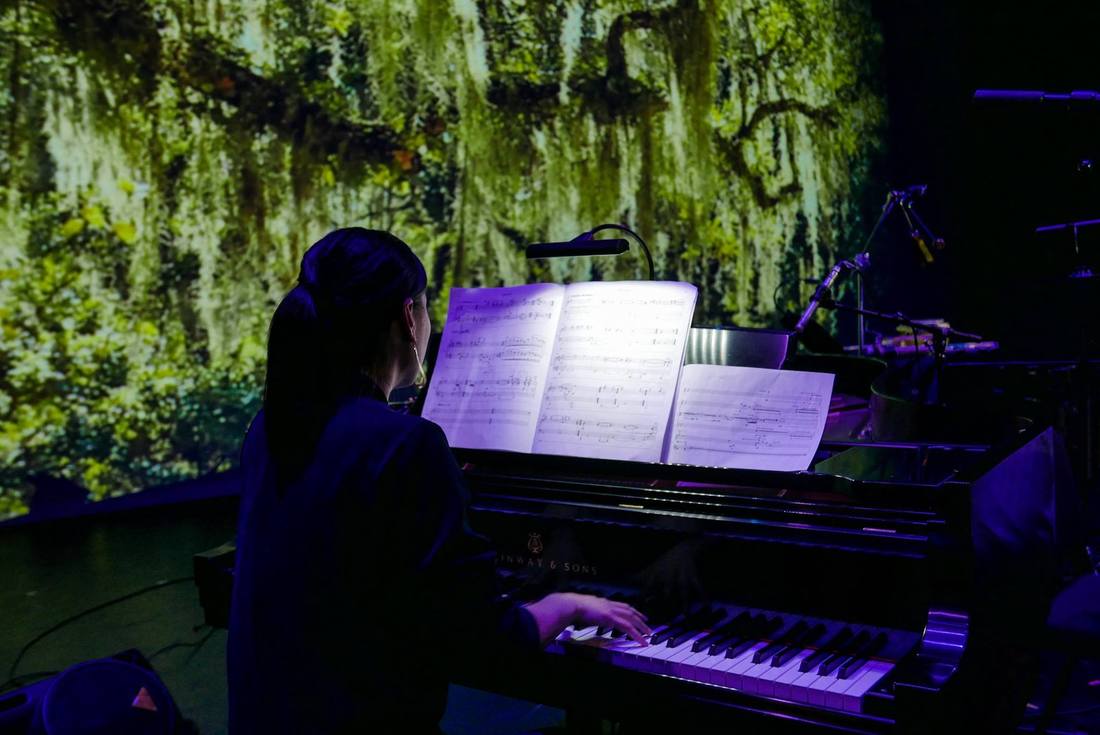
‘Southern Specter,’ Richard Johnson’s and Timothy Roy’s collaboration shows a Southern oak tree shrouded in Spanish moss | Courtesy Photo / The Arboretum

Make The Arboretum in Arcadia your destination for an evening of dazzling contemporary art. From February 27 to March 3, the natural landscape of this beautiful garden will serve as the backdrop for ‘Digital Nature 2019,’ an art exhibit featuring unique, site-specific artworks.

‘Digital Nature’ brings together a collection of contemporary artists who explore diverse themes – butterfly camouflage, bird songs and heavy metal, and interactive digital wildflowers. They will transform The Arboretum into an outdoor gallery of illuminated art, video, and sound installations.

Richard Schulhof, CEO of The Arboretum says, “We first presented ‘Digital Nature’ in 2016;  this one takes it to the next level. The Arboretum, I believe, is a spectacular setting for art. As part of our mission, we have education programs and we connect with people with our landscapes and gardens that explore themes. Art is yet another vehicle to engage people, to inspire thought, and encourage conversation about what’s happening in our world. We want to stimulate new thinking about the natural environment, our relationship with it, and the changes that are presently transforming it.”

As the recently concluded ‘Moonlight Forest Festival’ proved, people enjoy coming to The Arboretum at night. Schulhof would like ‘Digital Nature’ to kindle the same enthusiasm but quickly points out the distinction between them, “This is an art exhibition – statements from artists about a variety of topics. Unlike going to a light show where you come to enjoy the beauty of visual art or presentation, like the lantern festival, this one is a more cerebral experience. These installations will be scattered along the paths so you come upon them as you walk, and in that sense it’s similar to that of the lantern festival. But whereas ‘Moonlight Forest’ was a continuous experience, each encounter in ‘Digital Nature’ is a discrete experience: it’s in its own gallery. But I would love for there to be an overlap; I would be delighted if people who turned up for the lantern festival came and enjoyed this exhibition as well.”

Nami Yamamato’s ‘Radiant Flux’ poetically illustrates the process of photosynthesis | Courtesy Photo / The Arboretum

Schulhof declares, “We’re making a statement that art doesn’t necessarily belong only in an art gallery – it could belong in the landscape, it could be available to everyone, it could be part of our everyday experience. We want to take the art out of the museum and make it available to a much larger populace. We serve a broad community here at the Arboretum; so why not have an art exhibition that allows that community to engage with this art.

“‘Digital Nature’ is a very personal expression of the artists, which concerns an aspect of nature they find intriguing and inspiring, and they’re sharing that with us. It’s a look inside of their world. Nami Yamamoto, for instance, is fascinated by photosynthesis. She cuts intricate leaf patterns from paper she made with abaca and then embeds phosphorescent powder into the paper, so at night you’ll encounter these sheets of leaves that glow in the dark. You can see the connection with our botanical collections. It’s our way of communicating that just about every living thing on this planet thrives on this amazing ability of plants to harness energy from the sun. It’s the basis for life on earth and most people will never think about it; it’s taken for granted, it’s just a given.

“Another example is the work of Richard Johnson and Timothy Roy which explores the relationship between two plants – the Spanish moss that colonizes the branches of live oaks. They’re an artist and a composer working collaboratively who became fascinated by the incredible biological and visual drama of these live oak trees dripping with Spanish moss. They composed a score and combined it with imagery of the relationship between the plants. Each person watching and hearing the music will have his own interpretation. Those of us who are sensitive to plants and other forms of life will have that internal experience that Richard and Timothy find transformative.”

“This has been in development for a year and a half,” relates Schulhof. “Shirley Watts, a Bay Area artist and curator, who has a special interest in botanical landscapes as a context for the public exhibition, is the visionary responsible for ‘Digital Nature.’ She realized there was a rich opportunity in juxtaposing works of art with landscape and botanical collections.”

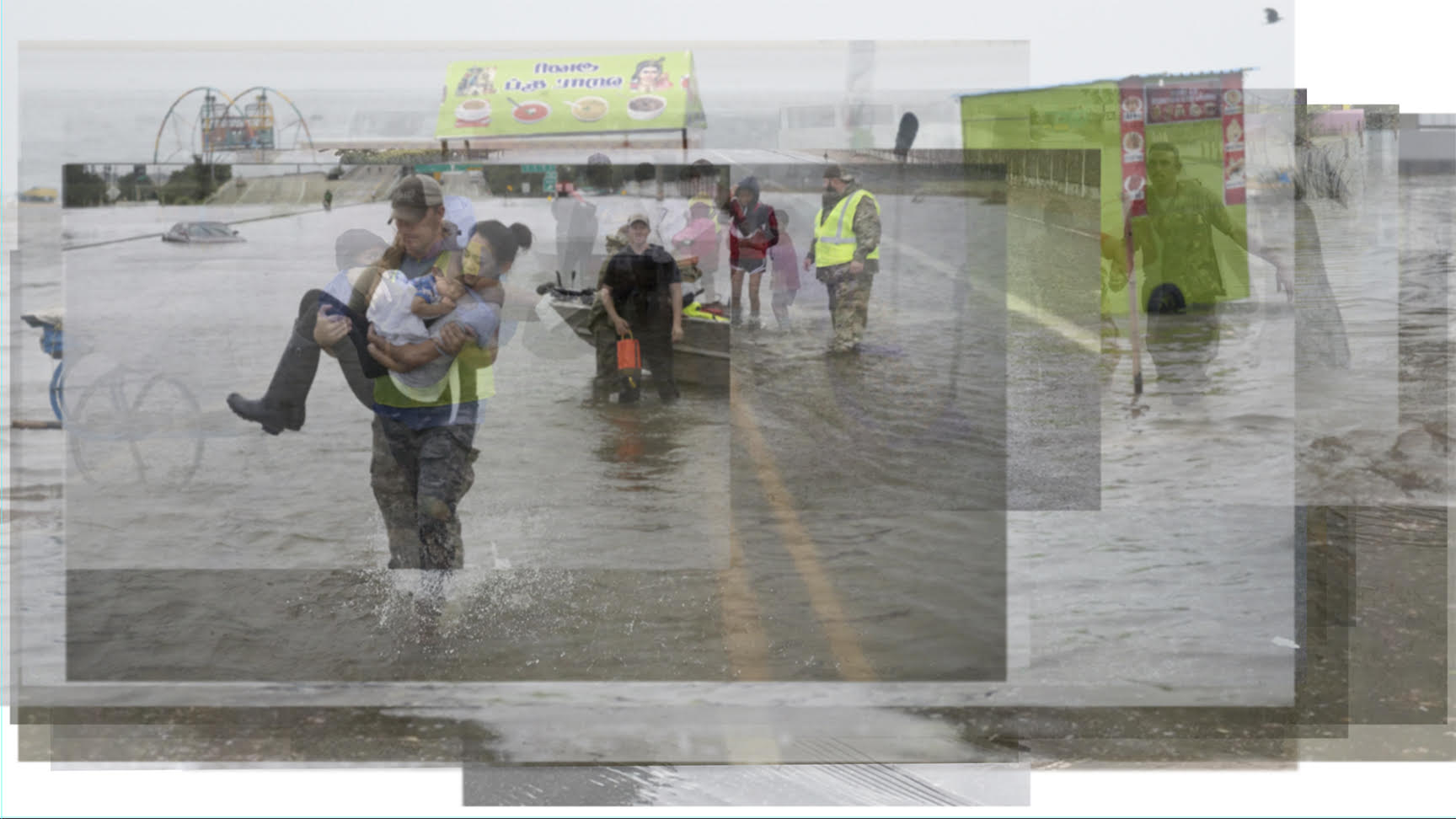
‘Flood,’ by Deborah Oropallo and Andy Rappaport, is composed of hundreds of images layered into a video collage | Courtesy Photo / The Arboretum

To explain how her involvement with The Arboretum came about, Watts says, “I had done a show at U. C. Berkeley in 2013 called ‘Natural Discourse,’ which was totally unlike what we’re doing here. It had physical installations of sculptures and some poets rewrote the plant tags. Since it wasn’t an art gallery, where there was another event coming up behind it, we could do whatever we wanted. So it stayed up in the garden for six months. It was fantastic! So many people saw the exhibition, not necessarily because they were there because of it, they just came upon it. And that’s a big deal with the work that I do – taking the art out of the museum and putting it in places where there’s a large public.

“Coincidentally, after we did the show in Berkeley, I was contacted by Gloria Gerace, who is the Managing Director of Pacific Standard Time, which puts up shows in museums all over Los Angeles. Apparently, Richard had hired her to do some consulting here to explore the possibility of having art events at the garden. Gloria found ‘Natural Discourse’ online and she asked me about the work we did in Berkeley. I had met Richard before, too, and he told me that he was open to having art here at The Arboretum. So I pursued him.”

Continues Watts, “When I started working here at The Arboretum, we were looking at doing the same kind of show we did in Berkeley. But I really started thinking about what this place is – its history and its location – and realized that so many films and TV shows have been made here. So I thought why don’t we have a show of video installations? It seemed appropriate for The Arboretum.

“Once we decided to show videos, it was a no brainer, we had to do it at night. And from a financial support basis, that turned out to be a brilliant idea because The Arboretum closes at 5:00 so people had to come back to get separate tickets for the show. And tickets sales help fund the work we’re doing. It isn’t expensive, though. Tickets are $15; the highest-priced ticket is $18.

“We put on ‘Digital Nature 2016’ exhibit not knowing what to expect. We thought we would sell 500 tickets and we sold 1,500; that helped fund the project. It was an amazing experience for all the artists involved – they helped install the artwork, they were here during the show, they met each other. That kind of collaboration in a garden like this was different, something they’d never had before. That the public also showed up to see the show was just such a positive outcome for everyone.”

Asked why ‘Digital Nature’ will only be up for a week, Watts replies, “It’s funny, the other day I was in San Francisco and I was talking to a gallery owner about this show, and she said ‘All that work for only five nights?’ I really contemplated about it afterwards and thought ‘I’ve had this long career working in gardens, and yeah, it’s only five nights but that’s how things happen in gardens – its ephemeral. Right now, at home, my magnolia is blooming and I’m missing it, and that’s it for this year! Things come and go and change in gardens. For me, it’s appropriate.”

Brigitte Zieger’s ‘Bewildered’ plunges us into the heart of the forest with protest banners the only clue to human presence | Courtesy Photo / The Arboretum

Only one artist from 2016 will be presenting artwork in this year’s ‘Digital Nature’ exhibit. Watts explains, “I’m always looking for new artists. Now I know a lot of artists, and they refer me to their friends’ works and I find people online. I also have connections to an artists’ residency in Connecticut and they have a lot of composers that go to residency. And when they send out their emails I go through everybody’s work. For this year’s show, I found these young composers who wrote a piece about Southern oak trees – one of them wrote the chamber music and the other made a video that goes along with that. Unfortunately we won’t have live chamber music but we’ll show the recording and the video under an oak tree. All the installations have a connection to the place they’re at.”

Watts says she didn’t have specific sites at The Arboretum in mind beforehand, “I mostly found the artists I wanted to work with – sometimes they have existing work, a few of them are still making new work now – and I had conversations with them. We have 18 or 19 artists for this sow, but some of them are collaborating. Most of them are local but some are from out of state;  one is from Chicago, the composers are coming in from Michigan, another is from Philadelphia. Once I had a group of artists together, that’s when I spent some time at The Arboretum to decide where the pieces are going.”

“The show isn’t touring; its site-specific work,” clarifies Watts. “While the pieces can go places, they were brought together to be in this show, in this place. For artists it’s an opportunity to show their work; it’s difficult to find places where you can find an audience. However, some artists we have in ‘Digital Nature’ are pretty well known. Brigitte Zieger, who’s from Paris, is one whose work has been displayed around the world. LACMA owns an art piece of hers. We’re showing one of her works which we’ll be projecting onto two walls by the front fountain. She and the other artists participating in this exhibit get the chance to see their work in a completely different setting.”

Schulhof underlines ‘Digital Nature’s’ more pressing significance, “There’s so much focus right now on changes that are occurring in our natural environment around the world – global warming, the introduction of invasive species, increasing urbanization. I think there is a cascade of environmental shifts because of climate change. While that’s not the sole emphasis of this show, it’s an important focus. To bring art into the landscape where you can have an artist make a statement juxtaposing with the botanical collection here at The Arboretum is an incredibly opportune occasion. ”

That ‘Digital Nature 2019’ transpires and culminates in five nights underscore the fleeting nature of blossoms in our environment, as Watts points out. The installations are a reminder that we need to appreciate the inherent wonders around us and recognize that we have to play an active role in preserving them for future generations.