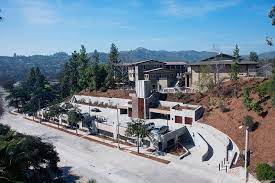
Clairbourn School’s Robert W. Nafie Leaves a Lasting Legacy

Originally published on 22 May 2018 in the Pasadena Independent, Arcadia Weekly, and Monrovia Weekly

Dr. Robert Nafie dedicated 39 years of his life to Clairbourn School | Courtesy photo

He’s at transportation every single day, rain or shine, opening car doors for students arriving in the morning and leaving in the afternoon. He’s the one constant for the thousands of children who have attended Clairbourn School through the decades – Dr. Robert W. Nafie, headmaster.

It was therefore with much melancholy that students and parents received his announcement that he was leaving at the end of the 2017-2018 school year. He’s such a permanent figure that it’s almost impossible to envision the school without his daily presence nor to imagine what Clairbourn was before he ever stepped foot on its campus.

The second of Edith and Marvin Nafie’s four boys, Robert William Nafie was born on September 7, 1948 in Detroit, Michigan, where he spent his earliest years. When he was nine years old, they moved to Farmington, a northwest suburb of Detroit. He remembers having a Huckleberry Finn childhood – running through the woods, building forts, swinging on ropes, and doing all manner of imaginative play.

A portrait of five-year-old Robert William Nafie | Courtesy photo / Nafie family.

When he was 12 years old his father, who worked at a firm that made parts used in different makes of cars, was offered the position of plant manager for a factory that was opening in Duluth, Minnesota.

He graduated from high school in Duluth and went to the local college affiliated with the University of Minnesota where he earned a four-year degree in History and Economics with a teaching certificate.

Directly after college he took a temporary post teaching U.S. history at the local junior high school which he once attended. After one-and-a-half years he found permanent employment at a special education school.

“Funding for special education became available in 1970 to establish community-based programs for young people who would otherwise have gone to state hospitals,” says Nafie. “It wasn’t what I had intended to do but I’ve always been humble and was taught to take advantage of opportunities that came my way.

“Within a year, the people I worked with and came in contact with felt there were much higher things in store for me and when a community-based facility needed a head, I was recommended and promptly hired.”

And so, at the age of 24, Nafie became the head of a community-based special education facility. Now he was running a school with 16 teachers all older than he in Eveleth, Minnesota, 60 miles north of Duluth.

It was there that he first demonstrated the nobility of purpose that would be the hallmark of his entire career. He states, “The facility was one that was no longer being used because the population had decreased. It was in such bad shape and looked like it was down on its luck; I didn’t want to put people who were already in dire straits in that building.”

He elaborates, “I had the audacity to write a grant for a program asking the state legislature for $500K to renovate the school. I was able to hire an architect who worked with me, from designing buildings to completion. This experience later proved useful during the construction years at Clairbourn. I earned a commendation from the governor of Minnesota for my efforts and the refurbished building opened to much fanfare attended by the governor.”

In 1974, he enrolled in a graduate program for educational administration at the University of Wisconsin at Superior, across from Duluth. Because of the distance of the drive, coupled with high gasoline prices, he rode a motorcycle 75 miles each way even in the bitter cold. He became the stuff of legend riding his little 250 Suzuki back and forth. He earned his Master’s degree in 1975; he was 27 years old.

Having gained state recognition, he came to the attention of the Developmental Learning Centers in Eveleth and became its executive director. He ultimately became the president of a statewide association of learning centers with headquarters on the eastern side of St. Paul, Minnesota. It had five locations, so he spent his time driving up and down the county overseeing building leases as well as supervising the instruction.

After being on the job for two years, Nafie decided he wanted to go back to general education and sent his resume to seven or eight schools. One of them was Clairbourn and, in August of 1979, he was invited to come to California to interview. “Who wouldn’t accept a plane ticket to California? Little did I know that it was over 100 degrees and they told me it wasn’t always like this,” he deadpans.
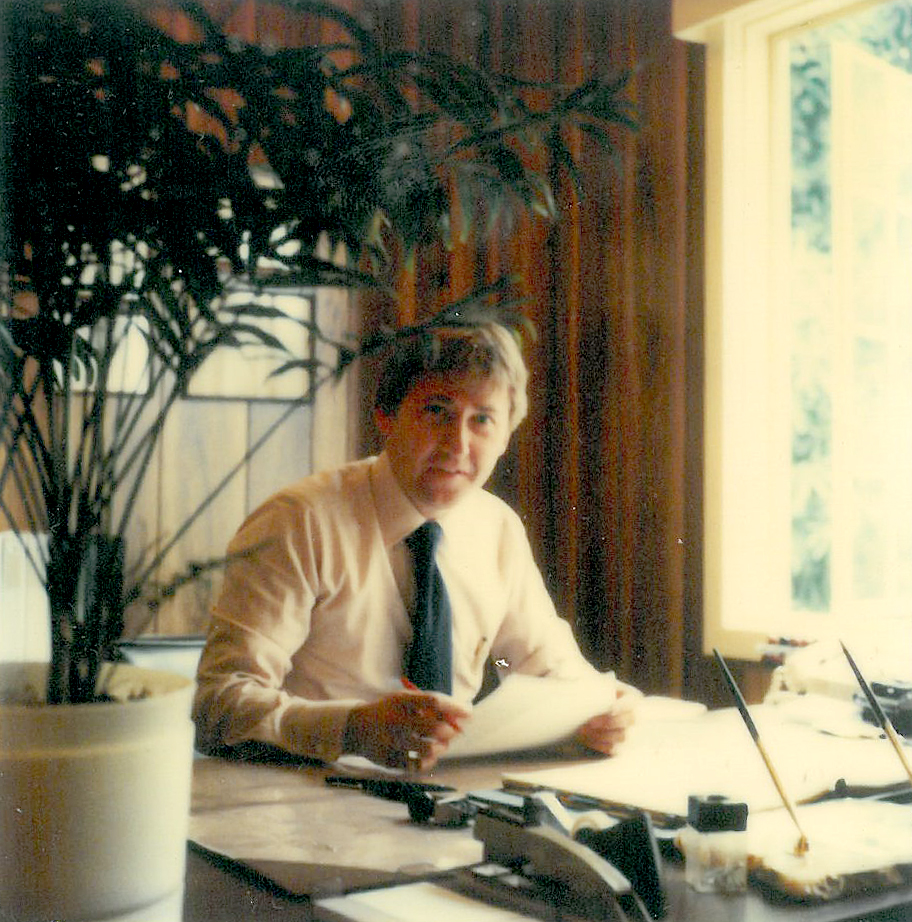
The 29-year-old headmaster | Courtesy photo

The school needed a Development Director but it wasn’t what he wanted so he turned them down. However, the post of headmaster became vacant after the school year had begun and he was hired to fill it. And so in 1979, at the age of 29, he became headmaster of Clairbourn School. To make himself appear older he started wearing a suit to work every day, which became his trademark.

Jim Halferty, a Clairbourn alumnus and currently a real estate developer in Pasadena, was on the board back in 1979. He pronounces, “It was my best hire as a Clairbourn trustee. We interviewed several candidates, many of whom were much older and with more years of experience. But we decided we wanted someone young who would make his mark on the school. And Bob did just that; Clairbourn is what it is today because of him.”

When Nafie arrived at Clairbourn, the school was a disjointed grouping of structures on two different parcels of land, the grounds were uneven and unpaved, and the campus had no central area. His first course of action was to make the school a beautiful learning place for children.

“When I met with the board I told them my vision for educating children and how their environment affects learning. They all thought I rode in on a white horse and they were happy to give me every bit of the school along with all the problems that needed fixing. They threw it all at me, wished me well, and said they would call me in a few weeks. At least that’s how I saw it; but I was used to multi-tasking,” he smiles in recollection.

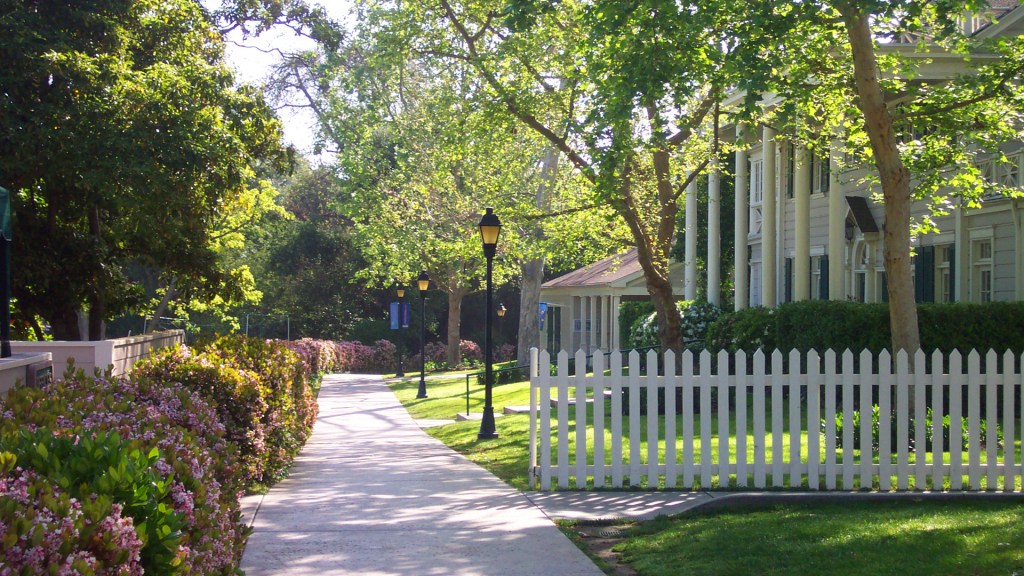
“I wanted it to be a school I could be proud to lead,” he declares. “I made the first ten years of my headship be about creating a master plan for restructuring the buildings and reconfiguring the campus. We hired an architect who worked with us on designing the classrooms and the grounds to look like a country day school. The architecture of the Manor House became the model for a unified appearance – all the structures would have the same Georgian Colonial style, with off-white walls and grey eaves. I also spearheaded a capital campaign to raise funds for the projects.”

During his first decade, he oversaw the creation of the new library, art studio, music room; new infrastructure – sidewalks, central lighting system, irrigation system, electrical and gas lines. He linked the two parcels by creating a campus center from which the students could get to either side of the school grounds upon arrival. Where there was once broken asphalt, a grassy central quad emerged, with walkways for children to use as they went to their classrooms. “The quad overlooked my office and I guarded it like a hawk; everyone knew not to step on the grass,” he quips.
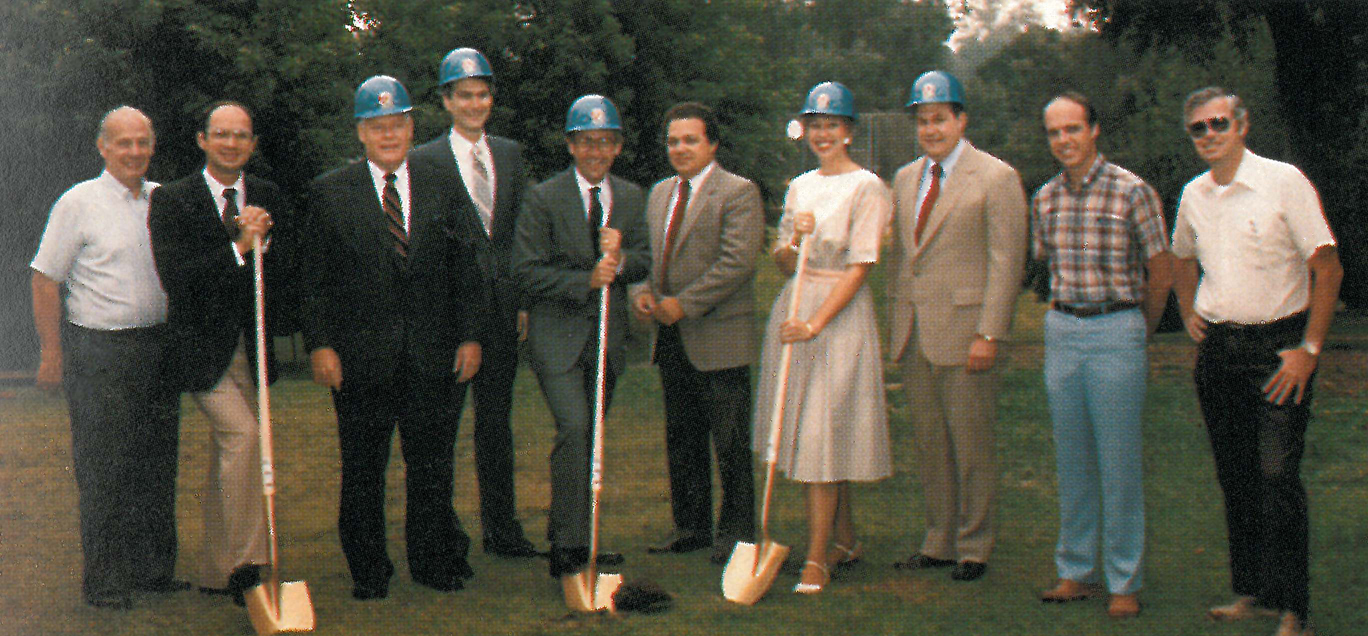
The first of many constructions that would span several years | Courtesy photo

While all this was going on he attended the Claremont Graduate School and led the charge to demonstrate a strong model for teachers to follow. In 1983 he established what was called the Education Reimbursement Program which he himself took advantage of, from 1983 to 1985, when he earned his doctorate degree and henceforth became Dr. Nafie. When the program was first put in place, Clairbourn paid half the cost of a formal education for any teacher who desired to get a degree; today it covers 100% of tuition and books.

Towards the end of Nafie’s first decade, in 1987, he began thinking about a space where children could assemble for Chapel and meetings. The funds for this came from an unexpected source – a painting hanging in the Manor House which turned out to be ‘Pandora,’ an important work by Thomas Wilmer Dewing, which was sold at auction for $525K. And so the multi-purpose building (MPB) came about. For everyone who attends Clairbourn it is the hub of all activities, the heart of the campus.

The aesthetic and physical components of Clairbourn thus established, he concentrated on building the team to implement his vision for education. A restructuring of the administration was put into place for him to hire an Assistant Head of School, a Director of Business and Finance, a Director of Development, and an Admissions Director.

The vibrant parent community is what makes Clairbourn the beloved institution to which alumni and their parents keep coming back. The Clairbourn Families Association (CFA), which Nafie initiated, has a hand in every fund-raising activity the school undertakes. He expounds, “I wanted the parents to be involved in ways that didn’t touch on instruction, and the best way to accomplish that was to have them help out in the library. We developed a very strong link between the CFA and the library which persists today, and the Book Fair is a manifestation of this.”

Nafie adds, “Around that time we had an activity that was solely run by parents – the Cougar Corner. It was literally a small room in one corner that sold spirit items like pennants and sweatshirts. When we did all the construction, we moved it to a larger space across from the MPB and now it carries everything from soda and popcorn to neckties and gym bags.

The biggest and most extravagant CFA event, though, is the Spring Benefit and auction, an idea originated by parents. All these events gave parents the opportunity to be on campus, provide service, and add to student experience. The campus was more alive than ever before.”

“In 1989 the discussion was, ‘We had all these fine buildings but what are we going to do with them?’” Nafie remarks. “We wanted to ensure that our emphasis didn’t stop on structural concerns but would expand to our enrichment programs. So we launched a five-year Campaign for Excellence from 1990 to 1994 and called it ‘Building on a Promise.’ It also marked the second decade of my headship.”
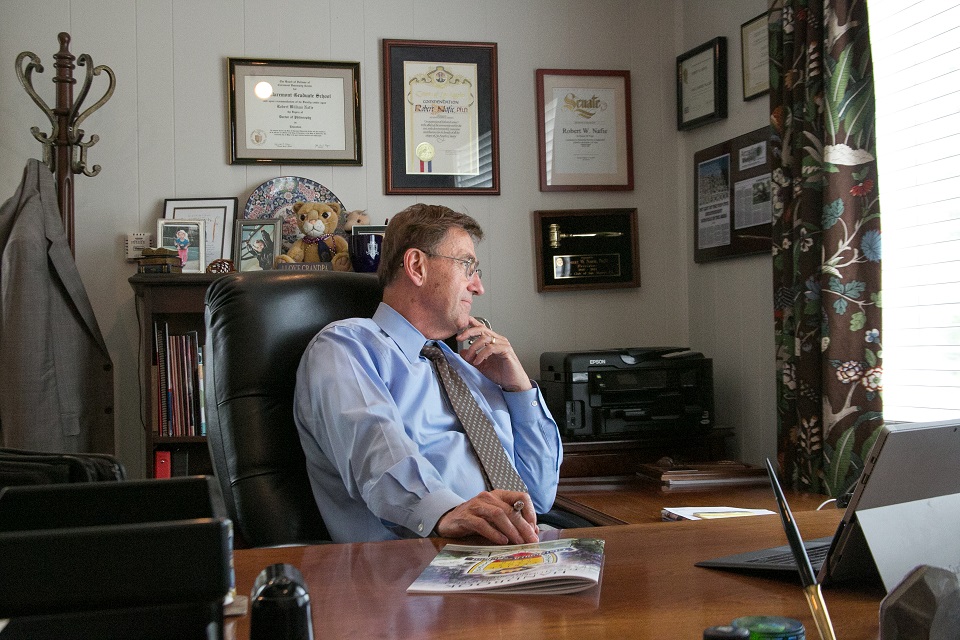
Nafie’s office overlooks the grassy quad | Courtesy photo

As his third decade approached, Nafie focused once more on infrastructure, “We came up with a Master Plan to replace the Gardner building and reconfigure the entire area with a north/west orientation.” Randall Hall opened in 2001 with state-of-the-art synthetic surface play yard.

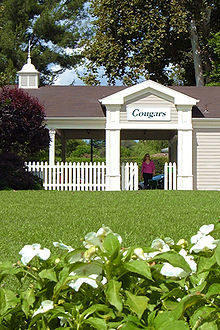
“In 2002, Master Plan Phase 2 construction began on Andrew Hall which included the Transportation Pavilion. Completed in January of 2003, this formed a covered space for children and an orderly place for them to wait for their rides.

This was closely followed by the razing of the existing nursery building, and in its place the Seiter Center was erected and opened in 2008.”

It was also in this decade that he inaugurated a program distinct to the Clairbourn experience. Beginning in 2000, Clairbourn exchanged students with host families from the Huntingtower School in Melbourne, Australia. A highlight of the middle school experience, this not only established bonds among students but adults as well. To this day those relationships continue as former parents visit Melbourne and are hosted by Huntingtower teachers in their homes, and vice-versa.

The 2008 recession and its aftermath marked Nafie’s fourth decade. This necessitated a restructuring of jobs and consolidation of roles among the administration and staff. At the same time, the population of the area changed with the influx of Asian families and they came to Clairbourn with different education needs and expectations.

Clairbourn focused on STEM and designed a curriculum to reflect this. It was also at this time that Clairbourn’s business systems and functions moved online and the school’s print publications adopted a digital platform.

Dr. Nafie’s tenure wasn’t all about construction and structural face-lifts but also about upholding the essence that would define his 39-year stewardship – a dynamic engagement with his students and parents.

An annual tradition that he started in 1981 is singing a song for moms during Mothers’ Visiting Day’s morning assembly. He recalls, “I wanted to make myself more approachable to the students; to be more human for them to get to know me personally and, hopefully, for them to know that I care about them. So I speak with them every day at Chapel and I play the guitar and sing for them annually.”

For years, at the Spring Carnival, Nafie would gamely sit in the dunk tank and students all fought for the honor of throwing a baseball to trigger the button that would collapse the plank he was perched on, dunking him in a tank of water. This always got everyone laughing and he would join in the hilarity as he came out, dripping wet in his suit.
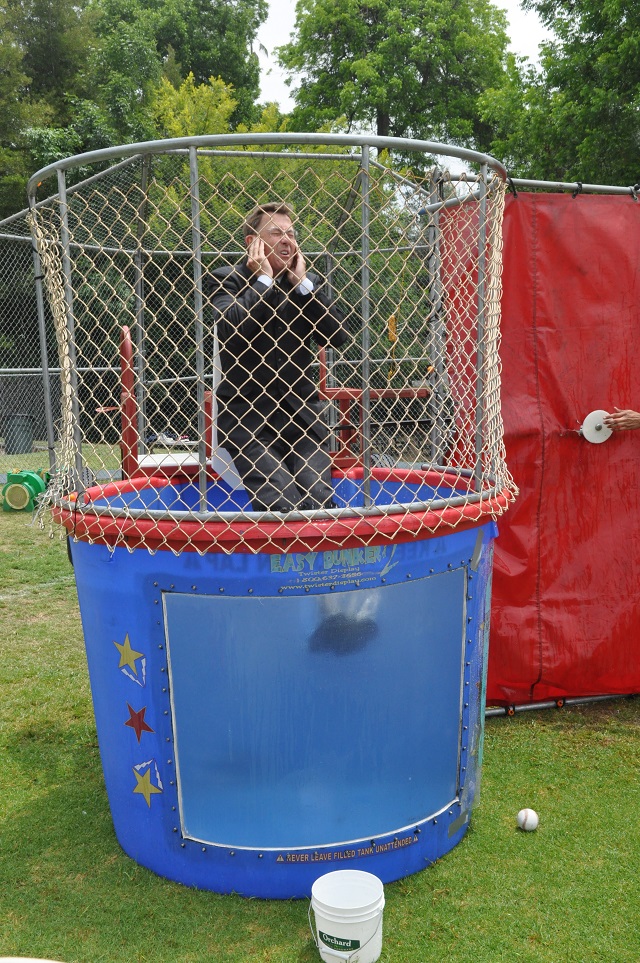
Nafie in the dunk tank during the Spring Carnival | Courtesy photo

“The carnival was already in place when I arrived but I wasn’t in the dunk tank yet. That was another parent idea, now that I think about it. They quickly identified me as someone who would do almost anything,” he chuckles in reminiscence.

Throughout his four decades at Clairbourn, Nafie exhibited the many dimensions that make him a uniquely fascinating man. He is as wise as he is witty, with as much affinity for badinage as for waxing philosophical. He is as charming in his self-deprecation as he is stubborn in his opinions. He is at once a student acquiring a vast wealth of information and a teacher imparting his knowledge and homespun wisdom. He is well-read and well-traveled, with a wide range of hobbies and interests. An avid ornithologist, he spouts all kinds of bird trivia. An aviator, he relates in awe the sublime feeling of soaring over the horizon and marveling at the splendor that is God’s making.

When he starts his day drinking a cup of coffee, Nafie reads the L.A. Times, The (London) Times, and the Wall Street Journal. Some bits of information he gleaned would often find their way to morning Chapel to inform students and parents of what’s happening here or abroad and how these relate to them or to that day’s teaching.

Or, he would recount that when he went to get a cheeseburger, fries, and a coke at In-N-Out the previous evening, he reached the pick-up window only to realize that he hadn’t ordered. There’s a lesson in there somewhere, but they forget. What they do remember is that they recognize themselves in his moments of humanity.

Nafie will continue to be involved with Clairbourn School as a trustee | Courtesy photo / Anne Boughton (Nafie’s daughter)

By allowing the Clairbourn community into his personal life, he inadvertently let them have some ownership of it. That’s why when he was diagnosed with cancer last year and underwent chemotherapy and stem cell transplant, they rallied as one to support him. They were there through his illness and treatment. They fought it with him and would have fought it for him, if it came down to that. Happily, he is now in full recovery for they would have rejected any other outcome.

When asked what he considers his biggest accomplishment and what he sees in the school’s future, he replies, “I’m most proud of developing the Clairbourn campus into one of the most elite school campuses in the area – with its many facilities up-to-date and all paid for. Ten years hence, it will have a consistently superior faculty with complementary facilities in a multi-culturally diverse community that loves its school and cherishes its legacy.”

Nafie transformed the Clairbourn campus into one that inspires reflective erudition and meaningful discourse. He has made it his life’s work to create a school that provides both a challenging and nurturing environment. For 39 years he led his students, parents, faculty, and staff to become educated, well-informed, caring members of society.

Clairbourn stands today as a magnificent realization of his vision – the embodiment of an excellent education based on a code of ethics of honesty, respect, responsibility, spirituality, and citizenship. It’s a school that Nafie can not only be truly honored to have led but that which its community is proud of. He leaves a beautiful legacy, which he will continue to cultivate as a trustee, to ensure that it does more than endure but flourish for decades yet to come.
Clairbourn School’s STEM Regatta Introduces Concepts to Youngest Students

Originally published on 28 November 2017 in the Pasadena Independent, Arcadia Weekly, and Monrovia Weekly

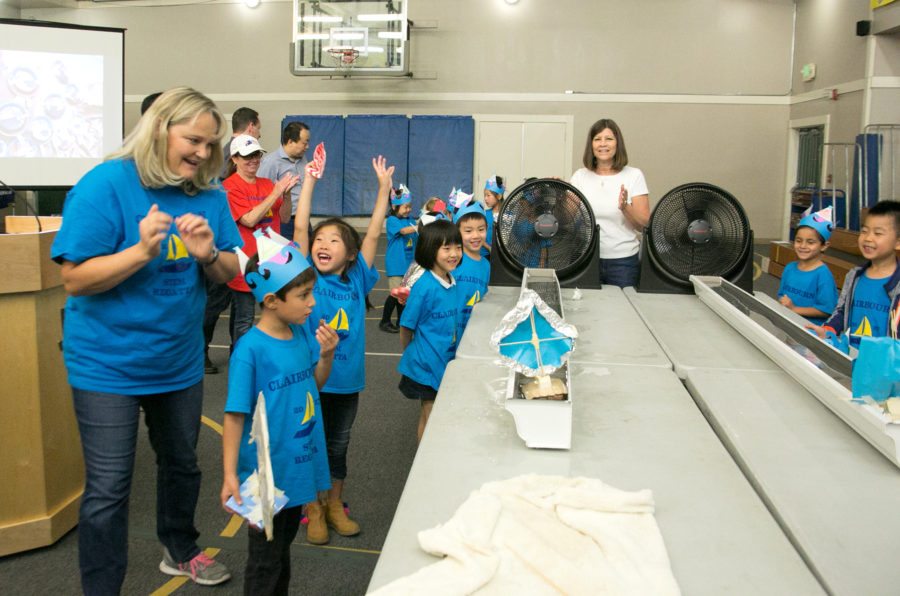
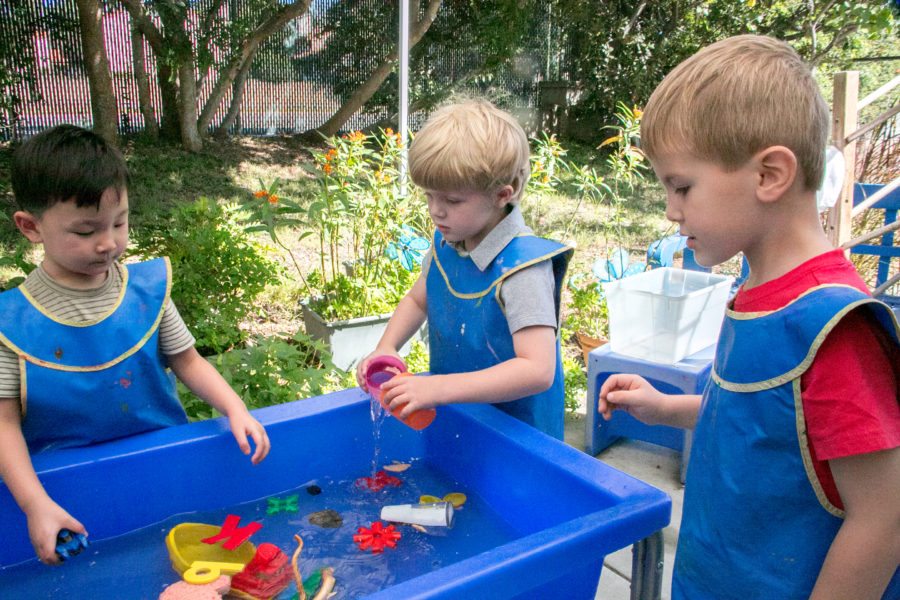
Pre-K students (left to right) explore buoyancy to prepare for their STEM Regatta project | Courtesy Photo

One evening this past October, little students were all gathered impatiently around a rain gutter filled with water, eager to sail their “boats” down the river. This was going to be so much fun!

That they’re three-, four-, and five-year-old pre-school and kindergarten students at Clairbourn School, an independent junior pre-K to eighth grade school in San Gabriel, learning STEM was why this regatta was such a big deal.

What was totally out of character, though, was how even the parents couldn’t take their hands off the boats. They were just as enthusiastic to test the product they built with their children.

This was the culmination of a ten-day, three-part STEM Regatta project that began with the teacher reading ‘The Raft’, by Jim La Marche, a story about a little boy who spends the summer with his grandma in her cabin. The classes also read ‘The Three Billy Goats Gruff’, about a family of goats that wants to avoid the troll and cross a river.

After listening to the stories, students were challenged to design and build a miniature boat, or raft, capable of carrying three billy goats (represented by three small, but heavy metal washers) to avoid a dangerous troll. Their boat/raft should not exceed five inches wide, and had to be able to float.

The first part – raft/boat component – took five days to complete. Day one was reading the story. The second day was spent researching with Nearpod presentation and time for questions. On day three students tested their materials and charted their findings. Using their selected materials, they planned and designed their raft on the fourth day. Day five was spent building their designs. On day six they tested their designs, made improvements and retested.

The second part – the sail component – was done in three days. The class read books about the wind on the seventh day. They spent the eighth day listening to a Nearpod presentation to learn about sails. On day nine students investigated sail materials, sizes, and shapes with demonstrations and charted their results.

The third part – the finale event – was the STEM regatta. On Thursday, October 5, 2017,  all three grades, made up of two pre-kindergarten classes and one kindergarten class, and their parents came to Clairbourn for the crucial finish.

The evening’s activity consisted of extensive display boards and a Nearpod presentation from kindergarten teacher, Kris Shoemake, to show parents their children’s learning process over the previous nine days.

And then it was time for families to build the sails, followed immediately by wind-powered boat/raft races by grade level.

Karen Paciorek, Lower School Director, says the STEM regatta was the collaborative brainchild of the pre-school, kindergarten teachers and herself. She relates, “We’ve been wanting to do a cross-grade activity that highlights the things they do all the time in their classrooms with ‘Project Work’. They brainstormed, agreed on an idea and decided on a title. It was a collaborative effort for the teachers, which is a model for what we want students to emulate.

The idea for the regatta came organically. Kris Shoemake came across an article about students testing boats. Since we know that kids love playing with water, we thought that would be a fun way for kids to learn the concepts of floating and sinking. Instead of us showing pictures, we’d  take it a step further by having a hands-on activity integrating what they do in the upper grade engineering design challenge.

We wanted for them to show their learning by picking what materials would work for them. We also wanted this project to demonstrate to parents the progression of ability through the grades – expectations at JPK (junior pre-kindergarten), PK (pre-kindergarten), and at K (kindergarten) – so they have a true picture of what we look at as developmentally appropriate.

Teachers use the academic language with the kids so even the youngest students know this is a science project. We’re not expecting  them to master the concepts or terms, but to be familiar with them. They will be hearing the words as they go through the grades.”

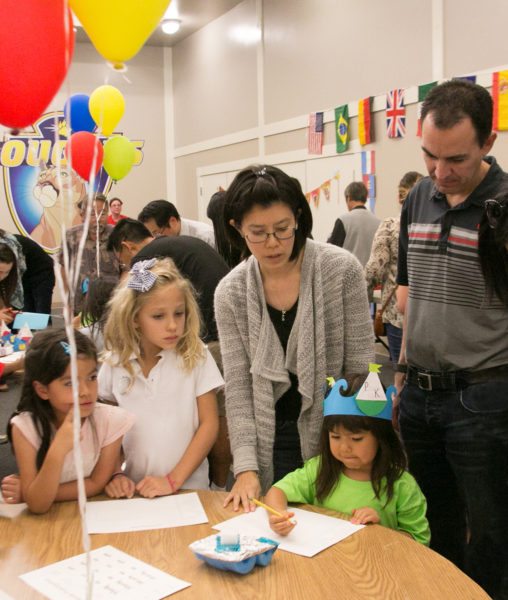
Parents helped their children during the STEM Regatta finale. Pictured (left to right) are Kaitlyn Nava, Mackenzie Bates,, Stephanie Furukawa, Zoe Nava, and Jason Nava |Courtesy Photo

Adds Dr. Amy Patzlaff, Assistant head of School, “It wasn’t merely a reinforcement of  the concept of buoyancy. Teachers talked about the scientific methods: collecting, charting, and interpreting data. As the students worked and tested a variety of materials, they had a chart that showed which boat sank and which floated so they could refer to the data later. And it was simple – it was pre-school level – but they could see on the chart which material worked and didn’t.

They then repeated it when they were talking about sails – which materials held against the wind? Did the shape matter? The students tested the sails using a zip line and a fan; they sat and watched as they tried different things. They had access to that data as well when they had to replicate the activity on the night of the regatta. They built their sails with their parents and tested their final product. They employed scientific methods – how to use the data; how to problem-solve; how to use previous history to scaffold what’s going to happen next; how to use the product for the next round.

Each grade level had a different take on building the boat, which was all done in the classroom, with the teacher assisting. During the night of the regatta, the parents helped in the culmination of the activity which was building the sail and testing it.

To make it age appropriate, it wasn’t a win-lose situation; they just wanted to see if it worked or if it didn’t, and why. We used water-filled rain gutter rivers with a fan at the end. They set their boat in the rain gutter and if the boat got stuck, they righted it. Watching the parents test their product was highly entertaining!  But it was all a friendly event, everyone cheered for one another, happy to see each other succeed.”

According to Paciorek, even during the ten-day period that the kids were working on it, they would practice what they learned at school. Her granddaughter, who is four-years-old and is in the pre-K class, tested some toys for buoyancy in their bathtub.

“This is fairly representative,” explains Dr. Patzlaff. “When I was having breakfast with some of the parents later that week many parents commented on their kids wanting a fan to test the zip line of some of the sail types, in addition to the ones provided in class. Another child wanted to get more materials to test in their bathtub at home; one was going to do a race in their pool. So they wanted to continue the exploration and testing on their own. It continued to engage them which is a great testament to the fun embedded in the project.”

Paciorek says the regatta was a major collaborative event and they plan to do one every year. In the meantime, each grade has its own classroom STEM projects. In kindergarten they have about four or five smaller STEM-related work. One is an apple-picking activity where kids help a farmer get his apples from the trees to the barn. Students have to design the transportation to get this accomplished using the same scientific methods.

In first grade they do a pumpkin drop and students have to brainstorm ideas in groups and design a container that protects the pumpkin. They test which materials kept the pumpkin from breaking. They also have one activity where they build a nest to hold the eggs.

“We started a heavy emphasis on STEM once the NGSS (Next Generation Science Standards), the nationally adopted science standards, came into play around 2012,” states Dr. Patzlaff. “There has been so much conversation about 21st century skills and about not knowing what jobs are going to look like. And because we don’t know what jobs are going to look like the most important pieces we can give students are how to problem-solve, how to think, how to communicate clearly, how to have resilience and grit, how to persevere when something doesn’t go right, collaborating – all the soft skills – in addition to being able to write.

One thing that STEM projects give is real-world possibilities for how to apply those skills in a  nice, tight package. When they design the sail for the boat, for instance, they have to problem solve, they have to work together, they have to communicate with their partner, they have to be able to document their results. For little kids documentation is different – we take a picture of it and we put them on the wall. For older kids, they would be written documentation of some sort, depending on the age. It gives them opportunities to apply the skills in ways that are highly engaging and meaningful to them so they’ll want to persist in it.

Having STEM in our curriculum not only improved math skills and scores among our students, it has also helped primarily in the understanding of concepts. We want kids to not rely on memorization of formula because if they memorize it incorrectly they will never get the right answer. If all they know is the formula, they’re only plugging in numbers; they aren’t checking it to see if that makes sense because they don’t have a way to do that.”

Paciorek adds, “Through this program they’re learning to explain what they’re doing and why they’re doing it. That gives them that foundational understanding to gain higher performance in math, even at the kindergarten level.”

“I think parents now are looking for things that are measurable,” Dr. Patzlaff posits. “It’s hard to test for creativity and that’s one of  my biggest challenges. Frankly, the things that are easily measured like the Kumon math worksheets – my kids could do 100 additional problems in 45 seconds – don’t really mean much. What are you going to do with that? Being able to blend the measurable outcomes with the applicable results is an interesting thing for me. The things that I value are the problem-solving, the communication, the ability to work together with others, the ethics – most of those things are hard to measure.

The components that are within STEM – the problem-solving, the engineering, the applicability of all the new skills – they’re all important competencies to add on but how do you apply them? I like the elements of STEM that help give context to student learning. It gives more meaning to the concept so it sticks and makes them want to explore further.”

Kindergarten teacher, Kris Shoemake, and Lower School Director, Karen Paciorek, help students race their sailboats during the STEM Regatta finale | Courtesy Photo

Concurs Paciorek, “They don’t really see it as learning, it’s just something fun and interesting for them.  Another thing that’s vital that we discuss with parents is that high schools and colleges are looking for balanced students. When we have standardized testing appointments with individual parents we’re educating them, one family at a time, on the importance of being well-rounded. We explain that these tests only measure Language arts and math; they don’t measure sense of humor, leadership skills, musical ability – all those things that are key in making well-rounded people.

The high schools love our students, they add so much to the schools they go to and this is where they get that foundation. We want families to understand that. It’s not just about math or science; it’s learning how to apply the academics, how to think, how to be creative.”

According to headmaster, Dr. Robert Nafie, Clairbourn’s overall teaching philosophy mirrored that of other English-based schools, which focused on a classical liberal arts education. However, as times changed the school shifted its emphasis to keep up with prevailing conditions.

“The world has gotten smaller and the population is much more diverse,” begins Dr. Nafie. “Our students are global citizens, they come from different backgrounds and culture. As such, the language becomes a little less precise, less critical even. Today’s universal language is mathematics and the hard sciences are the currency to become successful.

The big question for schools now is ‘Do we prepare our students for their future or for our past?’ We’re more comfortable preparing them for our past because we were educated that way, we know it. But the truth is we have to look into that murky, cloudy, and foggy future.

That said, from Clairbourn’s standpoint, we have always done a good deal of STEM. We’ve had a lower school science lab for at least 25 years where teachers have all workbook activities, and experiment materials, and tools organized for them in the cupboards.”

“We are in an educational and biotech corridor,” Dr. Nafie points out. “This particular area of Los Angeles is very rich in science and technology. Starting on the west side, with UCLA, USC, Pepperdine; in Pasadena we have Caltech and JPL. We have all these hospitals – Huntington Memorial, Arcadia Methodist, City of Hope. These institutions are, really, right along the mountains going all the way east to the Claremont Colleges.

Our feeling is that there should be an ongoing conversation between Clairbourn and the community.  Several years ago we started something called Project STAR (Science, Technology Activities, and Research) and invited our Caltech dads for input on how we can focus on engineering and science. As a result of that, we held science fairs with Caltech and JPL engineers as judges, and we had a guest speaker. In recent years, we have embraced STEM as a philosophy. We established an Entrepreneurial Fair where there are Makers’ Spaces for students to create something creative using STEM.

For Clairbourn, the reality is that we are in the midst of a very large Asian population. Our families are from Arcadia, Pasadena, San Gabriel, San Marino, and Temple City. And what they’re looking for is a school that has a strong emphasis on STEM. At the end of the day we are a corporation masquerading as a school. If we don’t provide what people want, we’ll be out of business.

We have to ensure that children in the youngest grades have this kind of educational experiences. We teach STEM early and we use the spiral curriculum – we introduce a subject and come around to it again.  For instance, we teach fractions in second grade, hit it hard in fourth, reinforce it in sixth, etc. For STEM we introduce it through activities like the regatta but that won’t be the last they will hear about it.”

Ultimately, what matters is what children make of their education. As Dr. Patzlaff says, “More than anything, I want to send out into the world students who could think and problem-solve. That’s what’s needed right now because there are so many vexing problems and the solutions aren’t that obvious.  Because if they were, we would’ve already solved them.”

These three-year-olds are our best hope for a brighter future. That’s why Clairbourn is teaching and training its youngest students to identify challenges and resolve them using the lessons they learned in class. And if they have to get their hands in the water in order to do that, then it would be worth the trouble. Or the fun.

Two San Gabriel Valley Teens are Young Philanthropists and Future Politician

Originally published on 18 September 2017 in the Pasadena Independent, Arcadia Weekly, and Monrovia Weekly

Richard and Eric Dong, 17-year-old and 15-year-old residents of Arcadia and students of San Marino High School (SMHS), learned early on that one’s life on earth should be spent in pursuit of meaningful endeavors.

When they were still very little, their parents, Ed and Charity, instilled in Richard’s and Eric’s young minds the values they should act on throughout their lives – to make worthy contributions to the community and to society in general.

Ed and Charity served as exemplars of the virtues they preached and lived up to their ideals. They were born in Mainland China, where they were educated and raised with Chinese traditions. Later, Ed worked as Group Vice President, China General Manager and Founder of China Operations for a US-UK high tech company from 1994 to 2013.

In 1991 the United States and Chinese governments jointly sponsored the establishment of the first China MBA program at SUNY-University of Buffalo. It was part of the two countries’ political reforms and open-door policy to train China’s young and future leaders. Ed was one of the students who completed a master’s degree at the school.

Charity and Ed immigrated to the United States in 1997; their two boys were born here in 2000 and 2002.

In 2015, Ed attended Harvard University’s Kennedy School of Government for his Master’s in Public Administration (MPA) – the fulfillment of a 25-year dream. He earned admission to the school in 1991 but deferred enrollment because the small scholarship he was awarded wasn’t enough to cover the full tuition and he didn’t have the financial means at the time to pay for the rest.

“Our two boys were raised and educated here. As an immigrant family with cross-cultures we appreciate what the United States stands for; and we respect and promote American values,” Ed states. “I want Richard and Eric to learn both cultures and be instrumental in a future of friendship and cooperation between China and the USA.”

As a business leader and community activist, Ed took Richard and Eric with him meeting clients, joining exhibitions and seminars like the JFK100 Symposium at Harvard Kennedy School. The young children enjoyed sharing in their father’s work and involvement in both business and community.

“I was away a lot, traveling on business, that looking back, I regret not having devoted more time with them when they were younger,” confesses Ed. “Now that Richard and Eric are teenagers, I am slowing down to spend time with them before they go to college.”

Charity is glad to share the post she has single-handedly held for a while. During the years Ed was pursuing his MPA and flying internationally for his work, the responsibility of raising the two young boys fell largely on her shoulders. It was a job she did admirably – Richard and Eric grew up to be outstanding scholars, exceptional musicians, and fine athletes.

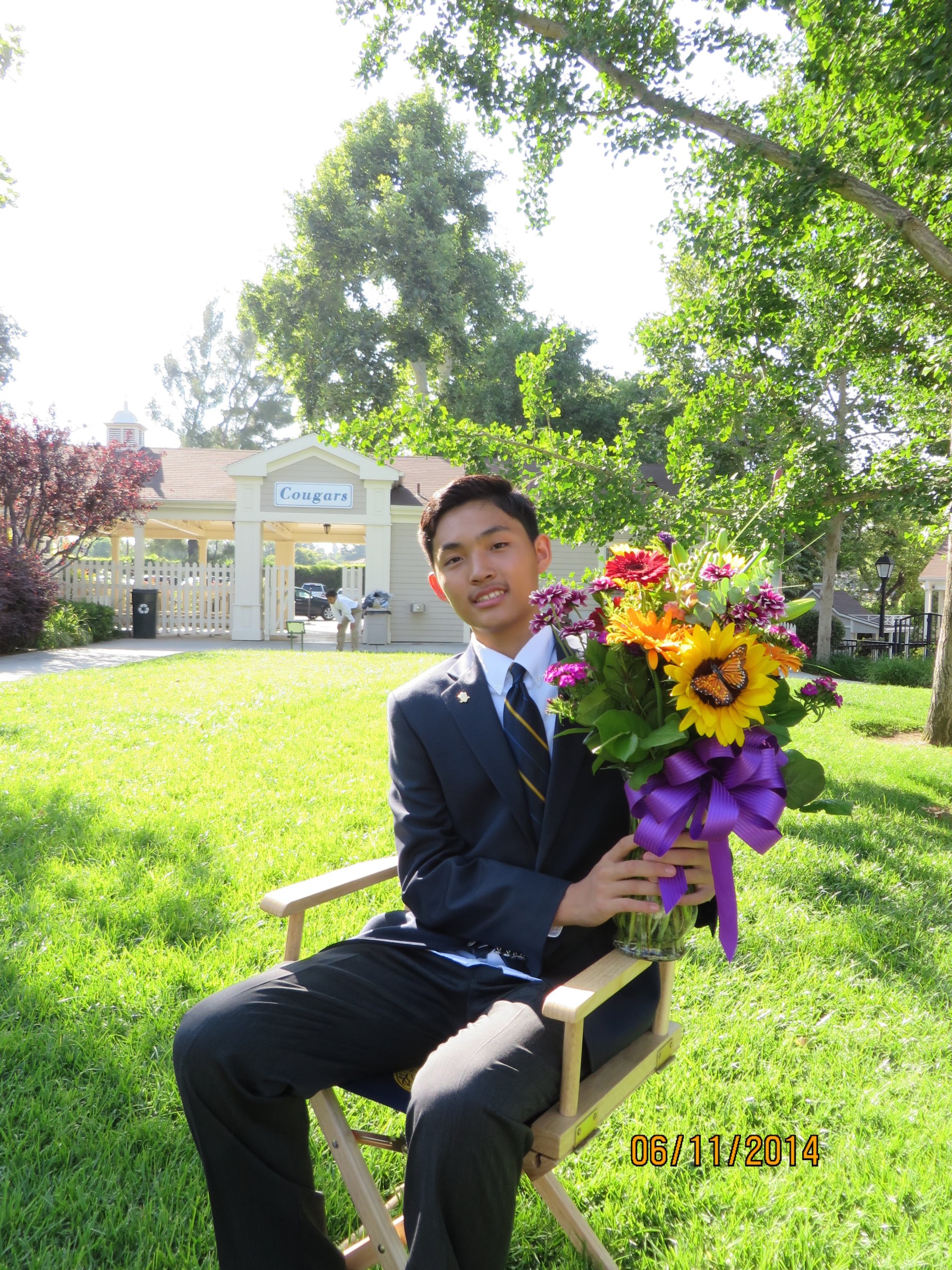
Richard graduated from Clairbourn School in 2014 | Courtesy Photo

Richard went to Clairbourn School in San Gabriel from kindergarten to eighth grade then to SMHS.  A high school junior, he gets excellent grades and is on the school’s swimming and debate team. Also a brilliant pianist, he has been playing the instrument since the age of six; placed second in the 2013 American Protégé International Competition for Romantic Music and displayed that talent during the winners’ recital at Carnegie Hall in New York in April 2014; and was one of the performers with Lang Lang at Disney Hall in June 2016.

Eric also attended Clairbourn then matriculated to Huntington Middle School. He is now a sophomore at SMHS where he is a high achiever.  He had piano lessons when he was five years old; placed second in the 2011 American Protégé International Piano and Strings competition, and participated in the winners’ recital in Carnegie Hall in March 2011; and was a performer at Disney Hall with Lang Lang in June 2016.  He is likewise on the school’s swimming and debate teams.

What Richard and Eric are most proud of, however, are not their academic and musical awards but their achievements in the areas of public service and community involvement. For as long as they can remember, they have been volunteering as piano performers in various senior citizen centers, public libraries and schools.

In 2015 the two brothers became involved with the International Leadership Foundation (ILF) in Alhambra. A non-profit organization established in 2000, it aims to promote civic engagement, leadership empowerment, and economic prosperity of the Asian-American, Native Hawaiian, and Pacific Islander (AANHPI). The ILF Civic Fellowship is the most prestigious civic leadership program in the country designed to foster the next generation of AANHPI leaders in the field of public service.

Through ILF, Richard and Eric started interning during their summer break for Judy Chu, representative for California’s 27th congressional district.

Relates Eric, “I worked in Congresswoman Chu’s office in Pasadena for eight weeks this past summer doing everything from answering the phones to picking up case work. I was happy and excited to be there.”

Richard, who also worked there two years ago, says about the experience, “We actually had some interaction with constituents; got to know their names and their concerns; wrote reports which our superiors passed along to the Congresswoman. Part of our job, too, was to compose the verbiage for the certificates for the events she attended. This year, they made some changes to the internship program and Eric was able to attend some events.

I have always been quite interested in politics and the opportunity gave me insight into the inner workings of government. Through that internship I realized that most politicians are selfless individuals who think about the greater good,” Richard muses.

“Political work is demanding, requiring a lot of work and time devoted to it. But all the personal sacrifice you put into it in the name of public service satisfies the Asian sense of pride,” Ed interjects.

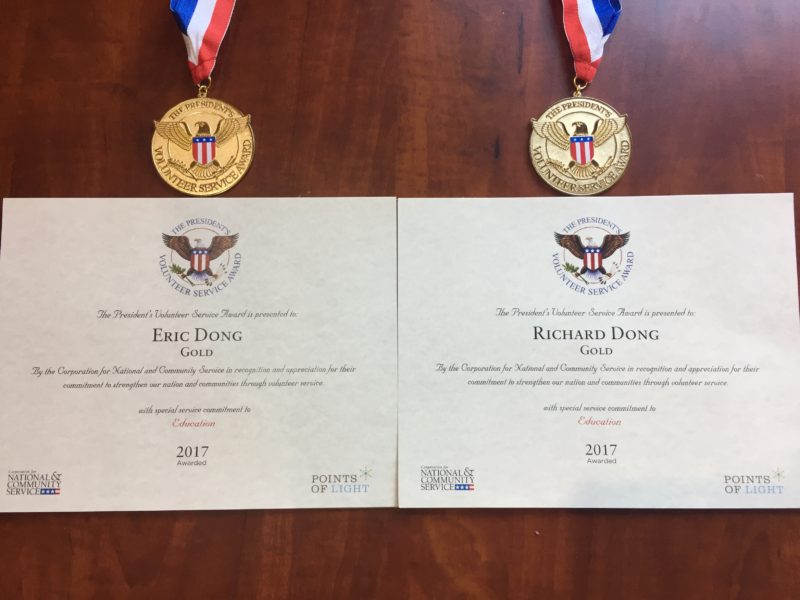
Richard’s and Eric’s years of volunteering have not gone unrecognized, though. They were recently the recipients of the 2017 President’s Volunteer Service Award, at gold level, with special commitment to education.

Eric and Richard received the 2017 President’s Volunteer Service Award. -Courtesy Photo

And if that weren’t enough, Richard’s and Eric’s extensive resume also includes being the youngest founding members of the US-China Committee, the young Ambassador, International Leadership Foundation; and the youngest members of the Leadership Council, Robert F. Kennedy Human Rights.  Additionally, Richard is the youngest member of Harvard 1879 Society.

‘Savvy investors’ is also an apt descriptor for Richard and Eric. From their father they learned investment strategies and their choice of stocks reflects their interest and passion.

“We started investing in 2009 and it’s been fun. I like cars and after doing research on automobile pioneers, I learned what Henry Ford did for everyday folks. I greatly respect him for that; so I put my money on Ford Motors. Eric invested in Bank of America because he wants to be a banker one day. Or maybe it’s because ‘Eric’ is in the bank’s name,” Richard says with a wink.

Richard’s and Eric’s investments have been growing but they aren’t merely sitting on their earnings.  Instead, they put their money where their mouth is – they established funds and school endowments.

“In 2014 we gave our first gift to Clairbourn School. It is called ‘The Richard and Eric Dong Fund for Scholarship in Music and the Arts’ to show our respect, gratitude and friendship to the school and its amazing community. We’re adding $20K to the fund at the end of the year as a tribute to retiring headmaster, Dr. (Robert) Nafie,” disclose Richard and Eric.

Adds Richard, “In April this year we established our second endowment fund. We gave it to SMHS to support student scholarship, athletics, music and arts, student organizations, and faculty and staff appreciation in honor of retiring principal, Mrs. Mary Johnson. Our endowment is the first ever in SMHS’s history to be launched by current students.”

“Most recently we created the ‘Richard and Eric Dong Endowment at International Leadership Foundation’ in honor of Mr. Joel Szabat and Ms. Chiling Tong, the founders of ILF, for their strong leadership, dedication and commitment since 2000,” Richard states further. “The $100K fund will support ILF’s Program Scholarships, Leadership Training, and Global Democracy & Governance Initiatives especially in Asian countries.”

“Giving is woven in our family tradition,” reveals Richard. “My parents made gifts to schools to support education and we learned from them. The words of John F. Kennedy ‘Ask not what your country can do for you; ask what you can do for your country’ also strongly resonate with us. From our community service in ILF and internship with Congresswoman Judy Chu we learned the importance of philanthropy.”

Richard declares, “We believe this is the beginning of a long journey in our efforts to marshal students, parents, business leaders and entire communities in supporting education and leadership training for the next generation. Because, ultimately, WE – our generation and the ones after us – will reap the rewards of a bright future.”

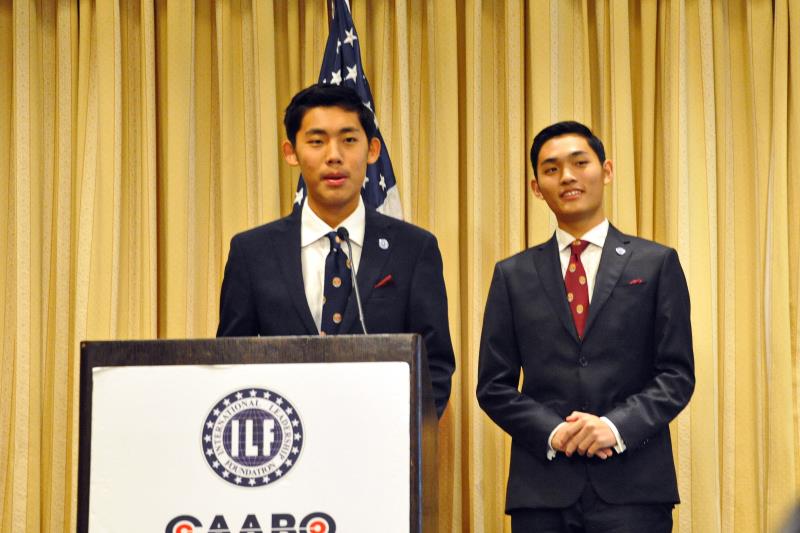
Eric Dong (at podium) and Richard Dong at the ILF Gala in Washington D.C. in July 2017 | Courtesy Photo

“I want to follow in the footsteps of my great granduncle, Minister Hollington Tong, who was the first ambassador of the Republic of China (Taiwan) to Japan from 1952 to 1958, and the fifth ambassador to the United States from 1956 to 1958,” Richard pronounces. “My dream is to become a US ambassador and promote democracy, human rights, and American values throughout the world. I am especially interested in bringing these values to the people of China, and furthering US-China relations.”

As for Eric, “I do not plan to pursue politics beyond college; instead I want to be a successful businessman like my father to further establish endowments to sponsor education and leadership training. I also want to support Richard in his mission to serve this country – because I am confident the wonderful things he will achieve and accomplish are yet to come.”

Finally, Ed has this to say, “Richard has a strong mind, a warm heart, and a humble attitude – traits that will help him launch a political career. I believe he has the potential for public service and he has my best wishes. Eric, on the other hand, enjoys the intricacies of the business world. He has a huge talent in it and has the ability to become successful – the financial rewards from which he intends to give to deserving causes.

I would like them to be individuals who are inspiring, hard-working and ready to help. I want them to know the importance of purpose, principle and people; the value of responsibility and commitment; and, ultimately, to bring much good to their community and their country.”

Listening to Richard and Eric play the piano takes one soaring with the angels; hearing them enthuse about their plans for the future makes one reach for the stars. The emotions they spark in everyone are profound.

If they pursue their dreams with the same enthusiasm and vigor they demonstrate when they play the piano and articulate those aspirations, we all would be the lucky beneficiaries because the world would be a far better place.

Table Tennis Demonstration Energizes Morning Assembly

Originally published on 26 January 2017 in the Pasadena Independent, Arcadia Weekly, and Monrovia Weekly

Morning assembly at Clairbourn School, a pre-kindergarten to eighth grade independent school in San Gabriel, was more animated than usual this Tuesday morning when students and parents arrived in the multi-purpose building (MPB). That’s because they were getting a special demonstration on table tennis after all the announcements are over.

Table tennis originated in Victorian England as a ‘parlor game’ when lawn tennis players moved the game indoors during the winter. It got the name ‘ping-pong’ at the end of the 1800s when the English firm J. Jacques and Son started manufacturing high-end equipment for the sport and trademarked the brand. It was later trademarked in the U.S. by board game company, Parker Brothers.

On April 24, 1927 the English Table Tennis Association was created with a membership of 19 leagues; it has since grown to its present 300 members, with approximately 75,000 registered players.  In the 1988 games in Seoul, South Korea, table tennis became an Olympic Games sport for the first time.   

While it had seen widespread popularity in the western world, it was China which took table tennis to new heights when Communist Chairman Mao Zedong declared it as the country’s national sport. Today, a reported 10 million Chinese play competitive ping-pong regularly and 300 million who play it occasionally. It won the gold in all four table tennis events at the 2016 Summer Olympics; it has taken home 28 of 32 gold medals since the game was introduced as an Olympic sport.     

Recognizing that Clairbourn has a large Asian population, Dr. Robert Nafie, headmaster, decided to acknowledge Chinese pride in their excellence in this sport and share it with the school community as well. Through Clairbourn parent, Harry Tsao, he found the California Table Tennis Club, an organization established four years ago by Gao Jun, a world champion who went to the Olympics five times in her career and currently an Olympic trainer. In its location at 2727 Stingle Avenue in Rosemead, it holds classes every Saturday and Sunday, as well as private lessons, for its 60-80 students aged five to 86 – some coming in for competitive training while others simply looking for a sport to enjoy.           

The team from the California Table Tennis Club – Gao Jun; coach Candy Tang; international table tennis player, Ryan Wu; club managers, Kevin Yu, and Lydia Zu – came on campus and set up their table for this morning’s assembly.  Jun, acting as facilitator, invited students to play against the coaches to show the different positions, strokes, and moves. 

There wasn’t a shortage of volunteers as several students raised their hands. First up was 5th  grader, Kelly Tsao, who demonstrated the ‘forehand’ when she played against Coach Ryan.  Eighth grader and Student Body president, Nick Polen, showed how the ‘backhand’ is played.

Clairbourn School’s Randall Hall | Photo take from Clairbourn School’s website

Sixth grader, Piper Kibbe, who followed, was clearly new to this game but Coach Gao took her hand to demonstrate how the paddle should be held to play table tennis properly. Kibbe quickly picked it up and had great fun using the ‘forehand’ and ‘backhand’ strokes. Second grader, Jason Qi, was a good sport and got the hang of it too.

To invigorate the game with faster strokes Jun called upon 4th grader, Madeline King, who lived up to the challenge with some fancy footwork and the more advanced ‘loop’ and ‘chop’ strokes.  She clearly isn’t a stranger to this game.

Mac Cole, 8th grader, wasn’t to be bested – he showed some very quick moves. But it was when 2nd grader, Atticus Williams, went up to the table that all the students fully erupted to life. With all the kids chanting “At-ti-cus! At-ti-cus! At-ti-cus!”, he demonstrated that while he wasn’t as adept at the game as the students who preceded him, he undoubtedly possessed an unmatched confidence at playing. Not to be outdone by his students, PE coach, Luke Ball, performed admirably.  

When the facilitator asked for a parent volunteer Li Feng came forward and showed everyone how graceful this game looks when played by someone who knows it well. She held her paddle in ‘penhold’ position, she had her eyes firmly peeled on the ball, she was fast and fluid, and she knew exactly when to crush her opponent.  

To end the demonstration, the table tennis coaches and Clairbourn’s Coach Luke played Doubles to everyone’s delight. A great time was had by all. With an obvious spring in their walk, parents left to go to work, run errands, or stretch at the gym. Students and teachers headed to their morning classes unmistakably energized.

Nafie has once more found another interesting experience for students that may not necessarily relate to their learning. But as he says, “I want to make sure the school is alive for the kids; that it’s not all drudgery.” Mission accomplished.           

Major League Baseball Wonder is a Local Sports Mentor

Originally published on 10 November 2016 in the Pasadena Independent, Arcadia Weekly, Monrovia Weekly, and Sierra Madre Weekly

In the early 1960s a determined high school athlete from Michigan named John Paciorek set his sights on a successful Major League baseball career and was, by all indications, on his way there.  But chronic back problems and a subsequent spinal surgery quelled that ambition and led him in a far different direction from where he started.  

The rise and fall of this once promising baseball star was recounted in a biographical book titled ‘Perfect’ written by Steven Wagner in 2014. Paciorek’s experience was hailed as  “… a tantalizing story of hope and inspiration for young players aspiring to greatness.”

Paciorek’s story began in Detroit, where he was born the eldest of eight children to a father who worked at an automotive factory and a stay-at-home mother. They were so poor they had no money to spend on entertainment, and there were times when they had to rely on government welfare assistance.

However, Paciorek’s father made it a point to play some sport with his children after a long and arduous day as an assembly-line employee at Chrysler-Plymouth.  He also instilled in them the importance of spirituality and value of education; he sent all his kids to Catholic schools.

Says Paciorek, “I think I was too young for my class. Coupled with that, I must have been dyslexic because I had a hard time reading. Fortunately, sports offered another avenue for me to do well at something. In high school I was an excellent athlete and, coming from a poor family, I dreamed of getting out from poverty through sports. That dream became a reality when I was recruited by the Houston Colt .45s (which later became the Houston Astros) in 1962. I was a 17-year-old kid and was supremely confident that I was meant to be in the Major League!”

While Paciorek didn’t receive an extraordinarily huge amount in the way of signing money, the contract included a college scholarship that his father insisted on. That, in hindsight, proved to be a stroke of genius. From that bonus, he gave his family $15,000 and bought himself a brand new Chevrolet Malibu convertible. And he was off to what he anticipated would be a long  professional baseball career.  

September 29, 1963 was a memorable day for Paciorek. The Colt .45s, fielding a team of eight rookies, played against the New York Mets at Colt Park. Right fielder Paciorek made history when he had three hits, two walks, scored four runs and three RBIs. He had a perfect game.

It should have been a foreshadowing of a magnificent career but instead it turned out to be the only game Paciorek would ever play in Major League baseball. The persistent back problems he’d suffered from since childhood, exacerbated by a rigorous regimen, landed him in the minors.   

Eager to get better once and for all, Paciorek underwent a spinal fusion surgery. He spent a year in a back brace and missed two baseball seasons. While recovering, he pursued a degree in physical education at the University of Houston. There, he happened upon the Christian Science Reading Room and learned about the teachings of its founder, Mary Baker Eddy. 

“I was raised Catholic but converted to Christian Science. I discovered in it an expression of everything I felt but which had never been articulated.” Paciorek explains. He hadn’t known it at the time but that singular decision was the pivotal point in his career and his life.     

Paciorek graduated from the University of Houston and later worked as a physical educator at the Jewish Community Center. “It was then that I heard about a school in San Gabriel, California needing a Christian Scientist P.E. teacher,” Paciorek relates. “I had been out in California during baseball practice and I liked it. So I applied and got the job.”

Randall Hall at Clairbourn School | Image taken from Clairbourn School’s website

“It has turned out to be an ideal post for me,” says Paciorek four decades later. “Clairbourn School has a beautiful field and a large area where we can simulate seasonal sports. In the fall we have boys’ football and girls’ volleyball; next season, we’ll have boys’ soccer and girls’ basketball and the reverse after that. Track season begins in mid-February through the end of March; our final season is boys’ volleyball and girls softball.”

“We belong to the Middle School Independent League (Pasadena Area). Our teams play against Chandler, Mayfield, Poly and Prep and we’ve had championships in all sports,” Paciorek says proudly.

But championships and trophies aren’t top of mind for Paciorek. More than wining, he instills in students a love for outdoor activity and playing for fun. He can motivate even the least athletic kids to be the best they can be; he is their Number One supporter and cheerleader. He is a coach and mentor who truly cares about children’s development, academically, and athletically.         

While the school has successfully won trophies, Paciorek doesn’t emphasize winning. As his wife, Karen, who is Clairbourn’s lower school director, points out, “John teaches basic skills and he sees the potential in every single student. He has a true connection with children and you can see that in his interaction with them. But at the same time, he bonds with parents.” 

“It’s rare for us to go somewhere and not see someone he remembers from school,” Karen recounts. “And each time we do, he would recall all the children’s, parents’ and even the dogs’ names. He would have an exchange with the parents and get caught up on how the kids are doing in high school or college. It’s as if he’s on an ongoing conversation all along and is just picking up from where he left off. It’s pretty amazing.” 

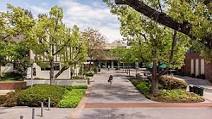
Clairbourn School’s East Hall walkway | Photo courtesy of Clairbourn School

“The kids also have fond memories of John. Several years after they’ve left Clairbourn, they would remember the nickname that he gave them when they were students,” Karen continues.  “John gets letters and notes from former students who are now fathers, who say they use the same life lessons they learned from him to teach their children.”   

A lesser man would have become bitter after such an auspicious start in professional sports then end up teaching P.E. But not Paciorek; he has remained sanguine through his disappointment. 

Karen says, “I have never heard or seen any bitterness from John on what he might have become had back injuries not sidelined him. At the time he achieved what he did, he didn’t know he had done something remarkable. But even after he found out, he wasn’t overly excited. Momentous as it was, that event was just a small part of his experience. He’s always expressed gratitude for finding his way to Christian Science and Clairbourn.”

Dr. Robert Nafie, headmaster of Clairbourn School, describes Paciorek’s impression on the school and the community, “John Paciorek took over a physical education and interscholastic sports program that was lacking direction and vitality in 1976. Through his leadership and vision he has inspired multiple generations of Clairbourn students and San Marino-area young people to see physical conditioning and competitive sports as a life-long pursuit.” 

“More than any other faculty member, John Paciorek is the most sought-after educator from Clairbourn alumni when returning to campus,” Nafie adds. “He has touched the lives of thousands of young people through his professional level of instruction and guidance, and his personal life-long example of high spiritual and ethical values.”

“We are very grateful for what John has brought to the school, the knowledge and skills he shared with our students. Indeed, Major League Baseball’s loss has been Clairbourn’s gain. And while he won’t be a daily presence on campus after this school year, his impact will forever linger,” Nafie concludes.

Paciorek will be retiring in June of 2017, after 41 years of dedicated service to Clairbourn. In his honor, the school will construct an aptly named Coach Paciorek Bat 1.000 Batting Cage. It will be at once a symbol of his lasting influence on Clairbourn and the school community’s loving tribute to him.       

Clairbourn students aren’t aware that he is an important Major League baseball figure. To them,  he is Coach Paciorek, a teacher who has provided as much encouragement as he did training while they navigated elementary and middle school. 

John Paciorek’s imprint will be etched for ages not only in the minds of kids aspiring to greatness but of all the young people he inspired to reach for a dream. It may be a legacy far more significant than a record of a perfect game in The Baseball Encyclopedia.                                                      

Clairbourn School Incorporates Appreciation for Nature in Teaching

Originally published on 15 September 2016 in the Pasadena Independent, Arcadia Weekly, Monrovia Weekly, and Sierra Madre Weekly

In an area like the Pasadena market which is replete with outstanding schools, setting itself apart from all the rest is a remarkable feat. However, Clairbourn School, a junior pre-K to 8th grade independent learning institution in San Gabriel, succeeds in standing out.

Headmaster, Dr. Robert Nafie, leads dedicated administrators and teachers who work tirelessly to build a strong instructional program balanced with meaningful elective courses, extra-curricular activities and after-school classes. He ensures that each student gets the best education, using all the tools available, in a caring and nurturing atmosphere.     

That children need to be children was uppermost in the mind of former head of school, Gloria Stahmer, when in 2009 she asked then 5th grade teacher, Jonathan Barner, “Don’t you think our kids need to be out in the dirt, gardening … or something?”  

“As an avid backyard gardener, I thought it was a fabulous idea,” Barner relates. “Thus began our vegetable propagation – we bought three pre-made plant beds which our maintenance crew installed and integrated with an irrigation system in the 4th and 5th grade area. They also made beds along the fence in the parking lot.

“The project was a collaboration with the other 5th grade teacher, Laurie Corwin, who taught social studies. I suggested we recreate the American Colonial period and grow corn, pumpkin and cotton – all the crops that were important to the survival of early colonists and the native Americans. Through this colonial garden students learned how early settlers struggled in the new world. 

“We planted in the spring and let it grew through the summer while the students were on their break. When they came back in the Fall, the 5th graders were learning about the Colonial period, which was so timely as we had an abundance of harvest from our spring plantings. We did some pretty cool things – we took the corn off the husk, we dried, and then ground it. A couple of times we made corn and pumpkin bread. By eating what they might have survived on, we bridged a connection with the colonists. 

“With the cotton plants, we made students separate seeds from the bolls. When they used their fingers to pull out the seed, which were actually the size of pencil erasers, they discovered it wasn’t easy. It was a perfect teaching opportunity to discuss Eli Whitney’s invention of the cotton engine (gin) in 1793, that mechanized separating the seeds from the fiber.

“While students weren’t studying the physiology of plants in science, gardening became a component of our daily class. It was simply more meaningful for kids to have the hands-on experience planting seedling, watching plants grow, learning about soil quality, and fertilizing.  A couple of times we tried composting but we realized it was just too much for us to take on, on top of the gardening, much less the actual school curriculum.

“The greenhouse, which was originally put in in November 2001 by a previous science teacher, had not been used much after he left. It was upgraded in 2013 to make it usable for a class – we put in a flat area made of decomposed granite, we brought in three round picnic tables as work areas, we installed a sink with water, and we fenced it in for security. Teachers used it as a learning center.

“In 2012, a generous lady by the name of Betty Barker heard about our gardens and offered to fund the project. We used the grant to purchase two steel benches, and a couple of round picnic benches where kids could sit and write notes while other students were planting. She also gave money for the greenhouse upgrade in 2013, and made a follow-up donation in 2015,” Barner adds.

When Barner retired in 2015, Nancy Ward, Director of Communications, took on the mantle.  An enthusiastic gardener like him, she knew that an important component for success is finding partners who share her vision and help realize it.                                                      

In the spring of 2016 Ward resurrected Clairbourn School’s gardens with assistance from Farmscape, a local company that maintains vegetable gardens and home orchards. She pronounces, “I’m a big supporter of gardens because it teaches us important lessons in growing up and having successful lives. Every planting season is an expectation of good things to come – from the seed that’s buried in the ground, vegetables emanate. Then we have to devise a way to cook them, and how to put up the surplus – from dehydrating, to canning or preserving – to feed us through the winter months. We also need to learn long-term planning because if we want pumpkins for Halloween, we need to plant seeds in the summer. 

East Hall walkway at Clairbourn School | Photo courtesy of Clairbourn School

“I want gardening to be personal for the kids. When they study American history, I want them to see the crops Native Americans grew – corn, bean, and squash – three sisters planting, they’re called. There’s a symbiotic relationship where these three crops thrive at one time; the beans are supported by corn stalks and squash grow underneath, to shade its roots and keep moisture in. When students learn about Eli Whitney and the cotton gin, they can see first-hand what that plant looks like and how difficult it is to handle it.

“There are multiple areas on campus where students can go to at designated times of the school day to enjoy the flower and vegetable gardens. There is a raised bed for vegetables and a butterfly garden near the kindergarten classrooms for small students. Behind the 4th and 5th grade classrooms, there are three raised vegetable beds; plantings of cotton, corn and wheat along the walkway; and a passion fruit vine snaking up the trellis at the entrance to the garden. A greenhouse is in the middle school ‘jungle,’” Ward explains.         

Farmscape’s horticulturist, Melissa Rodriguez, teaches the after-school gardening program twice a week. Tuesday’s entry level class is composed of pre-K, kindergarten, and first grade students. They learn about the life cycle of plants and insects; plant organic vegetable seeds and seedlings;           

harvest and sample fresh produce from the garden. On Wednesday, she teaches 2nd to 5th graders in the greenhouse. Lessons include: learning about soil health and nutrition; cultivating vegetables, herbs, tropical plants, and orchids; propagating plants from seedlings and cuttings.  Students keep a journal to record plant growth patterns.

What Rodriguez usually encounters when she teaches is that students don’t know where food comes from. She illustrates, “Many kids don’t know what cucumbers, squash and tomatoes look like before they reach the supermarket. I want to build the connection between the plant on the ground to the food they have on their dining table or are served in the restaurant.”

“I introduce them to plants and vegetables that are not what they’re used to – purple and yellow carrots, red yard-long beans. I encourage them to taste the things we’re growing. I noticed that Clairbourn kids aren’t willing to try produce as readily as the other children I teach, which is a bit of a challenge. So now I grow plants with interesting taste like basil and mint, even strawberry,” Rodriguez discloses.                        

The gardens serve as outdoor ‘classrooms’ where students spend a portion of their day. Mary-Kaye Halferty, 4th grade teacher, declares, “The lessons are quite fascinating. In one class my students and I went to, the teacher pulled out all the insects and butterflies in the garden to discuss their role in either helping or hindering the growth of a plant.” 

Whether they’re learning al fresco, or merely enjoying the beautiful scenery, students get some relief from academic stress. Teachers, too, feel the gardens offer a welcome breather during the day. Those who originated the planting program and made horticulture an important component of education have their own personal views of its purpose.               

To Barner, it means valuing quality food over processed fare; an appreciation for farmers and their hard toil to produce vegetables; an opportunity for children to have a new learning environment; and taking on the responsibility to preserve this earth for future generations.     

For Ward, whose stewardship and constant presence in the gardens have inspired the kids to get their hands in the dirt, it denotes planting a seed to spark the inner gardener of every student and to serve as a regular enrichment activity that teaches great life lessons.

In his 2016-2017 mission statement, Nafie states, “The abundant nature with which Clairbourn is blessed is clear evidence of annual renewal. That success in academics, as in life, is not just a momentary event. When students get discouraged or stressed by new concepts, we can help them put down the kind of roots that will feed and sustain their success now and in the future. From the same sturdy plant, many flowers and crops will bloom in cycles of regeneration. So too, with our students, each year has its seeds, its watering, its below the surface, and its above the ground work to do. With teamwork and patient tending, the renewal of success will be assured.”

These gardens assume a significance as varied as the individuals whose lives they touch. But there is one constant  – all the students reap the fruit they have to offer.That is a Clairbourn promise.                    

Twelve-year-old Leila Wu Publishes her Second Book

Originally published on 8 September 2016 in the Pasadena Independent, Arcadia Weekly, Monrovia Weekly, and Sierra Madre Weekly

In 12-year-old Leila Wu’s head, there are perfectly formed people with magical powers who inhabit earth and can also live in another world, quite apart from our idea of reality. She describes these individuals and the place they visit in vivid detail in her book, The Mysterious World of Camelot. It is the second installment in what she plans to be an ambitious 14-book series.  

It all started with Jupiter – the planet – not the Roman god. Strange as that may sound, it was a research paper on the solar system that got then first-grader and six-year old, Leila, interested in writing.

“I spent recess time researching and I learned about the red dot, a storm on Jupiter. I found it so engrossing that I wrote ten pages for what was a seven-page work assignment. My teacher, Mrs. Watts, had to stop me at that point because the class had moved on to Saturn,” recalls Leila, now a 6th grader at Clairbourn School in San Gabriel.

In 2nd grade Leila wrote a little poem for Mothers’ Visiting Day that so charmed her teacher, Denise Wreede, that she submitted it to Paw Print, the school’s student publication. Her mom, Monica, was both impressed and touched when she read it.     

“I truly believe in passion first and foremost, and then in talent,” she discloses. “I try to expose my two children to different experiences to give them a chance to find out what interests them. I told Leila she might consider writing a short story too, and she rose to the challenge. She decided to pen a novel with 12 chapters and proceeded to craft the table of contents. She even knew how many pages she would devote to each chapter.”     

Then Leila hit a bump on the road so Monica approached Wreede for assistance.  Wreede relates, “I met with her twice or thrice a week after school, giving her direction and making her focus.  She would stand by me and tell me what she wanted to write and I typed it. After we finished the first working draft, I handed it over to Stephen Rivele, who was then the Clairbourn parent staff for Paw Print.”  

A best-selling author himself, Rivele, helped Leila develop and polish the text and illustrations for the story, then took it to Amazon. And The Mysterious Book of Magic was published; Leila was eight years old. It introduces readers to the fantastic world of Jennifer and Josephine, twin sisters, and their mom, Madelin. The twins chance upon this mysterious book which a boy, named Arthur, has inadvertently lost. 

That was the beginning of a friendship and a magical journey for the three young protagonists that Leila continues in the second installment called The Mysterious World of Camelot. Here, she establishes a darker universe as Jennifer, Josephine, and Arthur travel to his home, Camelot, and meet Arthur’s evil brother, Francis, who is attempting to assert his legacy as successor to their father’s reign in the kingdom. 

This second book – at 414 pages – which Leila began in 3rd grade, took much longer to write. It required meticulous rewriting and professional editing. Monica found another Clairbourn parent, Chris Trager, to guide her through this undertaking.  

Trager says, “It was really a collaboration; Leila already knew what she wanted to write and how to go about it. I think she has found her voice – I will pick up a book 20 years from now and I would know it’s her work.”  

Leila’s fictional crusaders are children her age whom she imbued with some of her own characteristics, interests, and beliefs. She intends for them to grow up alongside her and together they will go into ever more dangerous but fun adventures. Her heroes will brandish their acquired magical powers to fight on behalf of righteousness as much as she will wield her boundless creative ability to bring endless joy into the lives of her readers.   

A Robot Named Megabyte Makes Robotics Fun

Originally published on 26 May 2016 in the Pasadena Independent, Arcadia Weekly, Monrovia Weekly, and Sierra Madre Weekly

At Clairbourn School, a pre-K to 8th grade school in San Gabriel, technology is as ubiquitous as  students and teachers themselves. There are Smartboards in every classroom and iPads on every desk; electronic resources and tools are utilized to enhance the everyday learning experience.

It isn’t surprising, therefore, that besides large screen monitors and desktop computers, robots can also be found in the computer science lab. A relatively new addition to the tools used in the classroom is a 58-centimeter tall, blue and white humanoid robot whom the students endearingly call Megabyte.  

Paul Barker, computer science teacher, tells how he was able to get a robot to be part of their class, “I found out about this a year-and-a-half ago and did some research on him. Originally named NAO by its manufacturer, Megabyte was created by the French company Aldebaran, which worked with kindergartners through post-graduates to develop a robot that can help students learn Robotics.”

“I knew I wanted one for the school, and pushed for it all year.  I started my own fund-raising campaign by teaching after-school classes in Robotics. When the kids went home they told their parents how they wanted to have the class as part of regular school. Eventually our parent association allocated funds to go towards purchasing the $9,000 robot,” Barker adds.

“We’re all learning together with Megabyte. We’re training him to recognize people so when you walk up to him he’ll be able to say ‘Hello, Henry (or the name of the student)’. My goal is to have students do both input/output then using all the programs; students can create something on their own. I would like them to use the program, dive as deeply as they can, and learn how the robot operates with the end-goal of experiencing and exploring him,” Barker explains.

Here, kids as young as kindergarten learn Robotics; in 2nd grade they start programming using a Lego robot; and they move up through the curriculum until they get to 5th grade when they start using Python to program Megabyte. 

This morning, Henry, a 6th grader, bounds in, eager to demonstrate how Megabyte gets them excited for their class lesson. He asks Megabyte to dance and the robot obliges with his tai-chi moves. Midway through his routine, he teeters and reacts to it “Oh, I’m falling on the floor!” But even falling is methodical as he slowly spreads his arms out to lessen the impact to the ground. And just as efficiently, he gets himself up from the floor, and announces, “Hey, back in the game!” The kids absolutely love that.

For Clairbourn’s 5th graders, interactive robots create a wondrous experience. As Alicia Wong says, “Working on robots is better than watching TV. It isn’t hard to make and it’s a lot of fun. It makes me proud to finish constructing a robot by myself.”

In agreement with Alicia is Isabella Hernandez who relates, “Robots are fun to work with and they challenge your mind. I learned that building robots and programming them are easier than I thought.”   

Christopher Fung, on the other hand, takes a different stance, “I learned that robotics is not for everyone, but if you put your mind to it, you can do almost anything. It takes listening, respect and skill.”

Another 5th grader, Henry Xu, has a similar opinion, “I personally think that working with robots means patience and creativity. If you aren’t creative you won’t know what to do – instructions or no instructions. I learned that you should always double check what you’re doing before saying you’re finished.”   

Branden Orellana believes robots are transformative, “It means a lot to me when I work on robots; it changes my life.  I love building and programming now. I always wanted to be an engineer or a graphic designer.”

Perhaps it’s Julian Harrison who summarizes the role robots play, “Robots are the way of the future; seeing all the technology available now, they will likely replace humans someday. I am inspired because it makes me feel like I am part of that future.”

“Robotics is going to be huge in the next ten to 15 years, and getting a jumpstart on it would be a major accomplishment for our students as they go on to the next level in their schooling,” Barker concludes.

That Megabyte interacts well with young kids, who treat him almost like a friend and who talk to him like they would someone their own age, is what gives this Robotics class the element of a deeper, more meaningful experience. Students program questions the answers to which they’re really interested to know.

Megabyte can provide much information about himself including: his height and weight; his birthday and age; if he can eat, hear, see, or understand people; who made him and what he’s made of; if he has family or friends.   

Presently, Megabyte asks, “Do you like chocolates?”  If someone responds with a Yes, he rejoins, “Yes? That’s nice.” When he hears a No, he says, “No? I’m sorry to hear that.”

Henry then invites Megabyte, “Let’s go for a walk. Follow me.” Megabyte agrees, “Sure, take my hand.” Together they stroll, and when Henry stops after a short distance, Megabyte asks, “Are we done walking?”  Henry looks into Megabyte’s eyes and replies, “Yes, thank you for walking with me.” Child and robot regard each other, seemingly in complete understanding of a shared knowledge.   

The possibility of robots taking over the world one day, as one 5th grader surmises, sounds like a death knell for mankind. Happily, robots are not advanced enough to achieve the level of intellect that young students today are capable of reaching. For as long as human beings utilize that wisdom, it’s safe to say that robots still need breathing, living, and thinking people to program them to accomplish tasks.  

Clairbourn School’s Engineering Design Challenge

Originally published on 3 March 2016 in the Pasadena Independent, Arcadia Weekly, Monrovia Weekly, and Sierra Madre Weekly

Dr. Fabien Nicaise, a member of the technical staff at NASA’s Jet Propulsion Laboratory (JPL) is talking to a captive, albeit animated, audience of Clairbourn School students who are gathered at the school’s multi-purpose building (MPB). It’s a Thursday evening and he has been invited as the guest speaker for the Finals of the Engineering Design Challenge, the capstone of Science Fair Week.  

Before finals get underway, Nicaise gives his inspirational talk. He begins thus, “I’ve had a chance to take a look at your projects and feel I know all of you at this time. From your displays, I can see all your personalities come out and it’s so fascinating. I’ve seen seemingly trivial projects – like how to drink two beverages at the same time; to making better chew bones for your dog; all the way to building rockets, which are definitely what I care about; to the cookie-making robot. If you ever make that thing working, I want to talk to you and convince you to work for JPL.”  That last sentence earns him a vigorous round of applause.

Nicaise has his audience’s rapt attention as he speaks about JPL’s many discoveries and vast range of activities. During the Question and Answer segment, one student asks Nicaise what he feels is the organization’s best discovery. To which he replies, “There have been so many amazing discoveries that it isn’t easy to choose just one. But I would have to say one of the most valuable is our ‘Finder’ technology. During the Nepal earthquake it was able to detect heartbeat in rubble. It is when we are able to come up with ways to save lives that make our work and organization relevant and worthwhile.” By this time his audience is fully convinced JPL is a godsend to humanity.         

Clairbourn School, a Nursery through 8th grade independent school in San Gabriel, holds its annual Science Fair during the last week of February. Students work on various classroom projects using everything they have learned in their science and math classes. Words of praise coming from a well-respected scientist are music to their ears. It is a validation of their hard work.

The high point of this event is designing an object, using an assortment of materials, that could pass the rigors of multiple testing. The STAR (Science, Technology, and Research) Engineering Design Challenge is a closely guarded secret – it’s kept under wraps for days and weeks until it’s finally revealed to the entire student body. 

There is a palpable sense of anticipation and excitement as middle school science teacher, Joanne Kibbe, announces at 8:30 in the morning on Tuesday, February 23, that their challenge is to build a Clairbourn Cruiser. One by one she takes out from a brown bag, the materials they are to use: one dowel, three Life Savers, two penne pasta, four pasta wheels, eight ditalini pasta, two plug protectors, 20 craft sticks, four rubber bands, four large straws, two skinny straws, two wooden wheels, one deck of cards, five glue sticks, one 10” string, two mini CDs, four skewers, two plastic cups, one 7’X5” piece of cardboard, one gummy bear, and the bag that holds all the objects.

The goal is to design and build the vehicle that will travel the longest distance while carrying an upright gummy bear when released from the top of a ramp. The top-scoring teams from each grade will be invited back for the Finals.    

A brainchild of teachers Mark Edwards and Jonathan Barner, Project STAR is a Science Fair activity that allows students to solve science problems in a hands-on, creative way. It began in 1991 and each year a changing committee, made up of administrators and teachers think up the design challenge which rotates every year to focus on either math, invention or experiments. 

Past winners include: Jeanilou Torrado, an 8th grader who in 1992 built a ping-pong ball launcher; in 1998 7th graders, Stephen Ullom and Alex Hardt, made a marble run, a track for a ball to fall into a cup; in 2001 5th graders, Albert Loong and Josh Elmore constructed a sail boat; in 2009 7th graders, Sarah Lundegard and Kendall Cory, designed a parachute that had the longest hang-time in the air; and in 2015 4th graders, Melissa Pittman and Emily Wen, won for their lunar lander (a capsule to parachute two marshmallows safely to the ground).

On Thursday night, the 25th of February, 7th graders, Lauren Whitaker and Bailey Garcia, joined an elite group of Engineering Design champions. Using an assortment of seeming disparate materials, and through sheer imagination, creativity and ingenuity, they built the best design that passed the most rigorous testing. Their cruiser, named Space Unicorn, traveled 886 cm down the ramp, outdistancing all others. 

Lauren and Bailey, exhausted but breathlessly happy, rejoice in their victory. “This was so much fun!,” they enthuse in unison. “It has been a taxing endeavor because we didn’t know ahead of time what the challenge was going to be and we only had three hours to do it. We had to go back to the drawing board a few times before we came up with the cruiser that worked.”

This is Lauren’s second year at Clairbourn, and Bailey’s third. While they enjoy the annual Science Fair and competition, both confess their favorite subject is History. Our teacher, Mrs. Corwin, makes history come alive and as exciting as if it were happening today,” they opine.         

During morning chapel, right before Kibbe announces this year’s design challenge, Dr. Robert Nafie, Clairbourn’s headmaster, exhorts students, “You will not be asked to simply repeat all the information given to you – this is when you employ your thinking skills. You will be using all your readings, knowledge and experience; this is what separates man from all other creatures on earth. Today you will work in teams; you’ll figure out how to agree on things, talk out different ideas, come up with a solution.  It’s what neighborhoods, nations and international communities try to do – come together to find the best outcome for the most common good.”

Lauren and Bailey prevailed in the Engineering Design Challenge by using scientific principles they acquired in the classroom, and along with their decision-making abilities, applied these to the task at hand. Following Nicaise’s talk that night and with Nafie’s encouragement still lingering in their subconscious, they are moved to say that they aspire to one day create something for the greater good. They will do Clairbourn proud.                       

My List of the Top Five Independent Schools in the Pasadena Area

Pasadena City Hall

Originally published in Beacon Media News’ Readers’ Choice Magazine on 20 August 2015

I do not profess to be an expert on schools, nor will I claim to be all-knowledgeable about education. But my almost two-decade-experience in searching for and sending my daughter to the elementary, middle, high school, and university that were the right fit for her, afforded me a front row seat in the world of independent schools.

As a stay-at-home mom, I volunteered yearly to spearhead fund-raising committees where I worked alongside other parents, became friends with heads of school, got to know admissions directors. At one school, I even knew the maintenance staff because I managed the school store. I bought all the snacks and drinks for after-school activities; provided pizza and drinks for all the dances; and I was in charge of supplying uniforms like neckties and sweatshirts, and sports items like gym bags. Every day, the maintenance guys helped me unload heavy items from my car. At another school, I befriended the Health Services Director because my daughter was always at the clinic for an injury (she was such a klutz, she got hurt just by walking to her classes). I was a constant presence on campus that my daughter’s friends were convinced I lived right outside the school gates!

My daughter’s ‘career’ as a student began early on in her young life. At her birthday party held in our backyard, I was advised that I needed to find the right nursery school so she could attend the right college. She was a year old; she went to nursery school the following year. In my defense, I sent my daughter to a co-op so teachers and parents alike taught toddlers through songs and stories. She spent three hours every other morning with small kids like herself. 

Such was my introduction to private school education in Pasadena. If it’s any consolation, I read somewhere that in Manhattan (New York), expectant parents start registering for the waitlist at pre-schools right after the first trimester of their pregnancy!

I do not speak for all parents when I say the best primary and secondary schools are not the hardest ones to get into; the best universities are not the ones with five percent acceptance rates.

Student satisfaction and happiness aren’t predicated on school ranking. The best schools, I think, are where students are intellectually stimulated and not bored out of their wits; but neither are they so stressed out from all the work that they need to be medicated.   

The best schools are where students feel the same excitement and intensity when they talk about black holes as when they expound upon Rick Castle’s coolness (Castle airs on ABC, Mondays at 10 pm Pacific time). It is where your child comes home from the Spring Musical rehearsal exhilarated that she has been put in charge of production for the biggest show of the year! It is the place where kids thrive and succeed.

My daughter is now 19 years old and is a rising second-year student at the third-ranked university in the United Kingdom. She is a happy teenager, enthusiastic to go back to school next month, and eager to find her place in the world.

Here, then, is my highly subjective, very personal, and wholly unscientific list of the top five independent schools in the Pasadena area. I’m sure I will have dissenters out there and I’m all right with that. I wasn’t going for a popularity contest.

Image taken from Pasadena Now

1. POLYTECHNIC SCHOOL

It has been referred to as the ‘most elite school’ in Pasadena, and for good reason. For over a hundred years Polytechnic School, on California Blvd, has been providing excellent education for students that come through its doors. Founded in 1907, Poly was the first non-profit, independent school in Southern California, providing academics and manual arts for kindergarteners through 8th graders.  

In 1959, with Willis Stork as its fourth headmaster, Poly welcomed its first high school students, when it expanded to reach 12th grade. The achievements of Poly’s graduates in colleges and universities throughout the country established its national renown.

Succeeding heads of school continued Poly’s tradition of academic excellence and nurturing environment for students. Debbie Reed, who served from 2002 through 2014, led the ambitious “The Next 100 Years Campaign” which raised funds from parents and donors to construct a much-needed underground parking structure, and new buildings on the North and South Campus.  Construction, which ended in 2013, established a state-of-the art science and tech labs, and an expansive library. It also refurbished the Garland Auditorium to make it a professional stage for performances and created a Black Box Theatre which doubles as a dance studio.

The school operates under three distinct divisions united by shared values. The school’s faculty and staff lay a scholastic foundation of academics and arts, athletics and physical education, global engagement, and community service – cornerstones of a Poly education.    

The lower school has approximately 270 students, with 20 full-time teachers and assistants, 15 support and specialized instruction personnel. There are 14 to 15 students per class in kindergarten through 2nd grade; while from 3rd through 5th grade, there are 22 to 23. The lower school provides the perfect introduction to young learners as they discover new things. Teachers respond to children’s developmental needs, making them confident learners.   

In middle school Poly’s 215 students transition from childhood to adolescence. It is where kids in their tween years question, learn, and find their own voice under the guidance of 20 teachers and assistants, and 10 support and specialized instruction personnel, who understand this phase in human development. The 17 to 21 students in each class get their first taste in making personal, individual choices through its outdoor education program, by selecting an activity which matches their particular outdoor interest. Later, in 8th grade, learners get to choose the foreign language they intend to carry on into high school. A  crucial responsibility for middle school teachers is to ensure that every 8th grader is ready for promotion to high school. Eighth graders meet with the Dean of Students, towards the end of the school year, to discuss the curriculum for the next four years and begin mapping out individual course options.

Activities accelerate at a much greater pace at Poly’s high school, which has a total of 375 students, with 50 full-time classroom teachers. Each class has about 15 students. Class deans for each grade level are tasked with keeping abreast of each student’s academic performance, achievement, well-being, and progress through high school.     

Poly’s sophomore year community service requirement involves students completing 30 hours of community service in a particular area of interest. This becomes a starting point for them to expand on throughout their high school years. The school’s outreach also provides opportunities for student involvement and leadership. Each grade level elects their representatives who find opportunities for projects.     

In 2006, Poly launched the Global Initiatives Program (GIP) to develop and instill in students the tools to make them considerate, contributing, and connected citizens of the world. Students study various cultures, interact with people in other parts of the globe, and experience cultural events from around the world. The Study Abroad Program, a component of GIP, focuses on cultural immersion, face-to-face interaction, and service learning. Those who complete GIP’s rigorous requirements in each of the four areas graduate as Polytechnic Global Scholars.

The school’s athletic achievements are legendary as evidenced by the school’s 140 Prep League Championships, 46 CIF Championships, and 72 CIF Academic Championships over the past 20 years. Poly competes in an impressive array of sports – badminton, baseball, basketball, cross country, diving, equestrian, fencing, football, golf, sailing, soccer, softball, swimming, tennis, track and field, and water polo. Student participation in sports is 88 percent – in 16 fall teams, 15 winter teams, and 14 spring teams, under the guidance of 84 coaches.

Academics at Poly are vigorous, with AP courses on offer in 16 subjects. During the 2013-2014 school year, the school administered 660 AP exams, taken by 238 students, with 92 percent earning 3 or above. Forty-nine percent of seniors were National Merit Semi-finalists and Commended students . Of the 97 seniors who graduated that school year, 71percent were accepted to highly selective learning institutions. They attended 58 colleges and universities in the United States and one in the United Kingdom.   

As for the next hundred years, current Head of School, John Bracker, says, “The next 100 years at Polytechnic School will be informed by its past and defined by the intellectual curiosity of its students, the unfettered commitment to teaching of its faculty, and the compassion of its community that is focused both inward and outward.”      

For 108 years, Poly has been challenging and nurturing students imbued with a curiosity about people, their community, and the world they inhabit. They are natural learners and born leaders – they are the ones who will one day make a difference.

2 – FLINTRIDGE PREPARATORY SCHOOL

Flintridge Preparatory (Prep for short), in La Canada, was founded by Doane Lowery in 1933 as an all-boys school.  In 1979 it became a co-educational school offering classes from 7th through 12th grade. It has a total enrollment of 500 students (100 in 7th and 8th; 400 in high school).

According to its mission statement, Prep “…seeks to nurture in its students the knowledge, critical skills, community values, and creativity essential for an engaged, balanced, and responsible life”. Thus, its focus is not only on a successful high school career, but also a jumpstart into a student’s future college career. To ensure personalized teaching for its population, classes are kept small – at twelve students – with a low student/teacher ratio of 8:1.

Prep attracts the most-qualified faculty, comprising teachers with terminal degrees, teaching artists, coaches and deans. It has a very high faculty satisfaction and teachers tend to stay for a long time. Likewise, it seeks only the best students who have the intellectual ability to appreciate the academic and extra-curricular activities available to them. Student retention is at 99 percent.

Thirteen Honors and 14 AP courses in English, history, match, science, language, visual arts, and performing arts are on offer. 

There are excellent facilities to support Prep’s students’ learning requirements, including four centers of computing technology. The mathematics department’s  Braun Foundation Computer Laboratory hosts applications and programming classes. The library has computers available throughout the day and after school. Classrooms are equipped with Smart Boards, and the art department has a ‘dry darkroom’ for digital photo editing and printing.   

Arts courses take place at The Randall Performing Arts Center which has classrooms for dance, drama, and music. There is also The Miller Theatre, a black box performance space. Prep has art studios for ceramics, drawing, and painting. It has a fully-equipped photography studio complete with a professional camera, and developing equipment.

In September 2007 construction on the two-story Chandramohan Library was completed and it became the heart of student life. With a computer lab, a classroom for seminars, meeting rooms,   areas for study, and a college counselling suite, the library is a busy place for academics and socializing.

Athletics are an important component of the school’s daily activities and Prep provides students with extensive facilities – the Lowery swimming pool, James Woods Memorial Field, Crawford Family Gymnasium and Tom Fry Weight Room.

Prep fields 30 teams, proudly wearing their blue and greys, in 13 sports including: dance and cheer, and equestrian year-round; cross country, football, tennis, volleyball, and water polo in the fall; basketball, soccer, and water polo in winter; baseball, diving, golf, softball, swimming, tennis, track and field, volleyball, and water polo in the spring.

A lively involvement on campus is displayed by the student senate, the student body at Prep.  Since 1935, they have been holding weekly meetings, run by the senior class president. The program’s cabin members include the class president from every grade and two representatives, selected by each grade class. They hold annual traditions like The Book Day BBQ, the Haunted House, Spirit Week, Winter Festival, Teacher Appreciation Week, and Prep Fest.

Meanwhile, the SCAC (Student Community Action Council), a student-run organization, builds on and off campus leadership. It integrates all forms of leadership on campus and creates a socially positive environment for engagement.

Prep’s first athlete-based leadership program, Athletic Leadership Council, was founded in 2008  to actively promote athleticism while instilling responsibilities. Members create community service projects, serve as mentors to other students, encourage school and team spirit, and serve as role models and exemplars of strong leadership.  

A rigorous curriculum, athletic programs, and opportunities for community service, all contribute to Prep’s graduates’ success in getting accepted to the best colleges and universities in the nation.   Students of the class of 2014 went to Brown, Columbia, Dartmouth, Harvard, Princeton, Yale, CalTech, Carnegie Mellon, NYU, Stanford, UC Berkeley, UCLA, USC,  Vanderbilt, and other prominent institutions.

Asked about Prep’s guiding thought, Peter Bachmann, Head of School,  says “Flintridge Prep aims to strike an even balance between intellectual and personal development. We want kids to do well in school and be well-prepared for college, but also be happy, well-developed individuals who establish life-long friendships with other students and teachers. We hope to prepare students, not simply for the next stage, but for their entire lives.”

What parent would disagree with such simple but sage philosophy?               

(Beacon Media intern Ame Hossen contributed research and reporting to this story. A 15-year-old sophomore at Glendora High School, Ame is an avid reader of fiction; enjoys traveling, trying new foods, and helping out in the community.)    

Image taken from Westridge School’s website

3 – WESTRIDGE SCHOOL FOR GIRLS

Mary Lowther Ranney, a noted architect and teacher, founded Westridge in 1913 to create a school that would offer an education for college-bound girls. She had originally intended to open it at her parents residence but enrollment exceeded her expectations and realized she needed a much bigger space. The Ranney’s acquired a larger house on Madeline and inaugurated it with a total of 21 students.

Today, 102 years after that momentous occasion, Westridge School for Girls has a total enrollment of 480 students and continues its excellent tradition of educating girls to become successful. In the words of Head of School Elizabeth McGregor, “Our vision for Westridge is to foster a culture of thinking that inspires our girls to realize their intellectual and creative potential, to foster an ethos and community that inspires Westridge girls to look beyond themselves in order to impact others and the world.”

At Westridge’s lower school (grades 4 to 6), students develop skills in academic subjects and the application of these through creative activities and group projects. They also receive in-class or after-school instruction about health and wellness.

The middle school (7th and 8th grades), addresses students’ transition from childhood into adolescence. They are provided the tools and skills necessary for academic success as they become confident, articulate and motivated learners.

In upper school (9th through 12th), students are encouraged to think critically and individually.    They begin to identify their areas of interest – in academics, arts, athletics and civics. Girls embark on their Community Action Projects, multi-year service and inquiry process that empower them to use their skills and talents to improve the lives of others.

Implementation of a balanced education means finding out how knowledge is imparted and absorbed; and what is required to prepare students for the real world. As McGregor says, “Our curriculum and teaching approaches are based on the most recent research into how girls learn best, and we wish to become a center for research and information on girls’ education. We are also committed to empowering our students in design thinking and the STEAM fields (science, technology, engineering, arts and math). To that end, we have just opened our STEAMWORK Design Studio maker space.”

Westridge School’s facilities include a14,000 square-foot, two-story, and eco-friendly science and math building that houses the chemistry and physics labs, math classrooms, and a technology and data center to support the school’s 150 laptops. A Performing Arts Center has 600 seats and hosts numerous theatrical productions, concerts and dances. 

Sports and physical education take place on the Frank Athletic Field where lacrosse, soccer and softball are played. Hoffman Gymnasium is the site for basketball and volleyball. The Studenmund Family Weight Training Room is the fitness center.

Athletics at Westridge is a source of pride as it has earned twelve Prep League Championships in the last ten years. The school has produced three Olympians – Anne Kursinski ’76, Equestrian,

in the 1988 (Silver), 1992, and 1996 (Silver) Olympics; Inger Miller ’90 received a Gold for Track and Field in the 1996 Olympics; and Erica Wu ’14 competed in Table Tennis in the 2012 Olympics.

An academically strong school, Westridge’s class of 2015 produced 17 AP Scholars, eight National Merit Finalists, and 12 Commended Scholars. Its graduates went to attend highly-selective colleges and universities in the United States and around the Globe.

Westridge students also enjoy a vibrant social life on campus as they pick Greek and Roman teams and earn points during competitions. There is a Big and Little Sisters organization where girls are assigned to a family – younger students bond and form friendships with older girls on campus. During the All School Day, the ASB (Associated Student Body) organizes themed activities for fun that include movies and food, making for a fun-filled, relaxing day for everyone. There is a Ring Ceremony at the end of the school year when a Junior receives her class ring, symbolizing her passage from junior to senior year.

All these components are ingredients for a fulfilling and gratifying scholarship for girls. As  McGregor explains, “We believe, and are told by colleges and community members, that our girls stand out for their intellectual curiosity, independence and sense of self, and their desire to improve the world around them. Everything at Westridge is designed to foster these characteristics – to develop intellectually adventurous thinkers and courageous, compassionate leaders.”

Mary Lowther Ranney would have been so proud.

(Beacon Media intern Jonathan Tsou contributed to research and reporting for this story.  Jonathan is a senior at Arcadia High School, and likes reading historical books.  He has conducted a couple of interviews involving various historical figures.)        

4 – CLAIRBOURN SCHOOL

East Hall Walkway at Clairbourn School | Photo courtesy of Clairbourn School

Clairbourn School was established in 1926 when Emily Bourne, wife of A.K. Bourne (scion of the Singer Sewing Machine founder), decided to teach classes at the conservatory of her San Marino home. Enrollment grew annually from the four original students, and in 1931 it relocated to its present site on Huntington Drive, in San Gabriel. It remains there today, providing education for children from Junior Pre-K through 8th grade.

Students at Clairbourn experience the thrill of discovering new things and learning life-skills taught by caring teachers in a nurturing environment. According to Nancy Ward, Communications Director, the preschool program is designed to encourage children’s natural love of learning. It sets the stage for a positive approach to education which is a vital ingredient of school readiness; preschoolers are ready to enter kindergarten with a positive self-concept, the spirit of inquiry and critical thinking, and problem-solving skills.

In the preschool classroom, the focus is on the whole child; this encompasses language, cognitive, social, emotional, physical and spiritual development and competencies. “There is an emphasis on the acquisition and application of universal values as guided by the Clairbourn Code of Ethics, which includes respect, responsibility, citizenship, spirituality and honesty. This code  spans all grade levels, permeating all aspects of school life” says Ward.

The competencies and critical thinking skills that preschoolers gain are carried on into  Clairbourn’s kindergarten through 5th grade program. Here, experienced specialists teach core subjects supplemented with enrichment classes in art, computer/technology, library, music, foreign language, and physical education.

A faster pace and schedule make up a dynamic middle school experience at Clairbourn. With only 18 students per class, and two sections per grade, department teachers give personalized attention to each one. Core teachers specializing in English, history, math, science, French, Latin, and Spanish provide a balance of hands-on learning, written reflection and oral reporting.

During middle school, students get involved in service activities promoting an understanding of community and global responsibility. Annual outdoor education class trips emphasize the environment, leadership and teambuilding, with optional opportunities for travel to Costa Rica, Australia and Europe. 

The highlight of middle school at Clairbourn is the Huntingtower Exchange Program, which began in 2000, as a way for students to be global citizens. Through some research, Clairbourn found an institution of similar age and philosophy in Melbourne, Australia and the two schools began to exchange students with host families. According to Head of School, Dr. Robert Nafie, “We felt our students would find that in the midst of a variety of difference in culture, language, and traditions, they would see that humankind is essentially the same where it really matters.  They could see that applying the basic values and academic skills they learned at Clairbourn would be successful seven thousand miles from home and beyond.”  

In 7th grade, each family receives individual high school admissions counseling to help them understand options, and how to prepare and apply to high schools. Students are required to take an interview preparation class, attend high school tours, and meet with high school admissions directors on the Clairbourn campus. Ninety-seven percent of its graduates are accepted to highly competitive and selective day and boarding schools, with three percent choosing excellent area public schools.

As Nafie looks back on his 36 years of stewardship, he is struck by the fact that education today is still facing the age-old question “What is the purpose of education?” e saysHHe  He thinks that there are as many answers to this question as there are schools. And while it seems to be a simple thing to answer, many schools jump right over the question because it is difficult to find a consensus.  Many move forward with an implied purpose, with the assumption they know what that is. To some, it just means higher, faster, farther, longer, or some other superlative. But he believes schools can do better, and parents deserve clearer choices in schools.    

Ninety years after its inception, Clairbourn’s teaching philosophy remains true to its founder’s essential purpose: to impart knowledge based on fundamental principles applied to present-day needs. Nafie expresses this more eloquently when he says “ … the increasingly complex nature of global communication today with 24-hour news, Twitter, YouTube, Facebook, and a whole array of new and emerging social media, tells us that the ability to get along in a wider arena of influence will be essential for humanity’s survival. The narrow band of pure academics, as laudable as it is, will not be enough to ensure that students thrive and succeed in the 21st century.  Rather, they need to know how to apply their academic abilities in a way that fosters healthy and positive outcomes.”

Very well articulated.  Clairbourn students and parents would wholeheartedly agree.

Image taken from Chandler School website

5 – CHANDLER SCHOOL

Chandler School, in Pasadena, was founded in 1950 by Thomas and Catherine Chandler with an initial enrollment of 14 students. Today it has a total student population of 420, and is reputed to be one of the hardest K- 8th grade schools to be accepted into in the western San Gabriel Valley.

John Finch, who serves as Chandler’s fourth headmaster since its inception, describes the school’s philosophy thus: “Our mission is to provide each student with the highest quality and most academically challenging education in a nurturing, balanced and diverse environment. The curriculum balances core subjects and includes interdisciplinary study that develops well-rounded students.”

Carrying out Chandler’s grand mission are teachers and mentors with the expertise in meeting the academic, artistic, athletic, and social needs of K- 8th grade students. During the school year 2010-2011, one of Chandler’s 1st grade instructors received the U.S. Presidential Scholars Program’s Teacher Recognition Award. One-third of its school faculty hold advanced degrees and the average tenure of faculty is nine years.       

Preparation for life begins at Chandler’s lower school, where academic rigor includes innovation, creativity and character development. The school offers core subjects and integrates an interdisciplinary STEAM. Students take core subject classes, and art, music, library, and Spanish very week. Its physical education program engenders not just physical strength, it likewise gives students opportunities to build teamwork, perseverance, resilience and discipline.

Teachers use technology to prepare Chandler’s lower school students for the one-on-one program offered in middle school. Kindergarteners through 2nd graders get iPads while 3rd through 5th graders get laptops. They teach young learners how to choose tools and how to properly care for and maintain them, how to protect their identity and privacy, and how to balance high-tech, low-tech and no-tech experiences.

In middle school, students take five core courses in English, history, math, science and Spanish.  They also have fine arts and personal development classes, electives and physical education. In 6th grade, students develop skills like note-taking, time management and exam preparation. They build on and take these skills into 7th grade; and in 8th grade they have various opportunities for leadership and community service.

Families of middle school students are required to purchase Apple Macbooks as they start the  year.  Students use school-sponsored online databases and software applications. Chandler uses customized Google Apps for Education domain to support teaching allowing for easy sharing of documents, file storage, and connectivity.

Chandler is a nationally recognized and certified Common Sense Digital Citizenship school. It earned this distinction by demonstrating its commitment to taking a community approach to preparing students in using digital media to explore, create, connect, and learn, while limiting online perils, like plagiarism, loss of privacy, and cyberbullying. Common Sense is a national non-profit organization dedicated to helping kids and families thrive in a world of digital media and technology.  

The visual arts program at Chandler includes photography, ceramics, water color, and printmaking; students hold a school-wide art exhibit in the spring. Music offerings are string ensemble, Clover Chorus, and a class that focuses on creating, composing, music history and appreciation. Students in the performance arts stage two theatre productions, one string and choral group show. 

Athletics are an important component of a Chandler student’s experience. Sports activities include baseball, basketball, flag football, golf, soccer, softball, swimming, tennis, track and volleyball.

Chandler’s middle school curriculum affords them ample preparation for the high school application process. The 59 students in the class of 2015 were accepted to very selective secondary day and boarding schools in southern California, including Campbell Hall, Flintridge Prep, Harvard-Westlake, Marlborough, Notre Dame High School, Polytechnic School, Westridge School for Girls, Cate School in Carpinteria, and The Webb Schools in Claremont; to east coast schools like Hotchkiss In Connecticut, Phillips Academy in Massachusetts, and Phillips Exeter Academy in New Hampshire; and to charter and magnet schools like International Polytechnic High School in Pomona and the Los Angeles High School for the Arts.

These Chandler graduates are the envy of every high-schooler in the western San Gabriel Valley.

(Beacon Media intern Jonathan Tsou contributed research and reporting for this story. A senior at Arcadia High School, Jonathan is currently busy with college applications. He hopes to study Education Psychology.)