Originally published on 23 October 2018 in the Pasadena Independent, Arcadia Weekly, and Monrovia Weekly
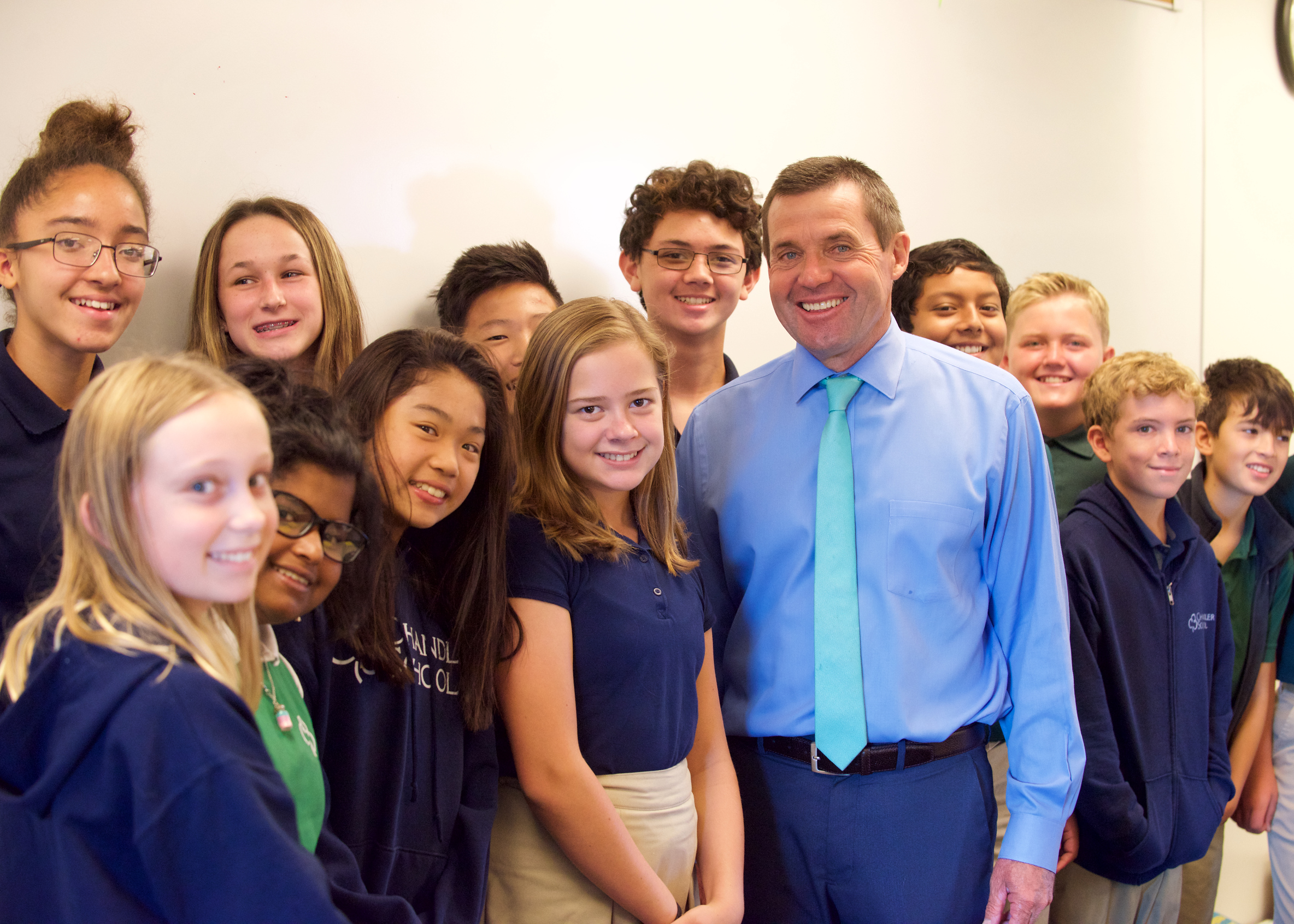
John Finch, headmaster of Chandler School, with middle-school students in his Ethical Perspectives class | Courtesy photo / Tim Teague
In an article which published last April in Time magazine, Katie Reilly reported that record numbers of college students are seeking treatment for anxiety and depression, and schools can’t keep up. She further described that when UCLA offered, for the first time, all incoming students a free online screening for depression, more than 2,700 students opted in.
Following that article, UCLA announced the launch of its ‘Depression Grand Challenge.’ This project, that spans a decade, will study 100,000 of students who have used its health care system for any reason. It is a sweeping initiative that brings to the fore the mental health issues that have long existed but have never been fully addressed until now.
However, anxiety and depression often predate college. High school students, most especially in the San Gabriel Valley, are faced with daunting competition when they start applying to colleges. Students in the area have earned perfect GPAs, SAT, and ACT scores; were the president of their school’s Student Council; have played at least one musical instrument, have won multiple gold Young Musicians’ Competition awards, and have performed at Carnegie Hall; have been deeply involved in a social, community, or philanthropic cause. They are over-scheduled, sleep-deprived, and hell-bent to stand out from other over-achievers. It’s no wonder, then, that they are riddled with anxiety that often leads to depression.
David Burge, who just completed his term as the President of NACAC (National Association for College Admission Counseling) states, “There is no doubt that the college application and selection process is daunting and is a cause of much of the anxiety and depression on high school campuses.
“What we’re finding is that there are more and more students in high school who are receiving treatments for anxiety and depression, including medication and talk therapy. So it’s only natural for them to continue to seek treatment when they get on the college campus. Sometimes the stress of college accentuates their pre-existing conditions.”
“We, at NACAC, are teaching students and parents to look beyond the Ivies and the most selective universities when they embark on their college search. As long as we continue to value exclusivity as a surrogate for quality, the competition perpetrated by these very universities will continue,” Burge pronounces.
To say, though, that the college application is the reason for the mental health concerns plaguing our country’s youth is too simplistic.
Depression among students is on the rise | Courtesy photo
Myra McGovern, Vice-President for Media at NAIS (National Association of Independent Schools), says, “The theories about why today’s students are going through anxiety and depression run the gamut. Some are backed by science and some are anecdotal. One of the things I’ve heard is that parents these days aren’t doing much about the issue because they think their generation had it harder.
“Some of us think that children didn’t get to experience the violence of wars and the hardship that accompanied such, which made them more fragile. But one could argue that children have seen more wars in their lifetime. There have been more media coverage of school shootings, that began in Columbine; and of terrorism and international threats, since 9-11.”
“I think that while the potential dangers may not have statistically grown, the exposure brought on by media has increased dramatically,” explains McGovern. “In the past, most teenagers didn’t read the newspapers; but these days, through social media, they know what’s happening in the world in real time.
“Consider your biological fear response – from the adrenaline rush, to the tightening in your chest and the dry mouth – when you hear of something horrible happening. Our body hasn’t really changed from the time of lions chasing people. Yet we’re more exposed to technological lions (stimulus) when our survival instinct hasn’t quit adapted to technological reality.”
McGovern elaborates, “Perhaps, too, children’s increased interface through technology is changing the way they relate and cope. The social pressures the older generations had to contend with are definitely different from what today’s youth deal with.
“There’s also our perception of our role as parents. Because of our own anxieties about our children’s lives, we are constantly hand-holding them and, in the process, taking away some of the opportunity for them to practice making decisions. It affects their confidence level at being able to navigate the challenges the world throws at the them as they become teenagers and young adults.”
“Another theory has to do with what people are consuming and the chemicals they’re exposed to,” adds McGovern. “But whatever the cause is, there’s a consensus that children and adults are struggling more with anxiety and depression.
“What I want to emphasize is that I don’t believe there’s one right solution for everyone. Part of the solution is considering children as individuals with specific needs. Prioritizing to invest in our future on the front end could reap benefits in the long term,” McGovern concludes.
Building the groundwork for sending happy and healthy kids to high school and beyond is a mandate that John Finch, headmaster of Chandler, a K-8th grade school in Pasadena, takes to heart.
Chandler students gather together as the school day begins | Courtesy photo / Tim Teague
“We establish an environment where there are high expectations, but low stress,” Finch declares. “We pay careful attention to the volume of work we ask the students to do. We don’t try to fit round pegs into square holes – we provide a program that meets their needs and adjust our program so that each child feels recognized, respected, and challenged.
“As we challenge our students, requiring them to do good work, we are equally careful about how we manage expectations. We have to be mindful that doing otherwise leads us to the same path we’ve been going on, with more kids falling out in the end.”
“Socially, we want to create an environment where children are kind to each other, respect and help each other,” states Finch. “We’re intolerant when it comes to bullying. At the same time, we want to establish an atmosphere where kids can be resilient and gritty. We want for them to pursue their interests by trial and error. And if they fail, we’ll help them try again. We want kids to understand they’re being supported by a tight adult network that encourages them. We want them to feel that there’s a balanced foundation of care and love.”
Finch points out, “I think students who spend too much time on screens and not enough time interacting with others can become isolated and lonely. That isolation and loneliness can manifest themselves in anxiety and depression. We have to be cautious, conscientious, and deliberate in urging our kids to shut their screens down, to spend more time interacting and socializing with friends and family.”
“Increasingly, I hear principals say their biggest concern is not so much the achievement, but the well-being of their students,” discloses Finch. “Something’s changing and we have to find the cause and respond accordingly. We’re not doing kids any favor if they’re leaving our schools feeling anxious or depressed – whether it’s because they’re over-burdened by expectations, they feel something is lacking, or they can’t cope with the independence they get as they grow older.
“Ten years ago schools were adding technology and computer positions. Now schools are augmenting learning and emotional support. Once we saw that technology had a transformative impact on the program, the next step was to become intentional in meeting the social and emotional needs of students.
“For us, it’s been helpful to have a buddy program. Older kids interact with the younger ones to give them a sense of responsibility and community obligation. For younger kids, it’s a way for them to look up to older students as role models. Those friendships that develop in multi-age groups make a vast difference in school life.”
“We also have a school psychologist to give professional help,” adds Finch. “Teachers meet regularly and when they hear a student’s name come up more than once as someone who’s not completing work, is tired, or isn’t eating well, they let the administrator know.
“There have been circumstances when kids approached the administrator to say they’re worried about one of their friends. We investigate all these observations and we bring in the psychologist whenever it’s warranted.”
“In a small private school with an adult-student ratio of 1 to 7, it’s very hard for the child to slip through the cracks,” assures Finch. “We’re capable of arresting something before it becomes too dark. And we make sure we have the support and place to take care of it.
“I’m interested in empowering teachers to not only provide excellent teaching but, more importantly, to look after the welfare of students in their charge. At the same time, I also know that families are our partners in addressing the issues of anxiety and depression.”
It’s heartening to know that parents, teachers, and school administrators are acknowledging that there is a mental health problem affecting a large number of students. It is a first step in the right direction.
That schools are also now taking active measures to help students get through their anxiety and depression is certainly a lifeline for those who’ve been feeling despondent and alone. There is hope yet.
Originally published in Beacon Media News’ Readers’ Choice Magazine on 20 August 2015
I do not profess to be an expert on schools, nor will I claim to be all-knowledgeable about education. But my almost two-decade-experience in searching for and sending my daughter to the elementary, middle, high school, and university that were the right fit for her, afforded me a front row seat in the world of independent schools.
As a stay-at-home mom, I volunteered yearly to spearhead fund-raising committees where I worked alongside other parents, became friends with heads of school, got to know admissions directors. At one school, I even knew the maintenance staff because I managed the school store. I bought all the snacks and drinks for after-school activities; provided pizza and drinks for all the dances; and I was in charge of supplying uniforms like neckties and sweatshirts, and sports items like gym bags. Every day, the maintenance guys helped me unload heavy items from my car. At another school, I befriended the Health Services Director because my daughter was always at the clinic for an injury (she was such a klutz, she got hurt just by walking to her classes). I was a constant presence on campus that my daughter’s friends were convinced I lived right outside the school gates!
My daughter’s ‘career’ as a student began early on in her young life. At her birthday party held in our backyard, I was advised that I needed to find the right nursery school so she could attend the right college. She was a year old; she went to nursery school the following year. In my defense, I sent my daughter to a co-op so teachers and parents alike taught toddlers through songs and stories. She spent three hours every other morning with small kids like herself.
Such was my introduction to private school education in Pasadena. If it’s any consolation, I read somewhere that in Manhattan (New York), expectant parents start registering for the waitlist at pre-schools right after the first trimester of their pregnancy!
I do not speak for all parents when I say the best primary and secondary schools are not the hardest ones to get into; the best universities are not the ones with five percent acceptance rates.
Student satisfaction and happiness aren’t predicated on school ranking. The best schools, I think, are where students are intellectually stimulated and not bored out of their wits; but neither are they so stressed out from all the work that they need to be medicated.
The best schools are where students feel the same excitement and intensity when they talk about black holes as when they expound upon Rick Castle’s coolness (Castle airs on ABC, Mondays at 10 pm Pacific time). It is where your child comes home from the Spring Musical rehearsal exhilarated that she has been put in charge of production for the biggest show of the year! It is the place where kids thrive and succeed.
My daughter is now 19 years old and is a rising second-year student at the third-ranked university in the United Kingdom. She is a happy teenager, enthusiastic to go back to school next month, and eager to find her place in the world.
Here, then, is my highly subjective, very personal, and wholly unscientific list of the top five independent schools in the Pasadena area. I’m sure I will have dissenters out there and I’m all right with that. I wasn’t going for a popularity contest.
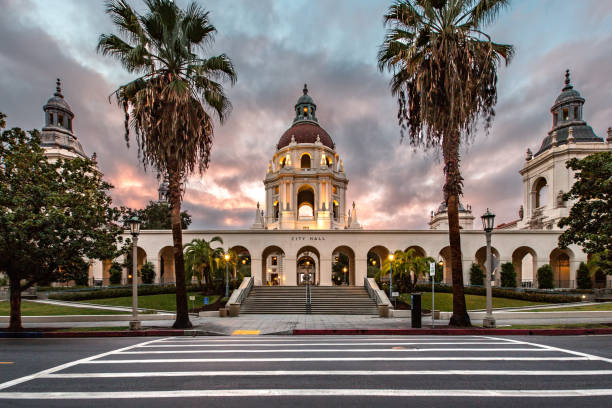
Image taken from Pasadena Now
1. POLYTECHNIC SCHOOL
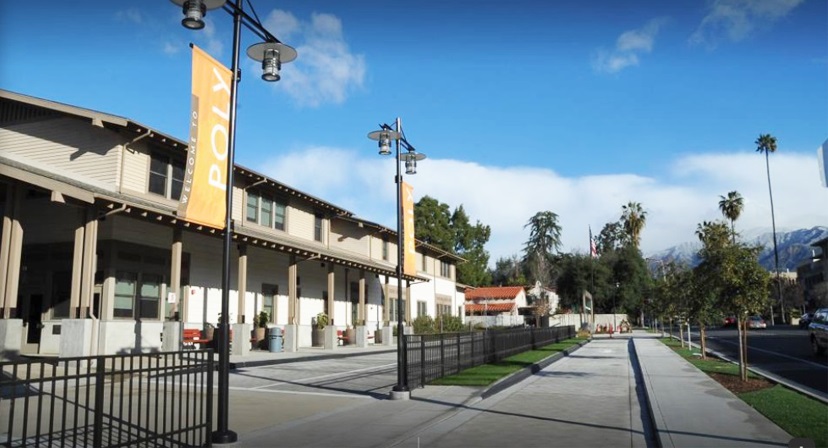
It has been referred to as the ‘most elite school’ in Pasadena, and for good reason. For over a hundred years Polytechnic School, on California Blvd, has been providing excellent education for students that come through its doors. Founded in 1907, Poly was the first non-profit, independent school in Southern California, providing academics and manual arts for kindergarteners through 8th graders.
In 1959, with Willis Stork as its fourth headmaster, Poly welcomed its first high school students, when it expanded to reach 12th grade. The achievements of Poly’s graduates in colleges and universities throughout the country established its national renown.
Succeeding heads of school continued Poly’s tradition of academic excellence and nurturing environment for students. Debbie Reed, who served from 2002 through 2014, led the ambitious “The Next 100 Years Campaign” which raised funds from parents and donors to construct a much-needed underground parking structure, and new buildings on the North and South Campus. Construction, which ended in 2013, established a state-of-the art science and tech labs, and an expansive library. It also refurbished the Garland Auditorium to make it a professional stage for performances and created a Black Box Theatre which doubles as a dance studio.
The school operates under three distinct divisions united by shared values. The school’s faculty and staff lay a scholastic foundation of academics and arts, athletics and physical education, global engagement, and community service – cornerstones of a Poly education.
The lower school has approximately 270 students, with 20 full-time teachers and assistants, 15 support and specialized instruction personnel. There are 14 to 15 students per class in kindergarten through 2nd grade; while from 3rd through 5th grade, there are 22 to 23. The lower school provides the perfect introduction to young learners as they discover new things. Teachers respond to children’s developmental needs, making them confident learners.
In middle school Poly’s 215 students transition from childhood to adolescence. It is where kids in their tween years question, learn, and find their own voice under the guidance of 20 teachers and assistants, and 10 support and specialized instruction personnel, who understand this phase in human development. The 17 to 21 students in each class get their first taste in making personal, individual choices through its outdoor education program, by selecting an activity which matches their particular outdoor interest. Later, in 8th grade, learners get to choose the foreign language they intend to carry on into high school. A crucial responsibility for middle school teachers is to ensure that every 8th grader is ready for promotion to high school. Eighth graders meet with the Dean of Students, towards the end of the school year, to discuss the curriculum for the next four years and begin mapping out individual course options.
Activities accelerate at a much greater pace at Poly’s high school, which has a total of 375 students, with 50 full-time classroom teachers. Each class has about 15 students. Class deans for each grade level are tasked with keeping abreast of each student’s academic performance, achievement, well-being, and progress through high school.
Poly’s sophomore year community service requirement involves students completing 30 hours of community service in a particular area of interest. This becomes a starting point for them to expand on throughout their high school years. The school’s outreach also provides opportunities for student involvement and leadership. Each grade level elects their representatives who find opportunities for projects.
In 2006, Poly launched the Global Initiatives Program (GIP) to develop and instill in students the tools to make them considerate, contributing, and connected citizens of the world. Students study various cultures, interact with people in other parts of the globe, and experience cultural events from around the world. The Study Abroad Program, a component of GIP, focuses on cultural immersion, face-to-face interaction, and service learning. Those who complete GIP’s rigorous requirements in each of the four areas graduate as Polytechnic Global Scholars.
The school’s athletic achievements are legendary as evidenced by the school’s 140 Prep League Championships, 46 CIF Championships, and 72 CIF Academic Championships over the past 20 years. Poly competes in an impressive array of sports – badminton, baseball, basketball, cross country, diving, equestrian, fencing, football, golf, sailing, soccer, softball, swimming, tennis, track and field, and water polo. Student participation in sports is 88 percent – in 16 fall teams, 15 winter teams, and 14 spring teams, under the guidance of 84 coaches.
Academics at Poly are vigorous, with AP courses on offer in 16 subjects. During the 2013-2014 school year, the school administered 660 AP exams, taken by 238 students, with 92 percent earning 3 or above. Forty-nine percent of seniors were National Merit Semi-finalists and Commended students . Of the 97 seniors who graduated that school year, 71percent were accepted to highly selective learning institutions. They attended 58 colleges and universities in the United States and one in the United Kingdom.
As for the next hundred years, current Head of School, John Bracker, says, “The next 100 years at Polytechnic School will be informed by its past and defined by the intellectual curiosity of its students, the unfettered commitment to teaching of its faculty, and the compassion of its community that is focused both inward and outward.”
For 108 years, Poly has been challenging and nurturing students imbued with a curiosity about people, their community, and the world they inhabit. They are natural learners and born leaders – they are the ones who will one day make a difference.
2 – FLINTRIDGE PREPARATORY SCHOOL
Flintridge Preparatory (Prep for short), in La Canada, was founded by Doane Lowery in 1933 as an all-boys school. In 1979 it became a co-educational school offering classes from 7th through 12th grade. It has a total enrollment of 500 students (100 in 7th and 8th; 400 in high school).
According to its mission statement, Prep “…seeks to nurture in its students the knowledge, critical skills, community values, and creativity essential for an engaged, balanced, and responsible life”. Thus, its focus is not only on a successful high school career, but also a jumpstart into a student’s future college career. To ensure personalized teaching for its population, classes are kept small – at twelve students – with a low student/teacher ratio of 8:1.
Prep attracts the most-qualified faculty, comprising teachers with terminal degrees, teaching artists, coaches and deans. It has a very high faculty satisfaction and teachers tend to stay for a long time. Likewise, it seeks only the best students who have the intellectual ability to appreciate the academic and extra-curricular activities available to them. Student retention is at 99 percent.
Thirteen Honors and 14 AP courses in English, history, match, science, language, visual arts, and performing arts are on offer.
There are excellent facilities to support Prep’s students’ learning requirements, including four centers of computing technology. The mathematics department’s Braun Foundation Computer Laboratory hosts applications and programming classes. The library has computers available throughout the day and after school. Classrooms are equipped with Smart Boards, and the art department has a ‘dry darkroom’ for digital photo editing and printing.
Arts courses take place at The Randall Performing Arts Center which has classrooms for dance, drama, and music. There is also The Miller Theatre, a black box performance space. Prep has art studios for ceramics, drawing, and painting. It has a fully-equipped photography studio complete with a professional camera, and developing equipment.
In September 2007 construction on the two-story Chandramohan Library was completed and it became the heart of student life. With a computer lab, a classroom for seminars, meeting rooms, areas for study, and a college counselling suite, the library is a busy place for academics and socializing.
Athletics are an important component of the school’s daily activities and Prep provides students with extensive facilities – the Lowery swimming pool, James Woods Memorial Field, Crawford Family Gymnasium and Tom Fry Weight Room.
Prep fields 30 teams, proudly wearing their blue and greys, in 13 sports including: dance and cheer, and equestrian year-round; cross country, football, tennis, volleyball, and water polo in the fall; basketball, soccer, and water polo in winter; baseball, diving, golf, softball, swimming, tennis, track and field, volleyball, and water polo in the spring.
A lively involvement on campus is displayed by the student senate, the student body at Prep. Since 1935, they have been holding weekly meetings, run by the senior class president. The program’s cabin members include the class president from every grade and two representatives, selected by each grade class. They hold annual traditions like The Book Day BBQ, the Haunted House, Spirit Week, Winter Festival, Teacher Appreciation Week, and Prep Fest.
Meanwhile, the SCAC (Student Community Action Council), a student-run organization, builds on and off campus leadership. It integrates all forms of leadership on campus and creates a socially positive environment for engagement.
Prep’s first athlete-based leadership program, Athletic Leadership Council, was founded in 2008 to actively promote athleticism while instilling responsibilities. Members create community service projects, serve as mentors to other students, encourage school and team spirit, and serve as role models and exemplars of strong leadership.
A rigorous curriculum, athletic programs, and opportunities for community service, all contribute to Prep’s graduates’ success in getting accepted to the best colleges and universities in the nation. Students of the class of 2014 went to Brown, Columbia, Dartmouth, Harvard, Princeton, Yale, CalTech, Carnegie Mellon, NYU, Stanford, UC Berkeley, UCLA, USC, Vanderbilt, and other prominent institutions.
Asked about Prep’s guiding thought, Peter Bachmann, Head of School, says “Flintridge Prep aims to strike an even balance between intellectual and personal development. We want kids to do well in school and be well-prepared for college, but also be happy, well-developed individuals who establish life-long friendships with other students and teachers. We hope to prepare students, not simply for the next stage, but for their entire lives.”
What parent would disagree with such simple but sage philosophy?
(Beacon Media intern Ame Hossen contributed research and reporting to this story. A 15-year-old sophomore at Glendora High School, Ame is an avid reader of fiction; enjoys traveling, trying new foods, and helping out in the community.)
Image taken from Westridge School’s website
3 – WESTRIDGE SCHOOL FOR GIRLS
Mary Lowther Ranney, a noted architect and teacher, founded Westridge in 1913 to create a school that would offer an education for college-bound girls. She had originally intended to open it at her parents residence but enrollment exceeded her expectations and realized she needed a much bigger space. The Ranney’s acquired a larger house on Madeline and inaugurated it with a total of 21 students.
Today, 102 years after that momentous occasion, Westridge School for Girls has a total enrollment of 480 students and continues its excellent tradition of educating girls to become successful. In the words of Head of School Elizabeth McGregor, “Our vision for Westridge is to foster a culture of thinking that inspires our girls to realize their intellectual and creative potential, to foster an ethos and community that inspires Westridge girls to look beyond themselves in order to impact others and the world.”
At Westridge’s lower school (grades 4 to 6), students develop skills in academic subjects and the application of these through creative activities and group projects. They also receive in-class or after-school instruction about health and wellness.
The middle school (7th and 8th grades), addresses students’ transition from childhood into adolescence. They are provided the tools and skills necessary for academic success as they become confident, articulate and motivated learners.
In upper school (9th through 12th), students are encouraged to think critically and individually. They begin to identify their areas of interest – in academics, arts, athletics and civics. Girls embark on their Community Action Projects, multi-year service and inquiry process that empower them to use their skills and talents to improve the lives of others.
Implementation of a balanced education means finding out how knowledge is imparted and absorbed; and what is required to prepare students for the real world. As McGregor says, “Our curriculum and teaching approaches are based on the most recent research into how girls learn best, and we wish to become a center for research and information on girls’ education. We are also committed to empowering our students in design thinking and the STEAM fields (science, technology, engineering, arts and math). To that end, we have just opened our STEAMWORK Design Studio maker space.”
Westridge School’s facilities include a14,000 square-foot, two-story, and eco-friendly science and math building that houses the chemistry and physics labs, math classrooms, and a technology and data center to support the school’s 150 laptops. A Performing Arts Center has 600 seats and hosts numerous theatrical productions, concerts and dances.
Sports and physical education take place on the Frank Athletic Field where lacrosse, soccer and softball are played. Hoffman Gymnasium is the site for basketball and volleyball. The Studenmund Family Weight Training Room is the fitness center.
Athletics at Westridge is a source of pride as it has earned twelve Prep League Championships in the last ten years. The school has produced three Olympians – Anne Kursinski ’76, Equestrian,
in the 1988 (Silver), 1992, and 1996 (Silver) Olympics; Inger Miller ’90 received a Gold for Track and Field in the 1996 Olympics; and Erica Wu ’14 competed in Table Tennis in the 2012 Olympics.
An academically strong school, Westridge’s class of 2015 produced 17 AP Scholars, eight National Merit Finalists, and 12 Commended Scholars. Its graduates went to attend highly-selective colleges and universities in the United States and around the Globe.
Westridge students also enjoy a vibrant social life on campus as they pick Greek and Roman teams and earn points during competitions. There is a Big and Little Sisters organization where girls are assigned to a family – younger students bond and form friendships with older girls on campus. During the All School Day, the ASB (Associated Student Body) organizes themed activities for fun that include movies and food, making for a fun-filled, relaxing day for everyone. There is a Ring Ceremony at the end of the school year when a Junior receives her class ring, symbolizing her passage from junior to senior year.
All these components are ingredients for a fulfilling and gratifying scholarship for girls. As McGregor explains, “We believe, and are told by colleges and community members, that our girls stand out for their intellectual curiosity, independence and sense of self, and their desire to improve the world around them. Everything at Westridge is designed to foster these characteristics – to develop intellectually adventurous thinkers and courageous, compassionate leaders.”
Mary Lowther Ranney would have been so proud.
(Beacon Media intern Jonathan Tsou contributed to research and reporting for this story. Jonathan is a senior at Arcadia High School, and likes reading historical books. He has conducted a couple of interviews involving various historical figures.)
4 – CLAIRBOURN SCHOOL
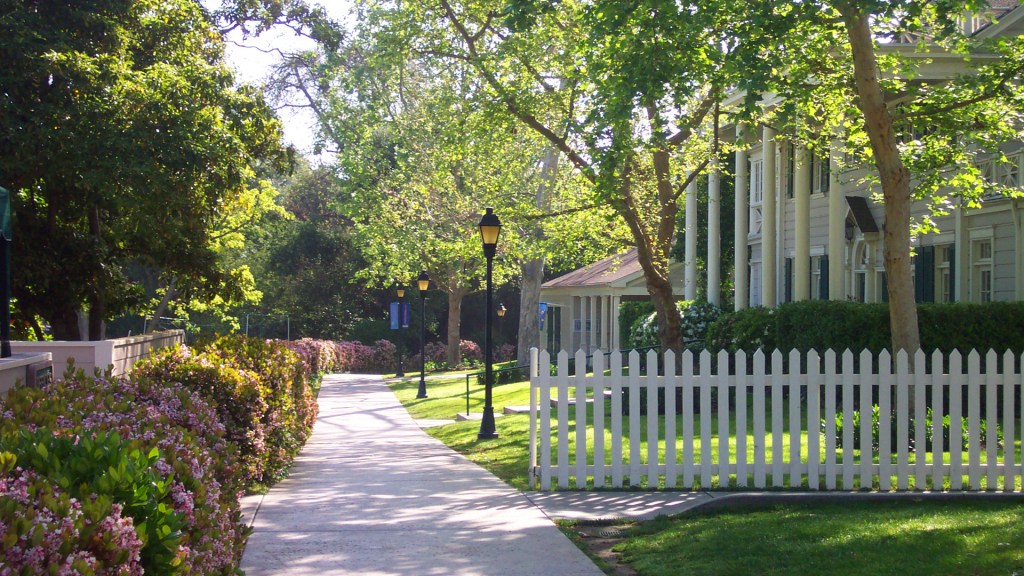
East Hall Walkway at Clairbourn School | Photo courtesy of Clairbourn School
Clairbourn School was established in 1926 when Emily Bourne, wife of A.K. Bourne (scion of the Singer Sewing Machine founder), decided to teach classes at the conservatory of her San Marino home. Enrollment grew annually from the four original students, and in 1931 it relocated to its present site on Huntington Drive, in San Gabriel. It remains there today, providing education for children from Junior Pre-K through 8th grade.
Students at Clairbourn experience the thrill of discovering new things and learning life-skills taught by caring teachers in a nurturing environment. According to Nancy Ward, Communications Director, the preschool program is designed to encourage children’s natural love of learning. It sets the stage for a positive approach to education which is a vital ingredient of school readiness; preschoolers are ready to enter kindergarten with a positive self-concept, the spirit of inquiry and critical thinking, and problem-solving skills.
In the preschool classroom, the focus is on the whole child; this encompasses language, cognitive, social, emotional, physical and spiritual development and competencies. “There is an emphasis on the acquisition and application of universal values as guided by the Clairbourn Code of Ethics, which includes respect, responsibility, citizenship, spirituality and honesty. This code spans all grade levels, permeating all aspects of school life” says Ward.
The competencies and critical thinking skills that preschoolers gain are carried on into Clairbourn’s kindergarten through 5th grade program. Here, experienced specialists teach core subjects supplemented with enrichment classes in art, computer/technology, library, music, foreign language, and physical education.
A faster pace and schedule make up a dynamic middle school experience at Clairbourn. With only 18 students per class, and two sections per grade, department teachers give personalized attention to each one. Core teachers specializing in English, history, math, science, French, Latin, and Spanish provide a balance of hands-on learning, written reflection and oral reporting.
During middle school, students get involved in service activities promoting an understanding of community and global responsibility. Annual outdoor education class trips emphasize the environment, leadership and teambuilding, with optional opportunities for travel to Costa Rica, Australia and Europe.
The highlight of middle school at Clairbourn is the Huntingtower Exchange Program, which began in 2000, as a way for students to be global citizens. Through some research, Clairbourn found an institution of similar age and philosophy in Melbourne, Australia and the two schools began to exchange students with host families. According to Head of School, Dr. Robert Nafie, “We felt our students would find that in the midst of a variety of difference in culture, language, and traditions, they would see that humankind is essentially the same where it really matters. They could see that applying the basic values and academic skills they learned at Clairbourn would be successful seven thousand miles from home and beyond.”
In 7th grade, each family receives individual high school admissions counseling to help them understand options, and how to prepare and apply to high schools. Students are required to take an interview preparation class, attend high school tours, and meet with high school admissions directors on the Clairbourn campus. Ninety-seven percent of its graduates are accepted to highly competitive and selective day and boarding schools, with three percent choosing excellent area public schools.
As Nafie looks back on his 36 years of stewardship, he is struck by the fact that education today is still facing the age-old question “What is the purpose of education?” e saysHHe He thinks that there are as many answers to this question as there are schools. And while it seems to be a simple thing to answer, many schools jump right over the question because it is difficult to find a consensus. Many move forward with an implied purpose, with the assumption they know what that is. To some, it just means higher, faster, farther, longer, or some other superlative. But he believes schools can do better, and parents deserve clearer choices in schools.
Ninety years after its inception, Clairbourn’s teaching philosophy remains true to its founder’s essential purpose: to impart knowledge based on fundamental principles applied to present-day needs. Nafie expresses this more eloquently when he says “ … the increasingly complex nature of global communication today with 24-hour news, Twitter, YouTube, Facebook, and a whole array of new and emerging social media, tells us that the ability to get along in a wider arena of influence will be essential for humanity’s survival. The narrow band of pure academics, as laudable as it is, will not be enough to ensure that students thrive and succeed in the 21st century. Rather, they need to know how to apply their academic abilities in a way that fosters healthy and positive outcomes.”
Very well articulated. Clairbourn students and parents would wholeheartedly agree.
Image taken from Chandler School website
5 – CHANDLER SCHOOL
Chandler School, in Pasadena, was founded in 1950 by Thomas and Catherine Chandler with an initial enrollment of 14 students. Today it has a total student population of 420, and is reputed to be one of the hardest K- 8th grade schools to be accepted into in the western San Gabriel Valley.
John Finch, who serves as Chandler’s fourth headmaster since its inception, describes the school’s philosophy thus: “Our mission is to provide each student with the highest quality and most academically challenging education in a nurturing, balanced and diverse environment. The curriculum balances core subjects and includes interdisciplinary study that develops well-rounded students.”
Carrying out Chandler’s grand mission are teachers and mentors with the expertise in meeting the academic, artistic, athletic, and social needs of K- 8th grade students. During the school year 2010-2011, one of Chandler’s 1st grade instructors received the U.S. Presidential Scholars Program’s Teacher Recognition Award. One-third of its school faculty hold advanced degrees and the average tenure of faculty is nine years.
Preparation for life begins at Chandler’s lower school, where academic rigor includes innovation, creativity and character development. The school offers core subjects and integrates an interdisciplinary STEAM. Students take core subject classes, and art, music, library, and Spanish very week. Its physical education program engenders not just physical strength, it likewise gives students opportunities to build teamwork, perseverance, resilience and discipline.
Teachers use technology to prepare Chandler’s lower school students for the one-on-one program offered in middle school. Kindergarteners through 2nd graders get iPads while 3rd through 5th graders get laptops. They teach young learners how to choose tools and how to properly care for and maintain them, how to protect their identity and privacy, and how to balance high-tech, low-tech and no-tech experiences.
In middle school, students take five core courses in English, history, math, science and Spanish. They also have fine arts and personal development classes, electives and physical education. In 6th grade, students develop skills like note-taking, time management and exam preparation. They build on and take these skills into 7th grade; and in 8th grade they have various opportunities for leadership and community service.
Families of middle school students are required to purchase Apple Macbooks as they start the year. Students use school-sponsored online databases and software applications. Chandler uses customized Google Apps for Education domain to support teaching allowing for easy sharing of documents, file storage, and connectivity.
Chandler is a nationally recognized and certified Common Sense Digital Citizenship school. It earned this distinction by demonstrating its commitment to taking a community approach to preparing students in using digital media to explore, create, connect, and learn, while limiting online perils, like plagiarism, loss of privacy, and cyberbullying. Common Sense is a national non-profit organization dedicated to helping kids and families thrive in a world of digital media and technology.
The visual arts program at Chandler includes photography, ceramics, water color, and printmaking; students hold a school-wide art exhibit in the spring. Music offerings are string ensemble, Clover Chorus, and a class that focuses on creating, composing, music history and appreciation. Students in the performance arts stage two theatre productions, one string and choral group show.
Athletics are an important component of a Chandler student’s experience. Sports activities include baseball, basketball, flag football, golf, soccer, softball, swimming, tennis, track and volleyball.
Chandler’s middle school curriculum affords them ample preparation for the high school application process. The 59 students in the class of 2015 were accepted to very selective secondary day and boarding schools in southern California, including Campbell Hall, Flintridge Prep, Harvard-Westlake, Marlborough, Notre Dame High School, Polytechnic School, Westridge School for Girls, Cate School in Carpinteria, and The Webb Schools in Claremont; to east coast schools like Hotchkiss In Connecticut, Phillips Academy in Massachusetts, and Phillips Exeter Academy in New Hampshire; and to charter and magnet schools like International Polytechnic High School in Pomona and the Los Angeles High School for the Arts.
These Chandler graduates are the envy of every high-schooler in the western San Gabriel Valley.
(Beacon Media intern Jonathan Tsou contributed research and reporting for this story. A senior at Arcadia High School, Jonathan is currently busy with college applications. He hopes to study Education Psychology.)


 A San Gabriel Valley Inquirer