Mineo Mizuno Site-Specific Installation at The Huntington Now on View

Originally published on 23 June 2022 on Hey SoCal
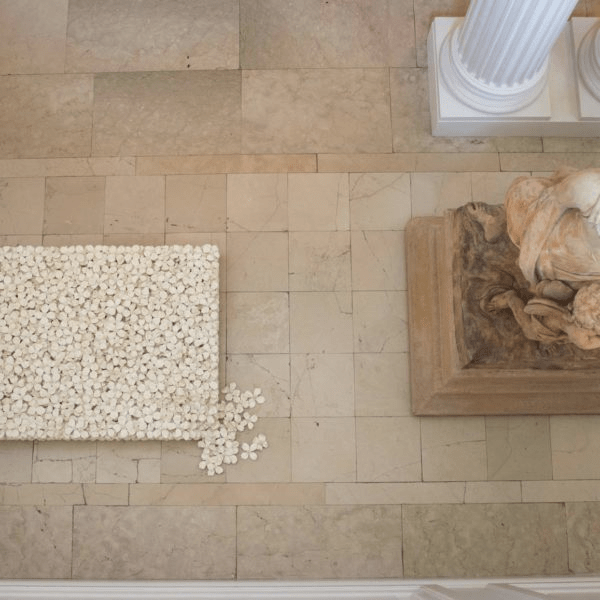
Thousand Blossoms, Mineo Mizuno. Ceramic | Photo courtesy of The Huntington Library, Art Museum, and Botanical Gardens

Visitors to The Huntington Library, Art Museum, and Botanical Gardens will be delighted to see nature-inspired sculptures created by a contemporary artist intermingling with classical 18th-century pieces at the main gallery.

Three site-specific sculptures which will be on display for two years – Nest (on the loggia), Komorebi, and Thousand Blossoms (inside the gallery) – are the works of Japanese-born California artist, and former Los Angeles resident, Mineo Mizuno. Long known for his ceramic art, he started working with wood seven years ago when he and his wife Minako (who’s also an artist and owns mm project art gallery in Hiroshima, Japan) moved to the Sierra Nevada Mountains.  

Mizuno and Minako, who collaborated with him on this show, graciously show us the artworks and talk about how this installation at the Huntington came about.

“In 2020, I had a show at a gallery in Beverly Hills and some of The Huntington trustees told Christina Nielsen (Hannah and Russel Kully Director of the Art Museum) about it,” Mizuno recalls. “She went and liked what she saw, so she asked to meet with me. She was originally interested in purchasing a piece but decided to give me my own show at The Huntington the more we talked.” 

Even before Nielsen went to that exhibition, though, she was already familiar with Mizuno’s work. She reveals via email, “In fact, we have a Teardrop by Mineo (one of his signature pieces) in our permanent collection, and I walk past it on my way to the office each day. I didn’t know his work previously, but have been a big fan of his work since my first day on the job almost four years ago.”

While Nielsen chose the areas where she wanted Mizuno to create pieces for, she left it up to him to decide what to make. She states, “I never give an artist instructions. I could never conceive of the possibilities the way they do. But there is definitely conversation about what might be logistically possible!”
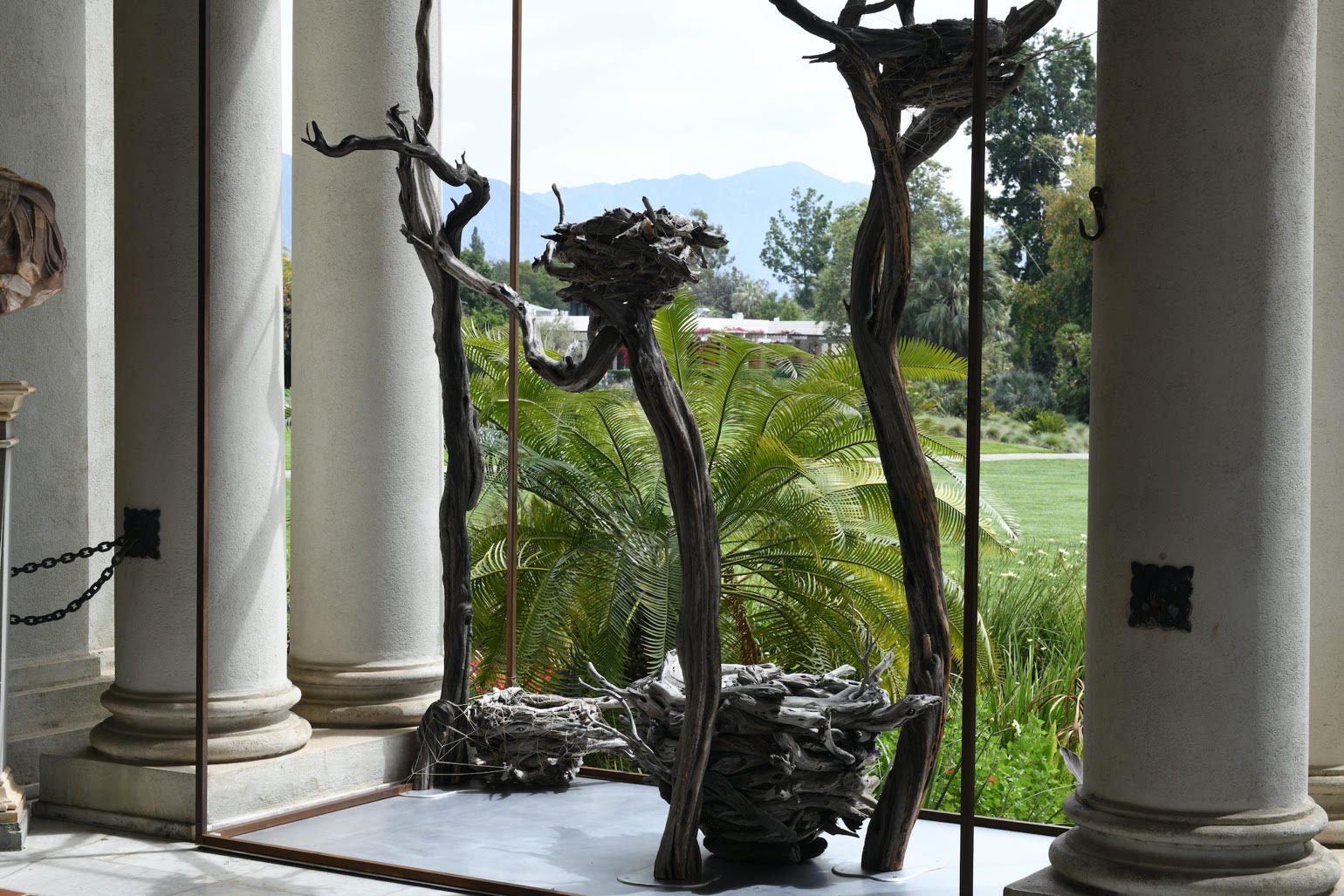
Nest. Manzanita wood, steel, aluminum, hemp, and ceramic | Photo courtesy of The Huntington Library, Art Museum, and Botanical Gardens

As if to confirm Nielsen’s statement, Mizuno says as we reach the loggia, “This idea came about when I saw this space. I call this Nest but there are actually two of them in one artwork. The thought behind it is that you build your home with the things around you, much like birds do. They’re made from manzanita shrubs that have been chopped down.”

Mizuno retrieved the shrubs to give them a new life that isn’t harmful but instead lends beauty to a space. He explains, “We don’t see manzanita shrubs in Southern California because they need an elevation of about 2,500 to 3,000 to thrive. These shrubs grow everywhere in Sierra Nevada and they’re fire hazards so they have to be constantly cut down. The wood of the shrub has interesting colors – some are light but some are dark colors like red.”

“This is the only time I’ve used a manzanita shrub,” adds Mizuno. “I usually create big wood sculptures made out of oak. California oak is protected, but where we live they’re usually cut down so I’m not using wood from live trees. I get my materials from someone who has a property that’s comprised of a 40-acre ranch and a surrounding 1,500-acre forest with all kinds of cut trees – like oak. But whether they’re manzanita shrubs or oak trees, I’m just recycling them.”

“All the pieces in the installation were built in my studio over time and assembled on site,” Mizuno explains. “I had been building the nest a few years ago and I altered it so that it can withstand the changes in temperature and weather.”  

Minako offers her perspective, “While it’s a limited space physically, because it’s outdoor, I think it’s actually unlimited. The space changes every day – the look of the sky varies, there’s nature growing nearby, different people are around it. Changes have happened since we started building the nests.”

“During most of my career, I used ceramic for my sculptures,” Mizuno discloses. “After our son left for college, we moved to New York City, which was my lifelong dream. However, it didn’t work out that well… two years were long enough, and we moved to the wilderness in Northern California. Because of my environment, my life changed and, with it, my art.”
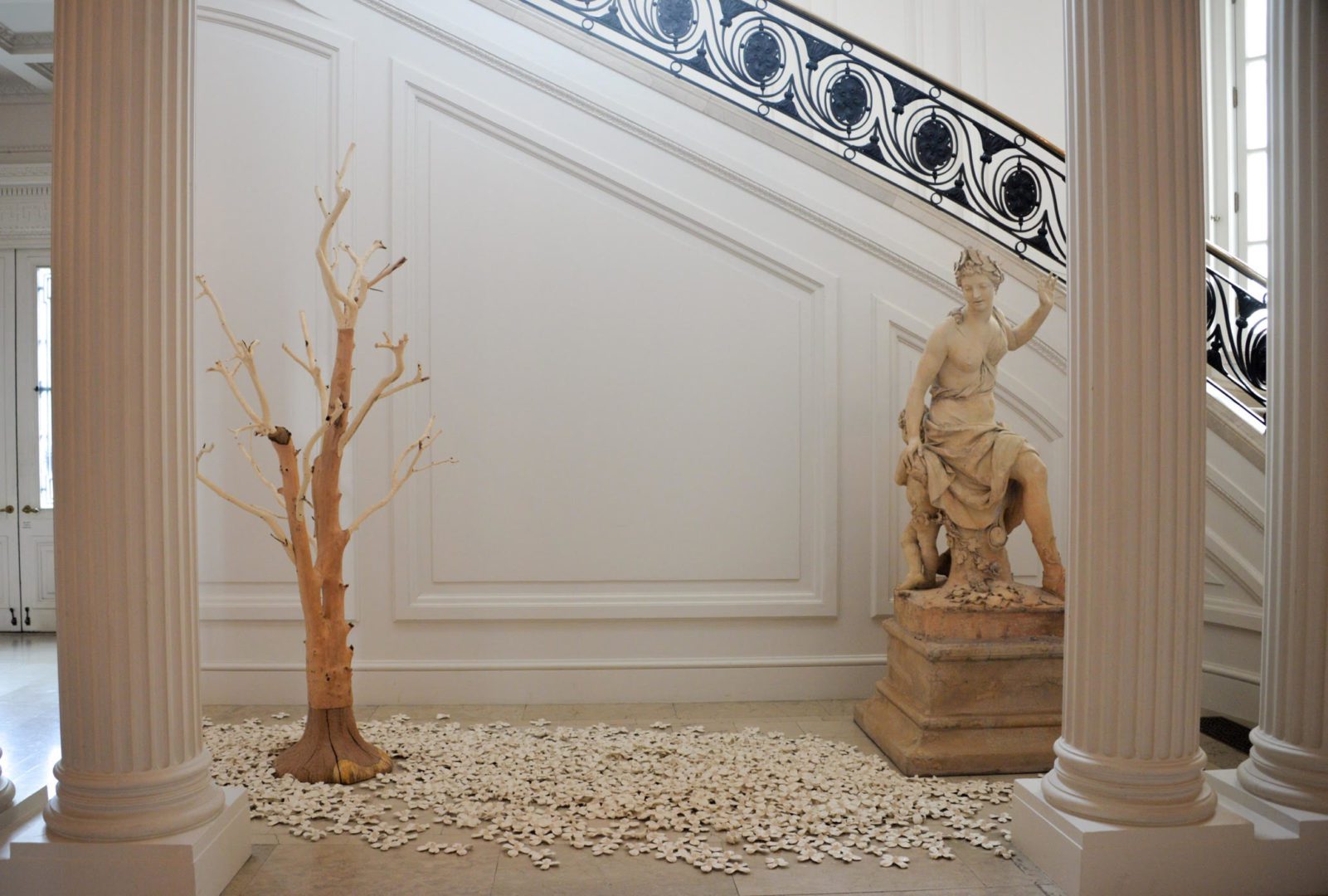
Komorebi – light of forest. California oak wood and ceramic | Photo courtesy of The Huntington Library, Art Museum, and Botanical Gardens

Dogwood blossoms are the themes of Mizuno’s two other pieces which are displayed inside the art gallery. He says as we reach the first artwork, “When they gave me this space everything was covered in plastic; so I couldn’t see what it looked like. But I knew these two sculptures (a tree nymph and Flora, the ancient Roman goddess of flowering plants) were here. They had planned to remove them to give me the space. But when they took the covering off and I saw the sculptures – one is sitting on an oak stump, and the other is holding a flower garland – I suggested we just move them to the side. So I decided to make a tree from the stump of a fallen oak to match the sculpture that’s already there. Then we scattered ceramic dogwood blossoms near it.”

According to Mizuno dogwood flowers signify hope and rebirth. They grow everywhere in the Sierra Nevadas just as cherry blossoms do in Japan. The ceramic cherry blossoms remind him of the origami pieces his 102-year-old mother makes.

Minako says, “We call this Komorebi, which is the Japanese word for filtered light, sunbeams seen through leaves in the forest. They’re individual ceramic pieces arranged like they fell from the tree and were scattered by the wind. The ceramic blossoms are kept in place on the floor with silicone.”                           

We approach the last sculpture and Mizuno points out, “This is called Thousand Blossoms and is made of 3,000 ceramic dogwood blossoms. Each blossom was hand-made then went in the kiln for firing. We took each one out for glazing then put it back in the kiln. We then used silicone to attach each piece to another.”

“We made these blossoms during the pandemic – when everyone all over the world was thinking about others, about our health, and life, ” Minako elucidates. “So each dogwood blossom represents one human being. We attached each individual blossom to another to create one piece to signify unity; we wanted to show the power of life. After they were stuck together, we put it inside a frame so we could transport it here. But one piece of dogwood blossom didn’t fit properly. When we got here, laid it on the floor, and removed the frame, some of the blossoms fell on the side. However, we decided to leave them be… people won’t know it wasn’t done on purpose.”

Not only were people who have seen it at The Huntington unaware that some ceramic dogwood blossoms accidentally fell out from one of Mizuno’s artworks, they have also been giving the most enthusiastic reviews. As Nielsen proclaims, “They exceeded my expectations, and I’m delighted to watch visitors discover them. The response has been overwhelmingly positive.”

There are times when unintended actions result in surprising consequences. Sometimes an otherwise unfortunate happenstance only adds dimension to an already beautiful piece of art. It’s almost poetic.          
Pasadena Artist Holds First Show after the Pandemic Began

Originally published on 31 March 2022 on Hey SoCal

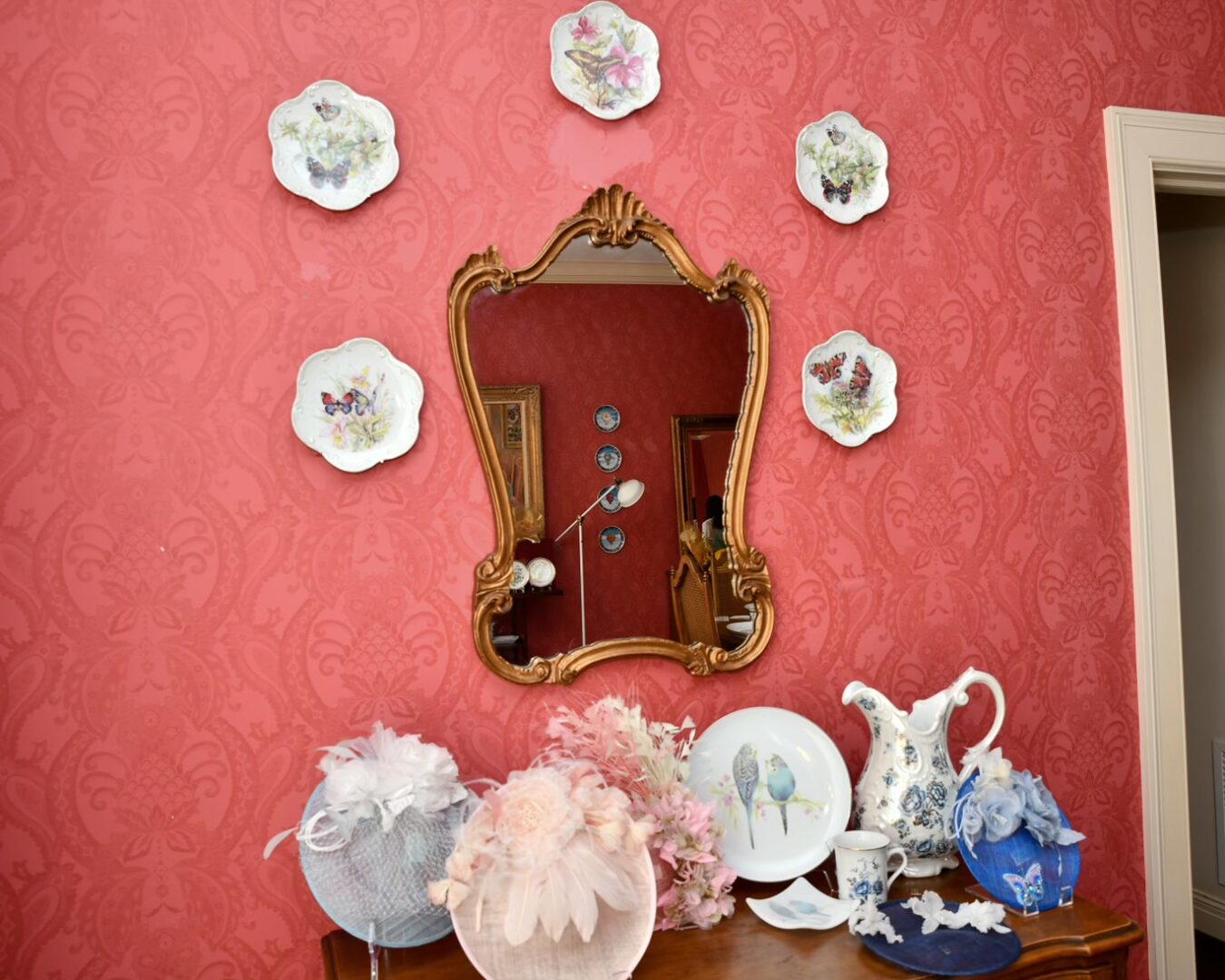
Two years after the pandemic started and turned the world upside down, Pasadena milliner Cissy Li puts on her spring collection show. (read my previous story about Li and how she became a milliner here) And this time around, her creations of glassware and ceramic art join the spectacular hats on shelves and tables. Attendees to the show’s opening are treated to a dazzling array of multi-colored eye candy. There’s so much to look and marvel at!

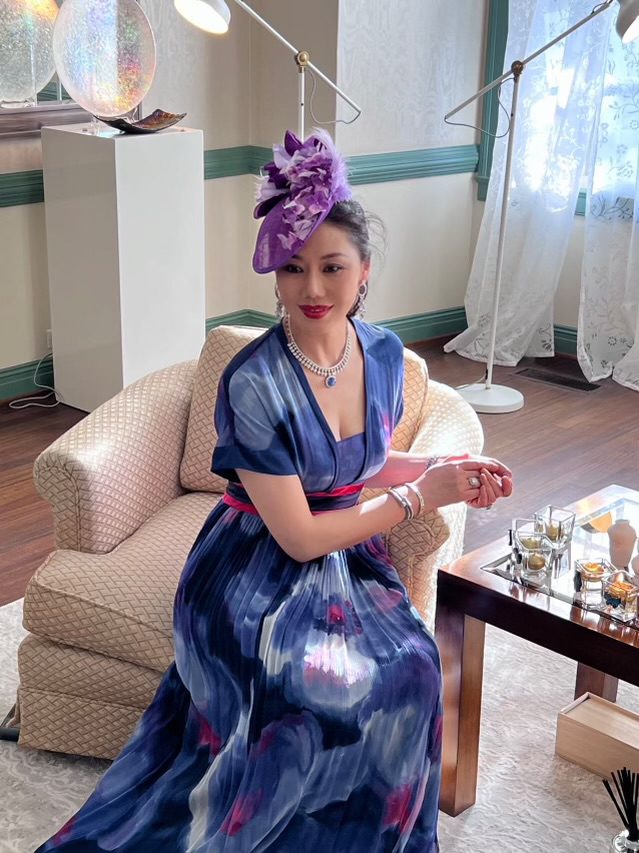
Li, ever so glamorous in her cobalt blue and neon pink floor-length dress, wears a sparkling diamond necklace with a cabochon pendant and a ring to match. Perched on her head is a purple fascinator with silk lilac flowers. And she works the room with the ease and panache honed during her years as a runway model.

Cissy Li | Photo by Angela Lee / Courtesy of Cissy Li

Sitting elegantly on an armchair, Li talks about her expansion into this new endeavor, “Hats are worn during social occasions. And during the pandemic, not many people were ordering them because there were very limited social events or parties. That gave me the opportunity to branch out into something else – glassware and ceramics.

“Having my kids at home helped because I didn’t have to go to school and drive them around to their various after-school activities; it meant I could be home cooking and working on my glassware. They were pretty much on their own during remote learning. Of course, when I wasn’t physically near them, they tended to sneak in playing some video games. But all in all, they were well behaved. I think the school did a good job giving them a schedule and telling them what they needed to do.”

“I post my work on WeChat and Instagram and people who like what I make call me to commission some pieces,” Li continues. “I’m very lucky that the people who place orders give me carte blanche so I can be very creative. But I also appreciate it when someone comes with a pattern or a picture and tells me ‘I want something exactly like this.’”

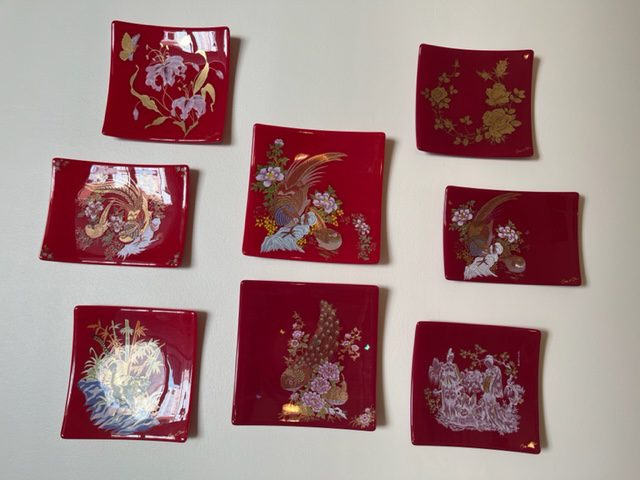
These red glass plates took 80 hours of firing time in the kiln and about two hours of overglaze design and 24K gold luster touch up | Photo by May S. Ruiz / Hey SoCal

“During the pandemic, I did a lot of commissioned orders and that kept me very busy. Millinery used to be my primary source of income, but ceramic and glassware work has since become a second career. I’m pretty fast with glassware and hats but not with housework, especially with cooking – I can fire the kiln with self-assurance but I’m more careful that I don’t burn the food,” she confesses with a laugh.

It wasn’t the first time that Li experimented with glassware. When she lived in Italy, a friend – who was also a runway model – had an uncle who owned a glass blowing factory on Murano, an island off Venice. “I went there to study but I only lasted for three days. It was very hard work and I just couldn’t do it, so I quit. However, I learned the basic technical skills that I am able to use now,” Li reminisces.         

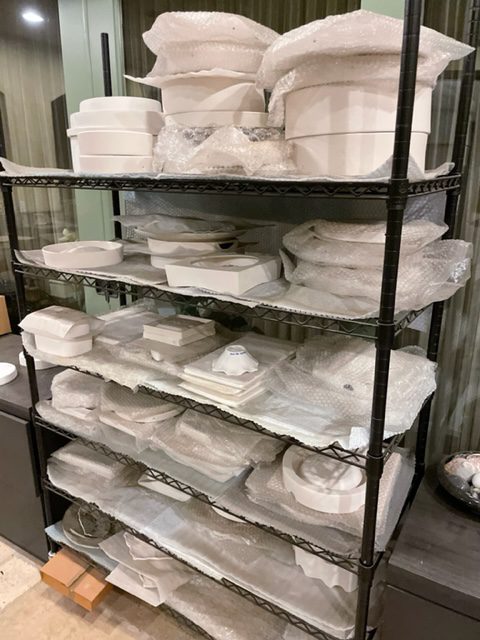
Glassware molds in Li’s workshop | Photo courtesy of Cissy Li

When she began working on her glassware, Li had only a small, used kiln. As she grew more confident in what she was doing, she invested in a much larger one. She also moved her work space out of the billiards room next to the swimming pool on the lower level, up to the main level of her family’s property where the garage is located.

“The kiln looks like a bathtub and I can fire one big piece and several small items,” she describes. “I fire at 1,300 to 1,500 degrees F – it’s really hot. In the winter it’s freezing and in the summer it’s sweltering. Working with glass and ceramics involves a lot of dust too, so the garage is really the best place to do this.”  

“How many hours do you work?” I ask. Li replies, “Once I get started, I keep going for about five or six hours. I do need that stretch of time to think and plan. Working with glass isn’t only about art, it also needs math and chemistry, and hard work – there’s a lot of cutting, grinding, and scoring – but I really enjoy it. It’s like a mystery; the result is different each time depending on the temperature. ”

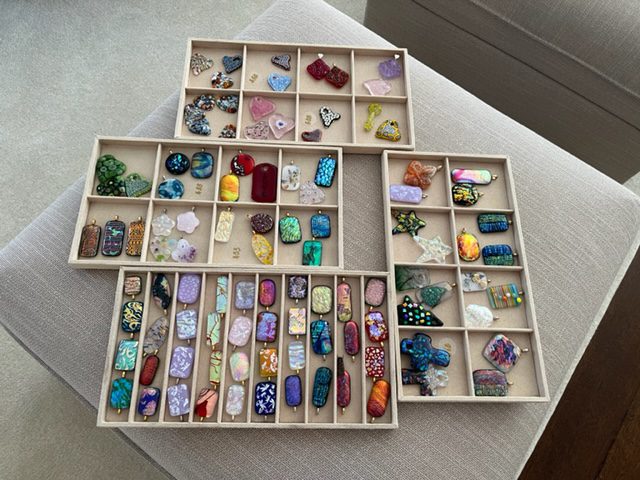
Glass pendants in various colors and and shapes | Photo by May S. Ruiz / Hey SoCal

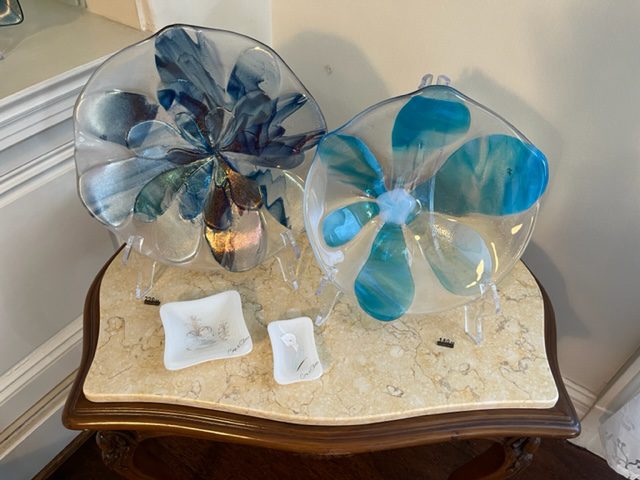
Li patiently explains how each piece of glassware is made, “You do one procedure at a time – you fire from a higher temperature then to a lower temperature. A piece of glass comes three millimeters thick but the product you want to make is six millimeters. You first cut the shape and put two pieces together, front and back. Then you place these in a kiln to melt together, which takes anywhere from 24 to 30 hours depending on the color – it takes longer to make pink and purple colored glassware. This process is called fusing.

“When it comes out, you choose what kind of finish you want. This, for instance, is dichroic glass and reflects two or more colors from different directions. It comes out flat, so the next process is called slumping, which uses gravity and heat from the kiln to shape sheet glass using a mold. Different shapes go into different ‘slumpers.’ You have to wipe it each time it comes out of the kiln – every fingerprint will stay on it so cleaning is an important step.”

“Each piece is unique and one-of-a-kind,” Li explains further. “When you fire glass, there’s always a champagne or catch bubble that makes the end-product interesting. In between firing, you put powder to either eliminate or create a bubble. It’s like an ID, there will be no two identical glassware.”

“The color comes from metals, including silver and copper. This glass, for example, is petrified wood – copper and sulfur reaction. On the front, there’s a brownish color which has sulfur inside; on the back, it’s robin’s egg and it has copper inside. When you melt these two pieces of glass in high heat, you see the reaction. And in this instance, it’s red.”

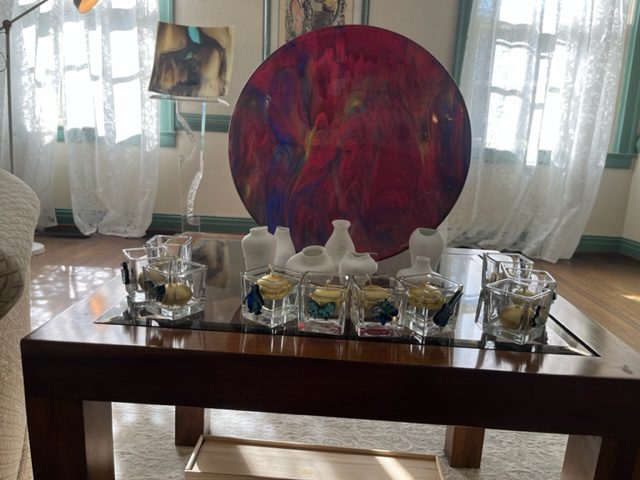
This red platter took Li 72 hours to make |Photo by May S. Ruiz / Beacon Media News

When I ask if she has a favorite piece from the hundreds of glassware and ceramic items in the collection, Li responds, “It’s hard to pick just one because I spent so much time working on every single item.”

I then inquire how she decides what piece to make, and she says, “It’s like with my hat – it’s a passion. Sometimes an idea comes from something that catches your eye. I buy several different feathers for making my hats and they’re all beautiful so I mimicked some of the feathers and they are part of this spring show.”

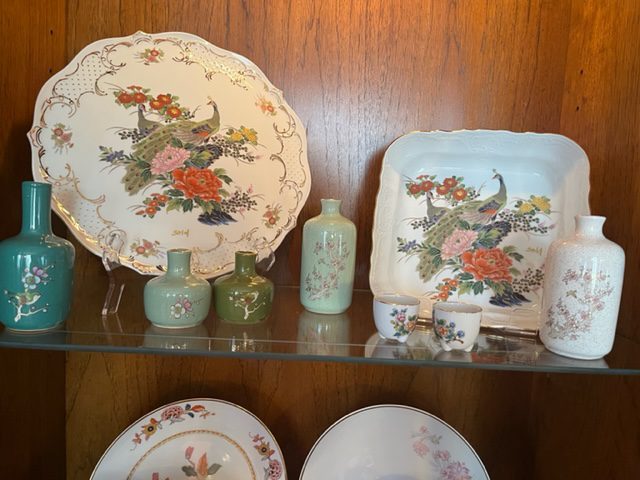
Half of the items in the collection is glassware and half is ceramic. All the glassware were created by Li from scratch, but not the ceramic pieces. She purchases the ceramic bases from four porcelain companies – Kristoff, Karolina (Poland), Cesky Porcelain, and Elizabeth (the Czech Republic).  

Li applied gold luster on these vintage Japanese ceramic platters | Photo by May S. Ruiz / Beacon Media News

“They supply high quality and high consistency china bases so I like to order from them,” Li explains. “I do overglaze enameling and decoupage on them. Sometimes, I also apply mother of pearl or 24k gold luster with the design. These platters with flowers and peacocks, though, are vintage pieces from Japan with a discontinued pattern called Oriental Glamour. I bought small quantities of the last lot and then hand-painted all the gold luster. For the water pitcher, I used decoupage to design the overglaze and fired it in the kiln over 1400 degrees F. It took me about four to five hours to do the decoupage – I had to stand in front of a big mirror to make sure both sides are identical.”  

Decoupaged ceramic water pitcher | Photo courtesy of Cissy Li

There are a few pieces in her spring collection signed “Cissy and Claire” which means that her 11-year-old daughter helped make them. Li says proudly, “She studied painting and clay pottery for years. Sometimes when I’m working, she’ll come up to me and ask if I need assistance. She’ll happily put colored objects together, organize beads and flowers, and give suggestions. She has beautiful hand-writing so she helps me use gold luster to write on glass and ceramic for custom orders.”            

Some objects are signed ‘Cissy and Claire’ | Photo by May S. Ruiz / Hey SoCal

Much like the glassware, the headwear in the show were all designed and handmade by Li. She makes dress hats or afternoon tea hats and fur felt hats which are either rabbit or beaver fur felt.      

Li says, “It takes a minimum of two weeks to make a felt hat because it has to be on wood block steam several times. It takes a shorter time to make a dress hat if I have all the materials, but most of the time I have to search around for the colors to match. Fifty percent of the feathers I use are ordered from England, France, and Spain.”

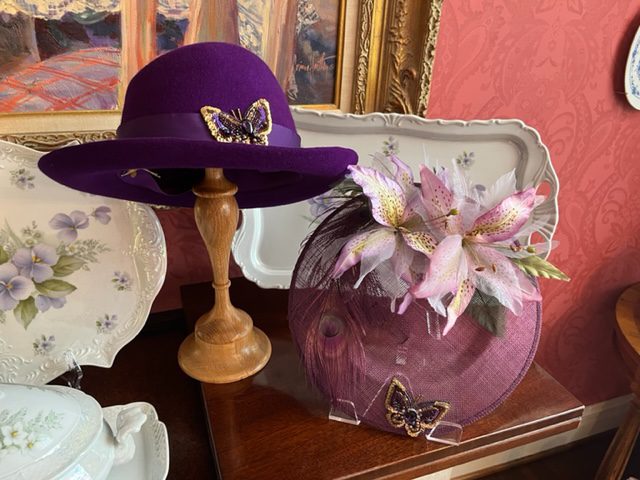
Two hats in the same color scheme but different materials | Photo by May S. Ruiz / Hey SoCal

I choose two hats that use different materials – a felt hat in aubergine with a butterfly embellishment and a purple fascinator decorated with pink lilies, reddish brown feathers, and a smaller butterfly – and Li tells me, “The one on the left is rabbit fur felt. The butterfly beadwork is by a Ukrainian artist which she handmade with Swarovski crystal. The one on the right is an afternoon tea hat or dress hat. The silk flowers are hand-painted by a Spanish artist; the peacock feathers are from the United States and color-dyed.”

All of Li’s spectacular creations involve hundreds of painstaking hours to complete and as many professional tools to accomplish. It’s surprising, therefore, that the items are affordable and might even be underpriced. Her glassware pieces cost anywhere from $35 pendants to $650 platters; the hats run about $475 to $700, depending on materials; and ceramic items are priced from $65 a plate to $3,000 for a set of 12.        

The spring show opening, held on Sunday, March 20, 2022, was attended by fewer people than her previous exhibitions because we’re still emerging from a pandemic. However, there’s still time to catch it.   

“The show will be open until April 15th and we want to make it as safe as possible for everyone,” Li assures. “So we’re offering private tours and viewing and people can call me at (626)808-1599 or send me an email at cissyxili@gmail.com to schedule an appointment.”

It’s spring in Southern California! And what better time to enjoy the outdoors when the weather is mild, than with a midday or afternoon tea with friends? A fabulous fascinator completes your attire. But why stop there? Spring clean your house and add a beautiful glassware on the living room table.

After sheltering in place, covering our faces with masks, and social distancing for two years, we’re finally feeling alive again! Here’s to a Happy Spring!