Also published on 28 April 2025 on Hey SoCal
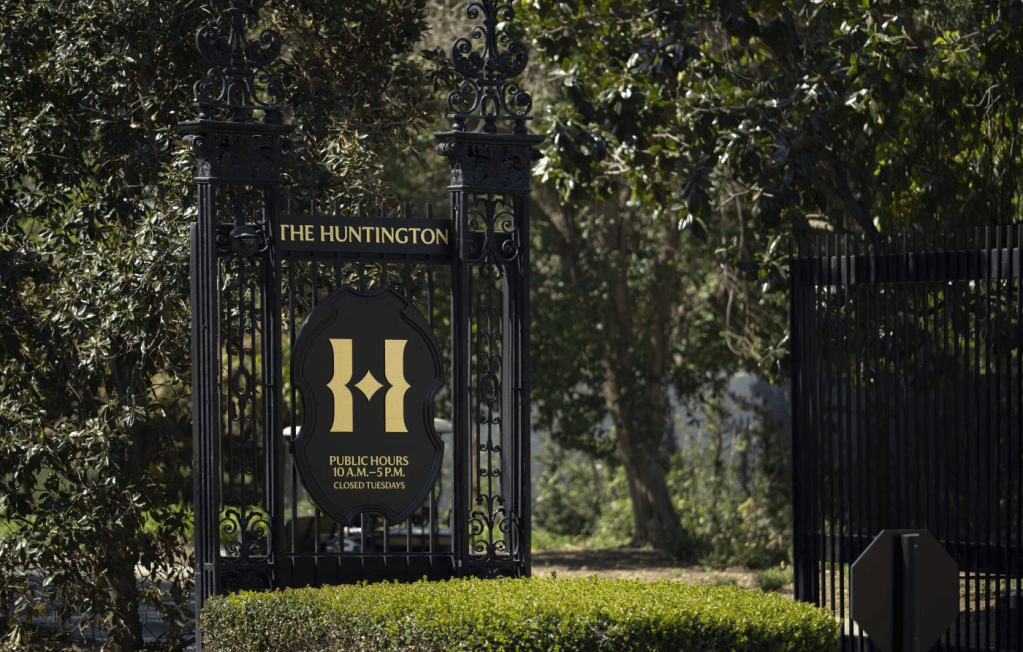
New Signage at The Huntington gate. | Photo courtesy of David Esquivel / The Huntington
Frequent visitors to The Huntington will be surprised to see starkly different signage as they enter the gates. The familiar name The Huntington Library, Art Museum, and Botanical Gardens with all its flourishes has been replaced with only the letter “H.” The bold visual identity and simplified name “The Huntington” are just the introduction to the institution’s first sweeping branding initiative in its 106-year history.
The H monogram signifies a foundation grounded in tradition but focused on modernization. Incorporating a jewel-like center, it serves as a reminder that The Huntington is a treasured cultural institution. The gem is flanked by two stylized pillars – one pointing left toward the past and one pointing right toward the future.
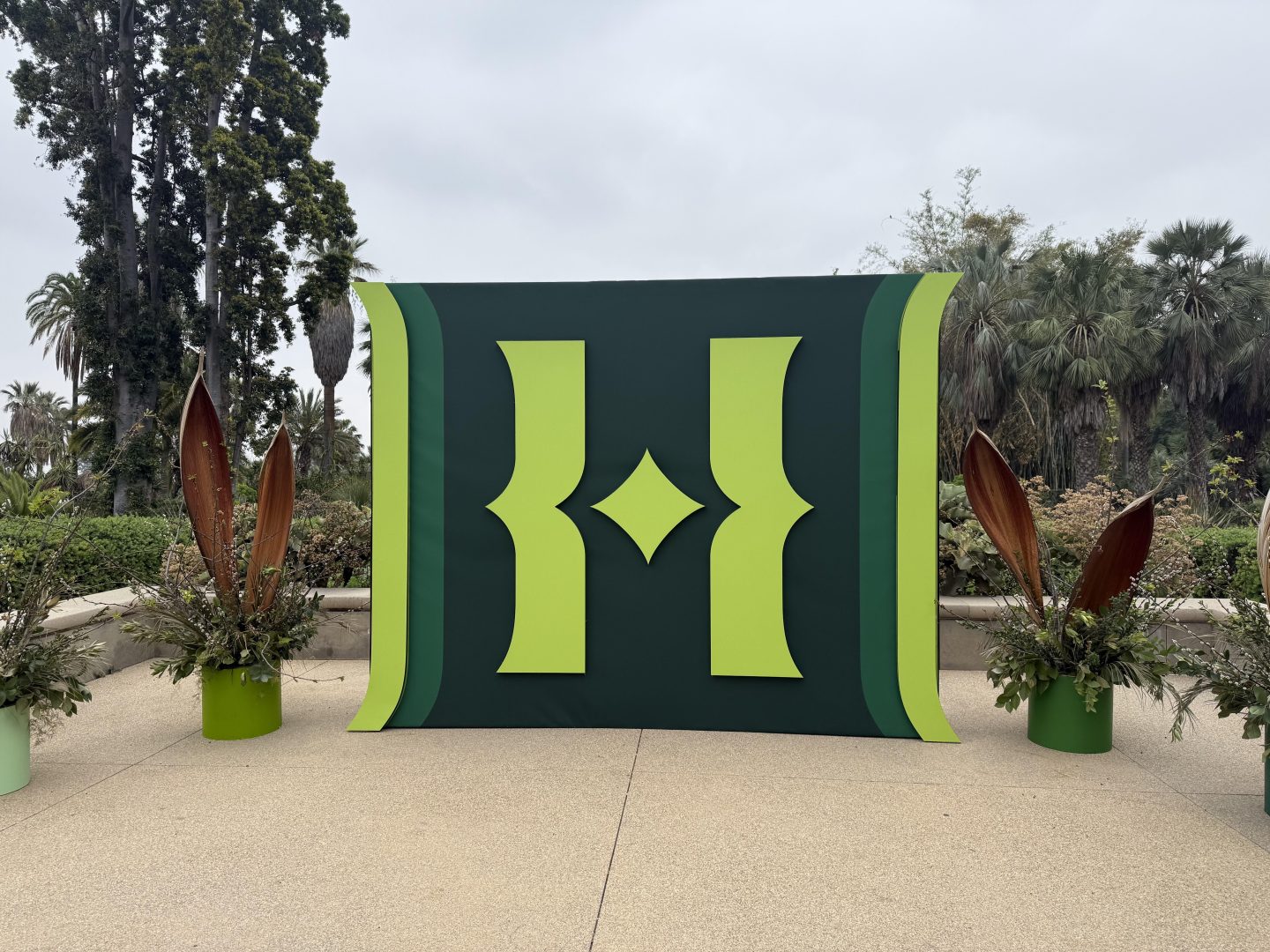
Launched on April 8, 2025, the brand rollout includes new signage, a refreshed website, a marketing campaign inviting visitors to “Rediscover The Huntington,” educational content for all ages, new branded merchandise, celebratory giveaways, and special Second Sunday events with activities for all ages. The rebrand is propelled by the visionary One Huntington strategic plan led by President Karen R. Lawrence – a transformation that marks the next chapter in the institution’s evolution.
Interviewed by email, Lawrence spoke about the concept behind the rebrand.
“The rebrand emerged from our strategic planning process,” she said. “It supports our institutional priorities and commitments directly; in particular, demonstrating the connections among our three core collections – library, art, and botanical – and expanding access, engagement, and education for a broader public, both digitally and in person.
Expounded Lawrence, “What is most important to note about our new brand is that it helps The Huntington achieve several objectives:
“Connecting our collections: First, we simplified our name from The Huntington Library, Art Museum, and Botanical Gardens to just The Huntington. It better represents the powerful cross-fertilization among our three core collections and conveys that the whole is more than the sum of its excellent parts! We use the term ‘One Huntington’ to describe these unique connections.
“Our monogram, too, reflects this unity: While our previous monogram borrowed heavily from the botanical, our new H – with a jewel-like center flanked by two pillars – captures the essence of what we do as an institution. One pillar honors our history, the other looks to the future, and the gem in the middle is what makes The Huntington unique: our people, our collections, and our mission.
“Increased accessibility and digital agility. Our previous ornate H was beautiful but didn’t scale well – imagine trying to decipher that intricate design on a smartphone screen – it simply didn’t work. The new monogram is clean, modern, and legible across all formats.”
The extensive branding initiative entailed getting input from all quarters. Lawrence stated, “Members of our Trustees and Board of governors were thoughtful partners throughout the process. They wanted to make sure that we preserved what has always been special about The Huntington but endorsed our desire to reflect recent initiatives as well. We issued an open request for proposals from firms that specialize in branding and communications and ultimately selected Base Design, an international creative agency, to help guide us. The process was collaborative, with feedback loops at every stage – from early concepts to final design.”
“We formed a Steering Committee and a larger stakeholder group,” added Lawrence. “We intentionally involved staff from across the institution, because a brand isn’t just a logo – it’s how we see ourselves, how the public sees us, and how we want to be seen.
“We invited a wide range of stakeholders to weigh in on the design concepts, suggesting a number of modifications, including the logo. Their feedback helped shape not only how the brand looks but also the spirit it conveys.”
The final decision about the new brand was not arrived at single-handedly by Lawrence. She clarified, “It was a consensus-driven process. We took an iterative approach that allowed many voices to be heard and incorporated along the way. Together, we made some course corrections, which I believe made the final product better. It honestly reflects a shared vision.”
Lastly, Lawrence encouraged people to see for themselves what The Huntington offers.
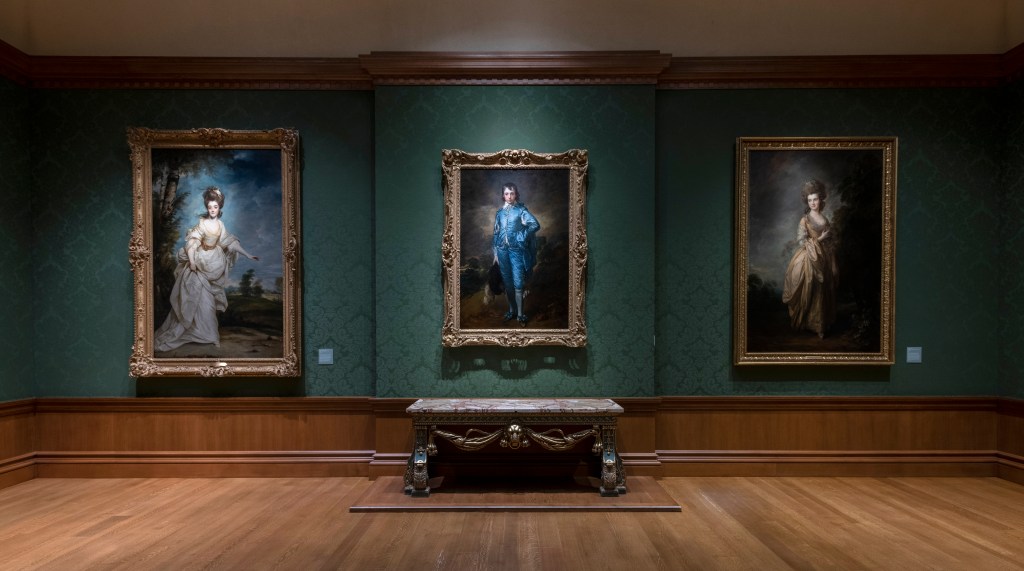
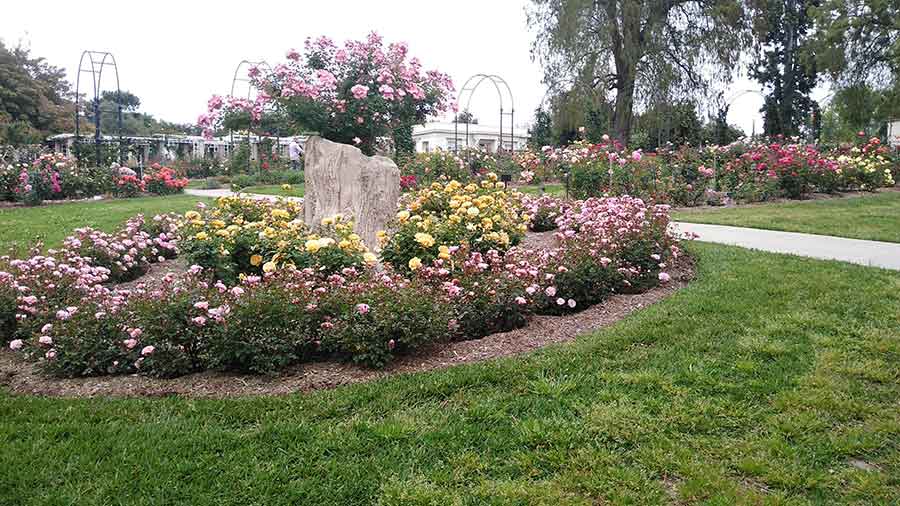
“We are inviting everyone to Rediscover The Huntington. We are known as a superb research library to scholars around the world. Members of the public know us for our Rose Garden, or for The Blue Boy and our Ellesmere Chaucer, and we’re rightly proud of these masterpieces, but we’re also home to more contemporary and recently-acquired works and collections – by Thomas Pynchon, Betye Saar, Octavia Butler.”
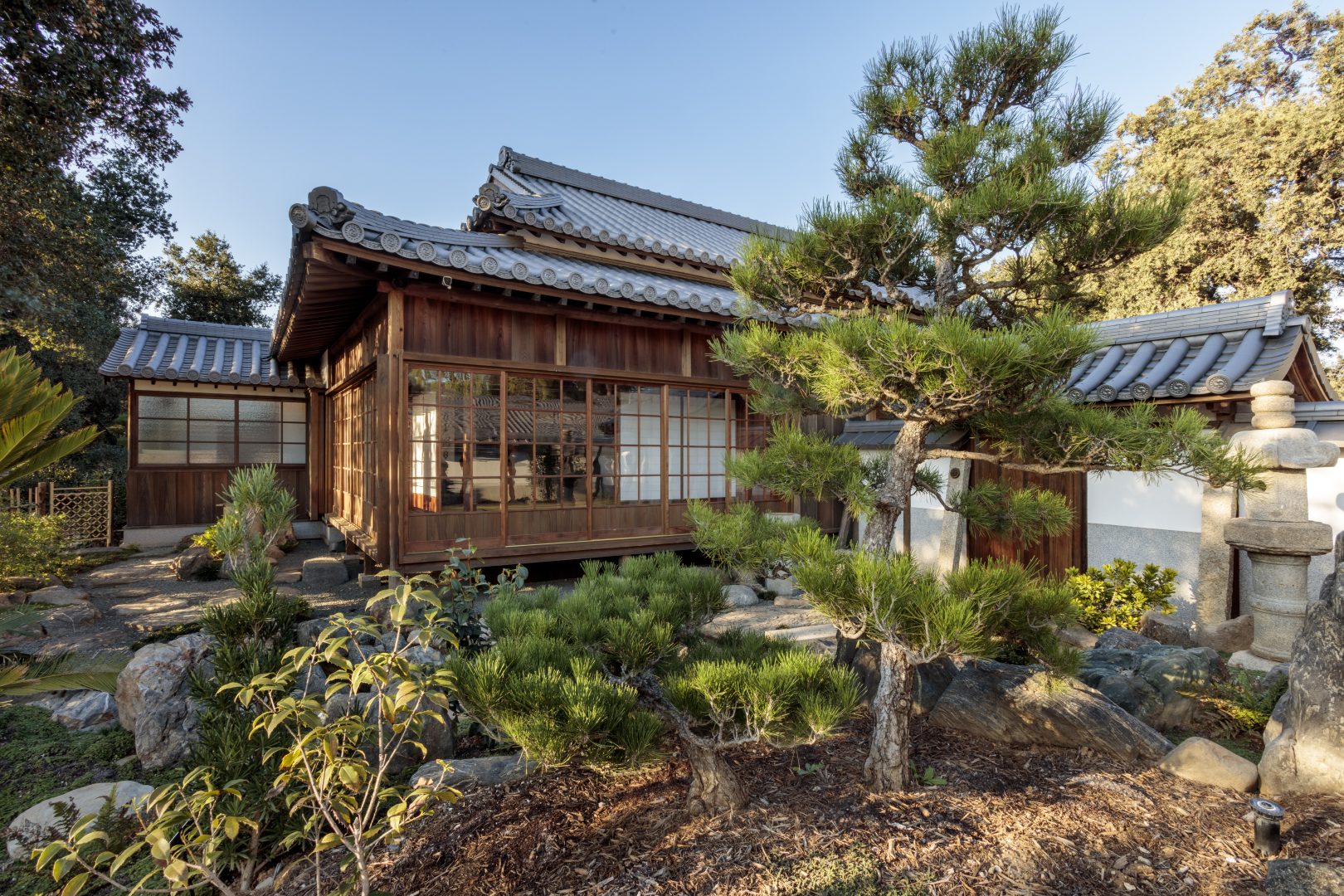
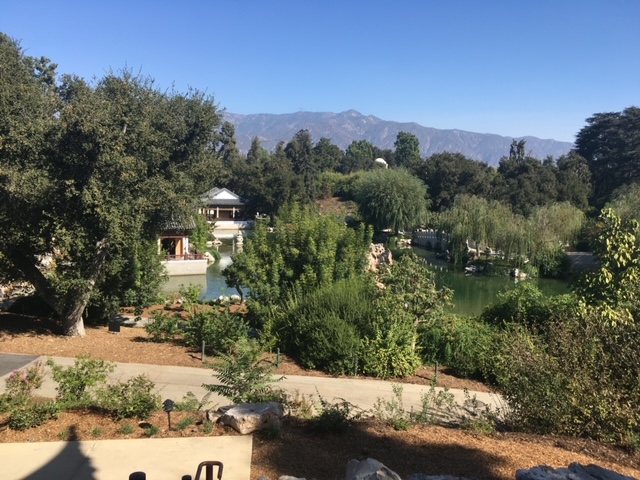
“Other ‘new’ acquisitions include a 320-year-old Shōya House in the Japanese Garden, which was moved piece by piece from Japan to its new home. The house, with its surrounding ecosystem, is a historic example of a contemporary priority – sustainability. We hope our longstanding visitors as well as new ones will find new and surprising things to discover here.
“With our new visual identity and streamlined name, we’ve also launched a series of digital initiatives that expand our reach, bringing The Huntington to global audiences – students, researchers, and our ‘community of the curious.’
The execution of The Huntington’s rebrand fell to Annabel Adams, who came on board in August 2024 as Vice President for Communications and Marketing. While she took me on a tour of the site one week after the rollout, she talked about stepping into this new role only six months before the launch, the new logo, and the programs that lean into The Huntington’s values.
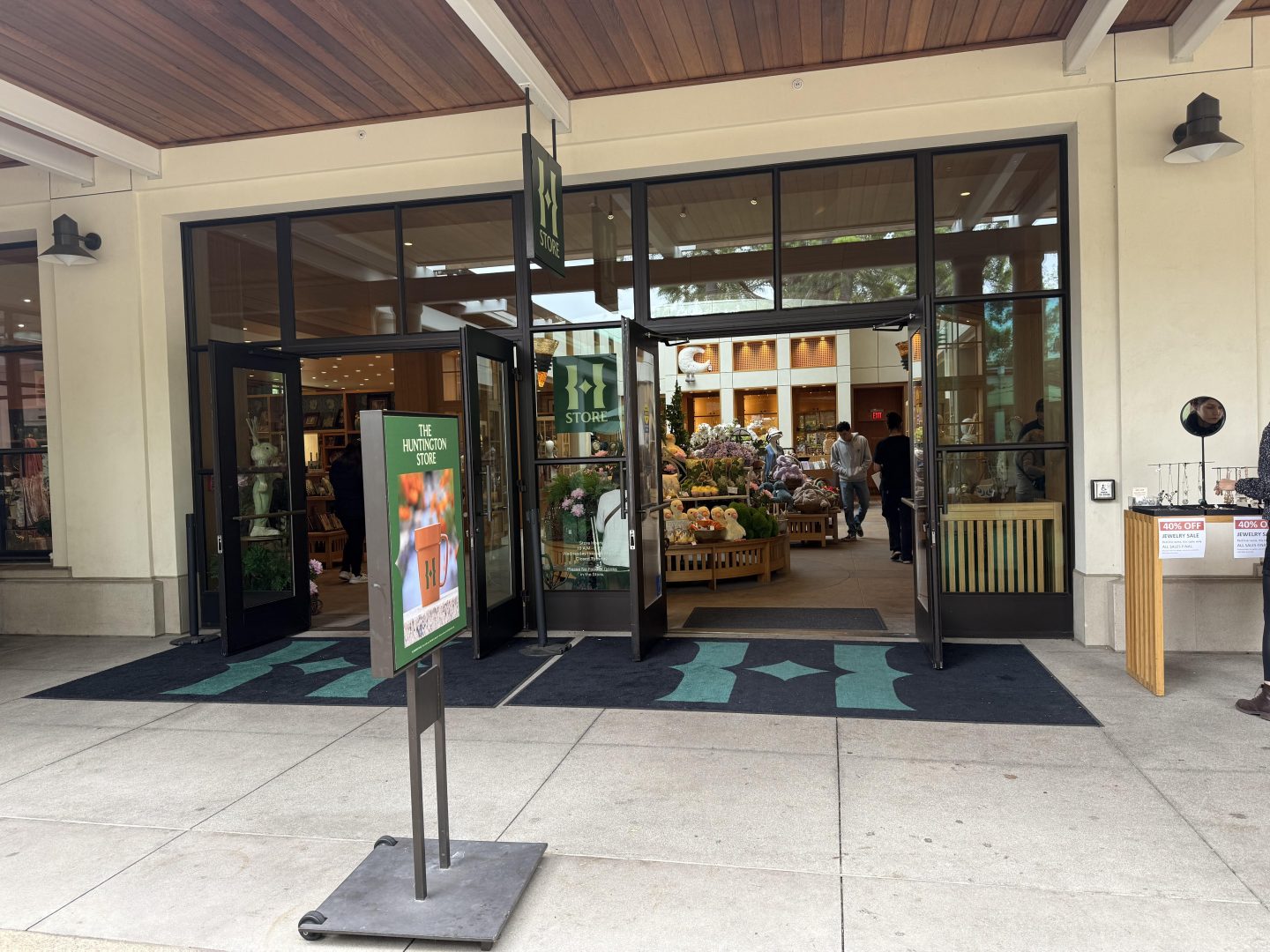
“I knew coming in that I was going to lead the rebrand, but I didn’t get to see the brand because we had to keep it confidential,” Adams began. “This was actually years in the making. My predecessor Susan Turner-Lowe conducted a stakeholder and focus groups. They did studies to assess how a brand can lean into our values and serve our communities better. That’s what led to this rich color palette, the agile and adaptable H that can scale both for print and digital media. It is in service to all the research they did for years coming up with this brand.”
Continued Adams, “I had the privilege of coming on board when the brand had already taken shape and my job was to deploy it – to bring it to life across the institution. I worked with my incredible communications team to adapt the signage, the website; anywhere there was an existing logo or monogram, we touched it with the new brand. And there were hundreds of them!”
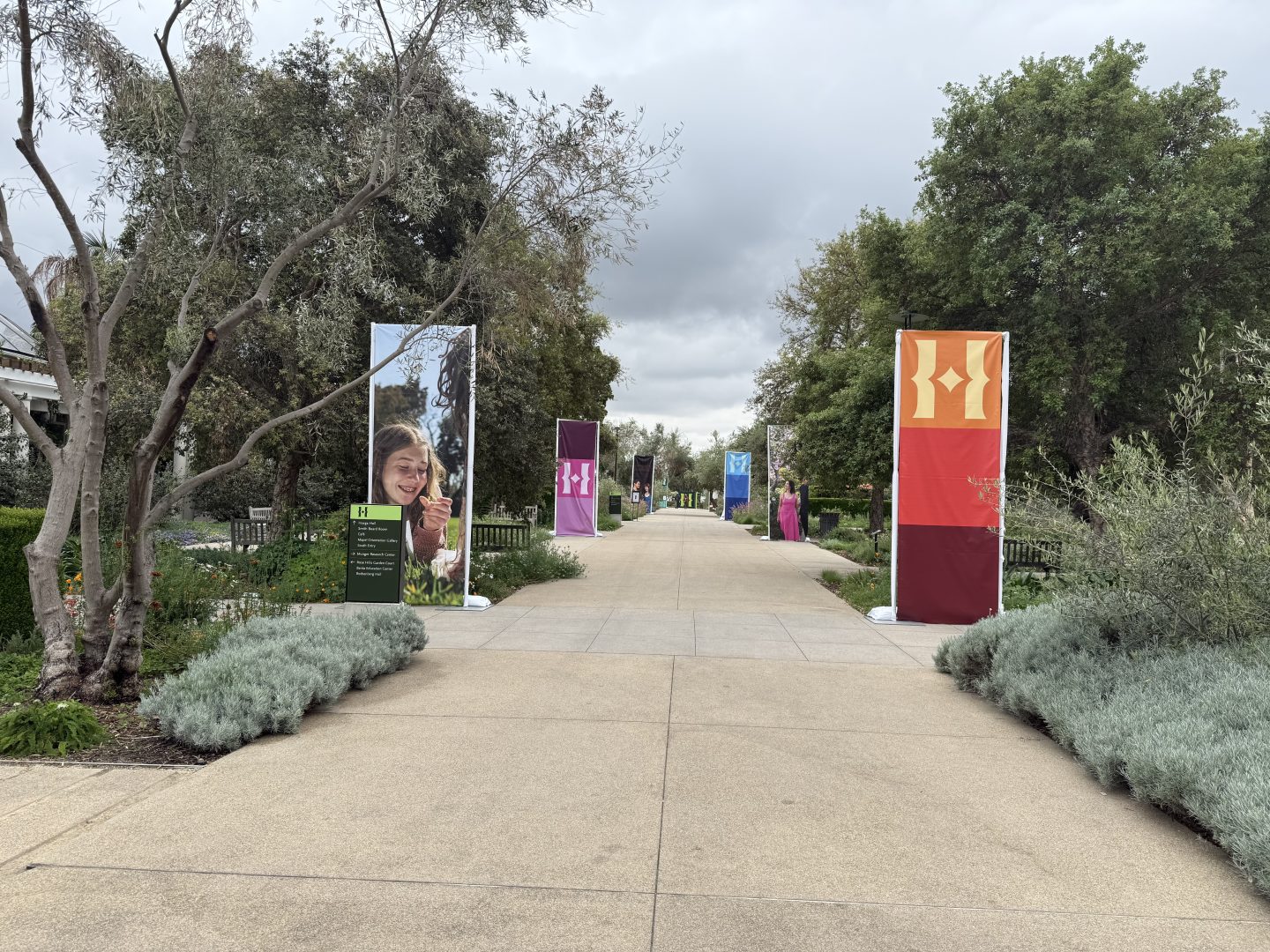
As we approached an allėe of banners on the Brody California Garden, Adams said, “Our creative director Lori Ann Achzet was the talent behind the scenes bringing this striking brand to life. She created these banners – which show how people engage with the collections at The Huntington – and did the front gate revamp. She’s an incredible designer and asset to us.”
“Part of the rebrand is to remind people that there are three components to The Huntington – the library, art museum, and botanical gardens,” Adams reiterated. “People love the ornate H with the filigree and leaves – it’s so beautiful. However, it really is representative just of the botanical gardens. We’re proud of our 130 acres of botanical gardens, but we also have an art museum and a library. The rebrand is meant to unify and showcase that we are the synergy of these three collections. The arrows in the monogram also have significance: the arrow pointing left means traditions which we are honoring and the one pointing right is for innovations.”
“You do realize this redesign will be met with resistance from people like me who have been coming here for decades and are very familiar with the old monogram,” I pointed out. Without hesitation, Adams countered, “I’m aware of that. But it’s important to note that all the things that everyone loves at The Huntington have not changed. I take it as a compliment that people feel so passionately about The Huntington they know and love. And that resistance to change speaks to how powerful people’s affinity to the institution is.”
Adams again echoed Lawrence’s explanation for the rebrand, “Our old monogram – as ornate and beautiful as it was – could not scale down in an iPhone icon. This new H is accessible for a digital world; we want the experiences of our brand to be accessible to everyone and the ornate H wasn’t.”
“Our values are what guided the brand and my job is to find ways to further lean into them,” Adams asserted. “Those include being more accessible, adapting to a digital world, ensuring our audience can engage and benefit from The Huntington. Then that meant we also have to develop programs that could help us see the brand in action.”
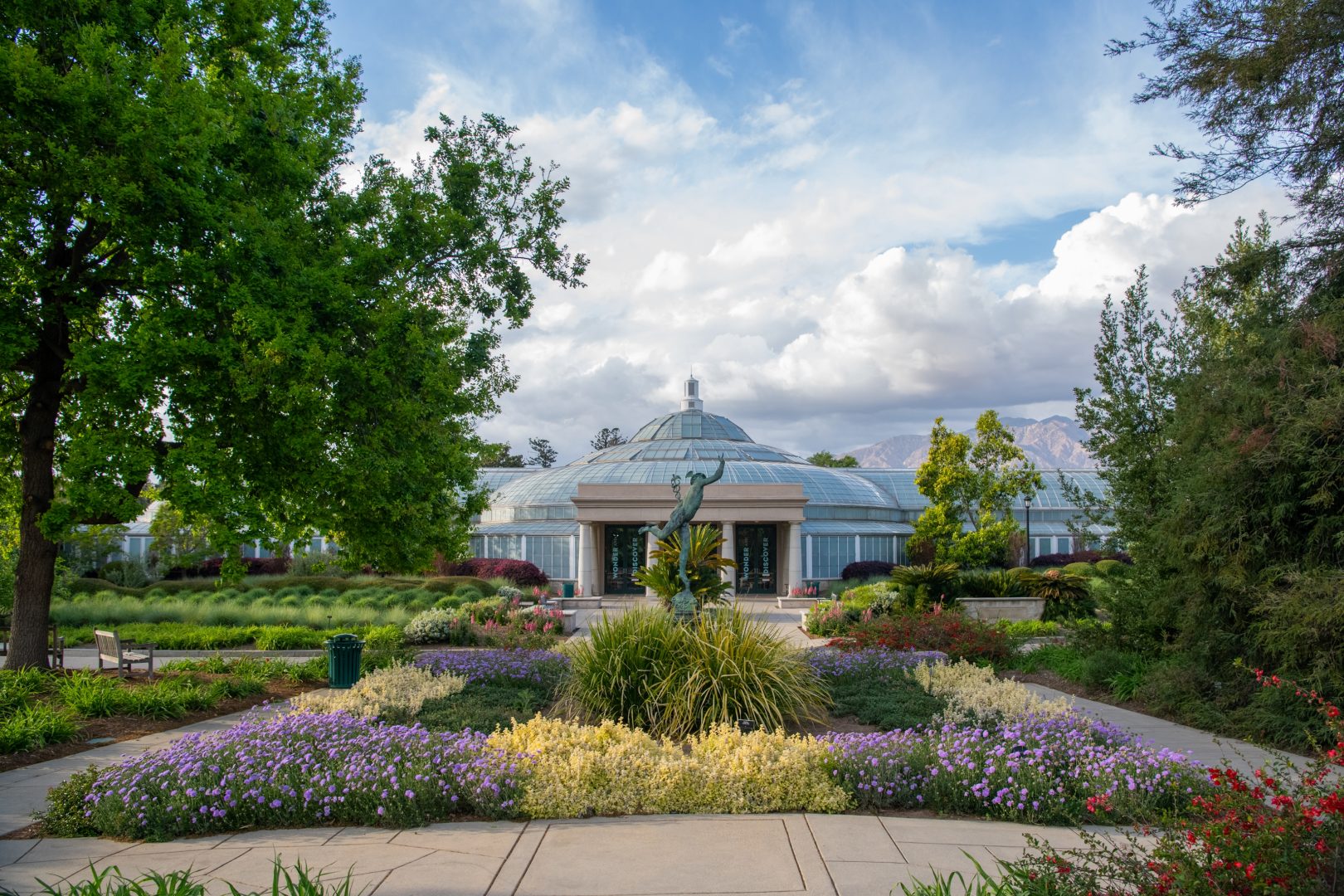
The Huntington’s evolution reflects its increasingly important role as a world-renowned institution – welcoming over one million visitors, hosting more than 500 school groups, engaging about 2,000 scholars and 1,000 volunteers, and reaching approximately seven million website and digital library users and 110 million social media users annually.
As part of the brand launch, The Huntington is expanding its reach with new digital products that connect students, lifelong learners, and global audiences to its renowned collections – anytime, anywhere. These offerings include:
“Huntington How To”: This four-episode YouTube series brings The Huntington’s collections to life through practical guidance from its in-house experts. The first episode, featuring Stephen Reid, assistant curator and head gardener of the Rose Garden, demonstrates how to grow and care for roses, even in Southern California’s unique climate. Future monthly episodes will explore such topics as deciphering historical handwriting, interpreting decorative arts, and repairing books.
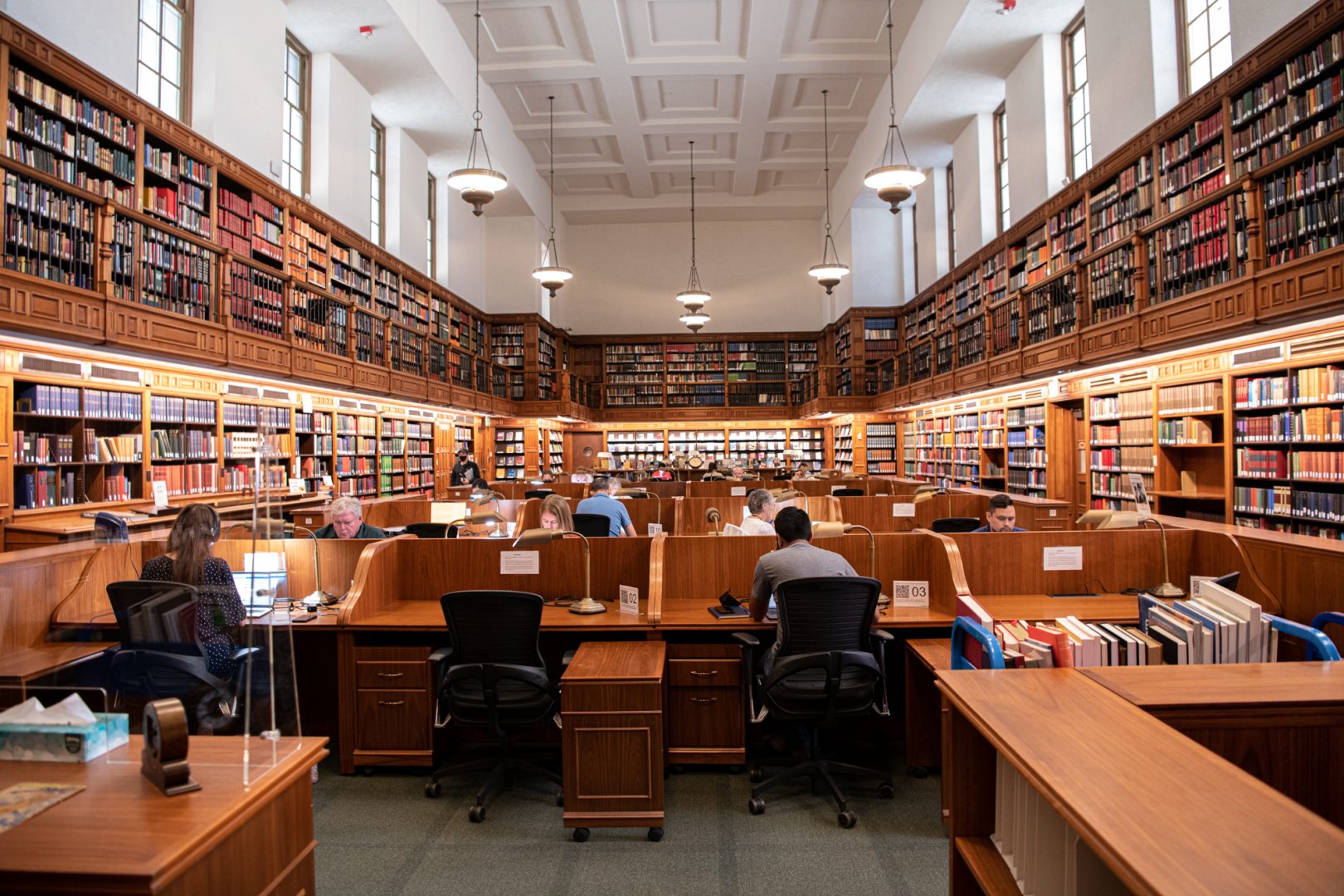
“Collections for the Curious”: Designed for the intellectually curious, this new digital discovery tool will allow online visitors to explore The Huntington’s holdings by using keywords and filters, generating results from the library, art, and botanical collections. The public tool will launch in June with a series of curated highlights that will spotlight unexpected connections among The Huntington’s three collections, including items from recent exhibitions, as well as Latino art and artists, tea services, and women artists.
“Everyday Extraordinary”: Developed in collaboration with award-winning educational content producer Makematic, this playful animated series introduces primary school students to fascinating scientific concepts in a fun and accessible way. Episodes will explore such botanical topics as photosynthesis, mushrooms, and carnivorous plants. The series will launch in May.
According to Adams, The Huntington partnered with Museums for All to make the institution affordable for everyone. Individuals who receive SNAP (Supplemental Nutrition Assistance Program) benefits are eligible for a reduced admission of $3. Since the partnership’s launch in January, The Huntington has welcomed nearly 8,500 visitors through the program.
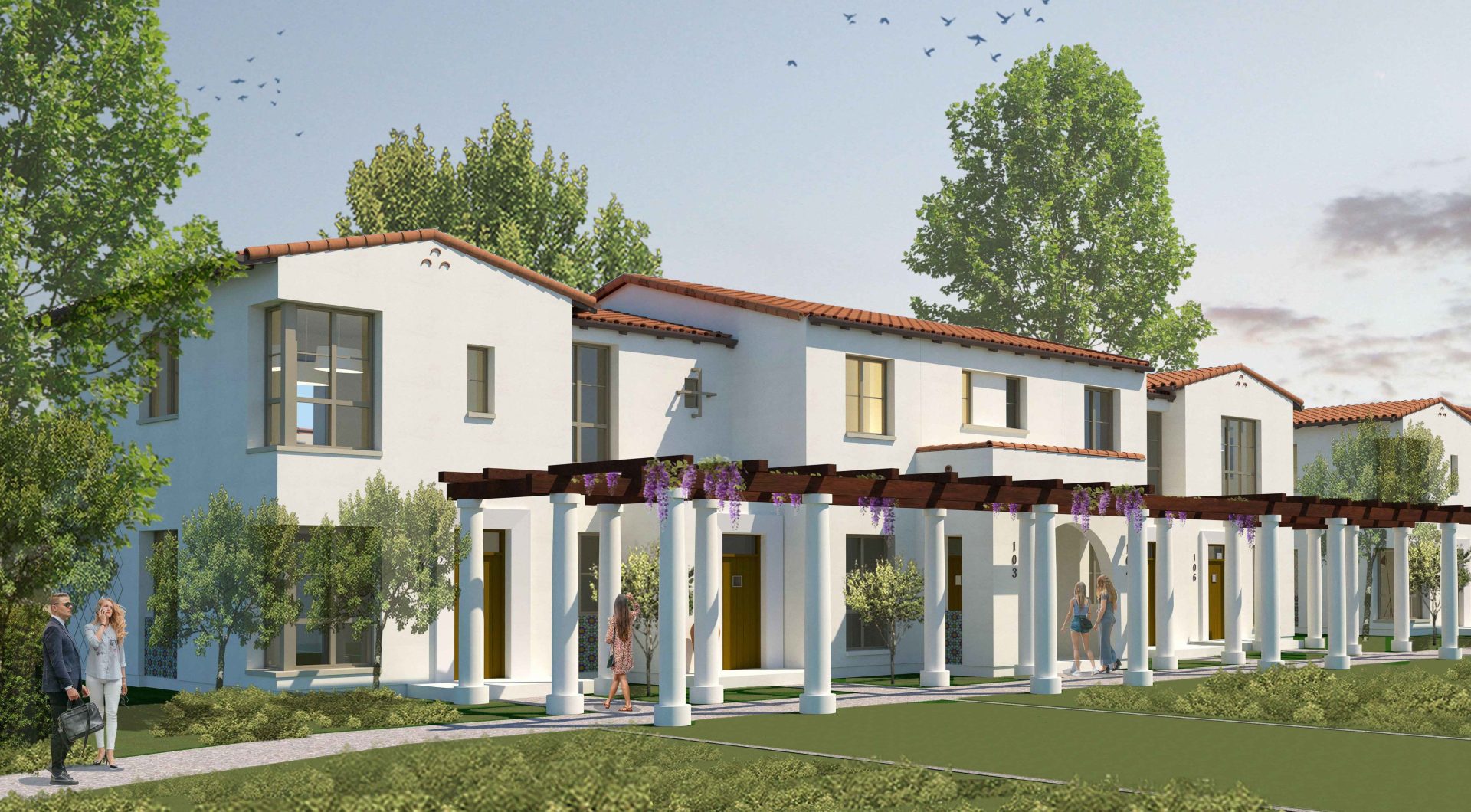
An important project is the development of Scholars Grove, a residential community designed to support visiting fellows conducting research in the institution’s renowned collections. Scheduled for summer construction to last 14 to 16 months, it will address long-standing housing challenges for The Huntington’s visiting research fellows – providing 33 residential units arranged in seven one- and two-story buildings, along with a commons building designed to foster interdisciplinary collaboration.
The project design incorporates and preserves 150 trees, including a Magnolia pacifica tarahumara (the only known mature specimen in North America), several historic oaks, and a research grove of avocado trees – one of which dates to founder Henry E. Huntington’s time.
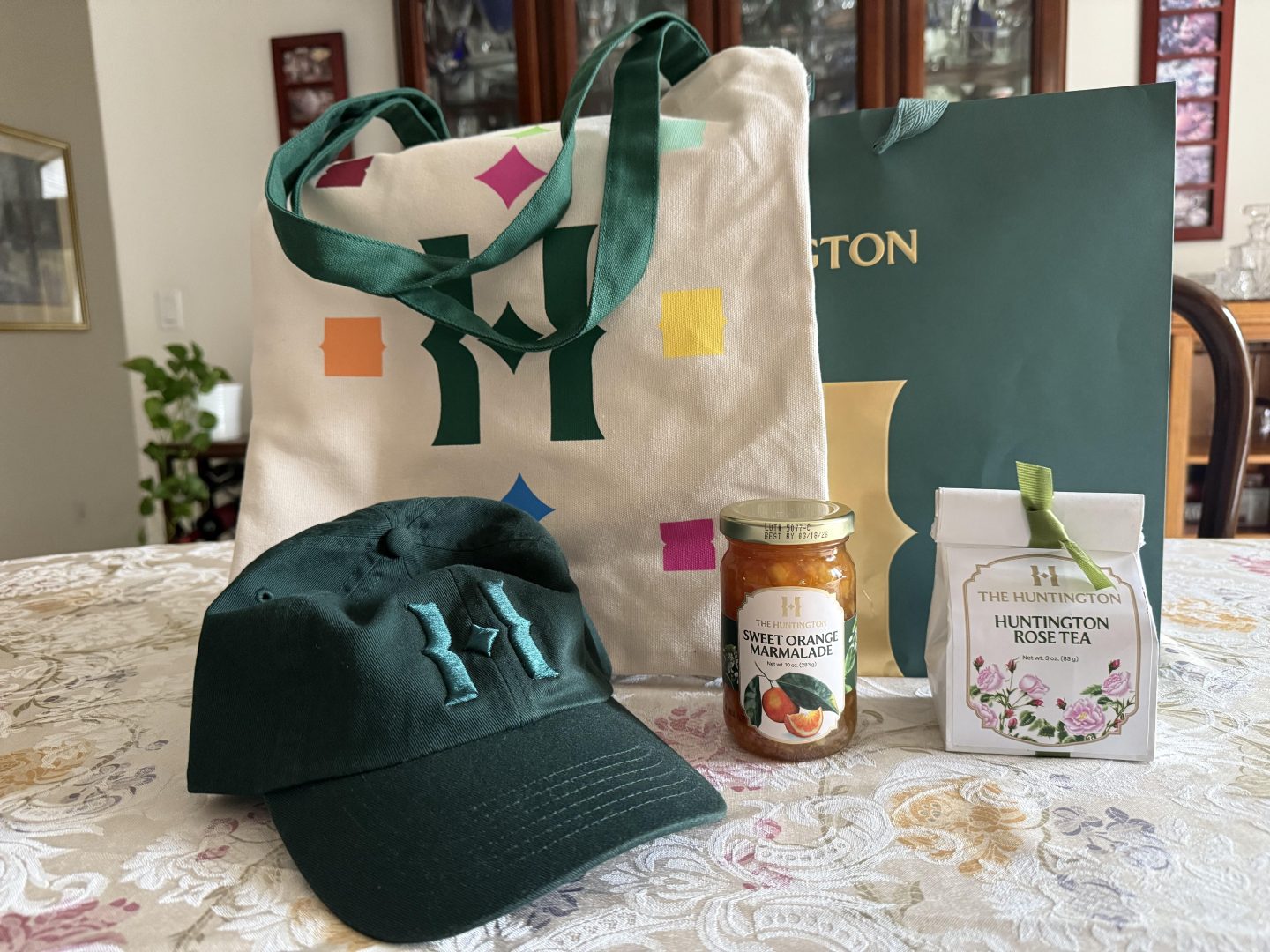
Asked what the biggest challenge was for her, Adams responded, “Doing all this in six months! But there is an undercurrent of enthusiasm and possibility at The Huntington that I find really refreshing and energizing. So I think it was never a question to me of whether this was possible, it was just how do we think of this as a continual deployment? In six months we have this major launch but we are going to continue to lean into the brand now. The launch was a catalyst and how we maintain that momentum is the next phase.”
“We have this beautiful ad that’s coming out in the Museum section of the New York Times – the first time that we’re going to have an advertisement that shows an object from each collection represented as this one foundation and what it offers to the world as a cultural institution. One of items we’re spotlighting in the ad is Octavia Butler’s archive. It’s also the first time we’re spotlighting in an ad this incredible collection that’s so meaningful for us to have at The Huntington. Octavia Butler is a Pasadena native and her work always had impact and meaning, but I think it specially has meaning at a time like now. It’s going to be exciting to see how we can continue to bring that message of what The Huntington has to offer across its collections to everyone through how we communicate with our audience,” expounded Adams.
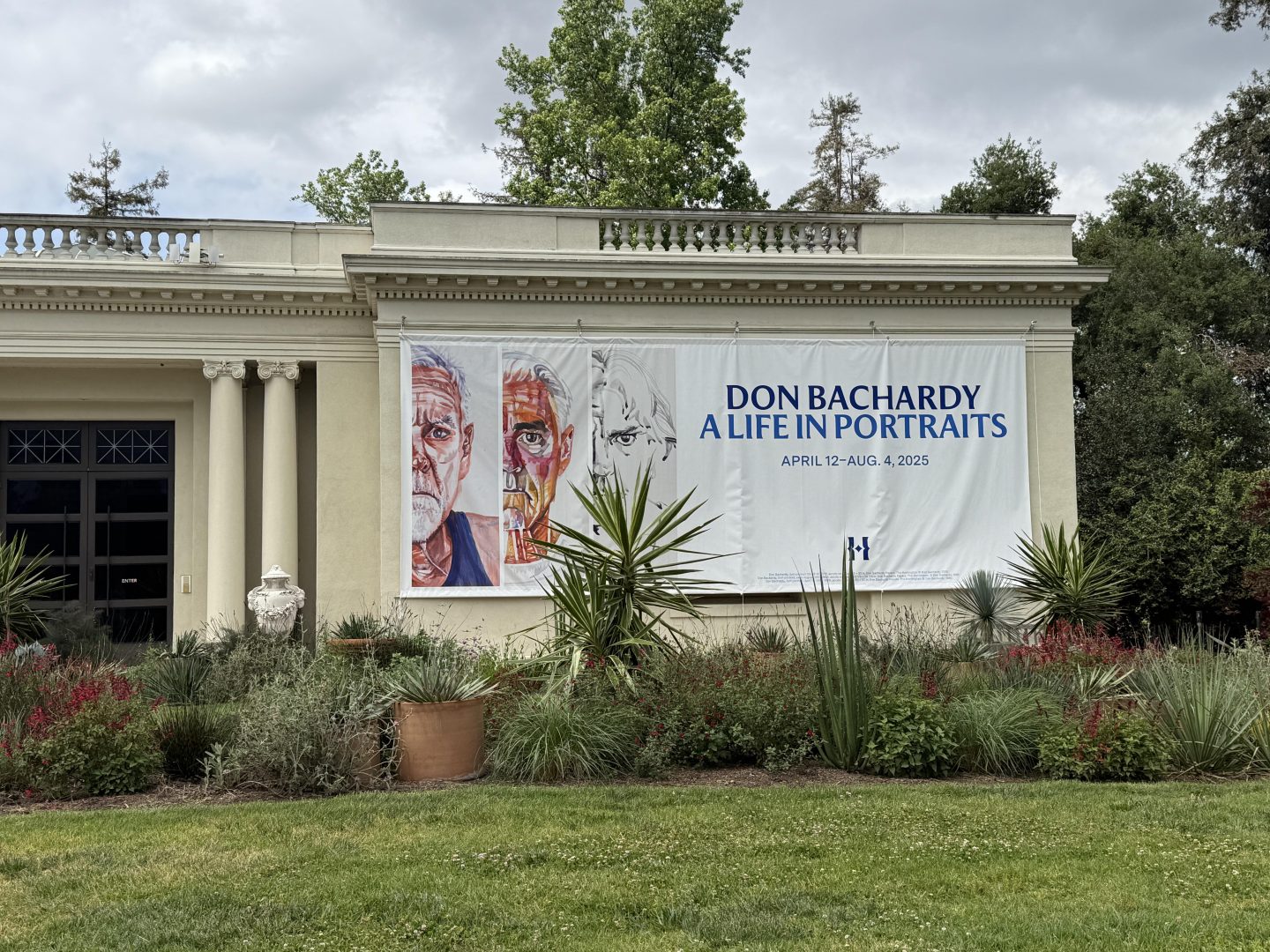
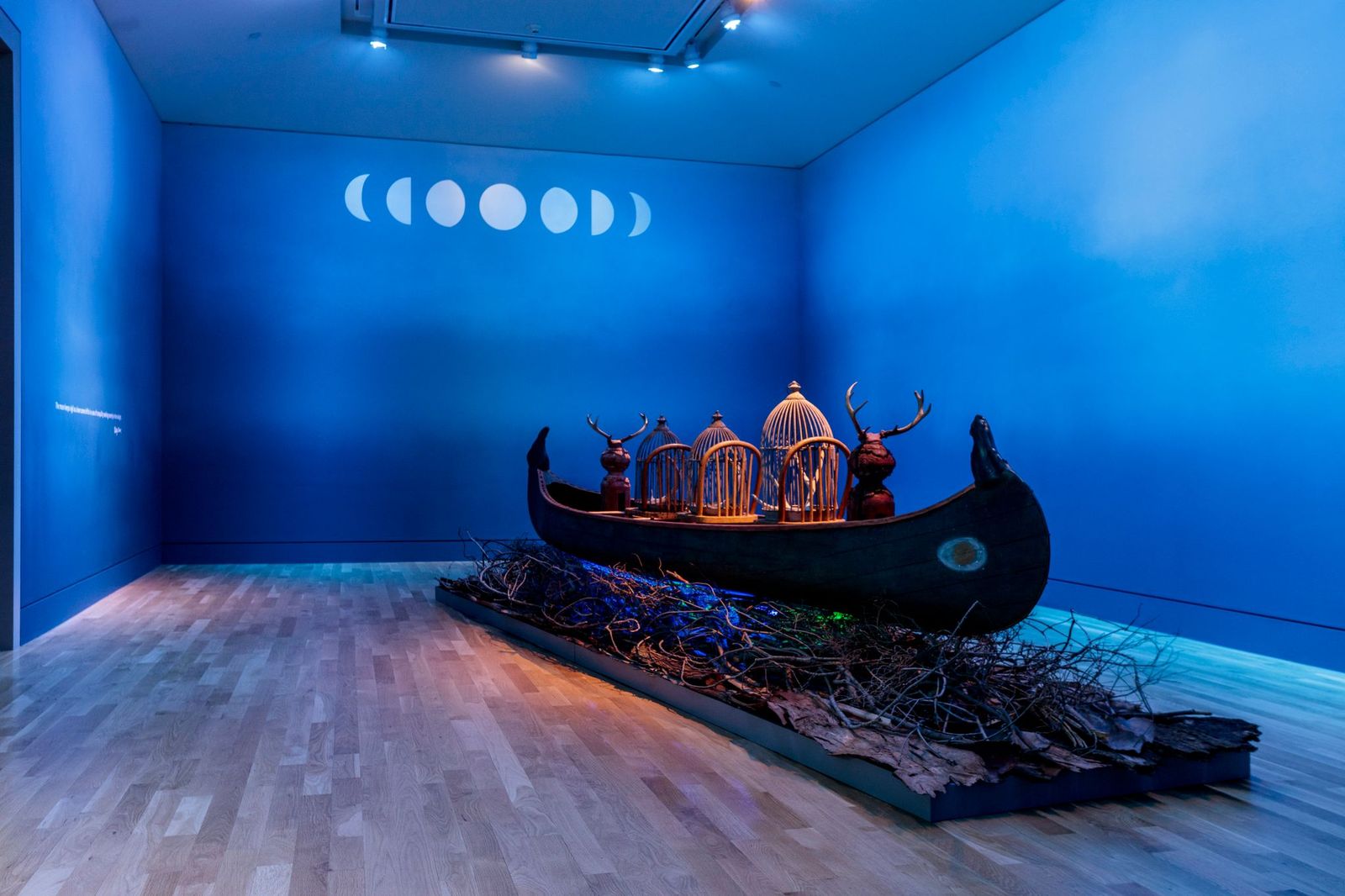
Added Adams, “We have a number of great exhibitions planned this year. Don Bachardy in the Boone Gallery is the first exhibition in the new brand. You see on the title wall how the colors and the font work. It’s really legible and accessible.”
“The power of this brand is the accessibility,” Adams emphasized. “A brand is more than just the visual identity, it’s the execution in action. Things like the YouTube ‘how to’ series, Museums for All, the Scholars Grove – those are initiatives that spotlight the accessibility that we’re leaning into with this new brand, the legibility, even our color palette. The colors weren’t chosen willy-nilly, they were from items in our collections in the library, the museum, and the botanical gardens. These are colors that represent The Huntington and that’s why they’re meaningful. These images of people in action are meant to signify that when Henry Huntington created this institution, his goal was to put these collections to use.”
“It’s our invitation to people – to rediscover The Huntington,” declared Adams. “We haven’t changed. You know us for Blue Boy and Pinkie. But do you also know us for Borderlands? Do you know us for the Kehinde Wiley portrait? Do you know us for Shōya House? Come and see everything that The Huntington offers.”
The Huntington means different things to different people. I first visited The Huntington 43 years ago because of the Ellesmere manuscript of Chaucer’s Canterbury Tales and Shakespeare’s Folio in the Library and The Blue Boy and Pinkie in the Art Museum.
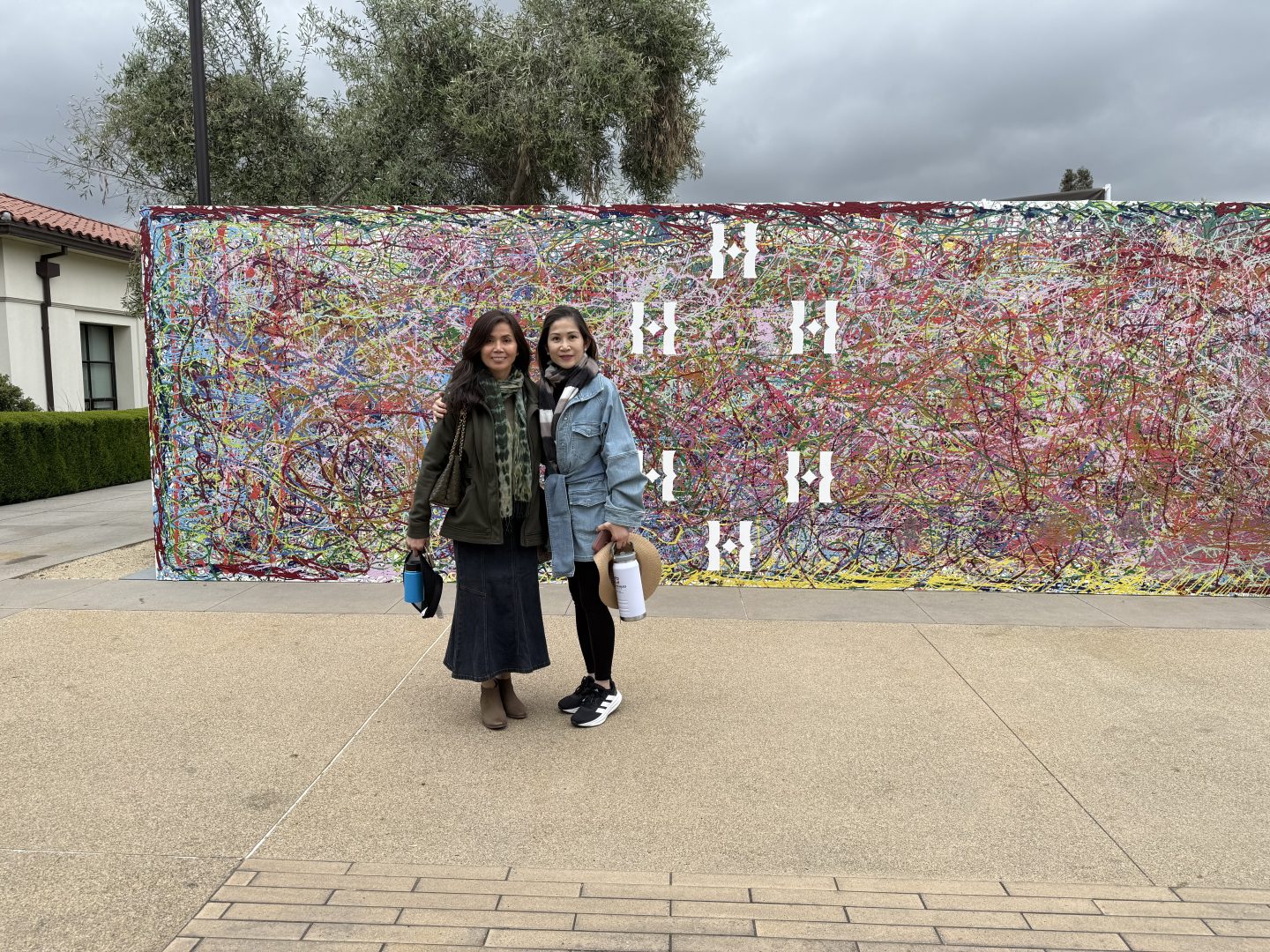
For Abby Mirhan of South Pasadena, The Huntington means the gardens. She was there one Friday to rediscover what she loved about it and find new things she hadn’t seen.
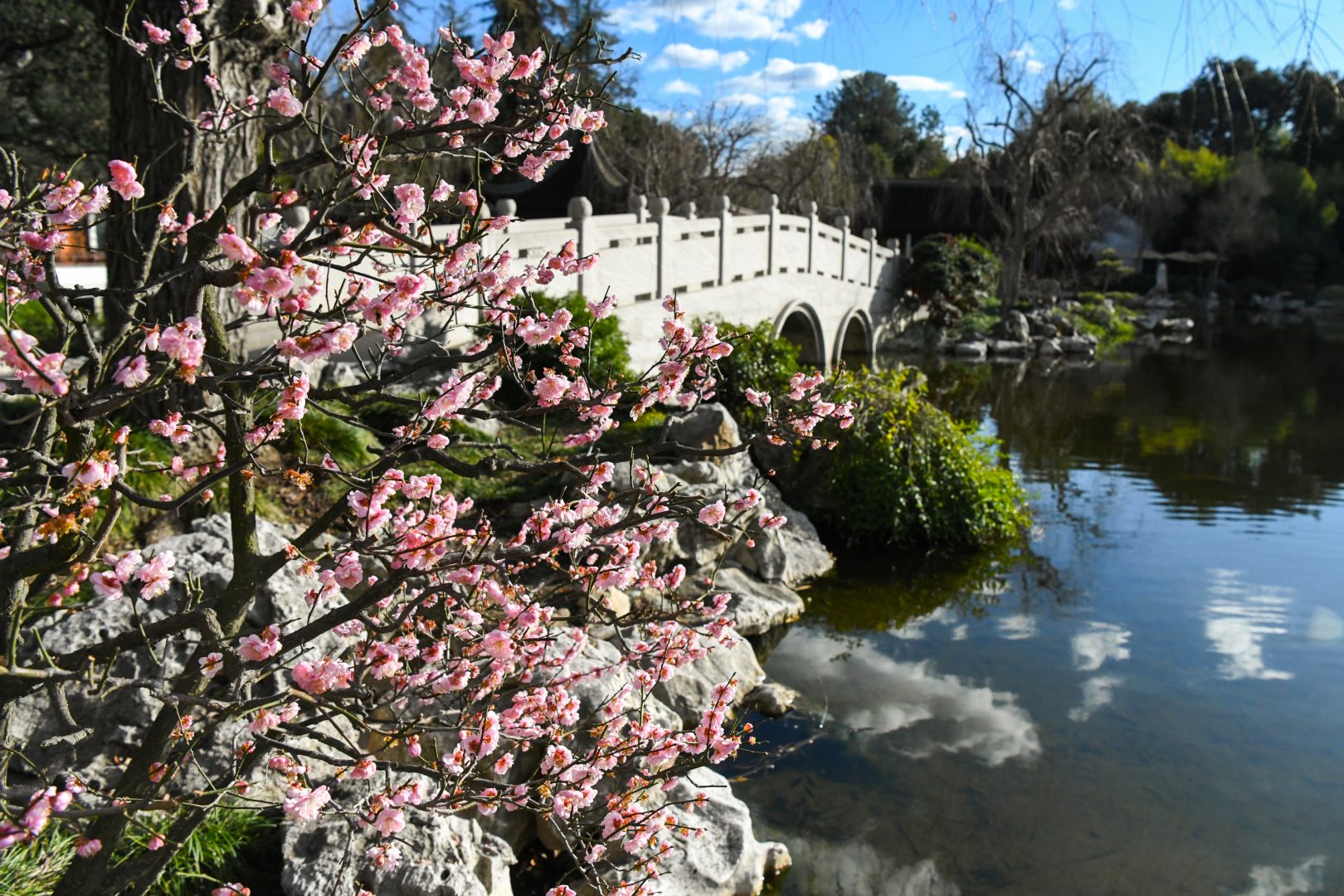
Mirhan said, “My first visit to The Huntington Gardens was 40 years ago when my mom took me. I hadn’t heard of it before and didn’t know what to expect. When I saw the beautiful Chinese and Japanese Gardens, the first thing that came to mind was ‘Why didn’t I come here before now? It’s so close to my house, I should really visit more often.’”
That didn’t happen though. The last time Mirhan was at The Huntington was about ten years ago when she volunteered to chaperone her youngest daughter’s class for a field trip. So she decided to re-experience it with her friend, Emily Wong.
Wong, who’s from Montebello, is excited to join her friend. For her, The Huntington means the museum. She disclosed, “I came here several years ago with my husband and my daughter to see the artwork in the museum. But today, I’m going to explore the gardens as well.”
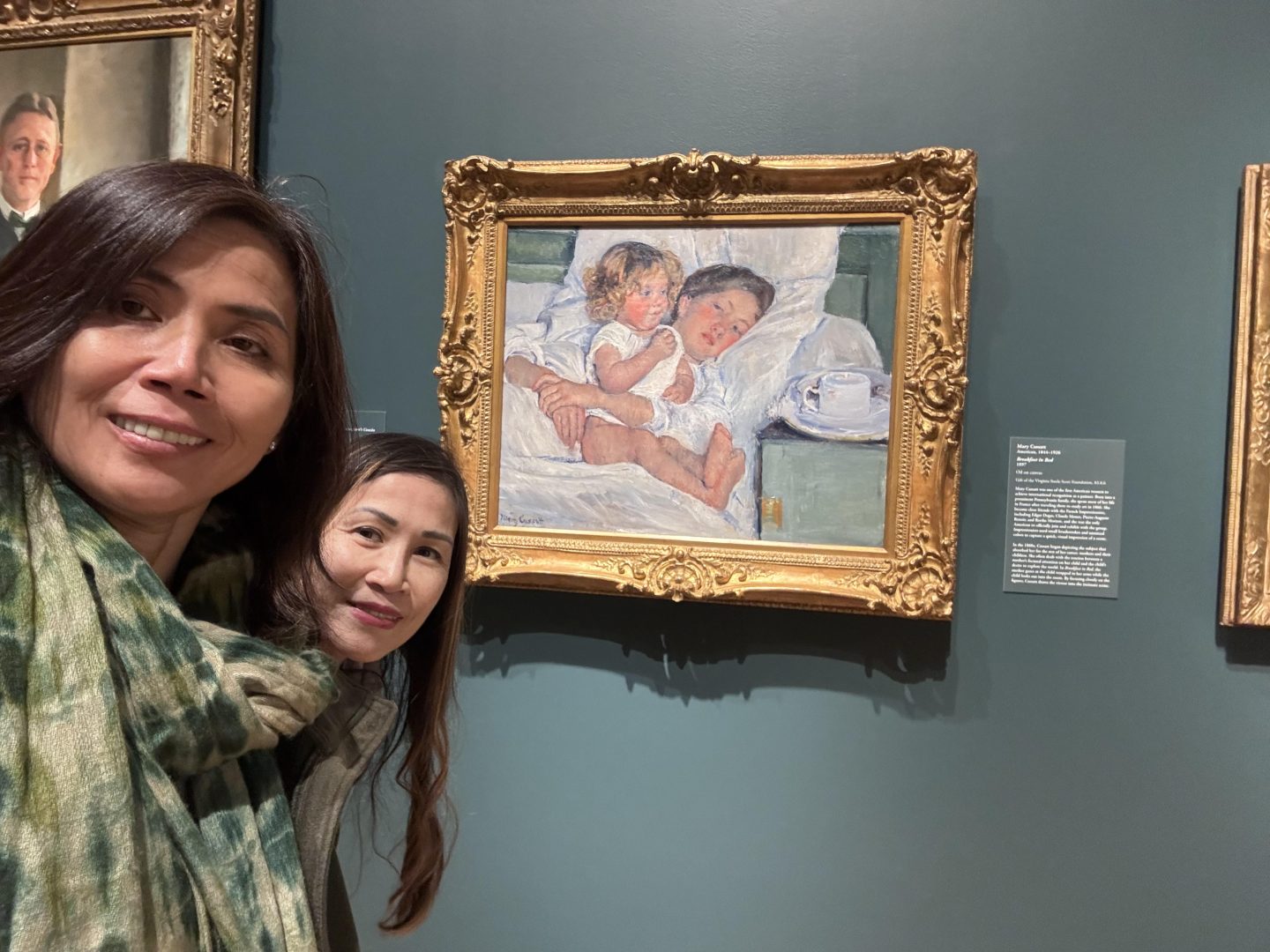
While some of us might hope for a glorious sunny day on our visit to The Huntington gardens, Mirhan and Wong were delighted that they unexpectedly came on a grey and gloomy day.
“I have a medical condition that makes me sensitive to sun exposure,” enlightened Mirhan. “I usually bring a hat whenever I go outdoors. We got lucky with today’s overcast weather.”
Mirhan and Wong arrived at 10:00 to take in the full Huntington experience. They explored the many beautiful gardens and marveled at the roses and wisteria in full bloom; looked at the artwork in the galleries and gazed in awe at the stunning paintings and artwork.
“We had a really great time – we took soooo many selfies to show our families and as a reminder of this fun day,” Mirhan said laughing.
Asked what they liked best on this visit, Wong replied, “I loved the pretty flowers in the gardens and the gorgeous landscapes. I also enjoyed reading the backstory of the art pieces.”
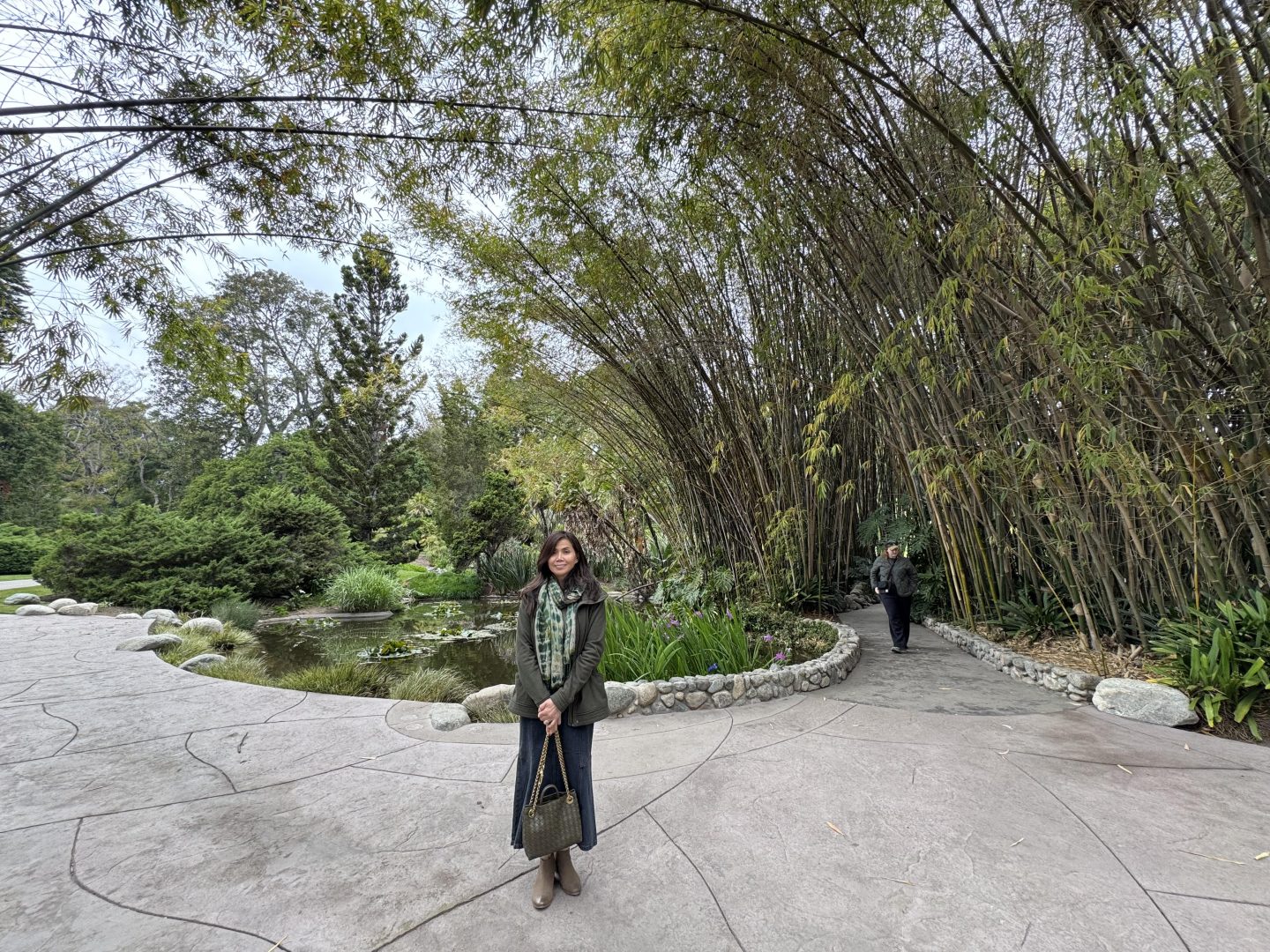
Ever the garden enthusiast Mirhan quickly said, “I really enjoyed the lily ponds, especially where the bamboos reach across – I never knew bamboo trees could bend! I also liked the jungle garden; it felt like being in a different world instead of San Marino!”
There is something for everyone at The Huntington any day of the year, in any weather, as Adams told me during our tour. The plants are beautiful year-round and there will always be blooming flowers no matter when you visit.
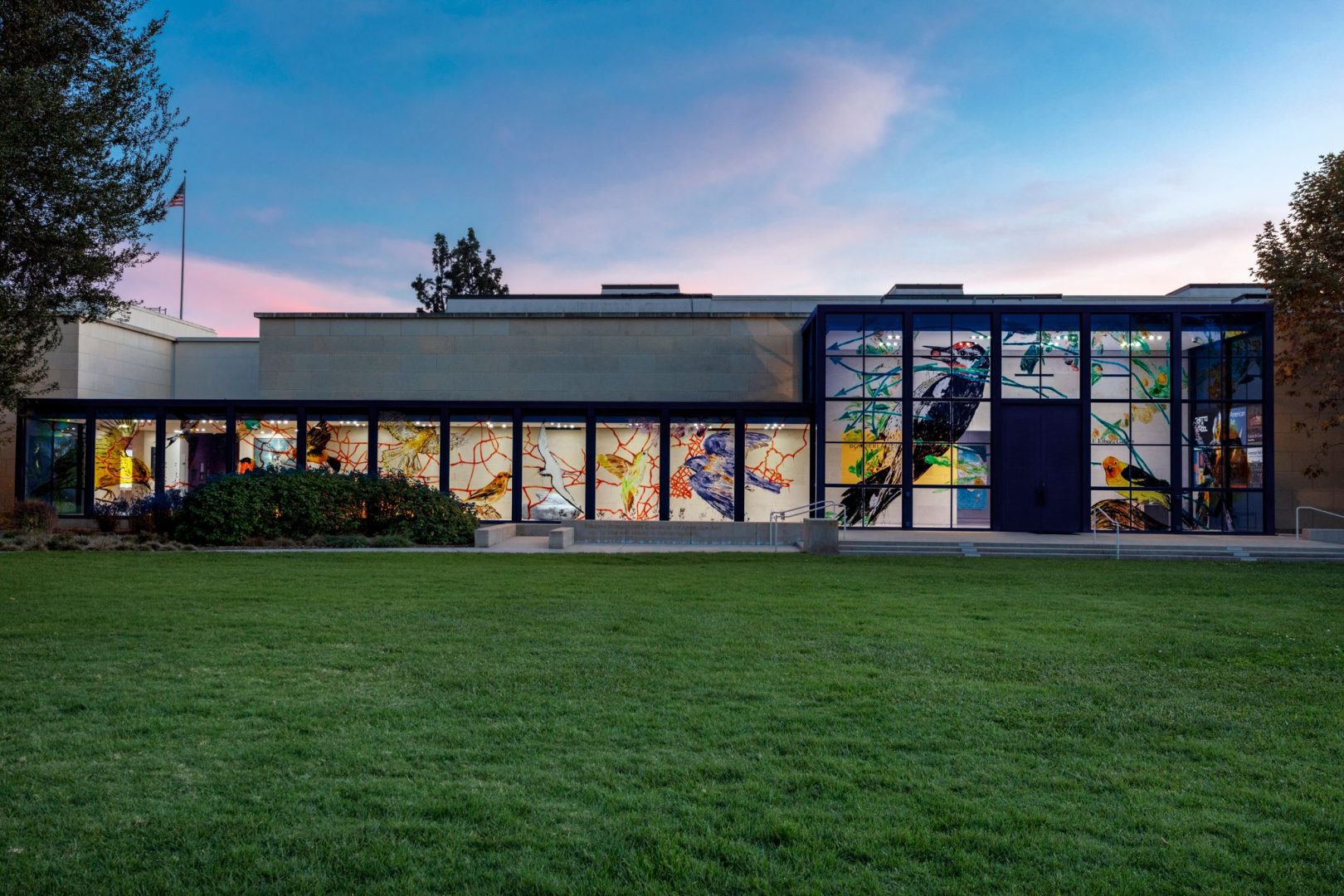
Many visitors that Friday couldn’t remember what The Huntington’s old monogram looked like and didn’t particularly care – they just wanted to engage with the collections. Adams may be justified in not being overly concerned about long-time habitués who aren’t thrilled to see the new logo of our cherished institution. She’s convinced we’ll eventually come around and learn to like this new H.
Henry E. Huntington would have been very pleased to know that the institution he founded in 1919 is being determinedly and purposefully equipped to stay relevant and ensure his legacy continues to be useful to everyone in The Huntington’s next century.
 A San Gabriel Valley Inquirer