‘Passion’ at Boston Court Pasadena Defies our Definition of Love

Originally published on 28 February 2020 in the Pasadena Independent, Arcadia Weekly, and Monrovia Weekly. The show, however, was eventually cancelled because of the lockdown.

 
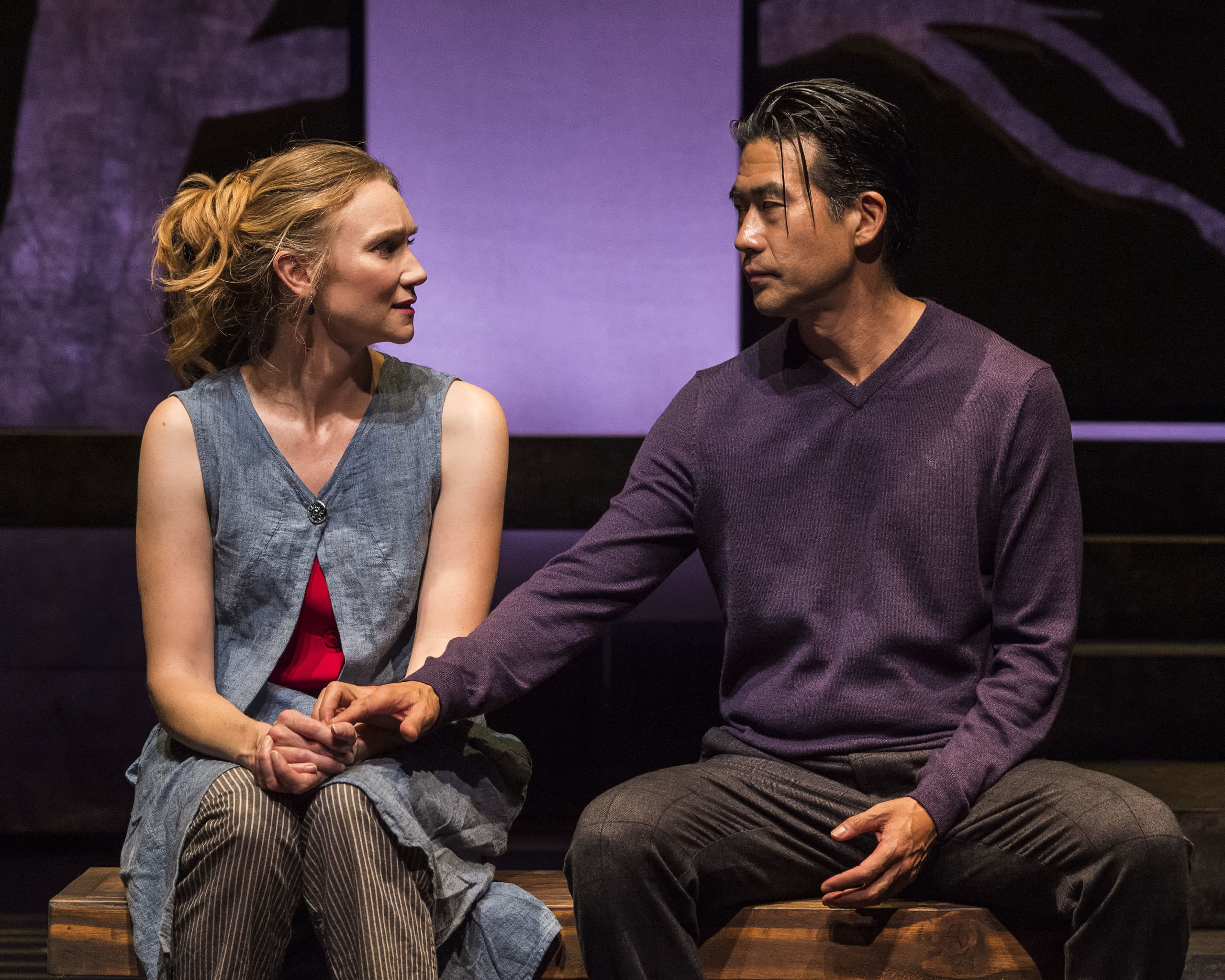
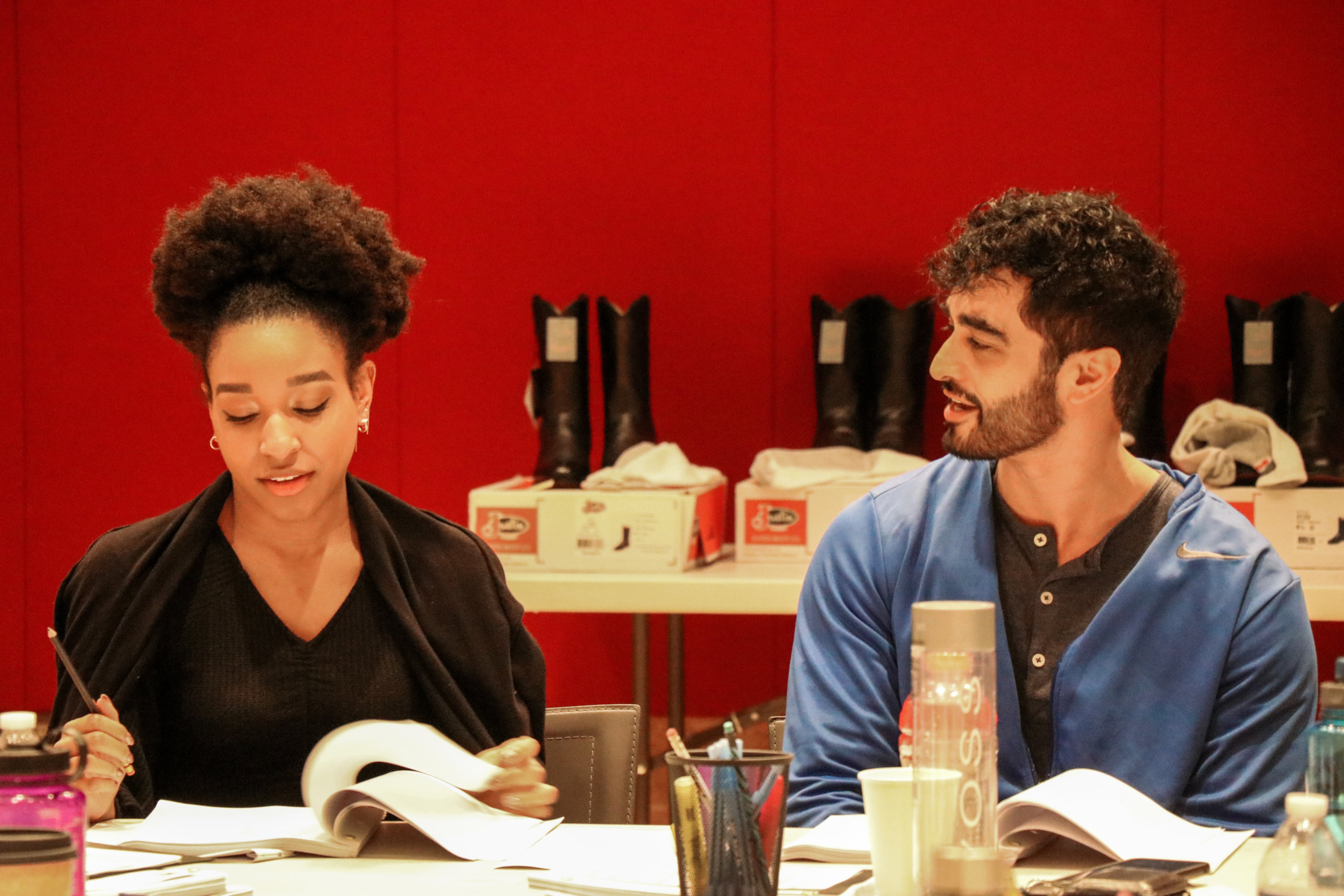
Shown left to right: Bryce Charles, Richard Bermudez, and Meghan Andrews during rehearsals | Photo by Monica Montoya / Boston Court Pasadena

Stephen Sondheim’s ‘Passion’ takes center stage at Boston Court Pasadena from March 5 to April 19, 2020. Based on the film ‘Passione d’Amore’ directed by Ettore Scola, after the novel ‘Fosca’ by I.U. Tarchetti, this production is directed by Artistic Director emeritus Michael Michetti. It stars Richard Bermudez as Giorgio, Bryce Charles as Clara, and Meghan Andrews as Fosca.

‘Passion’ transports us to 1860s Italy and tells the story of Giorgio, a handsome young army captain, who falls in love with the beautiful Clara and the unattractive and sickly Fosca, who challenges his notion of what love is. It explores love with all its perplexities – desire, obsession, lust, and madness.

Director Michael Michetti and lead actor Richard Bermudez graciously sit down with me to talk about the play and share their thoughts about the characters in it.

“I saw the show on Broadway in its original show and I’ve seen other productions since,” begins Michetti. “In 1999, I actually directed a premiere concert version of it in Los Angeles for Musical Theatre Guild, which does a week of rehearsals and puts up semi-staged concert productions of rarely done musicals. We did it for the Pasadena Playhouse for one night and we brought it back for one more night at Reprise at UCLA. This is the first time I’m directing it again, but I’ve been in love with it since I first saw the original.”

Michetti expounds, “Our production will be a departure from the original Broadway show because we’re staging it in a much smaller venue. But we’re utilizing our intimate space as an occasion to focus on the love story while still being textually faithful to the script and score the writers wrote. It feels to me like this is a show that is rich enough in its writing that, like doing Shakespeare, you can keep going back and, if you are true to what the authors have created, come up with many ways to reinterpret it. Having said that, I think people who know the show will see different things than what they’ve seen before.

“We’re doing a full production with a cast of 12 plus five musicians, which is pretty big for Boston Court Pasadena. We’re not expanding the space for the show, but we’ll be using all of it. We’ll have a two-story set and the orchestra will be on stage under the balcony. ‘Passion’ is a love triangle at its heart – it often breaks down to two- and three-person scenes. But it also takes place within the context of a military base where Giorgio, the protagonist, is stationed. It’s a unit set so we have objects to help change the volume of the space – several chairs, a small writing desk, a platform that doubles as a table and a bed, and a series of sheer hanging drapes that the cast moves around to transform the space.”
Bryce Charles and Richard Bermudez | Photo by Monica Montoya / Boston Court Pasadena

This reinterpretation is set during the same time as in the original play. Michetti describes, “It takes place in 1863 in Northern Italy and there are behaviors that would not be commonplace now, but are true to that period, including the climactic moment when the characters are challenging each other to a duel, and so forth. The other thing that’s noteworthy is, as Giorgio is torn between these two women in his life, you feel compassion for the women in the way society has created constrictions on the kinds of roles that they can have in the world. And, interestingly, Clara, the young woman Giorgio is in love with at the beginning of the play, is very bound by the social mores at the time. In the same token, Fosca is viewed through that lens but she doesn’t behave as the world wants her to. While I think there’s something liberating about that, she also pays a price for it because people judge her for not following the rules.”

I ask if Fosca is using her difficult circumstances to manipulate Giorgio. Michetti replies, “The script makes a case for a woman who is not attractive by traditional societal standards, is sickly and, for over a decade, has been parentless and living on a military base without female role models to learn from. At one point, in one of her most vulnerable moments, she says, ‘No one has taught me how to love.’ A lot of her actions is naiveté and impulsive rather than consciously manipulative.”

However, one can also question Giorgio’s behavior – when the story begins, he’s in love with a married woman and then he falls in love with another woman who’s an unlikely choice – I remind Michetti. “Giorgio is written as a man of moral purity but he finds himself in difficult situations,” remarks Michetti. “Fosca sees Giorgio as kind, compassionate, and empathetic – qualities that a lot of the men in this military base don’t have. Giorgio, on the one hand, is repelled by her and, on the other, is sympathetic to her and has feelings for her. A part of his journey is about realizing that there is something to the kind of love that Fosca is able to feel where she is literally able to give everything, including possibly her life for a love that is a different definition of love that he had known before.

“It’s an interesting challenge the writers have set up because in the beginning, he is seemingly in love with the perfect companion for him. But as the play goes on, you start to appreciate that it’s not quite as perfect as it was made out to be and the woman we would never imagine he could have feelings for, has challenged him to think about love in new ways and one he’s come to genuinely love.”

Bryce Charles and Richard Bermudez | Photo by Monica Montoya / Boston Court Pasadena

How believable is that for the audience?, I query. Michetti says, “That’s one of the dividing points in the original production. There were people who found it wholly convincing, very moving, and really beautiful. And there were others who were not able to fully buy into it. That has been a big part of our approach to this production – to make his journey to be apparently impossible at the beginning and inevitable by the time he gets there. There are several opportunities within the script and score to tell that story and we’re doing our best to mine them. It’s absolutely a challenge but one that I’m excited to tackle – if I feel it’s easy and I know exactly how to handle it, it’s never as creatively exciting.

“I’m working with a marvelous team who’s eager to tell the story and take on the challenge. I met Richard for the first time in the audition and he’s terrific. I have worked with Meghan who’s playing Fosca and I have seen a few other cast members. Bryce, who’s playing Clara, was just in the outstanding production of ‘Ragtime’ at the Pasadena Playhouse. Because it’s a musical, it requires amazing singers with amazing instruments but, honestly, it needs people with equally strong acting skills. It’s about finding artists with all the attributes and getting the right balance between them as well. Some people who auditioned sang beautifully but when we asked them to act it, they missed an aspect of the character and vice versa. It’s always the more gratifying when you find the people, as I believe we have here, who hit both sides of it.”

What was he looking for with the different roles, I ask. Michetti responds, “Giorgio is, for much of the play, a reactive rather than active character. He is someone who tends to sublimate his own needs in order to take care of others. Yet he is the protagonist of the play – it’s his journey we’re following – so we needed someone who can be dynamic and compelling. He’s a good leader, organized, and efficient but he is also compassionate and a lover of literature and is a deep, thoughtful thinker. He has both traditional masculine military side and a side who has a more feminine approach to things in terms of his sensitivity which is what Fosca is attracted to. We needed someone who exemplifies all of the contradictory aspects of Giorgio, and Richard embodies all that.

“For the role of Fosca, one of the challenges is that the original Fosca was played by Donna Murphy who did it so beautifully and iconically, and there’s a tendency to use that performance as the benchmark. And while I thought her performance was really brilliant, we’re taking a different approach. Meghan and I are less interested in finding the extremes of her grotesqueness and more interested in exploring a woman who is a misfit, but not necessarily a grotesque person. There isn’t a lot of discussion about her appearance. Nevertheless, I don’t think Fosca needs to be tremendously ugly. And, by the way, the actress who originally played her is a beautiful woman as is Meghan and she is doing an outstanding job.

“In terms of Clara, I wanted someone who is, as the script required, beautiful and charming and who can play the tragedy of a woman who is caught within the social constraints of her time. She is an upper-class woman who comes to discover that if she were to give everything to this relationship, she would lose a lot of things that are important to her. Bryce is fully embracing that and doing just beautiful work.”

Richard Bermudez | Photo by Monica Montoya / Boston Court Pasadena

Bermudez arrives at this juncture and I also ask him if the premise of the show is credible. He notes, “Therein lies the issue and that’s what we explore for an hour and 50 minutes. It’s a very difficult question and that may be why ‘Passion’ is not popularly staged. My character essentially goes through this very emotional and, at times, disorienting and overwhelming journey where his fundamental belief system about how he envisions love, and what relationships look and feel like is challenged by someone.

“Fosca disrupts Giorgio’s mental and physical health. Through all that, he comes to realize that this woman has opened a door to a whole new way of looking at life. What we hope to do is to make that love that he’s developed for her believable and that it’s sincere. He sees in her someone who loves him for no other reason than to love him in the most selfless and genuine way, asking for nothing. It’s not a love that he has ever known. It’s juxtaposed by his relationship with Clara, which is a very conditional love. They enjoy the moment but to really have a life with her, he will have to wait for a number of years, when it’s convenient for her to leave her husband. And Fosca questions if that’s really love. This is in the 1860s, in a patriarchal society, when women aren’t allowed to have much of a voice in anything. And here is this woman who challenges not just men, but the military, and normal conventions. She’s a fully formed person in a society where he’s not used to meeting people like her. He’s initially attracted to her intellect – in the script, she talks about his favorite book and he is surprised that she likes it as well. That fascination with her intellect leads to the unexpected – he realizes that the physical is fleeting whereas real love is grounded in something much, much deeper than just physicality.”

She sounds like someone obsessed, which is rather disturbing, I observe. Bermudez clarifies, “At the outset, it could look like a fatal attraction-type of obsession. But it really isn’t because deep down she doesn’t want to hurt him, she wants to see him happy. But she’s also a woman who’s not used to delving into this kind of feeling. She herself is going on her own journey of how to express that and she recognizes that she doesn’t conform to normal conventions – she’s not supposed to ask a man to kiss her, to ask for a date. Ultimately, there is something very attractive about someone who doesn’t care about appearances or being judged for her love.”

Darryl Archibald and Richard Bermudez | Photo by Monica Montoya / Boston Court Pasadena

Asked how he relates to Giorgio, Bermudez answers, “I relate to his sensitivity. I played a lot of sports growing up; in a lot of ways I was a jock. But I also played an instrument, sang in choir, and did musical theatre, all of which require a degree of sensitivity which your average jock may not necessarily possess. His intellectual curiosity appeals to me as well because I was also an avid reader growing up. As a small child, I was always curious about the big books my dad was reading. I probably read books far above my intellectual capacity at that time. Additionally, I can relate to his empathy. It’s something I value in people and relationships – the ability to put themselves in other people’s shoes. I think it’s fundamentally what we do as actors and performers – we make a living being empathetic. I have to say, though, that I’ve always prided myself in being able to use both hemispheres of my brain equally. In fact, I’m an actuary during the day; I’ve always done well in the math and sciences and scored highly in the creative and writing subjects. And that helps me feel fulfilled because I have diverse interests.”

Bermudez confesses that he has never seen ‘Passion’ performed, “I’m not alone in that. Several of my friends, with whom I’ve done theatre for a long time, haven’t either. Even my closest friend who said ‘Oh, that’s one of my top two favorite shows. I adore it!’ and when I asked, ‘Really, where did you see it?’ answered, “I’ve never seen it.’ But you get that reaction a lot! It’s one of those shows that’s very well regarded and revered among the people who know musicals because they know how difficult the subject matter is. But the difficulty is also what makes it rewarding if you can nail it right.

“I think it’s also one of the most impactful shows that I’ve ever read. We’ve only been rehearsing for a week and a half, and I’ve already been challenged so much – not just in the script but the extent of what I have to do. But I consider Michael savant when it comes to this material – I know he studied it for decades, he knows it intimately, and he’s meditated on it. He’s familiar with every facet of it. And I appreciate the careful attention he puts in it. We have the luxury of having a pretty extended rehearsal period, from my experience at least. At times we’d just sit and analyze a couple of words for a half hour. The first few nights, instead of singing the songs, we spoke them because we wanted to get to the intent of what we’re saying. We’re not just singing songs because they sound pretty, every single word and line mean something and we want that to be reflected in our acting choices. And we don’t want the music to necessarily inform those choices. It’s been very, very exciting!”

Continues Bermudez, “We’re taking a fresh approach, it’s pared down. Our musical director Darryl Archibald is doing a unique arrangement of the music – he’s orchestrating it to fit the space. He has done several original orchestrations … I’ve worked with him on other shows and I have so much faith in him. He’s just brilliant and I’m sure he’s going to do an amazing job with this. Also, since we have an intimate space, we’re thinking of not having body mics. There’s something about the purity of an unamplified voice that we just forget what that even sounds like. That’s exciting too.”

Michetti inserts, “I just want to tack on something to what Richard said. Darryl is such a gifted man and I’m very excited about the orchestration. He’s reducing it to a string trio – cello, viola, violin – one reed which will double clarinet and flute, and a keyboard. It’s sort of the composition of an orchestra that will be able to adjust the dynamics to support the unamplified voice in the space. He’s an amazing musician and has fantastic taste but he’s also interested in how the musical choices support the story-telling. He’s always asking what’s going on dramatically – ‘the music is saying this but is it dramatically playing against that?’ And in some cases that’s true. He challenges us with some really wonderful questions. I worked with Darryl a number of times in the past and it’s a treat to be in the room with him again.”

“This is a musical interspersed with dialogue,” discloses Michetti. “It’s an interesting structure because they’ve written it so that there’s no opportunity at the end of musical numbers for applause. The first time it breaks for applause is at the end of the play. It weaves seamlessly between music and dialogue – the songs are structured so that the music transitions into underscoring and dialogue takes over.”

Left to right: Byrce Charles, Richard Bermudez, and Meghan Andrews | Photo by Jenny Smith Cohn / Boston Court Pasadena

Performing for almost two hours without intermission can be tricky for the artists. According to Bermudez, his character is on stage for the most part of it. He confesses, “I like to hydrate so this presents a conundrum. Literally, as I was reading through the whole show, I was thinking ‘Okay, I think I have about 37 seconds here. I can maybe sneak off very quickly.’ The last thing I want is to have this profound climactic moment and I’m dying because I really need to go to the bathroom.

“There aren’t moments in the show built for applause. Even if we sing these beautiful numbers, it’s like a freight train – it keeps going. Michael brought up a very good point yesterday when we talked about it – ostensibly applause is for the audience to show their appreciation for the performers. At the same time, the audience feels a catharsis when they applaud. So they’re going to have to hold that back throughout the show. And for me, this show builds and builds where I break down physically and emotionally until I come to the moment where I’m near death and I kind of have an epiphany. So the audience will also have all that pent-up emotion and the release at the end. That’s going to be interesting.

“Reading through the play from start to finish with the music last night, I also realized how quickly I have to reset between scenes. They go rapidly and my challenge is – I don’t want to have an emotional hangover from scene to scene. Some scenes are sad and emotionally fraught, but you don’t want to have that lethargy for the next. There are many scenes that happen after a couple of weeks have gone by, but it may only be 20 seconds for me. So yesterday I got a really good sense of how hard it will be. It is a test of stamina and commitment for this company of actors and Michael is confident they’re up to the task.”

As to the audience takeaway, Bermudez pronounces, “I fully accept that we probably will have different reactions – it’s not for everybody. I feel that we will have done our job if people talked about the show afterwards … if they want to analyze our motivations and some of the choices that we made. To me, the most exciting reaction to a material  – whether it’s a movie, or a play, or a musical – is when I can’t stop thinking about it. Sure, I want them to enjoy our singing and acting, and there’s space for that – Michael has put together a phenomenal cast. But I also want the audience to think about their own definition of love, what relationships are, what that looks like, and what we’re willing to do in the name of love, really, when it came down to it. We can all profess all the things that we’ll do for the people we love but what will we actually do?”

To which Michetti says, “I fully agree and I hope that people will come in with their own ideas about what love is or what an ideal love is. I certainly don’t think this play is trying to present the ideal love but I hope that people will go along on the journey and be moved by it. Even the love that Giorgio and Fosca arrive at is not perfect and not without consequences but all of the principal characters are doing their best. Last night, after a week of rehearsal, we did our first singing and reading through the play and I was very moved by the writing of the show and, already in this early stage, the beautiful commitment of the performers to tell the story of complicated people trying to navigate the choppy waters of love.”

Does it have a happy ending? I ask, and Bermudez responds, “It depends on who you are.”

Acquiesces Michetti, “It isn’t a strictly happy ending because there are consequences to the choices they make and there is loss in addition to … I can’t find the opposite of loss.” Gain, I supply, and he says, “Well, I’m not sure that’s exactly what I mean either, but I’ll use it for lack of a better word. I don’t want to give anything away, but there’s something set up earlier in the play that comes to a conclusion that I find tremendously satisfying when Giorgio realizes that Fosca had an understanding of him deeper than he could have understood at that moment. That comes back at the end of the play, which I find moving and satisfying.”

It’s an enigmatic response but, fittingly, ‘Passion’ is about that bewildering emotion we call ‘love.’ And it can mean as many things to as many people as it touches.

‘How the Light Gets In’ is World-Premiered at Boston Court Pasadena

Originally published on 3 October 2019 in the Pasadena Independent, Arcadia Weekly, and Monrovia Weekly

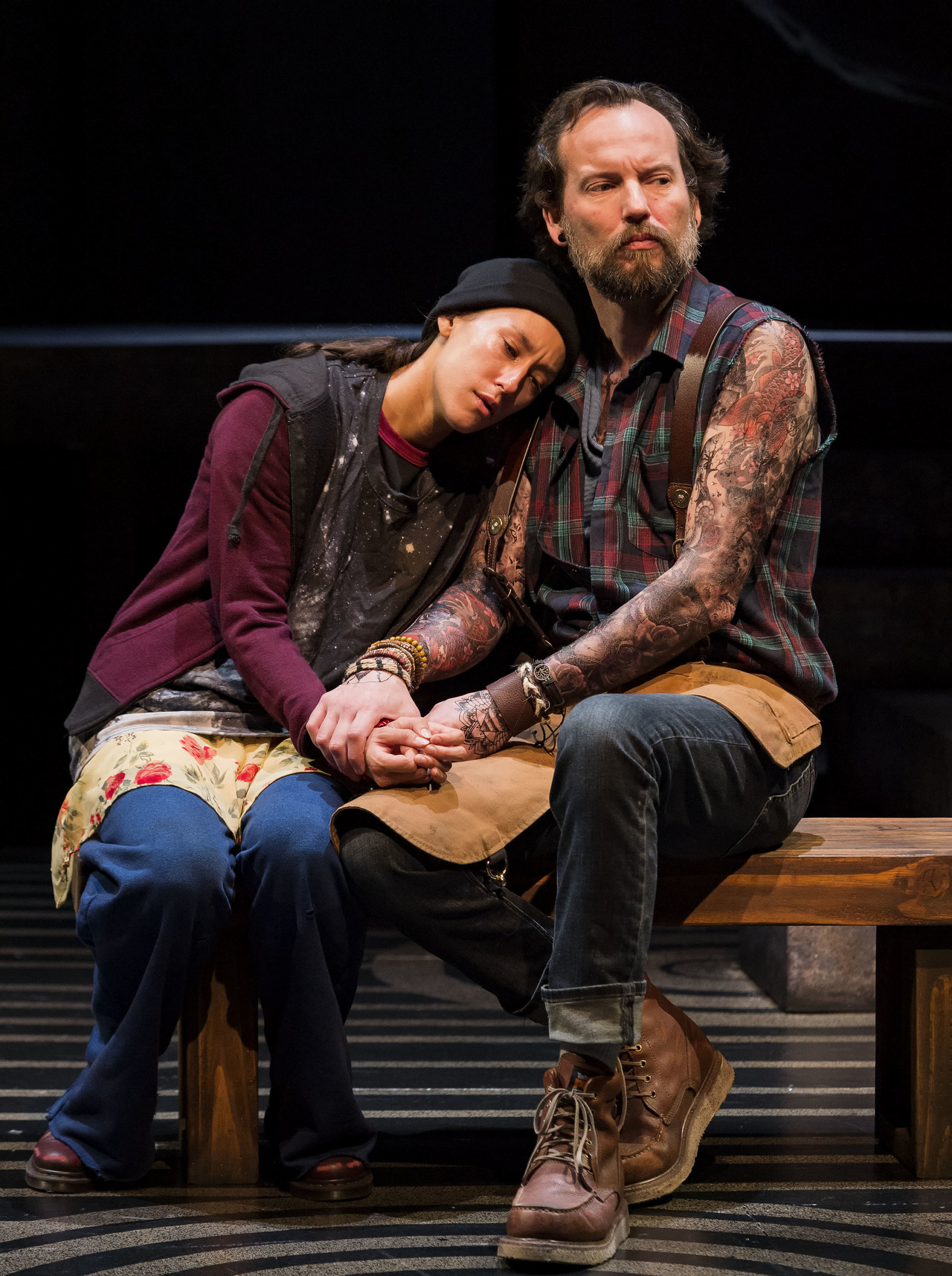
There are two lines in Leonard Cohen’s song ‘Anthem,’ that go ‘There is a crack, a crack in everything; that’s how the light gets in.’ The words inspired an original play by E.M. Lewis ‘How the Light Gets In,’ which is currently having its world premiere at Boston Court Pasadena from September 19 to October 28. Directed by Emilie Pascale Beck, the Literary Manager at Boston Court, it stars Amy Sloan and Ryun Yu in the roles of Grace and Haruki, and features Chelsea Kurtz as Kat and Dieterich Gray as Tommy Z.

‘How the Light Gets In’ is an intimate story about four characters – a travel writer who never travels, a Japanese architect who can’t figure out how to build a simple tea house, a gifted tattoo artist who resists the power of his talents, and a homeless girl who lives under a weeping willow tree in the Japanese garden – who live disparate lives that somehow intersect in the most unexpected way.

That peculiar, yet fascinating mix, is enough to pique anyone’s curiosity. Lewis, during a late morning interview, gladly chats about her start in playwriting, her connection to Boston Court, why she conceived this play, and how the four unlikely characters’ lives in ‘How the Light Gets In’ seamlessly blend into each other’s.

The ‘How the Light Gets In’ ensemble | Photo by Craig Schwartz / Boston Court Pasadena

Lewis begins, “I’m from rural Oregon but I went to graduate school at USC and stayed in Los Angeles for quite a while. This is where I became a playwright and I have a lot of friendships and connections to the theatre community here in Los Angeles. I met Emilie then and we’ve wanted to work on something together since. I was involved with ‘Moving Arts,’ a small theatre company in Silver Lake and they’ve done four of my plays over the years – ‘Song of Extinction,’ ‘Infinite Black Suitcase, ‘The Gun Show’ and the latest one was ‘Apple Season.’

While New York is widely known as where theatre happens, there’s a very active theatre community here. There are amazing actors and people who are passionate about creating stories for the stage who often are making a living on film and television. But they love coming back to the theatre because it’s intimate – there’s a relationship between you and the audience. And I love that, especially when the story is so close to me and I can feel myself breathing what they’re breathing. That’s ideal to me as an audience member and a playwright as, I’m sure, it is what actors and directors want.

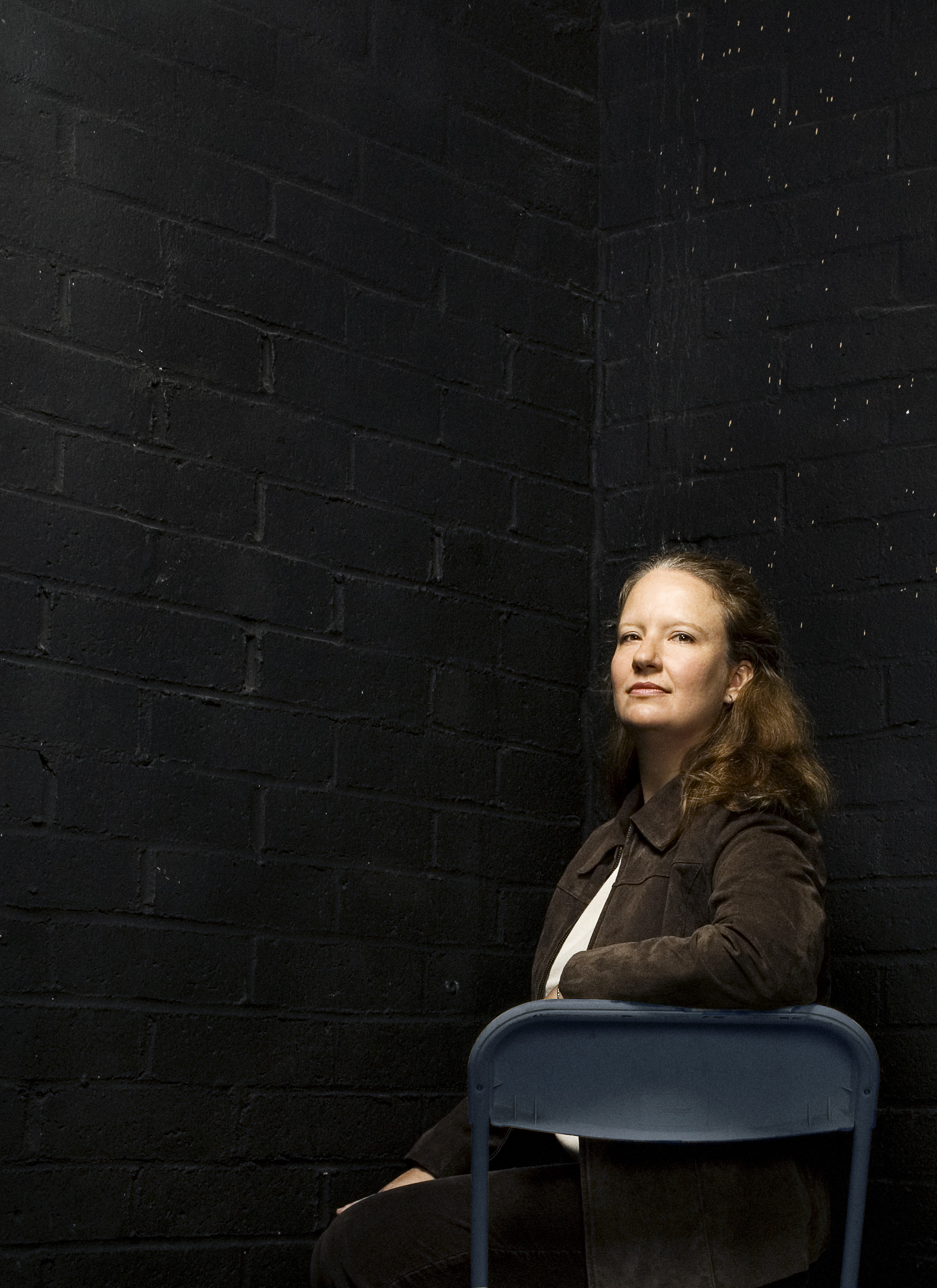
Playwright E. M. Lewis | Photo courtesy of Tom Sanders Photography / Boston Court Pasadena

Talking about the play that involves people who seem to be in the wrong profession, Lewis describes, “Grace, the main protagonist, is a smart and capable travel writer who loves to read and enjoys what she does. She took care of her parents who were getting older and when they passed away she finds herself, in the middle of her 40s, a little bit isolated. While she has a satisfying career, she’s unmarried and has no family so her life has no meaning to her. When something happens to her, she’s shocked to find out she has no one to emotionally help her with what she’s physically going through.

“The male protagonist is the architect Haruki who lives in Japan but works internationally; he’s been widowed for ten years. His wife was the world to him and when she died, he lost his heart. He poured all his energy into his work and became solitary. While he is prospering professionally, the personal side of his life has been neglected.”

“So these two people find each other at a moment when he is finally, perhaps, maybe, open to the possibility of something new – although he’s not sure that he’s ready for love – and she is in the midst of a crisis, which is really the most terrible moment to come across someone who is lovely and wonderful. She doesn’t feel like herself and is not sure what’s going to happen. Yet, things in this life don’t happen on a schedule or when you want them to, they happen when they happen. So we’ll see whether or not they allow themselves to seize this opportunity. It’s a little love story; I haven’t written very many. It’s quite joyful to have these two characters in my head and in my ears as I was writing the play, and now to see them come to life. It’s really delightful; I think I should write more love stories,” Lewis chuckles.

Continues Lewis, “Tommy Z, the tattoo artist, is a tough character. He owns the shop where he works which is, basically, an abandoned half-demolished building that he bought for a good price. There’s one entire wall missing, where someone drove through. And so he built a wall out of discarded window frames and windows he salvaged from various garbage sites, which created a quilt of light.

“We learn that his life converged with Kat’s at a hospital emergency room. She had been having a rough time – she had hurt herself yet decided to get help. So she finds herself in the ER late one night and takes the last seat, which happens to be beside Tommy, whose brother has overdosed, and not for the first time. They strike up a conversation and a friendship, proving that in the midst of crisis people connect and find each other. Their story ends up intersecting with Grace’s and Haruki’s because Kat has been living under the willow tree in the Japanese garden. While Tommy’s only connection to the garden is through Kat, he gets woven into the tale because his gift as a tattoo artist turns out to be important to some of the other characters in unpredictable ways.”

Choosing her words deliberately, Lewis explains, “The core of the story is that in a moment of crisis, when you are overwhelmed by something that has happened, you are also in a moment of possibility of remaking yourself. Grace who, until that time, has been doing what she’s always done – writing a travel column – finds out she has a health crisis which knocks her off her feet. She’s trying to figure out what to do and how to handle it. And with the help of these strangers who become family to her, she finds her way out the other side and somehow in a better way. Sometimes a catastrophe pushes you to look at your life and see what’s missing, to consider what you want to be, show you a clock that’s ticking, and makes you realize how important it is to do what you want to do right now.”

Amy Sloan as Grace and Ryun Yu as Haruki, the main characters | Photo by Craig Schwartz / Boston Court Pasadena

Asked how she conceived the play, Lewis responds, “Plays are made out of playwrights. What other stuff do we have to make our work from? The story and the characters are entirely fictional but there’s a lot of Grace’s story that comes from me. I had a health crisis about two years ago, which was both shocking and scary, so Grace’s journey mirrors mine a little bit. I began writing the play while I was going through medical procedures and, as usual, it’s writing that saves me. My characters – who dropped into my head – helped me figure out about myself what I have trouble doing. Hearing their voices made me less lonely as I was going through it. And it’s exciting to see that they’re going on stage in a unexpectedly quick time from when I started writing it.”

The genesis of the title, which could be interpreted in so many different ways, helped Lewis craft the play. She reveals, “Titles are really important to me, they’re part of my conception of the play as a whole and what it wants to be. I can’t remember specifically if it just came into my head from knowing the song, or if I was listening to Leonard Cohen while I was writing it, and I went ‘Ah, that’s a great title!’ as sometimes happens. There is a lot of poetry in it. And that image of how the light gets in, for this character, who is in the midst of so much darkness, that’s definitely the central question of the play. Although it doesn’t only apply to her, but to all the characters and in different ways – more literal in some and metaphorical in others.

Lewis recalls that she was present for callbacks during the casting process. “Because this is a world premiere, these characters have not been fully embodied before. It’s so much an ensemble piece so we don’t have to merely consider them as themselves for the characters, but also how they work with each other. There’s a real human connection between each of the characters – one is a love story between Grace and Haruki. And with Grace and Kat, there are tendrils of a maternal relationship. Tommy has his own friendship that’s unique to him but they have to connect with each other. So casting was important and we put people together in different combinations during that casting period.

“I came back again a month ago for our first week of rehearsal. That’s such a golden time for a new play. Everybody’s sitting together – you don’t know each other, you’ve never worked together before – embarking on a new creation. That’s when a lot of fantastic questions arise especially from really, really good actors, about the play and their characters because they are having to figure out ‘Who is this person who I’m becoming?’ ‘What is their journey?’ And nobody looks at your character as carefully as the actors who will be playing them. We had fabulous table work that definitely inspired writing and rewriting during that week and in the time since. Emilie and I have been in conversation via email, sending little tweaks, adjustments, and rewrites.”

“The actors also had to be about the same age as the roles they’re playing because different things happen to us at various times in our life. And this is about four people who are in different places in their journey. An actress who’s 19 years old would not have the physical looks or the experience to act like someone who’s 40, which is Grace’s age in the play. They don’t have to be the exact age, they only have to be as close to that stage in their life.”

Chelsea Kurtz plays Kat and Dieterich Gray takes on the role of Tommy Z | Photo by Craig Schwartz

“What is important to you when casting the roles for your play?,” I query. Lewis responds, “I was mostly the silent partner, Emilie was leading the auditions. But what I was looking for were truth, vulnerability, and connection. You can feel it when someone is just putting on a façade versus someone who’s sharing their genuine self with you, especially in a small theatre. Vulnerability is also essential because the characters go through some things, and face some things about themselves. They have big questions about the universe and what they’re going through. So these have to be actors who are willing to open up and let us in. And, lastly, connection. This is a play that reaches out to the audience and, more and more, as I write, I find myself wanting to include the audience in the story- telling. I think of theatre as the old-fashioned medium – that what we do today is so connected and similar to people thousands of years ago sitting around the campfire telling each other stories. That was an intimate and connected experience and I want to make the kind of theatre that makes us feel that way – here we are in the darkness and sharing something that takes us through that whole emotional rainbow of feelings. Stories that help us ward off the darkness.”

A prolific playwright, Lewis has written about 13 or 14 plays. She states, “Most of them have been out in the world. I’ve been very lucky to have plays across the country and also in Edinburgh and a few other places. My play ‘Song of Extinction’ was at the Guthrie in Minneapolis. I’ve had plays staged in New York although not on Broadway; it was in Manhattan, though. I have been happily writing full time for the last nine years, which is fortunate because, as you know, the life of a playwright is such a roller coaster. Likewise, I do a little teaching here and there; and I also work on commissions. It’s a piecemeal sort of life and it’s uneven. But how lucky am I to be able to spend my life doing what I love and see my work come to life! It’s amazing to walk into a space and see the people who are figments of my imagination and here they are. I get to hug them. It’s very powerful as well as a big responsibility, in a good way.”

“Plays are a different art from poetry or novels.” Lewis elucidates. “Poets and novelists create the whole world themselves. Whereas a play is meant to be embodied and discovered through other people’s arts. And so to let them in helps you find the mood of the play. I love the part of my work that’s in my garret – alone, scribbling, listening to the voices of my characters in my head. But I love the other half of my life just as much – which is when I get to come to the theatre and work with the actors and directors.

“I’m so grateful to have my play premiering here at Boston Court. When I lived in Los Angeles, back when I was a baby playwright and finding my way, I would come to watch plays here at Boston Court. I thought they had the most stunningly beautiful stage and space. I loved the intimacy of the extraordinary design and their choice of plays that were smart and interesting. So to be able to have my play here with these lovely and smart people is a great gift. They take risks in doing new work and they love the business of helping a playwright find their play. Likewise, I have felt supported and challenged in all the best ways.”

As for the audience takeaway, Lewis says “There is a quote from Winston Churchill ‘If you’re going through hell, keep going.’ When we’re in the midst of a catastrophe, we tend to hunker down and not get out of it. I would like the audience to leave the theatre with a sense of coming out the other side of something, different than when they came in. Sometimes, even in the darkest time, you can be propelled into light and possibility that could nev

‘The Judas Kiss’ Premieres at Boston Court Pasadena

Originally published on 21 February 2019 in the Pasadena Independent, Arcadia Weekly, and Monrovia Weekly

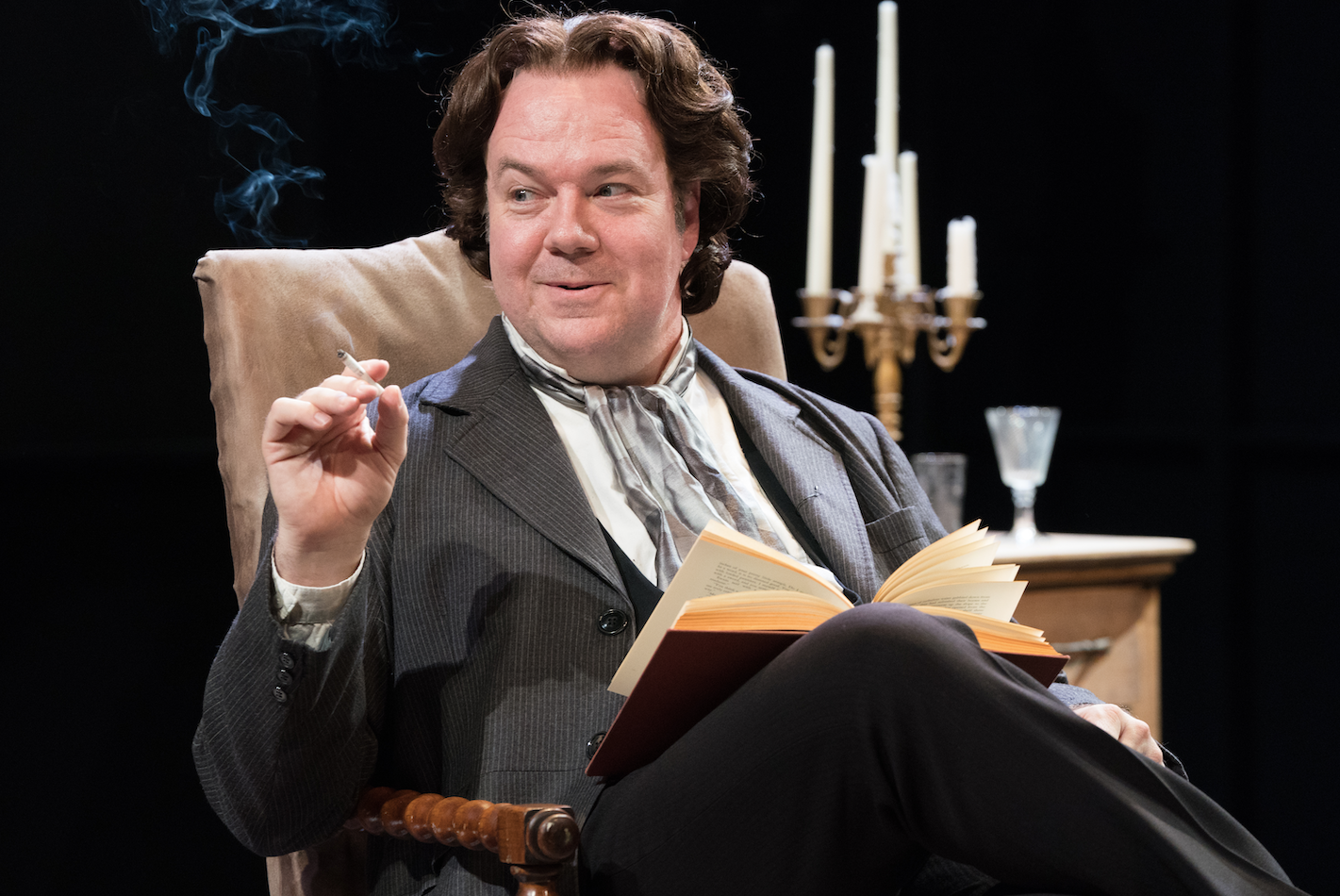
Rob Nagle (left) as Oscar Wilde and Colin Bates (right) as Lord Alfred ‘Bosie’ Douglas| Photo by Jenny Graham / Boston Court Pasadena

Boston Court Pasadena launches its 2019 season with a rarely staged production of David Hare’s ‘The Judas Kiss’ from February 15 through March 24. This S. Mark Taper Foundation-sponsored play tells the story of Oscar Wilde’s love for Lord Alfred ‘Bosie’ Douglas and follows his downfall through a brutal trial and life in exile.

‘The Judas Kiss’ stars Rob Nagle (Oscar Wilde), Colin Bates (Lord Alfred ‘Bosie’ Douglas), Darius de la Cruz (Robert Ross), Will Dixon (Sandy Moffatt), Matthew Campbell Dowling (Arthur Wellesley), Mara Klein (Phoebe Cane), and Kurt Kanazawa (Galileo Masconi).

Artistic Director Michael Michetti, at the heels of his recent success directing his adaptation of Wilde’s ‘The Picture of Dorian Gray’ at A Noise Within, helms this play that examines a literary icon who continues to hold onto his passionate ideals of love and beauty even as his life falls apart.

Michetti, chatting with us about his fascination with the Irish playwright on a recent afternoon, clarifies how he found himself directing an Oscar Wilde play and a play about Oscar Wilde in succession.

“It’s not strictly by design, yet it’s not accidental either,” Michetti begins. “While preparing for ‘A Picture of Dorian Gray,’ I was re-reading a lot of Oscar Wilde and a lot of things about him. This David Hare play is one I’ve loved for years, so out of curiosity I pulled it off the shelf and re-read it. And I fell in love with it again. This was around the time that we were trying to refine our season here at Boston Court. We were talking about balancing our offerings and I kept thinking maybe this is the right play, so I suggested it.”

Asked what draws him to Oscar Wilde plays, Michetti responds “A lot of things really. I’ve always been captivated by his plays. Then I became enthralled with his short stories, children’s stories, and poems. And, of course, as a historical figure I found him interesting so I read several biographies about him, and his letters which reveal so much about him.

“But one thing I always felt was that, in most of his writing, including his letters, which were probably the most personal, he was always wearing different masks .. . that he was somewhat obscured by his wit, his cleverness, and his brilliant use of language. The sense of who the man was has always been a mystery to me. That’s what I love about this play – I think David Hare has crafted a very complex portrait of this man. He did a lot of research and, however conjectural it was, I think the play is pretty accurate to he was and the struggles he was going through.”

Rob Nagle | Photo by Jenny Graham / Boston Court Pasadena

“It’s very biographical,” continues Michetti. “The play takes place during two key moments in his life. The first act happens on the day he dropped his ill-advised libel suit against the Marquess of Queensberry who had accused him of sodomy. A warrant has been issued for his arrest, the police have delayed arresting him, and he’s trying to decide whether he should flee. Robbie wants him to run but Bosie wants him to stay and stand trial.

“The second act occurs two years later, after his release from prison. He’s exiled and penniless; he and Bosie are renting a villa in Naples and they’re out of money. Each of their families has offered them an allowance of income but, in both cases, it comes with conditions. And, again, Oscar has to make a decision.”

“While ‘The Judas Kiss’ was first produced in 1998, it hasn’t been performed often,” Michetti explains. “The original production starred a miscast Liam Neeson. The arguments for him playing the lead role were that he’s a brilliant Irishman and he’s tall, as Oscar Wilde was. But it didn’t get a good reception.

“Because it wasn’t successful, a lot of people dismissed the play itself. It languished for a long time and only a couple of productions were done in the United States. It was revived in London a few years years ago with Rupert Everett and it went on stage Off-Broadway in New York. There hasn’t been a lot of high-profile productions since and, to the best of our knowledge, this is the first time it’s being done in Los Angeles.

“It has always saddened me that this play’s reputation is not greater than it is. And so I hope we will be able to crack that in this production. There’s one element which makes us poised to be able to do it. While the stakes in both acts are very high, the drama isn’t; there are no big dramatic car chases and action events. It’s all underneath – it’s in the little conflicts and resolutions, choices and decisions, and the resistance to make choices. The fact that we’re in such an intimate theatre allows us to play those with subtlety and honesty. It allows our audience  to see in those delicate nuances the drama of this play.”

(Left to right): Darius de la Cruz, Rob Nagle, and Colin Bates | Photo by Jenny Graham / Boston Court Pasadena

Michetti adds, “The challenge is that dramaturgically, Oscar is obviously the protagonist in the play and Bosie is the antagonist – the one who has caused a lot of hurt in Oscar’s life. But I think it’s critical that we understand what it is about Bosie that Oscar loves so he doesn’t look like a fool for being so devoted to him for so long.”

Because this play is close to his heart, Michetti had a hand in casting the characters for it. He discloses, “The role of Oscar Wilde is a challenging one and I knew going into it that I would need someone remarkable. There’s an L.A. artist whom I’ve known and loved for years, he’s been a friend and a colleague, but I’ve never done a full production with him, only readings previously and his name is Rob Nagle.

“When we were talking about this, Rob was one of the first people who came to mind. And rather than going through an audition process, I began teasing Rob the idea of this role. It turned out he knew the play. Rob is a big, dynamic man and because of that, he’s always playing a villainous character. But he’s the most generous, kind-hearted human being you could possibly meet. And this play is tapping a lot of things I don’t think he often gets the opportunity to play. I’m thrilled to say that my faith in him was well placed because he can be so brilliant in this role.

“It’s quite interesting that Colin Bates, who was just my Dorian Gray, is Bosie. There’s this fascinating parallel because in ‘Picture of Dorian Gray,’ which he wrote in 1890, Wilde wrote about this beautiful younger man who destroys the life of an older artist and the next year he met Bosie. It just seems preordained! Colin and I talked about ‘Was it that he had a type?’ ‘Was it a self-fulfilling prophecy?’ or ‘Was it some sense of fulfilling a martyrdom complex?’ I don’t know exactly what it was, it may have been a little of all those, but it was intriguing to see Colin in the role that is the real life counterpoint to the fictitious character he just played.”

Rob Nagle (left) and Darius de la Cruz (right) as Robbie Ross | Photo by Jenny Graham / Boston Court Pasadena

Michetti adds, “There’s a third character in the play, Robbie Ross, who was Oscar’s first male lover. He was Oscar’s lifelong friend who remained devoted to him throughout his life. Robbie was the one who wrote to him and visited him in prison, the one who met him when he was released from prison and found a home for him to live in afterwards, and the one who was there at his deathbed. Oscar made him his literary executor and he spent the rest of his life making sure the works of Oscar Wilde were published and continued on.

“But there’s a captivating triangulation that happens between the three of them, as often happens. Robbie is very judgmental of Bosie and his influence on Oscar, and he’s trying to get at Oscar for what he thinks are the right choices for him. And to do that he’s trying to get Oscar to face that fact that he has fallen in love with someone who wasn’t worthy of his love. That’s always a tricky thing.

“Any time in real life we try to intercede in that way, it rarely goes well. There’s something about that that feels relatable and human. I relate a lot to Robbie in many ways. I’ve had dear friends who have been in relationships that I think aren’t the best for them and I’ve made impassioned arguments as to why they’d be better off making another choice, as Robbie makes to Oscar. But I’ve also heard impassioned arguments back, as Oscar makes to Robbie, as to why this is none of his business.”

One could argue that Oscar Wilde’s genius comes from all the events in his life. Concurs Michetti, “I think this play will give people a new lens as to who he was. For somebody whom we know for his witty aphorisms, Oscar was a very complex man, and sometimes in conflict with himself. There are things that he writes where he states a matter of fact one thing and then, almost in the next sentence, contradicts himself.  He was a complicated man and love is complicated, and particularly love in relationships that have conflict in them.”

“All of these circumstances in ‘The Judas Kiss’ were similar to what is in ‘The Picture of Dorian Gray.’ Oscar Wilde wrote about what he knew and while he wrote it in a dramatic, sensational form, he actually did live it. I think this play humanizes him and gives us a window to understanding who the man was. Audiences will recognize the darker notes underneath his works.”

It’s been said that art imitates life; Oscar Wilde personified the adage. It must be why we find his works utterly mesmerizing.

‘A Picture of Dorian Gray’ Depicts the Outcomes of Disregard for Consequences

Originally published on 24 September 2018 in the Pasadena Independent, Arcadia Weekly, and Monrovia Weekly

Dorian Gray | Courtesy photo / A Noise Within

‘A Picture of Dorian Gray,’ a play adapted from Oscar Wilde’s novella ‘The Picture of Dorian Gray,’ goes on stage from September 23 to November 16 at A Noise Within in Pasadena. Adapted and directed by Boston Court Pasadena’s Co-Artistic Director, Michael Michetti, its three main characters are Colin Bates as Dorian Gray, Frederick Stuart as Lord Henry Wotton, and Amin El Gamal as Basil Hallward.

Wilde’s Dorian Gray is so entranced by the beauty of his own portrait that he sells his soul to preserve his youth and pays a price. Michetti’s adaptation, first produced at Boston Court Pasadena in 2006, explores the idolization of beauty and youth in an intimate, psychological journey. Avoiding the Gothic horror approach to the tale altogether, it follows instead the consequences of Dorian’s hedonistic lifestyle.

Explains Michetti of the remount, “When I did ‘A Picture of Dorian Gray’ 12 years ago at Boston Court, it was really successful and I was very proud of it. But I really didn’t think I was done with it and I thought this would be an opportunity to come back to it.

“The theatre space and timing are different. It’s a new collaboration with a whole new set of actors, with specific experiences and talents they bring to the production. However, the political and thematic content we’re dealing with now are the same things I was interested in exploring 12 years ago. That said, several things have transpired since – for one, gays have achieved marriage equality. So this play is thematically timely to me.

“The script has basically the same approach and ideas; I’ve added some things but not significant ones. Part of what this adaptation is embracing in the Oscar Wilde original is Dorian’s sexual orientation, an aspect many adaptations have erased. In fact, there wasn’t any hint of it in the 1945 film version. That was one of the things that was important for me to restore.”

“A lot of the people who read the novella thought of it as a Gothic horror story,” Michetti adds. “However, I think that was the least interesting part of the story. There’s obviously a supernatural and dark element to it but, for me, Wilde wrote a very psychologically truthful tale about what it was like to pursue pleasure without regard to the consequences. Because Dorian has great privilege of wealthy and beauty, it’s easier for him to get the things he wants in life. He spends a great part of his life causing damage to people.

“Following its dramaturgy, this is a cautionary tale. At the end of the novel, Dorian grasps that the toll of leading such hedonistic life was too great and he decides, too late, to make a change. But he definitely is realizing the consequences of his past behavior, is regretting it, and is atoning for it. It’s a reminder that we should stop to consider the people around us and the contributions we’re making to humankind.”

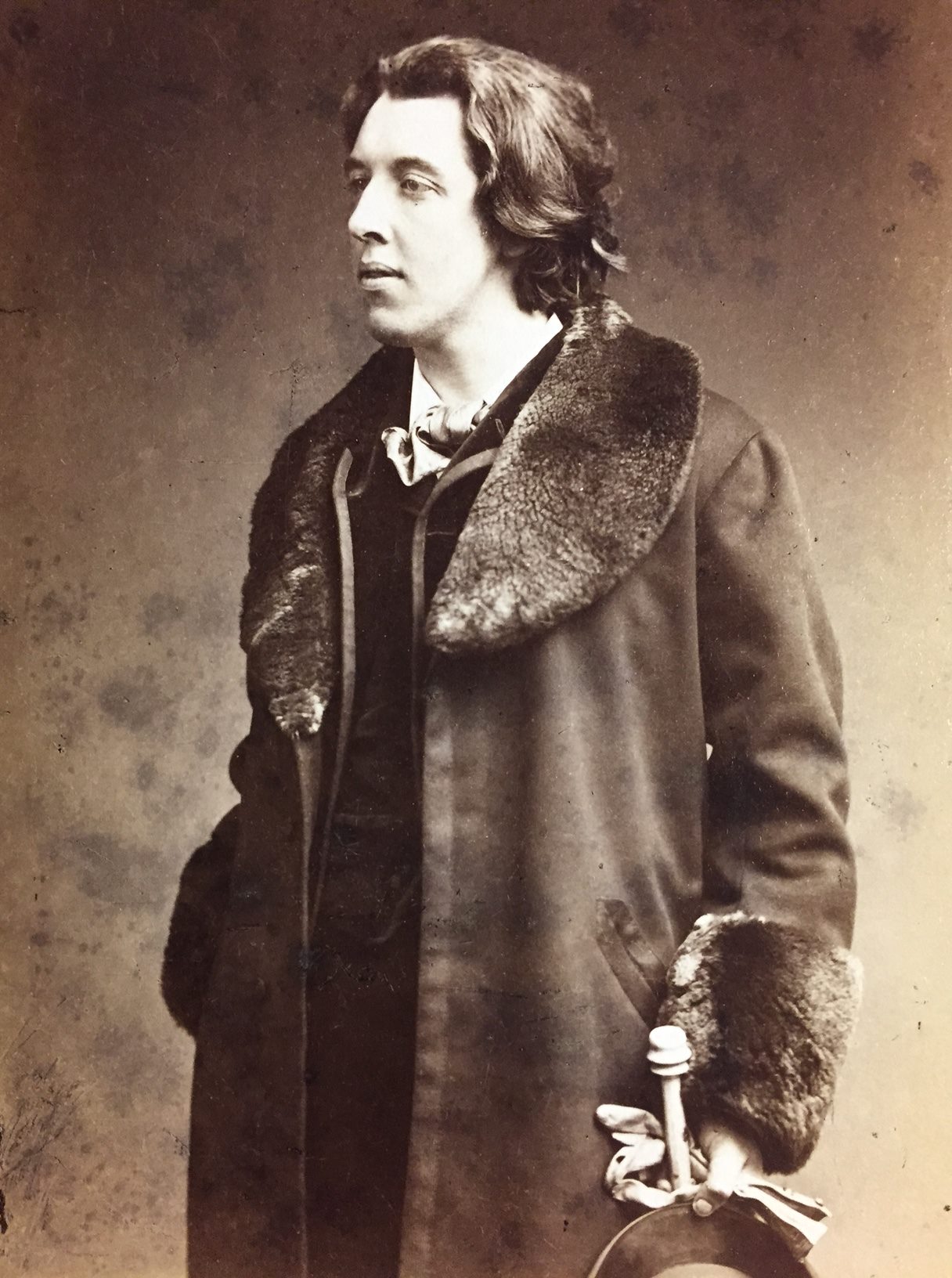
A Portrait of Oscar Wilde | Courtesy photo

“Here’s an  interesting point – pursuit of pleasure, acquisition of beautiful things, appreciation of beauty – those were components of the aestheticism in the late 1870s,” Michetti expounds. “Aestheticism values art more than social and political themes: art for art’s sake. Oscar Wilde was considered one of the most prominent proponents of it. He was, at the time, a big celebrity who embraced it and became the public face for the movement.

“The aesthetic movement is a hedonistic approach to life. So while the novel’s protagonist is pursing these things, Oscar Wilde is saying there’s a price to pay for following these theories to their logical end.”

Oscar Wilde once said  that ‘Dorian Gray’s’ three central characters are all aspects of himself: “Basil Hallward is what I think I am; Lord Henry what the world thinks of me; Dorian is what I would like to be – in other ages, perhaps.”

Michetti finds Wilde’s description fascinating. “There is something thought-provoking about the three characters as a triumvirate. Within that, Harry is the proponent of the movement and he stands by it to the end. He says we can’t change, we are who we are; and he doesn’t want Dorian to change because he believes aestheticism is worth pursing at whatever cost. Meanwhile, Basil is destroyed in the course of the play. And Dorian is the one who develops a conscience and decides to change.

“There are three actors playing the three different characters who are all aspects of Oscar Wilde. There’s that remarkable bond they carry with them during all that time. They are people who care very much for one another.

“When the play begins Harry and Basil have been long-time friends, they were in school together. Basil meets and falls for Dorian and introduces him to Harry – it’s a triangle with connections as well as conflicts. As soon as Harry comes into Dorian’s life, Basil becomes a third wheel. We have talked a lot with the three actors about the fact that there are reflecting and mirroring between them, yet the characteristics of the actors and the characters are very distinctive.

“Basil and Dorian are contrasts in a lot of ways. Dramaturgically and psychologically, Basil is the embodiment of Dorian’s conscience – he’s the one who wants Dorian to behave righteously, to take responsibility for his actions, and to lead an honest and fulfilling life. Dorian reaches a point of being so fearful of the consequences that he avoids Basil and their friendship suffers for it. Ultimately, I think, the reason for Dorian’s big conversion is the recognition that killing Basil is a big loss and he has a lot of guilt over that. He comes to an appreciation for what Basil wants for him to see in the world.”

Michetti continues, “The second metaphor in the story is Dorian’s portrait which is both aging and taking on the physical manifestation of his sins so that he isn’t affected.  I find that symbolism a little too simple because even though his appearance isn’t affected, Dorian has guilt and fear beneath. But there’s something addictive about his continuing pursuit of pleasure, beauty, and experiences. It’s almost that of an addict getting a high for a while, then he crashes, and he begins again. That is very much the cycle that Dorian is deeply in.”

This adaptation of ‘A Picture of Dorian Gray’ does not show the portrait at all, which could be a tough sell to the audience who can’t actually see it.

Michael Michetti | Courtesy photo / A Noise Within

“The reason I decided not to have the picture is that, in most adaptations, when the portrait is shown and the effect it’s had on it, the whole revelation is a little cheesy to me,” rationalizes Michetti. “I never got convinced because it should be terrifying and it always fell short of what I had imagined. And then, too, how grotesque could you make it so we could understand his moral decay and give it the right impact?

“Previous adaptations emphasized the horror aspects instead of the psychological feature. There is undeniably a supernatural element to it; you can’t tell the story without that. However, I didn’t really want to be focusing on that but on the humanity of it. I think the audience will hear the story in a different way because of how we’re framing it. And focusing on the psychological instead of the supernatural is what makes that possible. I hope that our audiences understand that kind of storytelling and find it dynamic and compelling.”

Michetti says further, “The story has universal themes. I think we are all guilty of the things that Dorian does – we all want to stay young, we all feel that sense of loss when we begin to age, we all seek pleasure to try to numb the feelings of fear or failure. While Dorian is an antihero, we can relate to him and we see ourselves reflected in him. We may not go to the extreme that he does, but we comprehend some of the temptations he had. I would like our audience to treat it as an admonition to make different choices because we see how badly Dorian’s life ends.

“At the same time, I hope that, in the adaptation of the play and the depiction of the character, we find him appealing and relatable before we find his behavior repellent. While Dorian doesn’t begin as the shining example of magnanimity, he is a very relatable person before he begins his decline.

“Finally, I would like people, who feel they know the story, to be taken aback – to think they heard it in a new way. I would like to make them recognize other aspects of it they had not previously been conscious of, or didn’t know were there. For me it all comes back to the appreciation of Wilde and how inspired this novel is, how deeply he understands humanity. That we can use his words and tell the story that feels fresh and relevant in the 21st century is surprising for a work that’s 125 years old.”

Basil is played by Amin El Gamal, whom Michetti had not previously worked with. He states, “Amin has auditioned for me before and I’ve seen his work as a fan. He was definitely the first person I thought of.”

Basil (back) paints a portrait of Dorian (foreground) as Harry looks on | Photo by Craig Schwartz

El Gamal confesses, “I never read the book in school and didn’t come across it until after college. I have never been in a production of Dorian Gray before but I know the trope about the picture that ages.

“It was very insightful of Michael to have thought of me in the role of Basil. He’s a character I think I relate to strongly, although I’ve never seen productions where the characteristics brought out in this adaptation were showcased. I was really excited to be approached for a role where I can share my existential qualities, which I was surprised that Michael has perceived.

“When he sent the script to me, I was astonished and, quite frankly, I felt exposed. But it has also been a delight because my goal as a person of color is not to play my ethnicity but to use my resources and my qualities as a person as the basis for my art. I felt that Michael acknowledged that. I was disappointed that I couldn’t do it because the script came too late – I was already committed to another project.”

Interjects Michetti, “I cast another actor but he dropped out. So I approached Amin again and, by that time, his project had fallen apart. So this feels like fate.”

“As excited as I was to play this character, I was also afraid of what that psyche would unearth for me,” El Gamal continues. “Fortunately, the process has been fruitful. I really feel that an actor’s main tool is his life experience, but there are times when I have to use my imagination. This play really required that creativity.

“I’m very sensitive to the fact that people can be like Basil or Harry. I can certainly relate to both Harry’s wanting to pursue his goals with enthusiasm in the same way that I appreciate Basil’s sense of morality. But there has to be a balance to not be overburdened with the morals and live life to the fullest.”

“Michael challenged me to find more complexity in the characters,” discloses El Gamal. “He didn’t want us to depict Basil and Harry as the angel and the devil on Dorian’s shoulder. That the evil and the good are not too far apart, there’s a grey area where a person can be both. Basil certainly isn’t perfect. Both characters had an important role in Dorian’s life – if it wasn’t for Basil, he wouldn’t have met Harry.”

“Basil is very passive in the beginning of the story,” says El Gamal of his character. “When Dorian starts pursuing worldly pleasures, he pulls away – he leaves the country and isn’t a part of Dorian’s life for a while. He goes through a drought in his art after Dorian basically abandoned their relationship. He might have resorted to drug and substance abuse, he’s alone and lonely. Although he still has a deep love for Dorian and when he sees the deterioration of the portrait, he stages an intervention.

“But through it all, he’s not a victim. His character arc is hopeful – he’s planning on opening a studio in Paris where he would create his next masterpiece – despite its sad ending. It was a productive life cut short. I hope I am able to convey everything that is going on with Basil.”

“Oscar Wilde anticipated homosexuality as an identity, the idea of two men being in love,” marvels El Gamal. “Basil embodies that identity at a time when that wasn’t recognized.”

In his depiction of Basil, El Gamal wants the audience to leave the theatre with something to reflect on. “I think in today’s social media and selfie-obsessed culture, people can feel disposable and we can forget to be respectful and communicative. I hope Basil, as a sort of advocate for kindness and basic human decency, reminds audiences to take a little better care of themselves and each other.”

Would that El Gamal’s wish is realized and the moral Michetti advances in ‘A Picture of Dorian Gray’ is heeded to make us a deliberate and thoughtful society.   

Boston Court Pasadena’s Annual Festival Features New Play about Feminism

Originally published on 24 July 2018 in the Pasadena Independent, Arcadia Weekly, and Monrovia Weekly

‘Ladies’ playwright Kit Steinkellner | Courtesy photo

Long before the word feminism entered our lexicon, women were coming together to indulge in intellectual pursuits that were deemed, at the time, to be the domain of the male species. That’s what a group of women who lived in 1750s London did when they formed The Blue Stocking Society.

‘Ladies,’ a new play by Kit Steinkellner, is a fictional account of a year in the life of The Blue Stocking Society and explores the tangled knot of electric and jagged relationships that comprise this group. These women are pioneers and revolutionaries emboldened by the call to arms to be the first of their kind and burdened by the misfortune of being born far ahead of their time.

It will be featured this Saturday, July 28, at 11:00 am at Boston Court Pasadena’s 14th Annual New Play Reading Festival and will be directed by Co-Artistic Director Michael Michetti.

Steinkellner expounds, “’Ladies’ is a history and time travel play in its theatricality. It was inspired by The Blue Stocking Society, the first organized feminist movement founded by a group of women who lived in England in the mid-18th century. Much has happened since in terms of advancing the role that women play in society, but at the time they were considered radical.”

“The idea came to me about ten years ago when I was in London and I went to the National Portrait Gallery which was holding an exhibit about these women,” discloses Steinkellner. “They intrigued me as being true pilgrims and pioneers in a realm which had absolutely no roadmap. Writing a play about them struck me as being both exciting and scary.

“I wanted to tell their story in an ‘out-of- the-box’ way just as they had done when they began their club. In dealing with something that is set in the past, I realized there’s a risk that the story might come off as dusty, archaic, or irrelevant. As I researched about their lives, read their diaries and their correspondence with each other, it became important for me to make sure I did it exactly right.

“To create something exciting that explains my obsession with these women, and why I was so captivated by them, I used time travel to be part of the play as the historian and narrator. I investigated why I wanted to have a relationship with women who lived over a hundred years ago and how they are relevant in today’s world.”

Adds Steinkellner, “There are four actresses in ‘Ladies’ and each one plays a prominent woman in this group – each enacts my character and some of them perform male roles. While this play was conceived ten years ago, I only started actually writing it five years ago and it became a finalist in the O’Neill National Playwrights’ Conference. However, that version didn’t have the time travel element in it and I wasn’t part of the play.”

“The play has seen several changes and revisions although they didn’t happen all at once. I gave it time to germinate and develop; I would leave it then go back to it after a few years to improve and polish. I’m very excited about this Workshop and I’m grateful that Michael and Jessica picked it for their New Play Festival because it’s a very important process towards bringing it to life. I want the audience to be emotionally engaged with the story and these women’s lives,” Steinkellner enthuses.

Emilie Beck, Boston Court Pasadena’s Literary Manager | Courtesy photo

Emilie Beck, Boston Court Pasadena’s Literary Manager, who has been involved in the New Play Reading Festival for seven years, describes, “Kit’s play is quite fascinating and is, in a way, its own genre. It speaks to an intellectual realm but there’s also a lot gestural work in it; it’s cerebral and visceral at the same time.”

“There is an element in ‘Ladies’ that sets it apart from other plays – this interesting conceit in which each character becomes Kit, the playwright,” Beck points out. “The play is making use of her rather than Kit putting herself as a protagonist, if that makes sense. It involves time travel but not in a science fiction way. I think there’s a very fluid connection between the here and now and these ladies in the 1750s.”

“It’s thrilling to us that this year we received more submissions from women playwrights than from men,” states Beck. “The four new plays we’ve chosen for this year’s Festival are all written by women. While we read without attention to gender, we were drawn to these voices, which speak to a wide array of underrepresented female experiences.

“What’s interesting is that the ‘Me Too Movement’ was happening as we were reading these submissions. So these plays  had not been written out of that and yet we were reading in that context. I imagine that as we move into the future, there will be more plays written because of that.”

Beck asserts, “That said, it wasn’t the only theme touched on by the plays we received. We got submissions with very dark themes – war, apocalypse, suicide, assault. In fact there were a lot of them that involved sexual assault. A good number of plays we read were spoken by a voice that has been disenfranchised. It’s really important to us to represent that. For a long time there’s been this overriding voice of the white male playwright. Not to dis the white male playwright, there are many of them who are wonderful and whom I love working with, we need to make a little room for women and minorities.”

“New work is important to us,” declares Beck. “The whole reason this theatre is here is to get new work on the stage. It’s hard to write a play; playwrights sit on their own, trying to create a multidimensional world with voices in conversations that would, in some way, illuminate a theme.

“Playwrights have to find a way to get from a flat page, to that creative place, to a fully realized production. They have to go through the processes, get together with a bunch of artists in a room to listen to how it sounds, to see how it’s working and not working. That is integral to our work here. It’s exciting for us and we look forward to it every year.”

The New Play Reading Festival is a key component of Boston Court Pasadena’s commitment to nurturing playwrights and new work. It paves the way for unknown artists’ creations to get recognized and produced on stage.

What a thrilling prospect it is if this weekend we could be seeing the future Eugene O’Neills or George Bernard Shaws, whose plays are esteemed, revered, and performed to this day!

Unpacking ‘Her Portmanteau’ at Boston Court Pasadena

Originally published on 30 May 2018 in the Pasadena Independent, Arcadia Weekly, and Monrovia Weekly

Courtesy photo | Boston Court Pasadena

Families, and the drama that’s inherent in each, is the topic of Mfoniso Udofia’s play ‘Her Portmanteau.’ It will have its West Coast premiere at Boston Court Pasadena from May 24 through June 30, 2018.

Directed by Gregg T. Daniel, who recently directed Lorraine Hansberry’s groundbreaking play ‘A Raisin in the Sun’ at A Noise Within, ‘Her Portmanteau’ stars Joyce Guy who plays the role of Abasiama the family matriarch. Completing the cast are Omoze Idehenre as Adiaha and Dele Ogundiran as Iniabisi.

A theatre graduate of Hampton University in Virginia, Guy was a member of the DC Black Repertory Company. She has performed at the Kennedy Center, Mark Taper Forum, and L.A. Women’s Shakespeare Company. Her screen and television credits include: ‘Moneyball,’ ‘The Santa Clause,’ ‘Animal Kingdom,’ ‘Criminal Minds,’ and ‘How to Get Away With Murder.’ She got an Ovation Award nomination for her choreography for ‘Les Blancs.’

This will be Guy’s debut performance at Boston Court Pasadena and she recalls how her involvement in the project came about. “This is the third time, in the last year and a half, that I’ve worked with Gregg. I choreographed ‘Les Blancs’ at Rogue Machine and ‘Raisin in the Sun,’ both of which he directed.

When I was at the performances of ‘Les Blancs,’ Jessica Kubzansky, Boston Court Pasadena’s Co-Artistic Director, was in the audience. I’ve known her for a while; I took a class with her a long time ago and we became friends. After the play she said to me, ‘Joyce, I have this play that I want you to audition for.’ And then I got a call from the casting director.”

Guy describes the play, “Her Portmanteau is the story of Abasiama, a Nigerian American mother who has two daughters. Her first daughter is Adiaha with her first husband who she met in college. When he was deported she decided that it was best to send Adiaha, who was six years old at the time, back with him to Nigeria. She has another daughter, Iniabisi, with her second husband whom they raised in Massachusetts where her job as a biologist took them. Iniabisi, a 30-year-old aspiring writer, lives in New York.”

“Abasiama has her hands full living with a husband who has mental health issues,” Guy adds. “But her life gets more complicated when Adiaha, who’s now 36, decides to come back to the United States.”

“In Nigeria the first daughter is called ‘adiaga’,” explains Guy. “When Abasiama informed her husband that she wanted to bring Adiaha to Massachusetts, he told her ‘Don’t bring her to my house; she’s not my daughter. My daughter is the ‘adiaga.’ Then he locked himself in the bathroom and started walking backwards. To avoid further conflict, Adiaha picks up Iniabisi from the airport and takes her to New York where she lives.”

Aside from the ‘baggage’ that ‘Her Portmanteau’ explores, it also literally refers to a suitcase. Reveals Guy, “It’s the same luggage that Adiaha took with her when she left for Nigeria with her father three decades ago.”

“It’s a great story, with a character who has several layers,” Guy says.  “And as an actress it’s challenging but it’s a wonderful one. What keeps surprising me is that for someone who’s very direct in her everyday interactions with people, to the point of rude bluntness, she wasn’t forthcoming with important information about her family. She makes promises she can’t keep and it seems that she does it to make herself feel better. She’s a woman of many contradictions.

One Sunday morning, she woke up and made a pivotal decision without thinking things through. As I said to Gregg, I imagine that having lived with a second husband who has mental instability she would have developed some psychological problems. She had to build coping mechanisms which were also faulty and she couldn’t really function properly.”

Mfoniso Udofia. – Photo by Frances F. Denny / NY Times

According to Guy she doesn’t have anything in common with the character, “There really isn’t anything about Abasiama that I could relate to because I don’t have children. It’s also a challenge to learn a whole culture you’re not familiar with. The play is very specific in its culture, the people, and the language; and we have to honor that. Ibibio is tonal and learning the phrases used throughout the play proved daunting.”

“I’m African American but I studied West African dance so I’ve been to Senegal, Mali, Guinea, and Gambia,” continues Guy. “I made a film in Senegal; I have a friend who’s Nigerian so I’m familiar with the West African culture. That’s different from being involved in a culture so I have to go deeper to inhabit Abasiama’s character. Gregg lets the actors find their direction in the script, through our research, by observing how Nigerians speak, carry themselves and their bodies, and in relationship with the other actors.”

Living among people of different culture isn’t an entirely novel experience for Guy, though. She discloses, “I was an army brat. My father was in the Air Force and we moved every three years. I’ve lived in Japan, Taiwan, Texas, Kansas, and Delaware.

“When people inquire where I’m from, sometimes I say Delaware because that’s where by father retired after active duty. At other times I say Montgomery because both my parent are from Montgomery, Alabama. I was actually  born there and we stayed there until I was three years old when we moved to Texas. After Texas we lived in Taiwan; from there we went to Florida; after that we went to Japan; then to Kansas; and finally to Delaware.”

“Because we moved around a lot I’m often asked which culture I found the most appealing to me. In fact, someone asked me that two days ago, and I said Taiwan. We lived in a compound with other Americans but we had to move to a bigger house because there were five of us. We had free range, we’d walk everywhere, we’d go down to the rice paddies. My best friend was a man who had a food truck that sold bananas and he would give me some. The Taiwanese kids were very curious about us and would touch our skin and our hair. I have wonderful, memorable experiences. But the funny thing is, I couldn’t stand the smell of garlic. I was five, okay?,” Guy says defensively.

Taking on this role in ‘Her Portmanteau’ has given Guy an opportunity to grow as an actor. She says, “I’m learning that I’m more determined and resilient than I thought. I have learned to come to terms with my weaknesses and that I have to put in the work. In order for me to honor Mfoniso’s words, Gregg, and the other actors, I have to go the extra mile. As rehearsals progress, we’ll be able to get to the whole dynamic of this family.”

“There is a universal theme to this play. It’s about family dynamics and dysfunction, things we all can relate to; there’s no perfect family. For me, the biggest takeaway would be that we all have regrets; we’ve all done something that weighs on us. But you can work past that as long as you’re forthcoming and honest with yourself. The thought may not go away but you can go forward from there,” concludes Guy.

While Mfoniso Udofia’s ‘Her Portmanteau’ is semi-autobiographical, this taut and poignant drama about relatives, legacy, and connections will resonate with all of us. Some of us will recognize our particular family’s dysfunction and see ourselves in one of the characters. Because as different as every one of us is, we all share a human-ness that is imperfect.

Boston Court’s ‘A Streetcar Named Desire’ Speaks to Significant Issue of our Time

Originally published on 13 February 2018 in the Pasadena Independent, Arcadia Weekly, and Monrovia Weekly

‘A Streetcar Named Desire’ is arguably Tennessee Williams’s most celebrated and momentous  work. Originally a play which opened on Broadway in 1947, it has been made into a film, adapted as an opera, ballet, and for television.

And now Boston Court Performing Arts Center in Pasadena presents a reimagined modern version of ‘A Streetcar Named Desire,’ featuring a multicultural cast and contemporary setting.  Onstage from February 15 to March 25, 2018, it is directed by Co-Artistic Director of Boston Court, Michael Michetti, and stars Jaimi Page as Blanche, Desean Kevin Terry as Stanley, and Maya Lynne Robinson as Stella.

Michetti had a very successful run directing two other plays in Pasadena – ‘Mrs. Warren’s Profession’ at A Noise Within and ‘King Charles III’ at the Pasadena Playhouse – and is aiming for a trifecta with ‘A Streetcar Named Desire’ at his home theatre company.

“I’ve never done any Tennessee Williams before now but I’m a big fan of ‘A Streetcar Named Desire,’” discloses Michetti. “I’m not exaggerating when I say I love it so much that I must have seen a dozen or more productions of it. I’m glad to have a ‘home’ where I can do passion projects.

Interestingly, I’ve been thinking about this play for a couple of years as a response to what I was sensing was happening to our world, before even a Trump presidency was possible. But the current political climate has only made it more timely; all the issues which were bubbling underground a little bit have now come to the surface.

‘A Streetcar Named Desire’ is so thematically rich – different threads stand out depending on how you focus it. Great works like it can be revisited in different eras and political circumstances and reflect current society.”

Michetti’s vision is a wide departure from its classic production as he sets it in the modern day  with diverse actors. Pronounces Juilliard-trained Desean Terry, “It’s going to be a very different take and that’s why I’m really interested in it – Michael’s setting it in contemporary America. Blanche is a remnant of American history, dressed in the costume of the 1940s; she’s the only traditionally cast character and only Caucasian actor amidst an ethnically diverse group in modern clothes. She’s incongruent to the setting. As in the original play, Blanche is a fish out of water and Michael brings more attention to that fact. It’s a very intriguing concept, really.”

Desean Kevin Terry as Stanley. Courtesy Photo

On assuming the role memorably portrayed  by Marlon Brando in the 1947 play and the 1951 movie, Terry declares, “Fortunately I never saw the original play and I don’t remember much about the film version, which I think I saw when I was quite young. I don’t know what Marlon Brando did and I think that works to my advantage. I can try to recreate the character as I see the circumstances in the play and in response to our particular production. I will definitely honor the text in the way that it described Stanley.”

“To be honest, I’m a bit freaked out to be playing the role that Marlon Brando immortalized,” confesses Terry. “Well, actually I didn’t think about it until after I got the part when I told myself ‘What are you doing, Desean? Now you’re pitting yourself against an icon.’ However, Michael didn’t have a set idea of what Stanley should be like so it’s been a discovery process for both of us; we’re continually working on each role as part of the whole play.”

“We’re illuminating the love between Stella and Stanley which I think got shortchanged,” expounds Terry. “In this play we’re developing that relationship more, creating a healthy dynamic between them as much as we can with the play which has incidents of domestic violence. It’s pretty challenging what we’re trying to accomplish. I hope our interpretation of the play gives our audience a fresh appreciation for it.

“For me, personally, I hope they see a more human version of Stanley. If people respond to that I would feel pretty good. I’ve been in plays that speak to race relations and I enjoy the opportunity to effect change,” Terry concludes.

Michetti adds, “The primary impetus for this production was the discovery of the important themes of class, gender, and race that Williams touched on when he wrote it. Among them is how Blanche comes from a world with social privileges that even then, when the play was first produced, were no longer pertinent. Belle Reve, where Blanche grew up, was a big old house that came with a great deal of history but it was not a working plantation even in the 1940s. She was trying to hold onto an expectation about a way of the past that’s slipping away.

Even then Williams was exploring the changing demographics – there were more immigrants, people of different backgrounds. Many people were having trouble accepting that shift. It was something inherent in Blanche’s relationship with others.

By setting this production in contemporary urban environment populated with people of color and dropping in a Blanche, a white woman from the 1940s in that period’s clothes, hairstyle, and behavior, we emphasize to an even greater degree how much she is a relic of the past, unable to accept the world and move on. It was a contrast that Williams had intended and which I am visually amplifying.”

Director Michael Michetti. Courtesy Photo

“It’s tricky because the play is so complex, it cannot be boiled down to single issues,” continues Michetti. “Within this treatment Blanche represents, in many ways, the loss of equilibrium that many white people are feeling. I want to deeply explore the flaw in her inability or trouble in accepting that the demographics of the world are changing. That said, any imbalance is uncomfortable. This was true then as it is today and is something we need to recognize. We’ll heal better by embracing and acknowledging it instead of avoiding or ignoring it.

White people should not keep trying to hold onto our privilege. The truth is, there is a cluelessness among us whites and we all need to be awakened. At the same time there is a real sense of loss that we should also be empathetic to.”

“However, I will not impose my morals on my audience – I want this play to reflect humanity and let people make up their mind about it,” says Michetti . “I think everyone is going to experience it through a different lens and see different things in it. There’s certainly an idea of investigating this divisiveness we have in our country right now and what that means. The beauty of this play is that all the characters are flawed people but also people we could be empathetic to. While I don’t think we will ever heal the divisions in our country we can show compassion to one another.

There are systemic problems we haven’t quite tackled but the beauty of theatre is that if you can do it well it’s an opportunity to explore these things through living, breathing humans, which touch not only our minds but our hearts. I think our minds are more successfully changed when our hearts are also changed.”

Michetti pronounces, “I’m very grateful to be doing for a living something that I love and am excited about. But more importantly, I’m always trying to discover what’s meaningful to me, to continue growing and reinventing myself. I’m in a period in my life when one of the most powerful things I can do is to help address vital issues in our time with an authentic sense of social justice focus. I think we have a great potential as a nation and a culture to be much better than we are. I want to genuinely fulfill the promise that our forefather said that all men are created equal.”

Through ‘A Streetcar Named Desire’ Michetti proves that his projects are not merely works of art but agencies of change as well. That is the true transformative power of theatre.

‘With Love and a Major Organ’: Boston Court’s Last Play for the Season

Originally published on 27 September 2017 in the Pasadena Independent, Arcadia Weekly, and Monrovia Weekly

Boston Court Performing Arts Center in Pasadena ends its 2017 season with the West Coast premiere of Julia Lederer’s ‘With Love and a Major Organ’, from September 28 through November 5, 2017. 

Directed by award-winning co-artistic director, Jessica Kubzansky, ‘With Love and a Major Organ’ is a whimsical, quirky, and wildly original play that dissects physical human interaction in the age of technology. Its title alone is startling and it was what attracted her to the play at the outset.

Says Kubzansky, “I love this title and I think it’s deliciously funny. The story is about trying to connect in our ever more virtual world. There’s a character in the play who has been enclosed for years in her own privacy. She’s seeing an online therapist, Google Shrink, who recommends that she see more people so she speed-dates online. What’s contrapuntal to this is that she falls in love with a stranger she meets on the subway. She then gives her actual beating heart to this man and he disappears on her.”

‘With Love and a Major Organ’ follows the protagonist’s quest to retrieve her heart, accidentally cracking open those of others she meets on the way. The play is eccentric and edgy comedy about what it costs to give your heart away, and what happens when you discover you actually have one.

“To me one of the most profound ironies of our time is that we have never been more connected yet we have never felt more isolated,” Kubzansky declares. “There’s this amazing animation that someone made about people running around looking down on their phones – technology is changing their lives but they’re completely missing out on life around them. Technology is significantly improving our lives while considerably reducing our ability to connect.

Julia’s play is both truly hilarious and powerfully heartbreaking. She’s mining both the absurd lengths to which love will drive us and the deep loneliness that emanates from protecting our frequently bruised and broken hearts. Her text is poetry for the theatre and she pushes metaphor to its most surreal and deeply truthful limits.”         

Boston Court Performing Arts Center was founded in 2003 as a non-profit arts center dedicated to new and original works by living artists. Led by co-artistic theatre directors, Jessica Kubzansky and Michael Minetti, it has successfully established its place among the numerous theatre companies in Pasadena.    

“The journey has been exciting, challenging, and wonderful,” proclaims Kubzansky. “I’ve been extraordinarily privileged to have founded Boston Court with Michael. We had the thrilling task of creating the mission and vision for this place – it’s always stimulating for an artist to create what you want to share with the world.

We knew when we started that Boston Court is only four blocks from the Pasadena Playhouse; we realized we needed to offer something different. Frankly, the design of the place dictated many things: it’s beautiful but it’s also very intimate. It’s important for us to do risky, adventurous work because we have fewer seats to fill; we can afford to take chances in our programming.

Also, it’s imperative for me to do work that challenges both the artist and the audience – plays that encourage each artist to passionately pursue his own unique voice and vision. We don’t want cookie-cutter productions or something our audience can see somewhere else. We look for a variety of styles and we significantly reinvent the classic. The only time we wouldn’t re-envision a classic is when it’s  highly theatrical, textually rich, and visually arresting on its own – something we call a ‘Boston Court play’.

We put on four productions per season – usually one wildly re-envisioned classic; a world premiere; maybe one we had in our New Play Festival that subsequently ends up on our stage; and one that’s timely and needs to be done now. It’s all about passion and balance, but always the mandate is the same – it has to be highly theatrical, textually rich and visually arresting.”  

Kubzansky and Michetti actively seek out like-minded collaborators. She states, “When Michael and I meet with directors we would like to work with, we ask ‘What has been burning a hole in your gut? What do you need to talk about right now?’ Both of us have really astonishing experiences when it comes from our gut.”  

According to Kubzansky it took a while for them to fully grasp what sets Boston Court apart from other theatre companies in the area. She states, “It was much later, when our season had entirely world premieres and we had to extend every show, that it became clear to us that our audience liked the plays they’ve never heard of before. People now know that when they come to Boston Court, they will have a quality ride; they are confident that no matter what they see here it’s going to be a great evening.

Because our work is adventurous, it occasionally divides or offends people. But they also trust that they will see artistic excellence and the experience will be unlike what they get elsewhere. It’s incredibly important to us to take part in a cultural conversation that reflects the world as it is today. We ask our audience to be moved and to think – to crack open their heart and mind a little bit.  

In Los Angeles, you see a play, get in your car, and drive away. But in New York, after the show you go to a bar next door, bump into people who also saw the play, and have a discussion about it. We want to bring that kind of engagement in the L.A. theatre scene. Every Friday we have complimentary wine, sparkling water, and Chex Mix to encourage people to sit in our beautify lobby and have a dialogue about they had just seen.    

There’s a misconception that theatre-goers in Los Angeles don’t have the same passion for it as New Yorkers. It may be true that a much larger percentage of the population on the East Coast  sees a play on any given night – it’s so easy for them to go on the subway then get off after four stops. Los Angelenos are also passionate devotees and there are so many choices of theatres here, too. However, I think that geography has something to do with it – if you live in Venice and want to see a play here, you have to make a commitment in terms of the drive. Fortunately, Boston Court attracts subscribers from far afield – which is very thrilling. Pasadena is a beautiful place; it’s a really complex community and it’s exciting for us to be here.”

Before Boston Court existed the place it now occupies was a parking lot. It was purchased by philanthropist, Z. Clark Branson, to build a state-of-the art, intimate facility designed to bring artists and audience closer together. The 75-seat Marjorie Branson Performance Space and the 99-seat Main Stage are sites for the theatre’s season of bold, risky theatre and its eclectic, diverse music series. It is also the home of an annual New Play festival, an Emerging Artists Series, as well as Upfront, a rotating visual arts program.

As Kubzansky relates it, the theatre company’s name was born out of their desire to come up with a moniker that conjures permanence, heft, and gravitas. “We wanted something iconic like the Actors Theatre of Louisville or the Pasadena Playhouse – both of which were already taken. When we realized our building is located on Mentor Avenue and Boston Court, a lightbulb lit; we became Boston Court Performing Arts Center. We thought people will understand when they see that we named it after the street we’re on. 

What’s funny is that after we had our logo created, stationery printed, and signs put up, we received a letter from the City of Pasadena informing us that our address is in fact 70 N Mentor Avenue; Boston Court is actually our driveway,” Kubzansky says with a laugh.      

That inadvertent address error couldn’t have deterred its founders’ resolve to make their mark  on the city and theatre. Boston Court Performing Arts Center stands today as a stalwart advocate of artistic vision and inventive expression.