Firefighters spray water from a hose during the Eaton Fire. | U.S. Forest Service photo taken by Capt. Jason Benton / Courtesy of Wikimedia Commons
The Eaton Fire of January 7, 2025 will be endlessly seared in the collective memories of the Pasadenans and Altadenans who experienced the largest blaze in the history of the San Gabriel Valley. Overnight 19 people died and 9,000 structures were reduced to ashes, among them 80 homes at Upper Hastings Ranch in Pasadena and over 4,500 in Altadena.
Large corporations and private citizens across the country responded immediately to the disaster – sending cash, food, personal items, and other basic necessities to the various collection sites that opened during the days following the fire.
All through the year, several non-profit organizations emerged in Altadena to continue to support those who were affected even as the rest of the country moved on to other important matters. Community leaders have worked ceaselessly to keep the momentum going and thought of ways to ensure we didn’t forget that thousands of Altadenans are still grappling with the aftermath.
Two individuals – Victoria Knapp and Ethan Marquez – are collaborating on an event to benefit those who were affected by the Eaton Fire. They are co-chairing the Altadena Forever Run which will be held at 8:00 am on Sunday, January 4, 2026 at the Mariposa Junction in Altadena.
Thousands of runners and community members will gather for a10K, 5K and 1K family run raising critical funds for residents still recovering from the Eaton Fire – including individuals and families who remain displaced, are living in vehicles, or are running out of short-term rental assistance.
Victoria Knapp is a longstanding Altadena community leader and organizer whose civic work has focused on connection, recovery, and purposeful engagement. A former Pasadenan, she made Altadena her home in 2011, where she spent the next 15 years deeply involved in community life. She played a central role in crisis communication and community coordination after the fire, helping residents navigate loss while fostering collaboration among neighbors, small businesses, and local organizations throughout the recovery period. She is a firm advocate for community-based initiatives that bring people together with purpose and meaning, including the Altadena Forever Run, which reflects her belief that shared action – like running together – can be a powerful force in healing and resilience.
Ethan Marquez is a 26-year veteran of the Los Angeles County Sheriff’s Department with a career spanning custody, patrol, training, and command assignments. He was on the scene during the Eaton Fire, playing a critical role in emergency response and community coordination. In August 2025, he was promoted to Captain of Altadena Station, where he continues to emphasize operational excellence, public safety, and community partnership. A dedicated endurance runner and philanthropist, he runs marathons while pushing his son in a wheelchair to raise awareness and funding for Duchenne Muscular Dystrophy research, using running as both advocacy and a deeply personal expression of service.
“The Altadena Forever Run is about honoring what we’ve lost, supporting those still recovering, and reaffirming our commitment to one another,” state Knapp and Marquez. “After the Eaton Fire, our community showed that resilience isn’t just about rebuilding homes, it’s about standing together, staying connected, and moving forward with purpose. This run reflects the heart of Altadena: strong, compassionate, and forever connected.”
The course passes through neighborhoods and foothill corridors impacted by the fire, featuring on-course storyboards that highlight survivor experiences and ongoing recovery efforts. Organizers say one of the most meaningful aspects of the event is the regional turnout, with runners traveling from across Southern California and beyond to stand in solidarity with Altadena residents.
Community leaders and first responders are expected to attend – including Robert Luna and Kathryn Barger. The Los Angeles Laker Girls will also be on site to cheer on runners and support the event atmosphere. The Altadena Forever Run is supported by corporate and community partners, including SoCalGas, GoFundMe, East West Bank, First City Credit Union, and Toyota of Pasadena.
Proceeds from the event directly support Altadena residents who continue to face housing instability and are seeking viable pathways to rebuild and return home. Although the emergency response has ended, many residents continue to recover in the long term with limited resources.
But through the tireless efforts of dedicated individuals and the support of the community, Altadenenas will get through this unfathomable tragedy and get back on their feet stronger than ever before.
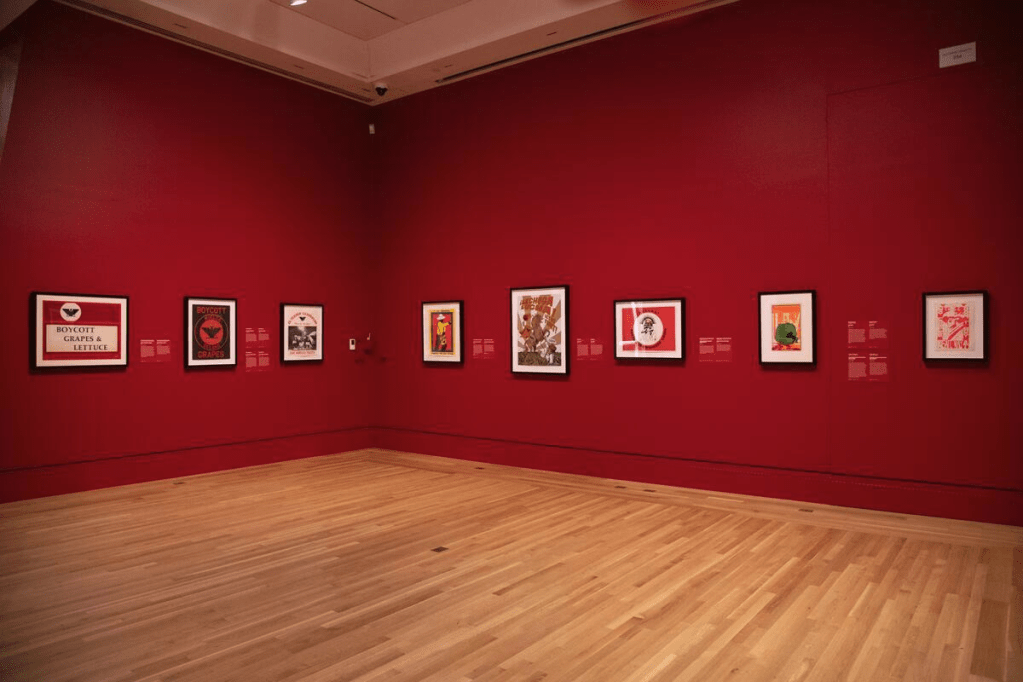
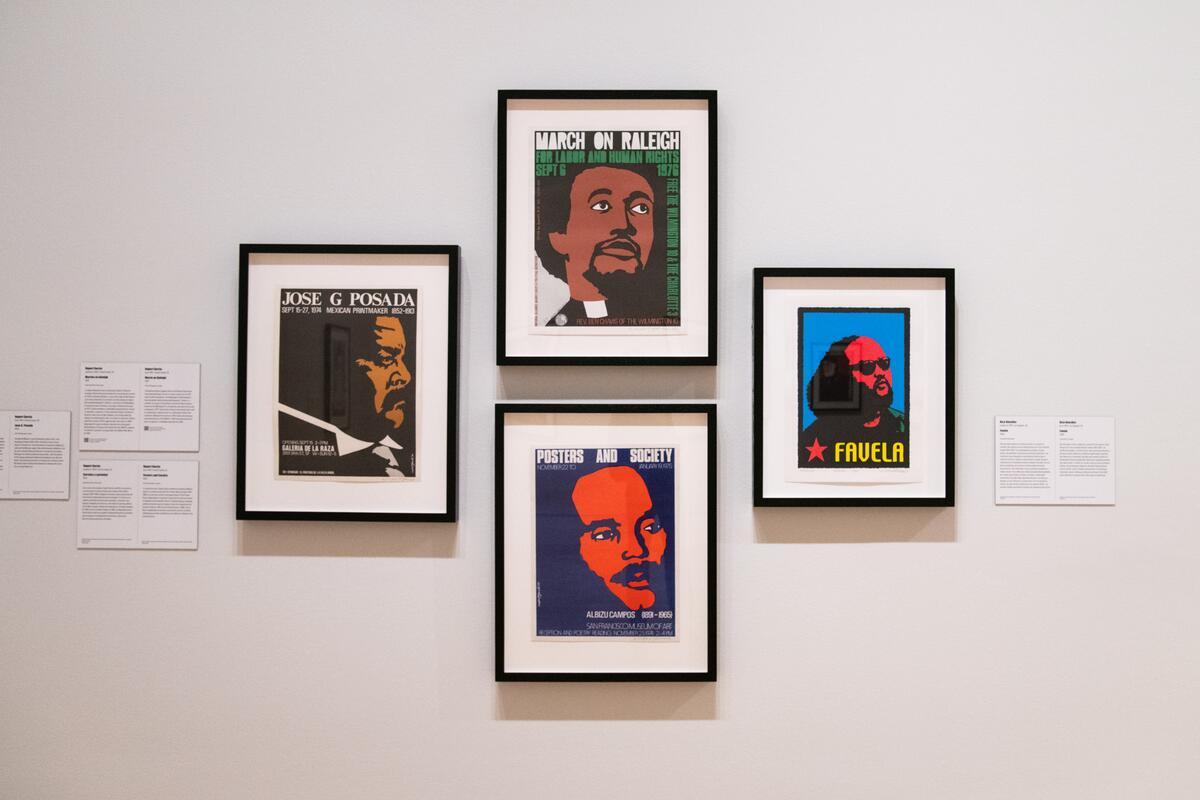
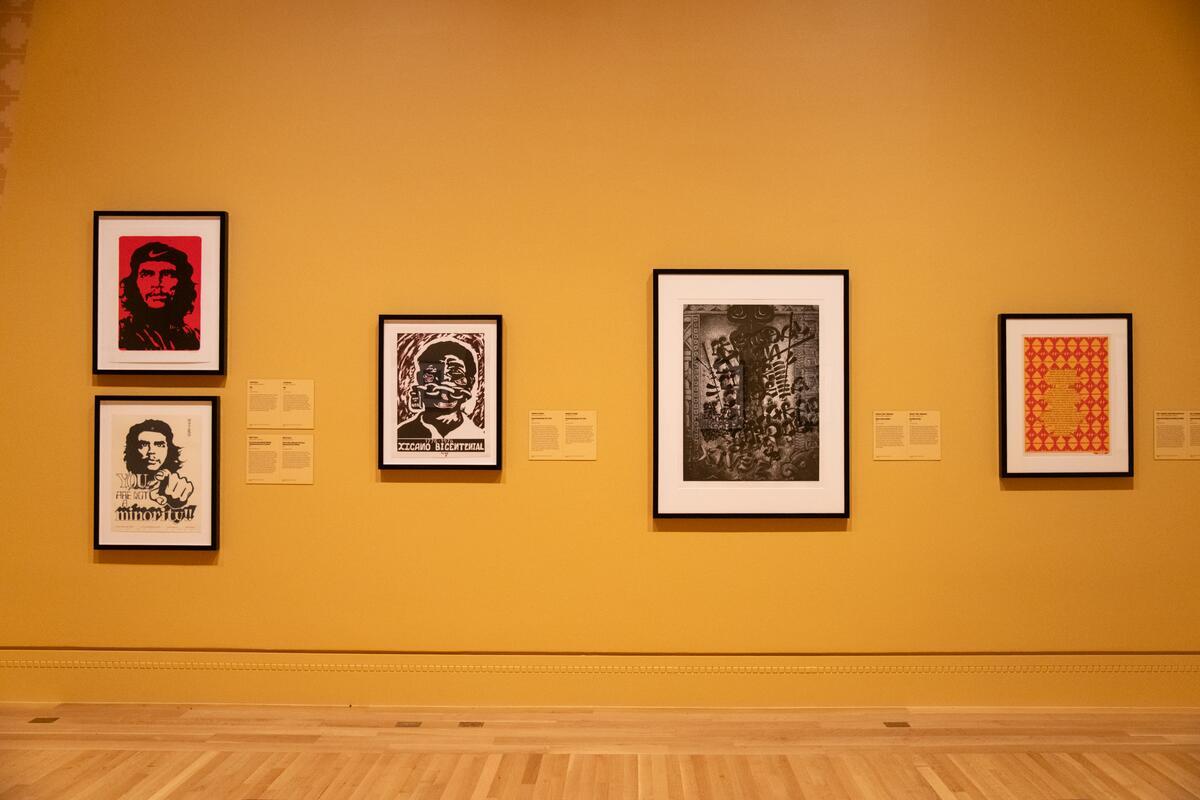
“Radical Histories: Chicano Prints from the Smithsonian American Art Museum,” makes its West Coast debut at The Huntington’s Marylou and George Boone Gallery from Nov. 16 to March 2. Curated by E. Carmen Ramos, forming acting chief curator and curator of Latinx art at the Smithsonian American Art Museum, the exhibition features 60 dynamic works by nearly 40 artists and collectives that trace more than six decades of Chicano printing as a form of resistance, community building and cultural reclamation.
Commencing with the late 1960s Delano Grape Strike, the precursor to the United Farm Workers (UFW) labor union, the prints in “Radical Histories” depict momentous events in the history of community activism and the formation of collective identity. Chicano artists used silkscreens, posters, and offset prints to mobilize communities – often with barbed wit, lively colors, and evident urgency.
The exhibition is arranged in five thematic sections: “Together We Fight,” “¡Guerra No!” (No War!), “Violent Divisions,” “Rethinking América,” and “Changemakers.” Each section highlights how Chicano artists have used the accessible and reproducible medium of printmaking to confront injustice, affirm cultural identity, and engage in transformative storytelling.
Installation photo courtesy of The Huntington
Section 1: Together We Fight
The opening section explores how the UFW, cofounded by César Chávez and Dolores Huerta, collaborated with visual and performance artists to support the fight for farmworkers’ rights. Key labor actions inspired a wave of Chicano art that functioned as both political expression and tangible solidarity. Artists adopted the UFW’s iconic black eagle, embedding it in posters, prints, and murals that raised awareness and helped fund the movement. The union’s visual language extended beyond its own campaigns, appearing in advocacy materials for the Texas Farm Workers Union and the Cannery Workers Committee in Sacramento.
Section 2: ¡Guerra No! (No War!)
Since the 1960s, Chicano graphic art has played a vital role in advancing antiwar resistance. These works serve as rallying cries, counternarratives to mainstream media, and spaces of reflection. Chicano artists have used print and poster art to critically examine U.S. military interventions in Vietnam, El Salvador, Chile, Iraq, and elsewhere.
Section 3: Violent Divisions
The U.S.-Mexico border has been a central theme in Chicano art. Printmaking has enabled Chicano artists to raise awareness about the experiences of immigrant communities because it is affordable and prints are easily distributed. Recurring iconography – such as the monarch butterfly, a symbol of natural migration – challenges the notion of geopolitical boundaries. Figures like the Virgin of Guadalupe and ancient Mesoamerican goddesses appear as powerful cultural symbols.
Section 4: Rethinking América
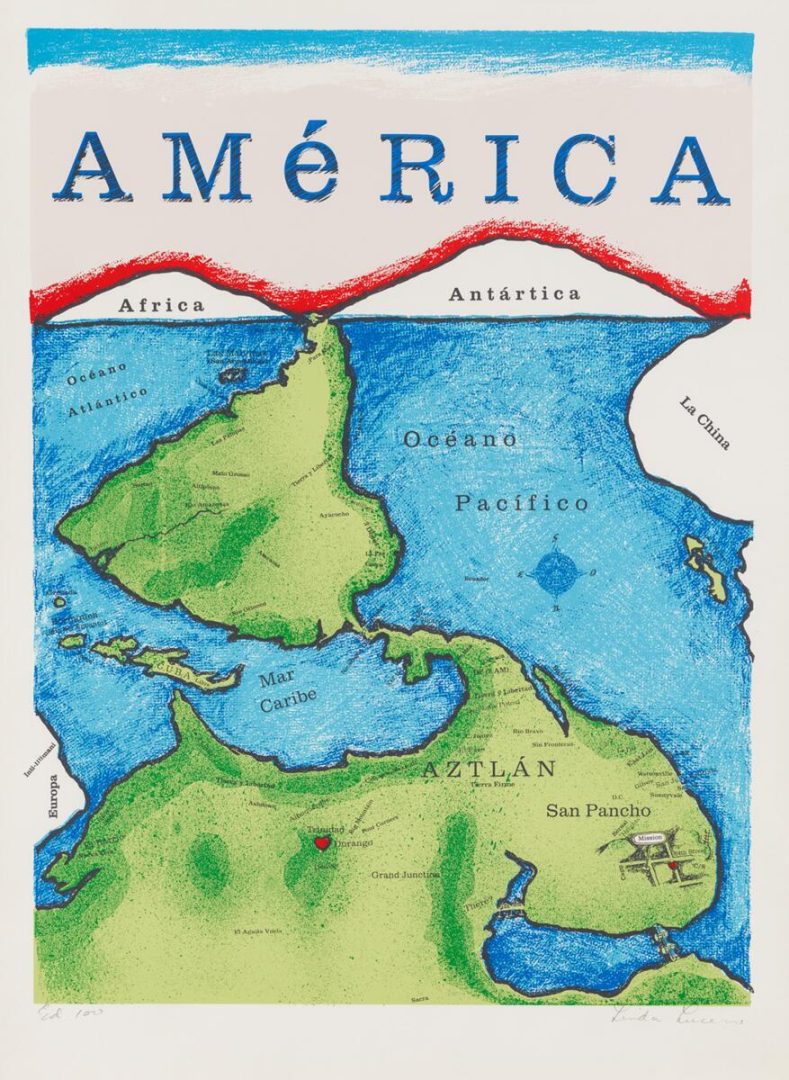
This section presents works that broaden historical narratives by including perspectives rooted in resistance and cultural reclamation. The artists drew inspiration from revolutionary figures and movements to create narratives that center Mexican American and Indigenous perspectives. Using mapmaking and record forms like the ancient Mesoamerican codex, Chicano artists also created speculative past and present narratives to reimagine social landscapes.
Linda Zamora Lucero, América, 1986, screenprint on paper, Smithsonian American Art Museum, Gift of Gilberto Cardenas and Dolores Garcia. | Photo courtesy of The Huntington
Section 5: Changemakers
Portraiture is a cornerstone of Chicano art, used to educate audiences and celebrate both cultural icons and overlooked figures. Artists often base their portraits on documentary photographs, transforming black-and-white images into vivid prints that honor the subject’s life and legacy. Featured changemakers include political prisoners, activist leaders, attorneys, actors, and artists—individuals who challenged the status quo and shaped history.
By email, Dennis Carr, Virginia Steele Scott Chief Curator of American art, and Angélica Becerra, Bradford and Christine Mishler Associate Curator of American Art – also the venue curators – discuss the exhibition’s origins, its relevance, and viewer takeaways.
“Radical Histories was organized by the Smithsonian American Art Museum to highlight the central role Chicano artists have played in shaping American visual culture,” begins Carr. “The exhibition began touring nationally in 2022 following its debut at the Smithsonian American Art Museum, and The Huntington is presenting its first West Coast exhibition.”
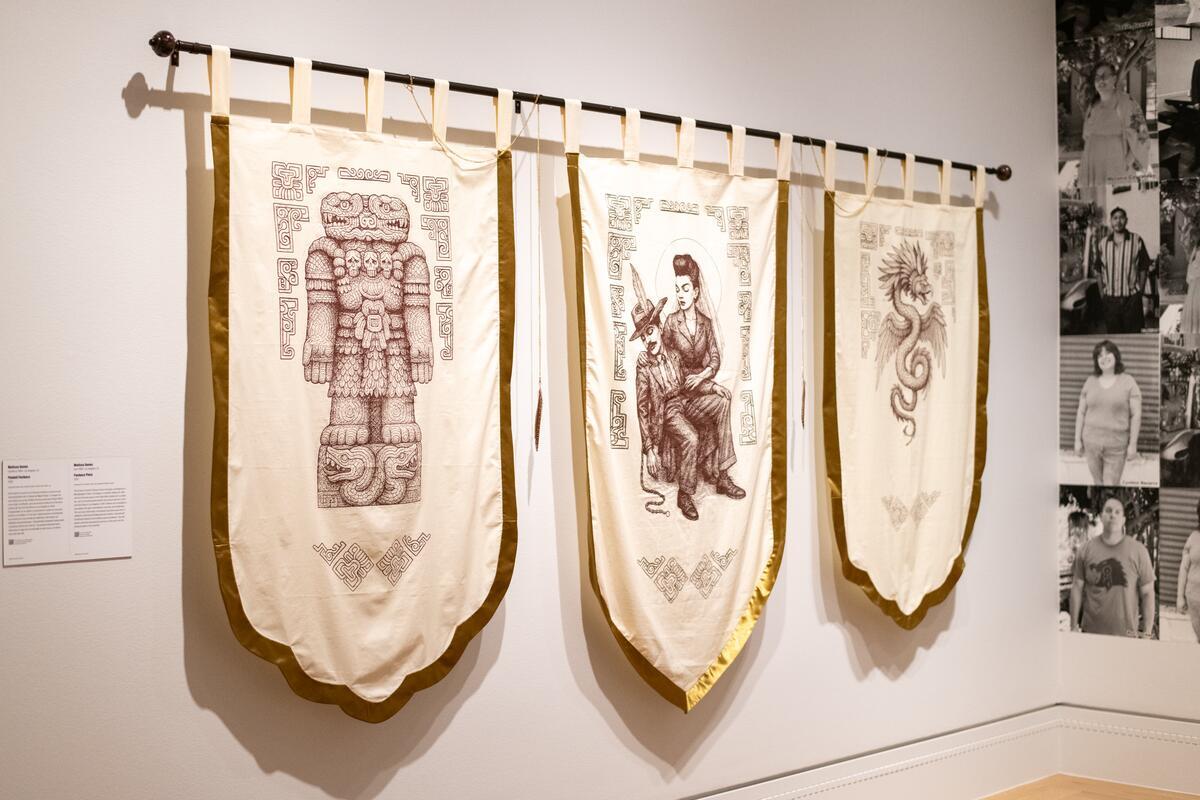
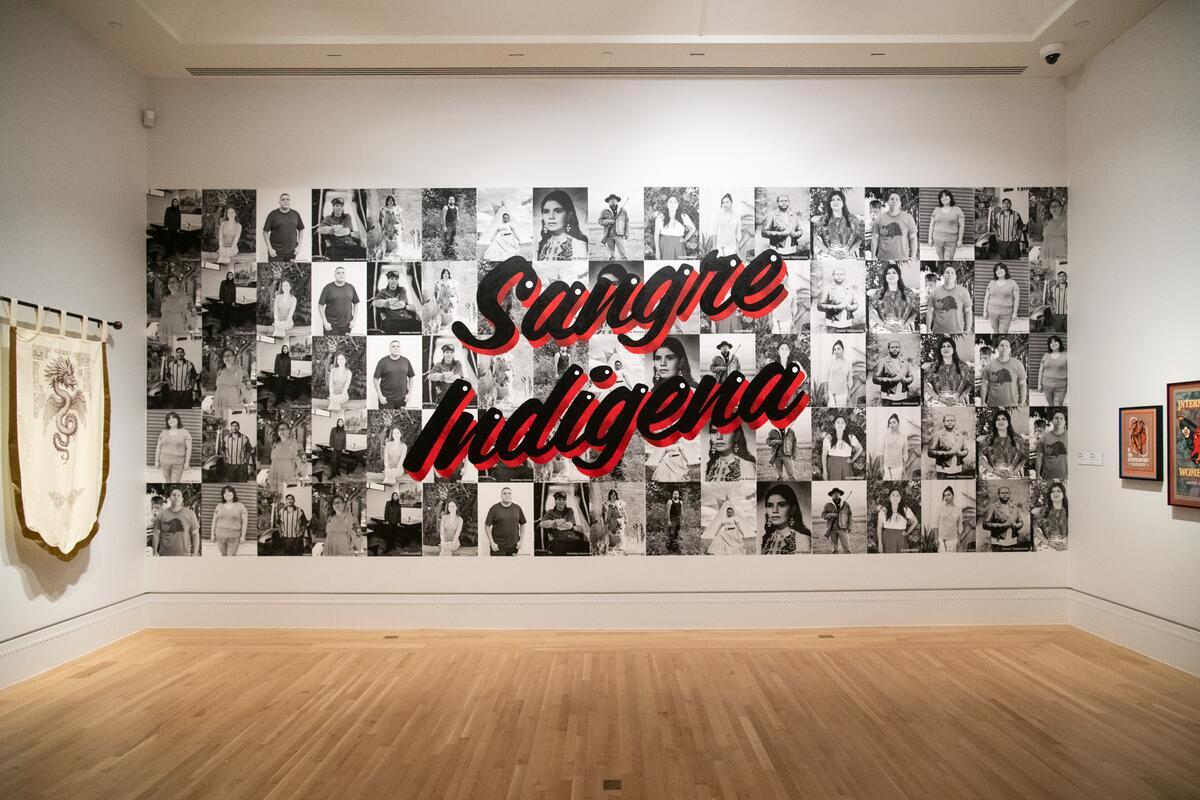
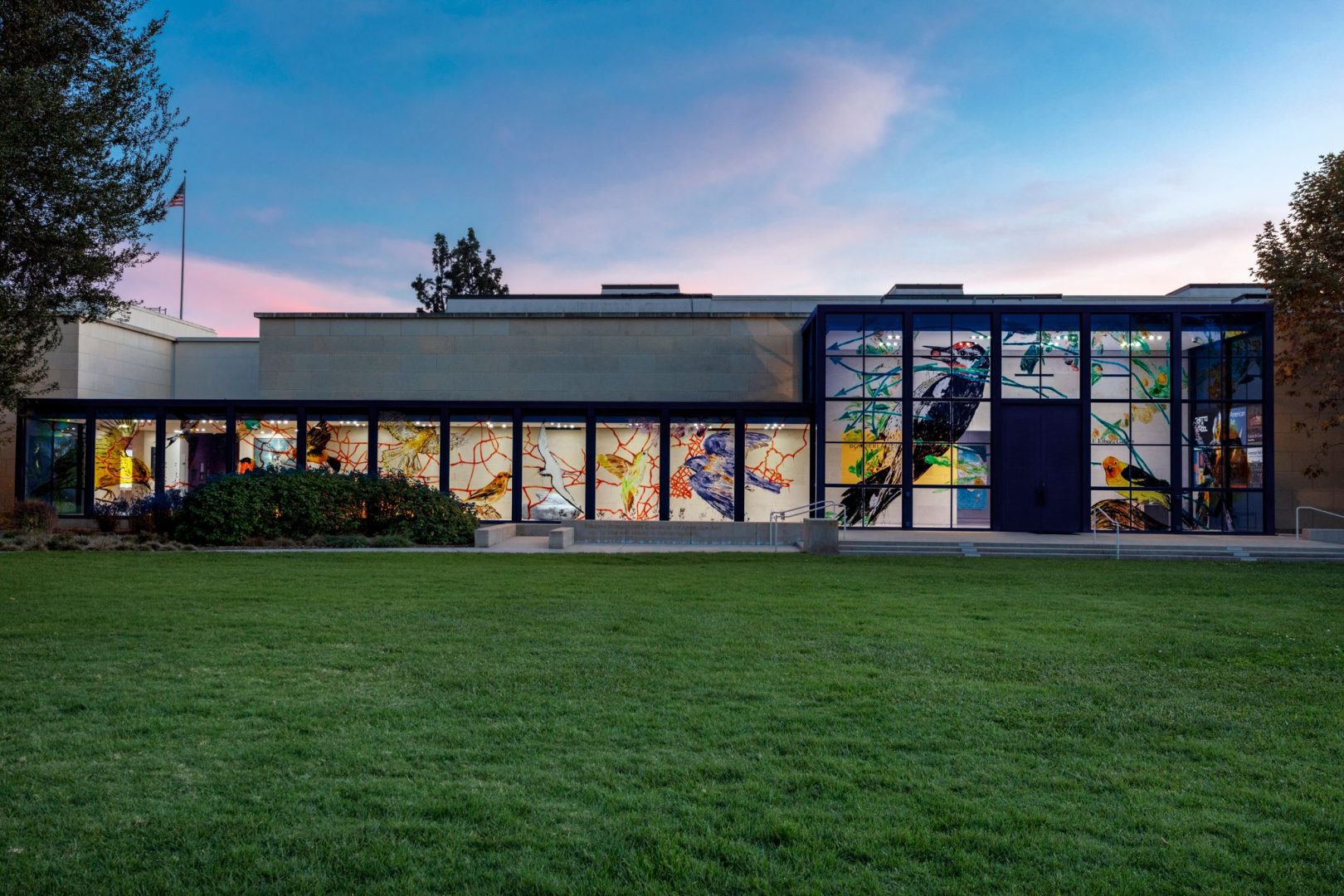
“While the core exhibition is drawn from SAAM’s collection, our presentation places particular emphasis on Los Angeles as a vital center of Chicano printmaking,” Carr clarifies. “To honor that history, The Huntington commissioned a new mural by Los Angeles–based artist Melissa Govea, created in collaboration with Self Help Graphics & Art, a community print studio that has supported Chicanx and Latinx artists since 1973.”
Melissa Govea’s mural. | Photo courtesy of The Huntington
“Through this partnership, we commissioned Melissa Govea, a Los Angeles–based artist who is Chicana and Purépecha,” explains Carr. “Govea began her career as a muralist and is known for work that honors community, ancestry, and cultural memory. Rather than giving her a specific direction, we invited her to respond to the themes of the exhibition. The result is a dedicated gallery featuring a new mural, a sculptural installation, and print-based works that together reflect multiple dimensions of her practice. This marks the first time her work has been presented in a museum context.
“Her mural, titled ‘Sangre Indígena’ (Indigenous Blood), draws on portraits of friends, collaborators, and cultural leaders who have shaped her life. The work recognizes the generations of artists, organizers, and knowledge-keepers who came before her, while affirming the presence, agency, and creativity of those shaping Los Angeles today.”
Installation Photo courtesy of The Huntington
It would be an oversimplification to say how many works in the exhibition are from L.A. artists, as Becerra explains.
“Many artists in ‘Radical Histories’ have deep ties to Los Angeles, whether they lived, studied, printed, organized, or collaborated here. The most meaningful connection is through Self Help Graphics & Art, which offered open studio access, mentorship, and a collaborative printmaking environment to generations of Chicano and Latinx artists.
“Artists such as Barbara Carrasco and Ernesto Yerena Montejano continue to live and work in L.A., and their practices remain rooted in local community networks. So rather than thinking in terms of birthplace alone, it’s more accurate to say that Los Angeles is one of the central homes of Chicano printmaking, and the exhibition reflects that history.”
Installation photo courtesy of The Huntington
Asked if the exhibition has taken greater meaning now with ICE raids targeting Hispanic communities and looking Hispanic or Latino is enough to get one handcuffed and thrown into a detention camp, Becerra replies, “The themes in ‘Radical Histories’ are both longstanding and timely. Chicano printmakers have historically used posters and prints to address labor injustice, state violence, displacement, and the struggle for belonging – issues that continue to resonate today.”
Becerra says further, “What museums like The Huntington can offer is space: a place to look closely, process, reflect, and connect personal experience to shared history. These works remind us that art has always been a tool of community care and resistance.”
As for the viewer takeway, Carr states, “We hope visitors come away with a deeper understanding of how Chicano artists have used printmaking to organize, to tell stories, to build community, and to assert cultural identity. And we hope they see that art is not separate from daily life – it is a tool for resilience and collective meaning-making.”
“In addition to the exhibition itself, The Huntington will host public programs, bilingual gallery talks, and hands-on workshops in collaboration with local artists and partners,” adds Carr. “A major highlight will be Historias Radicales: Latinx Identity and History in Southern California, a two-day conference on December 5–6, connecting the exhibition to The Huntington’s co
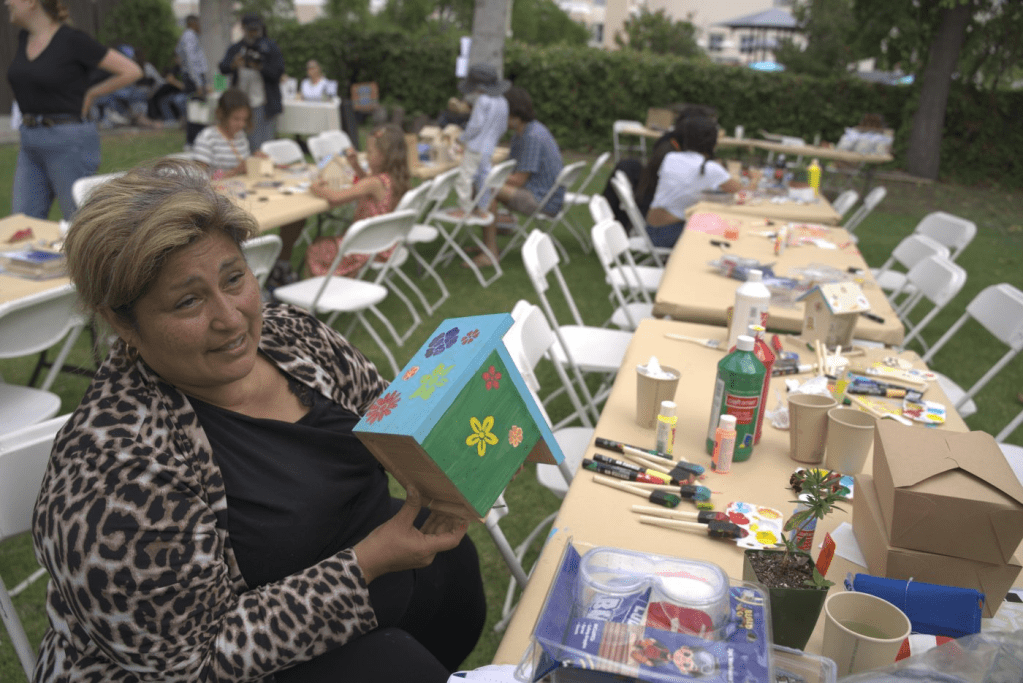
A brunch attendee shows off her handiwork. | Photo courtesy of Day One
Day One, a non-profit organization in Pasadena, held an Altadena Community Brunch and DIY Workshops for Recovery and Sustainable Living on Sunday, September 28. Hosted by its Resiliency Studio, the event took place from 11 am to 2 pm at the Day One Lawn on 175 N. Euclid Avenue in Pasadena.
One of the many associations in the Eaton Fire Collaborative working together to support families affected by the fire, Day One focuses on youth empowerment, healthy cities, and policy development. Local government assistance also comes in various ways – including opportunities to collaborate on community events and initiatives.
This past Sunday’s Resiliency Studio Brunch and DIY Workshops was a free, family friendly event that combined a community connection through food with hands-on workshops that support recovery and sustainable living following the Eaton Fire.
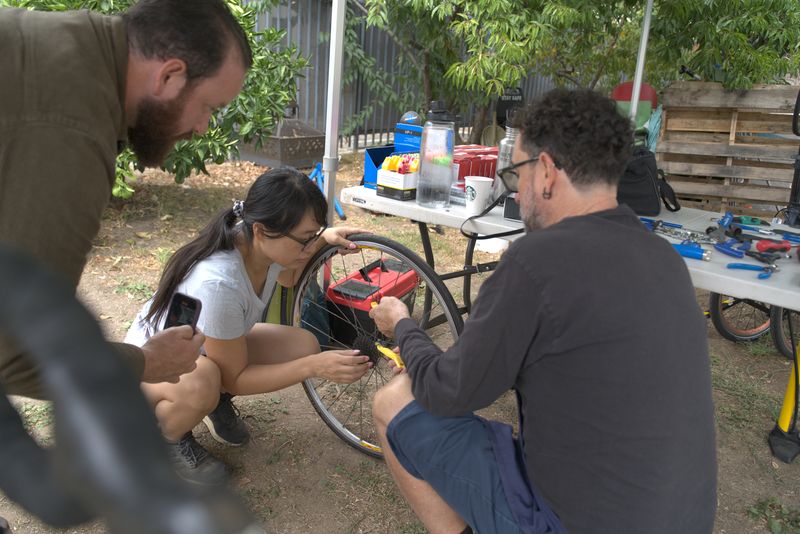
Bicycle repair demonstration. | Photo courtesy of Day One
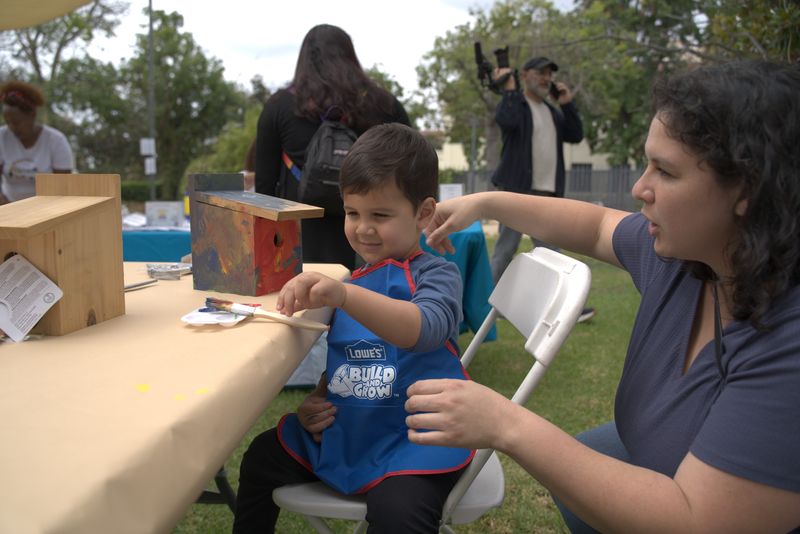
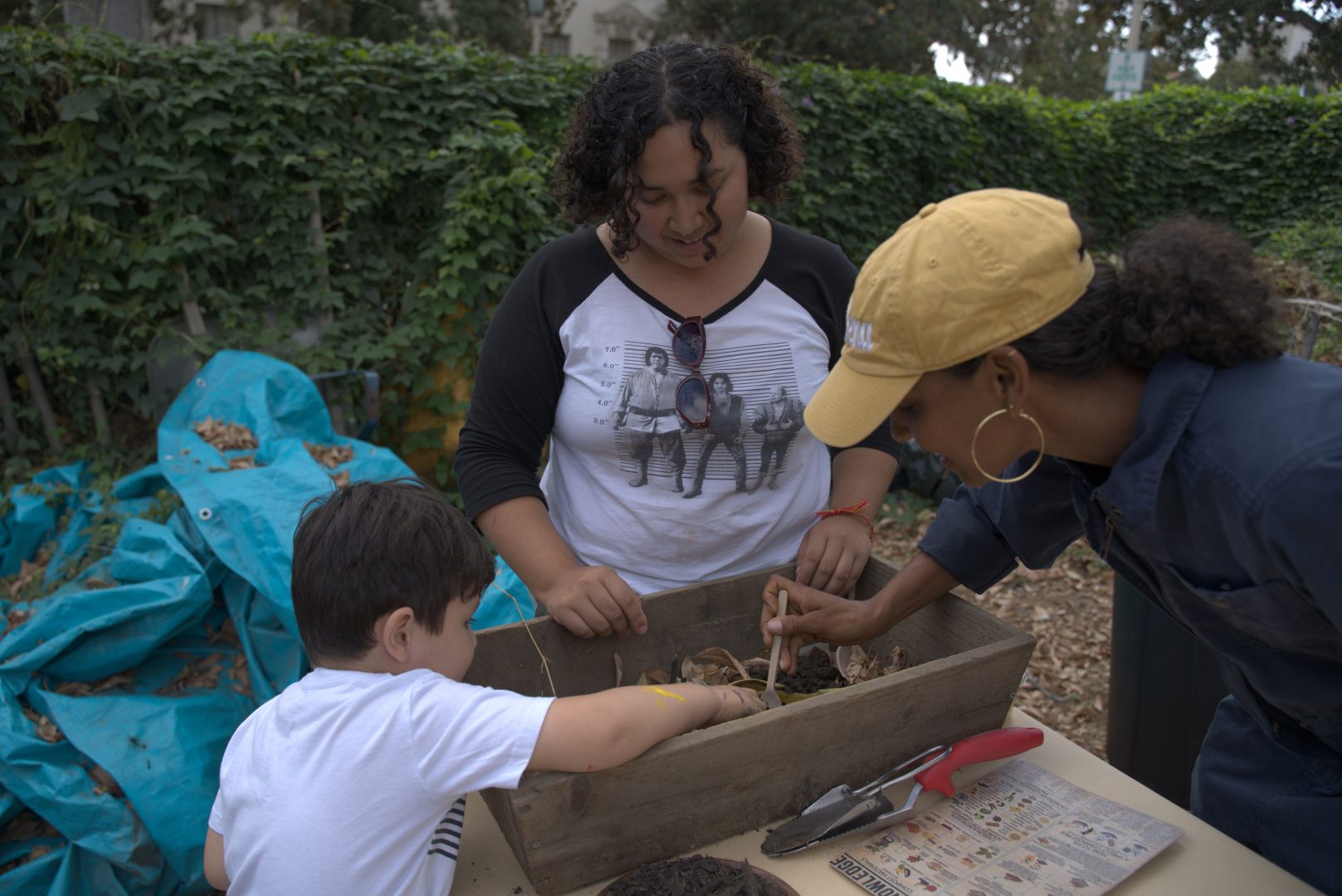
Workshops included: bike care and repair for affordable, eco-friendly mobility; composting and soil health to restore land and grow food after fire; healthy cooking with energy-efficient appliances; DIY rain gardens and rain capture systems; wildlife-friendly landscaping with native plants and birdhouse building. But the event was about more than skills – it’s about neighbors coming together to rebuild stronger, healthier, and more resilient.
“The Resiliency Studio began as a vision for a hub where families could learn about sustainability,” explained Nancy Verdin, Day One’s Director of Environmental Education and Engagement. “In the aftermath of the Eaton Fire, we reimagined how this hub could directly support families in rebuilding with sustainable strategies.”
Verdin said further, “The workshops are led by a mix of community partners (such as Community Compound, Crop Swap LA, Pulse Arts, Altadena Farmers Market), Day One staff with expertise in advocacy, public health policy and community engagement, and skilled volunteers such as bike mechanics. Together, they bring a diverse range of knowledge and experience to support our community.“
Birdhouse building. | Photo courtesy of Day One
According to Verdin, Day One has 30 years of experience working alongside residents, young people, elected officials, and other stakeholders to strengthen and build healthy, vibrant communities by advancing public health, advocating for public policies, meaningfully engaging youth, and igniting community-level and behavioral change. Comprised of a team of 24 employees, the organization is primarily grant-funded through local, state, and federal sources.
“Our programming focuses on public health, youth leadership, community engagement, and advocacy,” Verdin emphasized. “We offer youth leadership programs, provide drug prevention and education, and lead local efforts in transportation and environmental policy. Our Resiliency Studio events, however, bring together fire-impacted families as well as other local residents who want to learn more about sustainable rebuilding and recovery. Attendees come from both Pasadena and surrounding communities. We want participants to leave knowing that sustainability is tangible and within reach. As families rebuild, we hope to inspire them to imagine and implement sustainable solutions that strengthen resilience for the future.”
Composting. | Photo courtesy of Day One
“The Legacy Project Resiliency Studio Brunch was a meaningful day for our community,” declared Verdin. “Families and partners came together for hands-on workshops and resources provided by Altadena Farmers Market, Crop Swap LA, Pulse Art, Community Compound, and Oak Tree Comics, alongside our dedicated Day One staff and volunteers. Activities included bike repair, composting, cooking, native plants, and birdhouse-making, each designed to give families practical tools and strategies for sustainable rebuilding.”
“This work was supported by U.S. Greenbuild, who provided the seed funding that helped us create the Resiliency Studio,” Verdin said. “That effort has now evolved into the Collaboratory, a broader vision that brings together many organizations dedicated to supporting fire-impacted families with long-term recovery resources. With the generous contribution from Lowe’s, we are now able to provide tangible tools that will remain available to the community as they continue rebuilding.”
“It was a powerful reminder that resilience is built not only through tools and resources, but also through partnerships and community connection,” concluded Verdin.
Last Sunday’s brunch was quite a success! It would be gratifying for the Day One team if a good number of people came away encouraged by the connections they made and buoyed by the skills they gained. How heartening it would be if they left with renewed confidence that the resolve and spirit of Altadenans have not been scorched by the fire and that they w
A work in The Huntington’s new exhibition is by Janet Harvey Kelman, “Stories from Chaucer Told to the Children” with pictures by W. Heath Robinson, London: T.C. and E.C. Jack, 1906, gift from Donald Green. | Image courtesy of The Huntington
The Huntington Library is renowned for several iconic pieces — the Gutenberg Bible, the Ellesmere Chaucer manuscript, and Shakespeare’s Folio, to name just a few. Visitors expect to see them individually at their usual spot.
Soon these exceptional items will be displayed at The Huntington Mansion alongside other important objects that reveal surprising connections and untold stories in a series called “Stories from the Library.” The inaugural show, on view from June 21 through Dec. 1, will feature Geoffrey Chaucer’s “Canterbury Tales” and later iterations of the work, and the visionary figures who shaped Los Angeles.
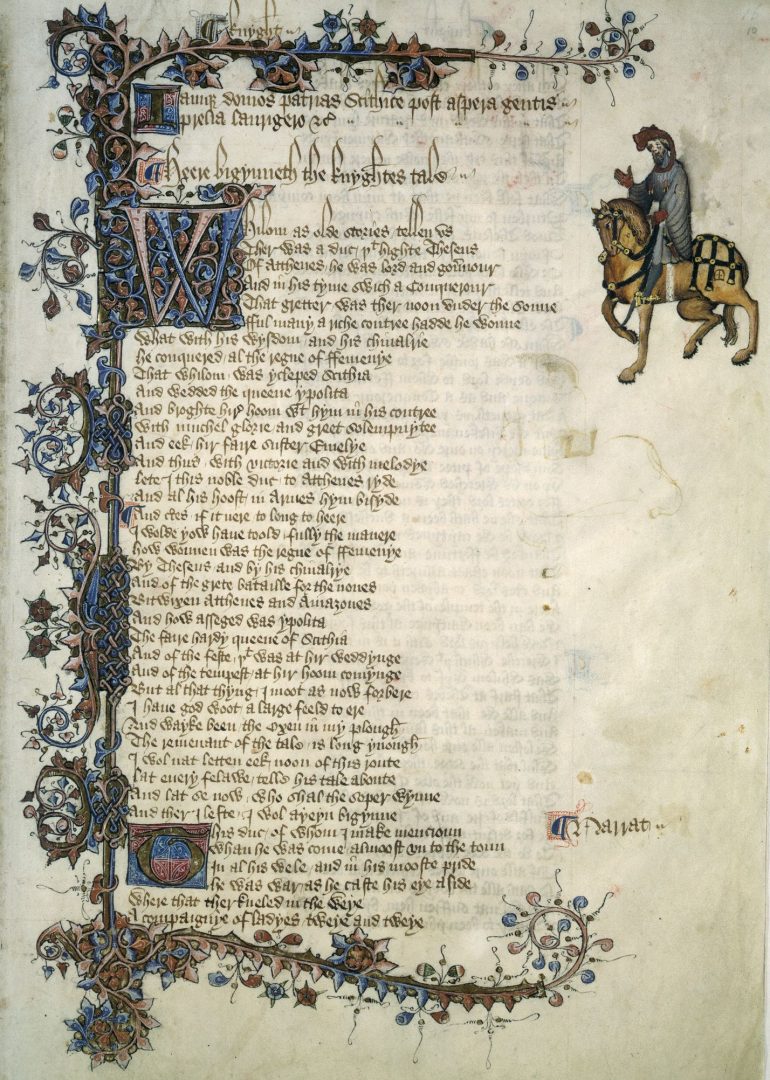
“The Tales Through Time” commences with The Huntington’s Ellesmere Chaucer manuscript, an elaborately decorated work created between 1400 and 1405. The most complete and authoritative version, it is presented together with later iterations of the work to illustrate how creators like writers, artists and printers — collectively and individually — changed the tales textually and visually over five centuries of retellings.
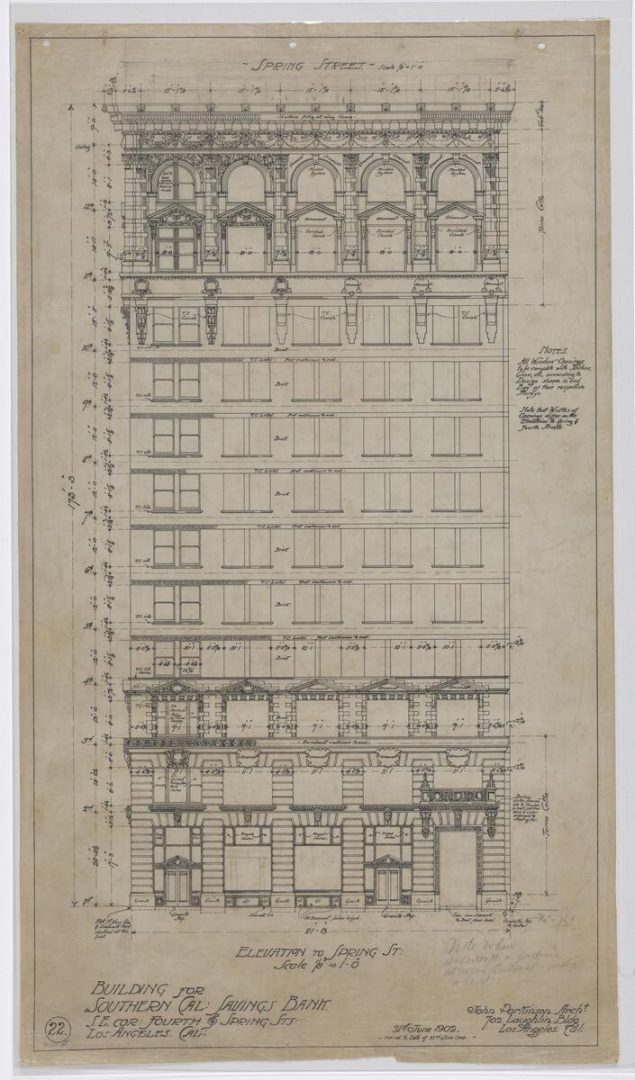
“Los Angeles, Revisited” explores ways in which architects, planners, business owners, and activists have contended with a constantly evolving city like Los Angeles. The show is anchored by the 1902 design plans for L.A.’s first skyscraper Braly Block, conceived by architect John Parkinson.
Sandra Brooke Gordon, the director of the library, states, “Drawn from across the library’s vast holdings, each rotation in this series centers on a single item making a star turn — a destination object — placed in conversation with other selections. These exhibitions highlight the interrelatedness, beauty, and power of the library’s collection of approximately 12 million items, while encouraging visitors to make new and inspired connections.”
Vanessa Wilkie, senior curator of medieval manuscripts and British history and head of library curatorial, and Steve Tabor, curator of rare books, co-curated “The Tales through Time.” By email, Wilkie talks about how the series originated, how they prepared the exhibition, and what she hopes visitors take away from it.
“While the mansion was built first, Henry Huntington had the Library constructed beginning around 1919, relatively early in his collecting,” Wilkie says. “So in a sense, he always envisioned that his library collections would be displayed independently of his other collections. I’ve always appreciated this idea — that books, archival documents, photographs, prints, and manuscripts deserved their own celebrated space.”
Just as necessity is the mother of invention, complications engender improvisations, as Wilkie discloses. “When the institution decided it was time to end the long run of the library’s Main Hall exhibition, ‘Remarkable Works-Remarkable Times,’ we were all committed to keeping library collections on view with the understanding that we logistically couldn’t take down an exhibit and have an exhibit in the same space. We saw this logistical challenge as an opportunity!
“The Art Museum generously offered to open two gallery spaces to the library. It was an obvious choice to put library collections in the historic ‘Large Library’ but our collections contain over millions of flat works — like photographs, architectural drawings, maps, and drawings. The Large Library doesn’t allow for anything to be hung on the wall, so the Focus Gallery was offered as a second location to showcase more of our collections … to tell more stories from the library.
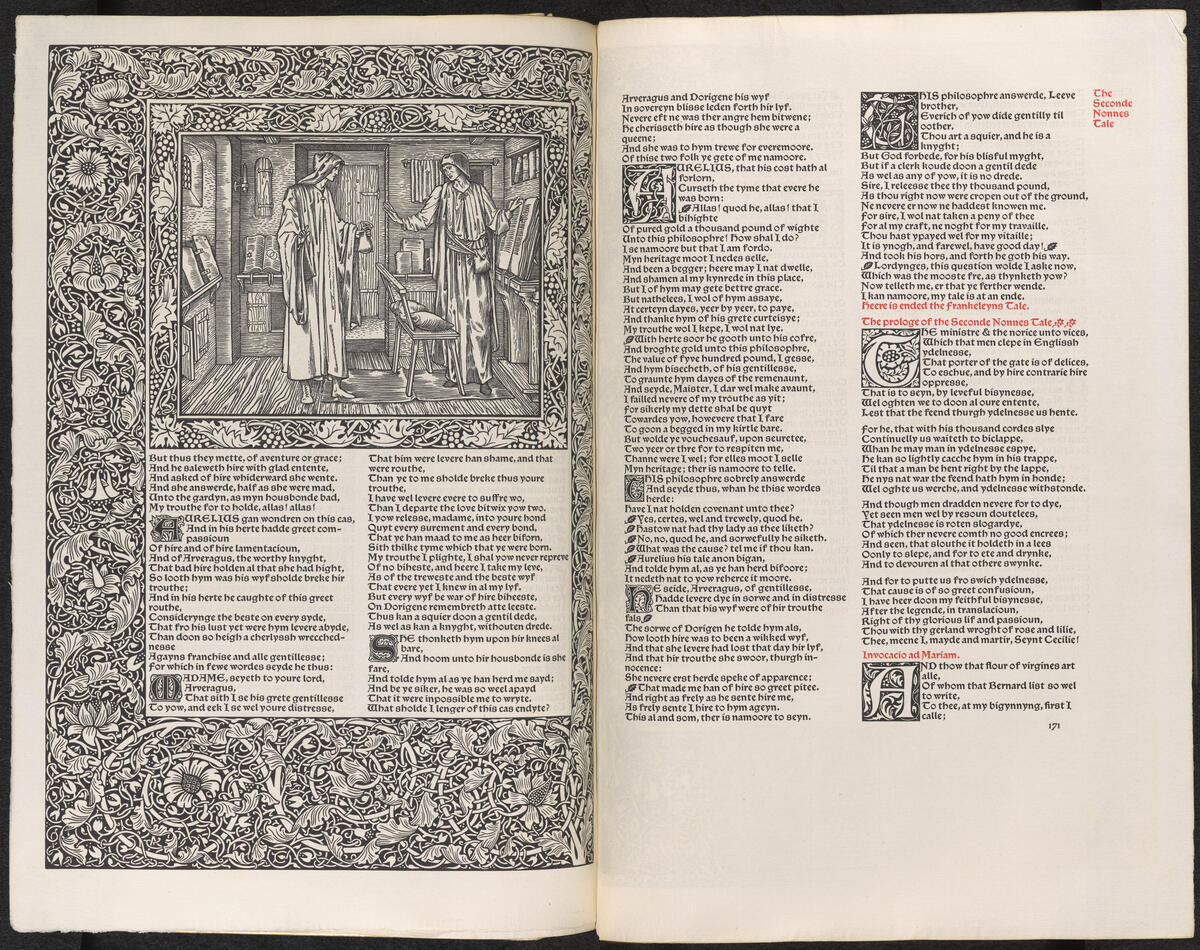
“The Works of Geoffrey Chaucer,” Hammersmith: Kelmscott Press, 1896, from the Sanford and Helen Berger Collection. | Image courtesy of The Huntington
“Curators immediately saw this as an opportunity for unexpected pairings of exhibits, which made us all the more eager to think in unexpected ways,” continues Wilkie. “We are mindful that visitors always love to see some favorite pieces, like the Gutenberg Bible and the writings of Octavia Butler, and we envisioned this exhibition series as an occasion to bring in some of those beloved hits while also giving visitors a chance to get to know other parts of our magnificent collections. Our hope is that people come to see what they already love but leave thinking about a favorite piece in a new way or, better yet, having seen something they never expected!”
Asked what motivated their decision to center the exhibit around Geoffrey Chaucer’s The Canterbury Tales, Wilkie replies, “The Ellesmere Chaucer is one of The Huntington’s most famous manuscripts; it is gorgeous, but it is also perhaps the most influential work in the English-speaking world. ‘Stories From the Library’ is a rotating exhibition series that does something new for our collections, so we liked the idea of starting with a book people already know quite well and framing it in a completely different way than how visitors have seen it over the past twelve years. We actively chose not to think about ‘The Canterbury Tales’ in a singular historical context but rather wanted to think about how the Ellesmere Chaucer brought individual tales together and then what the visual and textual trajectories for those tales were.”
While the sheer number of items in the library’s collection could have posed a challenge when deciding which piece to showcase in the inaugural exhibition, the curators knew exactly what to launch with.
“Beginning with ‘The Canterbury Tales’ gave us a fairly focused starting point, and then we just followed the pilgrims through our collections!” declares Wilkie. “We have some 15th century manuscripts with copies of individual tales, so we plotted those through time and then narrowed back down when we realized our collections could easily fill multiple galleries.”
“The Chaucer display is paired with ‘Los Angeles, Revisited,’ an exhibition about the shifting real and imagined landscapes in L.A.,” Wilkie explains. “No other place in the world could offer that pairing with these stellar pieces; it is the past and present colliding in spectacular ways! When curators are thinking about exhibitions in this series, we’re also thinking about how they’ll be paired and recognize that their sum is greater than their individual parts — although their individual parts are also pretty special.”
The Ellesmere Chaucer manuscript. | Image courtesy of The Huntington
Visitors to The Huntington can expect to see “Stories from the Library” for a while.
“We anticipate the series running for three or four years and have paired-exhibitions planned that can take us far beyond that,” discloses Wilkie. “Each exhibition will run for six months, but we’ll turn pages or swap out entire pieces at the three-month mark. Library materials are extremely sensitive to light, so while we want to keep exhibits up to give visitors a chance to see them, we also need to be mindful of the physical needs and constraints of fragile collections.”
“Most people are introduced to ‘The Canterbury Tales’ as a singular canonical text, but this exhibition is a chance for people to break it down and see how it has changed, or not changed, over the centuries,” Wilkie says. “That also demonstrates how unstable the concept of a canonical work really is. Throughout the series, we hope people will be invigorated by seeing beloved favorites alongside never-before-exhibited items, in spaces they don’t typically see library collections. Change isn’t easy, but it can also give us a fresh perspective.”
“Los Angeles, Revisited” is curated by Erin Chase, the library’s associate curator of architecture and photography. She discusses the anchor piece of the exhibition, what other materials will accompany it, how she planned the show, and the visitor takeaway.
John Parkinson, architect, Building for Southern California Savings Bank (Braly Block), elevation to Spring Street, 1902, ink on tracing cloth. | Image courtesy of The Huntington
“The 1902 design plans for L.A.’s first skyscraper is part of a larger recent acquisition made by the Huntington which is the archive of the architecture firm of John and Donald Parkinson,” Chase begins. “It has never been shown in a museum or library before so it’s very exciting to be able to show it to the public.
“Also included in the exhibition is a variety of materials from across the Huntington’s library collections,” adds Chase. “Everything from an 1888 early birds-eye-view map of East Los Angeles to architectural drawings of iconic L.A. buildings like the Braly Block and Googies coffee shop, to historical and contemporary photographs and manuscripts by literary figures such as Eve Babitz and Christopher Isherwood.”
Explains Chase, “This is a small jewel-box exhibition with a hefty theme so striking the right balance was important. Los Angeles lacks the centrality and layout of most traditional American cities and it’s what makes us unique. I wanted to celebrate the city and the visionaries who believed in its promise, but it was also important to address some darker parts of our past including redevelopment and the displacement of families as a result. Additionally, L.A. has always served as an unwitting muse for artists. So it was important to include people like Ed Ruscha and Gusmano Cesaretti who have helped us make sense of our urban landscape from a visual perspective.
“I hope visitors get a deeper understanding of some of the issues architects, planners, business owners, residents, and activists contended with in the 20th century,” Chase says. “L.A. grew rapidly between 1900 and 1950 and this exhibition just begins to touch on major issues that have impacted the urban landscape such as architecture, transportation, and redevelopment. Most of all, I hope they enjoy seeing some of the extraordinary drawings and photographs from the Huntington’s archives up close. Many of these have never been on view before, so this is a great opportunity to catch them.”
“Stories from the Library” will be an eye-opener for many of us who have not fully appreciated the expanse and significance of The Huntington Library’s holdings. Until now the drawing of the groundbreaking Braly Block has never been displayed in an exhibition. It’s going to be so much fun to discover what surprise each show brings.
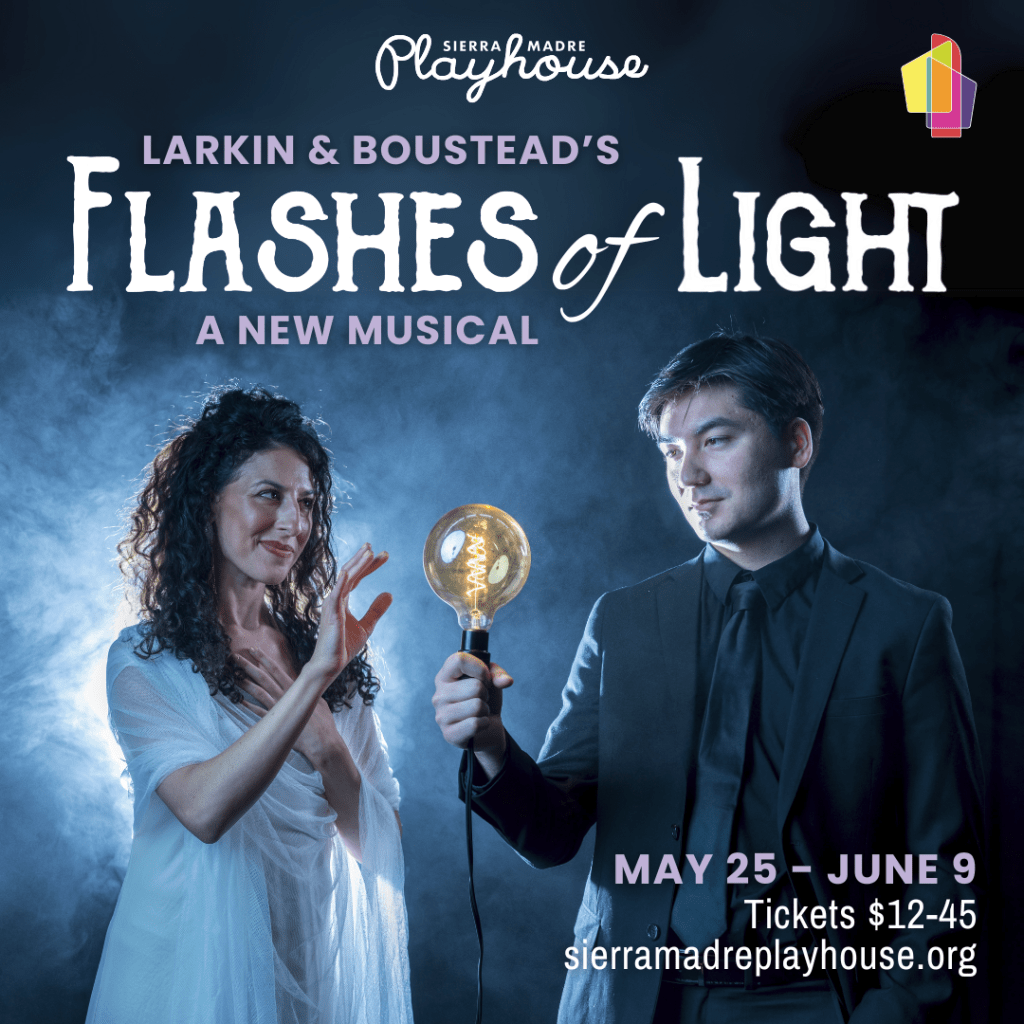
“Flashes of Light,” a new musical by Billy Larkin and Ron Boustead, makes its world premiere at the Sierra Madre Playhouse from May 25 through June 9, 2025. Directed by Jon Lawrence Rivera, founding artistic director of Playwright’s Arena, the production is about visionary inventor Nicola Tesla and his muse Electra, the formidable goddess of storm clouds.
Set against the backdrop of the industrial revolution in New York City in the late 1800s, the story follows inventor Nikola Tesla, guided by Electra, who sends him visions of groundbreaking inventions during lightning storms. Their connection amps up when Tesla’s rivalry with Thomas Edison intensifies during the “War of the Currents,” a battle that shaped the world’s electrical future. As Tesla and Electra become obsessed with pushing the envelope of scientific discovery, a star-crossed love story fraught with peril unfolds as the line between science and mythology begins to blur.
Bringing together mythology and science, romance and historical fiction, “Flashes of Light” is a brilliant idea in musical theatre. The music’s heartfelt lyrics, soaring vocals, and haunting melodies blending jazz, pop, and rock, bring this fantastical story both tragic and divine to life.
Co-creators Larkin and Boustead discuss by email the origins of this collaborative work, the choice of venue, and the audience takeaway.
“Billy became fascinated with Nikola Tesla – this mysterious figure – so critical in the development of our modern technology, yet so underappreciated in the mainstream of American history,” begins Boustead. “Tesla was known to experience flashes of light and blinding headaches throughout his life, which were most likely migraines, but we attributed his malady to the overwhelming influence of Electra, Goddess of the storm clouds. Naturally, her power would be a lot for a mortal to endure.”
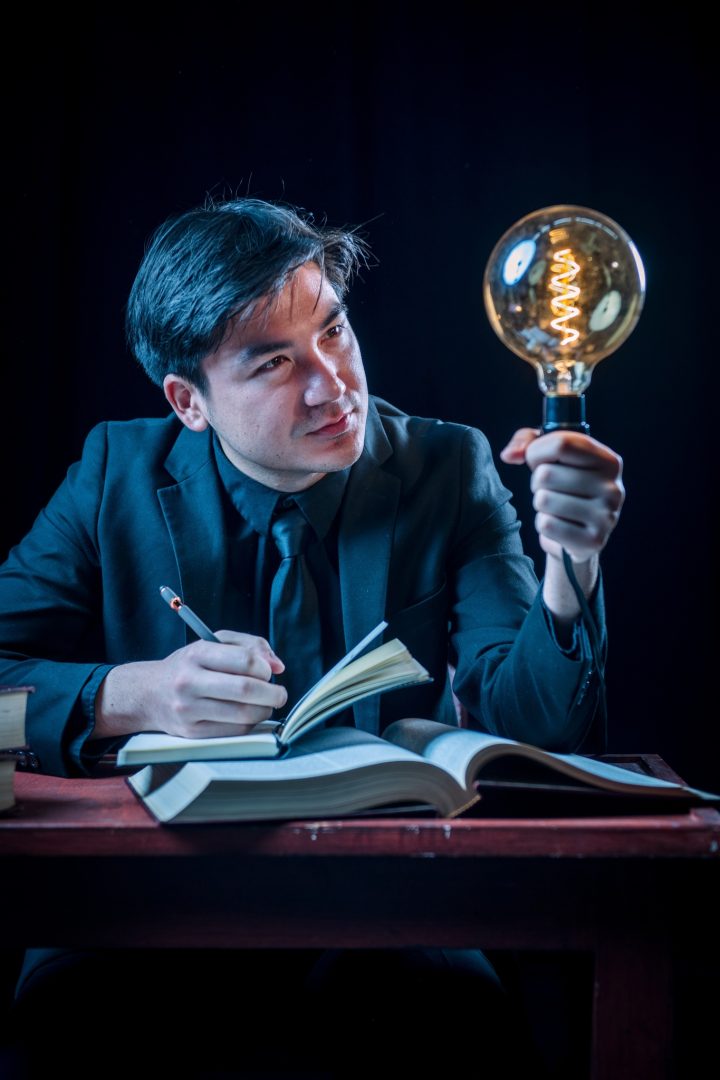
Thomas Winter as Nikola Tesla. | Photo courtesy of M. Palma Photography
“Also, the obsessive Tesla never married or was known to have a partner, so the idea of including Electra as his muse gave us a romantic storyline to add to the narrative,” Larkin adds.
While integrating myth or folklore with a factual figure and moment in science might seem conflicting, mythology is very much intrinsic to theatre, as Larkin and Boustead explain. “Mythology has been a staple of theater since its beginning, and crafting this tale became a catalyst to do a deep dive into some of the more compelling figures of Greek and Roman myth. Electra answers to a council of gods, more senior than herself.”
“Naturally, Athena – known for her wisdom, power, and morality – leads the council,” Larkin and Boustead clarify. “Prometheus, who had given mortals the gift of fire, is on hand to guide Electra in her mission to assist humans in the development of electricity. And Dionysus is an amusing addition to the council, with his drunkenness, his humor, and the sibling rivalry he shares with his sister, Athena.”
Teasing out the story, Larkin and Boustead relate. “Nikola Tesla leaves his homeland in Serbia with a head full of ideas about how to best distribute electricity for homes and factories at the dawn of the industrial revolution. He lands in New York where he becomes a rival to the great Thomas Edison in the ‘war of the currents,’ a contest between Edison’s direct current method, and Tesla’s alternating current.
“Along the way, Tesla interacts with prominent figures in 19th century finance and industry, like J.P. Morgan and George Westinghouse, and befriends the first American celebrity – the one and only Mark Twain. Through every challenge, Tesla is being assisted in his groundbreaking inventions by Electra, heard and felt only by him, during lightning storms. Like all interactions with the gods, theirs is a star-crossed relationship, with profound and tragic consequences.”
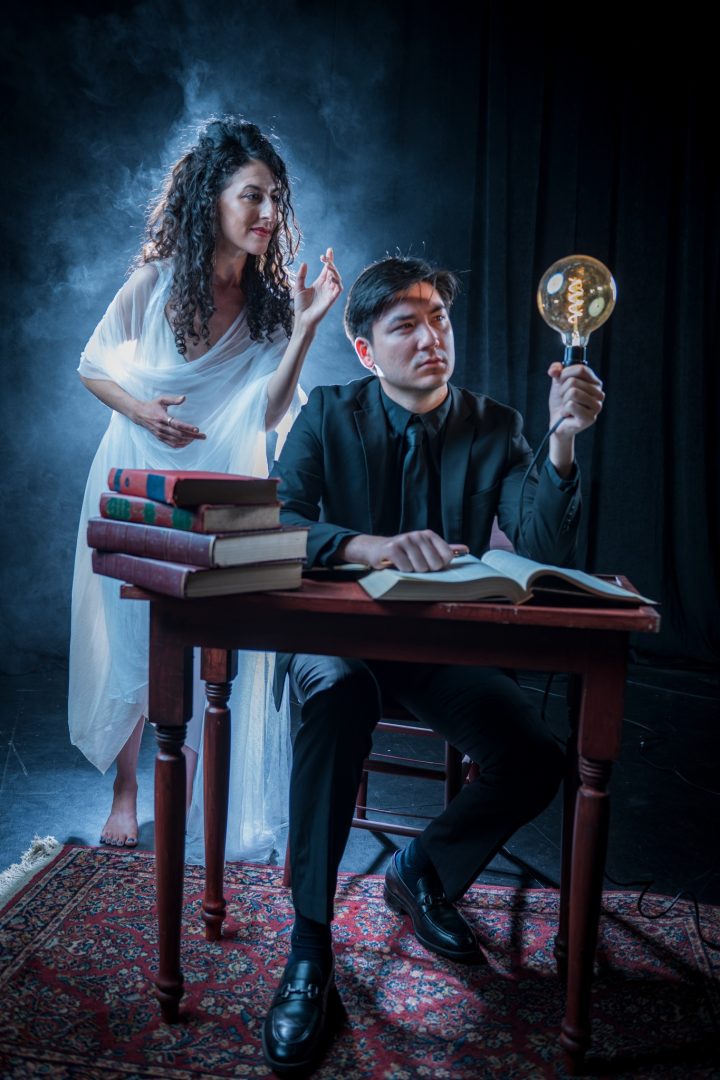
Devyn Rush as Electra and Thomas Winter as Nikola Tesla. | Photo courtesy of M. Palma Photography
Asked why they chose to debut their production in an intimate setting, Larkin and Boustead reply, “In April of 2024, we performed a concert of songs from our show at the El Portal Theatre in Noho, which we filmed. A friend of mine, who attended the concert, happens to be on the board of Sierra Madre Playhouse, and brought our project to the attention of Matt Cook, the artistic director. Matt thought ‘Flashes of Light’ would be an exciting addition to their 2025 calendar and approached us about staging our first run in their 99 seat theater setting. We love the historic and intimate vibe of SMP, and find it a welcoming atmosphere to get our production on its feet.”
Musicals normally require an orchestra – which the Sierra Madre Playhouse couldn’t accommodate – so they had to improvise. “Our score is built around a full jazz-rock band,” describe Boustead, “Because of the size limitations of the stage at SMP, we determined that the best approach for the music was to use the hybrid combination of Billy at the piano, assisted by tracks covering the rest of the orchestration.”
All 26 songs in the show are original and co-written by Larkin and Boustead in the course of eight years. However, many other beloved songs ended up on the cutting room floor, otherwise their show would be three hours long.
Devyn Rush as Electra. | Photo courtesy of M. Palma Photography
The co-creators dream that their show will one day be staged at larger venues but, for right now, they are happy to debut it in the San Gabriel Valley.
Larkin and Boustead emphasize, “Like any other musical theater creators, we imagine a trajectory that takes our project to larger venues next, with the ultimate goal of becoming a smash Broadway hit show, and eventually a touring company. But for now, we are singularly focused on making this version the very best it can be, given the time, budget, and space considerations available.”
“We hope audience members will gain a clearer appreciation for the tremendous contributions that Nikola Tesla made to our modern world,” pronounce Larkin and Boustead. “ We have been faithful to much of the history and science as it really happened, but we believe that the way we’ve told Tesla’s story will move audiences – sometimes to laughter, sometimes tears – but in the end to appreciate the value of one man’s life.”
“Tesla’s story is one that explores themes of science, mythology, genius, madness, immigration, friendship, romance, and ultimately legacy,” Larkin and Boustead declare as a final note. “It’s one that resonates with anyone who strives to leave the world a better place than they found it.”
These topics are as realistic as they are fantastic, as relatable as they are aspirational. “Flashes of Light” promises to be a little show with huge potential to reach great heights. And we in the San Gabriel Valley are so fortunate to be the very first ones to see it launch.
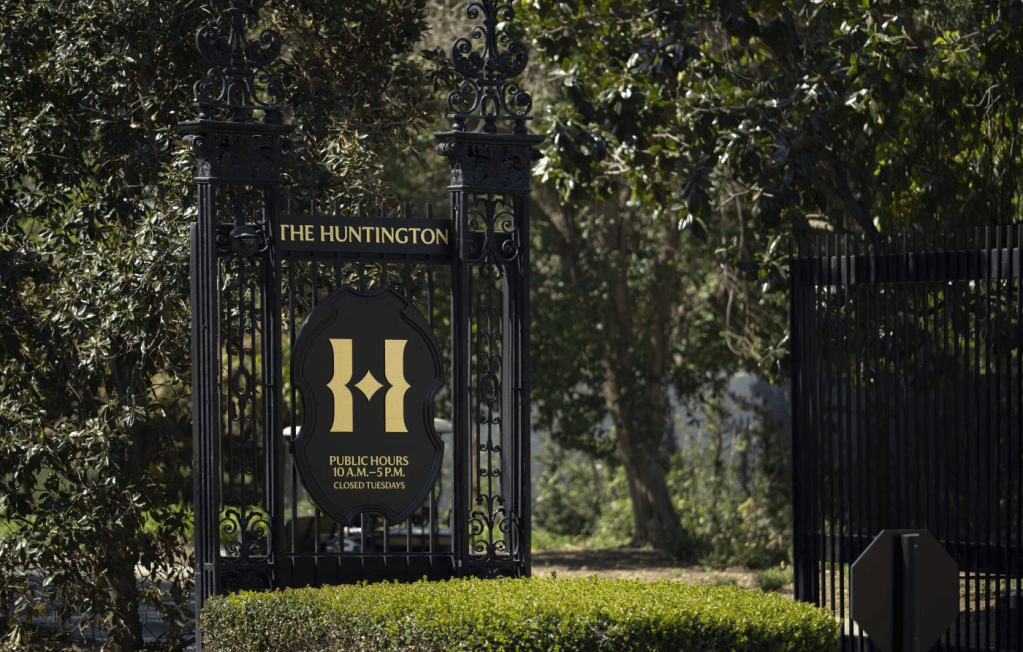
New Signage at The Huntington gate. | Photo courtesy of David Esquivel / The Huntington
Frequent visitors to The Huntington will be surprised to see starkly different signage as they enter the gates. The familiar name The Huntington Library, Art Museum, and Botanical Gardens with all its flourishes has been replaced with only the letter “H.” The bold visual identity and simplified name “The Huntington” are just the introduction to the institution’s first sweeping branding initiative in its 106-year history.
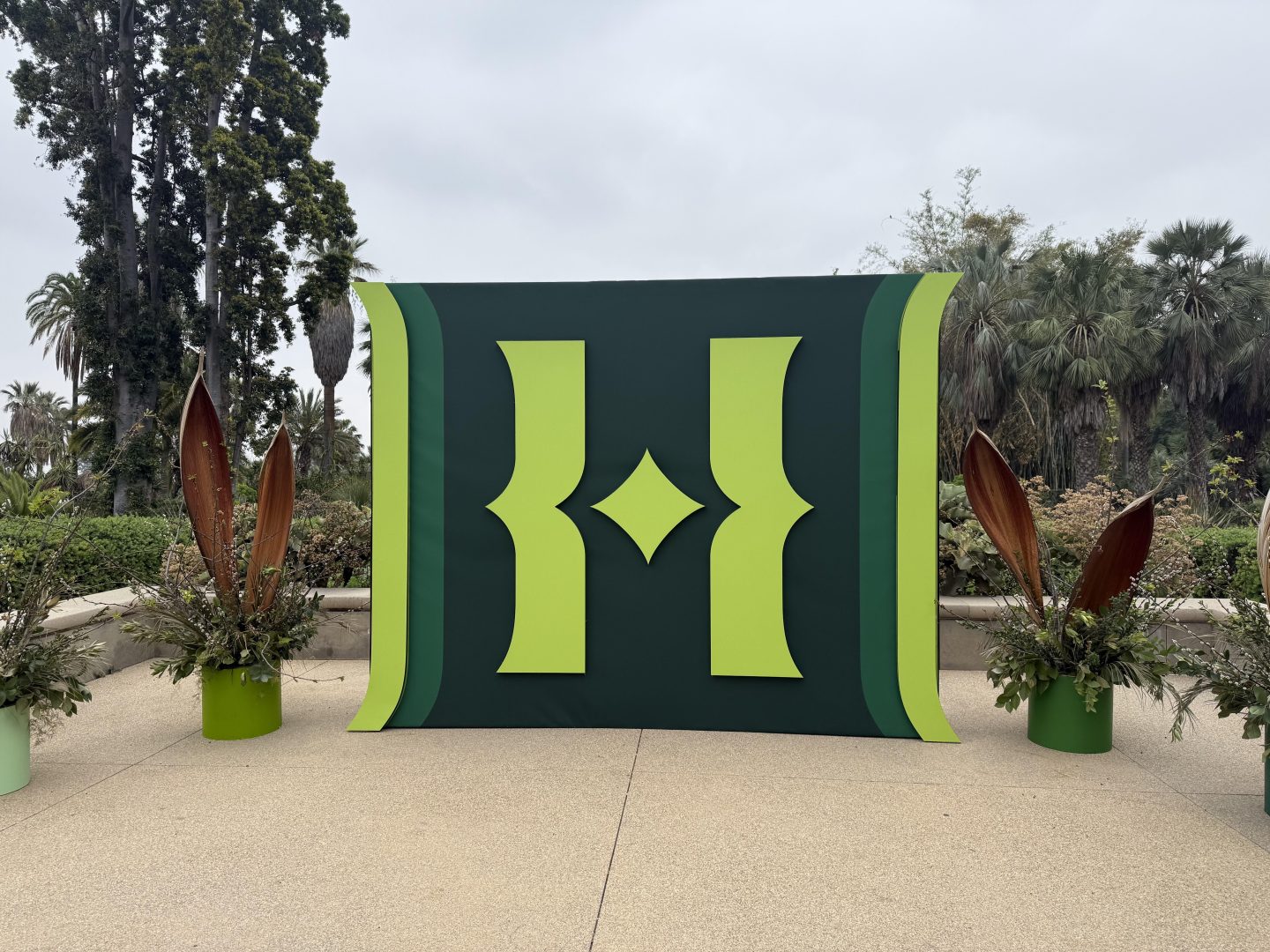
The H monogram signifies a foundation grounded in tradition but focused on modernization. Incorporating a jewel-like center, it serves as a reminder that The Huntington is a treasured cultural institution. The gem is flanked by two stylized pillars – one pointing left toward the past and one pointing right toward the future.
A large canvas with the new logo near the Celebration Garden. | Photo by May S. Ruiz / Hey SoCal
Launched on April 8, 2025, the brand rollout includes new signage, a refreshed website, a marketing campaign inviting visitors to “Rediscover The Huntington,” educational content for all ages, new branded merchandise, celebratory giveaways, and special Second Sunday events with activities for all ages. The rebrand is propelled by the visionary One Huntington strategic plan led by President Karen R. Lawrence – a transformation that marks the next chapter in the institution’s evolution.
Interviewed by email, Lawrence spoke about the concept behind the rebrand.
Karen R. Lawrence during the opening of Shōya House. | Photo by Brianna Chu / Hey SoCal
“The rebrand emerged from our strategic planning process,” she said. “It supports our institutional priorities and commitments directly; in particular, demonstrating the connections among our three core collections – library, art, and botanical – and expanding access, engagement, and education for a broader public, both digitally and in person.
Expounded Lawrence, “What is most important to note about our new brand is that it helps The Huntington achieve several objectives:
“Connecting our collections: First, we simplified our name from The Huntington Library, Art Museum, and Botanical Gardens to just The Huntington. It better represents the powerful cross-fertilization among our three core collections and conveys that the whole is more than the sum of its excellent parts! We use the term ‘One Huntington’ to describe these unique connections.
“Our monogram, too, reflects this unity: While our previous monogram borrowed heavily from the botanical, our new H – with a jewel-like center flanked by two pillars – captures the essence of what we do as an institution. One pillar honors our history, the other looks to the future, and the gem in the middle is what makes The Huntington unique: our people, our collections, and our mission.
“Increased accessibility and digital agility. Our previous ornate H was beautiful but didn’t scale well – imagine trying to decipher that intricate design on a smartphone screen – it simply didn’t work. The new monogram is clean, modern, and legible across all formats.”
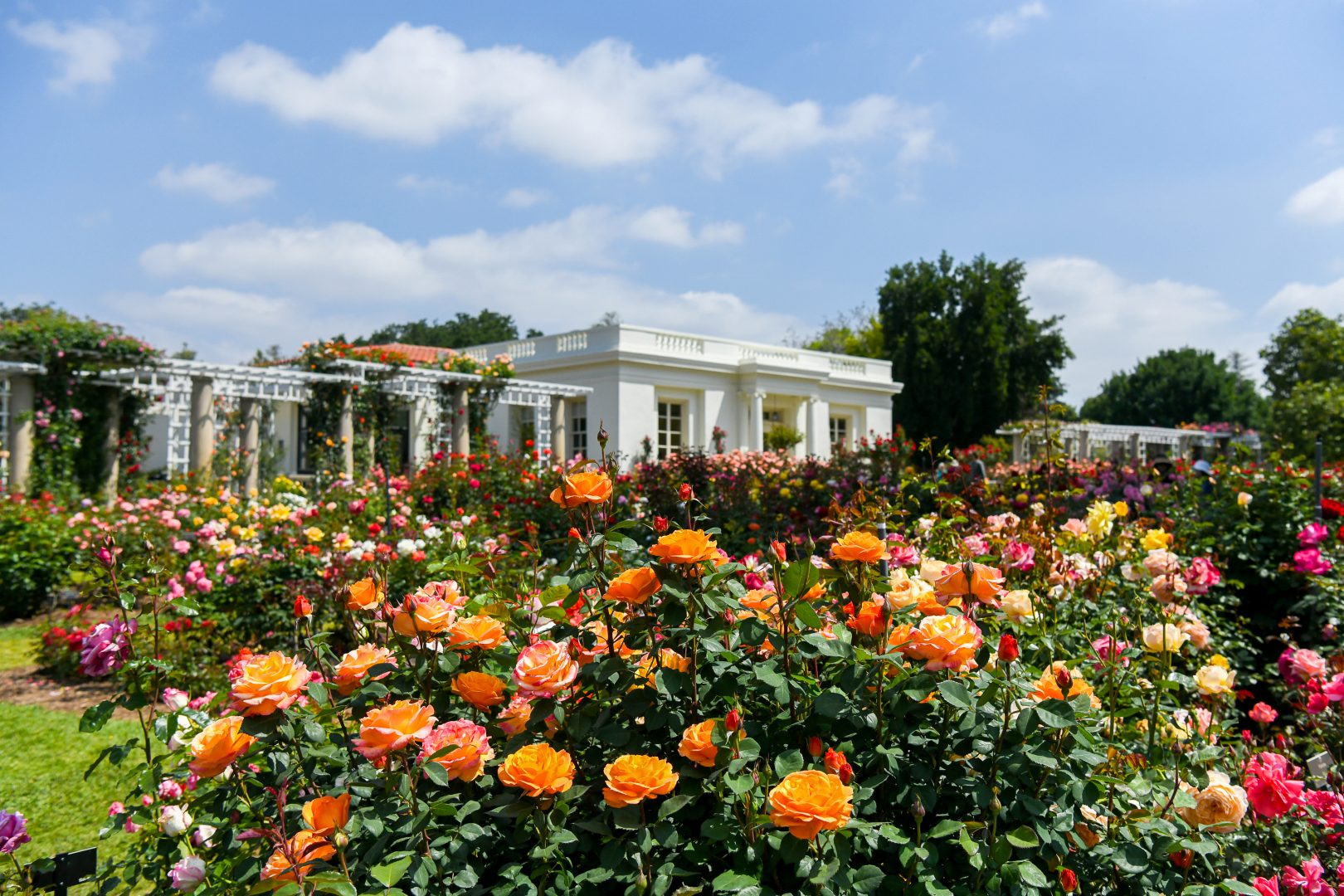
Exterior view of the Rose Garden Tea Room. | Photo by Joshua White / JWPictures.com / The Huntington
The extensive branding initiative entailed getting input from all quarters. Lawrence stated, “Members of our Trustees and Board of governors were thoughtful partners throughout the process. They wanted to make sure that we preserved what has always been special about The Huntington but endorsed our desire to reflect recent initiatives as well. We issued an open request for proposals from firms that specialize in branding and communications and ultimately selected Base Design, an international creative agency, to help guide us. The process was collaborative, with feedback loops at every stage – from early concepts to final design.”
“We formed a Steering Committee and a larger stakeholder group,” added Lawrence. “We intentionally involved staff from across the institution, because a brand isn’t just a logo – it’s how we see ourselves, how the public sees us, and how we want to be seen.
“We invited a wide range of stakeholders to weigh in on the design concepts, suggesting a number of modifications, including the logo. Their feedback helped shape not only how the brand looks but also the spirit it conveys.”
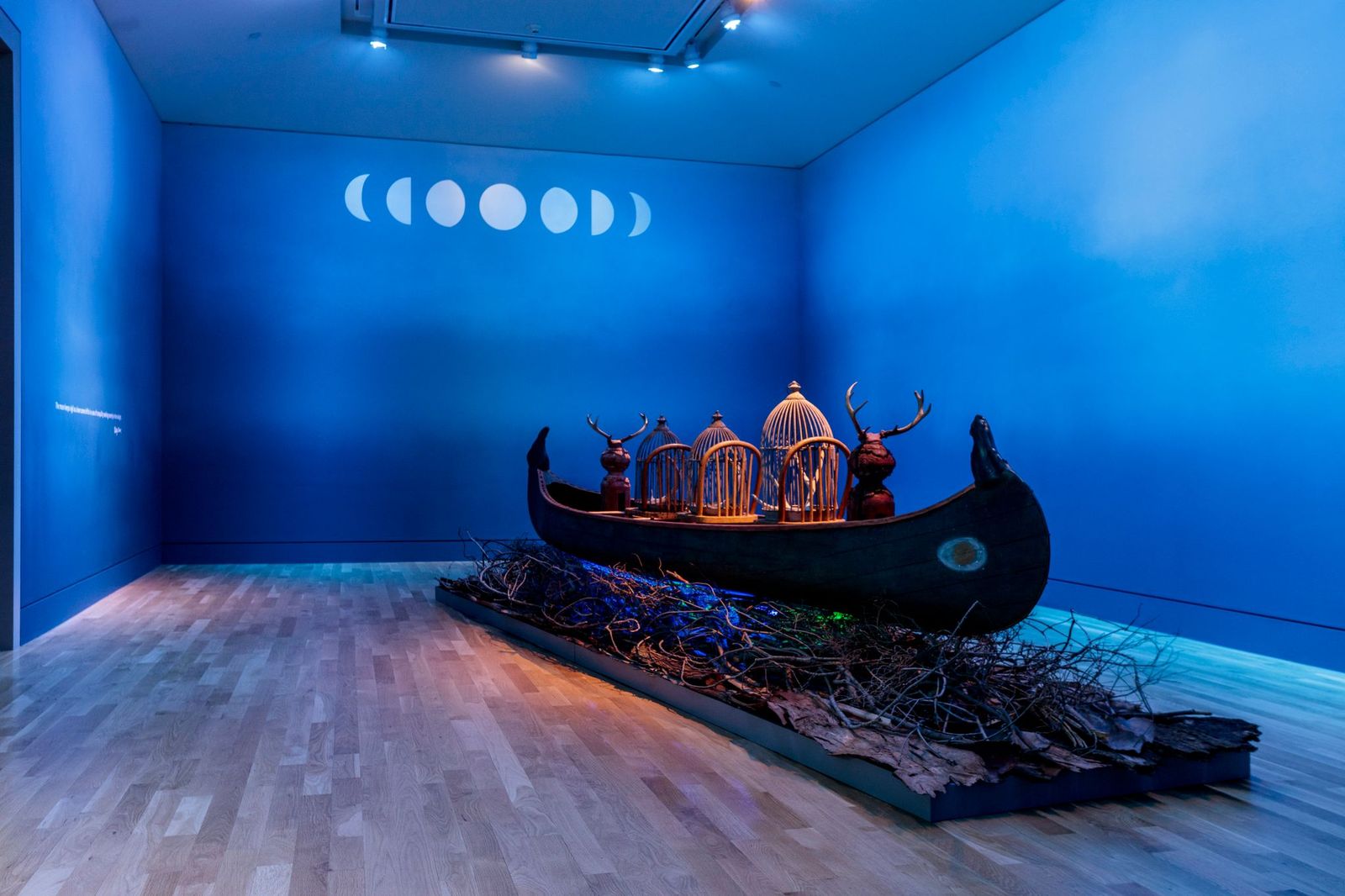
Betye Saar, ‘Drifting Toward Twilight,’ 2023 installation. | Photo by Joshua White / JWPictures.com / The Huntington
The final decision about the new brand was not arrived at single-handedly by Lawrence. She clarified, “It was a consensus-driven process. We took an iterative approach that allowed many voices to be heard and incorporated along the way. Together, we made some course corrections, which I believe made the final product better. It honestly reflects a shared vision.”
Lastly, Lawrence encouraged people to see for themselves what The Huntington offers.
“We are inviting everyone to Rediscover The Huntington. We are known as a superb research library to scholars around the world. Members of the public know us for our Rose Garden, or for The Blue Boy and our Ellesmere Chaucer, and we’re rightly proud of these masterpieces, but we’re also home to more contemporary and recently-acquired works and collections – by Thomas Pynchon, Betye Saar, Octavia Butler.”
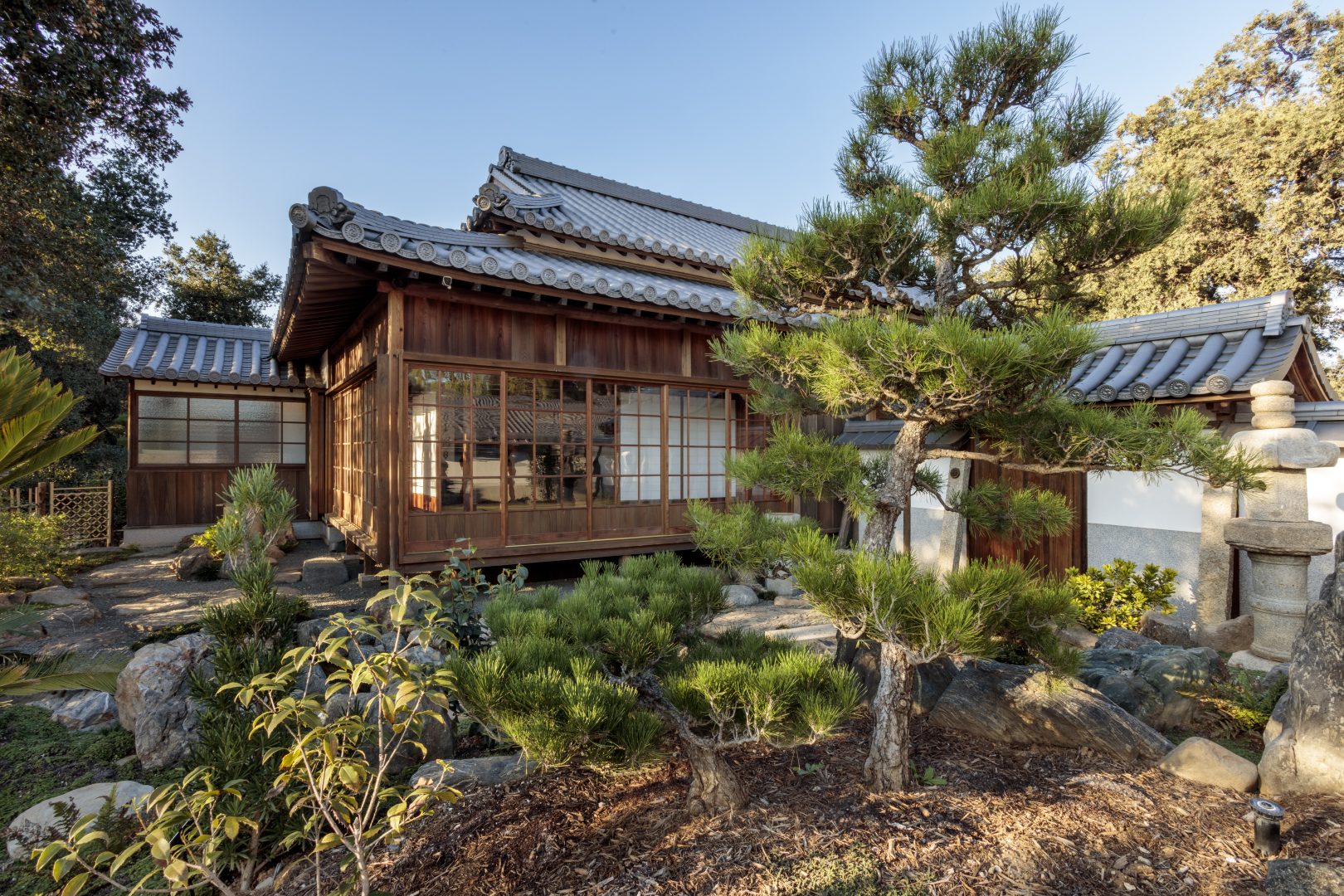
The private garden at Shōya House. | Photo by Brianna Chu / Hey SoCal
“Other ‘new’ acquisitions include a 320-year-old Shōya House in the Japanese Garden, which was moved piece by piece from Japan to its new home. The house, with its surrounding ecosystem, is a historic example of a contemporary priority – sustainability. We hope our longstanding visitors as well as new ones will find new and surprising things to discover here.
“With our new visual identity and streamlined name, we’ve also launched a series of digital initiatives that expand our reach, bringing The Huntington to global audiences – students, researchers, and our ‘community of the curious.’
The execution of The Huntington’s rebrand fell to Annabel Adams, who came on board in August 2024 as Vice President for Communications and Marketing. While she took me on a tour of the site one week after the rollout, she talked about stepping into this new role only six months before the launch, the new logo, and the programs that lean into The Huntington’s values.
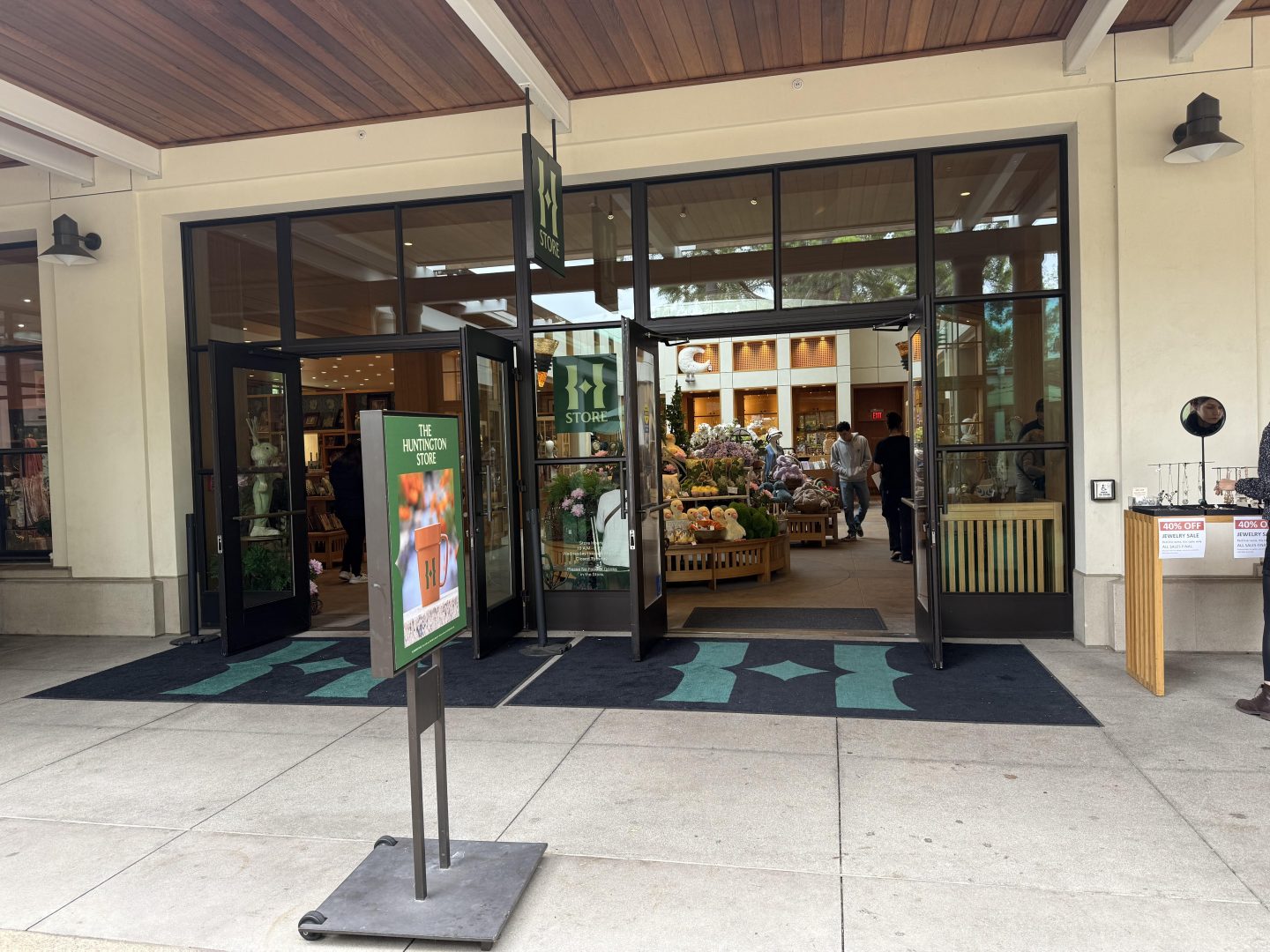
The Huntington Store. | Photo by May S. Ruiz / Hey SoCal
“I knew coming in that I was going to lead the rebrand, but I didn’t get to see the brand because we had to keep it confidential,” Adams began. “This was actually years in the making. My predecessor Susan Turner-Lowe conducted a stakeholder and focus groups. They did studies to assess how a brand can lean into our values and serve our communities better. That’s what led to this rich color palette, the agile and adaptable H that can scale both for print and digital media. It is in service to all the research they did for years coming up with this brand.”
Continued Adams, “I had the privilege of coming on board when the brand had already taken shape and my job was to deploy it – to bring it to life across the institution. I worked with my incredible communications team to adapt the signage, the website; anywhere there was an existing logo or monogram, we touched it with the new brand. And there were hundreds of them!”
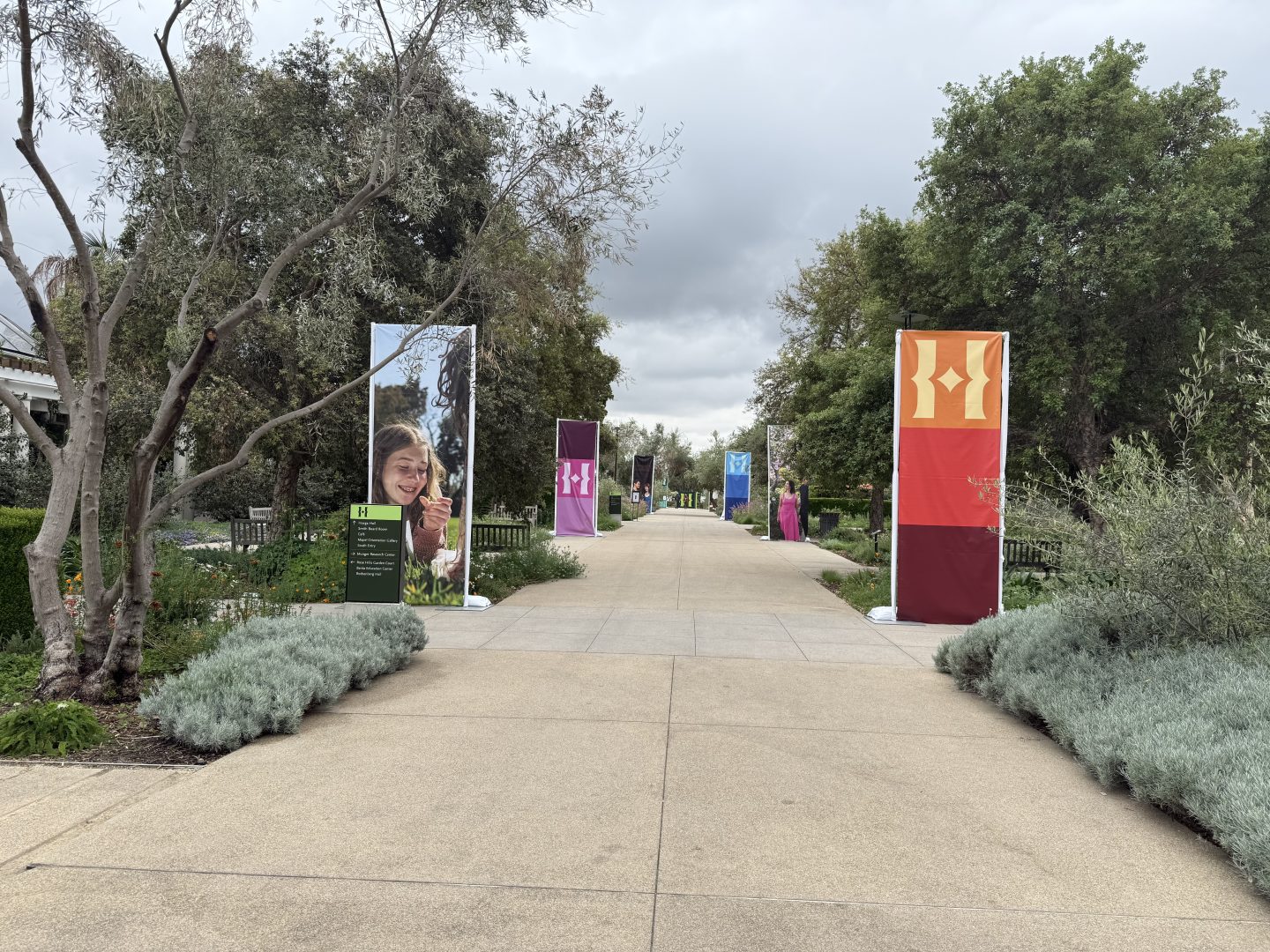
Banners show people engaging with the collections. | Photo by May S. Ruiz / Hey SoCal
As we approached an allėe of banners on the Brody California Garden, Adams said, “Our creative director Lori Ann Achzet was the talent behind the scenes bringing this striking brand to life. She created these banners – which show how people engage with the collections at The Huntington – and did the front gate revamp. She’s an incredible designer and asset to us.”
“Part of the rebrand is to remind people that there are three components to The Huntington – the library, art museum, and botanical gardens,” Adams reiterated. “People love the ornate H with the filigree and leaves – it’s so beautiful. However, it really is representative just of the botanical gardens. We’re proud of our 130 acres of botanical gardens, but we also have an art museum and a library. The rebrand is meant to unify and showcase that we are the synergy of these three collections. The arrows in the monogram also have significance: the arrow pointing left means traditions which we are honoring and the one pointing right is for innovations.”
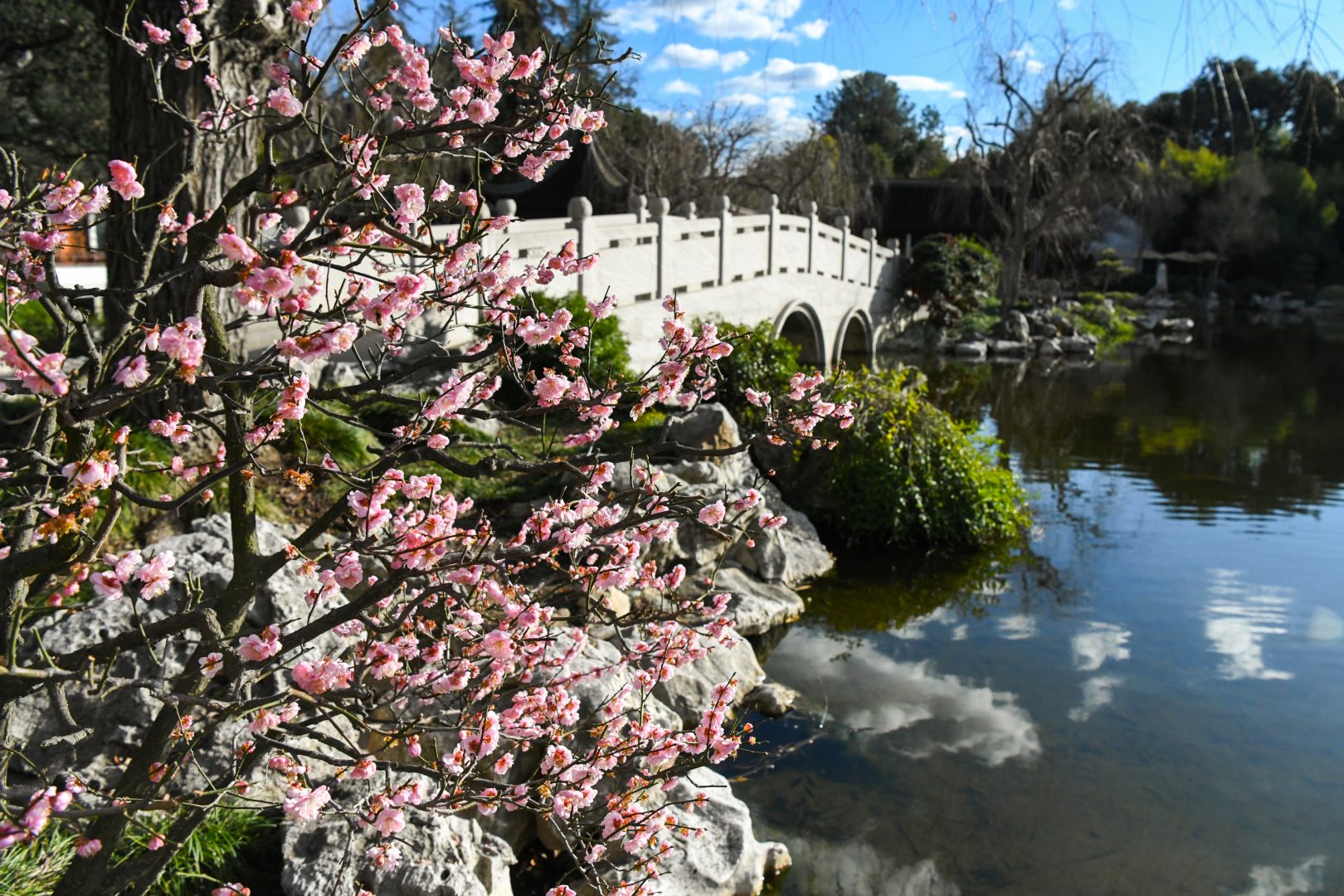
The Chinese Garden. | Photo by David Esquivel / The Huntington
“You do realize this redesign will be met with resistance from people like me who have been coming here for decades and are very familiar with the old monogram,” I pointed out. Without hesitation, Adams countered, “I’m aware of that. But it’s important to note that all the things that everyone loves at The Huntington have not changed. I take it as a compliment that people feel so passionately about The Huntington they know and love. And that resistance to change speaks to how powerful people’s affinity to the institution is.”
Adams again echoed Lawrence’s explanation for the rebrand, “Our old monogram – as ornate and beautiful as it was – could not scale down in an iPhone icon. This new H is accessible for a digital world; we want the experiences of our brand to be accessible to everyone and the ornate H wasn’t.”
“Our values are what guided the brand and my job is to find ways to further lean into them,” Adams asserted. “Those include being more accessible, adapting to a digital world, ensuring our audience can engage and benefit from The Huntington. Then that meant we also have to develop programs that could help us see the brand in action.”
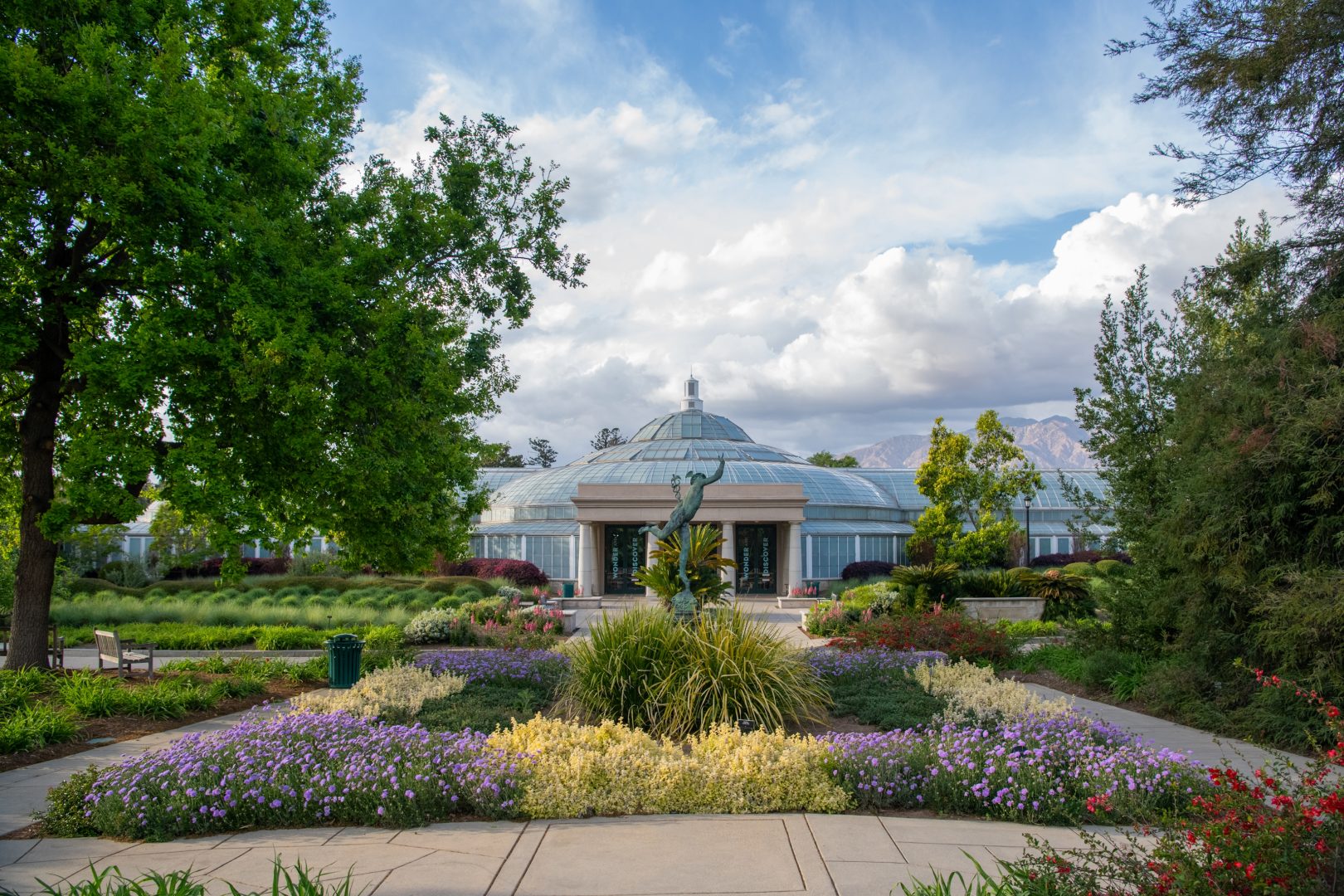
The Rose Hills Foundation Conservatory for Botanical Science. | Photo courtesy of The Huntington
The Huntington’s evolution reflects its increasingly important role as a world-renowned institution – welcoming over one million visitors, hosting more than 500 school groups, engaging about 2,000 scholars and 1,000 volunteers, and reaching approximately seven million website and digital library users and 110 million social media users annually.
As part of the brand launch, The Huntington is expanding its reach with new digital products that connect students, lifelong learners, and global audiences to its renowned collections – anytime, anywhere. These offerings include:
“Huntington How To”: This four-episode YouTube series brings The Huntington’s collections to life through practical guidance from its in-house experts. The first episode, featuring Stephen Reid, assistant curator and head gardener of the Rose Garden, demonstrates how to grow and care for roses, even in Southern California’s unique climate. Future monthly episodes will explore such topics as deciphering historical handwriting, interpreting decorative arts, and repairing books.
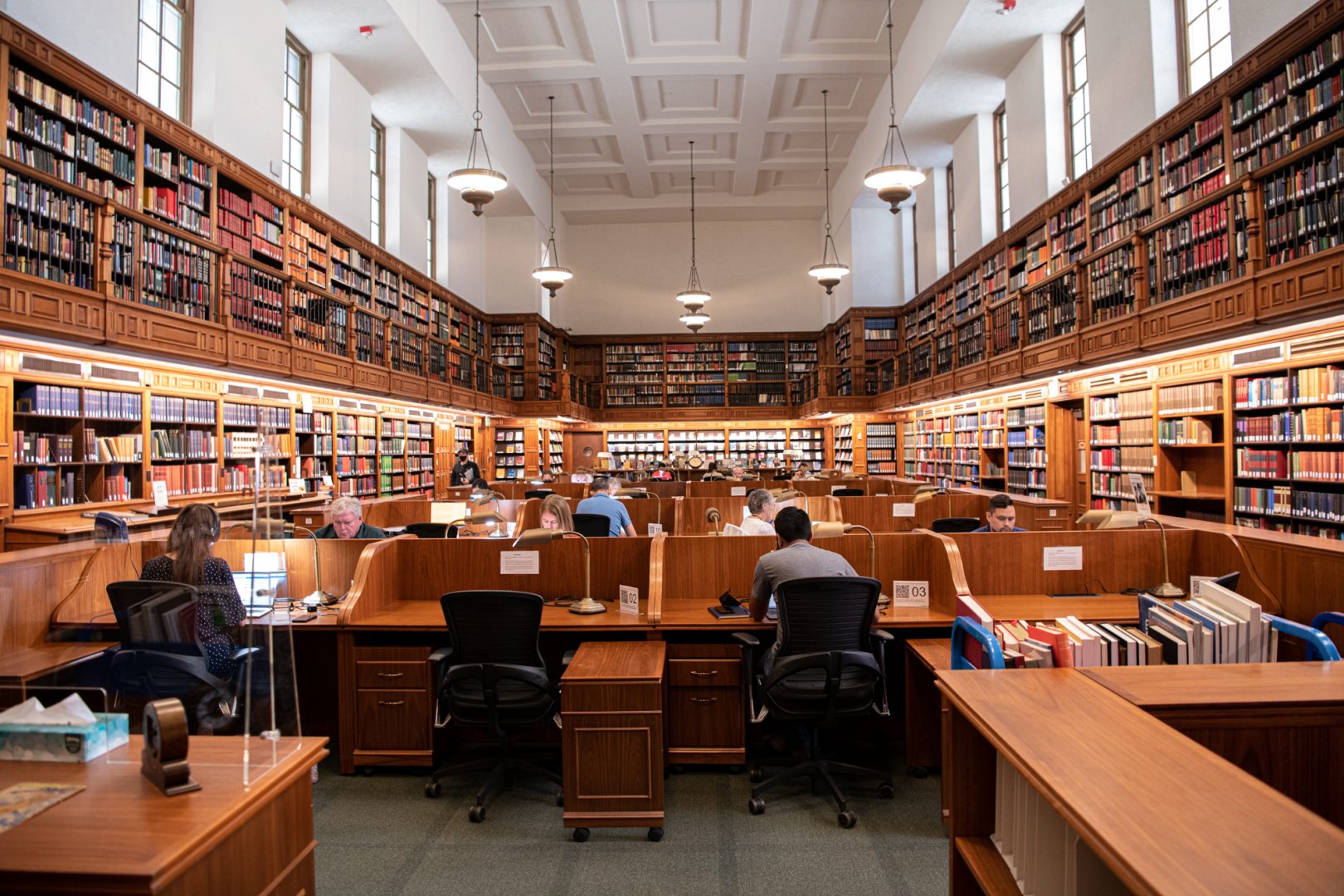
Rothenberg Reading Room. | Photo courtesy of The Huntington
“Collections for the Curious”: Designed for the intellectually curious, this new digital discovery tool will allow online visitors to explore The Huntington’s holdings by using keywords and filters, generating results from the library, art, and botanical collections. The public tool will launch in June with a series of curated highlights that will spotlight unexpected connections among The Huntington’s three collections, including items from recent exhibitions, as well as Latino art and artists, tea services, and women artists.
“Everyday Extraordinary”: Developed in collaboration with award-winning educational content producer Makematic, this playful animated series introduces primary school students to fascinating scientific concepts in a fun and accessible way. Episodes will explore such botanical topics as photosynthesis, mushrooms, and carnivorous plants. The series will launch in May.
According to Adams, The Huntington partnered with Museums for All to make the institution affordable for everyone. Individuals who receive SNAP (Supplemental Nutrition Assistance Program) benefits are eligible for a reduced admission of $3. Since the partnership’s launch in January, The Huntington has welcomed nearly 8,500 visitors through the program.
Architectural rendering of Scholars Grove. | Image by VTBS Architects / The Huntington
An important project is the development of Scholars Grove, a residential community designed to support visiting fellows conducting research in the institution’s renowned collections. Scheduled for summer construction to last 14 to 16 months, it will address long-standing housing challenges for The Huntington’s visiting research fellows – providing 33 residential units arranged in seven one- and two-story buildings, along with a commons building designed to foster interdisciplinary collaboration.
The project design incorporates and preserves 150 trees, including a Magnolia pacifica tarahumara (the only known mature specimen in North America), several historic oaks, and a research grove of avocado trees – one of which dates to founder Henry E. Huntington’s time.
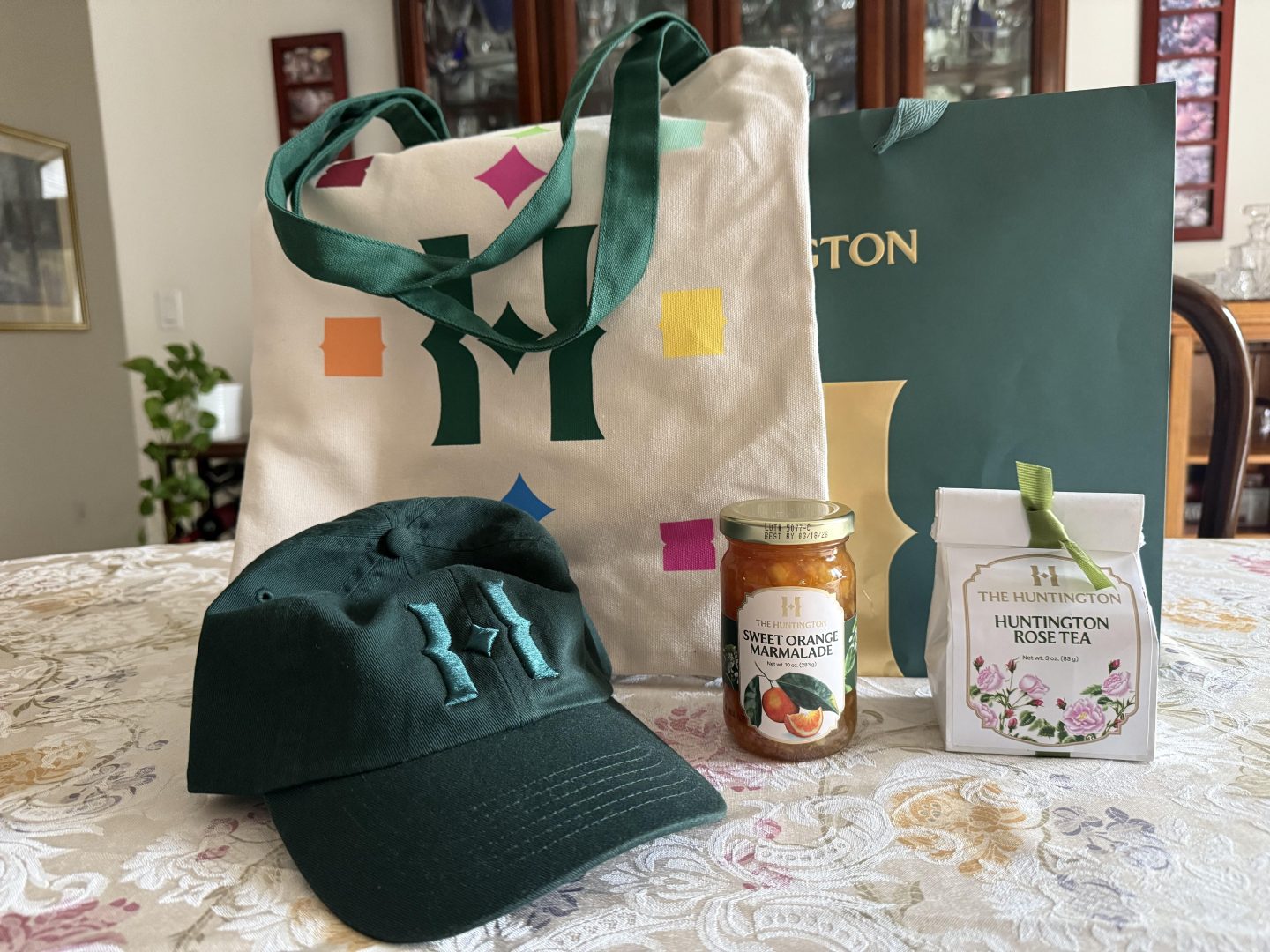
New logo on merchandise; an artist painted an orange from The Huntington’s orange grove for the label on the marmalade jar. | Photo by May S. Ruiz / Hey SoCal
Asked what the biggest challenge was for her, Adams responded, “Doing all this in six months! But there is an undercurrent of enthusiasm and possibility at The Huntington that I find really refreshing and energizing. So I think it was never a question to me of whether this was possible, it was just how do we think of this as a continual deployment? In six months we have this major launch but we are going to continue to lean into the brand now. The launch was a catalyst and how we maintain that momentum is the next phase.”
“We have this beautiful ad that’s coming out in the Museum section of the New York Times – the first time that we’re going to have an advertisement that shows an object from each collection represented as this one foundation and what it offers to the world as a cultural institution. One of items we’re spotlighting in the ad is Octavia Butler’s archive. It’s also the first time we’re spotlighting in an ad this incredible collection that’s so meaningful for us to have at The Huntington. Octavia Butler is a Pasadena native and her work always had impact and meaning, but I think it specially has meaning at a time like now. It’s going to be exciting to see how we can continue to bring that message of what The Huntington has to offer across its collections to everyone through how we communicate with our audience,” expounded Adams.
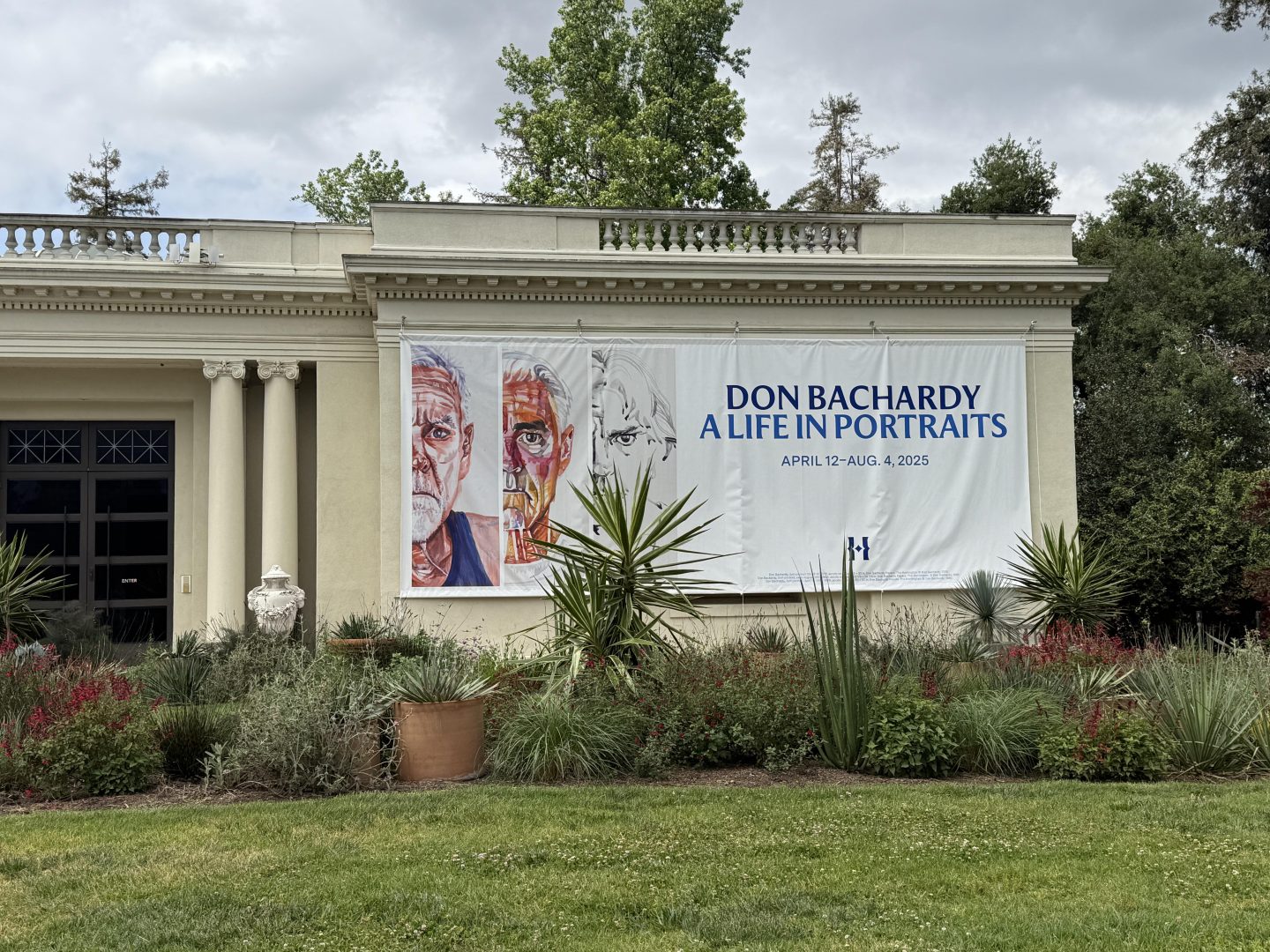
Don Bachardy Exhibition in the Boone Gallery. | Photo by May S. Ruiz / Hey SoCal
Added Adams, “We have a number of great exhibitions planned this year. Don Bachardy in the Boone Gallery is the first exhibition in the new brand. You see on the title wall how the colors and the font work. It’s really legible and accessible.”
“The power of this brand is the accessibility,” Adams emphasized. “A brand is more than just the visual identity, it’s the execution in action. Things like the YouTube ‘how to’ series, Museums for All, the Scholars Grove – those are initiatives that spotlight the accessibility that we’re leaning into with this new brand, the legibility, even our color palette. The colors weren’t chosen willy-nilly, they were from items in our collections in the library, the museum, and the botanical gardens. These are colors that represent The Huntington and that’s why they’re meaningful. These images of people in action are meant to signify that when Henry Huntington created this institution, his goal was to put these collections to use.”
“It’s our invitation to people – to rediscover The Huntington,” declared Adams. “We haven’t changed. You know us for Blue Boy and Pinkie. But do you also know us for Borderlands? Do you know us for the Kehinde Wiley portrait? Do you know us for Shōya House? Come and see everything that The Huntington offers.”
The Huntington means different things to different people. I first visited The Huntington 43 years ago because of the Ellesmere manuscript of Chaucer’s Canterbury Tales and Shakespeare’s Folio in the Library and The Blue Boy and Pinkie in the Art Museum.
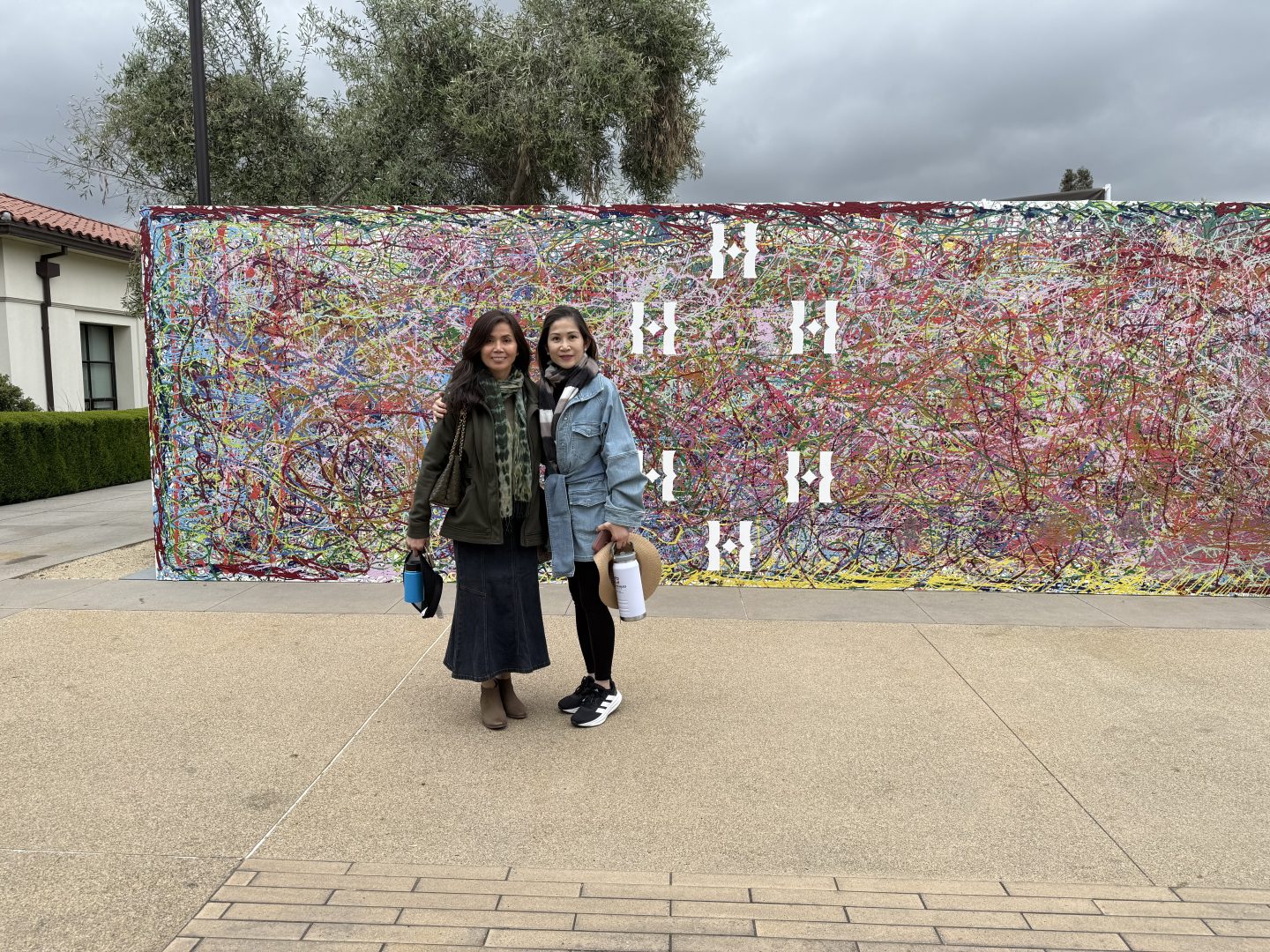
(L to R) Abby Mirhan and Emily Wong pose for pictures in front of the artwork created by The Huntington staff to celebrate the launch of the rebrand. | Photo by May S. Ruiz / Hey SoCal
For Abby Mirhan of South Pasadena, The Huntington means the gardens. She was there one Friday to rediscover what she loved about it and find new things she hadn’t seen.
Mirhan said, “My first visit to The Huntington Gardens was 40 years ago when my mom took me. I hadn’t heard of it before and didn’t know what to expect. When I saw the beautiful Chinese and Japanese Gardens, the first thing that came to mind was ‘Why didn’t I come here before now? It’s so close to my house, I should really visit more often.’”
That didn’t happen though. The last time Mirhan was at The Huntington was about ten years ago when she volunteered to chaperone her youngest daughter’s class for a field trip. So she decided to re-experience it with her friend, Emily Wong.
Wong, who’s from Montebello, is excited to join her friend. For her, The Huntington means the museum. She disclosed, “I came here several years ago with my husband and my daughter to see the artwork in the museum. But today, I’m going to explore the gardens as well.”
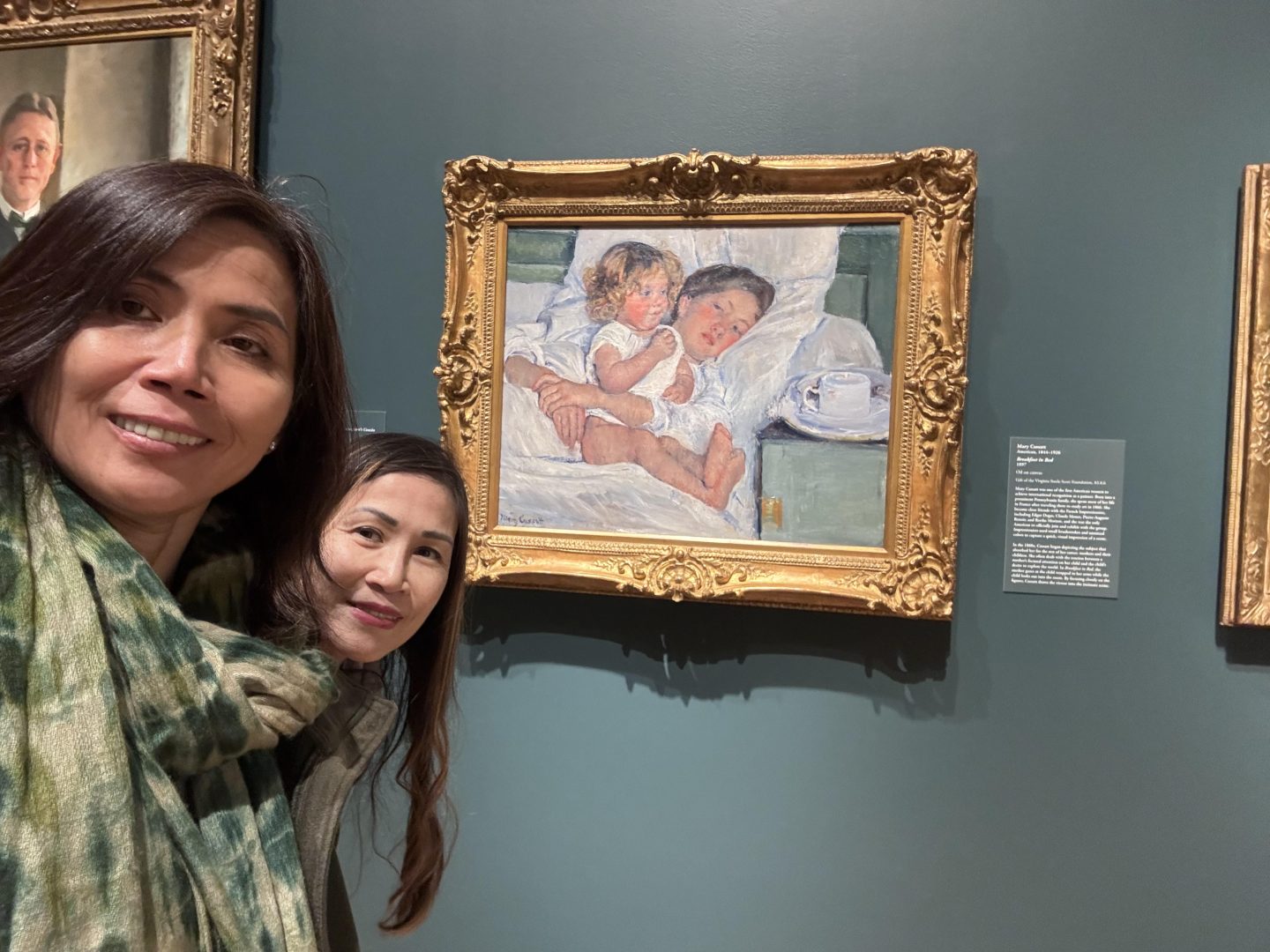
A selfie of Mirhan and Wong with Mary Cassatt’s painting ‘Breakfast in Bed’. | Photo courtesy of Abby Mirhan
While some of us might hope for a glorious sunny day on our visit to The Huntington gardens, Mirhan and Wong were delighted that they unexpectedly came on a grey and gloomy day.
“I have a medical condition that makes me sensitive to sun exposure,” enlightened Mirhan. “I usually bring a hat whenever I go outdoors. We got lucky with today’s overcast weather.”
Mirhan and Wong arrived at 10:00 to take in the full Huntington experience. They explored the many beautiful gardens and marveled at the roses and wisteria in full bloom; looked at the artwork in the galleries and gazed in awe at the stunning paintings and artwork.
“We had a really great time – we took soooo many selfies to show our families and as a reminder of this fun day,” Mirhan said laughing.
Asked what they liked best on this visit, Wong replied, “I loved the pretty flowers in the gardens and the gorgeous landscapes. I also enjoyed reading the backstory of the art pieces.”
Abby Mirhan by a lily pond. | Photo courtesy of Emily Wong
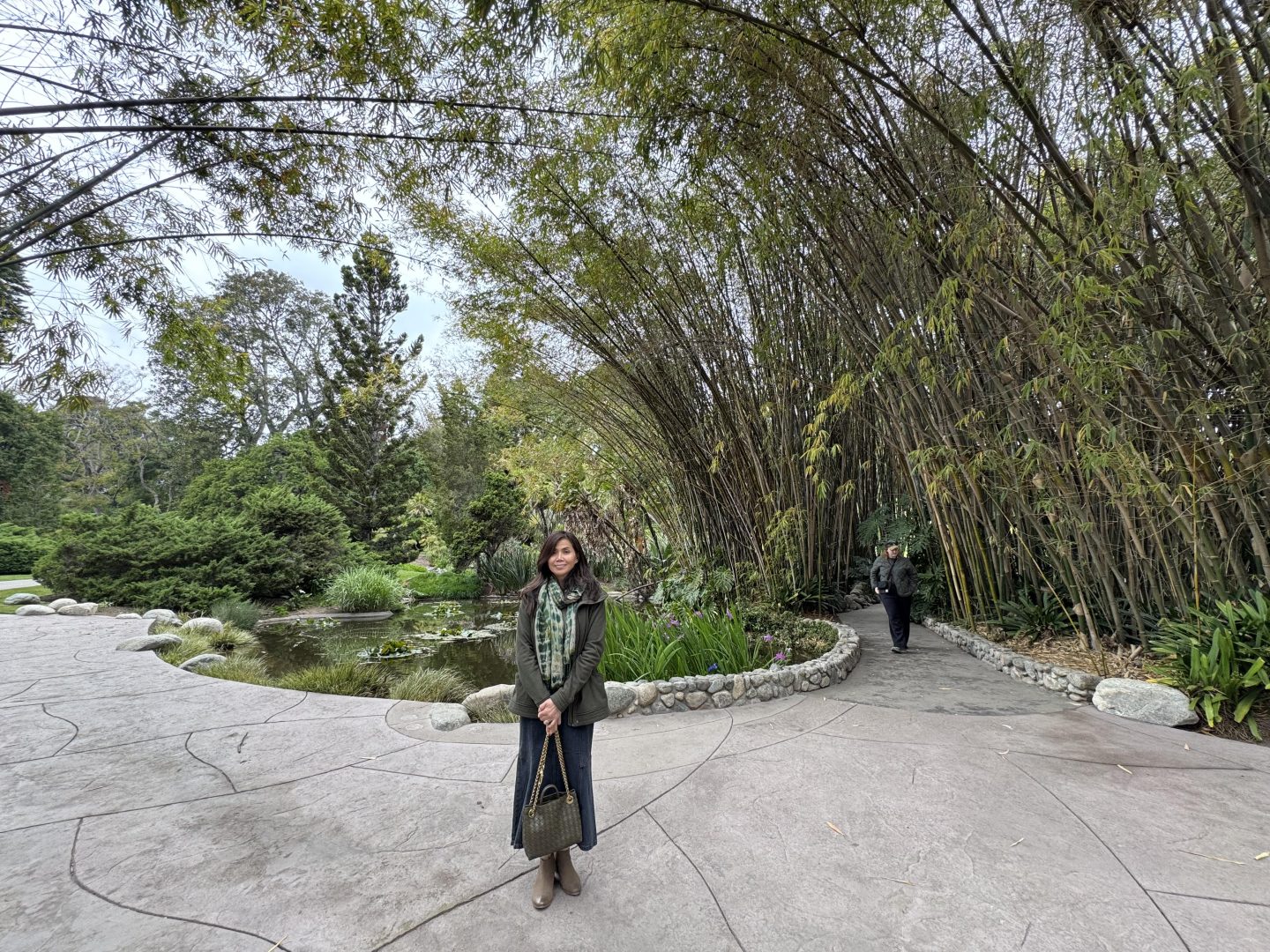
Ever the garden enthusiast Mirhan quickly said, “I really enjoyed the lily ponds, especially where the bamboos reach across – I never knew bamboo trees could bend! I also liked the jungle garden; it felt like being in a different world instead of San Marino!”
There is something for everyone at The Huntington any day of the year, in any weather, as Adams told me during our tour. The plants are beautiful year-round and there will always be blooming flowers no matter when you visit.
Installation view of Borderlands with Three-Bound by Enrique Martinez Celaya at Scott Galleries of American Art. | Photo by Joshua White / JWPictures / The Huntington
Many visitors that Friday couldn’t remember what The Huntington’s old monogram looked like and didn’t particularly care – they just wanted to engage with the collections. Adams may be justified in not being overly concerned about long-time habitués who aren’t thrilled to see the new logo of our cherished institution. She’s convinced we’ll eventually come around and learn to like this new H.
Henry E. Huntington would have been very pleased to know that the institution he founded in 1919 is being determinedly and purposefully equipped to stay relevant and ensure his legacy continues to be useful to everyone in The Huntington’s next century.
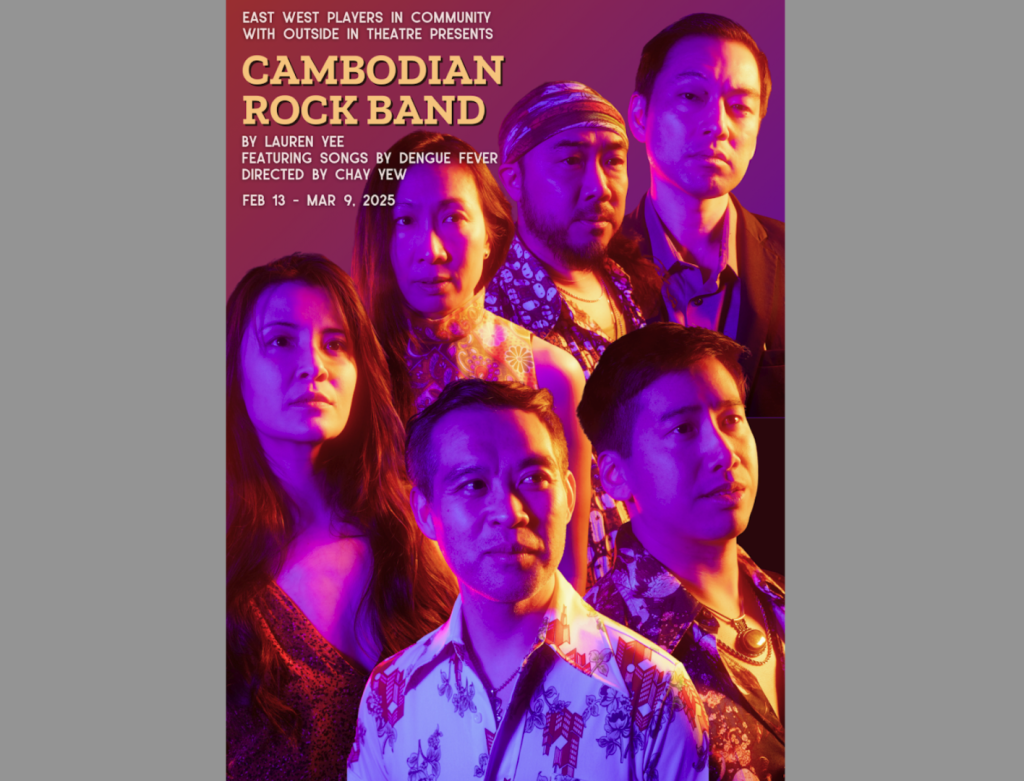
About 10 years ago, Lauren Yee watched an LA Band called Dengue Fever at an outdoor music festival. That singular event inspired her to write a play called “Cambodian Rock Band” and it debuted in 2018 at South Coast Repertory in Orange County.
“Cambodian Rock Band” has since been staged in various iterations at different venues. The show makes its return to Southern California from Feb. 13 to March 9 in the David Henry Hwang Theatre at East West Players in Los Angeles — not too far from Long Beach, which is home to the largest Cambodian population outside of Cambodia.
This part-play, part-rock concert tells the powerful story of a Khmer Rouge survivor returning to Cambodia after three decades. As his daughter prepares to prosecute one of the regime’s most notorious war criminals, they must confront their shared history through the healing power of music.
East West Player’s production marks director Chay Yew’s 13th collaboration with the theater, bringing his signature vision to an extraordinary ensemble. He directed the world premiere of “Cambodian Rock Band” at South Coast Repertory and the off-Broadway run at Signature Theatre.
The cast, many of whom were part of the original world-premiere production, includes Kelsey Angel Baehrens as Neary/Sothea, Abraham Kim as Rom/Journalist, Tim Liu as Ted/Leng, Jane Lui as Pou/Guard, Joe Ngo as Chum and Daisuke Tsuji as Duch.
Speaking by phone, New York-based playwright Lauren Yee talks about the genesis of “Cambodian Rock Band,” what compels her to write, and her work process.
“I fell in love with Dengue Fever’s music — it was infectious, and fun and joyful,” begins Yee. “They play their own take on music inspired by the Cambodian rock scene of the ’60s and ’70s. So I went on a deep dive into their musical influences and learned about those musicians, a lot of whom were killed or died during the Khmer Rouge’s takeover of Cambodia in the early ’70s. It was shocking to me that not only the people, but this whole branch of musical history had been under attack. I thought, ‘there’s a play somewhere in here and I want to write it.’”
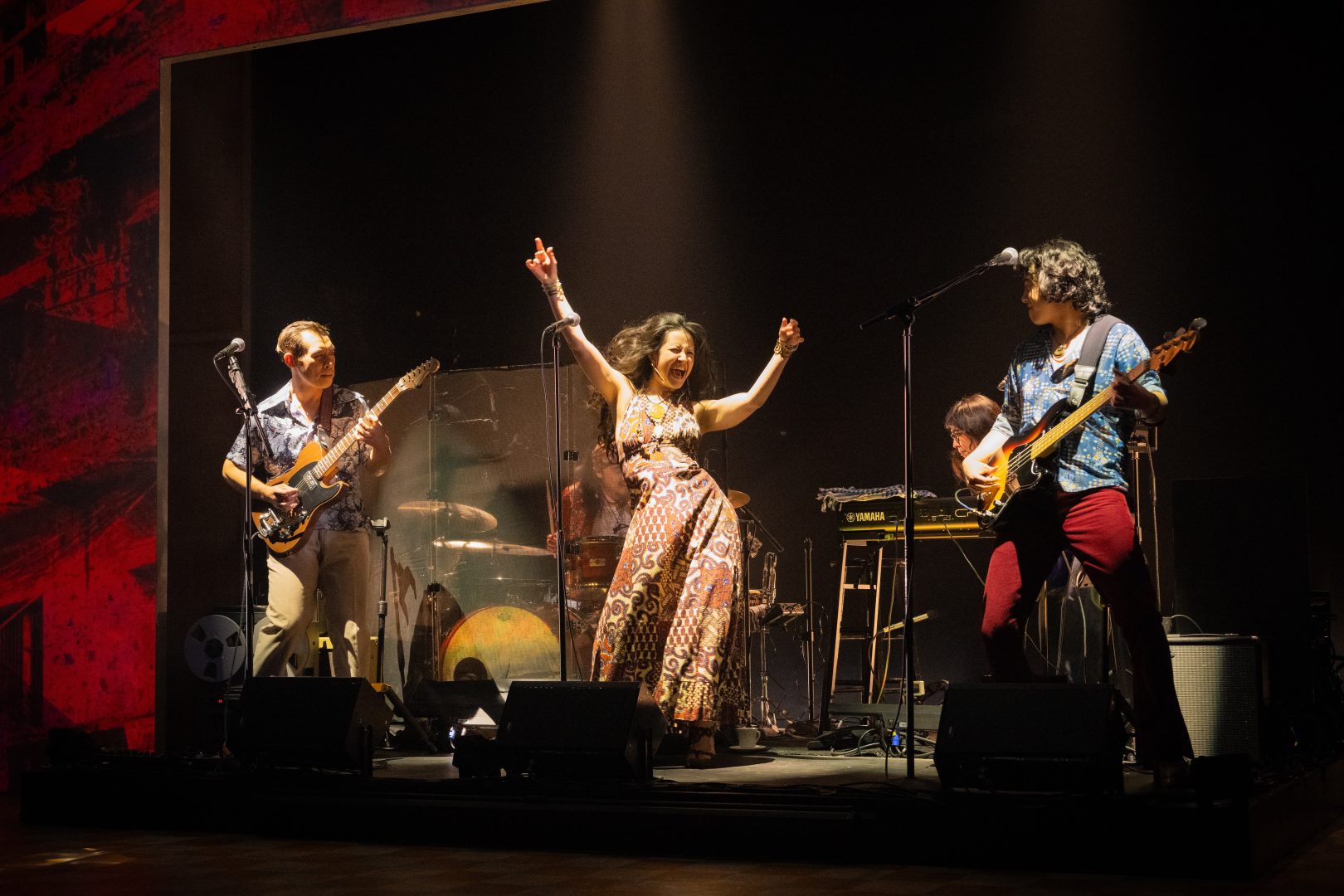
Shown from left to right: Joe Ngo as Chum, Tim Liu as Leng, Kelsey Angel Baehrens as Sothea, Jane Lui as Pou, and Abraham Kim as Rom perform “One Thousand Tears of a Tarantula” by Dengue Fever. | Photo Teolindo / East West Players
For a long time, Yee just contemplated about what that play might be. Then in 2015 she was commissioned by South Coast Repertory to write a play for them and she started working on what was to become “Cambodian Rock Band.”
Yee relates, “In the development process I brought on an actor named Joe Ngo, who I knew from Seattle, and it just so happened that his parents were survivors of the Khmer Rouge. And he played the electric guitar! It went from being a play about music to a play where the actors should play their instrument. He has just been the heart and soul of the show. He premiered the play at South Coast in 2018 and he’s basically been performing the role on and off for the past seven years. His involvement with the play is turning ten this year and he’s coming back to his home base of Southern California to perform the play at East West Players.”
“For a playwright, it’s a dream to have actors who have such a long relationship with a single work,” enthuses Yee. “Usually theaters bring in the actors for a month of rehearsals and a month of performances, and the actor may never touch the play again. But to be able to have these actors come back, like Daisuke Tsuji, Jane Lui, Abraham Kim, who were in the original cast at South Coast and two other actors — Kelsey Angel Baehrens and Tim Liu — join the show having done previous iterations of it, is a beautiful homecoming and something very rare in theatre.”
A Chinese American, Yee has written several Asian-centric comedies and dramas. One of her earlier plays was a comedy called “Ching Chong Chinaman” that featured the Wongs, a Chinese American family, in which she skewered every cliché about Asian American identity. More recently, she wrote a drama titled “The Great Leap,” about an American basketball team that traveled to Beijing in 1989 that explored the intersection of identity and politics and the cultural and political risks of speaking out.
I ask if she writes Asian plays because she’s Asian or because she wants to see more Asian representation in theatre, Yee responds, “I think it’s both. First and foremost, I’m a human who loves theatre so I think my plays represent a wide range of topics, ideas, and characters. But one thing I can offer the theatre world that I’m very proud of, is that I write great roles for Asian American performers where they get to play basketball or shred on an electric guitar and do really cool things and play the villain.”
“Sometimes parts of the plays I write reflect my own lived experience and family history,” continues Yee. “And also, over the years, I find I’ve been really interested in unpacking Communism in Asia in the 20th century and its collision with Western culture. It sounds very dry, but to me it’s about ‘What is it like when something seemingly Western as basketball collides with China?’ ‘What is it like when you’re living in a world that has outlawed Western music and then you hear electric guitar?’ as in ‘Cambodian Rock Band.’ I find those clashes incredibly interesting.”
And Yee doesn’t shirk from sensitive topics as she did with “Ching Chong Chinaman.”
She explains, “’Ching Chong Chinaman,’ which I wrote almost 20 years ago, is very close to my own family experience. It shines a light on how others thought of Chinese Americans and Asian Americans at a time when it wasn’t on people’s radar. Stop AAPI Hate was not a thing yet. We were just coming off seeing Asian Americans as this model minority and no one was talking about how we’re viewed and what language is being used against us.”
“For me, that was the right title for the play because I think it’s important that we don’t ignore the things that are traumatic — like charged language,” Yee adds. “We shouldn’t pretend that everything’s okay; we have to confront them.”
Shown from left to right: Joe Ngo as Chum, Kelsey Angel Baehrens as Sothea, Tim Liu as Leng, Jane Lui as Pou, and Abraham Kim as Rom. | Photo by Teolindo / East West Players
According to Yee, she doesn’t have a fixed idea if a play she’s writing is going to be a comedy or a drama.
“Each play is like a kid: the child is born and you don’t know their personality, what they’re going to be like,” enlightens Yee. “But as you begin to spend time with them you see how they speak and communicate. In all of my plays there’s the vein of humor that runs throughout; there’s something deeply, painfully funny in them. I think drama and comedy exist in that same human experience. I really can’t separate the two.”
While most of Yee’s plays have been universally praised by critics, she’s a little shy when it comes to reviews.
“I can write a play and two different people can have totally different opinions about what they think of it or how the play should have gone,” Yee says. “I’m most invested in listening to the voices that are closest to the creative process.”
As for the audience takeaway, Yee observes, “I’m really excited for whatever the audience takes away. I think it’s going to vary based on who you are and your experiences with the music and its history. For those new to this history, I want to incite you to dig deeper and learn more; to think about the power of art, and the threat of oppressive regime, and what can happen when things change.
“And for people who are closer to the material, who know the music or maybe are familiar in a personal way with the event, I hope you’re able to celebrate that music, and reflect on your own history, and share some of your own experiences with people you love. What I found with this play that has been so moving is to hear people — especially from the Cambodian community — say ‘I went through that, or I didn’t experience exactly that, but I’m going to tell my kids about what happened to me.’”
In parting, Yee declares, “I’m so excited to be part of East West Players’ 60th anniversary. Throughout the 20th and 21st century, they have been a leader in championing AAPI voices and it’s really an honor to be part of Lily Tung Crystal’s inaugural season. I think ‘Cambodian Rock Band’ is a joyride — the music is electric, the performers are amazing. It’s a show that lifts you up on your feet despite it all.”
Those who have been fortunate enough to see Yee’s plays will tell you that she creates intensely heartbreaking plays that bring the audience to tears and hysterically funny ones that have people laughing their heads off. “Cambodian Rock Band” is another one of her works that’s certain to elicit a strong emotional reaction.
Originally published on 4 May 2017 in the Pasadena Independent, Arcadia Weekly, and Monrovia Weekly
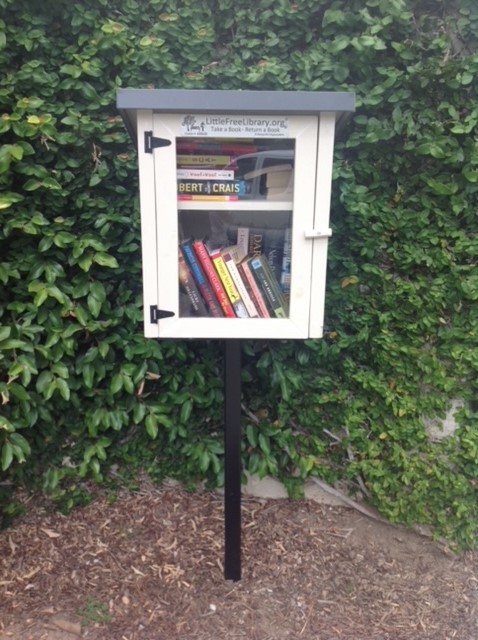
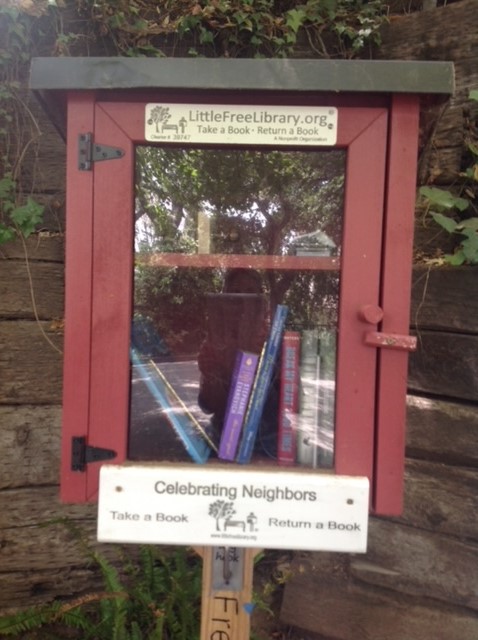
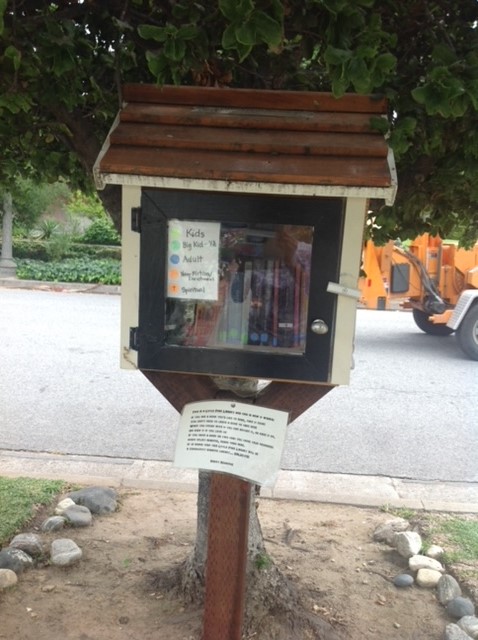
Whoever pronounces no one reads books anymore – the kind that’s not on an electronic device – has probably not heard of or seen a little free library (LFL). It looks a bit like a birdhouse, except it isn’t sitting in a tree but propped up on a stand in front of people’s yards and contains books for people to borrow and take home to read. It has of late become a worldwide phenomenon and has been known to start conversations among neighbors who might never have had occasion to chat until now.
The LFL was an idea concocted by Todd Bol in 2009 in Hudson, Wisconsin, who built a wooden container to resemble a one-room schoolhouse. He then mounted this on a post which he installed on his lawn then filled with books as a tribute to his mother – a book lover and school teacher.
Relates Bol, “We had a garage sale one day, and people who saw our little free library hugged it, kissed it, took selfies, and talked to it like it was little puppy. There was this little sparkle of energy and kinship that brought people together. So I started to make them and I gave way 30; then the media began covering us.”
In 2012, LFL became a non-profit organization whose mission is to inspire a love of reading, build community, and spark creativity by fostering neighborhood book exchanges around the world.
Today Bol’s simple brainchild can be found in all 50 U.S. states where there are more than 50,000 registered LFL book exchanges and in over 70 countries around the globe. People in even the remotest and farthest-flung nations, including Ghana, India, Nigeria, Pakistan, the Philippines, and Vietnam now have access to free books.
California was a little late in joining the movement, according to Bol, but has been the fastest growing in the past two years. In the Los Angeles area, it was a brief article in the newspaper about the LFL that ignited the fire that’s now ablaze and spreading in earnest.
Karen Hovanitz is the steward of the Florecita Farm Little Free Library in Altadena, charter number 3727. She says, “It was built by my then 94-year-old dad from a 1920s-era window from the Habitat for Humanity Restore and scraps of pine from his garage. The handle is made from vintage wooden thread spools. It sits by the street in front of our home which was originally the store for Florecita Farm. It was installed in 2012, the very first LFL in Altadena.”
“This neighborhood encompasses 144 households in a self-contained region that was developed from a dairy, chicken, and citrus farm in the 1950s,” Hovanitz describes. “When we moved to Florecita Farm in 1987, it was a fairly geriatric area. It has since dramatically changed and today there are many young families with children living here. Books for young children, from less than a year old to seven, are taken most quickly and are seldom returned. There are several middle readers so I try to have a supply of YA novels for them; recent fiction is popular among adults. Adult and YA books always come back. The LFL is largely self-sustaining through donations. Occasionally I purchase children’s books from the Salvation Army to replenish stock.”
Continues Hovanitz, “Residents love the LFL; they enjoy donating books. Even if they don’t use it, they like knowing it’s there. It’s part of what makes our community special. I met Todd Bol recently and learned that one of his highest priorities, in addition to getting books into the hands of readers, is fostering community. Having a LFL promotes pride and ownership of community.”
“Because our neighborhood is somewhat isolated, I think almost all LFL patrons are from Florecita Farm. Hikers, mountain bikers, and horseback riders do pass through and may use the library. Although a homeless gentleman frequents our neighborhood; I have seen him on the chair by the library to read and I’m glad he feels comfortable. I love surreptitiously watching from my kitchen window as elementary-age kids ride up on bikes and skateboards to use the LFL,” concludes Hovanitz.
In Pasadena, there are 31 charter LFLs scattered throughout the city’s 23.13 square miles. Sue Feldmeth, who lives on Oakdale Street, had noticed some of the little libraries but didn’t know about the organization. She says, “I had seen them and heard about them. I thought there were just individuals who came up with designs and built their own library or book nook. I wanted to do something like that and when I went online I found out there was an official organization that did exactly that. It also offered for purchase kits to make the little houses or little libraries already made. Although it wasn’t cheap, I bought one; I figured it was one less project to give to my husband.”
Feldmeth explains, “About a year ago I did some spring cleaning and cleared out my children’s books to make room on the shelf. I had a few boxes of these perfectly good books that someone else could read so I thought it was time to get my little free library going. I felt it would be a good way to get rid of my books and share them with others who would enjoy them.”
“What’s funny, though, is that we’ve been getting book donations. Now I have thrice as many as when I started out. I had been trying to get rid of them but ended up having to make room for more books in my home … so that backfired a little bit,” chuckles Feldmeth.
“I know people would return the books they borrow but now I’m really glad when they don’t,” Feldmeth adds. “I realize some feel uncomfortable not leaving a book in return; I put up a sign saying they can take a book and leave one, or pass the book along to someone, or keep it if they love it.”
“When we first moved here in 1999, when my now college freshman son was a year old, we were one of a few families with young kids,” discloses Feldmeth. “Now there are several school-age children in our area, so I decided to have a small box on the ground filled with children’s books to make it easier for small kids who can’t reach into the little library.”
“There’s a lot of foot traffic on our street – little kids on their way to school, neighbors walking their dog – so our library gets used a lot. Our LFL has space for two rows of books and when I see it down to one row, that’s when I put in a new group. I attach circle stickers to categorize them – adults, teens, YA, and children’s books. That’s also how I keep track of what’s going out and what’s coming in,” Feldmeth says.
“Our little library sits in the shade outside our house and I’ve been putting out a basket of lemons from my tree to share with people who come by. We have so many that we can’t possibly eat or use them all,” discloses Feldmeth. “It’s like killing two birds with one stone, really – encouraging book reading and building neighborliness.”
Another Pasadenan, Robin Trickett, reports she learned about the LFL by happenstance, “I stumbled across it one day while I was driving around town. Then I kept seeing one or two of these tiny houses with books when I would take my kids to school. So I thought, ‘Okay, I need to stop and find out what this is all about!’ Once I started to read up on it I had to join the book movement – both my husband and I are big readers and I wanted to encourage our kids to be the same. What a wonderful way to give back and encourage reading in the community!”
“About six months ago we put up our LFL. I find there is a lot of interest in the free library on our lane, not just from the 20 families that live here but also from delivery people and folks working at the houses on our street,” adds Trickett. “We are the stewards of our library and we select new books to put in weekly. Right now there are more children’s books than anything else but I mix it up with novels, cookbooks and bestsellers as well. My goal is to share my love of reading and I cover a variety of choices to appeal to everyone.”
Sean Moriarty, on Rose Villa, first saw the LFL in Chico, in Northern California. He says, “My sister-in-law has one. It piqued my interest so I did a little research online and learned more about it. What a fantastic idea! Then for Christmas last year she and her partner gave me a little library as a present.”
“Our LFL has been up for a few months and we’ve seen a pretty lively response. In fact my kids just informed me our supply is low so I would have to fill it back up again,” Moriarty states. “I’m not terribly scientific about what I stock it with. I have young kids so I make sure there are children’s books in the little library. And I read pretty widely – fiction, biography, history, you name it; we have books of general interest.”
Sums up Moriarty, “I see some books coming back and a few new titles showing up. It’s still early but over time we hope we see more books that we’d need a bigger library! I hope that people who respond to it appreciate it, are excited about it, and care. If we had a million of these across America we’d be a better country.”
A similar sentiment was expressed to Bol one day at a recent conference he attended. He recounts, “The former governor of Wisconsin came up to me and said, ‘Todd, what’s going on in America right now – this divisiveness and polarization – that’s not us. The Little Free Library is more representative of who we are and what we are. We reach across the aisle and across the street. We pick each other up and make one another’s life better – we don’t care who they are or where they’re from.’”
For all of Bol’s good intentions, however, there are naysayers out there. He is very much aware of them and offers this analogy, “I believe a community is like a beehive: if everything’s done right it will produce honey. But oftentimes it’s beaten with a stick and yelled at. I don’t subscribe to all the negativity out there. I’m proud of LFL and how we’re making it a better world. I sound old-fashioned and corny but reality is before us every single day – we see it.”
The scope of the LFL’s outreach has widened since 2012. Through its Impact Fund, Bol intends to put LFL in communities where it would make the greatest difference – trailer parks, apartment buildings, high-need neighborhoods.
Bol launched an initiative to put a little library in every police department across the country – over 14,000 of them, according to him. There are currently four dozen LFL in police departments in Detroit, Cleveland, Raleigh, Chattanooga, and New Orleans, among other cities. He says the L.A. Police Department has a LFL in every precinct.
“We also recently unveiled the Action Book Club which identifies authors and publishers who demonstrate community engagement,” adds Bol. “We ask people to sign up with us, read one of the books, go out and fix things in their neighborhood, then report back to us. One of my favorite stories is about this group of fourth-graders in Lafayette, Louisiana, who collected 100 pair of new socks and gave them to the homeless. We’re gathering tales of people doing good around the world, one neighborhood at a time.”
“There’s a saying ‘it takes a village to raise a child,’” Bol expounds. “That’s a statement of observation. The statement really should be ‘how can I be a part of the village?’ What we want is for the LFL to be the spark for people to make things better through literacy, books, conversation, dialogue, and action.”
Lofty objectives and noble aspirations aside, at core the little free library simply takes us back to a time when we would walk up to our neighbor’s house to share a plate of freshly made cookies, or to borrow a cup of sugar to bake some. For most of us that outcome alone makes it a better world already.




 A San Gabriel Valley Inquirer