Originally published on 27 November 2017 in the Pasadena Independent, Arcadia Weekly, and Monrovia Weekly
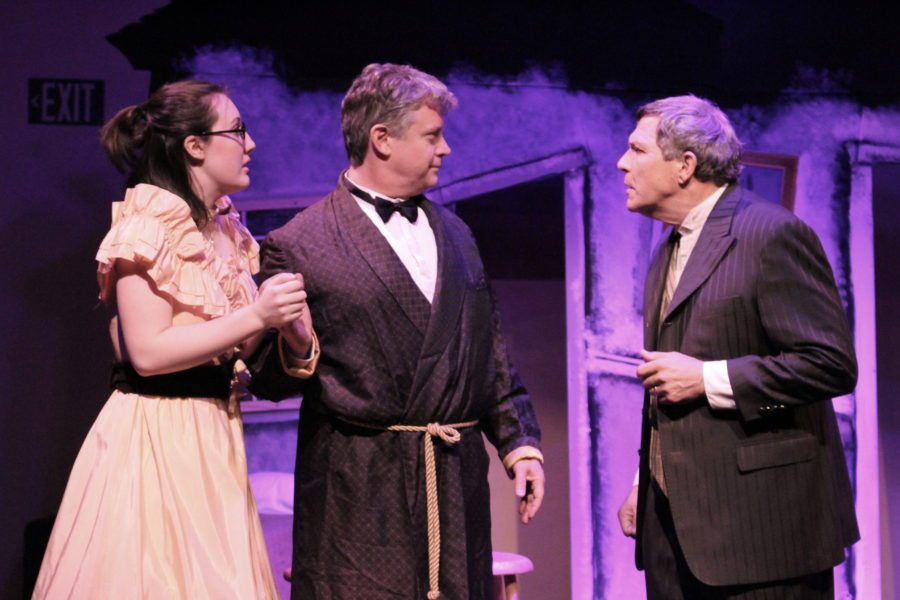
Mary Chalon Davis and Lance Davis, who founded Parson’s Nose Theater (PNT) in 2000, are feeling quite content these days. After 17 years as a gypsy theater company they have finally found a permanent home in Pasadena.
Their 2017-2018 season debuted last month at the beautiful ivy-covered Parson’s Nose Abbey on 95 North Marengo Avenue with Lance’s adaptation of Nikolai Gogol’s ‘The Government Inspector’.
For two weekends in December – 9 and 10; 16 and 17 – PNT will present a Readers’ Theater Series of Charles Dickens’s ‘A Christmas Carol’. Actors, dressed in the attire of the era will read this beloved annual production as it was meant to be staged.
Lance explains their rationale for establishing PNT, “People say live theater is dead. Why would they want to see a play when they have television at home? But the idea of returning to the live art form where the actors and audience are both present and no one is looking at screens is what theater is about. You’re interacting with the literary art form for the most part so you have to listen to the words and the ideas.
During World War II, in London, in spite of all the bombings going on, theaters were full because people wanted to go out and be with others. That sense of socialization and community is what we’re trying to bring back. While our plays are only 90 minutes long we take a break so people can get up to talk with each other, have a cup of coffee or a glass of wine, and chat.”
PNT’s productions are designed to be introductions to the classics. Students are a big audience so they deliberately addressed the most common complaint students voiced.
“We eliminated all the things that students said they don’t like about theater, one of which is that Shakespeare plays are too long,” Lance says. “So I distilled them to 90 minutes. The idea is to keep them short but complete – the language, the characters, the plot, and the spirit of the play are intact.
One of the students who watched our production of ‘Twelfth Night’ told us she went to see it at a theater Festival. About an hour and 30 minutes into it, she just said, ‘Excuse me, I saw this before and I know it can be done more quickly’”.
“But there was a reason why these classics are too long,” Mary interjects. “At the time they were written people didn’t have much to do for entertainment. We re-introduced these for the modern audience so they can enjoy the very same plays that adults, before our time, knew.”
That students actually enjoy these classic plays was revealed recently. Lance recounts, “We had a group of eighth graders from Pasadena High School and during the intermission they were all conversing with each other while their parents were checking their cell phones.”
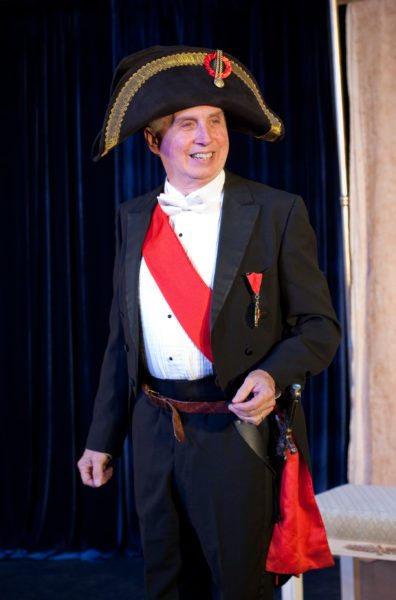
PNT’s productions are comedy classics because Lance is particularly gifted in the art form. Expounds Mary, “Lance came from the Guthrie Theater Minneapolis which informed his choices; it’s his orientation. But also because comedy makes people laugh; it lifts their spirits in a way.”
Lance adds, “Besides that, we want to recognize that these classics, like the plays Moliere wrote in the 1660s, were the basis for some of modern plays. For instance, Moliere wrote about this miser who thought of nothing else but money. This character engendered Scrooge. Then came Jack Benny and his obsession with money; and then much later on there was Burnseneezer Scrooge in the animated show ‘The Simpsons’. All these modern day comic characters came from the works of early playwrights.
Our most recent play ‘The Government Inspector’ is about a clerk who comes into town whom people thought is the expected inspector who’s to expose all the evil deeds that the mayor is doing. o all these local officials are going around bribing him and he eagerly accepts them so he’s just as corrupt as they are. All this time the town officials thought they’re safe because they’ve bought off the inspector, until one day the real inspector arrives.”
“My Character in the play is the mayor’s wife and she see meets this man whom she thinks is the government inspector,” Mary relates. “She plays matchmaker between him and her daughter, and he proposes marriage. So Mary thinks this is going to change their life – they’ll leave this crummy place and move to St. Petersburg; all their dreams have come true. She snubs the townspeople then she finds out he’s not the real inspector so all her hopes come crashing down.”
“This is something we still see today,” expounds Mary. “So people who watch this show realize we have a link with these characters. Classics have universal themes and audiences connect with them. And because they’re funny they become more accessible and disarming.”
Lance interjects, “We laugh at them and then we realize, ‘Oh, that’s me!’ Through these plays, we see human nature. There are ideas that seem so foreign to us like, in one of Moliere’s plays, how the dowry is very important. We think it’s funny and say no one does it anymore but we still do, only in a different way. Today when one’s daughter is dating someone, parents think ‘who is he?’; ‘what are his parents like?’; ‘what are his prospects?’”
How they came up with their theater company’s name is a story in itself as Lance laughingly relates. “First of all Parson’s Nose was the only name my wife and I agreed on. It’s a quote from ‘Romeo and Juliet’ where Mercutio talks about Queen Mab’s speech that dreams reflect one’s passion and desires – she tickles a sleeping parson’s nose with a tithe-pigs tail and he dreams of a large donation. And we’re always dreaming about grants. It’s very far-fetched.
On the other hand, when I was growing up, in Philadelphia, a parson’s nose was the tail-end of the chicken. So if you look at our logo it’s either a sleeping parson or the tail-end of a chicken. In that sense that’s a metaphor for us – while we do the classics, we don’t take ourselves seriously.”
“This company has been around for 30 years,” Mary stresses. The individuals we work with – the actors, the designers, including us – are trained people who went to Julliard, Yale, and other drama schools with 30 years of experience and have worked all over the country. Many of us are from New York and ended up moving to California in our mid-adulthood and raised families.
We bring a lot of skills to the work; we’re not amateurs. People who come to our show are watching something that’s well done. We don’t spend a lot of money on our sets but we focus on the art of acting and storytelling. That’s key for us. It’s like ‘theatre unplugged’. These actors, several of whom are from Pasadena, are here because they love acting.”
We started PNT 17 years ago and our first production was ‘Twelfth Night’ then ‘The Miser’ which we did at Interact. The Geffen Playhouse came over and loved what we did and asked us to do their Saturday shows which toured for schools. While we didn’t envision ourselves doing that, we thought it was a nice opportunity. We produced all the hour-long shows and we were able to hire a company of actors to do the tours for six years.
From there we came up to the Pasadena Playhouse where we produced family-oriented performances that brought families to the Playhouse. All these shows that we were producing for the Geffen and the Playhouse were all under their name but we were thankful because they gave us a foundation. This went on for about nine years until the Playhouse scrapped this component of their programming when they downsized.
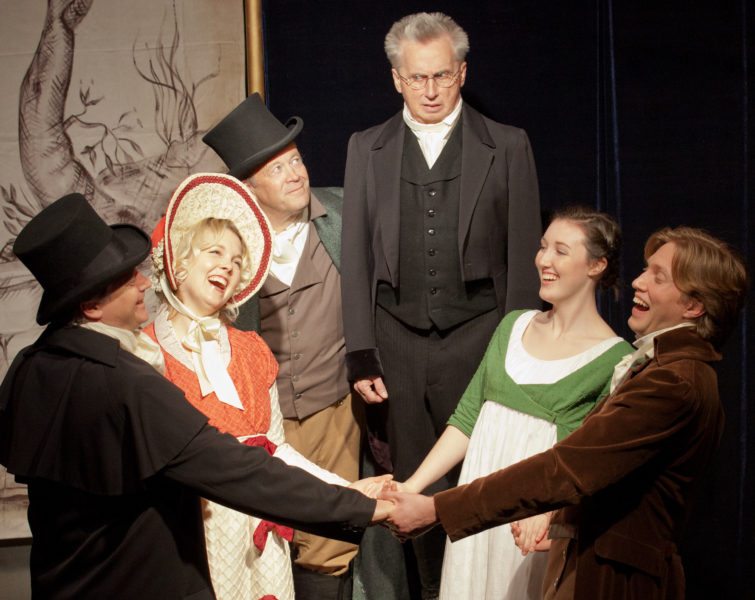
In 2008 we realized we had been working all these years but no one knew who we were. So we decided that this was the time to reinvent ourselves – we had to get the name Parson’s Nose out there.
The first production we did under our own name was at Pacific Asia Museum. We were then at Lineage Center for the Performing Arts where we stayed for seven years. It’s a dance company on Fair Oaks, south of Green Street, and they rented out their space. We were their tenant for five years. We were briefly in South Pasadena where we did the ‘Under the Tent’ series. Then the recession hit big time. So we stopped making full productions and we did readings instead.
We were in New York for a while and readings of new plays are common there. It’s not as common here where readings are usually table readings for movie scripts. We started to do readings and people were fascinated – actors make the characters on the page come to life. So we began doing that; of course it’s also a less costly production.
When the economy improved over time, we started putting full productions back in. We were doing this at Lineage but as we were renting only the performance space, we had to find other places for our requirements – costumes were stored in one location; props were at a different space; rehearsing was done at yet a different site. We became experts at being a gypsy theatre company – arriving in a van, setting up props, and stuff.”
Lance adds, “We began to look for a space in earnest which took longer than we thought. We looked at all kinds of spaces. We now know Pasadena inside out – if you say Discount Tires, we know where that is. When, after three years of searching, our realtor discovered this place, he declared, ‘this is Parson’s Nose’.
And, to us, finding the Abbey is such a gift. It’s a place where we can hang lights and have a set that can stay up all the time. For the first time we can argue with each other and just storm out the door. We don’t have to pick up and fold our chairs before leaving.
The city was very happy to have us occupy this space; they’ve been very supportive. And we are ecstatic to be here. Now our challenge is to tell people where we are, how to get here, and how to make it a destination for people.
This year we were part of ArtNight Pasadena and a lot of people came in to see us. We did 20-minute readings of radio plays people grew up with, like Flash Gordon.”
Following the 2017 fall full production of ‘The Government Inspector’ and Charles Dicken’s ‘A Christmas Carol’, PNT will present a full production of Moliere’s ‘Too Learned Ladies’, then a Readers’ Theater Series of ‘An Irish Celebration’ with select Irish poems, stories, and songs in the winter. The 2017-2018 season will close in May with a full production of William Shakespeare’s ‘Clearly Classic: Twelfth Night’.
Plans for more productions for schools and an outreach for seniors are underway, as well as plays multi-generational families can enjoy.
Parsons Nose Theater is a hidden gem in Pasadena, as one of its board directors noted. However, with its founders’ achievements in staging timeless classics for students and families and plans to extend its reach to an even wider audience, it is on track towards getting recognized. This hidden gem will be found at last.
 A San Gabriel Valley Inquirer