Book “Los Angeles Before the Freeways” Captures Images of Lost Architectural Gems

Also published on 10 March 2025 on Hey SoCal
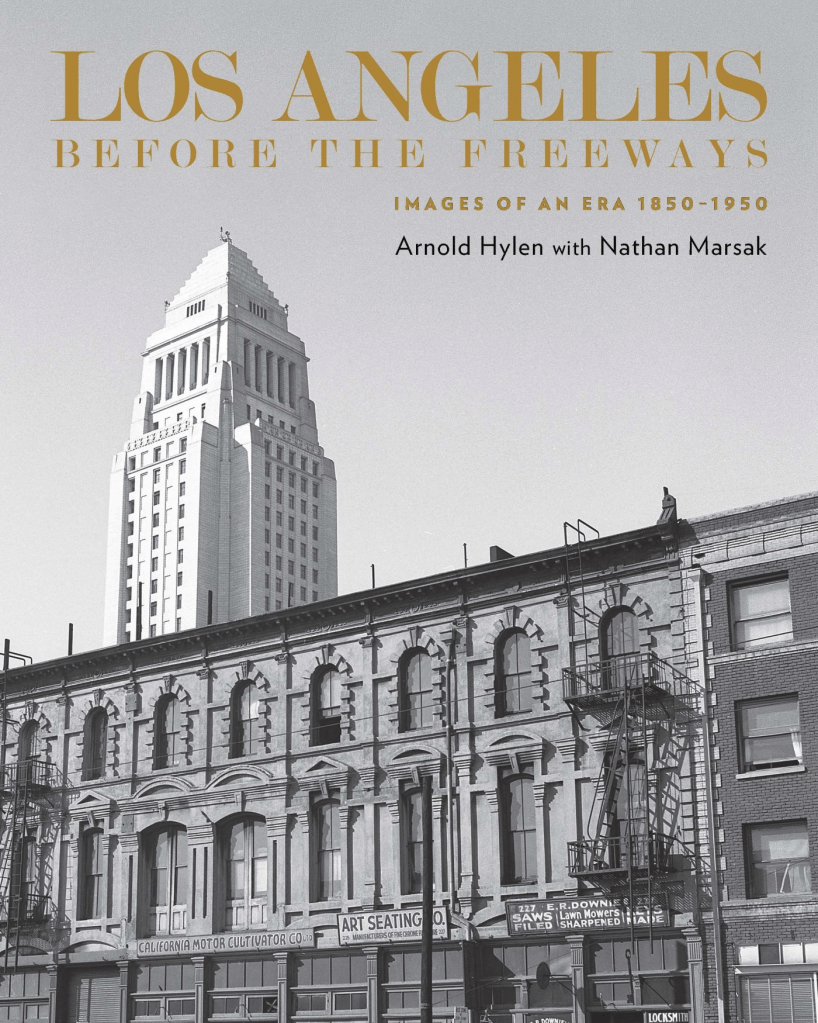
Photo courtesy of Angel City Press

In L.A. County, freeways are a ubiquitous part of our surroundings. It’s hard to imagine a time when we traveled the expanse of the region on city streets. As population increased and more cars traversed the roads, freeways were constructed to make driving safer for people and areas more accessible.

The 110 Freeway, more popularly known as the Pasadena Freeway, is one of the oldest (if not the first) freeways in the United States. The first section – the Arroyo Seco Parkway – opened to traffic in 1938 and the rest of the throughway opened in 1940. Today, there are several freeway interchanges that connect Los Angeles to various parts of California and to other states. 

Countless buildings were demolished to make way for the construction of these freeways. The book “Los Angeles Before the Freeways: Images of An Era 1850-1950” gives a lush, visual tour of a Los Angeles that no longer exists – one of elegant office buildings and stately mansions that were razed in the name of “progress.” Originally published by Dawson’s Book Shop in 1981, it has become a cult classic among L.A.’s architectural historians.
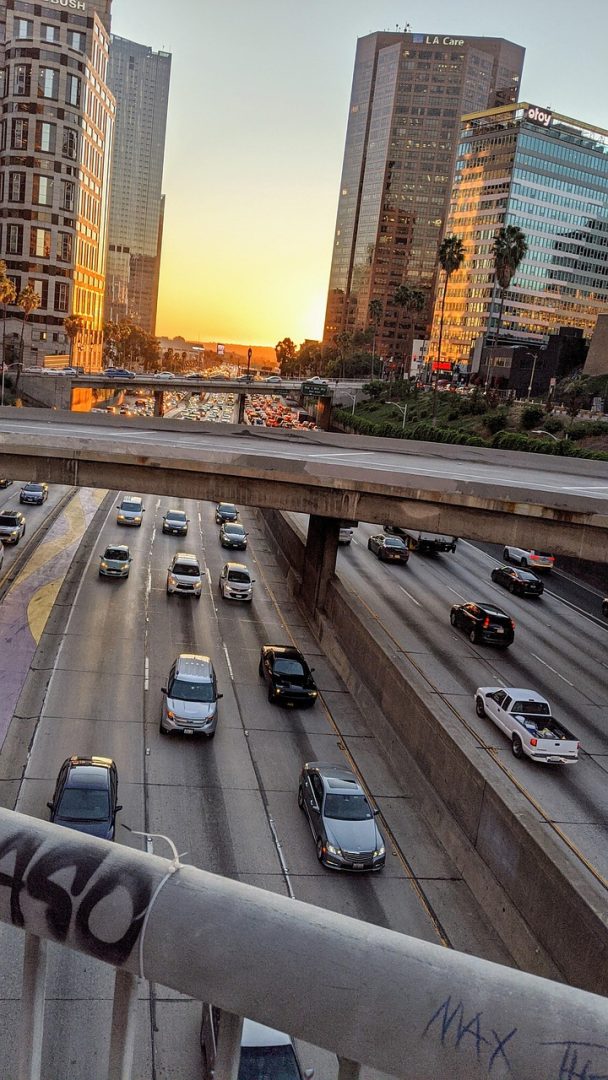
Photo courtesy of Pixabay

Gorgeous black-and-white photos from Arnold Hylen that capture a forgotten era are showcased in the book. It has an original essay by the photographer that provides historical background and context for the time period. This new edition from Angel City Press, to be released on March 25, contains additional, never-before-seen photographs from Hylen and newly unearthed information from historian Nathan Marsak on these lost architectural treasures.

The stunning photography recalls an era when downtown Los Angeles was unspoiled by wide-scale redevelopment and retained much of its original character. Each page offers a glimpse of what the city used to be, before some of its architectural jewels were destroyed for the newer, more modern city that would soon follow.

Marsak graciously agreed to be interviewed by email about how he became an L.A. historian – despite not being a native Angeleno – and the upcoming book “Los Angeles Before the Freeways” and why it’s important to get it republished. 

“I was born and raised in Santa Barbara, and Los Angeles was like a weird, distant backyard,” he began. “Our television stations were all out of L.A. so I became obsessed with, for example, commercials for Zachary All and Cal Worthington. Then we’d go to LA and it was so different from the picture-perfect neighborhoods of Santa Barbara; in the 1970s Los Angeles was pretty treeless, covered in billboards, blanketed in smog. Like a dying civilization, but with so many insane neon signs, so much bizarre architecture. The whole of the city was fantastical like Disneyland, albeit a giant, grimy, dystopic version of Disneyland.”
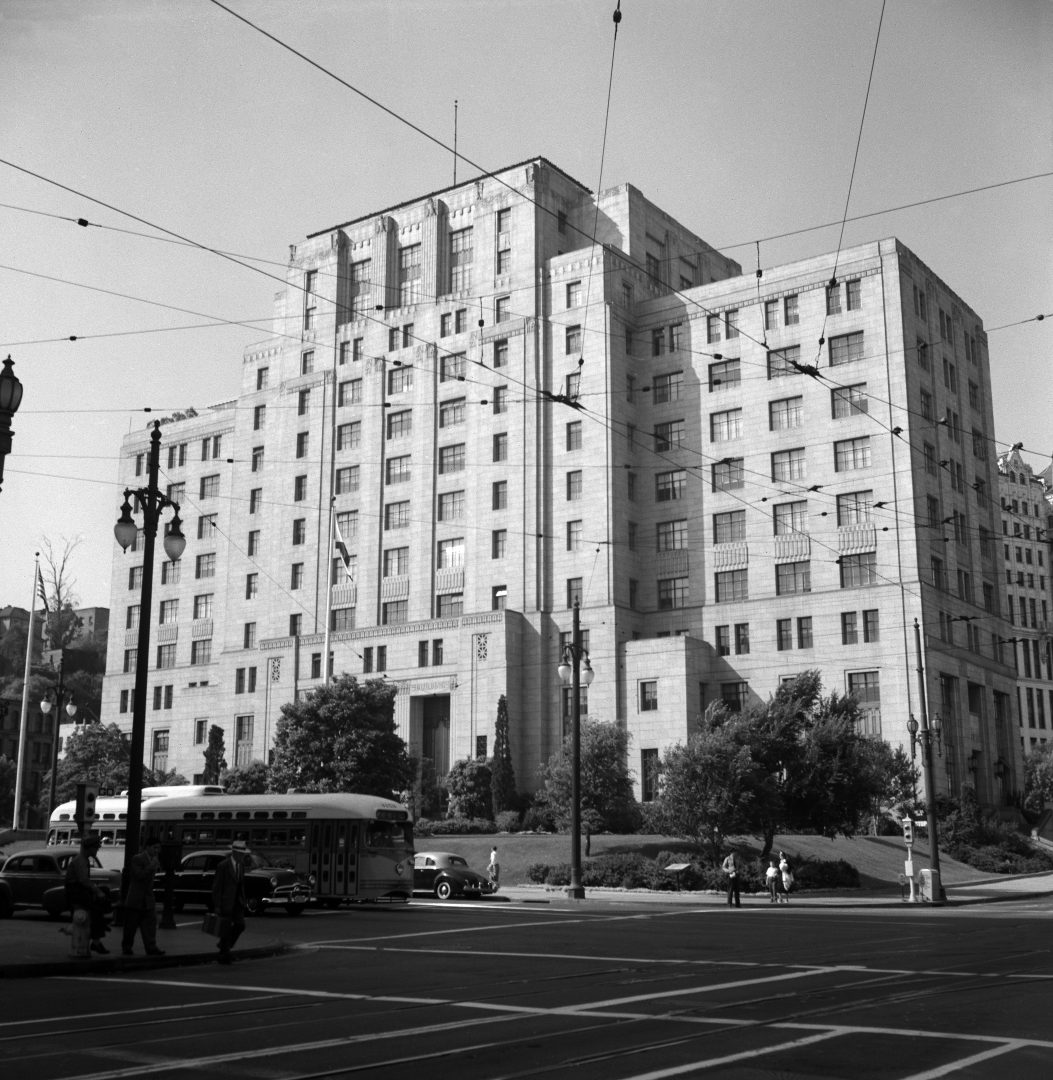
California State Building on First Street. | Photo by Arnold Hylen / Courtesy of Angel City Press

The career choice, however, was preordained. Marsak explained, “My father was a historian and I follow in his footsteps. While other parents took their kids to baseball games, I was being led through Florentine museums or the cathedrals of France. I would have been destined to become a historian no matter where I landed, but I’m very glad my home became Los Angeles.”

Taking up roots in L.A., though, wasn’t always part of Marsak’s plans. He disclosed, “In the early 1990s, I was out in Wisconsin, going to graduate school and doing architectural history. But the lure of Southern California pulled me back, especially after I saw the ’92 riots on TV. I packed my things, and read Raymond Chandler and James Ellroy to acquaint myself with my new home, and moved to East Hollywood and began looking for ‘Old L.A.’ 

“Sometime in the mid-90s, I was in a downtown bar talking up the old timers about lost Los Angeles and one of them said ‘you know there was a guy who took photos all around here back in the fifties, and he published a coupla books of them’ — referring of course to Arnold Hylen –  and I immediately began combing the bookstores until I found Hylen’s 1976 Bunker Hill book, and his 1981 Los Angeles Before the Freeways.”
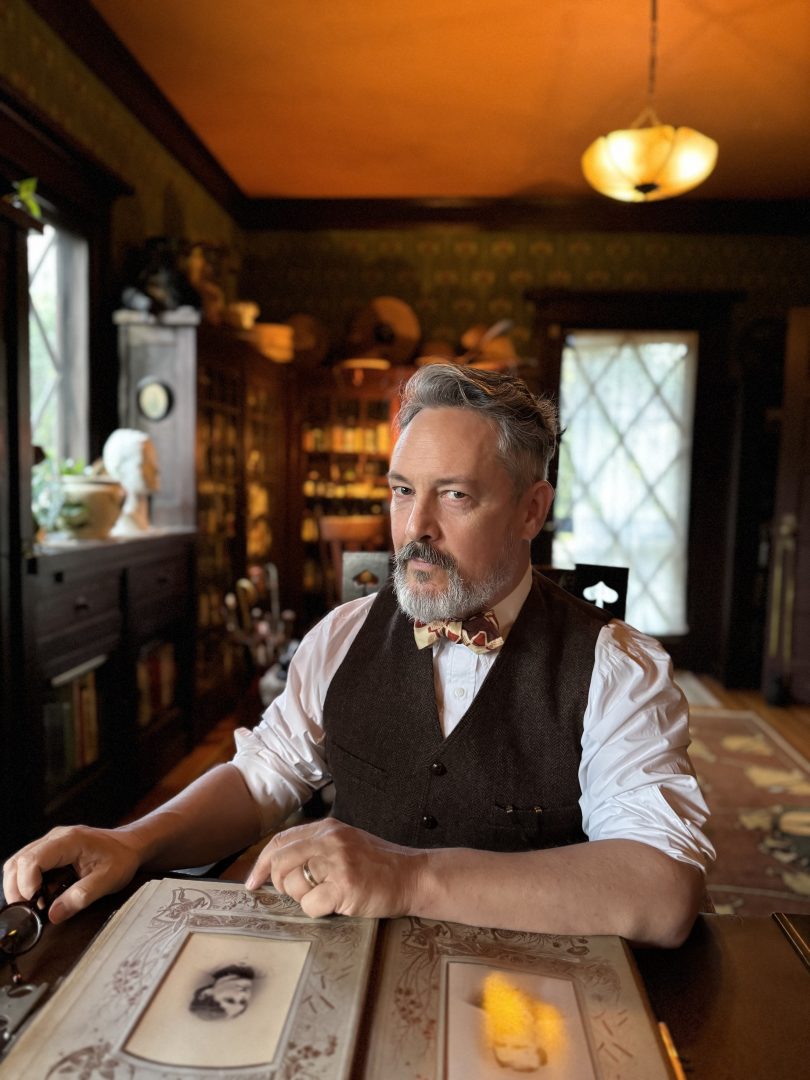
L.A. historian Nathan Marsak / Photo courtesy of Angel City Press

And reading those books became the impetus to discover the architectural history of his adopted home.

“I loved Hylen’s Freeways book, and used to drive around with it on my lap like a Thomas Guide of phantom Los Angeles,” said Marsak. “And because so few copies existed – Dawson’s Book Shop only printed 600 of them in 1981 – I made it my mission to reprint it.”

“But for all of Hylen’s groundbreaking research, as included in his indispensable essay, there were unanswered questions,” continued Marsak. “I wanted to flesh out the buildings with the addition of their architects and construction dates. Naturally, as well, I wanted the images to be larger, and clearer, and that would require being in possession of the original negatives, which I finally managed to purchase in 2016. Each negative strip had three images, so sometimes there were alternate angles or shots of something not in the book. I was thrilled to be able to include some of those never-before-seen captures.”
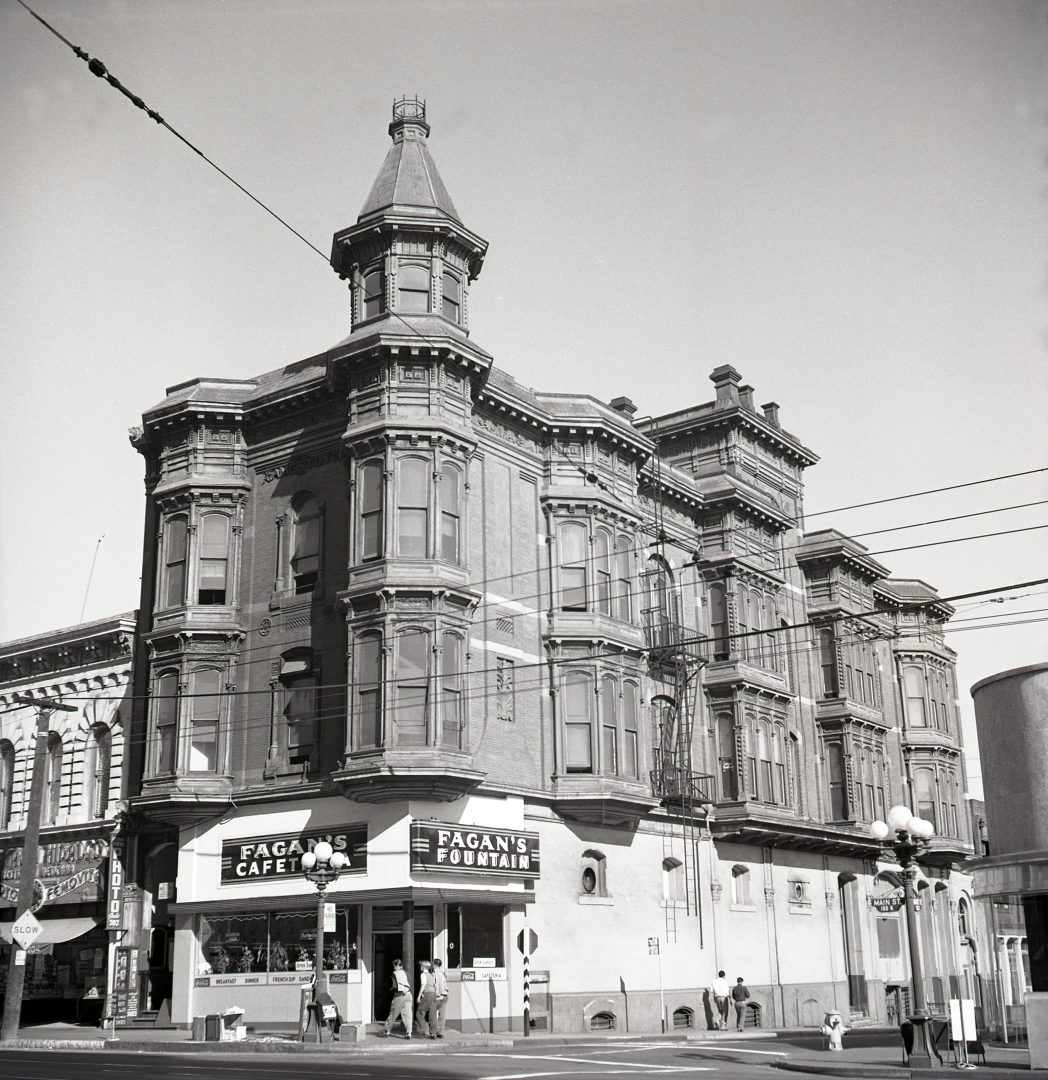
Amestoy Block on Main and Market | Photo by Arnold Hylen / Courtesy of Angel City Press

The original version of Hylen’s book contained 116 photos and the expanded new edition of “Los Angeles Before the Freeways” has 143 images. Hylen began taking photographs downtown about 1950. The majority of his output occurred between 1955-1960, but there are images in the new book that date to as late as 1979, according to Marsak. 

“This is not a book about buildings that were only lost to freeways,” Marsak clarified. “It also includes some structures that were demolished when the Hollywood Freeway made its easterly path through Fort Moore hill, and of course there are some images of the Harbor Freeway as it was constructed west of Bunker Hill. But most of the structures contained herein were lost to parking lots, or the expansion of the Civic Center. An accurate number for how many structures were razed because of freeway construction would be difficult to gauge, but a safe bet is about 1,000.”

The road to getting the book republished was long. Marsak related, “I established contact with Hylen’s family about 2006, and by the time I acquired rights and negatives, in 2016, I was already working on my Bunker Hill book for Angel City Press, so ‘Freeways’ took a back burner. I began writing the captions and scanning the ‘Freeways’ negatives in early 2022, which was about two years of work before I handed Angel City Press a completed manuscript in 2024.” 

Marsak added, “I hope readers take away that there were first-rate domestic and commercial structures by top-flight architects in the 19th century. Naturally, the fact that the majority of the structures featured have been wiped away, I also hope causes readers to become active with preservation in their communities.”
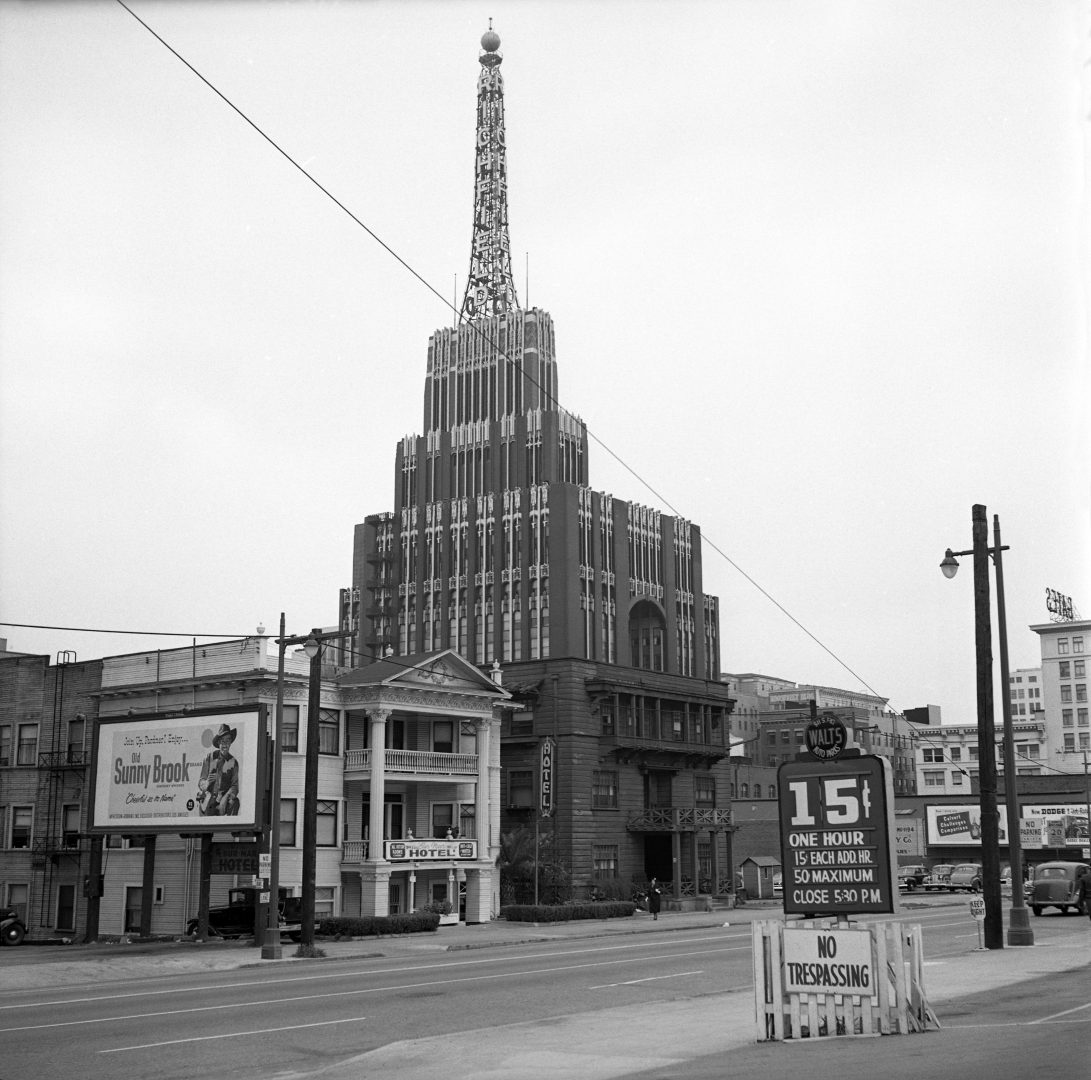
Through this book, Marsak would also like us to have a better appreciation for the city.

“There’s more to Victorian L.A. than just the Queen Anne houses on Carroll Avenue or at Heritage Square – which are great, don’t get me wrong! – but we once had an incredible collection of Romanesque Revival, Italianate, and other styles blanketing the city in general, downtown in particular,” emphasized Marsak.

Unfortunately, these magnificent edifices didn’t survive the wrecking ball and – but for the images in the book – no trace of their past existence remains.   

“Very few people in postwar America were interested in architectural salvage from Victorian buildings,” Marsak lamented. “The Magic Castle, though, utilized parts of structures for its fanciful interior. And of course, most famously, two houses from Bunker Hill were moved to Montecito Heights as the first structures in the Heritage Square project. But they were sadly burned to the ground not long after their relocation.”

It’s a disgrace that the inspired works of eminent architects had to be sacrificed in the service of building something as pedestrian as a parking lot. Fortunately, we’re now repurposing the ruins of significant structures. Many interior decorators and designers are sourcing demolished materials to integrate into new construction to imbue character and a distinctive look. It’s one way to ensure that torn down buildings are given a second life
Dr. Robert W. Winter: ‘Father of Historic Preservation’ Memorialized with a Permanent Tribute

Originally published on 13 November 2019 in the Pasadena Independent, Arcadia Weekly, and Monrovia Weekly

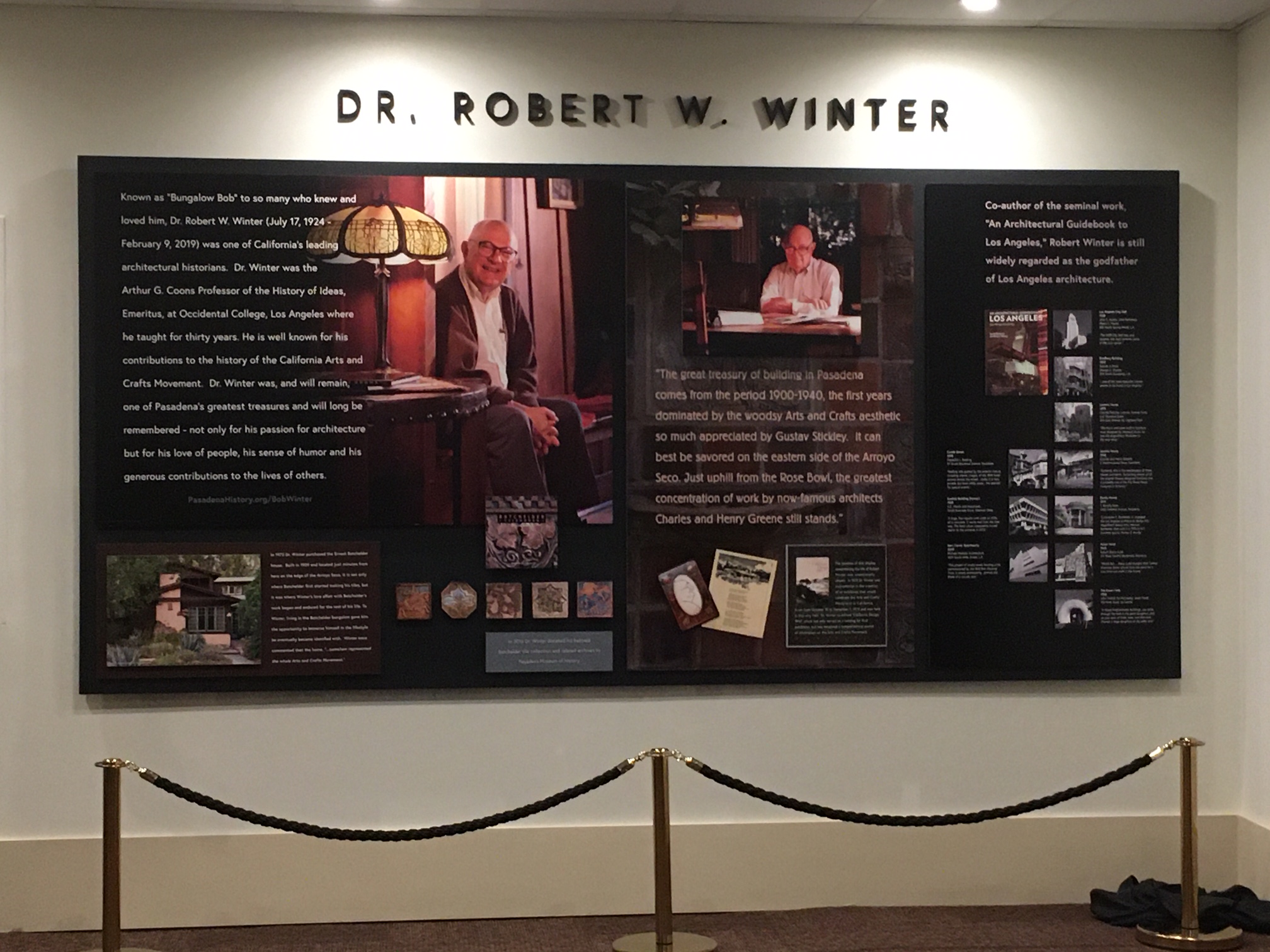
The Dr. Robert W. Winter Tribute at the Exhibition Hall of the Pasadena Convention Center | Photo by May S. Ruiz / Beacon Media News

Dr. Robert Winter, who passed away in February this year, was an inspiration to preservationists and architect buffs for over 50 years. He was hailed as the ‘Father of historic preservation in Pasadena.’ It was his campaign to effect an ordinance to establish a cultural heritage commission that eventually created the Pasadena Heritage. He was an influencer long before the term entered the pop culture lexicon.

To recognize his significant contributions to the Arts & Crafts movement on the West Coast, Pasadena Heritage’s Craftsman Weekend 2019 held on November 1 to 3 incorporated the inaugural Dr. Robert Winter Memorial Lecture and the unveiling of a permanent tribute commissioned by Pasadena Center Operating Company (PCOC) at the exhibition hall of the Pasadena Convention Center.

Directors of the Blinn Foundation, The Gamble House, and the Pasadena Museum of History – the organizations which partnered with the Pasadena Heritage for the event – spoke of Dr. Winter’s connections to their associations.

Author and historian Ann Scheid, who heads the Greene & Greene Archives at The Huntington Library and has co-authored a book about The Gamble House with Dr. Winter, was the first lecturer. She gave a short biography that covered his life and career, his passion for Craftsman homes as well as for martinis. She reminisced about his penchant for performing – whether when taking his Occidental College students on bus tours of architectural landmarks or when giving talks about the history of the Arts & Crafts movement on the West Coast. Her stories brought back happy memories for the audience who had been invited because they had close ties with him. Her lecture ended with a short video of Dr. Winter singing con brio the chorus to a song called ‘In the Land of the Bungalow.’

Patty Judy, Education Director of the Pasadena Heritage, explains, “It’s an old song written in the 1920s. As far as I know, Bob discovered it in his endless research of the Craftsman era and was just delighted with it, learned it, and often performed it just for fun – in classrooms, at lectures, and to close all kinds of presentations when he was asked to speak. As Ann said, he loved being a ‘performer.’ I think the song became tied to him because he sang it so often and so many who heard him speak over the years remember it.”

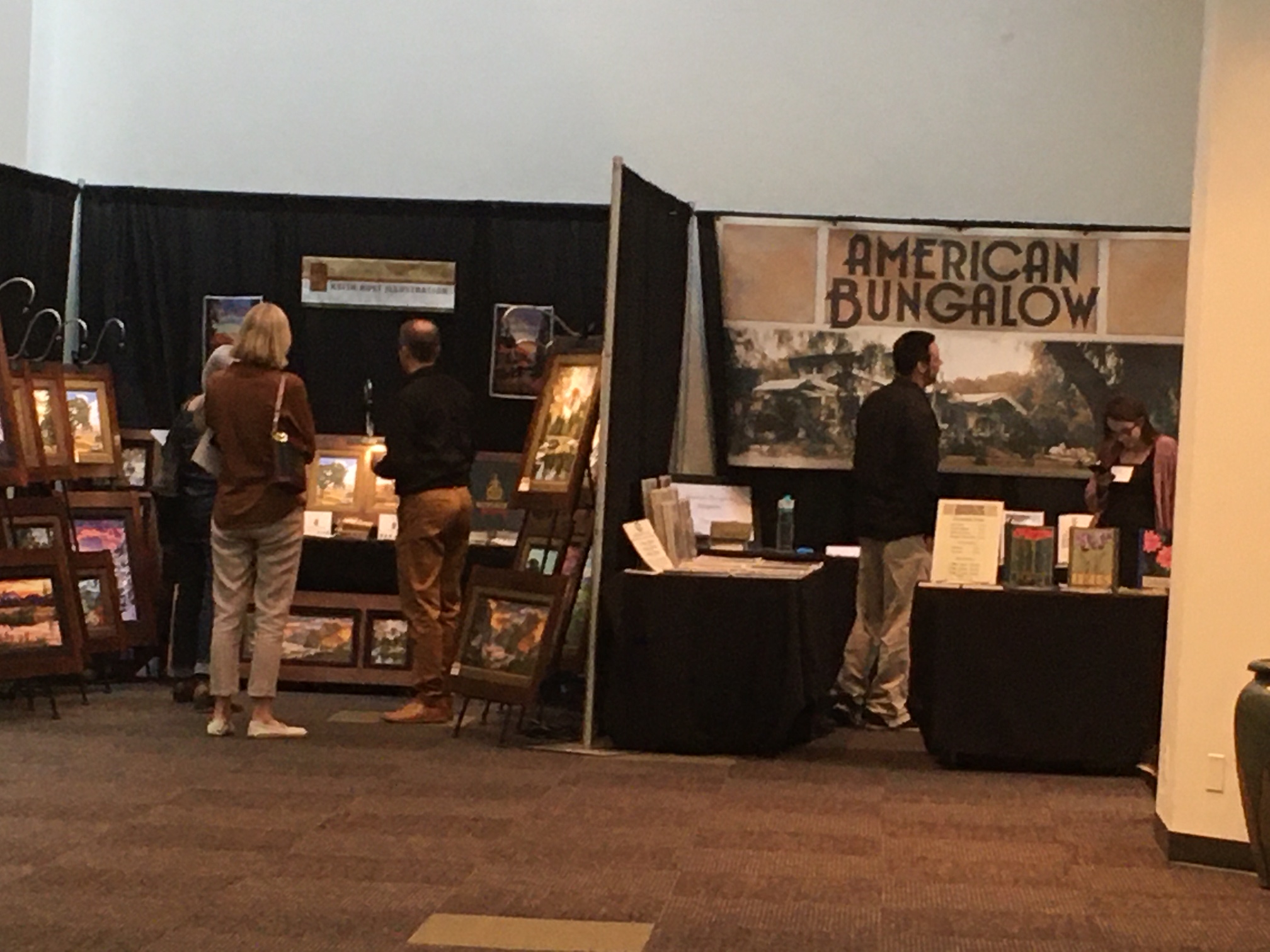
Participants in the Craftsman Weekend 2019 Show | Photo by May S. Ruiz / Beacon Media News

An open reception followed the lecture at the other side of the hall where people milled about and chatted as they enjoyed the drinks and finger foods. Then Dianne Philibosian, former chair of PCOC, alongside her husband Tom Seifert, asked all the guests to assemble for the unveiling of a special permanent display.

Says Judy, “Tom was a dear, close friend of Bob’s. He and Dianne were nearby neighbors who regularly checked in on him and helped out in recent years. The two of them spearheaded the effort to come up with a proper Pasadena tribute to Bob and we worked with them to create this event combining our lecture and the tribute unveiling.”

Philibosian discloses the reasoning for the choice of venue, “I thought the historic exhibition hall would be a really appropriate place to put up a lasting memorial. And in consultation with others, including PCOC Board members, city council members, Pasadena Heritage, and other friends and colleagues of Dr. Winter, we all agreed it was a most fitting location.”

The Pasadena Convention Center’s Exhibition Hall is indeed the perfect venue to house the tribute. It was here that ‘California Design 1910,’ an important exhibition of Arts & Crafts work, was held from October 15 to December 1, 1974. According to a news article published in the Pasadena Star-News on February 27, 2011, ‘California Design 1910’ was organized by Eudorah Moore and California Design, a spin-off from the Pasadena Art Museum. In the exhibition catalog, Moore wrote an introductory essay on ‘California and the Arts and Crafts Ideal’ and Dr. Winter followed with an extensive essay on ‘The Arroyo Culture.’ The author noted that the exhibition catalog is a veritable textbook on the Arts & Crafts peak period between about 1895 and World War I.

It took a village to create what Philibosian and Seifert envisioned. And during the unveiling, Philibosian acknowledged the Pasadena Heritage, the Gamble House, Pasadena Museum of History, and the Blinn House Foundation. She gave special thanks to Dale Brown of Onyx Architects, and graphic designer Scott Garland.

“When Dale Brown of Onyx Architects was asked to produce a tribute to Dr. Robert Winter he assigned Scott Garland, a local graphic designer who was born and raised in Pasadena and a graduate of Art Center College of Design,” Philibosian expounded. “As fate would have it, for 23 years Scott and his wife Karen lived in the 1911 historic landmark bungalow which would become the first historic district of Monrovia. During that time, their home was featured in the American Bungalow magazine and photographed by Alex Vertikoff. Scott even had his own copy of American Bungalow Style co-authored by Dr. Winter and Alex Vertikoff. Not only did Scott’s familiarity with the Arts and Crafts Movement influence his design decision but this project could not have been completed without the cooperation of many who graciously gave their time to be interviewed for this very piece behind us. Their insights and memories of ‘Bungalow Bob’ all contributed to what we hope will be a lasting and fitting tribute to this remarkable man.”

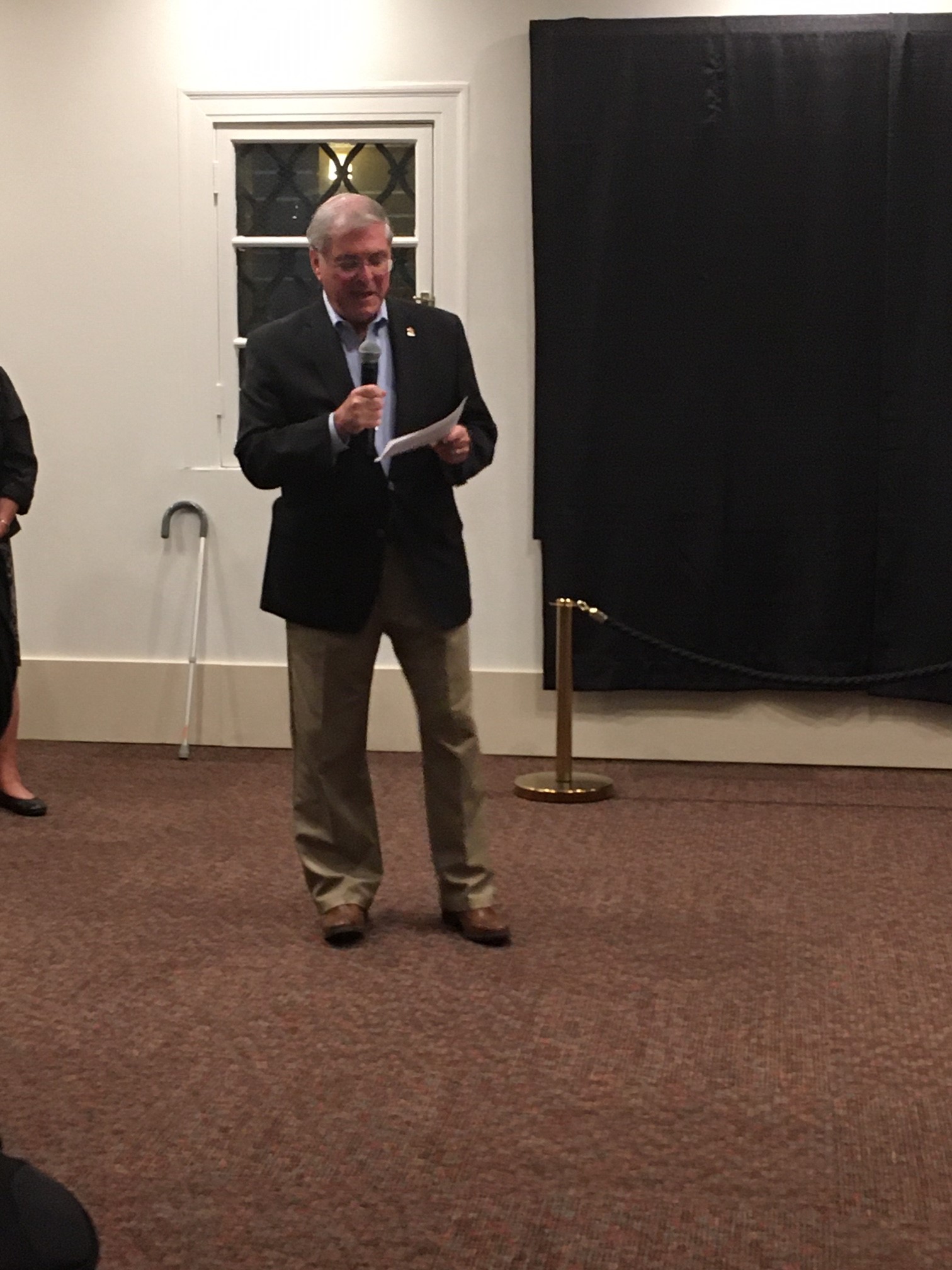
Mayor Tornek speaks of Dr. Winter’s significant contributions | Photo by May S. Ruiz / Beacon Media News

Pasadena elected officials, led by Mayor Terry Tornek, were on hand to celebrate the occasion. Mayor Tornek, whom Philibosian introduced as someone who greatly appreciates and promotes art and aesthetics of historic preservation in the city of Pasadena, gave his remarks.

“I’m delighted to see so many people turn out for this – this is really a great event for us (I have notes because Bob would expect no less). Dr. Robert Winter, as you heard in Ann’s wonderful speech, was a Pasadenan of national renown. And if we had a tradition of naming people as historic treasures, I think he would have been among the first to be identified. He was an inspiration, a writer, a mentor, a teacher, an instigator, and he was a dedicated proponent of good architecture and its effects on the community. He was both expert and charming which, I think, helps a lot in promoting a cause.

“We were so fortunate that his primary community was indeed Pasadena. An architectural historian, well-known author, professor of ideas (great title that was) at Occidental for many years, Dr. Winter taught generations how to look at and appreciate historic buildings and places throughout Los Angeles and across the country. In terms of his local impact, Bob was among the first to proclaim that the city of Pasadena needed a historic preservation ordinance to confer landmark status on key buildings, identify critical properties and, most of all, to protect them. He, along with his close friend, L.A. Times columnist Miv Schaaf, who lived around the corner, drafted our city’s cultural heritage ordinance and he served on the board of the first cultural heritage commission. Later he rejoined the commission and served again.

“He also called for an uprising of local residents to champion and support that ordinance and the work of the commission as well as the general cause of historic preservation in the city. And that, in fact, gave rise to the formation of Pasadena Heritage and its mission which has been so effective down through the years and, ultimately, led to my arrival as planning director for the city of Pasadena. I’m afraid that ‘Bungalow Bob’ was responsible for me being here as well.

“So I’m so pleased that the PCOC, with the encouragement of Dianne Philibosian, has taken the time to create this wonderful lasting tribute to Dr. Robert Winter and make it a place where lots of people will come and see it for years to come. We treasure our history in Pasadena – it means a lot to us and it’s responsible in many ways for the kind of community we are. People like ‘Bungalow Bob’ really are the key contributors to making that happen. It’s not just about the buildings, which are important, but it’s really about the sense of community that we’ve developed in Pasadena. So I’m grateful to Bob, I’m grateful to those of you who invested in spending time to remember him and to memorialize him, and I hope that going forward we can be worthy of the causes he championed but also be as good-humored about it as he was.”

Karen Winters Fine Art display booth at Craftsman Weekend 2019 | Photo by May S. Ruiz / Beacon Media News

After the tribute was unveiled, everyone raised their champagne glass (not martini, which would have been his preference) to toast Dr. Robert W. Winter, Ph.D.

Seifert declared, “We thank you for your scholarship, your humor, your multiple contributions to so many fields of endeavor. May this wall commemorate your extraordinary legacy to the city of Pasadena.”

Then Philibosian recited Dr. Winter’s trademark song, “And all those who gaze upon it in the land of the bungalow, away from the ice and snow, away from the cold to the land of gold, out where the poppies grow, to the land of the setting sun and the home of the orange blossom, to the land of fruit and honey.” And Seifert ended it with, “In this land of your bungalow to Robert Winter Ph.D.”

Her emceeing duties finished, Philibosian returned to her table to chat with colleagues and other friends of the late Dr. Winter. She capped the evening with a wish, “We’re hoping this will be called the Robert Winter Historic Exhibition Hall – that as things evolve and progress, people will start calling it that.”

Let this mark the start of the fulfillment of that wish.

Local Interior Designer Makes Gorgeous Living Spaces

Originally published on 13 August 2019 in the Pasadena Independent, Arcadia Weekly, and Monrovia Weekly

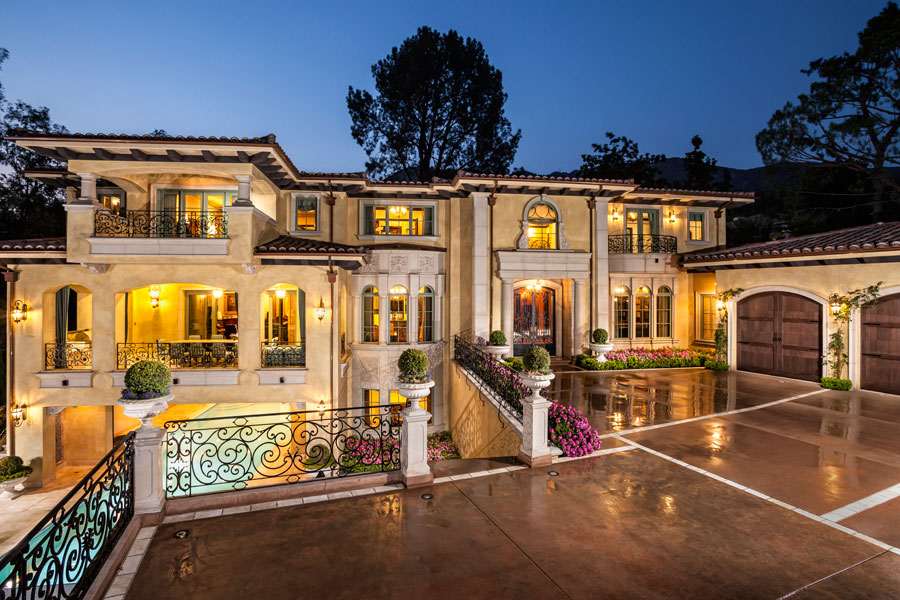
Jake Galang did the interior and some exterior design on this magnificent Pasadena house | Courtesy photo / Ilustracion by Jake

Owning a house and making it a home is something most of us aspire to. We take great pains to make our abode a place where we can live comfortably and take pride in; where we can hold get-togethers or dinners with colleagues; where our children can invite their friends for playdates and sleepovers.

Jake Galang has made it her mission to help homeowners achieve that goal. The principal for her eponymous company, Ilustracion by Jake, she designs living spaces that are as efficient as they are magnificent. A transplant from the Philippines, she established her firm in 2006 after working in Singapore and afterwards for interior designers in Pasadena. She has since built an excellent reputation among developers in the San Gabriel Valley, with whom she collaborates on projects from the ground up. You probably have driven around town and seen several of the houses she has worked on.

Catching up with Galang on a recent morning, I inquire how she got her name (Jake!), how she got into the business, and what her favorite projects are.

Galang at a job walk in Hong Kong | Courtesy Photo / Ilustracion by Jake

“My birth name is actually Catherine,” Galang discloses. “At first I thought my Dad nicknamed me, but I later found out it was all my Mom’s doing. She was a big fan of John Wayne, who was in a movie called ‘Big Jake.’ The name stuck with her and it was what she decided to call me.”

When I protest that the moniker conjures an image of a robust man while she is a soft-spoken, petite woman, Galang replies gleefully, “But that’s the best part of it – it’s very deceiving! Contractors remember me because it’s an easy name, there are only four letters.”

Asked what steered her towards this career, Galang responds, “Architecture and interior design are in my genes. My grandfather was one of the pioneering architects in Manila and he did his drawings on linen. He passed away when I was very young, but I distinctly remember unrolling one of his illustrations which featured capiz (the outer shell of the marine mollusk found in the shallow coastal waters of the Philippines) windows and Spanish balustrades.

“However, my mother was my biggest artistic influence. She was very creative and was an interior designer back in Manila. I grew up seeing her work on projects and, once in a while, I would assist her on installations. Additionally, she fabricated the drapery – designing and sewing – she used on her jobs. At that time, window treatments were traditional period drapery, like the swags that are used in the White House, and I would help her hem.”

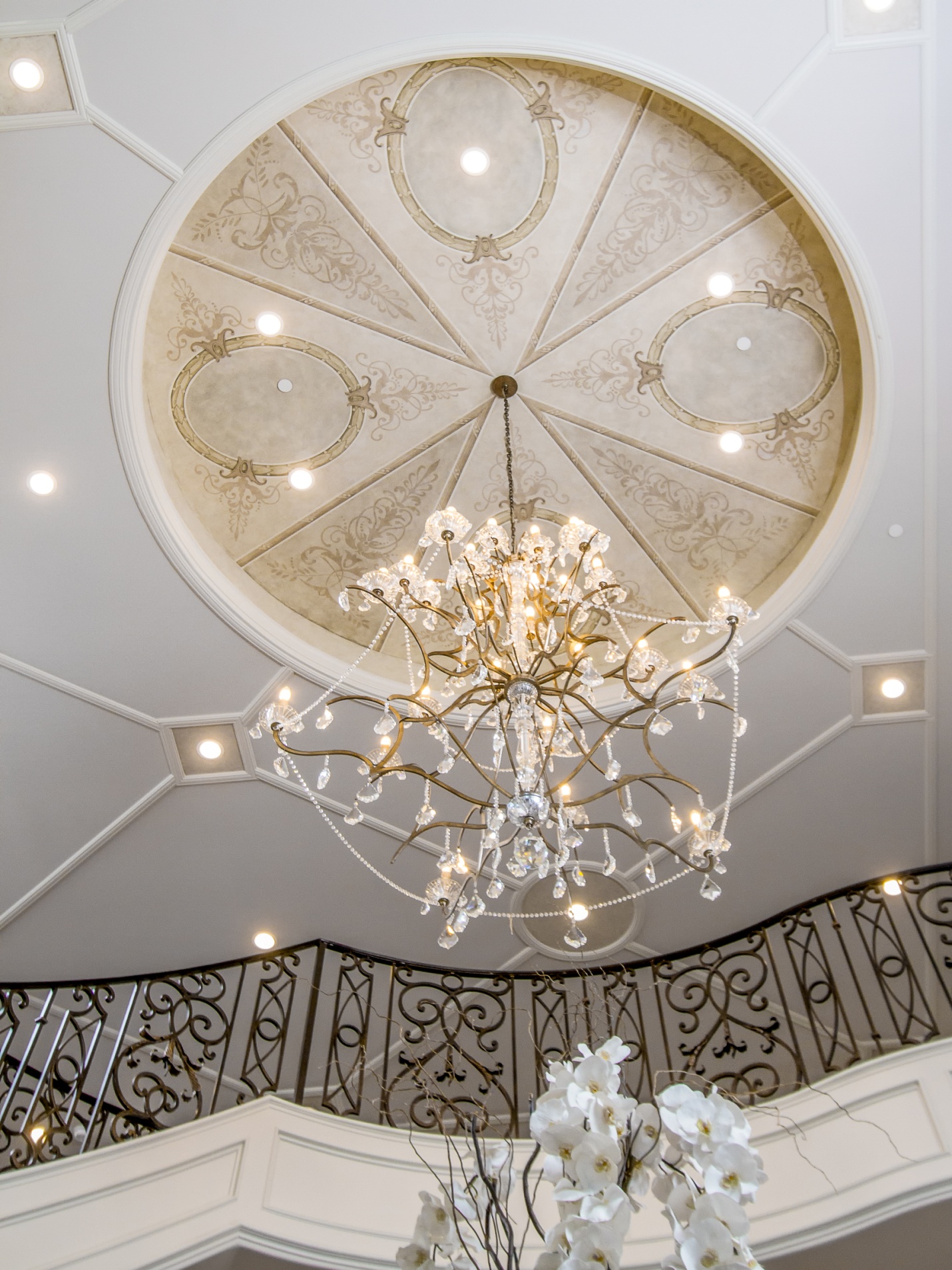
Lighting selection by Galang | Courtesy Photo / Ilustracion by Jake

Galang continues, “I also found product branding and lay-out designing quite fascinating, so when I attended College of the Holy Spirit, I took Advertising as my major. My mother thought there wasn’t much financial stability in that field, though, and convinced me to pursue interior design instead. So I switched majors and consequently earned a BFA in Interior Design.

“After graduation, I worked for an office systems company in Manila which provided furniture for multinationals like Chase Manhattan, Bank of America, Del Monte, etc. I was lucky enough to be sent to Hong Kong and Singapore for seminars. That was when I started traveling. I did some work for Steelcase and Knoll in Hong Kong; after that I went to Brunei to set up a Scandinavian furniture showroom.

“Several friends, who were then employed in Singapore, told me that Singapore was booming and designers were in demand. I thought that would be a good career opportunity and was blessed to be petitioned by an interior design company. I moved to Singapore and worked for Bosgroup International from 1993 to 1998. I designed furniture for Omnia, the supplier for the famous Raffles Hotel; created high-end residential interior design under I&T Interiors; and worked with designer CKT Thomas on public spaces, including Tan Tock Seng Hospital and numerous children’s libraries. Singapore is a multi-cultural, fast-paced country and I learned a lot there. That experience prepared me for what was to come.

“My work took me to the United States where I saw the business was also flourishing, so I decided to stay. I worked as a draftsman at JF Interiors in Pasadena and our projects were mostly renovation and design of old homes in San Marino. We were involved with the Pasadena Showcase House of Design. I remained for ten years and the owner and principal designer of the firm, Janie Fain, became my mentor.”

In 2006, Galang bravely took the leap to establish her own design firm and has kept busy with projects, 90% of which are residential and 10% are commercial. Besides her work being featured in Luxe magazine, Galang doesn’t do any marketing. Clients hear about her by word of mouth and they go on her website.

Adds Galang, “I work closely with Mur-Sol Construction, one of the premier residential builders in Arcadia – designing cabinetry and lighting, and picking plumbing fixtures, stone, and tile for their various developments. I love to work on the interior structure of the house as well. I sketch or draw in CAD, give it to the builder, and inspect if the finished work is done correctly based on my specs.”

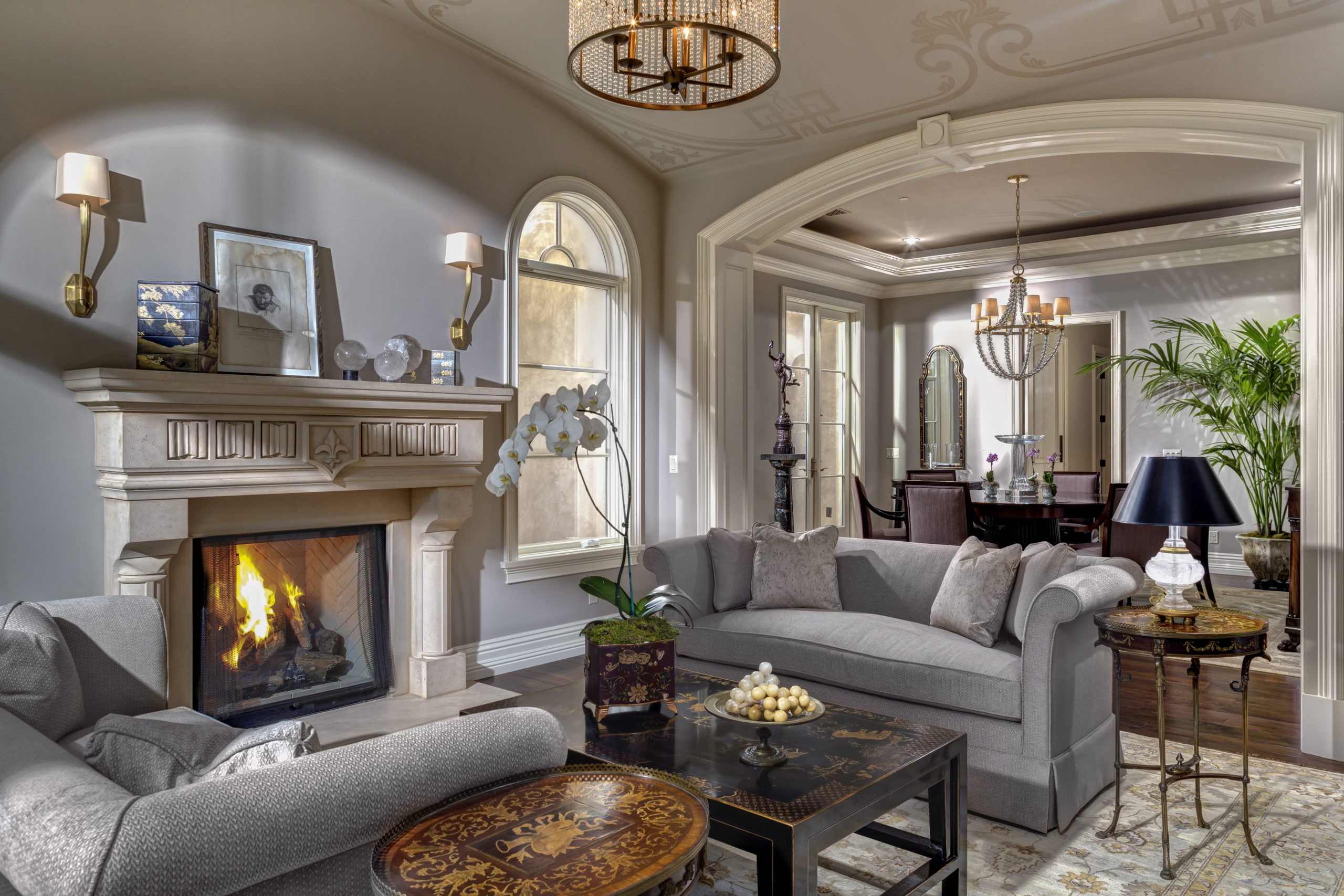
Comfortable seating defines this living room | Courtesy Photo / Ilustracion by Kake

Galang isn’t inclined towards any particular style or period. “I get the inspiration for the interior from the architecture of the house,” she says. “I also talk with the homeowners to find out how they live, what they gravitate to, what they need, and what’s important to them. There will always be clients who buy a contemporary style house then want to have a French look inside. The biggest challenge for an interior designer is when homeowners want to combine two aesthetics that aren’t compatible. In that case, I would persuade them to consider a more streamlined look instead of French moldings and panels in the living room, or fish-shaped faucets in the bathrooms. I think that’s the most difficult part of this job – trying to steer clients from making choices that don’t make design sense and still make them happy.

“One of the things I learned in this business is compromise. You realize that just because you think you have this great creative idea, everybody will agree with your vision. There’s a  Confucian saying, ‘How will you learn when your cup is so full,’ there’s no room so it will overflow. When I was younger I thought I knew everything, especially when designing interiors, because I was educated for it. But now that I’m older, I realize that there’s still much out there I don’t know. I’ve learned to be more receptive to other people’s opinions and perspectives.”

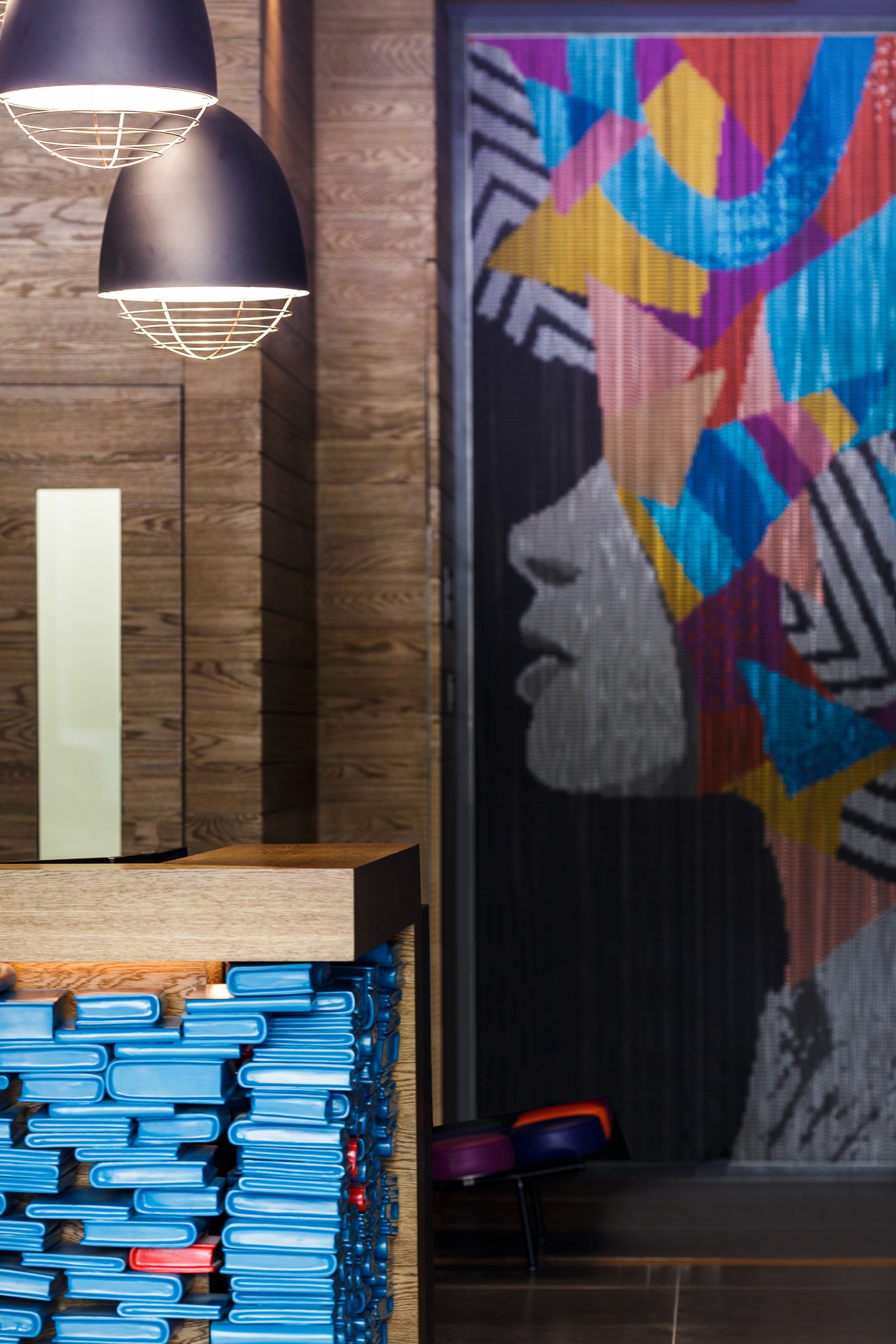
The mural for the Khora lobby was printed on chains from Spain | Courtesy Photo / Ilustracion by Jake

Two recent projects Galang completed were commercial jobs in Hong Kong. She explains, “They asked me to design the flagship office for their skin care company in Hong Kong. We used local workers there, but I drew everything here and specified the look for the place. Another one is a creative building. It is a very modern sleek structure so I designed something that looks industrial. For its main lobby, I found a mural made by an artist from Vancouver which I thought would look great in it. I asked her permission to use it and commissioned her, then I printed it on chains from Spain which I found during one of my travels with my family sourcing for materials for my projects. I also integrated my personality into it. Nowadays, with the Internet, everyone’s on their computer and people use Kindle when they want to read. But I still read books, so I put them in as part of the design to evoke knowledge. In fact, the mural itself suggests creativity. If you look closely at head of the person in the mural, you’ll see there are ideas coming out of her head.

“This is my favorite of all the projects I’ve done in my career, thus far. It was such a fun assignment for us! We’ve been doing the same traditional design over and over, so this one was a deviation. Hopefully, we’ll get more commercial work when people see it on my website.”

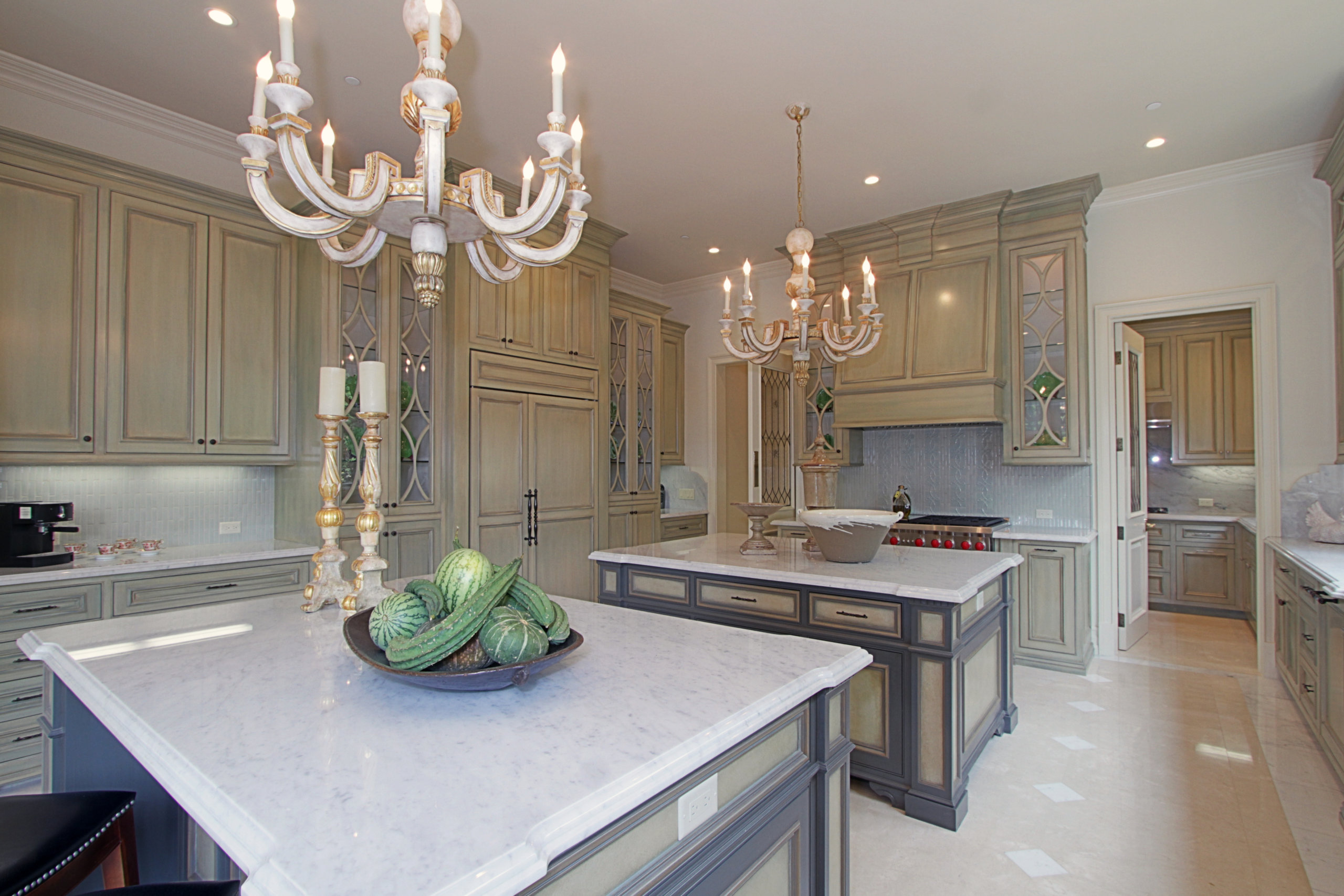
Galang designs for the way people live | Courtesy Photo / Ilustracion by Jake

Depending on the scale of the project, each one takes anywhere from three to four years to complete. Galang describes, “We just finished a residence at Bradbury which took three years. It has a game room made for entertainment – there’s a two-lane bowling alley and a golf simulator. Farther down, there’s a pool table and a wet bar, and then a wine cellar. The daughter has a playhouse within her bedroom and the son has custom bunk beds because he likes having sleepovers. That was actually a fun residential job, it had all the bells and whistles, and one could be really creative.”

Galang has a streamlined operation, “We’re a small outfit; besides me, I have three full-time assistants who are all architects – Desiree Panopio, Jila Mendoza, Aireen Dizon, and a part-time employee Jophi Elorta. They all love to travel and explore, like me. We sometimes are working on 15 projects in one year but, on average, we have ten to 12 residential jobs that overlap and range in size from 6,000 to 16,000 square feet.

“We, interior designers, are surrounded by so many grand things because of the clients we work with. I personally have a very casual and simple lifestyle. But I share that same way of life with some of my colleagues in the business. We get to design for the super-rich but, at the end of the day, we go back to our humble homes. And, as I’m sure many of us in this career do, I keep redecorating my house. I just couldn’t help it.”

Galang is an unassuming and tiny woman who creates mostly imposing living spaces. But at the heart of her design philosophy is the ultimate goal – to make the people who live in them feel they’re cocooned in a cozy and familiar place.