Dual Immersion Program at Alhambra Unified Schools

Originally published on 21 January 2016 in the Pasadena Independent, Arcadia Weekly, Monrovia Weekly, and Sierra Madre Weekly

There has been a sea change in the employment landscape in the past decade as evidenced by shifts in what’s available to people looking for work. Some positions that today’s youth would one day fill may not even exist yet, or may be located in foreign countries.

The Alhambra Unified School District has been actively finding opportunities for its student population to be ready for 21st century job requirements. This Fall, AUSD is rolling out its Dual Immersion Program to add to its slate of initiatives to make their students competitive in the global community.  

Leading this charge is Jim Schofield, Program Director. He says, “Dual immersion is critical because future jobs could be in other parts of the globe. More and more, we do business with other countries, and knowledge of the local language is essential. An employee who can speak, read, and write in the dialect is much more valuable to the company.” 

Schofield cites research to advance the case for dual immersion, “Although the majority of the world is bilingual, statistics show that only 17 percent of Americans speak another language; 56 percent of Europeans and 36 percent of Brits do. Being bilingual puts one on a higher tier in the American  job market.

“Health-wise,” continues Schofield, “it protects one against diseases like dementia and Alzheimer’s. A 2012 study conducted by the University of California, San Diego, revealed that of the 44 elderly participants who could speak both Spanish and English, those with higher proficiency in both languages were less likely to have early onset of either disease. While it doesn’t necessarily mean that being bilingual is the magic cure-for-all, it may help keep diseases at bay longer. Besides, it makes for a more enriching cultural experience; and being able to communicate is the best feeling in the world.”  

According to Dr. Gary Gonzales, Assistant superintendent for AUSD, the Dual Immersion plan started two and a half years ago as a collective effort by his division. He postulates, “We felt the AUSD is perfect for this initiative because of the diversity of our enrollment. Additionally, if we are to prepare students for participation in a global economy, bi- or tri-literacy is essential.”  

Based on AUSD’s research, students who are bi- and tri-lingual develop a high level of thinking, listening, speaking, reading, and writing proficiency in the targeted language and English beginning in transitional kindergarten through high school.

Dual immersion also inspires students to strive for academic excellence in all subject areas and meet or exceed California State Standards District assessment results. They also develop positive attitudes and appreciation for world languages and cultures, which promote their involvement in world issues.

And so, in March of last year, Schofield, who at the time was the principal at San Gabriel High School, was tapped to head the initiative. He went through a transition period and in July was fully on board. He and other AUSD administrators, instructional specialists, and teachers visited several schools with dual immersion programs to get ideas and to see for themselves how it’s working. 

Schofield remembers one particular school they went to in Venice and relates what they encountered. “We went there three months into the school year and the students were responding to their teacher in Mandarin. It was amazing how quickly they absorbed a new language! This is why we decided to start Dual Immersion in transitional kindergarten, when it is developmentally best to start introducing a different language.”    

AUSD chose Spanish and Mandarin because their research showed that 26 percent of California’s population speak Spanish, with two percent speaking Mandarin. Says Schofield, “While two percent doesn’t sound like a huge number, it is the second most-spoken language after Spanish. And the reality of the state of the economy is that so much business goes to China.  It’s safe to say that the U.S and China have a codependent relationship.”

The teaching method AUSD is adopting is a 90:10 and 50:50 model. The first number refers to the amount of instruction time initially spent for teaching in a partner language. The second number is the percentage of time for instruction in English. In a 90:10 model, the amount of time in the partner language decreases annually by ten percent until a 50:50 balance is achieved in the duration of the program.    

Schofield, describes AUSD’s model, “Each class will ideally comprise one-third English-speaking only students, one-third partner language learners, and one-third native speakers. The Spanish classes will be based on a 90:10 model – in kindergarten all the subjects will be taught in Spanish except for English Development, which is ten percent of the students’ day. As students move on to 1st grade, 80 percent of their subjects will be in Spanish with 20 percent of reading and writing development, and so on as they progress each year until they reach 50:50 in 5th grade.” 

Adds Schofield, “We are comfortable with having students learn using the 90:10 model because Spanish and English are both rooted in Latin and use Roman alphabet; there’s more transference with Spanish.”
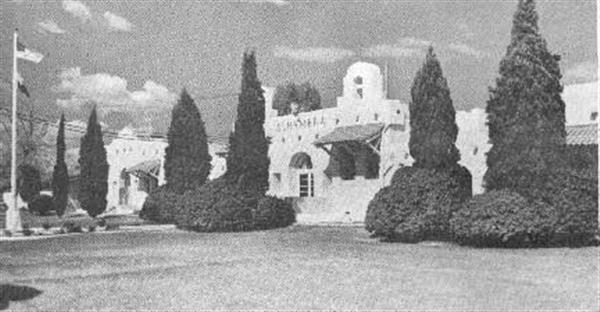
The first Alhambra elementary school | Image taken from AUSD website

The Mandarin model, will be 50:50 at the outset. Schofield explains the rationale for this,  “Mandarin is made up of characters which students have never seen or encountered. Students will have Chinese language development, math, science and culture taught in Mandarin; English language, math and social science instruction in English.

“We have also determined to start educating in traditional Mandarin then switch to the simplified version.  I presented our plan to district constituents, parents, and students who wholeheartedly embraced our thinking,” Schofield continues.

AUSD administrators are currently on the curriculum-building stage on their Dual Immersion initiative, deciding on instructional materials. Schofield says they will be holding site meetings with the initial group of parents who have shown interest in the program. “They will have a lot of knowledge and input. In March, we will have the first official parents meeting with those whose children have been accepted into the program.”

To ensure students receive a high-quality education, educators in the dual language program will receive the same training in state standards and strategies all AUSD teachers get. The district will also hire only teachers who are authorized to educate on the specific language.   

They are hoping there would be enough community demand for the program as the district is committed to see it go all the way through 12th grade.  

“It will take 14 years to get there and by then I might be retired. But it would have been a great honor to be asked to lay the foundation for this program. If successful, AUSD students who have participated in it would be better equipped to enter in the competitive global community. And that would be a very satisfactory and gratifying outcome indeed,” Schofield concludes.          

School District Highlight: Alhambra

Originally published on 17 September 2015 in the Pasadena Independent, Arcadia Weekly, Monrovia Weekly, and Sierra Madre Weekly

The city of Alhambra, about eight miles northeast of downtown Los Angeles, started out as a small residential town when it was first established in 1903. Today it has grown into a bustling community where businesses and residents amicably co-exist.

While Alhambra’s roots were largely Spanish, the 2014 U.S. Census figures show its population is about 53 percent Asian, 34 percent Hispanic or Latino, 10 percent white, 1.5 percent Black or African American, and a sprinkling of other ethnic groups.

The Alhambra Unified School District (AUSD) encompasses 13 elementary, three comprehensive secondary, and two alternative high schools servicing Alhambra, and adjacent Rosemead, Monterey Park and San Gabriel. It is a middle-size district with close to 18,000 students under the leadership of the superintendent, Dr. Laura Tellez-Gagliano.

An award-winning district, AUSD has earned numerous accolades as California Distinguished and Blue Ribbon Schools – in 1993; 2002 through 2008; in 2010 and 2014. From 2002 through 2013, several of the district’s schools received the Title I Academic Achievement Award (AAA). 

This year, U.S. News & World Report-America’s Best High Schools awarded all three AUSD high schools a Silver Medal. Newsweek’s America’s Top High Schools named San Gabriel High School #9, Mark Keppel #107 and Alhambra High School #165, in Beating the Odds.

AUSD has received five Golden Bell Awards from the California Board Association in 2005, 2006, 2008, 2010 and 2013. Its three high schools have also garnered an impressive array of achievements – they placed in the LA County Academic Decathlon annually beginning in 2008 through 2015. Alhambra High and Mark Keppel High Schools reached state level in 2009 and 2010; Mark Keppel got to state finals in 2013 and, in 2015, with Alhambra High as well. 

Programs in the school district address the needs of its students. According to Dr. Gary Gonzales, Assistant Superintendent, the Local Control and Accountability Plan (LCAP), a critical component of the Local Control Funding Formula (LCFF), designates Alhambra as having 72 percent unduplicated count in English learners, socio-economically disadvantaged, and foster youth. Because of this, the district is able to get a supplemental and concentration grant which enables administrators to develop programs, hire teachers and teacher assistants as well as non-certified certificated personnel in their various schools, to provide extra education.  Eligible students can take summer classes or extended school days. 

According to Brad Walsh, Director for Secondary Learning, AUSD offers four California Partnership Academies – International Business, Business and Technology, Medical Careers, and Green Construction. Students who take classes in any of these academies get real life experience as they practice what they learn in the classroom made possible through partnerships with the business community. Graduates not only receive a high school diploma, they leave school with higher employability skills.

Career and Technical Education courses provide not only classroom learning but practical skills for students who choose these paths – architecture/computer-aided drafting; automotive technology; business; computer applications; culinary arts; drafting; emergency medical responder; emergency medical technician; heating, ventilation and air conditioning (HVAC); health careers and medical terminology; restaurant; retail; and wood technology.   

AUSD is currently developing its Dual Immersion Initiative which it will implement in a pilot program in two elementary schools during the 2015-2016 school year. Mandarin and Spanish will be offered as early as kindergarten, preparing students for a global society and economy.

An open enrollment procedure for  Honors and Advanced Placement (AP) courses started during the 2007-2008 school year. According to Walsh, AUSD has a total of 122 AP classes offered at their three comprehensive secondary schools – Alhambra, Mark Keppel and San Gabriel High Schools.  An AP course in Human Geography is available as early as 9th grade.

A Special Education Collaboration Model from  8th grade through high school supports students with learning disabilities. Teachers and credentialed facilitators help these individuals keep up with class work and assist students in the classroom. Online education tools, like APEX and ACELLUS, are especially helpful for all students.

Partnerships with community colleges, including Cerritos, Citrus, Rio Hondo, Mount San Antonio and PCC give AUSD high school students an edge in college. Through classes offered on their high school campus, they earn credits towards an Associate or Bachelors degree.

All AUSD teachers have been involved in intensive professional development for three years to get their students up-to-speed on the Common Core curriculum. The recently-released results of the new standardized assessment put in place by state superintendent of Public Instruction, Tom Torlakson, indicated that all their hard work have paid off. The publicized numbers were met with jubilation at the Alhambra Unified School District as their assessment scores showed that they outpaced county and state levels.

Fifty-eight percent met or exceeded county and state levels in ELA (English Language arts).

Among Latinos, 43 percent met and exceeded county and state levels; 29 percent English learners exceeded county and state levels; and 53 percent socio-economically disadvantaged (SED) met or exceeded county and state levels.   

In the Math exams, 50 percent of AUSD students met or exceeded county and state levels. Among Latinos, 26 percent met or exceeded county and state levels; 35 percent English learners met or exceeded county and state levels; and 45 percent SED met or exceeded county and state levels. 

According to Gonzales, “This new standardized assessment is completely different from the tests given in the past. It wouldn’t be fair to compare the results with past scores; it’s not a pen and paper test, it’s all online. It’s more than a multiple choice exam where students can answer with some guesswork; it’s analytical.  It makes students go beyond the procedural; they utilize the conceptual part of learning. It forces them to be critical thinkers – a great way to prepare for college and careers.”

“College and career preparation at AUSD begins even at the elementary school level,” says Judy Huffaker, Nutrition & Career Technical Education Specialist at Alhambra High School.   According to Ms. Huffaker, AUSD college counselors invite 8th grade students to come to the high school they will be attending for a day-long event that introduces them to College and Career Readiness. They start 9th grade with the mindset that they will be going to college. High school freshmen get acquainted with an online process called Career Cruising.

On October 15 this year, approximately 3,000 senior students and parents will be on the San Gabriel High School campus for a College Fair. From 6:00 to 8:00 in the evening, they will meet with about 70 college representatives and attend workshops on planning for college, financial literacy, difference between the ACT and SAT exams.  

AUSD’s Career Center conducts college tours at local universities (UC, Cal State and other private institutions). Counselors hold workshops on resume writing, preparing the personal statement, and available scholarships; they provide assessment orientation and counseling.

Each school year, the approximately 1,800 AUSD seniors attend Cash for College events. With  68 percent socio-economically disadvantaged students in the district, all seniors complete the FAFSA, which may provide financial aid to qualified students.

The Alhambra school district has an impressive academic record.  In 2015, it produced nine National Merit semi-finalists; annually, 43 percent of seniors meet the A-G requirements.   Graduates from the three high schools  go on to some of the most prestigious universities in the country, including Harvard, Yale, Columbia, USC, Cal Berkeley, and Stanford.  Additionally, students attend many local colleges and universities like Cal Poly Pomona, Occidental, Azusa Pacific, Cal State Los Angeles, and Whittier College.

So while the recent state-administered exams showed there is still a gap in academic skills between AUSD’s Asian and Latino students, that divide is narrowing. Administrators are working feverishly to put in place action plans and services to close that learning difference.    

As Gonzales points out, “Each and every student in the Alhambra School District believes he or she will go to college.” Initiatives and programs are in place to ensure students harness their potential to realize that dream. Indeed they have much to look forward to and celebrate!