AbilityFirst’s Food and Wine Festival Marks 50th Anniversary in South Pasadena

Also published on 10 June 2024 on Hey SoCal
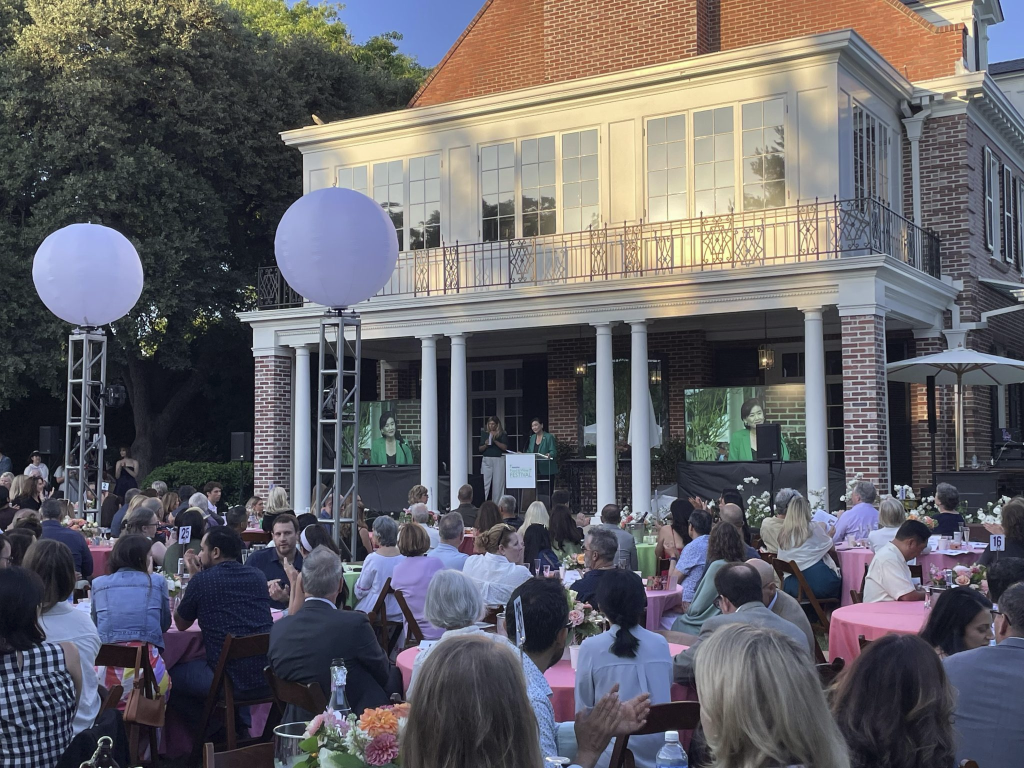
Congresswoman Judy Chu at the Food and Wine Festival | Photo by Brianna Chu/HeySoCal.com

AbilityFirst’s renowned Food and Wine Festival celebrated its 50th anniversary in grand style on Sunday, June 9 from 5 to 8 pm at the Urquhart residence in South Pasadena. Approximately 400 guests attended this milestone year and enjoyed the culinary and beverage offerings from more than 30 top restaurants, cocktail bars, wineries and breweries.

Some of this year’s participating restaurants and dessert shops were Agnes Restaurant & Cheesery, Alexander’s Steakhouse, Beard Papa’s, Bone Kettle, El Cholo Cafe, Gale’s Restaurant, Kensington Caterers, Lord Empanada, Marina, Mi Piace, Nothing Bundt Cake, Pocha LA, Porto’s Bakery, Stems: Cheese, Charcuterie & Catering, Tam O’Shanter, The George, and more.

Beverages featured cocktails and spirit tastings from 1886 at The Raymond, Dulce Vida Tequila, Empress 1908 Gin, Knox & Dobson, Old Hillside Bourbon Company, and We Olive & Wine Bar; craft beer from Golden Road Brewing, San Gabriel’s Ogopogo Brewing, along with specially curated Wines from Caymus Vineyards, Navarro Vineyards, and Riboli Family of San Antonio Winery. Nonalcoholic beverages were provided by Celsius and PepsiCo.
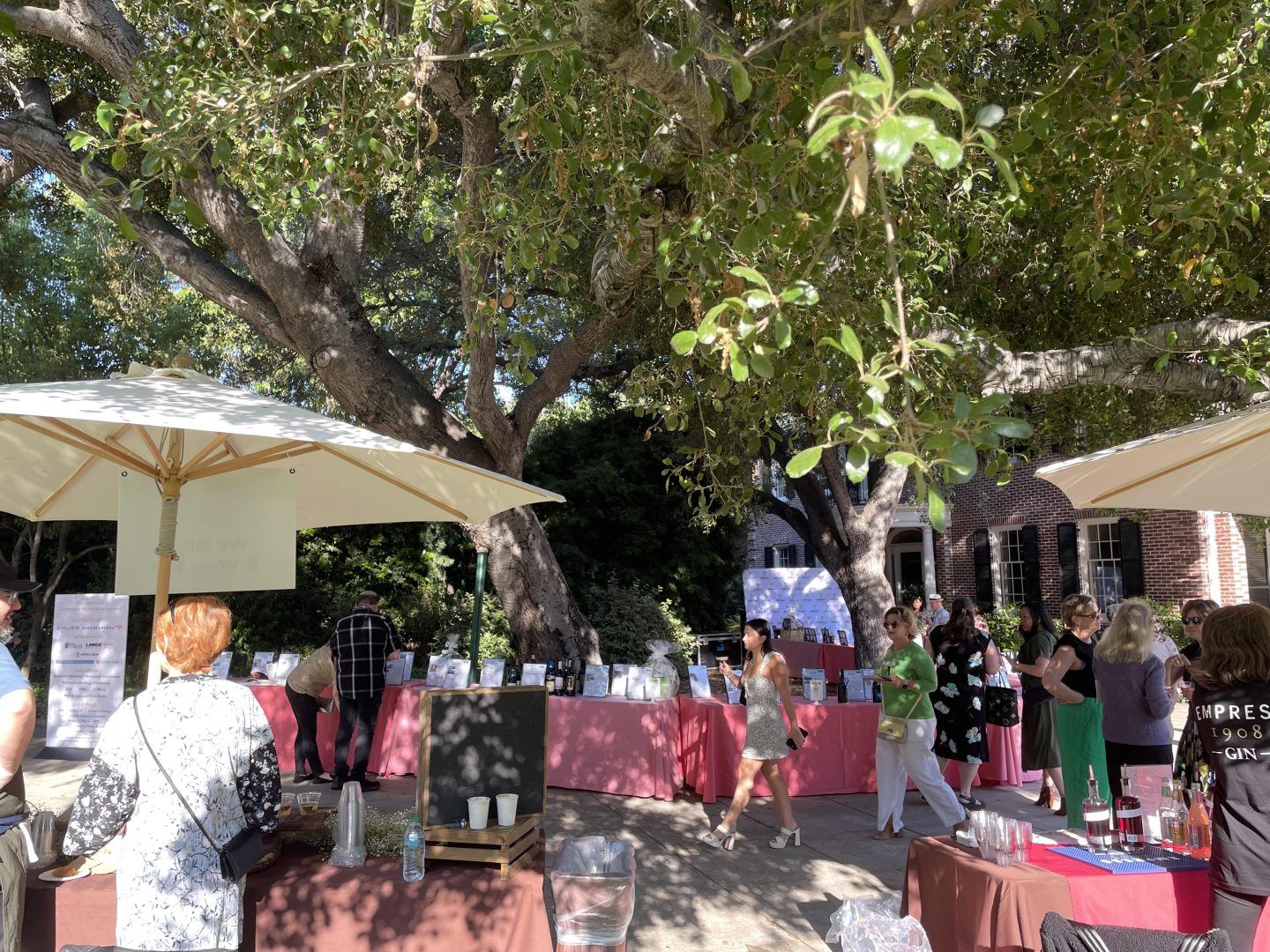
Attendees peruse auction items. | Photo by Brianna Chu/HeySoCal.com

According to Mary Urquhart, she got involved with AbilityFirst when she was the president of the San Marino chapter of the National Charity League and this is the third time that her family has hosted this outdoor event.

A few days before the Food and Wine Festival, Urquhart said, “We should be very proud that we have such a wonderful institution for 98 years in our community. It serves so many people with special needs and we’re lucky to have it … and hopefully many will support it this Sunday.”  

Indeed AbilityFirst has transformed the lives of children with special needs and their families. Established in 1926 as the Crippled Children’s Society of Southern California by members of the Los Angeles Rotary Club, it aimed to assist kids with polio.

In 2000, the organization adopted the name AbilityFirst to better reflect its broader mission of helping children and adults with physical and developmental disabilities reach their full potential by providing recreational and socialization programs, employment, accessible housing and camping.

Lawrence L. Frank, of Lawry’s Restaurants fame, was one of the original founders of the organization, and 52 years ago AbilityFirst opened the Lawrence L. Frank Center in Pasadena and Long Beach. From 2016 to 2017, the number of children and adults with developmental disabilities in these communities grew by 1,000 people, 66 percent of whom are between the ages of 6 and 51 years old — the target age for AbilityFirst’s programs.
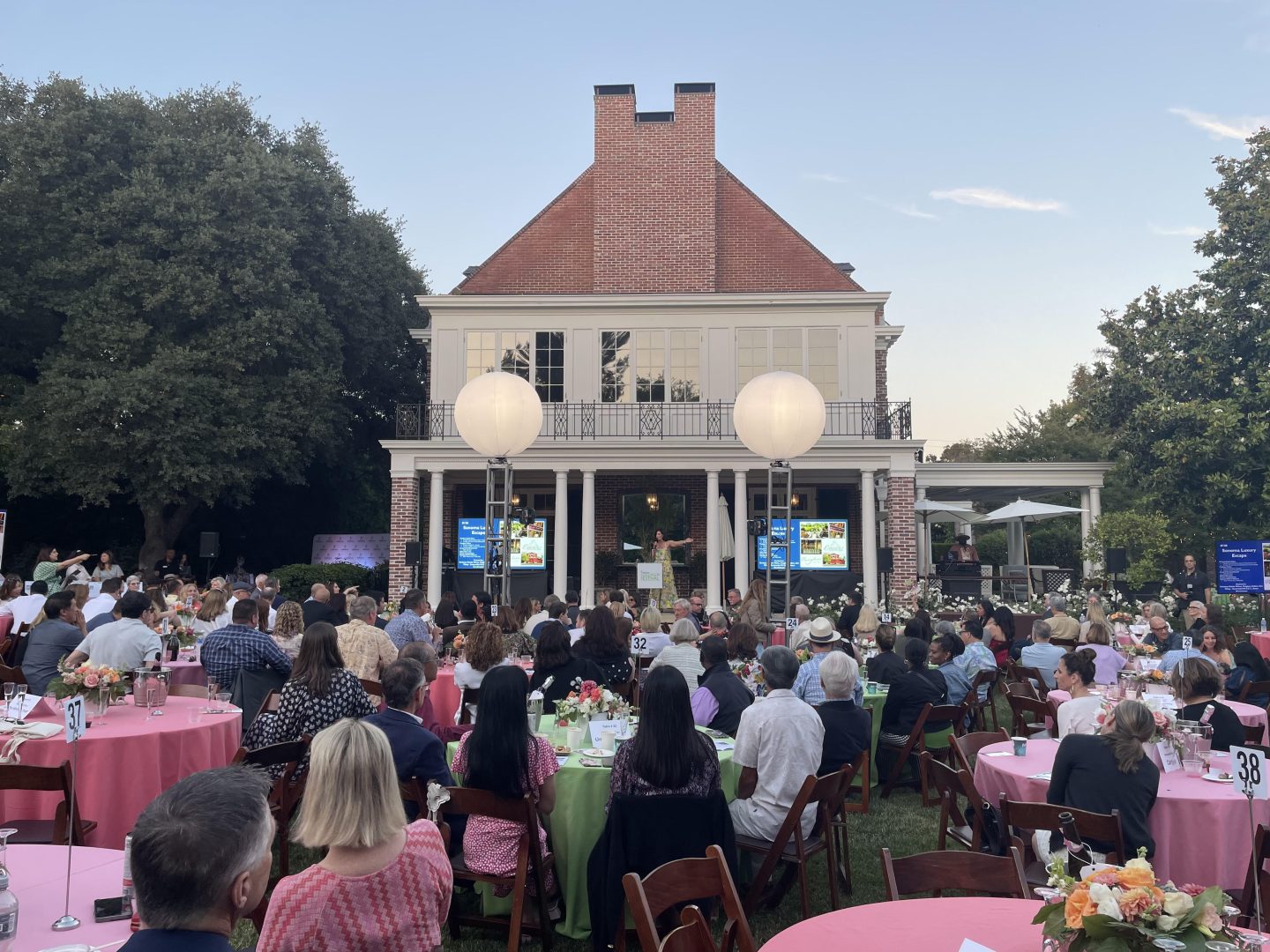
Food and Wine Festival auction | Photo by Brianna Chu/HeySoCal.com

Introduced a few years ago was College to Career, a community-based program for students who want to go to college and gain the skills, training and education they need to achieve their academic and career goals. Additionally, the program emphasizes independence and personal choice in using community resources for daily living and future employment.

This multi-year program begins with a self-discovery and community exploration component to help students to identify and develop a plan to achieve goals. Upon completion of the academic component, individuals may transition to community jobs, internships, or volunteer programs as they launch their career paths. The Lawrence L. Frank Center, AbilityFirst’s flagship location in Pasadena, houses the expanding College to Career program.      

AbilityFirst has six community centers offering several new adult  programs including ExploreAbility, DiscoverAbility and PossAbility. After school enrichment program includes homework support, outdoor activities, arts and crafts, cooking and more!”

ExploreAbility is an adult day and community integration program currently being offered at the AbilityFirst Joan and Harry A. Mier Center in Inglewood and the AbilityFirst Lawrence L. Frank Center in Pasadena. A licensed program, its objective is to identify what is important to each individual, to develop the skills necessary to achieve their goals and to be involved in their communities through volunteering and community activities. Individual support and small-group activities promote interaction and learning.

The program is designed to help individuals access their communities in their daily lives, work, recreational and leisure activities. It incorporates volunteering, community activities, independent living and skill-building, using a small group model.
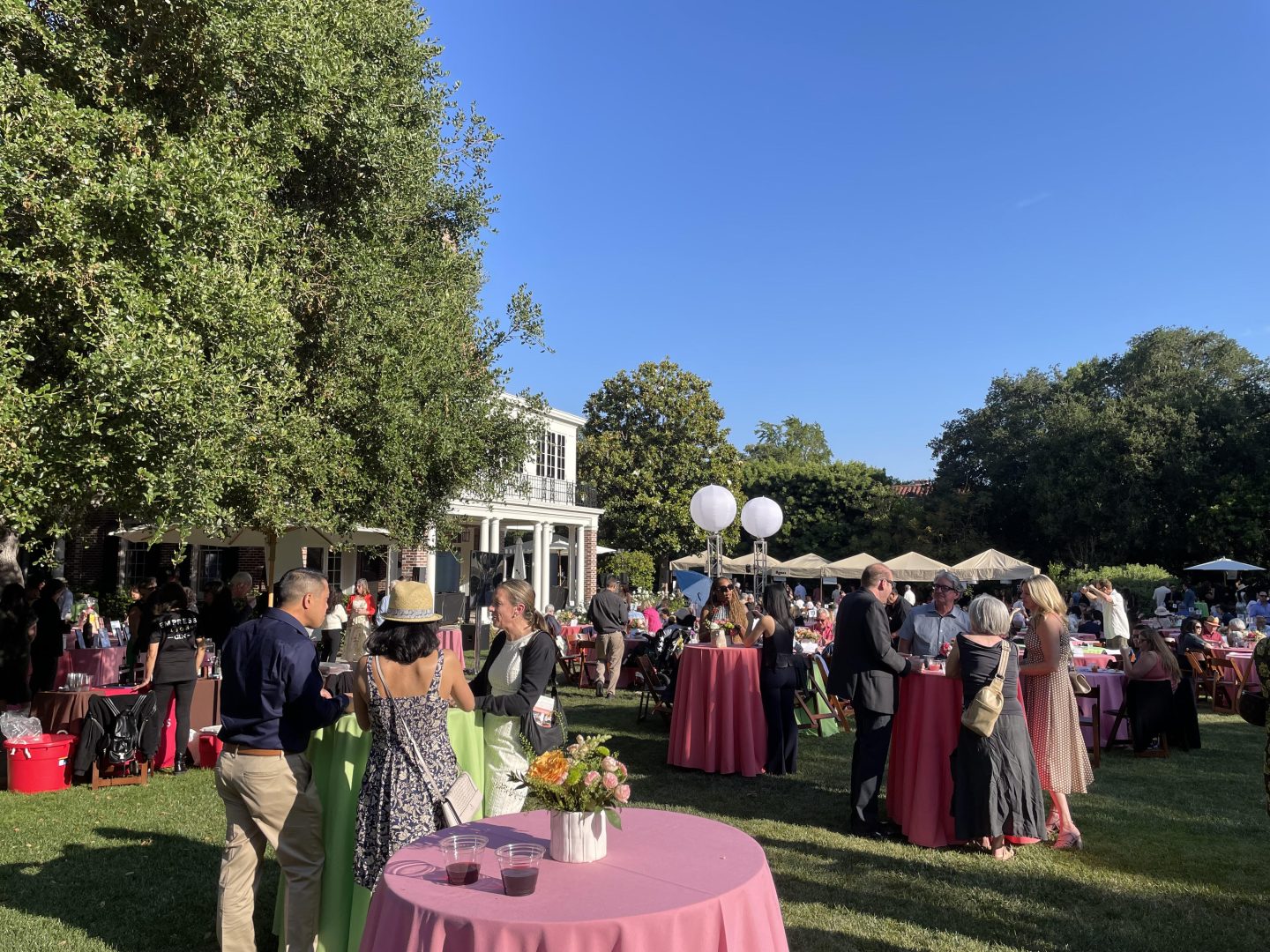
Guests chat, eat, and drink at the Food and Wine Festival | Photo by Brianna Chu/HeySoCal.com

PossAbility, offered in Pasadena and Los Angeles, is intended for adults who want to enhance their skills and independence, and to participate in their communities. Individuals in the program are empowered to set and pursue personal goals with an emphasis on employment readiness and increased community connections, including volunteering. 

Rounding out AbilityFirst’s programs is Camp Paivika, a Native American word meaning “Dawn,” in the San Bernardino Mountains. It was begun in 1946 by the Rotary Club as one of the first full-accessible camps in the United States and has been in active operation since. It is maintained through endowments from donors and fund-raising efforts by community members.

Going to summer camps helps children develop social and communications skills as they participate in activities with other kids. It helps individuals build character and gain self-respect as they become responsible for their own safety and survival in a setting outside their comfort zone.

Camp Paivika offers this same independence and self-reliance for children, teens and adults with physical and developmental disabilities. Specially-trained members of AbilityFirst staff provide assistance and guidance as campers enjoy all the fun activities available to them — archery, arts and crafts, campfires and cookouts, nature hikes, horseback riding, swimming. It is fully accredited by the American Camp Association.
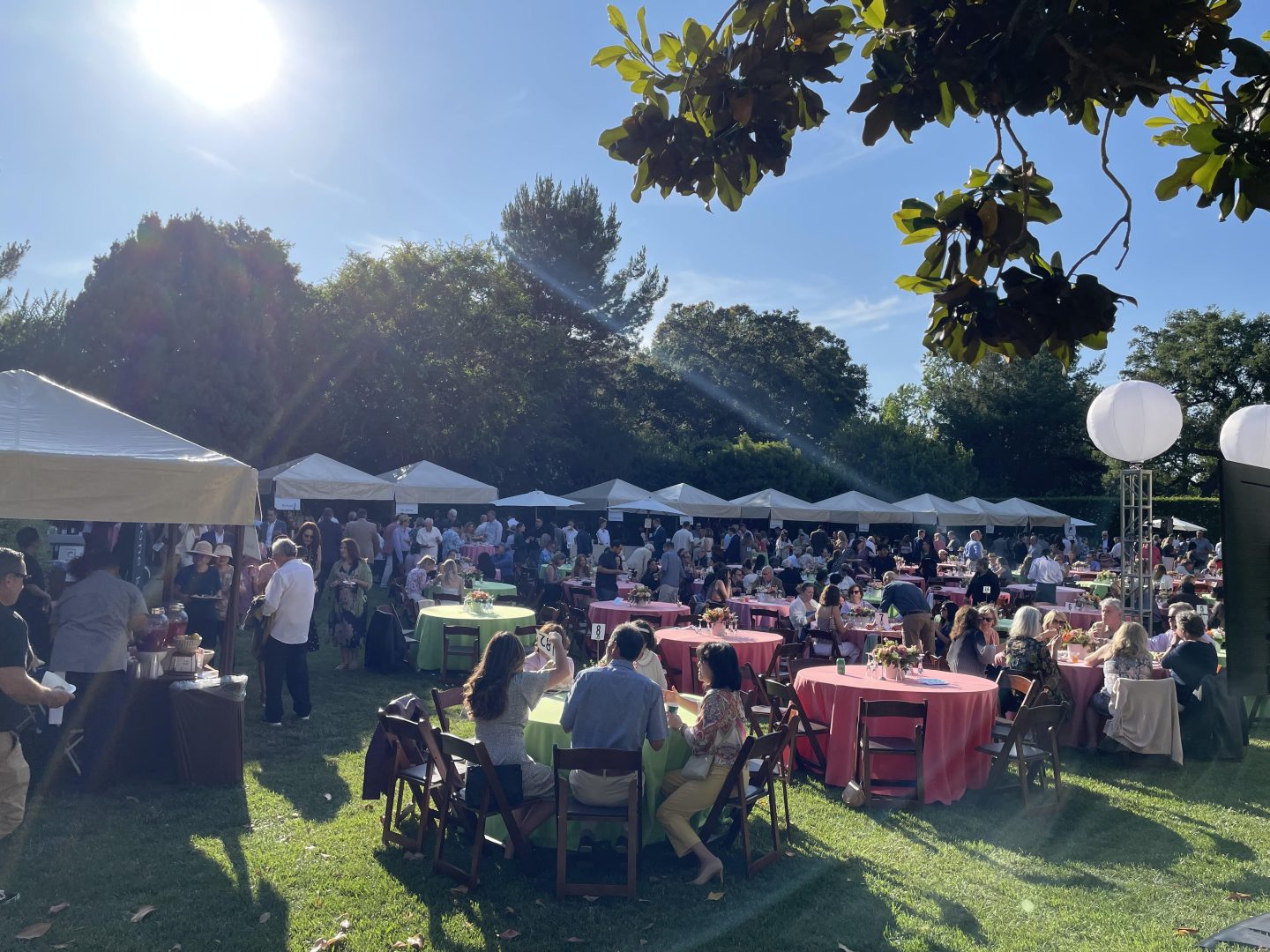
Attendees enjoy the food and beverage offerings | Photo by Brianna Chu/HeySoCal.com

All these life-changing programs are made possible through AbilityFirst’s Food and Wine Festival. How it evolved into the spectacular event that it is today is quite an inspiring story.

A support group called Crown Guild held the first food and wine festival in 1953 with a wine tasting at The Langham Huntington Pasadena, then known as the Huntington Hotel. Each Crown Guild member would invite ten to twelve friends and they would all be responsible for bringing a bottle of wine for the tasting.

It branched out to Crown Guild members homes, and then onto friends of members’ homes, until they got local restaurateurs and beverage companies involved. It lent a casual outdoor environment where guests could mingle and chat over food and drinks. Over the years, AbilityFirst built strong relationships with restaurants, wineries, and breweries.          

With the Food and Wine Festival’s 50th anniversary celebration, AbilityFirst continues the founding Rotarians’ legacy. Ninety-eight years after it was first created, AbilityFirst

AbilityFirst Food and Wine Festival Returns at Laurabelle A. Robinson House

Originally published on 2 June 2022 on Hey SoCal

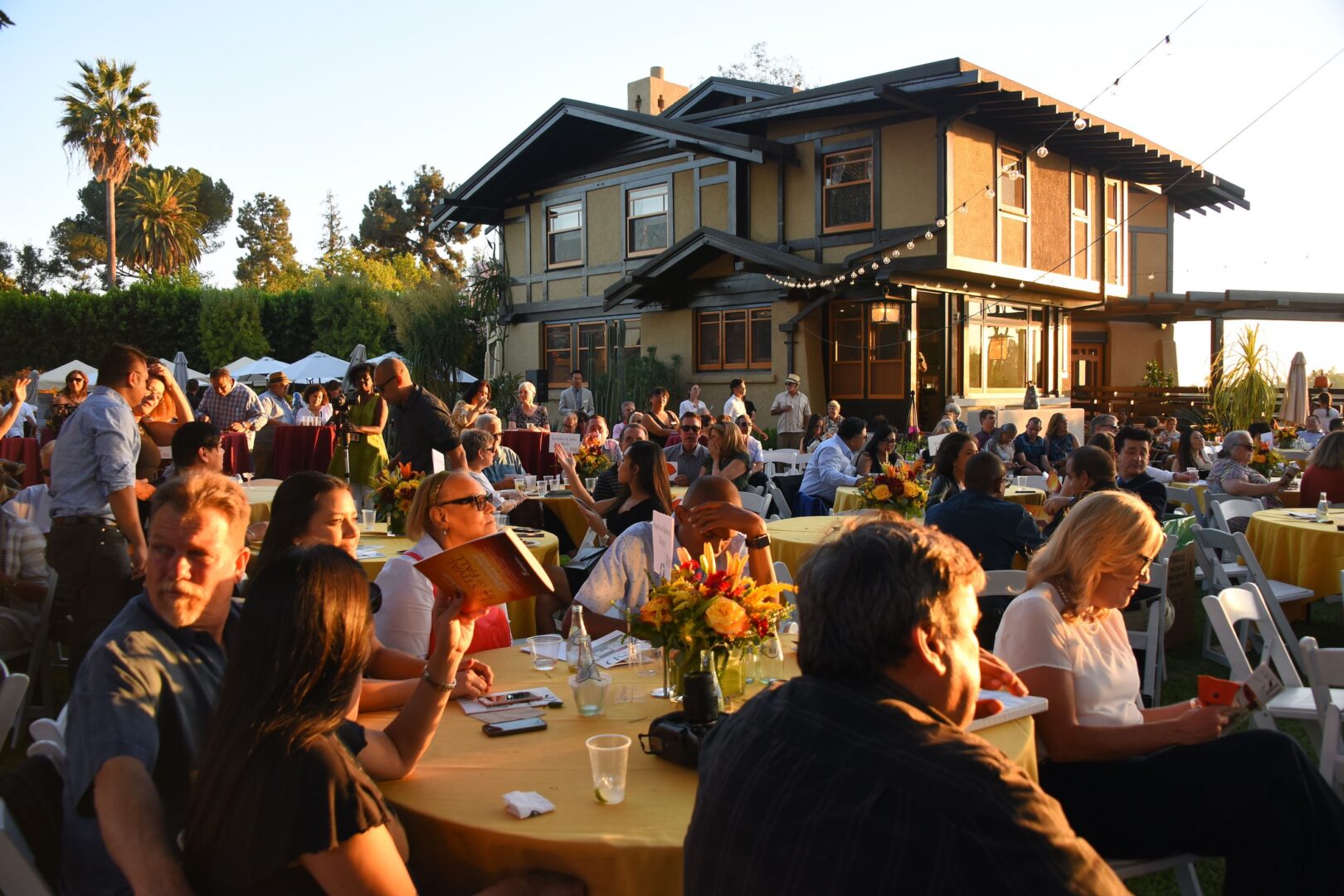
The Laurabelle A. Robinson house | Photo courtesy of AbilityFirst Food and Wine Festival

This Sunday, June 5, AbilityFirst’s famed Food and Wine Festival returns at the historic Laurabelle A. Robinson House in Pasadena from 5 to 8 pm. Sponsored by CHUBB, it marks the first time the outdoor gourmet food and drink event will be held in person since the pandemic began.

Nearly 400 guests are expected at this year’s event, which features more than 20 restaurants, cocktail bars, wineries, and breweries. The restaurants and dessert shops include Alexander’s Steakhouse, El Cholo Café, Gale’s Restaurant, Mi Piace, Porto’s Bakery, Ruth Chris Steak House, Tam O’Shanter, We Olive, Lark Cake Shop, Poppy Cake Bakery Company, Nothing Bundt Cakes, among others. Beverages featured include Cocktails and Spirit Tastings from 1886 at The Raymond, Dulce Vida Tequila, Krafted Spirits, JuneShine, and Golden Road Brewing, along with specially curated Wines. Pasadena’s very own Cerveceria Del Pueblo will also be pouring their distinctive beers showcasing flavors and aromas from South America; Califia Farms and PepsiCo will be serving non-alcoholic beverages.

Proceeds from this year’s Food & Wine Festival will directly benefit AbilityFirst which has targeted programming to help an individual successfully transition from childhood to adult life; providing employment preparation, training, and experience; building social connections and independence; and offering both their participants and their caregivers an opportunity to refresh and recharge through various recreational activities.

Guests at AbilityFirst Food and Wine Festival | Photo courtesy of AbilityFirst Food and Wine Festival

How the food and wine festival evolved into the spectacular event that it is today is quite a heartening story. Rebecca Haussling, Senior Director of Communications, relates. “A support group called Crown Guild created the first food and wine festival in 1953 with a wine tasting at the Langham Huntington, Pasadena (then known as the Huntington Hotel). Each Crown Guild member would invite ten to twelve friends and they would all be responsible for bringing a bottle of wine for the tasting. It branched out to Crown Guild members homes, and then onto friends of members’ homes, until they got local restaurateurs and beverage companies involved. It lent a casual outdoor environment where our guests could mingle and chat over food and drinks. Through the years, AbilityFirst has built strong relationships with restaurants, wineries, and breweries as we enthusiastically encouraged our guests to support these establishments.”           

“It grew to its largest event in 2018 and 2019 with over 500 guests and raised more than $300,000,” Haussling says with great pride. “The pandemic brought with it several challenges, but we quickly adjusted. During 2020 and 2021, we held a virtual program with small private dinner parties with catered dinners in more than a dozen homes in Pasadena and the Los Angeles areas. We are delighted to be back ‘in real life’ for 2022 and return at the Laurabelle A. Robinson home, where homeowners Phaedra and Mark Ledbetter have hosted this unique food and wine tasting off and on for more than a decade.”

AbilityFirst was established as the Crippled Children’s Society of Southern California in 1926 by members of the Los Angeles Rotary Club, to assist kids with polio. In 2000, it adopted the name AbilityFirst to better reflect their broader mission of helping children and adults with physical and developmental disabilities reach their full potential by providing recreational and socialization programs, employment, accessible housing, and camping.

Fifty years ago, AbilltyFirst opened the Lawrence L. Frank Center in Pasadena and Long Beach; it is named after Lawrence L. Frank, of Lawry’s Restaurants fame, one of the original founders. From 2016 to 2017, the number of children and adults with developmental disabilities in these communities grew by 1,000 people, 66 percent of whom are between the ages of 6 and 51 years old – the target age for AbilityFirst’s programs.

His grandson, Richard Frank, continues to preserve his grandfather’s legacy by being on AbilityFirst’s board of directors. He co-chaired the Capital Campaign to help raise over $6M to initiate several programs to fit the burgeoning needs of the individuals they serve. And mindful of carrying on with their regular activities during the pandemic, AbilityFirst immediately responded to the lockdown restrictions.    

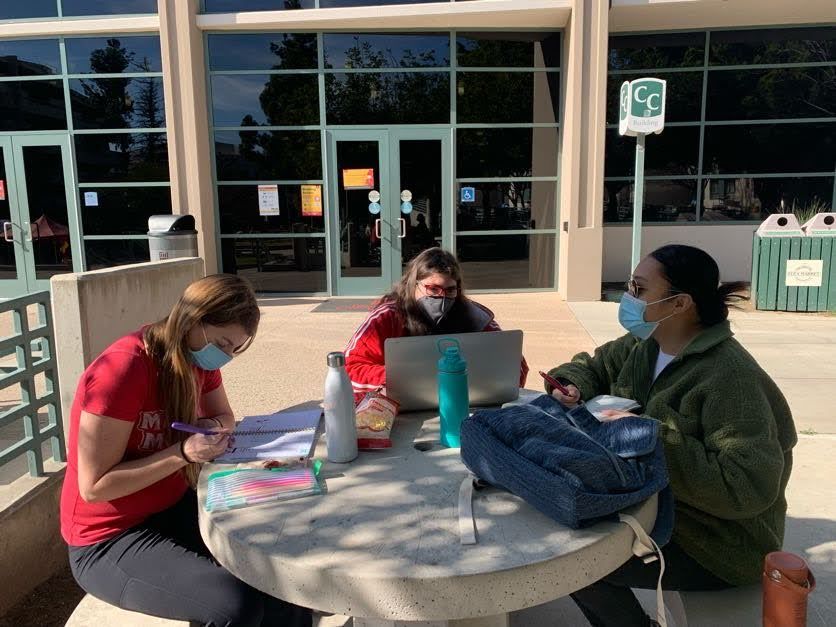
(Shown left to right): Teresa, Maya, and Coach are participants in AbilityFirst’s College to Career program

Haussling discloses, “We were quick to pivot to remote and virtual programming for all of our programs and centers. Within less than two weeks AbilityFirst programs were able to get back up and running on Zoom with daily programs for our participants that included everything from exercise and yoga to arts and crafts, drawing classes, movie nights, book clubs, and much more. This helped lessen the feelings of isolation our participants felt during the pandemic and created space for social interaction – and FUN.”

“By August 2021 we were continuing with our remote programming and alternate programs where we were able to offer services out in the community and at local community venues such as parks, libraries and other safe, outdoor venues,” adds Haussling. “And by the end of 2021 we were safely delivering most services in person while utilizing our person-centered approach to maintain remote services as needed. Our person-centered approach (person-first) showcases and values diversity, inclusion and belonging.”

“Today, we are devoting our resources to providing the best services to those who are referred to us and actively seeking out those who have historically experienced barriers to receiving our services,” Haussling states.

Introduced a few years ago is College to Career, a community-based program for students who want to go to college and gain the skills, training, and education they need to achieve their academic and career goals. Additionally, the program emphasizes independence and personal choice in using community resources for daily living and future employment. This multi-year program begins with a self-discovery and community exploration component to help students to identify and develop a plan to achieve goals. Upon completion of the academic component, individuals may transition to community jobs, internships, or volunteer programs as they launch their career paths. The Lawrence L. Frank Center, AbilityFirst’s flagship location in Pasadena, houses the expanding College to Career program.      

“AbilityFirst has six community centers offering several new adult  programs including ExploreAbility, DiscoverAbility and PossAbility,” informs Haussling. “Our after school enrichment program includes homework support, outdoor activities, arts and crafts, cooking and more!”

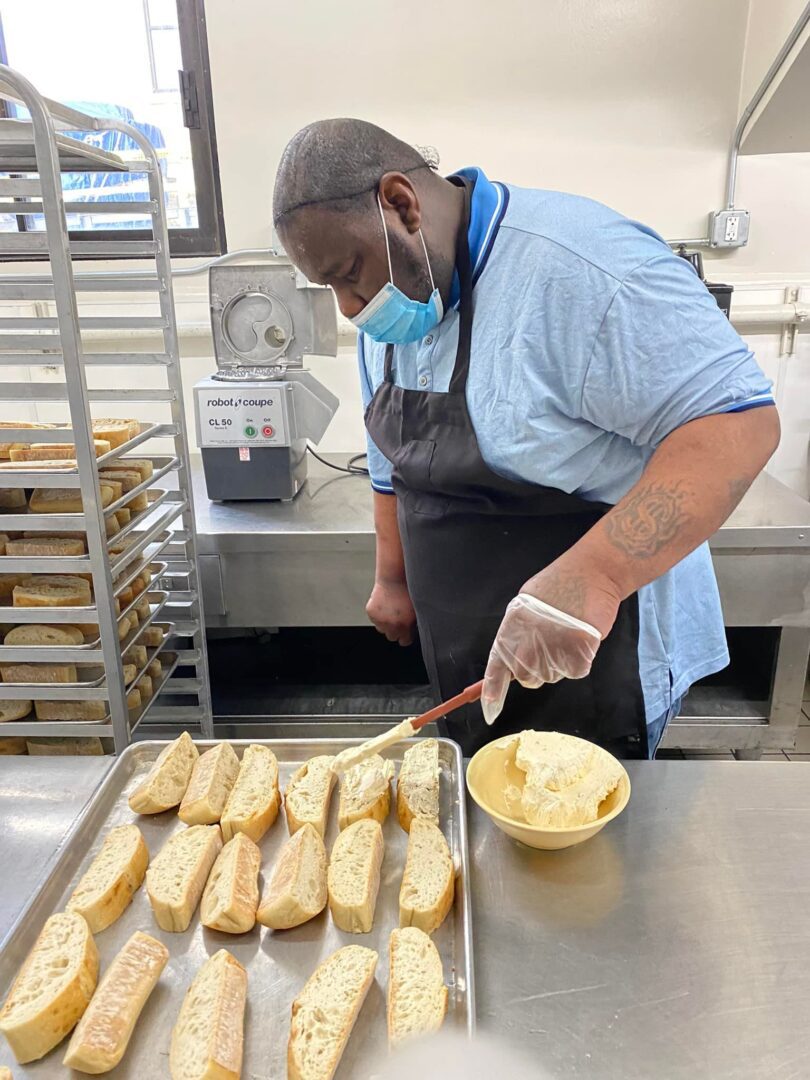
Darreyon, in PossAbility Los Angeles, is prepping food for the Dream Center | Photo courtesy of AbilityFirst

ExploreAbility is an adult day and community integration program currently being offered at the AbilityFirst Joan and Harry A. Mier Center in Inglewood and the AbilityFirst Lawrence L. Frank Center in Pasadena. A licensed program, its objective is to identify what is important to each individual, to develop the skills necessary to achieve their goals, and to be involved in their communities through volunteering and community activities. Individual support and small-group activities promote interaction and learning. The program is designed to help individuals access their communities in their daily lives, work, recreational and leisure activities. It incorporates volunteering, community activities, independent living and skill-building, using a small group model.

PossAbility, offered in Pasadena and Los Angeles, is intended for adults who want to enhance their skills and independence, and to participate in their communities. Individuals in the program are empowered to set and pursue personal goals with an emphasis on employment readiness and increased community connections, including volunteering.  

AbilityFirst has two group homes in Pasadena for adults and seniors – Crown House and Sierra Rose.

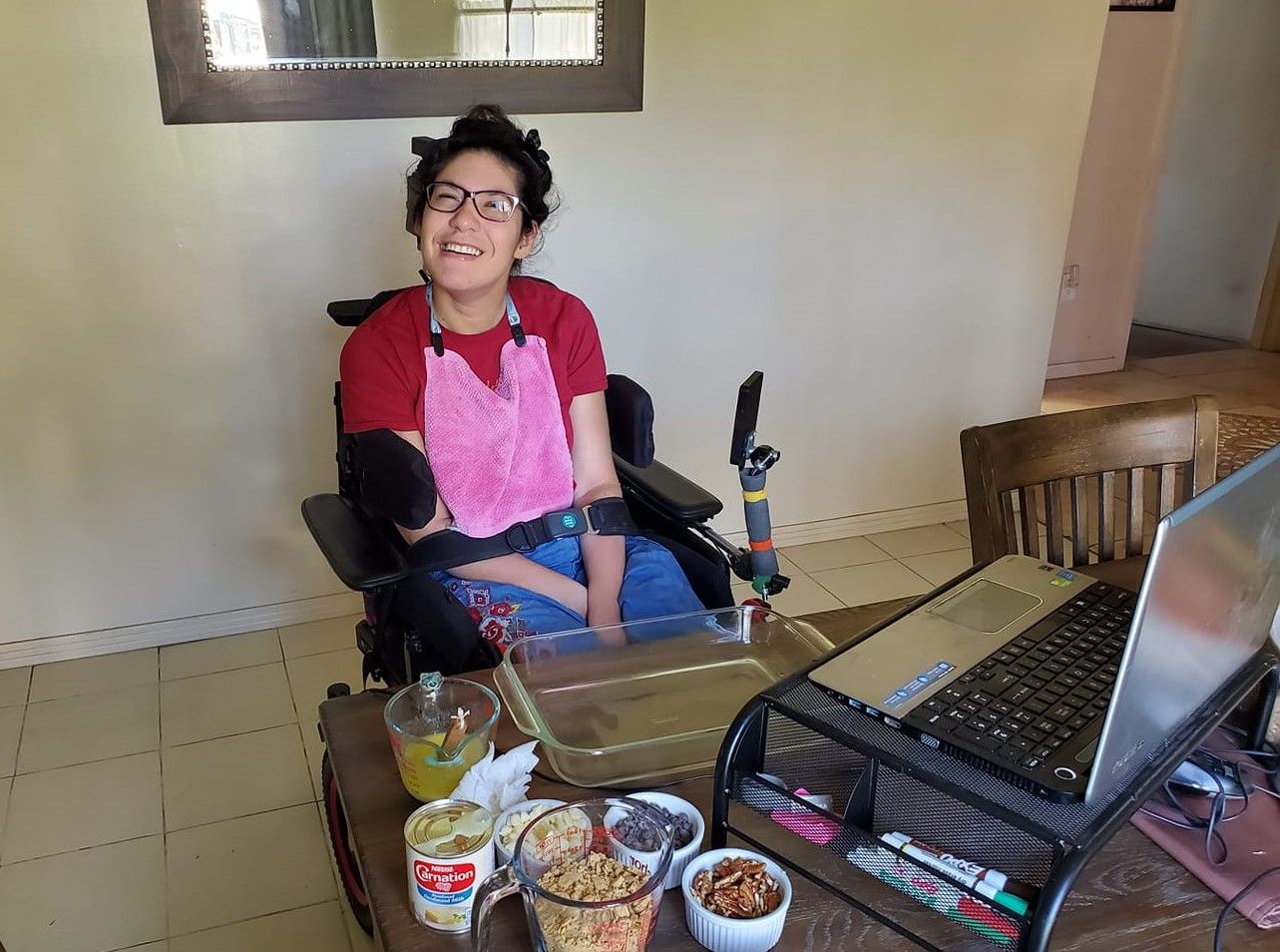
Debbie baking at Camp Paivika | Photo courtesy of AbilityFirst

According to Haussling, Ability First closed their work centers in December 2019. “We have since launched several new adults programs (mentioned above) and we have an expanding Supported Employment Program. In 2021 we completed a merger with FVO Solutions and we now run their manufacturing program as part of the acquisition.”

This merger gave AbilityFirst the capability to provide equipment and material storage, and to service a wide variety of assembly needs with a dedicated work-force, including: kit assembly; prototype to high volume runs; finished products and sub-assemblies; re-work; mechanical assembly; point-of-purchase displays; gluing and heat sealing; metal frames; and parts salvaging.  They work with customers across many markets including government, commercial, consumer and industrial. 

Rounding out AbilityFirst’s programs is Camp Paivika (a Native American word meaning “Dawn”) in the san Bernardino Mountains. It was begun in 1946 by the Rotary Club as one of the first full-accessible camps in the United States and has been in active operation since. It is maintained through endowments from donors and fund-raising efforts by community members.

Going to summer camps helps children develop social and communications skills as they participate in activities with other kids. It helps individuals build character and gain self-respect as they become responsible for their own safety and survival in a setting outside their comfort zone.

Camp Paivika offers this same independence and self-reliance for children, teens and adults with physical and developmental disabilities. Specially-trained members of AbilityFirst staff provide assistance and guidance as campers enjoy all the fun activities available to them – archery, arts & crafts, campfires and cookouts, nature hikes, horseback-riding, swimming. It is fully accredited by the American Camp Association.

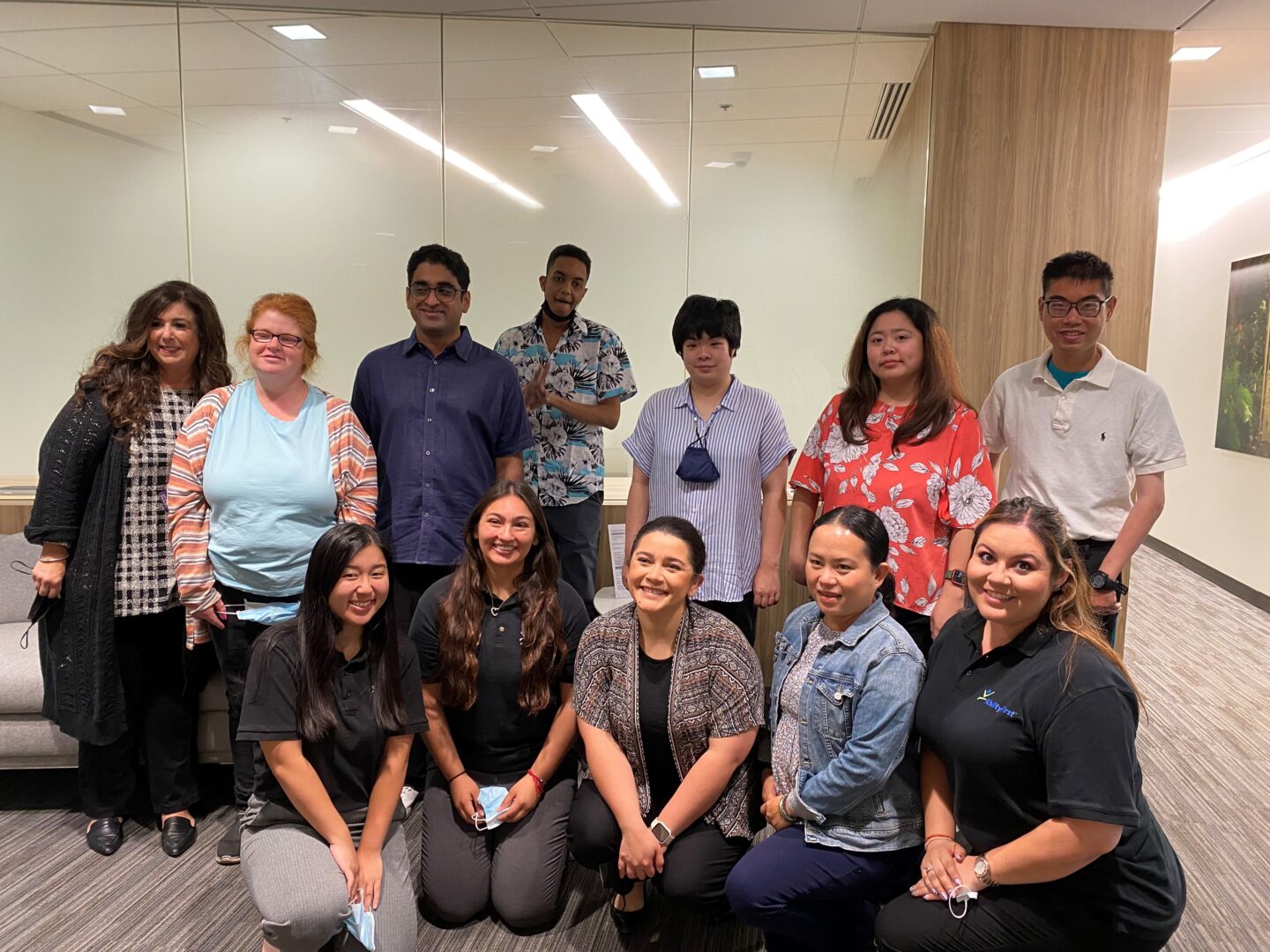
Kelly (second from left) at City of Hope | Photo courtesy of AbilityFirst

In its 96 years of existence, AbilityFirst has touched thousands of lives and has made it possible for people with disabilities become productive, participating members of society. One successful ‘alum’ is Kelly who was in AbilityFirst’s College to Career program. On May 16 this year, she joined four other interns in the first Project SEARCH internship program, an AbilityFirst partnership with City of Hope and the San Gabriel Pomona Regional Center. An internationally known training model, it is designed to provide vocational training in a natural work setting to individuals with disabilities. It involves an extensive period of skills training and career exploration, innovative adaptations, long-term job support, and continuous feedback from on-site supervisor and trainers. The goal for each program is competitive employment.                 

What a supremely gratifying outcome! The founding Rotarians would have been so pleased to see how their foundation has grown to become ever more responsive to people’s needs. And with this year’s return of the AbilityFirst Food and Wine Festival, the organization is certain to reach its centennial with an impressive array of programs to help individuals with disabilities enjoy fulfilling lives.