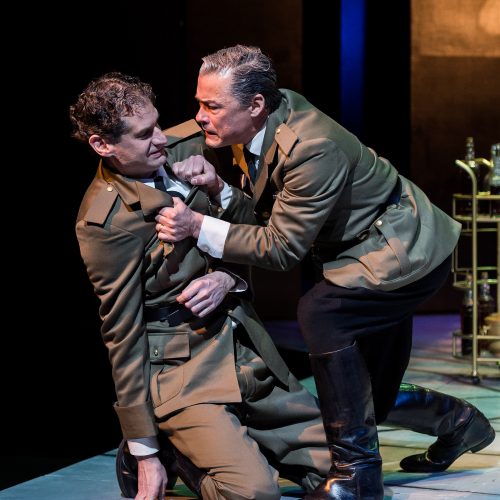
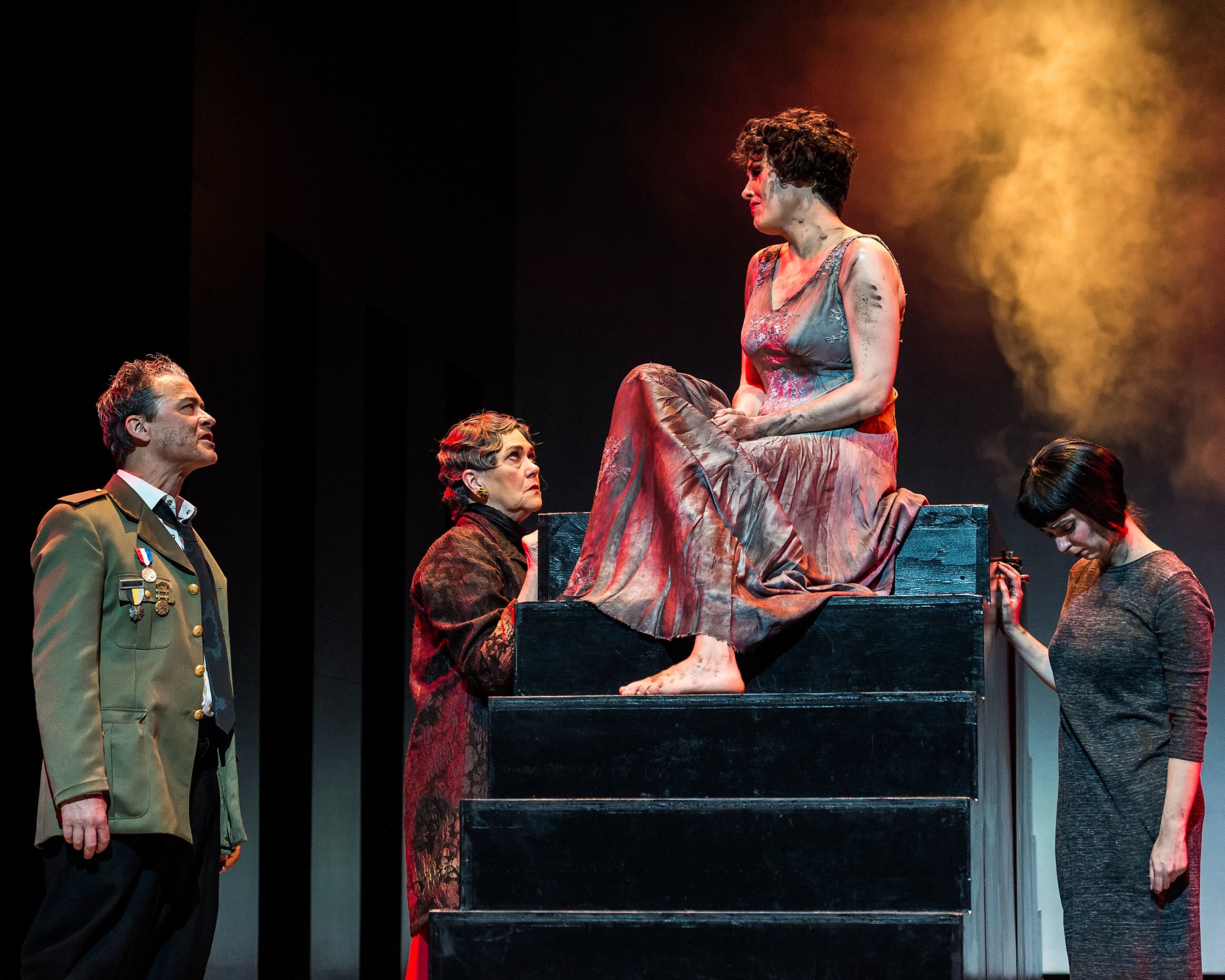
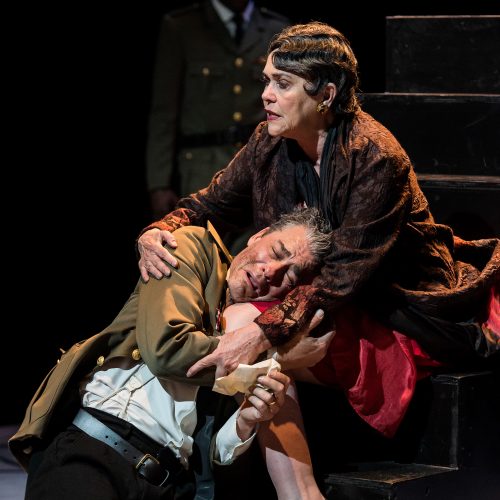
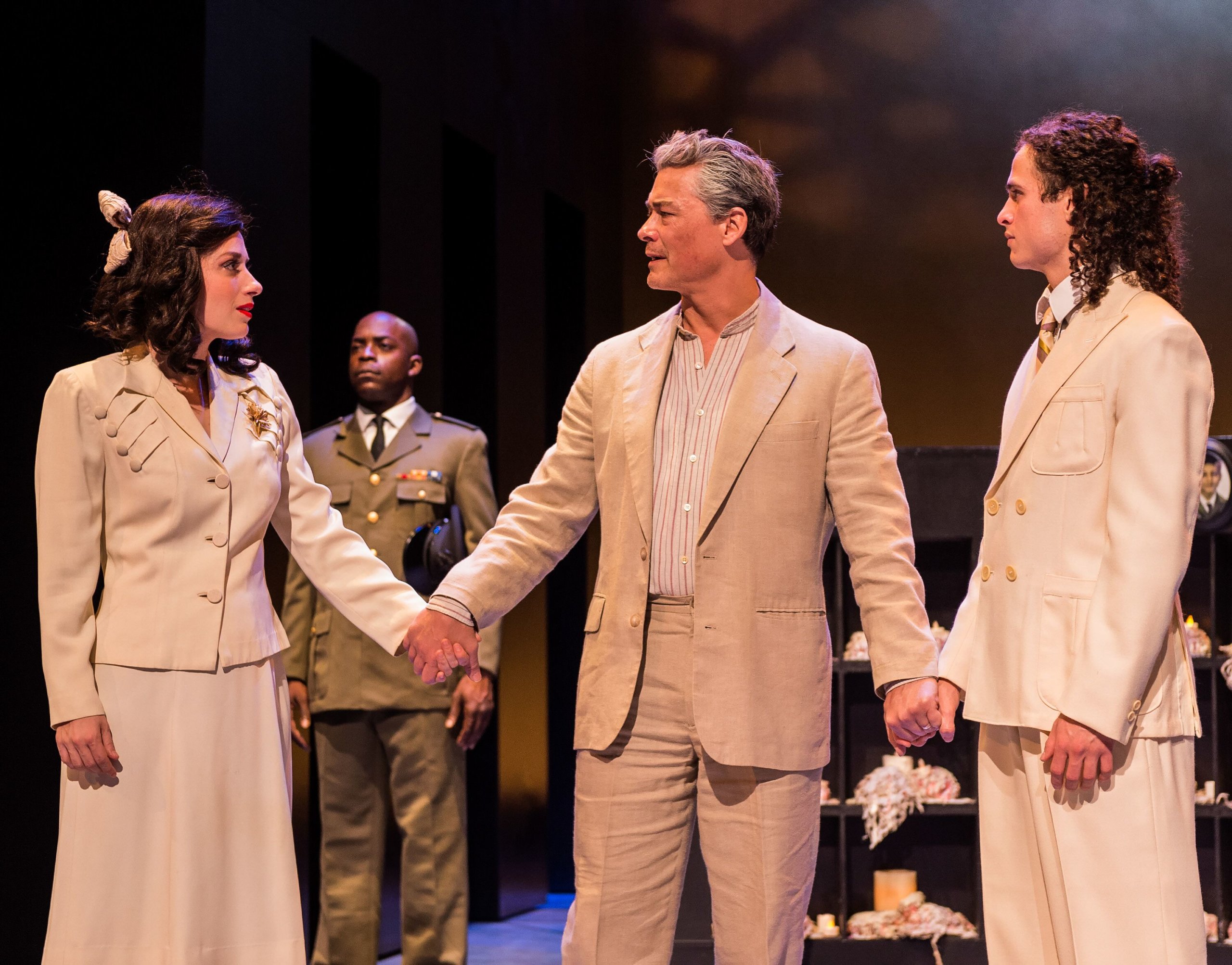
A Noise Within Stages ‘Metamorphoses’ to End its 30th Anniversary Season

Originally published on 9 May 2022 on Hey SoCal
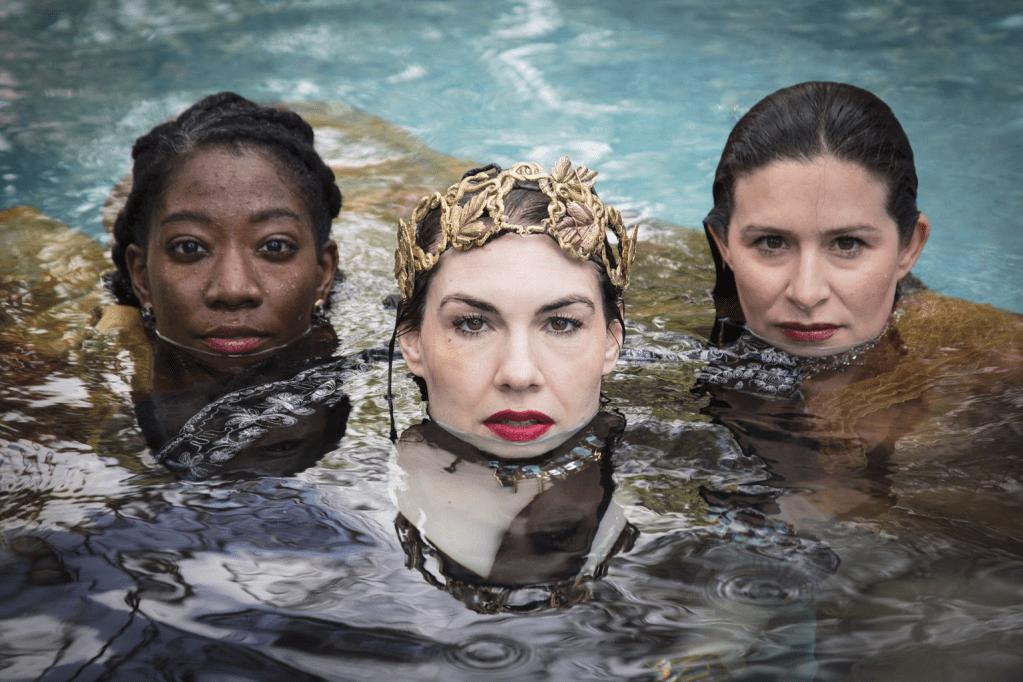
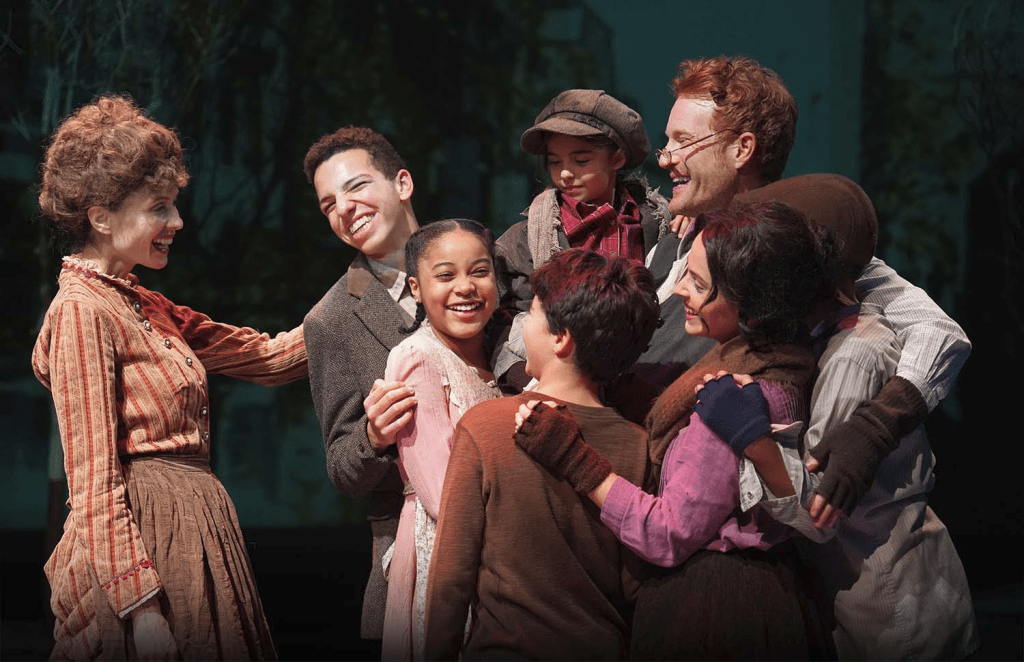
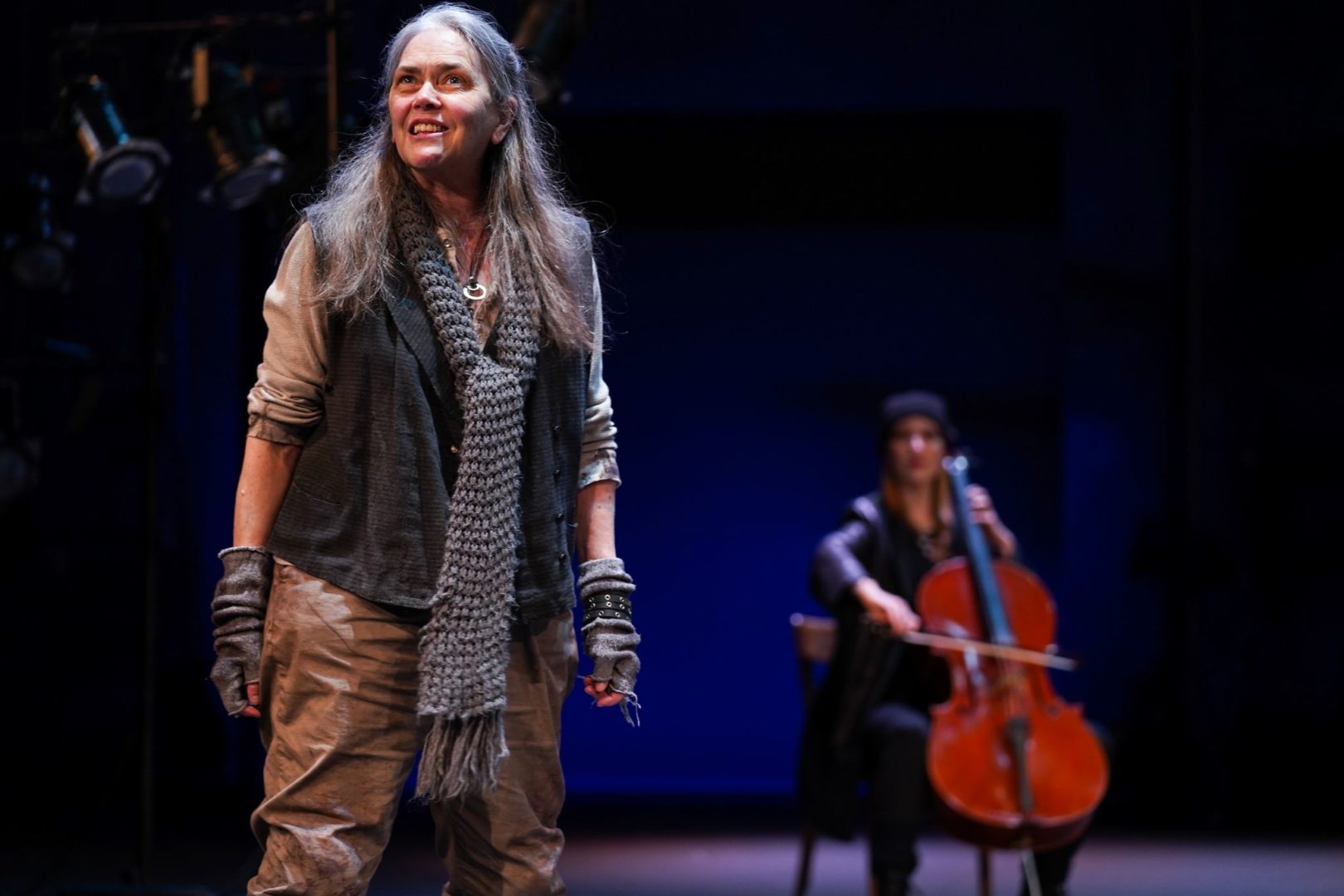
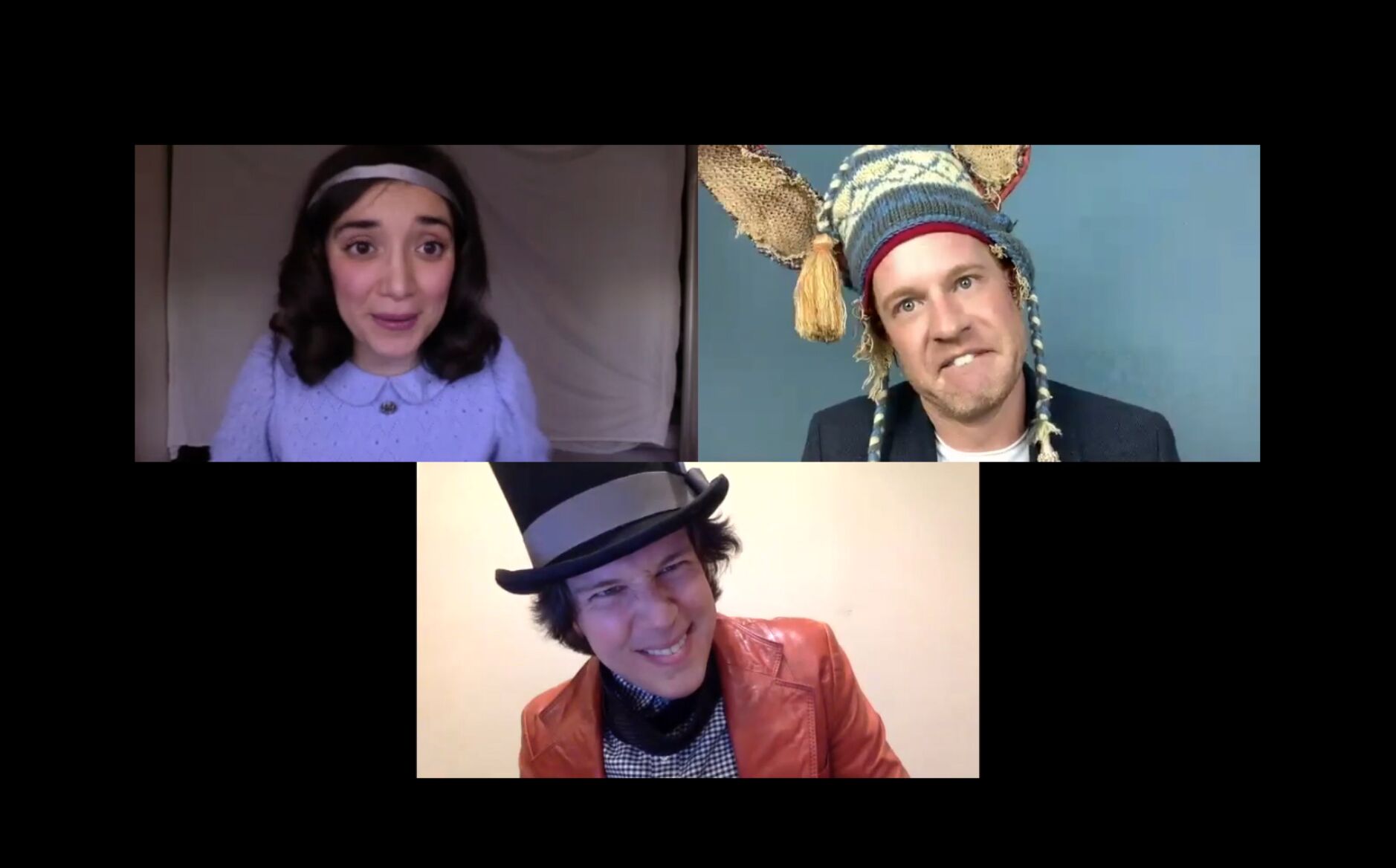
The cast of ‘Metamorphoses’ includes (from left to right): Sydney A. Mason, Trisha Miller, and Cassandra Marie Murphy | Photo by Daniel Reichert / A Noise Within

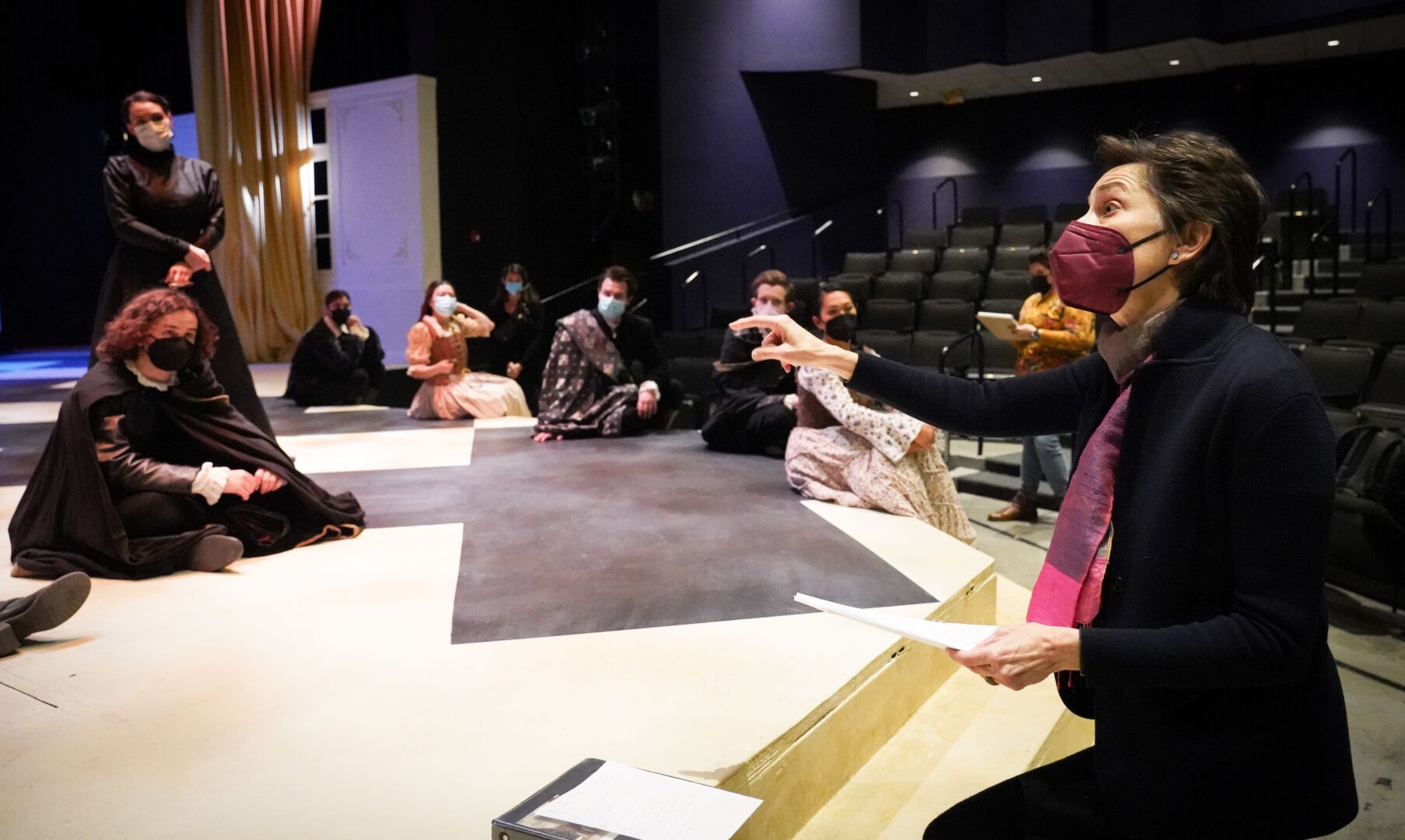
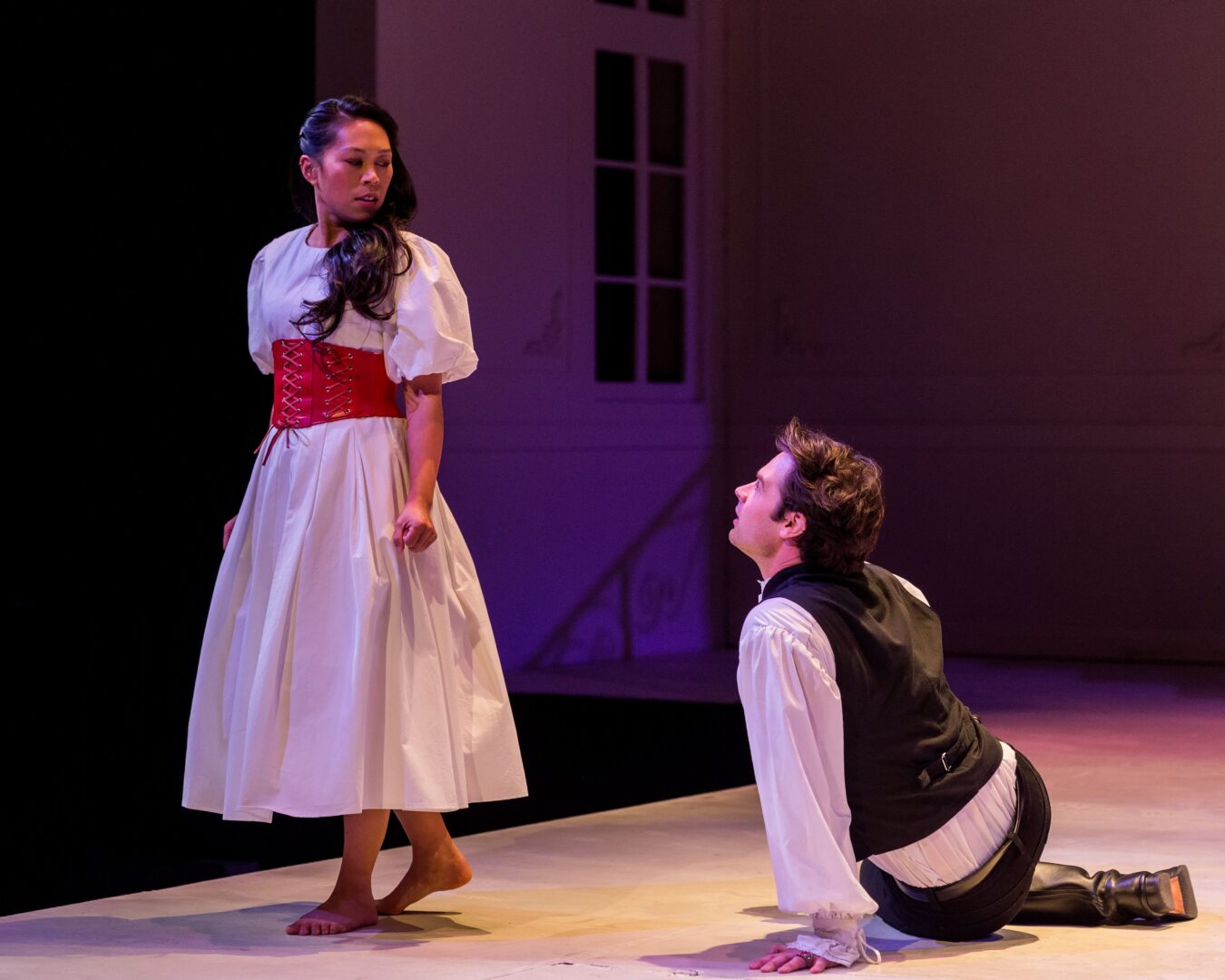
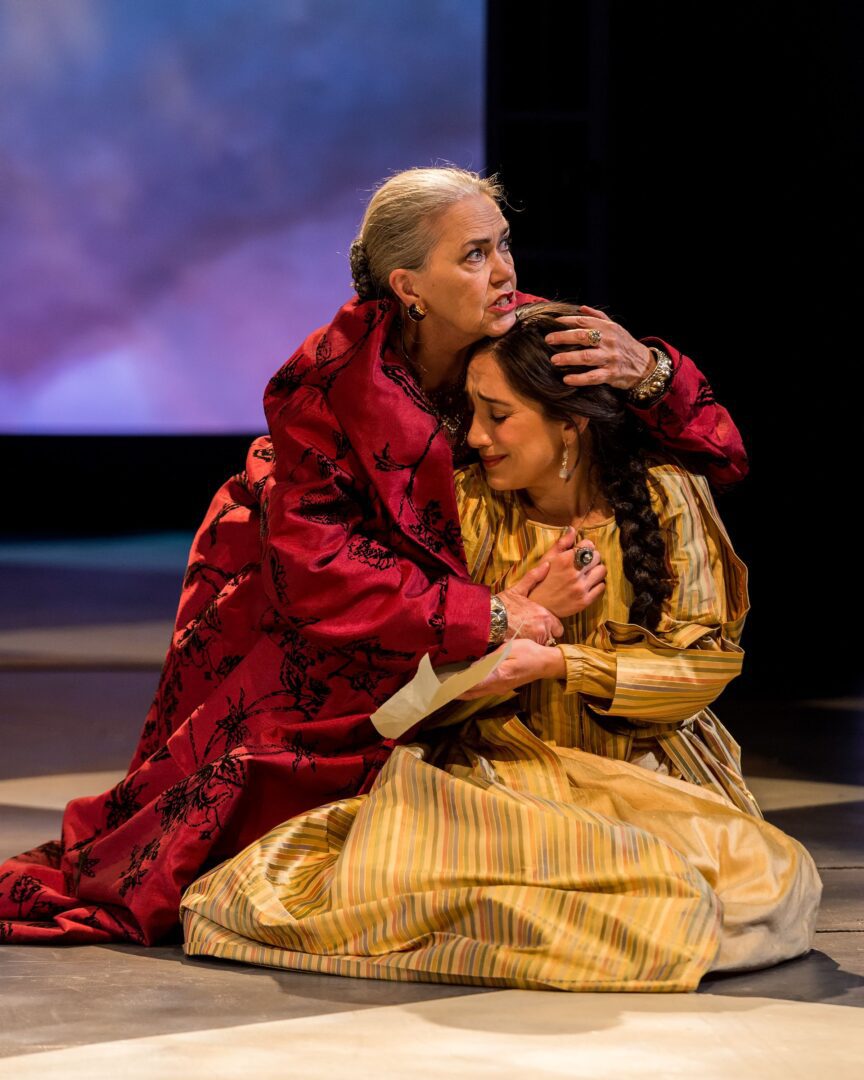
A Noise Within’s (ANW) 30th anniversary season comes to a close with a rare revival of ‘Metamorphoses,’ the multiple award-winning theatrical event from MacArthur ‘Genius’ grant recipient Mary Zimmerman. On stage from May 14 through June 5, with previews beginning on May 8, this elaborate and much anticipated production is helmed by Producing Artistic Director Julia Rodriguez-Elliott.

Comedy, romance, and poetry abound as ancient tales about Midas, Orpheus, and Aphrodite come to life for a modern audience. Adapted from David R. Slavitt’s free-verse translation of ‘The Metamorphoses of Ovid,’ the play takes place in and around a swimming pool that stands in for locations that include a wash basin, the River Styx, and the sea. The characters – gods and mortals alike – endure love, loss, and transformation while immersed in a pool of water.

A cast of nine resident artists (RAs) takes on over 85 roles in six Greek myths: DeJuan Christopher (Seven Guitars); Geoff Elliott (ANW producing artistic director); Rafael Goldstein (‘All’s Well That Ends Well,’ ‘A Christmas Carol,’ ‘Alice in Wonderland,’ more); Nicole Javier (‘All’s Well That Ends Well’); Kasey Mahaffy (‘All’s Well That Ends Well,’ ‘A Christmas Carol,’ ‘Alice in Wonderland,’ more); Sydney A. Mason (‘A Christmas Carol,’ ‘Seven Guitars’); Trisha Miller (‘All’s Well That Ends Well,’ ‘The Winter’s Tale,’ ‘Argonautika,’ more); Cassandra Marie Murphy (‘Argonautika,’ ‘Henry V,’ ‘Man of La Mancha‘); and Erika Soto (‘All’s Well That Ends Well,’ ‘Alice in Wonderland,’ ‘Frankenstein,’ more).’
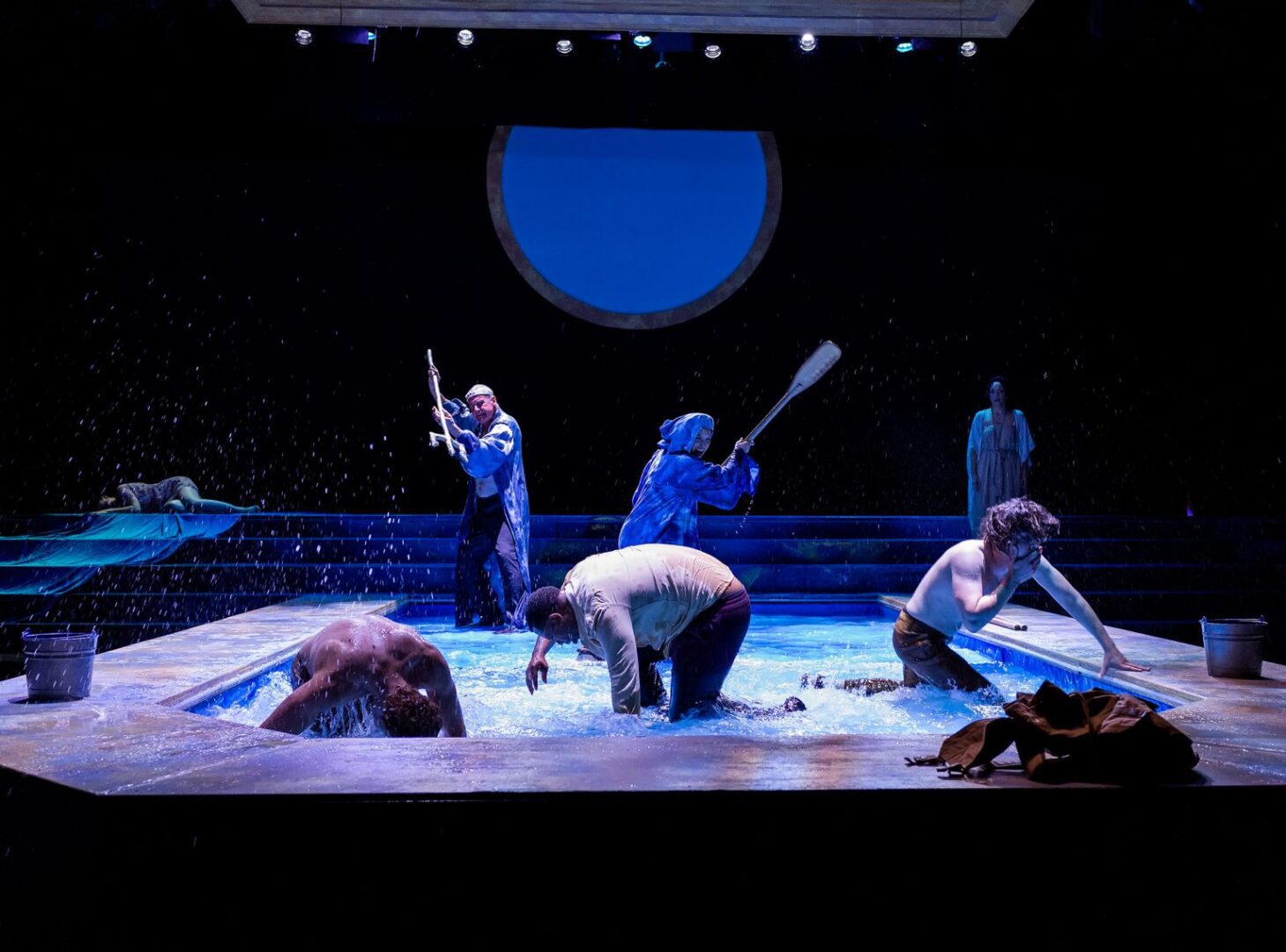
The ensemble | Photo by Craig Schwartz / A Noise Within

Production stage manager Amy Rowell leads the creative team of scenic designer François-Pierre Couture; lighting designer Ken Booth; composer and sound designer Robert Oriol; costume designer Garry Lennon; properties designer Shen Heckel; fight choreographer Kenneth R. Merckx, Jr.; and dramaturg Miranda Johnson-Haddad.

Interviewed by phone, Rodriguez-Elliott tells us what ‘Metamorphoses’ is about. “Mary Zimmerman took nine vignettes that share a common theme of transformation. They deal with love, loss, selflessness, generosity, greed – and they’re all incredibly human. She has a wonderful ability to bridge the ancient and the modern so the stories feel very much of the here and now.”

“In this moment that we’re living – when the world is undergoing extraordinary change – that could be painful or it could be joyous,” explains Rodriguez-Elliott. “And ‘Metamorphoses’ is the perfect play for us to end our season with its theme of exploring the joys and perils of change.”

“Mary first wrote it when she was teaching at Northwestern,” Rodriguez Elliott enlightens. “It had a different title the first time it was presented. And while she envisioned a body of water in it, there was no water for that particular show.”
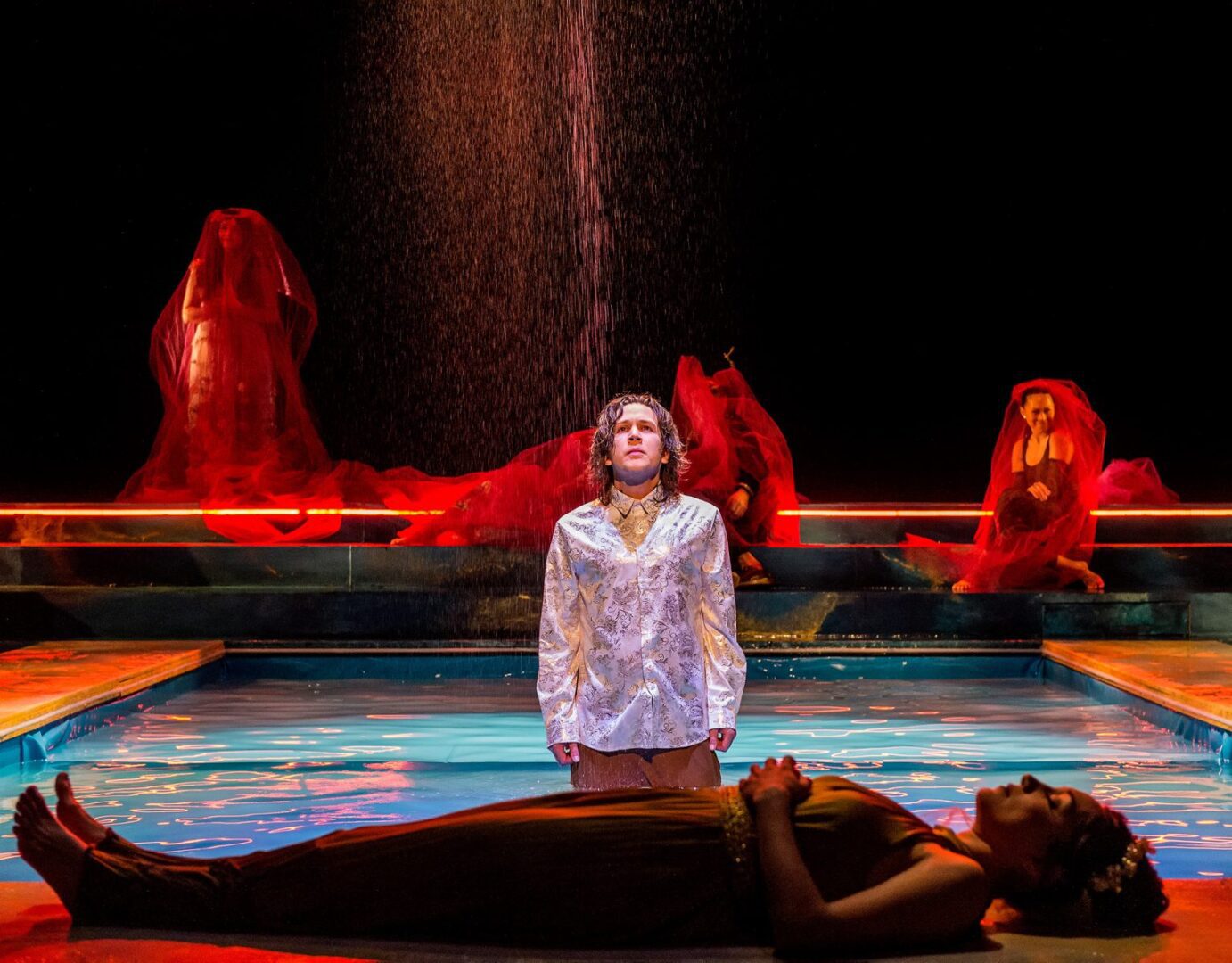
Rafael Goldstein | Photo by Craig Schwartz / A Noise Within

Rodriguez Elliott, who previously directed ‘Argonautika’ at ANW, discloses that she has never seen a production of ‘Metamorphoses’ – which gives her the opportunity to make it her own. “Mary has a very specific style in her plays and the way that she writes really speaks to me. She has an ensemble that she works with, not unlike what we have, so these are people that really speak her language. However, even though a lot of her work has her DNA she leaves it quite open for the director – you could find your own voice within it. This is the second Mary Zimmerman play that I’m directing, and I found that to be the case.

“The marvelous thing about her plays is that she puts on stage what is seemingly impossible to stage. For instance, she would have a direction that says ‘And now there is a battle in the water.’ You, as the director, will visualize how this battle is articulated in a theatrical way. You have clues in the text as to where things are taking place, but you have to create it and imagine it yourself in a way that feels personal to you as an artist.”

“I love plays that are about voyages and journeys and the whole element of the water in this play is so thrilling,” adds Rodriguez-Elliott. “On the first day of rehearsals in the theatre and the play started coming to life with actors being in the water, I was so excited I couldn’t sleep that night when I got home!” 

ANW is renowned for presenting plays in repertory, which they deviated from. Rodriguez-Elliott says, “Because we had to have a pool for this production, this spring season our plays were all straight run. The set will sit there for the five weeks that the show runs in. It may not be the most complicated set that we’ve ever done, but it’s challenging in the sense that you’re dealing with concerns like: is the water warm enough for the artists – you have change stations off stage that actors can warm up after they’ve been in the water; there’s a cleaning procedure that comes with temperature…  all those things need to be addressed. 

“Also, we all know as homeowners that water can have all kinds of consequences if they go in the wrong place. A lot of it is about containing and insulating the pool in the appropriate way. There are also concerns about what surface to have in the pool so no one slips – do the actors wear shoes or not. As to costumes, there’s a choice between synthetic versus cotton, because of what cotton does in terms of fibers being in the pool. All these have to be considered and they impact just about every designer on the show.”
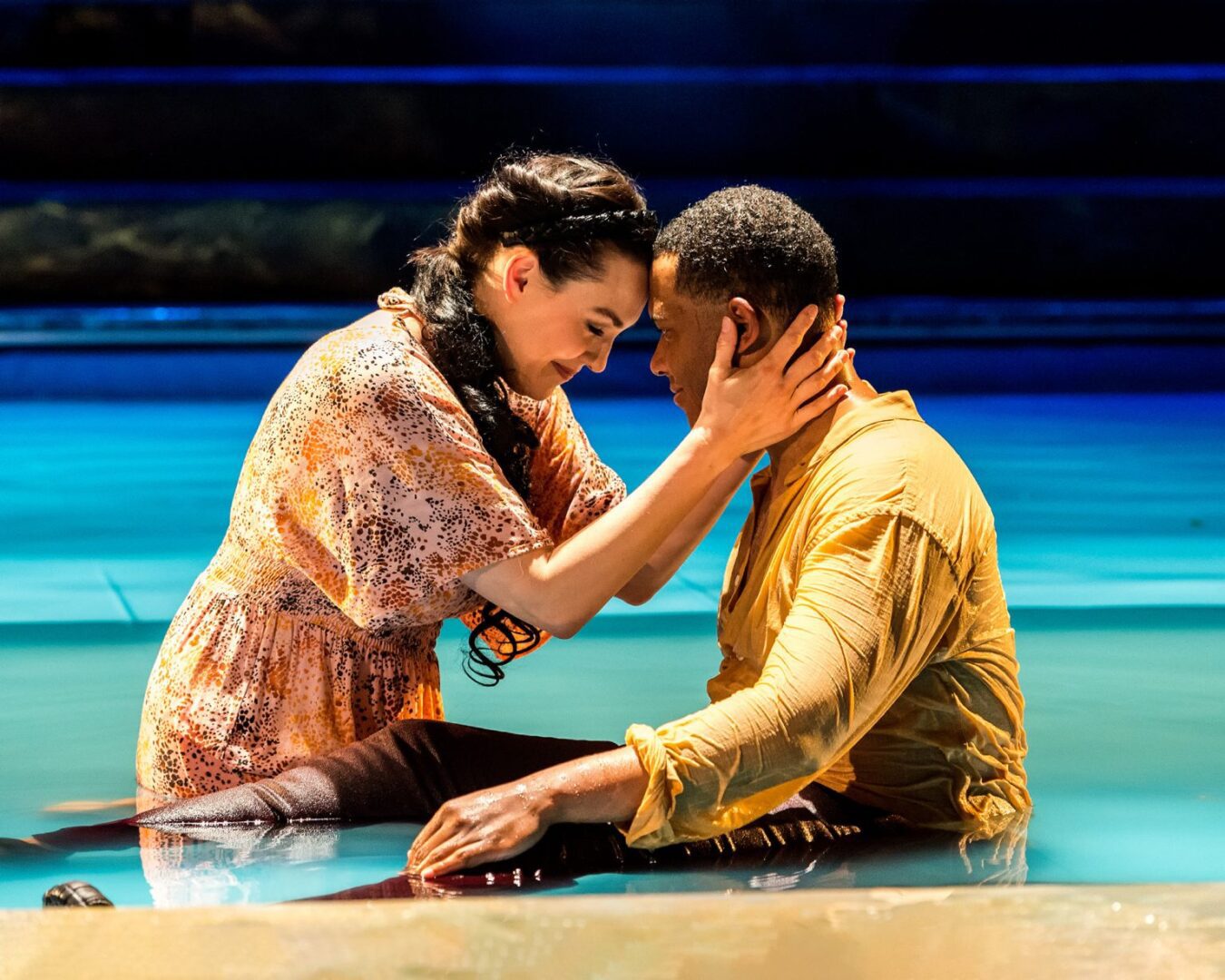
Trisha Miller and DeJuan Christopher | Photo by Craig Schwartz / A Noise Within

ANW’s production of ‘Argonautika’ before the pandemic enjoyed critical acclaim. It’s only fair to assume that every one of their resident artists wanted to be a part of ‘Metamorphoses.’ Asked how she selected the actors among their very talented RAs, Rodriguez-Elliott answers, “It’s like with any casting – you have to cast appropriately for the needs of the role and show. The actors were definitely very excited especially because we announced it two years ago but we had to postpone it because of the pandemic.

“Like ‘Argonautika,’ it’s a very demanding show. It’s very physical and it takes a lot of stamina to get through it. But the actors love it. And it’s wonderful that a lot of us have worked together for so long that they know how I work as a director. It’s a lot easier to get where you want to get to when people are able to jump and dig in fearlessly and with a whole lot of trust. I trust them and they trust me, so we’re able to do so much.”

Rodriguez-Elliott says further, “The actors who were already cast when we first announced it had the time to think about it, had lived with the play, and had the desire to do the play for a very long time. We didn’t bring back all the shows that we postponed, but this was something we really wanted to do. However, as you might imagine, we did it late in the season because we thought if we were still implementing safety measures we had to consider all the protocols around water and all the attendant challenges.”

“This is a play that celebrates theatricality and the magic of theatre,” Rodriguez-Elliott declares as the audience takeaway. “It speaks to us about the things you can only do on stage and nowhere else. It’s a production unlike any other we have ever seen – the element of water on stage is almost another character in the play. I think there are so many moments that are thrilling just in terms of how the water behaves and how the actors interact with it. Additionally, we have an original music score for it and an exquisite design team. I think the set is one of the most beautiful I’ve seen on our stage. Ken Booth who’s our lighting designer is doing extraordinary work.”

“In this moment that we’re living in, this play commemorates the power of love, change, and the opportunity to change. And I think that’s therapeutic right now,” Rodriguez-Elliott emphasizes.

Asked what it meant to have audiences back in the theatre for ANW’s 30th anniversary, Rodriguez-Elliott replies, “Everything that we have ever done in the theatre is about community. And what we realized during the pandemic is how essential that community is to us and to the work, and how much we missed it. So having the opportunity not only to return, but to be returning during the 30th anniversary season and rejoicing as a community the accomplishments of the organization, is very moving.”
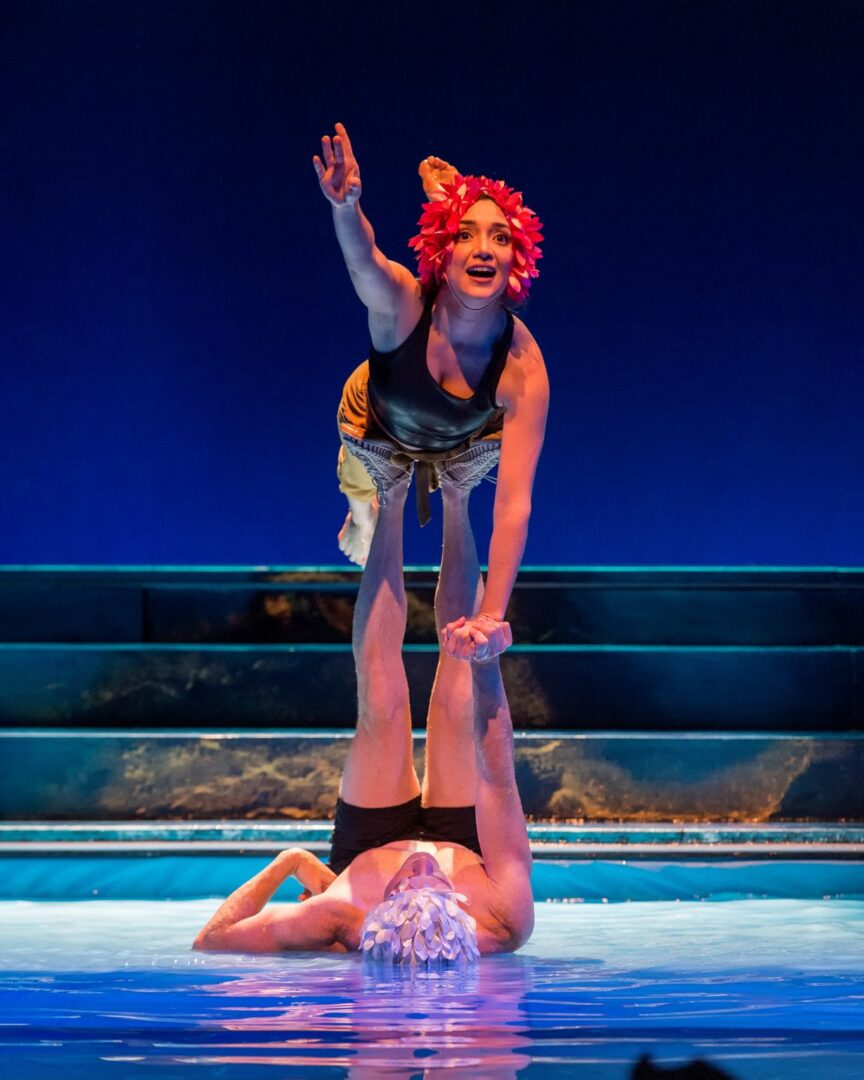
Erika Soto and Kasey Mahaffy | Photo by Craig Schwartz / A Noise Within

Coinciding with ANW’s 30th anniversary is their 10th year in Pasadena. Rodriguez-Elliott marvels as she relates what that’s like, “Can you believe it?! Again, you have to go back to community; you really have a sense that the community in Pasadena is tangible. I felt it from the first moment that we opened the theater. The value that they place on the arts as a quality of life issue isn’t something you see in every city. Pasadena is home – we’re not going anywhere.”

As to ANW’s plans for the next decade, Rodriguez-Elliott states, “We’ll continue to experience tremendous growth and there are a number of directions that growth can take. For us it’s embracing that journey – whether that means enlarging the physical plans or expanding programming, which includes our work in diversity, inclusion, and accessibility that’s very necessary.

“We’re bringing voices that have not been part of A Noise Within’s stages until now. We have the Noise Now Program where we invite the community to participate in events. We’ve developed wonderful relationships with other artists and organizations and that will continue to expand the definition of a classic for us. We have this beautiful campus and we’re able to use it in its totality – whether it’s outside, the lobby, the rehearsal space upstairs – in bringing other disciplines. We’ve had dance, music, art exhibitions that the place becomes a welcome environment for all.”

Rodriguez-Elliott describes ‘Metamorphoses’ as celebrating the magic of theatre. It could very well pronounce A Noise Within’s significant contribution to our community in the last ten years. It is organizations like them that endow Pasadena with the arts and the culture that are the city’s defining attractions.                 
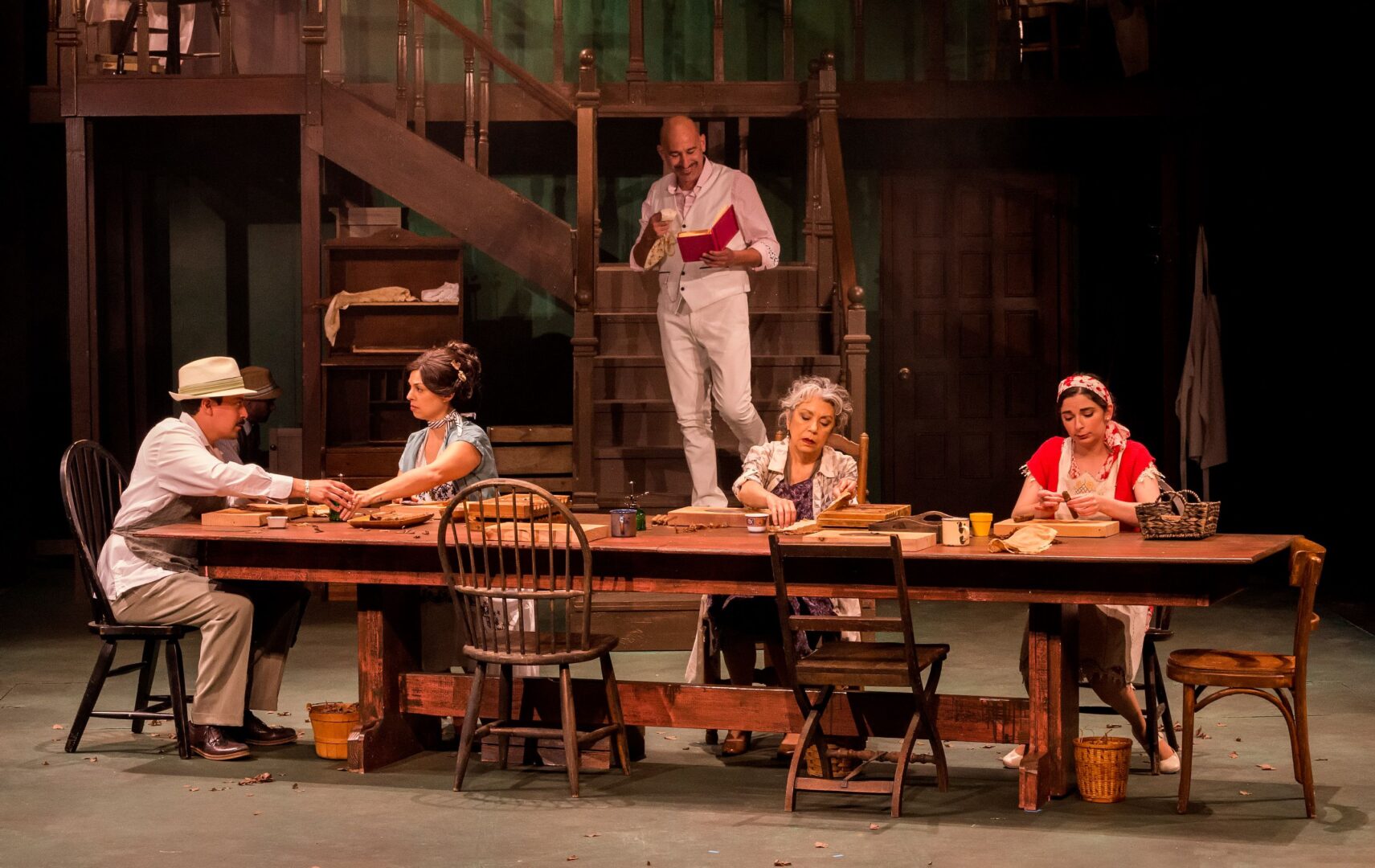
A Noise Within Presents ‘Anna in the Tropics’

Originally published on 24 March 2022 on Hey SoCal

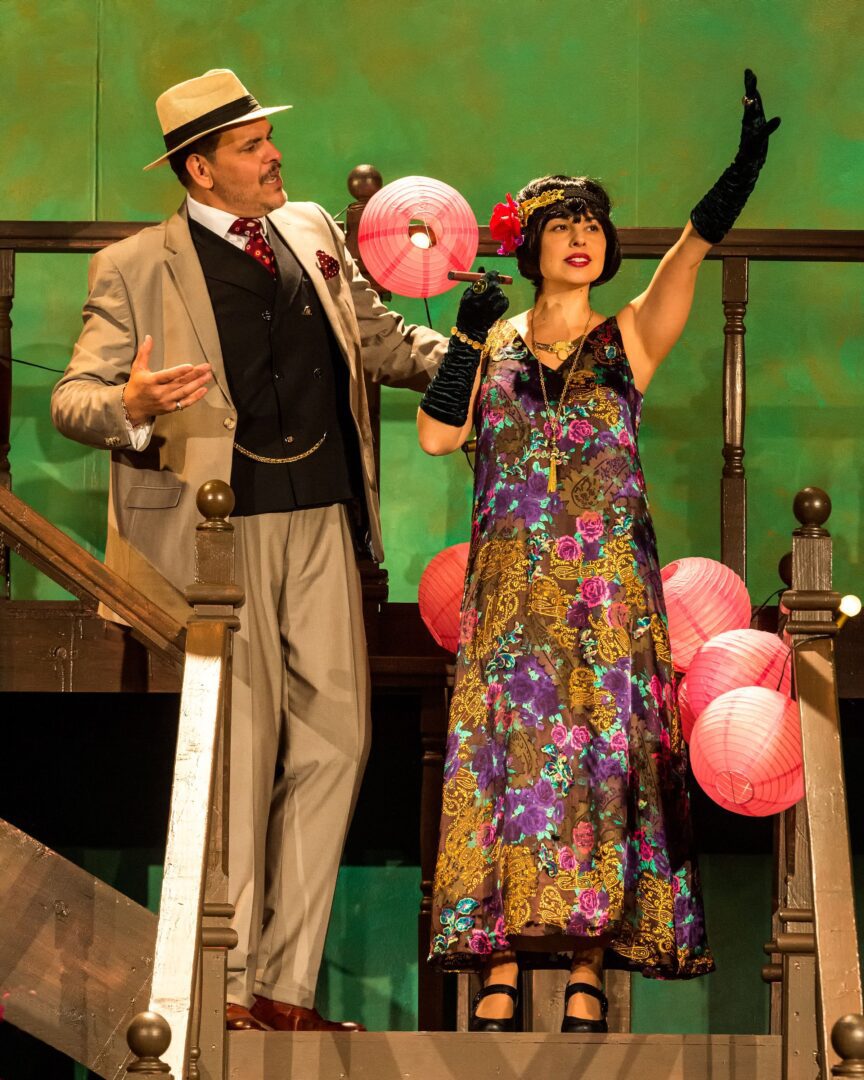
The cast of Anna in the Tropics | Photo by Craig Schwartz / A Noise Within

“Anna in the Tropics,” Nilo Cruz’s Pulitzer Prize-winning drama about cigar factory workers, is on stage at A Noise Within (ANW) from March 20 through April 17, 2022. The fifth production during the theatre company’s 30th anniversary season, it marks the directorial debut of Jonathan Muñoz-Proulx.

The play is set in 1929 at a Cuban-American cigar factory where cigars are still rolled by hand and lectors are employed to provide a diversion in the workers’ tediously repetitious daily labors. When a handsome and debonair new lector, Juan Julian, reads the story of Tolstoy’s ‘Anna Karenina,’ the lives of the workers begin to parallel those of the novel’s characters. Suddenly the drama takes over their otherwise humdrum reality – old traditions and new ways collide while longing, love, and betrayal spark a volatile flame foreshadowing the end of an era.

It is through this electrifying play that ANW audiences will be introduced to Muñoz-Proulx, who is also ANW’s inaugural Director of Cultural Programming. He came on board three years ago and is responsible for curating and producing all the events in the Noise Now program. This means creating workshops, readings, concerts, and dance events in collaboration with community partners to build relationships with new audiences, and partner with other artists.

Muñoz-Proulx explains the genesis of the job, “It was a new position they were looking to fill. They knew they wanted to have a community focus that engages audiences of color – specifically, blacks and indigenous people. I really had a very open and supportive invitation to build this program from scratch and let it change as we continue to define it. That’s my principal role. 

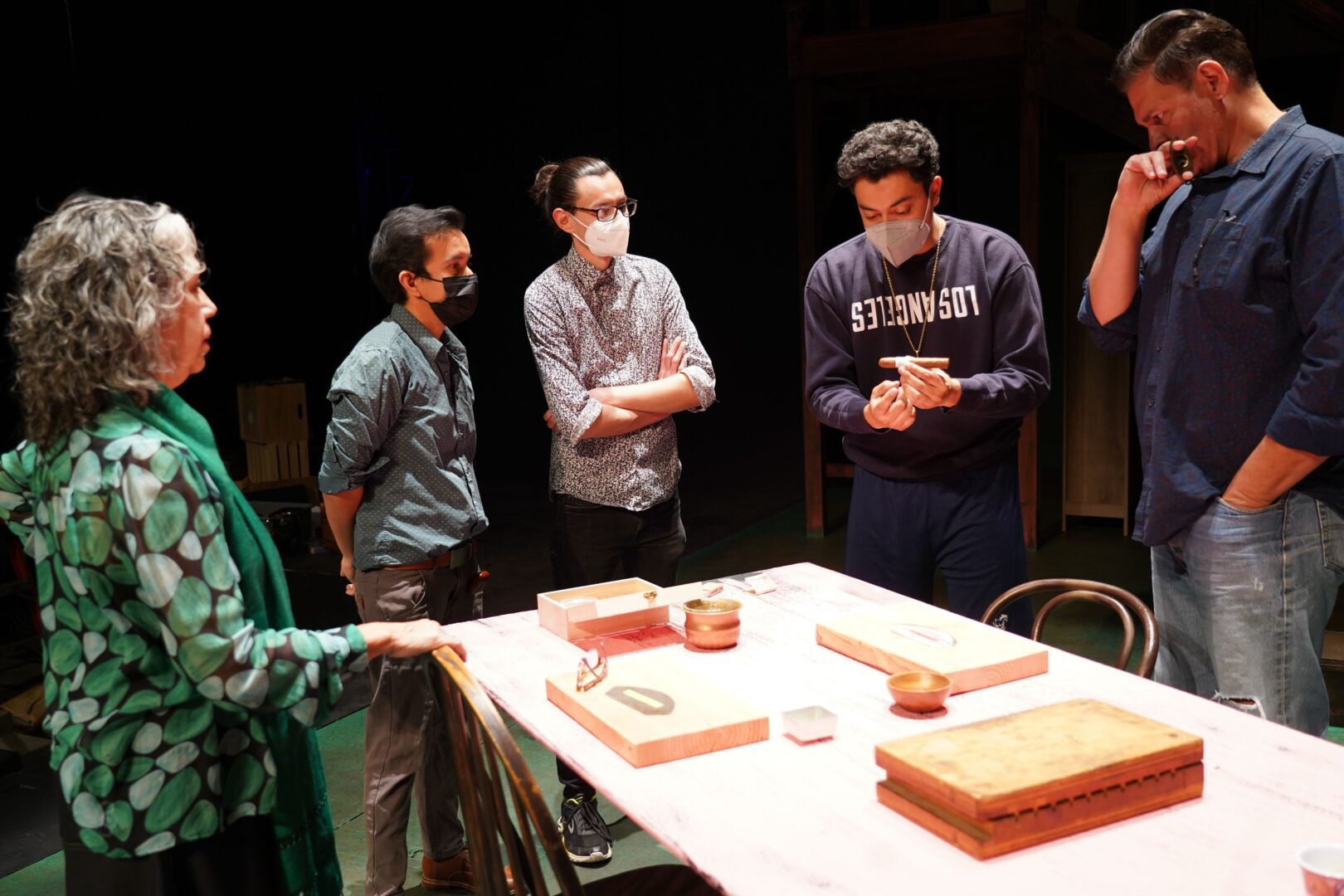
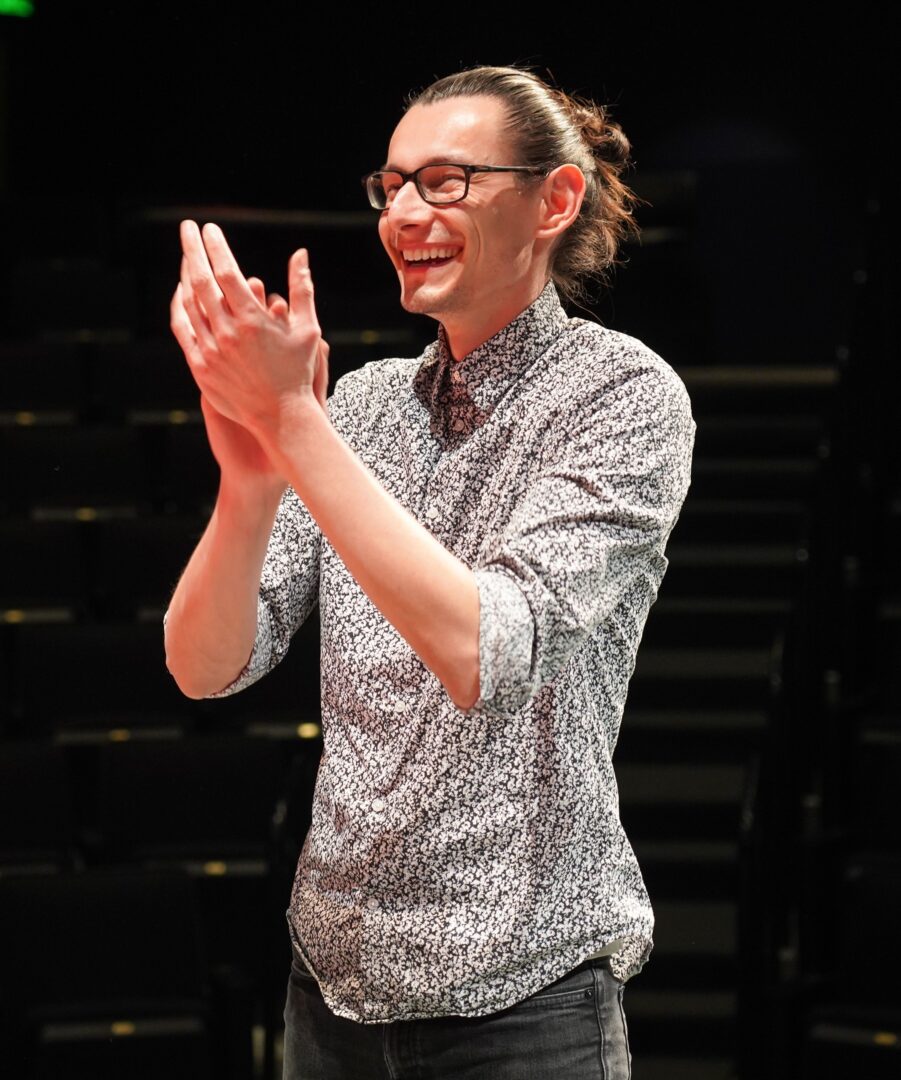
Jonathan Muñoz-Proulx (center) with the cast of Anna in the Tropics | Photo by Eric Pargac / A Noise Within

“But I also wear an artistic hat where I work with and Geoff and Julia (Elliott and Rodriguez-Elliott, artistic and producing directors of ANW) and we talk about season planning and selecting directors and designers, discussing what’s going to be on our main stage. Over these three years, my relationship with them and the theatre has deepened. When I first started, I really just had one job – these community partnerships. But because we’ve built trust and an artistic language together, I’m now supporting season selections and also working more closely with resident artists (RAs). The RAs curate and present their own reading series called ‘The Resident Artist Series’ which I’m going to be curating and producing.”

And directing ‘Anna in the Tropics’ has added an extra responsibility. To say that Muñoz-Proulx has been busy lately is quite an understatement. He states, “I’m in Zoom meetings all day with artists, answering emails, and reading plays. Then during dinner I do some directing prep and head into the theatre for rehearsals. We work from 6 to 11 pm on weeknights – they’re really long days for me. It’s a dream life for six weeks and then I’ll probably sleep for a month afterwards.”

In spite of the long days and sleep deprivation, Muñoz-Proulx excitement when he talks about ‘Anna in the Tropics’ comes through even when he’s speaking to me by phone. He describes, “It’s a highly theatrical play where these cigar workers escape the monotony of their day-to-day life working in a factory and are transported by the words of the classic literature read to them beyond the factory walls. There’s a wonderful balance of very intense drama and tension with a really poetic, musical freedom of the play. It’s a roller coaster – it just goes and goes and goes until it reaches its climax. And it’s epic! It will just pull the audience along this roller coaster ride to the end.”

“A lot of the play happens as the workers are coming in to work, as they’re leaving work, and in between their shifts,” Muñoz-Proulx explains. “So it’s almost like you’re seeing the characters at the water cooler chatting about the drama and the gossip of their lives – who they love and who they hate. Their lives start mirroring those of the characters’ in the book. And the characters in the book are giving the factory workers the courage to say what they want and ask for what they need and feel empowered to live their fullest lives. It reminds me of today where we might watch television or a movie and see our identities reflected back to us to give us the courage to be our fullest selves.”

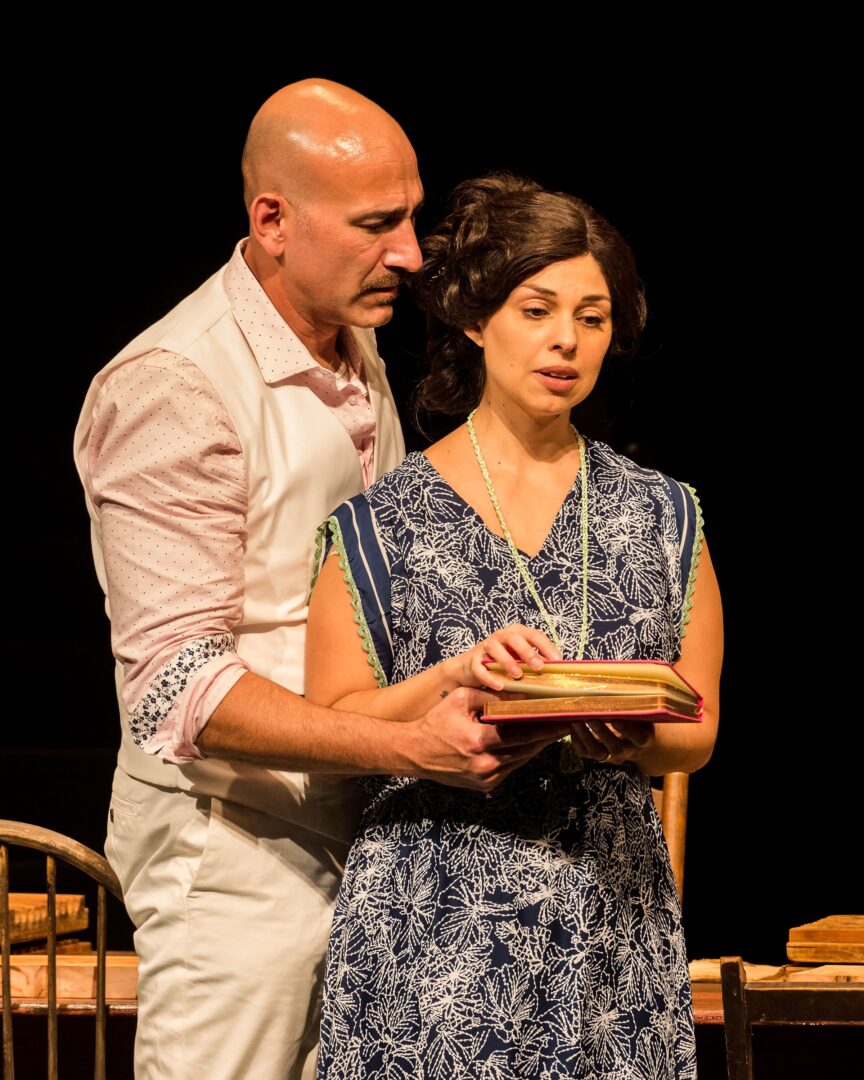
Jason Manuel Olazábal and Tania Verafield | Photo by Craig Schwartz / A Noise Within

Because ‘Anna in the Tropics’ is about Cuban-Americans, the cast is made up of actors who look like the characters. Muñoz-Proulx states. “It was very important to us that everyone identifies as Latino or Latina or Latinx. Among ANW’s resident artists, only two – Erika Soto and Rafael Goldstein –  are of Latin descent and we knew this is a play we were not going to cast from our RA community. So it was a great opportunity for ANW to meet a lot of new artists through several rounds of auditions. And, hopefully, this will be the start of some ongoing relationships with them.”

While it means that the cast will be new faces for ANW’s audience, they won’t be strangers to Muñoz-Proulx. He asserts, “I live, and work, and direct in Los Angeles so I’ve known and worked with most of the cast of ‘Anna in the Tropics’ for ten years. Even though they haven’t been to ANW necessarily, this is a community of artists whom I have a great relationship with. However, as a director, I’m not so concerned about having a shorthand with them or working quickly, we’ll find our own artistic language together. What matters most to me is that the people we bring into the room – the actors and creative community – have really big hearts and are pleasant collaborators. That doesn’t mean we all need to be best friends, it means we create a space where people can be imperfect, and vulnerable, and ask questions, and be supportive along that journey.”

I ask if people of color are now getting more roles and recognition in theatre. Muñoz-Proulx replies, “I think they are. I think it has become more and more unacceptable for theatres to produce plays that predominantly feature white actors. I think more and more theatres are producing plays written by playwrights of color. And more and more, they’re hiring directors of color. And more and more, not only are actors of color in those plays but, more importantly, actors of color are also in plays that don’t have to cast actors of color – like some classics or Shakespeare. I think there’s greater artistic freedom being celebrated in how we cast nontraditionally.”

“It isn’t that roles are color blind,” Muñoz-Proulx clarifies. “I gravitate towards the term color conscious because I think color matters and I think the audience does see it. And there can be some stories told about how folks identify on stage. But being color conscious, I think, allows us to let go of a default that every character is white unless we decide otherwise. I think being color conscious invites the possibility that a character could be whoever comes to the audition and really excites and surprises us with their interpretation of the role.”

Leandro Cano and Tania Verafield | Photo by Craig Schwartz / A Noise Within

“And it doesn’t matter if the blood relatives in the play are from a different race or culture,” expounds Muñoz-Proulx. “I think there’s a lot of freedom and flexibility in theatre that we maybe don’t have on film and television. In theatre, we can really build the artistic team; we can assemble the cast to how we decide to tell the story regardless of what they look like. The priority is that the cast is representative of our community. And in this state, our community is incredibly diverse Los Angeles. It’s important that within the whole season, we have a diverse balance of actors of color. But even with plays that have customarily white cast, we have people of color play roles that are traditionally played by white actors, as we did in ‘All’s Well that Ends Well.’”

When asked about his vision for the play, Muñoz-Proulx responds, “I’m very interested in how we can establish a simple and realistic monotony to this factory. I’m attracted to how we can show what their everyday life is like, but then infuse that with some form of magic, and poetry, and theatricality. And even though I haven’t seen a lot of other productions, I think that ours will probably have more magic and theatricality than other productions.”

Jonathan Muñoz-Proulx during rehearsals | Photo by Eric Pargac / A Noise Within

“That’s the type of theatre I love,” Muñoz-Proulx adds. “For example, if a character is having an emotional moment, I tell my team and my designers that I want to tease out that monologue, expand it to fill the room. That might mean that with light or sound or color we exaggerate or emphasize what’s going on. Even though the work inside the factory isn’t a particularly joyous moment or particularly traumatic instance, that might be represented in a more abstract and magical way. It might not be what Nilo Cruz requires in the text, but I’m little by little finding moments – and you’ll see them – where there will be some theatrical magic.”                                   

“I want our audience to leave the theatre with the sentiment that the people we love and our relationships are the most important things we have,” says Muñoz-Proulx. “And it’s very easy to take for granted what we have even when it’s right in front of us … until it’s gone. We see these characters in this play really struggle with each other. But they also need each other to heal and to survive.”

“The play has an awareness – it is really interested in the tradition of rolling cigars, the tradition of bringing a Cuban culture to America,” enlightens Muñoz-Proulx. “It is very much about ‘How do we preserve and stay connected to our ancestors and to or legacy, and to the traditions that made us?’ And I think that’s a really beautiful theme that a lot of us can connect to. The play also engages with themes of modernity and progress and change taking place in 1929 just before the Great Depression. These characters are planning for a joyous future ahead, not knowing that the whole world is going to change and be crushed by the Great Depression. Having gone into this pandemic two years ago, and beginning to emerge from it now, never before have I thought so much about change, and recovering, and healing from change.”

Muñoz-Proulx couldn’t have better articulated what most of us are feeling at the moment. Because of what we’ve been through, we learned to distinguish the truly important and profoundly meaningful from a mere trifle and fleeting fancy – then to protect them fiercely and hold them close in our heart

‘All’s Well That Ends Well’ Goes on Stage at A Noise Within Theatre

Originally published on 11 February 2022 on Hey SoCal

Nike Doukas (far right) directing the cast of ‘All’s Well that Ends Well’ | Photo by Eric Pargac / A Noise Within

A Noise Within (ANW) starts the new year with Shakespeare’s “All’s Well that Ends Well,” the fourth production during its 30th anniversary season. On stage from Feb. 6 to March 6, it stars resident artist Erika Soto as Helen and Mark Jude Sullivan as Bertram. Nike Doukas directs this comedy that follows Helen and Bertram as they try to realize their individual dreams before they are eventually united in a fairy tale ending.

“All’s Well That Ends Well” focuses on Helen, a young healer, who convincingly persuades a cast of fools, romantics, and cynics to pursue Bertram, her runaway groom. In a play of wit and deception, these two characters take us with them as they go on a journey of forgiveness, hope, and love where we least expect it.

The play isn’t one of Shakespeare’s popular works, hasn’t been staged as often as his other comedies, and is even referred to as a problem play. Doukas has made it her goal to change that last reference and she might very well have the credentials to do so. She earned her MFA from the American Conservatory Theater (ACT) in San Francisco and is primarily a theatre, film, and television actress. She is also a well-known accent coach and has been directing for five years now.

Twelve years ago, she joined the faculty of the Art of Acting Studio in L.A., the sister school of the Stella Adler Studio of Acting in New York City (formerly the Stella Adler Conservatory) where she’s the head of acting; a main responsibility is teaching Shakespeare. Her students go on to work professionally and, in fact, one of them – Niek Versteeg – is in this production of ‘All’s Well…’ as the Second Lord Dumaine.       

While this marks Doukas’s directorial debut at ANW, her association with the repertory company and co-artistic and producing directors Geoff Elliott and Julia Rodriguez-Elliott dates a while back. She recalls, “We worked together on many Shakespeare productions as actors early on. ANW puts on one Shakespeare production every season, and sometimes they’d call me to help make the text clear for the actors to understand.”

“And my career as accent coach actually started in the very, very early days of A Noise Within when they were still at the Masonic Temple in Glendale,” adds Doukas. “Geoff and Julia knew I was good with accents and they asked me to do the accent coaching for ‘Our Town.’ It turned out to be a lot of fun so I still do that whenever I’m available.” She was the accent coach for ANW’s previous productions of “The Glass Menagerie,” “Othello,” “A Christmas Carol,” “Tale of Two Cities,” “Mrs. Warren’s Profession,” and “Noises Off.”

Asked how she became good with accents, Doukas replies, “It happened organically – I grew up in a family that spoke Greek; my two older sisters are conversational in Greek but I speak it poorly. It’s much like growing up in a musical home, you can’t help but be a little musical. And, being an actor, I was able to use and develop it. When I was at ACT, that was one of the things we had to learn. I did several plays where I had an English accent so people began asking me to help out. It wasn’t something I went after; it was merely happenstance.”

Doukas had pitched a couple of plays to Elliott and Rodriguez-Elliott but this was the first time their schedules meshed. She explains, “It was just timing. They plan seasons and I think they felt this was the right time. They wanted me to direct a Shakespeare play and they liked the idea for ‘All’s Well…’ that I suggested to them. They also felt it fits in with what’s going on in the world right now.”

“Besides, they do so much Shakespeare they wanted to find a play they hadn’t done in a while,” continues Doukas. “And this is one I truly love. Like all Shakespeare plays, it isn’t about one thing – it’s layered. I definitely see that there are two parallel stories: one is that of Helen who is desperately trying to make the world right by joining her life with Bertram’s and the other is that of Bertram who feels stifled at home and is urgently trying to make adventures, go to war, and meet other people.

Nicole Javier and Mark Jude Sullivan | Photo by Craig Schwartz / A Noise Within

“In the play, Bertram finds himself being pushed into marrying Helen whom he thinks of as a little sister. However, he wants agency; he intends to discover himself and what he wants to do in life. So he resists what everyone else recognizes – that Helen is the right person for him. It takes them both a long time, as they go on a physical journey until they’re ready to find each other again.”

Because ANW is a repertory company, Doukas was able to work with actors she already knows. She states, “Knowing them beforehand made my job easier. They have such a wonderful complement of actors there. When it came to casting the play, I knew who would be right for what roles; at least half of the roles are filled with company members. I believe there’s strength in an ensemble where you work with people over and over again; there’s a vocabulary that you share. At the same time, I think audiences really enjoy seeing actors play different roles.”

Doukas says of the experience, “It has been exciting and challenging. Because of Covid, we spent the first week rehearsing on Zoom. Then we got into the theatre while adhering to all the safety protocols. On our third dress rehearsal, we didn’t wear our masks for the first time. That threw them off and they kept forgetting their lines. They sort of memorized each other’s face with their masks on and they felt strange to be without the masks. But everyone has been a real trooper; we were being extremely careful because we’re all aware that shows have been delayed, or have ended, and we want to make sure we get the show up.”

That “All’s Well…” features strong female characters isn’t surprising, according to Doukas. “I think Shakespeare loved women … and he liked them. He thought they were smart, funny, strong, and brave. In this play there are two phenomenal female roles: Helen, who’s the central character, and there’s the Countess of Rosillion (played by resident artist Deborah Strang) who’s like her adopted mother. Helen is the engine for the play – she’s the mover and shaker. Directly or indirectly, she drives almost everything that happens. The countess is sort of her biggest cheerleader and helps her when she could.

Deborah Strang (left) and Erika Soto (right) | Photo by Craig Schwartz / A Noise Within

“But it’s true of all the characters. What I love most about this play is how kind everyone is to each other. It’s almost like ‘it takes a village.’ Everybody recognizes that Helen and Bertram are these wonderful human beings who need help. It’s a beautiful thing to see these strong, kind friendships being forged. Everyone is rooting for the main characters and helping them make the right decisions in their life.”

Doukas is heartened that women are now taking on bigger roles and responsibilities in theatre. She reminisces, “I’m old enough to remember that as a young actress, if you were in a Shakespeare festival, there might be three women in it and the rest were men. You looked around and thought ‘Boy, am I lucky to be here!’ Every once in a while you’d have a woman directing. But that’s just not true anymore. It has been very easy to cast women in men’s roles in Shakespeare productions. In fact, in ‘All’s Well…,’ half the company is made up of women; we have three men roles being played by women and it works very seamlessly. 
“Historically, there were often great roles for young women and older women but there was this big middle age where women just disappeared. Women also didn’t typically run the play – unless it was a Shakespeare play which has great heroines like Rosalind, Viola, and Helen. There are great playwrights from the past – Ibsen and Chekhov – who wrote strong female protagonists but we went through a long period like the 60s when fantastic roles for women were few and far between. And I’m very happy to say that’s over.”

Nike Doukas | Photo by Eric Pargac / A Noise Within

“Women playwrights are getting more opportunity – they’re writing about themselves and what interests them,” Doukas expounds. “When that happens, we get plays that are centered around women. I think women directors are also getting more opportunity so there’s more female perspective. It’s more equitable when everybody gets a chance. And, maybe more importantly, you start seeing what the world really looks like. I find that really exciting. In my experience in theatre, I find that men have been open and receptive to it. Because it’s not going to work unless we all agree that we want playwriting and directing and acting to be equal opportunity. When we stop competing or fighting each other, that’s when we can really make great art. What’s been really gratifying to me is that I feel women are stepping up, in part because men are giving them the opportunity. It can only happen when everybody’s allowing it to.”

As to “All’s Well…” being viewed as one of Shakespeare’s problem plays, she pronounces, “That’s getting to be an outdated perception. I think what people find problematic is that Bertram changes his mind about Helen very quickly. And there’s a bed trick that people get confused by. There are bed tricks in other Shakespeare plays but are not considered problem plays and people change their minds quickly in Shakespeare plays as well.

“The way to make that work is by laying the groundwork for the change of mind so the audience doesn’t wonder where that came from. It’s about developing the character, being scrupulous about the storytelling, and making sure that everything makes sense and that we can track the emotional journeys of the characters. I don’t think it’s a problem play at all and my goal is to change that perception. When people see it, I want them to leave the theatre saying ‘Why do people think it’s a problem play?’”

It would be too farfetched for “All’s Well…” to be regarded in the same category as other Shakespeare comedies overnight. Much like with Bertram, it would take “a village” – one production at a time, one director with a fresh vision at a time. Doukas is so accomplished and adept at wearing so many different hats that this challenge isn’t at all daunting. She relishes the opportunity to show the play in a new light.

And who knows? Perhaps in the not-too-distant future, even Shakespeare experts will come to appreciate “All’s Well that Ends Well’ as a great Shakespeare comedy. It could yet earn a place in the canon.

‘A Christmas Carol’ Returns at Pasadena’s A Noise Within with All New Music

Originally published on 22 November 2021 on Hey SoCal

The cast of “A Christmas Carol” | Photo by Eric Pargac / A Noise Within

After missing out last year on A Noise Within’s (ANW) “A Christmas Carol,” we can once again take in this much-loved show when it returns on stage from Dec. 2 to 23, 2021. Adapted from Charles Dickens’ novella by co-artistic director Geoff Elliott, it has been an annual holiday tradition and is celebrating its ninth year at ANW.

We’re also in for a treat with all-new, original musical compositions created by resident artist Robert Oriol, an accomplished composer and sound designer who was the recipient of the 2019 LADCC (Los Angeles Drama Critics Circle) Special Award for Distinguished Achievement in Theatrical Design. Speaking by phone, Oriol talks about being a lifelong musician, and his work at A Noise Within and on “A Christmas Carol.”

“I’ve been writing songs for rock bands to play on stage since 1975, but it was with the advent of computers in 1984 that I sat down and started writing music for others to perform,” Oriol states.

He goes on to explain, “You could write orchestral music from your studio without having to hire an orchestra at the outset. You could get it to a point where your music comes across, have it approved, and then take it to an orchestra, if necessary. Once computers got up to a certain speed, you could do the bulk of the writing and arranging yourself much quicker than you could have done prior. So that was when I was able to write more complex arrangements strictly for orchestra; it allowed me to write different styles of music to fit the play’s music requirements.

“The very first show I did for ANW was ‘Grapes of Wrath,’ where there was a Dust Bowl Era band on stage and I was the musical director. I didn’t write much music for it because a lot of the music came with the show — they were all acoustic instruments for the period — bass, banjo, and guitar. The next show after that was ‘Pericles’ which was a big orchestral show, and it still stands as one of the biggest shows we’ve ever done as far as sound.”

Robert Oriol, at far left, during “A Christmas Carol” rehearsals | Photo by Eric Pargac / A Noise Within

Oriol became a regular on so many ANW performances that it was only a matter of time before he would become a resident artist. He recalls, “There was one year when I was involved in three plays in one season. I was the composer for ‘Figaro’ and ‘Julius Caesar’ and I was in the band for ‘Three Penny Opera.’ I was setting up the music stands for ‘Three Penny Opera’ when they asked me if I wanted to be a resident artist. Probably because I was working so hard on all three shows and I was always there.”

And for someone who claims he doesn’t really enjoy putting the words to the music, Oriol did exactly that for ANW’s productions of ‘Tartuffe,’ ‘Figaro,’ ‘Julius Caesar,’ ‘Imaginary Invalid,’ ‘King Lear,’ ‘Tale of Two Cities,’ ‘Henry V,’ and ‘Argonautika.’

It was only natural, then, that Oriol would also be writing the music and lyrics for ANW’s longest-running show. He says, “I’ve been wanting to do the music for ‘A Christmas Carol’ and we started talking about it in 2016. But the rehearsal phase would usually be when they had just finished a brutal tech for a major Shakespeare play. It just kept getting pushed back for various reasons, like scheduling, and it was simply easier to go with what they already had because the cast literally knew every word of the songs and the choreography — putting new music in would make it a much longer tech process. So, I’ve been chipping away at it since 2016. It’s very rare that I have that kind of time to work with on a play — usually it’s a rush job with only a couple of weeks to do the whole show. This time, I could look at past productions on archival video; I could score it like a film, which is a real luxury.”

Asked about his process, Oriol responds, “After reading the script, I would get ideas from the producer about what era the play is set and what type of music is right for it. But it’s different at ANW with Geoff and Julia because we’ve known each other so long now. I’ll just send them some ideas and they’ll say ‘Yes,’ or maybe ‘A little less of this here,’ and they’ll tell me how long it needs to be. The key at that point is to just stay flexible because you know things are going to change. I just try to do as much of that as I can and then start attending rehearsals as early as possible. The first rehearsal is usually very telling because then I can hear the play, even though I’ve read it a few times — hearing the actors say the words changes everything and gives a real idea of direction. I usually record that and work with it. Then I start writing music where it should be under, try to come up with transitional ideas.” 

Alan Blumfeld as Christmas Present | Photo by Craig Schwartz / A Noise Within

For “A Christmas Carol,” the music was going to stay in the same vein as the previous production. Oriol relates, “At first I was only going to do a sound design plan. And then we talked about redoing the Fezziwig dance. The instruction was to make the dance the same length so they could use the same choreography, and I did that. The dance has a completely different music but it has the same tempo and length, with the same section structure as the original. But we kind of gave up on the idea of having the same length. Then the songs became completely different, although they’re in the same place in the script, they have the same subject matter, and the same characters are singing them.”

Adds Oriol, “Previously, the song ‘Glorious’ was used three times in the play. Instead of doing that, we have three different songs where ‘Glorious’ was used in the original production. The final song is actually the same melody from the Fezziwig dance. People with an ear for music, to some extent, will recognize that they’ve heard that music before.”

The actors will be working with the musical director on the songs. Oriol says, “That’s just not something I’m good at because I don’t sing well. I do hear the songs in my head and how I want them sung but it’s a matter of how we get there. I know keys will change — two of them already have because Geoff is singing and he wants them to be an A major rather than what they were. And I’ll be expecting more of that and we’ll just take it as they come. I’m really looking forward to hearing the actors actually sing these songs.”

“Tech on the show will take place on the 27th, the Saturday after Thanksgiving. Previews start Friday, December 3rd. We get feedback from preview audience in a sense because the presence of 300 people inside the theatre alters the acoustics of the space dramatically. Having them there really helps me determine if something is too loud, or too quiet, or if I need more of this here and more of this there.”

Having spent several years working on “A Christmas Carol,” Oriol is really excited about the audience’s reaction. Many of us who have heard his compositions for past ANW productions already know what to expect. We can only be wowed.        

A Noise Within is Back on Stage for its 30th Anniversary Season

Originally published on 28 September 2021 on Hey SoCal

Deborah Strang as ‘the poet’ in “An Iliad” | Photo by Eric Pargac / A Noise Within

After 18 months of shutdown, A Noise Within (ANW) returns to live theatre with a one-person show of Lisa Peterson and Denis O’Hare’s modern-day retelling of Homer’s epic “An Iliad.” Directed by Julia Rodriguez-Elliott, it features two ANW powerhouses Geoff Elliott and Deborah Strang in alternating performances as “the poet” and will be on stage through Oct. 3, 2021.

Speaking with us by phone, co-producing artistic directors Geoff Elliott and Julia Rodriguez-Elliott explain the theme of their 2021-2022 season, which marks their 30th anniversary, and detail ANW’s protocols to assure theatre-goers that their safety is a top priority.

Asked if there are plays they had originally planned for the previous season that will be included, Rodriguez-Elliott replies, “Yes, we brought back ‘An Iliad’ and ‘Metamorphoses.’ We have just experienced so much change in the world we live in, so our season’s theme ‘We Shattered the Chrysalis’ seemed like a very appropriate one to examine. And ‘Metamorphoses’ is at the center of that because it’s a play about transformation and the healing power of love as a change agent. We felt it would fit into the 30th anniversary season.”

Geoff Elliott as ‘the poet’ | Photo by Eric Pargac / A Noise Within

Continues Rodriguez-Elliott, “‘An Iliad’ is a play with one actor and no intermission so it was a means for audiences to get used to theatre again before we get into full productions. We figured we would learn a lot with this first show and any adjustment that we needed to make, we would be implementing in the following show, which has more cast members. More importantly, this play is always relevant; but more so right now, as we see and read about the rage and conflict going on everywhere. And with the Afghanistan withdrawal, it seems like it was written just yesterday. Additionally, it’s a brilliant piece of writing, and Geoff and Deborah are magnificent! It’s just a wonderful way to re-enter the world of live theatre.”
Prior to reopening, ANW developed and refined extensive plans to keep everyone safe which they outlined in a press statement. These procedures include, but are not limited to: staff and crew certifying as COVID compliance officers; initiating a deep clean of its HVAC system for optimal turnover of fresh air; routinely disinfecting high-touch areas; providing PPE; and following LA Department of Health guidelines.

Besides requiring full vaccination for all staff, artists, and volunteers who work onsite, ANW has also put into effect strict guidelines for theatre-goers. Before being admitted into the theatre, all audience members must provide full proof of vaccination. Masks are required regardless of vaccination status and will be available on site until such time that LA County stops requiring masks indoors. At that point, masks will continue to be strongly recommended.

A Noise Within enforces strict safety guidelines | Photo by Brian Feinzimer / A Noise Within

During the months when the theatre was dark, ANW filmed ‘An Iliad’ with Elliott and Strang alternating as “the poet.” Elliott performed it on opening night for a live audience and relates the experience. “It was surreal on a certain level. Like everybody else, other than doing online things here and there, including filming ‘An Iliad’ a while back, we’ve been dormant for a year and when I got out there, I wasn’t prepared for all of the masks. It was a really surreal experience – I had to adjust as I have never done before. It’s beautiful to be back, but also very strange.       

“From an actor’s perspective, it’s a totally different feel. We rehearsed it differently. We knew we had to do it in a certain way because we only had limited time with the resources. It was a three-camera shot. There are seven chapters in ‘An Iliad’ and Deborah and I alternated performing in each chapter. We were very happy with the product but this play was meant to have a live audience for the actor to connect with them. Hearing their response propels you as a performer and you learn something new each time you do it – which doesn’t happen when the show is filmed. There’s something about everyone being in the same room, watching and listening to the story, and everybody relating to what’s happening on stage. You can’t have that anywhere else. It’s a kind of communion; there’s something very healing about it.”

“The show is really a conversation with the audience and when you do it on film, you’re missing that piece because the camera becomes your partner in a sense,” adds Rodriguez-Elliott. “It’s also different from the directing perspective. When you’re filming, the director or director of photography is making choices about what the audience is going to see, whereas in a play you’re on stage and you have a much more open canvas. As an audience member, you get to choose what you want to be looking at at any given time. Essentially, the audience members are much more active participants in a live version then in a film version. And it’s been interesting because a lot of folks who saw it on film have returned to see it live and almost everyone said they like the live version so much more.”

Audiences who have come back to watch the play are reacting positively to ANW’s strict protocols as well. Elliott says, “Overwhelmingly so. The feedback we’re getting is that people are thankful we’re requiring those and that we’re diligent about imposing them. If someone takes their mask off during the performance, our house manager and ushers gently remind them to put them back on, which makes everyone around them feel safe.”

Deborah Strang | Photo by Eric Pargac / A Noise Within

ANW is bringing back their popular holiday show this year and Rodriguez-Elliott addresses it. “We’re making an accommodation for ‘A Christmas Carol’ because it’s all about families coming to watch the show together. We’ll move to requiring children 12 and under to show proof of negative test for COVID. I think by then people are used to that because that’s being done in schools.”

Concurs Elliott, “The joy of the show is having families and their kids there. I have to say that I’ve read reports about Pfizer coming out with a lower dose vaccine for kids which they think will be available by Halloween. I hope – and I have my fingers crossed – that a lot of kids will be able to get vaccinated by then.”

While looking forward to things getting better by the end of this year, they recall the challenges of the past 18 months. Rodriguez-Elliott says, “Like other theatre companies, we tried to find opportunities to stay connected with our audiences on Zoom. We also wanted to keep the artists engaged. It was a challenging time for performers because the lockdown happened very unexpectedly, so they were quickly displaced and essentially out of work. As an artist, what fuels you is working on the art. As an organization, we were ultimately lucky despite all the challenges because we have such a strong support system. Our board did an amazing job of helping us navigate the challenges of the moment. Our supporters and donors responded and supported us in extraordinary ways, as did the foundations. Certainly, the government support was critical to surviving 18 to 19 months and not producing theatre nor having opportunities to generate revenue. It’s unheard of.”
“And, again, from a performer’s point of view, these Zoom readings are such a cheap knock-off,” Elliott expresses in frustration. “The artist is just trying to hang on, trying to connect with partners because the reality is actors feed off of each other. But we’re not in the same room so I’m not really looking at them when I’m speaking to them in a scene. We have to just imagine all that and, man, it’s so synthetic; I don’t think I will miss it.”

Rodriguez-Elliott declares, “It was a place holder but definitely not a substitute for real theatre. That said, in terms of the artistic piece of it, I think we got so adept at the Zoom world that it has been useful in things like being able to provide resources for audiences. Now we’re doing these deep dives where we have directors and artists talk about the play and audiences can participate in advance of attending a production. There are things that can enhance the theatre-going experience but not a substitute for it.”

“Plays like ‘An Iliad’ aren’t really suited for film; and performing on film isn’t what we do as a theatre company,” Elliott states firmly. “At the same time I take my hat off to all the performers and directors who were involved with it because it’s not easy to do. And as Julia said there was a learning curve but I think we actually got very good at it.”

“We also held two virtual annual fundraising dinners, believe it or not,” Rodriguez-Elliott says.  “The first one came up really fast right after everything shut down and the second one was last April. That we got adept at doing – we partnered with a caterer and had dinner delivered to people’s homes. We tried as much as possible to recreate the feeling in the room when we have events.”

Photo by Brian Feinzimer / A Noise Within

While ANW will now stage all plays with live audiences, they will keep some of their virtual programming. Rodriguez-Elliott discloses. “We’ll have the post-show conversations so even if people don’t watch a show on a night with one, they can still participate. We’ll also keep the ‘deep dives’ which our audiences enjoy.”

As much hardship the pandemic and resulting shutdown presented, there were lessons gained, which Rodriguez-Elliott expounds on. “We were still doing a lot of work. We still had to figure out what to do next and how to get through the next three months, but we were able to do it in comfortable clothes. It gave us a chance to consider a work/life balance and I think that’s a positive take-away. The other piece is that we learned to be flexible. It really called on us to change direction a number of times and I think one of the advantages for us was the size of our organization – we’re rather nimble so we were able to make changes as things were coming at us 24/7.

“It has been very moving to see how important the arts are in people’s lives because that’s what we heard over and over again with our community during this period of shutdown – the importance of theatre and community and coming together. On that note, I would like to say that this is a great time for people to support local theatre in the same way that we’re dining out to support restaurants. I think there’s a level of hesitancy. But once they come and they see the protocols that are being followed, and that we’re taking safety seriously and meeting them where they are, I think people will feel more comfortable attending live performances.”

A Noise Within Goes Virtual

Originally published on 15 May 2020 in the Pasadena Independent, Arcadia Weekly, and Monrovia Weekly

A Noise Within’s virtual gala performance on Zoom (clockwise, L-R): Erika Soto, Kasey Mahaffy, and Rafael Goldstein | Courtesy Photo / A Noise Within

The unprecedented stay-at-home orders that were put in place mid-March following the coronavirus outbreak caused a closure of all businesses deemed non-essential. Venues where people usually gather, like theatres, had to shut down practically overnight; events were cancelled and performances were rescheduled. 

For A Noise Within (ANW), however, the show goes on – virtually. Speaking with me by phone, Producing Artistic Directors Geoff Elliott and Julia Rodriguez-Elliott disclose that work doesn’t stop despite the lockdown.   

“We’re essentially doing everything that needs to be done from home – lots of Zoom meetings with the various departments, the executive committee, the board. It’s a different kind of busy but it’s busy,” says Rodriguez-Elliott.

Stay-at-home orders notwithstanding, ANW recently held their first-ever virtual gala. Elliott explains, “A lot of planning went into holding a virtual gala in lieu of having our fundraising annual dinner on stage event. In the past, obviously, the money raised from the dinner on stage went to the educational department. This year it’s a little different because there are other challenges, so it was an overall ask to our supporters that they be a part of the gala. We didn’t know what to expect but it actually went very well – we hit our goal, which was wonderful.” 

Describes Rodriguez-Elliott, “People were able to join Facebook Live for the event. People who purchased tables for the event pre-COVID donated it back to the theatre. That was really incredibly generous. And then pretty much all the activities that we usually would do during the dinner on stage were all done virtually. We had a paddle auction which lasted 48 hours, we had performances of scenes from ‘Alice in Wonderland,’ which people were able to view through Facebook Live and also through Vimeo. Geoff and I paid tribute to the honorees, as we usually do every year during the dinner on stage event. Everything that we would have done at the dinner on stage, we tried to duplicate except that it was all virtual. It was a different experience but it was a wonderful way to stay connected. It’s not a substitute for being together in a room but it was a playful way to do it. I think people appreciate the opportunity – I know we do – to connect even if we’re doing it in a little box.”

“You’re trying to be as normal as possible virtually,” I comment. And Elliott, who thankfully hasn’t lost his sense of humor, quips, “As normal as possible for people who are abnormal generally.”               

Alicia Green at the virtual gala | Courtesy Photo / A Noise Within

After two months in lockdown, Californians are slowly coming out of isolation. But our world will be vastly different from life as we know it. Even when restrictions are lifted for theatres at last, our new normal will probably involve wearing masks in public spaces and distancing in large gatherings. So how will theatre companies navigate this uncharted territory?    

Rodriguez-Elliott says, “Various scenarios for the fall and spring seasons are one of the many things we talk about with our staff, with each other, and with Michael, our executive director. We’re crunching numbers and looking at half capacity – for instance, having every other seat, every other row. And if that were the case, we could have longer runs. We think that’s what’s going to be the scenario for a while in our line of business. We’ll just have to see how it plays out. We’re looking to Gov. Newsom as to the different phases of reopening and we’re paying close attention to the advice of the experts. It’s a day-to-day situation which changes constantly.”

“And we expect that when all is said and done, there will be very specific guidelines that we’ll follow – whether they’re based on national directives or at the local level – about places where people assemble in terms of what you can and can’t do,” Rodriguez-Elliott adds. “As Geoff said we’re trying to determine what that might look like for us. Traffic-wise, how do you get people in, how do you get people to the bathrooms, etc.”

I inquire how they’ll handle the season schedule and Rodriguez-Elliott asserts, “The schedule that we announced is what we’ll uphold and anticipate we’ll be following. That said, things are shifting on a daily basis so we have to be able to adapt to that. We’re looking at multiple contingencies, various plans that would address changes in our ability to get into the space, or in the number of audience members that we’ll be able to accommodate.”

“What message do you want to impart to your audience,” I ask. “We will honor tickets and subscriptions, if and when the schedule changes,” replies Rodriguez-Elliott. “Also, people can help their local arts organizations during these very challenging times by either contributing if they’re able to or by purchasing a subscription.”

“I want to add one thing that picks up on something Julia said earlier,” Elliott interjects. “We’re not going anywhere. We’ll be back healthy and strong. There’s something about live theatre that can’t be duplicated. We’ve been in caves, and rooms, and around fires, for tens of thousands of years telling stories to each other and relating the human experience. And that’s something that’s always going to be with us. We personally are in a very good place – we have a lot of support and supporters. At this moment in time we’ve been able to keep our whole staff on without having to furlough anybody. We have a full staff working from home. Who knows what the future holds, but that’s where we are right now. But we’re feeling pretty confident about it.”

“We have a lot of online content,” continues Rodriguez-Elliott. “We’re hosting classes online. Our ‘Summer with Shakespeare’ (SWS) program is going virtual this year, which should be interesting. We’re doing as much as we possibly can until we can get back into the theatre.”

From June 15 through July 17, students attending SWS can access the dynamic and immersive classes safely while under the tutelage of professional artists working at ANW.

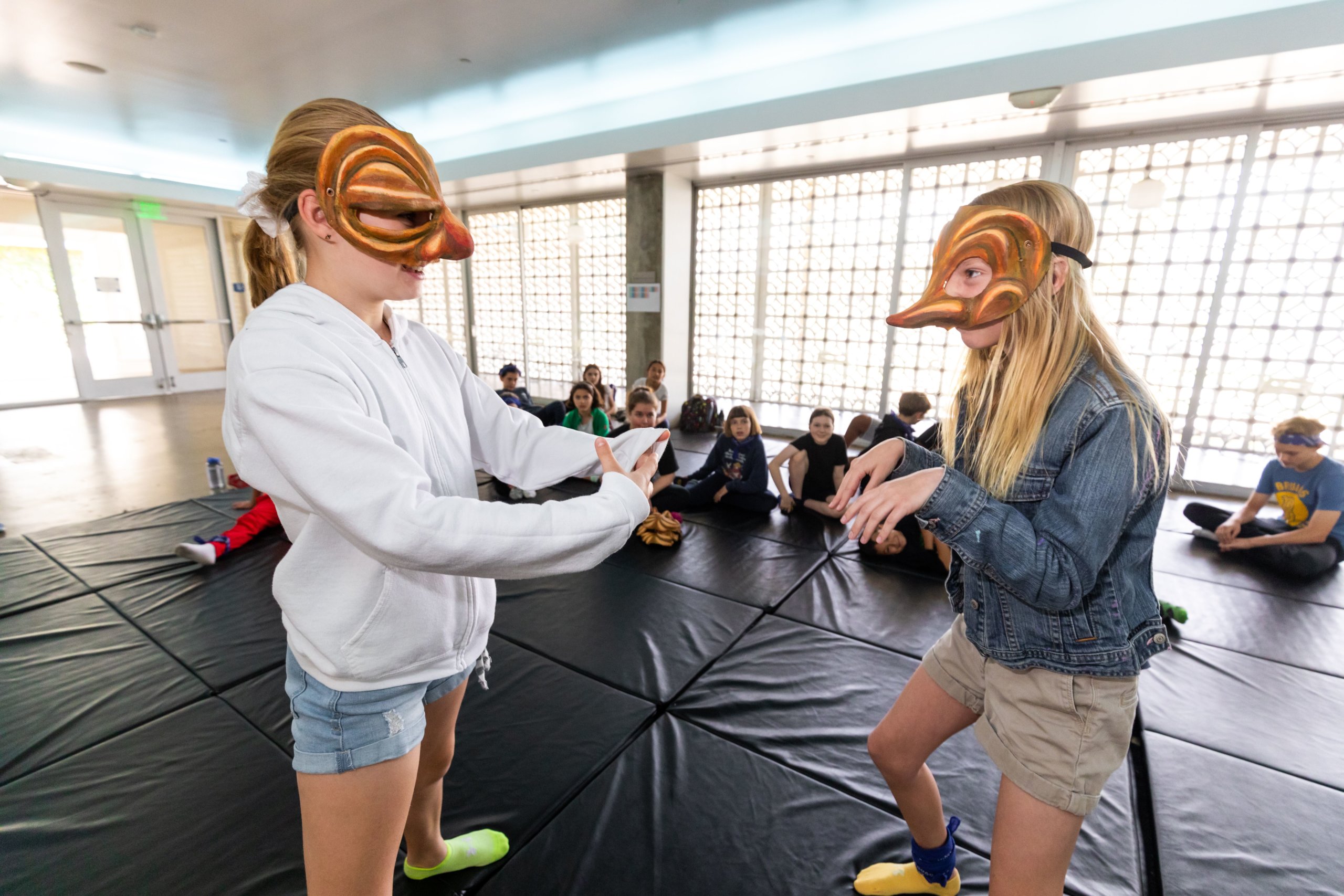
Little kids participating during ‘Summer with Shakespeare’ camp | Photo by Brian Feinzimer / A Noise Within

“Connecting with our community has always been a key component of A Noise Within,” pronounces Alicia Green, Director of Education and Community Outreach. “With health and safety at the forefront of our strategy, we decided to transform our schedules and programming so we can engage with our students from their homes. The online program has been designed so that it can continue to provide unique exposure to a variety of classic plays and guide students through the intricacies of the world of theatre.”

As in years past, the classes will cover a wide range of topics to enrich students and teach them about all aspects of stagecraft and what goes into a stage performance. Campers will learn about swords/stage combat, magic, mask work, voice work, stagecraft and design, and movement. Beyond expanding traditional theatre skills, SWS helps students with public speaking, builds their self-confidence, and connects them with pedagogically trained professionals.

“We’re offering several options for each of our tracks,” Green says. “It’s very flexible so that anyone can do it, and we make it work for every student. With everything being so unknown, we want to make sure to do what we can to provide top-tier theatre education while understanding that a full five weeks is not viable for everyone. Our program is structured so that families can choose what works best for their family, whether that be one week, or three, or attending our entire five-week camp. We want to give children the chance to be creative and collaborate with their peers while still being safe.” 

Even older students have fun at the summer acting camp | Photo by Brian Feinzimer / A Noise Within

There are three tiers of the program broken down into age ranges. Track 1 is for students aged 14 through 18, Track 2 is for students aged 10 through 13, and Track 3 is for students aged 6 through 9. Each track is curated specifically to the age group and can even offer class credit for certain schools. The summer acting camp culminates in a final performance that will be livestreamed on YouTube to share with students’ friends and family.

“Students and families can expect the same quality they have always known with Summer with Shakespeare,” assures Green. “But now we are able to welcome families from across the country and incorporate technical elements via the magic of the digital age we didn’t have available before. Classes are both live and pre-recorded (utilizing platforms that are still engaging even when not live) and the schedule is flexible to allow students breaks from screen time and also provide ease of sharing computers and space. We have built in unstructured fun time to allow students to engage socially. While it’s not the same as being in the same room together, the social component of camp and youth is so important that we did our best to replicate it online!”

By now, parents have spent over eight weeks essentially home-schooling their children. They can take a break by sending their kids to ‘Summer with Shakespeare’ online camp (enroll here). Come fall, maybe schools will reopen and we can slowly get back to normal, whatever that looks like. We may even be able to once again see a play – A Noise Within’s ‘Alice in Wonderland’ would be a great escape from our new reality.

A Fantastic Journey Awaits Us in ‘Alice in Wonderland’

Originally published on 4 March 2020 in the Pasadena Independent, Arcadia Weekly, and Monrovia Weekly

| Courtesy photo

Be transported to a fantastical universe when ‘Alice in Wonderland’ goes on stage from March 1 through April 18 at A Noise Within. Adapted by Eva Le Gallienne and Florida Friebus from the beloved Lewis Carroll books ‘Alice’s Adventures in Wonderland’ and ‘Through the Looking Glass,’ this production is directed by two-time Los Angeles Drama Critics Circle Award winner Stephanie Shroyer. Erika Soto stars as Alice and is joined by Susan Angelo, Bert Emmett, Rafael Goldstein, Julanne Chidi Hill, Kasey Mahaffy, Justin Lawrence Barnes, and Gabriel Leyva.

The story begins in Victorian England then quickly ventures into the topsy-turvy world that makes Wonderland. There we meet the various creatures that Alice encounters along the way. An ensemble cast becomes the white rabbit, the queen of hearts, the Cheshire cat, the duchess, the caterpillar, the mad hatter, the March hare, the dormouse, and all the other characters.

Rafael Goldstein, who is part of the ensemble, sits down with me one late afternoon to talk about the play and his many roles. In an earlier interview, he mentioned that his father was a teacher and he took home books for the children to read every night. I ask if ‘Alice’s Adventures in Wonderland’ was one of those books.

“I don’t think it was, but we did watch a couple of made-for-TV productions of it,” Goldstein recalls. “Although my father introduced me to the ‘Jabberwocky’ when I was very young because he would use it in his classes to teach parts of speech. For those who are unfamiliar with it, the ‘Jabberwocky’ is a nonsense poem using weird words. But by virtue of the way they sound, and their placement in a sentence, you can apply whatever meaning you wish to the poem. That’s sort of Carroll in a nutshell.”

“If this anecdote is to be believed, when Carroll first started writing ‘Alice’s Adventures in Wonderland,’ he set out to write a children’s story without a moral,” continues Goldstein. “All the children’s tales at the time taught lessons – listen to your parents, don’t talk to strangers, stuff like that. This was pure fancy, it was creating this world around this child that she could disappear into. It’s an interesting take because Alice is being confronted with characters – animals and people – and the rules of that world keep changing so she’s having to adapt. You can’t help but feel that it’s a comment on what the world does to children – people who are thrown into a country where they don’t speak that language so they have to figure out from clues and context what the rules of engagement might be. And it really just points out the fact that the rules in any world can be arbitrary and how, often, children bear the brunt of those arbitrary rules.”

Rafael Goldstein (left) in ‘Rosencrantz and Guildenstern’ Are Dead | Photo by Craig Schwartz / A Noise Within

According to accounts, the original handwritten and illustrated copy is now lost and Carroll made revisions when he gave in to pressure to publish it into a book. Perhaps that was when he added the situations where lessons can be gleaned, I conjecture.

Goldstein explains, “He did mention in subsequent interviews how people were finding meaning and he was cagey about that. There’s a famous riddle in ‘Alice in Wonderland’ – why is a raven like a writing desk? Scholars at Oxford and Cambridge have been speculating whether it’s a math or a literature joke. Carroll was a mathematician so mathematicians claim that it’s clearly a mathematical equation and if you look for the clues you can find out the answer to it. Others were saying that one of the explanations for why a raven was like a writing desk was a reference to Edgar Allan Poe. But Carroll resisted all attempts to explain his work or to assign any meaning. He waffled a lot on it, but, at the end of the day, I think he wanted to maintain this aura of mystery and whimsy. And I think this production succeeds in that – it is a presentation of this world and does a good job of honoring Carroll’s stated intention. But as to the work itself, I think audiences will see what they want to see.”

Asked for his impression, Goldstein confesses, “I’ve read it now a couple of times during this process and I’m guilty of assigning meaning to it. It does feel like he’s preparing Alice for adulthood. And I feel like he’s trying to give her this story that illustrates how difficult it is to navigate the adult world.”

“This play combines both ‘Alice’s Adventures in Wonderland’ and ‘Alice Through the Looking Glass.’” elucidates Goldstein . “The first half is light and whimsical and zany. The second half is much more abstract and a little threatening, a little philosophical. I think that that structure is there on purpose – to put you at ease in the first half so that you’re open and available for the philosophical dissertation that he’s presenting to Alice.

“It’s a cast of eight – Erika Soto is Alice and stays Alice throughout and the other seven of us are taking on the rest of the roles. We’re doubling, tripling, quadrupling and reaching very deep into our bag of character voices and faces. I play the mad hatter, Tweedledee, a crab, which I’m very proud of, a caterpillar, and some Victorian spirits. The characters in this adaptation are straight out of Lewis Carroll’s – they are very colorful and each of them has their own point of view and communicating so they have to be reflected in the performance.”  

“It’s been a wonderful challenge, actually,” Goldstein discloses with a laugh. “It’s been a lot of fun. Because these characters are so iconic and so much a part of the vernacular of the literary world, you’ll find a reference to ‘Alice in Wonderland.’ So people coming to the show will have their own versions of Alice, the mad hatter, the March hare, Tweedles Dee and Dum. Part of what we’ve been exploring and experimenting with is finding a new way of approaching them.

“Yes, this production is recommended for ages six and up but we also have to remember that adults are watching it as well. Tapping into what makes these characters compelling and indelible, and why they’ve lasted for so long has been a joy.”

Rafael Goldstein as ‘Henry V’ | Photo by Craig Schwartz / A Noise Within

How does this production make a fantastic world come to life? I inquire. Rafael says, “We have access to the best designers in town. This play is a director’s and designer’s dream. Actors can only do so much with our physical bodies and everything else will come from the costumes, sets, lighting, music. They are crafting this world around us. In the rehearsal hall, we would be going through a scene and all the actors would be deep in thought about what’s happening in it– she’s going to cry and because she’s a giant, her tears will create an ocean. And all of us are sitting there asking how this is going to happen. Then we get down into the theatre and the designers will say ‘we’ll just throw a light there, we’ll have a sound cue there’ and as we run it, all of a sudden the world becomes clear. And while Carroll might not want us to have a point of view or an attempt at understanding or deconstructing the piece, it is the artist’s job to have a point of view, to have this nonsense make sense. The designer’s work is valuable in communicating that not only to the actors but to the audience as well.”

Goldstein says about the production, “There’s something in the production that will appeal to all ages. For those of us who are older, it’s an opportunity to reclaim a piece of childhood that we think we’ve left behind as we become adults. It’s a chance to live in that fantasy world unapologetically. And I’m reveling in that opportunity right now where play is serious and serious matters are ridiculous. That inversion is fun to experiment with.”

“I think this story is important especially now when the world seems inexplicable. I think this play does a good job of saying ‘It’s okay. No matter how strange, upsetting, unpredictable, or crazy things around you may seem, there’s a very good chance you will prevail because you’re prepared. ‘Readiness is all,’ as Hamlet says,” concludes Goldstein.

Looking at it that way, we can all take life lessons from Alice’s experience and be ready for whatever the world throws at us.      

‘The Winter’s Tale’ at A Noise Within Brings Us to Tears

Originally published on 20 February 2020 in the Pasadena Independent, Arcadia Weekly, and Monrovia Weekly

 
Left to right: Jayce Evans and Frederick Stuart | Photo by Craig Schwartz / A Noise Within

A Noise Within opens its Spring event with William Shakespeare’s ‘The Winter’s Tale,’ going on in repertory from February 9 until April 11. Directed by Geoff Elliott, it features Frederick Stuart as Leontes, Trisha Miller as Hermione, Brian Ibsen as Polixenes, Jeremy Rabb as Camillo, Deborah Strang as Paulina, Angela Gulner as Perdita, and Alan Blumenfeld as Antigonus/shepherd, Alexander de Vasconcelos Matos as Florizel, Jayce Evans as Mamillius, Eric Flores as young shepherd/ensemble, Matthew Faroul as lord/ensemble, Katie Rodriguez as Emilia, Robert Anaya, Christopher Barajas, and Thomas Chavira.

‘The Winter’s Tale’ tells the story of Sicilian King Leontes who, in a fit of jealousy, orders the death of his friend Polixenus and sends his wife Hermione to prison only to find out that he was entirely mistaken. He spends the next 16 years atoning for his sin and is redeemed in the end.

One late afternoon before rehearsal, I meet with Stuart at the theatre lobby to chat about the play, its relevance today, and his favorite roles, among other topics. “It wasn’t a play I particularly knew very well,’ he begins. “Coincidentally, it marked my introduction to A Noise Within. A very good friend of mine brought me to my first ANW play 12 years ago in the old space in Glendale and it was ‘The Winter’s Tale.’”

Jeremy Rabb and Frederick Stuart | Photo by Craig Schwartz / A Noise Within

Stuart summarizes the play for me and describes his character. “We’re staging the play in the 1930s, around the time of Mussolini, when fascism was taking hold. Leontes is essentially a dictator. He seemingly discovers that his wife is cheating on him and might even be nine months pregnant with someone else’s child. He has such certainty that he condemns her to jail and then puts her on trial. He wants to execute the baby but has second thoughts and lets one of his men put her in a place outside ‘so that chance may nurse or end it.’ It so happens that she is rescued by a shepherd and grows up.

“Not only does his wife die, but his son dies as well of, essentially, a broken heart at seeing his mother in such distress. He then finds out he’s mistaken and spends the next 16 years in absolute self-flagellation. He’s so appalled by what he has done and he tries to make amends by going to the grave of both his dead wife and son.

“The daughter later comes back into her father’s life. Unbeknownst to him, Paulina has a gallery with Hermione’s statue in it. And we see her come back to life. As to whether it’s a magical event or whether she stayed on the sidelines for 16 years to teach him a lesson, that’s up to the audience to decide.”

Frederick Stuart, Deborah Strang, Trisha Miller, Frederick Stuart, and Katie Rodriguez | Photo by Craig Schwartz / A Noise Within

Continues Stuart, “It’s a story that I think is so relevant nowadays because people are so certain about things, especially about their political opinions. It’s a kind of psychosis, a kind of madness, when you are absolutely certain about something. Even scientists’ mode of inquiry is to be doubtful or, at least, uncertain and that is a healthy state of mind. But we seemingly live in times when people are too impatient to be uncertain. I think it’s fitting that this play is set in the 1930s when there was this sense of uncertainty and people held on to Fascism as something they feel certain about all of a sudden. It’s a dangerous mentality especially for the masses to hold onto certainties as a movement – people are capable of doing anything when they’re certain and there are enough numbers behind that certainty – as we’ve seen in the last century.
“So this story is relevant for the times we live in but it’s also relevant to us personally as individuals. It’s always beneficial, before jumping to conclusions, to put ourselves in other people’s shoes, and have a little bit more compassion before we act in ways such as Leontes does in this play.”

Actors inhabit their characters despite how different they are from the roles. In this case, however, Stuart, actually connects with Leontes’s temper. He discloses, “I’ve learnt over the years, that I have rage inside me. Society tells us to conform, yet everybody has a certain rage about the machine, so to speak. I think it’s healthy to have rage, it’s just where to put it. I’ve been lucky enough to discover acting and I saw it immediately as a way to explore my psyche and put these apparently unacceptable states of mind – rage, lust, and so on – into some use. We’re living in such a society where it’s impolite or improper to display these feelings – especially in England where I grew up. There’s a lid that is put on into all of our natural instincts and emotions. In this play I am able to come on stage and let rip! It’s quite enjoyable. Oh my God, it’s fantastic! You’ll see some shocking things that I do in this play.”
Asked if he has favorite roles, Stuart responds, “I loved ‘Tartuffe‘ which wasn’t a particularly huge role – it was quite small, in fact. The first hour or so, everybody’s just talking about Tartuffe then he makes his entrance. But it was a wonderful character and I enjoyed doing that. Of course, Hamlet is a part that I will always remember playing – it’s iconic.

Frederick Stuart and Deborah Strang | Photo by Craig Schwartz / A Noise Within

“You know, it’s funny, Deborah Strang, a veteran actress here at A Noise Within, said a great thing – it’s the one you’re in that’s the favorite. And I have to say, I’m learning a lot about myself and my craft. This play came at the right time … I’m ready for this role. The experiences I’ve gained and where I’m at in life have deepened me as a human being. I have different outlooks on life now. Sure, you can play Leontes as a young man in the first act. But when you come back in the second half of the show, it’s 16 years later, and you have to understand what compassion is. And as a young man, I gave lip service to compassion. I think that’s what aging is about – it’s about realizing that we are finite and mortal. And sometimes we’re frail and there’s nothing like the smile of a stranger, or a helping hand, or some kindness. It means so much especially as you get older.
“Not too long ago, I played Sydney Carton in Charles Dickens’s ‘A Tale of Two Cities.’ That is one of those roles that crack you open. As you progress through roles, each time you tackle something, you wonder whether you’re capable of bringing to it what is needed. For that particular role, it became very emotional at the end because he has to walk up these steps as he says this beautiful line – ‘It is a far, far better thing that I do than I have ever done; it is a far, far better rest that I go to than I have ever known.’ It’s heartbreaking. And that is a man who was so cynical all his life and ends up preparing to die to let another man live because he knows this man will make the woman he loves happy.”

“There is a real emotional journey and you just wonder whether you’re up for it,” Stuart expounds. “A similar thing is happening right now with ‘The Winter’s Tale’ because it has an ending that is so emotional and bittersweet. I didn’t know how it was going to affect me. It’s very personal for me in the same way that Hamlet was to me. I am an only child who never knew his father. My parents were living in Hong Kong and he was a journalist. When my mother was eight months pregnant with me, my father died during a hurricane. Perhaps because I was in the womb, I had a connection with that particular moment where death was transcendent. It’s such a magical, universal, and profound moment for an audience to experience because, no matter where we come from, that’s the one thing we all share as human beings – we know there will be one day that will be our last. To see this moment that Shakespeare has created come to life, literally, is overwhelming.

“We’ve all worked together before and we all know each other intimately. So for this moment to happen amongst us, it’s almost as if the audience is privy to a private moment amongst the actors on stage. From the first rehearsal onwards, we felt that this meant something profound to us. Rehearsal after rehearsal, with just us on stage, without an audience, we were in tears all the time.”

Left to right: Angela Gulner, Frederick Stuart, and Alexander De Vasconcelos Matos | Photo by Craig Schwartz / A Noise Within

Stuart can’t predict, though, if the audience will react the same way. He states, “There’s so much out of your control and when you focus on those, you’re disempowered. I’ve honed down my own life only to the things that I can control and within this play I can control what I do as an actor and how I receive other actors. Luckily, I’m surrounded with actors whom I admire and trust and love and the connections are so real and emotional. It feels as if we’re giving birth to something very magical. That said, I hope the audience is walloped.

“My first theatrical experience was Marcel Marceau, the French artist and mime. I saw that as a kid and there was something about the lights coming down and having a communal experience. It’s not the same as cinema. You’re presenting a piece of writing that has lasted for centuries for good reason. That’s why the Greeks invented theatre – because it’s somewhere we could experience something larger than ourselves and be emotionally connected with. This play does that, it’s bigger than the sum of its parts. I want the audience to feel that.”

Brian Ibsen, Trisha Miller, and Frederick Stuart | Photo by Craig Schwartz / A Noise Within

Acting didn’t come early in Stuart’s life. He reveals, “I was at boarding school when I was in England but I was dreadful in academia. When I was 16, I played the Artful Dodger in the school production of ‘Oliver’ and I was a great success. So that got me thinking about it. I left school, and because I didn’t have any qualification for any career, I went into construction for a while – I carried bricks up and down ladders. I was very good-looking as a young man … you’d never guess it. There were commercials at the time who featured someone who looked similar to me. And the bricklayers would say, ‘Pretty boy, didn’t you see yourself in that advert on TV last night?’ I signed up with a modeling agency and I started booking commercials – I had an entire career of it.

“Then I decided I wanted to go into acting and I auditioned for drama schools. I got into The Royal Central School of Speech and Drama, which is one of the better drama schools in England; I was about 24 years old. In 2005, I came to Los Angeles with dreams of becoming a movie star and ended up falling in love with theatre all over again. I studied with the great Larry Moss and then I found A Noise Within. While I have TV and film credits, theatre is where I feel most at home.”

Finally, I ask what would be a dream role for him and why. Stuart replies, “I’d love to do ‘Richard II’ because he’s very conflicted. He’s being appointed, apparently by God, to be the king. But he is the most inept character you could ever have as the king. And he kind of knows that. So he’s dealing with everything from the point of view of someone with no self-esteem. It is very interesting to see someone grapple with a position that has been thrust on him.”

An inept king may be the character that’s most unlike Stuart but there is no doubt that he would be a believable Richard II. As his performance in ‘The Winter’s Tale’ demonstrates, he is magnificent in every role he takes on.

A Noise Within Unearths Sam Shepard’s ‘Buried Child’

Originally published on 28 October 2019 in the Pasadena Independent, Arcadia Weekly, and Monrovia Weekly

Shown left to right: Angela Gulner, Geoff Elliott, and Zach Kenney | Photo by Craig Schwartz / A Noise Within

Renowned American playwright, actor, and director Sam Shepard was born on November 5, 1943 at Fort Sheridan, a military base just outside of Chicago, Illinois. His father served in the United States Army Air Corps during World War II and continued to serve in the U. S. Air Force after the war. Shepard’s family moved all over the United States and to Guam before eventually settling in Duarte.

While Shepard was attending Duarte High School, he got interested in theatre and writing. And it was in Duarte where his Pulitzer Prize-winning play ‘Buried Child’ began to take shape. This hauntingly absurd play, which A Noise Within (ANW) first produced during their 1997-1998 season is back home once more.

On stage from October 13 through November 23, ‘Buried Child’ is directed by ANW’s  Producing Artistic Director Julia Rodriguez-Elliott. It stars ANW’s Co-Producing Artistic Director Geoff Elliott as Dodge, Deborah Strang as Halie, Michael Manuel as Tilden, Frederick Stuart as Bradley, Zach Kenney as Vince, Angela Gulner as Shelly, and Apollo Dukakis as Father Dewis.

Shepard’s powerful masterpiece, set in America’s heartland, details with wry humor the disintegration of the American Dream. When 22-year old Vince unexpectedly shows up at the family farm with his girlfriend Shelly, no one recognizes him. The unraveling of family secrets that follows is a funny, albeit unsettling, look at disillusionment and morality, and how people address and cope with their family’s dysfunction.

Zach Kenney, who’s performing at ANW for the first time, sits down with me at the theatre’s lobby before rehearsal one afternoon. I start our conversation by asking if he’s familiar with Shepard’s play.

“I am very familiar with the play,” Kenney answers. “In fact, it premiered in 1978 in San Francisco – my home town – at the Magic Theatre where I took my first acting class. It’s over by fort Mason which is a beautiful part of the city. In my teenage years, I worked on several productions at the Magic, in association with my training at American Conservatory Theater and in the Young Conservatory. That Shepard debuted ‘Buried Child’ there was memorable for me.

“It’s a story about a family in the Midwest. Shepard himself grew up in Fort Sheridan in Illinois so he knows that feel. All great American playwrights, I think, are essentially asking, in one way or another, ‘What does it mean to be American?’ I think Shepard takes that a step further, he puts a finer point in it, in asking ‘What does it mean to be a part of the American family dynamic?’ So a lot of his plays are about family. This play is definitely so. He’s spoken to the fact that it’s semi-autobiographical in some sense. While it incorporates elements of absurdity and surrealism, it also integrates his relationship with his father and his place in the family. I play a character named Vince who, with his new girlfriend Shelly, is ostensibly from New York and is traveling all this way to try to pick up where he left off after leaving several years ago.”

Zach Kenney | Courtesy photo / A Noise Within

Kenney continues, “Shepard himself had gone away to New York – he was involved in the jazz music scene in New York in the 1970s. Then later in life, he tried to reconcile with his father, with whom he had a very complicated relationship. A lot of what he brought in writing this play was very personal. So I’ve tried to consider some of those elements in my own take on the piece. This is my first Shepard play and this undoubtedly is the play that I’ve always wanted to do. I think it’s one of the great roles for a young American actor to tackle. This role is funny – Shepard once said that the role of Vince has always been problematic for him. All the other characters are fragments – figments of the real thing. But the character of Vince is more true to who he was, it’s  the real McCoy. And, like our acting teachers used to say, it’s hardest to play yourself. I think, in that way he had – I  don’t want to put too fine a point on it – maybe a shyness about the character of Vince.

“But I don’t have that reticence of revealing myself. For me it’s exciting not only because of what the script has me say but also of what the script has me doing. Vince can’t figure out why no one recognizes him. It’s confusing and haunting but there are moments that are written in where, perhaps, there’s a glimmer of recognition between Vince and his father. That isn’t something that Shepard wrote a big speech about. It’s simply between two actors on stage mostly in silence. And that’s one of his real genius – he created these moments that are alive between actors. He knew it from different angles; having been a playwright, actor, and director himself, he was able to switch those lenses.”

Shepard didn’t really make clear Vince’s circumstances. Kenney describes, “He’s been away for about six years – we don’t really know why he went away and why he decided to make the trip back at this moment. He’s got a young beautiful girlfriend, so perhaps the ambitions of this relationship has brought him back. Those were all the juicy, fun things to figure out together in the room. But it’s not explicit in the play. Not to be hokey about it, but I think Vince, in a lot of ways, embodies the future of America. I think three years after the end of Vietnam and 40 years after the Dust Bowl era, Shepard was looking back on America – the ground we just tread. And he wanted to ask what’s the next generation gonna have? That rings true today, obviously, for the challenges, the changes, and the prospects of the American heartland. It’s self-seeing what’s around the bend in this modern era.”

Did Rodriguez-Elliott give specific directions to him in playing Vince? I query. Kenney replies, “I wouldn’t say she gave me any directions at the outset, in terms of her framework. She has a very generous way with actors – she knows a lot of these folks. Hearing her in the room, getting a feel for her style, wasn’t hard to do. She has a really great way of leading without constricting.  ‘Buried Child’ has elements of surrealism, absurdity, metaphor, heightened imagery, and you have to explore those moments, and figure out what’s inside of them and what they’re all about. And that’s how I want to work as well – by playing the extremes; it’s always easier to reel it back in. She’s allowed me to really explore some of the bold moments in this play and take risks because, I think, in the end, that’s what Shepard’s works demand of the artists who tackle them. He said his favorite actors are adventurous, outrageous, willing to jump off the cliff. That’s the kind of attitude and approach you have to bring to this piece.

“Shepard also talked a lot about the rhythm of this play – about how it’s musical, almost like jazz where things are going at a very nice clip and then there’s a long pause, even silence. Reading his plays is fascinating – it’s a really well conducted orchestra and you can hear the rhythm very well in your head, in the text, as you’re reading the play. So having fidelity to that serves us well, because it earns some of those changes in pitch and timbre and melody.”

‘Buried Child’ ensemble | Photo by Craig Schwartz / A Noise Within

Kenney goes on to describe his process, “I like to do a lot of research on the playwright, the time period, all the dramaturgical elements. I wouldn’t normally do such an extensive research into the playwrights and their arc as much as I did with Shepard – he’s such an icon in the American theatre. With his recent passing, and knowing they had wanted to take up this play again for quite a long time, I really wanted to get inside his head and get to know him a bit more.

“Then I work up the script, break down scenes. I think about the words that are being used and why – I study the text and the language a lot. With this play there are lots of repetition of words and ideas by various characters at different parts of the play. And none in the sense that in your first seeing that might hit you, but after working on the play that can be really useful. Shepard’s so great at getting at the heart of the matter between characters’ relationships so studying the text, becoming an expert on the script can really feed into the rhythm and the power of where he’s trying to get you to go as an actor.”

I ask whether him having seen the play before helped or restricted. Kenney replies, “I wouldn’t go see it now if there was a neighboring production. I saw it when I was 16 – it was a long time ago. What I remember about it are some of the images, the stage pictures. But I don’t recall the line readings, how they said something. So my performance is all fresh and it’s my own take. More than anything, it just grew in me a deep admiration for the play. It was with me through my development as an actor – watching it as a teenager and going through college, then rereading this play and finding it again at this time in my life. I’m really excited to do this because I’ve held it in my heart for a while.”

Then I inquire if there were things he discovered as he delved into the play, which he didn’t know coming in. Kenney says, “There were several revelations that happened. Just in my general experience, a lot of actors don’t like to have too firm of a take on their first reading. And I’m in that school of thought – I want to be open to what the other actors bring into the experience before I set something. In the first couple of weeks, after I have some of that in my ear, I like to go back and spend a lot of time with the script to get a better understanding of what’s going on. I take a particular speech or dialogue exchange between the characters and, almost like a mantra, repeat that and ruminate – let that simmer for a while. Sometimes there’s a stream of consciousness that can give some revelations about what’s going on immediately prior to and subsequent to that exchange. It’s sort of seeing it at 35,000 feet and then doing a swan dive and just sort of really doing a big zoom on everything. Occasionally that helps you detach from little habits that can begin to develop that aren’t necessarily fruitful.

Zach Kenney as Vince | Photo by Craig Schwartz / A Noise Within

“Another thing that I would like to mention is, there’s this speech towards the end of the play that Vince delivers. Shelly, his girlfriend, asked ‘You disappeared. What happened last night?’ Vince went for a long drive, rain was coming down, and he saw himself in the windshield. As he was studying his face in the windshield, that image begins to change into what looks like his father’s face, and continues to change into his grandfather’s face. And it has a profound effect on Vince. I think it’s a beautiful image and the words are really impactful. And I asked myself, ‘What is Shepard saying about what Vince is going through at this moment? And I had a sort of epiphany – this is Vince’s vision quest. I have a deep admiration and affinity for Native American cultures. The idea of a vision quest – a young man going off to either a sacred ground or a place he was unfamiliar with at a point when he was maturing in the family line, having some sort of vision, and often returning and seeking the advice of people back home about what it meant. It has an effect on bringing that person into the family fold. That idea had a big impression on me in terms of inspiring what that journey – that moment – was all about for Vince.

“Shepard liked to discuss the idea of ancestors, heritage, and family line. At one time, he wrote about looking at pictures of some of his relatives from the 1800s – the bone structure and elements of the face were all the same. Even though he presumably never knew these people, he’s inextricably connected to them. That line is inescapable, for better or worse. Again, going back to what I said before about a lot of his work being about the American family unit, that epiphany served me in the rehearsal period.”

Kenney adds, “One other thing I didn’t know when I started this, is that this play was written in neighboring Duarte – which is just a stone’s throw away. He said he wrote it in a trailer at the old ranch house that his family had – it was like an avocado farm or ranch. That was a really cool thing for me. When our audiences come out to see it here, and the lights come up on stage, they’re doing so under the very same sky and landscape as those which Shepard wrote it. That connection of place and history and time, there’s a bond there that will make our audiences, in some way, family. Personally, that’s been the thrill for me about making the drive to Pasadena – seeing this beautiful landscape and thinking of Shepard up in the hills, writing this play.”

Some plays have lessons that the audience can take way. Asked if there’s any in this play, Kenney answers, “There’s much to consider on the drive home from this play as there is during it. This is a play that comes at you in this vivid surge and, not to presuppose, I think on first seeing it when you walk away certainly Shepard would want you to still be considering what questions  they were asking of themselves and of each other. This isn’t a play that wraps everything up neatly with a bow, which you digest during the viewing and you take away a couple of little savory nuggets. I think this is a play that works on you over time and that’s one of the masterful things about what he’s created. Again, I think it’s one of the reasons why it won a Pulitzer and why it gets produced as often as it does. One of the impacts it’s had on me is listening from all sides. Every character in this play has strong needs and comes from a very disparate place in their personal journey. And, somehow, they come together and those things get worked out in an interesting way.

“Let me also point out that Shepard claimed he never wanted to leave things nice and neat. He said, ‘As soon as people see my work and feel that they get it or know exactly what it’s all about, that sort of kills it. That weakens it in a way.’ I think one of the many great things he’s crafted is an ending full of possibility but not devoid of everything we just saw. I think there’s hope, but there’s also change and revelation from the characters. Shepard has put together this group of people and starts them at one place, something happens in the middle, and by the end they’re changed. It could only be that way. It’s inevitable. The way in which he gets us there, that’s the awesome thing about this piece. This play doesn’t end as much as it lands in a different place than where it began.”

‘Gem of the Ocean’ Gleams at A Noise Within

Originally published on 8 October 2019 in the Pasadena Independent, Arcadia Weekly, and Monrovia Weekly

‘Gem of the Ocean’ ensemble | Photo by Craig Schwartz / A Noise Within

August Wilson, a Pulitzer Prize winning playwright, wrote a cycle of ten plays collectively called the ‘American Century Cycle’ which he set in a different decade of the 20th century. Each of the plays chronicles the complexities of the changing social and historical landscape of the African American experience over the course of a hundred years.

‘Gem of the Ocean,’ set in the Hill District of Pittsburgh, Pennsylvania, where Wilson grew up, is the first play in the cycle. It is the second production in A Noise Within’s 2019-2020 season and is on stage from September 22 to November 16. Directed by Gregg T. Daniel, it stars Veralyn Jones as Aunt Ester Tyler, Evan Lewis Smith as Citizen Barlow, Kevin Jackson as Solly Two Kings, Chuma Gault as Caesar Wilks, and Carolyn Ratteray as Black Mary Wilks.

Ratteray, a resident artist, was previously seen on the ANW stage when she portrayed the role of Beline in ‘The Imaginary Invalid.’ She graciously sits down with me an hour before rehearsal to talk about August Wilson, the play, and her role.

She begins with a revelation, “Gem of the Ocean’ holds a special position because it’s the first play in the ‘American Century Cycle’ even though he wrote it last. I love that he went back to the beginning, to the early 1900s – it takes place in 1904. He wrote in retrospect about how it all started. The date has significance as well. As you’ll read in the program, Aunt Ester is a 285 year-old spiritual advisor for the Hill District Community. If you do the math, the day she was born is 1619 which is the arrival of the first enslaved Africans on the American shores. As she explains in a beautiful monologue, Aunt Ester is a title that was handed down to her and whoever owns that title is the holder of the memories of the African people.

“Aunt Ester’s home address and house of sanctuary – 1839 Wylie Avenue – also has a significance. The year 1839 was the date of the enslaved people’s rebellion on La Amistad, the ship which traveled from West Africa to its final destination, which was supposed to have been Cuba. However, the enslaved people revolted and made the Spanish enslavers go back to Africa. Instead the Spaniards took the ship to the United States where they faced the Supreme Court to decide if they were, in fact, slaves or free people.

“August Wilson left gems of history within his text. By chronicling each play throughout the entire 1900s, he laid down the history of Africans, particularly Africans in the Americas. It was exciting to unpack everything during the first few days of table work. Coincidentally, 2019 marks the 400th anniversary of the first enslaved Africans’ arrival. How meaningful it is to stage this play now! Though I’ve seen some of his work, this is the first play of his that I’ve been part of. It’s amazing to be able to witness his brilliance as a play maker, world creator, and story teller. That’s the great thing about being an actor, each project is a mini history lesson.”

Ratteray explains, “In the play, a man named Citizen Barlow comes to Aunt Ester’s house because he has done a deed for which he feels a guilt and heaviness that he can’t quite shake. And only by getting his soul washed by Aunt Ester can he feel free again. August Wilson has woven a fascinating mythology that the people who didn’t make it across the water created a city of bones underneath the ocean. Aunt Ester has kept the bill of sale, the receipt that proves that she had been bought and sold, which she makes into a paper boat. She gives it to Citizen saying, ‘This is the Gem of the Ocean and you have to get on this boat to go to the City of Bones.’

Shown left to right: Veralyn Jones, Carolyn Ratteray, and Evan Lewis Smith | Photo by Craig Schwartz / A Noise Within

“The Middle Passage is the name given to the route that the ship with enslaved people took from Africa, through the Caribbean, up to the coast of America. Out of every 100 people kidnapped, only 40 lived. Obviously a lot of people jumped overboard when they could and a lot of them died because they were packed like sardines for months. It was a three- or four-month voyage, with no food and no bathrooms. The conditions were horrible. They were allowed a few minutes a day to walk, then they were put back in chains.

“August Wilson positioned this ritual which, I feel, is a call for Africans in the Americas to say ‘We have to honor this Middle Passage, the defining event of our experience here in this country and which has plagued us ever since. We have to lift it up and come to terms with it – we have to grieve, celebrate, and ritualize this Middle Passage. This play is building towards this moment when this man goes to the City of Bones and it’s the big theme of the play – that once you face your past, you can move on to your future.”

Asked to describe her character, Ratteray says, “Black Mary is Aunt Ester’s protégé. She wants to take on this mantle but she is, at the same time, reticent and hesitant, nervous and scared. She wonders what it means to be the holder of all these memories. It’s a daunting task for someone in her 20s. All the characters take a beautiful journey in the play and hers, in particular, starts from a place of being in service to others – Aunt Ester and the men in the household. Her life has been prescribed by the men in her world and by the strong dominating force of Aunt Ester.”

Ratteray, who gives a superb performance, cannot have a more different background from the character she plays. She says, “My dad came from Bermuda and my mother was from Georgia. He was amazing with his family chronology – he has all the papers about our family back to the very first person who bore our last name. They wanted us to know our lineage, to know who we are, and told us to carry that with us. They wanted the best for their kids and they put a huge emphasis on education. I went to a white private school for a good part of my growing up – 4th to  12th grade. My parents knew that it was totally dangerous for me to be in that situation because I could lose my connection to my history and to who I am. But they never let me do that. From a very early age, they told me about our history and gave me the biographies of Malcolm X, Dr. King, and other civil rights activists, to read. They planted seeds and created an environment that later on made me incredibly curious to know what it was like to live in the United States at an earlier time. You have to know your history or you’ll get swallowed by the dominant system. Which is what August wants us to do – to speak our truth and in our language. He wanted to lift the African American vernacular to a place of poetry. It’s amazing, because so often people would say ‘that’s not correct English – you can’t say ain’t’ and if it’s not perfect King’s English you’re somehow less smart or less advanced. It’s seeing your reflection wherever you can see it and having a sense of pride.

Carolyn Ratteray | Courtesy Photo / A Noise Within

I ask Ratteray how she approached her role. She replies, “I always try to find what I have in common with the character. There’s a scene where Citizen tells Black Mary to come to his bedroom that night and she stops him in his tracks, saying ‘What do you have to offer?’ She then goes into this monologue about how men don’t see the fullness of who she is. She’s looking for someone who doesn’t only want what he can take from her but has something to give back to her. She doesn’t want to be used anymore; she wants to be appreciated and valued. She wants to learn how to be seen in this world. She knows she has to be right with herself before she can be right for anybody else. I am awed by the heart with which she says it – she’s been wounded  by these men – but she’s still holding on to the belief that she can demand better for herself. She wanted to wait for the right person and wait for herself to bloom so she can be with someone else. That’s such a deep line. It’s brilliant! I read that and I identified so strongly with that value. In my life I have spent a lot of time in self-reflection and constantly asking how I can make myself right, to come to the table with the fullness of myself. That type of grit and force of soul, I saw right away; this was a woman I can know.”

Continues Ratteray, “Soon after that scene, she stands up to Aunt Ester and says ‘I’m going to do things my way if I’m going to stay here.’ And that’s her being right with herself as well. It can be hard to stand up for oneself in this society and speak truth to power. It can be intimidating. But you can see the relief and growth that develops after she says it. That’s something I can relate to.

Although Black Mary doesn’t say outright that she’s ready to take on the role of Aunt Ester, that’s when she demonstrates she’s ready to take the mantle. And Aunt Ester says to her, ‘What took you so long?’ It was as if Aunt Ester was waiting for Black Mary this whole time to come to that realization.

“The dynamics change after that. She makes a very clear choice – she’s aligning with Aunt Ester. In order for Black Mary to take this mantle, she has to let her worldly family – Caesar – go. And that’s the one thing she hadn’t wanted to do; she had been riding this for as long as she can because he was of her blood and giving up on him meant she had nothing left. She walked that line but as events progress in this play, she sees that she doesn’t want to be associated with what he’s doing. She has to break away from him and find her own voice and footing. In the monologue towards the end of the play she says, ‘Caesar, I don’t knew you. You’re not my brother.’ And with that, the tie is broken and she’s fully realized. She becomes Aunt Ester’s successor.”

Chuma Gault as Caesar Wilks with Ratteray | Photo by Craig Schwartz / A Noise Within

In doing this play, Ratteray discovered something she hadn’t known going in, “I knew August Wilson was a genius – he has a Pulitzer and an amazing body of work. But actually understanding how much of a visionary, art maker, and political activist he was, was an eye-opener. The amount of history that he packed in had surely gone over my head the first time. It’s amazing how he built in those first 40 years after enslavement in this play. His lines are so well crafted with poetry, music, and rhythm as well as plain information. For two and a half hours, he told us a story about what this world was like post-reconstruction. The artistry by which he did that is astonishing to discover. At the same time he has painted a universal portrait of humanity. He tells us to live this life with integrity, whatever our race, gender, or orientation. The messages in this play are beautiful reminders of how to be in this world. It’s exciting to hear that every night and getting a history lesson at the same time.”

Ratteray adds, “August Wilson wrote a really fascinating historical series about the post reconstruction, into the Jim Crow era. At the most basic level, I hope our audiences enjoy the play; August Wilson is an amazing story teller. Ideally, I would love it if they could see themselves in those characters and hear the messages. The values that are imparted in the story are true to all of us regardless of our ethnicity and gender. Who hasn’t felt that tug of integrity? Who hasn’t asked themselves ‘Should I live my truth or should I hide it?’ ‘Should I align myself with the power structure or should I speak up and make a stand?’ Whether we’re immigrants who voluntarily arrived in this country recently or enslaved people who were forced to come here long ago, whatever the plethora of differences we have, the questions that make this universal and enduring over the years are the same. What is freedom in this day and age? Who am I? How do I become? What does it mean to face a part of your past in order to move forward? How do I live with myself if I don’t have a conscience? Do I have to compromise?

“I hope they don’t think of it only as a play written by a black playwright and it’s a black experience. While it’s specifically about the black experience, it isn’t exclusive to a particular community, it applies to all of us. August Wilson is one of the greatest American playwrights and he’s writing all of our stories. I hope people are moved; I hope people feel the story in their heart. I do love history, so part of me hopes that it makes people want to read about this period in our history – for them to look where we came from and where we are now. If we don’t know more about what happened in the past, we can’t cultivate the foundation of compassion for others – for those who are different from ourselves. I’m glad that we’re continuing to tell these stories. Being a part of this cast and crew, and the beautiful tone that Gregg struck from the beginning of what it means to speak these words and tell this history, is such a beautiful gift.”