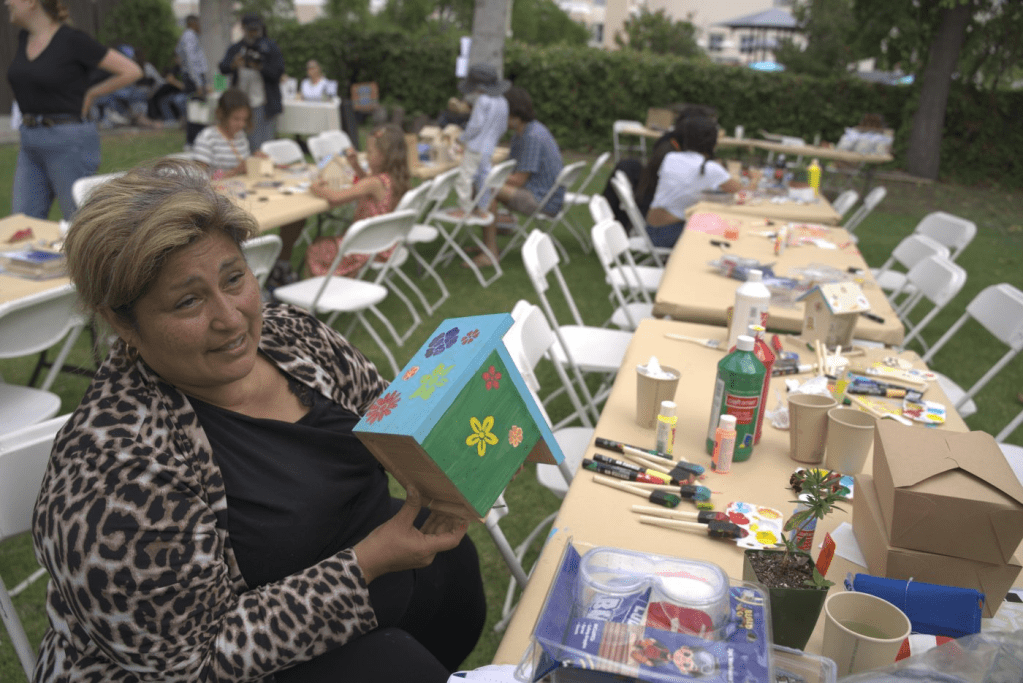
A brunch attendee shows off her handiwork. | Photo courtesy of Day One
Day One, a non-profit organization in Pasadena, held an Altadena Community Brunch and DIY Workshops for Recovery and Sustainable Living on Sunday, September 28. Hosted by its Resiliency Studio, the event took place from 11 am to 2 pm at the Day One Lawn on 175 N. Euclid Avenue in Pasadena.
One of the many associations in the Eaton Fire Collaborative working together to support families affected by the fire, Day One focuses on youth empowerment, healthy cities, and policy development. Local government assistance also comes in various ways – including opportunities to collaborate on community events and initiatives.
This past Sunday’s Resiliency Studio Brunch and DIY Workshops was a free, family friendly event that combined a community connection through food with hands-on workshops that support recovery and sustainable living following the Eaton Fire.
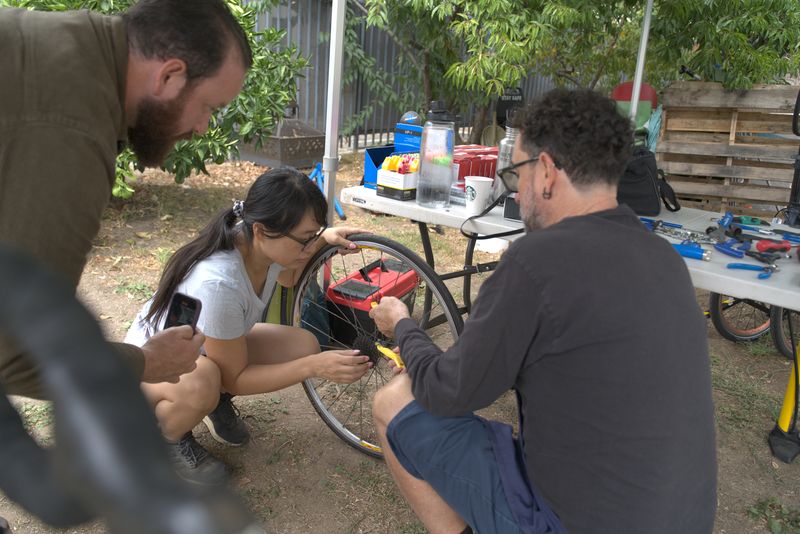
Bicycle repair demonstration. | Photo courtesy of Day One
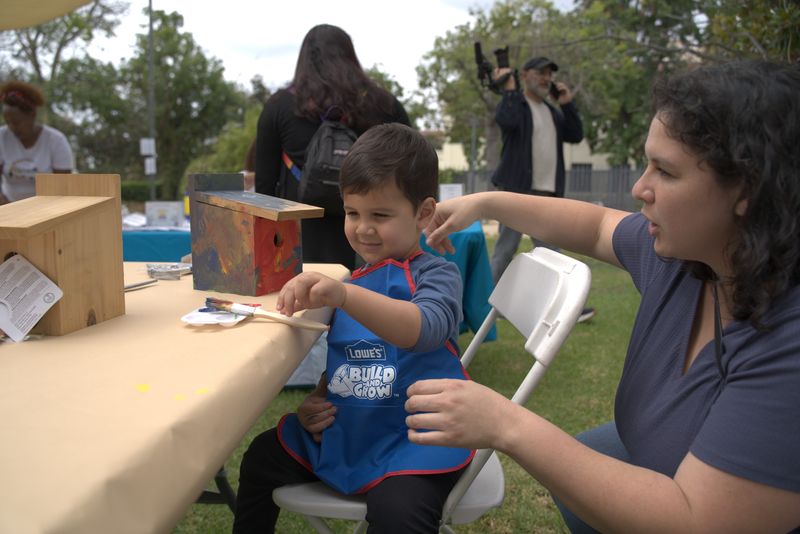
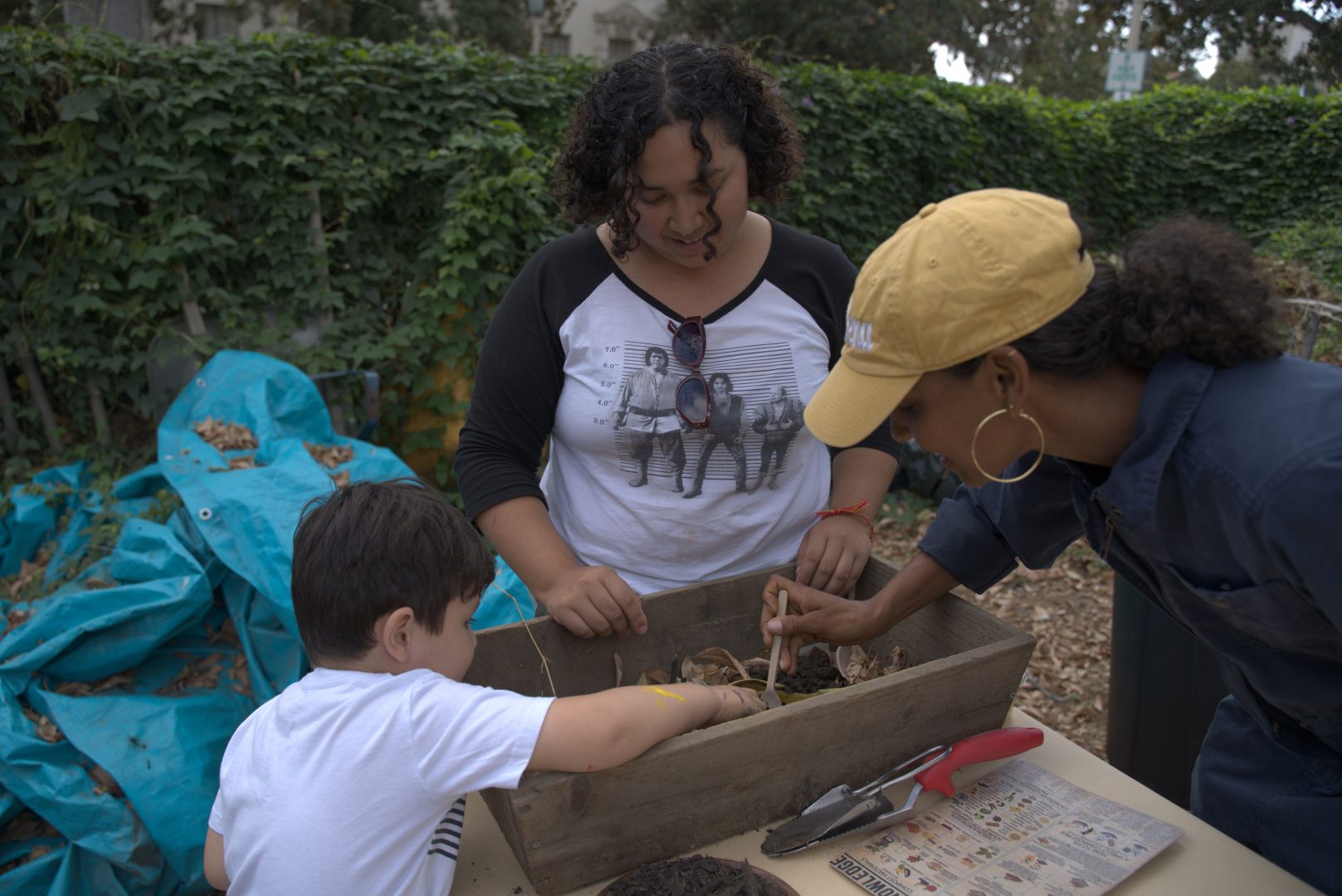
Workshops included: bike care and repair for affordable, eco-friendly mobility; composting and soil health to restore land and grow food after fire; healthy cooking with energy-efficient appliances; DIY rain gardens and rain capture systems; wildlife-friendly landscaping with native plants and birdhouse building. But the event was about more than skills – it’s about neighbors coming together to rebuild stronger, healthier, and more resilient.
“The Resiliency Studio began as a vision for a hub where families could learn about sustainability,” explained Nancy Verdin, Day One’s Director of Environmental Education and Engagement. “In the aftermath of the Eaton Fire, we reimagined how this hub could directly support families in rebuilding with sustainable strategies.”
Verdin said further, “The workshops are led by a mix of community partners (such as Community Compound, Crop Swap LA, Pulse Arts, Altadena Farmers Market), Day One staff with expertise in advocacy, public health policy and community engagement, and skilled volunteers such as bike mechanics. Together, they bring a diverse range of knowledge and experience to support our community.“
Birdhouse building. | Photo courtesy of Day One
According to Verdin, Day One has 30 years of experience working alongside residents, young people, elected officials, and other stakeholders to strengthen and build healthy, vibrant communities by advancing public health, advocating for public policies, meaningfully engaging youth, and igniting community-level and behavioral change. Comprised of a team of 24 employees, the organization is primarily grant-funded through local, state, and federal sources.
“Our programming focuses on public health, youth leadership, community engagement, and advocacy,” Verdin emphasized. “We offer youth leadership programs, provide drug prevention and education, and lead local efforts in transportation and environmental policy. Our Resiliency Studio events, however, bring together fire-impacted families as well as other local residents who want to learn more about sustainable rebuilding and recovery. Attendees come from both Pasadena and surrounding communities. We want participants to leave knowing that sustainability is tangible and within reach. As families rebuild, we hope to inspire them to imagine and implement sustainable solutions that strengthen resilience for the future.”
Composting. | Photo courtesy of Day One
“The Legacy Project Resiliency Studio Brunch was a meaningful day for our community,” declared Verdin. “Families and partners came together for hands-on workshops and resources provided by Altadena Farmers Market, Crop Swap LA, Pulse Art, Community Compound, and Oak Tree Comics, alongside our dedicated Day One staff and volunteers. Activities included bike repair, composting, cooking, native plants, and birdhouse-making, each designed to give families practical tools and strategies for sustainable rebuilding.”
“This work was supported by U.S. Greenbuild, who provided the seed funding that helped us create the Resiliency Studio,” Verdin said. “That effort has now evolved into the Collaboratory, a broader vision that brings together many organizations dedicated to supporting fire-impacted families with long-term recovery resources. With the generous contribution from Lowe’s, we are now able to provide tangible tools that will remain available to the community as they continue rebuilding.”
“It was a powerful reminder that resilience is built not only through tools and resources, but also through partnerships and community connection,” concluded Verdin.
Last Sunday’s brunch was quite a success! It would be gratifying for the Day One team if a good number of people came away encouraged by the connections they made and buoyed by the skills they gained. How heartening it would be if they left with renewed confidence that the resolve and spirit of Altadenans have not been scorched by the fire and that they w
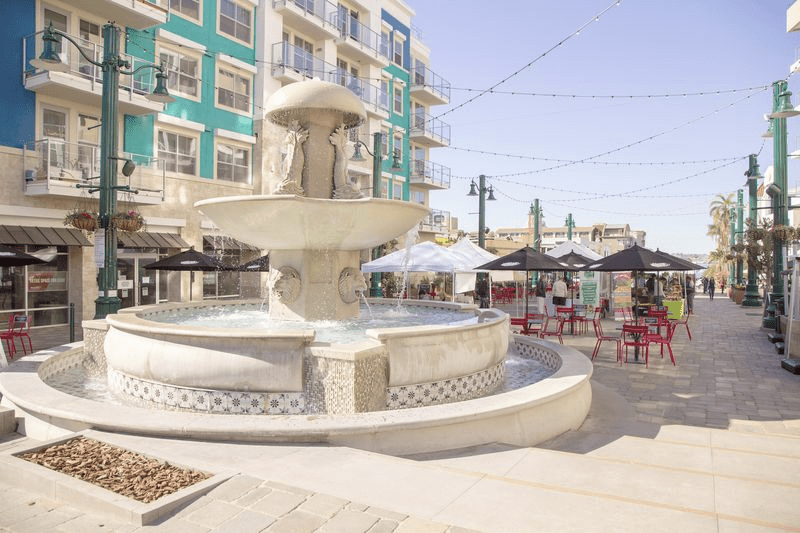
One of the many piazzas in San Diego’s Little Italy. / Photo courtesy of San Diego Little Italy Association
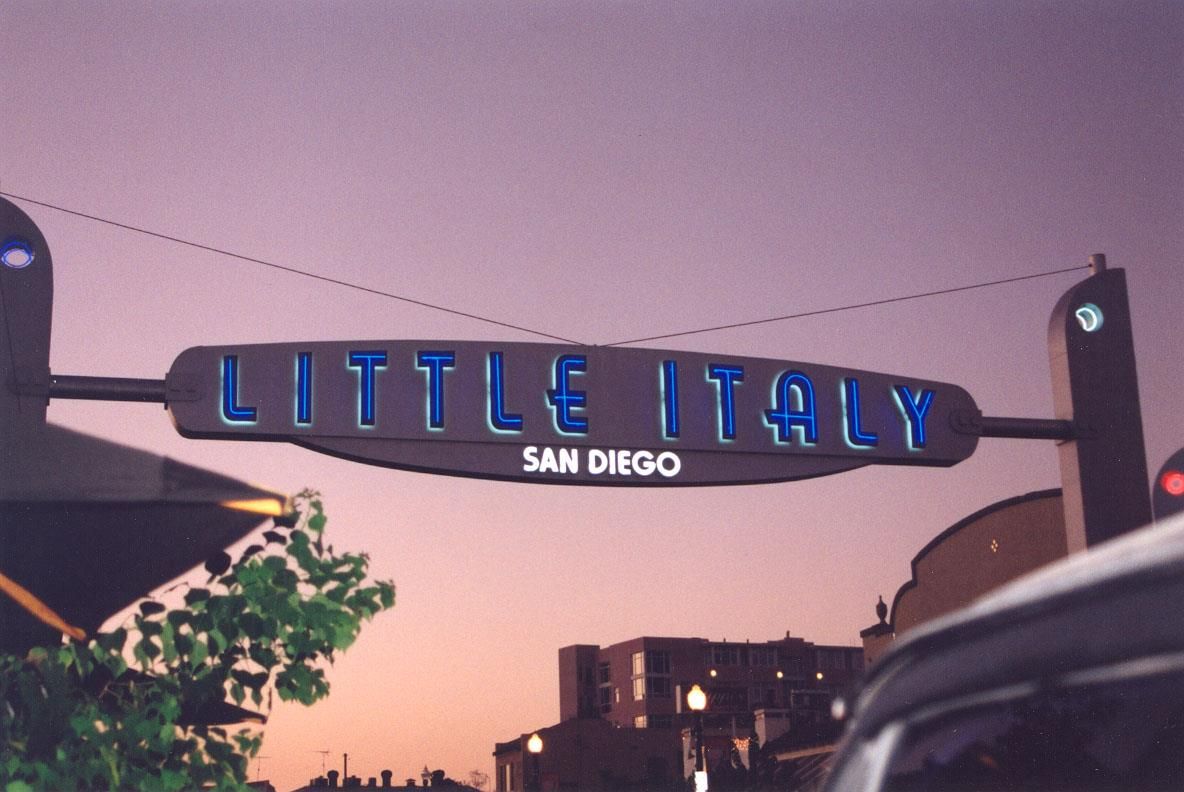
Looking for something more fun and adventurous to do on Mother’s Day? Make it a destination event and drive down to Little Italy in San Diego! Better yet, stay for the weekend to acquaint yourself with this extraordinary place and enjoy everything it has to offer.
San Diego’s Little Italy has such a fascinating and rich history – it was at one time the center of the world’s tuna industry. Chris Gomez, district manager of the San Diego Little Italy Association, recounts, “Little Italy was originally known as Middletown because it was north of downtown San Diego, south of Mission Hills and Hillcrest, east of San Diego International Airport, and west of Bankers Hill. It was settled back in 1920 when Italian immigrants from San Francisco and New York who came to live here created a small community that was close to the waterfront that allowed them to build their economic strengths through fishing. It was the hub of the fishing industry in the 1960s, 1970s, and into the 1980s before all the fishing moved down to Baja. The Italian fishermen would go out to the San Diego Bay and catch tuna and bring them back to packing houses and they would distribute them from there. The Chicken of the Sea and Bumble Bee Tuna companies started in Little Italy.”
Photo courtesy of San Diego Little Italy Association
“But just as we’re celebrating Little Italy’s heritage, what it has become now is not necessarily all Italian – we also focus on the diversity of the community. We have restaurants that have opened from Mexico and this is the first location they’ve opened in the United States, like Fisher’s. We have several dining places that offer very eclectic cuisines and foodie experience,” Gomez clarifies.
While other Little Italies in the United States have declined because of the growth of other adjacent ethnic neighborhoods, San Diego’s Little Italy has remained a vibrant symbol of the remarkable contributions Italians have made to this country. Since the 1920s, it has been a stable ethnic business and residential community; it represents Downtown San Diego’s oldest continuous-neighborhood business district.
Photo courtesy of San Diego Little Italy Association
However, the area’s history is not without its dark period. At one time, more than 6,000 Italian families lived in Little Italy and toiled to build San Diego into the global hub of the tuna industry. When the tuna industry on the West Coast waned and 35% of Little Italy was torn down during the construction of Interstate-5 freeway, the neighborhood suffered nearly thirty years of neglect. Then, in the early 1990s established property owners and family-run business proprietors decided to take their fate into their own hands.
New Italian American and non-Italian business owners opened retail and professional spaces while creative builders and architects constructed beautiful developments. That it is today a model urban neighborhood not just in San Diego but also for the handful of Little Italies remaining throughout the country is a lesson in a community’s resilience.
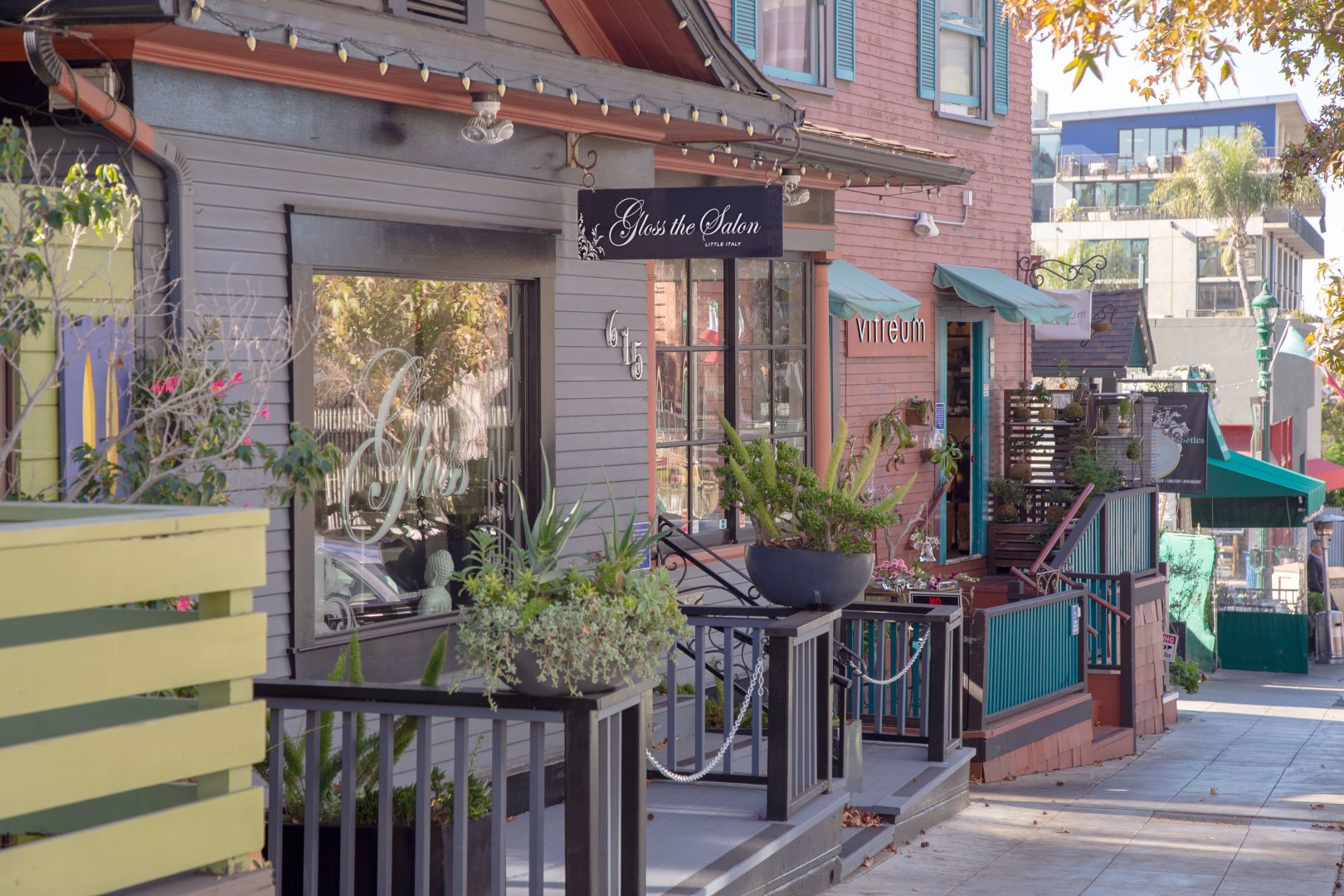
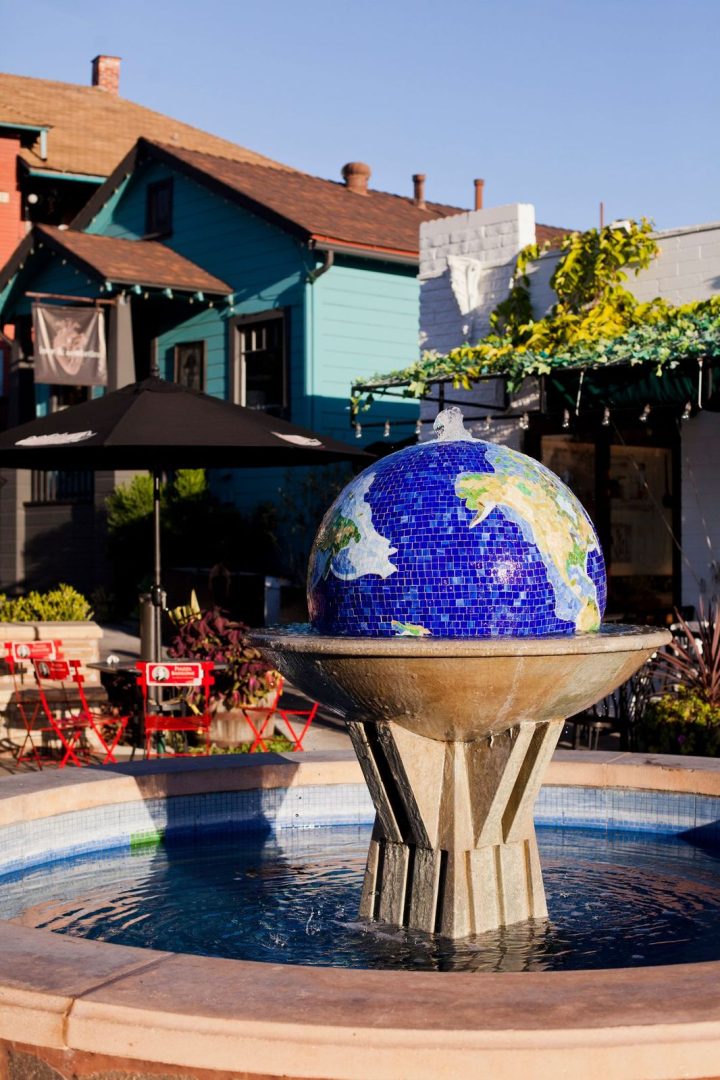
This remarkable accomplishment can be credited mostly to the Little Italy Association (LIA), which was established in 1996 during the time of the revitalization of the Downtown area. The only district management corporation of its kind for any Little Italy neighborhood in the United States, it is run by a board of directors comprising 29 individual who represent property owners, residents, businesses, and the community at large. It advocates on behalf of its members’ best interests in matters of public safety, beautification, promotion, and economic development, while preserving the unique cultural resources of the area. Since its inception, it has been re-energizing this neighborhood while telling the story of Little Italy to its visitors through public art displays and amazing piazzas.
Photo courtesy of San Diego Little Italy Association
Gomez has been with LIA for 24 years and has become somewhat of an authority on all things Little Italy, so I ask him how he would plan an itinerary for someone visiting from L.A. He promptly replies, “If possible, make a weekend out of it. Come in on Friday night and stay in one of our boutique hotels like Carte and La Pensione, or the Doubletree, and stay for a couple of days. After checking in, go out for a casual dinner at Barbusa or Civico 1845.”
“The next morning, head out to the Farmers Market, which is very unique,” continues Gomez. “Our market maestro has curated the offerings to be very European – there’s fresh fish, including sturgeon, things that you wouldn’t normally see at standard farmers markets. Take a walk up and down India Street and visit the boutique retail stores on First Street, linger at our many piazzas, stop in and have lunch at Devanti Enoteca or another great restaurant. Then go back to the hotel to relax and freshen up.”
“Afterwards, go to the Embarcadero or downtown where dining places offer diverse culinary dishes,” Gomez goes on to say. “There are top chefs who have Michelin-starred restaurants here, like Juniper & Ivy. We have really cool bars like Camino Riviera or Kettner Exchange where people can go for a cocktail. Craft & Commerce is another great one with a speakeasy in the back that’s called False Idol.
“On Sunday morning, get coffee at a local café like Caffe Italia or Pappaleco … maybe have a quiche or panino and start your day all over again. Then check out of your hotel and head back home safely,” concludes Gomez.
The Piazza della Famiglia at night / Photo courtesy of San Diego Little Italy Association
I ask what a highlight would be if one were visiting Little Italy only for eight hours and Gomez responds, “It depends on what day you come. But if you’re here on a Saturday, definitely come to see the Farmers’ Market. Additionally, we have several piazzas that mirror European public spaces for people to sit at and relax in. Piazza della Famiglia is one particularly wonderful place to explore – it’s our largest piazza at 10,000-sq. ft. People can sit there and have a glass of prosecco or a cocktail while they enjoy a view the San Diego Bay, the weather, and the sound of people in that space. You can grab lunch or dinner at one of our local restaurants. There are multiple retail stores and galleries people can enjoy. We also have something called Music Box, which is an entertainment venue where you can watch a concert.”
This year, take your mom out on Mother’s Day for an experience that’s more memorable than the usual brunch at a chain restaurant. Spend her special day with her in Little Italy San Diego!
Originally published on 14 September 2020 in the Pasadena Independent, Arcadia Weekly, and Monrovia Weekly
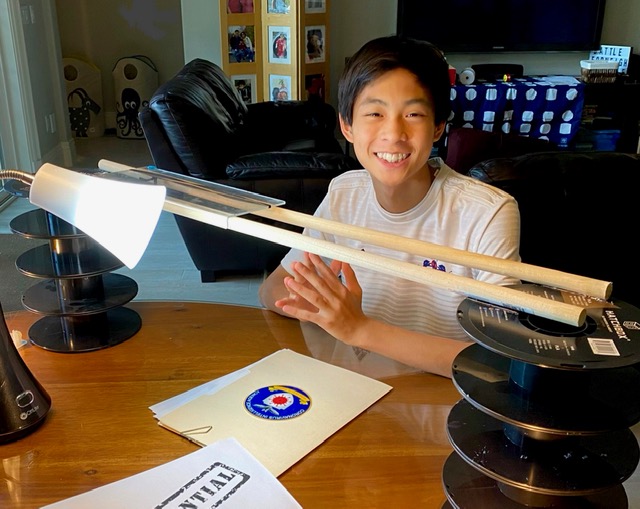
Weber setting up his file folder for his animation videos | Photo by Nancy Lin
Fifteen-year-old Weber Lin was an Arcadia High School freshman when schools closed their campus in March and resorted to virtual learning. One day he and his parents read a CNN online article about a group of people in Montana who were making 3D-printed Personal Protective Equipment (PPE) to help with disposable mask shortages in local hospitals. They shared their ‘Montana Mask’ design with the public, which started a worldwide grass-roots effort to alleviate PPE shortages everywhere. And Weber saw an opportunity to join the cause.
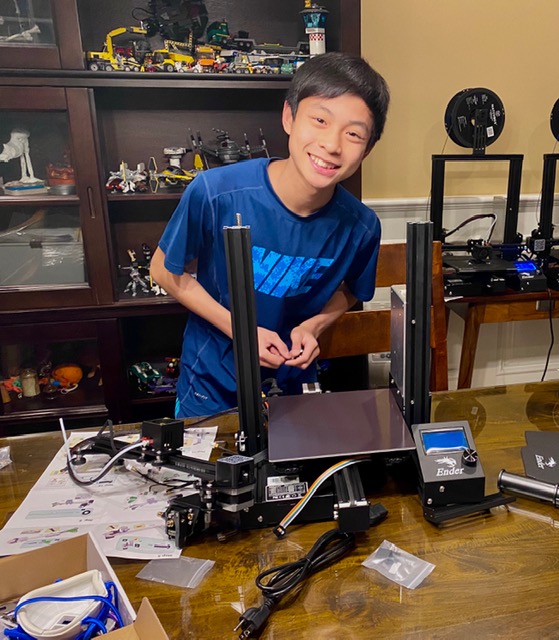
Using a 3D printer he had won at a previous competition, Weber printed reusable ‘Montana Masks’ for a local urgent care clinic as his Eagle Scout project. Arcadia Police Chief Robert Guthrie also asked for an order of the masks for his police force. The venture was such a success that it grew into a much larger endeavor. He started a GoFundMe campaign raising over $3K, acquired six more printers, and created over 3,000 pieces of PPE (masks, face, shields, and ear savers) which he distributed to frontline workers from Hawaii to the East Coast and even to South America.
Weber assembling some 3D printers | Photo by Nancy Lin
Weber later learned that the Breakthrough Junior Challenge, an annual global competition for students to inspire creative thinking about science, added a COVID category this year. Having already worked on providing masks in March and April, he thought entering the competition’s COVID category was a natural extension of his efforts to help stem the spread of COVID-19. He spent over 150 hours producing a public service announcement (PSA) to help people, even kids, to better understand the coronavirus.
The idea was to create an entertaining and educational PSA with an unusual angle – from the point of view of the virus. Weber has always enjoyed making videos for school projects, even adding a bit of fun with green screens and stop-motion clay animation. For the Breakthrough Junior Challenge video, though, he really pulled out all the stops. He converted the family dining room – which he had previously used as a makeshift 3D printing PPE factory – into a production studio. His PSA includes a file folder that moves by itself and body parts that magically fall apart and come together. But what truly makes this amazing is that he’s completely self-taught, never having taken any formal class in film-making or video editing.
That project advanced Weber into the top 30 semifinalist stage and he is now in the Popular Vote phase. If he wins either the overall popular vote or the COVID category popular vote, it would shortcut him into the final round of judging for a chance to win a $250K scholarship, a new $100K science lab for his high school, and a $50K prize for his favorite STEM teacher.
With your help, Weber can win the popular vote and Arcadia High School can get a science lab. Please enter your vote before September 20. Use this link to his video and instructions on how to vote.
Share the video with friends for a SECOND VOTE (making sure they only vote by going THROUGH the link too; just “liking” your shared post will not count for votes)
IMPORTANT: ONLY LIKES/SHARES ON THE OFFICIAL BREAKTHROUGH PAGE COUNT!There is a max of 2 votes (1 like/1 share) per FB account owner.
Whether he prevails in the competition or doesn’t, Weber is already a winner in the eyes of all the frontline workers whose health and lives he helped save.
Originally published on 31 May 2019 in the Pasadena Independent, Arcadia Weekly, and Monrovia Weekly
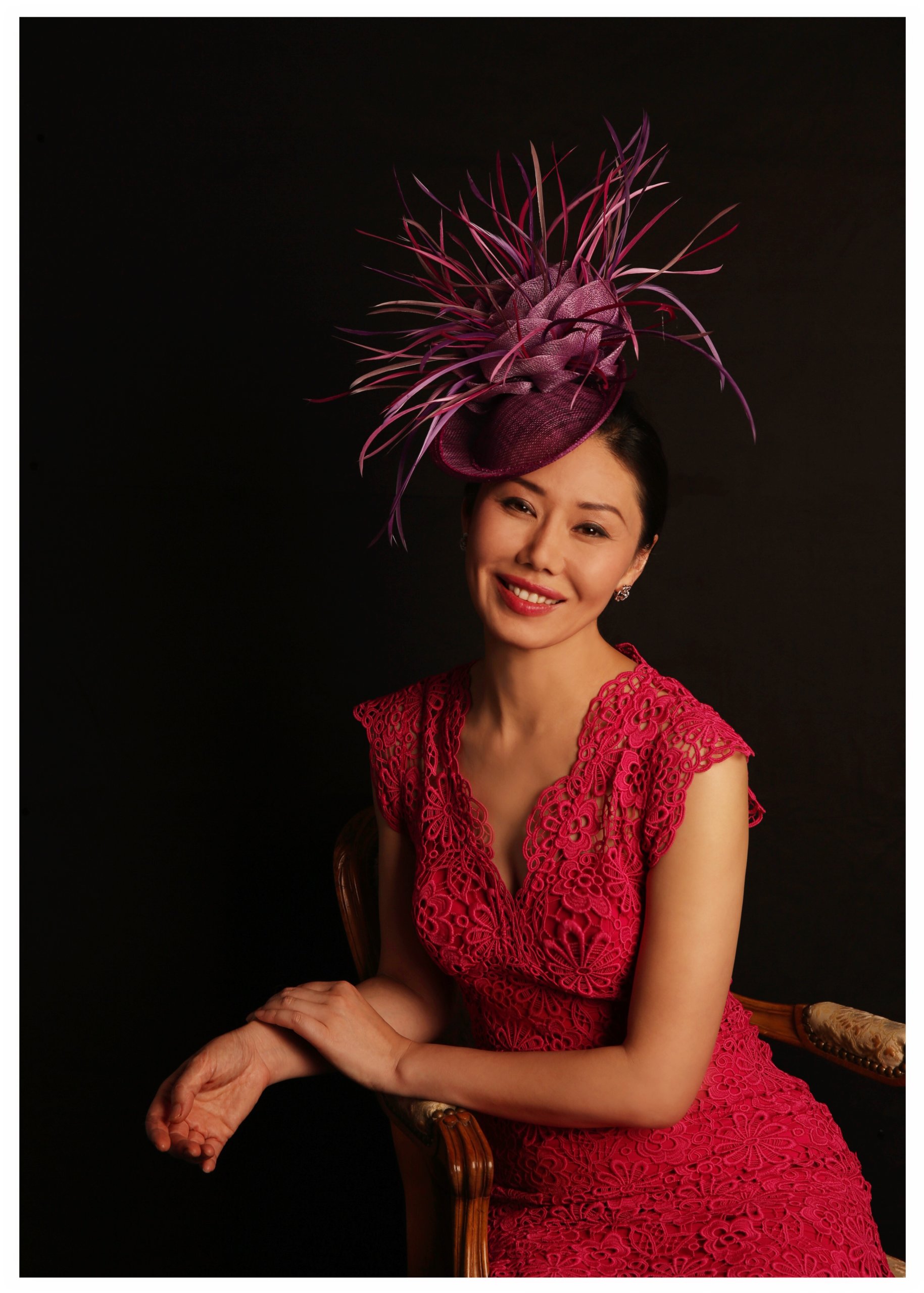
Li wearing one of her bespoke fascinators | Courtesy photo / Handmade by Cissy Li
Americans, as a rule, don’t typically wear hats the way they do sunglasses as a fashion accessory. However, if it were up to Cissy Li, all ladies would be wearing hats wherever they go, most especially to weddings and other stylish events. To advance her lifestyle philosophy, she started creating headwear in 2006 from her Pasadena home for close friends. And, recently, she displayed her collection called ‘Handmade by Cissy Li’ at an exhibition held at Joann’s Fine Arts Ai+ Gallery on Mentor Avenue.
The path that led Li from Suzhou as a child growing up, to Milan as an haute couture model and, finally, to Pasadena as an artisanal milliner, is paved with extraordinarily good fortune.
“I’ve always loved design, fashion accessories, and modeling, ” Li proclaims. I double-majored in Fashion Design and Modeling at Suzhou University near Shanghai. After graduation, I moved to Beijing where I worked for two years at the government-owned modeling company in exchange for my free education. Knowing that modeling as a career usually has a short span – because agencies are always looking for 14- to 16-year-olds – in 1997, I went to the Lutzelau School in Switzerland and took a Hotel Management course to have a back-up plan. It’s now called Swiss IM&H (Swiss Institute for Management and Hospitality).”
Li as a runway model in Milan | Courtesy photo / Handmade by Cissy Li
“Fortuitously, I went to New York in 2000 for a modeling pageant and earned the top award for Best Runway Model,” discloses Li. “The prize was a contract with an agency in Milan called ‘Zoom.’ In the same year, I won the Universal Asian Supermodel pageant in Las Vegas and was selected one of the Top Five Models. As a professional runway model working in Milan, I was lucky enough to wear the clothes and accessories of French and Italian designers, including Ferre, Nina Ricci, and Valentino. And my love for hats was only reinforced. When you wear one, you can’t lower your head because it’s going to fall. That compels you to stand erect and maintain good posture – so hats make you look very elegant.”
“I considered quitting by 2003 because I thought I was too old for the profession. So I moved to the U.S. and taught at the Barbizon Modeling School in Las Vegas. We entered a competition in New York but one of the students dropped out. Consequently, my boss told me I had to be my student’s replacement because she had already paid the registration fee. I protested saying, ‘I’m 26! I’m too old to compete.’ She retorted with, ‘You’re Asian, they won’t be able to tell your age.’ So I went to New York and won! The prize was another contract to go to Italy. And I thought, I had just left Italy and now I’m being sent back there,” Li recalls with a laugh.
“I did one show to fulfill the contract but I couldn’t continue doing it,” says Li. “In this business you sign one contract with one agent and if they refer you to another you get double charged, so you don’t really make any money. The cost of living in Italy is high – renting an apartment and feeding yourself cost a lot. And then you have to pay the agency on top of that. Besides, I wanted to focus on a different career, so I came back to the U.S. I was working for Bellagio Hotel in Las Vegas as the Assistant Manager for Channel’s Fine Jewelry in 2005, when I met my future husband who’s from Pasadena. So I moved here and it was then I began making hats.”
Li’s interest in various crafts includes decoupage. She walks over to a side table, picks up a tray, and explains, “I created this with marble and gold leaf and it can be used for tea cups or as an Asian cheese board. It took three weeks to finish because the process involves layering the resin which needs to dry between applications. Additionally, there are several factors that affect it, like the weather and temperature. It has to be 70 degrees for the resin to adhere and, as you know, we had a long winter this year. For instance, these coasters took three months to complete. Taking all those into account, the pieces become too costly that I wouldn’t be able to sell them at a reasonable enough price for people to buy them so I give them to close friends as gifts. Handmade pieces are never perfect but these imperfections are what make them valuable. They’re evidence of being one-of-a-kind, and not commercially- or machine-made.”
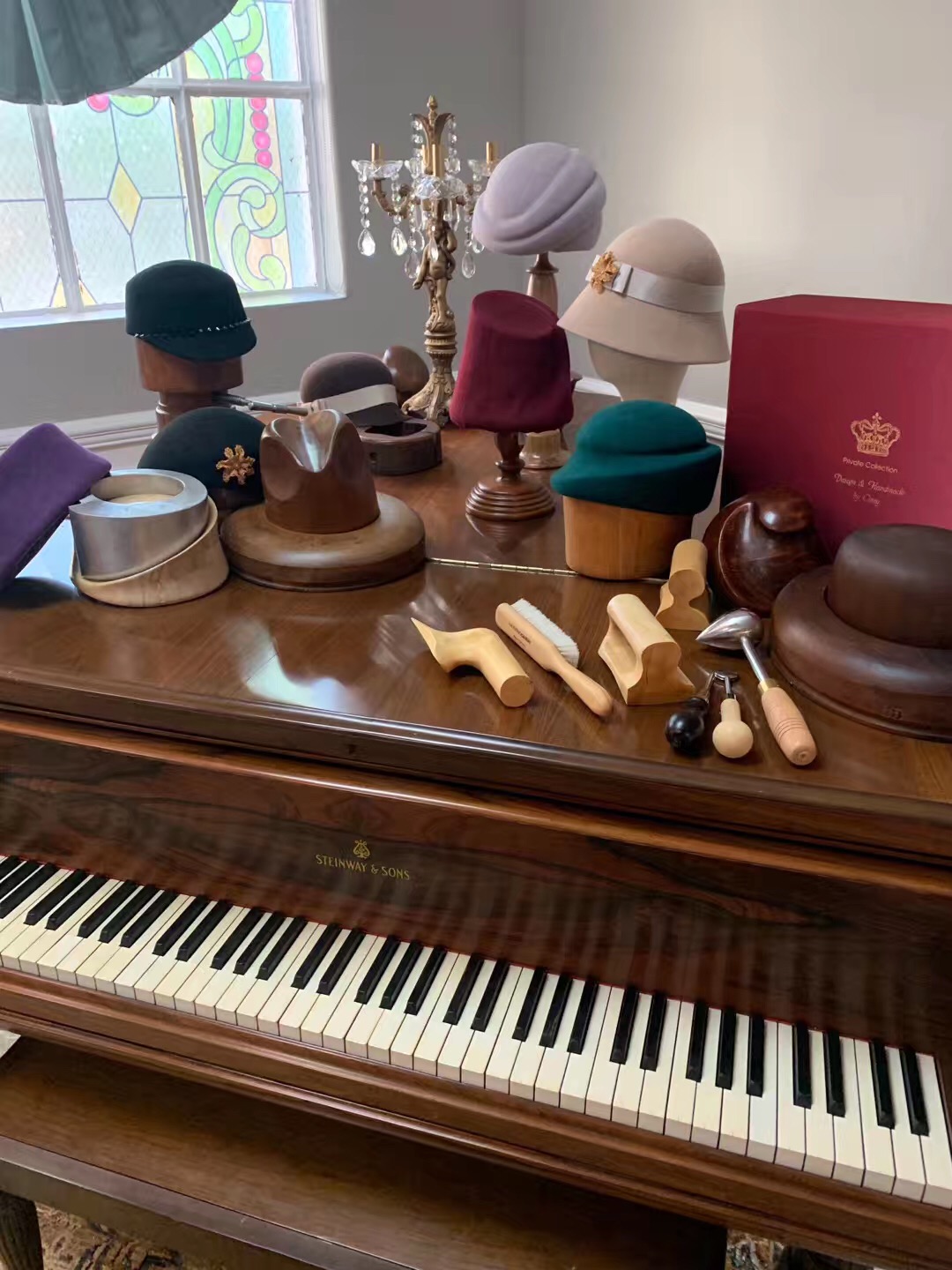
The tools of Li’s trade | Courtesy photo / Handmade by Cissy Li
“I love art. Besides my kids, art is my passion,” Li emphasizes. “I draw, paint, and design. And, of course, I have my hat projects. But you couldn’t do that full time when you have little kids at home. Now that they’re older, I can do a little bit more. I always say you have to choose a job you like so it doesn’t become a chore. I get up at 6:45 or 7:00 to get my children ready for the day, drop them off at school, and then I work in my studio. I pick them up from school, help them with homework, finish dinner, then I go back to my studio. Sometimes I’m here late at night or until the early morning hours. I get only four or five hours of sleep but I don’t feel tired because I love it and I don’t regret putting in that many hours working on my hats. Look at my fingers – they look dirty because the materials I use, like beaver hair, require a lot of steaming, stretching, pressing, and pushing onto the felt. After four hours, I literally cannot lift my arms. I do it because it’s my passion; if it were only for the money, I’d stop after eight hours. But I put in 12 hours at a stretch working on one single hat.”
“Sorting the materials for making the hats is also time-consuming,” adds Li. “I get shipments from England, Ukraine, Russia, and the Czech Republic. Vendors send me pictures of the items but when they get here, the colors are different from what are in the photos. I’m very visual; I can see the various hues. I’m also good with size and proportions so I have to sort and organize all the materials to make sure I put them together correctly. With items like flowers or feathers, you really need to source reliable vendors – I find them through friends’ introductions while some are very old and well-known houses, so I’m confident about their products. It’s also important to see them for yourself because you can’t tell their quality through photos. I travel to Europe every summer for two months and I visit my vendors between family holidays.”
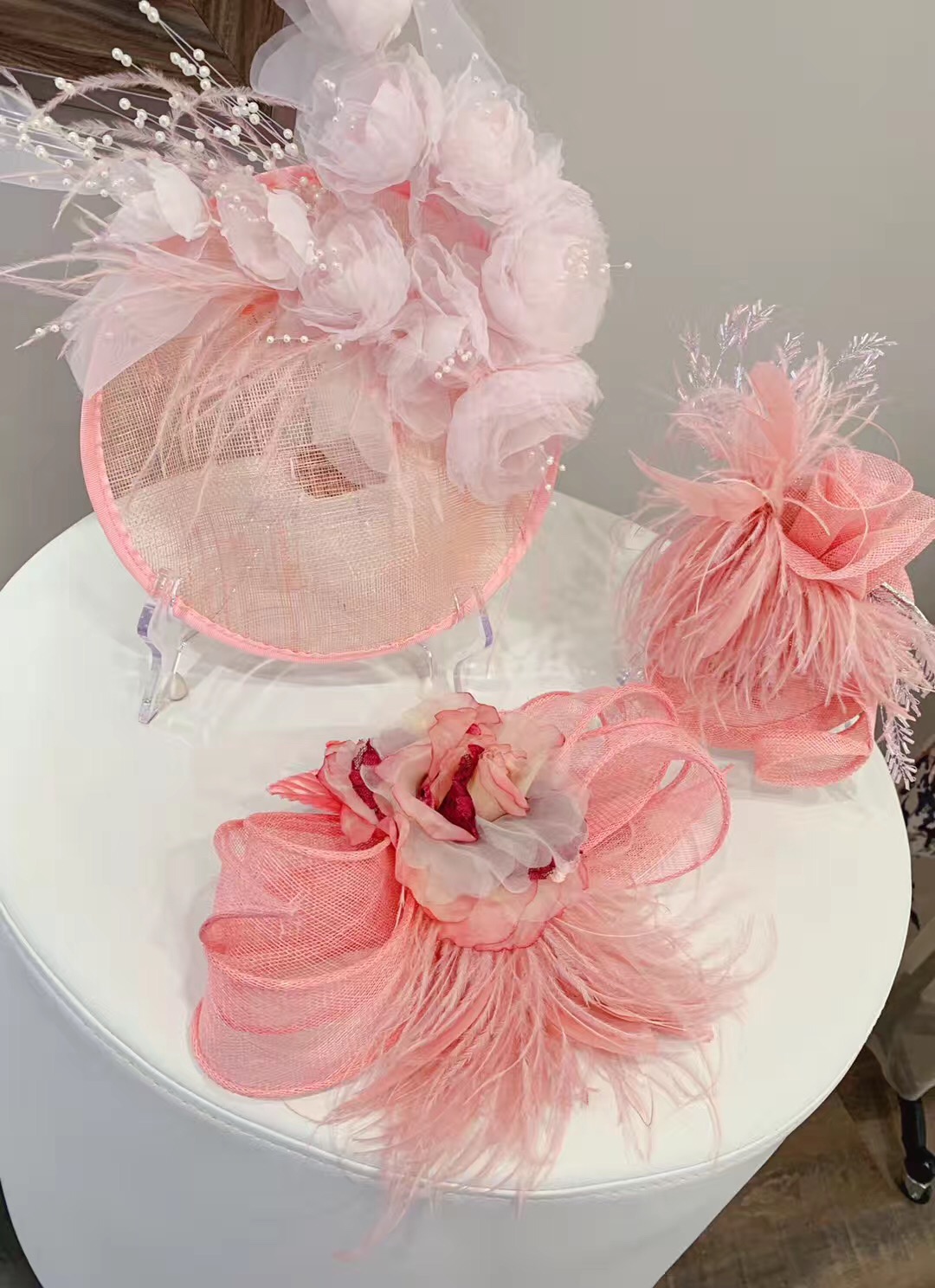
Pretty in Pink | Courtesy photo / Handmade by Cissy Li
Li specializes in fascinators, which aren’t really hats but fashionable headdresses that Prince William’s wife Catherine, otherwise known as the Duchess of Cambridge, made extremely popular.
“Each fascinator takes me anywhere from two to three weeks to complete because I want to find the precise color,” Li expounds. “I’m not very particular with a lot of things in my life, I’m pretty easy-going, but I am exacting in my work. There was one peacock fascinator I worked on which took a month to finish and, in the process, I learned that peacocks have green or blue shoulders. Some of the feathers that arrived had green reflections, some had reddish blue, so when I put them together they looked like Chinese fried rice. I had to order from different vendors to get the specific shades and then match them correctly. One client bought it, but instead of wearing it on her head, she has it hanging on her wall along with other paintings – she treats it like a piece of art. Knowing that clients appreciate the outcome makes this work gratifying.”
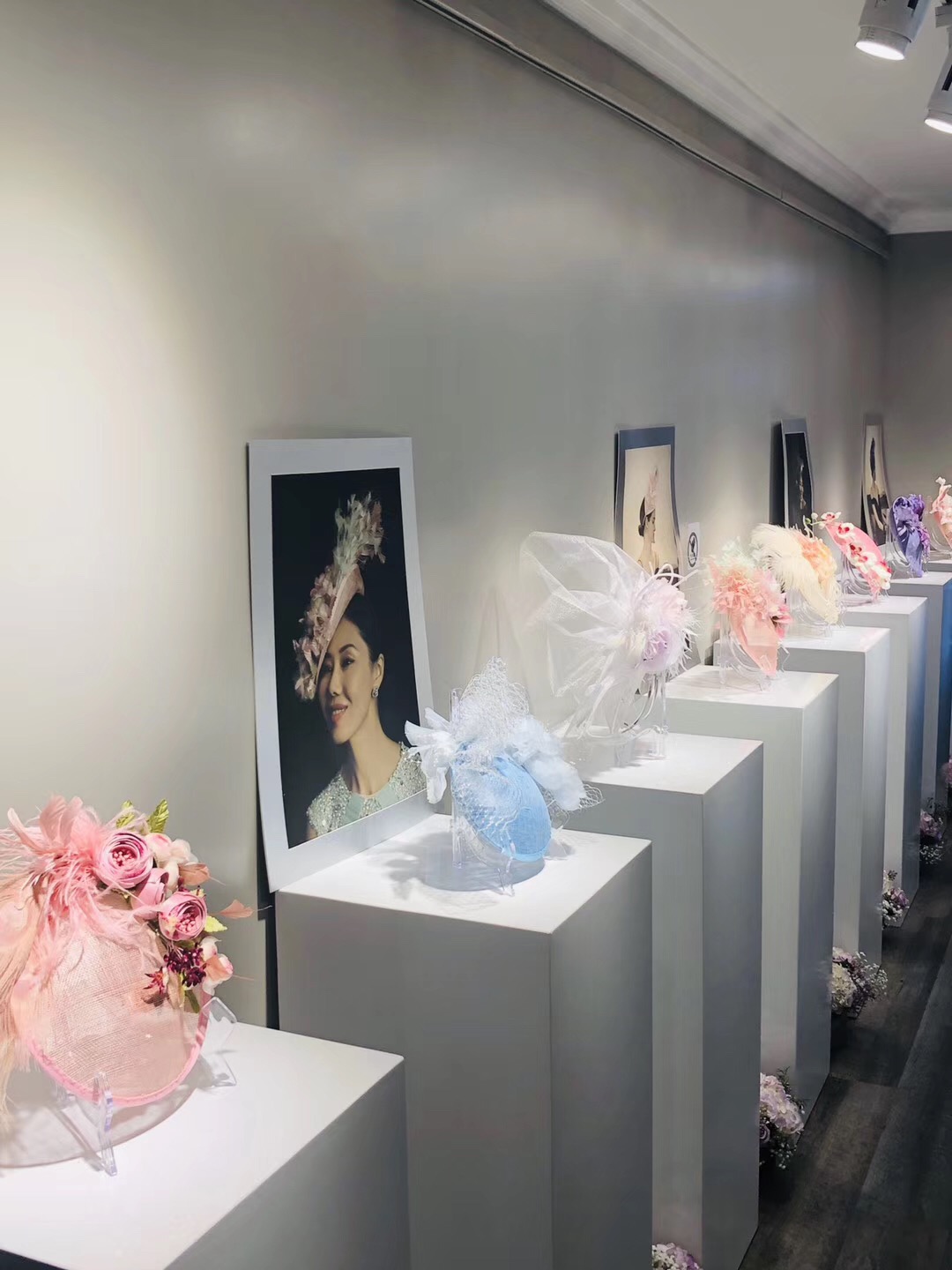
Working tirelessly for several months, Li was able to create over 100 handmade hats for an event she fittingly called ‘An Affair to Remember.’
Li’s fascinators on display at ‘An Affair to Remember’ | Courtesy photo / Handmade by Cissy Li
“The show was meant as an exhibition and not as a sales event,” clarifies Li. “I wanted to give all my guests the chance to look at the hats and try them on. If someone were to buy a piece, then no one would be able to see it. However, a couple of guests really wanted to buy the hats and they waited until after the end of the show to take the items. A friend and loyal customer from Newport Beach had planned on coming to the exhibition but wasn’t able to make it because she twisted her knee a few days before. When I posted pictures of the hats for the event, she called me to tell me which one she wanted to buy.
“My clients are usually people I already know. I haven’t really gone commercial because I have no time. I’m one person and I can’t do the marketing and production all at once. Hats are also a very individual thing so I don’t mass-produce. I do it the traditional way – with custom sizing, fitting, and so forth. I’m leaving in mid-June for my annual trip to Europe but I’m hoping to start a website when I come back, not to sell the products but to showcase the hats so people who want to buy them can contact me. It’s also tough to do an online business; the laws protect customers and not the sellers. Our hats are shipped in beautiful hard boxes but when customers decide to return them, they come back in such bad shape and you feel awful about the merchandise. People looking for a bespoke hat can come to my studio, select all the components, and get instructions on how to wear the hats. It’s really about mutual respect.”
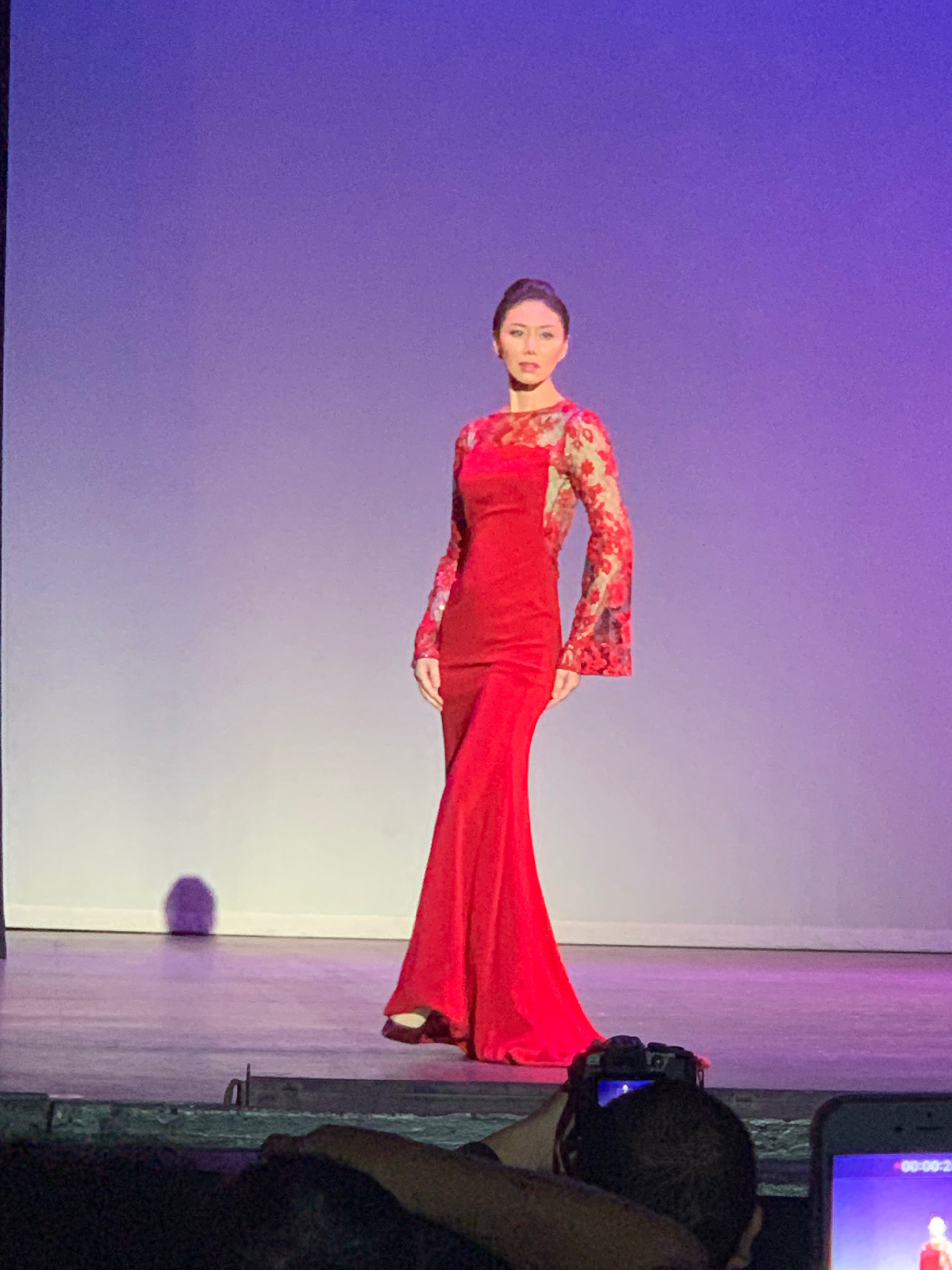
Li modeling a designer gown at the Asian Pacific American Festival held this past weekend | Courtesy photo / Handmade by Cissy Li
As an aficionado, Li is convinced that no one carries off wearing hats with more aplomb than the English. And where does one find an abundance of hats in all their splendor but at The Royal Ascot. It’s also the perfect place to get ideas for her hats, so she makes it a point to go to the opening of the renowned horse races in June. It’s both a work and fun excursion because she takes her children with her and they’re usually there for the Royal Procession when the Queen is in attendance.
On one particular occasion, her daughter, Claire, was so entranced by Queen Elizabeth’s headwear. Having been around her mom as she fashioned spectacular hats for clients, Claire confidently declared that Li would one day be the first Chinese-American milliner to create a bespoke piece for the Queen. Any other mom would brush off that endorsement as merely child’s fancy, but Li took that to heart. For several months now, she’s been in contact with some people connected with The Royal Ascot to figure out how to make it possible. However, she’s also cognizant that there are so many hoops to go through.
“The Queen approves only one brand of hats and clothing for The Royal Ascot,” Li states. “Selling there is also complicated because of taxation laws and import regulations. I have to consider all the things that could possibly go wrong. Can you imagine if we got stopped at the airport as we’re leaving because I didn’t take care of every legality? What would have been such a happy trip would end up something I’d deeply regret.”
Whether Li succeeds in getting her hats worn by the Queen and the smart crowd attending The Royal Ascot or not, nothing can hinder her from creating headwear for ladies here. We don’t have to be royals to wear her spectacular fascinators. But donning her meticulously fashioned hats will certainly make us feel like princesses.
Originally published on 23 April 2018 in the Pasadena Independent, Arcadia Weekly, and Monrovia Weekly
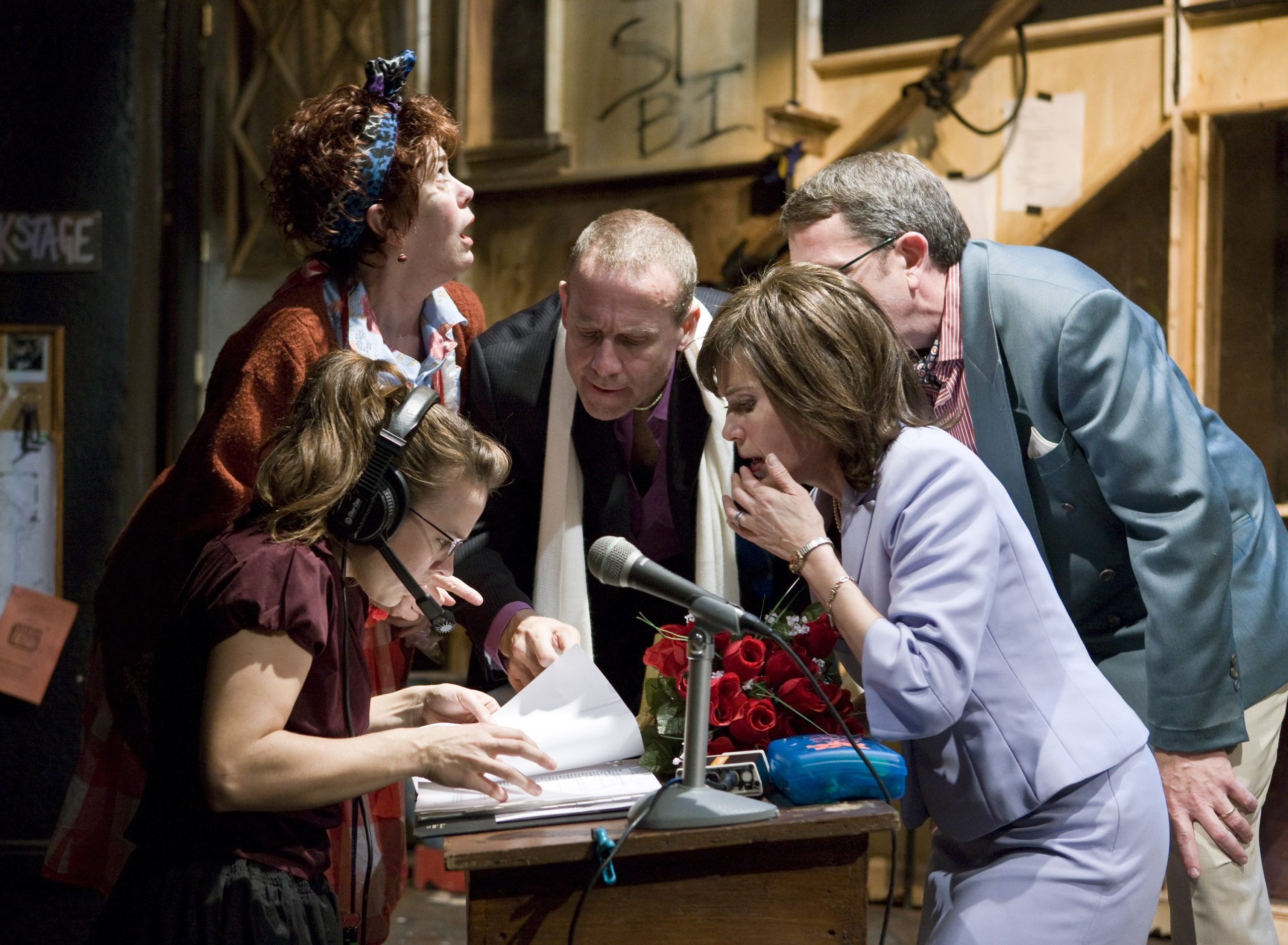
“Noises Off” ensemble | Photo by Craig Schwartz
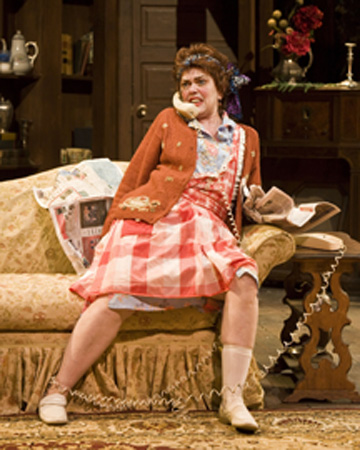
Imagine a hapless group of actors gamely putting on a production aptly titled ‘Nothing On,’ from an abysmal material as each of their personal drama gets in the way and you have one screwball of a play that is as insanely hilarious as it is eerily true to life.
This is Michel Frayn’s joyfully out-of-control British farce, ‘Noises Off,’ and will be on stage at A Noise Within (ANW) from Saturday, April 21 to Sunday, May 20, 2018. Directed by Julia Rodriguez-Elliott and Geoff Elliott, it features most of the original cast from the play’s previous productions.
“‘Noises Off’ is truly one of our signature productions, with audience members returning to see it two or more times,” says Elliott. Rodriguez-Elliott adds, “Everything about the deft physical and verbal interplay between actors is ideal for our focus on ensemble work.”
First produced by ANW in their Glendale location, it was hugely popular that they brought it back another year. When they moved to Pasadena they presented it during their first season as an add-on production on a limited run.
Continues Rodriguez-Elliott, “It’s been about six or seven years since we last did it. For our 25th year anniversary, just for fun, we asked people what shows we had done that they would like to see again and ‘Noises Off’ got the most votes.
However, ‘Noises Off’ was doing a big production in London then so we couldn’t get the rights to it to mount it in time for our anniversary season. Fortunately, we were able to last year. And since we still have the same cast and they’re playing the same characters they did in the first two productions, we didn’t have to spend as much time to prepare for it.”
Elliott also discloses, “We’ve put off remounting ‘Noises Off,’ because we didn’t have the technical ability to put it on a spinning stage. We really wanted to remount it this year so we decided to redesign the set. In the first act the audience is watching the front of the set, in the second act the action takes place at the back of the set, and the third act is again the front of the set. Because of that, it needed to be presented on its own and not as part of a repertory.”
“It is one of the funniest farce, if not the funniest, ever written,” pronounces Elliott. “It’s a love letter to the theatre because it’s essentially about all of the things that can go wrong when people are trying to put a production together. For actors it’s especially close to the heart because we’ve all gone through some version of it. Michael Frayn is so brilliant in creating comic timing and sidesplitting situations. It’s really a work of genius.”
“It’s a repertory group rehearsing a play that’s about to open the next night and they’re not ready,” explains Rodriguez-Elliott. “In the first act, we are observing the colorful characters who are part of a company – there’s one actor who isn’t terribly bright, one who has a temper, another is an alcoholic who gets lost and they can’t find him. In the second act, the set turns and you’re watching them in a performance of ‘Nothing On’ from the back stage perspective so you see them as they make their entrance.”
“This is happening as they’re in the middle of the tour,” Elliott interjects. “By the second act they’ve been together for about a month and half. Everything that could possibly go awry, as personalities clash, has gone awry. The two leads are having an affair and one of them refuses to go on stage and it gets worse from there. It’s just insane!”
Rodriguez-Elliott continues, “By the third act, when the set is turned once more to the front, it’s hell in a handbasket. They’ve been touring for six months and by then some of them aren’t talking to each other so it becomes another whole new level of disaster.”
Dotty Otley | Photo by Craig Schwartz
“When we were first rehearsing it, people who had done this production in the past were telling me ‘You’re going to have such a good time; audiences just die watching this play,” recalls Elliott. “There were so many people telling me that, that I began to get spooked that we’ll be jinxed shortly because I thought, ‘Surely our production can’t be as funny as they kept saying. The expectation was too much.’ But once we got out there, the audiences just went wild and it was infectious. You were having such a great time because the audience was as well. And it turned out to be exactly what people had been prognosticating all along. It’s probably the most fun I’d ever had on stage.”
Illustrates Elliott, “I play the role of the director and most of the time the cast doesn’t know if it’s Geoff, the director, or Lloyd, the character I play, who’s talking. Or if it’s Jeremy, the actor, who’s talking to them or the Frederick character he’s playing. Apollo Dukakis, in the role of an older actor Selsdon, calls his lines exactly as Apollo does. It’s spooky.”
“And here’s an interesting bit of trivia,” says Rodriguez-Elliott. “Michael Frayn was watching a play he had written being rehearsed. He sat backstage for a bit and he thought what was happening there was more interesting than what was going on onstage. That was the impulse for him to write ‘Noises Off.’”
“It was a Lynn Redgrave play that was being rehearsed,” Elliott elucidates. “And he thought there was more drama going on backstage. One of the endearing things about this play is that all of these actors are such survivalists they would do almost anything to make their entrance, to keep the show going. They’re taking axes at each other but they’ll drop them when they have to make an entrance. And it’s true, the show must go on. This is that to the hilt, it’s so sweet.”
“The beauty of a rep company is the familiarity you have with the rest of the cast,” Elliott begins to say. “And the play is all about that – people who have been together and have worked together for a long time. That is so relatable. We’ve all been in productions where someone misses an entrance, or something’s gone wrong and people backstage are troubleshooting,” Rodriguez-Elliott finishes for him.
“One of the reasons I think this was a very popular production is that we really concentrated on finding the honesty, the authenticity of the situations theatre people work in,” clarifies Elliott. “We didn’t approach it as a send-up. It’s not only incredibly funny but we have sympathy for all these people. We recognize all these people, all the drama and the group dynamics that we’ve all been a part of.”
“The play they’re in is terrible and they are nobly putting on a show that doesn’t even make sense. But they’re trying hard to make it work and are truly investing in it. There’s this one character who’s not the sharpest tool in the shed and even when the world is exploding she’s still doing what she has rehearsed,” chuckles Rodriguez-Elliott.
Elliott declares, “You can feel the joy in the room because the actors are having fun and the audience is in it with them. The actors themselves are laughing when they get backstage because of the wonderfully infectious audience reaction.”
ANW has just announced the theme of the 2018-2019 season, ‘Let Me in.’ Elliott describes, “It’s about the fundamental human desire to be included, to be accepted. All the plays are about people struggling for that and the things that happen to them and those around them as they strive to have a door open. It’s a very timely issue. We all want to be acknowledged, to not be ignored or be treated as something other than being a part of the human race. Whether it’s Don Quixote of ‘Man of La Mancha’, Dorian Gray, Rosencrantz and Guildenstern, Othello, Wingfield family of ‘Glass Menagerie,’ or Jason of ‘Argonautika.’ That’s the common vein running in all these plays.
‘Man of La Mancha’ will be another play that will run solo, not in repertory. It will play middle of August through early September. That was a big hit for us when we did it this season and this was an opportunity to bring the show back for those who didn’t get to see it or would like to see it again. It’s the same production and will have the same cast.
The show had been a tremendous experience for us. We had a number of people in the cast who had never worked with us before because they were more musical theatre people. So for them to be able to approach it as actors was something novel and extraordinary for them to do. When we reached out to them to tell them we were bringing it back and asked if they wanted to return for it, everyone answered within twelve hours.
That was pretty much how our resident artists responded to our remount of ‘Noises Off.’ Although the themes of the two plays couldn’t be any more different, audiences, nevertheless, will feel a strong reaction to each.”
It is the contagious feeling and exuberant spirit that we will experience that make ‘Noises Off’ as uproariously brilliant as it is unabashedly zany. Prepare to laugh till your sides hurt.
Originally published on 5 March 2018 in the Pasadena Independent, Arcadia Weekly, and Monrovia Weekly
The human brain works in such complex ways and each one’s thought process is different based on their environment that there’s no predicting what a person would do or how an individual would react to a stimulus at any given moment. However inaccurate that statement might sound to an expert, what’s indisputable is how fascinating it must be to study how our minds operate and what happens when they don’t function as they should.
Dr. Oliver Sacks, a British neurologist, spent his life studying the human brain and shared his knowledge and findings with the world. He authored and published best-selling case histories about his experiences involving his patients’ disorders. His book ‘Awakenings’ was the subject of a documentary made for British television series Discovery. It was later adapted for the screen and became a film which starred Robin Williams and Robert de Niro.
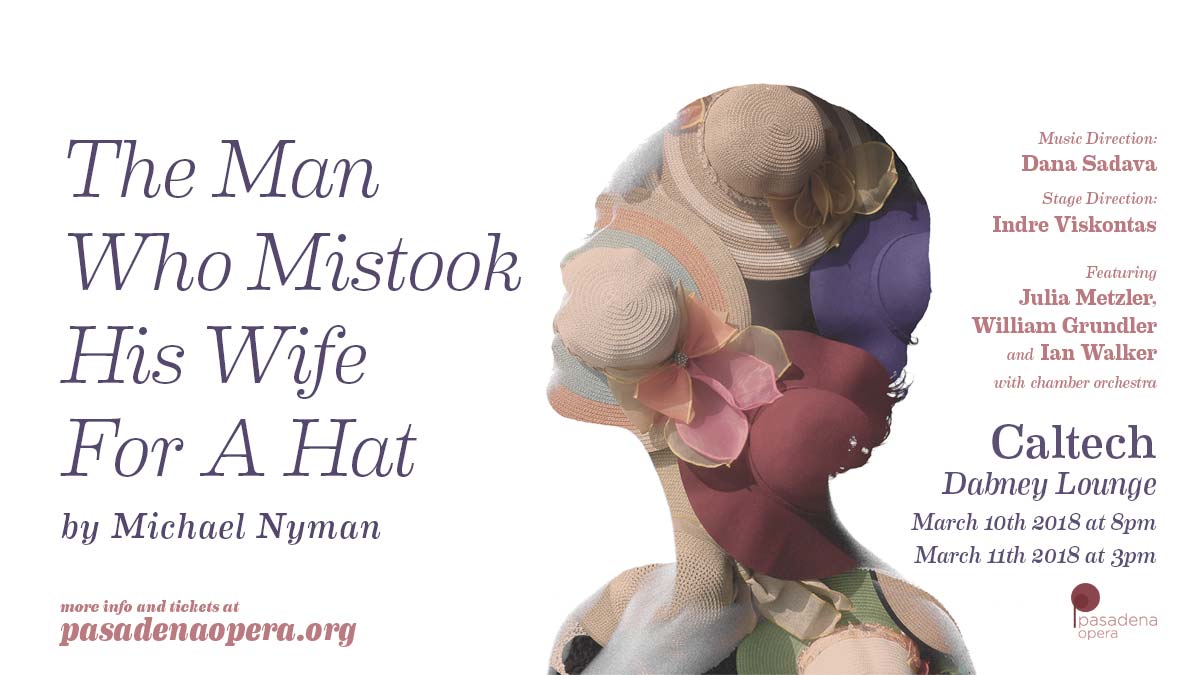
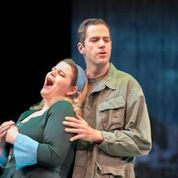
‘The Man Who Mistook his Wife for a Hat,’ Dr. Sacks’s case study about a man who couldn’t decipher what his eyes were seeing (medically known as visual agnosia), was the subject of a 1986 opera by Michael Nyman. It will enthrall Pasadena audiences when it debuts at the Dabney Lounge and Gardens at Caltech on Saturday, March 10 at 8:00 pm and on Sunday, March 11 at 3:00 pm.
Presented by the Pasadena Opera, ‘The Man Who Mistook his Wife for a Hat’ will be stage directed by Dr. Indre Viskontas with music conducted by Dana Sadava. Soprano Julia Metzler, plays the role of Mrs. P; baritone Ian Walker plays Mr. P; and tenor William Grundler is Dr. Sacks. Pasadena Opera was established in 2014 by Dana Sadava (Artistic Director) and Indre Viskontas, (Creative Director) to revolutionize the presentation and perception of opera. Together they have a mission to provide contemporary theatre experiences the resonate with the community while maintaining the highest standards of artistic excellence.
Chelsea Basler and James Callon in Pasadena Opera’s 2016 production of Susannah | Courtesy photo / Brian Biery
Viskontas says, “We like to tell stories with a social conscience that are compelling and touch on issues relevant to the times we live in. While we don’t have a mandate to perpetuate feminism, our last two shows featured female characters. ‘Susannah,’ a story about a beautiful woman who attracted a lot of men predated the #MeToo movement. It was a commentary on how women are sometimes misjudged because of their physical looks. Last year we presented ‘Cosi fan tutte’ which, loosely translated, means ‘Women are fickle’ and denigrates women.”
Their process for choosing which shows to put on commences during a lunch when they list all the operas they find interesting. Viskontas elaborates, “We come up with a ‘wish’ list then narrow it down to what we want to do next year and why. We try to be inspired by what’s going on in the country at the moment.”
Sadava relates her own method, “I walk around the city. I visit the San Francisco Music Library thumbing through scores, discovering new pieces, listening to recordings. Then I make my long list and short list. I find this process of choosing our next show very exciting.”
“There isn’t one particular opera that I am dreaming to put on,” explains Sadava. “My favorite thing to do is working with composers on new pieces. For our first production, we chose ‘Candide’ because it’s exuberant and involves a lot of people. It’s also in English and it’s by Bernstein, who’s one of my favorite composers. So I thought it made a statement in a lot of ways. For our next production we commissioned a new opera based on the story by Angela Carter called ‘The Bloody Chamber’ by Daniel Felsenfeld with a libretto by Elizabeth Isadora Gold. We’re planning it as a Halloween show.”
For ‘The Man Who Mistook his Wife for a Hat’ Sadava and Viskontas chose three performers who have an affinity to the area. The singers who make up the only three characters are all Los Angeles residents.
Julia Metzler and Jonathan Beyer in Pasadena Opera’s 2017 production of Cosi fan tutte | Courtesy photo / Carin Yates
Soprano Julia Metzler grew up in Glendale, a city about six miles west of Pasadena. She was the winner of the Metropolitan Opera Competition’s western region finals. She graduated from the San Francisco Conservatory of Music with a bachelor’s degree in music and gained her master’s degree in voice from UCLA.
Having professionally performed in her late teens, Metzler has built an impressive resume. Recent roles include Fiordiligi in ‘Cosi fan tutte’ (Pasadena Opera), Micaela in Bizet’s ‘La Tragedie de Carmen’ (UCLA Opera), the title role in Gustav Holst’s ‘Savitri’ (Pasadena Pro Musica),and Lady Billows in ‘Albert Herring’ (Repertory Opera Company).
Additionally Metzler has performed and been interviewed on NPR’s ‘From the Top.’ She was also featured in the HBO miniseries ‘Masterclass,’ in which she had the opportunity to coach with Placido Domingo.
Metzler says, “Everyone in my family is a musician so I grew up with music. We had a violin store in Glendale and I played the instrument as a child. Sometimes I worked in the store helping kids try out violins.
When I was about 18 or 19, I started singing professionally but my interest in it started earlier than that. Music is ingrained in me; there wasn’t any one defining moment when I realized singing was my calling.”
“I have been a singing waitress in Italian restaurants,” recounts Metzler. “I try to work with as many different companies as I possibly can; I recently did small parts with L.A. Opera. I have just come back from China where I sang nationalistic songs for a televised performance. I will be traveling to New York to compete in the National Metropolitan Opera Awards and I’m very excited about that.”
Metzler pronounces, “I’m very lucky to be employed in a profession I am passionate about and travel wherever my art takes me. I have been involved in amazing productions and hope to one day get my dream role, Tosca.”
Sadava used to call Pasadena home. She reminisces, “I grew up in Pasadena so it has been a huge playground for me. I went to high school and college here. It’s a very sophisticated but open place so I’ve always had an eye on it as somewhere I’d love to come back to one day. We started this company as a tribute to the city of my youth.
Dana Sadava | Courtesy Photo
It was when I was attending Caltech that I had a carpe diem moment and decided to switch from engineering to music. I thought I could always go back to rocket science but I have to try doing music professionally and that’s what I did. I was thrilled to meet Indre and in her I found a kindred spirit. She and I both have parts of our brains firing out all at once; we just work well together. We have a kind of sixth sense about what we need to do and how it’s going to go.”
While Sadava has an engineering degree, music has always been a part of her life. She originally trained as a pianist and studied with Dorothy Hwang at Colburn School, Sanford Margolis at Oberlin Conservatory of Music, and Gabriel Chodos at the Aspen Music Festival. She was with the Disney Young Musician’s Symphony Orchestra and was seen on the Disney Channel when she was eleven years old.
As a Caltech student Sadava pursued her love for the arts, appearing as a piano soloist with the Caltech-Occidental Symphony and playing chamber music. She went to the University of Michigan for a master’s degree in orchestra conducting and studied with Kenneth Kiesler on a merit scholarship.
Sadava has been a professional conductor for the past eight years and has toured all over the United States, Canada, and Ireland. She is currently also the Artistic Director of the Community Women’s Orchestra in Oakland. She has recently been hired by the San Francisco Conservatory of Music to work on a project with their opera department.
A Toronto native, Viskontas earned her PhD from UCLA in neuroscience with particular emphasis on how the brain changes when one learns new things. She received her master’s degree from the San Francisco Conservatory of Music where she met Sadava.
“It would have been more convenient for us to establish our company somewhere else,” Viskontas declares. “But because of Pasadena’s unique profile it became the most logical place for us. It is a beautiful city where there is a big support for the arts. With its world-class university, it is the center of education and technology. Opera, the way we present is, uses ground-breaking technology and new ideas. Besides, it didn’t have an opera company so we wanted to fill that gap.”
Indre Viskontas | Courtesy Photo
Viskontas happily mixes music with neuroscience. She says. “I teach Psychology courses at the University of San Francisco but I spend a lot of my time bringing science to the public. I like doing one or two projects a year. I did a couple of lecture series with The Great Courses (12 Essential Scientific Concepts and Brain Myths Exploded); a TV show on the Oprah Winfrey Network called Miracle Detective as well as a few web series. I write and host two podcasts, Cadence: What Music Tells us About the Mind and Inquiring Minds about science and society. I just finished writing a book on music and the brain which will be published by Chronicle in 2019.
I have sung in several companies and have done a whole bunch of bizarre projects. While I still sing on occasion with other companies, now I mainly work on projects involving Pasadena Opera or chamber music. I work often with a string quartet on vocal chamber music (Vocallective.com). I’m also working on a project to investigate what aspects of musical performance can elicit empathy in audiences (www.TheEnsembleProject.com).
‘The Man Who Mistook is Wife for a Hat’ is an amazing story about the power of music and the ways we should approach neurological problems. Dr. Sacks shows us that there’s a lot doctors could learn from their patients about the brain. To have this idea and to be able to present them in my favorite art form is something I had wanted to do for a long time. It is also a very personal project for me; he and I worked together on a venture called Musicophilia. He was my mentor and I wanted to honor his passing in a significant way.”
“He might have had trouble connecting with the larger world, but he always managed to reach even the most elusive patients with his unassuming manner and keen ability to get to the heart of their experience,” continues Viskontas. “I’m thrilled to have the opportunity to share his genius with our audience.”
For Sadava, ‘The Man Who Mistook His Wife for a Hat’ is a fulfillment of a long-dreamed of production. She reveals, “I have been looking forward to presenting Nyman’s beautifully minimalist score weaved with the accessible melodies of Robert Schumann, whose music is a remedy for the patient’s ailing mind. The sparseness of the score gives the audience time to digest the profound insights the Oliver Sacks poetically presents.”
Viskontas expresses it succinctly when she pronounces, “We boastfully and arrogantly think that opera is the height of theatre. Storytelling is what we do – in the grand form of opera.”
At the turn of the 20th century, Pasadena saw the flourishing of the arts and the blossoming of technology which inspired solar astronomer and visionary George Ellery Hale to develop the city as a scientific and cultural destination. It’s only fitting that ‘The Man Who Mistook his Wife for a Hat’ is set here where, more than a century later, arts and culture still mesh seamlessly with innovation and technology.



 A San Gabriel Valley Inquirer