Scotland’s St Andrews is More Than a Picturesque Coastal Town

Originally published on 19 July 2018 in the Pasadena Independent, Arcadia Weekly, and Monrovia Weekly
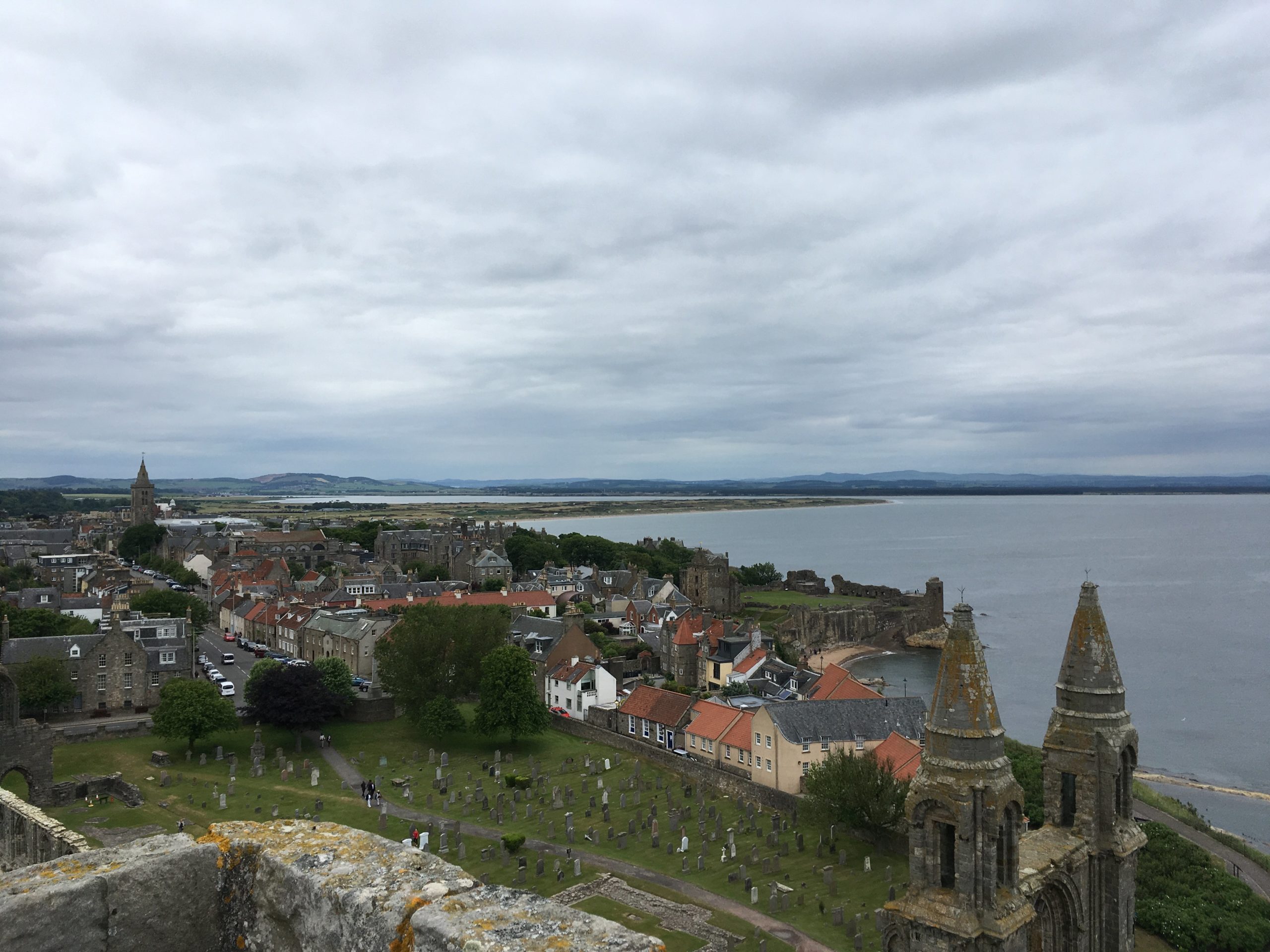
St Andrews from St Rule’s Tower | Courtesy photo

Mention St Andrews, Scotland, and most people would automatically think of golf. It is, after all, popularly known as the birthplace of this sport where it was first played in the 15th century. To this day the British Open is held on The Old Course every five years.

Golfer Bobby Jones once proclaimed, “I could take out of my life everything except my experiences at St Andrews and I would still have a rich, full life.” That may be a bit of an exaggeration, though. Celebrated golfer Jack Nicklaus put it in better perspective when he said, “If you’re going to be a player people will remember, you have to win The Open at St Andrews.”

After his first Open victory at St Andrews in 2000, Tiger Woods famously declared, “It may be years before I fully appreciate it, but I am inclined to believe that winning The Open at the Home of Golf is the ultimate achievement in the sport.”

Countless superlatives that can be uttered relating to the golf experience on this picturesque coastal town 30 miles northeast of Edinburgh and they would all be true. Golf enthusiasts have consistently included St Andrews on their bucket list.

Aside from the iconic Old Course, players can enjoy the New Course, Balgove Course, Castle Course, Eden Course, Jubilee Course, Kingsbarns Golf Links, Strathtyrum Course, and the Fairmont St Andrews. With so many venues to choose from, they could practically play a round on a different course each day for two weeks without having to travel more than 30 minutes to reach one.

Professional golf is a lucrative business that gets support from major sponsors and draws an elite following. St Andrews Links run five annual tournaments throughout the year, including the St Andrews Links Trophy, and host the St Rule Trophy, the Alfred Dunhill Links Championship, and The Open Championship.

During the summer months, non-professional players from all over the world flock into town. Golf is a big part of the daily lives of St Andrews residents; each one of them is touched by the sport in one way or another.
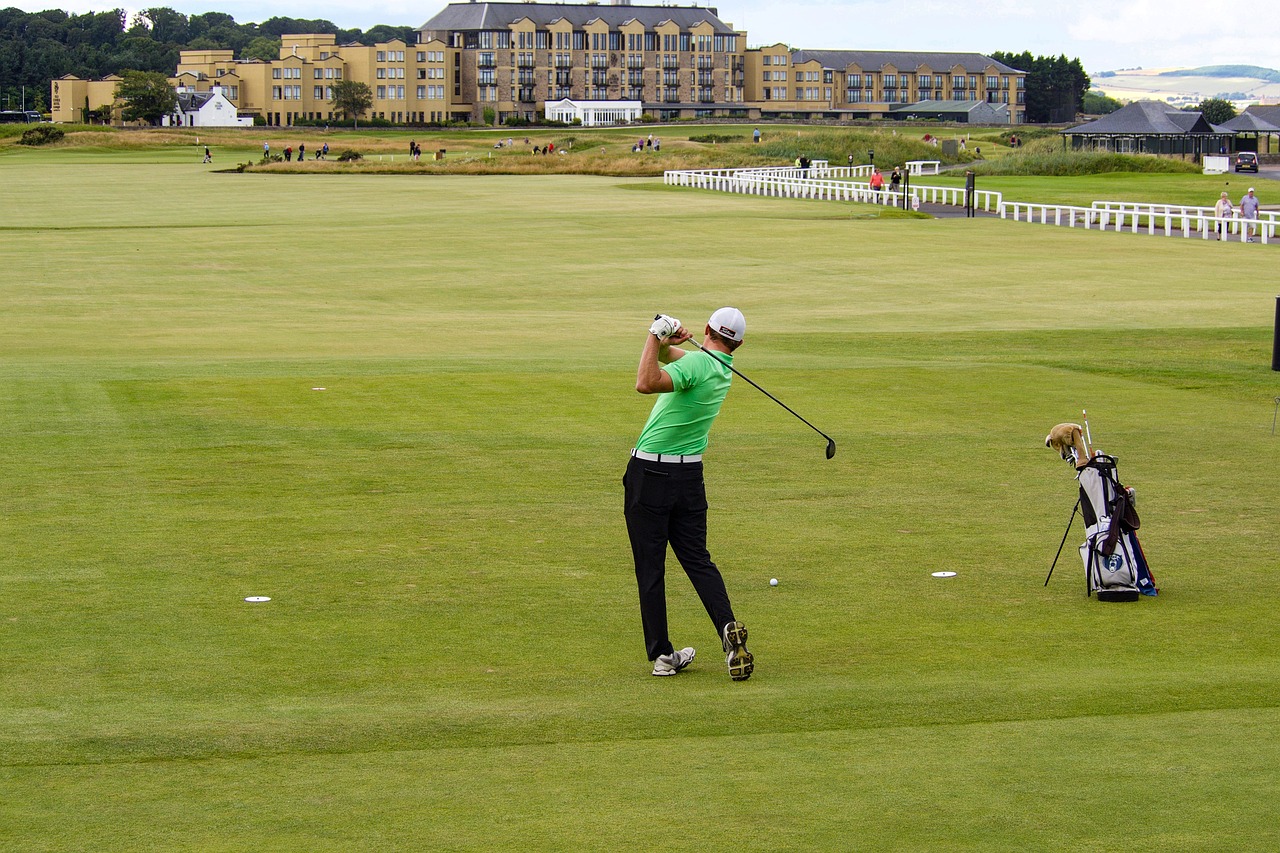
The world-famous and iconic Old Course | Courtesy photo

Limo chauffeurs, as well as cab and shuttle drivers, have numerous memorable stories about how many golfers and golf clubs they have transported from the Edinburgh airport to St Andrews. Every pub and tavern owner has served tankards of ale or glasses of Scotch whisky to the most famous golf luminaries, whether in celebration of a championship win or in commiseration for an upsetting loss. All hoteliers and B&B proprietors have warmly hosted these perennial visitors to their charming enclave.

But golf isn’t everything that St Andrews has to offer. It is also home to the University of St Andrews, the first and most ancient university in Scotland and the third oldest in the English-speaking world after Oxford and Cambridge. And while I don’t have first-hand knowledge as regards the importance of golf to life in St Andrews, I have a bit more perspective about what the school means to locals.

Founded in 1413, the University of St Andrews has consistently ranked third in academic excellence, behind Cambridge and Oxford, and first in student happiness in the United Kingdom. Presiding over this year’s graduation ceremony, Principal and Vice Chancellor Sally Mapstone also pronounced St Andrews as among the most modern and forward-looking universities.

While some might refute that claim, what’s indisputable is that St Andrews is the most international of all the universities in the U.K., which may partly explain why it is contemporary and in-step with the times. When my daughter and I visited it in 2013 during her college search, our student tour guide said 135 nationalities are represented – one-third of the student body come from Scotland, another third hail from England, and the last third are from around the globe.

Americans make up the largest group of international students, and each state is represented by two students. This last bit of information was demonstrated to us over a year later when my daughter was at the University Store to buy school supplies right before freshers’ (as incoming students are called; or freshmen as they’re referred to in the United States) week. Upon hearing my daughter’s American accent, the cashier inquired where she’s from and when she said “California,” he immediately said, “So you’re the second one; the first Californian was here the other day.”
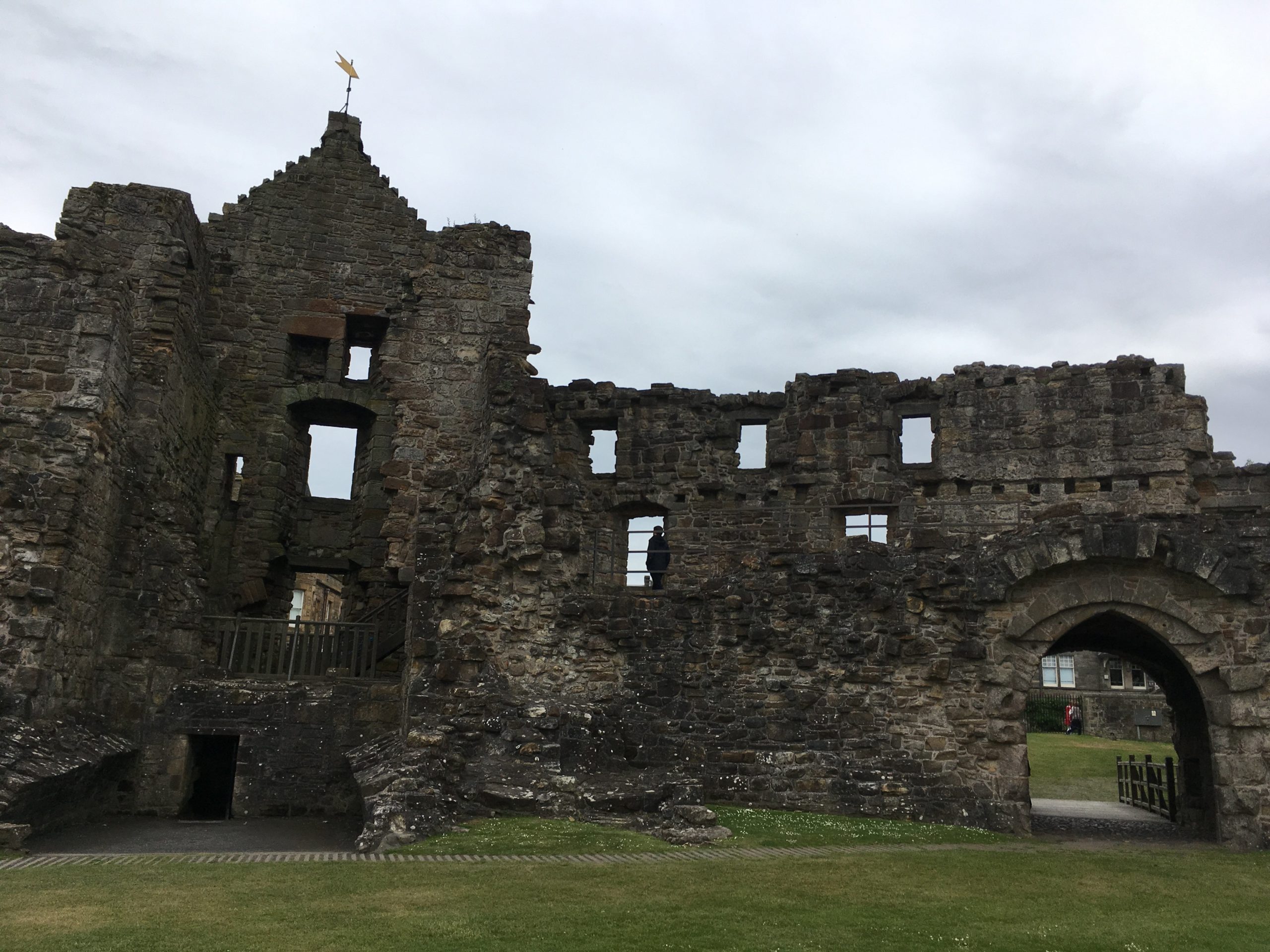
The ruins of St Andrews Castle | Courtesy photo

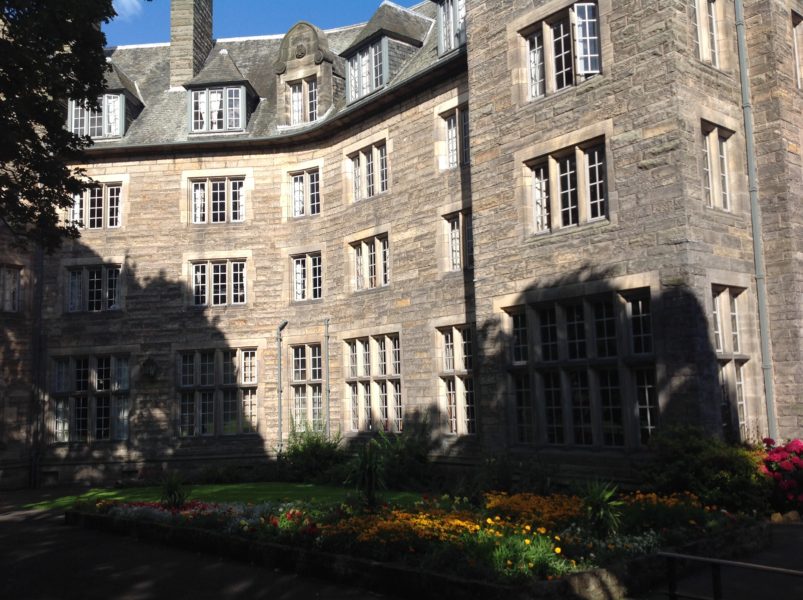
During term time students make up approximately one third of the total population and because the university doesn’t really have a school campus, its buildings are scattered across town. The school and its students are such an integral part of the community. One out of every five residents has some connection to the school, whether as faculty or staff or as a worker in  restaurants, grocery stores, retailers, and clothes shops catering to students and university personnel.

If you’re a tourist while school is in session, you will most definitely bump into students as they hurry off to their lectures or tutorials when you make your way to the ruins of St Andrews Castle or Cathedral. They are most probably sitting only a few feet away from you as you take in the majesty and splendor of sunset on the West Sands.

It’s a small town and everyone knows everyone else. Locals have as their neighbors students who are leasing the flat next door. The owner of the local cab company told us that there are only a hundred taxis in St Andrews and all cab drivers recognize the students by face. He assured us that they all treat these young people like their own children, “If ever students are too drunk to walk home we’ll drive them to their flat even if they have no money on them. They can just pay us the fare the next time they see us.” The legal drinking age in Scotland is 18 years old so intoxicated students are not an uncommon sight.

Students get the special treatment at The Botanic Garden, which is open all year and offers free admission to those with a valid student ID. University students mingle with locals as school traditions are celebrated all over town – whether it’s the Raisin Weekend during freshers’ week, the Gaudie Walk to East Sands, or the May Dip on the North Sea – and they’re all part of the daily affairs at St Andrews.
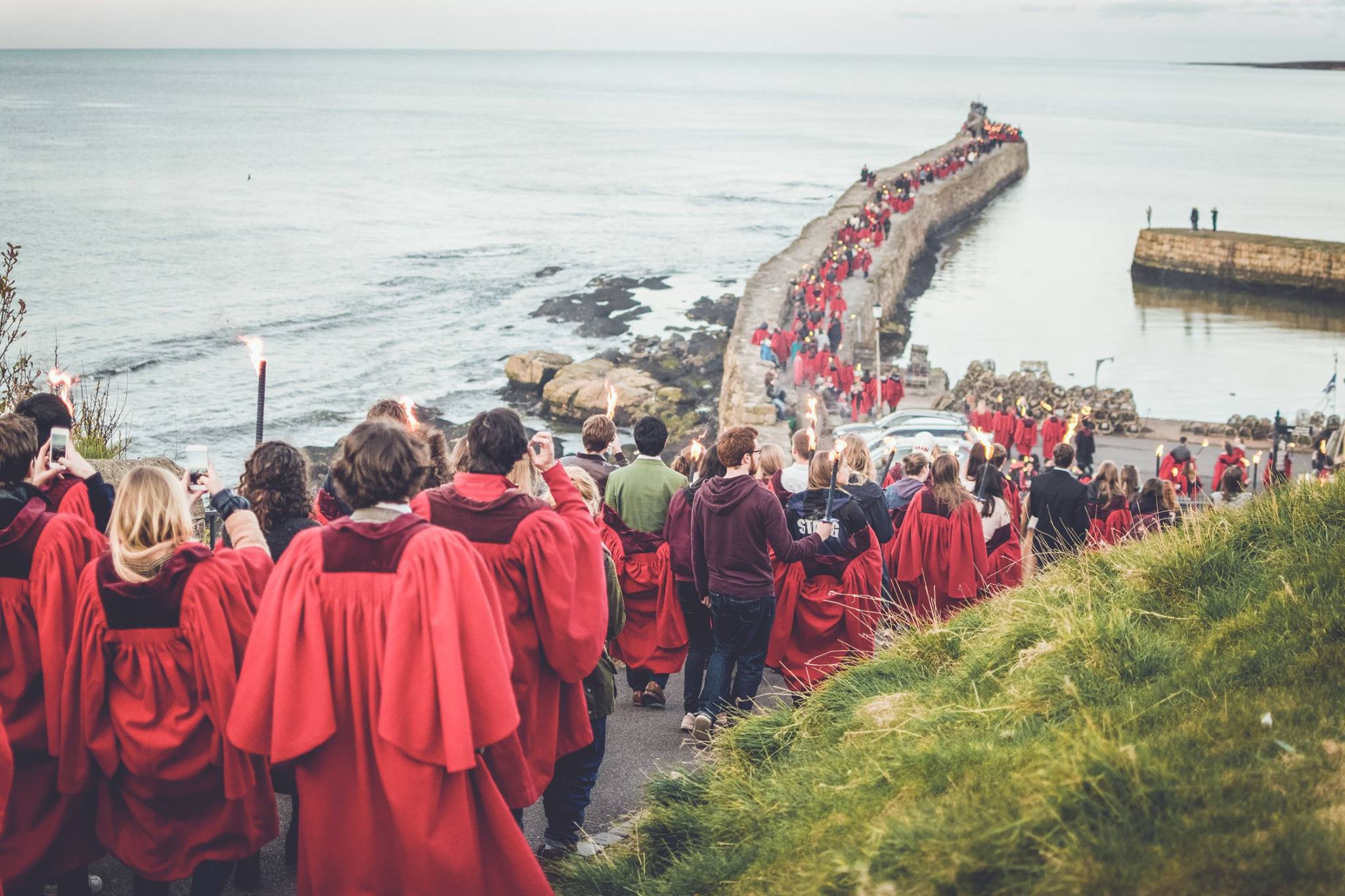
The Gaudie Walk is a University of St Andrews tradition | Courtesy photo

Academic dress, which is both distinctive and ubiquitous, is central to university life. In earlier days, students wore the red gown so tavern owners could identify them when they came round for a pint. Nowadays, it is worn to chapel services, formal dinners in the residential halls, meetings of the Union Debating Society, by student ambassadors who give guided tours and, most noticeably, for the traditional pier walk.

At no other time have students been lavished as much attention and affection than during graduation week which, this year, was from the 26th to the 29th of June. The entire town takes part in the excitement of the students and their families. A portion of North Street is closed for 15 minutes twice a day for the academic procession after the morning and afternoon ceremonies. The bells of St Salvator’s chapel are likewise on full peal and can be heard a mile out for an hour after each ceremony. Several restaurants offer prix fixe menus during graduation week. There is a palpable euphoric feel in the air at this joyous period.

This is also one of the busiest seasons at St Andrews when every single hotel room is booked and all bed and breakfast establishments are at full occupancy. Pam Izatt, a past president of the St Andrews B&B Association, says, “If your child is attending the University of St Andrews, reserve your accommodations two years in advance of graduation because they go fast. You’ll end up staying in Dundee or even Edinburgh otherwise.”

And graduation is the one occasion no University of St Andrews parent should ever miss. Unlike  most American university commencement ceremonies which are conducted in large venues to accommodate thousands, it is an intimate affair at this ancient school where graduation is held at Younger Hall which has a capacity of 969 people.

It is a tradition that began in 1696 but the current form of graduation followed today is from the 1860s. In the past, the ceremony took place in the University Library but as the university grew it needed a larger venue and Younger Hall was built.

Two ceremonies are held for four days during graduation week, at 10:30 a.m. and at 2 p.m. Not everyone can be accommodated at Younger Hall but family and friends can watch the graduation from two screening rooms where the ceremony is streamed live.
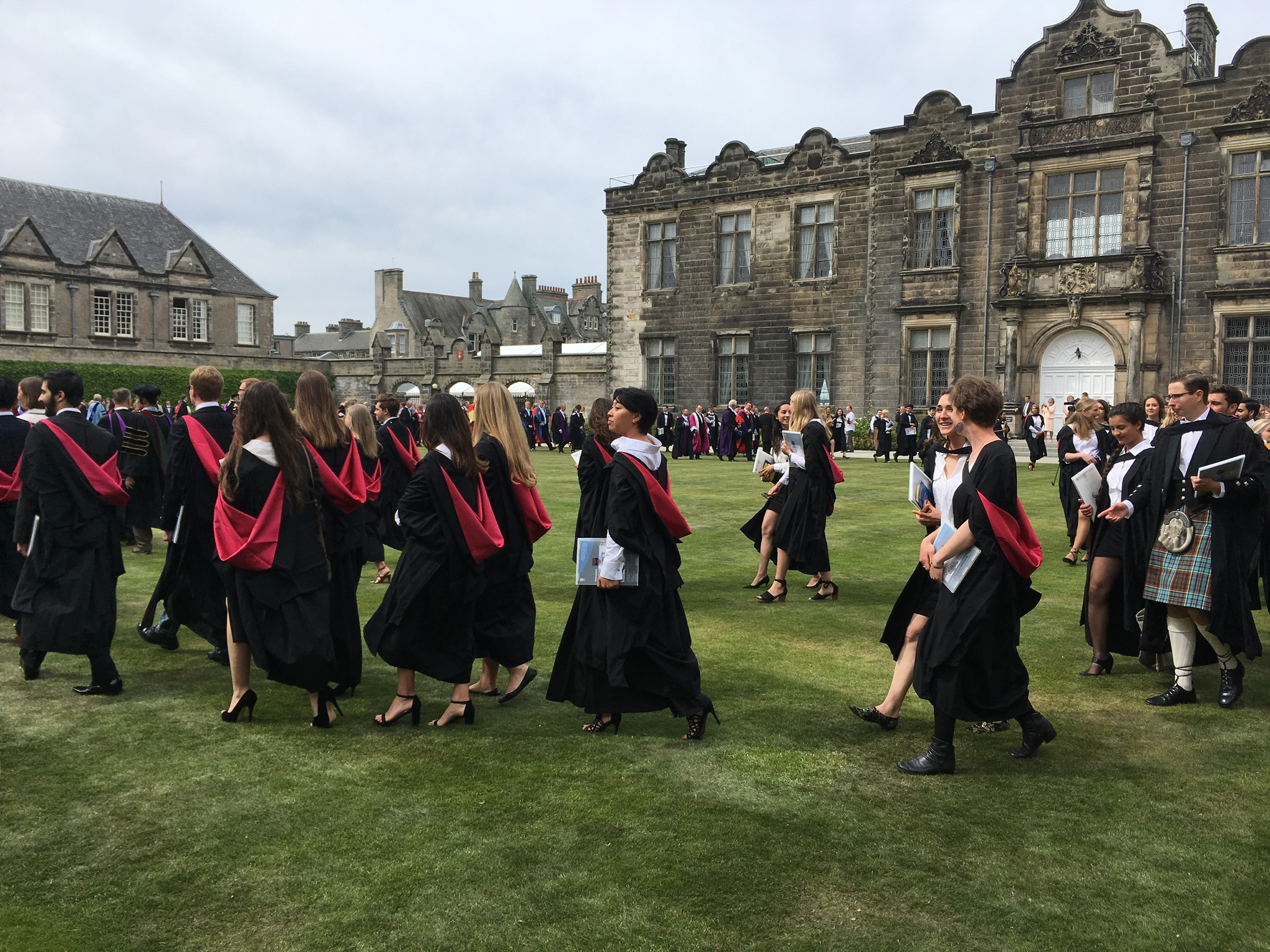
Graduates at St Salvator’s Quad | Photo by May S. Ruiz

Graduands occupy the first several rows at the front of Younger Hall, with parents and families filling the remaining seats and those upstairs in the balcony. The university chaplain opens the ceremony and the academic procession enters the hall led by six men carrying maces that symbolize the university’s colleges. They are followed by various faculty heads, with the Principal and Vice Chancellor, Sally Mapstone, and the Chancellor Lord Campbell of Pittenween bringing up the rear.

The graduation ceremony I attended was presided by Mapstone who told us about the history of Younger Hall and explained the ritual, “It is the major celebratory occasion in our academic year at St Andrews and is a part of a tradition that allows for transformation. It is when scholars become masters and masters become doctors. It marks a particular rite of passage for our students when they become something they were not before. Graduations give us permission to change while recording what we stand for and establishing connections between generations.”

The conferment of a degree transpires when Mapstone says in Latin, “I raise you to the rank of Master of Arts and to symbolize this I place upon you this hat” to the first graduand. She then uses the shortened Latin phrase “et super te,” which means “and upon you, too” to the rest of the graduands.

According to Mapstone, the cap which touches the head of the graduate was long thought to have come from the trousers originally worn by St Andrews’ most famous 16th century student John Knox, the major proponent of Reformation in Scotland. He also, among other things, blew the first trumpet blast against the monstrous regiment of women. Happily, she notes, researchers found that this particular cap was purchased for the doctoral graduation of Sir John Arbuthnot, the Scottish physician and satirist who graduated in 1696, and this cap has been used since.

After the ceremony, new graduates join the academic procession which emerges from Younger Hall into North Street and then to St Salvator’s quad accompanied by the ringing of St Salvator’s chapel bells. Graduates take several turns around the quad while family and friends cheer their accomplishment.

A University of St Andrews graduation is the perfect capstone to students’ four years of diligent academic studies coupled with dynamic involvement in campus activities. It is a ceremony that is as solemn as it is stirring, and as moving as it is impressive. It is indeed a rite-of-passage worthy of the pomp and ceremony it is accorded.

In equal measure, golfers and students support the economy of this town as well as contribute to the local color. St Andrews is certainly abuzz and alive with their presence. And anyone who has been fortunate enough to visit this stunningly beautiful spot in Scotland fully appreciates how they have enriched the St Andrews experience.
Visiting Dublin, Ireland: Land of Leprechauns and Shamrocks

Originally published on 24 October 2017 in the Pasadena Independent, Arcadia Weekly, and Monrovia Weekly

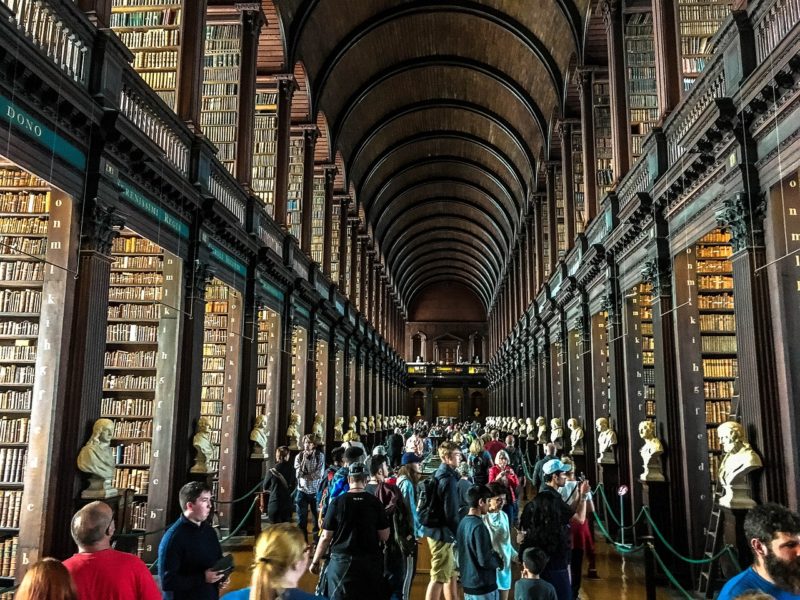
The Long Room at Trinity College is one of the most beautiful libraries in the world.

Summer this year took me back to Europe, my favorite travel destination. I journeyed to Scotland for the third time on British Airways via Heathrow International in London, which is one of the busiest and most crowded airports in the world.

To avoid having to go through Heathrow again coming back, I decided to visit Ireland for a few days before heading home. From Edinburgh, I took an Aer Lingus flight and was in Dublin in an hour.

I have actually stepped foot on Dublin before now; four years ago I made a stop here for a few hours enroute to Switzerland. While enjoying a breakfast of a cup of hot coffee and pastry at the airport lounge, I glimpsed lush green foliage outside through the rain. It was absolutely picturesque and I resolved to come back one day to see more of the city. And this past August I did.

The name ‘Ireland’ is a derivation of the ancient Irish word ‘Eire’ meaning western. According to legend, the Irish believe their country is in the west, the last land before the vast Atlantic Ocean.

It is divided into the northern and southern parts.

Northern Ireland is one of four countries that make up the United Kingdom (the others are England, Scotland, and Wales). Its capital is Belfast and its currency is the British Pound Sterling.

The southern part is the Republic of Ireland, with Dublin as its capital and the Euro as its currency; this is the Ireland I visited. Dublin (Black Pool), Ireland’s most important city, has been the capital and its major cultural and economic center since the early Middle Ages.

I was going to be here for only three nights so I limited my exploration of this land of leprechauns and shamrocks to Dublin. As in all my travels, I tend to see castles, cathedrals, and universities. And the capital has all three in close proximity to each other.

Being an education writer, I was very much interested in seeing for myself Trinity College, the University of Dublin, on College Green. It is the oldest university in Ireland and one of the oldest in Europe. I really wanted to learn as much as I could about the school so I joined a tour being given by a pleasant English graduate student.

Founded by Queen Elizabeth I in 1592 as ‘The College of the Holy and Undivided Trinity near Dublin’, its mission was to ‘promote civility, learning, and Protestant piety among the youth of Ireland’.

Due to some confusion in the Latin phrase used in the foundation document, the terms ‘University of Dublin’ and ‘Trinity College’ became synonymous. The explanation is that the University of Dublin consists of only one college: Trinity.

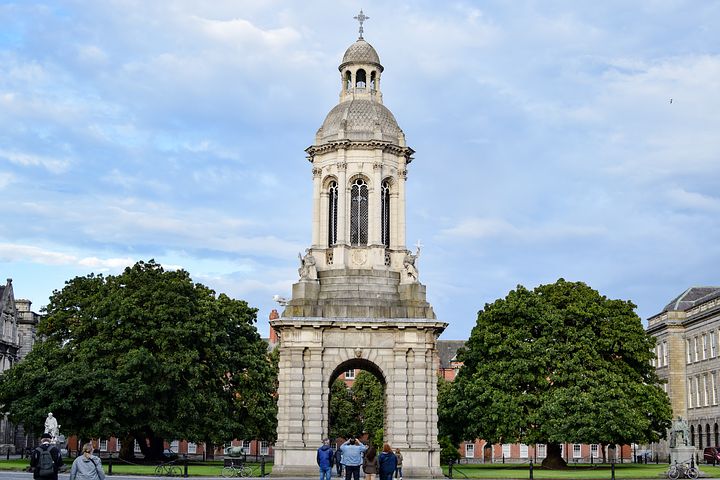
The Campanile welcomes students and visitors to Trinity College.

A majestic Campanile welcomes students and visitors to its beautiful campus. Flanking the Campanile’s rear are two Oregon maple trees, which were reportedly planted before 1850 from original seeds that were presumably taken back from the New World.

A life-size statue in marble of George Salmon, provost of Trinity College from 1888 to 1904, occupies a prominent space close to the Campanile. His 14 years as provost are described as ‘the golden years’ of Trinity.

According to our learned guide, Salmon is also known as the champion of women, a dubious honor since he apparently opposed the admission of women into the university having pronounced ‘Women would enter the college over my dead body’.

It is ironic that while it was founded by a woman, Trinity College was one of the last in the British Isles to admit women students. It was only in 1892 when 10,000 Irish women signed a petition to give women the same benefits and rights as have been conferred to men that the school finally gave in to pressure.  Ireland’s 7th and 8th presidents, and its only two female presidents, Mary Robinson and Mary McAleese, were both Trinity alumnae.  Today women constitute 58% of the student body.

Some of the most well-regarded luminaries in the world are graduates of Trinity College: Jonathan Swift, known as the author of Gulliver’s Travels, who later moved to London and got involved in English politics and then was appointed Dean of Saint Patrick’s Cathedral; Samuel Beckett, the acclaimed Pulitzer Prize-winning playwright of ‘Waiting for Godot’ and one of the most influential writers of the 20th century; Edmund Burke, who is best remembered as an early supporter of the American Revolution; to mention just three.

But there’s one name that ought to ring a bell to Californians – that of George Berkeley. He was a philosopher and later became Bishop of Cloyne. His many accomplishments are commemorated at Trinity College with a Berkeley Library and in California with an eponymous city – home of the University of California, Berkeley which has a Sather Tower that’s known as the Campanile. (At this juncture our tour guide noted that it is pronounced Bark-ley, but became Berk-ley in the United States. He also mentioned that, coincidentally, he is here pursuing his doctorate on George Berkeley’s life.)

My main goal in visiting Trinity College was to see the Old Library Building. It houses the Long Room, which may be the most gorgeous and most photographed library in the word, and the Book of Kells.

Called the Long Room because it is the longest single-room library in Europe, at 65 meters in length, it contains over 200,000 of some of the oldest volumes in the library. It is an amazing sight to behold! It is a working library and because the books there are rare, trained staff process requests from readers. Books are then brought to a specific area and care taken so their bindings are not stressed.

However, as in everything nowadays, technology will soon replace actual books being taken out and read – they are currently being scanned for online access. But that just ruins the whole experience, doesn’t it?  There is nothing more thrilling for a bibliophile like me, than to hold one in my hands, smell the old leather, turn the fragile pages, and peruse the words written hundreds of years before my time.

The Book of Kells, also known as the Book of Columba, is an illuminated manuscript done in the Insular style. Containing the four Gospels of the New Testament, it is a masterpiece of Western calligraphy and an exemplar of insular illumination. It is regarded as Ireland’s greatest treasure.

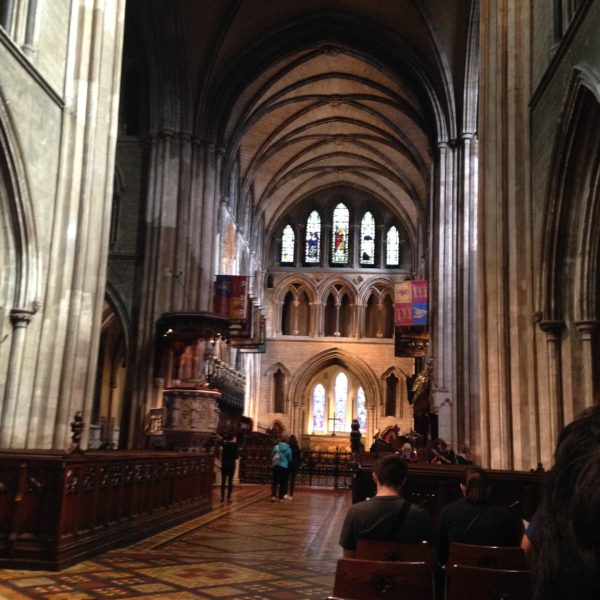
Saint Patrick’s Cathedral’s nave looks like the long part of the cross and the choir, the top part.

A tour of Dublin would never be complete without a visit to Saint Patrick’s Cathedral, the patron saint of Ireland.  Built by Luke, Archbishop of Dublin, between 1220-1259, on the site of an ancient well which was reported to have been used by Saint Patrick himself, the cathedral was made from local limestone and stone imported from Bristol.

Constructed like a cruciform, Saint Patrick’s Cathedral’s nave resembles the long part of the cross; the Choir, the top of the cross; and the transepts, the arms of the cross. Its design is thought to be based on Old Sarum Cathedral, near Salisbury, England.

Having visited the Cathedral of St. Patrick, the magnificent landmark Neo-Gothic-style Roman Catholic church on Fifth Avenue in New York City, I thought the Dublin cathedral appeared like a humbler version.

Saint Patrick’s Cathedral in Dublin is still a place of worship today. However, it is also very much a tourist stop, with kiosks selling all manner of souvenir spread throughout the nave. Standing near the apse, I found it difficult to think of Christian values when commercialism was on full display a few feet away.

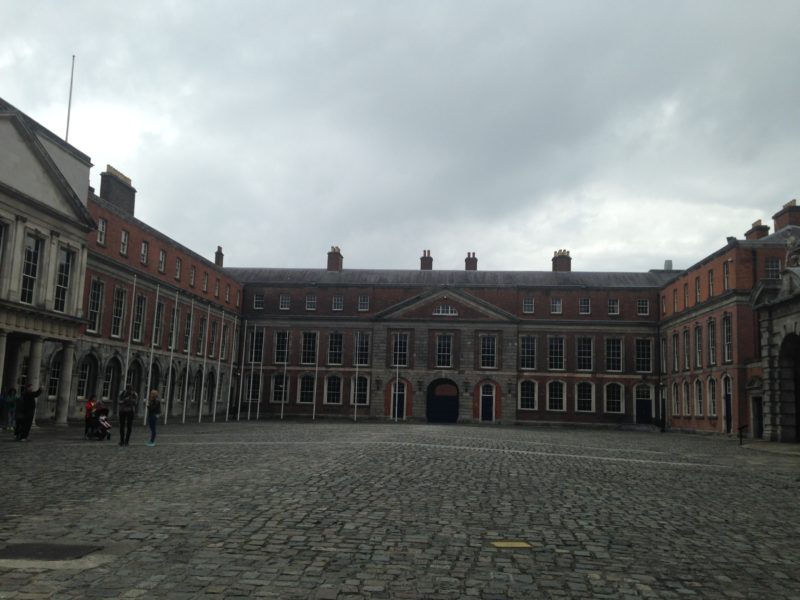
The next place I went to was Dublin Castle on the city center off Dame Street. Built in 1204 on the orders of King John of England on a spot previously settled by the Vikings, it features a typical Norman courtyard design. It has a central square and is bounded on all sides by tall defensive walls and protected at each corner by a circular tower.

Dublin Castle’s center square.

My tour consisted of visiting the state apartments and exhibitions. Saint Patrick’s Hall is the grandest room of the state apartments – it has one of the most important decorative interiors in Ireland. Its most striking feature is a painted ceiling by Vincenzo Valdre. Composed of three panels, it depicts the coronation of King George III, Saint Patrick introducing Christianity to Ireland, and King Henry II receiving the submission of the Irish chieftains. The room is used to this day for presidential inaugurations.

Other rooms worth seeing are: the throne room; the state drawing room; the dining room; and the Wedgwood room.

The most architectural space of the state apartments is the state corridor based on the early 18th century corridor of Edward Lovett Pearce in the former Parliament House on College Green. It showcases a marching procession of top-lit vaults and arches.

While it is an historic tourist attraction, Dublin Castle is a working Irish government building. It is used for state dinners, the most recent one being for Queen Elizabeth when she visited Ireland in 2011. It also hosts conferences.

Next on my walking tour was Dublin City Hall, located on Dame Street, next to Dublin Castle and five minutes away from Trinity College. Constructed between 1769 and 1779 by Thomas Cooley, a young architect from London, the City Hall was originally intended to be the Royal Exchange.

An impressive example of Georgian architecture, for which Dublin is world-renowned, the City Hall has a central entrance hall or rotunda, with a large dome supported by twelve columns. A floor mosaic showing the city arms and motto and marble statues of prominent Irish men grace the rotunda. Today it is used for corporate events and functions.

Not having much time left to enjoy other attractions, I opted to see the rest of the city from the comfort of a city tour bus. Our tour guide was Kiernan, a Dubliner, who gave the most insightful commentary about each stop. I will mention a few places I found personally notable.

Kiernan pointed out that it is almost inconceivable that such a small island could produce so many exceptional scholars and writers, especially when Ireland is perceived as a geographical backwater on the farthest edge of Europe. The Irish pride in their intellectuals is celebrated in the Dublin Writers Museum on Parnell Square North. This restored 18th century building is domicile to letters, books, and other memorabilia of Ireland’s greatest writers – George Bernard Shaw, William Butler Yeats, Samuel Beckett, Oscar Wilde, James Joyce, and Brendan Behan.

Dublin may very well be the only two-Cathedral city anywhere.  Saint Patrick’s is the National Cathedral for the Church of Ireland community; and the First Church Cathedral – the original Cathedral of Norse – is the cathedral for the diocese of Dublin and Glendalough, and the seat of the bishop.

Mansion House on Dawson Street has been the official residence of the Lord Mayor of Dublin since 1715.  The Round Room to the left of the main building is where the Irish Parliament met in 1919.

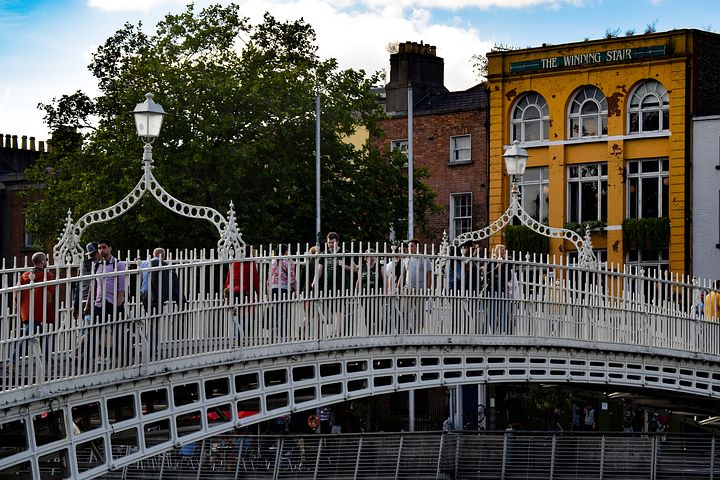
The Ha’penny Bridge crosses the River Liffey.

One of Dublin’s most famous attractions is the Guinness Storehouse. Tourists come here to see the site where Arthur Guinness started brewing the drink that bears his name. The highlight of one’s visit is the Gravity Bar where one can see the entire city while imbibing a complimentary pint.

The Irish are also famous for their whiskies. They claim that whiskey was first distilled in Ireland (having just visited Scotland, where, the Scots assert, whisky originated, I found this rather amusing. That they cannot agree on the matter is further reflected in the way they spell the word. The Scottish spelling is whisky while the Irish spell it whiskey). Whiskey is the English translation for the Scottish Gaelic uisge or Irish Gaelic uisce, meaning ‘water of life’.

Celtic Whiskey on 27 Dawson Street does not discriminate; it boasts the most comprehensive range of the drink with Irish, Scotch, and whiskies from around the world. It is staffed with afionadoes who can tell buyers everything they want to know about whiskey.

Teeling Whiskey Distillery on Newmarket Square is the only operational distillery in Dublin. Here visitors can watch the traditional Irish whiskey process.

Jameson Distillery, Bow Street, Smithfield Village offers upbeat and informative tours by personal guides who take visitors from grain to glass. Guided tours, whiskey masterclasses, and premium tasting are available. The tour ends at the gift shop where buyers can purchase a personalized bottle or a memento of their visit.

Grafton Street is Dublin’s premier shopping area. It is also a social and cultural district where buskers and entertainers can be found at all hours of the day.

Ireland’s widest and most famous street is O’Connell St which has been the setting of pivotal events in its history.  It is lined with statues commemorating Irish heroes including Daniel O’Connell and Jim Larkin, the central figure in Dublin’s lockout. Here is also where one can find the spire of Dublin, a pin-like monument over 120 meters high.

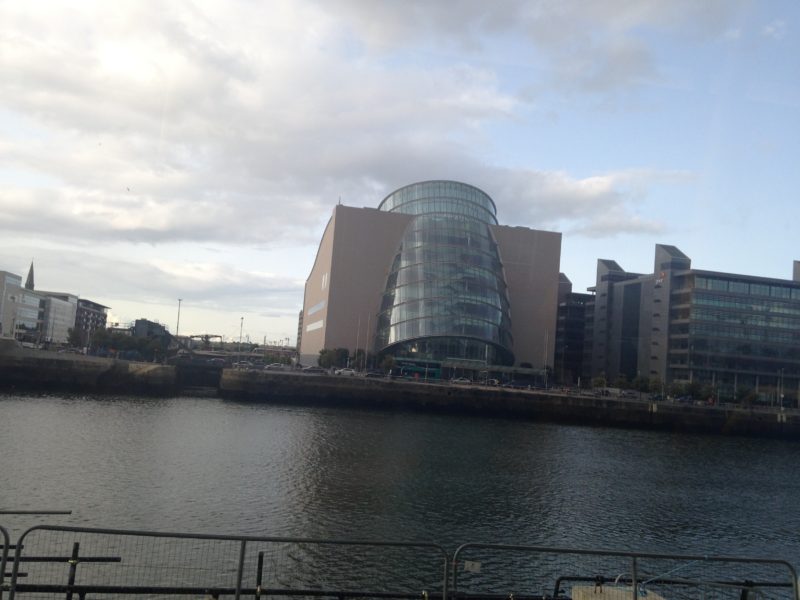
Convention Centre, Dublin is striking in its modernity.

Dublin is a city of many contrasts. The classic and stately Custom House stands not too far from the carbon neutral-constructed Convention Centre, Dublin, utterly striking in its modernity. The Ha’penny, the iconic iron pedestrian bridge crosses The River Liffey on Aston Quay, while a mile away in the Docklands area there’s the cable-stayed Samuel Beckett Bridge, a stunning masterpiece of structural engineering.  Pubs which characterize old stereotypes of Irish culture are mainstays even as ubiquitous stores the likes of Abercrombie & Fitch, Gucci, H&M, and Louis Vuitton flourish, evidence of a cosmopolitan city.

Through it all, you can see that Ireland is a welcoming country. Dubliners are gregarious by nature and are quick to talk to strangers about their infamous weather (it rains at the drop of a hat and stops just as abruptly as it starts). They are happy to give you directions when you’re getting lost (they conjecture their early street designers were probably affected by Guinness fumes). They go about their daily life with an ease reflective of their country’s unspoiled beauty.

Everywhere you go, you observe young people with backpacks slung on their shoulder and earbuds attached to their iPhones walking alongside their older briefcase-carrying counterparts looking down on their smartphones, ready to begin their day. Today’s Dublin feels contemporary and vibrant – it is a city at once in touch with its historic past and set to embark on a promising future.

A Walking Tour of St Andrews and Edinburgh in Scotland (United Kingdom)

Originally published on 28 August 2017 in the Pasadena Independent, Arcadia Weekly, and Monrovia Weekly

There was a time when my awareness of Scotland was very much limited to Scotch whisky, for which I have neither a fondness nor taste.  However, I do know several people who enjoy the single malt variety so you might say I appreciate Scotch by osmosis.

Five years ago, though, I visited Scotland for the first time and that experience gave me a bit more knowledge about this beautiful country (other than that of producing James Bond and Scotch).  Two weeks ago, I went back for my third visit.  As I did on my first venture, I went to Edinburgh and St Andrews.

Edinburgh, located in Lothian on the Firth of Forth’s southern shore, is the capital of Scotland.  Besides being home to the Scottish Parliament and the seat of the monarchy in Scotland, it is the second most populous city in Scotland and the seventh most populous in the United Kingdom.

From Edinburgh Airport, a visitor can board the tram then get off on either Haymarket or Waverley station to get into the city.  Of course, taking a taxi might be the best option especially if you have a lot of luggage to tote.

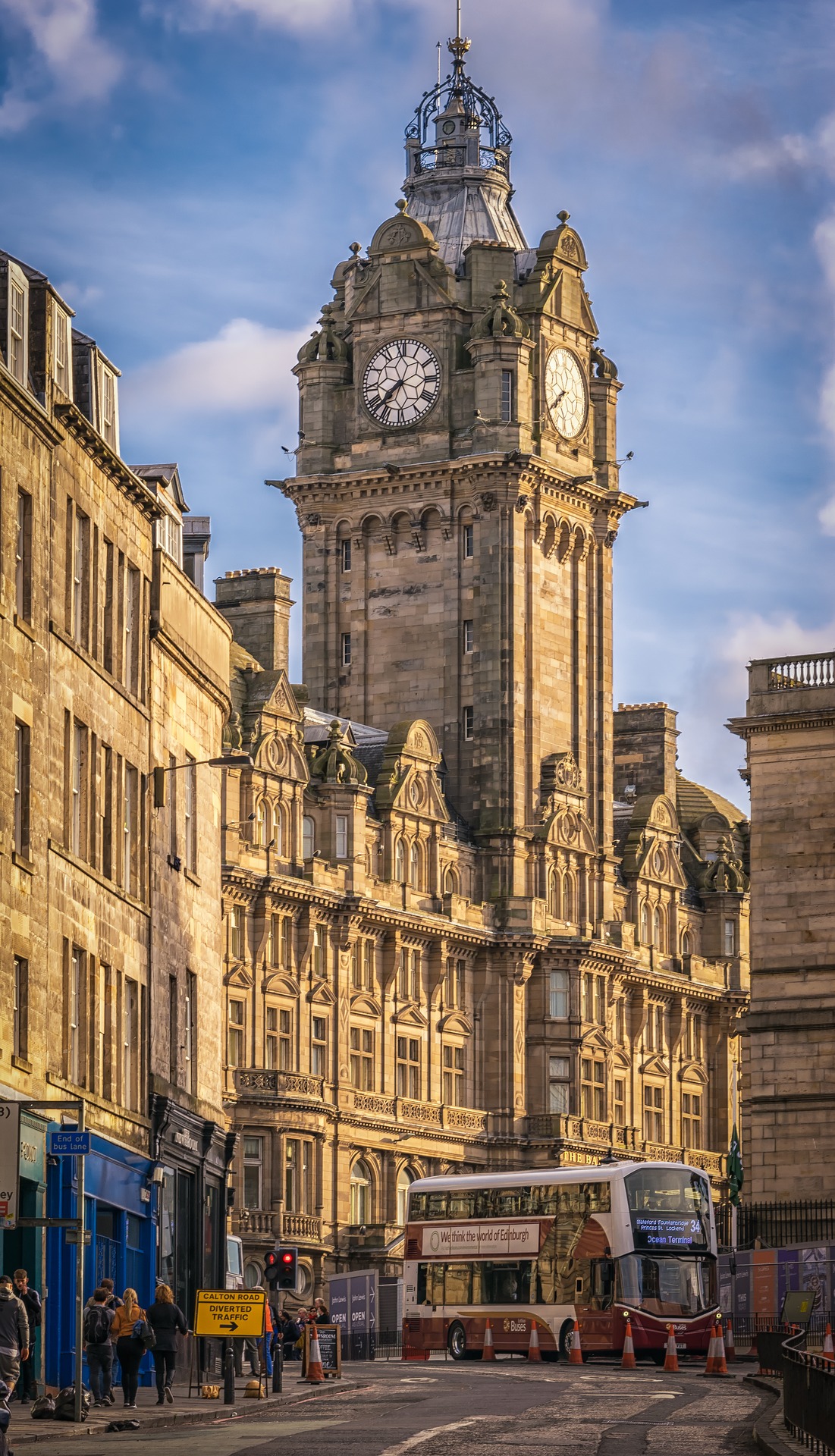
Balmoral Hotel is immediately outside the entrance to Waverley Station.

The city has several hotel choices to accommodate one’s budget.  If you plan on staying close to Waverley Station, there is the Victorian-style Balmoral Hotel, a structure so recognizable with its majestic clock tower.  It is located on the east end of Princes Street and is an excellent starting point from which to start your sight-seeing.

This being a walking tour of Edinburgh, I concentrated on the town center – mainly Princes Street and adjoining thoroughfares.  And you can’t properly claim to have visited this picturesque  city without an excursion to Edinburgh Castle.

An imposing fortress sitting on top of Castle Rock, Edinburgh Castle is the edifice that is most associated with the city.  It was a principal royal residence from the 11th century until the early 17th century; it provided comfortable living quarters to the reigning monarch and a repository for royal treasures and registers.

From Princes Street, I walked up the Royal Mile to the esplanade.  There is a Gatehouse at the head of it, and the road leads up to Half Moon Battery and the Farewell Battery, to the Portcullis Gate and Argyle Tower.

There are several historical structures here – the Governor’s House, the New Barracks, the National War Museum of Scotland, the Upper Ward or Citadel, St Margaret’s Chapel, the Mons Meg, the Queen Anne Building, and so on.

The Royal Palace began as an extension to David’s Tower.  It comprises the former royal apartments; the King’s Dining Room; the Birth Chamber or Mary Room; the Great Hall; and the Crown Room, built in 1615 to house the Honours of Scotland – the crown, the sceptre, and the sword.  To the south of the palace is the Register House, built in the 1540s to accommodate state archives.

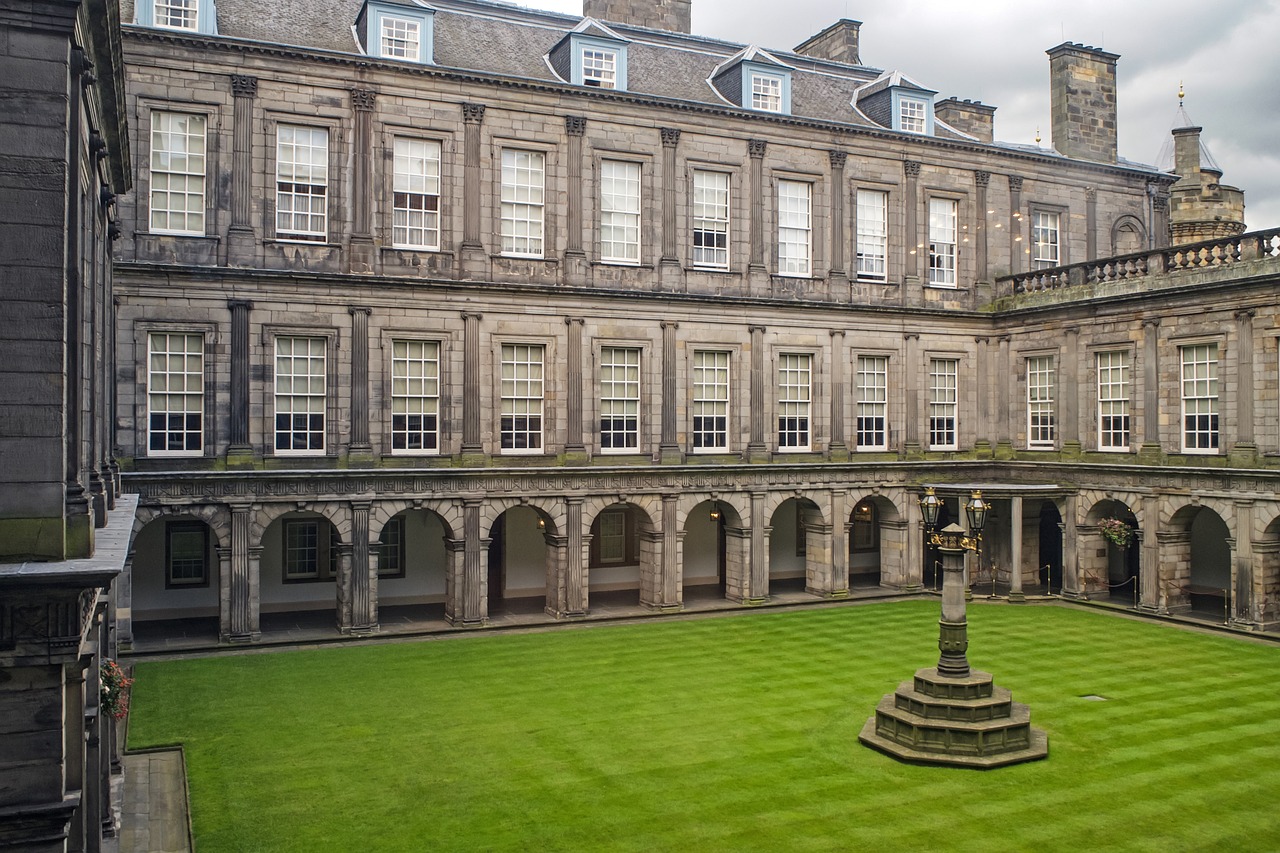
Palace of Holyroodhouse.

At the end of the Royal Mile, on the opposite end to Edinburgh Castle, stands the Palace of Holyroodhouse, the official residence of the British monarch in Scotland.  It is the setting for state occasions and official engagements.

Tour guides will be quick to point out that Holyrood Palace is not Queen Elizabeth II’s residence; it is where she stays for a week at the beginning of summer for official ceremonies.  The queen’s home in Scotland is Balmoral Castle in Aberdeenshire.

American television viewers who have never been to Edinburgh learned about Holyrood Palace during Season I of ‘Outlander’ whose main characters, Claire and Jamie Fraser, joined Bonnie Prince Charles in his efforts to claim the throne of Great Britain for his father.  He set up court here for six weeks in 1745 and the palace became the symbolic residence of the Stuart prince in his Scottish capital.

There are so many landmarks to take in depending on how long you’re staying – the Scottish Parliament, Scottish National Gallery, St. Giles Cathedral, The Real Mary King’s Close, the Edinburgh Zoo, etc.  As I come here every year, I select only one or two sightseeing expeditions during each stay.

Edinburgh has the most gorgeous skyline and a perfect perch from which to see the capital in all its splendor is the esplanade of Edinburgh Castle. During August, though, it is filled with viewing stands for people to watch the Royal Edinburgh Military Tattoo in the evenings.  It is one of Scotland’s greatest events staged on the esplanade of the castle and if you’re here in August it is a spectacular event you shouldn’t miss.

As I was determined to get a bird’s eye view, I took in the sights from the Edinburgh Ferris wheel.  From high up I observed the entire city below and, as always, I found it breathtaking.

This being August, the Edinburgh International Festival and Edinburgh Festival Fringe were in full swing; flyers for the many theatre performances and art shows were plastered everywhere I looked.  Fringe buskers entertained from every available street space; coffee shops, restaurants, stores selling all sorts of Scottish items – from a small key chain to a full kilt ensemble as a memento of your Gaelic experience – bustled with tourists.

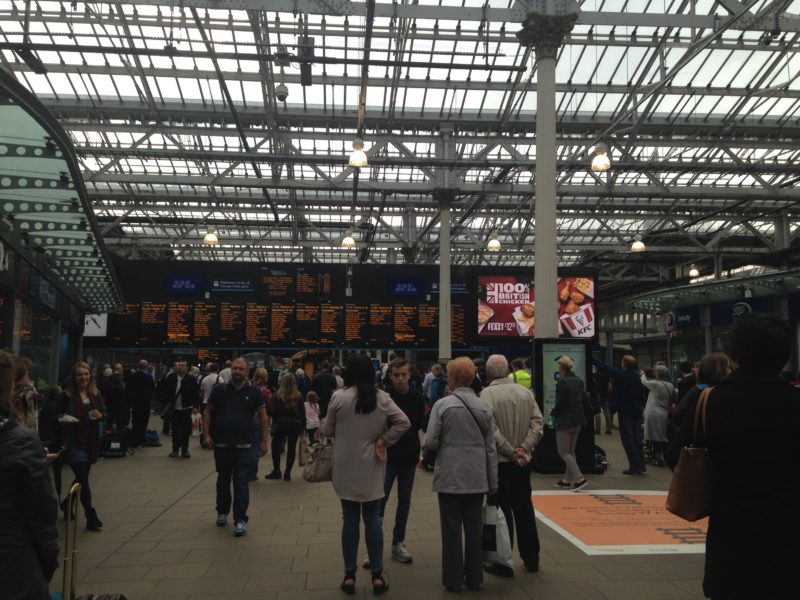
At Waverley Station.

Having had my fill of Edinburgh, I boarded the Scott Rail from Waverly Station to St Andrews, a seaside town about 30 miles northeast of Edinburgh.  The train going to Aberdeen makes a stop at Leuchars and this was where I hopped in a cab that took me to the town center.

Even those who aren’t golf aficionados know that St Andrews is the birthplace of golf, where it was first played in the 15thcentury.   It is home to the iconic Old Course where, to this day, the British Open is held every five years.

I can confidently say that St Andrews has mainly two kinds of visitors – golfers who flock into town during the summer months and students who populate it from fall through spring.  It really is a small place with three major thoroughfares: North; Market; and South Streets.

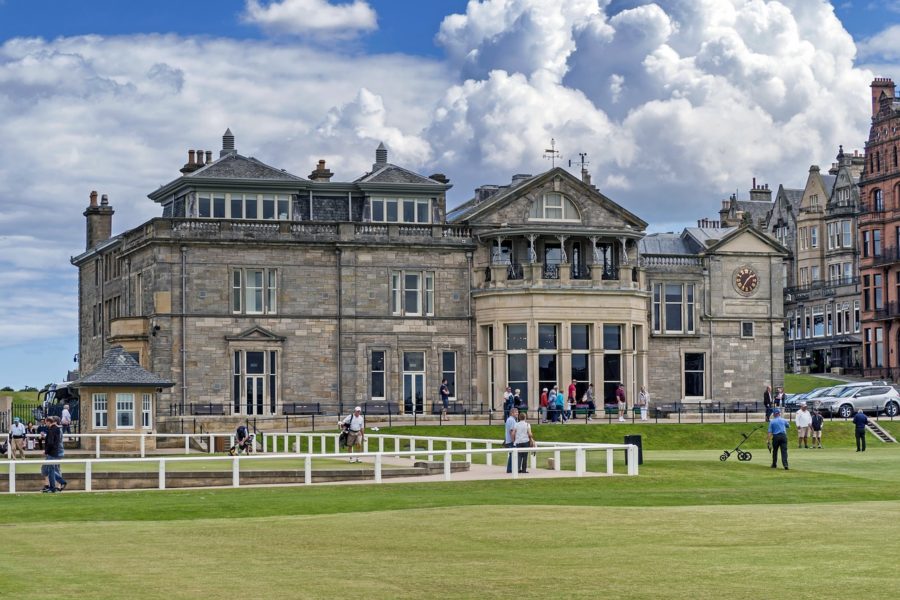
Tourists usually start their excursion at the Royal and Ancient Golf Club, the world’s oldest association for the sport.  Established in May 1754, its membership has grown to about 2,500 worldwide and is regarded as the governing authority in the United Kingdom and beyond.

The Royal and Ancient Golf Club.

Of course, one could never miss the much-celebrated Old Course, Swilcan Bridge, and Hell Bunker.  They are, after all, the images people usually conjure when they think of St Andrews.

Golfers consider going to the Old Course significant in itself; yet its most noteworthy feature is that despite its lofty reputation it is actually open to the public.  Obtaining a tee time isn’t an impossible feat as long as you have a suitable handicap (24 for men and 36 for women).  However, due to its immense popularity, booking the Old Course involves employing a few strategies.

St Andrews is also home to the oldest university in Scotland and third oldest in the United Kingdom.  Founded in 1413, the University of St Andrews has been ranked by the University League Table third in overall academic excellence behind Cambridge and Oxford.

The University of St Andrews doesn’t really have a campus – its buildings are spread all over  town.  If you’re visiting during term – Martinmas semester (early September to mid-December) and Candlemas semester (late January to the end of May) – you’ll probably find yourself strolling alongside students hurrying off to their lecture or tutorial.

I find all the university’s stone-clad structures awe-inspiring – from St Salvator’s Hall to St Mary’s College.  How wonderful it must feel to be going to school in such stunning surroundings!

St Salvator’s Hall.

Other in-town attractions I would suggest visiting are: British Golf Museum, St Andrews Cathedral, Scotland’s National Aquarium and Inchcolm Abbey, and the Botanical Garden.

All these delightful places in Edinburgh and St Andrews offer the grace and old-world grandeur of times past.  They are a reminder of an age of civility and gentility – an escape we sorely need given our current fractured society.