Visiting Dublin, Ireland: Land of Leprechauns and Shamrocks

Originally published on 24 October 2017 in the Pasadena Independent, Arcadia Weekly, and Monrovia Weekly
The Long Room at Trinity College is one of the most beautiful libraries in the world.

Summer this year took me back to Europe, my favorite travel destination. I journeyed to Scotland for the third time on British Airways via Heathrow International in London, which is one of the busiest and most crowded airports in the world.

To avoid having to go through Heathrow again coming back, I decided to visit Ireland for a few days before heading home. From Edinburgh, I took an Aer Lingus flight and was in Dublin in an hour.

I have actually stepped foot on Dublin before now; four years ago I made a stop here for a few hours enroute to Switzerland. While enjoying a breakfast of a cup of hot coffee and pastry at the airport lounge, I glimpsed lush green foliage outside through the rain. It was absolutely picturesque and I resolved to come back one day to see more of the city. And this past August I did.

The name ‘Ireland’ is a derivation of the ancient Irish word ‘Eire’ meaning western. According to legend, the Irish believe their country is in the west, the last land before the vast Atlantic Ocean.

It is divided into the northern and southern parts.

Northern Ireland is one of four countries that make up the United Kingdom (the others are England, Scotland, and Wales). Its capital is Belfast and its currency is the British Pound Sterling.

The southern part is the Republic of Ireland, with Dublin as its capital and the Euro as its currency; this is the Ireland I visited. Dublin (Black Pool), Ireland’s most important city, has been the capital and its major cultural and economic center since the early Middle Ages.

I was going to be here for only three nights so I limited my exploration of this land of leprechauns and shamrocks to Dublin. As in all my travels, I tend to see castles, cathedrals, and universities. And the capital has all three in close proximity to each other.

Being an education writer, I was very much interested in seeing for myself Trinity College, the University of Dublin, on College Green. It is the oldest university in Ireland and one of the oldest in Europe. I really wanted to learn as much as I could about the school so I joined a tour being given by a pleasant English graduate student.

Founded by Queen Elizabeth I in 1592 as ‘The College of the Holy and Undivided Trinity near Dublin’, its mission was to ‘promote civility, learning, and Protestant piety among the youth of Ireland’.

Due to some confusion in the Latin phrase used in the foundation document, the terms ‘University of Dublin’ and ‘Trinity College’ became synonymous. The explanation is that the University of Dublin consists of only one college: Trinity.

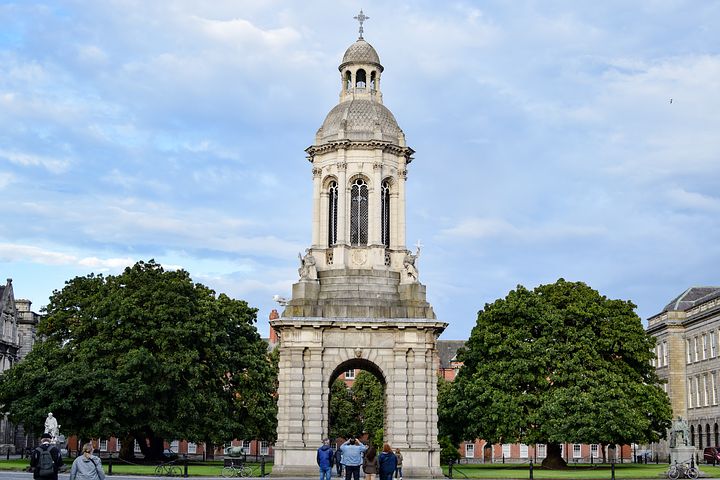
The Campanile welcomes students and visitors to Trinity College.

A majestic Campanile welcomes students and visitors to its beautiful campus. Flanking the Campanile’s rear are two Oregon maple trees, which were reportedly planted before 1850 from original seeds that were presumably taken back from the New World.

A life-size statue in marble of George Salmon, provost of Trinity College from 1888 to 1904, occupies a prominent space close to the Campanile. His 14 years as provost are described as ‘the golden years’ of Trinity.

According to our learned guide, Salmon is also known as the champion of women, a dubious honor since he apparently opposed the admission of women into the university having pronounced ‘Women would enter the college over my dead body’.

It is ironic that while it was founded by a woman, Trinity College was one of the last in the British Isles to admit women students. It was only in 1892 when 10,000 Irish women signed a petition to give women the same benefits and rights as have been conferred to men that the school finally gave in to pressure.  Ireland’s 7th and 8th presidents, and its only two female presidents, Mary Robinson and Mary McAleese, were both Trinity alumnae.  Today women constitute 58% of the student body.

Some of the most well-regarded luminaries in the world are graduates of Trinity College: Jonathan Swift, known as the author of Gulliver’s Travels, who later moved to London and got involved in English politics and then was appointed Dean of Saint Patrick’s Cathedral; Samuel Beckett, the acclaimed Pulitzer Prize-winning playwright of ‘Waiting for Godot’ and one of the most influential writers of the 20th century; Edmund Burke, who is best remembered as an early supporter of the American Revolution; to mention just three.

But there’s one name that ought to ring a bell to Californians – that of George Berkeley. He was a philosopher and later became Bishop of Cloyne. His many accomplishments are commemorated at Trinity College with a Berkeley Library and in California with an eponymous city – home of the University of California, Berkeley which has a Sather Tower that’s known as the Campanile. (At this juncture our tour guide noted that it is pronounced Bark-ley, but became Berk-ley in the United States. He also mentioned that, coincidentally, he is here pursuing his doctorate on George Berkeley’s life.)

My main goal in visiting Trinity College was to see the Old Library Building. It houses the Long Room, which may be the most gorgeous and most photographed library in the word, and the Book of Kells.

Called the Long Room because it is the longest single-room library in Europe, at 65 meters in length, it contains over 200,000 of some of the oldest volumes in the library. It is an amazing sight to behold! It is a working library and because the books there are rare, trained staff process requests from readers. Books are then brought to a specific area and care taken so their bindings are not stressed.

However, as in everything nowadays, technology will soon replace actual books being taken out and read – they are currently being scanned for online access. But that just ruins the whole experience, doesn’t it?  There is nothing more thrilling for a bibliophile like me, than to hold one in my hands, smell the old leather, turn the fragile pages, and peruse the words written hundreds of years before my time.

The Book of Kells, also known as the Book of Columba, is an illuminated manuscript done in the Insular style. Containing the four Gospels of the New Testament, it is a masterpiece of Western calligraphy and an exemplar of insular illumination. It is regarded as Ireland’s greatest treasure.

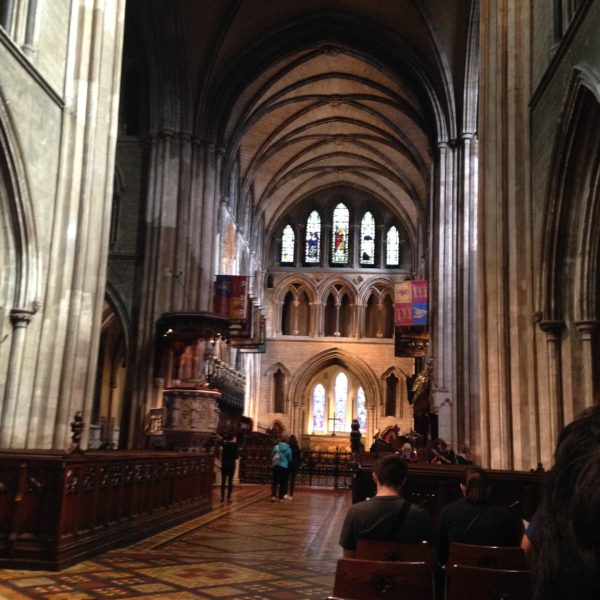
Saint Patrick’s Cathedral’s nave looks like the long part of the cross and the choir, the top part.

A tour of Dublin would never be complete without a visit to Saint Patrick’s Cathedral, the patron saint of Ireland.  Built by Luke, Archbishop of Dublin, between 1220-1259, on the site of an ancient well which was reported to have been used by Saint Patrick himself, the cathedral was made from local limestone and stone imported from Bristol.

Constructed like a cruciform, Saint Patrick’s Cathedral’s nave resembles the long part of the cross; the Choir, the top of the cross; and the transepts, the arms of the cross. Its design is thought to be based on Old Sarum Cathedral, near Salisbury, England.

Having visited the Cathedral of St. Patrick, the magnificent landmark Neo-Gothic-style Roman Catholic church on Fifth Avenue in New York City, I thought the Dublin cathedral appeared like a humbler version.

Saint Patrick’s Cathedral in Dublin is still a place of worship today. However, it is also very much a tourist stop, with kiosks selling all manner of souvenir spread throughout the nave. Standing near the apse, I found it difficult to think of Christian values when commercialism was on full display a few feet away.

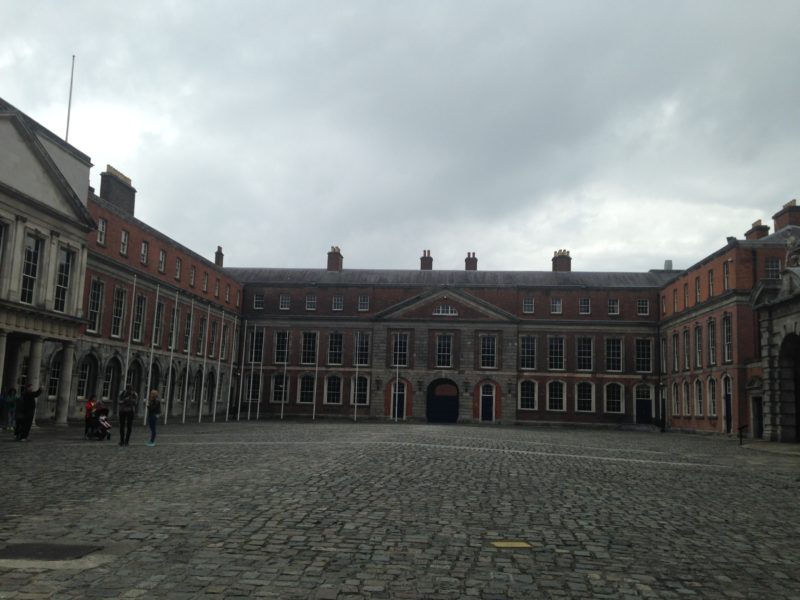
The next place I went to was Dublin Castle on the city center off Dame Street. Built in 1204 on the orders of King John of England on a spot previously settled by the Vikings, it features a typical Norman courtyard design. It has a central square and is bounded on all sides by tall defensive walls and protected at each corner by a circular tower.

Dublin Castle’s center square.

My tour consisted of visiting the state apartments and exhibitions. Saint Patrick’s Hall is the grandest room of the state apartments – it has one of the most important decorative interiors in Ireland. Its most striking feature is a painted ceiling by Vincenzo Valdre. Composed of three panels, it depicts the coronation of King George III, Saint Patrick introducing Christianity to Ireland, and King Henry II receiving the submission of the Irish chieftains. The room is used to this day for presidential inaugurations.

Other rooms worth seeing are: the throne room; the state drawing room; the dining room; and the Wedgwood room.

The most architectural space of the state apartments is the state corridor based on the early 18th century corridor of Edward Lovett Pearce in the former Parliament House on College Green. It showcases a marching procession of top-lit vaults and arches.

While it is an historic tourist attraction, Dublin Castle is a working Irish government building. It is used for state dinners, the most recent one being for Queen Elizabeth when she visited Ireland in 2011. It also hosts conferences.

Next on my walking tour was Dublin City Hall, located on Dame Street, next to Dublin Castle and five minutes away from Trinity College. Constructed between 1769 and 1779 by Thomas Cooley, a young architect from London, the City Hall was originally intended to be the Royal Exchange.

An impressive example of Georgian architecture, for which Dublin is world-renowned, the City Hall has a central entrance hall or rotunda, with a large dome supported by twelve columns. A floor mosaic showing the city arms and motto and marble statues of prominent Irish men grace the rotunda. Today it is used for corporate events and functions.

Not having much time left to enjoy other attractions, I opted to see the rest of the city from the comfort of a city tour bus. Our tour guide was Kiernan, a Dubliner, who gave the most insightful commentary about each stop. I will mention a few places I found personally notable.

Kiernan pointed out that it is almost inconceivable that such a small island could produce so many exceptional scholars and writers, especially when Ireland is perceived as a geographical backwater on the farthest edge of Europe. The Irish pride in their intellectuals is celebrated in the Dublin Writers Museum on Parnell Square North. This restored 18th century building is domicile to letters, books, and other memorabilia of Ireland’s greatest writers – George Bernard Shaw, William Butler Yeats, Samuel Beckett, Oscar Wilde, James Joyce, and Brendan Behan.

Dublin may very well be the only two-Cathedral city anywhere.  Saint Patrick’s is the National Cathedral for the Church of Ireland community; and the First Church Cathedral – the original Cathedral of Norse – is the cathedral for the diocese of Dublin and Glendalough, and the seat of the bishop.

Mansion House on Dawson Street has been the official residence of the Lord Mayor of Dublin since 1715.  The Round Room to the left of the main building is where the Irish Parliament met in 1919.

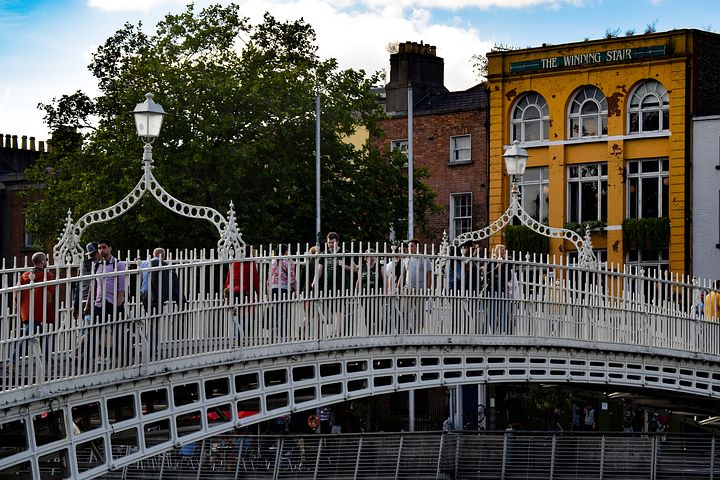
The Ha’penny Bridge crosses the River Liffey.

One of Dublin’s most famous attractions is the Guinness Storehouse. Tourists come here to see the site where Arthur Guinness started brewing the drink that bears his name. The highlight of one’s visit is the Gravity Bar where one can see the entire city while imbibing a complimentary pint.

The Irish are also famous for their whiskies. They claim that whiskey was first distilled in Ireland (having just visited Scotland, where, the Scots assert, whisky originated, I found this rather amusing. That they cannot agree on the matter is further reflected in the way they spell the word. The Scottish spelling is whisky while the Irish spell it whiskey). Whiskey is the English translation for the Scottish Gaelic uisge or Irish Gaelic uisce, meaning ‘water of life’.

Celtic Whiskey on 27 Dawson Street does not discriminate; it boasts the most comprehensive range of the drink with Irish, Scotch, and whiskies from around the world. It is staffed with afionadoes who can tell buyers everything they want to know about whiskey.

Teeling Whiskey Distillery on Newmarket Square is the only operational distillery in Dublin. Here visitors can watch the traditional Irish whiskey process.

Jameson Distillery, Bow Street, Smithfield Village offers upbeat and informative tours by personal guides who take visitors from grain to glass. Guided tours, whiskey masterclasses, and premium tasting are available. The tour ends at the gift shop where buyers can purchase a personalized bottle or a memento of their visit.

Grafton Street is Dublin’s premier shopping area. It is also a social and cultural district where buskers and entertainers can be found at all hours of the day.

Ireland’s widest and most famous street is O’Connell St which has been the setting of pivotal events in its history.  It is lined with statues commemorating Irish heroes including Daniel O’Connell and Jim Larkin, the central figure in Dublin’s lockout. Here is also where one can find the spire of Dublin, a pin-like monument over 120 meters high.

Convention Centre, Dublin is striking in its modernity.

Dublin is a city of many contrasts. The classic and stately Custom House stands not too far from the carbon neutral-constructed Convention Centre, Dublin, utterly striking in its modernity. The Ha’penny, the iconic iron pedestrian bridge crosses The River Liffey on Aston Quay, while a mile away in the Docklands area there’s the cable-stayed Samuel Beckett Bridge, a stunning masterpiece of structural engineering.  Pubs which characterize old stereotypes of Irish culture are mainstays even as ubiquitous stores the likes of Abercrombie & Fitch, Gucci, H&M, and Louis Vuitton flourish, evidence of a cosmopolitan city.

Through it all, you can see that Ireland is a welcoming country. Dubliners are gregarious by nature and are quick to talk to strangers about their infamous weather (it rains at the drop of a hat and stops just as abruptly as it starts). They are happy to give you directions when you’re getting lost (they conjecture their early street designers were probably affected by Guinness fumes). They go about their daily life with an ease reflective of their country’s unspoiled beauty.

Everywhere you go, you observe young people with backpacks slung on their shoulder and earbuds attached to their iPhones walking alongside their older briefcase-carrying counterparts looking down on their smartphones, ready to begin their day. Today’s Dublin feels contemporary and vibrant – it is a city at once in touch with its historic past and set to embark on a promising future.

A Walking Tour of St Andrews and Edinburgh in Scotland (United Kingdom)

Originally published on 28 August 2017 in the Pasadena Independent, Arcadia Weekly, and Monrovia Weekly

There was a time when my awareness of Scotland was very much limited to Scotch whisky, for which I have neither a fondness nor taste.  However, I do know several people who enjoy the single malt variety so you might say I appreciate Scotch by osmosis.

Five years ago, though, I visited Scotland for the first time and that experience gave me a bit more knowledge about this beautiful country (other than that of producing James Bond and Scotch).  Two weeks ago, I went back for my third visit.  As I did on my first venture, I went to Edinburgh and St Andrews.

Edinburgh, located in Lothian on the Firth of Forth’s southern shore, is the capital of Scotland.  Besides being home to the Scottish Parliament and the seat of the monarchy in Scotland, it is the second most populous city in Scotland and the seventh most populous in the United Kingdom.

From Edinburgh Airport, a visitor can board the tram then get off on either Haymarket or Waverley station to get into the city.  Of course, taking a taxi might be the best option especially if you have a lot of luggage to tote.

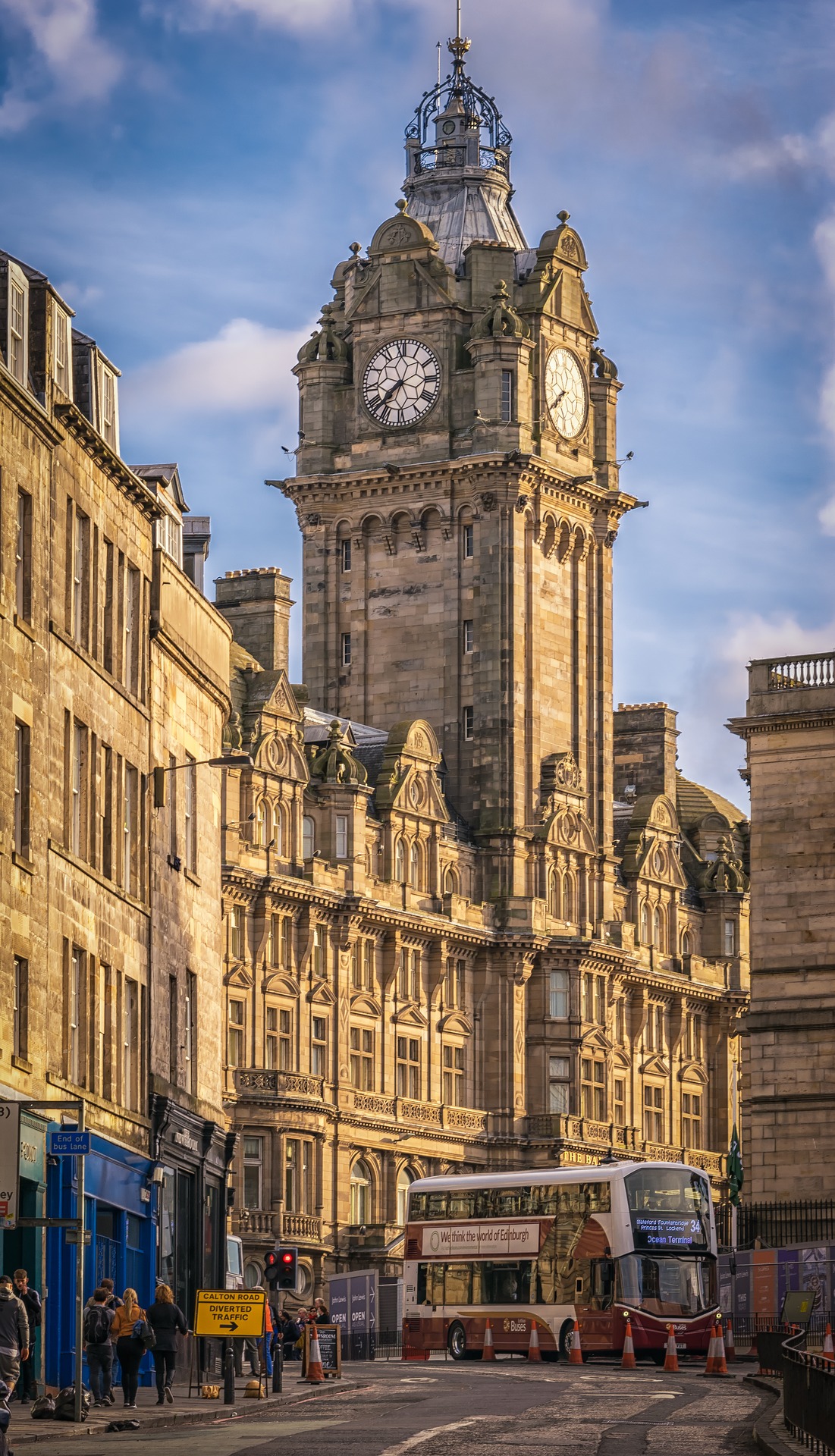
Balmoral Hotel is immediately outside the entrance to Waverley Station.

The city has several hotel choices to accommodate one’s budget.  If you plan on staying close to Waverley Station, there is the Victorian-style Balmoral Hotel, a structure so recognizable with its majestic clock tower.  It is located on the east end of Princes Street and is an excellent starting point from which to start your sight-seeing.

This being a walking tour of Edinburgh, I concentrated on the town center – mainly Princes Street and adjoining thoroughfares.  And you can’t properly claim to have visited this picturesque  city without an excursion to Edinburgh Castle.

An imposing fortress sitting on top of Castle Rock, Edinburgh Castle is the edifice that is most associated with the city.  It was a principal royal residence from the 11th century until the early 17th century; it provided comfortable living quarters to the reigning monarch and a repository for royal treasures and registers.

From Princes Street, I walked up the Royal Mile to the esplanade.  There is a Gatehouse at the head of it, and the road leads up to Half Moon Battery and the Farewell Battery, to the Portcullis Gate and Argyle Tower.

There are several historical structures here – the Governor’s House, the New Barracks, the National War Museum of Scotland, the Upper Ward or Citadel, St Margaret’s Chapel, the Mons Meg, the Queen Anne Building, and so on.

The Royal Palace began as an extension to David’s Tower.  It comprises the former royal apartments; the King’s Dining Room; the Birth Chamber or Mary Room; the Great Hall; and the Crown Room, built in 1615 to house the Honours of Scotland – the crown, the sceptre, and the sword.  To the south of the palace is the Register House, built in the 1540s to accommodate state archives.

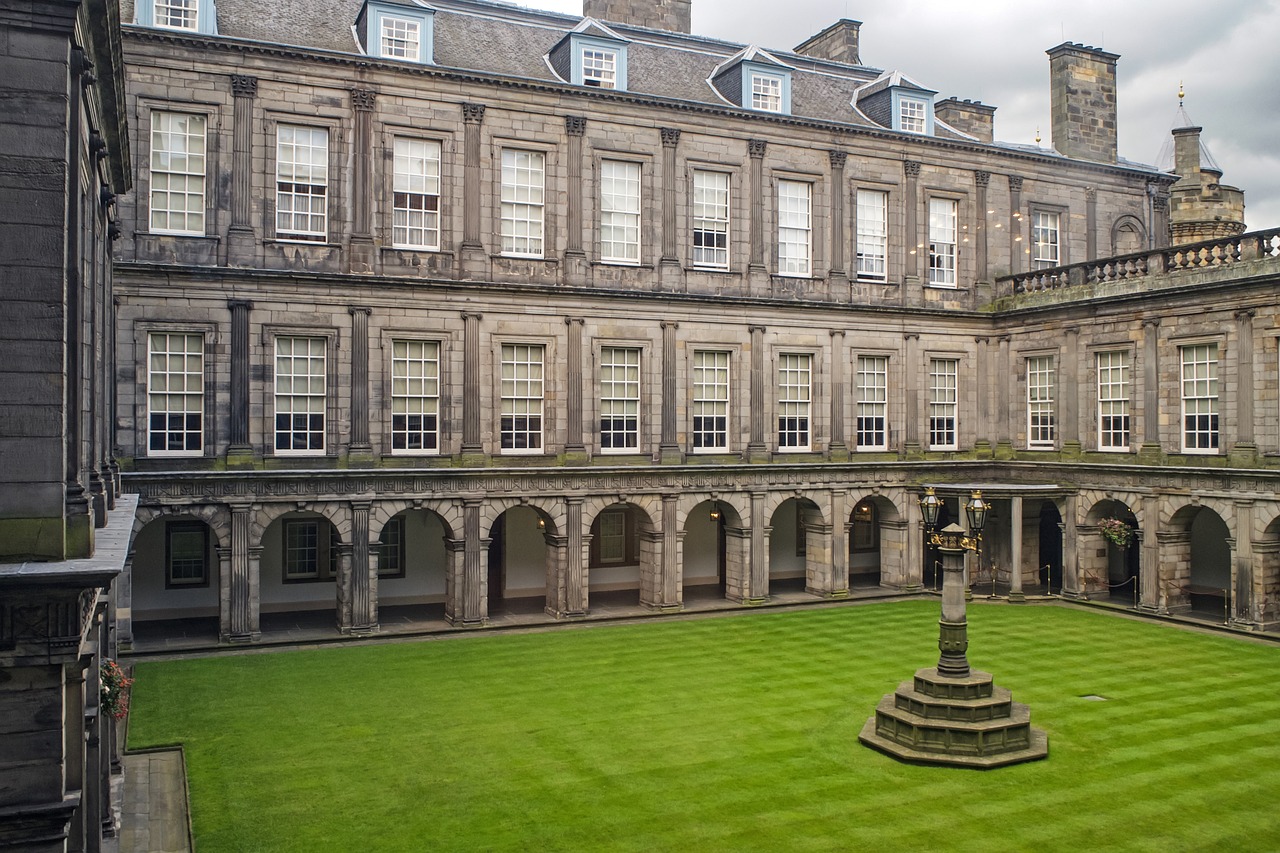
Palace of Holyroodhouse.

At the end of the Royal Mile, on the opposite end to Edinburgh Castle, stands the Palace of Holyroodhouse, the official residence of the British monarch in Scotland.  It is the setting for state occasions and official engagements.

Tour guides will be quick to point out that Holyrood Palace is not Queen Elizabeth II’s residence; it is where she stays for a week at the beginning of summer for official ceremonies.  The queen’s home in Scotland is Balmoral Castle in Aberdeenshire.

American television viewers who have never been to Edinburgh learned about Holyrood Palace during Season I of ‘Outlander’ whose main characters, Claire and Jamie Fraser, joined Bonnie Prince Charles in his efforts to claim the throne of Great Britain for his father.  He set up court here for six weeks in 1745 and the palace became the symbolic residence of the Stuart prince in his Scottish capital.

There are so many landmarks to take in depending on how long you’re staying – the Scottish Parliament, Scottish National Gallery, St. Giles Cathedral, The Real Mary King’s Close, the Edinburgh Zoo, etc.  As I come here every year, I select only one or two sightseeing expeditions during each stay.

Edinburgh has the most gorgeous skyline and a perfect perch from which to see the capital in all its splendor is the esplanade of Edinburgh Castle. During August, though, it is filled with viewing stands for people to watch the Royal Edinburgh Military Tattoo in the evenings.  It is one of Scotland’s greatest events staged on the esplanade of the castle and if you’re here in August it is a spectacular event you shouldn’t miss.

As I was determined to get a bird’s eye view, I took in the sights from the Edinburgh Ferris wheel.  From high up I observed the entire city below and, as always, I found it breathtaking.

This being August, the Edinburgh International Festival and Edinburgh Festival Fringe were in full swing; flyers for the many theatre performances and art shows were plastered everywhere I looked.  Fringe buskers entertained from every available street space; coffee shops, restaurants, stores selling all sorts of Scottish items – from a small key chain to a full kilt ensemble as a memento of your Gaelic experience – bustled with tourists.

At Waverley Station.

Having had my fill of Edinburgh, I boarded the Scott Rail from Waverly Station to St Andrews, a seaside town about 30 miles northeast of Edinburgh.  The train going to Aberdeen makes a stop at Leuchars and this was where I hopped in a cab that took me to the town center.

Even those who aren’t golf aficionados know that St Andrews is the birthplace of golf, where it was first played in the 15thcentury.   It is home to the iconic Old Course where, to this day, the British Open is held every five years.

I can confidently say that St Andrews has mainly two kinds of visitors – golfers who flock into town during the summer months and students who populate it from fall through spring.  It really is a small place with three major thoroughfares: North; Market; and South Streets.

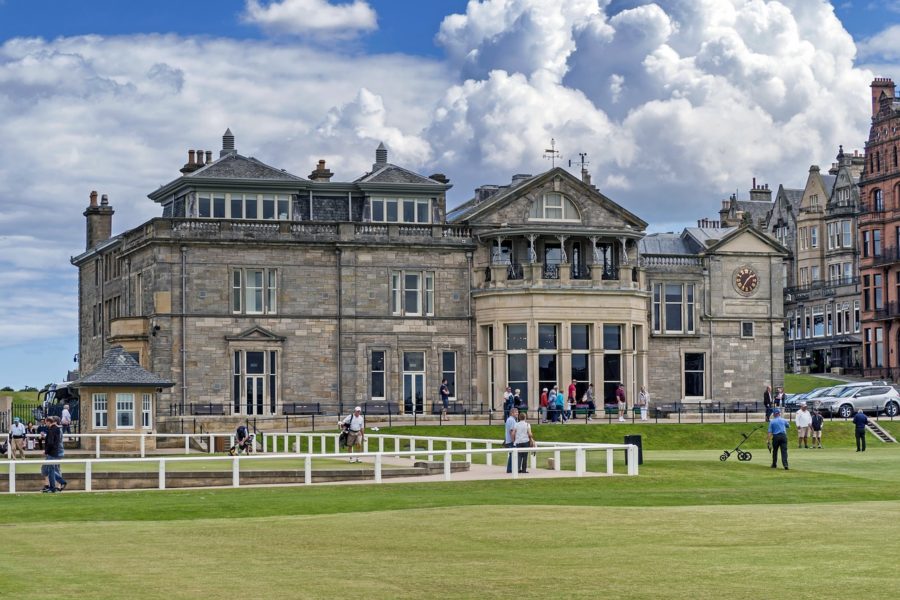
Tourists usually start their excursion at the Royal and Ancient Golf Club, the world’s oldest association for the sport.  Established in May 1754, its membership has grown to about 2,500 worldwide and is regarded as the governing authority in the United Kingdom and beyond.

The Royal and Ancient Golf Club.

Of course, one could never miss the much-celebrated Old Course, Swilcan Bridge, and Hell Bunker.  They are, after all, the images people usually conjure when they think of St Andrews.

Golfers consider going to the Old Course significant in itself; yet its most noteworthy feature is that despite its lofty reputation it is actually open to the public.  Obtaining a tee time isn’t an impossible feat as long as you have a suitable handicap (24 for men and 36 for women).  However, due to its immense popularity, booking the Old Course involves employing a few strategies.

St Andrews is also home to the oldest university in Scotland and third oldest in the United Kingdom.  Founded in 1413, the University of St Andrews has been ranked by the University League Table third in overall academic excellence behind Cambridge and Oxford.

The University of St Andrews doesn’t really have a campus – its buildings are spread all over  town.  If you’re visiting during term – Martinmas semester (early September to mid-December) and Candlemas semester (late January to the end of May) – you’ll probably find yourself strolling alongside students hurrying off to their lecture or tutorial.

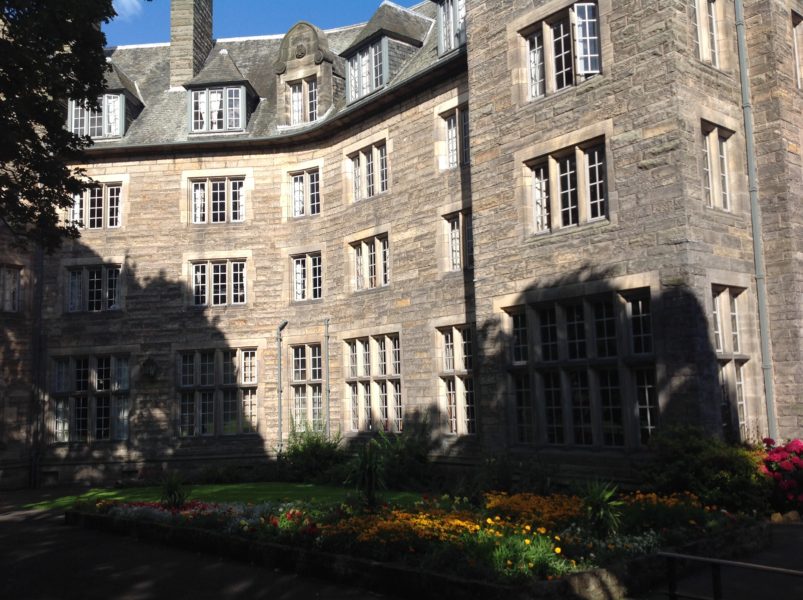
I find all the university’s stone-clad structures awe-inspiring – from St Salvator’s Hall to St Mary’s College.  How wonderful it must feel to be going to school in such stunning surroundings!

St Salvator’s Hall.

Other in-town attractions I would suggest visiting are: British Golf Museum, St Andrews Cathedral, Scotland’s National Aquarium and Inchcolm Abbey, and the Botanical Garden.

All these delightful places in Edinburgh and St Andrews offer the grace and old-world grandeur of times past.  They are a reminder of an age of civility and gentility – an escape we sorely need given our current fractured society.

‘The Royals of Pasadena’ Exhibit at the Pasadena Museum of History

Originally published on 17 August 2017 in the Pasadena Independent, Arcadia Weekly, and Monrovia Weekly

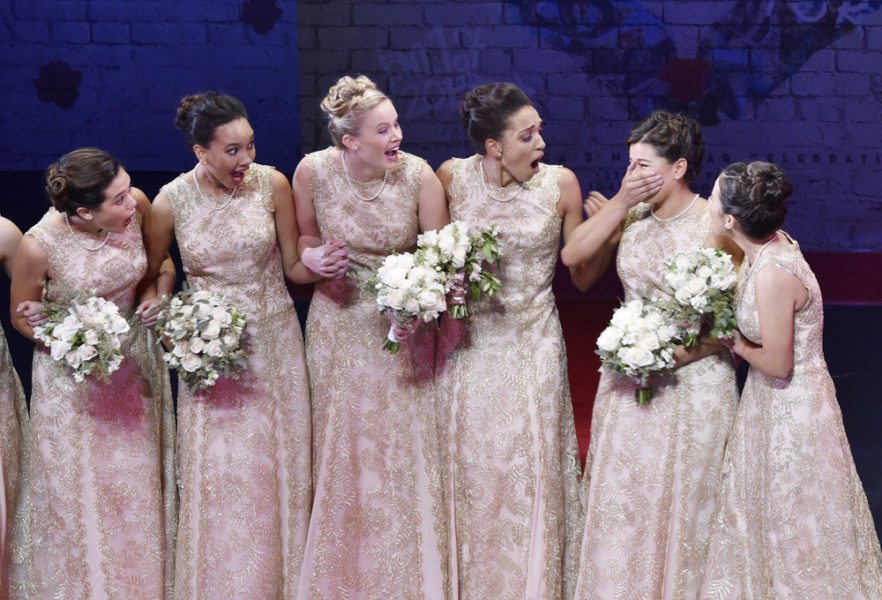
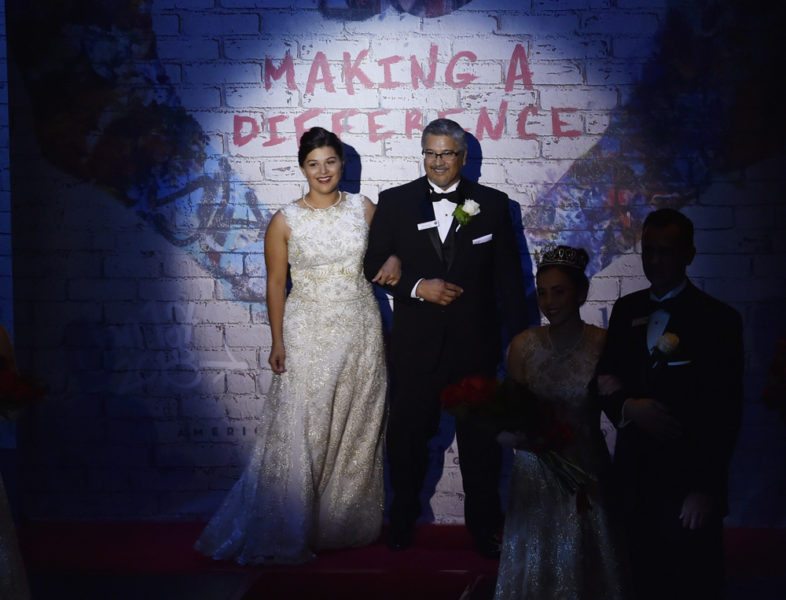
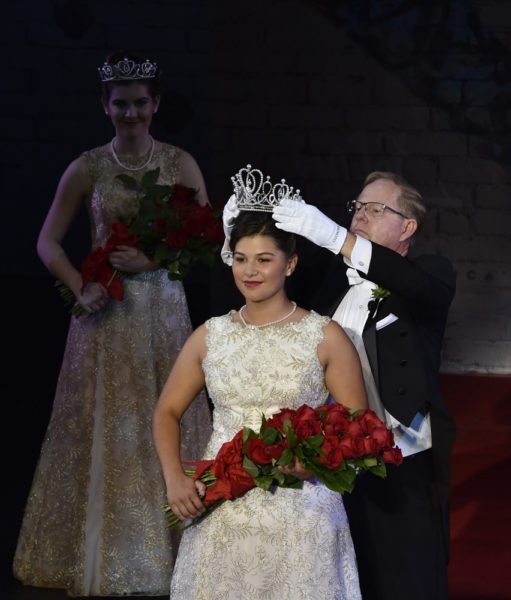
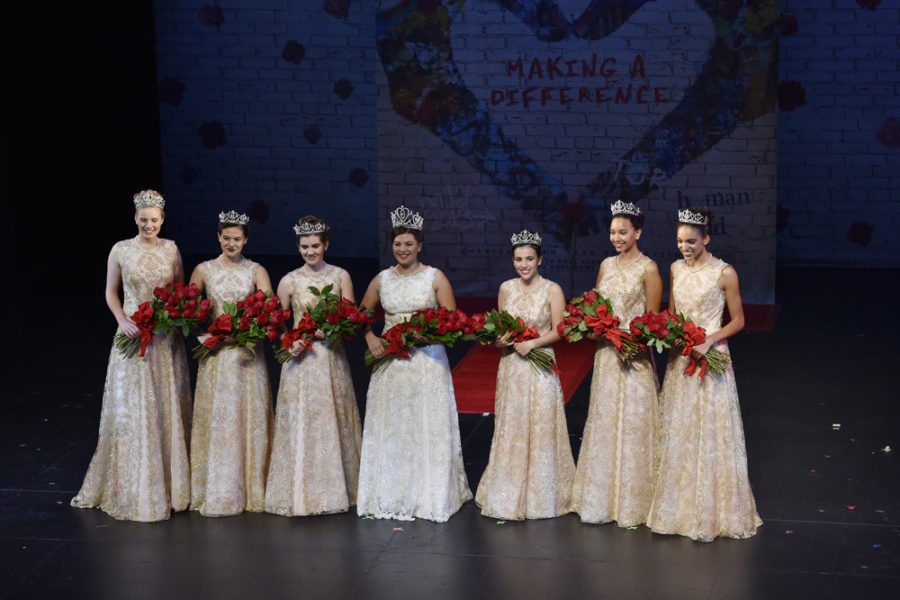
Not many cities in the United States have what they call their royalty but Pasadena is one of the few that could rightfully claim to have its own crowned heads. On January 1st every year,  millions along the parade route and watching on TV around the world marvel as the Tournament of Roses Queen and her Royal Court smile and wave to their well-wishers.

The history of the Rose Parade began on January 1, 1890 when members of the Valley Hunt Club reimagined the American version of the festival of roses in Nice, France. They staged a procession of flower-decked horse and buggies and an afternoon of public games on the town lot east of Los Robles between Colorado Blvd. and what was then Santa Fe Street. The story of the Rose Queen and Royal Court, however, did not begin until 15 years since the parade first traveled the streets of Pasadena.

By 1895 the parade had become a massive undertaking for the Valley Hunt Club to fund and manage on its own. The Tournament of Roses (TofR) was formed during a public hearing and a community subscription campaign raised $595.00 to underwrite the expenses of the 1896 Rose Parade.

Tournament of Roses 2020 Rose Parade | Photo by Terry Miller / Beacon Media News

The first Rose Queen was Hallie Woods who, in 1905, was chosen by her classmates at Pasadena High School. She sewed her own gown and helped decorate the float on which she rode. But those days of class voting and self-made garments are long gone. Today, selection of the Queen to preside over the parade takes on an immense process involving thousands of young women and hundreds of volunteers.

This annual Pasadena tradition and rite-of-passage-of-sorts among high school seniors (mostly, but not exclusively, females) who are enrolled in Pasadena-area schools is a spectacular event that begins as soon as that New Year’s Rose Bowl Game is in the history books. The TofR staff rolls out the next year’s schedule of events without breaking stride.

The 100th Rose Queen in 2018 will be crowned in October. In honor of this milestone, the Pasadena Museum of History (PMH) will present an exhibition celebrating TofR’s Royal Court from September 2, 2017 through February 11, 2018. This colorful and historical display will feature previous Rose Queens’ and Princesses’ gowns, daywear, accessories, and jewelry lent for the exhibit by former members of the Royal Court. It will also highlight Queen’s crowns from the last hundred years, on loan from TofR.

Laura Verlaque, PMH’s Director of Collections, reveals, “We’ve had a long partnership with TofR – we’ve collaborated with them in the past and we carry TofR souvenirs in our gift shop.   In 2013 we put on an exhibit about Pasadena anniversaries which included the Tournament of Roses because it was commemorating an important landmark.” 

“I worked with TofR’s marketing department and their wonderful marketing associate, Heather Sharpe, who gave me access to their collection,” Verlaque continues. “PMH borrowed several things for that exhibition including the crowns, and a silver saddle. She remarked to me then, ‘You know in 2018 we will be crowning the 100th Rose Queen. Would you like to do an exhibit about the Royal Court?’ to which I gave a resounding ‘Of course!’. So you can say that we’ve been thinking of and planning this since.”

Because TofR didn’t have in its collection the garments the Queens and Princesses wore PMH reached out to the alumni list. 

“It was nerve-wracking for us because we usually know going in what we have for the exhibit, but for this one we were dependent largely on loans,” reveals Verlaque. “However, it turned out we didn’t have cause for worry; we received so many responses from our initial request before we had a chance to send out a mailing to the entire alumni registry. We were offered more than we can show – there was an outpouring from the royal court who were interested in participating.”

“We got this plaid pantsuit from the 1970s; and yesterday someone came in to lend us an ensemble that has a Diana Rigg look from ‘The Avengers’. They’re such marvelous period clothing that I simply had to make room for them in the exhibit. It’s an absolutely delightful problem to have!,” Verlaque enthuses.

1968 Rose Queen Crown and Royal Court tiaras | Courtesy Photo

The show features about 30 queens and princesses coronation gowns from every decade starting with 1940, along with outfits from the Royal Court wardrobe, accessories and ephemera.

An exhibition highlight is the spectacular 1940 gown, made of ecru velvet with gold lace trim, designed and sewn by Pasadena dressmaker Margie Mudgett. Known as the ‘Camelot’ gown, it belongs to Margaret Huntley Main, the oldest living Rose Queen.

From the 1967 Rose Court wardrobe is an orange suit, duster and hat loaned by Princess Barbara Beckley. An I. Magnin & Company label 1976 Rose Princess gown made of sky blue chiffon over taffeta, a sequined bodice, and a chiffon capelet is on loan from Christina Nurches Pfleider.  A 2004 Rose Queen white gown with diagonal pleating designed by Tadashi Shoji was lent by Megan Chinen Oakes. The Pasadena TofR loaned three Rose Queen crowns for display.

“As part of the exhibit, we’ll have a pull-out section on how the Royal Court selection has changed over the years,” Verlaque states. “In the early days, the queen and princesses were friends of the people responsible for putting on the Rose Parade. Then there was a time when prominent society ladies were chosen for the court. There was a period when every female student at Pasadena City College (PCC) was required to try out; today it is voluntary.” 

Verlaque continues, “The notification system has likewise kept pace with prevailing practice and technology. Previous princesses have told me they used to sit by the mailbox waiting for the letters telling them if they’ve made it to the final 25. Later it was a phone call, and now it’s by email. It has such a fun history.”

Photo by Aaron Gil | Pasadena Museum of History

“The exhibition reveals shifting fashion styles,” explains Verlaque. “The very first gown evoked the medieval epoch – a lot of these early courts had that theme. The entire show makes for a fabulous historical display, really. Then we arrive at the Tadashi Shoji era (the official provider of the Rose Queen gowns since 2006, according to Heidi Hoff, Senior Director for Marketing and Communications. It’s so fascinating to see how his designs have evolved; in that sense this is also a retrospective of his work.”

It is a show that is beautiful, vibrant, and very visual according to Verlaque. “I hope that the ‘Royals of Pasadena’ manifests the pageantry and lavishness associated with the Royal Court. But the Rose Parade is so much more than a beauty pageant. In the course of my research and conversations with the rose queens and princesses, I have learned that the experience they had on the royal court changed their life. And this is the only city in the country that offers that kind of life-altering event for young women. I think it’s a wonderful tradition to be celebrated … examined, even – to see how it has adapted to reflect current affairs and sensitivities.”   

The Rose Parade is a renowned annual Pasadena tradition that has endured world wars and all manner of political strife. The Queen and her Court continue to gracefully perform their numerous community service functions through them all.        

For young women in the area, being part of the Royal Court is a transformative opportunity they hope to experience. A hundred years since the first Rose Queen was crowned, it is still an institution that remains relevant to the times we live in.                                     

It’s Blooming Roses at The Huntington

Originally published on 18 May 2017 in the Pasadena Independent, Arcadia Weekly, and Monrovia Weekly

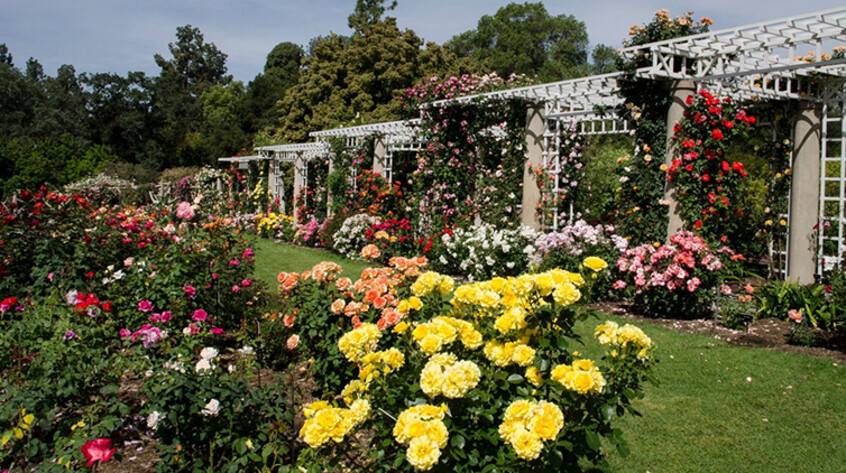
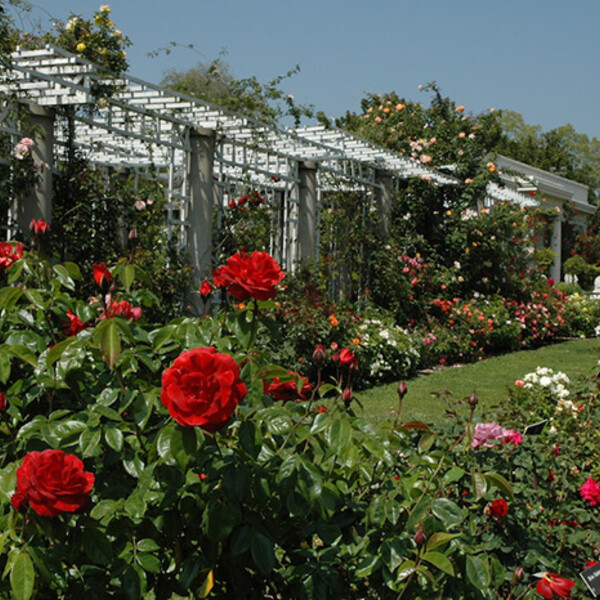
No single flower has moved more bards – from Robert Burns to William Butler Yeats – to  wax poetic than the magnificent rose.  And nowhere are the roses more cared for and celebrated than at The Huntington Library, Art Collections, and Botanical Gardens in San Marino where they are displayed in stunning splendor.                          

Tom Carruth, who became the E.L. and Ruth B. Shannon Curator of the Rose Collection in 2012, presides over The Huntington’s vast assortment of 2,500 plants and 1,250 varieties. 

Prior to his arrival here, he spent 25 years as a hybridizer for Weeks Roses, the country’s leading wholesale grower, where he led the company’s hybridizing efforts.  In his long career he has won more awards from the All-America Rose Selections (AARS) organization than any other living hybridizer.   

“My hybridizing career ended when I took this position,” reveals Carruth.  “As curator of the rose collection I’m responsible for ensuring the plants are vibrant and alive, and for bringing in new parts to the collection.”

In the five years he’s been at The Huntington, Carruth has organized all the labels and  systematized the collection records.  He has expanded some of the beds, added arbors, rebuilt trellises, repaved pathways, re-landscaped, modified irrigation, tested the soil, and even established a dramatic new entrance to the rose garden.  He has also taken on a mission to identify older cultivars that were ‘collectible’ quality and custom propagating them to replace the weaker shrubs in the garden.  


The Rose Garden at The Huntington | Photo courtesy of The Huntington

But Carruth gets the most fun studying the plants, “As a horticulturist I just observe – plants talk to you and you listen.  This is an old garden so the soil is impacted and we started amending with gypsum.  I noticed the roses were getting too much shade so we pruned out some trees.  Some of the old plants which were struggling to live responded to the care and started to turn around.  We had agapanthus going down on both sides of the trellis which were so overgrown they were in the rose roots and were strangling the roses.  We divided up the agapanthus and for two years we just let the roots get some air.”

Originally a cutting garden for Mrs. Huntington, the flowers were grown for production with 50 shrubs of each variety – she was fairly nearsighted and she loved having big bouquets in the mansion.  According to Carruth records from that time showed that one year 9,000 roses were cut to bring to her house.  Today it is a vast collection with just one or two of each kind to show the history of the rose.

The Huntington’s Rose Garden is a veritable history lesson that traces the story of the rose from ancient times to the present day.  Growing on the south side of the pergola leading from the Shakespeare Garden to the Tea Room are roses that represent the early history of the flower dating back to the pre-Christian era. 

On the north side of the pergola are Tea and China roses, introduced into Europe from Asia around 1800.  Says Carruth, “The Chinese were known to have been working with this flower for over 2,000 years.  The whole collection behind the trellis were roses that came here in the tea ships and were the ones that gave us repeat flowering; up to that point roses bloomed only once a year.”

The central part of the garden is dedicated to roses of the modern period when the first hybrid tea rose, called ‘La France’ was introduced.  The hybrid tea went on to become the most popular class of rose of the 20th century, with thousands of known varieties.   According to Carruth, ‘Ophelia’ dating to that period was crossbred in the garden and is in The Huntington’s collection.         

Carruth explains, “The roses are classed by color but not planted by color.  We want to keep the integrity of each variety – the China Teas are all in one location, the older hybrid has its devoted area, and the fragrant roses are in two beds closest to the Rose Garden Tea Room.  That makes it easy for us to direct the public when they ask.”

“Roses have several natural fragrances like fresh cut apples, spice, lemon blossom, myrrh, damask, honey, violets, and all sorts of combinations of those,” adds Carruth.  “It’s fun to watch people get a whiff of the fragrant flowers while they wait for their table in the Tea Room (for information and reservations, call 626/405-2236 or huntington.org/dining).  We have a variety out there that smells like Lemon Pledge and over here we’ve got one that reminds you of Ponds Cold Cream.  Down there we have something that’s white licorice and smells strongly like licorice candy.”

Photo courtesy of The Huntington

“Everyone loves walking around, reading names, and looking at the dates,” observes Carruth. “Many visitors, who don’t’ necessarily know much about growing roses look for classics like ‘Mr. Lincoln’, ‘Peace’, or ‘Sterling Silver’ – bed number 17 in the collection – which is a silvery lavender and is a repeat bloomer.  ‘Sterling Silver’ is interesting because that was the first hybrid from a female hybridizer, in a male-dominated field. We also have the everyday version, ‘Stainless Steel’, which is a much easier plant to grow and has bigger flowers, that’s similar in color and fragrance.”  What he failed to mention, however, is the fact that ‘Stainless Steel’ is a rose he developed in the 1990s as a more robust version of the fussier ‘Sterling Silver’.

The roses at The Huntington bloom from mid-April to November.  Explains Carruth, “This year, because of the rain, we had an elongated pruning season resulting in an extended spring bloom. We’ll have color throughout because we manipulate the plant in the beginning so they don’t blossom all at once. People will see roses every time; we even have a smattering of them in time for the Rose Parade.”

It would surprise people to know that The Huntington does not have a large staff tending to the garden. Carruth discloses, “I have two gardeners who work three acres of roses so we depend heavily on our volunteers.  Right now I have 52 rose garden volunteers deadheading, weeding, watering, and anything they’re willing to do. Some people love to deadhead and prune so I see them in winter and I may not see them during the summer. We’ll take whatever level of interest they have. They get prime time – they come in early in the morning before visitors arrive – when it’s beautiful and calm, and not hot.”

You’ll know that Carruth, and his staff and volunteers, take painstaking care of The Huntington’s roses when you see the glorious flowers in bloom. The next time you visit, go for a stroll on the grounds to take in the breathtaking beauty and heady fragrance laid out before you. When you do, you undoubtedly wouldn’t be able to help stopping to smell the roses.               

Little Free Library Takes Us Back to a Kinder, Gentler America

Originally published on 4 May 2017 in the Pasadena Independent, Arcadia Weekly, and Monrovia Weekly

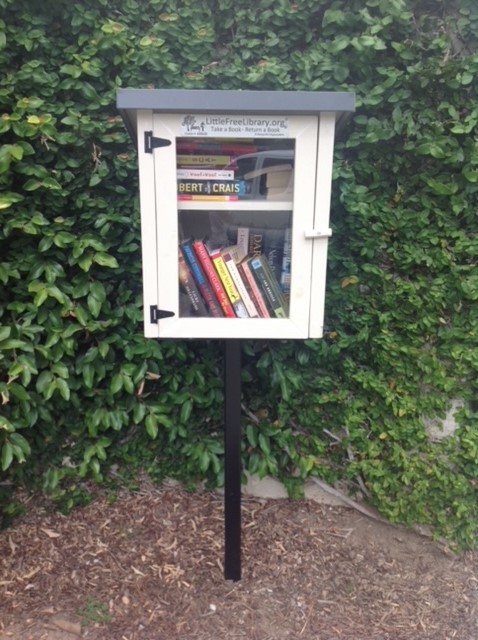
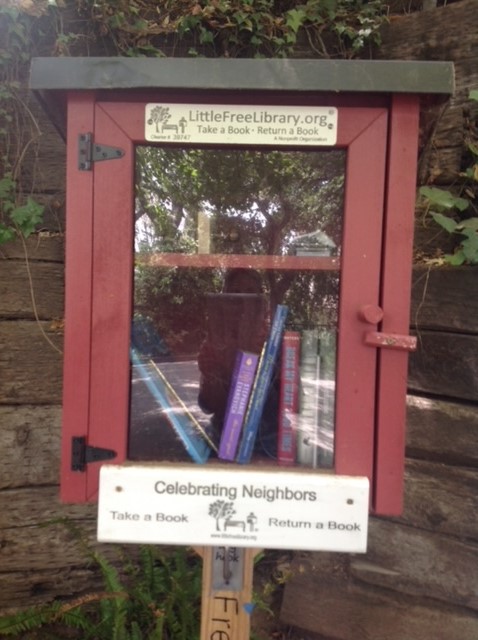
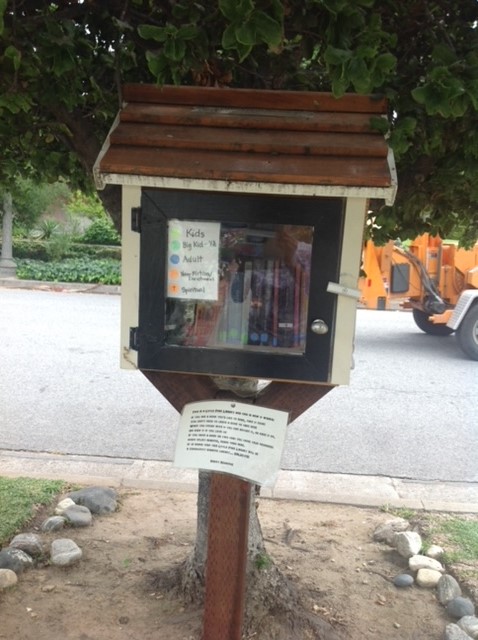
Whoever pronounces no one reads books anymore – the kind that’s not on an electronic device – has probably not heard of or seen a little free library (LFL). It looks a bit like a birdhouse, except it isn’t sitting in a tree but propped up on a stand in front of people’s yards and contains books for people to borrow and take home to read.  It has of late become a worldwide phenomenon and has been known to start conversations among neighbors who might never have had occasion to chat until now.    

The LFL was an idea concocted by Todd Bol in 2009 in Hudson, Wisconsin, who built a wooden container to resemble a one-room schoolhouse. He then mounted this on a post which he installed on his lawn then filled with books as a tribute to his mother – a book lover and school teacher.

Relates Bol, “We had a garage sale one day, and people who saw our little free library hugged it, kissed it, took selfies, and talked to it like it was little puppy. There was this little sparkle of energy and kinship that brought people together. So I started to make them and I gave way 30; then the media began covering us.”        

In 2012, LFL became a non-profit organization whose mission is to inspire a love of reading, build community, and spark creativity by fostering neighborhood book exchanges around the world.    

Today Bol’s simple brainchild can be found in all 50 U.S. states where there are more than 50,000 registered LFL book exchanges and in over 70 countries around the globe. People in even the remotest and farthest-flung nations, including Ghana, India, Nigeria, Pakistan, the Philippines, and Vietnam now have access to free books.          

California was a little late in joining the movement, according to Bol, but has been the fastest growing in the past two years. In the Los Angeles area, it was a brief article in the newspaper about the LFL that ignited the fire that’s now ablaze and spreading in earnest.     

Karen Hovanitz is the steward of the Florecita Farm Little Free Library in Altadena, charter number 3727.  She says, “It was built by my then 94-year-old dad from a 1920s-era window from the Habitat for Humanity Restore and scraps of pine from his garage. The handle is made from vintage wooden thread spools.  It sits by the street in front of our home which was originally the store for Florecita Farm. It was installed in 2012, the very first LFL in Altadena.”

“This neighborhood encompasses 144 households in a self-contained region that was developed from a dairy, chicken, and citrus farm in the 1950s,” Hovanitz describes. “When we moved to Florecita Farm in 1987, it was a fairly geriatric area. It has since dramatically changed and today there are many young families with children living here. Books for young children, from less than a year old to seven, are taken most quickly and are seldom returned. There are several middle readers so I try to have a supply of YA novels for them; recent fiction is popular among adults. Adult and YA books always come back. The LFL is largely self-sustaining through donations. Occasionally I purchase children’s books from the Salvation Army to replenish stock.”

Continues Hovanitz, “Residents love the LFL; they enjoy donating books. Even if they don’t use it, they like knowing it’s there. It’s part of what makes our community special. I met Todd Bol recently and learned that one of his highest priorities, in addition to getting books into the hands of readers, is fostering community. Having a LFL promotes pride and ownership of community.”

“Because our neighborhood is somewhat isolated, I think almost all LFL patrons are from Florecita Farm.  Hikers, mountain bikers, and horseback riders do pass through and may use the library. Although a homeless gentleman frequents our neighborhood; I have seen him on the chair by the library to read and I’m glad he feels comfortable. I love surreptitiously watching from my kitchen window as elementary-age kids ride up on bikes and skateboards to use the LFL,” concludes Hovanitz.   


In Pasadena, there are 31 charter LFLs scattered throughout the city’s 23.13 square miles. Sue Feldmeth, who lives on Oakdale Street, had noticed some of the little libraries but didn’t know about the organization. She says, “I had seen them and heard about them. I thought there were just individuals who came up with designs and built their own library or book nook. I wanted to do something like that and when I went online I found out there was an official organization that did exactly that. It also offered for purchase kits to make the little houses or little libraries already made. Although it wasn’t cheap, I bought one; I figured it was one less project to give to my husband.”

Feldmeth explains, “About a year ago I did some spring cleaning and cleared out my children’s books to make room on the shelf.  I had a few boxes of these perfectly good books that someone else could read so I thought it was time to get my little free library going. I felt it would be a good way to get rid of my books and share them with others who would enjoy them.”

 “What’s funny, though, is that we’ve been getting book donations. Now I have thrice as many  as when I started out. I had been trying to get rid of them but ended up having to make room for more books in my home … so that backfired a little bit,” chuckles Feldmeth.

“I know people would return the books they borrow but now I’m really glad when they don’t,” Feldmeth adds. “I realize some feel uncomfortable not leaving a book in return; I put up a sign saying they can take a book and leave one, or pass the book along to someone, or keep it if they love it.”

“When we first moved here in 1999, when my now college freshman son was a year old, we were one of a few families with young kids,” discloses Feldmeth. “Now there are several school-age children in our area, so I decided to have a small box on the ground filled with children’s books to make it easier for small kids who can’t reach into the little library.”

“There’s a lot of foot traffic on our street – little kids on their way to school, neighbors walking their dog – so our library gets used a lot. Our LFL has space for two rows of books and when I see it down to one row, that’s when I put in a new group. I attach circle stickers to categorize them – adults, teens, YA, and children’s books. That’s also how I keep track of what’s going out and what’s coming in,” Feldmeth says.

“Our little library sits in the shade outside our house and I’ve been putting out a basket of lemons from my tree to share with people who come by. We have so many that we can’t possibly eat or use them all,” discloses Feldmeth. “It’s like killing two birds with one stone, really – encouraging book reading and building neighborliness.”  


Another Pasadenan, Robin Trickett, reports she learned about the LFL by happenstance, “I stumbled across it one day while I was driving around town. Then I kept seeing one or two of these tiny houses with books when I would take my kids to school. So I thought, ‘Okay, I need to stop and find out what this is all about!’ Once I started to read up on it I had to join the book movement – both my husband and I are big readers and I wanted to encourage our kids to be the same. What a wonderful way to give back and encourage reading in the community!”

“About six months ago we put up our LFL. I find there is a lot of interest in the free library on our lane, not just from the 20 families that live here but also from delivery people and folks working at the houses on our street,” adds Trickett. “We are the stewards of our library and we select new books to put in weekly.  Right now there are more children’s books than anything else but I mix it up with novels, cookbooks and bestsellers as well. My goal is to share my love of reading and I cover a variety of choices to appeal to everyone.”

Sean Moriarty, on Rose Villa, first saw the LFL in Chico, in Northern California. He says, “My sister-in-law has one. It piqued my interest so I did a little research online and learned more about it. What a fantastic idea! Then for Christmas last year she and her partner gave me a little library as a present.”

“Our LFL has been up for a few months and we’ve seen a pretty lively response. In fact my kids just informed me our supply is low so I would have to fill it back up again,” Moriarty states. “I’m not terribly scientific about what I stock it with. I have young kids so I make sure there are children’s books in the little library. And I read pretty widely – fiction, biography, history, you name it; we have books of general interest.”

Sums up Moriarty, “I see some books coming back and a few new titles showing up. It’s still early but over time we hope we see more books that we’d need a bigger library! I hope that people who respond to it appreciate it, are excited about it, and care. If we had a million of these across America we’d be a better country.”                           

A similar sentiment was expressed to Bol one day at a recent conference he attended. He recounts, “The former governor of Wisconsin came up to me and said, ‘Todd, what’s going on in America right now – this divisiveness and polarization – that’s not us. The Little Free Library is more representative of who we are and what we are. We reach across the aisle and across the street. We pick each other up and make one another’s life better – we don’t care who they are or where they’re from.’” 

For all of Bol’s good intentions, however, there are naysayers out there. He is very much aware of them and offers this analogy, “I believe a community is like a beehive: if everything’s done right it will produce honey. But oftentimes it’s beaten with a stick and yelled at. I don’t subscribe to all the negativity out there. I’m proud of LFL and how we’re making it a better world. I sound old-fashioned and corny but reality is before us every single day – we see it.”    

The scope of the LFL’s outreach has widened since 2012. Through its Impact Fund, Bol intends to put LFL in communities where it would make the greatest difference – trailer parks, apartment buildings, high-need neighborhoods.        

Bol launched an initiative to put a little library in every police department across the country – over 14,000 of them, according to him. There are currently four dozen LFL in police departments in Detroit, Cleveland, Raleigh, Chattanooga, and New Orleans, among other cities. He says the L.A. Police Department has a LFL in every precinct.       

“We also recently unveiled the Action Book Club which identifies authors and publishers who demonstrate community engagement,” adds Bol. “We ask people to sign up with us, read one of the books, go out and fix things in their neighborhood, then report back to us. One of my favorite stories is about this group of fourth-graders in Lafayette, Louisiana, who collected 100 pair of new socks and gave them to the homeless. We’re gathering tales of people doing good around the world, one neighborhood at a time.”

“There’s a saying ‘it takes a village to raise a child,’” Bol expounds. “That’s a statement of observation. The statement really should be ‘how can I be a part of the village?’ What we want is for the LFL to be the spark for people to make things better through literacy, books, conversation, dialogue, and action.”                                                      

Lofty objectives and noble aspirations aside, at core the little free library simply takes us back to a time when we would walk up to our neighbor’s house to share a plate of freshly made cookies, or to borrow a cup of sugar to bake some. For most of us that outcome alone makes it a better world already.     

Octavia Butler Exhibition at The Huntington Library

Originally published on 20 April 2017 in the Pasadena Independent, Arccdia Weekly, and Monrovia Weekly

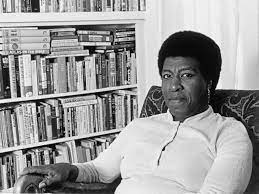
Octavia E. Butler was the first science fiction writer to receive the prestigious MacArthur Foundation ‘genius’ grant and the first African American woman to win recognition writing in a genre dominated by male authors. For all her literary fame and awards, however, hers is not a household name.      

But this is about to change if Natalie Russell, were to have her way. As curator of ‘Octavia E. Butler: Telling My Stories’ which opened on April 8 and goes on until August 7, 2017 at The Huntington Library, Art Collections, and Botanical Gardens, Russell was charged with organizing this exhibition. On view in the West Hall of the Library in chronological order, the retrospective includes approximately 100 items that reveal the author’s early years and influences, highlighting specific themes that repeatedly commanded her attention.    

States Russell, “I hope it introduces Butler to people who may not know her, who may not be familiar with her works; for those who have not read science fiction before but were intrigued about what she has to offer which are a little different from what they thought they were going to be reading. I hope that people who are fans of hers get to know the writer behind these works a  little deeper – that through the process they get to know the inner person.”

Butler was born in Pasadena on June 22, 1947 to a maid and a shoeshine man. Her father died when she was very young and she was raised primarily by her mother. A painfully shy, introverted child, she spent her time reading at the Pasadena Public Library where she discovered science fiction.   

At age twelve Butler saw a film called ‘Devil Girl from Mars’ and was convinced she could write something better. She later enrolled in every creative writing course at Pasadena City College to her mother’s disappointment, who wanted her to have a more reliable job as a secretary. 

In the early 1970s, at a workshop for minority writers, Butler met science fiction author Harlan Ellison, who introduced her to the Clarion Science Fiction Workshop.  There, among other like-minded writers, she learned to hone her craft and even sold her first story.

Butler’s conviction that she was going to be a successful writer grew stronger after the Clarion workshop. She did not want to find work that would distract from her ultimate goal so she took odd jobs to support herself. 

Success proved elusive for a while, until 1975 when Butler sold her first novel, ‘Patternmaster’ to Doubleday, which quickly followed with ‘Mind of My Mind’ and ‘Survivors’. This trio came to be known as her ‘Patternist’ series, which depicts the evolution of humanity into three distinct genetic groups. There is a review in the exhibition that lauds ‘Patternmaster’ for its especially well-constructed plot and progressive heroine, who is ‘a refreshing change of pace from the old days’.       

On display in the exhibition are motivational notes Butler would write to pick herself up during bouts of self-doubt – ‘I am a Bestselling Writer. I write Bestselling Books ….  Every day in every way I am researching and writing my Award winning Bestselling Books and short stories …. Every one of my books reaches and remains for two or more months at the top of the bestseller lists …. So Be it! See To It!’

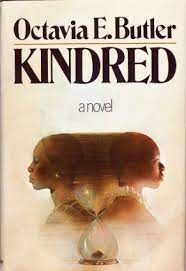
Butler’s readership continued to grow and with the publication of ‘Kindred’ in 1979 she was able to make a living on her writing alone. In 1984 she won her first Hugo Award for the short story ‘Speech Sounds’. Her novelette ‘Bloodchild’ won a Hugo, a Nebula, the Locus, as well as an award for best novelette from Science Fiction Chronicle, in 1985.                  

That Butler was a female writer of color informs many of her works. Russell concurs, “I think being a woman and African American gave her this unique voice. Butler said she never saw herself in any of the stories she read. So she decided to write herself into these books so she could see a woman character in a setting that reflected the diverse world she lived in”.  

Beyond race, Butler explored themes between genders and worked to develop strong female characters who resolved problems differently. Russell adds, “Her audience varied – young, old, people of color – anyone who’s interested in science fiction; her themes also covered a diverse range – disease; pharmaceuticals; fears about the environment, drought, and alien contact – the differences that divide us and how we overcome these to become better people and get together as human beings.”

 “In 2008 Butler’s papers arrived at The Huntington in two four-drawer file cabinets and 35 large cartons,” states Russell. “She kept nearly everything – from her very first short stories, written at age 12, to book contracts and programs from speaking engagements. The body of materials includes 8,000 individual items and more than 80 boxes of additional items: extensive drafts, notes, and research materials for more than a dozen novels, numerous short stories and essays, as well as correspondence.”

Photo courtesy of The Huntington

According to Russell more than 40 scholars were asking to get access to the Butler collection by the time she was done processing and cataloguing all the items. In the past two years, it has been used nearly 1,300 times – or roughly 15 times each week, making it one of the most actively researched archives at The Huntington.

“I was not familiar with her beforehand; it’s a shame because she’s so amazing,” confesses Russell. “But I hope that everybody can have the same experience I had while I sorted through all the materials she left behind – that it’s okay to start fresh. Be prepared to be amazed and entertained, to experience something new, and thought-provoking. She was a very shy, private person, but she has a big presence on the page; she has so much to say. Some of those inner thoughts and the struggles she underwent to become the person that she was is a story we can all be inspired by.”      

“When I look back at the things I sifted through in the collection, I think of the highlights, themes, and things that were important to Butler and how to share her with the world. That’s what I hope I have done with this exhibit,” concludes Russell.

After having lived in Seattle for several years, Butler had planned on returning to Pasadena. She died suddenly in 2006 before she realized that wish, but her literary archive has come home to reside permanently in The Huntington. Here scholars can come to examine the life and work of this extraordinary woman.        

She lived but 58 years but her legacy will endure far longer than her existence on earth.  Generations of future writers, and people from all walks of life, will find inspiration from Octavia E. Butler – a woman ahead of her time.        

Comic-Con International Continues to Captivate

Originally published on 21 July 2016 in the Pasadena Independent, Arcadia Weekly, Monrovia Weekly, and Sierra Madre Weekly

In 1970, a group of comic book, movie, and science fiction aficionados got together and decided to organize a small convention (which they called minicon) in San Diego to establish awareness and raise funds for a much bigger event of this nature. They held it on March 21 of that year at the US Grant Hotel and it drew about 100 attendees.

It has since evolved into the San Diego Comic Convention (SDCC) and attracts thousands of followers to its multi-day gatherings in major cities the world over. The granddaddy of them all remains to be the annual Comic-Con International: San Diego, which will be held in several venues in and around the convention center from Thursday, July 21 to Sunday, July 25, with a preview night on July 20.

The comic convention has become hugely popular that it has spawned other events like WonderCon, held from 1995 to 2014 in Anaheim; the Alternative Press Expo (APE), held in San Francisco from 2002 to 2014 and in San Jose in 1995 to 2001; Comic Book Expo; ProCon; and Con/Fusion.

Image taken from Comic-Con website

Stephen Haydon, who works at a national retail store in Pasadena and is going this year as a member of the industry, is one of the organization’s most devoted attendees. He states, “Comic-Con has a reputation that preceded it long before it became mainstream. I’ve known about it for as long as I’ve been able to lift a comic book but it wasn’t until I was in high school that I learned the particulars of the event. I happened to be talking to my uncle who lives in San Diego and he suggested that my dad and I come out for it.

“I was born and raised in Iowa so Comic-Con seemed like an impossible dream but to hear that it was in such close proximity to my family made it an attainable goal. I first attended it in 2009 with my dad for four days and preview night. Unfortunately, my flight was delayed and I was unable to make it to preview night in time that year. I’ve tried not to miss it since,” Haydon continues.

Pasadena born and bred, Rachel Miller, loves reading comic books. The 20-year-old college student relates, “I must have heard about Comic-Con through an ad or at the comic store I frequent. Heading down to SDCC has been my dream since I was about 11 or 12, but this was the first year I was able to set any plans down in stone.”

For Miller’s 19-year-old former high school classmate, Brianna Chu, going to Comic-Con wasn’t exactly a childhood wish. She discloses, “I found out about it from friends like Rach but it wasn’t until I learned that my favorite actors from TV shows and movies went to it every year that I got really interested.

“Rach and I had considered going to it together, just the two of us, but having thought more about it we decided it wasn’t such a great idea to have two girls go on their own. So I asked two friends from university if they wanted to tag along,” Chu expounds.

Tom Williams, a 20-year-old who hails from Herefordshire, England, has also known about Comic-Con for a while. He recounts, “I had heard about it from various different sources, long before I ever conceived of possibly going there one day. It’s discussed and represented quite a bit in the general media, in such forms as gaming YouTube channels. And if you’re even vaguely interested in the Marvel film franchise, for example, it’s highly likely you’ll hear about it eventually. Some friends from back home and I considered going to London Comic-Con a number of times, although we were never able to organize it properly.

“Being from England, I obviously really didn’t think about traveling to San Diego until I went to university and made new friends. We knew we all wanted to go together! In my experience it’s always the people that make an event special and I’m really looking forward to enjoying it,” Williams continues.

Rebecca Montgomery, who is 19 years old and Chu’s flat mate last year at the university they both attend in the UK, has lived all over the world where her dad’s business operates. When school isn’t in session, she resides in Singapore. She says, “I found out about Comic-Con from watching my favorite TV shows, ‘Chuck’ and ‘The Big Bang Theory.’ While I had dreamt of going to Comic-Con it wasn’t until I met Brianna and Tom that it became achievable.”

The process of getting a badge to Comic-Con proved daunting for this group of friends. Miller says, “Badge purchasing was awful! You have to register long before you can actually buy tickets just to secure a spot in the ‘waiting room.’ On the day the badges become available you log onto this ‘waiting room’ an hour at most before tickets are up and you wait to get called into the page where you purchase them. In the meantime, banners pop up letting you know when days are sold out. On top of that, you can only purchase for yourself and a maximum of two others. It was stressful!”

“It was nerve-wracking while we were all waiting to see if we could get onto the actual buying site. I honestly wasn’t expecting we’d get lucky so I wasn’t really paying much attention. Then suddenly I realized I got in the purchasing page,” Montgomery relates.

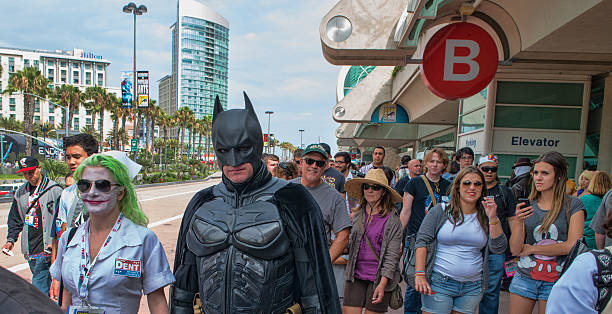
Participants at Comic-Con San Diego 20 July 2013. Comic-Con draws hundreds of thousands of visitors every year and some attend in full costume. Image taken from Comic-Con website

The four friends were at school the day badges became available – Miller was in Philadelphia while Chu, Montgomery, and Williams were in Scotland. They were all on Skype together, watching the screen and hoping one of them would get selected.

Relates Williams, “Happily, Rebecca got chosen and she nominated Brianna and Rachel, who are both from Pasadena. That left me in a bit of a pickle. I had resigned myself into missing it this year but, thankfully, I was invited as an official guest of an exhibitor at the show!”

“We planned for this event for a good six months – figuring out when everyone would be meeting up and how we’d get there, as Rebecca and I live abroad. We also had to find accommodations at a reasonable price, decide what costumes we wanted to wear, consider our meal plan. The hardest part was making sure we’d all arrive at convenient times and that we’d have enough time beforehand to work and save up some cash,” Williams goes on to say.

They’re all looking forward to a thrilling experience. As Miller says, “Hopefully, it will live up to all my expectations of fun craziness. The trip still feels like a dream – it won’t be real for me until I step onto the convention floor on Thursday! While I anticipate to get much enjoyment, I also hope to gain a sense of independence and self-responsibility, traveling without my parents for the first time.”

Montgomery pipes in, “I’m delighted to be here in California; I shall make the most of this experience. I intend to have a great time, maybe see some cool panels, and listen to people talk about interesting topics.”

Meanwhile, Chu has one priority, “The first thing I’ll do is head to the Warner Bros. booth and hopefully get some autographs from the cast of ‘Supernatural,’ one of my favorite TV shows.”

One drawback about Comic-Con’s popularity is that tickets are in such high demand. Haydon, who has been going for seven years, illustrates, “The first time I purchased them, I went on the website a mere two months before the event. It was as simple as buying a movie ticket from Fandango, if not easier. Now the process is so complicated and badges sell out within 45 minutes after they are available for purchase.

“The price has also gone up – the first time my Dad and I went it cost $50 for all four days plus preview night; it’s now $275. But Comic-Con is part of my life; it’s hard to imagine a year without it,” Haydon states.

Image taken from Comic-Con website

Comic-Con International is the largest event of its kind and is held in 19 separate rooms in the Convention Center, at hotels nearby, and in the public library. Activities for attendees range from hands-on workshops, a masquerade cosplay costume competition, film screenings, an art show, portfolio reviews, autograph area, and the Will Eisner Comic Industry Awards.

People who weren’t able to purchase badges can attend events that are open to the public including booths, carnivals, obstacle courses, etc.

The presence of Hollywood celebrities promoting upcoming films and TV shows has added to the attraction and popularity of Comic-Con. David Glanzer, spokesperson for SDCC, says, “We have a wide variety of attendees, some of whom are interested in comics, writing, film, acting, producing, art, and other forms of artistic expression. It is great that those aspiring creators can meet and learn from those who are successful in their chosen field.

“In fact, I think there is a misconception that Comic-Con was originally just to focus on comic books. The reality is we always thought comics, film, and fantasy literature were areas of popular art that the public may not have fully embraced. So our hope was to bring wider recognition to elements we felt were truly great artistic forms of expression. In fact, it is heartening to see that in the 21st century, fantasy literature is so popular, that film is widely regarded with such high esteem that the US Congress established a film registry, and comic books are so popular that the public is aware of so many comics characters,” Glanzer expounds.

“The event is different for every person,” Glanzer concludes. “But we are all fans, who produce Comic-Con, so we try to create the type of show we would want to attend. We hope they learn something new and informative, enjoy the company of like-minded friends, and realize Comic-Con is a place where you can be yourself … or who you want to be.”

For the over 100,000 enthusiastic fans who will flock to San Diego this week, Comic-Con makes it so cool to be a nerd.

Will Harvard’s Report Change College Admissions?

Originally published on 16 June 2016 in the Pasadena Independent, Arcadia Weekly, Monrovia Weekly and Sierra Madre Weekly

College applications: it’s a rite of passage among teenagers in this country.  High schoolers spend 18 months of their life focused on this singular pursuit – actively padding resumes, accumulating countless hours of community service work, and preparing feverishly to get high scores in standardized tests – with the hope they would be good enough to merit admissions officers’ interest and acceptance to their dream school.

In its present form, the process arguably favors students with the resources to take test-prep classes, hire independent counselors to ‘package’ them, travel to far-flung countries to build houses as part of their community service, and intern for prestigious corporations. All for the purpose of burnishing applicants’ resumes.            

In January of this year, Harvard’s Graduate School of Education released a study purportedly to change the college admissions process which many see as a broken system. Titled “Turning the Tide: Inspiring Concern for Others and the Common Good Through College Admissions”, it enumerated recommendations that would change how students are evaluated.

The authors of the report touched on three areas: promoting more meaningful contributions to others, community service and engagement with the public good; assessing students’ ethical engagement and contributions to others in ways that reflect varying types of family and community contributions across race, culture and class; redefining achievement in ways that both level the playing field for economically diverse students and reduce excessive achievement pressure.

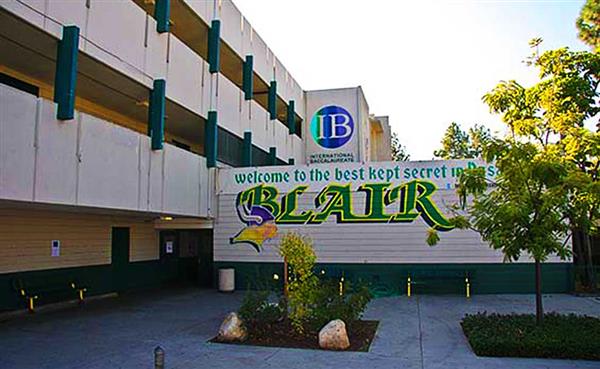
Image taken from Blair High School’s website

At Blair High School, in the Pasadena Unified School District, community service activism is a component of its International Baccalaureate program, according to college counselor, Karen Favor. She says, “Students identify a need for the school or the community, develop a plan with other schools, people or community, address that need and complete it in 150 hours. The Harvard study’s second recommendation – collective action that takes on community challenges – validates what we are already doing.

Favor adds, “I also appreciate its recommendation for assessing ethical engagement and contributions to others across race, culture, and class – specifically the one touching on contributions to one’s family. More and more we see students who also are caregivers for the elderly in their family. We had one student who had a grandfather with Alzheimer living at home. She woke him up every morning, fed him breakfast before going to school, then fed him dinner when she got back home. Besides providing care for him, she also had to deal with the mood swings that come with the disease.”

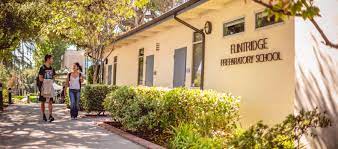
Image taken from Flintridge Prep’s website

At Flintridge Prep, a 7th-12th grade independent school in La Canada, Harvard’s seminal report has been widely circulated. Gloria Diaz Ventura, director of college counseling, reveals, “We know it well, it’s posted outside my office door. I believe in the words and to me it’s two different things. It’s something I will use to promote a balanced and healthy college process. The second issue is whether or not I feel if, in fact, this document will implement change in the college application process.

“Having worked at highly selective institutions, I’m very clear on the institutional standards and how the process works. But I believe in the document because I have to; I have to believe there’s a better way because right now I don’t see how we can keep going at this rate. The extreme selectivity among universities is creating unhealthy behaviors on the high school side.

“While we don’t have a community service requirement, we encourage our students to be part of their community. Our messaging is so clear that life has to be more than test scores and grades. We have a middle class ethos – there is no entitlement and we don’t forget where we come from,” Ventura further expounds.

Prep’s headmaster, Peter Bachmann, pronounces, “We support the values of the Harvard report, which are extremely compatible with Flintridge Prep’s. We sincerely hope that colleges around the country truly embrace them.” 

Image of Mayfield Senior School taken from Mayfield’s website

Among independent schools in Pasadena, community service and doing good for others are already part of their moral ethos. Kate Morin, head of school at Mayfield Senior, says “That’s  our core mission – Action Not Words. It’s really about empowering our students to be leaders in making the world a better place.” 

Morin recounts, “When I met recently with several generations of alums in San Francisco and in New York – some of whom were in their 70s – that’s what they want to talk to us about. They all have continued to serve the community in various ways, an extension or expansion of the work they started back when they were at Mayfield; maybe as part of their experience on Cornelia Connelly Day or Annual Service Day.”

Lori Holtrust, Mayfield college counselor, echoes Morin’s words, “We foster the development of the whole person. I think we’ve found that students are learning because they’re intrigued – they’re diving in. I don’t know that they’re doing it for college admissions. We focus on the journey of development, learning and understanding. And the college piece just happens.”

Sequoyah School, which will welcome its first 9th grade class this fall, has instilled this ‘habit of mind’ even among their elementary and middle school students. Marc Alongi, high school director, says “Our curriculum is designed to prepare students to graduate as experienced, confident and resourceful problem solvers, who know how to apply their knowledge and passion using strategies that can make a difference for their communities and for their own lives. Students will be challenged to think critically and creatively, learn how to work in diverse teams, and communicate ideas successfully.”

“The Harvard study certainly aligns with our values; our high school curriculum is framed along those lines. We aren’t merely preparing our students for college, we’re educating them. We want to inspire curious learners who are passionate and engaged about what they’re doing and connected to their community. 

“Oftentimes the college process distracts students from that; they focus on APs, grades, test scores, extra-curriculars. Again and again you hear in the media about college admissions officers seeing window dressing on students applications, not genuine interest. Are the community service hours being done to merely check off a box or is it for a deeper purpose? Our program for social innovation makes students responsible for their own impact project. It would show genuine interest and commitment; they’d have a real story to tell in their college essay.    

“The question for college admissions officers is how do they sort through the application? Are they using SAT scores as the initial filter? Some of these essays may still not get read; but if they are read, does it make a difference?,” Alongi further queries.

Ventura of Flintridge Prep, voices this same concern.  “In large offices, it’s newly graduated professionals from that school – 22-, 23- or 24-yeard-old grads – reading the file. Not unless the dean or director is telling them this is what they’re going to emphasize, they’ll just be following their marching orders. The deans, in turn, are following what the university president is telling them.

“College admissions officers need to evaluate what they’re valuing and what they’re praising at the end of the day. It’s very political – you have to look at these institutions and how they’re tied to Wall Street and political organizations.  Community service by itself doesn’t get you into Harvard,” Ventura states. 

Another Mayfield college counselor, Abigail Shaw, opines, “I think colleges are honest that  they’re looking holistically. They want students with broader perspectives. A lot of colleges are shifting their priorities – there are schools which are making the testing element optional and it’s building every single year. They are realizing that testing doesn’t necessarily present a true reflection of what a student can provide in their community so they’re taking it to heart. But I think in terms of the full spectrum of colleges making that shift … it’s not going to happen.”   


According to the media spokesperson for the Association of College Counselors in Independent Schools (ACCIS), Jodi Sweeney, “The intentions of the report are very noble. From our perspective, we feel that the report meshes well with our programming. Independent schools are preparing citizens of the world; we really work hard to help students find a balance so that they’re selecting courses with an appropriate amount of rigor so that they’re able to engage in the life of the community.

“We encourage our students to challenge themselves, find authentic service opportunities, and have transformative experiences. But we also want them to thrive and get sleep at night. It’s a balancing act and the landscape right now is more is more. And until we see that colleges really are recognizing and valuing a student who engages deeply in two or three activities and rewarding that with an acceptance, we won’t be making great changes to our college application process.

“Often admissions officers talk about the transcript being the most important component of the application – more so than the ACT or SAT. But when you look at the median scores at the schools, you’ll see that ranges are very high. College applications is so complex that it’s a perfect storm; fixing it requires a collective effort.  

“Technology and the ease with which students can apply to more schools, have also increased the competition. While we encourage them to be thoughtful and do intentional searches, students put out 12 to 15 applications because they can.

“We’re waiting to see what impact this report has on admissions selection and their recruitment process.  Right now it’s GPA- and SAT-based. We want to get a sense from college admissions officers how they’re going to tweak their process,” Sweeney says.  

At the core of the Harvard report is a fundamental issue – raising children with a moral compass who will grow up to be upstanding citizens of their community and the world. And that process starts during childhood.

Clairbourn School – Courtesy Photo

Dr. Robert Nafie, headmaster of Clairbourn School, a pre-K to 8th grade school in San Gabriel, offers his insight to support it. “Encouraging young people to take a more ethical path of social responsibility and community service must begin in the home. Additionally, it must be embraced at the individual level or there will be nothing but lip-service to perceived expectations. It is a way of life, not a fulfillment of college admissions criteria.

“The position paper implies students who demonstrate social responsibility and concern for the common good to be more desirable than those who have not exhibited such. However, it is doubtful that these institutions would accept social and ethical engagement in lieu of proven proficiency and knowledge in chosen fields of study. Although it is not clear from reading the study, it is likely that the report is actually arguing for the use of social and ethical engagement as an important secondary consideration, or even at the tertiary level, in the admissions process,” Nafie further opines.

While emphasis on the empathetic record might be highly desirable in a liberal arts college which focuses on the humanities or in education, social services, counseling, even law, Nafie puts forth that this does not hold true in technical areas.

“In the technical fields, content mastery and demonstrated proficiency will continue to be paramount. And the United States must continue to strive for excellence as measured by objective standards instead of anecdotal testimony. In science, medicine, aviation, and mathematics, for example, no amount of  motivation, intention, or concern, will make up for lack of precision or knowledge.

“When content mastery and demonstrated proficiency are substantially equal in college applicants, admissions officers should evaluate important but less critical elements in making their decisions. Without such a strong standard for objective measures of readiness, American colleges will be pulled into accepting good enough instead of reaching for genuine excellence,”  Nafie posits.

American universities are the envy of the world. Students everywhere aspire to gain admission to them. It is incumbent upon these institutions of higher learning to find the students who can balance scholastic ability and ethical responsibility.         

The Life and Times of Y.C. Hong Focus of Exhibit at The Huntington

Originally published on 18 December 2015 in the Pasadena Independent, Arcadia Weekly, Monrovia Weekly, and Sierra Madre Weekly

You Chung (Y.C.) Hong | Photo courtesy of The Huntington

The United States is one big melting pot – a land of immigrants who come from far-flung corners of the world. It’s almost inconceivable, therefore, that there was a time when Americans were openly hostile to certain foreign nationals who wanted to come into this country. And yet, this was the reality that You Chung (Y.C.) Hong, foremost Chinese-American immigration lawyer, encountered during the early years of the 20th century. 

A practicing immigration lawyer from 1927 to 1977, Y.C. worked relentlessly on behalf of Chinese settlers and, in the span of his career, helped over 7,000 enter the country legally. He was one of the Asian experts invited to take part in President Harry Truman’s commission to study and reform the U.S. Immigration system.

Y.C.’s history and life’s work is the subject of a show currently going on the Huntington Library, Art Collections and Botanical Gardens. Li Wei Yang, Curator of Western American History, says, “We were compelled to mount an exhibition because it was the first time the Huntington has received a collection about the life of a major Chinese-American figure in L.A. We felt it was important to let the community know, especially in San Marino and the San Gabriel Valley, that we are serious about the preservation of Chinese-American history. We want to show that we care about this community and that we encourage future collections of this kind.”   

To make the exhibition more accessible to a greater number of visitors, the Huntington presented it in bilingual form – translation panels are available to Chinese speakers. Six topical sections divide the 77 items on display – from a broad overview of why and how the Chinese came into the country to the last section showing the establishment of a family-friendly Chinatown in L.A.  

As the exhibit reveals, Y.C. was born in San Francisco in 1898 to Chinese-American parents who originated from Southern China. His early childhood was marked by two significant events – his father died at an early age leaving his mom to raise two boys on her own. And he was accidentally dropped by a relative who was taking care of him. The resulting spinal damage limited his full height to reach only four feet and five inches tall.    

In spite of his early misfortunes, Y.C. had a normal childhood. He graduated from Berkeley High School in 1915, then traveled around the country for a while, and worked as a bookkeeper at a Chinese restaurant in Boston. 

Y. C. Hong with his wife and sons | Photo courtesy of The Huntington

In 1918, Y.C. came to L.A. and was employed as Chinese translator for the Bureau of Immigration while attending night school. He passed the California Bar Exams in 1923, a remarkable feat as he was still a year away from receiving his Bachelor’s degree from USC. He was one of the first Chinese-Americans to be licensed to practice law; he graduated in 1924 and earned his Master’s degree in 1925 at USC. His 74-page Master’s thesis analyzed how the extension and administration of the Chinese Exclusion Act deviated from the original decree, making Chinese-Americans second-class citizens in their own country. In 1927, Y.C. became an immigration lawyer.

Y.C. grew up during the period when Chinese laborers were considered persona non grata. The Chinese Exclusion Act, which was in effect from 1882 to 1943, prohibited Chinese laborers from entering the country. Chinese miners who were in California during the Gold Rush were singled out, and had to pay $4 each month for the right to engage in mining. This tax practically legalized discrimination.

The Chinese Exclusion Act made it essential for every Chinese traveler to carry a passport when they came into the U.S. China’s Qing government issued passports to all merchants, missionaries, students, and all returning residents.

Beginning in 1909, all Chinese with legal status in the U.S. were issued Photo Certificates of Identity – a requirement which only applied to the Chinese, until 1928. This residence certificate became their proof of their legal right to be here – if stopped by the police, they had to produce such ID or they could be arrested or deported. It was eventually replaced by the Alien Registration Receipt Card, informally known as the “green card.”

As rules became ever more stringent, making it extremely difficult for Chinese immigrants to file the necessary paperwork, much less navigate the complex process, lawyers became requisite. Successful entry into the U.S. depended on their ability to recall precise details of family history during long hours of interrogation. While immigration officers used this deterrent, it didn’t stop the Chinese from coming as they adapted to the technique. Y.C. provided his clients with a list of commonly asked questions (which numbered in the hundreds), to which they constructed all the answers. They then used this “cheat sheet” to pass the test – they had found a way to outsmart the authorities. 

On March 28, 1931,Y.C. married Mabel Chin Qong, another Chinese-American whom he met during a Student Exchange in San Francisco in 1928. Mabel was one of the first Chinese-Americans to graduate from the University of Oregon. Their marriage produced two boys – Nowland and Roger.

In L.A. there was an old Chinatown which was a haven for gambling and prostitution. When it was razed in the 1930s to make way for Union Station, a group of Chinese entrepreneurs purchased land to build a new Chinatown on Broadway. It was designed and erected to appeal to families, and a place not just for the Chinese, but for everyone who wanted to learn about this Asian culture. It was the first planned Chinatown in the United States. Y.C. commissioned three buildings where he moved his law offices.

During World War II the Chinese became American allies as they joined the fight against a common enemy – Japan. Mabel helped the American Women’s Volunteer Services raise funds for and run the Chinese canteen, located in Chinatown, providing meal services and entertainment to servicemen in L.A. Approximately 1,500 military personnel patronized the canteen every month. Y.C.’s and Mabel’s war relief efforts in Chinatown were a huge success that a military ambulance airplane was named “Los Angeles Chinese” in recognition of their contributions.

A very astute man, Y.C. recognized the value of political connections sympathetic to the Chinese. He befriended politicians and contributed to their campaigns; he worked the system. 

Y.C. Hong with Ronald Reagan, then governor of California | Photo courtesy of The Huntington

The Hong family papers document that in 1947 Senator Philip Hart introduced S747, which was merged with a bill proposed by Representative Emanuel Celler to form the basis of the Immigration and Nationality Act of 1965. This Act served as the foundation for the current immigration system, which abolished the National Origins Formula and emphasized job skills and family reunification.

Executive Order 10392, issued by President Truman on September 4, 1952 established the President’s Commission on Immigration and Naturalization. Y.C. was one of the experts invited to give their opinions. The Commission’s report “Whom Shall We Welcome” urged reform of the then-current immigration system. 

Y.C.’s and Mabel’s two sons went on to lead distinguished lives. Their older son, Nowland C. Hong, graduated from Pomona College in 1956 with a Bachelor of Arts degree. And, like his father before him, he matriculated at USC’s School of Law, earning his juris doctor degree in 1960. In 1961, he passed the California Bar Examinations and was appointed deputy city attorney of Los Angeles by City Attorney Roger Arnebergh. He served as chief general counsel for the L.A. Board of Harbor Commissions. He was also a founding member and two-term president of the Southern California Chinese Lawyers Association. He served as grand president of the Chinese American Citizens Alliance (of which his late father was an active member). He lives in Pasadena.

Roger S. Hong, their younger son, graduated with a Bachelor’s degree in Architecture from USC in 1965, and a Master’s degree in City and Regional Planning in 1968. He was certified as a licensed architect in many states, including California. Some of his notable projects include the expansion of the California Exposition and State Fair (Sacramento), Thomas and Mack Center (Las Vegas), Kunlun Hotel (Beijing) and Chieh Shou Sports Park (Taipei). He cofounded Arechaederra Hong Treiman Architects in the late 1970s. After his retirement in the early 1960s, he devoted himself to preserving his family’s history. Between 2000 and 2006, he donated the Hong family papers to the Huntington; he died of cancer in 2006.

Y.C. practiced immigration law from 1927 until his death on November 8, 1977. For 50 years the Chinese came to him for help and he responded with grace. He advocated for his people to gain acceptance into society and achieve economic stability. Any one of his countrymen who had lived through the exclusion era knew his name.

Circumstances beyond Y.C.’s control made him physically small and seemingly insignificant. But his unforgettable life and many accomplishments prove him to be extraordinary writ large.              

My Masterpieces Series: USC Pacific Asia Museum

The koi pond and garden at USC Pacific Asia Museum | Photo by May S. Ruiz

Originally published on 22 October 2015 in the Pasadena Independent, Arcadia Weekly, Monrovia Weekly, and Sierra Madre Weekly

Ensconced in a nondescript corner on North Los Robles Avenue and Union Street in Pasadena is a foundation that holds some of the most valuable treasures in Asian artifacts. It’s the USC Pacific Asia Museum, which used to house the Pasadena Art Museum, and then became Pacific Asia Museum in 1971. In 2013, University of Southern California (USC) partnered with the institution to become a vital resource for education and cultural heritage.

Enter its handsome arched entrance, however, and you will be transported to another place and time. The transformation is so unexpected it’s breathtaking. The charming courtyard garden with a koi pond, rock sculpture, and natural plantings reflecting the changing seasons, take center stage while a Chinese Qing dynasty-inspired mansion wraps around it. The Pasadena architectural firm of Marston Van Pelt and Maybury built it as a grand residence in 1924 to exact specifications from California transplant, Grace Nicholson, a pioneering art collector and entrepreneur from Philadelphia.

This historic home also became the center for the arts in Pasadena and was host to several cultural organizations. The first floor served as a gallery where Ms. Nicholson displayed and sold American Indian and Oriental art objects. On the second floor were more galleries, an exhibition auditorium, and Ms. Nicholson’s private quarters. 

Today it is the foremost exhibitor of Asian art collections in Southern California. It is also the destination for Pasadena 6th graders’ My Masterpieces field trip where specially-trained docents conduct tours and hold workshops. 

Michael Fritzen, Head of Education and Public Program for USC Pacific Asia Museum, who took over this post five months ago, is ably assisted by Program Specialist, Becky Sun, in planning an interactive and hands-on two-hour visit. He says, “Our My Masterpieces Program for the Pasadena Unified School District (PUSD)/Pasadena Educational Foundation (PEF) is focused on the inquiry method. Students are asked questions about the pieces they see; they aren’t just dragged through the museum and told massive amounts of facts. They stop, look and reflect about a particular artifact. Aligned with the state Common Core standards, this visit is aimed at enhancing students’ classroom discussions in their World History course. We ensure that what they see and experience add depth to their understanding of the world, and of Asia, in particular.”

This tour is designed to lead 6th graders along the Silk Road. It moves through the collection, spotlights certain artifacts, and ultimately fashions a coherent historical fabric woven from threads that connect all the different countries in Asia – Japan, China, Korea, Vietnam – as students travel on the Silk Road. 

Grace Nicholson’s previous residence now houses USC Pacific Asia Museum

According to Sun the tour is divided into two parts. While one docent tours a group of students, another docent involves the students in a hands-on workshop. She says, “Our workshops are taught by Asian experts in different fields including calligraphy, brush painting, origami.”

Fritzen adds, “We provide authentic materials for students to employ during the workshop. If they’re working on calligraphy, for instance, they are using brushes, ink blocks, and rice paper made specifically for that art form. The work they produce will match what they see in the museum – it will have the look, smell, and texture of the original art. The art activity makes what they see in the gallery come to life and gives them a better understanding of what the artist went through to make the product. We try to create an experience that cannot be replicated in the classroom so that they leave with lasting memories of their visit.”

“My Masterpieces introduces Asian art and culture to kids from all over Pasadena who have never had occasion to visit the museum; it helps them understand why a particular tapestry or sculpture is unique and preservable,” continues Fritzen. “We hope that the visit inspires enthusiasm and passion in young people so that they later become visitors, members, donors, and collectors of art. The field trip includes a family pass for six people. That students actually redeem those passes proves that it makes a deep impression to them.”

Through their programs and events, USC Pacific Asia Museum follows its mission and vision unique to the museum – to further intercultural understanding through the arts of Asia and the Pacific Islands.

According to Fritzen, the museum recently featured a Harvest Moon Festival which showed how this is celebrated not only in China, but also in Japan, Korea, and Vietnam. The institution endeavors to showcase countries which are not usually at the forefront because they don’t have enough representation. 

With that in mind, USC Pacific Asia Museum will host in December a show featuring the art and culture of the Philippines. It may be the first time others will learn about this group of islands in the Pacific beyond the nightly news report of the country being in dire need of assistance, after being hit by devastating typhoons . Maybe it will help engender public interest in the countless natural wonders unique to the Philippines – beautiful coastlines, white sandy beaches, majestic mountains, lush countryside, exotic foods, and warm people.

If USC Pacific Asia Museum were to enlighten even just one mind about the abundant treasures to be found across the vast Pacific Ocean, it would have served the purpose it has set out for itself.