The Huntington Launches Yearlong Centennial Celebration

Originally published on 10 September 2019 in the Pasadena Independent, Arcadia Weekly, and Monrovia Weekly
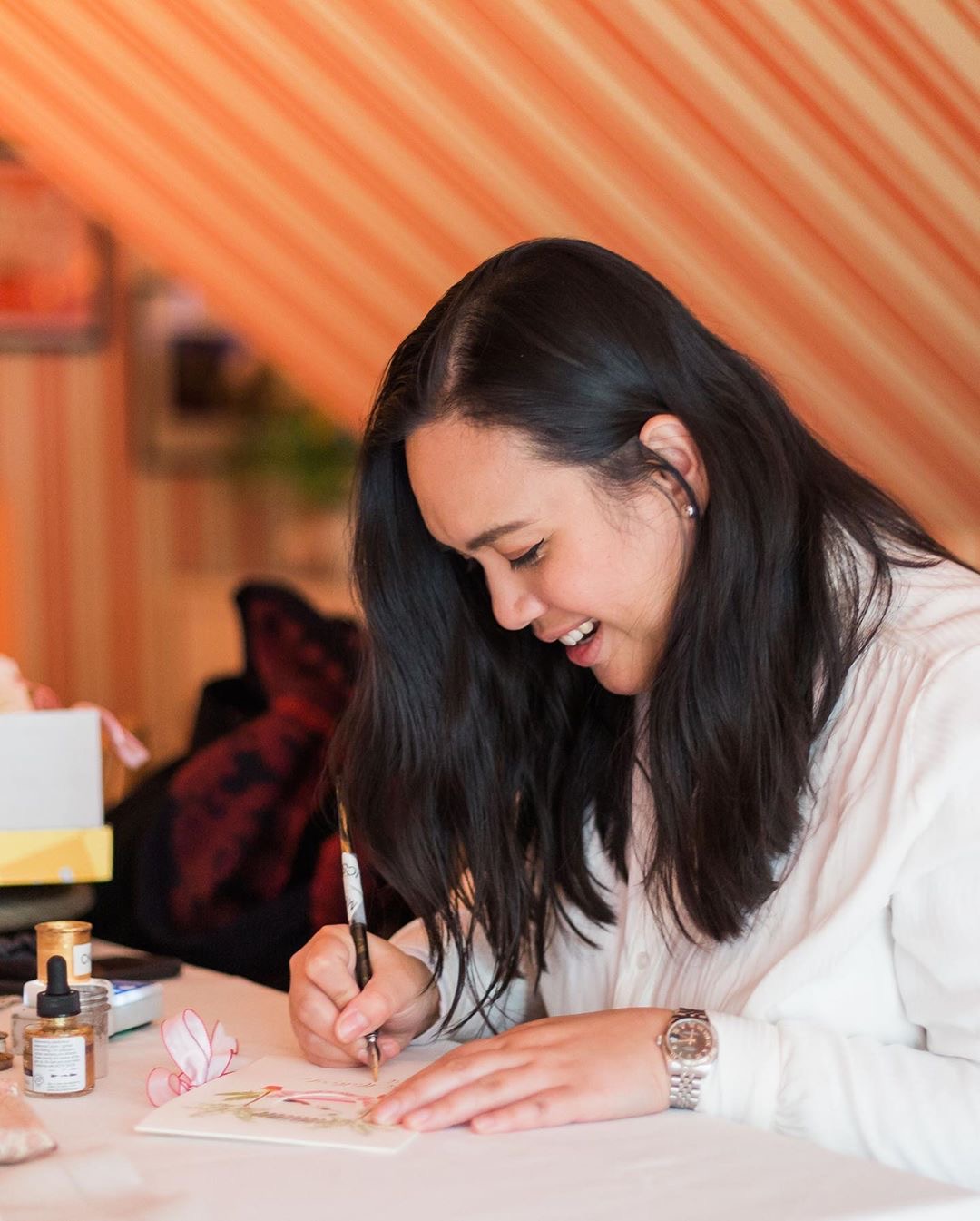
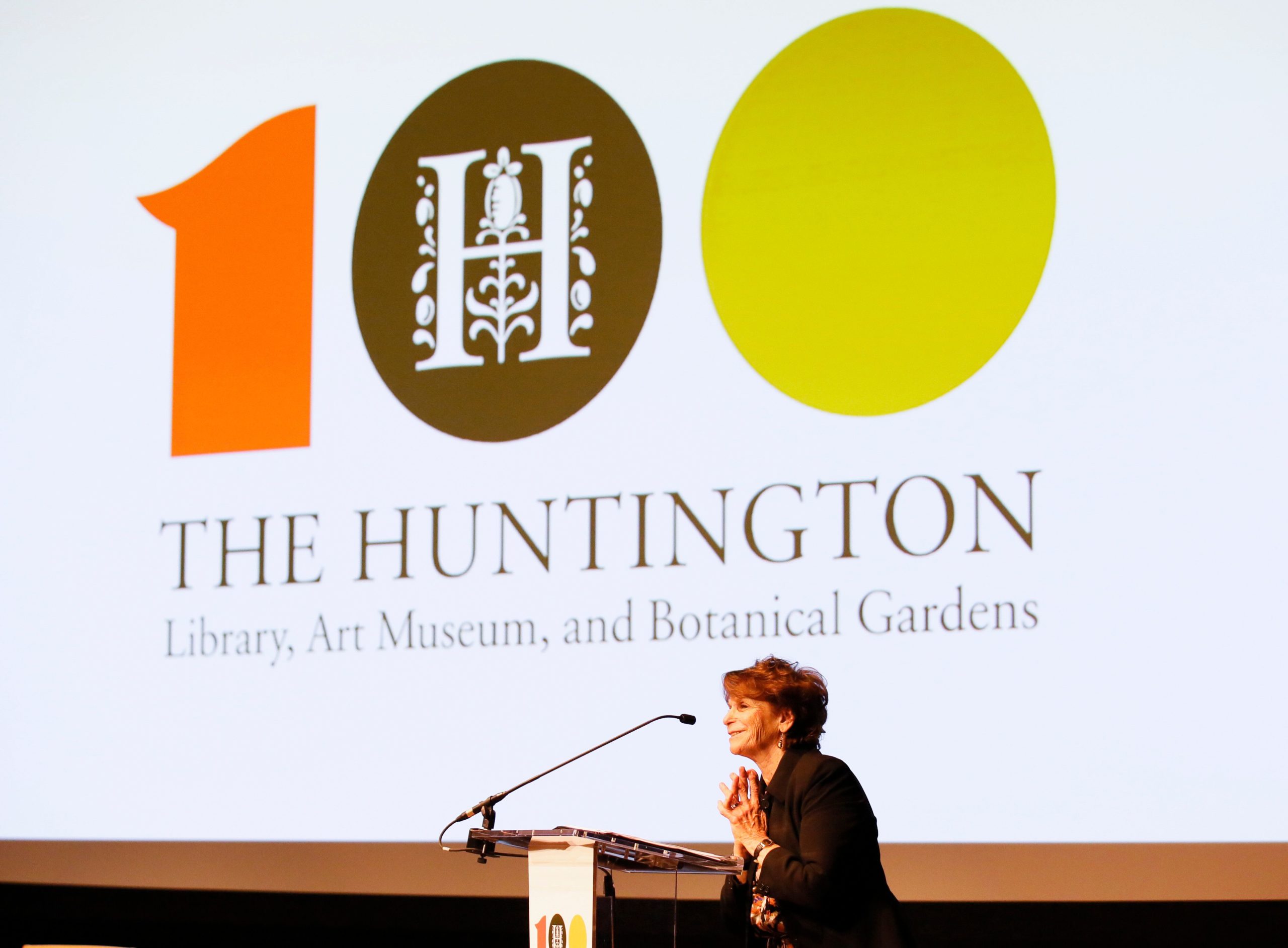
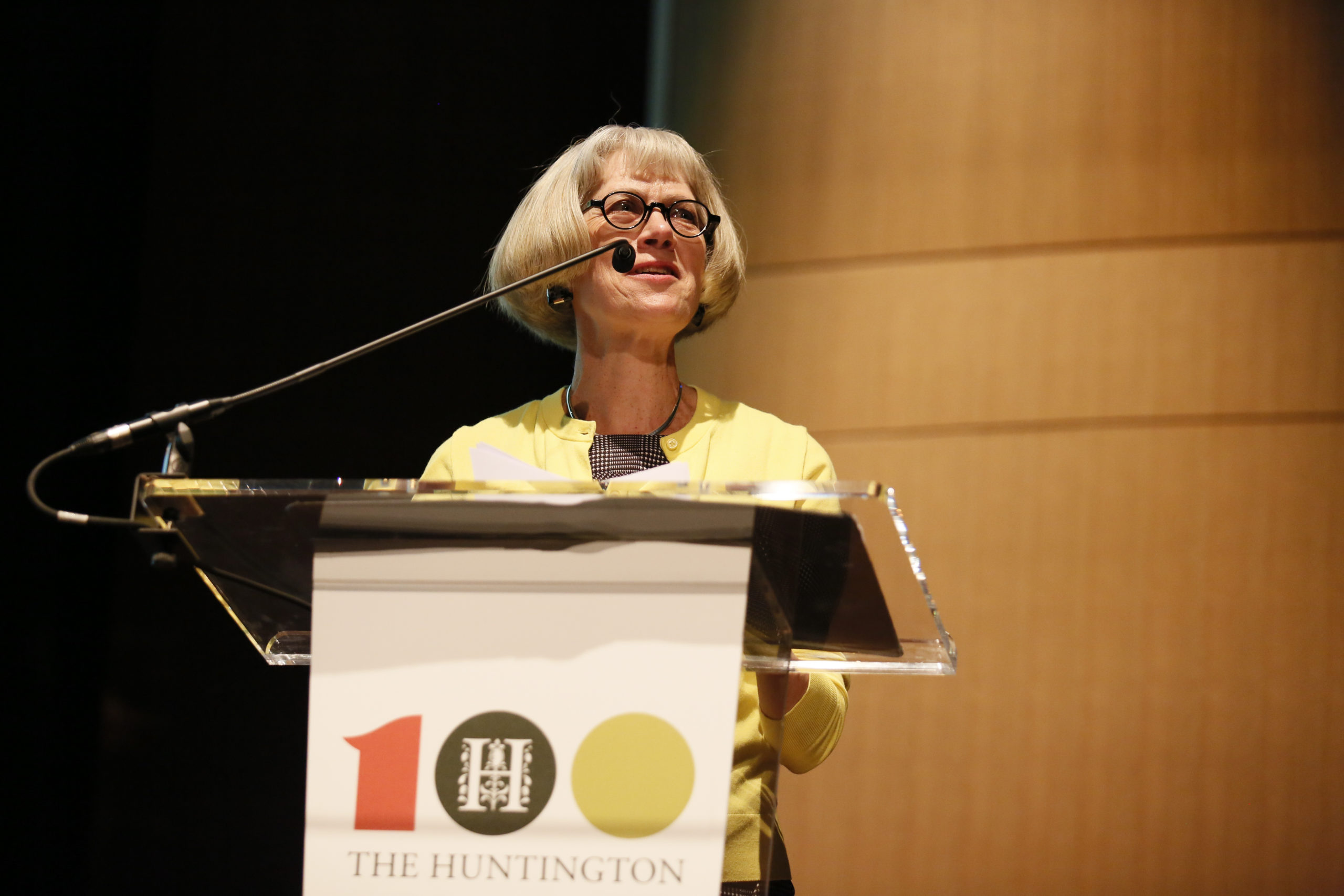
The Huntington President Karen R. Lawrence, announces the name change during the Centennial Celebration launch | Photo by Ryan Miller / The Huntington Library, Art Museum, and Botanical Gardens

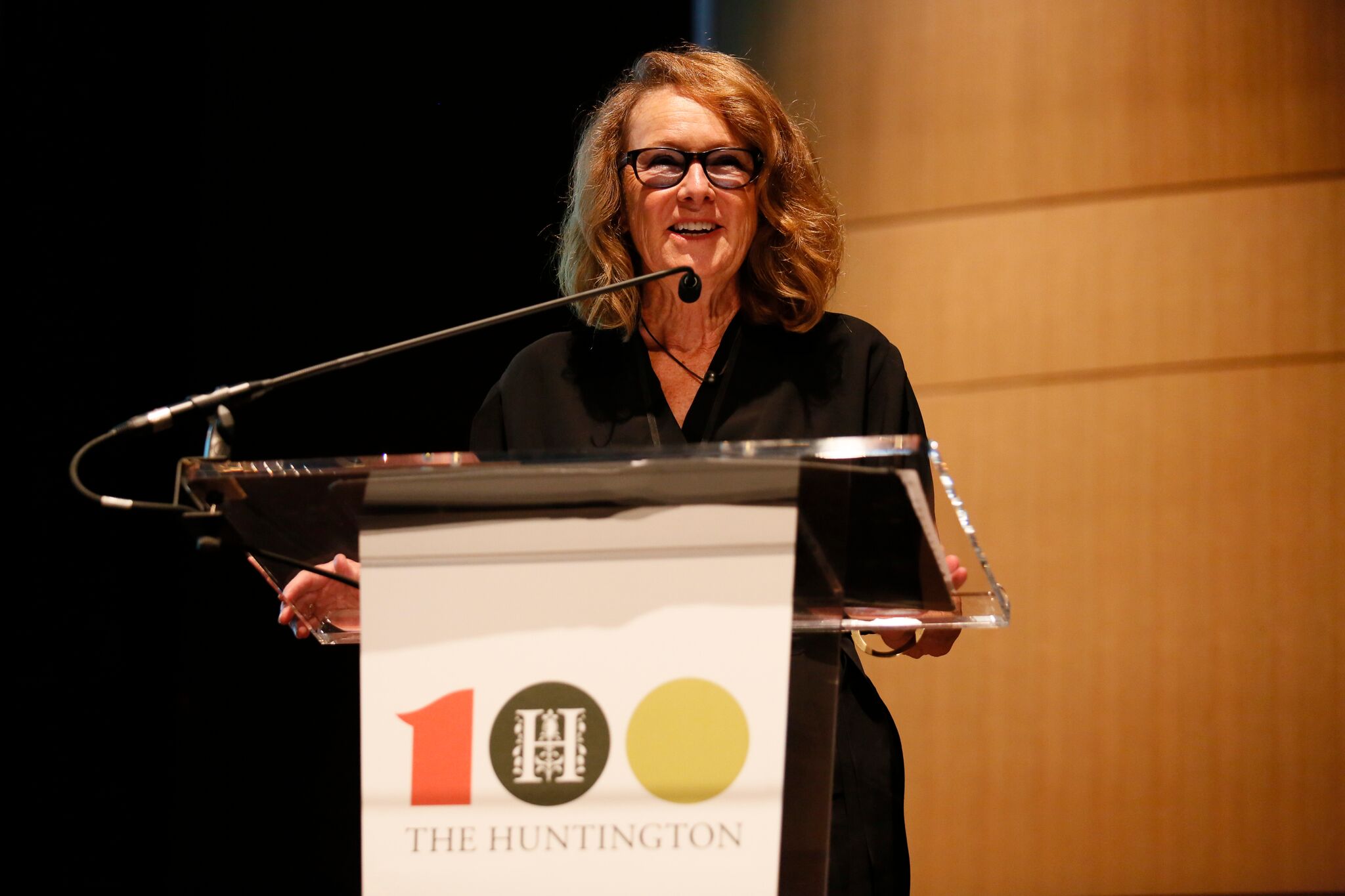
The Huntington in San Marino officially launched its yearlong centennial celebration on Thursday, September 5, 2019. During her welcome speech at Rothenberg Hall, Huntington President Karen R. Lawrence expressed how Henry E. Huntington’s vision and legacy will live on in the next century.

“As I look out at you, the leaders of Southern California’s, and particularly L.A.’s, cultural, academic, and civic institutions, Huntington’s presence is demonstrably in evidence,” began Lawrence. “As the Director of our Botanical Gardens Jim Folsom recently reminded me, almost anything can grow in Southern California. He was correct.

“We brought everybody here today to celebrate the extraordinary fertility and vitality of our region – both a U.S. cultural capital and, as Huntington predicted, the leading edge of the Pacific Rim. Had his visionary red car trolley system been equally as durable, many of you, especially the west-siders, would have an easier commute.”

Continued Lawrence, “So 1919 was a very good year for the birth of L.A. institutions – from UCLA to the L.A. Philharmonic, to the iconic Musso & Frank Grill and Fosselman’s Ice Cream. In celebrating our hundredth, it’s not all about us; it’s about all of us. Because neighbors and partners have always been crucial in the life of The Huntington. As we celebrate the trust agreement in which Henry and Arabella Huntington gave their private treasures – at the time the New York Times called the greatest private library in the world, art and art collection, and expansive gardens and grounds – we also recognize that we wouldn’t be here were it not for George Ellery Hale, the renowned astronomer, who helped develop Caltech and who was the founding director of the Mount Wilson Observatory in Pasadena.

“In the Huntington’s archives, we have Hale’s correspondence with Huntington which shows that from 1906 to 1916, Hale politely badgered Huntington to place his private collection in a trust for the use and benefit of the many. As significantly though, he helped convince Huntington, the wealthy industrialist and collector, to see the value of his collection in a different way – more for the research and scholarship it would inspire than for its accumulation. Hale urged Huntington to establish a public institution; he wrote ‘There is now great need of a strong institution of broad scope, uniting all the intellectual interests of this region and the common folks.’ When he was later asked about the worth of his collection, Huntington replied that its value will be determined primarily by what he produces. Although these two men couldn’t possibly foresee what was produced during those hundred years, it’s a testament to their legacy and Arabella’s, that The Huntington attracts 1,700 visiting scholars in addition to over 750,000 visitors from around the world.

“So today we take a moment to acknowledge this Southern California history as well as to think about our future and the ideas that will propel us all for the next hundred years. For a person turning 100, it’s very natural to look back and reflect on the past. For an institution turning a hundred, a centennial is a moment to be like Janus – looking back and forward at the same time. Today we’re celebrating how far we’ve come and reflect on where we want to go. We’re thinking carefully about our mission and what it means to be among the oldest cultural and intellectual centers in this great region, which itself reflects the dynamic demographic evolution of our city, state, and country. We want to broaden our audiences and to focus on The Huntington’s ongoing role in the cultural fabric of Southern California and beyond.”

Lawrence declared, “The name of an institution reflects its relation to its audiences as well as its mission and ethos. In 1919 we began our journey as the Henry E. Huntington Library and Art Gallery. And, over time, we became more commonly known as the Huntington Library, Art Collections, and Botanical Gardens. Today I am pleased to announce a change in what we’re calling ourselves, that reflects both the increased breadth and depth of our art collections and their public purpose. We’re changing our name to The Huntington Library, Art Museum, and Botanical Gardens.”

As Lawrence said this, the name displayed on the screen behind her also changed and was met with enthusiastic applause from the audience.

The change from ‘collections’ to ‘museum’ more accurately describes The Huntington’s mission and programs, explained Lawrence. “Our art collections are more than a group of catalogued objects; they are carefully curated, interpreted, and exhibited for scholarship, education, and the broader public. An added benefit to this change is that we become more discoverable, particularly in online searches. This is important as we work to widen our audiences and accessibility.”

The Hammer Museum’s Director, Anne Philbin, talks about ‘Made in L..A. 2020’ | Photo by Ryan Miller / The Huntington Library, Art Museum, and Botanical Gardens

The Centennial Celebration, a yearlong series of exhibitions, public programs, and new initiatives running from September 2019 to September 2020, kicked off with an announcement of a collaboration between The Huntington and the Hammer Museum on ‘Made in L.A. 2020,’ the upcoming edition of the Hammer’s acclaimed biennial. The statement was made by Hammer Director Ann Philbin alongside Lawrence.

Opening June 7 and running through Aug. 30, ‘Made in L.A. 2020’ will take place at both institutions, providing visitors across the region an opportunity to experience the singular exhibition of contemporary art in Los Angeles. The exhibition, sponsored by Bank of America, will debut new installations, videos, films, sculptures, performances, and paintings from Los Angeles–based artists, many commissioned specifically for the exhibition.

‘Made in L.A. 2020’ is the fifth iteration of the internationally lauded Hammer biennial, and the second to take place at multiple venues. The biennial’s inaugural 2012 edition presented artists at the Hammer, LAXART, the Los Angeles Municipal Art Gallery at Barnsdall Art Park, and the Venice Beach Biennial. The 2020 edition seizes on an opportunity to connect an institution on the west side of Los Angeles with one on the east. It is co-curated by Tunisian-French writer and curator Myriam Ben Salah and Los Angeles–based curator Lauren Mackler. The Hammer’s Ikechukwu Onyewuenyi is assistant curator for performance.

“We are thrilled to be partnering with The Huntington on ‘Made in L.A. 2020’ to bridge the east and west sides of Los Angeles to highlight the works of art created across the region, with an emphasis on emerging and under-recognized artists,” said Hammer Director Ann Philbin. “This expression of our biennial―which spans roughly 25 miles―offers opportunities for discovery and surprise for ‘Made in L.A.’ visitors and gives the curators and artists a new platform for experimentation.”

“Creative collaborations are a hallmark of our Centennial Celebration,” Lawrence disclosed. “We will be engaging with our collections as well as with our audiences in exciting new ways. Joining forces with the Hammer for this remarkable exhibition is a perfect example of what we are setting out to do. ‘Made in L.A.’ celebrates the extraordinary, groundbreaking work of contemporary artists working in Southern California. We are honored to be a part of this year’s exhibition.”

“Los Angeles is the epicenter of the creative economy, with the arts bringing Angelenos together, attracting tourism, generating cultural dialogue, and serving as an economic driver for our region,” declared Raul A. Anaya, Bank of America market president for greater Los Angeles. “It’s why Bank of America invests in the arts and in institutions like the Hammer and The Huntington, and this specific partnership for ‘Made in L.A. 2020’ reflects our mutual commitment to L.A.’s incredibly diverse local artists.”

During the run of ‘Made in L.A. 2020,’ members and visitors to the Hammer will receive passes granting free admission to The Huntington to view ‘Made in L.A. 2020’ in full. There will also be joint programming at both the Hammer and The Huntington during the exhibition.

Looking ahead to the next 100 years, the directors of The Huntington’s three components – Library, Museum, and Botanical Gardens – spoke about the future and how The Huntington’s collections will contribute to their fields.

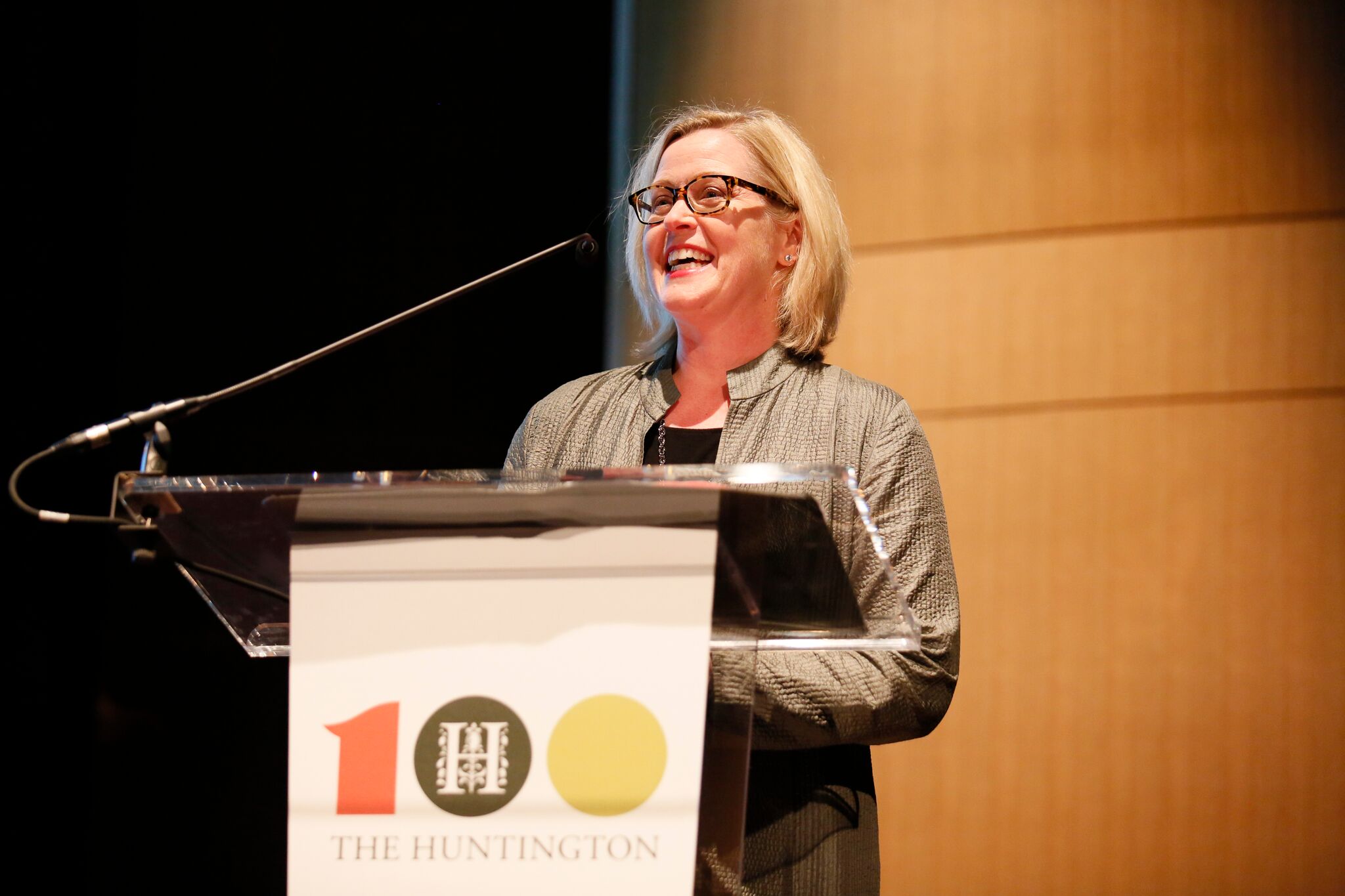
Sandra Luding Brooke, Avery Director or the Library speaks during The Huntington Library, Art Museum and Botanical Gardens Centennial Celebration Launch Event on Sept. 5, 2019, in San Marino, California | Photo by Ryan Miller / Capture Imaging

As the Avery Director of the Library, Sandra Luding Brooke oversees the 11 million items in the library collection. She said, “In 1925 Henry Huntington endorsed a vision for a repository of books and manuscripts of the greatest rarity and value focused on tracing the progress of our English-speaking people. Since then The Huntington’s collection has grown and persisted in more ways than what could have been imagined a century ago.

“Libraries must anticipate tomorrow and try to imagine what future researchers and viewers might want or need to know,” pronounced Brooke. “We must be judicious and imaginative in choosing what we preserve, and be fearless in seeking diverse and provocative voices. Libraries must batten their hatches to protect collections from the vicissitudes that are sure to come – natural disasters, social and economic upheavals, censorship, ignorance, and willful misapprehension. We also want to seize this moment and help our collections speak to current generations because cultivating a love and respect for documented history is the surest route to its survival and, perhaps, our own. So in the spirit of stepping out with optimism into our second century, the Library has made a small acquisition that won’t get on our shelves until just four years shy of The Huntington’s bicentennial. Until then the library’s purchase will be growing in the Norwegian wood. Artist Katie Patterson’s future library is a hundred-year literary artwork of an active indefatigable optimism. Five years ago, Patterson planted a forest of a thousand spruce trees in Norway. This forest will be held in trust until the year 2114 when the trees will be harvested, turned into paper, and provide the stock for the publication of 100 texts, until then held secret, by 100 writers. This little acquisition is a vote of confidence in the future of the environment, of art, of books and the written word, and of libraries. Yes, we are confident our librarian’s successors will not fail to claim The Huntington’s copy of this long-awaited anthology. But between now and 2114, we are equally confident that millions of other texts, images, and objects undiscovered and, as yet, uncurated will cross The Huntington’s threshold to join this great past, present, and future library.”

Christina Nielsen, Hannah and Russell Kully Director of the Art Museum | Photo by Ryan Miller / The Huntington Library, Art Museum, and Botanical Gardens

Christina Nielsen who, when she took the podium and introduced herself, said that for the past 10 minutes, she has been the director of The Huntington’s Art Museum. She started, “Now that we’re a museum I’d like to spend the next few minute considering what that term means. What it meant to Arabella and Henry, what it means today, and what it will likely mean in the future. Henry Huntington, entrepreneur and futurist, proponent of new technologies; Arabella Huntington, perhaps the greatest gilded-age collector you’ve never heard of – together they stand out among the likes of their peers such as Walters, Morgans, Fricks, and Gardners by bringing together objects from the past to actively shape a future. They founded the first Old Master Collection in Los Angeles which included Asian ceramics, Italian Renaissance pieces, French decorative arts, and British portraits from the 18th century, which allowed for connections across time and place. And they put their historic works in conversation with art from their day by placing sculpture on the grounds from artists of their time, including their daughter-in-law Anna Hyatt Huntington. They also gave us a framework for considering how to move forward, encouraging us to continue making connections across time and place, to invest in new technologies, and to share their collection with the public.

“So now the present moment. And might I suggest that, in many ways, the future is now and the future is here. The definition of ‘museum’ is quickly changing, as is the nature of our work. The International Council of Museums just released a new definition of museum as a ‘democratizing, inclusive, and polyphonic space for critical dialogue about the pasts and the futures.’”

“Our collection is indeed a treasure trove to be mined for thinking about making connections across time and place, how trade and exchange shaped objects, lives, and intellectual pursuits,” noted Nielsen. “But which stories do we choose to tell and who tells them? Recent partnerships here at Huntington, such as one with the Vincent Price Art Museum, allowed Carolina Caycedo, one of the great artists in the L.A. area, to produce a new work of art Apariciones/Apparitions which inserts back into the history of our founding narrative people and labor who’ve been lost over time.

“More specifically, ‘Blue Boy,’ our most iconic work, has continued to inspire over time, artists, much more recent than when he arrived in 1921. A young artist on leave from military duty in San Diego came to the Huntington and had an epiphany from the ‘Blue Boy.’ So did a young teenager who would come on visits to The Huntington on Saturday. And so we’re thinking very deeply about how to unlock more epiphanies from our people, in our galleries, and through expanded online resources. How do we share our collections beyond our walls? How do we reach other aspiring artists from South Los Angeles, San Diego, and from other places really far away – like Kansas City, Kosovo, or Kyoto. So in the context of The Huntington itself, what does our art collection mean? This is a multi-disciplinary institution and as the definition of art keeps changing and evolving, I was reminded recently by Jim Folsom that The Huntington itself is the original conceptual work of art.”

Nielsen said further, “This is the hotbed of the artistic world and we are so pleased to be working with the Hammer on ‘Made in L.A.,’ exemplifying what an extraordinary moment this is for our region. But I might suggest that ‘Made in L.A. 2020’ has a really important antecedent and that could be considered ‘Made in London 1770,’ because going back to Gainsborough and his fabulous ‘Blue Boy’ painting, what we’ve recently learned is that in fact Gainsborough, hundreds of years ago, just like the artists in our midst today, was absolutely pushing the envelope of what it meant to be a painter and what the medium could provide. And so I would say it makes absolute sense for us at The Huntington to be working with The Hammer and offering up our resources for artists, writers, performers, dancers, thinkers, in our midst.

“The past is not dead. In fact, as Socrates said, ‘It isn’t even past.’ It’s alive and waiting to be unlocked in the objects in our collection. I can’t begin to predict now how successors of ours a hundred years from now will do that, any more than Henry and Arabella could have predicted us sending rockets to the moon. But they believed in technology; they believed in sharing their collection to the public; and they believed in connections across time and space. I feel that if we hold true to these principles, we will be just fine over the course of the next hundred years. And, in closing, I offer another definition for our museum – that it should be not just a repository of things, but a collection of ideas and a place for sharing them with others.”

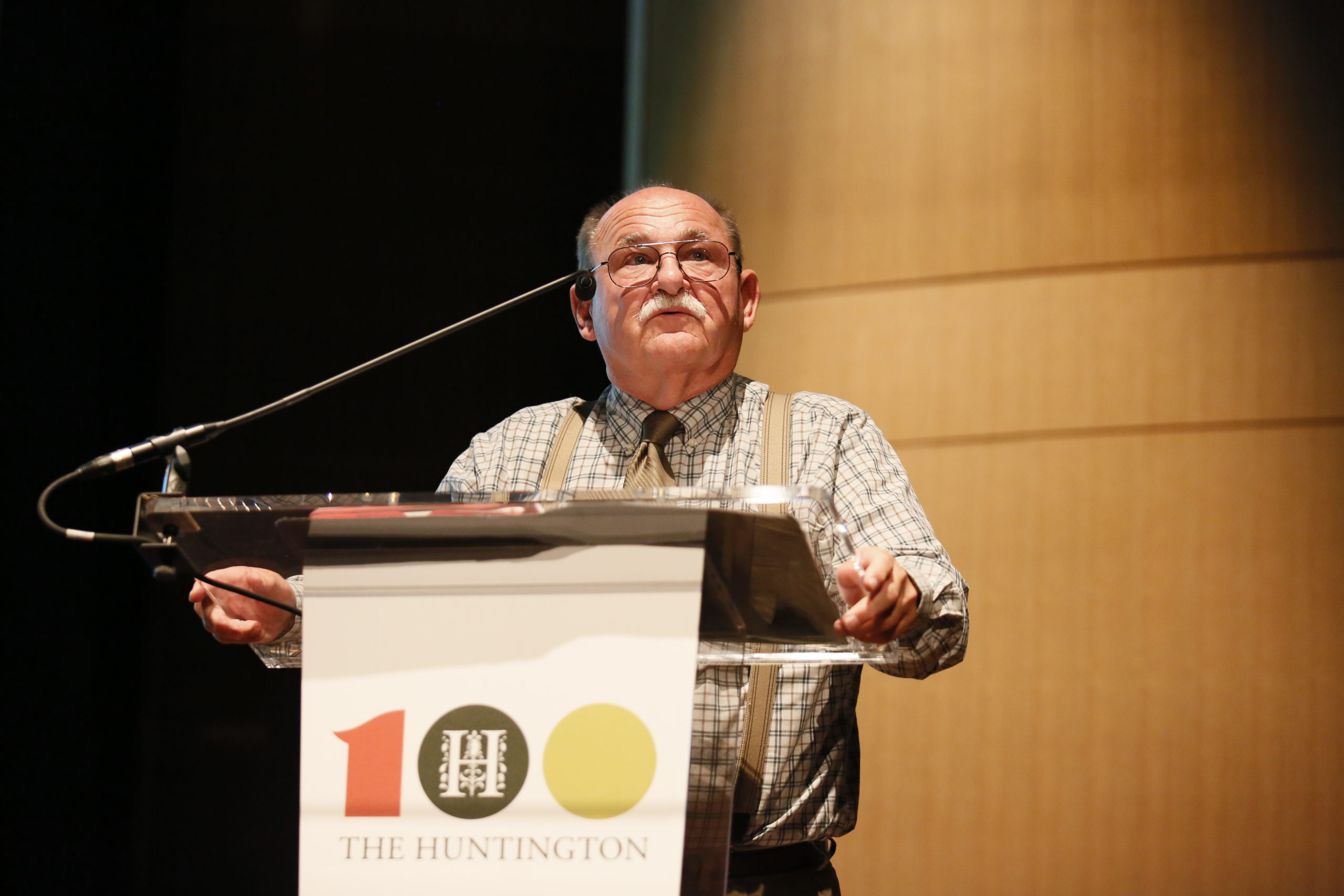
James Folsom, Telleen/Jorgensen Director of the Botanical Gardens speaks during The Huntington Library, Art Museum and Botanical Gardens Centennial Celebration Launch Event on Sept. 5, 2019, in San Marino, California | Photo by Ryan Miller / Capture Imaging

When it was his turn to speak, Director of Botanical Gardens James Folsom, who noted that he’s the old-timer at The Huntington, stated, “Last year we planted several hundred trees and we intend to plant more this year. We plant trees because during a storm in 2011, 700 trees fell in one evening. We plant because new opportunities arise – wonderful new trees become available. We plant trees because they provide structure to the landscape, which takes years to develop. We plant trees because on the 6th of July last year, the gardens experienced a record-high temperature of 118 degrees Fahrenheit leaving vegetation scorched throughout the landscape.

“We plant trees because that’s what gardeners do – observe, think, plant, cultivate, take our losses, make our moves, plan for change, and invest in energy and resources to create something that would be of worth for future generations. So what is that future, how far is that horizon? For trees, it’s 80 to 100 years – easily to the end of the century. But in all of our actions, even short-term plantings, we should build soil and capacity. Every act can be viewed as an investment. Gardens also plant ideas and inspiration – the beauty and power of life unfolding, the importance of cycles, the value in the glorious smell of fresh water and arable soil. The pay-off in planting is seeing the product of pure physical toil and recognizing the importance of plants as the givers of life and the bases of biodiversity.

“To me, the lessons we learn from gardening are crucial. In a perfect future, I imagine these Huntington gardens and the act of gardening will help form a better world. Fortunately, the structure we need for those lessons exists. The Huntington has collections, displays, beautiful facilities, and staff to see us to our second centennial.”

Enjoying the Charms of Cambridge

Originally published on 26 August 2019 in the Pasadena Independent, Arcadia Weekly, and Monrovia Weekly

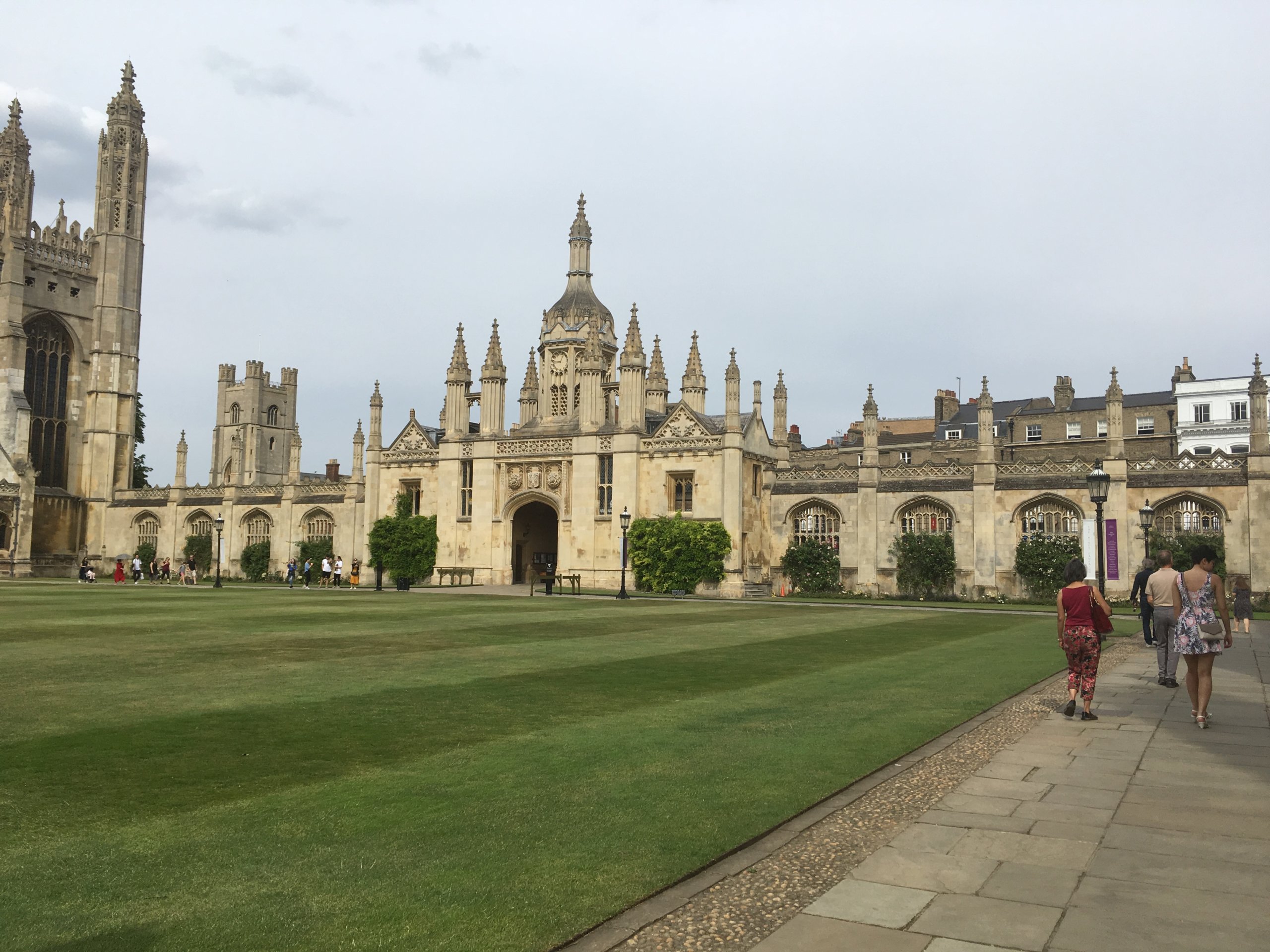
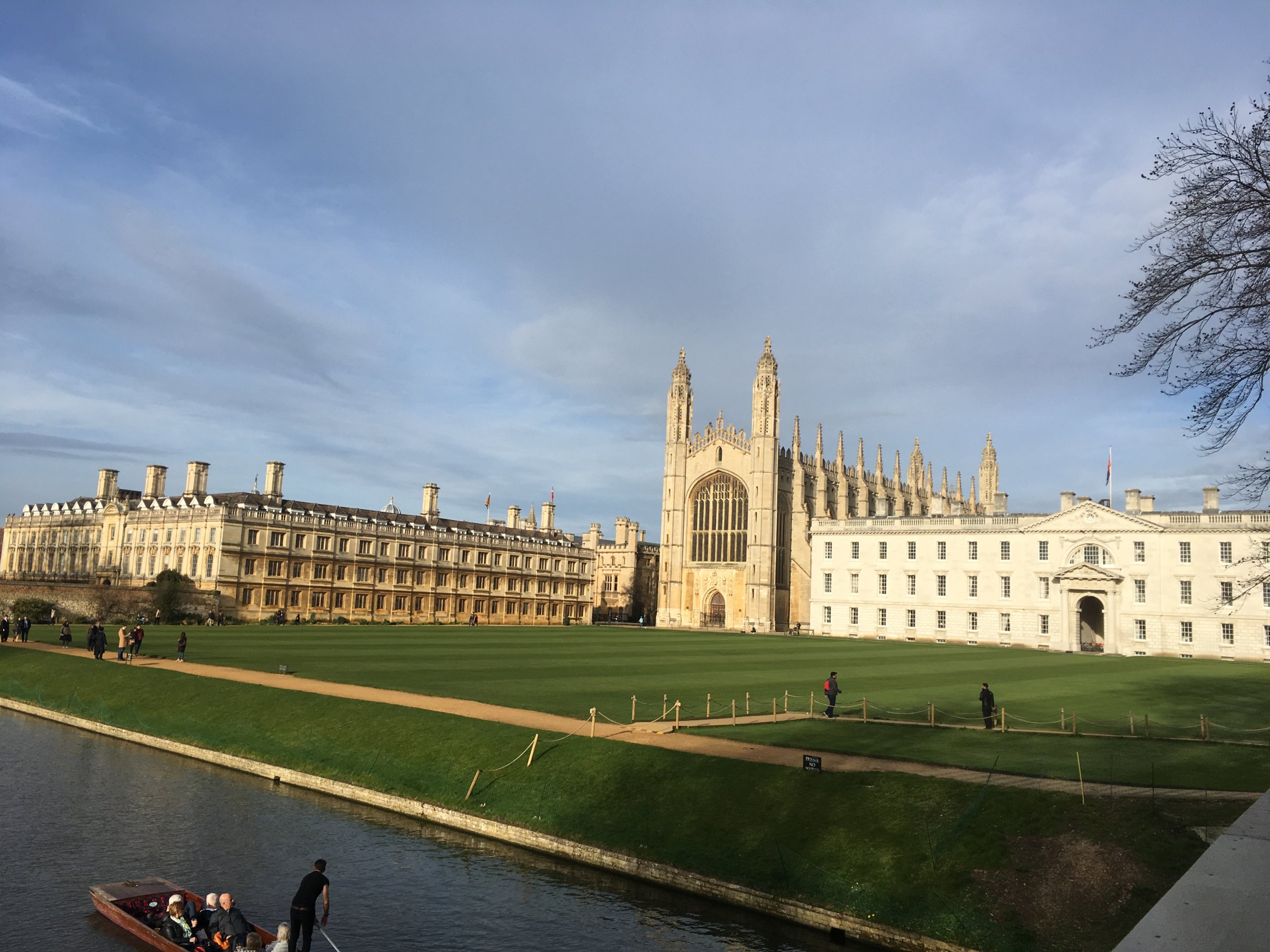
King’s College, Cambridge | Photo by May S. Ruiz / Beacon Media News

I love college towns – they’re typically alive with students either hurrying off to lecture, tutorial, or the library, or leisurely heading out for a cup of tea with friends. Mingling with the young crowd are usually tourists with a map in hand, trying unsuccessfully to find a specific site on the ‘Places to See While in (fill in the blank) Guide.’ Inevitably, they would have to ask one of the students to point them in the right direction.

Fortunately, we had a ‘personal’ guide during our visit to the beautiful city of Cambridge, England in mid-July; we definitely didn’t look like bewildered tourists. My daughter and I spent a week in town to attend her fiancé’s graduation (for his second Master’s degree) and he took us around.

Most Americans have heard of the University of Oxford but are not very familiar with Cambridge. These two universities have had rivalries dating back centuries. And while Oxford benefits from name recognition, Cambridge is considered the most prestigious in the United Kingdom. In the last decade the top three universities in the UK were Cambridge, Oxford (both in England), and St Andrews (in Scotland) until this year, when the League Table ranked St Andrews second to Cambridge and ahead of Oxford.

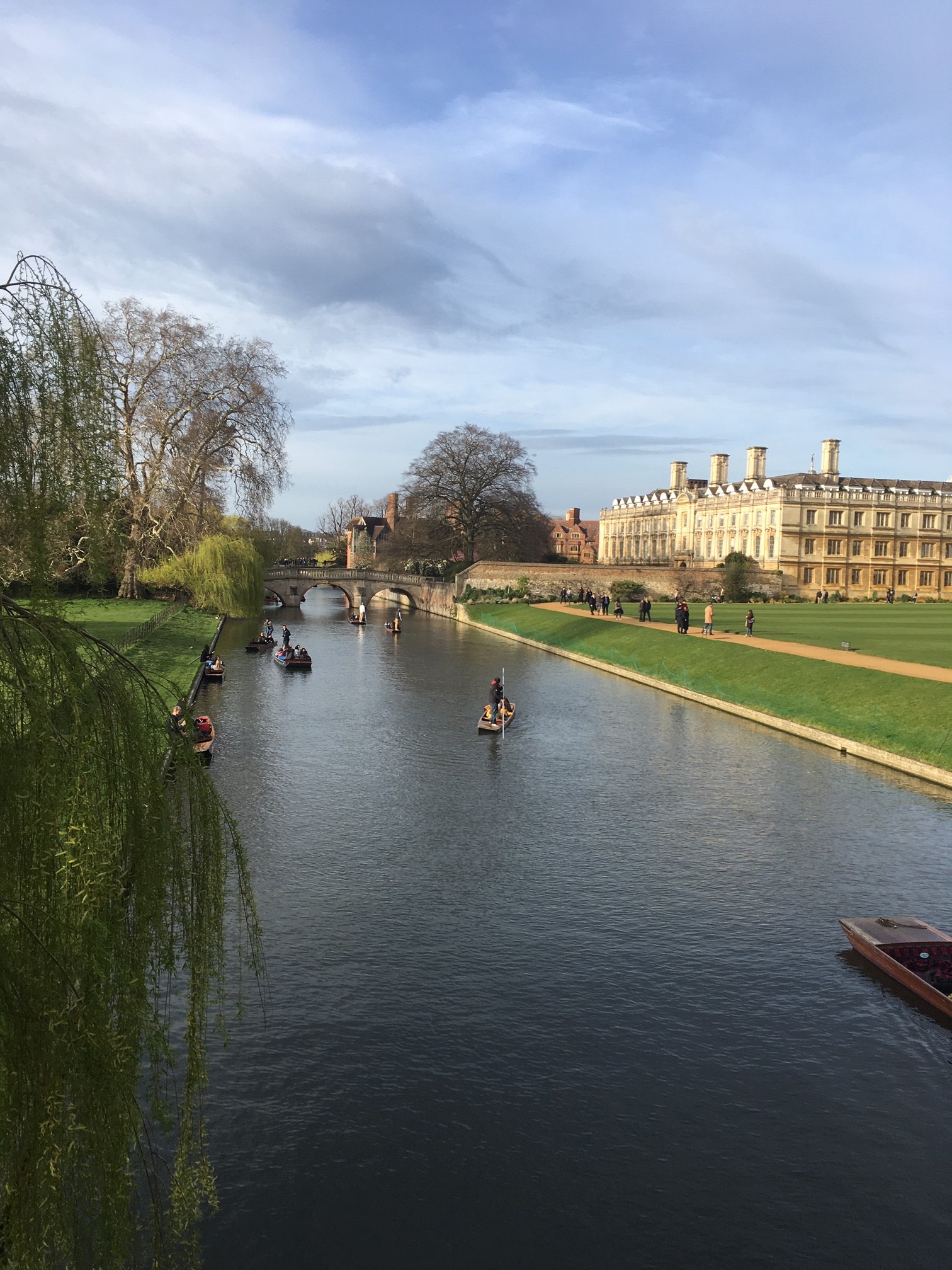
The River Cam | Photo by Brianna Chu / Beacon Media News

A university city and the county town of Cambridgeshire, Cambridge lies on the River Cam, about 50 miles north of London. While it’s better known for its university, there was already a settlement there before the arrival of scholars who were fleeing from the riots in Oxford in 1209 to find refuge. Thus, the university was founded.

The early colleges were established by the church and then by monarchs who wanted to create learning institutions. Surprisingly, for a university that for so long admitted only men, six of the colleges were even begun by women.

Before long, Cambridge became embroiled in religious and political dramas as when Henry VIII dissolved the monasteries and when his daughter Mary Tudor got backlash for her religious retaliations.

It was in Cambridge that English military and political leader Oliver Cromwell found many Royalist adversaries during the Civil War (1642-1651). He sent his henchmen to destroy treasures in the colleges’ chapels, which he called Catholic superstitious symbolisms.

Mixed in with these power struggles were riots instigated by townspeople who were fed up with the inequalities between the privileged colleges and their own poverty. (To this day, there is evidence of disparity as homeless people roam the streets – a jarring contrast against a backdrop of opulent buildings.)

As in all college towns, there is a mutual relationship between ‘Town & Gown.’ Students provide income to the universities and tourists are a source of livelihood for locals. Cambridge has approximately 125,000 permanent residents but it welcomes three million visitors annually who come to experience the amazing beauty, culture, and history it offers.

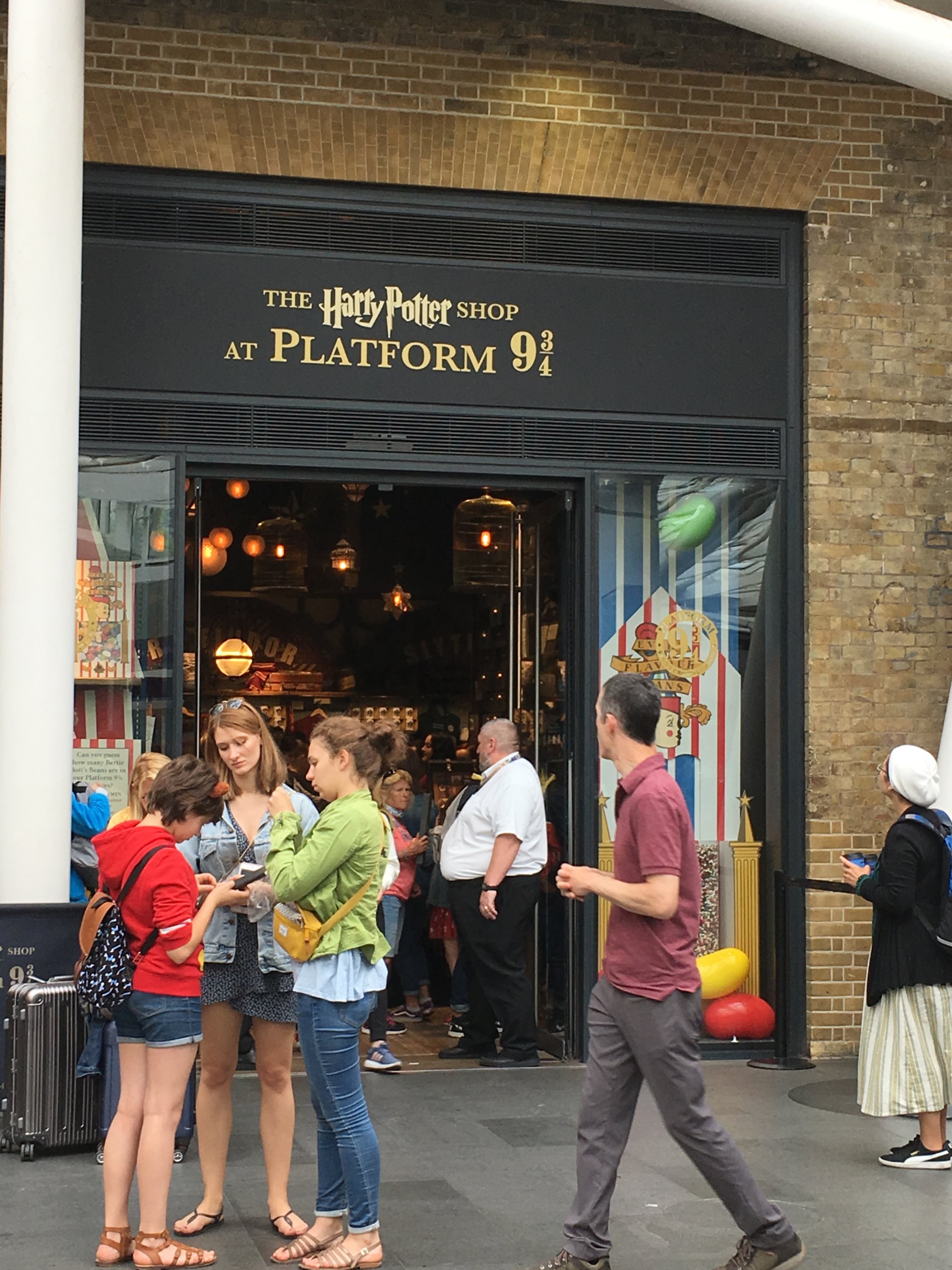
King Cross Station’s Harry Potter Gift Shop | Photo by May S. Ruiz / Beacon Media News

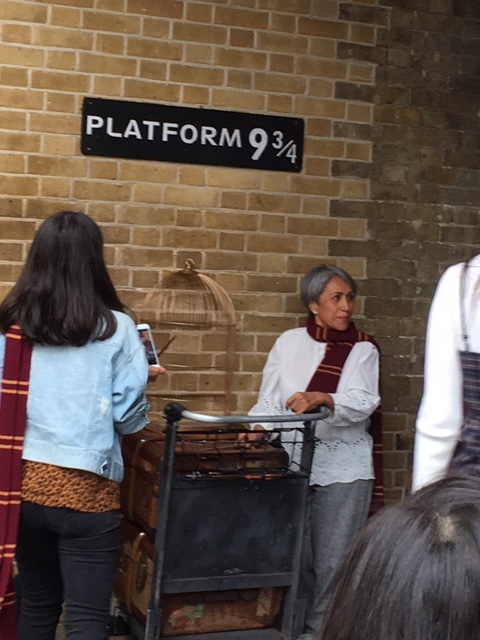
Our weeklong stay began when we arrived at London’s Heathrow Airport, from where we boarded the Heathrow Express to Paddington Station. Another train ride took us to King’s Cross Station. King’s Cross figures prominently in the Harry Potter books and films because it is from the station’s platform 9 ¾ that students take the Hogwarts Express. The Network Rail has taken advantage of this – it is now a tourist attraction. For 30 pounds, Harry Potter fans can have their picture taken as they pretend to push a shopping cart into the wall. Really.

For 30 pounds Harry Potter fans can have their picture taken pushing a cart towards the wall | Photo by May S. Ruiz / Beacon Media News

From King’s Cross we hopped on the GWR (Great Western Railway) for our non-stop journey to Cambridge. We stayed at the Tamburlaine Hotel, which is literally across the street from the train station. I don’t usually comment on the hotel where we stay, lest readers get the impression that this is a paid promotion for it, but will make an exception this time because I’m excited to acquaint you with Tamburlaine.

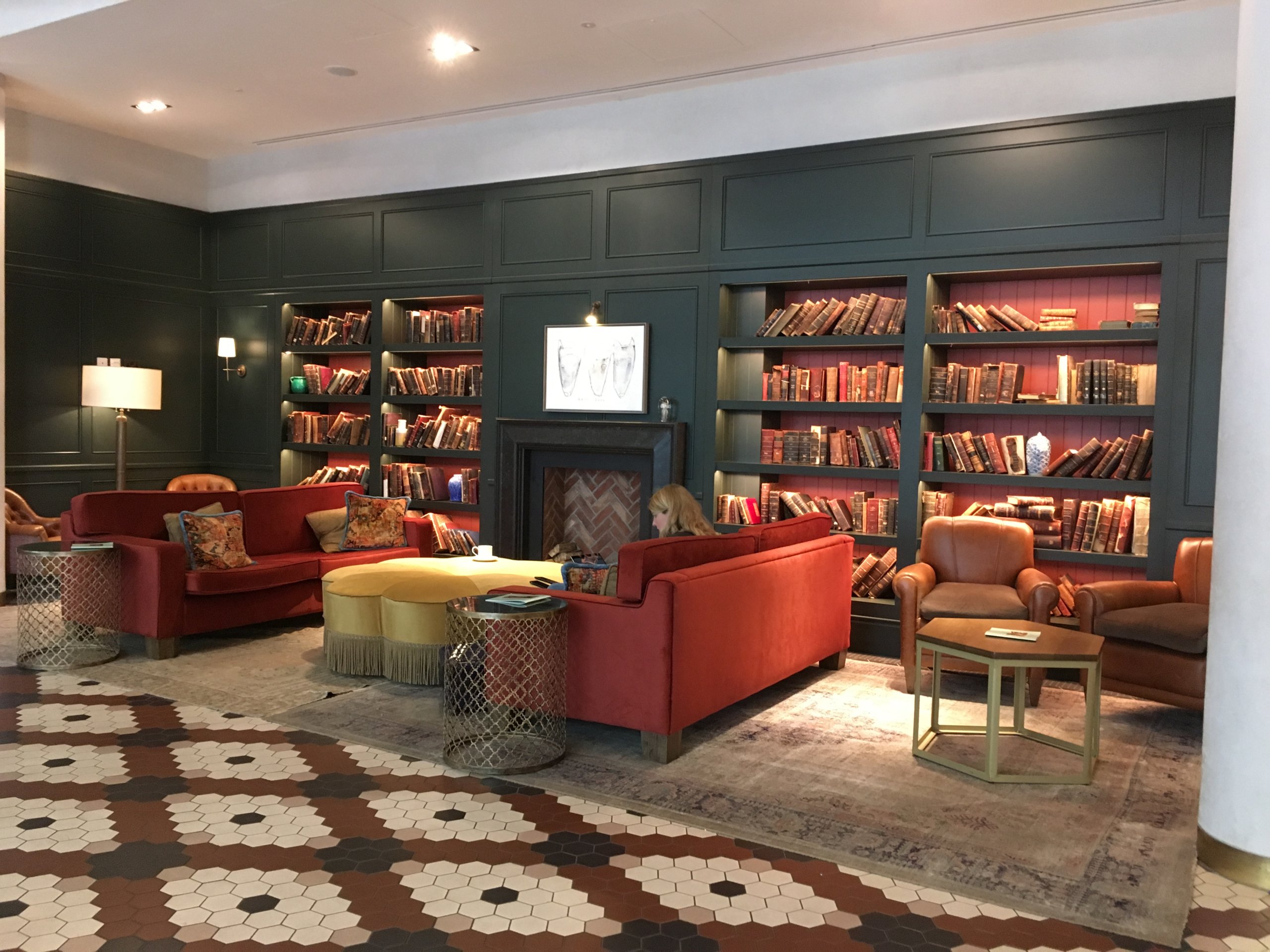
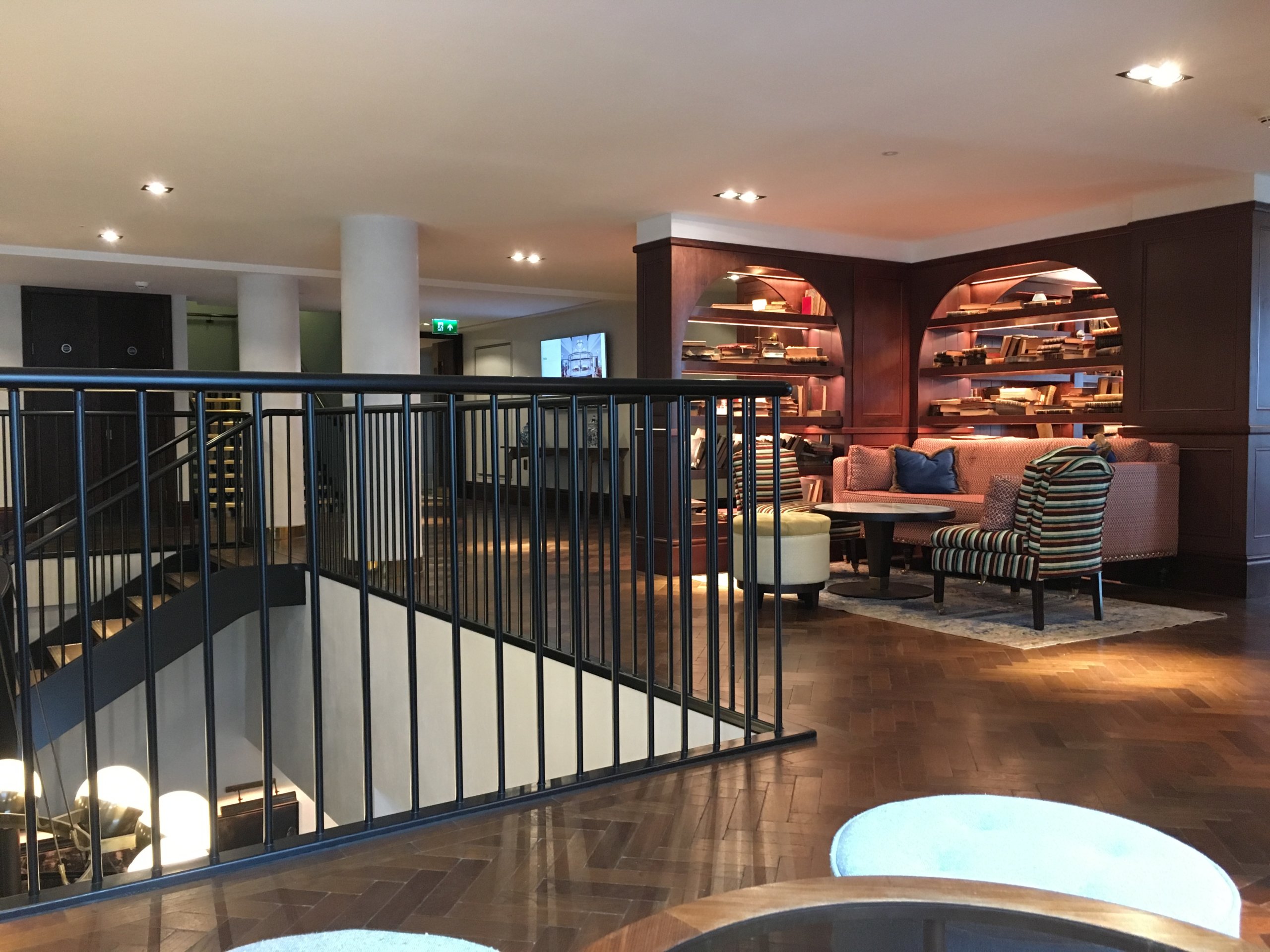
The Tamburlaine hotel lobby | Photo by May S. Ruiz / Beacon Media News

A boutique hotel, the Tamburlaine isn’t huge and impersonal like chain hotels. It looks more like a big, welcoming residence where you’ll want to invite your friends to hang out. Upon entering the lobby on the ground floor, comfortable sofas beckon you to sit by the fire. Shelves stacked with old, leather-bound books complete the warm ambience. This place is just like my own house – there are books everywhere – and I instantly felt at home!

The first floor of Tamburlaine Hotel | Photo by May S. Ruiz / Beacon Media News

The first floor (which is actually the second) is a public space divided into several seating areas. One section has a long table which can be utilized for a conference or a meeting; there’s also a corner alcove where a couple can relax in front of some bookshelves. My favorite spot is an armchair next to the window where I sat to alternately read a book and watch people walking on the street level below.

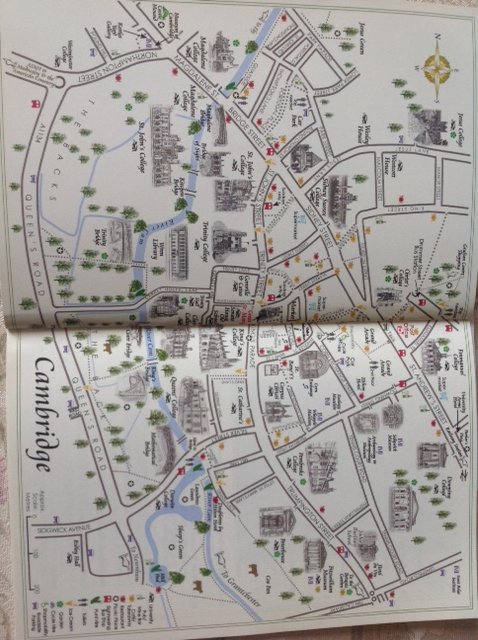
However, I didn’t travel all the way to Cambridge to read a book; I wanted to explore the city. Let me preface this ‘travelogue’ by saying that my two young companions and I had to tailor our sight-seeing around graduation activities that I mentioned earlier. So, if you’ve ever been to Cambridge and are familiar with the town’s lay-out, you might notice that there were times when there was no rhyme or reason to how we went about our adventure.

The city’s lay-out | Photo by May S. Ruiz / Beacon Media News

We arrived in Cambridge at midafternoon and we simply unpacked and took it easy. The town center is two miles away, which is quite a trek for Southern Californians (who are notorious for parking nearest to the building entrance because we’re too lazy to walk). Happily, we were in no hurry, so we simply meandered and observed all the fascinating things amidst us.

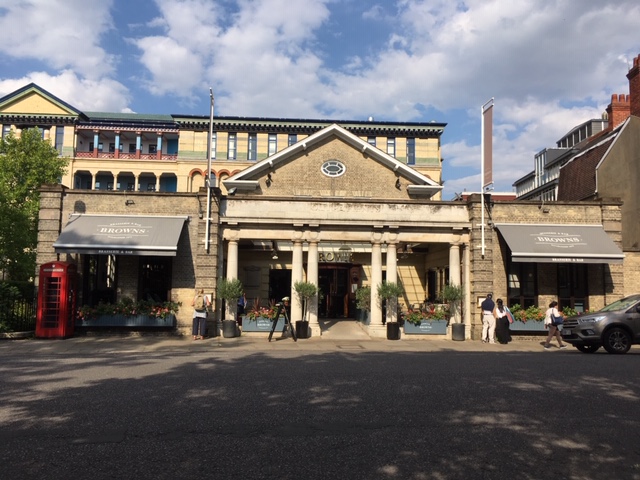
Brown’s Brasserie & Bar | Photo by May S. Ruiz / Beacon Media News

Dinner was at Brown’s Brasserie & Bar, a delightful restaurant which faces the Fitzwilliam Museum on Trumpington Road, the main thoroughfare. It’s quite popular among locals and tourists and could get really crowded but we were smart enough to make reservations. Its extensive menu has several options for every diner’s food requirement, including vegan, vegetarian, and gluten-free fare. I always opt for a prix fixe meal because it gives me a tasting of courses at a great price. I would definitely recommend it, in case you visit Cambridge and dine at Brown’s.

The following day we went to the Fitzwilliam Museum to incorporate my companions’ visit with a friend there. Unlike in the United States where museums charge anywhere from $20 to $25 for admission, in the United Kingdom people get in free.

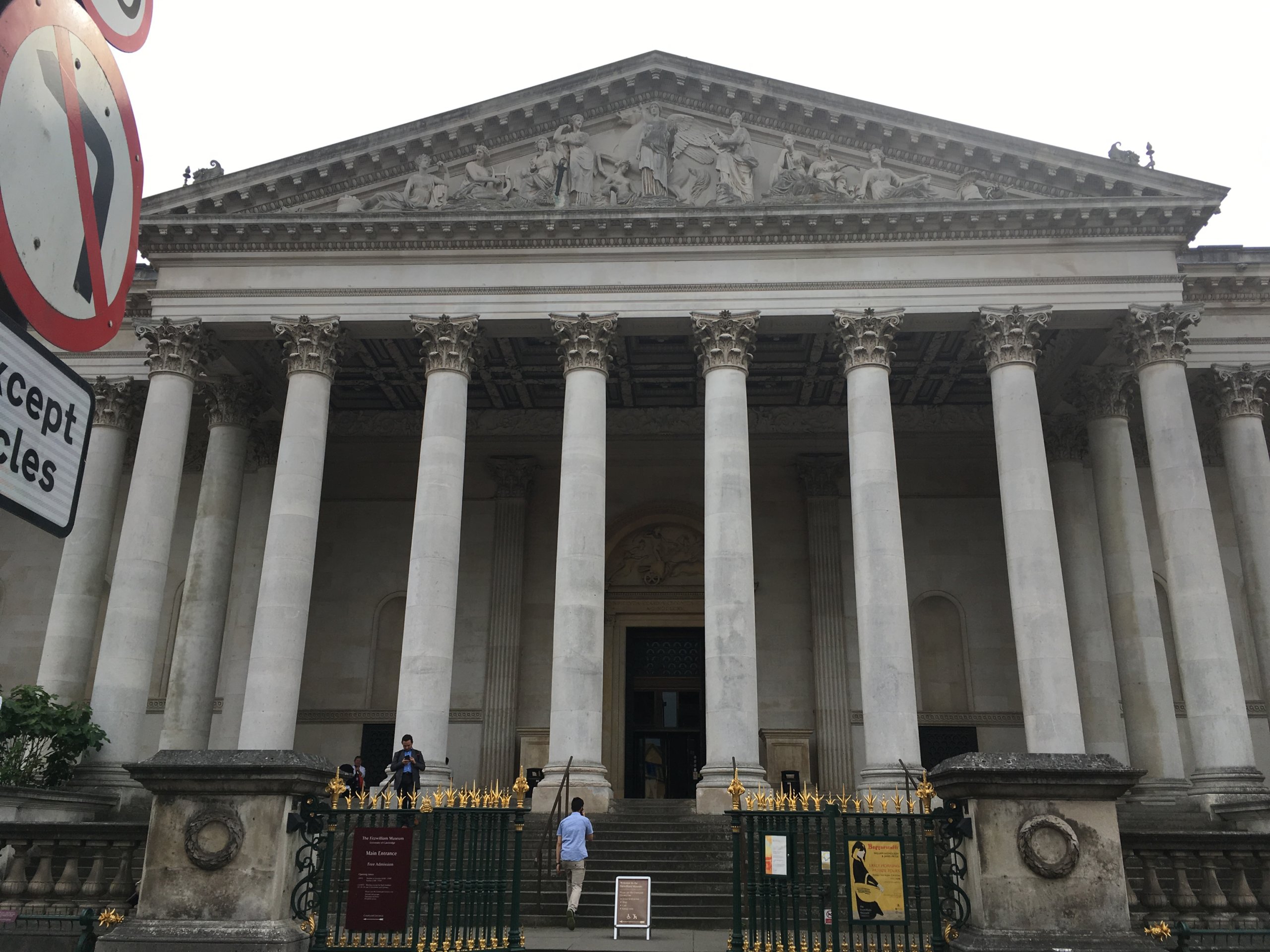
Cambridge’s Fitzwilliam Museum | Photo by May S. Ruiz / Beacon Media News

Here’s a brief history and description. In 1816, Richard, seventh Viscount Fitzwilliam and keen art collector, bequeathed his library and paintings to the University. He also gave 100,000 pounds to build a place to house half a million treasures of national and international significance, covering Egyptian, Roman, and Greek collections.

Coins, ceramics, and textiles are likewise displayed. Medievalists and artillery enthusiasts will find an impressive array of armors and weapons. The museum has a vast collection of ancient and modern manuscripts – John Keats’s ‘Ode to a Nightingale,’ a valuable series of Handel manuscripts, and autographed compositions by Purcell, Bach, and Mozart. My favorite Gallery is the one that holds various paintings ranging from Rembrandt and Rubens, to Picasso and Barbara Hepworth.

Today the Fitzwilliam is hailed as ‘one of the greatest art collections in England and a monument of the first importance.’ I can attest that the claim is not without merit.

A view of King’s College from ‘The Backs’ | Photo by Brianna Chu / Beacon Media News

Being an education writer, I was interested to see at least one college. Cambridge has a total of 31 colleges but, since we were there on a limited time, we chose to tour only King’s College and Chapel. It was established in 1441 by King Henry VI, when he was all of 19 years old. He also founded Eton School and, until 1873, King’s College exclusively accepted Eton students who were automatically granted a degree without having to take the exams. Many notable personalities graduated from here – Britain’s first Prime Minister Robert Walpole and renowned computer scientist and logician Alan Turing, among them.

King’s has inspired many a poet to sing its praises. And for good reason – it is a magnificent structure! But as grand as it is, the young King Henry’s original plans were even grander, which included a giant lake. No one knows who the architect was, but Reginald Ely was the master-mason who oversaw the work on the building. It is arguably the most photographed Cambridge college.

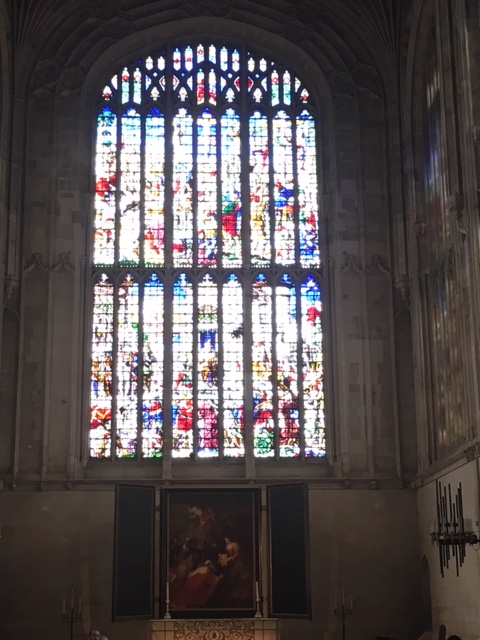
One of numerous stained glass windows in King’s Chapel | Photo by May S. Ruiz / Beacon Media News

Construction on the Chapel began in 1446 when King Henry laid the first stone but he never saw it finished – that would happen 90 years and four kings later. It is hailed as one of the finest examples of late Perpendicular Gothic English architecture.

We didn’t go inside Trinity College but it’s the grandest of all the colleges in Cambridge and if you’re ever there, I hope you get a chance to visit it. It was founded by King Henry VIII in 1546; its chapel was completed by his daughter Mary; and its library was designed, free of charge, by one of the most highly-acclaimed English architects in history, Sir Christopher Wren. It likewise has the lofty reputation of educating 32 Nobel Prize winners and alumni, including Sir Isaac Newton, Alfred Lord Tennyson, and HRH Prince Charles. According to lore, the poet Lord Byron once enraged college authorities by bathing in the fountain in front. There is also a small apple tree on the lawn which is descended from the one whose falling fruit enlightened Newton about the concept of gravity.

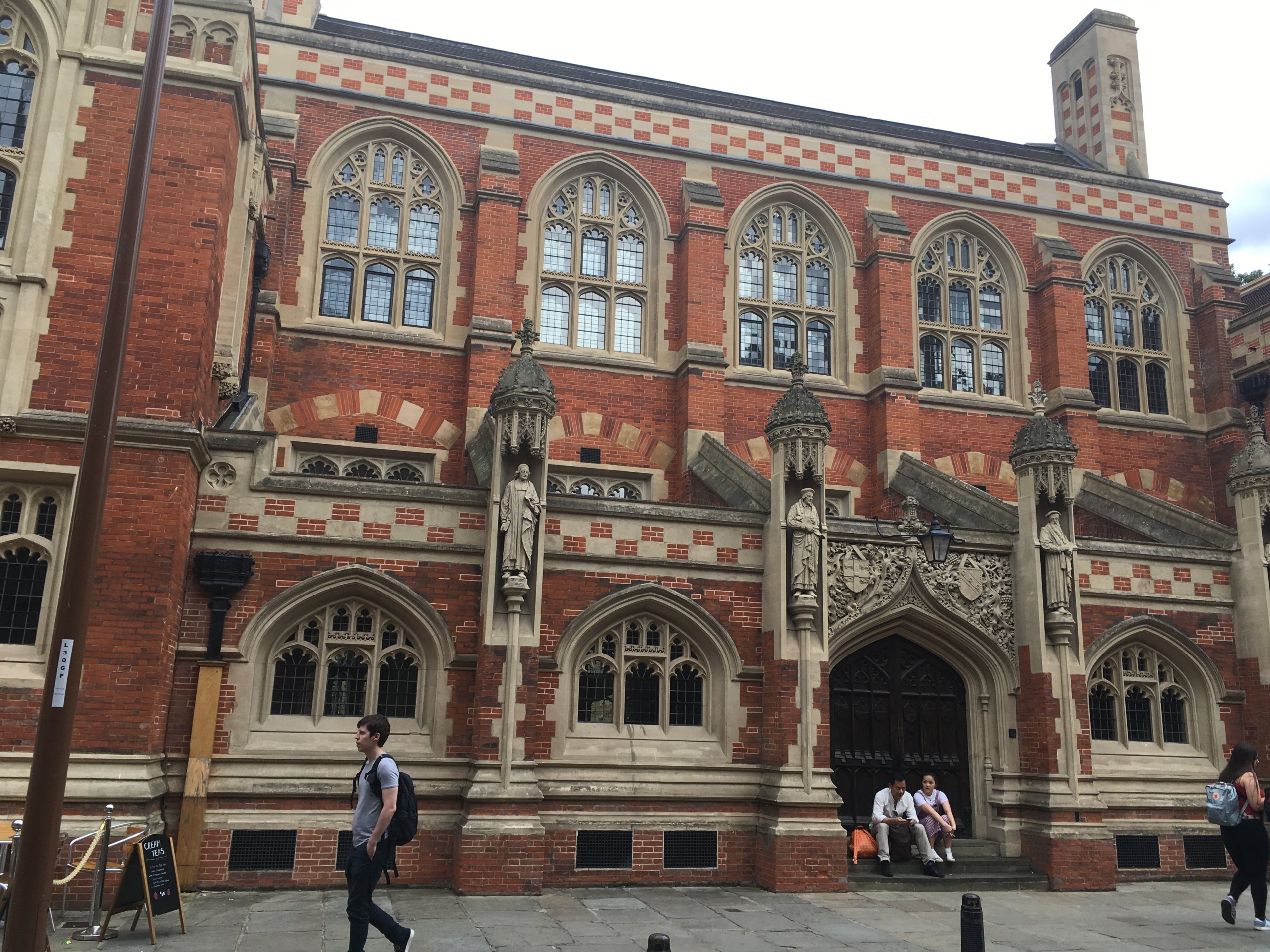
St Catharine’s College | Photo by May S. Ruiz / Beacon Media News

Until his graduation, my daughter’s fiancé was attending St Catharine’s (students refer to it as St Cath’s) and he proudly showed us the college. It was established in 1473 by Robert Wodelark, the third Provost of King’s College. Some of its alumni include John Addenbrooke, who founded Cambridge’s famous hospital, and known film personalities – Sir Ian McKellen, Rebecca Hall, Ben Miller, among others.

While we weren’t able to squeeze in visiting other colleges, we glimpsed several of them as we made our daily walks around town.

Every tourist should see the River Cam, as we did. It has had a major influence on this town for 2,000 years. Cambridge became rich from trading because it was accessible from the sea; small boats used the river as a trade route before the advent of the railway. Today River Cam is the site for recreational activity and the shallow boats which were once used for transporting goods and animals are now utilized for punting.

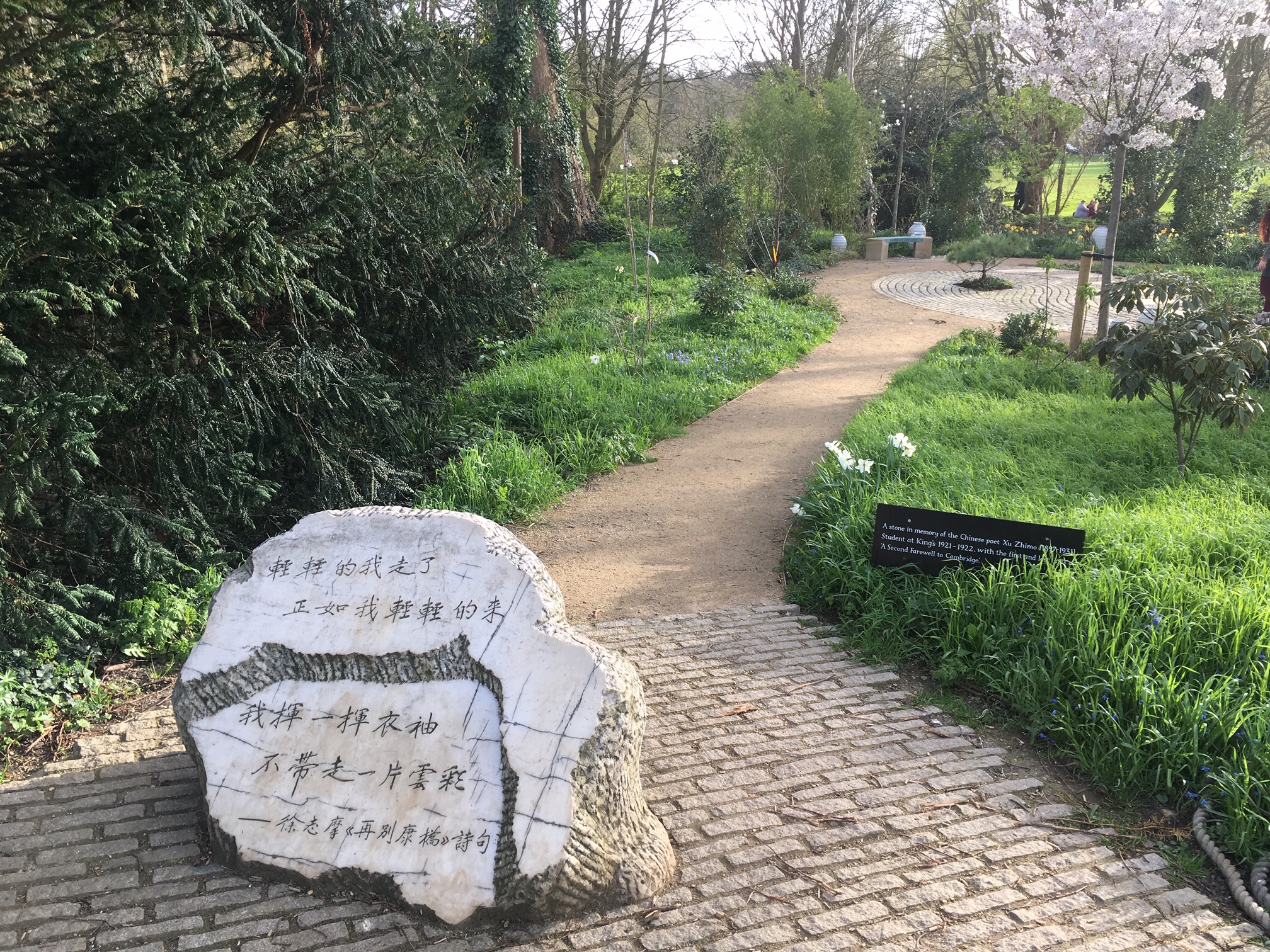
The Xu Zhimo Garden | Photo by Brianna Chu / Beacon Media News

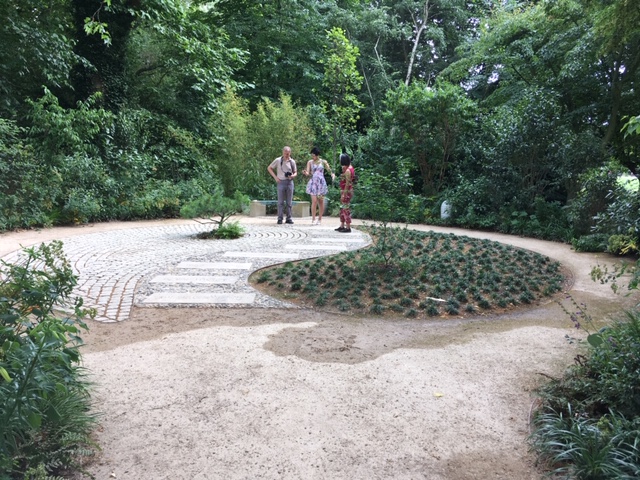
It is said that all Cambridge seniors punt here one last time before they graduate. It’s so memorable that one King’s College alumnus, Xu Zhimo, who later became a renowned Chinese poet, refers to it in a poem he wrote, ‘Taking Leave of Cambridge Again.’  He is immortalized in a small garden near King’s Bridge. In 2018 a stone of white Beijing marble that displays the first and last two lines of his ode was installed. Stone steps, on which the rest of his poem is carved, wind around the garden and end at a ‘yin and yang’ formation.

Here is a portion of his poem translated:

Softly I am leaving,
Just as softly as I came;
I softly wave goodbye
To the clouds in the western sky.

The golden willows by the riverside
Are young brides in the setting sun;
Their glittering reflections on the shimmering river
Keep undulating in my heart.

The green tape grass rooted in the soft mud
Sways leisurely in the water;
I am willing to be such a waterweed
In the gentle flow of the River Cam.

Called the China-UK Friendship Garden, or Xu Zhimo Garden, it is a tranquil space during the summer months when tourists flock to the area. We lingered there to escape the unexpected heat wave.

Lingering at the Xu Zhimo Garden | Photo by May S. Ruiz / Beacon Media News

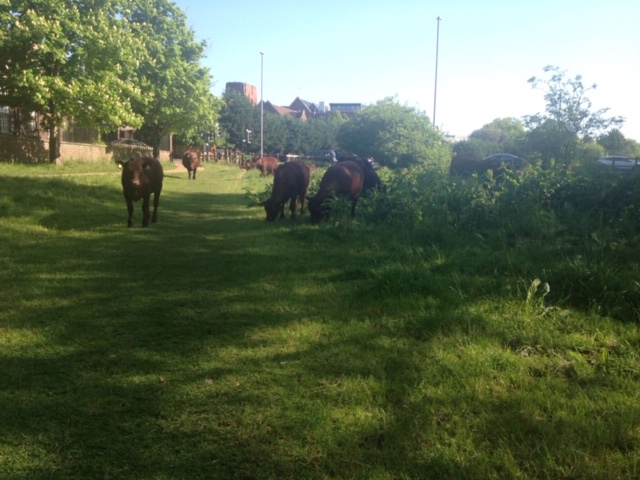
The River Cam is located in the area to the east of Queen’s Road where several colleges back on to it. Aptly called ‘The Backs,’ it is very picturesque that some claim the view is one of the top ten in England. A portion of it is a field where cows leisurely graze and freely roam, a charmingly surprising sight. Sometimes an entire herd will decide to venture on the path, to the consternation of students who get held up on their way to class, as they wait for the cows to disperse.

Cows freely roam at ‘The Backs’ | Photo by Tom Williams / Beacon Media News

You can’t miss the Market on Crescent Street; you’re bound to come upon it as you wander around the city. For over 1,000 years, it has been a source of food and goods for locals, students, and tourists. From one day to the next, the market has an ever-changing coterie of vendors selling a wide array of items – fruits and vegetables, souvenirs that range from fridge magnets to sweatshirts, freshly baked breads and pastries or fresh from-the-oven pizzas. We enjoyed some blueberries and smoothies and perused the interesting things displayed on the stalls; I bought a few tchotchkes to take home.

We weren’t there in the mornings to see the sellers set up shop but we saw them pack up almost every single afternoon (at 5:00) during our week in Cambridge. It was quite amazing to watch them efficiently load their things – stalls and all – into vehicles of every make and model.

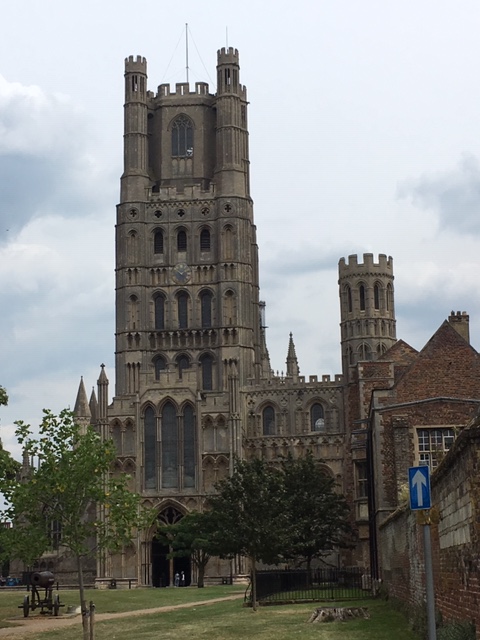
Interspersed between our Cambridge walks was a drive to the cathedral city of Ely, about 14 miles away. A quaint town, it is the 9th least populated city in the United Kingdom. Its most famous attraction is the Ely Cathedral, which predates the town. Built when Ely was a small settlement, the town grew around it.

Ely Cathedral | Photo by May S. Ruiz / Beacon Media News

In fact, one can get to the cathedral by walking past a small town square. Local retailers – from plumbing suppliers to stationers, gardening stores to souvenir shops, pizza parlors to cold creameries – dot the periphery while tables and chairs are neatly arranged in the center. I can imagine townspeople gathering there at the end of their workday or after Sunday service. It’s reminiscent of a time before the tech age, when people weren’t merely texting each other.

The central octagonal tower is the most distinctive and celebrated feature of Ely cathedral. Lady Chapel, a large free-standing edifice, is linked to the north aisle of the chancel by a covered walkway. The West Tower is open for those who like climbing heights; tours are held at intervals and are led by guides who tell the history of the cathedral.

From the South Triforium at Ely Cathedral, one can walk up a spiral staircase and visit the Stained Glass Museum on the second level. It has a collection of stained glass windows of national importance from the 13th century to the present.

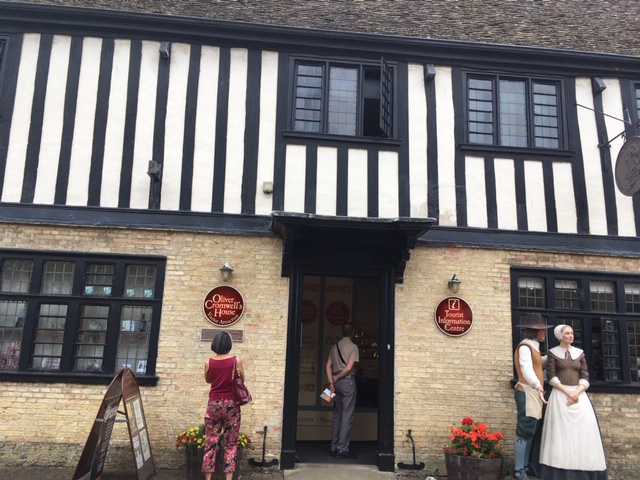
Oliver Cromwell’s house | Photo by May S. Ruiz / Beacon Media News

A short stroll away from Ely Cathedral is the house where Oliver Cromwell and his family lived from 1636-1647. It is a half-timbered building that once served as the vicarage for the nearby St Mary’s Church. It is the only surviving Cromwell residence other than Hampton Court Palace in London. For several years it was a pub aptly called ‘Cromwell’s Arms.’ Today it is a visitor attraction and is the Ely Tourist Information Centre.

Everywhere I go, I end up stopping at a bookstore and Waterstone’s is my favorite one of all. It’s a prettier version of Barnes & Noble and you can find one in all major cities in the U.K. It usually occupies several stories, with each level dedicated to specific book genres. It has nooks, seating areas, and window seats where one can spend several glorious hours of uninterrupted reading.

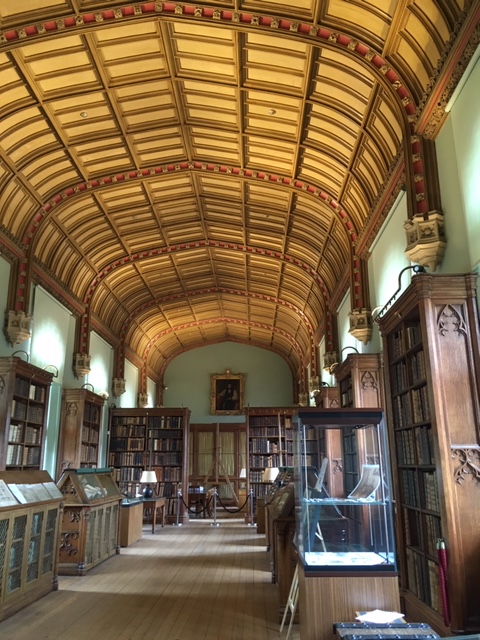
Being bibliophiles, we made an appointment to visit The Parker Library at Corpus Christie College. It is significant in that it is the only library in Cambridge with a single benefactor, Matthew Parker. He was born in 1504 in Norwich to a prosperous weaver (weaving was a major industry in Medieval East Anglia).

The Parker Library | Photo by May S. Ruiz / Beacon Media News

Parker was believed to have attended Corpus Christi in 1520 and was elected Bible clerk of the college in 1521. He graduated in 1525 and was ordained as a priest in 1527. Because of family connections in Norwich, he became chaplain to Queen Anne Boleyn, second wife of King Henry VIII. Among the medieval collections in the library is a volume of autographed letters he assembled and indexed himself, with original specimens of correspondence from prominent  figures of Lutheranism and English Reform – Anne Boleyn, Erasmus, Luther, Melanchthon, Calvin, and others.

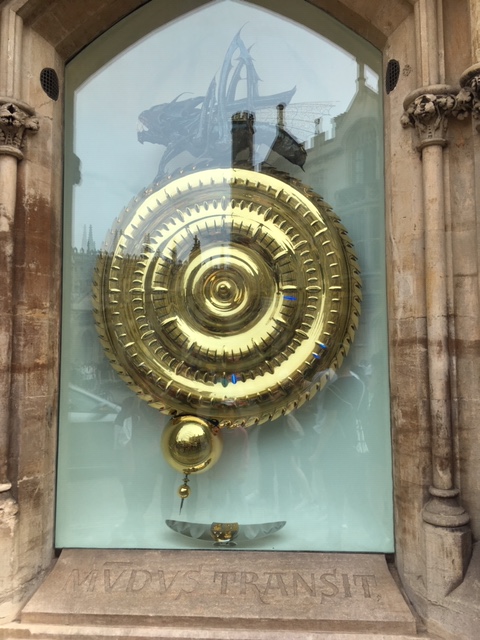
As we left Corpus Christie, we espied several tourists taking pictures of a rather strange sight on the corner of Bene’t Street. A more recent fascination, the Corpus Clock never fails to attract a large crowd since its installation in 2008. Conceived and funded by John C. Taylor, it took design engineer Stuart Huxley and a team of 250 people five years to create. It was unveiled by physicist Stephen Hawking.

While it looks futuristic, the Corpus Clock honors the skills of 17th and 18th century clockmakers, as well as six new patented inventions. No computers are involved; the only electricity used is to wind the mechanism and light the LEDs that display the time in hours, minutes, and seconds. Taylor wanted to show how a clock works by turning the mechanism inside out, to reveal the largest ‘grasshopper escapement’ in the world.

The Corpus Clock on Bene’t Street | Photo by May S. Ruiz / Beacon Media News

The sinister grasshopper-like creature on top of the Corpus Clock is a ‘Chronophage’ (time-eater) sculpted by Matthew Sanderson. Every 15 minutes it raises its tail threateningly, before finally stinging each hour to death, to the sound of a chain rattling into a wooden coffin. It has an unnerving, irregular movement – sometimes the pendulum will pause and the LEDs flash, slowly at first, then chase as if to catch up. It’s all quite brilliantly deceiving because the clock, in fact, reads accurately every five minutes.

From Bene’t Road, we crossed King’s Parade and went to Ryder and Amies. One of the best known university outfitting companies, it has been serving the university for over 120 years under the management of one family. It is an integral part of university life – providing students with neckties, hoodies, pins, among other things. The windows display a striking array of college colors and clothing. It’s also a place to get all kinds of mementos and I left the shop with a bagful of souvenirs and an empty wallet. Sigh.

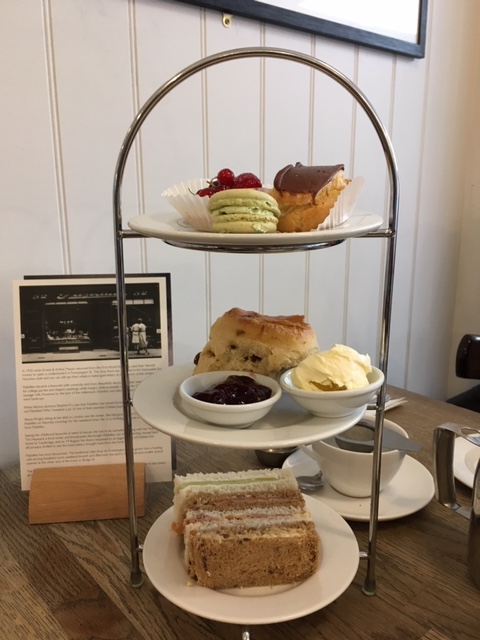
Afternoon tea at Fitzbillies is an English indulgence in its finest form | Photo by May S. Ruiz / Beacon Media News

We were told that we should never leave Cambridge without going to Fitzbillies on Trumpington Street. This fabulous cake shop and restaurant has been making the city a happier place since 1922. A cup of tea and some sweets sounded like a wonderful idea after a day of sightseeing and shopping. And true to what has been advertised, our tea experience at Fitzbillies was an English indulgence in its finest form.

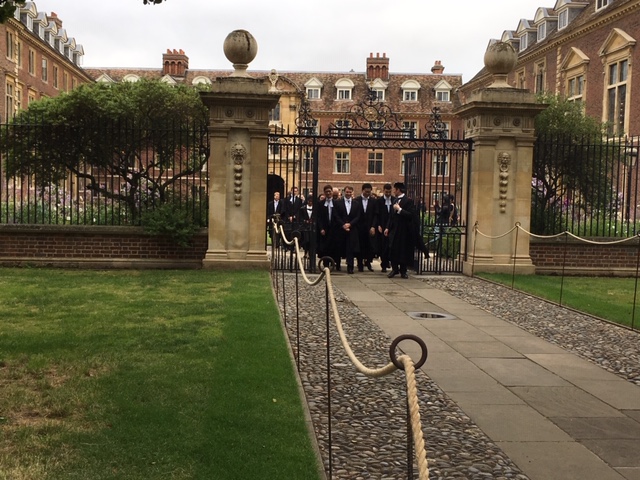
Students emerge from St Catharine’s, process along King’s Parade, enter the Senate House, and leave from its side door into the Passage as graduates | Photo by May S. Ruiz / Beacon Media News

Graduations are held at the Senate House on King’s Parade. Successful students process along King’s Parade from their college, enter the imposing building, and leave from its side door into Senate House Passage as graduates. My daughter’s fiancé graduated at Senate House on the 19th of July. It was indeed quite moving to watch him and his classmates as they emerged St Catharine’s and went through this time-honored ritual.

The Church of the Holy Sepulchre on Trinity Street | Photo by May S. Ruiz / Beacon Media News

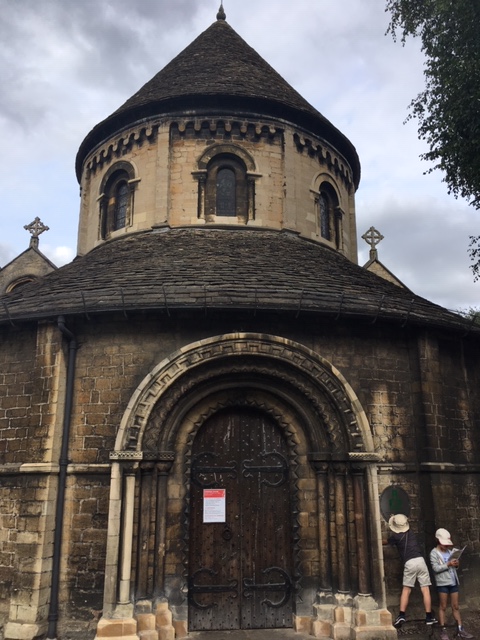
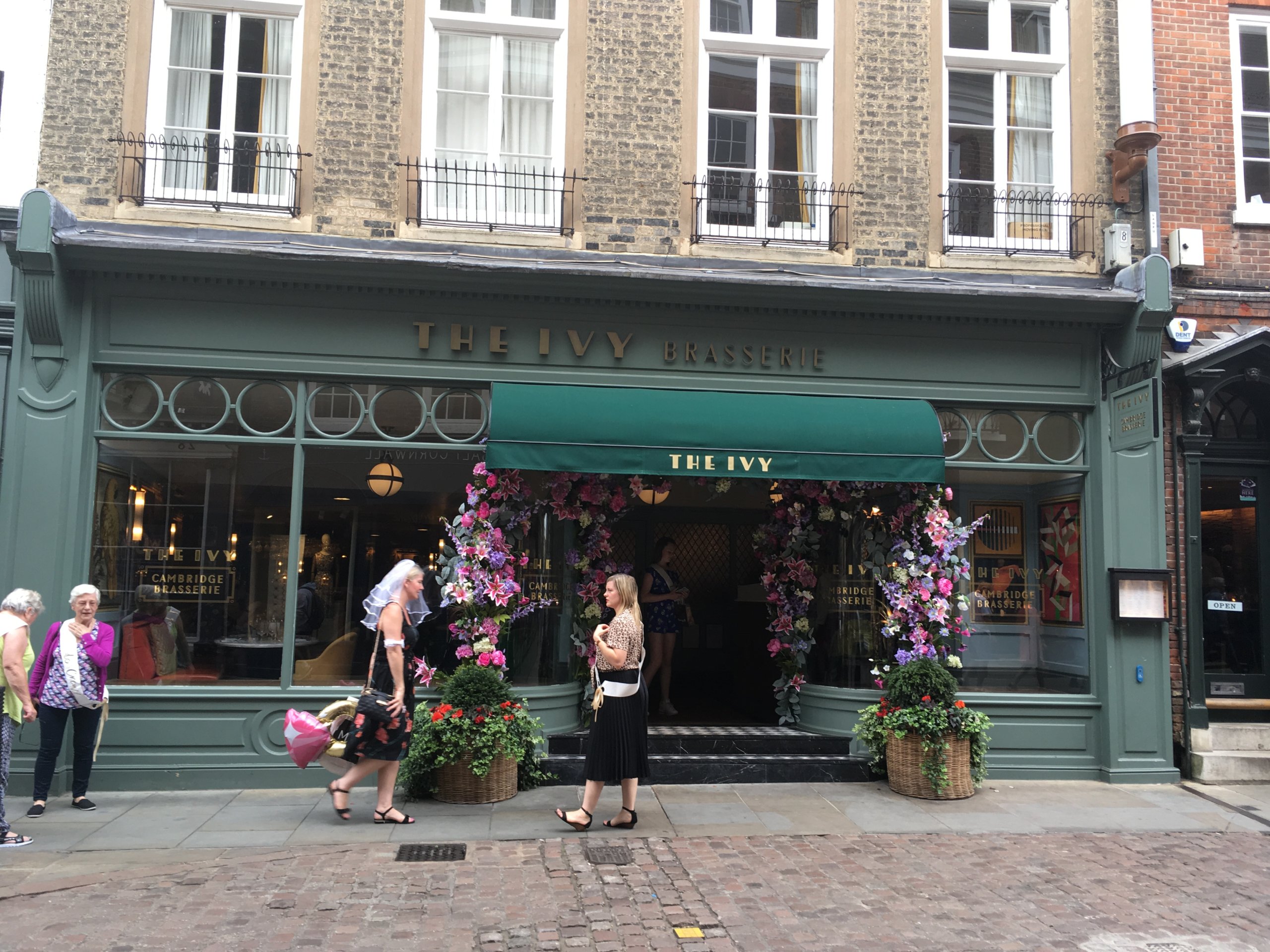
To celebrate his graduation, we decided to have dinner at The Ivy on Trinity Street. We took a meandering route from our hotel and, walking along Round Church Street, chanced upon the Church of the Holy Sepulchre. Also called The Round Church (I don’t know if it was named that because of the street or vice-versa), it is the second oldest building in Cambridge and one of only four round churches in England. The shape emulates its counterpart in Jerusalem. While it has changed much over the years – before the 1800s its tower was polygonal; the shape of its windows has been modified; and, during World War II, the east window was destroyed by a bomb – but the original ring of arches, decorated by curious stone faces, remains.

The Ivy Brasserie on Trinity Street | Photo by May S. Ruiz / Beacon Media News

A sumptuous dinner at the fabulous Ivy was the perfect cap to an extraordinary week in this beautiful city. While Cambridge is home to the best university in the United Kingdom and is a popular tourist attraction, it has retained all the charms and atmosphere of a small town. That magnificent, soaring structures abound only adds to its uniqueness, making for one unforgettable experience.

Bone Kettle’s Delicious Offerings Continue to Captivate Diners

Originally published on 17 January 2019 in the Pasadena Independent, Arcadia Weekly, and Monrovia Weekly

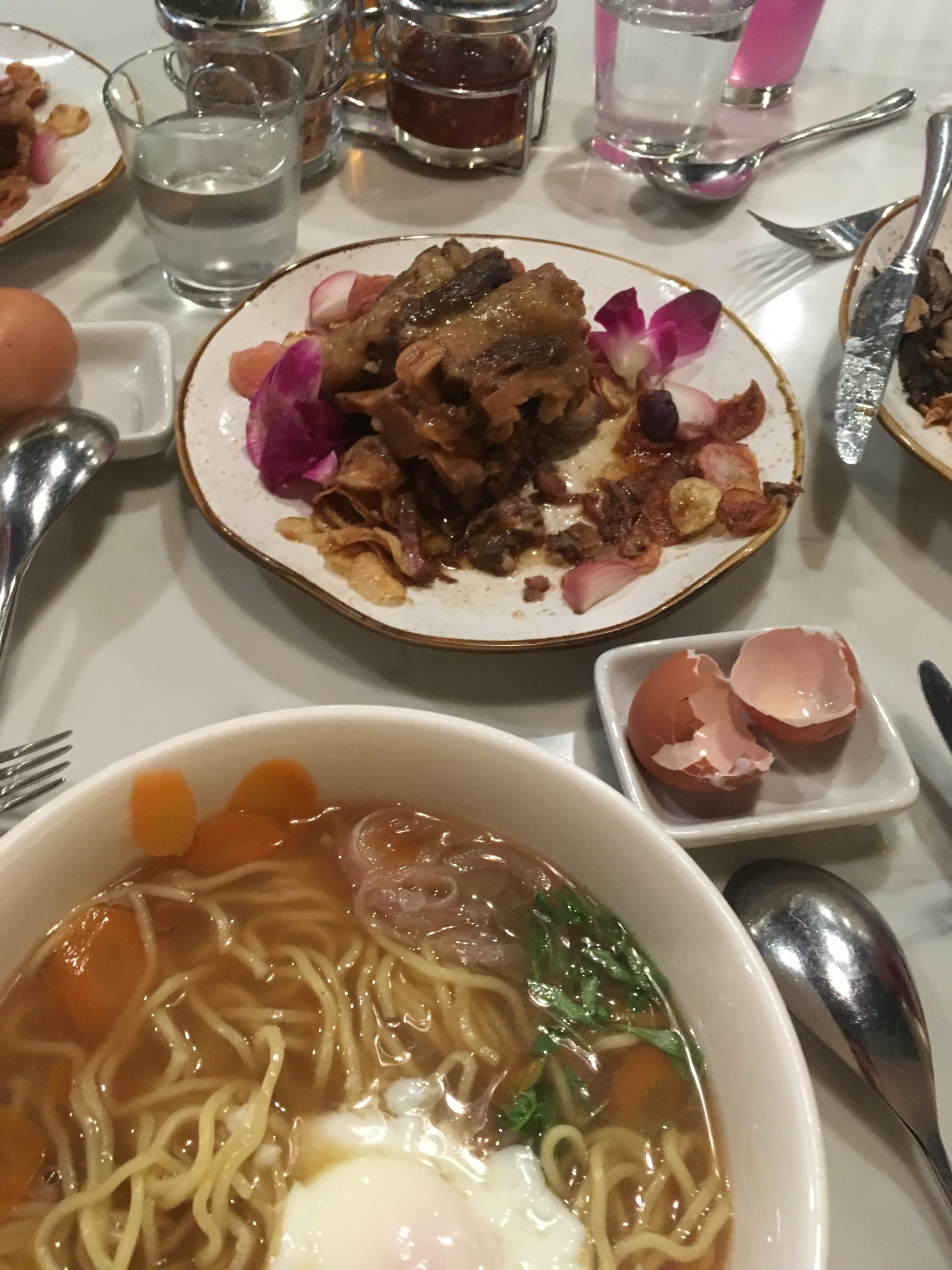
Bone Kettle’s St Helen’s braised oxtail with ramen noodles is the perfect comfort food | Photo by Brianna Chu

By Brianna Chu

Last year, May and I were invited to a PR mixer at the Bone Kettle, a Southeast Asian restaurant and bar in Old Pasadena, and the food was, as hoped for, simply amazing. I loved it so much that I revisited the restaurant last week with my family for lunch to try their full menu on for size. Sure, the food at the mixer was good, but they knew they were throwing an event for the Press. How good was their food normally? And what hadn’t I tried yet?

At their opening time of 11:30 am, there were available tables everywhere in the young, modern space, and we easily got a great booth in the main dining area. Over the next hour, though, tables began to fill up rather quickly for a random weekday. Service was fast, too – our main courses were served almost immediately after we finished devouring our appetizer, and their staff were friendly and helpful.

An important note to future diners: the lunch and dinner menus vary slightly. The succulent oxtail dumplings that I was looking forward to were reserved as an appetizer for the dinner menu. Luckily, however, the amazingly juicy and yet perfectly crunchy fried chicken wings with Thai chilis, sweet sauce, and lime did appear on the lunch menu – and tasted just as wonderful as they had previously. I spotted some familiar appetizers like the fluffy kroket, spicy papaya salad, and fried oxtail tips, which we sadly did not sample again since we all wanted to save enough room for the main dishes.

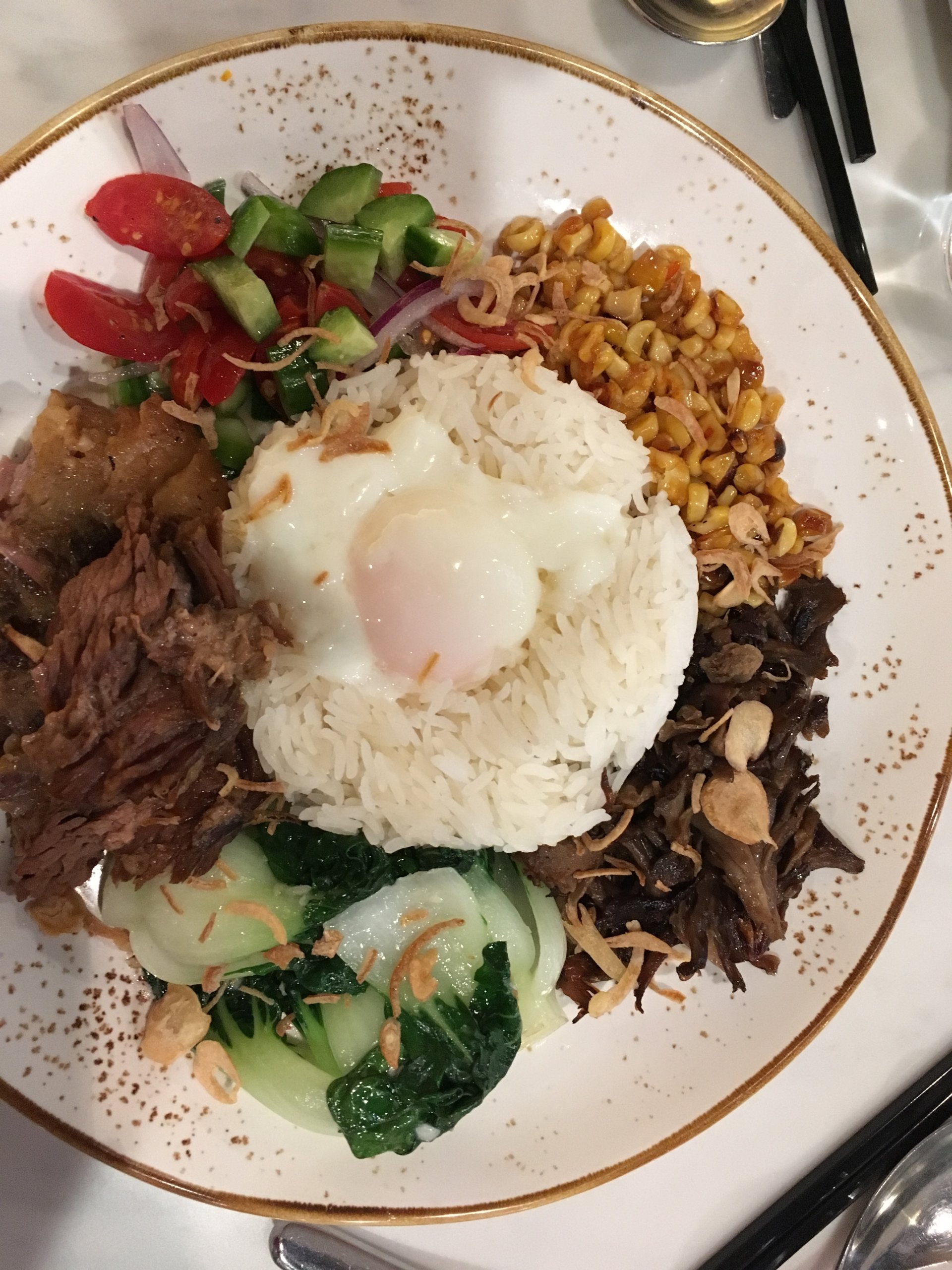
May opted for a rice plate with their fatty beef brisket – it was reportedly excellent, and presented beautifully. Vibrant vegetables and delicious meat haloed a rice plateau that featured a soft poached egg nestled at its center. It was a balanced, delicious plate for about $19-20, though prices vary on your protein choice, from tempeh to varying meats.

The fatty beef brisket rice plate is as delicious as it looks | Photo by Brianna Chu

My fiancé and I both immediately gravitated towards their broth options, though. The restaurant is called the Bone Kettle, after all! We both knew that we had to try their 24 hour, slow-cooked, St Helen’s braised oxtail, served with five ounces of fresh ramen, basil, cilantro, and sliced heirloom carrots, with the addition of a cheeky poached egg (for an extra $2, but I love eggs in my soup). At $24 for the large oxtail, noodles, and broth, I felt the meal was worth the price, especially given that the oxtail was the most expensive protein option for the broth.

As ever, the Bone Kettle’s presentation was impeccable. The oxtail was served on its own plate with crispy fried shallots and edible flowers, and the flavorful, succulent meat could be readily pulled off the bone with our chopsticks. May immediately tried some of my oxtail, and after her first bite, reached for another with the excited declaration that: “This is SO good!”

The bowls of noodles initially arrived broth-less, and a server came swiftly out with a pitcher of broth. Our soft poached eggs came still in their shells on a soy sauce dish for us to break open and serve into our broth when we pleased. I can happily confirm that I was as captivated by their broth this time around as I was the first! I left comfortably full, and even took home some leftover oxtail.

I wanted to check out the restaurant on my own time (and dime) to see whether I would enjoy the food and atmosphere just as much, and the Bone Kettle did not disappoint. I highly recommend the restaurant to everyone, as there are options for meat-eaters and vegans alike.

Brianna Chu, a guest opinion writer for Beacon Media, was born and raised in Pasadena. She loves to cook and to eat, is a lifelong viewer of Food Network, and enthusiastically introduced the tradition of Thanksgiving dinners to her British and European friends while earning her degree at the University of St Andrews.

The Pasadena Heritage Protects the City’s Significant Landmarks

Originally published on 28 December 2018 in the Pasadena Independent, Arcadia Weekly, and Monrovia Weekly

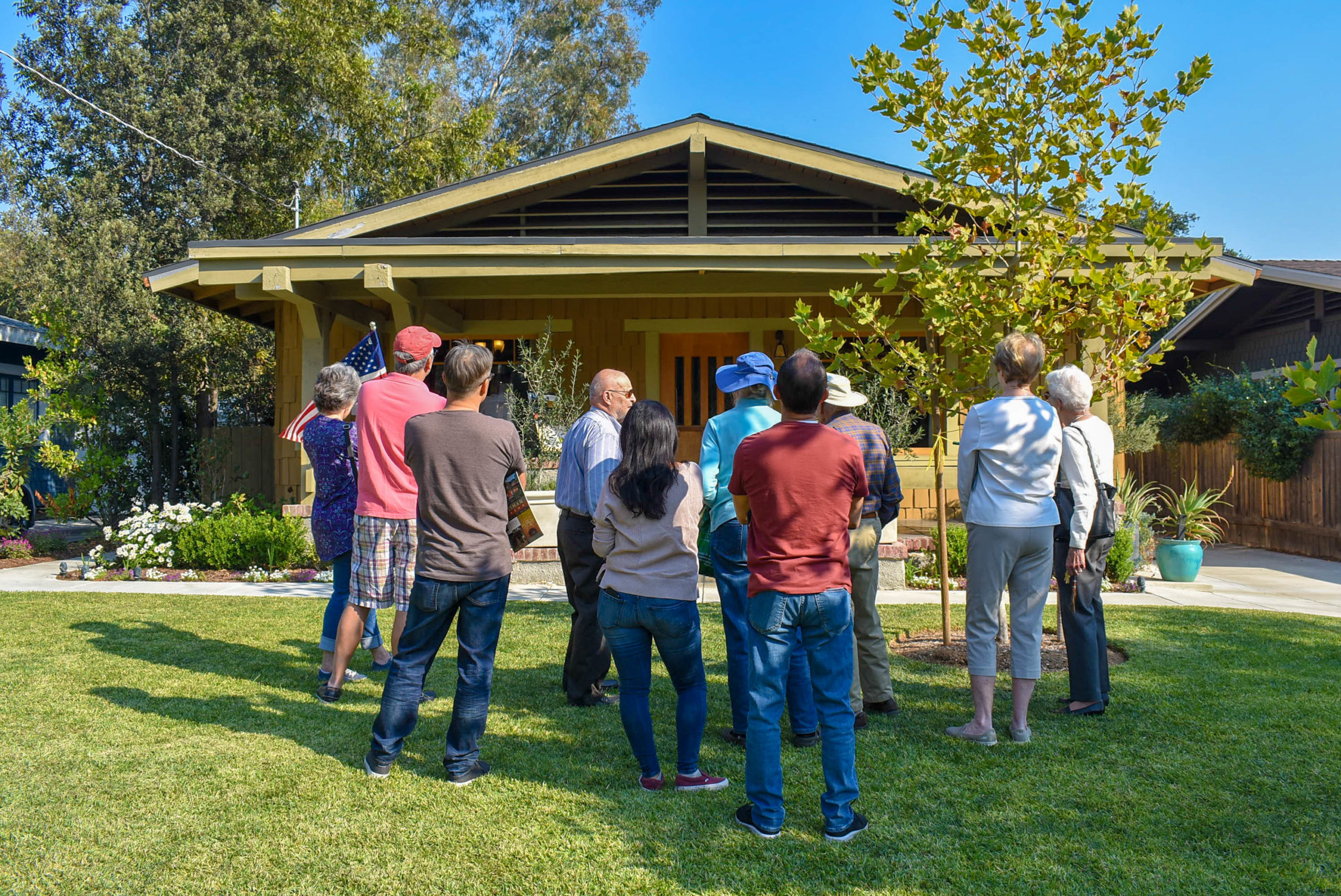
2018 Craftsman Weekend Asian Influence Tour | Courtesy photo / Pasadena Heritage

Old Pasadena is a bustling place that has become a dining, shopping, and entertainment  destination for people of all ages. There was a time, however, when this corner of the city was a rundown area and no one had reason to wander into it. And were it not for the Pasadena Heritage, the city’s original downtown and its historic buildings would have disappeared altogether.

Patty Judy, Pasadena Heritage’s Education Director, describes, “In 1977 concerned citizens from various walks of life were seeing some of the historic structures in the city being demolished or  being threatened for demolition to make room for generic properties and large corporate buildings. The plan to bulldoze Old Pasadena, including structures there like the Parsons headquarters, was of particular interest to them. Additionally, they noticed that neighborhoods were endangered – craftsman houses were being torn down, new development were sprouting, and the climate of the area was changing.

“It should be noted that this was also the time when the National Historic Preservation Association and California Preservation Foundation were being established. So there was a movement already going on throughout the country which sort of filtered its way here.

“Bill Ellinger, who was an architectural historian working oversees and came back and saw what was happening, and Claire Bogaard, whose husband Bill would later become Pasadena’s mayor, were two of those who actively advocated for an organization to preserve the city’s architectural treasures. As I heard it, someone said ‘Anyone who wants to join us can come to Claire’s house and they will be the first board.’ They adjourned to the dining room and that was their first board meeting. Thus, Pasadena Heritage was born.

Historic architect William W. Ellinger III Old House lecture | Courtesy photo / Pasadena Heritage

“They raised money by having tours of neighborhoods like Prospect Park and Old Pasadena – they did a little bit of advertising, set a table on the street, and people just walked up. They didn’t presell tours as we do now. For the Colorado Street Bridge, it started as a bridge party to raise funds; today it’s a celebration party.”

Many of us aren’t aware of Pasadena Heritage’s existence at all, which is regrettable because its impact on our surroundings is sweeping. As Judy elaborates, “People don’t understand why Pasadena looks the way it does and how much that has to do with our influence. I think it might be a shock for people to know how many meetings we go to with the City or how many times we meet with developers and how much sway we have.

“On the other hand, some people think we can do more than we actually can. We hear people ask why we allow developers to construct new condominiums or apartments in a particular location. They don’t understand that zoning laws allow such construction and we can’t legally bar them from building.”

Indeed, the organization’s breadth of involvement in Pasadena’s environs is too staggering for a single article to encompass. But several of its noteworthy accomplishments are highlighted here.

Pasadena Heritage’s first National Register of Historic Places Nomination in 1978 was for the Civic Center; including City Hall, the Central Library, the Civic Auditorium, the former YMCA and YWCA, and other historic buildings in the 1925 Bennett Plan that envisioned Pasadena as ‘The Athens of the West.’

The following year the organization saved its first endangered house – the Parsons House, designed by Alfred and Arthur Heineman – which was moved to Altadena and restored. In 1982 it spearheaded Pasadena’s adoption of the Landmark District Ordinance. Neighborhoods can apply for special status and design guidelines to protect their history and character. This local landmark designation is the best way structures can be ensured of protection from being destroyed.

It lobbied to save the Main Post Office on Colorado Blvd. in 1983 when the Lincoln Avenue postal facility was proposed. In 1984 one of Pasadena’s oldest bungalow courts, Gartz Court, was set to be demolished and Pasadena Heritage stepped in. It partnered with the City and moved the six-unit construction to a new location. The charming Myron Hunt-designed building was restored and updated and sold as affordable housing.

“In 1985 we adopted a Greene & Greene Initiative when an out-of-state buyer stripped the Robert R. Blacker House of its custom light fixtures,” states Judy. “We had to get an emergency ordinance that resulted in strengthening the city’s zoning with added protections for Greene & Greene structures. A higher level of designation – the Historic Treasure (now Historic Monument) – was also created to protect interior features.”

The Huntington Hotel is now the Langham Pasadena | Courtesy photo / Pasadena Heritage

As much as Pasadena Heritage would like to preserve all historic structures, the interest of the building’s owners could prevail. One such occurrence took place in 1986 when the demolition of Huntington Hotel on South Oak Knoll Avenue, which dates back to 1906, was being discussed. Pasadena Heritage nominated it to the National Register of Historic Places. While the hotel was eligible, it was not officially listed because the owners objected. A local referendum narrowly approved a new hotel and the historic tower was demolished in 1988.
However, Pasadena Heritage enjoyed numerous other victories. Judy recounts, “In 1993 the Castle Green Exterior Restoration and Historic Structure Report, funded by a $693,000 grant to Pasadena Heritage from the State Office of Historic Preservation, was completed and won a California Preservation award. The Report is still used to guide restoration of the former hotel, which has been converted as privately owned condominiums, and our easement protects the building.

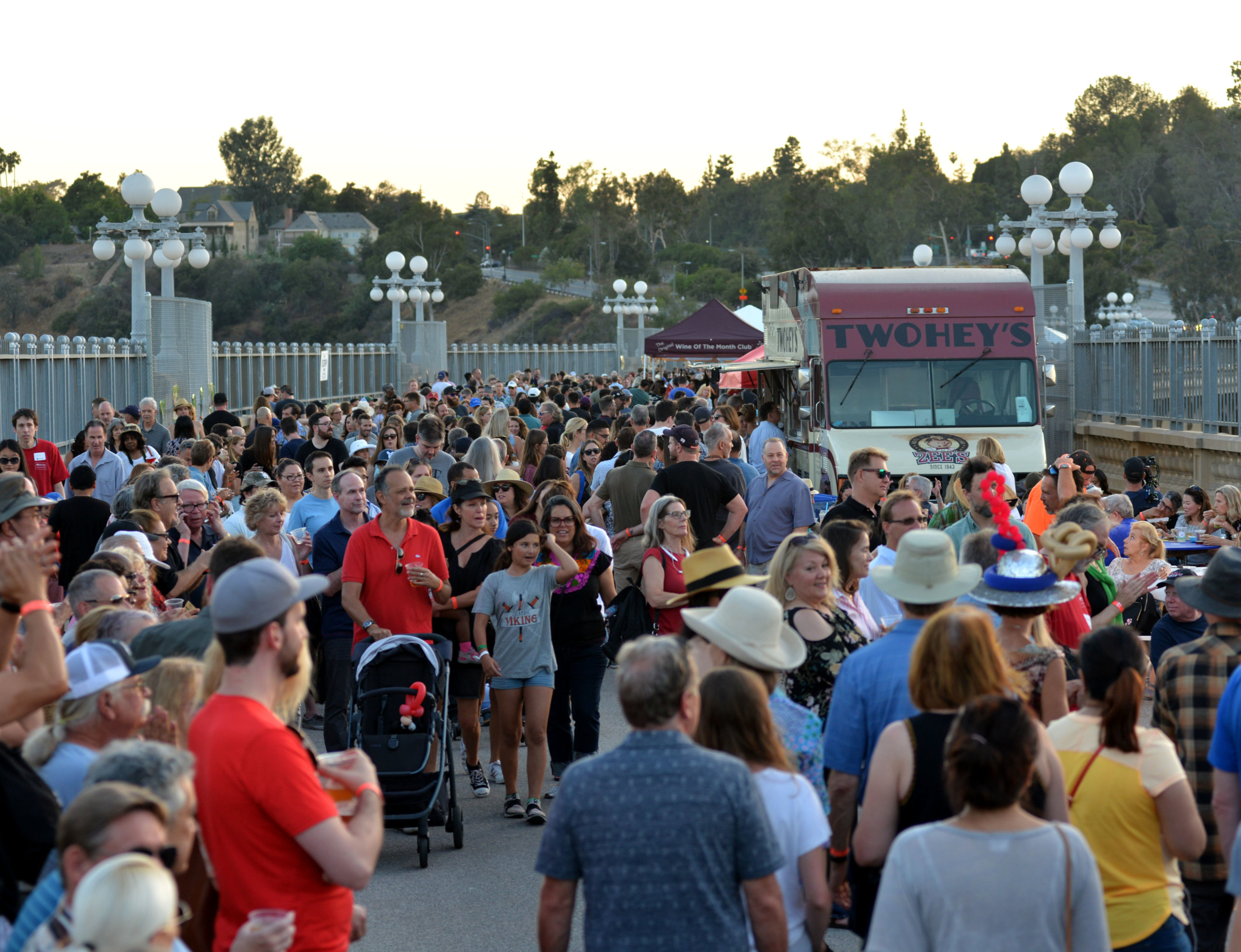
“In December of that year, the Colorado Street Bridge officially reopened after a three-year project to seismically upgrade, repair, and restore it. In July 1994, Pasadena Heritage’s famous party on the bridge returned after a four-year hiatus, and record crowds turned out to celebrate.”

The organization was the recipient of a plaudit in 1995 when Old Pasadena received one of the first Great American Main Street Awards from the National Trust for Historic Preservation. It also won support from the State Office of Historic Preservation to save the last 12 Vista del Arroyo Bungalows remaining along the east bank of the Arroyo.

In 1996 Pasadena Heritage moved to the 1893 Madison House on South St. John Avenue which was received as a bequest. Two years later it established Heritage Housing Partners (HHP) as a subsidiary affiliate to purchase, rehabilitate, and resell historic homes as affordable housing. This effort was supported by the National Trust for Historic Preservation, which had fostered a similar program in the East and the South.

Heritage Housing Partners began work in 2000 on the 1910 Merrill House designed by Greene & Greene, the fourth single-family home it rehabbed. The house, the former residence of Samuel Merrill, an important early environmentalist, was obtained from the bank at a deep discount and allowed for a larger restoration budget.

In 2001 Pasadena Heritage’s efforts helped save a cluster of 1928 Spanish Colonial Revival commercial buildings on Green Street at Madison Avenue from demolition and subsequently became home to the California School of Culinary Arts.

“We started noticing that some mid-century architecture were also in danger,” Judy adds. “Normally the National Trust doesn’t consider something as historic until it’s 50 years old but in 2001 we asked for a special exception for the 1958 Stuart Pharmaceutical Co. building. We got it listed on the National Register when it was acquired by the MTA and was going to be converted into a parking lot. Happily, it is now a local historic landmark and is occupied by A Noise Within, the renowned classic repertory theater company.”

The expansion of the Pasadena Convention Center was the focus of Pasadena Heritage’s attention in 2003 because its centerpiece is the Civic Auditorium. It participated in the development of a new design concept that complemented the building.

In 2005 the organization strongly opposed plans to attract the NFL to take over the Rose Bowl because the project would destroy the original National Landmark stadium. The City Council rejected the NFL plan in June, but supporters managed to put the issue on the ballot in 2006. Fortunately, a massive community effort led to its ultimate defeat.

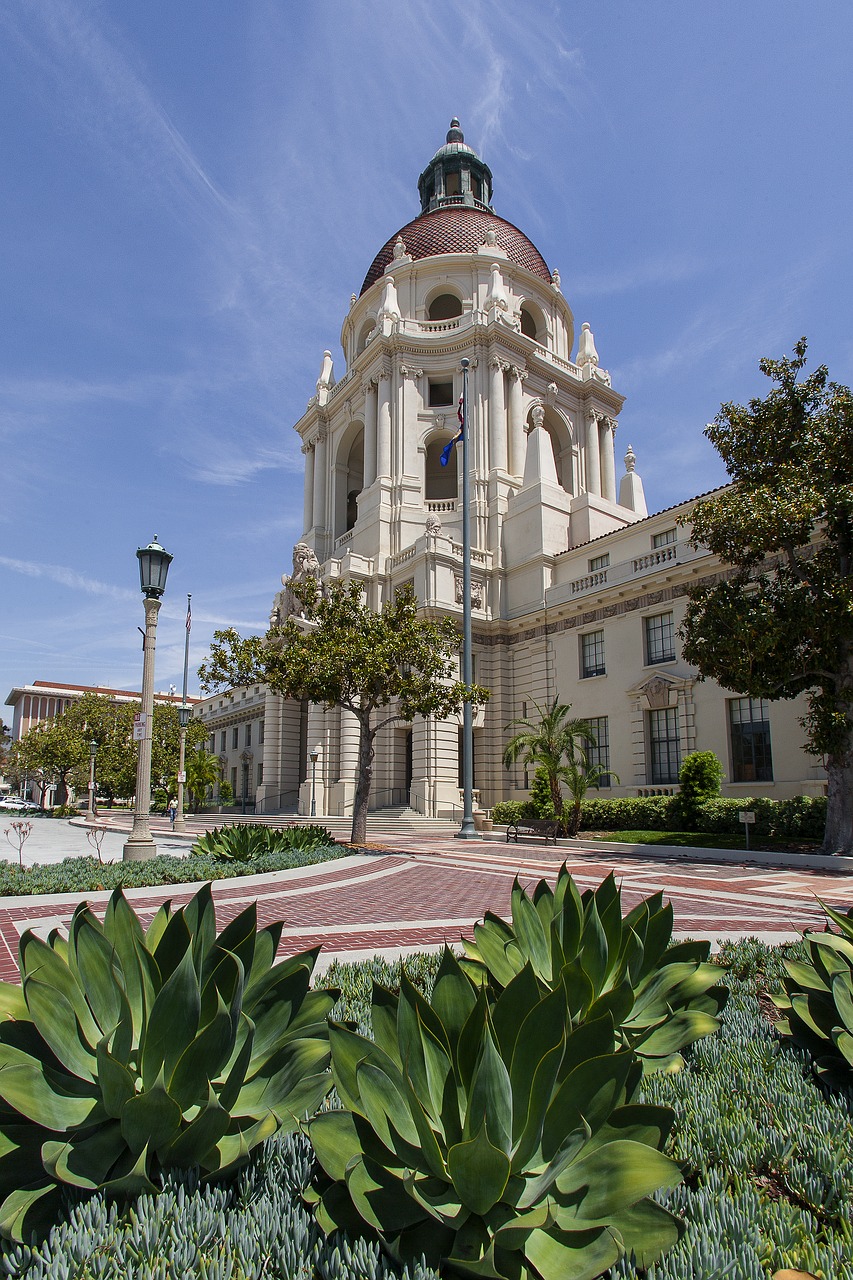
The Pasadena City Hall | Courtesy photo

Pasadena City Hall was once again in the spotlight in 2007 when it reopened after extensive seismic upgrade and restoration work. Pasadena Heritage was involved in the planning for the massive undertaking and served on the project oversight committee.

One of the structures Pasadena Heritage has been watching closely was the YWCA. Judy relates, “Since our founding, we’ve urged the restoration of the former YWCA. We felt it was important principally because it was designed by Julia Morgan, who had a prolific career. She designed more than 700 buildings in California, most notably the Hearst Castle in San Simeon. She also did the Fairmont in San Francisco, the Berkeley City Club, the Riverside Art Museum, the Hollywood Studio Club, the Herald-Examiner Building in Downtown L.A., among many others.

“Neglect over the years had kept the building on our Preservation Watch List. In 2010 the city finally took the major step of invoking eminent domain and then moved forward to secure and stabilize it while completing the lengthy acquisition process.

“Then in 2014, the YWCA was under review to become a Kimpton Hotel, a great adaptive use for the historic building. However, the proposal met with controversy because the adjacent green space would be built upon. It remains on our Advocacy Watch list to this day.”

Judy clarifies “Our goal is not to stop new development but to make sure that it is consistent with the look of the neighborhood. For example, there’s a new development in El Molino which is next to a turn of the century Victorian home. We wanted to have a green space between houses so we sat down with the developers and they redesigned the project to fit with the historic structures in the area.”

“HGTV is our biggest enemy,” confesses Judy. “They want to update historic buildings, although in doing so they take out what makes the structure important. They just tear down all the walls in the house, but they’re there for a reason. While we can’t dictate what homeowners should do in the house’s interior, we try to educate the owner of a historic home.

“Recently, there was a house that was purchased by a celebrity who wants to change all the windows so our Preservation Director met with them to tell them which ones they can change and which ones they can’t, and why. We try to get there before they get the permit to make any alterations.”

There is never a dearth of new projects and one that Pasadena Heritage will be keeping an eye on is the Fuller Seminary. According to Judy, since the seminary’s sale, they’ve had meetings with the Women’s Club and the University Club because they will be affected when the development starts. Another upcoming project is the First Congregational Church on Walnut and Los Robles. The organization has had conversations with the new owners about how much of the building will have to be preserved.

The Rose Bowl | Courtesy photo

“It’s not only the old part of the city that we have an interest in as we have proven when we intervened in Stuart Pharmaceutical’s plight,” Judy points out. “We’ve been watching East Pasadena. In fact, we’ve held commercial tours there because there are several mid-century buildings in the area. And we’re thinking of maybe doing a ‘60s Tour’ at some point. The Neptune and Thomas-designed Avon Building on East Foothill Blvd has been sold to Home Depot and we have urged the retention of the 1947 building.

“The Space Bank site, also on East Foothill Blvd., which is eligible as an historic district due to its association with Cold War-era weapons research, has received City approval. The developer, Trammel Crow, has agreed to mitigation measures that include retention of some historic features and interpretive displays.

“The ‘Ability First’ building on Kinneloa was designed by a very prominent mid-century architect and they’re planning on doing new development. My daughter works there and the director knows I’m with Pasadena Heritage. So he asked how involved we were going to be and I said ‘Well, we’re going to have an eye on it and we’d appreciate it if you could include this person and this person in the early stages.’

“We didn’t ignore East Pasadena at all. In fact, sometime in the 1990s we produced a video called ‘East Pasadena.’ We know there are several interesting communities in that locale like Chapman Woods. We’ve also been working in the Hastings Ranch area, developing an Awareness Project but we have yet to figure out what it’s going to be. Some of the homes there look similar to each other and we’re trying to decide if we could do a home tour there. But be assured that we’re there and we’re attempting to get more people interested.”

To make everything happen, Pasadena Heritage has a large support group: six full-time staff members; a board of 17 people; several committees; and hundreds of volunteers. It holds several events in any given year including The Craftsman Weekend, which is the longest and consists of bus and walking tours, workshops, lectures, receptions, and Contemporary and Antique Decorative Arts and Furnishings sale. The Bridge Party is a one-day activity and most of the other events are two- to three-hour tours or presentations. It hosts a Summer Gala during the years when there’s no Bridge Party.

“Since 1977 the Neighborhood Walking Tour have been the bread-and-butter events for us,” Judy discloses. “These tours are limited to the exterior, except during Craftsman Weekend when we try to get at least one homeowner to show us the inside, which is always a treat for our guests. Every once in a while we get a surprise when a homeowner invites us to come in and to see their new fireplace. With the Old Pasadena Walking Tour we have an arrangement with Castle Green to show their lobby and the first floor.”

Judy mentions that The Pasadena Architectural Legacy Walking Tours – Hillcrest Neighborhood  and the Civic Center District that includes City Hall, Pasadena Library, and Civic Auditorium – will take place this Saturday, December 30.

She then remembers, “We recently held a Fountains Tour, which is really fascinating. We found out there are 16 or 17 fountains within walking distance of each other – two Batchelder tile drinking fountains by the YMCA/YWCA; one at the Civic Center; one next to the police station; one outside the Library; a fountain landscape at the Pasadena Mutual Savings and Loan Building at Garfield across Union designed by Ruth Shellhorn who also created the central landscaping at Disneyland; one at the courtyard of Western Assets Plaza; one at Westin Hotel. And then there was that Batchelder tile fountain that Pasadena Heritage saved from a home, which just sat in Claire Bogaard’s garage for a long time, and is now at Plaza Las Fuentes.”

Judy has been Pasadena Heritage’s Education Director  for 10 years and a volunteer for 20. In that time she says the most difficult thing she’s had to do is to convince homeowners that their house is significant enough that other people would want to see it. She says, “A lot of houses in Pasadena have architectural importance and it’s my job to tell them why. Although I’m not an expert, I’m just a fan, I have enough contacts like historians, researchers, and architects who have the knowledge and expertise to show them what makes their home remarkable.”

2018 Pasadena Heritage Colorado Street Bridge party | Courtesy photo / Pasadena Heritage

Throughout its 40-year history, Pasadena Heritage has achieved several milestones. It marked the 20th anniversary of its Craftsman Weekend in 2011. In 2012, it celebrated ‘35 Years of Preservation’ as the theme of the summer’s Colorado Street Bridge Party. Last year, it commemorated the four decades of its founding and co-hosted a very successful California Historic Preservation Conference scheduled with multiple programs throughout the year. A major ‘40 Years Celebration’ was held in October of 2017 in the original Exhibition Hall at the Civic Auditorium.

Its yearly Educational Programs and Architectural Legacy Tours have gained a massive following, drawing visitors from across the country. The newly created Old Pasadena Pub Crawl, which was sold out soon as it was announced, will be offered every month starting next year.

When Claire Bogaard and other caring citizens decided to put their heads together to save Old Pasadena from demolition all those years ago, they did not foresee how that singular resolve would affect the most extraordinary projects that uphold the integrity of structures.

And the work hasn’t ebbed – there are ever more buildings needing to be rescued from the wrecking ball. Today Pasadena Heritage continues its mandate of protecting the city’s rich architectural history and preserving the landmarks that make Pasadena the unique and charming place that we’re proud to call our home.

Bone Kettle Serves Up Delicious Southeast Asian Cuisine with a Twist

Originally published on 20 November 2018 in the Pasadena Independent, Arcadia Weekly, and Monrovia Weekly

The chicken wings are a favorite among diners at Bone Kettle | Courtesy photo

By Brianna Chu and May S. Ruiz

Old Pasadena is a commercial district on the westernmost part of the city comprising 22 blocks where an eclectic mix of enterprises happily co-exist. There are museums and hotels, hotels converted into residential apartments and office spaces. There are a multitude of businesses – clothing retailers and coffee shops, dining venues and dress accessories stores, cosmetics shops and cinemas, jewelry and kitchen stores, nightclubs and sports bars, tech-selling stores and telecommunications service providers – housed in beautifully restored, historic buildings. You name it, it’s there.

Bone Kettle, an Indonesian fusion restaurant on North Raymond Avenue, has recently joined the numerous food establishments in this melting pot Pasadenans refer to as Old Town. It is co-owned by the Tjahyadi Brothers, Eric and Executive Chef Erwin, who immigrated to the San Gabriel Valley from Indonesia with their parents over two decades ago. They arrived with practically only the clothes on their back, except for an English dictionary to help them get by in their adopted country, and a few Indonesian cookbooks to remind them of home.

After 20 years, Chef Erwin went back to Indonesia on a quest of self-discovery. Through his travels in his birthplace, he reconnected with his childhood as he once more smelled the fragrance of spices that flavored the complex dishes he grew up with.

That reminder of his heritage inspired Chef Erwin to open a restaurant which deliciously blends heirloom recipes from his mother’s and grandmother’s cookbooks with local California ingredients and French classical techniques. His training at Le Cordon Bleu in Pasadena and apprenticeships under Wolfgang Puck and Trey Foshee have prepared him for the intricacies of creating unforgettable dishes. Thus, Bone Kettle was born.

Chef Erwin | Courtesy photo

“Living in the San Gabriel Valley, we would frequent Pasadena,” Chef Erwin informs us by email on his choice of restaurant location. “And it’s always been a dream to open in Old Town. It’s charming and rich in history; we love all the old buildings. Being here makes us feel like we’re part of not only a community but of something bigger.

“Because of the emergence of ever more Asian restaurants in Pasadena, we felt the city is prime for our food. At the same time, we felt compelled to represent our cuisine in our own authentic voice and perspective.”

And the community has been exceptionally welcoming, discloses Chef Erwin. “The reaction has been positive and overwhelmingly warm. We love it when customers are able to make a very personal connection and relate the cooking experience with their own. They appreciate that Bone Kettle is a family-run restaurant for Pasadena families and friends. In turn, we are enjoying getting to know our diners and making new friends.

“We want our patrons to remember their dinner at Bone Kettle as something that reflects the highest standards of quality food, with imaginative dishes of great flavors,” adds Chef Erwin. “I hope that through the food we serve, they see that we passionately care about the guest experience. And that, ultimately, we are able to tell our story.

Brianna’s review below speaks to Chef Erwin’s love of food and culinary mastery.

When my old high school friends and I met up after we all graduated to share our experiences over the past four years, we noticed that despite the disparate locations in which we studied, all of us missed the range of food available here in Los Angeles County. Even just in the Pasadena area, we do not lack for diversity of cuisines; the Bone Kettle in Old Town exemplifies the broad variety of food which we enjoy.

Bone Kettle’s modern interior | Courtesy photo

You can expect an Indonesian and Southeast Asian food experience when coming to the Bone Kettle, a small, family-owned restaurant and bar with a modern and chic atmosphere on Raymond Avenue. It’s only about a year and a half old, and full of surprising contrasts. While it has a young and modern feel not only in its decor, but also by its playlist – when we came in, there was relaxed electronic music softly playing – the restaurant feels homey and comfortable, too, as the head chef’s father served us plates that his son had just made, explaining to us what the dish was.

May and I aren’t particularly big fans of alcohol, so we ordered two non-alcoholic drinks: the dragonfruit lychee lemonade, and a raspberry and yuzu drink. The dragonfruit lemonade tastes entirely like lychee and dragonfruit, which definitely brought me back to my childhood eating dragonfruit and lychee jellies. The raspberry and yuzu drink was a gorgeous ombré of light lilac into deep magenta and tasted as close to candy as actual fruit can, while also having an incredibly refreshing and fragrant taste.

We were pleasantly bombarded with samples of many of Bone Kettle’s small sharing plates. Shortly after we sat down, two dishes were placed on our table. While slightly spicy, the papaya and shrimp salad was also tangy and delightfully crunchy. Tips of salty, fall-off-the-bone tender oxtail with freshly fried and crisp slices of potato followed, in perfect contrast to the salad.

One of the restaurant’s favorites, the oxtail dumpling, is understandably popular. The dumpling was served in deeply savory and rich but also slightly acidic sauce, complementing the succulent oxtail dumpling, whose filling dripped with au jus and marinade.

The oxtail dumplings are rich in flavor | Courtesy photo

Their kroket are fluffy and delicate, filled with an incredibly smooth paste of beef with pieces of carrot and peas, but surprisingly, it was served in hoisin sauce. The combination dumbfounded me; I could never have imagined that these two things would ever taste great together, let alone be found in the same dish, but I was pleasantly surprised by the depth that the hoisin sauce brought to the lighter, more one-toned kroket.

I managed to snag a bite of deeply umami and also somehow cheesy tartare, which was served on a shrimp cracker; after which, we were treated to shots of the restaurant’s famous bone broth – incredibly rich but eminently drinkable. Every sip is clearly imbued with the incredible flavor of bone marrow. This is not a broth that is merely a vessel for other ingredients – it has its own flavor that demands attention. When waiters circled back with second rounds of bone broth, hands from all tables immediately reached towards the tray for seconds.

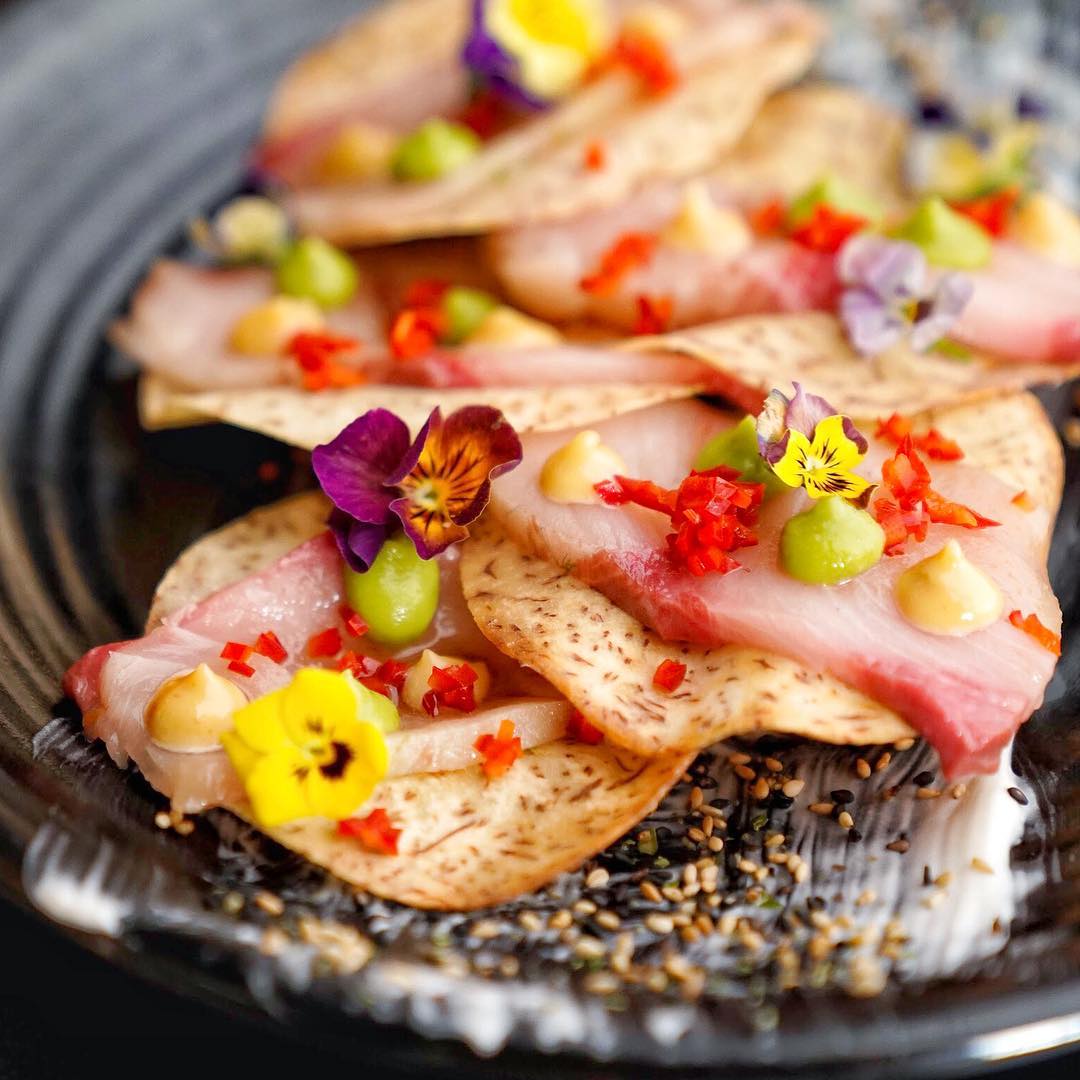
Even more irresistible bites followed: Hamachi crudo with green onions and peppers and fried chicken wings. The sweetness of the fresh yellowtail made the crudo light and addictive, with a light pop of heat from the peppers. I had my eye on the tray as it went around the room and I unabashedly took the last one when it was offered.

The hamachi crudo with green onions and peppers | Courtesy photo

The fried chicken wings with Thai chilis and a sweet sauce are another of the Bone Kettle’s popular dishes, for a reason – the wing was perfectly crispy, the sweetness from the sauce woken up by the kick of the Thai chili, and the chicken was juicy and perfectly cooked. May started volunteering me to take every leftover sample of food they brought out. I protested, but mostly out of pride…

A third round of broth came out – and it was gone in a matter of seconds. As I drank the broth, I marveled at its richness, but as soon as I finished a sip, I noticed how light it was and immediately reached for more.

The penultimate appetizer was a Rendang rice fritter with a filling of short rib, slow cooked for 15 hours, and cheese. The cheese really shone through, and the pulled short rib was pillow-soft. In the cross-section of my bite, I could see each individual grain of rice used to make the coating. The rice was crispy on the outside, and not too soft within, maintaining the structural integrity of each grain of rice for some texture.

The rendang rice fritter has a filling of short ribs slow cooked for 15 hours | Courtesy Photo

The finale: a platter of drier, crunchy coconut-braised fried chicken with a spicy salsa made from an unusual set of vegetables.

As the restaurant is sandwiched between a burger joint and a barbecue place, some might think that the Bone Kettle would struggle to compete with such classic American favorites. However, I’d argue that the Bone Kettle is perfectly situated to exemplify the diversity of flavors in Southern California.

The Bone Kettle is the kind of place where I’d want to take my girlfriends to on a weekend for some good food, and catch up on our weeks. I can’t wait to go back and see what more delights they have to offer on their full menu!

Brianna Chu, a guest opinion writer for Beacon Media, was born and raised in Pasadena. She loves to cook and to eat, is a lifelong viewer of Food Network, and enthusiastically introduced the tradition of Thanksgiving dinners to her British and European friends while earning her degree at the University of St Andrews. While they absolutely hated going around the table and saying what they were grateful for every year, they also loved the excuse to get together and feast with friends enough to endure it anyway.

The Pie Hole Offers Fare from Original Recipes

Originally published on 19 November 2018 in the Pasadena Independent, Arcadia Weekly, and Monrovia Weekly

The chicken pot pie and salted caramel pecan pie, served in pie tins, and a cup of latte | Photo by May S. Ruiz / Beacon Media News

By Brianna Chu and May S. Ruiz

The Pie Hole, located at the Indiana Colony in  Old Pasadena, serves up the kinds of pies that are not found at regular cafés, diners, or restaurants. That’s because the items on its menu were created by Becky Grasley who comes from a long line of bakers and cooks in rural Pennsylvania, where pie is a way of life.

Grasley and the other women in her family showed their love through baking and marked the seasons with the pies they made. She continued this tradition with her own children, using recipes that have been passed on from one generation to the next. She baked pies after school and took them to the fair, where her apple pie won the blue ribbon.

Years later, when her children were grown, Grasly spent a Thanksgiving weekend baking countless pies for friends and family at a remote cabin. And her life-long dream of opening up a pie shop got closer to actuality.

With co-founder Sean Brennan, whose restaurant experience balanced her pie-making skills, Grasley established their first eating place in October 2011, at the Arts District in Los Angeles known as Bloom Square, in honor of a local legend and activist who owned a neighborhood convenience store. They named it The Pie Hole and it became an instant hit.

Brennan, speaking with us via e-mail, answers questions that range from where they choose to open shop to how they keep the standards in all locations. “From a real estate perspective, we look for terrific neighborhoods that don’t have great pie restaurants. Realistically, our regulars tell us where they want us to be. People invite us all the time, on social media and at our restaurants, to come to their neighborhood. And Pasadena is a perfect example – we had so many fans visiting our Arts District restaurant asking us to open in Pasadena, so we did.”

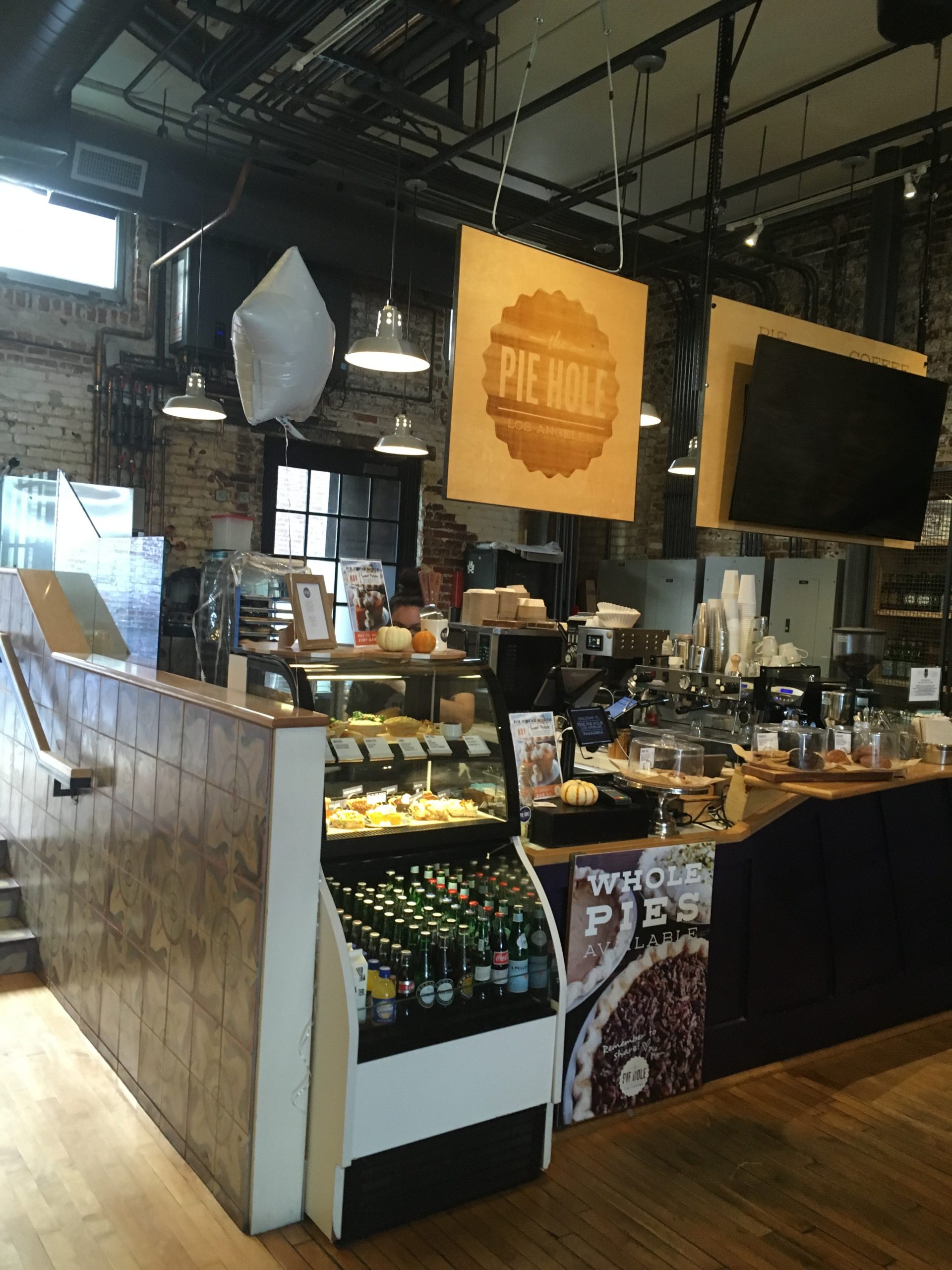
The Pie Hole in Old Pasadena | Photo by Brianna Chu / Beacon Media News

Word about The Pie Hole spread and to date there are ten locations – eight in the Los Angeles area and two in Tokyo, Japan. The Arts District, Hollywood, and Pasadena locations are owned by Grasley and Brennan and the others are either franchises or licensing agreements.

“Whether they’re owned  by The Pie Hole or franchises, all of our restaurants are teams and they undergo a rigorous training program,” Brennan points out. “We start with selecting the right people – those who love coffee and pie. We always have open lines of communication and a great collaborative culture. Our chefs in Japan are constantly talking with our chefs in L.A. We also spend a lot of time visiting all of our restaurants to make sure everything is up to our standards.”

Ensuring that the quality is maintained means all pies are made with the same ingredients and undergo the same process in all their restaurants. Their founder’s recipe for Mom’s Apple Crumble, for instance, contains two pounds of Granny Smith apples. The Earl Grey Tea pie, infused white chocolate mousse with a layer of dark chocolate ganache and salted pistachios, is a house invention and a masterpiece that takes 24 hours to make.

Besides signature pot pies, individual pot pies, and hand pies, the restaurant offers galettes, breakfast quiches, and salads. Hot and iced coffee – either espresso or their own specialty blend, specialty and seasonal specialty lattes – are wonderful accompaniments to all the food items.

“We have mostly the same menu at all of the restaurants, using our Arts District shop as a culinary incubator where we test new recipes and pies,” explains Brennan. “However, we regularly add new pies and specialty coffee drinks, including the Pie of the Month and Drink of the Month. The November  pie of the month is a sweet potato pie with brown butter sage in a butter crust, topped with marshmallows; the drink is spicy mocha made with our signature house blend, chocolate syrup, and ground ancho chili pepper.”

However much her business has grown, Grasley isn’t about to stop there just yet. She would like to add more locations and novel items. The Pie Hole is now open for breakfast with its new breakfast pies. Most recently, in time for pie season, it introduced Pie Holes – small, round, two-bite pies perfect for a quick snack and eating on the go. Available in four flavors, they are priced at $1.00 each or $12.00 for a baker’s dozen.

Brianna’s review below provides highlights about The Pie Hole’s food and ambience.

Tucked into the back corner of Indiana Colony’s marketplace space, The Pie Hole sits amidst the company of a juice bar, an ice cream vendor, and a tea and herb-selling stall. It’s the kind of place that seems geared towards attracting young adults who want the ready availability of caffeine, food, and WiFi of a Starbucks, but with a hipper vibe.

The café was kind enough to offer us each a savory and sweet pie, along with a drink of our choice. May opted for the classic latte and I chose a cold brew coffee; we were both very pleased with our coffees, May especially. I was given both sugar and simple syrup to sweeten my cold brew, which was a thoughtful touch.

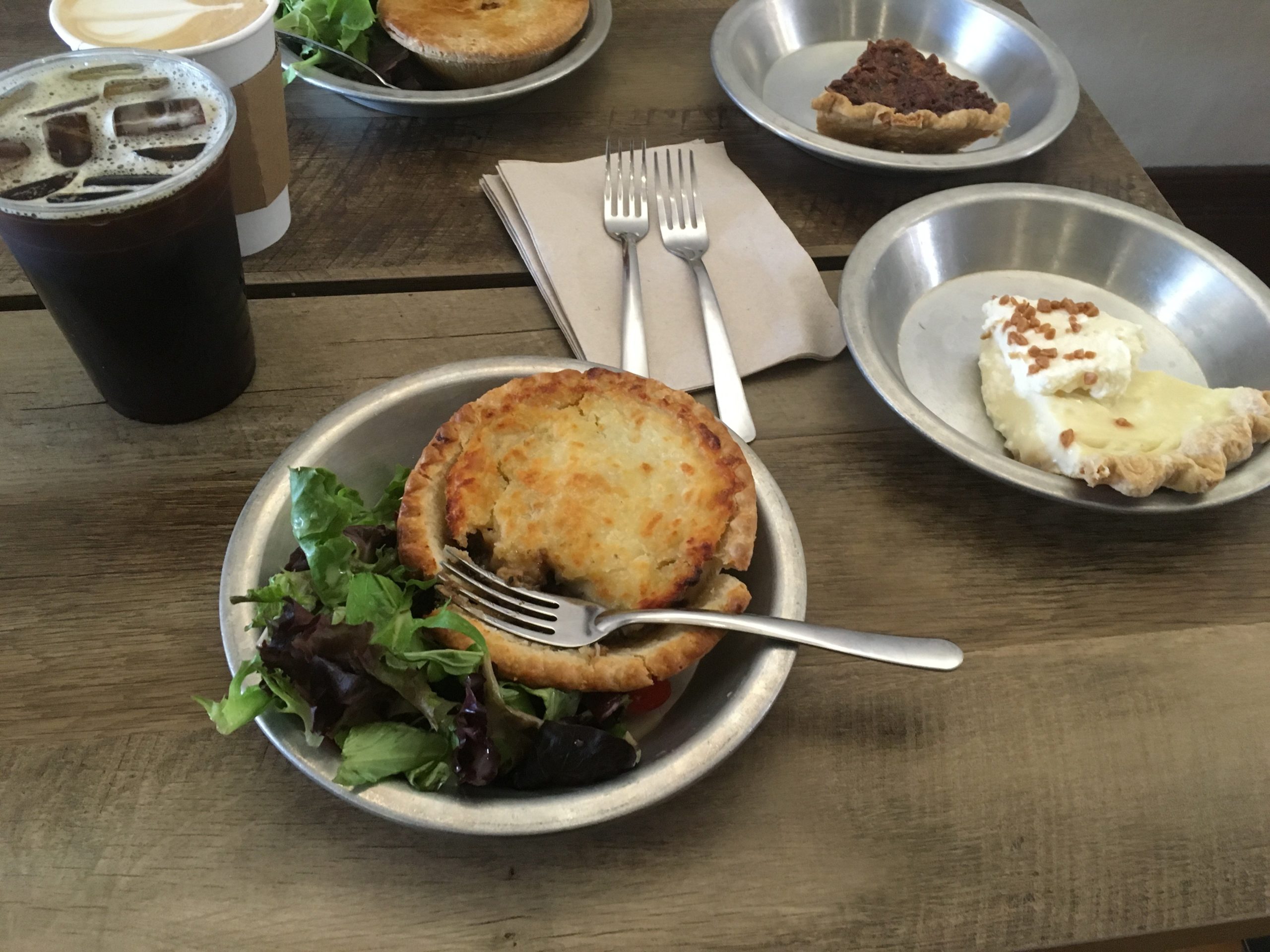
Shepherd’s pie, banana cream pie, and cold brew coffee | Photo by Brianna Chu / Beacon Media News

We sampled some classic pies, the chicken cornbread and shepherd’s pie, and May picked the salted caramel pecan for her dessert while I selected the banana cream. The staff were friendly and helpful, and we received our food shortly after ordering.

Each pie was served in a metal pie tin, which emphasized the hip vibe – there’s a growing trend of restaurants using unorthodox objects in lieu of plates, and the trend is polarizing, to say the least, but I felt that in this case it actually made sense.

The Pie Hole’s chicken pot pie is a twist on the classic, what with the cornbread incorporated into their filling and the inclusion of red bell peppers instead of the staple carrots and peas. I hesitate to opine on the chicken pot pie, as I enjoy the traditional chicken pot pie and the red bell pepper isn’t quite my taste, but I will say that I couldn’t quite pick out the cornbread in their filling.

Their shepherd’s pie is more along the lines of the classic, complete with a topping of mashed potatoes. Perhaps it was just a fluke of the batches, but we found that the shepherd’s pie tasted a tad too salty for our palate, becoming less easy to eat after running out of the accompanying side salad to temper it; and the salted caramel pecan pie fell a little on the sweet side for May.

However, the banana cream pie was everything I hoped for; a big plus for me was that the pudding tasted homemade, without the slight aftertaste of the store-bought variety. The banana slices were visible and texturally present in the pie, and the shards of toffee on top provided a welcome pop of sweetness and textural contrast. The consistent high point, for me, was the pie crusts – which were dependably buttery, flaky, and everything I’ve come to expect in a good pie crust.

The newly introduced, snack-sized pie holes | Photo by May S. Ruiz / Beacon Media News

Two weeks after we initially visited, we were invited back to experience their newest offering – the rather fitting pie hole. Self-enclosed mini pie bites, these pie holes currently come in four flavors: caramel apple, blueberry, Mexican chocolate, and Nutella. For me, each pie hole is about a four bite proportion, a perfectly snack-able size.

Both the caramel apple and blueberry were excellent, slightly warm, and not too sweet – and I’m not even much of a caramel fan, either. The Mexican chocolate and Nutella bites were definitely much sweeter, but they were also served cold, so they were on the hard side. Like our last visit, the drinks were great – May loved her salted caramel latte, and my pumpkin pie latte was exactly what I thought it would be – the Pie Hole’s smoother and classier version of the popular Pumpkin Spice latte.

All in all, I would consider returning; and in fall, an afternoon outing in Old Pasadena definitely benefits from a good slice of pie.

Brianna Chu, a guest opinion writer for Beacon Media, was born and raised in Pasadena. She loves to cook and to eat, is a lifelong viewer of Food Network, and enthusiastically introduced the tradition of Thanksgiving dinners to her British and European friends while earning her degree at the University of St Andrews. While they absolutely hated going around the table and saying what they were grateful for every year, they also loved the excuse to get together and feast with friends enough to endure it anyway.

Celestino: Creating Memorable Sicilian Dining Experiences

Originally published on 12 November 2018 in the Pasadena Independent, Arcadia Weekly, and Monrovia Weekly

Celestino, at 141 South Lake Avenue in Pasadena, has been a favorite among diners for over 20 years | Courtesy photo / Alen Lin

By Brianna Chu and May S. Ruiz

Celestino, at the South Lake Avenue District, has been a celebrated restaurant among diners looking for authentic Italian cuisine. For over 20 years, it has attracted locals and visitors to Pasadena with its seasonal fares made with the finest and freshest ingredients.

Owner Calogero Drago, one of the famed Drago Brothers who operate several restaurants in the Los Angeles area, is legendary for his exuberance. He dashes through the restaurant, making his rounds from table to table, imbuing an atmosphere of cheerful energy and enthusiasm. It wouldn’t be a surprise to anyone that he actually knows diners by name and is aware of their food preference. Because of the personal relationships he has built with diners, people travel to Pasadena to enjoy the food as much as the friendship.

However, Drago doesn’t rely on goodwill alone. Celestino is, after all, a restaurant; so he ensures that diners are never disappointed and comes up with dishes that make their experience memorable. During a recent private tasting dinner, he inaugurated his seasonal menu featuring mushrooms and truffles – those rare and coveted fungi which make for the most sublime food creations.

Calogero Drago shows’ off Celestino’s handmade pasta | Courtesy photo / acuna-hansen

And after reading Brianna’s review below, you’ll appreciate why Celestino is the acclaimed restaurant that it is.

Italian cuisine is fairly ubiquitously loved, making the search for a great Italian restaurant a challenging one. Even novice cooks can tackle some classic and comforting Italian dishes, thus raising the bar for finding an Italian spot that is truly worth going out for. Ambience, too, is especially important; we want the kinds of places we can rely upon for any occasion – birthdays, weekend dinners with family, dates – and the mere mention of Italian restaurants conjures images of candlelight, warmth, red-checked tablecloths, and great hospitality. The balance? Food that is indulgent yet not overwhelming, and of a quality that I couldn’t imagine easily replicating in my own kitchen.

These were my expectations when we walked into Celestino. For 7 pm on a Wednesday night, the cozy restaurant was already filling up, and my high hopes raised higher still when we were immediately greeted by the friendly face of its owner, Calogero Drago. We were directed to a softly lit table in Celestino’s Lake Room, which, with deep red, fresco-textured walls and flickering candlelight, fit the image of your favorite upscale Italian restaurant.

The Lake Room |Courtesy photo / TinTin Beligan

Over the course of the evening, we were treated to small plates of six different appetizers, a choice between an entreé of sole or veal scalloppini, and a dessert of panna cotta in a tasting menu prepared to showcase Celestino’s seasonal dishes.

The tasting commenced with an eggplant polpettine, a little “meat”-ball which had a crisp outer shell and surprisingly cheesy pureé of eggplant.

The following pumpkin soup subverted my expectation – the pumpkin element came from the seeds, and was not the main component of the soup. The pumpkin seeds provided texture and nuttiness to the thin, spring green soup, which also featured tender cooked squid.

Next, the burrata antipasto – accompanied by a tomato sauce on a bed of arugula. The skin of the freshly-made cheese was resilient and slightly resistant to being cut, and once my fork broke through, the texture of the cheese within was incredibly silky and creamy in taste – as buttery as its name suggests.

Tortelloni stuffed with mixed seafood and spicy tomato sauce | Courtesy photo / TinTin Beligan

The penultimate appetizer was mixed seafood tortelloni, which are the larger cousin of tortellini. Each tortelloni was handmade, Drago told us (an assertion supported by the bite of the dough), and was the perfect two-bite size proportion. The cioppino sauce in which the tortelloni were served was gently spicy: enough to warm the tongue, but certainly nowhere near overpowering to interfere with any of the flavors of the sauce itself.

Risotto and bambolotti | Courtesy photo / TinTin Beligan

When the risotto and bambolotti combination came out, the room was delighted by the simultaneous entrance of waiters holding truffles and graters in their hands. The risotto was rich and savory, and the slight sweetness and tang of the Nero D’Avola red wine was clearly present. Of course, the topping of truffle shavings added depth and earthiness to the already rich risotto. The bambolotti with gorgonzola, hazelnuts, and fresh black truffle was outstanding.

My chosen entreé of veal scalloppini was tender and delicious, but the polenta that accompanied it actually caught more of my attention, perhaps because it provided relief from the heaviness of eating the risotto and scalloppini back-to-back.

Veal scalloppini with mushroom and soft polenta | Courtesy photo / TinTin Beligan

For me, however, the dessert was quite literally the showstopper of the entire dinner. After so many courses, everyone was quite full, but the panna cotta perfectly contrasted against some of the heavier elements of the meal. The cream was lightly sweetened and both the flecks and flavor of vanilla bean shone through. The strawberries seemed to have been macerated in the limoncello, so the flavors were happily married by the time it reached us. Despite how full I was, I found the panna cotta dangerously easy to eat.

Panna cotta with strawberries and limoncello | Courtesy photo / TinTin Beligan

As we walked out to our car, we passed the kitchen, where I noticed trays of what appeared to be freshly-made tagliatelle nests on sheet pans laying on the order counter; and I wondered how I could have lived in Pasadena most of my life without ever eating at Celestino. The atmosphere is comfortable and welcoming, which seems to be a reflection of the joy and heritage of its Sicilian owner, and the food is a celebration of authentic Italian cuisine.

After some reviewing of Celestino’s online menu, it must also be noted that not all the dishes we tasted are present on the online menu, and there does not appear to be a dessert menu online either, despite the inclusion in the photo gallery of the truly excellent panna cotta. The items sampled that do seem to appear are the burrata antipasto, the truffle risotto, the veal scalloppini, and the sole (the alternate entreé choice). The lack of inclusion of these items on the menu is perhaps unsurprising, as Drago has been known to spontaneously invent new culinary offerings. To truly know what Celestino has to offer, I have a feeling you must just visit and find out yourself; and I personally plan to return just to see what new treats Drago has concocted.

Brianna Chu, a guest opinion writer for Beacon Media, was born and raised in Pasadena. She loves to cook and to eat, is a lifelong viewer of Food Network, and enthusiastically introduced the tradition of Thanksgiving dinners to her British and European friends while earning her degree at the University of St Andrews. While they absolutely hated going around the table and saying what they were grateful for every year, they also loved the excuse to get together and feast with friends enough to endure it anyway.

Addressing Anxiety and Depression on Campus

Originally published on 23 October 2018 in the Pasadena Independent, Arcadia Weekly, and Monrovia Weekly

John Finch, headmaster of Chandler School, with middle-school students in his Ethical Perspectives class | Courtesy photo / Tim Teague

In an article which published last April in Time magazine, Katie Reilly reported that record numbers of college students are seeking treatment for anxiety and depression, and schools can’t keep up. She further described that when UCLA offered, for the first time, all incoming students a free online screening for depression, more than 2,700 students opted in.

Following that article, UCLA announced the launch of its ‘Depression Grand Challenge.’ This project, that spans a decade, will study 100,000 of students who have used its health care system for any reason. It is a sweeping initiative that brings to the fore the mental health issues that have long existed but have never been fully addressed until now.

However, anxiety and depression often predate college. High school students, most especially in the San Gabriel Valley, are faced with daunting competition when they start applying to colleges. Students in the area have earned perfect GPAs, SAT, and ACT scores; were the president of their school’s Student Council; have played at least one musical instrument, have won multiple gold Young Musicians’ Competition awards, and have performed at Carnegie Hall; have been deeply involved in a social, community, or philanthropic cause. They are over-scheduled, sleep-deprived, and hell-bent to stand out from other over-achievers. It’s no wonder, then, that they are riddled with anxiety that often leads to depression.

David Burge, who just completed his term as the President of NACAC (National Association for College Admission Counseling) states, “There is no doubt that the college application and selection process is daunting and is a cause of much of the anxiety and depression on high school campuses.

“What we’re finding is that there are more and more students in high school who are receiving treatments for anxiety and depression, including medication and talk therapy. So it’s only natural for them to continue to seek treatment when they get on the college campus. Sometimes the stress of college accentuates their pre-existing conditions.”

“We, at NACAC, are teaching students and parents to look beyond the Ivies and the most selective universities when they embark on their college search. As long as we continue to value exclusivity as a surrogate for quality, the competition perpetrated by these very universities will continue,” Burge pronounces.

To say, though, that the college application is the reason for the mental health concerns plaguing our country’s youth is too simplistic.

Depression among students is on the rise | Courtesy photo

Myra McGovern, Vice-President for Media at NAIS (National Association of Independent Schools), says, “The theories about why today’s students are going through anxiety and depression run the gamut. Some are backed by science and some are anecdotal. One of the things I’ve heard is that parents these days aren’t doing much about the issue because they think their generation had it harder.

“Some of us think that children didn’t get to experience the violence of wars and the hardship that accompanied such, which made them more fragile. But one could argue that children have seen more wars in their lifetime. There have been more media coverage of school shootings, that began in Columbine; and of terrorism and international threats, since 9-11.”

“I think that while the potential dangers may not have statistically grown, the exposure brought on by media has increased dramatically,” explains McGovern. “In the past, most teenagers didn’t read the newspapers; but these days, through social media, they know what’s happening in the world in real time.

“Consider your biological fear response – from the adrenaline rush, to the tightening in your chest and the dry mouth – when you hear of something horrible happening. Our body hasn’t really changed from the time of lions chasing people. Yet we’re more exposed to technological lions (stimulus) when our survival instinct hasn’t quit adapted to technological reality.”

McGovern elaborates, “Perhaps, too, children’s increased interface through technology is changing the way they relate and cope. The social pressures the older generations had to contend with are definitely different from what today’s youth deal with.

“There’s also our perception of our role as parents. Because of our own anxieties about our children’s lives, we are constantly hand-holding them and, in the process, taking away some of the opportunity for them to practice making decisions. It affects their confidence level at being able to navigate the challenges the world throws at the them as they become teenagers and young adults.”

“Another theory has to do with what people are consuming and the chemicals they’re exposed to,” adds McGovern. “But whatever the cause is, there’s a consensus that children and adults are struggling more with anxiety and depression.

“What I want to emphasize is that I don’t believe there’s one right solution for everyone. Part of the solution is considering children as individuals with specific needs. Prioritizing to invest in our future on the front end could reap benefits in the long term,” McGovern concludes.

Building the groundwork for sending happy and healthy kids to high school and beyond is a mandate that John Finch, headmaster of Chandler, a K-8th grade school in Pasadena, takes to heart.

Chandler students gather together as the school day begins | Courtesy photo / Tim Teague

“We establish an environment where there are high expectations, but low stress,” Finch declares. “We pay careful attention to the volume of work we ask the students to do. We don’t try to fit round pegs into square holes – we provide a program that meets their needs and adjust our program so that each child feels recognized, respected, and challenged.

“As we challenge our students, requiring them to do good work, we are equally careful about how we manage expectations. We have to be mindful that doing otherwise leads us to the same path we’ve been going on, with more kids falling out in the end.”

“Socially, we want to create an environment where children are kind to each other, respect and help each other,” states Finch. “We’re intolerant when it comes to bullying. At the same time, we want to establish an atmosphere where kids can be resilient and gritty. We want for them to pursue their interests by trial and error. And if they fail, we’ll help them try again. We want kids to understand they’re being supported by a tight adult network that encourages them. We want them to feel that there’s a balanced foundation of care and love.”

Finch points out, “I think students who spend too much time on screens and not enough time interacting with others can become isolated and lonely. That isolation and loneliness can manifest themselves in anxiety and depression. We have to be cautious, conscientious, and deliberate in urging our kids to shut their screens down, to spend more time interacting and socializing with friends and family.”

“Increasingly, I hear principals say their biggest concern is not so much the achievement, but the well-being of their students,” discloses Finch. “Something’s changing and we have to find the cause and respond accordingly. We’re not doing kids any favor if they’re leaving our schools feeling anxious or depressed – whether it’s because they’re over-burdened by expectations, they feel something is lacking, or they can’t cope with the independence they get as they grow older.

“Ten years ago schools were adding technology and computer positions. Now schools are augmenting learning and emotional support. Once we saw that technology had a transformative impact on the program, the next step was to become intentional in meeting the social and emotional needs of students.

“For us, it’s been helpful to have a buddy program. Older kids interact with the younger ones to give them a sense of responsibility and community obligation. For younger kids, it’s a way for them to look up to older students as role models. Those friendships that develop in multi-age groups make a vast difference in school life.”

“We also have a school psychologist to give professional help,” adds Finch. “Teachers meet regularly and when they hear a student’s name come up more than once as someone who’s not completing work, is tired, or isn’t eating well, they let the administrator know.

“There have been circumstances when kids approached the administrator to say they’re worried about one of their friends. We investigate all these observations and we bring in the psychologist whenever it’s warranted.”

“In a small private school with an adult-student ratio of 1 to 7, it’s very hard for the child to slip through the cracks,” assures Finch. “We’re capable of arresting something before it becomes too dark. And we make sure we have the support and place to take care of it.

“I’m interested in empowering teachers to not only provide excellent teaching but, more importantly, to look after the welfare of students in their charge. At the same time, I also know that families are our partners in addressing the issues of anxiety and depression.”

It’s heartening to know that parents, teachers, and school administrators are acknowledging that there is a mental health problem affecting a large number of students. It is a first step in the right direction.

That schools are also now taking active measures to help students get through their anxiety and depression is certainly a lifeline for those who’ve been feeling despondent and alone. There is hope yet.

L.A. County Arboretum’s ‘Moonlight Forest’ Brings People Together in San Gabriel Valley

Originally published on 16 October 2018 in the Pasadena Independent, Arcadia Weekly, and Monrovia Weekly

A ‘Moonlight Forest’ display at The Arboretum | Courtesy photo / Tianyu Arts & Culture, Inc.

Be transported to an enchanted evening wonderland when the Los Angeles County Arboretum and Botanic Garden (The Arboretum) in Arcadia displays hundreds of magnificent lanterns depicting exotic animals, shimmering flowers, whimsical pandas, soaring dragons, and other themes to create a mesmerizing ‘Moonlight Forest.’

The Lantern Art Festival celebrates the time-honored tradition of lantern-making and features Chinese performing arts and crafts. It goes on from October 26, 2018 through January 6, 2019, 5:30 to 10 pm.

Richard Schulhof, CEO of The Arboretum declares, “Our vision for the Lantern Art Festival is to commemorate this wonderful traditional art form from China and set the lanterns amidst the landscape of the L.A. County Arboretum. It’s nature meeting art and culture, and bringing together the different communities in Los Angeles.

“Spanning a mile’s path of travel, the lantern displays will begin from the lawn area, then goes into the forest and around the lake, and by our landmark Queen Anne Cottage. In addition to the lanterns, we’ll have traditional Chinese performing arts – acrobats, face-changing dancers, and jugglers. We’ll have food trucks and various libations.”

Richard Schulhof looks at the animal lanterns | Photo by May S. Ruiz / Beacon Media News

‘Moonlight Forest’ is the culmination of a year’s planning and preparation. Relates Schulhof, “Last October, Tianyu Arts & Culture Inc., the American subsidiary of the international design and manufacturing company Sichuan Tianyu Culture Communication Co., contacted me to discuss a possible collaboration.

“I familiarized myself with the art form and the company’s work by visiting the different lantern festivals they were holding in Charlotte, Virginia Beach, and Las Vegas. I learned that lantern art utilized traditional materials that were used 500 years ago. The advent of new materials and construction methods allowed for an elaboration of this traditional art form and the lanterns you currently see represent that.

“The center for this craft is a town named Zigong in Sichuan, near the city of Chengdu, where this art form is still practiced today. Tianyu Arts & Culture creates festivals all over the world – Europe, Australia, and North America. It’s quite surprising that there has never been one of this scale in the San Gabriel Valley. And given the confluence of cultures in the region, particularly East Asian, it’s only fitting and natural to bring the lantern art festival here. We’re thrilled that this debut event is happening here at The Arboretum because I see this as a meeting place of cultures.”

The lanterns reflect three themes: Chinese culture – iconic images and traditional themes like the harvest moon feast; nature – animals and plants; and children – fairy tales and fables to delight kids and the child in all of us.

Schulhof’s excitement about this event is abundantly evident when he takes me on a tour of The Arboretum grounds where workers are busy setting up structures on which the lanterns will be installed. He explains that some of the exhibitions are quite complex and points to a large construction underway that he presumes will be that of the Forbidden City, which used to be the imperial palace in the Ming and Qing Dynasties.

A display of a man serving tea | Photo by May S. Ruiz / Beacon Media News

As we approach a display of a man serving tea, Schulhof stops and gets out of the golf cart he’s driving to enthuse, “When I was in Kunming, in Yunnan province, I was hosted by the Kunming Botanical Garden and the server was dressed just like this. They carried teakettles with these long spouts and they could pour tea into your cup from six feet away. It was absolutely amazing to see that.”

At this point we’re attracting the curiosity of people who are on their morning walk at the garden. Schulhof very animatedly enlightens the little group about the lanterns with the enthusiasm and exuberance of a little boy showing off his prized toy collection.

We reach an area with the animal lanterns and there are lions, tigers, giraffes, pandas, and some animals indigenous to California – bears and coyotes. Schulhof points out little details on them, like the hand-painted eyes of the animals.

“And because this is The Arboretum, there will be a couple of peacock lanterns. They’re the most spectacular peacock lanterns they’ve ever done! People here have very high expectations when it comes to peacocks,” Schulhof tells a couple of ladies who are also inspecting the array before us.

Schulhof stands next to a terracotta soldier | Photo by May S. Ruiz / Beacon Media News

The lanterns of the terracotta warriors from Xi’an province are Schulhof’s particular favorite and he walks over to where the figures are clustered. He informs with confidence, “If you look closely you’ll see that the soldiers have different faces and when illuminated they are glowing, golden beams.”

There’s quite an interesting bit of Chinese history connected to the terracotta army. The first Qin Emperor, Qin Shi Huang, who ruled from 247 to 210 BC, built this army of warriors, chariots, and horses made entirely of clay and were buried with him to guard him in his afterlife. They remained there undiscovered until 1974 when they were excavated by accident by local farmers. Today the Mausoleum of the first Qin Emperor is a UNESCO World Heritage site.

Our tour ends at the lawn and fountain area, and Schulhof directs my attention to a tree, “The Arboretum was founded in 1948 and one of its goals was to bring new plants to Los Angeles to beautify the city. That is the silk floss tree from South America, one of our most successful introductions, and this is its peak blooming period. We have several of them all over the garden; so people will be enjoying the lanterns and our beautiful silk floss plants at the height of blossom all at once.

Photo by May S. Ruiz / Beacon Media News

“Every year, 400,000 people visit The Arboretum. What they see during the day doesn’t even compare to what they’ll see at night during our ‘Moonlight Forest.’ The Lantern Art Festival, with its more than 60 exhibits and over 500 lanterns, gloriously demonstrates the artistry, craft, and skill of Sichuan artisans and will surely add some magic to the visitor experience.”

Schulhof is familiar with Sichuan province, where this craft originated. Back in 1997, when he served as Executive Director of Descanso Gardens, he was in Sichuan collecting camellias. But because he was in the countryside, he didn’t see any lanterns.

Starting next week, and for ten weeks thereafter, the lanterns that eluded Schulhof in Sichuan two decades ago will be the magnificent centerpiece at The Arboretum’s ‘Moonlight Festival.’ And he is hoping that not only do they bring delight and joy to those who behold their splendor, but also bring together the various communities in the San Gabriel Valley in one magical celebration.

Making College Decisions Based on Passion and Earning Potential

Originally published on 28 September 2018 in the Pasadena Independent, Arcadia Weekly, and Monrovia Weekly

Looking forward to a bright career after graduating from college | Photo by May S. Ruiz / Beacon Media News

In a few weeks high school seniors applying to UC and Cal State schools, or other universities through early action or early decision, will be sending out their applications. It is the last step in this grueling process that begins in 9th grade when they start to build their transcript.

These 18-year-olds spent four years of their life burnishing their resume with the hope that the admissions officers in the college of their dreams will admit them. A lot of them have a 4.0 GPA and perfect SAT scores, took a dozen AP courses, helped build houses in far-flung corners of the world, and acquired internships in the field they are passionate about.

What these students may not have thought of, though, is the price tag of a college degree. And the cost of tuition, books, accommodations, and meals is increasing every year. However, not every parent can afford to pay for their children’s college education, necessitating young people to get student loans.

A generation of young graduates is heading out into the world looking forward to a bright career but, at the same time, is carrying a huge burden on its shoulders. Student debt is now at a staggering $1.5 trillion.

So while students should follow their passion when they choose what to major in, it is as essential for them to balance their decisions with the realities of life beyond college and consider schools with the best earning potential.

To help parents and students make informed choices, PayScale, Inc., the world’s leading provider of on-demand compensation data and software, released its annual College Salary Report for the 2018-2019 school year. It is the only organization offering insightful, real time data based on crowdsourced figures and hundreds of compensable factors for both employers and employees to help them make important compensation decisions.

PayScale’s 2018-2019 College Salary Report uses data collected from more than 3.2 million college alumni, providing estimates of early and mid-career pay for 2,646 associate and bachelor’s degree-granting schools in the United States.

Lydia Frank | Courtesy photo

Lydia Frank, PayScale’s Vice-President details their organic growth, “The company was established in 2002 to help individuals understand how much they should be earning at their jobs. From there, we moved on to providing compensation information to employers.

“In 2008, we realized we had all this great data around what school people attended, what they majored in, and what they ultimately ended up earning – the kind of material parents and students need when they start their college search.”

“So we launched the College Salary Report ten years ago precisely to help parents and students make decisions as to what major to choose and what college to attend,” explains Frank. “We want to give them the information on how this will impact earning potential after graduation.

“There’s a lot of material out there telling students which college to attend based on reputation, teaching staff, and amenities available, but there aren’t any information out in the market about what they will be earning as a graduate from a particular school. We thought it was something unique we could bring to bear.”

“We didn’t expect it to take off the way that it did when we started it in 2008,” Frank discloses. “I think it became pretty obvious that we were unique in our ability to be able to provide this information so it became more mission-based – that we had to put it out there because it’s really valuable. It helps students figure out how much they should be borrowing and it gives them an idea what their income will be after graduating.”

Adds Frank, “The other piece of this is a report we put out in the spring of 2010, called College Return on Investment, which details how much it will cost to attend a particular school and the earning potential of its alumni.”

PayScale’s 2018-2019 College Salary Report shows the top 50 schools offering Bachelor’s degrees fall into 16 states, with California and New York home to 22 of them.

For associate degrees, nursing and healthcare provide the biggest payoff for graduates at half the cost of a four-year institution. Helene Fuld College of Nursing tops the list of schools in this category, followed by Pacific Union College, and Cochran School of Nursing. The majority of the highest-earning two-year programs are schools with strong reputations and a specific focus in nursing and healthcare professions.

Among four-year institutions, private schools fare better, with seven out of the top ten schools. Harvey Mudd retained the number one slot, with a mid-career pay of $157,400, $7K above the Massachusetts Institute of Technology (MIT), which placed second. Princeton, last year’s runner-up, fell to 9th place. The U.S. Naval Academy, the California Institute of Technology (Caltech), and Stanford round up the top five.

Courtesy illustration

Ivy League universities, elite technical institutions, and military academies continue to top the list. Harvey Mudd College is a Liberal Arts school that grants degrees in only science, engineering, and mathematics. It is a member of the Claremont Colleges, and its fellow member schools – Claremont McKenna, Pomona, Pitzer, and Scripps – rank 43rd, 67th, 355th, and 374th, respectively. Colorado is the first interior state to appear on the list, with the Colorado School of Mines in 11th place and the U.S. Air Force Academy in 16th.

Looking at the best schools by major, Vanderbilt for Communications, Newman University for Education, and Union College in New York for Humanities have the highest earnings for graduates but they do not appear in the top 50 schools in the annual report.

Most of the highest-paying two-year majors are technology-focused, with software engineering in the top spot. Construction project management is the first non-tech-focused major in the list, ranking 4th. Engineering and math dominate the bachelor’s rankings, but petroleum engineering majors make far and away the most money mid-career. Operations research & industrial engineering, a newly included major, comes in second place, followed by actuarial mathematics.

STEM topped the list in terms of earning potential, as expected. However, students who want to pursue a Liberal Arts degree could take comfort in the fact that they will be able to catch up.

“Graduates with an Arts degree tend to not make a lot out of the gate but they end up making more mid-career,” reveals Frank. “We had some interesting findings when we looked at mid-career earnings at 10+ years. Degrees like Philosophy start to float up there. So it’s not that you shouldn’t major in Liberal Arts, you just have to know that it would take longer for you to be able to pay off debt. That you have to really be careful about how you fund your education.”

Indeed a Liberal Arts degree gives one a wide scope of knowledge which applies across fields. Some of the biggest names in business today majored in courses which their parents could have thought made them totally unemployable. Carly Fiorina, the former CEO of Hewlett-Packard, graduated from Stanford University with a B.A. in Medieval History and Philosophy.

Young people really can’t know how far they can go and what they can achieve based on their college degree. It’s up to them to make their own fortune.