During the press opening held on Friday, October 13, Karen Lawrence, president of The Huntington expressed her gratitude for the generosity of the Yokoi family who gifted their ancestral home to the beloved institution.
Karen Lawrence, president of The Huntington Library, Art Museum, and Botanical Gardens. | Photo by Brianna Chu / Hey SoCal
Lawrence remarks about this exceptional new destination at The Huntington. “This restored residential compound is truly a masterpiece and it offers a glimpse of life in rural Japan some 300 years ago. It’s the only example of this kind of architecture in the U.S. and its presence here wouldn’t have been possible without the generosity of the Yokoi family.”
“In Japan, the house was disassembled, restored, disassembled again, and shipped to us at The Huntington,” Lawrence adds. “Once the components of the house arrived, it was up to The Huntington to rebuild and provide context, including recreating the landscape and gatehouse.”
A signage at the house shows the Yokoi family crest. | Photo by Brianna Chu / Hey SoCal
It’s only fitting for the Shōya House to join the distinctive house Henry E. Huntington bought from Pasadena businessman George Turner Marsh that has been at the Japanese Garden, which has such a fascinating history. The Huntington’s information kit gives the following chronology.
The building of the Japanese Garden began in 1911 and was completed in 1912. The garden, which is currently 12 acres, was inspired by the widespread Western fascination with Asian culture in the early 1900s. Henry E. Huntington purchased many of the garden’s plants and ornamental fixtures, as well as the Japanese House, from a failed commercial tea garden in Pasadena, located at the northeast corner of Fair Oaks Avenue and California Boulevard. When The Huntington opened to the public in 1928, the Japanese Garden became a major draw for visitors. Features such as the bell tower and bridge were newly built for the garden by Japanese American craftspeople.
Robert Hori, Gardens Cultural Director and Programs Director. | Photo by Brianna Chu / Hey SoCal
By World War II, staffing shortages – including those resulting from the incarceration of Japanese American employees – and the political climate led to the closure of parts of the Japanese Garden, and the Japanese House fell into disrepair. In the 1950s, members of the San Marino League helped support the refurbishment of the buildings and surrounding landscape.
In 1968, The Huntington expanded the Japanese Garden to include a bonsai collection, which now numbers in the hundreds, and a rock garden, the Zen Court. Since 1990, The Huntington has served as the Southern California site for the Golden State Bonsai Federation.
The ceremonial teahouse, called Seifū-an (the Arbor of Pure Breeze), was built in Kyoto in the 1960s and donated to The Huntington by the Pasadena Buddhist Temple. In 2010, the teahouse made a return trip to Japan for restoration, overseen by Kyoto-based architect Yoshiaki Nakamura (whose father built the original structure). It was then shipped back to San Marino and reassembled.
In 2011, a team of architects with backgrounds in historic renovation, horticulturists, landscape architects, engineers, and Japanese craftsmen undertook a yearlong, large-scale restoration of the historic core of the garden. The project included repairs to the central pond system and water infrastructure, along with increasing pathway accessibility and renovating the original faux bois (false wood) ornamental trellises.
A view of the house from the side. | Photo by Brianna Chu / Hey SoCal
The Japanese Garden continues to be a popular attraction to this day. However, as Lawrence points out, “What was missing was a traditional Japanese residence that could demonstrate the important historical relationship between the Japanese people, their culture, and the landscape. The iconic Japanese house in the original garden provides the idea of a Japanese residence but it wasn’t really lived in.”
Lawrence clarifies, “The shōya house is completely different. It’s an exquisite example of a village leader’s residence where rural village life can be explored through the lens of 18th century architecture and farming practices. The residence was occupied by one family, generation after generation, over the course of three centuries. Mr. Yokoi is the 19th generation to own the house.”
The tile work on the roof. | Photo by Brianna Chu / Hey SoCal
“Today it provides us with a rich aesthetic experience of the beauty of Japanese building art and many insights into what it means to live sustainably on the land,” Lawrence adds. “We were fortunate to have artisans come from Japan to work alongside local architects, engineers, and construction workers to assemble the house here and recreate elements that would have surrounded it at the time when it housed a village leader or shōya. They created the wood and stonework features you see, as well as the roof tiles and plasterwork prioritizing traditions of Japanese carpentry, artisanship, and sensitivity to materials.”
Lawrence concludes by voicing her opinion that this will become a major visitor attraction in Southern California, as well as a primary resource for architects, scholars, students, teachers, and others interested in the complexities and beauty of traditional Japanese design, craftsmanship, and architectural practices. And that visitors it will appreciate the lived experience of what this meant and how it was sustained for 300 years.
Robert Hori, gardens cultural director and programs director, says, “It has really taken an entire village to build the head of a village’s house. It wasn’t just the botanical gardens, everyone at The Huntington has contributed in interpreting the house which will make a full experience for the visitors. They won’t be looking at an exhibit in a museum, they will be in that museum. They’ll be able to participate in rice planting, and see the changes of the season. This is something that exists nowhere else and can only live at The Huntington.”
The doors open so the outdoors and indoors blend seamlessly. | Photo by Joshua White / JWPictures.com. The Huntington Library, Art Museum, and Botanical Gardens
The construction team that undertook this project was headed by Yoshiaki Nakamura of Nakamura Sotoji Komuten, who oversaw the restoration of the teahouse in 2010. Hori discloses, “When Mr. Nakamura first came to The Huntington about 15 years ago, he toured it and he said, ‘Wow, this is something special.’ He saw the resources in the library (each year we have over a thousand scholars) and he said, ‘I want to create something that students, teachers, and researchers can explore and be inspired by.’ He wanted to bring traditional building and garden techniques here at The Huntington so they can be a primary resource for those who are not going to Japan.”
“We have also been blessed to have the partnership of many architects and professionals, including Mike Okamoto (U.S. Architect of Record),” continues Hori. “He has been a valuable partner in reassembling this house. You can imagine the challenges of bringing not just a 300-year-old house and re-erecting it, but bringing the metric system and having it meet U.S. building code. We are likewise fortunate to have Takuhiro Yamada (Hanatoyo Landscape Co. Ltd. (Kyoto, Japan) doing the landscape and really putting together the program.”
The formal garden. | Photo by Brianna Chu / Hey SoCal
“What we’d like to show is the beginning of landscape,” Hori expounds. “And that design starts
with the ability to control water and to move earth – and that’s exactly what a farmer is doing. We want visitors who go on a tour of the house to have the experience of being transported to 18th century Japan.”
Each time Hori gives a tour of the Shōya house, he begins at the terraced agricultural field, where he notes a whole new animal population has taken as their home. “You’ll notice the terrain is sloped – this is how many of the farms were in Japan because it’s the most efficient way to move water from uphill to downhill.”
Nicole Cavender, Telleen/Jorgensen Director of Botanical Gardens. | Photo by Brianna Chu / Hey SoCal
Throughout the tour Hori impresses on everyone how these sustainability practices were a matter of survival for farmers centuries ago. And that sustainability is one of the biggest challenges we face today globally.
And it’s an issue that Nicole Cavender, Telleen/Jorgensen Director of the Botanical Gardens, deeply cares about. She states, “I’d like to emphasize one aspect in particular that’s especially near and dear to me – we have here a model of sustainability practices. You’ll see how in this house, in this landscape, we’ve integrated and showcased the historical integration of agricultural systems, how water can be used and recycled. In the front as you come in, you see the agricultural landscape that showcases sustainable practices of using cover crop and companion planting. I’m really excited to be able to share these practices and hope to inspire people to integrate them into their own life.”
View of the private garden | Photo by Joshua White / JWPictures. com. The Huntington Library, Art Museum, and Botanical Gardens
Without hammering our head with it, The Huntington makes a compelling argument for practicing sustainability. By restoring the Shōya house and recreating the landscape which will grow vegetables and various crops that change through the seasons – and showing how the village head and townspeople lived – we will witness for ourselves how extraordinary beautiful the outcome can be. Would that in the foreseeable future, Cavender’s hope that their efforts to persuade us to do as these villagers did in 18th century Japan come to fruition.
The exterior of the Yokoi family’s historic family home in Marugame, Japan | Photo by Hiroyuki Nakayama / The Huntington Library, Art Museum, and Botanical Gardens
A 320-year old Japanese Heritage Shōya House from Marugame, Japan, has been carefully and meticulously disassembled and restored then shipped to The Huntington Library, Art Museum, and Botanical Gardens in San Marino, California. Sited on a two-acre lot at the storied Japanese Garden, this remarkable architectural and cultural gem will open to the public on October 21, 2023.
During the Edo or Tokugawa period in Japan – between 1603 and 1867 – a single government ruled under a feudal system. It was marked by a flourishing economy and peaceful times. Samurai warriors, who were no longer necessary to protect their villages, moved to the cities to become artists, teachers, or shōya.
Successive generations of the Yokoi family served as the shōya of a small farming community near Marugame, a city in Japan’s Kagawa prefecture. Acting as an intermediary between the government and the farmers, shōya’s duties included storing the village’s rice yield, collecting taxes, maintaining census records, and documenting town life, as well as settling disputes and enforcing the law. He also ensured that the lands remained productive by preserving seeds and organizing the planting and harvesting. The residence functioned as the local town hall and village square.
In 2016, Los Angeles residents Yohko and Akira Yokoi offered their historic family home to The Huntington. Representatives of the institution made numerous visits to the structure in Marugame and participated in study sessions with architects in Japan before developing a strategy for moving the house and reconstructing it at The Huntington.
The agricultural fields and the gatehouse | Photo by May S. Ruiz / Hey SoCal
The Huntington raised over $10 million through private donations to accomplish the project. Since 2019, artisans from Japan have been working alongside local architects, engineers, and construction workers to assemble the structures and re-create the traditional wood and stonework features, as well as the roof tiles and plaster work, prioritizing the traditions of Japanese carpentry, artisanship, and sensitivity to materials.
Visitors to The Huntington will get to see the Japanese Heritage Shōya House, a 3,000-square-foot residence built around 1700. A remarkable example of sustainable living, the compound consists of a small garden with a pond, an irrigation canal, agricultural plots, and other elements that closely resemble the compound’s original setting.
Robert Hori, the gardens cultural director and programs director at The Huntington, generously gives me a tour of the shōya House while he talks about the project. He begins, “Visitors will first view the agricultural fields and the gatehouse. In much of Asia, rice was a staple food and farmers played a very important role. Here we have terraced rice fields on one side and a field growing a variety of crops on the other side. This will give the public a sense of the seasons, the life style of the Edo period in Japan and what the pre-modern way of life was like.”
The gatehouse | Photo by May S. Ruiz / Hey SoCal
As we reach the gatehouse, Hori says, “This compound was open during the day for business and at night the gates were shut. The gate was built for events and also to protect the house from weather because Japan and much of Asia are susceptible to typhoons. The gatehouse was damaged in a typhoon in1970 so this structure was not original to the house; it’s a replica based on existing models from the same period in Japan and photographs.
The exterior of the house with the formal entrance | Photo by May S. Ruiz / Hey SoCal
“Inside the gatehouse is a dirt courtyard used for several purposes including drying the crops and where community gatherings – like harvest festivals – might have taken place. The house has two entryways. The formal entrance on the left has sliding panels, and was originally for samurai, dignitaries, and government representatives. Inside the main house, visitors will first see the front rooms, which were used for official functions. The doorway on the right, which Huntington visitors will use, was the everyday entrance for farmers and craftspeople. It has stamped earth floor. The front area consists of public rooms where business was conducted, and the back are the private quarters.”
Visitors entering the public rooms can watch a video that shows the disassembly and relocation of the house and its integration with the surroundings at The Huntington. Additionally, visitors will be able to learn about the traditional skills and tools of Japanese carpentry, such as the wood joinery that was used in constructing the house.
Visitors can watch a video about how the house was disassembled in Japan and reconstructed at The Huntington | Photo by May S. Ruiz / Hey SoCal
Hori continues, “I was part of the team that went to Japan in 2016 to look at the house to see if we could move it, how we were going to do it, and what changes had to be made to it so it could be approved. I was there again for part of the process of taking down the house but not for the entire nine months it took to disassemble it. The crew that took it apart inspected each part for any damage, cleaned, and repaired them. The house arrived at The Huntington in January of 2020.
“Everything in the house uses traditional joinery techniques. We had several crews of carpenters, plasterers, roofers, and tilers who came from Japan to work on it. It was a two-year process which was hampered by the pandemic in March of that year. It was difficult to get people to travel so there were periods when people went back and they had to quarantine and that really slowed things down. Additionally, there weren’t that many flights.”
Clay wood fire cooking stove | Photo by May S. Ruiz / Hey SoCal
A large clay wood fire cooking stove is the first thing visitors will see. Hori speculates that it used to cook perhaps as much as 60 cups of rice to feed the people working in the house and also during planting and harvest. These community efforts were spread out over several weeks.
In the kitchen area is a brick stove. Hori says, “We couldn’t move the one original to the house but this is the type of stove they had. The source of water for the kitchen is a well located just outside and there’s a sliding door you can open to access it.”
The day room, work space, and sleeping quarters | Photo by May S. Ruiz / Hey SoCal
We then move to the private rooms and we take off our shoes. Hori describes, “This lower level was part of the kitchen which was the center of activity. It was probably where they dried and salted vegetables that would last the whole year. The upper level has a floor covering called tatami, mats that measure three-by-six feet. This was the family’s day room where they conducted their activities – they would eat their meals here, then they would use it as a work space after they put away their dishes. Japanese houses like this didn’t have central heating so everyone stayed close together near the fire.”
As we reach another area, Hori describes, “This was probably where they slept. It would have cabinets with futons or bedrolls, and sliding doors could close off the area at night.”
The private garden that can be accessed from the master’s room | Photo by May S. Ruiz / Hey SoCal
In the back is the master’s room. It has a display alcove called a tokonoma where a painting, a scroll, or a flower arrangement can be hung. There’s also a door that opens out into a small private garden.
The Buddhist shrine | Photo by May S. Ruiz / Hey SoCal
We then go into the public spaces for dignitaries and the first room we enter has two shrines – one is Shinto and the other next to it is Buddhist. Explains Hori, “They had two religious systems that co-existed and people were both Shinto and Buddhist. Everything in Shinto is considered having a spirit; they worship mountain or forest gods. Buddhism, on the other hand, goes back over 2,500 years and started in India; it spread to China, and then to Japan. Buddhism also has a cultural and writing component from China that includes language and Chinese characters. The Japanese had their own language; they had a word for mountain, which is ‘yama’ like Fujiyama. The approximation in Chinese for mountain is ‘shan’ or ‘san.’ The same concept applies to religion – they have a cosmic god and a Japanese god.”
The main room where distinguished guests were received has a tokonoma on the side; it’s similar to the one in the master’s accommodations. A shoji opens to reveal a beautiful formal garden planted with carefully shaped pines and camellias, as well as cycads – considered a symbol of luxury in 18th-century Japan. The rocks in the garden came directly from the original property and were placed in the exact same spots in relation to the house and a koi pond.
The garden and pond in the formal area | Photo by May S. Ruiz / Hey SoCal
I ask what the condition of the house was when they went to Japan to look at it and Hori replies, “The last time it was rebuilt was in the 19th century around 1860 to 1870. It had also been modernized later – they put in electricity and flush toilets. But it hadn’t been lived in for over 30 years; the last person who resided there was the grandmother who passed away in the 1980s. And when a house is unoccupied, several things fall unto disrepair.”
About what challenges they faced after the house arrived here, Hori says, “Our first challenge was how could we construct the house so it passes the building code? We also have earthquakes in California so we had to build it to meet seismic requirements. We’d never done this before so we didn’t know if it was a viable undertaking. And, as far as I know, this is the first house of this size to be built at a public institution. This is the first Japanese house of this age and size in the United States.”
Standard houses in Japan are not this size, clarifies Hori. “Because of their responsibility, the shōya would have bigger dwellings with more amenities. A regular residence wouldn’t have this public area. The typical layout of an ordinary person’s house would have a kitchen, a dayroom/living room/dining room and a sleeping room. If you lived in the city your house might be twelve-by-twelve-square-feet. You ate, worked, and slept in the same room – something we call a studio.”
The vegetable garden in the back of the house | Photo by May S. Ruiz / Hey SoCal
The house and the area surrounding it are models of sustainable living. Hori declares, “They probably didn’t have the word for sustainability but they had the practice in place. If they didn’t lead sustainable life styles, they wouldn’t be alive – it was a matter of survival. The keys to sustainability are reducing waste, reusing, recycling, and repairing. For example, these glass doors don’t line up exactly because they come from different parts of the house. They have been repaired and reused, thus reducing waste.”
“Growing your own food is an example of a sustainable life style,” adds Hori. “Since we are a botanical garden, we tell everyone that farming is the root of ornamental landscapes because it has to do with being able to move earth and control water. In the other gardens – the Chinese Garden or the Japanese Garden – we have ponds and streams, and they’re all part of an irrigation system.”
The pit toilet | Photo by May S. Ruiz / Hey SoCal
As we walk to the back of the house Hori shows me a covered circular ground container and says, “Thinking about how we treat waste, we recreated a pit toilet. There’s a real lavatory inside, but having this type of toilet is one of the keys to sustainability – reducing waste. In Japan, China, and much of Asia, they use human waste for fertilizer.”
Hori also discloses that there were two storehouses on the property – one for household items and the other for rice. They haven’t been built but they have the footprint of one of the storage houses.
“Construction of the irrigation canal is underway,” Hori explains when we walk by it. “Japan gets about 100 inches of water from the rain but even in countries with an abundance of water, you have to save the water, control the water, and use it for agriculture; this is part of the agricultural system. In Japan and other Asian countries, they use gravity – they have terraced paddies and fields to move water from the top to the bottom. Using natural forces instead of electricity or a pump is conserving resources.”
The back of the house | Photo by May S. Ruiz / Hey SoCal
“What we’re recreating here is a village – a community,” Hori pronounces. “It is looking at another culture and how people in the past addressed sustainability. And it’s one of the biggest global problems we face today.”
The Yokois made a well-considered decision to endow their shōya house to The Huntington, an institution renowned for preserving historical artifacts and cultural treasures. Under its stewardship, this remnant of history will be protected for centuries to come.
And The Huntington has taken this responsibility a step further by restoring the shōya house and its surroundings to educate us and demonstrate that it’s possible to live sustainably. It’s a lesson we have to heed and practice to help save our planet and ensure not only our survival but also that of future generations.
Shao Keping’s “Floating to the Future” 1981 Woodcut print | Photo courtesy of USC Pacific Asia Museum
USC Pacific Asia Museum (USC PAM) continues its mission and vision to further intercultural understanding through the arts of Asia and the Pacific Islands with Imprinting in Time: Chinese Printmaking at the Beginning of a New Era. On view from August 11 through November 12, 2023, the exhibition looks at printmaking by Chinese artists from the 1980s to the present and analyzes the unique narrative of the medium within the contexts of cultural, academic, sociopolitical, and economic changes in recent Chinese history.
Imprinting in Time is curated by Danielle Shang, a Los Angeles based art historian and exhibition organizer. Her research focuses on the impact of globalization, urban renewal, social change, and class restructuring on art-making and the narrative of art history.
He Kun’s “Stretch” 2003 Reduction woodcut print | Courtesy Photo / USC Pacific Asia Museum
Woodcut originated in China, dating as far back as the Han Dynasty (206 B.C. to 220 A.D). The first woodblock fragments were of silk printed with flowers in three colors. Much later – in the early 20th century – it became a popular art form used by Chinese progressives to advocate for social change. The New Woodcut Movement hit its stride in China from 1912 through 1949.
In an article about the history of the movement (From New Woodcut to the No Name Group: Resistance, Medium and Message in 20th Century China) New York-based artist Chang Yuchen wrote that Lu Xun was probably the most significant among these activists. He established the Morning Flower Society in 1929, which published journals that introduced foreign literature and art to Chinese audiences. Two of the volumes were dedicated to modern woodcuts – considered by Lu Xun as the most accessible and efficient means for disseminating revolutionary ideas among the masses.
The Communist Party became a powerful force during the Sino-Japanese War and Mao Zedong exerted his authority. He delivered a famous speech at the Yan’an Conference on Literature and Arts in May 1942, where he declared “Literature and art are subordinate to politics, but in their turn exert a great influence on politics” and quoted a poem by Lu Xun to support that view. Following his speech, progressive artists and writers moved to Yan’an to produce art that responded to Mao’s call. What began as a pursuit of communication, however, was reduced to serving as the Communist Party’s marketing tool.
In 1979, the Ministry of Culture restored the party memberships of artists who had been sent to labor camps and persecuted during the Cultural Revolution. One of these was Jiang Feng, who played a crucial role in the New Woodcut Movement. He was appointed director of the Central Academy of Fine Arts, and later as chairman of the reconstituted Chinese Artists Association.
Yu Youhan’s “Chairman Mao in Discussion with the Peasants of Shaoshan” 2006 lithograph | Courtesy Photo / USC Pacific Asia Museum
Another suspected ‘rightist’ – Liu Xun – was released from incarceration and named head of the Beijing Municipal Artists Association. When he learned about the group of plein air painters – who later became known as the No Name Group – who managed to work under such impossible conditions, Liu Xun organized an official exhibition of their work. More than 2,700 people came to the show on the first day.
However, without the hostile conditions that kept them united in their art, the No Name Group slowly drifted apart. Some of them immigrated to other countries and some stopped painting altogether. Those who continued painting – and remained nameless – were resistant to the booming market for Chinese contemporary art just as they refused to go along with politics.
The emergence of etching, lithograph, silkscreen, and digital devices in the 1980s added new energy to the medium. Most artists included in USC PAM’s exhibition were academically trained printmakers; however, a few have established their reputations in other media and explored printmaking as an additional aesthetic in their practices.
Su Xinping’s “Fish Feast” 1998 Lithograph | Courtesy Photo / USC Pacific Asia Museum
Museum curator Rebecca Hall states, “Imprinting in Time is an exciting exhibition for USC Pacific Asia Museum to share with the public because all but a few of the artworks in the exhibition come from the museum’s permanent collection. Formed around the recently donated Charles T. Townley collection of contemporary Chinese art, Danielle Shang did an outstanding job of teasing out the strengths of the Townley collection and finding further artworks to supplement her thesis in PAM’s permanent collection, some of which have not been exhibited in many years.”
“Printmaking, particularly woodcut, is uniquely important in modern Chinese history because it was instrumental for disseminating ideologies of the nation-state to the masses from the 1930s to the 1980s,” says Shang. “It is a perfect example of hybridizing a traditional Chinese medium that has been around for centuries with modernist techniques from the West.”
The exhibition will show 60 works organized into three sections: the Modern Woodcut Movement; the Post Mao Era; and Crisis and Hope Since the 1990s.
Zhen Xu’s “School of Fish 3” 1997 Woodcut print | Courtesy Photo / USC Pacific Asia Museum
Modern Woodcut Movement
Among all the printmaking techniques, the woodblock is most significant in modern Chinese history for articulating social commentary and nationalistic sentiments. The monumental figure who initiated the movement was not a visual artist but the writer, collector, and activist Lu Xun (1881-1936). In the early 1930s, Lu introduced Käthe Kollwitz’s woodcut to Chinese artists, who immediately embraced the medium for its effectiveness in engaging a broad public. These artists began to produce prints with simplified but highly suggestive forms and figures to depict the violence, injustice, and angst that plagued Chinese society.
After Mao Zedong’s speech at the Yan’an Forum on Literature and Art (1942), woodcut was given singular priority, and its subjects shifted from social critiques to celebrating the bright new life under Communist control. Subsequently, the woodcut printmaking that hybridized German Expressionism, Soviet Social Realism, Chinese traditional water-based printing techniques, and folk arts’ vernacular styles was established as a major discipline in all art schools and employed largely for propaganda purposes to serve the state after the creation of the People’s Republic of China in 1949.
Xue Song’s “Coca Cola” (9/66) 2005 Serigraph | Courtesy Photo / USC Pacific Asia Museum
Post Mao Era
After 1976, while many artists continued to produce works that celebrated the socialist vision of modernity, others began to explore the notion of individuality and new graphic effects. The rise of etching, lithograph, silkscreen, and digital devices added new energy to the medium. Meanwhile, distinct regional schools emerged, notably the Great Northern Wilderness and the Yunnan School.
Contrary to earlier times when human figures and narrative themes dominated printed pictures, landscapes, and abstract compositions became popular. Some artists intentionally evoked the traditional Chinese ideal of integrating calligraphy, painting, and poetry when combining images with texts.
Shang expounds on the regional schools, the art style, and the artists who emerged during this period.
“Since the late 1970s, artists in Yunnan Province, including Zheng Xu and He Kun, turned their attention to local ethnic groups, neighboring Southeast Asian cultures and the ancient Chinese technique known as heavy color painting 工笔重彩画 that emphasizes line drawing and bold colors. Figures depicted by the Yunnan School artists are flat, geometric, semi-abstracted, and energized with bright colors, reminiscent of cubism and fauvism. Motifs incorporated into their works are derived not only from ancient Buddhist cave paintings but also from local traditional garments and decorations.”
“In the 1980s, Zheng and He among other printmakers in Yunnan began to create reduction woodcuts to produce heavy color prints,” Shang adds. “A color reduction woodcut is simply a relief print that is carved, inked, and printed multiple times using only one piece of woodblock. The entire edition must be printed at once since carving destroys the wood incrementally.
“The artists also established several workshops in the region to invite people from rural communities to make art, positioning printmaking at the intersections of arts practice, social engagement, and cultural restoration.”
Men were the dominant figures in this art form. Shang reveals, “Very few female artists were active in the history of Chinese printmaking. One extraordinary exception is Chen Haiyan (b. 1955, China), who, in her cycle of DREAM, developed a distinct style charged with raw, idiosyncratic, and expressive energy. The series narrates 20 of the artist’s dreams in monochrome woodcuts, integrating texts into images. The technique she employs to make the prints is known as touyin 透印 or ‘penetrating print.’ First, ink is rolled onto the wood block where a sheet of paper is smoothed on top. The next step is to burnish the paper with a spoon, rubbing until the ink soaks all the way through. Unlike other printing techniques, which create mirror images, touyin can be viewed from the front and the back – eliminating the need for the artist to make a preliminary, reversed design for carving. Thus, the artist’s ideas and emotions are conveyed directly to the woodblock without an intermediary step, affording her the spontaneity that attracts the viewer’s attention. She currently teaches at the China Academy of Fine Arts in Hangzhou.”
Sun Xun’s “Time Spy” 2016 3D Animation | Courtesy Photo / USC Pacific Asia Museum
Crisis and Hope Since the 1990s
The 1990s saw China’s rapid transformation into a hyper-consumer society. As works of art entered the market as commodities, prints failed to gain recognition as valuable cultural products. To survive, printmakers had to switch to other media, teach, or hold positions at state-sponsored cultural organizations, whose programs continued instructing conservative subjects and styles. In response to the new conditions, a few artists have moved beyond technical concerns to search for ways to advance the medium and participate in global conversations. Their practices shine a new light on printmaking.
It’s unfortunate that despite its fascinating ancestry and storied past, printmaking in China did not continue to flourish. This exhibition at USC Pacific Asia Museum may yet demonstrate that prints – which have since been relegated to being disposable merchandise – and printmaking can be rejuvenated through a fresh audience. At th
“On This Side of the World,” an East West Players presentation, held its opening day at David Henry Hwang Theater on May 14. It is a joint creation of Paulo K. Tiról, who wrote the music and lyrics, and Noam Shapiro, who directed it. Featuring an ensemble of the most accomplished Filipino actors and performers in Southern California, this world premiere marks the first time a musical about Filipino immigrants written by one himself has been staged.
With a one-way ticket to the United States and a suitcase full of stories, a woman leaves her native Philippines and flies 8,491 miles across the Pacific Ocean to build a new life in New York. Her 17-hour journey, which begins when she boards a Philippine Airlines flight in Manila, is the subject of “On This Side of the World.”
The cast performs ‘Ay! Amerika’ | Photo by Jenny Graham / East West Players
In this musical, a woman replays each story collected from immigrants who came before her – tales of overseas workers, young lovers, and gossipy church ladies; snapshots of undocumented immigrants, millennial princesses, and first-generation Americans. Running approximately two-and-a-half hours that includes a 15-minute intermission, it offers its audience insight about Filipinos as it provides great entertainment.
While I am a Filipino immigrant, I’ve been in the United States for 41 years and four decades of those years as a Pasadena resident. In all that time, I haven’t visited my native country and I feel more Pasadenan than Manileña. But the show brought back a flood of memories of my years growing up in a Manila suburb.
Michael C. Palma as Mr. Legarda performs ‘Proud’ with the cast | Photo by Jenny Graham / East West Players
One of the songs – ‘Lantern in the Window’ – sung by Cassie Simone as Kayla, is about the lantern that’s unmistakably Filipino. We call it ‘parol’ and it hangs in every window at Christmas. As poor a country as the Philippines is, Filipinos live large at Christmastime and spend a lot of money buying presents. We also usher in the holidays way earlier than most. In the U. S., Christmas season starts the day after Thanksgiving; in the Philippines, all the malls have decorations up and Christmas songs are played in September!
Of all the Filipino traditions, it’s the Christmas midnight mass I miss the most. And I’m embarrassed to say that it isn’t because of the service, but the food. As children, my two sisters and I attended ‘simbang gabi’ during Christmas week because there would be food vendors selling an assortment of rice-based sweets we call ‘kakanin.’ The aroma emanating from the food stalls surrounding the church patio was more than a small distraction – we could think of nothing else but hurrying out as soon as the priest utters ‘Go in peace’ to have some ‘bibingka,’ ‘puto,’ ‘kutchinta,’ or ‘palitaw.’ Even now, I could practically smell and savor the scrumptious food! The festive spread that my mom would have laid out on the dining table after we got back from the Christmas eve mass, or ‘misa de gallo,’ is also something that’s not easily recreated in California.
Cassie Simone as Dee-Dee (center) performs ‘Yaya’ with Zandi de Jesus (left) and Andrea Somera (right) | Photo by Jenny Graham / East West Players
The stories Tiról tells through the songs are faithful to all Filipino immigrants’ experiences and I will mention a few that stand out for me. Michael Palma’s ‘Cool Tito’ works tirelessly just so he can send money and ‘balikbayan’ boxes full of toys and the latest electronic gadgets and athletic shoes to nieces and nephews back home. He maxes out credit cards at Christmas to buy every item on the list. Never mind that he has to spend the next three months working double shift to pay off his debt and cover the finance charge it incurred.
‘Yaya’ reminds me of the shock many Filipinos feel when they first arrive in the United States and find out they have to do all the housework themselves. Cassie Simone’s portrayal as Dee-Dee, the brat who’s wailing for her ‘yaya,’ is quite hilarious.
The song ‘Ay! Amerika’ is as side-splittingly funny as it is a spot-on depiction of just how judgmental Filipinos can be. Maritess and Marivic, as portrayed by Zandi de Jesus and Cassie Simone, are models for the quintessential holier-than-thou women who gossip with glee about the ill-fated choices and misfortunes of people they knew from back home. They sing that such scandalous events can only happen in America. It’s a comical scene – the ensemble intones ‘wa-wa-wa-wa’ in prayer, and the audience when I watched the show chanted along.
Steven-Adam Agdeppa as Miggy performs ‘Rice Queens’ | Photo by Jenny Graham / East West Players
But the performance that brought the house down was Steven-Adam Agdeppa’s, ‘Rice Queens.’ The audience absolutely loved him as Miggy in drag and they demonstrated it clearly. They cheered and whistled. Someone even threw a dollar bill on the stage.
‘My Mother is an Immigrant,’ sung by Andrea Somera as Brianna, is a song that will reduce all mothers to tears. They will deeply connect with it. At the start of the song, Brianna bemoans that she doesn’t fit in at school because her mother is an immigrant; that her mother expects her to get excellent grades and makes her go to art classes and take piano lessons. And her mother thinks she’s extraordinary.
By the end of the song, Brianna is a fully grown adult and says she turned out to be ordinary. And, contrary to how she felt about her mom in the beginning, Brianna looks back with appreciation for her mother. She hopes to raise her future child with as much love as her mother has for her, that she now recognizes.
Coincidentally, my daughter’s name is also Brianna. And, while I wasn’t a tiger mom – a label that a lot of the Asian parents I know wear as a badge of honor – I admit my academic expectations when she was in school were ridiculous. I also thought she was extraordinary and now that she’s in her 20s I still think she’s a remarkable human being.
All the songs in “On This Side of the World” are noteworthy but ‘My Mother is an Immigrant’ speaks to me the most.
Andrea Somera as Brianna performs ‘My Mother is an Immigrant’ | Photo by Jenny Graham /East West Players
I interviewed Tiról and Shapiro when they were just two weeks into rehearsal and they said work in a musical never ends, that it’s ongoing. In the story I wrote, the plane was bound for Los Angeles – a 14-hour flight and 8,000 miles from the Philippines. I don’t know if they decided on that final destination because the New York skyline, which they use as backdrop, is more impressive. Or maybe they thought that since the plane originated from Ninoy Aquino International Airport it’s only fitting that the destination in America be John F. Kennedy International instead of LAX. After all, the Philippine airport is named after a slain hero and icon so only a disembarkation site bearing the moniker of an assassinated American president will do.
But whatever and however they may have deviated from their initial idea, this iteration of “On This Side of the World” is a beautifully presented, well-thought-out production. The show reflects all that is good and admirable about Filipinos and Filipino immigrants, as well as the bad and disgraceful about us. The performers are superb actors and singers who can wow any audience – and when I watched it, the majority of those in attendance were non-Filipinos. But they were fully captivated and engaged throughout and indicated their approval with a rousing applause and an enthusiastic standing ovation at the end of the show.
Tiról deserves acknowledgment and praise for blazing the trail for aspiring Filipino musical theatre writers and creators. To Shapiro we owe a debt of gratitude for taking a leap of faith when he helped Tiról get this dream project realized.
The success of “On This Side of the World” can only advance the talents of Filipino performers who have, until now, mostly played insignificant roles in Hollywood films and Broadway shows. It can only give Tiról a foothold in the performing arts and make it easier for other Filipino playwrights to get their work staged. It can only pave the way for a more equitable future for all Asians in America.
Originally published on 26 April 2023 on Hey SoCal
With a one-way ticket to the United States and a suitcase full of stories, a woman leaves her native Philippines and flies 8,000 miles across the Pacific Ocean to build a new life. Her 14-hour flight journey is the subject of “On This Side of the World” premiering at the David Henry Hwang Theater on May 11 and running through June 4, 2023. Presented by East West Players, it is the joint creation of Paulo K. Tiról, who wrote the music and lyrics, and Noam Shapiro, who directs. It features an ensemble of the most accomplished Filipino actors and performers in Southern California.
Interviewed by phone, Tiról and Shapiro graciously talk about how a simple grad school course exercise became a musical embarking on its world premiere, answer questions about their collaboration, and disclose future projects.
“I was at NYU doing my Masters in Musical Theatre Writing in 2013 and for one class, the assignment was to choose a community which would inspire songs that I would write over two years,” Tiról begins. “I chose Filipino immigrants because I was one myself. At the same time, I didn’t know any other Filipino immigrant composers writing about the Filipino immigrant experience. And I have lots of immigrant friends whose stories I could ‘steal’ to turn into songs.”
The cast of ‘On This Side of the World’ | East West Players
In this musical, a woman replays each story collected from immigrants who came before her — tales of overseas workers, young lovers, and gossipy church ladies; snapshots of undocumented immigrants, millennial princesses and first-generation Americans — which was inspired by Tiról’s own experience. (read my review here)
“After a 12-year corporate career in Manila, I decided to immigrate to the U.S. in 2011. It was scary; my life was going to change and I didn’t know what to expect. So I contacted all my immigrant friends in the U.S. and I asked them what their stories were like. I collected and wrote their stories and, on my own one-way ticket flight from Manila to Boston, which was my first city here, I replayed them. And that was the structure for the musical,” explains Tiról.
That structure, however, didn’t get assembled until Shapiro collaborated with him. In fact, this show might never have been mounted if it were not for a chance meeting.
“There was a lot of discouragement from 2013, when I first started writing the songs, to 2018,” reveals Tiról. “I had been pitching and trying to get the attention of New York Asian American theatre community, Filipino American artists, hoping to find collaborators and had no luck. It was when I met Noam in 2018 that things started to happen.”
Shapiro recalls how he met Tiról and what caught his attention, “At a presentation of new musical theatre at the Public Theater in New York City in 2018, Paulo showcased one of his songs from ‘On This Side of the World’ called ‘Light of the Home.’ It’s about three overseas workers in home healthcare services and how they have learned in Filipino culture to be a light of the home, to care for their loved ones who are family. But they made the difficult decision to come to the U.S. so they can send money to care for their families back home. The music, lyrics, and characters were unlike anything I’d ever heard. I’m not Filipino, but my mom is an immigrant so that resonated with me. I wrote in my program next to Paulo’s name ‘I got chills.’”
“He literally just sent me an email saying ‘I’d like to meet you, talk, and learn more,’ Tiról adds. “We exchanged a few emails and then had a three-hour conversation, after which he said, ‘I’d like to help you finish this show and get it produced.’ I was floored! At the time he made that pronouncement, the show was only half-written; it was really a gamble on his part.”
Noam Shapiro (left) and Paul K. Tiról (right) in residence at the Catwalk Art Institute in Catskill, New York | East West Players
And an artistic partnership was launched. “The show used to have a libretto, or spoken dialog, but we changed that,” states Shapiro. “I worked with Paulo in selecting the order of the 29 songs he wrote so that they tell a cohesive story. Together we came up with the story arc following this one woman who is coming to the U.S. to start a new job as a teacher in order to support her family. She meets five other Filipino immigrants on the plane who inspire her to reflect on all the different stories she collected prior to leaving the Philippines about other immigrants before her. She has a notebook with her where she wrote these stories and each time she meets someone, she turns to the page in her notebook that has the corresponding story and that story comes to life. And over the course of the 14-hour flight, her journey from anxiety and fear to that of optimism and hope unfolds.”
Getting a musical from development to production takes years — the process is rife with obstacles to surmount. “They cost anywhere between $6 million and $11 million to produce and you never know whether they’re going to be successful,” explains Tiról. “So many musicals on Broadway close prematurely, which is why these days most of them are restaging or tried-and-tested classics. Or the new ones are adaptations of Hollywood blockbusters, bestselling novels, or cartoons. I’m really grateful to Noam because he took a chance on this musical. And over the years we’ve been fortunate to have had organizations who’d taken a risk on it. East West Players chose to program this musical in this season. It’s challenging finding supporters and people who will back you and we’re very lucky with what we’ve found.”
“We were able to present the show in 2019 for the first time and it was called ‘A Workshop Production,” Shapiro expounds. “That means we had some costumes, sets, and lights, but not a whole production. We did the show in a tiny 65-seat upstairs theatre in downtown New York City when it was about two-thirds complete and we’ve added several songs since. A big springboard for this show after the workshop production came through the National Alliance for Musical Theatre (NAMT) which has an annual festival of new musical theatre works. In 2020, we were selected out of 330 applications for this festival and we presented three songs from ‘On This Side of the World’ in a virtual format. From that opportunity, several different theaters on the West Coast — including East West Players — heard about the show, took an interest, and supported us over the last three years to bring the show to production.”
Paulo K. Tiról accompanies Diane Phelan at the annual fundraiser of the Rhinebeck Writers Retreat at Sardi’s in New York City. Dianne starred as Cinderella in ‘Into the Woods’ on Broadway, and is currently on the show’s national tour which will end in L.A. in July 2023 | East West Players
“One other challenge is that many people like a single story, follow one character as they go from A to B to C to D. And this musical is a story about stories – it’s about how stories give us strength to move forward courageously in our lives and become our fullest selves. And it took some convincing to get theaters to buy into that idea. So we’re really grateful for not only East West Players but also the NAMT. We participated in the Rhinebeck Writer’s Retreat, the Catwalk Art Institute’s summer residency, and a developmental reading at Musical Theatre West. Prior to NAMT, the show was developed by Three Hares Theater, Access Theater, and Prospect Theater Company. All these people believed in us and the show. There’s an expression that ‘it takes a village’ and that’s really true for bringing a new musical from page to stage.”
There’s a misconception that all Filipino men are with the U.S. Navy and all the women are nurses, or maids, or caregivers. And while this musical features some Filipinos as healthcare workers, it has more characters than that. “We wanted to change the belief that Filipinos are one-dimensional navy enlistees or health care workers. Apart from dispelling that notion, we also wanted to give actors more opportunity to portray characters that are three-dimensional, who are fleshed-out, interesting, and complicated,” declares Tiról.
Shapiro illustrates, “One of my favorite songs in this show is called ‘Leading Man’ and it’s about a Filipino actor who was very successful back in Manila who came to the U.S. to break into show business in Hollywood or on Broadway. But he keeps getting offered either ‘extra’ roles or non-speaking parts, or traditional Asian American characters in ‘Miss Saigon’ and ‘The King and I.’ All he wants to do is play a leading character, to play someone in a prestige drama or a lead romantic character in a comedy. This musical provides an answer to that character’s wish by giving six actors the opportunity to play comedic and dramatic roles, to sing so many different styles, to demonstrate all that they can do and, hopefully, expand the theatre canon of the roles available to AAPI actors.”
“The cast we’ve assembled are phenomenally talented, generous, and hard-working,” Tiról enthuses. “It’s not an easy show. There’s a lot of music — and it’s not easy music — but they’re pouring so much work and love into it.”
A staged reading of ‘On This Side of the World’ presented by East West Players in July 2022 | East West Players
One of the actors is Mike Palma, who is also associate artistic of Cold Tofu Improv. He describes his early childhood in L.A. “I was born and raised in Silver Lake and when I was growing up, we had a back house that we rented out. An immigrant family who had just arrived from the Philippines moved in it and lived there for about nine years. They had little kids who didn’t speak a lick of English. I was an only child who was being brought up in Tagalog by my grandparents and my mom, so I was able to use what I knew and got to expand my Tagalog vocabulary to communicate with them.”
Filipinos are a music-loving people, as Palma’s family and upbringing prove. He reminisces, “My mom was always singing in the house while she did house chores and I mimicked that. Then my uncle arrived from the Philippines and lived with us for a couple of years. He was constantly singing and playing guitar, and he would invite me to sing with him. Then, lo and behold, he joined a Filipino choir in L.A.”
Palma continues, “When I was about seven or eight years old, a really famous theatre group from the Philippines came to LA. to stage the zarzuela called ‘Walang Sugat,’ which was apparently a really big deal in Filipino theatre. It was all in Tagalog and had a cast of the most famous Filipino actors. The director was Bernardo Bernardo and the lead actress was Fides Cuyugan.
“This theatre company hired the choir, which my uncle was a part of, and I would sing the songs with him. Then I got hired when they were looking for a little boy to play one of the pivotal characters. In the role, I was accidentally shot and was rescued by the hero, the show’s lead actor. There was a pivotal song “Bayan Ko’ — I didn’t know then the levity of this song — and I sang that every single night. We toured that show all over California, at Lincoln Center in New York, and in Canada. That was the last bit of acting I did.”
It was in the 1990s when Palma consciously decided he wanted to be an actor and he explains why, “I rarely saw an Asian face on TV or in film and I would say to myself, ‘Man, I could do that!’ But I never really did anything about it. Then in 1998, I was cast in another play and my career as a ‘professional actor’ ramped up from there. I took acting classes — one of my mentors and close friend was Domingo (Dom) Magwili — who held lessons at a Japanese community center right off the 101 freeway on Vermont. And then in 2002, East West Players Theatre Group had a two-to-three-week summer conservatory. Despite the enormous cost for me back then, I enrolled. It offered several courses — dance, voice, acting, improv, tai chi. The dance instructor was Kay Cole, who originated one of the roles in Chorus Line on Broadway.”
Noam Shapiro and Paulo K Tiról at the first rehearsal for the world premiere of ‘On This Side of the World’ at East West Players in L.A. on April 23, 2023 | Photo by Gavin Pak / East West Players
In “On This Side of the World,” Palma plays the baritone roles — Abe, Tito, Miko, and Mr. Legarda — and the ensemble. He says, “Paulo’s music is so challengingly beautiful that I’m listening to it all the time, more so than the other musicals I’ve been in. The words are so deep and layered, the melodies are beautiful. This is my first time working with Paulo and it’s been a great experience.”
Palma says further, “In the span of my career, I’ve worked with down-to-earth, supportive, loving people. Paulo and Noam are so giving. Their rehearsals are very free — there’s a lot of creativity and improv. Noam is one of those directors who’ll let you find your character and your process versus someone who gives it to you. He might have an idea but he’ll let you discover it and maybe what you find expounds upon that and you both come up with something better than the original thought.”
“This musical is going to hit upon everything you grew up with — the stories that you’ve seen as a child or a young adult,” Palma concludes. “Even on day one when we heard the songs, we said ‘Oh yeah, we did that!’ or ‘We saw that.’ There were mentions of the ‘balikbayan’ boxes, chismis, people talking in church, and, of course, there’s food. If you’re Filipino, it’s going to touch all of your senses, and all the memories and experiences you have as a Filipino or as a Filipino American. But this immigrant story relates to all ethnicities and any culture so you don’t have to be Filipino. You’re going to experience all the trials and tribulations of someone who goes into another country. It’s presented in a way you’ll understand and relate to, and you’ll love it! Besides all that, the music is great!”
That sentiment is echoed by Shapiro when he talks about their hopes for this show. “Our dream is that more and more people see ‘On This Side of the World’ and are touched by these characters’ stories. Whether that is a tour, or other new and unique productions mounted in other cities, we’d be excited by those opportunities. One of our other dreams is to travel up and down several states on the West Coast with large Filipino communities, and then eventually be able to bring the show back to New York and the East Coast.”
Paulo K. Tiról and Noam Shapiro work on their musical adaptation of Jose Antonio Vargas’s memoir ‘Dear America’ while in residence at the Catwalk Art Institute in Upstate New York in May 2022 | East West Players
Tiról and Shapiro work so well together that future collaborations are sure to follow. And Tiról confirms, “We’ve already started our second project. Right around the time when Noam was wondering ‘what are we going to work on next?’ we met Filipino American journalist and activist Jose Antonio Vargas.”
“Jose expressed interest in becoming a supporter after someone shared with him the songs on ‘On This Side of the World,’” Shapiro relates. “To prepare for our meeting with him, we read the memoir ‘Dear America’ and we both turned to each other and said ‘This would make an amazing musical.’ So at the end of our conversation with him, we asked if we could adapt his memoir to a musical and he agreed!”
“It’s still in the early stages and it isn’t going to be complete for a while because we’ve been focusing on ‘On This Side of the World.’ But we got his permission in late 2021 and we have a draft of a handful of scenes and songs. It takes a long time to develop a musical but over the next two or three years, we’ll see this new musical come to light,” assures Tiról.
Audiences can likewise be assured that the music and story will reflect how all Filipinos and Filipino immigrants get through hardships. They are a people seemingly unaffected by Asian pessimism. In the face of adversity and their daily struggles, Filipinos smile and sing their troubles away. No matter how bleak their circumstances, they look forward to tomorrow — confident that the new day will bring renewed hope and ever more possibilities.
Originally published on 10 April 2023 on Hey SoCal
The third panel speakers and The Huntington’s Yinshi Lerman-Tan (far right) | Photo by Brianna Chu / Hey SoCal
For Asian Americans, who have been largely ignored by society, the events of the past three years that threw them headlong into the spotlight were too overwhelming to contemplate. Surely invisibility would have been preferable to being widely hated and reviled. While racial slurs and violence directed against Asians and Asian Americans didn’t happen only recently, the anti-Asian rhetoric and crimes that erupted during the pandemic were so alarming that they became the catalyst for movements, including Stop AAPI Hate.
Alice Tsay, Director of Special Projects and Institutional Planning, declared that this series of lectures was two years in the making. Indeed in the two years since The Huntington embarked on this series until it actually transpired, stories related to Asians have dominated headlines.
Simon Li | Photo by Brianna Chu / Hey SoCal
In his introduction and opening remarks, Simon K. C. Li, Huntington trustee, talked about the Monterey Park massacre on the eve of the Lunar New Year, and said, “Reaction among Asians who have witnessed racism is disbelief that we are capable of such violence. Another mass shooting perpetrated by the same man in Alhambra reinforced the thought. Still, it’s a reality — Asians in America live with a sense of vulnerability.”
Li then brought up two issues. The first involves the name Asian American — does it do a disservice in obscuring the wide diversity of the many Asians to reduce the knowledge and complexity that will otherwise lead to great understanding? He said in 1992 the terms Chinese American and Japanese American were much more commonly used. But it didn’t save Vincent Chin, the Chinese American beaten to death in Detroit by two bat-wielding white auto workers angry about the popularity of Japanese cars.
The other issue is about the role of representation in helping minority communities. Li said it’s a common complaint that we don’t see enough faces like ours in movies, on TV, or in government and politics in the news. But he contended that he’s seen plenty of representation for both Asian Americans and non-American Asians making their name in U.S. politics, in movies, and on television. And he wondered, “Do such talents, such contributions, such celebrity really redound to the ‘normalization’ of Asian communities in America?”
At the end of his remarks, Li asked the panelists to answer two questions and suggest new answers going forward for Asian Americans: “What does it mean to be American? Who has the right to wear that title and to share fully in the promise it implies?” (read Brianna Chu’s response article here)
Gordon Chang | Photo by Brianna Chu / Hey SoCal
The first panel — Historical Roots (pre-1965) — focused on the origins of Asian experience, and anti-Asian racism, in California, with presenters drawing extensively on The Huntington’s Pacific Rim collections.
Gordon Chang, whose talk ‘Beyond Promontory: Chinese Railroad Workers and the Rise of California,’ continues the story of the Chinaman as railroad builders and what happened to them after they finished the transcontinental railways. He touched on the construction of the Tehachapi Loop in 1874.
An interesting revelation was when Chang debunked the myth that the railroad workers were docile. “In March 1875, the entire workforce tunneling in the Tehachapis went on strike for higher wages just as they did in 1867. They took advantage of the monopoly they had on railroad labor and demanded for improved working conditions.”
Naomi Hirahara | Photo by Brianna Chu / Hey SoCal
Naomi Hirahara’s presentation was “Torri Gate Welcoming Empire: Japanese Immigrant and Nisei Cultural Workers and Pasadena Landscape and Life.” She spoke about her lived experience as a Japanese American in Pasadena. Her father, Sam Hirahara, was a gardener. She said, “Many Japanese American men after World War II were gardeners. A lot of men who were released from the detention camps found it was easy to come over — all they had to do was push a lawn mower and they were in business.”
She also talked about George Turner Marsh, a businessman from Australia who had spent several years in Japan and learned the language. “He went to San Francisco and opened an Asian arts business in the late 1800s. He installed a Japanese house in the 1893 Chicago World Fair in the area that the Japanese government funded, which one of the architectural partners of the firm Greene & Greene saw. Frank Lloyd Wright also saw it as a little boy. This was the introduction to a Japanese aesthetic that perhaps made a lasting impact among American architects.”
Jean Chen Ho talked about the Los Angeles Chinatown Massacre of 1871, the culmination of anti-Chinese sentiment leading to racially motivated violence and for which a memorial is being built.
“According to stories, in the late afternoon of October 24, 1871 a gunfire broke out between two Chinese men from rival tongs on Calle de los Negros, now Los Angeles Street, feuding over a young woman,” Ho began. A white rancher was caught in the crossfire that caused his death. A vigilante mob then gathered to exact revenge for the slain Anglo man and went on to murder 17 Chinese men and one 15-year old boy. The mob also raided a number Chinese businesses of goods and cash, and destroyed property by fire. Newspaper accounts by L.A.’s elite often demonized ‘ruffian and disreputable class’ for the massacre. But what combined these two social sets on that night was white vigilantism that enabled the massacre. This incident put the blame back on the Chinese for the violence they suffered.”
An account of this massacre that night was written 50 years later in his memoir by Robert Maclay Widney who witnessed what happened and was later the presiding judge during the trial of the rioters. But Ho questioned the credibility of his story where he painted himself a hero, “Where do we place someone like Robert Maclay Widney who had the power to narrate his own story and have its social and material integrity preserved? What about the distorted, destroyed, or otherwise absent narratives from the victims of the massacre as well as those who survived that night of violence? The work that I’m taking up now is to reckon with the speculative possibility that Asian American lives have been previously only seen visible at the very moment they were suddenly extinguished by violence. My next project — a novel — now requires the intellectual and emotional capaciousness to imagine all that cannot be verified by the archive in order to tell a story about lives that exceed the archive in their sublime and impossible beauty.”
Marci Kwon | Photo by Brianna Chu / Hey SoCal
Marci Kwon’s presentation centered on the Asian American Art Initiative at Stanford University, an effort to collect and preserve histories and works of Asian American artists which reflect some of the subjects discussed by the other panelists. It’s a joint effort between the Canter Art Center and Stanford Library’s Special Collections which started in 2016. It came about because when she was trying to put together a syllabus for an Asian American Art history, she couldn’t find one. Thus her challenge was to collect 1,000 pieces of artwork by AAPI artists by 2026.
The second session – Shaping the Present – covered the period from 1965 to the present.
Wendy Cheng, called her talk “Assimilating into Difference: Multiethnic and Multiracial Histories of the San Gabriel Valley.” As Li did, she began her presentation with the Monterey Park mass shooting, “In the days after the shooting, Monterey Park was listed as an Asian American hub. It was a place of possibility for Asian immigrants to make lives and build community. Indeed in 1990, it became the first majority Asian city in the Continental United States; its population is 65% Asian today. But what this characterization can sometimes gloss over, is the incredible multi-ethnic and multi-racial richness of Monterey Park’s history and present — which came about through multiple generations of shared history of struggle and place-making.”
Cheng’s map of the San Gabriel Valley | Photo by May S. Ruiz / Hey SoCal
“In the near 70 interviews I conducted for my book ‘The Changs Next Door to the Diazes’ between 2006 to 2012, I found that those who grew up in Monterey Park and the western San Gabriel Valley developed a distinct regional consciousness about race,” disclosed Cheng. “They usually understood the particulars of each other’s identity. This region’s distinction as an Asian American place is one of its legacies — a home for immigrants and for those who are historically excluded or vilified elsewhere by those who don’t look exactly like them.”
Jane Hong spoke about “Asian American Evangelicals and Southern California Histories” and how they became an important voting bloc for the Republican Party. She attributed this to a couple of developments: the first was the diversification in U.S. population that resulted from the Immigration and Nationality Act of 1965. Japanese Americans made up the majority of Asian Americans for much of the 20th century; Chinese Americans became the most populous by the 1980s; Filipino Americans became the second largest Asian American group in 1990; and, very recently, Indian Americans surpassed the Filipino Americans as the second largest Asian American population.
Hong’s Asian American Evangelicals pie chart | Photo by May S. Ruiz / Hey SoCal
The second development was the marriage between white Evangelicals and the Republican Party. This can be traced to the Moral Majority, a political lobbying group formed in 1979 between Jerry Falwell Senior, the founder and president of Liberty University, and Ronald Reagan. They joined forces around a shared set of issues — opposing abortion, traditional family and marriage defined as between a man and woman, etc. And their influence grew within the Republican Party in the 1980s.
“Late 1960s and 1970s phenomenon Jesus (Free) Movement were largely young, white Americans,” Hong explained. “At the same time, Movement Activist was inspired by Asian American movement whose major tenet is ‘there’s strength in solidarity.’ So instead of calling themselves Japanese, Chinese, Filipino, it was a political act to call yourself Asian American to denote your belief, community, and shared interest. So this is what it means to be Asian American and Christian — integrating racial and individual identity.”
Oliver Wang’s topic was “The Nisei Week Cruise: Japanese American Car Culture in the 1970s and 80s.”
“So much of our car history has been written by white men so the Nikkei community has been largely forgotten or overlooked,” stated Wang. “A major goal of the exhibit is to write the Nikkei Community back into the stories and histories about how cars have transformed the cultural, economic, and social landscape of the Southland.”
Fred Jiro Fujioka featured prominently in Little Tokyo | Photo by May S. Ruiz / Hey SoCal
“Nisei Week began in Little Tokyo in 1934 as a way to encourage cultural pride in community economic development by an emergent second generation of Japanese Americans — the Nisei — who wanted to stake out a space for themselves within a community that up to that point had been largely dominated by their Nikkei parents and their generation,” continued Wang. “It quickly grew to become an annual celebration of the Japanese American community and further anchored Little Tokyo as the center of the Nikkei community in Southern California.”
Wang reported that Nisei Week cruise began to form in the early 1970s. “By the 1980s Nisei Week Cruise became the ‘king of cruises’ and continued to grow in popularity for the next 15 years until the summer of 1988 when it was shut down. But it left a lasting impression — for the people who grew up at that time, cruise was fundamentally a social experience that connected young people with one another. To attend the cruise was to participate in a cultural experience that helped define what it meant to be young and Japanese American for an entire generation.”
Linda Trinh Vo talked about the Vietnamese population in Orange County. She stated, “I titled my talk ‘Crafting Community’ because ‘crafting’ is purposeful – it needed a skill not just ad hoc. There’s an assumption that America rescued the Vietnamese refugees and other Southeast Asians. There’s a whole other discussion we can have about America and their intervention in the war in Vietnam that led to our displacement and then led to our migration or forced migration as asylum seekers and refugees. But our argument is that we saved ourselves. We had social agency — we had to figure out a way to survive, to get out of Vietnam and get resettled in the U.S. At times, we’re looked at as passive victims rather than seen as social agents helping ourselves.
Vo’s slide of Little Saigon | Photo by May S. Ruiz / Hey SoCal
“Today, the Vietnamese population is the largest of Asians in Orange County and also the largest population outside of Vietnam,” declared Vo. “Pre-1975 the only ones here were war or military brides, international students, and military personnel training during the Vietnam War. When the Vietnam War ended, about 120 of them were settled in Camp Pendleton, one of four U.S. camps where refugees settled. But they needed some place to live permanently so they had to find sponsors. Individuals, charities, religious organizations helped to sponsor and settle them in the city of Westminster (and later expanded to Garden Grove) which is today’s Little Saigon.”
The third session – Future Provocations – envisaged the future of Asian Americans from the perspective of the panelists’ field of expertise.
Manjusha P. Kulkarni‘s presentation was “Resistance and Resilience: Asian Americans’ Response to Hate.” She disclosed that since the beginning of the pandemic, Stop AAPI Hate received over 11,467 reports of discrimination. She said, “Policies drive much of the hate — mass deportation of Southeast Asians, programs like the China initiative, the 911 surveillance and profiling of South Asians. What that has led to is the blame game — one in five reported incidents include this kind of scapegoating, like public health which we saw during the bubonic plague where Chinese Americans were blamed for the disease. National security was blamed for the Japanese incarceration and 911 profiling. And economic insecurity and anxiety was the cause of the horrible beating of Vincent Chin.”
“As populations are growing, we begin to see ourselves as racialized,” continued Kulkarni. “Civil Rights leader and scholar Lani Guinier wrote about the social ladder when whiteness is at the top and blackness at the bottom. So where does that put Asian Americans in terms of the outsider framing, idea of perpetual foreigner.’ So where are you really from?’ are the questions we get even when we’re third, fourth, and fifth generation. And that leads to questions of loyalty — are we actually Americans?”
Kulkarni then discussed civic engagement, “Since 2020, we are more enthusiastic about voting than we ever had; we see that we play a role in the margin of victory. So it’s absolutely critical that we vote; and engage civically — write to your congressperson, go to meetings at city hall, and run for office. We need more representation across our land if we are to have a powerful voice. I want to leave you with this quote from Grace Lee Boggs, ‘You cannot change any society unless you take responsibility for it, unless you see yourself as belonging to it and responsible for changing it.’”
Jimenez’s installation at Coachella | Photo by Brianna Chu / Hey SoCal
Artist Jimenez Lai showed some photos of the work he’s done over the years. He represented Taiwan at the Venice Biennalle; his works have been displayed at museums and public events, including Coachella. One of his installations in front of City Hall, at Grand Park, is a collaboration with a musician and they conceived a structure like an oversized instrument. They embedded an amplifier so people could whisper their sorrows into it which then get distorted into nonsense — a confession booth of sorts.
Karin Wang spoke about “Asian Americans: Racialization & Privilege.” She began with a slide on Anti-Asian Hate which mirrored Kulkarni’s visual on the number of hate incidents. “What’s interesting is that at the same time that we were being racialized and targeted for violence and hate, Asian Americans are also occupying important spaces of privilege in two professions — Law and Medicine,” she declared. “We need to recognize where we have power and privilege. Lawyers are among the most powerful members of our society — not just lawyer lawyers, but judges, elected officials, people running government agencies.”
AAPI’s reports of discrimination against Asian Americans | Photo by Brianna Chu / Hey SoCal
Wang added, “There are a lot of stereotypes about Asians, one of them being that they are mostly in Medicine. And it is another sector that’s economically and socially advantaged in our society. There are improvements in the number of people of color in medicine on the national level but the majority of doctors are white; the next largest group is Asian and Pacific Islanders; Latinos and blacks are two populations that are underrepresented. It is becoming more racially diverse over time, although it is actually Asian Americans who are taking up a lot of that space.”
“Asian Americans are obviously not white and have never been viewed as white. Yet, we do have some privilege here as a community. So what is the provocation for the future as we move forward as Asian Americans? How are we going to think of ourselves in terms of where we fit in the American racial landscape? What are we going to do to use our positions of privilege in these places where we have it, and advance racial justice and equity not just for Asian Americans but for other communities of color as well,” Wang asked in conclusion.
The last speaker was Jeff Chang, who started his presentation by saying, “I was provoked by what Simon Li asked us to examine. The first: what is the desirability of being called Asian American especially given the anti-Asian violence we’re living through? And, second, the role of representation. We know that there is representation, but we also recognize that we are nowhere near what the culture industry calls for, which is to create narrative plenitude – the diversity of stories out there.”
“Can we create a narrative of Asian American that can take us to the next 50 years? Chang asked. “Narrative plenitude doesn’t just seem like a call to the white-dominated culture industries and social institutions. But it seems also for us to make better sense of the full diversity of our stories. But at the same time, violence is bringing us all back together. But it’s not that the violence makes us all Chinese, the violence makes us all Asian American. So when we say ‘Stop Asian hate, stop anti-Asian violence!’ we can call this a negative narrative. We’re saying ‘Stop, no more of this!’ But this narrative also has its limits. There’s a danger that we actually lose people to the fears. Is there a positive narrative of Asian American that can bring us together?”
Chang ended his presentation by yet posing these questions: “How do we form this new narrative that’s not just saying ‘No,’ but what can we all say ‘Yes’ to? How do we recognize the harms being perpetrated against us and not re-harm others because of that? But how does that help us think about what we might move to that can lift us all up together?”
Photo by May S. Ruiz / Hey SoCal
This symposium resonated deeply with me. As an Asian American, I related with the experiences some of the panelists described. I’ve lived here for 41 years and, every once in a while, I’m still asked where I’m from. I usually respond “I’m from Pasadena but originally from the Philippines.” Sometimes, though, I turn what might otherwise be an awkward exchange into a subtle teachable moment about the Philippines and Filipinos, and our historical ties to the United States.
As to Simon Li’s parting questions, there are as many answers as there are perspectives. And here’s mine: those of us who aren’t Americans by birthright but who legally immigrated to this country to build better futures also have the right to be called Americans. Most of us rose above our circumstances not in spite of being ‘foreigners’ but because of it. Most of us were born and raised in places of poverty and hardship and we were taught that education and industry were the means to success.
Because we didn’t come from places of wealth and abundance, we didn’t take for granted the opportunities that were available to us, as most immigrant accounts attest to. The possibilities became seemingly limitless and within reach because we were willing to work hard for them. Failure wasn’t an option — we wanted to ensure that our children didn’t go through the struggles we had to endure.
But being American comes with responsibility. We have to give back to the country we now call home by engaging with our community and actively seeking out how we can contribute to society. In areas where we have influence, we have to advocate for all people of color and use our voices to speak for those who can’t. At the very least, sharing our stories might help others understand that while we don’t look like them, we have similar hopes and dreams, and are striving for the same happy outcomes.
Sandra Low, A Very Civil Cheese, oil on canvas | Photo courtesy of the artist / USC Pacific Asia Museum
“Off Kilter: Power and Pathos,” on view from July 22 to Sept. 4 at the USC Pacific Asia Museum (USC PAM), features the works of Sandra Low, Keiko Fukazawa, and Kim-Trang Tran. The exhibition is the latest installation in the museum’s effort to provide a place where, through their work, diasporic Asian American artists can examine and address present-day concerns that affect our community.
In her introduction to the exhibition, USC PAM Curator Rebecca Hall states, “How might contemporary artists guide us through this current moment of increasingly entrenched attitudes, distrust, and ongoing uncertainty? Perhaps it requires the point of view of someone positioned on the margins observing events as they unfold. In these turbulent times, the artworks that connect us require honesty and depth of conviction from their makers.
“The three artists featured in this exhibition share adventurous and experimental attitudes towards their chosen mediums and the uncanny ability to address socio-political issues with immediacy, power, and pathos. Sandra Low, Keiko Fukazawa, and T. Kim-Trang Tran understand that art draws from personal experience made manifest in explorations of the vital role that history, family, and politics play in our lives.
‘Off Kilter: Power and Pathos’ installation entrance | Photo by May S. Ruiz / Hey SoCal
“Masters of their different mediums, these artists’ work provides social commentary on the influences and power structures that guide our memories and identities. Each artist incorporates familiar imagery into their creations, reminding viewers of our connections to each other and to history’s continued relevance. Using satire and critical commentary, they underscore the power of women of color in shaping social change.”
Hall explains during a press preview of the exhibition, “Those of you who are familiar with what I’ve been doing here as curator know that my ongoing work with contemporary Asian diasporic artists stems from my desire to focus on a very specific part in Asia, to bring it into L.A. and in the current moment – which has changed in the last couple of years – and to engage with the community (read about two previous exhibitions ‘We Are Here: Contemporary Art and Asian Voices in Los Angeles’ and ‘Intervention: Fresh Perspectives After 50 Years’). This started with an exhibition called ‘We Are Here’ which opened to great fanfare on March 13, 2020 only to be shut down because of the pandemic. We reopened it last year, aptly, during AAPI Heritage month.
“That exhibition highlighted seven Asian American female artists who lived and worked in Los Angeles. It was at that time that I met both Sandra and Kim-Trang but I wasn’t able to include their work on that show because of our limited space. I was so impressed with both that I wanted to make sure I brought them into the galleries. In fact, Kim-Trang was supposed to exhibit in 2020 the piece that we now have in our galleries, so I’m thrilled to find a way to make that happen. It was a bit later that I met Keiko after she displayed a piece in our sister museum The Fisher Museum of Art.”
“As a curator working with contemporary artists, my interest is ‘How are we moving in this worldview now and how are they capturing this moment that we’re in,” Hall continues. “And I think these three artists are doing it differently – using assorted media and with various perspectives – and you’ll see that as you walk through their work.”
For the exhibition, Hall created wall labels that give background information on the artists and their works on display. The large canvases from Sandra Low’s ‘Cheesy Paintings’ series focus on the representation of kitschy subjects set within romantic landscapes. The central objects nearly disappear in a layer of oozing, dripping American cheese. With great attention to detail and a painterly eye, Low creates these paintings to call attention to the contrasting components of American life. On each canvas, viewers can relate to the seduction and illusion of prosperity; the desire to consume and the dangers of gluttony; and the way something familiar can seem completely novel when presented in an unexpected way.
Low’s unique ability to merge the familiar with the unfamiliar while finding profound humor and warmth shines throughout her work. Her ‘Ma Stories’ chronicle cultural and generational differences through the illustration of her mother’s unique perspective of her daily world. Her ‘Pandemic Prints’ draw from a similarly uncanny ability to balance the personal with the poignant. Through all of these artworks, she reminds us that we can find humor and the absurd in even the darkest of moments, cutting through the drama of life and finding a sense of balance.
Sandra Low, Ma Stories | Photo by Brianna Chu / Hey SoCal
Hall reveals as we approach the artist’s displays, “I find Sandra’s work very compelling, but I also find it the most difficult to talk about because it’s so much about being a diasporic Chinese American woman. And I get it, but it’s not my place to talk about that and it’s not my voice that I should be using. But I can take on the role of sharing her work with everyone – and PAM has the space for that.
“In my mind, Sandra is a stand-up comedian in a parallel world because of her way of using humor to talk about things. Two of her series have been ongoing for several years – ‘Ma Stories’ and ‘Cheesy Paintings’ – while ‘Pandemic Prints’ center on a specific period. Her ‘Ma Stories’ came from the disconnect she felt as an Asian American growing up in the San Gabriel Valley. She still lives with her mother, who has dementia, and that’s how she copes with it; she processes things through drawing, painting, and humor. This series records her day-to-day interaction with her mom. In fact, these pieces aren’t so much about art than they are about her relationship with her mother.”
Indeed, when you look at the drawings and read the verbiage, you can imagine the artist reacting to what her mother did or said. The series – however absurd and comical the illustrations and captions are – is a child’s homage to a beloved mother. With the additional layer of her mother’s dementia, you sense that Low wants to preserve all the memories which her parent has lost. Each display is at once hilarious and heartbreaking.
About the next set of Low’s works, Hall says, “‘Cheesy Paintings’ pulls from the same experience we see in her ‘Ma Stories.’ Cheese takes on different meanings to Sandra and she plays with the contrast of cheese dripping on the landscape.”
Anyone who has emigrated from Southeast Asia will tell you that several decades ago, dairy products like milk, butter, and cheese – daily staples in the U.S. and easily obtainable here – were rare commodities except for a privileged few. What a treat it must have been for Low’s mother who, until then perhaps, had only eaten Cheez Whiz and Velveeta – processed food which passed for cheese – to see so many varieties in the grocery store. Her mother’s reaction to the abundance of cheese made a huge impression and she memorialized that in a fantastically funny way.
Sandra Low, Pandemic Prints | Photo by Brianna Chu / Hey SoCal
In ‘Pandemic Prints,’ Low uses household items. Hall relates, “We were all housebound during the pandemic so she used whatever objects were available, like doilies, to create these images and process what was going on; each print takes you to that moment. This one stands out for me – September 21, 2020: over 200,000 deaths from Covid-19 in the U.S., over 950,000 worldwide. She recorded what happened that day; they are universal and personal at the same time.”
The wall label for Keiko Fukazawa’s displays reads: Keiko Fukazawa believes that art “should define its era, reflect what we are living through, and challenge us to think and act with more awareness as we each shape the current and future world we live in.” Born and raised in Japan, Fukazawa has lived in the U.S. for nearly forty years. Her love of clay is evident in all of the work she creates. Fukazawa sees clay as a forceful medium that allows for boundary-breaking detail and artistry. She completed a multi-year artist residency in Jingdezhen, China from 2013 until 2015, an experience that further contextualized her longstanding interest in porcelain as a medium tied to Chinese culture and history. Her time in China also provided further insight into the unique connections between consumerism and control as they manifest in contemporary Chinese society, a theme seen in several of the works exhibited here.
As an artist raised in Japan now living in Southern California, Fukazawa has honed her perspective to question the role of perception and power in the world around us. By creating familiar objects in the exquisite and historically significant medium of porcelain, Fukazawa asks viewers to question the very systems in which we participate, pulling us into the detailed surfaces of her work and encouraging dialogue about our need to find common ground.
Keiko Fukazawa, Peacemaker Series | Photo by Brianna Chu / Hey SoCal
Hall describes as we reach the artist’s gallery, “This is Keiko’s ‘Peacemaker’ series. In ‘Seven Days,’ she selected seven days that had gun deaths – which includes suicide – and stacked guns which have the name and age of the person who died and where it occurred. Because I’m a curator, I think context is everything. And I think this is an important series in the way she visualizes gun violence so that there’s no way we can remain neutral on this issue. It’s new work for her and I’m excited that we could show it.”
The other part of Fukazawa’s ‘Peacemaker’ series shows the guns used in mass shootings with the state flower wrapped around the gun. The flower is a symbol of beauty, hope, and life while the gun represents violence, death, and sorrow.
Keiko Fukazawa, Circle of Friends | Photo by Brianna Chu / Hey SoCal
One display area is devoted to Fukazawa’s work with clay and ceramics, and her time in China. When one thinks of China, the image of Mao Zedong inevitably comes to mind and so she produced a piece called ‘Hello, Mao.’ She also made ‘Perception Plates’ and five of these pieces are in the exhibition. Another set of artworks is called ‘Circle of Friends’ – porcelain underglaze with profile images of reviled world leaders past and present – that Hall says was shown at Fisher Museum last fall, to which Fukazawa has since added The Philippines’s Rodrigo Duterte and Brazil’s Jair Bolsonaro.
According to the display label for the third artist in this exhibition, Kim-Trang Tran creates multimedia artworks that question the way we perceive the world through our unique experiences and the ongoing influence of history and conflict on our lives. Tran’s experiences as a Vietnamese War refugee who immigrated to the United States at age 9 have been central to her body of work. ‘Movements: Battles and Solidarity’ is a large-scale three-channel video installation projected on handmade screens bearing images that explore the connections between women of color and their shared socio-political and physical “movements.” This installation links fashion, race, and class through intersecting images highlighting women as they challenge power structures and create autonomy.
The fashion industry’s roots in hegemony and both capitalist and cultural exploitation are like tendrils reaching through history and across the globe. Tran’s research into the subject of the global trade of cotton and its connections to colonization and war led her to focus on significant events between 1972–74 when the Civil Rights movement collided with high fashion, labor unrest in the garment industry, and the Vietnam War. The work explores shared political and physical “movements” made manifest in the catwalk, the run, and the march. Tran’s installation ‘Movements: Battles and Solidarity’ lays bare the interrelationship between women, diversity, production, and power and the continuing urgency of these subjects today.
Kim-Trang Tran, Movements: Battles and Solidarity | Photo by Brianna Chu / Hey SoCal
Hall informs that Tran’s inspiration for this was a book she read about a fashion show in Versailles in 1972 when the American prêt-à-porter competed against the French haute couture collection, “The Americans ran away with it because they had multi-ethnic models, disco music, and they were having great fun. This multi-media display captures that period from 1972 to 1974 – what was going on at that time and what fashion meant – but she makes it very relevant. And so she thought about the protest movement in textile factories in three different locations in the U.S. and all involved women.
“I feel it’s so empowering and so poignant in the way she portrayed labor, women, representation, and power. There are several layers to this artwork: the image on the left on the screen is embroidered and was made in Vietnam; then there’s a visual on how people treat women’s bodies. I also studied textiles and when I saw this for the first time, I had goosebumps on my arms and tears streaming down my face. I knew we had to have this.”
How fortuitous it is that Hall has made it her creed to advance the accomplishments of diasporic Asian Americans – ensuring that they are seen and heard. At a time when the population in Pasadena and Los Angeles is becoming ever more diverse, USC Pacific Asia Museum is leading the charge to connect us all.
Artworks that trace the practice of drawing in Britain from the 17th through the mid-20th century are featured in an exhibition called “100 Great British Drawings” at The Huntington Library, Art Museum, and Botanical Gardens. On display from June 18 through Sep. 5 in the MaryLou and George Boone Gallery are works of renowned British artists – William Blake, John Constable, Thomas Gainsborough, and J. M. W. Turner, as well as artists of the Pre-Raphaelite Brotherhood and early 20th-century modernism.
Mrs. Grant Knitting (1834) by David Wilkie (1785-1841) | Photo by Brianna Chu / Hey SoCal
“The Huntington is renowned for its incomparable collection of British art, ranging from 15th century silver to the graphic art of Henry Moore, with the most famous works being, of course, our grand manner paintings,” Christina Nielsen, Hannah and Russel Kully Director of the Art Museum, states in a press release. “Thomas Gainsborough’s Blue Boy and Thomas Lawrence’s Pinkie often serve as the poster boy and poster girl for the whole institution. But what most visitors do not realize is that The Huntington is also home to an extensive and remarkable collection of British drawings. This exhibition and catalog, the first to show the range of our British works on paper on such a scale, seek to fill that knowledge gap.”
During the exhibition’s reception and viewing, Nielson remarks, “You’ll see 100 works – some of which have never before been seen – judiciously chosen by Melinda McCurdy, our curator of British Art. But did you know that we have 12,000 British works on paper – prints, drawings, watercolors? These are only the tip of the iceberg. This is really an important step for us as The Huntington makes a priority of giving access to its collection. It’s an extraordinary opportunity to view these treasures of work on paper that are very light sensitive and can only be actually shown in person on a rotating basis every few years for three months at a time. We’ll then continue to make them accessible to scholars and to the public digitally.”
“This has been a long time coming,” Melinda McCurdy states. “We had originally intended for it to open in 2020 as part of The Huntington’s Centennial Celebration. However, the pandemic intervened and we had to put it on hold. We chose 100 representative artworks to show the quality, and the depth and breadth of our collection of British drawings. The hardest part was settling on only 100 and it certainly took a long time to do that. Technically, there are 102 drawings on display – there are a hundred frames but there are 102 drawings.”
100 Great British Drawings Exhibition entrance
McCurdy discloses with a smile, “When the exhibition designer asked what I had in mind for it, I said ‘Just make it pretty.’ And so when it’s 120 degrees outside and you come in, it’s like stepping into a watercolor. That’s actually done on purpose; the color scheme and design of the entire exhibition is based on one watercolor in the exhibition.”
By email, McCurdy explains how she selected the artworks, “It took several months, but I looked at all of our British drawings and considered each of them for condition, historical importance, quality, finish, and how they reflected the character of the collection as a whole in terms of its makeup and strengths. It was fairly easy to narrow it down to the top several hundred, but from that point there were definitely some tough decisions to make. And the decision wasn’t made alone – there was a lot of discussion with colleagues inside and outside the institution. We tried as much as possible to create a balance between subject and medium.”
Wallflower and Tulip (1767) by Matilda Conyers (1698-1793) | Photo by Brianna Chu / Hey SoCal
“While we don’t have immediate plans to do another exhibition exactly like this one, we will definitely use our British drawings collection in future projects, whether as elements of large thematic exhibitions or on their own in special installations,” McCurdy adds.
McCurdy reveals that the exhibition design and color scheme were derived from John Brett’s The Open Sea. “I had chosen this watercolor as the cover image for the book – its color scheme and composition made it perfect for that – and once that decision was made, it was a natural to continue with it in the larger exhibition design. It’s a fairly recent addition to the collection (2018), so hadn’t been on exhibition here before and was not as well-known as some of our other drawings.”
But while the choice of exhibition design came easily enough to McCurdy, her favorite artwork is less easy to pick. She confesses, “Every time I walk into the gallery I find a new favorite.”
Hayfield (1878) by Helen Allingham(1848-1926) | Photo by Brianna Chu / Hey SoCal
Visitors to the museum would likewise find it difficult to name one artist or artwork that stands out. All the drawings, sketches, and watercolors offer something. McCurdy suggests, “I would recommend visitors spend time with the objects on display. Pick out one or two in each room of the exhibition and look closely for a few minutes. The great thing about drawings is that the more you look, the more details you notice, and the more you can understand how the images were made. Drawing is something most of us can relate to. Its marks on paper. Many of us drew pictures as kids, so there’s already a built-in connection there. Even if the drawing is 200 years old, we can easily imagine the artist swiping a brush dipped in watercolor across a sheet of paper or making a line with a pencil or pen.”
Excursions of Imagination | Photo by May S. Ruiz / Hey SoCal
A companion catalog – Excursions of Imagination – beautifully preserves for posterity this first-ever public exhibition. In the foreword, Nielson divulges that except for a “few key examples, most notably by Blake, Henry and Arabella did not collect drawings. Instead, the superb collection presented here came together thanks to the vision and tenacity of the longtime curator of the art gallery, Dr. Robert R. Wark. He saw an opportunity to build on The Huntington’s strength in British art while forging a new path by acquiring works on paper. Scooping up the Gilbert Davis Collection in 1959, he spent the next three decades purchasing drawings that deeply resonated with other Huntington collecting areas, including botanical illustrations and drawings by children’s book illustrators. … Wark also made a point to buy drawings by women artists.”
In the catalog introduction, McCurdy recognizes Wark’s significant contributions to The Huntington’s vast holdings of British Arts and expounds, “Henry was an avid collector of books, whereas his wife, Arabella, was the driving force behind their important collection of paintings and decorative art. Drawings did not factor largely into their art purchases. In 1910, however, Henry acquired roughly 240 drawings by the late eighteenth-century British satirical artist Thomas Rowlandson from the Philadelphia book dealer Charles Sessler. In the mid-1920s, he purchased two further sets of Rowlandson drawings, also from Sessler: A Tour in a Post Chaise, numbering 69 items and The English Dance of Death, about 100 works. These acquisitions comprise the bulk of The Huntington’s drawings by Rowlandson…. Wark accounts for these important but anomalous acquisitions by the fact that Henry purchased the Rowlandson drawings as part of bound volumes. In other words, he bought them because they were books. Still today, The English Dance of Death series resides within the library rather than the art collections.”
Lonely Tower (Undated, ca. 1881) by Samuel Palmer (1805-1881) | Photo by Brianna Chu / Hey SoCal
McCurdy offers a comprehensive account of how the ‘Huntington collection’ grew to be the extraordinarily expansive and expertly curated assemblage that it is today. Ann Bermingham’s essay educates readers that “drawing is a journey – an excursion of imagination” then splendidly navigates us through it and, along the way, through the history of British drawing as an art form. The Illustration descriptions by McCurdy and Jessie Fontana-Maisel depict extraordinary detail and proffer fascinating perspective.
With its eye-pleasing jacket, enlightening information, meticulously formatted pages, and carefully researched entries, Excursions of Imagination is indeed a work of art itself, as McCurdy pronounces. It is an indispensable companion to the 100 Great British Drawings exhibition – a well-articulated representation of the institution’s massive holdings. And long after the show closes, it will remain a fount of knowledge about the incredible collection of British art at The Huntington.
It has been nine weeks since The Blue Boy left The Huntington Art Museum’s Thornton Portrait Gallery for a journey back to its birth home. On January 25, 2022, one hundred years to the day the painting left England forever, The National Gallery in London opened an exhibition of the works of celebrated English painter Thomas Gainsborough called ‘Gainsborough’s Blue Boy: The Return of a British Icon.’
For the gallery, it was a much-anticipated event that was years in the making. In the catalog of the exhibition, The National Gallery Director Gabriele Finaldi, writes that initial negotiations about the possible loan of the painting held between Lord Rothschild and representatives of The Huntington began in 2015 – three years before either Karen Lawrence (The Huntington Library, Art Museum, and Botanical Gardens president) and Christina Nielson (The Huntington’s Hannah and Russel Kully Director of the Art Museum) assumed their current posts.
‘Gainsborough’s Blue Boy’ exhibition catalogue | Photo by May S. Ruiz / Hey SoCal
The Huntington hired its first conservator, Christina O’Connell, in 2013 and one of her initial projects was a survey of the art collections. In 2017 she planned and undertook ‘Project Blue Boy,’ the first technical examination and conservation work that was done in public view. A special satellite conservation studio was set up in the west end of the Thornton Portrait Gallery for the year-long exhibition, from September 22, 2018 to September 30, 2019. More than 217,000 people – many of whom traveled several miles – came to see it. Several habitués to The Huntington speculated that the possible loan was the impetus for the conservation work.
That The Blue Boy has reached an iconic stature is demonstrated by how much attention and scrutiny it invites … and how people react to any news about it. In 1921, when British citizens learned that the second Duke of Westminster sold The Blue Boy to an American industrialist, protests broke out in the streets. When it was on view at the National Gallery for three weeks in January 1922, approximately 90,000 people – some of whom wept – queued to see it for the last time.
Visitors view Thomas Gainsborough’s The Blue Boy at The Huntington in the 1930s | Photo courtesy of The Huntington Library, Art Museum, and Botanical Gardens
The National Gallery’s then director, Sir Charles Holmes, nostalgically inscribed ‘Au Revoi, C.H.’ at the back of the painting. O’Connell, when she worked on ‘Project Blue Boy,’ very thoughtfully made sure it was also preserved. While that wish was granted a century later, Nielsen assures that it didn’t influence The Huntington’s magnanimous loan. “Strictly speaking, we agreed to lend only after lengthy consideration of a number of factors. But it makes part of a great story!”
In a reversal of events, when The Huntington announced in July last year that The Blue Boy was traveling to England for an exhibition, a wave of comments and views erupted. Art enthusiasts and museum-goers – some of whom didn’t have professional art experience – had as strong an opinion on the matter as art critics and experts. L.A. Times art critic Christopher Knight expressed incredulity that The Huntington went against the advice of the very experts the institution consulted. He said conservation experts believed the painting was too fragile to make that arduous journey. The Huntington, just as quickly, issued a response that refuted Knight’s claims. In the letter, Lawrence and Gregory A. Pieschala, The Huntington’s Chair of Board Trustees, mentioned that the institution convened a second panel of conservators and curators in 2019 when most of the conservation work was complete and it advised that the painting could be lent safely.
On both sides of the Atlantic, news that The Blue Boy will be back in its home country for a 16- week exhibition – from January 25 through May 15, 2022 – garnered extensive publicity. Articles were written about The Blue Boy’s storied history and how its image has been used and appropriated.
A Cadbury Company chocolate tin depicting Blue Boy, ca. 1920 | Photo by Aric Allen / The Huntington Library, Art Museum, and Botanical Gardens
The exhibition is expected to draw large crowds as well. While the National Gallery will not release visitation data until the exhibition has closed, Christine Riding, curator of the ‘Gainsborough’s Blue Boy,’ provided an anecdotal report. “The Blue Boy is proving incredibly popular with National Gallery visitors. From the very first day the exhibition opened, with a long queue of people keen to be the very first to say hello to him on his return, we’ve experienced large amounts of people each day eagerly making their way through the Gallery to see this exceptional loan.”
However, much like many renowned works of art, The Blue Boy’s popularity came long after the painter’s death. Riding writes in the exhibition’s catalogue, “One of the ironies of art history is that Thomas Gainsborough’s Blue Boy attracted little public attention (as far as contemporary sources relay) when it was first shown at the Royal Academy in 1770. Yet 150 years later, when it was sold to the American tycoon Henry E. Huntington, it was one of the most famous paintings in the world.”
Indeed, images of the Blue Boy has appeared on everything from chocolate tins to folding screens, as fashion historian and curator Kimberly Chrisman-Campbell chronicles in a blog titled ‘Blue Boy Mania: How Gainsborough’s Masterpiece Colored Pop Culture.’ In it, she records the painting’s history and its appeal to advertisers, entertainers, and interior decorators.
The New Renaissance Society, ‘Baroque n’ Stones’, Hanna Barbera Records, 1966. Blue Boy, wearing shades, graces the cover of this album of Baroque-style musical treatments of such Rolling Stones classics as ‘Get Off of My Cloud’ and ‘(I Can’t Get No) Satisfaction’ | Photo by Aric Allen / The Huntington Library, Art Museum, and Botanical Gardens
Anyone who has seen The Blue Boy identifies with it in some ways. And just like beauty being in the eye of the beholder, the painting stirs a different feeling or emotion in each of us. Leading up to the exhibition opening at The National Gallery, articles published in the U.K. demonstrated this. Matthew Wilson wrote in BBC Culture about its appropriation (or misappropriation) as a symbol for gay pride. Meanwhile, art historian Dan Ho paid a tribute to it in February for LGBTQ+ History Month. Jonathan Jones shared his jaded view in The Guardian that ‘it’s as a hokey vision of English art as a Disney cartoon of a fox hunt.’
Asked by email if the disparate sentiments expressed in the articles make people curious to see The Blue Boy, or if they take away from its mystique, Nielsen replies, “The painting has captivated audiences since it first went on display in 1770. It means something different to everyone who sees it, and that is part of its magic.”
Stories about The Blue Boy will be written in the decades and centuries yet to come. This gorgeous boy, who has inspired countless interpretations and conjured just as many images, could very well signify something else altogether to the generations after us. Some of the ways people relate to him and the painting may not be what Gainsborough originally intended. In Wilson’s BBC Culture article, he cites an art history professor saying “artists cede control of their creations once they are absorbed into the public arena.”
And, in essence, that’s the greatest gift artists could leave behind – for people to make of their artwork what they will. At the same time, it’s an assurance that their artwork will continue to be relevant.
Originally published on 11 November 2021 on Hey SoCal
BeAmbiance candle | Photo courtesy of BeAmbiance.com
Cooler temperatures and a little bit of rainfall are such a welcome relief after several months of dry and hot weather. We’re eagerly storing our summer attires of shorts, T-shirts, and flip-flops and putting on jeans, sweaters, and booties. We’re cheerfully preparing comfort foods for dinner and baking pies for dessert. And, as we hear heartening news of COVID-19 infections slowing, we can look forward to the holidays.
During cold weather, there’s nothing that warms our hearts and homes more than the soft glow and pleasant scent of burning candles. And if providing a cozy atmosphere isn’t enough, candles also add beauty to any space and make every room feel lived-in. Fortunately, there are several different kinds to choose from and varying price range. In fact, the selections are plentiful so you can have a variety of them in your house.
BeAmbiance, an entrepreneurial candle brand born in the middle of a global pandemic, set themselves apart with their signature inspirational quotes. They are made with 100% beeswax with no additives; their wicks are 100% cotton with no metal hardeners. They also come with a guaranteed 65 hours of burn time so candle lovers with allergies can enjoy a healthy and safe product.
Melinda Kilchoer, an allergy sufferer herself, established BeAmbiance early this year. She is keenly aware of how the environment affects everyone and how people, in turn, affect the environment. Her choice of materials to create BeAmbiance candles reflects her ethos of a healthy and environmentally responsible lifestyle. She diligently eats plant-based food and vigilantly buys only ethically-sourced products.
Melinda Kilchoer | Photo courtesy of BeAmbiance
“I like candles and I have several friends who are always burning candles. So candle-making was my instinctive choice when I embarked on an entrepreneurial endeavor,” Kilchoer says. “Because the environment is the major factor in this venture, I decided right away that my candles are definitely not going to be made of paraffin; I looked at only natural products. I opted against using palm wax because forests are being burned to grow palm. Soy has the same problem – the Amazon is being burned to produce organic soy to feed animals whose meat is then sold as organic. Moreover, to produce soy wax, the oil extracted from the beans are processed, refined and bleached, then hydrogenated in order to increase the melting point.
“In comparison, beeswax comes directly from bees. Worker bees secrete the wax which they use to construct their comb. When the honey is harvested, the honeycomb can also be collected for the wax. The only processing needed is to boil the honeycomb and filter the wax through a cheesecloth.
“I also chose beeswax because I wanted to put quotes on pillar candles. Soy wax is too soft, which is why it’s mostly used for container candles. Beeswax is harder, giving it a longer burn time than soy wax. To make pillar candles, soy wax must be blended with paraffin, palm oil, coconut oil, or beeswax. Additionally, soy wax has no natural scent, hence fragrance has to be added. Because I don’t like fragrance, in general, and I would like to help people with allergies, in particular, I want to make candles that emit a natural honey scent.”
Other benefits of a beeswax candle include: it emits a brighter light; it burns cleanly and doesn’t drip so it’s mess-free; its soft glow creates a relaxing atmosphere; over time, a beeswax candle develops a unique white film called a ‘bloom;’ it has no oil-based ingredient and making it doesn’t involve any chemical process – it’s biodegradable; it’s bee and bee-keeping friendly; it doesn’t contain synthetic substances that can have adverse reactions on people with allergies, asthma, and other sensitivities.
Beeswax has the maximum shelf-life of all other candles made from natural waxes because it contains bee pollen and propolis, the component that gives it its honey scent and natural color. It can also stay for long periods of time without degradation because propolis has a conservation effect – ancient Egyptians used it to mummify the dead bodies of relatives. This longer shelf-life means a candle made with beeswax is a more cost-effective, even cheaper, option over other candles.
Photo courtesy of BeAmbiance
“Following the environmental mindset, I decided that the packaging will not have any plastic,” continues Kilchoer. “I searched for the box, the paper wrapper, and shreds. I’m still not happy that the box is not 100% brown kraft paper and I plan to change that when I sell all my current inventory.”
Kilchoer’s quest to get BeAmbiance candles on the market took almost two years to realize. She wanted to make her candles in the U.S. and the saga to find a domestic manufacturer began in mid-February 2020. For two months, as a deadly pandemic took hold and the world’s economy ground to a halt, she contacted over a dozen companies only to be given the run around. When it became clear that no U.S. manufacturer could make beeswax candles with the inscription, she turned to Asian companies.
“By then it was already mid-May and China had reopened for business so I resolved to contact the manufacturers myself,” relates Kilchoer. “I got in touch with some Vietnamese and Indian manufacturers as well. After another couple of months of describing, drawing, explaining, decoding the different languages, and getting samples back and forth, I decided to go with the Chinese manufacturer who came up with the best sample candle and packaging.”
Kilchoer relates further, “I placed an order in August and the candles were done in September. However, the initial candles didn’t pass the third-party inspection required so the manufacturer had to reopen every single box and change each candle that was deemed unacceptable. The second inspection had to wait because there was a week-long Chinese holiday until Oct. 9. Thankfully, the candles passed the second inspection on Oct. 10!
“Then there was a snag with the payment – the supplier refused to accept PayPal, which I had used to pay for the samples, as payment for the complete order – and I had to wire the money instead. Ultimately, the freight forwarder from Tennessee could only pick up at the end of October. The shipment cleared customs in New York early in December and was scheduled to arrive on the 15th of December. However, a winter storm caused a delay and it was after Christmas when the candles eventually reached the warehouse in Alabama. Of course, by then all holiday shopping was done, and I was left with candles during the down season.”
Instead of despairing, Kilchoer used that time to create BeAmbiance.com which she launched this past spring. She learned so much about candles when she did her research that she compiled all the materials to create an e-book to share with visitors to her website.
Photo courtesy of BeAmbiance
Twenty-one months and several twists and turns since her journey began, Kilchoer is hoping for a boom in this year’s holiday online shopping. With its signature inspirational quotes on love, romance, friendship, happiness, and blessings, Kilchoer hopes a beautifully wrapped BeAmbiance candle will make an excellent gift for someone on your list this Christmas. Its sweet honey scent will be appreciated by people who are sensitive to artificial fragrances. And because it’s purposefully fragrance-free, the aroma from a burning BeAmbiance candle won’t clash with the scent of your Christmas tree or wreath. Furthermore, purchases help advance the bee-keeping trade!
A room becomes warmer and more welcoming with a candle’s soft glow and sweet fragrance. Candles can also create a cozy atmosphere in any outdoor space. They turn the simplest meal into a fancy dinner by candlelight. After a busy day working and helping the kids with schoolwork, you can relax by lighting a candle as you soak in the tub. Its gentle light and soothing aroma help reduce stress and improve sleep. And after an extraordinarily challenging and difficult year, we all deserve to indulge in life’s simple pleasures.
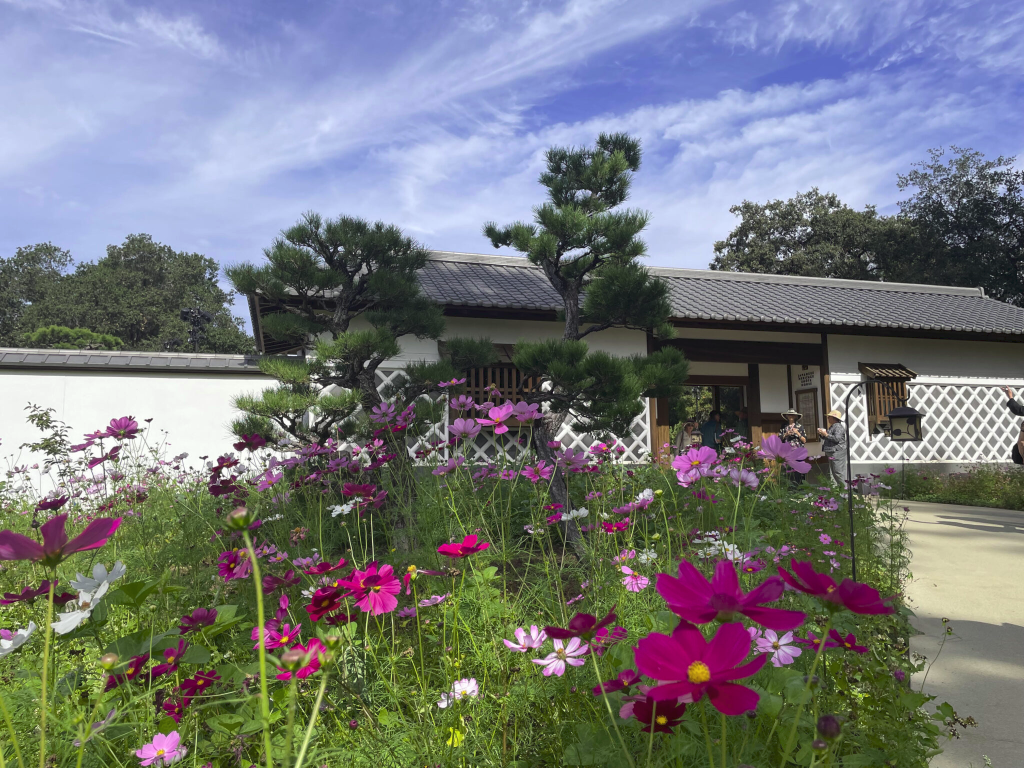
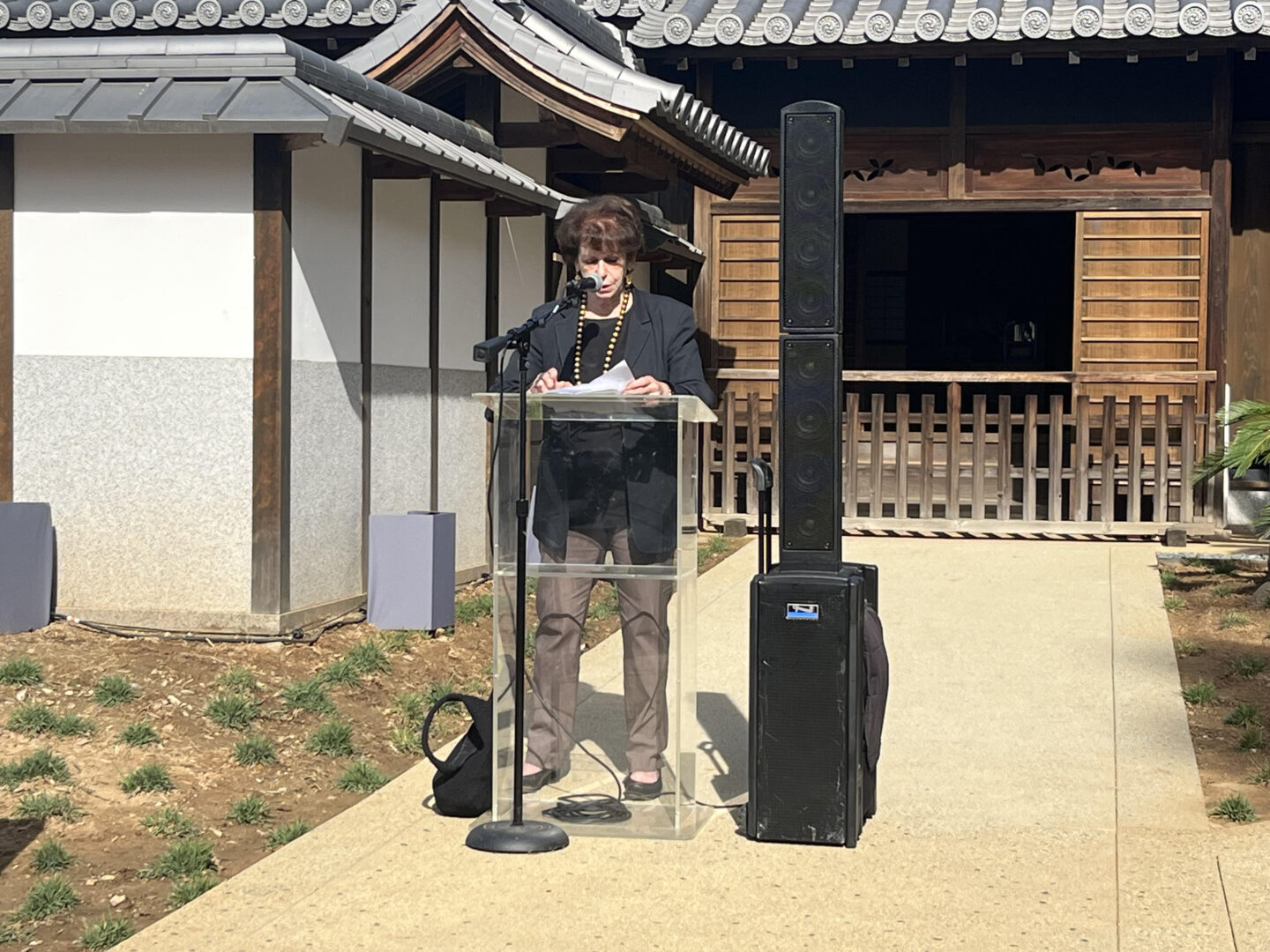
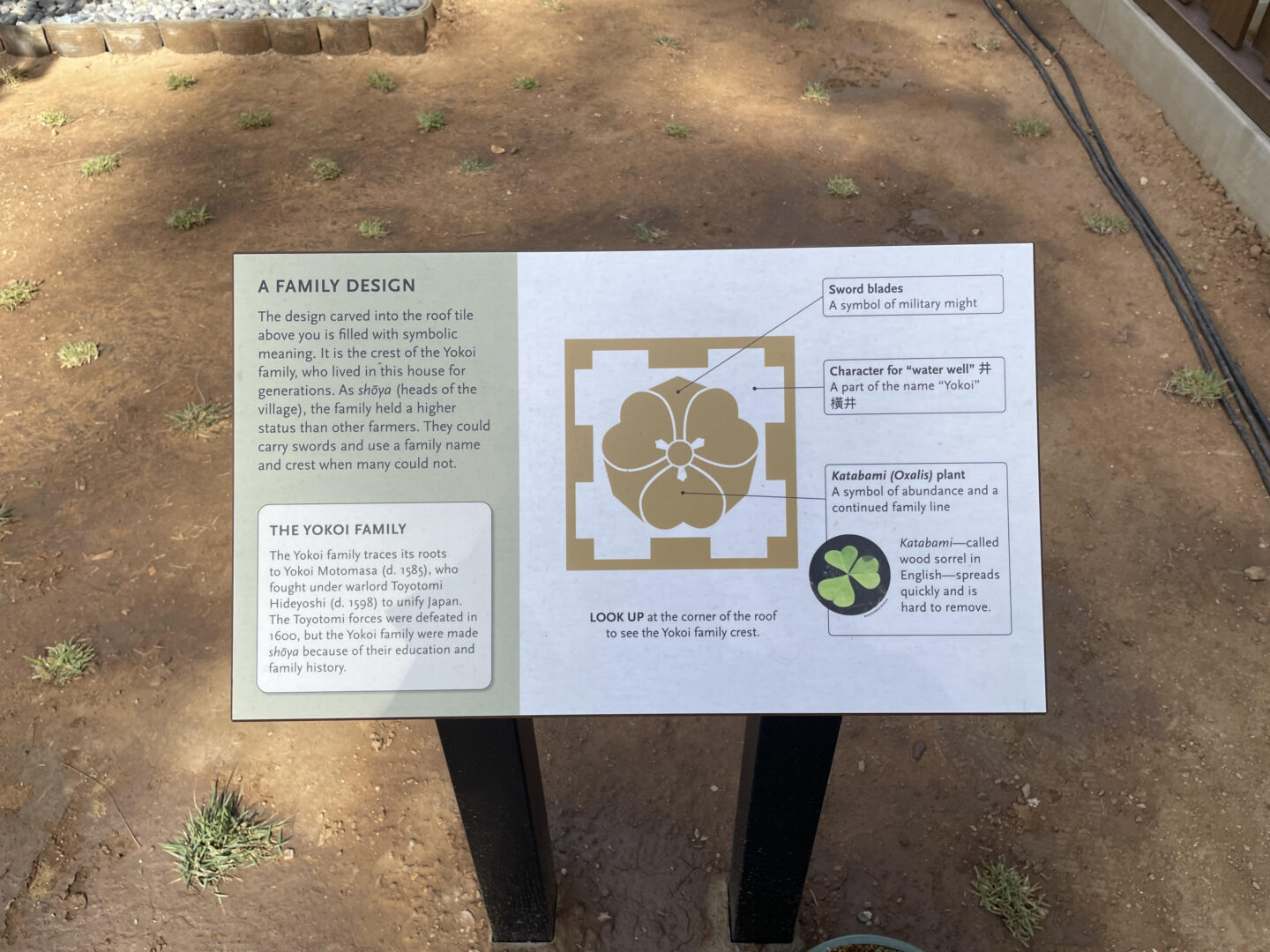
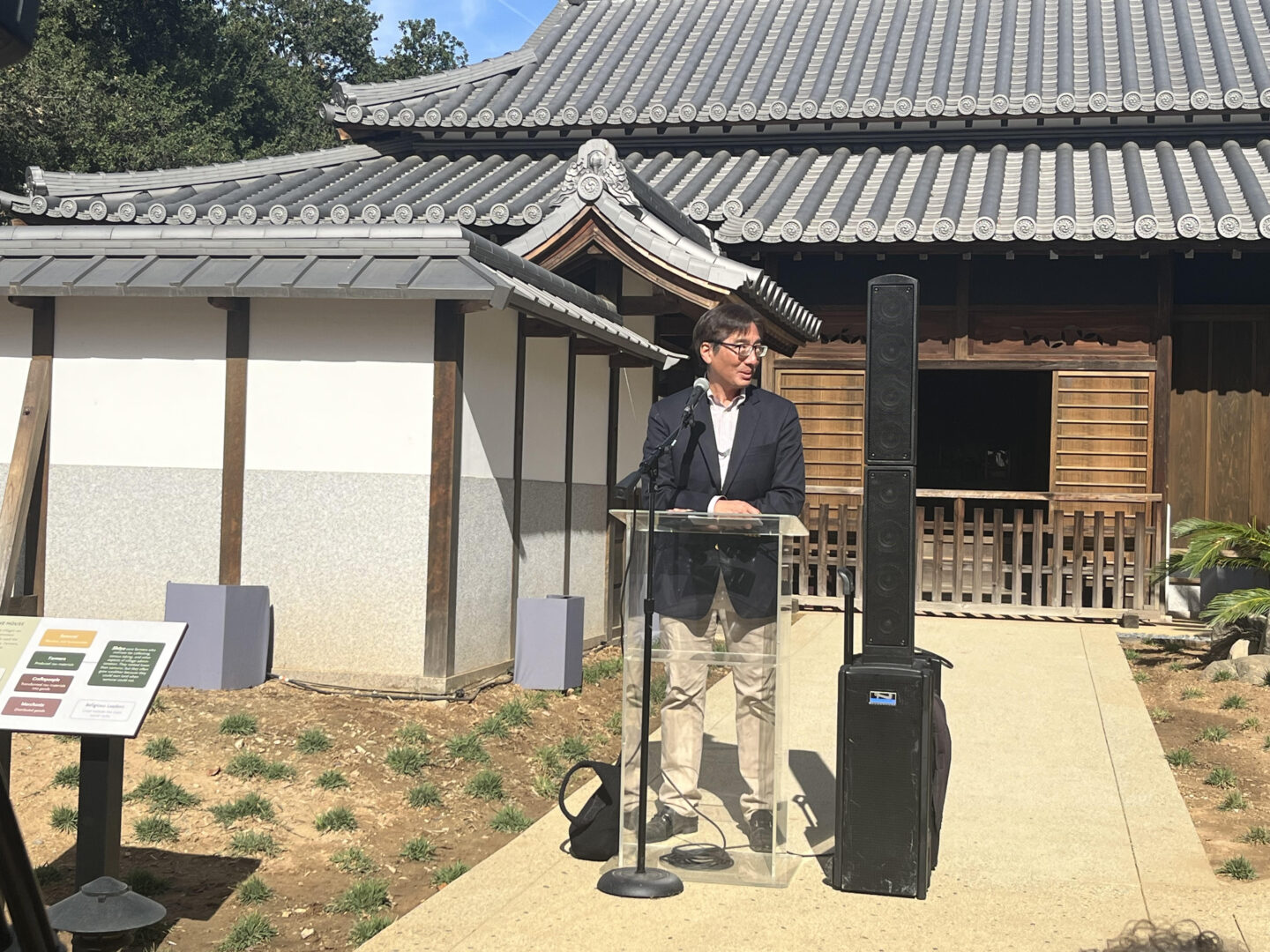
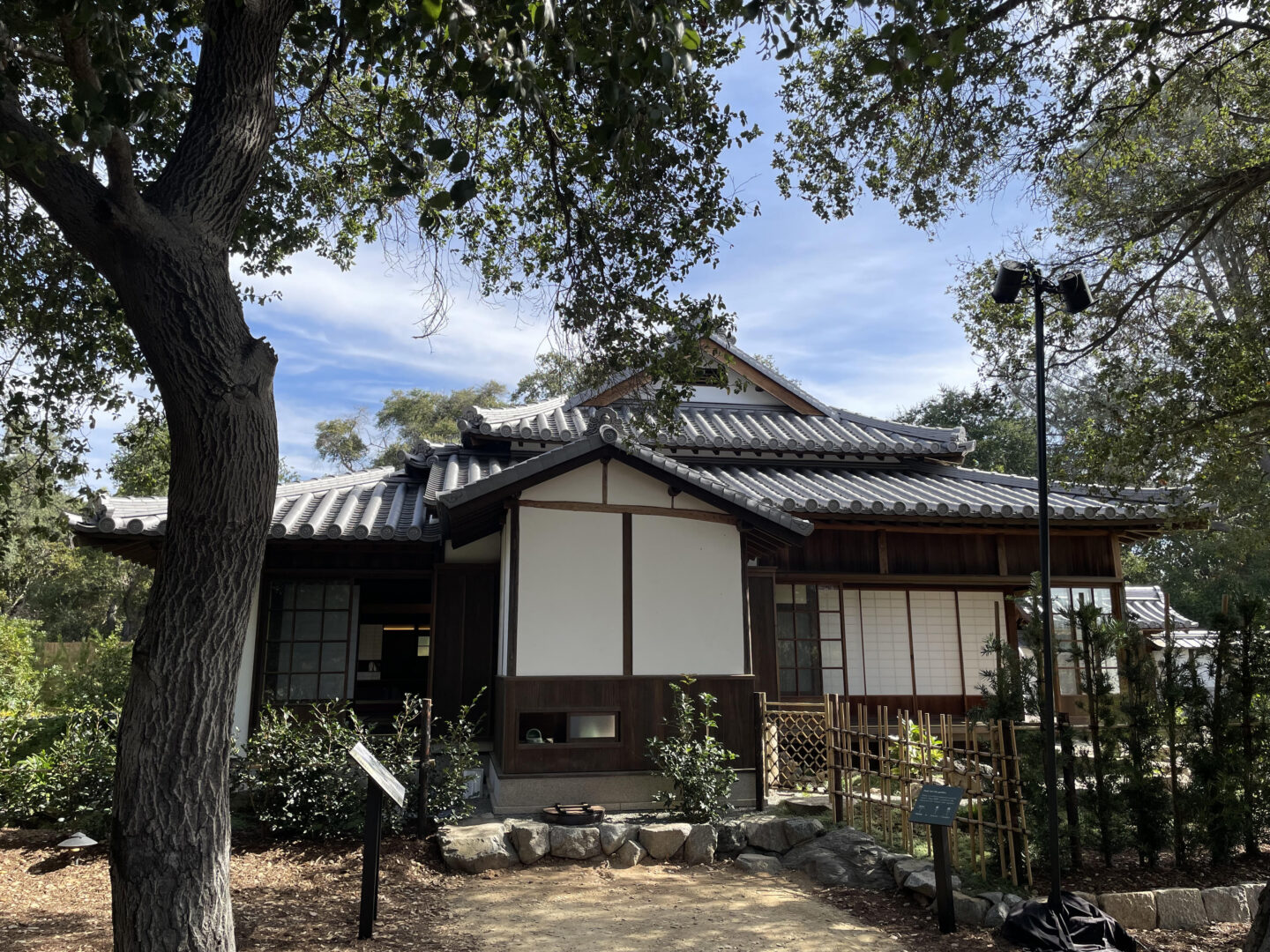
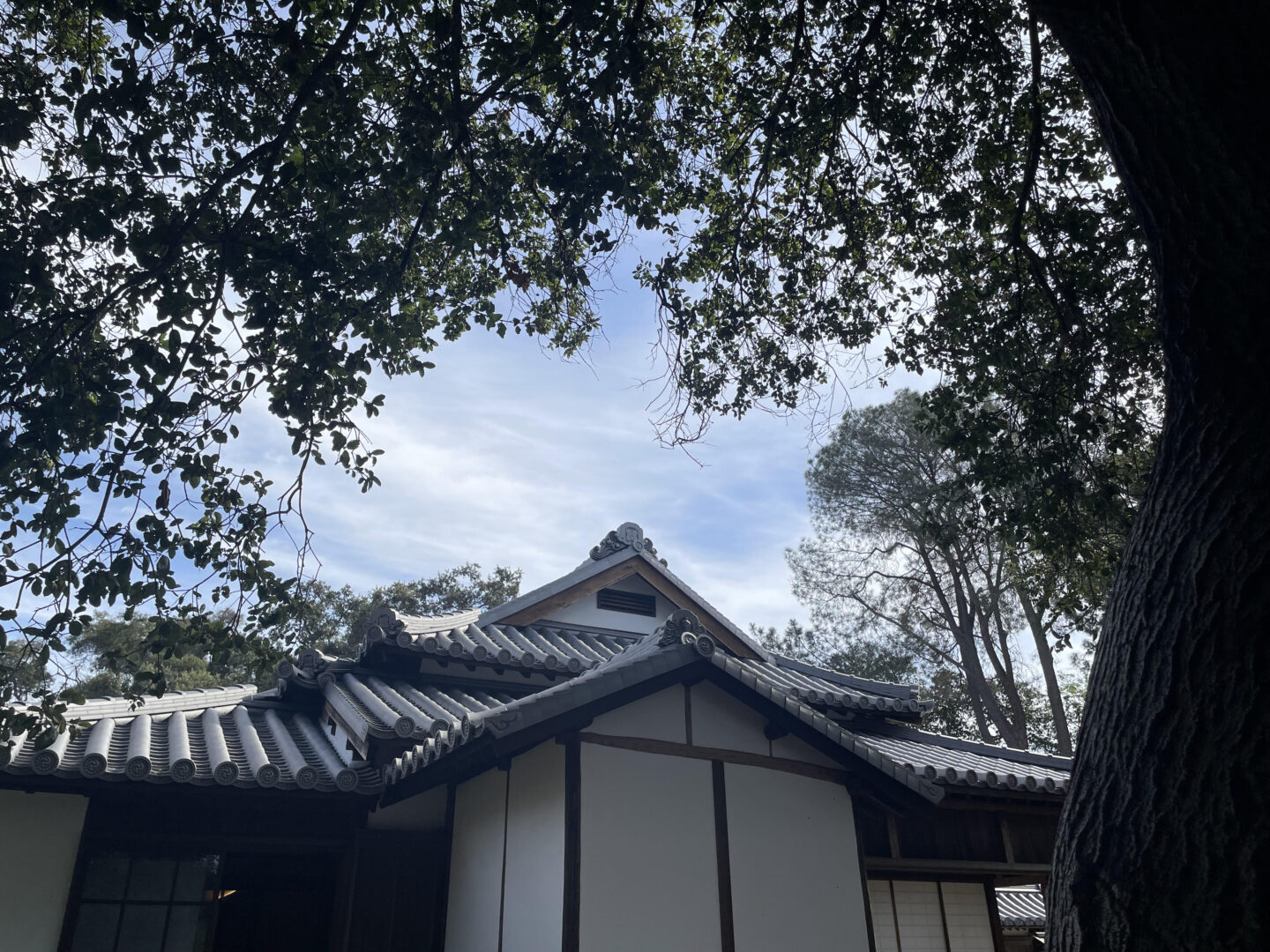
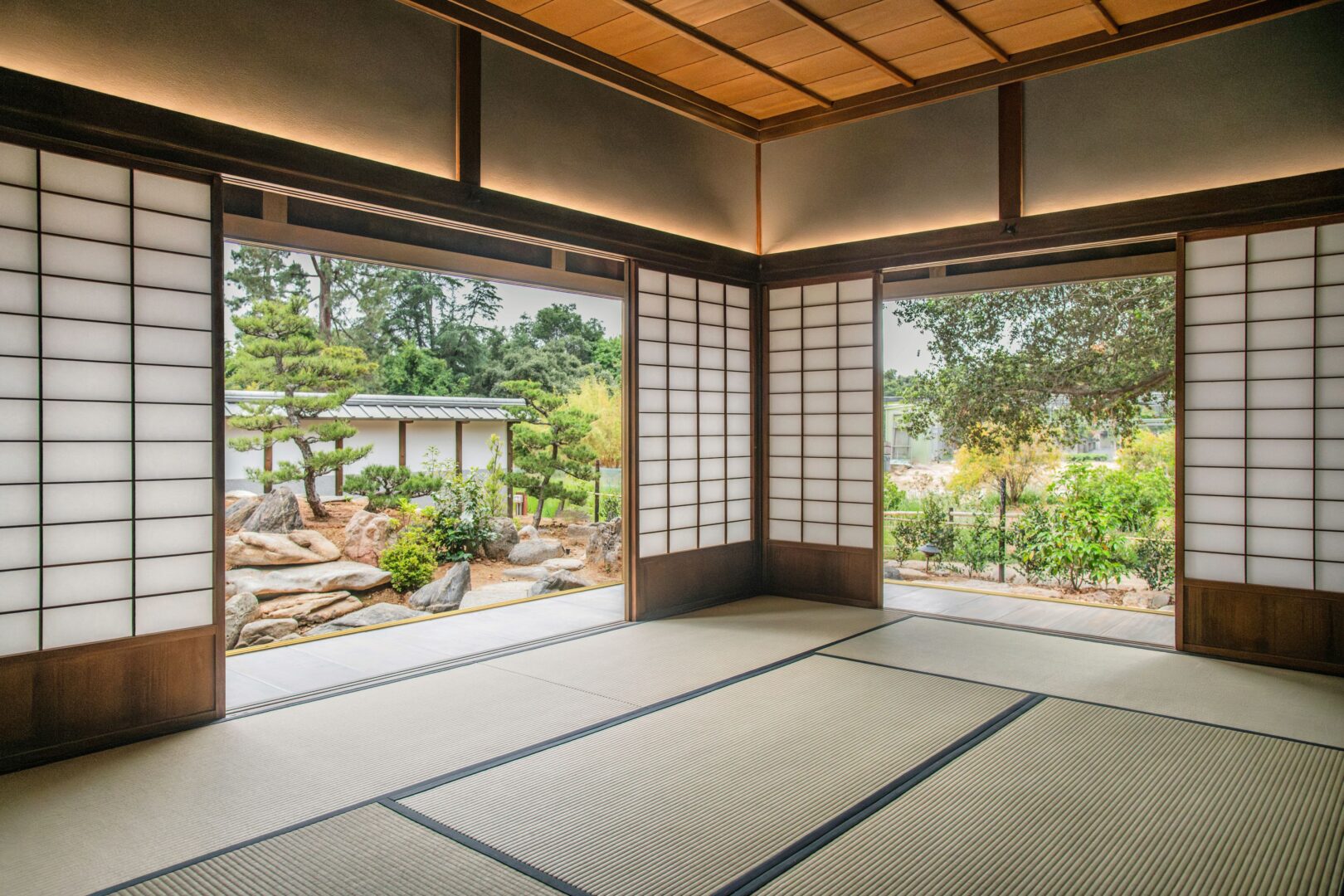
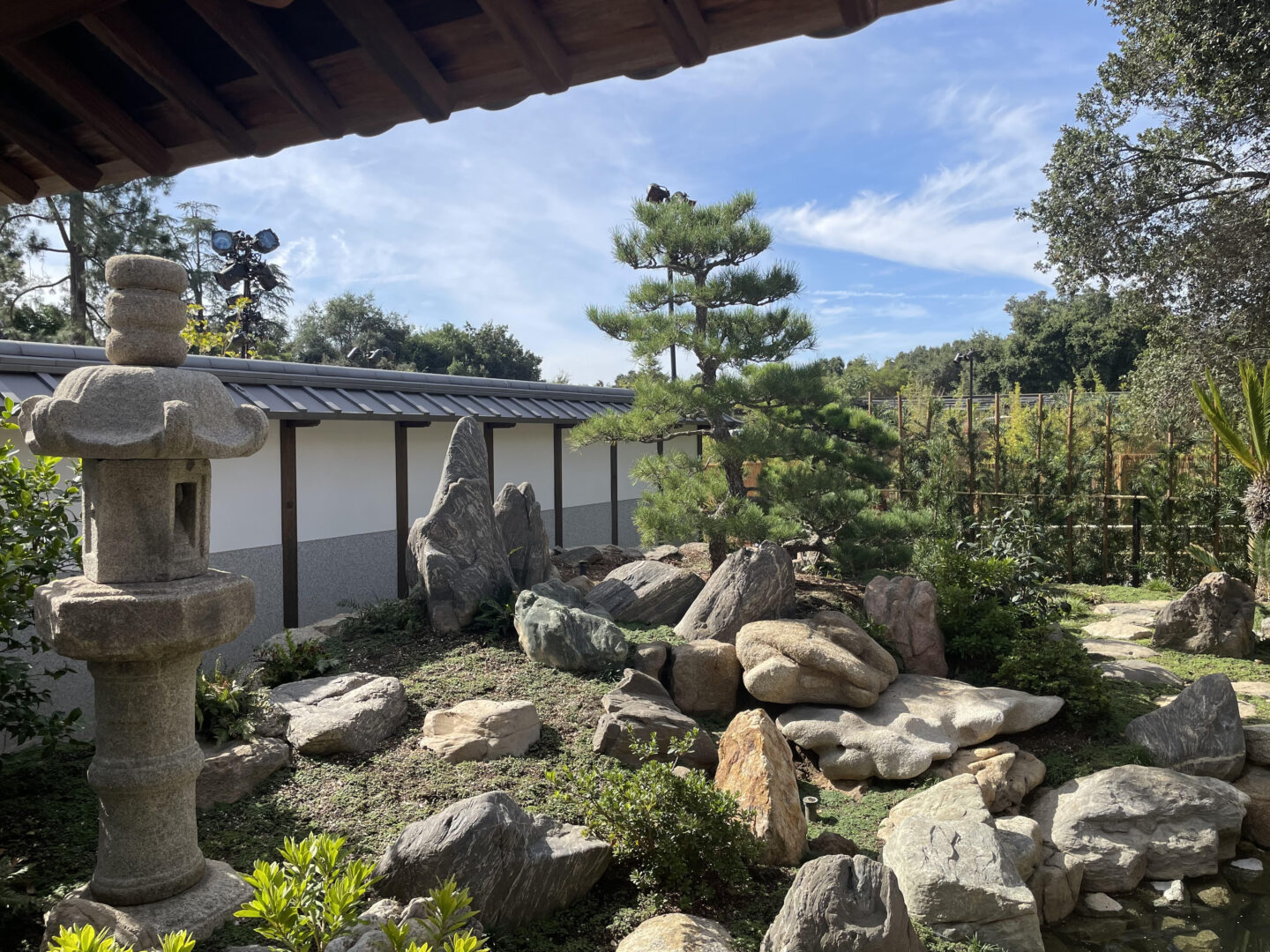
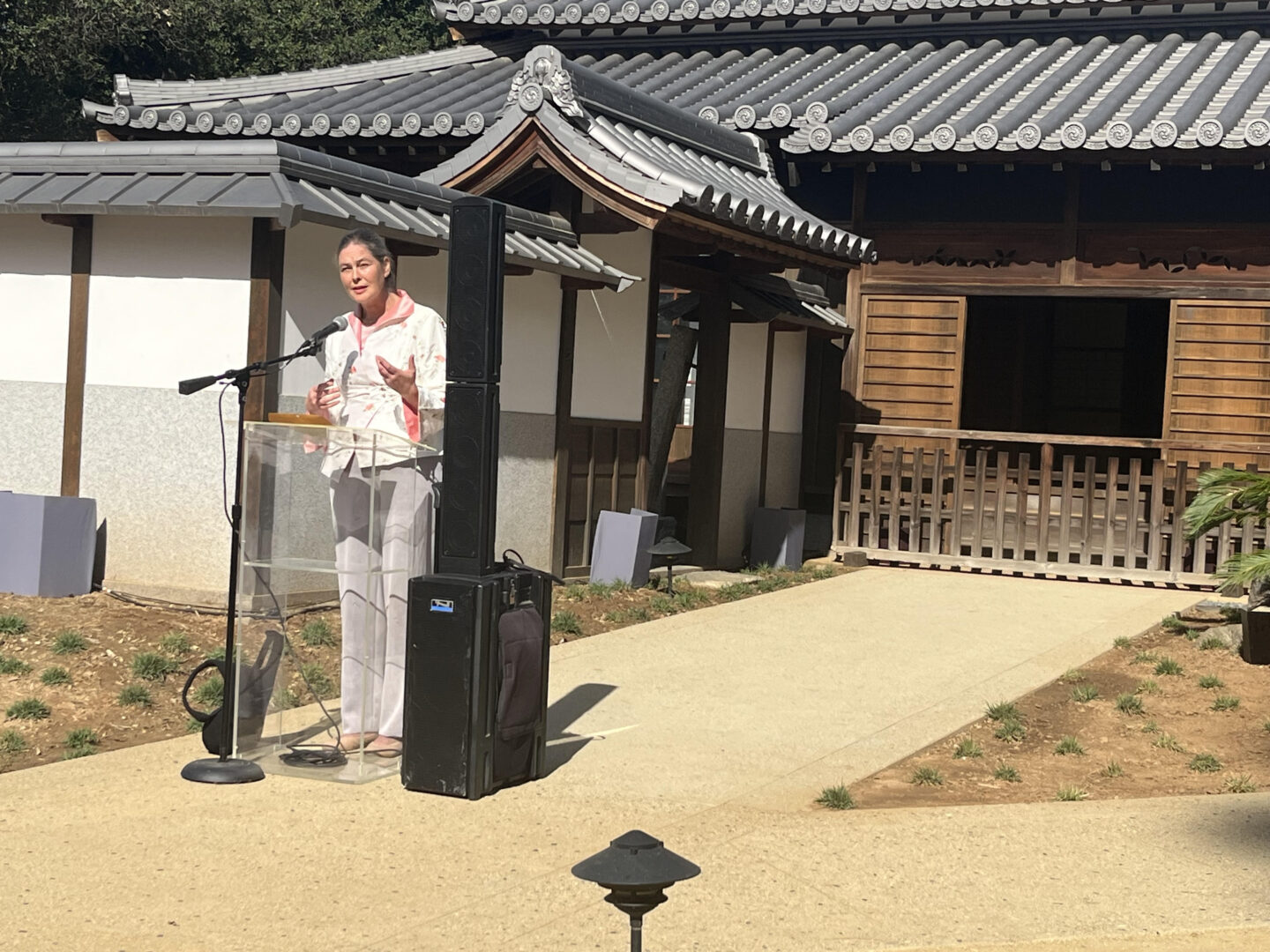
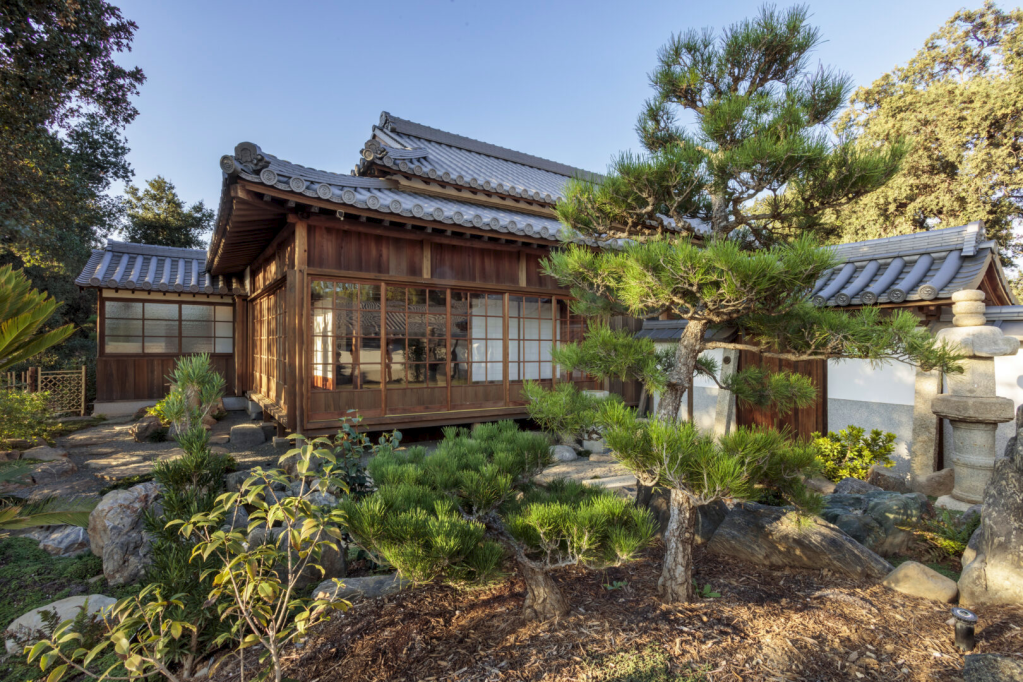
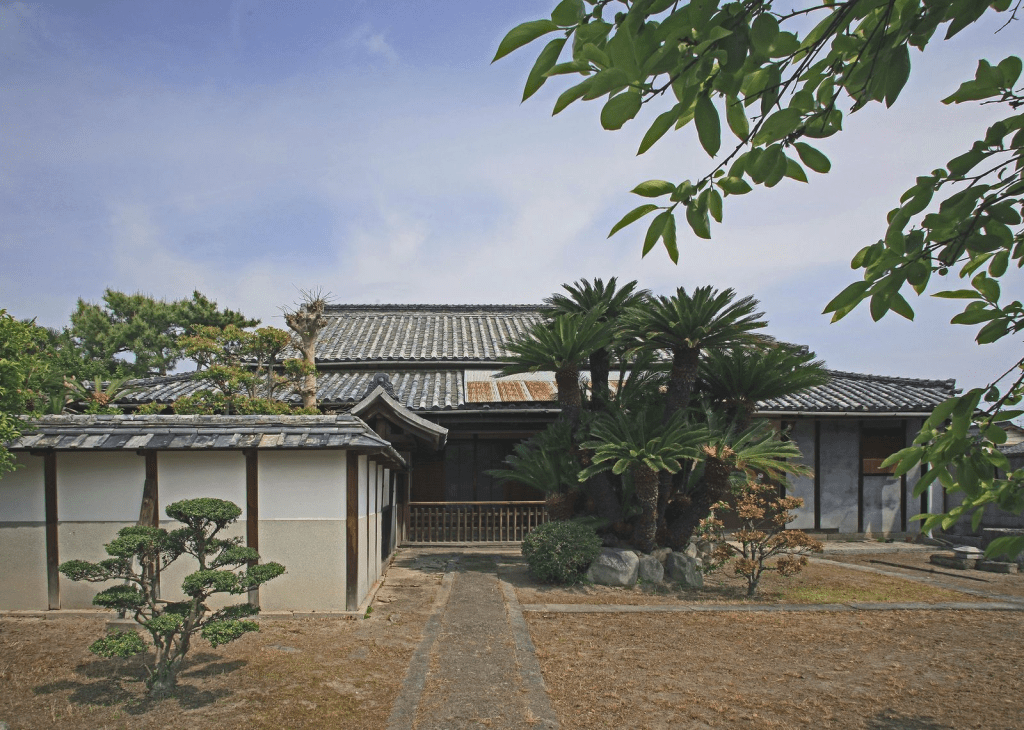
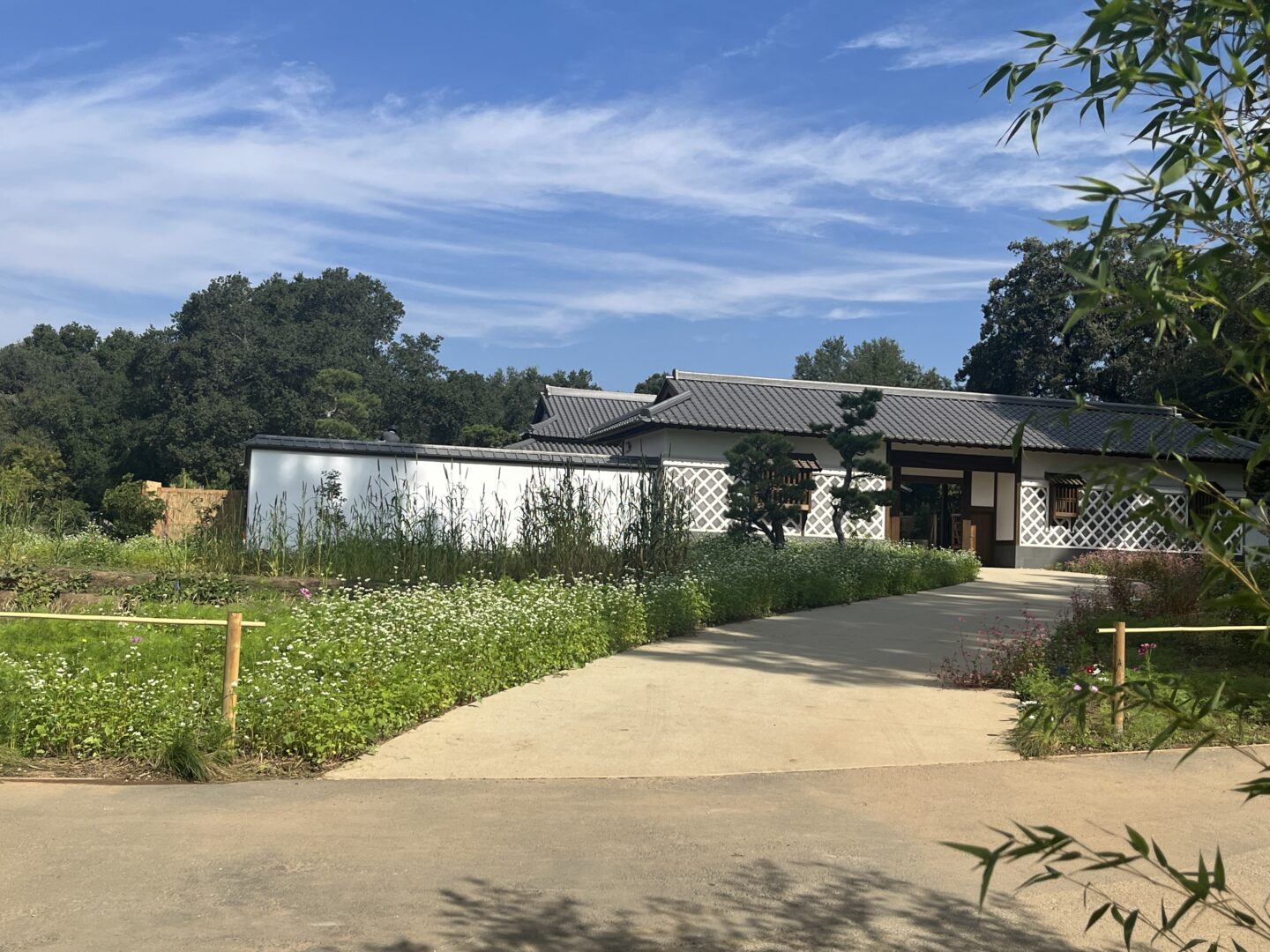
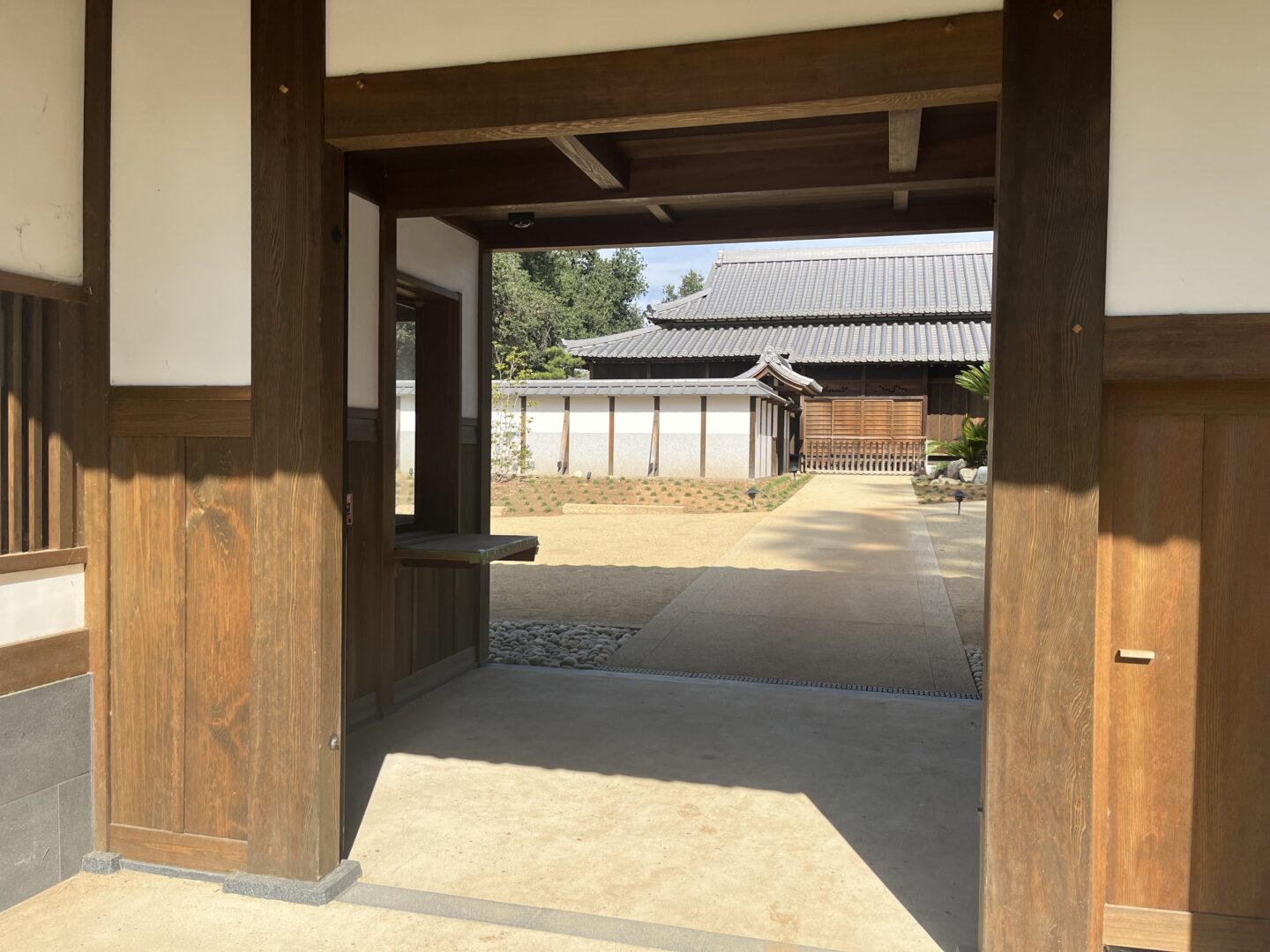

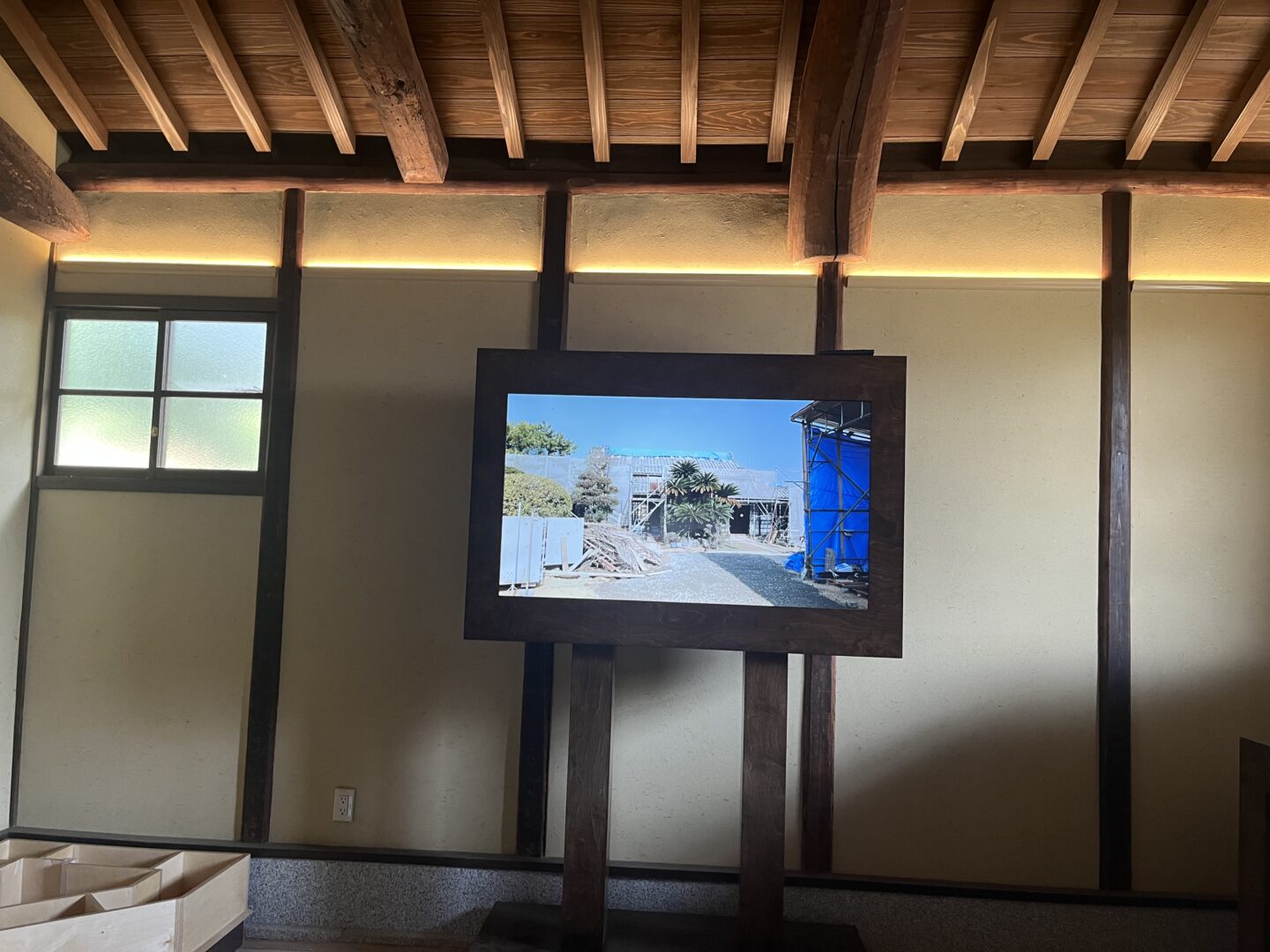
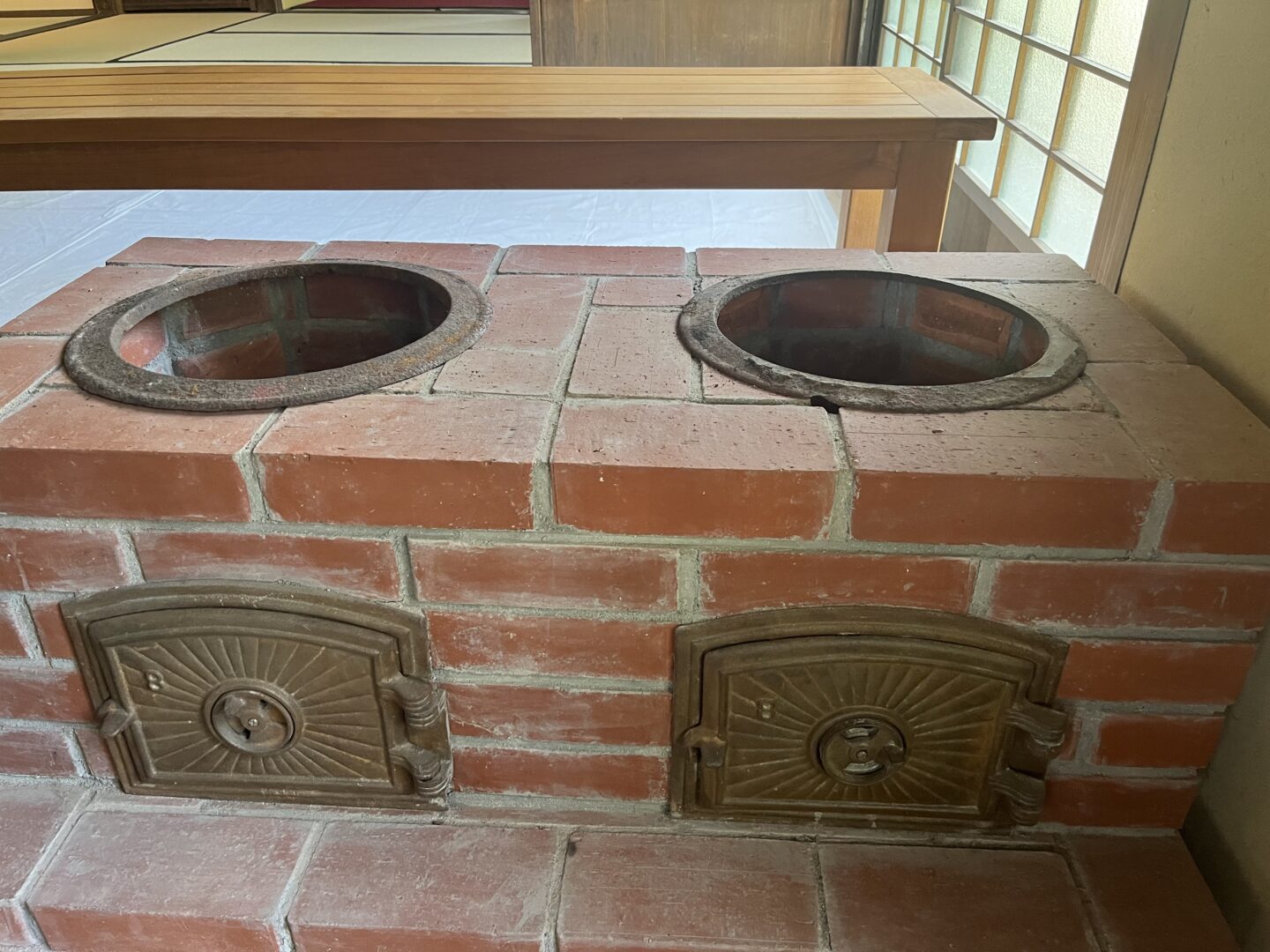
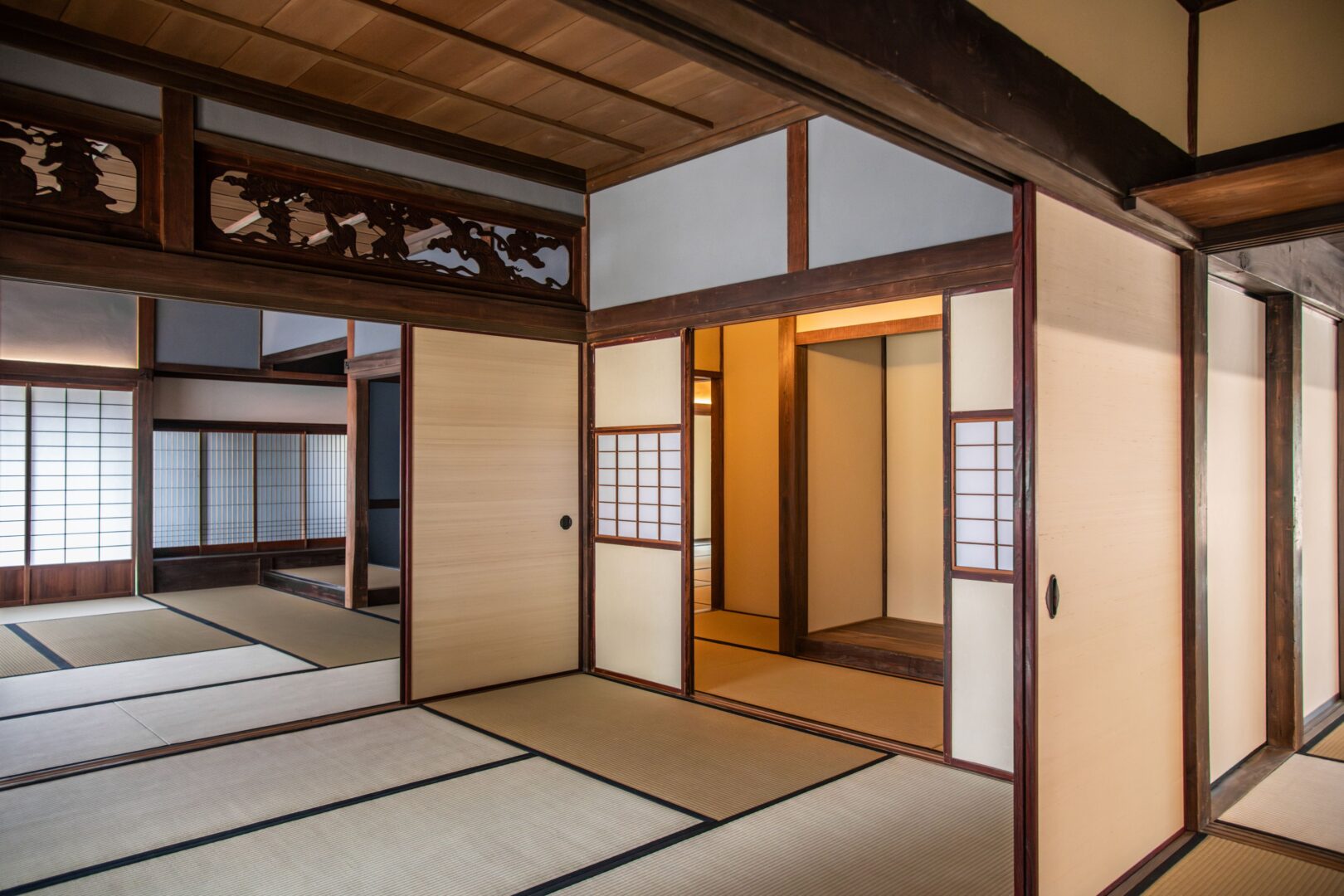
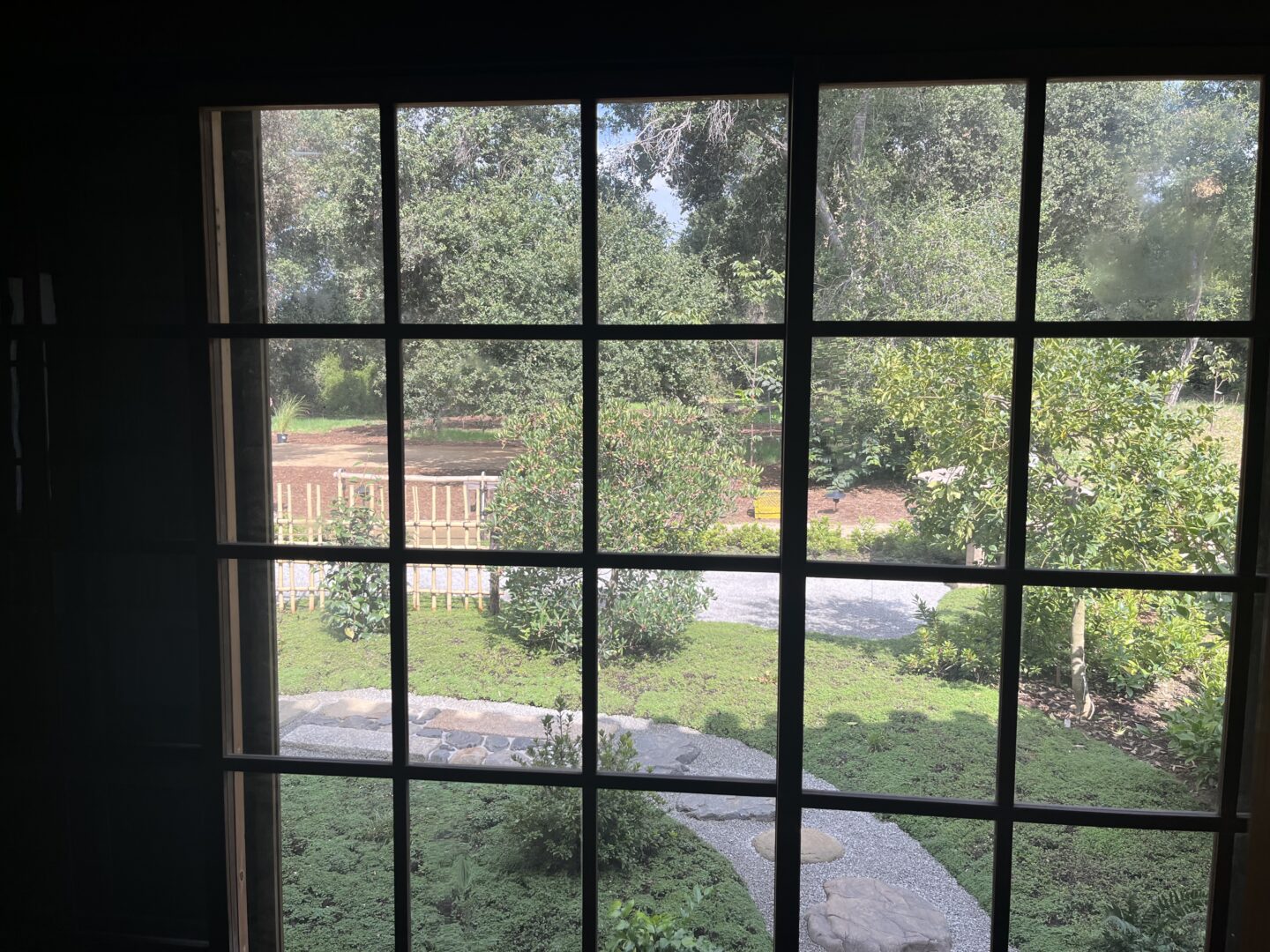
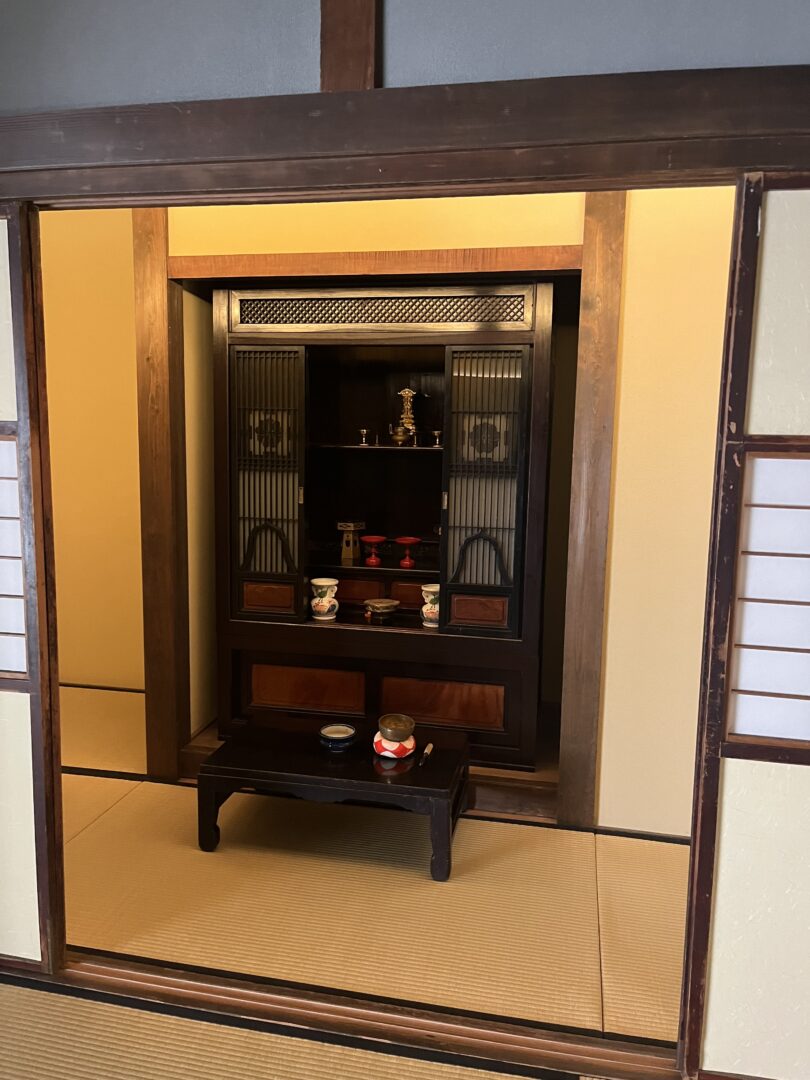
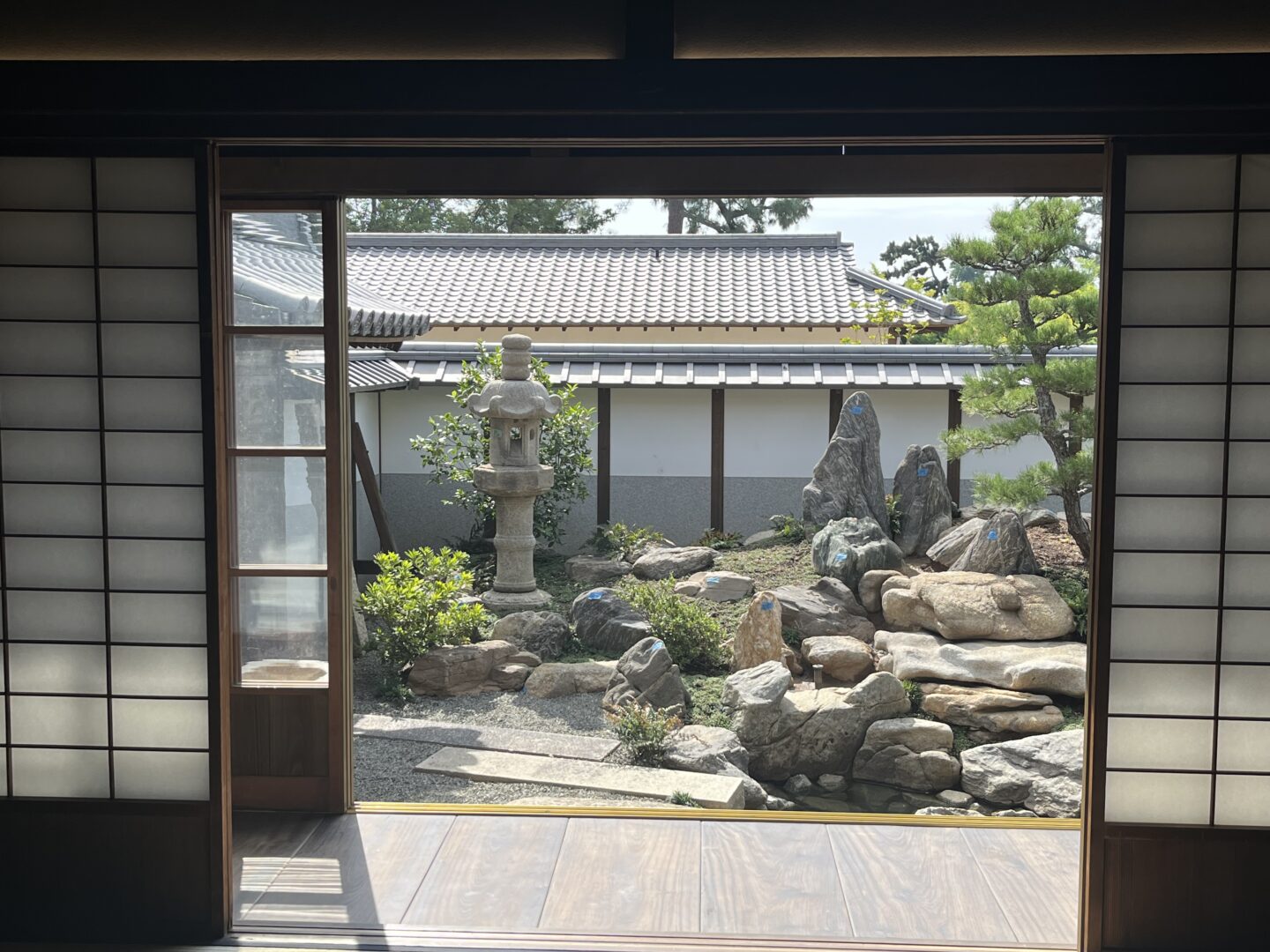
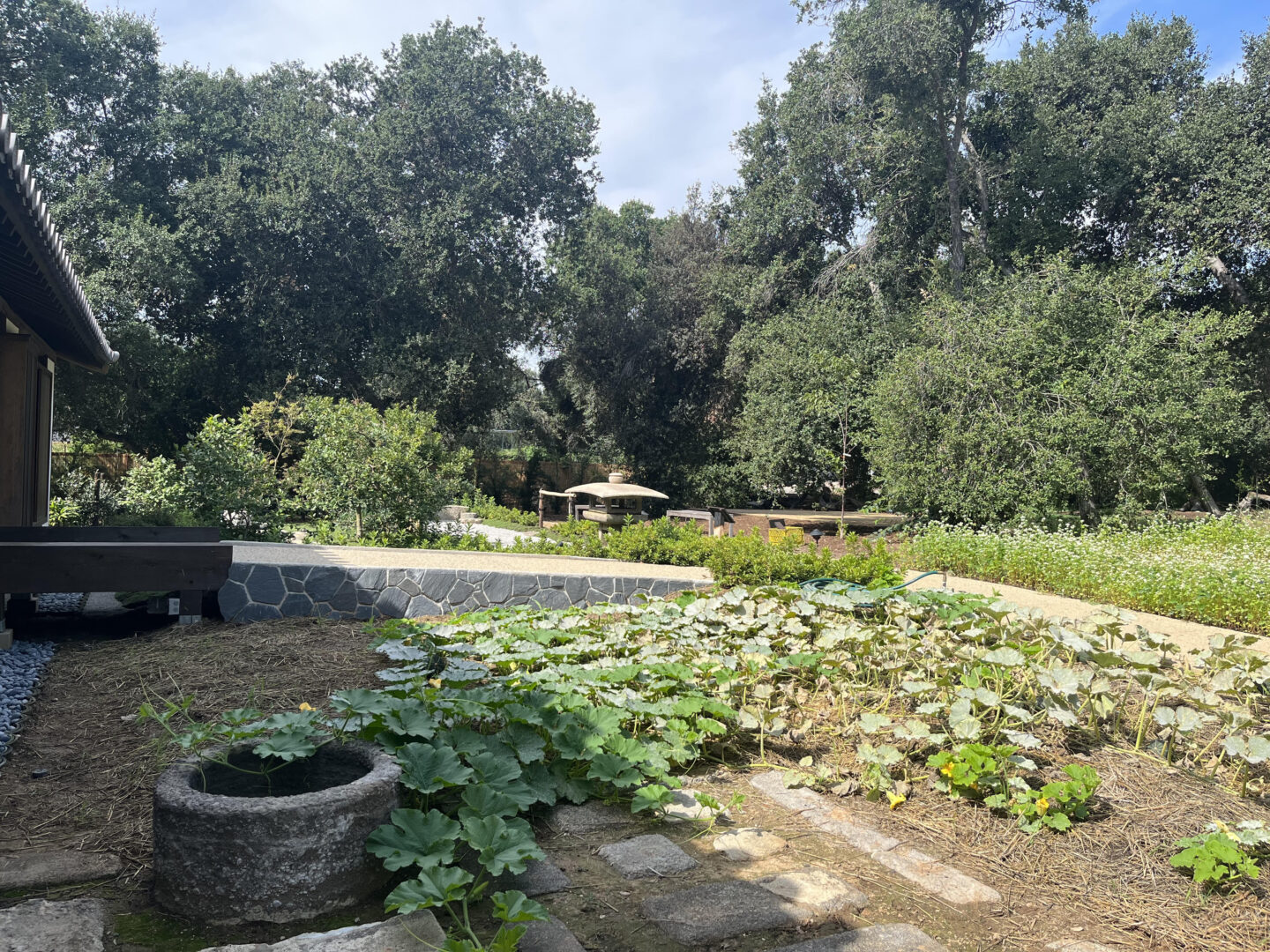
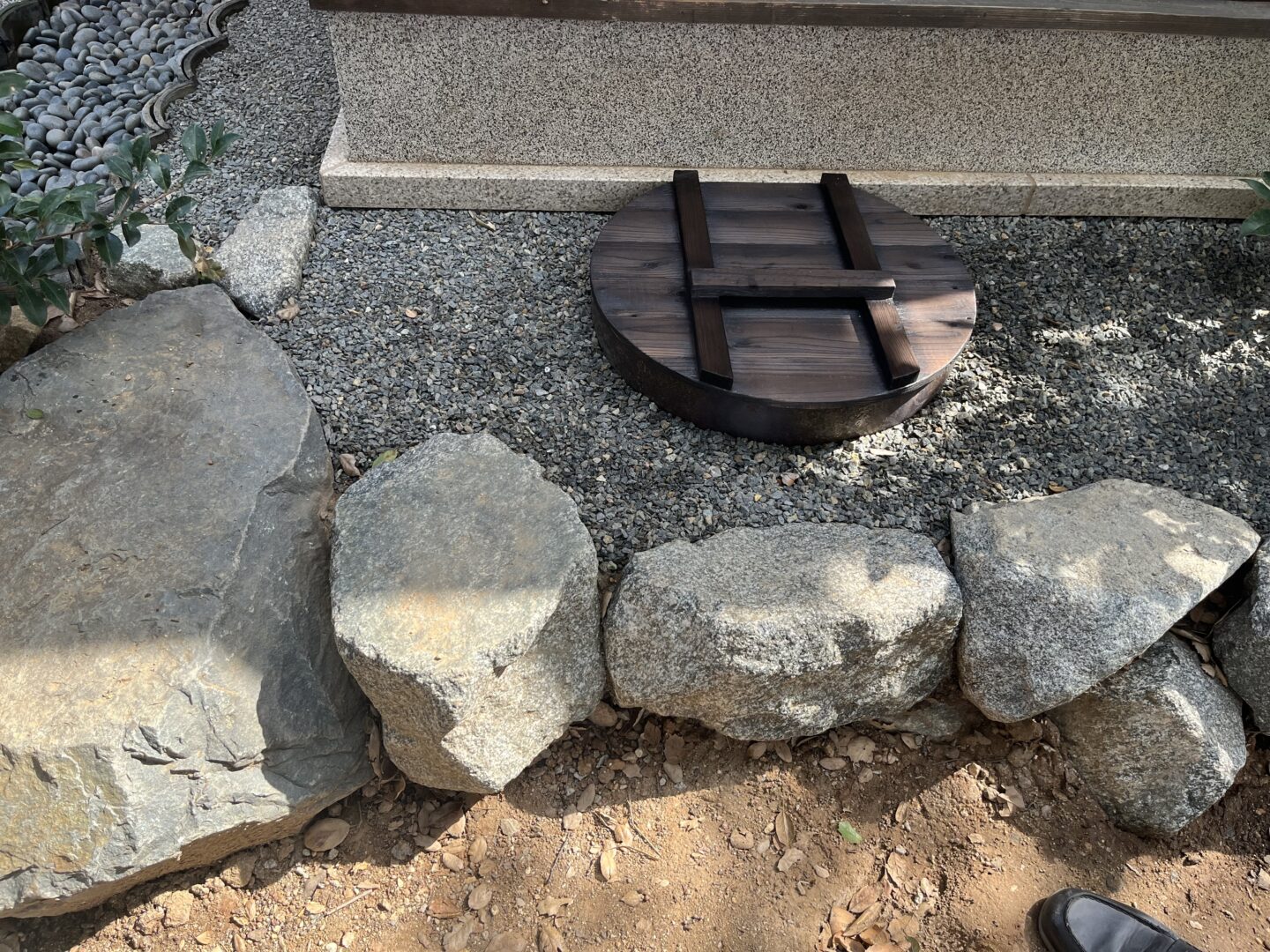
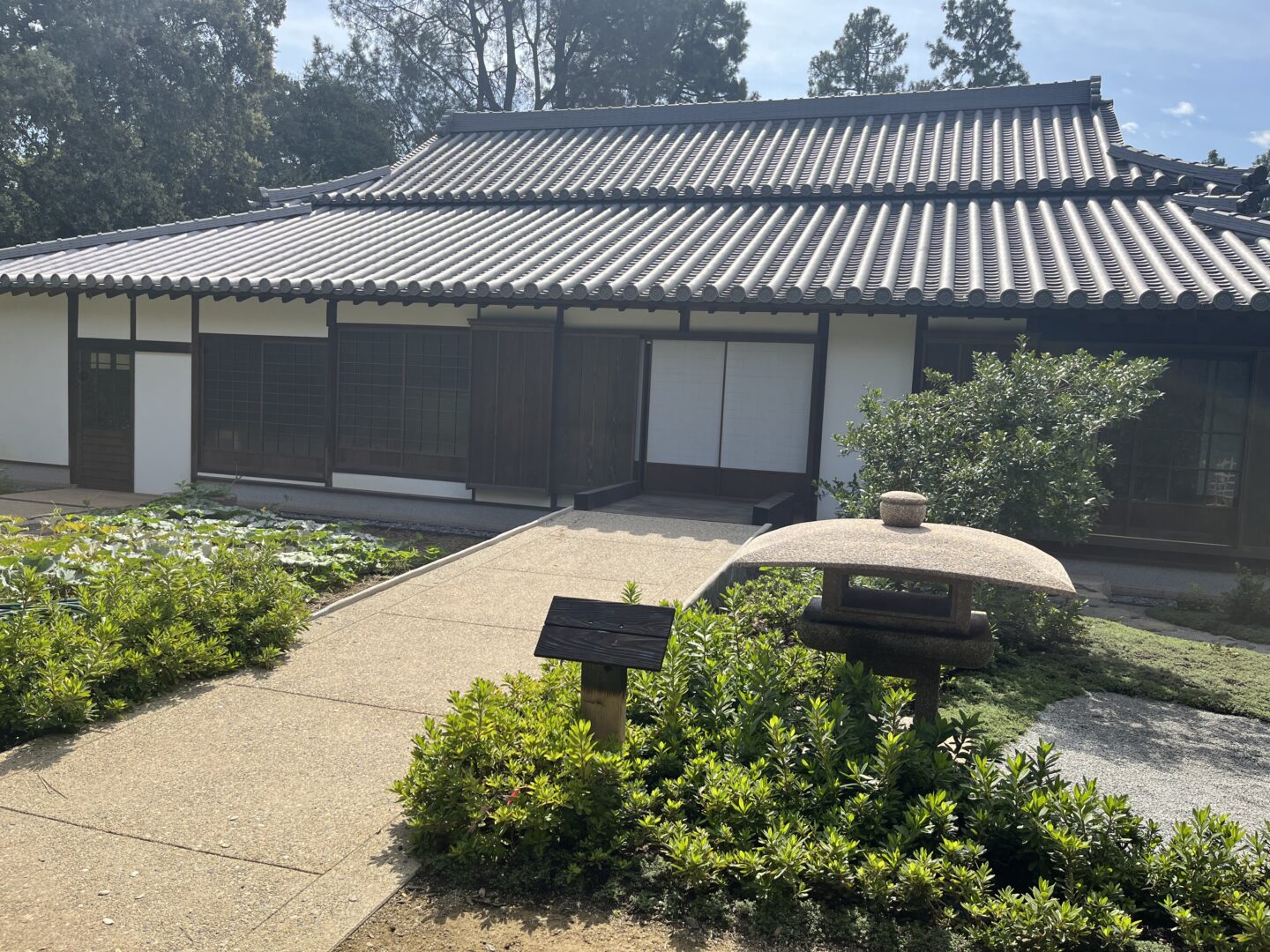
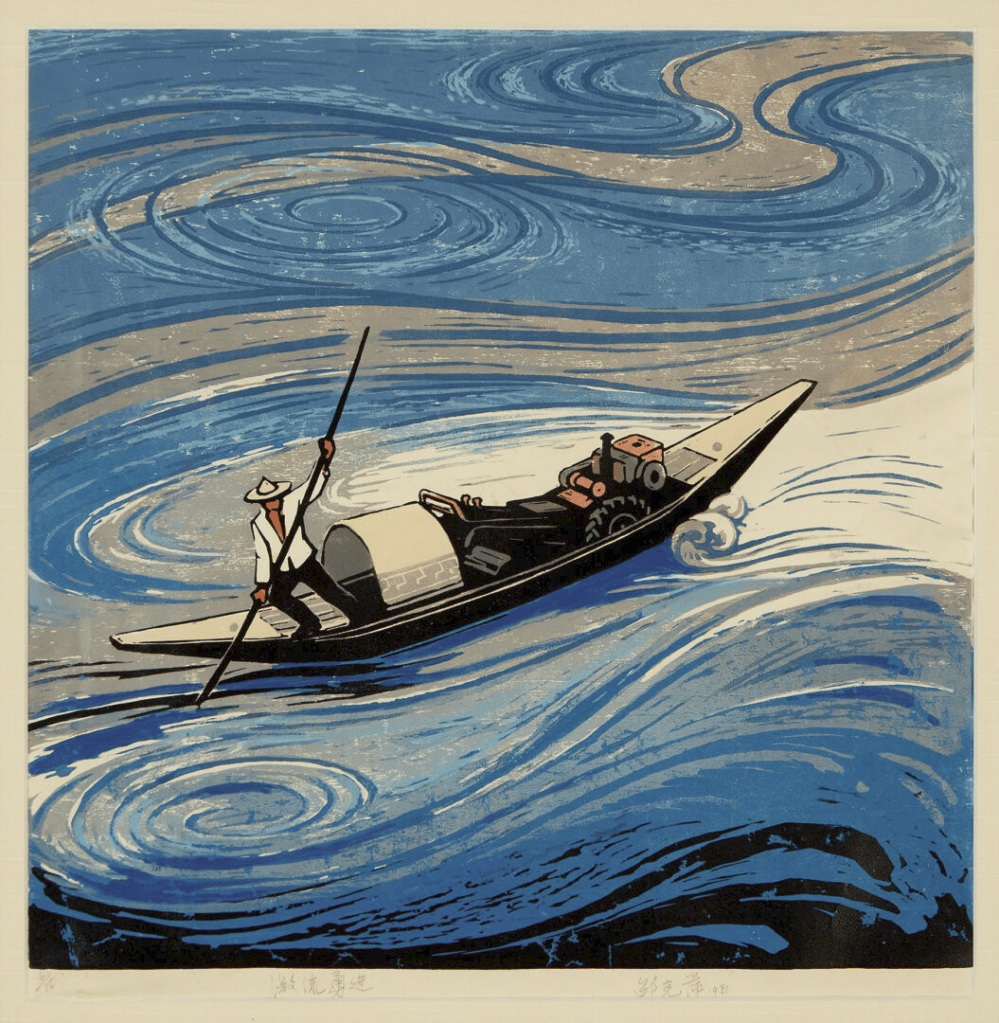
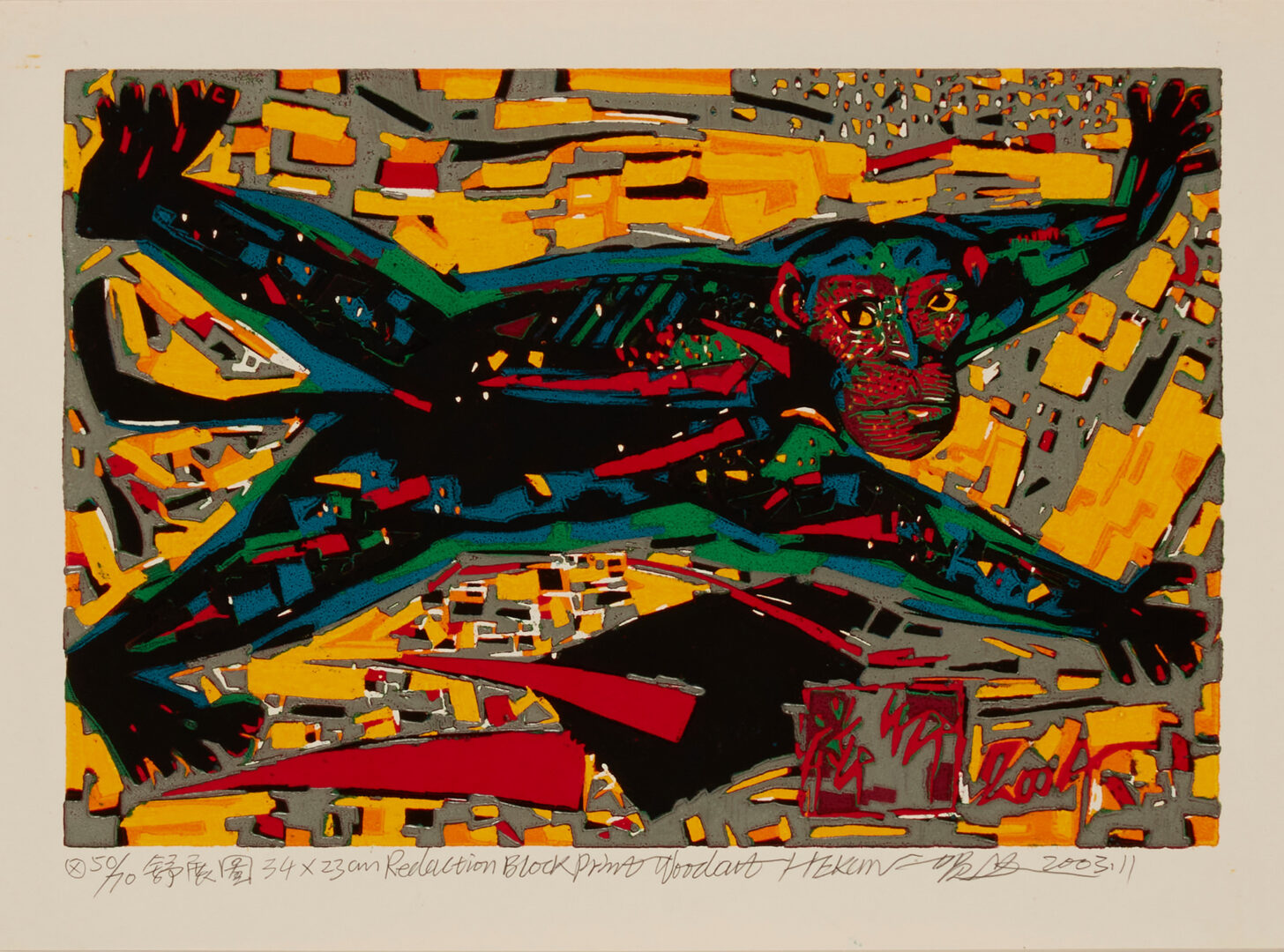
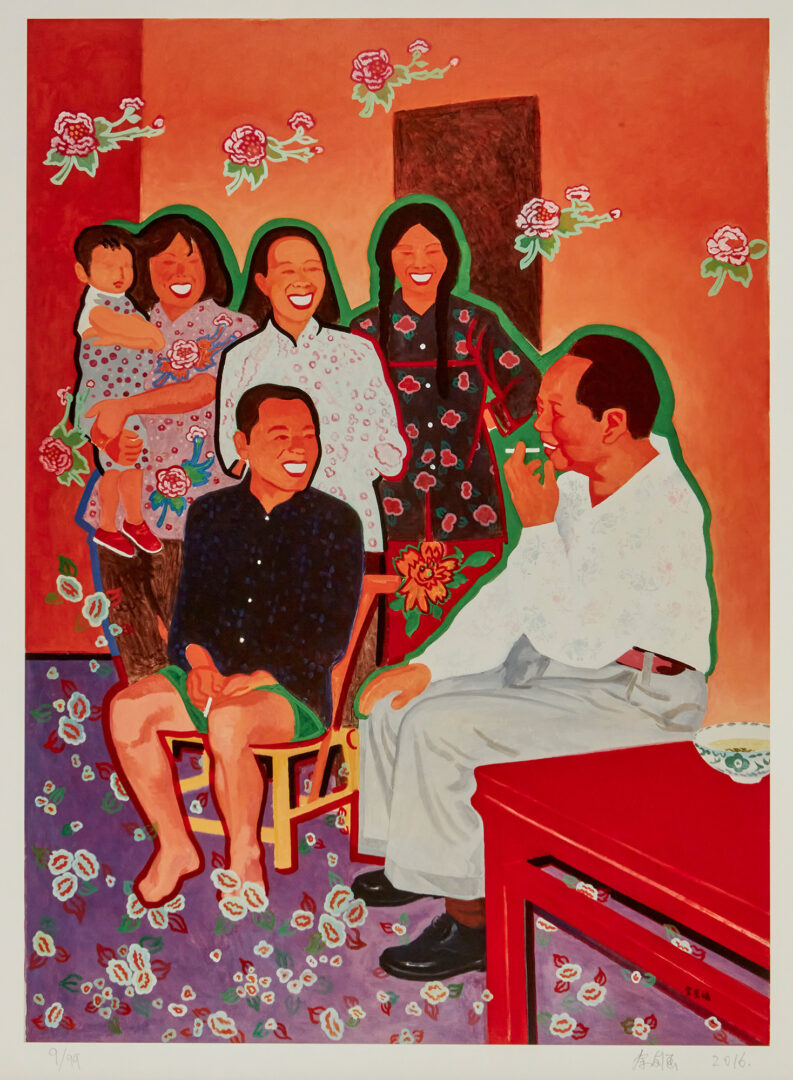
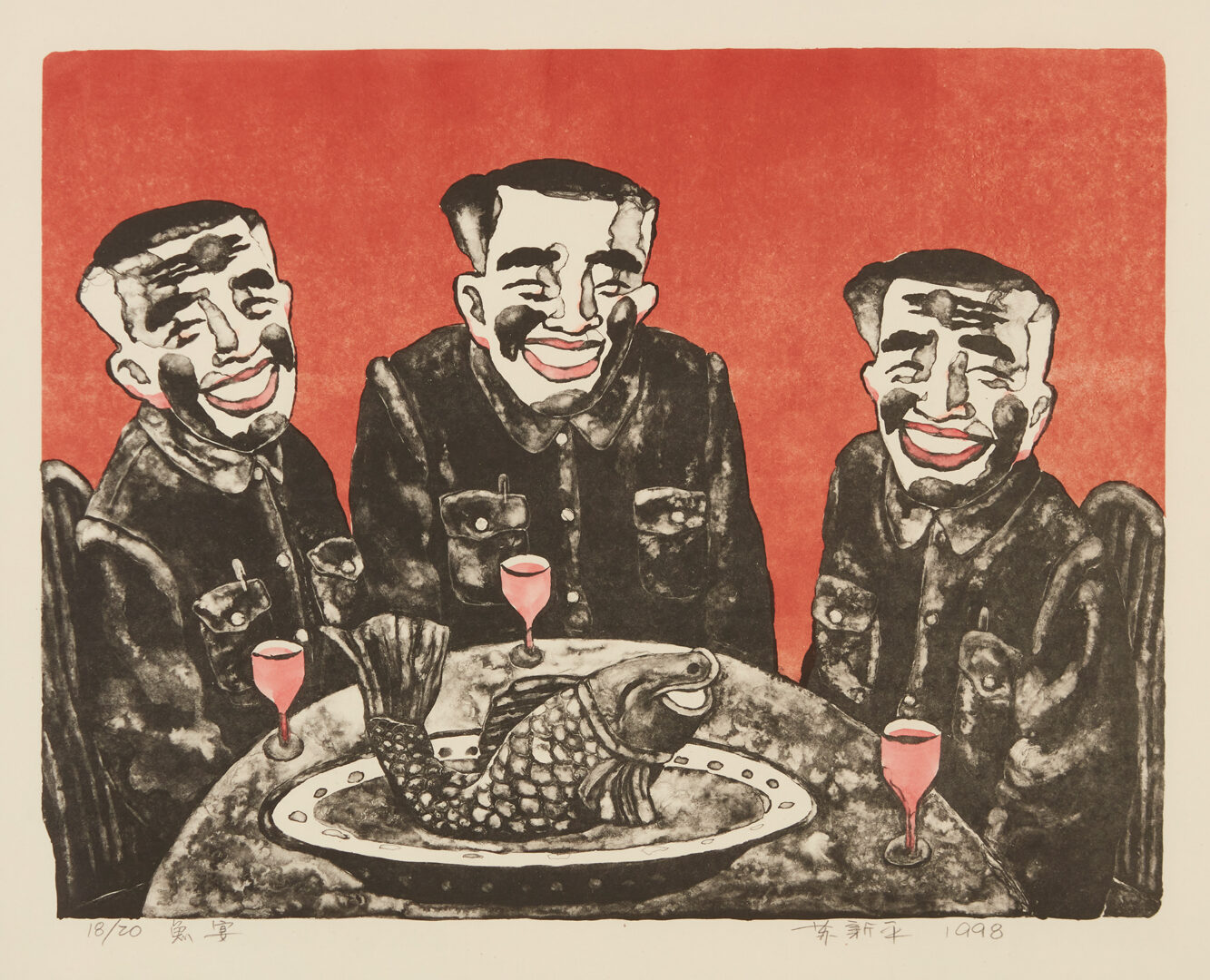
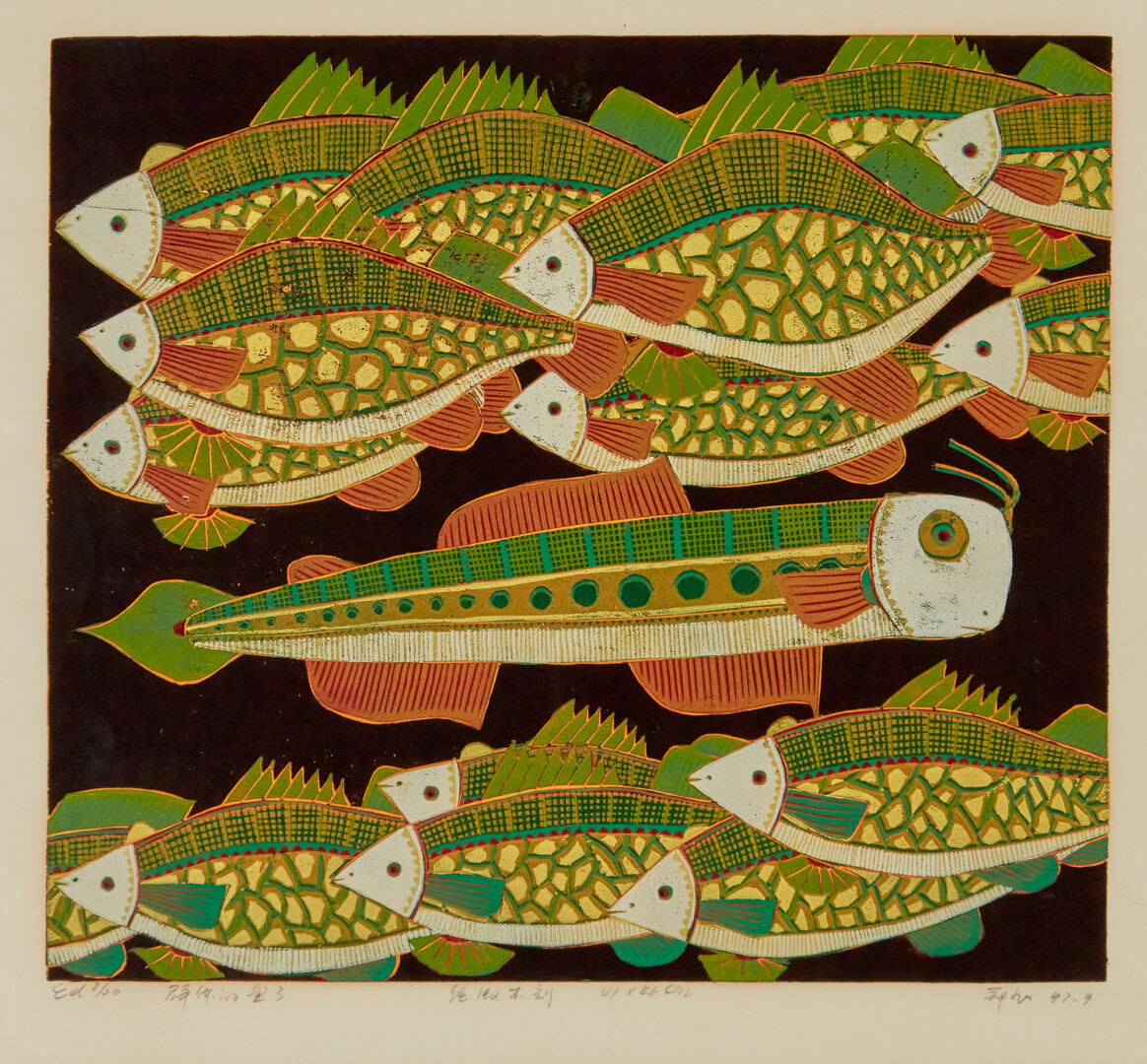
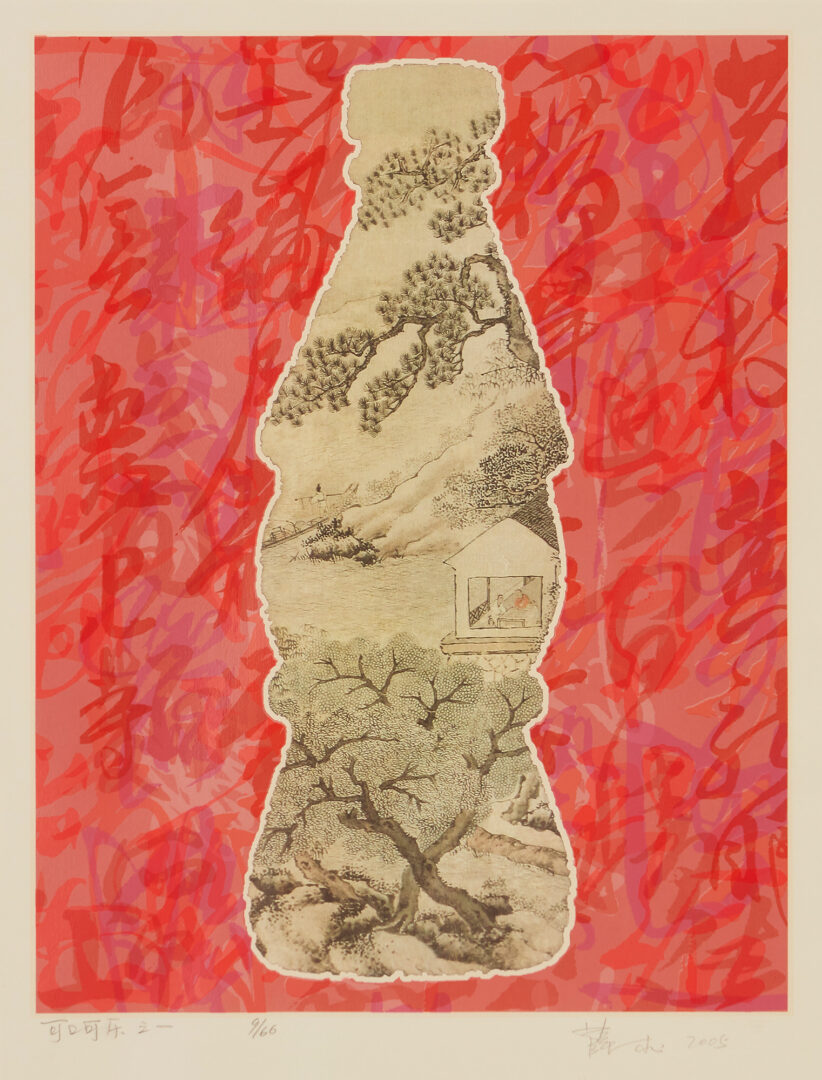
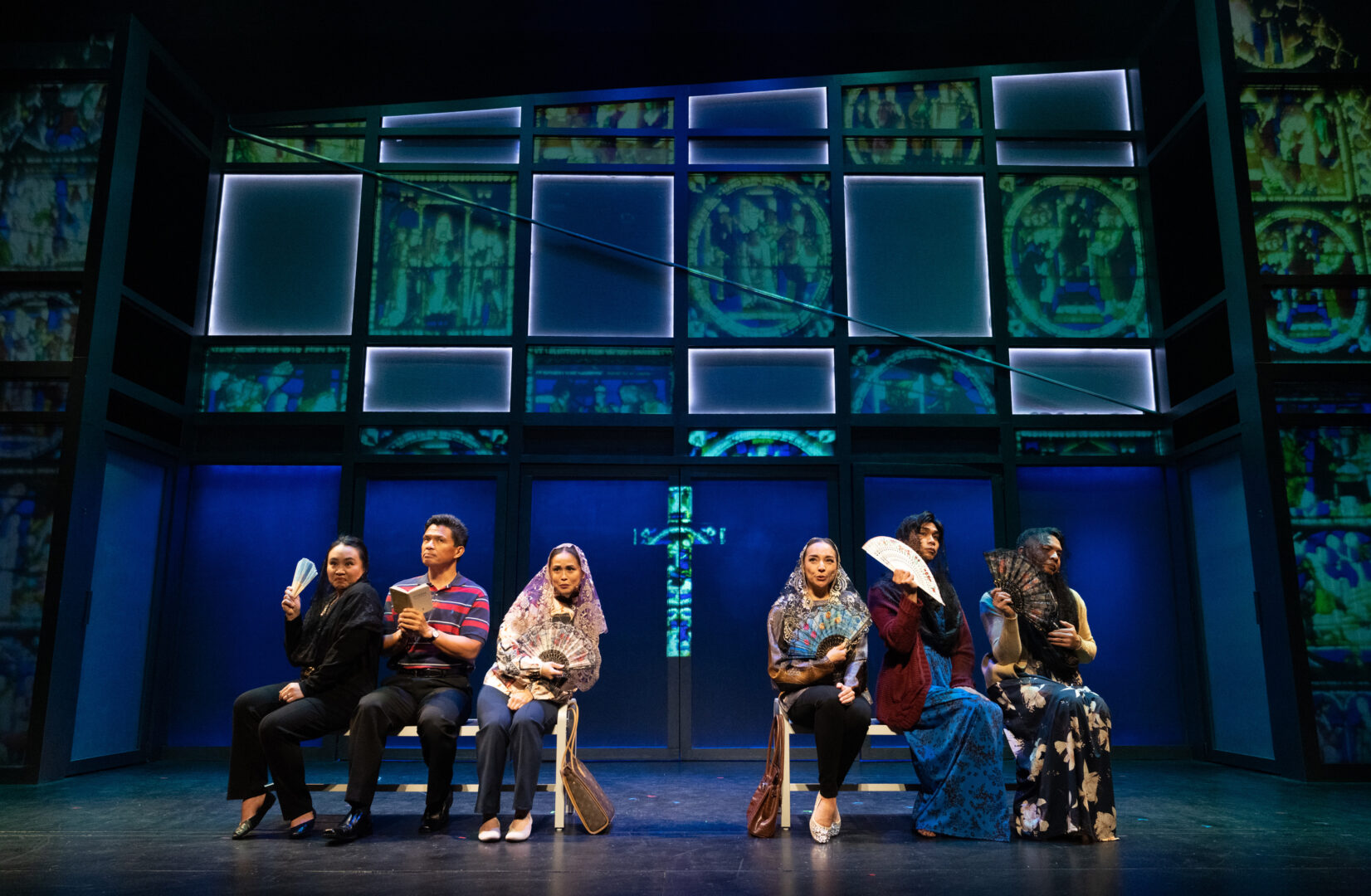
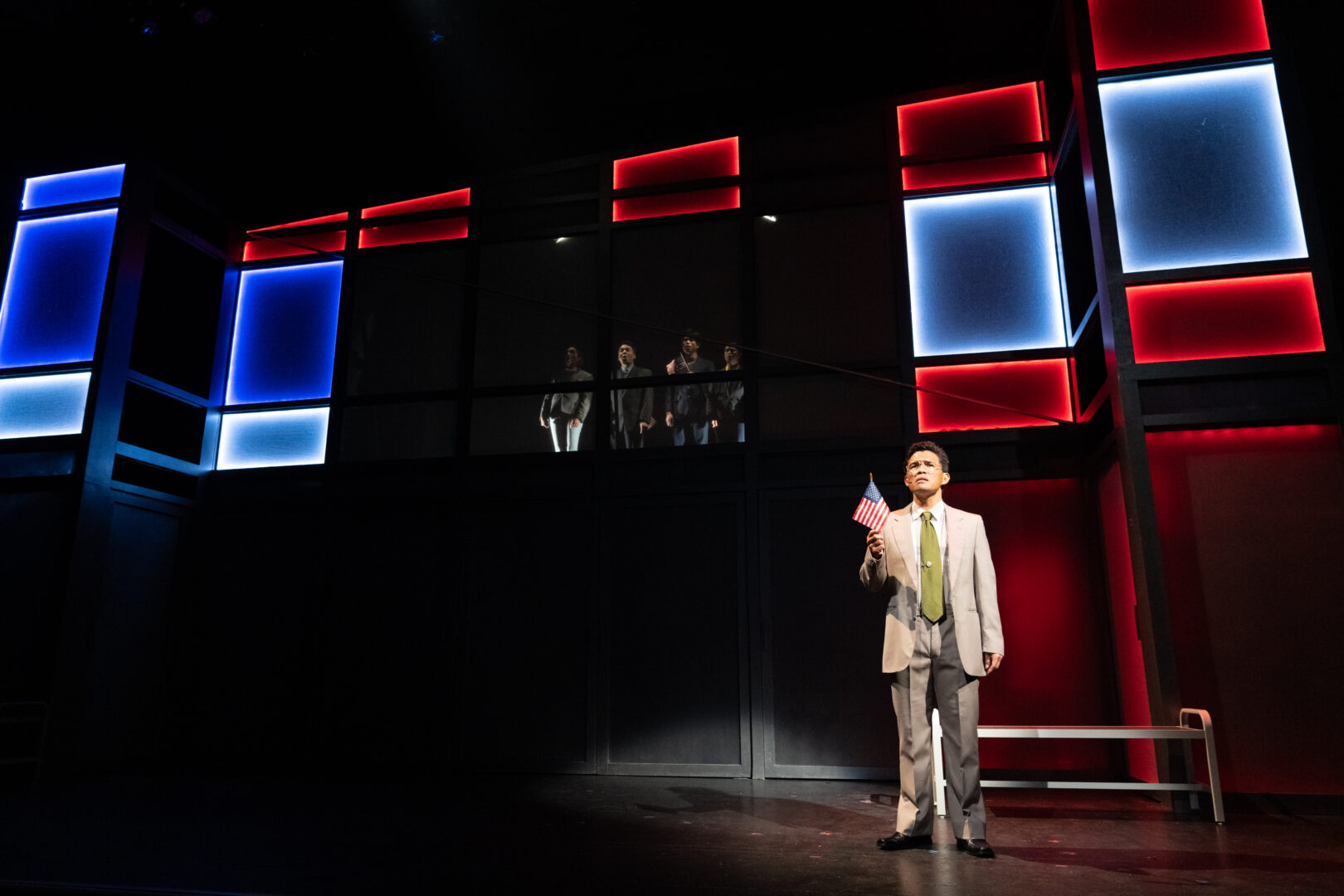
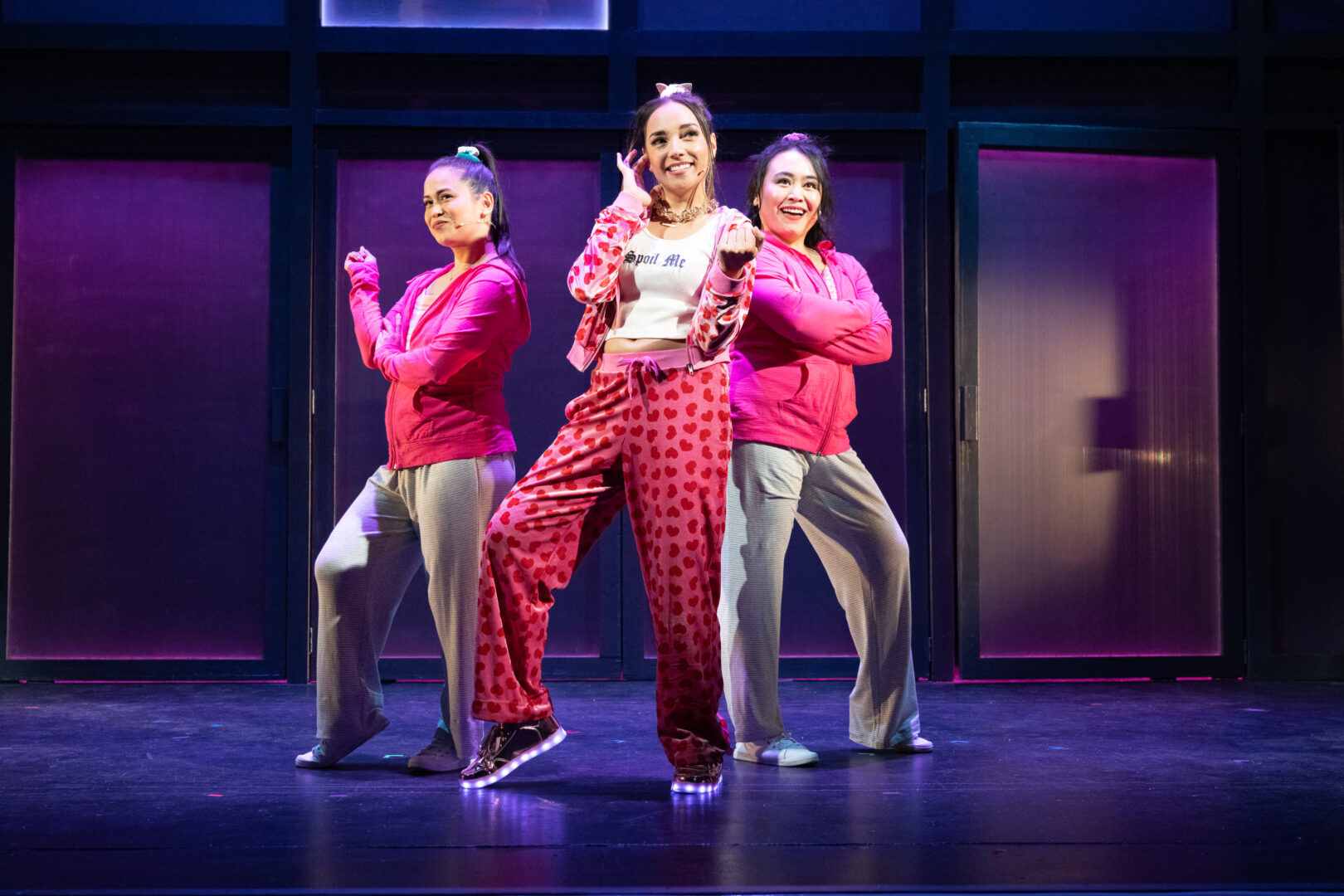
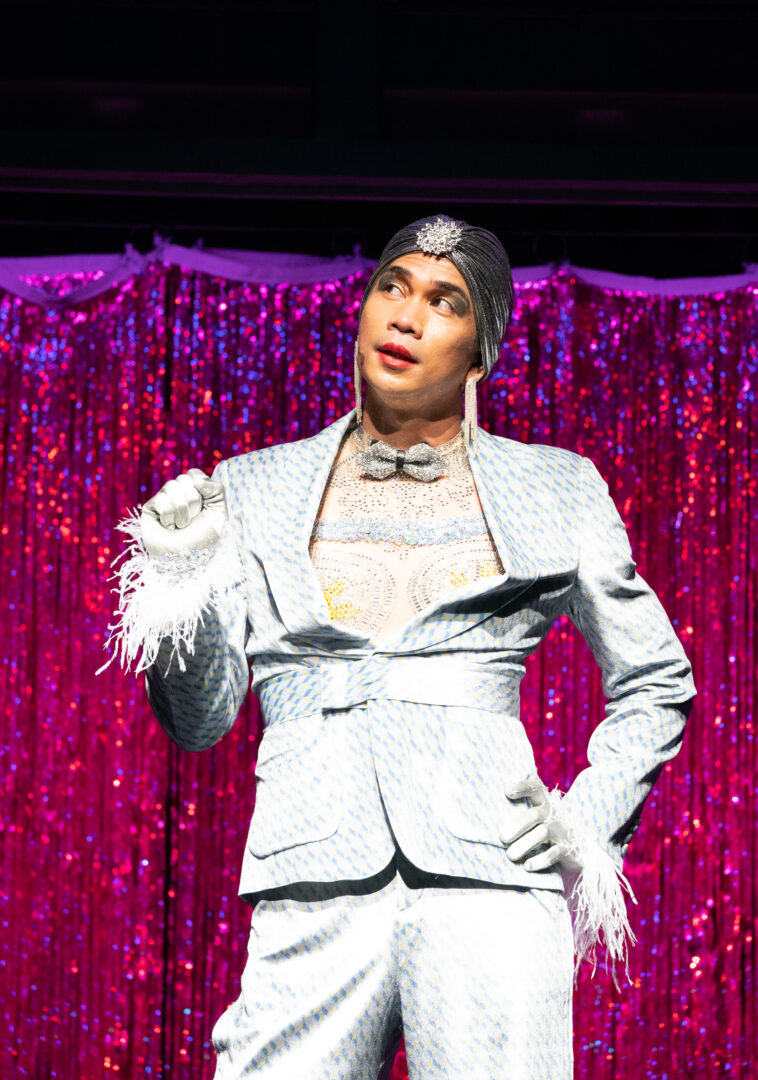
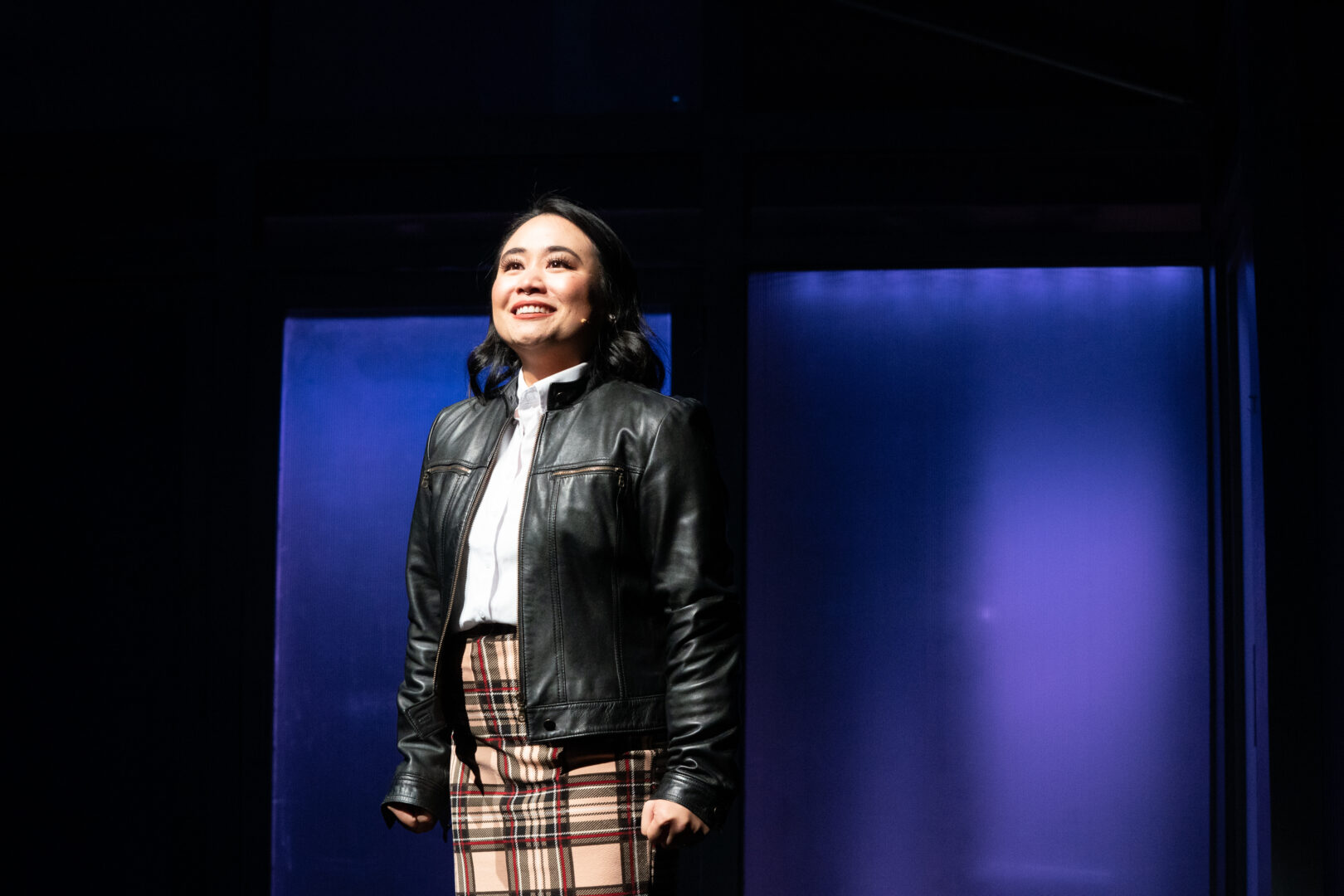


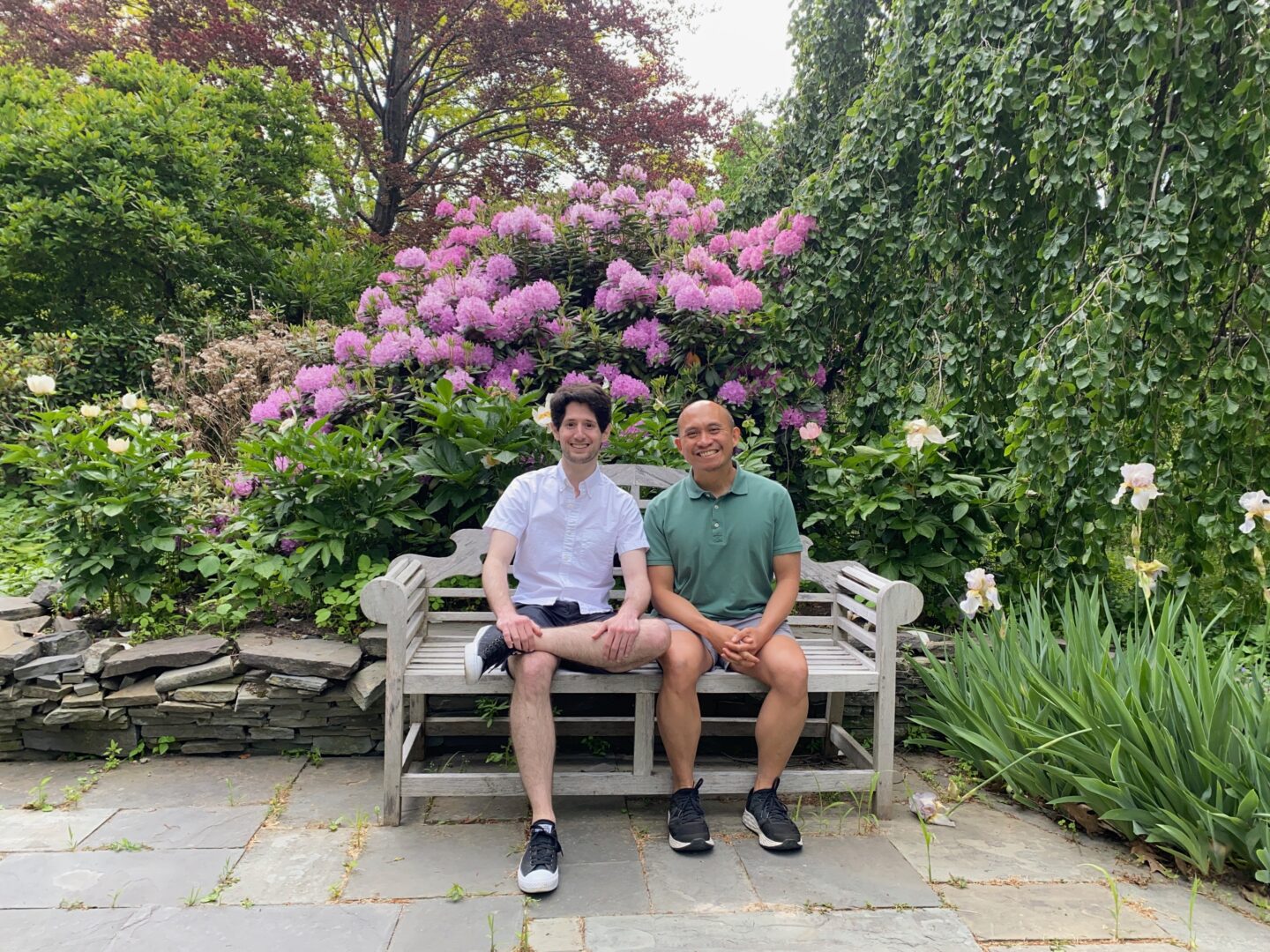
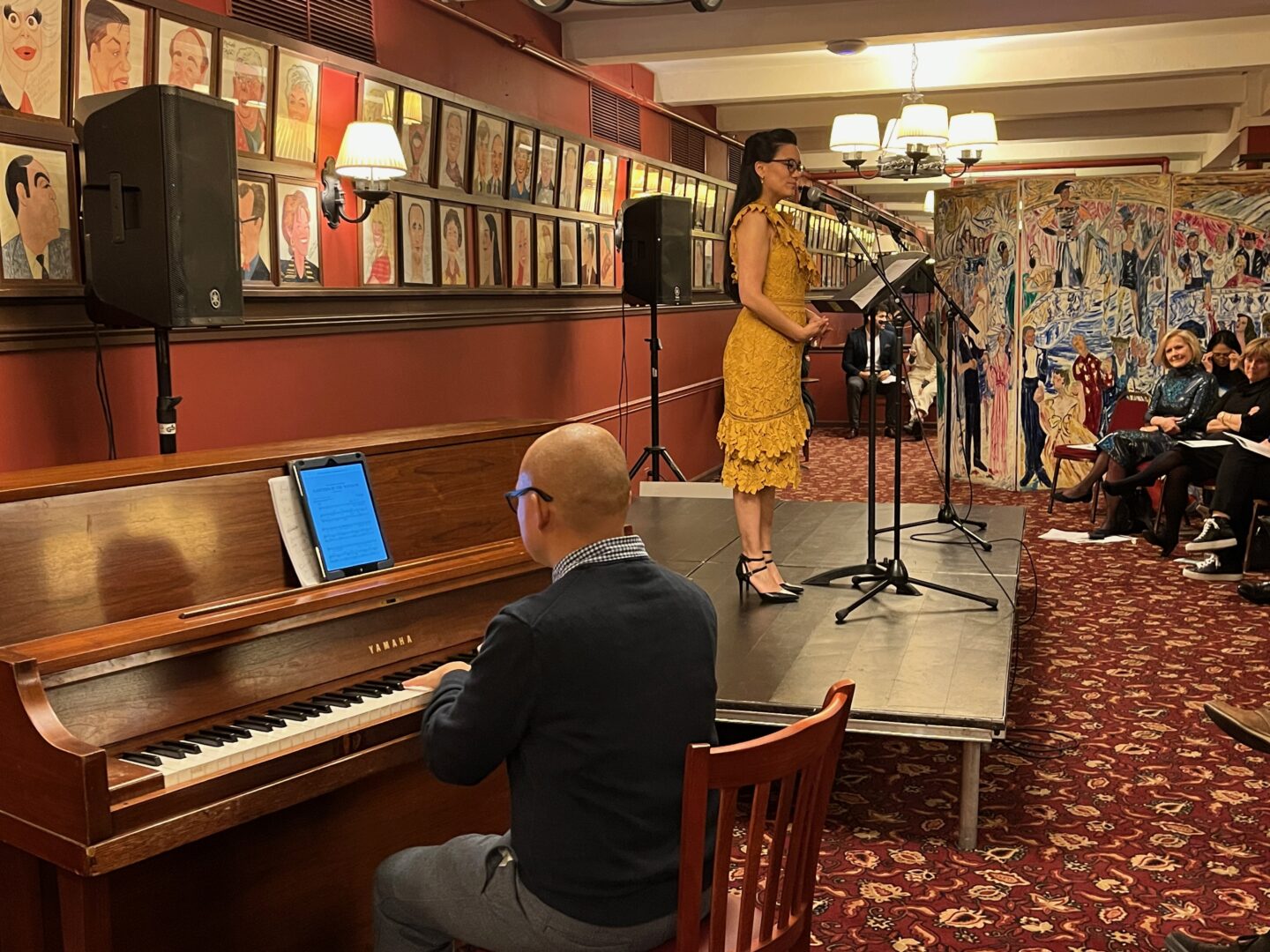
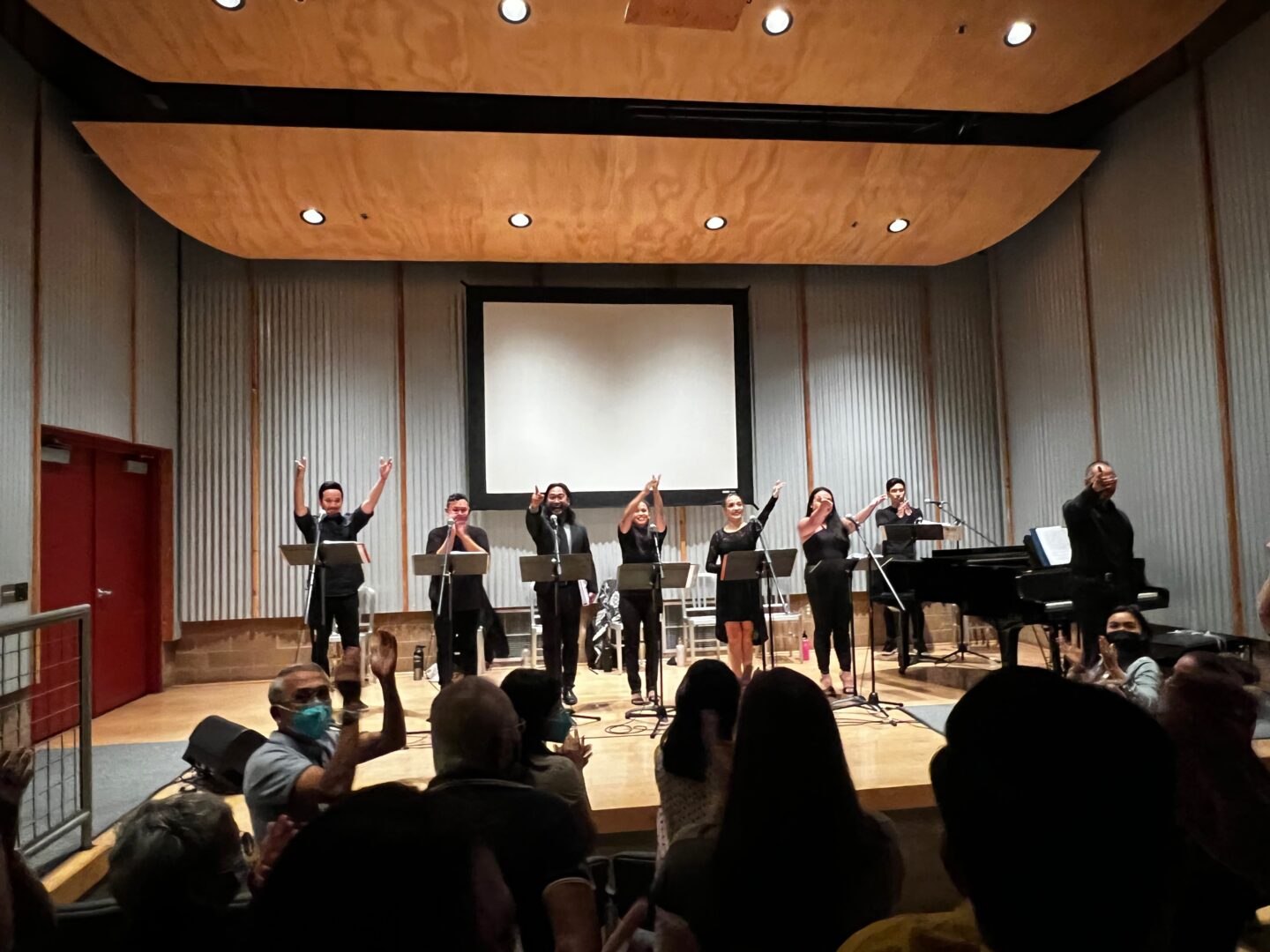
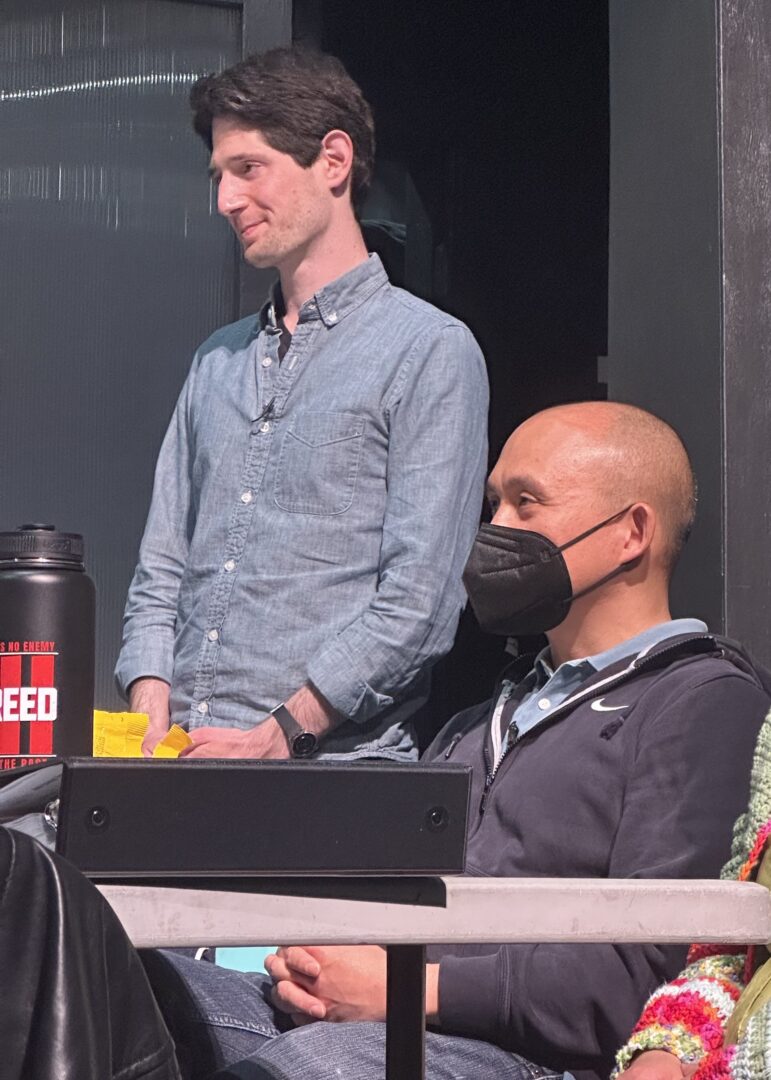
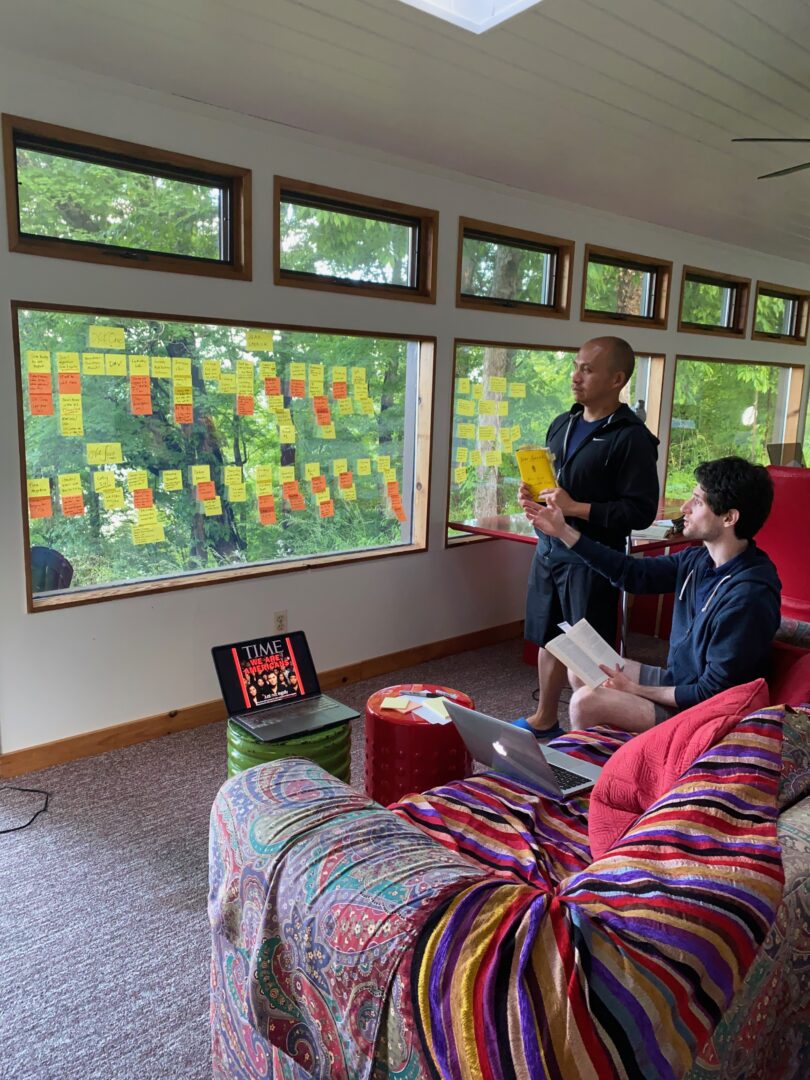
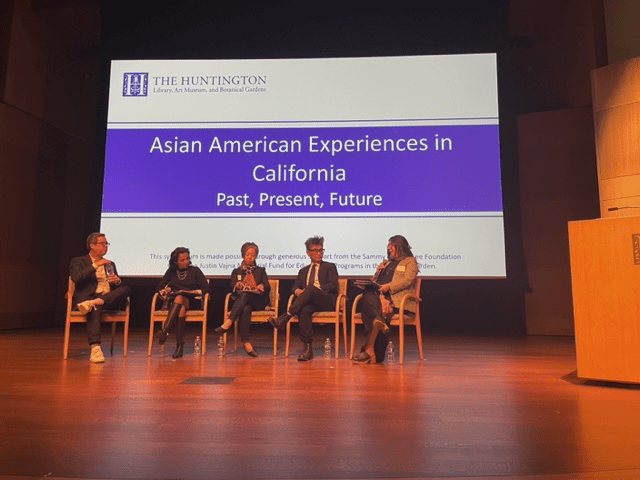
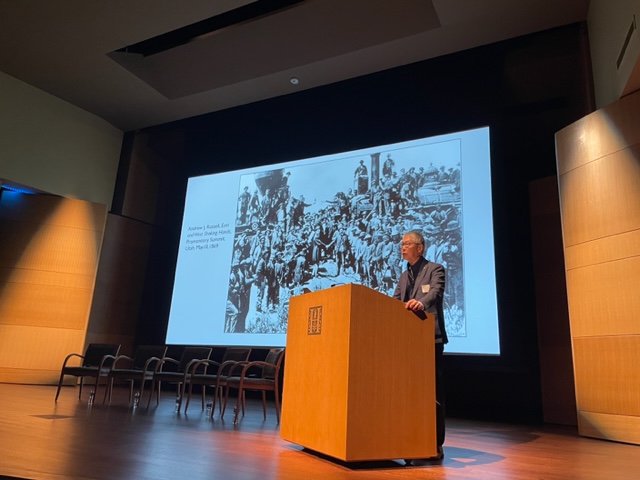
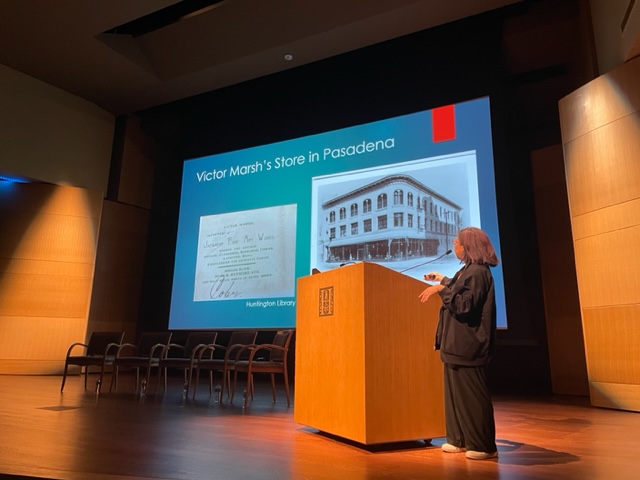
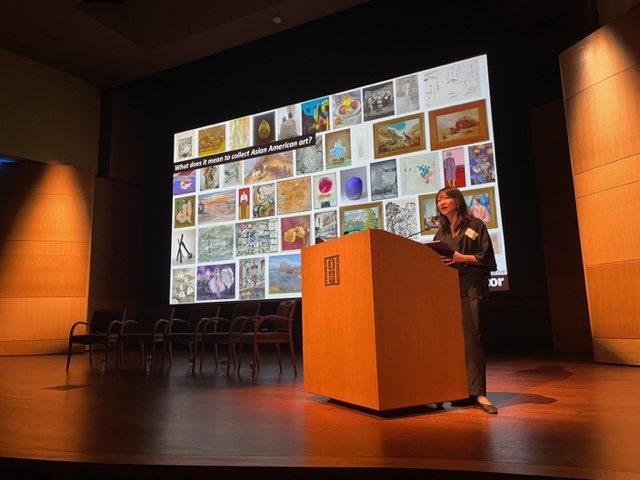
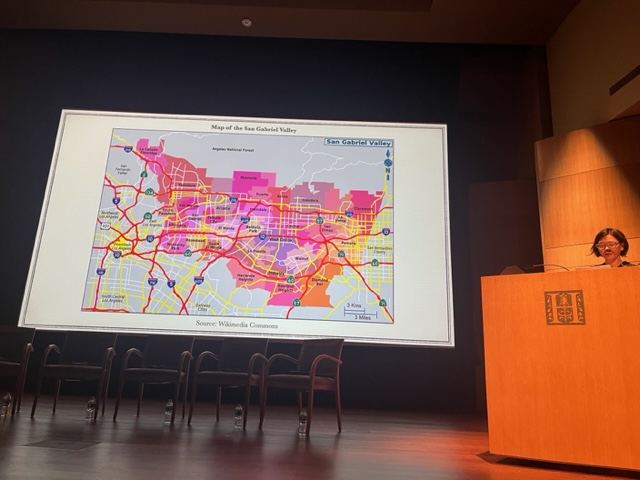
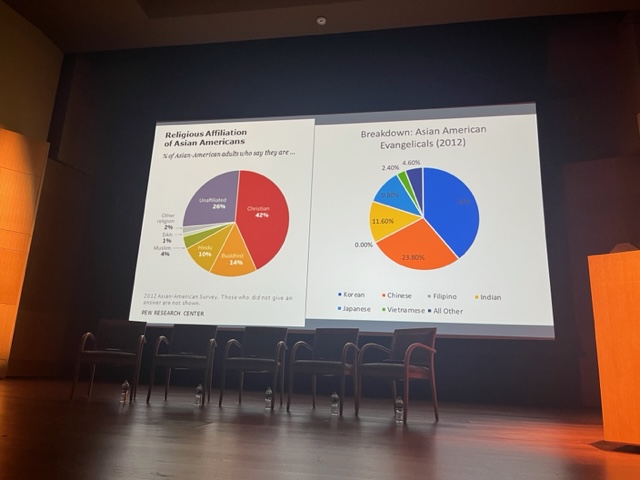
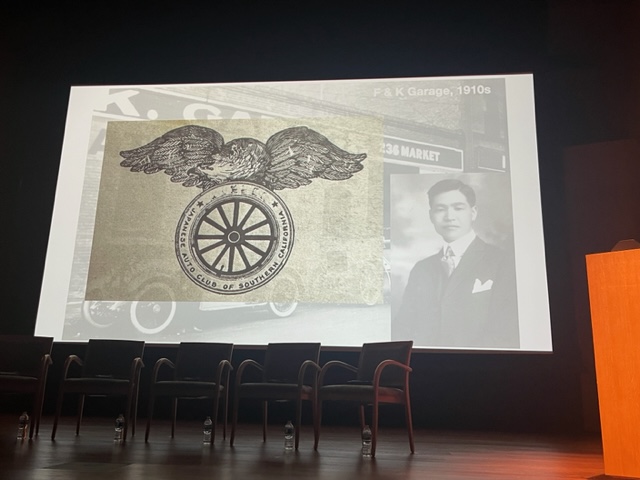
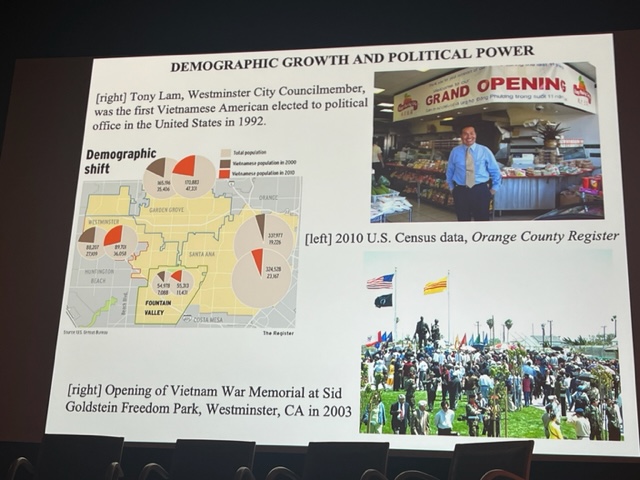
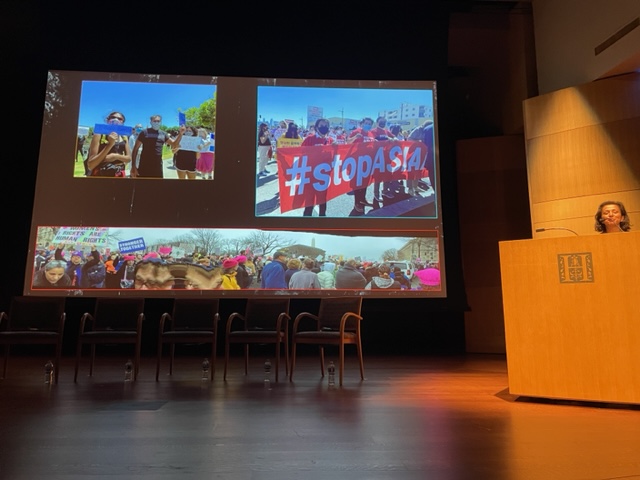
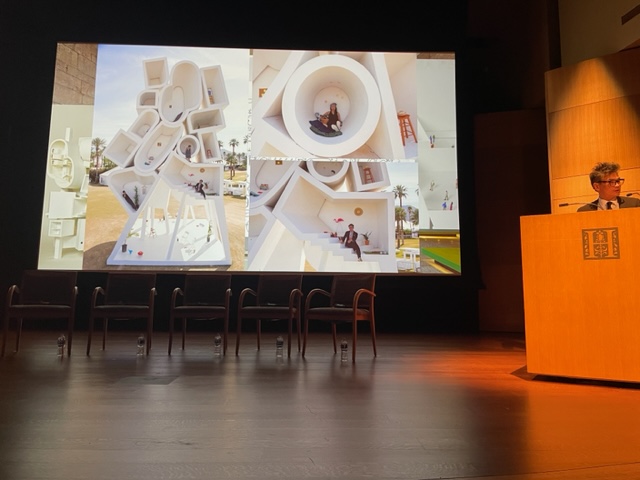
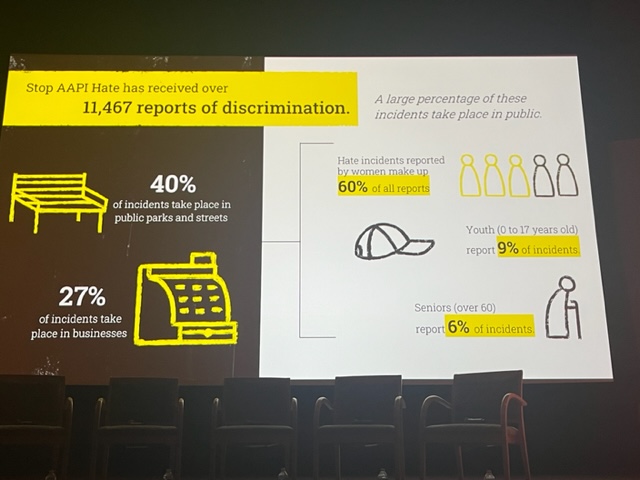
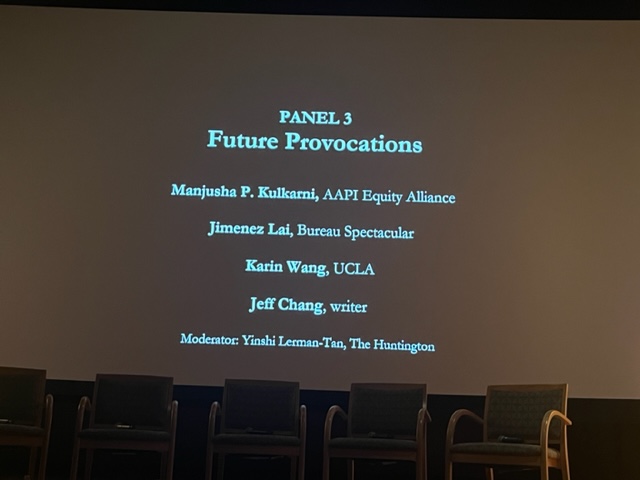
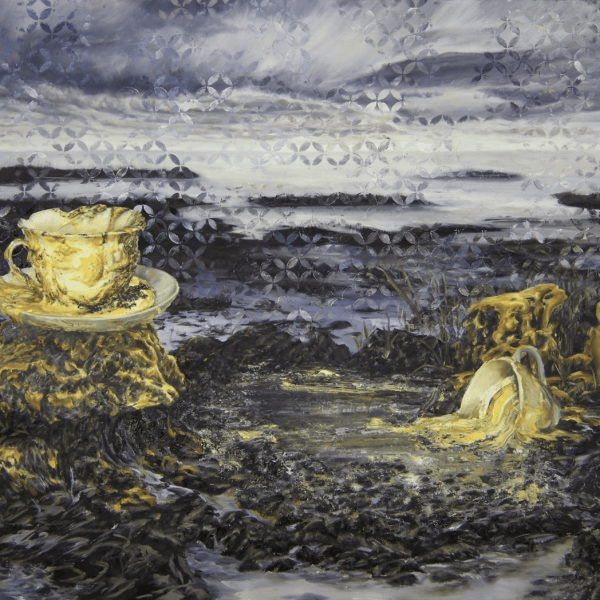
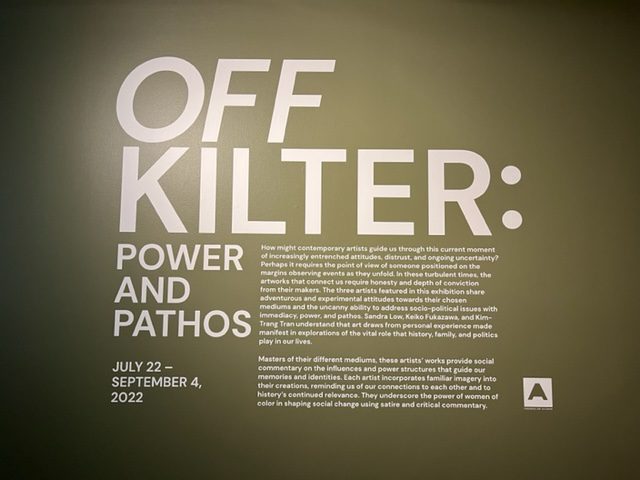
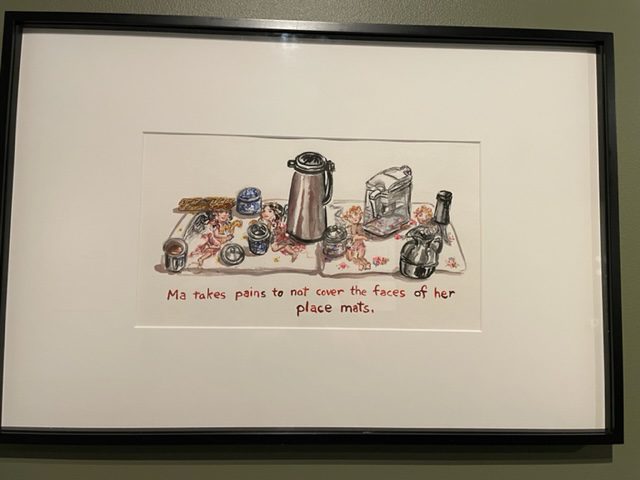
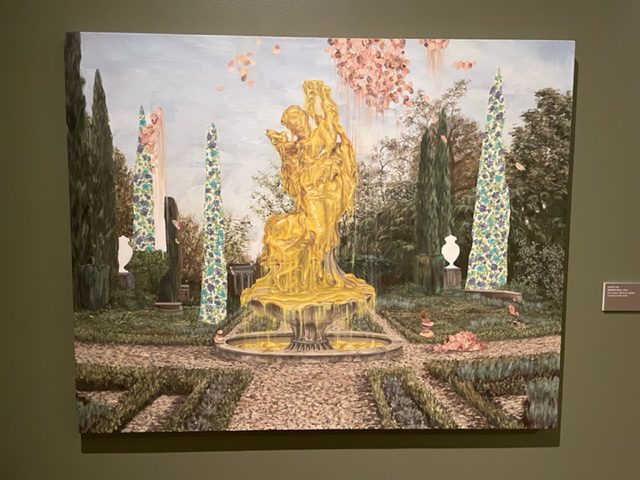

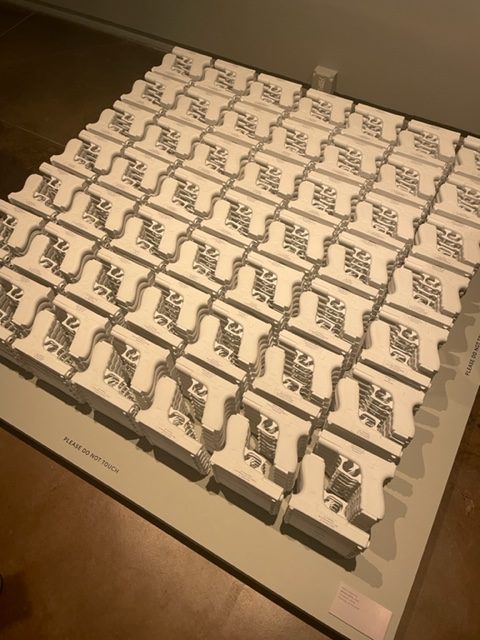
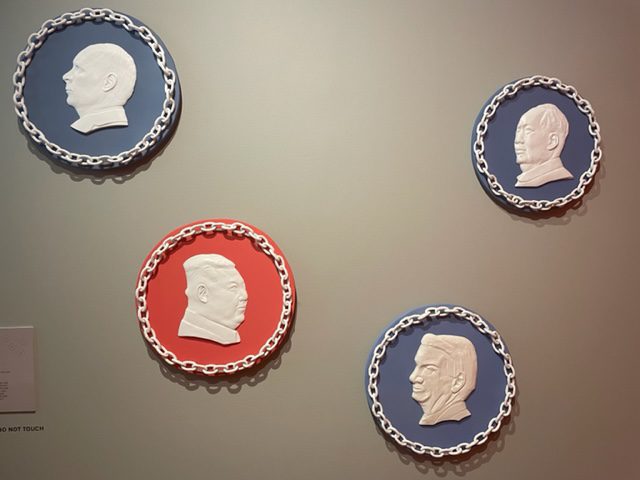
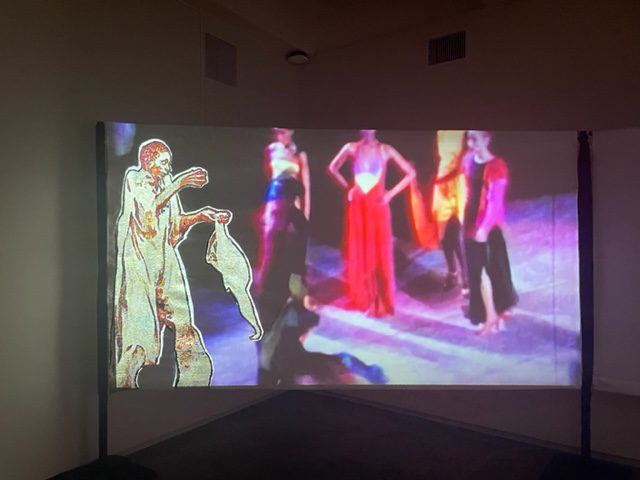
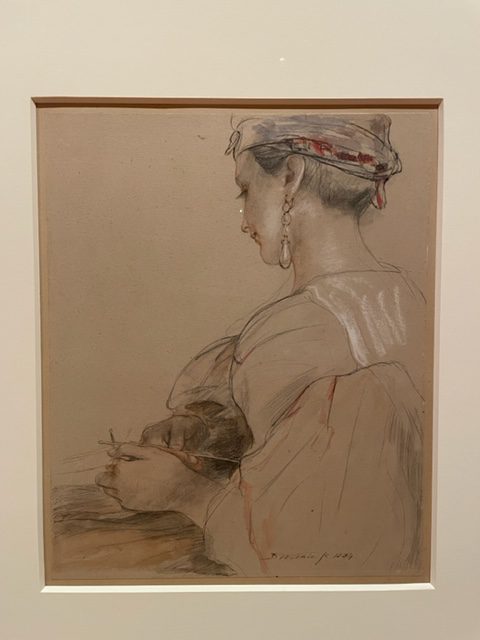
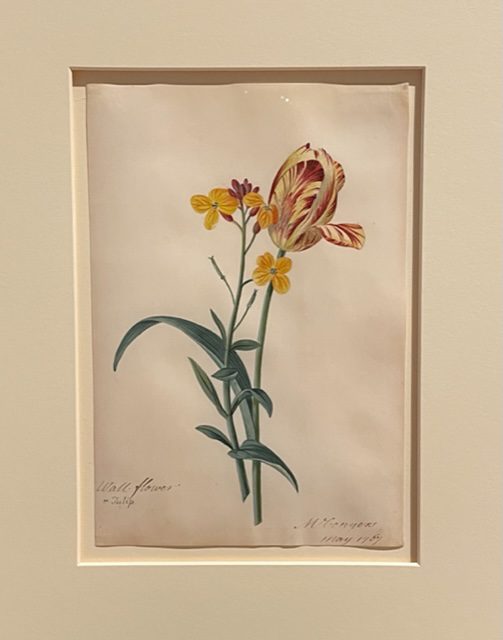
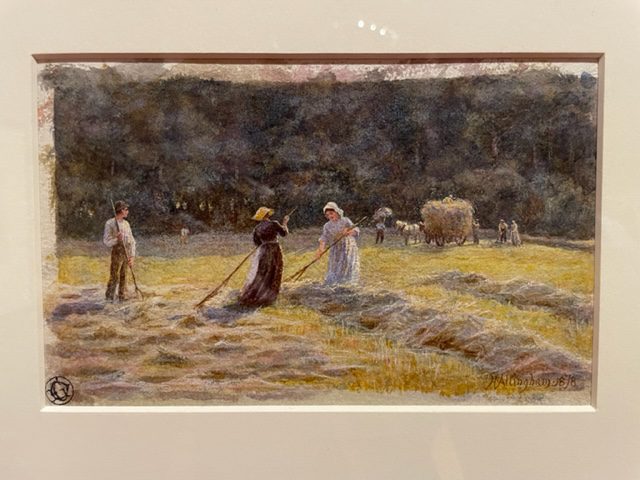

 A San Gabriel Valley Inquirer