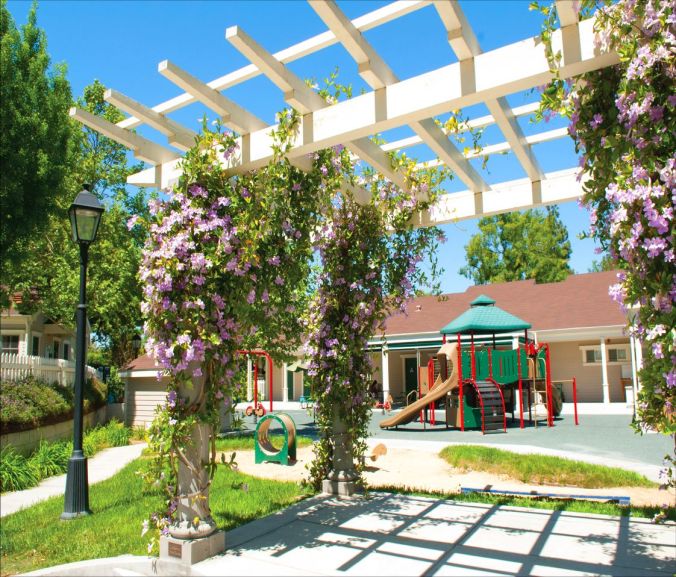
Institute for Educational Advancement: Serving the Needs of Gifted Children

Originally published on 15 June 2017 in the Pasadena Independent, Arcadia Weekly, and Monrovia Weekly

Each child is different. All parents know that and treat every child for the individual that he or she is. But when children fall outside the spectrum, parents are at a loss about what to do.

Elizabeth Jones saw firsthand how gifted children could fall through the cracks because their needs aren’t being met. She relates, “While completing my Masters at USC, I was working in a special day classroom at a residential facility for students with learning and behavioral problems. I found a child who had been placed there when he was actually profoundly gifted; he was basically misdiagnosed. That got me thinking that clearly he wasn’t the only child who has been put in the wrong place because people didn’t recognize what made him different.”

“That led me to conduct more research and start looking into how children learn differently,”  continues Jones. “I then worked at Johns Hopkins University as Associate Director of the Western Region of the Center for Talented Youth. There I focused on identifying gifted students from underserved backgrounds; providing emotional and social support for them; and educating teachers and parents on these children’s needs.

In 1998, I left Johns Hopkins and established the Institute for Educational Advancement (IEA), a non-profit organization dedicated to the intellectual, creative, and personal growth among gifted and high-potential youth. We are committed to the development of the whole child by providing engaging learning experiences that promote optimal challenge, mentorship, exploration of ideas, and recognition of personal potential.”

Image taken from Institute for Educational Advancement website

Based in Pasadena, IEA offers four different programs that directly address the needs of the gifted child. Jones explains, “Our ACADEMY is for children from kindergarten to 8th grade, an after-school and weekend, and during-the-day program for home-schooled children. We match grad students from Caltech who are professionals in their field and take them to the classrooms where they bring their work into a new arena. It’s delightful to see a Caltech graduate student working on microbiology with a seven-year old – the grad student remembers why he’s so thrilled and the seven-year old is equally enamored with the idea that she could be a real scientist and do this cool thing. It’s a very exciting and neat way to motivate.”

Adds Jones, “So many of these bright minds are so different from their peers they don’t really have a social network. They don’t feel accepted because they have a unique vocabulary; they look at the world differently; they ask more questions; they’re more curious. It’s hard for them to find that group of friends or a network of folks that they feel comfortable with. So here they are, talking to a grad student who understands why they’re passionate about an interesting topic and are around other kids who are equally enthusiastic about that. It’s a very, very exhilarating dynamic and it helps get that child develop a positive yet not overly exaggerated sense of self.”

ACADEMY classes are based on what IEA administrators gather from talking to kids; they find the right instructor and create the curriculum around that. They’re semester-long enrichment courses, genius days, mini lectures, and workshops available at two locations – San Marino and Sierra Madre. Offerings vary by semester: fall, winter, spring, and winter.”

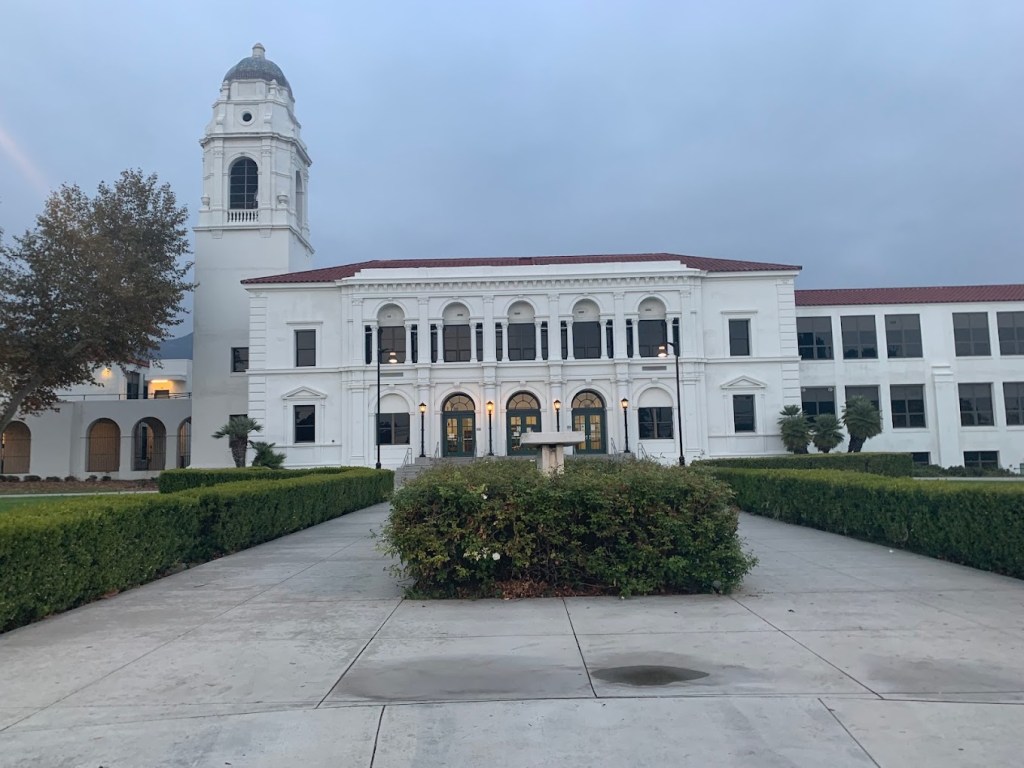
Summer session is ongoing at San Marino High School and courses include: Algorithms for beginners with Nathalie Blume. Algorithms are widely used in computer science and bioinformatics, they frame research in psychology and in zoology, and they are what allows robots to move, search engines to search, and AIs to be autonomous. An Ancient Egypt course taught by Alessandra Santucci takes students on an experiential journey across 3,000 years of history and explores how it developed and why it came to an end. 
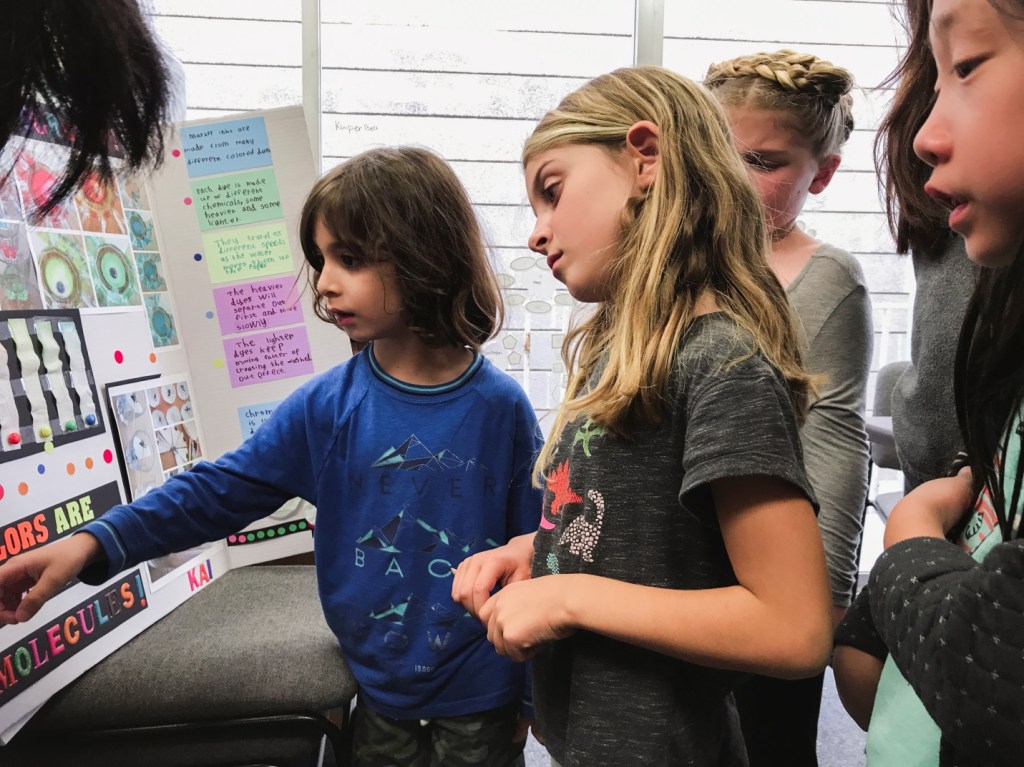
ACADEMY students learn Chemistry in the kitchen | Courtesy Photo

In ‘Dissolving Boundaries: The Intersection of Art & Poetry’ Meg Shevenock and her class study artists and writers who seamlessly merge their classified genres. Toby Jacobrown and his students take a survey of the most encouraging and cutting-edge developments in biology, ecology and medicine in a class called ‘How to Save the World’. He also teaches a course on ‘How to Write Scripts Like the Greats’ where he demonstrates how emulation of the greats was how writers learned their craft before the 20th century. He also discusses with his students how to pitch their work to a producer.

IEA offers YUNASA, which is the Indian Lakota word for balance. Describes Jones, “It’s a  camp where we take children for a traditional camp experience – archery, campfires, water activities. But we also do a lot of work on how to calm the mind through visualizations and mindfulness, which help the child focus energies in positive ways.  For so many of these young people, their brains work so quickly that they have trouble sitting, focusing, or even completing a specific task. Their anxieties get in the way. What makes this program unique is that we have the most eminent folks in the field of education who come together as facilitators for a particular program.”

“Our EXPLORE is an apprenticeship program where we partner high-potential and gifted high school students with distinguished professionals in the field with whom they work side-by-side for six weeks during the summer to accomplish real world tasks. We have 17-year-olds who’ve completed research paper working with somebody on a specific project or in a lab in a children’s hospital researching diseases,” Jones says.

A program Jones is extremely proud of is the CAROLINE D. BRADLEY SCHOLARSHIP. She states, “It is the only merit-based scholarship in the country. We provide 30 students per year with a high school experience where we match individuals with the best learning environment for them – it could very well be an independent or a public school. It really depends on what that child needs in the moment to actualize his or her intellectual potential.  We sponsor students for four years throughout their entire high school career. It is our most unique and, perhaps, most impactful initiative in terms of long-term support of young people.

Image taken from Institute for Educational Advancement website

It has been a really successful initiative. We started this program in 2002 with five students; now we’re identifying between 25 and 30 a year. We have about 120 scholars in high schools all over the country who get free tuition. The funding follows the student, we don’t fund the school directly. It keeps us and the school nimble because we have to research what’s really best for that child every time we have a new youngster who comes into the program. Those schools who have enjoyed having these bright young minds on their campus have to keep up their standards. In addition, it means those independent school’s funding can go farther too; it’s a great way of spreading scholarship money.”

Jones explains, “It is funded by Sarah Barder, the niece of Caroline Bradley and a long-time supporter and mentor of mine when I was at Johns Hopkins University. She supported us when we started IEA. She appreciated my passion for recognizing the unique needs of gifted youth and advocating for an educational system that provides opportunity for children to learn something new every day. We share a common commitment to ensuring that young people avail of the most appropriate learning environment for them to grow and become happy, successful citizens.

We’ve had over 100 alumni and one student from our original class has joined our Board. We have a very large networking program that’s national in scope.  While these students have different backgrounds, there’s one thing they have in common – they tend to give back to their communities. They experience something remarkable and they act on it by contributing back wherever they happen to be; these are the kids who will help solve problems in society in the future.  We’re so grateful to have stewardship of this particular opportunity.”

“IEA has a singular imperative – to advocate for the gifted child,” asserts Jones. “We educate the public that gifted children are underserved and there is a need to pay attention to them. Not only because they’re amazing little people – everyone deserves our attention – but because they’re being taught things 30 percent of which they already knew before coming to class. They don’t have access to challenging content on a daily basis; they spend their days in a state of boredom. Yet schools don’t have the resources or knowledge base to serve them. It’s important that we recognize that there’s a need.”

For gifted children and their parents, it’s a godsend to have someone champion for them. Jones and her organization will see to it that these young people’s minds are developed to their fullest potential.


Online Schooling Helps Teen Pursue her Dream to Play Golf

Originally published on 18 May 2017 in the Pasadena Independent, Arcadia Weekly, and Monrovia Weekly

Isabelle Olivas-Lowell is a 13-year-old middle-schooler who plays a mean game of golf and is an outstanding volleyball server. Lest you think she’s all sports, Isabelle is also an avid  photographer and an imaginative poet. And, by the way, her favorite subject is math and she’s gotten all A’s in her science course. She’s a smart, friendly and outgoing Brainiac – she’s all these contradictions – defying all manner of stereotype.

So how does someone like Isabelle balance the rigors of schoolwork and active engagement in the myriad of activities she enjoys without getting exhausted and stressed-out? For the Lowells, the answer is online home-schooling.

Mark Lowell, Isabelle’s dad and learning coach says, “Isabelle is deep into the volleyball season now. In fact, we’re traveling to Minneapolis next month for the finals. She’s also been getting ready for the summer set of tournament golf. She’s older now to advance to the AJGA (American Junior Golf Association), the larger realm of the golf world, where kids start to get recognized when they play larger tournaments. The problem is they’re played all over the country.”

“This is why online schooling makes so much sense for Isabelle,” Lowell explains. “It gives us the ability to be connected to the school anywhere we go as long as there’s an Internet connection.”

Playing golf is a constant in Isabelle’s life and becoming a professional golfer a singular dream.    She has been on the golf course since she was five years old; she won her first tournament when she was seven. Her family moved from West Covina to Monrovia when she was in 5th grade and she attended Mayflower Elementary School. That was when athletic events clashed with class attendance. 

Relates Lowell, “I would take Isabelle to golf tournaments so I always sent a note to school letting them know she’d miss a day or two and we’d need to get whatever schoolwork had to be completed. But I would receive letters in the mail; the last one that really got me upset was when they notified me that she had missed nine school days from August through May. But so what? She hadn’t been lagging academically; she had perfect grades.”

“From the golf tournaments Isabelle had been competing in, we met a couple of girls who were being home-schooled,” Lowell continues. “We thought that was an option down the road as she got busier with sports activities. Then one day I came home and she said, ‘I have two phone numbers of on-line schools for you’. One was in Newport Beach, but it was a school for students who got behind due to an illness, and so forth. It offers tutoring for kids to make up for missed classes so they could be mainstreamed to regular school instead of being held back a grade. The other was iQ Academy Los Angeles (iQLA) in Simi Valley, which was the right fit for a GATE (Gifted And Talented Education) student like her.”

Essentially Isabelle herself found the school and her dad was happy to make the phone call. The same week Lowell called iQLA they were able to finish all the required paperwork. The following week, all the books were delivered, and the computer was set up; she was enrolled. He took her out of Mayflower immediately after the first semester of fifth grade and started at iQLA.  She’s now a seventh grader and quite happy where she’s at.

“I can download the curriculum and am able to see what I have to accomplish the entire semester so I can plan ahead,” Isabelle states. “I can schedule practices and figure out which tournaments I can attend. For instance, this morning I am reading about Nixon and the Watergate scandal and there will be a test on it later. This Friday I have to turn in my Science PowerPoint presentation on the California condor. In between those and daily classes I have to attend online, I can practice my golf swings at Santa Anita golf course.”

Just like regular school, Isabelle has seven graded classes – science, math, history, language arts, music, art, and P.E. – all in which she has earned A’s. She is also on the 13 Elite Team at the San Gabriel Elite Volleyball Club and is heading to Minneapolis in a month for the championship.  Sometime before the end of the school year she will be taking the CAASPP (California Assessment of Student Performance and Progress) in Glendora. 

One of the pitfalls of online schooling is the lack of social interaction among one’s peers. But this isn’t the case with Isabelle. She says, “I don’t feel like I’m missing out on some events because we have field trips just like regular school.  In fact, we were just at the Aquarium of the Pacific with some other students from all over the L.A. area. I had the greatest time! That inspired my dad to get me an aquarium and now I have some fish in an aquarium in my bedroom.”

“If anything, I miss assisting my teachers,” Isabelle reveals. “When I was in kindergarten, while my classmates played outside I helped staple class packets. In 2nd grade I was the teacher’s aide – I got to answer the phone when my teacher was busy. The dances I don’t miss; I’ve never been a girly-girl.”          

The youngest of four siblings, Isabelle grew up in a family where almost everyone enjoys a sport. She says, “My maternal and paternal grandparents, my dad, and my uncles, are enthusiastic golfers. My older brother who’s built like a footballer played baseball, but he wasn’t that great – he had one hit in his entire career. But he’s very smart – he invented an alarm system and he can fix anything. If you tell him there’s something wrong with your computer he’ll be able to figure out how to make it work again. My eldest sister didn’t do sports, instead she was a color guard in band; she went to Le Cordon Bleu and is now a chef. My other sister played water polo in high school but she’s now into dance and attends Cal State Channel Islands.”

The Old Course at St Andrews, Scotland (UK)

For all her kin’s affinity for athletics, Isabelle is the only one in her family who has shown a lively interest in professional sports. She continues, “All my brother and sisters went to private Catholic schools and pursued a college degree. I know that nowadays you have to go to college or you wouldn’t be able to find a job. But if I keep playing golf and become professional I might take the opportunity while it’s there, then go to college later.”

Lowell says, “Everyone’s different as my family proves. That’s why I’m an advocate of virtual schooling in spite of the stigma attached to it because it isn’t mainstream. But my daughter isn’t mainstream. Everyone’s unique and the problem is now we’re told we’re all the same – which isn’t true. She has two half-sisters and a half-brother, but not one of them is like the other.  Online schooling is what works for us; you only have to look at the enviable feats Isabelle is able to accomplish, especially in golf, to appreciate that.”

Isabelle envisions herself in Scotland one day, on the iconic Old Course in St Andrews where the celebrated sport was first played. There she is at Road Hole, number 17, reputedly the toughest par 5 for women championship golf – her ball sailing over Road Hole Bunker.It bounces on the front of the green and takes a serpentine route, ending on its last roll into the center of the cup.  Perfection itself.

Monrovia High School Students Perform on A Noise Within’s Stage

Originally published on 27 April 2017 in the Pasadena Independent, Arcadia Weekly, and Monrovia Weekly

This past Tuesday night, April 25th, 23 drama students from Monrovia High School (MHS) put on a production of Shakespeare’s ‘King Lear’ at A Noise Within (ANW) in Pasadena. The partnership was a first for both the high school and the classical theatre company.

Nathanael Overby, MHS drama teacher who came on board in 2012 and was responsible for expanding the school’s drama department, advanced the partnership with ANW. He states, “A Noise Within clearly takes a unique approach to theatre – they have a quality and creativity unequaled by other professional groups. That was something I wanted my students to emulate.”

“We have been performing on our stage, which is quite impressive, but being on a professional stage would be an exciting experience for my students,” continues Overby. “ I wrote a proposal to partner with ANW and discussed it with Patrick Garcia, the director of performing arts for the Monrovia Unified School District, who reached out to ANW. When ANW’s artistic directors agreed to it, I began working with Alicia Green, the director of Education and Community Outreach at ANW.”

Concurs Green, “The director, Patrick, and I came together to discuss the proposed partnership and we decided to do ‘Lear’ as it worked best for the school and us. From the outset Nate and I worked to ensure students had a great experience and understood what it takes to do a show in a professional space.”

Overby adds, “This partnership is so much more than the students being able to perform ‘King Lear.’  We were able to join ANW’s cast for their table read of ‘Lear’ and we watched ANW actors perform it on stage. This gave my students the opportunity to join a professional cast on their journey on a production – to experience what it’s like to put on a professional show by observing ANW’s cast at several different points in their process. Furthermore, I want to develop a connection with ANW to inspire my students to pursue work with them after they graduate.”                     

“All students attended first rehearsal, some attended opening night, and all students came to a student matinee in mid-March,” Green said the week before their performance. “We wanted to immerse them fully in every step of the way – what it takes to make a full production a reality!  Nate worked with the students at Monrovia on the show and I am looking forward to having them come for the first time on Monday, the 24th, to rehearse on our stage, and then perform it the following night.”

Monrovia High School | Photo by Alicia Valdez / Monrovia High School website

While the show was put on at ANW, it was truly a student production as Green relates, “Other than providing one tech person to help set up the lights/sound they need, their technical director and students will be running all of the technical elements and stage managing the show. We are here to support them, but this is their show and we encourage them to make the space their own!”

“We are constantly looking for ways to engage students in the world of classical theatre,” Green says about ANW’s outreach. “Equitable access is of key importance, and we continue to grow and develop our education program through attendance at student matinees and evening/weekend performances, in-school residencies and workshops, full-school partnership programs, pre-show engagement activities, post-show conversations with the artists and our free study guides. Ideally, every student would have the opportunity to participate in some way with our programing to enhance their education!”

A Noise Within has its ‘Summer with Shakespeare’ camp and Saturday conservatory classes where students perform on its stage and in the building. This past Tuesday’s performance of ‘King Lear’ by Monrovia High School students, however, was a first for this kind of project.

According to Overby, MHS had two drama classes back in 2012 when he came to teach at the school. He says, “Now we have a full-time department offering five different periods of drama, including a Stagecraft class and an Honors drama course. We also started out with one performance a year; we are currently producing three a year which includes at least one musical and one play. This year we produced ‘Dracula’ in October, ‘Urinetown the Musical’ in March, and now ‘Lear’.”

‘King Lear’ was the capstone to a great year for the school’s drama students. And what better venue to fully realize the essence of one of Shakespeare’s most celebrated works than in Pasadena’s premier classical theatre company. 

Indeed it was a dream come true for these Monrovia High School students. How propos that their performance took place towards the end of A Noise Within’s own season they called ‘Beyond our Wildest Dreams’.  

Greg Kaplan Teaches Effective College Application Strategies

Originally published on 13 April 2017 in the Pasadena Independent, Arcadia Weekly, and Monrovia Weekly

Right about now, high school seniors across the United States are getting their acceptance (or dreaded rejection) letters from the universities to which they applied. 

As many of these students have found out, getting into one’s their dream college has gotten increasingly difficult. The admissions process has become a cause of much angst among stressed-out twelfth graders and their equally weary parents. But with careful planning and well-thought out approach, you and your child will come out of it with your sanity intact.

Greg Kaplan, an admissions strategist, has written a book called ‘Earning Admission: Real Strategies for Getting Into Highly Selective Colleges’ to give tips to parents as they, in turn, guide their children through this daunting process. It is an excellent resource for students to stand out in a sea of equally academically strong applicants.  

Working as an independent counselor in Southern California for the past year and a half (and informally while he was in law school at UC Irvine), Kaplan has helped over 85 students and their families. But his strategy doesn’t cover merely getting into college. When he meets with students he begins the conversation by asking where they want to be in ten years.

“It allows them to understand that college is where it fits in – it’s not the end-all be all, but a means to achieving something greater than just a degree,” Kaplan explains. “I want them to see that there’s a life beyond college or beyond a name.”

Kaplan meets with his students in L.A. and Orange County in person at least once week. He supplements that with conversations via phone or Skype; emails with families when planning activities during the course of high school; and uses Google Docs to help them with essays.

The most important guidance he offers is assembling a really compelling application using a strong theme, picking what classes to take, figuring when and how to prepare for the ACT or SAT, planning extra-curricular activities. During the application process he works hand-in-hand with his students in creating a personal statement that demonstrates perspective, maturity, and shows personality and assets.

It greatly helps students to work with Kaplan beginning in ninth because they’re growing up through the process. It’s good for them to know what they’re working for and to orient all the hard work that comes in high school to the college application process and beyond. They have a more persuasive application if it’s planned.             

Kaplan, himself, had been through this not too long ago which makes him a relatable counselor, and his book more effective as he recounts examples from personal experience. His language is relatable and counsel realistic.

“I draw a lot of experience from attending a very competitive high school in Southern California, similar to Arcadia and San Marino,” states Kaplan. “My book and workshop are most relevant to students in these high-achieving areas where people feel the most loss. They’re competing with peers who have outstanding GPAs and perfect test scores so they want to know how to separate themselves from all the excellent students.”

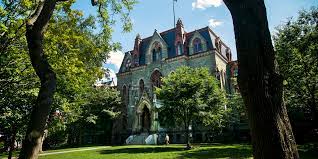
“After I gained admission to the University of Pennsylvania back in 2005, people started asking me what I did to get accepted to multiple Ivy League universities,” Kaplan continues. “From there I gave a lot of advice and it turned into an informal, casual business where I helped mostly family friends and children of colleagues at a private equity firm where I worked while I was going to law school.”

Image of the University of Pennsylvania taken online

“My in-depth research culminated in me writing ‘Earning Admission’ because I wanted to provide families a blueprint and the material to make informed decisions. I didn’t like seeing  students who are stressed out and engaged in a million different activities, taking six to eight AP classes in sophomore and junior year. That’s not necessarily the winning formula to achieve the goals that we want our children to go for when it comes to higher education. This book is my response to all the anxiety I see. It is my desire to give back to the community for the opportunity to come from a great public school in California, which I wanted to share with people,” Kaplan expounds. 

‘Earning Admission’ is divided into three parts, the first of which discusses the high school transcript and the ACT or SAT scores – the two most important components of your children’s application. These objective elements will give a university admissions officer the reason to read the rest of the submission.   

The second part of Kaplan’s book delves into the subjective pieces of the college application.  He divides this into eight chapters: application theme; personal statement; extracurricular activities; responses to the application form questions; letters of recommendation; and admissions interview. Throughout these chapters, he offers guidelines on how to use all the elements in marketing your child as a compelling applicant.

The last part touches on the application strategy – where and when to apply; scholarships and financial aid; and getting admitted from the waitlist.

A very useful appendix shows the college admissions timeline, which has tables on what activities your child should be involved in starting from the summer before ninth grade. The high school timeline is divided by months and covers tests your children should be taking; researching and finding test prep courses; planning their summer internships, community service, school and college course enrolment, and international experience.

Image of Stanford University taken online

Kaplan engages his readers as he talks about his experience applying to college. While he went to a terrific public school, he also was in a large class and the counselor didn’t have too much time to spend creating a specific plan to market each student. His counselor told him to go to a community college.

“I was at the top of my class, got good SAT test scores, was very involved in the community, and had extra-curricular activities that showcased my leadership abilities. That was definitely not the best support from my guidance counselor,” Kaplan quips.

A funny anecdote Kaplan includes towards the end of his book is about visiting colleges on the east coast with his mom. As he relates it, he and his mom were in Philadelphia and were hoping to see the University of Pennsylvania. But they couldn’t find it on their map and decided to go to the mall instead; he essentially blew off his future alma mater. 

Kaplan also shares with his readers some of the things he did and later regretted: he applied to so many schools that, in hindsight, he shouldn’t have since he had no intention of matriculating even if he were accepted; he also needlessly went on more than one college tour for which his parents paid thousands of dollars – money which would have been better spent on test prep courses. 

An important message Kaplan wishes to impart is that life teaches lessons and it’s up to students to make the most of them, “I didn’t want to go to Penn when I was accepted. I couldn’t even find Penn when I tried to visit it. However, at Penn I learned first-hand that anything was possible if I set my mind to it. My college experience, at a college I almost did not apply to, shaped the person I am today.”  

“Your child’s college experience will also shape her into the person she is destined to be. Whether it is at Penn or Penn State, your child will learn that anything is possible for her if she has the will and vision to achieve it. Even if your child does not have the outcome she envisions with the college application process, she will succeed in college and beyond,” Kaplan concludes.                  

Kaplan will be holding two free book talk and workshops in the San Gabriel Valley on Saturday, April 15 at 11:30 am at the San Marino Public Library, and Saturday, May 20, at 2:00 pm at the San Gabriel Public Library.  

Parents and students who are interested in getting college counseling from Kaplan can contact him at greg@earningadmission.com; or his cell phone (858) 204-6553. His website is www.earningadmission.com. The first meeting when they create the admission plan is free.

Kevel Education Uses Different Approach to Math Tutoring

Photo by Annie Spratt for Unsplash

Originally published on 30 March 2017 in the Pasadena Independent, Arcadia Weekly, and Monrovia Weekly

For students of all ages, one of the most challenging subjects to learn is math. And with most schools’ increased focus on STEM (Science, Technology, Engineering, Math), it’s crucial to provide these kids with the tools to help them understand and learn math. 

In the San Gabriel Valley, there are several companies offering STEM tutoring. A recent addition is Kevel Education which was founded by Gao Jun, Kevin Yu, and Lydia Zu quite by happenstance. Says Yu, “It all started with California Table Tennis Club, which Gao and I established four years ago offering weekend and after-school sports program for young kids in the area. Students would bring their homework to the club, and from time to time we saw them struggling. So we began helping them.”

“Then Gao and I met Lydia two years ago and we found out she graduated from UC Berkeley with a math degree,” Yu continues. “Seven months ago, the three of us thought that since we were already teaching table tennis and we had this base of students taking it who also want to excel in academics, we might as well extend our offering to include math instruction. These kids can learn both table tennis and math in one place, making it convenient for parents. So four months ago, we launched Kevel Education.”  

The three founders’ own experience with math involved memorization of formulas, which isn’t exactly fun so they took a different tutoring method. Yu explains, “Most Asians learn by rote;  it’s fast but there’s no long-term retention. When forced to memorize so many formulas, kids, even adults, will hate math. But we believe learning math can be fun. Instead of just teaching children the formula to solve problems we show them the reasoning behind the principle. I noticed that this is how Lydia tutors my daughter, Kinslee, who’s in 6th  grade.”

“Kinslee knows the formula and she can memorize it; but 10 or 15 years from now she wouldn’t remember it,” Zu elucidates. “I use logical reasoning to explain the formula and show her why some math problems are solved in a certain fashion. That way, she makes sense of the problem first then can figure out how to go about deciphering it.”

“We offer much-needed support to what their teachers provide in a 45-minute class,” Zu expounds. “Learning math is a step-by-step process. When students are weak in certain steps they will fall behind. Our tutoring service has developed an assessment test for students so we can see their weakness and work on it. Our tutoring format inspires interest, develops problem solving abilities, and uses creative ways to approach a challenge – life skills that will help them succeed later.”

Zu adds, “I used to teach elementary-school kids while I was still at Berkeley and I found that there’s a gender stereotype in early childhood – people generally think girls aren’t very good in math. Yet my professor in upper division math told us that every student can succeed in it. Now I know how you teach it makes all the difference in the world.”    

Kevel Education has three credentialed teachers – one Caltech graduate, another who holds a Master’s degree from the University of Arizona, and Zu. They concentrate on helping students  in sixth through twelfth grade because they’ve observed it’s when kids get into more advanced math, like geometry, that they struggle. A fledgling company, they currently use their office at the Rosemead location of the California Table Tennis Club to tutor students. They also offer on–demand, private tutoring in coffee shops, libraries or public parks in Pasadena, Arcadia, and nearby cities.

Yu says, “Kevel Education is still a start-up so we’re taking it slow. We’re not trying to get more students than we can realistically help at the moment. We’re building a strong reputation and getting more exposure through social media. We also have an ongoing partnership with a local karate club owner who distributes our flyers, and we have an email campaign with local schools in the San Gabriel Valley.”

However, they have plans to open a second location and hire more tutors sometime this year in the Diamond Bar/Walnut area to service the eastern San Gabriel Valley. In that new place, they will have a few table tennis tables and a much larger space for tutoring. 

According to research there will be more than one million unfilled  STEM jobs in 2020. Now, more than ever, teachers have to find ways to make these courses stimulating and exciting to successfully graduate students to fill those vacancies.    

So confident are these three entrepreneurs their method will attract more students that future plans include opening five more tutoring locations in five years. To them, it simply adds up.

French Language Immersion Program at the Pasadena Unified School District

Photo by Terry Miller | Beacon Media News

Originally published on 23 March 2017 in the Pasadena Independent, Arcadia Weekly, and Monrovia Weekly

Beginning this Fall, some kindergarteners and first graders in the Pasadena Unified School District (PUSD) parleront francais when the district adds a third dialect in its Dual Language Immersion Program (DLIP).    

According to Hilda Ramirez Horvath, PUSD’s Coordinator for Communications and Community Engagement, “A group of parents approached the district asking about the possibility of starting a French language immersion program based on the success of the Mandarin and Spanish programs the district created about eight years ago.”

“The district superintendent met with them, a series of meetings between staff and parents followed, and an online survey was created to gauge interest,” continues Horvath. “The Board of Education approved opening a DLIP in French a few weeks ago and plans are ongoing to welcome its first Kindergarten and first grade classes for the 2017-2018 school year.”

States Dr. Brian McDonald, PUSD superintendent, “The ability to speak more than one language can enhance brain function, academic performance, and business acumen. As a school system committed to responding to the needs and interests of Pasadena area families, we are expanding opportunities for multilingual education that prepare our students to compete on a global scale.”          

Director of Language Assessment & Development Dept. for Pasadena, Hassan Doryani, is one of the people coordinating this effort of assessment, budgeting and hiring. He says, “After presenting to the board for final approval, and meetings with the community outlining the first steps, we are now moving forward to get ready to unveil this program. We have identified the need to hire three teachers  – one French speaker to teach Kindergarten, another French teacher for first grade, and the third instructor to teach the English component. We’re currently accepting applications for these positions and will start the screening process shortly. ”

“We launched our DLIP with Spanish and Mandarin starting with kindergarten in 2008. This class is now in eighth grade and students will be continuing through high school,” Doryani adds.  “It’s one of the programs with an actual secondary component and we’re using this same model for French.We’ve had a lot of success and the community likes the program so we’d like to replicate the same structure with French.”

PUSD is looking to have a total of 40 students – 20 in kindergarten and 20 in first grade – enrolled this Fall in the French DLIP at the Altadena Elementary School. Doryani says further, “As in our Mandarin and Spanish program, we would like the same class population with half of them dominant in English and the other half in the partner language. We do this by testing the incoming students in their French capabilities to have a better idea of students that have native abilities and those that don’t.”   


Helen Chan Hill, Director of Curriculum, is responsible for developing the curriculum for the program. She explains, “When deciding what set of courses we use in a language immersion program we consider: 1) fit for the learning outcomes of the subject; and 2) language of instruction/instructional percentage in each language. For example, balanced literacy is a priority districtwide, so we are currently in search of leveled books and assessment system for informal reading inventory in French since the models call for 90 percent instruction at K, and 80 percent in first grade. This is in exact alignment with our English mainstream priorities, but modified for the language of instruction.  We use this template for all programs.” 

The school provides all instructional materials to ensure that all students have equitable access to core supplies.

“Since we are still in the research and selection phase, we do not know the specifics of what will be available for students and parents in terms of resources,” reveals Hill. “However, the majority of our programs have digital components that families can access outside of school, and we also look for resources that are beyond the selected curriculum. We attempt to publish resources on our website so they can be easily found – we reference resources from ACTFL (American Council on Teaching Foreign Languages) whose domains of language acquisition we use for benchmark progress. We also share guiding principles for Dual Language and other such resources that can help a family understand the instructional program and expectations.”

Hill expands, “We expect students, as in all our programs districtwide, to attend fully and engage with the learning. While we are still establishing learning outcomes, we would anticipate students to function at low to mid-novice levels (based on ACTFL’s proficiency levels) by the end of kindergarten year, and mid- to high novice levels by the end of first grade. From parents we would expect streams of communication with their student at home. Whether parents speak or write French or not is not a consideration in our expectations – we simply want them to encourage their student to be involved via communication with the teacher or school.”

“We feel that PUSD offers a robust model of instruction for all its DLIPs, and are placing similar expectations on French,” says Hill. “We have a keen understanding of the teacher skill set required, and have worked hard to establish consistent templates in our current programs that help launch a new one. Additionally, with our emphasis on 21st century learning, the PUSD embraces not only the innovation that comes along with this, but the cultural competency and global citizenship that is much needed in this increasingly connected world of ours.”

America is raising a generation of future job seekers who will not be limited by geographical boundaries. Polyglots will have a definite advantage – PUSD students will be better equipped to occupy their place in a highly competitive global economy.                                           


Apache News at Arcadia High School Sets Journalistic Standards

Originally published on 16 March 2017 in the Pasadena Independent, Arcadia Weekly, and Monrovia Weekly

Monday through Friday, from 11:03 am to 12:02 pm, finds 20 of Arcadia High School’s (AHS) brightest broadcast journalists and technicians producing the week’s 15-minute Apache News (APN) show. 

This Advanced Video Production class runs its weekly meetings pretty much how television stations conduct theirs. Ryan Foran, Public Information Officer for the Arcadia Unified School District, who was a broadcast news reporter in the past, has high praises for this class.  

Foran says, “If you walk into KABC anytime today during their production meeting, it would look exactly like this – the news team will be talking about ideas, reporters will be pitching stories to the news director. When these kids go to college this is what they’ll see.”

“It’s a popular course and is difficult to get into,” according to Frank Nunez, who teaches the class. “Once the posting goes up, students have to attend an informational meeting to learn about the course prerequisites. There’s an application process, which includes an interview, and two teacher letters of recommendation are required. They have to have finished beginning and intermediate courses to be eligible for this capstone course, which they can take in junior and senior year. It is UC-credited and is one of the few Pathways in AHS.”        

It takes at least ten hours to create Apache News, which AHS airs every Friday during fourth period. Everyone in Nunez’s class contributes in some capacity and each is graded based on attendance, participation, and content. It’s a very time-consuming and intense course as seniors Andre Salcido, Simone Chu, and Will Atkinson can attest to.

Salcido, who writes documentaries and edits political news for APN, says, “There’s a required   daily class attendance – fourth period – and we also have to be enrolled in the after-school class that meets twice a week. We cover Saturday sports events on top of that, so we’re putting in a minimum of ten hours per week.” 

“But everyone likes this class because of the resources available to us; we know it prepares us for college,” Salcido adds. “The experiences I’ve gained have put me further along than the average student going into this field. While I had initially thought of taking film studies, I developed an interest in documentaries and last year I completed a multi-part project about the California drought. It was something which had never been done before – my documentary group used HD cameras and travelled to the Central Valley for weeks interviewing people, gathering case studies from area residents. It became a finalist in the Arcadia Film Festival and we were even invited to the Water Symposium ‘Save the Water’ where we showed our film and spoke about our experience.”

“This year I’m working solo on a documentary about mental health and have been talking with students with mental illness. At one point we got an invitation to interview the Director of Health Services for California. So there we were on a plane and I thought ‘I couldn’t believe the school is paying for us to fly to Sacramento for this class – we are in one of the best courses in the country!,” enthuses Salcido.        

Meanwhile, Chu, APN’s Breaking News and Political News expert charged with studio scriptwriting and editing, is an accomplished journalist herself.  She is currently editor of AHS’s newspaper and is a student columnist for the L.A. Times’s ‘High School Insider’. 

One of Chu’s recent segments for APN took her all the way to Oroville to cover the dam and ensuing spillway damage during the heavy rains in the state. She says, “I called up people in the area and I dialed into a press conference with the town”.

As political specialist, Chu was busy during the 2016 presidential elections. She discloses, “Before the elections I was running around the campus getting student opinions. We also held a mock election and compared our results with the rest of the nation. More recently, when Sean Spicer (White House press secretary and communications director for President Trump) banned certain media outlets from attending a press briefing, I was able to get a comment from New York Times Washington bureau reporter, Eric Lichtblau, for a story I was writing.”               

Handling two of the most exciting news assignments will keep Chu on her toes and in the thick of things. “Journalism has been my aspiration since elementary school,” she claims. “That’s why I pursued newspaper writing and when I had the chance to try out for APN, I took it. It’s intense but it’s a fun kind of intense. And the best part is that everyone is passionate about what they do; it’s quite refreshing to be working alongside people who give their best to put on a show very week.”

Atkinson is APN’s sports producer, tech manager and gag creator. While he is mostly behind the camera, he has reported for a few stories, is APN’s sports announcer and soccer commentator.  He creates the intro gags for the show and even acts in them.    


“I was recruited for this class and couldn’t be happier for agreeing to do it; this program taught me to work well with others,” Atkinson pronounces.  “We put in countless hours not because we’re getting paid but because we love doing it. And it has its flattering moments as I discovered when we were shooting the middle school play ‘A Monster Ate my Homework’. I was setting up the systems when a bunch of 8th graders asked, ‘Are you Will from APN?’ My tech director, Justin, told me they had been talking about my great hair for a while.” So much for preferring to being anonymous and a behind-the-scenes guy.    

According to Nunez, Atkinson is responsible for creating a relationship between APN and AHS’s sports teams and coaches. One of the reasons APN has been more visible lately is its expanded sports coverage and live streaming that started this year. It is a point of pride for Dr. Brent Forsee, AHS principal.

“I was with a bunch of friends one day watching an AHS game on my phone when they said ‘Hey, let’s watch that; how do you get that on TV?’. So we hooked it up and we all watched the livestream on TV. They were very impressed with the camera work and the play-by-play. It was all done very professionally,” tells Forsee.  

Ryan credits this degree of professionalism to Nunez, who has an extensive background in film technology and TV production. Before teaching Advanced Video Production at AHS full time this year, he had been travelling for ESPN’s sports broadcasts, flying the SkyCam for football games on cable television. He has won three Emmy Awards for his work. 

“It’s Mr. Nunez’s real-world experiences in livestreaming you see now on Fox Sports that’s allowing our students to get the high level of training in putting on a live sports event – using multi-camera sets on shoots,” Ryan declares.

While Nunez taught in college, he didn’t really set out to teach full time. He reveals, “I come from a live sports background; it’s something that I really enjoy. I was on the fence about taking this job because I didn’t know if this was quite the right time – I expected a much longer career in film and video. Bill Citrin, the previous teacher, roped me into teaching part time and it evolved into a full-time job. But it’s nice to get the chance to bring in that element of sports production, which I really miss, into this environment. I love the high energy games we go to.”      

“There’s quite an old history to this program. I was at an alumni event and had a conversation with the previous instructor, who told me that this began in 1986 as a sort of industrial tech class,” Nunez relates. “They built the very first camera they used for it – a toilet paper roll was utilized for the lens. Then it took off in 1997-1998 with Bill Citrin, who expanded the course to what it is today.”

An AHS alumnus himself, Nunez attended from 1998 to 2002 and was in Citrin’s class. He states, “I can say first-hand that I took this course and then when I went to UC Santa Cruz I didn’t touch a camera for two years until I started a news broadcast in college. I pretty much created that show based on this program and it’s still running there today. I got so much more experience here than in film school. I was so prepared; I had a leg up once I got to project management – shooting a film, pre-production work, etc. – all of which I had done here on a weekly basis.”

Nunez has big plans for the course, including creating a new weekly show, adding more sports themes, increasing content. He says, “We don’t call it a class; we’re professionals. I have very high expectations and I keep raising the bar lest we become complacent. We won’t rest on our laurels.” They have, in fact, begun work on a late-night comedy-style bonus show, the first episode of which they hope to air in early April.

When Forsee pronounces, “I’ve been extremely impressed with these students’ commitment to journalism. I could put us against professionals in the industry as far as what they’re practicing and learning,” it is a testament to the school’s confidence in the integrity of Apache News and the team that produces it.                                 

No Boundaries in Art and Talent at PUSD

Originally published on 9 March 2017 in the Pasadena Independent, Arcadia Weekly, and Monrovia Weekly

There is no shortage of artistic talent among Pasadena students as the upcoming 12th annual ‘No Boundaries’ will once again prove.

Scheduled to open on Friday, March 10, which coincides with ArtNight Pasadena, and running through March19, at The Shops on Lake Avenue, this art exhibition provides a platform for young artists in the Pasadena Unified School District (PUSD) to showcase their two- and three-dimensional art. Presented free to the public, gallery hours are Monday to Friday, from 3 to 6 pm; Saturday and Sunday from 1 to 4 pm. 

The exhibition is also a host site during ArtNight Pasadena on Friday, March 10. ‘No Boundaries 12’ is housed in a commercial space on 345 S. Lake Avenue lent for the occasion by Merlone Geier Partners as a giveback to the community. It will be a shuttle stop during the citywide free evening of art, music, and entertainment when Pasadena’s most prominent arts and cultural institutions open their doors.

ArtNight Pasadena, sponsored by the City of Pasadena Arts & Culture Commission and the Division of Cultural Affairs, is an ongoing partnership between the city and local cultural institutions. Twice each year, many of the city’s non-profit arts and cultural establishments open on a Friday night to provide a variety of art, culture, and music to the public free of charge.           

According to Jennifer Olson, District Arts Education Coordinator for PUSD, the first ‘No Boundaries’ was started by a former Pasadena high school teacher, Alex Schultz, and the former PUSD District Arts Coordinator, Marshall Ayers. It has always been a group effort involving Arts teachers, community arts partners, parents, and volunteers.

Olson relates, “The first year it was just middle and high school student work and it was all put up in one night in the wind tunnel at Art Center. The next year the District Arts Office decided to include every school, and the structure was set that informs how we still do it today. There is an arts representative designated at each school who selects between 12 and 32 artwork per school, depending on the size of the school and whether it is an elementary, middle or high school.”

All 26 PUSD schools submit their highest quality work which are organized visually (2D, 3D, video), rather than thematically. The exhibit is a monumental undertaking given the number of students and schools involved. 

“It is a gargantuan effort!,” Olson agrees wholeheartedly. “We started accepting delivery of artwork February 2, and the exhibition doesn’t open until March 10. So there are several weeks of registrar work – entering all the student information and statements – mounting all the artworks, and then of course building out the space, curating the art pieces, hanging the show, marketing, and event planning.” 

Continues Olson, “For many years we have had a district arts team/community arts team, and this is a major endeavour undertaken by that group. We also work with the Pasadena Educational Foundation to help us find volunteers to help with all aspects.”

“‘No Boundaries’ is a true community effort,” proclaims Olson.“We work side-by-side with our community arts partners, teachers, and parents to make this exhibition happen. By that, I mean if you walk in on any given day during installation, these folks are the people painting the pedestals, nailing up the student statements, and installing the promotional posters.”

Rochelle Branch, manager of the Cultural Affairs Division of the Pasadena Planning and Development, created ‘Bridging Boundaries’ in 2007 as an offshoot of ‘No Boundaries’ to expand access and highlight the collaboration between the City of Pasadena, and PUSD’s Arts Education. She says, “‘Bridging Boundaries’ references the connection between the city and PUSD, but also the geographic location of what we call the Student Art Wall which is near City Hall bridge.”

“Arts Commissioners and a member of the community attend the installation of the PUSD’s ‘No Boundaries’ exhibition and select artworks based on high artistic quality and merit,” Branch explains. “They provide a small tag that says ‘Arts & Culture Commission selection awardee for Bridging Boundaries Exhibition’. Everyone who goes to ‘No Boundaries’ will see the selected art.”

“When ‘No Boundaries’ ends on March 19, the selected pieces are taken to a professional framer and mounted in two installments at ‘Bridging Boundaries’ exhibition hall outside City Hall Council Chambers,” adds Branch. “The city contracts with Pasadena-based artist, Denise Seider, to curate ‘No Boundaries’ and ‘Bridging Boundaries’. For about five months, each student group will have its artwork up for public viewing.”

“Students get back their artwork professionally framed and get city-wide acknowledgement of the quality of their piece. They get to come with their families and friends and see their creation outside of City Hall,” Branch concludes.
          

Olson shares that sentiment when she declares, “The greatest joy of this project is seeing students come in with their family members, bursting with pride when they find their artwork and they see that it is professionally displayed like a ‘real artist’”.

This joint collaboration – among the City, PUSD, and Pasadena’s arts and cultural organizations – celebrates, showcases, and shares students’ artistic talents with the entire community. But more than public recognition, these young talented students’ self-satisfaction in their accomplishments may be the greatest reward of all.             

Near-Peer Mentoring for College Applicants

Originally published on 23 February 2017 in the Pasadena Independent, Arcadia Weekly, and Monrovia Weekly

A year ago, Emma Li was a 17-year-old high school senior at Arcadia High School, eagerly yet nervously waiting to hear from the colleges and universities to which she had applied. Today she is a freshman at Cornell University and a near-peer mentor to teenagers who are going through this same mind-numbingly complicated process called college applications.

Arcadia, where Li spent her childhood, is one of the San Gabriel Valley’s most sought after  districts because of its excellent schools. Indeed she was very fortunate to have attended Arcadia High School whose graduates are admitted to very selective universities – the class of 2016 had students who were accepted into every Ivy League university in the country. However, it also has a large enrollment. 

According Ryan Foran, Public Information Officer for the Arcadia Unified School District, there are 9.5 counselors at the high school. While every student from 9th through 12th grade is assigned a counselor, it is also a stretch for all 3,500 students to get face-to-face time with their counselor on a regular basis.  

Li says, “I actually started meeting with my counselor during freshman year because I needed assistance on applying to summer programs, which required a letter of recommendation to apply for. If I hadn’t wanted to attend these programs, I probably would have met with my counselor much later on. However, there are only two counselors assigned to each class and there were approximately 850 students in mine.”

“When we were seniors, we were assigned a counselor who would write the recommendations for our college applications, and that counselor might not have been the one designated to our class year,” Li adds. “I was lucky enough to have requested that my counselor for all four years write my counselor recommendation; I know that this wasn’t the case for many of my peers.”          

Still, Li felt it had been an impersonal experience for her. She explains, “There has to be an active effort on the students’ part to meet with their counselor or they will just get lost in the crowd. If I didn’t proactively seek it out, I wouldn’t get any time with the counselors. As it was, I didn’t see or speak with mine that often.”

“Most of my college application experience was on my own,” expounds Li. “My counselor gave me a few recommendations when I had my interview with her; she told me to look at some more schools. On a few occasions, my teachers suggested universities that might be a good fit; another helped narrow my choices after I received acceptance letters. Older students also helped with my essay.”

A first generation Asian-American whose parents are immigrants from China, Li didn’t get much guidance from them. She states, “My parents have only been here for two decades and didn’t have any experience in U.S. college application. So I was pretty much on my own. I did a lot of research and applied to 15 schools – five UCs and ten private universities – but I only visited a handful of them.”   

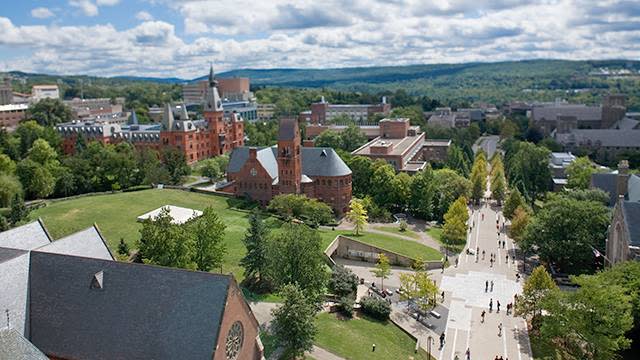
Li was accepted to UC Berkeley, Williams and Cornell. She didn’t visit Cornell but decided to matriculate there based on a friend’s recommendation. She says, “I think that being in college is  overwhelming for almost all of the people I met. Before coming here, I had expected to be intellectually challenged, to meet people who’ve done incredible things, to join clubs and organizations that would allow me to pursue the interests I had in high school or to explore new passions. In that respect, Cornell lived up to what I had anticipated, but at the same time, so could any other college that I had applied to. The way I see it, my expectations were about college itself than about this school in particular. I don’t think visiting Cornell would have altered what I hoped to experience, although I would have been able to picture myself walking to class or eating in the dining halls.”

Cornell University | Image taken from Cornell University’s website

From Cornell’s Facebook page, Li learned about a company called CollegeVine (CV), which helps families navigate the path to the best schools. She applied to one of the jobs and internships it was offering for Cornell students and was accepted.

Asked why she decided to become a CV mentor, Li answers, “It’s probably a mix of two reasons. Firstly, I was a tutor for many years and I enjoyed doing it; but there aren’t too many similar programs in college. Secondly, when I was in high school, a lot of the help I got with my essays came from older students who were attending the schools to which I was applying.”

“There are many college prep companies in Arcadia to help students through the process, but I find that they are primarily staffed with older people,” adds Li. “What’s really appealing for CollegeVine clients is that the counselors helping them are in their age group. In that sense,  CollegeVine is more effective because the consultants recently applied to college, know what it’s like and share a common experience of the pressure of applying.”

Li went through intensive training – on completing the common application, writing a compelling essay, interviewing techniques – to become a CV mentor. She got her first client, an international student, in September last year. 

Because the academic system in other countries isn’t the same as in the U.S., Li’s first job required her to do a lot of paperwork and research. She spent three hours a week working – one-and-a-half hours doing research and the other one-and-a-half hours video chatting with her client. She checked her student’s essay for grammatical errors and organized it, while ensuring it still had her client’s voice.   

“My client applied to seven U.S. schools and a few in her home country,” relates Li. “She concentrated on colleges with rolling admissions so she sent her first application early on and was accepted to her first choice school in mid-November. I was very excited for her! On top of that, she got a half-ride scholarship which her parents didn’t think they would qualify for.”

College counselors in private schools discourage their students from hiring independent consultants to help them through the application process. By necessity, though, those who are in large, public schools who can’t see their counselor regularly have to seek additional assistance.

As Li emphasizes, “I definitely think that getting outside help will make students more successful, just because they can have the personalized attention they don’t receive in school.  Independent counselors like me can better assess students’ strengths and weaknesses to find the best way to present them to college admissions officers.”

“It also benefits students to have someone who can recommend ways to handle less-than-ideal scenarios,” Li says further. “As a counselor, I provide an alternative point of view if they’re deferred, waitlisted, or rejected. Having gone through this process recently, I can honestly tell my clients not to make senior year more stressful than it already is. While it might be the culmination of everything they’ve worked for 12 years, it all comes together in the end.”

College application is a rite-of-passage for most teenagers in this country. And as Li could personally attest to, it is at once nerve-wracking and thrilling. Now, as a counselor, the most rewarding aspect of her job is being able to relive its best moments.                            

Table Tennis Demonstration Energizes Morning Assembly

Originally published on 26 January 2017 in the Pasadena Independent, Arcadia Weekly, and Monrovia Weekly

Morning assembly at Clairbourn School, a pre-kindergarten to eighth grade independent school in San Gabriel, was more animated than usual this Tuesday morning when students and parents arrived in the multi-purpose building (MPB). That’s because they were getting a special demonstration on table tennis after all the announcements are over.

Table tennis originated in Victorian England as a ‘parlor game’ when lawn tennis players moved the game indoors during the winter. It got the name ‘ping-pong’ at the end of the 1800s when the English firm J. Jacques and Son started manufacturing high-end equipment for the sport and trademarked the brand. It was later trademarked in the U.S. by board game company, Parker Brothers.

On April 24, 1927 the English Table Tennis Association was created with a membership of 19 leagues; it has since grown to its present 300 members, with approximately 75,000 registered players.  In the 1988 games in Seoul, South Korea, table tennis became an Olympic Games sport for the first time.   

While it had seen widespread popularity in the western world, it was China which took table tennis to new heights when Communist Chairman Mao Zedong declared it as the country’s national sport. Today, a reported 10 million Chinese play competitive ping-pong regularly and 300 million who play it occasionally. It won the gold in all four table tennis events at the 2016 Summer Olympics; it has taken home 28 of 32 gold medals since the game was introduced as an Olympic sport.     

Recognizing that Clairbourn has a large Asian population, Dr. Robert Nafie, headmaster, decided to acknowledge Chinese pride in their excellence in this sport and share it with the school community as well. Through Clairbourn parent, Harry Tsao, he found the California Table Tennis Club, an organization established four years ago by Gao Jun, a world champion who went to the Olympics five times in her career and currently an Olympic trainer. In its location at 2727 Stingle Avenue in Rosemead, it holds classes every Saturday and Sunday, as well as private lessons, for its 60-80 students aged five to 86 – some coming in for competitive training while others simply looking for a sport to enjoy.           

The team from the California Table Tennis Club – Gao Jun; coach Candy Tang; international table tennis player, Ryan Wu; club managers, Kevin Yu, and Lydia Zu – came on campus and set up their table for this morning’s assembly.  Jun, acting as facilitator, invited students to play against the coaches to show the different positions, strokes, and moves. 

There wasn’t a shortage of volunteers as several students raised their hands. First up was 5th  grader, Kelly Tsao, who demonstrated the ‘forehand’ when she played against Coach Ryan.  Eighth grader and Student Body president, Nick Polen, showed how the ‘backhand’ is played.

Clairbourn School’s Randall Hall | Photo take from Clairbourn School’s website

Sixth grader, Piper Kibbe, who followed, was clearly new to this game but Coach Gao took her hand to demonstrate how the paddle should be held to play table tennis properly. Kibbe quickly picked it up and had great fun using the ‘forehand’ and ‘backhand’ strokes. Second grader, Jason Qi, was a good sport and got the hang of it too.

To invigorate the game with faster strokes Jun called upon 4th grader, Madeline King, who lived up to the challenge with some fancy footwork and the more advanced ‘loop’ and ‘chop’ strokes.  She clearly isn’t a stranger to this game.

Mac Cole, 8th grader, wasn’t to be bested – he showed some very quick moves. But it was when 2nd grader, Atticus Williams, went up to the table that all the students fully erupted to life. With all the kids chanting “At-ti-cus! At-ti-cus! At-ti-cus!”, he demonstrated that while he wasn’t as adept at the game as the students who preceded him, he undoubtedly possessed an unmatched confidence at playing. Not to be outdone by his students, PE coach, Luke Ball, performed admirably.  

When the facilitator asked for a parent volunteer Li Feng came forward and showed everyone how graceful this game looks when played by someone who knows it well. She held her paddle in ‘penhold’ position, she had her eyes firmly peeled on the ball, she was fast and fluid, and she knew exactly when to crush her opponent.  

To end the demonstration, the table tennis coaches and Clairbourn’s Coach Luke played Doubles to everyone’s delight. A great time was had by all. With an obvious spring in their walk, parents left to go to work, run errands, or stretch at the gym. Students and teachers headed to their morning classes unmistakably energized.

Nafie has once more found another interesting experience for students that may not necessarily relate to their learning. But as he says, “I want to make sure the school is alive for the kids; that it’s not all drudgery.” Mission accomplished.