Originally published on 28 September 2018 in the Pasadena Independent, Arcadia Weekly, and Monrovia Weekly
Looking forward to a bright career after graduating from college | Photo by May S. Ruiz / Beacon Media News
In a few weeks high school seniors applying to UC and Cal State schools, or other universities through early action or early decision, will be sending out their applications. It is the last step in this grueling process that begins in 9th grade when they start to build their transcript.
These 18-year-olds spent four years of their life burnishing their resume with the hope that the admissions officers in the college of their dreams will admit them. A lot of them have a 4.0 GPA and perfect SAT scores, took a dozen AP courses, helped build houses in far-flung corners of the world, and acquired internships in the field they are passionate about.
What these students may not have thought of, though, is the price tag of a college degree. And the cost of tuition, books, accommodations, and meals is increasing every year. However, not every parent can afford to pay for their children’s college education, necessitating young people to get student loans.
A generation of young graduates is heading out into the world looking forward to a bright career but, at the same time, is carrying a huge burden on its shoulders. Student debt is now at a staggering $1.5 trillion.
So while students should follow their passion when they choose what to major in, it is as essential for them to balance their decisions with the realities of life beyond college and consider schools with the best earning potential.
To help parents and students make informed choices, PayScale, Inc., the world’s leading provider of on-demand compensation data and software, released its annual College Salary Report for the 2018-2019 school year. It is the only organization offering insightful, real time data based on crowdsourced figures and hundreds of compensable factors for both employers and employees to help them make important compensation decisions.
PayScale’s 2018-2019 College Salary Report uses data collected from more than 3.2 million college alumni, providing estimates of early and mid-career pay for 2,646 associate and bachelor’s degree-granting schools in the United States.
Lydia Frank | Courtesy photo
Lydia Frank, PayScale’s Vice-President details their organic growth, “The company was established in 2002 to help individuals understand how much they should be earning at their jobs. From there, we moved on to providing compensation information to employers.
“In 2008, we realized we had all this great data around what school people attended, what they majored in, and what they ultimately ended up earning – the kind of material parents and students need when they start their college search.”
“So we launched the College Salary Report ten years ago precisely to help parents and students make decisions as to what major to choose and what college to attend,” explains Frank. “We want to give them the information on how this will impact earning potential after graduation.
“There’s a lot of material out there telling students which college to attend based on reputation, teaching staff, and amenities available, but there aren’t any information out in the market about what they will be earning as a graduate from a particular school. We thought it was something unique we could bring to bear.”
“We didn’t expect it to take off the way that it did when we started it in 2008,” Frank discloses. “I think it became pretty obvious that we were unique in our ability to be able to provide this information so it became more mission-based – that we had to put it out there because it’s really valuable. It helps students figure out how much they should be borrowing and it gives them an idea what their income will be after graduating.”
Adds Frank, “The other piece of this is a report we put out in the spring of 2010, called College Return on Investment, which details how much it will cost to attend a particular school and the earning potential of its alumni.”
PayScale’s 2018-2019 College Salary Report shows the top 50 schools offering Bachelor’s degrees fall into 16 states, with California and New York home to 22 of them.
For associate degrees, nursing and healthcare provide the biggest payoff for graduates at half the cost of a four-year institution. Helene Fuld College of Nursing tops the list of schools in this category, followed by Pacific Union College, and Cochran School of Nursing. The majority of the highest-earning two-year programs are schools with strong reputations and a specific focus in nursing and healthcare professions.
Ivy League universities, elite technical institutions, and military academies continue to top the list. Harvey Mudd College is a Liberal Arts school that grants degrees in only science, engineering, and mathematics. It is a member of the Claremont Colleges, and its fellow member schools – Claremont McKenna, Pomona, Pitzer, and Scripps – rank 43rd, 67th, 355th, and 374th, respectively. Colorado is the first interior state to appear on the list, with the Colorado School of Mines in 11th place and the U.S. Air Force Academy in 16th.
Looking at the best schools by major, Vanderbilt for Communications, Newman University for Education, and Union College in New York for Humanities have the highest earnings for graduates but they do not appear in the top 50 schools in the annual report.
Most of the highest-paying two-year majors are technology-focused, with software engineering in the top spot. Construction project management is the first non-tech-focused major in the list, ranking 4th. Engineering and math dominate the bachelor’s rankings, but petroleum engineering majors make far and away the most money mid-career. Operations research & industrial engineering, a newly included major, comes in second place, followed by actuarial mathematics.
STEM topped the list in terms of earning potential, as expected. However, students who want to pursue a Liberal Arts degree could take comfort in the fact that they will be able to catch up.
“Graduates with an Arts degree tend to not make a lot out of the gate but they end up making more mid-career,” reveals Frank. “We had some interesting findings when we looked at mid-career earnings at 10+ years. Degrees like Philosophy start to float up there. So it’s not that you shouldn’t major in Liberal Arts, you just have to know that it would take longer for you to be able to pay off debt. That you have to really be careful about how you fund your education.”
Indeed a Liberal Arts degree gives one a wide scope of knowledge which applies across fields. Some of the biggest names in business today majored in courses which their parents could have thought made them totally unemployable. Carly Fiorina, the former CEO of Hewlett-Packard, graduated from Stanford University with a B.A. in Medieval History and Philosophy.
Young people really can’t know how far they can go and what they can achieve based on their college degree. It’s up to them to make their own fortune.
Originally published on 10 September 2018 in the Pasadena Independent, Arcadia Weekly, and Monrovia Weekly
Superintendent Amerson with students of the Duarte Unified School District | Courtesy photo / DUSD
Dr. Gordon Amerson is a big believer in creating a culture of achievement and opportunity using the innate skills and talents of the community. It is the vision he brings to San Gabriel Valley schools as he leads the Duarte Unified School District (DUSD).
After officially taking over the superintendent position on July 23, 2018, Amerson spent a month visiting each of the district’s seven schools, preschool programs, and public charter, the California School of the Arts-San Gabriel Valley (CSArts-SGV), to meet teachers, listen to parents, and learn about the community.
“Until now, my knowledge of Duarte has been rather limited. My father-in-law lives in Baldwin Park and my wife grew up in the area. But I didn’t really know much about it,” confesses Amerson.
The revelation is understandable given that Amerson had previously worked in Orange County, and prior to that spent the majority of his career in San Bernardino. It was only by happenstance that he found out about DUSD.
“I was the Associate Superintendent of Human Resource Services at Capistrano Unified School District and I was very fortunate to have a superintendent who was very encouraging of her team’s development and advancement,” relates Amerson. “Early in the 2017-2018 school year, she supported me when I told her of my interest in joining the ACSA (Association of California School Administrators) Superintendents’ Academy.
“Through ACSA, I went through an intense eight-month superintendent preparation program while holding a full-time job. During that process I was trained on all the components that go into district leadership. Additionally it gave me exposure to state-wide search firms who had interaction with attendees of the program.”
“It was then I started to discover Duarte and DUSD,” continues Amerson. “I looked at the website and found out about all the transformational work going on. That was very exciting for me and I wanted to know more; that truly sparked my interest.
“I didn’t know Dr. Mucerino at all prior to my applying either, but before leaving his position as superintendent of DUSD, he offered me a 30,000-foot view of the district from his perspective. I appreciated his transparency. I thought it was an exceedingly kind gesture for an outgoing superintendent to do.
“The search firm cast a net nationwide. From what I was told, there were 33 candidates who applied and eight were invited to interview. It was a competitive process and one that I’m glad to rise on top of. I finished the academy in April and secured the job in June, but I don’t take it lightly that I was able to navigate it successfully.”
Gordon Amerson with his family and members of the Board of Education at the Regular Meeting held on June 28, 2018 when he was unanimously appointed as the new Superintendent of the Duarte Unified School District | Courtesy photo / DUSD
Amerson is fully prepared to head a school district, and has a resume to prove it. He describes, “Before taking on this level of responsibility, I was an educator for a long time. I was a classroom teacher, an athletic coach in baseball and football, and a high school principal. I’ve seen a lot of places and spaces along the educational management spectrum which, I believe, helps inform my leadership.
“I have a multi-faceted understanding of what teachers and principals are going through on a daily basis as they try to create a community of learners and to keep students engaged. Seeing that work from different angles and experiences has given me a wide-range perspective and will help me be supportive as well as decisive.”
“One of the things I would remember for the rest of my life was being a high school principal at a school with a high-performing dance company led by a talented choreographer,” discloses Amerson. “They performed in the gym and I was moved by what kids are able to do with music and dance. From then on, I was hooked. We created a piano program. Kids in 9th grade who had never touched the piano were composing music by the time they graduated high school. It is uplifting to see the kinds of opportunities we can offer students.”
Amerson says further, “My daughter has been in dance formally since she was three years old. My son has been playing the piano, the drums, and the trumpet since he was four. It’s a focal point in our home. When I saw the impact and influence of the arts, and DUSD building a foundation of the arts to all of our schools, that’s what made a huge impression – that got me, hook, line and sinker.”
Much transpired in DUSD under the leadership of Mucerino, who facilitated the creation and implementation of the district’s strategic plan known as the Competitive Advantage Plan (CAP). Amerson adds, “With all due respect to Dr. Mucerino, if he were here today, he would say the strategic plan wasn’t his but the community’s. It was the stakeholder engagement, their input and feedback, that helped develop it.
“We have a seven-goal CAP which is the right plan because it was developed by the community; it was what our Board of Education has approved; it was reauthorized, redesigned, and updated recently, right before I arrived. And it is the plan we will be moving forward with. If, at some point, we need to alter something, I will listen, observe, learn, collaborate, and build a coalition before making adjustments.”
The most important issues Amerson will be tackling are the scholars and the staff. He states, “We have a really great framework around the CAP. But like the saying goes, how do we build a house into a home? I want to make sure scholars are connected to the school they attend; I want our staff to be empowered to do great work. The focus for me would be establishing trust and collaboration, being transparent, being visible so people know I’m accessible, letting them know I’m here to coach, support and mentor. I really want to try my best to coordinate our facilities as an organization to provide the services so people can do their job and kids can learn.”
It’s such an auspicious time for Amerson to be heading the district and he is well aware of his good fortune. He says, “A long and painful enrollment decline has affected countless school districts. But through transformational objectives within the CAP, DUSD has been able to turn the district around. And I am the lucky beneficiary of it.
“The board, administrators, staff, families, students, and the whole community implemented a community-based strategy. There is a cohesion, a partnership, and a collaboration that exist between the district and the city. That synergy is what helps transform an entire neighborhood and produces positive outcomes for students. I’m happy and excited to be here; I’m ready to roll up my sleeves and do the work.”
Amerson shares his very heartening first month on the job, “It has been amazing because people were so welcoming and responsive, optimistic and positive, helpful and supportive. That’s something you don’t always see or experience. And I want to capitalize on that and the opportunity. I am now on 70-plus hours of one-on-one meetings with folks, which is embedded in this plan of listening and learning.
Gordon Amerson meeting and greeting students during his first month as superintendent of DUSD | Courtesy photo / DUSD
“I gain various perspectives from the community on what I should be thinking about, what are the challenges they or their children are facing that the community or I need to be aware of. During these meetings I ask people, ‘Let’s reverse roles. If you were the superintendent what would you focus on first and why?’
“That always gets me interesting responses and tells me what’s important to them. Some are like low-hanging fruit that can be done right away, and some are big rocks that require more prolonged thinking and planning which could only be addressed over time.”
To the question ‘what is he most looking forward to working on?’ Amerson responds, “I am looking forward to continuing to build the four pillars because they’re spot on – a focus on results, service-centered, 21st century schools, and strong partnerships. What I think are the most important things are the teaching and learning; understanding deeply our partnerships and their value; how we will continue to nurture, cultivate, and expand them.
“Those partnerships are wide-ranging, from the work we do on our early college program, in our culinary arts program, all the things we do at our theme-based academies, the international baccalaureate program, our STEAM initiative with ‘Project Lead the Way,’ the alliance we have with City of Hope and CSArts, just to name a few.”
CSArts-SGV provides an extraordinary opportunity for students in the entire San Gabriel Valley – it gives them access to a quality fine arts program. While other schools may offer arts courses, or after-school activities, CSArts-SGV integrates arts academies within the curriculum. Before it opened last year, students who are really interested in pursuing arts courses had to travel to either Orange County School of the Arts (OCSA) or Los Angeles County High School for the Arts (LACHSA). CSArts-SGV’s enrollment covers cities beyond Duarte. There is, in fact, an arts program in all DUSD schools.
DUSD is a hopping place. Student learning is balanced and engaging – it offers everything from theatre acting, graphic arts, and music performance to engineering, math, science, and technology. It is an enriching environment for young people to immerse in scholarship as much as it is a satisfying place for teachers to mold responsive minds.
With Amerson’s leadership, DUSD could very well be the exemplar of erudition. And that would be his singular contribution to a community that continuously strives to afford the best education and a promising future for its youth.
Originally published on 14 May 2018 in the Pasadena Independent, Arcadia Weekly, and Monrovia Weekly
Approximately 1.9 million colleges students their Bachelor’s degree this year | Photo by Francois Kilchoer
All across the United States college students are graduating, alive with the ideals of youth and armed with a four-year degree. They are eager to make a contribution to the world using the knowledge they acquired and the skills they have developed.
The National Center for Education Statistics estimates that colleges and universities will award 1.9 million bachelor’s degrees this month. And with graduation season in progress, it is a timely opportunity to make an assessment of how much it costs to get a four-year degree, what it means to have a college education, and what good it does for everyone.
According to the College Board, during the 2017-2018 school year, in-state students paid an average of $9,970 on tuition and fees at a public university; out-of-state students paid $25,620. Students who attended private, non-profit four-year colleges and universities paid an average of $34,740.
After factoring in transportation and living expenses, the estimated amount spent by undergraduates in the 2017-2018 school year was $20,770 for in-state students at a four-year public university; $36,420 for out-of-state students at a four-year public college; and $46,950 for a private non-profit, four-year institution.
Based on those numbers, a four-year degree at a public school costs an in-state student about $83,080 while an out-of-state student pays $145,680; and a private non-profit college sets a student back approximately $187,800 for a four-year degree. These are all averages; students at Columbia University, the most expensive in the country, pay about $280,000 for their four-year degree.
Many students have to borrow money to be able to pay for college and today over 44 million Americans hold a total of $1.4 trillion in student loan, according to the College Board. And the cost of going to college rises every year.
The runaway costs of getting an undergraduate diploma, coupled with an astounding debt students take on before they even have a viable way of repaying it, have made many people question if the investment is really worth it.
Brittanie Kilchoer beams after receiving her Bachelor of Science in Biomedical Engineering degree from the Hajim School of Engineering at the University of Rochester | Photo by Francois Kilchoer
In September last year, NBC News and Wall Street Journal conducted a national survey of social trends among 1,200 adults. When asked if Americans agreed that a four-year degree ‘is worth the cost because people have a better chance to get a good job and earn more money over their lifetime,’ 49 percent concurred. However, 47 percent said a degree is not worth the cost ‘because people often graduate without specific job skills and with a large amount of debt to pay off.’
Those numbers varied from the findings of a CNBC survey in June 2013 when 53 percent of Americans said a four-year degree is worth the cost, while 40 percent said it is not.
Most significantly, it’s young people who brought the numbers down for those who favor a college education. Among 18-34 year-olds, only 39 percent say a four-year college degree is worth the cost; 57 percent disagree. Just four years ago the reverse was true, with 56 percent in favor of investing in a college education, compared to 38 percent who said it wasn’t worth the price tag.
As if to underline young people’s thinking, two months ago, the Wall Street Journal published an article by Douglas Belkin about a high school student in a Pittsburgh suburb who “ … earns A’s in her honors class and scored in the 88th percentile on her college boards, but instead of going to college hopes to attend a two-year technical program that will qualify her to work as a diesel mechanic.”
Belkin writes about another student whose parents are both professionals with college degrees and assumed their 14-year old daughter would follow in their footsteps. However, her heart is set on a vocational school where she wants to study cosmetology and computer science. And while they worry that decision will be looked down upon by their well-heeled neighbors in an affluent Philadelphia area, they aren’t confident that a college degree will help their daughter get a decent job and could saddle her with debt.
The article goes on to say that there is a course correction going on in high schools “which are beginning to re-emphasize vocational education, rebranded as career and technical education.”
Recently I read an excerpt in The Atlantic, of a book written by Bryan Caplan, an Economics professor at George Mason University in Fairfax, Virginia. The author of ‘The Case Against Education,’ Caplan believes “The world might be better off without college for everyone (because) students don’t seem to be getting much out of higher education;” and “… college is a big waste of time and money.”
Caplan points out that while he embraces the ideal of transformative education and believes in the life of the mind, he is cynical about people. He’s “… cynical about ‘deciders’ – school officials who control what students study. The vast majority think they’ve done their job as long as students comply.” He’s “… cynical about teachers; the vast majority are uninspiring,” and “ … most have little firsthand knowledge of the workplace.”
Higher education, posits Caplan, “paves the way to general prosperity or social justice. But education enriches individuals much more than it enriches nations.” He adds that “ …there’s credit inflation: as the average level of education rises, you need more education to convince employers you’re worthy of any specific job;” that “a great majority of the extra education workers received was deployed not to get better jobs, but to get jobs that had recently been held by people with less education.”
As a parent who’s passionate about education and giving our children all the tools necessary for them to succeed in life, I find all these polls, stories, and trends deeply concerning. I’m sure most parents would agree with me that we should invest in the future and our children are our best hope for tomorrow. We would like to be able to leave our country’s, indeed our planet’s, future in capable hands.
To help give perspective to the debate that’s now going on, I spoke with two Pasadena-area heads of school, the vice-president of NAIS (National Association of Independent Schools), the president of NACAC (National Association of College Admissions Counselors), and a respected Southland career coach.
Robert W. Nafie chats with students | Courtesy Photo
Dr. Robert Nafie, who has spent close to 50 years in education, is the headmaster of Clairbourn School, a pre-K to 8th grade independent school in San Gabriel. He offers this point of view, “Let me rephrase the discussion by asking the larger question – am I in favor of self-development and continuous self-improvement? The answer is yes. And what is the most efficient way to improve yourself? In the past, it was probably by being a student and being self-taught.
Another way is to be a pupil and learn from a teacher. In which case, a traditional college education or land-based college experience provides a structure and framework to help motivate someone to continue to improve.”
“To have a democratic form of government you need a citizenry that’s well-educated and well-informed,” declares Nafie. “The question then becomes ‘is a traditional college the best way of self-improvement?’ And there are two parts to this. Is a prix fixe menu of colleges and universities – one tuition fee, one location, one syllabus – practical? If you can afford it, can find financing through scholarships, grants, and financial aid then, yes, it makes perfect sense.”
“On the other hand, does it make sense for young people who leave college at the age of 22 and who may come out with a $200K debt before they really earn any kind of serious money? College education is very expensive and I, for one, don’t believe taking 15 or 20 years before getting that loan paid off is the way to offer opportunity to the next generation. With a debt at ten to twelve percent interest it would be impossible for them to retire in this environment when people make three to four percent on their investments,” Dr. Nafie says.
“When I was growing up there were more layers among the privileged and working class,” continues Nafie. “However, there’s more appreciation today for people who pursue other lines of work they don’t necessarily go to college for. There are people who have skills and talents that can be cultivated. The greater model is not where you went to college but how have you improved your life? What did you know at one time and are you moving forward in your search for knowledge and information?
There’s been a recent development that hearkens back to earlier times in artisanal work and I’m a big proponent of it. For instance, more than we might have earlier, we value people who restore historical buildings to their original luster. Today we respect excellent carpenters and other tradespeople. I think there’s an avenue for creative people who work with their hands. There are more opportunities for areas of work we didn’t consider before.”
Nafie sums up, “So to get back to the original question, if you could afford to get a college education without suffocating debt, then you should do it because all avenues are open to you. It offers the best job opportunities and advancement. The second approach is to be a student and self-study, and know the top people in every walk of life; know how thoughts cross fields instead of just having one chimney of knowledge. The third option is to be a craftsman and learn from a master in the artisan tradition.”
Peter Bachmann, head of Flintridge Preparatory School, a 7th to 12th grade institution in La Canada-Flintridge, argues that a college education is worth the investment. He states, “Firstly, we don’t know what the economy will look like over the next 50 years of the graduate’s work. This will more likely change multiple times and will probably involve a number of job changes. College teaches students adaptability, creativity, and critical thinking – all of which someone needs to prepare for what lies ahead.”
“Secondly, there’s the unexamined assumption that the only reason to go to college is to get a job,” states Bachmann. “While that is clearly a major motivation, that is a narrow and potentially impractical assumption. To live in an American democracy, we have to be collaborators both in the workplace and in the civic society. College can help you analyze political issues, cultivate civic responsibility, and participate in your community. So there is a civic purpose to college.”
“And thirdly, college helps you grow as a person, develop passions and ideas. It can help you think critically and creatively about all aspects of your life,” Bachmann adds. “I think college done well has very broad purposes, with broad pay-offs.”
“Additionally, depending on what field you want to go into, college may be extremely important,” stresses Bachmann. “Obviously, if you want to be a doctor, an engineer, or a lawyer, you need college and probably graduate degrees. I am a big ‘follow your passion’ advocate for college undergraduates.”
“You should not opt out of college because you don’t want to have student loans, but look for ways to fund your college education,” Bachmann asserts. “Find colleges offering merit scholarships; apply for financial aid and grants. There are public universities which provide excellent teaching. There are also private institutions that are not necessarily the most highly selective schools and charge less. These schools can often produce college-educated kids who are successful in the marketplace and are civic leaders, as well.”
Peter Bachmann at Prep’s Spring Reunion | Photo by Melissa Kobe
Myra McGovern, vice-president of NAIS and speaking on its behalf, voices yet another viewpoint, “What we’re seeing is that the nature of both work and school is changing and what families are looking for in K-12 instruction or in higher education is shifting.
“There are many different reasons why families seek education. For some, it’s to get into competitive colleges and universities and to succeed academically. For other families, a school is a place to learn community values or where to really nurture the talents of an individual.
“At the same time we’re seeing a lot of students who are successful academically and go to college, but don’t have the social and emotional skills, and the resiliency necessary to function. So we’re urging schools to think not only how to help students get the best SAT scores but to prepare them for lifelong success and well-being so they are able to consider different options.”
“One of the things our schools are good at is preparing them for jobs that don’t even exist yet,” McGovern explains. “If we don’t know what the jobs of the future look like, how do we prepare students so that they have the flexibility and abilities that will transmit to many different fields in the future – particularly in thinking through programs for innovation and design, in areas like coding or decoding that may, in fact, not be ‘THE’ thing needed when they become adults.
“There isn’t a definitive answer to whether a four-year degree is worth it or if isn’t; it really depends on the student’s specific goals. And that’s the one thing independent schools specialize in – finding out what students’ aspirations are and helping them get there,” McGovern concludes.
David Burge, President of NACAC is, ironically, the Vice-President for Enrollment Management at George Mason University where Caplan teaches, and he argues ardently for a college education.
“First of all, there’s good documentation and research that would suggest that if you’re someone who has low or moderate income, your lifetime earnings are more directly connected to your ability to earn a degree. And, to some extent, this noise about college not being worth it is being driven by people who already have a degree and strong earning potential. Americans from a predominantly low income background don’t have the same access to the same capital, opportunities, and networks so, for them, college is very important,” maintains Burge.
“Second of all, the research is pretty clear about lifetime earning potential,” Burge continues. “Even when you look at various disciplines, Liberal Arts majors, like their counterparts in Engineering, are getting a greater return on investment that far exceeds anything they could get, say in the stock market.”
“Generally speaking, even after students are out of college five or ten years, they find that the earnings gap between those who attended college and those who didn’t tends to widen,” adds Burge. “When you look back at the great recession, a lot of the jobs that were lost were held by those without college degrees. And a disproportionate number of jobs that have been created during the economic recovery required a college degree.”
“There’s also societal good at play,” Burge points out. “The College Board has put out a very good research that college graduates are more likely to have employer-provided pensions and healthcare insurance; they’re more likely to be physically active, less likely to smoke, more likely to volunteer and vote. That’s not to say that those who didn’t go to college are somehow deficient; there are a lot of people without a college degree who have very successful lives.
“Furthermore, it doesn’t mean that college is a golden ticket, because it’s not. People who go to college still have to have good ideas and still have to do good work. It’s certainly not a guarantee, nor is it completely necessary, but it is definitely going to be the best accelerant that people can have to get to their dreams.”
“We, at NACAC, believe that school counselors should not tell students they shouldn’t have debt but counsel them on what is the right amount of debt relative to what they can expect to earn from their degree. Additionally, there are alternative paths to degrees, like community colleges, on your way to a four-year degree that can still produce the same outcome not only in terms of earnings but also for happiness and success,” concludes Burge.
Going to college isn’t the end-all. In fact, graduation day marks the beginning of the next challenge.
Cynthia Shapiro is a Southern California career coach and employee advocate who has written two internationally bestselling books. A television expert, who has done a lot of work with ABC News – ABC World Tonight, Good Morning America, Nightline, and 20/20 – and CNN, she helps graduates find jobs.
Shapiro declares, “Universities are self-perpetuating institutions and are disseminating the idea that all you need is this degree and doors will open, you’ll be CEO in ten minutes. While a college or master’s degree does open doors, it’s something to add to your tool box to give you a leg up. You need to get out there and make it happen.
The problem is that while universities have career centers, they don’t teach students how to write a good resume, how to interact in the public world, how to behave with a boss, what are the most important things to do to find and keep a job.”
Career coach Cynthia Shapiro offers expert advice on career moves.
“There’s a lot of competition – not just for top jobs, but for any job,” Shapiro pronounces. “And, yes, the job market is shrinking for a variety of reasons, including automation, job consolidation, outsourcing, international business. But there are always jobs for people with the right approach.
“What companies hire for is actually not skills and talent; they know they can teach that. What they hire for is attitude and passion; passion gets the job every time. Employers are looking for positivity, confidence but not arrogance; a willingness to get in there, to roll up their sleeves and get the work done and learn, and be a part of the team.
“That said, there are companies who will discriminate if you don’t have a degree and that’s another reason why you should have one. Some jobs even require a Master’s degree and those doors will be closed to you if you don’t have it.”
And because of competition, employers now are looking for more components on applicants’ resumes. Shapiro discloses, “It used to be that a four-year, or six-year, or eight-year degree was enough to get you hired. Companies like to see actual work experience so you have to get an internship to show you’ve been successful in a work setting.
Applicants who’ve had internships in their chosen field are hired faster than all others. But if you can’t find an internship in your desired career, find any job. Even working at Wendy’s at night to help pay for your college education shows you’re responsible, a go-getter, and you’ve got work ethic. Make sure your manager likes you so you can ask for a good reference.”
Graduates who don’t have an internship to put on their resume could include school projects. Shapiro says, “Showcase the things you’ve done in college as work experience. For example, a marketing project where you went to an actual business; or a business plan you wrote for a dry cleaner’s; or being treasurer of your college sorority. It’s obviously collegial experience but it’s what we call transferable skills because they show what you’re capable of.”
“What you need to do is get your foot in the door. Call up the company you really want to work for and ask if you can work there for free; companies don’t usually turn down free labor. Then show them how good you are, how you can shine, that you’re better than everyone else. I can guarantee you they’re going to find a position for you,” concludes Shapiro.
As voiced by my respondents, there is much evidence that a college degree is a means to an end that is worth investing in. However, happiness and success aren’t predicated upon acquiring one. There are other ways of getting an education and making a living. And a fulfilling and satisfying life isn’t measured by one’s job title or how much wealth one has accumulated.
Our responsibility as parents and educators is to guide our children to make education choices based on their dreams and passions because it is by following those, and succeeding in them, that they can do the most good for themselves and, hopefully, for the world.
Originally published on 3 April 2018 in the Pasadena Independent, Arcadia Weekly, and Monrovia Weekly
Arcadia High School students will call attention to social issues, including poverty and homelessness, at the Arcadia Poetry Slam which will be held at 2:00 pm on Sunday, April 29, at the Arcadia Performing Arts Center (APAC).
To benefit Foothill Unity Center, it will also serve as a launching ground for students to get their voices heard. Whitney La Barge, assistant general manager of APAC, coordinates the event with Arcadia High School.
“We want to bring more students into the space,” says La Barge. “Right now we do orchestra, band concerts, dance and theatre shows. Arcadia Poetry Slam gives other students, who wouldn’t otherwise have, the chance to be a part of the center as well as the foundation.”
Anthony Sigman-Lowery, APAC operations manager, says further, “This will be the inaugural Poetry Slam and it’s meant to encourage students to use their voices through poetry. We have a black box with 99 seats: it’s a small intimate environment for students who may have stage fright. What better way to bring students who might not normally be performing here.”
La Barge expounds, “We announced the competition at AHS in mid-March and we’re giving preference to seniors since it’s their last opportunity to do it. We’re also limiting it to 30 students. It’s pretty open in terms of format because we want them to express their creativity. The only restrictions we have are that it is under five minutes long and it has to be school-appropriate so it can’t glorify violence, guns, or drugs. As it is benefiting Foothill Unity Center we’re encouraging students to touch on social issues like homelessness and poverty.”
To get student participation from neighboring schools, La Barge reached out to the English and Drama department teachers and shared the event poster with them.
“It’s an invitational and we’re hoping that each year we’ll have more and more schools involved,” La Barge states. “We definitely want AHS to be well represented because obviously we’re here on campus and we want to serve the school district. As it’s our first time, we’re keeping it small but we eventually want to turn it into an all-day competition.”
“We really wanted to hold this but we don’t know how to judge a poem,” relates Sigman-Lowery. “How do we keep it school appropriate without restricting people’s voices? So we partnered with L.A. Poets Society. They gave us the components by which the poems will be judged – content, stage performance, voice, and diction.”
La Barge adds, “We also asked for a statement from each poet of what they’re trying to accomplish with the piece, what they’re trying to say. The judges will then pick three poets who best accomplished their goal, whose messages came across effectively. For prizes, we’re giving away Beats wireless headphones courtesy of Beats. L.A. Poets Society will award writing journals and feature them in their website under the New Poet Section.”
Arcadia Performing Arts Center | Courtesy photo
APAC and Foothill Unity Center have been community partners for a while according to Sigman-Lowery. He explains, “We started working with Foothill Unity Center with our Sunday with Santa event in December. We collected canned goods and to encourage people to donate, each can served as a raffle ticket to win prizes. We liked working with them and we figured it was a good way of serving the Arcadia community since one of the big goals of the foundation is making art accessible.”
Raina Martinez, Foothill Unity Center’s development and donor relations director, confirms, “APAC’s executive director, Maki Hsieh, wanted to come up with a way to support the center as well as get the community involved, especially the youth. And poetry is popular with young people and is a great way to get their voice out there. We’re making it the thematic concept to incorporate poverty, hunger, and homelessness to bring more awareness about the center and, more importantly, about the issues.
“Our two sites – Pasadena and Monrovia – serve eleven cities in the San Gabriel Valley offering food, temporary shelter, case management, transportation, and vital health services for low income and homeless people. Additionally, we offer job training skills for youth and adults, and an internship program. We have an AmeriCorps program on the site where they can get clerical and warehouse type skills.
“One of the things we do well is developing partnerships. We’re not trying to reinvent the wheel, we work with other agencies. We connect our clients with other organizations who can provide them assistance. Donations come from everyone in the community – individuals, businesses, churches. It’s neighbors helping neighbors. And volunteers are a big component of our organization – we couldn’t do this without them. Last year we had 40,000 volunteer hours.
“We have two major events during the year. In addition to the regular food services we provide, we have thanksgiving boxes and the Christmas holiday distribution food boxes. For all registered children we have the Holiday Angel program that provides toys and gift items, and a popular Back-to-School event which we do at the Santa Anita Race Track in August. Children from kindergarten through college receive backpacks, school supplies, socks, clothing, haircuts, manicure, health screenings – everything they need to get them ready for school.”
Since its founding in 1980, Foothill Unity Center has remained the primary provider of food, case management/crisis help, and access to healthcare resources for people who are at or below the national poverty level. Each day it lives up to its mission ‘Helping People. Changing Lives.’
Through the Arcadia Poetry Slam local students will bring attention to Foothill Unity Center and the most pressing problems affecting the lives of those around us. It is art galvanizing social activism.
Originally published on 19 March 2018 in the Pasadena Independent, Arcadia Weekly, and Monrovia Weekly
Guests enjoying the various food and beverages at the 2016 ‘Taste of La Salle’ | Courtesy photo / Annette Dyson
How cool is it to sample the various food and drinks from over 35 different restaurants and beverage companies all gathered in one place? And how great would you feel knowing that you are donating to a good cause while enjoying such bounty?
La Salle High School gives you the opportunity to indulge your gastronomic appetite and satisfy your philanthropic inclinations at its bi-annual ‘Taste of La Salle’ from 6:30 to 9:00 pm on Saturday, March 24. Advance ticket price is $50 and $75 at the door.
‘Taste of La Salle’ will take place on campus (3880 E. Sierra Madre Blvd., Pasadena on the corner of Michillinda Avenue) with students directing people to three different check-in tables to make for an easy flow of foot traffic to the party. All vendors will be set up along the perimeter of the dining pavilion and atrium to give everyone room to walk around, visit the various stalls, and delight on all the various offerings for the night.
Parking will be available on both lots on campus – the upper lot on Sierra Madre Blvd. and the lower parking lot on Michillinda – the field will also be open, and there will be parking on surrounding streets.
Kristen Schultz, Assistant Director of Institutional Advancement and Director of Alumni Relations, spearheads this delectable event. She says, “We started ‘Taste of La Salle’ in 2012. It was deliberately a bi-annual event because we recognized that these vendors are also asked by various non-profit institutions all the time to donate and we didn’t want to burn them out. And while other organizations charge vendors a fee for participation, we don’t; they provide the food, drinks, and the manpower to staff their table so they give quite a lot as it is. At the same time, because it’s only every other year, the community looks forward to it and is more hyped about it.
The incentive for the vendors is the heavy publicity we do for it. We send out invitations to about 7,000 people in the San Gabriel Valley, we include the event on our social media feeds – Twitter and Instagram; send emails every other week promoting it; mail postcards with the logo of participating establishments, advertise it in a local magazine which reaches 15,000 people.
It benefits restaurants because we really target San Gabriel Valley so people who come to the event can patronize these establishments later. We always do a thank you and a follow-up with all our participating establishments and have gotten extremely positive feedback – that they had a great experience and would like to come back; that our event was every well done and organized. Several past vendors will be here again this year.
We had 23 vendors in our first event and we had no idea what we were doing. It was hugely successful and it gave us room to build upon that success. It expanded every year and we now have 39 vendors. But we really don’t intend to grow it any larger than that because we want to keep it community-friendly and preserve the school atmosphere as well. We expect between 300 to 400 people; two years ago we had 360 and we’ve attracted more each time. I know we’ll have about 350 but we’re hoping to reach 400 attendance.”
Michelle and Brian Day were the winners of the Stock Your Bar Package in 2016 that includes over 19 bottles of premium libations | Courtesy photo / John Blackstock
Food and drinks are not the only items on offer. There are also drawing opportunities for some really awesome packages. The Grand Prize is ‘Eat Out for a Year,’ which is an array of gift cards to local restaurants valued at over $2,000. There is a ‘Travel and Wine Lover’ prize, a Temecula Getaway and Culinary and Wine Pairing for 4 in Paso Robles. A ‘Stock the Bar’ prize is an assortment of premium libations; a ‘Work it Off Fitness Basket’ gives the winner over $700 worth of gift certificates to local fitness classes and gyms; a ‘Staycation’ is a one-night stay at the Embassy Suites in Arcadia, $100 gift card to The Derby Restaurant and four Club House passes to the Santa Anita Race Track; and more.
Tickets for the drawing are available online – $10 for one ticket; $25 for five; $50 for 15; $100 for 40. People can go online to buy tickets to the event and for the drawing at the same time or separately. Drawing is done at the actual event but they don’t have to be present to win.
‘Taste of La Salle’ takes lengthy planning, as one can imagine. Relates Schultz, “We start preparing this in the summer, around May and June. Any time we do an all-school event we obviously have to work it into the calendar. And there are several of them like the plays and the musical which need all the school facilities. We picked March the first time because it was open.
The school has two fund-raisers: the golf tournament in the fall and the Crystal Ball in May and we didn’t want to compete with those two events. We were cognizant of the fact that we were asking money from the very same pool of parents. We also made sure we kept the drawing items food-themed because we didn’t want to take away from what the two other events are also requesting.”
Adds Schultz, “‘Taste of La Salle’ is the only event that the Alumni Association puts on. It’s also the only way people can donate, they can’t write a check towards the scholarship. We ask the scholarship recipients to attend and we profile them so people can see where their money is going.
It was created to have an alumni fund going to current students from alumni donors. When this began, we awarded two college scholarships to two members of the class of 2013. It is a one-time scholarship to help them with their first-year expenses and focuses on service, citizenship and leadership, not on their GPA.
Members of the La Salle Alumni Association Executive Board with the class of 2018 Alumni College Scholarship recipients (pictured front center). Back row, left to right: Armando Ramirez, Chris Kealy, Amanda Richardson, Manny Soriano, Paul Lees, Tyler Varing, Kristine Nonato, Chris Rettig, Mike Sullivan. Front row, left to right: Joe Alvarez, Rafael Mirasol, Sarah Day, Garien Agapito, Tony Messineo, Gabe Castillo | Courtesy photo / Kristen Schultz
We invite students to apply in the spring of their junior year and they’re asked to give short answers to questions related to their leadership, their impact on the greater community, what happened in their years at La Salle, their future plans and how they will remain engaged after they graduate. I take out all the personal information about the applicants so the 17-member Alumni Association Executive Board makes its decision based purely on the answers given by the students.
I check in with the scholarship recipients six months into their first year of college to get an update on how they’re doing, etc. While I continue to communicate with them periodically during their college career, there are no requirements on their part. Although I hope they stay in touch and most of them do!
In 2016 we offered the first incoming heritage scholarship to a member of the class of 2020, who is now a sophomore. This is a four-year scholarship as long as the student retains a 3.0 (B average), remains active in school activities, and maintains an exemplary discipline record.
The criteria are similar for the incoming scholarships but obviously with some differences because we’re asking 13-year olds versus 17-year old students – community service and involvement, why do they want to be a part of La Salle, what difference can they do here, what La Salle means to them.
We have continued to offer two college scholarships every year since 2012 to the graduating class and one freshman scholarship since 2016 to the incoming class. We just recently named our incoming scholar for the class of 2022 who will start at La Salle this August. The class of 2019 is currently applying for next year’s College Scholarship. We have 12 college scholarships and three freshman scholarships to date.”
‘Taste of La Salle’ promises to be a fun and enjoyable way to spend an evening. That it goes a long way towards providing assistance to future generations of community-engaged and socially responsible citizens only makes it doubly worth our generous support.
Originally published on 28 November 2017 in the Pasadena Independent, Arcadia Weekly, and Monrovia Weekly
Pre-K students (left to right) explore buoyancy to prepare for their STEM Regatta project | Courtesy Photo
One evening this past October, little students were all gathered impatiently around a rain gutter filled with water, eager to sail their “boats” down the river. This was going to be so much fun!
That they’re three-, four-, and five-year-old pre-school and kindergarten students at Clairbourn School, an independent junior pre-K to eighth grade school in San Gabriel, learning STEM was why this regatta was such a big deal.
What was totally out of character, though, was how even the parents couldn’t take their hands off the boats. They were just as enthusiastic to test the product they built with their children.
This was the culmination of a ten-day, three-part STEM Regatta project that began with the teacher reading ‘The Raft’, by Jim La Marche, a story about a little boy who spends the summer with his grandma in her cabin. The classes also read ‘The Three Billy Goats Gruff’, about a family of goats that wants to avoid the troll and cross a river.
After listening to the stories, students were challenged to design and build a miniature boat, or raft, capable of carrying three billy goats (represented by three small, but heavy metal washers) to avoid a dangerous troll. Their boat/raft should not exceed five inches wide, and had to be able to float.
The first part – raft/boat component – took five days to complete. Day one was reading the story. The second day was spent researching with Nearpod presentation and time for questions. On day three students tested their materials and charted their findings. Using their selected materials, they planned and designed their raft on the fourth day. Day five was spent building their designs. On day six they tested their designs, made improvements and retested.
The second part – the sail component – was done in three days. The class read books about the wind on the seventh day. They spent the eighth day listening to a Nearpod presentation to learn about sails. On day nine students investigated sail materials, sizes, and shapes with demonstrations and charted their results.
The third part – the finale event – was the STEM regatta. On Thursday, October 5, 2017, all three grades, made up of two pre-kindergarten classes and one kindergarten class, and their parents came to Clairbourn for the crucial finish.
The evening’s activity consisted of extensive display boards and a Nearpod presentation from kindergarten teacher, Kris Shoemake, to show parents their children’s learning process over the previous nine days.
And then it was time for families to build the sails, followed immediately by wind-powered boat/raft races by grade level.
Karen Paciorek, Lower School Director, says the STEM regatta was the collaborative brainchild of the pre-school, kindergarten teachers and herself. She relates, “We’ve been wanting to do a cross-grade activity that highlights the things they do all the time in their classrooms with ‘Project Work’. They brainstormed, agreed on an idea and decided on a title. It was a collaborative effort for the teachers, which is a model for what we want students to emulate.
The idea for the regatta came organically. Kris Shoemake came across an article about students testing boats. Since we know that kids love playing with water, we thought that would be a fun way for kids to learn the concepts of floating and sinking. Instead of us showing pictures, we’d take it a step further by having a hands-on activity integrating what they do in the upper grade engineering design challenge.
We wanted for them to show their learning by picking what materials would work for them. We also wanted this project to demonstrate to parents the progression of ability through the grades – expectations at JPK (junior pre-kindergarten), PK (pre-kindergarten), and at K (kindergarten) – so they have a true picture of what we look at as developmentally appropriate.
Teachers use the academic language with the kids so even the youngest students know this is a science project. We’re not expecting them to master the concepts or terms, but to be familiar with them. They will be hearing the words as they go through the grades.”
Parents helped their children during the STEM Regatta finale. Pictured (left to right) are Kaitlyn Nava, Mackenzie Bates,, Stephanie Furukawa, Zoe Nava, and Jason Nava |Courtesy Photo
Adds Dr. Amy Patzlaff, Assistant head of School, “It wasn’t merely a reinforcement of the concept of buoyancy. Teachers talked about the scientific methods: collecting, charting, and interpreting data. As the students worked and tested a variety of materials, they had a chart that showed which boat sank and which floated so they could refer to the data later. And it was simple – it was pre-school level – but they could see on the chart which material worked and didn’t.
They then repeated it when they were talking about sails – which materials held against the wind? Did the shape matter? The students tested the sails using a zip line and a fan; they sat and watched as they tried different things. They had access to that data as well when they had to replicate the activity on the night of the regatta. They built their sails with their parents and tested their final product. They employed scientific methods – how to use the data; how to problem-solve; how to use previous history to scaffold what’s going to happen next; how to use the product for the next round.
Each grade level had a different take on building the boat, which was all done in the classroom, with the teacher assisting. During the night of the regatta, the parents helped in the culmination of the activity which was building the sail and testing it.
To make it age appropriate, it wasn’t a win-lose situation; they just wanted to see if it worked or if it didn’t, and why. We used water-filled rain gutter rivers with a fan at the end. They set their boat in the rain gutter and if the boat got stuck, they righted it. Watching the parents test their product was highly entertaining! But it was all a friendly event, everyone cheered for one another, happy to see each other succeed.”
According to Paciorek, even during the ten-day period that the kids were working on it, they would practice what they learned at school. Her granddaughter, who is four-years-old and is in the pre-K class, tested some toys for buoyancy in their bathtub.
“This is fairly representative,” explains Dr. Patzlaff. “When I was having breakfast with some of the parents later that week many parents commented on their kids wanting a fan to test the zip line of some of the sail types, in addition to the ones provided in class. Another child wanted to get more materials to test in their bathtub at home; one was going to do a race in their pool. So they wanted to continue the exploration and testing on their own. It continued to engage them which is a great testament to the fun embedded in the project.”
Paciorek says the regatta was a major collaborative event and they plan to do one every year. In the meantime, each grade has its own classroom STEM projects. In kindergarten they have about four or five smaller STEM-related work. One is an apple-picking activity where kids help a farmer get his apples from the trees to the barn. Students have to design the transportation to get this accomplished using the same scientific methods.
In first grade they do a pumpkin drop and students have to brainstorm ideas in groups and design a container that protects the pumpkin. They test which materials kept the pumpkin from breaking. They also have one activity where they build a nest to hold the eggs.
“We started a heavy emphasis on STEM once the NGSS (Next Generation Science Standards), the nationally adopted science standards, came into play around 2012,” states Dr. Patzlaff. “There has been so much conversation about 21st century skills and about not knowing what jobs are going to look like. And because we don’t know what jobs are going to look like the most important pieces we can give students are how to problem-solve, how to think, how to communicate clearly, how to have resilience and grit, how to persevere when something doesn’t go right, collaborating – all the soft skills – in addition to being able to write.
One thing that STEM projects give is real-world possibilities for how to apply those skills in a nice, tight package. When they design the sail for the boat, for instance, they have to problem solve, they have to work together, they have to communicate with their partner, they have to be able to document their results. For little kids documentation is different – we take a picture of it and we put them on the wall. For older kids, they would be written documentation of some sort, depending on the age. It gives them opportunities to apply the skills in ways that are highly engaging and meaningful to them so they’ll want to persist in it.
Having STEM in our curriculum not only improved math skills and scores among our students, it has also helped primarily in the understanding of concepts. We want kids to not rely on memorization of formula because if they memorize it incorrectly they will never get the right answer. If all they know is the formula, they’re only plugging in numbers; they aren’t checking it to see if that makes sense because they don’t have a way to do that.”
Paciorek adds, “Through this program they’re learning to explain what they’re doing and why they’re doing it. That gives them that foundational understanding to gain higher performance in math, even at the kindergarten level.”
“I think parents now are looking for things that are measurable,” Dr. Patzlaff posits. “It’s hard to test for creativity and that’s one of my biggest challenges. Frankly, the things that are easily measured like the Kumon math worksheets – my kids could do 100 additional problems in 45 seconds – don’t really mean much. What are you going to do with that? Being able to blend the measurable outcomes with the applicable results is an interesting thing for me. The things that I value are the problem-solving, the communication, the ability to work together with others, the ethics – most of those things are hard to measure.
The components that are within STEM – the problem-solving, the engineering, the applicability of all the new skills – they’re all important competencies to add on but how do you apply them? I like the elements of STEM that help give context to student learning. It gives more meaning to the concept so it sticks and makes them want to explore further.”
Kindergarten teacher, Kris Shoemake, and Lower School Director, Karen Paciorek, help students race their sailboats during the STEM Regatta finale | Courtesy Photo
Concurs Paciorek, “They don’t really see it as learning, it’s just something fun and interesting for them. Another thing that’s vital that we discuss with parents is that high schools and colleges are looking for balanced students. When we have standardized testing appointments with individual parents we’re educating them, one family at a time, on the importance of being well-rounded. We explain that these tests only measure Language arts and math; they don’t measure sense of humor, leadership skills, musical ability – all those things that are key in making well-rounded people.
The high schools love our students, they add so much to the schools they go to and this is where they get that foundation. We want families to understand that. It’s not just about math or science; it’s learning how to apply the academics, how to think, how to be creative.”
According to headmaster, Dr. Robert Nafie, Clairbourn’s overall teaching philosophy mirrored that of other English-based schools, which focused on a classical liberal arts education. However, as times changed the school shifted its emphasis to keep up with prevailing conditions.
“The world has gotten smaller and the population is much more diverse,” begins Dr. Nafie. “Our students are global citizens, they come from different backgrounds and culture. As such, the language becomes a little less precise, less critical even. Today’s universal language is mathematics and the hard sciences are the currency to become successful.
The big question for schools now is ‘Do we prepare our students for their future or for our past?’ We’re more comfortable preparing them for our past because we were educated that way, we know it. But the truth is we have to look into that murky, cloudy, and foggy future.
That said, from Clairbourn’s standpoint, we have always done a good deal of STEM. We’ve had a lower school science lab for at least 25 years where teachers have all workbook activities, and experiment materials, and tools organized for them in the cupboards.”
“We are in an educational and biotech corridor,” Dr. Nafie points out. “This particular area of Los Angeles is very rich in science and technology. Starting on the west side, with UCLA, USC, Pepperdine; in Pasadena we have Caltech and JPL. We have all these hospitals – Huntington Memorial, Arcadia Methodist, City of Hope. These institutions are, really, right along the mountains going all the way east to the Claremont Colleges.
Our feeling is that there should be an ongoing conversation between Clairbourn and the community. Several years ago we started something called Project STAR (Science, Technology Activities, and Research) and invited our Caltech dads for input on how we can focus on engineering and science. As a result of that, we held science fairs with Caltech and JPL engineers as judges, and we had a guest speaker. In recent years, we have embraced STEM as a philosophy. We established an Entrepreneurial Fair where there are Makers’ Spaces for students to create something creative using STEM.
For Clairbourn, the reality is that we are in the midst of a very large Asian population. Our families are from Arcadia, Pasadena, San Gabriel, San Marino, and Temple City. And what they’re looking for is a school that has a strong emphasis on STEM. At the end of the day we are a corporation masquerading as a school. If we don’t provide what people want, we’ll be out of business.
We have to ensure that children in the youngest grades have this kind of educational experiences. We teach STEM early and we use the spiral curriculum – we introduce a subject and come around to it again. For instance, we teach fractions in second grade, hit it hard in fourth, reinforce it in sixth, etc. For STEM we introduce it through activities like the regatta but that won’t be the last they will hear about it.”
Ultimately, what matters is what children make of their education. As Dr. Patzlaff says, “More than anything, I want to send out into the world students who could think and problem-solve. That’s what’s needed right now because there are so many vexing problems and the solutions aren’t that obvious. Because if they were, we would’ve already solved them.”
These three-year-olds are our best hope for a brighter future. That’s why Clairbourn is teaching and training its youngest students to identify challenges and resolve them using the lessons they learned in class. And if they have to get their hands in the water in order to do that, then it would be worth the trouble. Or the fun.
Originally published on 6 November 2017 in the Pasadena Independent, Arcadia Weekly, and Monrovia Weekly
Duarte High School students took the pledge to stand up against bullying. Courtesy Photo
Bullying is a common occurrence in schools and the numbers prove it; one study revealed that as many as 49 percent of children in grades 4-12 have been bullied at least once during the past month.
School administrators and teachers have been looking for ways to solve this prevalent problem. For years several different methods to stop bullying have been utilized, including zero tolerance and expulsion which have since been deemed ineffective.
Several schools in the San Gabriel Valley are grabbing this bull by the horns, so to speak, through active and ongoing conversations with students and parents about bullying. One independent school in Arcadia went a step further by including a social curriculum to create acceptable standards of behavior on campus.
States Mucerino, “PBIS has been quite popular in Orange County where I came from before it made its way to Los Angeles in the last five to six years. I brought it to my last district when I came to Los Angeles prior to landing in Duarte, and it has grown by leaps and bounds. It’s a school-wide behavior management system with social emotional learning embedded into the program. The key is to teach behavior expectations and balance corrective actions with positive supports and interventions designed to restore a positive relationship.
However, because we utilize restorative practice doesn’t mean we tolerate bad behavior. In fact, it’s the opposite. Students are held more accountable; they are made to realize that bad behavior changes the relationships with teachers and fellow students. The old punishment of suspending them seems almost like a reward because they’re getting a day off. In PBIS we address that destructive behavior – we call in the students involved and the teachers then we discuss ways to restore the fractured relationship. When necessary we resolve the issue by using more sophisticated exercises including bringing in facilitators and families to rebuild relationships.”
“This is consistent with our transformation to K-8 because students stay here for the duration of their studies before transitioning to high school,” Mucerino discloses. “In the research literature, K-8s have a lower incidence of bullying. And the reason is obvious – kids coming into a middle school from a variety of elementary schools at adolescence are more vulnerable. It’s in middle school that kids act out; they feel liberated from all the restrictions in the elementary school.
Our transition to K-8 is an educational design model to create a safer learning environment, to build in conditions for kids to become successful based on student-adult relationships. This is where PBIS comes in; it is a program that the entire school owns – from kindergarten all the way to high school.”
Students at Northview 8th Grade Village implemented creative ways to build a school culture founded on inclusion, acceptance, and kindness. Courtesy Photo
PBIS is ubiquitous on all DUSD campuses: all classrooms have some motto or sign that emphasizes good behavior. Teachers are now a presence during passing period when most bullying – from slight comments to bumping into someone – occurs. There’s active supervision; an adult is present every 20 feet to give students fewer opportunities for bullying.
As Mucerino says, “The point is prevention; we don’t want to catch kids. To balance corrective measures with positive action, DUSD uses a token economy to acknowledge good conduct. Each time a student demonstrates good behavior – like a random act of kindness – he or she gets rewarded with a token. They accumulate these tokens until they have enough to purchase something at the student store, which is very popular; even high-schoolers love this idea.”
Every school at DUSD has a PBIS coordinator who reports to the principal and they work together with the Director of Student Services to address discipline issues as they arise. Schools have to come up with creative ways to address chronically bad behavior, according to Mucerino. While suspension and expulsion are still used for the most egregious behaviors, they are last-resort options, when mediation and less drastic solutions have been exhausted.
Mucerino expounds that there is a direct relation between behavior and academics. “Students who are not successful tend to be the ones who are also having behavior issues because school isn’t a happy place for them. My expectation is that because of improving behavior and deepening relationships, the academics will follow. Student-teacher relationships have the highest effect on student growth.”
“What I expect is the culture of our school district to shift from a zero-tolerance punitive approach to one that considers the whole child and recognizes the responsibility for social and emotional learning,” pronounces Mucerino. “Bad behavior is disruptive to learning and we don’t want to put everything on parents; we accept our role in teaching proper behavior and helping children succeed. I see DUSD on the forefront of providing a nurturing culture and a model for all schools. We want our schools to provide a safe haven for kids, like family.”
At DUSD an entire community of administrators, teachers, parents, and students come together to help each child succeed. It is a culture and environment where everyone is seen and heard – where bullying can never take hold. It is where students can only flourish and thrive.
Originally published on 20 October 2017 in the Pasadena Independent, Arcadia Weekly, and Monrovia Weekly
Marc Alongi, Director of Sequoyah High School in Pasadena, couldn’t be more excited to usher in the new school year. After completing a highly successful first year of establishment, he is ready for the challenge of surpassing what they have achieved.
Enthuses Alongi, “We had a really great year! We didn’t know how it was going to go because we hadn’t done it before. It was all new to us – creating an entire curriculum, hiring faculty for it, adding more grade levels. The question for us was ‘how do we maintain the culture’.
Proof of how successful we were became clear on the last day of the school year. The students were all thrilled to be coming back. We held an afternoon meeting and showed a slide presentation of the past year’s activities. They were all proud of what they have accomplished.
Our students built a fun, curious, and inquisitive culture. It’s hard to do when you’re a teenager and forming really powerful relationships – cliques can develop very easily, it could become exclusive. But they have done a very good job of acknowledging and including each other. It’s a place where everybody is seen and welcomed.
They said they got a lot out of the classes; they loved the student/teacher relationship – being able to have inside jokes and share the things that were funny in class. It’s a sign of a pleasant class experience when teachers and students have a good rapport.
I told them to take a moment to realize that they’re part of Sequoyah’s history as the founding students of the high school. While the new students coming in will still be founding students, they have this particular experience – the very first day, the very first year, and many other major firsts.”
A concern Alongi remembers one student expressing was that it wouldn’t be the same with newcomers arriving this school year. He says, “They were worried that the special composition as they know it will change. There was a real sentimentality there and we discussed that. Even though we’re growing – we’re doubling in size with new students coming in ninth, tenth, and eleventh grade – we can preserve the culture.”
Starting the year off with an all-school camping trip at Pumice Flat campground in the Inyo National Forest | Courtesy Photo
Sequoyah HS joins an elite collection of secondary schools in Pasadena. It offers a rigorous curriculum as all the other high schools but what’s different is the pedagogy. Elucidates Alongi, “We take it to another level beyond lectures in class. We emphasize application of concepts; we want students to articulate and demonstrate what and why it matters; why it’s relevant.
They demonstrate mastery of a subject through exhibitions, which we have twice a year – in January and June. While there are still tests and quizzes, the grand assessment is a project that requires them to creatively use the factual knowledge and skills they gained in the classroom. They have to be able to coherently communicate this with an audience of their parents and other students who didn’t take the class. It’s hard to do and we want to make sure that was presented and valued and celebrated. They came up with excellent exhibits and they also completed an innovation program in their first year.”
Alongi is referring to an integral component in Sequoyah High School’s curriculum – the four-year Social Innovation Program (SIP) designed to develop students’ empathy and desire to be thoughtful, effective collaborators and change-makers.
“The idea behind that is for students to be familiar with social or environmental issues,” says Alongi. “And rather than having a discrete class in tenth or eleventh grade about civics, or economics, or specifically about local policy issues, we want students of our four-year program to become familiar with how communities work – whether that’s the school, Pasadena, L.A., or whatever concentric circle they have.”
“This past year for our ninth and tenth graders we decided to look at the L.A. River because it has a number of issues that are related to it,” continues Alongi. “It has been a very important focus for L.A. and Mayor Eric Garcetti has put together a long-term plan to make the city more sustainable and more just socially and environmentally.”
According to Alongi, the L.A. River presented students with three big areas which they discussed in their group topics.
The first big area was the water quality’s impact on the environment. Students did experiments on different metrics of water, PH level, and turbidity; they tested for traces of metals on murky water. This was exciting for this group because they were able to use what they learned in chemistry class and they were able to relate this to what happened in Flint, Michigan.
A second topic was biodiversity in the watershed. This team examined Devil’s Gate Dam at the Hahamongna watershed near JPL. The dam was created to prevent flooding in the Arroyo which covers the Rose Bowl, the Aquatic Center, and several houses.
“The dam has filled up with sediment, volume has been displaced so it’s less effective and it can be breached,” explains Alongi. “While the easiest solution might be to remove the sediment, other factors have to be taken into account. Over the decades it has become a habitat for wild animals, including an endangered bird. Removing millions of cubic feet of sediment rocks and sand means that there will potentially be 400 truck trips per day for five years once they start the sediment removal.
Our students made a documentary film about it to engage people in the issue so they could be more involved in the decisions being made. They also created a board game using a two-scale model of the dam simulating what would happen if more water goes into the dam. The game gives players courses of action and shows that the choices they make have consequences. They took this board game to several senior centers and a handful of schools. They videotaped the experience of playing the game with older people and students. They even composed original music to go with it. I was very impressed with them,” Alongi beams.
A third topic was housing. The students found out that there was a lot of development going on around the L.A. River. They decided to apply it to the local level and they discovered that Pasadena, in particular, has a shortage of affordable housing. They realized the role of economics behind it – more inventory means less expensive housing.
Students explored the dynamics between tenants and landlords, and examined tenants’ rights. A lot of conflicts can arise from lack of information, so they went door-to-door, talked with a lot of people to find out what they know and don’t know. They ended up producing an 18-page report outlining how to build better tenant-landlord relationships.
Alongi states, “Working on this issue complements the curriculum very well. Questions from humanities come to life when you’re talking to people about being a renter. Economic, political, and social concepts are raised in tenancy issues.
Students aren’t necessarily coming up with a solution, they are learning from complexity and they’re learning how to be creative. The other thing that we emphasize is what’s called design thinking – using design to solve a problem – which has become very trendy in schools.
The simple idea behind it is to do a lot of research, use ethnological scales, talk to people, observe people’s behavior. After collecting all this information, start the brainstorming process. Come up with not one, or two, or five ideas; come up with 50 ideas for what could be strategies to improve some of the issues you identify.
Once you narrow it down to what you feel is the best idea, start to prototype. Create a model or a simulation that you think could be interesting to people, then take it back and get feedback from them. The responses you get are the basis for helping you innovate; you’ll probably get a lot of critical feedback, but maybe something you came up with sticks with people.”
Girls’ volleyball wrapping up a game in the fall | Courtesy Photo
According to RJ Sakai, Director of Social Innovation, this year instead of using the L.A. River as starting point, students will be focusing on a diversity of Backyard Issues beginning in November.
Sakai states, “As they did last year, ninth and tenth graders will work in groups of ten with one faculty facilitator. In the upcoming weeks, faculty members will choose umbrella topics and, with the students who self-elect into their groups, will narrow it down to a specific issue through their research and ideation. They haven’t yet decided on topics but I imagine they might include homelessness, incarceration, transportation, arts & culture, access to green space among other things.
Ninth and tenth graders are spending the first two months of school in a SIP orientation in their Stewardship Committees, which center on topics that help build the Sequoyah community: morning meeting committee; diversity committee; sustainable campus committee, etc. As part of their research and inspiration phases, these committees have spoken with people at KPCC, Grand Performances, and Mia Lehrer + Associates (landscape architects), respectively.”
Eleventh graders are working on an Independent Impact Project. Sakai reports that they have written essential questions to guide their research inquiry for the rest of the fall semester.
Some of the questions they are looking to answer include: How might alternative produce distribution procedures increase exposure and access to healthy food options in underserved L.A. communities?; What could be done to change the disposal methods of medications to make it safe for our environment?; and What physiological effects do microplastics have on living organisms and how do they damage ecosystems?
“In the spring students will begin to prototype ways to intervene in these issues and make a difference. All of our students follow a process of ethnographic research (interviews, field work), synthesis (concept mapping, note taking), ideating (blue sky imaging, sketching), and prototyping (making things),” explains Sakai.
Alongi adds, “Through all their SIP projects what our students learned is that making policy decisions is a balancing act. There are stakeholders who are impacted differently by these issues and there are controversies embedded in them. So that’s part of the learning process – recognizing there aren’t easy solutions. Innovation is simply creative problem-solving, helping bring a constellation of people together around a potential outcome that could be a win, win, win. Maybe we arrive at a solution that isn’t perfect, but is better.
A student team tours the Bowtie Parcel at Glassell Park as part of their work with SIP | Courtesy Photo
The kids are really enjoying this process of problem-solving – that it takes time, constant iteration, and a lot of good research. And it’s also a cycle: sometimes you end up going back to do more research because you realize you’re on the wrong path. It combines hands-on action with thoughtful research and interviewing people, and doing the science or the math.
It’s quite satisfying to see students learn in the real world. Unlike doing a unit in class, the real world is messy. They have to learn how to ask really good questions, figure out who they’re going to talk to, find out what websites to use for their research. The teacher’s role becomes more of a coach to help students wade through all the information.”
Each group is mentored by a faculty member with proficiency on the topic being investigated. Math teacher, Ronnie Bryan, worked with the students who looked into the Hahamongna watershed issue. He helped them calculate volume and scale to complete their project. He has a bachelor’s degree in Brain and Cognitive Science from MIT and a PhD in Computation and Neural Systems from Caltech.
Humanities/English teacher, Ian Chang, who mentored the housing team, was a language arts teacher at Sequoyah before transitioning to the high school where he developed the Humanities curriculum. He has an MFA in Fiction Writing from the Iowa Writers’ Workshop and a BA in English Literature from Swarthmore College.
Laura Haney, science teacher, coached the water quality group. She received her bachelor’s degree in Astrophysics and Math from Barnard College of Columbia University, and her PhD in Astronomy and Astrophysics at UCLA.
Director of Social Innovation, RJ Sakai, graduated with a Cultural Anthropology and Graphic Design degree. He has an MFA in Media Design Practice from Art Center College of Design. His work has led to immersions in Uganda, Cuba, small town Massachusetts, East Harlem, and Los Angeles.
Alongi states with pride, “We have very accomplished and impressive teachers with content expertise who really care about learning. They know how to get inside the minds of different students, and understand what motivates them, how they think, and how to help them become really curious, to do the math deeply, to perform good quality work, and to go above and beyond.”
Nigh its 60 years of founding, Sequoyah School stands by its dictum to impart active citizenship, advocacy for social justice, and environmental stewardship to its youngest students. Today, with the establishment of the high school, it carries on that promise to prepare a mindful, young generation to navigate ambiguity, embrace change, and positively impact global society. That resolve came through clearly during its very first year.
With Alongi leading the way, Sequoyah High School will undoubtedly graduate students who magnificently epitomize the legacy that sets the school apart from all others.
Originally published on 11 September 2017 in the Pasadena Independent, Arcadia Weekly, and Monrovia Weekly
College Counselor, Amanda Ghezzi, meets with a family during the four-week registration period | Courtesy Photo
Kirk McGinnis, principal at Monrovia High School, grew up in this neighborhood. He is very familiar with the San Gabriel Valley’s reputation as a family-oriented area where parents take pains to send their children to the best schools.
As a high school principal, McGinnis knows only too well that he is responsible for providing all those in his charge with an education that prepares them for college and adulthood. And he takes that responsibility very seriously.
This past summer, Monrovia High School launched a personalized service for parents and students to meet with their college counselors which begins with rising freshmen.
Says McGinnis, “This year I decided to pay close attention to how we connect with our students and parents. We want to make sure our family partnership is really strong and the best way to do that is to start the school year with a revised registration process.”
“In the past we had one day for registration and everybody got in this big gigantic line,” McGinnis explains. “And while it was economical it was also impersonal; parents and students were frustrated. So we created a four-week registration process so each family and their child get to sit down with their counselors to discuss their course selections for the coming year and look at their four-year plan, and even their plans after high school. We want to ensure that, together, we make the right decisions for that child’s success throughout his or her four years here.”
This year’s expanded registration process began on the 17 of July and ended on the 11 of August, right before the school year started on the 16. The process is made up of four steps: parents and student check in and submit the registration paperwork that the high school sent to them to complete during the summer; they meet with their counselor; they proceed to the ASB store to secure their ASB card, pick up their spirit T-shirt and high school swag, P.E. uniform; and lastly, they go to the library to get their books.
“What we have done is eliminate this whole day of standing in line in frustration and created instead a day where it only takes 30 minutes of people’s time out of their day. What’s more, the families can look at their summer calendar and pick the day and time that’s convenient unlike in the past when the registration day was determined for them,” continues McGinnis.
“It’s not a unique concept, other schools have been doing it,” adds McGinnis. “So in the last couple of years we did two pilot programs where we met with students during the summer but we didn’t include incoming ninth graders. Then last year we included ninth graders and we saw the energy from that and realized how important it was. So we decided to come up with the process for the entire high school.”
MHS Spirit Rally on the first day of the school year | Courtesy Photo
McGinnis worked with Catherine Real, Monrovia Unified School District’s Director of Counseling, College, and Careers, and the entire district to identify ways to make this happen. Through their LCAP (Local Control and Accountability Plan), they were able to obtain the funds to pay their counselors to come in during the summer.
Real states, “This gives parents the knowledge about the college application process – if they don’t know the A-G requirements and which ones their children are taking, there’s no way for them to be able to monitor their children’s progress. We are trying to be purposeful. As Mr. McGinnis knows only too well, sometimes the parents don’t see the counselor until there’s a problem with grades or attendance. This year starts with parents coming to school under the most positive circumstances. We form a partnership at the get-go and it’s a win-win situation. Parents are thrilled to have this ‘personal shopper’ experience; counselors are happy because every single parent who has come in has expressed how wonderful this is. Everyone walks away feeling charged and ready for the year.”
“It was an evolution for me. We had been planning this all year long and when I brought up the idea to the staff I just went, ‘Trust me, people. This is going to be a good thing,” McGinnis laughingly recalls.
And indeed it was a good thing. Real conducted a survey following each family’s registration to assess their experience and she received very positive feedback after the four-week registration period. This outcome was a confirmation of what McGinnis felt and knew all along.
McGinnis relates, “I explained to our families that they see the teachers all the time but they don’t get to see the counselors all the time. I want them to realize that the counselors are a great contact to have and this is their opportunity to get to know them before the college application process begins. It takes that ‘families and counselors relationship’ to a whole new level.”
Connecting with families is a hallmark of McGinnis’ seven-year leadership at MHS. He has implemented several programs to reach out to the school’s diverse population. He is very well aware that parents care deeply and are fully invested in their children’s education but sometimes they don’t know how to navigate the system.
Another initiative McGinnis carried out is Parent Institute for Quality Education (PIQE). They reached out to their Spanish-speaking parents and offered courses where they learned about FAFSA, the A-G requirements, GPA, SAT; how to have a discussion with their college counselor and what questions to ask. The nine-week program graduated 100 parents.
Real adds, “Mr. McGinnis also insisted that counselors get business cards with email address and phone numbers printed. These were handed out to families when they came for the summer registration so parents have a way of communicating.”
Student sign-ups for campus clubs | Courtesy Photo
“Our standard operating procedure has changed and that dialogue is open,” asserts McGinnis. “The next step is for our counselors to maintain the conversation throughout the school year. We’ll still have the ‘need to meet’ times but the communication link is open – more so now than it had ever been before.”
“This has changed immensely the way parents are connecting with us, which is a huge goal for me,” reveals McGinnis. “I don’t want our campus to be a spot where kids just come to school. They spend a lot of time here and this is essentially their home for the next four years. I want them to feel ownership over the campus and their accomplishment during their stay here. And I think this goes a long way towards reaching that goal.”
“Our plan for the next couple of years is to continue to increase student success,” McGinnis pronounces. “We have recently been recognized for the significant jump in our graduation rate – from 94 percent to 96.9 percent, and, most importantly, for closing the gap between student groups. We have more students meeting the A-G requirements and prepared for college not just mentally but logistically – they have the grades, they know how to complete the college and financial aid application. We’re finding out too that several of our students are choosing to go to a community college for the first two years and transferring to university, which is a totally appropriate and practical choice. That model of schooling is a really important option for families to understand.”
McGinnis says in parting, “Our community has a lot of pride in this school with several members of it having grown up here and attended it; some of our school employees are alma maters as well. Now we have their children and grandchildren coming to the school. I live in this town and my children go here – it’s a unique place. As the shepherd of the school, I want to continue that pride.”
Originally published on 19 August 2017 in the Pasadena Independent, Arcadia Weekly, and Monrovia Weekly
August 14, 2017 marks a milestone for the Duarte Unified School District (DUSD) when CSArts-SGV officially opens its doors to admit the first group of incoming students to the Art School. A welcome festival on August18 will celebrate this much anticipated event.
An off-shoot of the Orange County School of the Arts (OCSA), CSArts-SGV offers high caliber academic and arts education for students in grade seven through eleven for the 2017-2018 school year, and will expand to twelfth grade the following school year. It was established in 2016 by the California School of the Arts Foundation, a non-profit organization modeled after the nationally recognized OCSA.
CSArts-SGV students have ten arts conservatories to choose from including acting, classical & contemporary dance, classical voice, commercial dance, creative writing, instrumental music, integrated arts, musical theatre, production & design, and visual arts.
“For years I’ve dreamed of serving more students who have a passion for the arts,” declares Dr. Ralph Opacic, founder and executive director of the OCSA and chief executive officer of California School of the Arts. “Our partnership with DUSD has created an opportunity to provide the San Gabriel Valley and surrounding communities with the same quality academic and arts instruction, unique school culture, and unparalleled value that we have established at OCSA over the past 30 years. We not only train talented students in their respective art forms, we also produce highly engaged, creative students who succeed in top-ranking colleges and in careers of their choice. Our students go on to become Broadway stars, musicians and artists, as well as engineers, doctors, and entrepreneurs.”
Image taken from CSArts-SGV website
According to Janelle Kruly, director of public relations and communications, approximately 695 students have enrolled but they are still accepting applications on a rolling basis. An estimated 66 percent of incoming students are from San Gabriel Valley, with the rest from Los Angeles, Orange, San Bernardino, Riverside, and Fresno counties.
There is much in store for the upcoming school year including: the all-school musical – the Tony award-winning ‘Pippin’ to be held at Azusa Pacific University in November; a cross-disciplinary Master Artist Series which brings nationally renowned guest artists and master teachers to provide extraordinary learning opportunities for students; through a partnership with Descanso Gardens, students will have performance opportunities at the lauded ‘Enchanted: Forest of Light.’
Three students – Asia Aragon, Victoria Camacho, and Braden Maniago – share their thoughts about their desire to be attending the new arts school.
Fifteen-year-old Aragon, who will be attending the commercial dance conservatory, is transferring from La Salle High School in Pasadena where she was a sophomore. She had been involved in La Salle’s Arts program. At the same time, she was a junior varsity golfer and swimmer.
Aragon heard about CSArts-SGV from a friend, went to the open house, and decided to apply. She relates, “I liked seeing the different types of arts and how all the students were excited to be having a school dedicated to the various art fields. I’ve been dancing since I was six years old – I go to the Pasadena Civic Ballet. I’ve been in many performances for them.”
Image of Asia Aragon as ‘Binibining Pilipinas’ taken from Facebook
In fact, Aragon’s resume reads like a professional’s. She has appeared in national commercials, music videos, short films and theatre productions, and has recorded voiceovers. She played the lead role of Kim in ‘Stealth’, an award-winning short play from the American Film Institute. Her film credits include: ‘Willy Wonka: The Musical (as Violet Beauregarde); ‘Aladdin Jr’ (as Princess Jasmine); ‘Annie’ (once as Annie and twice as Pepper); ‘White Christmas’ (as Susan Waverly); ‘South Pacific’ (as Ngana); ‘The Big Bad Musical’ (as Sidney Grimm); and ‘The Doll’ (as Monica).
An alumna of the Broadway Artists Alliance in New York City, Aragon was nominated for the 2015-2016 National Youth Arts (Junior Division) Lead Actress Award for her portrayal of Jasmine in ‘Aladdin Jr’.
Aragon has modeled as the American Girl doll Ivy Ling for the American Girl/Flintridge Guild Fashion Shows for five years. She also holds the title of Miss Century City Teen USA 2017 and will compete in the Miss California Teen USA Pageant.
Says Aragon, “I hope CSArts-SGV helps me thrive and challenge me in my dance career and journey as well as prepare me for college. I plan on pursuing a degree in the Arts and am looking forward to possibly attending Juilliard, NYU, UCLA or USC.”
Victoria Camacho is a twelve-year-old and rising eighth grader. Coming from Northview Intermediate in Duarte, she was aware that her former school was going to be replaced by CSArts-SGV.
“I have always been interested in visual art but I don’t currently get any formal training – I just teach myself by constantly drawing on my sketchbook,” Camacho discloses. “I would really love to be doing this as a future career so I went online to learn more about the OCSA and CSArts-SGV and decided to audition.”
Braden Maniago and Victoria Camacho | Courtesy Photo
The audition for the visual art involved drawing three different things. Camacho relates, “There were about 20 girls who auditioned with me; we were seated at two large tables with several objects on them. Our first task was to draw our hand. The second was to pick one of the articles on the table to draw; I chose a seashell. The third took the longest because we were asked to select three items, place them together, and draw them. The first two tasks took about 20 minutes each while the last one took between 30 to 40 minutes.”
“I found out at the end of February/early March that I had been accepted and I was so excited!,” Camacho enthuses. “This is a huge opportunity. For the next five years I get to attend a regular school during the day and go to the visual arts conservatory in the afternoon. After high school I am thinking of going to college to get a Bachelor of Arts degree.”
Camacho adds, “I enjoy sketching because I get to express my feelings through art. I would really like to be an animator in the future.”
An avid reader, Camacho prefers mysteries and thrillers. She frequents bookstores where she picks up New York Times bestsellers. One of her favorite reads was Marieke Nijkamp’s YA fiction, ‘This is Where it Ends’.
Braden Maniago is a home-schooled 14-year-old from Arcadia, a rising ninth-grader. He states, “I have been acting for several years so I’m home-schooled through K-12 to give me more time for acting and dancing classes. However, it could also be boring studying alone at home so I’m happy to be going to CSArts-SGV. I can practice reading scripts and interact with another actor. This gives me the structure that I don’t have right now.”
“I’m passionate about acting and I’ve always thought I’m meant for it, which is why I want to go to CSArts-SGV ” adds Maniago. “My parents are very supportive of what I do. My mom was actually the one who told me about the new school. Both my mom and dad went with me to the Open House.”
It was meeting Robin Williams while working as a background actor on a show that inspired Maniago to pursue acting and studying for it. He relates, “I didn’t know who he was at the time but I remember him telling me that it’s hard for aspiring actors to break into Hollywood. I also realize that the challenge increases exponentially for Asians. I want to be the first Asian to be cast in a role that’s not particularly for an Asian; I really want to change the industry.”
For Aragon, Camacho, and Maniago, being recognized for their talent without qualifying their specific ethnicity – to be acknowledged despite being of a different race, not because of it – would be a giant leap in the right direction for the Arts. For them, CSArts-SGV will pave the way for that future.
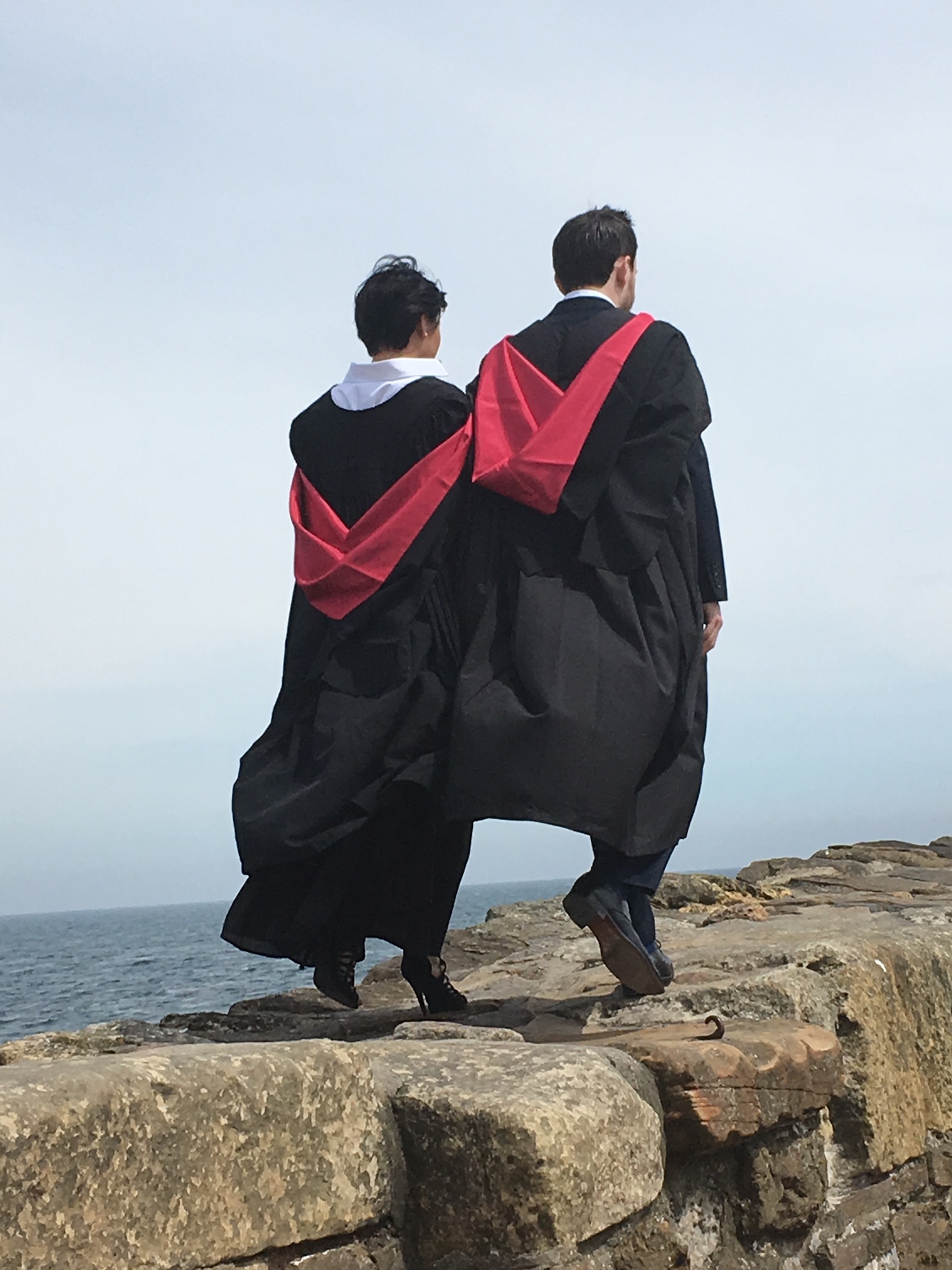

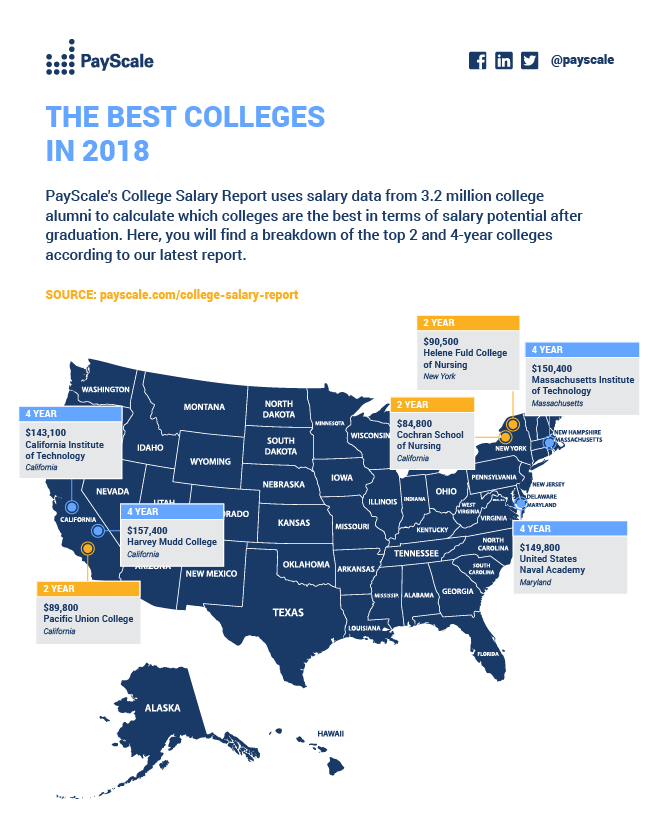

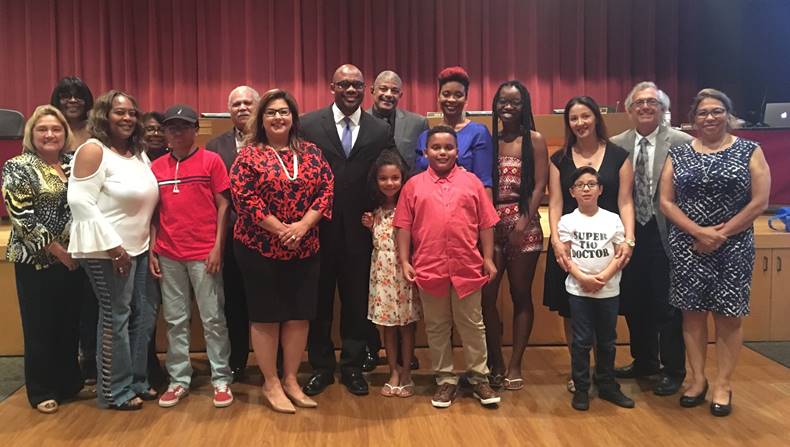

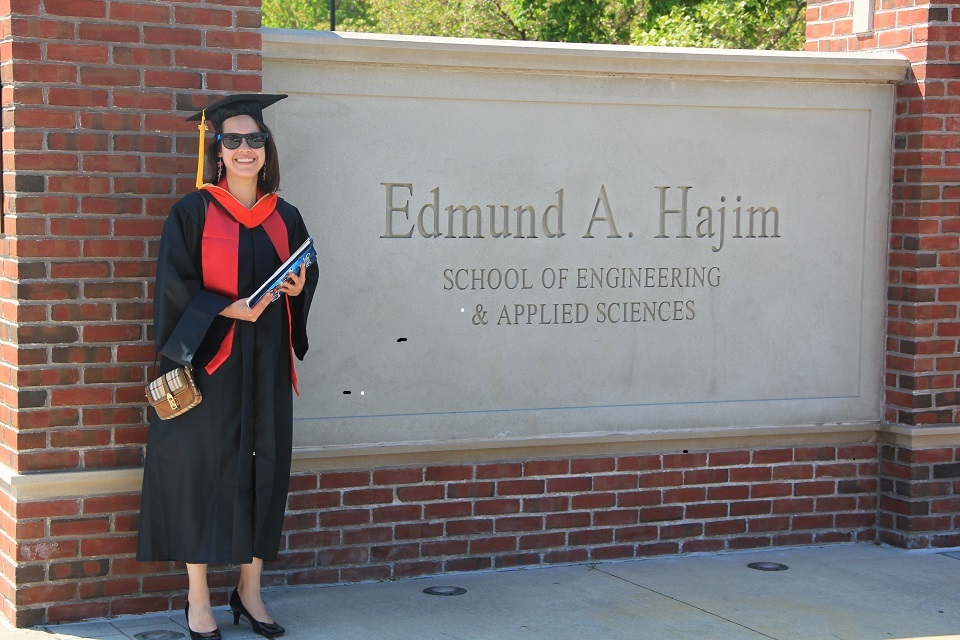
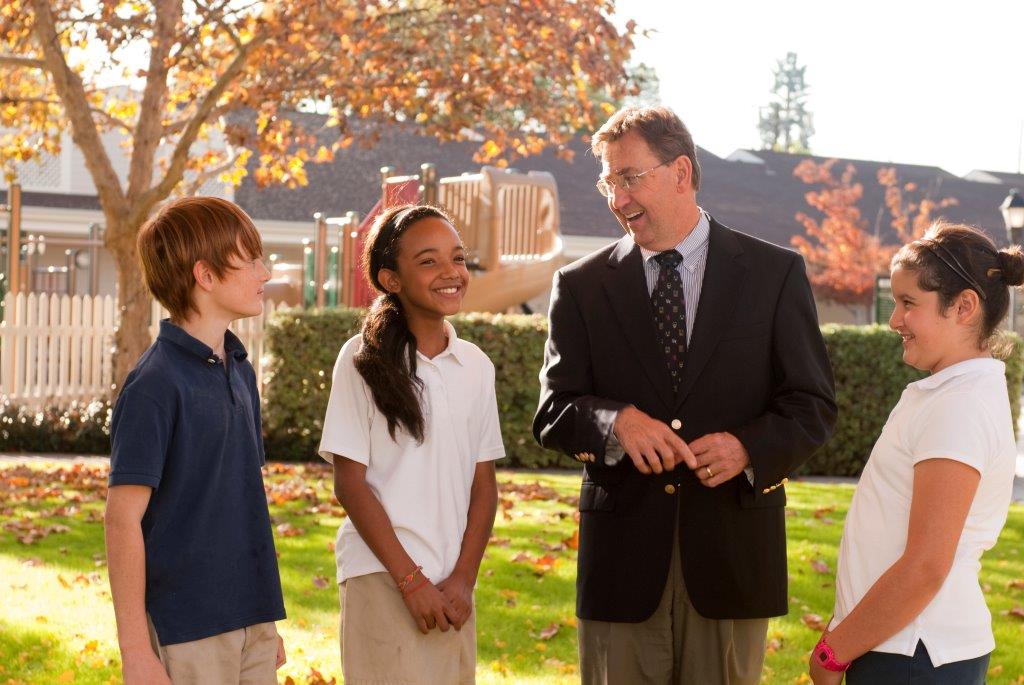
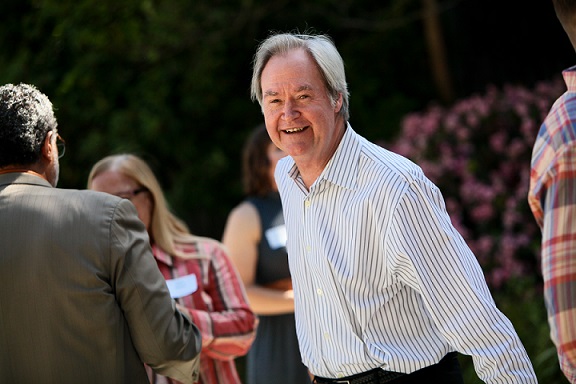
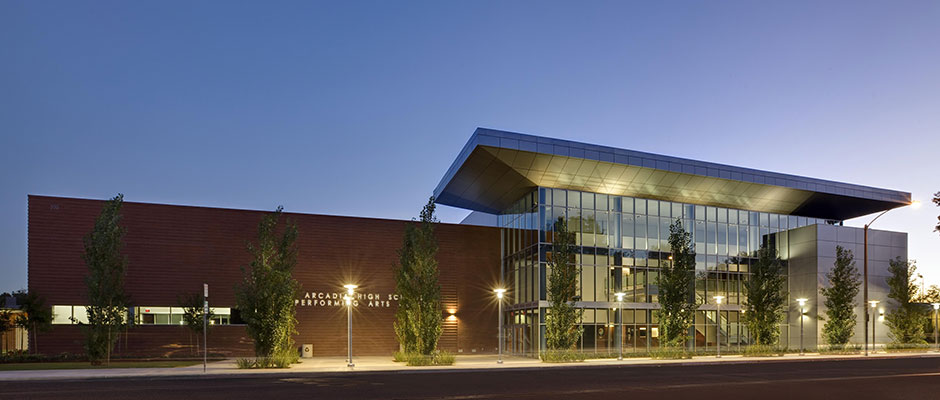
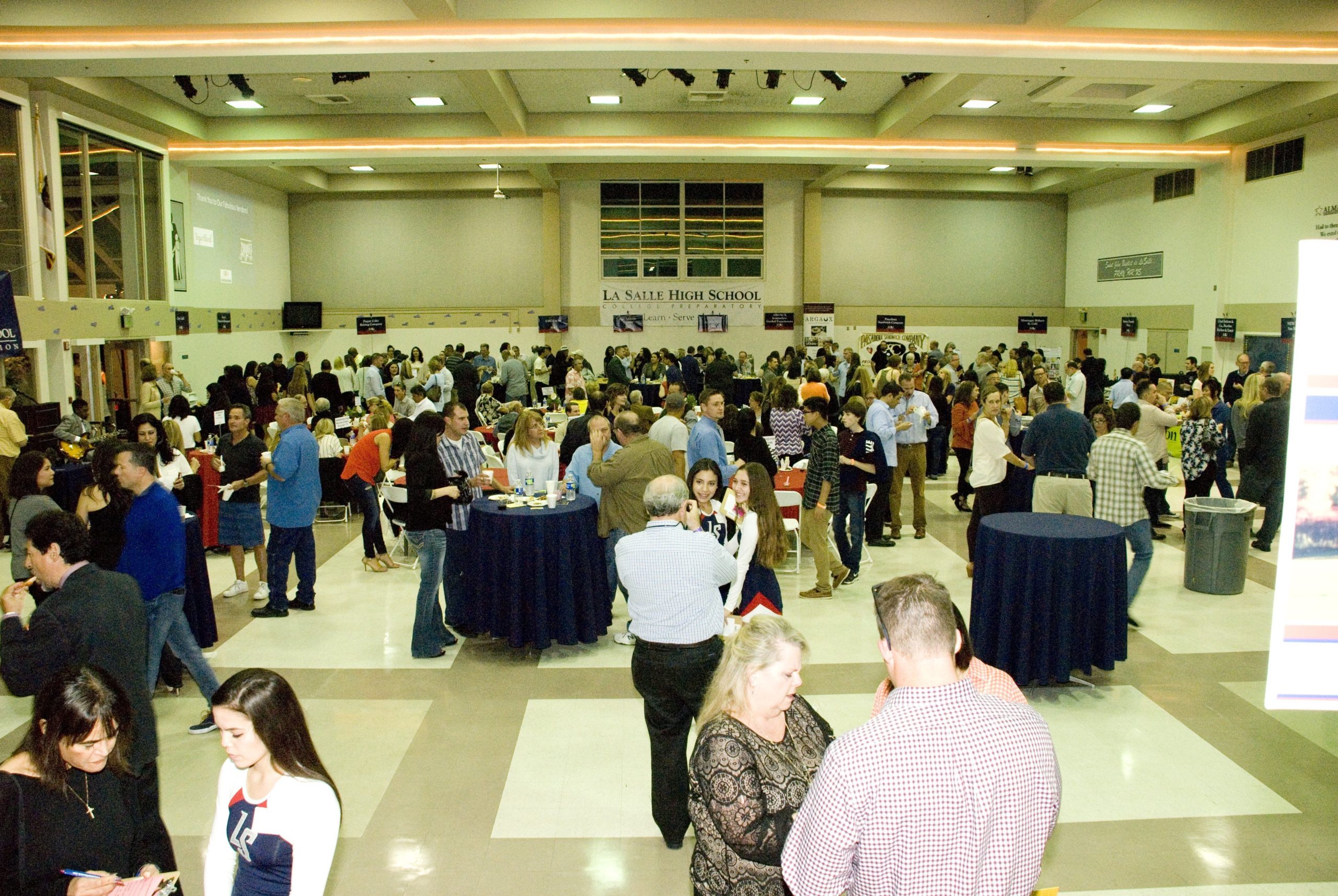
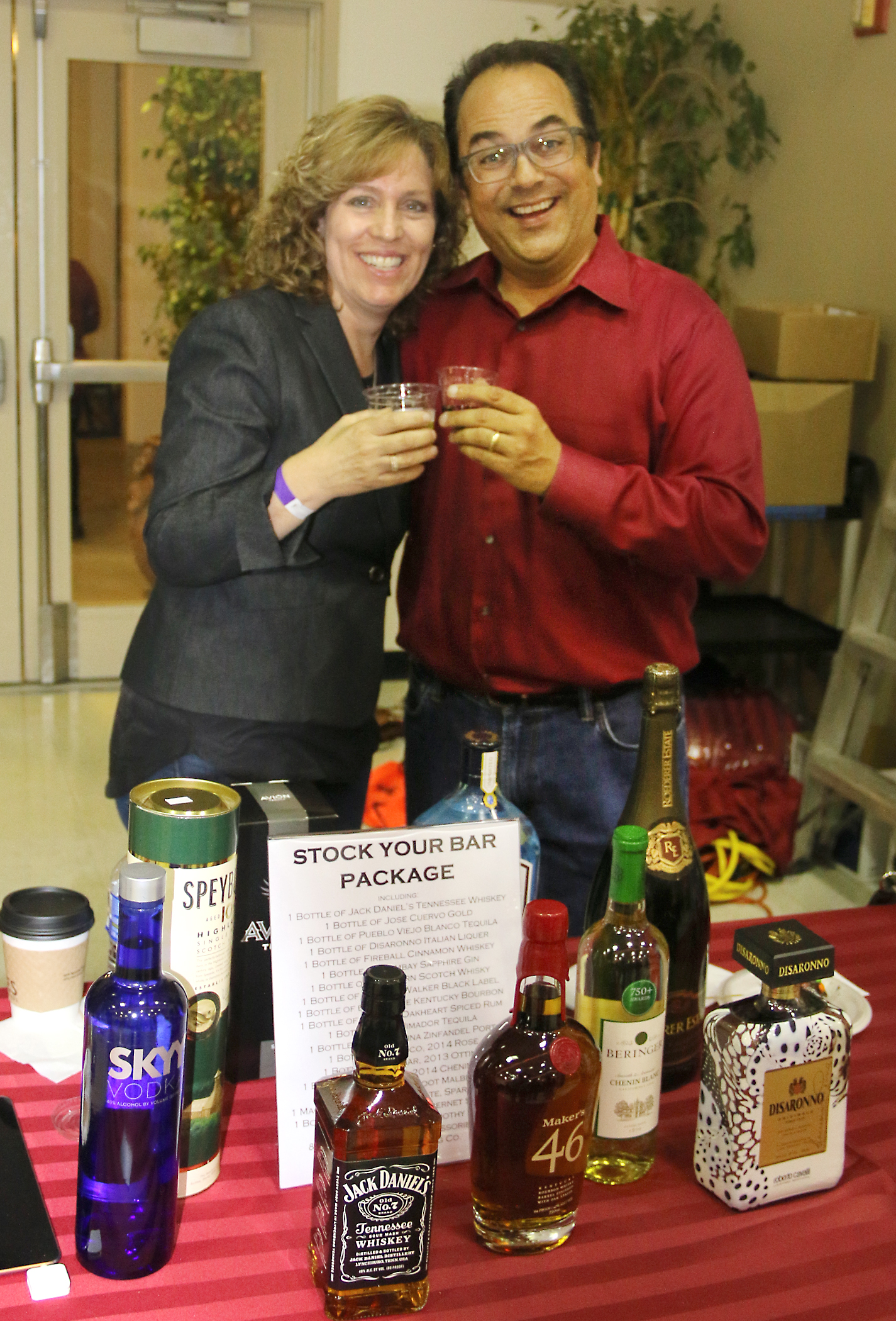
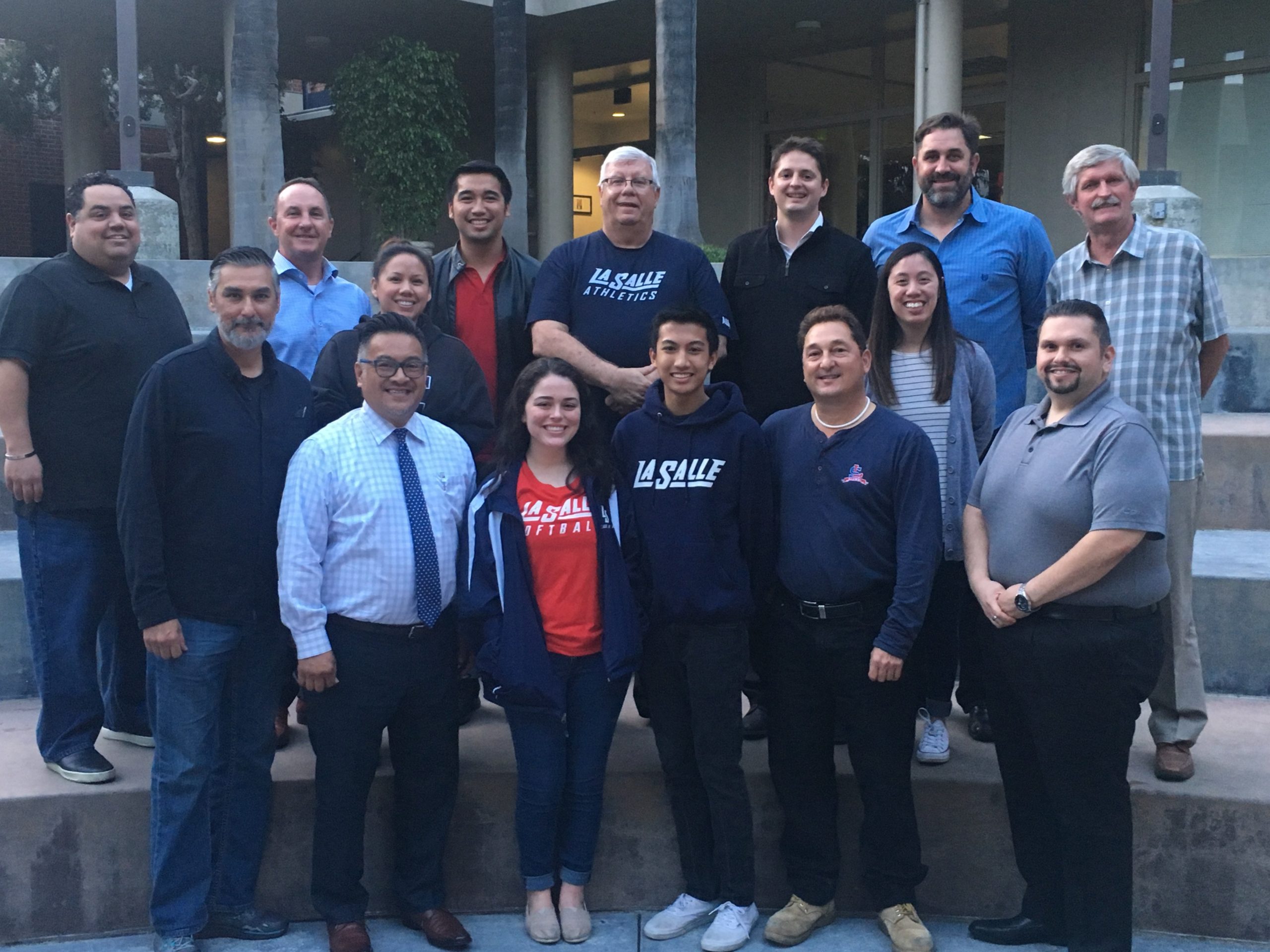
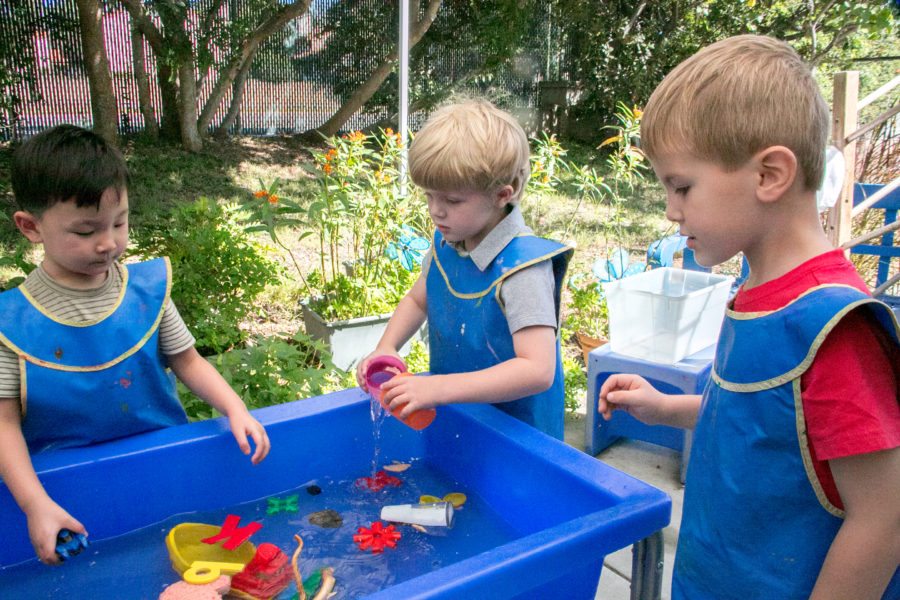

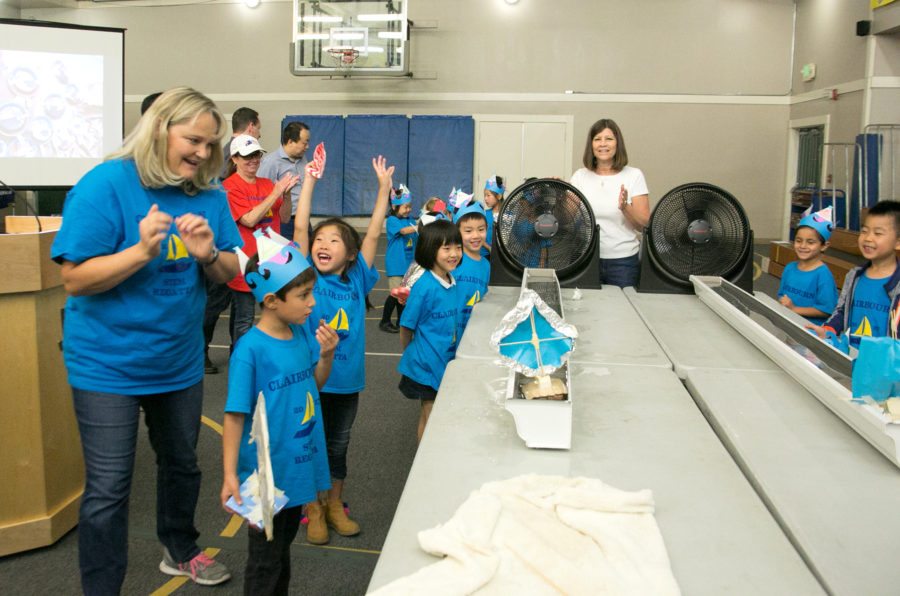
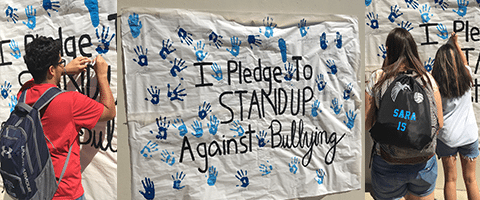

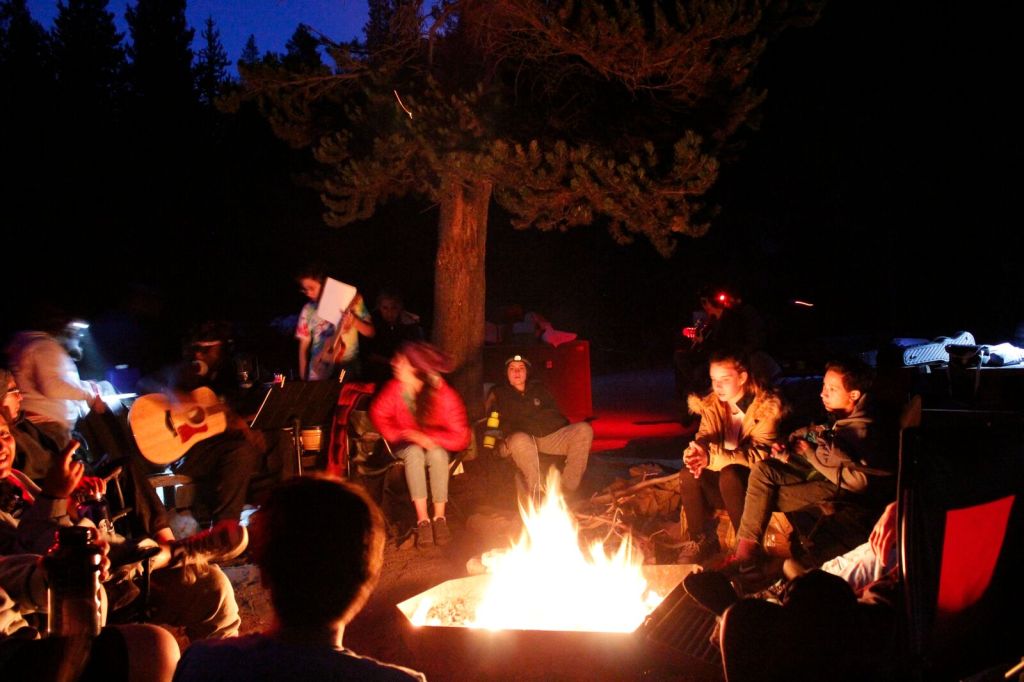
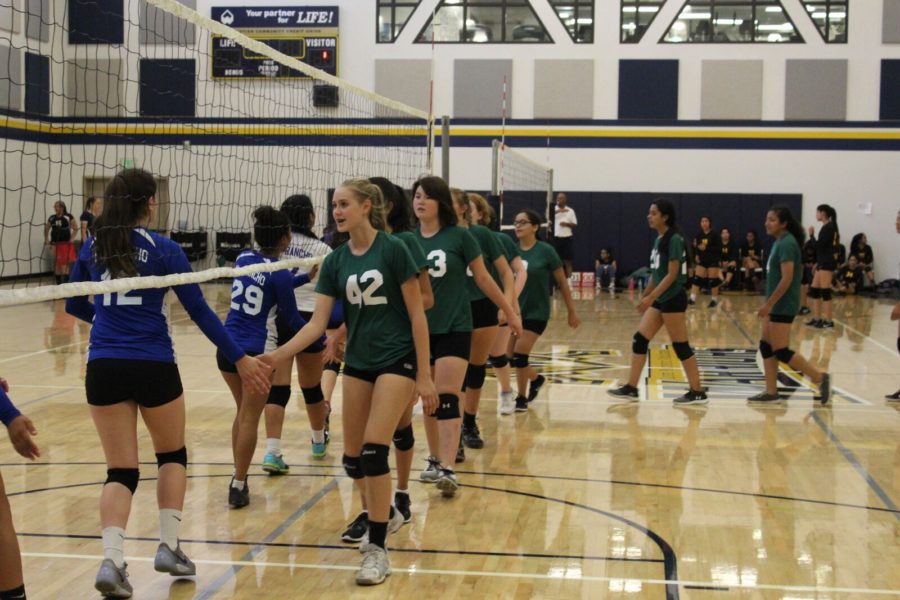

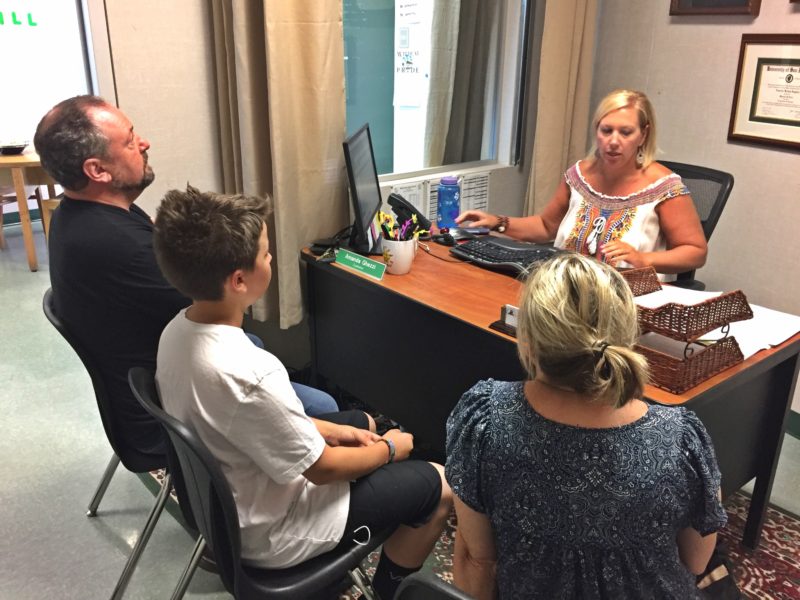
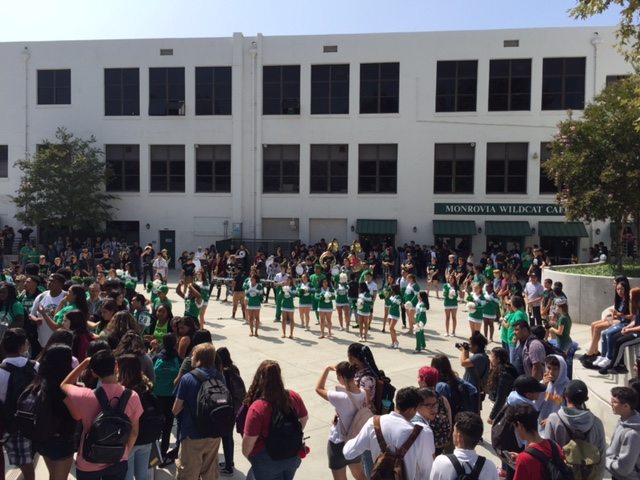

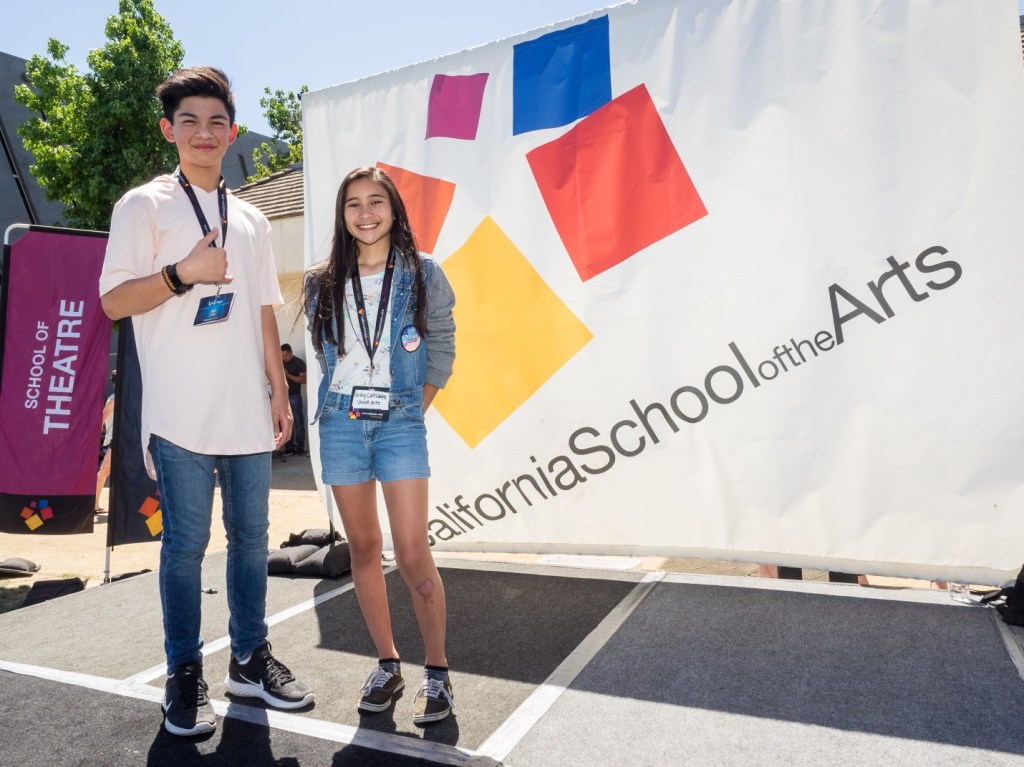
 A San Gabriel Valley Inquirer