June College Search Guide

Originally published on 6 June 2019 in the Pasadena Independent, Arcadia Weekly, and Monrovia Weekly
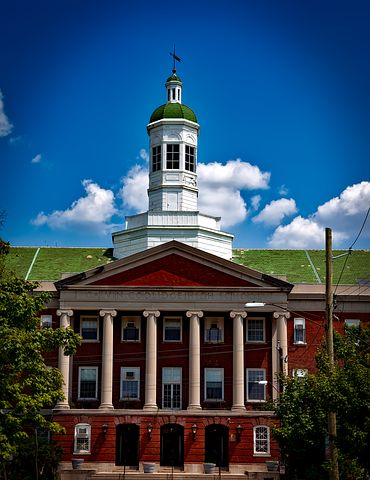
Howard University | Courtesy Photo

The road to college

The mere mention of college applications is enough to cause apprehension among parents and high schoolers. To say that the process is a complicated one to navigate is a spectacular understatement. Frantic parents are now deeply involved in the process that should have been between their children and the high school counselor.

While we’re already dismayed about legacy admissions, finding out that some parents have resorted to downright fraud makes us enraged. It also calls into question the credibility, much less the integrity, of the American education system. The bribing scandal that was exposed a few months ago is proof that the process isn’t a meritocracy and it benefits mostly the wealthy. It’s a tragedy for the thousands of students who worked so hard but were denied acceptance because they had no other means but their best efforts.

We can only hope that all the negative publicity would lead to the overhaul of the admissions process. It clearly isn’t working. The College Board, for one, is expanding the adoption of the adversity SAT score which I plan to talk about in greater detail after the summer break.

June 21st is summer solstice, marking the beginning of summer. Most high schoolers have recently graduated, or are about to graduate. When I was in school, the onset of summer meant taking a break from the harried pace of schoolwork, extra-curricular activities, and campus club events. But our children have a widely different experience from ours. Increased competition to gain admission to highly selective universities has forced teens to fill summer hours with other pursuits to pad their resume.

There was a time when teenagers worked summer jobs. More than the financial gain, having a summer job shows admissions officers that your children took on responsible roles and gained invaluable real-world experience. It also gives young people the satisfaction that they have the ability to earn money.

Challenger, Gray & Christmas (CGC), an outplacement career and transition service company, forecasts that teens will see a hot job market this summer to fill the 180,000 total jobs created per month this year. It predicted job opportunities could increase around 5% and the teen participation rate could rise as well.

According to the CGC outlook released last April, teens gained 1,388,000 last summer, which was 7.8% higher than the 1,288,000 jobs gained by teenagers in the summer of 2017. This was the highest number of teen jobs gained since 2012, when 1,397,000 jobs were added.

“Teens have not participated in the job market at the same rate they did since their peak work years in the 1970s. In fact, teen participation has dropped since the recovery in 2009, when 37.5% of teens were in the labor force,” Andrew Challenger, Vice President of CGC, said in the same press release.

While the teen participation rate hovers near 35%, the sheer number of opportunities, as well as student desire to gain employment experience, may bring more teens back into the labor force.

“Employers value work experience, in some cases, more than education. The summer job for teens is incredibly valuable in showing future employers they are able to work in a professional setting,” pronounced Challenger.

High school counselors all agree with Challenger’s assertion. However, if there are no job opportunities in your area, I hope your children will find some beneficial ways to spend the summer months. The gap between school years is so big that kids forget everything they learned then go back to school in the fall unprepared for the work. Parents should let their children have a variety of fun, educational, productive activities that stimulate their brain.

It’s also the time to look at what your children have accomplished, and what benchmarks they need to achieve to propel them to the next school year. 

Photo by sofatutor for Unsplash

FRESHMAN

Ninth grade is behind them! Your children’s grades should indicate that they took high school seriously and that they put all their efforts at getting good marks. They should have already made plans for summer programs, internships, and community service work. They should engage in activities that truly reflect their passion. Instead of yearly joining a group of kids building houses in Guatemala, they might consider an activity that would really mean something to them. 

College admissions officers see the same pursuit on all the resumes they receive that your children would not be doing anything memorable. Encourage them to think outside the box, avoid the herd mentality. If your kids enjoy music and performance, for instance, they might consider organizing an original musical to be presented to seniors at your city’s retirement center.         

In 2016, the Harvard Graduate School of Education released a seminal report called “Turning the Tide: Inspiring Concern for Others and the Common Good Through College Admissions” which was endorsed by 80 colleges and universities. It points out that today’s process puts much emphasis on personal success rather than service for others. 

It recommends students engage in: meaningful, sustained community service; collective action that takes on community challenges; authentic experiences in diversity; work that helps them appreciate the contributions of the past generations; contributions to one’s family.

All the recommendations in the study, however, are courses of action that high school counselors are already preaching to students. So, in that regard, it really isn’t anything new. What’s new is the strong emphasis that admission officers place on the depth, rather than the breadth, of students’ engagement with any given community service.     

Should American universities really take this study to heart and use its recommendations, it is incumbent upon you to encourage your children to do well in school and to put a lot of thought into what community service they want to embark upon.          

SOPHOMORE

Your children’s end-of-year marks in 10th grade should have improved over last year’s if they didn’t do well in their freshman year. College admissions officers want to see students who continue to better themselves. 

They need to take whatever standardized tests are required – ACT or June SAT subject tests are the norm. They also need to continue the community service activity they started last summer.  While it is advisable to show consistency for admissions officers to know that your kids have a passion for such work, they could do a variation of it; they don’t want to be monotonous.

They can start researching about colleges, specifically looking for the institutions offering the courses they want to major in.

JUNIOR

The school year that just ended was a pivotal one for your children as it would be the last full year that college admissions officers will see on your kids’ application. It should reflect your children’s efforts at getting the best marks they could muster, and an improvement over the first two years of high school. 

Make sure your children have their community service work, internship, and enrichment program ready for summer. These activities should be a continuation of the previous years’.   

This is going to be their busiest summer with standardized tests like the ACT, SAT, SAT IIs, and APs.  If they have not seen the schools they are considering applying to, this would be their last chance to visit college campuses. You might consider making it a fun summer trip for the family (my daughter and I spent two weeks visiting universities as part of our summer vacation).

Your children should start thinking about their essay topic; meeting with their school counselor to make sure they have taken all the required courses for graduation and college (the UC and Cal State universities have their A – G requirements that need to be completed); and lining up teachers they would like to ask for recommendations.   

SENIOR

Well, your children have accomplished a major milestone – successfully completing high school and getting accepted into a college or university! This period in their life will never again be repeated, so let them revel in what they have achieved. Give yourself a pat on the back while you’re at it, you’ve been a major influence in whatever path they choose to take from here.


‘Summer with Shakespeare’ Teaches Children Soft Skills

Originally published on 13 May 2019 in the Pasadena Independent, Arcadia Weekly, and Monrovia Weekly

Acting for 15-year-olds | Photo by Brian Feinzimer / A Noise Within

A Noise Within’s (ANW) ‘Summer With Shakespeare’ acting camp will once again be open from June 17 to July 19, 2019 and children don’t have to be aspiring actors to attend it. The most important skills that they will gain, in fact, are those that help them in their day-to-day life.

“Our focus is social learning and the soft skills which are going to help our students succeed as they get older, regardless of whether or not acting is a passion of theirs,” emphasizes Alicia Green, ANW’s Director of Education and Community Outreach. “Those include empathy, self-confidence, team-building, compromise, public speaking skills – the things that are really going to help them stand out in the current climate of technology where most kids are so used to working on their computer instead of interacting with others. These are inherent in a theatre class or theatre camp.”

“And if kids are interested in pursuing theatre, it’s an incredible place to train,” Green adds. “We’re a professional repertory theatre and all our instructors are working artists in their craft who have pedagogical backgrounds as well. However, we also have a lot of kids who are just interested in exploring the texts or because it’s fun for them and they enjoy being here. I don’t even think that they always know the soft skills they are developing. They come for the friendships that they’ve made. Sometimes, too, they come back because this is a place where they feel good about themselves. Truly, there are so many reasons we have such a high return rate with our students. It’s one thing to go to camp and have fun all day with your friends but it’s another to make it so meaningful that kids come back year after year.”

An 8-year-old learns sword-fighting | Photo by Brian Feinzimer / A Noise Within

Parents, whose children have gone to the ‘Summer with Shakespeare’ camp, only have high praise for the program. Green gets several gratifying feedback including, “Thank you so much for providing a wonderful camp experience for my five-year-old daughter. She came home the first day reciting Shakespeare and was excited to go every day. As a parent, I was really impressed by how it wasn’t just a singing and dancing camp; she learned a lot about all aspects of Shakespeare!”

“It’s a really well-run program, with enough structure for those who need it but freedom and flexibility to make it fun,” another parent points out. “The kids really learn about theatre and acting in a fun, productive atmosphere. It’s also great that it happens in a real theatre space.”

One Dad says, “The proof is in the pudding. As I sat in the audience watching the effects that a summer of A Noise Within had had on my 13-year old daughter, I was – in a word – becalmed. It was wonderful that she was appreciated so much and given a hefty amount of responsibility (read trust) onstage. We will be forever grateful for this summer!”

“Your children will be challenged, encouraged, nurtured, and leave with a broad range of skills and a new level of confidence,” is how one parent puts it.

Campers themselves have amazing testimonials to share. One of them claims, “‘Summer with Shakespeare’ was a life-changing experience I will never forget!”

Another camper enthuses, “I love this camp!!! They actually taught me stuff about acting and teamwork! ‘Summer With Shakespeare’ helped me achieve my goals and encouraged me to get out of my comfort zone and also taught me how to do things, such as making a prop or a costume!”

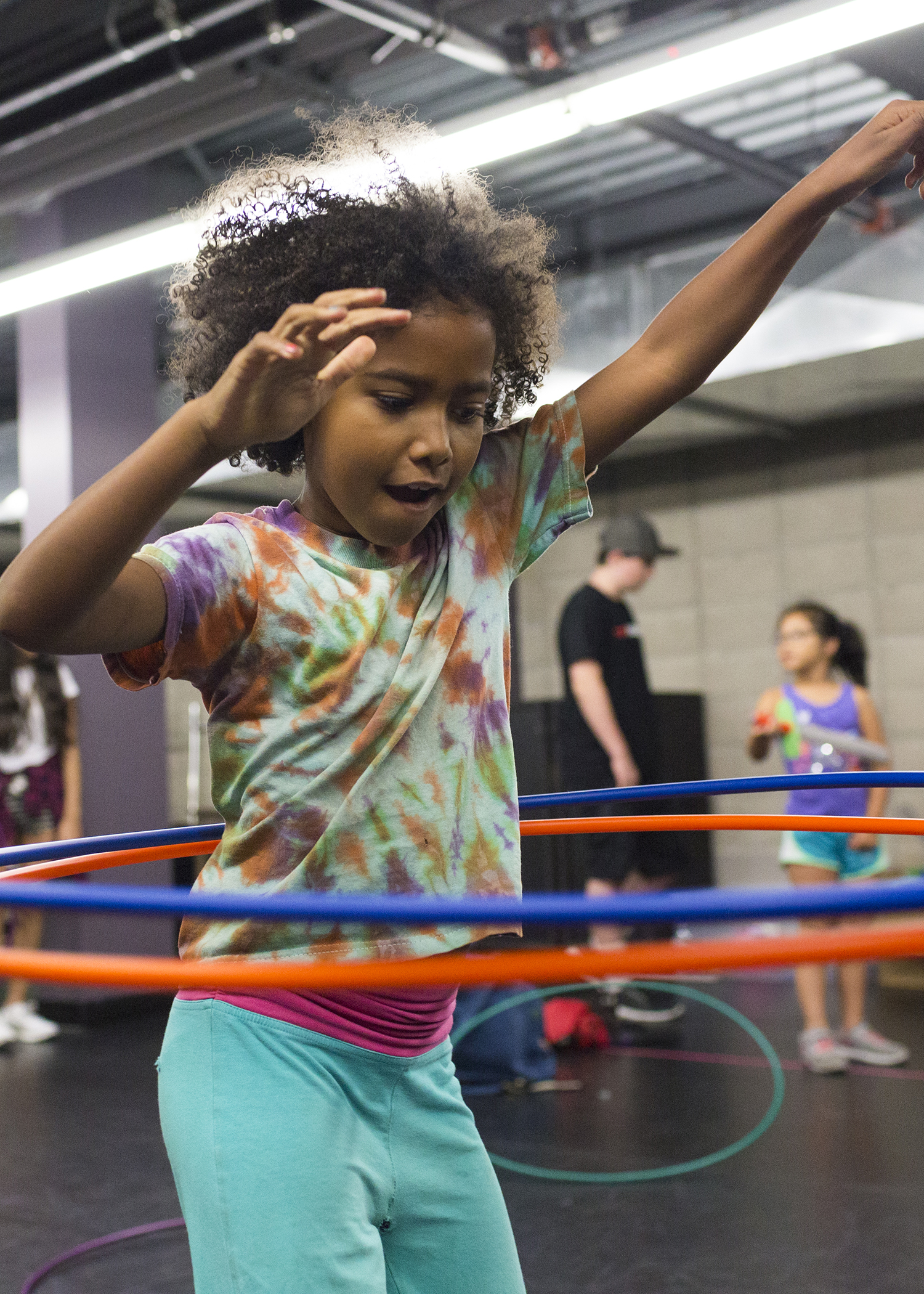
7-year-olds play with hula hoops | Photo by Brian Feinzimer / A Noise Within

The five-week camp is open for children who are as young as 3 all the way to 18 years old – from pre-school to high school. Green describes the different options students have.

“If you’re in high school you’ll perform ‘Julius Caesar.’ And in that five weeks, from beginning to end, their goal is to self-produce every aspect it takes to do a play. They do their own set, costumes, text work, swords. There will be movement, light, and sound elements. They will then perform on our stage with their sets, costumes, and everything they’ve developed in those five weeks.

“We have an identical program for middle school. This year they’ll be doing ‘Romeo and Juliet,’ and it’s the same exact thing – sets, costumes, props, etc. Everything is really on them, we provide the skills, material, and support that they need. But the expectation is that they’re responsible for building the set and making their costume. The finished product looks like kids made it instead of it looking like we have professional technicians come in. And that’s part of the plan. The kids are really proud of what they’ve accomplished – this is theirs and they’re going to present what is theirs at the end of the five weeks.”

Green continues, “We also have weekly camp options and every week has a theme. For each week that has a theme, there will not be a performative element. We’re very much process over product. There’s an open house at the end of every themed week so that parents can come in and observe and see what their kids have been doing for the past week.

“Week 1 is Comedy. They’ll do commedia and focus on the comedic text – they’ll sing,  dance, and have a great time. Week 2 is Tragedy. We incorporate swords, stage combat, ‘Macbeth,’ ‘Hamlet,’ and the tragic text. Kids love this week because, you know, who doesn’t love a good tragedy? Week 3 is Histories and Romances. We keep the swords, but we throw in a little bit more – it’s a combo week. Weeks 4 and 5, for the weekly option, will have the same production. For ages 6 to 9 and 10 to 13 – those two weeks are a more condensed, less intense version of the five weeks. They’ll make their set and costumes, and at the end of those two weeks they’ll perform on our stage.”

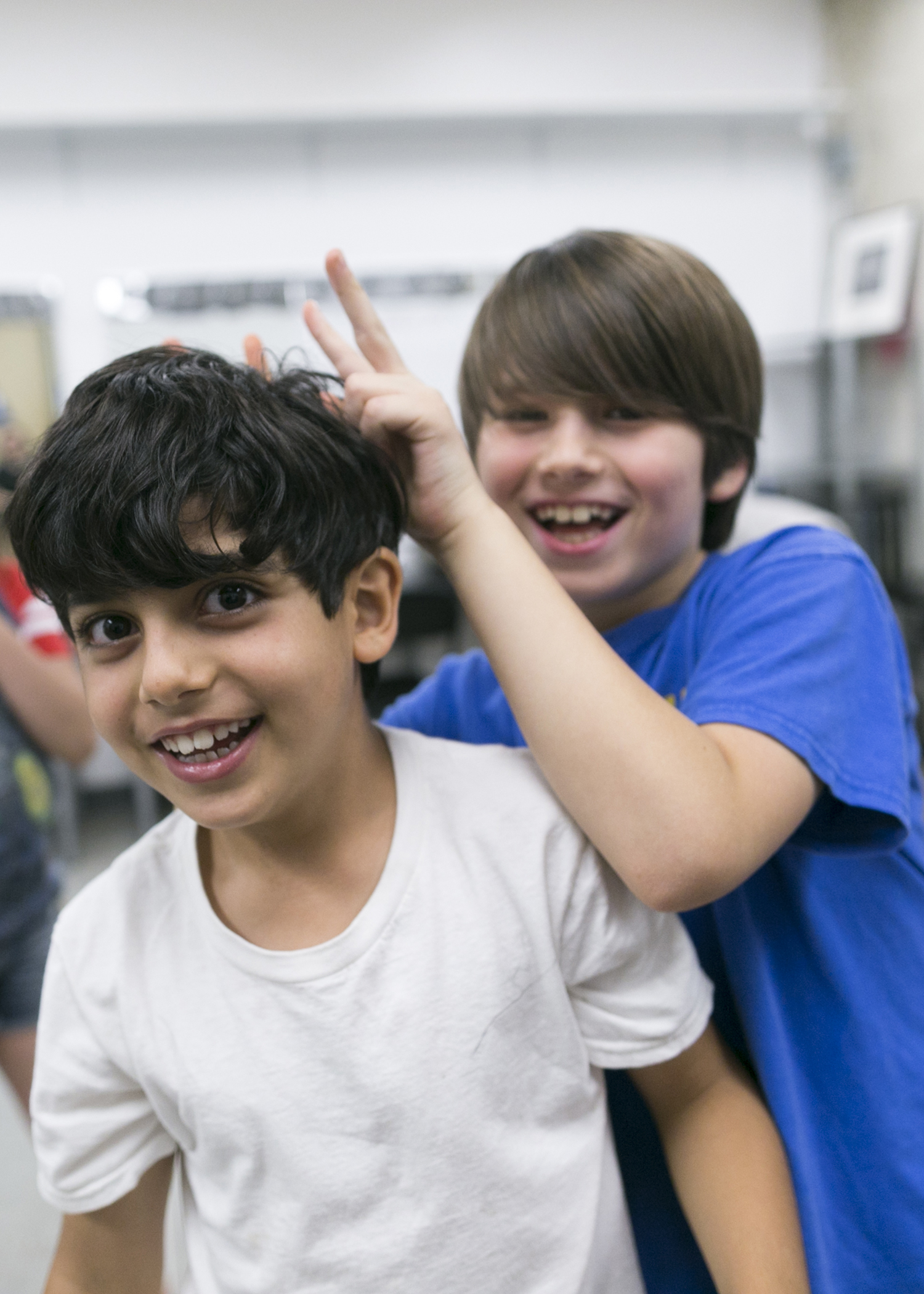
Friendships are built at ‘Summer with Shakespeare’ | Photo by Brian Feinzimer / A Noise Within

“We have our pre-school week, which is incredible!,” effuses Green. “I’ve never had such feedback from parents so surprised that their 3-year-old was reciting Shakespeare a year later. Kids are still developing language and that’s something that’s so magical about doing a Shakespeare camp with kids. Adults tend to find Shakespeare intimidating. It’s different for kids because they’re still learning language, books, and texts in school. So if we don’t make it scary, they’re not scared of it. They’ll approach it with a great deal of excitement, they’ll learn the origins of language, and they’ll get to play with characters. Something that’s so great about doing camp here at A Noise Within is we’re a classical repertory company. We’re doing the plays that have permeated history for hundreds of years because they resonate with us as humans. Kids get these texts because they understand what the characters are going through. For instance, they meet characters who get jealous of somebody. They see what that feels like and what the repercussions of that are. These are all things that permeate all of Shakespeare’s texts and it’s really exciting to grasp that natural connection. We’re not only helping kids by learning Shakespeare which is great for them in school, but by building soft skills like empathy, and  becoming better humans in the process.”

“It’s definitely a natural pathway for children who want to be actors, too,” clarifies Green. “Rafael Goldstein, one of our resident artists, was one student from years back, who transitioned from ‘Summer with Shakespeare’ camp to the ANW stage. Sam Christian has been doing ‘Summer with Shakespeare’ now for six years, I believe, and he was in ‘Raisin in the Sun’ last season. This past season, he was in ‘Rosencrantz and Guildenstern Are Dead’ and he just finished ‘Argonautika.’ And a lot of our summer camp students do end up with our ‘Christmas Carol’ for all the young people’s roles.”

So let your kids have a grand time learning how to sword-fight this summer! The skills they acquire are guaranteed to stay with them long after the summer months. And they will look back to that time with both pleasure and gratitude.

May College Search Guide

Originally published on 2 May 2019 in the Pasadena Independent, Arcadia Weekly, and Monrovia Weekly

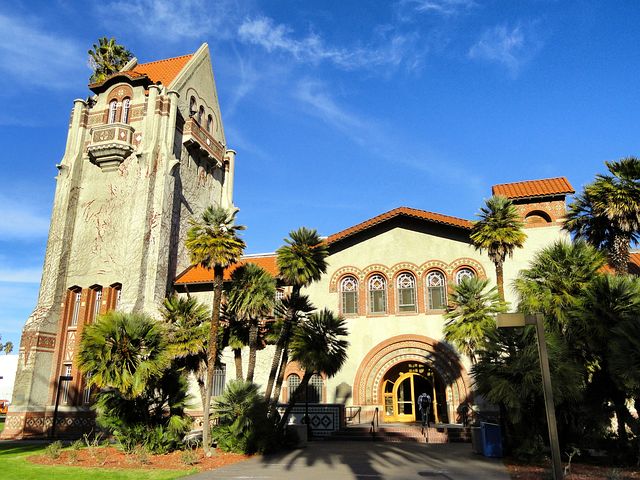
San Jose State University | Courtesy Photo

The road to college

In a few weeks the school year will be over!!! Freshmen are looking forward to their last month, relieved that they are almost done with 9th grade. Meanwhile, it is a bittersweet time for seniors as they anticipate the end of their high school career and spend the last remaining weeks with lifelong friends.

FRESHMAN

This is the last call for your 9th graders who need to improve their grades! Make them focus on staying on top of school and homework. Get them up to speed on their studies and ready for  final exams. Their final grades will be on their transcript, one of the most important components of your children’s college application.

If their marks are not adequate for college acceptance requirements, they need to meet with their college counselors to arrange for remedial summer classes.

Remind them to get their summer projects lined up. If they need to get approval for a particular service activity they want to pursue, they need to speak to their grade level dean right away. Get them to spend their summer months in programs to supplement an art interest by applying for internships or jobs. There are companies which have internships that students have to pay for while there are a few that actually pay their interns to work during the summer. Get your children to research the various organizations in town or in nearby cities.

Admissions officers look for students who have demonstrated sustained community service in a few well-chosen areas. It isn’t the quantity of activities but the quality that’s important – they want to gauge the depth of students’ intellectual and ethical engagement to a given cause. The summer after their freshman year is the time for your children to find activities that truly speak to their interest and passion. Let them choose one that really resonates with them which they should carry through their four years in high school.            

The long summer months are also a great time for your children to read. Encourage them to explore various genres and different authors. At the very least, reading will help them expand their vocabulary and expose them to different writing styles. This will come in handy when they write their personal statement and supplementary essays for their college application.

SOPHOMORE

Sophomore year is when your children have fully transitioned into high school. They are comfortable about how this phase fits into the whole secondary school experience. They have taken the practice PSAT, as a preparation for junior year when the results determine their eligibility for the National Merit Scholarship. They have also taken some AP tests, if they took an AP course.

Hopefully, your children have also done well in their studies, have maintained good grades this entire year, and have prepared for final exams. Admissions officers expect grades that are consistent, and if their freshman marks weren’t that great, their sophomore grades should at least show improvement over last year’s.    

Make sure your children have lined up their summer activities. These should be an extension or an expansion of what they did in the summer of freshman year. Admissions officers want to see commitment to a particular interest.

JUNIOR

Make sure your children have registered to take all the required standardized tests for college admissions. The Cal State and UC schools start taking applications in October of their 12th  grade, and if your children are applying through early action or early decision to other colleges, they need to have taken the SAT or ACT this summer. 

Your children’s final grades are extremely important! Eleventh grade is the last complete year that college admissions officers will see on the application and they expect grades that are either consistent with, or better than the first two years’. They need to prepare well for final exams.

SENIOR

If your children are still sweating it on the waitlist of their first-choice college, they need to  ensure their final grades are terrific! They should keep up with all other school and extra-curricular classes and send the college admissions officers any updates on awards and honors they receive. They should ask their college counselor if an additional letter of recommendation might be helpful. Keeping in touch with the admissions office reinforces their interest in attending the school if accepted.

They should have put a deposit on their second-choice school to guarantee them a place for the incoming class in the fall. Although, if they come off the waitlist on their first choice, they will lose this deposit.

Be there for your children to support them whatever the outcome of their college application. It has been a significant phase of reaching adulthood and was a very important learning experience.   In the end, what matters is not where they had been accepted; the college they attend will not guarantee success in the real world. It’s how they use their education that determines how well they do in life.

Monrovia’s Pathways to Stem Cell Science Makes Learning Fun for Even the Youngest Students

Originally published on 26 March 2019 in the Pasadena Independent, Arcadia Weekly, and Monrovia Weekly

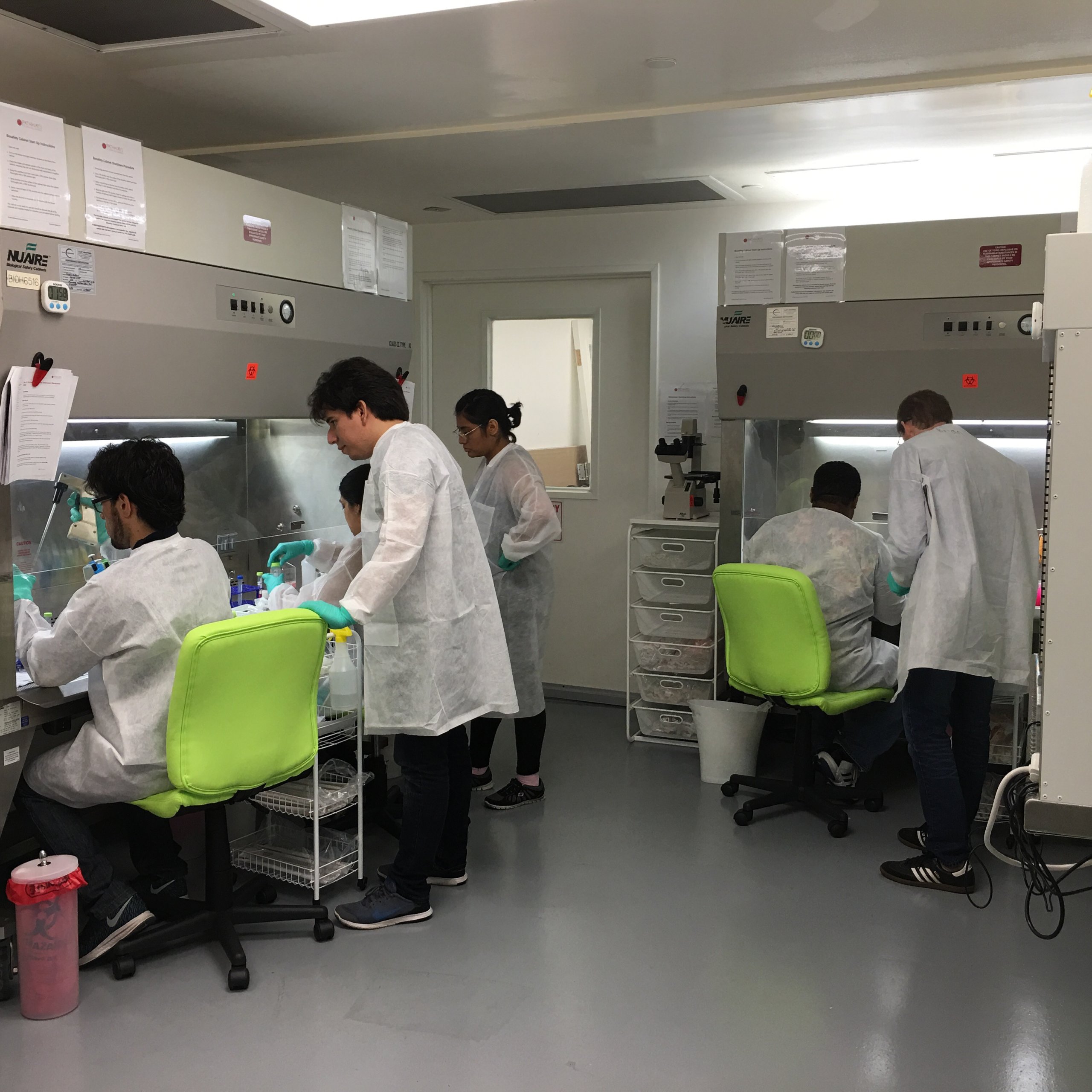
Science is one of those tricky subjects that can’t be learned just by sitting in a classroom, reading about it, and looking at pictures. Mention ‘stem cells’ and it becomes more complicated still. Right away you’ll think it’s certainly not something 4-year-olds would even grasp. Yet, it’s basic to life on earth. And so, the scientists at Pathways to Stem Cell Science have made it their mission to educate children from pre-K to 12th grade.

In 2016, Dr. Victoria Fox, a former professor at the University of Southern California’s (USC) Department of Regenerative Medicine and Stem Cell Biology, founded the non-profit Pathways to Stem Cell Science (Pathways) with a team of professionals in this field. They conduct research on a contract basis for universities and companies. The work they do generates skills and knowledge which they translate into the courses that provide hands-on learning with stem cells.

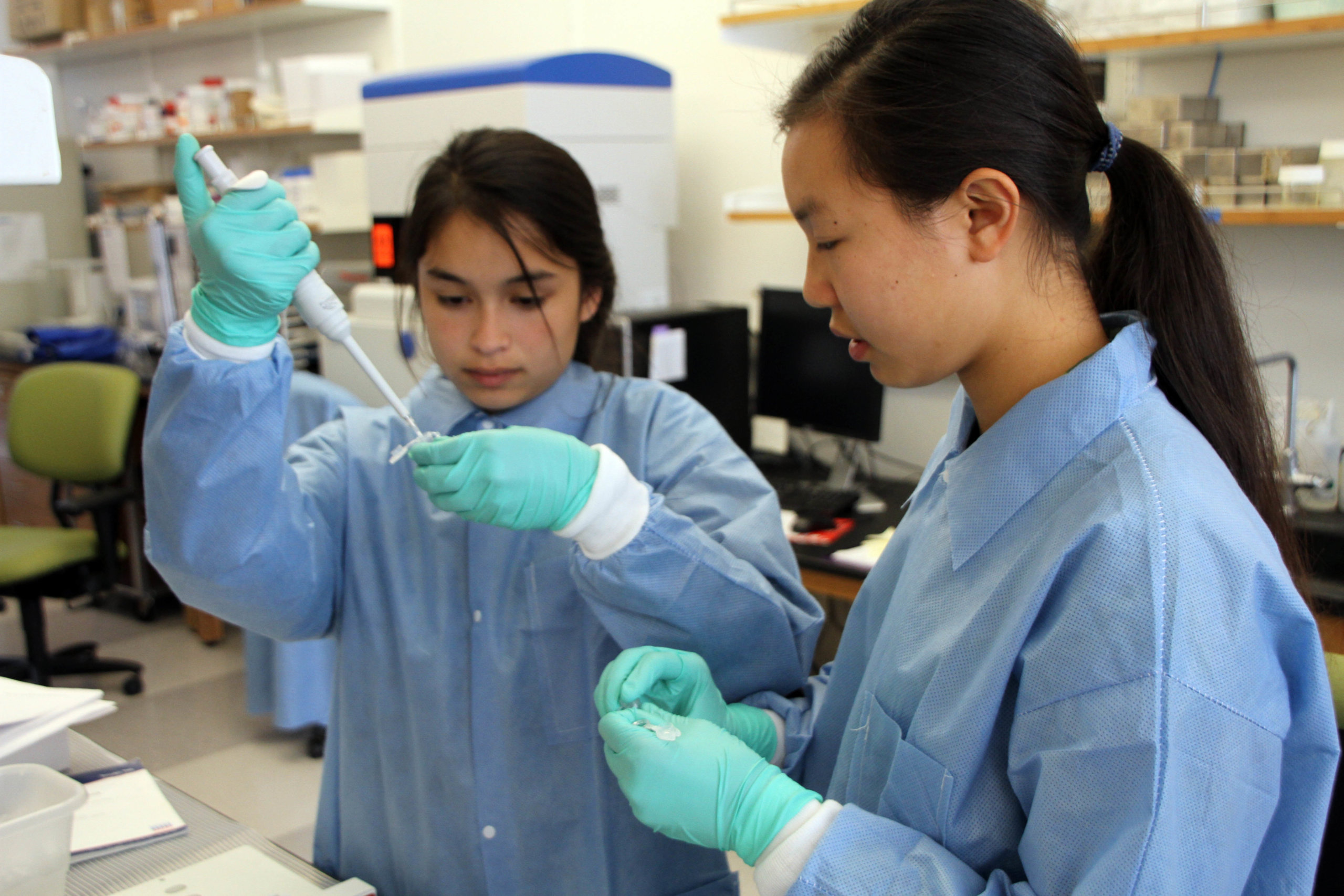
Describing one of the classes they offer, Fox says, “A two-week course for high school students called ‘Regenerative Medicine and Disease Modeling’ teaches them how to isolate a skin cell, turn it into a stem cell, and then turn that stem cell into a heart cell for use in medicine and research. Each course is based on the science that we do. Students learn hands-on skills and real-life science. They gain the confidence and the social experiences working in a private sector workplace they couldn’t get in a university teaching lab.”

Now Pathways is extending their course offerings to the pre-K level.

Explains Fox, “To effectively inspire, guide, and prepare students for STEM fields, you have to start early. We left USC partly because their focus is on college and professional training, but we want to support the entire education pipeline from pre-K to 12, college and industry professionals. We’ve developed a unique curriculum to get children interested in science right as they’re beginning their early childhood education. I’m convinced I could teach authentic science to students as young as pre-Kindergarten. My son is in kindergarten so I know what he can and cannot understand. We’ve worked closely with his pre-K and elementary school to make sure this curriculum can be delivered.

“The culmination of this is Pathways’s newly developed Stem Cell Explorers program, which consists of five one-and-a-half -hour sessions on the weekends held over five weeks and a one-hour mobile lab program called ‘Did Dinosaurs Have stem Cells.’ This latter course came about because my son learned about dinosaurs in school. Kids are fascinated with dinosaurs, which are basically the ancestors of birds and reptiles. Some lizards have an amazing capacity to regenerate their limbs because of the presence of active stem cell populations in their tissues. Over dinner one night, we were pondering whether dinosaurs would have had the same capacity for limb regeneration because they are related through evolution.”

That conversation over dinner led Fox to develop an inquiry-based session. Students can observe stem cells in action – regenerating lizards limbs – then they formulate an experimental plan for how one might test if dinosaurs had similar regenerative capacity.

Courtesy photo | Pathways to Stem Cell Science

“After that they do a hands-on experiment that demonstrates how real-life scientists might test a dinosaur tissue for the presence of stem cells, should you be lucky enough to find one that hadn’t been fossilized,” expands Fox. “This involves applying a chemical assay solution to four types of cells we’ve grown in the lab – skin cells, muscle cells, neurons, and stem cells. The solution reacts only with stem cells, turning them pink. They then observe what dinosaur stem cells might have looked like using a professional lab microscope. These are real tests I carry out in my work on a regular basis that we’ve adapted to teach authentic science to elementary school children in a fun context they can relate to.

“Session 3 of our Stem Cell Explorers program is probably the coolest and the most interesting – it focuses on the role of stem cells in human development,” Fox continues. “I’m not aware of any other curriculum like this for pre-school and elementary school children. It demonstrates how human life begins from a single stem cell and how that cell goes on to divide and create different tissues of the adult body. Students learn about the different stages of human development using our specially designed ‘development calendar’ which places images of growing human embryos side-by-side on a large floor-sized calendar.

“We also model some of the stages with Play-Doh to promote active learning and fine motor skills. Young children love this class because they often have younger siblings and are interested in understanding where babies come from. This session satisfies that curiosity in a way that’s authentic but still accessible for young audiences.”

Fox expounds further, “We also talk about the role of stem cells in therapies like bone marrow transplants. We’ve created a life-size model that enables students to perform a ‘mock bone marrow transplant.’ They harvest and inject a red fluid containing pretend bone marrow stem cells and observe them circulating around the body. They get to play doctor – something young children enjoy.

“In session 4 of the Stem Cell Explorers Program, we touch on the importance of keeping cells healthy by eating nutritious food, breathing fresh air, drinking clean water, and exercising regularly. We discuss why these are essential for cells and what happens to your cells if they’re unhealthy and die. They take part in a cooking exercise where they learn to make a healthy snack. The curriculum is cross-disciplinary – combining science with other subjects like cooking, art, math, literacy and geography – not only to stimulate scientific curiosity but to also prepare students broadly for success in school and in life.”

“The final day of Stem Cell Explorers centers on experimental stem cell science,” Fox says. “It’s in this session where students perform a real-life experiment with beating heart cells we’ve derived from stem cells. They count the number of times heart cells beat before and after adding ice to the medium, demonstrating the effect of temperature on heart function. They then draw a simple bar graph and, with our help, analyze their data. This experiment shows what would happen to your heart cells if they were cold – hypothermic. It’s a very striking visualization they can understand.”

According to Fox, the Dinosaur stem cell program is an hour long and designed specifically as a mobile lab to go into classrooms. It can be taught to large assemblies in groups of 20 students. They charge a small fee to cover the cost of materials and time, much like other mobile lab programs. They are still working out a fee structure, but it would be somewhere in the range of $300 to $500 per session – which is close to what other mobile programs charge. Additionally, Fox’s team is engaged in fundraising to provide subsidies for low income communities and will work collaboratively with specific schools to raise tuition money.

The science lab | Courtesy photo / Pathways to Stem Cell Science

“We ensure our curriculum aligns with the NGSS (Next Generation Science Standard) so students learn about new topics in a way that also informs their core science instruction,” clarifies Fox. “Our courses are devised to augment existing school programs, providing real-world context to the science students learn in the classrooms. These are particularly useful for schools that teach a lot of textbook science but don’t have the capacity to offer hands-on activities. There are other mobile labs that work this way, but they are usually pretty simple and don’t provide the same real-life experiments and concepts we are able to teach. And it’s the real-life context that makes our science so fascinating to young students.

“We’ve developed a number of different course for students of all ages. Some of our programs – particularly the high school and college courses – have been offered for many years. However, not many people know we exist. Raising awareness for our programs and the unique learning opportunities these offer is one of the biggest challenges we face.”

Getting more girls interested in STEM fields is one of the more daunting tasks schools are faced with and they’re hiring more female science teachers to help in this endeavor. College counselors advocate that high school seniors follow their passion when choosing what degrees to pursue, and for good reason. Students succeed when they’re studying something they find engrossing and captivating.

Fox points out, “Teaching exciting real-life science when they’re still young is a great way to entice girls into this field because by the time they get into high school, it’s often too late. This is at the heart of what we do – building that pipeline from pre-K to professional level. It obviously helps that I’m female and have children. It’s important for female students to see a woman who’s also a mother leading a science organization – it helps them to see themselves becoming a professional scientist.”

Pathways’s program bucks the norm, though. Program Director Dr. Mickey Pentecost discloses, “We attract more female students into our program than male students. Our goal is to provide students a variety of role models. Showing them the diversity of careers they could go into with a STEM background is also a key part of our mission. My concern is that if students are only exposed to academia, which struggles to retain women and minorities, they’ll think ‘Oh, I’m going to get this far and then the door is closed to me.’”

Pathways to Stem Cell Science attracts more female students to its programs | Courtesy photo / Pathways to Stem Cell Science

Additionally, the delivery method for science courses is outdated, as Fox elaborates on. “I think the college education system, which still relies heavily on lecturing, is antiquated. It dates back to a time when there were limited textbooks. So if you wanted to learn a particular science subject, you had to go to a college lecture and learn first-hand from a professor who was an expert in it. That was even true to a certain extent when I was doing my undergraduate degree – there were only a few textbooks for each topic and they weren’t that great so you really relied on the theoretical knowledge the professor provided. But so much has happened in the time since I took my undergraduate degree. The Internet, online textbooks, and online teaching modalities enable science theory to be taught and learned outside of formal lecture settings. By leveraging these technologies, science education programs could dedicate more time to vocational activities that offer students the skills they need to compete for jobs.

“Biotechnology is going through the same boom Silicon Valley went through with Facebook and Google. This is driving a demand for professional scientists with a range of skills set; 21st century bioscience has become so complex it requires sophisticated skills that one can’t get in a lecture hall. Yet many universities continue to emphasize lecture-based teaching, a system that’s more compatible with preparing students for academic career paths versus the private sector jobs they’re more likely to seek out. A lot of schools are not really teaching in an active way that meets the requirements of biotech and private sector science. Yet private sector science industries currently offer more jobs than university science departments. The system needs some modernization to ensure students are prepared more broadly for the jobs that are available to them in the sciences.”

Fox adds, “All our teaching courses are hands-on and taught in a real-world context. We created Pathways to offer these courses because many universities feel this type of teaching is too expensive to provide. Teaching in lectures is much cheaper because you only need one classroom and one person to reach hundreds of students. I think the lack of real-world hands-on activities could deter girls from going into science – it’s just not that interesting sitting in lecture halls, listening to lectures, even when you like science.

“I don’t want to detract from the importance of a college degree – the knowledge that’s gained in university is essential to enter any bioscience profession. However, the academic career track tends to create university professors with similar backgrounds and experiences, by favoring scientists with high impact factor publications from a limited number of Ivy League institutions. This produces a scientific faculty with qualifications that are crucial for grant writing and lecturing, but not necessarily the diversity of experiences required to prepare students for the wider world. If you browse at the backgrounds of private sector bioscience professionals you’ll notice experiences are much broader. Exposing students to the array of experiences they will need to plan viable careers, train for future employment, and become successful scientists was another reason I founded Pathways.”

And today’s students are much better for it.

March College Search Guide

Originally published on 4 March 2019 in the Pasadena Independent, Arcadia Weekly, and Monrovia Weekly

Lawrence University | Courtesy Photo

The road to college

It’s drought or deluge. After years of dry winters, we finally got rain. Lots of it! I’m sure you’re ready to put away your umbrellas and rain boots and looking forward to some sunshine. And I’m quite certain students can’t wait for their hard-earned spring break. It would be a welcome respite for your children, a time to recharge as they head towards the end of the schoolyear. While it is an opportunity for them to relax, it is also a chance to evaluate where they are on their schoolwork.

FRESHMAN

Your children should have all their grades on track. They need to concentrate on maintaining good study habits now to be better equipped to handle the rigors of the workload in the coming years. If they haven’t been reading much, they should seriously consider taking up reading as a hobby during spring break to help them increase their vocabulary which they will need to take the SAT, and as preparation for writing their essay. 

They need to line up their summer activities. Their grade dean would have some ideas on how they can explore their passions and research summer opportunities. Consider looking into international experiences.   

SOPHOMORE

Tenth graders who are taking AP courses need to register for the AP exams administered in May.  While there is a slew of small independent tutoring schools offering courses to prepare for the AP tests, some children do not need to take on this additional burden on their already busy schedules. Your children have enough on their plate with the intensive homework associated with an advanced placement course. That said, your kids would still have to show competence on the AP exams as all scores are submitted to the College Board; all the colleges to which your children apply will see the AP scores.

Your children should also take the SAT subject test. Your children’s teachers could provide guidance on what they need to prepare for. They might want to ask the teachers in that particular course for study suggestions, review packets, and sample tests. There are also test prep books available in bookstores and online.

It’s also a good time for your children to consult their class dean regarding summer activities – academic enrichment programs, volunteer work, or part-time employment. College admissions officers are looking for students who explored their passions while getting good grades.

There are outside resources for your children to plan ahead for the admissions process. A college preparation service called CollegeVine (www.collegevine.com) offers near-peer mentoring from ninth to twelfth graders. Their consultants, who are recent high school graduates themselves, provide expert guidance. They are near in age to the children they are helping and have recently applied to college themselves.   

If you’re looking for a counselor who can meet in person with you and your children, I would recommend Greg Kaplan. He is a native Southern Californian and has been holding free college application workshops in the San Gabriel Valley. He is available for a personal meeting for the initial conference and thereafter confers with you and children via Skype. 

Likewise, Kaplan’s book “Earning Admission: Real Strategies for Getting into Highly Selective Colleges” is a useful resource. It offers your children  a guide on how to best present themselves to admissions officers.

JUNIOR

Besides registering and preparing for the SAT or ACT, your children should use the spring break to visit college campuses.  If possible, they should have a prepared college visit checklist with a page or several pages allotted for each school. For each of the schools, they would need to write their overall impressions – what they liked most or least. 

They should write their observations by categories: the intellectual atmosphere (Do students enjoy their courses or are they stressed-out? What is the advising system for freshmen? Are there opportunities for independent study/study abroad?). They should note the social climate (Do students stay on campus or do they leave on weekends? What are the facilities for socializing?  Is there an active Greek life?) They should observe the campus life (What are the living arrangements? Is there guaranteed housing for four years? What are the dining options?). 

One major concern for parents and children should be security on campus (Can outsiders gain access to the library, the fitness center or student union? Are there video cameras around the school periphery?). Of course, the most serious threat to students’ well-being may actually be within the confines of the institution. This topic has become part of the national conversation   and some universities are addressing the topic up front. I, personally, would want to know if officials have safeguards in place to prevent such crime from occurring. Do administrators disclose information about it or do they hide and blur the facts? What consequences does the school impose on perpetrators?

Some children know right away when they visit a campus that they don’t see themselves thriving there. It could be that it isn’t the right intellectual or academic fit for them; or the environment doesn’t suit their lifestyle. But it’s a good thing to know before they decide to apply.  

SENIOR

As I expounded on last month, some colleges will be sending out decision letters sometime in March or April. Your children should keep their wits about them as they await word from the colleges they applied to. 

After the marathon they finished, your children could be quite restless and anxious to know if they have been accepted to their school of choice. Remind them to use this quiet time productively by keeping their focus on academics and their grades. They should still engage in other worthwhile activities like sports or arts. 

Tell your children that they might be getting letters of rejection from some schools. While you might be more disappointed than your son or daughter, avoid showing it as that sends the wrong message. Not being accepted to their first choice isn’t the end of the world. In fact, while it may not seem like it at first blush, it usually turns out to be a blessing in disguise because, in most cases, they end up in the school that is the right fit for them.     

You and your children should research all scholarships and grants available to them. Many colleges offer merit scholarships to applicants with excellent academic records to motivate them to matriculate. The package usually includes the full cost of tuition and fees and may also cover room and board.

Universities also extend need-based grants to applicants who demonstrate a financial hardship. These reduce the cost of a college education and do not need to be repaid. Your children should complete the Federal Application for Federal Student Aid (www.fafsa.ed.gov). Other schools may also require a college-specific financial aid application.

Here are some useful websites to help you get started in your research: CollegeXpress (https://www.collegexpress.com/); Fastweb (www.fastweb.com); National Merit Scholarship Corporation (www.nationalmerit.org); Scholarships.com (www.scholarships.com);  Scholarships360 (www.scholarships360.org); Student Aid on the Web (www.studentaid.ed.gov).

February College Search Guide

Originally published on 4 February 2019 in the Pasadena Independent, Arcadia Weekly, and Monrovia Weekly

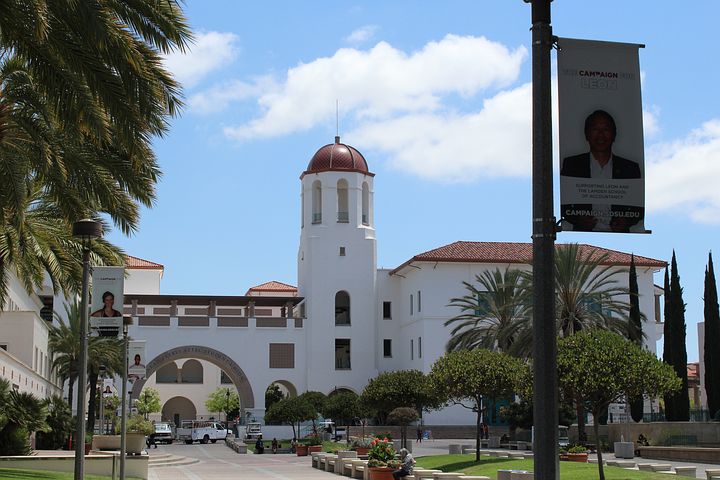
San Diego State University | Courtesy Photo

The road to college

After several years of drought and rainless months, we’re finally getting much drenching which may be affecting your family schedule. Maybe some sports events are being postponed or canceled and getting your children to all their after-school activities could be taking longer than usual. But don’t stress over the rain we’re getting; we can be thankful that we don’t live in Chicago where it’s colder than the North Pole. 

By this time, winter break is a distant memory and your children’s emphasis should have shifted back to school work. Hopefully, they have also done well in their first semester and are actively involved in this phase of their learning.  

FRESHMAN

Your children are well into the second semester of 9th grade and are now fully engaged in the academic and extra-curricular life at their school. They should continue focusing on maintaining good grades. If their first semester marks need improvement, now is the time to turn things around. Time management is of paramount importance as schedules could prove to be challenging with their course load, sports and extra-curriculars all vying for their attention and time.  

Encourage your children to start thinking about their summer community service activity. Your student’s college counselor may have some recommendations on community service and other clubs and organizations to develop his or her interests and abilities. I have to emphasize that your children should pursue an activity they are truly passionate about and be involved in it throughout their four years in high school. This shows admissions officers genuine interest and zeal.   

SOPHOMORE

Make sure your children are staying on top of their grades so that the final grades that go on their transcript are the best they could earn. The schools they will be applying to will only get to see all the marks in their first three years in high school. If their first semester grades weren’t stellar, they need to improve their grades this semester. They need to meet with their grade class dean to make sure their grades and courses are on the right track for graduation. They should know what tests they need to take and register for them (www.collegeboard.com; http://www.act.org).

It would be a smart move for them to take the SAT subject test the year they take the course while it is still fresh in their mind. My daughter took her SAT II Chemistry test as well as the AP test in May of her sophomore year.

JUNIOR

I cannot emphasize this enough – junior year is the last complete year that college admissions officers will be looking at when your children send their application. They need to maintain their good grades and continue their extra-curricular activities. If they had good study habits back in 9th grade and have established a routine, they shouldn’t be feeling overwhelmed right now.    

Recently, I was reminded of the fact that for most students meeting frequently with their school’s counselors isn’t always a possibility. In some high schools where there are as many as 400 seniors to four full-time counselors, a junior may not even get any face-to-face time with a counselor. This puts the onus on your children to be very resourceful and to take the initiative in gathering their research material and plan their course of action as they embark on the college application process. 

Outside independent resources are also available for you and your children if you need assistance. One particular organization I heard about is called CollegeVine in Cambridge, Massachusetts. Its near-peer mentoring method pairs high school students with highly-qualified college student “peers” who have had recent success navigating this same road, which is challenging and daunting for teens. This model works  because students relate to mentors closer to their own age who truly get them, communicate the same way, and are already on the campuses of the top universities with access to real-time information and tools. Peer mentors confer with students via video conferencing.

Photo by Annie Spratt for Unsplash

If you want an independent counselor who can sit down with you face-to-face during the initial meetings, Greg Kaplan would be a good resource. He grew up in and attended Southern California schools and has written an excellent book called “Earning Admission: Real Strategies for Getting into Highly Selective Colleges.” He is very much aware of the competitiveness in the local schools and offers free workshops in the San Gabriel Valley. He will guide your student through the four years of high school and strategize how to best present your child to admissions officers. He does Skype conferencing after the first meeting.  

Meanwhile, as the parent of a junior, you should also make sure your child is on track – has taken all the courses the high school requires for graduation and are taking all the courses to complete the UC and Cal State requirements.                

They need to be aware of what standardized tests they should be registering for and taking (SAT I in March, ACT in April or June, SAT II exams in May or June.  www.collegeboard.com, www.act.org).

Your children’s plans for spring break college visits should be finalized. If they are visiting the colleges on their own (not the high school’s group-arranged tour), they need to call the admissions office to schedule their visit. It would be very ill-advised for parents to be scheduling the college visit for their students. As much as you want to be hands-on, relinquish control and have your children make the appointments. Most universities have a morning and an afternoon tour at 10:00 am and 2:00 pm.  There is usually an information session for an hour and a walking tour afterwards. If they are thinking of applying through early action or early decision, they might want to make an interview appointment with an admission officer (if it is a requirement for application). They might also want to schedule to meet with a current student to learn more about the school, or ask to see the rooming arrangements.

SENIOR

Your children should not take for granted that they are all done with schoolwork because they have sent in their college application. Don’t let them succumb to “senioritis” as third quarter grades are very important in case they are waitlisted. Also, in the unfortunate event that they realize the school they have been attending as college freshmen isn’t the right fit for them, senior-year grades will be crucial in the transfer decision.  

If your children have received new awards or commendations, or have accomplished something significant since they sent in their college application, they should email this important update to the admissions officer or the area representative of the school they applied to.

The months following the end of the college application process are usually as anxiety-ridden for seniors as well as parents. While everyone has breathed a sigh of relief that the mad rush is over, the waiting period is just as nerve-wracking. In the next few weeks, some college decisions would be trickling in.

Remind your children to be careful how they share their good news as their friends might be getting some bad news at the same time. If they have been accepted to their “safety school” but aren’t planning on attending it, they should resist the urge to boast about it as it might be someone else’s “dream school.”

Most of all, your children need to be patient – the answer will eventually arrive and nothing can hurry it up. Colleges notify at different times and in different ways. They shouldn’t read into the timing of the decision letters; their friends getting good news early doesn’t necessarily mean a bad outcome for them.       

Your children should confirm with the colleges to make sure they have all the documents they require. They should continue applying for scholarships (www.scholarships.com; www.collegexpress.com; www.scholarships360.org, www.fastweb.com,

www.studentaid.ed.gov, http://www.affordablecollegesonline.org/graduating-debt-free) and getting their FAFSA (www.fafsa.ed.gov) ready for submission.

January College Search Guide

Originally published on 3 January 2019 in the Pasadena Independent, Arcadia Weekly, and Monrovia Weekly

London University | Courtesy Photo

The road to college

Happy New Year! By this time, winter break is over and students are heading back to school I hope your children got the opportunity to de-stress and refresh, enjoyed time away from school, and just delighted in being teenagers. The years between middle and high school aren’t that long and, once gone, will never come back. Give your children the chance to relish this period in their lives.      

It amazes me how much driving parents do during the school year taking their kids to school, after-school sports practice and events, AP or SAT classes, weekend music lessons, etc. If all that running around makes parents stressed out I can only imagine how it must be for children who are juggling all these activities on top of going through puberty.

Parents can help their children by showing their support and guiding them through their high school years. Starting preparations for college admissions in 9th grade, instead of during the spring of your children’s junior year makes this process more manageable.    

Private high schools have counselors to give personal attention to students during the college application process. But many public schools do not have the staff for individualized guidance and it falls largely to parents to help their children. 

There are independent counselors you can consult for advice as you and your children navigate the admissions process. Sometimes just having someone you can call to answer some of your concerns or questions takes off much of the burden.

Greg Kaplan, a Southern California native, offers counseling via Skype. He has written a book called Earning Admission: Real Strategies for Getting into Highly Selective Collegesthat enlightens you on the process; he also offers college counseling workshops in the San Gabriel Valley.

An educational service called CollegeVine, based in Cambridge, Massachusetts, whose counselors are current university students, is also a good resource. These peer mentors can give your children the most current information about what the colleges are looking for since they are still in school themselves. Consultation is also done via video conferencing.                                             

FRESHMAN 

Typically, the beginning of the year marks the halfway point in the schoolyear.  First semester grades would soon be released, if they had not been sent out yet. If your 9th graders’ marks are not great, they would need to use the second semester to better them as it’s the end-of-year grades that show on the transcript. A student’s GPA is a very important, if not the single most influential, component of the college application. 

Make sure your children are continuing their extra-curricular activities in arts or sports, with concentration on one or two where they excel. Finding something they are truly passionate about and doing it throughout their high school years show their commitment. My daughter realized she loved acting only when she reached 11th grade. Thus, she didn’t have enough time to engage in it, and her resume reflected that. 

SOPHOMORE 

This is your student’s second year and by this time he/she should have fully transitioned into high school. He/she needs to put extra effort into weak subjects and solidify grades for the second semester. Your children should continue their focus on academic performance skills, sports participation and arts involvement. They should also start studying for the PSAT (www.collegeboard.com). Taking a practice PSAT in 10th grade gives them the chance to identify weaknesses then work on them before taking the NMSQT (www.nationalmerit.org) in 11th grade. At my daughter’s alma mater, students meet with their grade level dean in the winter of 10th grade to discuss year-end testing options and junior-year course options.

Sophomores enrolled in Advanced Algebra and Pre-Calculus register to take the SAT II Math Level 2 exam in June of their sophomore year. Those enrolled in Functions, Trigonometry and Advanced Algebra (FTAA) take this same exam in June of their junior year, after completing the Advanced Topics and An Introduction to Calculus-Honors (ATIC-Honors) course. Sophomores who are thinking of going into science, medicine, architecture, and engineering are encouraged to take the SAT II exam in Chemistry in May or June of their sophomore year. Your student should also start lining up summer activities.

JUNIOR 

The second semester of junior year is significant as it is the beginning of the college application process. From their research, students are now ready to start planning a visit to colleges. They can even do their initial campus virtual tours online www.campustours.com, www.CollegeProwler.com, www.SmartCollegeVisit.com, www.YOUniversity.com. Counselors usually recommend that students use their spring break to go to several different types of schools. A good list should include a small liberal arts college, a medium-sized research university, and a large state university to let them have a feel for what “small” or “large” school means.

Your children should be able to experience firsthand if a large city like New York makes them feel alive and vibrant, or if it totally overwhelms and scares them. They need to experience if a campus with 20,000 students is the right setting for them. While they don’t necessarily have to visit the schools they are actually considering applying to, this trip should give them ideas about what they are looking for in a university. Once they’ve established  the elements they are looking for, they can start making a record of schools they would put on their list of colleges to apply to. 

SENIOR 

All college applications should have already been sent out for the January 1st regular decision/admission deadline. Some universities, like Georgetown, have a later deadline. Some schools also have ED (Early Decision) II. Parents should already have filed their income tax returns; get ready to submit FAFSA (www.fafsa.ed.gov). Apply for scholarships. There are several websites to help you with your search like www.scholarships.com, http://www.collegexpress.com, www.scholarships360.org, http://www.affordablecollegesonline.org/graduating-debt-free.

As much as I am tempted to say “Tell your kids to breathe a sigh of relief because the hard part is over,” the reality is that they will be anxious because all that’s left now is the wait. And, oftentimes, the waiting is more difficult than the application process. Just be there for your kids to remind them that they have done a great job and they should let the admissions professionals do theirs.

The months from January through March can still be a time for your children to do something to help their cause. Mid-January is when high schools get their first semester grades finalized. If your student’s mid-year report is particularly spectacular, this could be a very good development especially if he/she is applying to a highly selective college. When your children’s high school sends the grades, have your children follow up with an email to the area representative telling them about their hard work and interest in that college.

If your children have been deferred at a college when they applied through early action or early decision, it is advisable for them to send in an additional teacher recommendation, but only if this supports their application. Likewise, if your student has received any notable honors or made any significant achievement, he/she should let the admissions officers know by email.     

Having done all these, you and your children will now just have to wait patiently for the process to play itself out.           

CSArts-SGV and Media V Premiere ‘The Merry Wives of Windsor High’

Originally published on 26 November 2018 in the Pasadena Independent, Arcadia Weekly, and Monrovia Weekly

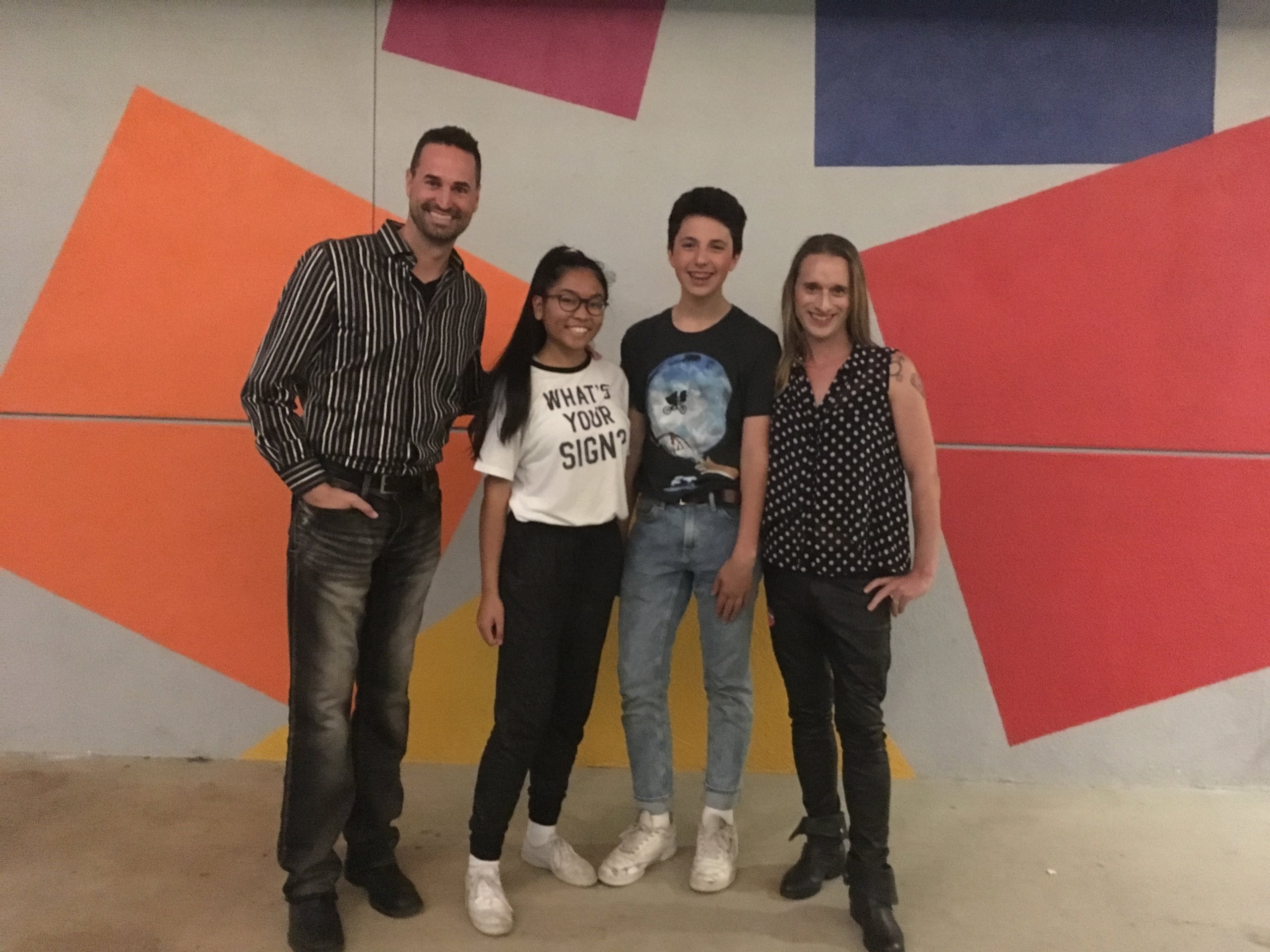
Jay Wallace (left) and Jer Adrianne Lelliott (right) flank Melissa Bautista and Mateo Alfonso | Photo By May S. Ruiz / Beacon Media News

This weekend, California School of the Arts-San Gabriel Valley (CSArts-SGV) and mediaV, a Santa Monica-based production company, will jointly premiere a retelling of William Shakespeare’s ‘The Merry Wives of Windsor.’ Renamed ‘The Merry Lives of Windsor High,’ it will be held on Friday and Saturday, November 30 and December 1, at the Duarte Performing Arts Center.

This production is the first ‘Incubator Project’ developed by the partners, an incredible one-of-a-kind collaboration that gives students of CSArts-SGV’s Musical Theatre Conservatory the opportunity to be the first to originate and produce a series of brand-new rock musicals.

MediaV founders and philanthropists Russell Meyer and Marcy Shaffer have pledged a gift of $50,000 to CSArts-SGV over the next two years to support the creation of two world premieres, with the intention to continue collaborating over the next several years. Using the works of William Shakespeare as source material, the Incubator Project will create modern and relevant musicals that would subsequently be offered for public license and performance.

“We are thrilled to be given the opportunity to create and contribute original works to the catalog of musicals available today,” pronounces CSArts-SGV Chair of Theatre Jay Wallace. “We hope the material will gain momentum and be performed by high school, college, and community programs across the country.”

Jer Adrianne Lelliott, who directed last year’s CSArts-SGV’s production of Oscar Wilde’s ‘The Importance of Being Earnest’ will be directing ‘The Merry Lives of Windsor High.’ A theater actor since early childhood, she played Chip in the original Los Angeles cast of Disney’s ‘Beauty and the Beast’ at age 12. She attended film school at Loyola Marymount University and upon completion returned to theatre. She earned her MFA in Acting at Cal State Fullerton, after which she started working professionally in regional theatres all over the United States.

The founding artistic director of Coeurage Theatre Company, Lelliott’s theatrical directing highlights include Carla Ching’s Blackbird, as well as Vieux Carré, The Woodsman, and Andronicus for Coeurage.

As an actor, Lelliott has appeared at Kirk Douglas Theatre, Pasadena Playhouse, La Jolla Playhouse, Chance Theatre, Laguna Playouse, La Mirada Theatre for the Performing Arts, MainStreet Theatre Company, and Disney on Broadway.

Lelliott’s television credits include Sweet Justice, Picket Fences, Journey of the Heart, Melrose Place, Walker Texas Ranger, Life with Louie, The Practice, Ambushed, Safe Harbor, Providence, 7th Heaven, Disappearance, Smallville, The Handler, NCIS: Los Angeles, and Ctrl Alt Delete, among many others. Film credits include Jack, Ambushed, Diplomatic Siege, Betrayal, Race You to the Bottom, Driftwood, and more.

Students in rehearsal | Courtesy photo / CSArts-SGV

Distinguishing between the two productions she helmed at CSArts-SGV, Lelliott states, “Last year’s was straight-on Oscar Wilde, a dead playwright, so the script was set in stone. While this year, the script is continually developing and revising as we go.

“Jay and I have been talking since spring, planning with the creators and writers. There have been numerous phone calls and face-to-face meetings. They were here two days ago to see our progress and making script changes as they watched students in rehearsals.”

That so much is riding on this Incubator Project is not lost on the students. Pasadenan Melissa Bautista, who’s in 11th grade and attends the Musical Theatre Conservatory, says, “My parents understand that being a junior and participating in a production is a big responsibility so they could be knocking on my door at 3 am to check if everything’s fine.

“I constantly juggle between doing homework and going to rehearsals. We have a buffer from 4:45 to 5:30 so that’s usually the time I do homework. I also eat snacks and drink water to replenish my energy. We’re not always on during rehearsals so I use the in-between times, too.”

“It’s very much about time management,” inserts Wallace.

Concurs Mateo Alfonso, a 9th grade student from Monrovia who’s also in the Musical Theatre Conservatory, “My parents know that if I get into a show I’ll be in rehearsals until 8:30 pm and that’s just a commitment you have to make when you dedicate yourself to the Arts and you’re doing what you love.”

“In this musical, I play Tess, the coffee girl who works at the brewery,” describes Bautista. “She’s a senior and she’s trying to raise money to go to college; she’s also the friend that everyone goes to for advice. She just happens to be caught in the middle of all the drama.”

“Tess loves her friends with all her heart, a trait that’s close to me as a person,” Bautista continues. “But as kind-hearted as she is, she’s sassy and sarcastic at the same time. She stands up for herself, which is something I aspire to.

“In previous roles I was someone flighty. But this time, my character is very down to earth, a great advice-giver, and a very supportive friend. This gives me the opportunity to be seen as someone who’s not just an airhead, or that high-pitch voiced, quirky girl, but someone with more substance.”

Alfonso couldn’t say much about his character beyond, “I play the role of Oliver who’s a senior and a soccer fan; he’s the twin brother of Olivia. I would like the audience to see what a high schooler is really like. Playing the character of someone who’s shy, I relate to him. However, unlike the role I portrayed last year who holds a lot inside, in this musical my character shows that you don’t have to pretend, you just have to be yourself.”

Getting in character | Courtesy photo / CSArts-SGV

Asked if she gave Bautista and Alfonso direction on how to act like senior students on the show, Lelliott  remarks, “First of all, I’d like to commend Mateo for doing a great job of talking around a major spoiler. But to answer your question, they’re giving me pointers! Actually, what’s important to us and the creators is that it reflects our campus and students. They chose our school because they wanted our population so when they present the work to other colleges and universities they can show the crème de la crème. Most of the characters in the play are high school seniors with the exception of one; we have one 8th grader who cracked that age criterion and managed to get in the play.”

“I directed it just like I would professional theatre,” asserts Lelliott. “These young people are as professional as some of the adults I work with; their training is excellent. It’s collaborative as to who they are. I also cast all 26 of them for specific reasons – they were as close as possible to the characters they play and we want their personalities to shine through.

“But beyond that, I gave them notes as to how they could make clear their objectives, staging – making sure the audience can see their faces and hear their voices, and technique. The good thing about teaching and then directing them is that we have a shared vocabulary, so when I say ‘You have to raise the stakes here,’ they know what that means.”

“I would say that this is a broader philosophy of how we approach all our productions here. There should be a collaborative effort, we should show respect, we have a mutual language. We certainly value having a polished professional product and the shows we have mounted, thus far, have demonstrated that. However, process is probably the most vital component to everything that we do. Our philosophical goal throughout the conservatory and theatre acting is our growth, whether as artists or as individuals. It’s up to us as the leaders at CSArts-SGV to inspire them to achieve their potential through the process.”

Speaking of the process, Lelliott discloses, “Tonight, we’re just working on songs. There are 20 songs, bookended with big company musical numbers. In between there are quartets, trios, duets, solos, and reprises. My musical director and choreographer are there; I’ll put the students up, we have a running order. They’ll get notes specifically for vocal and choreo.

“Tomorrow, there won’t be any music, we’ll just be concentrating on staging scenes. Sometimes it will be like a three-ring circus, where I’ll be working on acting with students, while the musical director will be doing songs with them, and the choreographer will be working with other students on the dancing.”

“The reason ‘Hamilton’ is so much better than everything else that came out on Broadway is that the producers gave it extra time, which doesn’t usually happen with union contracts,” expounds Lelliott. “They didn’t just go in with a script and put on the show, it was an evolving process.

“That’s the same thing here. While we didn’t make major revisions, the writers came in and we all watched it and we were thrilled with it. Then we decided we could streamline the opening number to make it even faster. We’ll turn in a show in 90 minutes, with no intermission. People can see the show then grab lunch afterwards.”

“I think one of the things that we considered is what’s happening in the world right now,” Wallace says further. “Some of the revisions that were made were to make it more relevant to the audience.”

Lelliot clarifies, “The show doesn’t really touch on social issues. I’m going to riff off what Mateo said earlier – it touches on them by not touching on them. What people will see up there is a really diverse, inclusive cast. It will honor, even as we shatter, a lot of archetypes and stereotypes in a school setting – the jocks, the cheerleaders, and the brains. We’ll see more three-dimensional characters and, in so doing, I suppose there will be an undercurrent of social justice, if you will. But the real justice of it, really, is that we’ll be presenting a more idyllic world which is what CSArts-SGV embodies – a beautiful culture – and how well that works when we don’t label people.”

Rehearsing the songs with the choreography | Courtesy photo / CSArts-SGV

This first incubator project has another outcome, explains Wallace, “Something interesting I want to touch on is that this is also linked to a course that we’ll offer in the spring which will be led by the person who will direct next year’s incubator project. Students will develop the actual product as well as get exposure to what it’s like to put on a brand-new musical, to promote it, to learn how to be marketing savvy. An important part of that course will be workshopping next spring’s incubator so by the time we get into the Fall we’re ready to rock and roll, literally.

“We’re exploring how we can tap into the youth who may not be trained in those, but who are so innovative. We’d like to utilize that to build a framework together that will become the foundation of future incubator projects, so when these students graduate our school they’ll have a major head start on collaborating and originating new material.”

When queried how he found a teacher to teach the course, Wallace replies, “I started from the creative side – who would be the most ideal person to lead the incubator project. It’s important that it’s always somebody who has experience in generating their own product, in promoting their own image and product; someone who has an understanding of the means to engage on a collaborative effort. And, first and foremost, someone who can connect with students.

“This opportunity for us to originate a musical and to collaborate with professional talent, is almost unheard of even at the collegiate level, and certainly not at the high school level. I’d be very surprised if there were anything like this anywhere in the country. The shakers at media V deserve a lot of credit for that vision and for coming to us to partner with them. It’s a real sign of reinvesting in youth and theatre arts, specifically musical theatre, and allowing these students to develop through that process. It’s extremely unique and, quite honestly, a blessing. And to do this in the second year of our school is just insane.”

As the chair of the theatre department, Wallace is aware that the onus to make a success of the project falls squarely on him, “My philosophy is ‘This is my challenge and my opportunity. Embrace it.’”

It is that spirit of ownership that Wallace displays that has made such a tremendous success of all CSArts-SGV’s theatre productions. Bravo!

Charles W. Eliot Arts Magnet Academy Inaugurates its Own Costume Shop

Originally published on 30 October 2018 in the Pasadena Independent, Arcadia Weekly, and Monrovia Weekly

The Eliot Arts team poses with its newest fan, actress Jane Kaczmarek, at Pasadena Educational Foundation’s ‘Breakthrough Student Interactive Showcase’ at their annual ‘Celebrating Our Schools’ event. Left to right, Drama teacher Micol Issa, student actors and costume designers, Kaczmarek, Principal Lori Touloumian, Visual Artist-in-Residence Liane Shih, and Theatre Artist-in-Residence Lory Tatoulian | Courtesy photo / Molly O’Keeffe

The middle school musical was ‘Alice in Wonderland.’ As the students were getting ready for rehearsals, Micol Issa, 6th grade English and Drama teacher at Charles W. Eliot Arts Magnet Academy (Eliot) in Altadena, who was also directing the production, had a sudden inspiration, “Instead of shopping for costumes for the show, why don’t we make them ourselves?”

Never mind that it was January and the production was slated for May. Indeed, many would have found that prospect daunting. Where would they find designers? Who, besides Issa, even knew how to sew?

But Eliot was the top Arts School in the Pasadena area and it had a reputation to uphold. So everyone got behind her idea quickly. Students, parents, teachers, and administrators sprang to action to make Issa’s brainstorm a reality.

Issa’s ambitious concept would not have been do-able had it not been for a grant that transformed the school to what it is today. Lori Touloumian, Eliot principal, informs, “In 2013, this school, then known as Eliot Middle School, was one of four academic institutions awarded the magnet schools assistance program grants of $7.9 million each to have its own integrated theme. Eliot, in particular, was designated as a Visual and Performing Arts (VAPA) school.

“To ensure cohesion of the district’s schools and initiatives, there is one person who has oversight over all the magnet programs. We’re fortunate to have Shannon Mumolo in this capacity. As the Magnet Schools Assistance Program (MSAP) Program Director for the Pasadena Unified School District, she oversees the budget and implementation of magnet programs funded by the U.S. Department of Education. She has been an MSAP Project Director since 2015 and previously served as the MSAP Site Coordinator for Eliot Arts Magnet.”

“Through the grant, our teachers went through specialized training on how to integrate the experiential approach to art into the core classes of English, history, math, and science,” discloses Touloumian. “We have resident artists who work with teachers on site during the school day and after school who work directly with students on various projects. We’ve also partnered with the Huntington Library to offer free after-school programs every Tuesday and Thursday afternoon.

“While adhering to the district’s established curriculum for the scope and sequence of the arts program, the teachers have been empowered to make decisions in terms of what art project they will do in their core class and they are free to set up the time with the resident artists. The school follows the common core standards and the artists in residence come in with expertise in the arts standards to weave the two together.”

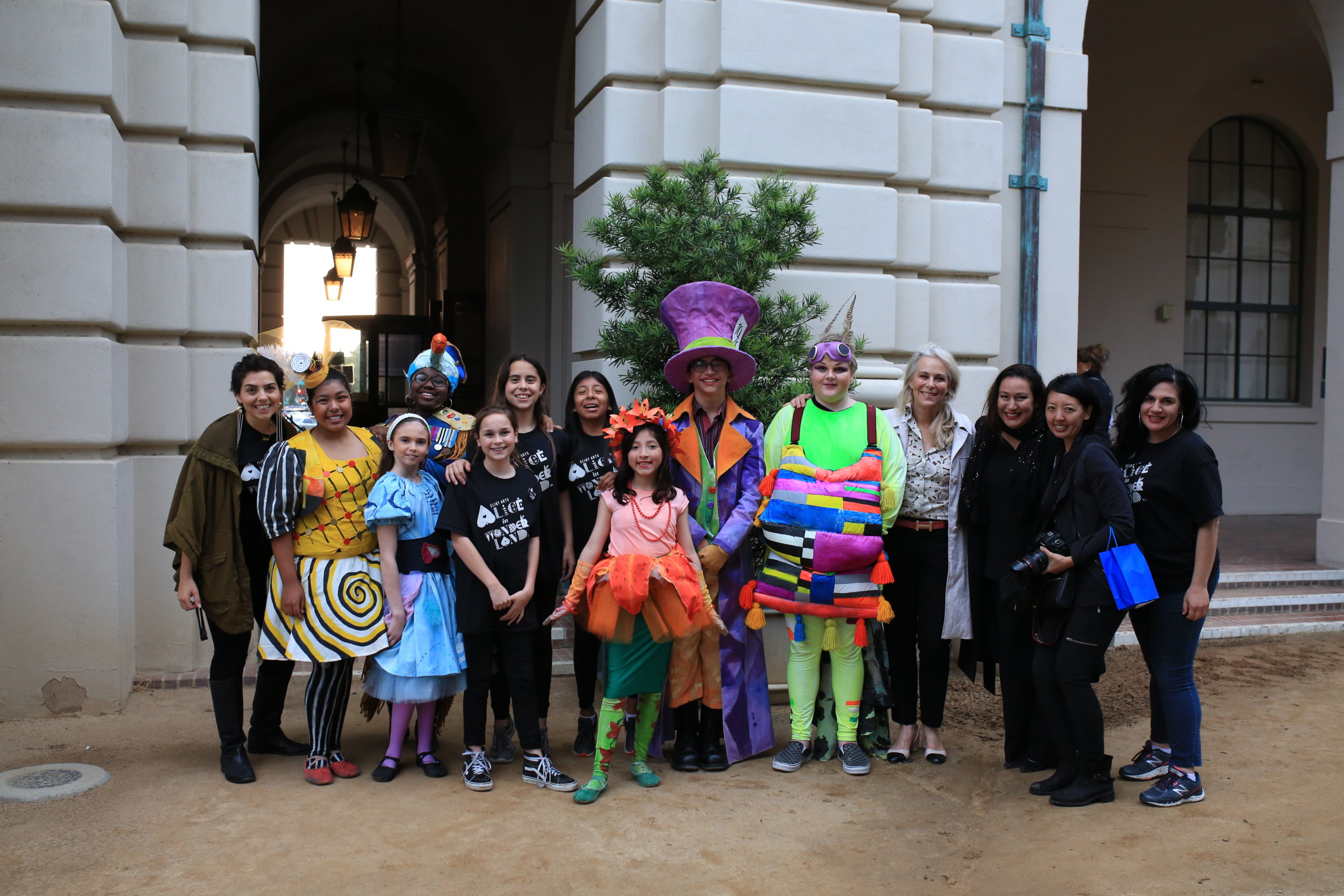
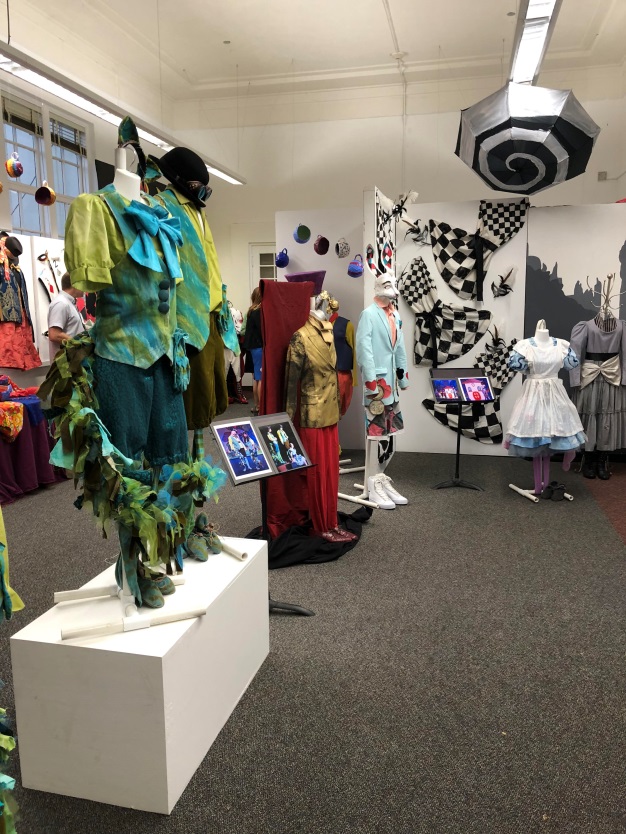
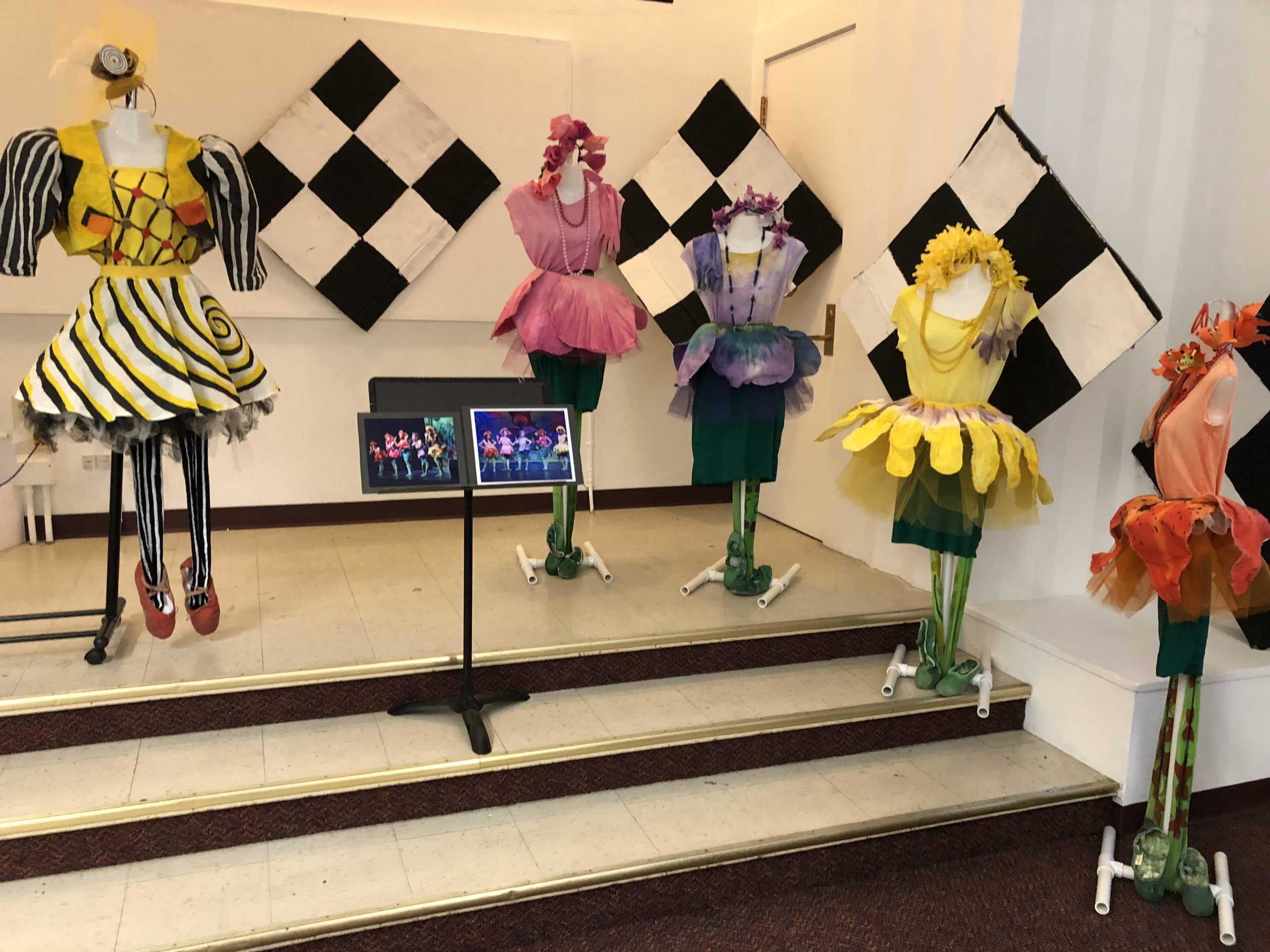
In Eliot’s new costume shop, parents and artists-in-residence taught students how to sew their own costumes such as the shorts and pantaloons worn by guests to the Mad Hatter’s tea party. The Mad Hatter wore a handmade hat and hand-painted jacket designed by students themselves | Courtesy photo / Marc Flores

Touloumian says further, “Additionally, we were to able create art-maker spaces on campus – we  revamped our dance rooms with more equipment, we transformed a former parent room into an art gallery which is now utilized as a community center where our students and community artists can hang their art, and we added a ceramics room and a media lab on campus.

“We are now a fully integrated arts academy. Students can choose what elective classes they want to be in but even if they choose not to attend a specific elective class they may still have the visual arts experience in their English, history, math, or science class, or after school.”

Cheili Lopez, a 7th grade student who participates in the arts classes and after-school program, says “I’ve just started the printing shop on Tuesdays and Thursdays with Mr. Duffy, and on Fridays I go to the costume shop. Through the arts classes, I’ve been able to make things for my family – I sewed an apron for my mom and I made a jug in ceramics class which I gave to my parents for Christmas. They were very happy because the items weren’t store-bought; I made them myself.”

“Everything we do here is connected to the Arts,” Issa explains. “We’re trying to rebuild the school culture and create spaces for kids to have multiple avenues of access to the Arts. Not everyone wants to act, but this is another way for kids to participate in the making of performances, and Cheili is an example of that.

We realized that something we needed, not just for the drama and choir program but also for dance classes, was a costume shop. That was the goal we tried to work towards last year, which launched us into this next level. Now, we have six sewing machines, two sergers, and an embroidery machine. We basically have a sewing club that meets every Friday after school.”

“In the past, we assigned people to find the costumes for specific characters,” details Issa. “But, like I said, we need costumes for all our productions so I took the idea of having a costume shop to Denise, the artist in residence. She, in turn, went to Lori and said ‘If you will okay the costume shop, I’ll write the grant,’ and she did.

“Of course, I had to justify why I thought a costume shop was necessary. I argued that it’s something that would be great for the program as a whole and we had the expertise on how to run a costume shop on campus. Denise and I know how to sew, then we discovered that so many parents also have that skill. So what it really did was brought more people on campus.

“Through Facebook, people shared with everyone our donation list and what I was hoping to accomplish. People donated patterns and dropped off whatever they could contribute. Everyone was happy to give and appreciated that we were teaching kids how to sew.”

A visit to a museum was the inspiration for their musical’s look. Issa recounts, “I went to an exhibition of Marc Chagall costumes at LACMA and I was astonished because it was exactly what I envisioned for ‘Alice in Wonderland.’ So I took the kids on a field trip to see the show and when we came back we started designing.

Students fused the modernist styles of the Bauhaus movement with the loose painting styles of artist Marc Chagall to design each of the show’s whimsical costumes | Courtesy photo / Shannon Mumolo

“We found real pictures of the Chagall costumes. And under the guidance of our artist in residence, we taught the kids how to draw and make patterns, to paint them with colors, and to sew inside out.

“Because of the large number of costumes that needed to be finished, it was a community effort. Students, teachers, and parents spent a lot of late nights and weekends sewing. And, while not each costume was made entirely by kids, they worked on every one.”

Lopez was one of the students who made the costumes and she acquiesces, “Each costume was a group effort. Several students worked with an adult to work on one and when we didn’t finish that day, we went back to it the following afternoon.”

The experience proved to be constructive for Lopez not only because she learned how to sew. She says, “We do a lot of projects in regular school so doing the after-school costume shop helps me collaborate with other students.”

Issa points out, “What they do in the costume shop translates, however indirectly, with their core classes. They go through the same procedure of calculating, of figuring out a problem, much like in math class. They have to assess how thick they need to make the paint to have the effect that they want. So they experiment with a lot of color samples to figure out what consistency to use so it doesn’t just turn into watercolor but, at the same time, doesn’t make the fabric super stiff. That’s a process that applies in science class.”

“The show ran for three days and all the costumes held up,” Issa says with pride. “There were minor repairs which we made between shows. The incredible thing about this, also, is that it gave me additional crew on top of the stage team. From now on, the costume crew is in charge of queue-ing the costumes – making sure they’re in the right place – and noting what needs to be repaired so we can make them the next day.

Eliot’s spring musical proved to be a smashing success. Raves Issa, “Our ticket sales for the show was tremendous. We sold over $1,000, which was more than what our previous shows generated. Then, on October 10, we held our first official gallery opening featuring the costumes from last school year’s spring musical ‘Alice in Wonderland Jr.’ We invited the District and Community Arts Team, and all our Altadena, Pasadena, and Sierra Madre partners – from dance to theater companies – and they all came to see the exhibit.”

The show’s handmade costumes were installed in the school’s art gallery this fall for the opening exhibition: Chagall and the Bauhaus Meet Alice in Wonderland. They will be on display until December 2018 | Courtesy photo / Shannon Mumolo

The display, which goes on until December, highlights a very specific artistic vision. Issa describes, “The costumes in Eliot’s production of Disney’s ‘Alice in Wonderland’ are unlike any other version of the show you have seen because it was inspired by the artist Marc Chagall and the Bauhaus design movement.

“Chagall, well known for his paintings and stained glass windows, also designed costumes for the Metropolitan Opera and New York City Ballet. You will see some of his designs and paintings represented in our own costumes and sketches. As we researched and sketched our vision for Wonderland into life, we decided to add in the modern and otherworldly influence of the Bauhaus design movement. Categorized by basic shapes, lines, and spirals, we fused the modernist style of the Bauhaus movement with the loose painting styles of Chagall.”

“We’ve had previous exhibits but they were open after school mainly for parents and students,” clarifies Issa. “This was our first gallery opening held on a specific night for the entire community, complete with a bake and beverage sale. It demonstrates the amazing work that can be done when students, teachers, parents, and community partners collaborate. We’ll be forever grateful for the generosity of the Pasadena Showcase for the Arts and the Pasadena Educational Foundation for their support in making Eliot a premier arts school in the area.

“It was truly a project that involved a great many students – 140 kids took part in our costume shop, out of our total student population of 545. That’s 23% of the student body. What’s more, this endeavor inspired others so we have doubled our numbers in the costume shop. Even those students who weren’t able to participate in the after-school program worked around their schedule to be in the costume shop.

“We started the Friday costume shop early this school year so we could teach the kids sooner and, in time, they would be able to sew the bulk of the costumes themselves. Our next musical is ‘Hairspray’ and we’re creating the costumes again. But because this show happens in our world, we’ll probably use some of the basic costumes we already have, instead of making them from scratch. That’s the cool thing about having a costume shop – it has given us the ability to use  something that already exists by altering it to fit our needs.”

Issa is now just entering her third year at Eliot but, already, she has been instrumental in giving it the distinction of being the only middle school with a costume shop. But, more importantly, she  has successfully incorporated in its program an invaluable skill that will serve middle school students long after they leave Eliot. Nay, for life.

Addressing Anxiety and Depression on Campus

Originally published on 23 October 2018 in the Pasadena Independent, Arcadia Weekly, and Monrovia Weekly

John Finch, headmaster of Chandler School, with middle-school students in his Ethical Perspectives class | Courtesy photo / Tim Teague

In an article which published last April in Time magazine, Katie Reilly reported that record numbers of college students are seeking treatment for anxiety and depression, and schools can’t keep up. She further described that when UCLA offered, for the first time, all incoming students a free online screening for depression, more than 2,700 students opted in.

Following that article, UCLA announced the launch of its ‘Depression Grand Challenge.’ This project, that spans a decade, will study 100,000 of students who have used its health care system for any reason. It is a sweeping initiative that brings to the fore the mental health issues that have long existed but have never been fully addressed until now.

However, anxiety and depression often predate college. High school students, most especially in the San Gabriel Valley, are faced with daunting competition when they start applying to colleges. Students in the area have earned perfect GPAs, SAT, and ACT scores; were the president of their school’s Student Council; have played at least one musical instrument, have won multiple gold Young Musicians’ Competition awards, and have performed at Carnegie Hall; have been deeply involved in a social, community, or philanthropic cause. They are over-scheduled, sleep-deprived, and hell-bent to stand out from other over-achievers. It’s no wonder, then, that they are riddled with anxiety that often leads to depression.

David Burge, who just completed his term as the President of NACAC (National Association for College Admission Counseling) states, “There is no doubt that the college application and selection process is daunting and is a cause of much of the anxiety and depression on high school campuses.

“What we’re finding is that there are more and more students in high school who are receiving treatments for anxiety and depression, including medication and talk therapy. So it’s only natural for them to continue to seek treatment when they get on the college campus. Sometimes the stress of college accentuates their pre-existing conditions.”

“We, at NACAC, are teaching students and parents to look beyond the Ivies and the most selective universities when they embark on their college search. As long as we continue to value exclusivity as a surrogate for quality, the competition perpetrated by these very universities will continue,” Burge pronounces.

To say, though, that the college application is the reason for the mental health concerns plaguing our country’s youth is too simplistic.

Depression among students is on the rise | Courtesy photo

Myra McGovern, Vice-President for Media at NAIS (National Association of Independent Schools), says, “The theories about why today’s students are going through anxiety and depression run the gamut. Some are backed by science and some are anecdotal. One of the things I’ve heard is that parents these days aren’t doing much about the issue because they think their generation had it harder.

“Some of us think that children didn’t get to experience the violence of wars and the hardship that accompanied such, which made them more fragile. But one could argue that children have seen more wars in their lifetime. There have been more media coverage of school shootings, that began in Columbine; and of terrorism and international threats, since 9-11.”

“I think that while the potential dangers may not have statistically grown, the exposure brought on by media has increased dramatically,” explains McGovern. “In the past, most teenagers didn’t read the newspapers; but these days, through social media, they know what’s happening in the world in real time.

“Consider your biological fear response – from the adrenaline rush, to the tightening in your chest and the dry mouth – when you hear of something horrible happening. Our body hasn’t really changed from the time of lions chasing people. Yet we’re more exposed to technological lions (stimulus) when our survival instinct hasn’t quit adapted to technological reality.”

McGovern elaborates, “Perhaps, too, children’s increased interface through technology is changing the way they relate and cope. The social pressures the older generations had to contend with are definitely different from what today’s youth deal with.

“There’s also our perception of our role as parents. Because of our own anxieties about our children’s lives, we are constantly hand-holding them and, in the process, taking away some of the opportunity for them to practice making decisions. It affects their confidence level at being able to navigate the challenges the world throws at the them as they become teenagers and young adults.”

“Another theory has to do with what people are consuming and the chemicals they’re exposed to,” adds McGovern. “But whatever the cause is, there’s a consensus that children and adults are struggling more with anxiety and depression.

“What I want to emphasize is that I don’t believe there’s one right solution for everyone. Part of the solution is considering children as individuals with specific needs. Prioritizing to invest in our future on the front end could reap benefits in the long term,” McGovern concludes.

Building the groundwork for sending happy and healthy kids to high school and beyond is a mandate that John Finch, headmaster of Chandler, a K-8th grade school in Pasadena, takes to heart.

Chandler students gather together as the school day begins | Courtesy photo / Tim Teague

“We establish an environment where there are high expectations, but low stress,” Finch declares. “We pay careful attention to the volume of work we ask the students to do. We don’t try to fit round pegs into square holes – we provide a program that meets their needs and adjust our program so that each child feels recognized, respected, and challenged.

“As we challenge our students, requiring them to do good work, we are equally careful about how we manage expectations. We have to be mindful that doing otherwise leads us to the same path we’ve been going on, with more kids falling out in the end.”

“Socially, we want to create an environment where children are kind to each other, respect and help each other,” states Finch. “We’re intolerant when it comes to bullying. At the same time, we want to establish an atmosphere where kids can be resilient and gritty. We want for them to pursue their interests by trial and error. And if they fail, we’ll help them try again. We want kids to understand they’re being supported by a tight adult network that encourages them. We want them to feel that there’s a balanced foundation of care and love.”

Finch points out, “I think students who spend too much time on screens and not enough time interacting with others can become isolated and lonely. That isolation and loneliness can manifest themselves in anxiety and depression. We have to be cautious, conscientious, and deliberate in urging our kids to shut their screens down, to spend more time interacting and socializing with friends and family.”

“Increasingly, I hear principals say their biggest concern is not so much the achievement, but the well-being of their students,” discloses Finch. “Something’s changing and we have to find the cause and respond accordingly. We’re not doing kids any favor if they’re leaving our schools feeling anxious or depressed – whether it’s because they’re over-burdened by expectations, they feel something is lacking, or they can’t cope with the independence they get as they grow older.

“Ten years ago schools were adding technology and computer positions. Now schools are augmenting learning and emotional support. Once we saw that technology had a transformative impact on the program, the next step was to become intentional in meeting the social and emotional needs of students.

“For us, it’s been helpful to have a buddy program. Older kids interact with the younger ones to give them a sense of responsibility and community obligation. For younger kids, it’s a way for them to look up to older students as role models. Those friendships that develop in multi-age groups make a vast difference in school life.”

“We also have a school psychologist to give professional help,” adds Finch. “Teachers meet regularly and when they hear a student’s name come up more than once as someone who’s not completing work, is tired, or isn’t eating well, they let the administrator know.

“There have been circumstances when kids approached the administrator to say they’re worried about one of their friends. We investigate all these observations and we bring in the psychologist whenever it’s warranted.”

“In a small private school with an adult-student ratio of 1 to 7, it’s very hard for the child to slip through the cracks,” assures Finch. “We’re capable of arresting something before it becomes too dark. And we make sure we have the support and place to take care of it.

“I’m interested in empowering teachers to not only provide excellent teaching but, more importantly, to look after the welfare of students in their charge. At the same time, I also know that families are our partners in addressing the issues of anxiety and depression.”

It’s heartening to know that parents, teachers, and school administrators are acknowledging that there is a mental health problem affecting a large number of students. It is a first step in the right direction.

That schools are also now taking active measures to help students get through their anxiety and depression is certainly a lifeline for those who’ve been feeling despondent and alone. There is hope yet.