Survey: 1 Out of 4 Parents Cheated to Get Their Child into College

Originally published on 26 August 2021 on Hey SoCal
As soon as school opens every fall, 12th graders everywhere in the United States go through a rite-of-passage called college admissions. High school seniors look forward to it with both excitement and dread. It is, after all, the culmination of years of hard work that they hope earn them admission to a university high on their list. For them to find out that some children of the rich and famous undeservedly got into a college, as the bribing scandal revealed three years ago, is infuriating at the very least.  

This deceitful behavior, however, isn’t exclusive to celebrities. An Intelligent.com survey conducted this past spring showed that one out of four parents cheated to get their child into college. The admissions  process is complicated enough without parents’ involvement.

We asked college expert Beata Williams, an independent admissions consultant coaching students through the admissions process who had previous experience as an admissions counselor at Columbia University and at New York University, how counselors can discourage parents from taking matters into their hands.

“In my opinion, a healthy level of parental involvement in the college admissions process is beneficial to students,” Williams states. “However, students benefit the most if they are laying their own groundwork towards their college paths. Reinforcing the importance of the students’ engagement and keeping admissions conversations centered on the student and their profile (which includes student accomplishments) tends to be a successful strategy for keeping the process focused.”

Endowing universities has been a common practice among the elites but it has never gotten negative publicity. As benevolent as it seems, it still points to ways the privileged few could go around the admissions process. However, Williams says it is very unlikely that universities will discontinue accepting donations that benefit their endowments in the near future. Neither is she surprised that average parents like us are cheating to get their child into college. “Human nature does not discriminate amongst socioeconomic classes,” she declares.

The survey found that parents with high incomes ($125,000 or more annually) and those with low incomes ($49,000 or less annually) were the ones who cheated, while those who were considered ‘middle class’ ($50,000 to $124,000) didn’t. Does that mean they had nothing to lose or they had more confidence in their child’s ability? But what did that say about those who chose to cheat?

Williams opines, “I am not a trained psychologist but there is an Attribution Theory of psychology that – if I loosely interpret it – explains that high achievers relate success and failure to their efforts and abilities and they have a strong desire to reach their goals. Low achievers relate their success and failure to luck and the difficulty of the task assigned. I believe the answer to your question could very well be related to this theory.”

Kids are the ones losing when their parents try to manage their college application as Williams explains, “The college application process is a huge growth opportunity for a young adult. As stressful as it is, it provides a platform for them to gain strategy and decision making skills. When parents manage the process for their kids, they actually deprive them of a growth opportunity.

“College admissions is highly competitive and very stressful for students and parents. A book I wish parents and students who are currently in the admissions process would read and take to heart is ‘Where You Go is not Who You’ll Be’ by Frank Bruni. Perhaps it would reduce the admissions madness.”

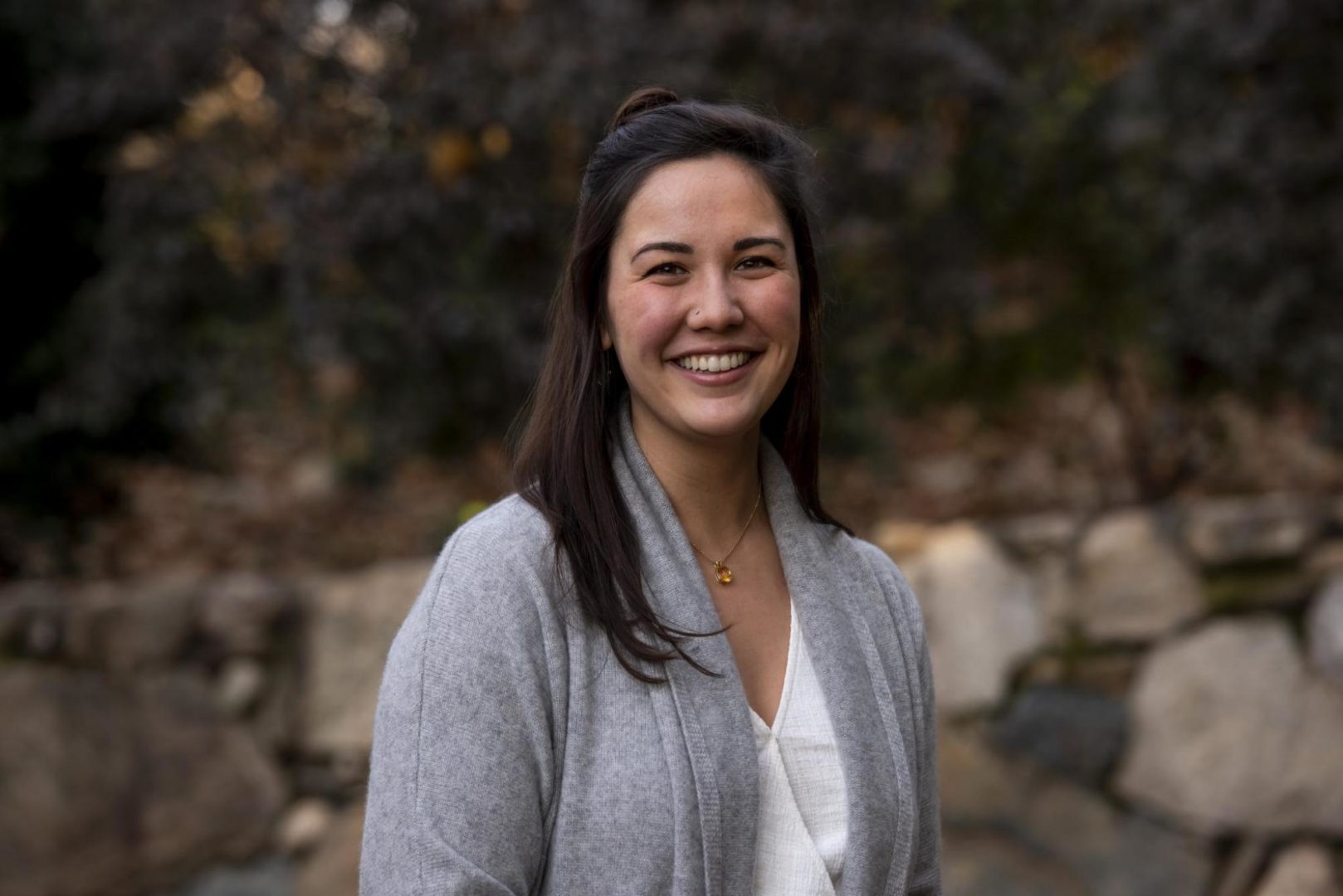
Beata Williams, left, working with a student | Courtesy photo / Intelligent.com

Nowhere is the admissions process more anxiety-ridden than in Pasadena and surrounding cities. High school students here are so accomplished – they take as many as six advanced placement (AP) subjects in one school year, play varsity sports, vie in the most prestigious dance or music competitions the world over, enter science and engineering contests for scholarships, and establish nonprofits for a cause they want to advance, while excelling on every standardized test, and getting an unweighted GPA of 4.0 – that all of them are qualified to be admitted to the most selective universities. The competition is fierce because every student has to stand out among other overachievers.

At Arcadia High School (AHS), which has consistently ranked in the top 1% of high schools in the United States and has been named a Gold Medal School by U.S. News & World Report, students and parents know how daunting college admissions is, yet have a healthy approach to it.

Angela Dillman, AHS principal, and Amanda Fitts, college counselor, talk to us about the Intelligent.com survey findings.

Asked if it’s shocking that parents would cheat to get their child into college, Fitts replies, “I wish the number was lower but, honestly, I’m not shocked because of the tremendous pressure students and parents feel surrounding this process. This is especially true in communities where the pressure is intense to get into ‘name’ colleges and not just to get into college. I put a lot of blame on publications like the U.S. News & World Report that rank colleges based on data which aren’t that valuable in terms of students finding the right fit. I will say, though, that parents who donate huge sums of money to colleges is, unfortunately, not new. And we can’t really say that it’s cheating because it’s a practice that’s out in the open. But it’s also rare – we’re talking about millions of dollars. But hiring other students or even adults to take the test is quite upsetting.”

Dillman comments, “I couldn’t speak for any single family from Arcadia, but I think our families really value and trust the application process. Our students work very, very hard to make themselves the best candidate they can be on paper. I couldn’t be sure that our families didn’t cheat but my impression of our families is that they want to do things the right way and they support their students to be legitimately competitive. I know that when the college admissions scandal came out, our students were horrified because they’ve been working so hard and their reaction told me everything I needed to know that our community isn’t participating in something like this.”

“It’s a disservice to those students whose parents are cheating because the message the student is getting is that they aren’t capable of doing this on their own and these students carry those values with them throughout their life,” adds Fits. “Furthermore, they will go to school not on their own merit and where they don’t meet the criteria for success just to satisfy their parents. It’s harmful and unfair to deserving students who could have had that spot. Besides, parents who cheat cast a negative reflection on the high school the student is coming from.”

The stress for most students and families comes from unrealistic expectations and focusing on the wrong things when they look for a school. Fitts agrees with that assessment, saying, “I find that to be true every year and this isn’t the first school I’ve worked at. Sometimes it’s not that expectations are too high, it’s not understanding how the college admissions process works. Some students could be a fantastic fit for a highly selective school but because their acceptance rates are a certain number and they are building a class based on their priority as an institution, it’s out of the student’s control who’s selected. There are components they can control but there are some they can’t.”
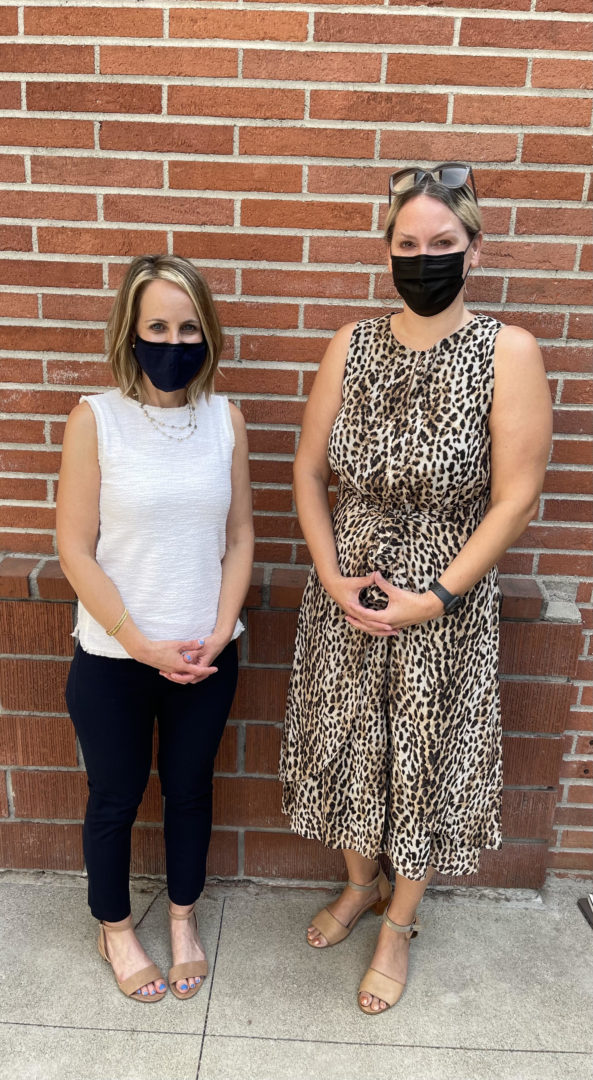
Angie Dillman (right) and Amanda Fitts (left) | Photo by Shari Rudolph / Arcadia High School

Dillman expands, “We firmly believe that there’s a school for very single student. We want to break the mold of getting into a school with name recognition. We have just met with so many successful professionals who came to speak to our students who didn’t necessarily go to a top-ranked college but went to the school that was the right fit. Their ambition and their ability helped them excel in their careers and their life. And that’s what we want for our students; it’s what our parents and our students want for themselves.”

“We hear about all the pressures in college application but, overall, this should be a rewarding and fun process,” Fitts pronounces. “It is a time of self-discovery – identifying their interests and values – and then matching those to a school that will satisfy the criteria they’re looking for. It’s all about finding schools that are the right fit for a variety of reasons – financially, academically, socially, geographically.

“Students and parents need to just feel confident in knowing that if they do their research, read the college website, and find the schools that will be a good fit, they’re going to have a great experience and apply to the schools where they’re going to be accepted. And they’ll have amazing choices. The hardest thing at the end of the process, will be to decide which school they want to attend. Many students think there’s only one school that’s right for them, but there really are many schools that are the right fit for them.”

Polytechnic School in Pasadena (Poly) is nationally renowned for its rigorous academic, robust athletic, and wide-ranging art programs. With its small class sizes – the senior class usually has only a hundred or fewer students – each one gets personal attention from teachers. While college counselors meet with parents occasionally and when warranted, the department has been known to emphasize to parents of the graduating class that the college application session is between the student and the counselor.

Kyle Torres, who attended Poly from ninth to 12th grade, graduated this year and will be going to Pomona College in the fall. He and his mother, Victoria, graciously agree to share their college admissions experience and to comment on the Intelligent.com survey findings.

According to Victoria, she and her husband weren’t entirely in the dark about college admissions. She says, “We heard about it from friends and families that have gone through the process. We didn’t work with an independent counselor, though. Poly’s counselor discussed the process with us early in Kyle’s junior year and we met with him about four or five times throughout the process.”     

“We were not too involved in the application and writing of the essays; Kyle worked with his college counselor on these things,” continues Victoria. “But he did discuss with us the schools that he wanted to apply to. He mainly wanted to stay pretty local – in California. He wasn’t sure what he wanted to study in college but wanted to be in a small intimate setting where he is able to explore his options. Neither my husband nor I had any sway in his school selection. In the end, it was about choosing a school that would be a good fit for him.”

Victoria expounds, “Overall, the college admissions experience was stressful. However, Kyle’s college counselor helped a lot by making time to work with him. I remember Kyle was working with him the entire summer before senior year on the common app and the personal statement. This made it a little easier. Kyle was always telling us good things about his college counselor and how he always made time for him.”

“It was a very interesting year, especially with the COVID pandemic,” Victoria comments. “Many kids that we thought would get into their top choice schools did not. Whereas others that got into top schools were very surprised that they got in.” 

Asked if she’s upset that some parents cheated to get their child into college, Victoria unequivocally states, “Yes, because it’s really not fair to the kids that work so hard.”
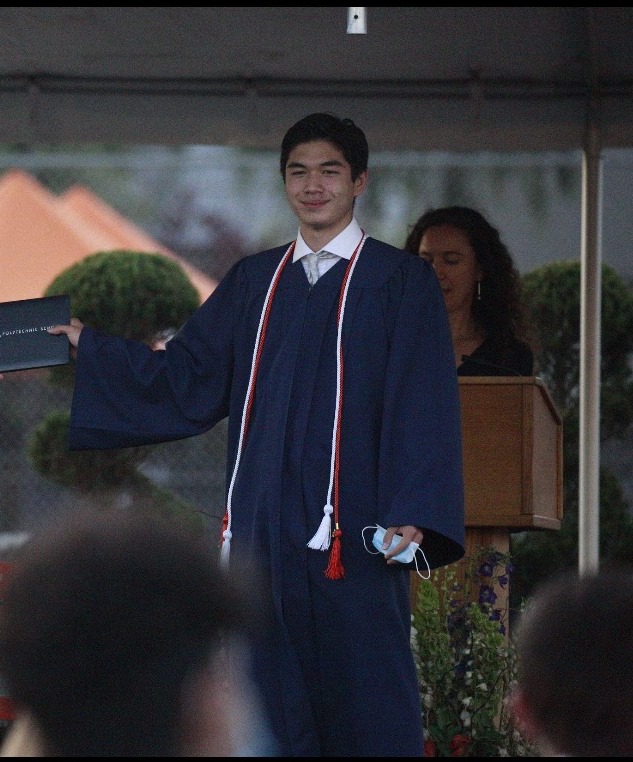
Kyle Torres receiving his high school diploma | Courtesy Photo / Victoria Torres

Echoing his mother’s feelings, Kyle says, “Knowing how unpredictable and stressful the college process already is, it is quite distressful to hear that some people have an unfair advantage; it almost invalidates the hard work of students who don’t have the same privileges.”

Kyle worked hard to earn admission to Pomona College. Throughout high school, he took several demanding courses. Because Poly doesn’t offer AP courses in ninth grade, he took his first AP subject in chemistry in sophomore year, then took the bulk of his AP courses in junior and senior year.

Besides taking challenging academic subjects, Kyle participated in Poly’s vibrant campus life. He says, “I was involved in extra-curriculars ranging from the jazz ensemble to our community engagement program. As an alto saxophone player, I was a part of the jazz ensemble for all four years at Poly and had a uniquely different experience each year. I also represented my school as a student ambassador, giving tours of campus to prospective students and participating in events to promote our school. Lastly, I was a member of our Student Community Engagement Program, which aimed to get students involved in our community as well as incorporate service learning into our curriculum.

“Each summer in high school, I tried to learn something new and do something that might inform my future career interests,” Kyle says further. “For example, in the summer before sophomore year, I was interested in potentially pursuing pharmacy in college, and I was fortunate enough to intern at a local pharmacy. At the pharmacy, I got first-hand experience into how a pharmacy operates and what pharmacists encounter on a daily basis. Although I no longer want to become a pharmacist, this experience taught me much about what goes on behind the scenes at a pharmacy and, if nothing else, allowed me to shift my focus on other interests I may have had.”

Kyle recounts his experience, “I navigated the admissions process with Poly’s college counselors who were extremely helpful and supportive throughout. My college counselor first reached out to me early junior year, and, since that first meeting, I was always able to schedule meetings about whatever questions I had pertaining to college admissions.

“I thought I had an idea of what I wanted to study in college, but that changed nearly every year in high school. Currently, as an incoming freshman in college, I have an idea of potential majors that I would like to explore, but even still, I don’t yet know which of these majors interest me most.”

Adds Kyle, “I applied to 10 schools in total. Because of the unique circumstances due to COVID surrounding the college admissions process, many of the most important ways of researching a college – like visiting campus in person – weren’t available. I had to find other means, such as attending online information sessions, taking virtual tours, and contacting admissions officers for any questions. Although none of these options provide the same glimpse into campus life that in-person tours do, they were the next most helpful option and were extremely useful in my college decision-making process.”

“I did ask for my parents’ input in my choice of colleges. However, although I took into account their opinions, the decision of where to attend college was ultimately mine, and I’m grateful for my parents’ understanding of that,” Kyle points out.

“On the whole, my college application experience was stressful and time consuming, but ultimately gratifying,” concludes Kyle. “When I first started drafting my personal statement and supplemental essays, I couldn’t help but feel overwhelmed. It seemed as if I would never finish all of these essays in time. However, after I started breaking them up into chunks and focusing on them one at a time, I was able to answer each question thoughtfully and even enjoy the process as time went on. Throughout this process, I learned quite a bit about myself, as many of the essay prompts forced me to think deeply about myself and my values, making the process enlightening and rewarding in the end.”

Kyle’s experience demonstrates how formative the college admissions process could be. It is a foretaste of how adults handle circumstances that test their determination and try their spirit. These young adults will confront greater challenges and face bigger disappointments in college and beyond. It is important for them to learn how to be resilient for them to flourish when they go out into the world.            

Editor’s Note: Last month, The Huntington Library, Art Museum, and Botanical Gardens announced that “The Blue Boy” will be returning to England 100 years after it left – a move that shocked art experts who believe travel could damage the 250-year-old canvas. We in the San Gabriel Valley are very protective of it as it’s been at The Huntington since it opened in 1928. You can read more on this move here. We invite you to send us an email and tell us, in 100 words or fewer, your thoughts about it and share your experience looking at this magnificent work of art. Send your email to: MayRChu56@gmail com. Unless you request otherwise, we will include your name when we publish our informal poll. 
SGV Schools Reopen After More Than a Year of Remote Learning

Originally published on 10 August 2021 on Hey SoCal

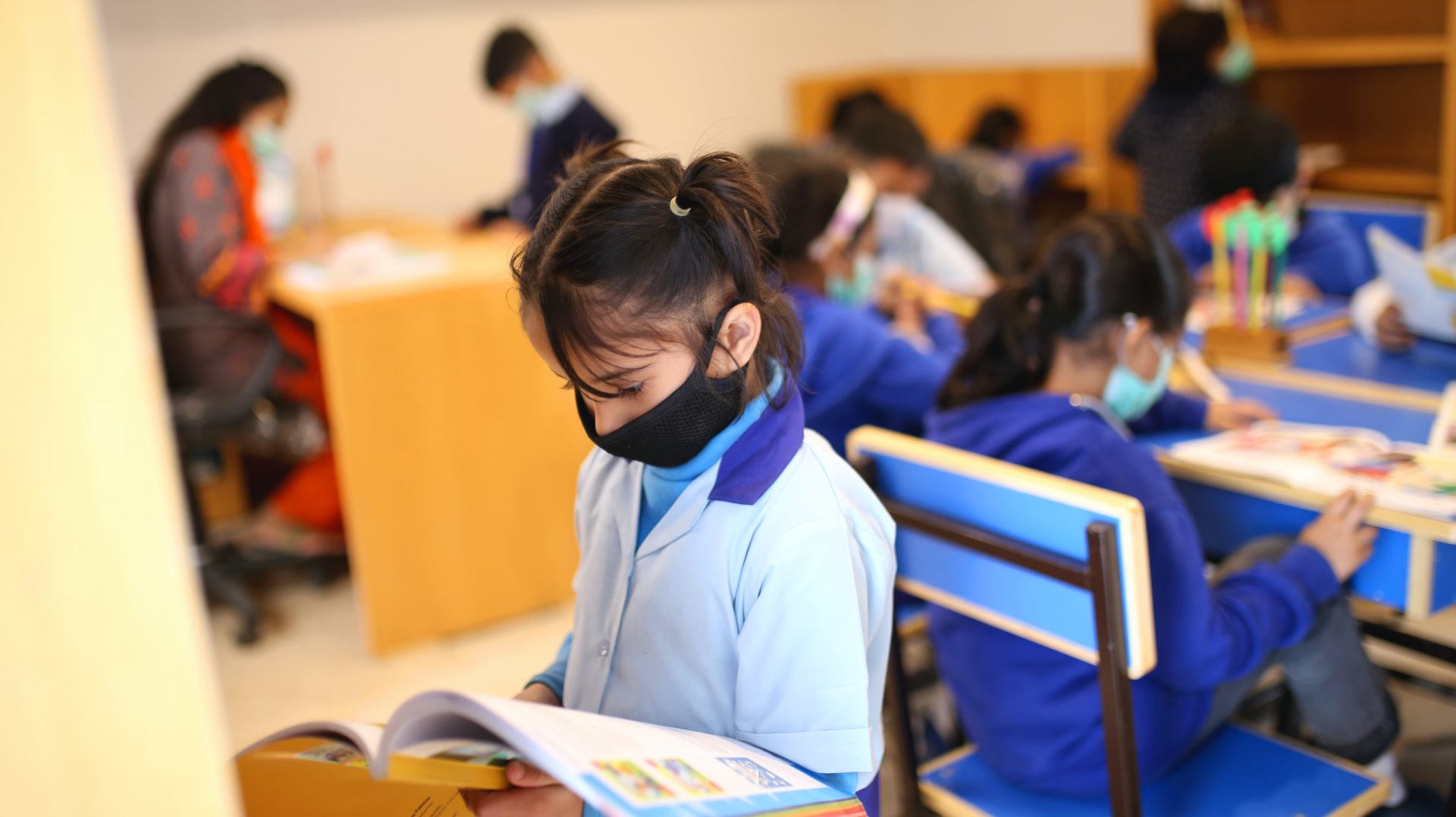
Photo by Muneer Ahmed OK on Unsplash

Schools are gearing up for reopening full time after more than a year of remote and hybrid learning. Such happy news should be a source of relief for parents who believe that virtual classes don’t adequately provide the environment and tools conducive to learning. However, the seemingly uncontrollable coronavirus infection rates from the Delta variant are causing trepidation, even fear, among these same parents.

Some people have gone so far as saying that it’s irresponsible for schools to reopen and have students come on campus under these circumstances. While the cost of learning loss should not be taken lightly, the threat to students’ and teachers’ safety and health should not be discounted in any way either. It is essential that we bring students back in the classrooms; it is necessary to keep students and teachers safe. Both are moral imperatives – one need doesn’t outweigh the other.

To find out how school districts and administrators are handling this sensitive issue, we reached out to the Arcadia, Monrovia, and Pasadena school districts and heads of independent schools to share their plans with us and our readers.   

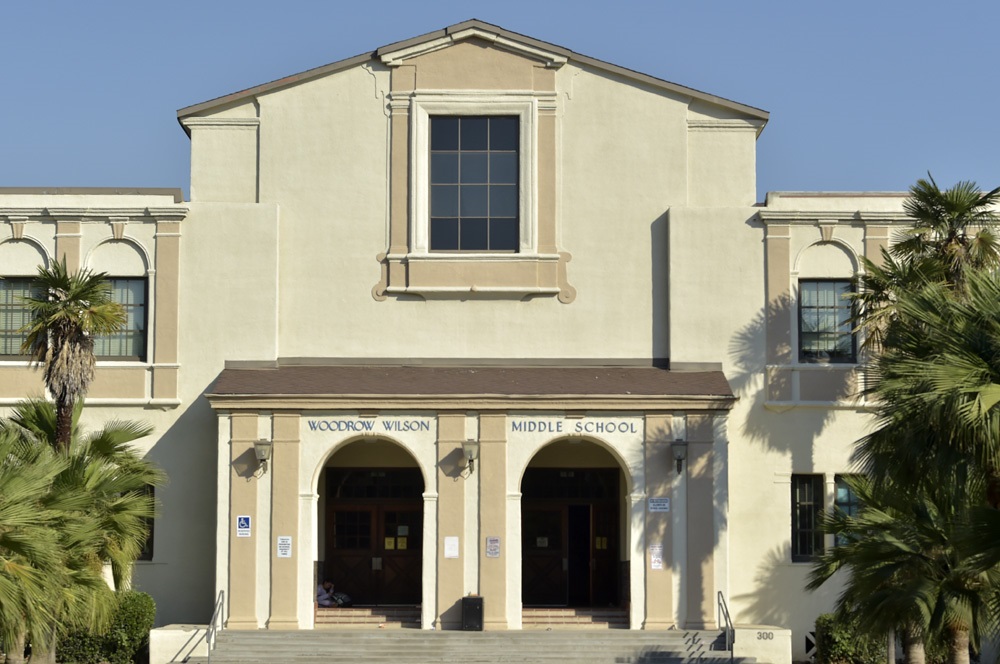
Wilson Middle School | Photo by Terry Miller / Hey SoCal

The Pasadena Unified School District serves approximately 17,000 students from kindergarten through 12th grade who live in Pasadena, Altadena, and Sierra Madre. Operating four high schools, five middle schools, three K-eighth, and 15 K-fifth elementary schools, it is the largest in the western San Gabriel Valley. Through Hilda Ramirez-Horvath, PUSD communications manager, Superintendent Brian McDonald discloses:

“School begins in PUSD on Thursday, Aug. 12. Classes will be full-time and in-person, five days a week. Learning will take place on campus an independent study will be available as an option for parents who are hesitant about sending their children back on campus. According to the California Department of Public Health (CDPH), in-person instruction can occur safely when prevention strategies are implemented. Since the pandemic began, PUSD has implemented multiple layers of robust set of safety measures. We will comply with the State’s public health requirements for schools and continue to work closely with the Pasadena Public Health Department (PPHD).

“We’re following the guidance of Pasadena Public Health and the California Public Health Department. We’re urging everyone who is eligible to get the vaccine, we have a robust COVID testing program, and masks are required for everyone. Ventilation is also in place with commercial-grade air purifiers in classrooms and common areas.

“As to whether PUSD will be requiring students to show proof that they’re fully inoculated, mandatory vaccinations for children are set by the state public health department. We will comply with state guidance.”

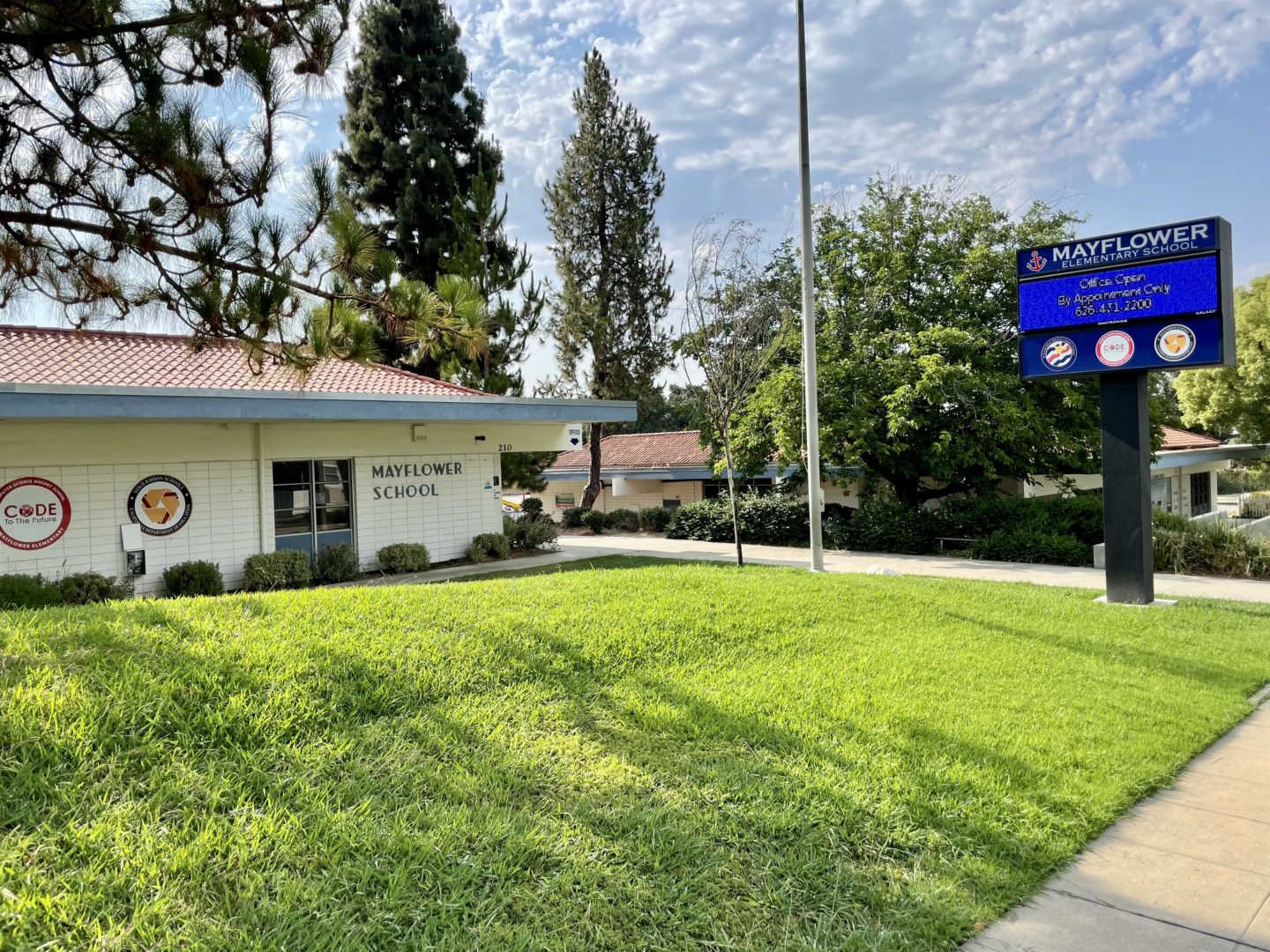
Mayflower Elementary School | Photo courtesy of Monrovia Unified School District

The Monrovia Unified School District encompasses five elementary schools, two middle schools, and one comprehensive high school. Superintendent Ryan Smith says:

“Our school year will begin on Wednesday, Aug. 18. We are very excited to welcome students back to campuses for traditional in-person instruction. We do have an independent study program at Mountain Park School that is a viable alternative for any family that prefers that their student continue to learn online on either a short or long-term basis.

“As always, we will be adhering to all requirements for schools that are laid out in both state and county public health guidelines. This includes the wearing of masks indoors for all students and staff; outdoors, masks are optional. Distancing is no longer a requirement in these guidelines; however, when feasible, we will do what we can to space students as needed or appropriate. We will not be requiring students to show proof of vaccination as that is not a requirement in health guidelines; students younger than 12 cannot be vaccinated anyway at this time. We have protocols in place to routinely clean our classroom, ensure proper ventilation, and access to PPE, again, all in accordance with public health requirements.

“We continue to emphasize that students who are ill or exhibiting symptoms stay home, handwashing, wearing masks, and that people get vaccinated if they are able.

“We are very excited about the start of the school year! Among our immediate priorities as we return are the following: identifying gaps in learning for each individual student and acting to address them; ensuring access to resources and support to address the social-emotional learning needs of all students; and utilizing technology to continue to personalize and accelerate student achievement.”

The Arcadia Unified School District is made up of 11 schools and serves about 9,500 students. It’s consistently named as one of the top school districts in the country by various ranking organizations; Arcadia High School is a U.S. News & World Report Gold Medal School.

We didn’t get a response from the school district’s information office but we learned that Arcadia High School will be opening on Aug. 11. Last Friday, Aug. 6, we observed the campus abuzz with activity – students were registering for classes, the band was practicing at the Performing Arts Center, and sports teams were meeting at the stadium. We saw safety protocols posted everywhere, the masking mandate strictly enforced, and bottles of hand sanitizers perched on tables at the reception lobby and at entrances. There was a definite air of eager anticipation for the school year to begin.

Most independent schools will start their 2021-2022 school year on the last week of August and, understandably, don’t have their plans etched in stone at this time. Among the handful of heads of school we requested information from, two agreed to tell us their procedures while emphasizing that they are in flux.                                            

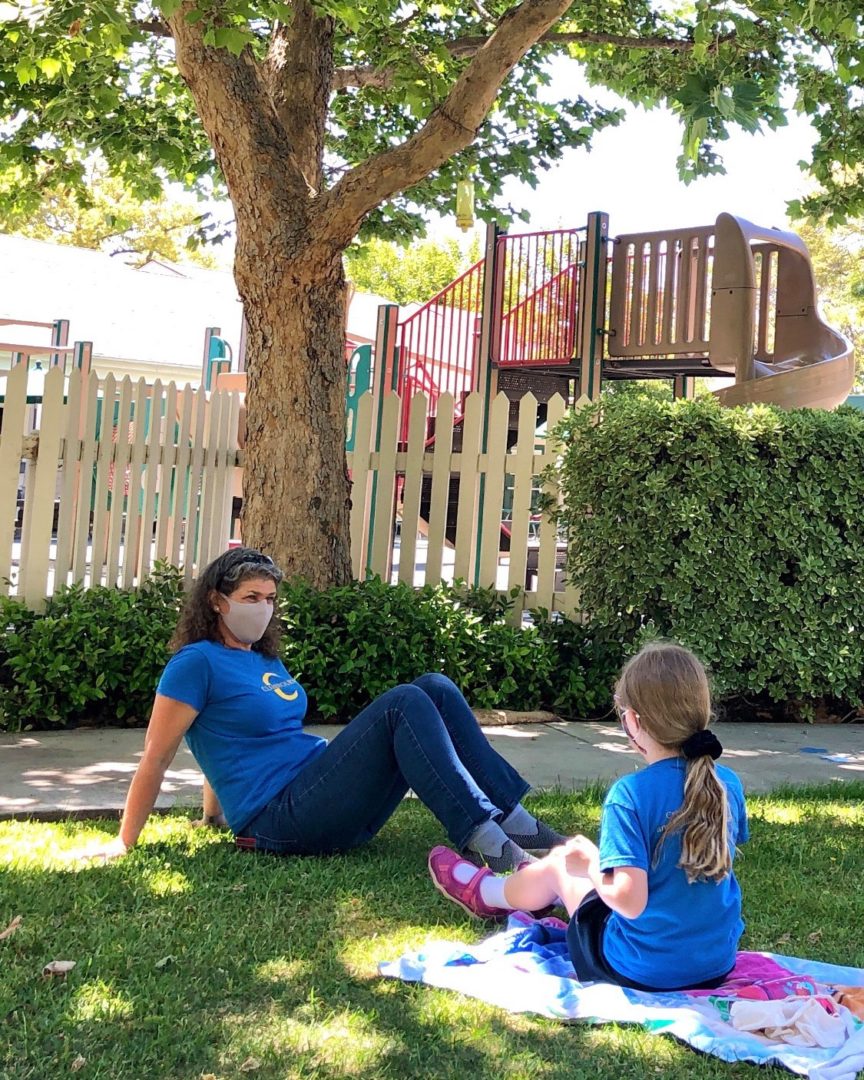
Head of school Amy Patzlaff relaxes with a student | Photo courtesy of Clairbourn School

Clairbourn School in San Gabriel, which has served the Pasadena area continuously since 1926, is a day school with a small enrollment of 200 students from pre-K to eight grade. Head of school Amy Patzlaff, states:

“Our opening day is Aug. 26, and we currently plan to offer only in-person instruction, but there may be situations that we will handle on a case-by-case basis. That said, we are prepared to go fully remote in any class or grade should that become necessary due to health department orders, exposures, or any other reason. 

“Besides cleaning procedures in place, we have hand sanitizers at every building entrance, desks are spaced out in classrooms to a minimum of three feet and more where possible, ventilation has been increased, and we are mandating universal masking on campus. We have visual cues to help with spacing – dots on benches and paw prints on the sidewalks. We do daily health screening for symptoms prior to arrival on campus. We will be doing regular COVID testing as long as it is recommended, including upon return to campus after holidays. In addition, we follow all of the protocols recommended by the health departments of isolating any symptomatic students or adults, sending them home, and requiring testing before return to campus. We will collect vaccination information and store it, according to privacy laws, along with all other health records.

“The spring was a good test of protocols while fewer students were on campus. We found the students compliant and the teachers vigilant. With the layers of protection in place, we are confident that we have mitigated the risk enough to have a successful year. A group of school nurses in our area have been working closely together to share strategies and procedures. This brain trust has helped each school to build on the collective work to launch successfully. I am grateful for the partnerships. In addition we have been working very closely, since March, with Pasadena Public Health, Los Angeles Public Health, cohorts of local schools, and Joffe Emergency Services. All of these agencies and groups have been generous with their time and knowledge. They all have provided expert advice that we can use immediately.” 

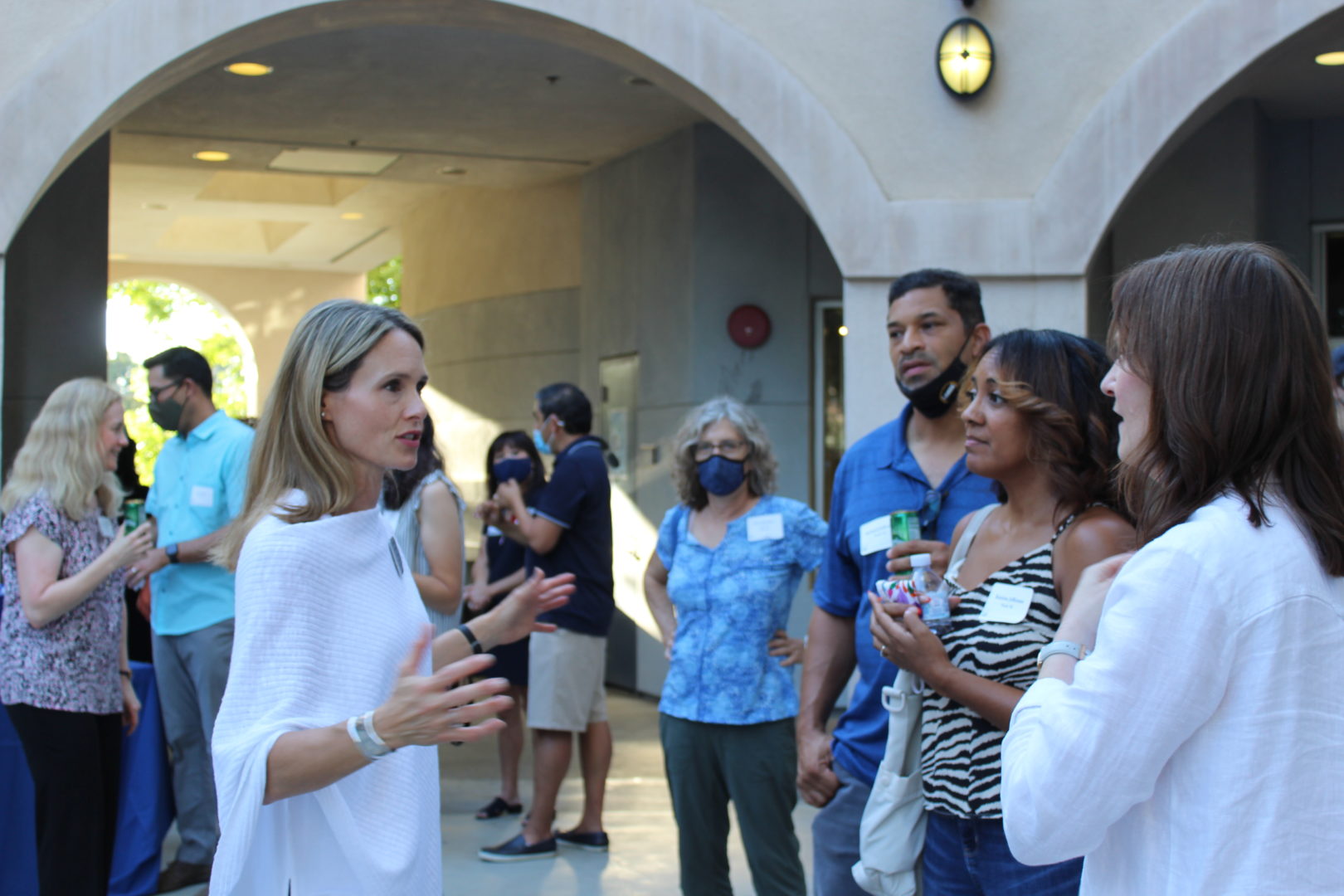
Vanessa Walker-Oaks (in white blouse on the left) chats with parents during a “Meet and Greet” event | Photo courtesy of Flintridge Preparatory School

A nationally recognized coed learning institution, Flintridge Preparatory School in La Cañada Flintridge, educates students from seventh to 12th grade. Through their director of communications, Nicole Haims Trevor, head of School Vanessa Walker-Oakes, shares their opening plans.           

“Our school year will begin on Aug. 26 for in-person classes only. We will follow all guidance from the State of California and Los Angeles County, including (but not limited to) masking indoors and outside as appropriate, enhanced cleaning protocols, improved ventilation, frequent handwashing, and daily symptom assessments. We are prepared to be responsive as conditions and guidance change.

“We expect all eligible community members to be vaccinated and to voluntarily share their students’ vaccination status. However, we anticipate our policy to change when the FDA fully approves the vaccination, removing the emergency use authorization.

“While we are mindful of the Delta variant, we here at Flintridge Prep are enthusiastic and excited to reopen this fall, and we look forward to revitalizing our relationships and reconnecting with our families on campus. Flintridge Prep values our community’s health, safety, and wellness, and we will use a variety of tactics to reduce risk for our students, their families, and our faculty and staff.”

August College Search Guide

Originally published on 2 August 2021 on Hey SoCal

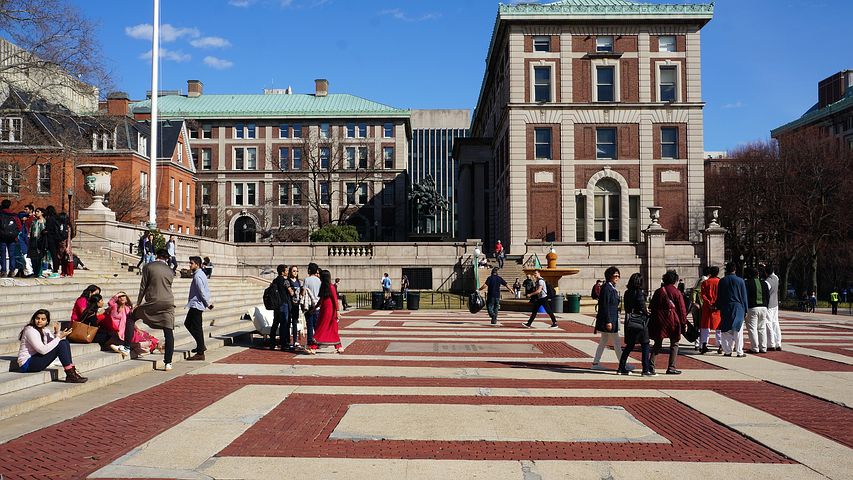
Columbia University | Courtesy photo

The road to college

Amidst recent headlines about the rise in COVID infection rates caused by the delta variant, most school districts in the San Gabriel Valley are planning to reopen this fall. Many parents have reservations about sending their children back on campus, and that’s not surprising. Even after getting fully vaccinated, a lot of us have remained vigilant – masking when we go to the grocery stores and other high-traffic places, putting on gloves, and social distancing – to keep ourselves and others safe and healthy. We certainly don’t want all that to be for naught.             

The pandemic has altered many of our usual activities, but what hasn’t changed is that getting ready for college application begins in high school – whether your children are just starting ninth grade or are already in 12th grade. The only difference is the pace at which they are working on their resume. They start building all the components that go into their transcript as soon as they get into high school. By the time they reach their senior year, they should have a transcript with excellent grades balanced with an equally impressive array of extra-curricular and enrichment activities.       

Make sure you attend ‘Back to School Night.’ I’m quite certain that besides orienting you and your children about academics, administrators and teachers will be giving an update on safety and social distancing protocols.        

You and your children should determine their interests and career goals and see what courses the school offers which appropriately meet those. These should be the guidelines for your students during the four years they are in high school. The outcomes of their work then determine which colleges or universities they should consider when they put together their list of where to apply.

An important factor in the admissions process is the students’ (and parents’) preconceived ideas about where they should apply and what their dream school is. Oftentimes, kids apply to the same dozen or so most-recognizable university names. This creates an unreasonable expectation which, more often than not, leads to unhealthy behavior. There are innumerable institutions that offer excellent teaching; there is a school out there that is the right fit for your child. 

FRESHMAN

High school is vastly different from middle school. Teachers have higher criteria from the work students turn in. Your children need to develop their analytical skills as their teachers will require deeper thinking and subject exploration from their papers. They should also have better time management skills to handle the more rigorous course load and extra-curricular activities.

In the first few days of ninth grade, your children will have several things they will be making decisions on, and tackling. I have to add here that high schools send their profile to the college or university to which your children are applying. Admissions officers will know what opportunities were available and if the applicant took advantage of them. I have listed them here with a brief description or explanation:

AP COURSES

Make sure your children choose the AP subjects they will need in the course(s) they will be taking in college. They shouldn’t pile up on APs to pad their resume because they will need to take the AP and SAT II exams for these subjects. Some universities only accept a 4 or a 5 on an AP exam for it to have any merit at all. While college admissions officers favor students who took on challenging AP subjects, they don’t look kindly on low AP grades or SAT II test scores either. Encourage your children to take courses they are truly interested in; students who study something they really like generally do well on it.     

CLUBS

Your children should join the clubs they actually want to be involved in; encourage them to participate actively. Ideally, your children would start a society based on their interest or something they feel strongly about. It can be something socially impactful, or it can be a fun club for student members to take a respite from their heavy academic load. In my daughter’s school, one student formed a Superhero Club where they went to all the openings of the latest Marvel or DC Comics films. Needless to say, this isn’t a smart idea during the pandemic.        

ATHLETICS

This is an essential component of high school life that is being severely impacted by the pandemic. Schools are being challenged to find a way for students to safely participate in sports at this time.                    

ARTS CLASS

If your children’s school offers art electives, encourage them to take a course. Usually, in the first year, the grade level dean encourages students to try various classes on offer so they can determine what they really want to focus on in the next three years.        

LANGUAGE

Besides the core subjects – English, history, math, science – a world language is a requirement for admission into college. In some elementary schools, students can take Mandarin and Spanish immersion classes. The Pasadena Unified School District, for one, offers French in addition to Mandarin and Spanish. If they continue on, these children will be ready not merely for college; they will be well-equipped for an increasingly global society.   

COMMUNITY SERVICE

Your children should do something they feel strongly about and work it every summer; it shows commitment to the activity they took on. This is going to be an essential component in your children’s transcript. Admissions officers are looking for depth of community involvement.       

SUMMER CAMP/ENRICHMENT COURSE

If your children have a passion for a particular activity, they should pursue a summer program related to it. Guidance counselors in some schools compile a list of the most engaging courses locally, out-of-state, or internationally.  

It goes without saying that all the above activities are merely supplements to good grades in the core subjects. Loading up on extra-curriculars at the expense of grades is definitely ill-advised. While admissions officers at all the universities talk about their holistic approach to their selection process, a student’s GPA remains a very critical, if not the single most important, component of your children’s college application. In fact, with the UC and Cal State systems’ dropping the standardized tests (ACT and SAT), your children’s grades are the most significant determinants of their college-readiness.  

SOPHOMORE

Your children have fully transitioned into high school, the demands of which were drilled into their subconscious the past school year. They have to put ninth grade behind them and face 10th grade with renewed energy and enthusiasm.

JUNIOR

This is going to be your children’s busiest school year. Make sure your children confer with their school’s counselor to ascertain they have all the courses required for graduating and for college. If they are applying to schools that still require standardized tests, they need to know what these are and when to take them. They should research which colleges and universities offer the course(s) they would like to pursue.

SENIOR 

By this time, your children should know where they will be applying and have visited (in-person or virtually) the schools. They should have taken all standardized exams required for college applications, firmed up their college/university list, researched all kinds of scholarships, lined up teachers to write their recommendations, perfected their personal statement, and learned how to complete the common application.

July College Search Guide

Originally published on 2 July 2021 on Hey SoCal

Clemson University | Courtesy Photo

The road to college

Your children have just weathered what is possibly the greatest upheaval in their young lives. The coronavirus crisis has affected all of us in ways we’ve never before experienced. But  summer has brought with it renewed energy as the economy reopens and people resume their usual activities.

Many seniors actually enjoyed in-person proms and graduations, all rites-of-passage not to be missed. There are also promising data from Challenger, Gray, & Christmas that suggest summer jobs will be plentiful this year.

As we cautiously get back to normal, or the new normal, encourage your children to focus on the main objective during their high school years – build impressive resumes to look attractive to admissions officers. They should be in some enjoyable classes, recreational camps, or professional internships to spend their time productively. There are test-prep courses students can take during summer to get them ready for all the standardized exams required for their college application. Today’s high school kids want to be as good as, if not better than, their classmates. Nowhere is this cutthroat competition more apparent than in the western San Gabriel Valley where a record number of students are getting perfect scores on the APs, ACTs, and SATs.  

RISING FRESHMEN

High School is going to be an exciting phase in your children’s academic life – especially after having spent a year-and-a-half of remote learning. Having completed middle school and their tween years where they found their identity, they are now ready to assert themselves in this new environment.

If your children have not shown much interest in reading during their elementary or middle school years, you need to encourage them to spend this month reading – just for the sheer pleasure of it. Persuade them to look for different authors and genres, familiarizing themselves with various styles and themes will help them find their own voice. Reading will expand their vocabulary as they gain maturity in their writing and that will prepare them for composing their personal statement. They need to practice writing essays, a staple in high school courses. Brianna Chu, a writer for Hey SoCal and tutor at Mundo Academy, wrote a blog on essay writing which your children might find useful.   

Now is the time for your children to start developing time management and study skills that will help them succeed in high school. A recently published article “A Review of New Research on Study Skills and Time Management Benefits” also written by Brianna Chu, delves into these topics.

RISING SOPHOMORES

As mentioned above, summer is an opportune time for reading. Encourage your children to spend part of their day to this pleasurable and educational pursuit.

Now that the economy has reopened, your children should find an enrichment program or perform community service work related to something they are passionate about. Sustained effort and interest in one particular cause show that your children are sincere, and not just padding their resumes.

If your children are so inclined, they can start researching colleges. They can go online and get virtual campus tours of most colleges or universities.

RISING JUNIORS

Your children should be preparing themselves for one of the busiest years of their high school career. They should be immersed in community service work, professional internships, and enrichment programs. Likewise, they can research colleges and go online to get virtual campus tours. This will also give your children some idea about the college application process.

Summer is the perfect time for them to read extensively to expand their vocabulary and prepare them for writing their essay for the college application.

RISING SENIORS

This is the year that will test your and your children’s mettle. Be prepared for the marathon (which actually started in the spring of their junior year). They should still be continuing the community service work they began back in their freshman year, getting an internship, or looking for avenues to use their talent.

If your children didn’t get the chance to do an in-person college visit, this summer would be the perfect opportunity to do so if you’re all fully vaccinated. I’m sure that, like the majority of us who have felt cooped-up during the pandemic, you’re excited to pack your bags and travel. When my daughter was applying to colleges, we incorporated the campus tours with our summer vacation.       

They should also be thinking about their personal statement. Likewise, some universities require a supplementary essay specific to them, with topics that range from the practical to the philosophical. Admissions officers are constantly on the lookout for something fresh and original in applicants’ compositions. However, it requires a certain amount of creativity and proficient writing skill to come up with a treatise that will impress seasoned readers.          

That said, your children might also find some time to actually enjoy this summer before they get swallowed up by the vortex of college applications. 

COLLEGE-BOUND STUDENTS

Unless your children are spending this summer agonizing because they’re waitlisted at their first choice school, they must be very excited to have completed high school and are anxiously looking forward to the next phase of their education. By this time, they should have put in the deposit on the college they plan to attend. Some colleges will be sending out the procedures for class registrations, information on housing, meal specifics, and such other details to the incoming class.

Let your children take the lead on the college moving arrangements and only offer guidance when they ask for it. In all likelihood, your children will be moving away from home, maybe going to the other side of the country. They need to practice being on their own and the preparations for moving will be a good place to start.

If your children will be attending a university across the Atlantic, as my daughter did, there is a whole set of preparations you have to attend to. Applying for a student visa should be your priority as it could take a month to secure. You and your college-bound student need to communicate closely with the school as their requirements may differ greatly from those of American universities.

Email or call the university to know when to wire the tuition and other college fees. Make sure your student has the necessary information on how to register for classes, how to apply for housing, and what essentials to bring to school. Research where to find items – including beddings (sizes are different from what’s standard here) and small electric appliances (voltage and shape of plug are different) – that your student will need. Knowing beforehand what stores you have to visit saves time. 

Going to school in another country takes more preparation, so make sure you have enough time to spend helping your children settle into their new environment. When my daughter left for college in the U.K., we arrived there three weeks prior to ‘freshers week.’ We opened her bank accounts, shopped for household items, and familiarized ourselves with the area (nearest grocery stores and hospital to her housing, for instance).           

For most parents, sending their children away to college across the country is difficult enough. Letting 18-year olds live on their own 5,000 miles away for four years is almost unthinkable. It takes a great deal of courage, on your part and your children’s, to make that plunge. But you’ll find that they grow into confident, responsible, and self-reliant adults and it was the best decision you both made.             

college campus

At this juncture, let me address another situation. If your children weren’t accepted to any school they applied to, then they have to decide if they want to attend a community college. Most of these institutions will accept new students close to enrolment time. Some of them have arrangements with the UC system so graduates can attend a UC school for their junior and senior year. This has the double advantage of ensuring your children get a college diploma from a four-year university and saving on the cost of their education.

There are some instances when your children might gain admission during the spring term to their first-choice school (this scenario happens if the university wants to keep their ranking and your children did not receive a perfect SAT score but they met all the other requirements for admission. If your children have highly desirable qualities that will enhance the university’s student body, they will wait until after their school has been ranked so your kids’ SAT scores will no longer affect their place). Confer with your children’s college counselor about how to accomplish this.

Some college applicants who are on waitlist on their dream university, ask to be deferred (this will only work if your children met all the academic qualifications for admission to the school with only the problem of the university not having the space for your student this year). 

Of course, there is the option to take a gap year after high school. Last year, many students deferred going to college because they felt that paying a full tuition isn’t worth the price when schools may not reopen their campuses and classes may be held remotely. Waiting until campuses reopen offers them the full experience of freshman year.

In a strange twist, The New York Times education Briefing reported two weeks ago that “law schools experienced a surge in applicants over the past year, driven by a mixture of factors, including the coronavirus pandemic, the presidential election and the Black Lives Matter movement. To ease the load, many schools have promised that scholarships will be in place for students if they choose to defer. A few are offering financial incentives. Duke promised $5,000 to students who accepted a ‘binding deferral’ and promised to go next year. Columbia University also dangled money in front of some students: $30,000 if they deferred. The school focused on recent graduates and also offered some career placement help, like two sessions with a career counselor and a list of open jobs.”

Pre-pandemic, one of my daughter’s classmates used her gap year performing charity work in Africa. This noble use of a gap year can help your children stand out in a sea of similar-looking applicants. Several universities consider this as a major boost in an applicant’s resume. Admissions officers tend to see the student in better light – this person has some tangible experience to bring in and, therefore, adds to the school make-up.

Whether your high school graduate is going directly to college, going by the community college route, or taking a gap year, recognize their decision as a first step towards their independence.  

June College Search Guide

Originally published on 1 June 2021 on Hey SoCal

Johns Hopkins University | Courtesy Photo

The road to college

June usually marks the end of the school year and the start of summer break. Many teens have been vaccinated and those who are hoping to find summer jobs will not be disappointed. According to Challenger, Gray & Christmas (CGC), the summer of 2021 is shaping up to be a boon for teen job seekers, as it predicts teens will gain two million jobs.        

In its summer job outlook forecast, CGC’s senior vice president Andrew Challenger said, “Retailers, quick-service restaurants, and amusement parks are looking for workers right now and many are having a hard time finding them, despite the 8.4 million Americans who are out of work. This summer, as vaccine numbers increase and regions see transmission rates go down, consumers will be ready to spend at retailers, restaurants, and amusement parks, as well as enroll their children in parks programs and summer camps, creating thousands of opportunities.”

CGC’s report included statistics from the Centers for Disease Control and Prevention’s (CDC) estimate that roughly 25% of the population is fully vaccinated and almost 40% have received at least one shot of a two-dose vaccine as of April 19. Meanwhile, March retail sales surged 9.8%, nearly double what was predicted, likely due to the impact of the stimulus payments. Employment in leisure and hospitality increased by 280,000 and in eating and drinking places by 176,000, according to the latest employment data from the Bureau of Labor Statistics (BLS). This will only continue to go up as restrictions ease nationwide.

Moreover, CGC stated that summer jobs created for teens aged 16 to 19 years old soared to 2.2 million during the pandemic-induced recession last year, as the types of jobs created en masse last summer were those that traditionally go to teen workers.

While CGC didn’t have a rosy prediction about 2020 summer jobs, it reported that last summer saw a record-high 2,192,000 jobs gained by teens, a 26% increase from the 1,737,000 jobs gained by teenagers in the summer of 2019. The number of employed teens was down by over one million jobs from peak employment of 6,409,000 in July 2019 to 5,353,000 in July 2020. As of March 2021, 4,890,000 teens are employed, up from 4,811,000 in the same month last year. 

The scheduled lifting of most restrictions on June 15, will also mean that there will be summer internships available. Encourage your children to call some of the local businesses or even go online to find one that speaks to their passion. A few internships in Southern California can be found on this website.   

Additionally, as summer camps reopen, there will be more activities for your children this summer. Camps are a wonderful way for them to meet other kids or reunite with friends they hadn’t seen all year. If you didn’t manage to book a Tom Sawyer camp, check out your local schools’ summer offerings.

Enrichment programs are a fun and educational way for children to spend the summer months. Your local school most likely has an activity that’s appropriate for each age group and grade level; the Pasadena Educational Foundation (PEF) has an excellent program for PUSD students.            

| Courtesy photo

FRESHMAN

Some schools may have eliminated final exams and given pass or fail grades in lieu of the letter grades, which must have been a disappointment for straight-A students. But that shouldn’t deter them from continuing to get excellent grades because the student’s GPA is the single, most important component of their transcript. And with the UC system’s decision to drop the SATs and ACTs from their requirements, students’ GPAs have become ever more significant.       

If your children can find summer enrichment activities, they should definitely pursue these. They also need to do a lot of reading to help them prepare for all the essays they will have to write when they start sending out their college application. Brianna Chu, a tutor at Mundo Academy, wrote a blog about essay writing that your children might find useful.

SOPHOMORE

Your children’s end-of-year marks in 10th grade should have improved over last year’s if they didn’t do well in their freshman year. College admissions officers want to see students who continue to better themselves. 

While the UC system has dropped the standardized test requirement, not all universities have. So your children need to take the ACT or June SAT subject tests.

JUNIOR

The school year that just ended was a pivotal one for your children as it will be the last full year that college admissions officers will see on your kids’ application. It should reflect your children’s efforts at getting the best marks they could muster, and an improvement over the first two years of high school. 

This is going to be their busiest summer with standardized tests like the ACT, SAT, SAT IIs, and APs. If they have not seen the schools they are considering applying to, they might consider taking virtual tours.

Your children should start thinking about their personal statement and should have learned how to write compelling essays. They should be checking in with their school counselor to make sure they have taken all the required courses for graduation and college; and lining up teachers they would like to ask for recommendations.

SENIOR

Schools reopened for in-person learning in the last few months. If your children went back on campus, they were able to properly say goodbye to their teachers and friends. Some high schools held either virtual graduations or had ceremonies divided into small groups. I hope you attended their commencement rite and celebrated with your graduate.       

Your children have accomplished a major milestone – successfully completing high school and getting accepted into a college or university! This period in their life will never again be repeated, so let them revel in what they have achieved. Give yourself a pat on the back while you’re at it; you deserve some credit in helping them get to this point. 

Pandemic Amplifies Inequity in Education

Originally published on 20 May 2021 on Hey SoCal

It’s graduation season for seniors – an event that is usually greeted with gleeful anticipation by students and their families. These students, who spent the majority of their last year in high school distance learning, are leaving after what would have arguably been one of the most memorable periods of their life. But it’s memorable in the worst possible sense because a great number of them feel it has been a lost year.                

The college application process, a rite-of-passage for teenagers all over the country, wrought a great deal of anxiety and disappointment this year. Already a nerve-wracking time for students and parents, the pandemic has not only intensified their apprehension but has also exposed a trend in college admissions. According to a New York Times education briefing, selective schools – including California’s UC system and Penn State – saw double-digit surges in applications due to standardized test scores being waived this admissions cycle. Harvard University had a record-setting 42% increase and the entire Ivy League had to extend its notification by a week to give admissions officers time to read and process applications. It marked the lowest college acceptance rates in a decade for these schools.    

On the other hand, many state schools and small private colleges suffered double-digit drops in applications and enrollments. Many institutions outside the top-tier have been struggling for years and the pandemic just made it worse. The N.Y. Times report further said American colleges and universities have endured losses of more than $120 billion and a few have shut down permanently. The institutions still operating often have to make up the difference by cutting services and programs that provide the tools, resources, and support which many low-income and first-generation students need to complete their degrees.

A survey released a few weeks ago by Intelligent.com, a resource for pre, current, and post college students to use when making choices for their education, provides additional evidence of pandemic’s negative effect. It found that one in four students who left college during the pandemic isn’t returning – at a time when getting into a university  was tougher than ever.

Intelligent.com’s key findings are as follows:

  • 21% of students from households that earn less than $25,000 annually left school during the pandemic.
  • 38% of students of color who left school during the pandemic did so because they could not afford tuition.
  • 19% of undergraduate students say they won’t graduate on time because of pandemic-related disruptions.
  • One-third of college students would attend classes exclusively online in exchange for a 10% tuition decrease.

Beata Williams, a college admissions expert and a consultant at Intelligent.com, pronounces, “For many students who have comfortable spaces to study in, privacy, and online connectivity capabilities, the shift to online classes did increase their productivity. However, for students who live in smaller spaces with shared rooms, less privacy, and may have caretaking responsibilities, the shift to online learning during the pandemic decreased their productivity.”

Beata Williams | Courtesy Photo

By email, Williams answers Beacon Media News’ questions: 

When was Intelligent.com established? What is its mission? Where is it headquartered? Who are the people behind the organization?

Intelligent.com was founded in 2017 by a group of digital marketers based in Seattle, Wash. The founding members can be found here: https://www.intelligent.com/about-us/ and the managing editor is Kristen Scatton. Our mission is to help students make smarter choices through our research and the information we publish.

Please describe your background, including number of years in education and capacity.

I have worked with students in an academic setting since my early twenties when I began my career in the Office of the Vice Chancellor for Student Affairs at the University of Illinois at Chicago. I authentically enjoy and have passion for coaching students to achieve their academic and professional goals. I also fell in love with the potential to make an impact within an academic environment. I completed my B.S. in marketing and my M.S. in public administration at UIC.

After completing my graduate studies, I moved to New York City and worked at Columbia University in the Executive MBA and Executive Education Program offices with executive level students as a finance and admissions officer. I later transitioned to New York University Leonard  B. Stern School of Business where I worked in student engagement,  executive education, MBA international programs, global programs and academic affairs. I thoroughly understand the admissions process and have extensive experience working with domestic and international  students. 

For the past nine years, I have been focused on coaching students through the undergraduate and graduate admissions process. A few schools my students have been offered admission to include: Carnegie Mellon, Columbia, Cornell, Hong Kong University of Science and Technology, London School of Economics, MIT, NYU, Oxford, UCLA,  UPENN, USC, and Yale. Ninety-nine percent of my students have been admitted to at least one of their top choices. The feedback I overwhelmingly receive is that not only have I helped students reach their dream programs, I alleviate the stress by breaking down the application process into manageable steps leading them towards consistent progress towards their goals. 

What was the purpose of the survey?

We designed the survey targeting enrolled college students with the purpose of determining how they felt about the current state of their education given that it is forcing them to learn in different settings and formats. We wanted to know how the quality of their education and their outcomes have changed during the pandemic and if that has changed their education plans for the future.

When was the survey done and who conducted it? How many students participated and how did you find them? Of the students you asked, how many declined to answer? What methodology was used?

The survey was administered by online survey platform Pollfish on April 6, 2021. We surveyed 1,250 American college students, including undergraduate, graduate, and doctoral students aged 18 and older about the impact of the pandemic on their education, and their preferences for school attendance once the pandemic is over. Of the 1,250 polled, none of them declined to answer. The data show 8/600 people were from the LA area (Los Angeles & Long Beach).

Does Intelligent.com offer services or products geared for college students?

Intelligent.com offers resources and guides for prospective college students and current college students to help students succeed in the classroom by bringing together the latest research with tips and techniques championed by today’s leading experts.

Please tell me anything else I need to know about you and Intelligent.com that I didn’t ask.

The internet is filled with information (some garbage). Yet where do we go when we need answers? As a group of digital marketers who have a deep understanding of the internet we wanted to do something about it. We deployed our team of experts and research to scour through all the nooks and crannies of the internet to find the buried treasure, analyzing mountains of data, in order to create content that helps students gain a competitive advantage in their pursuit of higher education and future endeavors. And to make this possible, we’re committed to finding a business model that best serves our users and doesn’t corrupt the integrity of our content. So you won’t find programmatic ad blocks on our site, nor will you find affiliate disclosures. Oh, and you definitely won’t see any ‘native ads’.

All is not lost, though. Williams assures, “While the pandemic has exacerbated the divide between advantaged and disadvantaged students, it has created an opportunity to re-envision and shift to a more equitable learning environment through hybrid learning opportunities at lower costs available to everyone. Community colleges serve a large percentage (approximately 50%) of students lacking in college prep skills and those from lower incomes; President Biden’s proposal to make community colleges tuition free, has the potential to significantly change the access to education for many students. And I still see a need for education in the future.”

National WWII Museum Field Trip Focuses on Japanese Americans’ Incarceration

Originally published on 11 May 2021 on Hey SoCal

Los Angeles area middle- and high-school students will be participating in The National WWII Museum’s annual electronic field trip (EFT) to be held on May 13 focusing on Japanese Americans’ incarceration during the war. It is significant that this year’s EFT falls during Asian-American Pacific Islander (AAPI) Heritage Month when we pay tribute to their contributions to our country’s culture, history, and achievements.

The National WWII Museum in New Orleans opened on June 6, 2000, the 56th anniversary of the largest seaborne invasion in history, as the D-Day Museum. In 2003, Congress designated it as the official WWII museum of the United States. Its six-acre campus encompasses five pavilions which house historical exhibitions, on-site restoration work, a period dinner theatre, and restaurants.      

Its website describes, “Offering a compelling blend of sweeping narrative and poignant personal detail, The National WWII Museum features immersive exhibits, multimedia experiences, and an expansive collection of artifacts and first-person oral histories, taking visitors inside the story of the war that changed the world. Beyond the galleries, the Museum’s online collections, virtual field trips, webinars, educational travel programs, and renowned International Conference on World War II offer patrons new ways to connect to history and honor the generation that sacrificed so much to secure our freedom.”

In its press announcement, The National WWII Museum informs that more than 1,100 L.A. County students will participate in an hour-long virtual journey into the shoes of young Japanese Americans who were forcibly removed from the West Coast after the United States’ entrance into World War II. The museum’s EFTs cover compelling World War II topics streamed directly into classrooms across the country, no special technology required.

This year’s Japanese American Experiences in WWII EFT features student reporters based in California and New Orleans, as they gather accounts from those who experienced the Japanese American incarceration firsthand and receive an up-close look at primary sources and artifacts. The session will include classroom polls and Q&As, and is complemented with a curriculum that is available for download on the museum’s website.

Via email, The National WWII Museum’s Director of Distance Learning, Chrissy Gregg, explains, “The Electronic Field Trips began in 2015 and this Japanese American Experiences EFT is our sixth program of this type. These programs began as an initial partnership between the Museum and our local public broadcasting station, but they’ve evolved into a Museum production that showcases important sites and stories from World War II through the lens of our student reporters.

“In all productions, The National WWII Museum makes an audition call for student reporters both locally and then in whatever location we are filming outside of New Orleans. For our reporters outside of New Orleans, we work with fellow museums or organizations involved in the Electronic Field Trip to share this with their educator networks. This year’s EFT is especially noteworthy because the Heart Mountain Interpretive Center in Wyoming brought this opportunity to the attention of Amy Mass and her grandson, Ryo Martinez-Mass. He is our first student reporter to actually interview a living relative (his grandmother Amy Mass) who personally experienced this event.”

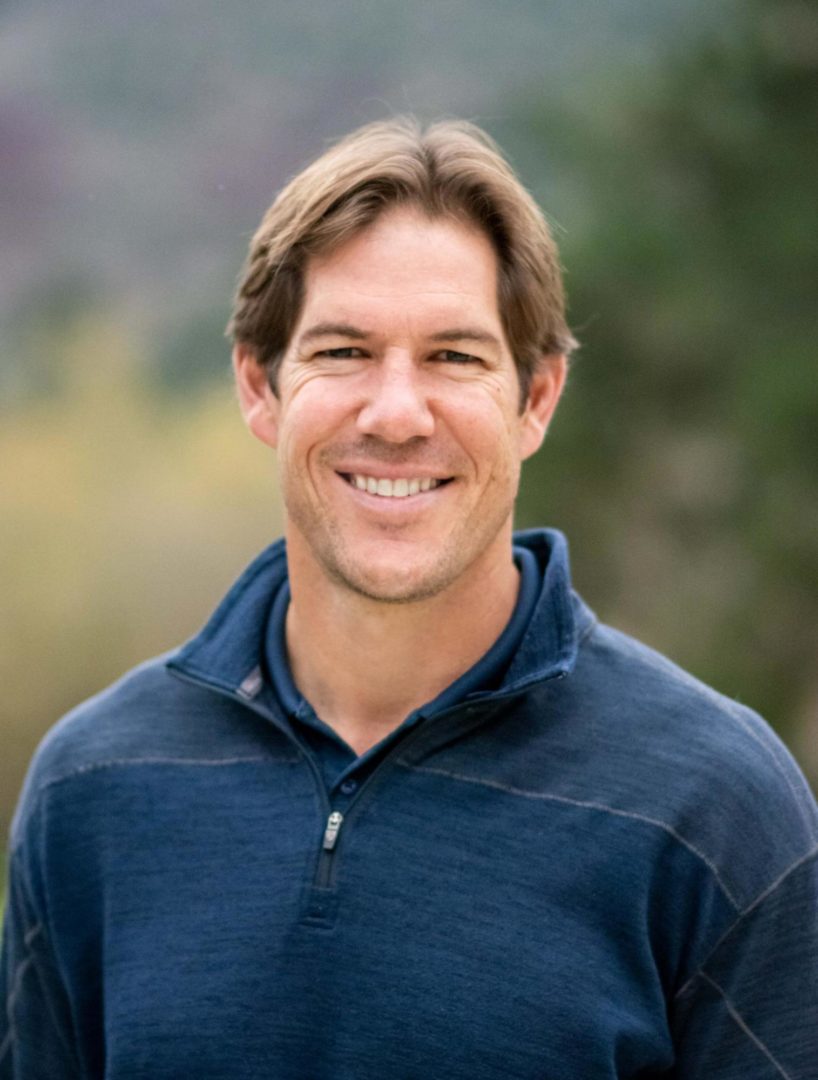
Scott Fujita | Photo courtesy of The National WWII Museum

All 50 states have been participating in the EFT according to Gregg. She says, “The Museum has a large list of schools that we work with and provide programming to, all across the country. We also send marketing and email blasts to constituents to spread the word, in addition to promoting the Electronic Field Trips through the media.”

Gregg adds that California schools have participated in every broadcast beginning with The Museum’s 75th Anniversary of Pearl Harbor program in 2015. Each year, the number grows significantly. As of right now, there are 264 sites in California registered with 4,773 students and still growing. California numbers of students for each EFT are as follows:

  • 75th Anniversary of Pearl Harbor: 667
  • Fighting for the Right to Fight: African Americans in WWII: 1,542
  • 75th Anniversary of D-Day: 3,761
  • The Manhattan Project 3,312

Asked about the scope of the curriculum, Gregg replies, “We try to address one major World War II topic a year that we know is being taught in schools. On occasion, these broadcasts are also tied to anniversaries like Pearl Harbor, D-Day or the end of the war. Teachers can access curriculum related to the World War II Home Front at ww2classroom.org, and additional pre- and post-Electronic Field Trip resources are also available on the Museum’s Flipgrid page.

Discloses Gregg, “This is one of the first EFTs we’ve hosted with many direct participants with personal connections to the story: student reporter Ryo Martinez-Mass and his grandmother Amy Mass; Walter Imahara; our editors at Japanese American Memorial Pilgrimages; our script writer Helen Yoshida; and of course our host, Super Bowl winning former NFL linebacker for the New Orleans Saints Scott Fujita and expert Erin Aoyama.”

Scott Fujita is a Super Bowl-winning former NFL linebacker and beloved member of the New Orleans Saints. He played 11 seasons in the NFL before retiring in 2013. He currently serves as Head of School at All Saints Day School in Carmel, Calif. His parents are Helen and Rodney Fujita. His father was born in Gila River incarceration camp during World War II and his grandfather served in the all-Nisei 442nd Regiment Combat Team.

Erin Aoyama is a doctoral candidate in American Studies at Brown University, where she works in the fields of comparative ethnic studies, and public humanities. Her dissertation project examines the afterlives of Japanese American incarceration and redress, with a particular focus on intersections between Japanese American communities and the Black freedom movement. She is a yonsei whose family was incarcerated at Heart Mountain in Wyoming during World War II. Her grandfather served in F Company of the 442nd Regimental Combat Team.                             

Erin Aoyama | Photo courtesy of The National WWII Museum

“This project has been important to me because I think it’s vital people learn and know about the Japanese internment,” student reporter Ryo states. “My grandmother’s story and the stories of other former internees need to be passed on to the younger generations now so they can be prevented from repeating. It’s also been a powerful experience personally, learning about my family’s history and my grandmother’s life.”

Through its various exhibitions and special events, The National WWII Museum lives up to its mission to “tell the story of the American experience in the war that changed the world – why it was fought, how it was won, and what it means today – so that all generations will understand the price of freedom and be inspired by what they learn.”

The National WWII Museum’s EFT shows what Japanese Americans suffered because of a war they didn’t personally start. Many of the men and women who were sent to internment camps as adults have already passed away. But their sacrifice and experience didn’t die with them – they are acknowledged and memorialized.

And it is only fitting that on AAPI Heritage Month, young students are learning about events and people that were far removed from their circumstances but have shaped the country they are growing up in. Maybe they will be a generation of Americans who will treat someone who doesn’t look like them not with disdain or suspicion but with acceptance and inclusion.

May College Search Guide

Originally published on 3 May 2021 on Hey SoCal

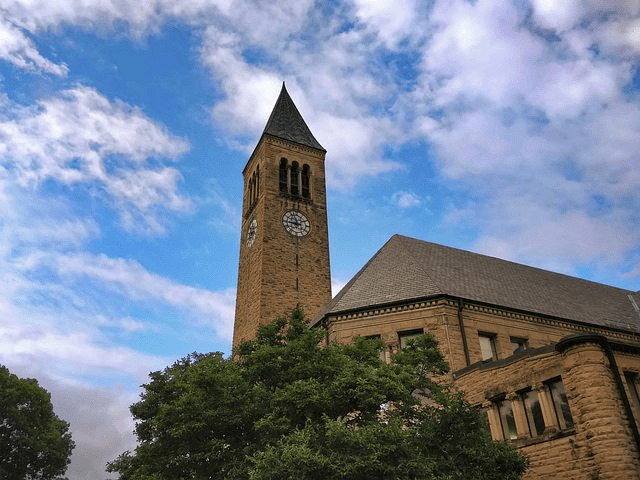
Cornell University | Courtesy Photo

The road to college

Students are ready for the end of a school year that has been marked with so much uncertainty and upheaval – education officials and school districts going back and forth between opening campuses and then resuming remote learning because of infection surges; teachers unions refusing to let their members return to campus until everyone has been fully vaccinated and schools have coronavirus testing in place; parents who are divided into two camps: those who want their children taught in school because it’s what’s best for them and those who want to continue remote learning because they don’t think schools can keep their children safe from COVID-19.

Whether your children returned on campus to finish what little was left of the schoolyear or stayed with distance learning, they must be relieved to finally get done.

Some schools are considering offering enhanced summer programs that combine academic courses with outdoor and sports activities that hadn’t been available. Academic experts have long worried about learning loss during the lengthy summer break which, inarguably, has been brought into sharper focus during distance learning. Now, more than any other year, you should encourage your children to enroll.

FRESHMAN

This is the last call for your ninth graders who need to improve their grades! GPA is the most important component of your children’s college application. If their marks are not adequate for college acceptance requirements, they need to confer with their college counselors to arrange for remedial summer classes.

By June, almost every Californian will likely be vaccinated and business will reopen. We will presumably have some kind of normalcy in our lives that will allow us to resume some of our summer activities. Encourage your children to speak with their grade level dean to figure out possible internships.  

Your children should begin planning summer volunteer activities. Admissions officers look for students who have demonstrated sustained community service in a few well-chosen areas. It isn’t the quantity of activities but the quality that’s important – they want to gauge the depth of students’ intellectual and ethical engagement to a given cause. The summer after their freshman year is the time for your children to find activities that truly speak to their interest and passion. Let them choose one that really resonates with them which they should carry through their four years in high school.            

Because we haven’t been able to go anywhere or seen anyone for 14 months, your children could be tempted to spend the summer months hanging out with their friends. While I know they deserve to get their social life back, they should also schedule some time for reading books. Encourage them to explore various genres and different authors. At the very least, reading will help them expand their vocabulary and expose them to different writing styles. This will come in handy when they write their personal statement and supplementary essays for their college application.

SOPHOMORE

Sophomore year is when your children have fully transitioned into high school. They are comfortable about how this phase fits into the whole secondary school experience. They have taken the practice PSAT, as a preparation for junior year when the results determine their eligibility for the National Merit Scholarship. They have also taken some AP tests, if they took an AP course.

Hopefully, your children have also done well in their studies, have maintained good grades this entire year, and have prepared for final exams. Admissions officers expect grades that are consistent, and if their freshman marks weren’t that great, their sophomore grades should at least show improvement over last year’s.    

Make sure your children have lined up their summer activities. They will probably have more choices than they had the summer of freshman year during social distancing, but they should try for something related to what they did last year. Admissions officers want to see commitment to a particular interest and, given the circumstances, they will really appreciate your children’s effort.   

JUNIOR

Make sure your children have registered to take all the required standardized tests for college admissions. While standardized tests are not required by the Cal State and UC systems, they are still part of the application for some and, if your children are applying through early action or early decision to these schools, they need to take the SAT or ACT this summer.     

Your children’s final grades are extremely important! Eleventh grade is the last complete year that college admissions officers will see on the application and they expect grades that are either consistent with, or better than, the first two years.

SENIOR

The high school graduation is a rite-of-passage that signifies a teenager’s first step into adulthood. I hope that your children’s school has some kind of celebration and a virtual commencement exercise planned, should an in-person graduation not be deemed safe.          

If your children are still sweating it on the waitlist of their first-choice college, they need to ensure their final grades are terrific! They should keep up with all their schoolwork and send the college admissions officers any updates on awards and honors they receive. They should ask their college counselor if an additional letter of recommendation might be helpful. Keeping in touch with the admissions office reinforces their interest in attending the school if accepted.

They should have put a deposit on their second-choice school to guarantee them a place for the incoming class in the fall. Although, if they come off the waitlist on their first choice, they will lose this deposit.

Be there for your children to support them whatever the outcome of their college application. It has been a significant phase of reaching adulthood and an important learning experience. In the end, though, what matters is not where they have been accepted. The college they attend will not guarantee success in the real world; it’s how they use their education that determines how well they do in life

April College Search Guide

Originally published on 1 April 2021 in the Pasadena Independent, Arcadia Weekly, and Monrovia Weekly

Oxford University’s Magdalen Tower (Oxford, England) | Courtesy Photo

The road to college

Last week the Wall Street Journal reported that the  U.S. Centers for Disease Control (CDC) cut in half the distance for K-12 classrooms and removed a recommendation for schools to install physical barriers – sneeze guards, partitions, or tape. However, students should maintain the six-feet social distance when they are in other indoor venues like the auditorium; during extra- curricular activities, like sports events and music practice; or when masks have to be removed, like when they’re eating.

The reduced social distance does not apply to teachers and staff  because, according to the CDC, COVID-19 transmission rates are higher among adults. Furthermore, the six feet requirement remains in place in communities with high transmission rates if students cannot be divided into cohorts.                         

L.A. County has seen a decline in the number of COVID-19 infections and several school districts in the San Gabriel Valley are planning on having students on campus in mid-April. Some school districts, though, are taking a more guarded approach by keeping the six feet distance, installing physical barriers to separate desks, and conducting their own health tests.       

While all research data show that the classroom setting is the best environment for learning, not    

all parents are rushing to send their children back to school, as reported by writer Howard Blume in an L.A. Times article. Parents in more affluent areas are twice as likely to send their children back to an elementary school as those in low income areas.

For middle- and high-schoolers, reluctance to return to school isn’t based on safety concerns but the classroom set-up – students will stay in a home room, instead of going to various teachers classrooms and classes will be taught via Zoom. For many, this arrangement isn’t much better than remote learning. In fact, they feel they’d rather learn from home where it’s more comfortable.

There are only two months left in the school year. And whether your high school children are going back on campus or have decided to complete the year in the comforts of home, they have to be preparing for the rigors of college.  

FRESHMAN

The school year is winding down. Your 9th graders should be on track on all their academic grades and putting extra effort into getting the best grades they could muster. Assuming that things will come back to normal soon, they should line up summer activities – enrichment programs, summer camps, volunteer work, or part-time jobs. 

All these – grades, arts, athletics, community work, employment – from 9th through 12th grade, will be recorded on the transcript that your children’s high schools will send to the colleges to which they apply.   

SOPHOMORE

The College Board has made updates in light of the coronavirus outbreak (read it here) so please be aware of what your children need to do. Make sure your children have registered for all the standardized tests they have to take in May or June (Possible AP tests for 10th graders are Math, Chemistry, History and Foreign Language. Deadlines are April and May for tests in May and June).

They need to plan their summer activities. If they are taking an Art elective, or are interested  in a particular art field, they should consider a summer program in that course to put on their resume.

High school students at school, wearing N95 Face masks in the classroom.

JUNIOR

This is the last complete academic year admissions officers will see when your children apply to colleges. They want to see grades that are improving from year to year, so the 11th grade final marks should be the highest on the report cards. If your children had gone on virtual college campus tours during spring break, they should also know the academic requirements of the colleges to which they are thinking of applying. They need to look at where they are grades-wise to figure out if the school on their list is a realistic goal.

Make sure your children have registered for the SAT, ACT (www.act.org), SAT Subject Tests, AP especially if they are thinking of applying through early action or early decision.

They should have all their summer activities lined up – enrichment programs, summer camps, volunteer work or part-time jobs. Remind your children to continue the pursuits they started in freshman year as admissions officers look for sustained interest, which is a reflection of what they are truly passionate about.

SENIOR

Some universities have sent out their decision letters in mid- or late-March, or mid-April if they applied to the Ivies. If your children are lucky enough to be accepted to all the schools to which they applied, they deserve a big congratulations! You can all exhale now! 

This is the part where your children get to choose the school they really want to attend. During the application process, your children were hoping the colleges to which they applied accept them. Now the colleges that accepted your children would like your kids to choose them! In this rank-obsessed world of American universities, the schools encourage all students to apply to them (they actively recruit students they would never even admit because the more applications they receive and the more rejections they send out, the higher they’re ranked.) The tables are turned because once your children get the schools’ acceptance letter, these schools would like to ensure your kids actually attend their college. This is the yield: the higher their yield, the higher their ranking.  

If your children are applying for financial aid or scholarships, now is the time to compare schools’ financial aid or scholarship offers. If a particular school really wants your children, you might have the opportunity to ask for a better package than what it originally extended.

If your children have been waitlisted to a school they are determined to get into, they need to respond quickly to let the admissions officers know that they are very interested. Your children should send a follow-up letter to express that the school is their top choice and that they will definitely enroll if accepted.

Demonstrated interest is all the more critical at this juncture as your children want to ascertain the admissions officers keep them in mind. Encourage your children to work with their high school’s counselor to make sure they send the transcript for the first semester, and any updates on awards and honors received after they sent their application. Your children need to keep in constant touch with the admissions officers.

The admissions office requires a decision from accepted students on May 1st. Make sure your children accept the offer of their second choice school where they have been admitted, and pay the required deposit. If your children are later accepted to the school to which they were waitlisted and accept that offer, they will lose the deposit on the other school. But it’s their guarantee that they will be attending a college in the fall.  

Arcadia Resident And LAUSD Educator Writes Book Encouraging Girls To Enter STEM Fields

Originally published on 23 March 2021 in the Pasadena Independent, Arcadia Weekly, and Monrovia Weekly

Jenny Lu was born and raised in Sacramento by first-generation Chinese immigrants who started a sewing business where she and her four siblings worked while growing up. Her parents encouraged their children to pursue their own interests; her siblings are small business owners and restaurateurs. She moved to Southern California where she went to college and earned an education degree, and then landed her first teaching job at Walnut Park Elementary School in Huntington Park.     

Currently a teacher and literacy coordinator at Delevan Drive Elementary School in Los Angeles, Lu has lived in Arcadia for the last 15 years with her husband, a compliance professional at a large insurance company in Orange County, and their two sons. Now she’s also a writer and has launched a Kickstarter campaign to realize her dream of becoming a children’s book author.

“My upcoming book, titled ‘Emma Ren: Robot Engineer,’ has diverse characters and takes place in the classroom setting where all children can relate to,” describes Lu. “It’s about a young girl named Emma who had always loved building things. When she was assigned a project to build a battle robot, she couldn’t be happier. However, her partner Jeremy assumed she couldn’t build robots because she’s a girl. But she doesn’t get discouraged and continues to persevere.

“It chronicles the school week of robot-building and highlights a STEM (science, technology, engineer, and math) approach. This is a fun book that promotes key skills, which include problem-solving, creativity, critical thinking, and collaboration. This book is important to me because I have dreamed of becoming a children’s book author since elementary school. I wanted to show children that dreams can come true and it’s never too late. I also want to provide books that celebrate diversity and encourage children to learn key concepts of STEM through picture books.”     

Jenny Lu with Delevan Drive Elementary School mascot, Bob the Koala | Photo courtesy of Jenny Lu

Lu is well aware of expectations and perceived limitations of women. She says, “I’ve always had a love for STEM subjects but my passion was to work with children. Growing up, I felt engineering was more suited for boys as I didn’t know of many females in that field. I can recall experiencing many gender stereotypes as a young child. Now that I am a mother and educator, I have different perspectives on gender roles, gender bias, and gender stereotypes in today’s society.

“As a parent, I have encouraged my boys to work hard, love learning, and pursue their passions. My eldest son chose to go to Rancho Lab School instead of the traditional school because it offers students the ability to work on projects in areas they are passionate about (Passion Projects), participate in STEAM projects (Makerspace), and engage in project-based learning. He is 12 years old and is currently a seventh grader. After attending Rancho Lab School he has developed a passion for math and programming. My youngest son is 10 years old and goes to Hugo Reid Elementary School. He says he also wants to write a book.”  

“I believe that I have the same perspectives as a parent and as a teacher,” adds Lu. “My message to my boys and my students is that they should always work hard, develop a passion for something, never give up, and break the glass ceiling.”

Lu started writing her book in May last year during lockdown as a means to connect with young children and in a way that would encourage them to cultivate an interest in STEM, especially among minorities and young girls.

Asked what her inspiration was, Lu replies, “I was inspired to write this book after noticing that the characters in most children’s books do not reflect the diversity at the schools that I’ve taught at. As a result, I was motivated to write a children’s book promoting STEM and include diverse characters from different backgrounds. Having been an educator for almost 20 years, I strongly believe STEM education will lead children to be future scientists, programmers, engineers, mathematicians, etc. According to the 2021 United States Bureau of Labor Statistics (BLS), the BLS expects an uptick in STEM jobs over the next decade and forecasts over 8 million STEM-related workers by 2029.”

Illustration by George Sweetland | Photo courtesy of Jenny Lu

Many educators and psychologists say that boys and girls have the same abilities and interests as they start school. It is only later, around middle school, that each gender shows a particular inclination towards STEM or the arts and humanities. 

“From my experience as an educator, I see more boys getting interested in STEM than girls around the age of 10,” confirms Lu. “I believe at that age, children start to see the social expectations, gender stereotypes, and gender roles that society has presented. Children feel that they have to conform to these standards and expectations. This is why it’s important for parents and educators to teach children that they can follow their dreams and choose their career based on their interests and not what others believe they should do.”

Continues Lu, “In my opinion, when girls do well in STEM subjects but choose not to pursue careers in the field, it’s because of peer pressure in a male dominant field, lack of female role models and support from parents as well as teachers, and general misperception of what STEM careers look like in the real world.”

Long before STEM-based learning became a watchword in education, Asian parents have been guiding their children towards that path. Lu opines, “I feel that many Asian parents encourage their children to pursue STEM courses since it will lead them to pursue advanced degrees and ultimately careers that will protect them from discrimination and help them achieve financial stability. Furthermore, I believe that the majority of Asian parents believe STEM careers usually involve less subjective assessment from employers and customers and have passed on that belief for many generations.”

Given that job growth will occur in STEM fields and girls have the ability to excel in them as much as boys, it becomes imperative for educators to sustain that until students reach high school when they prepare for college application.    

“I believe it involves the collaboration of the entire community including the administrators, teachers, parents, and the larger community,” states Lu. “Administrators have to support and fund STEM programs in order for teachers to have the appropriate resources and integrate that into their lesson plans. Teachers have to believe in the value of STEM education and teach these skills in their classrooms. In addition, parents have to continue to support teachers and their children as they pursue STEM interests. Lastly, the community also needs to continue providing support for STEM education and success.”

What children are exposed to during their developmental years stimulate their thought processes. And ‘Emma Ren: Robot Engineer’ is a delightful way to introduce STEM to preschoolers. Aimed at children ages 4 to 8 years old, Lu’s unfussy words and George Sweetland’s kid-friendly illustrations are guaranteed to be an endless source of intellectual curiosity and fascination.