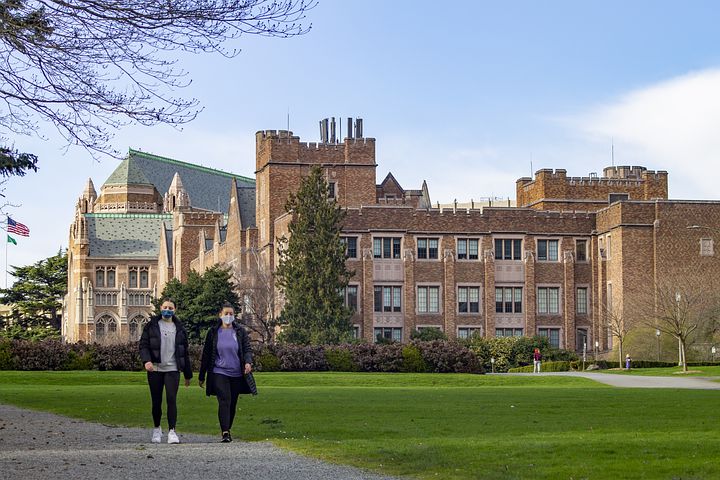
February College Search Guide

Originally published on 4 February 2022 on Hey SoCal
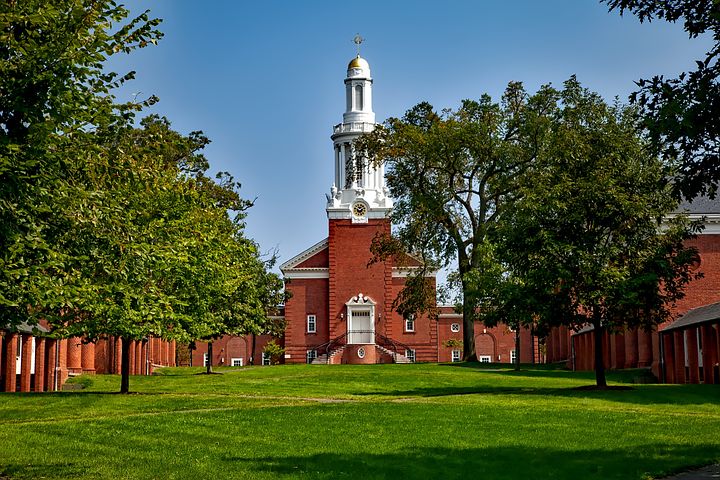
Yale University | Courtesy Photo

The road to college

It has been almost two years since the pandemic started, and the past holiday season brought on another surge in the infection rate. The U.S. currently has 8.17 million cases – 2.59 million in Los Angeles County – 95 percent of which is due to the omicron variant, according to the CDC and as reported on Bloomberg. Hospitals and health care workers are once more stretched to their limits.

Covid has touched everyone’s life and has caused adverse effects, the extent of which we have yet to find out. But the one certainty is that students suffered the most – they experienced major achievement gaps and significant setbacks during the 2020-2021 school year with mostly remote learning, based on a study released on Jan. 7 by the California Department of Education.

Schools and teachers are overwhelmed just as much as students and their parents. Fortunately, there are several tutoring services available if you and your children require help with school work. Find one which offers options that fit your children’s specific need and your family’s budget. A company called Mundo Academy provides excellent tutoring services in the Pasadena and San Gabriel Valley area. Likewise, some high school and college students have created free tutoring services and learning platforms to help children during the coronavirus pandemic. Two of these organizations include Sailors Learning and Wave Learning Festival.                     

If you’re exhausted, as most of us are at this time, please reach out for assistance. The CDC has put together a resource kit for parents, divided by age group, to help them ensure their children’s well-being. The site also has links to other resources that cover various concerns. Another CDC website is dedicated to helping parents manage stress during the coronavirus pandemic.           

Meanwhile, COVID-19 has resulted in changes to the college application process. The biggest upheaval was doing away with standardized testing by a majority of schools. The Cal State system recently announced that they are joining the UCs in eliminating the SAT and ACT. And then the College Board announced on Jan. 25 that the SAT will be given online exclusively beginning in 2024 in the United States and in 2023 in other countries.         

| Courtesy Photo

FRESHMAN

Your children are well into the second semester of 9th grade and are now fully engaged in the academic life at their school. With grades as the only benchmark for an applicant’s merit for acceptance, the student’s GPA is the single most important component of their college application. If their first semester marks need improvement, now is the time to turn things around.

Admissions officers will be interested to know what extra-curricular activities your children managed to accomplish during the pandemic – whether they were on campus or remote learning. Encourage your children to find virtual volunteer work or earn online certificates to put on their resumé. Hopefully, this time next year we’ll have some normalcy in our lives and students can take up some of the activities they have put on hold.              

SOPHOMORE

Your children need to really understand and learn the courses they’re taking so that the final grades on their transcript are the best they could earn. The schools they will be applying to will only see the grades in their three years in high school. If their first semester grades weren’t stellar, they need to improve this semester. They need to meet with their grade class dean to make sure their grades and courses are on the right track for graduation. While the SAT and ACT will not be required by many universities, AP scores are still being used as a gauge of college readiness and your children should register for the tests (www.collegeboard.com; www.act.org).

JUNIOR

I cannot emphasize this enough – junior year is the last complete year that college admissions officers will be looking at when your children send their application. They need to maintain their good grades and the pursuits that replaced their extra-curricular activities. If they had good study habits back in 9th grade and have established a routine, they shouldn’t be feeling overwhelmed right now.    

For most students, meeting frequently with their school counselors isn’t always a possibility. In some high schools where there are as many as 400 seniors to four full-time counselors, a junior may not even get any face-to-face time with a counselor. This puts the onus on your children to be very resourceful, take the initiative in gathering their research material, and plan their course of action as they embark on the college application process. This was a pre-pandemic fact that has become all the more glaring with Covid. Seek the services of an independent counselor if you need help.      

Meanwhile, as the parent of a junior, you should also make sure your child is on track – has taken all the courses the high school requires for graduation and is taking all the courses to complete the UC and Cal State requirements.                

You and your children should do a virtual college tour and consider doing an actual campus visit either during the spring break or in the summer. They might also want to make a phone call or have a Zoom chat with a current student to learn more about the school. More often than not, current college students and alums are happy to talk about their alma mater.    

| Photo courtesy of Eliott Reyna for Unsplash

SENIOR

Your children should not take for granted that they are all done with schoolwork because they have sent in their college application. Don’t let them succumb to ‘senioritis’ – they still have to submit their final transcript. Unlike last school year when teachers cut students a lot of slack because of the pandemic, they are more strict now that everyone has settled to the ‘new normal.’ Universities can rescind their acceptance if admissions officers see a drastic drop in the student’s grades. In fact, a single lower mark can trigger some questions. Moreover, third-quarter grades are critical in case they are waitlisted. And, in the unfortunate event they realize the school they were accepted to isn’t the right fit for them, senior-year grades will be crucial if they decide to apply for a transfer.

Additionally, seniors need to be mindful of their social activities. Schools are tech-savvy – they check social media profiles of students they have accepted and can rescind that offer if they find unacceptable behavior. Your children should be mindful of what may end up online.         

If your children have received new awards or commendations, or have accomplished something significant since they sent in their college application, they should email this important update to the admissions officer or the area representative of the school they applied to.

Your children should confirm with the colleges to make sure they have all the documents they require. They should continue applying for scholarships (www.scholarships.com; www.collegexpress.com; www.scholarships360.org, www.fastweb.com, www.studentaid.ed.gov) and getting their FAFSA (www.fafsa.ed.gov) ready for submission. I was recently alerted about scholarship scams by an organization called Comparitech.com, which I’m including in this college guide. 

The months following the end of the college application process are usually as anxiety-ridden for seniors as well as parents. While everyone has breathed a sigh of relief that the mad rush is over, the waiting period is just as nerve-wracking. In the next few weeks, some college decisions will be trickling in.

Remind your children to be careful how they share their good news as their friends might be getting some bad news at the same time. If they have been accepted to their ‘safety school’ but aren’t planning on attending it, they should resist the urge to boast about it as it might be someone else’s ‘dream school.’

Most of all, your children need to be patient – the answer will eventually arrive and nothing can hurry it up. Colleges notify at different times and in different ways. They shouldn’t read into the timing of the decision letters; their friends getting good news early doesn’t necessarily mean a bad outcome for them.       
Mundo Academy Strives to Level the Playing Field for Underrepresented Minorities

Originally published on 31 January 2022 on Hey SoCal

Grijalva helping students navigate the admissions process | Photo courtesy of Mundo Academy

Marina Grijalva was the first in her family to go to a four-year university. She believes that the privilege opened doors for her, so she is striving to afford underrepresented minorities the same opportunity through her tutoring company — Pasadena’s own Mundo Academy.

The Road to Education

The youngest of five siblings, Grijalva was born and raised in Calexico, CA, a small town on the US-Mexico border. Her father was originally from Sonora and her mother hailed from Sinaloa but they met in Mexicali where their respective families relocated. Her grandparents moved to Mexicali for agricultural work; at the time, there was a program for Mexican immigrants to come and work as field laborers.

Education was an important aspect in her upbringing, but going to college was not instilled in her. Although her mother only reached third grade and her father seventh grade, Grijalva recalls  her mother telling her she needed to get an education so that she wouldn’t need to depend on anybody. “That advice was really them saying I could live a different life from what they had – that I could have more opportunities. But a four-year college degree wasn’t something they were pushing me towards. My knowledge about a college education was based on what I had seen on TV, or read about, or learned of in school. I was part of different outreach programs for youths, especially for children of field laborers. That’s how I first started hearing about college and how I essentially grasped that’s how I could get ahead and find a different way of life.”

Though Grijalva was the first in her family to have attended and graduated from a four-year college, all of her siblings paved their own paths to their careers. One of her brothers went to community college, for instance, while another went to a vocational school for architecture and is now an architect. “In speaking to them now,” she muses, “they feel I had more opportunities because I ended up going to college, but they didn’t know anything about it when they were my age.” Her four brothers and sisters are much older; she was still in middle school when her eldest brother graduated high school.

Grijalva attributes her acquaintance with college opportunities to the various programs at her high school: “For three years, I did six-week summer programs at university. The most impactful were the ones at Harvey Mudd and UCLA because all the counselors were students from Claremont Colleges and students of color. They tried to learn more about me – asked me what I wanted to do and where I wanted to go; they also told me what scholarships I could get. I applied to college on my own and got several acceptances; I chose to attend Pomona College.

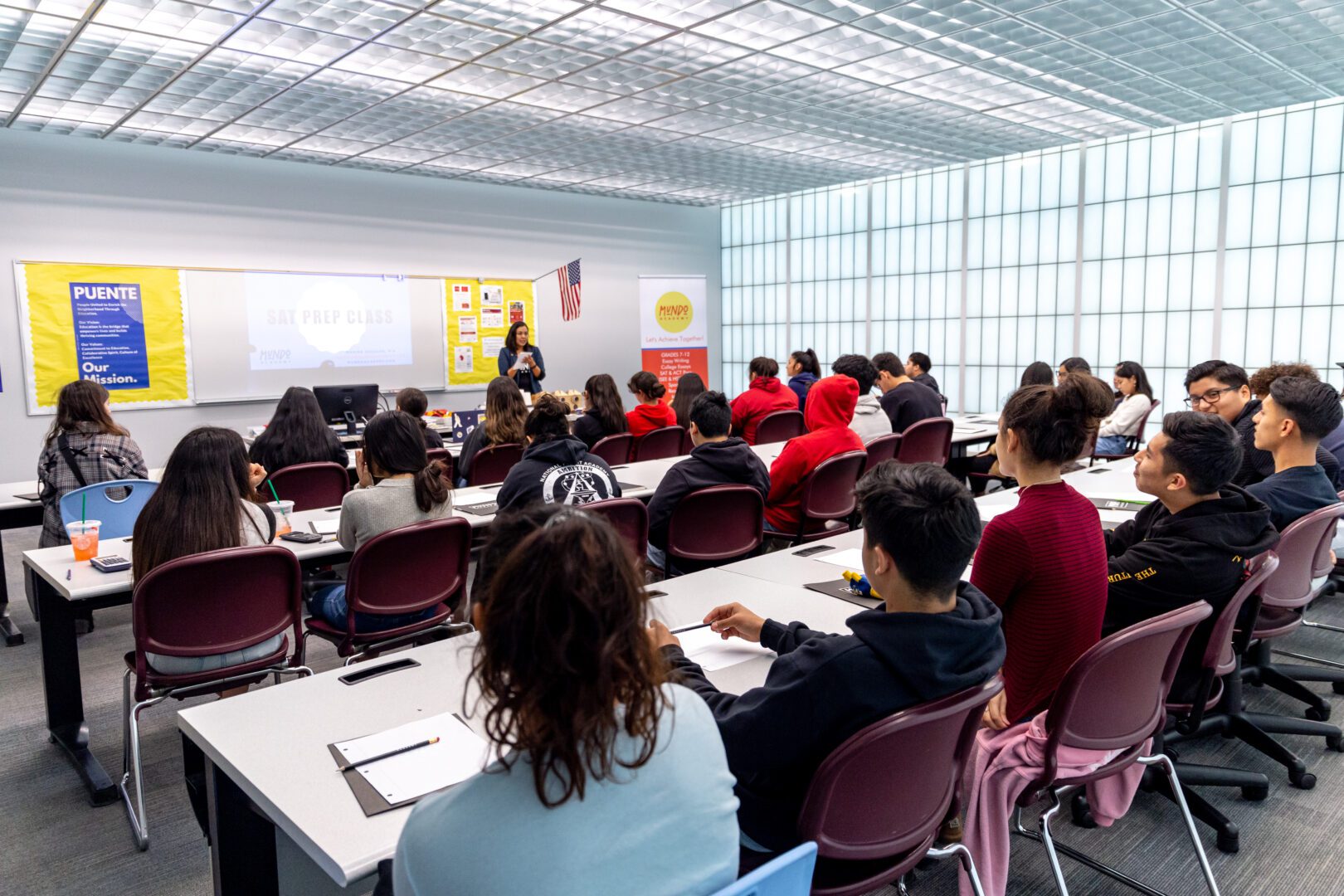
Grijalva at a SAT-prep class at PUENTE Learning Center | Photo courtesy of Mundo Academy

“When I told my parents, they asked why I wanted to move away when my family was in Mexicali; that I could stay and go to community college, get married, and have kids. But I told them it was how I could find better jobs and opportunities. Besides, I had a full ride scholarship so, in a way, they didn’t have a choice but to let me go. They eventually had a change of heart after they saw the school and understood what my getting a college degree meant for them.”

In college, Grijava ended up double majoring in math and romance languages, but that wasn’t intentional. Like most 18-year-olds, she didn’t really know what she wanted to pursue. While math had always been a class in which she excelled, she didn’t plan to major in it. She tried international relations, microeconomics, pre-med, and chemistry before she realized that her love truly lay with math – and Spanish.

Grijalva already spoke Spanish so when several students at the school encouraged her to take a class with a Spanish professor, Susanna Chavez Silverman, she thought it was a good idea. She says, “She introduced me to the world of Latin American literature and different ways of thinking about culture. I keep in touch with her to this day.”

Serendipitously, these two subjects helped Grijalva launch her career as a teacher. Shortly after she graduated, a friend who taught at a Catholic school mentioned to Grijalva that the school’s geometry teacher had resigned and they also had a part-time Spanish teacher position open. She  said, “I could teach both of those!” Aside from one school in Texas where she only taught math, she taught both subjects at almost every single school where she worked.

From Teaching to Tutoring

Many tutoring services I’ve heard of were founded by Asians and target students who are hoping to get into the most prestigious colleges. They hire teachers from the Ivies and name their service ‘Premier’ or ‘Ivy Max,’ giving the impression that students who study with them will earn admission to an Ivy League school.

Grijalva’s tutoring business went through a few iterations. Her first company, which she established back in 2008, was called ‘My New Tutor.’ She rationalizes, “I figured that would be an interesting way for a student to respond when someone asked ‘Why are you doing so well?’ ‘Oh, because I have a new tutor!’”

Then in 2013, she partnered with a college counselor and they changed their name to MYNT, an abbreviation of ‘My New Tutor.’ Grijava confirms, “Our student base was what you described: the college-bound, competitive, and Ivy League-pursuing student. However, the tutoring service had always been my area of expertise, and for that, we had students with learning challenges or having difficulties in school. The students we had in the tutoring side of our business were not always the same as those we got for the college counseling side.”

Grijalva eventually ended up selling her interest in MYNT and starting the Pasadena-based Mundo Academy in 2018. She explains, “I have access to information, and in the same way that information changed my life, we can use information to change other students’ lives. What I learned being in the college counseling business made me want to do something that can expand everybody’s world. Thus, the name Mundo came to mind. I also wanted it to be a Spanish word…I wanted people who see and hear about our service to feel it’s inclusive.”

Mundo Academy is built on inclusivity and respect for all. Grijalva, who identifies as a gay person, discloses, “My sexual orientation was something I kept private for many years because I wasn’t sure how parents would react to a gay person teaching their children. However, I came to the realization that representation matters; and if it meant losing some business, I was okay with that as long as my experience helped a young person see that they, too, can succeed.”

Mundo Academy teachers do small group classes | Photo courtesy of Mundo Academy

To advance that goal, Mundo Academy’s services fill diverse requirements. It offers private tutoring for high achieving students wanting to improve their grades from B’s to A’s; to students with learning challenges; to students in the process of applying to selective high schools and colleges who desire test preparation for the AP, ISEE/HSPT, or ACT/SAT; and everything in between. The other aspect of the business involves partnering with nonprofits and school districts to provide teaching to those with academic difficulties, and those with limited or no resources.

In a podcast from early 2021, Grijalva alluded to a mission to help underprivileged and underrepresented minorities as the impetus for establishing Mundo Academy. I inquire how Grijalva balances the seemingly extreme ends of the learning scale and the challenges distinct to each.

“I think that all students, at the core, want to achieve; so students in both components have similar needs,” Grijalva sagely responds. “I use my education and experience to create an educational environment in which they feel comfortable, and where they learn how to think and how to approach information and problems, read through material and find an academic voice.”

Mundo’s main nonprofit partner is PUENTE Learning Center in Boyle Heights, where they held multiple SAT prep classes online and in-person before the pandemic. They have also affiliated with Barrio Action, a center in El Sereno. Pre-pandemic, Mundo Academy collaborated with the Football United League, where they held college workshops and camps.

Grijalva recounts the genesis of her nonprofit partnerships: “When I established Mundo Academy, I tried to organize classes in different communities by myself. But even when the classes were free, either no one would come or there would be only two or three students. I knew it was a long shot, especially because trust is such a big component of everything we do, and I was going to communities that didn’t know me or my company.

“That led me to reach out to non-profits since they have the student population. I researched which organizations already used college admissions preparation as part of their offering. I found out they don’t necessarily have experienced SAT tutors – they tend to just buy an SAT book and have someone work with that. But I have college counseling and SAT prep experience, so I approached them and started holding free SAT boot camps. At first, we had about ten students, but for the last few boot camps we had about 40 students. We would fill the classrooms.”

Mundo Academy has different services to fill diverse needs | Photo courtesy of Mundo Academy

The academic enrichment program they currently offer several LAUSD schools has been one that has taken off since the pandemic, and Grijalva mentions that she also expects two other alliances, starting soon. Their project with LAUSD has brought a new element to their relationship with students and their families.

Grijalva observes, “While Mundo develops the programming, it’s the school who’s bringing us in – it’s much less parent-centric. Whereas I feel with our private tutoring students, the parents are much more involved – they’re the ones hiring us, and the parent propels most of what happens.

“In our work with LAUSD, although we try to engage parents as much as possible – we call them to introduce ourselves and tell them about the service we’re providing – they leave a lot up to us. They are receiving the service as opposed to pushing for them.

“I think, for the most part, that’s because they don’t understand the educational system. One of the big groups we work with is long-term English learners (LTEL). When a parent enrolls their child into the school district, they’re asked if they speak another language at home. If the parent says ‘yes,’ then the student gets flagged as an LTEL and there’s a language exam that they have to pass to get out of this classification. Many students aren’t able to do that so they stay within this classification, sometimes all the way into high school. This LTEL tag affects them adversely because they have to take extra ESL classes in middle and high school, which could prevent them from fulfilling the A to G requirements, or qualifying for AP classes, or enrolling in electives to explore other academic subjects.”

“A lot of parents and students alike don’t understand the importance of these exams or these requirements in order to reclassify,” Grijalva says further. “That’s one of the challenges we face – trying to inform both parents and students about what’s at stake. The goal is not just to have phone calls with parents but to also do workshops and more extensive outreach, to educate them even more on how they can be supporting their child. But because of Covid, that hasn’t been possible. We’re communicating and working with parents mostly over Zoom and there’s a technological divide: they either don’t have access to Zoom or the computer to log into to help their child.”

Future Trajectory

The pandemic brought to light how essential classroom teaching is to student learning. For the last two years, we’ve been reading and hearing about learning loss. Some students who were earning A’s in their courses were suddenly getting behind or even flunking. Then, on Jan. 7, the California Department of Education released the results of a study that confirmed what we already knew: students experienced major achievement gaps and significant setbacks during the 2020-2021 school year with mostly remote learning.       

For some LAUSD schools, Mundo Academy is the solution to help close those achievement gaps. Grijalva says, “The schools realize that they need small group tutoring in order to help students overcome some of those barriers. And as hard as teachers work in order to help them learn, they’re just not able to cover as much material online as they would have in a traditional school setting.”

As many schools’ focus is mostly on language learning loss, Grijalva explains, “We look at the data from the test teachers administered at the beginning of the school year to figure out students’ reading level. We’re then able to target those by using phonics lessons and different interactive activities to help students not only learn how to read but develop a love for reading on their own as well.”

Grijalva (center) with Mundo Academy’s private tutors | Photo courtesy of Mundo Academy

Asked where she envisions herself and Mundo Academy ten years from now, Grijalva answers, “I see ourselves doing two different things: providing at-large programming for LTEL throughout LAUSD and creating vertical programs. Starting with elementary school children, helping them reclassify; in middle school, teaching study skills and about college, and helping set themselves up for success in high school; and in high school, helping them through college admissions, covering the A-G requirements and volunteering.

“We’re also seeking to produce an English language development curriculum for students who are called ‘newcomers’ – children who have only been in the country for one or two years – they could be at any grade level, from elementary to high school. Right now, we’re working mostly with Latino students, but there are many immigrants from Central America and other Asian countries like the Philippines, Vietnam, Cambodia, and Laos residing in L.A. As we expand throughout the district, we’d like to offer our services to those populations as well. We hope to eventually take that curriculum nationwide.”

“What sets us apart as a tutoring company is that even as our student base grows, we have a focus on each individual, in creating a nurturing environment for that one student,” emphasizes Grijalva. “When I hire tutors, I look for qualities that show they will not only be proficient in what they’re teaching their student, but will also take a personal approach, learn more about each child, and help the student advocate for themselves so they’re able to grow.

“Our goal is never for students to need us for the rest of their academic career. If they do, we’re happy to help and provide support, but the intent is for the student to become confident – learn how to ask questions and think about the material they’re facing, how to manage their time, how to develop their individual study skills, and then set themselves up for success. It’s almost like a therapist saying, ‘You’re okay now, you don’t need me anymore.’”   

Especially during this pandemic, Grijalva and Mundo Academy are guiding students towards a place of confidence in their learning abilities so they can come out the other side stronger individuals who faced academic challenges and prevailed.

‘Real to Reel’ Analyzes Courtroom Drama in Movies

Originally published on 20 January 2022 on Hey SoCal

Real to Reel: Truth and Trickery in Courtroom Movies’ was published in May 2021 | Photo courtesy of May S. Ruiz/Beacon Media News

Law professor Paul Bergman knew very well that teaching a roomful of college students about an evidence course could get boring. He was also aware that some of them probably stayed up late studying – or partying, as young people at university are wont to do – so he could only go on lecturing for so long before he lost their attention, or they fell asleep.

Bergman started teaching at UCLA in 1970 where he spent the first decade supervising students on actual cases with real clients. He usually had only 12 to 15 students because there was a limit on the number of clients he could work with. A lot of class time was devoted to discussing case strategies so he could help students learn from each other’s experiences. But by the 1990s, he started teaching evidence and other podium courses taught in a large classroom.

“Traditionally, you either read and analyze appellate court cases or you look at real evidentiary issues and discuss those in class,” explains Bergman who is now an emeritus professor at UCLA. “So I thought it would be interesting to present a little courtroom scene from a movie and analyze it as if it were a real courtroom event. They may not be totally accurate but things go on in actual courtrooms that shouldn’t go on either.”

When he looked for a source for these courtroom movies, however, Bergman discovered that while there were several books about practically every other movie genre, there was none on courtroom movies. And proving the adage that necessity is the mother of invention, he resolved to rectify this omission. 

“I thought, ‘Well, I’m an academic, I should write one,’” Bergman continues. “I only wanted to write about movies that I had actually seen. But in 1994 there were no DVDs; some of the films were available only through the UCLA film archive so I had to go into the basement of a Hollywood building and someone had to change the reel every ten minutes. I asked Michael Asimow, whom I’ve collaborated with on other law publications if he would be interested. Together we watched and analyzed 150 movies, including such classics as ‘To Kill a Mockingbird,’ ‘Inherit the Wind,’ ‘Anatomy of a Murder,’ and ‘A Few Good Men,’ which was out by then. In 1996 our first book called ‘Reel Justice: The Courtroom Goes to the Movies’ was published.”

Response to “Reel Justice” was very positive and led to the publication of a second edition in 2016. It has also been published in China in a Chinese language edition. Then in 2020, during the pandemic, Bergman and Asimow embarked on writing a follow-up to “Reel Justice.” Fortunately, this time around, the movies they chose were available on DVDs, Blu-ray discs, and streaming on cable. “Real to Reel: Truth and Trickery in Courtroom Movies” was published in May 2021.

Bergman on Kauai in 2019 for a film clip program for a conference of lawyers and judges | Photo courtesy of Paul Bergman

“All the movies from ‘Reel Justice’ were integrated into this new book, which we divided into chapters based on themes,” describes Bergman. “The difference is the first book mainly discussed the story of the movie. For our sequel, we introduced a new format which focuses on the courtroom proceedings – it’s more of an analysis of the courtroom action and its messages about law, lawyers, and the legal system.”

“Courtroom movies often have a twist ending or a climax that you don’t see coming,” adds Bergman. “In ‘Reel Justice,’ we revealed the ending with a ‘spoiler alert’ warning. For ‘Real to Reel’ we stopped short of telling people how it ended; instead we directed readers to the appendix. We want to encourage our readers to actually see the movie for themselves first so we don’t want to give it all away and spoil it for them. Of course, some people don’t really mind knowing the movie’s conclusion and would still watch it anyway. But this time, we gave readers an option.”

Bergman, who received his J.D. from UC Berkeley (Boalt Hall), clerked on the 9th Circuit Court of Appeals and was an associate at Mitchell Silberberg & Knupp in Los Angeles before entering his teaching career, has penned more than 50 law review articles and book chapters on a wide range of subjects, including the images of law, lawyers, and justice in popular culture. One of his award-winning essays discussed the contribution of the 1970s TV show Emergency! to the development and legalization of the paramedics profession. Another article examined the ethics and lawyering techniques of Horace Rumpole, the crusty barrister featured in the classic British TV series Rumpole of the Bailey. He has also written a book chapter that describes different uses for film clips in a law school Evidence course.

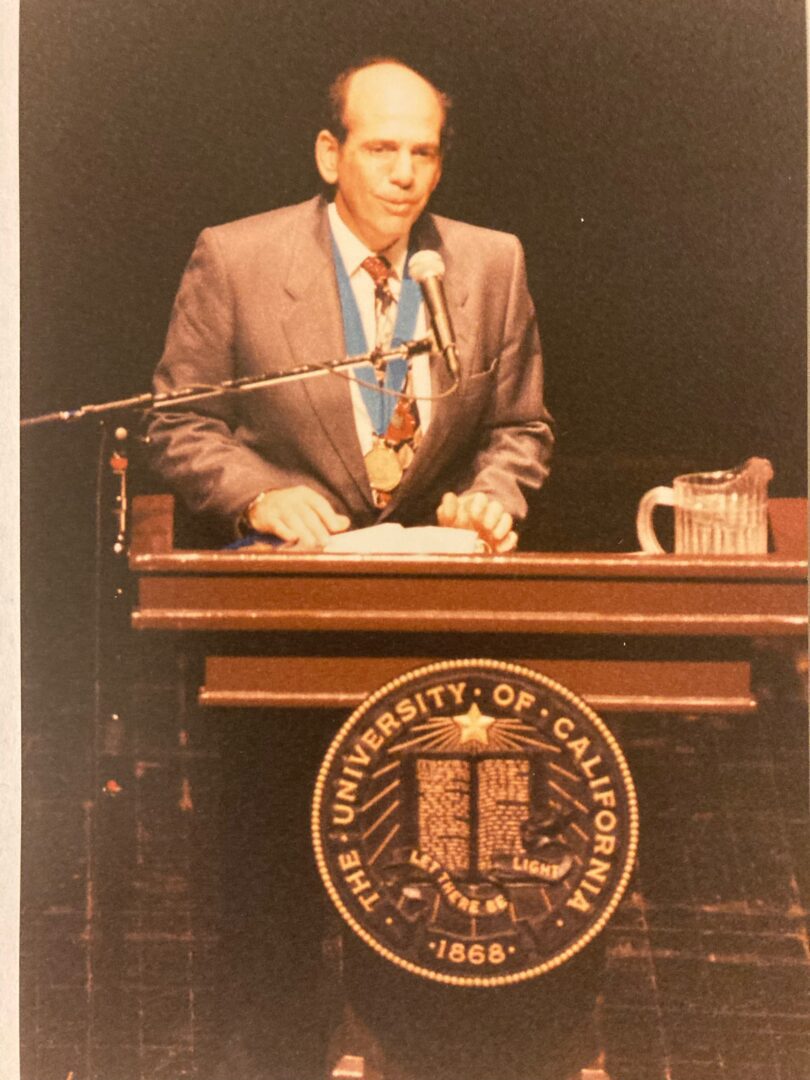
Paul Bergman receiving the UCLA award for Distinguished Professor | Photo courtesy of Paul Bergman

A respected academic, Bergman’s teaching awards include: The University Distinguished Teaching award; The Dickson Award for distinguished service and scholarship by a UCLA Emeritus Professor; and the American Board of Trial Advocacy Award for trial scholarship and teaching.

An unexpected, gratifying consequence of the publication of Bergman’s first book was the recognition he received for his contribution to the field of law. He has given film clip-based presentations to groups of lawyers and judges all over the country as well as in the UK and Japan. He has also appeared on numerous radio and TV shows, including The Today Show and the nationally syndicated radio program Champions of Justice.       

Expounds Bergman, “It’s given me an opportunity to share films … I’ve spoken at conferences in Washington D.C. with supreme court justices. My personal life has expanded because of the people I meet when I bring them my love for movies and why they’re important. We haven’t done any of that for this new book yet because of Covid but I’m scheduled to give a presentation at the International Society of Barristers in Hawaii sometime in March.”

Many lawyers might look askance at others in the same profession who watch courtroom dramas which aren’t real. However, people’s perceptions about the courtrooms, law, lawyers, and the justice system, and their expectations from these are the reality lawyers, judges, and those connected to the justice system have to contend with.

Bergman defends the genre’s place in everyday life. He says, “For most people, it’s always a bit real. Like I tell my law students, when you meet a new client or a witness, they think they know a lot about you. But what they think they know is not based on meeting you and it’s probably not based on meeting a lot of lawyers. It’s because they’ve watched a lot of movies and TV shows about lawyers and they think they know what’s going to happen. So the messages these movies send about lawyers, the law, and the legal justice system influence how people behave with you and react to you. Movies have an impact on people’s lives even if they’re not accurate. This is how people think ‘Jeez, I didn’t realize this is how trials are like.’ There’s a theory that people remember content but they don’t remember the source. The messages in these movies are important – whether they’re right or wrong. And sometimes they’re a little of both.”

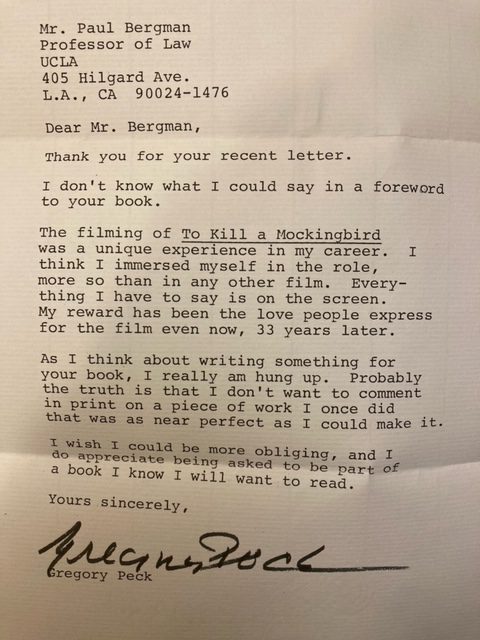
The first letter Gregory Peck sent to Bergman | Photo courtesy of Paul Bergman

Being cinephiles, Bergman and Asimow enjoy rating the movies in the books they wrote. Much like film critics, they rank movies on a one-to-four gavel system – four gavels for the classics. Moreover, Bergman doesn’t cloak his admiration for the actors who made big impressions on audiences. He has always been a big fan of the movie “To Kill a Mockingbird” and its lead Gregory Peck. In fact, when he finished writing “Reel Justice,” he sent a letter to the actor requesting him to write the foreword to it. Gregory Peck responded but declined. Bergman mailed him a copy of the published book anyway and the actor sent a letter saying “Your book, written with Michael Asimow, is excellent, fascinating. I have read many of the cases including To Kill a Mockingbird and The Paradine Case.” In the letter, Peck further disclosed, “I quite agree with your evaluation of The Paradine Case. On matters concerning the script, there was dissension between Selznick and Hitchcock. Selznick prevailed and pumped up the love triangle in a way that went against Hitchcock’s grain. It was the last picture they made together.”

Movies, like theatre, – and what’s more akin to theatre than courtroom drama – are a mirror we hold up to ourselves. They reflect society and popular culture. And because movies, like plays, are written by people with beliefs and convictions, and directors have perspectives and points of view, these often are embedded within. Inevitably, movies can foreshadow what’s to come, effect change, and even change laws.                       

In the movie “Adam’s Rib,” director George Cukor filmed Katherine Hepburn – who played the role of Amanda Bonner – addressing the jury. But because the camera was facing her, in essence, she was speaking to the viewers. It was released  in 1949, two decades before the advent of the women’s liberation movement. In the play and film version of “A Few Good Men,” playwright and scriptwriter Aaron Sorkin successfully and memorably “dramatizes and personalizes an abstract issue such as the legitimacy of using civilian norms to evaluate military discipline.”

“Real to Reel: Truth and Trickery in Courtroom Movies” marries Bergman’s love for movies with his advocacy for the law and its practice. Its dissection of courtroom events is interspersed with asides that reveal his wry humor. It could easily win over even those with an innate distrust of lawyers.        

January College Search Guide

Originally published on 5 January 2022 on Hey SoCal

University of Georgia | Courtesy Photo

The road to college

Happy New Year!

We’re all still reeling from the impact of this pandemic which has touched every aspect of our life  – from the economy to education, to our mental and physical well-being, among others. And now we welcome 2022 with the omicron variant, which seems to be less severe but more infectious. Before they even had a chance to take a breather, hospitals and health care workers are once again caring for those infected.

Anticipating a surge in Covid infections after the winter holiday, some schools are reinstating safety protocols. The L.A. Times published a Christmas story by staff writer Melissa Gomez about USC’s announcement that classes will be held remotely during the first week of this semester. She further reported that students and staff will be required to show proof of booster shots as soon as they are eligible.

There’s a heartening update about college admissions, though. On December 29, L.A. Times staff writer Teresa Watanabe reported that California is bucking the prevailing norm of privileged students with excellent GPAs and outstanding resumés. During this admissions cycle, unentitled kids are California’s new generation of star applicants.

And with that refreshing bit of news, let’s get on with the college guide.

FRESHMAN 

Typically, the beginning of the year marks the halfway point in the school year. First semester grades will soon be released if they had not been sent out yet. If your 9th graders’ marks are not great, they would need to use the second semester to better them as it’s the end-of-year grades that show on the transcript. Some universities – including the UC and Cal State systems – have dropped their SAT requirements, so a student’s GPA is the single most influential component of the college application. Admissions officers only have your children’s GPA to gauge their college readiness and success.          

SOPHOMORE 

This is your student’s second year, and by this time they should have fully transitioned into high school. They need to put extra effort into weak subjects and solidify their grades this semester.

| Photo courtesy of Andrew Neel/Unsplash

JUNIOR 

The second semester of junior year is significant as it is the beginning of the college application process. Students should have already started doing their research about the colleges and could start doing virtual tours ahead of a spring or summer campus visit. Some useful websites include campustours.com; CollegeProwler.com; SmartCollegeVisit.com and YOUniversity.com.  

SENIOR 

All college applications should have already been sent out for the January 1st regular decision/admission deadline. Some universities, like Georgetown, have a later deadline. Several schools also have ED (Early Decision) II. Parents should have submitted the FAFSA (www.fafsa.ed.gov) application. Apply for scholarships; there are several websites to help you with your search like www.scholarships.com, www.collegexpress.com, www.scholarships360.org, http://www.affordablecollegesonline.org/graduating-debt-free.

. . .

While I’m tempted to say “Tell your kids to breathe a sigh of relief, the hard part is over,” the truth is, the waiting part induces just as much anxiety as applying to colleges. And, oftentimes, it’s worse because neither you nor your children have control over it. Just be there for your kids to remind them that they have done a great job and they should let the admissions professionals do theirs.

The months from January through March can still be a time for your children to do something to help their cause. Mid-January is when high schools get their first semester grades finalized. If your student’s mid-year report is particularly spectacular, this could be a very good development especially if they are applying to a highly selective college. When your children’s high school sends the grades, have your children follow up with an email to the area representative telling them about their hard work and interest in that college.

If your children have been deferred at a college when they applied through early action or early decision, it is advisable for them to send in an additional teacher recommendation, but only if this supports their application. Likewise, if your student has received notable honors or made any significant achievement, they should let the admissions officers know by email.     

Having done all these, you and your children will now just have to wait patiently for the process to play itself out.           

Preparing for Successful Admission to a Private Middle School or High School

Originally published on 6 December 2021 on Hey SoCal

| Photo courtesy of Sofa Tutor on Unsplash

We all know that it’s college admissions season — as much a rite of passage as a dreaded time — when 12th-graders are feverishly writing supplemental essays in addition to the personal statement they submit with the common app, before spending the rest of their last year in high school anxiously waiting to hear from the colleges.

However, this is also the middle and high school application period. All over Pasadena and the San Gabriel Valley, fifth and eighth-graders planning to attend private schools are taking the ISEE (Independent School Entrance Examination) or HSPT (High School Placement Test), writing essays, and interviewing to gain admission to a middle school or high school.

Not much is written about it since the focus is mainly on college admissions and also because it affects only a small group, but it’s just as stressful and anxiety-inducing for young students and their parents.

Brianna Chu, a tutor at Mundo Academy and someone who’s currently guiding students through middle and high school applications in addition to college admissions, has put together a guide with tips to help students and parents navigate it.

Organization and time management are key to a successful school search, whether it’s a middle school, high school, or college. Above all, have reasonable expectations. There is a school that is the right fit for your child.

December College Search Guide

Originally published on 3 December 2021 on Hey SoCal

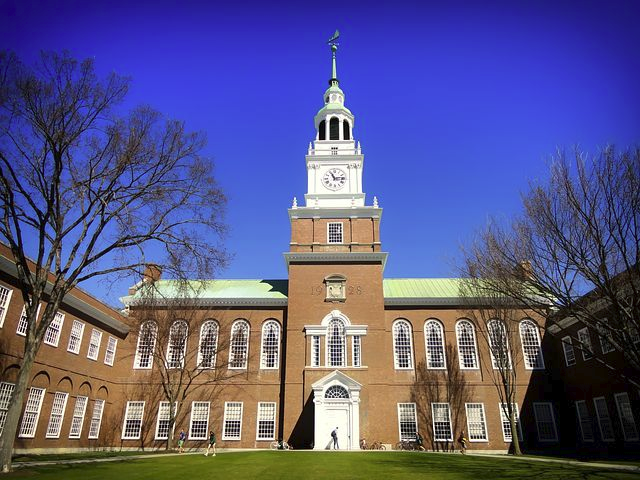
Dartmouth College | Courtesy Photo

The road to college

Just as we thought we were finally seeing a decrease in COVID-19 infection rates, comes the news that a highly transmissible coronavirus variant – Omicron – is causing great anxiety all over the world. Several countries, including the United States, are restricting travel to and from southern Africa. It has put a new wrinkle on people’s plans to travel during the holidays to be with relatives and friends they haven’t seen in almost two years.

We have yet to find out if this will affect schools as students have finally returned on campus two months ago and are adjusting to a new normal. The coronavirus pandemic changed the way learning is delivered not only for elementary and high schools but for colleges and universities as well.

College admissions also adapted to the circumstances when SAT, ACT, and AP tests got canceled because of the pandemic. It foretold the beginning of the end to standardized testing.

However, it wasn’t due to COVID-19 that the 10-campus UC and 23-campus Cal State systems went test-optional. It was because they were convinced that performance on the SAT and ACT is so strongly influenced by family income, parents’ education, and race that using them for high stakes admissions decisions is wrong.

On November 18th, Teresa Watanabe of the L.A. Times reported that the University of California is dropping standardized tests altogether after faculty could not find an alternative exam. In her follow-up article on the 23rd, she quoted FairTest, the National Center for Fair and Open Testing, in stating that the UC and Cal State systems “would join more than 1,000 other colleges that have gone testing-optional, with 47 more schools joining in the last 12 months, double the number over last year.”        

As I wrote last year in this monthly guide, this means the only components of students’ applications are the personal essay and their GPA. And as I have constantly preached to students, and parents who are helping and guiding them through the process, high schoolers should make sure they are getting good grades in all their subjects. The student’s GPA is now the singular, most important component of their college application. It reflects not merely what they’ve learned in the classroom but is an indicator of how well prepared they are to tackle the rigors of college and a predictor of their success when they get in.

Their personal essay is the other piece that has taken on a greater significance. Admissions officers have to get to know your child through their personal statements and determine if they will be the right fit for the incoming class they are trying to build and if they will make a meaningful contribution to the school’s student body. It’s a rather daunting task to accomplish with 500 words. While a college counselor can guide and help your child craft a better essay, make sure it’s in their own voice – admissions officers can easily tell if it sounds contrived and unnatural.              

Photo by Green Chameleon for UnSplash

Another development affecting college admissions is Amherst ending its legacy admissions preference, as reported by Matt Feeney on the New Yorker also on November 23rd. And, as he pointed out, other colleges and universities may soon follow suit.

While both those announcements seem to even out the playing field and make college admissions more equitable, they also translate to ever more students applying for spots that didn’t increase in number. That proved to be the case last admissions cycle when Ivy schools, led by Harvard at 42%, saw a rise in college applications

Meanwhile, SmartAsset, a company that offers financial advice, released its seventh annual study on the colleges that give students the best return on their investments. It listed California at number 5 with the following colleges and universities:    


RankSchoolCityAvg. Scholarships and GrantsAvg. Starting SalaryCollege Tuition*Student Living CostsStudent Retention RateCollege Education Value Index
1California Institute of TechnologyPasadena, CA$41,062$87,600$52,362$19,72298%89.80
2Stanford UniversityStanford, CA$49,255$81,800$51,354$20,23399%87.00
3Harvey Mudd CollegeClaremont, CA$36,443$91,400$56,620$20,32797%86.85
4University of California-BerkeleyBerkeley, CA$19,369$72,600$14,184$23,88297%65.13
5University of California-San DiegoLa Jolla, CA$17,958$65,000$14,167$18,67193%65.01
6California Polytechnic State University-San Luis ObispoSan Luis Obispo, CA$6,768$66,400$9,816$18,48694%62.51
7University of California-Los AngelesLos Angeles, CA$19,300$62,600$13,226$21,39497%57.22
8University of California-DavisDavis, CA$17,958$62,700$14,402$20,77592%54.97
9University of Southern CaliforniaLos Angeles, CA$39,516$66,100$56,225$18,60096%54.74
10University of California-IrvineIrvine, CA$18,216$61,100$13,700$20,56194%54.69

FRESHMAN

What a relief it must be for your 9th grader – he or she has survived the first semester of high school. While your children’s thoughts may be all about the Christmas holiday, this would be a good time to evaluate their progress. Remind them that while first semester grades don’t show on the final transcript, these are barometers of their academic strengths and weaknesses. Encourage them to use the winter break to plan how to improve where needed and how to build on their successes going into the second semester.

SOPHOMORE

Now is the time to look at their interests to determine what college course they might be suited for. Based on their aptitude and grades, they will have to start planning on their course options for 11th grade. They can also start researching which colleges offer the course they might want to pursue.

Photo by Annie Spratt for Unsplash

JUNIOR

This is an all-important year for your 11th grader and it is one of the busiest of their high school career. Your children should be able to successfully balance their academic, extra-curricular, and athletic activities. Hopefully, college counselors have met with you and your children and have given you an overview of the college application process. Your children (and you) should already have been to at least one College Fair and have met with a few admissions officers either in person or via Zoom.

SENIOR

While kids all around are excited about the Christmas holidays, your high school senior is sweating over his or her personal essay or feverishly writing all the supplemental essays colleges require with their application for the regular decision or the second early decision (ED II) round.  

This is a crucial time for seniors. They need as much encouragement as elbow room to get their applications ready for sending. Your children should be in constant communication with the school counselor to ensure that all transcripts, teacher recommendations, and supplemental material are sent to all the colleges to which they are applying. They should be on top of application deadlines for all the schools – they’re not all the same – to which they plan to apply.    

If your 12th grader applied through Early Action (EA) or Early Decision (ED), he or she must also be nervously waiting to hear from the college. And I’m sure your child would be ecstatic to receive an acceptance letter from his or her first choice. An ED means your child is legally bound to matriculate to that university, and his or her college search is over. Whew! If your child is accepted to a school through EA, he or she can either accept that offer or still go on to apply to other schools.

Accepting an EA offer relieves your children of pressure so they can enjoy the Christmas holidays, but it doesn’t give them leverage if they are qualified for scholarships. The best scenario is to apply and get accepted to several colleges so your children can get to pick the best financial offer or scholarship.

If your children are fortunate enough to have heard from their school and have been offered admission, it would be mindful of them not to brag about their acceptance. Some of his or her classmates may have applied to the same school and are hoping for admission. The university to which your child was accepted might be his or her classmate’s first choice. It would be very hurtful to then boast that he or she has been accepted but is not planning on attending that college.

On the other hand, if your children have been deferred on the EA or ED round, there are some things they can do to enhance their chances during the regular round. They can send any updates on any significant changes since they sent their application – a letter from a counselor about their first semester work or a letter from a senior teacher. They can also send in their first semester grades, especially if they have received some As in the meantime.  

Your children can also write a strong letter of interest and intent – all colleges and universities are concerned about their yield. If they are assured that your child will matriculate if accepted, they will look at him or her in a more favorable light (that is, if your child fits the profile they are looking for). This is one reason most colleges have instituted the ED II – they are assured that the applicant will matriculate if accepted. At the same time, it’s disheartening for applicants who aren’t applying for ED II as they would be far fewer slots available making the regular round more competitive than it already is.     

Provide encouragement to your children if they have been deferred – the school isn’t rejecting them, they have just been put in the pool for the regular round. Remember that these admissions officers have thousands of applications to read. They wouldn’t want to go through your children’s application again if they weren’t interested in the first place, they would have just outright rejected them. 

Your children should research all available scholarships, and start completing the FAFSA.

Some useful websites are: CollegeXpress (www.collegexpress.com); Fastweb (www.fastweb.com); Free Application for Federal Student Aid (www.fafsa.ed.gov); National Merit Scholarship Corporation (www.nationalmerit.org);  Scholarships.com (www.scholarships.com); Scholarships360 (www.scholarships360.org); Student Aid on the Web (www.studentaid.ed.gov).

‘No Home Left Offline’ Aims to Make Internet Access Affordable for Everyone

Originally published on 4 November 2021 on Hey SoCal

Photo by sofatutor for Unsplash

Almost two years into the pandemic, we are hearing how education has been adversely affected. Some schools shut down because of double-digit decline in enrollment, students dropped out of school because of pandemic-related disruptions, students didn’t show up for virtual classes because they had no internet access. Distance learning underscored inequity in education — students in low-income households suffered the most learning loss.           

EducationSuperHighway, a San Francisco-based national nonprofit organization, which successfully closed the K-12 classroom connectivity gap in seven years, just released a report that highlights that after decades of public and private investment in broadband infrastructure, affordability is now the number one cause of the digital divide, despite the widespread availability of low-cost broadband options from internet service providers.

Over 18 million unconnected households (46.9 million people) have access to internet service but cannot afford to connect to even low-cost broadband plans. In 43 states, the broadband affordability gap is the largest portion of the digital divide, making up 58% of the digital divide in states with rural populations that exceed the national average. Previous efforts to provide the resources households need to connect have fallen short. As few as 17% of Americans eligible for federal broadband affordability programs have enrolled due to awareness, trust, and enrollment barriers.

The report further noted that this broadband affordability gap disproportionately impacts low-income, Black, and Latinx communities. Without high-speed internet access at home, families in California can’t send their children to school, work remotely, or access healthcare, job training, the social safety net, or critical government services.

Thursday, Nov. 4, EducationSuperHighway launched its new mission and campaign ‘No Home Let Offline’ to close the digital divide for the households that have access to the internet but can’t afford to connect.

Evan Marwell | Photo courtesy of EducationSuperHighway

Evan Marwell, founder and CEO of EducationSuperHighway, details via email the organization’s efforts to accomplish their ambitious goal: “We are currently working with Partnership LA and their cohort of 19 schools within the Los Angeles Unified School District. First, we implemented our K-12 Bridge to Broadband program to understand the connectivity status of each of their student households, along with the specific ISPs that can serve them. Now, using the data provided by AT&T and Spectrum, we are supporting Partnership LA staff (admins) and local school staff with building, implementing, and managing a Broadband Adoption Center to support their families through enrollment in connectivity solutions. This includes general awareness marketing (social media, creating flyers, and other awareness materials), as well as deploying a targeted outreach strategy to guide staff through direct calling and texting to families to help sign them up for broadband. Our goal is to expand our partnership throughout the Los Angeles market, including the San Gabriel Valley, once we finish our work with Partnership LA. ”   

“Raising awareness of federal broadband and low-cost broadband programs is critical,” Marwell emphasizes. “Many families eligible for federal broadband subsidies are simply not aware that these programs exist or are confused by the multitude of options presented to them. A recent national survey of low- and lower-middle-income households found that only 25% had heard of the Emergency Broadband Benefit program. Historically, marginalized groups are notoriously hard to reach, struggle with language barriers, and are more likely to have experienced challenges accessing other government programs.

“We think that broad outreach alone often only adds to the confusion and should be accompanied by targeted information from trusted sources such as school districts, community health centers, faith leaders, and other community-based organizations. To provide effective leadership, local governments must start with a clear understanding of the problem by collecting household-level data on who is and is not connected. Armed with data and specific goals, they can then develop a comprehensive strategy to close the broadband affordability gap in their communities.”

Photo by Avel Chuklanov for Unsplash

Funding for EducationSuperHighway’s massive undertaking will come from the federal government as well as philanthropic individuals and organizations.

Marwell discloses, “The federal government is poised to invest $20 billion in the nation’s largest-ever broadband affordability and adoption programs — starting with the Consolidated Appropriations Act of 2021 and continuing with the American Rescue Plan Act and the bipartisan infrastructure bill. Congress will provide over $85 billion in new funding for broadband infrastructure, affordability, and adoption programs. Perhaps most importantly, the Consolidated Appropriations Act of 2021 created the $3.2 billion Emergency Broadband Benefit Program to ensure that all households could afford a home broadband connection. This is ‘the nation’s largest-ever broadband affordability program,’ and the bipartisan infrastructure bill will increase funding for the program by $14.2 billion in order to ensure it can help close the affordability gap for at least the next five years. 

“The Emergency Broadband Benefit, to be renamed the Affordable Connectivity Program as part of the bipartisan infrastructure bill, will provide $30 per month to ISPs for any household with an income below 200% of the poverty line. The Emergency Broadband Benefit provides $50 per month to ISPs for eligible households. This amount will be reduced to $30 per month as part of the bipartisan infrastructure bill. This is significantly more than the price of existing affordable connectivity plans from most ISPs and will likely result in ISPs offering home broadband plans at this price that meet the new broadband standard of 100 Mbps download / 20 Mbps upload being established by Congress as part of the bipartisan infrastructure bill. Together, the Emergency Broadband Benefit and higher capacity affordable broadband plans from ISPs will ensure that most households will have sufficient bandwidth to learn, work, and access healthcare and critical services remotely.”

“In addition, the bipartisan infrastructure bill also makes clear that Congress understands the need for proactive efforts to drive broadband adoption.” Marwell says further. “The $2.75 billion Digital Equity Act provides five years of funding for state and local entities to tackle the barriers to broadband adoption. This would be an unprecedented investment in driving broadband adoption and will enable state and local governments, nonprofits, community-based organizations, and the private sector to provide the outreach, training, and enrollment assistance required to reach and connect unconnected households to home broadband services.

“The Infrastructure Investment and Jobs Act includes $2 billion for the Tribal Broadband Connectivity Program. The bill creates a Digital Equity Competitive Grant Program to support broadband adoption, which includes a 5% set-aside to award grants to, or enter into contracts or cooperative agreements with, Indian Tribes, Alaska Native entities, and Native Hawaiian organizations.

“Finally, Congress is paving the way for innovative approaches to driving broadband adoption by making the installation of free Wi-Fi networks in low-income apartment buildings an allowable use of the $42.5 billion of infrastructure funding in the bipartisan infrastructure bill and the $10 billion Capital Projects Fund already enacted in the American Rescue Plan Act.”

Adds Marwell, “We do not yet have individual donors in the Los Angeles and San Gabriel Valley areas, but several foundations and philanthropic organizations have made a $16 million multi-year investment in our mission including: Emerson Collective; Blue Meridian Partners; Ken Griffin, Citadel, and Citadel Securities; the Chan Zuckerberg Initiative; Walton Family Foundation; and Zoom Cares Fund. EducationSuperHighway is fully funded by philanthropy, so all of our programs, and the tools and support we provide are free of charge.”

Photo by Ahmed Hindawi for Unsplash

Today’s launch also marks another milestone in EducationSuperHighway’s efforts to connect all homes to the internet — a wide-ranging partnership with the City of Oakland.

“It is one of our key demonstration programs to show how it’s possible for cities to close the affordability gap in their most unconnected communities,” explains Marwell. “Together with community-based organizations and other key stakeholders, the partnership will deploy free Wi-Fi in low-income apartment buildings and establish a broadband adoption center to help eligible households enroll in the Affordable Connectivity Program. Our goal is to develop playbooks that enable states, cities, school districts, housing authorities, and other trusted institutions of innovative programs to increase broadband adoption at scale across the country.”

Increasing the availability and speed of affordable broadband plans as well as government funding to make internet connection affordable, however, are not enough to close the gap. EducationSuperHighWay’s findings reveal that as few as 17% of Americans who are eligible for broadband benefit programs have enrolled.

“We must now remove the barriers that keep low-income families from adopting high-speed broadband when it is available in their area and fully subsidized,” declares Marwell. “These barriers fall into three categories — awareness, trust, and enrollment challenges. First, most unconnected households are unaware of federal broadband programs and how they can help them get connected. For example, a recent national survey of low- and lower-middle-income households found that only 25% had heard of the Emergency Broadband Benefit program (which provides eligible households with a $50 discount on their monthly internet bill). Second, many unconnected households are also concerned about sharing personal information as part of the sign-up process and are skeptical federal broadband benefits will actually cover the cost of their home broadband connection. Finally, signing up for federal broadband programs can be time-consuming, confusing and requires households to provide details of their income status or other documentation that many cannot easily access.”

Photo by Nick Morrison for Unsplash

Furthermore, success is hinged on people actually enrolling. Older Americans — those who aren’t digital natives — aren’t versed in technology and are intimidated by the application process.

“We agree that making enrollment as straightforward and painless as possible is vital to ensuring high adoption rates,” Marwell concurs. “Many low-income Americans struggle with the cost of long wait times, complex terms and conditions, language barriers, or navigating eligibility and enrollment information. For older Americans and those who rent their homes, concerns about the installation process can also influence the decision to apply.” 

School districts and community-based organizations (CBOs) play a vital role, according to Marwell. “They are well-positioned to build awareness and trust for affordable broadband programs and should be critical partners in outreach campaigns to enroll eligible households in federal broadband programs and help them sign-up for low-cost broadband plans. Our Broadband Adoption Center program for states, cities, housing authorities, school districts, and other trusted institutions, provides a blueprint for success. Centers recruit and train outreach staff on calling and texting tools, call scripts, and enrollment processes. Outreach staff then streamline enrollment by walking individuals through the entire sign-up process. EducationSuperHighway works with local and national ISPs throughout the process to facilitate sign-ups. Where ISPs allow, families can be pre-qualified for eligibility and directly enrolled into affordable internet plans by outreach staff.”  

Marwell ends by saying, “The pandemic has been the catalyst for unprecedented levels of federal funding, new public-private partnerships, and the emergence of best practices that present an opportunity to close two-thirds of the digital divide. As a result, we now have a historic opportunity to close the broadband affordability gap, which is the largest portion of the digital divide in 43 states and makes up 58% of the digital divide in states with rural populations that exceed the national average. Just like when we closed the K-12 digital divide, we must assemble a broad public-private partnership to seize this historic opportunity.”

The inequities in American society are deep and systemic. And while making internet connection affordable — even free for some households — doesn’t solve the problem, it is a first step in the right direction. In fact, in our digital world, it can be a lifeline.   

November College Search Guide

Originally published on 2 November 2021 on Hey SoCal

| Courtesy Photo

The road to college

Students are back on campus for in-person learning and many parents are finding out that their children are behind on most of their courses. Tutoring companies, which were in high demand during remote learning, continue to see students struggling to keep up with coursework – as if the college admissions process weren’t stressful enough. If you think a tutoring service will help, find one that offers options to fit your student’s specific need and your family’s budget. A company called Mundo Academy provides excellent tutoring services in the Pasadena and San Gabriel Valley area.

If you’re overwhelmed, as most of us are at this time, please reach out for assistance. The CDC has put together a resource kit for parents, divided by age group, to help them ensure their children’s well-being. The site also has links to other resources that cover various concerns. Another CDC page is dedicated to helping parents manage stress during the coronavirus pandemic.

FRESHMAN

I hope your children are settling into high school, focusing on their studies, and using all available resources to accomplish all the work required and succeed in each course. The goal is not just to pass, however, but to make the best grade they are capable of getting.

Ideally, they should be up-to-speed in all their classes, but if there’s anything about the course they can’t grasp, they need to seek assistance. Teachers are usually available after school to meet with students to explain a lesson they can’t understand, so they have to ask right away or they will fall behind all the more as the school year progresses.

Several universities have eliminated standardized test results from their decision-making process. That means your children’s GPA has become the single most important component of the academic picture they present to the universities to which they will apply. It will show how well they did in high school and how prepared they are to go to college. 

If your children are athletic and particularly good at one sport, encourage them to join their school’s division sports. Athletic excellence can be used as a hook to get into college; some universities offer lucrative athletic scholarships. They should ask their coach to help them determine the NCAA requirements.

They should have identified other extra-curricular activities they want to participate in, whether they’re in the arts or school clubs. An important thing for them to bear in mind is to make sure they continue that interest throughout high school – admission officers want to see depth of involvement.             

SOPHOMORE

Most universities look at 10th grade as a fundamental year in high school. Your children should have already made a smooth transition from their middle school life and are enthusiastically exploring their various interests and are applying these towards extra-curricular work. They should be actively participating in sports, or arts, their school newspaper, or their yearbook. 

The class deans should be working with your children in evaluating their class performance and workload to make sure they are on track and are making the grade. Together with their class dean, your children should be preparing for standardized testing and junior year course options. 

Additionally, your children can start looking at various colleges offering the course they might consider taking.

Photo by sofatutor on Unsplash

JUNIOR

This is an important year for your children. They need to be in constant communication with their counselor to ensure they are on track for graduation and college admission. 

Encourage your children to focus on getting good grades – this is the last complete school year marks the college admissions officers will see when your children send in their application. Their GPA is the most reliable and significant predictor of how well they are ready for college work.

Several high schools in the area have held virtual college fairs and you and your children should have met the representatives of the various colleges to which they might consider applying. Your children should be researching these schools’ requirements and keeping track of the universities which offer the courses they are interested in pursuing.

SENIORS

Your children should have already sent out their application early this month if they were trying for Early Action (EA) or Early Decision (ED). They should notify the universities of any honors they received since mailing their application; they have to make sure their school sends out a recent transcript, and all their standardized test results have been forwarded. 

If the university they are applying to is offering an alumni virtual interview, I would advise your children to plan ahead because the report will become part of their admission file. While it will most probably be held via Zoom, they have to comport themselves as if it was an in-person interview. They should dress conservatively and comfortably – no tank tops and no bare midriffs; make eye contact and listen well; be positive – stress their strengths and explain their weaknesses, but don’t dwell on the negative and don’t complain; answer all the questions – if they’re confused, ask for clarification; keep the conversation going; be prepared to ask thoughtful questions of their interviewer; try not to lead the conversation into a ‘trouble’ area – if they don’t know much about current events, don’t direct the conversation there; be honest; send a thank you note.

Most universities will mail out their acceptance letters in mid-December. As your children await word from the college, they might want to keep writing all the supplemental essays required by the universities to which they will apply for the regular decision round. Admission to their EA school isn’t binding so they can still apply to other colleges, thus not limiting their options. However, an acceptance to their ED school is binding and they are required to matriculate if admitted. 

In the meantime, you children should make sure they are doing well academically. Some universities require the first semester grades, or the first quarter grades if they’re applying for EA/ED. In fact, your children shouldn’t let up on academics because a college can still rescind their offer of acceptance if a student’s grades have fallen below acceptable level. 

Likewise, make sure your children are continuing to participate in athletics and extra-curricular activities. These sometimes help them relieve the stress of the college application process.  

This is also the time to research scholarships. Some websites that could prove useful are: CollegeXpress, Fastweb, Free Application for Federal Student Aid, National Merit Scholarship Corporation, Scholarships.com, Scholarships360, Student Aid on the Web. You and your children should talk to their school’s financial aid officer for guidance on filling out financial aid applications.

As hectic as it is with the semester drawing to a close, take the time to celebrate this Thanksgiving. Almost two years since the pandemic upended our lives, about 58% of our population is vaccinated and the infection rate is slowing. We have much to be thankful for.

October College Search Guide

Originally published on 1 October 2021 on Hey SoCal

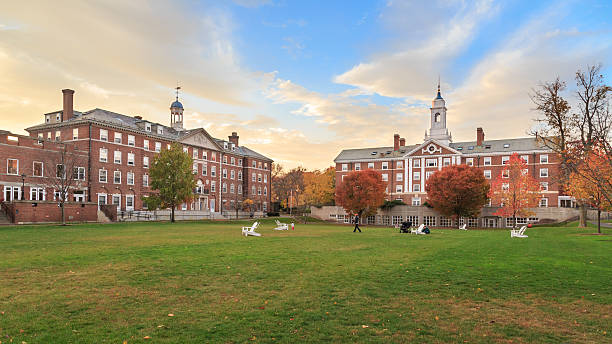
Harvard University | Courtesy Photo

The road to college

The road to college involves four years of complicated planning and complex scheduling. High school students are extremely busy – homework, extra-curricular activities in art and sports, campus clubs, all compete for their time. As if all that weren’t difficult enough, they have to make sure they get excellent marks in their courses and on the standardized tests. Their GPAs and SAT/ACT scores have to impress college admissions officers to really consider their application. If standardized test scores are no longer required by the schools to which your children are applying, their GPA is all the more crucial – it becomes the single, most important component of their transcript.         

I know several parents who enroll their kids in SAT prep courses as early as ninth grade and some independent counselors recommend that students sit for the SAT in 10th grade. However, I feel that taking the SAT this early isn’t necessarily the best course of action – students still have so much to learn and aren’t really ready for this test. Unless there are extenuating circumstances (if the SAT is a requirement for an advanced math course, for instance) that necessitate them to take it, I would suggest waiting a bit. I would recommend taking the SAT and ACT the summer before senior year. By then your children have accumulated as much knowledge as high school covered.

In the past 18 months tutoring service became a booming enterprise (and I don’t mean those offering test prep, which is a multi-billion dollar industry) for students who had difficulty during remote learning. While your children are now back on campus for in-person classes, they may be behind on some subjects so a tutor might still prove helpful. Find one that offers options to fit your student’s specific need and your family’s budget. A company called Mundo Academy provides excellent tutoring services in the Pasadena and San Gabriel Valley area.

FRESHMAN

Encourage your children to keep their focus on their schoolwork. By this time, they should have figured out what extra-curricular activities they are interested in pursuing and what sports they want to participate in. Give them guidance as they navigate this new phase in their school life, and support the choices they make.

SOPHOMORE

Depending on your children’s course choices and load, there could be standardized testing required of them. Your children should be taking AP exams following completion of the course while the knowledge they gained in class is still fresh in their minds. The best preparation for the exams is for your children to make sure they understand the subject matter and do well in all tests the teachers give in class. If there is something they don’t understand, they should right away speak to the teacher to ask for clarification or, possibly, find a tutor for additional help. The results of these standardized exams are required by some colleges.       

JUNIOR

Your children should be aware that junior year is the last complete year of high school performance that college admissions officers will see. They have to put more effort at doing well and getting good marks.

They should register for and take the PSAT, which is also the qualifying exams for the National Merit Scholarship. It is also a good time for your children to meet with their school counselor to make sure they are taking all the courses they need to graduate and apply to college.

Your children should also be keeping up with their extra-curricular and sports activities. College admissions officers look at several components as they try to assemble an incoming class made up of the best candidates to add to their student body. 

Several high schools in the area hold college fairs on campus. This is an excellent chance for you to see what the different colleges and universities are offering. Students get to meet and speak to admissions officers – usually the same people who would be reviewing your children’s application, reading the essay, and sitting around the table – who would be making their case for your children during the all-important decision-making rounds. Make sure you and your children attend these college fairs.

SENIOR

Your children should now be in the process of completing the common app, and finalizing their essay topic or personal statement. Unless recommendations can be sent to the universities online, your children should have provided the teachers who are writing their letters of recommendation with stamped envelopes.

Depending on what course your children are applying for, they may be required to send supplementary material (auditions or portfolios) with their application and they need to get those ready. Audition tapes for arts performance, for instance, can be uploaded on YouTube for easy access. Your children should check the website of the college or university to which they are applying about supplement material requirements. Your children’s school counselors are also a great resource as they are always in contact with college admissions officers.

Be on top of application deadlines; most schools offering Early Action or early Decision have to receive your children’s application by the 1st of November.  

You and your children should be researching scholarships. Some websites include: CollegeXpress, Fastweb, Free Application for Federal Student Aid, National Merit Scholarship Corporation, Scholarships.com, Scholarships360. You should also attend the financial workshops being offered at your children’s high school. Most high schools offer on-site guidance, with specialists who can answer your questions.

Your responsibilities as parents are limited to offering encouragement, guidance, and moral support as your children go through this stressful time. But while you need to let your children manage this process, you should also express your concerns and expectations. Communicate with your child, the counselors, and the teachers when you have inquiries. 

Be there for your children but learn when to get out of their way. Never try to communicate with the college admission officers as it is the surest way to sabotage your children’s chances for admission. Do not be overzealous about getting your children accepted to their dream university; there is a school out there that’s the right place for them. The counselors at your children’s school and the admissions officers at the colleges, or universities to which your children are applying, are actually the experts at finding the best fits. And while this may sound hollow at this time when you’re in the thick of college admissions, this is actually a wonderful learning opportunity for your children. Give them the chance to succeed on their own.               

September College Search Guide

Originally published on 1 September 2021 on Hey SoCal

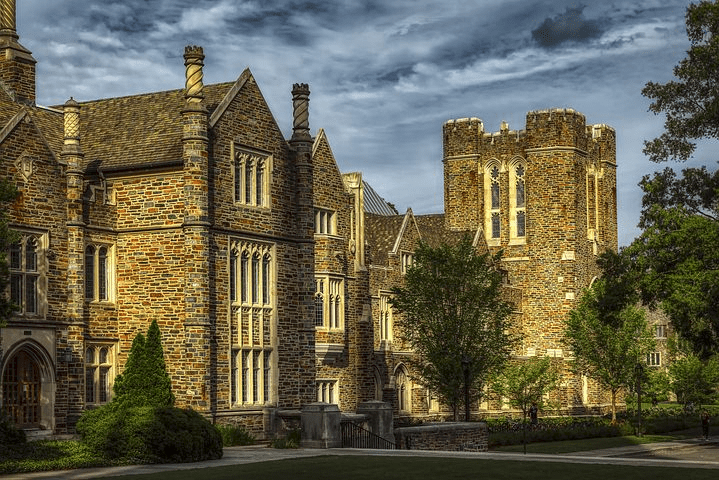
Duke University | Courtesy Photo

The road to college

Amidst the ongoing debate about the constitutionality of requiring every eligible student to be vaccinated or agree to weekly COVID-19 testing (Pasadena Unified School District was one of the first districts whose board approved the mandate), all schools in the San Gabriel Valley are now open for in-person classes.

With the troubling surge in infection cases from the Delta variant, it should be a welcome relief for administrators, teachers, parents, and other vaccinated students. The move could help bring some normalcy to our children’s school life. These students would like to resume the kind of learning that virtual classes could not replicate.    

Before I launch into the college guide, let me first touch on a topic that oftentimes causes family discord. School counselors tell their students to follow their passion when it comes to deciding what to pursue in college. That makes a lot of sense because people generally learn better when they’re studying something they are interested in. However, we also hear about research that finds STEM degrees are the most valuable, with the liberal arts the least valuable, to employers. Parents, anxious about their children’s earning potential, career future, and over-all financial stability, then discourage their children from taking liberal arts in college and push their children into the STEM field.

Employers, on the other hand, emphasize that they’re looking for applicants with excellent communication skills even when the job isn’t STEM-related. The conflicting information is enough to make anyone’s head spin. The one thing researchers and career advisors agree on is that earning a college degree will pay off in the long run. So whether your children are looking to get an engineering degree or are more interested in the humanities, the important thing is for you to support your children’s choice and help them be ready for college.                        

And that brings us to the College Guide. School administrators and counselors preach to their students that the college application process doesn’t start until the spring of their junior year and, therefore, they should just have fun and enjoy high school. While I agree that they won’t be applying until their senior year, the admissions process really begins on the first day of ninth grade. The components of their application is a compilation of their activities and accomplishments during their four years in high school. Hence, I advocate that your children start planning early on. Doing so makes a world of difference in their college search outcome.

FRESHMAN

Instill in your children good time management and organizational skills early on. High school is so much busier than what they’ve been through yet. These skills will help them have a happy, productive, and successful four-year experience.

If your children didn’t develop good study habits in lower and middle school, they need to buckle up and be serious about academics. Encourage them to immerse themselves in the culture of their high school and get involved in various extra-curricular activities that support their interests, and which they can carry on into the next three years.

Your children should find the time to meet with their school’s counselor to map out a four-year curriculum that meets all the requirements for graduating and going into college. Most colleges or universities require: four years of English; four years of mathematics; four years of science with advanced work in at least one of the three disciplines — biology, chemistry, physics; four years of a world language; three years of history, including American and European.   

They should take the most challenging courses they can handle. If their high school offers Advanced Placement (AP) subjects in ninth grade and your children decide to take the course, they have to be ready to take the exams after they complete it. Colleges usually only recognize 4s and 5s to show competency. Highly selective institutions also expect As on AP courses on students’ transcripts. 

I cannot emphasize enough that your children’s GPA is the single, most important component of their transcript. With several universities, like the UC and Cal State systems, dropping the SAT, students’ grades could very well be the determining factor for college-readiness.       

SOPHOMORE

By this time, your children should be fully transitioned into high school. They should be picking up where they left off — taking AP courses, working on extra-curricular activities they identified in their freshman year, etc.  

Practice exams for standardized tests are given in your children’s sophomore year so make sure they are registered for the PSAT (capacity is limited because of COVID-19 concerns so check to ascertain testing dates and that sites are open). Taking these tests will help them identify their weaknesses and study for them. Several companies and organizations offer test preparation courses (ACT: www.act.org; PSAT: www.collegeboard.com; Educational Testing Service: www.ets.org; Kaplan: www.kaplan.com; National Association for College Admission Counseling: www.nacacnet.org; The Princeton Review: www.princetonreview.com).

It may seem too early to do this, but your children can start looking at colleges that offer courses in their fields of interest. Or they can begin considering all possible options, if they haven’t determined what they are thinking of taking in college.

JUNIOR

This is a very hectic, even stressful, time in your children’s high school life. It is also the last complete year that college admissions officers will see your students’ grades and accomplishments. It is a critical year for them; they need to put the effort to show admission officers that they are capable of doing the work and are qualified for admission to the school to which they will be applying. If your children are thinking of applying to universities through early action/decision, their junior year grades and work will be all the more significant.

Aside from the rigors of school and extra-curricular activities, there are standardized tests to take. Your children should be taking the Preliminary SAT/National Merit Scholarship Qualifying Test (PSAT/NMSQT) early next month. I would like to remind parents not to put extra pressure on their children as they get ready for the standardize exams — they are stressed enough as it is, and a higher-than-average SAT score does not guarantee admission to their dream university.        

Normally, colleges and universities would be holding College Fairs on various high school campuses around this time. Your children’s school should update you if either in-person or virtual fairs will be held.        

SENIOR

It is going to be a marathon for your children! If your children are applying for early action/decision, they should have taken all the standardized exams required by the university during their summer after junior year. 

Make it a point to attend your children’s ‘Back to School Night’ – counselors will probably be giving parents information about the college applications that will be starting in earnest.  

The organizational skills that I have been talking about since your children entered ninth grade will be put to the test during their senior year. Encourage your children to create a calendar with standardized testing dates, counselor meeting schedules, and application deadlines. 

Your children should have a binder with separate sections for each college or university and a log of what needs to be accomplished for each, like: required standardized tests (SAT or ACT, SAT II grades; AP test scores, etc.); writing supplement; how many letters of recommendation they require; application fee; application deadlines..      

Ideally, you and your children have visited the colleges (even if you did it virtually) they are thinking of applying to. One of the first things they have to do is finalize the list of colleges and universities to which they will send applications. Eight was the norm when my daughter was applying, but students now are sending in 12 or more applications. This new normal, though, has only added to the competitiveness of the process. I would suggest limiting it to12 because applying to more schools doesn’t make a university with a 4% admission rate a more reachable goal.  

They should be ready to write their personal statement. If teacher recommendations are being sent to the schools instead of emailed, your children should also have provided stamped envelopes to the teachers.   

If you are applying for financial aid, be aware that the Free Application for Federal Student Aid FAFSA submission date starts on October 1st to align with the college admissions schedule. 

Research all scholarships available. Some online sites include: CollegeXpress; Fastweb; and Scholarships.com. Many schools use Naviance, which also provides students information about scholarships and assistance on how to apply.

It goes without saying that as busy as your children are when they go through the college application process, they should also get the best grades they are capable of. The colleges to which they are applying will require their first quarter grades if they’re looking to gain admission through early action or early decision.     

One factor that makes the college admissions process really stressful for parents is the feeling of not knowing what’s happening. School counselors generally only have time to meet exclusively with students, so parents feel shut out. However, there are books you can read to help demystify this process. A book I would recommend is called “Getting In! the Zinch Guide to College Admissions and Financial Aid in the Digital Age” by Steve Cohen, Anne Dwane, Paulo de Oliveira, and Michael Muska.

The professional guidance and insight the authors of this book provide will give you the ability to help your children navigate this complicated process. Use the book constructively; do not make it another source of stress for yourself and your children.

A book by Frank Bruni called “Where You Go Is Not Who You’ll Be” is a great read for both parents and students who are in the middle of college applications. It will help keep your expectations realistic and relieve your children of the pressure to get into the most selective universities.