A Noise Within Brings the Arts Into the Lives of Young People

Originally published on 11 June 2015 in the Pasadena Independent, Arcadia Weekly, Monrovia Weekly, and Sierra Madre Weekly

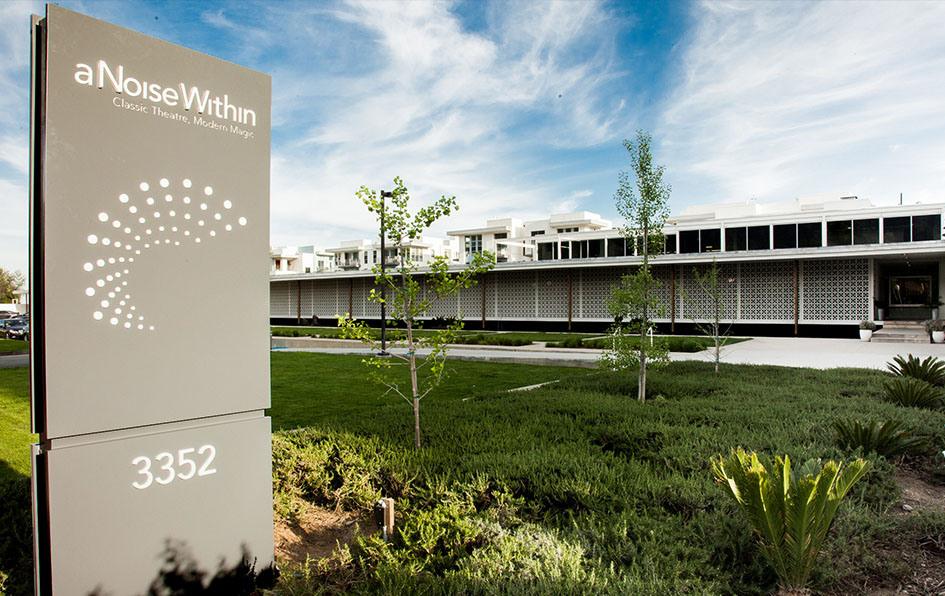
A Noise Within, a classical repertory company in Pasadena founded in 1991 by Geoff and Julia Rodriguez-Elliott, aims to produce world-class performances of great works of drama, to educate and inspire the public through programs that foster an understanding and appreciation of notable playwrights, and to train the next generation of classical theatre artists.

Its mission to educate is what led to the creation of the Outreach Program. According to Alicia Green, Education Director, teachers in 19 Los Angeles-area school districts align their curriculum to the theatre company’s scheduled season performances. Students then have the opportunity to experience what they learned in the classroom during the student matinee performance at the theatre, and participate in a post-show conversation with performers. 

Green said, “We care deeply about bringing the arts into the lives of every young person and strive to do so at every opportunity.”  

While it would seem that today’s youth prefers to communicate solely through texting, the reverse is what actually happens once students come in to the theatre. As Elliott put it, “What we found is that young people crave the experience to be part of a live performance. We saw a strange phenomenon – as actors walked by the audience to get to the stage, students reached out to them. They weren’t being disruptive or naughty – they wanted to know that these actors were real, breathing individuals. For some students this is a life-changing event.”

That young people need a sense of belonging and community is evidenced by the exponential growth of their Education Outreach Program since they started bringing them in during their 1993-1994 season.  According to Rodriguez-Elliott, there are now about 12,000 students from 130 different schools, from as far away as Ojai and Victorville, participating in it.

Adults are the typical theatregoers, but A Noise Within’s audience spans generations. Asked how they attract teenagers who grew up reading fantasy books, Elliott said, “Shakespeare is the original fantasy dramatist; he created the most fantastical situations on stage. Students learn his plays in 7th or 8th grade but found them dull and difficult to understand. But his works are not meant to be read, they are meant to be performed. When they are well-done and well-directed, the audience can feel what Shakespeare intended them to feel.”   

Rodriguez-Elliott added, “We have a multigenerational audience – at any given time, about 20 percent of our audience is made up of kids. And kids usually are the ones who have the ability to give themselves into the material, while adults get hung up on words they could not understand.”  

For some students, watching a play is a novel experience. Echoing Elliott’s remarks about the theatre experience as being transformational for kids, Green said, “Many of our students have never been to a theatre before, or seen a live performance. Seeing a page come to life is huge. They can relate to the material in a new, potentially more engaging way. Having the opportunity to interact with the text through on-their-feet study guide activities or in an in-class workshop and then see the show live, followed by a conversation with actors from the show creates an excitement that reading the book in class cannot.”

The 2015-2016 season’s theme of Breaking and Entering, A Noise Within’s 24th, features  protagonists who break down walls, enter unknown realms and search for the truth. As Elliott explained it, “In the context of our new season, breaking and entering can mean getting behind the walls of ignorance, even fear, and summoning the personal courage to step away from old notions in favor of a clear-eyed embrace of a new truth.”

That connecting thread links the six plays: A Flea in Her Ear by Georges Feydeau; Antigone by Jean Anouilh; All My Sons by Arthur Miller; Romeo and Juliet by Shakespeare; You Never CanTell, by George Bernard Shaw; and Six Characters in Search of an Author by Luigi Pirandello;  and entering its fourth season, A Christmas Carol by Charles Dickens, adapted by Elliott.  

A Noise Within is a true classical rotating repertory theatre which, according to Elliott, is unique in L.A. Three different plays can be on stage so someone can experience three very different and diverse performances within a week to a week-and-a-half period. Having a three-quarter stage so that the audience is closer to the performers and becomes part of what’s happening adds to the theatre experience.  

This brainchild of co-Artistic Directors, Elliott and Rodriguez-Elliott, has seen tremendous success since its inception and Pasadena has fully embraced it as part of its flourishing theatre community. Elliott said, “It has been a fabulous journey and it seems the universe is conspiring to make things happen … to make things right. And we will continue the same mission of ensuring access to a diverse audience. What will change is that we will be better at it. We are now embarking on a Five-Year Plan where we hope to improve our infrastructure and increase seating capacity to make it happen.”

For the thousands of students whose lives will change through exposure to theatre, it’s certainly not much ado about nothing.           

June College Search Guide

Originally published on 4 June 2015 in the Pasadena Independent, Arcadia Weekly, Monrovia Weekly, and Sierra Madre Weekly

The road to college

As the school year comes to a close, we will look at what your children have accomplished, and what benchmarks they need to achieve to propel them to the next school year. In the distant past, kids spent their summer just having fun, maybe working summer jobs, and not thinking about school for a while. But in today’s world, that is not what’s happening. First of all, the summer jobs are now being taken by older professionals, who could not have otherwise found gainful employment. Second of all, the race to be the better candidate for a highly selective school does not stop at the end of the school year.   

Today’s kids are constantly trying to fill summer hours with enrichment activities and going to third-world countries to dig up latrines. While I am not advocating that your children just lie inert for three months as a reward for having successfully finished one school year, I would suggest a less frantic pace.  Sometimes, letting their mind and body recharge would do more good than drilling for the PSATs, SATs, SAT IIs, ACTs, APs, and whatever other standardized test acronyms and initials are out there.

Having said that though, there is the reality that the gap between school years is so big that kids forget everything they learned then go back to school totally unprepared for the work. Parents should let their children have a variety of fun, educational, productive activities so they don’t become stale and uninspired. 

FRESHMAN

Ninth grade is behind them! Your children’s grades should indicate that they took high school seriously and that they put all their efforts at getting good marks. They should have already made plans for summer programs, internships and community service work.  They should engage in activities that truly reflect their passion. Instead of joining a group of kids building houses in Guatemala, they might consider an activity that would really mean something to them. Besides, College Admissions Officers see this on all the resumes they receive that your children would not be doing anything memorable. Encourage them to think outside the box, avoid the herd mentality. If your kids enjoy music and performance, for instance, they might consider organizing an original musical to be presented to seniors at your city’s retirement center. 

SOPHOMORE

Your children’s end-of-year marks in 10th grade should have improved over last year’s if they didn’t do well in their freshman year. College Admissions Officers want to see students who continue to better themselves. 

They need to take whatever standardized tests are required – ACT or June SAT subject tests are the norm. They also need to continue the community service activity they started last summer.  While it is advisable to show consistency for Admissions Officers to know that your kids have a passion for such work, they could do a variation of it; they don’t want to be monotonous.

They can start researching about colleges, specifically looking for the colleges offering the courses they want to major in.

JUNIOR

The school year that just ended was a pivotal one for your children as it would be the last full year that College Admissions Officers will see on your kids’ application. It should reflect your children’s efforts at getting the best marks they could muster, and an improvement over the first two years of high school. 

Make sure your children have their community service work, internship, and enrichment program ready for summer. These activities should be a continuation of the previous years’.   

This is going to be their busiest summer with standardized tests like the ACT, SAT, SAT IIs, and APs.  If they have not seen the colleges they are considering applying to, this would be their last chance to visit college campuses. You might consider making it a fun summer trip for the family (my daughter and I spent two weeks visiting universities as part of our summer vacation).

Your children should start thinking about their essay topic; meeting with their school counselor to make sure they have taken all the required courses for graduation and college (the UCs have their A – G requirements that need to be completed); and lining up teachers they would like to ask for recommendations.   

SENIOR

Well, your children have accomplished a major milestone – successfully completing high school and getting accepted into a college or university! This period in their life will never again be repeated, so let them revel in what they have achieved. Give yourself a pat on the back while you’re at it, you have been a major influence in whatever path they choose to take from here.

May College Search Guide

Originally published on 7 May 2015 in the Pasadena Independent, Arcadia Weekly, Monrovia Weekly, and Sierra Madre Weekly

The road to college

This is it – your children have reached the homestretch!  Freshmen are looking forward to their last month, relieved that they are almost done with 9th grade. Meanwhile, it is a bittersweet time for seniors as they anticipate the end of their high school career and spend the last remaining weeks with lifelong friends.

FRESHMAN

This is the last call for your 9th graders who need to improve their grades! Make them focus on staying on top of school and homework.  Get them up to speed on their studies and ready for  final exams. Their final grades will be on their transcript, one of the most important components of your children’s college application.

If their marks are not adequate for college acceptance requirements, they need to meet with their college counselors to arrange for remedial summer classes.

Remind them to get their summer projects lined up. If they need to get approval for a particular service activity they want to pursue, they need to speak to their grade level dean right away. Get them to spend their summer months in programs to supplement an art interest by applying for internships or jobs. Some Arts companies have internships that students have to pay for while there are a few that actually pay their interns to work during the summer. Get your children to research the various organizations in town or in nearby cities.

Educators from 80 selective universities around the country endorsed a seminal study released in January by the Harvard Graduate School of Education which recommended changes in the way students are assessed for college-readiness. Titled “Turning the Tide: Inspiring Concern for Others and the Common Good Through College Admissions”, it advocates for sustained community service in a few well-chosen areas. It isn’t the quantity of activities but the quality that’s important – admissions officers should be looking for depth of students’ intellectual and ethical engagement potential. The summer after their freshman year is the time for your children to find activities that truly speak to their interest and passion.        

The long summer months are also a great time for your children to read. Encourage them to read various genres and different authors. At the very least, reading will help them expand their vocabulary and expose them to different writing styles. This will come in handy when they write their personal statement and essays for their college application.

SOPHOMORE

Sophomore year is when your children have fully transitioned into high school. They are comfortable about how this phase fits into the whole secondary school experience. They have taken the practice PSAT, as a preparation for junior year when the results of the PSAT determine their eligibility for the National Merit Scholarship. They have also taken some AP tests, if they took an AP course.

Hopefully, your children have also done well in their studies, have maintained good grades this entire year, and have prepared for final exams. College counselors expect grades that are consistent, and if their freshman marks weren’t that great, their sophomore grades should at least show improvement over last year’s.    

Make sure your children have lined up their summer activities. These should be an extension or an expansion of what they did in the summer of freshman year. College counselors want to see commitment to a particular interest.

JUNIOR

Make sure your children have registered to take all the required standardized tests for college admissions. The UC system starts taking applications in October of their 12th grade, and if your children are applying through early action or early decision to other colleges, they need to have taken the SAT or ACT this summer. 

Your children’s final grades are extremely important! Eleventh grade is the last complete year that college admissions officers will see on the application and they expect grades that are either consistent with, or better than the first two years’. They need to prepare well for final exams.

SENIOR

If your children are still sweating it on the waitlist of their first-choice college, they need to  ensure their final grades are terrific! They should keep up with all other school and extra-curricular classes and send the college admissions officers any updates on awards and honors they receive. They should ask their college counselor if an additional letter of recommendation might be helpful. Keeping in touch with the admissions office reinforces their interest in attending the school if accepted.

They should have put a deposit on their second-choice school to guarantee them a place for the incoming class in the fall. Although, if they come off the waitlist on their first choice, they will lose this deposit.

Be there for your children to support them whatever the outcome of their college application. It has been a significant phase of reaching adulthood and was a very important learning experience. In the end, what matters is not where they had been accepted; the college they attend will not guarantee success in the real world. It’s how they use their education that determines how well they do in life.

April College Search Guide

Originally published on 7 April 2015 in the Pasadena Independent, Arcadia Weekly, Monrovia Weekly and Sierra Madre Weekly

The road to college

FRESHMAN

There are only two more months left in the schoolyear. Your 9th graders should be on track on all their academic grades and extra-curricular activities. They need to put extra effort into getting the best grades they could muster. They also should have already lined up summer activities – enrichment programs, summer camps, volunteer work or part-time jobs. 

A recent study released by Harvard’s Graduate School of Education calls for schools to emphasize both ethical and intellectual engagement, with 80 of the nation’s institutions of higher learning endorsing it. This means that if they were to implement the recommendations put forth, colleges to which your children will later apply would like to see kids who truly showed commitment to the activities they began. They will want to see one or two important community service work students engaged in for a sustained period of time.

All these – grades, arts, athletics, community work, employment – from 9th through 12th grade, will be recorded on the transcript that your children’s high schools will send to the colleges to which they apply.   

SOPHOMORE

Make sure your children have registered for all the standardized tests they need to take in May or June (Possible SAT II tests for 10th graders are Math, Chemistry, History and Foreign Language. These are the subject tests that selective universities require.) Deadlines are April and May for tests in May and June.  Students are responsible for registering through the College Board website: www.collegeboard.com.

They should line up their summer activities. If they are taking an Art elective, or are interested  in a particular art field, they should consider a summer program in that course to put on their resume.

JUNIOR

This is the last complete academic year admissions officers will see when your children apply to colleges. They want to see grades that are improving from year to year, so the 11th grade final marks should be the highest on the report cards. If your children had gone on college campus tours during spring break, they should also know the academic requirements of the colleges to which they are thinking of applying. They need to look at where they are grades-wise to figure out if the school on their list is a realistic goal.

Make sure your children have registered for the SAT, ACT (www.act.org), SAT II, AP especially if they are thinking of applying through early action or early decision.

They need to line up all their summer activities – enrichment programs, summer camps, volunteer work or part-time jobs. 

SENIOR

Some California universities sent out their decision letters mid-March, while for some students this is month they’ve been waiting for. If your children are lucky enough to be accepted to all the schools to which they applied, they deserve a big congratulations!  You can all exhale now! 

Now comes the part where your children get to choose the school they really want to attend.  During the application process, your children were hoping the colleges to which they applied accept them. Now the colleges that accepted your children would like your kids to choose them!  In this rank-obsessed world of American universities, the schools encourage all students to apply to them (they actively recruit students they would never even admit because the more applications they receive and the more rejections they send out, the higher they’re ranked.) Now, the tables are turned because once your children get the schools’ acceptance letter, these schools would want to ensure your kids actually attend their college. This is the yield: the higher their yield, the higher their ranking.  

If your children are applying for financial aid or scholarships, now is the time to compare schools’ financial aid or scholarship offers. If a particular school really wants your children, you might have the opportunity to ask for a better package than what it originally extended.

If your children have been waitlisted to a school they are determined to get into, they need to respond quickly to let the admissions officers know that they are very interested. Your children should send a follow-up letter to express that the school is their top choice and that they will definitely enroll if accepted.

Demonstrated interest is all the more critical at this juncture as your children want to ascertain the admissions officers keep them in mind. Encourage your children to work with their high school’s counselor to make sure they send the transcript for the first semester, and any updates on awards and honors received after they sent their application. Your children need to keep in constant touch with the admissions officers.

The admissions office requires a decision from accepted students on May 1st. Make sure your children accept the offer of their second choice school where they have been admitted, and pay the required deposit. If your children are later accepted to the school to which they were waitlisted and accept that offer, they will lose the deposit on the other school. But it’s their guarantee that they will be attending a college in the fall.      

The Huntington Library Supports the Common Core Curriculum

Originally published on 9 April 2015 in the Pasadena Independent, Arcadia Weekly, Monrovia Weekly, and Sierra Madre Weekly

Henry Huntington may not have known it at the time but his bequest is not merely a showcase of important art and historical artifact, it is also an instrument in shaping America’s future.

Through the Huntington Library‘s Teacher and School Programs, educators receive training on how to incorporate the Library’s vast collection of books, art and gardens in the implementation of the Core Curriculum. Huntington’s educators collaborate with teachers in developing lesson plans, which are nationally available online. Teachers from K-12th grade choose from 12 programs to provide their students appreciation, engagement and understanding of various subjects.   

Programs in Art include:  European Voyages where students in grades 4 through 8 explore 18th century British and French art in the Huntington mansion. In Discovering Art, kindergarteners through 2nd graders are introduced to basic concepts as line, shape, color, and texture. American Adventures dialogue tours introduce critical thinking and speaking skills to 1st through 12th graders using artwork from 1700 – 1980, while theme based tours encourage students to look, think, and discuss their ideas and perceptions.

Some of the Garden Programs are: Soil, Seeds and Surprises, which acquaints students in kindergarten through 2nd grade with botany. Students from grades 4 through 12 experience the Japanese Garden as an art form and contrasts it with a traditional European-style garden. Poetry in the Chinese Garden engages 4th through 12th graders in verse as they compose two-line poems inspired by the beauty they behold.  

The Library Programs cover: Explorations in American History for grades 5, 8 and 11 is designed to complement the American History curriculum. In Paper, Pens & Prose, students in grades 4 to 9 learn how books were produced, how paper and inks were made, and what scribes used to write.    

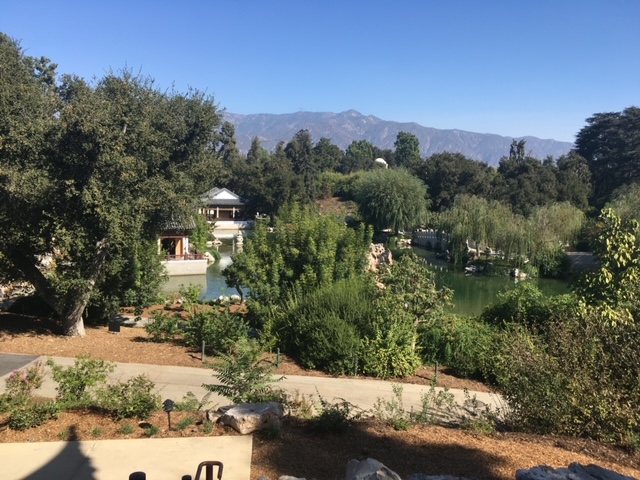
The Chinese Garden at The Huntington | Photo by Brianna Chu

The Huntington Library encourages teachers to use its grounds and facilities to make the learning experience enjoyable for students. Mikki Heydorff, Volunteer and School Programs Manager, would like educators to know about school field trips at no charge every Wednesday, Thursday and Friday from October through May. From 10:00 to 11:30 every morning on these three days, teachers can come in with their students to visit the Library and its gardens on docent-led  tours. To take advantage of this opportunity, teachers have to sign up on a first-come first-serve basis, starting August 1st, to reserve a date.

Educators, too, can take advantage of the many summer activities at the Huntington.  In its 11th year of implementation, Shakespeare at the Huntington is a three-week course for high school English and Drama teachers focusing on training through performance. Shakespearean educator Louis Fantasia and an international faculty train 6th to 12th grade teachers on development, scene analysis, acting and directing techniques. Getting your Green Thumb classes for teachers cover garden planning, gardening techniques and curriculum connections. Information on field trips, lessons plans, and interactive media are available on the Huntington’s website www.huntington.org under the Education page and teacher resources.

To ensure that it continues to support its various education efforts, the Huntington Library  embarked on a major expansion project. The $68 million renovation made possible through private donors will open this Saturday, April 4, as the Steven S. Koblik Education and Visitor Center.  It raised another $10 million to endow the new facilities’ operations. The project consists of 52,000 square feet of educational space and visitor amenities replacing existing construction built in1980 that no longer accommodated the needs of its visitors, scholars and staff. The Visitor Center features a 400-seat auditorium, a large café with indoor-outdoor seating and garden views, four multi-use classrooms, meeting and event areas, and an orientation gallery. 

This latest renovation followed the recent opening of the Huntington Store, a new specialty coffee shop, and a new full-service admissions and membership section.  

From its first opening in 1919, when Henry Huntington bequeathed his vast collection and botanical gardens to enrich visitors, it has grown into an internationally known research center for scholars, an important destination for tourists, and a tranquil retreat for locals. Every year 600,000 visitors come to the Huntington Library to experience its impressive collection of magnificent art, rare books, significant manuscripts and botanical gardens. Its education programs offer school visits, tours and hands-on activities to 20,000 students annually. More than 10,000 people participate in its public programs including classes, workshops, performances, and lectures.  

How monumentally proud Henry Huntington would have been if he were around to witness how his precious legacy is being utilized and preserved!

School District Highlight: Duarte

Originally published on 14 May 2015 in the Pasadena Independent, Arcadia Weekly, Monrovia Weekly, and Sierra Madre Weekly

It isn’t a common occurrence for high schoolers to conduct real-life experiments at a nationally recognized research center. For rising 11th and 12th graders at Duarte High School, ‘Home of the Shoulder-Tapped Graduates,’ however, this is just part of their high school experience.

Located at the foothills of the San Gabriel Valley, Duarte High School is one of two secondary schools in the Duarte Unified School District. It has a total enrollment of 1200 students, 90% of whom are minorities; 48% male and 52% female; with a total of 41 teachers. It was recognized as a California Distinguished school in 2007 for its high test scores and academic achievement. Newsweek magazine thrice named it one of the top public high schools in the United States.

According to Mark Sims, principal of Duarte High School, the school provides both college and career pathways. There are three college counselors and one Regional Occupation Program (ROP) Specialist for the 250 seniors. They offer 12 AP courses and have a graduation rate of 98-99%. Over 80% of Duarte High seniors attend college after graduation, one of the highest levels in the San Gabriel Valley. It is also the only institution in the area offering an Early College program. Graduates of the 2011-2012 school year were the pioneers in completing a high school diploma and 30 college credits simultaneously from Citrus College.    

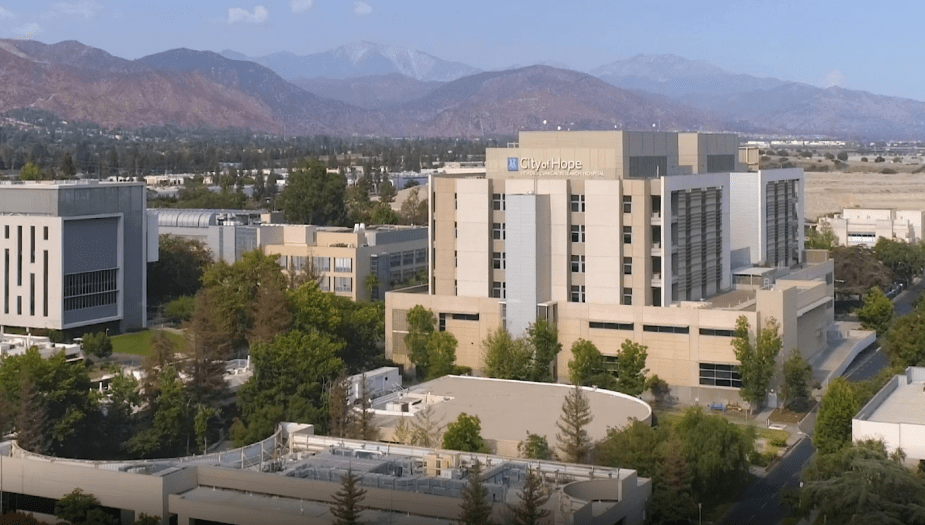
Under the leadership of Terry Nichols, DUSD Superintendent, the district continuously looks for opportunities to collaborate with various organizations in an effort to provide the most enriching academic and learning environment for all their students. Duarte Unified School District was selected as a finalist for the National Health Initiative Grant and has since collaborated with City of Hope to create the Science Education Partnership Award (SEPA). Through SEPA, Duarte High School aims to engage more students in science and help create a path to STEM (Science, Technology, Engineering, and Mathematics) jobs in the future. Beginning as early as kindergarten, students at Duarte Unified schools learn and work alongside world-class scientists and instructors in City of Hope’s Community Teaching Laboratory.

SEPA’s summer research program allows accepted students to: collaborate on actual cancer research activities; interact with scientists and learn from college and graduate-level instructors who act as mentors; experience an interactive learning environment focusing on teamwork and emphasizing leadership development; learn to read real scientific paper relating the research topic; take part in an end-of-summer celebration where they are honored for completing the program and present their research work to family, friends, and the community; and have the opportunity to continue doing research with City of Hope scientists during the academic school year.

The district also created the first customized version of the Pathways in Technology Early College High School (PTECH) model in California through a partnership with City of Hope and Citrus College, which launched during the 2014-2015 school year. Calling it the T.E.A.C.H. Project (Train, Educate, and Accelerate Careers in Healthcare), this academy gives the opportunity for 9th thru 12th grade students to graduate with both a high school diploma and a low (or no) cost Associate in Information in Technology degree. It equips students with marketable skills to gain employment in the very competitive health industry.

Students enrolled in the T.E.A.C.H. Project receive mentoring, job shadowing and internships offered by City of Hope. Through it, they interact with scientists, healthcare professionals and educators who are experts in their field, and gain the knowledge and experience necessary to build careers in health information technology. Because of the district’s large percentage of students within underrepresented groups in the science fields, the T.E.A.C.H. program has been customized to meet their needs and engage their interests.    

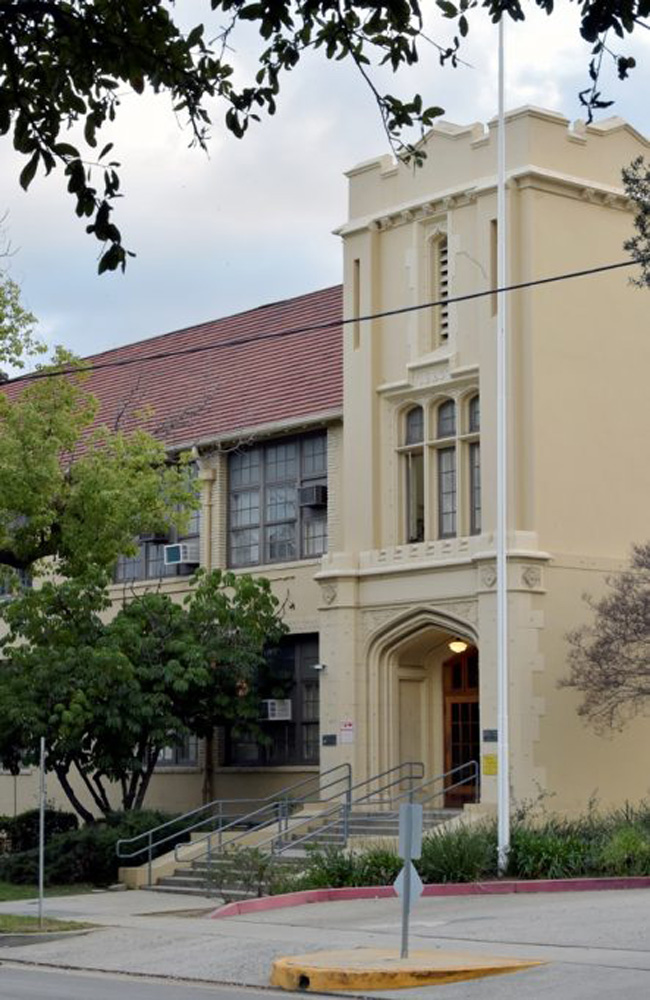
Photo take from Duarte High School College Acceptances

At Duarte High, College Fairs as well as Career Days are held throughout the year. Presenters at these events represent college and career pathways in the Arts, Media and Entertainment; Business/Support Services; Health and Human Resources; and Technology and Engineering fields. Some of the companies and organizations that participated in this year’s event include:  City of Hope, California Highway Patrol, The Art Institute, Computer Scientists, Ready Pac Foods, and Civil Engineers, to name a few.

The district also has a unique mentoring program called Shoulder-Tapped Empowered Protégés or S.T.E.P. that matches students with local mentors resulting in long-lasting relationships. Forty-five mentors who are community leaders and business owners provide guidance, support and encouragement to students who have been identified as needing additional support to seek college and career choices. These mentors meet with their mentees at the Mt. Olive or DHS  campuses, and through text, email and video conference. Community partners include Caltech, JPL, USC, APU, L.A. Sheriff’s Dept., Youth Activities League, Foothill Federal Credit Union, and others.  

In 2010, the district passed Measure E, a multi-million dollar bond that led to the construction of facilities designed for a 21st century learning environment. The bond provided for modernization projects at all schools including a brand-new, state-of-the art stadium, cafeteria complex at the middle school, a high school culinary arts classroom and bio-tech laboratory. This measure enabled Maxwell Elementary School to build a digital media library and collaborative classroom outfitted with multiple computer stations. It also expanded the original cafeteria to include an outdoor lunch shelter area and newly constructed central office building. The school is now pursuing authorization to be an International Baccalaureate institution. 

According to Jenny Owen, DUSD Chief Communications Officer, every classroom throughout the district also has a SMART Board and each student from 2nd thru 12th grade is provided with a laptop computer to use in class; 7th to 12th graders even take them home each day. They also provide parents, who are not tech-savvy, with training on computers. The district partnered with the non-profit organization One Million NIU (New Internet Users) to implement the Technology Redeployment Program (TRP), Parent Engagement through Technology Program (PE+T) and Affordable Broadband Internet Service Program for families without access.

Not only are Duarte Unified School students fit for 21st century learning, they are also physically fit for the rigors of daily activities. Last year, Northview Intermediate School opened its new Live Positively Fitness Center as one of three schools to receive a grant provided by the National Champion Schools Campaign run by the national Foundation for Governors’ Fitness Councils. There were over 200 other schools in California who vied for this competitive grant. The fitness center is open to all Northview students daily during their Physical Education class.

Recently, Duarte High School students competed in SkillsUSA in the Broadcast News competition at the state level and won a Gold Medal. This qualified them to represent California at the Nationals, which will be held in Louisville, Kentucky. This marked the second time in three years that the school’s team earned a gold medal to go on to nationals. The school also had another team which competed in the Business Entrepreneurship competition at regionals and state level and won a Silver Medal at the Regionals to compete in state.  

At a time when schools are cutting back on arts and music classes because of budget cuts, Duarte Unified has made them a priority for the district! Duarte High School and Northview Intermediate School were awarded 67 instruments, worth $97,693, through the Mr. Holland’s Opus Foundation, with support from the Green Foundation (a non-profit organization dedicated to supporting institutions that focus on arts outreach and education). DUSD also formed a long-term partnership with other organizations, including Arts for All, to support the ongoing development of their music education initiative. At Duarte High, band and choir continue to earn awards and championships in their divisions.

The athletic programs at Duarte High continue to excel as do the arts. The girls volleyball team won the Montview League Championship title and went on to play in the final CIF Championship game. The girls basketball, boys tennis and wrestling teams went undefeated this season earning them all Montview League Championship titles. This is the third consecutive year the boys varsity tennis team has earned this honor, and the wrestling team set the record for most members earning a position into CIF with ten. Duarte High School’s girls soccer and volleyball coaches were selected as the San Gabriel Valley’s 2015 Coaches of the Year.

Duarte High School students interested in performance arts joined The Latino International Film Institute (LIFI) “Cinema Project” now on its second year of production. This venture has attracted the interest of actor and director, Edward James Olmos, who runs this endeavor. He is being supported by actress, Jessica Just, and supervising producer of “LA Business Today”, Polo Munoz.  The students participated in a film-making workshop which featured actors and directors, including Miriam Kruishoop, Carlito Rodriguez, Junior Gonzales, Arthur Fishel, Kainoa Kilcher, and Q’orianka Kilcher. 

The Duarte High School video production class assisted in the creation of four episodes of “LA Business Today” and the Culinary Arts class provided the food services for the production team and crew during the shoot. “LA Business Today” is a local 30-minute television interview program broadcast on Channel 35, providing information about business in Los Angeles. It features interviews with economic forecasters, economic policy planners, business educators, and founders, CEOs, CFOs, and managers of important businesses in Los Angeles. 

Students also interned at the Southeast European Film Festival (SEEFest) with Culinary Arts catering; Video Productions filming and interviewing actors, directors, and producers. This collaboration with LIFI gives Duarte High School students the opportunity to work with professionals in the field and exposes them to the craft they are passionate about.   

There is so much going on at Duarte Unified School District! With all the opportunities available for the student population, it’s surprising there isn’t a mass migration into the area!
Pasadena Educational Foundation’s Summer Enrichment Program

Pasadena Educational Foundation at PUSD | Photo by Terry Miller / Beacon Media News

Originally published on 12 March 2015 in the Pasadena Independent, Arcadia Weekly, Monrovia Weekly, and Sierra Madre Weekly

The Pasadena Educational Foundation, a community-based non-profit organization, was established in 1971 to support, enhance, and supplement the programs, initiatives, and priorities of the Pasadena Unified School District. Twelve years ago began offering a summer enrichment program for students in Pasadena and neighboring cities. Its slate of classes combines academic, athletic and art subjects designed to engage children in a fun and stress-free environment. The half-day schedule leaves students ample time to enjoy their summer break while keeping their minds ready for the school year ahead.

For PEF’s new Program Manager, Jamie Powell, and Marketing Director, Monica Bosserman Lopez, the summer program actually began in the fall, just as students were settling into the new school year. Teachers were lined up and they submitted proposals for what subjects they are planning to teach, last October. In December, Powell had the roster of classes; in February, brochures were printed and the first outreach effort launched.  

The success of PEF’s programs ensures its return every year and with it, now locations may be added.  The program runs from June 15 through July 16, Monday through Thursday. For incoming kindergarten and 1st grade students, there is a self-contained class that runs all three blocks. For 2nd through 8th graders, they have a choice of three blocks. High schoolers have one block to choose a prep course. The K-8 programs are from 8 am – 12pm; 9-12 programs are from 9 am – 12 pm.

This year’s participating schools are: Don Benito Fundamental (K-6); Franklin Elementary (K-6); McKinley (K-8); San Rafael Elementary (K-6); and PUSD headquarters (9-12). Online enrollment registration (www.pased.org/summer) is going on now until May 29 and you can view available classes in real time. As classes fill quickly, you need to register right away. If you’re applying for scholarships, you can also apply online with proof of eligibility and it’s at first-come, first-serve basis.

Tuition for the summer programs are:  PUSD students (K-8) $420 for the first student; non-PUSD student (K-8) $500 for the first student; PUSD student (9-12) $250 for the first student; non-PUSD student (9-12) $300 for the first student. Each additional sibling student gets a $25 discount; there may be an additional materials fee for some classes. Tuition balances must be paid in full by May 29.

According to Powell and Lopez, two exciting classes available this year are 3-D Printing and Robotics (Beginner, Intermediate and Advanced), both offered at McKinley. Robotics and 3-D Printing are also offered at Don Benito. Language Immersion Program in Spanish is available at Franklin and San Rafael; and Mandarin is offered at Don Benito.

For teachers taking part in the summer program, it is an opportunity for them to indulge in a favorite hobby, like doll-making, and to share that interest with a roomful of young learners. Still for some teachers, it is a chance to expand on lessons and subjects that don’t fit in the regular school year.  

PEF’s summer curriculum fills and addresses the needs of all students, ranging in age from four years to 18 years old. With a wide range of courses on offer, children are sure to find an activity that piques their interest and passion. 

Introduction to kindergarten classes prepare young children for school with language arts, math, art and music. Introduction to first grade eases the transition from kindergarten to first grade through thematic activities in reading, writing, and math. 

A quick glance at PEF’s brochure reveals a potpourri of useful classes for elementary and middle-schoolers. For those struggling with writing, a tool like Thinking Maps helps students  get organized in a fun way. In the language arts, students can learn writing in several genres including fiction, non-fiction, and poetry. Meanwhile, book lovers and reluctant readers alike can take a Book Club class. Round table discussions explore characters, plot, theme, conflict, and resolution.

In the field of Visual Art, an art studio class exposes students to drawing, painting, collage, printmaking, and sculpture to help them create their own original artwork. Dual emphasis on technique and creative expression is taken in this class. In Performing Art, there is creative dance — from ballet, to jazz, to modern; theatre class touches on acting exercise, improv and pantomime. Music classes in violin, recorder and ukulele are offered.

Craft classes in jewelry-making, knitting, embroidery, and folk-art dolls have students working with a variety of threads, yarns and needles.

On the STEM (Science, Technology, Engineering and Math) program, students can take marine biology, botany, physical science, space engineering, algebra or computers. In Math City, future urban planners learn, apply, and combine geometry with money skills to design, purchase, build and measure a neighborhood of a model city. They then make money by renting the spaces in their finished construction.

To keep students active and healthy, athletic activities like golf, soccer, and tennis, are offered. For the culinary inclined, cooking is taught along with nutrition, using math and science. They learn to prepare food using basic recipes from various cultures and get to taste their creation.

For high-schoolers, the summer program offers test prep classes in SAT and ACT, provided through another non-profit organization, College Access Plan (CAP). Students get instruction on all three SAT areas (Critical Thinking, Math, and Writing) using video, online, and in-person content delivery. The program will also help prepare kids for the college application process with workshops on choosing colleges, scholarships and personal statement. 

A Graphic Design class is also available for high-schoolers, which incorporates design and 3-D printing. Using software programs like Adobe Photoshop, Adobe Illustrator, Adobe InDesign and 3-D modeling software, students explore the world of graphic design in a creative environment.

With all these courses on offer for Pasadena’s youth, they can spend their summer productively, while enjoying their various pursuits. What a great time to be a student in Pasadena! 

School District Highlight: El Monte Union High

Originally published on 12 March 2015 in the Pasadena Independent, Arcadia Weekly, Monrovia Weekly, and Sierra Madre Weekly

The headline on College Board’s website on February 6, 2014 screamed: The El Monte Union High School District Named the College Board’s Advanced Placement District of the Year!

For Maria Elena Navarro, Assistant Principal for Student Services, it was a validation of South El Monte High School’s mandate to send all their graduates to college. She works with a group of educators including Violetta Heilemann, guidance counselor, and George Reyes, career guidance coordinator, tasked with assisting their students to finish in the marathon that is the college admissions process.

Situated below the I-10 freeway in the San Gabriel Valley, South El Monte High School, has a total enrollment of 1,431, with 731 males and 700 females. It has a predominantly Hispanic make-up at 95.67 % of its population, with the remaining 4.33% of various Asian descent. Spanish is the spoken language of 72.96% of their student population; English is spoken by 23.34%. They have 63 teachers, with a student/teacher ratio of 23:1; one librarian, and an instructional coach. It is one of seven high schools in the EMUHSD.        

The school’s proactive approach towards a post-secondary career for their charge covers the steps students need to follow starting in 9th grade through 12th; the academic and proficiency requirements of the University of California and Cal State University system. They introduce 9th graders to the personal statement portion of the college application process as well as the opportunities for challenging courses.  There will never be a more prepared group of students to enter the gates of South El Monte High School, or any high school for that matter!

Students are required to take a minimum of two years of history/social science; four years of English; three years of math; two years of laboratory science; two years of foreign language; one year of visual or performing art; and one year of college-preparatory elective. South El Monte High School offers 13 AP courses in the five core subjects plus art.

South El Monte High School offers a variety of athletic activities boys and girls can join. The entire student body cheers for the Eagles teams in basketball, cross-country, football, soccer, softball, tennis, track & field, volleyball, and wrestling.  

As counselors and coordinator help 9th graders fully transition into high school life, they coordinate a parallel effort for 10th through 12th graders. They hold scheduled conferences and meetings with students and parents to ensure everyone is on track not only for graduation, but eligible to continue on to college. They hold essay writing and Cash for College workshops; they lead college campus tours.  

Through the district’s Partnership for College, SEMHS students have a guaranteed one-time priority registration to Rio Hondo Community College then transfer to either University of California Irvine (UCI) or the California State University Los Angeles (CSULA), if Partnership for College criteria are met.

The district’s excellent AP testing achievement owes some of its success to their Advancement Via Individual Determination (AVID). Through this program, teachers and administrators provide their students support, motivation, and preparation for success in AP courses. Indeed, this singular focus has resulted in an increase in student participation in AP by six percent annually; an increase of AP students earning 3 or higher on at least one AP exam by five percent annually; and an increase in the percentage of traditionally underserved minority AP students earning a 3 or higher on at least one AP exam by ten percent annually. In 2013 55% of EMUSD students scored 3 or higher and in 2014 the district increased it by 62 students.

However, much of the school’s enviable accomplishment is due to the college and career culture created by teachers, administrators, and guidance counselors, which helps students realize their full potential.  And, seen in this light, students themselves are the ultimate achievers and therefore deserve the recognition.  

Of the 322 graduates of the class of 2014, 50 students attended the University of California schools; 59 enrolled in the Cal State System; 168 went to community colleges; 11 matriculated to other colleges and universities, including two who went to Georgetown and one to Stanford University; with the rest joining the armed services or going to vocational schools.

As one class of South El Monte High School ends its successful journey, another class arrives in the fall.  As in years past, students are introduced to a career preparation curriculum through the California College Guidance Initiative (CCGI). During the 9th and 11th grade College Nights, professionals in various fields come in to speak to them about their particular area, what they need to accomplish in high school to be eligible to take a post-secondary course, and the opportunities that await them when they successfully earn their degree.

All this forward thinking and planning give much hope for every single student coming into South El Monte High School. Many of them are first-generation students; some will be the first in their family to graduate from college.  But each of them will achieve that for which we all strive – a chance to live the American dream!

Pasadena Museum of History’s Junior Docent Program

Originally published on 12 February 2015 in the Pasadena Independent, Arcadia Weekly, and Monrovia Weekly

They’re artists, entertainers, scientists and world-travelers. These words describe the former occupants of this glorious mansion on the southwest corner of Walnut Street and Orange Grove Blvd., Pasadena’s famed Millionaires’ Row. Now the Pasadena Museum of History, this Beaux Arts mansion was designed by architect Robert Farquhar, and built in 1906 when Eva Scott and her husband, Dr. Adalbert Fenyes, downsized. Their first Pasadena home was a 33-room Moorish mansion complete with stuffed peacock, a far grander residence than this mere 18-room house. It was home to four generations of the Fenyes clan until 1973.

I learned about the remarkable Fenyes family one Friday morning when I joined a group of 3rd graders from Roosevelt Elementary as our junior docent, KC Young, from Marshall Fundamental School, told us the story of Eva and the doctor. KC led us to a child’s bedroom on the second floor where she showed us an elaborate doll’s house and then to the master bedroom where a vanity held Eva’s grooming items like her brush etched with the distinctive Fenyes crest.

We went downstairs to the studio where an ancient Victrola shares pride of place with a grand piano. Eva played four instruments – guitar, piano, mandolin, and violin – and entertained extensively. They staged elaborate shows here and at one end of the room, a staircase leads to a platform where an orchestra played the musical accompaniment for performances and parties. It was also where Eva painted her portraits and landscapes. Eva’s wide circle of friends included many artists and her home became the salon and meeting place for the flourishing art colony in Pasadena.

Fenyes Mansion | Courtesy Photo

Our group’s last stop was the kitchen where we inspected the stove, icebox, bread toaster, irons, even an old Bissell rug cleaner, the precursor to a household staple, the vacuum cleaner .We were all intrigued by the ‘call box,’ which had the names and rooms of the various occupants of the mansion. The Fenyeses summoned their servants using this contraption, a more ‘modern’ version of the one American audiences see when they watch Downton Abbey on television.

KC Young is one of 31 junior docents for the Pasadena Museum of History. The Junior Docent Program began in 1988 as a collaborative project between PMH and Pasadena public and private schools. Through its peer-teaching method, exceptional students in 7th and 8th grade develop skills in leadership, time management, and public speaking. It fulfills the social studies standards mandated by the state and offers students an early introduction to community service.

According to Brad Macneil, PMH’s Education Program Coordinator, his challenge is getting young kids excited about life and culture in Pasadena at the turn of the 20th century, and how these contrast with the present day.  He has been spearheading this program for 14 years and is proud with what it offers – a rare opportunity for students to teach other students in a way that is quite different from how other tours are conducted.

In the fall, a select group of 7th and 8th graders undergo seven two-hour sessions on Wednesday afternoons. They learn everything there is to know about the mansion, its former occupants, and all the prized collections housed in this grand residence. Upon completing their course, these young docents give their first tour to their families. They are then tasked with leading tours for 3rd and 4th graders of PUSD in late winter and spring; junior docents give several tours in the duration of their term. Senior docents accompany them during their interactive tours to evaluate and coach them to perfect their touring skills. However, they don’t have memorized scripts to follow; they conduct tours the way that is comfortable for them.  

The day I was there, my first guide, KC Young, was the storyteller who engaged me and the 3rd graders with her inimitable enthusiasm and verve. I took a second tour and my guide, Preston Kealing, was the learned professor who taught me and 4th graders from Jefferson Elementary School how the Fenyeses’ remarkable personalities permeated Pasadena society and influenced the world of politics. KC and Preston had very different styles of imparting knowledge, yet they both conveyed the Fenyeses’ significant contribution to Pasadena’s culture and history.

At the end of the morning’s tours, all students and their docents gathered at the foyer where we all shared what we thought was the most interesting part of the experience. Asked what some students would like to take with them from 1906 to 2015, some said they would take the doll house, or the monkey cage, or the Victrola. While they each had a different idea of what was most memorable about this mansion, they all agreed that it had been a fun way to learn. 

I was amazed at how much I learned from 12 and 13-year-old students; I left the Fenyes mansion more aware and enlightened than when I first arrived. I am convinced the Junior Docent Program is as much a valuable Pasadena treasure as any mansion on Millionaires’ Row. 

Roy Boulghourjian Pumps New Blood into the Pasadena Unified School District

Photo by Terry Miller | Beacon Media News

Originally published on 26 March 2015 in the Pasadena Independent, Arcadia Weekly, Monrovia Weekly, and Sierra Madre Weekly

His is an inspiring immigrant’s success story, which began inauspiciously halfway around the world. Today, he is an elected member of the Pasadena Unified Schools District’s Board of Directors.

Roy Boulghourjian fled Lebanon in October of 1982 to escape the ugly civil war. His early years in his adopted country were spent in the construction industry where he toiled for two years. He later moved on to a better job in the diamond wholesale business and worked as an appraiser, sorter and sales manager.

Profoundly grateful for the new life and opportunity that he had been given, Boulghourjian decided to give back to the community. Through his church in Glendale, he volunteered to teach ESL (English as Second Language) to immigrants on welfare. And this was when the teaching bug bit him.

Boulghourjian left a well-paying post in the jewelry business and proceeded to teach full time. He taught high school Math and Economics in both public and private sector. He then went on to serve as vice principal for two private high schools, in Pasadena and Canoga Park, where he stayed for several years. During this time, he also got involved in Pasadena politics and became a board member of the Pasadena Educational Foundation (PEF). He currently sits on the Finance Audit Committee of PEF and the Measure TT Citizen’s Bond Oversight, and ACT Pasadena.

In 2011, Boulghourjian was invited to be Principal for a Day at Marshall Fundamental School and he saw first-hand the Pasadena high school experience. And he was pleasantly surprised at what he learned! He realized that all the gloom and doom he had been hearing about the Pasadena educational system was unfounded.

This singular experience led Boulghourjian to start visiting various high schools in Pasadena. Everywhere he went, he found teachers who were caring, knowledgeable and capable of educating young minds. He met students who were polite, diligent and ambitious. He started advocating for Pasadena public schools.

Image taken from Pasadena Now

Boulghourjian joined Mt. Sierra College in 2011 as Adjunct Professor of Math and Economics. In two years, he moved up to become Department Chair of the Business and General Education Department.

The eye-opening experience Boulghourjian had the day he served as principal remained in his mind and compelled him to run for a PUSD seat. During a panel discussion among the candidates held before elections, they were asked what the district’s challenges and opportunities were. He said Pasadena’s greatest asset is its wealth, its people, its organizations, and its business community. The challenge, he said, is to promote the idea that a community’s values are reflected in its public schools.

On his website, Boulghourjian lists the following priorities: Increase enrollment and retention rates; ensure the efficient implementation of the common core; and continue and expand the Dual Language Immersion program. 

On March 11, an overwhelming 68% of voters elected Boulghourjian to Pasadena’s District 2. Elated and eager to get started, he says he wants to immediately work on reversing the bad image that has hounded the school district for decades. One of his first courses of action is improving the curb appeal of the schools. He believes that parents would feel better about enrolling their children in public schools if these are clean and safe.  

Boulghourjian says Pasadena is ahead of all the other districts in terms of its investment in curriculum, textbooks and training but he would like to work at getting better parental involvement in their children’s education. He also wants the district not to rely solely on government funds to finance programs. To this end, he aims to build bridges between PUSD and the business community. 

There is much work ahead for this new member of the board. But Boulghourjian is up to the task; he will put all his energy and effort at rehabilitating PUSD’s image. And when he puts his mind to it, there is no stopping what he could achieve!