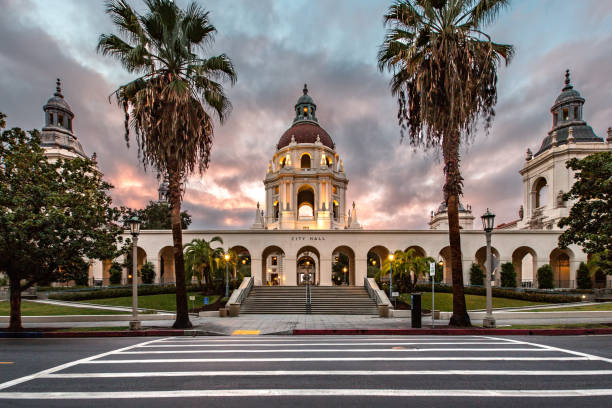
My List of the Top Five Independent Schools in the Pasadena Area

Pasadena City Hall

Originally published in Beacon Media News’ Readers’ Choice Magazine on 20 August 2015

I do not profess to be an expert on schools, nor will I claim to be all-knowledgeable about education. But my almost two-decade-experience in searching for and sending my daughter to the elementary, middle, high school, and university that were the right fit for her, afforded me a front row seat in the world of independent schools.

As a stay-at-home mom, I volunteered yearly to spearhead fund-raising committees where I worked alongside other parents, became friends with heads of school, got to know admissions directors. At one school, I even knew the maintenance staff because I managed the school store. I bought all the snacks and drinks for after-school activities; provided pizza and drinks for all the dances; and I was in charge of supplying uniforms like neckties and sweatshirts, and sports items like gym bags. Every day, the maintenance guys helped me unload heavy items from my car. At another school, I befriended the Health Services Director because my daughter was always at the clinic for an injury (she was such a klutz, she got hurt just by walking to her classes). I was a constant presence on campus that my daughter’s friends were convinced I lived right outside the school gates!

My daughter’s ‘career’ as a student began early on in her young life. At her birthday party held in our backyard, I was advised that I needed to find the right nursery school so she could attend the right college. She was a year old; she went to nursery school the following year. In my defense, I sent my daughter to a co-op so teachers and parents alike taught toddlers through songs and stories. She spent three hours every other morning with small kids like herself. 

Such was my introduction to private school education in Pasadena. If it’s any consolation, I read somewhere that in Manhattan (New York), expectant parents start registering for the waitlist at pre-schools right after the first trimester of their pregnancy!

I do not speak for all parents when I say the best primary and secondary schools are not the hardest ones to get into; the best universities are not the ones with five percent acceptance rates.

Student satisfaction and happiness aren’t predicated on school ranking. The best schools, I think, are where students are intellectually stimulated and not bored out of their wits; but neither are they so stressed out from all the work that they need to be medicated.   

The best schools are where students feel the same excitement and intensity when they talk about black holes as when they expound upon Rick Castle’s coolness (Castle airs on ABC, Mondays at 10 pm Pacific time). It is where your child comes home from the Spring Musical rehearsal exhilarated that she has been put in charge of production for the biggest show of the year! It is the place where kids thrive and succeed.

My daughter is now 19 years old and is a rising second-year student at the third-ranked university in the United Kingdom. She is a happy teenager, enthusiastic to go back to school next month, and eager to find her place in the world.

Here, then, is my highly subjective, very personal, and wholly unscientific list of the top five independent schools in the Pasadena area. I’m sure I will have dissenters out there and I’m all right with that. I wasn’t going for a popularity contest.
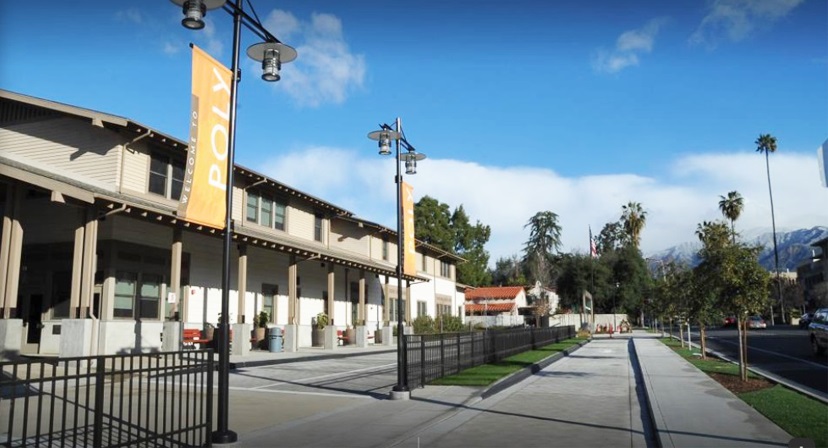
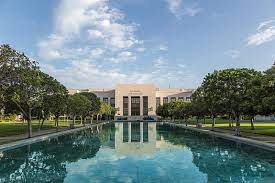
Image taken from Pasadena Now

1. POLYTECHNIC SCHOOL

It has been referred to as the ‘most elite school’ in Pasadena, and for good reason. For over a hundred years Polytechnic School, on California Blvd, has been providing excellent education for students that come through its doors. Founded in 1907, Poly was the first non-profit, independent school in Southern California, providing academics and manual arts for kindergarteners through 8th graders.  

In 1959, with Willis Stork as its fourth headmaster, Poly welcomed its first high school students, when it expanded to reach 12th grade. The achievements of Poly’s graduates in colleges and universities throughout the country established its national renown.

Succeeding heads of school continued Poly’s tradition of academic excellence and nurturing environment for students. Debbie Reed, who served from 2002 through 2014, led the ambitious “The Next 100 Years Campaign” which raised funds from parents and donors to construct a much-needed underground parking structure, and new buildings on the North and South Campus.  Construction, which ended in 2013, established a state-of-the art science and tech labs, and an expansive library. It also refurbished the Garland Auditorium to make it a professional stage for performances and created a Black Box Theatre which doubles as a dance studio.

The school operates under three distinct divisions united by shared values. The school’s faculty and staff lay a scholastic foundation of academics and arts, athletics and physical education, global engagement, and community service – cornerstones of a Poly education.    

The lower school has approximately 270 students, with 20 full-time teachers and assistants, 15 support and specialized instruction personnel. There are 14 to 15 students per class in kindergarten through 2nd grade; while from 3rd through 5th grade, there are 22 to 23. The lower school provides the perfect introduction to young learners as they discover new things. Teachers respond to children’s developmental needs, making them confident learners.   

In middle school Poly’s 215 students transition from childhood to adolescence. It is where kids in their tween years question, learn, and find their own voice under the guidance of 20 teachers and assistants, and 10 support and specialized instruction personnel, who understand this phase in human development. The 17 to 21 students in each class get their first taste in making personal, individual choices through its outdoor education program, by selecting an activity which matches their particular outdoor interest. Later, in 8th grade, learners get to choose the foreign language they intend to carry on into high school. A  crucial responsibility for middle school teachers is to ensure that every 8th grader is ready for promotion to high school. Eighth graders meet with the Dean of Students, towards the end of the school year, to discuss the curriculum for the next four years and begin mapping out individual course options.

Activities accelerate at a much greater pace at Poly’s high school, which has a total of 375 students, with 50 full-time classroom teachers. Each class has about 15 students. Class deans for each grade level are tasked with keeping abreast of each student’s academic performance, achievement, well-being, and progress through high school.     

Poly’s sophomore year community service requirement involves students completing 30 hours of community service in a particular area of interest. This becomes a starting point for them to expand on throughout their high school years. The school’s outreach also provides opportunities for student involvement and leadership. Each grade level elects their representatives who find opportunities for projects.     

In 2006, Poly launched the Global Initiatives Program (GIP) to develop and instill in students the tools to make them considerate, contributing, and connected citizens of the world. Students study various cultures, interact with people in other parts of the globe, and experience cultural events from around the world. The Study Abroad Program, a component of GIP, focuses on cultural immersion, face-to-face interaction, and service learning. Those who complete GIP’s rigorous requirements in each of the four areas graduate as Polytechnic Global Scholars.

The school’s athletic achievements are legendary as evidenced by the school’s 140 Prep League Championships, 46 CIF Championships, and 72 CIF Academic Championships over the past 20 years. Poly competes in an impressive array of sports – badminton, baseball, basketball, cross country, diving, equestrian, fencing, football, golf, sailing, soccer, softball, swimming, tennis, track and field, and water polo. Student participation in sports is 88 percent – in 16 fall teams, 15 winter teams, and 14 spring teams, under the guidance of 84 coaches.

Academics at Poly are vigorous, with AP courses on offer in 16 subjects. During the 2013-2014 school year, the school administered 660 AP exams, taken by 238 students, with 92 percent earning 3 or above. Forty-nine percent of seniors were National Merit Semi-finalists and Commended students . Of the 97 seniors who graduated that school year, 71percent were accepted to highly selective learning institutions. They attended 58 colleges and universities in the United States and one in the United Kingdom.   

As for the next hundred years, current Head of School, John Bracker, says, “The next 100 years at Polytechnic School will be informed by its past and defined by the intellectual curiosity of its students, the unfettered commitment to teaching of its faculty, and the compassion of its community that is focused both inward and outward.”      

For 108 years, Poly has been challenging and nurturing students imbued with a curiosity about people, their community, and the world they inhabit. They are natural learners and born leaders – they are the ones who will one day make a difference.
2 – FLINTRIDGE PREPARATORY SCHOOL

Flintridge Preparatory (Prep for short), in La Canada, was founded by Doane Lowery in 1933 as an all-boys school.  In 1979 it became a co-educational school offering classes from 7th through 12th grade. It has a total enrollment of 500 students (100 in 7th and 8th; 400 in high school).

According to its mission statement, Prep “…seeks to nurture in its students the knowledge, critical skills, community values, and creativity essential for an engaged, balanced, and responsible life”. Thus, its focus is not only on a successful high school career, but also a jumpstart into a student’s future college career. To ensure personalized teaching for its population, classes are kept small – at twelve students – with a low student/teacher ratio of 8:1.

Prep attracts the most-qualified faculty, comprising teachers with terminal degrees, teaching artists, coaches and deans. It has a very high faculty satisfaction and teachers tend to stay for a long time. Likewise, it seeks only the best students who have the intellectual ability to appreciate the academic and extra-curricular activities available to them. Student retention is at 99 percent.

Thirteen Honors and 14 AP courses in English, history, match, science, language, visual arts, and performing arts are on offer. 

There are excellent facilities to support Prep’s students’ learning requirements, including four centers of computing technology. The mathematics department’s  Braun Foundation Computer Laboratory hosts applications and programming classes. The library has computers available throughout the day and after school. Classrooms are equipped with Smart Boards, and the art department has a ‘dry darkroom’ for digital photo editing and printing.   

Arts courses take place at The Randall Performing Arts Center which has classrooms for dance, drama, and music. There is also The Miller Theatre, a black box performance space. Prep has art studios for ceramics, drawing, and painting. It has a fully-equipped photography studio complete with a professional camera, and developing equipment.

In September 2007 construction on the two-story Chandramohan Library was completed and it became the heart of student life. With a computer lab, a classroom for seminars, meeting rooms,   areas for study, and a college counselling suite, the library is a busy place for academics and socializing.

Athletics are an important component of the school’s daily activities and Prep provides students with extensive facilities – the Lowery swimming pool, James Woods Memorial Field, Crawford Family Gymnasium and Tom Fry Weight Room.

Prep fields 30 teams, proudly wearing their blue and greys, in 13 sports including: dance and cheer, and equestrian year-round; cross country, football, tennis, volleyball, and water polo in the fall; basketball, soccer, and water polo in winter; baseball, diving, golf, softball, swimming, tennis, track and field, volleyball, and water polo in the spring.

A lively involvement on campus is displayed by the student senate, the student body at Prep.  Since 1935, they have been holding weekly meetings, run by the senior class president. The program’s cabin members include the class president from every grade and two representatives, selected by each grade class. They hold annual traditions like The Book Day BBQ, the Haunted House, Spirit Week, Winter Festival, Teacher Appreciation Week, and Prep Fest.

Meanwhile, the SCAC (Student Community Action Council), a student-run organization, builds on and off campus leadership. It integrates all forms of leadership on campus and creates a socially positive environment for engagement.

Prep’s first athlete-based leadership program, Athletic Leadership Council, was founded in 2008  to actively promote athleticism while instilling responsibilities. Members create community service projects, serve as mentors to other students, encourage school and team spirit, and serve as role models and exemplars of strong leadership.  

A rigorous curriculum, athletic programs, and opportunities for community service, all contribute to Prep’s graduates’ success in getting accepted to the best colleges and universities in the nation.   Students of the class of 2014 went to Brown, Columbia, Dartmouth, Harvard, Princeton, Yale, CalTech, Carnegie Mellon, NYU, Stanford, UC Berkeley, UCLA, USC,  Vanderbilt, and other prominent institutions.

Asked about Prep’s guiding thought, Peter Bachmann, Head of School,  says “Flintridge Prep aims to strike an even balance between intellectual and personal development. We want kids to do well in school and be well-prepared for college, but also be happy, well-developed individuals who establish life-long friendships with other students and teachers. We hope to prepare students, not simply for the next stage, but for their entire lives.”

What parent would disagree with such simple but sage philosophy?               

(Beacon Media intern Ame Hossen contributed research and reporting to this story. A 15-year-old sophomore at Glendora High School, Ame is an avid reader of fiction; enjoys traveling, trying new foods, and helping out in the community.)    
Image taken from Westridge School’s website

3 – WESTRIDGE SCHOOL FOR GIRLS

Mary Lowther Ranney, a noted architect and teacher, founded Westridge in 1913 to create a school that would offer an education for college-bound girls. She had originally intended to open it at her parents residence but enrollment exceeded her expectations and realized she needed a much bigger space. The Ranney’s acquired a larger house on Madeline and inaugurated it with a total of 21 students.

Today, 102 years after that momentous occasion, Westridge School for Girls has a total enrollment of 480 students and continues its excellent tradition of educating girls to become successful. In the words of Head of School Elizabeth McGregor, “Our vision for Westridge is to foster a culture of thinking that inspires our girls to realize their intellectual and creative potential, to foster an ethos and community that inspires Westridge girls to look beyond themselves in order to impact others and the world.”

At Westridge’s lower school (grades 4 to 6), students develop skills in academic subjects and the application of these through creative activities and group projects. They also receive in-class or after-school instruction about health and wellness.

The middle school (7th and 8th grades), addresses students’ transition from childhood into adolescence. They are provided the tools and skills necessary for academic success as they become confident, articulate and motivated learners.

In upper school (9th through 12th), students are encouraged to think critically and individually.    They begin to identify their areas of interest – in academics, arts, athletics and civics. Girls embark on their Community Action Projects, multi-year service and inquiry process that empower them to use their skills and talents to improve the lives of others.

Implementation of a balanced education means finding out how knowledge is imparted and absorbed; and what is required to prepare students for the real world. As McGregor says, “Our curriculum and teaching approaches are based on the most recent research into how girls learn best, and we wish to become a center for research and information on girls’ education. We are also committed to empowering our students in design thinking and the STEAM fields (science, technology, engineering, arts and math). To that end, we have just opened our STEAMWORK Design Studio maker space.”

Westridge School’s facilities include a14,000 square-foot, two-story, and eco-friendly science and math building that houses the chemistry and physics labs, math classrooms, and a technology and data center to support the school’s 150 laptops. A Performing Arts Center has 600 seats and hosts numerous theatrical productions, concerts and dances. 

Sports and physical education take place on the Frank Athletic Field where lacrosse, soccer and softball are played. Hoffman Gymnasium is the site for basketball and volleyball. The Studenmund Family Weight Training Room is the fitness center.

Athletics at Westridge is a source of pride as it has earned twelve Prep League Championships in the last ten years. The school has produced three Olympians – Anne Kursinski ’76, Equestrian,

in the 1988 (Silver), 1992, and 1996 (Silver) Olympics; Inger Miller ’90 received a Gold for Track and Field in the 1996 Olympics; and Erica Wu ’14 competed in Table Tennis in the 2012 Olympics.

An academically strong school, Westridge’s class of 2015 produced 17 AP Scholars, eight National Merit Finalists, and 12 Commended Scholars. Its graduates went to attend highly-selective colleges and universities in the United States and around the Globe.

Westridge students also enjoy a vibrant social life on campus as they pick Greek and Roman teams and earn points during competitions. There is a Big and Little Sisters organization where girls are assigned to a family – younger students bond and form friendships with older girls on campus. During the All School Day, the ASB (Associated Student Body) organizes themed activities for fun that include movies and food, making for a fun-filled, relaxing day for everyone. There is a Ring Ceremony at the end of the school year when a Junior receives her class ring, symbolizing her passage from junior to senior year.

All these components are ingredients for a fulfilling and gratifying scholarship for girls. As  McGregor explains, “We believe, and are told by colleges and community members, that our girls stand out for their intellectual curiosity, independence and sense of self, and their desire to improve the world around them. Everything at Westridge is designed to foster these characteristics – to develop intellectually adventurous thinkers and courageous, compassionate leaders.”

Mary Lowther Ranney would have been so proud.

(Beacon Media intern Jonathan Tsou contributed to research and reporting for this story.  Jonathan is a senior at Arcadia High School, and likes reading historical books.  He has conducted a couple of interviews involving various historical figures.)        

4 – CLAIRBOURN SCHOOL
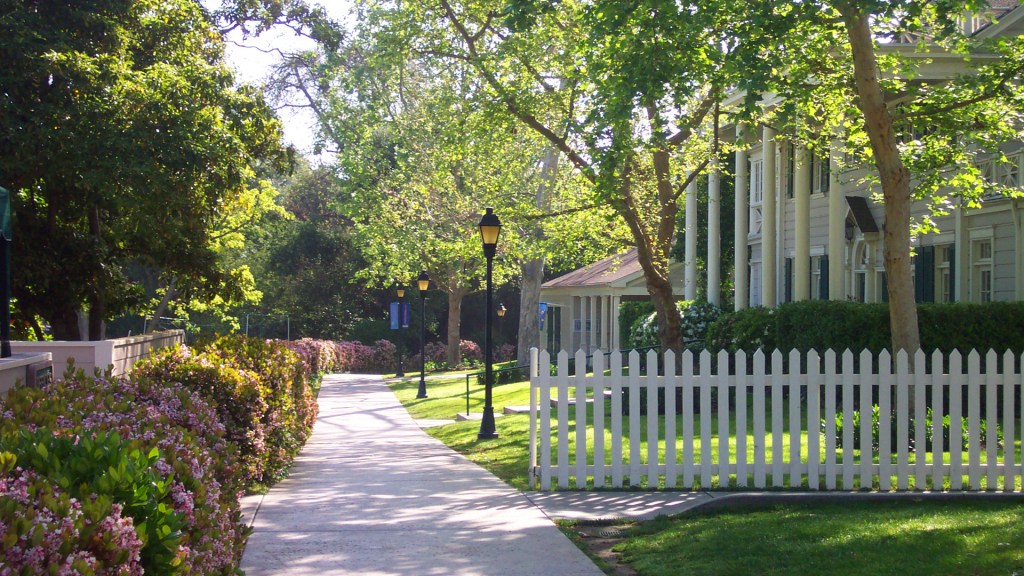
East Hall Walkway at Clairbourn School | Photo courtesy of Clairbourn School

Clairbourn School was established in 1926 when Emily Bourne, wife of A.K. Bourne (scion of the Singer Sewing Machine founder), decided to teach classes at the conservatory of her San Marino home. Enrollment grew annually from the four original students, and in 1931 it relocated to its present site on Huntington Drive, in San Gabriel. It remains there today, providing education for children from Junior Pre-K through 8th grade.

Students at Clairbourn experience the thrill of discovering new things and learning life-skills taught by caring teachers in a nurturing environment. According to Nancy Ward, Communications Director, the preschool program is designed to encourage children’s natural love of learning. It sets the stage for a positive approach to education which is a vital ingredient of school readiness; preschoolers are ready to enter kindergarten with a positive self-concept, the spirit of inquiry and critical thinking, and problem-solving skills.

In the preschool classroom, the focus is on the whole child; this encompasses language, cognitive, social, emotional, physical and spiritual development and competencies. “There is an emphasis on the acquisition and application of universal values as guided by the Clairbourn Code of Ethics, which includes respect, responsibility, citizenship, spirituality and honesty. This code  spans all grade levels, permeating all aspects of school life” says Ward.

The competencies and critical thinking skills that preschoolers gain are carried on into  Clairbourn’s kindergarten through 5th grade program. Here, experienced specialists teach core subjects supplemented with enrichment classes in art, computer/technology, library, music, foreign language, and physical education.

A faster pace and schedule make up a dynamic middle school experience at Clairbourn. With only 18 students per class, and two sections per grade, department teachers give personalized attention to each one. Core teachers specializing in English, history, math, science, French, Latin, and Spanish provide a balance of hands-on learning, written reflection and oral reporting.

During middle school, students get involved in service activities promoting an understanding of community and global responsibility. Annual outdoor education class trips emphasize the environment, leadership and teambuilding, with optional opportunities for travel to Costa Rica, Australia and Europe. 

The highlight of middle school at Clairbourn is the Huntingtower Exchange Program, which began in 2000, as a way for students to be global citizens. Through some research, Clairbourn found an institution of similar age and philosophy in Melbourne, Australia and the two schools began to exchange students with host families. According to Head of School, Dr. Robert Nafie, “We felt our students would find that in the midst of a variety of difference in culture, language, and traditions, they would see that humankind is essentially the same where it really matters.  They could see that applying the basic values and academic skills they learned at Clairbourn would be successful seven thousand miles from home and beyond.”  

In 7th grade, each family receives individual high school admissions counseling to help them understand options, and how to prepare and apply to high schools. Students are required to take an interview preparation class, attend high school tours, and meet with high school admissions directors on the Clairbourn campus. Ninety-seven percent of its graduates are accepted to highly competitive and selective day and boarding schools, with three percent choosing excellent area public schools.

As Nafie looks back on his 36 years of stewardship, he is struck by the fact that education today is still facing the age-old question “What is the purpose of education?” e saysHHe  He thinks that there are as many answers to this question as there are schools. And while it seems to be a simple thing to answer, many schools jump right over the question because it is difficult to find a consensus.  Many move forward with an implied purpose, with the assumption they know what that is. To some, it just means higher, faster, farther, longer, or some other superlative. But he believes schools can do better, and parents deserve clearer choices in schools.    

Ninety years after its inception, Clairbourn’s teaching philosophy remains true to its founder’s essential purpose: to impart knowledge based on fundamental principles applied to present-day needs. Nafie expresses this more eloquently when he says “ … the increasingly complex nature of global communication today with 24-hour news, Twitter, YouTube, Facebook, and a whole array of new and emerging social media, tells us that the ability to get along in a wider arena of influence will be essential for humanity’s survival. The narrow band of pure academics, as laudable as it is, will not be enough to ensure that students thrive and succeed in the 21st century.  Rather, they need to know how to apply their academic abilities in a way that fosters healthy and positive outcomes.”

Very well articulated.  Clairbourn students and parents would wholeheartedly agree.
Image taken from Chandler School website

5 – CHANDLER SCHOOL

Chandler School, in Pasadena, was founded in 1950 by Thomas and Catherine Chandler with an initial enrollment of 14 students. Today it has a total student population of 420, and is reputed to be one of the hardest K- 8th grade schools to be accepted into in the western San Gabriel Valley.

John Finch, who serves as Chandler’s fourth headmaster since its inception, describes the school’s philosophy thus: “Our mission is to provide each student with the highest quality and most academically challenging education in a nurturing, balanced and diverse environment. The curriculum balances core subjects and includes interdisciplinary study that develops well-rounded students.”

Carrying out Chandler’s grand mission are teachers and mentors with the expertise in meeting the academic, artistic, athletic, and social needs of K- 8th grade students. During the school year 2010-2011, one of Chandler’s 1st grade instructors received the U.S. Presidential Scholars Program’s Teacher Recognition Award. One-third of its school faculty hold advanced degrees and the average tenure of faculty is nine years.       

Preparation for life begins at Chandler’s lower school, where academic rigor includes innovation, creativity and character development. The school offers core subjects and integrates an interdisciplinary STEAM. Students take core subject classes, and art, music, library, and Spanish very week. Its physical education program engenders not just physical strength, it likewise gives students opportunities to build teamwork, perseverance, resilience and discipline.

Teachers use technology to prepare Chandler’s lower school students for the one-on-one program offered in middle school. Kindergarteners through 2nd graders get iPads while 3rd through 5th graders get laptops. They teach young learners how to choose tools and how to properly care for and maintain them, how to protect their identity and privacy, and how to balance high-tech, low-tech and no-tech experiences.

In middle school, students take five core courses in English, history, math, science and Spanish.  They also have fine arts and personal development classes, electives and physical education. In 6th grade, students develop skills like note-taking, time management and exam preparation. They build on and take these skills into 7th grade; and in 8th grade they have various opportunities for leadership and community service.

Families of middle school students are required to purchase Apple Macbooks as they start the  year.  Students use school-sponsored online databases and software applications. Chandler uses customized Google Apps for Education domain to support teaching allowing for easy sharing of documents, file storage, and connectivity.

Chandler is a nationally recognized and certified Common Sense Digital Citizenship school. It earned this distinction by demonstrating its commitment to taking a community approach to preparing students in using digital media to explore, create, connect, and learn, while limiting online perils, like plagiarism, loss of privacy, and cyberbullying. Common Sense is a national non-profit organization dedicated to helping kids and families thrive in a world of digital media and technology.  

The visual arts program at Chandler includes photography, ceramics, water color, and printmaking; students hold a school-wide art exhibit in the spring. Music offerings are string ensemble, Clover Chorus, and a class that focuses on creating, composing, music history and appreciation. Students in the performance arts stage two theatre productions, one string and choral group show. 

Athletics are an important component of a Chandler student’s experience. Sports activities include baseball, basketball, flag football, golf, soccer, softball, swimming, tennis, track and volleyball.

Chandler’s middle school curriculum affords them ample preparation for the high school application process. The 59 students in the class of 2015 were accepted to very selective secondary day and boarding schools in southern California, including Campbell Hall, Flintridge Prep, Harvard-Westlake, Marlborough, Notre Dame High School, Polytechnic School, Westridge School for Girls, Cate School in Carpinteria, and The Webb Schools in Claremont; to east coast schools like Hotchkiss In Connecticut, Phillips Academy in Massachusetts, and Phillips Exeter Academy in New Hampshire; and to charter and magnet schools like International Polytechnic High School in Pomona and the Los Angeles High School for the Arts.

These Chandler graduates are the envy of every high-schooler in the western San Gabriel Valley.

(Beacon Media intern Jonathan Tsou contributed research and reporting for this story. A senior at Arcadia High School, Jonathan is currently busy with college applications. He hopes to study Education Psychology.)

August College Search Guide

Originally published on 6 August 2015 in the Pasadena Independent, Arcadia Weekly, Monrovia Weekly, and Sierra Madre Weekly

The road to college

It’s August – for some kids summer vacation is winding down, while for others, it has ended. If your children are heading back to school this week, I hope they had the chance to breathe, decompress, and savor the lull because they are now once more face-to-face with the realities of high school life.

High schoolers in the San Gabriel Valley confront exceedingly fierce competition. This is where students: get perfect SAT scores; have 4.0 GPAs; play varsity sports; are extraordinary cellists/pianists/violinists; are founders of school clubs; are presidents of the school body; serve as officers on several associations. Everyone is so accomplished that it’s impossible for someone to stand out. Much has been written in the newspapers about how stressed out these children are. Most of them get through the four years relatively unscathed while a few students suffer from sleep deprivation, even depression,   

Recognizing the almost-impossible feat of getting accepted to highly-selective schools, the Harvard Graduate School of Education released a study early this year called “Turning the Tide: Inspiring Concern for Others Through College Admissions”. Among other things, it advocates for reducing stress and level the playing field for students. About 80 colleges and universities across the United States have endorsed the findings of the report.

An important factor in the admissions process is the students’ (and parents’) preconceived ideas about where t they should apply and what their dream school is. Oftentimes, kids apply to the same dozen or so most-recognizable institution names. This creates an unhealthy and, sometimes, unreasonable expectation. There are innumerable colleges and universities that offer excellent teaching; there is a school out there that is the right fit for your child. You and your children should determine their interests, career goals, and abilities. These should be the guidelines for choosing what college or university should go on their list of schools for consideration.

FRESHMAN

High school is very different from middle school. Teachers have higher expectations from the work students turn in. Your children need to develop their analytical skills as their teachers will require deeper thinking and subject exploration from their papers. They should also have better time managements skills to handle the more rigorous course load and extra-curricular activities.

There is also a big change in campus life – they no longer have a “home room” and they have different sets classmates for each course. One glaring difference is that they now have to make their own choices of courses and activities. Your children need to confer with the school counselor to map out a four-year curriculum that meets the requirements of colleges.

Usually there is a “Back to School Night” when parents get to meet all the teachers. This is a chance for you to see what your children will be learning during the school year. While you will no longer be as involved with your children’s activities as in previous years, find the time to be aware of what’s happening. Some schools welcome, even solicit, parents’ help for certain campus events.

In the first few days of ninth grade, your children will have several things they will be making decisions on, and tackling. I have listed them here with a brief description or explanation:

AP COURSES: Make sure your children choose the AP courses they will need in the course they will be taking in college. They shouldn’t pile up on APs to pad their resume because they would need to take the AP exams for these courses.  Some universities only accept 4 or 5 on an AP exam for it to have any merit at all. While college Admissions Officers favor students who took on challenging AP subjects, they don’t look kindly at low AP grades either. Encourage your children to take courses they are truly interested in; students who study something they really like generally do well at it.     

CLUBS: Your children should join the clubs they will be involved in and encourage them to participate actively. Ideally, your children could start a club based on their interest or something they feel strongly about. It can be a fun club for students to take their minds away from their heavy academic load, or it can be something socially impactful.

ATHLETICS: If your children are into sports and would like to play it in college, they need to start looking into the NCAA requirements now. Several universities offer scholarships to outstanding athletes and being a standout in a particular sport gives an applicant an edge.

ARTS CLASS: If your children’s school offers art electives, encourage them to take a course. Sometimes, they don’t realize they like something until they try it. They should take advantage of all the art and music programs available to them.       

LANGUAGE: Besides the core subjects – English, History, Math, Science – a foreign language is a requirement for admission into college. Encourage your children to choose a language they could later have a use for. In some schools, elementary school children get Mandarin and Spanish immersion classes. If your children were lucky to have had this, they have a head start in this area.  

COMMUNITY SERVICE: Your children should do something they feel strongly about and work it every summer; it shows commitment to the activity they took on. This is going to be an essential component in your children’s transcript. And if the college or university your children want to attend was one of the institutions that endorsed the Harvard study I mentioned above, its admission officers will look very closely into this.       

SUMMER CAMP/ENRICHMENT COURSE: If your children have a passion for a particular activity, they should pursue a summer program related to it. Guidance counselors in some schools compile a list of the most engaging courses locally, out-of-state, or internationally.   

It goes without saying that all the above activities are merely supplements to good grades in the core subjects. Loading up on extra-curriculars at the expense of grades is definitely ill-advised. While Admissions officers at all the universities talk about their holistic approach in their selection process. And until such time that all admissions officers actually practice what Harvard’s study advocates, a student’s GPA remains a very important, if not the single most important, component of your children’s college application.  

Photo by Sofa Tutor for Unsplash

SOPHOMORE

They’re fully transitioned into high school, the demands of which were drilled into their unconsciousness the past school year. They have to put  ninth grade behind them and face tenth grade with renewed energy and enthusiasm.

JUNIOR

Hopefully, your kids got a lot of rest, because in a few weeks they will be embarking on one of the most hectic years of high school life. Make sure your children confer with their school’s college counselor to ascertain they have all the courses required for graduating and for college. They need to know what standardized exams they’ll need to take for college application. They should research which colleges and universities offer the course they would like to pursue.

SENIOR

By this time, your children should know where they would be applying and have visited the schools. They should have taken all standard exams required for college applications, firmed up their school list, researched all kinds of scholarships, lined up teachers to write their recommendations, perfected their personal statement, and learned how to complete the common app. They practically have to have their running shoes on by the time they get in the door of their high school!

COLLEGE FRESHMAN

Are your kids ready to leave their childhood behind?  In a  few weeks, they will be on a road not traveled. College life exposes them to the real world and I hope you let them practice how to live independently of you during their summer break. Things they took for granted before – eating hot meals without having to turn on the stove, getting clothes laundered weekly for them, rooms being meticulously cleaned – will suddenly be their responsibilities. If their dorm offers catered meals, that’s one less chore to worry about; but there’ll still be laundry to do.   

Congratulations, parents! You have successfully launched your child to college and adulthood. Hello, empty nest syndrome!                     

International Student Program at Pasadena City College

Originally published on 30 July 2015 in the Pasadena Independent, Arcadia Weekly, Monrovia Weekly, and Sierra Madre Weekly

College freshmen heading to school next month may be feeling somewhat nervous about this different environment they are about to enter. Most of them are leaving the security of their home in the town or city where they grew up. To the approximately 500 students joining the freshman class at Pasadena City College, this novel experience is more nerve-racking than usual. They are arriving for the first time in a new school, city and country. For these arriving international students, PCC’s First Pathways Program is a lifeline. 

Pasadena City College’s First Pathways Program was created in 2011to help incoming students  transition smoothly to college and achieve success in school. And while there are only 1,200 international students attending PCC at any given year (compared to its total enrollment of 22,671) administrators have felt it crucial to dedicate one Pathway program to this group to address their vastly different need.

The IS (International Student) First Pathways program has three major components. The first of these is the International Student Center whose staff help arriving students with visa, housing,  health, and safety issues. It also includes a study center for homework, workshops and meetings with classmates. The second component is the Success Team made up of counselors, coaches and tutors who guide them in choosing their classes and making sure they are registered for the full load of 12 units. The third component is Priority Registration for the classes they need to be able to transfer quickly to a four-year college or university. This is particularly important for foreign students who are on an F1visa as they cannot overstay in the U.S.

International students on the First Pathways Program begin their college life at PCC with an iJam orientation, a one-week event where they prepare their classes, learn about life in Pasadena and Los Angeles, and have the opportunity to make friends with other students. They meet others like them from 85 countries and regions, including China, South Korea, Indonesia, Malaysia, Japan, Hong Kong, Vietnam, Canada, Germany, Russia, and Saudi Arabia. 

The most popular majors for these international students are: Business/Accounting/Economics (45%); Science/Math/Engineering (15%); Art/Architecture/Design (11%); Health Professions (8%); others (22%).

Through the years, PCC has proven itself as a leader among California’s 112 community colleges in 72 districts. It offers foreign students a diverse learning environment with numerous Honors programs, over 70 student clubs and many opportunities for student involvement, a safe location in a “walking friendly” community and convenient access to public transportation. The city offers students a vibrant restaurant scene and shopping areas. And they aren’t too far away from local beaches and recreational destinations. Pasadena is home to cultural attractions including The Huntington (Botanical Garden, Library and Art Museum), Norton Simon, Pacific Asia Museum.    

Another essential feature of a PCC education is its small class size and accessibility to instructors and support staff. More important of all, it affords students ease and support in transferring to a four-year university.   

According to Dr. Russell Frank, Interim Associate Dean for International Education, in 2012-2013, 2327 students transferred from PCC to public and private four-year universities like the University of California – in Los Angeles, San Diego, Irvine, Berkeley, Davis, and Riverside, California State University – Cal Poly Pomona, CSU Northridge and Los Angeles), Art Center College of Design, and the University of Southern California.

Frank is deeply invested in the success of every student in his charge. He set targets for himself to make the IS First Year Pathways program remains vital and relevant. Together with the team of counselors and coaches, he helps them identify their specific transfer objective and personal goals. He wants students to be engaged in the college community so PCC has created campus-wide events like the lunar new year celebration and the international education week. He wants to increase global and international awareness for the school and the IS program for health courses like Nursing, which is a popular field of study. He envisions a rise in student enrollment to 1,500 by putting in place more classes where he sees growth like nursing, environmental engineering, design and art.

In anticipation of the increase in their international student population, Frank would like to add more peer mentors who speak the same language as the students they advise and put in place additional services to cater to their specific needs. Frank is optimistic that his goals are doable in the immediate future; he says the infrastructure is there to support his plans.   

All of Frank’s plans for the International Student Program are aimed at enriching their students’ learning experience so they are better prepared to get into their choice of four-year university.  The Learning Center, of which the IS First Pathways Program is a part, has a slogan “Get In, Get Out, Get Going”. What an apt aphorism it is!

iD Tech Summer Camps Ignite Passion for STEM Learning

Originally published on 23 July 2015 in the Pasadena Independent, Arcadia Weekly, Monrovia Weekly, and Sierra Madre Weekly

Just what can a 13-year-old kid possibly accomplish in five days? Something pretty awesome, it turns out. 

Rana Lulla, who is 13 years old, produced an RPG (Role Playing Game) during the five days that he attended iD tech Summer Camps using Java coding. A rising 8th grade student at the American School of Bombay in India, Rana is the quintessential brainiac – exceptionally articulate about computer programming and given to well-thought out responses to questions about what he envisions for himself in the future.    

This is Rana’s second time at a tech summer camp; he attended a similar one a couple of years ago in Bombay. He enjoys coding and conversations with him turn high-tech quickly – with him saying he learned GUI (Graphic User Interfaces) and spouting terms like IF functions. He likes playing sandbox games Minecraft and Terraria and is super excited about creating a game he can play with his like-minded friends.  Rana sees himself pursuing a degree and career as a coder –  writing programs for and designing video games.  

Then there’s Amala Russo, an 11-year old rising 6th grader at South Pasadena Middle School. A recent transplant from northern California, she is here to familiarize herself with computers and is taking Introduction to Scratch and Java Script. While she is non-techie, Amala nevertheless feels that it is important to learn computers because technology is all around us and isn’t going away any time soon. This is her fourth day at iD Tech summer camp and she has learned Photoshop-ing, programming, and creating games. She says her teacher taught them how to make games using the cat Sprite.  

Amala admits that sitting in front of computers can be tiring at times, so she is glad for the breaks when all the kids go outside to play some sports. She also confesses that she is a really active person and is more of a performing artist – she likes acting and dancing. The early part of Amala’s summer was spent in Acting Camp at La Canada High School; it culminated with a multi-themed production where she sang in a group rendition of a song from Tarzan. 

Tyson Mak is another 11-year-old who goes to High Point Academy in Pasadena, where he will be in 6th grade come Fall.  He is taking an Introduction to Java Programming and Minecraft. He likes Minecraft Mods and after looking at what others have done, he decided to make one himself. And he did. But he couldn’t get it to work, so his mom sent him to iD Tech camp to learn Java programming. On his fourth day at camp he learned to add custom items like block and texture.

For his final project, Tyson made a Commerce Mod as a more organized way to buy and sell things on Minecraft. He intends to put it on the Minecraft server, where players connect to play together remotely. Lest you think Tyson is all work and no play, he quickly points out that he actually is a sports enthusiast who enjoys playing basketball at school. He spent two weeks in Newport Beach for some fun time with his family and is going to surfing camp in two weeks. It’s his summer vacation after all.

Photo by Annie Spratt for Unsplash

At iD Tech Summer Camp, kids like Rana, Amala and Tyson learn everything from Coding and App Development, Robotics, Game Design, 3D modeling, Digital Photography and Web Design, and Filmmaking. Classes are made up of seven weeklong sessions where students can enroll to develop their skill, or further explore subjects by taking multiple sessions of the same course.

The company’s extraordinary start is in itself worthy of a book. Alexa Ingram-Cauchi, having earned her business degree from the University of Washington, entered a Business Plan Competition. With guidance from a professor at UW, she submitted a pilot program for a tech camp held in a small class setting where kids use products professional utilize in the real world.  Her project won first place and she received several thousand dollars in prize money. 

And so in 1999, at a time when the iPhone did not exist, Google was a year old, AOL was the only search engine, and there were few women entrepreneurs or practitioners in the technology field, Alexa, using her competition award as seed money, founded iD Tech Camps in a room above their house’s garage in Los Gatos. It was a small family affair – her brother came on board to run the fledgling company; her dad worked as camp director and trainer; and her mom was human resources director.        

According to Karen Thurm Safran, VP of Marketing and Business Development, iD Tech camps started out with four locations in Santa Clara University, UC Irvine, St. Mary’s College of CA-Moraga, and CSU Monterey Bay. Today there are a total of 123 locations, with 88 iD Tech Camps, nine Alexa Café (all-girls program), eight iD Tech Mini (half-day options for ages 6-9), eleven iD Programming Academies, and seven iD Game Design & Development Academies.  These camps are scattered all over the country and held in the most illustrious campuses like MIT, Harvard, Columbia University, Princeton, University of Pennsylvania, University of Virginia, UNC-Chapel Hill, Southern Methodist University, UC Berkeley, Stanford, Cal Poly Pomona, and UCLA.

Each summer camp is made up of seven week-long sessions and classes are broken into clusters of eight students to one instructor, making for a personalized experience. The eight-hour classes are interspersed with breaks for outdoor activities to keep the kids from getting restless with so many hours of sitting in front of computers. All summer programs provide students with custom iD T-shirt, a USB drive and bottled water. Camp attendees take home their portfolio or course activity file after presenting their final project at the end of their session.  They also earn a diploma with their instructor’s insights.

Instructors for the camps are chosen from the most prestigious universities. Prospective candidates go through an extensive selection process, background checks and rigorous training.  Not surprisingly, many of their instructors were themselves former iD Tech campers. 

The technology boom has shown itself in the exponential growth of attendees to iD Tech camps.  From 329 students in 1999, it increased to over 1,600 learners in 2000. By 2005, attendance was at 11,000; in 2011 it had nearly 20,000 enrollees; in 2014 there were over 36,000 students and this summer, they came in with close to 50,000!

Safran says that in addition to preparing its students for the future, iD Tech is preparing the future for them. It has partnered with the Arbor Day Foundation to plant one tree for each student who attends its summer program, with a goal of planting over one million trees. Additionally, this year, Alexa Café collaborated with Code.org to provide 100 girls iD Tech Camps scholarships to help right the current imbalance in the number of girls who are taking  computer science courses (only 14% of computer science undergraduates are female).         

According to its company brochures, there will be one million STEM (Science, Technology, Engineering, and Math) jobs that are expected to be unfilled by 2020. iD Tech is helping close that gap with programs that teach students the skills they need to thrive in a tech-driven world.   It’s reassuring to know that kids like Rana, Amala, and Tyson are taking the first steps to gain the abilities and competence necessary to fill those jobs.       

Saint Mark’s School Welcomes New Headmaster

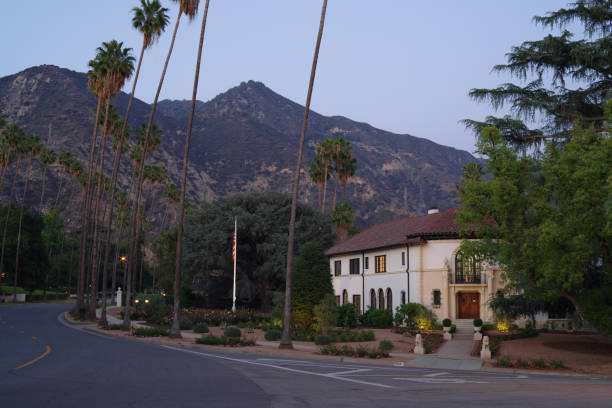
A residential neighborhood along Mendocino Lane in Altadena, with the San Gabriel Mountains in the background.

Originally published on 16 July 2015 in the Pasadena Independent, Arcadia Weekly, Monrovia Weekly, and Sierra Madre Weekly

There is a little known enclave north of Pasadena where life is serene, neighbors still greet each other, and one can practically touch the mountain. This small community is Altadena, a name derived from a combination of the Spanish word “alta”, meaning upper, and “dena” from Pasadena. 

It is a quaint community with horse properties and homes’ backyards open onto trails. There are very few multi-storied establishments and whatever landmarks had stood before, remain to this day – St. Elizabeth of Hungary Catholic Church, the Zane Grey Estate, the Balian Mansion. It is where one can find Christmas Tree Lane, a California Historical Landmark. 

Another stalwart of the community is Saint Mark’s School, founded in 1960 by a group of dedicated parents who saw a need for quality education in a racially integrated setting. It has since grown into a well-respected preK-6th grade school that provides a strong academic curriculum that fosters critical thinking and creativity while instilling in its students a strong sense of moral and ethical responsibility. Dr. Doreen Oleson, who last month retired as its Head of School for 25 years, started her term when there were only a hundred students. While the school’s enrollment has increased to 350, each year it sees applications continue to rise and its geographic area widen with families from not only Pasadena, Sierra Madre, and La Canada, but also neighborhoods such as Silver Lake, Highland Park, and Los Feliz.  

For a while they had contemplated extending the school to reach 8th grade, but they realized that  they are best at their niche and scrapped that plan. According to Oleson, “We consciously decided not to go all the way to 8th grade. We built our reputation as a strong, independent school where kids stay with us for ten years and then they go on to middle school, equipped with a strong foundation.”

Photo taken from Saint Mark’s brochure

Oleson believes a small class size ensures that children get all the attention and support they need to prepare them for middle school. There are 34 faculty members who teach the core subjects, and supplemental studies in the arts, music, languages and physical education. Saint Mark’s also has a librarian, information service technician, counselor and education specialist. 

It was Oleson who was instrumental in putting in place all of Saint Mark’s successful programs and garnering national recognition for the school. She leaves the school with a legacy of turning out students who are not just academically accomplished but who are self-confident, self-reliant, and responsible to themselves, their families, their school, and the world community.

These very qualities in Saint Mark’s graduates were what impressed Jennifer Foley Tolbert while she was middle school director at Pasadena’s prestigious Polytechnic School. When Oleson announced her retirement and the school’s search for its next Head of School, Tolbert didn’t hesitate to toss her hat in the ring. The ensuing national search attracted the most respected names in academia but her qualifications (a Master’s degree in Educational Administration  from Columbia University, a Bachelor’s degree in English from Saint Michael’s College in Vermont) combined with a network of local contacts and experience made her a standout among the applicants.

And so on the 1st of July this year, Tolbert officially took over as Head of School. Asked what attracted her to this school, she replies, “ I know that Saint Mark’s takes seriously its charge to serve as a critical and strong foundation for young children. There is great pride in a Saint Mark’s education. I’m impressed by its founders and the teachers, its strong reputation in the community and the character education that comes with it. The school teaches about what it means to be a good person and a good citizen. As an Episcopal school, Saint Mark’s values a culture of inquiry; it’s a place where we encourage children to ask questions.”

As to what she brings to this job, Tolbert’s says “… my experience in a variety of roles and schools; a lot of energy, a love for children, and new ideas. I come with a network of great mentors and relationships within our local and national school community. I also bring a personal and professional commitment to the same values and belief in diversity and putting children first.”

According to Tolbert “… the first order of business when the staff, administrators, and students arrive in the Fall, will be for me to observe, ask questions and listen. This approach will be important in figuring out priorities and areas that I need to focus on. I plan to get a sense of what’s working well and what needs to be improved upon as a way of informing next steps.”

One important aspect of private school education that Tolbert will be there to oversee is the accreditation process that will be coming up in two years. The results of this process will serve  as the road map for Saint Mark’s future plans.

As Oleson prepared to leave Saint Marks at the end of June, she said, “While I enjoyed the 25 years I spent here, I am happy to go on to the next phase of my life. I am very confident that I am leaving Saint Mark’s in Jenn’s competent hands.” For her part, Tolbert says, “I am honored to be following the footsteps of a warm and beloved presence. I will take very good care of her legacy.”

School District Highlight: Azusa

Originally published on 14 May 2015 in the Pasadena Independent, Arcadia Weekly, Monrovia Weekly, and Sierra Madre Weekly

The distinct letter “A” etched on the side of the San Gabriel mountains can be seen for several miles as one drives along the 210 freeway. It stands for Azusa, a city about ten square miles in area, and is home to 12 elementary schools, three middle schools and three high schools, as well as to Azusa Pacific University.

For Dr. Linda Kaminski, district superintendent, that letter “A” might as well stand for the grade she would give the excellent students the area schools graduate every year. This past June, over 650 AUSD seniors received their high school diplomas and earned more than $1.6 million in scholarships. Approximately 75 percent of graduates will be attending two- or four-year institutions, some of them going to highly selective schools like the University of Notre Dame, New York University, Occidental College, Harvey Mudd, Whittier College, as well as 18 Cal State universities and eight UC campuses.

“The district has made it a priority to ensure that we provide our students the training and programs that lead them into courses and careers that will be in demand when they finish their education,” states Kaminski. “This means that the state budget increase we received is used to give the best opportunities to kids in school.”

Some of these opportunities include the incorporation of challenging and rigorous courses in their curriculum. According to Kaminski AUSD high schools offer 19 AP classes with very high enrollment. Azusa High, an International Baccalaureate Candidate School, is one of a few schools in the San Gabriel Valley offering Human Geology beginning in 9th grade with students taking the AP exams for it.       

Furthermore, beginning as early as kindergarten and all the way to 12th grade, students in the district have access to programs geared towards certain specialties. At Azusa High School it is Engineering, where a dedicated pathway was introduced, and with it a lab and 3D printer. A partnership with Northrop Grumman provides STEM students hand-on training alongside professionals. 

Northrop established the High School Involvement Partnership (HIP) program to attract students

to science, technology, engineering and mathematics (STEM) fields as college courses. Each year STEM students build, program, and trouble-shoot their robots as they prepare for a robotics competition. 

On May 19, junior and senior AUSD students competed in Northrop Grumman’s robotics competition . They displayed their newly acquired engineering skills as they maneuvered their remote-controlled robots through pegs and cubes. Four seniors from Gladstone High and another four seniors from Azusa High who have committed to careers in physics, math, computer science and engineering were awarded $20,000 in scholarships from Northrop Grumman.  

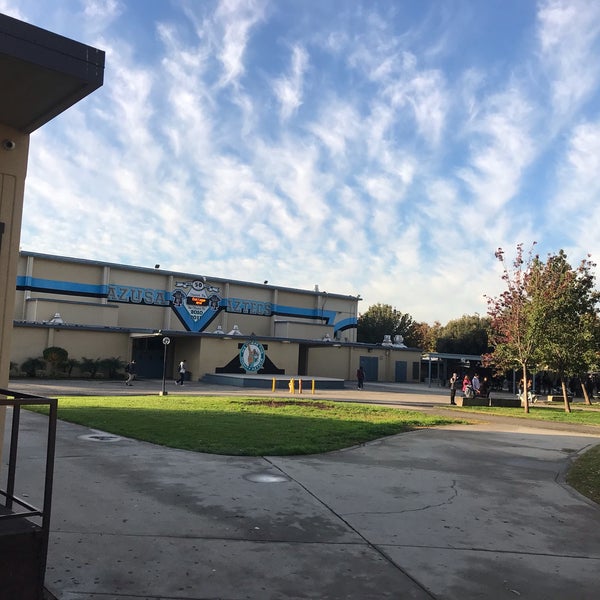
Image taken from the San Gabriel Valley Tribune

Azusa High principal, Dr. Ramiro Rubalcaba, sees this program as the students’ preparation for college and beyond. He says “Learning the skills to collaborate, to communicate and to think critically – these skills transfer to any walk of life. Not only are the students acquiring great knowledge, they have the confidence to work together to solve problems.” 

Meanwhile, Gladstone High recently launched a new academic program that will allow students to graduate from 12th grade with a full year of college credits under their belt, while meeting high school graduation requirements and the standard A-G coursework needed for admission to a UC or CSU school. The Early College Program, administered by the Azusa Unified School District and taught by Citrus College instructors on the GHS campus, begins when students enter their junior year.  Over the course of the next two years, they will earn 41 general education college credits, which can then be transferred to a community, Cal State or UC school. The program launched with its first class of 33 students this summer.

Gladstone High School also introduced the medical academy this past school year. The four-year program gives students the opportunity to learn about different medical careers and procedures, and at the same time integrating relevant curriculum into their regular courses like biology, anatomy and English. Successful completion of the four-year course earns students medical certificates they can apply to future professions.

The district has partnered with Mt. San Antonio College and the University of Health Science to implement the medical pathway. Through it, Gladstone High School learners can earn college credits, attend expositions, and observe college students in cancer research and anatomy labs. They even have the opportunity to watch human cadaver dissections.

This year, Slauson and Center Middle Schools are incorporating STEM electives to prepare students to continue in medical/engineering pathways at the high schools. Foothill Middle School has implemented a Pre-IB program.

Sierra High, meanwhile, once again earned recognition as a state Model Continuation School, a distinction it has held from 2005 to 2015. The school’s graduates received over $7,000 in scholarships from donors, including the Extended Slauson Family and the United Mexican American Youth Association. In its graduating class of 59 students, a third were recognized for Honors, High Honors, or academic achievements.   

Susan Brosche, Director of College and Career Pathways at AUSD, has every reason to be jubilant with what they have achieved. As one of the districts that has the Advancement Via Individual Determination (AVID) program, which prepares learners who are traditionally under-represented in college education, their students are more than ready for college, they are ready for life. As teachers and counselors hold college application workshops for seniors and Cash for College workshops for students and parents to help them apply for financial aid and scholarships, Azusa Pacific University holds a College and Career Day for the district’s three high schools. 

In fact, according to Arturo Ortega, AUSD Assistant Superintendent for Educational Services, they hold the best College Night in the San Gabriel Valley. He says, “During College Night, the long lines of students waiting for their chance to meet admissions officers rival those at Disneyland. Students and parents from all over the Los Angeles area, not just Azusa, come to meet representatives from 60 colleges and universities.”

Ortega reports that graduates from AUSD high schools have received unprecedented scholarships, including one full ride to the University of Notre Dame through Quest Bridge. Another notable scholarship, the Horatio Alger National Scholarship was awarded to one senior, and was matched by Carleton College in Minnesota, where she will be studying math and physics in the fall. Their students are also beginning to look outside the country as they pursue higher education. One student announced that he would be going to a university in Puerto Rico.

All these accomplishments are music to Kaminski’s ears. While she is justifiably proud that AUSD students are high achievers, that prestigious universities around the country also recognize them as such, is empirical evidence that it is an established fact.

“Azusa Unified holds high expectations for all students and promotes a college-going culture at every level,” Kaminski says. “The importance of higher education – whether it is career technical training or a four-year-degree – is emphasized not only to students, but to our entire community.”

The district collaborates with staff, parents and community to help students reach their college and career goals, while constantly incorporating new programs and expanding existing ones that have proven successful in enhancing the rigorous instruction and support available for every student.

In addition, AUSD provides ongoing training and resources for parents so that they are aware of the college application process, how they can help their children access scholarships and grants and what is required at every step of the process.

Kaminski leads a district with admirable school administrators, outstanding teachers, engaged parents, generous area businesses, and caring government agencies – educational partners all – who ensure that all their students successfully accomplish their goals and achieve their dreams. Every single one of them richly deserves an “A”.

July College Search Guide

Originally published on 2 July 2015 in the Pasadena Independent, Arcadia Weekly, Monrovia Weekly, and Sierra Madre Weekly

The road to college

Aaah, the long, hot days of summer. They couldn’t come soon enough for your children, even as you have been dreading their arrival!  While you would like them to take it easy and recharge, you wouldn’t want them to play Wii all summer long either (unless they’re like my daughter, who actually did play Wii for three months!).  

Fortunately, there are so many activities available for children of all ages. Schools and organizations in our communities offer day camps and classes catering to their interests and needs. The Summer Camps Industry in the United States is seeing some growth after the last recession. According to IBISWorld, there are 2,736 companies offering camps with themes like academics, acting, and outdoor adventure retreats. These businesses saw a 2.4% annual growth from 2009 to 2014, employing 21,935 people and bringing in $3 billion in revenues. 

The American Camp Association cites several advantages for children to attend summer camps.  The experience helps children develop their social skills as they participate in activities, communicate with other kids, and lead groups. Children build character and gain self-respect when they take on responsibility, rely on their resourcefulness to solve problems, and become resilient when faced with failures. Summer camps advance children’s community living and service skills like caring, fairness, citizenship and trustworthiness.

And then there are the test-prep courses children can take during summer to get them ready for all the standardized exams required for their college application.  In a Washington Post story published in March last year, the College Board announced a revamp of the SAT college admission test and would offer the test prep free. But that announcement was not expected to affect the $840 million test-preparation industry because today’s high school kids want to be as good as, if not better than, their classmates. Nowhere is this cutthroat competition more apparent than in the western San Gabriel Valley where a record number of students are getting perfect scores on the APs, ACTs, and SATs.   

There is an abundance of things to do during the summer months. There is absolutely no excuse for boredom and inertia.

RISING FRESHMAN

Middle school is behind them.  If your children had not shown much interest in reading, you need to encourage them to spend this month reading for pleasure. If, on the other hand, they enjoyed the Harry Potter books growing up, then they have been exposed to the joys of reading.  Persuade them to look for different authors and genres; reading various styles and themes would help them find their own voice. Reading would expand their vocabulary as they gain maturity in their writing and that would help prepare them for writing their college application essay.

RISING SOPHOMORE

As mentioned above, summer is an opportune time for reading. Encourage your children to spend part of their day to this pleasurable and educational pursuit.

Your children should find a community service activity they actually enjoy as they would want to continue doing this, or a variation of it, during the next three summers. They should also attend an enrichment program or find an internship opportunity related to something they are passionate about. 

If your children are so inclined, they can start researching colleges. Nowadays, they can go online and get virtual campus tours of most colleges or universities.

RISING JUNIOR

Your children should be preparing themselves for one of the busiest years of their high school career. They should be immersed in community service work, internships and enrichment programs. Some children enroll in test-prep courses during the summer months to get them ready for PSAT and SAT. They can attend one of the many schools offering these courses with some of their friends to make it less of a chore.

They can likewise start researching colleges and going online to get virtual college campus tours.  This would also give your children some idea about the college application process.

This is the time to read extensively to expand their vocabulary and prepare them for writing their essay for the college application.

Photo by Sofa Tutor for Unsplash

COLLEGE-BOUND SENIORS

Wow! Your children must be so excited to have completed high school and are anxiously looking forward to the next phase of their education. By this time, they should have put in the deposit on the college they plan to attend. Some colleges would be sending out the procedures for class registrations, information on housing, meal specifics, and such other details to the incoming class.

Let your children take the lead on the college moving arrangements and only offer guidance when they ask for it.  In all likelihood, your children would be moving away from home, maybe going to the other side of the country. They would need to practice being independent and the preparations for moving would be a good place to start.

In some cases, your children could be going across the Atlantic, as my daughter did.  In which case, there would be a whole set of preparations that need to be seen to. There is the visa application, which has to be a priority as it could take a month to secure. You and your college-bound student need to communicate closely with the school as their requirements may differ greatly from those of American universities.

Email or call the university to know when to send the tuition and other college fees. Make sure your student has the information on how to register for classes, how to apply for housing, what essentials to bring to school, where to find items that your student would need.

Going to school in another country would take more preparation so make sure you have enough time to spend helping your student settle into his or her new environment. 

At this juncture, let me address another situation.  If your children weren’t accepted to any school they applied to, then they would need to decide if they want to attend a community college. Most of these institutions will accept new students close to enrolment time.  Some of them have arrangements with the UC system so graduates can attend a UC school for their junior and senior year. This has the double advantage of ensuring your children get a college diploma from a four-year university and saving on the cost of their education.

Your children could also opt to take a gap year.  Some college applicants who are on waitlist on their dream university, ask to be admitted one year later (this would only work if your children met all the academic qualifications for admission to the school with only the problem of the university not having the space for your student this year). 

There could also be some instances when your children could gain admission during the spring term to their first choice school (this scenario happens if the school wants to keep their school ranking and your children did not receive a perfect SAT score but they met all the other requirements for admission. If your children have highly desirable qualities that will enhance their student body, they will wait until after they have been ranked so your kids’ SAT scores will no longer affect their place). Confer with your children’s college counselor about how to accomplish this.

Of course, there is the option to take a gap year after high school. This is a growing trend among American high school graduates. One of my daughter’s classmates took a gap year and spent it performing charity work in Africa. Several universities see this as a major boost in an applicant’s resume. They tend to see the applicant in better light – this person has some tangible experience to bring in and, therefore, adds to the school make-up. So whether your high school graduate is going directly to college, going by the community college route, or taking a gap year, recognize their decision as a first step to their independence.              

School District Highlight: Temple City

Originally published on 17 June 2015 in the Pasadena Independent, Arcadia Weekly, Monrovia Weekly, and Sierra Madre Weekly

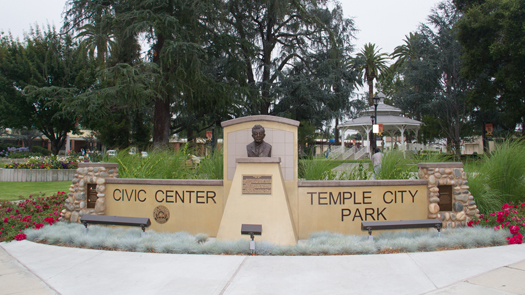
Temple City, a mere four miles big, may be small in area but it lives large in the eyes of its proud residents. Known as the city of camellias, it is home to a number of independent businesses, and has become a destination for Asian, Eastern European and Latino immigrants looking to start new lives.

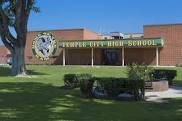
Its Unified School District was created in 1954 and has since established itself as “A District of Distinguished Schools”.  The California Department of Education has consistently named all the city’s public educational institutions in the top five percent of the state’s schools. In 1957, the first 12th grade class in the district graduated from Temple City High School when its Associated Student Body adopted green and gold as its colors and the Ram its mascot.

An academically high-achieving school, Temple City High offers 20 Advanced Placement classes in Biology, Chemistry, Psychology, Physics, Environmental Science, Calculus AB and BC, Statistics, Micro Economics, US History, US Government and Politics, World History, Language and Composition, Literature and Composition, Art History, Studio Art, Chinese,  French, German, and Spanish.  Students have nine Honors classes to choose from:  Algebra 2; Geometry; Pre-Calculus; Biology; Chemistry; English 1 and 2; Advanced Painting; and Orchestra.  In 2014, 522 juniors and seniors took the AP exams, 84.3% of whom scored above a 3, a full 20% more than California’s total.

Mary Jo Fosselman King, TCHS Principal, is extremely proud of the school’s student body.  About 80 percent of Temple City High students are engaged in various activities outside of academics. A staggering  number of clubs on campus – 68 of them, ranging from the American Cancer Society to Folding Papers for Life to World Wildlife Fund – compete for students’ attention and time. There are academic groups and organizations, performing arts clubs, athletic teams, and school publications. There is also a Peer Listener Program and direct student involvement in the city through a 100-hour Community Service graduation requirement.

This past year TCHS reached the state level in the Science Olympiad competition and participated in the JPL CAD (Computer-Aided Design) Challenge.

Temple City High School’s 40 athletic teams compete interscholastically in the Rio Hondo League in boys and girls basketball, cross country, soccer, swimming, tennis, track and field, volleyball, water polo; boys baseball, basketball, football golf, and softball.

Likewise notable are the high school’s achievements in the Arts. Its Marching Band and Pageantry Corps has participated twice in the Tournament of Roses Parade, which led to an appearance and performance on The Ellen de Generes Show. The high school’s Symphony Orchestra has been invited to take part in the Youth Symphony Orchestra Competition in Carnegie Hall and was awarded the Gold Plaque Award for their performance. The school’s Honors Orchestra was invited to play in Disney’s Concert Hall in recognition of their cello player, Daniel Gee, for his arrangement of George Gershwin’s “Rhapsody in Blue”.

Kathryn Perini, TCUSD Superintendent, is very pleased with their career enrichment programs that offer opportunities for their graduates to move on to two or four-year colleges. She also says that through the district’s Career Pathways program, they are trying to do a better job of putting emphasis on mechanical and technological abilities – something we are losing as a culture. Their curriculum, emphasizing on STEM and STEAM offerings, prepares students from TK through 12th grade, for post-secondary education and for future employment in various fields. They have a partnership with Pasadena City College (PCC), allowing dual enrollment for their students. Recognizing that today’s students are digital natives, the district put a big push on technology, providing them with the tools necessary to actively engage academically. But they did not stop at the technical aspect of their school offerings. They also have broadened their curriculum to give students various creative outlets. They have a hybrid module for multi-faceted individuals creating rich career pathways for students who don’t as yet know where their interests lie. 

Temple City High School has in place an aggressive program to ensure that its students’ accomplishments lead them to a bright future. The 82 teachers and team of six counselors are tasked with shepherding all 2,100 students from 9th to 12th grade to succeed during their years at the high school and then guiding them to admission to the college or university that is the right fit for them. According to Martinne Gonzalez, one of the six full-time counselors, and Amy Sisson, ROP/TCE Technician, their College and Career Planning begins as soon as students step into the campus as freshmen, as they are introduced to the College Admissions process. In their sophomore year, students learn to identify their interests and write their creative resumes. 

When they reach their third year, juniors begin their college search. A Junior Parents Night is held in the Spring to get parents acquainted with the process their children are going through.  Counselors explain how students and parents can utilize Naviance in helping them create their schools list, assess their strengths, evaluate their interests and choose their activities in relation to their college choice. Another Parents Night is held in the Fall of Senior year to connect their summer planning and research to the application process that would be in full swing. 

Recruiters from about 50 colleges and universities visit Temple City High School in the Fall. Seniors are encouraged to attend information sessions and speak to the college representatives who will also be the admissions officers reading their applications and essays.

Temple City High counselors hold workshops on completing the college application, writing resumes, crafting personal statements, and providing interview guidelines. Parents and students also attend financial aid and FAFSA application workshops.   

Students at TCHS are also very savvy about college applications. There is a student-run organization, the College and Career Club, which focuses on raising funds, researching grants and scholarships, and visiting various universities during the spring break. Debbie Singh, another school counselor, serves as Advisor to the club.

This year’s Temple City High School 530 seniors were accepted to close to 200 colleges and universities. These graduates will be attending such highly selective institutions including Art Center College of Design, CalTech, CalPoly San Luis Obispo, UC Berkeley, UCLA, University of Chicago, Cornell University, MIT, Northwestern University, University of Pennsylvania, USC, Stanford University, and Yale University.

Strong parent involvement, robust student engagement, solid support from the school’s administrators and teachers, make Temple City High an excellent institution of learning in the San Gabriel Valley. 

A large percentage of the district’s population originates from a foreign country, with over 38 languages other than English spoken. While this makes for a rich and diversity community, there is an ongoing challenge to assist families with understanding school life and culture. According to Perini, TCUSD is making a concerted effort to reach out to each family, especially the Asian and Hispanic populations. However, despite the varying backgrounds of families, there is tremendous  support from their PTA, which has a very active teacher component. There is a high level of parent interest in the schools and they commit time and effort in numerous school activities. Perini emphasizes parent involvement with their “shared” students. She firmly believes that parents are the children’s first educators and as such, are the district’s critical allies in a partnership that would produce not only academically successful graduates but also as future responsible members of society.  

Unlike other nearby cities with a large business base, Temple City only has local entrepreneurs financing their area; in fact, the Unified School District is the city’s largest employer. While this has been a drawback, it has also been a blessing as it has given them a home-town pride and independence. Indeed, all the ongoing developments spread throughout the city are proof positive that it’s a small town with big plans. And with its countless school accomplishments, Perini is convinced that Temple City is poised as one of the finest school districts in California.          

Students Spend Summer with Shakespeare at A Noise Within


Originally published on 18 June 2015 in the Pasadena Independent, Arcadia Weekly, Monrovia Weekly, and Sierra Madre Weekly

Educational? Check! Enriching? Oh, yes. Peppered with a large dose of fun? Absolutely! At A Noise Within, a classical repertory theatre company founded by Geoff Elliott and Julia Rodriguez-Elliott, summer camp is all of the above. But youngsters also gain a great deal of insight and experience about theatre in the duration of the program.

For five weeks starting June 15, students from ages 6 to 18 learn theatre craft from respected professionals in the field, culminating in a performance on stage on July 16 and 17. Trained actors, choreographers and designers introduce students to acting, improvisation, stage diction, text analysis, kinetic exercises, and stage combat in this intensive, conservatory-style program. 

 “We began Summer with Shakespeare in 1993 as a three-week acting camp,” says Alicia Green, A Noise Within’s Education Director.  “ It has been so successful that we decided to expand it to five weeks this year.  Students are assembled by age (6-9; 10-13; and 14-18). The younger kids can choose to join the entire five-week track or attend any configuration of time that fits their schedule. The oldest ones need to enroll for the entire five weeks because they will be putting on a full production of King Lear.  We have 105 students this summer, up from last year’s 45.”

Summer With Shakespeare covers the gamut of the Bard’s works. During their first week in camp, students learn about Shakespeare’s comedies – Midsummer Night’s Dream, As You Like It. In their second week, they study the tragedies – Macbeth, King Lear.  In their third week, they absorb the histories and romances – Richard II, Henry IV, Henry V.

At 10 a.m. on a hot and muggy Tuesday in June, kids make their way into A Noise Within’s home on Foothill Blvd. They carefully set their lunch bags on steel carts, marked with three age groupings, parked against the wall in the large main entrance hall. They then proceed to their respective class, to start the day’s exciting lesson.

Jeff Block and Ryan Luevano, of Maestro & Magic Productions, are conducting charades with the 10- to 13-year-olds on the main hall.  The group is divided into two teams facing off this morning – Keepers of the Blood Pact, or the Red Team, and Totally Awesome Unicorns, or the Blue Team. Using every magician’s accoutrement (white handkerchief, top hat and wand) a volunteer from one division mimes a magic he or she learned from class and someone from the competing group will guess what trick was performed. A correct guess earns the answering team a point.  It’s a very tight race; the two opponents are head-to-head. The game ends in a tie and everyone is happily satisfied with that outcome.

Sitting in a far corner of the main hall is Audrey Halaas-Voorhees, their class assistant, who will be there all day to make sure the children are well-behaved and are following instructions from their teacher. Audrey is also the person who will be walking them from class to class.

Vega, a first time participant in the Summer With Shakespeare camp, got interested in the program because his older brother attended it for three years. When his brother decided not to go to the camp this year, Vega took the spot. His favorite lesson is movement – something vital to one of his interests, which is dance. He is able to apply what he’s learned during his two weeks here with the steps he has mastered from the Pasadena Dance Theatre. Vega likes ballet, contemporary and ballroom dancing.  

Upstairs, Alison Elliott, is leading a very lively class with the six to nine-year-olds. She has them fully engaged in an imaginary situation at a sports stadium. She calls on some students to   come to the front of the class and act out her instructions:  “Watch only with your hands … with your eyes …with your neck …with your knees.” The little kids perform the actions animatedly and vigorously using only the body parts Alison calls for. And then she asks the ‘audience’ what sport the kids are watching and everyone shouts out ‘SOCCER!’

Meanwhile, their teacher’s assistant, Tomas Dakan, watches quietly and intently from his chair a few feet away. A student at Occidental College, Dakan himself is no stranger to the craft. He enjoys performing and has been involved with the Taproot Theatre Company, a professional, non-profit theatre company in Seattle, Washington.

Olivia is a standout in the six to nine-year-old class even when this is her first time here. She is passionate about the performing arts – she sings and dances, and does gymnastics at her school.  She is thrilled at the chance to learn acting and hopes to one day star in a musical. Olivia is also an avid reader and counts The Tail of Emily Windsnap and The Hunger Games as favorites. 

In the theatre, instructor Carolyn Marie Wright is on the stage with the 14- to 18-year-olds reading lines to King Lear, while teacher’s assistant Kenyon Meleney follows the lesson and gives cues to the students. This group has already finished creating the backdrop for the play and they are now in rehearsal. Their work and talent will be on display at the end of the five-week camp when they stage a full production of King Lear for an audience of family and friends.  

Kayla, who has been selected to play the lead role, is on her second year at Summer With Shakespeare. She says attending this camp has greatly improved her acting. She now knows what looks good on stage, and has learned how to reach her audience conceptually and emotionally.   Highly ambitious and industrious, Kayla has been music training for a year and sings in the school choir. She already has plans for college and a post-graduate degree in musicology.

Watching from high up in the bleachers is Megan Farber, another assistant teacher, who helps out with make-up and special effects. Farber, who is 26 years old, interned at A Noise Within in 2012. This is her first time TA-ing, as she gains some experience in the educational aspect of theatre. She hopes to one day teach in this field.

A Noise Within bustles! It is a-brim with energy and sparkle – from the teachers and professionals sharing their knowledge with the acting campers; the students exuberantly participating in class; the staff of the theatre company going about their daily business. There’s something happening everywhere.

For Green, every day is filled with momentous occasions to educate about and celebrate the wondrous world of theatre with children of all ages. Surely this is what the Bard has intended for his works to endure and be enjoyed, by theatre professional, emerging actor, and for-the-fun-of-it camper alike.        


Pasadena City College’s First Year Pathways

Originally published on 11 June 2015 in the Pasadena Independent, Arcadia Weekly, Monrovia Weekly, and Sierra Madre Weekly

Most 18-year-olds in America reach an important milestone in their lives – graduating from high school and entering college. This significant event usually involves moving away from home for the first time, making them independent people, whether they are ready for it or not even close.

That so many of teen-agers going to college are unsure about how to navigate this new phase on their own was not lost on administrators and teachers at Pasadena City College. Dr. Brock Klein, PCC’s Associate Dean of Pathways and Professional Learning, describes what they observed: “Like other community colleges, PCC has struggled to help students identify their academic goals in a timely manner. A powerful and transformative moment for me was when we convened a large group of campus leaders and they presented their research data that showed that a vast majority of students were not completing their basic skills sequence; over 65% didn’t have discernible outcome or milestone after six years, and almost 20% dropped out before the end of their first year of college.”

These findings led them to create First Year Pathways — a road for leading incoming students to transition to college smoothly and achieve success in school. This program was made possible through resources from the U.S. Department of Education’s Title V grant, Student Access and Success Initiative (SASI) funds. Incoming freshmen enrolled in Pathways get guaranteed priority registration; acquire vital assistance in and out of the classroom from counselors, mentors and tutors; gain access to a study center; and obtain access to the Second Year Pathway. 

First Year Pathways is made up of three components, the first of which is Summer Bridges. They currently host ESL, Design and Math Jams, which is the biggest. This is a one-week, no-cost event which combines creative math instruction with student support services and engaging orientation activities. It is designed to make it a fun way to learn math by making the subject less intimidating for students who are below the required college-level skill. Incoming freshmen attend workshops; they meet faculty, tutors, advisors and counselors to familiarize them with campus life; and get acquainted with their classmates. Students participating in the summer Math Jam found that it really wasn’t about learning Math but about making connections and being comfortable on campus.   

New students then get to meet the Student Success Team of counselors, coaches and tutors, which makes up the second component of FYP. This group of experts is trained to: handle their special needs; assist them academically and personally in getting and understanding their regular course status reports; teach them time management strategies, goal-setting and study skills. Tutors are the most interesting components of the FYP team as they are PCC students who serve as role models or peer guides for the newcomers. They meet with FYP participants throughout the first year of college on a one-on-one basis or in small groups. A tutor also serves as the  Assistant Director for the Math Jam.

The third component, the first seminar, College 1 is a three-unit UC/CSU-transferable course requirement for each FYP student. It includes the “One Book, One College” initiative, which is designed to get everyone to read and discuss one book, and share their perspectives. The First Year Pathways students’ work is celebrated at the end of the program at an all-day Student Success Conference, where they present their research inspired by the book.

There are five different First Year Pathways: The largest is XL Pathway, which is open to everyone; the Athletes Pathway, a program that addresses this specific group; the International Students Pathway (ISP), which is a variation of the XL, but focuses on compliance and visa issues, acculturation, reading, language and an introduction to college; Career Pathways in Design Technology and Media Arts; and the Ujima Pathway which deals with African American culture and history.

First Year Pathways is open to any incoming student within Pasadena City College’s district, which encompasses a wide swath of the western San Gabriel Valley – La Canada –Flintridge, Pasadena, South Pasadena, San Marino, Temple City, San Gabriel, Arcadia and parts of El Monte. Javier Carbajal-Ramos, Program Outreach Assistant, goes out to all the high schools in those cities to familiarize seniors with the opportunities available to them. He outlines the steps for anyone interested – complete the online admissions application; take the online student orientation; take the Math and English placement tests; apply to one of the First Year Pathways; and attend a New Student Counseling Session.    

As Director of the hugely successful FYP, Klein proudly says that at the end of their first year, their evaluation findings showed that students’ success rate was higher than their comparison group. They piloted this program with 300 students in 2011. This year the FYP served almost 1,900 students and it expects to grow to 2,500 students next year.

The San Gabriel Valley is home to a number of very desirable, highly selective colleges and universities that enhance the lives of students lucky enough to gain admission to them. But Pasadena City College stands out as the one institution of learning that actually transforms lives.