Mayfield Senior School Empowers Young Women

Originally published on 19 November in the Pasadena Independent, Arcadia Weekly, Monrovia Weekly, and Sierra Madre Weekly

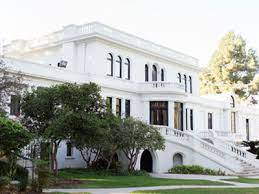
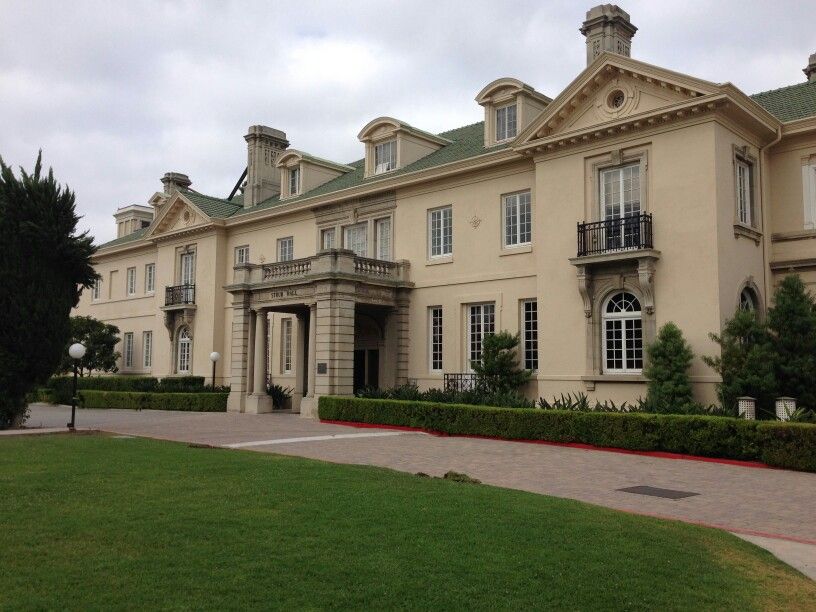
Enter the gates of Mayfield Senior School of the Holy Child Jesus, and you will understand why it’s a highly sought-out institution among hundreds of girls. It is a quiet, peaceful setting, away from the chaos and noise of the city, where young minds can focus unencumbered. A former grand residence near Pasadena’s Millionaires’ Row (Orange Grove Blvd.), it is now home to about 330 students who learn as much about academics as service to each other and the community.

Kate Morin, who became Mayfield’s Head of School this year, puts much emphasis on this esteemed institution’s motto “Actions Not Words”. She states, “The mission of the school is to find and seek the divine in each of us; when we believe that there is a higher power within us, it informs our actions. It’s about sisterhood and compassion – taking care of each other.”

As she recalls the first time she visited the school a year ago, Morin says “When I first stepped on campus I felt as if I’ve come home – this is where I’m being called to be in and it’s  wonderful that they agreed too. It was such a blessing because I knew this was the right place for me.”

Three months into her stewardship, Morin’s presentiment has deepened and she voices this observation, “The school is living its mission of where girls could find themselves .. .with lots of support from their teachers, the administration, and each other. My first impression has been reinforced as I spent more time here.”

College counselors, Abigail Shaw and Lori Holtrust, wholeheartedly agree with Morin’s assertion about the support Mayfield offers its students. As Holtrust puts it, “The teacher/student relationship is a beautiful thing to witness. We pride ourselves in creating relationships with each individual student.”

Shaw and Holtrust exemplify Mayfield’s commitment to advancing their charges’ best interest.  They have a markedly different approach to college counseling, apart from all other schools’ method. They work in tandem – every student gets to meet both counselors.

The college application process starts in earnest in 11th grade, according to Shaw. “The girls are ready to step into the world of college admissions and they have a Junior College Night where all parents come. We meet with each junior individually, with her parents; we offer two college tours – one on the east coast and another on the west coast.”

“In junior year the goal is for students to ask themselves what they’re looking for in a college, and do some serious self-reflection,” continues Shaw. “We support them in asking questions, helping them find the qualities they’re looking for. The discernment is the beginning of the college application process.”   

Morin points out, when girls first arrive on campus, they’re still little 13- and 14-year olds. “We don’t talk about college early on; we want them to be in the moment of high school. We first make sure we create a healthy balance and a mindfulness. When the time comes, we’ll work with them step by step, line by line, as our foundress Cornelia Connelly taught us.”

“The joy of our job is looking at what they think they want, and seeing where they end up in,” Shaw chimes in. “Sometimes where they end up isn’t what they started out with.” 

This seeming disparity is evident even in the school’s diverse enrollment. Shaw illustrates this, “Twenty years ago we had a duchess from Portugal and a girl from South Central L.A. who bussed herself here. We pull from all walks of life, we have breadth in our community, and our students get exposed to a global society.”

Service is integral to The Society of the Holy Child Jesus’ teaching. Mayfield students live the motto ‘Actions Not Words’ by volunteering their time throughout their four years on campus. They perform a certain number of service hours as part of their ministry and every student participates in a beloved annual tradition known as Cornelia Connelly Day (Annual Service Day). Morin says this year they went to 34 sites in Los Angeles and Pasadena to work with the developmentally disabled, at the Downton Mission, and other such organizations.

These experiences leave a lasting impression on these young women as they set about starting non-profit service clubs aimed at helping the less fortunate. The embodiment of the school’s mission informs the choices Mayfield students make as they think about college.      

In the same vein, a spirit of mindfulness applies as they go through the self-reflection process and keep all their options open. Holtrust says, “Two years ago, 68 seniors went on to attend 58 colleges and universities – a very broad spectrum.”

But the one common quality every student will take with her as she leaves Mayfield is her sense of empowerment. Morin confidently pronounces, “Each of them is armed with the knowledge that she is a powerful agent of change for the good, who has the wisdom to know how to use her skills to make the world a better place.” 

My Masterpieces Series: USC Pacific Asia Museum

The koi pond and garden at USC Pacific Asia Museum | Photo by May S. Ruiz

Originally published on 22 October 2015 in the Pasadena Independent, Arcadia Weekly, Monrovia Weekly, and Sierra Madre Weekly

Ensconced in a nondescript corner on North Los Robles Avenue and Union Street in Pasadena is a foundation that holds some of the most valuable treasures in Asian artifacts. It’s the USC Pacific Asia Museum, which used to house the Pasadena Art Museum, and then became Pacific Asia Museum in 1971. In 2013, University of Southern California (USC) partnered with the institution to become a vital resource for education and cultural heritage.

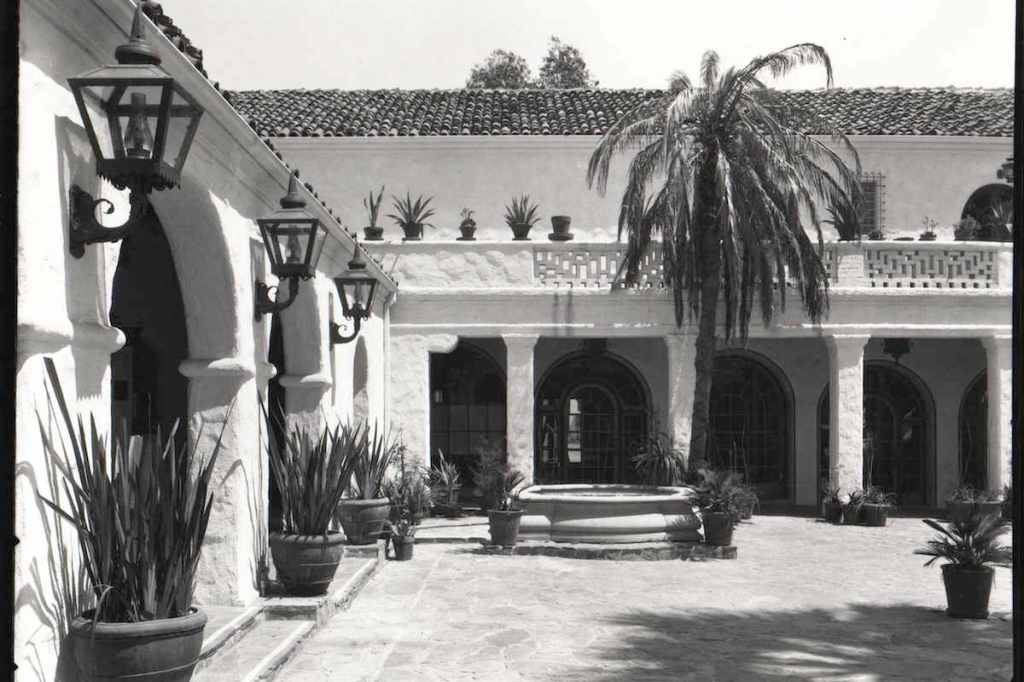
Enter its handsome arched entrance, however, and you will be transported to another place and time. The transformation is so unexpected it’s breathtaking. The charming courtyard garden with a koi pond, rock sculpture, and natural plantings reflecting the changing seasons, take center stage while a Chinese Qing dynasty-inspired mansion wraps around it. The Pasadena architectural firm of Marston Van Pelt and Maybury built it as a grand residence in 1924 to exact specifications from California transplant, Grace Nicholson, a pioneering art collector and entrepreneur from Philadelphia.

This historic home also became the center for the arts in Pasadena and was host to several cultural organizations. The first floor served as a gallery where Ms. Nicholson displayed and sold American Indian and Oriental art objects. On the second floor were more galleries, an exhibition auditorium, and Ms. Nicholson’s private quarters. 

Today it is the foremost exhibitor of Asian art collections in Southern California. It is also the destination for Pasadena 6th graders’ My Masterpieces field trip where specially-trained docents conduct tours and hold workshops. 

Michael Fritzen, Head of Education and Public Program for USC Pacific Asia Museum, who took over this post five months ago, is ably assisted by Program Specialist, Becky Sun, in planning an interactive and hands-on two-hour visit. He says, “Our My Masterpieces Program for the Pasadena Unified School District (PUSD)/Pasadena Educational Foundation (PEF) is focused on the inquiry method. Students are asked questions about the pieces they see; they aren’t just dragged through the museum and told massive amounts of facts. They stop, look and reflect about a particular artifact. Aligned with the state Common Core standards, this visit is aimed at enhancing students’ classroom discussions in their World History course. We ensure that what they see and experience add depth to their understanding of the world, and of Asia, in particular.”

This tour is designed to lead 6th graders along the Silk Road. It moves through the collection, spotlights certain artifacts, and ultimately fashions a coherent historical fabric woven from threads that connect all the different countries in Asia – Japan, China, Korea, Vietnam – as students travel on the Silk Road. 

Grace Nicholson’s previous residence now houses USC Pacific Asia Museum

According to Sun the tour is divided into two parts. While one docent tours a group of students, another docent involves the students in a hands-on workshop. She says, “Our workshops are taught by Asian experts in different fields including calligraphy, brush painting, origami.”

Fritzen adds, “We provide authentic materials for students to employ during the workshop. If they’re working on calligraphy, for instance, they are using brushes, ink blocks, and rice paper made specifically for that art form. The work they produce will match what they see in the museum – it will have the look, smell, and texture of the original art. The art activity makes what they see in the gallery come to life and gives them a better understanding of what the artist went through to make the product. We try to create an experience that cannot be replicated in the classroom so that they leave with lasting memories of their visit.”

“My Masterpieces introduces Asian art and culture to kids from all over Pasadena who have never had occasion to visit the museum; it helps them understand why a particular tapestry or sculpture is unique and preservable,” continues Fritzen. “We hope that the visit inspires enthusiasm and passion in young people so that they later become visitors, members, donors, and collectors of art. The field trip includes a family pass for six people. That students actually redeem those passes proves that it makes a deep impression to them.”

Through their programs and events, USC Pacific Asia Museum follows its mission and vision unique to the museum – to further intercultural understanding through the arts of Asia and the Pacific Islands.

According to Fritzen, the museum recently featured a Harvest Moon Festival which showed how this is celebrated not only in China, but also in Japan, Korea, and Vietnam. The institution endeavors to showcase countries which are not usually at the forefront because they don’t have enough representation. 

With that in mind, USC Pacific Asia Museum will host in December a show featuring the art and culture of the Philippines. It may be the first time others will learn about this group of islands in the Pacific beyond the nightly news report of the country being in dire need of assistance, after being hit by devastating typhoons . Maybe it will help engender public interest in the countless natural wonders unique to the Philippines – beautiful coastlines, white sandy beaches, majestic mountains, lush countryside, exotic foods, and warm people.

If USC Pacific Asia Museum were to enlighten even just one mind about the abundant treasures to be found across the vast Pacific Ocean, it would have served the purpose it has set out for itself. 

My Masterpieces Series: Pasadena Museum of History

Originally published on 15 October 2015 in the Pasadena Independent, Arcadia Weekly, Monrovia Weekly, and Sierra Madre Weekly

Brad Macneil, Education Program Coordinator at the Pasadena Museum of History (PMH), is readying once more for this year’s My Masterpieces Program. Every Tuesday and Thursday, beginning this month until the end of the school year, he and his team of volunteers will be welcoming 4th graders from all the public schools in Pasadena for a two-hour art class and activity at the Fenyes Mansion. 

According to Mr. Macneil, this program originated from a pilot test collaboration among the Pasadena Unified School District (PUSD), Pasadena Educational Foundation (PEF) and different cultural institutions, with input from teachers. He says, “It was important that we involved the teachers. We made sure they felt it was their program too so we asked them to write the curriculum for it.”

For My Masterpieces, PMH provides students and teachers with the Museum publication Painting the Beautiful as background material for their visit.Students also complete a lesson in class to prepare them for the field trip and learn some basics in art education. During their visit, they learn about the mansion and other members of the family, and explore what life was like in the early 1900s.      

The Fenyes Mansion, which is also home to PMH, is a Beaux Arts residence built in the early 1900s as a winter home for Eva and Dr. Adalbert Fenyes. Macneil adds, “At the time Pasadena was a winter resort that attracted artists to the area because of its landscape which they painted.  They later sold these paintings to the wealthy visitors. A leader of that art community was Benjamin Brown, a famous landscape painter. He was a friend of Eva and he created some of the portraits and landscape paintings that still hang today in the mansion. Eva became a patron of Pasadena’s flourishing art colony and invited various artists to her studio or to go out into the foothills for creative material.”          

“The inspiration for the mansion field trip is Eva’s life and her love for the arts,” explains  Macneil. “Each visiting class is divided into three groups – art critics, artists, film makers – that   rotate to do different 30-minute activities led by a PMH volunteer. The art critics take a tour of the mansion and look at Eva’s art collection which they have seen in the book Painting the Beautiful. Using art terms and vocabulary, students discuss what they like or don’t like about a painting. They talk about the techniques the artist used to get certain effects.”

Macneil continues, “The artists head outside to the fountain, which has been depicted in painting by a well-known artist named Richard Miller. Volunteers give students a brief instruction: their task is to capture the spirit of the fountain as best they could using the pencil and pad they are provided. It’s very surprising how 4th graders can quietly concentrate on their sketches during the entire 30 minutes.  And more amazing is what they come up with!”

The Fenyes Mansion

The film makers go out in the garden. Macneil says, “Eva was not only interested in the arts, she was also fascinated by the technology involved in moving pictures. So for our film makers, we pick the actors, camera person, and director who will take part in creating a silent movie called A Thief in the Park. They learn not only techniques in movie-making, but more importantly, the value of collaboration. Teachers have great fun taking photos of the finished students’ work on their Smart Phones to show later in class. It’s probably the most popular thing we do – it’s exhausting and it needs several volunteers.”

PMH serves 3,000 4th grade students a year in the My Masterpieces program, using funds raised by the Paloheimo Foundation. But the organization could use more volunteers to help keep it running. Volunteers can be college-age or older and will lead tours Tuesday through Friday.  Anyone who has patience, enthusiasm, a sense of humor, and is interested in volunteering can call PMH at (626) 577-1660.

According to Jennifer Olson, District Arts Education Coordinator for PUSD, My Masterpieces started during the 2008-2009 school year. It began serving only four schools, then expanded by four to five schools annually until eventually all of Pasadena’s 18 schools became part of it. It aims not only to provide arts education and a cultural experience for all children, but also to help them feel at home at any of the arts organizations in their community. They found that so many students in the Pasadena Unified don’t usually go to museums with their families because there are too many barriers including cost and transportation. This program removes those impediments and invites all Pasadena families to experience the arts in their community.

A class visit to the Fenyes Mansion leaves a truly lasting impression in the minds of young students. According to Macneil, several of PMH’s Junior Docents (7th and 8th graders in Pasadena public and private schools giving tours to 3rd graders in the PUSD) first saw the mansion during their My Masterpieces Program visit in 4th grade. And it was what encouraged them to later become Junior Docents.

The Pasadena Museum of History’s motto is ‘History Matters.  Help us Pass it On’. The My Masterpieces program breathes life into that adage.

November College Search Guide

Originally published on 5 November 2015 in the Pasadena Independent, Arcadia Weekly, Monrovia Weekly, and Sierra Madre Weekly

The road to college

FRESHMAN

Your children have come this far into their 9th grade and should be fully settled in on their courses and their teachers’ teaching style. Hopefully, they have found some new friends among their classmates, and have adjusted to high school life in general. 

Encourage your children to focus on their studies and to make use of all the resources available at their school to accomplish all the work required to pass their course. The goal is not just to pass, however, but to make the best grade they are capable of getting. Ideally, they should be up-to-speed in all their classes but if there is anything about the course they can’t grasp, they need to seek assistance from teachers. Most of them will meet with students after class to provide the necessary tutorial lesson. They have to ask right away or they will fall behind all the more as the school year wears on.  All the grades they earn are reported and their GPA is the single most important component of the academic picture they present to the universities to which they will apply. It will show how well they did in high school and how prepared they are to go into college. 

By now they should have participated in some sports events their school competes in; they should have identified other extra-curricular activities they want to be involved in. 

SOPHOMORE

Most schools look at 10th grade as a fundamental year in high school. Your children should have already made a smooth transition from their middle school life and are actively exploring their various interests and are applying these towards extra-curricular work. They should be actively participating in sports, or arts, their school newspaper or their yearbook. 

The class deans should be working with your children in evaluating their class performance and workload to make sure they are on track and are making the grade. Together with their class dean, your children should be addressing preparations for standardized testing and junior year course options. 

Additionally, your children can start looking at various colleges offering the course they might consider taking.

JUNIOR

This is an important year for your children. They should register for all the standardized tests required for college application.  They need to be in constant communication with their counselor to ensure they on track for graduation and college admission. 

Encourage your children to focus on getting good grades. This year is the last complete school year grades the college admissions officers will see when your children send in their application.  Their GPA is the most reliable and significant predictor of how well they are ready for college work.

Most high schools in the area have held college fairs on campus and you and your children have met the representatives of the various colleges and universities to which they might consider applying. Your children should be researching these schools’ requirements and keeping track of the schools which offer the courses they are interested in pursuing.

SENIORS

Your children should take the SAT Subject Test if the college they’re applying to requires it They also should have already sent or should be ready to dispatch their application if they were trying for Early Action (EA) or Early Decision (ED). They should notify the colleges of any honors they received since mailing their application, and they have to make sure their school sends out a recent transcript, and all their standardized test results have been forwarded. As they await word from the college, they might want to keep writing all the supplemental essays required by the universities to which they will apply if they don’t get into their EA/ED school.  Acceptance to their EA school isn’t binding so they can still apply to other colleges, thus not limiting their options.

In the meantime, you children should make sure they are doing well academically. Some universities require the first semester grades, or the first quarter grades if they’re applying for EA/ED. In fact, your children shouldn’t let up on academics because a college can still rescind their offer of acceptance if students grades’ have fallen below acceptable level. 

Likewise, make sure your children are continuing to participate in athletics and extra-curricular activities. These sometimes help them relieve the stress of the college application process.  

This is also the time to research scholarships.  Some websites that could prove useful are:  Affordable Colleges Online (http://www.affordablecollegesonline.org/graduating-debt-free; CollegeXpress (www.collegexpress.com); Fastweb (www.fastweb.com); Free Application for Federal Student aid (www.fafsa.ed.gov); National Merit Scholarship Corporation (www.nationalmerit.org); Scholarships.com (www.scholarships.com); Scholarships360 (www.scholarshops360.org); Student Aid on the Web (www.studentaid.ed.gov). You and your children should talk to their school’s financial aid officer for guidance on willing out financial aid applications.

My Masterpieces Series: The Huntington Library, Art Museum, and Botanical Gardens

Virginia Steele Scott Galleries of American Art | Courtesy Photo

Originally published on 8 October 2015 in the Pasadena Independent, Arcadia Weekly, Monrovia Weekly, and Sierra Madre Weekly

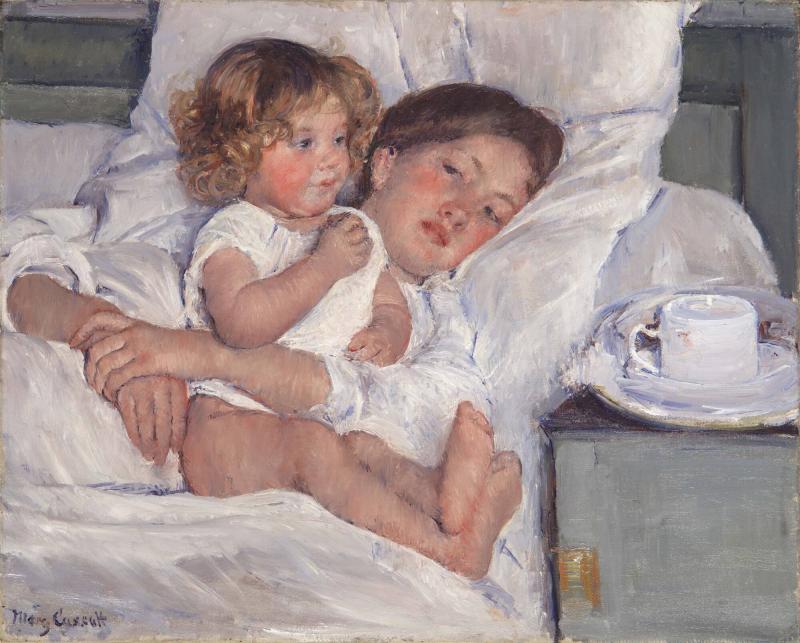
A group of lively 1st graders enters the double doors of The Huntington’s Virginia Steele Scott Galleries of American Art. As they are ushered into the foyer, all eyes alight upon Mary Cassatt’s 1897 painting, Breakfast in Bed. There is an audible gasp and a collective exclamation – “It’s Mary Cassatt!”

That this sense of awe, mixed with recognition, comes from 1st graders is why Guy Fish, Senior Manager for Art Education at The Huntington Library, Art Collections and Botanical Gardens, thinks Pasadena Unified School District’s (PUSD) and Pasadena Educational Foundation’s (PEF) My Masterpieces Program is in itself a treasure. He says, “That’s exactly what we’re trying to do! The program inspires passion and a love for art.”

Fish explains The Huntington’s collaboration further, “We were one of the co-developers of this pilot program; it is unique in its goal of stirring emotion, fostering knowledge and advancing understanding of the arts among schoolchildren. We are scaffolding and building these kinds of relationship with artwork. And we take seriously our charge of laying the Humanities foundation for young kids. We have a very important role to play; imagine if we didn’t do this and these kids go on to the 2nd grade program without this starting point.”

According to Fish, The Huntington’s focus for the one-hour field trip is to teach children the value of a museum experience. Each class is divided into small groups and a docent introduces the children to Henry and Arabella Huntington’s life as they tour the mansion.  Docents for the My Masterpieces Program are specially trained on how to make the visit fun and interesting.

To prepare the kids for their tour, teachers discuss in class the three paintings that they will see at The Huntington. They talk about these pieces of art and by the time the children come here, they’re already seeded with curiosity to see the actual painting – their visit adds another layer of meaning to the lesson.

“As our students are 1st graders, we focus on the theme of caring, while showing them the principles of line, shape, color and texture. Every artwork we choose to analyze portrays how this message is exemplified. One of the paintings they study is called The Clavering Children, a work of 18th century English painter George Romney. It encapsulates the basic concepts of art – warm and cool colors, line, texture and shape. It also shows a boy and a girl caring for each other and their animals … something most kids would relate to,” Fish further elaborates.

Another piece of artwork children look at during their field trip is called The Last Gleanings, an 1895 oil on canvas masterpiece created by French painter Jules-Adolphe Breton. It depicts a harvest scene, one of several paintings Breton produced that illustrates his love for the countryside.  To PUSD’s 1st graders, the painting shows caring for the land. 

Courtesy Photo

But it is American painter Mary Cassatt’s 1897 Breakfast in Bed that makes the biggest impression in these young children’s minds. An oil on canvas work showing a mother with her young child, painted in light colors, it is one of a recurring theme in Cassatt’s body of work. 

Early this year, The Huntington inaugurated the new Visitors Center that features four multi-room classrooms, among other things. According to Fish, they are thinking of adding a new component to their My Masterpieces program in January making use of those classrooms. He’s currently working on a plan to expand their program beyond kids analyzing artwork, but maybe creating their own. They now have the facilities to make that happen.      

An award-winning program, My Masterpieces received the prestigious CAMMY Award from the California Association of Museums in 2012. In 2010, it was also recognized by the California School Board with the Golden Bell Award. It was established during the 2008-2009 school year as a collaboration between teachers and various cultural organizations to bring about a high level of engagement among students.

It is this spirit of collaboration that proves My Masterpieces to be a worthwhile endeavor for The Huntington. As Fish explains, “It reinforces our commitment to our long-term partnerships; our work has matured into a deep relationship with PUSD. It also allowed us to systematize our school engagement. It was the springboard for The Huntington’s Teacher and School Programs, which developed the curriculum that supports the Common Core standards. The art course  offered by the My Masterpieces program isn’t far from the project-based learning promoted by the Common Core. Using the resources available at The Huntington, teachers from K-12th grade choose from 12 programs to provide students appreciation, engagement, and understanding of various subjects.”

The Huntington’s My Masterpieces field trip occurs during regular public viewing days. Visitors from far-flung countries as well as local tourists, together with PUSD’s 1st grade students, spend their day admiring the wealth of treasures this beloved institution has to offer. Arabella Huntington would have been delighted to know that Mary Cassatt’s Breakfast in Bed elicits as much appreciation from the youngest guests as from learned art aficionados.       

October College Search Guide

Originally published on 1 October 2015 in the Pasadena Independent, Arcadia Weekly, Monrovia Weekly, and Sierra Madre Weekly

The road to college

As we settle into cooler temperatures and look forward to fall holidays, so should your children be getting into the rhythm of school life and activities. After they have put behind the excitement of the new school year, they should now concentrate on the job at hand.

FRESHMAN

Encourage your children to keep their focus on their schoolwork. By this time, they should have figured out what extra-curricular activities they are interested in pursuing and what sports they want to participate in. Give them guidance as they navigate this new phase in their school life, and support the choices they make.

SOPHOMORE

Depending on your children’s course choices and load, there could be standardized testing required of them. Your children should be taking AP and SAT II exams following completion of the course so they need to retain the knowledge they gained in class. The best preparation for  both AP and SAT II exams is for your children to make sure they understand the subject matter and do well in all tests the teachers give in class. If there is something they didn’t understand, they should right away speak to the teacher to ask for clarification or, possibly, find a tutor for additional help. The results of these standardized exams are required for college applications.       

JUNIORS

Your children should be aware that junior year is the last complete year of high school performance that college admissions officers will see. They have to put more effort at doing well and getting good marks.

They should register for and take the PSAT, which is also the qualifying exams for the National Merit Scholarship. It is also a good time for your children to meet with their school counselor to make sure they are taking all the courses they need to graduate and apply to college.

Your children should also be keeping up with their extra-curricular and sports activities. College admissions officers look at several components as they try to assemble an incoming class made up of the best candidates to add to their student body. 

Several area high schools hold College Fairs on campus. This is an excellent opportunity for you to see what the different colleges and universities are offering. Your children will get to meet and speak to admissions officers – they are usually the same people who will be reviewing your children’s application, reading your children’s essay, and sitting around the table, making their case for your children during the all-important decision-making rounds. They have a say on whether your children get accepted or denied admission to the school of their choice.  

SENIORS

Your children should now be in the process of completing the common app, and finalizing their essay topic or personal statement. They should have provided the teachers who are writing their letters of recommendation with stamped envelopes.

If your children are sending supplementary material (auditions or portfolios) with their application, they need to be getting these ready soon. Audition tapes for Arts Performance, for instance, can be uploaded on YouTube for easy access; some schools no longer accept CDs or DVDs. Your children should check the website of the college or university to which they are applying about supplement material requirements. Your children’s school counselors are also a great resource as they are always in contact with college admissions officers.

If your children’s high school offers interview advice and guidance, they should take advantage of it. Basic things like what clothes and shoes to wear, in addition to how to answer questions, all help towards giving your children confidence. While this is not an expert advice, I am going to say that in most cases, interviewers are not as concerned about what answer they give, but how they answer. Also, if your children are visiting a campus and an interview with an admissions officer is a requirement for application, they should take the opportunity to schedule the interview at that time. Admissions officers like to see demonstrated interest – a campus visit and interview will be remembered and noted.

Be on top of application deadlines; most schools offering Early Action or early Decision have to receive your children’s application in November.  

You and your children should be researching scholarships. A website called Affordable Colleges Online is a good resource to look into (http://www.affordablecollegesonline.org/graduating-debt-free).  Other websites include: CollegeXpress (www.collegexpress.com); Fastweb (www.fastweb.com); Free Application for Federal Student Aid (www.fafasa.ed.gov); National Merit Scholarship Corporation (www.nationalmerit.org); Scholarships.com (www.scholarships.com); Scholarships360 (www.scholaships360.org); Student Aid on the Web (www.studentaid.ed.gov). You should also attend the financial workshops being offered at your children’s high school.

Your responsibilities as parents are limited to offering encouragement, guidance and moral support as your children go through this stressful time. But while you need to let your children manage this process, you should also express your concerns and expectations. Communicate with your child, the counselors and the teachers when you have questions. 

Be there for your children but learn when to get out of their way. Never try to communicate with the college admission officers as it is the surest way to sabotage your children’s chances for admission. Do not be overzealous about getting your children accepted to their dream university; there is a school out there that’s the right place for them. While this may sound hollow now, the counselors at your children’s school and the admissions officers at the colleges or universities to which your children are applying are actually the experts at finding the best fits.         

School District Highlight: Alhambra

Originally published on 17 September 2015 in the Pasadena Independent, Arcadia Weekly, Monrovia Weekly, and Sierra Madre Weekly

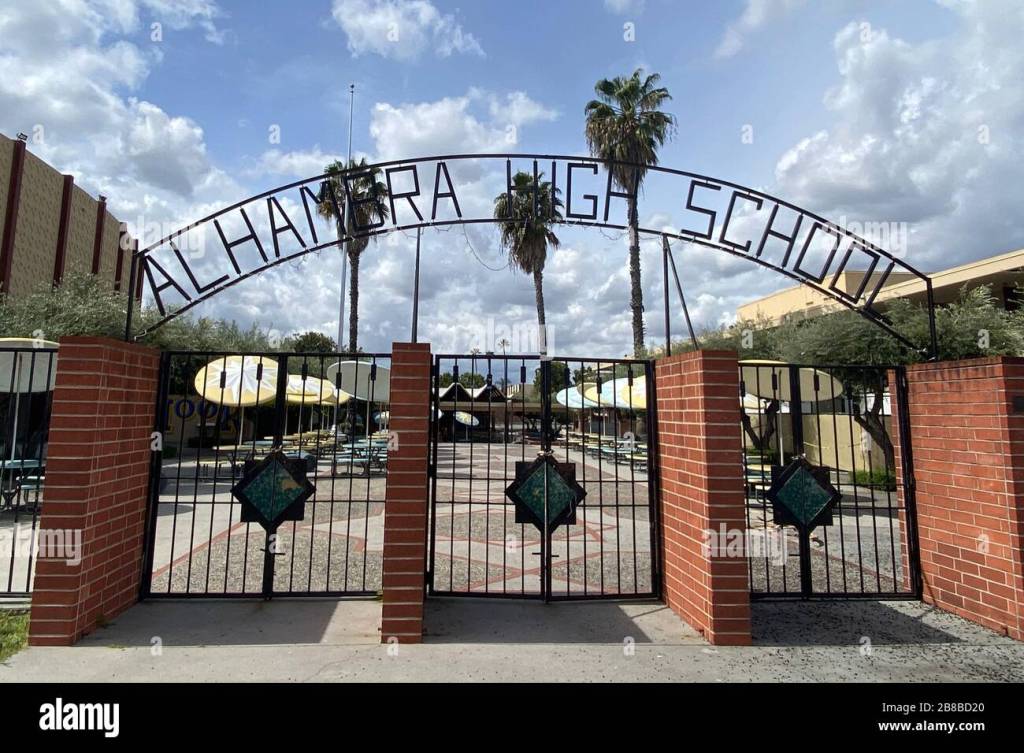
The city of Alhambra, about eight miles northeast of downtown Los Angeles, started out as a small residential town when it was first established in 1903. Today it has grown into a bustling community where businesses and residents amicably co-exist.

While Alhambra’s roots were largely Spanish, the 2014 U.S. Census figures show its population is about 53 percent Asian, 34 percent Hispanic or Latino, 10 percent white, 1.5 percent Black or African American, and a sprinkling of other ethnic groups.

The Alhambra Unified School District (AUSD) encompasses 13 elementary, three comprehensive secondary, and two alternative high schools servicing Alhambra, and adjacent Rosemead, Monterey Park and San Gabriel. It is a middle-size district with close to 18,000 students under the leadership of the superintendent, Dr. Laura Tellez-Gagliano.

An award-winning district, AUSD has earned numerous accolades as California Distinguished and Blue Ribbon Schools – in 1993; 2002 through 2008; in 2010 and 2014. From 2002 through 2013, several of the district’s schools received the Title I Academic Achievement Award (AAA). 

This year, U.S. News & World Report-America’s Best High Schools awarded all three AUSD high schools a Silver Medal. Newsweek’s America’s Top High Schools named San Gabriel High School #9, Mark Keppel #107 and Alhambra High School #165, in Beating the Odds.

AUSD has received five Golden Bell Awards from the California Board Association in 2005, 2006, 2008, 2010 and 2013. Its three high schools have also garnered an impressive array of achievements – they placed in the LA County Academic Decathlon annually beginning in 2008 through 2015. Alhambra High and Mark Keppel High Schools reached state level in 2009 and 2010; Mark Keppel got to state finals in 2013 and, in 2015, with Alhambra High as well. 

Programs in the school district address the needs of its students. According to Dr. Gary Gonzales, Assistant Superintendent, the Local Control and Accountability Plan (LCAP), a critical component of the Local Control Funding Formula (LCFF), designates Alhambra as having 72 percent unduplicated count in English learners, socio-economically disadvantaged, and foster youth. Because of this, the district is able to get a supplemental and concentration grant which enables administrators to develop programs, hire teachers and teacher assistants as well as non-certified certificated personnel in their various schools, to provide extra education.  Eligible students can take summer classes or extended school days. 

According to Brad Walsh, Director for Secondary Learning, AUSD offers four California Partnership Academies – International Business, Business and Technology, Medical Careers, and Green Construction. Students who take classes in any of these academies get real life experience as they practice what they learn in the classroom made possible through partnerships with the business community. Graduates not only receive a high school diploma, they leave school with higher employability skills.

Career and Technical Education courses provide not only classroom learning but practical skills for students who choose these paths – architecture/computer-aided drafting; automotive technology; business; computer applications; culinary arts; drafting; emergency medical responder; emergency medical technician; heating, ventilation and air conditioning (HVAC); health careers and medical terminology; restaurant; retail; and wood technology.   

AUSD is currently developing its Dual Immersion Initiative which it will implement in a pilot program in two elementary schools during the 2015-2016 school year. Mandarin and Spanish will be offered as early as kindergarten, preparing students for a global society and economy.

An open enrollment procedure for  Honors and Advanced Placement (AP) courses started during the 2007-2008 school year. According to Walsh, AUSD has a total of 122 AP classes offered at their three comprehensive secondary schools – Alhambra, Mark Keppel and San Gabriel High Schools.  An AP course in Human Geography is available as early as 9th grade.

A Special Education Collaboration Model from  8th grade through high school supports students with learning disabilities. Teachers and credentialed facilitators help these individuals keep up with class work and assist students in the classroom. Online education tools, like APEX and ACELLUS, are especially helpful for all students.

Partnerships with community colleges, including Cerritos, Citrus, Rio Hondo, Mount San Antonio and PCC give AUSD high school students an edge in college. Through classes offered on their high school campus, they earn credits towards an Associate or Bachelors degree.

All AUSD teachers have been involved in intensive professional development for three years to get their students up-to-speed on the Common Core curriculum. The recently-released results of the new standardized assessment put in place by state superintendent of Public Instruction, Tom Torlakson, indicated that all their hard work have paid off. The publicized numbers were met with jubilation at the Alhambra Unified School District as their assessment scores showed that they outpaced county and state levels.

Fifty-eight percent met or exceeded county and state levels in ELA (English Language arts).

Among Latinos, 43 percent met and exceeded county and state levels; 29 percent English learners exceeded county and state levels; and 53 percent socio-economically disadvantaged (SED) met or exceeded county and state levels.   

In the Math exams, 50 percent of AUSD students met or exceeded county and state levels. Among Latinos, 26 percent met or exceeded county and state levels; 35 percent English learners met or exceeded county and state levels; and 45 percent SED met or exceeded county and state levels. 

According to Gonzales, “This new standardized assessment is completely different from the tests given in the past. It wouldn’t be fair to compare the results with past scores; it’s not a pen and paper test, it’s all online. It’s more than a multiple choice exam where students can answer with some guesswork; it’s analytical.  It makes students go beyond the procedural; they utilize the conceptual part of learning. It forces them to be critical thinkers – a great way to prepare for college and careers.”

“College and career preparation at AUSD begins even at the elementary school level,” says Judy Huffaker, Nutrition & Career Technical Education Specialist at Alhambra High School.   According to Ms. Huffaker, AUSD college counselors invite 8th grade students to come to the high school they will be attending for a day-long event that introduces them to College and Career Readiness. They start 9th grade with the mindset that they will be going to college. High school freshmen get acquainted with an online process called Career Cruising.

On October 15 this year, approximately 3,000 senior students and parents will be on the San Gabriel High School campus for a College Fair. From 6:00 to 8:00 in the evening, they will meet with about 70 college representatives and attend workshops on planning for college, financial literacy, difference between the ACT and SAT exams.  

AUSD’s Career Center conducts college tours at local universities (UC, Cal State and other private institutions). Counselors hold workshops on resume writing, preparing the personal statement, and available scholarships; they provide assessment orientation and counseling.

Each school year, the approximately 1,800 AUSD seniors attend Cash for College events. With  68 percent socio-economically disadvantaged students in the district, all seniors complete the FAFSA, which may provide financial aid to qualified students.

The Alhambra school district has an impressive academic record.  In 2015, it produced nine National Merit semi-finalists; annually, 43 percent of seniors meet the A-G requirements.   Graduates from the three high schools  go on to some of the most prestigious universities in the country, including Harvard, Yale, Columbia, USC, Cal Berkeley, and Stanford.  Additionally, students attend many local colleges and universities like Cal Poly Pomona, Occidental, Azusa Pacific, Cal State Los Angeles, and Whittier College.

So while the recent state-administered exams showed there is still a gap in academic skills between AUSD’s Asian and Latino students, that divide is narrowing. Administrators are working feverishly to put in place action plans and services to close that learning difference.    

As Gonzales points out, “Each and every student in the Alhambra School District believes he or she will go to college.” Initiatives and programs are in place to ensure students harness their potential to realize that dream. Indeed they have much to look forward to and celebrate! 

Allan Mucerino Positions Duarte as Model for 21st Century Learning

Originally published on 17 September 2015 in the Pasadena Independent, Arcadia Weekly, Monrovia Weekly, and Sierra Madre Weekly

“Duarte is poised to be a model for work-based learning that transcends socio-economics,  race and culture. We have 21st century learning going on, connecting students with college and career opportunities,” states Dr. Allan Mucerino, newly installed Superintendent of Duarte Unified School District (DUSD). 

Barely three months into his term of office, Mucerino has held numerous talks, attended several symposia, and established additional partnerships with organizations to expand on the many programs already in place. He came to Duarte on the first of July to occupy the post vacated by Dr. Terry Nichols, who retired at the end of June. And while Mucerino is cognizant of the great responsibility he has undertaken, he is confident that his expertise and past experience, coupled with all the district resources, will serve him well.   

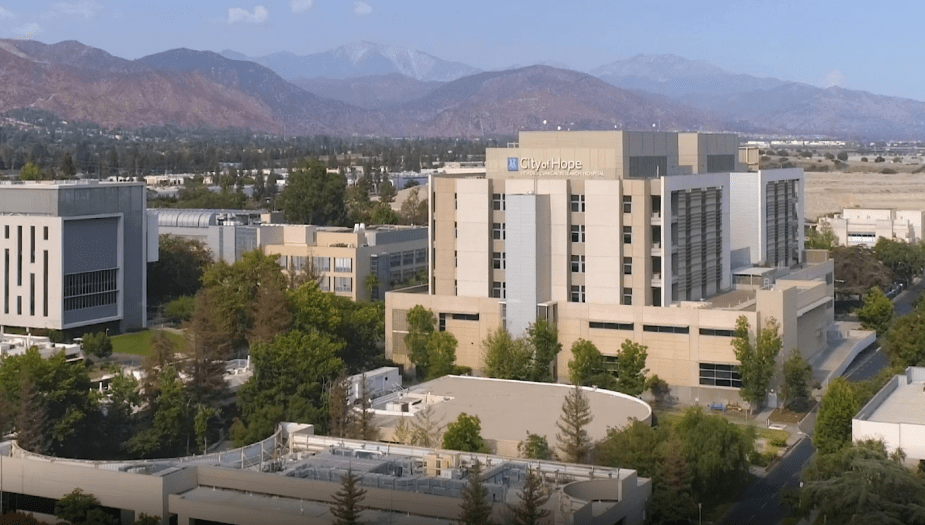
“We have several wonderful projects in place – a collaboration with City of Hope that has created SEPA (Science Education Partnership Award); an Early College Program established with Citrus College; the Pathways in Technology with City of Hope and Citrus College; a mentoring program called STEP (Shoulder-Tapped Empowered Proteges); and LIFI (Latino International Film Institute) – all of which give our students opportunities to not only acquire classroom education but also practical training,” Mucerino explains.

In addition to those excellent programs, Maxwell Elementary recently received its International Baccalaureate designation – a distinction that makes it a much sought-after school. A  $19,000 Advancement Grant from Los Angeles County “Arts for All” was awarded to the district, augmenting their arts funding through Mr. Holland’s Opus Foundation.      

As he hit the ground running, Mucerino immersed himself into enlarging the building blocks already begun by his predecessor. He says, “Using Linked Learning as a framework, I am looking to get in on the stackable certification movement.” He wants to expand on the Early College Program by collaborating with community colleges to create stackable certifications, giving secondary school students the option to take courses on their campus to earn a certificate for a particular career while in high school. 

As Mucerino further expounds, “Someone can take a nursing course beginning in high school and earn a certification as a CNA (nursing assistant). He or she can take further studies to stack additional certifications from LVN (licensed vocational nurse), to RN (registered nurse), to a BA in Nursing with our higher education partners. Earning certifications in high school provides students with employable education and skills. We aim to prepare all of our students for college, but this approach readies graduates for the work force if higher learning is not an immediate option, for one reason or another.”    

Mucerino is also looking to collaborate further with the community colleges to offer capstone classes in high school. He says, “as part of our College and Career readiness in STEM fields, I would like to see classes that focus on one specific industry woven throughout. So as students satisfy the A-G requirements, they can study a particular course of interest progressing each year.  An internship with our business partners in the community, will cap their senior year.”

Of notable interest to Mucerino is the Healthcare Workforce Initiative. He is involved in a healthcare minority consortium to help develop youth for healthcare professions. As the recipient in 2012 of the Science Education Partnership Award supported by the National Institutes of Health, DUSD is in an unparalleled position to take full advantage of the partnership between City of Hope (COH) and the San Gabriel Valley, and the SEPA Collaborative. This grant established a two-stage research education program for rising high school juniors and seniors. It gives students solid background in the theory and practice of science as they conduct real discovery research. 

SEPA also led to a professional development agenda for K-12 teachers. Workshops for elementary, middle and high school teachers educate them on skills and techniques for critical reading of science texts. There are also workshops focusing on implementation strategies for the K-8 Genetics curriculum, which are aligned Next Generation Science Standards (NGSS) and Common Core State Standards (CCSS). The grant also provides for a K-12 education program.  This involves visits to classrooms by COH scientists and field trips top COH by 2nd, 5th and 8th grade students designed to get them interested in research and applying for summer research program during their high school years.

According to Mucerino the healthcare sector is paramount in DUSD. The district’s STEM Academies have made it possible for more students to pursue health careers. While Duarte previously only had a handful of students doing summer work, there are now hundreds of them working in the various hospitals in the region. He points out that Jeff Radsick, Biotech teacher at Duarte High School, who oversees the summer program, is constantly looking for internship opportunities. Ann Miller, Senior Director for Talent Acquisition and Workforce Development at City of Hope, works closely with the district in encouraging students to consider a career in the healthcare and biomedical fields.    

There are countless programs offered in Duarte schools and partnerships the district has formed through the years. Not only do these opportunities put DUSD on the leading edge of work-based learning, they also prepare students to fill the one million STEM jobs that will become available in 2025. What better incentive could there be for children to attend school?     

Community Organizer Intern at Pasadena Playhouse

Originally published on 27 August 2015 in the Pasadena Independent, Arcadia Weekly, Monrovia Weekly, and Sierra Madre Weekly

Giselle Boustani-Fontenele had an amazing summer. No, she didn’t do anything daring at some exotic locale like swim with sharks at Ambergris Caye in Belize, or climb the peaks of Mt. Kilimanjaro in Tanzania. Giselle spent ten weeks as The Pasadena Playhouse’s Community Organizer (CO) summer intern.  She did, however, brave the daily commute from her home in Tarzana to Pasadena.

For the first time, the internship program at The Playhouse was financed through a grant from the Los Angeles County Arts Commission (LACAC). Gisele reported to Seema Sueko, Associate Artistic Director, who joined The Playhouse in January 2014 from the Mo’olelo Performing Arts Company in San Diego. Sueko originated  Consensus Organizing for Theatre as a means to build partnerships with the community which, in turn, translates into higher ticket sales.  

During her internship, Giselle learned about Consensus Organizing by asking questions and by watching Sueko, and Victor Vazquez, The Playhouse’s Real Women Have Curves (RWHC) Community Organizer. She attended meetings with potential RWHC, the first show slated for the 2015 season,CO partnerships. According to Sueko, “…our summer intern had an up-close opportunity to experience CO and support these efforts.”

Giselle created the Master Colleges and Universities CO Contact Spreadsheet, a document which consolidates contact information for all the schools The Playhouse has collaborated with in the past or which have shown interest in becoming CO partners.  This document lists institutions, including Stanford, USC, The Claremont Colleges, Azusa Pacific University, Cal State L.A. and Pasadena City College, and others.   

Another interesting job Giselle worked on was preparing the Dramaturgy Starter Kits (DSK) for Real Women Have Curves and Breaking Through. A DSK is an internal document created by the Artistic Department for The Playhouse staff which helps them frame and promote the stage play or musical they are putting on.  This includes information such as the themes of the play and the inspiration for it. Giselle interviewed the artists of two shows – Sueko, who is directing RWHC; Sheldon Epps, Artistic Director of The Playhouse and director of Breaking Through, Kirsten Guenther, playwright  and Katie Kahanovitz, who is working on music and lyrics along with Cliff Downs.  

Additionally, Giselle produced two Learning Community gatherings involving  10-15 trainees who, like her, received their internships from the LACAC. She produced one of these gatherings herself, and the other, she assembled with a fellow-intern in the Pasadena area, Jessie Fontana-Maisel, who apprenticed at California Alliance for Arts Education.  In the first Learning Community, Giselle led a tour of The Playhouse, facilitated the Q&A Session with Epps and Sueko, and handled logistics. 

Giselle also worked on Walk and Learn Notes, an internal document with information for staff members on how they can ensure the safety and security of The Playhouse. This document includes emergency contact information, among other things. She was also involved in managing the reservations list of over 240 guests for the reading of Fabric at The Playhouse;  assisting in preparations for CO receptions during Waterfall and CO rally meetings for RWHC; and assisting with RWHC auditions. She also took on stage managerial duties for the reading of Fabric on the night the Stage Manager could not be present.

A theatre enthusiast herself, Giselle conducted interviews with Director of Finance, Meredith Min, and Producing Associate and Company Manager, Kirsten Hammack, to learn about their positions and their work – invaluable information for someone who might want to start a theatre company in the future. From Min, she learned how to keep track of accounts and ticket sales; the importance of creating balance sheets and P&L (Profit and Loss) statements. With Hammack, she learned about the  requirements and details concerning various unions like the AEA (Actors’ Equity Association), the SDC (Stage Directors and Choreographers Society), and the USA (United Scenic Artists); writing contracts for artists; and maintaining a clear head in times of stress.      

Meet and Greet for Real Women Have Curves fell on the last day of Giselle’s internship. She was there to welcome the artists and the community who came to listen to the table read. 

This month, Giselle will head back to Boston University as a Junior where she is pursuing a joint degree in Anthropology and Religion, and a minor in Theatre. She can’t wait to talk about her transformational ten weeks at The Playhouse with her Acting and Performance professor and mentor, Johnathan Solari. He had encouraged her to intern at a theatre company during the summer.

As a high school student at Sherman Oaks Center for Enriched Studies, Giselle was deeply involved in its theatre department.  She was president of its International Thespian Society and performed in many productions – Shakespeare and contemporary plays, and musicals – under the direction and guidance of John Beckman, Jill Cunningham and Frank Dion.

Giselle hopes to continue learning about and pursuing her interest in theatre while at Boston University. She aspires to take a Stage Directing MFA program in the future. So Giselle didn’t scale the mountains or swim in the deep this past summer, but she certainly got fully immersed in a rare and exciting theatre adventure.     

September College Search Guide

Originally published on 3 September 2015 in the Pasadena Independent, Arcadia Weekly, Monrovia Weekly, and Sierra Madre Weekly

The road to college

September marks the beginning of the fall season and, for most students, the beginning of a brand-new school year. Hopefully, for your children, it is a time of great anticipation and excitement. In our household, the days before the new school year were spent getting all the books, school supplies, and backpacks ready. My daughter always looked forward to receiving the school packet from the director which contained her class schedule, roster, and teachers. This was when her mind finally got set for the upcoming year.

FRESHMAN

If your children didn’t develop good study habits in lower and middle school, they need to hunker down and be serious about academics. Encourage them to immerse themselves in the culture of their high school and get involved in various extra-curricular activities that support their interests, and which they can carry on into the next three years.

Your children should find the time to meet with their school’s counselor to map out a four-year curriculum that meets all the requirements for graduating and going into college. They should take the most challenging courses they could handle. Some high schools offer Advanced Placement subjects in 9th grade and they have to be ready to take the exams after they complete the AP course.

SOPHOMORE

By this time, your children should be fully transitioned into high school. They should be picking up where they left off – taking advanced placement courses, working on extra-curricular activities they had identified in their freshman year, playing sports for their school, etc.

Practice exams for standardized tests are given in your children’s sophomore year so make sure they are registered for the PSAT. Taking these tests will help them identify their weaknesses and study for them. Several companies and organizations offer test preparation courses; your children should register to one if they need help getting ready for these exams (ACT: www.act.org; PSAT: www.collegeboard.com; Educational Testing Service: www.ets.org; Kaplan: www.com; National Association for College Admission Counseling: www.nacacnet.org; The Princeton Review: www.princetonreview.com)

It may seem too early to do this, but your children can start looking at colleges that offer courses in their fields of interest; or are considering all possible options, if they haven’t determined what they are thinking of taking in college.

JUNIOR

This is a very hectic, even stressful, time in your children’s high school life. It is also the last complete year that college admissions officers will see your students’ grades and accomplishments. It is a decidedly important year for them; they need to put the effort to show admission officers that they are capable of doing the work and are qualified for admission to the university to which they will be applying. If your children are thinking of applying to universities through early action/decision, their junior year grades and work will become all the more significant.

Aside from the rigors of school, sports, extra-curricular activities, there are standardized tests to take. Your children should be taking the Preliminary SAT/National Merit Scholarship Qualifying Test (PSAT/NMSQT) early next month. I would like to remind parents not to put extra pressure on their children as they get ready for the standardize exams – they are stressed enough as it is and a higher than average SAT score does not guarantee admission to their dream university.        

You and your children should be going to College Fairs being held at their high school. They should be gathering information about colleges and universities – courses and diplomas offered; standardized test requirements for admission; deadlines for early action/admissions, if being offered, and for regular admission. 

SENIOR

It is going to be a marathon  for your children! From the moment they get in the doors of the school, they are going to be putting much of their focus on college applications. If your children are applying for early action/decision, they should have taken all the standardized exams required by the university during their summer after junior year. 

By this time, they should be ready to write their personal statement. They should have given stamped envelopes to the teachers giving them recommendations and have their final list of the colleges and universities to which they will be applying. 

You and your children should also be researching scholarships that are available. There are  many private companies offering financial aid that might fit your children’s particular interest and talent. One particular organization you might look into is called Affordable Colleges Online.  The founders of this entity have developed a guidebook, with the professional assistance of Sean Martin, who is the Director of Financial Services at Connecticut College (http://www.affordablecollegesonline.org/graduating-debt-free). This online site gives you and your children alternative ways to pay for college, such as military benefits, employer benefits, and work study programs. It also cites ways to save on textbooks; and gives advice for military service members and veterans.

It goes without saying that your children should make sure they are doing their best in their academics. All admissions officers require the first quarter grades if your children are applying for early action/decision.