Originally published on 14 July 2016 in the Pasadena Independent, Arcadia Weekly, Monrovia Weekly, and Sierra Madre Weekly
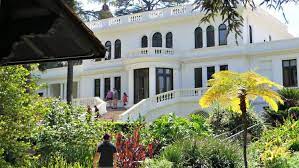
The magnificent mansions on Orange Grove Blvd., in Pasadena, set along wide avenues and well-tended manicured lawns, are the stuff of fairy tales. The Fenyes Mansion is one such residence where kids would have so much fun playing pretend. At the same time, it is an excellent setting for today’s children to learn how people lived a hundred years ago.
From 10:30 am to noon, on Wednesday, July 20 and Saturday, July 23, the Fenyes Mansion is offering senior and junior docent-conducted and supervised immersive tours for kids aged six to twelve. Called ‘Growing up on Millionaires’ Row’, the visits offer a glimpse of what is was like to live in a grand house through the eyes of children.
Brad Macneil, Education Program Coordinator at the Pasadena Museum of History, designed the tour in hopes that this would be an occasion for grandparents to take their grandchildren on an enjoyable visit. He says, “It will be an intimate group of no more than 30 people for each session to allow for individualized attention. We will divide them into three groupings touring different sections of the mansion. The first one will look at the public places – foyer, dining room and kitchen; the second will go into the studio and the conservatory; and the third will go to the upstairs private areas – the sitting room and the bedrooms.”
“There will be fun things to explore in each space. Obviously the kitchen is a wonderful place to see because while it looks somewhat like today’s kitchen, it is full of delightful appliances – old fashioned toasters, ice box (refrigerator), stove – that children don’t see in their homes. We’ll show them how ancient phones functioned and how irons worked,” Macneil explains.
“In the studio we have a Victor Victrola which we rarely use but it will be cranked up and will play music,” reveals Macneil. “It would be great to see the look on kids’ faces when they hear tunes coming out of that instead of from an iPod”.
Macneil further enthuses, “The conservatory is such an amazing place – how many people have their own private garden inside their house? How fun would it be for a child to come and play in this room devoted entirely to plants!”
“The group that will be looking at the foyer would become acquainted with how people arrived to visit – they had calling cards, for one, and they dressed far more formally than we do today. Children will get to pretend to come for a special lunch. They will see how the table is set and learn table manners. Just knowing which fork to use for certain foods require basic training; we have a book devoted solely to dining etiquette. I’m sure we’ll hear a lot of entertaining stories about that,” Macneil says with in amusement.
“Upstairs in the sitting room, children can dress up. Back then, girls and boys were taught how to be proper ladies and gentlemen. We will have replica clothing they can put on to see what it was like – people wore different attires for various activities, including going out to tea or the theatre. Women’s dresses had so many layers and weighed as much as 35 pounds! They carried accessories and the way they held their fans symbolized specific meanings, like if they wished to encourage conversation with a gentleman across the room. Even the flowers they received or offered to someone conveyed a particular sentiment. During the Victorian era, people had to know the language of flowers. Who, these days, would even realize that when a gentleman gave a lady a white camellia it meant he found her adorable? And that getting back a bouquet of withered flowers was a dreaded rejection from a lady he so admired?”, Macneil adds.
“There’s so much the older generations can teach to children today, and that’s why we’re so excited about this.” Macneil continues. “We’re grateful that the Tournament of Roses gave us the funding to make this possible. Using these two sessions this year as a kick-off, we’ll evaluate how much interest it generates and if it’s successful we might make it a regular summer offering. It is a wonderful addition to our mission of reaching out and sharing history with the community.”
Macneil states, “What I love about it is the sharing of information among multiple generations. There’s nothing like observing a grandfather or a grandmother watching a child learn. I can already hear the start of a conversation ‘When I was your age, I used to do ….’ It initiates a wonderful dialogue.”
The Pasadena Museum of History will be open to the public immediately after the tours so attendees will have the opportunity to explore the ongoing carousel exhibit, walk the grounds of the mansion, and stop in to purchase souvenirs at the gift shop. This interactive visit to the Fenyes Mansion can be a truly pleasurable beginning of a young child’s greater appreciation for history, the community, and the generations before them.
Originally published on 28 July 2016 in the Pasadena Independent, Arcadia Weekly, Monrovia Weekly, and Sierra Madre Weekly
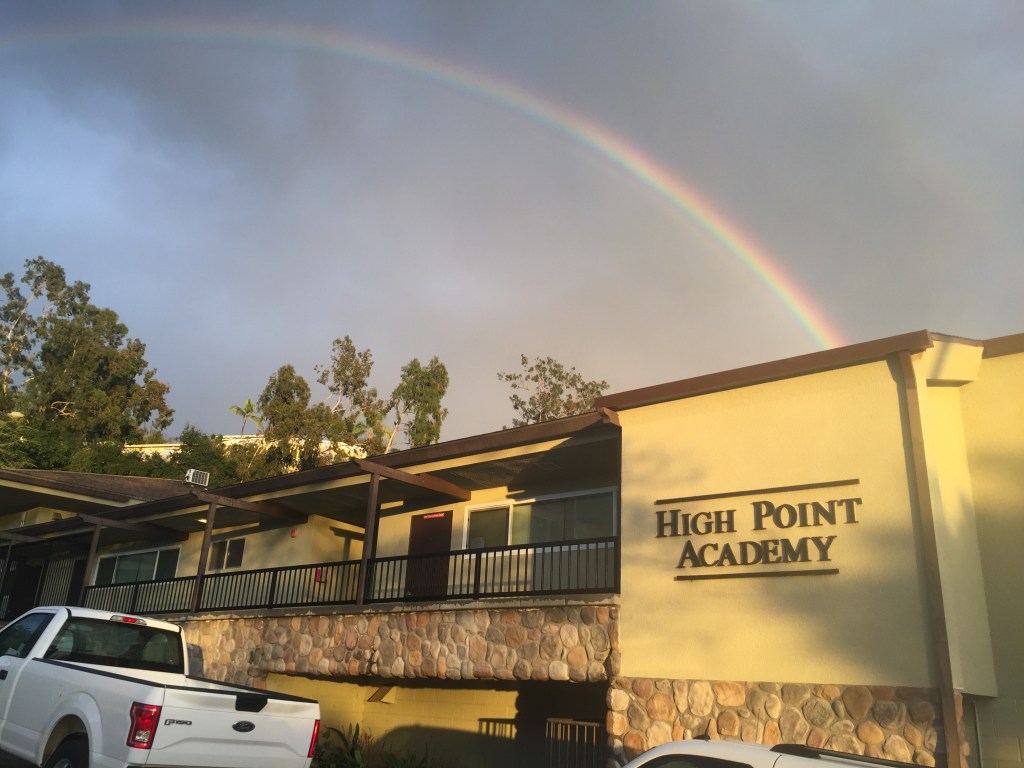
Carved into the foothills of Pasadena is a Kindergarten to eighth grade independent school that has consistently provided an outstanding education for its students for the past 50 years. High Point Academy (HPA), located on five compact acres on Kinneloa Canyon Road, to this day remains competitive in a market which reputedly boasts some of the most high achieving educational institutions in the state.
HPA was established in October 1965 when three women decided to open a small school for a few children. With Millicent Wilson serving as the first headmaster, it opened on Chester Avenue with 16 pupils; the following year enrollment grew to 50. In 1967 it had 75 students and eight teachers, and another space had to be leased to accommodate third to ninth graders.
By 1973 it became clear that their existing site wasn’t big enough for all their students; construction on its present location began. In 1974 the 15 faculty members welcomed 230 students on their first day of school in this brand-new structure that featured a sports field. School uniforms were also introduced that year; and a $10 donation to the building fund was incorporated into the monthly statements (it continued until 1990).
The HPA library was opened and a junior high (seventh and eighth grades) science department was created in 1976. The decade between 1977 and 1987 saw more classroom and building additions; computers were installed. When the school observed its 25th anniversary in 1990 it had 312 students, 29 teachers and three administrators.
In 1993 John Higgins was appointed the sixth headmaster. He served in this office for 21 years and oversaw major expansions of the school’s facilities. He also ushered in the age of technology with the installation of Smartboards in every classroom, the launch of a digital library, and the introduction of laptops in junior high.
Under Higgins’s charge HPA’s enrollment reached its capacity of 350 students. The staff and faculty grew to about 55 (31 teachers, one librarian, one school counselor, one learning specialist, seven aides and student supervisors; with the rest in administrative capacities). Sixteen teachers hold masters degrees and have an average length of service of ten years.
Image taken from High Point Academy website
High Point offers a vast array of subjects including: math; science; history/social studies; language arts (reading and writing); world languages (K-3 Spanish; 4-8 French or Spanish); writers’ workshop; technology (coding, robotics, STEAM); visual arts and choral music; instrumental music in grades 4-7; physical education daily; library program twice weekly; and a technology class (computer lab) several times a week.
After-school enrichment courses are offered every day during the schoolyear with Kindercare for kindergartners and Eagle Club for grades 1 to 8. Some programs include: bricks 4 kids; chess club; dance; mad science; mathnasium; robotics; STEAM; cub scouts and girl scouts. An after-school musical theatre program is likewise available. Most seventh and eighth graders are in athletic teams and play a variety of sports in five different seasons in the California Interscholastic Federation (CIF).
The school holds small class sizes with an average student/teacher ratio of 11 to 1. In K-6, there are approximately 20 students in the classroom with one teacher and an associate teacher who works with smaller groups.
Forty percent of HPA’s student body is of diverse ethnic backgrounds (Asian Americans, Latinos, African Americans, and Middle Eastern) and 60 percent are Caucasians. Most of the students who arrive in kindergarten stay until they graduate in eighth grade.
HPA has a middle school placement program designed to help students and families find the perfect fit for them. Graduates matriculate to some of the most highly selective schools in the Pasadena area including Polytechnic, Flintridge Prep, Mayfield Senior, Westridge School for Girls, La Salle, Flintridge Sacred Heart Academy, Loyola, Saint Francis and Maranatha.
By the time Higgins retired in 2014, HPA had gained a reputation as one of the best elementary and junior high schools in the area. The sports field was renamed ‘Higgins Field’ to commemorate his enviable legacy.
Timothy Burns was appointed interim headmaster for the 2014-2015 school year. He led HPA through the California Association of Independent School (CAIS) accreditation process where it was awarded the maximum certification of seven years.
Gary Stern, who in 2015 succeeded Burns as the eighth headmaster, is charged with ensuring the next half century measures up to the success of the first five decades. Several events marked his first year, a milestone for HPA. On the first day of the school year students and parents got to ‘Dive into the 50th with a swim event at Gerrish.
Alumni students and parents came back on campus for the ‘Alumni Wine & Cheese’ affair. On the 50th day of the school year, the entire student body, faculty and staff gathered on Higgins Field to form an ‘HPA 50’ and photographed by a sky lift and drone for posterity. A Golden Gala was held on April 30 to celebrate High Point’s anniversary in style.
The Earth Day and Green School Showcase in April was the capstone of HPA’s ongoing commitment to lead independent schools in the advancement of environment sustainability. The school was recognized as a flagship ‘green’ school and local dignitaries were on hand to present an award.
During his first year, Stern hired a curriculum and innovations specialist who will work with teachers to incorporate and integrate technology in their classroom curriculum. This will pave the way for students to keep pace with technology and be able to access its power to prepare them for today’s global society.
This fall, Stern will unveil HPA’s Strategic Five-Year Plan which outlines what’s ahead. Created in collaboration with the board of trustees, administrators, faculty, staff, parents and students, he says it will provide a clear path forward to allow High Point to remain true to its mission and core values, and successfully grow and evolve.
Stern elaborates, “First and foremost, we focus on academic excellence through awakening the joy of learning in every student. We trust that when learning is a joyful experience all students will rise to their full potential. We also believe in meeting the needs of the whole child, which means emphasizing not only the academic advancement but the social, emotional, and ethical development as well.
“Through our strategic planning process we identified four pillars that support and sustain our mission: excellence, innovation, responsibility, and community,” Stern expounds. “These, in turn, are the cornerstones of our long-term objectives that focus on: a strong, challenging curriculum; a commitment to fiscal responsibility; fund-raising and friend-raising; campus facilities to optimize student learning; admissions, enrollment, and marketing; and recruiting, retaining, and supporting talented faculty and staff.”
“Next year, most probably, we will undergo a campus master planning process. An architect will be consulting with all our constituents to come up with a facilities design that will continue to support our academic program,” Stern reveals.
“Some of the upgrades we’re contemplating include: remodeling the junior high classrooms; improving the sport court; expanding the Snack Shack; increasing technological enhancements; reconfiguring space to meet our curriculum needs; and adding more drought-tolerant landscaping,” Stern explains further.
HPA’s 50 years of establishment will be memorialized in posterity. Says Stern, “Sometime in the early part of the 2016-2017 school year, we will bury a time capsule to be opened in 2041. Students have gathered mementos from the five decades that denoted a noteworthy event for the period. Each student included in this time capsule things that represent who we are today and their dreams and aspirations for the future. They also put in their predictions about how life will change over the next 25 years.”
Another 50th anniversary commemorative is a transportable mural hanging on an outdoor wall made up of tiles individually painted by a student. It is a tangible demonstration of the importance of each piece to compose one beautiful whole.
It was indeed quite an auspicious beginning for Stern. That he came on board during this landmark year for High Point must have been predetermined by fate as he himself celebrated his 50th birthday. And just as he is looking forward to the rest of his productive life, he is likewise eager to lead this singular school to achieve greater significance in the San Gabriel Valley.
Originally published on 7 July 2016 in the Pasadena Independent, Arcadia Weekly, Monrovia Weekly, and Sierra Madre Weekly
The word ‘gifted’ usually refers to someone who has innate intellectual or artistic abilities that surpass his or her age, while ‘talented’ is often used to describe one who works hard and accomplishes feats exceptionally well. Based on those delineations, a gifted child doesn’t put in any work while a talented kid makes some effort to achieve something spectacular.
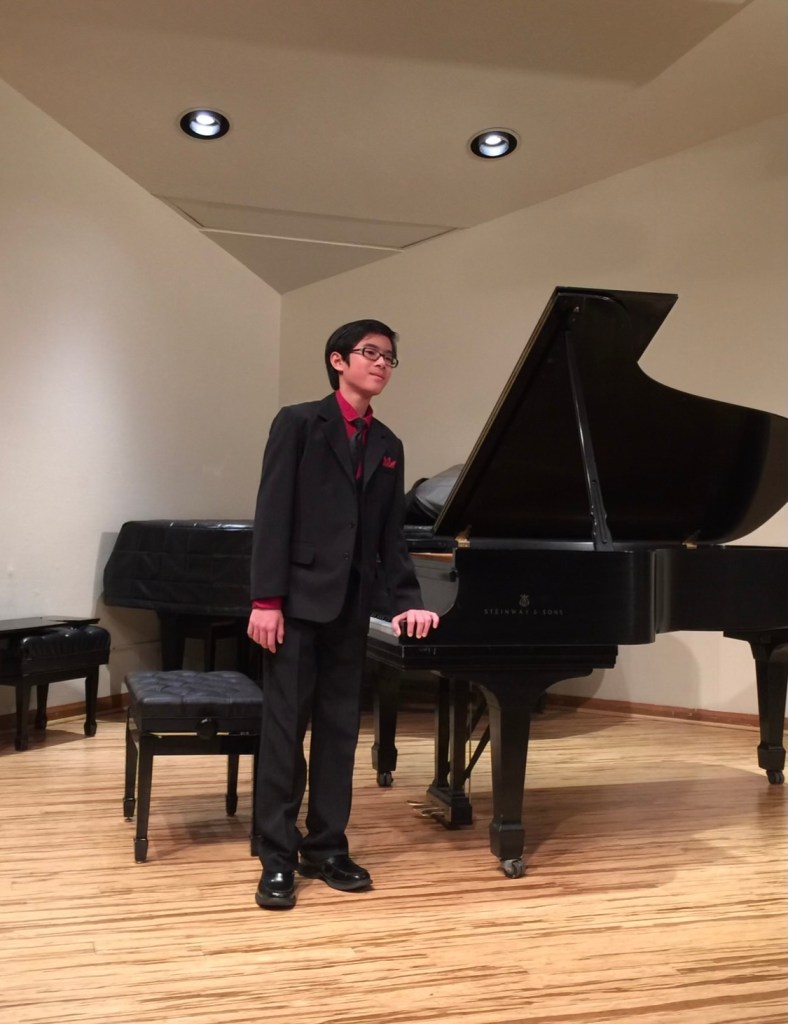
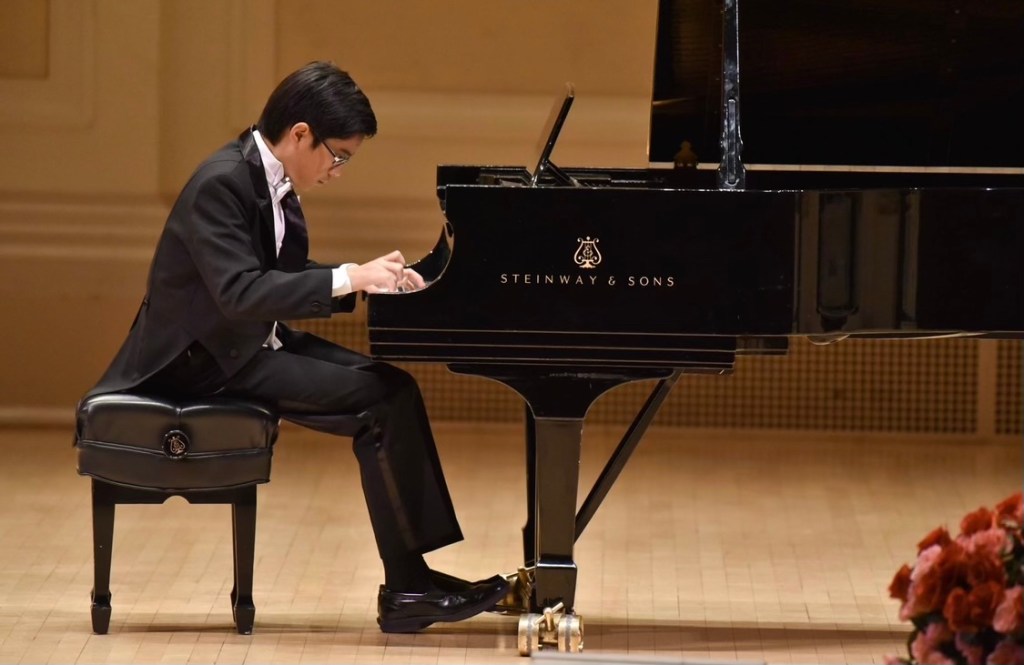
Marc Soong, a recently graduated eighth grader from Barnhart, a K-8th grade independent school in Arcadia, is both gifted and talented. Listening to his spirited and rousing rendition of Grand Etude Paganini No. 3 ‘La Campanella’ by Franz Liszt on the piano transports you into another world and time. His amazing fingering also reveals a mastery of technique honed by hours of painstaking practice and a devotion to his craft.
This past June 28, Marc electrified as he performed the finale number at The 65thAnnual Redlands Bowl ‘Young Artist Competition Winners’ where he interpreted Chopin, Rossini and Ginzburg.
Valerie Peister, program director for the Redlands Community Music Association pronounces, “As a winner of the 2016 Redlands Bowl Young Artist Competition, Marc Soong thrilled Tuesday evening’s Redlands Bowl Summer Music Festival audience with a virtuosic recital performance. His technical mastery was matched by a sensitivity and depth of expression well beyond his years, and showcased his remarkable ability to tell a musical story.”
And again on June 30, Marc impressed at the Isaac Stern Auditorium/Perelman Stage at Carnegie Hall in New York, where he played Paraphrase of Figaro’s aria from the Barber of Seville by Ginzburg/Rossini.
Marc’s outstanding musical abilities have earned him awards from the Los Angeles Young Musician International Competition, San Jose International Piano Competition, American Protégé Piano and String Competition, among other others.
Music, specifically, piano, is an important family activity for the Soongs. Marc’s mom, Alice, says “My husband and I attend all of our kids’ concerts, competitions and performances. Both Marc and Melodey, Marc’s older sister, perform at senior homes, and volunteer as ushers for concerts held at the Pasadena Symphony and Pops”.
Love of music came to Marc early on when he was three years old and heard Melodey playing the piano. He remembers that in first grade, he tagged along when his sister visited USC Thornton School of Music to meet with Daniel Pollack, a renowned professor there. When he was in third grade, he became one of Prof. Pollack’s students.
Vladimir Khomyakov, who at age 32 is an accomplished concert pianist himself, is Pollack’s assistant and has been Marc’s piano teacher since he was eight years old. From Khomyakov Marc learns technique as well as general music knowledge – history, the background of each piece, composer, style, and theory.
“Marc is a brilliant student to teach because once he starts, he’s hungry for more. He learns a piece on his own, asks a lot of questions, and has great initiative. While he chooses his pieces based on his personal journey, I help him build a balanced repertoire to include various genres, styles, periods, and composers, and develop a solid program as an artist,” Khomyakov states.
“As a musician, Marc is very passionate about his music. He plays from the heart – a rare trait for someone at his age, most kids do it mechanically. He has excellent ears: when he hears a noise he knows what pitch it is; when he hears a computer tone, he can play it. He absorbs all sounds like a sponge. He has what it takes to be a successful concert pianist … although I wouldn’t recommend it. It is a challenging life, with countless hours spent practicing which may turn out to be time wasted on something that might not work. It is usually filled with disappointments and stress, especially at the age of 20 to 25 when one gets into serious competitions,” Khomyakov says.
And Kyomyakov knows whereof he speaks. Like Pollack, he himself has concertized internationally as a pianist, conductor, chamber musician, and a soloist with leading orchestras including Dresden Philharmonic and Houston Symphony. He says he holds 40 to 50 concerts a year and has been all over the world except Africa. In 2009 he was chosen to be the assistant to Prof. Pollack; he teaches weekly master classes to all degree-level students.
Music is not the only thing that Marc is superior at. According to Tonya Beilstein, associate head of school and director of curriculum and instruction at Barnhart, Marc exhibited talent and creativity for a normal fourth grader. She relates, “I began working with Marc in fourth grade, supporting his social and emotional growth. At the end of his fifth grade here we realized he was also ready for more academic challenges. I thought a solution was for him to go from fifth grade in June to seventh grade that Fall, skipping sixth grade entirely.
“That decision didn’t come about haphazardly. We first asked his parents to get outside psychological evaluations (because we don’t have the resources on campus to do it). One of the things we do now, that we weren’t doing before, is use a tool called Iowa Acceleration Scale. It provides the rubric to help schools make effectual decisions relating to grade-skips. Besides psychological evaluation, we look at IQ, academic assessment – capacity and performance.
“We conferred with the whole team in Marc’s life – his parents; past, current, and future teachers; school administrators. The last step we took was talk to Marc himself. He was very excited about the idea – he very much wanted to move ahead,” Beilstein discloses further.
Marc says, “I was a little nervous about being in seventh grade and being with older students but I also wanted a more challenging curriculum. My classmates were very kind to me and I developed deeper and more meaningful friendships in seventh and eighth grade. I found it easy as well as enjoyable.”
As if all these weren’t enough, Marc has been accepted to attend Stanford Online High School (SOHS) in the fall. At 13 years old, he might be the youngest person to gain admission to this highly selective institution. Offering a distinctly innovative program, SOHS requires students to take core courses in Science, Math, English, and History. For academically advanced students, SOHS has numerous post-AP subjects, including university-level courses that typify most undergraduate programs.
“Stanford Online High School is the perfect fit for Marc,” declares Beilstein. “It’s a good choice for so many reasons – the challenge of the curriculum, the interaction he will have with like-minded students. I think, for the first time, he’s really going to be surrounded by his academic peers which he will find engaging and exciting.
“For students like Marc, who have participated in the summer program at Johns Hopkins Center for Talented Youth, a rigorous curriculum will give them peace and confidence. This model of learning is ideal because he can study at the pace that’s right for him and gives him the time to focus on his piano – it accommodates all his needs. He’s going to be in control of his destiny now,” Beilstein concludes.
Marc is surrounded by people who support him – from his parents who encourage him to follow his dreams and provide the means for him to do so, to school administrators who find the perfect environment to engage his mind, to his music teachers who dare him to play demanding piano pieces, to friends who supply him with equilibrium as he navigates life. Through it all, Marc has remained sanguine and has retained his inner ‘kid-ness’. He thinks the coolest thing about going to an online high school is that he doesn’t have to eat cafeteria food.
Originally published on 16 June 2016 in the Pasadena Independent, Arcadia Weekly, Monrovia Weekly and Sierra Madre Weekly
College applications: it’s a rite of passage among teenagers in this country. High schoolers spend 18 months of their life focused on this singular pursuit – actively padding resumes, accumulating countless hours of community service work, and preparing feverishly to get high scores in standardized tests – with the hope they would be good enough to merit admissions officers’ interest and acceptance to their dream school.
In its present form, the process arguably favors students with the resources to take test-prep classes, hire independent counselors to ‘package’ them, travel to far-flung countries to build houses as part of their community service, and intern for prestigious corporations. All for the purpose of burnishing applicants’ resumes.
The authors of the report touched on three areas: promoting more meaningful contributions to others, community service and engagement with the public good; assessing students’ ethical engagement and contributions to others in ways that reflect varying types of family and community contributions across race, culture and class; redefining achievement in ways that both level the playing field for economically diverse students and reduce excessive achievement pressure.
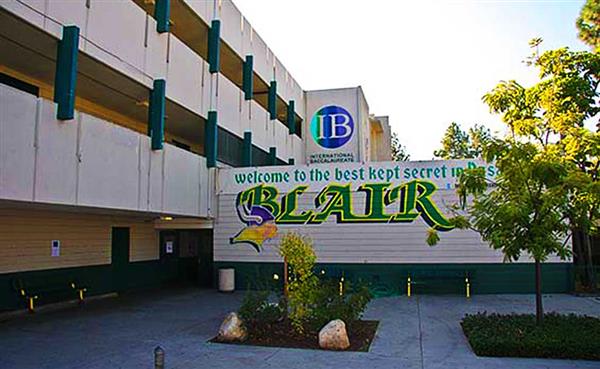
Image taken from Blair High School’s website
At Blair High School, in the Pasadena Unified School District, community service activism is a component of its International Baccalaureate program, according to college counselor, Karen Favor. She says, “Students identify a need for the school or the community, develop a plan with other schools, people or community, address that need and complete it in 150 hours. The Harvard study’s second recommendation – collective action that takes on community challenges – validates what we are already doing.
Favor adds, “I also appreciate its recommendation for assessing ethical engagement and contributions to others across race, culture, and class – specifically the one touching on contributions to one’s family. More and more we see students who also are caregivers for the elderly in their family. We had one student who had a grandfather with Alzheimer living at home. She woke him up every morning, fed him breakfast before going to school, then fed him dinner when she got back home. Besides providing care for him, she also had to deal with the mood swings that come with the disease.”
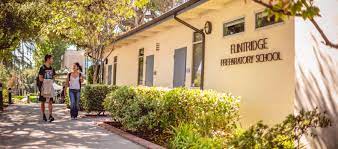
Image taken from Flintridge Prep’s website
At Flintridge Prep, a 7th-12th grade independent school in La Canada, Harvard’s seminal report has been widely circulated. Gloria Diaz Ventura, director of college counseling, reveals, “We know it well, it’s posted outside my office door. I believe in the words and to me it’s two different things. It’s something I will use to promote a balanced and healthy college process. The second issue is whether or not I feel if, in fact, this document will implement change in the college application process.
“Having worked at highly selective institutions, I’m very clear on the institutional standards and how the process works. But I believe in the document because I have to; I have to believe there’s a better way because right now I don’t see how we can keep going at this rate. The extreme selectivity among universities is creating unhealthy behaviors on the high school side.
“While we don’t have a community service requirement, we encourage our students to be part of their community. Our messaging is so clear that life has to be more than test scores and grades. We have a middle class ethos – there is no entitlement and we don’t forget where we come from,” Ventura further expounds.
Prep’s headmaster, Peter Bachmann, pronounces, “We support the values of the Harvard report, which are extremely compatible with Flintridge Prep’s. We sincerely hope that colleges around the country truly embrace them.”
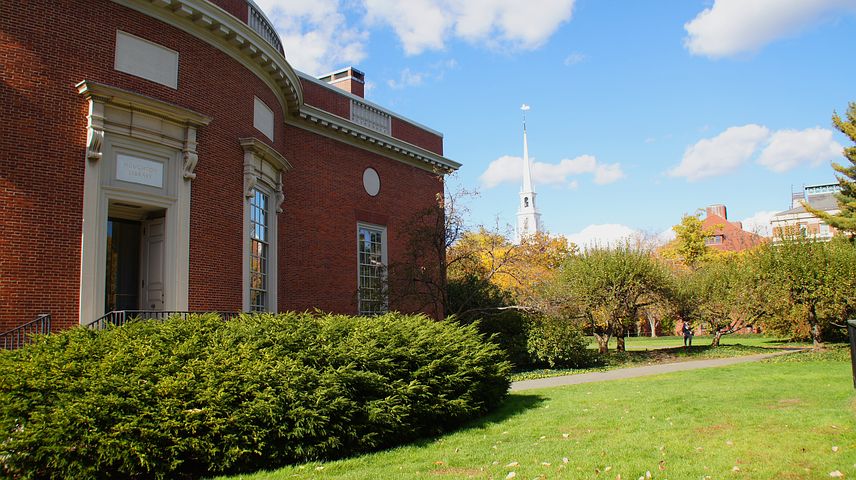
Image of Mayfield Senior School taken from Mayfield’s website
Among independent schools in Pasadena, community service and doing good for others are already part of their moral ethos. Kate Morin, head of school at Mayfield Senior, says “That’s our core mission – Action Not Words. It’s really about empowering our students to be leaders in making the world a better place.”
Morin recounts, “When I met recently with several generations of alums in San Francisco and in New York – some of whom were in their 70s – that’s what they want to talk to us about. They all have continued to serve the community in various ways, an extension or expansion of the work they started back when they were at Mayfield; maybe as part of their experience on Cornelia Connelly Day or Annual Service Day.”
Lori Holtrust, Mayfield college counselor, echoes Morin’s words, “We foster the development of the whole person. I think we’ve found that students are learning because they’re intrigued – they’re diving in. I don’t know that they’re doing it for college admissions. We focus on the journey of development, learning and understanding. And the college piece just happens.”
Sequoyah School, which will welcome its first 9th grade class this fall, has instilled this ‘habit of mind’ even among their elementary and middle school students. Marc Alongi, high school director, says “Our curriculum is designed to prepare students to graduate as experienced, confident and resourceful problem solvers, who know how to apply their knowledge and passion using strategies that can make a difference for their communities and for their own lives. Students will be challenged to think critically and creatively, learn how to work in diverse teams, and communicate ideas successfully.”
“The Harvard study certainly aligns with our values; our high school curriculum is framed along those lines. We aren’t merely preparing our students for college, we’re educating them. We want to inspire curious learners who are passionate and engaged about what they’re doing and connected to their community.
“Oftentimes the college process distracts students from that; they focus on APs, grades, test scores, extra-curriculars. Again and again you hear in the media about college admissions officers seeing window dressing on students applications, not genuine interest. Are the community service hours being done to merely check off a box or is it for a deeper purpose? Our program for social innovation makes students responsible for their own impact project. It would show genuine interest and commitment; they’d have a real story to tell in their college essay.
“The question for college admissions officers is how do they sort through the application? Are they using SAT scores as the initial filter? Some of these essays may still not get read; but if they are read, does it make a difference?,” Alongi further queries.
Ventura of Flintridge Prep, voices this same concern. “In large offices, it’s newly graduated professionals from that school – 22-, 23- or 24-yeard-old grads – reading the file. Not unless the dean or director is telling them this is what they’re going to emphasize, they’ll just be following their marching orders. The deans, in turn, are following what the university president is telling them.
“College admissions officers need to evaluate what they’re valuing and what they’re praising at the end of the day. It’s very political – you have to look at these institutions and how they’re tied to Wall Street and political organizations. Community service by itself doesn’t get you into Harvard,” Ventura states.
Another Mayfield college counselor, Abigail Shaw, opines, “I think colleges are honest that they’re looking holistically. They want students with broader perspectives. A lot of colleges are shifting their priorities – there are schools which are making the testing element optional and it’s building every single year. They are realizing that testing doesn’t necessarily present a true reflection of what a student can provide in their community so they’re taking it to heart. But I think in terms of the full spectrum of colleges making that shift … it’s not going to happen.”
According to the media spokesperson for the Association of College Counselors in Independent Schools (ACCIS), Jodi Sweeney, “The intentions of the report are very noble. From our perspective, we feel that the report meshes well with our programming. Independent schools are preparing citizens of the world; we really work hard to help students find a balance so that they’re selecting courses with an appropriate amount of rigor so that they’re able to engage in the life of the community.
“We encourage our students to challenge themselves, find authentic service opportunities, and have transformative experiences. But we also want them to thrive and get sleep at night. It’s a balancing act and the landscape right now is more is more. And until we see that colleges really are recognizing and valuing a student who engages deeply in two or three activities and rewarding that with an acceptance, we won’t be making great changes to our college application process.
“Often admissions officers talk about the transcript being the most important component of the application – more so than the ACT or SAT. But when you look at the median scores at the schools, you’ll see that ranges are very high. College applications is so complex that it’s a perfect storm; fixing it requires a collective effort.
“Technology and the ease with which students can apply to more schools, have also increased the competition. While we encourage them to be thoughtful and do intentional searches, students put out 12 to 15 applications because they can.
“We’re waiting to see what impact this report has on admissions selection and their recruitment process. Right now it’s GPA- and SAT-based. We want to get a sense from college admissions officers how they’re going to tweak their process,” Sweeney says.
At the core of the Harvard report is a fundamental issue – raising children with a moral compass who will grow up to be upstanding citizens of their community and the world. And that process starts during childhood.
Clairbourn School – Courtesy Photo
Dr. Robert Nafie, headmaster of Clairbourn School, a pre-K to 8th grade school in San Gabriel, offers his insight to support it. “Encouraging young people to take a more ethical path of social responsibility and community service must begin in the home. Additionally, it must be embraced at the individual level or there will be nothing but lip-service to perceived expectations. It is a way of life, not a fulfillment of college admissions criteria.
“The position paper implies students who demonstrate social responsibility and concern for the common good to be more desirable than those who have not exhibited such. However, it is doubtful that these institutions would accept social and ethical engagement in lieu of proven proficiency and knowledge in chosen fields of study. Although it is not clear from reading the study, it is likely that the report is actually arguing for the use of social and ethical engagement as an important secondary consideration, or even at the tertiary level, in the admissions process,” Nafie further opines.
While emphasis on the empathetic record might be highly desirable in a liberal arts college which focuses on the humanities or in education, social services, counseling, even law, Nafie puts forth that this does not hold true in technical areas.
“In the technical fields, content mastery and demonstrated proficiency will continue to be paramount. And the United States must continue to strive for excellence as measured by objective standards instead of anecdotal testimony. In science, medicine, aviation, and mathematics, for example, no amount of motivation, intention, or concern, will make up for lack of precision or knowledge.
“When content mastery and demonstrated proficiency are substantially equal in college applicants, admissions officers should evaluate important but less critical elements in making their decisions. Without such a strong standard for objective measures of readiness, American colleges will be pulled into accepting good enough instead of reaching for genuineexcellence,” Nafie posits.
American universities are the envy of the world. Students everywhere aspire to gain admission to them. It is incumbent upon these institutions of higher learning to find the students who can balance scholastic ability and ethical responsibility.
Originally published on 9 June 2016 in the Pasadena Independent, Arcadia Weekly, Monrovia Weekly, and Sierra Madre Weekly
Barnhart School was founded in 1959 by Dr. Ethel Barnhart and is affiliated with the non-denominational Santa Anita Church. Students from kindergarten to 8th grade acquire a stellar education based on an ethos of respect and love that encourages independence and self-responsibility.
Tucked away in eight acres of real estate between Colorado Place and Colorado Blvd. in Arcadia, close to the race tracks, Barnhart can easily by missed by someone driving by. But if Ethan Williamson, headmaster of five years, were to have his way, it wouldn’t be too long when everyone will know exactly where it is.
“My ultimate goal is for Barnhart to be the premier independent school in the greater Pasadena marketplace – Altadena, Arcadia, Monrovia, Sierra Madre – the surrounding communities where we draw from,” Williamson pronounces. “I think we have an excellent product. We do exceedingly well placing our students into highly selective independent schools.
“We don’t track them to one particular school. And that’s also what I think is unique about Barnhart. We try to understand the child and make sure a Barnhart education is about stretch, not stress,” Williamson says further.
The 32 8th graders graduating this year were accepted to 23 high schools, including Marlborough, Campbell Hall, Flintridge Prep, Los Angeles County High School for the Arts (LACHSA), Mayfield Senior, Sequoyah, St. Francis, Westridge, and Stanford Online High School. Seven of them have been awarded merit scholarships. This wide range of institutions to which they applied and were admitted is proof that Barnhart ensures it finds the best fit for them.
“Academics are essential at Barnhart. The rigor of our program shows in our ERB scores which have been improving over time. But we don’t focus a whole lot on test scores, we focus on education. We recognize that excellent test scores follow excellent education.
“We have been tracking their GPAs and our graduates do better than the average incoming freshman into high schools. We have a really high cohort of students who test as gifted; about 40 percent of our students qualify for the Johns Hopkins Center for Talented Youth (CTY) and participate in its summer program, and it’s still increasing,” Williamson proudly states.
Barnhart is also distinctive for its racially diverse student body – 40 percent of its enrollment is Caucasian, 30 percent Asian (Chinese, Japanese or Korean), 20 percent Hispanic, ten percent African-American. And while students attend 15 minutes of chapel every morning (Monday-Wednesday-Friday for elementary students and Tuesday-Thursday for middle schoolers), a third of them are Catholics, another third are Agnostics or Atheists, and the rest belong to other world religions including Buddhism, Hinduism and Islam.
Williamson says, “Cultural diversity and cultural competency are very important to our students because their peers are from all over the world. It mirrors what they will be experiencing in the future as society and jobs become ever more global.”
With a total enrollment at 225, a faculty and staff of 50, the average class has about eight students to one teacher; with a maximum of 15. According to Melissa Gersh, Director of Marketing, Barnhart has 25 teachers, representing 336 years of total experience in the classroom.
Gersh adds, “On average, our teachers have a little over six years of experience directly at our school. Half of our teachers have a master’s degree or higher; the school also requires all teachers to be credentialed.”
Barnhart’s elementary program schedule incorporates the core content areas into the homeroom classes. A focus on literacy (reading/writing) includes 90-minute teaching blocks each day. Math instruction occurs daily with a minimum of 60-minute lessons. Social studies and science classes are also built into the daily lessons. Balancing out the academic program is a variety of enrichment classes including: 45 minutes of art and library weekly; 30 minutes of music and Spanish, twice weekly; and 30 minutes of physical education daily.
The middle school program is designed to prepare students for the requirements of Pasadena-area high schools. Students have eight classes each day which include five core academic classes – Algebra/Geometry; English; History; Science; and Spanish – and three opportunities to experience the Barnhart Balance.
Four exploratory classes rotate each quarter. In 6th grade: art appreciation; music appreciation; public speaking; technology. In 7th grade: human health; life skills; theatre appreciation; woodshop. In 8th grade: art appreciation; music appreciation; woodshop.
Students take one elective class per year: advanced band; studio art club; drama club; outdoor education; science club; screenwriting; and yearbook.
Physical education is a required daily 45 minute class.
Barnhart has made incredible strides in technology. Says Williamson, “Four years ago not every student had individual access to an iPad or a laptop or any sort of tech device; they had to go to the computer lab. But our vision is to make technology as ubiquitous and available to students as pencils. This year we have iPads for every student in K to 2nd as they’re easy for children to use with their small fingers. Third to 5th graders use Chrome Books; we recognize that students enter the world of Google so we have Google Apps for Education and Google Classroom. In middle school it’s ‘bring your own device’ because we know this is the generation that will be device-agnostic. Many students already have both Apple and IBM at home so we intentionally gave them the flexibility to choose the right tool for the job they need to accomplish.
“We thought a lot about making sure our students are ready for the world they will encounter outside of college. We’re not just getting them into their high school or into college; we’re thinking about what their workplace will look like. And that’s especially true around technology where collaboration is key. In grades 3 to 5 our students use Google Doc so if they have a group project, which they might want to work on during the weekend, they can edit simultaneously without being in the same room.
“Investing in a seamless wireless infrastructure became a priority for me when I first came on board. By spending $7K on a wireless network, we were able to integrate our entire system. Another enhancement we’ve created is a comprehensive student information system database – the instant students apply to Barnhart, we are able to track their progress in the admissions process. Once they’re accepted, we are able to interact with the family, keep all of them updated. Grades, test scores are all available in real time – there’s no hiding as a student,” Williamson laughs.
There’s much yet to be accomplished in the future, as Williamson says. “We’ve made major improvements in our school facilities. While it isn’t exciting to talk about, last summer we pulverized 75,000 sq. ft. of asphalt. But what’s cool about it is that we were able to recycle what we dug up and used it as a foundation for the new asphalt … and we were able to complete the project in 30 days, between summer school and the start of the school year! In the process, we also took down outdated poles, put in brand new basketball hoops, put in a nice white fence.
“Our future goals include updating our facilities to make them inspiring and competitive with our peer schools. We are currently on the planning stage of figuring out our priorities for improvement, how to go about that, what fundraising that entails.
“In terms of our curriculum and staffing, we want to optimize what we’re already doing by making changes every year as warranted. We have something solid, it’s simply a matter of continuing training. On the technology side, we will keep up with students’ needs to get their work done.
“We have a big rollout on a social curriculum this coming schoolyear. We’ll be using a system from a book developed by the Northeast Foundation for Children called ‘Teaching Children to Care – Management in the Responsive Classroom.’ It’s a proactive approach using a social curriculum that involves creating community standards or rules in the classroom. We will have teachers model the expected behaviors. This consistency in conduct means students don’t have to adjust to teachers’ expectations and styles; while personalities differ, the language we use does not.
“More broadly, it’s a management system for the classroom. Research talks about ‘affect’ – how you feel in a classroom or work environment, for that matter, tremendously affects your performance. If one is scared, that uses up a lot of brain energy and leaves less available for learning. As students feel comfortable, their brains become fully engaged on their activity. So I think an investment in the social curriculum is critical to everything else we do.
We have adapted the system into our middle school what the Northeast Foundation for Children designed for K-6th grade. But they have now come out with a middle school-specific book for which we have the honor of hosting the training. This summer, from August 8 to 11, an international group of 90 educators will be on our campus to learn it. It’s pretty exciting!” Williamson enthuses.
Williamson’s infectious passion for learning and social responsibility is pervasive in the entire Barnhart community. Conceivably in the not-too-distant future, this spirit will spread far afield.
Originally published on 26 May 2016 in the Pasadena Independent, Arcadia Weekly, Monrovia Weekly, and Sierra Madre Weekly
At Clairbourn School, a pre-K to 8th grade school in San Gabriel, technology is as ubiquitous as students and teachers themselves. There are Smartboards in every classroom and iPads on every desk; electronic resources and tools are utilized to enhance the everyday learning experience.
It isn’t surprising, therefore, that besides large screen monitors and desktop computers, robots can also be found in the computer science lab. A relatively new addition to the tools used in the classroom is a 58-centimeter tall, blue and white humanoid robot whom the students endearingly call Megabyte.
Paul Barker, computer science teacher, tells how he was able to get a robot to be part of their class, “I found out about this a year-and-a-half ago and did some research on him. Originally named NAO by its manufacturer, Megabyte was created by the French company Aldebaran, which worked with kindergartners through post-graduates to develop a robot that can help students learn Robotics.”
“I knew I wanted one for the school, and pushed for it all year. I started my own fund-raising campaign by teaching after-school classes in Robotics. When the kids went home they told their parents how they wanted to have the class as part of regular school. Eventually our parent association allocated funds to go towards purchasing the $9,000 robot,” Barker adds.
“We’re all learning together with Megabyte. We’re training him to recognize people so when you walk up to him he’ll be able to say ‘Hello, Henry (or the name of the student)’. My goal is to have students do both input/output then using all the programs; students can create something on their own. I would like them to use the program, dive as deeply as they can, and learn how the robot operates with the end-goal of experiencing and exploring him,” Barker explains.
Here, kids as young as kindergarten learn Robotics; in 2nd grade they start programming using a Lego robot; and they move up through the curriculum until they get to 5th grade when they start using Python to program Megabyte.
This morning, Henry, a 6th grader, bounds in, eager to demonstrate how Megabyte gets them excited for their class lesson. He asks Megabyte to dance and the robot obliges with his tai-chi moves. Midway through his routine, he teeters and reacts to it “Oh, I’m falling on the floor!” But even falling is methodical as he slowly spreads his arms out to lessen the impact to the ground. And just as efficiently, he gets himself up from the floor, and announces, “Hey, back in the game!” The kids absolutely love that.
For Clairbourn’s 5th graders, interactive robots create a wondrous experience. As Alicia Wong says, “Working on robots is better than watching TV. It isn’t hard to make and it’s a lot of fun. It makes me proud to finish constructing a robot by myself.”
In agreement with Alicia is Isabella Hernandez who relates, “Robots are fun to work with and they challenge your mind. I learned that building robots and programming them are easier than I thought.”
Christopher Fung, on the other hand, takes a different stance, “I learned that robotics is not for everyone, but if you put your mind to it, you can do almost anything. It takes listening, respect and skill.”
Another 5th grader, Henry Xu, has a similar opinion, “I personally think that working with robots means patience and creativity. If you aren’t creative you won’t know what to do – instructions or no instructions. I learned that you should always double check what you’re doing before saying you’re finished.”
Branden Orellana believes robots are transformative, “It means a lot to me when I work on robots; it changes my life. I love building and programming now. I always wanted to be an engineer or a graphic designer.”
Perhaps it’s Julian Harrison who summarizes the role robots play, “Robots are the way of the future; seeing all the technology available now, they will likely replace humans someday. I am inspired because it makes me feel like I am part of that future.”
“Robotics is going to be huge in the next ten to 15 years, and getting a jumpstart on it would be a major accomplishment for our students as they go on to the next level in their schooling,” Barker concludes.
That Megabyte interacts well with young kids, who treat him almost like a friend and who talk to him like they would someone their own age, is what gives this Robotics class the element of a deeper, more meaningful experience. Students program questions the answers to which they’re really interested to know.
Megabyte can provide much information about himself including: his height and weight; his birthday and age; if he can eat, hear, see, or understand people; who made him and what he’s made of; if he has family or friends.
Presently, Megabyte asks, “Do you like chocolates?” If someone responds with a Yes, he rejoins, “Yes? That’s nice.” When he hears a No, he says, “No? I’m sorry to hear that.”
Henry then invites Megabyte, “Let’s go for a walk. Follow me.” Megabyte agrees, “Sure, take my hand.” Together they stroll, and when Henry stops after a short distance, Megabyte asks, “Are we done walking?” Henry looks into Megabyte’s eyes and replies, “Yes, thank you for walking with me.” Child and robot regard each other, seemingly in complete understanding of a shared knowledge.
The possibility of robots taking over the world one day, as one 5th grader surmises, sounds like a death knell for mankind. Happily, robots are not advanced enough to achieve the level of intellect that young students today are capable of reaching. For as long as human beings utilize that wisdom, it’s safe to say that robots still need breathing, living, and thinking people to program them to accomplish tasks.
Originally published on 19 May 2016 in the Pasadena Independent, Arcadia Weekly, Monrovia Weekly, and Sierra Madre Weekly
For many people Albert Einstein’s theories are topics that just go way over their heads. For Prakash Dass, a senior at John Muir High School and who has been awarded a Gates Millennium Scholarship, they are matters to wrap his head around.
As Prakash states, “Einstein proved to us that we cannot travel faster than the speed of light. He started the conversation which became a jumping off point for many scientists in much the same way that Isaac Newton inspired his work. My life’s ambition is to accomplish the counter argument to Einstein’s theory – that we indeed can.
“We would need an infinite amount of energy to reach the speed of light, but what if we found a way to bend space instead? We wouldn’t be bending the laws of Physics; we aren’t using energy to propel us but we’re still getting to a different location because the space around us is moving.”
For Prakash that concept didn’t just come about from too many hours watching Star Trek, “I think there’s a group of people at NASA researching it but there isn’t enough science to back it up yet. I would like to be one of those scientists who can come to a definite conclusion.”
Interest in things that are out in the galaxy was something born from Prakash’s early passion for stargazing. He says, “I love to look up the night sky and stare at these twinkling, bright lights; they’re so fascinating to me. As a child, I dreamed of being an astronomer. Then I started to be more specific – I wanted to learn the physics behind stars and other things in the universe; which led to my absorption with particle and nuclear physics. Then that led me to aerospace engineering because I want to build interstellar spaceships.”
A student at John Muir’s Engineering and Environmental Science Academy, Prakash has participated in the Johns Hopkins Engineering Innovation summer program at Pasadena City College. He has also been actively involved with the school’s Solar Cup (a seven-month educational program, sponsored by The Metropolitan Water District of Southern California) Team. Of this year’s competition, held at Lake Skinner in Riverside County on May 13-15, he enthuses, “We made a much different boat from last year’s – we overhauled it and went completely the opposite direction. We had a rudder made of wood last year, this time we drew it out on Auto Desk Inventor and 3-D printed it in pieces then attached them. We applied more engineering aspects to it, and built new parts for the boat.
“While our team did not win the grand prize at the competition, we earned first place in the region for the technical report we wrote. John Muir also received an award for greatest teamwork in helping other teams at the Solar Cup, and communicating with them the best,” Prakash relates.
“I learned a lot of hands-on skills and gained valuable experience working with my team. It’s exhilarating to be with a group of people who share a common scientific and engineering endeavor – these are friends who, like me, have big dreams,” Prakash explains further.
It helps that Prakash has all his plans laid out to make his wishes come true. He reveals, “I’m going to attend Cal Poly Pomona because I believe it’s a strong engineering school. It offers more practical applications as well as teaches other methods of engineering, including astronomy. It will better prepare me for Masters and Doctorate degrees. I have already figured out what I need to do in order to be accepted to Cal Tech for graduate education.
“I intend to earn three doctorate degrees – particle and nuclear physics, and aerospace engineering. They’re all intertwined in pursuit of interstellar travel – comprehending stars and particles on a smaller scale, and understanding how to build ships to get us out there. Those three subjects are essential for me to succeed.
“There isn’t very much support for the things I want to do because right now there isn’t a lot of evidence it’s even possible for that to happen. While there is a great deal of research going on, it isn’t compelling enough for everyone get on board, so to speak. It’s something you see only on TV; but I want to be a pioneer in this field,” Prakash asserts.
Funded by a grant from the Bill and Melinda Gates Foundation, the Gates Millennium Scholarship was established in 1999 with the goal of developing leaders and removing financial barriers to education for high-performing, low-income students. Prakash is John Muir High School’s seventh winner of this academic scholarship since 2005. He joins the ranks of a prestigious group of talented students from across the country awarded the scholarship that can be used to pursue a degree in any undergraduate major and selected graduate programs at accredited colleges or universities. Last year’s Muir HS winner, Kimberly Mejia, is currently at UC Berkeley studying engineering.
Most scientists do not believe in a Higher Being who watches over us, mere mortals. But Prakash is certain that God has a hand in his good fortune. “I believe God gave me all the wonderful things I have. Winning the Gates Millennium Scholarship is something that doesn’t often happen in Pasadena, and yet I did. I feel really blessed because I know how much my education is going to cost. This scholarship will help immensely and it truly is a gift from God,” Prakash says with conviction.
Dr. Ben Aroyan, Prakash’s counselor, must have had tremendous confidence in him because he nominated Prakash for the Gates scholarship. Judges for the prestigious foundation, likewise, must have believed in his potential. And whether it was an Act of God, or his persuasive essays, or that the stars had all aligned for him to receive the much-coveted scholarship, he is most assuredly on a path to his intended destination.
Originally published on 12 May 2016 in the Pasadena Independent, Arcadia Weekly, Monrovia Weekly and Sierra Madre Weekly
Some 300 special education students – from elementary, middle and high school – will convene and race on Duarte High School’s new football field at this year’s 2016 San Gabriel Valley Duarte Spring Games (Special Olympics Southern California) which starts at 10:00 on the morning of Friday, May 20. Greg Saris, Duarte Unified School District (DUSD) adapted Physical Education teacher, heads a group of volunteer students, faculty, and parents who will be on hand to assist as well as cheer them on.
“The School Games were established in the San Gabriel Valley region well over ten years ago and in that span we have hosted over 20 school districts in this area,” says Teresa Borunda, Senior Manager of Sports & Programs for Special Olympics Southern California-Los Angeles and San Gabriel Valley Regions. “However, this is the first year for the 2016 Spring School Games hosted by Duarte High School.”
Saris, who is responsible for coordinating this year’s event along with Tracy Hall, another DUSD special education teacher, explains the district’s involvement, “Duarte has been participating in Special Olympics’ School Games for about six or seven years. In the Fall we go to a soccer tournament in Walnut where we compete against several West San Gabriel Valley school districts for elementary, middle and high school levels. Then in the Spring we compete in track & field. Last year we got left out because there is a cap of 300 participants and by the time we registered for the event they had reached that limit. Tracy and I decided to organize our own event and invited other districts who, like us, were not able to get in.
We had to do everything – from creating Excel spreadsheets for all the races, to finding T-shirts. When it proved to be quite a success we applied to the Special Olympics to put on the event for them in the area. It turned out that they were also looking for another school to host the games, and so here we are,” Saris happily states.
Adds Borunda, “The games were added to our calendar this year because of the popularity of the previous School Games. DUSD will be hosting ten schools from other districts – Alhambra, El Monte, Montebello, Rowland Heights, and Westmoreland Academy (in Pasadena).”
“I think it’s going to be a really fun event,” says Saris. “Jersey Mike’s will cater the food for all the volunteers and student participants. Special Olympics will be providing T-shirts and all the equipment. Duarte special education students will participate in seven races and one relay, but there will be as many as 25 different variations to give them more opportunities to win awards. There will be one volunteer who will run with each participant from the starting point of the races until they get to the awards area.
“Assistant Superintendent, Miriam Fox, will officially open the games; we’re hoping Superintendent Allan Mucerino will be in attendance as well. Christine Wheeler, a general education senior, will sing the National Anthem. One of our special education students – Eric Little – will lead the Pledge of Allegiance. We’ll have our photographers take pictures and our videographers will create a promo video to send to Special Olympics to show other districts. We’re very excited – we’ve been planning this since last November. And we will soon see the culmination of all our efforts and hard work,” Saris says with unrestrained enthusiasm.
The Special Olympics was created in 1968 by Eunice Kennedy Shriver to provide year-round sports training and athletic competitions in a variety of Olympic-type sports for children and adults with intellectual disabilities, giving them continuing opportunities to develop physical fitness, demonstrate courage, experience joy and participate in a sharing of gifts, skills and friendship with their families, other Special Olympics athletes and the community.
In 1969, Olympic decathlon gold medalist Rafer Johnson founded the Western/California Regional Chapter and the first annual Western Regional Olympics were held at the Los Angeles Memorial Coliseum. Athletes from seven western states competed in track and field and swimming.
The International Special Olympics was held in 1972 for the first time in Southern California at UCLA and Santa Monica College, with more than 2,500 athletes from eight countries attending. Law enforcement officers from the LAPD joined with California Special Olympics in the first Law Enforcement Torch Run in 1986.
To expand its outreach efforts, the California Special Olympics branched out into two chapters – Northern and Southern California – in 1995. Today Special Olympics’ global extent counts 4.4 million athletes participating in over 8,000 events and competitions held annually. Southern California accounts for more than 24,000 athletes.
This Friday, 319 young students from the San Gabriel Valley will participate in a Special Olympics event. They will join an outstanding and remarkable band of athletes, who will discover abilities they didn’t know they possess, to inspire others to achieve greatness.
Seeing the unbridled joy on the faces of the students he has known and taught would be the most significant reward of all for Saris.
Originally published on 28 April 2016 in the Pasadena Independent, Arcadia Weekly, Monrovia Weekly, and Sierra Madre Weekly
Any parent who has sent a child to university will tell you that college admissions is a mind-churning process, an out-of-body experience, but that which leaves you drained and numb. It isn’t surprising, therefore, that it spawned a billion-dollar industry which includes test prep companies, coaches, and independent counselors who help students get ready for and navigate this complicated maze.
Bob Tyra and Becky Marchant are Southern California educators who, in 2012, co-founded a company that holds independent college fairs outside the high schools called California Out-of-State & International College Fairs (COOS&ICF). Tyra had an extensive professional career in junior high and high school counseling programs as well as high school and adult school career counseling. Marchant works as lead counselor, ACT testing supervisor and intern coordinator at Brea Olinda High School. Together, they provide high school students access to information they need for college admissions.
According to Marchant, the idea for this niche organization came to her as she attended events with her students. She relates, “Despite the array of colleges in attendance, students tended to gravitate to tables of institutions they were already aware of in the local area and walk by those that they were unfamiliar with.
“As educators, the challenge is to open students’ minds to all options and this is something we are very passionate about! By holding college fair events for only out-of-state, WUE (Western Undergraduate Exchange) and international colleges and universities, we found a solution to potentially self-limiting behavior by finding a way to expand their world,” continues Marchant.
COOS&ICF held its first fair in 2012 at the Pomona Unified School District Conference Center at Indian Hill. Close to 1,000 high school students and counselors from surrounding counties and over 50 educational institutions from 23 states, some from outside the United States, attended.
That impressive draw convinced Tyra and Marchant that they should hold more fairs of this kind in other Southern California areas. Now they offer eight such events – two in the spring and four in the fall.
Marchant says, “To date we have held 29 fairs, served over 15,000 students and hosted almost 200 out-of-state universities, including 50 international institutions. Our fairs are always free to students and educators and local busing is reimbursed. We limit the size of the fair so students will be able to explore all participating institutions and we provide materials to prepare everyone who attends.”
Santa Anita Park, in Arcadia, was the venue for COOS&ICF’s spring college fair held on Tuesday, April 26. Representative from 38 out-of-state and 35 international colleges and universities were on hand to explain their curriculum or educational system, in the case of the international institutions, to a total of 314 high school juniors who milled around their tables.
An enthusiastic recruiter with the Swiss Education Group happily handed out brochures and earnestly explained how they can assist students in making internship arrangements as part of their study program. One helpful recruiter from an English university was making the case for an English versus a Scottish education (three years against four, thus saving a full year of tuition).
Tyra and Marchant, this year, organized for a student in a wheelchair to attend the college fair – 17-year-old Tito Morales, a junior at Downton Magnet High School in Los Angeles. Asked why he’s at the College Fair, Tito responds, “I’m at the point of deciding on majors and looking at all my options. While I want to stay in-state, I also want to see what’s available out-of-state.
“My interests include writing in my journal – stories, anime fan fiction, whatever’s on my mind; I have no boundaries,” Tito continues. “But I’m mainly looking for a school that offers graphic design, animation, gaming. And, of course, one main concern is their accommodations for students like me since I’m in a wheel chair. I would like to see the college’s or university’s preparation for emergencies, should they arise.”
Tito spoke with several recruiters and found that universities in Canada and the United Kingdom offer courses he is particularly interested in, and even have accommodations for wheelchair-bound students.
One important consideration is the cost of a college education. As Tito states, “I’m concerned about tuition too. Our school counselor, Lynda McGee is working with students right now on scholarships. She’s also making sure we’re taking all the courses we need to be on track for college.”
“I really want to work on digital design and graphics. A job with DreamWorks is truly something I would enjoy,” Tito wistfully says.
An only child born to Guatemalan parents, Tito will be the first in his family to attend college. His parents couldn’t afford higher education for themselves but they are determined for their son to live his dream of a college diploma, gainful employment in the future, and a better life. For Tito, finding a university during this College Fair is the first step in that direction. And for Tyra and Marchant, that would be such a rewarding outcome.
Originally published on 24 March 2016 in the Pasadena Independent, Arcadia Weekly, Monrovia Weekly, and Sierra Madre Weekly
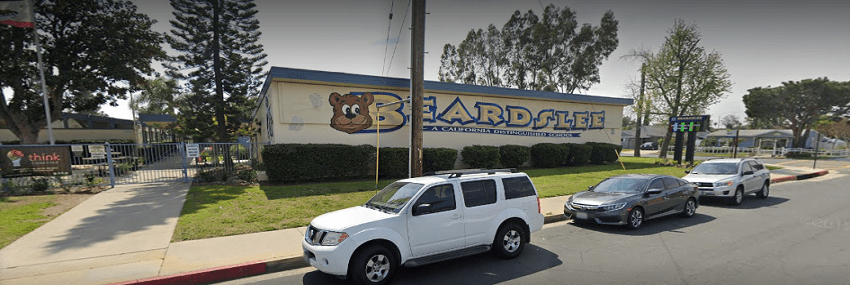
It’s 2:45 on a Monday afternoon and students are getting picked up by their parents from Duarte Unified School District’s (DUSD) Beardslee Elementary School. For a group of 4th graders, however, it isn’t the end of their school day; they have another 90 minutes of class time. Yet these young kids don’t need any coaxing to get started all over again. That’s because they’re learning something different and exciting so they eagerly await the arrival of Polo and Jessica, Hollywood professionals, who will be teaching the lesson – film-making.
“We were told that cinematography isn’t a course that can be effectively taught beginning in high school,” begins Micah Green, 4th grade teacher at Beardslee and facilitator for the program. “It has to start in elementary grades, and build through the years. It was decided to add the course as an after-school program this year because we’re still trying it out. The idea is to have professionals teach the class while I watch. Next year it will be integrated into the curriculum as part of English class. I can work with students and give them story ideas. I could be more involved in the scriptwriting process; Polo and Jessica can just come in for the film-making portion.”
The cinematography class is the product of a partnership with the Latino Film Institute’s (LFI)Youth Cinema Project. LFI is the brainchild of actor Edward James Olmos who developed his commitment to education when he portrayed the role of Garfield High teacher Jaime Escalante. Through his foundation, he actively engages with a number of school districts in ensuring that Latino and African-American students are not forgotten in the schools.
Olmos began this program with two academicians who created the curriculum and planned a course of study for students. While new in DUSD, the film-making course has been in place in the elementary, middle and high schools in Santa Ana, Montebello, Bassett, Lynwood, and Pasadena districts.
Green adds, “Mr. Olmos is the face of this film-making project. I believe it was he who approached previous DUSD superintendent, Dr. Terry Nichols, about the cinematography class. Nichols liked the idea and okayed the project which was picked up by the current superintendent Dr. Allan Mucerino. To ensure that the program is continued, the district purchased a Canon handheld camera necessary for the course. While they’re not what would be used in a Hollywood movie, they’re more cost effective. Everyone is fully committed to go it all the way to high school.”
For right now, Green’s group of about 23 students from his 4th and 5th grade classes and from another teacher’s 4th graders at Beardslee, meet after school every Monday and Wednesday.
Even without the added benefit of learning film-making, the class itself is a boost for teaching in general. Explains Green, “Even struggling writers get motivated because they don’t think they have to write; they feel they’re telling their story, which is a different mindset – it’s purposeful writing.”
“It’s a messy process; these kids started out with no real skills – knowing nothing about writing scripts. We began with just basic writing about any topic they want to explore. They’re young kids so they write about things that are familiar to them – like a baseball game. They learn to write visually – what the camera will see – that’s what’s important. Then they learn that for every scene they need a description of the environment and positioning so they add the direction. Lastly, they put in the dialogue between their characters. That was a huge part of the class and took about five months – from October through February. They now have a script and they’re in the filming process. All the movies will be made on campus so the topic has to be limited to what’s available to them, although I think we have some green screen so maybe they can add CGI later,” Green elaborates.
The three-to-five-minute film Green’s students create will be shown in the spring at a presentation with their families and members of the community as audience. According to him even Creative Artists Agency (CAA), a major Hollywood talent agency, will have a representative watching the kids’ films.
“It’s an opportunity to rise to the top; students can later find jobs in the movie industry. But even those who aren’t cut out for film-making will have an appreciation for story-telling,” Green concludes.
Mucerino shares his thoughts, “I was struck recently by a CEO poll taken by IBM that identified creativity as the most important leadership quality. It made me think how lucky our children are here in Duarte because their ‘creativity quotient’ (CQ) will be higher than their peers as a result of our efforts to promote creativity in our schools. After all, if creativity disappears, our music, art, and literature – our culture, will disappear with it. Creative children are the next generation of innovators, authors, entrepreneurs, software developers, diplomats, and hopefully, superintendents.”




 A San Gabriel Valley Inquirer