Pasadena Author Delves into One of California’s Last Public Hangings

Also published on 3 September 2025 on Hey SoCal

Image courtesy of M. G. Rawls

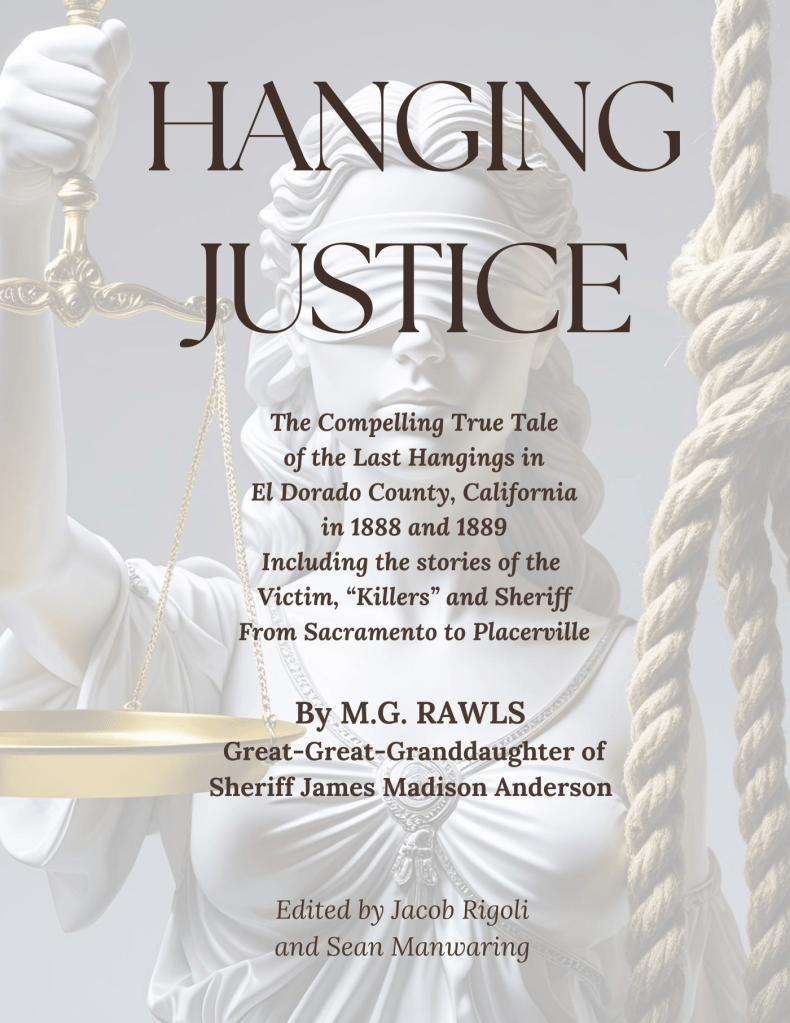
Public executions aren’t exactly pleasant subjects to write a book about. But for M.G. Rawls, a retired Pasadena lawyer and author of the young adult fantasy trilogy “The Sorts of Pasadena Hollow,” it was a compelling topic that had captivated her for decades. Rawls’s great-great-grandfather, James Madison Anderson, was the El Dorado County sheriff who carried out one of the last public hangings in California towards the end of the 1880s. For years, the thought that an injustice might have been done weighed heavily on him.

In her book “Hanging Justice,” scheduled to publish in October, Rawls delves into this event and gives readers an intimate look at the victim, the killers, the crime, and the hangings. She chronicles the details of the case and then reaches her own conclusions about this long-forgotten and rarely discussed episode in Placerville’s past. She will give an author book talk sponsored by the El Dorado Historical Society on Friday, October 17 from 6 to 7:30 pm at the Morning Star Lodge (also known as the Odd Fellows Lodge) in Placerville.     

Based on newspaper articles at the time, a reputedly wealthy farmer John Lowell was murdered on March 24, 1888 during a robbery at his ranch near Mormon Island in El Dorado County. Three men were convicted of first degree murder – John Henry Meyers, a 27-year-old immigrant from Germany; John Olsen, a 24-year-old Norwegian native immigrant; and William Drager, a 41-year-old immigrant from Germany.

Meyers was hanged on November 30, 1888, but Olsen and Drager’s execution on the same day was stayed pending appeal. Coverage of the arrests, trial, and hangings was a local sensation. Dozens of newspaper articles ranging from the Sacramento Bee to the San Francisco Examiner recounted the gory details. Hundreds of spectators observed Meyer’s hanging, that gave it a circus-like atmosphere.

Olsen and Drager – who steadfastly claimed throughout the trial that they weren’t involved in the plot to kill Lowell – were hanged on October 16, 1889. Sheriff Anderson limited the observers to the minimum required by law and had canvas draped over the courtyard to keep out as many prying eyes as possible.

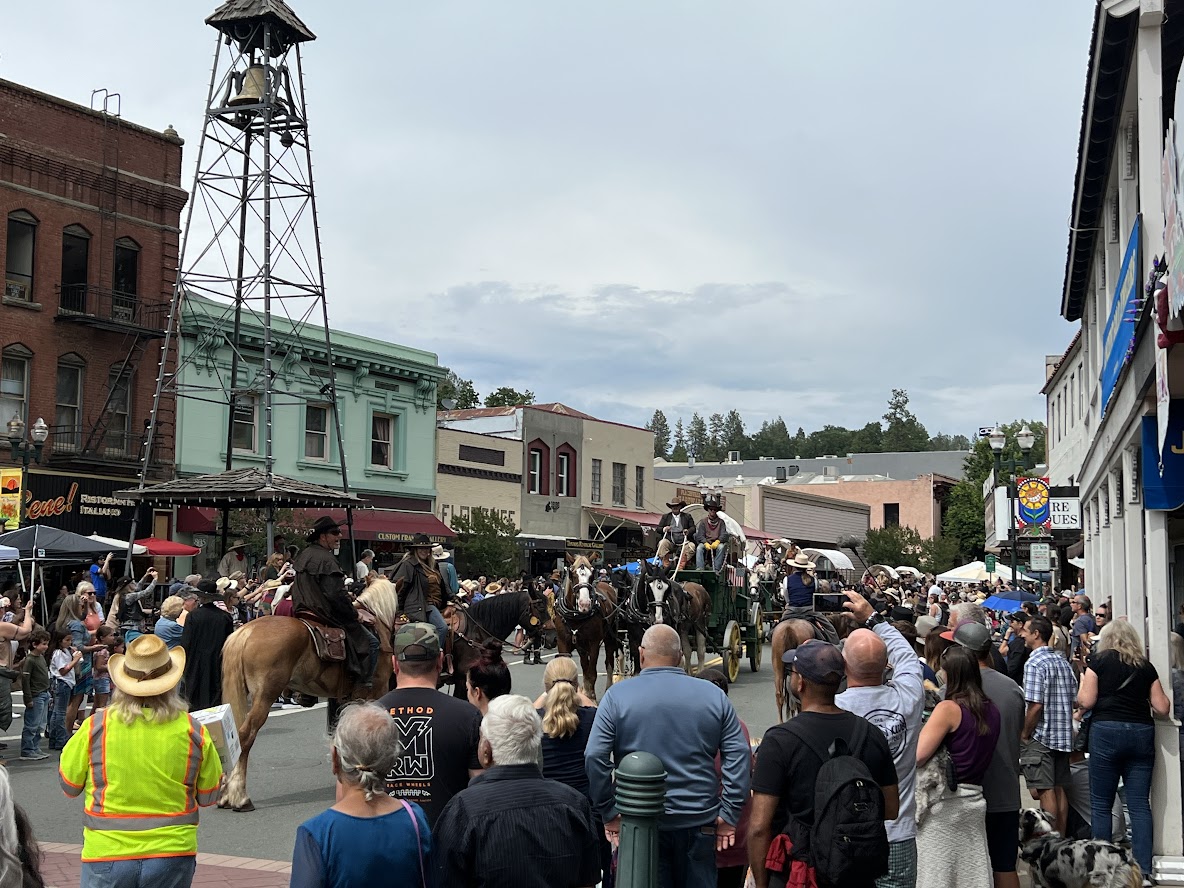
The Placerville Wagon Trail Event in 2023. | Photo courtesy of ‘Save the Graves’

Hangings were not uncommon in the United States back then; Placerville had been referred to as “hangtown” since the Gold Rush days. However, Olsen and Drager’s sentence galvanized the whole town into action because Placerville residents felt they had not been complicit in the murder, and the death penalty was too harsh for their actual crime.

Over 425 townspeople – including the district attorney who prosecuted the case, the sheriff, and nine of the 12 jurors – signed a petition requesting the sentence be reduced to life imprisonment.

The men had been model prisoners and were ready to accept their fate. Moreover, the victim –  John Lowell – allegedly was of dubious character, having made many enemies and was himself accused of murder just a couple of years before. Olsen and Drager’s attorneys worked diligently to save them, even hand-delivering the petition and request for a pardon to Governor Waterman in Sacramento. Still, the petition was rejected, and the pardon turned down. For a long time, the townspeople wondered whether Olsen and Drager should have been executed.

Rawls’s grandmother had previously written about this event; but she was determined to find out more. She scoured through hundreds of old newspapers online and did extensive research at the Huntington Library in San Marino, the El Dorado Historical Society, the Center for Sacramento History, and the California State Archives. She traveled to Auburn, New Hampshire, to look at family documents and photos that her aunt and uncle have meticulously preserved.

By email, Rawls talks about what made her author “Hanging Justice,” what she learned from her exhaustive investigation, and the reader takeaway.

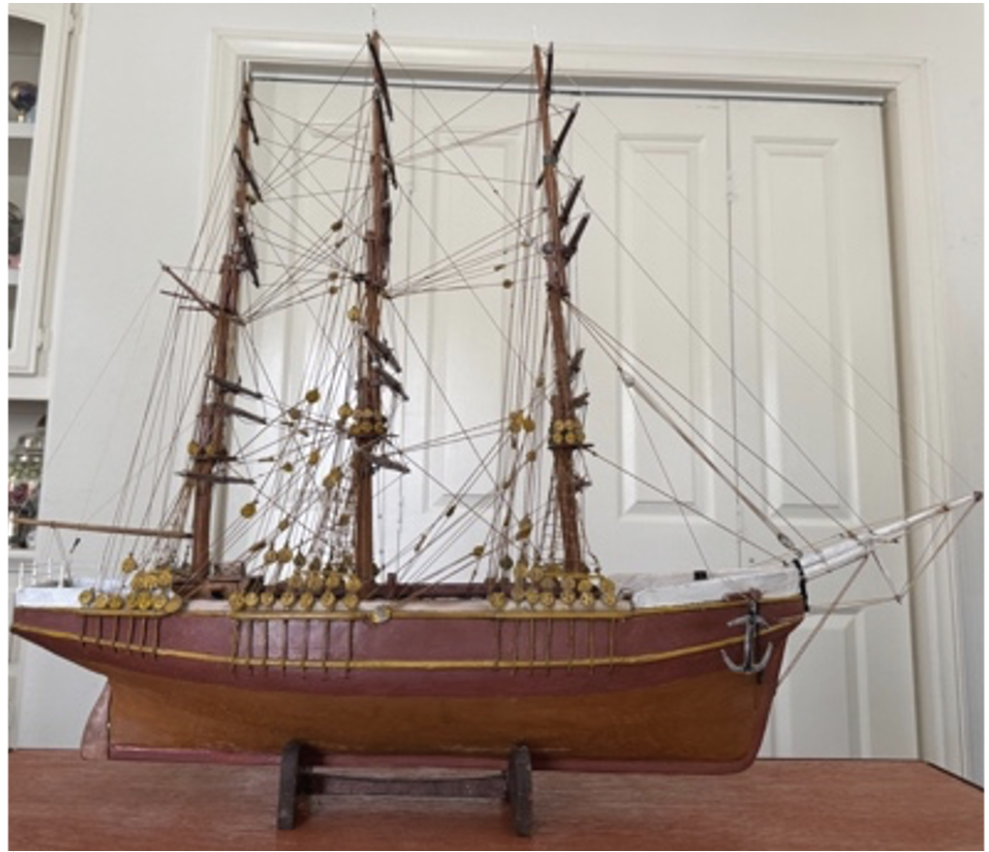
Model clipper ship ‘the Mountain Queen”. | Photo courtesy of M.G. Rawls

“In 1970, my grandmother wrote a community college paper about the last hangings in El Dorado County in 1888 and 1889 for which she got a B+,” recounts Rawls. “She’d played with a small model clipper ship called the Mountain Queen, crafted by two of the three hanged men while they were in jail. Sailors by trade, the two men made the miniature ship for her grandfather, my great-great-grandfather, Sheriff James Madison Anderson. It was their way of thanking him for taking care of them while their appeals were pending. They looked up to him like a father, yet he would be the one to hang them. My grandmother gave me the Mountain Queen, and I display it on a table in our living room as a relic of the event.”

It would take a while, though, before Rawls started writing the book. She discloses, “I’d had the story in my head for years, as I’m guessing many writers do, but didn’t start in earnest until about four years ago, just after I’d finished writing the third book in a young adult fiction shape-shifting trilogy – a series which combined my love for the local animals with California history. It was a natural transition for me since I love history and had experience doing research with my fiction books.”

Asked if the event haunted her family, Rawls replies, “I know that Sheriff Anderson and Marcus Bennett were emotionally torn about the executions of two of the men. Both felt that these men should have received a life sentence instead of death. Other than that, except for my grandmother, who was probably more intrigued than haunted, I don’t know what the rest of my family thought. But for the model clipper ship and my grandmother’s college paper, it is doubtful this story would have survived.”

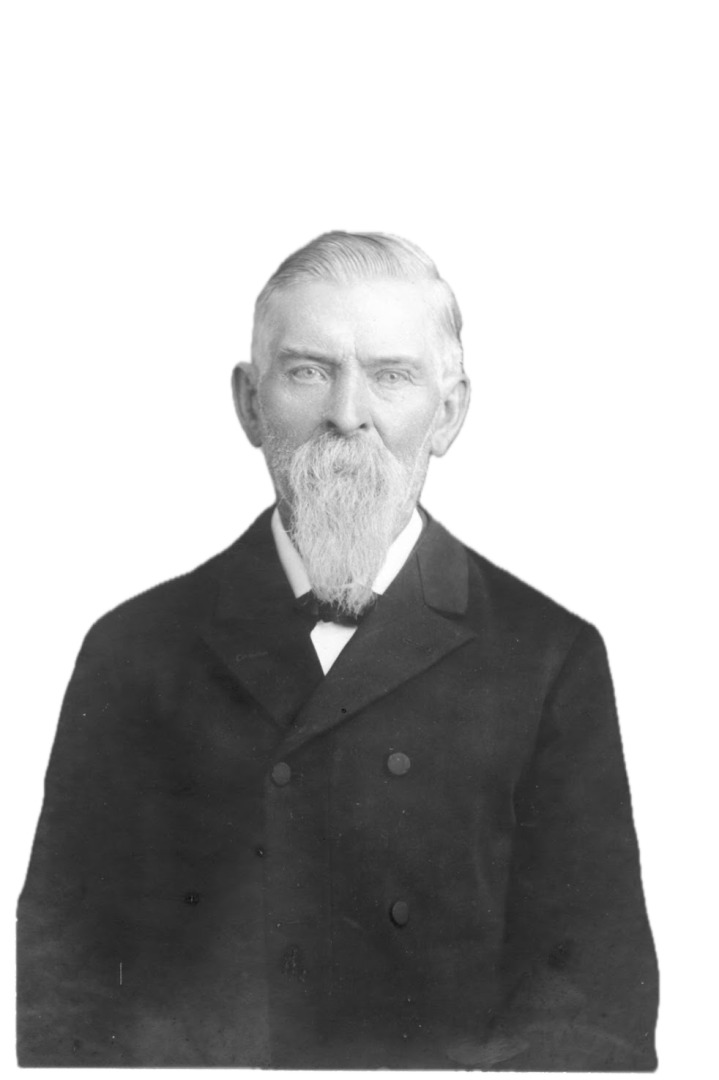
Sheriff James Madison Anderson. | Photo courtesy of M. G. Rawls

In the course of her investigation, Rawls learned a few things that she hadn’t previously known and unearthed some personally meaningful finds.    

“I knew that my great-great-grandfather, James Madison Anderson, was sheriff of El Dorado County from 1886 to 1890, so I was aware that he was generally in charge of the men,” states Rawls. “Still, I didn’t fully understand his specific role in the hangings until I read the contemporary newspaper accounts. Furthermore, until I started researching, I didn’t grasp that it was my great-uncle, Marcus Percival Bennett, Sheriff Anderson’s son-in-law, who was the district attorney prosecuting the case. I can only imagine the discussions that the two men must have had over the trial and hangings.”

“There were many surprising discoveries, made possible through the numerous institutions that I visited, family members who opened up their collections, and the hundreds of newspapers I pored over online,” Rawls continues. “I learned that the ‘victim,’ farmer and rancher John Lowell, was hated by many, and there were probably dozens who wanted to see him dead. But of course, you take your victim as you find him. I also learned that the State of California keeps all the files in death penalty cases and that anyone can access them in person through the California State Archives.”

“And lucky for me, despite a fire that burned down the El Dorado County courthouse in 1910, the El Dorado County Historical Museum had the preliminary examination records and original exhibits” adds Rawls. “While most of the records at the museum were in cursive and at times challenging to read, nonetheless, holding these documents, I found myself transported back to the period.”

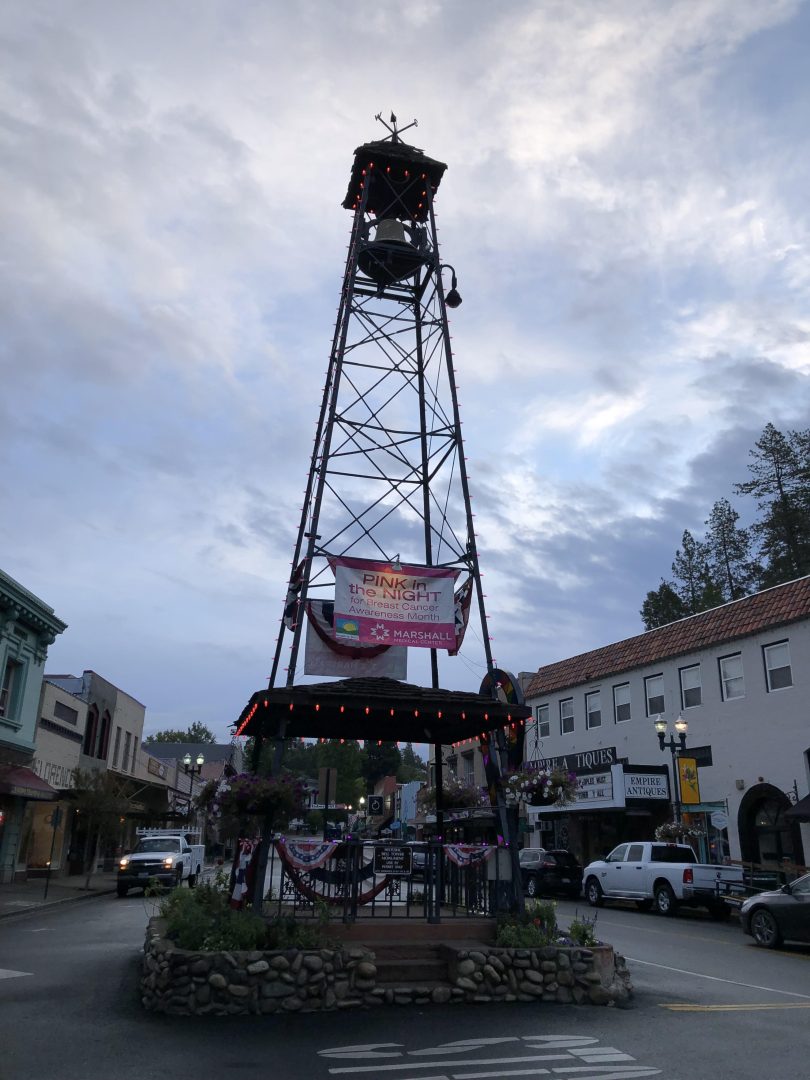
The iconic Placerville Bell Tower. | Photo courtesy of M.G. Rawls

The fantasy novels Rawls previously penned flexed her imagination and creative thinking. Writing a historical non-fiction, it seems, proved to be an adventure that was just as fun and pleasurable for her.

“While I did a lot of research for my fiction books, ‘Hanging Justice’ necessarily required exponentially more,” Rawls reveals. “Still, the research institutions and historical places visited and friends made along the way more than made up for the time spent. Plus, I like researching. For me, it’s detective work – with bits and pieces in various sources to be put together like a puzzle.”

Although that’s not to say that it was without its challenges. Declares Rawls, “This is my first non-fiction book, so accuracy was necessary. Besides, while it’s unconventional, I was determined to use footnotes instead of endnotes so the reader wouldn’t have to keep turning to the back. I’ve tried to make the story interesting, too.”

Writing “Hanging Justice” was a revelatory experience for Rawls as well.  

“Placerville is known as ‘Hangtown’ for the vigilante-driven hangings that occurred during the gold rush period, starting in 1849, after the discovery of gold by James W. Marshall in nearby Coloma, California, the previous year,” Rawls explains. “’Hanging Justice’ includes the telling of a particularly abhorrent hanging in 1852, when an ‘assemblage’ stormed the jail in Coloma and two men – one white and one black – were forcibly taken and hanged. The original account is in the El Dorado County Archives at the Huntington Library.”

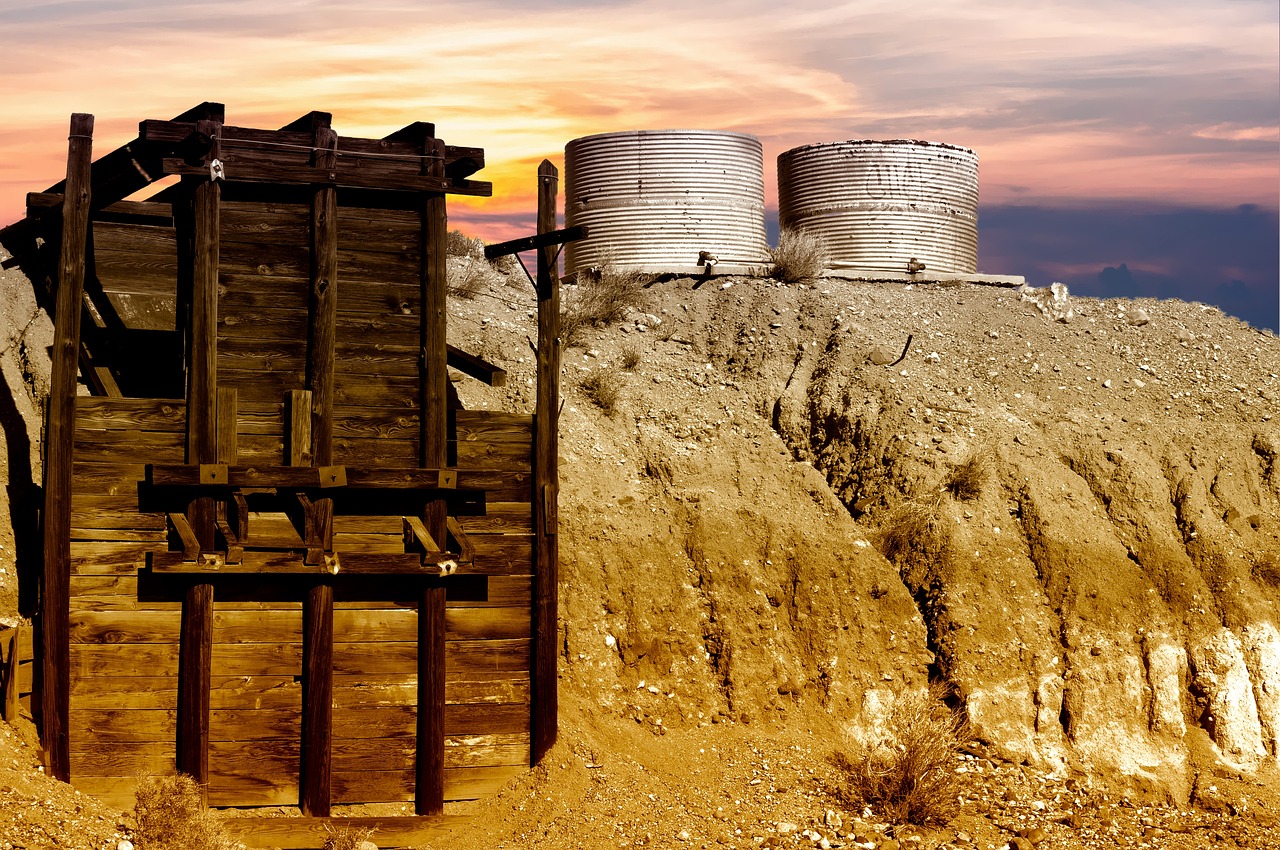
A gold mine in El Dorado County. | Photo courtesy of Pixabay

“As highlighted in my book, the hangings for the killing of John Lowell were not the result of vigilantism,” clarifies Rawls. “They were legal executions after due process of law. Plus, like my great-great grandfather and great-uncle, many of the townspeople did not want two of the men to be executed. In my view, despite the circumstances surrounding these last hangings, Placerville had transformed into a lawful community and was determined to give these defendants a proper trial. The trial transcript in this case was over 600 pages, and the three men were represented by Placerville’s finest. Though in the end, Placerville’s best wasn’t good enough.”

This book isn’t your everyday read but Rawls thinks there’s valuable takeaway for someone who buys and peruses it.    

“‘Hanging Justice’ lays bare the factual and legal groundwork for what happened,” Rawls describes. “But I hope the book also allows the reader to reach their own conclusions as to whether justice was rendered by the hangings. Personally, I found the victim’s own trial for murder several years earlier and the legal issues surrounding two of the men’s appeals fascinating. But then I’m a bit of a nerd when it comes to history.”

“Family stories worth keeping can be very fragile and will disappear if not written down,” pronounces Rawls. “The process of saving them can be both unifying and rewarding. In my case, despite the dark topic, this story has brought me together with cousins and friends I didn’t know I had, including the townspeople of Placerville. So I would urge readers to pursue their own family stories.”

During her countless trips to Placerville, Rawls learned that residents there today didn’t know about this particular event. As she worked on her book, she made it her mission to uncover all the documented facts so she could retell the story of what transpired over a century ago. It is a significant piece of their community’s history.        

The Huntington Inaugurates “Stories from the Library” Series

Also published on Hey SoCal on 17 June 2025

A work in The Huntington’s new exhibition is by Janet Harvey Kelman, “Stories from Chaucer Told to the Children” with pictures by W. Heath Robinson, London: T.C. and E.C. Jack, 1906, gift from Donald Green. | Image courtesy of The Huntington

The Huntington Library is renowned for several iconic pieces — the Gutenberg Bible, the Ellesmere Chaucer manuscript, and Shakespeare’s Folio, to name just a few. Visitors expect to see them individually at their usual spot.

Soon these exceptional items will be displayed at The Huntington Mansion alongside other important objects that reveal surprising connections and untold stories in a series called “Stories from the Library.” The inaugural show, on view from June 21 through Dec. 1, will feature Geoffrey Chaucer’s “Canterbury Tales” and later iterations of the work, and the visionary figures who shaped Los Angeles.

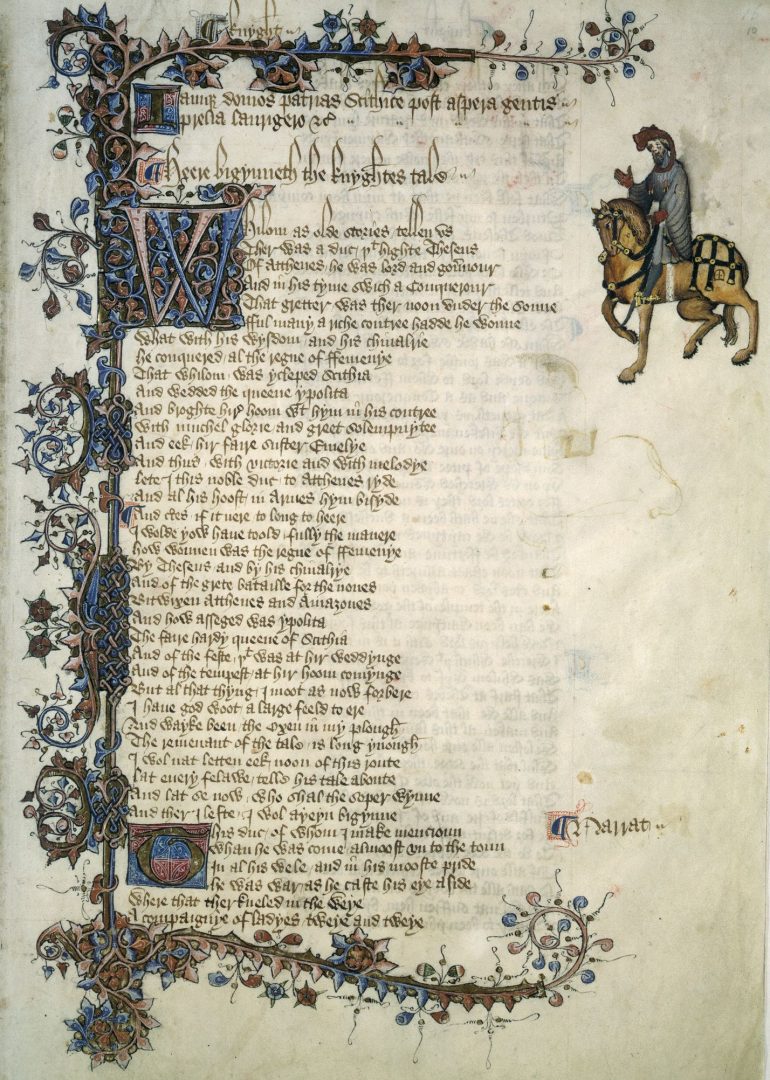
“The Tales Through Time” commences with The Huntington’s Ellesmere Chaucer manuscript, an elaborately decorated work created between 1400 and 1405. The most complete and authoritative version, it is presented together with later iterations of the work to illustrate how creators like writers, artists and printers — collectively and individually — changed the tales textually and visually over five centuries of retellings.

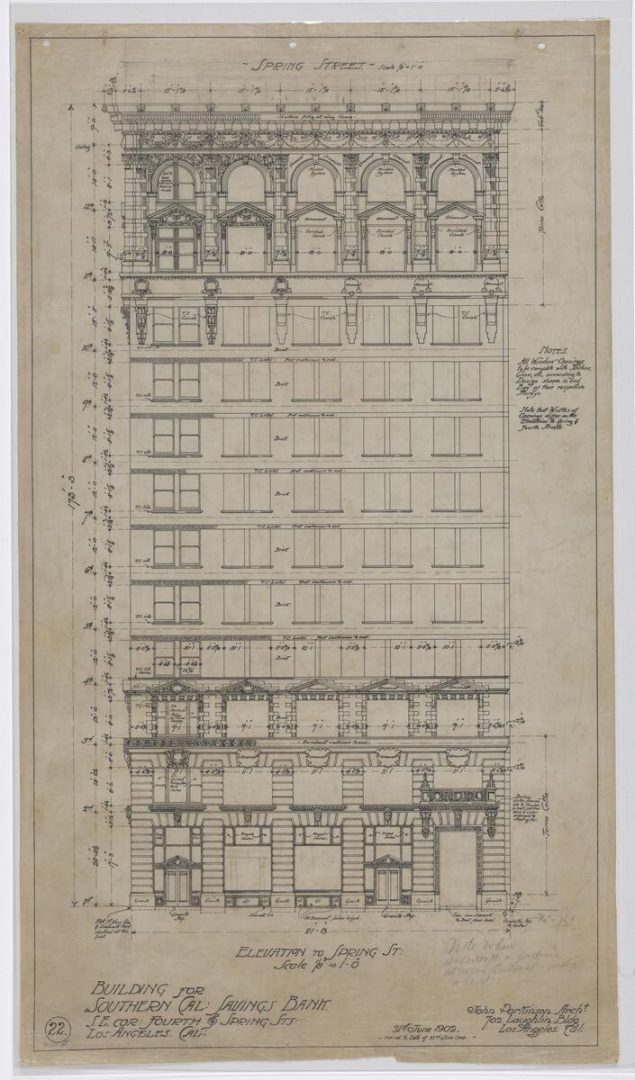
“Los Angeles, Revisited” explores ways in which architects, planners, business owners, and activists have contended with a constantly evolving city like Los Angeles. The show is anchored by the 1902 design plans for L.A.’s  first skyscraper Braly Block, conceived by architect John Parkinson. 

Sandra Brooke Gordon, the director of the library, states, “Drawn from across the library’s vast holdings, each rotation in this series centers on a single item making a star turn — a destination object — placed in conversation with other selections. These exhibitions highlight the interrelatedness, beauty, and power of the library’s collection of approximately 12 million items, while encouraging visitors to make new and inspired connections.”

Vanessa Wilkie, senior curator of medieval manuscripts and British history and head of library curatorial, and Steve Tabor, curator of rare books, co-curated “The Tales through Time.” By email, Wilkie talks about how the series originated, how they prepared the exhibition, and what she hopes visitors take away from it.       

“While the mansion was built first, Henry Huntington had the Library constructed beginning around 1919, relatively early in his collecting,” Wilkie says. “So in a sense, he always envisioned that his library collections would be displayed independently of his other collections. I’ve always appreciated this idea — that books, archival documents, photographs, prints, and manuscripts deserved their own celebrated space.”

Just as necessity is the mother of invention, complications engender improvisations, as Wilkie discloses. “When the institution decided it was time to end the long run of the library’s Main Hall exhibition, ‘Remarkable Works-Remarkable Times,’ we were all committed to keeping library collections on view with the understanding that we logistically couldn’t take down an exhibit and have an exhibit in the same space. We saw this logistical challenge as an opportunity!

“The Art Museum generously offered to open two gallery spaces to the library. It was an obvious choice to put library collections in the historic ‘Large Library’ but our collections contain over millions of flat works — like photographs, architectural drawings, maps, and drawings. The Large Library doesn’t allow for anything to be hung on the wall, so the Focus Gallery was offered as a second location to showcase more of our collections … to tell more stories from the library.

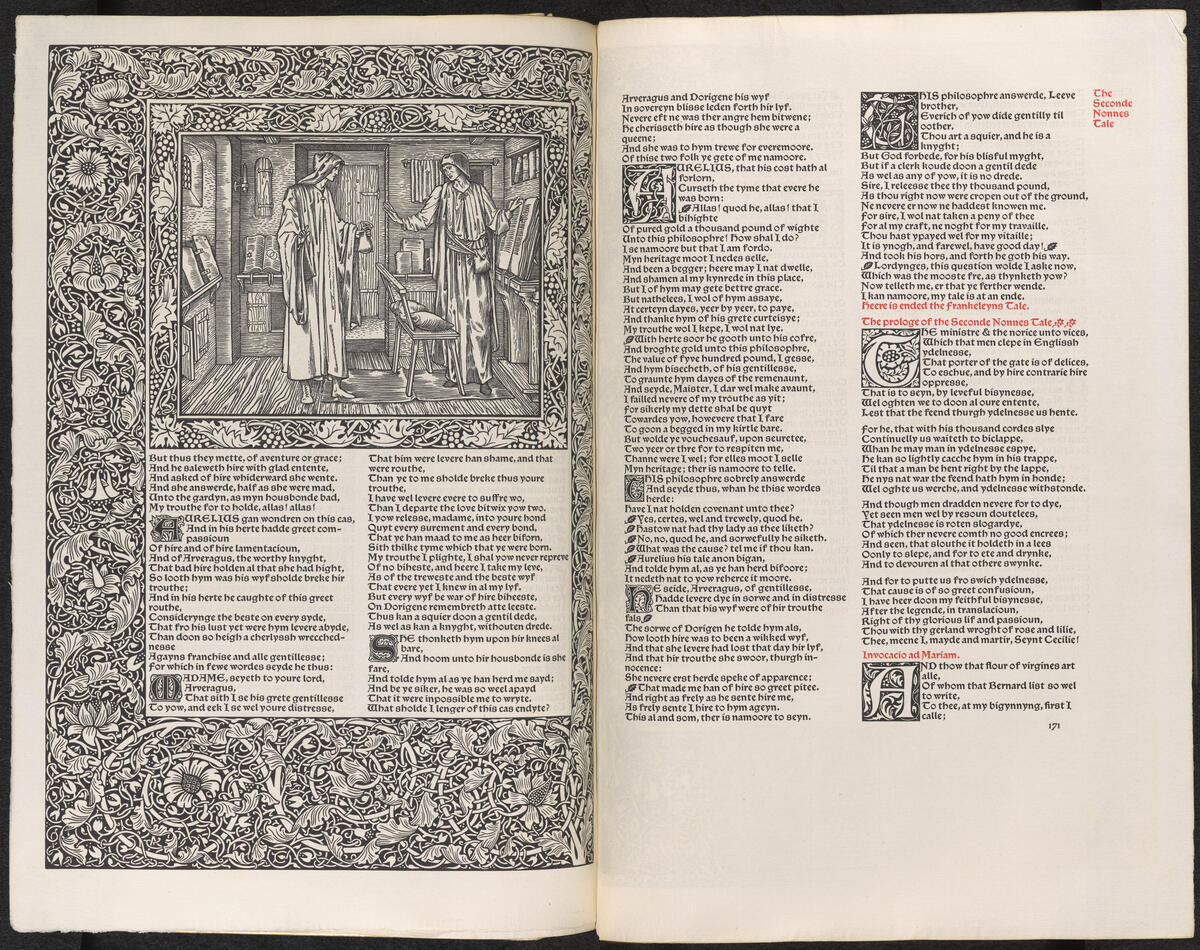
“The Works of Geoffrey Chaucer,” Hammersmith: Kelmscott Press, 1896, from the Sanford and Helen Berger Collection. | Image courtesy of The Huntington

“Curators immediately saw this as an opportunity for unexpected pairings of exhibits, which made us all the more eager to think in unexpected ways,” continues Wilkie. “We are mindful that visitors always love to see some favorite pieces, like the Gutenberg Bible and the writings of Octavia Butler, and we envisioned this exhibition series as an occasion to bring in some of those beloved hits while also giving visitors a chance to get to know other parts of our magnificent collections. Our hope is that people come to see what they already love but leave thinking about a favorite piece in a new way or, better yet, having seen something they never expected!”

Asked what motivated their decision to center the exhibit around Geoffrey Chaucer’s The Canterbury Tales, Wilkie replies, “The Ellesmere Chaucer is one of The Huntington’s most famous manuscripts; it is gorgeous, but it is also perhaps the most influential work in the English-speaking world. ‘Stories From the Library’ is a rotating exhibition series that does something new for our collections, so we liked the idea of starting with a book people already know quite well and framing it in a completely different way than how visitors have seen it over the past twelve years. We actively chose not to think about ‘The Canterbury Tales’ in a singular historical context but rather wanted to think about how the Ellesmere Chaucer brought individual tales together and then what the visual and textual trajectories for those tales were.”

While the sheer number of items in the library’s collection could have posed a challenge when deciding which piece to showcase in the inaugural exhibition, the curators knew exactly what to launch with.   

“Beginning with ‘The Canterbury Tales’ gave us a fairly focused starting point, and then we just followed the pilgrims through our collections!” declares Wilkie. “We have some 15th century manuscripts with copies of individual tales, so we plotted those through time and then narrowed back down when we realized our collections could easily fill multiple galleries.”

“The Chaucer display is paired with ‘Los Angeles, Revisited,’ an exhibition about the shifting real and imagined landscapes in L.A.,” Wilkie explains. “No other place in the world could offer that pairing with these stellar pieces; it is the past and present colliding in spectacular ways! When curators are thinking about exhibitions in this series, we’re also thinking about how they’ll be paired and recognize that their sum is greater than their individual parts — although their individual parts are also pretty special.”

The Ellesmere Chaucer manuscript. | Image courtesy of The Huntington

Visitors to The Huntington can expect to see “Stories from the Library” for a while.

“We anticipate the series running for three or four years and have paired-exhibitions planned that can take us far beyond that,” discloses Wilkie. “Each exhibition will run for six months, but we’ll turn pages or swap out entire pieces at the three-month mark. Library materials are extremely sensitive to light, so while we want to keep exhibits up to give visitors a chance to see them, we also need to be mindful of the physical needs and constraints of fragile collections.”

“Most people are introduced to ‘The Canterbury Tales’ as a singular canonical text, but this exhibition is a chance for people to break it down and see how it has changed, or not changed, over the centuries,” Wilkie says. “That also demonstrates how unstable the concept of a canonical work really is. Throughout the series, we hope people will be invigorated by seeing beloved favorites alongside never-before-exhibited items, in spaces they don’t typically see library collections. Change isn’t easy, but it can also give us a fresh perspective.”

“Los Angeles, Revisited” is curated by Erin Chase, the library’s associate curator of architecture and photography. She discusses the anchor piece of the exhibition, what other materials will accompany it, how she planned the show, and the visitor takeaway.    

John Parkinson, architect, Building for Southern California Savings Bank (Braly Block), elevation to Spring Street, 1902, ink on tracing cloth. | Image courtesy of The Huntington

“The 1902 design plans for L.A.’s first skyscraper is part of a larger recent acquisition made by the Huntington which is the archive of the architecture firm of John and Donald Parkinson,” Chase begins. “It has never been shown in a museum or library before so it’s very exciting to be able to show it to the public.

“Also included in the exhibition is a variety of materials from across the Huntington’s library collections,” adds Chase. “Everything from an 1888 early birds-eye-view map of East Los Angeles to architectural drawings of iconic L.A. buildings like the Braly Block and Googies coffee shop, to historical and contemporary photographs and manuscripts by literary figures such as Eve Babitz and Christopher Isherwood.”

Explains Chase, “This is a small jewel-box exhibition with a hefty theme so striking the right balance was important. Los Angeles lacks the centrality and layout of most traditional American cities and it’s what makes us unique. I wanted to celebrate the city and the visionaries who believed in its promise, but it was also important to address some darker parts of our past including redevelopment and the displacement of families as a result. Additionally, L.A. has always served as an unwitting muse for artists. So it was important to include people like Ed Ruscha and Gusmano Cesaretti who have helped us make sense of our urban landscape from a visual perspective.

“I hope visitors get a deeper understanding of some of the issues architects, planners, business owners, residents, and activists contended with in the 20th century,” Chase says. “L.A. grew rapidly between 1900 and 1950 and this exhibition just begins to touch on major issues that have impacted the urban landscape such as architecture, transportation, and redevelopment. Most of all, I hope they enjoy seeing some of the extraordinary drawings and photographs from the Huntington’s archives up close. Many of these have never been on view before, so this is a great opportunity to catch them.”

“Stories from the Library” will be an eye-opener for many of us who have not fully appreciated the expanse and significance of The Huntington Library’s holdings. Until now the drawing of the groundbreaking Braly Block has never been displayed in an exhibition. It’s going to be so much fun to discover what surprise each show brings.

Book “Los Angeles Before the Freeways” Captures Images of Lost Architectural Gems

Also published on 10 March 2025 on Hey SoCal

Photo courtesy of Angel City Press

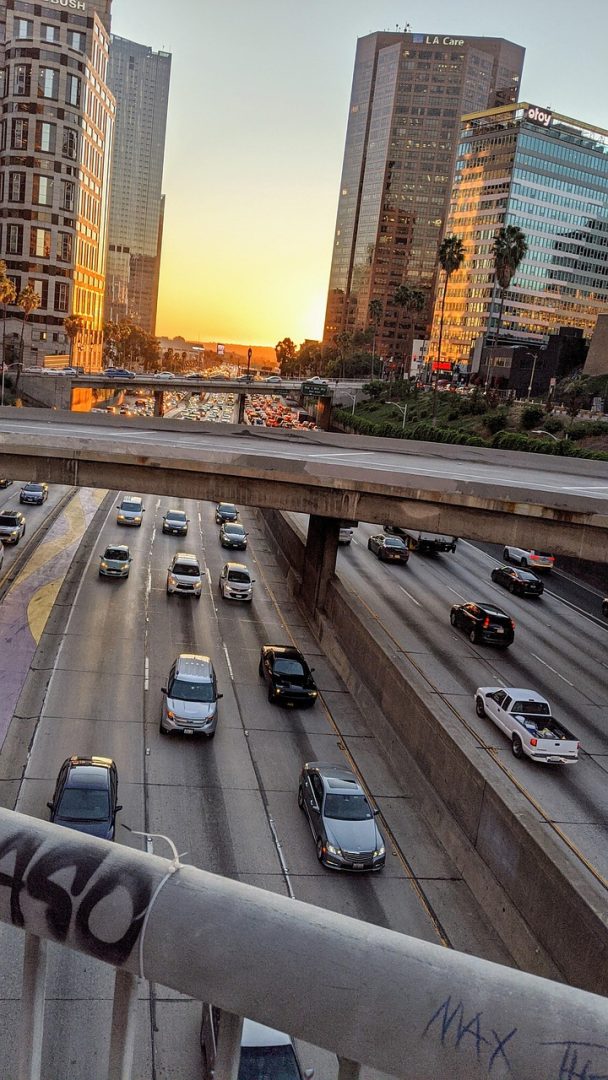
In L.A. County, freeways are a ubiquitous part of our surroundings. It’s hard to imagine a time when we traveled the expanse of the region on city streets. As population increased and more cars traversed the roads, freeways were constructed to make driving safer for people and areas more accessible.

The 110 Freeway, more popularly known as the Pasadena Freeway, is one of the oldest (if not the first) freeways in the United States. The first section – the Arroyo Seco Parkway – opened to traffic in 1938 and the rest of the throughway opened in 1940. Today, there are several freeway interchanges that connect Los Angeles to various parts of California and to other states. 

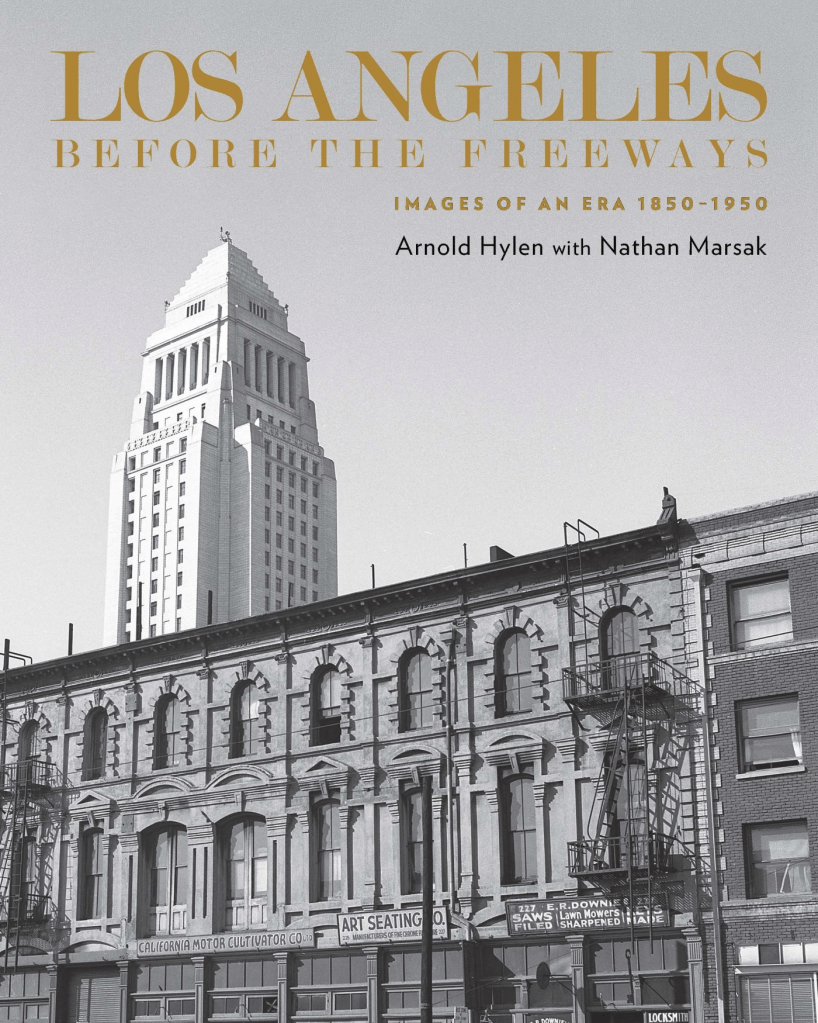
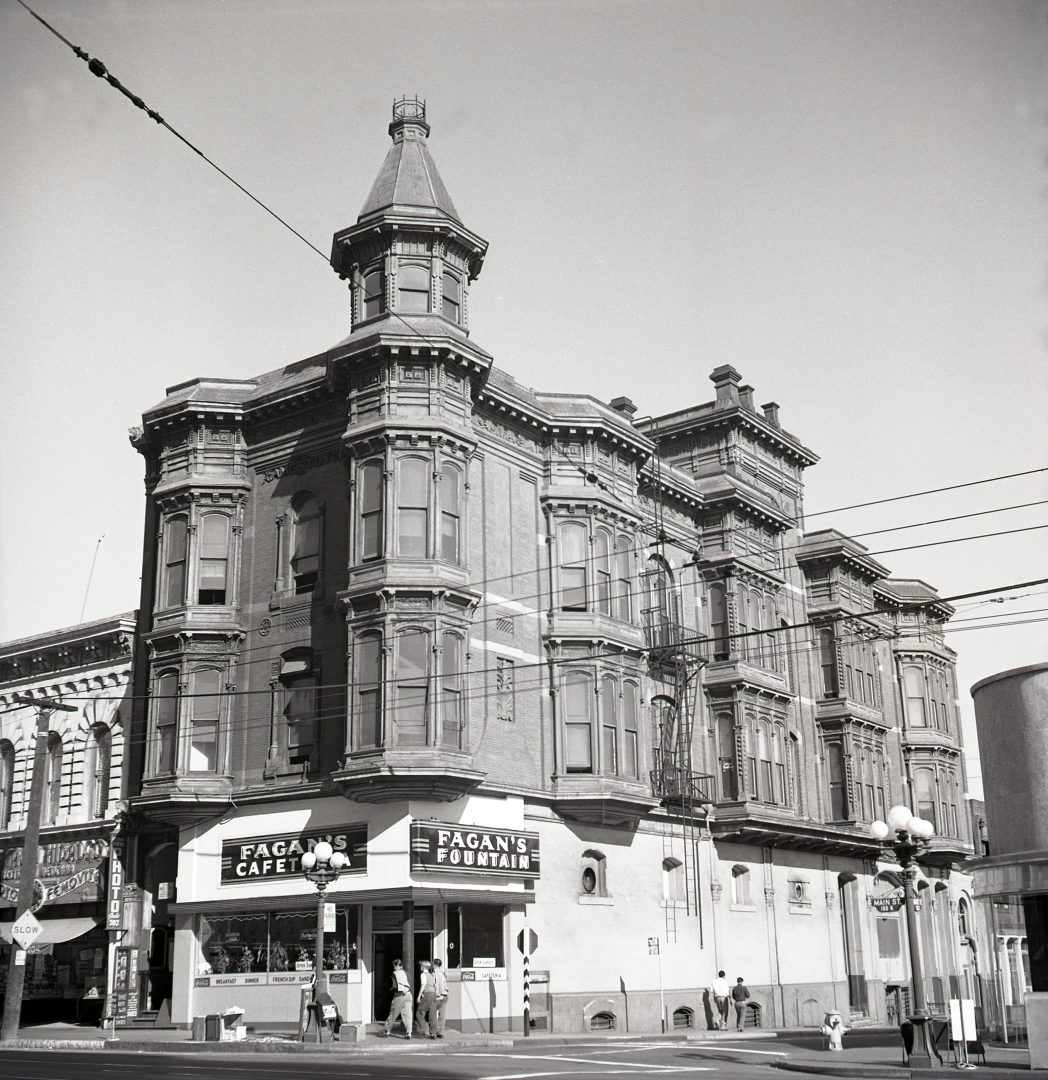
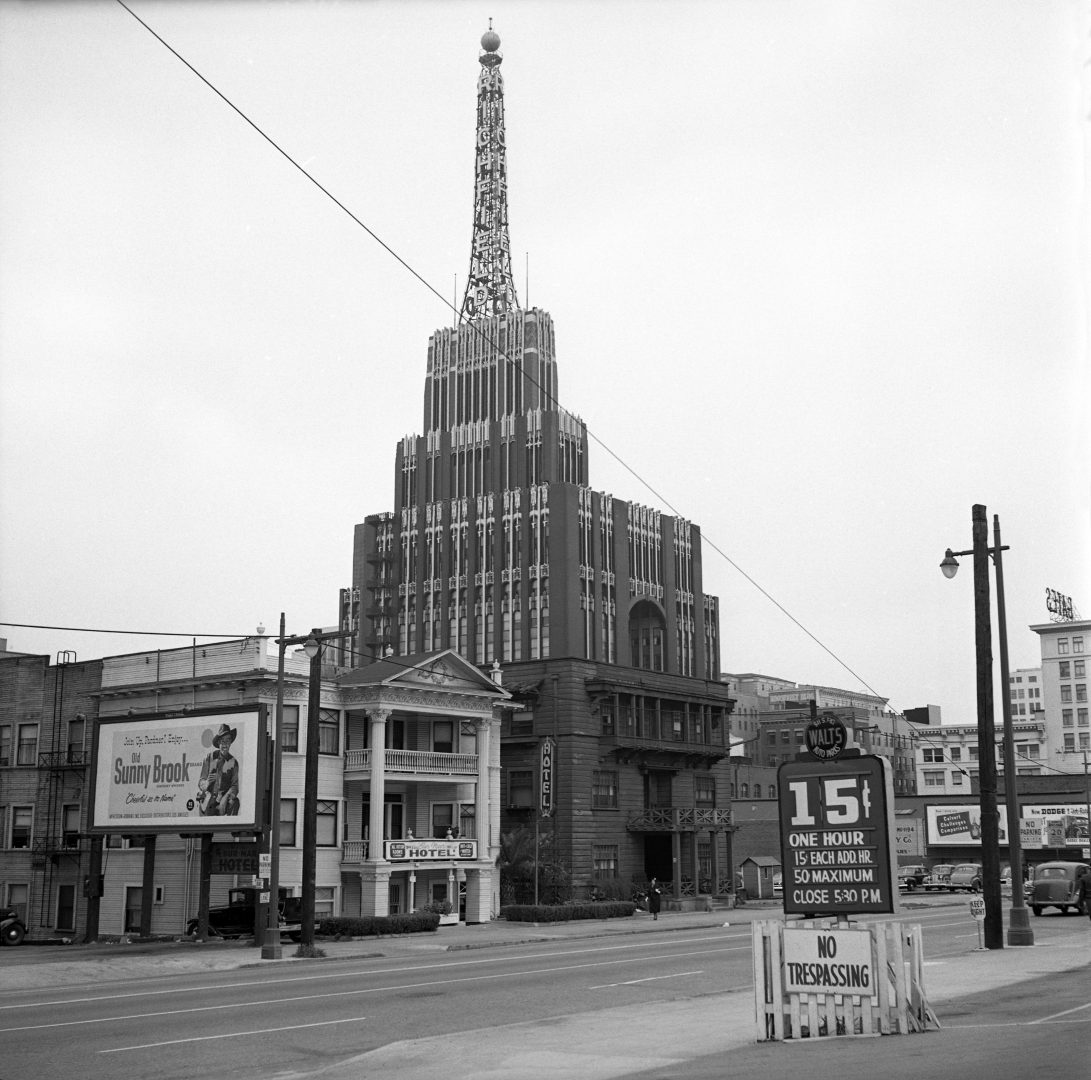
Countless buildings were demolished to make way for the construction of these freeways. The book “Los Angeles Before the Freeways: Images of An Era 1850-1950” gives a lush, visual tour of a Los Angeles that no longer exists – one of elegant office buildings and stately mansions that were razed in the name of “progress.” Originally published by Dawson’s Book Shop in 1981, it has become a cult classic among L.A.’s architectural historians.

Photo courtesy of Pixabay

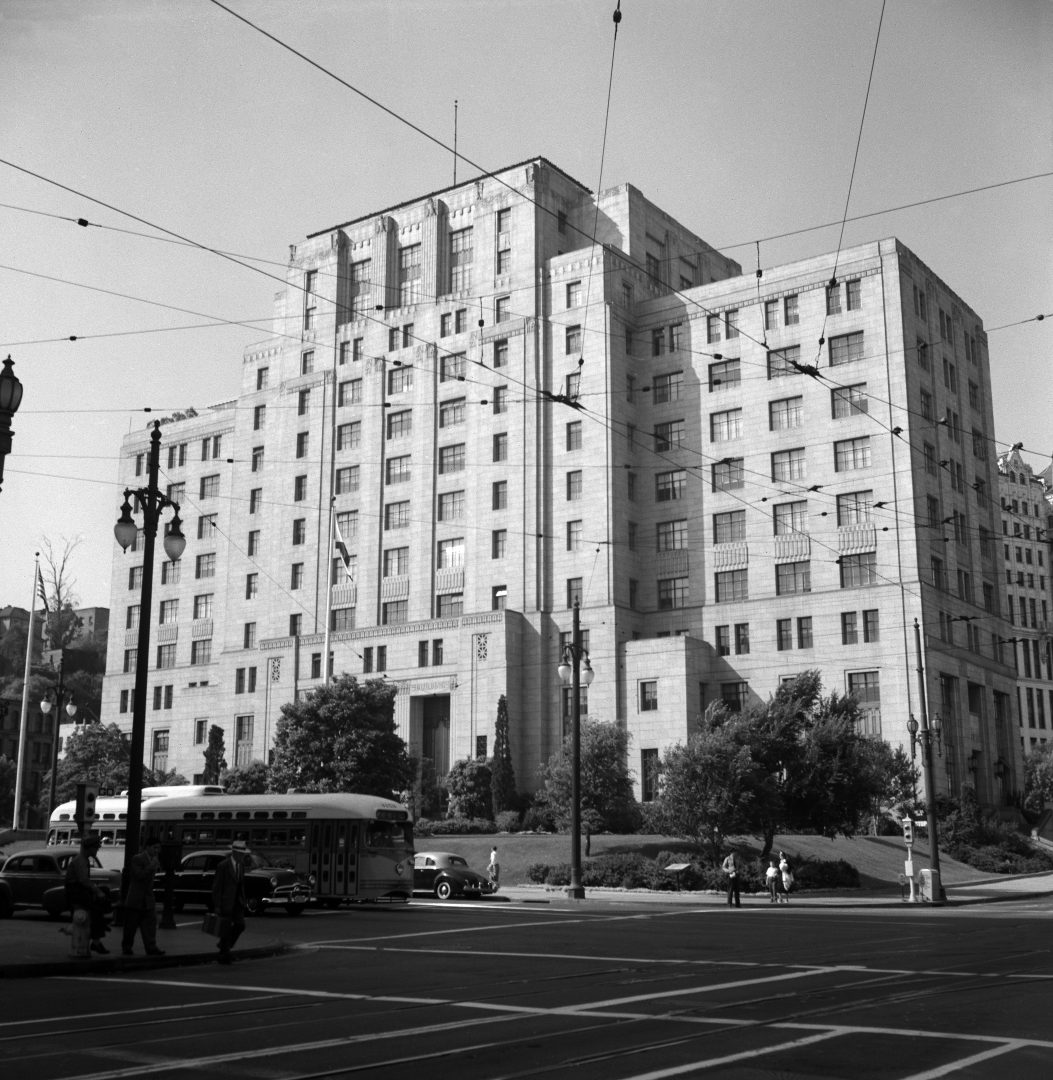
Gorgeous black-and-white photos from Arnold Hylen that capture a forgotten era are showcased in the book. It has an original essay by the photographer that provides historical background and context for the time period. This new edition from Angel City Press, to be released on March 25, contains additional, never-before-seen photographs from Hylen and newly unearthed information from historian Nathan Marsak on these lost architectural treasures.

The stunning photography recalls an era when downtown Los Angeles was unspoiled by wide-scale redevelopment and retained much of its original character. Each page offers a glimpse of what the city used to be, before some of its architectural jewels were destroyed for the newer, more modern city that would soon follow.

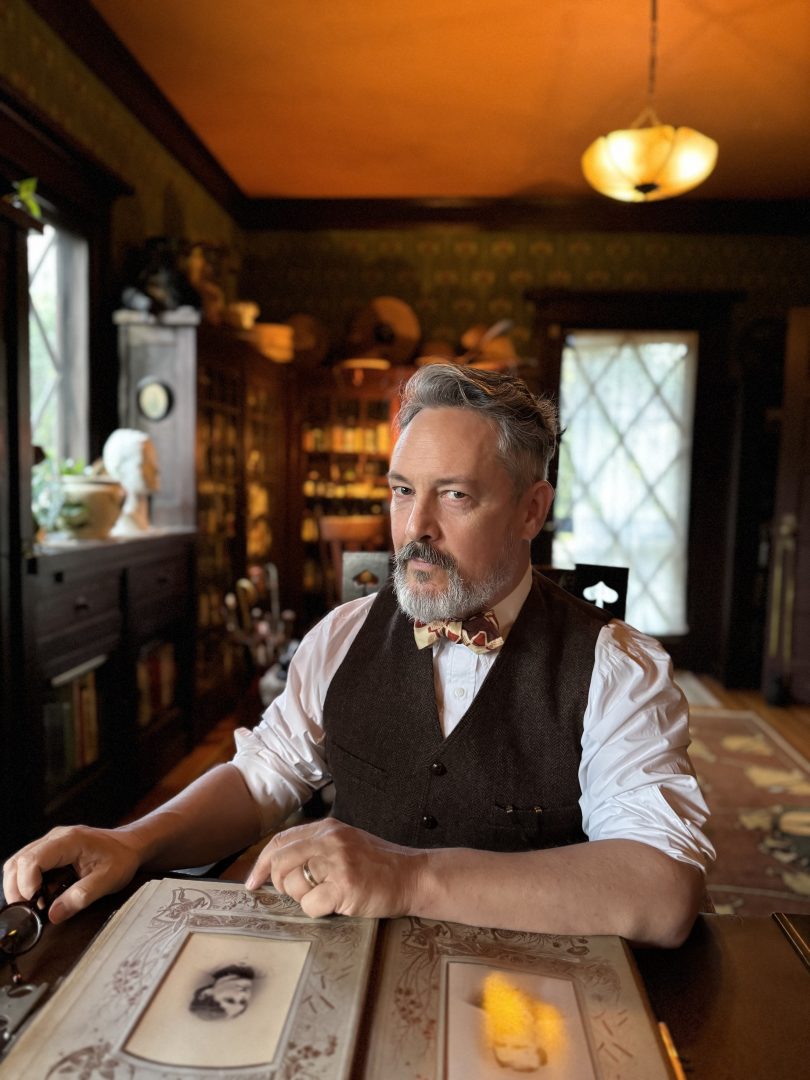
Marsak graciously agreed to be interviewed by email about how he became an L.A. historian – despite not being a native Angeleno – and the upcoming book “Los Angeles Before the Freeways” and why it’s important to get it republished. 

“I was born and raised in Santa Barbara, and Los Angeles was like a weird, distant backyard,” he began. “Our television stations were all out of L.A. so I became obsessed with, for example, commercials for Zachary All and Cal Worthington. Then we’d go to LA and it was so different from the picture-perfect neighborhoods of Santa Barbara; in the 1970s Los Angeles was pretty treeless, covered in billboards, blanketed in smog. Like a dying civilization, but with so many insane neon signs, so much bizarre architecture. The whole of the city was fantastical like Disneyland, albeit a giant, grimy, dystopic version of Disneyland.”

California State Building on First Street. | Photo by Arnold Hylen / Courtesy of Angel City Press

The career choice, however, was preordained. Marsak explained, “My father was a historian and I follow in his footsteps. While other parents took their kids to baseball games, I was being led through Florentine museums or the cathedrals of France. I would have been destined to become a historian no matter where I landed, but I’m very glad my home became Los Angeles.”

Taking up roots in L.A., though, wasn’t always part of Marsak’s plans. He disclosed, “In the early 1990s, I was out in Wisconsin, going to graduate school and doing architectural history. But the lure of Southern California pulled me back, especially after I saw the ’92 riots on TV. I packed my things, and read Raymond Chandler and James Ellroy to acquaint myself with my new home, and moved to East Hollywood and began looking for ‘Old L.A.’ 

“Sometime in the mid-90s, I was in a downtown bar talking up the old timers about lost Los Angeles and one of them said ‘you know there was a guy who took photos all around here back in the fifties, and he published a coupla books of them’ — referring of course to Arnold Hylen –  and I immediately began combing the bookstores until I found Hylen’s 1976 Bunker Hill book, and his 1981 Los Angeles Before the Freeways.”

L.A. historian Nathan Marsak / Photo courtesy of Angel City Press

And reading those books became the impetus to discover the architectural history of his adopted home.

“I loved Hylen’s Freeways book, and used to drive around with it on my lap like a Thomas Guide of phantom Los Angeles,” said Marsak. “And because so few copies existed – Dawson’s Book Shop only printed 600 of them in 1981 – I made it my mission to reprint it.”

“But for all of Hylen’s groundbreaking research, as included in his indispensable essay, there were unanswered questions,” continued Marsak. “I wanted to flesh out the buildings with the addition of their architects and construction dates. Naturally, as well, I wanted the images to be larger, and clearer, and that would require being in possession of the original negatives, which I finally managed to purchase in 2016. Each negative strip had three images, so sometimes there were alternate angles or shots of something not in the book. I was thrilled to be able to include some of those never-before-seen captures.”

Amestoy Block on Main and Market | Photo by Arnold Hylen / Courtesy of Angel City Press

The original version of Hylen’s book contained 116 photos and the expanded new edition of “Los Angeles Before the Freeways” has 143 images. Hylen began taking photographs downtown about 1950. The majority of his output occurred between 1955-1960, but there are images in the new book that date to as late as 1979, according to Marsak. 

“This is not a book about buildings that were only lost to freeways,” Marsak clarified. “It also includes some structures that were demolished when the Hollywood Freeway made its easterly path through Fort Moore hill, and of course there are some images of the Harbor Freeway as it was constructed west of Bunker Hill. But most of the structures contained herein were lost to parking lots, or the expansion of the Civic Center. An accurate number for how many structures were razed because of freeway construction would be difficult to gauge, but a safe bet is about 1,000.”

The road to getting the book republished was long. Marsak related, “I established contact with Hylen’s family about 2006, and by the time I acquired rights and negatives, in 2016, I was already working on my Bunker Hill book for Angel City Press, so ‘Freeways’ took a back burner. I began writing the captions and scanning the ‘Freeways’ negatives in early 2022, which was about two years of work before I handed Angel City Press a completed manuscript in 2024.” 

Marsak added, “I hope readers take away that there were first-rate domestic and commercial structures by top-flight architects in the 19th century. Naturally, the fact that the majority of the structures featured have been wiped away, I also hope causes readers to become active with preservation in their communities.”

Through this book, Marsak would also like us to have a better appreciation for the city.

“There’s more to Victorian L.A. than just the Queen Anne houses on Carroll Avenue or at Heritage Square – which are great, don’t get me wrong! – but we once had an incredible collection of Romanesque Revival, Italianate, and other styles blanketing the city in general, downtown in particular,” emphasized Marsak.

Unfortunately, these magnificent edifices didn’t survive the wrecking ball and – but for the images in the book – no trace of their past existence remains.   

“Very few people in postwar America were interested in architectural salvage from Victorian buildings,” Marsak lamented. “The Magic Castle, though, utilized parts of structures for its fanciful interior. And of course, most famously, two houses from Bunker Hill were moved to Montecito Heights as the first structures in the Heritage Square project. But they were sadly burned to the ground not long after their relocation.”

It’s a disgrace that the inspired works of eminent architects had to be sacrificed in the service of building something as pedestrian as a parking lot. Fortunately, we’re now repurposing the ruins of significant structures. Many interior decorators and designers are sourcing demolished materials to integrate into new construction to imbue character and a distinctive look. It’s one way to ensure that torn down buildings are given a second life

Japanese American Internment During WWII Topic of Opera “The Camp” at JACCC

Also published on 13 February 2025 on Hey SoCal

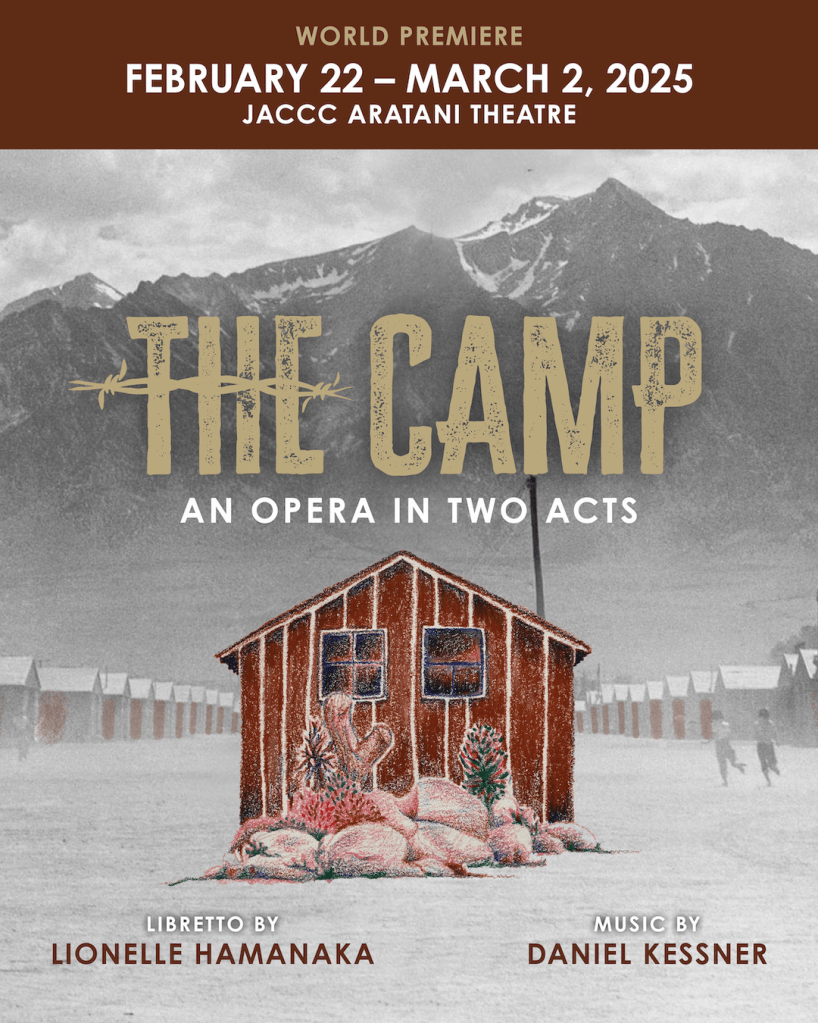
Graphic design and illustration by Azuda Oda. Original photo of Manzanar, California by Dorothea Lange, 1942 / Photo courtesy of “The Camp”

In 1942 President Franklin D. Roosevelt issued an Executive Order that gave the U.S. army authority to compel 120,000 Japanese Americans believed to be security risks, to sell their homes and dispose of their  possessions, and send them to ten concentration camps across the country.   

This internment of Japanese American men, women, and children – one of the darkest moments in U.S. history – is the topic of an opera called “The Camp.” It will make its world premiere on February 22, 23 and March 1, 2, 2025 at JACCC (Japanese American Cultural & Community Center), which is within blocks of where 83 years ago families were loaded on buses and sent to the camps. 

“The Camp” tells the moving story of the Shimono family, Japanese Americans forcibly removed from their suburban home in Southern California. After Mas, a fisherman and the head of the household, is arrested by the FBI on suspicion of espionage, the family is reunited in a desolate incarceration camp. As the family struggles to survive the emotional and physical toll of their wrongful imprisonment, this poignant, new opera illuminates the remarkable strength of familial bonds and the power of collective resistance in the face of injustice.         

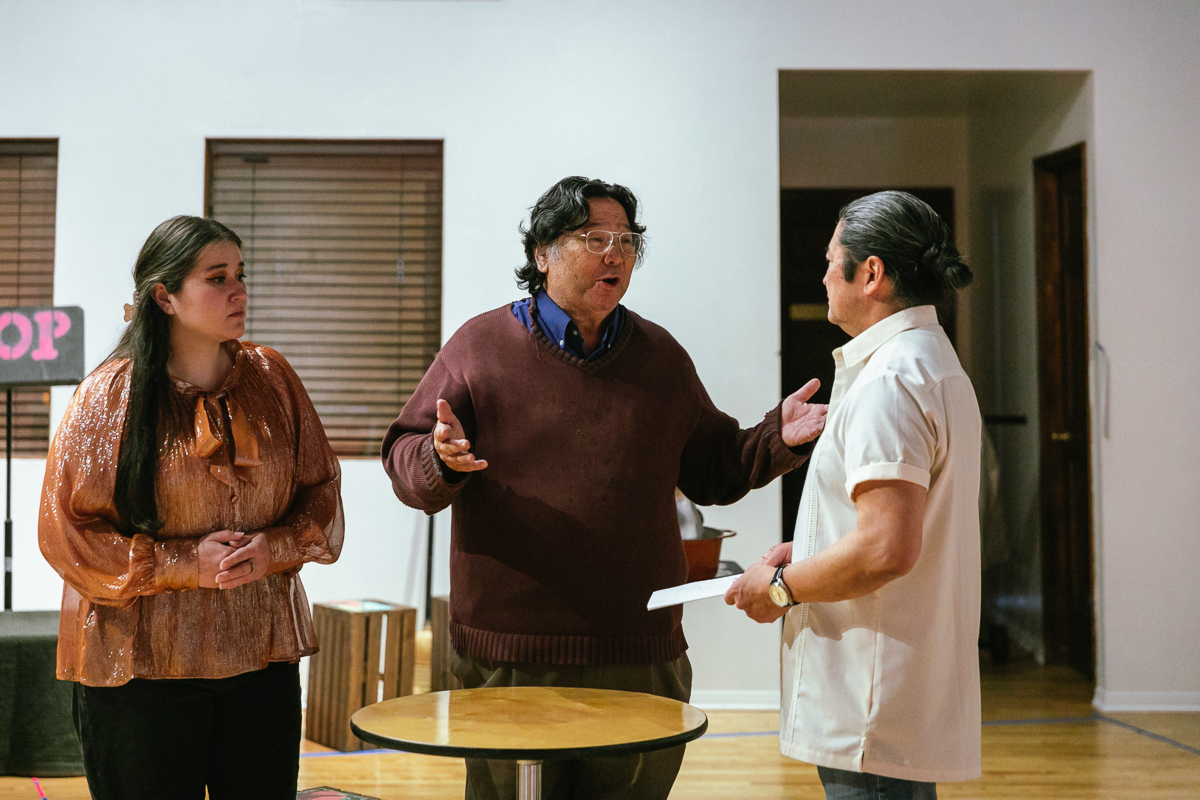
Pictured from left: Alexandra Bass, Steven Moritsugu, and Roberto Perlas Gómez | Photo by Mae Koo / The Camp

Presented in partnership with JACCC, “The Camp” is a collaboration between librettist Lionelle Hamanaka, composer Daniel Kessner, and director Diana Wyenn. It features an intergenerational cast of eleven singers and a 22-member orchestra led by conductor Steven F. Hofer. The associate director is John Miasaki, joined by artistic consultant Anne Marie Ketchum de la Vega, scenic designer Yuri Okahana-Benson, lighting designer Pablo Santiago, costume designer Kathleen Qui, and properties designer Brittany White to complete the creative staff.

The cast of eleven is headed by leading Los Angeles area vocalists – bass-baritone Roberto Perlas Gómez as Mas Shimono;  mezzo-soprano Shu Tran as Haruko Shimono; and soprano Tiffany Ho as Suzy Shimono. With Habin Kim as Rebecca Shimono, Patrick Tsoi-A-Sue as Nobu, Krishna Raman as the Commentator, FBI Agent, and PFC Parker, Sarah Wang as Mrs. Hosaka, Steve Moritsugu as Tana, Dennis Rupp as Edwards and Reverend, Hisato Masuyama as Kenji and Jamie Sanderson as Taylor.

Speaking with me by phone just two weeks after the Palisades and Eaton Fires, New York-based Lionelle Hamanaka precedes the interview by thoughtfully inquiring after my safety and well-being. She then likens the displacement the fires caused with what happened during World War II.

Sarah Z. Wang and Krishna Raman | Photo by Mae Koo / The Camp

“I was looking at the population of the U.S. in 1945 compared to today,” begins Hamanaka. “In 2020 the U.S. population was 329 million, in 1945 it was 139 million – 120,00 Japanese Americans were displaced in 1942 because they were incarcerated and today about 200,000 California – specifically L.A. area – residents were evacuated because of the fires. A slightly higher percentage was displaced in 1942 than from the fire. Sixty percent of the residents lost their property or had to sell it in a week. I think the Japanese American population has in its collective memory a comparable tragedy to the one in California. It’s a horrible thing that it happened at all.”

Hamanaka, a sansei whose parents were incarcerated at the Arkansas Jerome War Relocation Center, wasn’t born yet during World War II. Her mother was in her late teens and had two kids while her father was about 20 years old and had graduated from Fresno State College when they met at the camp.          

Like many people who endured the horrors of the Japanese American internment, her parents didn’t tell her or her siblings about their experience. Recalls Hamanaka, “I found out at 12 years old through my social studies teacher in class. Most Japanese Americans didn’t tell their kids because they didn’t want them to be burdened with a negative self-image.”

Roberto Perlas Gómez and Tiffany Ho | Photo by Mae Koo / The Camp

Learning about the camps changed Hamanaka’s entire life; she says she felt traumatized and never got over it.

I ask her how she moved forward from that revelation and she replies, “I had a very different background. I think when we were little, my dad used to read us passages from classical literature, including the works of Shakespeare, E.E. Cummings, and other writers. Even though we didn’t understand all the words, we actually memorized a lot of poems and passages when we were 3 and 4 years old. ”

“My father was an actor,” Hamanaka continues. “He was a very friendly guy and he used to have a salon in our apartment – as miserable as it was – on the Lower East Side. Because we lived where one-sixth of all Americans have passed through, it’s a very universal place. While it was segregated, my father’s circle wasn’t. He was friends with Isamu Yamaguchi and James Baldwin. Later he became friends with Mako, who was a very important actor. We had racially and sexually integrated salons at our house and I think that gave a healthy balance to the trauma that my parents had lived through.”  

Hamanaka went to the Japanese American National Museum to get the records about the camp where her parents, half-brother, and half-sister were imprisoned. “The Camp” integrates people’s experience from the various camps and the stories she had heard and read.  

Hisato Masuyama and Roberto Perlas Gómez | Photo by Mae Koo / The Camp

“My mother was imprisoned in Santa Anita Race Track, a local assembly point where she was in a horse stall for nine months, before she and others were transported to permanent camps. I referred to it in a dialogue in the opera,” discloses Hamanaka.

Prior to writing this opera, Hamanaka has had exposure to people’s work related to the concentration camps. She explains, “I’ve read important works of literature written about the camps, including a book called ‘No-No Boy’ by John Okada. The topic has been covered in a musical on Broadway; I’ve seen George Takei’s ‘Allegiance,’ which was very good. An opera will appeal to a different audience. I think all segments of the population should be exposed to our history but nobody knows that history unless it’s available.”

According to Hamanaka, “The Camp” is a passion project for her and the others involved in it. “I used to be a jazz singer and now I’m a playwright. I think when you’re an artist you feel it’s necessary to express yourself. In the United States there’s no support for artists, therefore, there has to be a pretty compelling reason.”

“I think culture is a decisive factor in determining consciousness. Because as human beings, we have words and we are able to tell stories. I’m a minority woman and I live in the 20th and 21st century. I’m Japanese American and we went through this experience – it’s a pivotal part of my life. Otherwise I wouldn’t have written these works that I have already done. We live in a segregated society and world; we’re divided nationally according to class and race. Within our country we’re segregated according to nationalities and generations, and so forth,” Hamanaka expounds.

Tiffany Ho and Patrick Tsoi-a-Sue | Photo by Mae Koo / The Camp

“Culture is a way of people seeking understanding and education, of ending segregation, of having compassion and all of the virtues that are described in all religious work and oral literature from the beginning of time,” continues Hamanaka. “Therefore, it’s a need; it’s part of our identity as a species.

“Because when there’s no understanding, when there’s segregation, when there’s class, national, racial, and sexual antagonism, we wind up killing each other. It’s like the teachers used to say – use your words. I used to use music, now I’m using words. I was very lucky to meet Daniel Kessner on Facebook and do this project with such an acclaimed composer.”

Hamanaka concludes, “I hope to some small extent I reflect the character of my people in that struggle and the struggle against racism in this country. Because we’re under attack right now and we need to have a big united front. If even one person or child who sees and hears the opera decides they’re going to do something and not be afraid, it is a victory.”

Examining the History and Friendship between the Philippines and the United States

Also published on 10 October 2024 on Hey SoCal

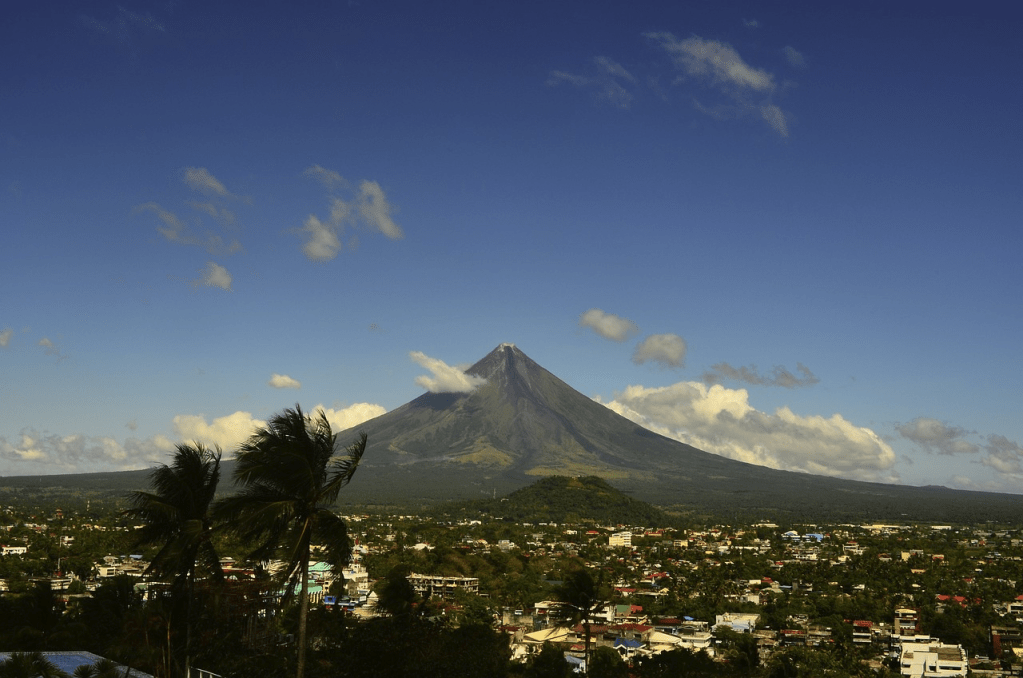
Mayon Volcano in Legaspoi City is considered the world’s most perfect volcanic cone | Photo courtesy of Pixabay

Long before the Immigration and Nationality Act of 1965 and the initial wave of Chinese migration to America in the mid-1800s, Filipinos became the first Asians to arrive in the continental United States on October 18, 1587 at what is now California’s Morro Bay.

Four centuries later – in 1992 – the Filipino American Historical Society introduced FAHM (Filipino American History Month) to commemorate that momentous occasion. In 2009, the U.S. Congress officially recognized October as FAHM in the United States.

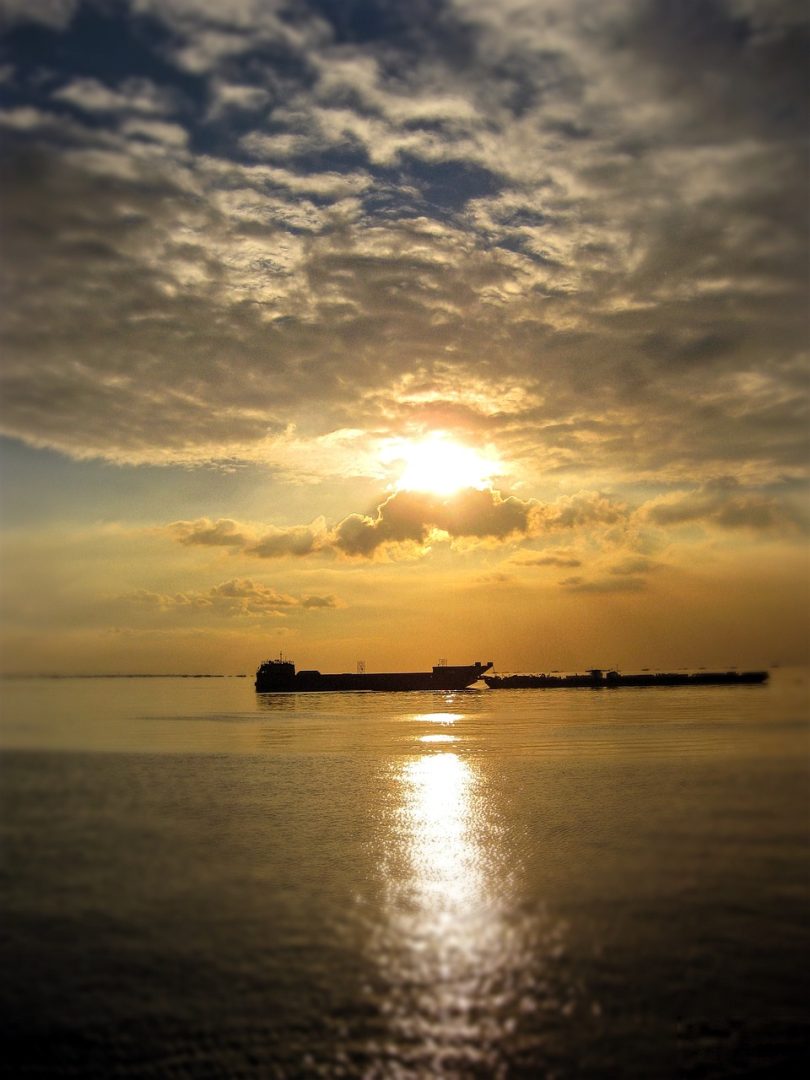
Sunset at Manila Bay | Photo courtesy of Pixabay

The history of the Philippines and the United States intertwined when Spanish colonialism went head-to-head against American imperialism. Commodore George Dewey defeated the Spanish fleet at the Battle of Manila Bay during the Spanish-American War which took place on May 1st, 1898 and ended over three centuries of Spanish colonization in the Philippines. One June 12, 1898 Filipino patriot Emilio Aguinaldo proclaimed an independent Philippine republic.

Author and historian Luis H. Francia in his book, ‘A History of the Philippines’ wrote, “U.S. intentions towards the Philippines were remarkably similar to Spain’s: to exploit the Philippines as a market and source of raw materials, and to utilize the islands as a stepping stone from which to gain access to the markets of China.”

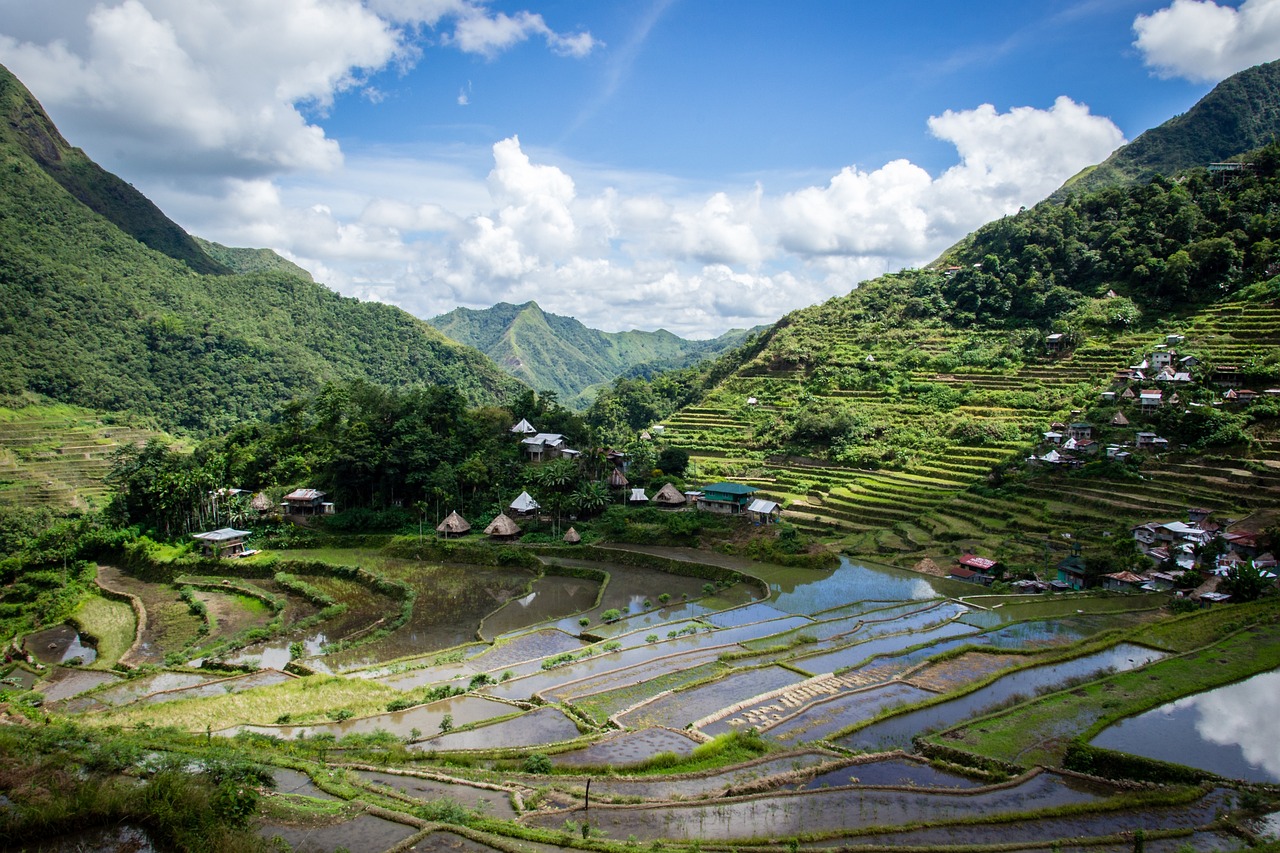
The Banaue Rice Terraces were carved into the mountains by the ancestors of the Igorot people; it is commonly referred to as the “Eighth Wonder of the World” | Photo courtesy of Pixabay

Philippine revolutionary army resisted American military forces which turned into the 1899 Philippine-American War. Francia wrote, “Ostensibly for the liberation of Spanish colonies, the war mutated into one of empire building. First against Spain, and then against the Philippines, the United States aggressively strode to be an imperialist power. The two facets of what in fact was a single war set the stage for subsequent U.S involvement in the Philippines that continues to this day.”             

William Howard Taft, then civil governor of the Philippines, defended American occupation in the islands during his speech before the Union Reading Room in Manila on December 17, 1903. “It was decided that if we turned the islands back to Spain we should be guilty of a breach of faith to the people who had worked and cooperated with us in driving Spain from power …. Being the sovereign in these islands, then the question came, ‘What was our duty to these people?’”

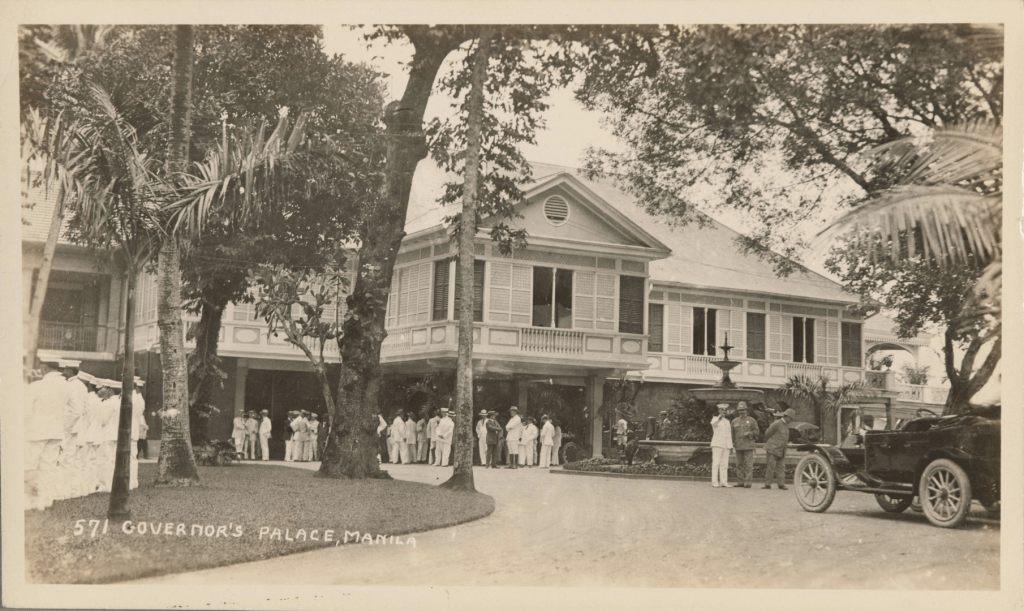
The governor’s palace. | Photo courtesy of The Huntington Library, San Marino, Califotnia

Taft refuted the charge that the United States came to the Philippines to acquire territory and power. At the same time, he said the Filipinos weren’t ready to form a government so the Americans were there to provide the helping and guiding hand from the people who also fought hard for their own freedom.

While his remarks were a disparagement of the Filipinos’ ability and intelligence, some Filipinos acknowledged a basis for this reasoning. In his address before the U.S. House of Representatives on January 5, 1927, Grant M Hudson of Michigan, presented a speech by Vicente Villamin, a Filipino lawyer and author, who called it “the Philippine problem.”

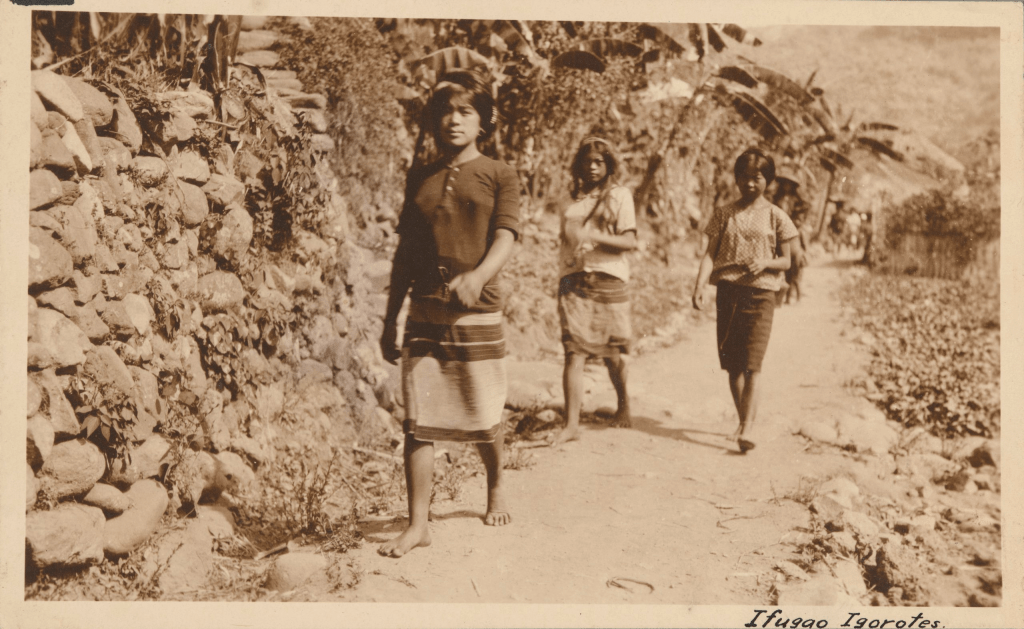
Ifugao Igorots. | Photo courtesy of The Huntington Library, San Marino, California

“The Philippine problem involves a three-cornered responsibility, to wit: The responsibility of Filipinos to themselves to keep their country a fit place to live in, the responsibility of America to the Filipinos to give them a chance to live as a nation in a reasonably safe and satisfactory manner, and the responsibility of America to herself to make morally sure that her withdrawal from the Philippines will not open the way to conflicts in the Pacific which may develop into world conflagration. These are the determining factors in the solution of the Philippine problem, and not the showing of the different administration in the Philippines or the mental capacity of the Filipinos to govern themselves.”

Villamin then said that Filipinos themselves were of two minds – patriots were willing to stand the costs and risks of immediate nationhood while realists alleged that the knowledge of those costs and risks had not been brought home to the people.

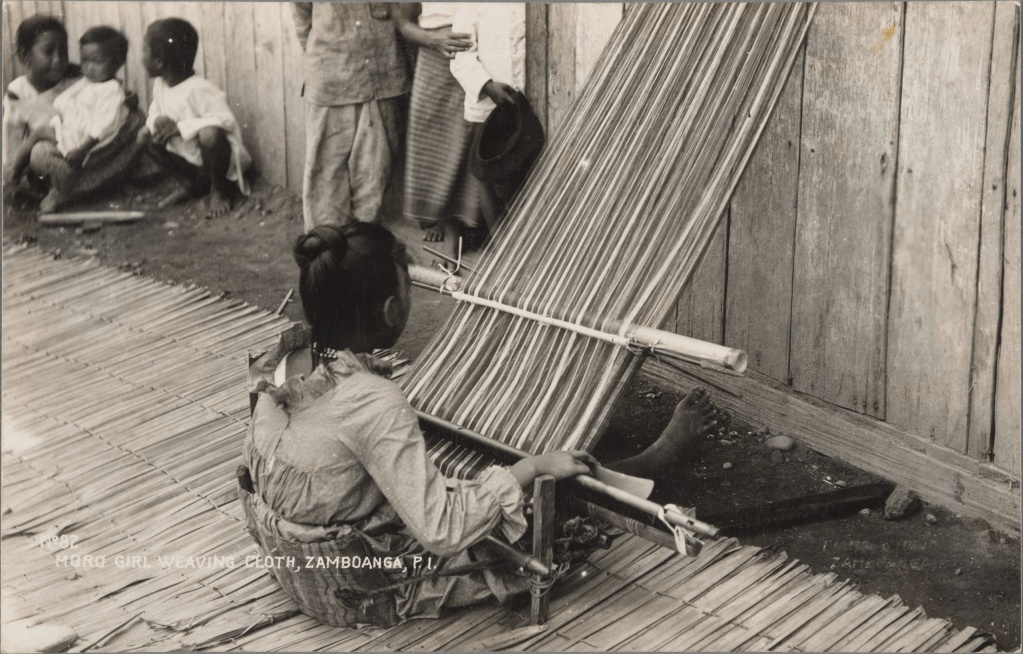
A weaver in Zamboanga, Mindanao Island. | Photo courtesy of The Huntington Library, San Marino, California

However, the impetus for the United States to grant Philippine independence was not borne by altruism or benevolence but the financial meltdown that brought about the Great Depression of 1929. Private companies thought it would lead to the termination of duty-free exports from the Philippines that were competing with American products. They also hoped it would result in stricter immigration laws so Filipino workers – who were perceived as unfairly competing on the labor market for jobs – could no longer freely enter the U.S.

During the International Studies Conference held in Paris on June 28 through July 3, 1937, Robert Gale Woolbert submitted a memorandum on The Reversal in American Expansionist Policy.

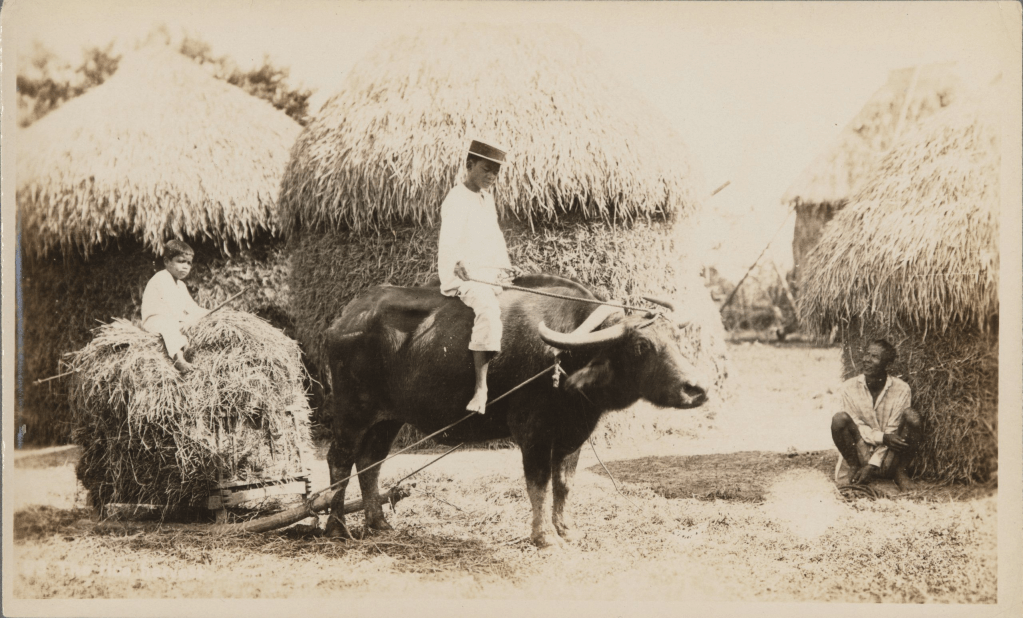
A farmer riding on a carabao. | Photo courtesy of The Huntington Library, San Marino, California

It posited: “The decisive reason, however, for granting the Filipinos their independence was the desire of politically powerful agricultural interests in the United States to rid themselves of the competition of Philippine products. In the Jones Act Congress had formally promised the Filipinos their independence ‘as soon as a stable government can be established.’ But in the debates of 1933-1934 preceding the passage of the act setting up the Philippine Commonwealth, the crucial issue was not whether the Philippine people were ready for self-government, but how Philippine sugar, coconut oil, hemp, and tobacco could be kept out of the American market.”                        

Before that independence took place, however, the invasion of Poland by Nazi Germany on September 1, 1939 and the subsequent declaration of war on Germany made by Britain and France precipitated World War II. Shortly after that, on September 22, 1940, Japan – which had been extending its empire in the Pacific – invaded French Indochina and on September 27 formed an alliance with Germany and Italy.

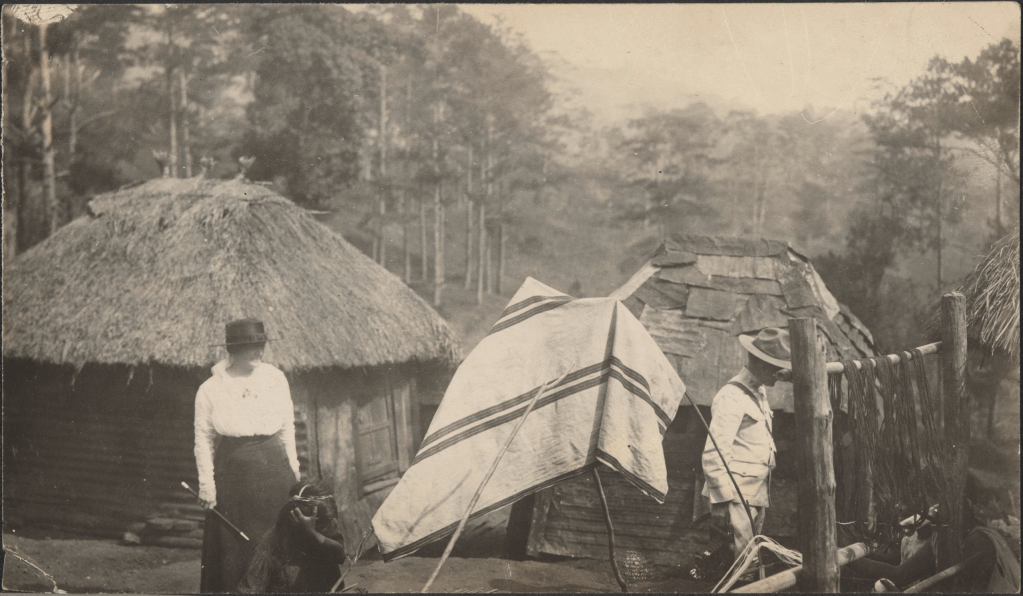
Two individuals with the locals. | Photo courtesy of The Huntington Library, San Marino, California

Japan had been on an expansionist course for decades, imitating western countries, and its interest in Chinese markets and Asian natural resources competed with those of the United States’. On December 7, 1941, Japan launched a surprise attack on the United States Pacific fleet at Pearl Harbor, Hawaii, and nine hours later invaded the Philippines. U.S. Gen. Douglas MacArthur, who had set up his headquarters there, was caught off-guard and the Japanese quickly eliminated his troops. Shortly after that, Germany and Italy declared war on the United States.         

The Japanese occupied the Philippines for almost four years and killed close to a million civilians. McArthur was forced to evacuate his headquarters in 1942 because he was deemed too valuable to the United States to be captured or killed by the Japanese. Before his departure, though, he vowed to return. And on October 20, 1944, he landed on Leyte Island to fulfill that promise. His famous speech “I have returned” remains one of the most iconic phrases of the war and his return became an unforgettable event for Filipinos.

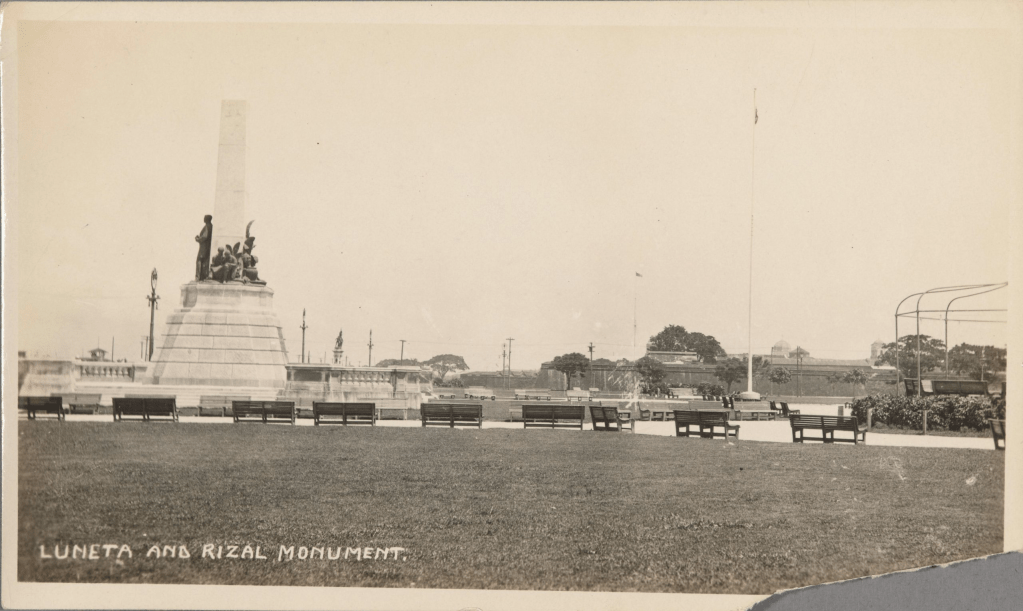
Pursuant to the Tydings-McDuffie Law, the United States granted the Philippines its independence on July 4, 1946. Thousands of people gathered at Luneta Park in Manila to witness the end of nearly half a century of U.S colonial rule in the Philippines. But because July 4 is widely known as U.S. Independence Day, it became confusing. In 1962, then president Diosdado Macapagal reinstated June 12 as the official independence day, commemorating the 1898 proclamation.

Luneta Park and the Rizal monument. | Photo courtesy of The Huntington Library, San Marino, California

While the Philippines and the United States had severed ties long ago and the majority of Filipinos alive today did not personally experience the American occupation of the Philippines, Filipinos feel a kinship with Americans. Opinion surveys have consistently shown that the United States ranks as the Filipinos’ favorite country in the world.      

As Jay Samonte, a Filipino businessman who was born and raised in the Philippines and is a Quezon City resident, remarks, “A lot of Filipinos are disenchanted with Philippine government policies and the system, and the lack of job opportunities resulting in poverty. They are always in search of greener pastures. The U.S. is one of the top choices and has the strongest influence on Filipinos. Many of them have families that went to the U.S. in the 1980s and 1990s to find jobs then came back to retire here. Another influence is Hollywood movies. But the U.S. is also one of the most difficult countries to immigrate to. Resettling in Australia, Canada, and the U.K. is easier and they have become popular options.”         

“Spanish rule was perceived by Filipinos as negative because of the Spaniards’ abuses, exploitation, and the execution of (national hero) José Rizal, while U.S. occupation freed us from the Spanish and the Japanese during WWII. There is a positive feeling of Americans being seen as heroes,” concludes Samonte.

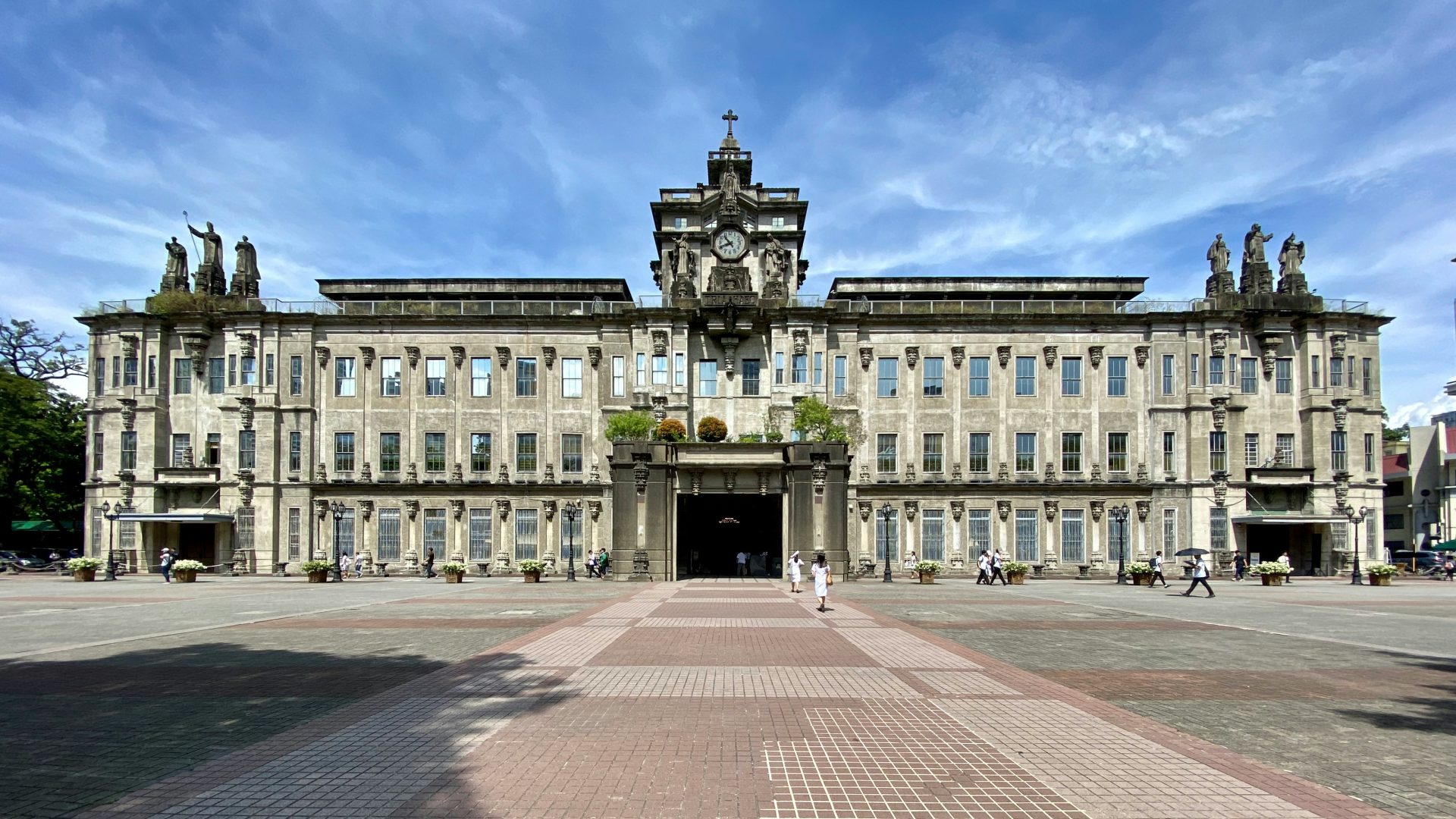
The University of Santo Tomas in Manila, founded on April 28, 1611 by Spanish friar Miguel de Benavides, is one of the world’s largest Catholic universities in terms of enrollment found on one campus | Photo by Kent Ogares for Unsplash

Spanish influence in the Philippines, however, still exists to this day and the most significant is Catholicism. A majority of Filipinos are Catholics and Catholic private schools and universities have remained popular educational choices.

But Filipinos owe the educational system being used today to the Americans. In her book, “A History of Education in the Philippines: 1565 – 1930,” Encarnación Alzona, Ph.D., associate professor of history at the University of the Philippines, wrote: “The memorizing method, which prevailed in secondary schools during the Spanish era, has been abandoned. It has been replaced by the latest pedagogical methods of instruction. Teachers are required to prepare lesson plans and to ask pupils thought-provoking questions. The project method has also found its way into the secondary school and has helped to vitalize the subjects of study.”

Moreover, English became the medium of instruction. Phonics and phonetics, grammar and usage were taught in the very early grades as they are to this day. And while Tagalog, the national language, is the dialect widely spoken by Filipinos, English has been the primary language used in professional settings and when conducting business.

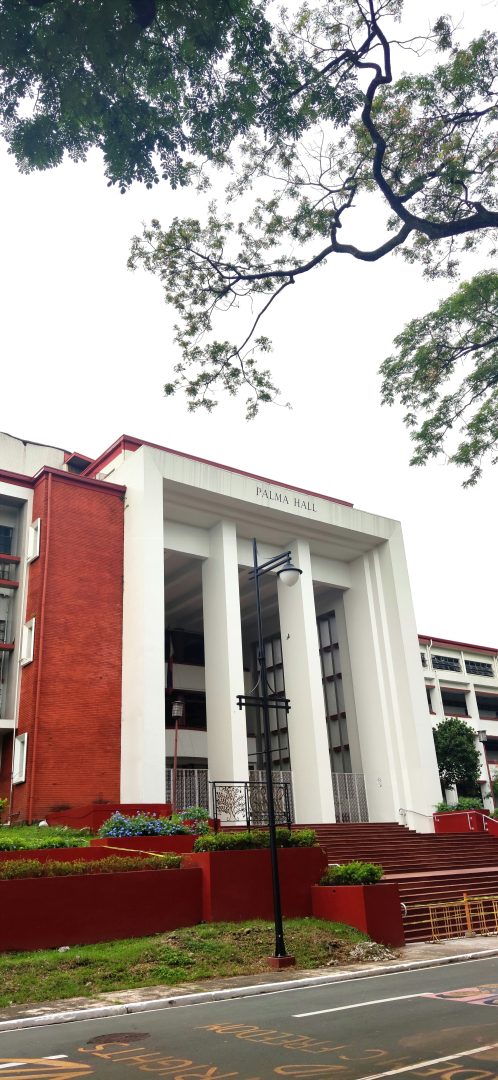
Palma Hall at the University of the Philippines | Photo by Kat Fernandez for Unsplash

In 1908, the Philippine Assembly passed an act that created the University of the Philippines (U.P.) – patterned after American state universities in organization and administration. It became the benchmark for institutions of higher learning. Several universities were subsequently established and led to the accessibility of college education to a majority of Filipinos. Out of all the positive outcomes of the U.S. regime in the Philippines, education had the greatest impact. It gave Filipinos the tool to better their circumstances.   

For a while U.S. History was a required course in high school and also during the second year in College. Today, however, only students at select schools study it.

According to Esmeralda Perez, who taught U.S. History from grades 9-12 at International School Manila (formerly American School) for 14 years until her retirement a few years ago, other schools that had similar curriculum were Brent School in Baguio City, Northern Luzon and another called Faith located outside Metro Manila.

Philippine jeepneys began as Willy Jeeps left behind when American G.I.s departed after World War II | Photo courtesy of Pixabay

“U.S. History covered the discovery era, technology, innovations, colonialism, domestic issues such as slavery, civil war, and involvement in the world wars, various attempts and efforts to solve economic problems brought by Depression, the excitement of Space Explorations, the challenges of the administrations such as economic, political, and social issues. The rest were covered as evolving current events,” Perez says.

Perez explains, “U.S. History provides the lens through which the students examined the success formula of a nation as well as its weaknesses in handling its problems. Filipinos gained a better understanding of how we adapted and assimilated American culture in its physical and spiritual realms.”

“Whether U.S. Colonialism has been destructive or beneficial very much depends on where we stand amidst the ongoing geopolitical situations,” states Perez. “Teaching U.S. History and colonialism in school requires a thorough understanding of the subject; they can only be effectively imparted through the eyes of an unbiased and well informed instructor. A dramatic walk through history makes learning experiential as well, for history can be a personal connectedness to a storied past.”       

Manila skyline | Photo courtesy of Pixabay

That many Filipinos want to hear stories about life in America from people who have been here and dream of coming to the United States themselves is proven by my lived experience.

When my two sisters and I were little kids in Quezon City (a metropolis of Manila) in the 1960s, my mom would take us to Cavite (approximately 28 miles south of Quezon City) to see her cousins, who we called Tita (aunt) and Tito (uncle), and were visiting from the U.S. My aunts were nurses living and working in Chicago and my uncles were with the U.S. Navy.

Their visits always turned into a reunion and large celebration for our clan – my mom had 10 siblings and there were 57 children among them. Neither my sisters, cousins, nor I knew these relatives that well, but going to Cavite was always a thrill for all the kids because it meant we’d be feasting on delicious foods and delicacies all day while the grown-ups chatted away and our aunts and uncles would gift each child a dollar bill before we left.

The U.S. Embassy in Manila | Photo courtesy of Pixabay

As I got older, I became more aware that immigrating to America was a goal for many Filipinos looking for more life opportunities. As it happened, my dad was working at the U.S. Embassy in Manila and we constantly had people showing up on our doorstep to inquire if there was an easier way to get their application for U.S. residency approved. That he worked at the U.S. Information Agency (USIS) as the media relations officer, and wasn’t privy to how the consular section operated, didn’t deter anyone from asking anyway.  

In the late 1970s my parents decided to emigrate from the Philippines as well. My dad had been working at the U.S. Embassy for 30 years and even if he was only 52 years old, he was granted retirement. He was also offered the chance for him and his dependents to go to the America as residents. I had turned 21 the year before and wasn’t a dependent so I had to apply separately; my mom chose to stay behind with me and my youngest sister until she finished college. My dad had to petition the three of us and it took five years to get approved.  

My dad and my younger sister, who was 20 years old and had just graduated from university, immigrated first. The two of them settled down in Orange County close to where our relatives from Cavite resided and they went about the business of paving the way for the rest of us to begin a new life here. In 1980, they were able to buy a small house for all of us to live in shortly before my mom, my youngest sister, and I arrived two years later.

Luneta Park and the Rizal monument today | Photo courtesy of Pixabay

I have been a California resident for 42 years and call Pasadena home. My husband and I have a daughter who has been married now for five years and live not too far from us. My younger sister resided in Orange County until she and her Swiss husband moved to Switzerland permanently in 1994 with their two children before they turned 4 and 2 years old. My youngest sister still lives in Orange County with her husband; their four adult children and families reside near them.

It has been 78 since the U.S. granted the Philippines its independence, yet the two countries still have enduring ties that bind them. The United States continues to provide financial assistance and disaster relief. The two counties have a robust trade and investment relationship. Filipinos still want to come to America for work, but strict immigration policies have made them look for overseas jobs elsewhere.

A Manila sunset | Photo courtesy of Pixabay

Francia wrote in 2019, “The Philippine diaspora totals approximately 11 million, spread throughout the globe, from North America to the Middle East to the Scandinavian countries, with occupations ranging from doctors, nurses, and computer engineers to domestic workers, and merchant marines.”

Despite strict immigration laws, however, an estimated 4 million Filipinos live in the United States – the second largest Asian American group after the Chinese – until very recently when Indian Americans surpassed that number.

While colonialism might have been the United States’ intended goal when it drove the Spaniards away in 1898, the Philippines benefited nevertheless. Many Filipinos and Filipino Americans may think I’m misguided, and I certainly do not expect them to agree with me, but I believe the United States has given us much to be grateful for.

References:

A History of the Philippines: From Indios Bravos to Filipinos, Luis H. Francia.

The Duty of Americans in the Philippines: Address by Hon. William Howard Taft, civil governor of the Philippine Islands, delivered before the Union Reading Room, Manila, P.I., Thursday, December 17, 1903, The Huntington Library, San Marino, California.

The Philippines: Extension of remarks of Hon. Grant M. Hudson of Michigan in the House of Representatives. Villamin, Vicente, 1927, 300261, The Huntington Library, San Marino, California.           

A history of education in the Philippines, 1565-1930,” Encarnación Alzona, 1895-2001. Manila: University of the Philippines press, 1932. LA 1291.A6, The Huntington Library, San Marino, California

International Studies Conference, Tenth Session Paris, June 28-July 3, 1937. Memorandum on the Reversal in American Expansionist Policy by Robert Gale Woolbert, The Huntington Library, San Marino, California.

What has been done on the Philippines: a record of practical accomplishments under civil government. United States. Bureau of Insular Affairs, 119597, The Huntington Library, San Marino, California.     

‘Storm Cloud: Picturing the Origins of our Climate Crisis’ Exhibition at The Huntington Captures our Attention

Also published on 23 September 2024 on Hey SoCal

Philippe Jacques de Loutherbourg, Iron Works of Coalbrook Dale in The Romantic and Picturesque Scenery of England and Wales | Photo courtesy of The Huntington Library, Art Museum, and Botanical Gardens

Almost daily over the past two decades, we’ve been hearing about climate change – when we experience a heat wave, when we witness a wildfire, when we see on the news an arctic blast on the East Coast, or when we learn about melting icebergs in the Antarctic Ocean.

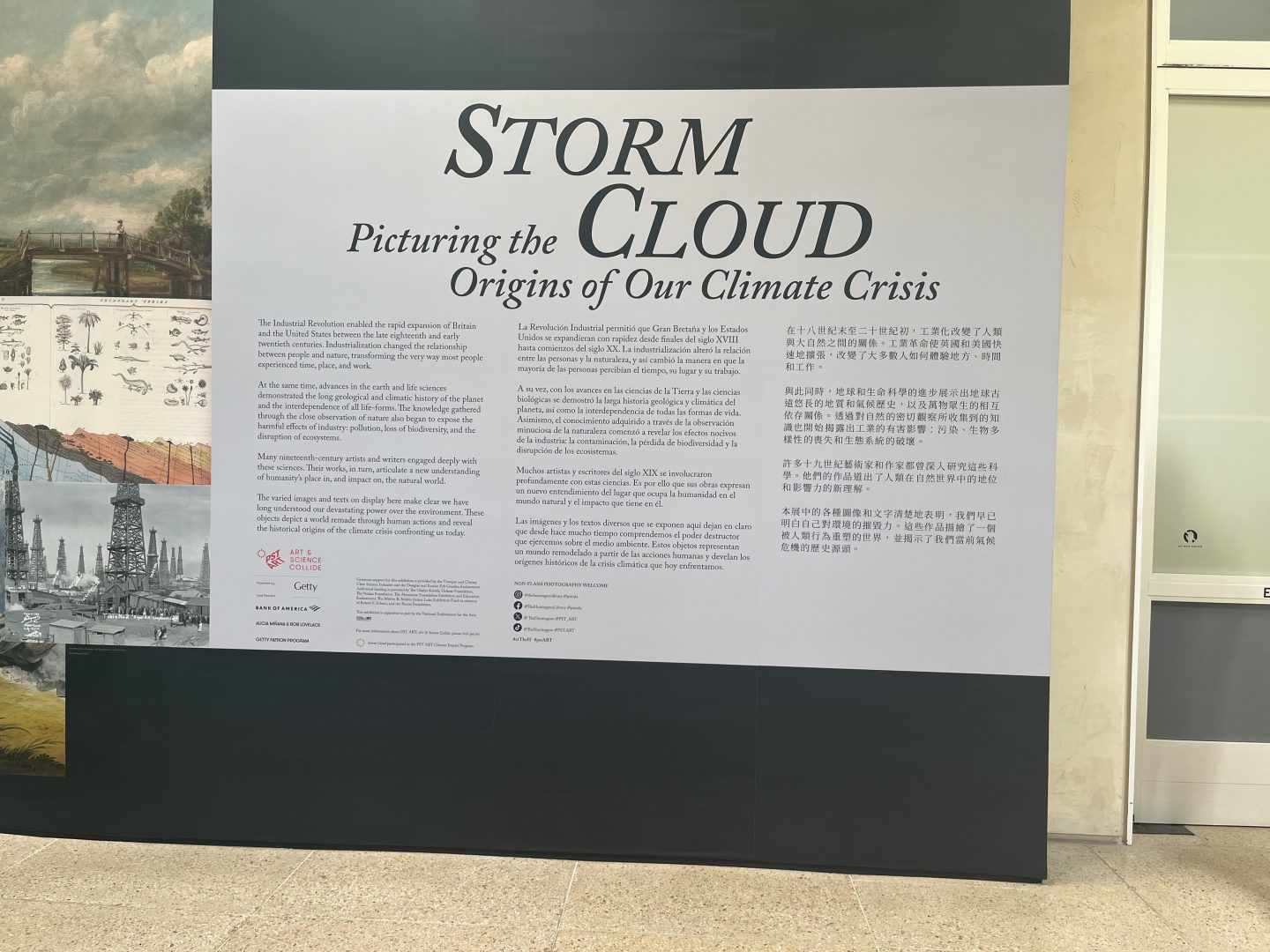
Yet this phenomenon didn’t just happen in the last 20 years, or even during our lifetime, as the “Storm Cloud: Picturing the Origins of our Climate Crisis” exhibition at The Huntington Library, Art Museum, and Botanical Gardens demonstrates. On view from September 15, 2024 through January 6, 2025 at the Marylou and George Boone Gallery, it will be on display concurrently with “Growing and Knowing in the Gardens of China.”

Photo by May S. Ruiz / Hey SoCal

The two shows are part of PST ART: Art & Science Collide, a regional event presented by Getty featuring more than 70 exhibitions and programs that explore the intersections of art and science, past and present.

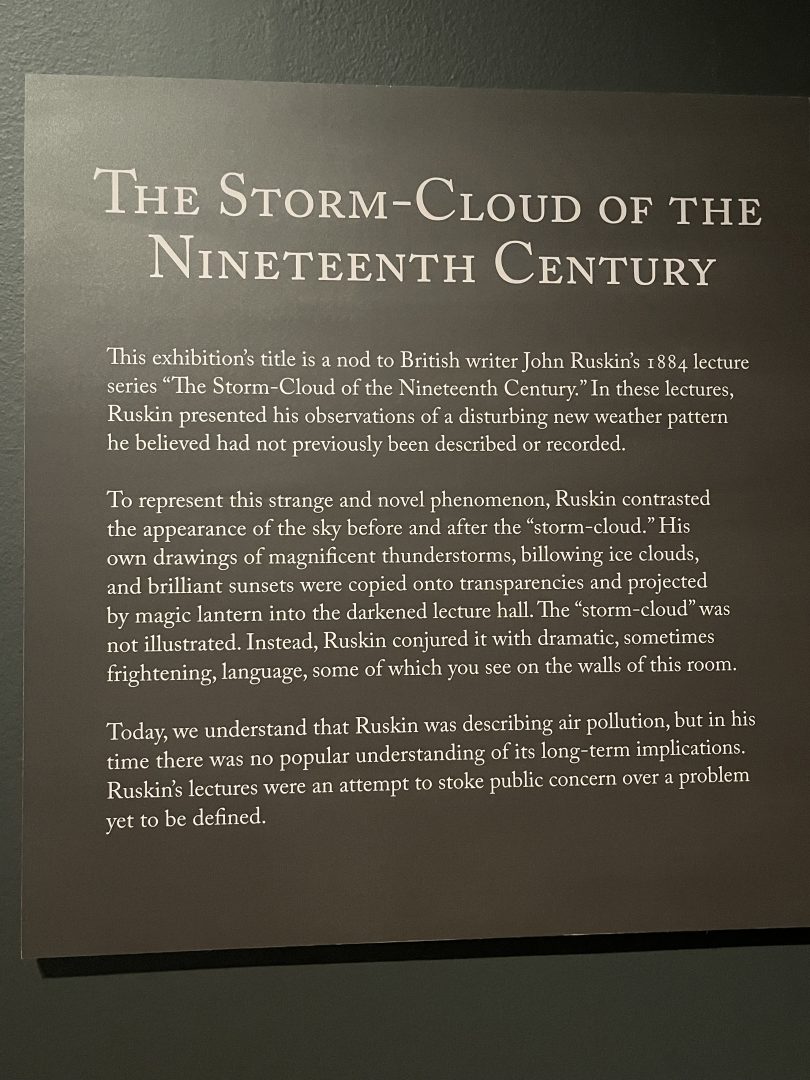
Its title originates from a series of lectures given by British writer and art critic John Ruskin in 1884. In “The Storm Cloud of the Nineteenth Century,” he conveyed concern over the changing appearance of the English sky caused by the smoke generated by coal-fired factories.    

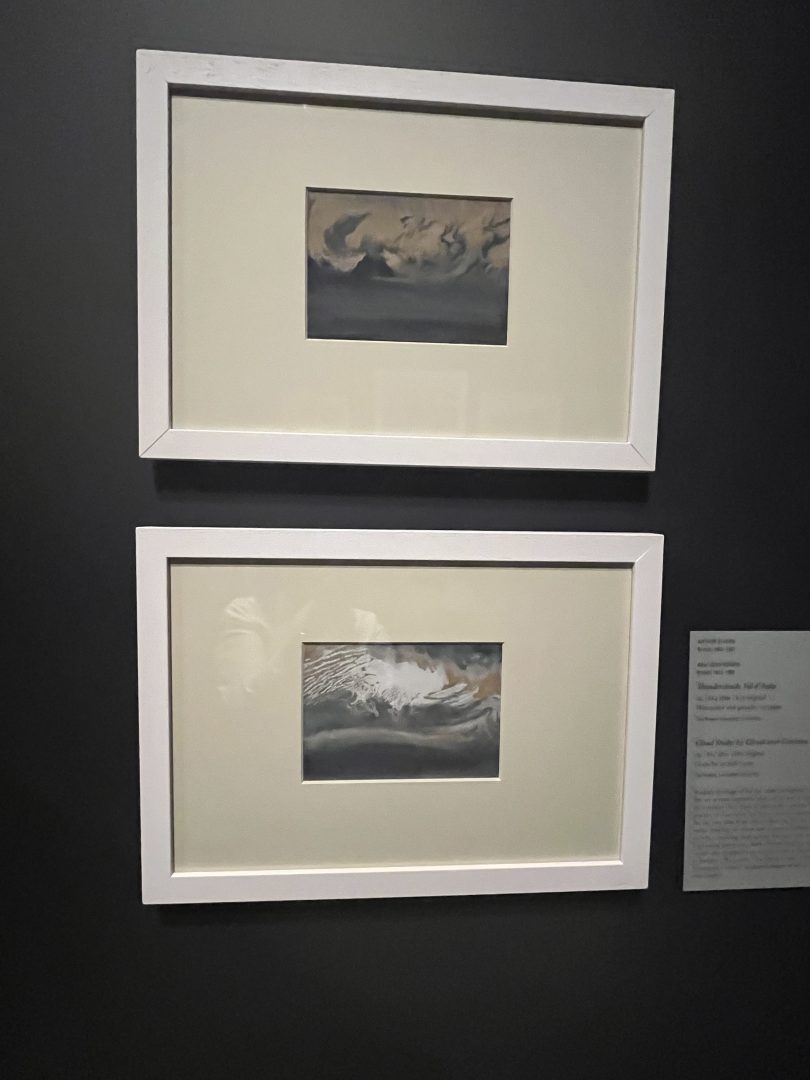
A pair of drawings that illustrates his “Storm Cloud” lecture – Thunderclouds, Val d’Aosta (1858) and Cloud Study: Ice Clouds over Coniston (1880) – is on loan to the exhibition from the Ruskin Museum and Research Centre at Lancaster University (U.K.). Ruskin made drawings of the sky throughout his life. These records of his observations helped him understand how the appearance of the sky had changed due to industrial pollution.

Arthur Severn after John Ruskin Thunderclouds, Val d’ Aosta; Cloud Study: Ice Clouds over Coniston | Photo by May S. Ruiz / Hey SoCal

To give visitors to the show greater insight, a companion book has been published and contains two major essays and 16 contributions by academics, art curators, authors, educators, environmental activists, graphic designers, poets, and scientists.

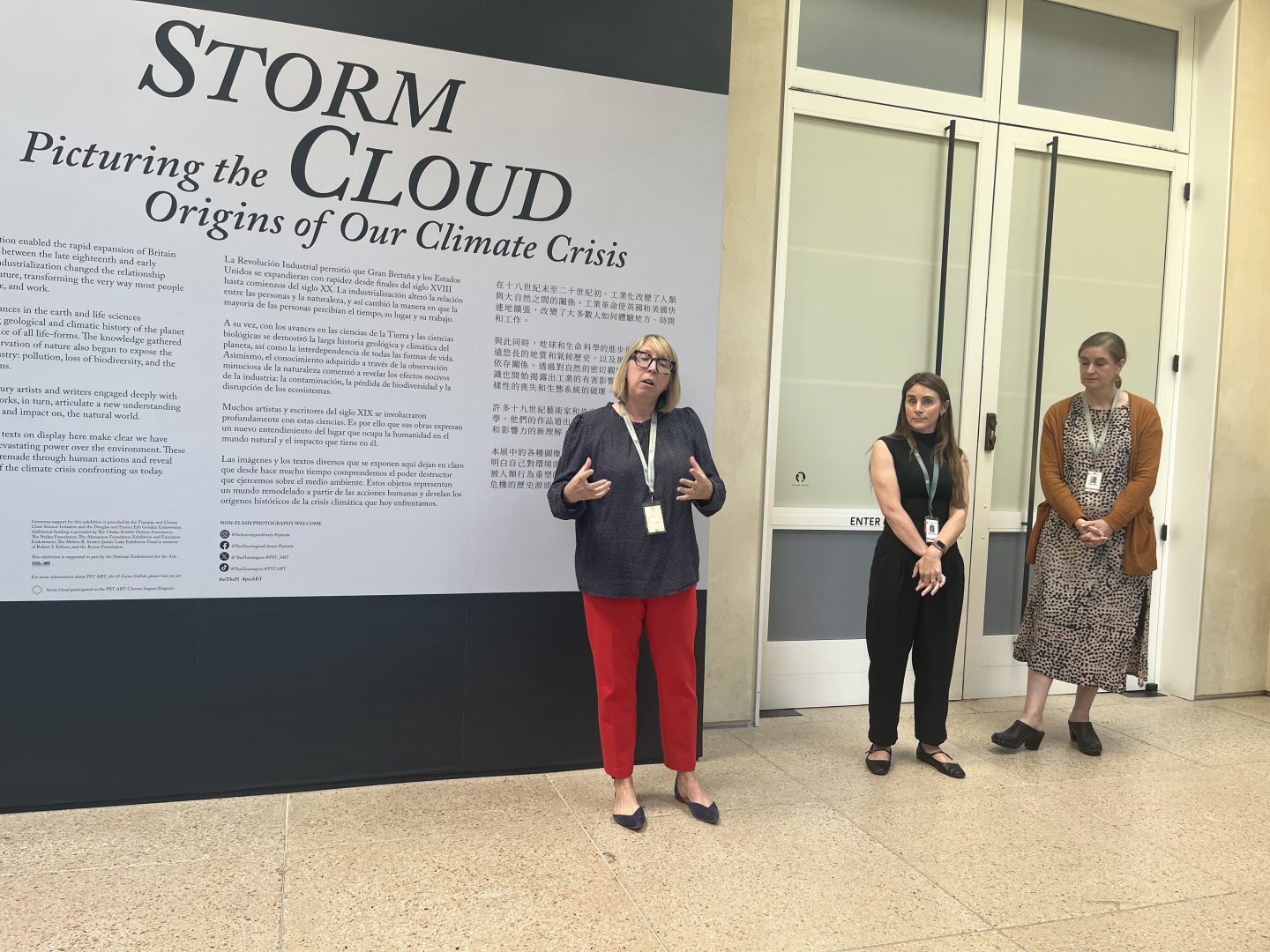
Co-curators Melinda McCurdy, The Huntington’s curator of British art, Karla Nielsen, senior curator of literary collections, and Kristen Anthony, assistant curator for special projects, talked about the exhibition by phone three days before the show.

Nielsen said, “When we were given the theme ‘Art and Science Collide,’ we knew we were going to initially use materials across the Huntington collections supplemented by key loans. We have materials by John Ruskin both in the museum and in the library and we started thinking about his process of close observation of the natural world.

Photo by May S. Ruiz / Hey SoCal

“He gave a lecture in 1884 called ‘Storm Cloud of the Nineteenth Century’ in which he talks about decades of looking at the sky, thinking about the clouds, and drawing them. He referred to this new type of cloud ‘storm cloud,’ which today we would call smog – the cloud formation that happens around particulate matter from burning coal.”  

“It’s considered one of the first public outcries about human-caused climate change and it happened in 1884,” pronounced Nielsen. “We thought it was interesting that it was much earlier than when most people cite the beginning of our conversation about how long have humans known in the developing world that we were having a harmful impact on the natural world.”

Anthony explained, “So when we talk about the origins of the climate crisis, it’s important that we look at the period immediately after the Industrial Revolution because that’s when in earnest the extraction and burning of fossil fuels for industry really took off. And literally the carbon in the atmosphere began to steadily rise throughout the period that this show covers.”

“Ruskin was our starting point, but we actually traced the phenomenon through the Huntington’s collection which is strong in the histories of the United Kingdom and the United States, so it really does follow the material from Britain and the United States – it is a story of the Anglophone world. Obviously there are other stories to tell that cover the rest of the world, but this exhibition focuses on England and the U.S.,” clarified McCurdy.

Photo by May S. Ruiz / Hey SoCal

“The thing that connects London and L.A. is smog so the show moves from the British Empire and a coal-powered economy to the beginnings of our current petroleum-based economy,” Nielsen pointed out. “Of course that makes L.A. a global hub because it’s one of the leading sites of extraction for petroleum as early as the late 19th century.”

Asked about the visitor takeaway, Anthony replied, “As far as the history of climate crisis, I think visitors will walk away knowing that we’ve understood humanity’s impact on the planet longer than the average person thought. And these changes – this impact on the planet – can be charted in the cultural productions of the period. You can see the earth changing and how industry is impacting the planet through the works of art and literature and the historical and scientific texts produced in the period.”

(From left) Melinda McCurdy, Kristen Anthony, and Karla Nielsen | Photo by May S. Ruiz / Hey SoCal

In her introduction shortly before a walkthrough of the exhibition, McCurdy said the project started when the Getty announced the theme for this iteration of PST, which is ‘Art and Science Collide.’ It was originally displayed in a smaller space but as their work progressed during the pandemic, the show moved to the Boone Gallery.

The exhibition is divided into three parts and multiple sections. The first “A New Relationship to Nature” is centered on humans’ connection with the natural world shown through beautiful works of art.   

McCurdy took visitors to the first room and stated, “We commenced this exhibition in the late 1700s with the rise of the Industrial Revolution when factories started drawing people away from the countryside to the city and people were disconnecting from nature because they were working indoors. They learned to appreciate nature in a different way. It started the rise of tourism – when people were going into nature for recreation and pleasure. People sought picturesque vistas, they climbed mountains, and walked through valleys looking for that connection to nature.”

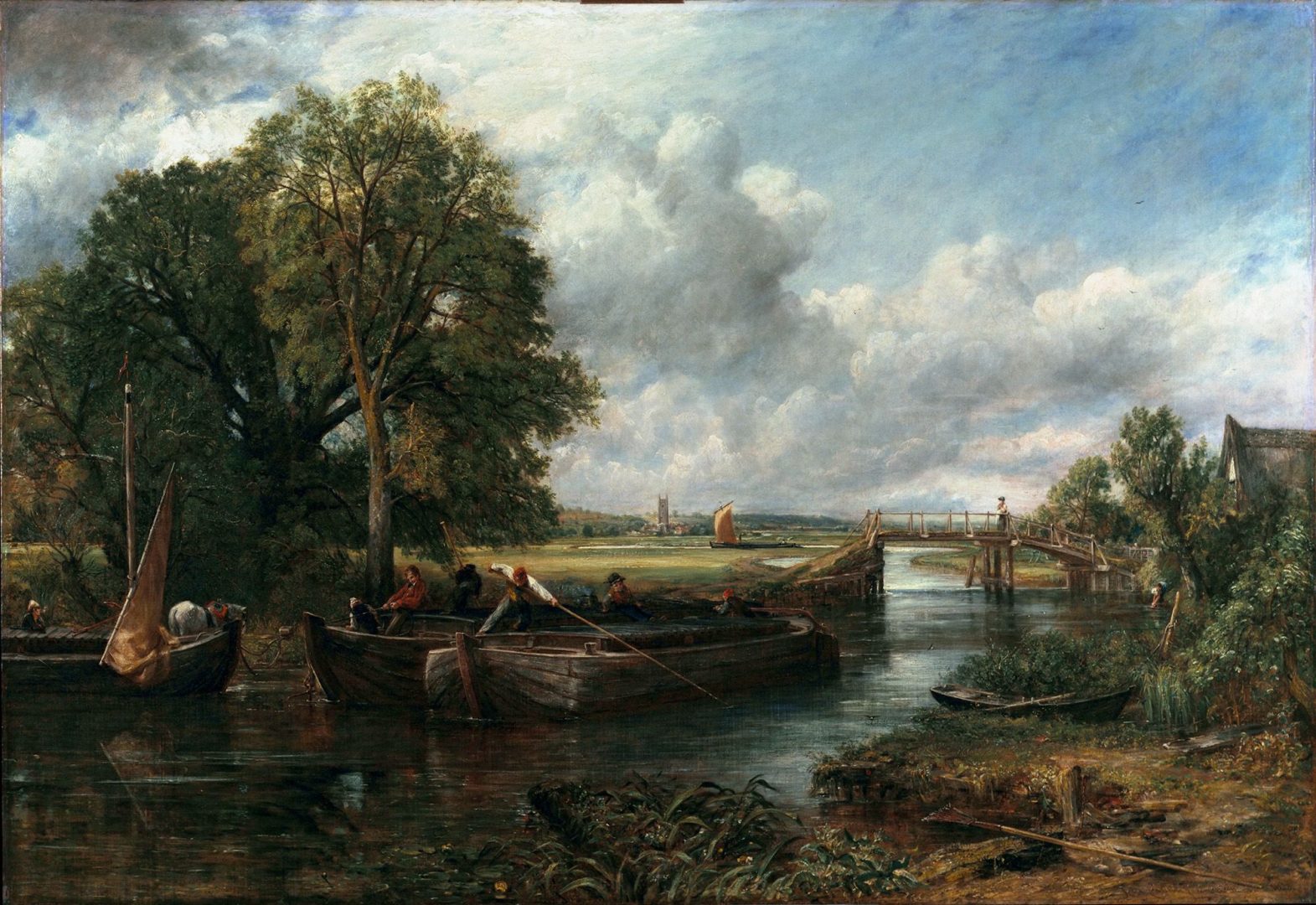
John Constable, ‘View on the Stour near Dedham, ‘ 1822 | Photo courtesy of The Huntington Library, Art Museum, and Botanical Gardens

“John Constable’s painting ‘View on the Stour Near Dedham’ is in fact not a natural landscape but a scene of  industrial infrastructure in Eastern England,” described McCurdy. “The river was converted into a canal in order to transport grain from the interior of the country where it was grown and processed in the mill to then be distributed to urban markets. It’s a story of commodity; we’re going to hear a lot about commodity and shipping in the 19th century. In the painting he showed how the weather and atmospheric conditions could be used to convey emotion – this is a very emotional connection to the landscape.”     

The exhibition’s other sections link the arts and science more explicitly. A selection of Constable’s “cloud studies” is juxtaposed with drawings of clouds by pioneering British meteorologist Luke Howard, demonstrating the shared interest in close observations of natural phenomena.

Photo by May S. Ruiz / Hey SoCal

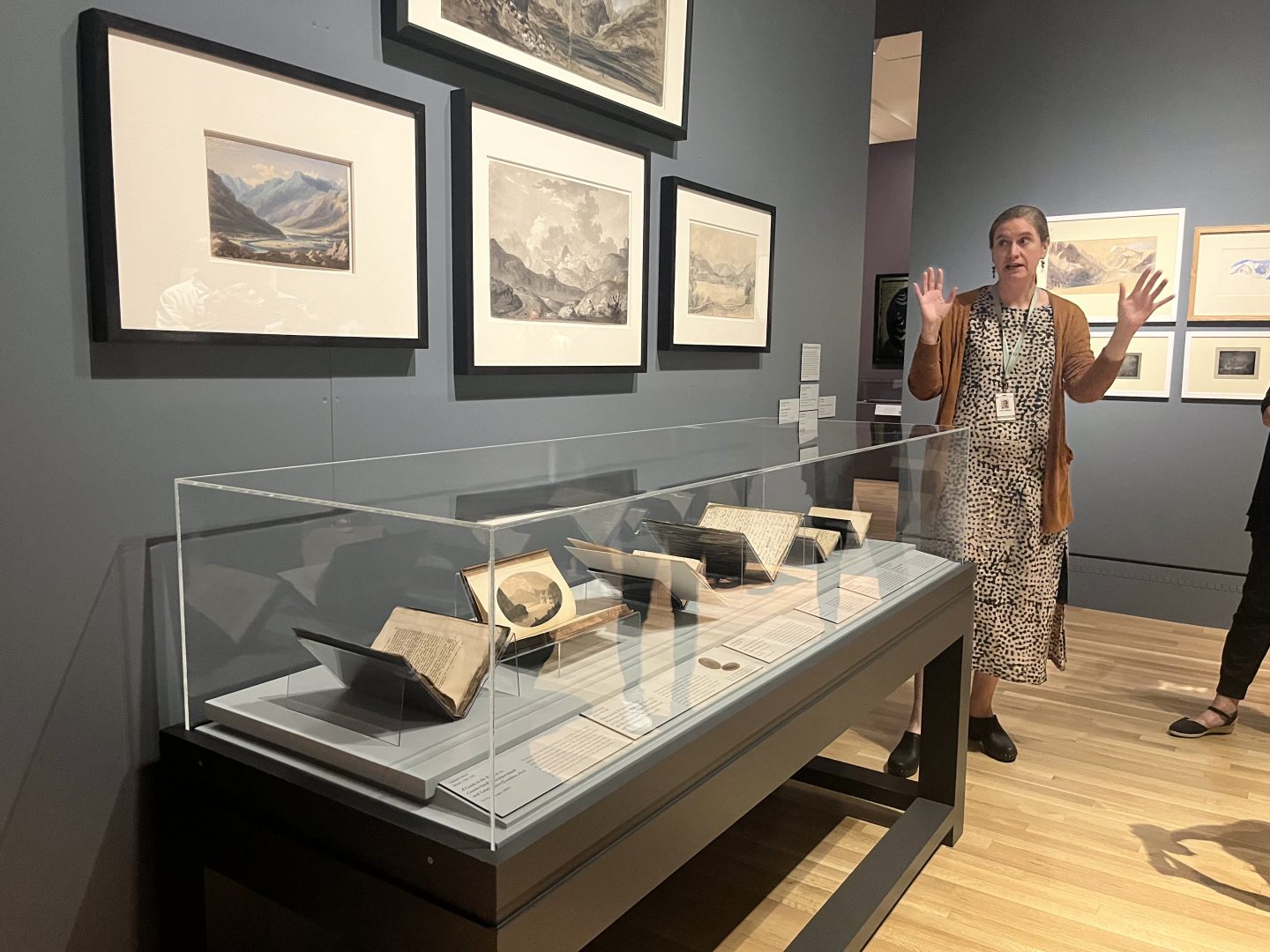
Manuscripts by William and Dorothy Wordsworth are placed alongside multiple guidebooks to England’s Lake District, which were geared to the English public’s growing interest in hiking as a form of recreation and respite from city life.

Nielsen expounded, “While William was known as a poet, he actually wrote a guide about the Lake District. We were able to borrow from the Wordsworth Trust in the Lake District two manuscripts by his sister Dorothy Wordsworth. She was a companion to William throughout his life, accompanying him on his inspirational walks through the countryside. She was also an astute describer of the natural world so we borrowed one of her journals which contained a description ‘encountering daffodils on a hill’ that’s very reminiscent of his ‘Daffodils’ poem: ‘I wandered lonely as a cloud That floats on high o’er vales and hills, When all at once I saw a crowd, A host of golden daffodils.’ The poem conveys the enjoyment of being in nature.”

Photo by May S. Ruiz / Hey SoCal

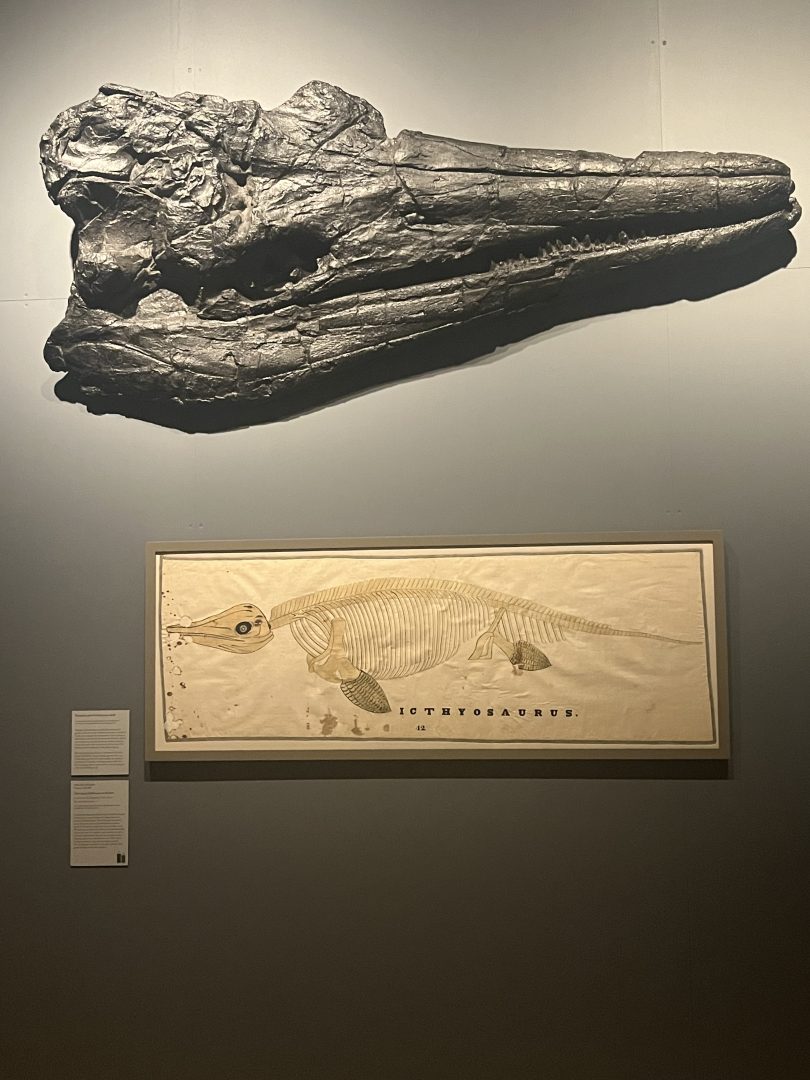
The history of science is explored in the next room. Anthony pointed to a research cast of ichthyosaur skull borrowed from the Dinosaur Institute, Natural History Museum of L.A. County and Bureau of Land Management. The animal which this skull belonged to was from 244 million years ago; the drawing of the ichthyosaur skeleton is by Orra White Hitchcock, wife of Edward Hitchcock.

“One of the materials in this room is a book published by James Hutton, a Scottish farmer and naturalist, also known as the founder of modern geology,” declared Anthony. “In 1788, he wrote the theory of earth which was the first work to postulate that the earth was much older than the popular understanding of earth’s age which was derived from a literal interpretation of biblical text. After looking at the layers of rock on his land and how they formed, he hypothesized the planet was millions of years old and so much older than what we had ever thought. We now know it’s 4.6 billion years old.”

A broad range of objects traces growing environmental awareness over the course of the 19th century. Significant paintings by artists of the Romantic and Pre-Raphaelite movements and the Hudson River School are shown in conjunction with rare manuscript materials, such as Henry David Thoreau’s handwritten draft of Walden. Photographs of western American mountain ranges are displayed alongside materials from the archives of early 20th century conservationists John Muir and Mary Hunter Austin.

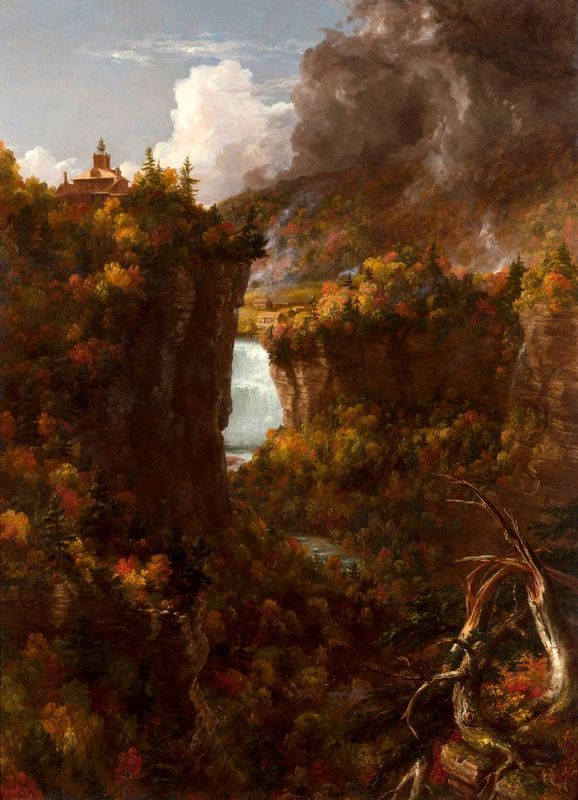
Thomas Cole, ‘Portage Falls on the Genesee,’ 1839 | Photo courtesy of The Huntington Library, Art Museum, and Botanical Gardens

“Storm Cloud” also features artists known for their paintings of the Hudson River Valley scene in Upstate New York. Thomas Cole’s colossal “Portage Falls on the Genesee” – a gift to The Huntington in 2021 from The Ahmanson Foundation – pays tribute to the natural world as much as it cautions us about people’s effect on it.

The second section of the exhibition focuses on the problems that come with industrialization. Using a painting that depicts Jamaica, McCurdy discussed the plantation economy and the ecological damage that results from it – the extraction of resources and devastation that goes along with degradation of humanity.

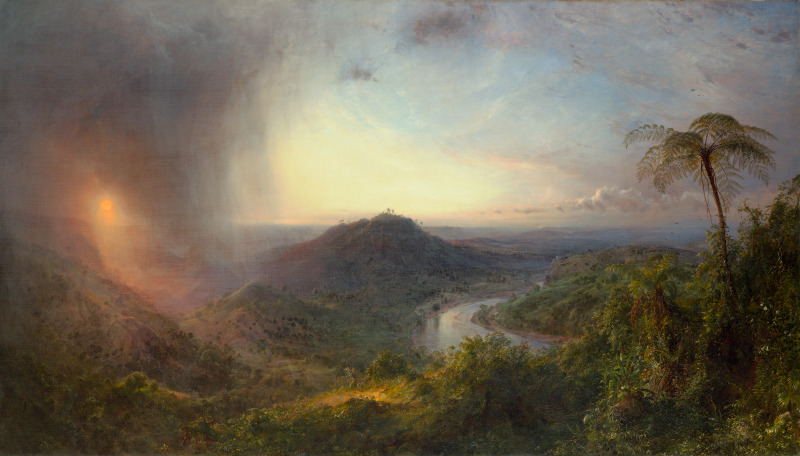
Frederic Edwin Church, ‘Vale of St. Thomas, Jamaica,’ 1867 | Photo courtesy of The Huntington Library, Art Museum, and Botanical Gardens

Frederic Edwin Church’s “Vale of St. Thomas, Jamaica” shows the relationship between people and the industrializing world. On the right side of this painting, he portrays Jamaica as an untouched paradise with a very lush jumble of nature; but the left side, almost hidden by a storm cloud, illustrates evidence of severe drought exacerbated by deforestation due to plantation agriculture.

The other section of the room shows factory labor and some textiles and wallpapers produced by William Morris. McCurdy pointed out that Morris veered away from factory work and instead advocated for the artisanal way of manufacturing. One of the treasures in The Huntington’s collection is a book containing recipes for the dyes made from plants and vegetables used in his textile factories to ameliorate some of the problems causing harm to the environment.

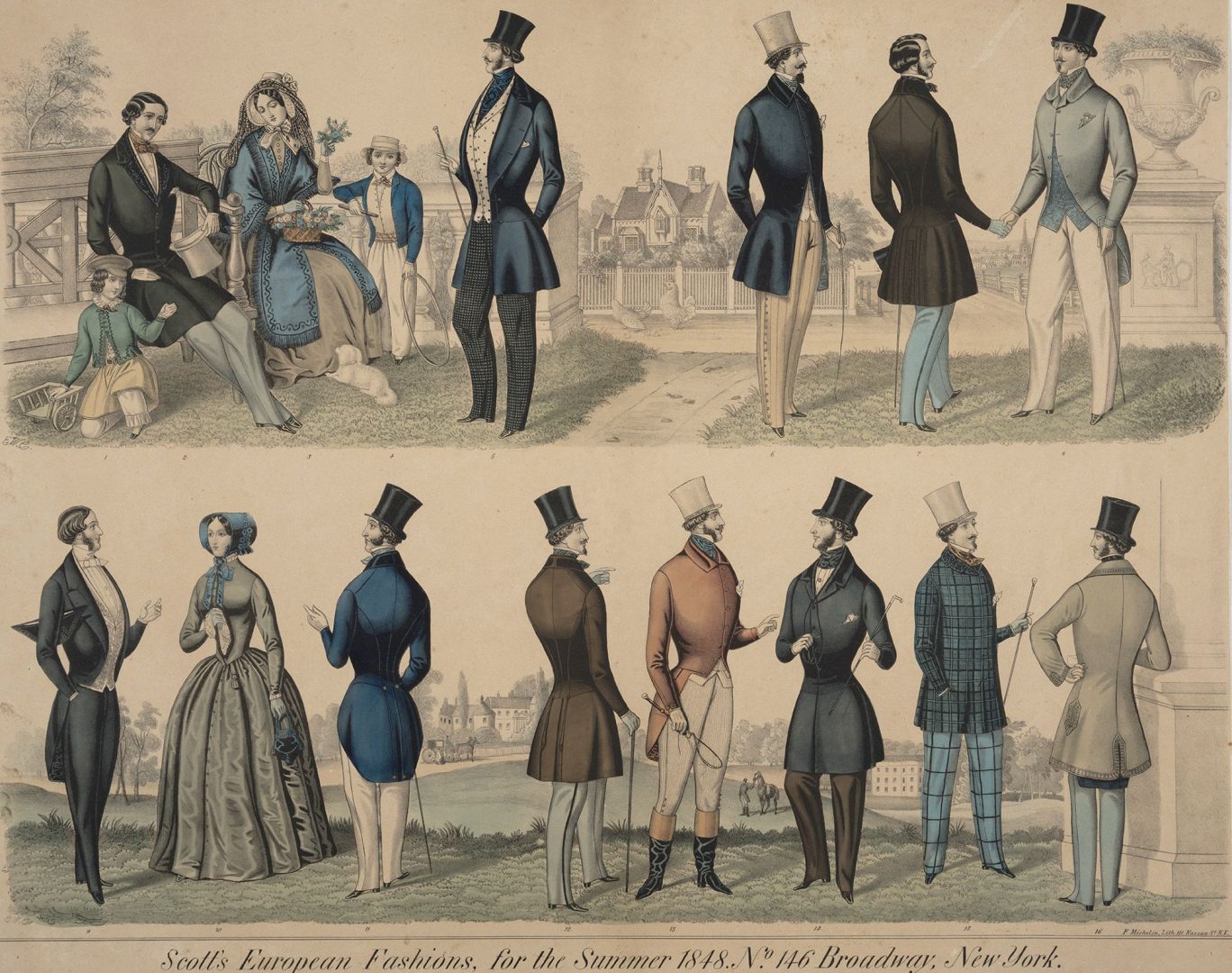
Francis Michelin, ‘Scott’s European Fashions, for the Summer 1848 | Photo courtesy of The Huntington Library, Art Museum, and Botanical Gardens

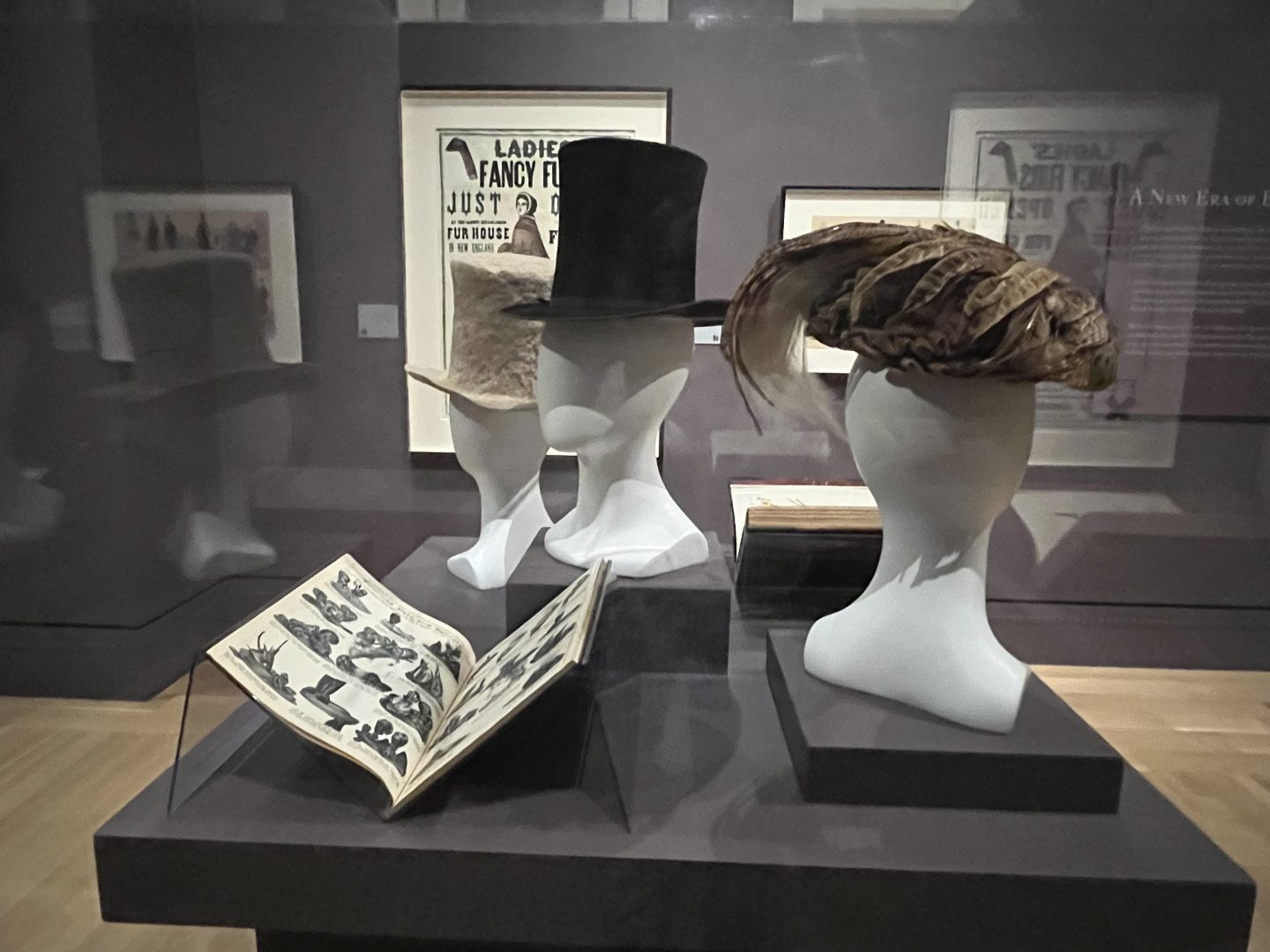
Impacts of fashion on the environment are displayed in the next room. The rate of extinction accelerated in the 19th century due to habitat destruction, overhunting, industrial pollution, among other factors. As this case shows, fashion was a major contributor as well. The hats which most gentlemen wore were made from beaver fur. Early in the 19th century their population was in such a deep decline that environmentalists were worried they were going to be extinct. The introduction of silk plush in 1840 saved beavers from that fate. Gentlemen decided they preferred the more shiny look of silk plush so it became a trend and the beaver population began to recover.

Photo by May S. Ruiz / Hey SoCal

Late in the 19th century, around 1888-1890, women’s hats using bird body parts became a trend. This extreme hunting brought many birds like egret and bird of paradise to near-extinction. A group of upper-class women decided to counter that by convincing their friends to move away from this fashion trend. That organization turned into the Audubon Society. It was one of the earliest wildlife preservation organizations specifically to protect animals from being hunted for fashion and it was able to lobby the government to enact laws that protect migratory birds.

The final section focuses on the extraction and burning of coal into oil and the exhibition displays paintings of factories blowing black smoke into the atmosphere – images meant to signal production and progress.

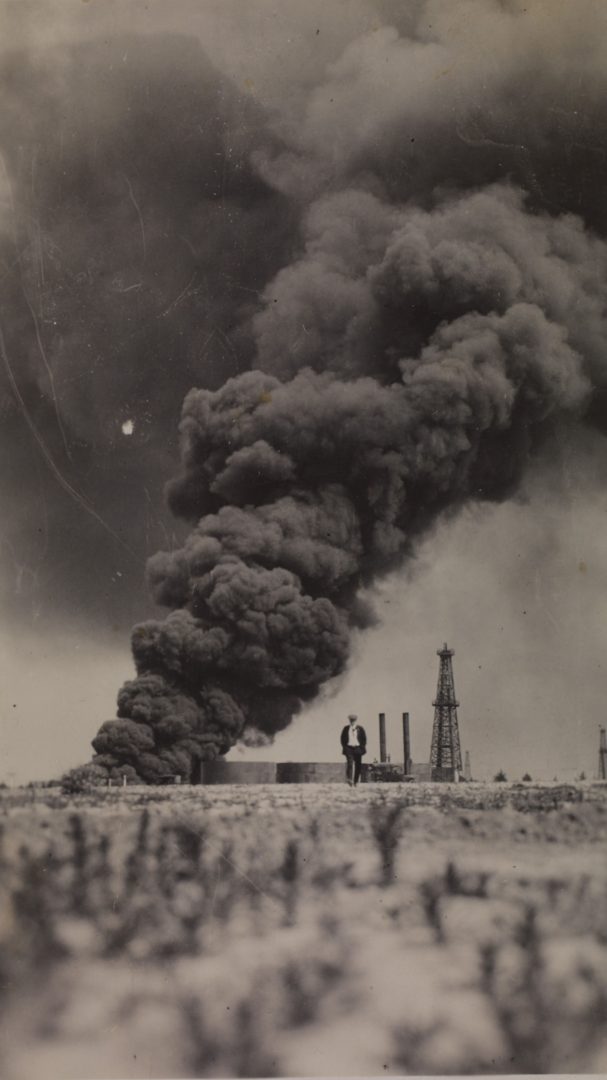
Unknown, Oil Well on Fire, photograph, circa 1920s | Photo courtesy of The Huntington Library, Art Museum, and Botanical Gardens

Materials from the Ruskin collection illustrate London as one of the most polluted cities in the world. McCurdy disclosed, “The air quality was so bad and the people called it ‘fog’ and ‘pea souper’ because of its sickly green yellow color which was essentially particulates from coal-burning fires in factories mixed with the water in the air, creating a dense atmosphere.”

“London and Los Angeles are connected by smog,” reiterated McCurdy. “Many of those who grew up here remember we had days when we weren’t allowed to go outside because of the bad air quality. It has gotten better with regulations; collective action and regulations help ameliorate these problems.”

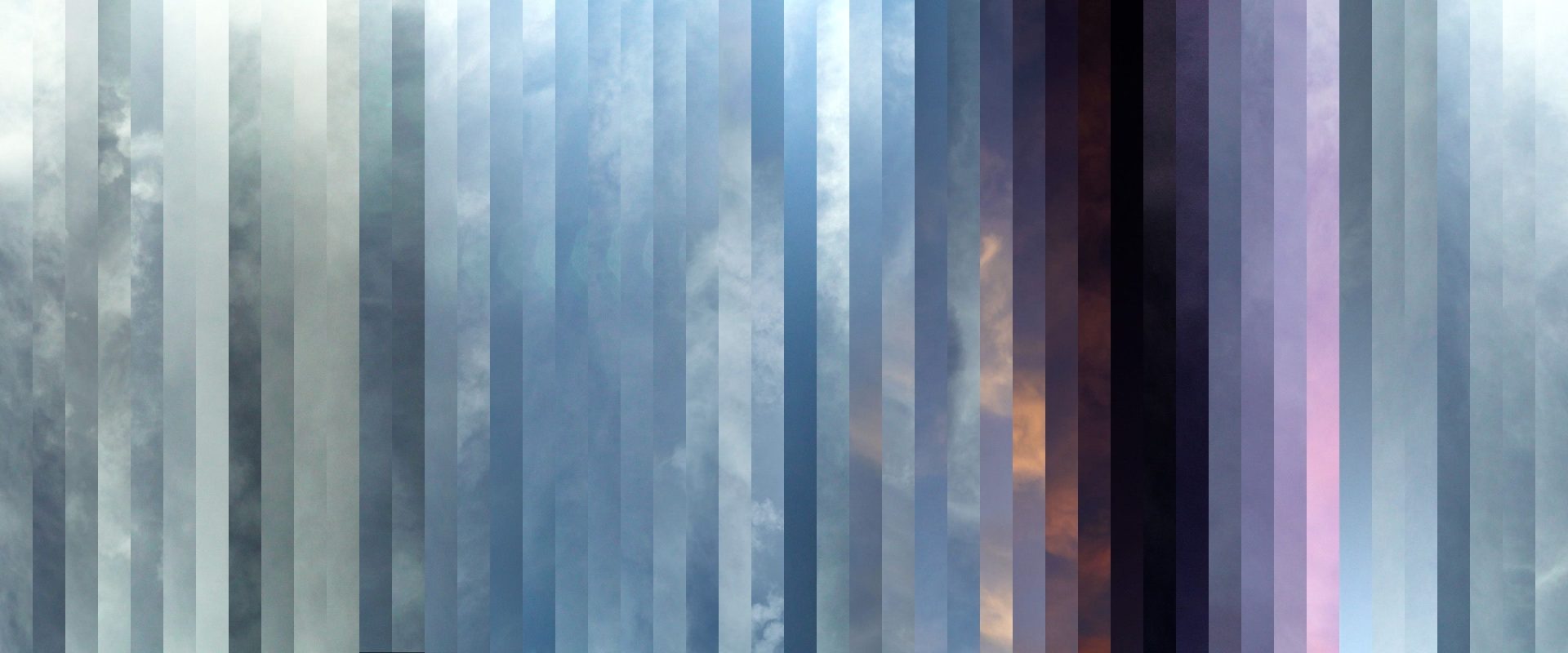
Rebecca Méndez, ‘Any Instant Whatever’ / Photo courtesy of The Huntington Library, Art Museum, and Botanical Gardens

The final work of art is a video installation by L.A. based artist Rebecca Méndez. She spliced together images of different times of the day to illustrate that our sky is a shared space and we all breathe what we throw into it. The curators used it as a 21st century cloud study.

As a parting note, Anthony shared with us The Huntington’s participation in the Climate Impact Program. They created a show that has as little adverse effect as possible and modeled sustainability practices: they reduced their research travel and limited loans to a few geographic regions and institutions so shipments could be bundled together. Within the gallery itself they mixed cases and frames from existing inventory – nothing was customized; instead of building walls with Sheetrock they used apple plywood panels so they could be disassembled and utilized for future exhibitions. They will also produce a climate impact report.                                                           

“Storm Cloud” examines a critical issue in a fascinating way that captures our attention. Anthony, McCurdy, and Nielsen did an extraordinary job in turning an otherwise lecturing tone into one that encourages us to take an active role in reversing climate change lest future generations end up inheriting a planet that’s barely recognizable as the same place their ancestors inhabited.                                

May College Search Guide

Originally published on 5 May 2022 on Hey SoCal

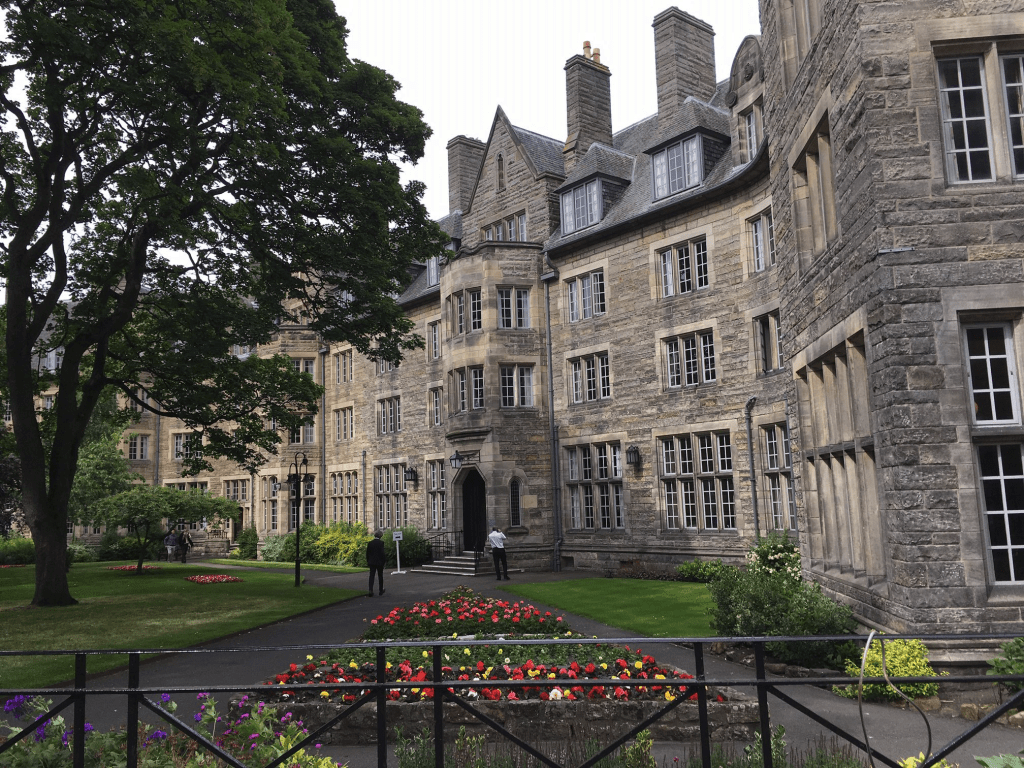
St Salvator’s Hall, University of St Andrews (Fife, Scotland, UK) | Photo courtesy of May S. Ruiz / Hey SoCal

The road to college

In the San Gabriel Valley, parents go to great lengths to instill in their children good learning habits at a very young age. A majority of them enroll their kids in competitive high schools to ensure that they earn admission to some of the most prestigious universities in the country.                            

My only daughter attended an over-a-century-old K-12 independent school in Pasadena, an institution renowned for its rigorous academic and wide-ranging athletic programs. I was confident she would be well prepared for the challenges of university. However, the school administrators and faculty did not discuss the college admissions process until the spring of junior year. They felt that students should enjoy high school and campus life – there was plenty of time to work on college applications.

| Courtesy photo

It was when my daughter and I first met with her college counselor that we realized that while she was academically ready for college, she hadn’t been fully apprised of what admissions officers were looking for from applicants. And because she had to scramble to put together a resume that looked impressive, the next 18 months proved more stressful than if she had been preparing for college application since 9th grade.                                 

Happily, it all turned out well for my daughter and she graduated from high school in the spring of 2014. She then went to the University of St Andrews in Scotland. About a quarter of the seniors in her class of 97 students matriculated to the Ivies and the rest of them attended the most selective universities in the United States.  

For my family, the college admissions experience felt like getting sucked into a vortex. But I learned that we weren’t alone – many parents felt lost and powerless to assist their children through the process. And so, in January of 2015, I launched this monthly college search guide to help parents and their children navigate the complicated admissions process. And because education is very important to me, I also began writing about schools in the area. Through the years, I have met and interviewed many schoolmasters, parents, and students who shared their experience and opinions on issues that affect them.

Writing this admissions process series has been a fulfilling endeavor for the past eight years. It is therefore with a certain degree of sadness that I’m letting you know that this will be my last college search guide. If your child is a senior who’s eagerly looking forward to graduation and going to university in the fall, I hope that this monthly guide has helped them (and you) get to the next stage of their educational journey. Thank you for the privilege!        

FRESHMAN

This is the final call for 9th graders who need to improve their grades! The GPA is the most important component of your children’s college application. If their marks are not adequate for college acceptance requirements, they need to confer with their college counselor to arrange for remedial summer classes.

Your children should have already registered for internships and planned their summer volunteer work. Admissions officers look for students who have demonstrated sustained community involvement. It isn’t the quantity but the quality of activities that’s important – they want to gauge the depth of students’ intellectual and ethical engagement to a given cause.
The summer after their freshman year is the time for your children to find activities that truly speak to their interest and passion. Let them choose one that really resonates with them which they should carry through their four years in high school.            

It’s also a great time for your children to read books. Encourage them to explore various genres and different authors. At the very least, reading will help them expand their vocabulary and expose them to different writing styles. This will come in handy when they write their personal statement and supplementary essays for their college application.

| Courtesy photo

SOPHOMORE

Sophomore year is when your children have fully transitioned into high school. They are comfortable about how this phase fits into the whole secondary school experience. They have taken the practice PSAT as a preparation for junior year when the results determine their eligibility for the National Merit Scholarship. They have also taken some AP tests, if they took an AP course.

Hopefully, your children have also done well in their studies, have maintained good grades this entire year, and have prepared for final exams. Admissions officers expect grades that are consistent, and, if their freshman marks weren’t that great, their sophomore grades should at least show improvement over last year’s.    

Make sure your children have lined up their summer activities. They will probably have more choices than they had the summer of freshman year when there were safety protocols in place, but they should try for something related to what they did last summer. Admissions officers want to see commitment to a particular interest.     

JUNIOR

Make sure your children have registered to take all the required standardized tests for college admissions. While these are not required by the Cal State and UC systems, they are still part of the application for some and, if your children are applying through early action or early decision to these schools, they need to take the SAT or ACT this summer.     

Your children’s final grades are extremely important! Eleventh grade is the last complete year that college admissions officers will see on the application and they expect grades that are either consistent with, or better than, the first two years’.

SENIOR

The high school graduation is a rite-of-passage that signifies a teenager’s first step into adulthood. Take the time to mark this occasion with a celebration!           

If your children are still sweating it on the waitlist of their first-choice college, they need to  ensure their final grades are terrific! They should keep up with all their schoolwork and send the college admissions officers any updates on awards and honors they receive. They should ask their college counselor if an additional letter of recommendation might be helpful. Keeping in touch with the admissions office reinforces their interest in attending the school if accepted.

They should have put a deposit on their second-choice school to guarantee them a place for the incoming class in the fall. Although, if they come off the waitlist on their first choice, they will lose this deposit.

Be there for your children to support them whatever the outcome of their college application; it has been an important learning experience. In the end, though, what matters is not where they had been accepted. The college they attend will not guarantee success in the real world; it’s how they use their education that determines how well they do in life.

April College Search Guide

Originally published on 5 April 2022 on Hey SoCal

University of Notre Dame | Courtesy Photo

The road to college

While the pandemic isn’t in the rearview mirror just yet – with news of the Omicron subvariant BA.2 cases spreading fast in L.A. – the overall feeling is that we might soon see the end of it. Most public schools districts in Southern California have lifted masking mandates; several independent and private schools have followed suit, exception for a few circumstances that they are posting on their websites or electronic newsletters.                

And now we’re two weeks into spring! That means most students are looking forward to Easter/spring break and getting some much needed rest from the rigors of high school work. It’s a great opportunity to take a short out-of-town trip, especially if you’ve been putting off traveling because of safety concerns. Getting away from our regular daily routine helps us recalibrate and rejuvenate. But if traveling isn’t an option, be sure to enjoy the mild spring weather. Happy spring!           

FRESHMAN

The school year is winding down. Your ninth graders should be on track on all their academic grades and putting extra effort into getting the best grades they could muster. They should also line up summer activities – enrichment programs, summer camps, volunteer work, or part-time jobs. 

All these – grades, arts, athletics, community work, employment – from 9th through 12th grade, will be recorded on the transcript that your children’s high schools will send to the colleges to which they apply.  

SOPHOMORE

Not all universities have dropped standardized tests as a requirement for college application. Make sure your children have registered for all the tests they have to take in May or June (possible AP tests for 10th graders are math, chemistry, history and foreign language; deadlines are April and May for tests in May and June).

They need to plan their summer activities. If they are taking an art elective, or are interested  in a particular art field, they should consider a summer program in that course to put on their resumé.

JUNIOR

This is the last complete academic year admissions officers will see when your children apply to colleges. They want to see grades that are improving from year to year, so the 11th grade final marks should be the highest on the report cards. If your children have gone on virtual college campus tours they should also know the academic requirements of the colleges to which they are thinking of applying. They need to look at where they are grades-wise to figure out if the school on their list is a realistic goal. The spring break is also an opportune time to go on campus visits (see March College Search Guide for tips on making the most of them). Admissions officers are on hand to do interviews and students are on campus so you can talk with them.  

Make sure your children have registered for the SAT, ACT (www.act.org), SAT Subject Tests, AP especially if they are thinking of applying through early action or early decision.

They should have all their summer activities lined up – enrichment programs, summer camps, volunteer work or part-time jobs. Remind your children to continue the pursuits they started in freshman year as admissions officers look for sustained interest, which is a reflection of what they are truly passionate about.

Courtesy photo

SENIOR

Some universities have sent out their decision letters in mid- or late-March, or mid-April if they applied to the Ivies. If your children are lucky enough to be accepted to all the schools to which they applied, they deserve a big congratulations! You can all exhale now! 

This is the part where your children get to choose the school they really want to attend. During the application process, your children were hoping the colleges to which they applied accept them. Now the colleges that accepted your children would like your kids to choose them! In this rank-obsessed world of American universities, the schools encourage all students to apply to them (they actively recruit students they would never even admit because the more applications they receive and the more rejections they send out, the higher they’re ranked. Additionally, it’s a huge financial boost; the most sought-after colleges and universities get several thousand applications which earn them millions of dollars.). The tables are turned because once your children get the schools’ acceptance letter, these schools would like to ensure your kids actually attend their college. This is the yield: the higher their yield, the higher their ranking.  

If your children are applying for financial aid or scholarships, now is the time to compare schools’ financial aid or scholarship offers. If a particular school really wants your children, you might have the opportunity to ask for a better package than what it originally extended.

If your children have been waitlisted to a school they are determined to get into, they need to respond quickly to let the admissions officers know that they are very interested. Your children should send a follow-up letter to express that the school is their top choice and that they will definitely enroll if accepted.

Demonstrated interest is all the more critical at this juncture as your children want to ascertain the admissions officers keep them in mind. Encourage your children to work with their high school’s counselor to make sure they send the transcript for the first semester, and any updates on awards and honors received after they sent their application. Your children need to keep in constant touch with the admissions officers.

The admissions office requires a decision from accepted students on May 1. Make sure your children accept the offer of their second choice school where they have been admitted, and pay the required deposit. If your children are later accepted to the school to which they were waitlisted and accept that offer, they will lose the deposit on the other school. But it’s their guarantee that they will be attending a college in the fall.  

March College Search Guide

Originally published on 3 March 2022 on Hey SoCal

Princeton University | Courtesy Photo

The road to college

Two years into the pandemic, infection cases are finally decreasing; but death rates remain high. On February 15, several states, counties, and cities around the country eased or ended indoor mask mandates; last week, the L.A. Unified School District dropped the outdoor mask requirement. There’s speculation that California schools will no longer be requiring their students to wear masks on campus sometime this month.         
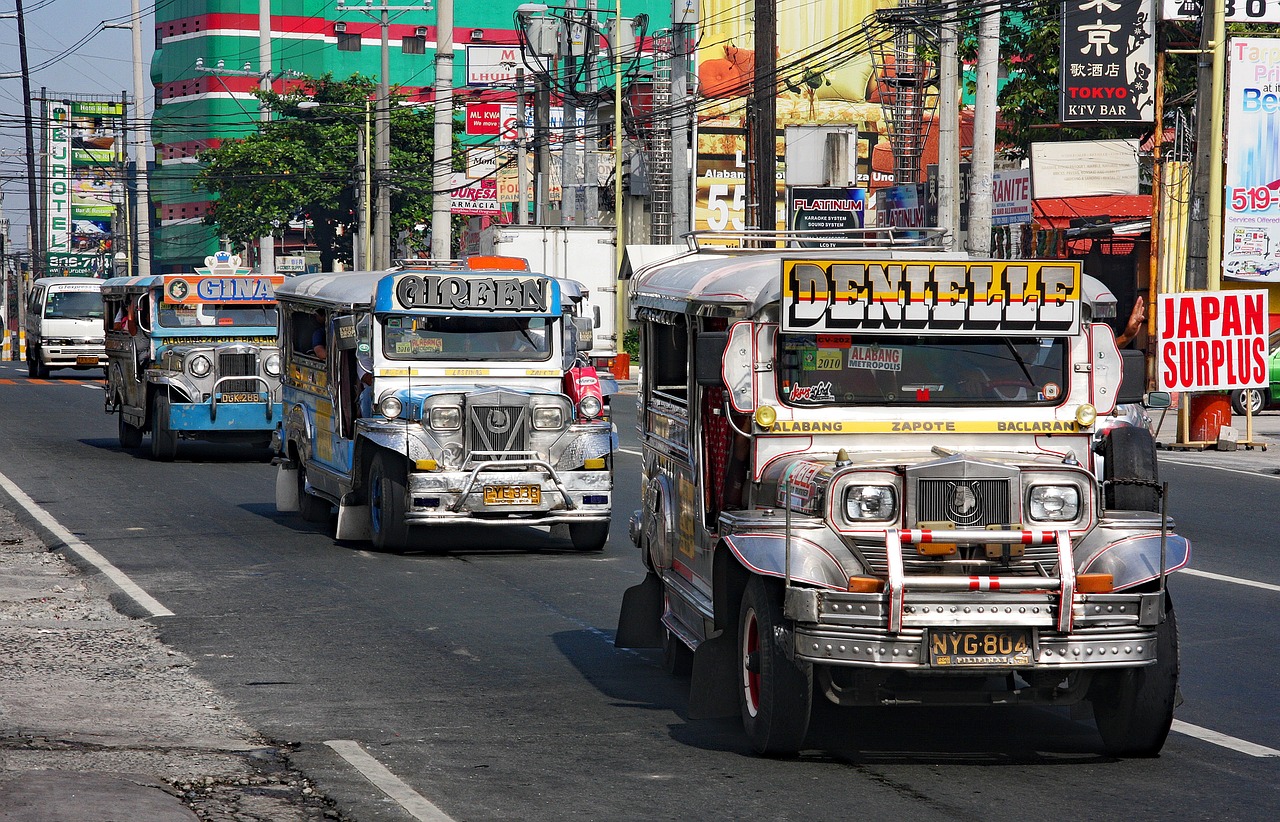
However, some counties in California – where infection cases still cause worry – are still imposing it. Many private schools and privately-owned establishments are also choosing to go their own way, practicing safety measures they deem necessary to ensure their employees’ and the public’s health and well-being. And, as usual, the seemingly arbitrary rules are creating dissent. But wherever your beliefs lie on this ongoing debate, I hope you are doing your utmost to keep safe and healthy.

If your children are attending in-person classes full-time, you must be so relieved after more than a year of having to home-school them. As we all know, though, the long-term remote learning resulted in unprecedented learning loss and widened the achievement gap. Students are playing catch-up on their schoolwork.

Fortunately, there are several tutoring services available if they require help. Find one which offers options that fit your children’s specific need and your family’s budget. A company called Mundo Academy provides excellent tutoring services in the Pasadena and San Gabriel Valley area. Likewise, some high school and college students have created free tutoring services and learning platforms to help children during the coronavirus pandemic. Two of these organizations include Sailors Learning and Wave Learning Festival.                     

Anxiety and depression have been on the rise among children and adults during the pandemic. Please don’t ignore your and your children’s mental health; reach out for assistance when you or your family members feel overwhelmed. The CDC has put together a resource kit for parents – divided by age group – to help ensure their children’s well-being. The site also has links to other resources that cover various concerns. Another CDC website is dedicated to helping parents manage stress during the coronavirus pandemic. 

In spite of the pandemic, the University of California broke records for first-year applications for the second consecutive year, according to data it recently released. Additionally, this past admissions cycle drew the largest and most diverse pool of applicants. While this is great news, it also means that it has become even more competitive to get in. And, as more colleges and universities join in scrapping standardized tests, your children need to be prepared to face ever greater challenges.     

Photo by Sofatutor for Unsplash

FRESHMAN:

Your children should have all their grades on track. They need to concentrate on maintaining good study habits now to be better equipped to handle the rigors of the workload in the coming years. If they haven’t been reading much, they should seriously consider taking up reading as a hobby during spring break to help them increase their vocabulary – it will come in handy when they write all the supplemental essays many universities require.   

It’s also a good time for your children to consult their class dean regarding summer activities – academic enrichment programs, volunteer work, or part-time employment. College admissions officers are looking for students who explored their passions while getting good grades.
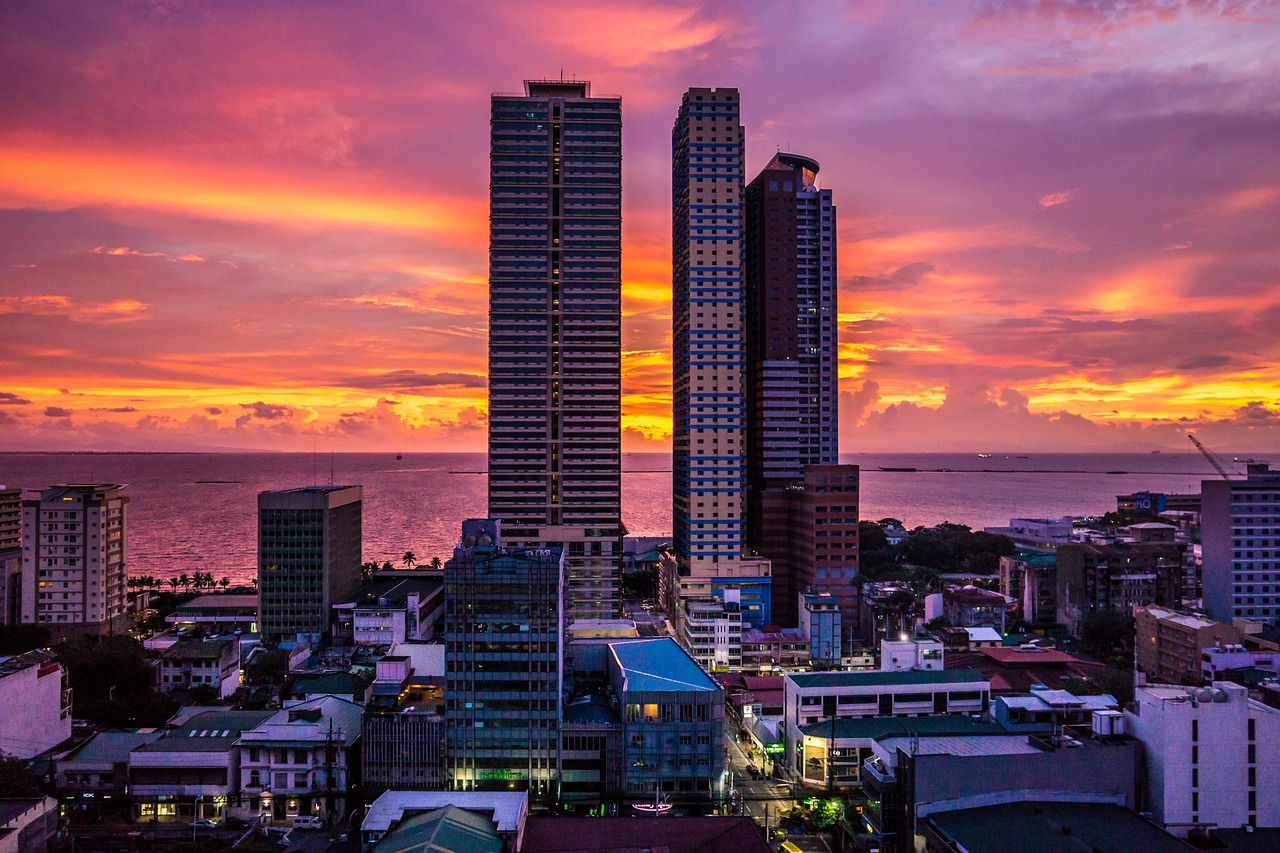
Admissions officers will not expect your children to have extra-curricular activities during the  coronavirus pandemic. However, they will be interested to know how students spent their time outside of remote learning. Encourage your children to find volunteer work and community service activities.             

SOPHOMORE:

Tenth graders who are taking AP courses need to register for the AP exams administered in May.  While there is a slew of small independent tutoring schools offering courses to prepare for the AP tests, some children do not need to take on this additional burden on their already busy schedules. Your children have enough on their plate with the intensive homework associated with an advanced placement course. That said, your kids would still have to show competence on the AP exams as all scores are submitted to the College Board; all the colleges to which your children apply will see the AP scores.

JUNIOR:

Spring break is usually the time when juniors visit various campuses. Many schools organize tours for their students and college counselors provide a prepared college visit checklist with a page or several pages allotted for each college or university. They can also write their overall impressions which they can consult when they create their college list.    

If in-person tours aren’t available at the college or university you want to visit, make sure you and your children do a virtual tour or a webinar. Many universities offer a live virtual tour where someone takes you around the campus on FaceTime or Zoom. There’s usually an admissions officer on hand to answer questions. And, as in pre-pandemic years, you and your children need to make an appointment to attend the tour.        

Even when tours are conducted virtually, you can still ask some of the questions you normally would during an in-person visit. Here are a few examples: What is the advising system for freshmen? Are there opportunities for independent/study abroad? Is there guaranteed housing for four years? What are the dining options? What safety measures and precautions are offered by the school during the pandemic?

Especially during the pandemic, it’s advisable to arrange to speak with a current student about campus life. Here are some questions to ask: Do students stay on campus or do they leave on weekends? Are students practicing healthy campus lifestyles, like limiting parties? Even before the pandemic, these parties led to excessive drinking and wild behavior; these gatherings could be super spreaders of the current coronavirus variant.        
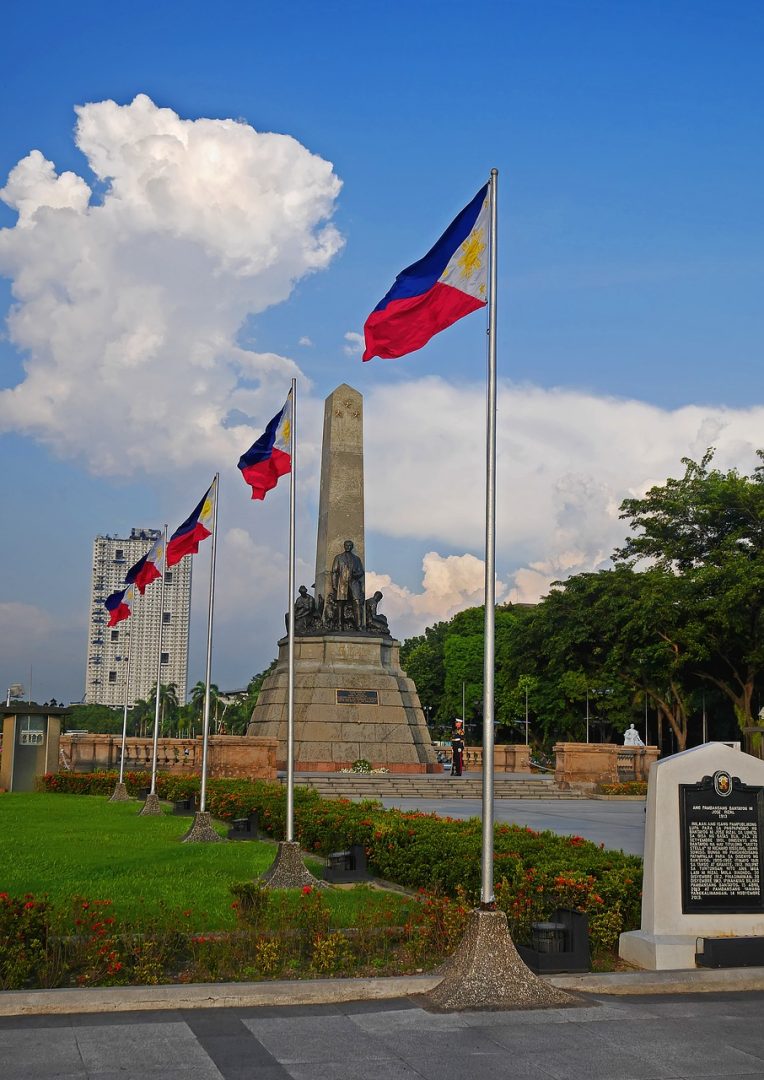
One major concern for parents and children should be security on campus (Can outsiders gain access to the library, the fitness center or student union? Are there video cameras around the school periphery?). Of course, the most serious threat to students’ well-being may actually be within the confines of the institution. This topic has become part of the national conversation   and some universities are addressing the topic upfront. I, personally, would want to know if officials have safeguards in place to prevent such crime from occurring. Do administrators disclose information about it or do they hide and blur the facts? What consequences does the school impose on perpetrators?
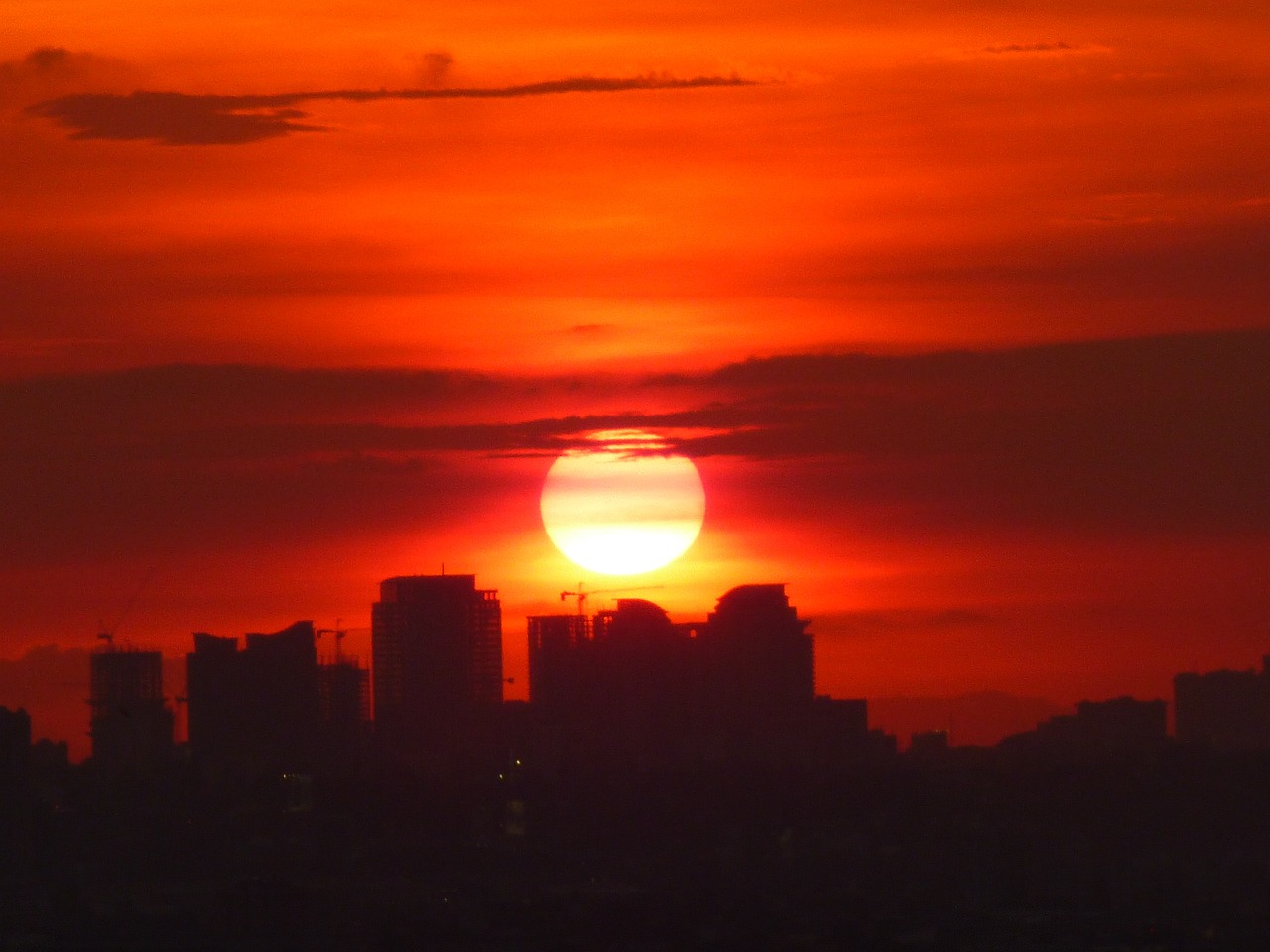
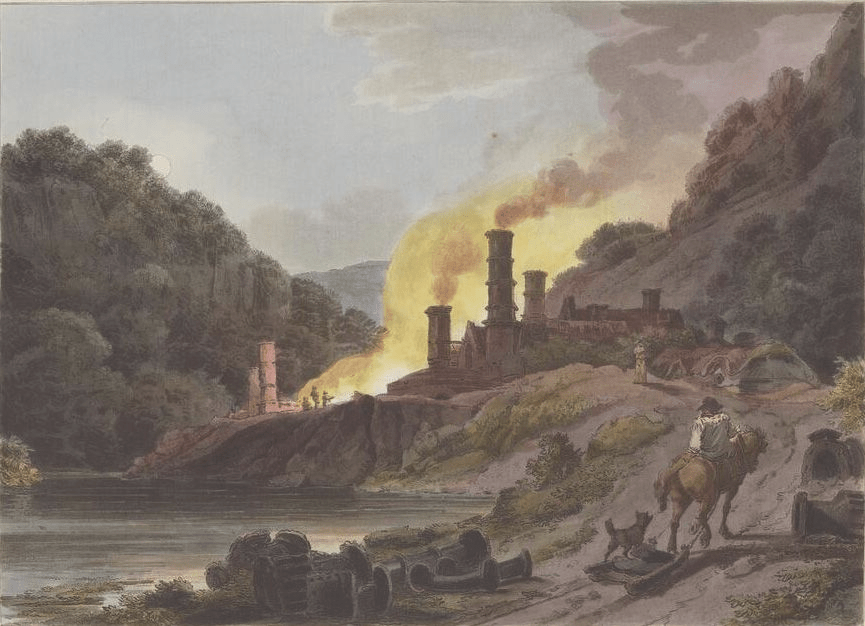
Photo by Priscilla du Preez for Unsplash

SENIOR:

You and your children should research all scholarships and grants available to them. Many colleges offer merit scholarships to applicants with excellent academic records to motivate them to matriculate. The package usually includes the full cost of tuition and fees and may also cover room and board.

Universities also extend need-based grants to applicants who demonstrate a financial hardship. These reduce the cost of a college education and do not need to be repaid. Your children should complete the Federal Application for Federal Student Aid. Other schools may also require a college-specific financial aid application.

Some useful websites to help you get started in your research include: CollegeXpress; FastwebNational Merit Scholarship Corporation; Scholarships.com; Scholarships360; and Student Aid on the Web.

As I expounded on last month, some colleges will be sending out decision letters sometime in March or April. Your children should keep their wits about them as they await word from the colleges they applied to. 

After the marathon they finished, your children may be quite restless and anxious to know if they have been accepted to their school of choice. Remind them to use this quiet time productively by keeping their focus on academics and their grades. They should still engage in other worthwhile activities like arts. 

Tell your children that they may be getting letters of rejection from some schools. While you might be more disappointed than your son or daughter, avoid showing it as that sends the wrong message. Not being accepted to their first choice isn’t the end of the world. In fact, while it may not seem like it at first, that rejection usually turns out to be a blessing in disguise – in most cases, they end up in the school that is the right fit for them.