Masters of Taste 2022 — a Delicious Way to Donate to a Worthwhile Cause

Originally published on 10 March 2022 on Hey SoCal

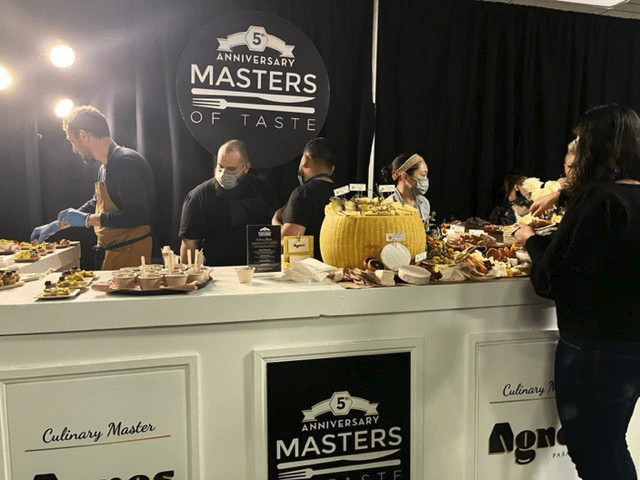
Agnes Pasadena, which serves delectable cheeses, is one of the participating restaurants in ‘Masters of Taste 5th Anniversary’ | Photo courtesy of May S. Ruiz / Hey SoCal

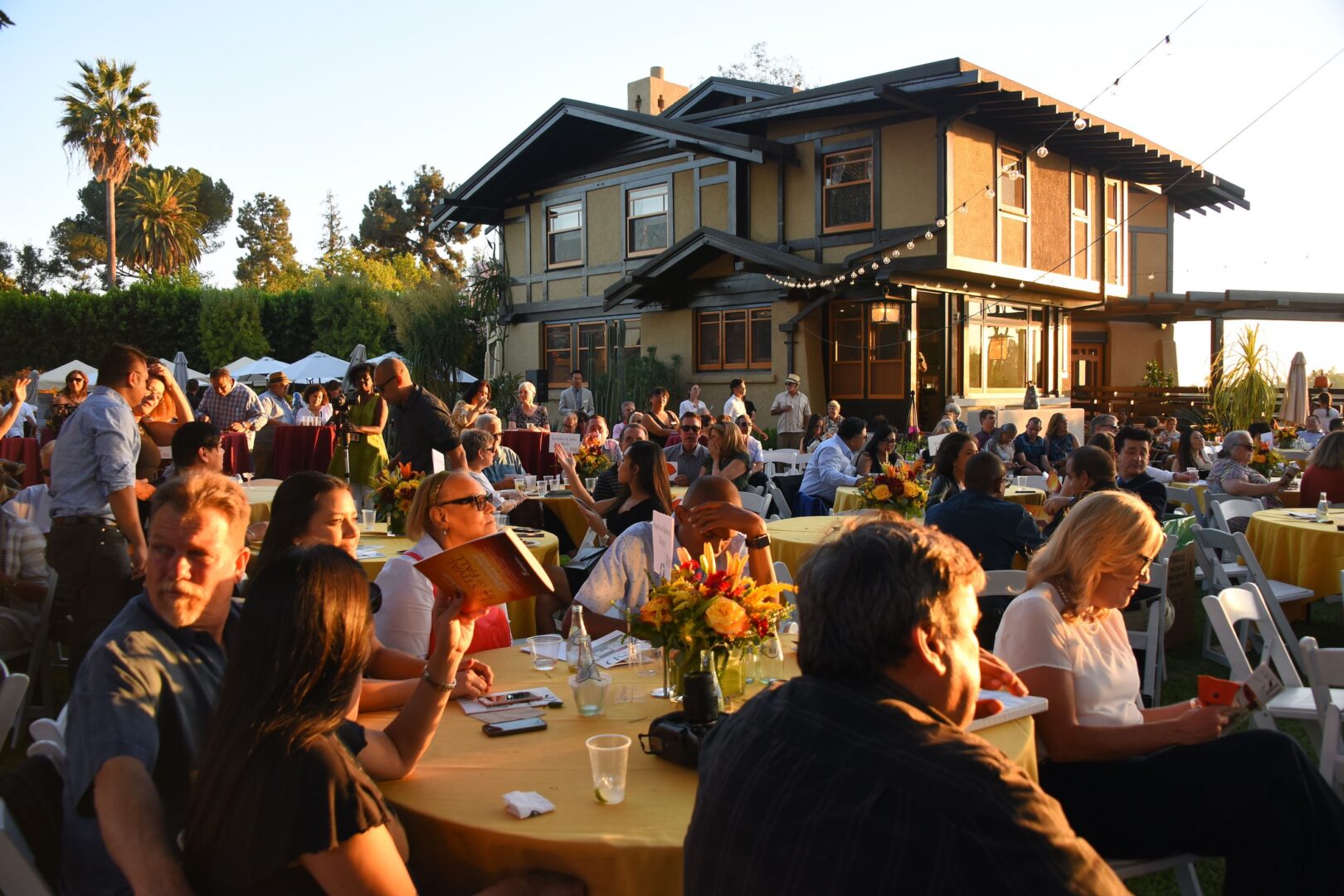
Two years after the pandemic unceremoniously canceled the Masters of Taste’s planned event, it’s coming back to Pasadena! So mark your calendars for the Masters of Taste’s 5th Anniversary to be held on Sunday, April 3 from 3 p.m. to 7 p.m. at the world-famous Rose Bowl.

Approximately 100 Los Angeles-area food and beverage experts will again gather in one place to create masterpieces for Southern California’s gastronomic aficionados, all for a worthwhile cause.      

Masters of Taste 2019 was a sold-out event that attracted over 3,000 guests and garnered media attention throughout Southern California and beyond. This fifth-anniversary event is also expected to bring over 3,000 food and beverage enthusiasts together for one afternoon to celebrate this exhilarating festival, which will include the finest fare from culinary masters and restaurants, delectable sweets prepared by L.A.’s top sweet masters, and leading beverage masters.

A Media Night was held on Thursday, March 3, at the locker room of the Rose Bowl for a sampling of what foodies can expect at Masters of Taste 2022 and to introduce this year’s host chef, Vanda Asapahu. At the organization’s inception in 2016, she was one of only two female chefs. And now she’s the first female chef to take on the mantle of this prestigious food festival.

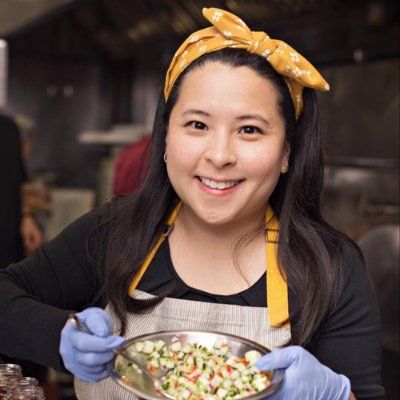
Vanda Asapahu is the first female chef host of Masters of Taste | Photo courtesy of Masters of Taste

Chef and owner of Ayara Thai Cuisine, Asapahu went to college at UCLA and to graduate school at Yale. She then spent four years living, traveling, and working her way through Thailand before returning home to Los Angeles. During her stay in her native country, she absorbed the Bangkok street food scene and revived old family recipes. Taking up the torch of her family’s culinary tradition, she brought back these treasured old recipes and new flavors to share at Ayara Thai. And in May 2019, Ayara Thai Cuisine was named one of “Michelin Guide California’s 2019 Bib Gourmands.”                    

Masters of Taste is the brainchild of Rob and Leslie Levy, owners of The Raymond 1886 in Pasadena. He recalls what drew him to this endeavor, “This goes way back in my childhood. My oldest friend in the world started an organization in Chicago called Inspiration Café, delivering sandwiches to the homeless when she was working as a cop. Then she ended up opening a restaurant for the homeless where they could come in, order off the menu, be served with dignity, and leave with no check to pay. If they were a good client, they were invited to work there and learn a trade. That grew into something huge, with multiple restaurants and cafes, cookbooks, and job training. She did this for 20 years and never took a paycheck – she did it for the love of it. She worked as a massage therapist to pay the bills while she grew this multimillion-dollar organization. It gives me shivers just thinking about her and what she has accomplished – she’s quite a remarkable individual and the most positive person you could ever meet in your life.”

Rob Levy, along with his wife, founded Masters of Taste | Photo by May S. Ruiz / Hey SoCal

“When the former CEO of Union Station Homeless Services asked me to be on the board, I immediately agreed,” continues Levy. “Then we thought we had to change the way we raise funds – we had been to one too many galas where nobody wanted to go, but got dressed up and went anyway because we felt obligated to. We figured we needed to create an amazing event where people aren’t thinking it’s a charity affair and Leslie came up with this idea of getting other chefs to gather for a cause. And what better place to do it than on the field of the Rose Bowl. Thus, Masters of Taste was born.

“We reached out to other chefs that we had done events with over the years and also through Lawrence Moore. When we explained what we were trying to accomplish, everyone agreed to participate. And they were absolutely thrilled when they learned that it was going to be at the Rose Bowl field. The first year that we did Masters of Taste, participants were incredulous when we told them to be on the field for the load-in because events are usually held only at the perimeter. One guy serving for a brewery had played football in college and played on the Rose Bowl field; it was his first time back there since. He actually got teary-eyed at the recollection because now he was there for a reason other than football.

“That same year, a spontaneous line dancing broke on the field – DJs played music and in the middle of everything, there must have been 100 people line dancing. It was a delightful occurrence that was totally unanticipated. That was when we knew we were on to something.       

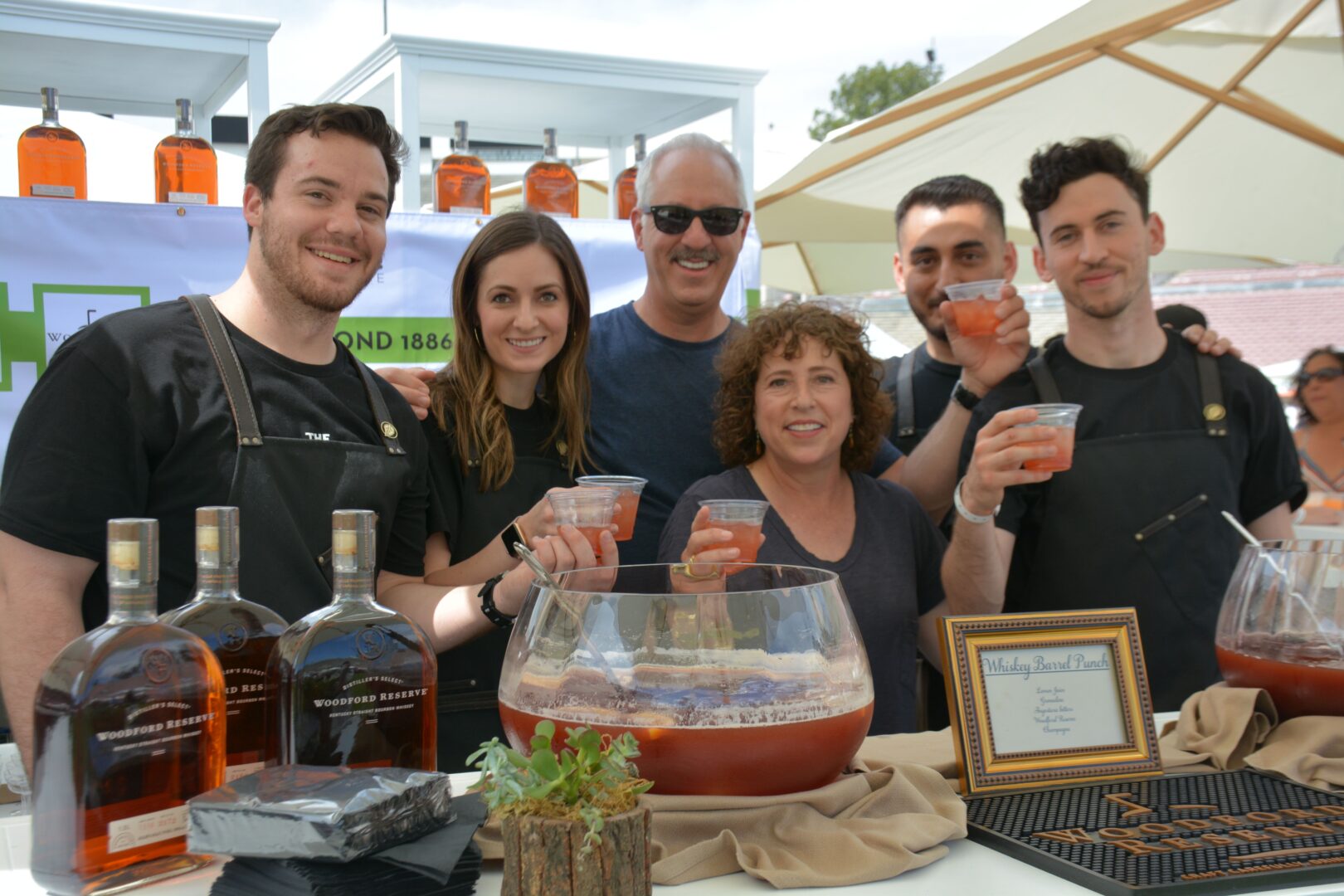
The Raymond 1886 team at a past ‘Masters of Taste’ event | Photo courtesy of ‘Masters of Taste’

“Then we had one year when it rained which, unbelievably, made it an even better event. Nobody left – 3,000 people on the field and they all stayed through the rain. It was the most memorable year we had. We set out to create an event that was like having a great Sunday afternoon out and it has taken on a life of its own. People want to do good – helping other people is now a movement.”

Lawrence Moore, principal of public relations firm Lawrence Moore & Associates, was one of the founding members of the group that puts up the event. She talks about the inception and evolution of Masters of Taste.

“I had known and worked with Rob and Leslie Levy for several years at the time he was thinking about partnering with an organization for a fundraising event,” he said. “When he sat on the board of Union Station and saw that the homelessness problem was growing – probably well before the rest of us ever realized it – he and Leslie decided that was where they wanted to focus their energies. They came up with the idea of creating an event and having it at the Rose Bowl. There were plenty of naysayers who said they wouldn’t be able to pull it off because no one had ever been allowed to use the field and the cost would be prohibitive even if they were able to.

“However, Rob and Leslie were undeterred; they were determined to do this. They gathered everyone – Amanda Green; Dana Levy, the Assistant Director of Development at Union Station at the time; me; and a friend and colleague of mine Dennis Richardson, whom I brought along, and who’s now our Event Producer. We literally sat down for lunch and just hashed out details, including a to-do list, names of people we needed to call, and so on. It was then decided that we were going ahead with the plan and this was the team to do it. From that day on, I became the event’s public relations person. We had the honor of creating the name and the strategy; we wanted to identify it as a food festival rather than a charity event for the first year, to build excitement from the culinary and beverage standpoint.”

Moore adds, “We met with people at Union Station and when we told them our concept, they were uncertain about it initially. They were used to the standard model of fundraising – holding a gala or a dinner. Additionally, we told them that we wanted to promote it as a luxury food festival instead of a fundraiser; that was the biggest obstacle we had to overcome. But they eventually came around and we held the first Masters of Taste on Sunday, April 3, 2016.

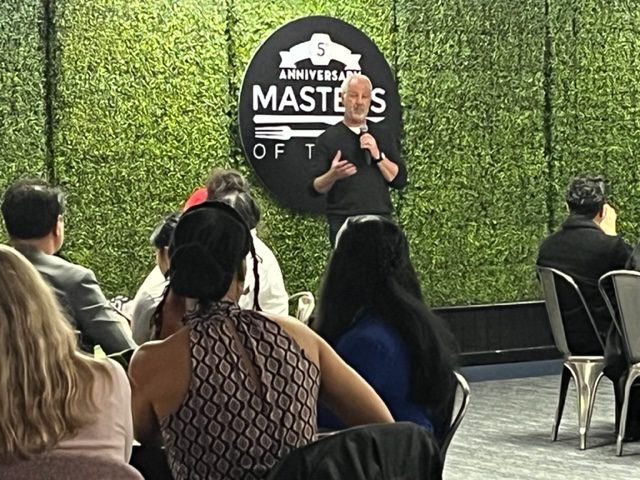
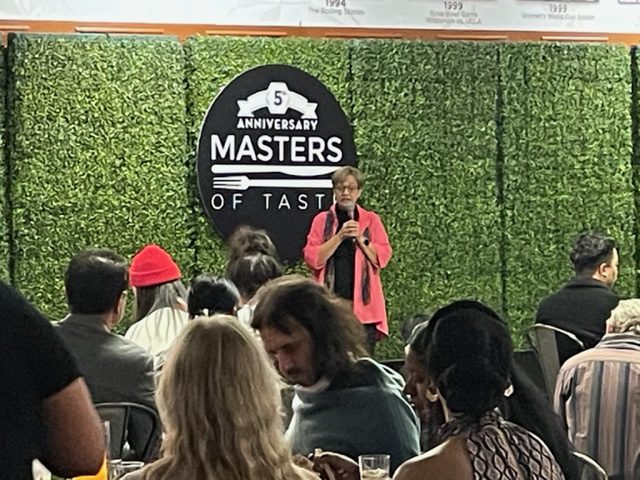
Masters of Taste’s 5th Anniversary Media Night | Photo by Brianna Chu / Hey SoCal

“The experience from that was very positive – we made half a million dollars the first year so we were able to prove we could raise money through ticket sales and private company sponsorships. We had an easier time for our second year because the Rose Bowl people got over their trepidation at using the space for a food festival and they even offered the option to have a Media Night. That’s when we announced the charity and that 100 percent of the proceeds will benefit Union Station. I think that was better received on the second year than it would probably have been the first year.”

“Being a member of the founding team and working on it as well, I am excited because I need to know that the money is going where it’s supposed to go. That was more impactful for me,” declares Moore. “As the years have gone by, I have had the opportunity to work directly with our media sponsors and build a relationship with them. Moreover, we are now able to invite more media to the actual event. And because everyone in the media has been introduced to the charity personally, they have a bigger investment in the event’s success. They are now part of the team and have put Masters of Taste on the map as L.A.’s foremost food event. It highlighted the cause and gave integrity to the event.”

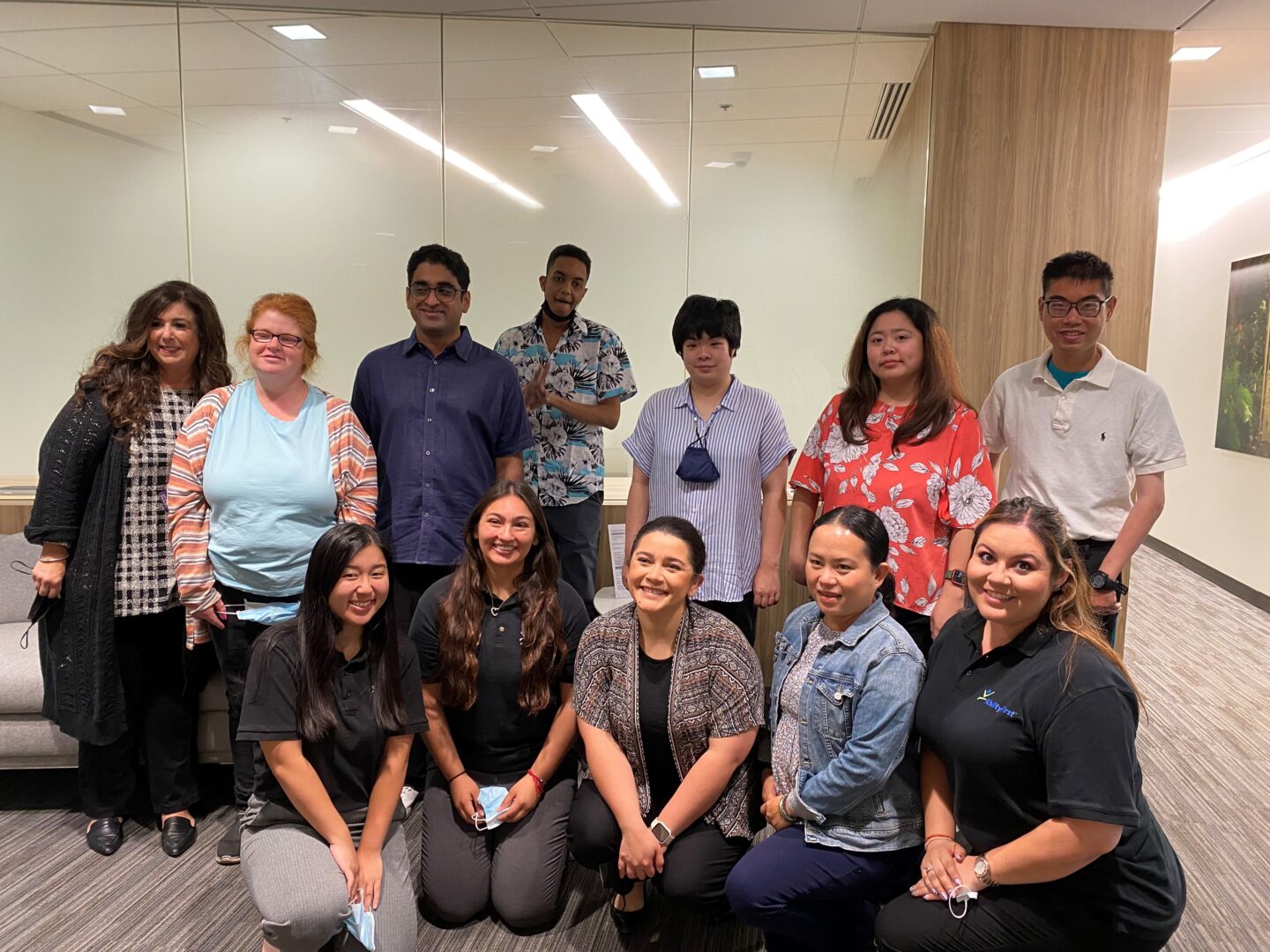
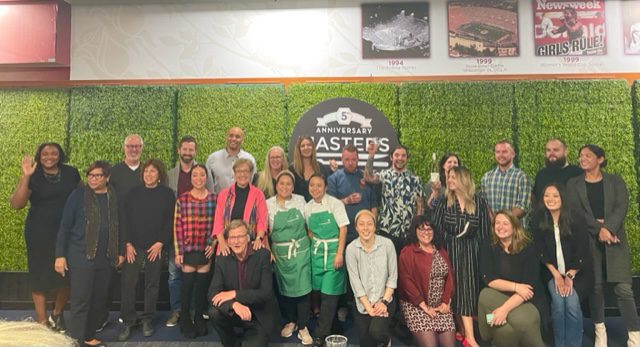
‘Masters of Taste 2022 Team and Participants | Photo by Brianna Chu / Hey SoCal

The return of Masters of Taste this year has taken on an even greater significance. Anne Miskey, Union Station’s CEO, expounds, “Two years ago, Covid hit. And one of the first things that all of us heard was stay home to stay safe. The people we serve don’t have homes. So we had a crisis on top of a crisis here in Los Angeles. I’m very proud to say that my staff all went into high gear not only to help all of those people living on our streets, but also to keep them safe from Covid. Over the last two years we opened some sites – hotels and other buildings – where we could bring people inside safely.

“I remember sitting down and talking to one gentleman who had been living on the median down the street in his tent. He spoke about what it was like to come in a room, with a bed and a bathroom, a microwave and a coffee pot, and to be treated with dignity and respect. Of all the things he said to me, what hit me the most wasn’t the bed but of having someone acknowledge his humanity and care what happens to him. And that is the work that we do at Union Station. We recognize the humanity in all of these people living on our streets – we walk beside them to get them permanently housed, gain stability, and be able to hope and dream again.”

Miskey says further, “The people we serve have been hit incredibly hard, but we’re not the only ones. We know that the restaurant industry suffered over the last couple of years. So I want to thank all our chefs, our beverage masters, our vintners, our distillers for staying with us after two years of hell.”  

Union Station Homeless Services CEO Anne Miskey | Photo by Tom Williams / Hey SoCal

Asapahu underscores what Miskey has pointed out, “This year’s event will have over a hundred culinary, beverage, and sweets masters. Many of us are still understaffed, we still have ingredient and raw material shortages, and every issue possible. But what sets people in the restaurant industry apart from others is their willingness to give and give and give, until we have nothing left to give. There are a lot of restaurants that couldn’t join Masters of Taste this year, but please show all the love and support to those who are going to be there. We’re barely getting out of the pandemic and they’re donating their time and their food.”

“This is L.A.’s biggest food event. And every dollar goes to Union Station Homeless Services, which provides meals, housing, and services to the homeless community of Los Angeles. There are currently 66,000 people in Los Angeles who are homeless, which is probably an under-reported number, and it breaks my heart. And while this issue can’t be solved overnight,  every guest, participant, and media person attending Masters of Taste is working towards a solution,” concludes Asapahu.

The pandemic has challenged all of us; we have been tested and stretched to our limits. And the restaurant business has been the hardest hit. Many restaurants were forced to shutter permanently and those that have managed to reopen when it was safe continued to struggle. Even as health and safety protocols have been eased, social distancing and masking mandates lifted, restaurateurs still have difficulty finding people to work. No dining place – whether it’s a sit-down restaurant or a drive-thru – has been spared the staff shortage. And yet when they were called to come and help, they happily stepped up to the plate.

Masters of Taste 2022 will be an extraordinary event not only because it’s poised to break its all-time record of raising money to help L.A.’s homeless population, but more so because it will demonstrate the resilience of humankind and endless generosity and giving spirit of restaurateurs and beverage company owners. Let’s eat and drink to them and the event’s great success!

Pasadena Filmmaker’s Short Documentary Attracts Tens of Thousands of Online Viewers

Originally published on 27 March 2019 in the Pasadena Independent, Arcadia Weekly, and Monrovia Weekly

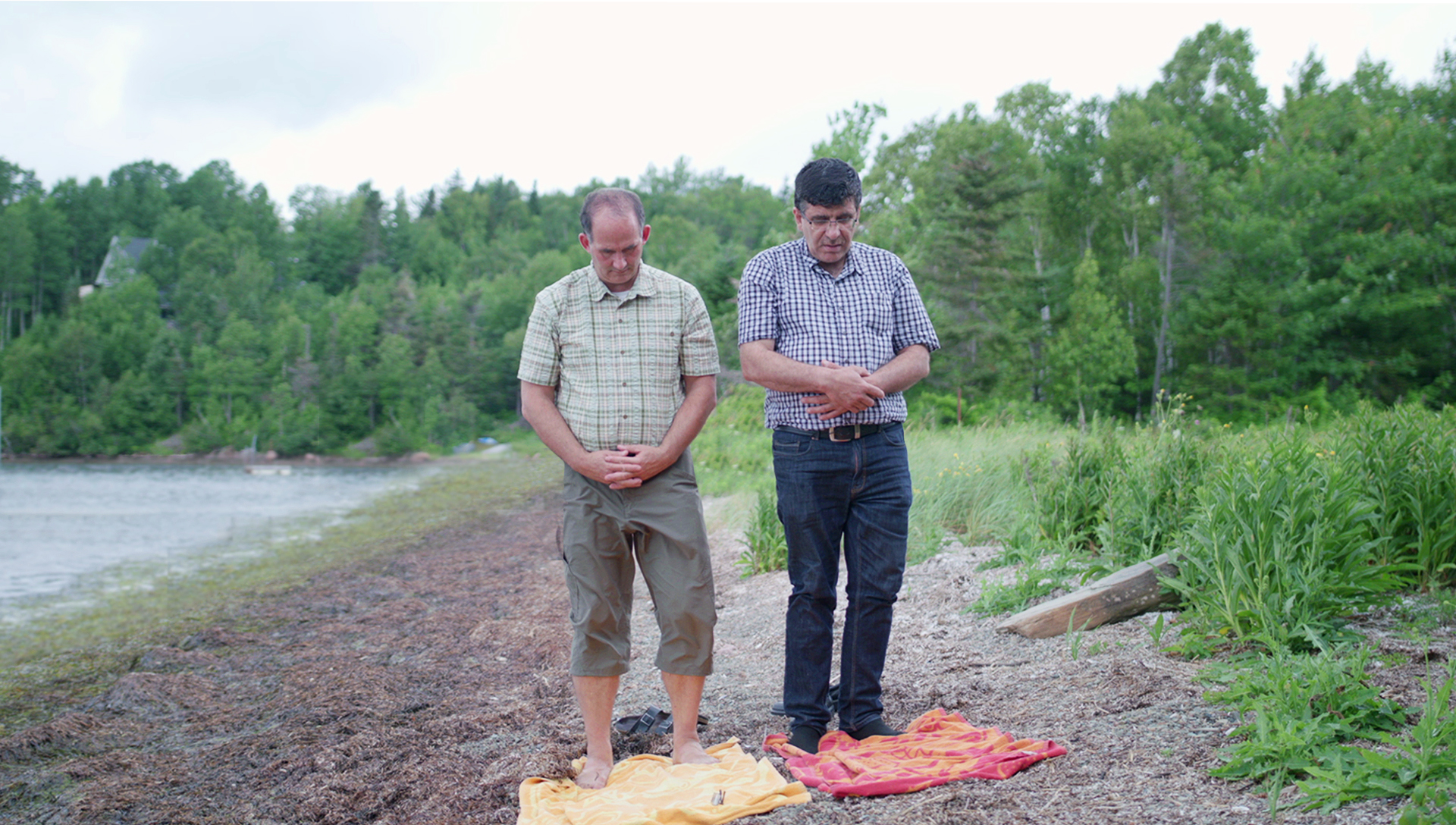
Frank Gallant and Issam Hadhad in ‘Brothers’ | Courtesy photo / Magnetic North Pictures

Jonathan Keijser is a young filmmaker in Pasadena who has been working on a based-on-a-true-story feature narrative about the Hadhad family, who moved from Damascus, to Lebanon, and eventually to Nova Scotia in Canada, and how the community came together and rebuilt the Hadhads’ business from scratch.

In the process, Keijser met Frank Gallant, one of the Nova Scotians who helped the Hadhads. That circle of friendship – between Gallant, Hadhad, and Keijser – led to the production of another, much shorter documentary about a camping trip. And that film, called ‘Brothers,’  became part of ‘The Atlantic Selects,’ an online showcase of short documentaries from independent creators, curated by The Atlantic. It has been online for three weeks and seen by several thousand viewers.

Taking a break from his feature film project, Keijser chats about how this short documentary came about.

“When I was researching about the main people involved in the story, I came across Frank who was the Canadian local who befriended Issam and helped him build his chocolate business out of nothing. Frank provided valuable assistance when I was writing the script. We would communicate by phone every couple of weeks or so, and we struck up a friendship.

“Last summer, after Frank and I had been talking on the phone for a year, I asked what he was doing for the summer and he said he wanted to do some Canadian things out in the wilderness with Issam. Issam’s never gone camping and Frank loves to go camping. And I thought that would be such a cool film and decided to do something about it. So I called Frank and told him I would like to follow him and Issam on their first camping trip together. While Frank wasn’t sure what anyone would find interesting in it, he good-naturedly agreed.”

Keijser adds, “In documentary filmmaking, it’s imperative to establish trust between you and your subject because if they don’t trust you, not only will the things they tell you sound inauthentic, but you won’t have the kind of access necessary. In this case, Frank could have said ‘I wouldn’t be comfortable with you filming that.’

“During production, there were only two of us, which allowed us to embed into scenes more easily. Typically when you’re trying to shoot observational footage, it’s always a challenge to stay inconspicuous. But after a few hours of us being together, Frank and Issam, for the most part, forgot we were even there. However, there was one instance where Issam broke the fourth wall and offered us some food he had just cooked at the campsite, knowing we hadn’t had dinner yet. Frank had to gently remind Issam that we, the crew, ‘were invisible.’ Issam quickly apologized but we silently smiled because it was just another example of how kind and considerate Issam’s nature is.”

“Being invisible is such an interesting skill – in fiction, it’s all about the camera, doing the takes, having the light, getting everything perfect; in documentary, it’s about you disappearing, you’re non-existent, you’re a fly on the wall,” Keijser elucidates.

Courtesy photo | Peace by Chocolate

Their little adventure, which took two days of filming and two months of editing, is called ‘Brothers’ for a reason. Keijser discloses, “The title is based on Frank’s and Issam’s brotherly friendship. In the campfire scene in the film, Frank mentions how happy he is to be camping with Issam, like brothers. Issam also stated during our interviews with him that he thinks of Frank as a brother.”

‘Brothers’ may be a short documentary but Keijser paid as much attention to details as he would making a feature film. He utilized the knowledge he gained from his Master of Fine Arts degree from University of Southern California’s School of Cinematic Arts and his Bachelor of Music degree (in classical doubles bass performance) from McGill University’s Schulich School of Music for it to approximate a movie experience.

“The music is a completely original score,” Keijser says. “As a musician myself, I was pleased to have been able to collaborate with composer David Bertok on the shaping of the style and tone of the music. It was important that the music reflected the celebration of cultures in the story. We did this by blending traditional Nova Scotian and Middle Eastern sounds in the instrumentation. The accordion is used throughout, which is rooted in the Scottish heritage of Nova Scotia as well as the darbuka, a goblet drum, often used in Middle Eastern music.”

Keijser sent his short documentary to The Atlantic, a prestigious publication, where it has gained worldwide viewership. He adds, “The film will be available to the public indefinitely. It shares a timeless message that is increasingly more relevant today. It has subsequently been picked up by other media outlets, including Mother Jones.”

But Keijser is hardly an amateur in the genre. He is an award-winning storyteller with a strong focus on creating socially conscious content. As a film and theatre director, and screenwriter, he is committed to sharing compelling stories of progressive communities and people, with the goal of helping encourage positive social change in the world.

Before his film career, Keijser founded a non-profit theatre company for emerging artists in Montreal, Canada. He directed fully-staged Broadway productions, including ‘Into The Woods’ and ‘Cabaret,’ both of which received critical acclaim. Pat Donnelly of the Montreal Gazette called him ‘a promising young director’ and described his shows as ‘packing an unusually powerful punch, with a cast that works like a team.’ His films and stage productions have played at over thirty festivals and venues around the world since.

In 2016, Keijser’s feature film, ‘What Would Beethoven Do?,’ had its world premiere at the Cleveland International Film Festival where it held three sold-out screenings and took home an audience award. The film questions why we create art by following three superstar musical renegades as they independently take action to repair the fractured and ailing world of classical music, reinstating its relevance in the 21st century.

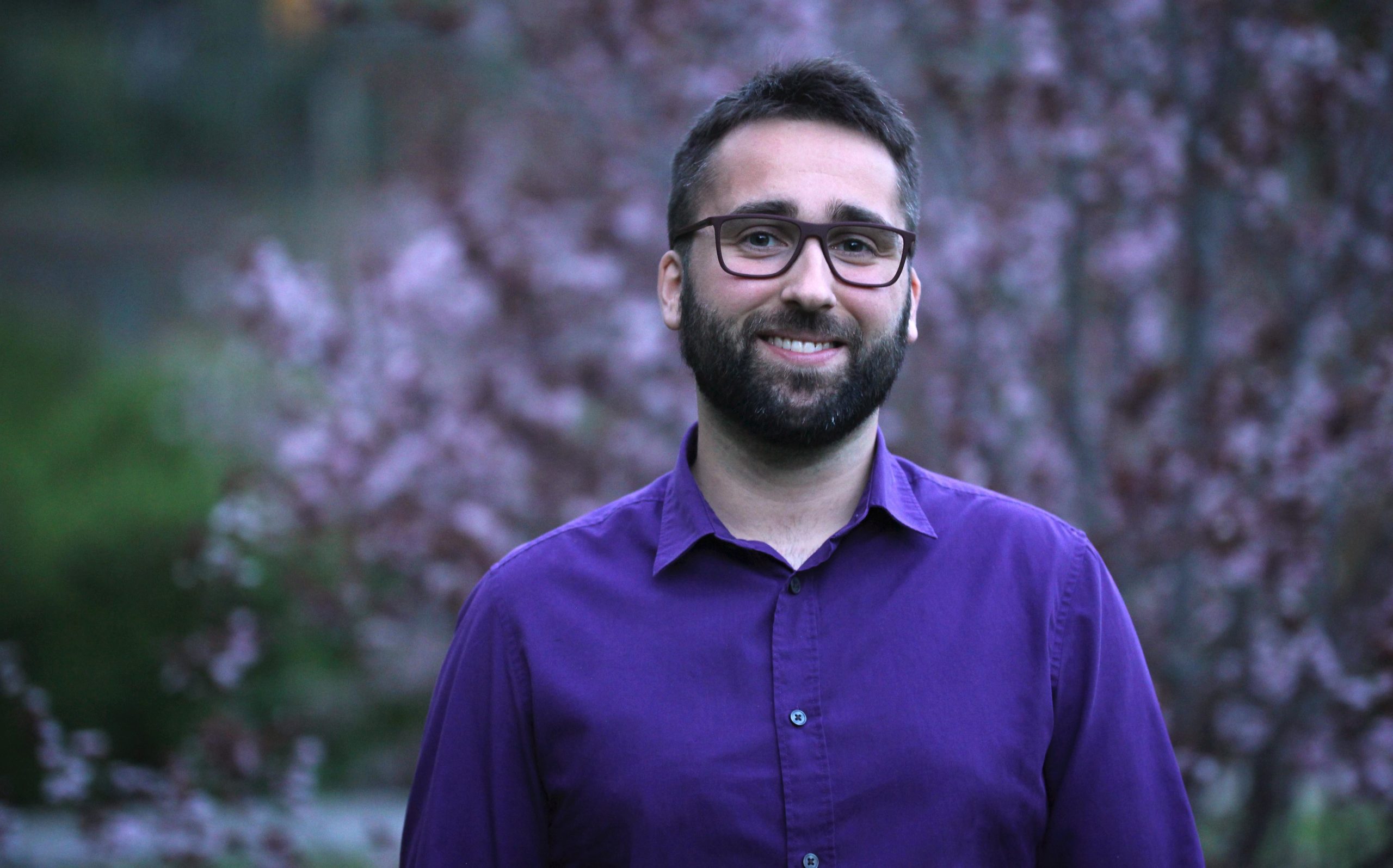
Jonathan Keijser | Courtesy photo / Magnetic North Pictures

Keijser believes that in order to inspire and challenge audience perceptions, content must be both reflective and humorous. To make an impact, stories must go beyond a single message approach and allow viewers to draw their own informed conclusions. Instead of providing definitive answers to difficult questions, he encourages increased awareness to help broaden perspectives as a way to spark curiosity and effect positive change.

It was in that spirit that Keijser created a larger project about Peace by Chocolate, the Hadhads’ family business. He clarifies, “The feature film follows the Hadhad family from their immigration to Antigonish, Nova Scotia, to the process of their rebuilding their lives in their new Canadian homeland. Although the short documentary, ‘Brothers’ is a separate story and is not directly related to the storyline of the feature film, it shares a similar tone in its warmth and sweetness. It is particularly special to me as I grew up in the Canadian province of Nova Scotia. Not only does the warmth of the community reflect my experiences in Nova Scotia, but also the importance of spending lots of time in the wilderness and natural beauty of the province.”

“I’m very happy the documentary launched in The Atlantic, where people can just go online and watch it,” continues Keijser. “Its purpose is more a social cause than financial gain. In the short time it’s been up, I’ve gotten tons of comments – most of them have been very, very heartening. People are saying, ‘Finally, something positive’ or ‘Finally, something uplifting!’ But that’s the theme in all my work. I want to leave the audience with some hope for the future, to believe they can actually do something that makes a difference. And it doesn’t have to be on a grand scale – it could be a simple interaction with someone else.”

“My vision for the ‘Brothers’ documentary was very much what Frank said at the end,” explains Keijser. “Starting a conversation with somebody is the basis for a connection. And vice-versa, connection can lead to a conversation. That’s what the documentary is about – we’re more similar than we are different as human beings. It only takes you having a conversation or connection with someone to realize it and to shrink that gap.

“I hope Issam’s and Frank’s friendship encourages audiences to be more open when meeting someone seemingly different from themselves. Although we don’t all share the same background or speak the same language, we are all the same underneath. Stories like theirs are proof that good can come from love, inclusion, and acceptance. When we turn people away, it not only furthers the divide between us, it builds resentment as well. Films like this can give hope to the millions of displaced refugees around the world and inspire others to help. We never know when we ourselves may need a helping hand.”
Keijser’s ‘Brothers’ could not have come at a better time. Given today’s political and social climate, we are in dire need of constructive examples to emulate.

Bone Kettle’s Delicious Offerings Continue to Captivate Diners

Originally published on 17 January 2019 in the Pasadena Independent, Arcadia Weekly, and Monrovia Weekly

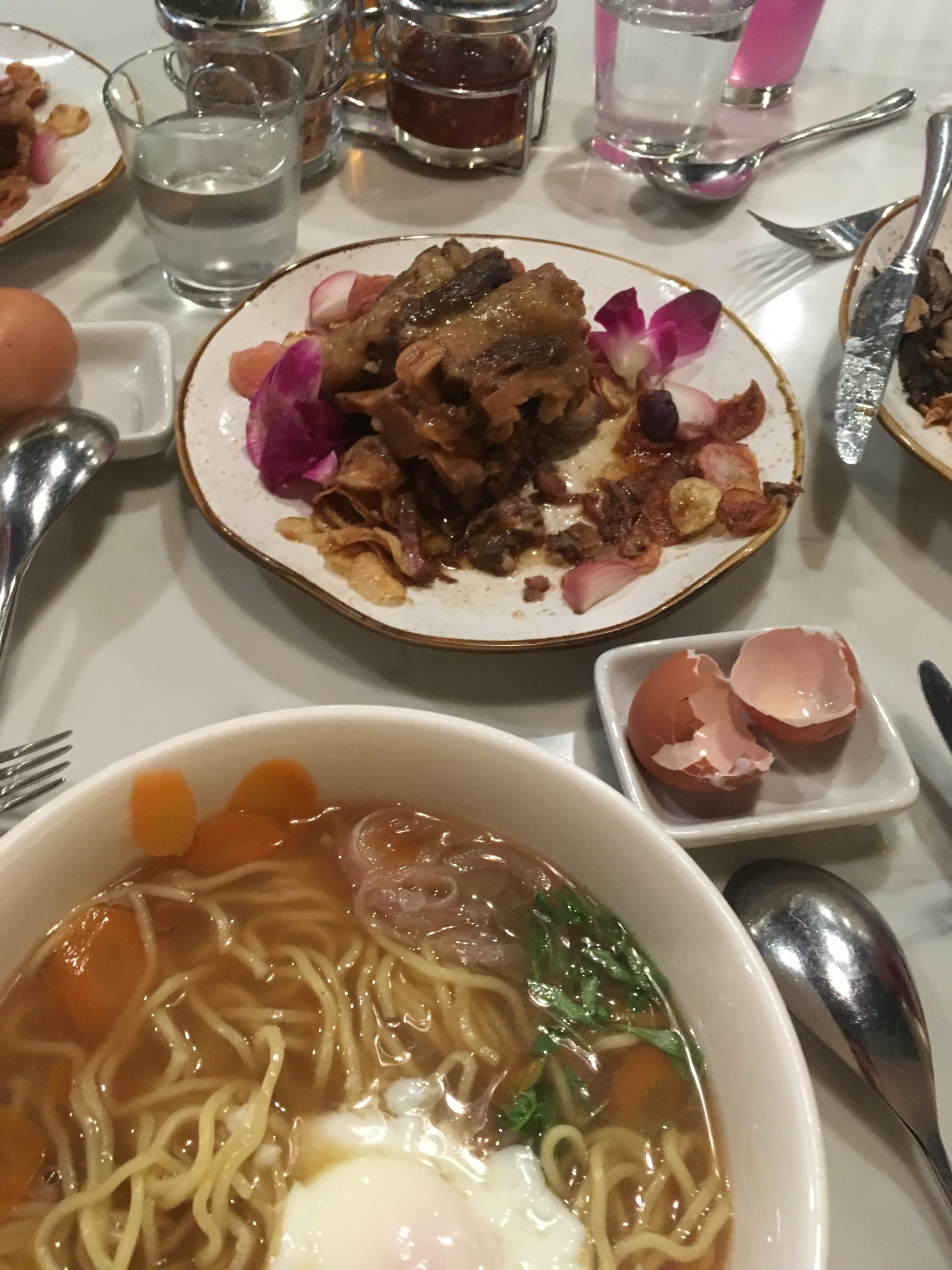
Bone Kettle’s St Helen’s braised oxtail with ramen noodles is the perfect comfort food | Photo by Brianna Chu

By Brianna Chu

Last year, May and I were invited to a PR mixer at the Bone Kettle, a Southeast Asian restaurant and bar in Old Pasadena, and the food was, as hoped for, simply amazing. I loved it so much that I revisited the restaurant last week with my family for lunch to try their full menu on for size. Sure, the food at the mixer was good, but they knew they were throwing an event for the Press. How good was their food normally? And what hadn’t I tried yet?

At their opening time of 11:30 am, there were available tables everywhere in the young, modern space, and we easily got a great booth in the main dining area. Over the next hour, though, tables began to fill up rather quickly for a random weekday. Service was fast, too – our main courses were served almost immediately after we finished devouring our appetizer, and their staff were friendly and helpful.

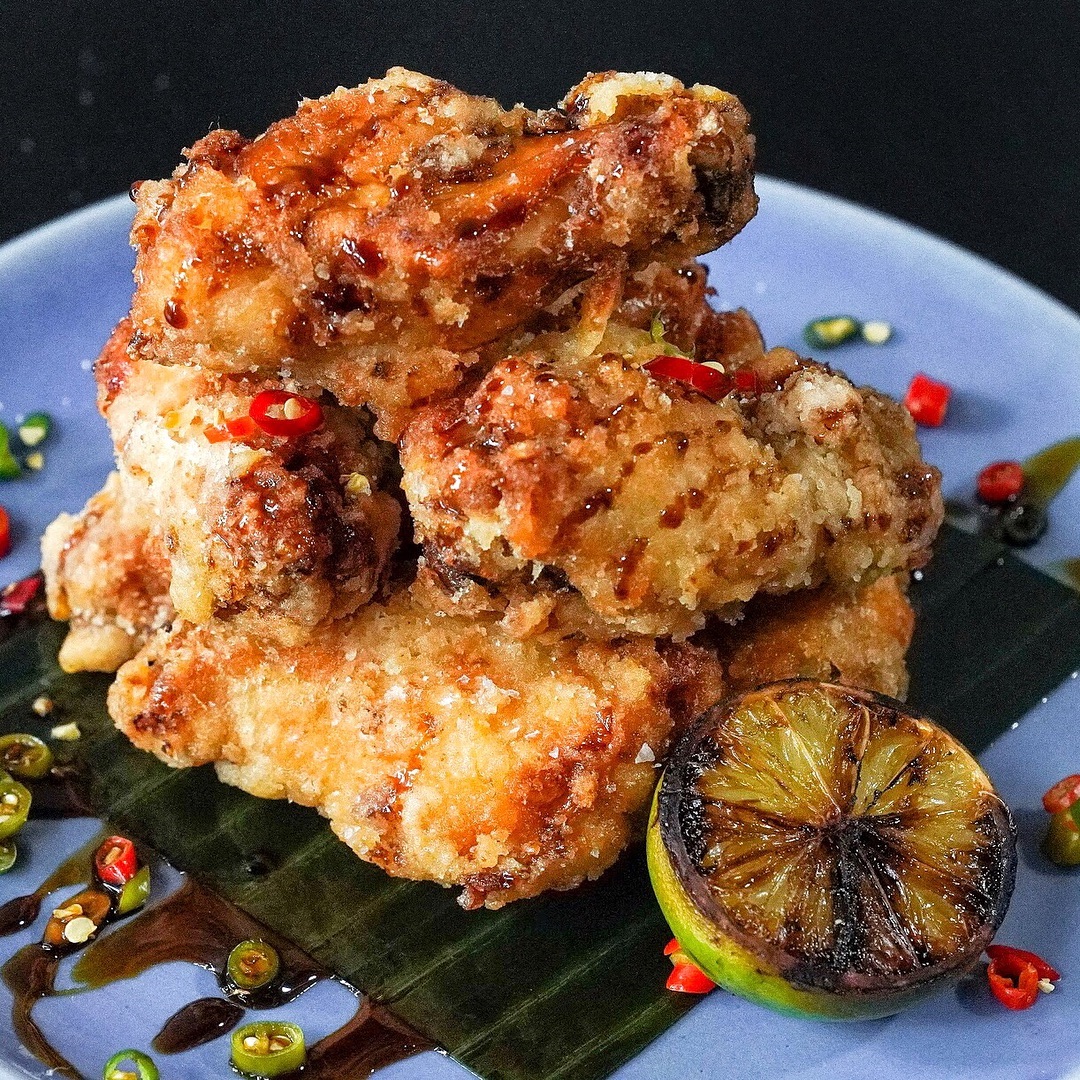
An important note to future diners: the lunch and dinner menus vary slightly. The succulent oxtail dumplings that I was looking forward to were reserved as an appetizer for the dinner menu. Luckily, however, the amazingly juicy and yet perfectly crunchy fried chicken wings with Thai chilis, sweet sauce, and lime did appear on the lunch menu – and tasted just as wonderful as they had previously. I spotted some familiar appetizers like the fluffy kroket, spicy papaya salad, and fried oxtail tips, which we sadly did not sample again since we all wanted to save enough room for the main dishes.

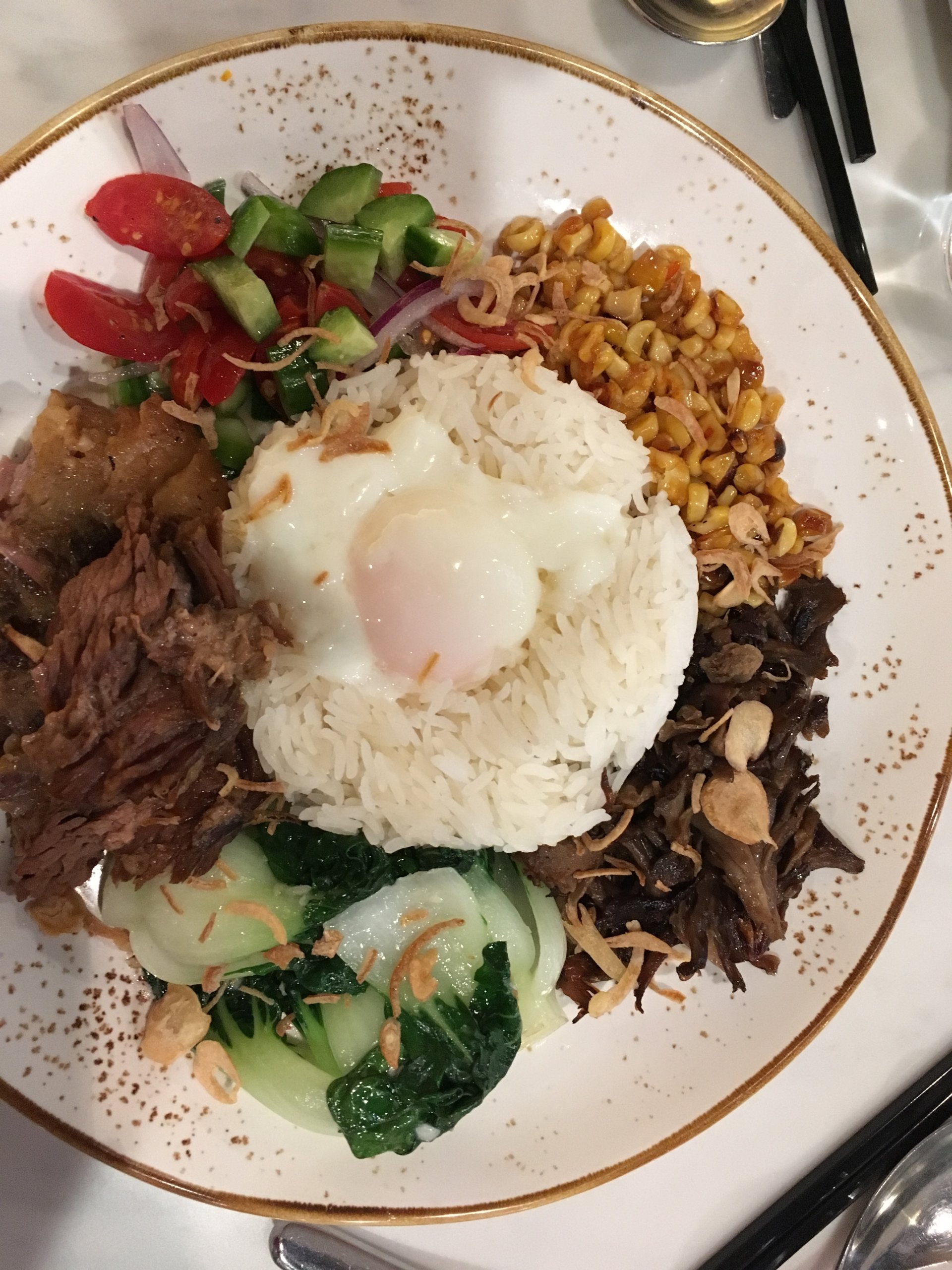
May opted for a rice plate with their fatty beef brisket – it was reportedly excellent, and presented beautifully. Vibrant vegetables and delicious meat haloed a rice plateau that featured a soft poached egg nestled at its center. It was a balanced, delicious plate for about $19-20, though prices vary on your protein choice, from tempeh to varying meats.
The fatty beef brisket rice plate is as delicious as it looks | Photo by Brianna Chu

My fiancé and I both immediately gravitated towards their broth options, though. The restaurant is called the Bone Kettle, after all! We both knew that we had to try their 24 hour, slow-cooked, St Helen’s braised oxtail, served with five ounces of fresh ramen, basil, cilantro, and sliced heirloom carrots, with the addition of a cheeky poached egg (for an extra $2, but I love eggs in my soup). At $24 for the large oxtail, noodles, and broth, I felt the meal was worth the price, especially given that the oxtail was the most expensive protein option for the broth.
As ever, the Bone Kettle’s presentation was impeccable. The oxtail was served on its own plate with crispy fried shallots and edible flowers, and the flavorful, succulent meat could be readily pulled off the bone with our chopsticks. May immediately tried some of my oxtail, and after her first bite, reached for another with the excited declaration that: “This is SO good!”

The bowls of noodles initially arrived broth-less, and a server came swiftly out with a pitcher of broth. Our soft poached eggs came still in their shells on a soy sauce dish for us to break open and serve into our broth when we pleased. I can happily confirm that I was as captivated by their broth this time around as I was the first! I left comfortably full, and even took home some leftover oxtail.

I wanted to check out the restaurant on my own time (and dime) to see whether I would enjoy the food and atmosphere just as much, and the Bone Kettle did not disappoint. I highly recommend the restaurant to everyone, as there are options for meat-eaters and vegans alike.

Brianna Chu, a guest opinion writer for Beacon Media, was born and raised in Pasadena. She loves to cook and to eat, is a lifelong viewer of Food Network, and enthusiastically introduced the tradition of Thanksgiving dinners to her British and European friends while earning her degree at the University of St Andrews.

Bone Kettle Serves Up Delicious Southeast Asian Cuisine with a Twist

Originally published on 20 November 2018 in the Pasadena Independent, Arcadia Weekly, and Monrovia Weekly

The chicken wings are a favorite among diners at Bone Kettle | Courtesy photo

By Brianna Chu and May S. Ruiz

Old Pasadena is a commercial district on the westernmost part of the city comprising 22 blocks where an eclectic mix of enterprises happily co-exist. There are museums and hotels, hotels converted into residential apartments and office spaces. There are a multitude of businesses – clothing retailers and coffee shops, dining venues and dress accessories stores, cosmetics shops and cinemas, jewelry and kitchen stores, nightclubs and sports bars, tech-selling stores and telecommunications service providers – housed in beautifully restored, historic buildings. You name it, it’s there.

Bone Kettle, an Indonesian fusion restaurant on North Raymond Avenue, has recently joined the numerous food establishments in this melting pot Pasadenans refer to as Old Town. It is co-owned by the Tjahyadi Brothers, Eric and Executive Chef Erwin, who immigrated to the San Gabriel Valley from Indonesia with their parents over two decades ago. They arrived with practically only the clothes on their back, except for an English dictionary to help them get by in their adopted country, and a few Indonesian cookbooks to remind them of home.

After 20 years, Chef Erwin went back to Indonesia on a quest of self-discovery. Through his travels in his birthplace, he reconnected with his childhood as he once more smelled the fragrance of spices that flavored the complex dishes he grew up with.

That reminder of his heritage inspired Chef Erwin to open a restaurant which deliciously blends heirloom recipes from his mother’s and grandmother’s cookbooks with local California ingredients and French classical techniques. His training at Le Cordon Bleu in Pasadena and apprenticeships under Wolfgang Puck and Trey Foshee have prepared him for the intricacies of creating unforgettable dishes. Thus, Bone Kettle was born.

Chef Erwin | Courtesy photo

“Living in the San Gabriel Valley, we would frequent Pasadena,” Chef Erwin informs us by email on his choice of restaurant location. “And it’s always been a dream to open in Old Town. It’s charming and rich in history; we love all the old buildings. Being here makes us feel like we’re part of not only a community but of something bigger.

“Because of the emergence of ever more Asian restaurants in Pasadena, we felt the city is prime for our food. At the same time, we felt compelled to represent our cuisine in our own authentic voice and perspective.”

And the community has been exceptionally welcoming, discloses Chef Erwin. “The reaction has been positive and overwhelmingly warm. We love it when customers are able to make a very personal connection and relate the cooking experience with their own. They appreciate that Bone Kettle is a family-run restaurant for Pasadena families and friends. In turn, we are enjoying getting to know our diners and making new friends.

“We want our patrons to remember their dinner at Bone Kettle as something that reflects the highest standards of quality food, with imaginative dishes of great flavors,” adds Chef Erwin. “I hope that through the food we serve, they see that we passionately care about the guest experience. And that, ultimately, we are able to tell our story.

Brianna’s review below speaks to Chef Erwin’s love of food and culinary mastery.

When my old high school friends and I met up after we all graduated to share our experiences over the past four years, we noticed that despite the disparate locations in which we studied, all of us missed the range of food available here in Los Angeles County. Even just in the Pasadena area, we do not lack for diversity of cuisines; the Bone Kettle in Old Town exemplifies the broad variety of food which we enjoy.

Bone Kettle’s modern interior | Courtesy photo

You can expect an Indonesian and Southeast Asian food experience when coming to the Bone Kettle, a small, family-owned restaurant and bar with a modern and chic atmosphere on Raymond Avenue. It’s only about a year and a half old, and full of surprising contrasts. While it has a young and modern feel not only in its decor, but also by its playlist – when we came in, there was relaxed electronic music softly playing – the restaurant feels homey and comfortable, too, as the head chef’s father served us plates that his son had just made, explaining to us what the dish was.

May and I aren’t particularly big fans of alcohol, so we ordered two non-alcoholic drinks: the dragonfruit lychee lemonade, and a raspberry and yuzu drink. The dragonfruit lemonade tastes entirely like lychee and dragonfruit, which definitely brought me back to my childhood eating dragonfruit and lychee jellies. The raspberry and yuzu drink was a gorgeous ombré of light lilac into deep magenta and tasted as close to candy as actual fruit can, while also having an incredibly refreshing and fragrant taste.

We were pleasantly bombarded with samples of many of Bone Kettle’s small sharing plates. Shortly after we sat down, two dishes were placed on our table. While slightly spicy, the papaya and shrimp salad was also tangy and delightfully crunchy. Tips of salty, fall-off-the-bone tender oxtail with freshly fried and crisp slices of potato followed, in perfect contrast to the salad.

One of the restaurant’s favorites, the oxtail dumpling, is understandably popular. The dumpling was served in deeply savory and rich but also slightly acidic sauce, complementing the succulent oxtail dumpling, whose filling dripped with au jus and marinade.

The oxtail dumplings are rich in flavor | Courtesy photo

Their kroket are fluffy and delicate, filled with an incredibly smooth paste of beef with pieces of carrot and peas, but surprisingly, it was served in hoisin sauce. The combination dumbfounded me; I could never have imagined that these two things would ever taste great together, let alone be found in the same dish, but I was pleasantly surprised by the depth that the hoisin sauce brought to the lighter, more one-toned kroket.

I managed to snag a bite of deeply umami and also somehow cheesy tartare, which was served on a shrimp cracker; after which, we were treated to shots of the restaurant’s famous bone broth – incredibly rich but eminently drinkable. Every sip is clearly imbued with the incredible flavor of bone marrow. This is not a broth that is merely a vessel for other ingredients – it has its own flavor that demands attention. When waiters circled back with second rounds of bone broth, hands from all tables immediately reached towards the tray for seconds.

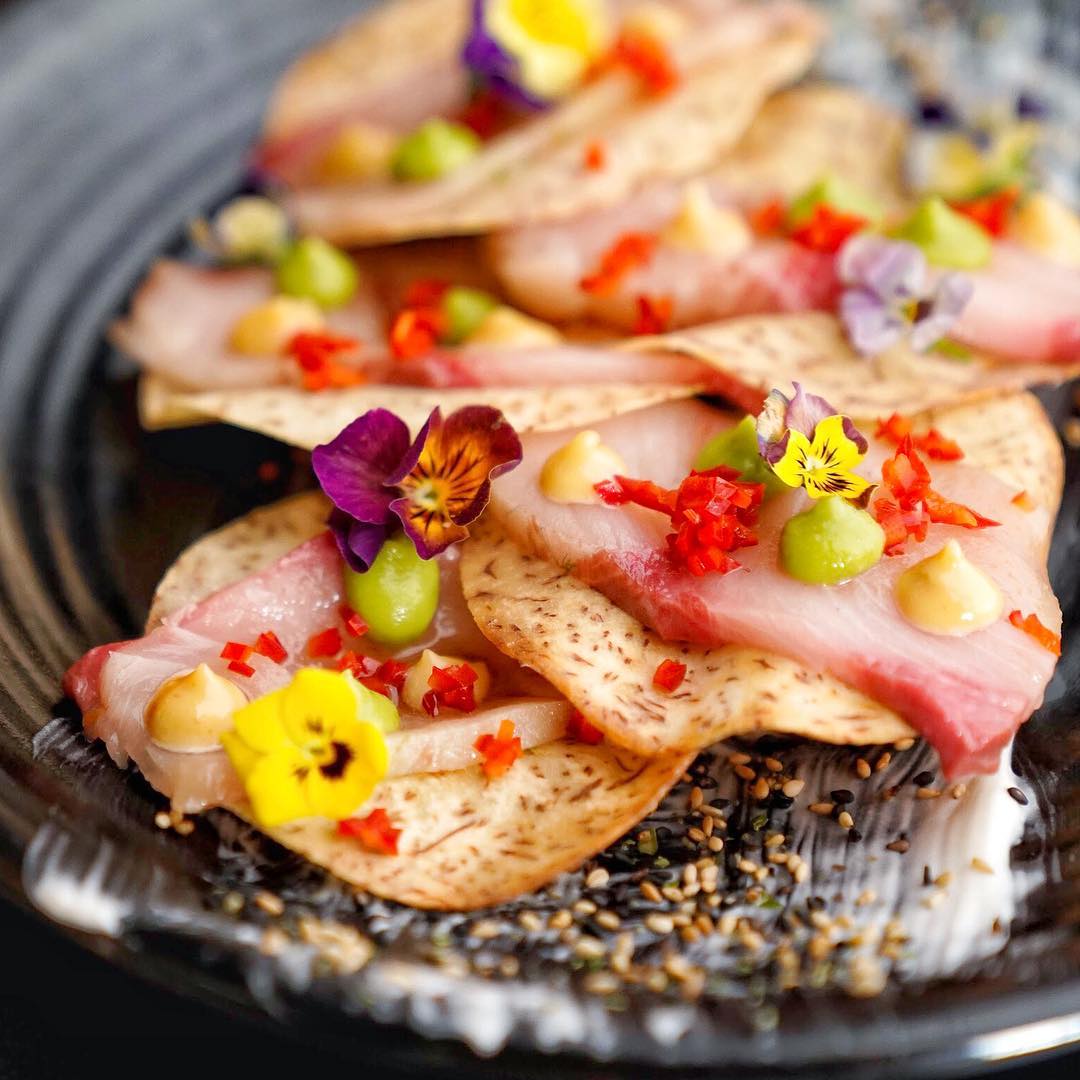
Even more irresistible bites followed: Hamachi crudo with green onions and peppers and fried chicken wings. The sweetness of the fresh yellowtail made the crudo light and addictive, with a light pop of heat from the peppers. I had my eye on the tray as it went around the room and I unabashedly took the last one when it was offered.

The hamachi crudo with green onions and peppers | Courtesy photo

The fried chicken wings with Thai chilis and a sweet sauce are another of the Bone Kettle’s popular dishes, for a reason – the wing was perfectly crispy, the sweetness from the sauce woken up by the kick of the Thai chili, and the chicken was juicy and perfectly cooked. May started volunteering me to take every leftover sample of food they brought out. I protested, but mostly out of pride…

A third round of broth came out – and it was gone in a matter of seconds. As I drank the broth, I marveled at its richness, but as soon as I finished a sip, I noticed how light it was and immediately reached for more.

The penultimate appetizer was a Rendang rice fritter with a filling of short rib, slow cooked for 15 hours, and cheese. The cheese really shone through, and the pulled short rib was pillow-soft. In the cross-section of my bite, I could see each individual grain of rice used to make the coating. The rice was crispy on the outside, and not too soft within, maintaining the structural integrity of each grain of rice for some texture.

The rendang rice fritter has a filling of short ribs slow cooked for 15 hours | Courtesy Photo

The finale: a platter of drier, crunchy coconut-braised fried chicken with a spicy salsa made from an unusual set of vegetables.

As the restaurant is sandwiched between a burger joint and a barbecue place, some might think that the Bone Kettle would struggle to compete with such classic American favorites. However, I’d argue that the Bone Kettle is perfectly situated to exemplify the diversity of flavors in Southern California.

The Bone Kettle is the kind of place where I’d want to take my girlfriends to on a weekend for some good food, and catch up on our weeks. I can’t wait to go back and see what more delights they have to offer on their full menu!

Brianna Chu, a guest opinion writer for Beacon Media, was born and raised in Pasadena. She loves to cook and to eat, is a lifelong viewer of Food Network, and enthusiastically introduced the tradition of Thanksgiving dinners to her British and European friends while earning her degree at the University of St Andrews. While they absolutely hated going around the table and saying what they were grateful for every year, they also loved the excuse to get together and feast with friends enough to endure it anyway.

The Pie Hole Offers Fare from Original Recipes

Originally published on 19 November 2018 in the Pasadena Independent, Arcadia Weekly, and Monrovia Weekly

The chicken pot pie and salted caramel pecan pie, served in pie tins, and a cup of latte | Photo by May S. Ruiz / Beacon Media News

By Brianna Chu and May S. Ruiz

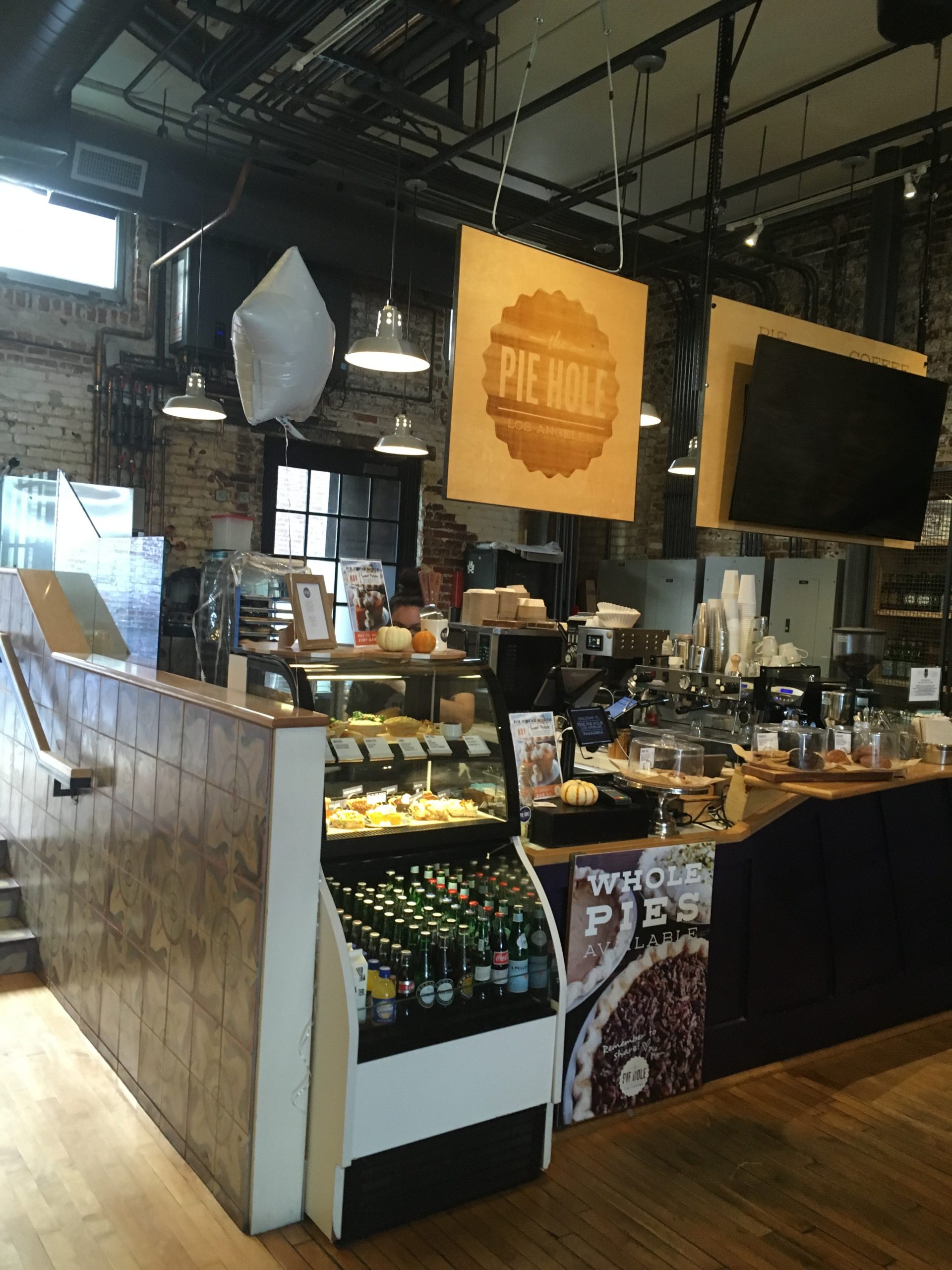
The Pie Hole, located at the Indiana Colony in  Old Pasadena, serves up the kinds of pies that are not found at regular cafés, diners, or restaurants. That’s because the items on its menu were created by Becky Grasley who comes from a long line of bakers and cooks in rural Pennsylvania, where pie is a way of life.

Grasley and the other women in her family showed their love through baking and marked the seasons with the pies they made. She continued this tradition with her own children, using recipes that have been passed on from one generation to the next. She baked pies after school and took them to the fair, where her apple pie won the blue ribbon.

Years later, when her children were grown, Grasly spent a Thanksgiving weekend baking countless pies for friends and family at a remote cabin. And her life-long dream of opening up a pie shop got closer to actuality.

With co-founder Sean Brennan, whose restaurant experience balanced her pie-making skills, Grasley established their first eating place in October 2011, at the Arts District in Los Angeles known as Bloom Square, in honor of a local legend and activist who owned a neighborhood convenience store. They named it The Pie Hole and it became an instant hit.

Brennan, speaking with us via e-mail, answers questions that range from where they choose to open shop to how they keep the standards in all locations. “From a real estate perspective, we look for terrific neighborhoods that don’t have great pie restaurants. Realistically, our regulars tell us where they want us to be. People invite us all the time, on social media and at our restaurants, to come to their neighborhood. And Pasadena is a perfect example – we had so many fans visiting our Arts District restaurant asking us to open in Pasadena, so we did.”

The Pie Hole in Old Pasadena | Photo by Brianna Chu / Beacon Media News

Word about The Pie Hole spread and to date there are ten locations – eight in the Los Angeles area and two in Tokyo, Japan. The Arts District, Hollywood, and Pasadena locations are owned by Grasley and Brennan and the others are either franchises or licensing agreements.

“Whether they’re owned  by The Pie Hole or franchises, all of our restaurants are teams and they undergo a rigorous training program,” Brennan points out. “We start with selecting the right people – those who love coffee and pie. We always have open lines of communication and a great collaborative culture. Our chefs in Japan are constantly talking with our chefs in L.A. We also spend a lot of time visiting all of our restaurants to make sure everything is up to our standards.”

Ensuring that the quality is maintained means all pies are made with the same ingredients and undergo the same process in all their restaurants. Their founder’s recipe for Mom’s Apple Crumble, for instance, contains two pounds of Granny Smith apples. The Earl Grey Tea pie, infused white chocolate mousse with a layer of dark chocolate ganache and salted pistachios, is a house invention and a masterpiece that takes 24 hours to make.

Besides signature pot pies, individual pot pies, and hand pies, the restaurant offers galettes, breakfast quiches, and salads. Hot and iced coffee – either espresso or their own specialty blend, specialty and seasonal specialty lattes – are wonderful accompaniments to all the food items.

“We have mostly the same menu at all of the restaurants, using our Arts District shop as a culinary incubator where we test new recipes and pies,” explains Brennan. “However, we regularly add new pies and specialty coffee drinks, including the Pie of the Month and Drink of the Month. The November  pie of the month is a sweet potato pie with brown butter sage in a butter crust, topped with marshmallows; the drink is spicy mocha made with our signature house blend, chocolate syrup, and ground ancho chili pepper.”

However much her business has grown, Grasley isn’t about to stop there just yet. She would like to add more locations and novel items. The Pie Hole is now open for breakfast with its new breakfast pies. Most recently, in time for pie season, it introduced Pie Holes – small, round, two-bite pies perfect for a quick snack and eating on the go. Available in four flavors, they are priced at $1.00 each or $12.00 for a baker’s dozen.

Brianna’s review below provides highlights about The Pie Hole’s food and ambience.

Tucked into the back corner of Indiana Colony’s marketplace space, The Pie Hole sits amidst the company of a juice bar, an ice cream vendor, and a tea and herb-selling stall. It’s the kind of place that seems geared towards attracting young adults who want the ready availability of caffeine, food, and WiFi of a Starbucks, but with a hipper vibe.

The café was kind enough to offer us each a savory and sweet pie, along with a drink of our choice. May opted for the classic latte and I chose a cold brew coffee; we were both very pleased with our coffees, May especially. I was given both sugar and simple syrup to sweeten my cold brew, which was a thoughtful touch.

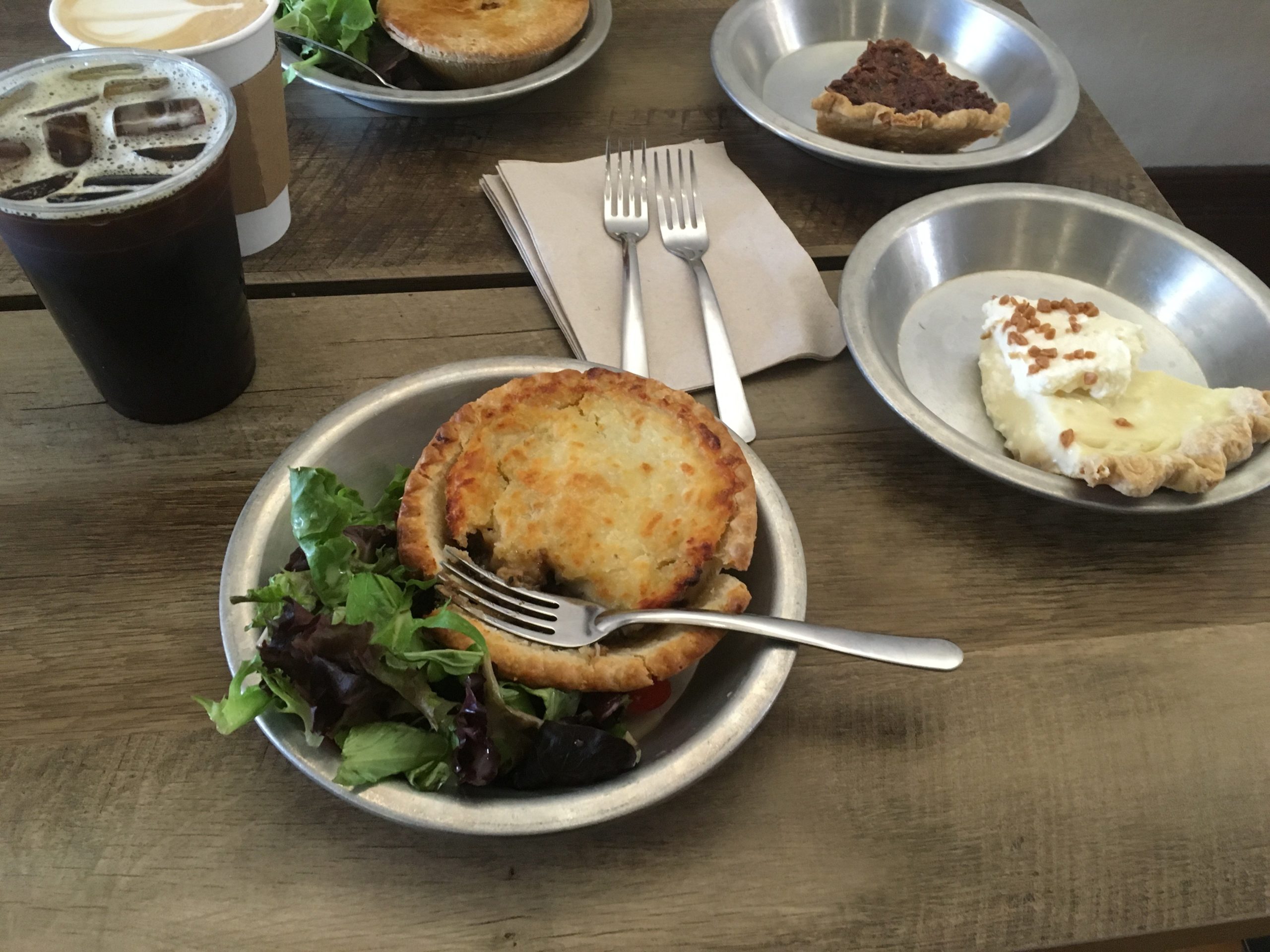
Shepherd’s pie, banana cream pie, and cold brew coffee | Photo by Brianna Chu / Beacon Media News

We sampled some classic pies, the chicken cornbread and shepherd’s pie, and May picked the salted caramel pecan for her dessert while I selected the banana cream. The staff were friendly and helpful, and we received our food shortly after ordering.

Each pie was served in a metal pie tin, which emphasized the hip vibe – there’s a growing trend of restaurants using unorthodox objects in lieu of plates, and the trend is polarizing, to say the least, but I felt that in this case it actually made sense.

The Pie Hole’s chicken pot pie is a twist on the classic, what with the cornbread incorporated into their filling and the inclusion of red bell peppers instead of the staple carrots and peas. I hesitate to opine on the chicken pot pie, as I enjoy the traditional chicken pot pie and the red bell pepper isn’t quite my taste, but I will say that I couldn’t quite pick out the cornbread in their filling.

Their shepherd’s pie is more along the lines of the classic, complete with a topping of mashed potatoes. Perhaps it was just a fluke of the batches, but we found that the shepherd’s pie tasted a tad too salty for our palate, becoming less easy to eat after running out of the accompanying side salad to temper it; and the salted caramel pecan pie fell a little on the sweet side for May.

However, the banana cream pie was everything I hoped for; a big plus for me was that the pudding tasted homemade, without the slight aftertaste of the store-bought variety. The banana slices were visible and texturally present in the pie, and the shards of toffee on top provided a welcome pop of sweetness and textural contrast. The consistent high point, for me, was the pie crusts – which were dependably buttery, flaky, and everything I’ve come to expect in a good pie crust.

The newly introduced, snack-sized pie holes | Photo by May S. Ruiz / Beacon Media News

Two weeks after we initially visited, we were invited back to experience their newest offering – the rather fitting pie hole. Self-enclosed mini pie bites, these pie holes currently come in four flavors: caramel apple, blueberry, Mexican chocolate, and Nutella. For me, each pie hole is about a four bite proportion, a perfectly snack-able size.

Both the caramel apple and blueberry were excellent, slightly warm, and not too sweet – and I’m not even much of a caramel fan, either. The Mexican chocolate and Nutella bites were definitely much sweeter, but they were also served cold, so they were on the hard side. Like our last visit, the drinks were great – May loved her salted caramel latte, and my pumpkin pie latte was exactly what I thought it would be – the Pie Hole’s smoother and classier version of the popular Pumpkin Spice latte.

All in all, I would consider returning; and in fall, an afternoon outing in Old Pasadena definitely benefits from a good slice of pie.

Brianna Chu, a guest opinion writer for Beacon Media, was born and raised in Pasadena. She loves to cook and to eat, is a lifelong viewer of Food Network, and enthusiastically introduced the tradition of Thanksgiving dinners to her British and European friends while earning her degree at the University of St Andrews. While they absolutely hated going around the table and saying what they were grateful for every year, they also loved the excuse to get together and feast with friends enough to endure it anyway.

Celestino: Creating Memorable Sicilian Dining Experiences

Originally published on 12 November 2018 in the Pasadena Independent, Arcadia Weekly, and Monrovia Weekly

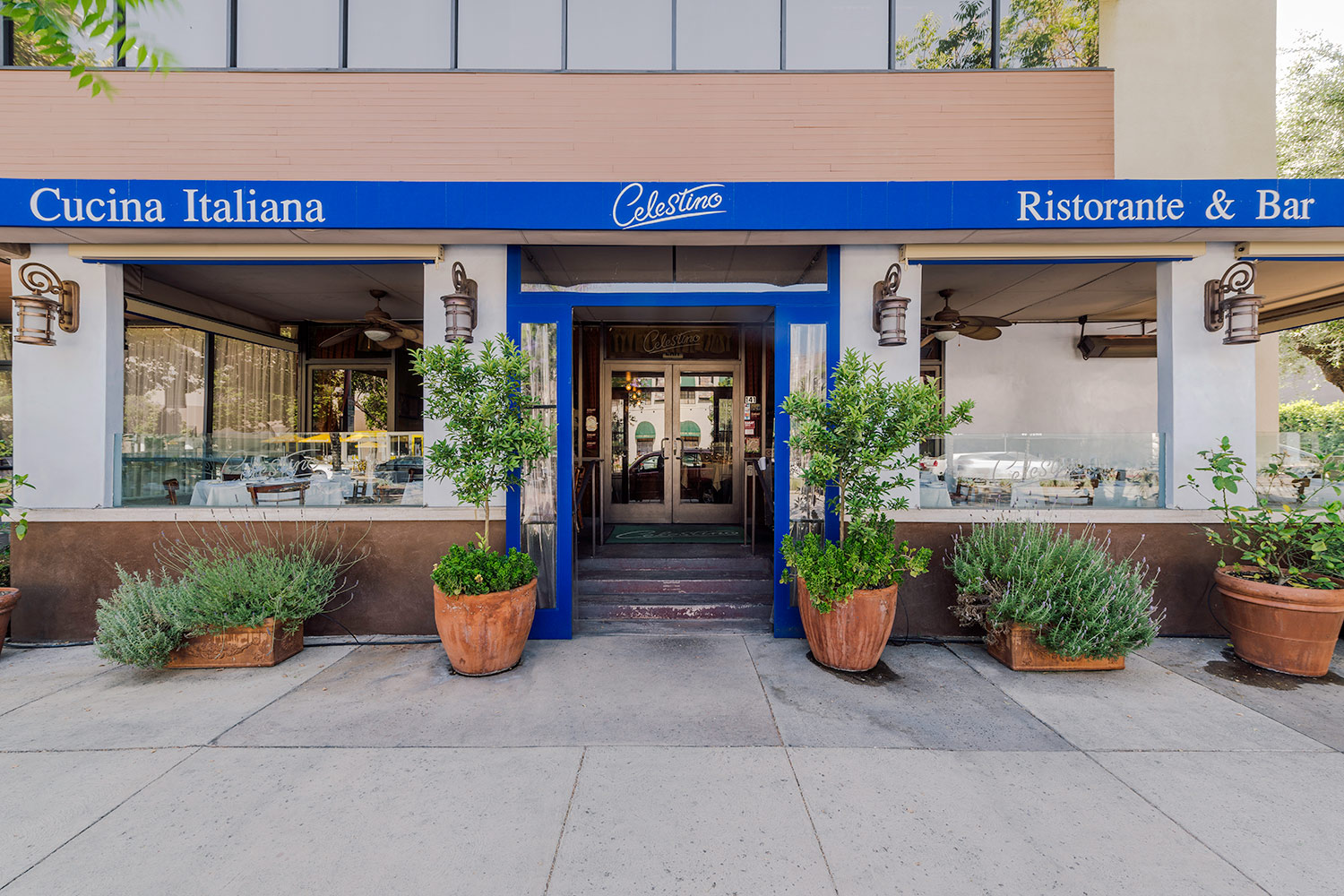
Celestino, at 141 South Lake Avenue in Pasadena, has been a favorite among diners for over 20 years | Courtesy photo / Alen Lin

By Brianna Chu and May S. Ruiz

Celestino, at the South Lake Avenue District, has been a celebrated restaurant among diners looking for authentic Italian cuisine. For over 20 years, it has attracted locals and visitors to Pasadena with its seasonal fares made with the finest and freshest ingredients.

Owner Calogero Drago, one of the famed Drago Brothers who operate several restaurants in the Los Angeles area, is legendary for his exuberance. He dashes through the restaurant, making his rounds from table to table, imbuing an atmosphere of cheerful energy and enthusiasm. It wouldn’t be a surprise to anyone that he actually knows diners by name and is aware of their food preference. Because of the personal relationships he has built with diners, people travel to Pasadena to enjoy the food as much as the friendship.

However, Drago doesn’t rely on goodwill alone. Celestino is, after all, a restaurant; so he ensures that diners are never disappointed and comes up with dishes that make their experience memorable. During a recent private tasting dinner, he inaugurated his seasonal menu featuring mushrooms and truffles – those rare and coveted fungi which make for the most sublime food creations.

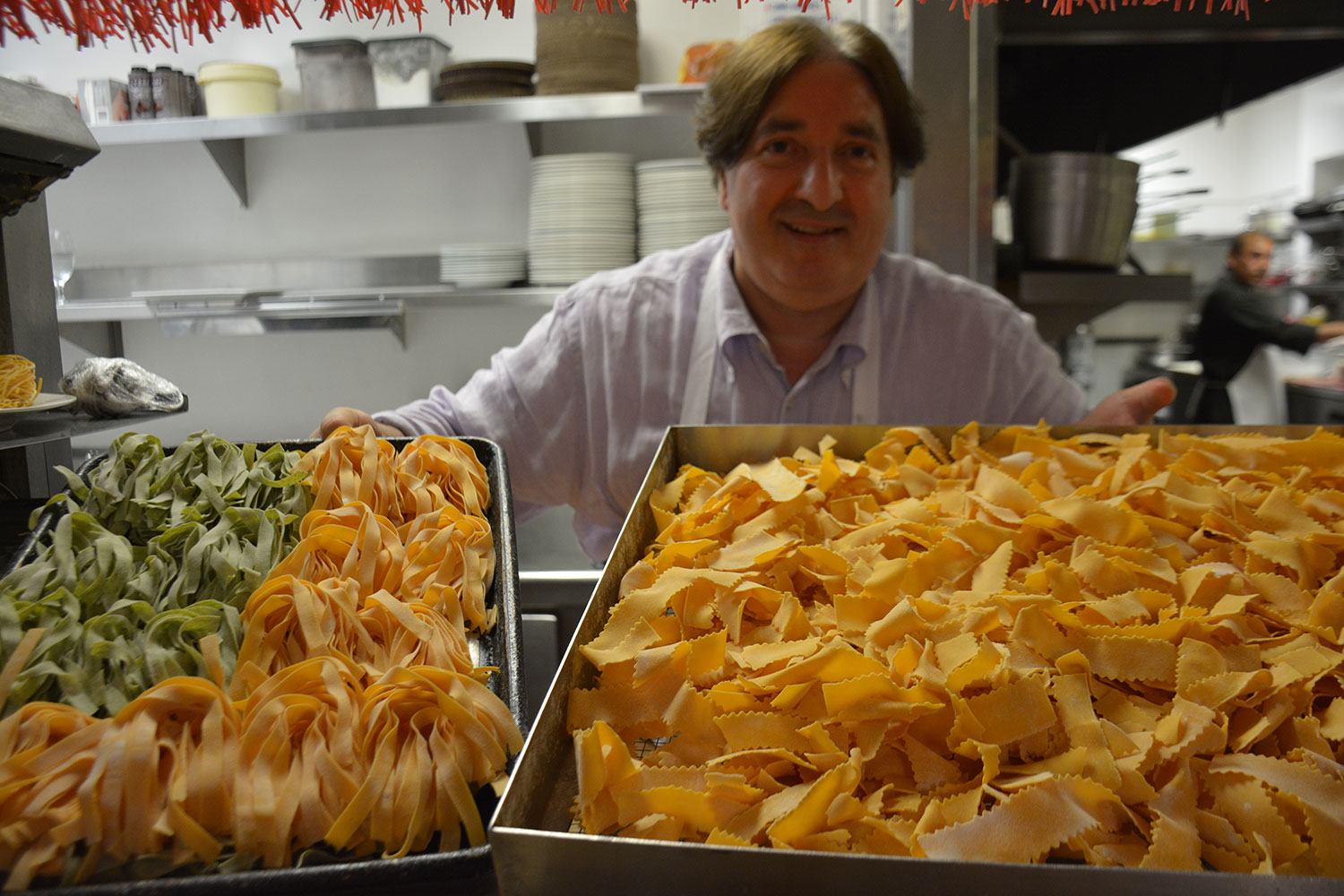
Calogero Drago shows’ off Celestino’s handmade pasta | Courtesy photo / acuna-hansen

And after reading Brianna’s review below, you’ll appreciate why Celestino is the acclaimed restaurant that it is.

Italian cuisine is fairly ubiquitously loved, making the search for a great Italian restaurant a challenging one. Even novice cooks can tackle some classic and comforting Italian dishes, thus raising the bar for finding an Italian spot that is truly worth going out for. Ambience, too, is especially important; we want the kinds of places we can rely upon for any occasion – birthdays, weekend dinners with family, dates – and the mere mention of Italian restaurants conjures images of candlelight, warmth, red-checked tablecloths, and great hospitality. The balance? Food that is indulgent yet not overwhelming, and of a quality that I couldn’t imagine easily replicating in my own kitchen.

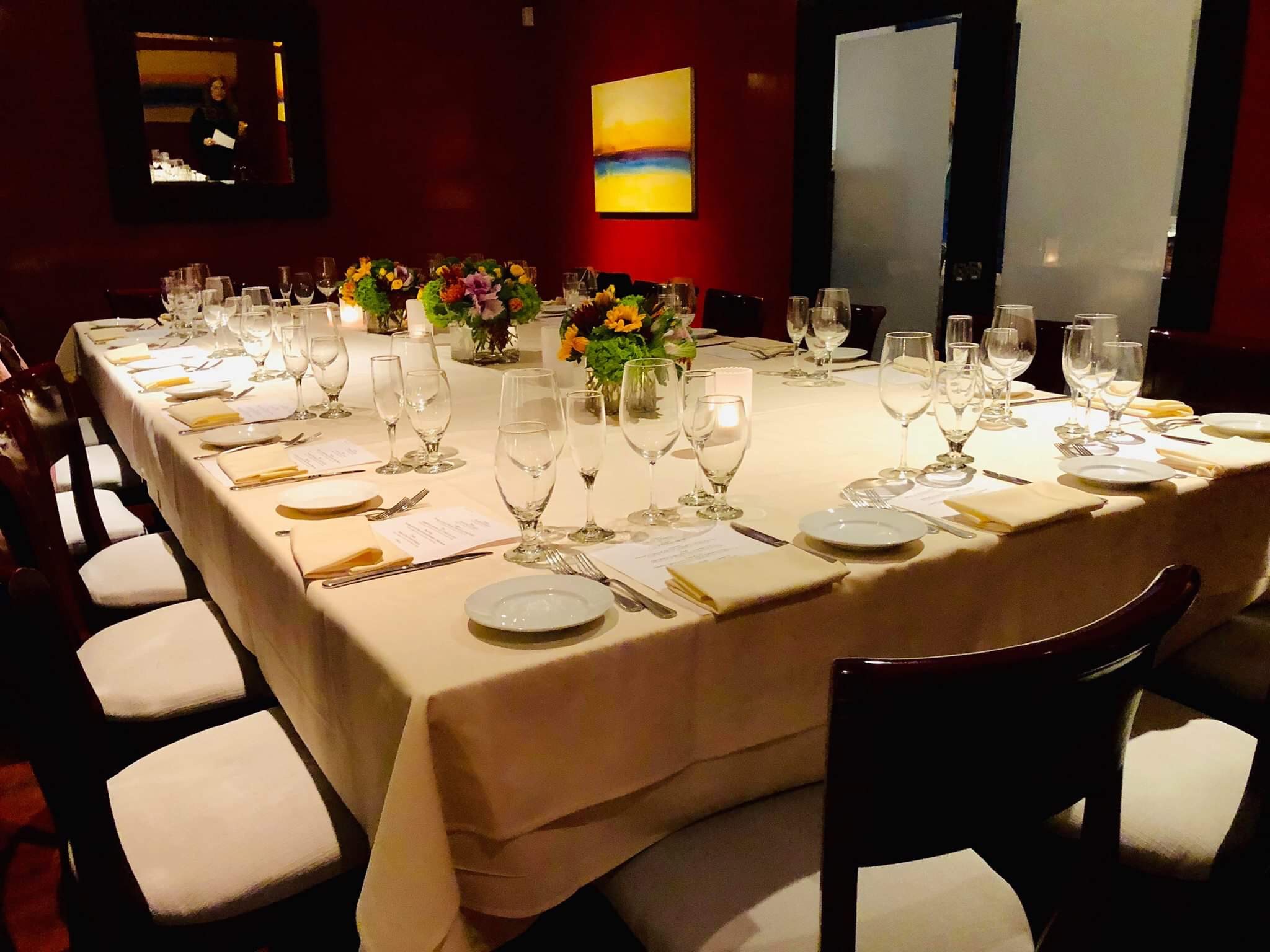
These were my expectations when we walked into Celestino. For 7 pm on a Wednesday night, the cozy restaurant was already filling up, and my high hopes raised higher still when we were immediately greeted by the friendly face of its owner, Calogero Drago. We were directed to a softly lit table in Celestino’s Lake Room, which, with deep red, fresco-textured walls and flickering candlelight, fit the image of your favorite upscale Italian restaurant.

The Lake Room |Courtesy photo / TinTin Beligan

Over the course of the evening, we were treated to small plates of six different appetizers, a choice between an entreé of sole or veal scalloppini, and a dessert of panna cotta in a tasting menu prepared to showcase Celestino’s seasonal dishes.

The tasting commenced with an eggplant polpettine, a little “meat”-ball which had a crisp outer shell and surprisingly cheesy pureé of eggplant.

The following pumpkin soup subverted my expectation – the pumpkin element came from the seeds, and was not the main component of the soup. The pumpkin seeds provided texture and nuttiness to the thin, spring green soup, which also featured tender cooked squid.

Next, the burrata antipasto – accompanied by a tomato sauce on a bed of arugula. The skin of the freshly-made cheese was resilient and slightly resistant to being cut, and once my fork broke through, the texture of the cheese within was incredibly silky and creamy in taste – as buttery as its name suggests.

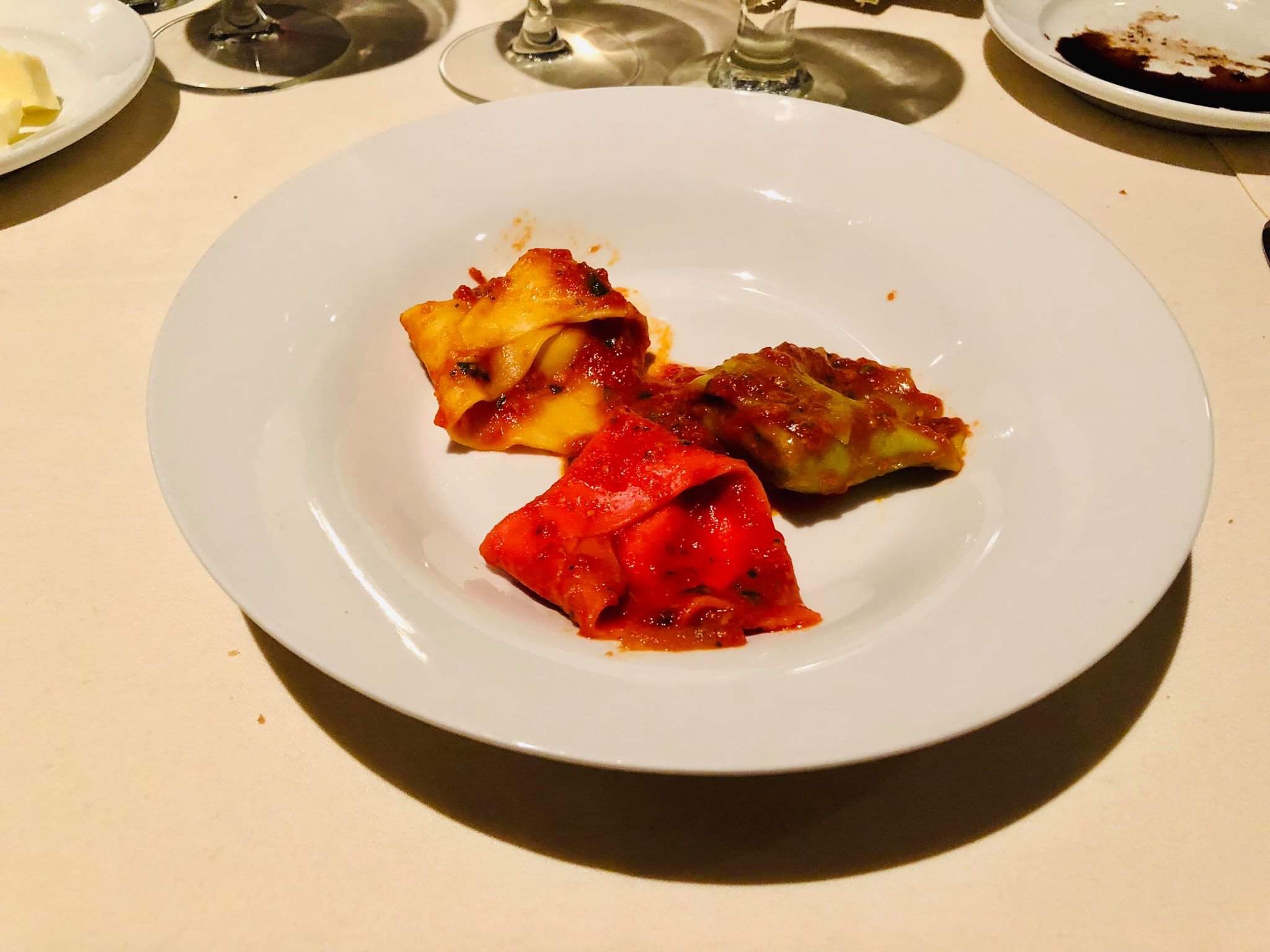
Tortelloni stuffed with mixed seafood and spicy tomato sauce | Courtesy photo / TinTin Beligan

The penultimate appetizer was mixed seafood tortelloni, which are the larger cousin of tortellini. Each tortelloni was handmade, Drago told us (an assertion supported by the bite of the dough), and was the perfect two-bite size proportion. The cioppino sauce in which the tortelloni were served was gently spicy: enough to warm the tongue, but certainly nowhere near overpowering to interfere with any of the flavors of the sauce itself.

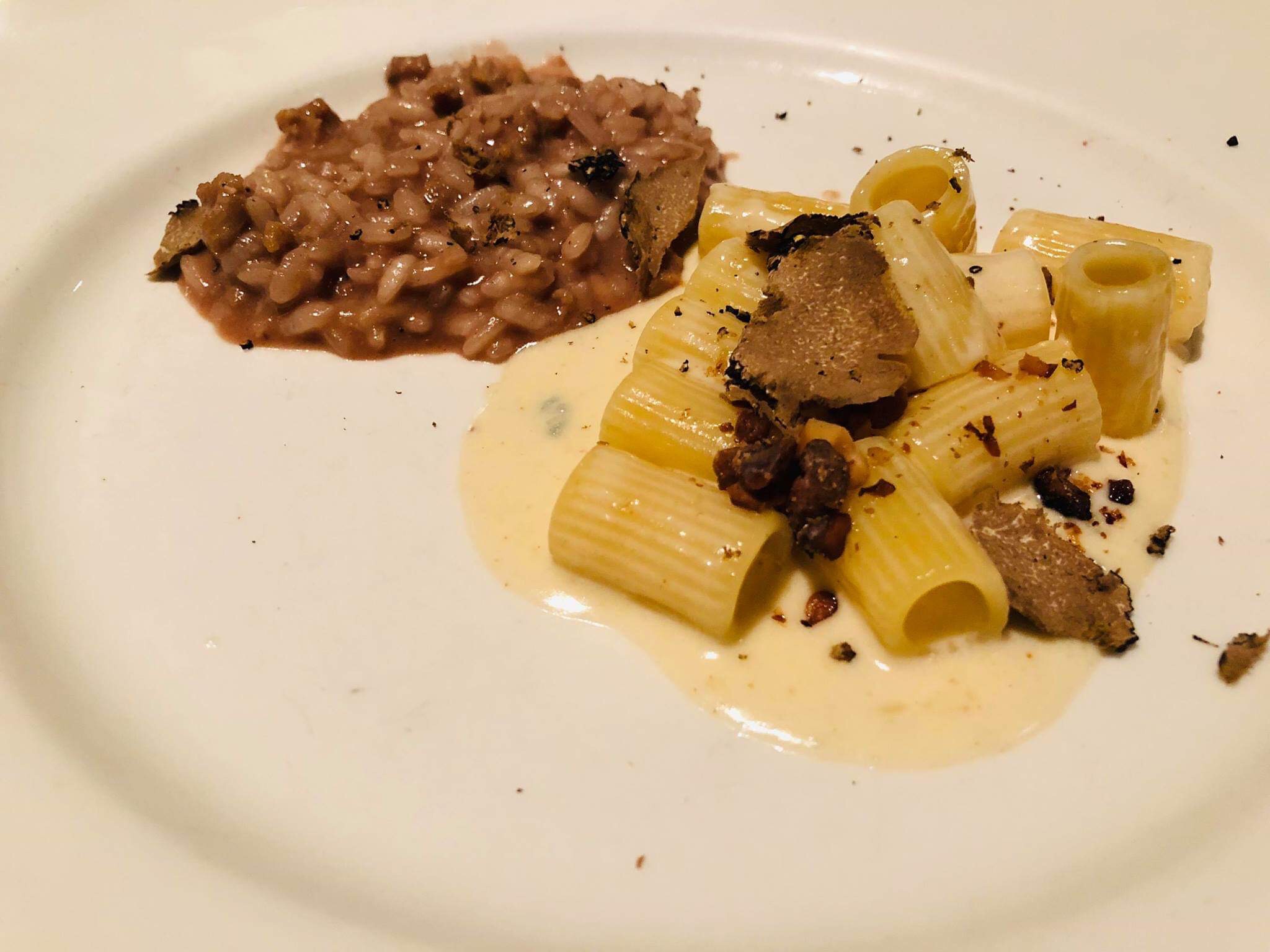
Risotto and bambolotti | Courtesy photo / TinTin Beligan

When the risotto and bambolotti combination came out, the room was delighted by the simultaneous entrance of waiters holding truffles and graters in their hands. The risotto was rich and savory, and the slight sweetness and tang of the Nero D’Avola red wine was clearly present. Of course, the topping of truffle shavings added depth and earthiness to the already rich risotto. The bambolotti with gorgonzola, hazelnuts, and fresh black truffle was outstanding.

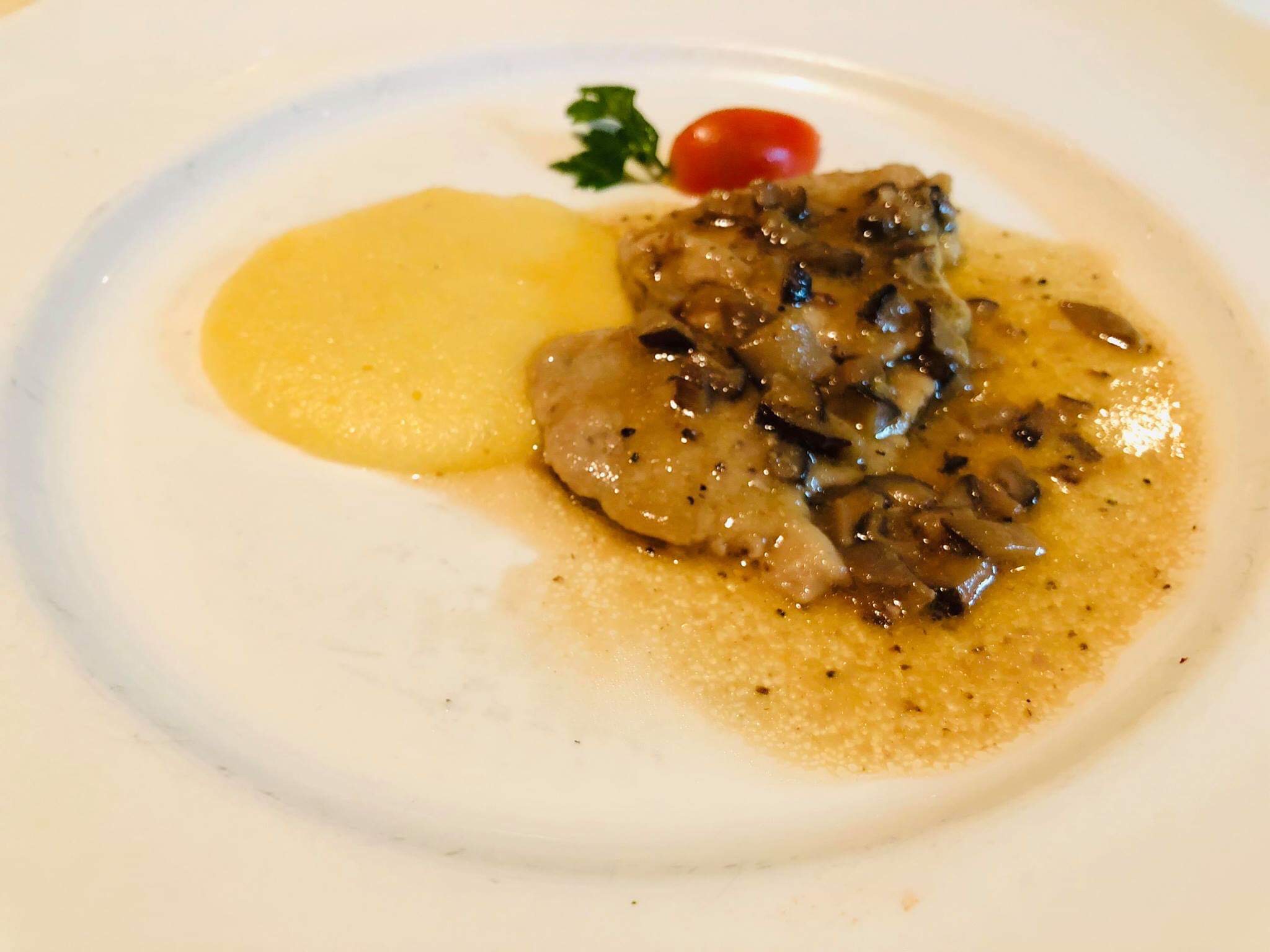
My chosen entreé of veal scalloppini was tender and delicious, but the polenta that accompanied it actually caught more of my attention, perhaps because it provided relief from the heaviness of eating the risotto and scalloppini back-to-back.

Veal scalloppini with mushroom and soft polenta | Courtesy photo / TinTin Beligan

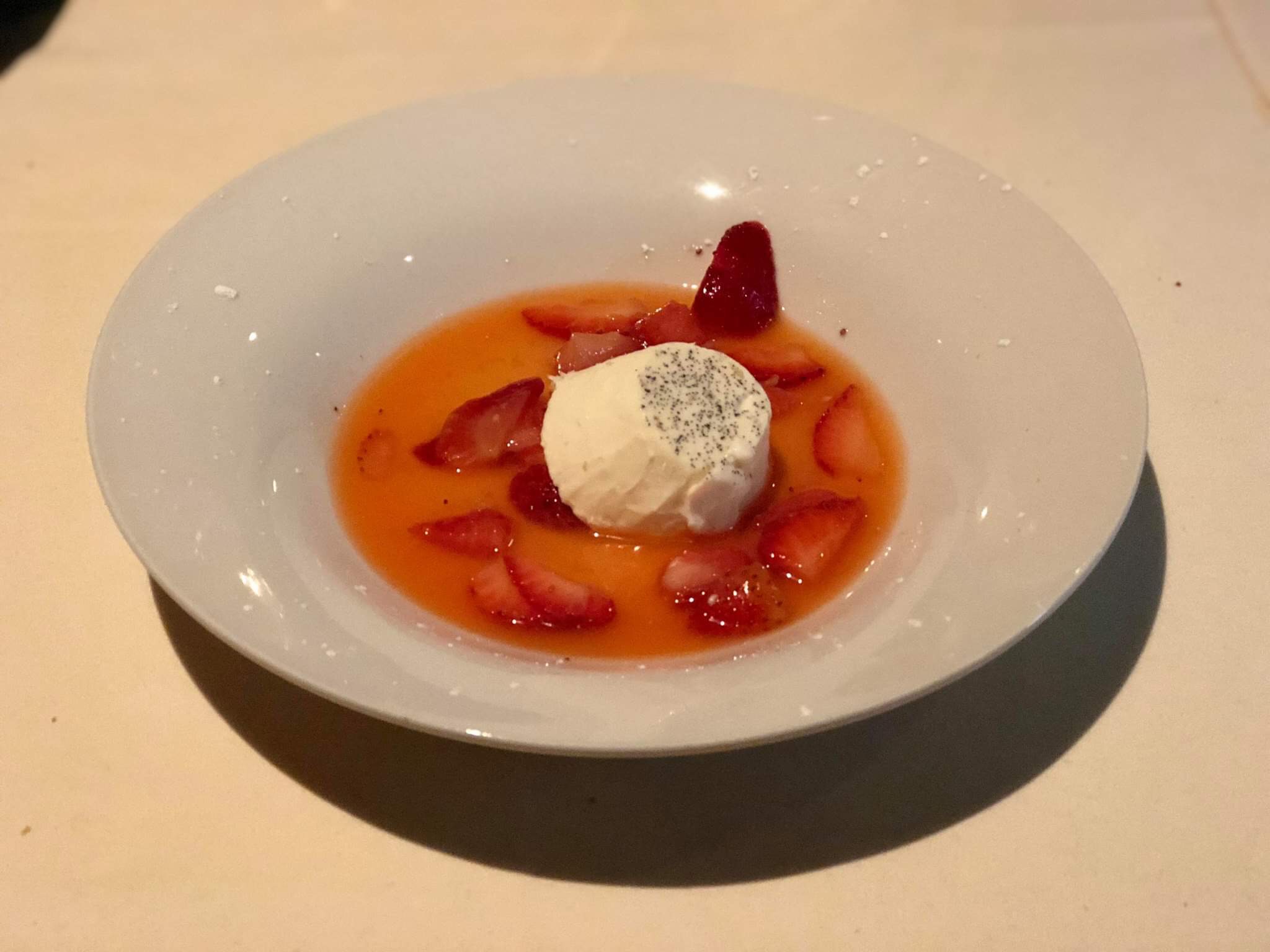
For me, however, the dessert was quite literally the showstopper of the entire dinner. After so many courses, everyone was quite full, but the panna cotta perfectly contrasted against some of the heavier elements of the meal. The cream was lightly sweetened and both the flecks and flavor of vanilla bean shone through. The strawberries seemed to have been macerated in the limoncello, so the flavors were happily married by the time it reached us. Despite how full I was, I found the panna cotta dangerously easy to eat.

Panna cotta with strawberries and limoncello | Courtesy photo / TinTin Beligan

As we walked out to our car, we passed the kitchen, where I noticed trays of what appeared to be freshly-made tagliatelle nests on sheet pans laying on the order counter; and I wondered how I could have lived in Pasadena most of my life without ever eating at Celestino. The atmosphere is comfortable and welcoming, which seems to be a reflection of the joy and heritage of its Sicilian owner, and the food is a celebration of authentic Italian cuisine.

After some reviewing of Celestino’s online menu, it must also be noted that not all the dishes we tasted are present on the online menu, and there does not appear to be a dessert menu online either, despite the inclusion in the photo gallery of the truly excellent panna cotta. The items sampled that do seem to appear are the burrata antipasto, the truffle risotto, the veal scalloppini, and the sole (the alternate entreé choice). The lack of inclusion of these items on the menu is perhaps unsurprising, as Drago has been known to spontaneously invent new culinary offerings. To truly know what Celestino has to offer, I have a feeling you must just visit and find out yourself; and I personally plan to return just to see what new treats Drago has concocted.

Brianna Chu, a guest opinion writer for Beacon Media, was born and raised in Pasadena. She loves to cook and to eat, is a lifelong viewer of Food Network, and enthusiastically introduced the tradition of Thanksgiving dinners to her British and European friends while earning her degree at the University of St Andrews. While they absolutely hated going around the table and saying what they were grateful for every year, they also loved the excuse to get together and feast with friends enough to endure it anyway.

Enjoy a Delightful Twilight Tasting and Support Families Forward

Originally published on 5 October 2018 in the Pasadena Independent, Arcadia Weekly, and Monrovia Weekly

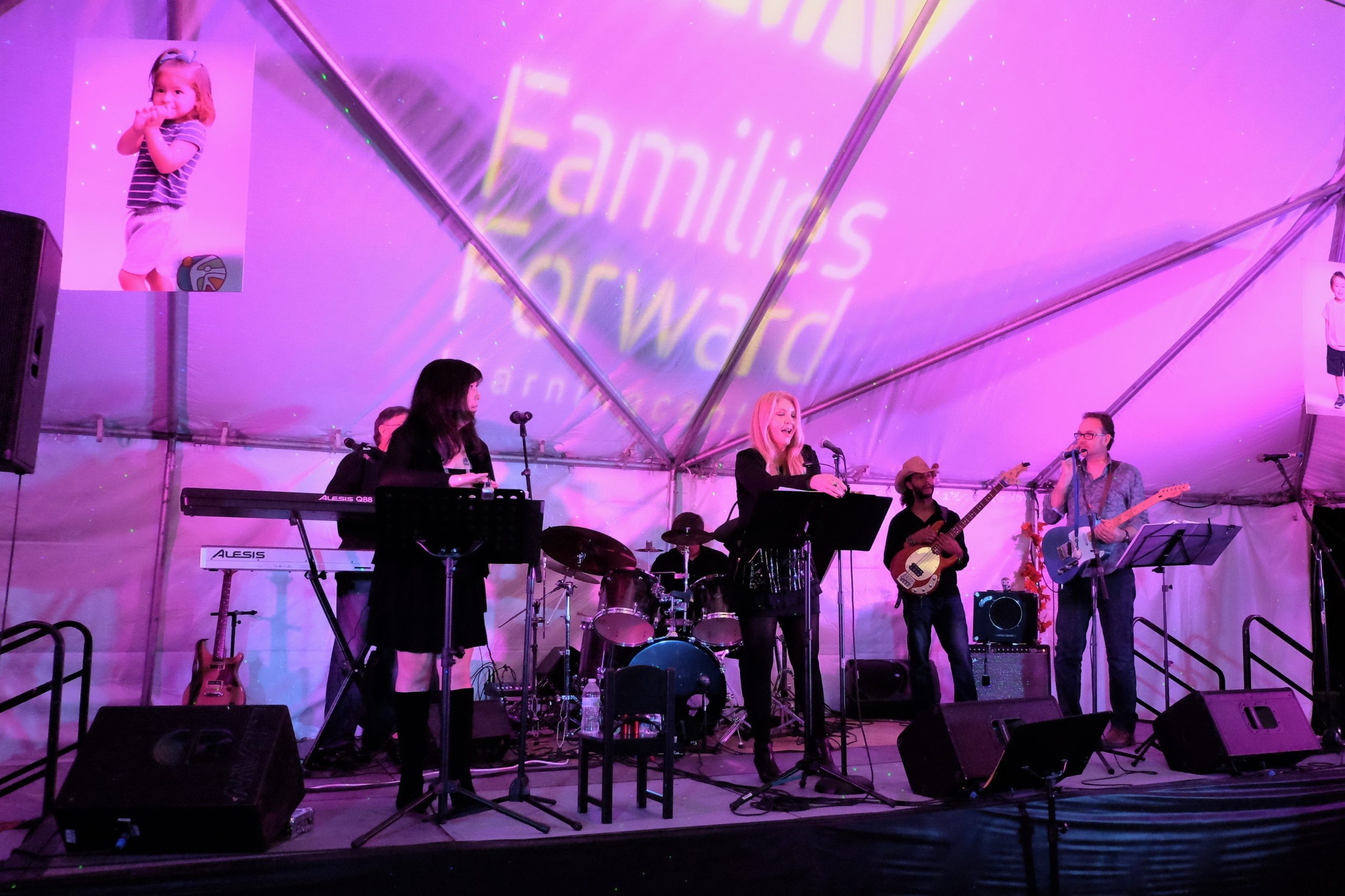
The ‘Labrateers’ will perform to a packed tent again this year at Twilight Tasting | Photo by Stevie Dominguez

If your idea of an enjoyable evening is sampling a wide variety of fares downed with craft beer and locally distilled spirits, then you’re in for a real treat. Families Forward Learning Center is holding its 8th Annual Twilight Tasting on Saturday, October 13, from 6 to 10 pm, at 980 N. Fair Oaks Avenue in Pasadena, and promises food and beverage aplenty

Established in 1961 as Mothers’ Club, it was originally located on Orange Grove Blvd. Its programs expanded and, in time, it outgrew that center. Using funds raised through a capital campaign, it purchased its present 10,000-square-foot building in the heart of Northwest Pasadena in 2006.

A team of education, planning, and design professionals transformed the property into a facility that could support and promote learning for thousands of families over the decades. The designated Gold-Level LEED-certified sustainable building houses five age-appropriate classrooms for children aged 0-5, an outdoor learning center, a parent education center, library, quiet room, nutrition kitchen, social kitchen, and administrative offices.

It was renamed Families Forward last September to expressly reflect its mission – to prepare families living in isolation and poverty to succeed in school and in life, through two-generation learning programs.

The two-generation program consists of a morning and an afternoon session covering early childhood education (ECE), parent education, adult education, mental health support and leadership training.

Additionally, Families Forward offers a weekly Teen Parenting on Thursday afternoons, a weekly Fathers Support Group on Wednesday evenings, and Early Readers’ Book Club one Saturday morning per month.

Parent and child learn side by side at Families Forward, investing in the success of the entire family | Photo courtesy of Families Forward

Berit Anderson, Manager for Communications and Events at Families Forward, describes, “Our tutoring and learning program is geared for children between zero and five years old, when the early development crucial to their growth, is taking place. We want to ensure that children are fully prepared to transition to kindergarten.

“Our adult program encompasses adult education, parenting education, and mental health services in partnership with Pacific Oaks. To accommodate families’ specific needs, we partner with several organizations in the community for services we cannot provide here at the center. For instance, we collaborate with Pasadena City College to offer ESL (English as a Second Language) classes.”

A resource and a safety net for the 83 percent of families who are living at, or below, the federal poverty level, Families Forward currently serves 116 children, or 100 families, who live in the neighborhood. It is open from 8:30 am to 5:30 pm. Morning program hours are from 9 to 11 am and afternoon programs are from 1 to 4:30 pm.

Families Forward has nine people in its administrative staff and three credentialed teachers. It is funded by the California teachers program, Head Start, the federal government, individual and company donors, and community supporters.

Sixteen local restaurants and businesses will serve tastings of their cuisine to event guests | Photo courtesy of Families Forward

“Twilight Tasting started eight years ago to create an opportunity for people to come in to our center,” Anderson discloses. “We have our Back to School Night before the event, so all the classrooms will display the children’s artwork. After that, people can walk around to enjoy a beer, wine, and food festival held here in our teaching spaces and the parking lot.

“We call restaurants, food, and drink companies to take part in the event. There will be 16 restaurants, some of whom are coming back from previous years’ participation, with tables and tastings throughout the evening for 300 attendees. We’ve also created relationships with businesses throughout the year and it’s a good chance for them to promote their restaurant. They’ll get face-time with our patrons, community leaders, and people in the area. It’s also an opportunity for them to show their support for our organization.

“We’re very grateful to have Boomtown Brewery, Braise & Crumble, Califia Farms, El Cholo Café, El Portal, Everson Royce, Hope Café & Catering, Kitchen Mouse, Mt. Lowe Brewing Co., Panda Express, Pasadena Sandwich Company, Semolina Artisanal Pasta, Siera Fusion, Stark Spirits, and Mendocino Farms this year.”

Anderson says further, “Our Twilight Tasting will again feature a live band, and a wine pull. Additionally, we’ll have an auction and a mobile bidding. Auction items include a Staples Center suite for either a Clippers or Kings game, which comes with VIP parking; tickets to Disneyland; a couple of vacation getaways – to Las Vegas at the Cosmo, and the W Hotel in Hollywood. We will also have some artwork pieces made by the children, which will be professionally framed.

“Tickets are $120 and can be purchased online and at the venue, right up to the event. We’re launching our online auction starting Wednesday, October 3, for those who couldn’t attend but would like to participate, and will be open until the end of the event.”

“We were one of the first organizations in Pasadena to have a tasting event,” Anderson declares. “We hold a gala every year but we wanted to create something more intimate and casual, an occasion for people to just have a great time.”

That you will be contributing to a worthy cause while indulging your inner foodie only makes Twilight Tasting twice as satisfying. See you at the party!

A Dash of Japanese Culinary Philosophy in a Simple Bowl of Ramen Noodles

Originally published on 18 September 2018 in the Pasadena Independent, Arcadia Weekly, and Monrovia Weekly

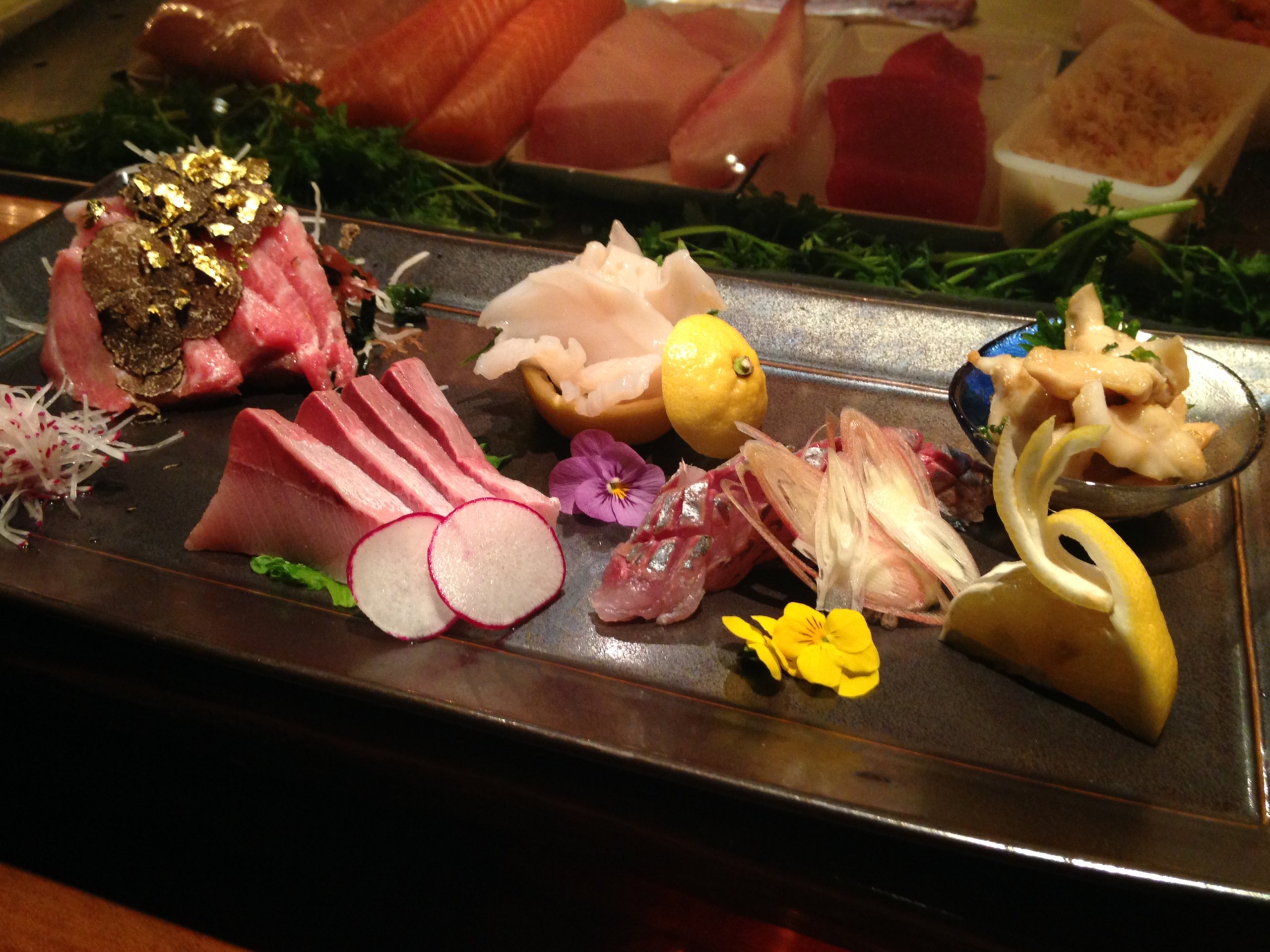
Sushi Roku in Pasadena’s Old Town serves only the freshest fish and highest quality food. Head Sushi Chef Manzo Kitaura creates beautiful sashimi plates | Photo by May S. Ruiz / Beacon Media News

We know that Californians have developed sophisticated palates when sushi and sashimi restaurants are as ubiquitous as eateries serving standard American fare. In the San Gabriel Valley, Japanese food is so mainstream that ramen noodle joints can be found at every strip mall.

So how did ramen and sushi become something akin to staple dining options? Well, we can say that it’s mostly because of the large Asian population in the area. There was a time, however, when this wasn’t the case, and we owe our appreciation for raw seafood to a very enterprising immigrant who introduced sushi to Los Angeles.

Noritoshi Kanai, the former chairman of Los Angeles Mutual Trading Co., Inc. (Mutual Trading), may have singlehandedly been responsible for bringing sushi to our local dining scene. It wouldn’t be an exaggeration to say that sushi eating in this country is intrinsically linked with the company.

Leading up to Mutual Trading’s 30th Annual Japanese Food & Restaurant Expo on September 22 at the Pasadena Convention Center, Atsuko Kanai, Executive Vice President, provides a very enlightening and fascinating history lesson in the sushi business in Southern California.

Atsuko says, “This trade show grew organically. We began as a Japanese food wholesaler and, as the business expanded, we started carrying specialty items for chefs like chinaware and professional knives specifically for Japanese food preparation. Our first show, in 1989, was a modest chinaware sale held in our office parking lot.

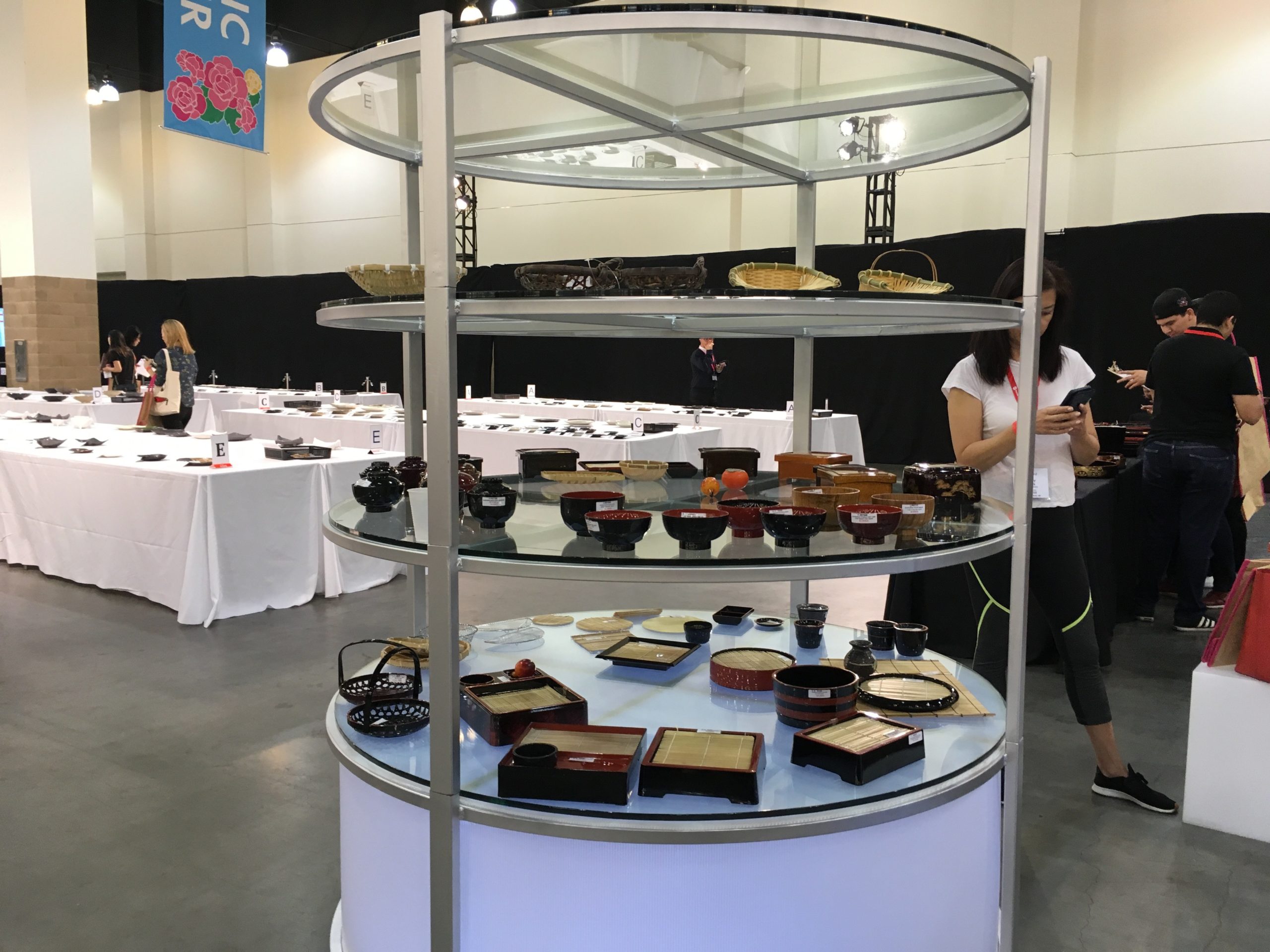
Mutual Trading’s 30th Annual Expo featured Japanese serving ware like sashimi/sushi platters and soup bowls, among other things | Photo by May S. Ruiz / Beacon Media News

“We continued holding our Japanese Restaurant Shows for 24 years at our own site using the warehouse area and the parking lot. Our staff designed and produced the event – from the theme that changed yearly, to product selection, to seminar highlights – and even procured special items aimed at filling customers’ needs.

“The corporation currently has 500 employees, with ten locations spanning the United States, Lima (Peru) and Tokyo (Japan). It began as a small enterprise in 1926 in Los Angeles when a group of ten Japanese businessmen in Little Tokyo formed a co-op to create an import channel for basic food commodities from Japan, mainly dried and canned. Back then, products were shipped in cargo freighters, taking months to travel across the Pacific.”

“In the 1960s Mutual Trading decided to focus on the foodservice trade and it has since become our forte,” continues Atsuko. “Our portfolio consists of specialty foods, chilled and frozen items, alcoholic beverages, and specialized restaurant equipment. And to help the industry continue growing and improving, we also offer educational services through our sushi and sake schools.

“Mr. Kanai’s involvement with the company began in 1951 when he opened Mutual Trading in Japan, serving as the export arm and procurement outfit for products headed for sales at Los Angeles Mutual Trading. He then immigrated to the U.S. in 1964 to manage LA Mutual, becoming president in 1976. He passed the position to the current president Kosei Yamamoto in 2011. The corporation is now a conglomerate under a publicly-traded company in Japan with Takara Shuzo International Co., Ltd. as major stockholder.”

Sushi’s rise as a gustatory star is as captivating a story as the Japanese way of life itself. It was during the 1964 Summer Olympics in Tokyo, that Japanese culture and cuisine gained international prominence.

It was also then that Japanese industries – the Toyotas and the Panasonics – were starting to establish their U.S. headquarters in Southern California. That brought Japanese expatriates into the area, all yearning for foods from back home.

Atsuko relates “Mr. Kanai and his business consultant, a Jewish-American gentleman named Harry Wolff, Jr., were also trying to figure out what items they could next bring into the country. They traveled all over Asia – the Philippines, Malaysia, Singapore – but those trips yielded no viable leads.

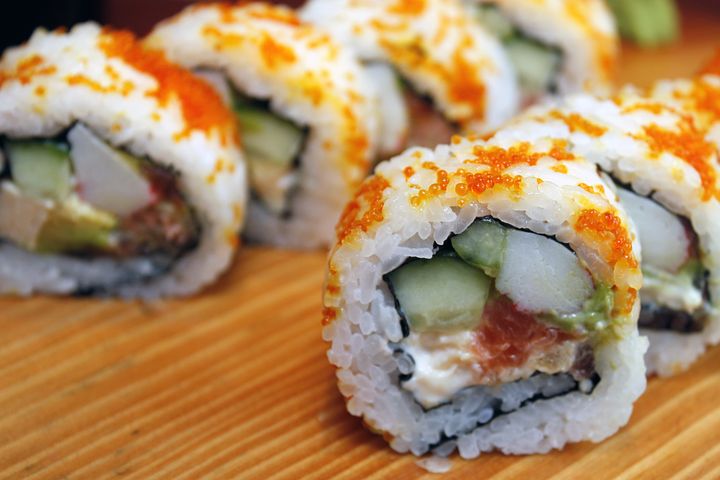
A selection of sushi items | Photo by May S. Ruiz / Beacon Media News

“One night, on a dare, Mr. Kanai took Mr. Wolff to a sushi shop behind their hotel in Ginza. To his surprise, the American ate every raw fish they were served. A week later, Mr. Kanai was presented a large bill from the sushi restaurant. Unbeknownst to him, Mr. Wolff had been visiting ‘his’ sushi man every evening before dinner to have his fill of sushi as appetizers.

“Not only was Mr. Wolff sold on sushi’s fresh appeal, he also believed Japanese chefs were great entertainers as they prepared the food in front of diners. He thought they were worldly – it didn’t matter that they really couldn’t speak English well – they had great charm and showmanship. He thought it was a great concept to take back to the U.S.

“Mr. Kanai took Chef Saito and his wife with him to Los Angeles to open the first sushi bar in America, in Little Tokyo, on the second floor of the Kawafuku Restaurant. Within a year the couple had made a small fortune and, upon returning to Japan, opened Shinnosuke Sushi, their very own restaurant in the fashionable Ginza district – a feat unheard of for such a young man to have achieved because sushi apprenticeship usually took a couple of decades at that time. News of his incredible accomplishment quickly spread, inspiring sushi chefs-in-training, with much encouragement from Saito, to head to America to become sushi pioneers.”

That was how, in 1965, edomae-style sushi first landed on American soil. Thereafter, young and ambitious sushi chefs came in droves to U.S., built a niche business, and found success.

A shortage in fatty tuna (toro), an important component in the sushi trade, could very well have spelled disaster for any Japanese restaurant. When this unfortunate episode occurred in the late 1960s and early 1970s, an innovative chef created the California Roll using avocado as a substitute.

There is a controversy as to who really invented the California Roll with several sushi chefs being credited with it. One account has it that Chef Ichiro Mashita of Tokyo Kaikan in Little Tokyo was the first in the world to reverse-roll the dark seaweed to hide it inside the white rice.

But whoever came up with that singular idea resolved not only the fatty tuna shortage crisis but also Americans’ trepidation at eating anything black in color. It was a masterstroke of genius. The creation of the California Roll is the very epitome of truth in the adage ‘Adversity is the mother of all invention.’ Today, even diners who can’t eat raw fish order the California Roll and get the satisfaction of saying they enjoy sushi.

The popular and universally-liked California Roll | Courtesy photo

Mutual Trading was running through an entrepreneurial spirit as well. It succeeded in the commercial frozen edamame import business in 1970. Then, in 1972, it became the first to import junmai shu, pure rice ingredient sake.

Furthermore, Mutual Trading offered benefits unprecedented then – profit sharing, stock options, and fully paid health insurance – a business-savvy move that espoused staff loyalty and ensured employment longevity.

James Clavell’s epic novel ‘Shogun’ was adapted for television and ABC aired the miniseries in 1980. It was a phenomenon among American viewers. Young people got enamored with Japanese culture and loved everything Japanese.

For a week, when the show was airing, Japanese restaurants were deserted, only to be overrun the following week by crowds of Americans queueing to eat sushi and other Japanese specialties. American entrepreneurs capitalized on the mystique of Japanese-owned restaurants as a trend and opened their sushi establishments. The renowned Teru Sushi in Hollywood was one of them.

As business evolved to attract new customers, sushi restaurants also came in various styles. California Beach in Hermosa Beach rode this tide – surf-and-sun-worshipping diners gladly waited for hours to get seated and ate sushi surrounded by much amplified rock n’ roll music. While they waited, they’d hang out on the sidewalk drinking tall bottles of Sapporo beer straight from the bottle. And that became an independent, fashionable pastime.

During Japan’s bubble economy in the 1980s, Mutual Trading brought in premium Jizake artisan micro-brewed sake priced at over six times that of domestically brewed sake. Though a tough sell at the outset, restaurateurs were educated on consumers’ appreciation for high quality products and it gained a foothold. There are now hundreds of premium brands available in America.

Various brands of sake were on display during Mutual Trading’s 30th Annual Expo | Photo by May S. Ruiz / Beacon Media News

The beginning of the new millennium was marked by recessions and made casual dining an inevitable choice for many Americans. So a new generation of Japanese food professionals invaded the foodservice landscape in the early 2000s and brought with them other genres of Japanese food – ramen, tonkatsu, izakaya, yakitori, curry, udon and soba.

With the ascent of Japanese food in our collective consciousness, Mutual Trading’s responsibility to advance quality assurance grew. In 2003, it constructed the first super-freezer (Minus 60 degrees F) storage facility on the West Coast. This technology guarantees that seafood arrives at restaurant kitchens at the same fresh state it was when first caught.

In 2008, Mutual Trading established Miyako Sushi and Washoku School. A brainchild of the famed Chef Katsuya and Noritoshi Kanai, it not only offers instruction to aspiring sushi chefs who wouldn’t otherwise have access to proper culinary preparation, but mentoring future generations of chefs as well.

Mutual Trading opened the Sake School of America in 2010 to afford trade professionals a better understanding and enjoyment of Japanese liquors. Wine fans and master sommeliers started to take interest in learning about sake and Shochu, an unexpected but lucky outcome.

UNESCO designated the washoku traditional Japanese food as an intangible cultural heritage in 2013.

There are 35,000 Japanese restaurants all over the U.S. today and Los Angeles Mutual Trading services 3,500 of them from San Luis Obispo to San Diego. Atsuko declares, “Every sales rep excels in Japanese food knowledge, and is a skilled Sake and Shochu adviser or sommelier. We don’t just sell food from Japan, we are trained to serve as ambassadors of Japanese food culture and as their promoters in faraway regions outside of Japan. Indeed, we are the stewards and staunch protectors of Japanese tradition and way of life.”

Sushi preparation and presentation are as much an art as they are a science. Explains Atsuko, “Sushi is always made of vinegar-ed rice and a topping – the acidic seasoning aids in suppressing deterioration. Green tea, which often accompanies sushi, is also a palate cleanser between each serving of sushi.

“Well-trained, professional sushi chefs would know which direction to cut the fish and which knife to use. Without the proper knife and technique, the sashimi would be cut to a curve; with a yanagi knife, it will stand upright when plated. They would know how to present the selection in an aesthetically pleasing way – pieces would have harmonious colors, and set asymmetrically, having highs and lows. They would know which season to select a certain fish that is not contaminated with parasites.”

Mutual Trading’s contribution to the success of the Japanese dining experience is vast. Atsuko states, “We’re importers and distributors and that’s where we excel. We have over 6,000 items in our inventory which we sell to our member restaurants and proprietors. Our product development and procurement team is constantly researching, and working very closely with suppliers. There are abundant possibilities and opportunities in the U.S, and Japan, and it’s our job to help our clients run their business efficiently and profitably.”

For all that Mutual Trading does to maintain the standards of authentic Japanese cuisine, however, there are natural obstacles that make it difficult for American restaurants to exactly replicate the sushi one can eat in Japan.

“Although close, sushi here is not the same as the ones found in Japan,” Atsuko clarifies. “Japan is a small country completely surrounded by water. This makes fresh seafood available year-round, sold at the many fresh fish markets dotting the coasts. There, it’s possible to deliver fish caught in the ocean, even live, within a day. Because of climatic and migration patterns, there is an ever-changing variety of fish and shellfish at Japanese markets. Restaurants can create local and culturally based cuisine around them.

“The United States is a big country, with coastal regions east and west, and a vast land mass in between. Fresh fish delivery isn’t viable with too many miles to cover. The fishery industry here began, and is still dominated by, cooked canned tuna. Many large fish though – tuna and yellowtail – are either farmed overseas and frozen, or caught at sea and frozen. In that sense, the quality of the fish is basically the same anywhere it’s served.”

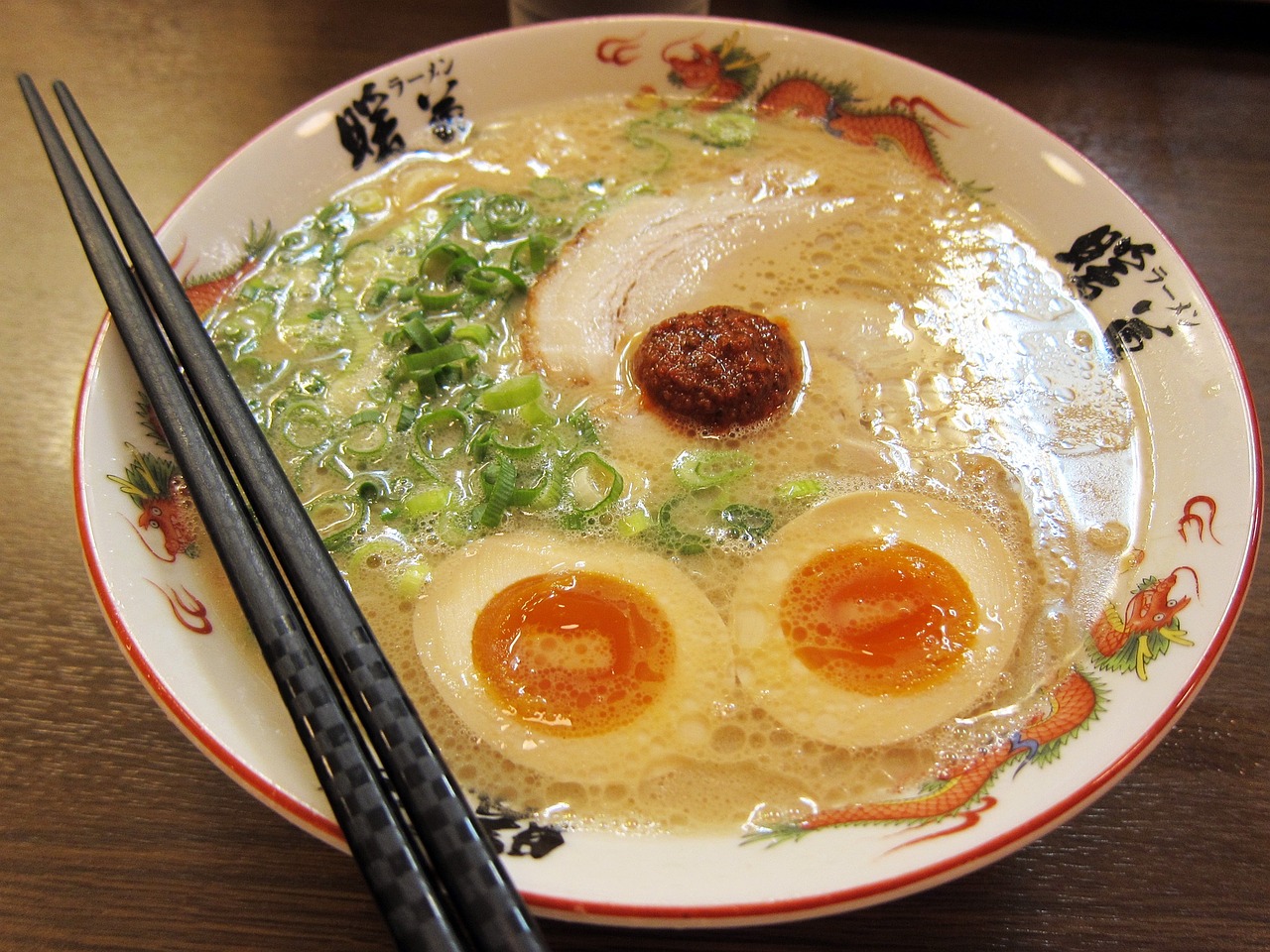
A bowl of delicious ramen noodle soup | Courtesy photo

There is also the matter of keeping the taste of the food made here as authentic as dishes prepared in Japan.

Atsuko elucidates, “There are many factors that can change a cuisine when brought to another country. The first one that comes to mind is water. Most of Japan has soft water while California pulls hard, highly mineralized water from the Colorado River. Consider the most fundamental Japanese food ingredient dashi: soft water can extract umami essence easily, which hard water can’t do.

“Availability of ingredients is another factor. There are 47 different prefectures in Japan, with their unique micro-geographic characteristics. They individually have their locally-grown soy sauce, salt, chili peppers, miso, and vinegar to suit and enhance the distinctive taste of their regional cuisine. American restaurants are limited to what importers, like us, bring in. For instance, we carry about 100 types of soy sauce. That sounds like a lot, but there are thousands available in Japan.”

Mutual Trading’s mission is to bring the flavors of Japan to the people of the world. And while that might not be the same everywhere, there is one thing that remains constant.

“The Japanese culinary philosophy is backed by a thousand-year history and is based on highlighting the natural ingredients through minimal culinary alteration,” emphasizes Atsuko. “This philosophy is reflected in ingredient growing/harvesting, preparation techniques, tools and equipment, serving ware, and ambience. It starts from the birth of the ingredient to its consumption.”

“Two other philosophies underlie Japanese eating practice. The first one is ‘Itadakimasu,’ the mindful reverence to the food before eating it. It is Buddhist in origin and from it stems the practice of minimizing waste: eat all you take, and use the entire ingredient from top to bottom, head to tail.

“The second is ‘Omotenashi,’ the art of generous hospitality: preserving what the guest would delight in, and offering it subliminally. It’s like engaging in a thankful task, without calling attention to oneself to warrant a word of thanks. That mutual respect of giving thanks and receiving it is inherently understood. It’s so Zen-like.”

That ramen, once synonymous with the lowly ‘cup o’ noodles’ and consumed mainly by cash-strapped, dorm-dwelling college students, has been elevated to a loftier status as seen by the current craze for tonkatsu ramen, is proof that Americans’ fondness for Japanese food isn’t waning any time soon.

Sushi and sashimi, ramen and udon, with their distinctive flavors and style, have become profoundly appealing to a great many diners. That there is a Japanese culinary philosophy behind a serving of raw fish only makes eating sushi a sublimely pleasurable dining experience.

Enjoy Enticing Eats and Treats at ‘Taste of La Salle’ in Pasadena

Originally published on 19 March 2018 in the Pasadena Independent, Arcadia Weekly, and Monrovia Weekly

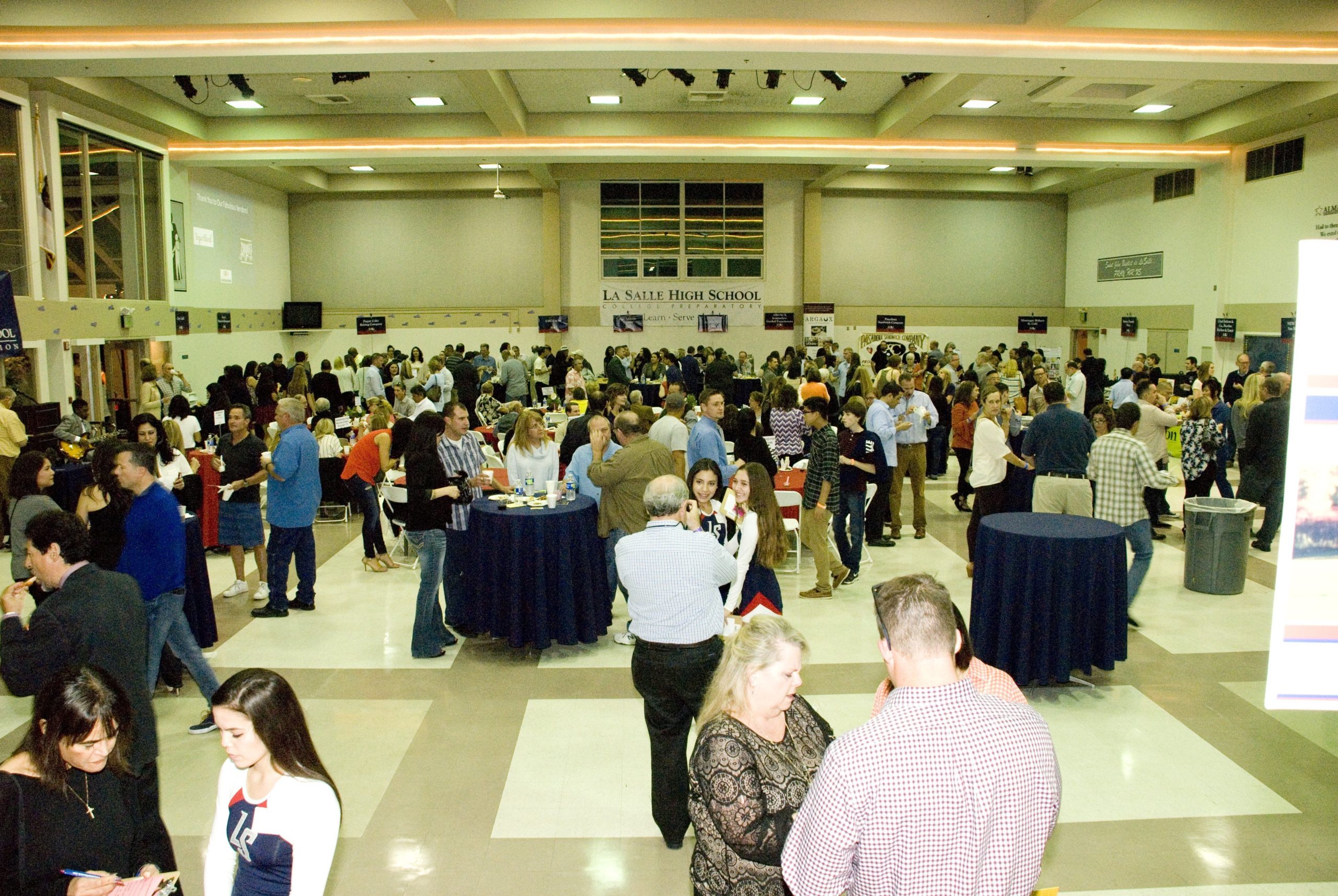
Guests enjoying the various food and beverages at the 2016 ‘Taste of La Salle’ | Courtesy photo / Annette Dyson

How cool is it to sample the various food and drinks from over 35 different restaurants and beverage companies all gathered in one place?  And how great would you feel knowing that you are donating to a good cause while enjoying such bounty?

La Salle High School gives you the opportunity to indulge your gastronomic appetite and satisfy your philanthropic inclinations at its bi-annual ‘Taste of La Salle’ from 6:30 to 9:00 pm on Saturday, March 24. Advance ticket price is $50 and $75 at the door.

Now in its fourth year, ‘Taste of La Salle’ has attracted popular Pasadena and San Gabriel Valley establishments including Altadena Town and Country Club, Casa del Rey, Colette, Domenico’s, El Cholo Café, El Portal, The Peacock Grille, Roy’s, StoneFire Grill, Twohey’s; breweries and wine growers from farther afield like Craft Beer Cellar, Lagunitas, Stone Brewing, E & J Gallo Wine, San Antonio Winery, and Wilson Creek Winery.

‘Taste of La Salle’ will take place on campus (3880 E. Sierra Madre Blvd., Pasadena on the corner of Michillinda Avenue) with students directing people to three different check-in tables to make for an easy flow of foot traffic to the party. All vendors will be set up along the perimeter of the dining pavilion and atrium to give everyone room to walk around, visit the various stalls, and delight on all the various offerings for the night.

Parking will be available on both lots on campus – the upper lot on Sierra Madre Blvd. and the lower parking lot on Michillinda – the field will also be open, and there will be parking on surrounding streets.

Kristen Schultz, Assistant Director of Institutional Advancement and Director of Alumni Relations, spearheads this delectable event. She says, “We started ‘Taste of La Salle’ in 2012. It was deliberately a bi-annual event because we recognized that these vendors are also asked by various non-profit institutions all the time to donate and we didn’t want to burn them out. And while other organizations charge vendors a fee for participation, we don’t; they provide the food, drinks, and the manpower to staff their table so they give quite a lot as it is. At the same time, because it’s only every other year, the community looks forward to it and is more hyped about it.

The incentive for the vendors is the heavy publicity we do for it. We send out invitations to about 7,000 people in the San Gabriel Valley, we include the event on our social media feeds – Twitter and Instagram; send emails every other week promoting it; mail postcards with the logo of participating establishments, advertise it in a local magazine which reaches 15,000 people.

It benefits restaurants because we really target San Gabriel Valley so people who come to the event can patronize these establishments later. We always do a thank you and a follow-up with all our participating establishments and have gotten extremely positive feedback – that they had a great experience and would like to come back; that our event was every well done and organized. Several past vendors will be here again this year.

We had 23 vendors in our first event and we had no idea what we were doing. It was hugely successful and it gave us room to build upon that success. It expanded every year and we now have 39 vendors. But we really don’t intend to grow it any larger than that because we want to keep it community-friendly and preserve the school atmosphere as well. We expect between 300 to 400 people; two years ago we had 360 and we’ve attracted more each time. I know we’ll have about 350 but we’re hoping to reach 400 attendance.”

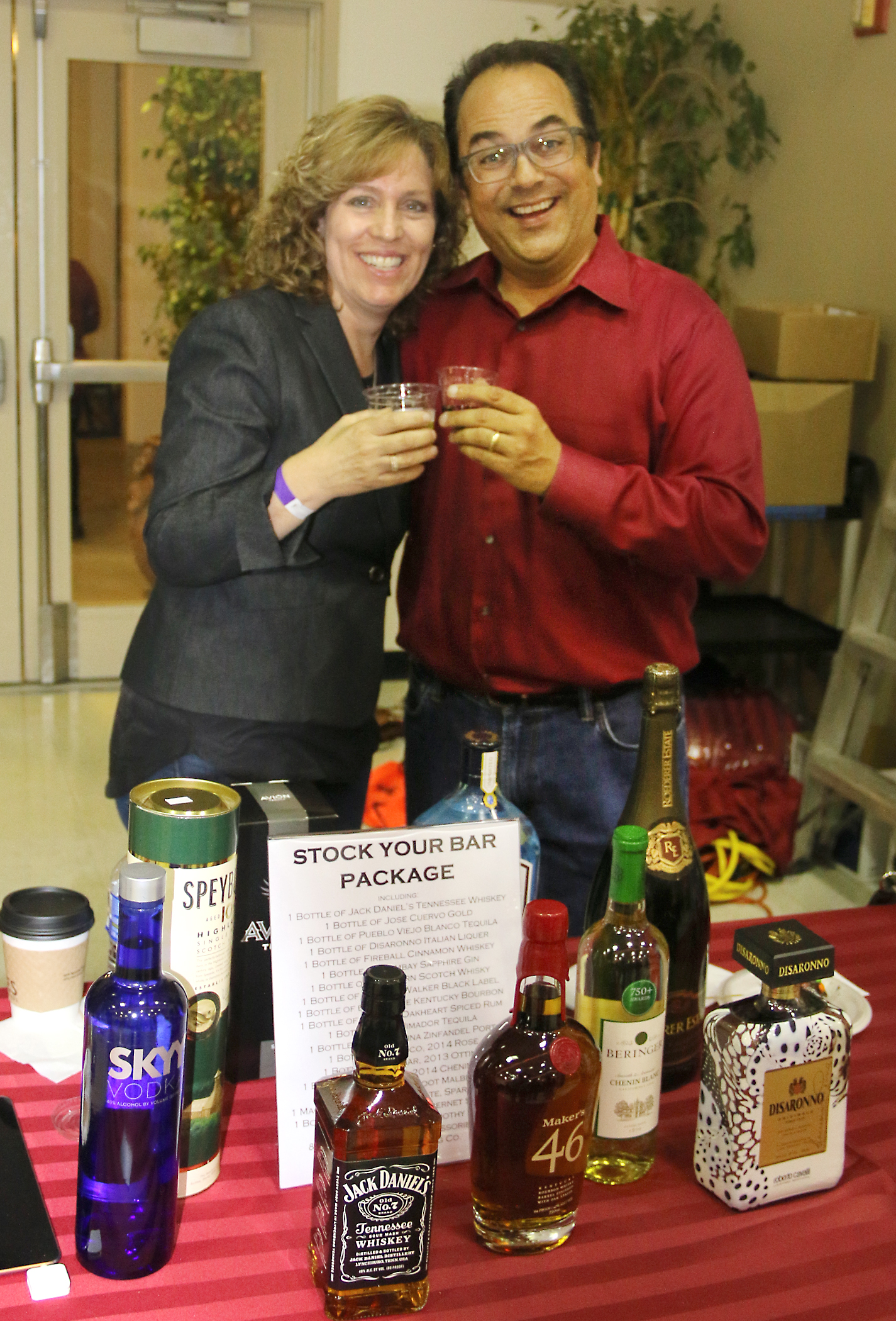
Michelle and Brian Day were the winners of the Stock Your Bar Package in 2016 that includes over 19 bottles of premium libations | Courtesy photo / John Blackstock

Food and drinks are not the only items on offer. There are also drawing opportunities for some really awesome packages. The Grand Prize is ‘Eat Out for a Year,’ which is an array of gift cards to local restaurants valued at over $2,000. There is a ‘Travel and Wine Lover’ prize, a Temecula Getaway and Culinary and Wine Pairing for 4 in Paso Robles. A ‘Stock the Bar’ prize is an assortment of premium libations; a ‘Work it Off Fitness Basket’ gives the winner over $700 worth of gift certificates to local fitness classes and gyms; a ‘Staycation’ is a one-night stay at the Embassy Suites in Arcadia, $100 gift card to The Derby Restaurant and four Club House passes to the Santa Anita Race Track; and more.

Tickets for the drawing are available online – $10 for one ticket; $25 for five; $50 for 15; $100 for 40. People can go online to buy tickets to the event and for the drawing at the same time or separately. Drawing is done at the actual event but they don’t have to be present to win.

‘Taste of La Salle’ takes lengthy planning, as one can imagine. Relates Schultz, “We start preparing this in the summer, around May and June. Any time we do an all-school event we obviously have to work it into the calendar. And there are several of them like the plays and the musical which need all the school facilities. We picked March the first time because it was open.

The school has two fund-raisers: the golf tournament in the fall and the Crystal Ball in May and we didn’t want to compete with those two events. We were cognizant of the fact that we were asking money from the very same pool of parents. We also made sure we kept the drawing items food-themed because we didn’t want to take away from what the two other events are also requesting.”

Adds Schultz, “‘Taste of La Salle’ is the only event that the Alumni Association puts on. It’s also the only way people can donate, they can’t write a check towards the scholarship. We ask the scholarship recipients to attend and we profile them so people can see where their money is going.

It was created to have an alumni fund going to current students from alumni donors. When this began, we awarded two college scholarships to two members of the class of 2013. It is a one-time scholarship to help them with their first-year expenses and focuses on service, citizenship and leadership, not on their GPA.

Members of the La Salle Alumni Association Executive Board with the class of 2018 Alumni College Scholarship recipients (pictured front center). Back row, left to right: Armando Ramirez, Chris Kealy, Amanda Richardson, Manny Soriano, Paul Lees, Tyler Varing, Kristine Nonato, Chris Rettig, Mike Sullivan. Front row, left to right: Joe Alvarez, Rafael Mirasol, Sarah Day, Garien Agapito, Tony Messineo, Gabe Castillo | Courtesy photo / Kristen Schultz

We invite students to apply in the spring of their junior year and they’re asked to give short answers to questions related to their leadership, their impact on the greater community, what happened in their years at La Salle, their future plans and how they will remain  engaged after  they graduate. I take out all the personal information about the applicants so the 17-member Alumni Association Executive Board makes its decision based purely on the answers given by the students.

I check in with the scholarship recipients six months into their first year of college to get an update on how they’re doing, etc. While I continue to communicate with them periodically during their college career, there are no requirements on their part. Although I hope they stay in touch and most of them do!

In 2016 we offered the first incoming heritage scholarship to a member of the class of 2020, who is now a sophomore. This is a four-year scholarship as long as the student retains a 3.0 (B average), remains active in school activities, and maintains an exemplary discipline record.

The criteria are similar for the incoming scholarships but obviously with some differences because we’re asking 13-year olds versus 17-year old students – community service and involvement, why do they want to be a part of La Salle, what difference can they do here, what La Salle means to them.

We have continued to offer two college scholarships every year since 2012 to the graduating class and one freshman scholarship since 2016 to the incoming class. We just recently named our incoming scholar for the class of 2022 who will start at La Salle this August. The class of 2019 is currently applying for next year’s College Scholarship. We have 12 college scholarships and three freshman scholarships to date.”

‘Taste of La Salle’ promises to be a fun and enjoyable way to spend an evening. That it goes a long way towards providing assistance to future generations of community-engaged and socially responsible citizens only makes it doubly worth our generous support.

The Huntington Offers Outstanding Dining to Match its World-Class Reputation

Originally published on 17 November 2016 in the Pasadena Independent, Arcadia Weekly, Monrovia Weekly, and Sierra Madre Weekly

Laura Skandera-Trombley took over as president of The Huntington Library, Art Collections, and Botanical Gardens, in San Marino, in July of last year and put into motion several initiatives almost as soon as she walked in her office. One of her first undertakings was to ensure that visitors’ dining experience at The Huntington matches its reputation as a world-class institution.

Eight months ago, Skandera-Trombley led a committee composed of Huntington staff, overseers and trustees on what she describes as a “food quest”. They reviewed proposals and interviewed 14 prospective catering operators who will work with them to usher in a new era in destination dining at The Huntington.  

On October 5, The Huntington announced that it has contracted with Bon Appetit Management Company based in Palo Alto. As part of this partnership, The Huntington and Bon Appetit have invited Border Grill cofounders, Mary Sue Milliken and Sue Feniger, and Blue Window co-owner, Kajsa Alger, to launch several new dining concepts on its historic grounds.               

It is a perfect partnership according to Skandera-Trombley, “The introduction of world-class dining at The Huntington is a natural extension of who and what we are. We are home to a 6,5000-volume historic cookbook collection, including the first known printed cookbook – dating to 1475. Specially prepared good food beautifully matches our commitment to authenticity, quality and culture. And, for that reason, we couldn’t be more excited to have Susan, Mary Sue, and Kajsa joining us at this time.”

Says Skandera-Trombly on their choice of Bon Appetit, “Standout features of the Bon Appetit proposal included their commitment to quality, taste, and sustainability. We consider sustainability to be of key importance at The Huntington – whether we are considering how to lower our water use, narrow our carbon footprint, or determine what types of seafood we serve.” 

Bon Appetit CEO and co-founder Fedele Bauccio, who has been recognized for his work in sustainability before it became a household word, says, “I am thrilled to bring our focus on sustainability and fresh, seasonally driven food to The Huntington.”       

Feniger, who also cofounded Blue Window with Alger, enthuses, “In the heart of the San Gabriel Valley, surrounded by breathtaking botanical gardens, art collections, and renowned library holdings, and serving flavorful foods that reflect Southern California’s growing multi-cultural population, we hope to transform The Huntington into a place that inspires all the senses!”

The Celebration Garden | Image taken from The Huntington’s website

The celebrated chefs are offering their signature fares befitting the various destinations at The Huntington. The main café, newly renamed 1919 for the year The Huntington was founded, features different dining concepts to please visitors. The Border Grill taqueria, a smaller version of Feniger’s and Milliken’s Border Grill restaurants, serves the chefs’ signature modern Mexican cuisine like tacos on handmade corn tortillas with organic rice and beans, quesadillas, ceviche, and seasonal aguas frescas. At The Bar, Alger creates freshly made sushi – rolls, nigiri, and bowls; or small plates of global fare for pairing with beer, wine, and sake – or whimsical craft cocktails inspired by the setting.    

Alger and Feniger are offering at the Chinese Garden’s Freshwater Dumpling and Noodle House authentic dumplings, noodles, and rice dishes drawn from China, Nepal and Mongolia. The chefs will take their food inspiration as the surrounding garden changes with the season.

“The Huntington has always been this little oasis within the city, a place where you can come and feel tranquil among the chaos,” proclaims Alger. “We’re thrilled to be at the center of the Chinese Garden and to offer the simple dishes and flavors that I grew up with, spanning the regions of China.”

At the casual Patio Grill, adjacent to The Huntington’s Shakespeare Garden and American art galleries, weekend visitors can savor Feniger’s and Milliken’s global-meets-local flavors. The rotating seasonal menus will highlight the rich culinary heritage from the various communities in Los Angeles like griddled Cubano sandwiches; grilled corn with smoky aioli and cheese; a roasted yam, quinoa, and kale salad; and seasonal aguas frescas.

A tour of The Huntington wouldn’t be complete without stopping at the Rose Garden Tea Room.  Currently under renovation, it will reopen on November 16 to once again be the venue for an elegant and memorable experience, inspired by the English tradition of afternoon tea with a distinctive California twist. Visitors can indulge on crumpets and scones, delicate finger sandwiches, caviar-topped blinis, and decadent desserts with their choice of herbal and Fair Trade teas or sparkling wine.       

“At a time when cuisine has become key to every type of cultural experience – from museum-going to concert-watching – we believe it’s critically important to have dining here reflect the high quality that is The Huntington standard,” declares Skandera-Trombley. “Food is no longer incidental – it is part of our culture. And, according to some, it is everything. We want wonderful, memorable food to be part of the greater Huntington experience. 

With the most respected names in food creation and catering all working together, Skandera-Trombley’s wish to make people think of The Huntington as a food destination in an incomparable setting is now a triumphant reality.