Enjoy Enticing Eats and Treats at ‘Taste of La Salle’ in Pasadena

Originally published on 19 March 2018 in the Pasadena Independent, Arcadia Weekly, and Monrovia Weekly

Guests enjoying the various food and beverages at the 2016 ‘Taste of La Salle’ | Courtesy photo / Annette Dyson

How cool is it to sample the various food and drinks from over 35 different restaurants and beverage companies all gathered in one place?  And how great would you feel knowing that you are donating to a good cause while enjoying such bounty?

La Salle High School gives you the opportunity to indulge your gastronomic appetite and satisfy your philanthropic inclinations at its bi-annual ‘Taste of La Salle’ from 6:30 to 9:00 pm on Saturday, March 24. Advance ticket price is $50 and $75 at the door.

Now in its fourth year, ‘Taste of La Salle’ has attracted popular Pasadena and San Gabriel Valley establishments including Altadena Town and Country Club, Casa del Rey, Colette, Domenico’s, El Cholo Café, El Portal, The Peacock Grille, Roy’s, StoneFire Grill, Twohey’s; breweries and wine growers from farther afield like Craft Beer Cellar, Lagunitas, Stone Brewing, E & J Gallo Wine, San Antonio Winery, and Wilson Creek Winery.

‘Taste of La Salle’ will take place on campus (3880 E. Sierra Madre Blvd., Pasadena on the corner of Michillinda Avenue) with students directing people to three different check-in tables to make for an easy flow of foot traffic to the party. All vendors will be set up along the perimeter of the dining pavilion and atrium to give everyone room to walk around, visit the various stalls, and delight on all the various offerings for the night.

Parking will be available on both lots on campus – the upper lot on Sierra Madre Blvd. and the lower parking lot on Michillinda – the field will also be open, and there will be parking on surrounding streets.

Kristen Schultz, Assistant Director of Institutional Advancement and Director of Alumni Relations, spearheads this delectable event. She says, “We started ‘Taste of La Salle’ in 2012. It was deliberately a bi-annual event because we recognized that these vendors are also asked by various non-profit institutions all the time to donate and we didn’t want to burn them out. And while other organizations charge vendors a fee for participation, we don’t; they provide the food, drinks, and the manpower to staff their table so they give quite a lot as it is. At the same time, because it’s only every other year, the community looks forward to it and is more hyped about it.

The incentive for the vendors is the heavy publicity we do for it. We send out invitations to about 7,000 people in the San Gabriel Valley, we include the event on our social media feeds – Twitter and Instagram; send emails every other week promoting it; mail postcards with the logo of participating establishments, advertise it in a local magazine which reaches 15,000 people.

It benefits restaurants because we really target San Gabriel Valley so people who come to the event can patronize these establishments later. We always do a thank you and a follow-up with all our participating establishments and have gotten extremely positive feedback – that they had a great experience and would like to come back; that our event was every well done and organized. Several past vendors will be here again this year.

We had 23 vendors in our first event and we had no idea what we were doing. It was hugely successful and it gave us room to build upon that success. It expanded every year and we now have 39 vendors. But we really don’t intend to grow it any larger than that because we want to keep it community-friendly and preserve the school atmosphere as well. We expect between 300 to 400 people; two years ago we had 360 and we’ve attracted more each time. I know we’ll have about 350 but we’re hoping to reach 400 attendance.”

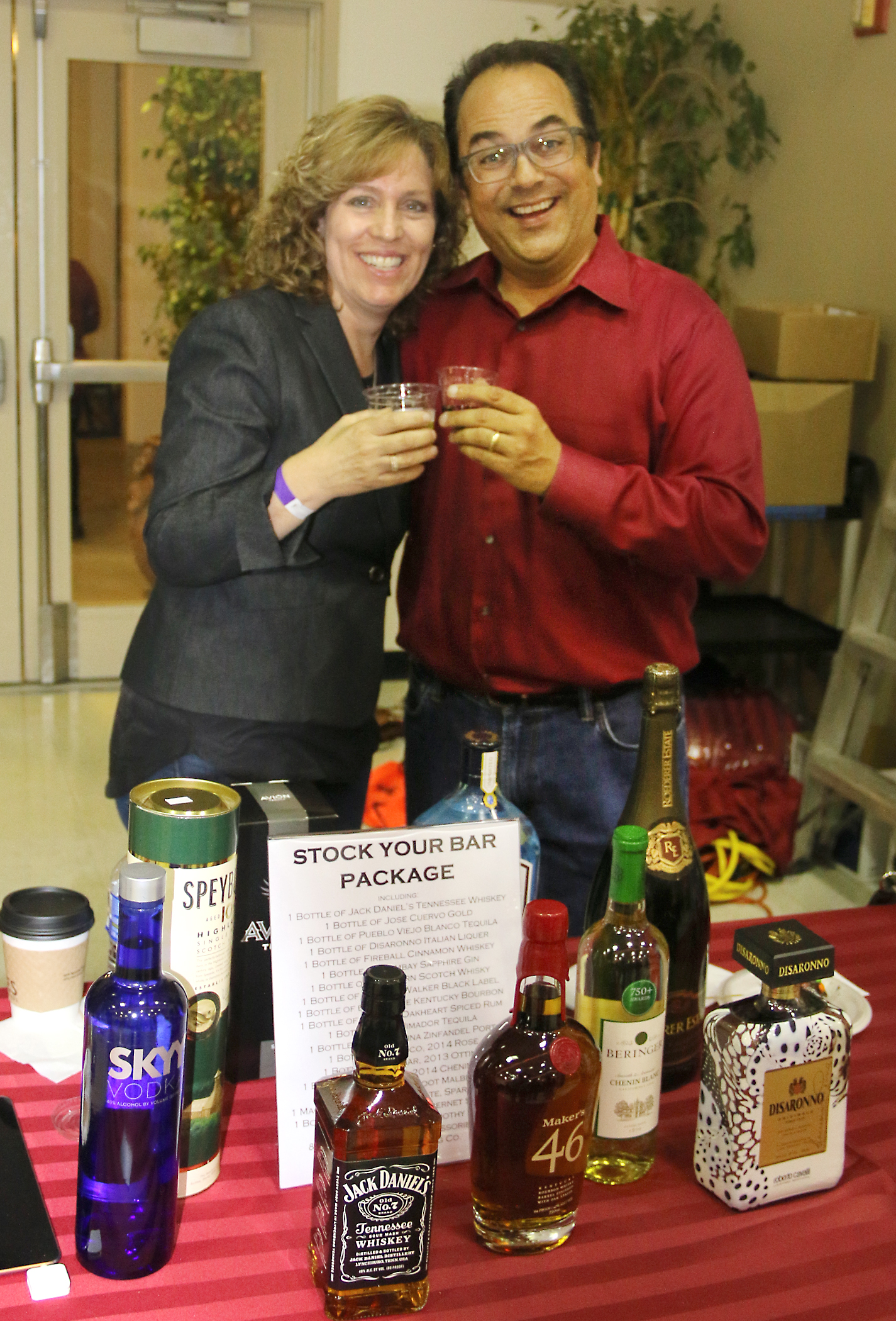
Michelle and Brian Day were the winners of the Stock Your Bar Package in 2016 that includes over 19 bottles of premium libations | Courtesy photo / John Blackstock

Food and drinks are not the only items on offer. There are also drawing opportunities for some really awesome packages. The Grand Prize is ‘Eat Out for a Year,’ which is an array of gift cards to local restaurants valued at over $2,000. There is a ‘Travel and Wine Lover’ prize, a Temecula Getaway and Culinary and Wine Pairing for 4 in Paso Robles. A ‘Stock the Bar’ prize is an assortment of premium libations; a ‘Work it Off Fitness Basket’ gives the winner over $700 worth of gift certificates to local fitness classes and gyms; a ‘Staycation’ is a one-night stay at the Embassy Suites in Arcadia, $100 gift card to The Derby Restaurant and four Club House passes to the Santa Anita Race Track; and more.

Tickets for the drawing are available online – $10 for one ticket; $25 for five; $50 for 15; $100 for 40. People can go online to buy tickets to the event and for the drawing at the same time or separately. Drawing is done at the actual event but they don’t have to be present to win.

‘Taste of La Salle’ takes lengthy planning, as one can imagine. Relates Schultz, “We start preparing this in the summer, around May and June. Any time we do an all-school event we obviously have to work it into the calendar. And there are several of them like the plays and the musical which need all the school facilities. We picked March the first time because it was open.

The school has two fund-raisers: the golf tournament in the fall and the Crystal Ball in May and we didn’t want to compete with those two events. We were cognizant of the fact that we were asking money from the very same pool of parents. We also made sure we kept the drawing items food-themed because we didn’t want to take away from what the two other events are also requesting.”

Adds Schultz, “‘Taste of La Salle’ is the only event that the Alumni Association puts on. It’s also the only way people can donate, they can’t write a check towards the scholarship. We ask the scholarship recipients to attend and we profile them so people can see where their money is going.

It was created to have an alumni fund going to current students from alumni donors. When this began, we awarded two college scholarships to two members of the class of 2013. It is a one-time scholarship to help them with their first-year expenses and focuses on service, citizenship and leadership, not on their GPA.

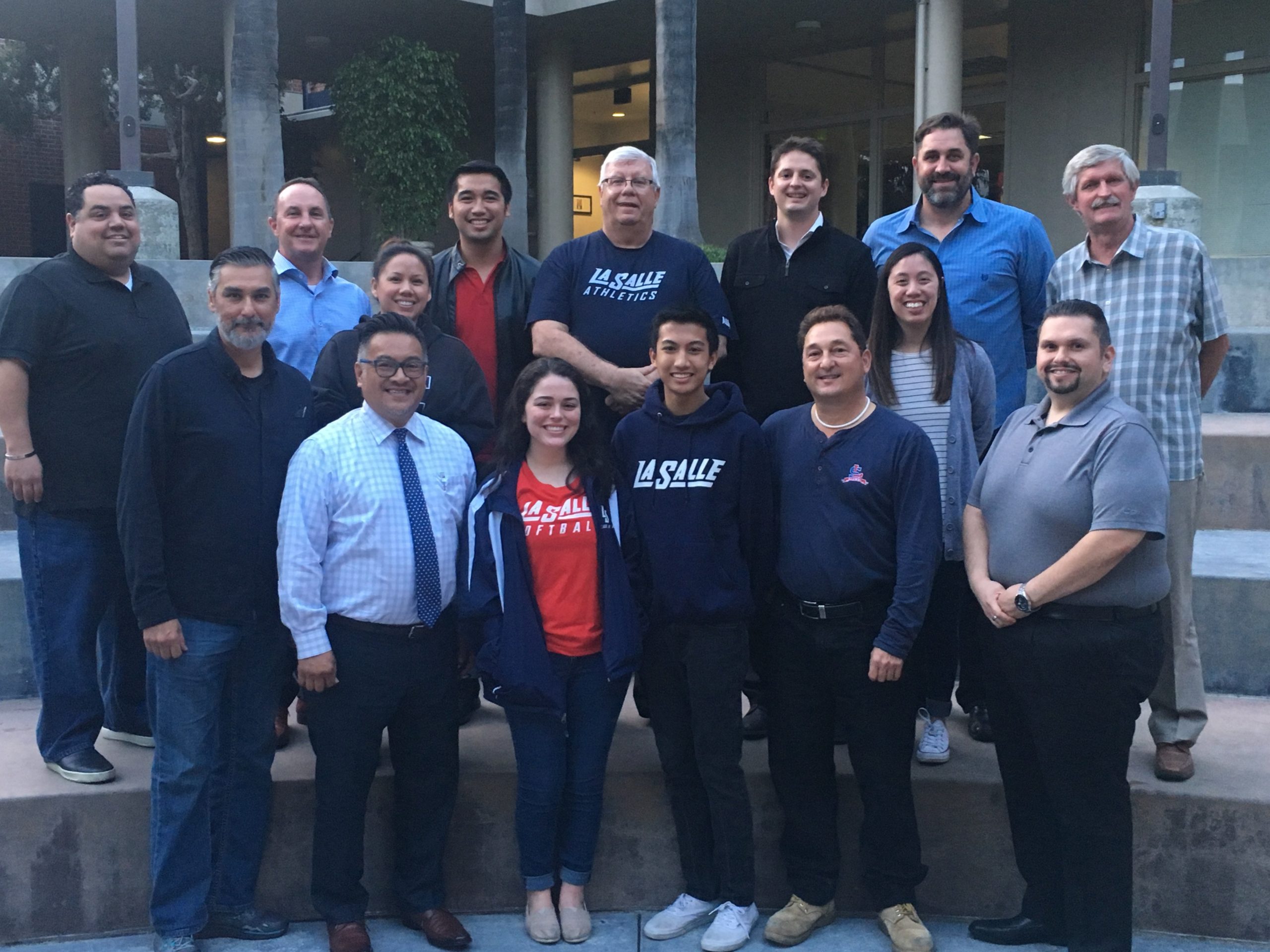
Members of the La Salle Alumni Association Executive Board with the class of 2018 Alumni College Scholarship recipients (pictured front center). Back row, left to right: Armando Ramirez, Chris Kealy, Amanda Richardson, Manny Soriano, Paul Lees, Tyler Varing, Kristine Nonato, Chris Rettig, Mike Sullivan. Front row, left to right: Joe Alvarez, Rafael Mirasol, Sarah Day, Garien Agapito, Tony Messineo, Gabe Castillo | Courtesy photo / Kristen Schultz

We invite students to apply in the spring of their junior year and they’re asked to give short answers to questions related to their leadership, their impact on the greater community, what happened in their years at La Salle, their future plans and how they will remain  engaged after  they graduate. I take out all the personal information about the applicants so the 17-member Alumni Association Executive Board makes its decision based purely on the answers given by the students.

I check in with the scholarship recipients six months into their first year of college to get an update on how they’re doing, etc. While I continue to communicate with them periodically during their college career, there are no requirements on their part. Although I hope they stay in touch and most of them do!

In 2016 we offered the first incoming heritage scholarship to a member of the class of 2020, who is now a sophomore. This is a four-year scholarship as long as the student retains a 3.0 (B average), remains active in school activities, and maintains an exemplary discipline record.

The criteria are similar for the incoming scholarships but obviously with some differences because we’re asking 13-year olds versus 17-year old students – community service and involvement, why do they want to be a part of La Salle, what difference can they do here, what La Salle means to them.

We have continued to offer two college scholarships every year since 2012 to the graduating class and one freshman scholarship since 2016 to the incoming class. We just recently named our incoming scholar for the class of 2022 who will start at La Salle this August. The class of 2019 is currently applying for next year’s College Scholarship. We have 12 college scholarships and three freshman scholarships to date.”

‘Taste of La Salle’ promises to be a fun and enjoyable way to spend an evening. That it goes a long way towards providing assistance to future generations of community-engaged and socially responsible citizens only makes it doubly worth our generous support.

Introducing Ancient Chinese Culture to a Wider Audience

Originally published on 26 February 2018 in the Pasadena Independent, Arcadia Weekly, and Monrovia Weekly

Wu Man (left) playing the pipa with the Huayin Shadow Puppet Band | Courtesy Photo

The Chinese civilization is one of the oldest known to humankind. Its vibrant cultural heritage dates back thousands of years, and the country’s rich and diverse musical tradition forms a vital part of that heritage. Traditional music – with its essential instruments including the pipa, guqin, ruan, xiao and zheng – is deeply ingrained in people’s daily lives and intersects with other art forms and traditions like drama, storytelling, and shadow puppetry.

The New World certainly has much to learn from this ancient civilization. This is why Wu Man, a pipa virtuoso who is regarded as the foremost ambassador of Chinese music and culture, has made it her calling to ensure that the early Chinese traditions are not merely preserved but kept alive and relevant. She has spent most of her life travelling the globe acquainting modern audiences with the pipa whose history goes back over two millennia.

We in the San Gabriel Valley will have the opportunity to hear and see Wu Man and the Huayin Shadow Puppet Band on March 5 at 7:30 pm when they perform at The Huntington Library, Art Collections, and Botanical Gardens in San Marino. This is one of three California stops (UC Santa Barbara on March 8 and Hertz Hall in Berkeley on March 11) as part of their North American tour encompassing a dozen appearances in Utah, Idaho, Arizona, Nebraska, Washington DC, New York, Ohio, and Massachusetts.

For many of us who aren’t familiar with the pipa and the shadow puppet, this show will give us a glimpse of and an appreciation of these musical and performance art forms. Wu Man is eager to share her vast knowledge and experience about them.

Wu Man explains, “Pipa is a pear-shaped, lute-like, string-plucked instrument which was introduced to China 2,000 years ago from Central Asia or the Persian area. It is related to the middle eastern instrument called ‘ud,’ and is in the same string family as the European lute, the American banjo, and the Indian sitar.”

“The pipa has a long history with the Chinese people. Music for the pipa was developed during the Tang Dynasty. In many paintings and statues you will always see the beautiful goddess holding the instrument,” continues Wu Man. “While it is an ancient instrument, it has survived to the modern days. The instrument I’m using today is one from the 19th century, which is bigger than the 16th century pipa which is on display at the Metropolitan Museum of Art in New York.”

To introduce the pipa to the public and gain a wider audience for it, Wu Man has been teaming up with internationally recognized artists and performers. One of her early collaborations was with the Kronos Quartet in the early 1990s. They premiered their first project called ‘Tan Dun’s Ghost Opera’ at the Brooklyn Academy of Music in 1997. Their partnership endures to this day and she participated in the Quartet’s 40th anniversary celebration concerts at Cal Performances in Berkeley, CA and at Carnegie Hall, and was Artist-in-Residence with the Quartet in February 2016.

Wu Man with the Silk Road Ensemble |Courtesy photo / Max Whittaker

Wu Man was also a founding artist of Yo-Yo Ma’s Silk Road Project and has performed throughout the United States, Europe, and Asia with the Silk Road Ensemble (SRE). She is a featured artist in the documentary ‘The Music of Strangers: Yo-Yo Ma and the Silk Road Ensemble,’ as well as on the film’s 2017 Grammy Award-winning companion recording, ‘Sing Me home,’ which includes her original composition ‘Green’ (Vincent’s Tune) performed with the vocal ensemble Roomful of Teeth. She has recorded six albums with the group. Her recent performances with SRE include a 2016 tour to summer festivals such as Tanglewood, Wolf Trap, Blossom, Ravinia, and Hollywood Bowl; as well as with Mark Morris Dance in Berkeley and Seattle, and a tour of Asia.

Locally, Wu Man was the Inaugural Artist-in-Residence at The Huntington in 2014 for which she composed a piece called ‘Three Sharing.’ She recalls, “It was meant as a celebration of the relationships among Asian countries. I played the pipa with two of my friends, one playing the Japanese flute shakuhachi and the other the Korean drum janggo. It was such a fun collaboration, we each contributed something to the music.”

Depending on whom you ask, there is the assertion that China has attained world dominance. Even if this weren’t entirely true, we can definitely say that it has a presence on the world stage and people are paying more attention to China.

Wu Man reflects on this, “I have noticed changes since I came to this country 20-some years ago when it seemed that no one knew anything about Asia and Chinese culture. In the past, my audience has been mostly older Chinese who knew about the pipa growing up. Today we are attracting people of different cultures who are open-minded and are willing to know more about China and its ancient musical instruments.

After a performance people usually come up to tell me the pipa sounds like a guitar or a banjo. Every once in a while I hear remarks like ‘it’s like listening to a harp or a ukulele.’ They’ll bring up the various plucked instruments. I observe a greater appreciation for it now.”

It’s also important for Wu Man to educate young Chinese people about their ancient roots. She says, “The younger generation is exposed daily to western culture and music through the Internet and social media. While it’s great that they are embracing others’ way of life, there is the likelihood of them forgetting their ancestry. That’s why tied in with my concert performances, I visit classrooms – all the way from elementary to college level – to talk about Chinese history, music and specifically, the pipa.

Even my performances for adults are usually concerts/informational talks because not everyone knows Chinese ancient musical instruments. So my goal is to make this as familiar as the guitar. It’s such a beautiful instrument and it would be a shame if people didn’t know about it. It has a very rich history and it’s really pretty cool. It’s gratifying for me that recently people have been seeing the pipa in a much better light – they see its many potentials.”

Wu Man tours extensively and has practically visited every continent. She says, “I see different audiences and I get different reactions. Californians are more familiar with Asian culture and they are more receptive to my music. I get a vastly atypical reaction in Japan – the  audience is so quiet I can hear myself breathe. Normally there would be the little noises during a concert like someone moving his chair. But over there the silence is almost reverential. It’s only after the performance I would get a wild applause and hear them exclaim, ‘Wow, that was truly amazing.’ That’s always a wonderful feeling for a performer.”

Wu Man with her pipa | Courtesy photo / Kuan Di Studio

A few years ago Wu Man traveled to China’s remote regions to unearth the country’s ancient musical traditions that are in danger of being lost, and explored the customs of the Huayin Shadow Puppet Band, which was then known as the Zhang Family Band. It comprises farmers from Shaanxi Province’s Huayin County in a rural village at the foot of Mount Hua in northwest China.

For more than 300 years the Huayin Puppet Band has toured the countryside bringing its rugged shadow puppet plays that recall the mythical heroes and gods of the oral folk culture of Shaanxi, often evoking famous battles of the Tang dynasty (618-907), to temples, fairs and rituals.

These shadow puppet plays are accompanied  by ‘old tune’ (laoqiang) traditional music with guttural and high-pitched singing with a rough, mad spirit; percussion, including clappers, cymbals, and gongs; stringed instruments including the yueqin (moon lute) and fiddle; the shawm, a double-reed instrument similar to the oboe; and a natural trumpet.

The shadow puppetry tradition that exists in the village first appeared during the Qing Dynasty under Emperor Qianlong (1736-1796) and has been passed down from generation to generation. For many years the shadow puppetry was part of the Zhang family household only, and not until recently has it had been passed down to performers outside the family.

Wu Man is excited to bring the Huayin Shadow Puppet to The Huntington. This is only the second time she has performed with them in the United States since their first visit in 2009 as the Zhang Family Band.

“The Huayin Shadow Puppet music is very dramatic and earthy, it’s almost like Chinese gypsy music,” declares Wu Man. “Our audience will see that Chinese traditional music isn’t limited to the pipa, ruan, and zheng. I’ve been wanting to share this for a long time.”

In our digital era we tend to move past one new thing speedily to go to the next, lest we get left behind. It would be refreshing to stop hurrying for once and appreciate Wu Man’s effort to bridge the past and present.

For even as we enjoy a world of technological advances, we could still learn a thing or two about the simple pleasures in life from those who occupied this earth thousands of years before our time.

APAC Integrates Students in all its Professional Productions

Originally published on 21 February 2018 in the Pasadena Independent, Arcadia Weekly, and Monrovia Weekly

Lunar New Year Production at APAC | Courtesy Photo

At the northwest end of the Arcadia High School (AHS) campus stands the Arcadia Performing Arts Center (APAC), a 40,000 square-foot venue that was funded by Bond Measure 1 which passed in 2006. The $20 million structure opened in 2012 and the non-profit Arcadia Performing Arts Foundation (APAF) was created to maintain and manage it.

It is the hub for Arcadia High School students who are taking courses in the various art offerings. Any time during the day kids can be seen practicing with their band in the parking lot while another group hangs out at the lobby waiting for their rehearsal to begin.

In the evenings APAC is transformed to host performances by renowned American and international artists. The 2017-2018 season, with its slate of 16 productions, draws an audience that comes to Arcadia from different cities in the San Gabriel Valley.

With its state-of-the-art facilities, APAC is an important cultural destination and is the venue for touring artist concerts, recitals, distinguished speakers, special events, and commercial filming. Booked for 257 days of the year, it is the busiest performing arts center in the area, surpassing even that of the Pasadena Playhouse and the Pasadena Civic Auditorium.

It is also a youth talent incubator that makes great art accessible, a descriptor that Maki Hsieh, APAF’s Executive Director, would like the APAC to live up to in every sense.

Hsieh, who was installed in January 2017, spent her first hundred days in office doing an assessment analysis.  She explains, “I worked from the inside out, meeting with key stakeholders including Arcadia philanthropist Micky Segal, Mayor Peter Amundson, former Mayor Tom Beck, AUSD superintendent David Vannasdall, the PTA president, and every single board member to get their private perspective on how things were going.

Then I met with other community leaders, community partners, guests, and patrons before venturing outward to other people in the industry, like the Association of Performing Art Centers, to see how we compare with them. I spoke with some of our competitors to gauge how we can do better and obtain dominant market share that would, in turn, help us attract donors, funders, and grant makers.

After that 100-day assessment period I decided on what I want APAC to look like as a foundation and determined our place in the region – from the component of the board all the way down to our staff, including their specific titles and compensation structure – by our 10th, 20th, and even 50th anniversary. I presented to the board our vision going forward together with plans for making changes.”

Arcadia Performing Arts Center | Courtesy Photo

When Hsieh speaks with her team she emphasizes the four pillars of a successful organization – people, product, process, and profit. She asserts, “These are not something I made up but came from a quote by Steve Forbes I read a long time ago in the Wall Street Journal. He said there are only three things important in business and those are product, profit, and people. While he made an excellent point, I think he’s got it backwards. I would put people first because they make the product; you have to customize your product around your people. I mean ‘people’ in its broadest sense – your guests, team, board, city, community, and the industry. Then the process has to be solid to have that fulfillment and delivery. The end is the profit and that’s the whole P&L aspect including expenses, operational issues, etc. You can track and calibrate these four components in a very dynamic way in order to succeed. That formula works for any organization from a coffee shop to a major corporation.”

Hsieh’s first year as Executive Director can be defined by the word ‘quality.’ She expounds, “This past year we increased the quality of our product, the front of house, the production understanding, our VIP events. Our VIP hospitality went up 50 percent and ticket sales increased 120 percent within one year. Ticket sales now cover 53 percent of our expenses while the industry average is 38 percent. That says a lot about the team for finding creative ways to cut costs.

We improved the quality of our marketing in the sense that we’re really starting to have a brand. Before we had four shows here and there, almost at random; there was no plan, no story, no infrastructure. Productions cost money to put on so how do you make money when there’s no fundraising or grant program in place? There were so many missing pieces and the quality piece was one of those.

Now we’re showing the community we have a passion for furthering the next generation and the future of the valley. We want to be known as an impact-driven social organization, not just a performance group. We do life-changing work; we’re here to touch every person who comes through our doors.

We’re determined to increase the quality of life of families and children in need. We donate tickets to underserved children so they can come to our shows; we give them raffle tickets to participate so they don’t feel like outsiders.

We’re enhancing the quality of life for seniors. For example there’s a senior center whose residents want to come to our show but they don’t have a driver to take them here every other month. We coordinated with them and offered assistance by providing a driver to drive their vans.

We’re extremely serious about our outreach. Working with Foothill Unity Center, we’re very actively raising awareness on poverty, hunger, and homelessness. We are donating a show to them called Arcadia Poetry Slam on April 8. High school students will compete for prizes.”

Continues Hsieh, “Going into my second year, in addition to quality I want all of us to focus on loyalty. By that I mean high affinity and returning guests. We want our guests to go beyond buying a $10 ticket; we want them to come back and not necessarily for a show. It could be in the form of a donation or support, sponsoring a show for a school.

I spent 80 percent of my time last year on marketing and operations and this year I will devote that time on fundraising, which is tied into loyalty. There’s a large corporation in our town that gives $1,000 for an ad to which they can easily add a couple of zeroes. They were able to do that for an Olympic sponsorship so surely they can invest in our community.

Their donation goes directly to our children. APAC has a $400,000 venue capital need for new microphones, speakers, and lighting which are now falling apart and are put together by duct tape. We also have an Arcadia Children’s Choir which we are ready to launch that gives children an opportunity to perform with a professional orchestra twice a year. And, finally, the school district needs to hire arts teachers from K to 5.

Tied into fundraising is looking for grants which are not easy to get. This year we will be collaborating with Rachel Repko to write grants. With her assistance we will create a grant program that involves getting one gift at a time. We won’t be seeing results right away but we will be increasing perception about the organization until people see that we’re building long-term sustainability.”

Another one of Hsieh’s initiatives is to attract bigger productions. She says, “Our General Manager for Programing and National Sponsors, John Nicholas, headed EMI Sales and Marketing before it was bought out by Universal. He has toured and worked with major artists in the industry including Katy Perry, Pink Floyd, Tears for Fears, and Rolling Stones. He will pitch the idea that APAC is a campus theater, a showcase for students, and serves all the children in the community. He will try to get performers at 50 percent off their price so we can, in turn, offer discounted ticket prices to children. Because he knows the artists, their agents, and managers they will be willing to negotiate with him.”

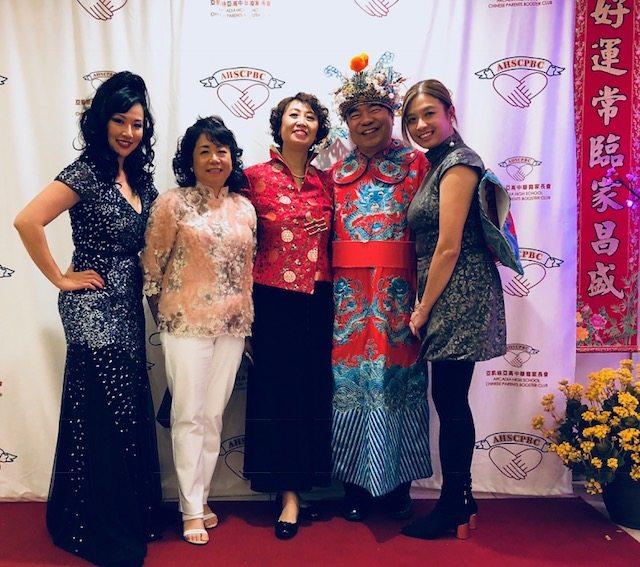
Hsieh (far left) with (L to R) Christine Lee, APAF board member; Connie Liao; Tim Lee; and Jennifer Yang, APAF board member during the Chinese New Year banquet | Courtesy Photo

All of Hsieh’s efforts are focused on offering children and young people a way to express themselves and gain confidence in their talent. She pronounces, “We were recently nominated for the ‘Make Change Award’ because the core of our work is dedicated to children. Helping children develop their artistic talent and perform at world-class level has always been the heartbeat of the foundation. We encourage the inclusion of arts in children’s daily school activities.

Students in the Arcadia Unified School District are integrated in all our shows. They’re an essential part of the production either as interns or volunteers; they work at the front of the house or as crew. Some of our interns are involved in our marketing process helping with concessions, handing out flyers, putting up posters.

We also provide them with a venue where they can showcase their talent. For the Chris Mann Gala Concert, which officially opened our 2017-2018 season, we integrated 165 students including Orchesis, which is the Arcadia High School (AHS) dance group, the AHS marching band, the AHS advanced orchestra, Arcadia Stage. All the resident youth companies of the center came together and performed at the event. For the Beatles Tribute Concert, held last Saturday, February 17, the Longley Way Elementary School Glee Club was featured alongside a professional tribute band.”

This greater involvement of students in the productions held at APAC is Hsieh’s deliberate effort to prove that the arts are fundamental components of a happy and successful school experience. She relates, “Since I came on board I have learned so much about the community. Arcadia has a 60 percent Asian population and parents want their children to focus on math and science. They send kids to ‘cram school’ to prepare for ACTs, SATs, APs and SAT IIs. Counselors at these schools tell their students they should drop their arts classes to make time for studying to get higher GPAs. They make it sound like arts courses are a waste of time which is simply erroneous.

Now all our shows will be opened by students from one particular school. Parents, grandparents, siblings, and friends can enjoy watching students’ accomplishments. Being on a professional production is something students can put on their resume as they build their portfolio for inclusion in their high school transcript. I want for families to recognize that participation in these events advances their children’s prospects for college and beyond.

But more than simply an entry in a college application, the arts occupy a far greater role. I am a firm believer in the positive impact of the arts in children’s development so much so that I have campaigned for the integration of visual and performance art courses in all the elementary schools in our district.

While the ancient Asian perception still carries on today, I am slowly hoping to change people’s minds about the importance and relevance of the arts in children’s lives. And my agenda is to make parents continue their investment in arts courses for their kids. That while they don’t see it now, their investment will yield positive results and change the perspective in our community.

APAC’s slogan is ‘Coming Together’ to highlight how the arts can be the bond that unites families in our community as it is the glue which connects us with other communities. We have strengthened our relationships with other school districts in the San Gabriel Valley.”

There’s so much going on at APAC it’s a hopping place. What’s surprising about that is Hsieh took the helm at APAF not that long ago. But what a change she’s made in that short time.

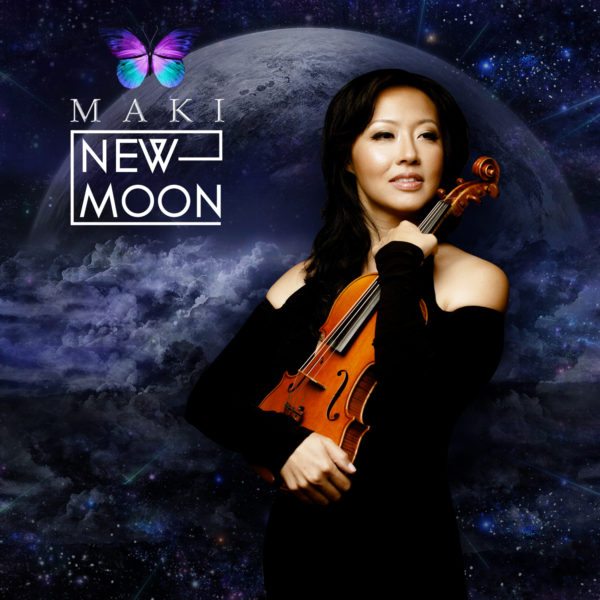
Maki Hsieh will debut her ‘New Moon’ album at APAC on March 24 | Courtesy Photo

To say that Hsieh is an overachiever is a colossal understatement. At the age of 15 she debuted at the National Recital Hall for Taiwan’s First Lady. She has also performed for Queen Paolo of Belgium. She was classically-trained at Peabody as violinist, concert pianist, and opera singer who performs in 12 languages.

Hsieh attended the Taipei American School where she earned awards in orchestra, choir, theatre, poetry, and the Veterans of Foreign Wars Voice of Democracy Speechwriting Prize. She went on to Phillips Academy Andover and served as concertmaster of two orchestras and received the Andover Music Prize.

From there Hsieh went to Johns Hopkins University and graduated with a degree in pre-med majoring in Sociology. She won the Hopkins Provost Prize for her research on inner-city youth academic achievement and worked for Al Gore as part of her Hopkins fellowship.

Extending her record of stunning achievements to her professional life, Hsieh was responsible for closing over 6.6 billion in sponsorships, investment banking, and new business development during her 20 years in media, entertainment, and finance industries.

Prior to her leadership of APAF, Hsieh was Executive Director for the private equity company JTN Group. She also had extensive experience in executive communications for the Chairman of the Walt Disney Company, institutional advancement as Director of Development at the Gallo Center for the Arts, and asset management for Fortune 500 corporations including Visa and Deutsche Bank.

A consummate performer, Hsieh made a 2013 Skrillex remix which made number one for five weeks on Los Angles, U.S., and global electronic music charts. She has appeared in a Cannes Film Festival film and in over 300 red carpet events, performing arts centers, festivals, and arenas including the Special Olympics World Games, and singing the National Anthem at a Major League Baseball Division Series televised on FOX Sports Network. Fittingly, she will unveil her album ‘New Moon’ on March 24 at APAC.

Hsieh is propelled with a determination to succeed in her role as overseer of this outstanding organization that is equaled only be her desire to prove that the arts are essential to life. Her mission is to make APAC the home of arts and culture in the San Gabriel Valley. And given her fiery spirit, she will undoubtedly make that happen.

‘Henry V’ at a Noise Within Stars Pasadena-area Native

Originally published on 6 February 2018 in the Pasadena Independent, Arcadia Weekly, and Monrovia Weekly

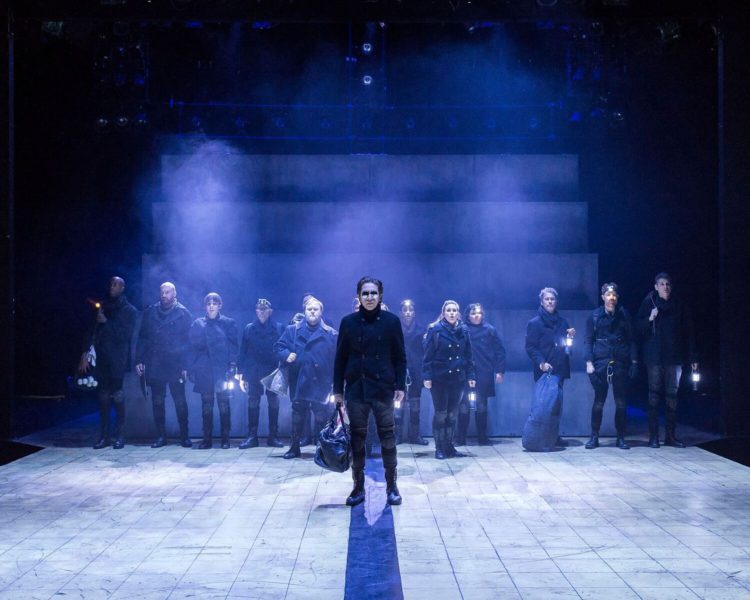
Rafael Goldstein as Henry V. | Photo by Craig Schwartz

William Shakespeare’s ‘Henry V’ goes on stage at A Noise Within (ANW), the acclaimed repertory theatre company, from February 4 to April 6, 2018. Co-directed by Geoff Elliott and Julia Rodriguez-Elliott, it focuses on the Battles of Harfleur and Agincourt and has been streamlined into a dynamic thrill ride infused with modern relevance.

“‘Henry V’ is a play about going to war, and the propulsive energy that leads to conflict,” declares Elliott. “We’ve zeroed in on the conflict between Henry and France, and captured the unifying, almost euphoric energy that comes with having a shared enemy. While the play is not explicitly for or against war, it does provide an in-depth look at the politics of war and our thirst for conflict. Ours is a very physical, visceral production: we have three fight choreographers and a live percussionist. Expect a fast, furious, and ferocious evening.”

At the center of the intense action is ANW resident artist, Rafael Goldstein, who assumes the title role. He states, “When I found out I was going to be playing Henry I started training – running four or five miles a day – and eating better to get in shape. We spent hours staging the battles. Our fight choreographer, Ken Merckx, and a couple of his assistants  have done a fantastic job of putting this together. It’s edge-of-your seat excitement and really bloody action. It’s a spectacle not to be missed.”

Shakespeare’s history play tells the story of King Henry V of England and takes place during the Hundred Years War. ANW’s iteration of it, however, does not specify an era. States Goldstein,  “It’s a timeless tale set in a timeless way. Men’s need for conflict and war never goes out of style. When you’re working with a story this malleable and universal you could pretty much do whatever you want with it and the strength of the story would stand up.

This particular production happens in a ritualistic arena where this group of people comes together to tell a story about humanity’s need for conflict. They use Shakespeare’s words and plot to tell this very human story but it isn’t set in 1415 on a battlefield with knights in armor. It’s a modern version of what warfare looks like and what it does to people. While we’ll be sporting contemporary clothes, we’ll still be wielding swords. And we’ll be wearing crowns so the audience can tell who’s the king, the prince, the princess, and so on.”

Henry V ensemble | Photo by Craig Schwartz / A Noise Within

Ever the professional, Goldstein prepares for his performances seriously. He declares, “No matter what show it is and what role I play, I go over the script two or three times a day. And during the lead-up to rehearsals when we get ‘off-book’ I try to have all my lines memorized before the first run-through so when I get into the room with all the other actors, I can communicate with them and not have to look down at the script.

Memorizing, especially Shakespeare, is a joy. The language is so rich and the characterizations are so clear. He gives you so many clues as to how to read and understand it that it becomes a familiar song, a part of who you are.”

This talented and prolific actor hails from the Pasadena area and his involvement with ANW goes way back. Goldstein discloses, “I was born and raised at the base of these mountains, in Altadena. I went to St. Andrew Catholic School on Raymond Avenue in Pasadena. And then I went to the Los Angeles County High School for the Arts (LACHSA).

Actually, the summer before I went to LACHSA, I took the Summer with Shakespeare program at A Noise Within when it was still in Glendale to give me a leg up and little bit more training under my belt before I head into this conservatory-style setting. That fall, ANW contacted me and asked if I wanted to be in their production of Macbeth. So I worked on high school stage productions and professionally with ANW all through high school.

I attended New York University’s (NYU) Tisch School of the Arts and stayed in New York for a while. When I moved back here in 2011, I rekindled my association with ANW. So not only did I come back to my birth home but to what has become my stage home as well. They cast me in Antony and Cleopatra as Eros, a wonderful little role as Antony’s servant on the battlefield. When Antony realizes that all is lost he asks Eros to kill him. Rather than kill Antony, Eros kills himself instead.

In my many years at ANW, I have played key characters. I had a principal role last season in Tom Stoppard’s ‘Arcadia,’ which was an ensemble piece. I’ve also played title roles before but never in a venue like this; it’s challenging in a nice way. One of the obstacles is thinking of Henry as a lead role because even though the world of the play hinges on his experience, that world is still very much alive and independent of him. There are so many things that he can’t control in this world. He causes a lot to happen but things happen to him as well.

Being in a titular role, I do feel a certain amount of responsibility for ensuring our play is well received and resonates with our audience. That’s why I have been preparing for as long as I have and as assiduously as I possibly can. But, like Henry, I can’t take all the credit because there are so many moving parts and aspects to this play. It really does take a village to raise a mountain of a play and incredibly long hours of hard work that goes into the production that the audience will eventually see.”

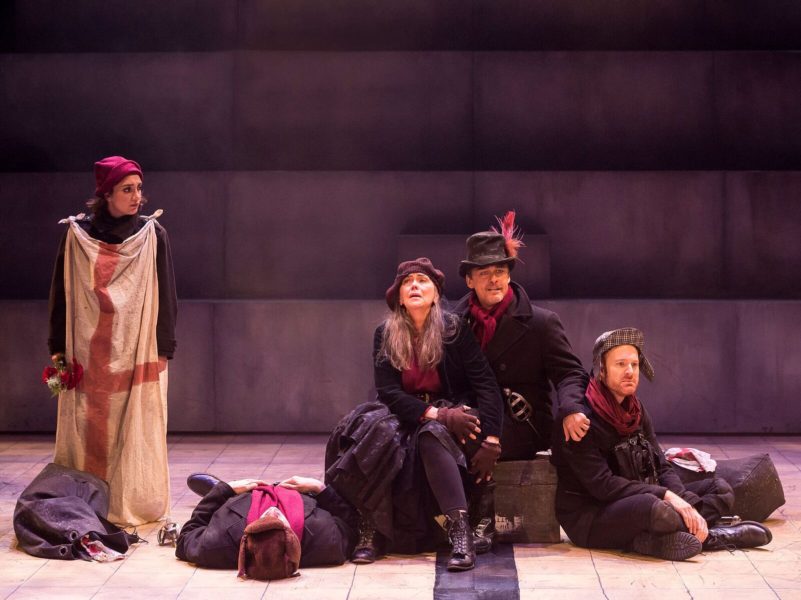
Henry V cast (left to right): Erika Soto as Boy; Jeremy Rabb as Bardolph (supine); Deborah Strang as Mistress Quickly; Frederick Stuart as Pistol; and Kasey Mahaffy as Nym | Photo by Craig Schwartz

I have worked in other theatre companies like Theatre Forty and Sacred Fools, and a part-time job at Pasadena Playhouse, but ANW is my home base. ANW and doing theatre are vital to my life; they’re essential to who I am. My poor wife sees me maybe one day a week but that’s the life of an actor – it’s hard and grueling. It’s not always rewarding in the way you would like it to be, you hear the word ‘no’ more than ‘yes.’ But when you do have a job and you’re doing a play that feeds your soul, you couldn’t ask for anything more – it’s the fulfillment of a passion. You give something of yourself to your audience as they watch you on stage. There is a symbiotic relationship between the actor and the audience, a true communion.

Other professional pursuits keep Goldstein busier still. He says, “I do voicing for video games, standing in a dark room screaming into the microphone. I’m also involved in film-making with a friend who has started a small company. Right now he’s doing mostly music videos and we shot one wild little film recently at Joshua Tree. We have plans to put together some shorts and features, going through the fund-raising phase, pitching the idea for possible funding. I’ve been in a number of short films as well and one TV spot on Investigation Discovery Chanel.”

“Theatre is my first love though,” Goldstein hastens to add. “It has been since I first went on stage at the age of three and played one of the sons of Adam and Eve in a little play at a Unitarian Church about the creation of the world. I remember I had one line and the audience laughed. I was hooked.

If that weren’t enough motivation for me, my father is an English professor who would bring home plays for us to read aloud. My mother, my sisters, and I would divide the parts and we’d talk about it after. We’d read Eugene O’Neill, Shakespeare, Neil Simon, any author he was doing a unit on at the time.

My mother is a psychologist who would talk to me about people and human behavior and thought. I never had a chance: I was always going to be an actor. So for as long as I still have all my hair and teeth, I’ll be on stage somewhere many years from now telling stories and, hopefully telling them well.”

While Goldstein’s little three-year-old self couldn’t have foretold that he would be playing incredibly memorable roles in numerous acting projects at age 30, empirical evidence suggests he has been honing his skills for ever more significant performances.

‘Henry V’ may be Rafael Goldstein’s star vehicle but it’s only the beginning of his journey. His career’s ascent may not be akin to a fast, furious, and ferocious evening of ‘Henry V’ on stage but it will be steady, strong, and superlative. And that would be a far more thrilling ride.

100th Rose Queen Reigns Over Pasadena’s Annual New Year’s Day Parade

Originally published on 26 December 2017 in the Pasadena Independent, Arcadia Weekly, and Monrovia Weekly

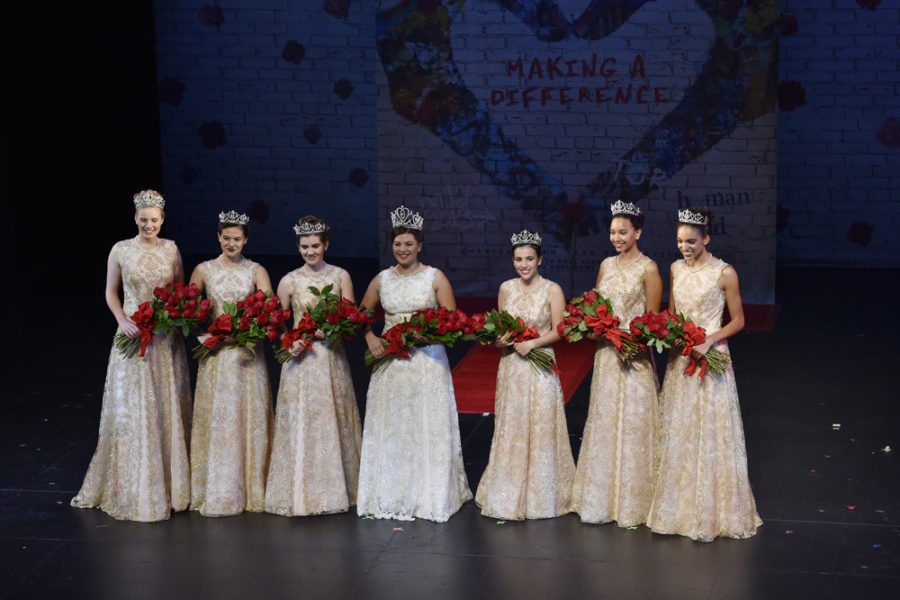
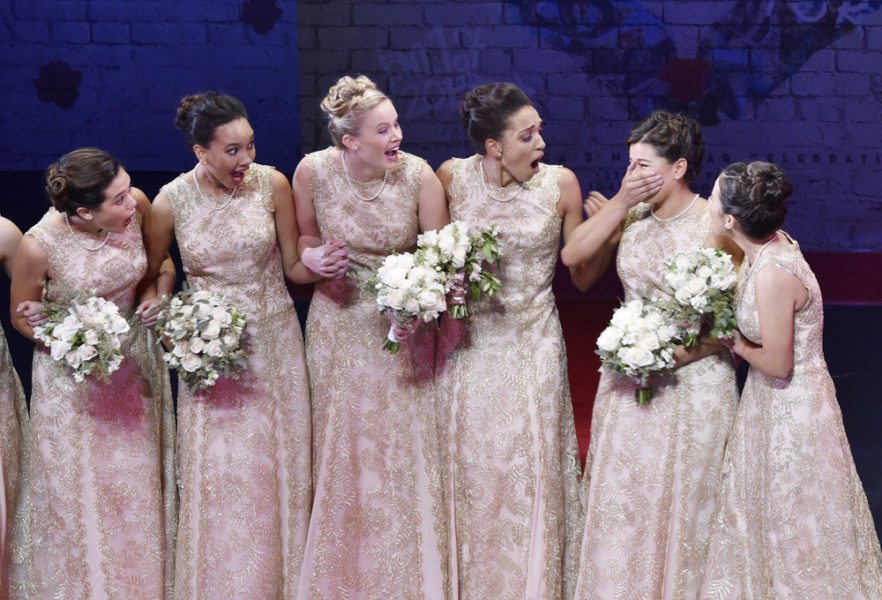
The 2018 Rose Queen and Royal Court (left to right): Princess Georgia Cervenka; Princess Julianne Lauenstein; Princess Sydney Pickering; Queen Isabella Marie Marez; Princess Alexandra Artura; Princess Savannah Bradley; and Princess Lauren Buehner | Photo by Terry Miller / Beacon Media News

When Isabella Marie Marez was crowned the Tournament of Roses’ (TofR) 2018 Rose Queen, she joined a select group of young women chosen to ascend to the throne for the annual Rose Parade. But that she happens to be the 100th marks a significant milestone.

Marez, who has been interviewed countless times, and most probably asked the same questions, nevertheless answers with a nary a trace of tedium when queried about this distinction. Her face lights up when she replies, “It’s a big honor and one that I never expected to have in my life. It’s a magical experience – I’m meeting people I never would expect to meet, doing things I have never been able to do.

Being on the Royal Court is really being part of a sisterhood. I’ve become friends with everyone because we all go to the same functions – we’ve done about 90 events, going to as many as three or four in one day. We are all bound in this same experience and we have a very close relationship.”

“From this experience I learned that being on a team isn’t always that easy,” confides Marez. “When we were assigned to the Court we were seven different young women who are equally strong and passionate about what we believe in. Now we are one unit working towards a common goal.

We have to find ways to really bond outside of the Court – to just hang out like normal teenagers. I know that we’re going to be best friends but being as close outside of our duties is what’s going to make us really successful. There was so much we didn’t know about each other. But having been together for a while, we were surprised at what we could accomplish because we’re closer.”

To future Rose Queens who will follow in her footsteps, Marez offers some tips. “Stay true to yourself and communicate with your Court. Be honest with each other and work together. You’re not alone but part of one team – all seven of you.”

Isabella Marie Marez is chosen 100th Rose Queen | Photo by Terry Miller / Beacon Media News

Marez is likewise surrounded by a loving and supportive family. She says, “It was my mom who inspired me to try out for the Royal Court. She makes us all watch the Rose Parade on TV every New Year’s Day; she marvels at the B2 Stealth Bomber Flyover that kicks off the parade.

My mom is so proud of me and beyond excited to see me at the parade and to be at the football game.  She can’t wait; she invited our entire family. My mom is from New Mexico so all my relatives from there are coming to Pasadena to cheer for me.

I’m really looking forward to it.  I can’t wait for New Year’s Day to be here – to wake up at 1:30 in the morning, get ready, and ride in the float. I just want to experience the joy of having all of Pasadena being together on that one special day.”

The duties of the Rose Queen are already part of Marez’s ethos. She explains, “I’m on the Service Commission in my school, something I’m very proud of.  Our high school wants to underscore the difference that education makes in someone’s life. That’s also what I want to emphasize as a person and as Rose Queen.”

A senior at La Salle High School in Pasadena, Marez has played softball for the past eight to ten years.  From it she learned time management, an asset that is crucial as Rose Queen. She states, “I know how to organize my days to include academics, sports, and my duties. Being on a softball team most of my life has prepared me for this. This requires the same dedication and time management as a sport.”

One thing Marez doesn’t have to worry about is college admissions. She applied through early action and has been accepted to Manhattan College in New York. She enthuses, “I’m very excited! It’s my first choice because it’s a private La Sallian university which shares the same code of ethics as my current school.  Social justice is a big part of our curriculum – being inclusive, showing respect for people, giving back to the community, helping those who are less fortunate.

To that end, I want to study pre-Med to learn about human anatomy and social justice. Someday I want to be a physician’s assistant and work in refugee camps in Latin American countries …  maybe join Doctors Without Borders, the Peace Corps, also do some missionary work.”

Informing others about Catholicism is also important to Marez. She states, “Catholicism today is different from what it was when I was growing up. It has gone through an evolution and Pope Francis has done so much to make it relevant to people in today’s world. This Pope is in touch with our present-day reality; not how things should be, but how things are. My parents raised me with the moral that you may not always get what you want and you need to adjust to what’s been handed to you. I believe that there are only two things you can control – your attitude and your effort.”

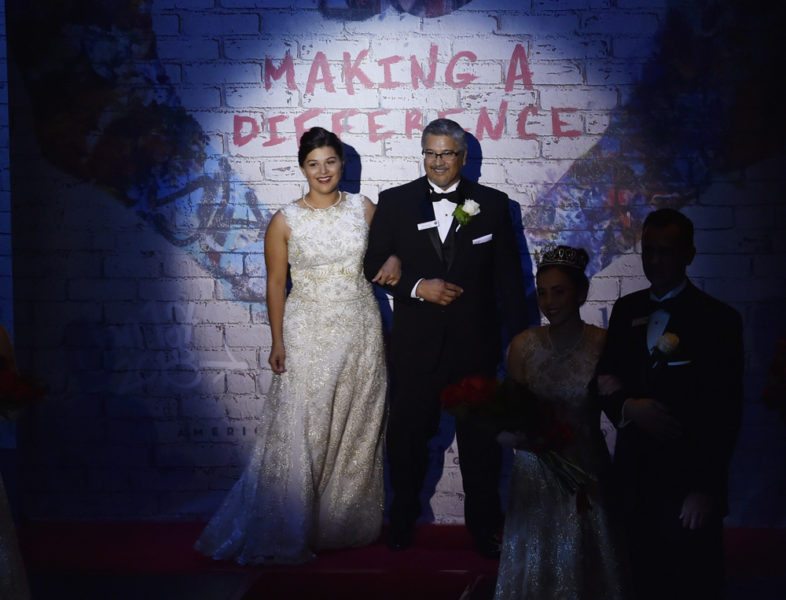
Queen Isabella is escorted by her Dad, Jesse Marez | Photo by Terry Miller / Beacon Media News

With her hectic schedule, Marez doesn’t get a lot of downtime. She says wistfully, “Whenever I get the chance, I do homework. And I try to sleep. I love watching movies with my family – my mom and sisters are film fanatics. Watching movies and playing softball are a big part of my life.”

Friends are also a huge part of her life. Informs Marez, “I went to high school with my two best pals; and I have two or three best friends out of school. It’s a very tight relationship, we’ve known each other since middle school. They’re very happy for me and I do miss them a lot. I haven’t been able to see them as much but they’re very excited for me and each time I see them they tell me to enjoy it because this is a once in a lifetime experience.”

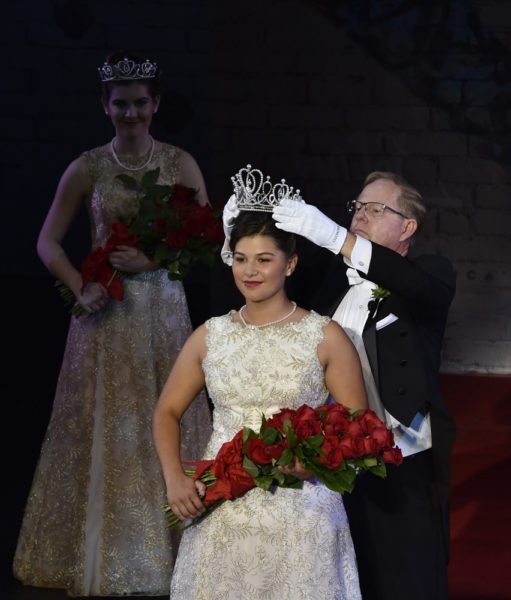
During Marez’s coronation, Lance Tibbet, 2018 Tournament of Roses President, expressed a sentiment along the same vein when he said, “Queen Isabella’s life changed the moment I announced her name.”

Lance Tibbet crowns Isabella 2018 Rose Queen | Photo by Terry Miller / Beacon Media News

Tibbet and Marez share a common appreciation for the Tournament. He echoes Marez’s words, “I have experienced things I never would have, had it not been for Tournament of Roses. One thing the Tournament’s great about is that it doesn’t assign you based on how old you are or what jobs you’ve had.”

“I can tell you several stories,” Tibbet relates. “I was on the intersection of Colorado Blvd. and the end of the 710 freeway at 6:00 in the morning on parade day when a group of band buses had come up and was supposed to stop to drop off the band members. And I had to make that happen – you can imagine the crush of people, cars, and equestrians. Nothing in my work background prepared me for that kind of situation and it is what continues to hold my interest.

I’ve had the chance to meet the Army Golden Knights who were doing a parachute jump at the start of the parade. We went up with them to do a practice run. I wasn’t going to jump out of a plane, mind you.  But to go up with them, be with them, see what happens, and learn about that is a remarkable experience. It was not something a nursery man in Pasadena would have had the occasion to do.”

Continues Tibbet, “It’s been amazing to interact with people from all walks of life over the years. One of my best friends, who will be president next year, is a retired law enforcement officer and someone I would never have met. It would have been very unlikely anyway, because that would have been a bad thing.

What I’m saying is, the Tournament has given me the opportunity to do things and meet people. And, at the end of the day, this is about people and the Tournament is a family whose members I value.”

Having been with the TofR for over three decades, Tibbet has served in various capacities, including being chair of Budget and Finance, Governance and Personnel, Equestrian, Kick-Off Events/Hall of Fame, Parade Operations, Post Parade, and Queen and Court.

“I was part of the committee that selected the 80th Queen; I was the chairman when we selected the 90th Queen, and now I’m president for the 100th Queen,” Tibbet recalls. “There hasn’t been any significant change in the selection but what has changed is the make-up of the participants, or the young women who have tried out. Over the years I saw a shift in their attitude, which I found quite interesting.

The first time I was on the committee, in 1996, when we asked the young women trying out to tell us in 15 seconds why they want to be on the Court, the answer we usually got was ‘I want to be a part of something bigger;’ ‘I want to give back to the community;’ etc. When I was chairman of the committee in 2007, the answers we got were, ‘I want to be famous;’ ‘I want to be a star;’ ‘I want to be a celebrity and I think this is the best way to get that opportunity.’ Today, as president, what I’ve heard was them wanting to give back to the community. It’s great and I’m glad to hear it because that’s what this is about.”

The 2008 Royal Court float. Photo courtesy of Tournament of Roses

Tibbet says further,“In all the time I’ve been with the Tournament, our core events, namely the Rose Parade and Rose Bowl Game, have remained mostly unaltered.  Certainly the floats are bigger and grander, the reliability and engineering have improved. And our other events, like the coronation or the tailgate, have changed to be more relevant.

But one of the things about the Tournament that has really transformed that people don’t know is the way we’re involved in the community – from our foundation, to the community support. We give over $165,000 a year just to local events; the foundation gives over $265,000 a year to non-profits in the community; we’re giving scholarships; we’re being strategic with our partners like Disney, L.A. Dodgers.

MiracleGro assisted us with the Muir Ranch, Pasadena High School’s garden. We’re helping renovate the John Muir High School baseball field. The Parade and Game provide about $300M in the region. And that’s the significant thing – we’re more engaged in our own backyard, in a very targeted way.”

“There is no special event being planned to celebrate the 100th Rose Queen,” discloses Tibbet. “We partnered with the Pasadena Museum of History (PMH) on a fantastic exhibit called ‘The Royals of Pasadena’ to recognize that landmark. We’re excited that we were able to show people the history of the Rose Queen and Court. We want to be sensitive to the fact that there are, and have been, other women on the Court. Unless we’re also going to do something for them, we’re not going to make too big of a deal on the 100th.”

“This year’s Rose Queen and Court events and commitments are mostly the same as in the past several years,”  Tibbet says, “They make a hundred appearances on behalf of the Tournament. For young women who are in the midst of college application and all their activities, it’s such an honor that they can commit to that. They do a fabulous job – I don’t know how they can handle that kind of schedule. And they do it all so gracefully – they take it on with a gusto. They don’t complain, they’re incredible!

I am continuously surprised, because when I was their age all I had ever done was have a paper route.  And as far as a significant accomplishment, I played baseball. Whoopee! These women are actively involved in so many clubs and organizations, things in high school that really impact their fellow students’ lives in positive ways. I think that’s phenomenal and I give them a lot of credit because I wouldn’t have found the hours to do it all.”

“These amazing young women demonstrate that there’s so much more to the Tournament than the Parade and the Game. We are proud, as an association, to provide opportunities for kids to leave home for the first time to participate. The band kids, in particular, aspire to become better for the chance to be selected by their music directors to travel to Pasadena.

We celebrate in our New Year’s Day Parade the artistry of the kids, the beauty of the floats, and the outstanding talents of athletes who play in the Game. By doing so we bring people together – we all know there are people out there who want to divide and separate us – and it is a remarkable thing that we get to do,” Tibbet says with pride.

The pageantry displayed every New Year’s Day in Pasadena is broadcast all over the world. It is seen by over 50 million viewers watching on television at home and close to a million people on the five-mile parade route on Colorado Blvd.

If, on that singular occasion, we are all united in friendship and harmony, then the Tournament of Roses, the Rose Queen and her Court can add one more accomplishment – extending goodwill to humankind.  We should be so lucky to have 100 more Rose Queens.

San Gabriel Valley Schools Adopt Anti-Bullying Program

Originally published on 6 November 2017 in the Pasadena Independent, Arcadia Weekly, and Monrovia Weekly

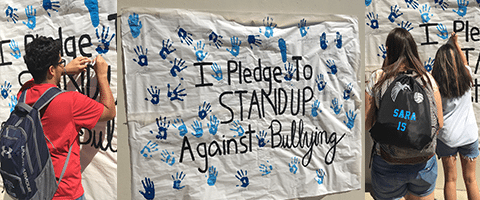
Duarte High School students took the pledge to stand up against bullying. Courtesy Photo

Bullying is a common occurrence in schools and the numbers prove it; one study revealed that as many as 49 percent of children in grades 4-12 have been bullied at least once during the past month.

School administrators and teachers have been looking for ways to solve this prevalent problem. For years several different methods to stop bullying have been utilized, including zero tolerance and expulsion which have since been deemed ineffective.

Several schools in the San Gabriel Valley are grabbing this bull by the horns, so to speak, through active and ongoing conversations with students and parents about bullying. One independent school in Arcadia went a step further by including a social curriculum to create acceptable standards of behavior on campus.

This challenge is front and center in the Duarte Unified School District (DUSD) where  Superintendent, Allan Mucerino, is taking a PBIS (Positive Behavioral Interventions and Supports) approach to teasing and bullying in the classroom.

States Mucerino, “PBIS has been quite popular in Orange County where I came from before it made its way to Los Angeles in the last five to six years. I brought it to my last district when I came to Los Angeles prior to landing in Duarte, and it has grown by leaps and bounds. It’s a school-wide behavior management system with social emotional learning embedded into the program. The key is to teach behavior expectations and balance corrective actions with positive supports and interventions designed to restore a positive relationship.

However, because we utilize restorative practice doesn’t mean we tolerate bad behavior. In fact, it’s the opposite. Students are held more accountable; they are made to realize that bad behavior changes the relationships with teachers and fellow students. The old punishment of suspending them seems almost like a reward because they’re getting a day off.  In PBIS we address that destructive behavior – we call in the students involved and the teachers then we discuss ways to restore the fractured relationship. When necessary we resolve the issue by using more sophisticated exercises including bringing in facilitators and families to rebuild relationships.”

“This is consistent with our transformation to K-8 because students stay here for the duration of their studies before transitioning to high school,” Mucerino discloses. “In the research literature, K-8s have a lower incidence of bullying. And the reason is obvious – kids coming into a middle school from a variety of elementary schools at adolescence are more vulnerable. It’s in middle school that kids act out; they feel liberated from all the restrictions in the elementary school.

Our transition to K-8 is an educational design model to create a safer learning environment, to build in conditions for kids to become successful based on student-adult relationships. This is where PBIS comes in; it is a program that the entire school owns – from kindergarten all the way to high school.”

Students at Northview 8th Grade Village implemented creative ways to build a school culture founded on inclusion, acceptance, and kindness. Courtesy Photo

PBIS is ubiquitous on all DUSD campuses: all classrooms have some motto or sign that emphasizes good behavior. Teachers are now a presence during passing period when most bullying – from slight comments to bumping into someone – occurs. There’s active supervision; an adult is present every 20 feet to give students fewer opportunities for bullying.

As Mucerino says, “The point is prevention; we don’t want to catch kids. To balance corrective measures with positive action, DUSD uses a token economy to acknowledge good conduct. Each time a student demonstrates good behavior – like a random act of kindness – he or she gets rewarded with a token.  They accumulate these tokens until they have enough to purchase something at the student store, which is very popular; even high-schoolers love this idea.”

Every school at DUSD has a PBIS coordinator who reports to the principal and they work together with the Director of Student Services to address discipline issues as they arise. Schools have to come up with creative ways to address chronically bad behavior, according to Mucerino. While suspension and expulsion are still used for the most egregious behaviors, they are last-resort options, when mediation and less drastic solutions have been exhausted.

Mucerino expounds that there is a direct relation between behavior and academics. “Students who are not successful tend to be the ones who are also having behavior issues because school isn’t a happy place for them. My expectation is that because of improving behavior and deepening relationships, the academics will follow. Student-teacher relationships have the highest effect on student growth.”

“What I expect is the culture of our school district to shift from a zero-tolerance punitive approach to one that considers the whole child and recognizes the responsibility for social and emotional learning,” pronounces Mucerino. “Bad behavior is disruptive to learning and we don’t want to put everything on parents; we accept our role in teaching proper behavior and helping children succeed. I see DUSD on the forefront of providing a nurturing culture and a model for all schools. We want our schools to provide a safe haven for kids, like family.”

At DUSD an entire community of administrators, teachers, parents, and students come together to help each child succeed. It is a culture and environment where everyone is seen and heard – where bullying can never take hold. It is where students can only flourish and thrive.

Sequoyah High School Looks Towards Another Successful Year

Originally published on 20 October 2017 in the Pasadena Independent, Arcadia Weekly, and Monrovia Weekly

Marc Alongi, Director of Sequoyah High School in Pasadena, couldn’t be more excited to usher in the new school year. After completing a highly successful first year of establishment, he is ready for the challenge of surpassing what they have achieved. 

Enthuses Alongi, “We had a really great year! We didn’t know how it was going to go because we hadn’t done it before. It was all new to us – creating an entire curriculum, hiring faculty for it, adding more grade levels. The question for us was ‘how do we maintain the culture’.   

Proof of how successful we were became clear on the last day of the school year. The students were all thrilled to be coming back. We held an afternoon meeting and showed a slide presentation of the past year’s activities. They were all proud of what they have accomplished.     

Our students built a fun, curious, and inquisitive culture. It’s hard to do when you’re a teenager and forming really powerful relationships – cliques can develop very easily, it could become exclusive. But they have done a very good job of acknowledging and including each other. It’s a place where everybody is seen and welcomed. 

They said they got a lot out of the classes; they loved the student/teacher relationship – being able to have inside jokes and share the things that were funny in class. It’s a sign of a pleasant class experience when teachers and students have a good rapport.        

I told them to take a moment to realize that they’re part of Sequoyah’s history as the founding students of the high school. While the new students coming in will still be founding students, they have this particular experience – the very first day, the very first year, and many other major firsts.”       

A concern Alongi remembers one student expressing was that it wouldn’t be the same with newcomers arriving this school year. He says, “They were worried that the special composition as they know it will change. There was a real sentimentality there and we discussed that. Even though we’re growing – we’re doubling in size with new students coming in ninth, tenth, and eleventh grade – we can preserve the culture.”

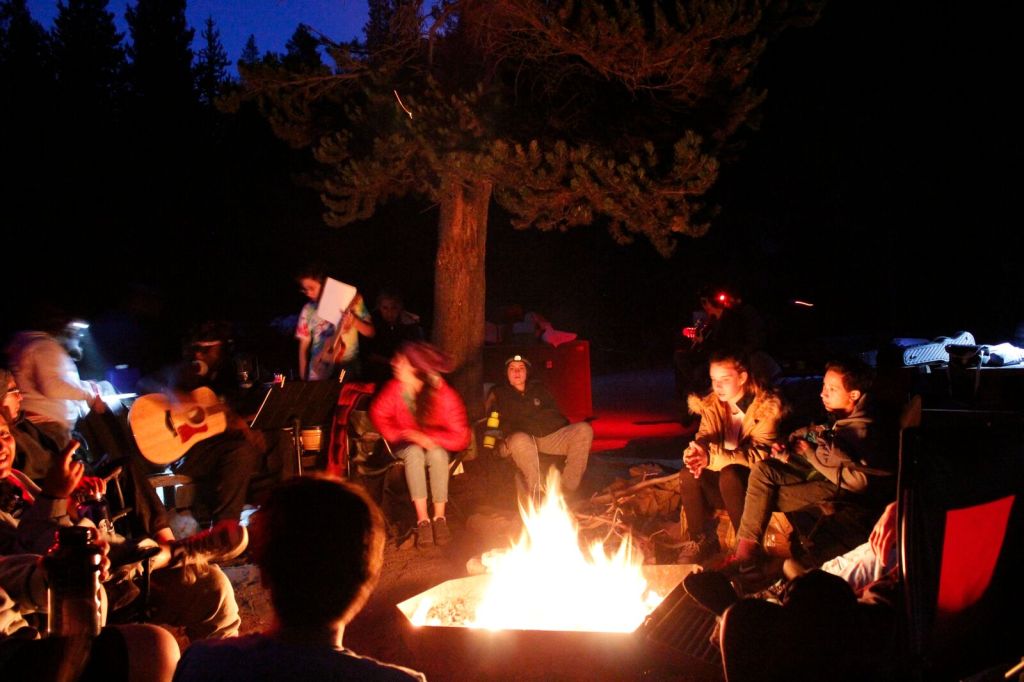
Starting the year off with an all-school camping trip at Pumice Flat campground in the Inyo National Forest | Courtesy Photo

Sequoyah HS joins an elite collection of secondary schools in Pasadena. It offers a rigorous  curriculum as all the other high schools but what’s different is the pedagogy. Elucidates Alongi, “We take it to another level beyond lectures in class. We emphasize application of concepts; we want students to articulate and demonstrate what and why it matters; why it’s relevant. 

They demonstrate mastery of a subject through exhibitions, which we have twice a year – in January and June. While there are still tests and quizzes, the grand assessment is a project that requires them to creatively use the factual knowledge and skills they gained in the classroom.  They have to be able to coherently communicate this with an audience of their parents and other students who didn’t take the class. It’s hard to do and we want to make sure that was presented and valued and celebrated. They came up with excellent exhibits and they also completed an innovation program in their first year.”

Alongi is referring to an integral component in Sequoyah High School’s curriculum – the four-year Social Innovation Program (SIP) designed to develop students’ empathy and desire to be thoughtful, effective collaborators and change-makers.

“The idea behind that is for students to be familiar with social or environmental issues,” says Alongi. “And rather than having a discrete class in tenth or eleventh grade about civics, or economics, or specifically about local policy issues, we want students of our four-year program to become familiar with how communities work – whether that’s the school, Pasadena, L.A., or whatever concentric circle they have.”

“This past year for our ninth and tenth graders we decided to look at the L.A. River because it has a number of issues that are related to it,” continues Alongi. “It has been a very important focus for L.A. and Mayor Eric Garcetti has put together a long-term plan to make the city more sustainable and more just socially and environmentally.” 

According to Alongi, the L.A. River presented students with three big areas which they discussed in their group topics. 

The first big area was the water quality’s impact on the environment.  Students did experiments on different metrics of water, PH level, and turbidity; they tested for traces of metals on murky water. This was exciting for this group because they were able to use what they learned in chemistry class and they were able to relate this to what happened in Flint, Michigan.         

A second topic was biodiversity in the watershed. This team examined Devil’s Gate Dam at the Hahamongna watershed near JPL. The dam was created to prevent flooding in the Arroyo which covers the Rose Bowl, the Aquatic Center, and several houses. 

“The dam has filled up with sediment, volume has been displaced so it’s less effective and it can be breached,” explains Alongi. “While the easiest solution might be to remove the sediment, other factors have to be taken into account. Over the decades it has become a habitat for wild animals, including an endangered bird. Removing millions of cubic feet of sediment rocks and sand means that there will potentially be 400 truck trips per day for five years once they start the sediment removal.    

Our students made a documentary film about it to engage people in the issue so they could be more involved in the decisions being made. They also created a board game using a two-scale model of the dam simulating what would happen if more water goes into the dam. The game gives players courses of action and shows that the choices they make have consequences. They took this board game to several senior centers and a handful of schools. They videotaped the experience of playing the game with older people and students. They even composed original music to go with it. I was very impressed with them,” Alongi beams. 

A third topic was housing. The students found out that there was a lot of development going on around the L.A. River. They decided to apply it to the local level and they discovered that Pasadena, in particular, has a shortage of affordable housing. They realized the role of economics behind it – more inventory means less expensive housing.

Students explored the dynamics between tenants and landlords, and examined tenants’ rights. A lot of conflicts can arise from lack of information, so they went door-to-door, talked with a lot of people to find out what they know and don’t know. They ended up producing an 18-page report outlining how to build better tenant-landlord relationships.    

Alongi states, “Working on this issue complements the curriculum very well. Questions from humanities come to life when you’re talking to people about being a renter. Economic, political, and social concepts are raised in tenancy issues.

Students aren’t necessarily coming up with a solution, they are learning from complexity and they’re learning how to be creative. The other thing that we emphasize is what’s called design thinking – using design to solve a problem – which has become very trendy in schools. 

The simple idea behind it is to do a lot of research, use ethnological scales, talk to people, observe people’s behavior. After collecting all this information, start the brainstorming process.  Come up with not one, or two, or five ideas; come up with 50 ideas for what could be strategies to improve some of the issues you identify.                           

Once you narrow it down to what you feel is the best idea, start to prototype. Create a model or a simulation that you think could be interesting to people, then take it back and get feedback from them. The responses you get are the basis for helping you innovate; you’ll probably get a lot of critical feedback, but maybe something you came up with sticks with people.”

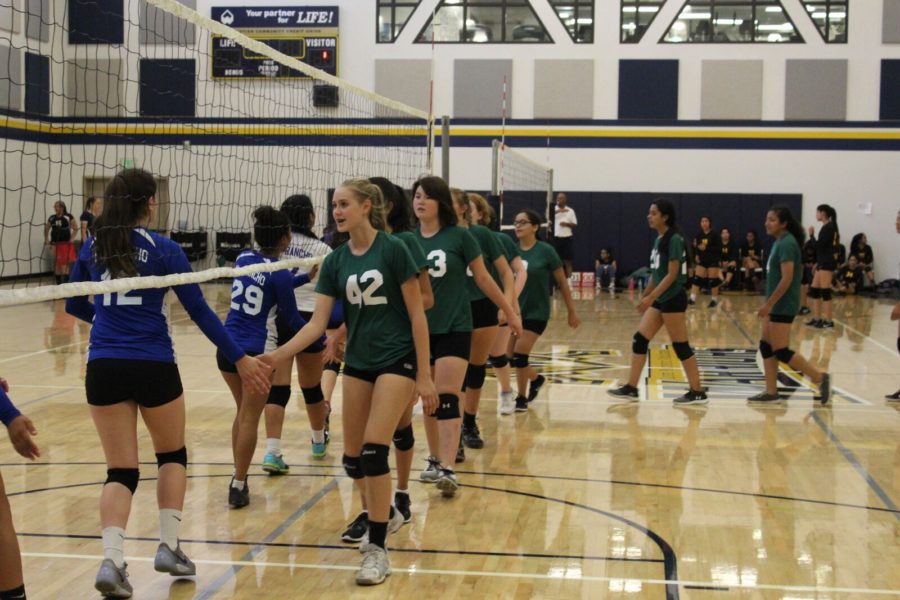
Girls’ volleyball wrapping up a game in the fall | Courtesy Photo

According to RJ Sakai, Director of Social Innovation, this year instead of using the L.A. River as starting point, students will be focusing on a diversity of Backyard Issues beginning in November.

Sakai states, “As they did last year, ninth and tenth graders will work in groups of ten with one faculty facilitator.  In the upcoming weeks, faculty members will choose umbrella topics and, with the students who self-elect into their groups, will narrow it down to a specific issue through their research and ideation. They haven’t yet decided on topics but I imagine they might include homelessness, incarceration, transportation, arts & culture, access to green space among other things.

Ninth and tenth graders are spending the first two months of school in a SIP orientation in their Stewardship Committees, which center on topics that help build the Sequoyah community: morning meeting committee; diversity committee; sustainable campus committee, etc. As part of their research and inspiration phases, these committees have spoken with people at KPCC, Grand Performances, and Mia Lehrer + Associates (landscape architects), respectively.”

Eleventh graders are working on an Independent Impact Project. Sakai reports that they have written essential questions to guide their research inquiry for the rest of the fall semester.

Some of the questions they are looking to answer include: How might alternative produce distribution procedures increase exposure and access to healthy food options in underserved L.A. communities?; What could be done to change the disposal methods of medications to make it safe for our environment?; and What physiological effects do microplastics have on living organisms and how do they damage ecosystems?

“In the spring students will begin to prototype ways to intervene in these issues and make a difference.  All of our students follow a process of ethnographic research (interviews, field work), synthesis (concept mapping, note taking), ideating (blue sky imaging, sketching), and prototyping (making things),” explains Sakai.                          

Alongi adds, “Through all their SIP projects what our students learned is that making policy decisions is a balancing act. There are stakeholders who are impacted differently by these issues and there are controversies embedded in them. So that’s part of the learning process – recognizing there aren’t easy solutions.  Innovation is simply creative problem-solving, helping bring a constellation of people together around a potential outcome that could be a win, win, win.  Maybe we arrive at a solution that isn’t perfect, but is better.

A student team tours the Bowtie Parcel at Glassell Park as part of their work with SIP | Courtesy Photo

The kids are really enjoying this process of problem-solving – that it takes time, constant iteration, and a lot of good research. And it’s also a cycle: sometimes you end up going back to do more research because you realize you’re on the wrong path. It combines hands-on action with thoughtful research and interviewing people, and doing the science or the math.

It’s quite satisfying to see students learn in the real world.  Unlike doing a unit in class, the real world is messy. They have to learn how to ask really good questions, figure out who they’re going to talk to, find out what websites to use for their research. The teacher’s role becomes more of a coach to help students wade through all the information.” 

Each group is mentored by a faculty member with proficiency on the topic being investigated.  Math teacher, Ronnie Bryan, worked with the students who looked into the Hahamongna watershed issue. He helped them calculate volume and scale to complete their project. He has a bachelor’s degree in Brain and Cognitive Science from MIT and a PhD in Computation and Neural Systems from Caltech.

Humanities/English teacher, Ian Chang, who mentored the housing team, was a language arts teacher at Sequoyah before transitioning to the high school where he developed the Humanities curriculum. He has an MFA in Fiction Writing from the Iowa Writers’ Workshop and a BA in English Literature from Swarthmore College.

Laura Haney, science teacher, coached the water quality group. She received her bachelor’s degree in Astrophysics and Math from Barnard College of Columbia University, and her PhD in Astronomy and Astrophysics at UCLA.                                    

Director of Social Innovation, RJ Sakai, graduated with a Cultural Anthropology and Graphic Design degree. He has an MFA in Media Design Practice from Art Center College of Design.  His work has led to immersions in Uganda, Cuba, small town Massachusetts, East Harlem, and Los Angeles.    

Alongi states with pride, “We have very accomplished and impressive teachers with content expertise who really care about learning. They know how to get inside the minds of different students, and understand what motivates them, how they think, and how to help them become really curious, to do the math deeply, to perform good quality work, and to go above and beyond.”

Nigh its 60 years of founding, Sequoyah School stands by its dictum to impart active citizenship, advocacy for social justice, and environmental stewardship to its youngest students. Today, with the establishment of the high school, it carries on that promise to prepare a mindful, young generation to navigate ambiguity, embrace change, and positively impact global society. That resolve came through clearly during its very first year.

With Alongi leading the way, Sequoyah High School will undoubtedly graduate students who magnificently epitomize the legacy that sets the school apart from all others. 

Musical Siblings Hold Benefit Concert for Team Fox’s Parkinson’s Disease Research

Originally published on 30 September 2017 in the Pasadena Independent, Arcadia Weekly, and Monrovia Weekly

Melodey and Marc Soong | Courtesy Photo

“Music is a moral law.  It gives soul to the universe, wings to the mind, flight to the imagination, and charm and gaiety to life and to everything,” Plato wisely declared.

For San Gabriel Valley siblings, Melodey and Marc Soong, the influence of music is obvious.  Music is part of their life; they grew up surrounded by it. Melodey was four and Marc was three when they started taking piano lessons at the former Yamaha School in Arcadia. They both are currently studying under the tutelage of Professor Daniel Pollack and Vladimir Khomyakov of the USC Thornton School of Music.

On October 14, 2017 Melodey and Marc will share their love of music as well as support a cause – they will hold a piano concert to benefit Michael J. Fox’s (Team Fox) Parkinson’s Disease Research (click here to donate). To be held at the First Church of the Nazarene in Pasadena, the concert will feature pieces ranging from the Baroque to the late Romantic period.

Sixteen-year-old Melodey has won local and international competitions including the American Protégé International Piano and Strings Competition, the California Association of Professional Music Teachers for Contemporary Music Festival, the San Jose International Piano Competition, and the Seattle International Piano Competition.

These various piano competitions and festivals have taken Melodey in several parts of the United States and abroad.  She has performed in several venues – the Isaac Stern Auditorium Perelman Stage and the Weill Recital Hall at Carnegie Hall in New York, Zipper Concert Hall in Los Angeles, and Sala dei Notari in Perugia, Italy.

Twice Melodey was chosen as a winner of the Young Musician’s Foundation Scholarship Award.

A twelfth grader at Mayfield Senior, Melodey is a member of the school’s Instrumental Conservatory. But she has other hobbies besides playing the piano; she also enjoys reading and writing. She satisfies her writing interest being a reporter and copy editor of Mayfield School’s newspaper.

While playing the piano is an avocation she would always nurture, Melodey intends to pursue a medical degree.  She interns in the Nursing and Music Therapy departments at Arcadia Methodist Hospital.

Like his sister, 14-year-old Marc has reaped the same laurels and has added other awards – Classics Alive Young Artists; the Redlands Bowl Young Artists; and the Los Angeles Liszt Competitions – to the list.

The venues where Marc has played the piano include the Isaac Stern Auditorium Perelman Stage and Weill Recital Hall at Carnegie Hall, the Zipper Concert Hall, and the Redlands Bowl.

Marc was the recipient of the 2015-2016 Young Musician’s Foundation Award’s David Weiss Scholarship.  He also volunteers with the Pasadena Symphony Orchestra.

Music isn’t Marc’s only pastime, he is also keen on reading, swimming and playing video games. An avid math and science enthusiast, he has attended several programs at Caltech and participated in the National Youth Leadership Forum: Explore STEM. He is currently a sophomore at Stanford University’s Online High School.

The Team Fox concert is Melodey’s and Marc’s very personal way of sharing music with everyone.

Melodey and Marc state, “Music is a constant in our life and is something we could always come back to; it also serves as a way to connect with others. Music has the ability to lift other people’s moods – bringing joy and happiness to those who may not be in the best spirits. Music has the power to transform, to touch, and ignite emotion.

We are incredibly fortunate to have been exposed to music early on. We are so very grateful for this privilege and we would like to give back to the community. Our grandmother had Parkinson’s Disease so we decided to hold a concert to benefit research into it. We hope that through this benefit event we can raise funds and awareness for Parkinson’s.”

To be held from 5:30 to 7:00 at First Church of the Nazarene’s Lee Chapel, the first part of the concert features solos from Melodey.  She will perform J.S. Bach’s Prelude and Fugue in D Minor; W. A. Mozart’s Sonata No. 8 in A Minor; Widmung/Dedication by R. Schumann/F. Liszt; P. Tchaikovsky’s Dumka, Op. 59; and Black Earth by F. Say.

There will be a short intermission after which Marc will take his turn on the stage. He will be playing S. Rachmaninoff’s Prelude in D Major; Hungarian Rhapsody No. 12 in C-sharp Minor by F Liszt; S. Rachmaninoff’s Piano Concerto No. 2 in C Minor, accompanied by Dr. Vladimir Khomyakov; and Paraphrase Figaro’s Aria from the Barber of Seville by G. Rossini/G Ginzburg.

Melodey and Marc will conclude with a piano duo (two pianos, four hands) and play F. Liszt’s Hungarian Rhapsody No. 2 in C-sharp Minor.

The repertoire includes a variety of solos, duo, concerto, and duets to delight the audience with different styles and periods of music. It would be an evening filled with enchanting music – that it is also an event to benefit those afflicted with Parkinson’s Disease is fortuitous. Even Plato would approve.

Two San Gabriel Valley Teens are Young Philanthropists and Future Politician

Originally published on 18 September 2017 in the Pasadena Independent, Arcadia Weekly, and Monrovia Weekly

Richard and Eric Dong, 17-year-old and 15-year-old residents of Arcadia and students of San Marino High School (SMHS), learned early on that one’s life on earth should be spent in pursuit of meaningful endeavors.

When they were still very little, their parents, Ed and Charity, instilled in Richard’s and Eric’s young minds the values they should act on throughout their lives – to make worthy contributions to the community and to society in general.

Ed and Charity served as exemplars of the virtues they preached and lived up to their ideals. They were born in Mainland China, where they were educated and raised with Chinese traditions. Later, Ed worked as Group Vice President, China General Manager and Founder of China Operations for a US-UK high tech company from 1994 to 2013.

In 1991 the United States and Chinese governments jointly sponsored the establishment of the first China MBA program at SUNY-University of Buffalo. It was part of the two countries’ political reforms and open-door policy to train China’s young and future leaders. Ed was one of the students who completed a master’s degree at the school.

Charity and Ed immigrated to the United States in 1997; their two boys were born here in 2000 and 2002.

In 2015, Ed attended Harvard University’s Kennedy School of Government for his Master’s in Public Administration (MPA) – the fulfillment of a 25-year dream. He earned admission to the school in 1991 but deferred enrollment because the small scholarship he was awarded wasn’t enough to cover the full tuition and he didn’t have the financial means at the time to pay for the rest.

“Our two boys were raised and educated here. As an immigrant family with cross-cultures we appreciate what the United States stands for; and we respect and promote American values,” Ed states. “I want Richard and Eric to learn both cultures and be instrumental in a future of friendship and cooperation between China and the USA.”

As a business leader and community activist, Ed took Richard and Eric with him meeting clients, joining exhibitions and seminars like the JFK100 Symposium at Harvard Kennedy School. The young children enjoyed sharing in their father’s work and involvement in both business and community.

“I was away a lot, traveling on business, that looking back, I regret not having devoted more time with them when they were younger,” confesses Ed. “Now that Richard and Eric are teenagers, I am slowing down to spend time with them before they go to college.”

Charity is glad to share the post she has single-handedly held for a while. During the years Ed was pursuing his MPA and flying internationally for his work, the responsibility of raising the two young boys fell largely on her shoulders. It was a job she did admirably – Richard and Eric grew up to be outstanding scholars, exceptional musicians, and fine athletes.

Richard graduated from Clairbourn School in 2014 | Courtesy Photo

Richard went to Clairbourn School in San Gabriel from kindergarten to eighth grade then to SMHS.  A high school junior, he gets excellent grades and is on the school’s swimming and debate team. Also a brilliant pianist, he has been playing the instrument since the age of six; placed second in the 2013 American Protégé International Competition for Romantic Music and displayed that talent during the winners’ recital at Carnegie Hall in New York in April 2014; and was one of the performers with Lang Lang at Disney Hall in June 2016.

Eric also attended Clairbourn then matriculated to Huntington Middle School. He is now a sophomore at SMHS where he is a high achiever.  He had piano lessons when he was five years old; placed second in the 2011 American Protégé International Piano and Strings competition, and participated in the winners’ recital in Carnegie Hall in March 2011; and was a performer at Disney Hall with Lang Lang in June 2016.  He is likewise on the school’s swimming and debate teams.

What Richard and Eric are most proud of, however, are not their academic and musical awards but their achievements in the areas of public service and community involvement. For as long as they can remember, they have been volunteering as piano performers in various senior citizen centers, public libraries and schools.

In 2015 the two brothers became involved with the International Leadership Foundation (ILF) in Alhambra. A non-profit organization established in 2000, it aims to promote civic engagement, leadership empowerment, and economic prosperity of the Asian-American, Native Hawaiian, and Pacific Islander (AANHPI). The ILF Civic Fellowship is the most prestigious civic leadership program in the country designed to foster the next generation of AANHPI leaders in the field of public service.

Through ILF, Richard and Eric started interning during their summer break for Judy Chu, representative for California’s 27th congressional district.

Relates Eric, “I worked in Congresswoman Chu’s office in Pasadena for eight weeks this past summer doing everything from answering the phones to picking up case work. I was happy and excited to be there.”

Richard, who also worked there two years ago, says about the experience, “We actually had some interaction with constituents; got to know their names and their concerns; wrote reports which our superiors passed along to the Congresswoman. Part of our job, too, was to compose the verbiage for the certificates for the events she attended. This year, they made some changes to the internship program and Eric was able to attend some events.

I have always been quite interested in politics and the opportunity gave me insight into the inner workings of government. Through that internship I realized that most politicians are selfless individuals who think about the greater good,” Richard muses.

“Political work is demanding, requiring a lot of work and time devoted to it. But all the personal sacrifice you put into it in the name of public service satisfies the Asian sense of pride,” Ed interjects.

Richard’s and Eric’s years of volunteering have not gone unrecognized, though. They were recently the recipients of the 2017 President’s Volunteer Service Award, at gold level, with special commitment to education.

Eric and Richard received the 2017 President’s Volunteer Service Award. -Courtesy Photo

And if that weren’t enough, Richard’s and Eric’s extensive resume also includes being the youngest founding members of the US-China Committee, the young Ambassador, International Leadership Foundation; and the youngest members of the Leadership Council, Robert F. Kennedy Human Rights.  Additionally, Richard is the youngest member of Harvard 1879 Society.

‘Savvy investors’ is also an apt descriptor for Richard and Eric. From their father they learned investment strategies and their choice of stocks reflects their interest and passion.

“We started investing in 2009 and it’s been fun. I like cars and after doing research on automobile pioneers, I learned what Henry Ford did for everyday folks. I greatly respect him for that; so I put my money on Ford Motors. Eric invested in Bank of America because he wants to be a banker one day. Or maybe it’s because ‘Eric’ is in the bank’s name,” Richard says with a wink.

Richard’s and Eric’s investments have been growing but they aren’t merely sitting on their earnings.  Instead, they put their money where their mouth is – they established funds and school endowments.

“In 2014 we gave our first gift to Clairbourn School. It is called ‘The Richard and Eric Dong Fund for Scholarship in Music and the Arts’ to show our respect, gratitude and friendship to the school and its amazing community. We’re adding $20K to the fund at the end of the year as a tribute to retiring headmaster, Dr. (Robert) Nafie,” disclose Richard and Eric.

Adds Richard, “In April this year we established our second endowment fund. We gave it to SMHS to support student scholarship, athletics, music and arts, student organizations, and faculty and staff appreciation in honor of retiring principal, Mrs. Mary Johnson. Our endowment is the first ever in SMHS’s history to be launched by current students.”

“Most recently we created the ‘Richard and Eric Dong Endowment at International Leadership Foundation’ in honor of Mr. Joel Szabat and Ms. Chiling Tong, the founders of ILF, for their strong leadership, dedication and commitment since 2000,” Richard states further. “The $100K fund will support ILF’s Program Scholarships, Leadership Training, and Global Democracy & Governance Initiatives especially in Asian countries.”

“Giving is woven in our family tradition,” reveals Richard. “My parents made gifts to schools to support education and we learned from them. The words of John F. Kennedy ‘Ask not what your country can do for you; ask what you can do for your country’ also strongly resonate with us. From our community service in ILF and internship with Congresswoman Judy Chu we learned the importance of philanthropy.”

Richard declares, “We believe this is the beginning of a long journey in our efforts to marshal students, parents, business leaders and entire communities in supporting education and leadership training for the next generation. Because, ultimately, WE – our generation and the ones after us – will reap the rewards of a bright future.”

Eric Dong (at podium) and Richard Dong at the ILF Gala in Washington D.C. in July 2017 | Courtesy Photo

“I want to follow in the footsteps of my great granduncle, Minister Hollington Tong, who was the first ambassador of the Republic of China (Taiwan) to Japan from 1952 to 1958, and the fifth ambassador to the United States from 1956 to 1958,” Richard pronounces. “My dream is to become a US ambassador and promote democracy, human rights, and American values throughout the world. I am especially interested in bringing these values to the people of China, and furthering US-China relations.”

As for Eric, “I do not plan to pursue politics beyond college; instead I want to be a successful businessman like my father to further establish endowments to sponsor education and leadership training. I also want to support Richard in his mission to serve this country – because I am confident the wonderful things he will achieve and accomplish are yet to come.”

Finally, Ed has this to say, “Richard has a strong mind, a warm heart, and a humble attitude – traits that will help him launch a political career. I believe he has the potential for public service and he has my best wishes. Eric, on the other hand, enjoys the intricacies of the business world. He has a huge talent in it and has the ability to become successful – the financial rewards from which he intends to give to deserving causes.

I would like them to be individuals who are inspiring, hard-working and ready to help. I want them to know the importance of purpose, principle and people; the value of responsibility and commitment; and, ultimately, to bring much good to their community and their country.”

Listening to Richard and Eric play the piano takes one soaring with the angels; hearing them enthuse about their plans for the future makes one reach for the stars. The emotions they spark in everyone are profound.

If they pursue their dreams with the same enthusiasm and vigor they demonstrate when they play the piano and articulate those aspirations, we all would be the lucky beneficiaries because the world would be a far better place.

Monrovia High School Offers Expanded College Counseling Program

Originally published on 11 September 2017 in the Pasadena Independent, Arcadia Weekly, and Monrovia Weekly

College Counselor, Amanda Ghezzi, meets with a family during the four-week registration period | Courtesy Photo

Kirk McGinnis, principal at Monrovia High School, grew up in this neighborhood. He is very familiar with the San Gabriel Valley’s reputation as a family-oriented area where parents take pains to send their children to the best schools.

As a high school principal, McGinnis knows only too well that he is responsible for providing all those in his charge with an education that prepares them for college and adulthood. And he takes that responsibility very seriously.

This past summer, Monrovia High School launched a personalized service for parents and students to meet with their college counselors which begins with rising freshmen.

Says McGinnis, “This year I decided to pay close attention to how we connect with our students and parents.  We want to make sure our family partnership is really strong and the best way to do that is to start the school year with a revised registration process.”

“In the past we had one day for registration and everybody got in this big gigantic line,” McGinnis explains. “And while it was economical it was also impersonal; parents and students were frustrated. So we created a four-week registration process so each family and their child get to sit down with their counselors to discuss their course selections for the coming year and look at their four-year plan, and even their plans after high school. We want to ensure that, together, we make the right decisions for that child’s success throughout his or her four years here.”

This year’s expanded registration process began on the 17 of July and ended on the 11 of August, right before the school year started on the 16. The process is made up of four steps:  parents and student check in and submit the registration paperwork that the high school sent to them to complete during the summer; they meet with their counselor; they proceed to the ASB store to secure their ASB card, pick up their spirit T-shirt and high school swag, P.E. uniform; and lastly, they go to the library to get their books.

“What we have done is eliminate this whole day of standing in line in frustration and created instead a day where it only takes 30 minutes of people’s time out of their day. What’s more, the families can look at their summer calendar and pick the day and time that’s convenient unlike in the past when the registration day was determined for them,” continues McGinnis.

“It’s not a unique concept, other schools have been doing it,” adds McGinnis. “So in the last couple of years we did two pilot programs where we met with students during the summer but we didn’t include incoming ninth graders. Then last year we included ninth graders and we saw the energy from that and realized how important it was.  So we decided to come up with the process for the entire high school.”

MHS Spirit Rally on the first day of the school year | Courtesy Photo

McGinnis worked with Catherine Real, Monrovia Unified School District’s Director of Counseling, College, and Careers, and the entire district to identify ways to make this happen. Through their LCAP (Local Control and Accountability Plan), they were able to obtain the funds to pay their counselors to come in during the summer.

Real states, “This gives parents the knowledge about the college application process – if they don’t know the A-G requirements and which ones their children are taking, there’s no way for them to be able to monitor their children’s progress.  We are trying to be purposeful. As Mr. McGinnis knows only too well, sometimes the parents don’t see the counselor until there’s a problem with grades or attendance.  This year starts with parents coming to school under the most positive circumstances. We form a partnership at the get-go and it’s a win-win situation. Parents are thrilled to have this ‘personal shopper’ experience; counselors are happy because every single parent who has come in has expressed how wonderful this is.  Everyone walks away feeling charged and ready for the year.”

“It was an evolution for me.  We had been planning this all year long and when I brought up the idea to the staff I just went, ‘Trust me, people. This is going to be a good thing,” McGinnis laughingly recalls.

And indeed it was a good thing.  Real conducted a survey following each family’s registration to assess their experience and she received very positive feedback after the four-week registration period. This outcome was a confirmation of what McGinnis felt and knew all along.

McGinnis relates, “I explained to our families that they see the teachers all the time but they don’t get to see the counselors all the time. I want them to realize that the counselors are a great contact to have and this is their opportunity to get to know them before the college application process begins. It takes that ‘families and counselors relationship’ to a whole new level.”

Connecting with families is a hallmark of McGinnis’ seven-year leadership at MHS.  He has implemented several programs to reach out to the school’s diverse population. He is very well aware that parents care deeply and are fully invested in their children’s education but sometimes they don’t know how to navigate the system.

Another initiative McGinnis carried out is Parent Institute for Quality Education (PIQE). They reached out to their Spanish-speaking parents and offered courses where they learned about FAFSA, the A-G requirements, GPA, SAT; how to have a discussion with their college counselor and what questions to ask.  The nine-week program graduated 100 parents.

Real adds, “Mr. McGinnis also insisted that counselors get business cards with email address and phone numbers printed. These were handed out to families when they came for the summer registration so parents have a way of communicating.”

Student sign-ups for campus clubs | Courtesy Photo

“Our standard operating procedure has changed and that dialogue is open,” asserts McGinnis. “The next step is for our counselors to maintain the conversation throughout the school year. We’ll still have the ‘need to meet’ times but the communication link is open – more so now than it had ever been before.”

“This has changed immensely the way parents are connecting with us, which is a huge goal for me,” reveals McGinnis. “I don’t want our campus to be a spot where kids just come to school. They spend a lot of time here and this is essentially their home for the next four years. I want them to feel ownership over the campus and their accomplishment during their stay here. And I think this goes a long way towards reaching that goal.”

“Our plan for the next couple of years is to continue to increase student success,” McGinnis pronounces.  “We have recently been recognized for the significant jump in our graduation rate – from 94 percent to 96.9 percent, and, most importantly, for closing the gap between student groups. We have more students meeting the A-G requirements and prepared for college not just mentally but logistically – they have the grades, they know how to complete the college and financial aid application. We’re finding out too that several of our students are choosing to go to a community college for the first two years and transferring to university, which is a totally appropriate and practical choice. That model of schooling is a really important option for families to understand.”

McGinnis says in parting, “Our community has a lot of pride in this school with several members of it having grown up here and attended it; some of our school employees are alma maters as well. Now we have their children and grandchildren coming to the school.  I live in this town and my children go here – it’s a unique place. As the shepherd of the school, I want to continue that pride.”