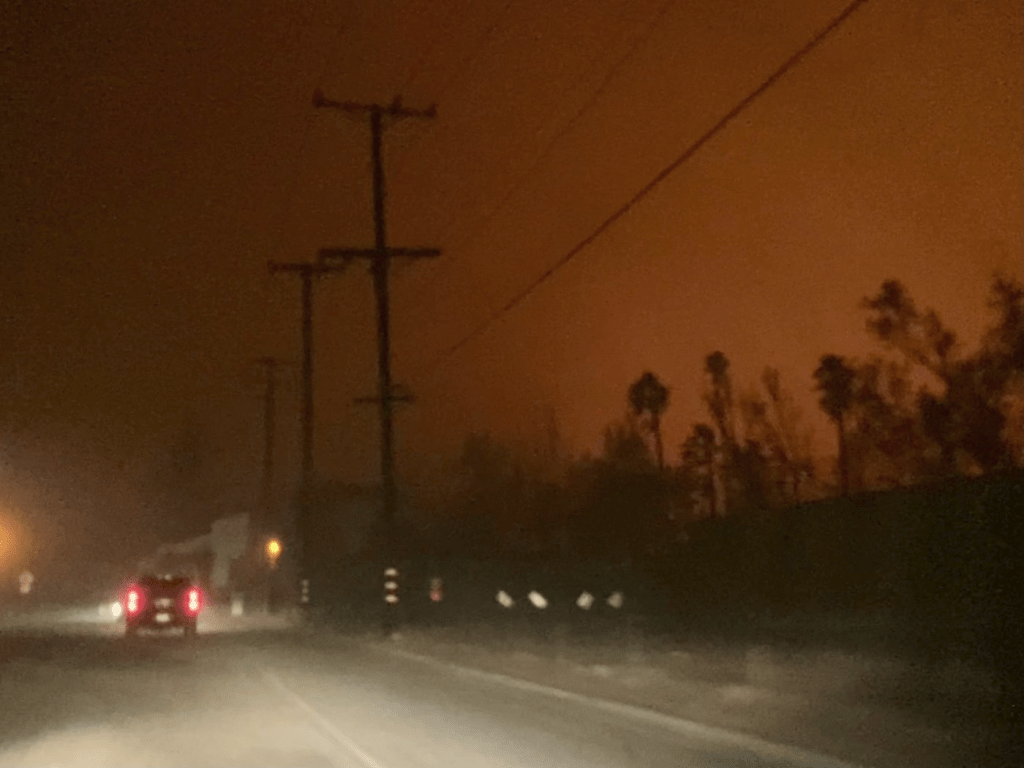
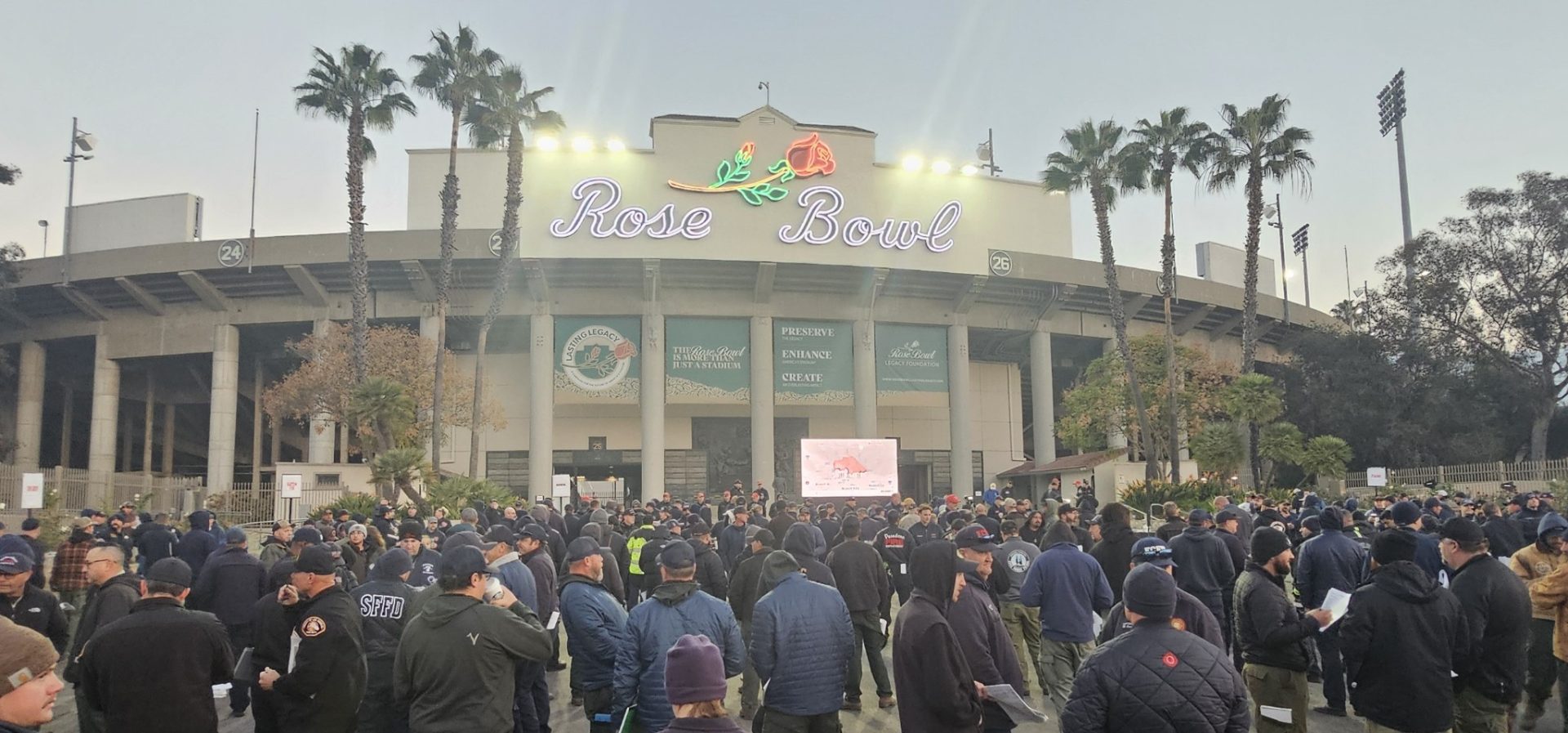
Firefighters spray water from a hose during the Eaton Fire. | U.S. Forest Service photo taken by Capt. Jason Benton / Courtesy of Wikimedia Commons
The Eaton Fire of January 7, 2025 will be endlessly seared in the collective memories of the Pasadenans and Altadenans who experienced the largest blaze in the history of the San Gabriel Valley. Overnight 19 people died and 9,000 structures were reduced to ashes, among them 80 homes at Upper Hastings Ranch in Pasadena and over 4,500 in Altadena.
Large corporations and private citizens across the country responded immediately to the disaster – sending cash, food, personal items, and other basic necessities to the various collection sites that opened during the days following the fire.
All through the year, several non-profit organizations emerged in Altadena to continue to support those who were affected even as the rest of the country moved on to other important matters. Community leaders have worked ceaselessly to keep the momentum going and thought of ways to ensure we didn’t forget that thousands of Altadenans are still grappling with the aftermath.
Two individuals – Victoria Knapp and Ethan Marquez – are collaborating on an event to benefit those who were affected by the Eaton Fire. They are co-chairing the Altadena Forever Run which will be held at 8:00 am on Sunday, January 4, 2026 at the Mariposa Junction in Altadena.
Thousands of runners and community members will gather for a10K, 5K and 1K family run raising critical funds for residents still recovering from the Eaton Fire – including individuals and families who remain displaced, are living in vehicles, or are running out of short-term rental assistance.
Victoria Knapp is a longstanding Altadena community leader and organizer whose civic work has focused on connection, recovery, and purposeful engagement. A former Pasadenan, she made Altadena her home in 2011, where she spent the next 15 years deeply involved in community life. She played a central role in crisis communication and community coordination after the fire, helping residents navigate loss while fostering collaboration among neighbors, small businesses, and local organizations throughout the recovery period. She is a firm advocate for community-based initiatives that bring people together with purpose and meaning, including the Altadena Forever Run, which reflects her belief that shared action – like running together – can be a powerful force in healing and resilience.
Ethan Marquez is a 26-year veteran of the Los Angeles County Sheriff’s Department with a career spanning custody, patrol, training, and command assignments. He was on the scene during the Eaton Fire, playing a critical role in emergency response and community coordination. In August 2025, he was promoted to Captain of Altadena Station, where he continues to emphasize operational excellence, public safety, and community partnership. A dedicated endurance runner and philanthropist, he runs marathons while pushing his son in a wheelchair to raise awareness and funding for Duchenne Muscular Dystrophy research, using running as both advocacy and a deeply personal expression of service.
“The Altadena Forever Run is about honoring what we’ve lost, supporting those still recovering, and reaffirming our commitment to one another,” state Knapp and Marquez. “After the Eaton Fire, our community showed that resilience isn’t just about rebuilding homes, it’s about standing together, staying connected, and moving forward with purpose. This run reflects the heart of Altadena: strong, compassionate, and forever connected.”
The course passes through neighborhoods and foothill corridors impacted by the fire, featuring on-course storyboards that highlight survivor experiences and ongoing recovery efforts. Organizers say one of the most meaningful aspects of the event is the regional turnout, with runners traveling from across Southern California and beyond to stand in solidarity with Altadena residents.
Community leaders and first responders are expected to attend – including Robert Luna and Kathryn Barger. The Los Angeles Laker Girls will also be on site to cheer on runners and support the event atmosphere. The Altadena Forever Run is supported by corporate and community partners, including SoCalGas, GoFundMe, East West Bank, First City Credit Union, and Toyota of Pasadena.
Proceeds from the event directly support Altadena residents who continue to face housing instability and are seeking viable pathways to rebuild and return home. Although the emergency response has ended, many residents continue to recover in the long term with limited resources.
But through the tireless efforts of dedicated individuals and the support of the community, Altadenenas will get through this unfathomable tragedy and get back on their feet stronger than ever before.
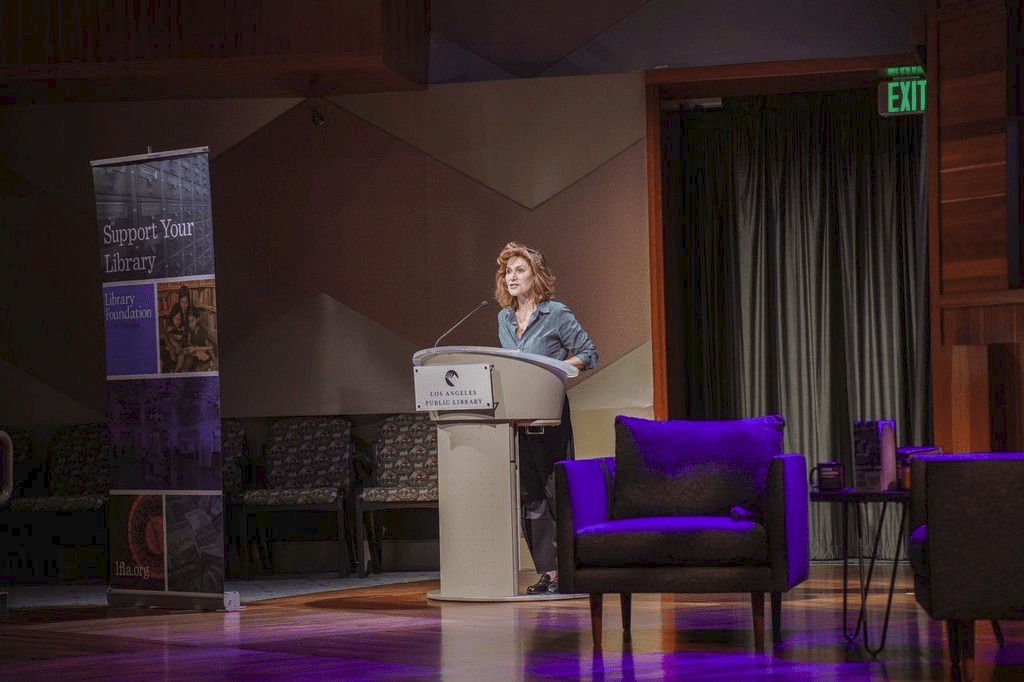
Jessica Strand. | Photo courtesy of the Library Foundation of Los Angeles
The Library Foundation of Los Angeles’s (LFLA) ALOUD Series returns this fall with a slate of timely conversations and urgent questions shaping our world today. Prominent creatives, cultural critics, and writers will discuss themes that include the rise of authoritarianism to the politics of tech platforms, and examine Black female friendship, queer joy, and new works by literary icons. These talks – some of which are free to the public – will take place at the Mark Taper Auditorium at the Central Library in Los Angeles at 7 pm from September 18 through December 10.
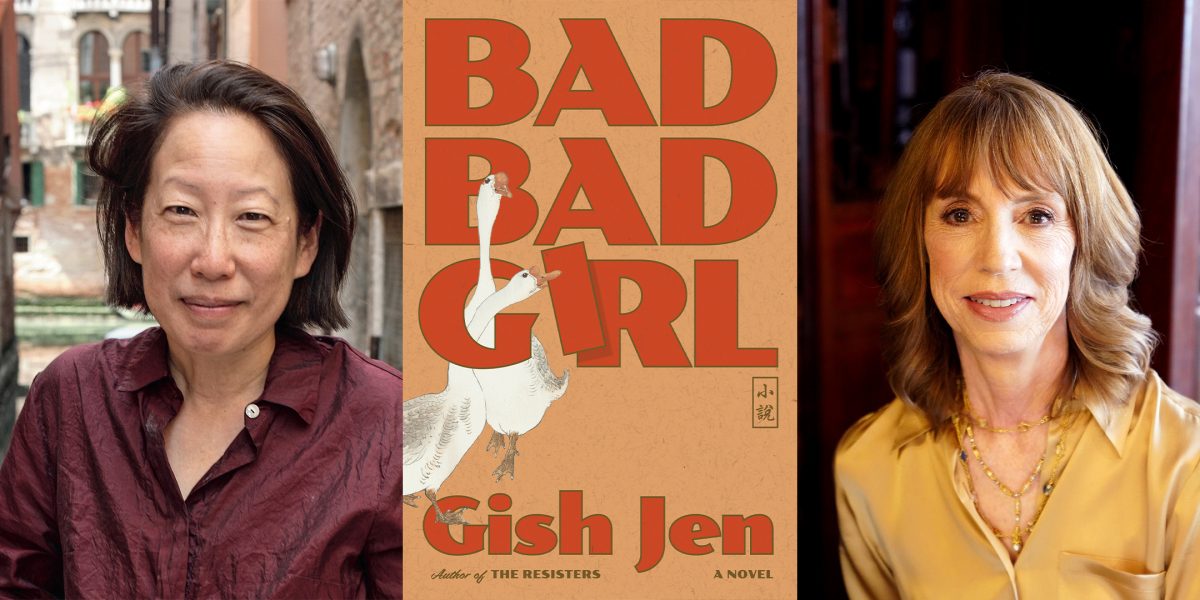
Distinguished political journalist and New York Times bestselling author Ben Rhodes opens the season that showcases vital new works by National Book Award finalist Angeles Flournoy, transgender artist and activist Tourmaline, acclaimed writer Susan Orlean, award-winning novelist Gish Jen, James Baldwin scholar Nicholas Burges, and legal scholar and tech policy expert Tim Wu.
Guest moderators and conversation partners include the new Executive Director of the ACLU of Southern California Chandra S. Bhatnagar. Emmy-award winning writers and actors Lena Waithe, Issa Rae, and Ashley Nicole Black, and Pulitzer Prize-winning playwright Tony Kushner who will be joined by a cast of notable actors.
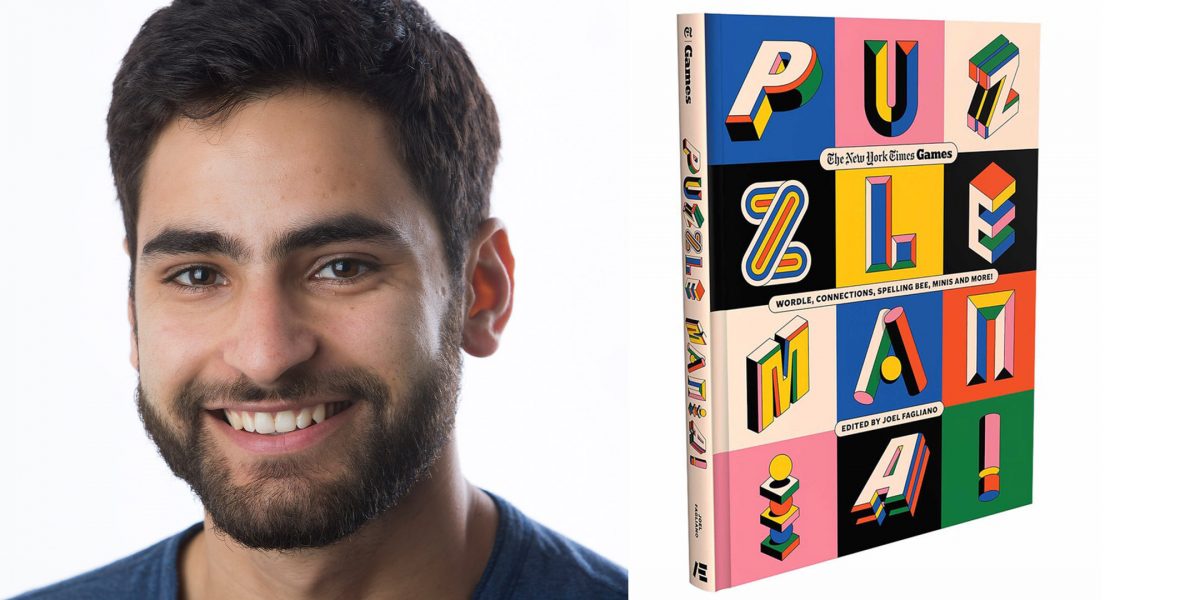
Image courtesy of Library Foundation of Los Angeles
The season closes on a mirthful note with a pair of enjoyable programs featuring NY Times Cooking recipe creator and Cookies author Vaughn Vreeland and a special evening with lead puzzle editor at the NY Times Games Joel Fagliano and guests to mark the release of Puzzle Mania!
Selecting the themes for these discussions rests on LFLA’s senior director of programing and strategic engagement Jessica Strand. To shape the series, she partnered with the ACLU of Southern California and the New York Times for a balanced line-up aligned with the organization’s mission.
With her literary pedigree, East Coast credentials, and engagement with L.A.’s civic life, Strand is perfectly suited for the role. Her father was the Pulitzer Prize-winning poet Mark Strand; she has authored ten cookbooks and previously ran the Books at Noon series for the New York Public Library.
From left: Jessica Strand, Genevieve Ko, Emily Weinstein, and Eric Kim. | Photo courtesy of the Library Foundation of Los Angeles
Given her father’s fame, it’s easy to imagine Strand having had an extraordinary childhood – her family hosting salons with plenty of cerebral exchange and lively discourse in their living room.
“I did grow up around lots of well-known writers, poets, and visual artists,” reveals Strand. “My parents were divorced when I was nine years old, so the largest chunks of time I spent with my father were during summers in far-off places. I wasn’t aware of it being special or different than other people’s childhoods since I had nothing to compare it to.”
Asked why she decided to author lifestyle books rather than literary ones, Strand replies. “I did try my hand at a novel many years ago which made the rounds but didn’t make it to print. But I put together a couple of anthologies: one of my literary programming at the Strand Book Store that Norton published and the other was a small, sweet, illustrated collection of love poems by poets over the ages which Chronicle Books published. I’m thinking my way through a project that I’m hoping to start writing in the coming months – a kind of autofiction piece about my crazy family.”
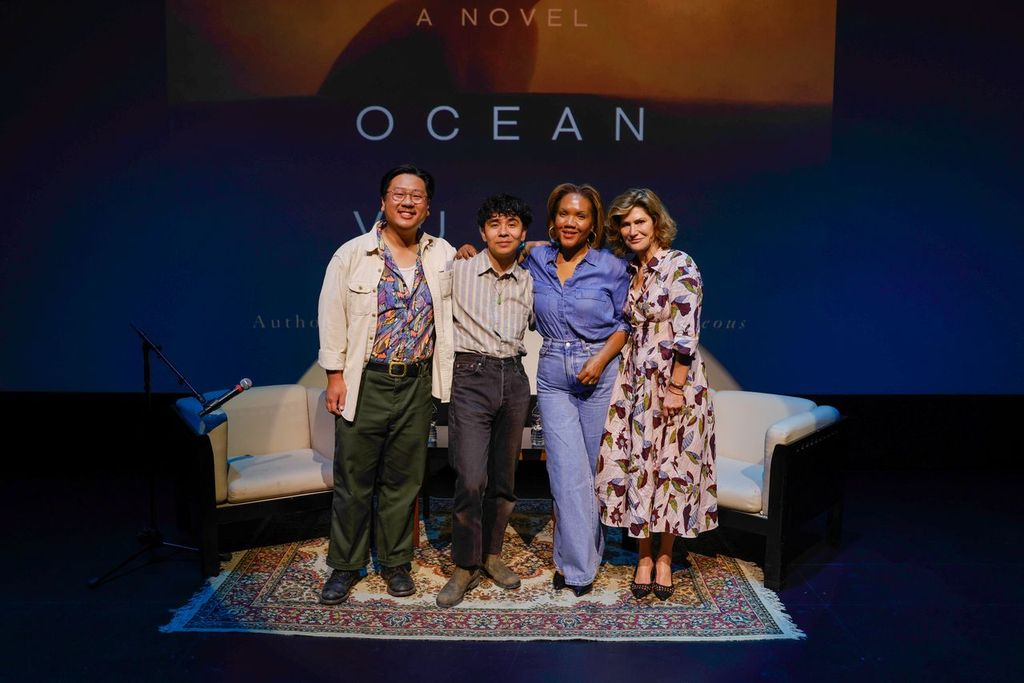
From left: Michael Chin, Ocean Vuong, Tanya Mosley, and Jessica Strand. | Photo courtesy of the Library Foundation of Los Angeles
A confirmed bibliophile, she reads to be informed and entertained and usually several books simultaneously. “I wish I had more time to read novels than I do,” says Strand. “I have lots of books going at once and try to listen in my car as well. I also read The New York Review of Books and The New Yorker. I often find a kernel of something in them that inspires an idea for a program. Though I finished it, the new Ocean Vuong still sits on my nightstand next to ‘Glitz, Glam and a Damn Good Time’ – a zany book about Mamie Fish, one of the queens of the Gilded Age.”
While Strand had to relocate to L.A. when she accepted the position at LFLA, she isn’t a stranger to the city. But that’s not to say that there weren’t some things to adapt to.
“I lived in Los Angeles for 10 years before moving to New York,” Strand discloses. “I largely grew up in New York City but have had a bicoastal life. When my mother got very ill, I felt it was time to come back to the West Coast. It was an easy move because I had a whole group of friends here already.”
“The biggest adjustment was the attitude toward culture – in New York, people reside right in the heart of the city and are willing to live modestly to be part of everything going on,” confesses Strand. “You’re expected to have seen exhibits, read certain books, gone to plays, etc. Los Angeles is full of wonderful cultural things to do but there is no expectation to participate. Here it’s about lifestyle and the outdoors; culture is part of the landscape but not an essential facet of everyone’s existence.”
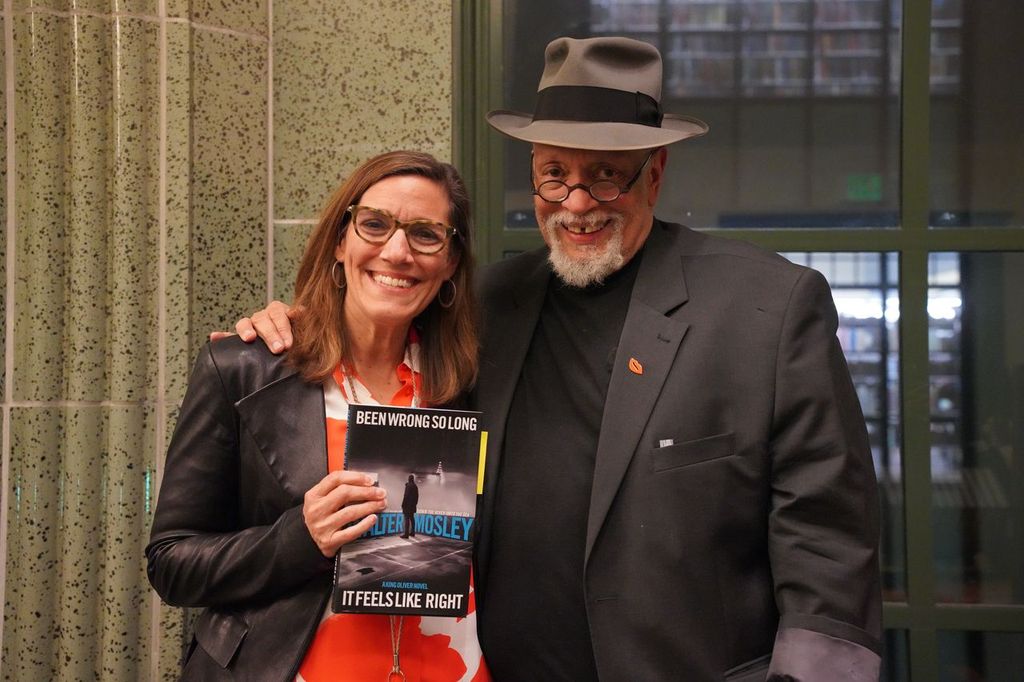
Library Foundation of Los Angeles President and CEO Stacy Lieberman with author Walter Mosley.| Photo courtesy of Library Foundation of Los Angeles
Strand’s initial concept when she first came to LFLA was to do literary programs then branch out into current events and social justice-related topics and people. To that end, she expanded the Library Foundation’s ALOUD series which was created in 1992 as a live conversation with authors.
“My predecessor is responsible for creating the author series that put ALOUD on the map,” Strand clarifies. “I’ve altered it in the last seven years to include thematic programs, several Revues (more cabaret than conversation), and ALOUD in Community where we work with a curator or artist on a series for the Library. Together, we choose three to four branches to host the programs, with ALOUD’s financial and administrative support.
“Cultural programming can’t rest on a literary series anymore. Those are everywhere –several for-profit series exist in Los Angeles, and bookstores host them. ALOUD tries to present different types of series under one umbrella, so we can remain relevant and a bit different. We’re also 90 percent free. When we do charge, we sell the book, and the ticket price is never more than $10 to $12 above the book price – only to cover venue costs.”
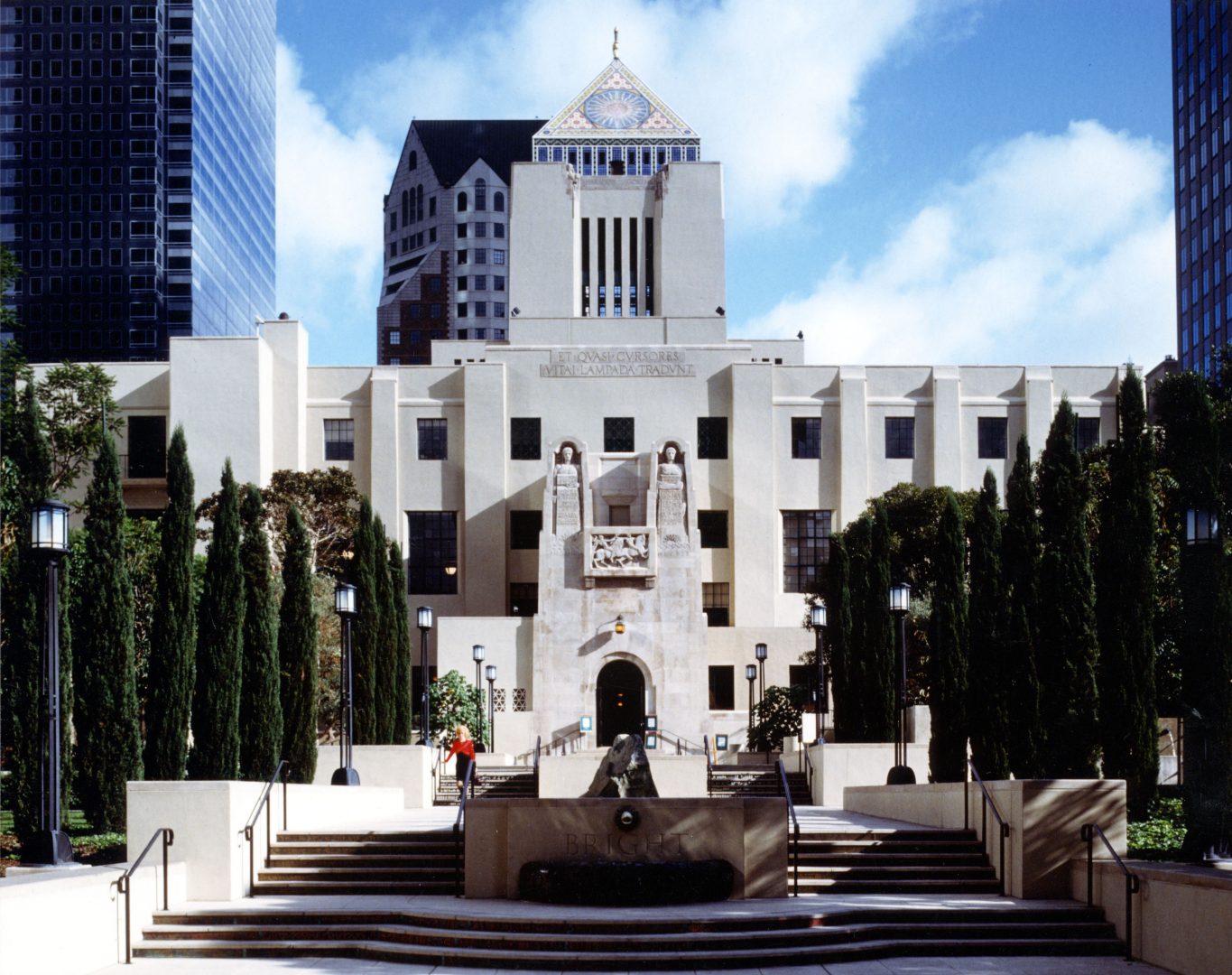
Exterior of the Central Library in Los Angeles. | Photo courtesy of Los Angeles Public Library
ALOUD sets itself apart from other library series. Strand points out, “We’re different in that we present very high-level programming you’d usually have to pay for elsewhere. We also conceived a program called a ‘Night at the Library.’ It’s an event our small team, together with terrific partners, staged last February. From 8 p.m. to midnight, we welcomed 3,000 people into the Central Library, where more than 240 artists were performing, creating, and making throughout the building. The LA Phil performed an experimental opera on the escalators, BodyTraffic performed in the Central Library’s rotunda. We’re planning to do it again this year and opening more of the library.”
The topics explored in the ALOUD series aren’t based on personal whim. Strand explains, “I respond to what is going on around me. This includes local and world politics, trends in culture and literature, and ideas that are being discussed. I have a wonderful team – Tiffany Colli-Moon and Jorge Martinez – who both share their ideas and thoughts, and as a group we discuss what we think we should pursue in terms of talent.”
ALOUD’s fall 2025 line-up covers diverse and wide-ranging subjects – some of which are quite weighty, and others are lighthearted. It is an intentional blend of serious and cheerful topics.
“I went from heavy and important to something lighter and completely fun for the holiday season,” emphasizes Strand. “I am a strong believer in mixing up the programming. No one can tolerate a full diet of anything. I want our audience wanting to come back. The hope is to keep people engaged and interested by moving from different topic genres and production styles.”
Image courtesy of Library Foundation of Los Angeles
Strand describes how she selects who will talk with the authors in the series. “Several things can happen. Often, the speaker has someone they’d like to be in conversation with – and if this person is a close friend, it usually makes for a terrific chat. Sometimes, I think about the person’s work and who has done something that may be similar in style or subject matter. Other times, it’s about influence – maybe the two speakers were heavily influenced by the same person. Pairing is a complicated game and is part feel, part knowledge, and part what would be off-beat and fun.”
There isn’t a typical audience size and it’s difficult to say which topics attract more people.
“The audience fluctuated last season from around 80 to 900,” Strand states. “The size depends on the popularity of the person presenting. Name recognition, together with publicity, makes for a popular show. There is no subject that is more popular than another; it’s all personality-driven. ALOUD might present an incredible novelist who has published numerous books and has been translated into multiple languages, but they’re not part of the pop culture machine at the moment. So it may pull a smaller audience while someone who has less experience in the book world but is active on social media draws a robust crowd.”
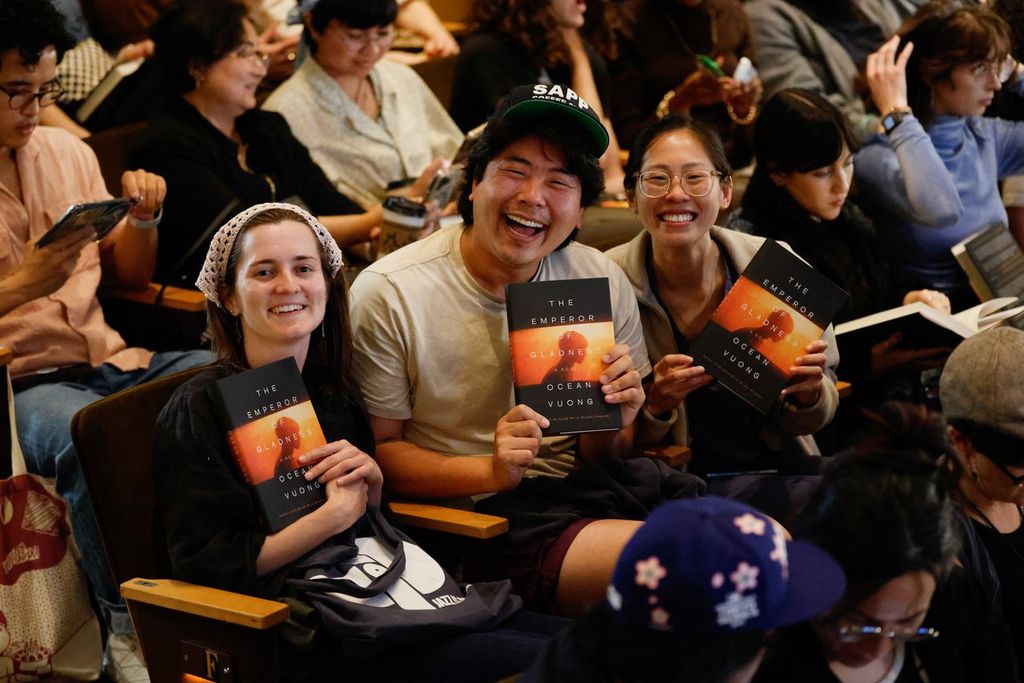
ALOUD audience showing off book. | Photo courtesy of the Library Foundation of Los Angeles
It’s impossible for Strand to single out one engaging and memorable ALOUD discussion since she took over the programming at LFLA. Says Strand, “That’s like naming a favorite child, which I can’t do. But I can tell you what makes me most happy after a program. First, if the audience is engaged, reacting in real time, completely taken with the discussion
Much thought and deliberation go into each ALOUD show. Strand and her team ensure that both the presenters and audience take away something rewarding from the experience. And they don’t want to deliver an unforgettable discussion; they aspire to provide the impetus for community involvement.
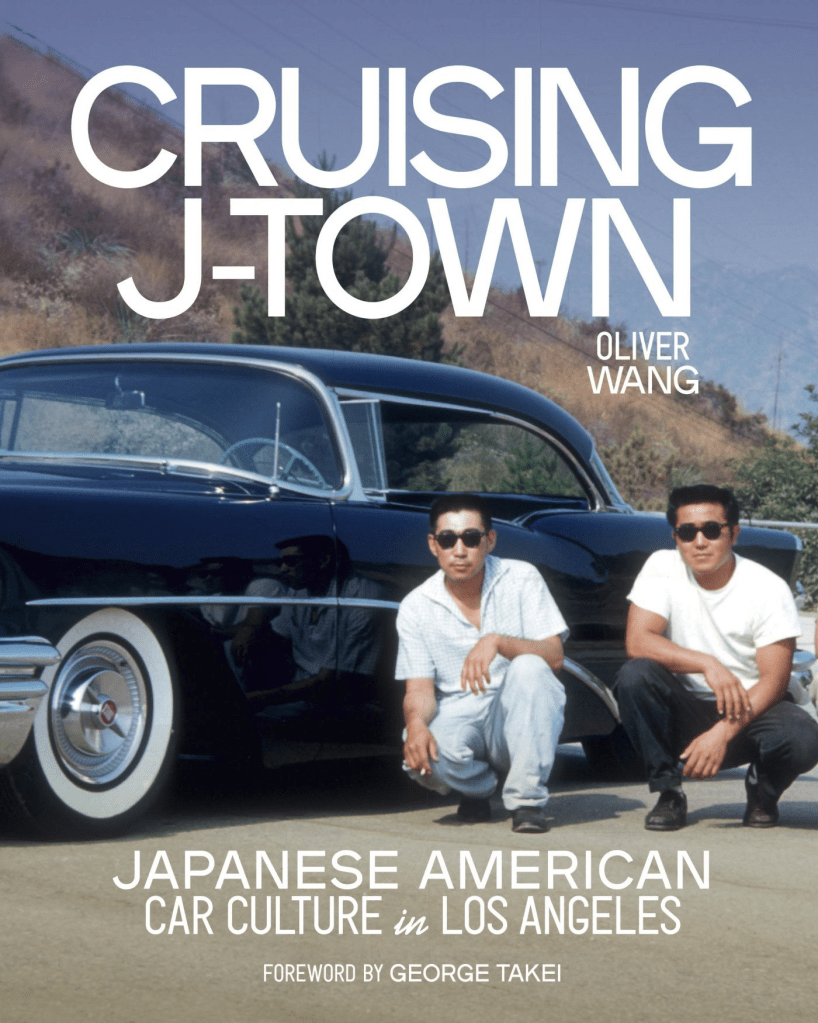
The cover of “Cruising J-Town.” | Photo courtesy of Oliver Wang
Cruising J-Town: Behind the Wheel of the Nikkei Community, on view from July 31 through November 12, 2025, chronicles the central roles Japanese Americans have played in countless car scenes throughout Southern California. Presented by the Japanese American National Museum and curated by cultural scholar and writer, Dr. Oliver Wang, it will debut at Art Center College of Design’s Peter and Merle Mullin Gallery on South Arroyo Parkway in Pasadena.
Through previously untold stories, Wang, a Cal State Long Beach sociology professor, reveals how a community in a state of constant transition and growth used cars as a literal vehicle for their creativity, dreams, and quest for freedom.
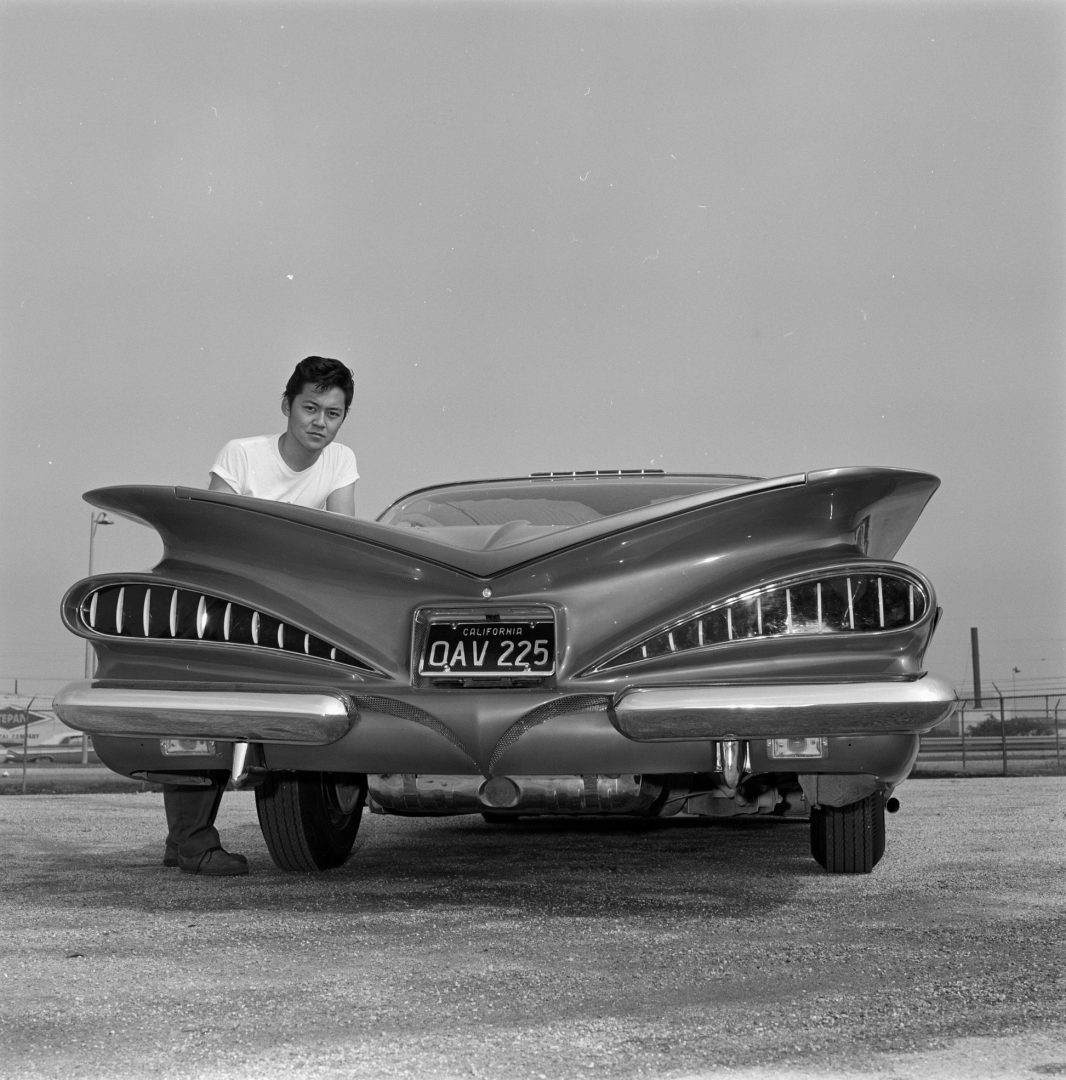
Tats Gotanda with his award-winning 1959 customized Chevrolet Impala, the Buddha Buggy, 1963. | Photo by Dick Day / Image courtesy of Hearst Autos, Inc
In the book’s introduction, Wang writes that growing up in the San Gabriel Valley, he wasn’t much of a “car guy.” He sits down to chat about how someone who doesn’t profess a passion for cars ended up writing a book and curating an exhibition about them, what he learned from the hundreds of interviews he conducted, and what he hopes readers take away from it.
“While my personal interest revolves around music, by the time I graduated from high school in 1990, I was aware of this very popular phenomenon of young Asian Americans tricking out their cars and street racing,” Wang says. “When I went off to college and began taking Asian American Studies classes, I was already interested in the pop cultural side of the community and the ways in which Asian Americans have engaged in different forms of popular culture over the years.”
“By the time the 2000s rolled around, there were articles in magazines about Asian American dynamic within the import car scene,” continues Wang. “But there was no sustained interest in it. As far as I know, none of the authors ever went on to produce anything beyond those academic articles. Part of me, maybe naively, just kept assuming that at some point someone was going to write a book about this because it seems to me – as a pop culture scholar and writer – it was such an obvious thing to focus on. It’s a pop culture activity which has such meaning for people that they invest time and money into. There are elements of ethnic identity, class, and gender.”
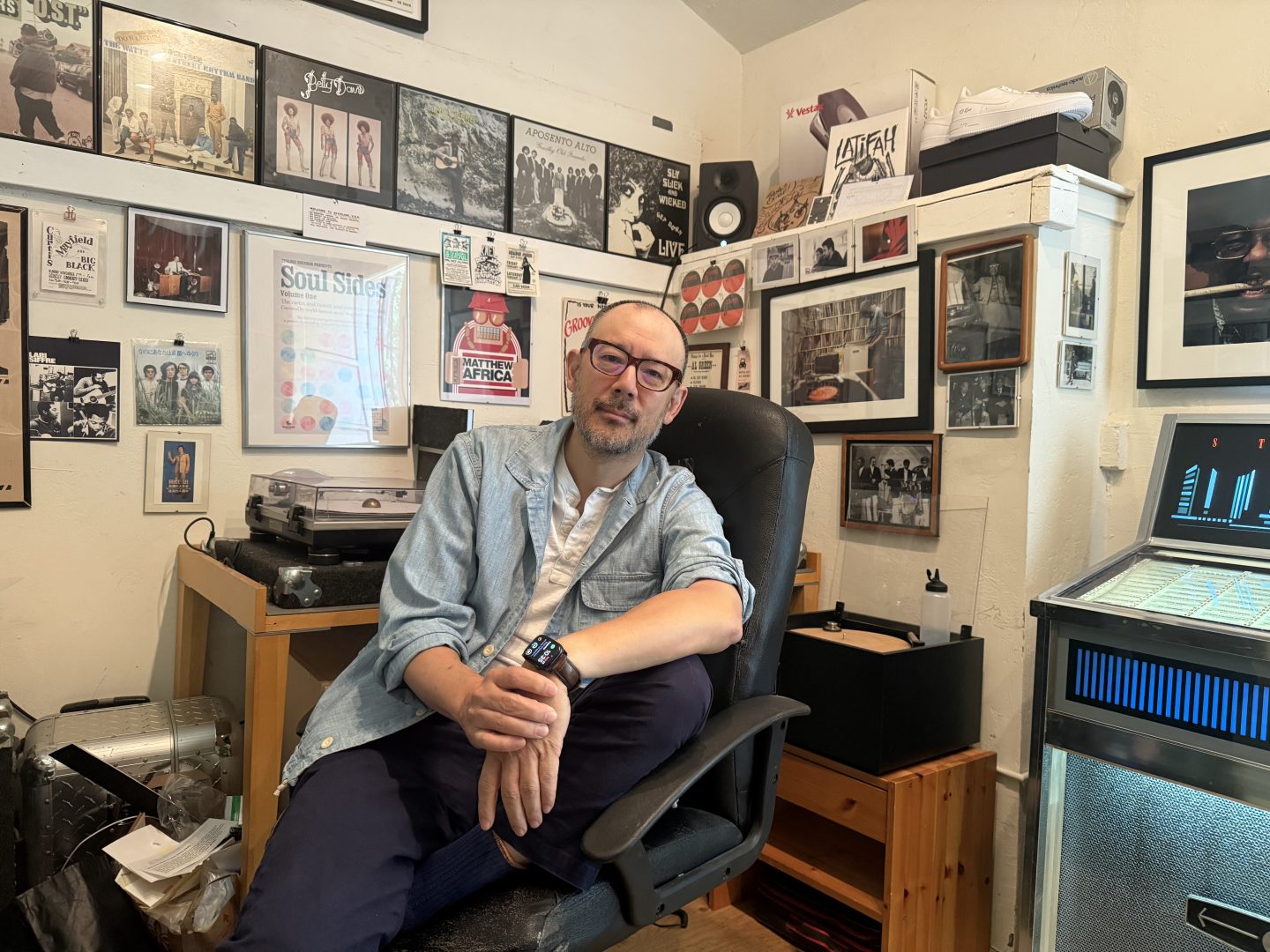
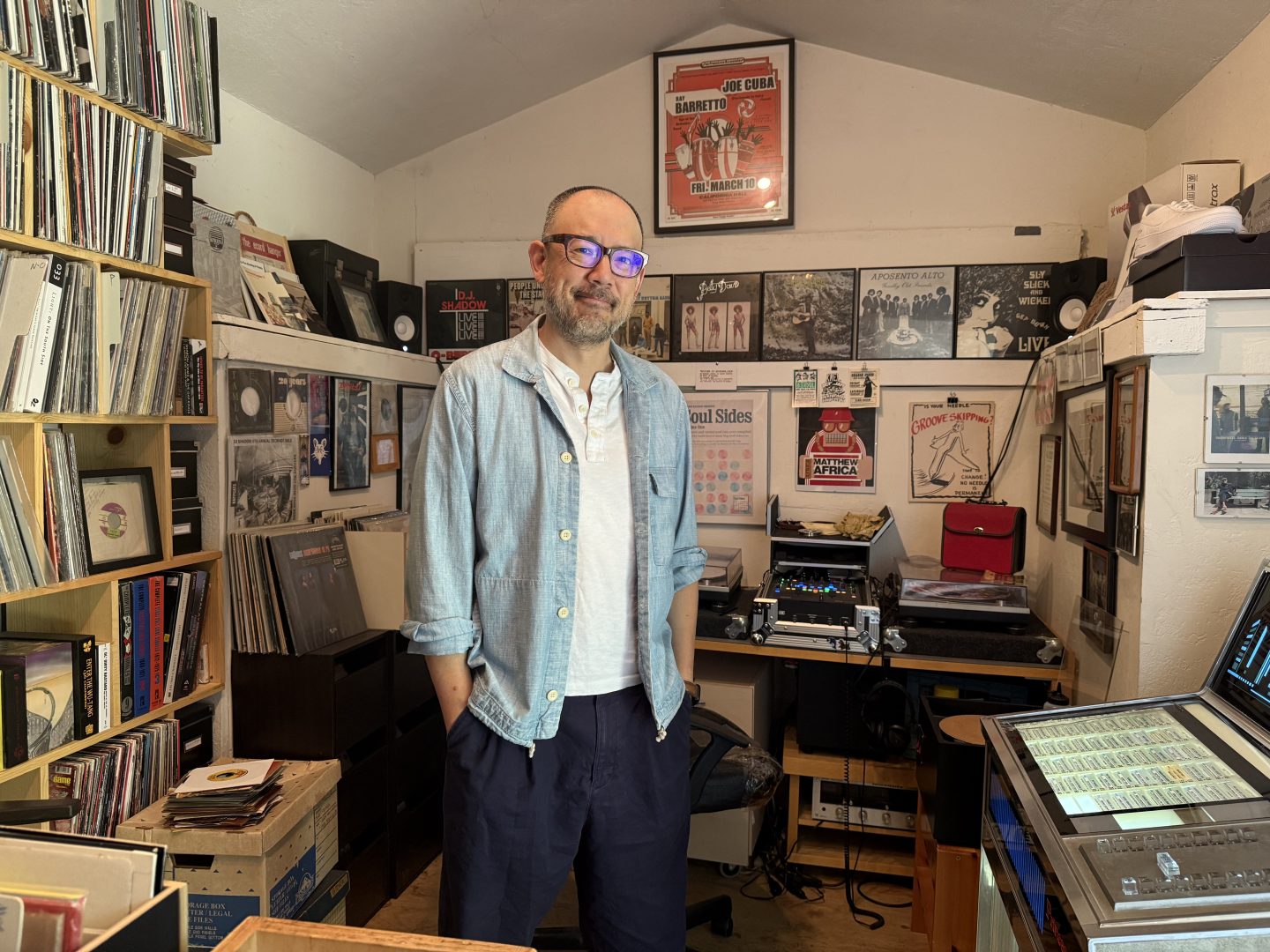
Oliver Wang | Photo by May S. Ruiz / Hey SoCal
In 2016, Wang was having a conversation with a good friend who also came out of Asian American Studies at U.C. Berkeley in the 1990s. Again he lamented about the absence of books about the subject.
His friend’s reply was “You’ve been complaining about this for 20 years, and you literally have made your career studying and writing about Asian America popular culture. If you really feel someone should be doing this work, why don’t you just go out and do it?”
That friendly challenge steered Wang towards this endeavor. At the suggestion of his wife Sharon Mizota, who is a Yonsei (fourth generation Japanese American), he interviewed his Sansei (third generation Japanese American) father-in-law Don Mizota.
“I knew that he was into cars but I didn’t realize that when he was in high school in the San Fernando Valley in the mid- to late 1950s, he and his friends – most of whom were children of Japanese American farmers and gardeners – started a car club called ‘kame,’” Wang confesses. “The joke was that kame means turtle in Japanese because all of them had pretty slow cars.”
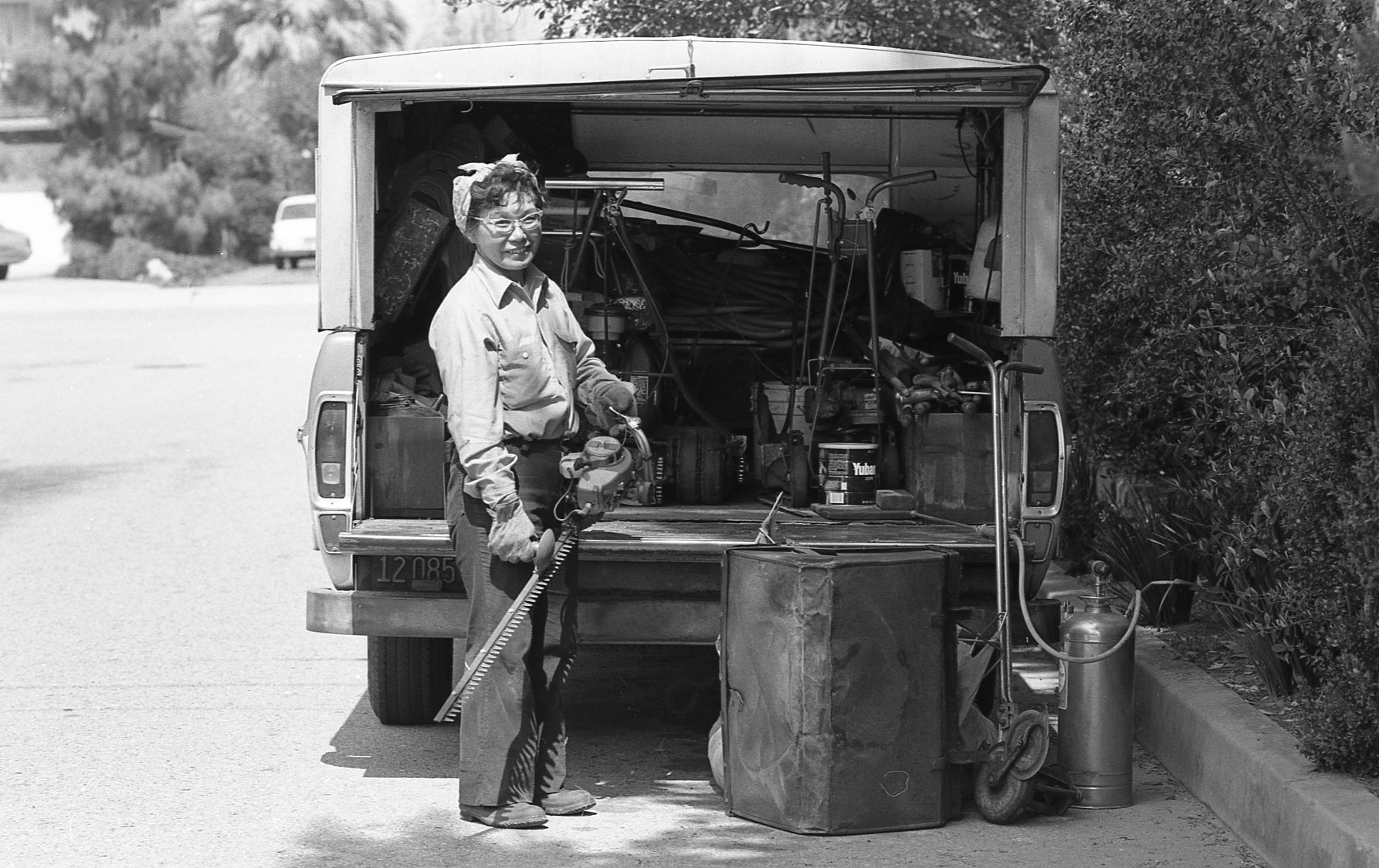
Gardener Annie Takata loading up her truck, Los Angeles, May 1976. | Photo by Dennis Kuba / Courtesy of Visual Communications Photographic Archive
“It was a really fascinating interview,” enthuses Wang. “I wasn’t just learning more about my father-in-law, but also about the friends and the community that he grew up in. I then interviewed other people of his generation – Japanese Americans who would have been teenagers in the 50s or early 60s and were part of car clubs back then. I found examples in mid-city and South Bay, like Gardena and Torrance. I heard about them or saw photos of those who came out of East L.A. and Boyle Heights.”
“Clearly, there was a scene that existed then and that was what I started to explore,” Wang says further. “I wrote about some of what I had found in a relatively short article that appeared in Discover Nikkei, the Japanese American National Museum’s newsletter. I wasn’t really sure what I was going to do with the research that I was collecting. And I wasn’t entirely positive I had the bandwidth or the interest to really turn this into a book – even though I did feel strongly someone should write one.”
“In 2018, by coincidence, the museum independently came up with the idea of doing an exhibition about cars,” recalls Wang. “And because I had written that one article and they didn’t have anyone in-house that had the background to curate a show, they thought maybe I would be interested in doing it. I had a little background – I had interviewed a handful of people – but didn’t have a comprehensive knowledge of the long arc of this community’s history within the car world.
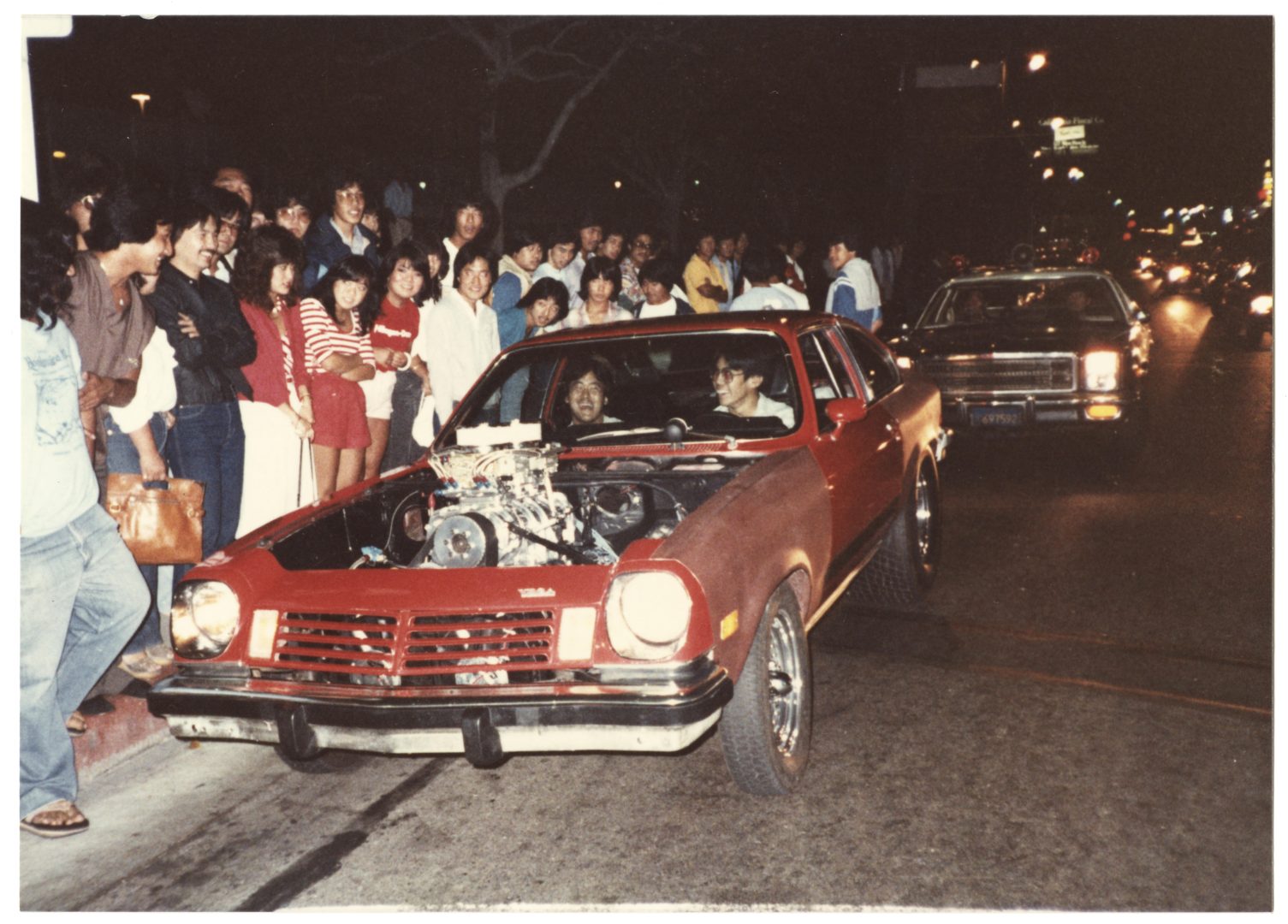
Street racers Tod Kaneko and David Eguchi, in Glen Kuwata’s Chevrolet Vega, during a Nisei Week Cruise. | Photo courtesy of Tod Kaneko
“But because I always want to leave myself open to learning new things – like curating an exhibition – and because it’s really important to me that the research I do be public-facing and not be available only to academics, an exhibition seemed like a wonderful way of solving multiple things. So I agreed to take it on.”
It was a slow project initially and Wang and his team lost a minimum of two years because of the pandemic. But in 2022, they set out to interview people in earnest.
“The exhibition and the book really began to form through all these conversations,” says Wang. “At this point I’d spoken to probably at least a hundred people about their personal histories and they were from very different areas that involve cars – not just about sport or recreation, but also very much about work, family, and community.”
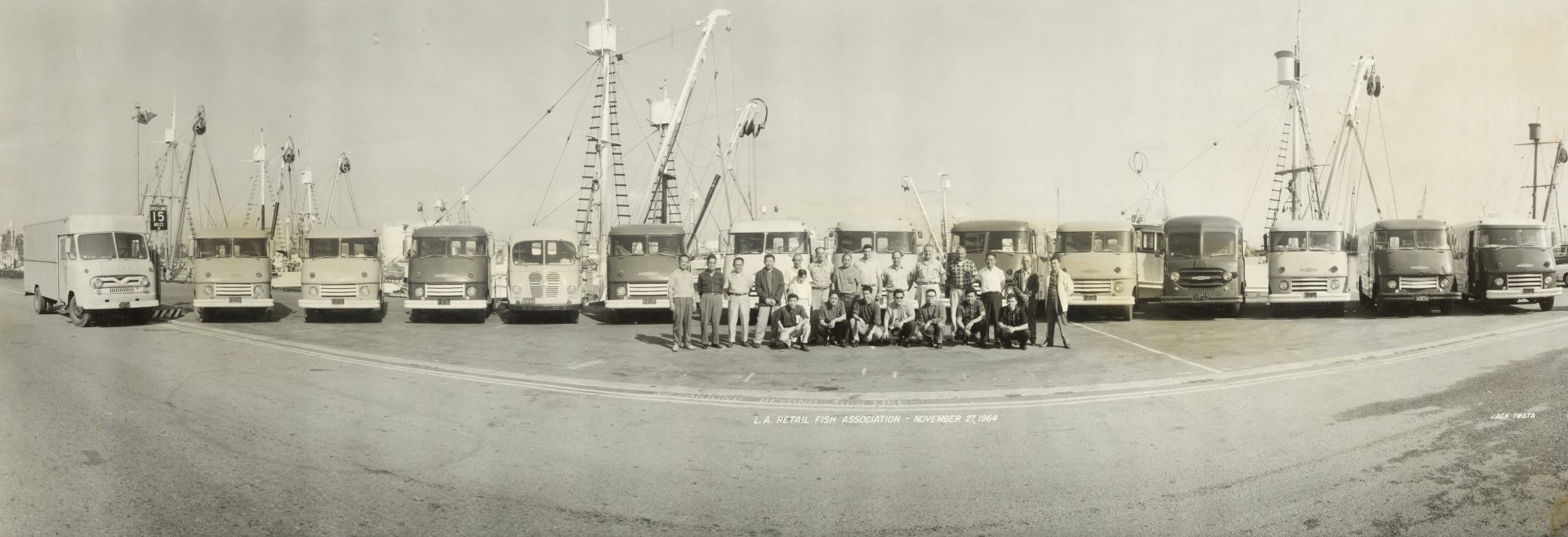
Members of the L.A. Retail Fish Association at San Pedro Wharf, November 24, 1964. | Photo by JAck Iwata / Courtesy of Clyde Iwata and Teruo “Ted/Snyder Endo family
Asked if there was something he discovered during the seven years he was working on the project that surprised him, Wang pauses before replying, “Everything surprised me! I knew so little going in. Every new conversation expanded and opened up my awareness even more. And this was the reason to do the project – there was no book that existed from which I could learn about these things. I wouldn’t have wanted to do the project if someone had already laid out its history and the different facets.”
“In terms of what really stood out to me, the first thing that comes to mind would be the fish trucks,” reveals Wang. “By the late 1940s, when the Japanese American community returned to Los Angeles after being incarcerated during WWII, they didn’t have relatively easy access to food markets. They were geographically dispersed; some had moved out to Pacoima or Gardena or parts of the Eastern San Gabriel Valley. The fish trucks drove all around the Southland six days a week and did door-to-door deliveries of Japanese food items – fresh fish, rice, tofu, jerky, candy. For decades the fish trucks provided this useful community service to people who didn’t have the time or the means to easily come down to Little Tokyo to do their grocery shopping.”
“At some point by the early 1960s, there were enough trucks out there that the fish truck drivers organized themselves into what became known as the Los Angeles Retail Fish Association,” Wang relates. “At the same time, it was a way to prevent them from inadvertently competing against each other. And because they were now unified, they were able to negotiate better wholesale pricing.”
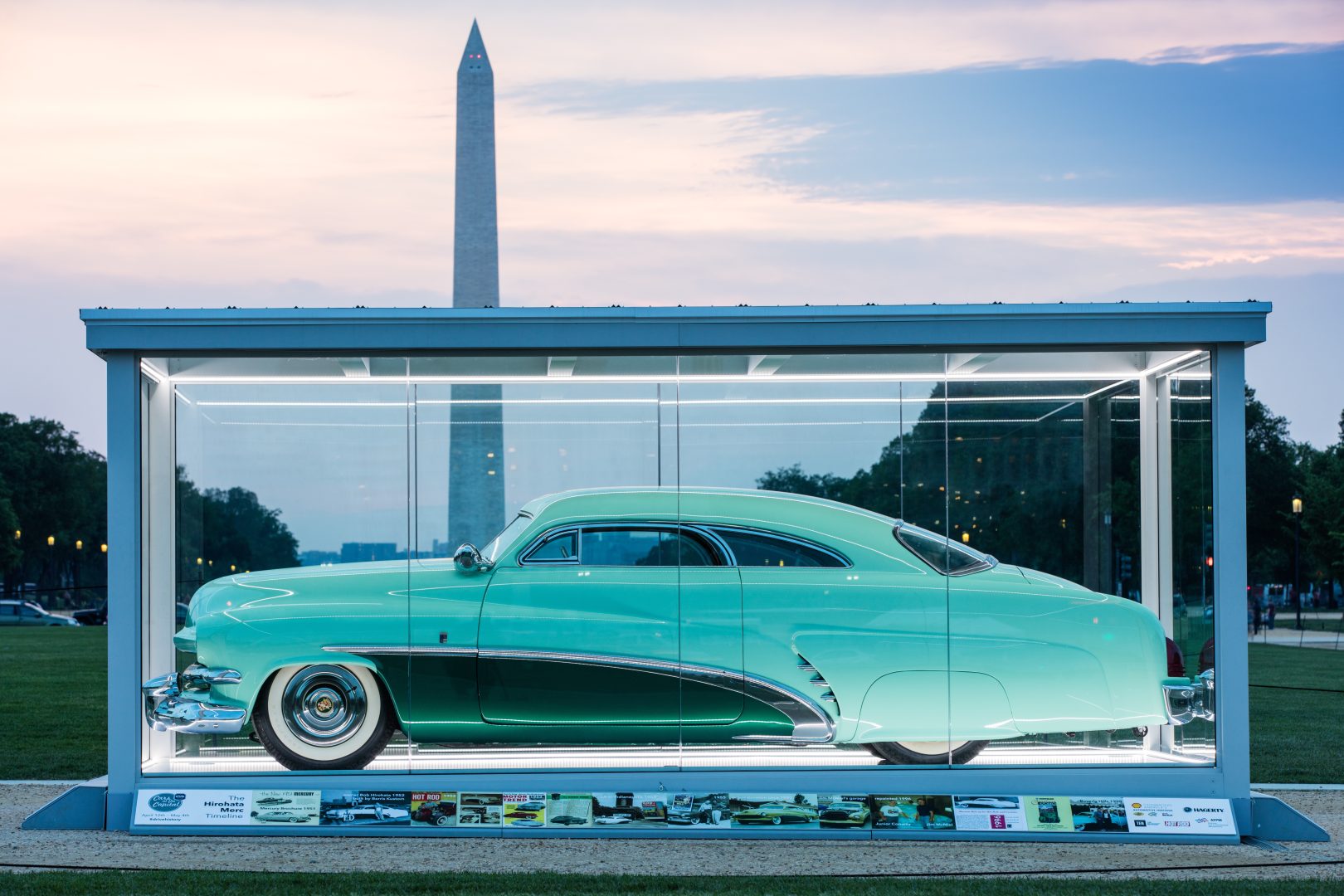
Bob Hirohata’s 1951 Mercury Coupe, aka the Hirohata Merc. on the National Wall, Washington D.C., 2017. The car was displayed after being added to the National Historical Vehicle Registry. | Photo courtesy of Hagerty Drivers Foundation
While Wang claims the book isn’t a complete history of the Japanese car culture in the Southland, essays from contributors cover a wide range of materials and personal anecdotes commencing with an insightful foreword by George Takei about what cars symbolize for the Nikkei community. Associate curator Chelsea Shi-Chao Liu pens five essays: the voluntary evacuation of Japanese Americans; the concentration camps during WWII and the Japanese Americans’ return and resettlement; the fish trucks; the displacement of Japanese Americans because of freeway construction; and drift racing. Oliver Otake writes about Nikkei auto designers; Jonathan Wong discusses the import car culture of the 1900s and 2000s; and Akiko Anna Iwata delves into the car audio systems business.
The book is a companion to the exhibition but it isn’t a catalog. And that’s by design. It’s a stand-alone publication that can be read and enjoyed by someone who doesn’t have an opportunity to see the exhibition.
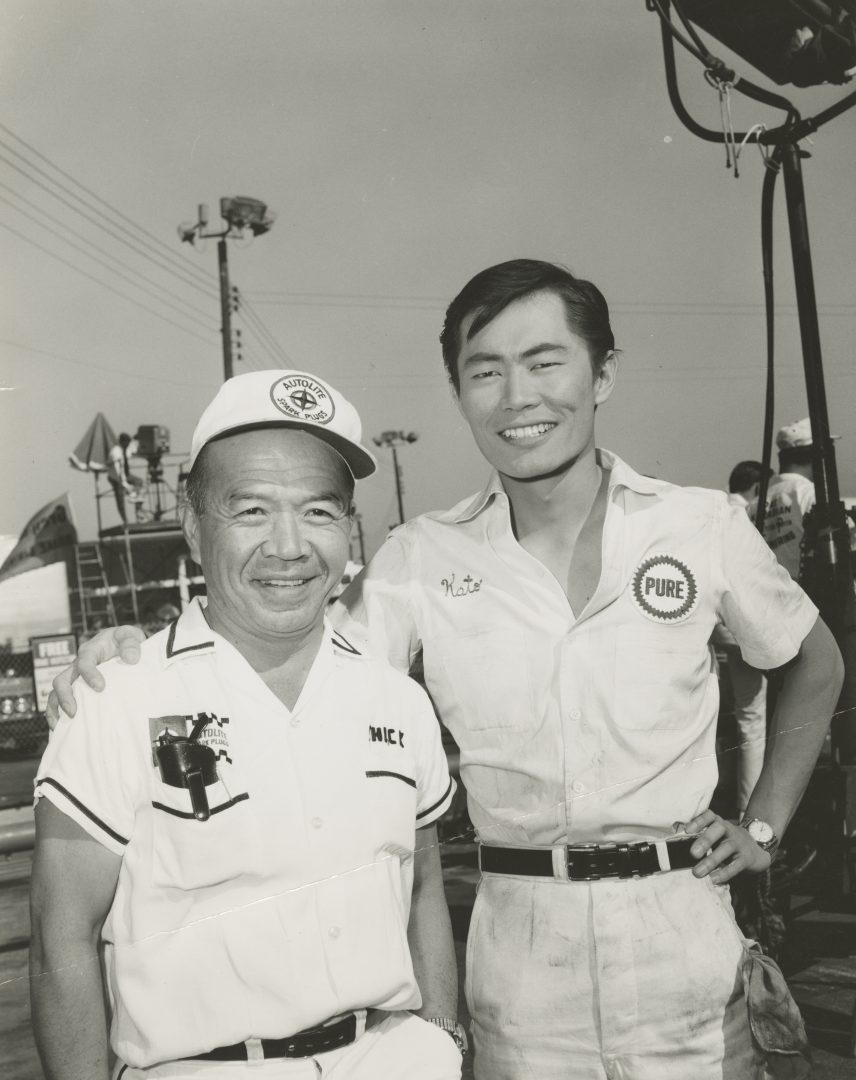
Takeo “Chickie” Hirashima, the renowned Nisei racing mechanic of the WW II era with George Takei, Ontario Speedway, 1965. George is wearing the mechanic’s shirt for his character, Kato, from the film Red Line 7000. | Gift of Charles and June Keene, Japanese American National Museum
“A conventional catalog for a museum exhibition is normally meant to be a mirror of the show,” clarifies Wang. “We could have produced a catalog, but because there hasn’t been a book on this topic before, it just made more sense to write one that provides all of these stories and the back history rather than making it strictly tied to the show in terms of format. There’s absolutely overlap between the two, but going to the exhibition is its own experience and the book is its own experience as well. The book is based on the same history and set of stories.”
Wang expounds, “The book, which is divided into four chapters, is organized loosely chronologically. We start in the early 1910s, which is not just the birth of Japanese American car culture but also of the car culture of Los Angeles. It is when access to cars and trucks becomes much more available to people. While cars have existed in the U.S. prior to that, the 1910s is when you see it become affordable to the average family. The book goes all the way through the current day, looking at very contemporary scenes like the drift racing.
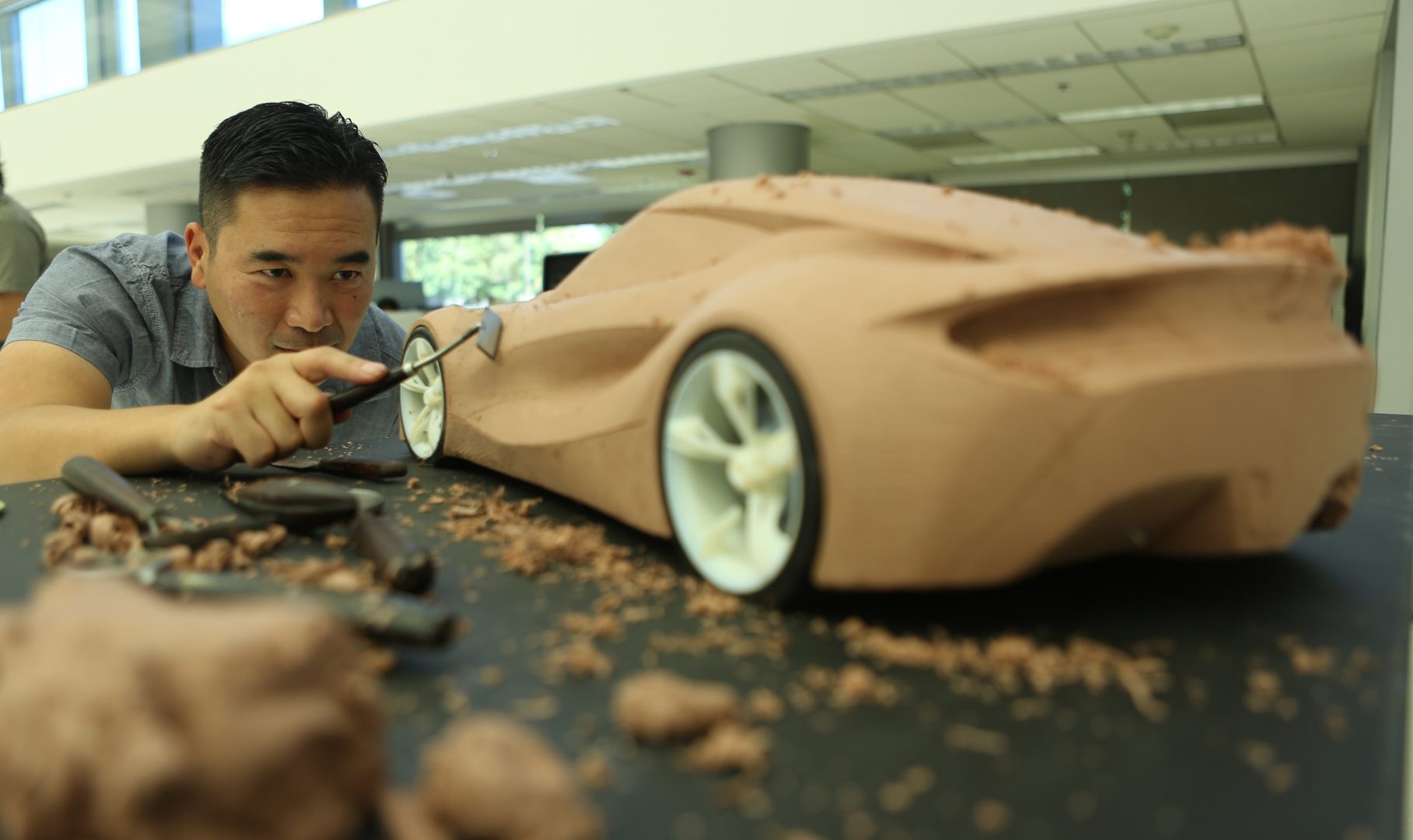
Toyota senior lead designer Bob Mochiziko working with a 20% scale clay model of what became Toyota’s FT-1 concept car. Calty Design Research, Newport Beach, 2013. | Photo courtesy of CALTY Design Research
“On the other hand, the exhibition is split into four themes: speed (covers racing and performance); style (about customization and design, drift racing falls under style because drivers are not graded on speed but on style when they’re skating on corners); work (looks at ways vehicles have factored in life and labor within the Japanese American population); and community. Community is very broad in scope but it allowed us to explore other dynamics – from the role that cars and trucks played during the WWII incarceration experience, car clubs and the ways in which people organized themselves communally and collectively through cars.”
The exhibition features five cars, each of which is tied to one of those themes. For Speed, Wang and his team picked a Meteor – an early 1940s hot rod that was formerly owned by George Nakamura. The Nakamura family donated it to the Peterson Museum.
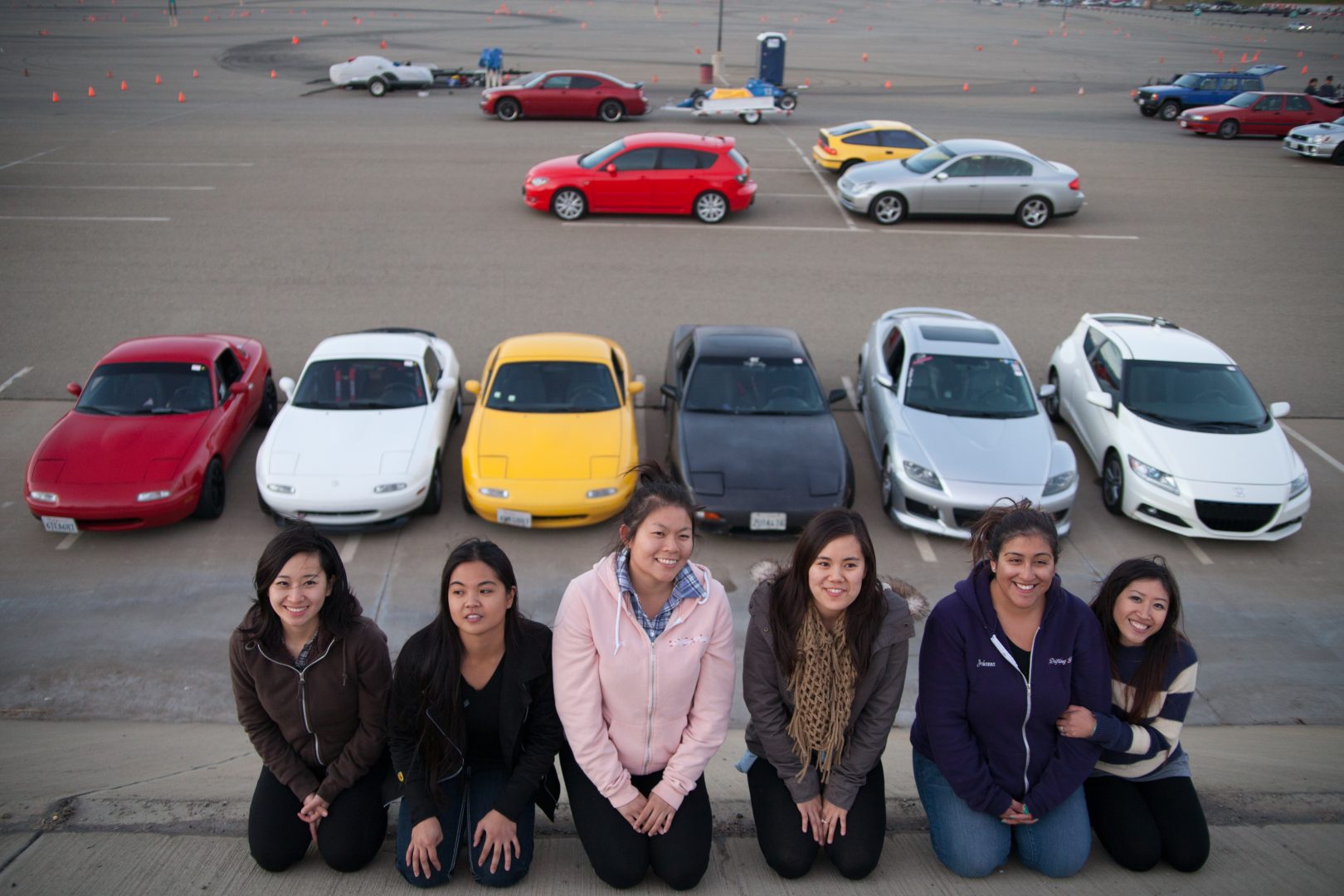
There are two cars for Style: a customized 1951 Mercury coupe owned by Brian Omatsu called Purple Reign – a remarkable and eye-catching, show-stopping custom job; and a 1989 Nissan 240SX owned by Nadine Sachiko Hsu, who created the Drifting Pretty team when she was a pro racer in that circuit.
Drifting Pretty Racing Team, California Speedway, Fontana, CA. | Photo by Nadine Sachiko Hsu / Courtesy of Sachiko Hsu
For work, they have a Ford F100 from 1956 – a pick-up truck that used to be driven by a West L.A. gardener who was known as the hot rod gardener of West L.A. because he had a muscle car engine installed in the pick-up truck
For community, the curators borrowed a 1973 Datsun 510 – the first Japanese import to really take off within the Japanese American street racing scene.
Beyond the cars, they display helmets owned and worn by former race car drivers; accessories that people would typically have installed in their cars, especially in the 1980s import scene; reproductions of archival photos; jackets from the 1950s and 1960s car clubs, as well as 1970s and 1980s racing clubs; car plaques, which are basically license plates that Japanese American car clubs embellished with their name and logo; and ‘thank you’ gifts that gas stations and fish trucks used to give their customers.
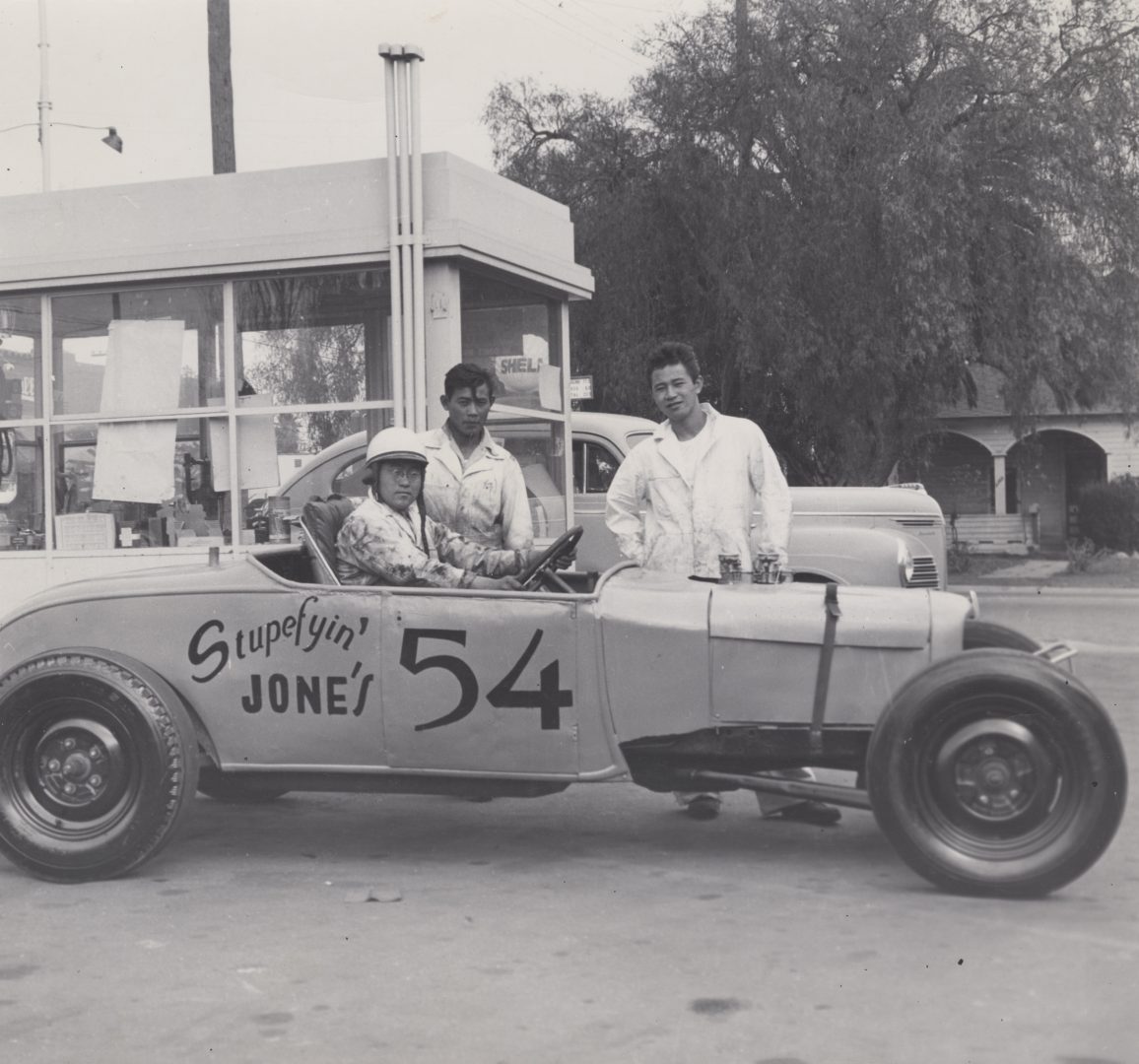
Tom Ikkanda (seated), Fred Ige, and Frank Ige, Sawtelle, mid-to-late 1940s. Both Ige brothers worked for Ikkanda at his West L.A. service station on Sawtelle Blvd. | Photo courtesy of Richard Ikkanda
As for the reader takeaway, Wang would like for us to appreciate how the Japanese Americans have figured in the history of Los Angeles car culture.
“The world of cars and trucks has been an integral part of Japanese American lives for over a hundred years,” declares Wang. “Japanese Americans have contributed to many different aspects of car culture over that time, even if they have not been widely recognized for it. They were there, not just in the background but very much in the foreground. These hidden or forgotten mysteries, as you might call them, are there waiting to be discovered and shared.”
Furthermore, Wang wants to emphasize the subject of the Cruising J-Town book and exhibition. “I encountered quite a few people who think the project is about the history of how Toyota and Honda came to the U.S. I usually have to just very gently correct them and say this isn’t a show about cars and car brands; it’s first and foremost, about a community of people and their relationship to cars and trucks. The people in the community are at the center of it; cars help tell their stories but the cars are not the focus.”
“The irony is, I think people assume that it’s about Japanese car brands because Japanese cars have become such an important part of the American car landscape,” Wang stresses. “And I think the Japanese American community – in its own small but significant way – helped contribute to how Japanese imports were able to get legitimized and become respected within the American car world.”
Oliver Wang | Photo by May S. Ruiz / Hey SoCal
After the exhibition opens and his book is released, Wang will have the time to work on his next endeavor. He has several projects on the back burner. He has already done the research about how New Order’s “Bizarre Love Triangle” became the unofficial anthem for Asian American Gen Xers; there’s one project that he and a research partner have been discussing about inter-ethnic marriages; and there’s a podcast idea that he wants to get back to called “Songs for Ourselves,” the conceit for which he says is drawn from the fact that for most Asian Americans growing up in America, their favorite songs were by people from other communities.
But that’s all in the future. For now, Wang has given us the “Cruising J-Town” book and exhibition to peruse and take in. And one doesn’t have to be a car aficionado or Asian American to find the stories they tell to be illuminating and uplifting.
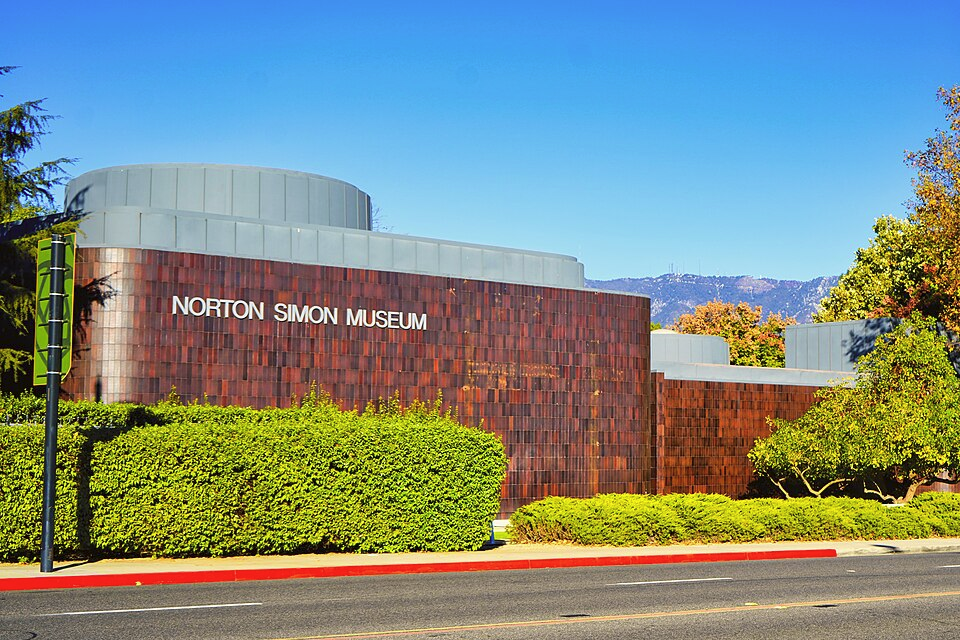
The Norton Simon Museum in Pasadena. | Photo courtesy of Tony Mariotti/Wikimedia Commons (CC BY 2.0)
The facade of the Norton Simon Museum is known to millions of television viewers around the world as the backdrop of Pasadena’s annual Rose Parade. With the beautiful San Gabriel Mountains behind it and flower-bedecked floats traveling along Colorado Boulevard on a sunny winter morning, it is an iconic image that once enticed countless people to move to Southern California, and still draws several thousand tourists to the city.
As the museum celebrates its 50th anniversary, it is undergoing an exterior renovation project to make it more inviting for these television viewers and people on the grandstands to come in and discover the treasures found within.
During a recent tour of Norton Simon Museum, Leslie Denk, vice president of external affairs, talks about the captivating man behind the institution’s magnificent collection, the history of the museum and the exterior improvement project.
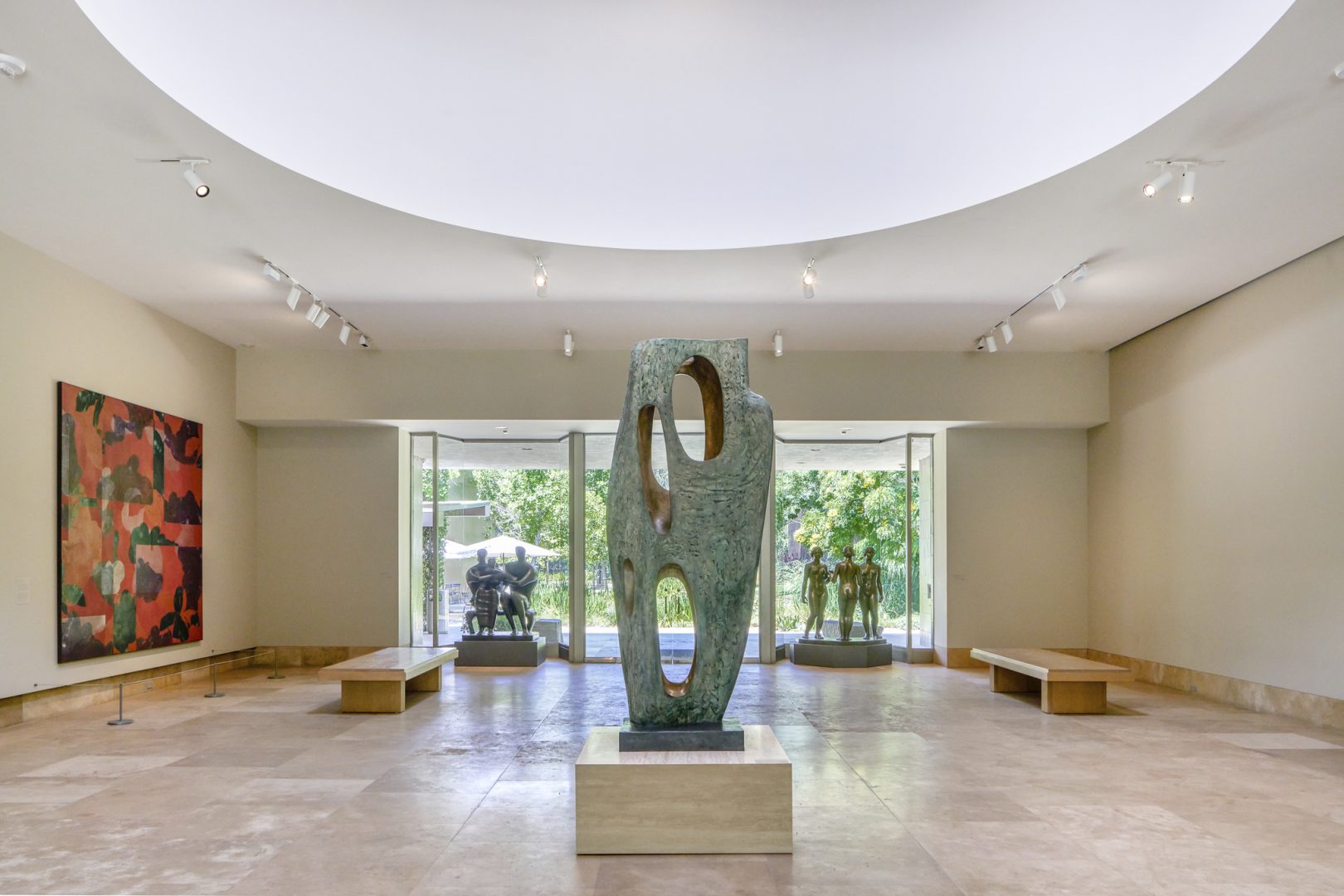
Gallery entrance. | Photo courtesy of the Norton Simon Museum
“Norton Simon was originally from Portland, Oregon,” Denk begins. “When he was in his late teens, he and his family moved to Los Angeles. He started to think about business and with a small loan, he took over Hunt’s Food, which was called something else back then. He was really known for identifying businesses with potential but weren’t financially successful and then turning them around. Some of the businesses in his conglomerate include Avis Car Rental, Canada Dry Corporation, McCalls Publishing and, of course, Hunt’s Food where he really made a name for himself.”
While Simon always knew he wanted to become a business man, his first art acquisition was happenstance. Relates Denk, “As the story goes, in the early 1950s he and his first wife were living in Larchmont Village in L.A. and his wife hired a decorator to revamp their home. The decorator brought in works of art that didn’t speak to him. He had his regular haircuts at the barber shop in the Ambassador Hotel on Wilshire Blvd. where there was an art gallery. One day in 1954, he popped in at the gallery and ended up purchasing a few works of art. As a former senior curator who was hired as a young person by Simon described, ‘it was like an olive coming out of a bottle – he could never put the olives back in.’”
Today the Norton Simon Museum boasts a collection of 12,000 paintings, sculptures, and works on paper. Its collection of European paintings and sculpture, which spans the Renaissance to the 20th century, includes the finest collection of Impressionist and Post-Impressionist art on the West Coast.
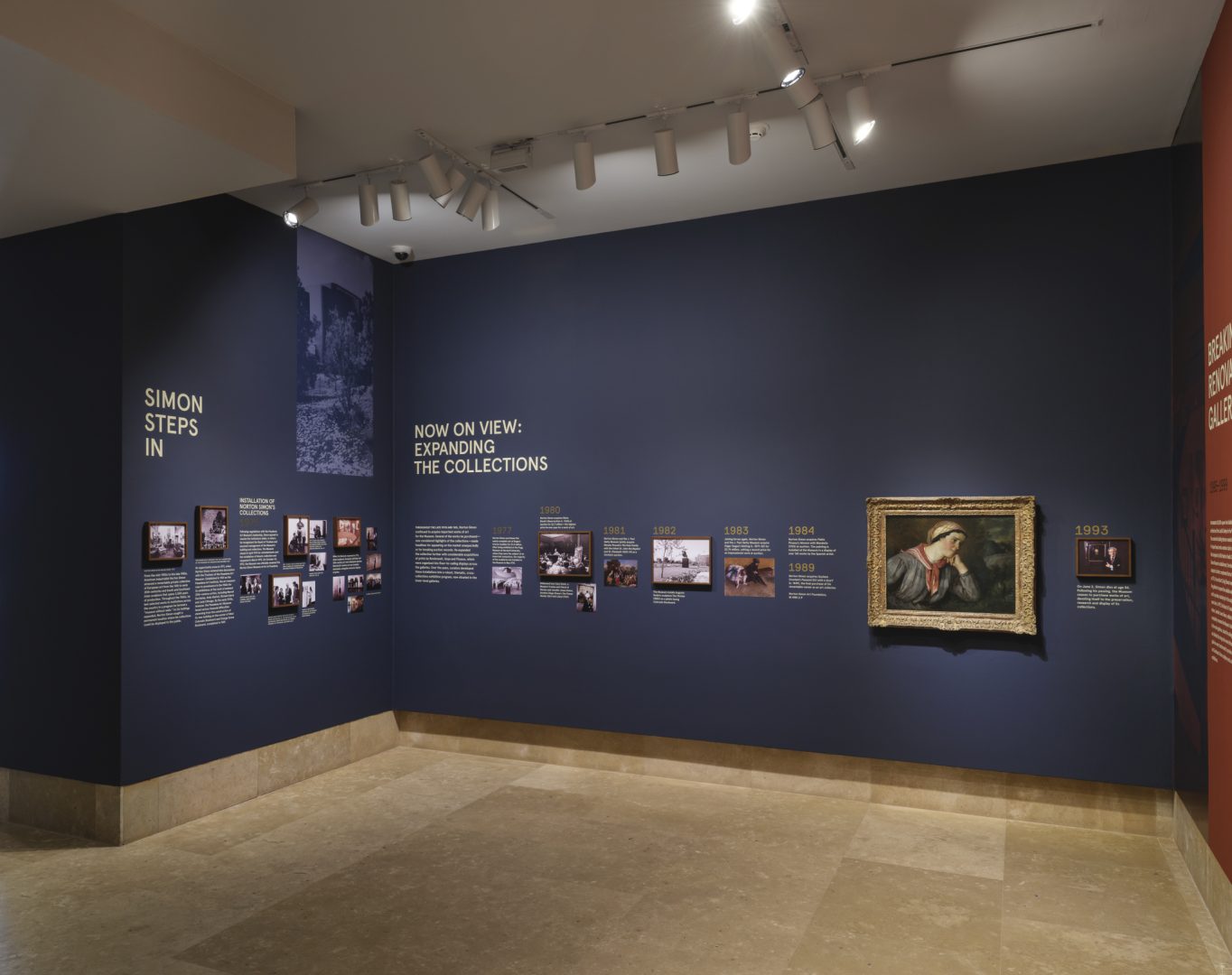
Retrospect Exhibition Installation. | Photo courtesy of the Norton Simon Museum
It’s a staggering number considering Simon was personally involved and didn’t have a team acquiring artwork on his behalf. A self-created capitalist, he approached art acquisition like a business — purchasing an artwork and selling it when the value increased to procure more.
Before he acquired the building to display his collection, most of Simon’s art was traveling. Denk said, “He had a program called Museum Without Walls where he would send portions of his collection to other museums around the country. A lot were held at LACMA for many years too. He also had them at his businesses — several large monumental sculpture were at his corporate campus — and at his homes where he had a really interesting way of storing his art collection. He kept them in something similar to a vault where he had racks to hang them. It was an important part of his acquisition strategy to live with the paintings; he wanted to spend time with the artwork to see how he felt about it before he would commit to purchasing it.”
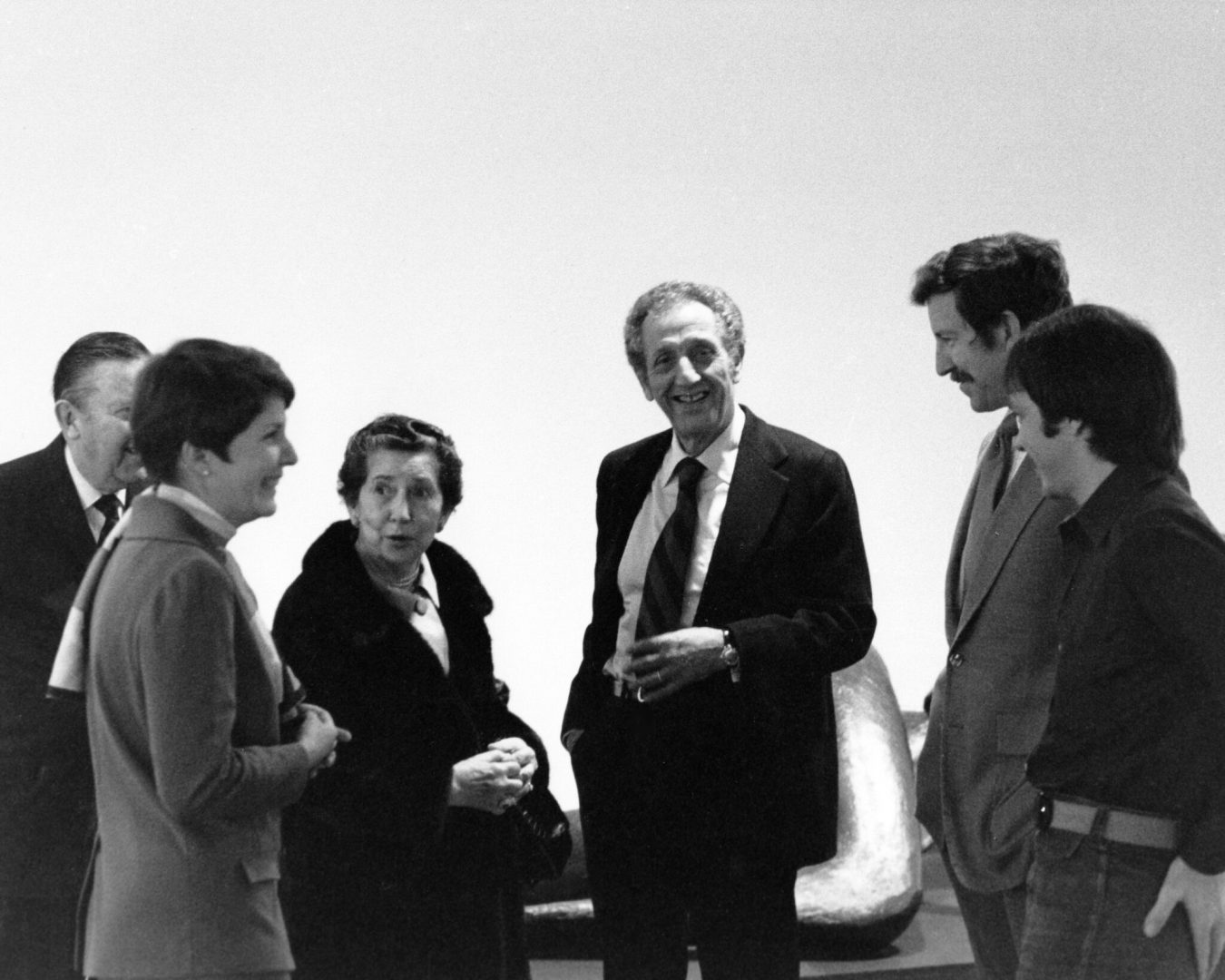
Norton SImon, third from right. | Photo courtesy of the Norton Simon Museum
Norton Simon Museum’s history is intertwined with that of Pasadena Art Museum’s. Denk reveals, “This building was actually built in the late 1960s by the Pasadena Art Museum which was the first modern and contemporary art museum in the Los Angeles area. They did some groundbreaking exhibitions in the 1950s and 1960s and they wanted to expand and relocate from their site on Los Robles. This land was owned by the city and they were able to build this structure. It opened in 1969, but they ran into a lot of financial difficulty.”
“They eventually struck a deal where Simon assumed control of the building and their collection, paid off their debts, and did some repairs,” Denk continues. “We debuted this museum in October 1975 and it was renamed Norton Simon Museum. When Simon took over, he quickly realized the museum is the backdrop of the parade. He negotiated to have the bleachers moved, he enlarged the museum’s letterings, and commissioned the rose placard on the front of the building. It’s a wonderful tradition that we’re happy to be part of.”
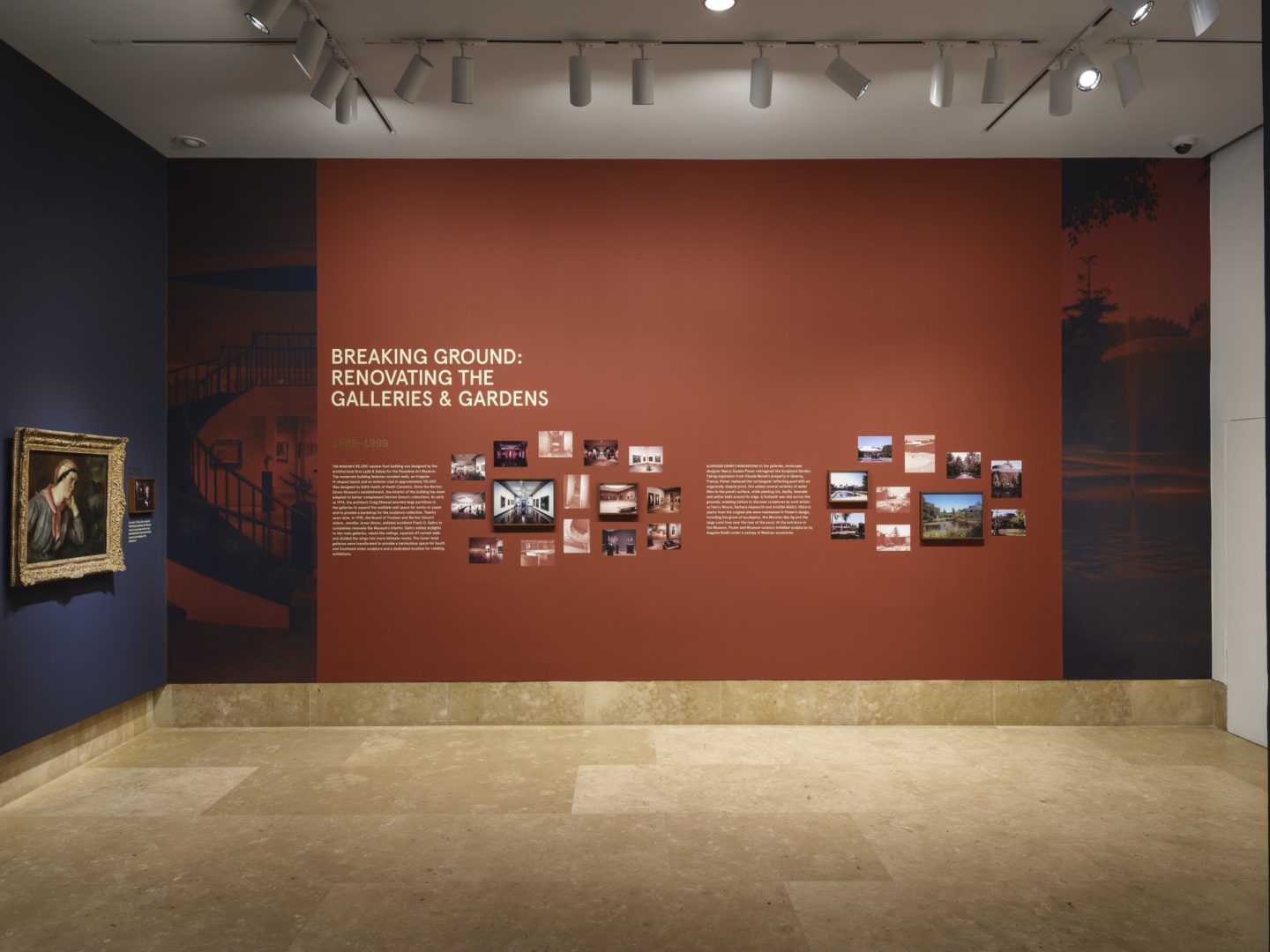
The building was designed for a contemporary art collection, with curved walls outside and similarly shaped interior. “After Simon’s death in 1993, his widow and the Board of Trustees decided to do a remodel of the interior galleries and they hired Frank O. Gehry,” states Denk. “He raised the ceilings, added the skylights, squared off the walls, and created new gallery spaces appropriate to the Simon collection.”
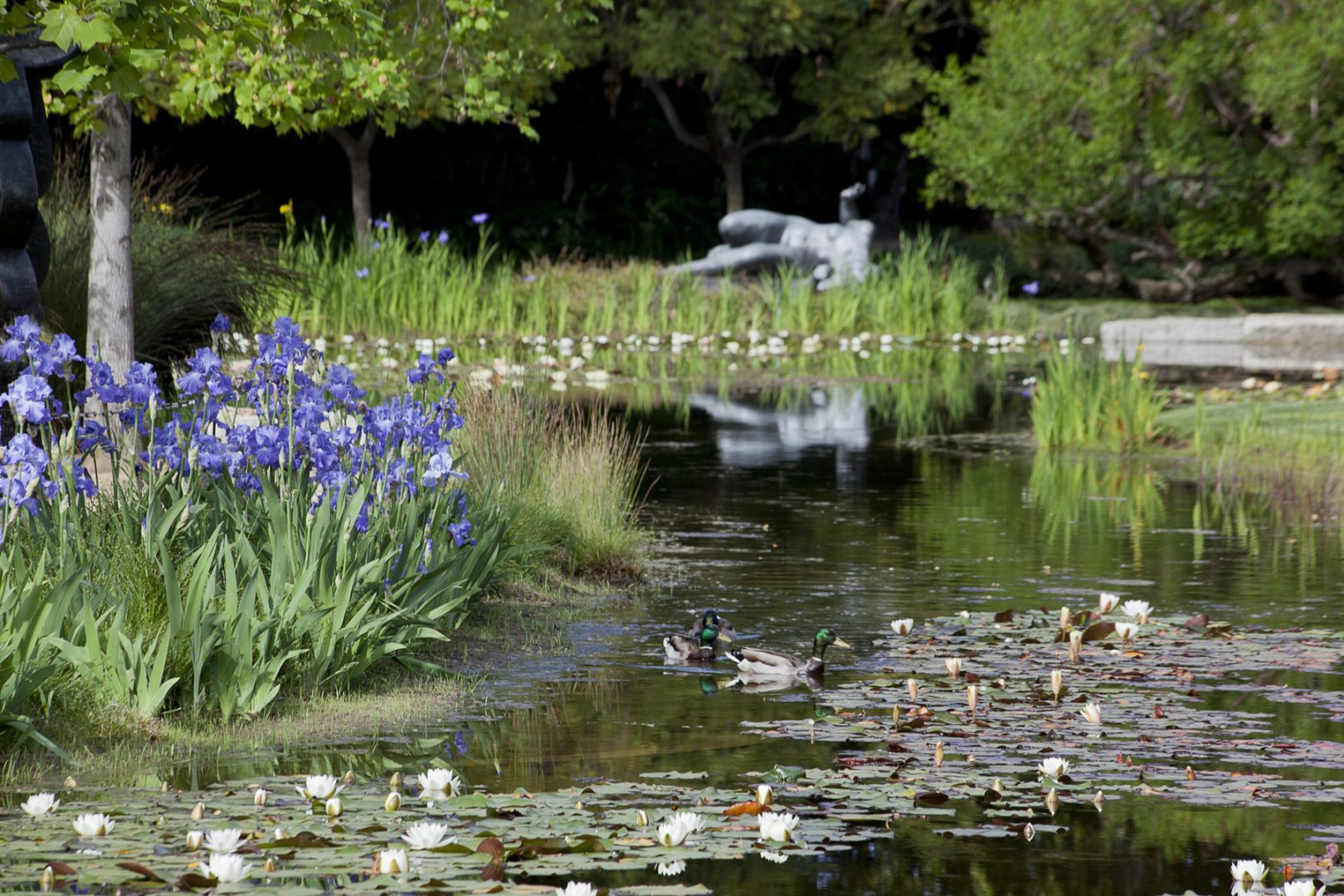
The pond in the sculpture garden. | Photo courtesy of the Norton Simon Museum
“At the same time, the sculpture garden was reenvisioned by landscape designer Nancy Goslee Power,” Denk says further. “The previous garden had been pretty minimalist and modernist — with a lot of turf, a long rectilinear fountain, and sparse plantings. When Jennifer Jones Simon hired Nancy, she asked her to create a romantic space to better reflect the collection and was a nod to Monet’s gardens. So Nancy patterned it after Japanese strolling gardens and it became a real highlight for visitors to the museum.”
Organized chronologically on an H pattern, the European collection is the first stop on our tour of the galleries.
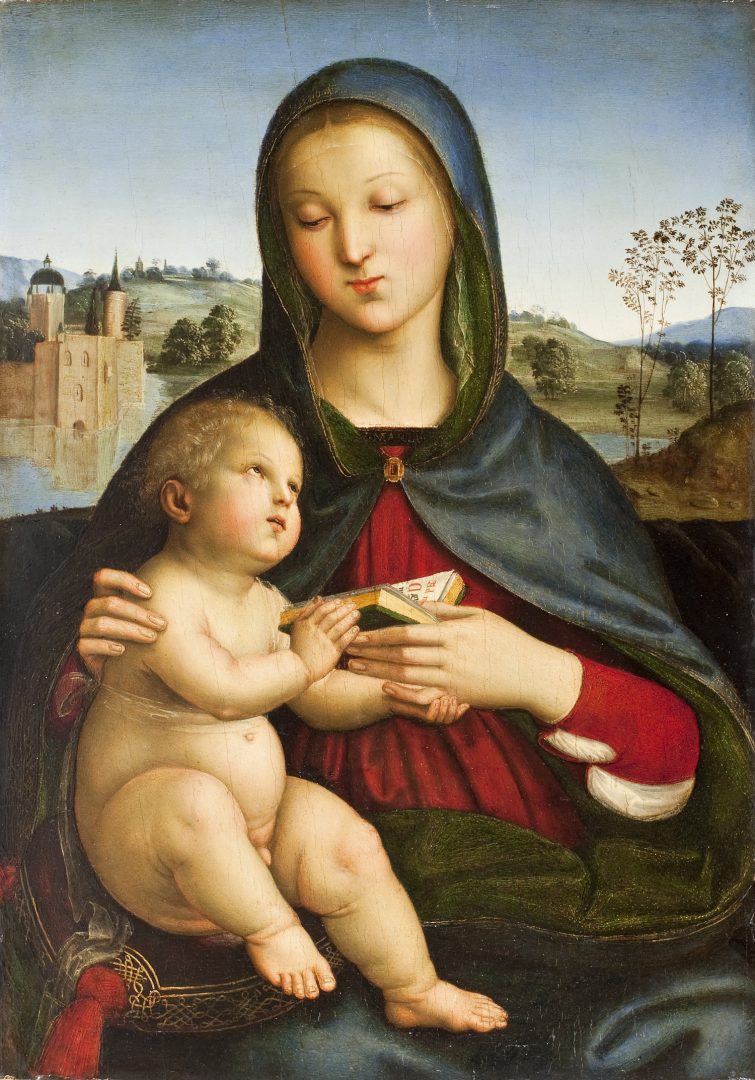
“We have the only painting by Raphael west of Washington, D.C. — it’s one of the unique things people may not know about the Norton Simon Museum,” Denk discloses. “As part of our 50th anniversary, we selected 50 works of art throughout the museum, including this ‘Madonna and Child with Book’ and put labels that highlighted recent research or other projects that we’ve done, like conservation work, so people can learn a little bit more about how to care for and interpret the collection.“
Raphael (Raffaelo Sanzio, Italian, 1483-1520) “Madonna and Child with Book,” c. 1502-03 oil on panel. | Photo courtesy of the Norton Simon Foundation
Denk leads me to the next piece saying, “This is our wonderful ‘Still Life with Lemons, Oranges, and a Rose’ painted by Baroque Spanish artist Francisco de Zurbarán. It is the only signed and dated still life by this great master of the school of Seville. It was lent to the Prado last year and it will be a highlight of a Zurbarán major exhibition coming up in the next year or two. A scholar once referred to it as the ‘Mona Lisa of Still Life.’”
As we enter the theater, Denk explains, “Our theater seats almost 300 people and we screen films, host lectures, stage performances here year-round. In 2001, it was refurbished by Arthur Gensler Jr. & Associates Inc. We do about 10 lectures, four performances, and approximately 25 films a year. A week from today, we’re starting a film series directed by previous directors of the board that will run through July as part of our 50th anniversary celebration.”
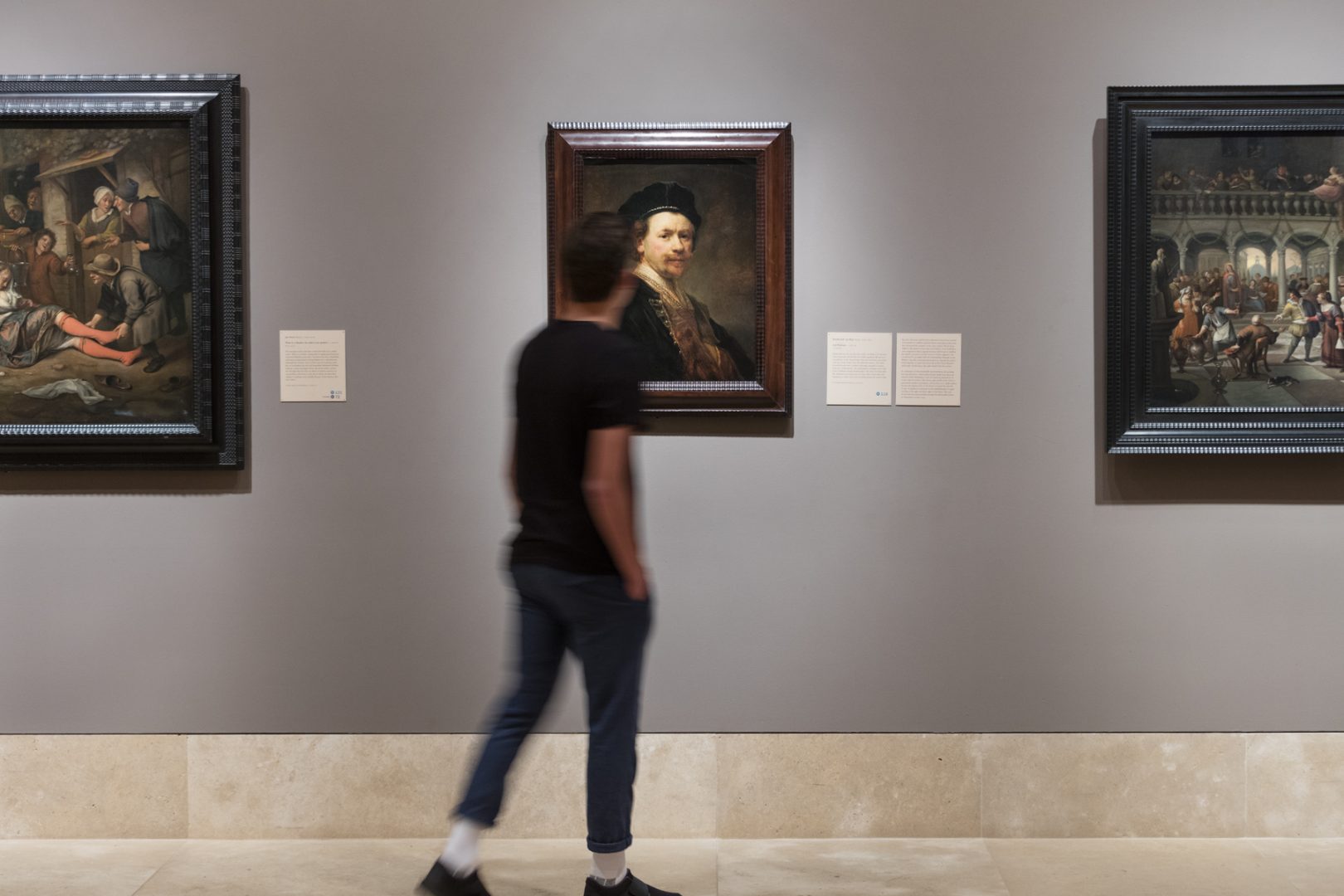
Rembrandt’s “Self-portrait.” | Photo courtesy of the Norton Simon Museum
When we reach the 17th century Dutch wing, Denk remarks, “Here we display three paintings by Rembrandt – ‘Portrait of a Boy,’ ‘Self-portrait,’ and ‘Portrait of a Bearded Man in a Wide-Brimmed Hat.’ We have a huge and significant Rembrandt print collection and sometimes we organize smaller exhibitions for it. Ten years ago we had a rare Rembrandt print show.”
In the French and Italian 18th century collection, the museum has a notable selection of French paintings that include works by Jean-Siméon Chardin, Jean-Baptiste Greuze, and Jean-Honoré Fragonard; Italian masterpieces by artists like Giovanni Battista Tiepolo.
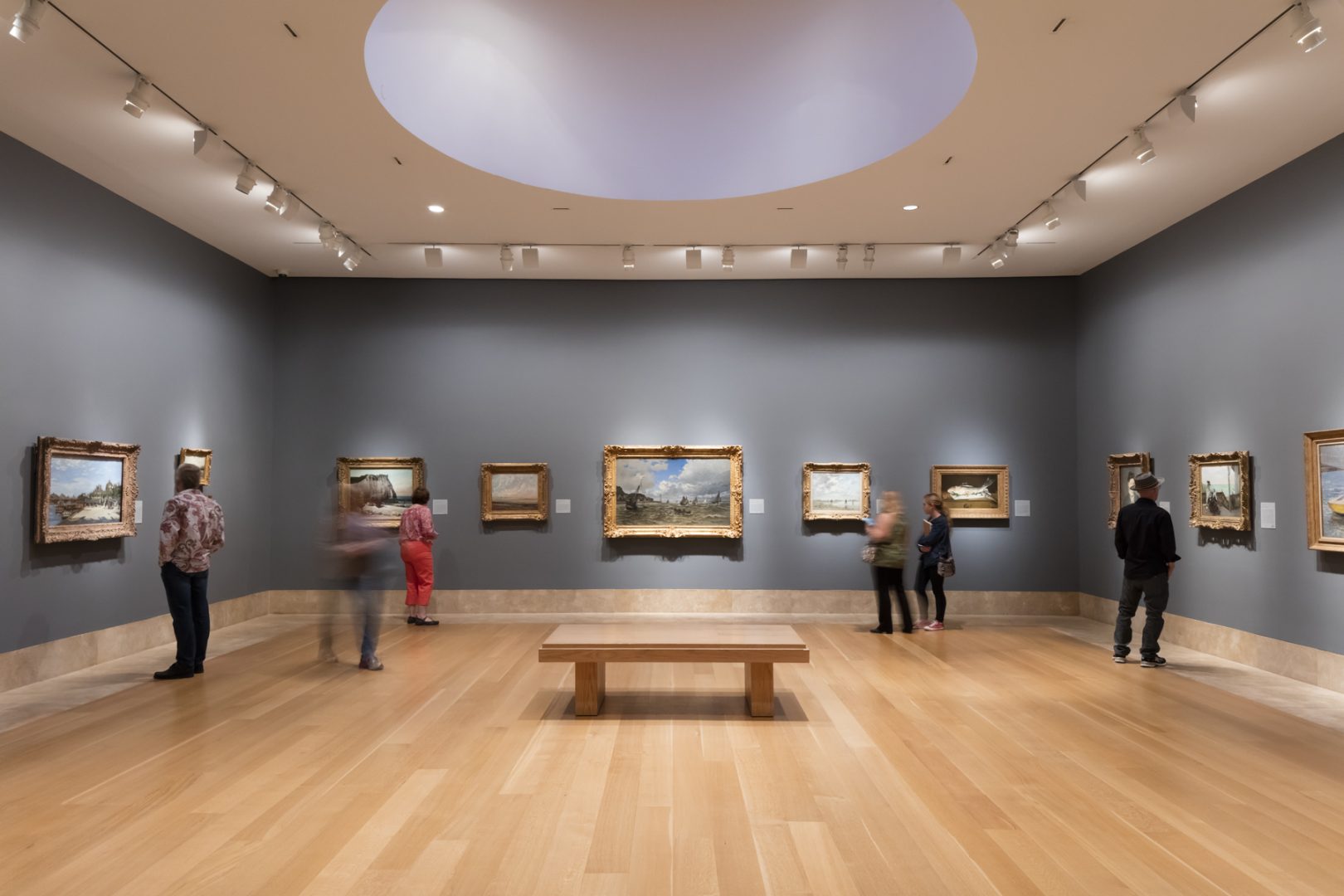
Impressionism Gallery. | Photo courtesy of the Norton Simon Museum
We reach the 19th century collection and Denk declares, “This is probably the most well-known among our artworks and this period was the origins of his art collecting. As he became more immersed in the art world he began collecting other genres and forms. We have this incredible Van Gogh ‘Portrait of a Peasant,’ which is certainly iconic of the collection. ‘Mulberry Tree’ by Van Gogh is also a real knockout. We have a pretty significant Van Gogh collection — the biggest in Southern California.”
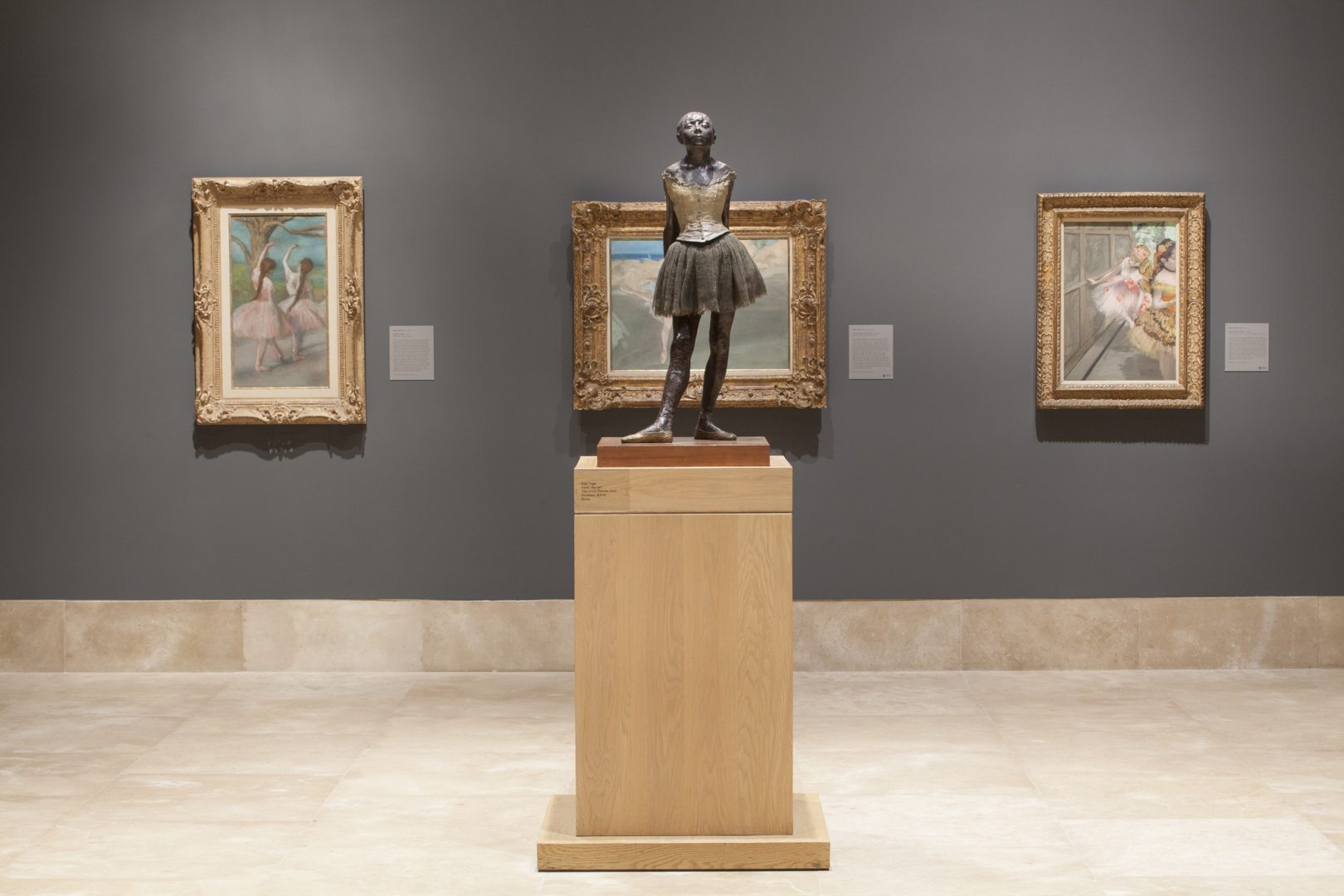
Degas’s “Little Dancer Aged Fourteen.” | Photo courtesy of the Norton Simon Museum
Simon was fascinated by Edgar Degas and the museum has a wonderful collection of his works, including a little sculpture. Claude Monet is another crowd-pleaser and they have a few of his paintings. ‘The Ragpicker’ by Édouard Manet, is one of the highlights of their 19th century collection.
The museum’s pastel collection is in a dimly-lit space to protect the works. Degas’s small sculpture ‘Little Dancer Aged Fourteen’ is also kept in here because her skirt is material and also has sensitivity to light.
In the 20th century collection section, Denk points out a painting called ‘The Traveler’ by Liubov Popova — a Russian artist who died very young.
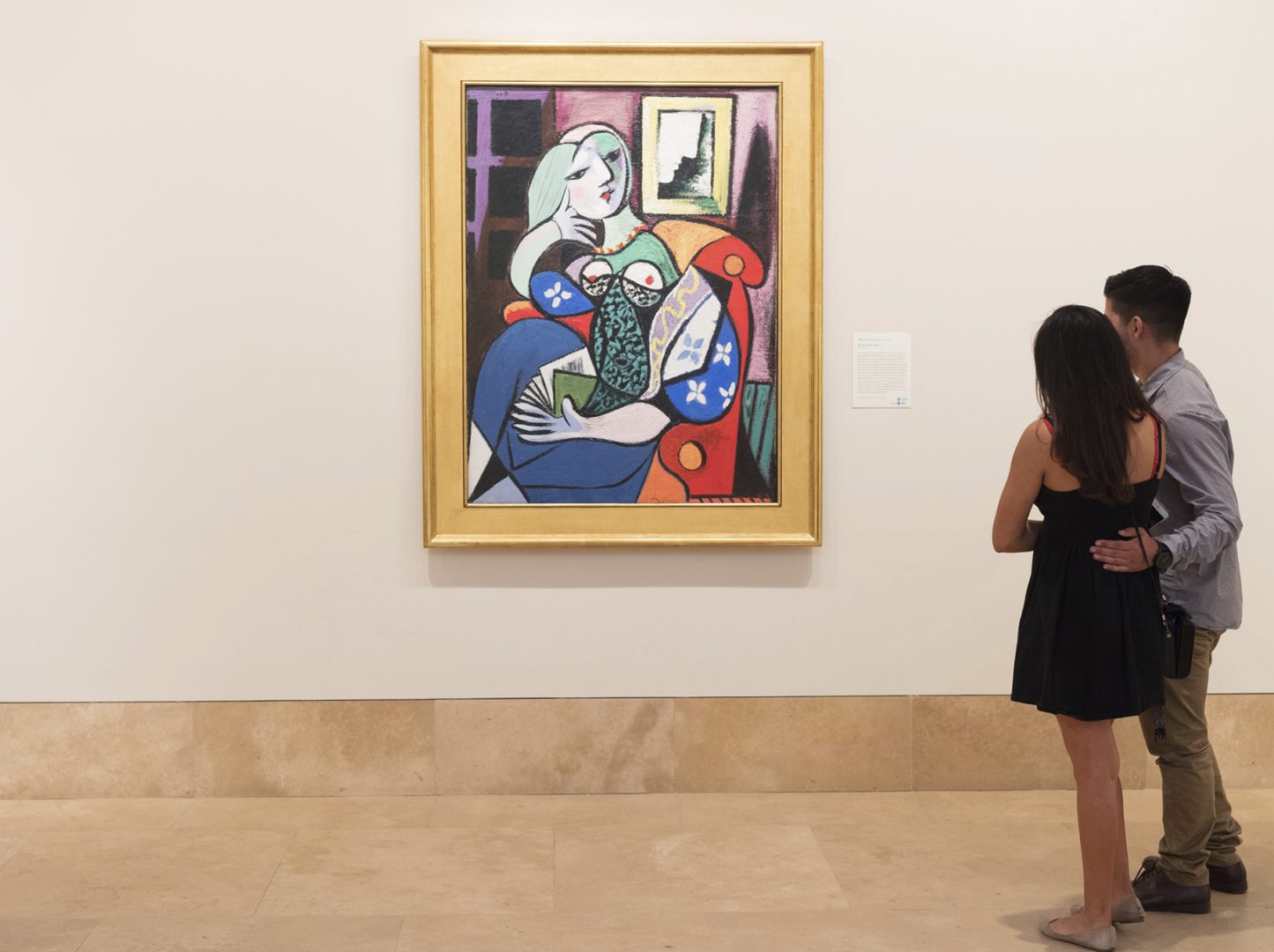
Picasso’s “Woman with a Book.” | Photo courtesy of the Norton Simon Museum
“Simon loved Picasso,” Denk pronounces. “We have various works here and a print collection. This is his ‘Woman with a Book’ — it’s one of the most celebrated likenesses of his lover Marie-Thérèse Walter and is another well-known work of art in the collection.
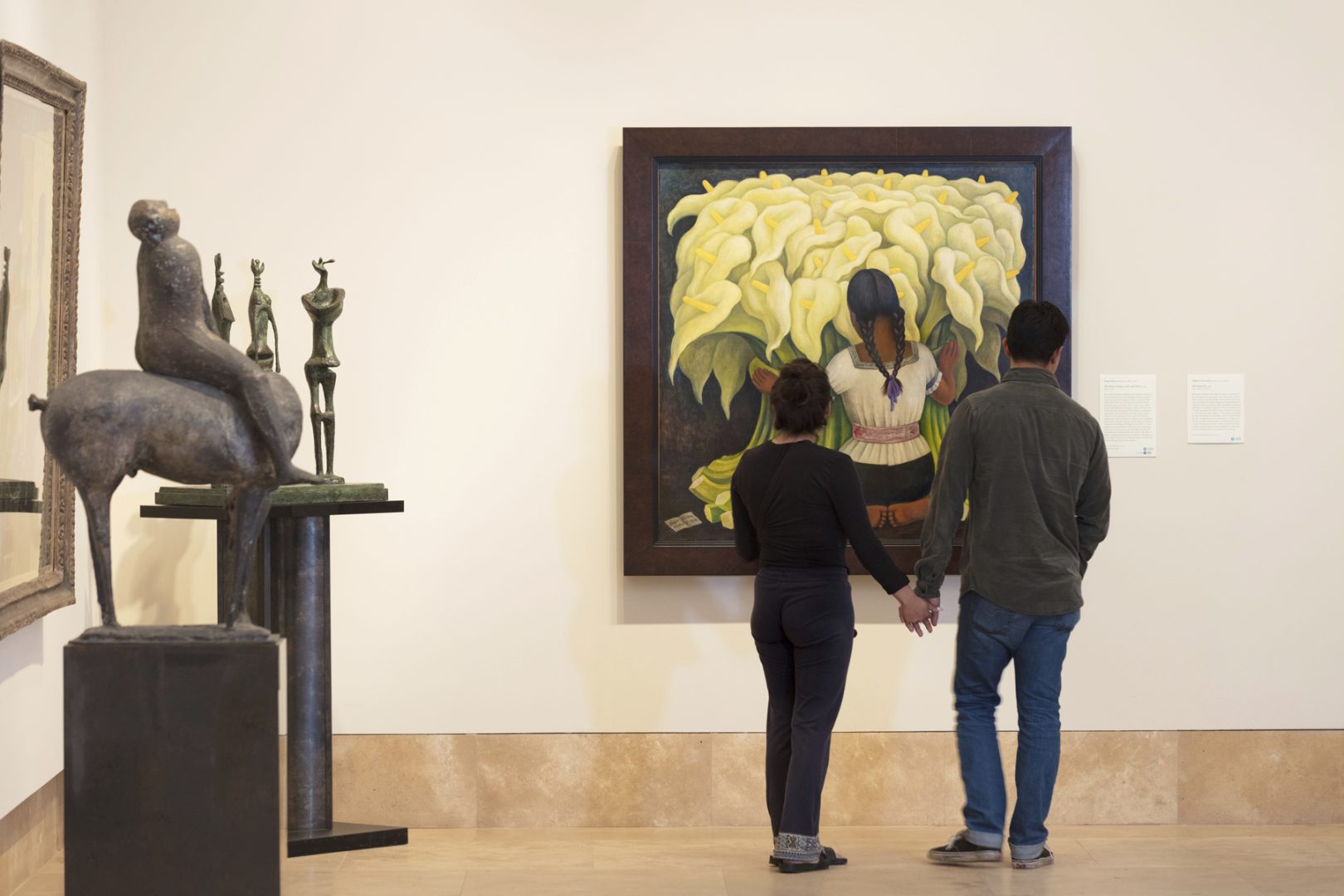
“This is a great artwork by Diego Rivera — ‘The Flower Vendor’ painted in 1941 — that was donated by Cary Grant to the museum,” says Denk. “That’s another fun little story that we’re highlighting for the anniversary because he served on the Board of Trustees. Diego Rivera did a series of similar paintings and this is one of them.”
Diego Rivera’s “The Flower Vendor” was a gift from actor Cary Grant. | Photo courtesy of the Norton Simon Museum
A number of works in the Modern Art gallery are from the Pasadena Art Museum, including those of the “Blue Four” — Lyonel Feininger, Alexei Jawlensky, Paul Klee, and Vassily Kandinsky. Constantin Brancusi’s sculpture called “Bird in Space” commands the most prominent spot beneath the skylight. Other art pieces include an Alberto Giacometti sculpture called “Tall Figure IV” from 1960 and Barbara Hepworth’s “Four-Square (Walk Through).”
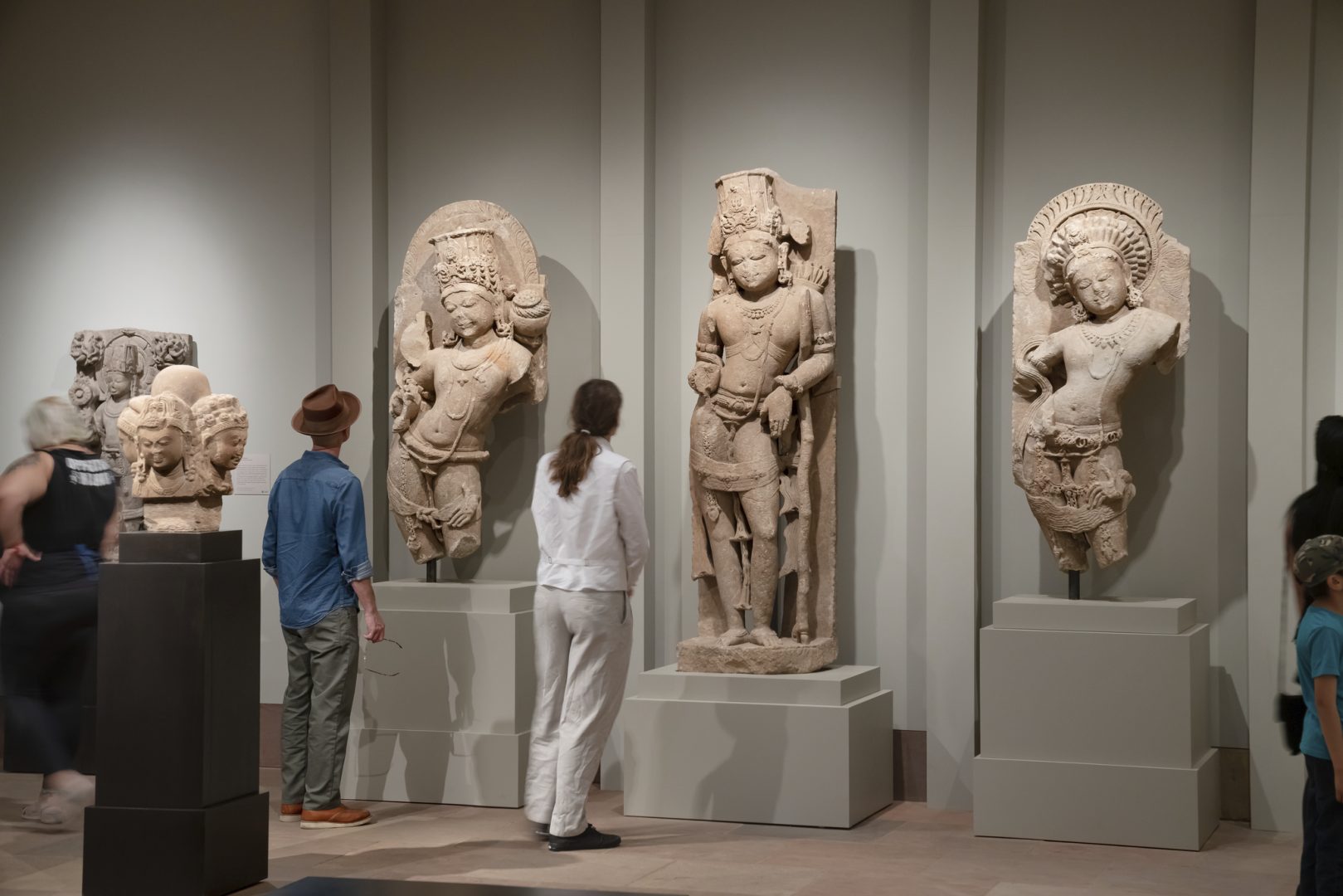
From the Modern Art gallery, we walk downstairs to the lower level gallery which houses South and Southeast Asian Art.
“In 1971, Simon met and married Jennifer Jones who was an Academy Award-winning actress,” Denk explains. “They went to Hawaii for their honeymoon but he wasn’t a beach kind of guy and he got bored. So she suggested they move on to India. While he was there he started visiting museums and became excited about South Asian art. His collection later expanded to include Southeast Asia.”
The Asian collection. | Photo courtesy of Norton Simon Museum
The Asian collection was previously showcased in the main gallery but was moved here during the remodel with Gehry. It has three exhibition wings where temporary shows are held. It will be the site for the museum’s 50th anniversary exhibition called “Gold.” The café has been moved here since the start of the renovation work.
Donning hard hats and neon vests, we then explore the outdoor grounds where the renovation is going on.
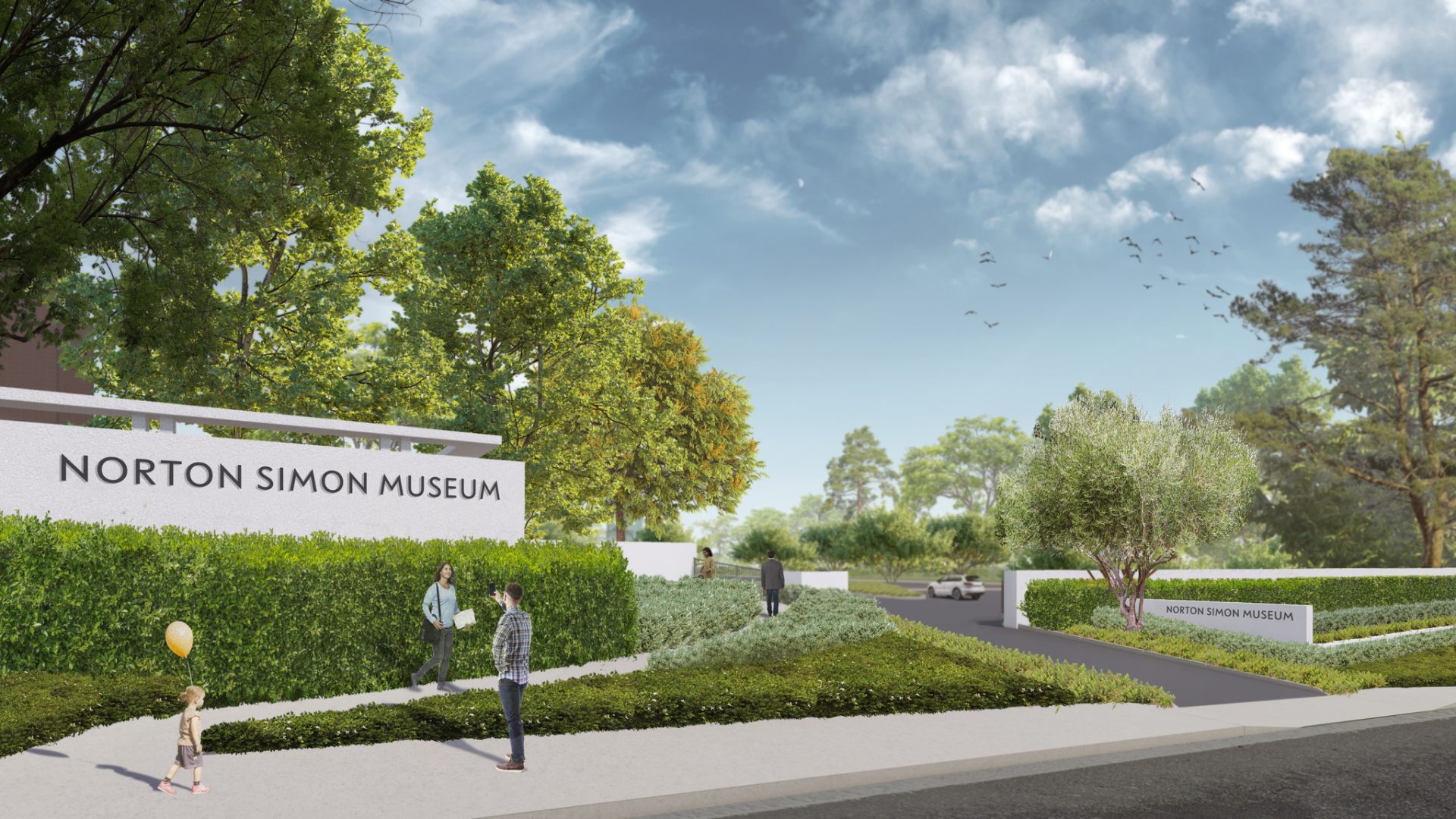
“This exterior remodel has been in conversation for more than ten years,” Denk expounds. “Since 2021, we have been working on the conceptual and pre-design phases. The early part of the project was to make the exterior of the building more inviting for passers-by to want to come in, to make the main entrance more visible, to refurbish our tile — to create a better street presence, if you will. We’ll construct new pedestrian path and a fresh sign which will run parallel to the driveway. Our east driveway will be more visible as well. We’ll also have the ability to close our gates and protect the campus.”
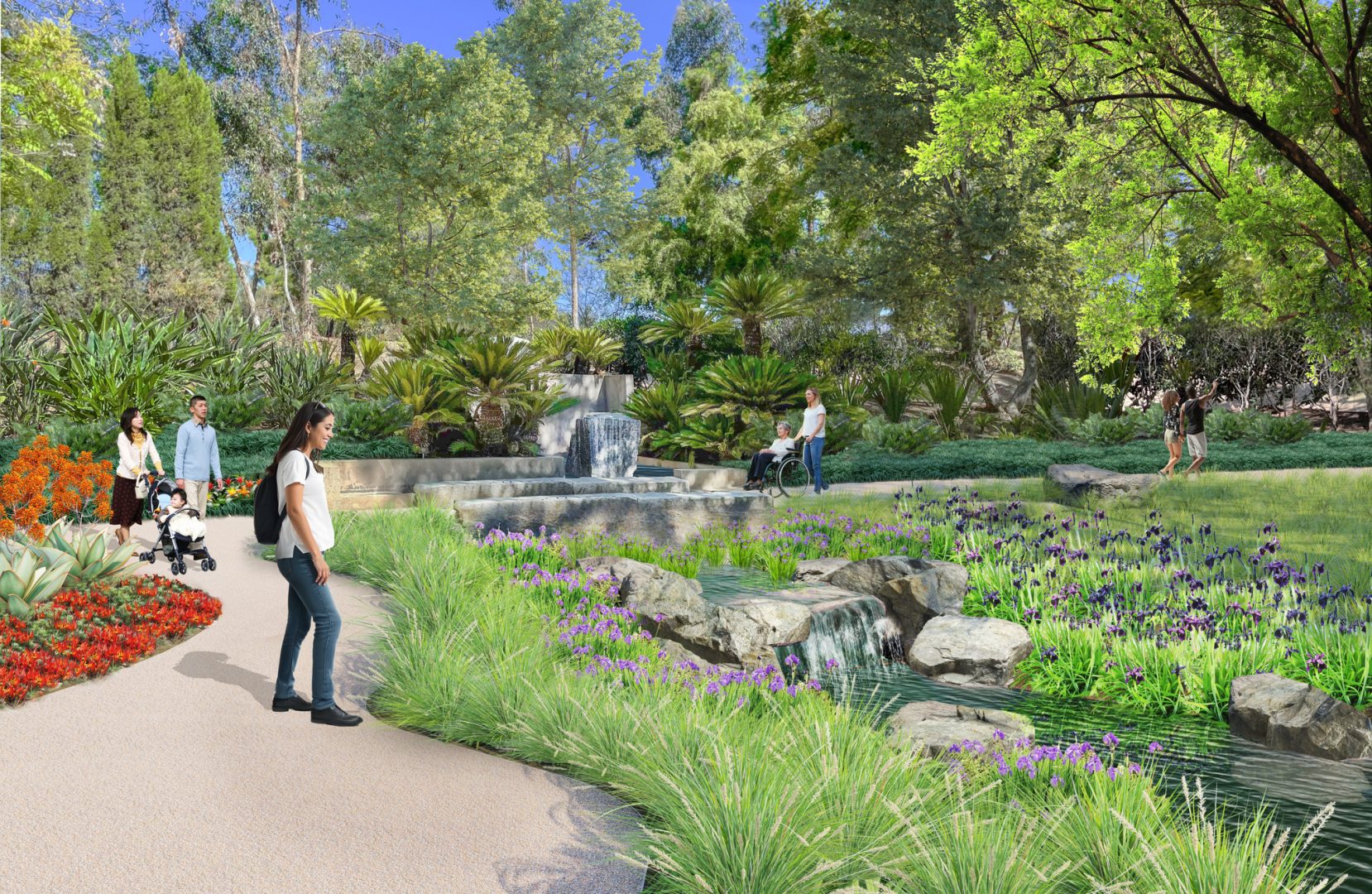
Rendering of the Norton Simon Museum’s Sculpture Garden. | Image courtesy of ARG and SWA
The sculpture garden and pond – a favorite of visitors to the museum – are getting updated. Says Denk, “Our sculpture garden is 25 years old and the liner at the bottom of the pond was past its lifespan so we knew this was a good opportunity to drain the pond and rebuild it. We’ll make the pond smaller and reposition it away from the building to make it easier for people to navigate the area during busy exhibition openings and events.
“We’re redoing all the paths and hardscaping and adding more seating. People love our garden and I want to promise our visitors that it will look a lot like it did. We’re not trying to redesign the garden or change the original concept of it being a lush and romantic special place,” Denk assures.
Heath tile. | Photo courtesy of the Norton Simon Museum
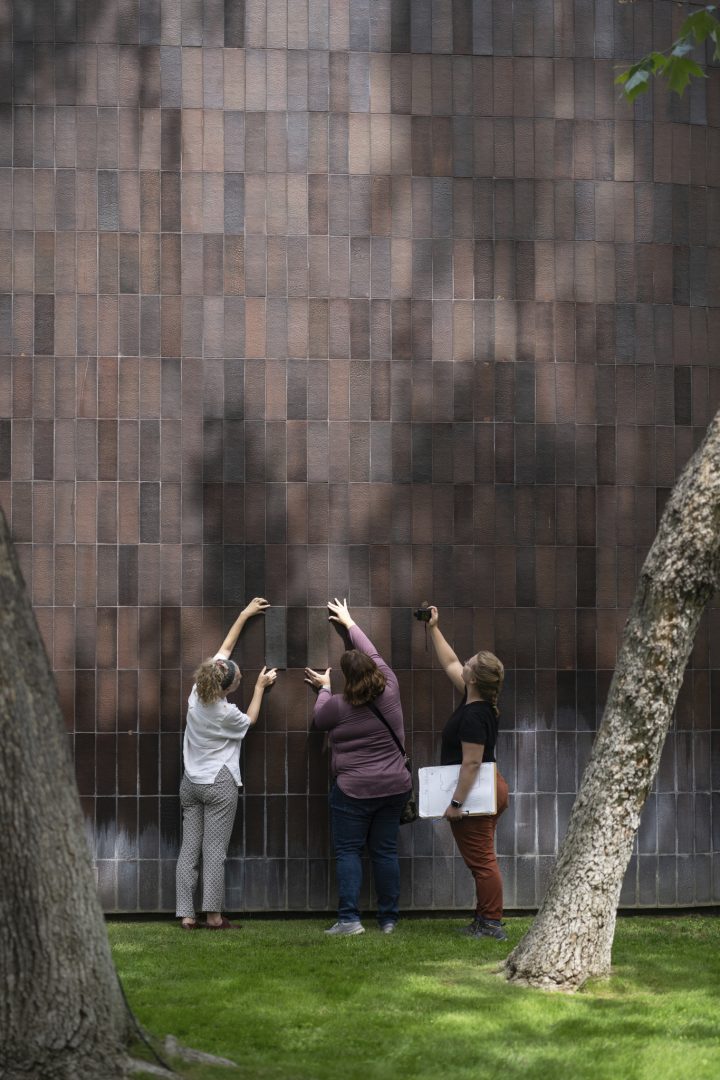
The most recognizable feature of the Norton Simon Museum is the structure’s distinct tile-clad façade created by San Francisco-based Heath Ceramics. With 115,000 tiles on the building, the significant commission launched Edith Heath’s tile business.
According to Denk the tile had never been cleaned before other than the occasional spot cleaning and rain. Part of this project is working with architectural restorers to undertake a conservation treatment and touching up little blemishes. Heath is also recreating the tile for missing areas.
Additionally, a solid wall will be built around Colorado Blvd. and Orange Grove to help reduce the noise from the street. A big olive tree will be planted to catch people’s eyes. Along the south lawn three light pole banners which will have details from objects from the collection will be erected. Drivers will get a glimpse of Van Gogh’s ‘Portrait of a Peasant’ or Picasso’s “Woman with a Book.” “The Thinker” will be relocated near the pedestrian path away from the trees to make it more visible.
Rendering of the Norton Simon Museum’s main entrance and pedestrian walkway | Image courtesy of ARG and SWA
The architectural firm that’s leading the project design is Architectural Resources Group. Denk explains how they made the choice, “We interviewed a couple of different architectural firms and we really liked Architectural Resources Group because they are preservation-focused. Even though we’re not a historic site we have a lot of iconic elements like the tile and podium wall. We knew that they would come to this project with sensitivity for maintaining a lot of the physical elements of our site that are so important to us, especially being the backdrop of the parade.”
While they had hoped to complete the renovation sooner, Denk is hopeful it will wrap up in time for the October celebration. She says, “We had a soft launch in February with the opening of the ‘Retrospect’ exhibition, the ‘50 Objects’ on our website, and a program series — lectures and tours that highlight the museum’s history.”
“But our big moment of celebration will be in October,” Denk emphasizes. “The actual date of the name change to the Norton Simon Museum was October 24, 1975. That’s the day we’re opening the ‘Gold’ exhibition and the following Saturday we’re planning to have a community festival. It would be a great opportunity for people who haven’t been to the museum to see it and for others to rediscover it.”
A “Retrospect” exhibit installation. | Photo courtesy of the Norton Simon Museum
Norton Simon Museum hosts approximately 8,000 school groups from the Pasadena Unified School District and schools throughout the area every Monday, Thursday and Friday morning. The museum also welcomes 150,000 visitors per year, 70% of whom are local and 30% from Southern California, other states and abroad.
The museum has become an integral part of Pasadena’s Rose Parade so they adjust their hours for it. They’re closed on the day of the parade and they add more open days so people can come when they’re here for the annual event. They also make sure they have something exciting for visitors to see — whether it’s a special loan or an interesting exhibition — on top of their exceptional collection.
In the 50 years since Norton Simon Museum’s establishment, it has distinguished itself as a tourist destination and the place where art enthusiasts can find extraordinary artworks. With the completed renovation project, this rare gem in Pasadena will certainly shine ever
Briar Rosa’s “Queen III” in the “Centered in Ink Exhibition.” | Photo courtesy of the Ontario Museum of History & Art
Ontario Museum of History & Art (OMHA) presents two exhibitions that portray community issues and cultural stories. “Mission Gráfica: Reflecting a Community in Print” and “Centered in Ink: Printmaking in the Inland Empire” will open concurrently on Thursday, January 9, and will run through March 9, 2025.
A community reception will be held on Saturday, January 11, from 2 to 4 p.m., with light refreshments and a chance to meet the artists from Centered in Ink. Additionally, OMHA will host an artist talk with featured artists from the exhibitions on Saturday, February 1, from 2 to 3 p.m.
Mission Gráfica poster / Photo courtesy of Ontario Museum of History & Art
“Mission Gráfica: Reflecting a Community in Print” is a touring exhibition developed in partnership with the San Francisco Public Library that features dozens of screenprints from Mission Gráfica, a community print center of diversity and cultural ferment in San Francisco. Founded in 1982 as part of the Mission Cultural Center, Mission Gráfica became the most sought-after political poster center in the Bay Area in the 1980s. Designed to capture attention on the street, the posters urged political action as well as celebrated culture and life.
This exhibition reflects a variety of styles, approaches, and sensibilities from non-professional and emerging artists to well-known figures such as Carmen Lomas Garza, Nancy Hom, Rupert Garcia, Mildred Howard, Jean La Marr, Ester Hernandez, Michael Roman, and the San Francisco Print Collective. It will explore themes of U.S. Imperialism, gender inequality and women’s empowerment, cultural celebrations, Indigenous America, and more – many of which continue to resonate today.
Stephanie Lagos. Mixed media screenprint / Photo courtesy of Ontario Museum of History & Art
Its companion exhibition, “Centered in Ink: Printmaking in the Inland Empire,” will showcase a diverse array of printmakers and screen printers of the Inland Empire who employ their artistic skills to address pressing community issues and ignite conversations that resound with viewers. Using their printmaking practices to create powerful visual statements, the artists delve into thought-provoking themes such as identity, activism, and environmental awareness. Participating artists include Briar Rosa, Adam Aguilar, L.Akinyi, Micah Amaro, BA Soul, Kenia Cruz, Cesar Garcia, Jorge Heredia, Duan Kellum, Stephanie Lagos, Eduardo Raul Muñoz-Villagaña, Erick Revollo-Paz, and Sarah Vazquez.
Twenty seven prints from Mission Gráfica and thirty artworks for Centered in Ink will be exhibited in the museum’s North Wing Galleries.
Mission Gráfica screenprint / Photo courtesy of Ontario Museum of History & Art
Samantha Herrera, exhibition curator, says by email that the two shows were purposefully meant to run together. “Centered in Ink was planned to pair with Mission Gráfica. With most of the traveling exhibits we host, we try to complement them with the Inland Empire’s fascinating history and exciting art communities.”
“We searched in our local art community for a similar group of printmakers working together at a local art center who were producing artwork with a socially conscious theme and providing an outlet for creativity to the community at large,” Herrera says further.
“I wasn’t familiar with the Mission Gráfica art collective until recently. But I did recognize some of its artists, such as Esther Hernandez, from my studies of the Chicano rights movement in college,” discloses Herrera. “During that period, Esther’s work centered on themes of women’s rights and the struggles of Chicano farmworkers, using her art to amplify their voices and issues.”
Mission Gráfica screenprint / Photo courtesy of Ontario Museum of History & Art
“The printmakers we are featuring in Centered in Ink, all have connections to the Garcia Center for the Arts in the city of San Bernardino, similar to the artists in Mission Grafica, hosted by the Mission Cultural Center of Latino Arts in San Francisco,” explains Herrera. “Most of the local printmakers we are presenting are influenced by the Oaxaca woodcut print art form, originating from the Mexican state of Oaxaca.”
Local participating artists include:
Jacob Adame (Briar Rosa)
Briar Rosa works with various mediums to make paintings, sculptures, drawings, and prints. Their work has developed into exploring the figure and its historical relationship with symbolism.
Briar Rosa. Hover When we Weep / Photo courtesy of Ontario Museum of History & Art
Adam Aguilar
Adam Aguilar is a printmaker and multidisciplinary artist from the Inland Empire. He has worked displayed in Inland Empire galleries and museums.
Adam Aguilar. Nectar Fields / Photo courtesy of Ontario Museum of History & Art
Lilian Owiti (L Akinyi)
L. Akinyi is an interdisciplinary artist currently working to bridge the cultural landscapes of their upbringing in Nairobi to the diverse influences of the Inland Empire, where they currently live and work. Through their practice, Akinyi explores their own internal world, themes of identity, migration and the interplay between traditional and contemporary spiritual practices from her African/diasporic lens.
Micah Amaro
Micah Amaro is a San Bernardino artist who focuses on character design through colorful and expressive BIPOC illustrations. She has demonstrated her versatility by branching out into different mediums, such as printmaking with the collective Grafica Nocturna. Over the years, she has worked with many organizations, such as the Locatora Radio podcast and Arts Connection.
Mission Gráfica screenprint / Photo courtesy of Ontario Museum of History & Art
Brenda Angel (BA Soul)
An artist born and raised in San Bernardino, California, BA Soul expresses her creativity through paint, fabric, illustration, and murals. Inspired by her culture and the beauty of nature, she connects deeply with others through her art.
Kenia Cruz
Kenia Cruz is an interdisciplinary artist raised in Los Angeles and the Inland Empire, whose practice is currently focused on printmaking. She holds a Bachelor of Arts degree in Art with a concentration in Visual Studies from Cal State San Bernardino and is now pursuing a master’s degree in education with an emphasis on art at the University of Redlands.
Cesar Garcia
Cesar Garcia is a craftsman based in San Bernardino, who prefers working with printmaking techniques such as xylography, pyrography, stencil and airbrushing. He believes art is a powerful tool to create awareness about what is happening around us and reflects the times we live in.
Cesar Garcia. Untitled / Photo courtesy of Ontario Museum of History & Art
Jorge Heredia (Osvaldo Heredia)
Osvaldo Heredia is a first-generation Salvadoran Mexican, born in Downtown Los Angeles and now primarily working in San Bernardino. Heredia is a graduate of Cal State San Bernardino and a former Director of the Garcia Center for the Arts, where he led and contributed to many community projects, with the goal of empowering the community.
Duan Kellum
Born in Trenton, New Jersey, Duan Kellum is an educator, artist and activist. Kellum’s predominant mediums are screen- printing and stenciling.
Duan Kellum. Sal’s World / Photo courtesy of Ontario Museum of History & Art
Stephanie Lagos
Stephanie Lagos is a versatile artist based in the Inland Empire, exploring their Mexican Honduran heritage through various mediums, including painting, ceramics, drawing, and printmaking. Their work reflects a deep connection to their roots and cultural identity, pushing the boundaries of Eurocentric ideas in art.
Erick Revollo-Paz
Erick Revollo-Paz is an artist born in Mexico and raised in Southern California. After graduating from California State San Bernardino, Revollo-Paz developed a passion for art, specifically within printmaking practices.
Sarah Vazquez
Sarah Vazquez is a visual artist from San Bernardino, California, who works across various mediums and has been focused on printmaking since 2018. Her work is emotionally driven as she explores themes of identity, connection, and healing. Vazquez is an advocate for accessible art education and a member of the Grafica Nocturna printmaking collective.
Sarah Vazquez. Infinite Love / Photo courtesy of Museum of History & Art
Herrera declares, “Through their creative process, the artists in both exhibitions reflect various styles, approaches, and sensibilities. They explore societal struggles, weaving personal narratives into broader discussions that connect the individual to their community. These works spark dialogue on identity, place, and belonging, using diverse materials and symbols to share stories and encourage reflection. We hope the work resonates with you as much as it did with us and continues to inspire dialogue among members of the Inland Empire community.”
Through the decades and spanning cultures, artists have spoken their truths and effected social reform. Would that we, who view this exhibition, engage with their works and act on what we learn.
El Dorado County is famously recognized as the place where California’s Gold Rush began. According to historical accounts, on January 24, 1848, James W. Marshall discovered gold on the south fork of the American River in the valley known to the Nisenan Indians as Cullumah (beautiful valley). That momentous instance not only helped shape California’s future, it reinvigorated the country’s economy as well.
Courtesy photo
Towards the end of the 1880s another historical, albeit little-known, event transpired in El Dorado County – the public hangings that sent shock waves across Placerville.
Based on newspapers articles at the time, a reputedly wealthy farmer John Lowell was murdered on March 24, 1888 during a robbery at his ranch near Mormon Island in El Dorado County. Three men were convicted of first degree murder – John Henry Meyer, a 27-year-old immigrant from Germany; John Olson, a 24-year-old Norwegian native immigrant; and William Drager, a 41-year-old immigrant from Germany.
Meyer was hanged on November 30, 1888. Olson and Drager – who steadfastly claimed throughout the trial that they weren’t involved in the murder of Lowell – were hanged on October 16, 1889. These were the last legal hangings and among the last public executions in California.
Hangings were not uncommon in the United States back then; Placerville had been referred to as “hangtown” since the Gold Rush days. However, Olson and Drager’s sentence galvanized the whole town into action because Placerville residents felt they had not been complicit in the murder, and the death penalty was too harsh for their actual crime.
Courtesy photo
Over 425 townspeople – including the district attorney who prosecuted the case, the sheriff, and nine of the 12 jurors – signed a petition requesting the sentence be reduced to life imprisonment. It was, however, rejected and the pardon turned down. It fell upon El Dorado County sheriff James Madison Anderson to carry out the sentence and, for years, that an injustice might have been done weighed heavily on him.
His great-great-granddaughter M.G. Rawls – a retired Pasadena lawyer and author of fantasy trilogy books “The Sorts of Pasadena Hollow” – delves into this event and gives readers an intimate look at the victim, the killers, the crime, and the hangings. She chronicles the details of the case and then reaches her own conclusions about this long-forgotten and rarely discussed episode in Placerville’s past in her book called “Hanging Justice,” scheduled to publish in October 2025.
In the course of her extensive research, Rawls traveled to El Dorado County several times and visited the gravesites of her ancestors at Placerville Union Cemetery. During one of her trips there she found out about Save the Graves.
Placerville Wagon Train Event 2023 | Photo courtesy of Save the Graves
Conceived in 2019 by Mike Roberts and his wife Michele Martin, Save the Graves is a non-profit organization with a mission to restore, preserve, and celebrate El Dorado County’s historic cemetery and the stories they contain.
Speaking by phone, Roberts begins just as he does all his talks about Save the Graves. “Some people discover at some point in their lives that they have a peculiar fondness for old cemeteries. And I am one of those people. I’ve always been fascinated by them and drawn to them. It turned out there’s a word for people like us — taphophiles.”
“When I was walking my dog one day, I came upon this cemetery near my home and realized that what was once a beautiful place had gone to seed,” Roberts recounts. “No one was cutting the grass and the trash cans were overflowing. There’s so much history beneath these headstones yet no one was taking an interest in preserving it. So I took it upon myself to do that.”
New signage at Placervile Union Cemetery | Photo courtesy of Save the Graves
Roberts explains, “There are several ‘Friends of’ organizations in several cities, so I tried to create ‘Friends of Union Cemetery.’ To attract people into joining the group, I wrote a piece about the history of Union Cemetery, had it published in the local paper, and apprised readers that I was holding a couple of formation meetings and gave the times and dates.”
“One of those people who showed up was a retired PR executive for a utilities company who told me he was part of something similar to this in Long Beach called Save the Graves. The Historical Society was involved and they did theatrical portrayals of local historical characters buried in the cemetery. They researched and wrote scripts; the actors rehearsed and wore costumes authentic to the era. They charged money for the performances which people loved because they learned about the town’s history; that enabled them to raise funds to restore the cemetery. He had already committed to do some work for the Placerville Park but offered to help as soon as he finished that project,” recalls Roberts.
“I had forgotten about it until he called me two years later and asked if I was still interested in collaborating,” Roberts continues. “Coincidentally, a theatre professional he had previously performed with in Long Beach had just arrived in Placerville and he recruited him to get involved. They got us a grant and the three of us partnered up and launched our first production. As challenging as it was to stage a show at a cemetery, we pulled it off and it was very well received in the community. We held the second production and then we had a pandemic.”
Mike Roberts (in white shirt and black trousers) at a Save the Graves booth | Photo courtesy of Save the Graves
These two gentlemen Roberts teamed up with eventually moved on to do theatrical productions elsewhere, leaving Roberts to focus on his original objective.
Says Roberts, “I was everywhere doing fundraising and cemetery improvement projects, running volunteer groups, as well as doing repair and restoration work myself. What bothered me most were the broken headstones. The county that managed the cemetery wouldn’t let me touch anything because of the liability. Heaven forbid the county gets sued by someone because I cleaned their ancestor’s grave! So I circumvented a potential lawsuit by checking the genealogy of the people buried there and choosing to repair the headstones of those with no relatives in Placerville.”
Using money they’d raised, Roberts paid $3,000 to a sympathetic local cemetery operator who agreed to get 18 of the headstones off the ground. And that made a huge difference. Instead of merely explaining to people what he was trying to accomplish, it gave him something concrete to show when he asked for donations. It also made fundraising easier the following year.
According to Roberts, the real fundraising vehicle is the program for the annual event. They started out with a four-page leaflet and last year they printed a 48-page magazine with a glossy cover and inside were advertisements about local shops and proprietors interspersed with the schedule of activities.
A Historical Society booth at a Placerville event | Photo courtesy of Save the Graves
These days, when Roberts tries to sell advertising space he’s asked about readership and circulation figures, which makes him laugh. He no longer has to do door-to-door solicitations; he reaches out by email. But when he does go out to see potential advertisers, he’s always wholeheartedly welcomed. People comment on how beautiful the cemetery looks.
In the six years since he and Martin established Save the Graves, Roberts has become something of a local luminary. He attends the downtown merchants association meetings and listens to some of the problems they encounter and helps find solutions. He has been giving two-hour talks about Save the Graves before various groups.
Placerville bell tower | Photo by M.G. Rawls / Save the Graves
“Last year we incorporated Save the Graves as a non-profit organization and that enabled us to apply for funding and we got our first big one – a $5,000 grant,” Roberts says happily. “The County Board of Supervisors gave us $10,000. We’ve been receiving donations from many people in the community, I’m so humbled. This year one of the descendants of a Placerville sheriff also sent us money. I didn’t know we had prominent historical figures in our town – we’d lost track of them.”
“We now have the luxury of having the money to take care of the cemetery,” declares Roberts. “The headstone cleaning can be done by volunteers so the funds go into fixing more complicated issues, like accessibility and terrain problems, crumbling copings along the walkways, etc. We’ve gotten a lot of damaging lichens out of old headstones and we’ve posted all sorts of interpretive signs that tell stories of these places to engage people who wander through.”
“Save the Graves is as much about building community as it is about fixing the cemetery,” Roberts emphasizes. “Historic cemeteries strengthen the fabric of our community by building connections between people. Part of that requires that you know something about those who are buried – and we accomplish that through our theatrical productions, biographical stories we post, and a Find the Grave QR code the general public can scan with their smart phones. We’re building connections to the people who are here now and to the place they live – that’s community. It starts to grow and we eventually connect with each other.”
“Placerville’s demographics are shifting with folks from big, congested cities moving in because they can buy an acre of land and enjoy nature and wildlife. And guess what else they like – old cemeteries! And they’re willing to help out,” Roberts enthuses.
Vendor showing gold flakes panned in Placerville | Photo of courtesy Save the Graves
Two of those transplants to Placerville are Jacob Rigoli and Sean Manwaring with whom Rawls got acquainted when she went to see the house her great grandfather used to live in – which they now owned.
Relates Manwaring, “Jacob and I first met Meg in October 2021. At that time we were restoring the historic residence colloquially known as ‘Judge Thompson House,’ named after her great grandfather, Superior Court Justice George Thompson. It was also the childhood home of her grandmother Virginia Thompson Gregg. Before that, her great-great-grandparents lived in the circa 1862 home, making it the residence of three generations of her family. Her mother and uncles visited the home in their youth with her grandmother.”
“It was Meg who introduced us to Save the Graves,” Manwaring clarifies. “The following year, we joined the planning committee and assisted with the annual event and fundraiser. Although I’m not a Placerville native, I grew up in Northern California, frequently visiting old mining camps and Gold Rush towns with my family. I have fond memories of Placerville. Like her, my husband Jacob and I are descendants of pioneers who arrived in California either just before or during the Gold Rush.”
“We quickly bonded with Meg over our shared enthusiasm and deep appreciation for all things related to early California history. Since then, she has become a dear friend, and we truly understand her passion for preserving her family’s legacy,” states Manwaring.
2023 Save the Graves theatrical performance | Photo courtesy of Save the Graves
“The work of Save the Graves is vital in preserving not only our local history but also the stories of California’s pioneering women,” informs Manwaring. “Last year, we featured one such remarkable figure: Mollie Wilcox Hurd. Born in Placerville in 1870, Mollie’s life took an unexpected turn when she married Frank Stoddard, nephew of Elizabeth Stoddard Huntington, the first wife of Central Pacific Railroad magnate Collis P. Huntington.”
Collis P. Huntington’s nephew, Henry Huntington, and his wife Arabella founded Huntington Library, Art Museum, and Botanical Gardens – a beloved institution in the San Gabriel Valley in Southern California.
“Frank’s family connections and career in the railroad industry propelled Mollie into the elite social circles of Los Angeles,” Manwaring continues. “While in Los Angeles, she served as President of the Los Angeles Florence Crittenton Home, which was established to help women and children in need. Beyond raising their two children, Mollie dedicated herself to philanthropic endeavors, particularly advocating for women’s and children’s rights. She played a pivotal role in securing state legislation requiring fathers to pay child support regardless of marital status.”
Mollie and Frank Stoddard were married for 25 years. Following her divorce from him and after their children had grown, she married her old friend – Los Angeles area senator, Henry M. Hurd. She remained deeply connected to her Placerville relatives. She was a founding member of the Placerville Shakespeare Club, generously bequeathing a donation to build their historic building upon her death in 1929. Mollie and Senator Hurd are both buried in the Placerville Union Cemetery.
A 2023 Save the Graves theatrical performance | Photo courtesy of Save the Graves
“This year’s show called ‘Law and Order, to be held on October 19, will focus on four notable crimes that occurred in El Dorado County between 1855 and 1903,” Manwaring explains. “Each crime will be presented through historical portrayals, featuring two key figures – ranging from perpetrators to victims, and from law enforcement to members of the press. Attendees will gain insight on both the community and the justice system.”
Describes Manwaring, “The portrayals are historically accurate and performed graveside – often near the burial sites of the pioneers being depicted – and actors wear period costume. One featured crime is the John Lowell murder of 1888, in which Meg’s great-great-grandfather Sheriff James Madison Anderson testified during the trial and guarded the accused. Additionally, her great-great-uncle, Marcus Percival Bennett, served as the district attorney. The case haunted both men for years.”
“Jacob and I contributed to the research and organization for this year’s event,” Manwaring adds. “He will serve as a stage manager and I’ll portray Marcus Bennett. We are just two of the many volunteers who help put on this annual event at Placerville Union Cemetery. Mike and Michelle are the driving force behind the fundraiser that helps preserve the cemetery and the stories of those buried there.”
Save the Graves performance is usually held near the grave site of the historical person being honored | Photo courtesy of Save the Graves
“Meg’s research has unearthed a forgotten story,” pronounces Manwaring. “It’s fascinating to discover the events that shaped the townspeople and the motivations of those involved in the John Lowell murder trial. She’s helping our community discover this important chapter in our history.”
Indeed a significant event transpired over a century ago at Placerville that residents there today may know nothing about. Roberts admitted as much when he said he didn’t know about Sheriff Anderson. But through the organization he and Martin created, they are learning about these episodes in their local history and making them unforgettable.
Danny Feldman | Photo by Jim Cox / Pasadena Playhouse
The Los Angeles Times recently launched L.A. Influential and Pasadena Playhouse’s Producing Artistic Director Danny Feldman was called one of The Creators – a group of outstanding individuals who are leaving their mark in film, art, music, and more. He was listed with fourteen others across all of the arts, joining an esteemed company that includes Eva Longoria, Ava DuVernay, Shonda Rhimes, Ryan Murphy, Jordan Peele, Mindy Kaling, Steven Yeun, and others. In the accompanying write-up, theatre critic Charles McNulty hailed him “The man who saved L.A. theatre.”
“It’s a little bit of an exaggeration,” says Feldman during a phone interview. He then recalls when he was informed of the honor. “They reached out a little less than a year ago to say I’ve been selected for this influencer list, so I’ve had time to digest it. I didn’t know who else was on this and the full context exactly, but I was a little shocked.”
Feldman clarifies, “I’m very pleased and grateful, but it’s really less about me than The Playhouse – I just get to be the face of it. The tribute is a sign or symbol that the work we’re doing at Pasadena Playhouse is getting noticed. This happened around the time The Playhouse won the (2023) Tony for Best Regional Theatre, which was a major achievement for us. It was an embarrassment of riches!”
The exterior of Pasadena Playhouse | Photo by Jeff Lorch / Pasadena Playhouse
“The Tony award had a tremendous impact,” emphasizes Feldman. “The Playhouse has a storied history with lots of ups and downs. The award honored the legacy and the unique history of the Pasadena Playhouse as one of the most important theatres in America. At the same time, we were recognized at a high point – when we were firing on all cylinders, when we were rising artistically.”
“Financially, we were at one of the more solid places we’ve been in our entire history; we were finding our stride and were on the eve of an expansion,” continues Feldman. “To receive a national recognition, like a Tony Award, for our body of work and for our impact of excellence in the world of theatre was overwhelming. So many of us have been working so hard for so long, to be acknowledged with a Tony Award was very fulfilling.”
In May 2025, The Playhouse’s building will celebrate its centennial and its programming will reflect its history.
Feldman states, “The Pasadena Playhouse is an iconic building and institution in our Los Angeles community as well as in the American theatre. That’s the theme throughout 2024-2025 so we’re calling it our iconic season. I was aiming for big shows that were iconic in their way –epic presentations that look like New York coming here and having a moment in our theatre.”
The Playhouse’s historic stage will feel alive with a sizzling Martin Crimp adaptation of one of the greatest plays of all time, Cyrano de Bergerac; a fresh new revival of Jerry Herman and Harvey Fierstein’s Tony Award winner for Best Musical, La Cage aux Folles; a new production of Suzan-Lori Parks’ Pulitzer Prize and Tony Award-winning classic, Topdog/Underdog – one of the best new American plays written in the last 25 years, as Feldman asserts.
Danny Feldman | Photo by Jim Cox / Pasadena Playhouse
“We’ll have special musical performances with the Civic Auditorium for two consecutive weekends of concerts featuring two of the most enduring musicals of all time: Anything Goes in Concert, starring Jinkx Monsoon as Reno Sweeney and Follies, an encore to our recent Sondheim celebration,” Feldman adds. “It’s a robust slate of shows that are sort of the greatest hits in a way, to honor our extraordinary achievement of having one of the oldest operating theatres in America. These special theatrical events will expand our initiative exploring classic American musicals with our community. ”
According to Feldman, musicals are rarely performed by non-profit theatres because they’re cost prohibitive. While the Pasadena Playhouse had staged musicals in the past, in 2019 he launched the American Musical Project – a bold and financially risky move. He discloses the reasoning behind the expensive venture, “We feel that it’s important because musical theatre is one of our contributions to the world. And we realize there’s a danger that the next generation and the generation after may not be able to experience these shows the way they’re intended in a 650-seat theatre in our community. We started with ‘Ragtime,’ ‘Little Shop of Horrors,’ and, of course, our Sondheim celebration. ‘Jelly’s Last Jam’ closing this week is the latest. We’re really showing folks our commitment and dedication to the American musical. We do them quite well, I have to say. People are really enjoying the artists and responding to them.”
Watching Broadway musicals at The Playhouse is a singularly unique experience. Feldman explains, “We love Broadway tours! It’s wonderful that our community gets to see these great shows from New York when they come to the Ahmanson or the Pantages. But those shows were created for a commercial purpose for Broadway and they go on tour with mainly New York performers. We do something very different at Pasadena Playhouse – we start with a blank page. I put together a team and they make the show from scratch. ‘Jelly’s Last Jam’ has over a hundred local employees working on it; the scale of it is pretty fantastic. I think they’re so successful artistically because of the group of hardworking people who are making it just for the audience that comes to see the show at the Pasadena Playhouse.”
Not surprisingly, the back-to-back accolades of The Playhouse’s Best Regional Theatre Tony Award and Feldman being named “The man that kept L.A. theatre alive” have put pressure on Feldman. “I try not to think about that,” quips Feldman. “But, of course I feel a lot of pressure from my daily job – I’m in a very privileged position of running a very important theatre in American history and our community. We’ve got to keep raising the bar with every decision we make, every show we decide to put on. Pasadena Playhouse is on the forefront of the American theatre, which means there are a lot of eyes on all the things we do. But it’s always been that way.”
“We take the responsibility of being the state theatre of California very seriously,” stresses Feldman. “And I think you see that in the quality of our work. I’m assembling teams of some of the top theatre-makers in America, whether they’re the most experienced – Alfred Molina is on our board and performs on our stage often – or the most exciting new talent. But regardless, these are some of the hardest-working and talented people in theatre coming to create extraordinary theatre. We operate with the thought that if we don’t get this right it may be our last. Maybe that’s not true now but it used to be true, and that’s what drives us. And while these accolades are great and we feel deeply proud and honored by them, we have a lot more to do.”
The interior of Pasadena Playhouse | Photo by Jeff Lorch / Pasadena Playhouse
Feldman expounds, “We have a big vision for Pasadena Playhouse; we’re setting the theatre up for now as well as in the next hundred years. Today we have the luxury of not just thinking about the next show, but about where the American theatre is going – how do we lead the way on that – and what it will look like two or three decades from now.”
To that end, The Playhouse will present The Next Stage Immersive Summit 2025 in January in partnership with The Immersive Experience Institute, the main service organization for immersive theater artists. The premiere gathering of creators of immersive art & entertainment will draw international guests from the fields of performing arts, themed entertainment, XR, and gaming. This is the largest gathering of its kind in the world.
“This year we expanded our audience in a dramatic way with the inauguration of a major youth and family ecosystem – classes and professional shows for kids. Keep your eye out on that programming because that’s only going to grow in the future. Theatre education is core to who we are. The school at the Pasadena Playhouse was built in the 1920s and by the 1930s the College of Dramatic Arts was one of the top schools in America,” explains Feldman.
The public’s involvement is crucial to the realization of Feldman’s ambitious plans. He exhorts, “The lifeblood of our theatre is the people in the community and we urge folks to become members – you get to come along for the whole ride, you get to see all the shows. I think the folks who have been coming recently feel the new energy at The Playhouse and they understand that. But for those who may think it’s not for them or haven’t been here in a while, we encourage you to come take a look at us, come check out the shows, come look at our education program – we’ve really become a force in the world of theatre.”
Feldman will mark eight years of stewardship of the Pasadena Playhouse this fall. He took over as producing artistic director when the venerable institution was at its nadir financially and was struggling to get traction in the community. That he even took on such a daunting challenge is remarkable enough. That he then led the way in turning its fortunes around and flourishing during these particularly trying times for American theatre is an astounding feat.
Congresswoman Judy Chu at the Food and Wine Festival | Photo by Brianna Chu/HeySoCal.com
AbilityFirst’s renowned Food and Wine Festival celebrated its 50th anniversary in grand style on Sunday, June 9 from 5 to 8 pm at the Urquhart residence in South Pasadena. Approximately 400 guests attended this milestone year and enjoyed the culinary and beverage offerings from more than 30 top restaurants, cocktail bars, wineries and breweries.
Some of this year’s participating restaurants and dessert shops were Agnes Restaurant & Cheesery, Alexander’s Steakhouse, Beard Papa’s, Bone Kettle, El Cholo Cafe, Gale’s Restaurant, Kensington Caterers, Lord Empanada, Marina, Mi Piace, Nothing Bundt Cake, Pocha LA, Porto’s Bakery, Stems: Cheese, Charcuterie & Catering, Tam O’Shanter, The George, and more.
Beverages featured cocktails and spirit tastings from 1886 at The Raymond, Dulce Vida Tequila, Empress 1908 Gin, Knox & Dobson, Old Hillside Bourbon Company, and We Olive & Wine Bar; craft beer from Golden Road Brewing, San Gabriel’s Ogopogo Brewing, along with specially curated Wines from Caymus Vineyards, Navarro Vineyards, and Riboli Family of San Antonio Winery. Nonalcoholic beverages were provided by Celsius and PepsiCo.
Attendees peruse auction items. | Photo by Brianna Chu/HeySoCal.com
According to Mary Urquhart, she got involved with AbilityFirst when she was the president of the San Marino chapter of the National Charity League and this is the third time that her family has hosted this outdoor event.
A few days before the Food and Wine Festival, Urquhart said, “We should be very proud that we have such a wonderful institution for 98 years in our community. It serves so many people with special needs and we’re lucky to have it … and hopefully many will support it this Sunday.”
Indeed AbilityFirst has transformed the lives of children with special needs and their families. Established in 1926 as the Crippled Children’s Society of Southern California by members of the Los Angeles Rotary Club, it aimed to assist kids with polio.
In 2000, the organization adopted the name AbilityFirst to better reflect its broader mission of helping children and adults with physical and developmental disabilities reach their full potential by providing recreational and socialization programs, employment, accessible housing and camping.
Lawrence L. Frank, of Lawry’s Restaurants fame, was one of the original founders of the organization, and 52 years ago AbilityFirst opened the Lawrence L. Frank Center in Pasadena and Long Beach. From 2016 to 2017, the number of children and adults with developmental disabilities in these communities grew by 1,000 people, 66 percent of whom are between the ages of 6 and 51 years old — the target age for AbilityFirst’s programs.
Food and Wine Festival auction | Photo by Brianna Chu/HeySoCal.com
Introduced a few years ago was College to Career, a community-based program for students who want to go to college and gain the skills, training and education they need to achieve their academic and career goals. Additionally, the program emphasizes independence and personal choice in using community resources for daily living and future employment.
This multi-year program begins with a self-discovery and community exploration component to help students to identify and develop a plan to achieve goals. Upon completion of the academic component, individuals may transition to community jobs, internships, or volunteer programs as they launch their career paths. The Lawrence L. Frank Center, AbilityFirst’s flagship location in Pasadena, houses the expanding College to Career program.
AbilityFirst has six community centers offering several new adult programs including ExploreAbility, DiscoverAbility and PossAbility. After school enrichment program includes homework support, outdoor activities, arts and crafts, cooking and more!”
ExploreAbility is an adult day and community integration program currently being offered at the AbilityFirst Joan and Harry A. Mier Center in Inglewood and the AbilityFirst Lawrence L. Frank Center in Pasadena. A licensed program, its objective is to identify what is important to each individual, to develop the skills necessary to achieve their goals and to be involved in their communities through volunteering and community activities. Individual support and small-group activities promote interaction and learning.
The program is designed to help individuals access their communities in their daily lives, work, recreational and leisure activities. It incorporates volunteering, community activities, independent living and skill-building, using a small group model.
Guests chat, eat, and drink at the Food and Wine Festival | Photo by Brianna Chu/HeySoCal.com
PossAbility, offered in Pasadena and Los Angeles, is intended for adults who want to enhance their skills and independence, and to participate in their communities. Individuals in the program are empowered to set and pursue personal goals with an emphasis on employment readiness and increased community connections, including volunteering.
Rounding out AbilityFirst’s programs is Camp Paivika, a Native American word meaning “Dawn,” in the San Bernardino Mountains. It was begun in 1946 by the Rotary Club as one of the first full-accessible camps in the United States and has been in active operation since. It is maintained through endowments from donors and fund-raising efforts by community members.
Going to summer camps helps children develop social and communications skills as they participate in activities with other kids. It helps individuals build character and gain self-respect as they become responsible for their own safety and survival in a setting outside their comfort zone.
Camp Paivika offers this same independence and self-reliance for children, teens and adults with physical and developmental disabilities. Specially-trained members of AbilityFirst staff provide assistance and guidance as campers enjoy all the fun activities available to them — archery, arts and crafts, campfires and cookouts, nature hikes, horseback riding, swimming. It is fully accredited by the American Camp Association.
Attendees enjoy the food and beverage offerings | Photo by Brianna Chu/HeySoCal.com
All these life-changing programs are made possible through AbilityFirst’s Food and Wine Festival. How it evolved into the spectacular event that it is today is quite an inspiring story.
A support group called Crown Guild held the first food and wine festival in 1953 with a wine tasting at The Langham Huntington Pasadena, then known as the Huntington Hotel. Each Crown Guild member would invite ten to twelve friends and they would all be responsible for bringing a bottle of wine for the tasting.
It branched out to Crown Guild members homes, and then onto friends of members’ homes, until they got local restaurateurs and beverage companies involved. It lent a casual outdoor environment where guests could mingle and chat over food and drinks. Over the years, AbilityFirst built strong relationships with restaurants, wineries, and breweries.
With the Food and Wine Festival’s 50th anniversary celebration, AbilityFirst continues the founding Rotarians’ legacy. Ninety-eight years after it was first created, AbilityFirst
Jacqueline Valenzuela. Cooking. Aerosol Oil Paint Stick on Canvas / Photo courtesy of Ontario Museum of History & Art
In 2009, the various community groups in the City of Ontario’s recreation centers got together and created what they dubbed the performer showcase. What was a simple affair has become an annual celebration now known as Culture Fest and it returns on May 11, 2024 from 12 to 4 pm with a block party presented by the Ontario Museum of History & Art.
Located at 225 South Euclid Avenue, the Ontario Museum of History & Art is uniquely housed in the former City Hall and is a historical landmark funded by the Works Progress Administration. Its mission is to preserve, interpret, and celebrate the history and cultural heritage of Ontario and the surrounding area. From developing exhibitions, to engaging visitors through educational experiences, and events that inspire creative action, it is an anchor to the growing downtown arts district. The Museum recently achieved accreditation by the American Alliance of Museums (AAM), the highest national recognition accorded to the nation’s museums.
Photo courtesy of the Ontario Museum of History & Art
The free, family-friendly Culture Fest features the different cultural experiences that exist within Ontario’s diverse community. This year it will highlight the rich Chicanx diaspora. Participants will enjoy art installations, live music, a classic car show, hands-on art-making activities, food and beverages, live performances that express what it means to be Chicanx in the Inland Empire, and more.
By email, event coordinator, Rebecca Ustrell, talks about its fascinating history. “Culture Fest originated over 15 years ago as a showcase of community groups from the City of Ontario’s recreation centers and was called the performer showcase. It was held at the time of class registrations (before you could sign up online) so that community members could see the types of classes that they could sign up for. A few years back, it became a heritage event and was hosted by the library and Robert E. Ellingwood Model Colony History Room.”
“It’s gone through different iterations to serve the needs of the community at the time it was happening,” explains Ustrell. “Always with the aim of continuing to celebrate Ontario’s diversity, Culture Fest was created to serve as a platform to showcase the different cultural tradition of communities which reside in Ontario, California.”
Photo courtesy of the Ontario Museum of History & Art
As Culture Fest expanded, it moved to various venues to accommodate the audience which had likewise increased. Ustrell relates, “In 2019, the Community Life & Culture Agency hosted the event at Ontario Town Square, where the many cultural communities of Ontario were celebrated through an array of spectacular performances by local Ontario groups and schools including Tongan dance, Taiko drumming, Mariachi, Folklorico, and Interpretive dance. The event also hosted family arts and craft booths, and information booths from local communities such as MALO (Motivating Action Leadership Opportunity) highlighting the Tongan Community and the Hispanic Chamber of Commerce.”
The pandemic upended life as we know it and the world went on lockdown. Culture Fest was not hosted in 2020-2021 and – as all institutions did – the City of Ontario focused on online arts and culture experiences to continue to engage with the city’s diverse community.
Photo courtesy of the Ontario Museum of History & Art
“In 2022, Culture Fest returned. This time taking place in the Downtown Ontario Arts District at the historic old City Hall which is now the Ontario Museum of History & Art,” explains Ustrell. “The staff at City of Ontario Community Life and Culture and the Ontario Museum of History & Art partnered to it to reinvigorate the spirit of celebrating cultural diversity. It featured The Southland Symphony Orchestra, Bob Baker Marionette Theater, MALO, artist vendors, and an assemblage workshop with Dr. Patricia Jessup-Woodlin. Occurring in tandem with the city-wide Ontario Art Walk, this event attracted a wider audience at its new venue, further solidifying the impact of community.”
According to Ustrell planning Culture Fest takes between six to nine months and taps into the needs of the community for the event’s theme. Their current programming is also significant factor when deciding what to focus. In the past, it showcased the different performing arts programs within the recreation department. Last year, the theme was water, inspired by the new permanent exhibit Built on Water.
Photo courtesy of the Ontario Museum of History & Art
Continues UstrelI, “In 2023, the Museum, Arts & Culture department at the City of Ontario doubled capacity and allowed for growth in the vision of Culture Fest. With the addition of a public art installation, Culture Fest’s impact on the local art scene grew tremendously. The event thematically focused on water, in celebration of the opening of the Museum’s new permanent exhibition, Built on Water: Ontario and Inland Southern California. Additionally, the festival featured public artist Luciana Abait’s large-scale immersive video projection installation, The Glass Wall.”
“Originally presented in 2022 as a part of LUMINEX 2.0 in downtown Los Angeles, the artwork draws attention to water as a resource, and the realities and metaphors involved in the struggle to control it,” Ustrell describes. “The video was projected onto the northwest façade of the Museum. A roster of performers, varying from a Tongan performance by MALO and marionette puppetry, to a rendition of Handel’s Water Dance by the Southland Symphony’s brass quintet, was featured. High school bands with the Southern California Percussion Ensemble closed out the evening.”
Design and Build your own Front Yard Plaza / Photo courtesy of the Ontario Museum of History & Art
“The 2024 Culture Fest will highlight the rich Chicanx diaspora which has called Ontario its home for generations,” discloses Ustrell. “Whilst inviting local entertainers, artists, and organizations to partner with us, we realized that the footprint of the event had to expand to house all of the exciting activations we had in mind. We opted to reserve an entire city block to host this year’s Culture Fest, resulting in the decision to add the tagline ‘Block Party’ to the title.”
“This year’s roster of activities and entertainment is exciting, and attendance is expected to double because of the attractions planned for the day. Guests are invited to explore a classic car show hosted by colorblindshotz while sounds are provided by Bitter End Gallery and DJ Lis Bomb. Experience art installations by Briar Rosa which celebrate childhood candy and snacks, such as Takis, iconic in the Chicanx community; Jacqueline Valenzuela will present a historical timeline of custom car culture; view a claymation animation by Anthony Chacon and a stacked CRT TV video installation by Al Espinugio; and a 4ft low rider piñata created by The Piñata House will be on display,” Ustrell says further.
Classic Car Show / Photo courtesy of the Ontario Museum of History & Art
Financed entirely by the Department of Museum, Art & Culture’s operating budget, Culture Fest will also feature hands-on art-making activities like “Build Your Own Lowrider” with Jacqueline Valenzuela. “Growing Art Ontario” with Willis Salomon will contribute to a communal art installation celebrating a more art-ful community. “Build and Dream Your Front-Yard Plaza with John Kamp and James Rojas will demonstrate how residents can make the ultimate Chicanx inspired front yard with found objects. Attendees can decorate themselves with original hand-carved stamp temporary tattoos with Grafica Nocturna and take glamour shots at the Old School Photobooth by Gilbert G Photography.
Collaborations with The Cheech Center include a Build Your Crown activities inspired by artist Eloy Torrez, and the Chaffey Community Museum of Art will hold a Piñata Bust Art Raffle. Both the Ontario Museum of History & Art and Chaffey Community Museum of Art, which are admission-free and open to the public, will remain open throughout the duration of the event.
Gilbert G Photography / Photo courtesy of the Ontario Museum of History & Art
“As an agency, Community Life & Culture’s consistent driving force is to uplift, highlight, and educate visitors on the cultural communities of Ontario and Greater Southern California. We work diligently to provide opportunities for artists and purveyors of culture to thrive by collaborating with these talented individuals. Culture Fest could not exist without that collaboration, and we are honored to engage with musicians, entertainers, and artists by providing them with paid opportunities, and afford unique arts and educational experiences for visitors,” concludes Ustrell.
While showcasing the Chicanx experience, the 2024 Culture Fest in Ontario also promises to be a spectacular event full of fun and thrills for the entire family. What could be a better way to spend a beautiful spring day in Southern California!
Masters of Taste Media Night in the locker room of the Rose Bowl. | Photo by May S. Ruiz / Hey SoCal
Masters of Taste (MoT), L.A.’s premier food and beverage festival, returns at the 50-yard line of Pasadena’s Rose Bowl on Sunday, April 7, 2024 from 3 to 7 pm. Celebrating its seventh year raising funds for Union Station Homeless Services (Union Station), the event brings together 100 restaurateurs and beverage company owners to serve food and drinks to approximately 3,000 attendees.
The brainchild of Rob and Leslie Levy, owners of The Raymond 1886 and Knox & Dobson in Pasadena, Masters of Taste was a concept Rob adapted from a childhood friend’s organization in Chicago called “Inspiration Café” which delivers sandwiches to the homeless. When the former CEO of Union Station asked him to be on the board, he set out to find a better way to raise funds than asking people to get all dressed up to attend a gala they only felt obligated to attend. Leslie came up with the idea of having chefs gather for an event that was so amazing it didn’t feel like it was a charity affair.
Rob and Leslie Levy (third and fourth from left) at their Raymond 1886 Masters of Taste booth. / Photo courtesy of Masters of Taste
On their first year at the Rose Bowl, a spontaneous line dancing broke out on the field – a delightful occurrence that was totally unanticipated. It was when they knew they had stumbled upon a successful endeavor. There was another year when it rained which, incredibly, made it an even better event. Nobody left – 3,000 people on the field stayed through the rain; Levy said it was the most memorable year they’ve had.
As the organizers had previously done, Masters of Taste held its media night in the locker room of the Rose Bowl. On February 28, 2024, we arrived at the venue and were pleasantly surprised to see twice the number of chairs and tables from last year’s media preview. Media attendance and sponsorship had increased dramatically since we first attended it. And as always, there was excitement among the individuals behind this annual event and the people covering it.
City Club in Los Angeles served hors d’oeuvres at Masters of Taste media night. | Photo by May S. Ruiz / Hey SoCal
After we had enjoyed a few drinks and hors d’oeuvres, the program began with a reminder of why we were there. Benjamin Turkle of Boomtown Brewery declared, “We’ve been working with homeless causes in L.A. for almost nine years now, helping on Skid Row. My wife’s partnership with Brilliant Corners to work with Union Station Homeless Services is just another foundation stone.”
Turkle went on to say, “We’ve always been told that we need to pick ourselves up by our bootstraps. But that’s very challenging when we don’t have bootstraps to pick ourselves up by. It takes a community and each individual citizen – whether or not you’re an entrepreneur in the service industry or in the thousands of other positions in our city – to lend threads to others so they can make their own bootstraps, to lend hands so others can pick themselves up as well. We’re all in it together and our rising tide will raise all ships. Thanks to Masters of Taste for doing this, for involving all of us in keeping this issue forefront.”
Anne Miskey, CEO of Union Station Homeless Services. | Photo by Margaret Gifford / Hey SoCal
Anne Miskey, CEO of Union Station, then stood up to welcome everyone. She said, “You’re more than friends, you’re now part of our Union Station family. We’re here for a fun night to enjoy great food and drinks but they’re all for a great cause. Every bite of food and sip of drink at Master of Taste helps the homeless in Los Angeles – could there be a better way to spend your evening?!”
Joking that she used to be thin, Miskey then thanked all the chefs and beverage masters for making Masters of Taste a possibility. She added, “Thank you to the media. It’s because of you that we’re able to get the word out … and year after year, we sell out. Union Station works with all sorts of people – those living in tents and whose lives have fallen apart. It is through the support of people like you that we’re able to walk alongside homeless people in their journey. We don’t just see people housed and get work; what we see is the return of hope and the ability for them to once again have dreams.”
In a bow to tradition, 2023 MoT host chefs Michael and Kwini Reed of Poppy + Rose and Poppy & Seed passed the baton to this year’s chef hosts Bret Thompson and Lucy Thompson-Ramirez, owners of Pez Cantina and Pez Coastal Kitchen. The husband and wife team has made a significant impact in the hospitality industry. With their passion for culinary excellence and warm hospitality, they have made a distinctive mark in the Los Angeles dining scene and beyond.
Kwini and Michael Reed (third and fourth from the left) passed the baton to Lucy Thompson-Ramirez and Bret Thompson (first and second from left). | Photo by Brianna Chu / Hey SoCal
Bret Thompson’s culinary journey began at the renowned California Culinary Academy in San Francisco. He honed his skills at esteemed establishments such as Aqua in San Francisco, Roy’s in Hawaii, and Pinot Blanc in St. Helena, California. Seeking international inspiration, he traveled to Spain to study under Chef Martin Berasategui at Restaurante Martin Berasategui, a Michelin 2-star establishment in Lasarte, Spain. He further expanded his culinary repertoire in Lebanon at Atlas Café, then studied under Chef Bernard Loiseau at La Cote d’Or – his Michelin 3-star restaurant in Saulieu, France – and then at L’Arpege, Chef Alain Passard’s Michelin 2-star restaurant in Paris.
Throughout his career, Thompson also had an extensive tenure with The Patina Group, working at multiple restaurants, running catering operations, and ultimately becoming the Corporate Executive Chef overseeing all restaurant operations for the entire chain. While there he garnered accolades – including being named “Chef of the Year 2002” by the Orange County Business Journal during his time as Executive Chef at Catal Restaurant in Anaheim.
The menu during media night. | Photo by May S. Ruiz / Hey SoCal
Thompson eventually moved on and co-founded and became a partner at the iconic MILK Ice Cream Parlor & Bakeshop in Los Angeles. He also opened his own Market Restaurant and Catering, which he successfully sold in 2014. In 2015, he joined forces with his wife to embark on a new culinary adventure as the proud owners of Pez Cantina. This seasonal, modern, coastal-inspired Mexican restaurant and bar in downtown Los Angeles quickly became a beloved dining destination. In October 2021, they expanded with a new location LA Burrito in Montebello, California.
Lucy Thompson-Ramirez brings her unique perspective and expertise to the front of the house at Pez Cantina. Born in Guanajuato, Mexico, she migrated to the United States with her family at a young age. She pursued her education at the University of Santa Barbara, majoring in Sociology and minoring in Spanish. Her first career path led her into the fashion industry, where she excelled in sales and later established her own showroom with her brother called Siblings Showroom.
After a successful 18-year tenure in fashion, Thompson-Ramirez made a seamless transition into the hospitality industry alongside her husband. At Pez Cantina, her warm and welcoming demeanor shines as she personally greets regulars by name and fosters new connections. Her dedication to providing a home-like atmosphere has made Pez Cantina feel like an extension of their own family. In recognition of her leadership and contribution to the industry, she was appointed as President of the Latino Restaurant Association in 2023 and serves on the Los Angeles Tourism and Convention Board.
Seating during media night at Masters of Taste. | Photo by May S. Ruiz / Hey SoCal
Two weeks ago, Thompson and Thompson-Ramirez opened Pez Coastal Kitchen in Pasadena which offers a diverse menu featuring sea-to-table and farm-to-table cuisine – showcasing the best of seasonal California flavors. The restaurant highlights their expertise in curing, smoking and dry-aging meats and seafood, as well as their partnerships with local farmers and specialty producers. With a focus on creating a modern coastal dining experience, they aim to contribute to Pasadena’s thriving culinary scene and bring a fresh new concept to the city.
As the evening wound down, Shawn Morrissey, Senior Director of Advocacy and Community Engagement at Union Station as well as head of the Lived Experience Advisory Panel at the organization, county and state level, shared his moving experience as someone who was once an unhoused individual. He related, “In 2002, when I was almost 40, I arrived at Union Station with two black eyes, a gash on my forehead, and practically naked. Besides being homeless, I was also trying to get help overcoming a decades-long drug addiction due to trauma. And for the first time in my life, I was met with unconditional regard and I was nurtured. I was brought into a community where people wanted an authentic relationship with me. These were the things that made a difference.”
Masters of Taste organizers and participants during media night at the Rose Bowl locker room. | Photo by Brianna Chu / Hey SoCal
“We used to make homeless individuals jump through hoops and blame them for the situation they’re in, make them earn their way into housing or their way out of the streets,” continued Sean. “All that did was make the homeless problem worse. We know today there are best practice models – housing first, harm reduction, post-trauma care, etc. – which make us healthy.”
“I want to end with two thoughts – people are not broken; systems are. One of the things we hear a lot is that drug addiction drives people to homelessness but what we really know is that it’s a symptom of larger systemic and structural issues. In the 16 years that I’ve worked on the streets with people, I have yet to meet someone who chose not being sober over getting housing,” Sean concluded.
Masters of Taste at the Rose Bowl. / Photo courtesy of Masters of taste
Union Station has grown to be one of the best homeless services agencies in Los Angeles and is the lead County agency for Service Planning Area 3 (SPA 3). For over 50 years, it has been coordinating homeless services in 38 communities spanning from Eagle Rock to Pomona. It has seen a 97% success rate in permanently housing people since adopting the Housing First model. But its mission transcends providing temporary shelters; it is committed to creating lasting solutions for homelessness through housing, supportive services, and connection to the community.
Every dollar raised at Masters of Taste benefits the work of Union Station to end homelessness. Over the last six years, MoT has donated close to $3 Million to help countless families and individuals find a secure and welcoming place to call home.
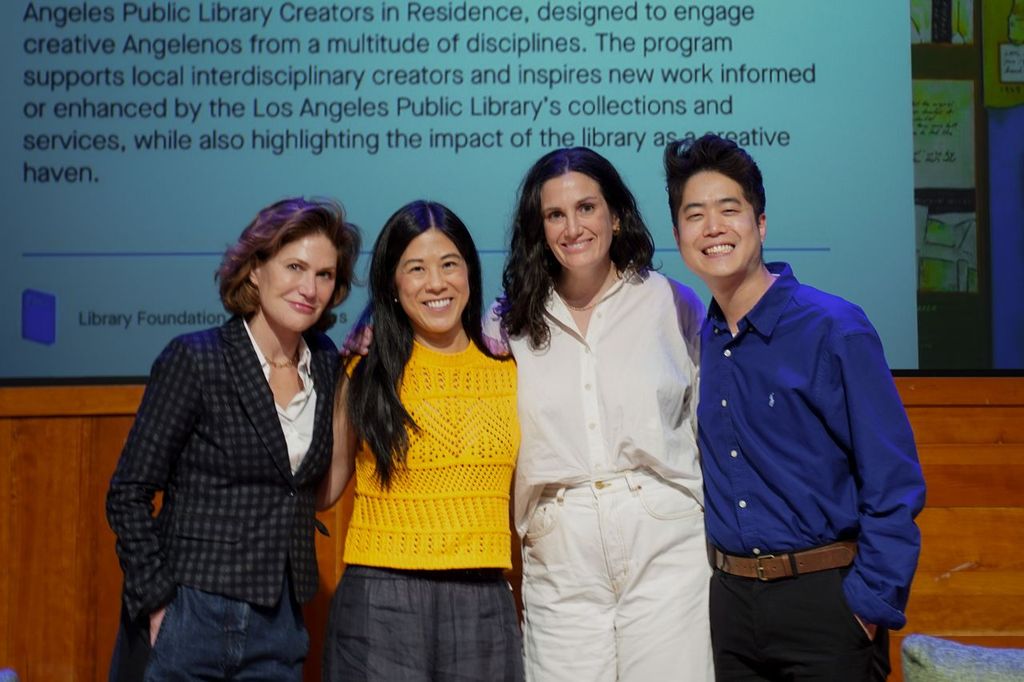
So purchase your tickets to the 2024 Masters of Taste for a really fun Sunday afternoon hanging out with other foodies while doing your share in helping solve the homelessness crisis.