A Noise Within Stages ‘Metamorphoses’ to End its 30th Anniversary Season

Originally published on 9 May 2022 on Hey SoCal

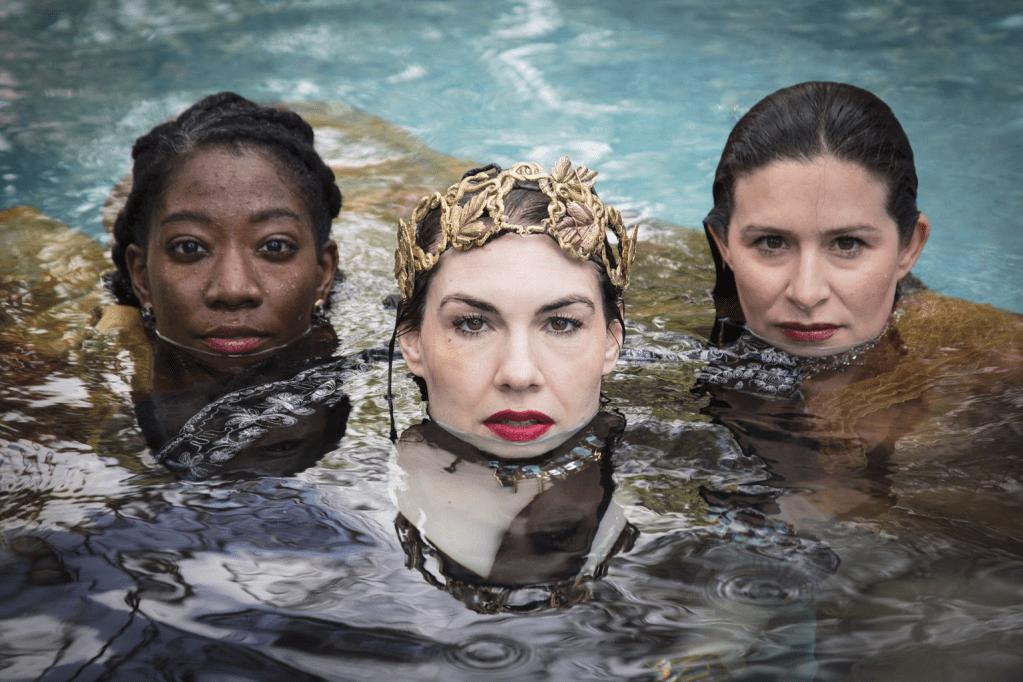
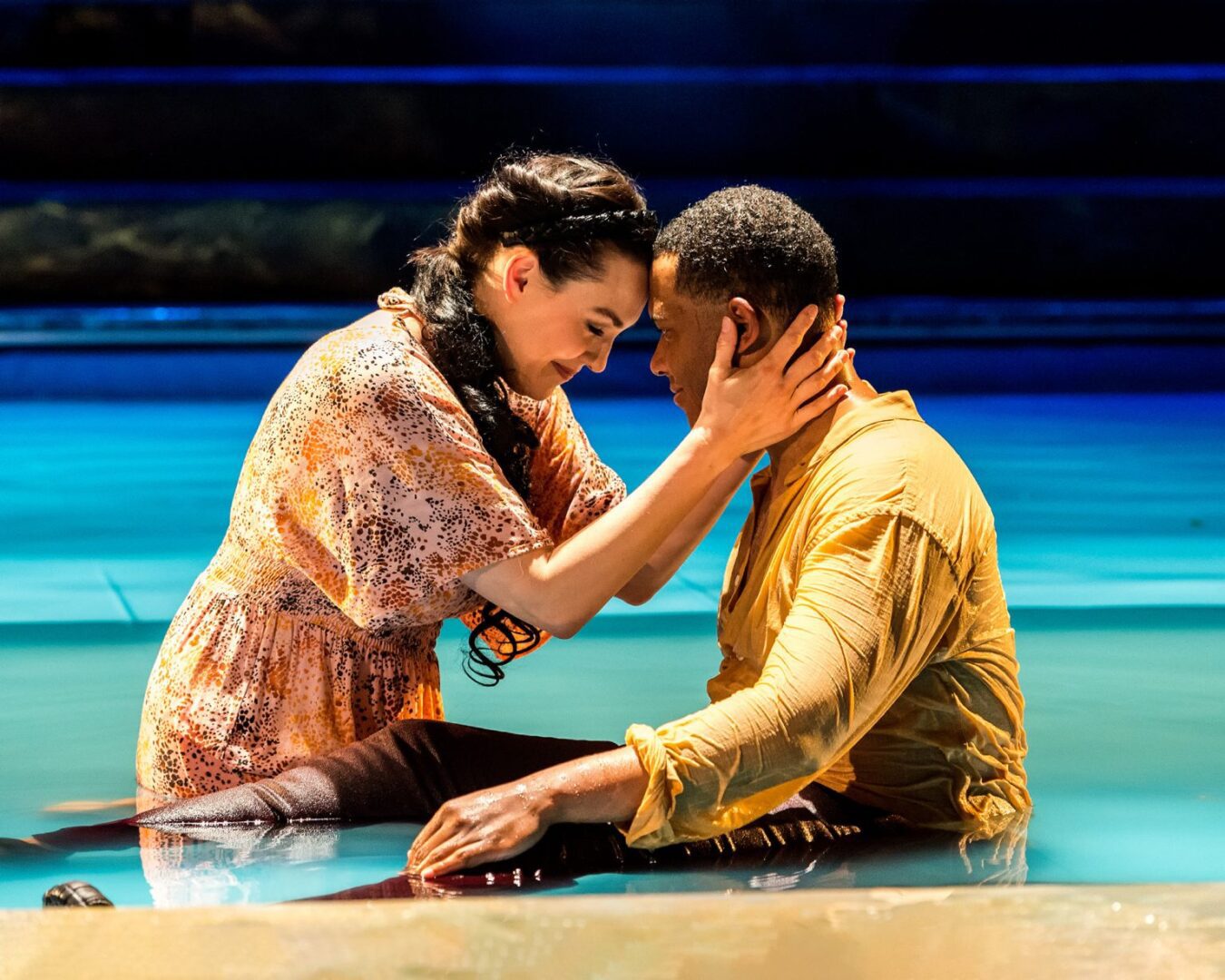
The cast of ‘Metamorphoses’ includes (from left to right): Sydney A. Mason, Trisha Miller, and Cassandra Marie Murphy | Photo by Daniel Reichert / A Noise Within

A Noise Within’s (ANW) 30th anniversary season comes to a close with a rare revival of ‘Metamorphoses,’ the multiple award-winning theatrical event from MacArthur ‘Genius’ grant recipient Mary Zimmerman. On stage from May 14 through June 5, with previews beginning on May 8, this elaborate and much anticipated production is helmed by Producing Artistic Director Julia Rodriguez-Elliott.

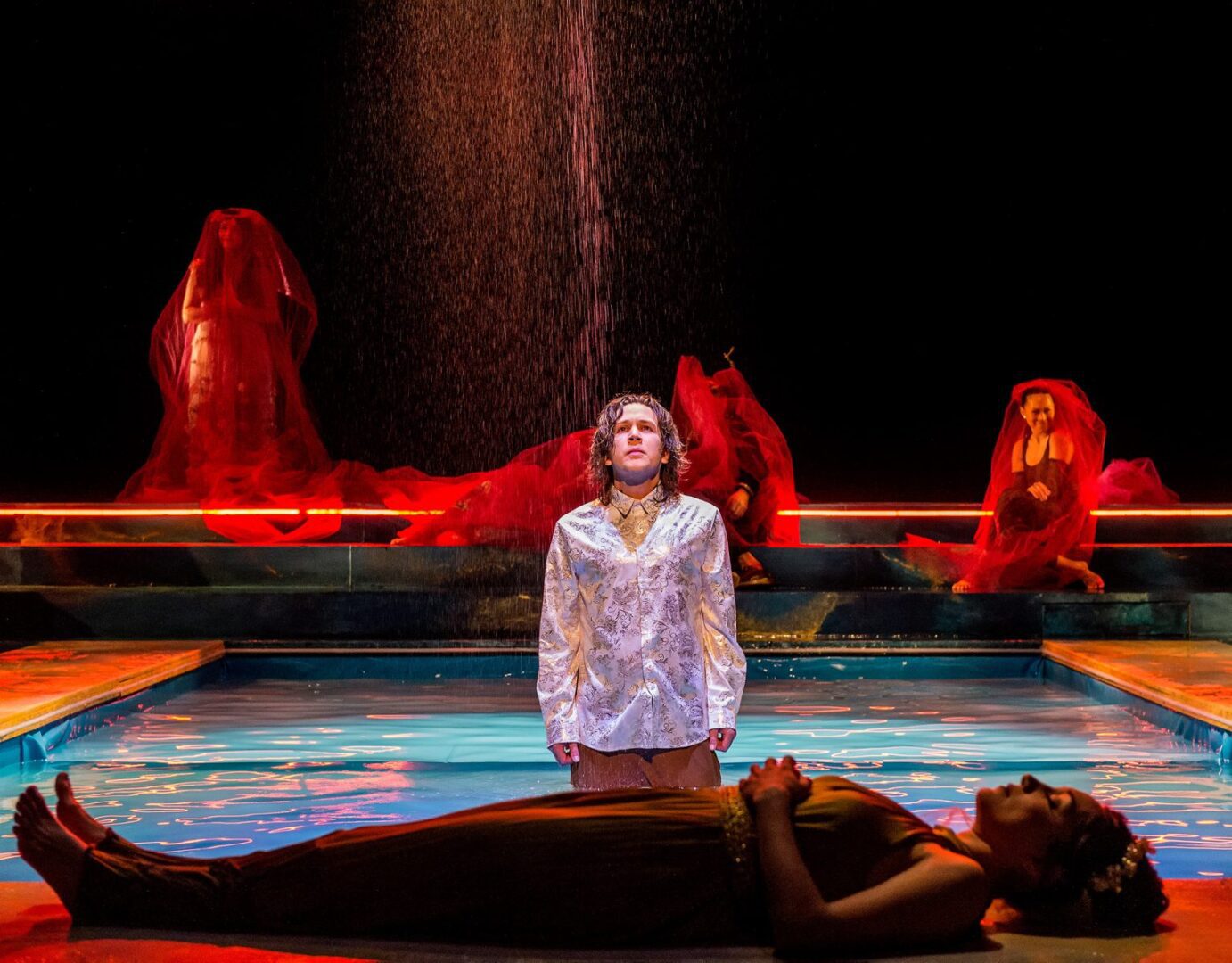
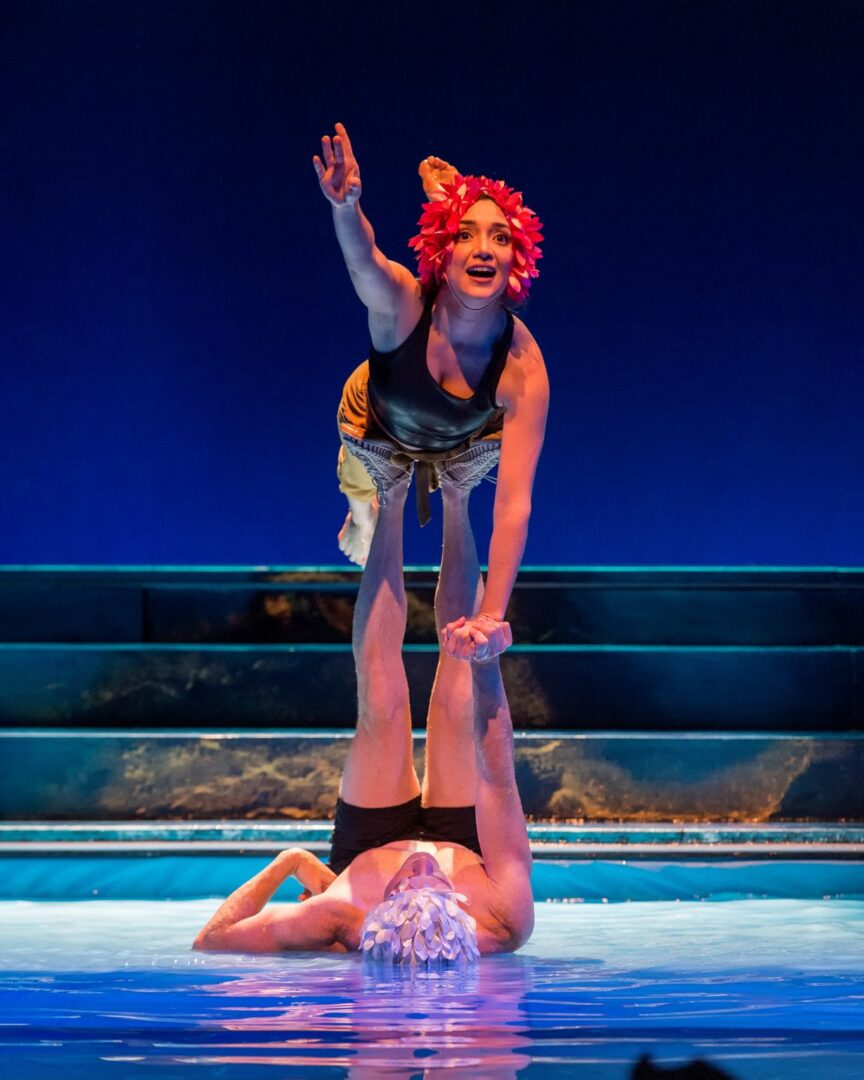
Comedy, romance, and poetry abound as ancient tales about Midas, Orpheus, and Aphrodite come to life for a modern audience. Adapted from David R. Slavitt’s free-verse translation of ‘The Metamorphoses of Ovid,’ the play takes place in and around a swimming pool that stands in for locations that include a wash basin, the River Styx, and the sea. The characters – gods and mortals alike – endure love, loss, and transformation while immersed in a pool of water.

A cast of nine resident artists (RAs) takes on over 85 roles in six Greek myths: DeJuan Christopher (Seven Guitars); Geoff Elliott (ANW producing artistic director); Rafael Goldstein (‘All’s Well That Ends Well,’ ‘A Christmas Carol,’ ‘Alice in Wonderland,’ more); Nicole Javier (‘All’s Well That Ends Well’); Kasey Mahaffy (‘All’s Well That Ends Well,’ ‘A Christmas Carol,’ ‘Alice in Wonderland,’ more); Sydney A. Mason (‘A Christmas Carol,’ ‘Seven Guitars’); Trisha Miller (‘All’s Well That Ends Well,’ ‘The Winter’s Tale,’ ‘Argonautika,’ more); Cassandra Marie Murphy (‘Argonautika,’ ‘Henry V,’ ‘Man of La Mancha‘); and Erika Soto (‘All’s Well That Ends Well,’ ‘Alice in Wonderland,’ ‘Frankenstein,’ more).’

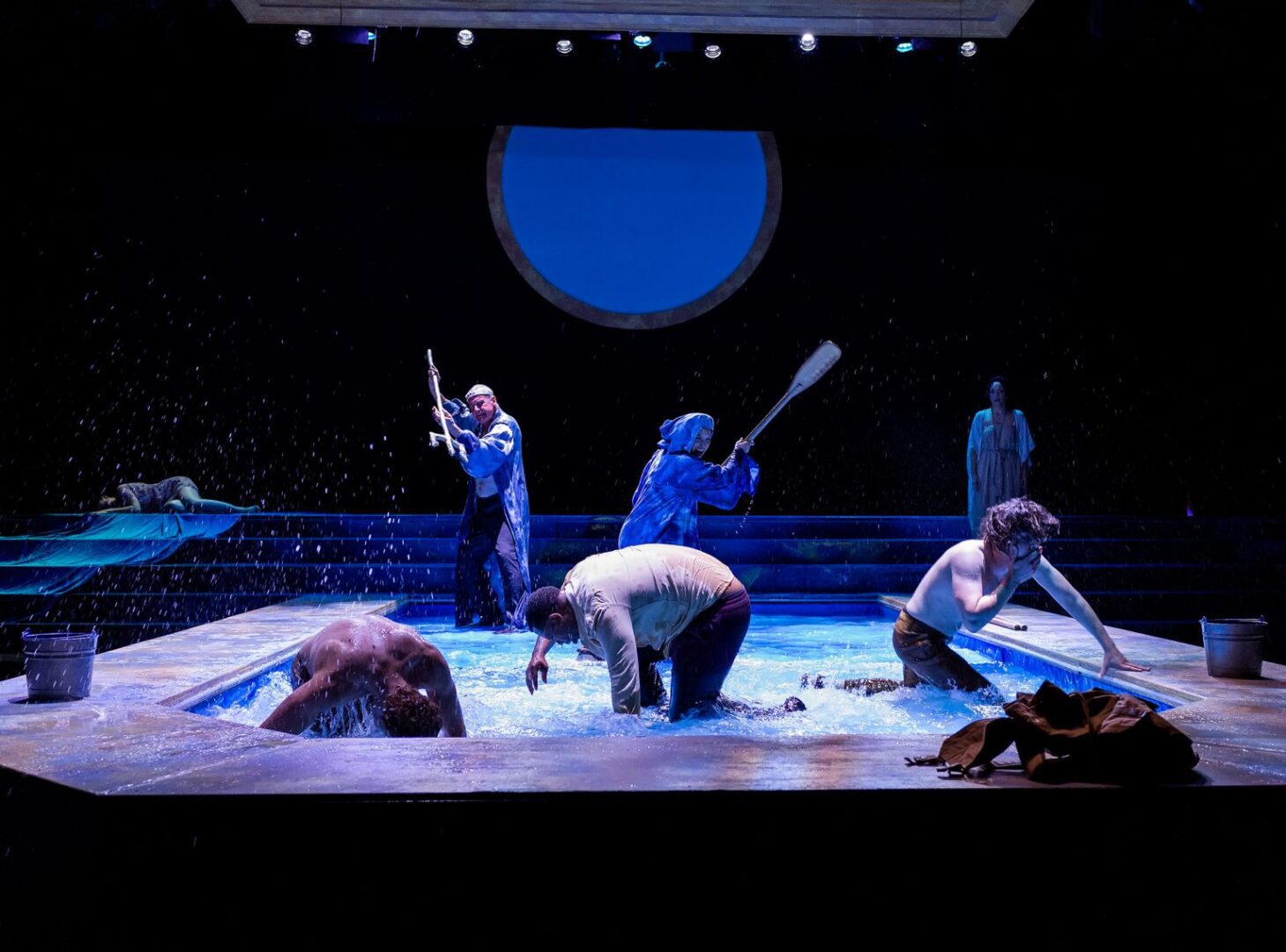
The ensemble | Photo by Craig Schwartz / A Noise Within

Production stage manager Amy Rowell leads the creative team of scenic designer François-Pierre Couture; lighting designer Ken Booth; composer and sound designer Robert Oriol; costume designer Garry Lennon; properties designer Shen Heckel; fight choreographer Kenneth R. Merckx, Jr.; and dramaturg Miranda Johnson-Haddad.

Interviewed by phone, Rodriguez-Elliott tells us what ‘Metamorphoses’ is about. “Mary Zimmerman took nine vignettes that share a common theme of transformation. They deal with love, loss, selflessness, generosity, greed – and they’re all incredibly human. She has a wonderful ability to bridge the ancient and the modern so the stories feel very much of the here and now.”

“In this moment that we’re living – when the world is undergoing extraordinary change – that could be painful or it could be joyous,” explains Rodriguez-Elliott. “And ‘Metamorphoses’ is the perfect play for us to end our season with its theme of exploring the joys and perils of change.”

“Mary first wrote it when she was teaching at Northwestern,” Rodriguez Elliott enlightens. “It had a different title the first time it was presented. And while she envisioned a body of water in it, there was no water for that particular show.”

Rafael Goldstein | Photo by Craig Schwartz / A Noise Within

Rodriguez Elliott, who previously directed ‘Argonautika’ at ANW, discloses that she has never seen a production of ‘Metamorphoses’ – which gives her the opportunity to make it her own. “Mary has a very specific style in her plays and the way that she writes really speaks to me. She has an ensemble that she works with, not unlike what we have, so these are people that really speak her language. However, even though a lot of her work has her DNA she leaves it quite open for the director – you could find your own voice within it. This is the second Mary Zimmerman play that I’m directing, and I found that to be the case.

“The marvelous thing about her plays is that she puts on stage what is seemingly impossible to stage. For instance, she would have a direction that says ‘And now there is a battle in the water.’ You, as the director, will visualize how this battle is articulated in a theatrical way. You have clues in the text as to where things are taking place, but you have to create it and imagine it yourself in a way that feels personal to you as an artist.”

“I love plays that are about voyages and journeys and the whole element of the water in this play is so thrilling,” adds Rodriguez-Elliott. “On the first day of rehearsals in the theatre and the play started coming to life with actors being in the water, I was so excited I couldn’t sleep that night when I got home!” 

ANW is renowned for presenting plays in repertory, which they deviated from. Rodriguez-Elliott says, “Because we had to have a pool for this production, this spring season our plays were all straight run. The set will sit there for the five weeks that the show runs in. It may not be the most complicated set that we’ve ever done, but it’s challenging in the sense that you’re dealing with concerns like: is the water warm enough for the artists – you have change stations off stage that actors can warm up after they’ve been in the water; there’s a cleaning procedure that comes with temperature…  all those things need to be addressed. 

“Also, we all know as homeowners that water can have all kinds of consequences if they go in the wrong place. A lot of it is about containing and insulating the pool in the appropriate way. There are also concerns about what surface to have in the pool so no one slips – do the actors wear shoes or not. As to costumes, there’s a choice between synthetic versus cotton, because of what cotton does in terms of fibers being in the pool. All these have to be considered and they impact just about every designer on the show.”

Trisha Miller and DeJuan Christopher | Photo by Craig Schwartz / A Noise Within

ANW’s production of ‘Argonautika’ before the pandemic enjoyed critical acclaim. It’s only fair to assume that every one of their resident artists wanted to be a part of ‘Metamorphoses.’ Asked how she selected the actors among their very talented RAs, Rodriguez-Elliott answers, “It’s like with any casting – you have to cast appropriately for the needs of the role and show. The actors were definitely very excited especially because we announced it two years ago but we had to postpone it because of the pandemic.

“Like ‘Argonautika,’ it’s a very demanding show. It’s very physical and it takes a lot of stamina to get through it. But the actors love it. And it’s wonderful that a lot of us have worked together for so long that they know how I work as a director. It’s a lot easier to get where you want to get to when people are able to jump and dig in fearlessly and with a whole lot of trust. I trust them and they trust me, so we’re able to do so much.”

Rodriguez-Elliott says further, “The actors who were already cast when we first announced it had the time to think about it, had lived with the play, and had the desire to do the play for a very long time. We didn’t bring back all the shows that we postponed, but this was something we really wanted to do. However, as you might imagine, we did it late in the season because we thought if we were still implementing safety measures we had to consider all the protocols around water and all the attendant challenges.”

“This is a play that celebrates theatricality and the magic of theatre,” Rodriguez-Elliott declares as the audience takeaway. “It speaks to us about the things you can only do on stage and nowhere else. It’s a production unlike any other we have ever seen – the element of water on stage is almost another character in the play. I think there are so many moments that are thrilling just in terms of how the water behaves and how the actors interact with it. Additionally, we have an original music score for it and an exquisite design team. I think the set is one of the most beautiful I’ve seen on our stage. Ken Booth who’s our lighting designer is doing extraordinary work.”

“In this moment that we’re living in, this play commemorates the power of love, change, and the opportunity to change. And I think that’s therapeutic right now,” Rodriguez-Elliott emphasizes.

Asked what it meant to have audiences back in the theatre for ANW’s 30th anniversary, Rodriguez-Elliott replies, “Everything that we have ever done in the theatre is about community. And what we realized during the pandemic is how essential that community is to us and to the work, and how much we missed it. So having the opportunity not only to return, but to be returning during the 30th anniversary season and rejoicing as a community the accomplishments of the organization, is very moving.”

Erika Soto and Kasey Mahaffy | Photo by Craig Schwartz / A Noise Within

Coinciding with ANW’s 30th anniversary is their 10th year in Pasadena. Rodriguez-Elliott marvels as she relates what that’s like, “Can you believe it?! Again, you have to go back to community; you really have a sense that the community in Pasadena is tangible. I felt it from the first moment that we opened the theater. The value that they place on the arts as a quality of life issue isn’t something you see in every city. Pasadena is home – we’re not going anywhere.”

As to ANW’s plans for the next decade, Rodriguez-Elliott states, “We’ll continue to experience tremendous growth and there are a number of directions that growth can take. For us it’s embracing that journey – whether that means enlarging the physical plans or expanding programming, which includes our work in diversity, inclusion, and accessibility that’s very necessary.

“We’re bringing voices that have not been part of A Noise Within’s stages until now. We have the Noise Now Program where we invite the community to participate in events. We’ve developed wonderful relationships with other artists and organizations and that will continue to expand the definition of a classic for us. We have this beautiful campus and we’re able to use it in its totality – whether it’s outside, the lobby, the rehearsal space upstairs – in bringing other disciplines. We’ve had dance, music, art exhibitions that the place becomes a welcome environment for all.”

Rodriguez-Elliott describes ‘Metamorphoses’ as celebrating the magic of theatre. It could very well pronounce A Noise Within’s significant contribution to our community in the last ten years. It is organizations like them that endow Pasadena with the arts and the culture that are the city’s defining attractions.                 

Bali exhibition at USC Pacific Asia Museum Showcases Island’s Culture

Originally published on 21 April 2022 on Hey SoCal

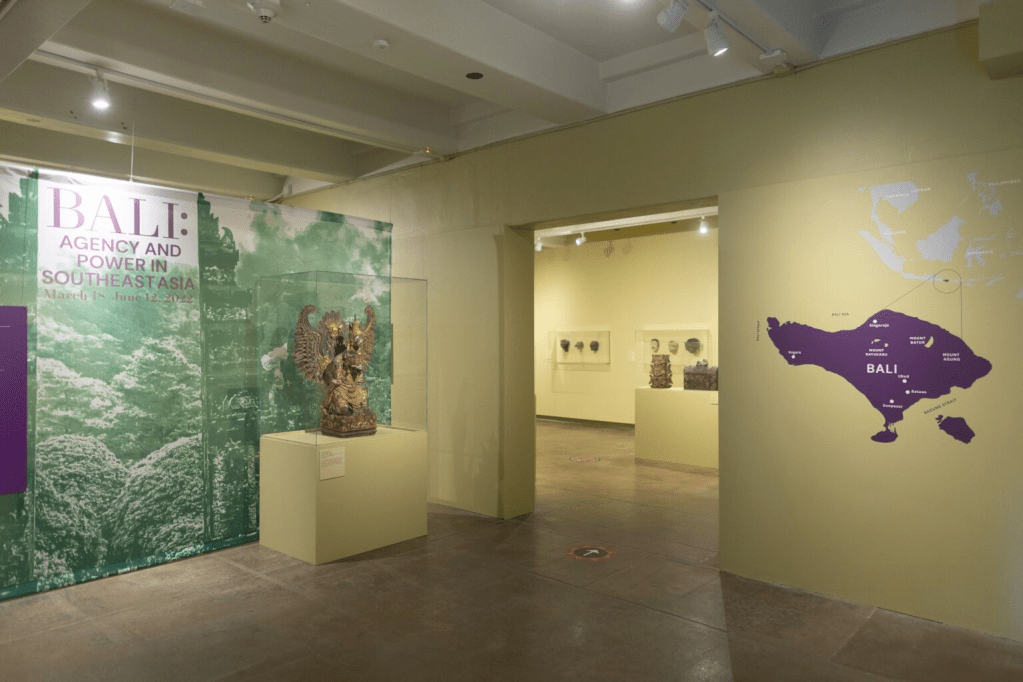
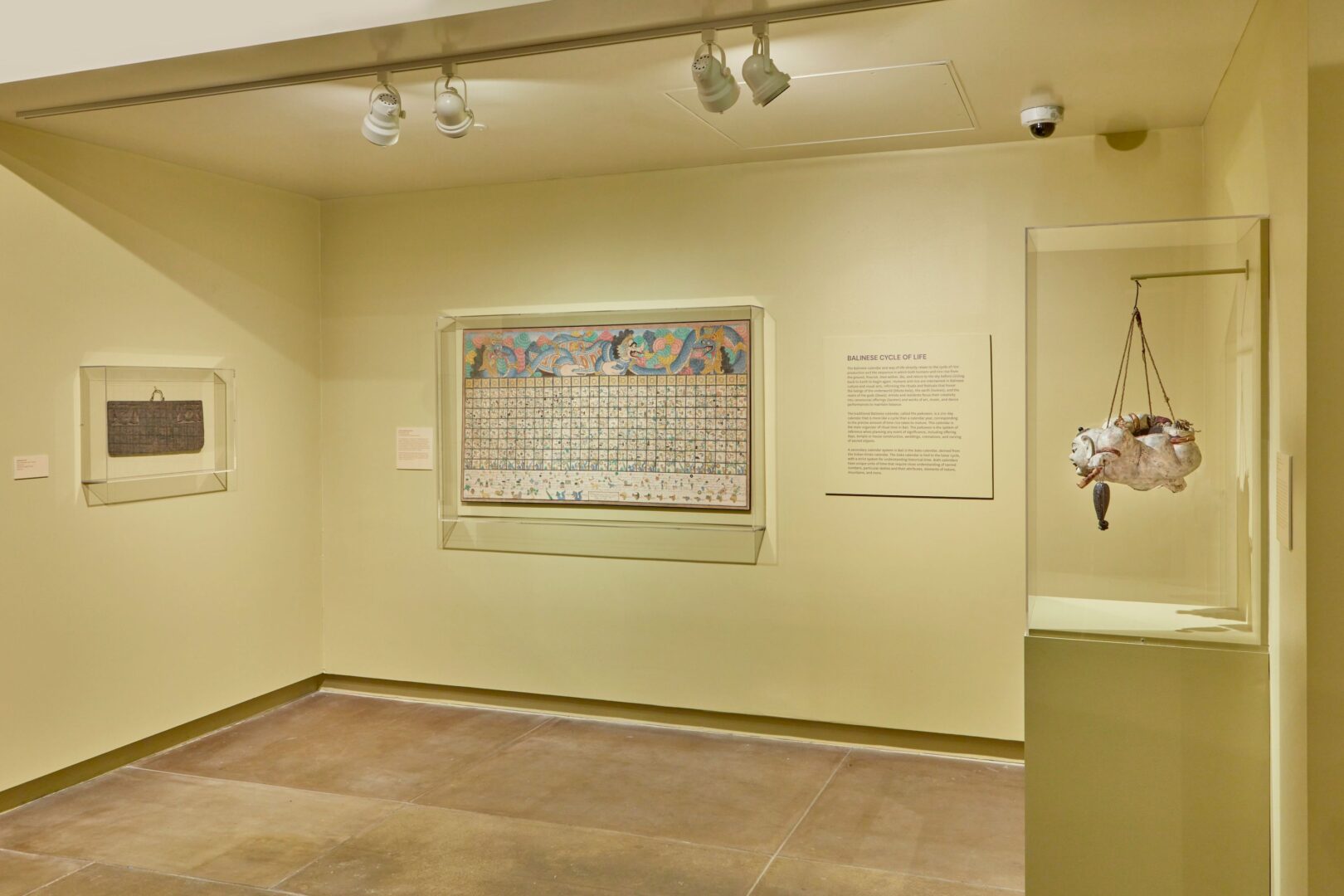
Bali Exhibition Installation View | Photo courtesy of USC Pacific Asia Museum

Even those who can’t name the countries that comprise Southeast Asia know Bali – one of the islands in the Indonesian archipelago. Tourists flock there lured by the island’s pristine beaches, beautiful sights, and tropical weather. They bring back a few souvenirs from their holiday and, perhaps, a painting created by a local artist. These paintings became popularly called ‘tourist art,’ named so because they appeal to western visitors.

The emergence of this new style which veered away from Balinese traditional pigment on cloth is the focus of an exhibition at USC Pacific Asia Museum (USC PAM). Titled ‘Bali: Agency and Power in Southeast Asia,’ currently on view through June 12, 2022, the show features paintings collected by Bali cultural anthropologists Gregory Bateson and Margaret Mead during their fieldwork on the island from 1936 to 1939.    

During a walkthrough of the exhibition, Rebecca Hall, USC PAM’s Senior Curator, talks about how the exhibition came about. “I learned that Dr. Robert Lemelson, an anthropologist, collector, and documentary filmmaker who lives in Los Angeles, has the collection of the Bateson and Mead paintings and he was interested in making these accessible to scholars and museums. We met in late 2019 and I had planned on having the exhibition a year later, but the pandemic started so we had to postpone the show. As disappointing as it was, that helped me think through how to present these materials because they’re unusual. It’s not just an exhibition about Bali but about this specific moment in time and the paintings that were created then.”

“There are 845 paintings and we’re showing 54 of them in this exhibition,” Hall reveals. “It’s exciting to be able to exhibit them for the first time in conjunction with the Balinese artwork and objects in USC PAM’s collection. There are two components that anchor the exhibition – classical Balinese objects that were made for use in Bali for Balinese audiences and the paintings  from this moment in time when artists were starting to create artworks for outsiders. They’re two very different collections which have never before been shown to the public.”

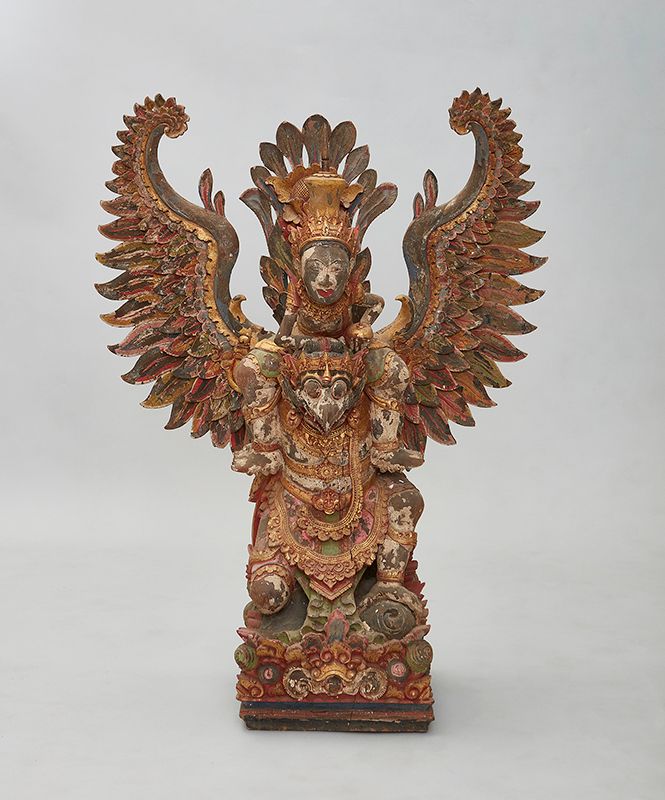
Vishnu riding Garuda / Photo courtesy of USC Pacific Asia Museum

Explains Hall, “Bali is one of the most famous places in Southeast Asia; the tourism industry has been a prominent part of Bali for a hundred years. And these paintings play an important role in understanding how the Balinese have adapted the artmaking that they do for outsiders to understand.”

To help orient people, the exhibition starts with a map showing the different cities in Bali. Visitors will very shortly come upon a wooden sculpture of Vishnu riding on his eagle Garuda, which was donated to the museum in 2020. Carved out of wood and brightly painted in pigment with gold leaf, Hall says it would have been in a temple or palace compound. It is a grand and dynamic Hindu image that people expect to see and makes for a very apt way to welcome us into the exhibition.

We then enter the first main gallery. Hall explains, “I designed this space with the idea of illustrating Balinese art and culture in an in-depth way to people who have no knowledge of and not necessarily familiar with the aesthetics of Bali and visual Balinese culture. Except for two items, everything on display here is from the USC PAM collection. One of the first objects we found was this umbilical cord holder. I’ve never seen one before – it’s really strange and unusual. In many cultures people are very protective of it because it’s this moment of life and it has power; they wrap it carefully and they wear it like an amulet around their neck. So I did some research and found out there’s one island in Bali where they put umbilical cords in containers and hang them from trees. I thought it was a good place to start because it’s the beginning of life.”

This part of the exhibition, according to Hall, is about how the Balinese understand the beginning of life, time, and the cycle of life – which is very different from the Chinese and Indian understanding. To them rice and life are synonymous. Hence, their calendar and way of life are directly tied to the cycle of rice production and the sequence in which both humans and rice rise from the ground, flourish, then wither, die, and return to the sky before circling back to Earth to begin again. Humans and rice are intertwined in Balinese culture and visual arts, informing the rituals and festivals that honor the beings of the underworld (bhuta kala), the earth (human), and the realm of the gods (Dewa). Artists and residents focus their creativity into ceremonial offerings (banten) and works of art, music, and dance performances to maintain balance.
The Balinese calendars and umbilical cord holder / Photo courtesy of USC Pacific Asia Museum

The traditional Balinese calendar, called the pakuwon, is a 210-day calendar that is more like a cycle than a calendar year, corresponding to the precise amount of time rice takes to mature. The pakuwon is the main organizer of ritual time in Bali; it is the system of reference when planning any event of significance, including offering days, temple or house construction, weddings, cremations, and carving of sacred objects.

A secondary calendar system in Bali is the saka, derived from the Indian Hindu calendar. It is tied to the lunar cycle, with a strict system for understanding historical time. Both calendars have unique units of time that require close understanding of sacred numbers, particular deities and their attributes, elements of nature, mountains, and more.

There are several different objects in this gallery and Hall connects them by explaining how they’re used. We see a storage box for jewelry and important items and on the same display table is an architectural column. The objects are very different but they have a shared aesthetic – the elaborate carving on wood.                                                                                                   

In another area, there are masks and items Balinese use for their performances. Hall explains that Bali is a Hindu island with a complex cosmology that manifests in a diverse cast of beings depicted in visual and performing arts. Some are characters from popular Hindu narratives that originated in India, including the Mahabharata and the Ramayana. Others are drawn from local Balinese stories and beliefs about nature and ancestors.

Hall further expounds that the importance of narratives in Balinese art and worldview cannot be overstated and can be seen throughout the art and architecture of the island. Numerous characters of opposing forces, such as the human and the mystical, the devilish and the benign, the noble and the peasant, the serious and the lighthearted, are all portrayed. The different faces of the characters – be they gruesome, threatening, peaceful, or elegant – serve to reinforce the Balinese understanding that the universe is constructed from opposing forces. They believe that to survive, a balance must be met between these conflicting dynamics.

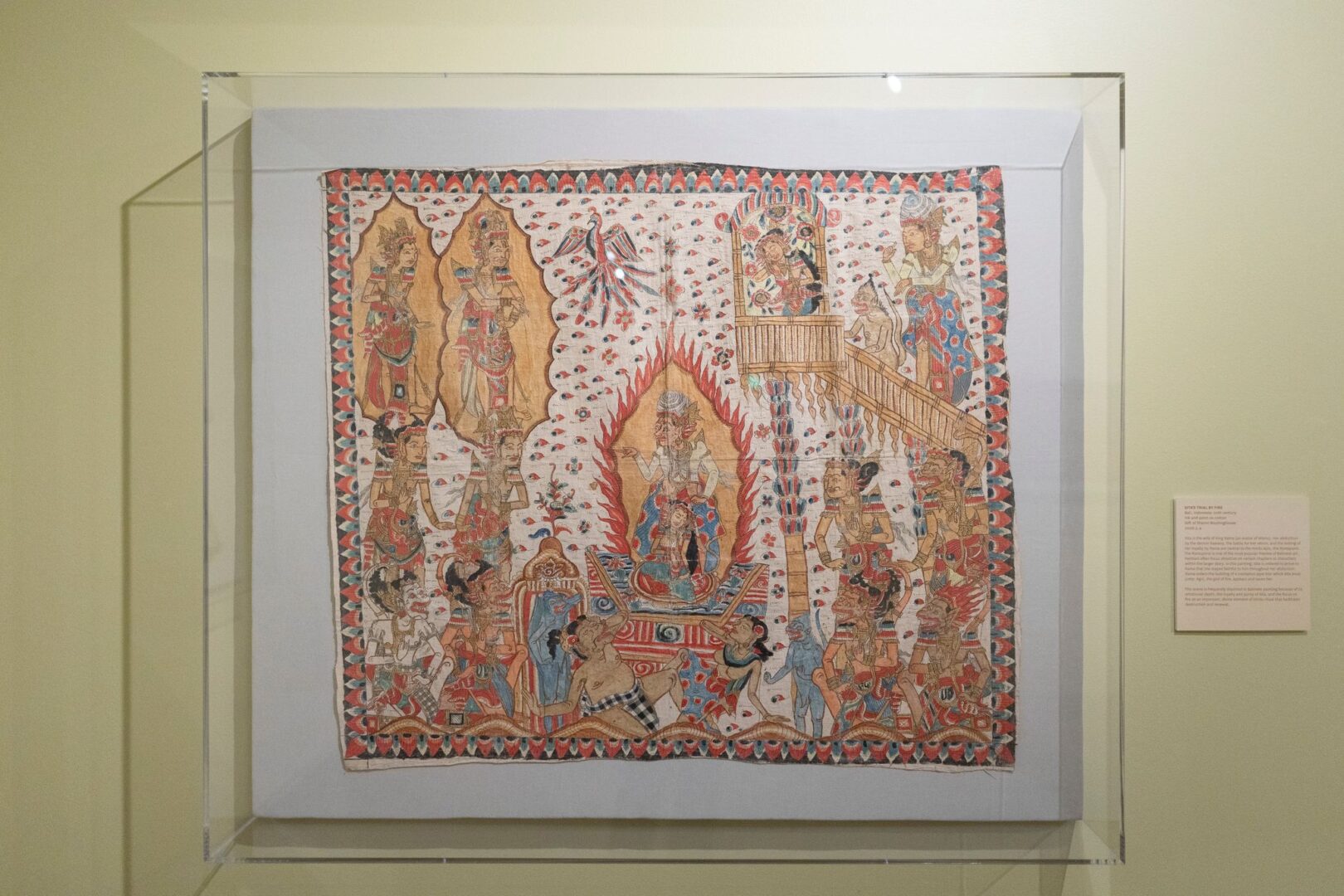
In this gallery, we see two classic style paintings that show how the Balinese painted before the western influence and before they started to paint for outsiders. Hall elucidates, “A common misunderstanding about Balinese art, especially those made before the 1930s, is that non-elite people and their daily lives were rarely depicted. This is untrue. Some of the most lively and compelling works include ordinary Balinese people. This painting, for instance, is about a poor family – the woman has so many children to take care of so the man has to do all the housework.”

Sita in the Fire, pigment on cloth / Photo courtesy of USC Pacific Asia Museum

Another is a very popular painting that has been illustrated many times and that’s often thought of a classical artwork on cloth. It’s from the last days of the Ramayana where Rama’s wife Sita has to prove she’s been loyal to him by jumping into a cremation fire. In the scene she’s being saved by the goddess of fire.

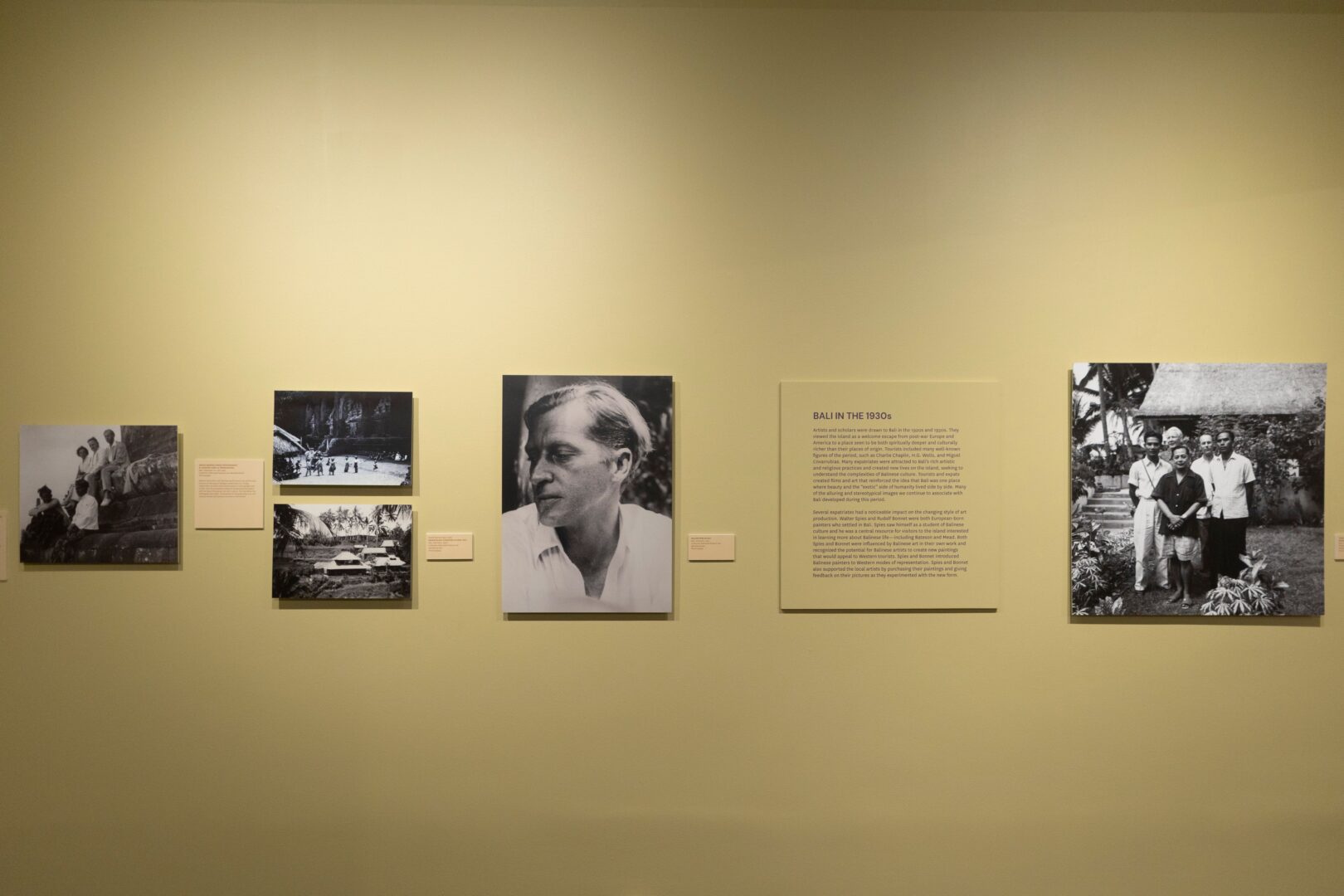
The next gallery gives us a view of how western influence – when Bali began attracting artists, scholars, and tourists in the 1920s and 1930s – changed Balinese art. Hall explains that Walter Spies and Rudolf Bonnet were both European-born painters who settled in Bali. Spies saw himself as a student of Balinese culture and he was a central resource for visitors to the island interested in learning more about Balinese life, including Bateson and Mead. Both Spies and Bonnet were influenced by Balinese art in their own work and recognized the potential for Balinese artists to create new paintings that would appeal to western tourists. They established an association of local artists called Pita Maha (The Great Light) where they could learn this new style.

Photos of Walter Spies and the local artists in Batuan / Photo courtesy of USC Pacific Asia Museum

While Spies and Bonnet introduced Balinese painters to Western modes of representation, they wanted the artists to find their own stories and ways of telling their lives in this new genre. Bateson and Mead, when they commissioned the artists, insisted that each artwork be an original idea and not a copy. Spies and Bonnet also supported the local artists by purchasing their paintings and giving feedback on their pictures as they experimented with the new form.

Hall points out, “The fact that Bateson and Mead had intended to just go to one village to do their research on development and childhood and schizophrenia, but that they were so fascinated by the paintings they did an entire second study was amazing. They were on the forefront of visual anthropology, study of images and incorporation of visual culture into anthropology. One of the things that was created on film was a 20-minute show of Balinese performances about what people see on the paintings.”

The third gallery shows the artists and the village of Batuan where all the paintings came from. This village was where they had shadow puppet-makers and performances and wasn’t necessarily known for paintings until the 1930s because of the locals’ work with Spies and Bonnet. And when Bateson and Mead paid for some 840 paintings to be made, there became a great interest in Batuan resulting in an influx of money. Batuan, to this day, is known for their paintings; the descendants of these painters continue to create artwork that collectors seek out.

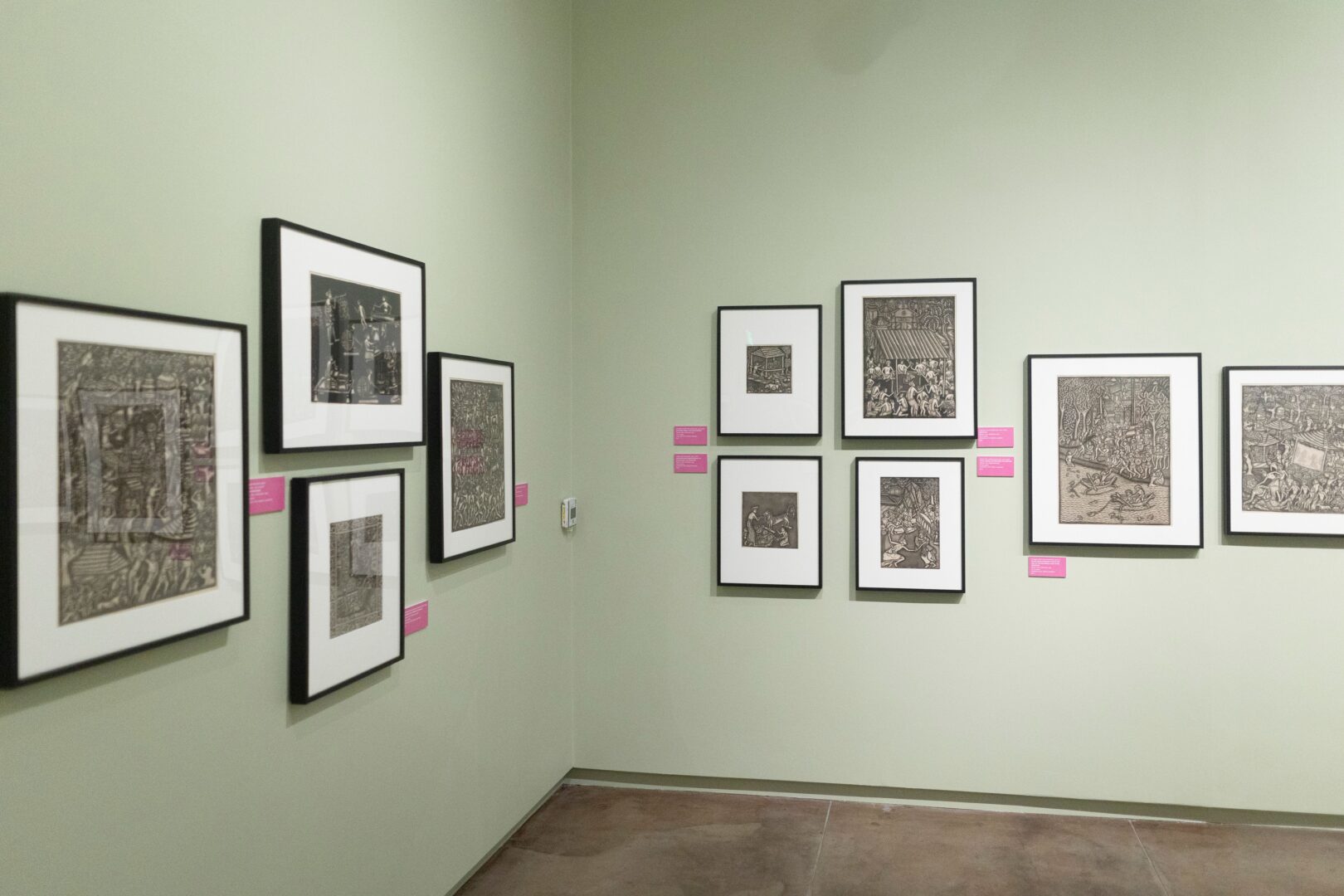
Bateson and Mead collection of paintings / Photo courtesy of USC Pacific Asia Museum

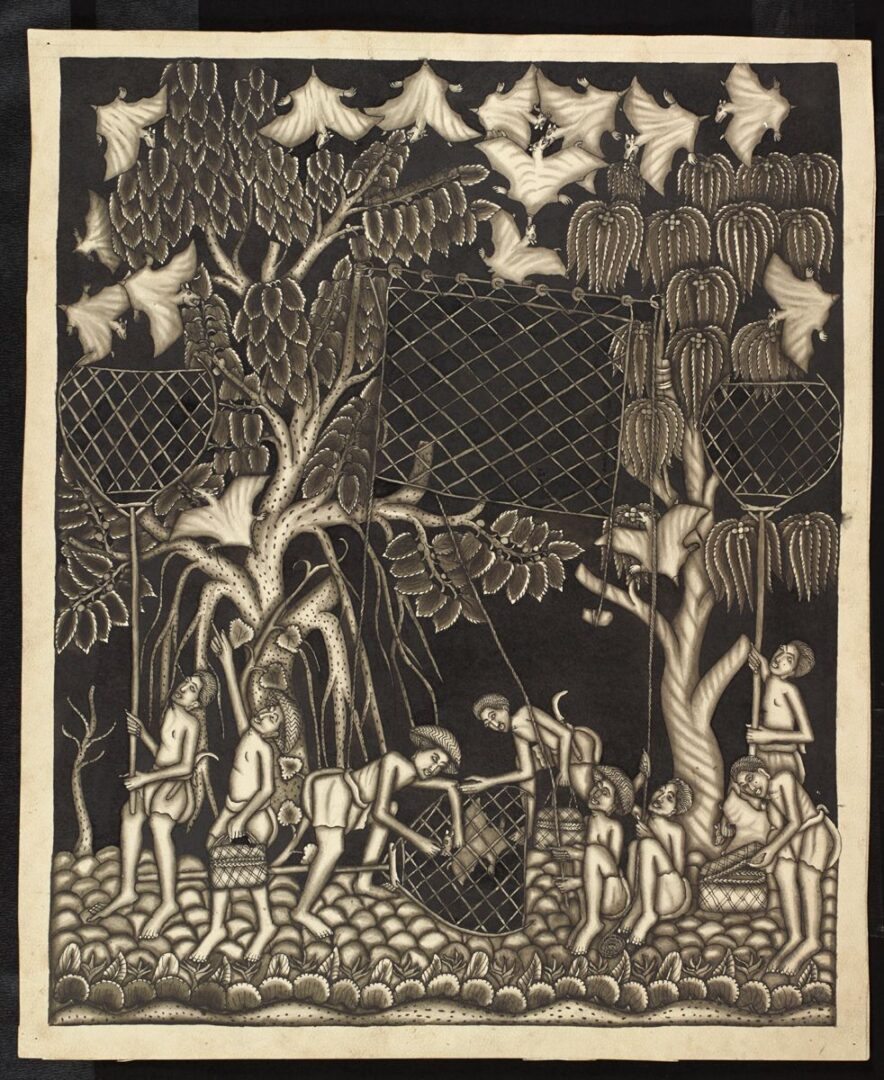
We then enter the gallery where 40 paintings from the Bateson and Mead collection are displayed. Hall states, “The paintings are all very different, they’re all very dense. I organized them into four categories. Village life paintings (in pink labels) show ceremonial procession, hunting for flying foxes, weaving, rituals for new rice, cremation ceremonies, dances – where you see a slice of village life at that time. ‘Popular tales and long-ago events, legends, and mythology’ (in yellow labels) are stories about what happened and why they happened the way they did. They exist outside the European mode of understanding history. How we describe it influences how people see it. The paintings show events the way people believed they did. ‘Stories of power and conflict’ (in purple labels) depict how power comes in many forms – political power, power of animals, power of sorcerers. The last one is ‘belief and the supernatural world’ (in orange labels).”

‘Catching flying foxes’ painting by Ida Bagus Wayan Gede / Photo courtesy of USC Pacific Asia Museum

There’s an iPad in the middle gallery which was created by Lemelson that visitors can watch if they want to learn about the cultural aspects of each painting. USC PAM also commissioned a video documentary for this exhibition. Hall says, “Rob Lemelson sent one of his documentary film makers to the village of Batuan to speak with some of the artists who were descended from and taught by artists whose works are in the exhibition – I Made Tubuh whose teacher/uncle was I Made Jata, Wayan Sundra whose teacher/grandfather was I Ketut Keteg, and Ida Bagus Ketut Panda whose teacher/father was Ida Bagus Made Togog. Additionally, he has some footage from 1997 when he went and interviewed the painters. Rob and his company, Elemental Productions, made this amazing documentary to fill out that narrative.”

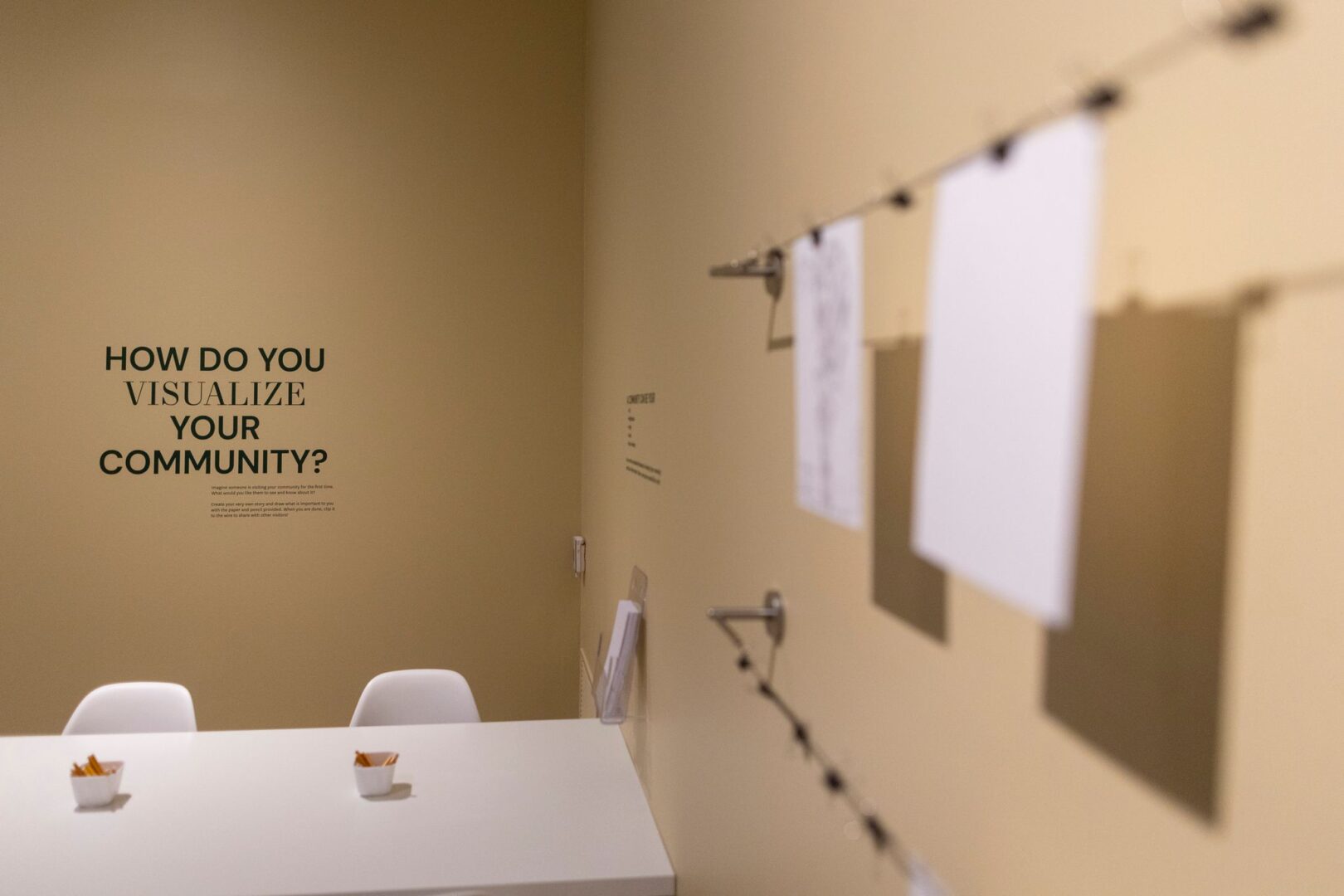
Visitors to the museum are asked to visualize their community in an interactive room / Photo courtesy USC Pacific Asia Museum

The Balinese painters whose works are showcased were asked to visualize their community. At the end of the exhibition, visitors to the museum are asked to do the same in an interactive section. One visitor sketch illustrates ‘Angkor Wat in Cambodia where my mom used to live.’ Another drawing shows a table laden with various Chinese food.

Asked what she wants people to take way, Hall replies, “I think there’s a cultural perspective that a very one-directional interchange occurs when Europeans or westerners go into a non-western area – that these white people would have all the power. And, in the case of the Balinese, that they would paint only what would make westerners happy. But that’s not how it worked at all. That’s part of what the title is about – agency in the Balinese. They didn’t have to do any of these but they clearly loved creating these works. That people from different backgrounds with different interests can come together and develop a whole new genre of art gives everyone involved agency.”

“I want visitors to realize how complex Bali paintings are and I want to pique their interest enough for them to gain a better understanding,” Hall adds. “I want for people to see how rich these narrative modes of storytelling are and how they manifest in these pictures. This is every art historian’s dream!”  

Hall herself gained much insight from the experience. She divulges, “I feel I barely scratched the surface… just enough to put together this exhibition. But I would love to learn more about the paintings and the descendants of the painters, and how they connect to what’s happening now. There is a disregard of Balinese paintings because they are perceived as tourist art. But I’ve learned the complexity of it and I really love it. I want to look at more to better understand it, especially Balinese paintings from the 1930s on, and see how they developed.”

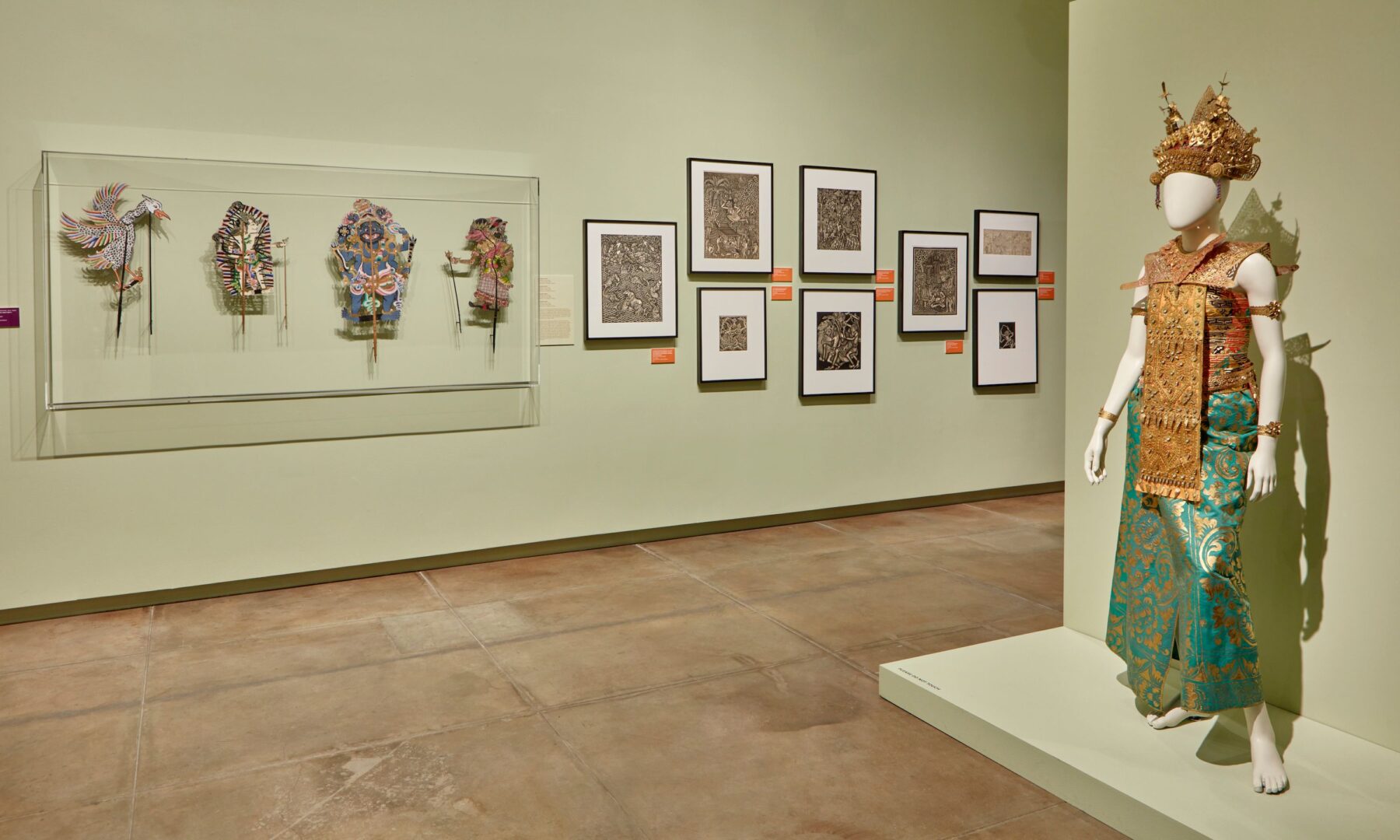
Shadow puppets, Balinese paintings, and Legong dancing costume / Photo courtesy of USC Pacific Asia Museum

“Today they have much larger paintings and they’re very colorful, but if you look at contemporary Batuan paintings you can see how they’re descendants of these painters. They still do scenes of village life but because they’re documenting life in Bali now – you’ll see paintings of cremation ceremonies and there will be tourists and people with phones and cameras. They’ve also incorporated some of the traumatic events like the nightclub bombing in 2002. They reflect what Bali is today and they also create this idealized version of Bali, but you definitely see similar themes. Everything is changing in the new century and I would like to keep my eye out for more things like these to fill out those narratives for people that we often don’t have narratives for,” Hall concludes.

‘Agency’ and ‘power’ may seem the least likely words to associate with Southeast Asians who are, by nature, so agreeable that they are perceived to be submissive. Local inhabitants of islands, like Bali, whose economy relies on tourism, have to be especially warm and hospitable. It’s heartening that the Balinese have found a way to assert themselves – through their art they are reminding temporary residents that the smiling faces that cater to their comforts and needs are human beings with families and lives outside the bubble of a resort.

What Gainsborough’s ‘Blue Boy’ Means to People

Originally published on 8 April 2022 on Hey SoCal

It has been nine weeks since The Blue Boy left The Huntington Art Museum’s Thornton Portrait Gallery for a journey back to its birth home. On January 25, 2022, one hundred years to the day the painting left England forever, The National Gallery in London opened an exhibition of the works of celebrated English painter Thomas Gainsborough called ‘Gainsborough’s Blue Boy: The Return of a British Icon.’            

For the gallery, it was a much-anticipated event that was years in the making. In the catalog of the exhibition, The National Gallery Director Gabriele Finaldi, writes that initial negotiations about the possible loan of the painting held between Lord Rothschild and representatives of The Huntington began in 2015 – three years before either Karen Lawrence (The Huntington Library, Art Museum, and Botanical Gardens president) and Christina Nielson (The Huntington’s Hannah and Russel Kully Director of the Art Museum) assumed their current posts.

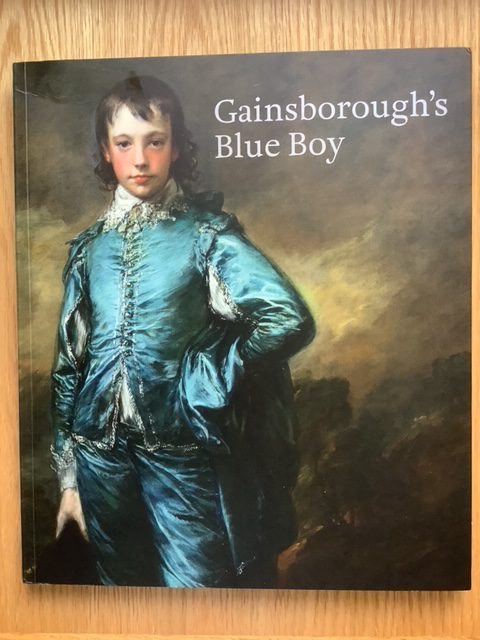
‘Gainsborough’s Blue Boy’ exhibition catalogue | Photo by May S. Ruiz / Hey SoCal

The Huntington hired its first conservator, Christina O’Connell, in 2013 and one of her initial projects was a survey of the art collections. In 2017 she planned and undertook ‘Project Blue Boy,’ the first technical examination and conservation work that was done in public view. A special satellite conservation studio was set up in the west end of the Thornton Portrait Gallery for the year-long exhibition, from September 22, 2018 to September 30, 2019. More than 217,000 people – many of whom traveled several miles – came to see it. Several habitués to The Huntington speculated that the possible loan was the impetus for the conservation work.          

That The Blue Boy has reached an iconic stature is demonstrated by how much attention and scrutiny it invites … and how people react to any news about it. In 1921, when British citizens learned that the second Duke of Westminster sold The Blue Boy to an American industrialist, protests broke out in the streets. When it was on view at the National Gallery for three weeks in January 1922, approximately 90,000 people – some of whom wept – queued to see it for the last time. 

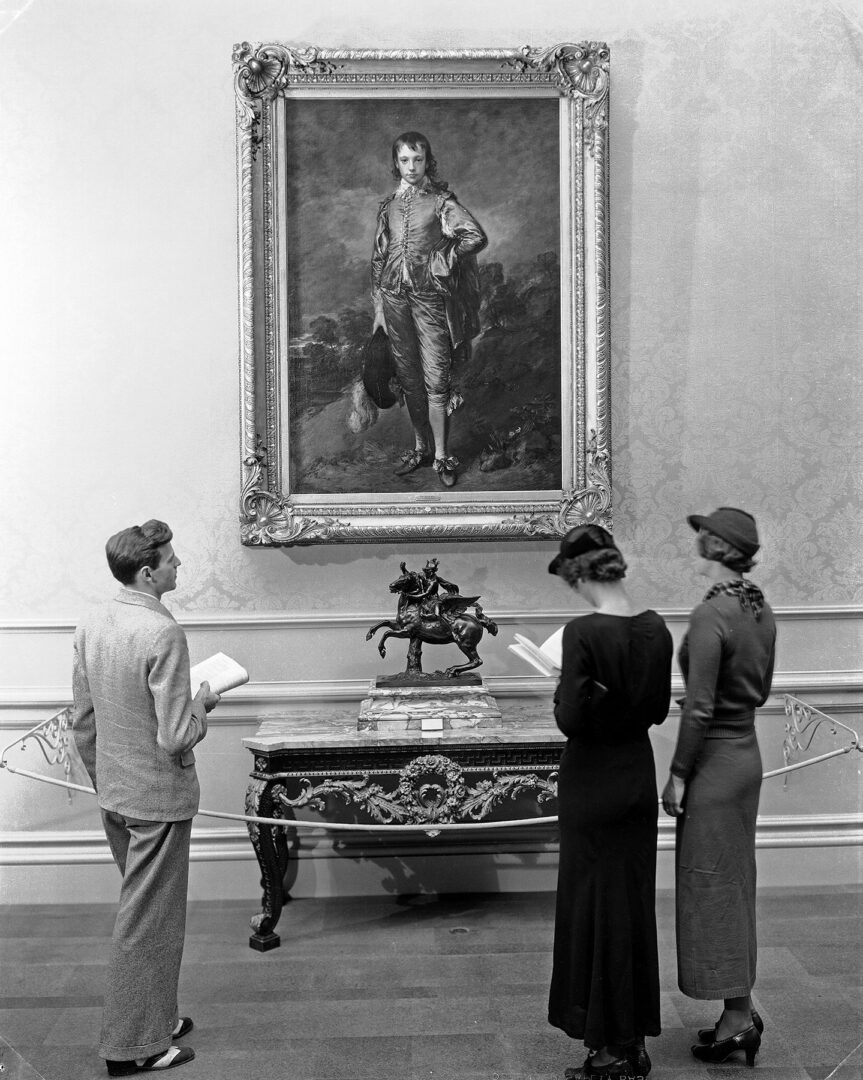
Visitors view Thomas Gainsborough’s The Blue Boy at The Huntington in the 1930s | Photo courtesy of The Huntington Library, Art Museum, and Botanical Gardens

The National Gallery’s then director, Sir Charles Holmes, nostalgically inscribed ‘Au Revoi, C.H.’ at the back of the painting. O’Connell, when she worked on ‘Project Blue Boy,’ very thoughtfully made sure it was also preserved. While that wish was granted a century later, Nielsen assures that it didn’t influence The Huntington’s magnanimous loan. “Strictly speaking, we agreed to lend only after lengthy consideration of a number of factors. But it makes part of a great story!”

In a reversal of events, when The Huntington announced in July last year that The Blue Boy was traveling to England for an exhibition, a wave of comments and views erupted. Art enthusiasts and museum-goers – some of whom didn’t have professional art experience – had as strong an opinion on the matter as art critics and experts. L.A. Times art critic Christopher Knight expressed incredulity that The Huntington went against the advice of the very experts the institution consulted. He said conservation experts believed the painting was too fragile to make that arduous journey. The Huntington, just as quickly, issued a response that refuted Knight’s claims.  In the letter, Lawrence and Gregory A. Pieschala, The Huntington’s Chair of Board Trustees, mentioned that the institution convened a second panel of conservators and curators in 2019 when most of the conservation work was complete and it advised that the painting could be lent safely.   

On both sides of the Atlantic, news that The Blue Boy will be back in its home country for a 16- week exhibition – from January 25 through May 15, 2022 – garnered extensive publicity. Articles were written about The Blue Boy’s storied history and how its image has been used and appropriated.

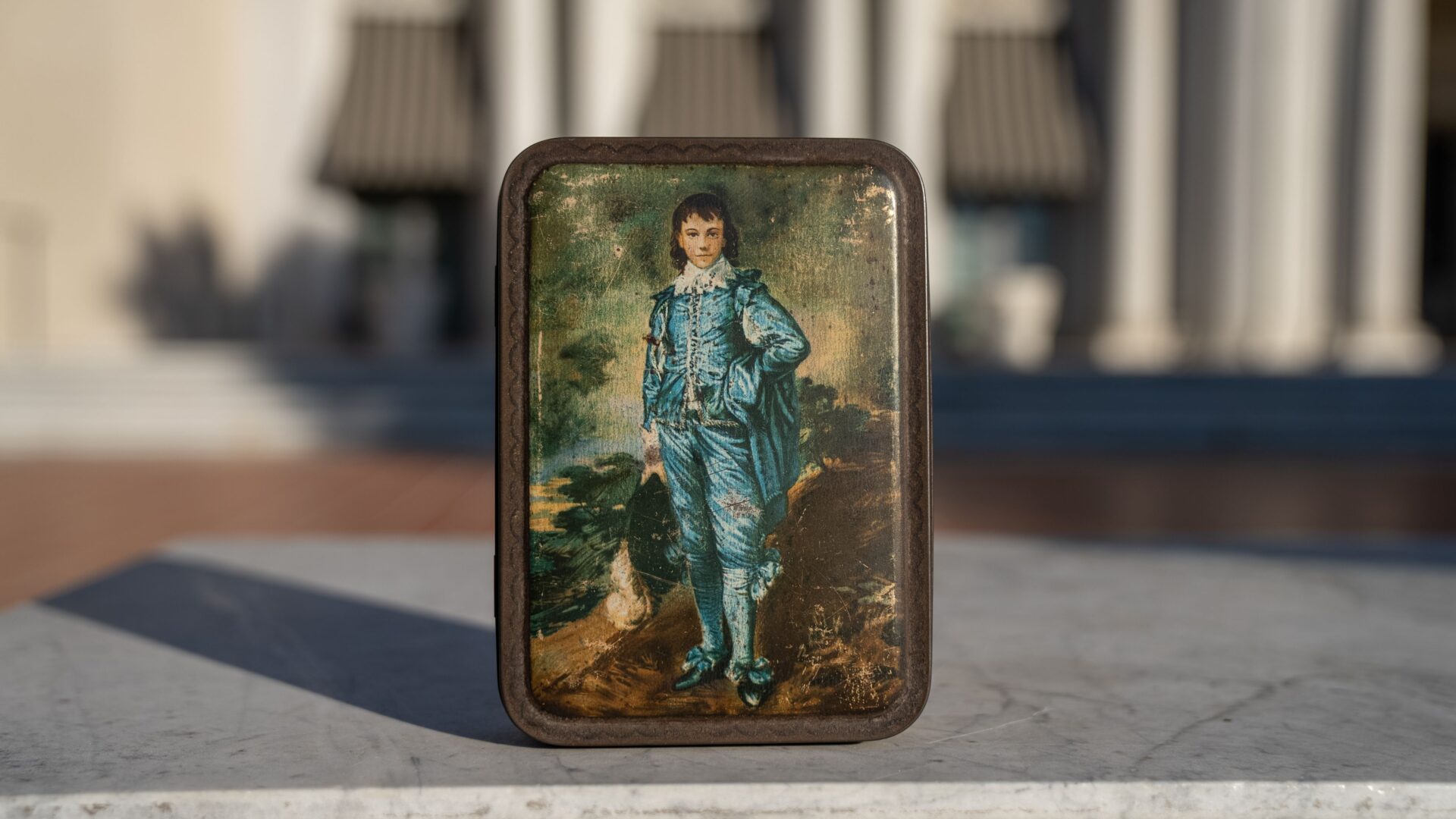
A Cadbury Company chocolate tin depicting Blue Boy, ca. 1920 | Photo by Aric Allen / The Huntington Library, Art Museum, and Botanical Gardens

The exhibition is expected to draw large crowds as well. While the National Gallery will not release visitation data until the exhibition has closed, Christine Riding, curator of the ‘Gainsborough’s Blue Boy,’ provided an anecdotal report. “The Blue Boy is proving incredibly popular with National Gallery visitors. From the very first day the exhibition opened, with a long queue of people keen to be the very first to say hello to him on his return, we’ve experienced large amounts of people each day eagerly making their way through the Gallery to see this exceptional loan.”

However, much like many renowned works of art, The Blue Boy’s popularity came long after the painter’s death. Riding writes in the exhibition’s catalogue, “One of the ironies of art history is that Thomas Gainsborough’s Blue Boy attracted little public attention (as far as contemporary sources relay) when it was first shown at the Royal Academy in 1770. Yet 150 years later, when it was sold to the American tycoon Henry E. Huntington, it was one of the most famous paintings in the world.”

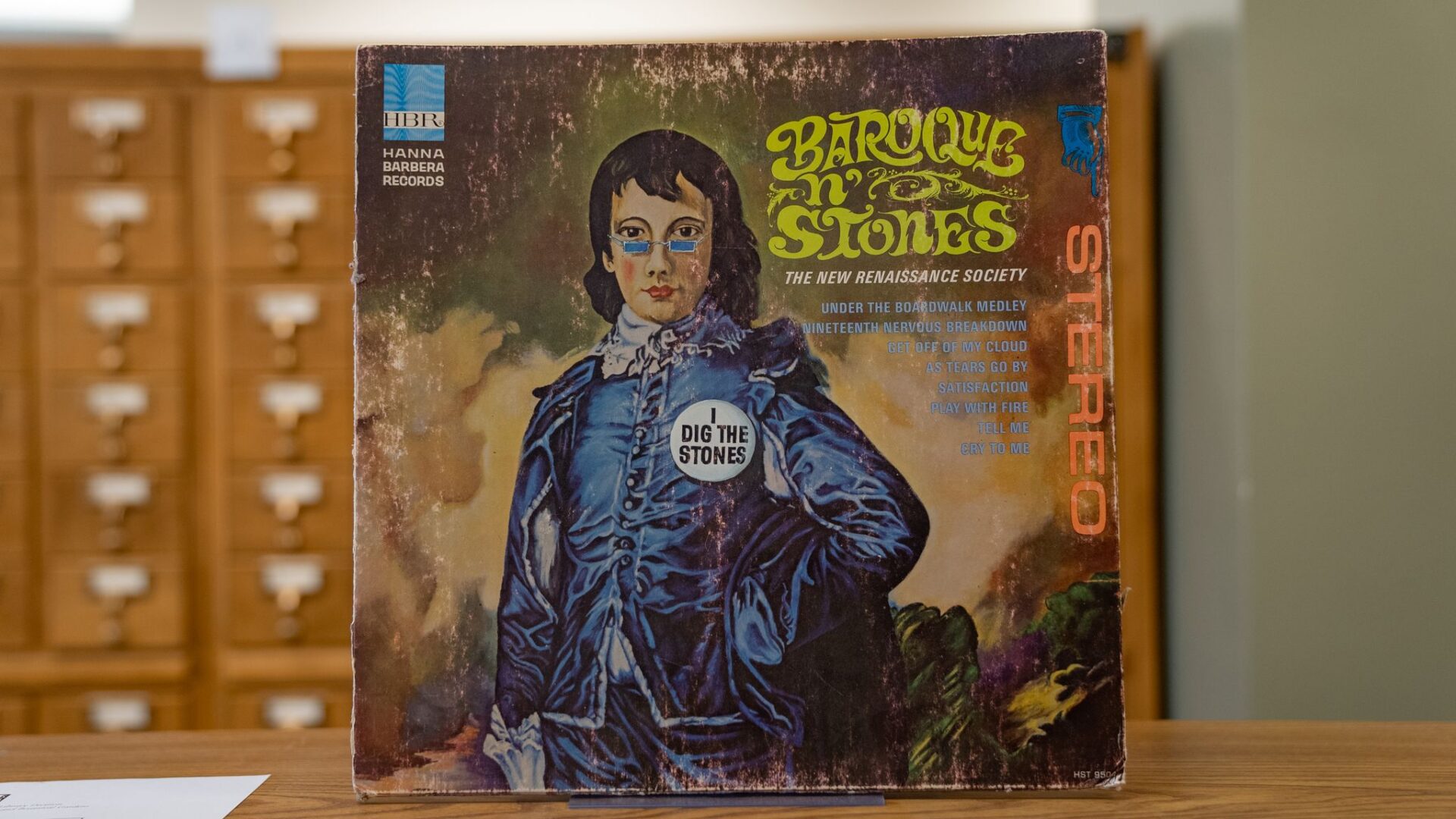
Indeed, images of the Blue Boy has appeared on everything from chocolate tins to folding screens, as fashion historian and curator Kimberly Chrisman-Campbell chronicles in a blog titled ‘Blue Boy Mania: How Gainsborough’s Masterpiece Colored Pop Culture.’ In it, she records the painting’s history and its appeal to advertisers, entertainers, and interior decorators.

The New Renaissance Society, ‘Baroque n’ Stones’, Hanna Barbera Records, 1966. Blue Boy, wearing shades, graces the cover of this album of Baroque-style musical treatments of such Rolling Stones classics as ‘Get Off of My Cloud’ and ‘(I Can’t Get No) Satisfaction’ | Photo by Aric Allen / The Huntington Library, Art Museum, and Botanical Gardens

Anyone who has seen The Blue Boy identifies with it in some ways. And just like beauty being in the eye of the beholder, the painting stirs a different feeling or emotion in each of us. Leading up to the exhibition opening at The National Gallery, articles published in the U.K. demonstrated this. Matthew Wilson wrote in BBC Culture about its appropriation (or misappropriation) as a symbol for gay pride. Meanwhile, art historian Dan Ho paid a tribute to it in February for LGBTQ+ History Month. Jonathan Jones shared his jaded view in The Guardian that ‘it’s as a hokey vision of English art as a Disney cartoon of a fox hunt.’  

Asked by email if the disparate sentiments expressed in the articles make people curious to see The Blue Boy, or if they take away from its mystique, Nielsen replies, “The painting has captivated audiences since it first went on display in 1770. It means something different to everyone who sees it, and that is part of its magic.”

Stories about The Blue Boy will be written in the decades and centuries yet to come. This gorgeous boy, who has inspired countless interpretations and conjured just as many images, could very well signify something else altogether to the generations after us. Some of the ways people relate to him and the painting may not be what Gainsborough originally intended. In Wilson’s BBC Culture article, he cites an art history professor saying “artists cede control of their creations once they are absorbed into the public arena.”

And, in essence, that’s the greatest gift artists could leave behind – for people to make of their artwork what they will. At the same time, it’s an assurance that their artwork will continue to be relevant.

Pasadena Artist Holds First Show after the Pandemic Began

Originally published on 31 March 2022 on Hey SoCal

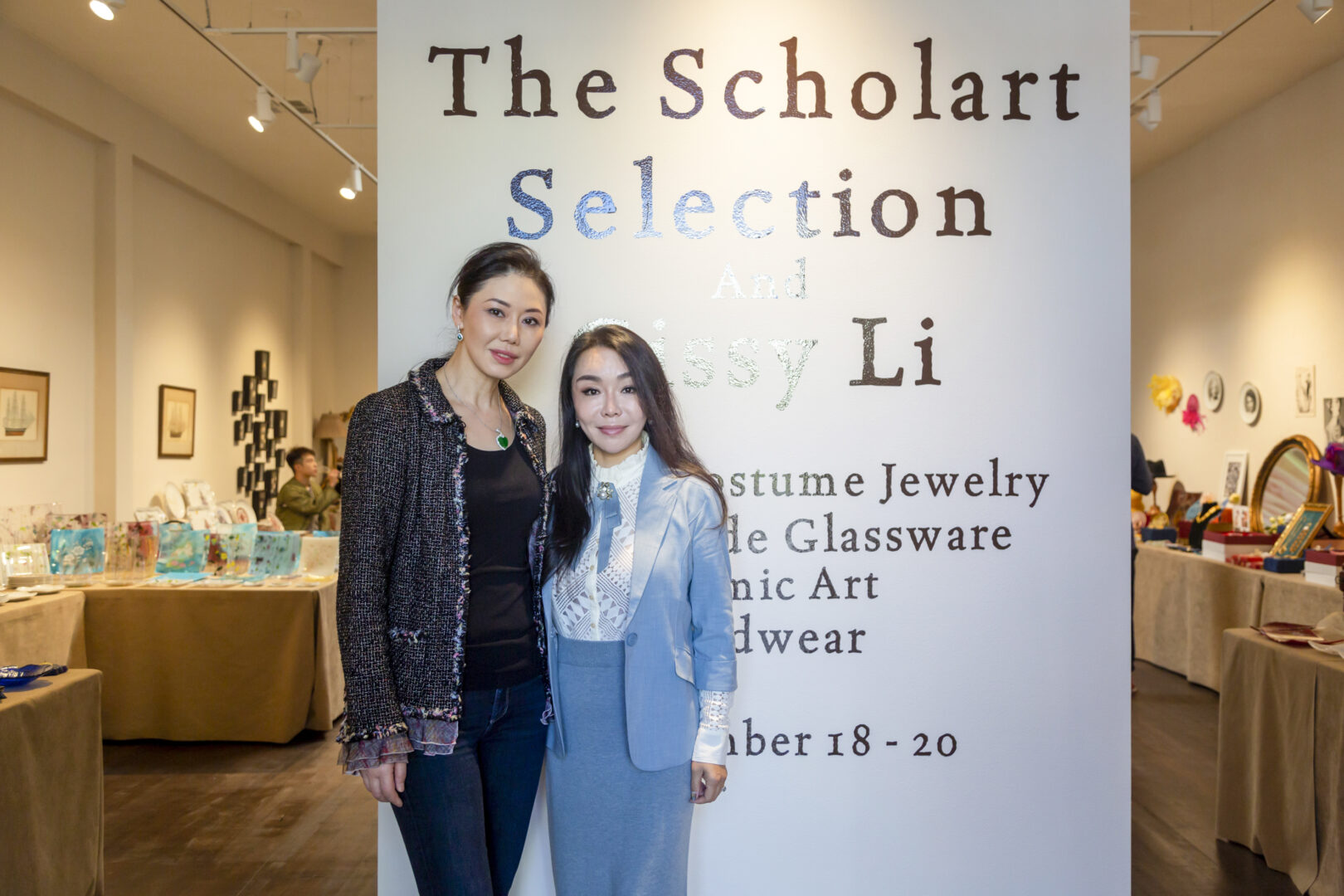
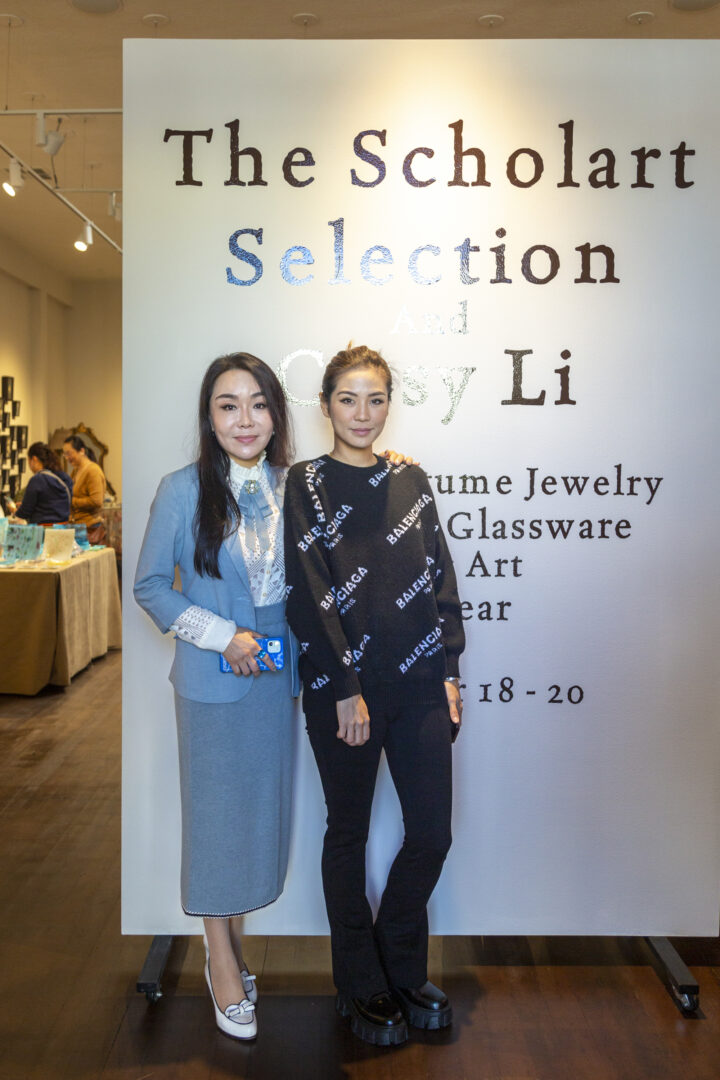
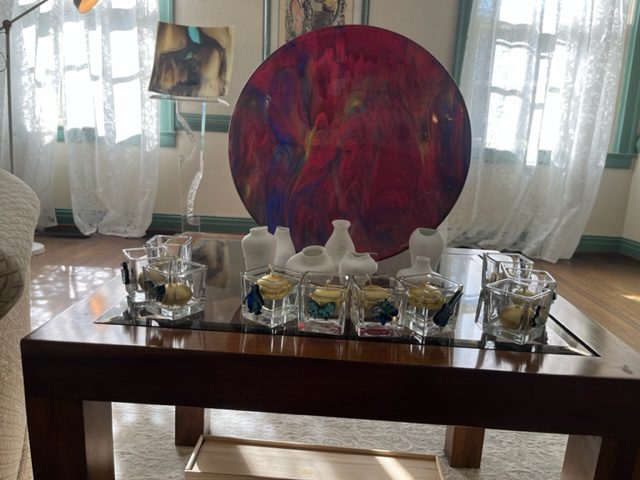
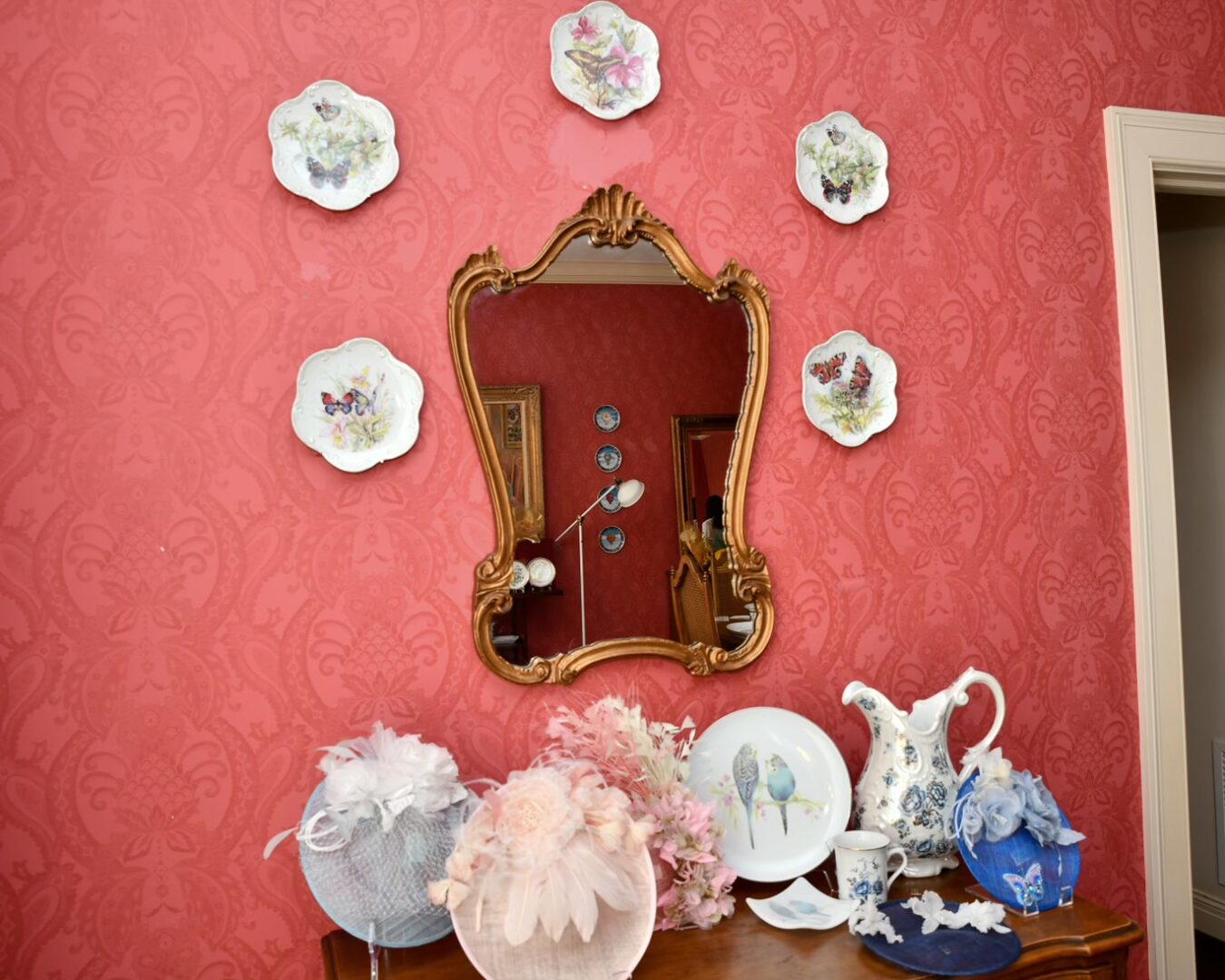
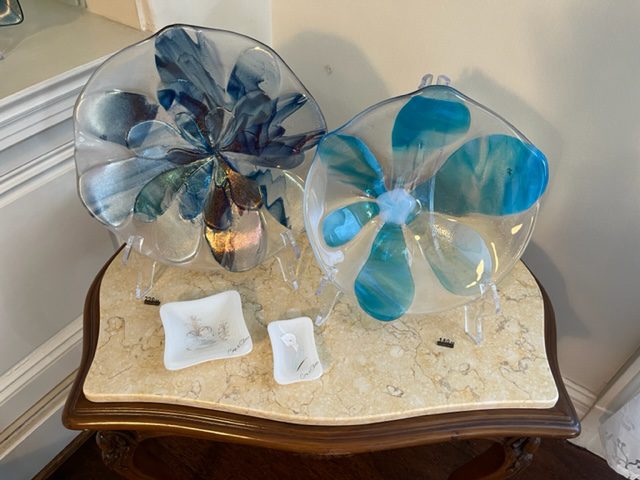
Two years after the pandemic started and turned the world upside down, Pasadena milliner Cissy Li puts on her spring collection show. (read my previous story about Li and how she became a milliner here) And this time around, her creations of glassware and ceramic art join the spectacular hats on shelves and tables. Attendees to the show’s opening are treated to a dazzling array of multi-colored eye candy. There’s so much to look and marvel at!

Li, ever so glamorous in her cobalt blue and neon pink floor-length dress, wears a sparkling diamond necklace with a cabochon pendant and a ring to match. Perched on her head is a purple fascinator with silk lilac flowers. And she works the room with the ease and panache honed during her years as a runway model.

Cissy Li | Photo by Angela Lee / Courtesy of Cissy Li

Sitting elegantly on an armchair, Li talks about her expansion into this new endeavor, “Hats are worn during social occasions. And during the pandemic, not many people were ordering them because there were very limited social events or parties. That gave me the opportunity to branch out into something else – glassware and ceramics.

“Having my kids at home helped because I didn’t have to go to school and drive them around to their various after-school activities; it meant I could be home cooking and working on my glassware. They were pretty much on their own during remote learning. Of course, when I wasn’t physically near them, they tended to sneak in playing some video games. But all in all, they were well behaved. I think the school did a good job giving them a schedule and telling them what they needed to do.”

“I post my work on WeChat and Instagram and people who like what I make call me to commission some pieces,” Li continues. “I’m very lucky that the people who place orders give me carte blanche so I can be very creative. But I also appreciate it when someone comes with a pattern or a picture and tells me ‘I want something exactly like this.’”

These red glass plates took 80 hours of firing time in the kiln and about two hours of overglaze design and 24K gold luster touch up | Photo by May S. Ruiz / Hey SoCal

“During the pandemic, I did a lot of commissioned orders and that kept me very busy. Millinery used to be my primary source of income, but ceramic and glassware work has since become a second career. I’m pretty fast with glassware and hats but not with housework, especially with cooking – I can fire the kiln with self-assurance but I’m more careful that I don’t burn the food,” she confesses with a laugh.

It wasn’t the first time that Li experimented with glassware. When she lived in Italy, a friend – who was also a runway model – had an uncle who owned a glass blowing factory on Murano, an island off Venice. “I went there to study but I only lasted for three days. It was very hard work and I just couldn’t do it, so I quit. However, I learned the basic technical skills that I am able to use now,” Li reminisces.         

Glassware molds in Li’s workshop | Photo courtesy of Cissy Li

When she began working on her glassware, Li had only a small, used kiln. As she grew more confident in what she was doing, she invested in a much larger one. She also moved her work space out of the billiards room next to the swimming pool on the lower level, up to the main level of her family’s property where the garage is located.

“The kiln looks like a bathtub and I can fire one big piece and several small items,” she describes. “I fire at 1,300 to 1,500 degrees F – it’s really hot. In the winter it’s freezing and in the summer it’s sweltering. Working with glass and ceramics involves a lot of dust too, so the garage is really the best place to do this.”  

“How many hours do you work?” I ask. Li replies, “Once I get started, I keep going for about five or six hours. I do need that stretch of time to think and plan. Working with glass isn’t only about art, it also needs math and chemistry, and hard work – there’s a lot of cutting, grinding, and scoring – but I really enjoy it. It’s like a mystery; the result is different each time depending on the temperature. ”

Glass pendants in various colors and and shapes | Photo by May S. Ruiz / Hey SoCal

Li patiently explains how each piece of glassware is made, “You do one procedure at a time – you fire from a higher temperature then to a lower temperature. A piece of glass comes three millimeters thick but the product you want to make is six millimeters. You first cut the shape and put two pieces together, front and back. Then you place these in a kiln to melt together, which takes anywhere from 24 to 30 hours depending on the color – it takes longer to make pink and purple colored glassware. This process is called fusing.

“When it comes out, you choose what kind of finish you want. This, for instance, is dichroic glass and reflects two or more colors from different directions. It comes out flat, so the next process is called slumping, which uses gravity and heat from the kiln to shape sheet glass using a mold. Different shapes go into different ‘slumpers.’ You have to wipe it each time it comes out of the kiln – every fingerprint will stay on it so cleaning is an important step.”

“Each piece is unique and one-of-a-kind,” Li explains further. “When you fire glass, there’s always a champagne or catch bubble that makes the end-product interesting. In between firing, you put powder to either eliminate or create a bubble. It’s like an ID, there will be no two identical glassware.”

“The color comes from metals, including silver and copper. This glass, for example, is petrified wood – copper and sulfur reaction. On the front, there’s a brownish color which has sulfur inside; on the back, it’s robin’s egg and it has copper inside. When you melt these two pieces of glass in high heat, you see the reaction. And in this instance, it’s red.”

This red platter took Li 72 hours to make |Photo by May S. Ruiz / Beacon Media News

When I ask if she has a favorite piece from the hundreds of glassware and ceramic items in the collection, Li responds, “It’s hard to pick just one because I spent so much time working on every single item.”

I then inquire how she decides what piece to make, and she says, “It’s like with my hat – it’s a passion. Sometimes an idea comes from something that catches your eye. I buy several different feathers for making my hats and they’re all beautiful so I mimicked some of the feathers and they are part of this spring show.”

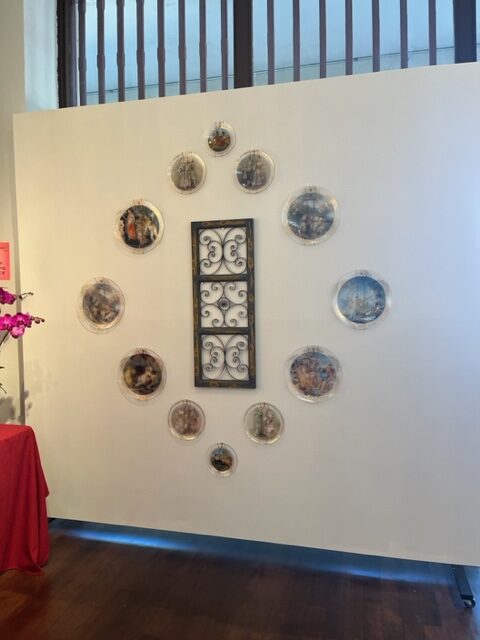
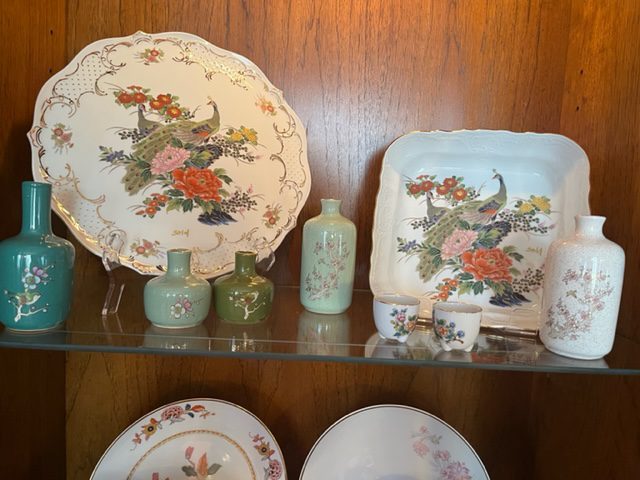
Half of the items in the collection is glassware and half is ceramic. All the glassware were created by Li from scratch, but not the ceramic pieces. She purchases the ceramic bases from four porcelain companies – Kristoff, Karolina (Poland), Cesky Porcelain, and Elizabeth (the Czech Republic).  

Li applied gold luster on these vintage Japanese ceramic platters | Photo by May S. Ruiz / Beacon Media News

“They supply high quality and high consistency china bases so I like to order from them,” Li explains. “I do overglaze enameling and decoupage on them. Sometimes, I also apply mother of pearl or 24k gold luster with the design. These platters with flowers and peacocks, though, are vintage pieces from Japan with a discontinued pattern called Oriental Glamour. I bought small quantities of the last lot and then hand-painted all the gold luster. For the water pitcher, I used decoupage to design the overglaze and fired it in the kiln over 1400 degrees F. It took me about four to five hours to do the decoupage – I had to stand in front of a big mirror to make sure both sides are identical.”  

Decoupaged ceramic water pitcher | Photo courtesy of Cissy Li

There are a few pieces in her spring collection signed “Cissy and Claire” which means that her 11-year-old daughter helped make them. Li says proudly, “She studied painting and clay pottery for years. Sometimes when I’m working, she’ll come up to me and ask if I need assistance. She’ll happily put colored objects together, organize beads and flowers, and give suggestions. She has beautiful hand-writing so she helps me use gold luster to write on glass and ceramic for custom orders.”            

Some objects are signed ‘Cissy and Claire’ | Photo by May S. Ruiz / Hey SoCal

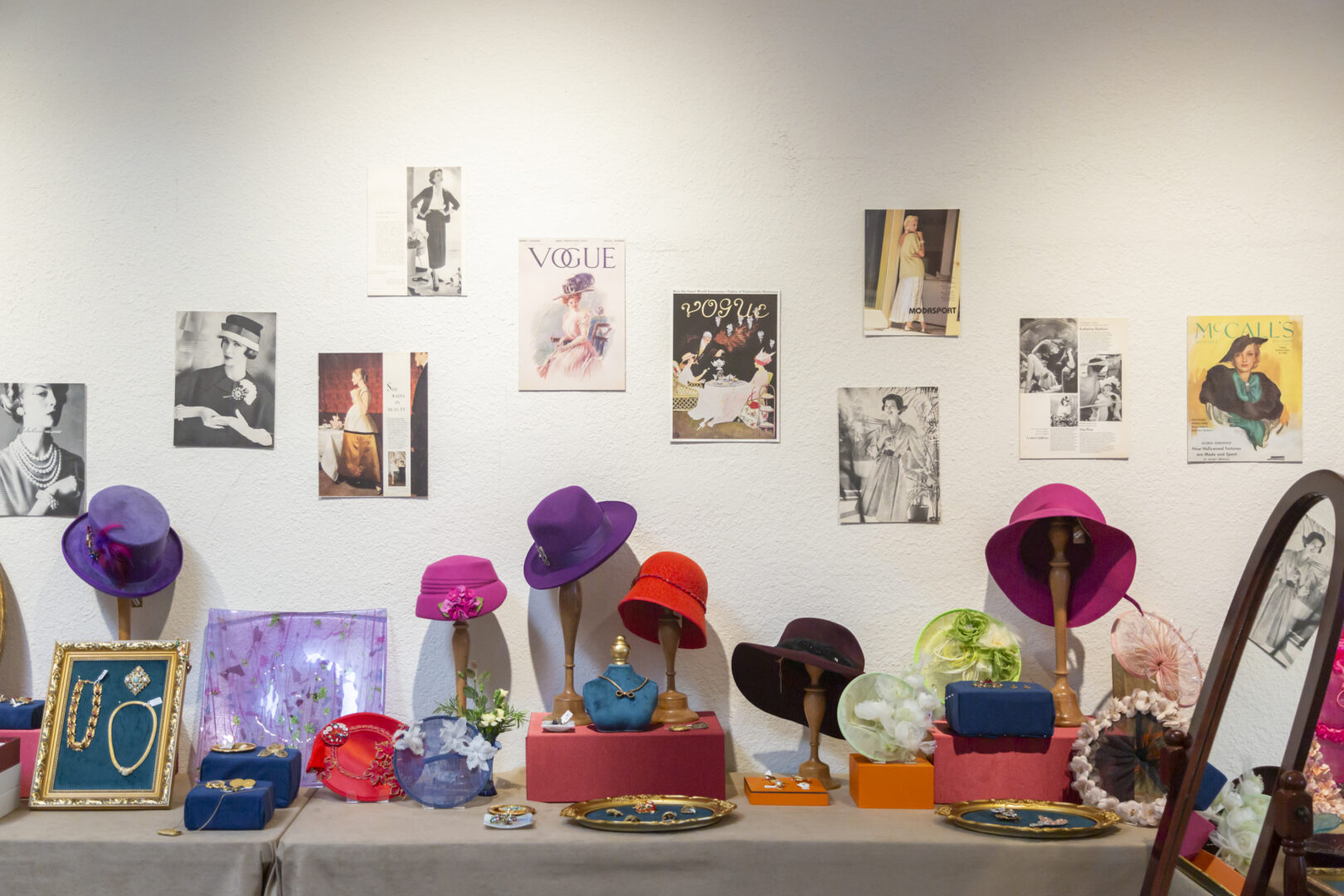
Much like the glassware, the headwear in the show were all designed and handmade by Li. She makes dress hats or afternoon tea hats and fur felt hats which are either rabbit or beaver fur felt.      

Li says, “It takes a minimum of two weeks to make a felt hat because it has to be on wood block steam several times. It takes a shorter time to make a dress hat if I have all the materials, but most of the time I have to search around for the colors to match. Fifty percent of the feathers I use are ordered from England, France, and Spain.”

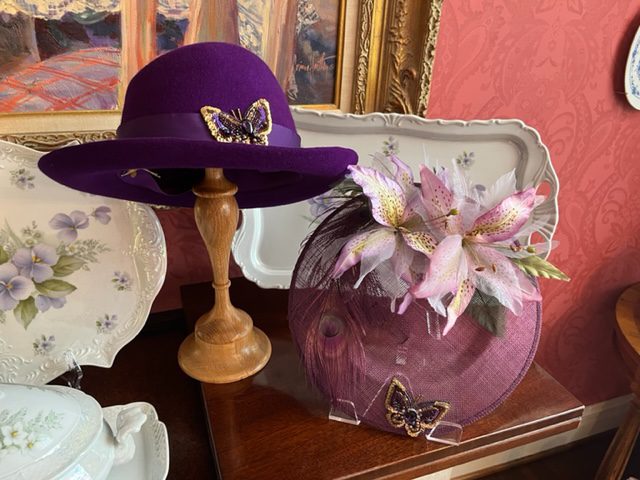
Two hats in the same color scheme but different materials | Photo by May S. Ruiz / Hey SoCal

I choose two hats that use different materials – a felt hat in aubergine with a butterfly embellishment and a purple fascinator decorated with pink lilies, reddish brown feathers, and a smaller butterfly – and Li tells me, “The one on the left is rabbit fur felt. The butterfly beadwork is by a Ukrainian artist which she handmade with Swarovski crystal. The one on the right is an afternoon tea hat or dress hat. The silk flowers are hand-painted by a Spanish artist; the peacock feathers are from the United States and color-dyed.”

All of Li’s spectacular creations involve hundreds of painstaking hours to complete and as many professional tools to accomplish. It’s surprising, therefore, that the items are affordable and might even be underpriced. Her glassware pieces cost anywhere from $35 pendants to $650 platters; the hats run about $475 to $700, depending on materials; and ceramic items are priced from $65 a plate to $3,000 for a set of 12.        

The spring show opening, held on Sunday, March 20, 2022, was attended by fewer people than her previous exhibitions because we’re still emerging from a pandemic. However, there’s still time to catch it.   

“The show will be open until April 15th and we want to make it as safe as possible for everyone,” Li assures. “So we’re offering private tours and viewing and people can call me at (626)808-1599 or send me an email at cissyxili@gmail.com to schedule an appointment.”

It’s spring in Southern California! And what better time to enjoy the outdoors when the weather is mild, than with a midday or afternoon tea with friends? A fabulous fascinator completes your attire. But why stop there? Spring clean your house and add a beautiful glassware on the living room table.

After sheltering in place, covering our faces with masks, and social distancing for two years, we’re finally feeling alive again! Here’s to a Happy Spring!      

A Noise Within Presents ‘Anna in the Tropics’

Originally published on 24 March 2022 on Hey SoCal

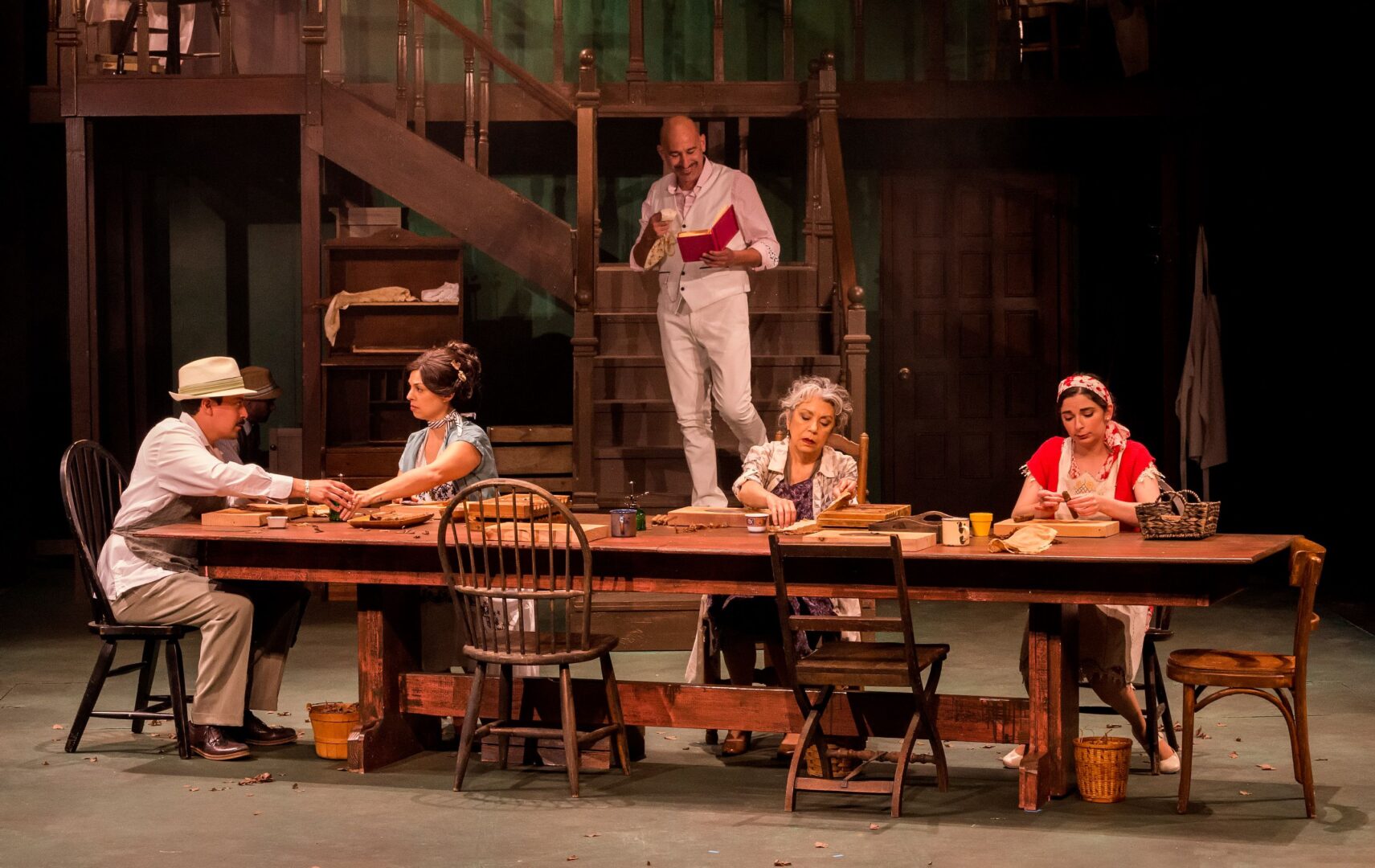
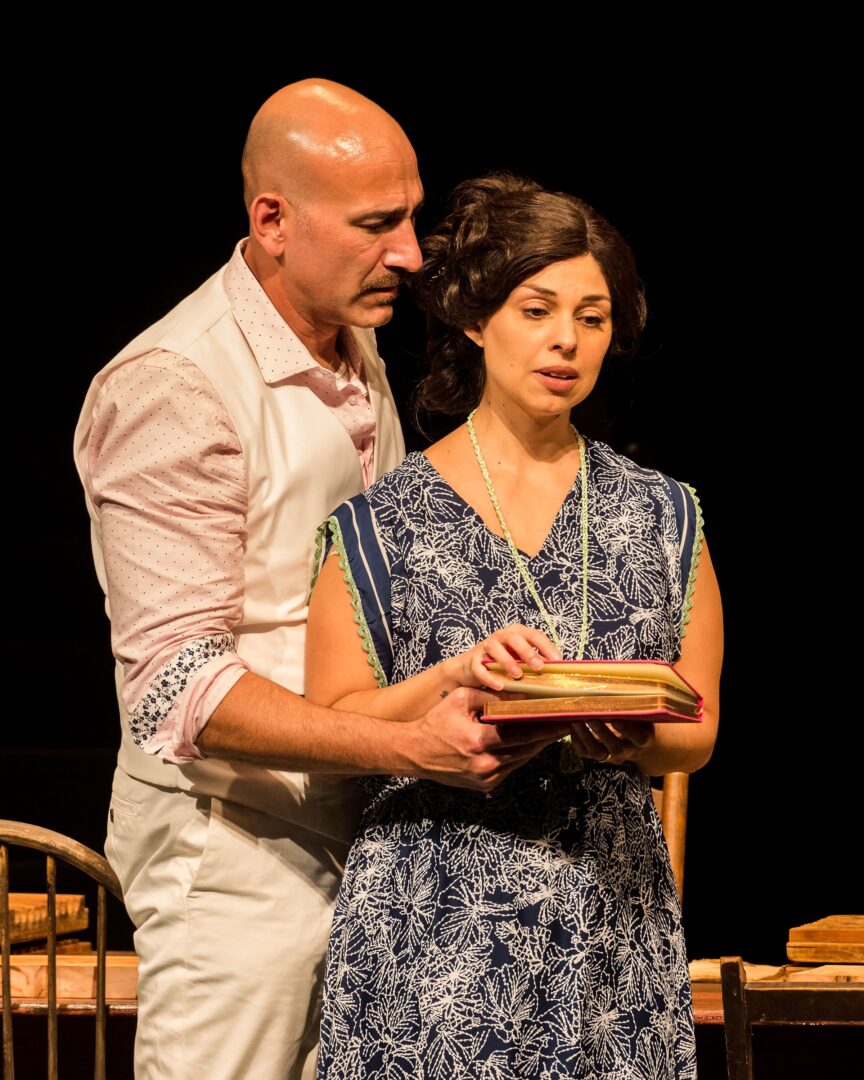
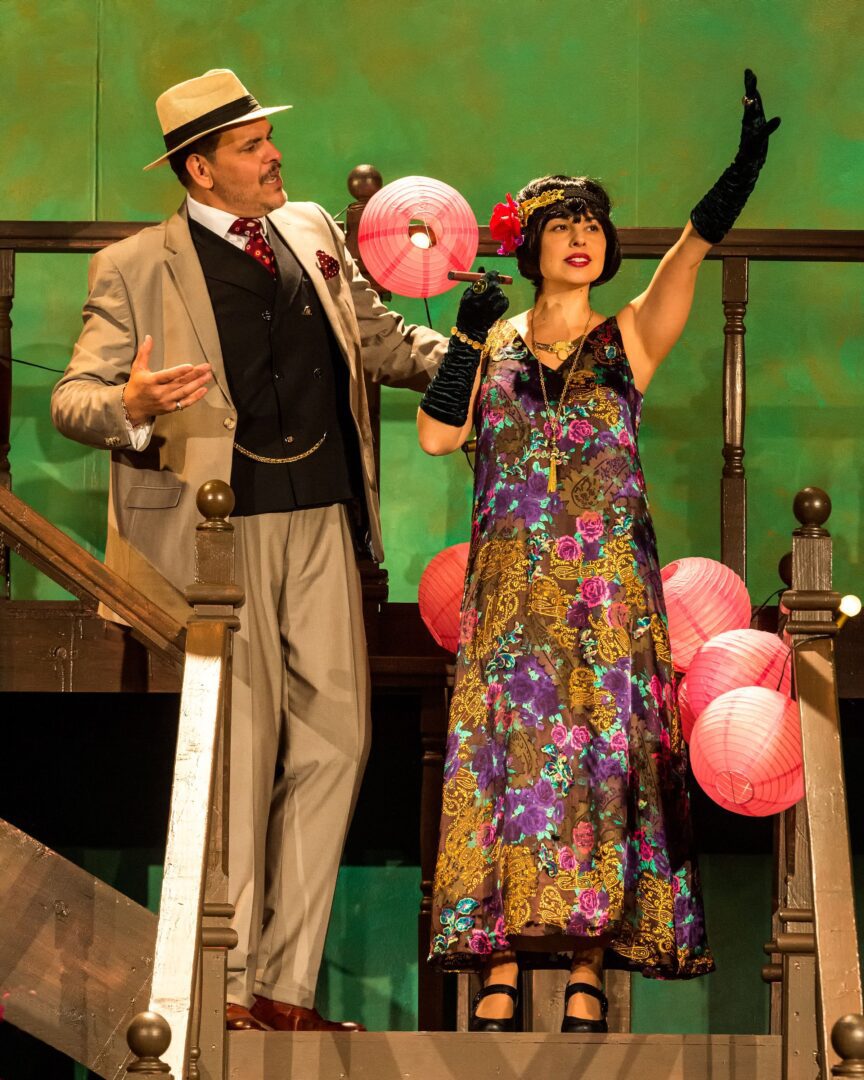
The cast of Anna in the Tropics | Photo by Craig Schwartz / A Noise Within

“Anna in the Tropics,” Nilo Cruz’s Pulitzer Prize-winning drama about cigar factory workers, is on stage at A Noise Within (ANW) from March 20 through April 17, 2022. The fifth production during the theatre company’s 30th anniversary season, it marks the directorial debut of Jonathan Muñoz-Proulx.

The play is set in 1929 at a Cuban-American cigar factory where cigars are still rolled by hand and lectors are employed to provide a diversion in the workers’ tediously repetitious daily labors. When a handsome and debonair new lector, Juan Julian, reads the story of Tolstoy’s ‘Anna Karenina,’ the lives of the workers begin to parallel those of the novel’s characters. Suddenly the drama takes over their otherwise humdrum reality – old traditions and new ways collide while longing, love, and betrayal spark a volatile flame foreshadowing the end of an era.

It is through this electrifying play that ANW audiences will be introduced to Muñoz-Proulx, who is also ANW’s inaugural Director of Cultural Programming. He came on board three years ago and is responsible for curating and producing all the events in the Noise Now program. This means creating workshops, readings, concerts, and dance events in collaboration with community partners to build relationships with new audiences, and partner with other artists.

Muñoz-Proulx explains the genesis of the job, “It was a new position they were looking to fill. They knew they wanted to have a community focus that engages audiences of color – specifically, blacks and indigenous people. I really had a very open and supportive invitation to build this program from scratch and let it change as we continue to define it. That’s my principal role. 

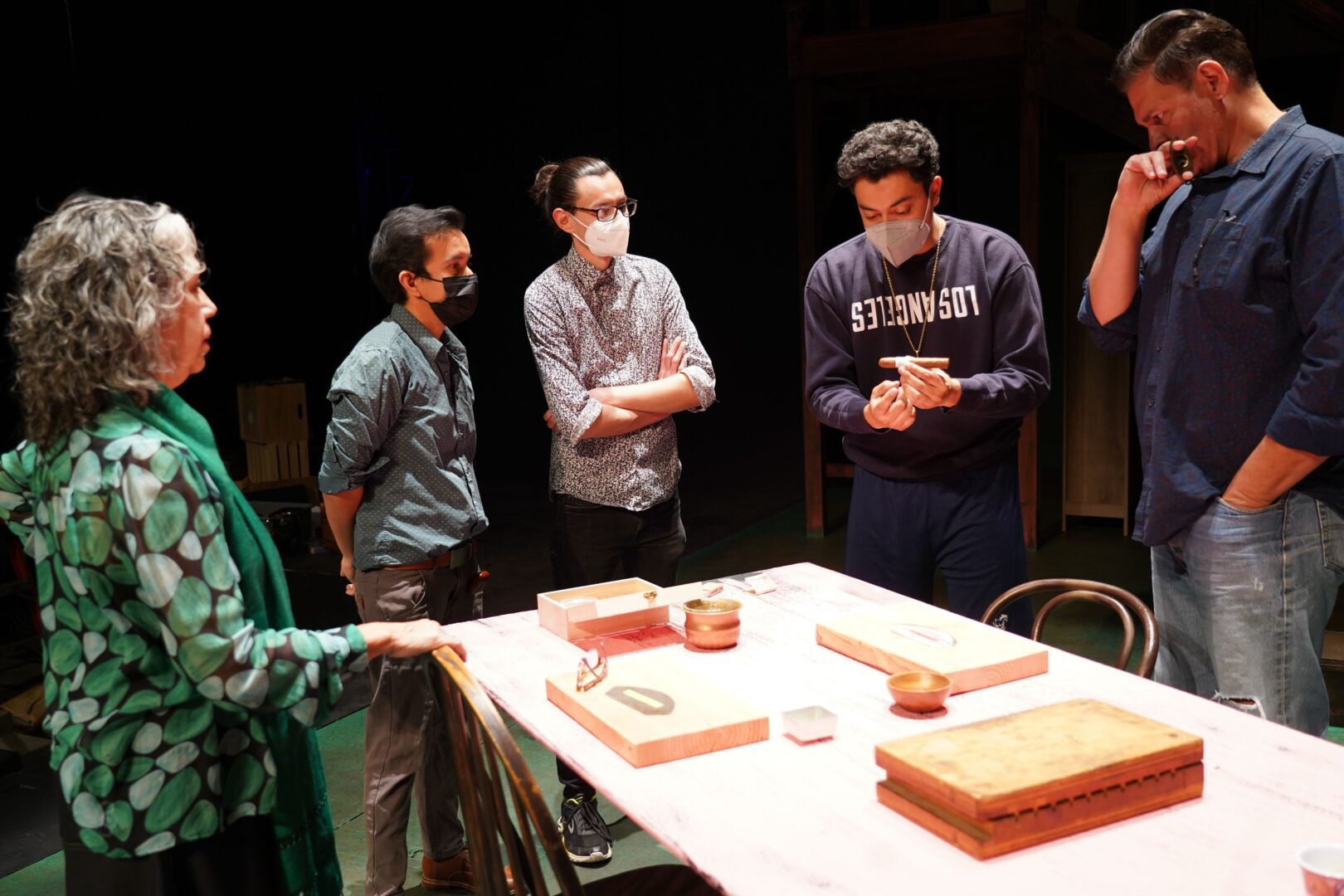
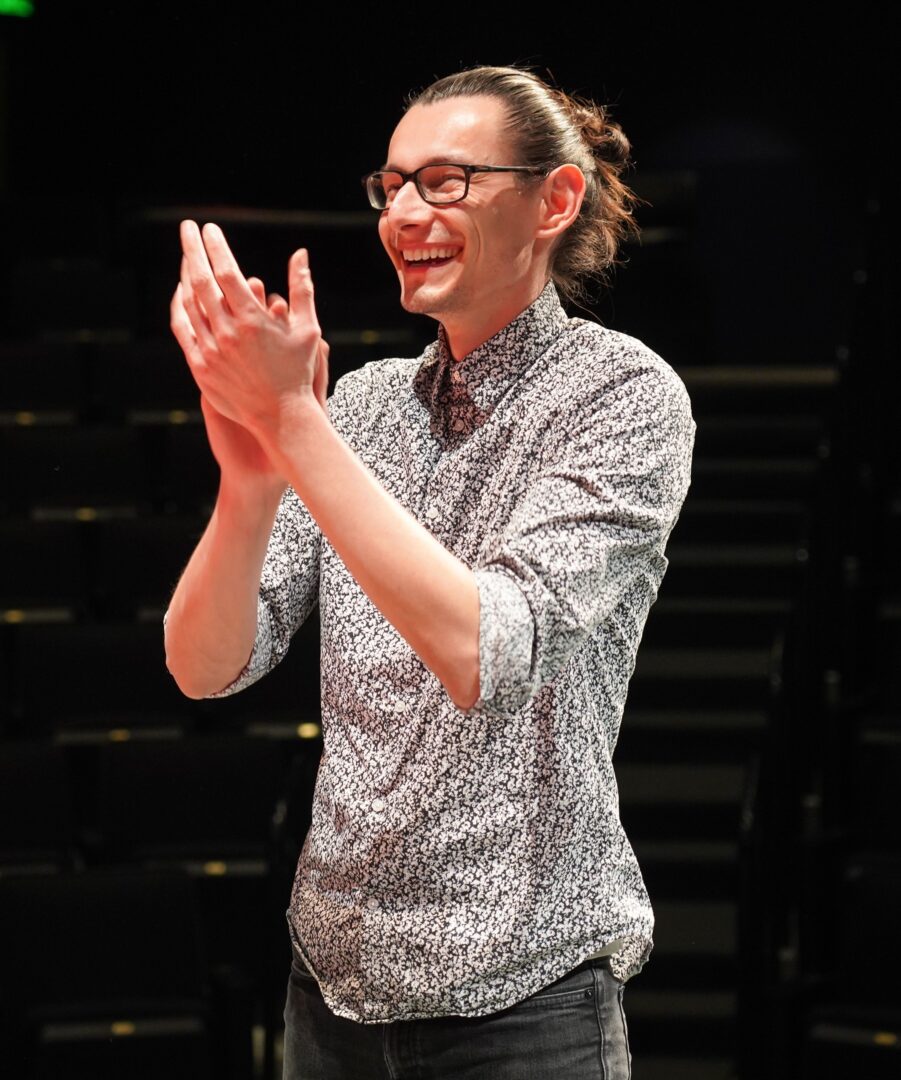
Jonathan Muñoz-Proulx (center) with the cast of Anna in the Tropics | Photo by Eric Pargac / A Noise Within

“But I also wear an artistic hat where I work with and Geoff and Julia (Elliott and Rodriguez-Elliott, artistic and producing directors of ANW) and we talk about season planning and selecting directors and designers, discussing what’s going to be on our main stage. Over these three years, my relationship with them and the theatre has deepened. When I first started, I really just had one job – these community partnerships. But because we’ve built trust and an artistic language together, I’m now supporting season selections and also working more closely with resident artists (RAs). The RAs curate and present their own reading series called ‘The Resident Artist Series’ which I’m going to be curating and producing.”

And directing ‘Anna in the Tropics’ has added an extra responsibility. To say that Muñoz-Proulx has been busy lately is quite an understatement. He states, “I’m in Zoom meetings all day with artists, answering emails, and reading plays. Then during dinner I do some directing prep and head into the theatre for rehearsals. We work from 6 to 11 pm on weeknights – they’re really long days for me. It’s a dream life for six weeks and then I’ll probably sleep for a month afterwards.”

In spite of the long days and sleep deprivation, Muñoz-Proulx excitement when he talks about ‘Anna in the Tropics’ comes through even when he’s speaking to me by phone. He describes, “It’s a highly theatrical play where these cigar workers escape the monotony of their day-to-day life working in a factory and are transported by the words of the classic literature read to them beyond the factory walls. There’s a wonderful balance of very intense drama and tension with a really poetic, musical freedom of the play. It’s a roller coaster – it just goes and goes and goes until it reaches its climax. And it’s epic! It will just pull the audience along this roller coaster ride to the end.”

“A lot of the play happens as the workers are coming in to work, as they’re leaving work, and in between their shifts,” Muñoz-Proulx explains. “So it’s almost like you’re seeing the characters at the water cooler chatting about the drama and the gossip of their lives – who they love and who they hate. Their lives start mirroring those of the characters’ in the book. And the characters in the book are giving the factory workers the courage to say what they want and ask for what they need and feel empowered to live their fullest lives. It reminds me of today where we might watch television or a movie and see our identities reflected back to us to give us the courage to be our fullest selves.”

Jason Manuel Olazábal and Tania Verafield | Photo by Craig Schwartz / A Noise Within

Because ‘Anna in the Tropics’ is about Cuban-Americans, the cast is made up of actors who look like the characters. Muñoz-Proulx states. “It was very important to us that everyone identifies as Latino or Latina or Latinx. Among ANW’s resident artists, only two – Erika Soto and Rafael Goldstein –  are of Latin descent and we knew this is a play we were not going to cast from our RA community. So it was a great opportunity for ANW to meet a lot of new artists through several rounds of auditions. And, hopefully, this will be the start of some ongoing relationships with them.”

While it means that the cast will be new faces for ANW’s audience, they won’t be strangers to Muñoz-Proulx. He asserts, “I live, and work, and direct in Los Angeles so I’ve known and worked with most of the cast of ‘Anna in the Tropics’ for ten years. Even though they haven’t been to ANW necessarily, this is a community of artists whom I have a great relationship with. However, as a director, I’m not so concerned about having a shorthand with them or working quickly, we’ll find our own artistic language together. What matters most to me is that the people we bring into the room – the actors and creative community – have really big hearts and are pleasant collaborators. That doesn’t mean we all need to be best friends, it means we create a space where people can be imperfect, and vulnerable, and ask questions, and be supportive along that journey.”

I ask if people of color are now getting more roles and recognition in theatre. Muñoz-Proulx replies, “I think they are. I think it has become more and more unacceptable for theatres to produce plays that predominantly feature white actors. I think more and more theatres are producing plays written by playwrights of color. And more and more, they’re hiring directors of color. And more and more, not only are actors of color in those plays but, more importantly, actors of color are also in plays that don’t have to cast actors of color – like some classics or Shakespeare. I think there’s greater artistic freedom being celebrated in how we cast nontraditionally.”

“It isn’t that roles are color blind,” Muñoz-Proulx clarifies. “I gravitate towards the term color conscious because I think color matters and I think the audience does see it. And there can be some stories told about how folks identify on stage. But being color conscious, I think, allows us to let go of a default that every character is white unless we decide otherwise. I think being color conscious invites the possibility that a character could be whoever comes to the audition and really excites and surprises us with their interpretation of the role.”

Leandro Cano and Tania Verafield | Photo by Craig Schwartz / A Noise Within

“And it doesn’t matter if the blood relatives in the play are from a different race or culture,” expounds Muñoz-Proulx. “I think there’s a lot of freedom and flexibility in theatre that we maybe don’t have on film and television. In theatre, we can really build the artistic team; we can assemble the cast to how we decide to tell the story regardless of what they look like. The priority is that the cast is representative of our community. And in this state, our community is incredibly diverse Los Angeles. It’s important that within the whole season, we have a diverse balance of actors of color. But even with plays that have customarily white cast, we have people of color play roles that are traditionally played by white actors, as we did in ‘All’s Well that Ends Well.’”

When asked about his vision for the play, Muñoz-Proulx responds, “I’m very interested in how we can establish a simple and realistic monotony to this factory. I’m attracted to how we can show what their everyday life is like, but then infuse that with some form of magic, and poetry, and theatricality. And even though I haven’t seen a lot of other productions, I think that ours will probably have more magic and theatricality than other productions.”

Jonathan Muñoz-Proulx during rehearsals | Photo by Eric Pargac / A Noise Within

“That’s the type of theatre I love,” Muñoz-Proulx adds. “For example, if a character is having an emotional moment, I tell my team and my designers that I want to tease out that monologue, expand it to fill the room. That might mean that with light or sound or color we exaggerate or emphasize what’s going on. Even though the work inside the factory isn’t a particularly joyous moment or particularly traumatic instance, that might be represented in a more abstract and magical way. It might not be what Nilo Cruz requires in the text, but I’m little by little finding moments – and you’ll see them – where there will be some theatrical magic.”                                   

“I want our audience to leave the theatre with the sentiment that the people we love and our relationships are the most important things we have,” says Muñoz-Proulx. “And it’s very easy to take for granted what we have even when it’s right in front of us … until it’s gone. We see these characters in this play really struggle with each other. But they also need each other to heal and to survive.”

“The play has an awareness – it is really interested in the tradition of rolling cigars, the tradition of bringing a Cuban culture to America,” enlightens Muñoz-Proulx. “It is very much about ‘How do we preserve and stay connected to our ancestors and to or legacy, and to the traditions that made us?’ And I think that’s a really beautiful theme that a lot of us can connect to. The play also engages with themes of modernity and progress and change taking place in 1929 just before the Great Depression. These characters are planning for a joyous future ahead, not knowing that the whole world is going to change and be crushed by the Great Depression. Having gone into this pandemic two years ago, and beginning to emerge from it now, never before have I thought so much about change, and recovering, and healing from change.”

Muñoz-Proulx couldn’t have better articulated what most of us are feeling at the moment. Because of what we’ve been through, we learned to distinguish the truly important and profoundly meaningful from a mere trifle and fleeting fancy – then to protect them fiercely and hold them close in our heart

‘Science and the Sublime’ Exhibition at The Huntington Marries Science and Art

Originally published on 25 February 2022 on Hey SoCal

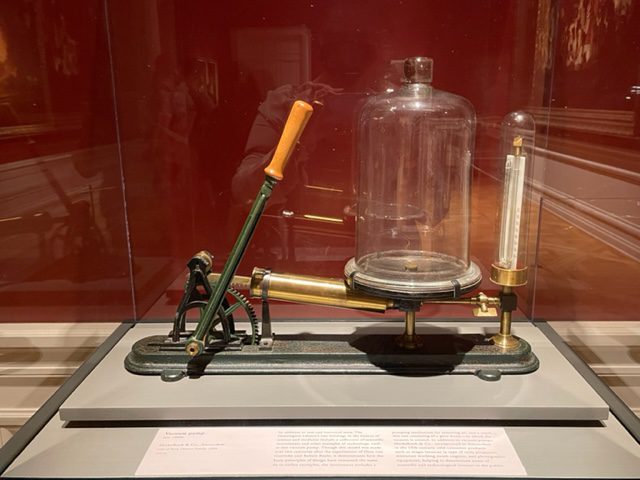
An air pump | Photo by Brianna Chu / Hey SoCal

It isn’t often that an art exhibition satisfies the artistic and intellectual predilections at once. Visitors to The Huntington Library, Art Museum, and Botanical Gardens will enjoy that rare occasion in an installation called “Science and the Sublime: A Masterpiece by Joseph Wright of Derby.” It is on view from February 12 through May 23, 2022 at the Huntington Gallery’s North Passage.

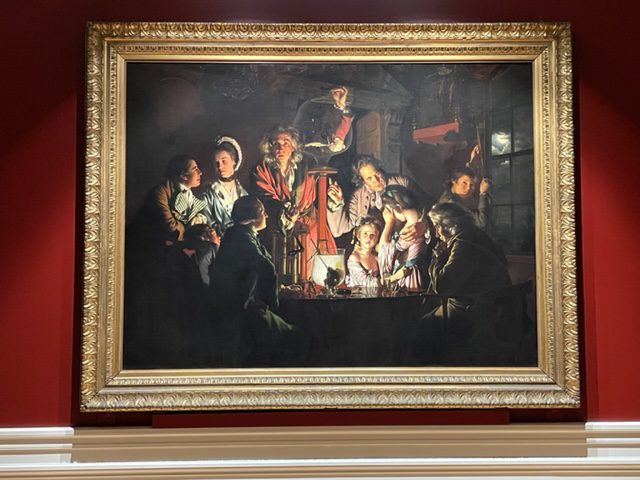
The centerpiece of this exhibition is the imposing 6-by-8 foot painting called “An Experiment on a Bird in the Air Pump.” Reputedly one of the great masterpieces from the Age of Enlightenment, it is on loan from the National Gallery in London – a reciprocal exchange for the Huntington’s ‘Blue Boy.’

As anyone who frequents The Huntington’s galleries can tell you, a scientific painting isn’t something we expect to see among its magnificent collections. It is quite a surprise, then, that this artwork is what the institution has selected in exchange for Gainsborough’s strikingly beautiful and iconic masterpiece.

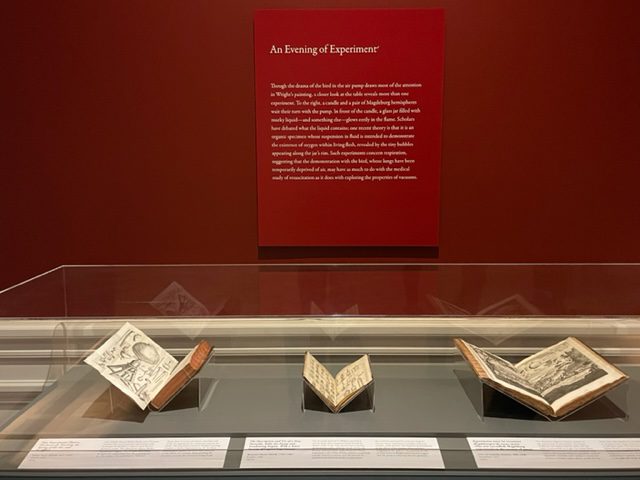
Books and manuals for scientific experiments | Photo by Brianna Chu / Hey SoCal

During a press event one day before the exhibition’s opening, Christina Nielsen, the Hannah and Russel Kully Director of the Art Museum, declares about the choice, “This is the poster painting for scientific pursuits and the Enlightenment and we’re thrilled to have it complement our fantastic collection. This small but impactful installation is really something that only The Huntington can do. Not many institutions in the United States can claim to have experts in British Art and in the History of Medicine in the same place. We have one borrowed painting and 15 objects drawn from both the art museum’s and the world-renowned library’s collection. It is a wonderful opportunity to collaborate within The Huntington’s own collecting areas to forge deeper connections between its two holdings.”

Melinda McCurdy, The Huntington’s Curator of British Art, alongside Joel Klein, Molina Curator for the History of Medicine and Allied Sciences, led this installation. She echoes Nielsen’s assertion. “This is the first time we created an exhibition where we consciously combine science and art. This painting lends itself to this kind of display and that’s incredibly rare. We were able to really tap into our expertise and our collection to bring these materials together and use them to explain context of an iconic piece.”

‘An Experiment on a Bird in the Air Pump’ | Photo by Brianna Chu / Hey SoCal

Joseph Wright of Derby’s “An Experiment on a Bird in the Air Pump,” as The Huntington’s press release describes, is a powerful scene that depicts a small group of people gathered around a candlelit table where someone is conducting an experiment. Following 17th-century chemist Robert Boyle’s example, the man slowly removes air from a glass jar as his audience awaits the fate of the cockatiel inside. The observer’s reactions range from fascination to dismay. This tableau is an exercise in the sublime – a moment of extreme tension that can be perceived as a dramatic meditation on the fragility of life. Simultaneously, the experiment being performed demonstrates advances in the fields of science and medicine, making the scene a celebration of human achievement.

“We call the exhibition ‘Science and the Sublime,’” explains McCurdy. “The Sublime is an aesthetic category that was coined in the 18th century by philosopher Edmund Burke as producing the strongest emotions the mind is capable of, such as awe or terror, but in a way that causes pleasure. The thrill of the sublime can be found in nature: in things of immense size – like huge mountains – or that are dangerous or unknown – like deep chasms or dark caves. And Joseph Wright of Derby was working in that aesthetic.”

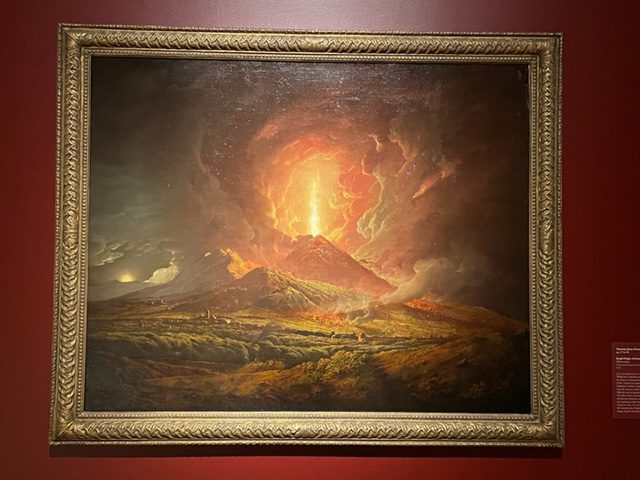
‘Vesuvius from Portici’ | Photo by Brianna Chu / Hey SoCal

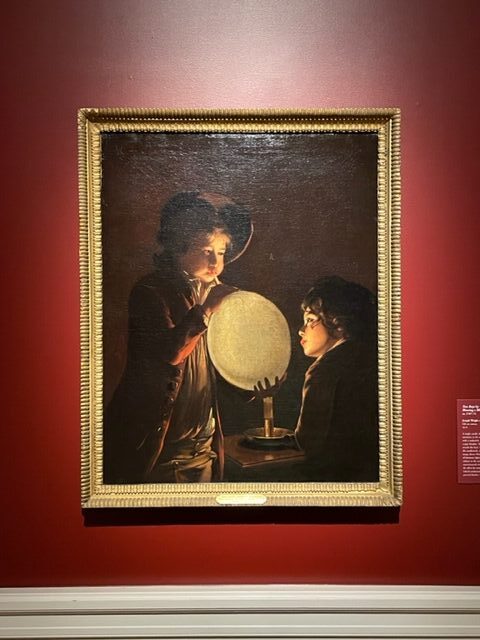
Two Wright of Derby paintings in The Huntington’s permanent collection are also part of the exhibition – “Vesuvius from Portici” and “Two Boys by Candlelight, Blowing a Bladder.” Both pieces show light and dark to dramatic effect: the abrupt burst of light in the explosion of Mount Vesuvius painting can be shocking to the senses, much like going into a darkened room and then someone suddenly turning on the light.

The second painting is more experimental says, McCurdy. “This one shows two boys holding what looks like a balloon, but is actually a bladder. His intention was to create incredible luminosity around the bladder – the candle illuminated it and made it shine and glow very strongly. In fact, he experimented with his method and put a layer of silver leaf beneath the paint to make it reflect back and create a much more prominent glow.”

‘Two Boys by Candlelight, Blowing a Bladder’ | Photo by Brianna Chu / Hey SoCal

“When museums speak to each other about lending out absolute iconic masterpieces, the conversations go on for years,” Nielsen clarifies. “We’re really lucky at the Huntington that we have these two paintings and the incredible collection that we have between different parts of the institution so that we can bring this together. The decision for us to lend the ‘Blue Boy’ was not an easy one. And neither was it an easy decision for the National Gallery to lend this – it is requested all the time. In fact, when we started our conversation, it was on loan to Uffizi in Florence for an exhibition there. But when they heard what we wanted to do with it and how we could pair it with our incredible collections, they said ‘Yeah, you have to do it.’ They were very excited. The National Gallery has been an amazing partner.”     

Klein states, “I first saw ‘An Experiment on a Bird in the Air Pump’ 12 years ago when I was a graduate student in Europe and working on my dissertation. Why is the air pump so important? It’s hard to find a modern equivalent, but it’s something like the particle accelerator of the 17th and 18th centuries. This was big science.”

“Many earlier scientists and philosophers were followers of the teachings of Aristotle who believed that a vacuum in nature was an impossibility,” expounds Klein. “When Robert Boyle and other fellows of the newly formed Royal Society of London used the recently invented air pump to show that vacuums can exist and that air pressure is inversely related to its volume, it was transformative. Boyle and his collaborators also used the air pump to study the nature of air, showing its effects on animal respiration, as well as combustion. I’d like to point out that this painting isn’t so much about an experiment – the bird was safe and wasn’t going to die – as it is a demonstration.”

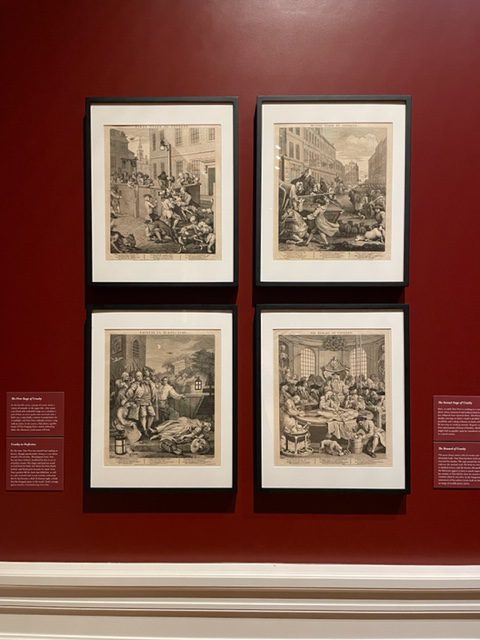
Prints on animal cruelty and violence | Photo by Brianna Chu / Hey SoCal

Another important aspect that this painting evoked is the practice of using animals in scientific research and experiments, bringing into focus animal rights and cruelty to animals. And Wright was actively engaged in the moral debate about animal cruelty that was active in the 18th century.

The “Science and the Sublime” exhibition incorporates pictures related to the treatment of animals; a selection from the 47,000 volumes and approximately 1,000 scientific objects from the Burndy Library that’s housed in The Huntington Library; two Joseph Wright of Derby paintings – anchored by his monumental “An Experiment on a Bird in the Air Pump.”

While some of us might be disappointed that what we’ll see in exchange for our beloved “Blue Boy” isn’t a beautiful portrait of a resplendently attired 18th-century British aristocrat, we can appreciate the curators’ choice. This exceptional opportunity to showcase The Huntington’s strength – a formidable collection of British art masterpieces coupled with a vast repository of materials related to the history of medicine and science – should be enthusiastically embraced.

‘All’s Well That Ends Well’ Goes on Stage at A Noise Within Theatre

Originally published on 11 February 2022 on Hey SoCal

Nike Doukas (far right) directing the cast of ‘All’s Well that Ends Well’ | Photo by Eric Pargac / A Noise Within

A Noise Within (ANW) starts the new year with Shakespeare’s “All’s Well that Ends Well,” the fourth production during its 30th anniversary season. On stage from Feb. 6 to March 6, it stars resident artist Erika Soto as Helen and Mark Jude Sullivan as Bertram. Nike Doukas directs this comedy that follows Helen and Bertram as they try to realize their individual dreams before they are eventually united in a fairy tale ending.

“All’s Well That Ends Well” focuses on Helen, a young healer, who convincingly persuades a cast of fools, romantics, and cynics to pursue Bertram, her runaway groom. In a play of wit and deception, these two characters take us with them as they go on a journey of forgiveness, hope, and love where we least expect it.

The play isn’t one of Shakespeare’s popular works, hasn’t been staged as often as his other comedies, and is even referred to as a problem play. Doukas has made it her goal to change that last reference and she might very well have the credentials to do so. She earned her MFA from the American Conservatory Theater (ACT) in San Francisco and is primarily a theatre, film, and television actress. She is also a well-known accent coach and has been directing for five years now.

Twelve years ago, she joined the faculty of the Art of Acting Studio in L.A., the sister school of the Stella Adler Studio of Acting in New York City (formerly the Stella Adler Conservatory) where she’s the head of acting; a main responsibility is teaching Shakespeare. Her students go on to work professionally and, in fact, one of them – Niek Versteeg – is in this production of ‘All’s Well…’ as the Second Lord Dumaine.       

While this marks Doukas’s directorial debut at ANW, her association with the repertory company and co-artistic and producing directors Geoff Elliott and Julia Rodriguez-Elliott dates a while back. She recalls, “We worked together on many Shakespeare productions as actors early on. ANW puts on one Shakespeare production every season, and sometimes they’d call me to help make the text clear for the actors to understand.”

“And my career as accent coach actually started in the very, very early days of A Noise Within when they were still at the Masonic Temple in Glendale,” adds Doukas. “Geoff and Julia knew I was good with accents and they asked me to do the accent coaching for ‘Our Town.’ It turned out to be a lot of fun so I still do that whenever I’m available.” She was the accent coach for ANW’s previous productions of “The Glass Menagerie,” “Othello,” “A Christmas Carol,” “Tale of Two Cities,” “Mrs. Warren’s Profession,” and “Noises Off.”

Asked how she became good with accents, Doukas replies, “It happened organically – I grew up in a family that spoke Greek; my two older sisters are conversational in Greek but I speak it poorly. It’s much like growing up in a musical home, you can’t help but be a little musical. And, being an actor, I was able to use and develop it. When I was at ACT, that was one of the things we had to learn. I did several plays where I had an English accent so people began asking me to help out. It wasn’t something I went after; it was merely happenstance.”

Doukas had pitched a couple of plays to Elliott and Rodriguez-Elliott but this was the first time their schedules meshed. She explains, “It was just timing. They plan seasons and I think they felt this was the right time. They wanted me to direct a Shakespeare play and they liked the idea for ‘All’s Well…’ that I suggested to them. They also felt it fits in with what’s going on in the world right now.”

“Besides, they do so much Shakespeare they wanted to find a play they hadn’t done in a while,” continues Doukas. “And this is one I truly love. Like all Shakespeare plays, it isn’t about one thing – it’s layered. I definitely see that there are two parallel stories: one is that of Helen who is desperately trying to make the world right by joining her life with Bertram’s and the other is that of Bertram who feels stifled at home and is urgently trying to make adventures, go to war, and meet other people.

Nicole Javier and Mark Jude Sullivan | Photo by Craig Schwartz / A Noise Within

“In the play, Bertram finds himself being pushed into marrying Helen whom he thinks of as a little sister. However, he wants agency; he intends to discover himself and what he wants to do in life. So he resists what everyone else recognizes – that Helen is the right person for him. It takes them both a long time, as they go on a physical journey until they’re ready to find each other again.”

Because ANW is a repertory company, Doukas was able to work with actors she already knows. She states, “Knowing them beforehand made my job easier. They have such a wonderful complement of actors there. When it came to casting the play, I knew who would be right for what roles; at least half of the roles are filled with company members. I believe there’s strength in an ensemble where you work with people over and over again; there’s a vocabulary that you share. At the same time, I think audiences really enjoy seeing actors play different roles.”

Doukas says of the experience, “It has been exciting and challenging. Because of Covid, we spent the first week rehearsing on Zoom. Then we got into the theatre while adhering to all the safety protocols. On our third dress rehearsal, we didn’t wear our masks for the first time. That threw them off and they kept forgetting their lines. They sort of memorized each other’s face with their masks on and they felt strange to be without the masks. But everyone has been a real trooper; we were being extremely careful because we’re all aware that shows have been delayed, or have ended, and we want to make sure we get the show up.”

That “All’s Well…” features strong female characters isn’t surprising, according to Doukas. “I think Shakespeare loved women … and he liked them. He thought they were smart, funny, strong, and brave. In this play there are two phenomenal female roles: Helen, who’s the central character, and there’s the Countess of Rosillion (played by resident artist Deborah Strang) who’s like her adopted mother. Helen is the engine for the play – she’s the mover and shaker. Directly or indirectly, she drives almost everything that happens. The countess is sort of her biggest cheerleader and helps her when she could.

Deborah Strang (left) and Erika Soto (right) | Photo by Craig Schwartz / A Noise Within

“But it’s true of all the characters. What I love most about this play is how kind everyone is to each other. It’s almost like ‘it takes a village.’ Everybody recognizes that Helen and Bertram are these wonderful human beings who need help. It’s a beautiful thing to see these strong, kind friendships being forged. Everyone is rooting for the main characters and helping them make the right decisions in their life.”

Doukas is heartened that women are now taking on bigger roles and responsibilities in theatre. She reminisces, “I’m old enough to remember that as a young actress, if you were in a Shakespeare festival, there might be three women in it and the rest were men. You looked around and thought ‘Boy, am I lucky to be here!’ Every once in a while you’d have a woman directing. But that’s just not true anymore. It has been very easy to cast women in men’s roles in Shakespeare productions. In fact, in ‘All’s Well…,’ half the company is made up of women; we have three men roles being played by women and it works very seamlessly. 

“Historically, there were often great roles for young women and older women but there was this big middle age where women just disappeared. Women also didn’t typically run the play – unless it was a Shakespeare play which has great heroines like Rosalind, Viola, and Helen. There are great playwrights from the past – Ibsen and Chekhov – who wrote strong female protagonists but we went through a long period like the 60s when fantastic roles for women were few and far between. And I’m very happy to say that’s over.”

Nike Doukas | Photo by Eric Pargac / A Noise Within

“Women playwrights are getting more opportunity – they’re writing about themselves and what interests them,” Doukas expounds. “When that happens, we get plays that are centered around women. I think women directors are also getting more opportunity so there’s more female perspective. It’s more equitable when everybody gets a chance. And, maybe more importantly, you start seeing what the world really looks like. I find that really exciting. In my experience in theatre, I find that men have been open and receptive to it. Because it’s not going to work unless we all agree that we want playwriting and directing and acting to be equal opportunity. When we stop competing or fighting each other, that’s when we can really make great art. What’s been really gratifying to me is that I feel women are stepping up, in part because men are giving them the opportunity. It can only happen when everybody’s allowing it to.”

As to “All’s Well…” being viewed as one of Shakespeare’s problem plays, she pronounces, “That’s getting to be an outdated perception. I think what people find problematic is that Bertram changes his mind about Helen very quickly. And there’s a bed trick that people get confused by. There are bed tricks in other Shakespeare plays but are not considered problem plays and people change their minds quickly in Shakespeare plays as well.

“The way to make that work is by laying the groundwork for the change of mind so the audience doesn’t wonder where that came from. It’s about developing the character, being scrupulous about the storytelling, and making sure that everything makes sense and that we can track the emotional journeys of the characters. I don’t think it’s a problem play at all and my goal is to change that perception. When people see it, I want them to leave the theatre saying ‘Why do people think it’s a problem play?’”

It would be too farfetched for “All’s Well…” to be regarded in the same category as other Shakespeare comedies overnight. Much like with Bertram, it would take “a village” – one production at a time, one director with a fresh vision at a time. Doukas is so accomplished and adept at wearing so many different hats that this challenge isn’t at all daunting. She relishes the opportunity to show the play in a new light.

And who knows? Perhaps in the not-too-distant future, even Shakespeare experts will come to appreciate “All’s Well that Ends Well’ as a great Shakespeare comedy. It could yet earn a place in the canon.

‘Real to Reel’ Analyzes Courtroom Drama in Movies

Originally published on 20 January 2022 on Hey SoCal

Real to Reel: Truth and Trickery in Courtroom Movies’ was published in May 2021 | Photo courtesy of May S. Ruiz/Beacon Media News

Law professor Paul Bergman knew very well that teaching a roomful of college students about an evidence course could get boring. He was also aware that some of them probably stayed up late studying – or partying, as young people at university are wont to do – so he could only go on lecturing for so long before he lost their attention, or they fell asleep.

Bergman started teaching at UCLA in 1970 where he spent the first decade supervising students on actual cases with real clients. He usually had only 12 to 15 students because there was a limit on the number of clients he could work with. A lot of class time was devoted to discussing case strategies so he could help students learn from each other’s experiences. But by the 1990s, he started teaching evidence and other podium courses taught in a large classroom.

“Traditionally, you either read and analyze appellate court cases or you look at real evidentiary issues and discuss those in class,” explains Bergman who is now an emeritus professor at UCLA. “So I thought it would be interesting to present a little courtroom scene from a movie and analyze it as if it were a real courtroom event. They may not be totally accurate but things go on in actual courtrooms that shouldn’t go on either.”

When he looked for a source for these courtroom movies, however, Bergman discovered that while there were several books about practically every other movie genre, there was none on courtroom movies. And proving the adage that necessity is the mother of invention, he resolved to rectify this omission. 

“I thought, ‘Well, I’m an academic, I should write one,’” Bergman continues. “I only wanted to write about movies that I had actually seen. But in 1994 there were no DVDs; some of the films were available only through the UCLA film archive so I had to go into the basement of a Hollywood building and someone had to change the reel every ten minutes. I asked Michael Asimow, whom I’ve collaborated with on other law publications if he would be interested. Together we watched and analyzed 150 movies, including such classics as ‘To Kill a Mockingbird,’ ‘Inherit the Wind,’ ‘Anatomy of a Murder,’ and ‘A Few Good Men,’ which was out by then. In 1996 our first book called ‘Reel Justice: The Courtroom Goes to the Movies’ was published.”

Response to “Reel Justice” was very positive and led to the publication of a second edition in 2016. It has also been published in China in a Chinese language edition. Then in 2020, during the pandemic, Bergman and Asimow embarked on writing a follow-up to “Reel Justice.” Fortunately, this time around, the movies they chose were available on DVDs, Blu-ray discs, and streaming on cable. “Real to Reel: Truth and Trickery in Courtroom Movies” was published in May 2021.

Bergman on Kauai in 2019 for a film clip program for a conference of lawyers and judges | Photo courtesy of Paul Bergman

“All the movies from ‘Reel Justice’ were integrated into this new book, which we divided into chapters based on themes,” describes Bergman. “The difference is the first book mainly discussed the story of the movie. For our sequel, we introduced a new format which focuses on the courtroom proceedings – it’s more of an analysis of the courtroom action and its messages about law, lawyers, and the legal system.”

“Courtroom movies often have a twist ending or a climax that you don’t see coming,” adds Bergman. “In ‘Reel Justice,’ we revealed the ending with a ‘spoiler alert’ warning. For ‘Real to Reel’ we stopped short of telling people how it ended; instead we directed readers to the appendix. We want to encourage our readers to actually see the movie for themselves first so we don’t want to give it all away and spoil it for them. Of course, some people don’t really mind knowing the movie’s conclusion and would still watch it anyway. But this time, we gave readers an option.”

Bergman, who received his J.D. from UC Berkeley (Boalt Hall), clerked on the 9th Circuit Court of Appeals and was an associate at Mitchell Silberberg & Knupp in Los Angeles before entering his teaching career, has penned more than 50 law review articles and book chapters on a wide range of subjects, including the images of law, lawyers, and justice in popular culture. One of his award-winning essays discussed the contribution of the 1970s TV show Emergency! to the development and legalization of the paramedics profession. Another article examined the ethics and lawyering techniques of Horace Rumpole, the crusty barrister featured in the classic British TV series Rumpole of the Bailey. He has also written a book chapter that describes different uses for film clips in a law school Evidence course.

Paul Bergman receiving the UCLA award for Distinguished Professor | Photo courtesy of Paul Bergman

A respected academic, Bergman’s teaching awards include: The University Distinguished Teaching award; The Dickson Award for distinguished service and scholarship by a UCLA Emeritus Professor; and the American Board of Trial Advocacy Award for trial scholarship and teaching.

An unexpected, gratifying consequence of the publication of Bergman’s first book was the recognition he received for his contribution to the field of law. He has given film clip-based presentations to groups of lawyers and judges all over the country as well as in the UK and Japan. He has also appeared on numerous radio and TV shows, including The Today Show and the nationally syndicated radio program Champions of Justice.       

Expounds Bergman, “It’s given me an opportunity to share films … I’ve spoken at conferences in Washington D.C. with supreme court justices. My personal life has expanded because of the people I meet when I bring them my love for movies and why they’re important. We haven’t done any of that for this new book yet because of Covid but I’m scheduled to give a presentation at the International Society of Barristers in Hawaii sometime in March.”

Many lawyers might look askance at others in the same profession who watch courtroom dramas which aren’t real. However, people’s perceptions about the courtrooms, law, lawyers, and the justice system, and their expectations from these are the reality lawyers, judges, and those connected to the justice system have to contend with.

Bergman defends the genre’s place in everyday life. He says, “For most people, it’s always a bit real. Like I tell my law students, when you meet a new client or a witness, they think they know a lot about you. But what they think they know is not based on meeting you and it’s probably not based on meeting a lot of lawyers. It’s because they’ve watched a lot of movies and TV shows about lawyers and they think they know what’s going to happen. So the messages these movies send about lawyers, the law, and the legal justice system influence how people behave with you and react to you. Movies have an impact on people’s lives even if they’re not accurate. This is how people think ‘Jeez, I didn’t realize this is how trials are like.’ There’s a theory that people remember content but they don’t remember the source. The messages in these movies are important – whether they’re right or wrong. And sometimes they’re a little of both.”

The first letter Gregory Peck sent to Bergman | Photo courtesy of Paul Bergman

Being cinephiles, Bergman and Asimow enjoy rating the movies in the books they wrote. Much like film critics, they rank movies on a one-to-four gavel system – four gavels for the classics. Moreover, Bergman doesn’t cloak his admiration for the actors who made big impressions on audiences. He has always been a big fan of the movie “To Kill a Mockingbird” and its lead Gregory Peck. In fact, when he finished writing “Reel Justice,” he sent a letter to the actor requesting him to write the foreword to it. Gregory Peck responded but declined. Bergman mailed him a copy of the published book anyway and the actor sent a letter saying “Your book, written with Michael Asimow, is excellent, fascinating. I have read many of the cases including To Kill a Mockingbird and The Paradine Case.” In the letter, Peck further disclosed, “I quite agree with your evaluation of The Paradine Case. On matters concerning the script, there was dissension between Selznick and Hitchcock. Selznick prevailed and pumped up the love triangle in a way that went against Hitchcock’s grain. It was the last picture they made together.”
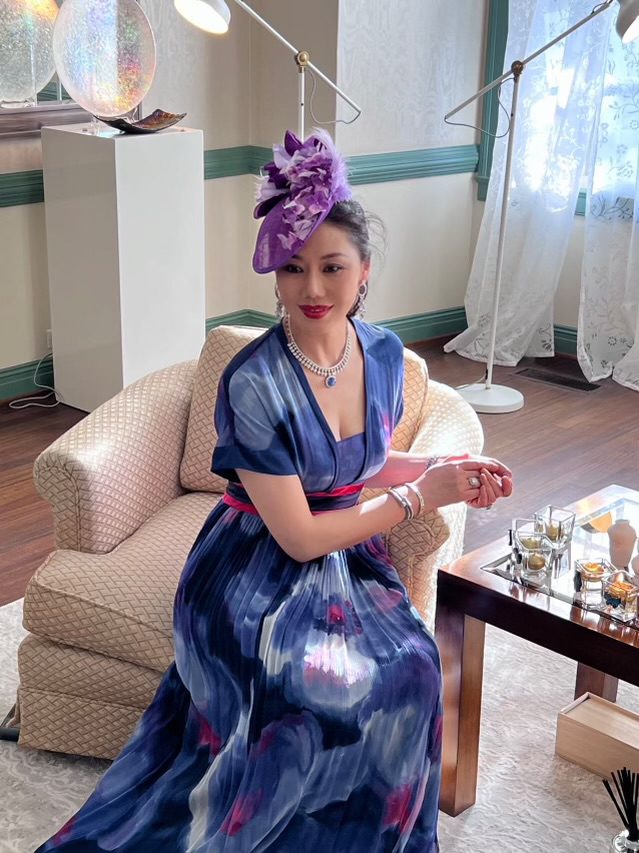
Movies, like theatre, – and what’s more akin to theatre than courtroom drama – are a mirror we hold up to ourselves. They reflect society and popular culture. And because movies, like plays, are written by people with beliefs and convictions, and directors have perspectives and points of view, these often are embedded within. Inevitably, movies can foreshadow what’s to come, effect change, and even change laws.                       
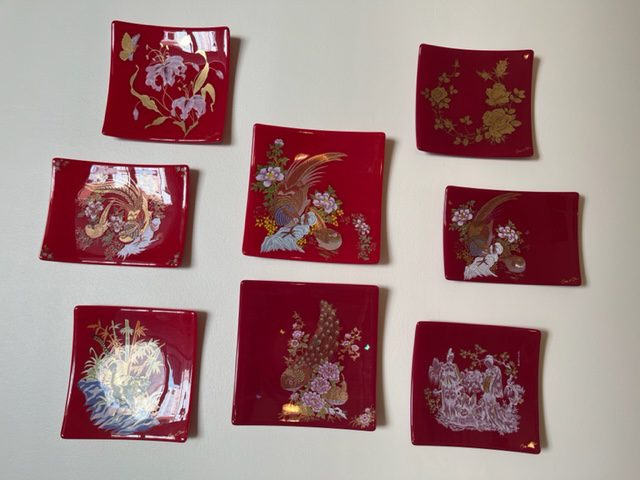
In the movie “Adam’s Rib,” director George Cukor filmed Katherine Hepburn – who played the role of Amanda Bonner – addressing the jury. But because the camera was facing her, in essence, she was speaking to the viewers. It was released  in 1949, two decades before the advent of the women’s liberation movement. In the play and film version of “A Few Good Men,” playwright and scriptwriter Aaron Sorkin successfully and memorably “dramatizes and personalizes an abstract issue such as the legitimacy of using civilian norms to evaluate military discipline.”

“Real to Reel: Truth and Trickery in Courtroom Movies” marries Bergman’s love for movies with his advocacy for the law and its practice. Its dissection of courtroom events is interspersed with asides that reveal his wry humor. It could easily win over even those with an innate distrust of lawyers.        

Belinda Lei’s ‘Not THAT Rich’ Exposes Competition Among Asians

Originally published on 14 December 2021 on Hey SoCal

“Not THAT Rich” book cover | Photo courtesy of Belinda Lei

Asians are often stereotyped as the ‘model minority’ – overachieving, law-abiding, non-complaining people who soar above whatever challenges and obstacles are thrown at them to attain financial and personal success. That their accomplishments sometimes come at great cost to their mental well-being isn’t openly discussed.

This is what Belinda Lei explores in her young adult book called “Not THAT Rich,” which follows the lives of senior high schoolers as they navigate the stressful, highly competitive college admissions period.

The daughter of immigrants from Mainland China, Lei was born and raised in Walnut and Hacienda Heights in the eastern San Gabriel Valley. And while she says she’s grateful that her parents brought her up in predominantly Asian American communities where she wasn’t made fun of and bullied for what she ate and how she looked, it also meant being in a pressure cooker environment.    

From her typical Asian upbringing – multi-generation family members in one household – she knows how Asian kids have to strictly adhere to the path their elders set out for them. “I also grew up with my grandparents, from whom I learned traditional Chinese values and an immigrant work ethic from a young age,” relates Lei. “My family promoted what they deemed best for me based upon what they thought would secure me a happy future – financial success, a reputable profession, and a devotion to family. As a teenager, I admittedly resented the expectations that seemed so unachievable and felt like I was simply following a mold – that of the model minority.

Belinda Lei’s publicity photo | Photo courtesy of notthatrich.com

“However, having recently turned 26 and now looking back, I empathize with why my family pushed me so hard when I was younger. Though I do believe there is a balance to everything (something I explore a lot in the book). With generational and cultural gaps, a lot of communication and understanding can be lost. And with mental health issues on the rise amongst adolescents and young adults too, it’s now more important than ever to try to bridge these gaps and develop common ground on this definition of ‘success’ and ‘happiness.’”                     

Asked if the title of her book is a reference to Kevin Kwan’s “Crazy Rich Asians” book series, Lei replies, “Yes and no. Originally, ‘Not THAT Rich’ was going to be called ‘SGV’ as a nod to the San Gabriel Valley, where the fictional Winchester High is located in. But over time, as I tailored the book to a young adult audience, I began to think about the books I loved as a teenager, like ‘Gossip Girl’ and ‘Crazy Rich Asians.’ For ‘Crazy Rich Asians,’ I was incredibly excited for not only the book series but also its fully Asian and Asian American cast in the movie adaptation.
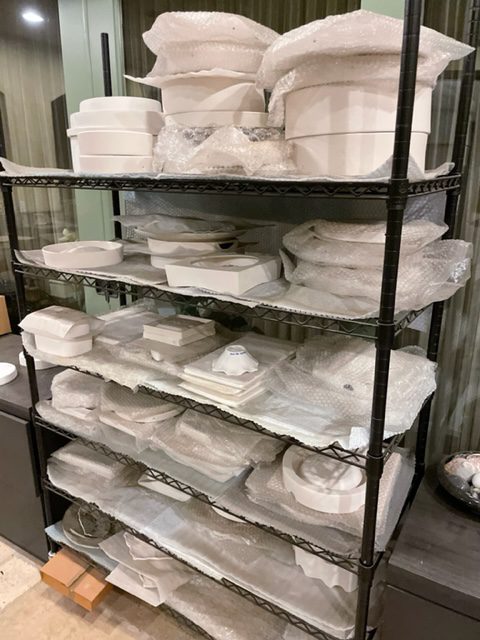
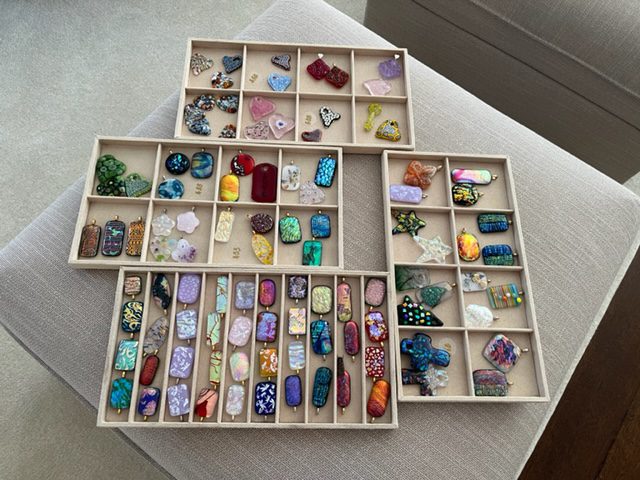
“At the same, I also understood the stereotype that might be reinforced with it – that Asians are crazy and rich. Coming up with ‘Not THAT Rich,’ was a sarcastic response in some ways to ‘Crazy Rich Asians.’ What does being rich really mean? What are the sacrifices and struggles that it entails to achieve what we stereotypically deem as rich? Why do we pursue wealth in the first place? These are all questions I was hoping to address in the book although admittedly, I’m still trying to figure out all the answers myself!”

“I wrote ‘Not THAT Rich’ through the lens of being the book that I wish I had as a high schooler,” Lei describes. “Growing up, there wasn’t much Asian American representation in pop culture, and even when there was an Asian American actor on TV or in a book, I felt like it didn’t reflect my own experience of being a second-generation daughter of Chinese immigrants. I wanted to write a book that encompassed the glitz and glam I sought out in books growing up (like ‘Gossip Girl’ and ‘The Clique’) but also gave readers a glimpse into the diversity of perspectives and experiences that can be found in the world of being Asian American (like ‘Crazy Rich Asians’ to a certain extent, despite it being set in Singapore).

“Most importantly, I wanted the book to be fun. Young adults already have so much on their minds these days from juggling family, friends, education, and just being a teenager. The heaviness cast in 2020 by the pandemic and political turmoil made it even more important for me to write a lighthearted and juicy book that helped readers escape into a satirical world and, at the same time, draw out reflections about identity, motivations, and consequences.”

At the book launch of the Chinese version of ‘Not THAT Rich.’ From left, Monterey Park mayor/councilman Peter Chen; Duarte mayor Sam Kang; South Pasadena Mayor Michael Cacciotti; former assemblyman Mike representing congresswoman Judy Chu; former mayor of Walnut Mary Su; Belinda Lei; San Gabriel mayor Chin Ho Liao; Rowland Heights USD board president Cary Chen; RHUSD board member Agen Gonzalez; and board member Erik Venegas | Photo courtesy of notthatrich.com

But while Lei writes about high schoolers and their experience, her book is centered on her truths and others may not relate to them at all. She clarifies, “’Not THAT Rich’ only represents a tiny sliver of the extremely diverse and dynamic racial, socioeconomic, and cultural diversity of the L.A. region. It’s merely based on the world that I grew up in. I highlight a variety of backgrounds, thoughts, and experiences in the novel, but it doesn’t represent the 20 million Asian Americans who can trace their roots to more than 20 countries.”

“Asian Americans are an extremely heterogeneous group,” continues Lei. “Unfortunately, many people see us as a homogenous one. I was starkly aware of this ‘othering’ while writing it in 2020 and consuming reports about the increase of anti-Asian hate crimes due to COVID-19. How is it that my racial identity can brand me as someone who should ‘go back to my own country’ when the country that I’ve been born and raised in is the U.S.? I hope the stories that I weave can help subvert these misplaced prejudices by highlighting how being culturally American and culturally connected to another country should not be mutually exclusive.

“Lastly, think about who is not represented in the novel. Yes, ‘Not THAT Rich’ is fictional, but it does reflect the demographics of the area that I grew up in and the access and opportunities that I was surrounded by. It is very much a book about privilege. While it does not tackle issues of racism and classism head-on, this ‘fun, juicy, and dramatic’ world, unfortunately, does show how socioeconomic status, race, ethnicity, and educational opportunities are intimately intertwined in America.”

Spoiler alert – to say that “Not THAT Rich” depicts Asian parents in unflattering light would be a kindness. While they realize in the end how they have created a toxic environment for their children and redeem themselves by righting the wrongs, it could have happened sooner. And Lei is preaching the moral of her story by launching the Chinese version of her book so non-English-speaking parents can read it and, through it, develop self-awareness.                 

“I would like for the book to reach a worldwide audience, but my goal from the very beginning has always been that if I can reach only one youth out there and make them feel heard, then it has been worth it,” adds Lei. “In that sense, I’m already proud of how far it has come, and seeing it continue to rise in popularity is the icing on the cake. Target recently began carrying the English edition of my book online and as businesses are opening up more, I’m hoping to get it into more brick and mortar bookshops.”

‘Not THAT Rich’ book in Mandarin | Photo courtesy of notthatrich.com

In January, Lei will be returning to Yale to finish the final year of her MBA degree and will graduate next December. Since her first year there, though, she has been a strategy consultant, software engineer, and is currently a product manager at Citibank. She is also the managing director of an anti-bullying non-profit called Act to Change, which focuses on Asian American and Pacific Islander communities.

“The organization first started out in October 2015 as a national public awareness campaign on bullying prevention among youth under President Obama’s White House Initiative on Asian Americans and Pacific Islanders (WHIAAPI),” Lei explains. “I had been a senior intern at the White House Initiative to help spearhead the launch of the AAPI Bullying Prevention Task Force – a coordinated cross-agency effort to address bullying amongst youth. The report released by the task force resulted in the creation of Act To Change and when it officially became a non-profit in 2018, I joined as a founding board member and now I’m the Managing Director.

“I wear a lot of different hats in my role – I’m responsible for various initiatives like our Homeroom with Tan France series where Tan France conducts virtual school visits to talk about bullying and our most recent bullying survey in collaboration with Next Shark and Admerasia. I can also be hopping on calls about fundraising or making TikTok videos. This doesn’t include being our in-house developer where I help manage the website, acttochange.org, or our digital campaigns. It is like my second job.”

With Lei’s multitasking abilities and various pursuits, it’s difficult to foresee where she’ll be a decade from now. In fact, when queried about that, she confesses, “It’s a tough question that I never know how to answer for interviews! Being in my twenties, I feel like my life is constantly changing and with all my different interests I can see myself in multiple different situations in ten years. If I had to choose a dream state for me in my thirties though, it would be being in the entrepreneurship space and continuing to create products or experiences that make a positive impact on communities.”

We can predict, though, that we might see a sequel to “Not THAT Rich” in the not-too-distant future; Lei’s already brainstorming on it. Hopefully, in it the kids will have gone on to university and beyond, and are on the road to living fully realized versions of their younger selves.

But that ideal isn’t limited to Asians – it is something we all aspire to.     

‘Borderlands’ Now on View at The Huntington’s Virginia Steele Scott Galleries of American Art

Originally published on 6 December 2021 on Hey SoCal

Installation view with There-Bound by Enrique Martinez Celaya | Photo courtesy of Joshua White / JW Pictures.com / The Huntington Library, Art Museum, and Botanical Gardens

It has been a banner year for American Art acquisitions at The Huntington Library, Art Museum, and Botanical Gardens. Many of these new pieces will join other existing artwork at the Virginia Steele Scott Galleries in an ongoing permanent collection display called “Borderlands,” which opened on November 20.

Christina Nielsen, Hannah and Russell Kully Director at the Huntington, declares during the exhibition’s press preview, “Borderlands celebrates the importance of the beautiful and historic collection we have in a way that opens up the story and allows for new voices, new interpretations, and new ways of looking. What you see across the galleries is sometimes a trans-national conversation and sometimes a trans-historic conversation.”

“The Huntington has a responsibility to convey the relevance of historical collections to contemporary audiences and to consider our shared past from multiple perspectives, as we begin to create a vision for the future,” Nielsen said. “Borderlands addresses these goals by presenting a more expansive history of American art in a beautiful and thought-provoking installation – from the re-imagined entrance area through a freshly conceived group of galleries, where objects interact with one another in new ways, drawing connections across media, time, and cultures.”

The Huntington’s Thea Page and Christina Nielsen at the “Borderlands” press preview | Photo courtesy of M.G. Rawls / TheSortsofPasadenaHollow.com / Beacon Media News

Two contemporary artists, Enrique Martinez Celaya, 2020-2022 Huntington Fellow in Visual Arts, and Sandy Rodriguez, 2020-2021 Caltech-Huntington Art + Research Fellow, along with strategic loans helped re-imagine the historical collection from multiple perspectives. Together they assembled the various pieces into four themed rooms – “Homelands,” “Crossing Borders,” “Americans Abroad,” and “Breaking Barriers.”        

Spread out over about 5,000 square feet of gallery space, the exhibition is a reinstallation of portions of The Huntington’s American Art collection works of renowned artists Mary Cassatt, Frederic Edwin Church, Thomas Eakins, and Winslow Homer dating from the late 19th century to the early 20th century. New acquisitions include photographs by modern-day artists Mercedes Dorame and Cara Romero and a notable painting by Thomas Cole.

Dennis Carr, Virginia Steele Scott Chief Curator of American Art, explains, “We have organized these galleries under the theme of Borderlands, which looks at places where cultures came together historically, especially in the late 19th and early 20th centuries. To envision the arts in America in terms of the ‘borderlands’ metaphor, we looked at how artworks have registered the crossing of geographic, political, social, linguistic, and personal boundaries. The history of the United States has been shaped by innumerable borders, whose endurance or dissolution continues to impact us today.”

Martínez Celaya’s “There-bound” — depicting a variety of migratory birds flying across the building’s front windows — is painted inside the expansive glass façade of the Scott Galleries’ north entrance. It creates a stunning dialogue between the artworks inside the gallery with the famous landscapes and living collections at The Huntington. The glassed-in lobby and loggia radiate a chapel-like effect when the work is illuminated by sunlight. Custom-made seating he designed for the space encourages visitors to linger and take in the view of the garden and the San Gabriel Mountains beyond.

“YOU ARE HERE,” a watercolor by Sandy Rodriguez is the thematic anchor in the exhibition | Photo courtesy of M.G. Rawls / TheSortsofPasadenaHollow.com / Beacon Media News

An 8-by-8-foot watercolor called “YOU ARE HERE” is the thematic anchor in the exhibition. Painted by Los Angeles-based artist Sandy Rodriguez, it is a multi-lingual map of the greater Los Angeles area, representing the topography, language, flora, fauna, and land stewardship in the region over time and illustrating the movement and histories of peoples who have called, and still call, the area home.  

The first room in the installation, called “Homelands,” centers on Rodriguez’s work. Raised on the California-Mexico border, she investigates the methods and materials of painting across cultures, with particular focus on indigenous histories and knowledge. In addition to YOU ARE HERE, the room features her drawings of botanical species that yield pigments and medicinal treatments for respiratory illnesses or susto (trauma), reminders of the devastating effects of the pandemic.   

A single accordion-fold book (a traditional Mexican book form) contains records of Rodriguez’s meticulous study of botanical specimens at The Huntington. Also debuting in this room is a newly acquired 1824 painting of Ioway Chief Moanahonga (Great Walker) by the artist Charles Bird King and photographs by Native American artists Mercedes Dorame and Cara Romero.

Thomas Cole’s majestic “Portage Falls on the Genesee” | Photo courtesy of M.G. Rawls / TheSortsofPasadean.Hollow.com / Beacon Media News

“Crossing Borders,” the second gallery in the exhibition, examines the relationship between landscape and American expansion and exploration in the 19th century with paintings by Albert Bierstadt, Frederic Edwin Church, Martin Johnson Heade, and Thomas Moran. Many of the featured artists crossed borders, depicting the farthest reaches of the American continent.

Additionally, this room looks at how artists often erased Indigenous presence, picturing a landscape devoid of human occupation and ready for economic exploitation.

“This colonialist view embodied a land-centered conception of nationhood, at a time when landscapes were becoming profoundly altered by rising development and industrialization,” Carr describes. Here, the recently acquired, Thomas Cole’s “Portage Falls on the Genesee” (ca. 1839) makes its first appearance at the Huntington. This majestic 7-by-5-foot painting captures the epic scale and Romanticism that define the Hudson River School, an artistic movement that Cole presumably founded.    

As the name suggests, “Americans Abroad,” the next room in the exhibition, features American artists working abroad. In the late 19th and early 20th centuries, unprecedented numbers of American artists traveled abroad to connect with Europe’s history and its flourishing modern art scene. Some found greater freedom from the strictures of race, sexuality, gender, and class than they did at home. Artists were especially inspired by Impressionism, the Aesthetic Movement, and Art Nouveau, represented in this gallery by the works of Cecilia Beaux, Mary Cassatt, Thomas Eakins, Childe Hassam, John Singer Sargent, Lockwood de Forest, and Louis Comfort Tiffany, among others. Many artists also adopted non-Western, Asian and Middle Eastern forms and motifs. The newly acquired painting “Bank of the Nile Opposite Cairo, Egypt” (1879–86) by Lockwood de Forest is on view here.

‘Xenobia in Chains,’ a marble sculpture by Harriet Goodhue Hosmer and ‘Hermosa,’ a pigment print by Cara Romero | Photo by Joshua White / JWPictures.com / The Huntington Library, Art Museum, and Botanical Gardens

In “Breaking Barriers,” “Zenobia in Chains,” Harriet Goodhue Hosmer’s monumental marble sculpture, shares the space with Henry Ossawa Tanner’s painting “Daniel in the Lions’ Den,” which is on loan from the Los Angeles County Museum of Art. “These works each speak to the idea of breaking down barriers,” says Carr.

Hosmer’s life, like that of the ancient queen she sculpted, was defined by rebellion. In her 20s, Hosmer moved to Rome to become a professional sculptor, finding support from a circle of creative expatriate women who broke 19th century social expectations by living alone, pursuing artistic careers, and, as was the case for Hosmer, being open about their queer identity. Hosmer became one of the most successful American sculptors — male or female — of her era. Nevertheless, when Zenobia was exhibited in the 1862 Great London Exposition, some male critics wrote that a woman could not possess the skill nor strength to execute such a significant work.

Tanner’s painting in this section highlights the work of artists of color in the 19th century. An African American artist born in Pittsburgh, he gained international acclaim for his paintings, including those with religious themes like Daniel in the Lions’ Den. That he chose to depict Daniel — a biblical character unjustly condemned to death — can also symbolize the systemic persecution of Black Americans, both in his time and ours.

Installation view of Decorative Arts | Photo by Joshua White / JWPictures.com / The Huntington Library, Art Museum, and Botanical Gardens

At the end of the exhibition, visitors reach a loggia where Martinez Celaya’s handmade bench beckons. He speaks about his project for The Huntington and describes the painting on the glass façade. He also graciously agrees to a short interview for Beacon Media to talk about his background and his work.  

Martinez Celaya discloses that he was originally from Cuba and was raised in Puerto Rico. He started out as an artist when he was younger, before becoming a physicist, only to go back to his first love — art. He came to the United States for college and graduate school.

“First, they acquired my sculpture outside — which was also the first time they acquired from a contemporary artist — and that’s how I got to know them,” he relates how his partnership with The Huntington came about. “They then asked me to be their first Visual Arts Fellow; this is almost the end of two years’ collaboration.”  

Martinez Celaya’s painting for the “Borderlands” exhibition combines his interests in literature and philosophy. He expounds, “I’m particularly drawn to T.S. Eliot’s ‘Four Quartets’ because of their circularity; the idea that in every end is a new beginning and every beginning has an ending. This seems quite fitting to the concept of migration and movement – the moment you leave the place you come from, you’re beginning elsewhere. That circularity of time is the theme of this work.”

Enrique Martinez Celaya (on left) and The Huntington’s Dennis Carr is (on right) | Photo by M.G. Rawls / TheSortsofPasadenaHollow.com / Beacon Media News

“Birds are the metaphor for people’s migration, exile, shift – different cultures, languages, and histories moving through the landscape and time,” he continues. “I’m fascinated by what that means — the dislocation and reinvention that come with that. This theme is fitting in California, especially Los Angeles, a place that brings in people from all over the world who came here for many different reasons. L.A. is a city of immigrants, much more than maybe London is. I’m interested in how migration is representative of a certain condition of being in California. That’s why I used California freeways as part of the design, it’s not only the movement of people, but this state has always been the point of intersection for all this movement.”

As for his last project as a Visual Arts Fellow, Martinez Celaya reveals, “I’m thinking of doing the art of exile for the lecture because I’m an exile, and exploring that as an act of reinvention — of leaving something behind and creating something new. I came here to flee the political situation in Cuba. And while the border is now open, I can never go back. You really can never go back once you leave. I came here when I was 21 so I’ve been for a long time. I do exhibitions around the world but I’m now an American. I’m more Californian than anything else.”

Carr hinted during the press preview that Martinez Celaya’s “There-Bound” painting may become a permanent part of the gallery’s collection of American Art. The peripatetic birds he painted — much like him — may have found their home.