Saint Mark’s School Welcomes New Headmaster

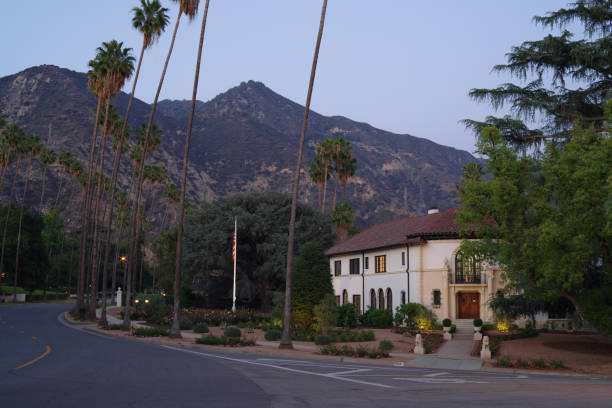
A residential neighborhood along Mendocino Lane in Altadena, with the San Gabriel Mountains in the background.

Originally published on 16 July 2015 in the Pasadena Independent, Arcadia Weekly, Monrovia Weekly, and Sierra Madre Weekly

There is a little known enclave north of Pasadena where life is serene, neighbors still greet each other, and one can practically touch the mountain. This small community is Altadena, a name derived from a combination of the Spanish word “alta”, meaning upper, and “dena” from Pasadena. 

It is a quaint community with horse properties and homes’ backyards open onto trails. There are very few multi-storied establishments and whatever landmarks had stood before, remain to this day – St. Elizabeth of Hungary Catholic Church, the Zane Grey Estate, the Balian Mansion. It is where one can find Christmas Tree Lane, a California Historical Landmark. 

Another stalwart of the community is Saint Mark’s School, founded in 1960 by a group of dedicated parents who saw a need for quality education in a racially integrated setting. It has since grown into a well-respected preK-6th grade school that provides a strong academic curriculum that fosters critical thinking and creativity while instilling in its students a strong sense of moral and ethical responsibility. Dr. Doreen Oleson, who last month retired as its Head of School for 25 years, started her term when there were only a hundred students. While the school’s enrollment has increased to 350, each year it sees applications continue to rise and its geographic area widen with families from not only Pasadena, Sierra Madre, and La Canada, but also neighborhoods such as Silver Lake, Highland Park, and Los Feliz.  

For a while they had contemplated extending the school to reach 8th grade, but they realized that  they are best at their niche and scrapped that plan. According to Oleson, “We consciously decided not to go all the way to 8th grade. We built our reputation as a strong, independent school where kids stay with us for ten years and then they go on to middle school, equipped with a strong foundation.”

Photo taken from Saint Mark’s brochure

Oleson believes a small class size ensures that children get all the attention and support they need to prepare them for middle school. There are 34 faculty members who teach the core subjects, and supplemental studies in the arts, music, languages and physical education. Saint Mark’s also has a librarian, information service technician, counselor and education specialist. 

It was Oleson who was instrumental in putting in place all of Saint Mark’s successful programs and garnering national recognition for the school. She leaves the school with a legacy of turning out students who are not just academically accomplished but who are self-confident, self-reliant, and responsible to themselves, their families, their school, and the world community.

These very qualities in Saint Mark’s graduates were what impressed Jennifer Foley Tolbert while she was middle school director at Pasadena’s prestigious Polytechnic School. When Oleson announced her retirement and the school’s search for its next Head of School, Tolbert didn’t hesitate to toss her hat in the ring. The ensuing national search attracted the most respected names in academia but her qualifications (a Master’s degree in Educational Administration  from Columbia University, a Bachelor’s degree in English from Saint Michael’s College in Vermont) combined with a network of local contacts and experience made her a standout among the applicants.

And so on the 1st of July this year, Tolbert officially took over as Head of School. Asked what attracted her to this school, she replies, “ I know that Saint Mark’s takes seriously its charge to serve as a critical and strong foundation for young children. There is great pride in a Saint Mark’s education. I’m impressed by its founders and the teachers, its strong reputation in the community and the character education that comes with it. The school teaches about what it means to be a good person and a good citizen. As an Episcopal school, Saint Mark’s values a culture of inquiry; it’s a place where we encourage children to ask questions.”

As to what she brings to this job, Tolbert’s says “… my experience in a variety of roles and schools; a lot of energy, a love for children, and new ideas. I come with a network of great mentors and relationships within our local and national school community. I also bring a personal and professional commitment to the same values and belief in diversity and putting children first.”

According to Tolbert “… the first order of business when the staff, administrators, and students arrive in the Fall, will be for me to observe, ask questions and listen. This approach will be important in figuring out priorities and areas that I need to focus on. I plan to get a sense of what’s working well and what needs to be improved upon as a way of informing next steps.”

One important aspect of private school education that Tolbert will be there to oversee is the accreditation process that will be coming up in two years. The results of this process will serve  as the road map for Saint Mark’s future plans.

As Oleson prepared to leave Saint Marks at the end of June, she said, “While I enjoyed the 25 years I spent here, I am happy to go on to the next phase of my life. I am very confident that I am leaving Saint Mark’s in Jenn’s competent hands.” For her part, Tolbert says, “I am honored to be following the footsteps of a warm and beloved presence. I will take very good care of her legacy.”
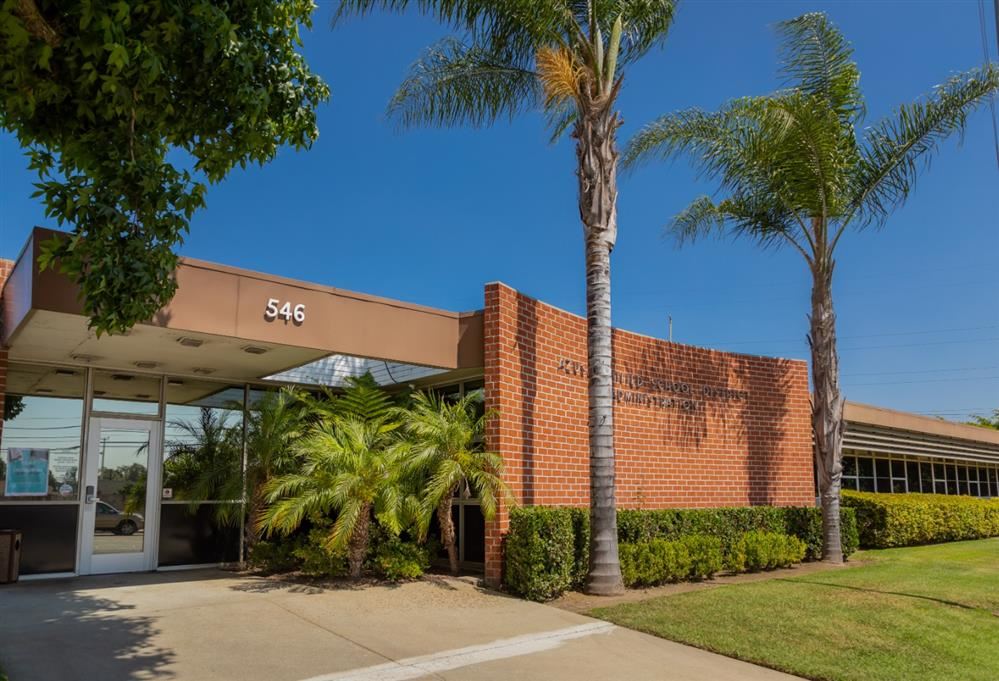
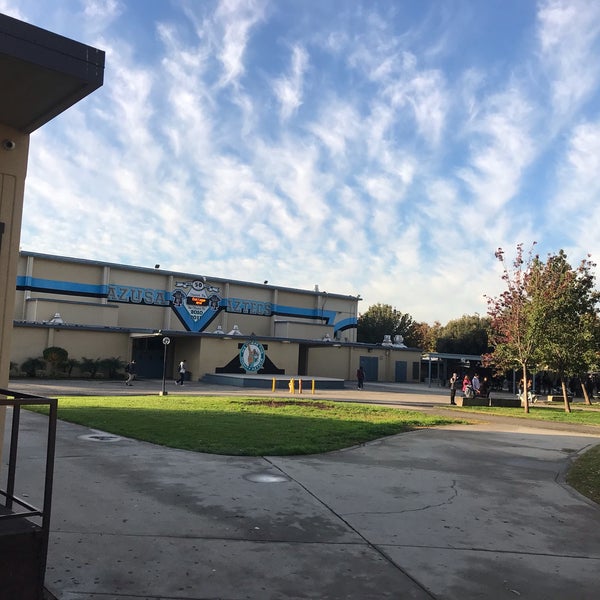
School District Highlight: Azusa

Originally published on 14 May 2015 in the Pasadena Independent, Arcadia Weekly, Monrovia Weekly, and Sierra Madre Weekly

The distinct letter “A” etched on the side of the San Gabriel mountains can be seen for several miles as one drives along the 210 freeway. It stands for Azusa, a city about ten square miles in area, and is home to 12 elementary schools, three middle schools and three high schools, as well as to Azusa Pacific University.

For Dr. Linda Kaminski, district superintendent, that letter “A” might as well stand for the grade she would give the excellent students the area schools graduate every year. This past June, over 650 AUSD seniors received their high school diplomas and earned more than $1.6 million in scholarships. Approximately 75 percent of graduates will be attending two- or four-year institutions, some of them going to highly selective schools like the University of Notre Dame, New York University, Occidental College, Harvey Mudd, Whittier College, as well as 18 Cal State universities and eight UC campuses.

“The district has made it a priority to ensure that we provide our students the training and programs that lead them into courses and careers that will be in demand when they finish their education,” states Kaminski. “This means that the state budget increase we received is used to give the best opportunities to kids in school.”

Some of these opportunities include the incorporation of challenging and rigorous courses in their curriculum. According to Kaminski AUSD high schools offer 19 AP classes with very high enrollment. Azusa High, an International Baccalaureate Candidate School, is one of a few schools in the San Gabriel Valley offering Human Geology beginning in 9th grade with students taking the AP exams for it.       

Furthermore, beginning as early as kindergarten and all the way to 12th grade, students in the district have access to programs geared towards certain specialties. At Azusa High School it is Engineering, where a dedicated pathway was introduced, and with it a lab and 3D printer. A partnership with Northrop Grumman provides STEM students hand-on training alongside professionals. 

Northrop established the High School Involvement Partnership (HIP) program to attract students

to science, technology, engineering and mathematics (STEM) fields as college courses. Each year STEM students build, program, and trouble-shoot their robots as they prepare for a robotics competition. 

On May 19, junior and senior AUSD students competed in Northrop Grumman’s robotics competition . They displayed their newly acquired engineering skills as they maneuvered their remote-controlled robots through pegs and cubes. Four seniors from Gladstone High and another four seniors from Azusa High who have committed to careers in physics, math, computer science and engineering were awarded $20,000 in scholarships from Northrop Grumman.  

Image taken from the San Gabriel Valley Tribune

Azusa High principal, Dr. Ramiro Rubalcaba, sees this program as the students’ preparation for college and beyond. He says “Learning the skills to collaborate, to communicate and to think critically – these skills transfer to any walk of life. Not only are the students acquiring great knowledge, they have the confidence to work together to solve problems.” 

Meanwhile, Gladstone High recently launched a new academic program that will allow students to graduate from 12th grade with a full year of college credits under their belt, while meeting high school graduation requirements and the standard A-G coursework needed for admission to a UC or CSU school. The Early College Program, administered by the Azusa Unified School District and taught by Citrus College instructors on the GHS campus, begins when students enter their junior year.  Over the course of the next two years, they will earn 41 general education college credits, which can then be transferred to a community, Cal State or UC school. The program launched with its first class of 33 students this summer.

Gladstone High School also introduced the medical academy this past school year. The four-year program gives students the opportunity to learn about different medical careers and procedures, and at the same time integrating relevant curriculum into their regular courses like biology, anatomy and English. Successful completion of the four-year course earns students medical certificates they can apply to future professions.

The district has partnered with Mt. San Antonio College and the University of Health Science to implement the medical pathway. Through it, Gladstone High School learners can earn college credits, attend expositions, and observe college students in cancer research and anatomy labs. They even have the opportunity to watch human cadaver dissections.

This year, Slauson and Center Middle Schools are incorporating STEM electives to prepare students to continue in medical/engineering pathways at the high schools. Foothill Middle School has implemented a Pre-IB program.

Sierra High, meanwhile, once again earned recognition as a state Model Continuation School, a distinction it has held from 2005 to 2015. The school’s graduates received over $7,000 in scholarships from donors, including the Extended Slauson Family and the United Mexican American Youth Association. In its graduating class of 59 students, a third were recognized for Honors, High Honors, or academic achievements.   

Susan Brosche, Director of College and Career Pathways at AUSD, has every reason to be jubilant with what they have achieved. As one of the districts that has the Advancement Via Individual Determination (AVID) program, which prepares learners who are traditionally under-represented in college education, their students are more than ready for college, they are ready for life. As teachers and counselors hold college application workshops for seniors and Cash for College workshops for students and parents to help them apply for financial aid and scholarships, Azusa Pacific University holds a College and Career Day for the district’s three high schools. 

In fact, according to Arturo Ortega, AUSD Assistant Superintendent for Educational Services, they hold the best College Night in the San Gabriel Valley. He says, “During College Night, the long lines of students waiting for their chance to meet admissions officers rival those at Disneyland. Students and parents from all over the Los Angeles area, not just Azusa, come to meet representatives from 60 colleges and universities.”

Ortega reports that graduates from AUSD high schools have received unprecedented scholarships, including one full ride to the University of Notre Dame through Quest Bridge. Another notable scholarship, the Horatio Alger National Scholarship was awarded to one senior, and was matched by Carleton College in Minnesota, where she will be studying math and physics in the fall. Their students are also beginning to look outside the country as they pursue higher education. One student announced that he would be going to a university in Puerto Rico.

All these accomplishments are music to Kaminski’s ears. While she is justifiably proud that AUSD students are high achievers, that prestigious universities around the country also recognize them as such, is empirical evidence that it is an established fact.

“Azusa Unified holds high expectations for all students and promotes a college-going culture at every level,” Kaminski says. “The importance of higher education – whether it is career technical training or a four-year-degree – is emphasized not only to students, but to our entire community.”

The district collaborates with staff, parents and community to help students reach their college and career goals, while constantly incorporating new programs and expanding existing ones that have proven successful in enhancing the rigorous instruction and support available for every student.

In addition, AUSD provides ongoing training and resources for parents so that they are aware of the college application process, how they can help their children access scholarships and grants and what is required at every step of the process.

Kaminski leads a district with admirable school administrators, outstanding teachers, engaged parents, generous area businesses, and caring government agencies – educational partners all – who ensure that all their students successfully accomplish their goals and achieve their dreams. Every single one of them richly deserves an “A”.

July College Search Guide

Originally published on 2 July 2015 in the Pasadena Independent, Arcadia Weekly, Monrovia Weekly, and Sierra Madre Weekly

The road to college

Aaah, the long, hot days of summer. They couldn’t come soon enough for your children, even as you have been dreading their arrival!  While you would like them to take it easy and recharge, you wouldn’t want them to play Wii all summer long either (unless they’re like my daughter, who actually did play Wii for three months!).  

Fortunately, there are so many activities available for children of all ages. Schools and organizations in our communities offer day camps and classes catering to their interests and needs. The Summer Camps Industry in the United States is seeing some growth after the last recession. According to IBISWorld, there are 2,736 companies offering camps with themes like academics, acting, and outdoor adventure retreats. These businesses saw a 2.4% annual growth from 2009 to 2014, employing 21,935 people and bringing in $3 billion in revenues. 

The American Camp Association cites several advantages for children to attend summer camps.  The experience helps children develop their social skills as they participate in activities, communicate with other kids, and lead groups. Children build character and gain self-respect when they take on responsibility, rely on their resourcefulness to solve problems, and become resilient when faced with failures. Summer camps advance children’s community living and service skills like caring, fairness, citizenship and trustworthiness.

And then there are the test-prep courses children can take during summer to get them ready for all the standardized exams required for their college application.  In a Washington Post story published in March last year, the College Board announced a revamp of the SAT college admission test and would offer the test prep free. But that announcement was not expected to affect the $840 million test-preparation industry because today’s high school kids want to be as good as, if not better than, their classmates. Nowhere is this cutthroat competition more apparent than in the western San Gabriel Valley where a record number of students are getting perfect scores on the APs, ACTs, and SATs.   

There is an abundance of things to do during the summer months. There is absolutely no excuse for boredom and inertia.

RISING FRESHMAN

Middle school is behind them.  If your children had not shown much interest in reading, you need to encourage them to spend this month reading for pleasure. If, on the other hand, they enjoyed the Harry Potter books growing up, then they have been exposed to the joys of reading.  Persuade them to look for different authors and genres; reading various styles and themes would help them find their own voice. Reading would expand their vocabulary as they gain maturity in their writing and that would help prepare them for writing their college application essay.

RISING SOPHOMORE

As mentioned above, summer is an opportune time for reading. Encourage your children to spend part of their day to this pleasurable and educational pursuit.

Your children should find a community service activity they actually enjoy as they would want to continue doing this, or a variation of it, during the next three summers. They should also attend an enrichment program or find an internship opportunity related to something they are passionate about. 

If your children are so inclined, they can start researching colleges. Nowadays, they can go online and get virtual campus tours of most colleges or universities.

RISING JUNIOR

Your children should be preparing themselves for one of the busiest years of their high school career. They should be immersed in community service work, internships and enrichment programs. Some children enroll in test-prep courses during the summer months to get them ready for PSAT and SAT. They can attend one of the many schools offering these courses with some of their friends to make it less of a chore.

They can likewise start researching colleges and going online to get virtual college campus tours.  This would also give your children some idea about the college application process.

This is the time to read extensively to expand their vocabulary and prepare them for writing their essay for the college application.

Photo by Sofa Tutor for Unsplash

COLLEGE-BOUND SENIORS

Wow! Your children must be so excited to have completed high school and are anxiously looking forward to the next phase of their education. By this time, they should have put in the deposit on the college they plan to attend. Some colleges would be sending out the procedures for class registrations, information on housing, meal specifics, and such other details to the incoming class.

Let your children take the lead on the college moving arrangements and only offer guidance when they ask for it.  In all likelihood, your children would be moving away from home, maybe going to the other side of the country. They would need to practice being independent and the preparations for moving would be a good place to start.

In some cases, your children could be going across the Atlantic, as my daughter did.  In which case, there would be a whole set of preparations that need to be seen to. There is the visa application, which has to be a priority as it could take a month to secure. You and your college-bound student need to communicate closely with the school as their requirements may differ greatly from those of American universities.

Email or call the university to know when to send the tuition and other college fees. Make sure your student has the information on how to register for classes, how to apply for housing, what essentials to bring to school, where to find items that your student would need.

Going to school in another country would take more preparation so make sure you have enough time to spend helping your student settle into his or her new environment. 

At this juncture, let me address another situation.  If your children weren’t accepted to any school they applied to, then they would need to decide if they want to attend a community college. Most of these institutions will accept new students close to enrolment time.  Some of them have arrangements with the UC system so graduates can attend a UC school for their junior and senior year. This has the double advantage of ensuring your children get a college diploma from a four-year university and saving on the cost of their education.

Your children could also opt to take a gap year.  Some college applicants who are on waitlist on their dream university, ask to be admitted one year later (this would only work if your children met all the academic qualifications for admission to the school with only the problem of the university not having the space for your student this year). 

There could also be some instances when your children could gain admission during the spring term to their first choice school (this scenario happens if the school wants to keep their school ranking and your children did not receive a perfect SAT score but they met all the other requirements for admission. If your children have highly desirable qualities that will enhance their student body, they will wait until after they have been ranked so your kids’ SAT scores will no longer affect their place). Confer with your children’s college counselor about how to accomplish this.

Of course, there is the option to take a gap year after high school. This is a growing trend among American high school graduates. One of my daughter’s classmates took a gap year and spent it performing charity work in Africa. Several universities see this as a major boost in an applicant’s resume. They tend to see the applicant in better light – this person has some tangible experience to bring in and, therefore, adds to the school make-up. So whether your high school graduate is going directly to college, going by the community college route, or taking a gap year, recognize their decision as a first step to their independence.              

School District Highlight: Temple City

Originally published on 17 June 2015 in the Pasadena Independent, Arcadia Weekly, Monrovia Weekly, and Sierra Madre Weekly

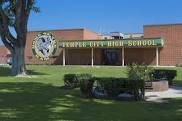
Temple City, a mere four miles big, may be small in area but it lives large in the eyes of its proud residents. Known as the city of camellias, it is home to a number of independent businesses, and has become a destination for Asian, Eastern European and Latino immigrants looking to start new lives.

Its Unified School District was created in 1954 and has since established itself as “A District of Distinguished Schools”.  The California Department of Education has consistently named all the city’s public educational institutions in the top five percent of the state’s schools. In 1957, the first 12th grade class in the district graduated from Temple City High School when its Associated Student Body adopted green and gold as its colors and the Ram its mascot.

An academically high-achieving school, Temple City High offers 20 Advanced Placement classes in Biology, Chemistry, Psychology, Physics, Environmental Science, Calculus AB and BC, Statistics, Micro Economics, US History, US Government and Politics, World History, Language and Composition, Literature and Composition, Art History, Studio Art, Chinese,  French, German, and Spanish.  Students have nine Honors classes to choose from:  Algebra 2; Geometry; Pre-Calculus; Biology; Chemistry; English 1 and 2; Advanced Painting; and Orchestra.  In 2014, 522 juniors and seniors took the AP exams, 84.3% of whom scored above a 3, a full 20% more than California’s total.

Mary Jo Fosselman King, TCHS Principal, is extremely proud of the school’s student body.  About 80 percent of Temple City High students are engaged in various activities outside of academics. A staggering  number of clubs on campus – 68 of them, ranging from the American Cancer Society to Folding Papers for Life to World Wildlife Fund – compete for students’ attention and time. There are academic groups and organizations, performing arts clubs, athletic teams, and school publications. There is also a Peer Listener Program and direct student involvement in the city through a 100-hour Community Service graduation requirement.

This past year TCHS reached the state level in the Science Olympiad competition and participated in the JPL CAD (Computer-Aided Design) Challenge.

Temple City High School’s 40 athletic teams compete interscholastically in the Rio Hondo League in boys and girls basketball, cross country, soccer, swimming, tennis, track and field, volleyball, water polo; boys baseball, basketball, football golf, and softball.

Likewise notable are the high school’s achievements in the Arts. Its Marching Band and Pageantry Corps has participated twice in the Tournament of Roses Parade, which led to an appearance and performance on The Ellen de Generes Show. The high school’s Symphony Orchestra has been invited to take part in the Youth Symphony Orchestra Competition in Carnegie Hall and was awarded the Gold Plaque Award for their performance. The school’s Honors Orchestra was invited to play in Disney’s Concert Hall in recognition of their cello player, Daniel Gee, for his arrangement of George Gershwin’s “Rhapsody in Blue”.

Kathryn Perini, TCUSD Superintendent, is very pleased with their career enrichment programs that offer opportunities for their graduates to move on to two or four-year colleges. She also says that through the district’s Career Pathways program, they are trying to do a better job of putting emphasis on mechanical and technological abilities – something we are losing as a culture. Their curriculum, emphasizing on STEM and STEAM offerings, prepares students from TK through 12th grade, for post-secondary education and for future employment in various fields. They have a partnership with Pasadena City College (PCC), allowing dual enrollment for their students. Recognizing that today’s students are digital natives, the district put a big push on technology, providing them with the tools necessary to actively engage academically. But they did not stop at the technical aspect of their school offerings. They also have broadened their curriculum to give students various creative outlets. They have a hybrid module for multi-faceted individuals creating rich career pathways for students who don’t as yet know where their interests lie. 

Temple City High School has in place an aggressive program to ensure that its students’ accomplishments lead them to a bright future. The 82 teachers and team of six counselors are tasked with shepherding all 2,100 students from 9th to 12th grade to succeed during their years at the high school and then guiding them to admission to the college or university that is the right fit for them. According to Martinne Gonzalez, one of the six full-time counselors, and Amy Sisson, ROP/TCE Technician, their College and Career Planning begins as soon as students step into the campus as freshmen, as they are introduced to the College Admissions process. In their sophomore year, students learn to identify their interests and write their creative resumes. 

When they reach their third year, juniors begin their college search. A Junior Parents Night is held in the Spring to get parents acquainted with the process their children are going through.  Counselors explain how students and parents can utilize Naviance in helping them create their schools list, assess their strengths, evaluate their interests and choose their activities in relation to their college choice. Another Parents Night is held in the Fall of Senior year to connect their summer planning and research to the application process that would be in full swing. 

Recruiters from about 50 colleges and universities visit Temple City High School in the Fall. Seniors are encouraged to attend information sessions and speak to the college representatives who will also be the admissions officers reading their applications and essays.

Temple City High counselors hold workshops on completing the college application, writing resumes, crafting personal statements, and providing interview guidelines. Parents and students also attend financial aid and FAFSA application workshops.   

Students at TCHS are also very savvy about college applications. There is a student-run organization, the College and Career Club, which focuses on raising funds, researching grants and scholarships, and visiting various universities during the spring break. Debbie Singh, another school counselor, serves as Advisor to the club.

This year’s Temple City High School 530 seniors were accepted to close to 200 colleges and universities. These graduates will be attending such highly selective institutions including Art Center College of Design, CalTech, CalPoly San Luis Obispo, UC Berkeley, UCLA, University of Chicago, Cornell University, MIT, Northwestern University, University of Pennsylvania, USC, Stanford University, and Yale University.

Strong parent involvement, robust student engagement, solid support from the school’s administrators and teachers, make Temple City High an excellent institution of learning in the San Gabriel Valley. 

A large percentage of the district’s population originates from a foreign country, with over 38 languages other than English spoken. While this makes for a rich and diversity community, there is an ongoing challenge to assist families with understanding school life and culture. According to Perini, TCUSD is making a concerted effort to reach out to each family, especially the Asian and Hispanic populations. However, despite the varying backgrounds of families, there is tremendous  support from their PTA, which has a very active teacher component. There is a high level of parent interest in the schools and they commit time and effort in numerous school activities. Perini emphasizes parent involvement with their “shared” students. She firmly believes that parents are the children’s first educators and as such, are the district’s critical allies in a partnership that would produce not only academically successful graduates but also as future responsible members of society.  

Unlike other nearby cities with a large business base, Temple City only has local entrepreneurs financing their area; in fact, the Unified School District is the city’s largest employer. While this has been a drawback, it has also been a blessing as it has given them a home-town pride and independence. Indeed, all the ongoing developments spread throughout the city are proof positive that it’s a small town with big plans. And with its countless school accomplishments, Perini is convinced that Temple City is poised as one of the finest school districts in California.          

Students Spend Summer with Shakespeare at A Noise Within


Originally published on 18 June 2015 in the Pasadena Independent, Arcadia Weekly, Monrovia Weekly, and Sierra Madre Weekly

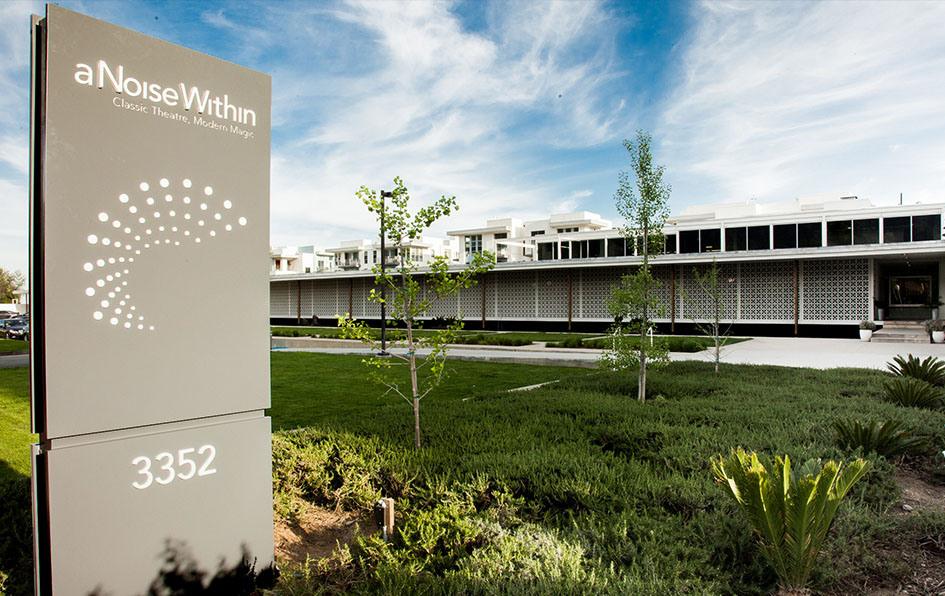
Educational? Check! Enriching? Oh, yes. Peppered with a large dose of fun? Absolutely! At A Noise Within, a classical repertory theatre company founded by Geoff Elliott and Julia Rodriguez-Elliott, summer camp is all of the above. But youngsters also gain a great deal of insight and experience about theatre in the duration of the program.

For five weeks starting June 15, students from ages 6 to 18 learn theatre craft from respected professionals in the field, culminating in a performance on stage on July 16 and 17. Trained actors, choreographers and designers introduce students to acting, improvisation, stage diction, text analysis, kinetic exercises, and stage combat in this intensive, conservatory-style program. 

 “We began Summer with Shakespeare in 1993 as a three-week acting camp,” says Alicia Green, A Noise Within’s Education Director.  “ It has been so successful that we decided to expand it to five weeks this year.  Students are assembled by age (6-9; 10-13; and 14-18). The younger kids can choose to join the entire five-week track or attend any configuration of time that fits their schedule. The oldest ones need to enroll for the entire five weeks because they will be putting on a full production of King Lear.  We have 105 students this summer, up from last year’s 45.”

Summer With Shakespeare covers the gamut of the Bard’s works. During their first week in camp, students learn about Shakespeare’s comedies – Midsummer Night’s Dream, As You Like It. In their second week, they study the tragedies – Macbeth, King Lear.  In their third week, they absorb the histories and romances – Richard II, Henry IV, Henry V.

At 10 a.m. on a hot and muggy Tuesday in June, kids make their way into A Noise Within’s home on Foothill Blvd. They carefully set their lunch bags on steel carts, marked with three age groupings, parked against the wall in the large main entrance hall. They then proceed to their respective class, to start the day’s exciting lesson.

Jeff Block and Ryan Luevano, of Maestro & Magic Productions, are conducting charades with the 10- to 13-year-olds on the main hall.  The group is divided into two teams facing off this morning – Keepers of the Blood Pact, or the Red Team, and Totally Awesome Unicorns, or the Blue Team. Using every magician’s accoutrement (white handkerchief, top hat and wand) a volunteer from one division mimes a magic he or she learned from class and someone from the competing group will guess what trick was performed. A correct guess earns the answering team a point.  It’s a very tight race; the two opponents are head-to-head. The game ends in a tie and everyone is happily satisfied with that outcome.

Sitting in a far corner of the main hall is Audrey Halaas-Voorhees, their class assistant, who will be there all day to make sure the children are well-behaved and are following instructions from their teacher. Audrey is also the person who will be walking them from class to class.

Vega, a first time participant in the Summer With Shakespeare camp, got interested in the program because his older brother attended it for three years. When his brother decided not to go to the camp this year, Vega took the spot. His favorite lesson is movement – something vital to one of his interests, which is dance. He is able to apply what he’s learned during his two weeks here with the steps he has mastered from the Pasadena Dance Theatre. Vega likes ballet, contemporary and ballroom dancing.  

Upstairs, Alison Elliott, is leading a very lively class with the six to nine-year-olds. She has them fully engaged in an imaginary situation at a sports stadium. She calls on some students to   come to the front of the class and act out her instructions:  “Watch only with your hands … with your eyes …with your neck …with your knees.” The little kids perform the actions animatedly and vigorously using only the body parts Alison calls for. And then she asks the ‘audience’ what sport the kids are watching and everyone shouts out ‘SOCCER!’

Meanwhile, their teacher’s assistant, Tomas Dakan, watches quietly and intently from his chair a few feet away. A student at Occidental College, Dakan himself is no stranger to the craft. He enjoys performing and has been involved with the Taproot Theatre Company, a professional, non-profit theatre company in Seattle, Washington.

Olivia is a standout in the six to nine-year-old class even when this is her first time here. She is passionate about the performing arts – she sings and dances, and does gymnastics at her school.  She is thrilled at the chance to learn acting and hopes to one day star in a musical. Olivia is also an avid reader and counts The Tail of Emily Windsnap and The Hunger Games as favorites. 

In the theatre, instructor Carolyn Marie Wright is on the stage with the 14- to 18-year-olds reading lines to King Lear, while teacher’s assistant Kenyon Meleney follows the lesson and gives cues to the students. This group has already finished creating the backdrop for the play and they are now in rehearsal. Their work and talent will be on display at the end of the five-week camp when they stage a full production of King Lear for an audience of family and friends.  

Kayla, who has been selected to play the lead role, is on her second year at Summer With Shakespeare. She says attending this camp has greatly improved her acting. She now knows what looks good on stage, and has learned how to reach her audience conceptually and emotionally.   Highly ambitious and industrious, Kayla has been music training for a year and sings in the school choir. She already has plans for college and a post-graduate degree in musicology.

Watching from high up in the bleachers is Megan Farber, another assistant teacher, who helps out with make-up and special effects. Farber, who is 26 years old, interned at A Noise Within in 2012. This is her first time TA-ing, as she gains some experience in the educational aspect of theatre. She hopes to one day teach in this field.

A Noise Within bustles! It is a-brim with energy and sparkle – from the teachers and professionals sharing their knowledge with the acting campers; the students exuberantly participating in class; the staff of the theatre company going about their daily business. There’s something happening everywhere.

For Green, every day is filled with momentous occasions to educate about and celebrate the wondrous world of theatre with children of all ages. Surely this is what the Bard has intended for his works to endure and be enjoyed, by theatre professional, emerging actor, and for-the-fun-of-it camper alike.        


Pasadena City College’s First Year Pathways

Originally published on 11 June 2015 in the Pasadena Independent, Arcadia Weekly, Monrovia Weekly, and Sierra Madre Weekly

Most 18-year-olds in America reach an important milestone in their lives – graduating from high school and entering college. This significant event usually involves moving away from home for the first time, making them independent people, whether they are ready for it or not even close.

That so many of teen-agers going to college are unsure about how to navigate this new phase on their own was not lost on administrators and teachers at Pasadena City College. Dr. Brock Klein, PCC’s Associate Dean of Pathways and Professional Learning, describes what they observed: “Like other community colleges, PCC has struggled to help students identify their academic goals in a timely manner. A powerful and transformative moment for me was when we convened a large group of campus leaders and they presented their research data that showed that a vast majority of students were not completing their basic skills sequence; over 65% didn’t have discernible outcome or milestone after six years, and almost 20% dropped out before the end of their first year of college.”

These findings led them to create First Year Pathways — a road for leading incoming students to transition to college smoothly and achieve success in school. This program was made possible through resources from the U.S. Department of Education’s Title V grant, Student Access and Success Initiative (SASI) funds. Incoming freshmen enrolled in Pathways get guaranteed priority registration; acquire vital assistance in and out of the classroom from counselors, mentors and tutors; gain access to a study center; and obtain access to the Second Year Pathway. 

First Year Pathways is made up of three components, the first of which is Summer Bridges. They currently host ESL, Design and Math Jams, which is the biggest. This is a one-week, no-cost event which combines creative math instruction with student support services and engaging orientation activities. It is designed to make it a fun way to learn math by making the subject less intimidating for students who are below the required college-level skill. Incoming freshmen attend workshops; they meet faculty, tutors, advisors and counselors to familiarize them with campus life; and get acquainted with their classmates. Students participating in the summer Math Jam found that it really wasn’t about learning Math but about making connections and being comfortable on campus.   

New students then get to meet the Student Success Team of counselors, coaches and tutors, which makes up the second component of FYP. This group of experts is trained to: handle their special needs; assist them academically and personally in getting and understanding their regular course status reports; teach them time management strategies, goal-setting and study skills. Tutors are the most interesting components of the FYP team as they are PCC students who serve as role models or peer guides for the newcomers. They meet with FYP participants throughout the first year of college on a one-on-one basis or in small groups. A tutor also serves as the  Assistant Director for the Math Jam.

The third component, the first seminar, College 1 is a three-unit UC/CSU-transferable course requirement for each FYP student. It includes the “One Book, One College” initiative, which is designed to get everyone to read and discuss one book, and share their perspectives. The First Year Pathways students’ work is celebrated at the end of the program at an all-day Student Success Conference, where they present their research inspired by the book.

There are five different First Year Pathways: The largest is XL Pathway, which is open to everyone; the Athletes Pathway, a program that addresses this specific group; the International Students Pathway (ISP), which is a variation of the XL, but focuses on compliance and visa issues, acculturation, reading, language and an introduction to college; Career Pathways in Design Technology and Media Arts; and the Ujima Pathway which deals with African American culture and history.

First Year Pathways is open to any incoming student within Pasadena City College’s district, which encompasses a wide swath of the western San Gabriel Valley – La Canada –Flintridge, Pasadena, South Pasadena, San Marino, Temple City, San Gabriel, Arcadia and parts of El Monte. Javier Carbajal-Ramos, Program Outreach Assistant, goes out to all the high schools in those cities to familiarize seniors with the opportunities available to them. He outlines the steps for anyone interested – complete the online admissions application; take the online student orientation; take the Math and English placement tests; apply to one of the First Year Pathways; and attend a New Student Counseling Session.    

As Director of the hugely successful FYP, Klein proudly says that at the end of their first year, their evaluation findings showed that students’ success rate was higher than their comparison group. They piloted this program with 300 students in 2011. This year the FYP served almost 1,900 students and it expects to grow to 2,500 students next year.

The San Gabriel Valley is home to a number of very desirable, highly selective colleges and universities that enhance the lives of students lucky enough to gain admission to them. But Pasadena City College stands out as the one institution of learning that actually transforms lives.

A Noise Within Brings the Arts Into the Lives of Young People

Originally published on 11 June 2015 in the Pasadena Independent, Arcadia Weekly, Monrovia Weekly, and Sierra Madre Weekly

A Noise Within, a classical repertory company in Pasadena founded in 1991 by Geoff and Julia Rodriguez-Elliott, aims to produce world-class performances of great works of drama, to educate and inspire the public through programs that foster an understanding and appreciation of notable playwrights, and to train the next generation of classical theatre artists.

Its mission to educate is what led to the creation of the Outreach Program. According to Alicia Green, Education Director, teachers in 19 Los Angeles-area school districts align their curriculum to the theatre company’s scheduled season performances. Students then have the opportunity to experience what they learned in the classroom during the student matinee performance at the theatre, and participate in a post-show conversation with performers. 

Green said, “We care deeply about bringing the arts into the lives of every young person and strive to do so at every opportunity.”  

While it would seem that today’s youth prefers to communicate solely through texting, the reverse is what actually happens once students come in to the theatre. As Elliott put it, “What we found is that young people crave the experience to be part of a live performance. We saw a strange phenomenon – as actors walked by the audience to get to the stage, students reached out to them. They weren’t being disruptive or naughty – they wanted to know that these actors were real, breathing individuals. For some students this is a life-changing event.”

That young people need a sense of belonging and community is evidenced by the exponential growth of their Education Outreach Program since they started bringing them in during their 1993-1994 season.  According to Rodriguez-Elliott, there are now about 12,000 students from 130 different schools, from as far away as Ojai and Victorville, participating in it.

Adults are the typical theatregoers, but A Noise Within’s audience spans generations. Asked how they attract teenagers who grew up reading fantasy books, Elliott said, “Shakespeare is the original fantasy dramatist; he created the most fantastical situations on stage. Students learn his plays in 7th or 8th grade but found them dull and difficult to understand. But his works are not meant to be read, they are meant to be performed. When they are well-done and well-directed, the audience can feel what Shakespeare intended them to feel.”   

Rodriguez-Elliott added, “We have a multigenerational audience – at any given time, about 20 percent of our audience is made up of kids. And kids usually are the ones who have the ability to give themselves into the material, while adults get hung up on words they could not understand.”  

For some students, watching a play is a novel experience. Echoing Elliott’s remarks about the theatre experience as being transformational for kids, Green said, “Many of our students have never been to a theatre before, or seen a live performance. Seeing a page come to life is huge. They can relate to the material in a new, potentially more engaging way. Having the opportunity to interact with the text through on-their-feet study guide activities or in an in-class workshop and then see the show live, followed by a conversation with actors from the show creates an excitement that reading the book in class cannot.”

The 2015-2016 season’s theme of Breaking and Entering, A Noise Within’s 24th, features  protagonists who break down walls, enter unknown realms and search for the truth. As Elliott explained it, “In the context of our new season, breaking and entering can mean getting behind the walls of ignorance, even fear, and summoning the personal courage to step away from old notions in favor of a clear-eyed embrace of a new truth.”

That connecting thread links the six plays: A Flea in Her Ear by Georges Feydeau; Antigone by Jean Anouilh; All My Sons by Arthur Miller; Romeo and Juliet by Shakespeare; You Never CanTell, by George Bernard Shaw; and Six Characters in Search of an Author by Luigi Pirandello;  and entering its fourth season, A Christmas Carol by Charles Dickens, adapted by Elliott.  

A Noise Within is a true classical rotating repertory theatre which, according to Elliott, is unique in L.A. Three different plays can be on stage so someone can experience three very different and diverse performances within a week to a week-and-a-half period. Having a three-quarter stage so that the audience is closer to the performers and becomes part of what’s happening adds to the theatre experience.  

This brainchild of co-Artistic Directors, Elliott and Rodriguez-Elliott, has seen tremendous success since its inception and Pasadena has fully embraced it as part of its flourishing theatre community. Elliott said, “It has been a fabulous journey and it seems the universe is conspiring to make things happen … to make things right. And we will continue the same mission of ensuring access to a diverse audience. What will change is that we will be better at it. We are now embarking on a Five-Year Plan where we hope to improve our infrastructure and increase seating capacity to make it happen.”

For the thousands of students whose lives will change through exposure to theatre, it’s certainly not much ado about nothing.           

June College Search Guide

Originally published on 4 June 2015 in the Pasadena Independent, Arcadia Weekly, Monrovia Weekly, and Sierra Madre Weekly

The road to college

As the school year comes to a close, we will look at what your children have accomplished, and what benchmarks they need to achieve to propel them to the next school year. In the distant past, kids spent their summer just having fun, maybe working summer jobs, and not thinking about school for a while. But in today’s world, that is not what’s happening. First of all, the summer jobs are now being taken by older professionals, who could not have otherwise found gainful employment. Second of all, the race to be the better candidate for a highly selective school does not stop at the end of the school year.   

Today’s kids are constantly trying to fill summer hours with enrichment activities and going to third-world countries to dig up latrines. While I am not advocating that your children just lie inert for three months as a reward for having successfully finished one school year, I would suggest a less frantic pace.  Sometimes, letting their mind and body recharge would do more good than drilling for the PSATs, SATs, SAT IIs, ACTs, APs, and whatever other standardized test acronyms and initials are out there.

Having said that though, there is the reality that the gap between school years is so big that kids forget everything they learned then go back to school totally unprepared for the work. Parents should let their children have a variety of fun, educational, productive activities so they don’t become stale and uninspired. 

FRESHMAN

Ninth grade is behind them! Your children’s grades should indicate that they took high school seriously and that they put all their efforts at getting good marks. They should have already made plans for summer programs, internships and community service work.  They should engage in activities that truly reflect their passion. Instead of joining a group of kids building houses in Guatemala, they might consider an activity that would really mean something to them. Besides, College Admissions Officers see this on all the resumes they receive that your children would not be doing anything memorable. Encourage them to think outside the box, avoid the herd mentality. If your kids enjoy music and performance, for instance, they might consider organizing an original musical to be presented to seniors at your city’s retirement center. 

SOPHOMORE

Your children’s end-of-year marks in 10th grade should have improved over last year’s if they didn’t do well in their freshman year. College Admissions Officers want to see students who continue to better themselves. 

They need to take whatever standardized tests are required – ACT or June SAT subject tests are the norm. They also need to continue the community service activity they started last summer.  While it is advisable to show consistency for Admissions Officers to know that your kids have a passion for such work, they could do a variation of it; they don’t want to be monotonous.

They can start researching about colleges, specifically looking for the colleges offering the courses they want to major in.

JUNIOR

The school year that just ended was a pivotal one for your children as it would be the last full year that College Admissions Officers will see on your kids’ application. It should reflect your children’s efforts at getting the best marks they could muster, and an improvement over the first two years of high school. 

Make sure your children have their community service work, internship, and enrichment program ready for summer. These activities should be a continuation of the previous years’.   

This is going to be their busiest summer with standardized tests like the ACT, SAT, SAT IIs, and APs.  If they have not seen the colleges they are considering applying to, this would be their last chance to visit college campuses. You might consider making it a fun summer trip for the family (my daughter and I spent two weeks visiting universities as part of our summer vacation).

Your children should start thinking about their essay topic; meeting with their school counselor to make sure they have taken all the required courses for graduation and college (the UCs have their A – G requirements that need to be completed); and lining up teachers they would like to ask for recommendations.   

SENIOR

Well, your children have accomplished a major milestone – successfully completing high school and getting accepted into a college or university! This period in their life will never again be repeated, so let them revel in what they have achieved. Give yourself a pat on the back while you’re at it, you have been a major influence in whatever path they choose to take from here.

May College Search Guide

Originally published on 7 May 2015 in the Pasadena Independent, Arcadia Weekly, Monrovia Weekly, and Sierra Madre Weekly

The road to college

This is it – your children have reached the homestretch!  Freshmen are looking forward to their last month, relieved that they are almost done with 9th grade. Meanwhile, it is a bittersweet time for seniors as they anticipate the end of their high school career and spend the last remaining weeks with lifelong friends.

FRESHMAN

This is the last call for your 9th graders who need to improve their grades! Make them focus on staying on top of school and homework.  Get them up to speed on their studies and ready for  final exams. Their final grades will be on their transcript, one of the most important components of your children’s college application.

If their marks are not adequate for college acceptance requirements, they need to meet with their college counselors to arrange for remedial summer classes.

Remind them to get their summer projects lined up. If they need to get approval for a particular service activity they want to pursue, they need to speak to their grade level dean right away. Get them to spend their summer months in programs to supplement an art interest by applying for internships or jobs. Some Arts companies have internships that students have to pay for while there are a few that actually pay their interns to work during the summer. Get your children to research the various organizations in town or in nearby cities.

Educators from 80 selective universities around the country endorsed a seminal study released in January by the Harvard Graduate School of Education which recommended changes in the way students are assessed for college-readiness. Titled “Turning the Tide: Inspiring Concern for Others and the Common Good Through College Admissions”, it advocates for sustained community service in a few well-chosen areas. It isn’t the quantity of activities but the quality that’s important – admissions officers should be looking for depth of students’ intellectual and ethical engagement potential. The summer after their freshman year is the time for your children to find activities that truly speak to their interest and passion.        

The long summer months are also a great time for your children to read. Encourage them to read various genres and different authors. At the very least, reading will help them expand their vocabulary and expose them to different writing styles. This will come in handy when they write their personal statement and essays for their college application.

SOPHOMORE

Sophomore year is when your children have fully transitioned into high school. They are comfortable about how this phase fits into the whole secondary school experience. They have taken the practice PSAT, as a preparation for junior year when the results of the PSAT determine their eligibility for the National Merit Scholarship. They have also taken some AP tests, if they took an AP course.

Hopefully, your children have also done well in their studies, have maintained good grades this entire year, and have prepared for final exams. College counselors expect grades that are consistent, and if their freshman marks weren’t that great, their sophomore grades should at least show improvement over last year’s.    

Make sure your children have lined up their summer activities. These should be an extension or an expansion of what they did in the summer of freshman year. College counselors want to see commitment to a particular interest.

JUNIOR

Make sure your children have registered to take all the required standardized tests for college admissions. The UC system starts taking applications in October of their 12th grade, and if your children are applying through early action or early decision to other colleges, they need to have taken the SAT or ACT this summer. 

Your children’s final grades are extremely important! Eleventh grade is the last complete year that college admissions officers will see on the application and they expect grades that are either consistent with, or better than the first two years’. They need to prepare well for final exams.

SENIOR

If your children are still sweating it on the waitlist of their first-choice college, they need to  ensure their final grades are terrific! They should keep up with all other school and extra-curricular classes and send the college admissions officers any updates on awards and honors they receive. They should ask their college counselor if an additional letter of recommendation might be helpful. Keeping in touch with the admissions office reinforces their interest in attending the school if accepted.

They should have put a deposit on their second-choice school to guarantee them a place for the incoming class in the fall. Although, if they come off the waitlist on their first choice, they will lose this deposit.

Be there for your children to support them whatever the outcome of their college application. It has been a significant phase of reaching adulthood and was a very important learning experience. In the end, what matters is not where they had been accepted; the college they attend will not guarantee success in the real world. It’s how they use their education that determines how well they do in life.

April College Search Guide

Originally published on 7 April 2015 in the Pasadena Independent, Arcadia Weekly, Monrovia Weekly and Sierra Madre Weekly

The road to college

FRESHMAN

There are only two more months left in the schoolyear. Your 9th graders should be on track on all their academic grades and extra-curricular activities. They need to put extra effort into getting the best grades they could muster. They also should have already lined up summer activities – enrichment programs, summer camps, volunteer work or part-time jobs. 

A recent study released by Harvard’s Graduate School of Education calls for schools to emphasize both ethical and intellectual engagement, with 80 of the nation’s institutions of higher learning endorsing it. This means that if they were to implement the recommendations put forth, colleges to which your children will later apply would like to see kids who truly showed commitment to the activities they began. They will want to see one or two important community service work students engaged in for a sustained period of time.

All these – grades, arts, athletics, community work, employment – from 9th through 12th grade, will be recorded on the transcript that your children’s high schools will send to the colleges to which they apply.   

SOPHOMORE

Make sure your children have registered for all the standardized tests they need to take in May or June (Possible SAT II tests for 10th graders are Math, Chemistry, History and Foreign Language. These are the subject tests that selective universities require.) Deadlines are April and May for tests in May and June.  Students are responsible for registering through the College Board website: www.collegeboard.com.

They should line up their summer activities. If they are taking an Art elective, or are interested  in a particular art field, they should consider a summer program in that course to put on their resume.

JUNIOR

This is the last complete academic year admissions officers will see when your children apply to colleges. They want to see grades that are improving from year to year, so the 11th grade final marks should be the highest on the report cards. If your children had gone on college campus tours during spring break, they should also know the academic requirements of the colleges to which they are thinking of applying. They need to look at where they are grades-wise to figure out if the school on their list is a realistic goal.

Make sure your children have registered for the SAT, ACT (www.act.org), SAT II, AP especially if they are thinking of applying through early action or early decision.

They need to line up all their summer activities – enrichment programs, summer camps, volunteer work or part-time jobs. 

SENIOR

Some California universities sent out their decision letters mid-March, while for some students this is month they’ve been waiting for. If your children are lucky enough to be accepted to all the schools to which they applied, they deserve a big congratulations!  You can all exhale now! 

Now comes the part where your children get to choose the school they really want to attend.  During the application process, your children were hoping the colleges to which they applied accept them. Now the colleges that accepted your children would like your kids to choose them!  In this rank-obsessed world of American universities, the schools encourage all students to apply to them (they actively recruit students they would never even admit because the more applications they receive and the more rejections they send out, the higher they’re ranked.) Now, the tables are turned because once your children get the schools’ acceptance letter, these schools would want to ensure your kids actually attend their college. This is the yield: the higher their yield, the higher their ranking.  

If your children are applying for financial aid or scholarships, now is the time to compare schools’ financial aid or scholarship offers. If a particular school really wants your children, you might have the opportunity to ask for a better package than what it originally extended.

If your children have been waitlisted to a school they are determined to get into, they need to respond quickly to let the admissions officers know that they are very interested. Your children should send a follow-up letter to express that the school is their top choice and that they will definitely enroll if accepted.

Demonstrated interest is all the more critical at this juncture as your children want to ascertain the admissions officers keep them in mind. Encourage your children to work with their high school’s counselor to make sure they send the transcript for the first semester, and any updates on awards and honors received after they sent their application. Your children need to keep in constant touch with the admissions officers.

The admissions office requires a decision from accepted students on May 1st. Make sure your children accept the offer of their second choice school where they have been admitted, and pay the required deposit. If your children are later accepted to the school to which they were waitlisted and accept that offer, they will lose the deposit on the other school. But it’s their guarantee that they will be attending a college in the fall.