Sequoyah School Welcomes its First Ninth Graders

Originally published on 17 March 2016 in the Pasadena Independent, Arcadia Weekly, Monrovia Weekly, and Sierra Madre Weekly

In January this year, the Harvard Graduate School of Education released a seminal document titled Turning the Tide: Inspiring Concern for Others and the Common Good through College Admissions,which has the potential to forever alter the college admissions landscape. 

The result of a joint effort among the nation’s most respected colleges and universities, this two-year campaign hopes to promote ethical engagement among students, reduce excessive achievement pressure, and level the playing field for economically disadvantaged students. If its noble mission were to actually come to pass, Sequoyah School, which will be welcoming its first high schoolers this Fall, will be at the forefront of this sea change.

Established in Pasadena in 1958 by local college professors, ministers, scientists, teachers, doctors, and civil servants, Sequoyah School is a place where children can find joy in learning and make a difference in the world. Its founders’ mission is to provide education that challenges the mind, nurtures the heart and celebrates human dignity. The school values racial and socio-economic diversity in its enrollment, and 30 to 40 percent of its students pay below full tuition. Over half a century later, it hopes to extend this same ethic from the K-8 grades into high school. 

Josh Brady, Sequoyah’s School Director, welcomes the timely conversation sweeping the nation’s institutions of higher learning that emphasizes concern for others over building shiny resumes for students aspiring to gain admission to university. He says, “Colleges want to see students who have demonstrated work over time on a particular area that are of service to others. For a while, only the privileged few can afford to do novel things that look good on a transcript.”

“As a Progressive School, Sequoyah starts with the students’ experience and understanding how they are interacting with the curriculum, what’s motivating them, and what’s challenging them, but also making sure they’re thinking of their life outside school. It isn’t just school for school’s sake; it should be about preparing them to become responsible and caring citizens of the community,” Brody expounds.

“I feel, in a wonderful way, more schools are embracing progressive ideals which are being recognized as good pedagogy. Doing it in a very deep way is challenging for high schools where transcripts, GPAs, and standardized testing results have been used as assessment methods.  While these are measurements of learning, they are also imperfect measurements in the face of grade inflation and resume-padding,” he says further.   

Brody elaborates, “Our high school students will develop initiative and self-direction through college preparatory coursework and field studies emphasizing global perspectives and cultural competency. Independent study and collaborative effort will culminate in a junior-year social impact project and senior-year internship.”

Sequoyah’s first high school director, Marc Alongi, explains how their program lends itself to a progressive approach, “We use performance tasks as a way to assess student learning.  Each one has a project with a real purpose. If you’re in Conceptual Physics and you’re thinking about energy and mechanics, you’ll actually be building something that uses mathematics and all the equations that underlie whatever principle you used to come up with that object. It’s like what goes on in medical school where you demonstrate competency, not just taking an exam.”

“In K-8, students don’t get grades. In high school, we’ll have grades but we’ll continue to value goals that are process-oriented. We’ll include specific objectives relating to collaboration, or communication, or inquiry, as well as content standards. Students have seven modules per year that are five weeks long; they take three 85-minutes courses a day so they can be more focused, plus an elective and a social innovation program. At the end of each mod, they’ll get a report that scores their performance according to their mastery goals for each of the subject areas. What’s different also, is that we have interdisciplinary work within the curriculum. For example, students will be taking a Humanities course that integrates history and English, and some of the big themes and ideas could connect very nicely to the conceptual physics class or to the mathematics program,” Alongi explains. 

“We have adopted a framework for Great Challenges which is a set of goals for making the world a better place,” Alongi illustrates Sequoyah’s program. “Let’s look at energy – where we get it, and how we produce it. The implication is that it contributes to global warming. The challenge then is to change that and mitigate its effects on CO2 emissions. We can embed that in our physics curriculum. At the same time there might be a group in the social innovation program who are out in the community talking about how we use energy in L.A., what innovations are taking place to transform technology or consumer behavior, etc. So we have it from both angles: real world investigating on the community project perspective and studying the subject.”

With progressive education in core courses in English, math, history/social science, laboratory science, foreign language, visual and performing arts, and college-prep elective, Sequoyah will meet the A-G requirements of the University of California. It will also offer athletics and participate in the California Interscholastic Federation (CIF) as it fields teams in basketball, cross country, fencing, mountain biking, soccer, swimming and diving, tennis, and volleyball.   

More importantly, though, its four-year Social Innovation Program (SIP) will develop students’ empathy and desire to be thoughtful, effective collaborators and changemakers.  

Sequoyah’s educational philosophy is attracting the attention of accomplished proponents as evidenced by the caliber of teachers who have applied, and agreed to come on board. They come from the best colleges and universities, including MIT and Caltech, Columbia and Stanford.  These educators have held jobs and been involved in careers that span the gamut – a journalist for a television network, counseling psychologist at a Quaker School or an artist in residence in New York, fair trade business entrepreneur, scientist and co-founder of a biotech company in Los Angeles. They have varied interests ranging from organic gardening and amateur beekeeping to cooking Greek food or at Lucques.           

Brody himself is an alumnus of Pasadena’s Polytechnic School. He graduated magna cum laude from the University of Colorado and later received his Master’s in Education from Harvard.  He has been involved in education and human rights in the U.S. and internationally. As an Echoing Green Fellow from 1999 to 2002, he started a project for education reforms in very remote high mountain areas of Nepal. Its objective was to make education relevant to languages, livelihood, and culture of people living in these remote areas where the nearest road is an eight-day walk.

Alongi, a New Mexico native, completed his BA in religious studies and his MA in Teaching at Brown University, and holds a doctorate in Educational Psychology from USC. He is also co-founder and advisor to Ashram Paryavaran Vidyalaya (APV), a model school and teacher training center dedicated to project-based learning, mindfulness, and music, in Uttarakhand, India. 

This diverse group of civic-minded educators come together at Sequoyah School to use their experience and to impart their knowledge to the first class of high schoolers who share their passion for community service in scholarship. And if Brody is correct in saying this philosophy is being embraced by more schools, then through their combined work, future generations of Americans may yet get a chance at a better world.                          

Shaw’s ‘You Never Can Tell’ on Stage at A Noise Within

Originally published on 10 March 2016 in the Pasadena Independent, Arcadia Weekly, Monrovia Weekly, and Sierra Madre Weekly

Students of English Drama would all be in agreement that George Bernard Shaw, who wrote over 60 plays in his lifetime, is one of the most revered writers of all time. This Nobel Prize- and Oscar-winning Irish playwright, critic and socialist influenced Western theatre, culture and politics from the 1880s to his death in 1950.     

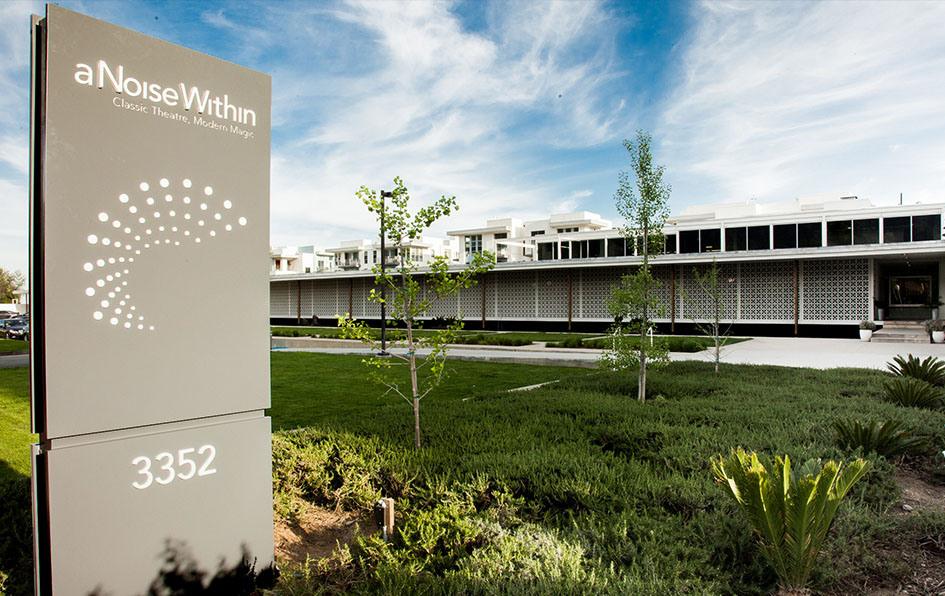
One of Shaw’s earlier plays, You Never Can Tell, provides much hilarity for Drama scholars and theatre enthusiasts alike as it is performed onstage at A Noise Within (ANW), starting March 6 through May 15, 2016.  

Stephanie Shroyer, an Associate Professor of Theatre Practice and the Artistic Director at the USC School of Dramatic Arts, takes the helm for this production.  She describes what’s in store for its audience, “I believe Shaw is telling us that life is hard and we should cherish every moment because, really, you never can tell what good will come our way. This is a wise, warm, and terrifically funny play – after all, what other play about love opens in a dentist’s office, with a practitioner who becomes the major love interest, pulling his first tooth without using anesthesia because it is an extra five-shilling charge?”

This is Shroyer’s first time to direct You Never Can Tell and she is thrilled. “I’m a big fan of Shaw – I love his wit and provocative thinking. I didn’t know this play intimately well but fell in love with it after reading it.   

When we did a bit of research for the play, we found this to have been Shaw’s answer to some people’s request for material with popular appeal for the modern audiences of the late 19th century. While the characters are intellectualizing, it’s lighter in tone. I liken it to serving the play’s message with a spoonful of sugar,” Shroyer enthuses.

Shroyer also imagines some of the characters in this play are what one would expect to see from Commedia dell’arte stock characters, “I want to have the circumstances in the material performed to their fullest – the actors will use overemphasized hand movements and gestures to show the exaggerated points Shaw is making intellectually.”

Longtime ANW company performer, Deborah Strang, who plays Mrs.Clandon, articulates everyone’s sentiment that staging You Never Can Tell is an enjoyable experience, “I loved working with Stephanie when she directed Blood Wedding during ANW’s very early years, and I still enjoy collaborating with her to this day. She is a visual artist and her training as a dancer shows when she asks us to do something that comes from another world, in a way. But eventually we get that her approach is left brain-right brain. And she makes us all laugh. We have way too much fun in rehearsal there must be something wrong.  I’m sure it will all fall apart sometime.”

Unlike her director, Strang isn’t particularly the playwright’s fan. She confesses, “In a way Shaw is too smart for me; he’s very much an intellectual. I’m a little stupider than he – I constantly feel like he’s two beats ahead of me. But this piece might have changed my mind and I might have to reread him from this new angle.  his play and the people in it are so delightful. Whereas a lot of his work deals with ideas, this one is more about the characters. It’s almost like Oscar Wilde’s The Importance of Being Earnest without the irony. It’s a comedy, it’s fresh and delightful.  Every single character is lovable and charming.”  

You Never Can Tell is set in a seaside town and follows the story of Mrs. Clandon and her three children – Dolly, Phillip and Gloria – as they return to England after an 18-year stay in Madeira.  Mrs. Clandon, a woman whose sensibilities are caught between the tug of restrained Victorian manners and the modern ways, raised her children on her own and never told them their father’s identity. Through a comedy of errors, however, they end up inviting him to a family lunch.  Meanwhile, a dentist named Valentine has fallen in love with the eldest daughter, Gloria. But Gloria deems herself a modern woman and declares to have no interest in love or marriage. The play goes about with various scenarios of confused identities, with the wisdom coming from a sage waiter who dispenses it with the phrase “You Never Can Tell”.

This play performs in repertory with Shakespeare’s Romeo and Juliet and Luigi Pirandello’s Six Characters in Search of an Author.  Elliott says of You Never Can Tell, “As Romeo and Juliet shows an aspect of love, George Bernard Shaw shows us love – and heartbreak – in an entirely different, bright and very funny way. This early play of his, before Shavian became an adjective, gives us a chance to take great delight in his outrageous situations and voice with a kind of unique wordsmithing that allows us to bathe in his glorious use of English.” 

Shaw’s imposing body of work that we find irresistible to read or watch on stage – from acerbic satire to historical allegory – clearly exhibits why his plays endure to this day.                  

Clairbourn School’s Engineering Design Challenge

Originally published on 3 March 2016 in the Pasadena Independent, Arcadia Weekly, Monrovia Weekly, and Sierra Madre Weekly

Dr. Fabien Nicaise, a member of the technical staff at NASA’s Jet Propulsion Laboratory (JPL) is talking to a captive, albeit animated, audience of Clairbourn School students who are gathered at the school’s multi-purpose building (MPB). It’s a Thursday evening and he has been invited as the guest speaker for the Finals of the Engineering Design Challenge, the capstone of Science Fair Week.  

Before finals get underway, Nicaise gives his inspirational talk. He begins thus, “I’ve had a chance to take a look at your projects and feel I know all of you at this time. From your displays, I can see all your personalities come out and it’s so fascinating. I’ve seen seemingly trivial projects – like how to drink two beverages at the same time; to making better chew bones for your dog; all the way to building rockets, which are definitely what I care about; to the cookie-making robot. If you ever make that thing working, I want to talk to you and convince you to work for JPL.”  That last sentence earns him a vigorous round of applause.

Nicaise has his audience’s rapt attention as he speaks about JPL’s many discoveries and vast range of activities. During the Question and Answer segment, one student asks Nicaise what he feels is the organization’s best discovery. To which he replies, “There have been so many amazing discoveries that it isn’t easy to choose just one. But I would have to say one of the most valuable is our ‘Finder’ technology. During the Nepal earthquake it was able to detect heartbeat in rubble. It is when we are able to come up with ways to save lives that make our work and organization relevant and worthwhile.” By this time his audience is fully convinced JPL is a godsend to humanity.         

Clairbourn School, a Nursery through 8th grade independent school in San Gabriel, holds its annual Science Fair during the last week of February. Students work on various classroom projects using everything they have learned in their science and math classes. Words of praise coming from a well-respected scientist are music to their ears. It is a validation of their hard work.

The high point of this event is designing an object, using an assortment of materials, that could pass the rigors of multiple testing. The STAR (Science, Technology, and Research) Engineering Design Challenge is a closely guarded secret – it’s kept under wraps for days and weeks until it’s finally revealed to the entire student body. 

There is a palpable sense of anticipation and excitement as middle school science teacher, Joanne Kibbe, announces at 8:30 in the morning on Tuesday, February 23, that their challenge is to build a Clairbourn Cruiser. One by one she takes out from a brown bag, the materials they are to use: one dowel, three Life Savers, two penne pasta, four pasta wheels, eight ditalini pasta, two plug protectors, 20 craft sticks, four rubber bands, four large straws, two skinny straws, two wooden wheels, one deck of cards, five glue sticks, one 10” string, two mini CDs, four skewers, two plastic cups, one 7’X5” piece of cardboard, one gummy bear, and the bag that holds all the objects.

The goal is to design and build the vehicle that will travel the longest distance while carrying an upright gummy bear when released from the top of a ramp. The top-scoring teams from each grade will be invited back for the Finals.    

A brainchild of teachers Mark Edwards and Jonathan Barner, Project STAR is a Science Fair activity that allows students to solve science problems in a hands-on, creative way. It began in 1991 and each year a changing committee, made up of administrators and teachers think up the design challenge which rotates every year to focus on either math, invention or experiments. 

Past winners include: Jeanilou Torrado, an 8th grader who in 1992 built a ping-pong ball launcher; in 1998 7th graders, Stephen Ullom and Alex Hardt, made a marble run, a track for a ball to fall into a cup; in 2001 5th graders, Albert Loong and Josh Elmore constructed a sail boat; in 2009 7th graders, Sarah Lundegard and Kendall Cory, designed a parachute that had the longest hang-time in the air; and in 2015 4th graders, Melissa Pittman and Emily Wen, won for their lunar lander (a capsule to parachute two marshmallows safely to the ground).

On Thursday night, the 25th of February, 7th graders, Lauren Whitaker and Bailey Garcia, joined an elite group of Engineering Design champions. Using an assortment of seeming disparate materials, and through sheer imagination, creativity and ingenuity, they built the best design that passed the most rigorous testing. Their cruiser, named Space Unicorn, traveled 886 cm down the ramp, outdistancing all others. 

Lauren and Bailey, exhausted but breathlessly happy, rejoice in their victory. “This was so much fun!,” they enthuse in unison. “It has been a taxing endeavor because we didn’t know ahead of time what the challenge was going to be and we only had three hours to do it. We had to go back to the drawing board a few times before we came up with the cruiser that worked.”

This is Lauren’s second year at Clairbourn, and Bailey’s third. While they enjoy the annual Science Fair and competition, both confess their favorite subject is History. Our teacher, Mrs. Corwin, makes history come alive and as exciting as if it were happening today,” they opine.         

During morning chapel, right before Kibbe announces this year’s design challenge, Dr. Robert Nafie, Clairbourn’s headmaster, exhorts students, “You will not be asked to simply repeat all the information given to you – this is when you employ your thinking skills. You will be using all your readings, knowledge and experience; this is what separates man from all other creatures on earth. Today you will work in teams; you’ll figure out how to agree on things, talk out different ideas, come up with a solution.  It’s what neighborhoods, nations and international communities try to do – come together to find the best outcome for the most common good.”

Lauren and Bailey prevailed in the Engineering Design Challenge by using scientific principles they acquired in the classroom, and along with their decision-making abilities, applied these to the task at hand. Following Nicaise’s talk that night and with Nafie’s encouragement still lingering in their subconscious, they are moved to say that they aspire to one day create something for the greater good. They will do Clairbourn proud.                       

Arcadia Unified School District Revives Middle School Athletics

Originally published on 25 February 2016 in the Pasadena Independent, Arcadia Weekly, Monrovia Weekly, and Sierra Madre Weekly

Students in the Arcadia Unified School District (AUSD) enjoy a certain cachet when conversations turn to school reputations and student performance. Few in the San Gabriel Valley wouldn’t have heard of the district’s prowess. Its high school is a renowned powerhouse –  in academics, music, and performing arts. The district’s sports teams, however, while competitive in the California Interscholastic Federation (CIF), haven’t won as many titles as its marching band. But that is about to change.

Jeffrey Wilson, Assistant Superintendent for Educational Services, declares “We are committed to having our athletic department mirror the success of our schools’ academics and performing arts. We are determined to develop the whole the child, and that includes strengthening our athletic program.”

AUSD’s middle school sports program was dismantled in1995 when the district transitioned  junior high to the middle school model, made up of 6th, 7th and 8th grades. When this happened, the focus veered heavily towards academics. What were formerly competitive teams effectively became more recreational squads that played in intramurals.

As Laurie McQuaid, Student Services Coordinator, puts it, “There was also a shift in education philosophy at the time that by reducing competition students would have an opportunity to grow in other ways. The belief was that it’s in middle school where kids could identify their passion. But when we did this we essentially disregarded students who had an enthusiasm for athletics and their chance to develop that. We encouraged our youth to excel in academics, performing arts and marching band and provided all the programs towards that pursuit. Why shouldn’t we do the same for sports-minded students?”      

According to Ryan Foran, AUSD Public Information Officer, two years ago the district formed a Sports Enhancement Committee made up of all three middle school principals (Dr. Daniel Hacking of Dana; Dr. Tom Bruce of First Avenue, and Benjamin Acker of Foothills), Scott Bramley, coach and Director of Technology and Information Services, Wilson, several high school coaches and Parent Boosters, and himself. They met regularly to discuss ways to make their athletics as excellent as their academics. And one of the results was the expansion of the middle school sports offerings.   

“Parents couldn’t be more thrilled,” Foran says. “As much as they love the district, they had to find other places for their kids to play basketball or football.  Now we’re offering competitive sports on campus and feedback has been 100 percent positive. We started with basketball because it was too late for football. We organized it in November 2015, and on the 3rd of  December, First Avenue faced off with Dana Middle School for the first time in two decades. The gym was packed; students were so excited to be playing their buddies three blocks away. Now they play each other and their parents get to hang out. It’s school spirit and it’s community spirit.”

McQuaid relates the excitement on that momentous occasion, “There was a traffic jam in the parking lot and on the street. Parents couldn’t get to the sidewalk to pick up their kids after the game. There was so much excitement.”  

This energy was apparent when all the middle school principals, coaches, and other school administrators sat down recently to describe how AUSD will roll out their athletic program. They are holding tryouts for boys’ and girls’ soccer, girls’ softball, and boys’ volleyball to compete this year. Next year, they will be fielding teams in football and girls’ volleyball. And they will be participating in the 210 League, made up of teams from Monrovia, Duarte, Temple City, South Pasadena, and La Canada.

Wilson sums up AUSD’s objective, “We have since discovered that some competition is  healthy and eliminating it didn’t serve our students well. The vision of the district is to address the developmental and cognitive needs of the whole child and athletics play a crucial role. We want to hone our students’ physical skills in middle school so they are prepared for high school competitive teams. A strong sports offering is the logical complement to our existing outstanding high school programs in academics, drama, music, and marching band. All these put together will help in the transition to high school which will prepare them for college and beyond.”

“We have a very active high school booster group that supports our athletics program. Now we are hoping to develop one in middle school to raise money and help with transportation. We have allocated a certain amount of money from our LCAP (Local Control Accountability Plan) to fund sports and we’re using some of that to pay for school or charter buses. A booster group can help in defraying the expense. And the more parents are involved, the better the programs are.  It’s parents who make our programs so excellent,” Wilson explains.

Bramley summarizes it succinctly, “We work and live in a community that supports and appreciates all our school accomplishments. And while we have a good high school athletic program, we want it to be excellent.” And who can argue with that?      

Shakespeare’s Romeo and Juliet as a Street Performance at A Noise Within

Originally published on 18 February 2016 in the Pasadena Independent, Arcadia Weekly, Monrovia Weekly, and Sierra Madre Weekly

Beginning this Valentine’s Day through the 8th of May, A Noise Within (ANW) will be staging the greatest love story of all time – William Shakespeare’s  Romeo and Juliet. 

Directed by Damaso Rodriguez, Artistic Director of Artists Repertory Theatre, Portland’s longest-running professional theatre company, this Romeo and Juliet will be a far departure from how Shakespeare’s work is traditionally presented: as a period piece, with lavish costumes and grand sets. Instead the play will be presented as a street performance, in a graffitied and littered alley with garbage bins scattered about.

The vision for this well-known play came about when Rodriguez visited Havana, Cuba and  met with artists who staged bare-bone productions for a few attendees in humble homes. He relates one memorable evening, “We walked through a courtyard overlooking balconies – it is a beautiful environment but all around you could see peeling plaster from 50 years of decay.  We entered a small house, with light bulbs in tomato cans for stage lighting, the actors wearing their own clothes. The audience was made up of 20 people who came that night. And they proceeded to tell their story. It was a Cuban play which, I think, was about their daily struggles for survival. While there was a language barrier, what united the performers with the audience was the art form. It was a truly transformative moment for me.”

“Theatre companies without much in the way of money put on plays using found objects for props and scenery, and in very low-tech, low-resource performance spaces. The plays with just the actors themselves having to rely on their skills were powerful and inspirational.  In this place where there are few resources, actors and audience link as a community with the compelling need to tell and hear stories joining them as one.”

“I wanted to bring this experience to Romeo and Juliet – costumes will be clothes that actors own, props are whatever they find in the street, and the setting urban. The play will exist in the telling rather than the trappings.” 

“It will be an unexpected environment that in no way resembles the characters’ wealth and class.   I hope that by stripping the play down to its most basic, it will focus on the language and clarify the intention of the characters,” Rodriguez discloses further.

ANW’s artistic director, Geoff Elliott reveals, “When we approached Damaso about directing for us this season, he responded by saying that he has wanted to do Romeo and Juliet because it deals with the most basic of human emotions – love, rashness, hate, fate – and tribalism, which drives just about anything we call news. Humans have passion, conduct war, and kill each other over a tribal conflict the origin of which no one can even remember. And I think that Damaso has found a direct and compelling way to tell this story.”

Rodriguez says, “I hope people who come to watch the play, after a few minutes just try to conceptualize these characters and see them as humans. I hope they see a clearer version of the story and realize the universal essence of Romeo and Juliet.”

“It is a raw and harsh environment, yet we have an optimistic view that their death has brought the conflict between these two families to an end. People will realize this tragedy happened because of two opposing rigid world views – that it took the death of these young characters to end hatred. Romeo and Juliet taught them to look at life differently,” Rodriguez adds.

“It’s arguably daunting to present such a classical material in an unexpected fashion because you could be working with actors who’ve done it before. People who love Shakespeare have certain expectations; also there are scholars who think Shakespeare has to be done a certain way. But in the end all I can do is forget about that. I have to believe that a director has to find an emotional connection and impulsive reaction to it, and share that with his collaborators,” Rodriguez states further.

“It’s quite liberating, actually, to not be restricted by expectations and standards. While A Noise Within has staged Romeo and Juliet twice, I didn’t necessarily set out to find a way to make it very different from what they did before. I didn’t burden myself with that concern; I am merely satisfying an urgent impulse. It’s hard enough to just unpack the language of Shakespeare. I simply want to make the storytelling as clear as he would have wanted for his audience,” concludes Rodriguez.              

During Shakespeare’s time some plays were presented outdoors. Theatregoers had to use their imagination – there were no backdrops, lighting, or props to speak of. Furthermore, his plays were not intended to be read but spoken aloud; the lack of background meant there was nothing to distract the audience from the actors’ words and movements.     

That ANW’s Romeo and Juliet would be staged as they were originally performed four hundred years ago is the perfect tribute to the Bard’s timeless work.  

Azusa Science Educator Selected for New Teachers Academy

Originally published on 11 February 2016 in the Pasadena Independent, Arcadia Weekly, Monrovia Weekly, and Sierra Madre Weekly

Young students are predictably impressionable creatures who emulate the teachers they admire.  And if that were true for middle schoolers at Slauson Middle School in Azusa, they would have the perfect teacher after whom to model themselves in Donna Hawkins.

Hawkins, who has been teaching science for 16 years, has recently been selected as one of 25 educators across the country to be the first participants in Northrop Grumman Foundation’s STEM Professional Development Program. This Teachers Academy is a joint collaboration between the National Science Teachers Association and Northrop Grumman Foundation which aims to elevate STEM education in middle schools in the districts located in Northrop Grumman communities.

This is Hawkins’ third year teaching STEM and has found the experience both stimulating and daunting. Project Lead the Way, an organization that offers training and collaboration for STEM teachers, has helped her immensely. Last summer, she took two classes at Cal Poly Pomona – Flight in Space and Designer Modelling.   

“Frankly, I’m slightly terrified. While this is an exciting opportunity, it also is a big commitment. But my children are grown so I have the time to dedicate to STEM training and teaching. STEM education is such an important part of students’ learning and future.”

The 25 science educators taking part in this Teacher Academy will be attending the 2016 National Conference on Science in Education in Tennessee. During the summer they will participate in a five-day workshop at a Northrop Grumman facility to discuss strategies on how to effectively integrate engineering design work in their classroom.  They will go through a two-week immersive externship at a Northrop Grumman facility where they will be partnered with an engineer or technologist to observe and experience STEM skills in action. What they take away from these activities will serve as their guide when they develop classroom projects with real-world applications.

Hawkins teaches Physical Science and STEM in 8th grade. This year she started a 6th grade STEM class where, she says, there are more girls than boys. She would like to see girls develop a passion for science.

“That’s what I like about teaching – being able to encourage students to take a real interest in science, technology, engineering and math. I try to make the subject as engaging and real-world as possible. I’ve recently started teaching knitting to make them work with their hands.  And there’s some physics involved in that activity even if they’re not thinking it,” Mrs. Hawkins relates.

Throughout her years teaching science, Hawkins has observed, “They either love it or they hate it. STEM is not a required subject and I make them apply for a place in my class. I want to see the students, who really love it, attend my class. With the Common Core in place, I no longer teach to the test. I can slow down a little bit to show my students how science applies to everyday things. We recently learned about mixtures and we broke them down to their basic components. It is such a joy when students’ eyes light up as they absorb what I’m telling them.”

Hawkins has always been interested in science. She relates the winded path that led her to  where she is. “I started out at Cal Poly as a pre-med student and took Biology and Chemistry  but I switched to Food Science and Nutrition. I thought of becoming a dietitian but it required more schooling, which I really didn’t want to do.

“After graduation, I took a job in quality control at a soup manufacturing firm. Then I worked for ten years at Miller Brewing Company. I loved working there but I didn’t want to do it my entire life – I just couldn’t see myself doing that forever.

“So I quit; my kids were small and I decided to spend some time as a stay-at-home mom. One day I was volunteering in my daughter’s kindergarten class and I helped a little boy write a story.  That was my Aha! moment – I want to do this; I want to be a teacher,” Mrs. Hawkins concludes.

Hawkins says she didn’t intend to teach science at first. She went back to school to earn a multi-subject credential and taught 2nd grade. After a year she found she didn’t like it and struggled with the realization that teaching may not be right for her. Nevertheless, she took some science supplemental classes at Mt. San Antonio College at night and then started subbing at Azusa Unified School District. She taught 8th grade science and enjoyed it.

Watching Hawkins today, one would be left with absolutely no doubt that she loves what she does. Recently, she taught her students how to use computer-aided design (CAD) using Autodesk Inventor, a program used by drafters, engineers and architects. By the end of the course, her students will know how to digitally create their own playground equipment.

If science could be this much fun, Azusa students will be breaking the door down to get into  Hawkins’ class!    

Arcadia High School Senior Makes Intel Science Talent Search Finals

Originally published on 28 January 2016 in the Pasadena Independent, Arcadia Weekly, Monrovia Weekly, and Sierra Madre Weekly

Seventeen-year old Arcadia High School senior, George Hou, has a lot of things on his mind right now. This is the time when 12th graders are waiting to hear back from the schools to which they applied. But college decisions aren’t what he’s currently preoccupied with – he’s busy continuing the research project that earned him a spot in the 75th Annual Intel Science Talent Search.

George’s research titled Separating Mixed Signals in Noise-Polluted Environments Using Global Optimization was prompted by his desire to find a better hearing aid for his grandfather. He says “I was very close to my grandpa growing up and enjoyed talking to him. He’s in his 80s and has always been hard of hearing so we had to raise our voices. But in December 2013 he completely lost his hearing and started to wear a hearing aid. Then he stopped using it because it only amplified the background noise.  All of a sudden we couldn’t talk to him and that came as a shock to me.” 

To help his grandpa, George investigated various hearing aids on the market to see if more expensive brands were better at filtering out background noise. But none of them could. Through his Internet search, he came across a book called The Mathematical Modelling and Signal Processing in Speech and Hearing Sciences by a UC Irvine professor, Dr. Jack Xin. He found it very interesting but realized his 10th grade math wasn’t enough to make him understand much of it. 

“I took a leap of faith and emailed the author and, to my surprise, he responded after a few weeks and even offered to mentor me,” George relates. “We developed a good relationship and he sent me various materials to read. That led us to pursue this further – using applied math we were able to use mathematical theory and analysis to develop an algorithm than can successfully separate sounds. We were able to prove that this can be done under specific circumstances. So all background noise can be separated individually – like birds chirping or people talking.”

For the next one and a half years, George worked on his research with Xin’s guidance. During the school year, he spent anywhere from seven to ten hours per week on it. In the summer months, he devoted nine hours a day and twice a week drove to UC Irvine, to confer and to show his progress to Xin. 

While George worked on this project on his own, outside of school, his teachers encouraged him to enter the Intel Science competition. He confesses that the application process for the competition was … “insanely long – like working on five college applications. I almost didn’t want to do it but my teachers spurred me on – they really were the driving force behind me. They all said I had nothing to lose.”

And that prognostication proved omniscient. On January 6, Arcadia High School’s principal received a letter from Intel Science Talent Search informing him that George has been selected one of 300 semifinalists. Arcadia High is one of 191 schools  across the country from which one or more Intel STS semifinalists were named this year.

Arcadia High School

On January 20, George was named one of 40 students to make it to the final round who will attend the Intel Science Talent Institute in Washington, D.C. from March 10 – 16 to compete for top awards. Three $150,000 awards will be handed out; each Intel STS semifinalist and the school he or she attends will receive $1,000.

George is monumentally thrilled to be coming face-to-face with the judges. “I am mentally preparing myself to stay composed when I meet all these Nobel Laureates. I don’t want to embarrass myself by totally geeking out on them when they ask me about my work,” he confides.

I am also very eager to use this as a platform to share my research with other people and spread awareness. There are 360 million people worldwide with disabling hearing problems; maybe my idea will allow other researchers, inventors, and scientists to build off it. With our combined effort we could tackle the problem and create something to help older people hear better,” George concludes.     

Shortly after George returns from Washington, D.C. he will find out if he has been accepted to the schools he applied to. He wants to attend a large research university to pursue Applied Math and Signal Processing, and where he can continue to work on his project. He would like to come up with a robust algorithm and method to implement with current hearing aids.  In the future he would like to be able to design a new generation of hearing aids.   

At the very least, hearing problems could be a source of much annoyance for millions of senior citizens. If George is successful in his endeavor, there could one day be a hearing aid that older people would actually want to wear. And that would significantly improve the lives of seniors during their waning years.   

Dual Immersion Program at Alhambra Unified Schools

Originally published on 21 January 2016 in the Pasadena Independent, Arcadia Weekly, Monrovia Weekly, and Sierra Madre Weekly

There has been a sea change in the employment landscape in the past decade as evidenced by shifts in what’s available to people looking for work. Some positions that today’s youth would one day fill may not even exist yet, or may be located in foreign countries.

The Alhambra Unified School District has been actively finding opportunities for its student population to be ready for 21st century job requirements. This Fall, AUSD is rolling out its Dual Immersion Program to add to its slate of initiatives to make their students competitive in the global community.  

Leading this charge is Jim Schofield, Program Director. He says, “Dual immersion is critical because future jobs could be in other parts of the globe. More and more, we do business with other countries, and knowledge of the local language is essential. An employee who can speak, read, and write in the dialect is much more valuable to the company.” 

Schofield cites research to advance the case for dual immersion, “Although the majority of the world is bilingual, statistics show that only 17 percent of Americans speak another language; 56 percent of Europeans and 36 percent of Brits do. Being bilingual puts one on a higher tier in the American  job market.

“Health-wise,” continues Schofield, “it protects one against diseases like dementia and Alzheimer’s. A 2012 study conducted by the University of California, San Diego, revealed that of the 44 elderly participants who could speak both Spanish and English, those with higher proficiency in both languages were less likely to have early onset of either disease. While it doesn’t necessarily mean that being bilingual is the magic cure-for-all, it may help keep diseases at bay longer. Besides, it makes for a more enriching cultural experience; and being able to communicate is the best feeling in the world.”  

According to Dr. Gary Gonzales, Assistant superintendent for AUSD, the Dual Immersion plan started two and a half years ago as a collective effort by his division. He postulates, “We felt the AUSD is perfect for this initiative because of the diversity of our enrollment. Additionally, if we are to prepare students for participation in a global economy, bi- or tri-literacy is essential.”  

Based on AUSD’s research, students who are bi- and tri-lingual develop a high level of thinking, listening, speaking, reading, and writing proficiency in the targeted language and English beginning in transitional kindergarten through high school.

Dual immersion also inspires students to strive for academic excellence in all subject areas and meet or exceed California State Standards District assessment results. They also develop positive attitudes and appreciation for world languages and cultures, which promote their involvement in world issues.

And so, in March of last year, Schofield, who at the time was the principal at San Gabriel High School, was tapped to head the initiative. He went through a transition period and in July was fully on board. He and other AUSD administrators, instructional specialists, and teachers visited several schools with dual immersion programs to get ideas and to see for themselves how it’s working. 

Schofield remembers one particular school they went to in Venice and relates what they encountered. “We went there three months into the school year and the students were responding to their teacher in Mandarin. It was amazing how quickly they absorbed a new language! This is why we decided to start Dual Immersion in transitional kindergarten, when it is developmentally best to start introducing a different language.”    

AUSD chose Spanish and Mandarin because their research showed that 26 percent of California’s population speak Spanish, with two percent speaking Mandarin. Says Schofield, “While two percent doesn’t sound like a huge number, it is the second most-spoken language after Spanish. And the reality of the state of the economy is that so much business goes to China.  It’s safe to say that the U.S and China have a codependent relationship.”

The teaching method AUSD is adopting is a 90:10 and 50:50 model. The first number refers to the amount of instruction time initially spent for teaching in a partner language. The second number is the percentage of time for instruction in English. In a 90:10 model, the amount of time in the partner language decreases annually by ten percent until a 50:50 balance is achieved in the duration of the program.    

Schofield, describes AUSD’s model, “Each class will ideally comprise one-third English-speaking only students, one-third partner language learners, and one-third native speakers. The Spanish classes will be based on a 90:10 model – in kindergarten all the subjects will be taught in Spanish except for English Development, which is ten percent of the students’ day. As students move on to 1st grade, 80 percent of their subjects will be in Spanish with 20 percent of reading and writing development, and so on as they progress each year until they reach 50:50 in 5th grade.” 

Adds Schofield, “We are comfortable with having students learn using the 90:10 model because Spanish and English are both rooted in Latin and use Roman alphabet; there’s more transference with Spanish.”

The first Alhambra elementary school | Image taken from AUSD website

The Mandarin model, will be 50:50 at the outset. Schofield explains the rationale for this,  “Mandarin is made up of characters which students have never seen or encountered. Students will have Chinese language development, math, science and culture taught in Mandarin; English language, math and social science instruction in English.

“We have also determined to start educating in traditional Mandarin then switch to the simplified version.  I presented our plan to district constituents, parents, and students who wholeheartedly embraced our thinking,” Schofield continues.

AUSD administrators are currently on the curriculum-building stage on their Dual Immersion initiative, deciding on instructional materials. Schofield says they will be holding site meetings with the initial group of parents who have shown interest in the program. “They will have a lot of knowledge and input. In March, we will have the first official parents meeting with those whose children have been accepted into the program.”

To ensure students receive a high-quality education, educators in the dual language program will receive the same training in state standards and strategies all AUSD teachers get. The district will also hire only teachers who are authorized to educate on the specific language.   

They are hoping there would be enough community demand for the program as the district is committed to see it go all the way through 12th grade.  

“It will take 14 years to get there and by then I might be retired. But it would have been a great honor to be asked to lay the foundation for this program. If successful, AUSD students who have participated in it would be better equipped to enter in the competitive global community. And that would be a very satisfactory and gratifying outcome indeed,” Schofield concludes.          

Alex Israel’s Contemporary Ouvre at The Huntington Art Gallery

Originally published on 16 January 2016 in the Pasadena Independent, Arcadia Weekly, Monrovia Weekly, and Sierra Madre Weekly

The Blue Boy by Thomas Gainsborough is so representative of The Huntington (Library, Art Collections and Botanical Garden) in San Marino that it is usually the first piece of art people seek out when they tour the gallery.   

Visitors to the venerable San Marino landmark will either find it delightfully amusing or downright shocking when they see this iconic painting juxtaposed to a decidedly modern selfie of contemporary artist, Alex Israel, wearing a Dodger’s blue jacket. A year in the planning, this art intervention of works by Alex Israel opened to the public on December 12, 2015 and will be on view until July 11, 2016. 

Kevin Salatino, Director of the Art Collections at The Huntington, says, “Not everyone would associate us with contemporary art, but we live in the 21st century so we should engage with all that’s 21st century. People think this mansion must have been exactly what it looked like when the Huntingtons were here, which is so far from the truth; it is not a static house. But there is a certain consistency to the kind of Gilded Age material that we continue to collect that complement what the Huntingtons had.”

It may surprise many to know that The Huntington has done the occasional contemporary intervention before now. Catherine Hess, Chief Curator of European Art, relates, “Our first intervention was a Ricky Swallow sculptures and Lesley Vance paintings exhibition in a small upstairs gallery.  It was the beginning of the earthquake and we got our constituents through that.” 

The decision to approach Alex Israel this time around was Salatino’s idea. He explains, “I have known Alex and have watched his career flourish. He loves L.A. and its iconography, the Hollywood dream machine, and fantasy. And so much about The Huntington is really about fantasy. About a year ago, Alex looked at the house and thought about his pre-existing work to decide which objects are right for The Huntington.

Our goal is to create a dialogue between the old and the new; we want people to see the old through the lens of the new, and vice-versa. Some people might react positively but some might respond negatively, but that would be better than for them not to think at all,” Salatino concludes.

Hess interjects, “One of the biggest surprises, at least in my perspective, after the installation was complete, was how some traditional Masters pieces were remarkably informed by the juxtaposition of Alex’s art, and the reverse. His work, in a vacuum, can read a certain way, but placed in this context, makes it compelling. I’m hoping people will also see it that way.”

Continues Salatino, “This contemporary installation is meant to be engaging, provocative, interesting. Then it goes away and we’ll do another one in a few years. A really good reason for having Alex’s work here is that he has a love affair with this area. It was much the same for Henry Huntington who fell in love with it after he visited. He initially thought he would buy the land and divide it up, but eventually decided to keep it. It was one of the first Beaux Arts residences and was the largest house for miles around until it was supplanted by Aaron Spelling’s mansion in West Hollywood. Alex grew up in the Holmby Park circle, looking up at Spelling’s house.”

The culture of Hollywood and celebrity is very much the central theme in Alex Israel’s oeuvre. Sprinkled throughout The Huntington are paintings, murals and sculptures that reference famous movies or icons from memorable films. It is a veritable scavenger hunt for visitors to the Art Gallery as they find contemporary pieces that have been placed alongside traditional art objects. 

There is the crystal egg on a mantelpiece that was an iconic piece from the 1983 coming-of-age Tom Cruise film Risky Business, for instance. In another gallery, a cleverly concealed bronze prop will undoubtedly cause visitors to do a double-take at one of the most recognizable 1941 Maltese Falcon prop. In the ceramics study room, Alex displayed a mold of an Oscar statuette – the very quintessence of Hollywood and celebrity.

The most dramatic of Alex’s installation is the transformation of the staircase where a fragmented sky backdrop mural bursts. Enthuses Salatino, “It is an Aha! moment – with drama and theatricality in a way that is not intrusive but complementary.  It’s stunningly beautiful and it looks like it’s been there forever. It’s deliberately titled backdrop because it is a backdrop for films. It serves as one for every visitor as if each were an actor in a film.”

During the holiday season The Huntington’s Christmas tree stood in this area, which Alex decorated with his self-portrait in miniature. It isn’t an ego-trip but a celebration of celebrity.   

Alex likens today’s selfies to the Grand Manor portraits of the early 19th century. His Dodger blue-jacketed selfie isn’t meant to be tongue-in-cheek – rather, it is his homage to The Blue Boy. Hopefully, art enthusiasts appreciate it as such.    

January College Search Guide

Originally published on 7 January 2016 in the Pasadena Independent, Arcadia Weekly, Monrovia Weekly, and Sierra Madre Weekly

The road to college

FRESHMAN 

Typically, the beginning of the year marks the halfway point in the schoolyear.  First semester grades would soon be released, if they had not been sent out yet. If your 9th grader’s marks are not great, he/she would need to use the second semester to better them as it’s the end-of-year grades that show on the transcript. A student’s grades are a very important, if not the single most important, component of the college application. 

Make sure your children are continuing  their extra-curricular activities in arts or sports, with concentration on one or two where they excel. They shouldn’t attempt to dazzle college admissions directors with their range of interest, unless they are a budding Leonardo da Vinci and have mastered every single craft. Finding something they are truly passionate about and doing it throughout their high school years show their commitment. My daughter realized she loved acting only when she reached 11th grade. Thus, she didn’t have enough time to engage in it, and her resume reflected that. 

SOPHOMORE 

This is your student’s second year and by this time he/she should have fully transitioned into high school. He/she needs to put extra effort into weak subjects and solidify grades for the second semester. Your children should continue their focus on academic performance skills, sports participation and arts involvement. They should also start studying for the PSAT (www.collegeboard.com). Taking a practice PSAT in 10th grade gives them the chance to identify weaknesses then work on them before taking the NMSQT (www.nationalmerit.org) in 11th grade.

At my daughter’s alma mater, students meet with their grade level dean in the winter of 10th grade to discuss year-end testing options and junior-year course options. Sophomores enrolled in Advanced Algebra and Pre-Calculus register to take the SAT II Math Level 2 exam in June of their sophomore year. Those enrolled in Functions, Trigonometry and Advanced Algebra (FTAA) take this same exam in June of their junior year, after completing the Advanced Topics and An Introduction to Calculus-Honors (ATIC-Honors) course. Sophomores who are thinking of going into science, medicine, architecture and engineering are encouraged to take the SAT II exam in Chemistry in May or June of their sophomore year. Your student should also start lining up summer activities.

JUNIOR 

The second semester of junior year is significant as it is the beginning of the college application process. From their college research, students are now ready to start planning a visit to colleges. They can even do their initial campus virtual tours online www.campustours.com, www.CollegeProwler.com, www.SmartCollegeVisit.com, www.YOUniversity.com. College

counselors usually recommend that students use their spring break to go to several different types of schools. A good list should include a small liberal arts college, a medium-sized research university and a large state university to let them have a feel for what “small” or “large” school means. They should be able to experience firsthand if a large city like New York makes them feel alive and vibrant or if it totally overwhelms and scares them. They need to experience if a school with 20,000 students is the right setting for them. They don’t necessarily have to visit the schools they are actually considering applying to, this trip should give them ideas about what they are looking for in a university. Once they’ve established  the elements they are looking for, they can start making a record of schools they would put on their list of colleges to apply to. 

SENIOR 

All college applications should have already been sent out for the January 1st regular decision/admission deadline. Some universities, like Georgetown, have a later deadline.

Parents should already have filed their income tax returns; get ready to submit FAFSA (www.fafsa.ed.gov). Apply for scholarships. There are several websites to help you with your search like www.scholarships.com, http://www.collegexpress.com, www.scholarships360.org, http://www.affordablecollegesonline.org/graduating-debt-free.

 As much as I want to say “Tell your kids to breathe a sigh of relief because the hard part is done,” the reality is that they will be anxious because all that’s left now is the wait. And, oftentimes, the waiting is more difficult than the application process. Just be there for your kids to remind them that they have done a great job and they should let the admissions professionals do theirs.

The months from January through March can still be a time for your children to do something to help their cause. Mid-January is when high schools get their first semester grades finalized. If your student’s mid-year report is particularly spectacular, this could be a very good thing especially if he/she is applying to a highly competitive college. When your children’s high school sends the grades, have your children follow up with an email to the area representative telling them about their hard work and interest in that college.

If your children have been deferred at a college when they applied through early action or early decision, it is advisable for them to send in an additional teacher recommendation, but only if this supports their application. Likewise, if your student has received any notable honors or made any significant achievement, he/she should let the admissions officers know by email.     

Having done all these, you and your children will now just have to wait patiently for the process to play itself out.