Originally published on 30 September 2017 in the Pasadena Independent, Arcadia Weekly, and Monrovia Weekly
Melodey and Marc Soong | Courtesy Photo
“Music is a moral law. It gives soul to the universe, wings to the mind, flight to the imagination, and charm and gaiety to life and to everything,” Plato wisely declared.
For San Gabriel Valley siblings, Melodey and Marc Soong, the influence of music is obvious. Music is part of their life; they grew up surrounded by it. Melodey was four and Marc was three when they started taking piano lessons at the former Yamaha School in Arcadia. They both are currently studying under the tutelage of Professor Daniel Pollack and Vladimir Khomyakov of the USC Thornton School of Music.
On October 14, 2017 Melodey and Marc will share their love of music as well as support a cause – they will hold a piano concert to benefit Michael J. Fox’s (Team Fox) Parkinson’s Disease Research (click here to donate). To be held at the First Church of the Nazarene in Pasadena, the concert will feature pieces ranging from the Baroque to the late Romantic period.
These various piano competitions and festivals have taken Melodey in several parts of the United States and abroad. She has performed in several venues – the Isaac Stern Auditorium Perelman Stage and the Weill Recital Hall at Carnegie Hall in New York, Zipper Concert Hall in Los Angeles, and Sala dei Notari in Perugia, Italy.
A twelfth grader at Mayfield Senior, Melodey is a member of the school’s Instrumental Conservatory. But she has other hobbies besides playing the piano; she also enjoys reading and writing. She satisfies her writing interest being a reporter and copy editor of Mayfield School’s newspaper.
While playing the piano is an avocation she would always nurture, Melodey intends to pursue a medical degree. She interns in the Nursing and Music Therapy departments at Arcadia Methodist Hospital.
Like his sister, 14-year-old Marc has reaped the same laurels and has added other awards – Classics Alive Young Artists; the Redlands Bowl Young Artists; and the Los Angeles Liszt Competitions – to the list.
The venues where Marc has played the piano include the Isaac Stern Auditorium Perelman Stage and Weill Recital Hall at Carnegie Hall, the Zipper Concert Hall, and the Redlands Bowl.
Marc was the recipient of the 2015-2016 Young Musician’s Foundation Award’s David Weiss Scholarship. He also volunteers with the Pasadena Symphony Orchestra.
Music isn’t Marc’s only pastime, he is also keen on reading, swimming and playing video games. An avid math and science enthusiast, he has attended several programs at Caltech and participated in the National Youth Leadership Forum: Explore STEM. He is currently a sophomore at Stanford University’s Online High School.
The Team Fox concert is Melodey’s and Marc’s very personal way of sharing music with everyone.
Melodey and Marc state, “Music is a constant in our life and is something we could always come back to; it also serves as a way to connect with others. Music has the ability to lift other people’s moods – bringing joy and happiness to those who may not be in the best spirits. Music has the power to transform, to touch, and ignite emotion.
We are incredibly fortunate to have been exposed to music early on. We are so very grateful for this privilege and we would like to give back to the community. Our grandmother had Parkinson’s Disease so we decided to hold a concert to benefit research into it. We hope that through this benefit event we can raise funds and awareness for Parkinson’s.”
To be held from 5:30 to 7:00 at First Church of the Nazarene’s Lee Chapel, the first part of the concert features solos from Melodey. She will perform J.S. Bach’s Prelude and Fugue in D Minor; W. A. Mozart’s Sonata No. 8 in A Minor; Widmung/Dedication by R. Schumann/F. Liszt; P. Tchaikovsky’s Dumka, Op. 59; and Black Earth by F. Say.
There will be a short intermission after which Marc will take his turn on the stage. He will be playing S. Rachmaninoff’s Prelude in D Major; Hungarian Rhapsody No. 12 in C-sharp Minor by F Liszt; S. Rachmaninoff’s Piano Concerto No. 2 in C Minor, accompanied by Dr. Vladimir Khomyakov; and Paraphrase Figaro’s Aria from the Barber of Seville by G. Rossini/G Ginzburg.
Melodey and Marc will conclude with a piano duo (two pianos, four hands) and play F. Liszt’s Hungarian Rhapsody No. 2 in C-sharp Minor.
The repertoire includes a variety of solos, duo, concerto, and duets to delight the audience with different styles and periods of music. It would be an evening filled with enchanting music – that it is also an event to benefit those afflicted with Parkinson’s Disease is fortuitous. Even Plato would approve.
Originally published on 27 September 2017 in the Pasadena Independent, Arcadia Weekly, and Monrovia Weekly
Boston Court Performing Arts Center in Pasadena ends its 2017 season with the West Coast premiere of Julia Lederer’s ‘With Love and a Major Organ’, from September 28 through November 5, 2017.
Directed by award-winning co-artistic director, Jessica Kubzansky, ‘With Love and a Major Organ’ is a whimsical, quirky, and wildly original play that dissects physical human interaction in the age of technology. Its title alone is startling and it was what attracted her to the play at the outset.
Says Kubzansky, “I love this title and I think it’s deliciously funny. The story is about trying to connect in our ever more virtual world. There’s a character in the play who has been enclosed for years in her own privacy. She’s seeing an online therapist, Google Shrink, who recommends that she see more people so she speed-dates online. What’s contrapuntal to this is that she falls in love with a stranger she meets on the subway. She then gives her actual beating heart to this man and he disappears on her.”
‘With Love and a Major Organ’ follows the protagonist’s quest to retrieve her heart, accidentally cracking open those of others she meets on the way. The play is eccentric and edgy comedy about what it costs to give your heart away, and what happens when you discover you actually have one.
“To me one of the most profound ironies of our time is that we have never been more connected yet we have never felt more isolated,” Kubzansky declares. “There’s this amazing animation that someone made about people running around looking down on their phones – technology is changing their lives but they’re completely missing out on life around them. Technology is significantly improving our lives while considerably reducing our ability to connect.
Julia’s play is both truly hilarious and powerfully heartbreaking. She’s mining both the absurd lengths to which love will drive us and the deep loneliness that emanates from protecting our frequently bruised and broken hearts. Her text is poetry for the theatre and she pushes metaphor to its most surreal and deeply truthful limits.”
Boston Court Performing Arts Center was founded in 2003 as a non-profit arts center dedicated to new and original works by living artists. Led by co-artistic theatre directors, Jessica Kubzansky and Michael Minetti, it has successfully established its place among the numerous theatre companies in Pasadena.
“The journey has been exciting, challenging, and wonderful,” proclaims Kubzansky. “I’ve been extraordinarily privileged to have founded Boston Court with Michael. We had the thrilling task of creating the mission and vision for this place – it’s always stimulating for an artist to create what you want to share with the world.
We knew when we started that Boston Court is only four blocks from the Pasadena Playhouse; we realized we needed to offer something different. Frankly, the design of the place dictated many things: it’s beautiful but it’s also very intimate. It’s important for us to do risky, adventurous work because we have fewer seats to fill; we can afford to take chances in our programming.
Also, it’s imperative for me to do work that challenges both the artist and the audience – plays that encourage each artist to passionately pursue his own unique voice and vision. We don’t want cookie-cutter productions or something our audience can see somewhere else. We look for a variety of styles and we significantly reinvent the classic. The only time we wouldn’t re-envision a classic is when it’s highly theatrical, textually rich, and visually arresting on its own – something we call a ‘Boston Court play’.
We put on four productions per season – usually one wildly re-envisioned classic; a world premiere; maybe one we had in our New Play Festival that subsequently ends up on our stage; and one that’s timely and needs to be done now. It’s all about passion and balance, but always the mandate is the same – it has to be highly theatrical, textually rich and visually arresting.”
Kubzansky and Michetti actively seek out like-minded collaborators. She states, “When Michael and I meet with directors we would like to work with, we ask ‘What has been burning a hole in your gut? What do you need to talk about right now?’ Both of us have really astonishing experiences when it comes from our gut.”
According to Kubzansky it took a while for them to fully grasp what sets Boston Court apart from other theatre companies in the area. She states, “It was much later, when our season had entirely world premieres and we had to extend every show, that it became clear to us that our audience liked the plays they’ve never heard of before. People now know that when they come to Boston Court, they will have a quality ride; they are confident that no matter what they see here it’s going to be a great evening.
Because our work is adventurous, it occasionally divides or offends people. But they also trust that they will see artistic excellence and the experience will be unlike what they get elsewhere. It’s incredibly important to us to take part in a cultural conversation that reflects the world as it is today. We ask our audience to be moved and to think – to crack open their heart and mind a little bit.
In Los Angeles, you see a play, get in your car, and drive away. But in New York, after the show you go to a bar next door, bump into people who also saw the play, and have a discussion about it. We want to bring that kind of engagement in the L.A. theatre scene. Every Friday we have complimentary wine, sparkling water, and Chex Mix to encourage people to sit in our beautify lobby and have a dialogue about they had just seen.
There’s a misconception that theatre-goers in Los Angeles don’t have the same passion for it as New Yorkers. It may be true that a much larger percentage of the population on the East Coast sees a play on any given night – it’s so easy for them to go on the subway then get off after four stops. Los Angelenos are also passionate devotees and there are so many choices of theatres here, too. However, I think that geography has something to do with it – if you live in Venice and want to see a play here, you have to make a commitment in terms of the drive. Fortunately, Boston Court attracts subscribers from far afield – which is very thrilling. Pasadena is a beautiful place; it’s a really complex community and it’s exciting for us to be here.”
Before Boston Court existed the place it now occupies was a parking lot. It was purchased by philanthropist, Z. Clark Branson, to build a state-of-the art, intimate facility designed to bring artists and audience closer together. The 75-seat Marjorie Branson Performance Space and the 99-seat Main Stage are sites for the theatre’s season of bold, risky theatre and its eclectic, diverse music series. It is also the home of an annual New Play festival, an Emerging Artists Series, as well as Upfront, a rotating visual arts program.
As Kubzansky relates it, the theatre company’s name was born out of their desire to come up with a moniker that conjures permanence, heft, and gravitas. “We wanted something iconic like the Actors Theatre of Louisville or the Pasadena Playhouse – both of which were already taken. When we realized our building is located on Mentor Avenue and Boston Court, a lightbulb lit; we became Boston Court Performing Arts Center. We thought people will understand when they see that we named it after the street we’re on.
What’s funny is that after we had our logo created, stationery printed, and signs put up, we received a letter from the City of Pasadena informing us that our address is in fact 70 N Mentor Avenue; Boston Court is actually our driveway,” Kubzansky says with a laugh.
That inadvertent address error couldn’t have deterred its founders’ resolve to make their mark on the city and theatre. Boston Court Performing Arts Center stands today as a stalwart advocate of artistic vision and inventive expression.
Originally published on 18 September 2017 in the Pasadena Independent, Arcadia Weekly, and Monrovia Weekly
Richard and Eric Dong, 17-year-old and 15-year-old residents of Arcadia and students of San Marino High School (SMHS), learned early on that one’s life on earth should be spent in pursuit of meaningful endeavors.
When they were still very little, their parents, Ed and Charity, instilled in Richard’s and Eric’s young minds the values they should act on throughout their lives – to make worthy contributions to the community and to society in general.
Ed and Charity served as exemplars of the virtues they preached and lived up to their ideals. They were born in Mainland China, where they were educated and raised with Chinese traditions. Later, Ed worked as Group Vice President, China General Manager and Founder of China Operations for a US-UK high tech company from 1994 to 2013.
In 1991 the United States and Chinese governments jointly sponsored the establishment of the first China MBA program at SUNY-University of Buffalo. It was part of the two countries’ political reforms and open-door policy to train China’s young and future leaders. Ed was one of the students who completed a master’s degree at the school.
Charity and Ed immigrated to the United States in 1997; their two boys were born here in 2000 and 2002.
In 2015, Ed attended Harvard University’s Kennedy School of Government for his Master’s in Public Administration (MPA) – the fulfillment of a 25-year dream. He earned admission to the school in 1991 but deferred enrollment because the small scholarship he was awarded wasn’t enough to cover the full tuition and he didn’t have the financial means at the time to pay for the rest.
“Our two boys were raised and educated here. As an immigrant family with cross-cultures we appreciate what the United States stands for; and we respect and promote American values,” Ed states. “I want Richard and Eric to learn both cultures and be instrumental in a future of friendship and cooperation between China and the USA.”
As a business leader and community activist, Ed took Richard and Eric with him meeting clients, joining exhibitions and seminars like the JFK100 Symposium at Harvard Kennedy School. The young children enjoyed sharing in their father’s work and involvement in both business and community.
“I was away a lot, traveling on business, that looking back, I regret not having devoted more time with them when they were younger,” confesses Ed. “Now that Richard and Eric are teenagers, I am slowing down to spend time with them before they go to college.”
Charity is glad to share the post she has single-handedly held for a while. During the years Ed was pursuing his MPA and flying internationally for his work, the responsibility of raising the two young boys fell largely on her shoulders. It was a job she did admirably – Richard and Eric grew up to be outstanding scholars, exceptional musicians, and fine athletes.
Richard graduated from Clairbourn School in 2014 | Courtesy Photo
Richard went to Clairbourn School in San Gabriel from kindergarten to eighth grade then to SMHS. A high school junior, he gets excellent grades and is on the school’s swimming and debate team. Also a brilliant pianist, he has been playing the instrument since the age of six; placed second in the 2013 American Protégé International Competition for Romantic Music and displayed that talent during the winners’ recital at Carnegie Hall in New York in April 2014; and was one of the performers with Lang Lang at Disney Hall in June 2016.
Eric also attended Clairbourn then matriculated to Huntington Middle School. He is now a sophomore at SMHS where he is a high achiever. He had piano lessons when he was five years old; placed second in the 2011 American Protégé International Piano and Strings competition, and participated in the winners’ recital in Carnegie Hall in March 2011; and was a performer at Disney Hall with Lang Lang in June 2016. He is likewise on the school’s swimming and debate teams.
What Richard and Eric are most proud of, however, are not their academic and musical awards but their achievements in the areas of public service and community involvement. For as long as they can remember, they have been volunteering as piano performers in various senior citizen centers, public libraries and schools.
In 2015 the two brothers became involved with the International Leadership Foundation (ILF) in Alhambra. A non-profit organization established in 2000, it aims to promote civic engagement, leadership empowerment, and economic prosperity of the Asian-American, Native Hawaiian, and Pacific Islander (AANHPI). The ILF Civic Fellowship is the most prestigious civic leadership program in the country designed to foster the next generation of AANHPI leaders in the field of public service.
Through ILF, Richard and Eric started interning during their summer break for Judy Chu, representative for California’s 27th congressional district.
Relates Eric, “I worked in Congresswoman Chu’s office in Pasadena for eight weeks this past summer doing everything from answering the phones to picking up case work. I was happy and excited to be there.”
Richard, who also worked there two years ago, says about the experience, “We actually had some interaction with constituents; got to know their names and their concerns; wrote reports which our superiors passed along to the Congresswoman. Part of our job, too, was to compose the verbiage for the certificates for the events she attended. This year, they made some changes to the internship program and Eric was able to attend some events.
I have always been quite interested in politics and the opportunity gave me insight into the inner workings of government. Through that internship I realized that most politicians are selfless individuals who think about the greater good,” Richard muses.
“Political work is demanding, requiring a lot of work and time devoted to it. But all the personal sacrifice you put into it in the name of public service satisfies the Asian sense of pride,” Ed interjects.
Richard’s and Eric’s years of volunteering have not gone unrecognized, though. They were recently the recipients of the 2017 President’s Volunteer Service Award, at gold level, with special commitment to education.
Eric and Richard received the 2017 President’s Volunteer Service Award. -Courtesy Photo
And if that weren’t enough, Richard’s and Eric’s extensive resume also includes being the youngest founding members of the US-China Committee, the young Ambassador, International Leadership Foundation; and the youngest members of the Leadership Council, Robert F. Kennedy Human Rights. Additionally, Richard is the youngest member of Harvard 1879 Society.
‘Savvy investors’ is also an apt descriptor for Richard and Eric. From their father they learned investment strategies and their choice of stocks reflects their interest and passion.
“We started investing in 2009 and it’s been fun. I like cars and after doing research on automobile pioneers, I learned what Henry Ford did for everyday folks. I greatly respect him for that; so I put my money on Ford Motors. Eric invested in Bank of America because he wants to be a banker one day. Or maybe it’s because ‘Eric’ is in the bank’s name,” Richard says with a wink.
Richard’s and Eric’s investments have been growing but they aren’t merely sitting on their earnings. Instead, they put their money where their mouth is – they established funds and school endowments.
“In 2014 we gave our first gift to Clairbourn School. It is called ‘The Richard and Eric Dong Fund for Scholarship in Music and the Arts’ to show our respect, gratitude and friendship to the school and its amazing community. We’re adding $20K to the fund at the end of the year as a tribute to retiring headmaster, Dr. (Robert) Nafie,” disclose Richard and Eric.
Adds Richard, “In April this year we established our second endowment fund. We gave it to SMHS to support student scholarship, athletics, music and arts, student organizations, and faculty and staff appreciation in honor of retiring principal, Mrs. Mary Johnson. Our endowment is the first ever in SMHS’s history to be launched by current students.”
“Most recently we created the ‘Richard and Eric Dong Endowment at International Leadership Foundation’ in honor of Mr. Joel Szabat and Ms. Chiling Tong, the founders of ILF, for their strong leadership, dedication and commitment since 2000,” Richard states further. “The $100K fund will support ILF’s Program Scholarships, Leadership Training, and Global Democracy & Governance Initiatives especially in Asian countries.”
“Giving is woven in our family tradition,” reveals Richard. “My parents made gifts to schools to support education and we learned from them. The words of John F. Kennedy ‘Ask not what your country can do for you; ask what you can do for your country’ also strongly resonate with us. From our community service in ILF and internship with Congresswoman Judy Chu we learned the importance of philanthropy.”
Richard declares, “We believe this is the beginning of a long journey in our efforts to marshal students, parents, business leaders and entire communities in supporting education and leadership training for the next generation. Because, ultimately, WE – our generation and the ones after us – will reap the rewards of a bright future.”
Eric Dong (at podium) and Richard Dong at the ILF Gala in Washington D.C. in July 2017 | Courtesy Photo
“I want to follow in the footsteps of my great granduncle, Minister Hollington Tong, who was the first ambassador of the Republic of China (Taiwan) to Japan from 1952 to 1958, and the fifth ambassador to the United States from 1956 to 1958,” Richard pronounces. “My dream is to become a US ambassador and promote democracy, human rights, and American values throughout the world. I am especially interested in bringing these values to the people of China, and furthering US-China relations.”
As for Eric, “I do not plan to pursue politics beyond college; instead I want to be a successful businessman like my father to further establish endowments to sponsor education and leadership training. I also want to support Richard in his mission to serve this country – because I am confident the wonderful things he will achieve and accomplish are yet to come.”
Finally, Ed has this to say, “Richard has a strong mind, a warm heart, and a humble attitude – traits that will help him launch a political career. I believe he has the potential for public service and he has my best wishes. Eric, on the other hand, enjoys the intricacies of the business world. He has a huge talent in it and has the ability to become successful – the financial rewards from which he intends to give to deserving causes.
I would like them to be individuals who are inspiring, hard-working and ready to help. I want them to know the importance of purpose, principle and people; the value of responsibility and commitment; and, ultimately, to bring much good to their community and their country.”
Listening to Richard and Eric play the piano takes one soaring with the angels; hearing them enthuse about their plans for the future makes one reach for the stars. The emotions they spark in everyone are profound.
If they pursue their dreams with the same enthusiasm and vigor they demonstrate when they play the piano and articulate those aspirations, we all would be the lucky beneficiaries because the world would be a far better place.
Originally published on 11 September 2017 in the Pasadena Independent, Arcadia Weekly, and Monrovia Weekly
College Counselor, Amanda Ghezzi, meets with a family during the four-week registration period | Courtesy Photo
Kirk McGinnis, principal at Monrovia High School, grew up in this neighborhood. He is very familiar with the San Gabriel Valley’s reputation as a family-oriented area where parents take pains to send their children to the best schools.
As a high school principal, McGinnis knows only too well that he is responsible for providing all those in his charge with an education that prepares them for college and adulthood. And he takes that responsibility very seriously.
This past summer, Monrovia High School launched a personalized service for parents and students to meet with their college counselors which begins with rising freshmen.
Says McGinnis, “This year I decided to pay close attention to how we connect with our students and parents. We want to make sure our family partnership is really strong and the best way to do that is to start the school year with a revised registration process.”
“In the past we had one day for registration and everybody got in this big gigantic line,” McGinnis explains. “And while it was economical it was also impersonal; parents and students were frustrated. So we created a four-week registration process so each family and their child get to sit down with their counselors to discuss their course selections for the coming year and look at their four-year plan, and even their plans after high school. We want to ensure that, together, we make the right decisions for that child’s success throughout his or her four years here.”
This year’s expanded registration process began on the 17 of July and ended on the 11 of August, right before the school year started on the 16. The process is made up of four steps: parents and student check in and submit the registration paperwork that the high school sent to them to complete during the summer; they meet with their counselor; they proceed to the ASB store to secure their ASB card, pick up their spirit T-shirt and high school swag, P.E. uniform; and lastly, they go to the library to get their books.
“What we have done is eliminate this whole day of standing in line in frustration and created instead a day where it only takes 30 minutes of people’s time out of their day. What’s more, the families can look at their summer calendar and pick the day and time that’s convenient unlike in the past when the registration day was determined for them,” continues McGinnis.
“It’s not a unique concept, other schools have been doing it,” adds McGinnis. “So in the last couple of years we did two pilot programs where we met with students during the summer but we didn’t include incoming ninth graders. Then last year we included ninth graders and we saw the energy from that and realized how important it was. So we decided to come up with the process for the entire high school.”
MHS Spirit Rally on the first day of the school year | Courtesy Photo
McGinnis worked with Catherine Real, Monrovia Unified School District’s Director of Counseling, College, and Careers, and the entire district to identify ways to make this happen. Through their LCAP (Local Control and Accountability Plan), they were able to obtain the funds to pay their counselors to come in during the summer.
Real states, “This gives parents the knowledge about the college application process – if they don’t know the A-G requirements and which ones their children are taking, there’s no way for them to be able to monitor their children’s progress. We are trying to be purposeful. As Mr. McGinnis knows only too well, sometimes the parents don’t see the counselor until there’s a problem with grades or attendance. This year starts with parents coming to school under the most positive circumstances. We form a partnership at the get-go and it’s a win-win situation. Parents are thrilled to have this ‘personal shopper’ experience; counselors are happy because every single parent who has come in has expressed how wonderful this is. Everyone walks away feeling charged and ready for the year.”
“It was an evolution for me. We had been planning this all year long and when I brought up the idea to the staff I just went, ‘Trust me, people. This is going to be a good thing,” McGinnis laughingly recalls.
And indeed it was a good thing. Real conducted a survey following each family’s registration to assess their experience and she received very positive feedback after the four-week registration period. This outcome was a confirmation of what McGinnis felt and knew all along.
McGinnis relates, “I explained to our families that they see the teachers all the time but they don’t get to see the counselors all the time. I want them to realize that the counselors are a great contact to have and this is their opportunity to get to know them before the college application process begins. It takes that ‘families and counselors relationship’ to a whole new level.”
Connecting with families is a hallmark of McGinnis’ seven-year leadership at MHS. He has implemented several programs to reach out to the school’s diverse population. He is very well aware that parents care deeply and are fully invested in their children’s education but sometimes they don’t know how to navigate the system.
Another initiative McGinnis carried out is Parent Institute for Quality Education (PIQE). They reached out to their Spanish-speaking parents and offered courses where they learned about FAFSA, the A-G requirements, GPA, SAT; how to have a discussion with their college counselor and what questions to ask. The nine-week program graduated 100 parents.
Real adds, “Mr. McGinnis also insisted that counselors get business cards with email address and phone numbers printed. These were handed out to families when they came for the summer registration so parents have a way of communicating.”
Student sign-ups for campus clubs | Courtesy Photo
“Our standard operating procedure has changed and that dialogue is open,” asserts McGinnis. “The next step is for our counselors to maintain the conversation throughout the school year. We’ll still have the ‘need to meet’ times but the communication link is open – more so now than it had ever been before.”
“This has changed immensely the way parents are connecting with us, which is a huge goal for me,” reveals McGinnis. “I don’t want our campus to be a spot where kids just come to school. They spend a lot of time here and this is essentially their home for the next four years. I want them to feel ownership over the campus and their accomplishment during their stay here. And I think this goes a long way towards reaching that goal.”
“Our plan for the next couple of years is to continue to increase student success,” McGinnis pronounces. “We have recently been recognized for the significant jump in our graduation rate – from 94 percent to 96.9 percent, and, most importantly, for closing the gap between student groups. We have more students meeting the A-G requirements and prepared for college not just mentally but logistically – they have the grades, they know how to complete the college and financial aid application. We’re finding out too that several of our students are choosing to go to a community college for the first two years and transferring to university, which is a totally appropriate and practical choice. That model of schooling is a really important option for families to understand.”
McGinnis says in parting, “Our community has a lot of pride in this school with several members of it having grown up here and attended it; some of our school employees are alma maters as well. Now we have their children and grandchildren coming to the school. I live in this town and my children go here – it’s a unique place. As the shepherd of the school, I want to continue that pride.”
Originally published om 5 September 2017 in the Pasadena Independent, Arcadia Weekly, and Monrovia Weekly
DIAVOLO, fresh from its performances on NBC’s ‘America’s Got Talent’, makes its high-energy Pasadena and San Gabriel Valley debut at Arcadia’s Performing Arts Center on September 23, 2017 from 7:30 – 9:00 pm.
Featured during this maiden show is DIAVOLO’s groundbreaking masterpiece, ‘Trajectoire’, which will be seen in its entirety for the first time on the West Coast this year. Also performing on the stage are students of Arcadia High School’s ‘Orchesis’ and the Dance Conservatory of Pasadena.
This electrifying event is being presented by Jennifer Cheng, Artistic Director of the Dance Conservatory of Pasadena and Executive Director of DIAVOLO, and the Cheng Family Foundation.
“Jacques Heim, DIAVOLO’s Creative Director, and I wanted to bring the Aesthetic of Architecture in Motion to Dance Conservatory of Pasadena and the San Gabriel Valley,” states Cheng. “Dance in Los Angeles is experiencing tremendous growth; L.A. is fast becoming a new and exciting center for this art form in the world. We want to share this extraordinary new phase in dance to Pasadena, Arcadia, and all of San Gabriel Valley.”
Cheng’s lifelong passion is dance. Growing up in Pasadena, she started ballet at the age of five with Yvonne Cusack. She then trained with Stanley Holden as one of his first students at the Music Center in Los Angeles and then later at his dance studio in West Los Angeles.
When she was 15 years old, Cheng received her Advanced Certificate from the Royal Academy of Dancing. She was also the recipient of the Ford Scholarship for the School of American Ballet. As a young dancer, she performed with Rudolf Nureyev and the Australian Ballet and the San Francisco Ballet, as well as dancing on various television shows like the ‘Brady Bunch’ and ‘The Odd Couple’.
However, Cheng’s parents didn’t want her to have the life of a dancer – eking out an existence in New York City, trying to find a job that was difficult to come by. So she attended Pomona College where she received her bachelor’s degree in art history. She then earned a law degree from UC Davis School of Law, and an MBA from UC Irvine School of Management.
Cheng went on to practice law but the dream of being in the dance world stayed with her all these years. In 2011 she quit the law profession and founded the Dance Conservatory of Pasadena (DCP) on Waverly Drive. Its mission is to provide the highest technical and artistic level of instruction for students to pursue careers as dancers, with an emphasis on offering performance opportunities.
“We started six years ago with just two teachers and grew pretty fast – we now have four studios and over 200 students,” Cheng describes. “Our classes are divided into the children division for three through nine years old; pre-professionals are 9 years to 18 years old; and advanced ballet for adults. Sessions are held after 3:00 from Monday to Friday and on Saturday. Adult lessons are held mornings from Monday to Thursday and Saturday morning.
My students perform and compete as well. We just finished the second year of competition and we won first place at the semifinals at Youth American Grand Prix in San Diego, which automatically qualifies us for the New York City finals.”
Adds Cheng, “While I established DCP primarily as a ballet school, we realized contemporary dance is an important component of one’s dance education to make it as a professional performer. I brought in DIAVOLO to DCP’s studio, and that enabled us offer two levels of contemporary dance courses.
DIAVOLO is recognized as a contemporary and physical movement dance company. We’ve been in existence for 25 years and are known all over the world. In February 2018, we’ll be performing at the Kennedy Center in Washington, D.C., then touring the United States and internationally.”
DIAVOLO’s “In Flight” | Courtesy Photo
Established in 1992 by French-born choreographer and visionary Jacques Heim, DIAVOLO reinvents dance and reimagines theatre to create genre-bending stage performances with striking set pieces. It is a cultural pillar of the Los Angeles community and has performed for hundreds of thousands of concertgoers worldwide and for millions on television.
“My students at DCP perform twice a year and we do a summer program,” discloses Cheng. “We’ve presented ‘The Nutcracker’ as a full production ballet with 100 students participating. We needed a professional venue which can accommodate a large number of performers and I discovered the Arcadia Performing Arts Center where we’ve performed it for two years now.
I personally think that there is no major dance, music, and media center in the San Gabriel Valley. Most performing arts events happen at the Annenberg Center in Beverly Hills or the Broad Stage in Santa Monica and stop at downtown Los Angeles. This year I met with a couple of PAC’s board members and told them I believe this theater should serve as the center of performing arts in this area.”
Cheng’s involvement with DIAVOLO led her to organize events where her students will be performing its dance style; DIAVOLO’s debut at PAC is the result of that collaboration. And because PAC is on the Arcadia High School (AHS) campus, she thought it makes perfect sense to invite AHS’s dance company, ‘Orchesis’, to perform as well.
Robyn O’Dell, dance teacher at AHS, says, “Orchesis is the advanced level dance course at AHS. It is an art elective class for 10th to 12th graders and I currently have 30 students. We hold four performances on campus and we go to different events and festivals. Our biggest shows are Homecoming, the December Holiday program, and the spring dance production held in April.”
Continues O’Dell, “I teach a variety of dance techniques including contemporary, jazz, ballet, hip-hop, and modern. Each year we bring a cultural style so students learn hula and Bollywood. For our main show, which we gear up for every year, we perform 24 dances in an array of different styles and we bring in professional choreographers to work with the girls.”
“Ten of my students are working with DIAVOLO. It’s a volunteer course, they rehearse after classes, and they don’t get grade credit,” O’Dell declares.
The Arcadia Performing Arts Center, one of San Gabriel’s Valley’s premier arts and entertainment venue, is a cultural destination and youth talent incubator that makes great art accessible to all. Featuring a 1,163-seat main stage and black box theatre, this state-of-the art professional venue reaffirms the district’s 66-year legacy of arts excellence. AHS alums include Stevie Nicks, Van Halen’s Michael Anthony Sobolewski, NFL Hall of Famer marching band member Bruce Matthews, and Emmy award-winning producer of ‘The Voice’ Barton Kimball.
Maki Hsieh, Executive Director of PAC, pronounces, “It is the Center’s privilege to host world-class treasure DIAVOLO which exemplifies integrity of artistic vision through the creative direction of Jacques Heim, and the executive leadership of Jennifer Cheng. DIAVOLO’s infusion of power, precision, and passion in their groundbreaking performances, integration of up-and-coming artists, and global expansion are aligned with our Center’s focus on next-level immersive programing, and on advancing arts education in our new generation of cultural ambassadors.”
Ticket prices to the performance range from $15 to VIP $70; VIP Red Carpet is from 5:00 to 7:00 with appetizers, music, after-show meet-and-greet; and season passes at $10 – $45.
For Cheng, the event marks a step in the right direction for her, “I wanted to continue my passion and fulfil my dream. I can’t be a dancer, but I certainly can bring dance to Pasadena and the San Gabriel Valley and to the United States, through DIAVOLO.”
Originally published on 28 August 2017 in the Pasadena Independent, Arcadia Weekly, and Monrovia Weekly
There was a time when my awareness of Scotland was very much limited to Scotch whisky, for which I have neither a fondness nor taste. However, I do know several people who enjoy the single malt variety so you might say I appreciate Scotch by osmosis.
Five years ago, though, I visited Scotland for the first time and that experience gave me a bit more knowledge about this beautiful country (other than that of producing James Bond and Scotch). Two weeks ago, I went back for my third visit. As I did on my first venture, I went to Edinburgh and St Andrews.
Edinburgh, located in Lothian on the Firth of Forth’s southern shore, is the capital of Scotland. Besides being home to the Scottish Parliament and the seat of the monarchy in Scotland, it is the second most populous city in Scotland and the seventh most populous in the United Kingdom.
From Edinburgh Airport, a visitor can board the tram then get off on either Haymarket or Waverley station to get into the city. Of course, taking a taxi might be the best option especially if you have a lot of luggage to tote.
Balmoral Hotel is immediately outside the entrance to Waverley Station.
The city has several hotel choices to accommodate one’s budget. If you plan on staying close to Waverley Station, there is the Victorian-style Balmoral Hotel, a structure so recognizable with its majestic clock tower. It is located on the east end of Princes Street and is an excellent starting point from which to start your sight-seeing.
This being a walking tour of Edinburgh, I concentrated on the town center – mainly Princes Street and adjoining thoroughfares. And you can’t properly claim to have visited this picturesque city without an excursion to Edinburgh Castle.
An imposing fortress sitting on top of Castle Rock, Edinburgh Castle is the edifice that is most associated with the city. It was a principal royal residence from the 11th century until the early 17th century; it provided comfortable living quarters to the reigning monarch and a repository for royal treasures and registers.
From Princes Street, I walked up the Royal Mile to the esplanade. There is a Gatehouse at the head of it, and the road leads up to Half Moon Battery and the Farewell Battery, to the Portcullis Gate and Argyle Tower.
There are several historical structures here – the Governor’s House, the New Barracks, the National War Museum of Scotland, the Upper Ward or Citadel, St Margaret’s Chapel, the Mons Meg, the Queen Anne Building, and so on.
The Royal Palace began as an extension to David’s Tower. It comprises the former royal apartments; the King’s Dining Room; the Birth Chamber or Mary Room; the Great Hall; and the Crown Room, built in 1615 to house the Honours of Scotland – the crown, the sceptre, and the sword. To the south of the palace is the Register House, built in the 1540s to accommodate state archives.
Palace of Holyroodhouse.
At the end of the Royal Mile, on the opposite end to Edinburgh Castle, stands the Palace of Holyroodhouse, the official residence of the British monarch in Scotland. It is the setting for state occasions and official engagements.
Tour guides will be quick to point out that Holyrood Palace is not Queen Elizabeth II’s residence; it is where she stays for a week at the beginning of summer for official ceremonies. The queen’s home in Scotland is Balmoral Castle in Aberdeenshire.
American television viewers who have never been to Edinburgh learned about Holyrood Palace during Season I of ‘Outlander’ whose main characters, Claire and Jamie Fraser, joined Bonnie Prince Charles in his efforts to claim the throne of Great Britain for his father. He set up court here for six weeks in 1745 and the palace became the symbolic residence of the Stuart prince in his Scottish capital.
There are so many landmarks to take in depending on how long you’re staying – the Scottish Parliament, Scottish National Gallery, St. Giles Cathedral, The Real Mary King’s Close, the Edinburgh Zoo, etc. As I come here every year, I select only one or two sightseeing expeditions during each stay.
Edinburgh has the most gorgeous skyline and a perfect perch from which to see the capital in all its splendor is the esplanade of Edinburgh Castle. During August, though, it is filled with viewing stands for people to watch the Royal Edinburgh Military Tattoo in the evenings. It is one of Scotland’s greatest events staged on the esplanade of the castle and if you’re here in August it is a spectacular event you shouldn’t miss.
As I was determined to get a bird’s eye view, I took in the sights from the Edinburgh Ferris wheel. From high up I observed the entire city below and, as always, I found it breathtaking.
This being August, the Edinburgh International Festival and Edinburgh Festival Fringe were in full swing; flyers for the many theatre performances and art shows were plastered everywhere I looked. Fringe buskers entertained from every available street space; coffee shops, restaurants, stores selling all sorts of Scottish items – from a small key chain to a full kilt ensemble as a memento of your Gaelic experience – bustled with tourists.
At Waverley Station.
Having had my fill of Edinburgh, I boarded the Scott Rail from Waverly Station to St Andrews, a seaside town about 30 miles northeast of Edinburgh. The train going to Aberdeen makes a stop at Leuchars and this was where I hopped in a cab that took me to the town center.
Even those who aren’t golf aficionados know that St Andrews is the birthplace of golf, where it was first played in the 15thcentury. It is home to the iconic Old Course where, to this day, the British Open is held every five years.
I can confidently say that St Andrews has mainly two kinds of visitors – golfers who flock into town during the summer months and students who populate it from fall through spring. It really is a small place with three major thoroughfares: North; Market; and South Streets.
Tourists usually start their excursion at the Royal and Ancient Golf Club, the world’s oldest association for the sport. Established in May 1754, its membership has grown to about 2,500 worldwide and is regarded as the governing authority in the United Kingdom and beyond.
The Royal and Ancient Golf Club.
Of course, one could never miss the much-celebrated Old Course, Swilcan Bridge, and Hell Bunker. They are, after all, the images people usually conjure when they think of St Andrews.
Golfers consider going to the Old Course significant in itself; yet its most noteworthy feature is that despite its lofty reputation it is actually open to the public. Obtaining a tee time isn’t an impossible feat as long as you have a suitable handicap (24 for men and 36 for women). However, due to its immense popularity, booking the Old Course involves employing a few strategies.
St Andrews is also home to the oldest university in Scotland and third oldest in the United Kingdom. Founded in 1413, the University of St Andrews has been ranked by the University League Table third in overall academic excellence behind Cambridge and Oxford.
The University of St Andrews doesn’t really have a campus – its buildings are spread all over town. If you’re visiting during term – Martinmas semester (early September to mid-December) and Candlemas semester (late January to the end of May) – you’ll probably find yourself strolling alongside students hurrying off to their lecture or tutorial.
I find all the university’s stone-clad structures awe-inspiring – from St Salvator’s Hall to St Mary’s College. How wonderful it must feel to be going to school in such stunning surroundings!
St Salvator’s Hall.
Other in-town attractions I would suggest visiting are: British Golf Museum, St Andrews Cathedral, Scotland’s National Aquarium and Inchcolm Abbey, and the Botanical Garden.
All these delightful places in Edinburgh and St Andrews offer the grace and old-world grandeur of times past. They are a reminder of an age of civility and gentility – an escape we sorely need given our current fractured society.
Originally published on 17 August 2017 in the Pasadena Independent, Arcadia Weekly, and Monrovia Weekly
Not many cities in the United States have what they call their royalty but Pasadena is one of the few that could rightfully claim to have its own crowned heads. On January 1st every year, millions along the parade route and watching on TV around the world marvel as the Tournament of Roses Queen and her Royal Court smile and wave to their well-wishers.
The history of the Rose Parade began on January 1, 1890 when members of the Valley Hunt Club reimagined the American version of the festival of roses in Nice, France. They staged a procession of flower-decked horse and buggies and an afternoon of public games on the town lot east of Los Robles between Colorado Blvd. and what was then Santa Fe Street. The story of the Rose Queen and Royal Court, however, did not begin until 15 years since the parade first traveled the streets of Pasadena.
By 1895 the parade had become a massive undertaking for the Valley Hunt Club to fund and manage on its own. The Tournament of Roses (TofR) was formed during a public hearing and a community subscription campaign raised $595.00 to underwrite the expenses of the 1896 Rose Parade.
Tournament of Roses 2020 Rose Parade | Photo by Terry Miller / Beacon Media News
The first Rose Queen was Hallie Woods who, in 1905, was chosen by her classmates at Pasadena High School. She sewed her own gown and helped decorate the float on which she rode. But those days of class voting and self-made garments are long gone. Today, selection of the Queen to preside over the parade takes on an immense process involving thousands of young women and hundreds of volunteers.
This annual Pasadena tradition and rite-of-passage-of-sorts among high school seniors (mostly, but not exclusively, females) who are enrolled in Pasadena-area schools is a spectacular event that begins as soon as that New Year’s Rose Bowl Game is in the history books. The TofR staff rolls out the next year’s schedule of events without breaking stride.
The 100th Rose Queen in 2018 will be crowned in October. In honor of this milestone, the Pasadena Museum of History (PMH) will present an exhibition celebrating TofR’s Royal Court from September 2, 2017 through February 11, 2018. This colorful and historical display will feature previous Rose Queens’ and Princesses’ gowns, daywear, accessories, and jewelry lent for the exhibit by former members of the Royal Court. It will also highlight Queen’s crowns from the last hundred years, on loan from TofR.
Laura Verlaque, PMH’s Director of Collections, reveals, “We’ve had a long partnership with TofR – we’ve collaborated with them in the past and we carry TofR souvenirs in our gift shop. In 2013 we put on an exhibit about Pasadena anniversaries which included the Tournament of Roses because it was commemorating an important landmark.”
“I worked with TofR’s marketing department and their wonderful marketing associate, Heather Sharpe, who gave me access to their collection,” Verlaque continues. “PMH borrowed several things for that exhibition including the crowns, and a silver saddle. She remarked to me then, ‘You know in 2018 we will be crowning the 100th Rose Queen. Would you like to do an exhibit about the Royal Court?’ to which I gave a resounding ‘Of course!’. So you can say that we’ve been thinking of and planning this since.”
Because TofR didn’t have in its collection the garments the Queens and Princesses wore PMH reached out to the alumni list.
“It was nerve-wracking for us because we usually know going in what we have for the exhibit, but for this one we were dependent largely on loans,” reveals Verlaque. “However, it turned out we didn’t have cause for worry; we received so many responses from our initial request before we had a chance to send out a mailing to the entire alumni registry. We were offered more than we can show – there was an outpouring from the royal court who were interested in participating.”
“We got this plaid pantsuit from the 1970s; and yesterday someone came in to lend us an ensemble that has a Diana Rigg look from ‘The Avengers’. They’re such marvelous period clothing that I simply had to make room for them in the exhibit. It’s an absolutely delightful problem to have!,” Verlaque enthuses.
1968 Rose Queen Crown and Royal Court tiaras | Courtesy Photo
The show features about 30 queens and princesses coronation gowns from every decade starting with 1940, along with outfits from the Royal Court wardrobe, accessories and ephemera.
An exhibition highlight is the spectacular 1940 gown, made of ecru velvet with gold lace trim, designed and sewn by Pasadena dressmaker Margie Mudgett. Known as the ‘Camelot’ gown, it belongs to Margaret Huntley Main, the oldest living Rose Queen.
From the 1967 Rose Court wardrobe is an orange suit, duster and hat loaned by Princess Barbara Beckley. An I. Magnin & Company label 1976 Rose Princess gown made of sky blue chiffon over taffeta, a sequined bodice, and a chiffon capelet is on loan from Christina Nurches Pfleider. A 2004 Rose Queen white gown with diagonal pleating designed by Tadashi Shoji was lent by Megan Chinen Oakes. The Pasadena TofR loaned three Rose Queen crowns for display.
“As part of the exhibit, we’ll have a pull-out section on how the Royal Court selection has changed over the years,” Verlaque states. “In the early days, the queen and princesses were friends of the people responsible for putting on the Rose Parade. Then there was a time when prominent society ladies were chosen for the court. There was a period when every female student at Pasadena City College (PCC) was required to try out; today it is voluntary.”
Verlaque continues, “The notification system has likewise kept pace with prevailing practice and technology. Previous princesses have told me they used to sit by the mailbox waiting for the letters telling them if they’ve made it to the final 25. Later it was a phone call, and now it’s by email. It has such a fun history.”
Photo by Aaron Gil | Pasadena Museum of History
“The exhibition reveals shifting fashion styles,” explains Verlaque. “The very first gown evoked the medieval epoch – a lot of these early courts had that theme. The entire show makes for a fabulous historical display, really. Then we arrive at the Tadashi Shoji era (the official provider of the Rose Queen gowns since 2006, according to Heidi Hoff, Senior Director for Marketing and Communications. It’s so fascinating to see how his designs have evolved; in that sense this is also a retrospective of his work.”
It is a show that is beautiful, vibrant, and very visual according to Verlaque. “I hope that the ‘Royals of Pasadena’ manifests the pageantry and lavishness associated with the Royal Court. But the Rose Parade is so much more than a beauty pageant. In the course of my research and conversations with the rose queens and princesses, I have learned that the experience they had on the royal court changed their life. And this is the only city in the country that offers that kind of life-altering event for young women. I think it’s a wonderful tradition to be celebrated … examined, even – to see how it has adapted to reflect current affairs and sensitivities.”
The Rose Parade is a renowned annual Pasadena tradition that has endured world wars and all manner of political strife. The Queen and her Court continue to gracefully perform their numerous community service functions through them all.
For young women in the area, being part of the Royal Court is a transformative opportunity they hope to experience. A hundred years since the first Rose Queen was crowned, it is still an institution that remains relevant to the times we live in.
Originally published on 19 August 2017 in the Pasadena Independent, Arcadia Weekly, and Monrovia Weekly
August 14, 2017 marks a milestone for the Duarte Unified School District (DUSD) when CSArts-SGV officially opens its doors to admit the first group of incoming students to the Art School. A welcome festival on August18 will celebrate this much anticipated event.
An off-shoot of the Orange County School of the Arts (OCSA), CSArts-SGV offers high caliber academic and arts education for students in grade seven through eleven for the 2017-2018 school year, and will expand to twelfth grade the following school year. It was established in 2016 by the California School of the Arts Foundation, a non-profit organization modeled after the nationally recognized OCSA.
CSArts-SGV students have ten arts conservatories to choose from including acting, classical & contemporary dance, classical voice, commercial dance, creative writing, instrumental music, integrated arts, musical theatre, production & design, and visual arts.
“For years I’ve dreamed of serving more students who have a passion for the arts,” declares Dr. Ralph Opacic, founder and executive director of the OCSA and chief executive officer of California School of the Arts. “Our partnership with DUSD has created an opportunity to provide the San Gabriel Valley and surrounding communities with the same quality academic and arts instruction, unique school culture, and unparalleled value that we have established at OCSA over the past 30 years. We not only train talented students in their respective art forms, we also produce highly engaged, creative students who succeed in top-ranking colleges and in careers of their choice. Our students go on to become Broadway stars, musicians and artists, as well as engineers, doctors, and entrepreneurs.”
Image taken from CSArts-SGV website
According to Janelle Kruly, director of public relations and communications, approximately 695 students have enrolled but they are still accepting applications on a rolling basis. An estimated 66 percent of incoming students are from San Gabriel Valley, with the rest from Los Angeles, Orange, San Bernardino, Riverside, and Fresno counties.
There is much in store for the upcoming school year including: the all-school musical – the Tony award-winning ‘Pippin’ to be held at Azusa Pacific University in November; a cross-disciplinary Master Artist Series which brings nationally renowned guest artists and master teachers to provide extraordinary learning opportunities for students; through a partnership with Descanso Gardens, students will have performance opportunities at the lauded ‘Enchanted: Forest of Light.’
Three students – Asia Aragon, Victoria Camacho, and Braden Maniago – share their thoughts about their desire to be attending the new arts school.
Fifteen-year-old Aragon, who will be attending the commercial dance conservatory, is transferring from La Salle High School in Pasadena where she was a sophomore. She had been involved in La Salle’s Arts program. At the same time, she was a junior varsity golfer and swimmer.
Aragon heard about CSArts-SGV from a friend, went to the open house, and decided to apply. She relates, “I liked seeing the different types of arts and how all the students were excited to be having a school dedicated to the various art fields. I’ve been dancing since I was six years old – I go to the Pasadena Civic Ballet. I’ve been in many performances for them.”
Image of Asia Aragon as ‘Binibining Pilipinas’ taken from Facebook
In fact, Aragon’s resume reads like a professional’s. She has appeared in national commercials, music videos, short films and theatre productions, and has recorded voiceovers. She played the lead role of Kim in ‘Stealth’, an award-winning short play from the American Film Institute. Her film credits include: ‘Willy Wonka: The Musical (as Violet Beauregarde); ‘Aladdin Jr’ (as Princess Jasmine); ‘Annie’ (once as Annie and twice as Pepper); ‘White Christmas’ (as Susan Waverly); ‘South Pacific’ (as Ngana); ‘The Big Bad Musical’ (as Sidney Grimm); and ‘The Doll’ (as Monica).
An alumna of the Broadway Artists Alliance in New York City, Aragon was nominated for the 2015-2016 National Youth Arts (Junior Division) Lead Actress Award for her portrayal of Jasmine in ‘Aladdin Jr’.
Aragon has modeled as the American Girl doll Ivy Ling for the American Girl/Flintridge Guild Fashion Shows for five years. She also holds the title of Miss Century City Teen USA 2017 and will compete in the Miss California Teen USA Pageant.
Says Aragon, “I hope CSArts-SGV helps me thrive and challenge me in my dance career and journey as well as prepare me for college. I plan on pursuing a degree in the Arts and am looking forward to possibly attending Juilliard, NYU, UCLA or USC.”
Victoria Camacho is a twelve-year-old and rising eighth grader. Coming from Northview Intermediate in Duarte, she was aware that her former school was going to be replaced by CSArts-SGV.
“I have always been interested in visual art but I don’t currently get any formal training – I just teach myself by constantly drawing on my sketchbook,” Camacho discloses. “I would really love to be doing this as a future career so I went online to learn more about the OCSA and CSArts-SGV and decided to audition.”
Braden Maniago and Victoria Camacho | Courtesy Photo
The audition for the visual art involved drawing three different things. Camacho relates, “There were about 20 girls who auditioned with me; we were seated at two large tables with several objects on them. Our first task was to draw our hand. The second was to pick one of the articles on the table to draw; I chose a seashell. The third took the longest because we were asked to select three items, place them together, and draw them. The first two tasks took about 20 minutes each while the last one took between 30 to 40 minutes.”
“I found out at the end of February/early March that I had been accepted and I was so excited!,” Camacho enthuses. “This is a huge opportunity. For the next five years I get to attend a regular school during the day and go to the visual arts conservatory in the afternoon. After high school I am thinking of going to college to get a Bachelor of Arts degree.”
Camacho adds, “I enjoy sketching because I get to express my feelings through art. I would really like to be an animator in the future.”
An avid reader, Camacho prefers mysteries and thrillers. She frequents bookstores where she picks up New York Times bestsellers. One of her favorite reads was Marieke Nijkamp’s YA fiction, ‘This is Where it Ends’.
Braden Maniago is a home-schooled 14-year-old from Arcadia, a rising ninth-grader. He states, “I have been acting for several years so I’m home-schooled through K-12 to give me more time for acting and dancing classes. However, it could also be boring studying alone at home so I’m happy to be going to CSArts-SGV. I can practice reading scripts and interact with another actor. This gives me the structure that I don’t have right now.”
“I’m passionate about acting and I’ve always thought I’m meant for it, which is why I want to go to CSArts-SGV ” adds Maniago. “My parents are very supportive of what I do. My mom was actually the one who told me about the new school. Both my mom and dad went with me to the Open House.”
It was meeting Robin Williams while working as a background actor on a show that inspired Maniago to pursue acting and studying for it. He relates, “I didn’t know who he was at the time but I remember him telling me that it’s hard for aspiring actors to break into Hollywood. I also realize that the challenge increases exponentially for Asians. I want to be the first Asian to be cast in a role that’s not particularly for an Asian; I really want to change the industry.”
For Aragon, Camacho, and Maniago, being recognized for their talent without qualifying their specific ethnicity – to be acknowledged despite being of a different race, not because of it – would be a giant leap in the right direction for the Arts. For them, CSArts-SGV will pave the way for that future.
Originally published on 22 June 2017 in the Pasadena Independent, Arcadia Weekly, and Monrovia Weekly
The last concert in the 2016-2017 season of the Pasadena Master Chorale is a momentous event for its Executive Director, Jeffrey Bernstein – their rendition of original compositions in a show called ‘Looking to the Future’ brings to a close another successful year.
Proclaims Bernstein, “Since we started we have always been involved with young people singing with us. It’s at the heart of what we’re trying to do – to create opportunities for young people who love choir music to learn about it and perform it.”
“The most exciting student program, by far, is ‘Listening to the Future’, the mentoring initiative we began last year,” explains Bernstein. “Through an application process, we select composers from local private and public schools. We team them up with a composer mentor who meets with them every week from November through June. They write music for us and we perform their work. PMC’s final concert of the year is entirely composed by high school students and it’s quite stirring.”
Bernstein adds, “It’s a very interesting process for these young students to experience. They spend months alone in a room in front of their computer or with a piece of staff paper writing their composition. Their faces light up when they hear a roomful of 60 people transform that music off the page. It’s utterly thrilling when that happens!”
This year’s young composers Katherine Beggs, Elise Logan, Sean Segal, Tiffany Shi, and Olivia Shue will prove their musical talent when PMC presents their original work on June 25 at the Neighborhood Unitarian Universalist Church in Pasadena. These young composers were mentored by Nilo Alcala, who came on board last November.
Although only a rising senior at Westridge School, Katherine Beggs is already looking forward to college to pursue music and meet new people from different places to expand her worldview. But she thinks her high school life is something she will always cherish for the friends she made and the amazing people she has met. She is particularly glad to be part of PMC’s ‘Looking to the Future’ concert.
Beggs chose to arrange ‘O Waly Waly’. She states, “It is a traditional English folk song which I first heard as an arrangement by Benjamin Britten. It had a beautiful melodic structure and made me want to write my own. The visual imagery and figurative language in this song is very vivid which I tried to enhance with the music I wrote. It took me about three months, working one to two hour-sessions a few times a week. Nilo and I exchanged many drafts before I finally felt like the piece was complete.”
“My original composition is called ‘Yo No Tengo Soledad’ (I Do Not Have Loneliness), a Spanish poem by Gabriela Mistral,” continues Beggs. “The poem’s message is that one is not alone when they are with the people they love. It reminded me of a lullaby that a mother would sing to a child and that is what I wanted to convey with my song. For the greater part of the piece, I have the basses and tenors sing a repetitive melody to emphasize an element of constancy and comfort.”
“This was surprisingly much easier to write because with the folk song I had to add on to a pre-existing melody and structure and I didn’t want my piece to sound similar,” discloses Beggs. “With my original composition I was able to create something completely new without fear of copying someone else’s. Without that restriction I had a lot more artistic freedom to write as I pleased.”
Beggs declares, “Hearing something that was just in my head being performed by real musicians for the first time was completely surreal and extremely gratifying at once. It is really wonderful to hear a choir singing what I wrote because I can definitely feel the emotion – it’s vastly better than listening to a computer automated playback.”
Image taken from Pasadena Master Chorale website
Recent Pasadena High School grad, Elise Logan, plans to engage in music throughout her life. She reveals, “My AP Music Theory class was so much fun and introduced me to the world of composition. I enjoyed being around smart, young, driven, and talented musicians. I had a lot of collaborative and individual musical experiences through that class and grew a great deal as a musician and as a student.”
In the fall, Logan is heading to Barnard College, in the heart of New York City, to take further studies in this field. She says, “The newfound independence that comes along with being an out-of-state college student excites me.”
For her folk song arrangement, Logan did ‘Wade in the Water.’ She elaborates, “It is an African-American Spiritual which is very familiar and common in my family and my culture. This piece manifests themes such as faith, patience, resilience, and trust in the face of hardship – all of which are relatable and relevant. The idea solidified in three weeks but it took the entire duration of the program (November 2016 to June 2017) for me to completely revise the piece and get it ready to be performed.”
Logan’s original composition is titled, ‘The One that Could Repeat the Summer Day’. “I wanted to create a piece that contrasted the gloomy ‘Wade in the Water’. Reading Emily Dickinson’s poem about the beauty and celebration of sunrises, sunsets, and summer days inspired me to musically illustrate simple joys,” she explains.
Contrary to Beggs’s experience, Logan thinks this was more difficult to write, “The folk song already came with a melody; I only had the text upon starting my original composition so that meant I had to write the melody, rhythm, and harmony myself.”
“This was my first time writing music to be performed by other people; having the opportunity to have a professional choir sing my original work was a blessing,” Logan expounds. “This experience has been extremely educational and artistically rewarding. It’s an incredible feeling to hear professional musicians bring my compositions to life within minutes.”
Pictured left to right: Sean Segal, Olivia Shue, Jeffrey Bernstein, Nilo Alcala, Tiffany Shi, Katherine Beggs, and Elise Logan | Courtesy Photo
Sean Segal, who graduated this month from La Canada HS, says his favorite high school experience was his choir tour to Seattle, Hawaii, Spain, and Italy. He will be attending the University of Michigan in the Fall, where he will be pursuing a double major in jazz and multidisciplinary studies in music. His long-term goal is to score a film.
“For my folk song, I chose to do an arrangement for ‘Mary Had a Little Lamb’”, says Segal. “I thought it would only be an exercise so I did something I could have fun with. It was the first thing that came to mind when I heard ‘folk song’ – it was meant to be fun and light. It only took me several hours to write; not too long, but it went through a few changes.”
Continues Segal, “My original composition is called ‘At That Hour When All Things Have Repose’, a poem by James Joyce. I knew I wanted to do it when I read it – it had the right length and had powerful images, which would be perfect with great music. It proved to be harder for me since I had to start from scratch; I had no existing melody to base it off of. It took me weeks to write – making sure each part worked and made sense.”
“People really bring your work to life when they sing it,” Segal says. “When you hear it for the first time it jumps off the page. Some moments are gratifying and some make you recognize when an idea doesn’t work so well. Sometimes you can tell something was good just from the choir’s reaction. It was the ultimate learning experience.”
A recent graduate of La Canada HS, Olivia Shue, will be attending California Institute of the Arts (CalArts) in Valencia to pursue a Bachelor’s Degree in Music Composition. It’s a small arts college that offers courses in music, theatre, art, film & video, dance, and critical studies. Students can take classes in classes besides their chosen major. She’s excited to be a part of a community of artists.
Shue’s folk song arrangement is called ‘Ondokusan’. She explains, “It’s a song I sing at my Buddhist temple and the Japanese text is a few words by Shinran Shonin. I chose to arrange it because it is my late grandfather’s favorite piece out of all the other songs we sing at Buddhist services. I procrastinate a lot so it’s hard to say how long it took me to compose it, but I would say probably just a week. When I finally got down to it, I was very motivated to arrange it.”
“I actually wrote two original compositions,” Shue says. “The first original song was called ‘Fire & Ice’ and it was based off a Robert Frost poem of the same name, which was about the beauty and horror of the destruction of the world. But I ended up submitting ‘Song of the Open Road’, a poem by Walt Whitman. It’s actually kind of funny because last year I composed an original Walt Whitman piece in the same key. What’s strange, too, is that writing ‘Fire & Ice’ had been a struggle but ‘Song of the Open Road’ practically wrote itself. I finished it in two days sans review or correction.”
This year marks the second time Shue is writing for PMC’s ‘Listening to the Future’ program. She discloses, “Now it feels natural to have them sing my work. I recently had my first string composition premiered on June 2nd, so I’m getting used to having my piece performed. The first time, however, was surreal.”
Rising senior at San Marino HS, Tiffany Shi, is a young woman whose interests lie in both music and math. She participates in her high school’s local division of Girls Who Code and loves the idea behind the club and its inclusive atmosphere. Mentors from JPL and Caltech work with them every Friday.
“I decided to arrange a folk song titled ‘Lavender’s Blue’ after my friend introduced it to me. I just loved the simple melody,” Shi relates. “My original composition is titled ‘Live Not in Vain’, which is set to the words of Emily Dickinson’s poem, ‘If I Can Stop One Heart From Breaking’. I love Dickinson’s writing, and after a few weeks of searching through different poetry archives, this poem’s uplifting tone and words really resonated with me and inspired me to write this piece.”
Shi shares a little of Beggs’s, Logan’s and Segal’s experience when she says, “Writing the original composition was a bit harder than arranging a folk song if only because we had to start from scratch and interpret our own poems. At the same time, however, it was really nice to have the freedom to create without the constraint of a given melody. It was a lot of fun.”
“It’s such an amazing feeling to have your piece read for the first time – it’s the culmination of all your effort and it’s a revelation when you see your work as something real. There’s so much going on – from recognizing what you need to change, to finding your favorite part of your own composition – but underneath it all is just a sincerely deep gratitude to the amazing choir, director, and mentor(s) who made it happen,” Shi concludes.
Image taken from Pasadena Neighborhood Unitarian Church website
An important figure for all these young composers is Nilo Alcala, who shepherded them this year to the project’s successful finish. He describes his part, “My role as mentor is to equip them with the compositional tools they need to bring out from within them their own compositional voice. I guide them through the creative process and help them craft and polish their works into its optimal form. It is also my job to constantly inspire them to be an ever improving version of their composer selves. When they get stuck at a certain point in their writing, it’s up to me to nudge them forward or steer them in the right direction.”
Alcala continues, “For those who will pursue composing as a career, it is also the mentor’s responsibility to prepare them for a possible career as a choral composer – not stopping at the skills and technical aspects but going into character. It is sometimes said that talent is overrated but work ethic is timeless. I would like to think that I’ve somehow imparted in them the necessary work ethic for success – being well prepared, punctual, positive, humble, teachable, courteous. And, above all, I want them to be passionate about their art.”
All these qualities are present in Alcala himself. An immigrant from the Philippines, he arrived in the United States armed only with his innate ability and his passion for music. And that relocation happened in a roundabout way.
Alcala had earned a degree in Communications and was working for a non-profit in Manila when he decided to go back to school to earn a degree in music composition at the University of the Philippines. That proved to be a pivotal move for Alcala as he got the opportunity to showcase his music internationally when he won several music competitions. He also joined the Philippine Madrigal Singers and sang in concert tours in several countries.
In 2007 Alcala received the Billy Joel Fellowship that enabled him to get a master’s degree at Syracuse University in New York. In 2009 he earned the Young Composer Award from Seattle-based ‘The Esoterics’ and an ‘Ani ng Dangal’ (Reap of Honor) Award from the Philippine president.
After being granted an EB-1(Extraordinary Ability) status, Alcala moved to Los Angeles. On December 15, 2015, his project commissioned by the Los Angeles Master Chorale premiered at the Walt Disney Concert Hall.
Alcala creates orchestral music for the Metro Manila Concert Orchestra and is currently writing a piece commissioned by the Manila Symphony Orchestra to be premiered this August. He composes for visual media and has scored a number of Filipino feature films. He recently scored ‘Candlestick Park: The Beatles’ Last Concert’ – a promotional short for Ron Howard’s Grammy-award winning film ‘The Beatles: Eight Days a Week’. He is music director/in-house-composer of Club Six Studios, a Silicon Valley-based mobile video game company.
The young composers PMC has chosen for this year’s student program have much going for them. The inspiration they draw from Alcala’s personal journey, fueled by Bernstein’s mission to give students the opportunity to hone their skills and follow their dreams, will most undoubtedly culminate in a triumphant concert.
‘Listening to the Future’ is likewise a fulfillment of sorts for Bernstein, champion of young people and music-making. Through this concert, he is assured that the art form continues to flourish.
Originally published on 15 June 2017 in the Pasadena Independent, Arcadia Weekly, and Monrovia Weekly
Each child is different. All parents know that and treat every child for the individual that he or she is. But when children fall outside the spectrum, parents are at a loss about what to do.
Elizabeth Jones saw firsthand how gifted children could fall through the cracks because their needs aren’t being met. She relates, “While completing my Masters at USC, I was working in a special day classroom at a residential facility for students with learning and behavioral problems. I found a child who had been placed there when he was actually profoundly gifted; he was basically misdiagnosed. That got me thinking that clearly he wasn’t the only child who has been put in the wrong place because people didn’t recognize what made him different.”
“That led me to conduct more research and start looking into how children learn differently,” continues Jones. “I then worked at Johns Hopkins University as Associate Director of the Western Region of the Center for Talented Youth. There I focused on identifying gifted students from underserved backgrounds; providing emotional and social support for them; and educating teachers and parents on these children’s needs.
In 1998, I left Johns Hopkins and established the Institute for Educational Advancement (IEA), a non-profit organization dedicated to the intellectual, creative, and personal growth among gifted and high-potential youth. We are committed to the development of the whole child by providing engaging learning experiences that promote optimal challenge, mentorship, exploration of ideas, and recognition of personal potential.”
Image taken from Institute for Educational Advancement website
Based in Pasadena, IEA offers four different programs that directly address the needs of the gifted child. Jones explains, “Our ACADEMY is for children from kindergarten to 8th grade, an after-school and weekend, and during-the-day program for home-schooled children. We match grad students from Caltech who are professionals in their field and take them to the classrooms where they bring their work into a new arena. It’s delightful to see a Caltech graduate student working on microbiology with a seven-year old – the grad student remembers why he’s so thrilled and the seven-year old is equally enamored with the idea that she could be a real scientist and do this cool thing. It’s a very exciting and neat way to motivate.”
Adds Jones, “So many of these bright minds are so different from their peers they don’t really have a social network. They don’t feel accepted because they have a unique vocabulary; they look at the world differently; they ask more questions; they’re more curious. It’s hard for them to find that group of friends or a network of folks that they feel comfortable with. So here they are, talking to a grad student who understands why they’re passionate about an interesting topic and are around other kids who are equally enthusiastic about that. It’s a very, very exhilarating dynamic and it helps get that child develop a positive yet not overly exaggerated sense of self.”
ACADEMY classes are based on what IEA administrators gather from talking to kids; they find the right instructor and create the curriculum around that. They’re semester-long enrichment courses, genius days, mini lectures, and workshops available at two locations – San Marino and Sierra Madre. Offerings vary by semester: fall, winter, spring, and winter.”
Summer session is ongoing at San Marino High School and courses include: Algorithms for beginners with Nathalie Blume. Algorithms are widely used in computer science and bioinformatics, they frame research in psychology and in zoology, and they are what allows robots to move, search engines to search, and AIs to be autonomous. An Ancient Egypt course taught by Alessandra Santucci takes students on an experiential journey across 3,000 years of history and explores how it developed and why it came to an end.
ACADEMY students learn Chemistry in the kitchen | Courtesy Photo
In ‘Dissolving Boundaries: The Intersection of Art & Poetry’ Meg Shevenock and her class study artists and writers who seamlessly merge their classified genres. Toby Jacobrown and his students take a survey of the most encouraging and cutting-edge developments in biology, ecology and medicine in a class called ‘How to Save the World’. He also teaches a course on ‘How to Write Scripts Like the Greats’ where he demonstrates how emulation of the greats was how writers learned their craft before the 20th century. He also discusses with his students how to pitch their work to a producer.
IEA offers YUNASA, which is the Indian Lakota word for balance. Describes Jones, “It’s a camp where we take children for a traditional camp experience – archery, campfires, water activities. But we also do a lot of work on how to calm the mind through visualizations and mindfulness, which help the child focus energies in positive ways. For so many of these young people, their brains work so quickly that they have trouble sitting, focusing, or even completing a specific task. Their anxieties get in the way. What makes this program unique is that we have the most eminent folks in the field of education who come together as facilitators for a particular program.”
“Our EXPLORE is an apprenticeship program where we partner high-potential and gifted high school students with distinguished professionals in the field with whom they work side-by-side for six weeks during the summer to accomplish real world tasks. We have 17-year-olds who’ve completed research paper working with somebody on a specific project or in a lab in a children’s hospital researching diseases,” Jones says.
A program Jones is extremely proud of is the CAROLINE D. BRADLEY SCHOLARSHIP. She states, “It is the only merit-based scholarship in the country. We provide 30 students per year with a high school experience where we match individuals with the best learning environment for them – it could very well be an independent or a public school. It really depends on what that child needs in the moment to actualize his or her intellectual potential. We sponsor students for four years throughout their entire high school career. It is our most unique and, perhaps, most impactful initiative in terms of long-term support of young people.
Image taken from Institute for Educational Advancement website
It has been a really successful initiative. We started this program in 2002 with five students; now we’re identifying between 25 and 30 a year. We have about 120 scholars in high schools all over the country who get free tuition. The funding follows the student, we don’t fund the school directly. It keeps us and the school nimble because we have to research what’s really best for that child every time we have a new youngster who comes into the program. Those schools who have enjoyed having these bright young minds on their campus have to keep up their standards. In addition, it means those independent school’s funding can go farther too; it’s a great way of spreading scholarship money.”
Jones explains, “It is funded by Sarah Barder, the niece of Caroline Bradley and a long-time supporter and mentor of mine when I was at Johns Hopkins University. She supported us when we started IEA. She appreciated my passion for recognizing the unique needs of gifted youth and advocating for an educational system that provides opportunity for children to learn something new every day. We share a common commitment to ensuring that young people avail of the most appropriate learning environment for them to grow and become happy, successful citizens.
We’ve had over 100 alumni and one student from our original class has joined our Board. We have a very large networking program that’s national in scope. While these students have different backgrounds, there’s one thing they have in common – they tend to give back to their communities. They experience something remarkable and they act on it by contributing back wherever they happen to be; these are the kids who will help solve problems in society in the future. We’re so grateful to have stewardship of this particular opportunity.”
“IEA has a singular imperative – to advocate for the gifted child,” asserts Jones. “We educate the public that gifted children are underserved and there is a need to pay attention to them. Not only because they’re amazing little people – everyone deserves our attention – but because they’re being taught things 30 percent of which they already knew before coming to class. They don’t have access to challenging content on a daily basis; they spend their days in a state of boredom. Yet schools don’t have the resources or knowledge base to serve them. It’s important that we recognize that there’s a need.”
For gifted children and their parents, it’s a godsend to have someone champion for them. Jones and her organization will see to it that these young people’s minds are developed to their fullest potential.
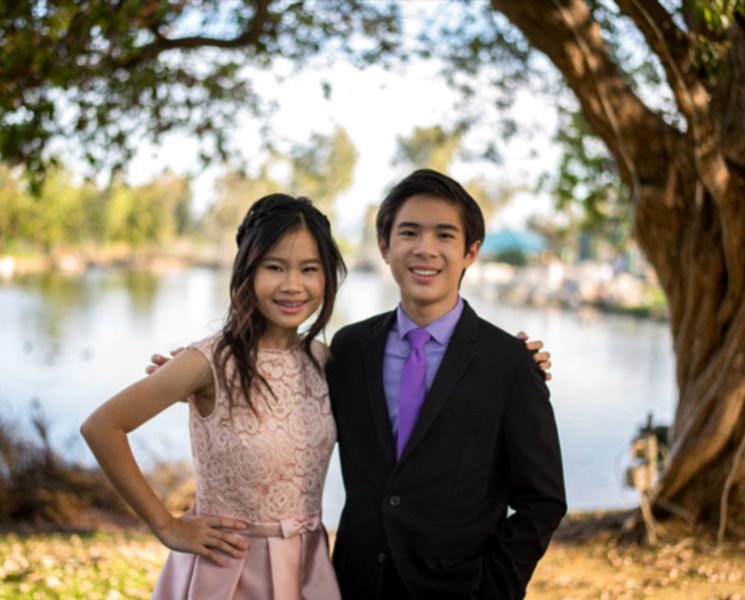


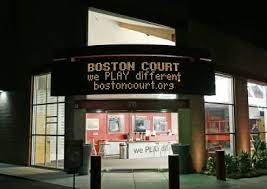
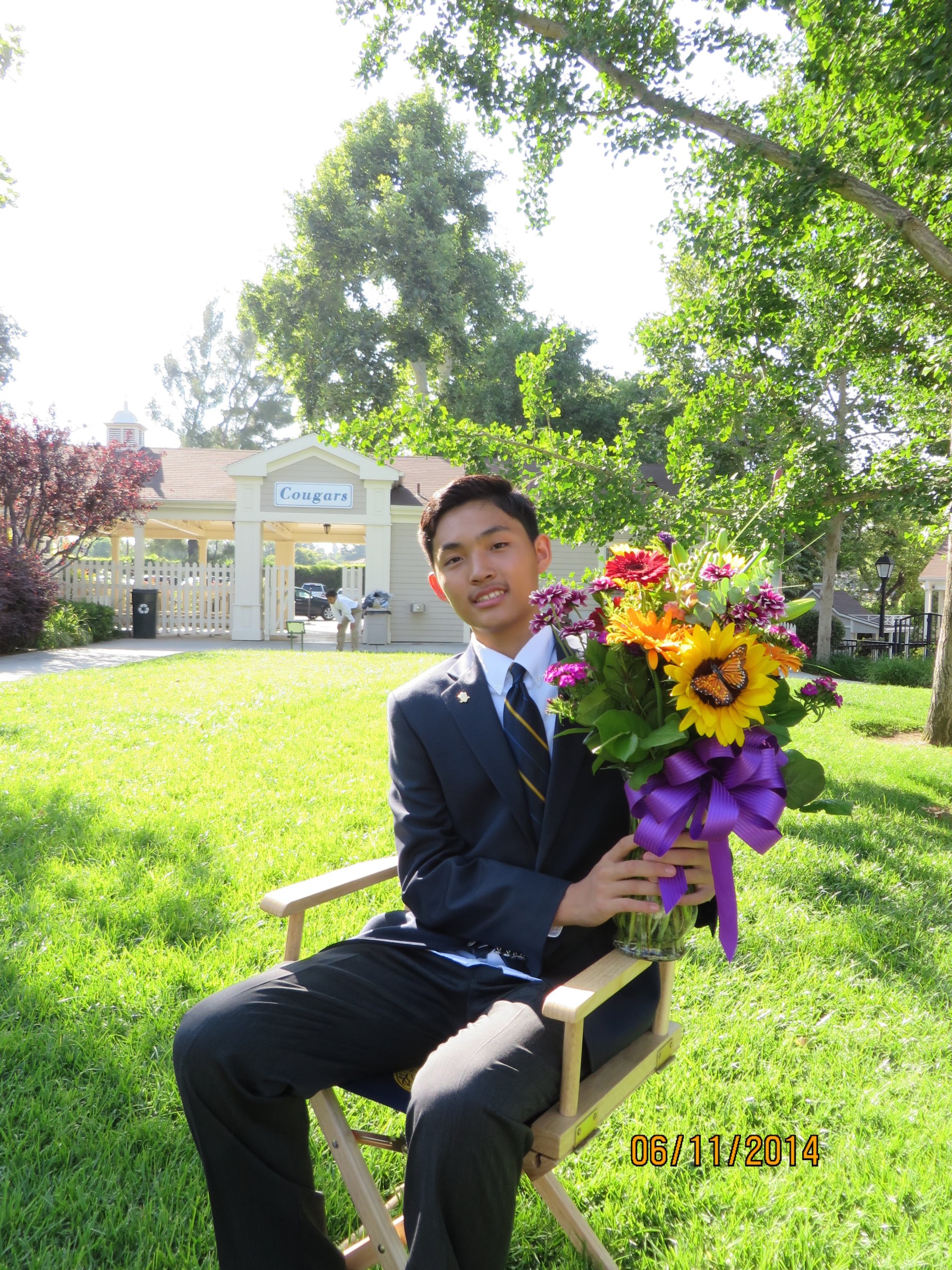
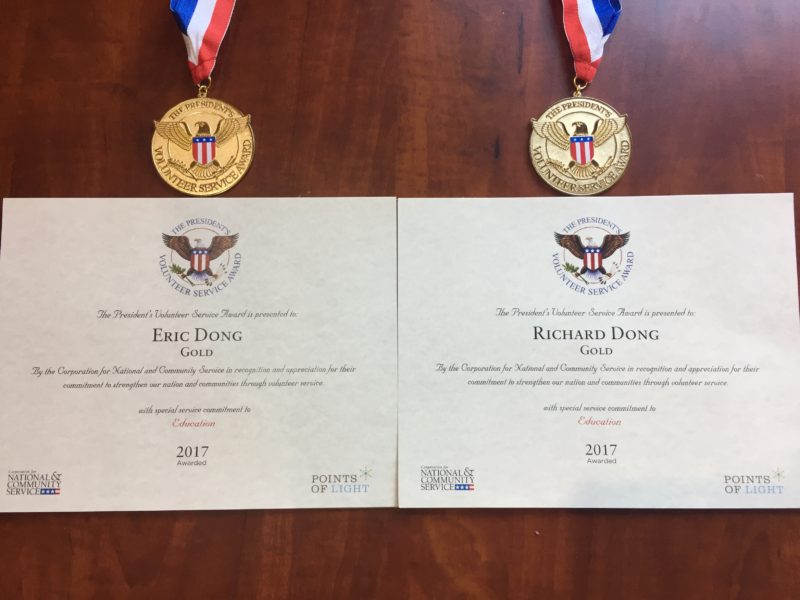
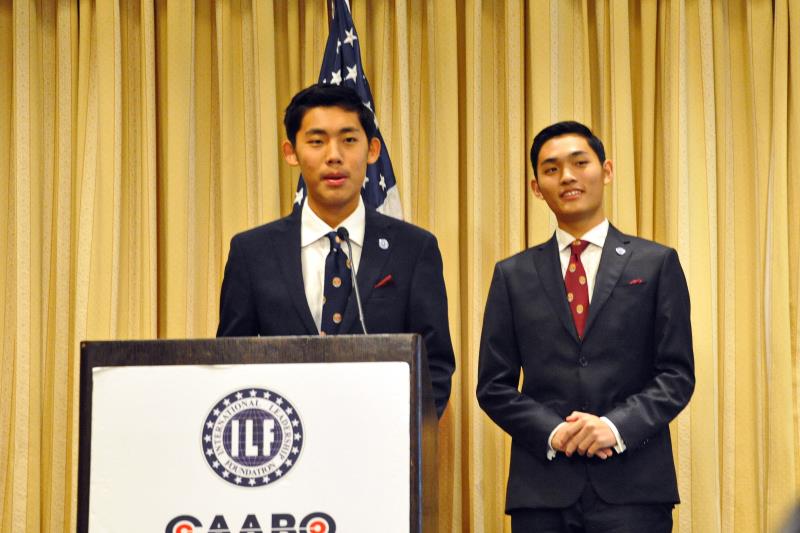
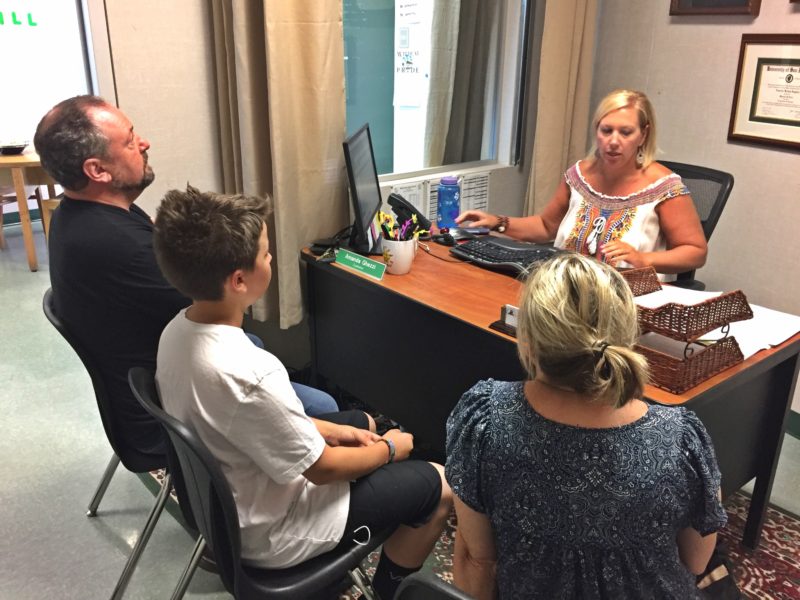







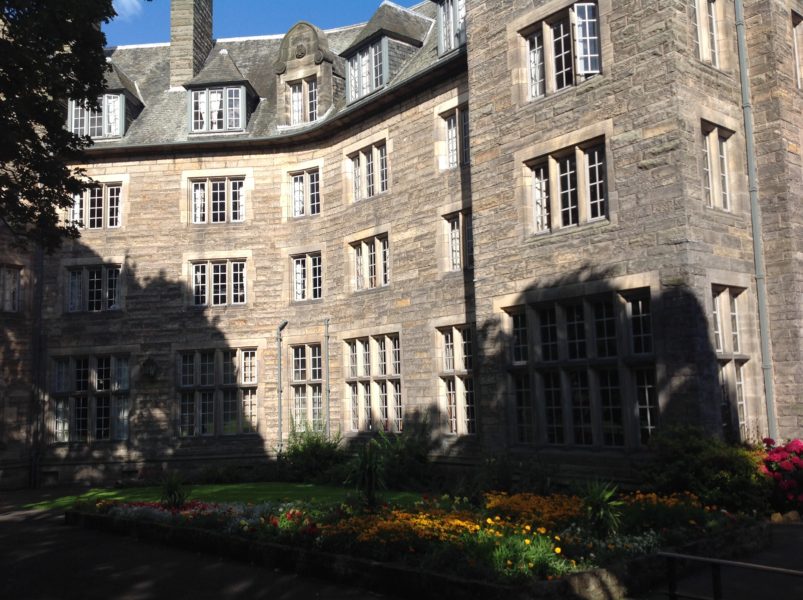




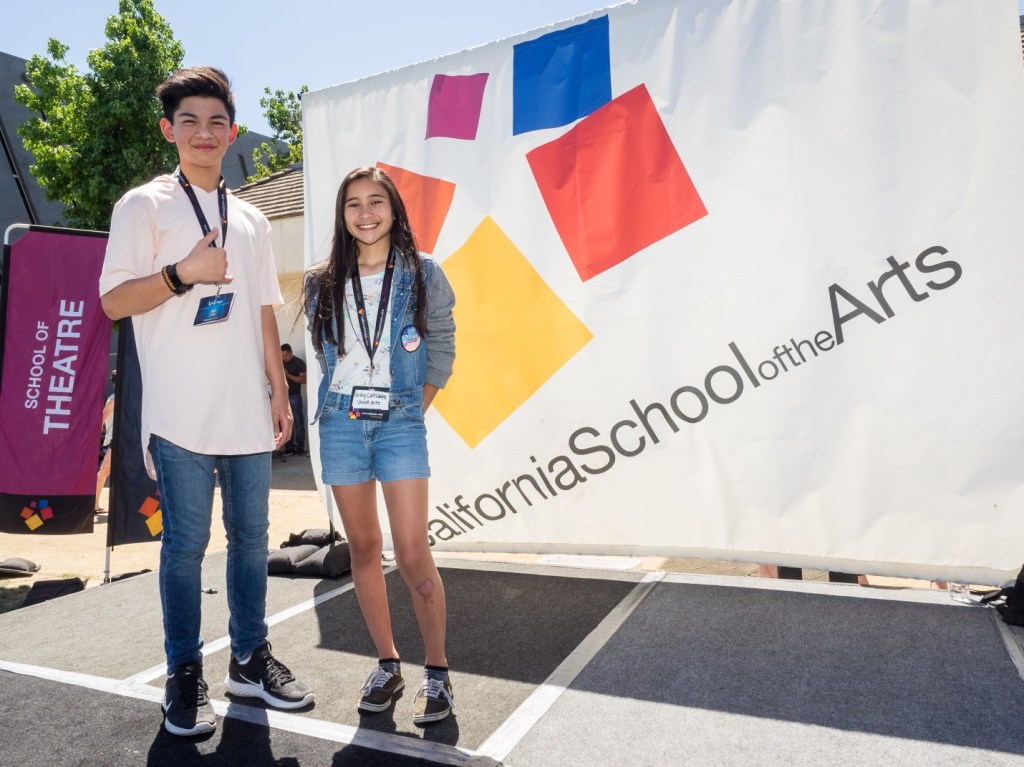

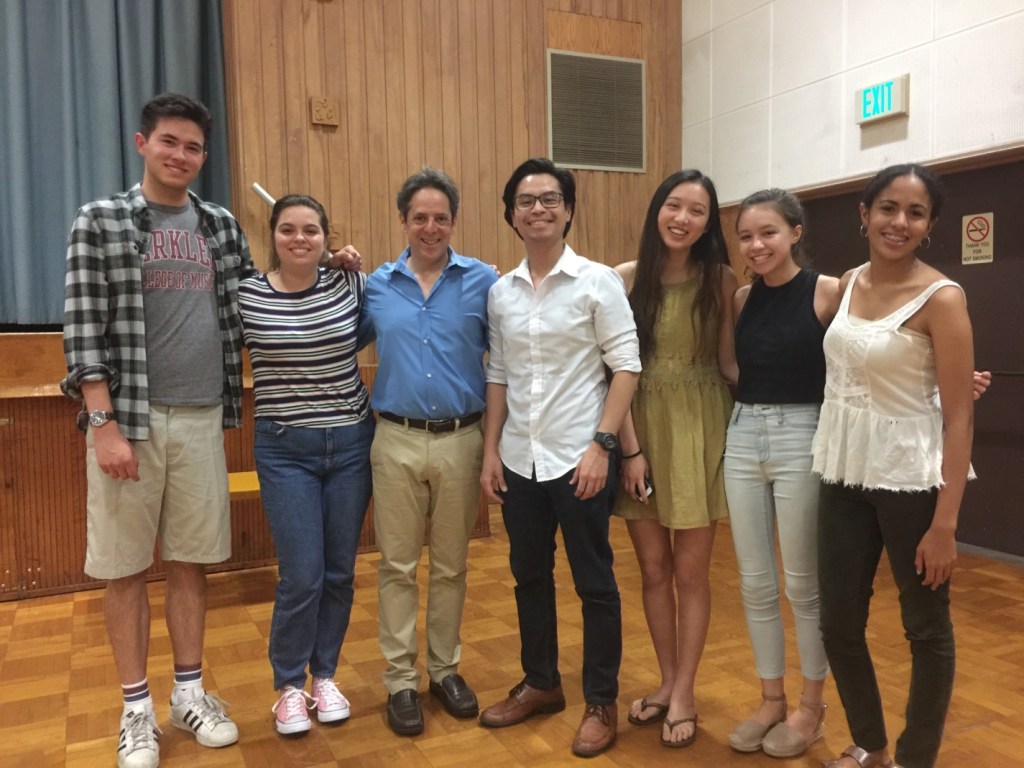


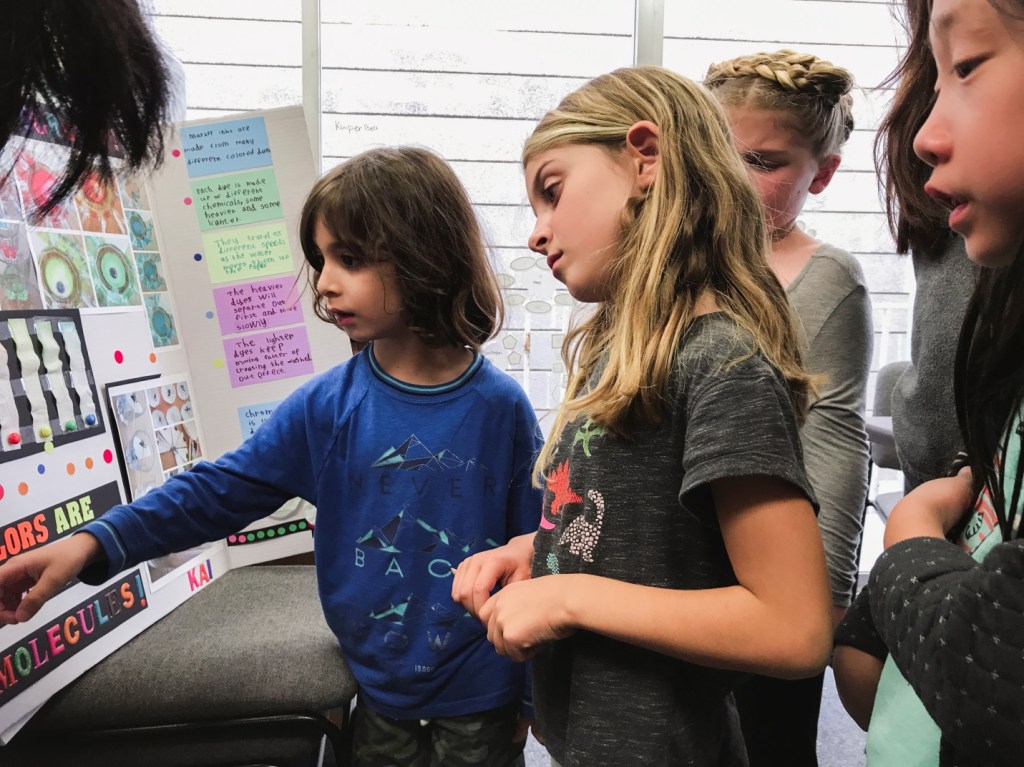

 A San Gabriel Valley Inquirer