September College Search Guide

Originally published on 5 September 2019 in the Pasadena Independent, Arcadia Weekly, and Monrovia Weekly

Bryn Mawr College | Courtesy Photo

The Road to College

It’s after Labor Day and that usually means the end of summer. Classes have begun in mid or late August so your children are settling into the new school year by now.        

Before I launch into the college guide, let me touch on a topic that often times causes family discord. Counselors tell their students to follow their passion when it comes to deciding what to pursue in college. That makes a lot of sense because people generally learn better when they’re studying something they are interested in. However, we also hear about researches that find STEM degrees are the most valuable, with the liberal arts the least valuable, to employers. Parents, anxious about their children’s earning potential, career future, and over-all financial stability then discourage their children from taking liberal arts in college and push their children into the STEM field.

On the other hand, employers also emphasize that they’re looking for applicants with excellent communications skills even when the job isn’t STEM-related. The contradictory information is enough to make anyone’s head spin. The one thing researchers and career advisors agree on is that earning a college degree will pay off in the long run. So whether your children are looking to get an engineering degree or are more interested in the humanities, the important thing is for you to support your children’s choice and help them to be ready for college.                        

My daughter’s high school administrators preached to their students that the college application process doesn’t start until the spring of their junior year and, therefore, they shouldn’t be working on it until then. As our family’s experience belatedly proved, however, the process really begins on the first day of 9th grade. Hence, I advocate that your children start preparing as soon as they get into high school. Doing so makes a world of difference in their college search outcome.

In last month’s college search guide, I said that the College Board is expanding the use of the adversity score to the SAT in an effort to make college admissions more equitable. It had many detractors, however, and the College Board recently announced that it’s dropping the adversity score and will now use what it calls ‘Landscape.’

While it pretty much includes the same factors that were in the ‘Adversity Score,’ the College Board claims ‘Landscape’ is more transparent and provides admissions officers more consistent background information.

In an article published in the Wall Street Journal on August 27, education writer Douglas Belkin, reported that the adversity score (also called environmental context dashboard) was a combination of 15 socioeconomic metrics from a student’s high school and neighborhood.

‘Landscape’ will add six ‘challenge’ factors that provide the ‘summary neighborhood challenge’ and the ‘summary high school challenge indicator.’ The factors are college attendance, household structure, median family income, housing stability, education levels, and crime.

Belkin noted that this is the second time that the College Board has rolled back efforts to reflect students’ socioeconomic backgrounds – it dropped a similar effort 20 years ago due to unfavorable reaction from colleges. And this will most probably not be the last word on the matter. The current admissions process is intrinsically flawed and band-aid solutions can’t make it right.            

I still think that adding ‘screening methods’ misses the point. Every student is different and can’t be lumped under a general category. But admissions officers can’t reasonably learn about each one when they have approximately 30 minutes to scan each application. With ever more American students applying and interest among foreign students to study here increasing, the competition will not diminish any time soon.   


FRESHMAN

Instill in your children good time management and organizational skills early on. High school is so much busier than what they’ve been through yet. These skills will help them have a happy, productive, and successful four-year experience.

If your children didn’t develop good study habits in lower and middle school, they need to buckle up and be serious about academics. Encourage them to immerse themselves in the culture of their high school and get involved in various extra-curricular activities that support their interests, and which they can carry on into the next three years.

Your children should find the time to meet with their school’s counselor to map out a four-year curriculum that meets all the requirements for graduating and going into college. Most colleges or universities require: four years of English; four years of mathematics; four years of science with advanced work in at least one of the three disciplines – biology, chemistry, physics; four years of a world language; three years of history, including American and European.   

They should take the most challenging courses they could handle. If their high school offers Advanced Placement (AP) subjects in ninth grade and your children decide to take the course, they have to be ready to take the exams after they complete it. Colleges usually only recognize 4s and 5s to show competency. Highly selective institutions also expect As on AP courses on students’ transcripts. 

Counselors tell their students to follow their passion when it comes to deciding what to pursue in college. That makes a lot of sense because people generally learn better when they’re studying something they are interested in. However, we also hear about researches that find STEM degrees are the most valuable, with the liberal arts the least valuable to employers. Parents, anxious about their children’s earning potential, career future, and over-all financial stability then discourage their children from taking liberal arts in college and push their children into the STEM field. On the other hand, employers also emphasize that they’re looking for applicants with excellent communications skills even when the job isn’t STEM-related. All the contradictory information is enough to make anyone’s head spin. The one thing they all agree on is that earning a college degree will pay off in the long run.                    

SOPHOMORE

By this time, your children should be fully transitioned into high school. They should be picking up where they left off – taking AP courses, working on extra-curricular activities they had identified in their freshman year, playing sports for their school, etc.

Practice exams for standardized tests are given in your children’s sophomore year so make sure they are registered for the PSAT. Taking these tests will help them identify their weaknesses and study for them. Several companies and organizations offer test preparation courses; your children should register to one if they need help getting ready for these exams (ACT: www.act.org; PSAT: www.collegeboard.com; Educational Testing Service: www.ets.org; Kaplan: www.kaplan.com; National Association for College Admission Counseling: www.nacacnet.org; The Princeton Review: www.princetonreview.com)

It may seem too early to do this, but your children can start looking at colleges that offer courses in their fields of interest. Or they can begin considering all possible options, if they haven’t determined what they are thinking of taking in college.

JUNIOR

This is a very hectic, even stressful, time in your children’s high school life. It is also the last complete year that college admissions officers will see your students’ grades and accomplishments. It is a decidedly important year for them; they need to put the effort to show admission officers that they are capable of doing the work and are qualified for admission to the school to which they will be applying. If your children are thinking of applying to universities through early action/decision, their junior year grades and work will become all the more significant.

Aside from the rigors of school, sports, extra-curricular activities, there are standardized tests to take. Your children should be taking the Preliminary SAT/National Merit Scholarship Qualifying Test (PSAT/NMSQT) early next month. I would like to remind parents not to put extra pressure on their children as they get ready for the standardize exams – they are stressed enough as it is and a higher than average SAT score does not guarantee admission to their dream university.        

You and your children should be going to College Fairs being held at their high school. They should be gathering information about colleges and universities – courses and diplomas offered; standardized test requirements for admission; deadlines for early action/decision, if being offered, and for regular admission. 

SENIOR

It is going to be a marathon for your children! From the moment they get in the doors of the school, they are going to be putting much of their focus on college applications. If your children are applying for early action/decision, they should have taken all the standardized exams required by the university during their summer after junior year. 

Make it a point to attend your children’s “Back to School Night” because the counselors would most probably be giving parents information about the college applications that would be starting in earnest.  

The organizational skills that I have been talking about since your children entered 9th grade will be put to the test during their senior year. Encourage your children to create a calendar with standardized testing dates, counselor meeting schedules, application deadlines. 

Your children should have a binder with separate sections for each college or university and a log of what needs to be accomplished for each, like: required standardized tests (SAT or ACT, SAT II grades; AP test scores, etc.); writing supplement; how many letters of recommendation they require; application fee; how to send the application.      

Ideally, you and your children have visited the colleges they are thinking of applying to. One of the first things they have to do is finalizing the list of colleges and universities to which they will send applications – eight was the norm when my daughter was applying. However, students now are sending in 12 or more applications. This new normal, though, has only added to the competitiveness of the process. I would suggest limiting it to12 because applying to more schools doesn’t make a university with a 4% admission rate a more reachable goal.  

They should be ready to write their personal statement; they should also have provided stamped envelopes to the teachers giving them recommendations. 

One factor that makes the college admissions process really stressful for parents is the feeling of not knowing what’s happening. School counselors generally only have time to meet exclusively with students so parents feel shut out. However, there are books you can read to help demystify this process. A book I would recommend is called “Getting In! the Zinch Guide to College Admissions and Financial Aid in the Digital Age” by Steve Cohen, Anne Dwane, Paulo de Oliveira, and Michael Muska.

The professional guidance and insight the authors of this book provide will give you the ability to help your children navigate this complicated process. Use the book constructively; do not make it another source of stress for yourself and your children.   

Over the course of writing a College Search Guide, I have also met a few outstanding independent counselors and I highly recommend them should you feel more comfortable getting regular, face-to-face time with a counselor.

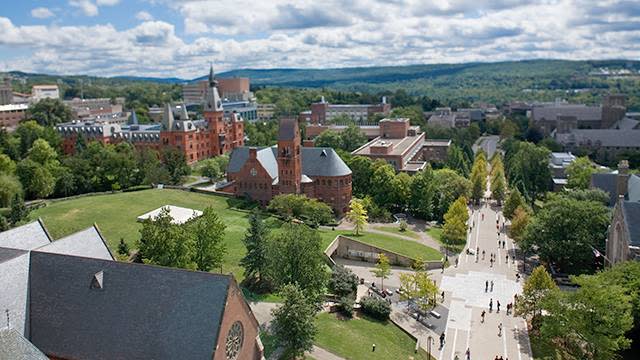
Greg Kaplan is a local independent counselor and can be reached at greg@earningadmission.com and his website is www.earningadmission.com. There is a Boston-based counseling group called College Vine, which offers near-peer mentoring; one of their counselors is an Arcadia High School alumna, who is currently a senior student at Cornell.                   

If you are applying for financial aid, be aware that the Free Application for Federal Student Aid FAFSA (www.fafsa.ed.gov) submission date starts on October 1st to align with the college application schedule.   

Research all scholarships available. Some online sites include: College Xpress (www.collegexpress.com); Fastweb (www.fastweb.com); Scholarships.com (www.scholarships.com); and Student Aid on the Web (www.student.ed.gov).

It goes without saying that as busy as your children are when they go through the college application process, they should also get the best grades they are capable of. The colleges to which they are applying will require their first quarter grades if they’re looking to gain admission through  early action or early decision.      

Enjoying the Charms of Cambridge

Originally published on 26 August 2019 in the Pasadena Independent, Arcadia Weekly, and Monrovia Weekly

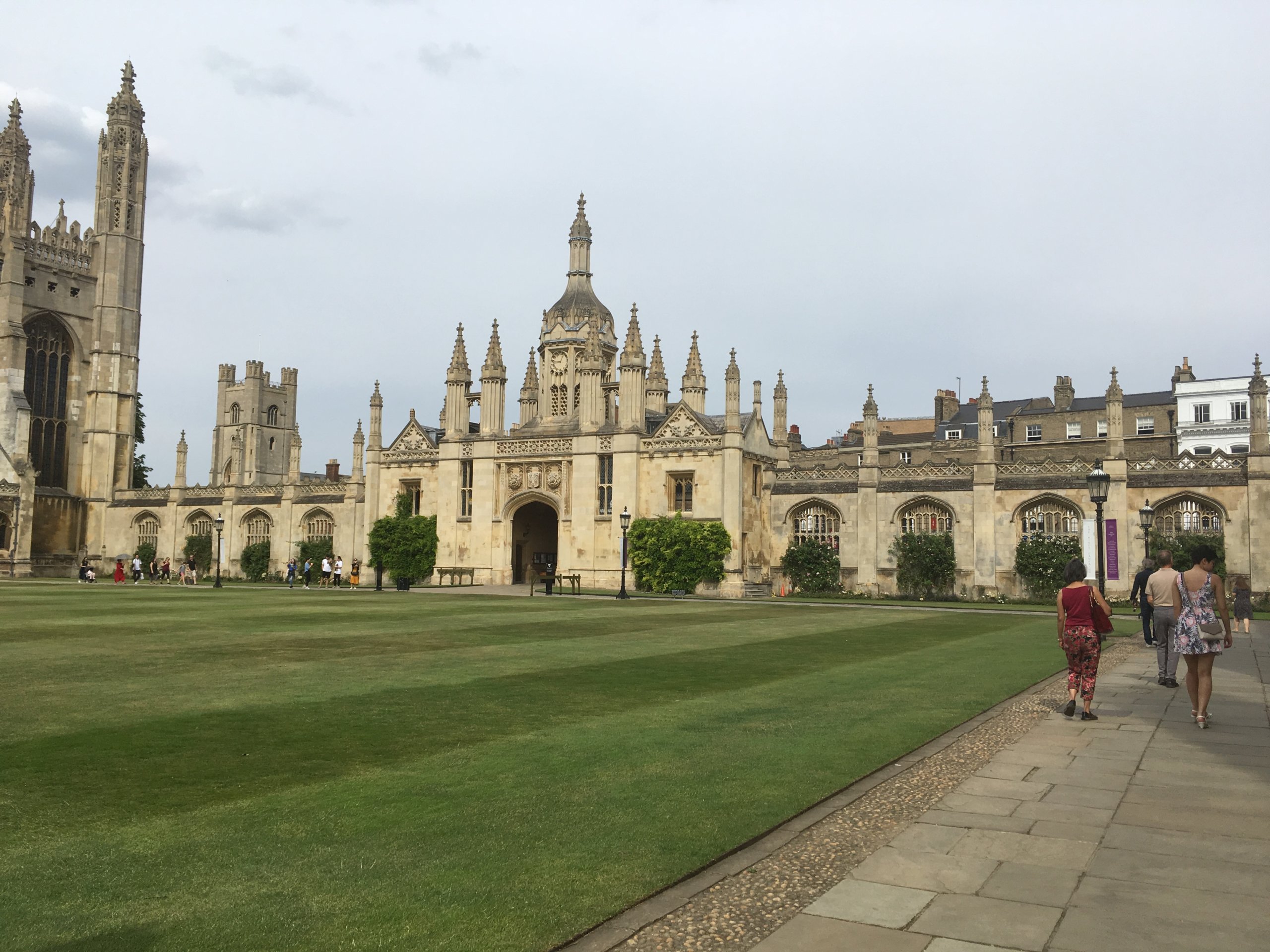
King’s College, Cambridge | Photo by May S. Ruiz / Beacon Media News

I love college towns – they’re typically alive with students either hurrying off to lecture, tutorial, or the library, or leisurely heading out for a cup of tea with friends. Mingling with the young crowd are usually tourists with a map in hand, trying unsuccessfully to find a specific site on the ‘Places to See While in (fill in the blank) Guide.’ Inevitably, they would have to ask one of the students to point them in the right direction.

Fortunately, we had a ‘personal’ guide during our visit to the beautiful city of Cambridge, England in mid-July; we definitely didn’t look like bewildered tourists. My daughter and I spent a week in town to attend her fiancé’s graduation (for his second Master’s degree) and he took us around.

Most Americans have heard of the University of Oxford but are not very familiar with Cambridge. These two universities have had rivalries dating back centuries. And while Oxford benefits from name recognition, Cambridge is considered the most prestigious in the United Kingdom. In the last decade the top three universities in the UK were Cambridge, Oxford (both in England), and St Andrews (in Scotland) until this year, when the League Table ranked St Andrews second to Cambridge and ahead of Oxford.

The River Cam | Photo by Brianna Chu / Beacon Media News

A university city and the county town of Cambridgeshire, Cambridge lies on the River Cam, about 50 miles north of London. While it’s better known for its university, there was already a settlement there before the arrival of scholars who were fleeing from the riots in Oxford in 1209 to find refuge. Thus, the university was founded.

The early colleges were established by the church and then by monarchs who wanted to create learning institutions. Surprisingly, for a university that for so long admitted only men, six of the colleges were even begun by women.

Before long, Cambridge became embroiled in religious and political dramas as when Henry VIII dissolved the monasteries and when his daughter Mary Tudor got backlash for her religious retaliations.

It was in Cambridge that English military and political leader Oliver Cromwell found many Royalist adversaries during the Civil War (1642-1651). He sent his henchmen to destroy treasures in the colleges’ chapels, which he called Catholic superstitious symbolisms.

Mixed in with these power struggles were riots instigated by townspeople who were fed up with the inequalities between the privileged colleges and their own poverty. (To this day, there is evidence of disparity as homeless people roam the streets – a jarring contrast against a backdrop of opulent buildings.)

As in all college towns, there is a mutual relationship between ‘Town & Gown.’ Students provide income to the universities and tourists are a source of livelihood for locals. Cambridge has approximately 125,000 permanent residents but it welcomes three million visitors annually who come to experience the amazing beauty, culture, and history it offers.

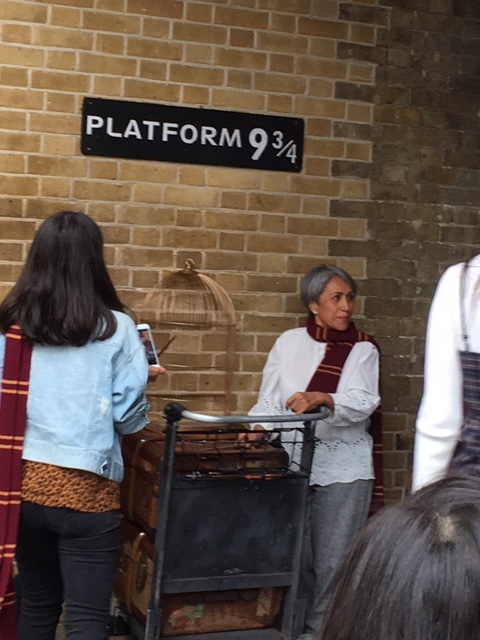
King Cross Station’s Harry Potter Gift Shop | Photo by May S. Ruiz / Beacon Media News

Our weeklong stay began when we arrived at London’s Heathrow Airport, from where we boarded the Heathrow Express to Paddington Station. Another train ride took us to King’s Cross Station. King’s Cross figures prominently in the Harry Potter books and films because it is from the station’s platform 9 ¾ that students take the Hogwarts Express. The Network Rail has taken advantage of this – it is now a tourist attraction. For 30 pounds, Harry Potter fans can have their picture taken as they pretend to push a shopping cart into the wall. Really.

For 30 pounds Harry Potter fans can have their picture taken pushing a cart towards the wall | Photo by May S. Ruiz / Beacon Media News

From King’s Cross we hopped on the GWR (Great Western Railway) for our non-stop journey to Cambridge. We stayed at the Tamburlaine Hotel, which is literally across the street from the train station. I don’t usually comment on the hotel where we stay, lest readers get the impression that this is a paid promotion for it, but will make an exception this time because I’m excited to acquaint you with Tamburlaine.

The Tamburlaine hotel lobby | Photo by May S. Ruiz / Beacon Media News

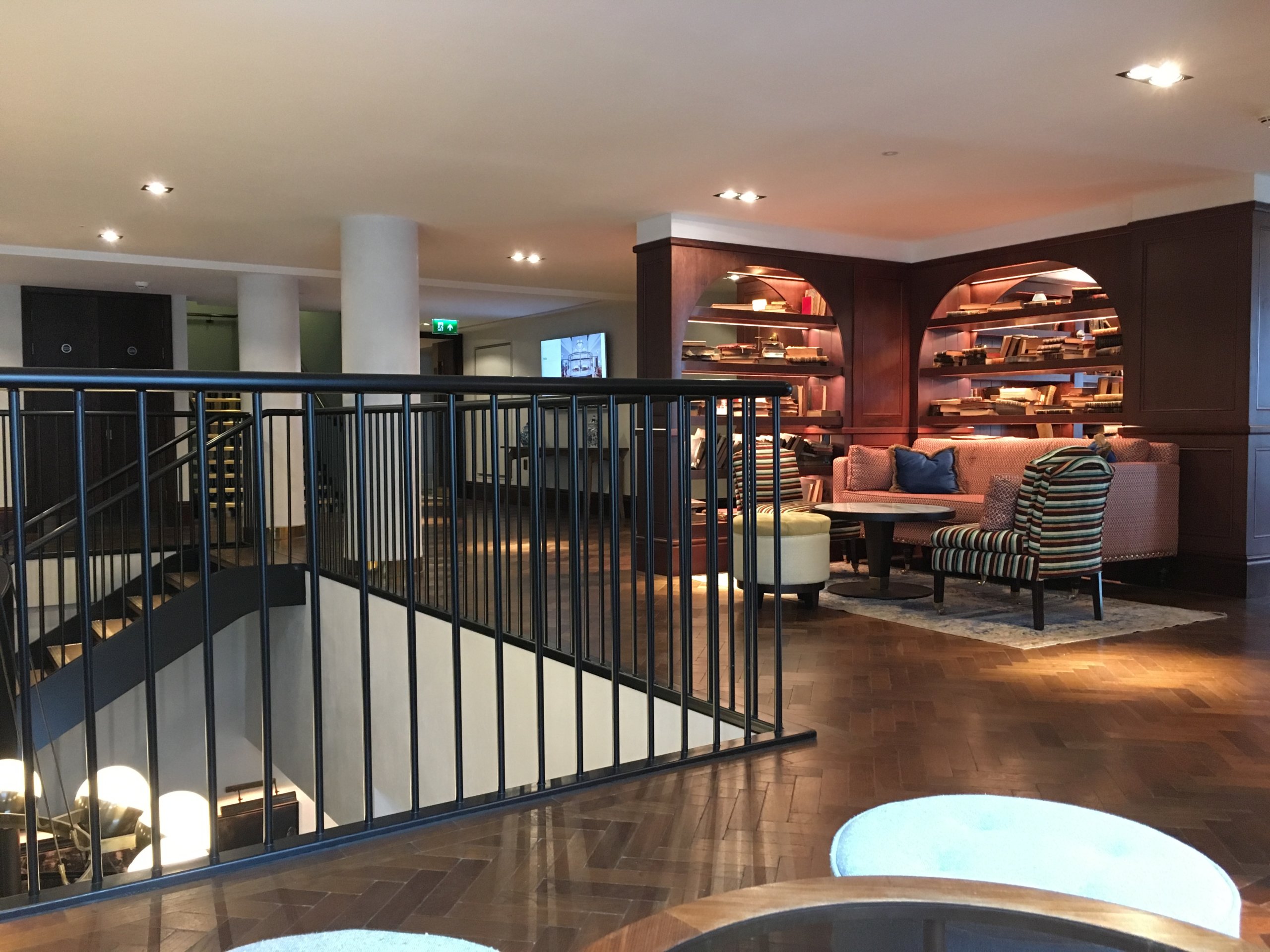
A boutique hotel, the Tamburlaine isn’t huge and impersonal like chain hotels. It looks more like a big, welcoming residence where you’ll want to invite your friends to hang out. Upon entering the lobby on the ground floor, comfortable sofas beckon you to sit by the fire. Shelves stacked with old, leather-bound books complete the warm ambience. This place is just like my own house – there are books everywhere – and I instantly felt at home!

The first floor of Tamburlaine Hotel | Photo by May S. Ruiz / Beacon Media News

The first floor (which is actually the second) is a public space divided into several seating areas. One section has a long table which can be utilized for a conference or a meeting; there’s also a corner alcove where a couple can relax in front of some bookshelves. My favorite spot is an armchair next to the window where I sat to alternately read a book and watch people walking on the street level below.

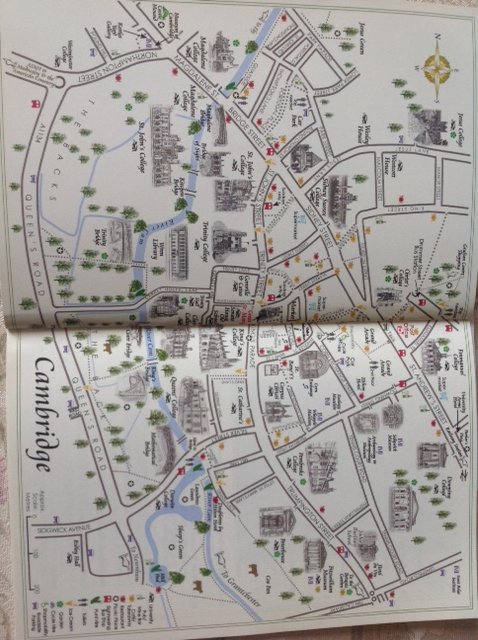
However, I didn’t travel all the way to Cambridge to read a book; I wanted to explore the city. Let me preface this ‘travelogue’ by saying that my two young companions and I had to tailor our sight-seeing around graduation activities that I mentioned earlier. So, if you’ve ever been to Cambridge and are familiar with the town’s lay-out, you might notice that there were times when there was no rhyme or reason to how we went about our adventure.

The city’s lay-out | Photo by May S. Ruiz / Beacon Media News

We arrived in Cambridge at midafternoon and we simply unpacked and took it easy. The town center is two miles away, which is quite a trek for Southern Californians (who are notorious for parking nearest to the building entrance because we’re too lazy to walk). Happily, we were in no hurry, so we simply meandered and observed all the fascinating things amidst us.

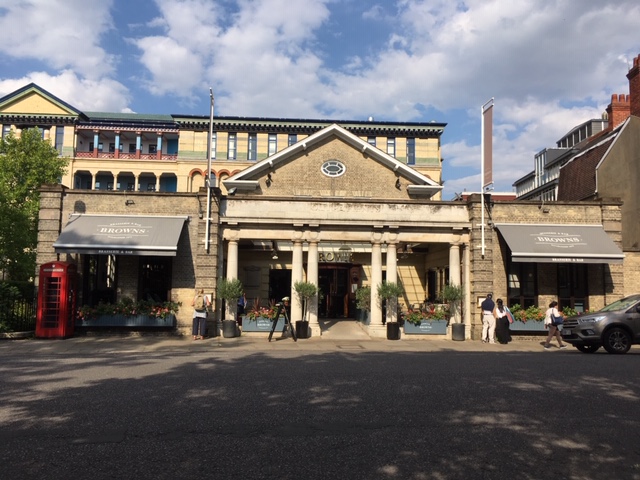
Brown’s Brasserie & Bar | Photo by May S. Ruiz / Beacon Media News

Dinner was at Brown’s Brasserie & Bar, a delightful restaurant which faces the Fitzwilliam Museum on Trumpington Road, the main thoroughfare. It’s quite popular among locals and tourists and could get really crowded but we were smart enough to make reservations. Its extensive menu has several options for every diner’s food requirement, including vegan, vegetarian, and gluten-free fare. I always opt for a prix fixe meal because it gives me a tasting of courses at a great price. I would definitely recommend it, in case you visit Cambridge and dine at Brown’s.

The following day we went to the Fitzwilliam Museum to incorporate my companions’ visit with a friend there. Unlike in the United States where museums charge anywhere from $20 to $25 for admission, in the United Kingdom people get in free.

Cambridge’s Fitzwilliam Museum | Photo by May S. Ruiz / Beacon Media News

Here’s a brief history and description. In 1816, Richard, seventh Viscount Fitzwilliam and keen art collector, bequeathed his library and paintings to the University. He also gave 100,000 pounds to build a place to house half a million treasures of national and international significance, covering Egyptian, Roman, and Greek collections.

Coins, ceramics, and textiles are likewise displayed. Medievalists and artillery enthusiasts will find an impressive array of armors and weapons. The museum has a vast collection of ancient and modern manuscripts – John Keats’s ‘Ode to a Nightingale,’ a valuable series of Handel manuscripts, and autographed compositions by Purcell, Bach, and Mozart. My favorite Gallery is the one that holds various paintings ranging from Rembrandt and Rubens, to Picasso and Barbara Hepworth.

Today the Fitzwilliam is hailed as ‘one of the greatest art collections in England and a monument of the first importance.’ I can attest that the claim is not without merit.

A view of King’s College from ‘The Backs’ | Photo by Brianna Chu / Beacon Media News

Being an education writer, I was interested to see at least one college. Cambridge has a total of 31 colleges but, since we were there on a limited time, we chose to tour only King’s College and Chapel. It was established in 1441 by King Henry VI, when he was all of 19 years old. He also founded Eton School and, until 1873, King’s College exclusively accepted Eton students who were automatically granted a degree without having to take the exams. Many notable personalities graduated from here – Britain’s first Prime Minister Robert Walpole and renowned computer scientist and logician Alan Turing, among them.

King’s has inspired many a poet to sing its praises. And for good reason – it is a magnificent structure! But as grand as it is, the young King Henry’s original plans were even grander, which included a giant lake. No one knows who the architect was, but Reginald Ely was the master-mason who oversaw the work on the building. It is arguably the most photographed Cambridge college.

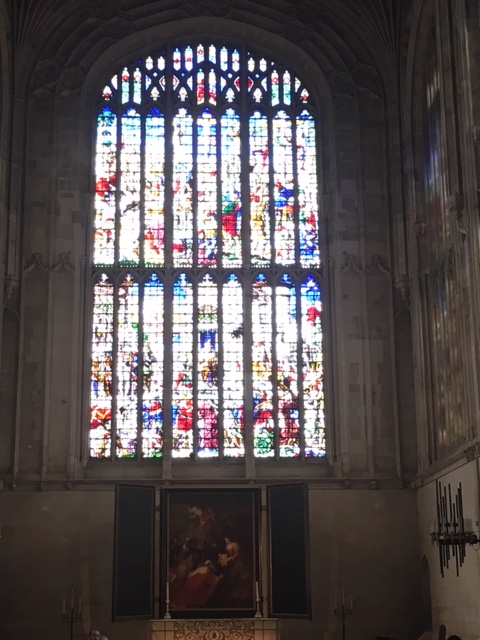
One of numerous stained glass windows in King’s Chapel | Photo by May S. Ruiz / Beacon Media News

Construction on the Chapel began in 1446 when King Henry laid the first stone but he never saw it finished – that would happen 90 years and four kings later. It is hailed as one of the finest examples of late Perpendicular Gothic English architecture.

We didn’t go inside Trinity College but it’s the grandest of all the colleges in Cambridge and if you’re ever there, I hope you get a chance to visit it. It was founded by King Henry VIII in 1546; its chapel was completed by his daughter Mary; and its library was designed, free of charge, by one of the most highly-acclaimed English architects in history, Sir Christopher Wren. It likewise has the lofty reputation of educating 32 Nobel Prize winners and alumni, including Sir Isaac Newton, Alfred Lord Tennyson, and HRH Prince Charles. According to lore, the poet Lord Byron once enraged college authorities by bathing in the fountain in front. There is also a small apple tree on the lawn which is descended from the one whose falling fruit enlightened Newton about the concept of gravity.

St Catharine’s College | Photo by May S. Ruiz / Beacon Media News

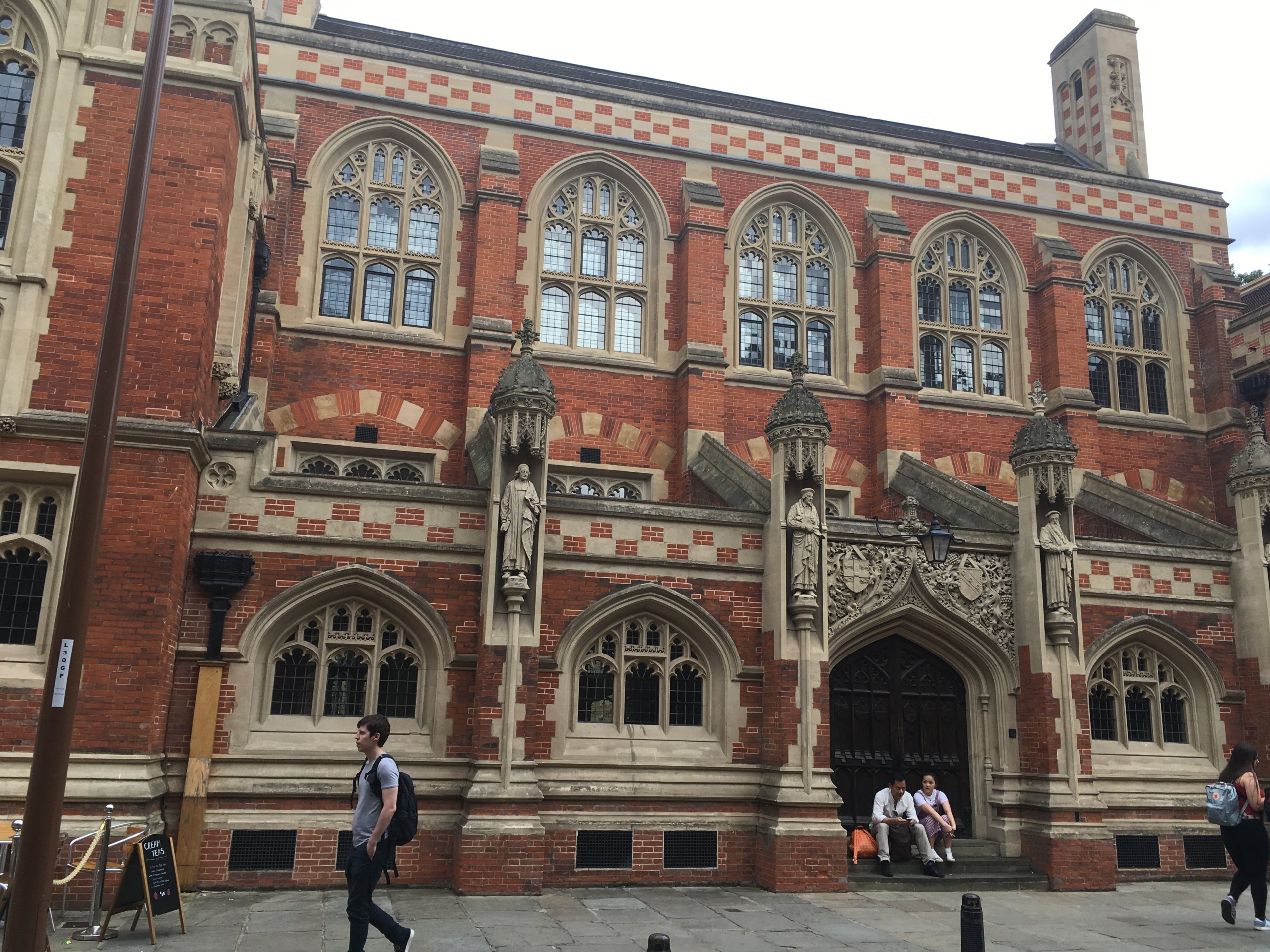
Until his graduation, my daughter’s fiancé was attending St Catharine’s (students refer to it as St Cath’s) and he proudly showed us the college. It was established in 1473 by Robert Wodelark, the third Provost of King’s College. Some of its alumni include John Addenbrooke, who founded Cambridge’s famous hospital, and known film personalities – Sir Ian McKellen, Rebecca Hall, Ben Miller, among others.

While we weren’t able to squeeze in visiting other colleges, we glimpsed several of them as we made our daily walks around town.

Every tourist should see the River Cam, as we did. It has had a major influence on this town for 2,000 years. Cambridge became rich from trading because it was accessible from the sea; small boats used the river as a trade route before the advent of the railway. Today River Cam is the site for recreational activity and the shallow boats which were once used for transporting goods and animals are now utilized for punting.

The Xu Zhimo Garden | Photo by Brianna Chu / Beacon Media News

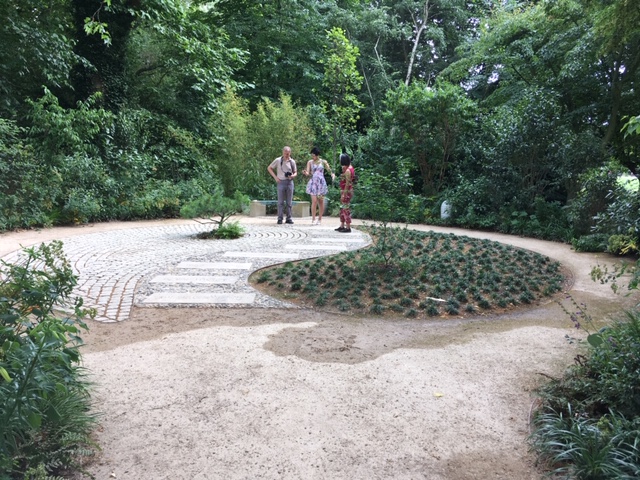
It is said that all Cambridge seniors punt here one last time before they graduate. It’s so memorable that one King’s College alumnus, Xu Zhimo, who later became a renowned Chinese poet, refers to it in a poem he wrote, ‘Taking Leave of Cambridge Again.’  He is immortalized in a small garden near King’s Bridge. In 2018 a stone of white Beijing marble that displays the first and last two lines of his ode was installed. Stone steps, on which the rest of his poem is carved, wind around the garden and end at a ‘yin and yang’ formation.

Here is a portion of his poem translated:

Softly I am leaving,
Just as softly as I came;
I softly wave goodbye
To the clouds in the western sky.

The golden willows by the riverside
Are young brides in the setting sun;
Their glittering reflections on the shimmering river
Keep undulating in my heart.

The green tape grass rooted in the soft mud
Sways leisurely in the water;
I am willing to be such a waterweed
In the gentle flow of the River Cam.

Called the China-UK Friendship Garden, or Xu Zhimo Garden, it is a tranquil space during the summer months when tourists flock to the area. We lingered there to escape the unexpected heat wave.

Lingering at the Xu Zhimo Garden | Photo by May S. Ruiz / Beacon Media News

The River Cam is located in the area to the east of Queen’s Road where several colleges back on to it. Aptly called ‘The Backs,’ it is very picturesque that some claim the view is one of the top ten in England. A portion of it is a field where cows leisurely graze and freely roam, a charmingly surprising sight. Sometimes an entire herd will decide to venture on the path, to the consternation of students who get held up on their way to class, as they wait for the cows to disperse.

Cows freely roam at ‘The Backs’ | Photo by Tom Williams / Beacon Media News

You can’t miss the Market on Crescent Street; you’re bound to come upon it as you wander around the city. For over 1,000 years, it has been a source of food and goods for locals, students, and tourists. From one day to the next, the market has an ever-changing coterie of vendors selling a wide array of items – fruits and vegetables, souvenirs that range from fridge magnets to sweatshirts, freshly baked breads and pastries or fresh from-the-oven pizzas. We enjoyed some blueberries and smoothies and perused the interesting things displayed on the stalls; I bought a few tchotchkes to take home.

We weren’t there in the mornings to see the sellers set up shop but we saw them pack up almost every single afternoon (at 5:00) during our week in Cambridge. It was quite amazing to watch them efficiently load their things – stalls and all – into vehicles of every make and model.

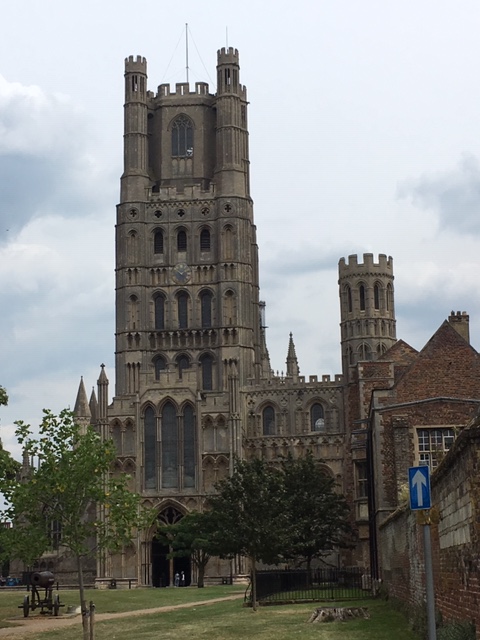
Interspersed between our Cambridge walks was a drive to the cathedral city of Ely, about 14 miles away. A quaint town, it is the 9th least populated city in the United Kingdom. Its most famous attraction is the Ely Cathedral, which predates the town. Built when Ely was a small settlement, the town grew around it.

Ely Cathedral | Photo by May S. Ruiz / Beacon Media News

In fact, one can get to the cathedral by walking past a small town square. Local retailers – from plumbing suppliers to stationers, gardening stores to souvenir shops, pizza parlors to cold creameries – dot the periphery while tables and chairs are neatly arranged in the center. I can imagine townspeople gathering there at the end of their workday or after Sunday service. It’s reminiscent of a time before the tech age, when people weren’t merely texting each other.

The central octagonal tower is the most distinctive and celebrated feature of Ely cathedral. Lady Chapel, a large free-standing edifice, is linked to the north aisle of the chancel by a covered walkway. The West Tower is open for those who like climbing heights; tours are held at intervals and are led by guides who tell the history of the cathedral.

From the South Triforium at Ely Cathedral, one can walk up a spiral staircase and visit the Stained Glass Museum on the second level. It has a collection of stained glass windows of national importance from the 13th century to the present.

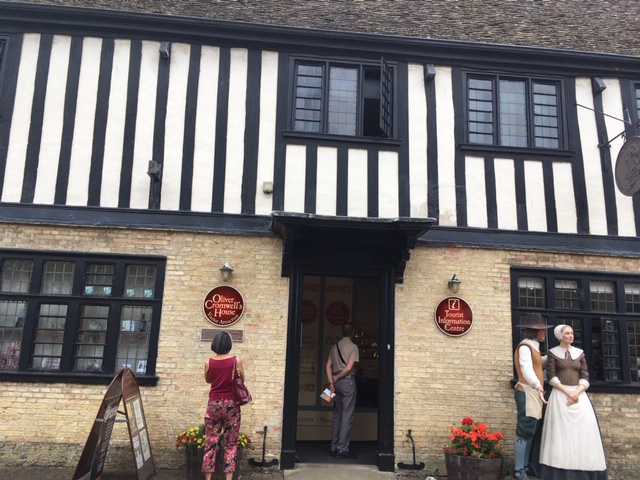
Oliver Cromwell’s house | Photo by May S. Ruiz / Beacon Media News

A short stroll away from Ely Cathedral is the house where Oliver Cromwell and his family lived from 1636-1647. It is a half-timbered building that once served as the vicarage for the nearby St Mary’s Church. It is the only surviving Cromwell residence other than Hampton Court Palace in London. For several years it was a pub aptly called ‘Cromwell’s Arms.’ Today it is a visitor attraction and is the Ely Tourist Information Centre.

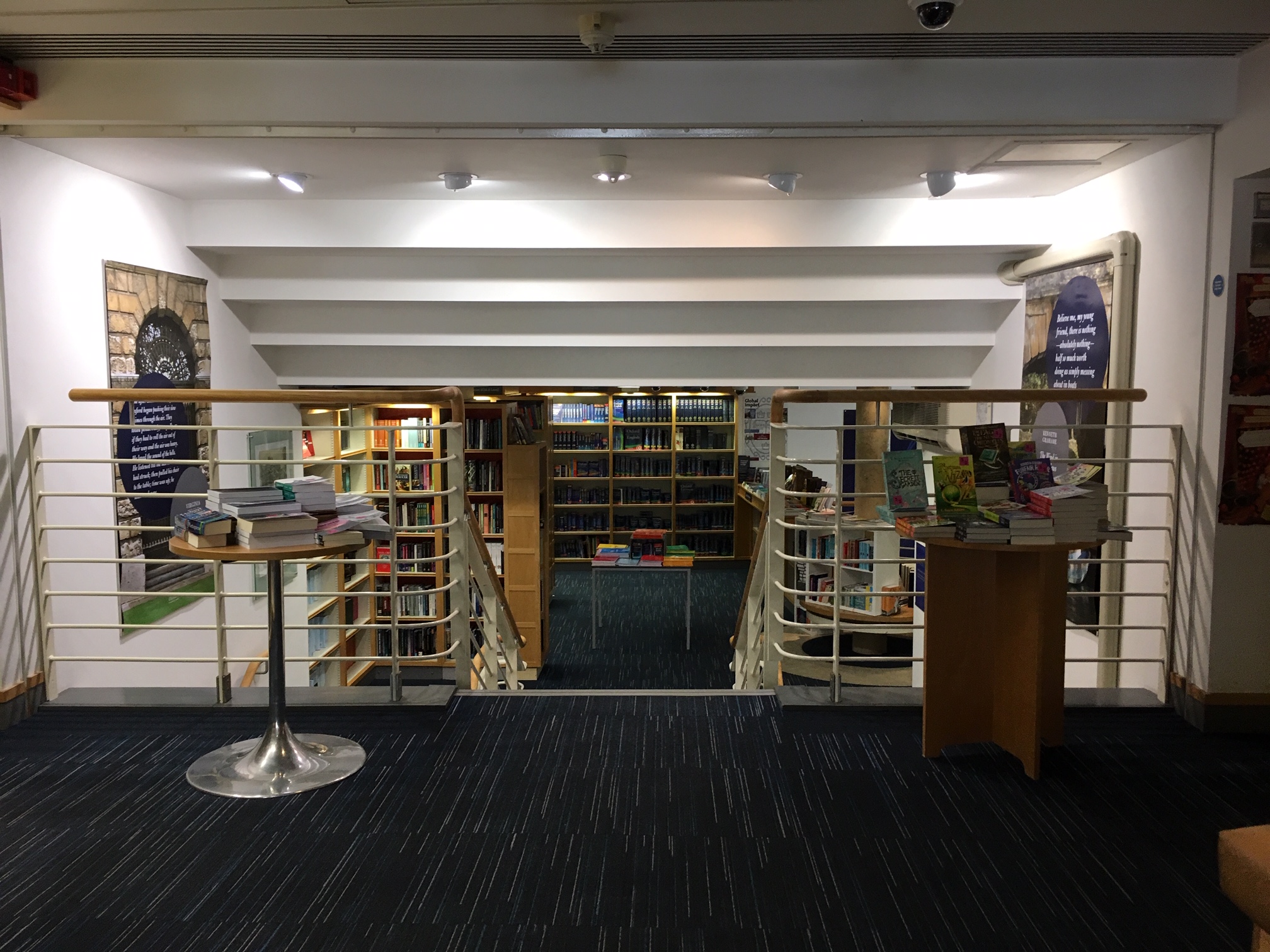
Everywhere I go, I end up stopping at a bookstore and Waterstone’s is my favorite one of all. It’s a prettier version of Barnes & Noble and you can find one in all major cities in the U.K. It usually occupies several stories, with each level dedicated to specific book genres. It has nooks, seating areas, and window seats where one can spend several glorious hours of uninterrupted reading.

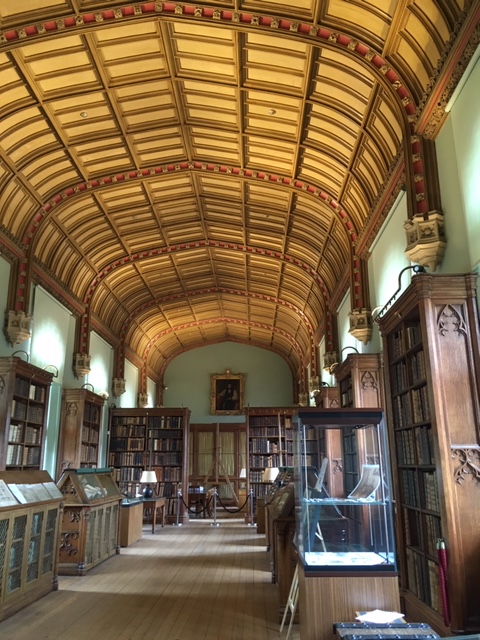
Being bibliophiles, we made an appointment to visit The Parker Library at Corpus Christie College. It is significant in that it is the only library in Cambridge with a single benefactor, Matthew Parker. He was born in 1504 in Norwich to a prosperous weaver (weaving was a major industry in Medieval East Anglia).

The Parker Library | Photo by May S. Ruiz / Beacon Media News

Parker was believed to have attended Corpus Christi in 1520 and was elected Bible clerk of the college in 1521. He graduated in 1525 and was ordained as a priest in 1527. Because of family connections in Norwich, he became chaplain to Queen Anne Boleyn, second wife of King Henry VIII. Among the medieval collections in the library is a volume of autographed letters he assembled and indexed himself, with original specimens of correspondence from prominent  figures of Lutheranism and English Reform – Anne Boleyn, Erasmus, Luther, Melanchthon, Calvin, and others.

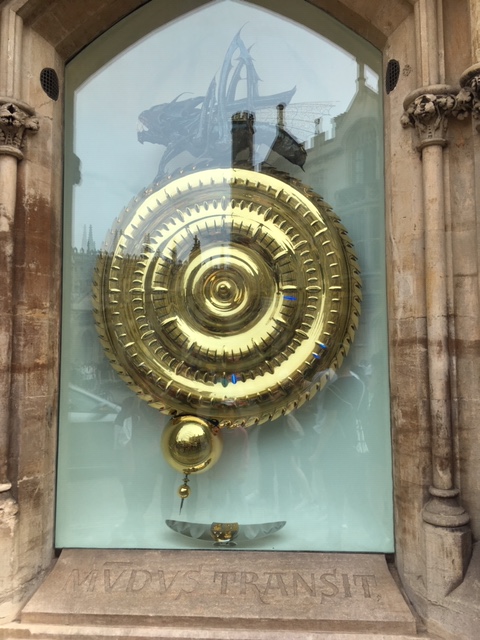
As we left Corpus Christie, we espied several tourists taking pictures of a rather strange sight on the corner of Bene’t Street. A more recent fascination, the Corpus Clock never fails to attract a large crowd since its installation in 2008. Conceived and funded by John C. Taylor, it took design engineer Stuart Huxley and a team of 250 people five years to create. It was unveiled by physicist Stephen Hawking.

While it looks futuristic, the Corpus Clock honors the skills of 17th and 18th century clockmakers, as well as six new patented inventions. No computers are involved; the only electricity used is to wind the mechanism and light the LEDs that display the time in hours, minutes, and seconds. Taylor wanted to show how a clock works by turning the mechanism inside out, to reveal the largest ‘grasshopper escapement’ in the world.

The Corpus Clock on Bene’t Street | Photo by May S. Ruiz / Beacon Media News

The sinister grasshopper-like creature on top of the Corpus Clock is a ‘Chronophage’ (time-eater) sculpted by Matthew Sanderson. Every 15 minutes it raises its tail threateningly, before finally stinging each hour to death, to the sound of a chain rattling into a wooden coffin. It has an unnerving, irregular movement – sometimes the pendulum will pause and the LEDs flash, slowly at first, then chase as if to catch up. It’s all quite brilliantly deceiving because the clock, in fact, reads accurately every five minutes.

From Bene’t Road, we crossed King’s Parade and went to Ryder and Amies. One of the best known university outfitting companies, it has been serving the university for over 120 years under the management of one family. It is an integral part of university life – providing students with neckties, hoodies, pins, among other things. The windows display a striking array of college colors and clothing. It’s also a place to get all kinds of mementos and I left the shop with a bagful of souvenirs and an empty wallet. Sigh.

Afternoon tea at Fitzbillies is an English indulgence in its finest form | Photo by May S. Ruiz / Beacon Media News

We were told that we should never leave Cambridge without going to Fitzbillies on Trumpington Street. This fabulous cake shop and restaurant has been making the city a happier place since 1922. A cup of tea and some sweets sounded like a wonderful idea after a day of sightseeing and shopping. And true to what has been advertised, our tea experience at Fitzbillies was an English indulgence in its finest form.

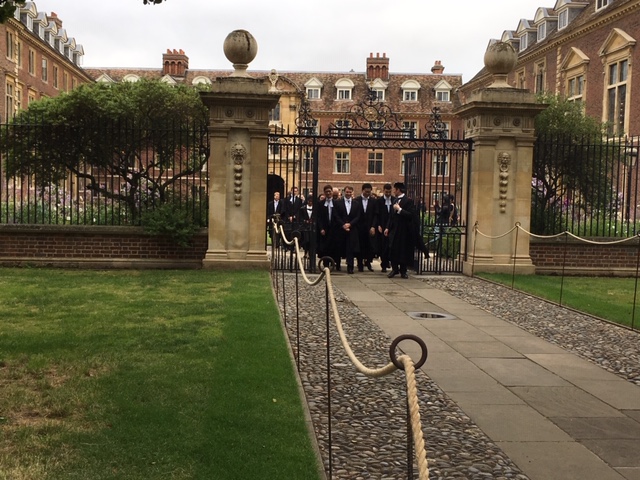
Students emerge from St Catharine’s, process along King’s Parade, enter the Senate House, and leave from its side door into the Passage as graduates | Photo by May S. Ruiz / Beacon Media News

Graduations are held at the Senate House on King’s Parade. Successful students process along King’s Parade from their college, enter the imposing building, and leave from its side door into Senate House Passage as graduates. My daughter’s fiancé graduated at Senate House on the 19th of July. It was indeed quite moving to watch him and his classmates as they emerged St Catharine’s and went through this time-honored ritual.

The Church of the Holy Sepulchre on Trinity Street | Photo by May S. Ruiz / Beacon Media News

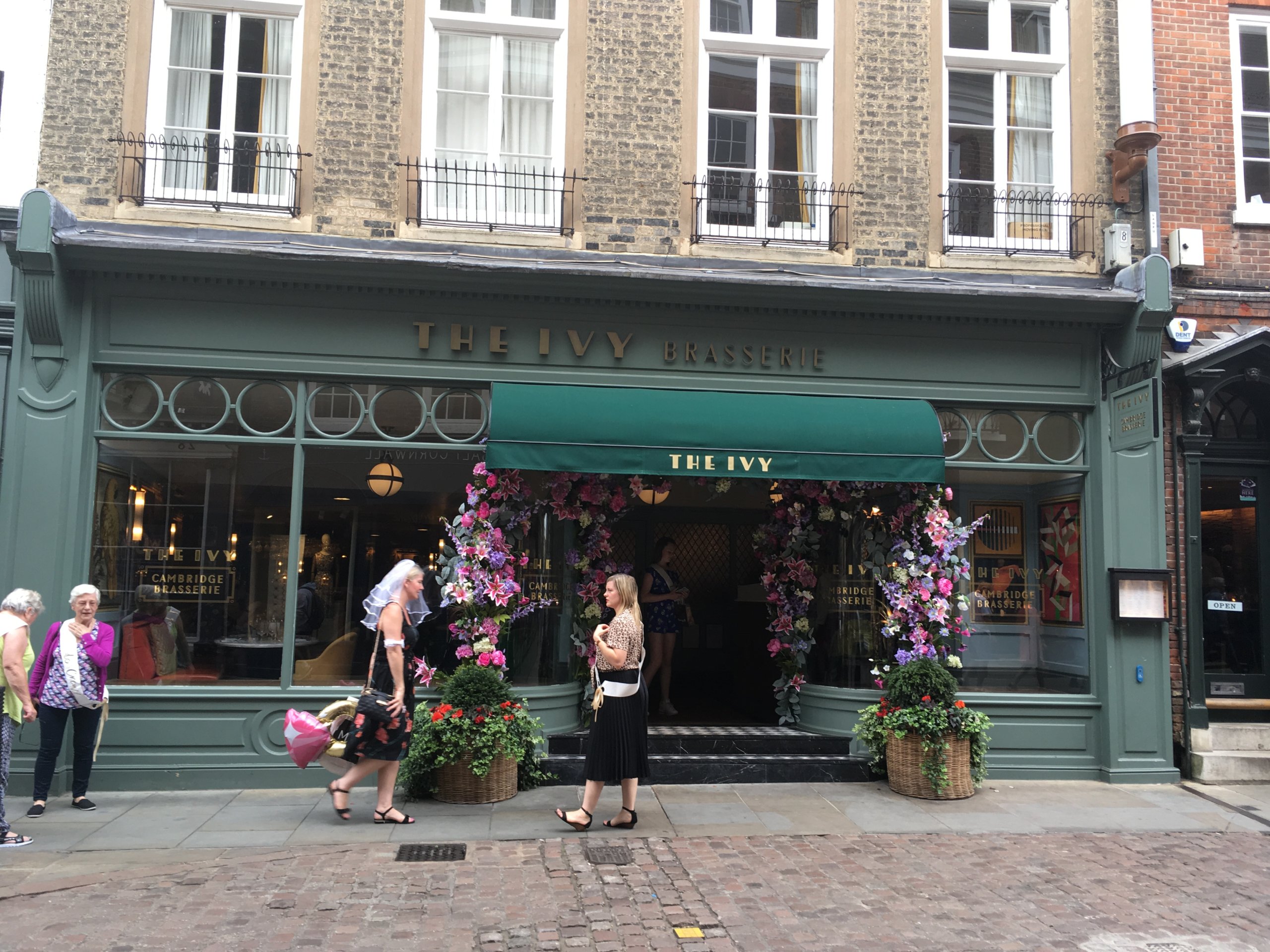
To celebrate his graduation, we decided to have dinner at The Ivy on Trinity Street. We took a meandering route from our hotel and, walking along Round Church Street, chanced upon the Church of the Holy Sepulchre. Also called The Round Church (I don’t know if it was named that because of the street or vice-versa), it is the second oldest building in Cambridge and one of only four round churches in England. The shape emulates its counterpart in Jerusalem. While it has changed much over the years – before the 1800s its tower was polygonal; the shape of its windows has been modified; and, during World War II, the east window was destroyed by a bomb – but the original ring of arches, decorated by curious stone faces, remains.

The Ivy Brasserie on Trinity Street | Photo by May S. Ruiz / Beacon Media News

A sumptuous dinner at the fabulous Ivy was the perfect cap to an extraordinary week in this beautiful city. While Cambridge is home to the best university in the United Kingdom and is a popular tourist attraction, it has retained all the charms and atmosphere of a small town. That magnificent, soaring structures abound only adds to its uniqueness, making for one unforgettable experience.

‘Frankenstein’ Makes a Stunning California Premiere at A Noise Within

Originally published on 20 August 2019 in the Pasadena Independent, Arcadia Weekly, and Monrovia Weekly

Couture’s rendering of the creature breaking through the lab | Courtesy photo / Francois-Pierre Couture

A Noise Within (ANW) opens its 2019-2020 season ‘They Played with Fire’ with the California premiere of Nick Dear’s ‘Frankenstein.’ Adapted from the original novel by Mary Shelley and  directed by Michael Michetti, it is a stand-alone production from August 11 to September 8, 2019.

Michael Manuel, who was last seen on the ANW stage as Iago in Shakespeare’s ‘Othello,’ stars as the Creature. Playing Victor Frankenstein is resident artist Kasey Mahaffy and taking the role of Elizabeth/female creature is Erika Soto.

Shelley’s most renowned work, ‘Frankenstein’ tells the story of a creature who comes back to wreak destruction after he is cast away into a hostile world by his creator. Dear’s adaptation of the Gothic tale depicts the themes of social rejection, intellectual hubris, and the emergence of good and evil.

Michetti pronounces, “By telling the story from the point of view of the Creature, this highly theatrical adaptation of Mary Shelley’s beloved novel delivers not only the terror we expect from the story, but a surprisingly thoughtful and moving exploration of society’s role in teaching and perpetuating violence.”

Scenic designer Francois-Pierre Couture has been tasked with providing ‘Frankenstein’ the backdrop and atmosphere that reflects Michetti’s vision. A transplant from Montreal, Canada, Couture is the rare artist with a full plate in both the artistic and academic fields.

I chat with Couture recently to find out how he ended up in Los Angeles, what teaching means to him, and why collaboration is what he does best.

Couture says, “When I was graduating from university in Montreal, I went to URTA (University/Resident Theatre Association), which is where students who are looking to go to graduate school for theatre programs have the opportunity to meet representatives from different universities in the U.S. (think College Fair). After presenting our portfolio, we were interviewed by school representatives.

“There weren’t that many schools from New York; I can’t remember if Yale and NYU were represented that year at URTA. But I was really considering going to either UCLA or CalArts – I thought it would be fun to go to the West Coast and explore that region of the United States. At that point I hadn’t been to Los Angeles; the first time was when I visited the schools. In fact, I  went twice because I looked at both schools on separate trips. UCLA offered me a pretty hefty scholarship to cover my studies, including some living expenses. I waited a year to give me time to think about it and, in the end, I attended UCLA and earned my MFA (Masters in Fine Arts).”

Asked what made him stay, Couture replies, “I suppose when you study for three years in a certain environment, it grows on you. I also got in touch with The Actors’ Gang right away and started designing for them and I became their production manager for three years. One thing led to the next – I started working and then I established a career in L.A. In the process, I met people here and it became my little world.”

Besides doing scenic, lighting, and projection design, Couture teaches at UCLA, Cal State Long Beach, and is a full-time professor at East Los Angeles College (ELAC).

Couture relates how he discovered that teaching was also his calling. “About 10 years ago, when I started my grad studies at UCLA, through the Actors’ Gang I found a part-time teaching job at Culver City High School. One of my colleagues, who was also an ELAC teacher, told me about an opening there. So I started teaching at ELAC on a part-time basis.

“Things were happening all at once then – I was studying for my graduate degree, I was transitioning from a full time production manager job for the Actors’ Gang to part-time teacher, and growing my design career. When I got into the academic world, I got pulled further into it. I started teaching at Pepperdine, Loyola Marymount University, Cal State Long Beach, Cal State Northridge, UC Santa Barbara, and UCLA. At ELAC and UCLA I supervise students in their production work and mentor them.”

Couture showing his designs | Courtesy photo / Francois-Pierre Couture

“It’s extremely rewarding to be able to teach someone what you know and show them your process,” continues Couture. “It’s very healthy in many ways because it forces me to understand what I’m doing on an academic and intellectual level. Just like others who work in theatre, I don’t have time to intellectualize what I do because I do shows back-to-back. Going back to basics helps me secure the foundations again. It’s a symbiotic relationship – teaching young people, seeing them grow, and giving them opportunities, especially here in ELAC.

“A lot of our students come from communities who have no access to theatre, who don’t think of theatre as a source of employment that’s desirable for them. So it’s so gratifying to be able to offer all that to young people from varied backgrounds. One of my lighting students is going to do his graduate studies on the East Coast, some are going to CalArts, another is going UC Irvine, and one will attend Cal State Fullerton next year. Many of our theatre students are also doing great things, someone is right now finishing his Master’s in directing at UCLA. In the ten years that we’ve devoted to this program we’ve been able to help our demographics enter a field that was previously underrepresented. ELAC is also the official education partner of CTG’s (Center Theatre Group, which includes the Ahmanson, Taper, and Kirk Douglas) outreach program. That direct relationship is essential to our success.”

It wouldn’t be a stretch to say that education outreach and artistic work are rarely done by the same person, I opine. Couture says, “It’s hard; there’s a lot of hours involved. But, far from being the only one working on it, I am part of a big team. And we have an entire faculty working with us to create this outreach. With our strengths and connections in the industry, we’re able to advance this program.”

“Which is the day job and which is the side job?” I ask. “That’s a tough question,” responds Couture. “I’ll have to say teaching is my day job and designing is my night job. During the summer and winter months, I choose not to teach classes and that’s when I cram all the prep and design work. During the school year, I’m at school from 9 am to 5 pm four or five days a week, with pockets of down time. But, of course, during production my hours increase – I wake up at 4:00 or 5:00 in the morning to do my day job then go home to work at night. When I’m at the theatre, usually Thursday through Sunday, I work day and night.”

In the last 13 years, Couture has worked as a scenic, lighting, and projection designer. He has received multiple Ovation, LADCC, LA Weekly awards & nominations. Designs include: ‘Invisible Tango,’ ‘A Picasso,’ at the Geffen Playhouse; ‘Everything that Never Happened,’ ‘With Love and Major Organ,’ Boston Court Pasadena; ‘Destiny of Desire,’ Oregon Shakespeare Festival, Arena Stage Theatre, South Coast Repertory& Goodman Theatre; ‘Jackie Unveiled,’ Wallis Theatre; ‘The Mexican Trilogy, an American History,’ Los Angeles Theatre Center; ‘Metamorphoses,’ ‘Everything is Illuminated,’ Ensemble Theatre Company; ‘Médée’ and ‘Teseo,’ Chicago Opera Theatre; ‘L’Elisir d’Amore,’ and ‘Cold Mountain,’ Music Academy of the West.

Couture recalls the very first award he got, “Charles McNulty, the theatre writer for the L.A. Times, featured me in his column as one of ‘Faces to Watch’ in 2007 when I designed ‘Love’s Labor’s Lost’ at The Actors’ Gang Theatre. It took me about six years working a lot of small theatres doing scenic and lighting projects to build my reputation. To this day I still do between 10 and 20 productions a year and I didn’t get the work that I’m getting now until Charles’s endorsement.

“However, the awards and acclaim don’t affect how I work. The process is so tied to my relationship with the director and the other designers. The risks we take are based on what we’re trying to do with the play and how we want to tell the story. I can’t think about awards when I’m designing because then the pressure is put in the wrong place. If I work well with my co-designers and everybody on stage and I try to be innovative, am true to the play, and give what the play needs, then the award will hopefully follow. The goal is to do good work and do something that the audience will perceive, that will communicate the story. And if we get noticed and are given awards, then that’s wonderful. Awards are subjective in many ways and you’re judged against other people’s work. So if, one year, others also did amazing work and you didn’t win an award, it doesn’t mean you didn’t do good work.”

Shown left to right: Kasey Mahaffy, Michael Manuel, and Erika Soto | Photo by Craig Schwartz / A Noise Within

It was Michael Michetti, Artistic Director at Boston Court Pasadena, who approached Couture to do the scenic design for ‘Frankenstein.’

Couture discloses, “I’ve done about ten productions there; the first show I did with him was for ‘Dinosaur Within,’ in 2011. Michael is a very talented and accomplished director. He and I respect each other’s work immensely; we try to work together but there were always scheduling conflicts. It was really fortunate that I was available to do ‘Frankenstein.’ The design process took about two to two-and-a-half months. Michael and I talked about the play at the outset; then in our next meeting, I came in with more concrete idea designs.”

“I think what I’m good at, and what I do a lot, is balancing reality and abstraction. I often work on complicated plays that have multiple locations and that show emotional content. I try to encompass all the elements and synthesize them to create a design on the stage. I want to think I’m a good collaborator; I love to involve everybody else on the team. Lighting designer Jared Sayeg and I had a lot of conversations about ‘Frankenstein’s’ set and lighting design. We knew it was going to be a big project that involves a lot of work and that it was going to be demanding because it’s a challenging play.”

“So what can the audience look forward to?” I query. “The audience can expect a scenic design that is emotionally charged; that which emphasizes the struggle of the creature, visually and viscerally,” expounds Couture. “We utilized chiaroscuro – light and shadow – that echo the layers and dark corners of all the characters. It’s also a design that people will find surprising, maybe thought-provoking in some ways, as we don’t represent the reality of all the spaces because it’s a very cinematic universe. But it all makes sense.”

ANW’s ‘Frankenstein’ is indeed a stunning first production for this season. Michael Manuel’s superb acting, supported by a remarkable cast and an extraordinary design team, and helmed by a visionary director, brilliantly bring to life Mary Shelley’s much-loved novel. If the audience’s reaction during the opening weekend was any indication, ‘Frankenstein’ could expect a monstrously successful run.

Local Interior Designer Makes Gorgeous Living Spaces

Originally published on 13 August 2019 in the Pasadena Independent, Arcadia Weekly, and Monrovia Weekly

Jake Galang did the interior and some exterior design on this magnificent Pasadena house | Courtesy photo / Ilustracion by Jake

Owning a house and making it a home is something most of us aspire to. We take great pains to make our abode a place where we can live comfortably and take pride in; where we can hold get-togethers or dinners with colleagues; where our children can invite their friends for playdates and sleepovers.

Jake Galang has made it her mission to help homeowners achieve that goal. The principal for her eponymous company, Ilustracion by Jake, she designs living spaces that are as efficient as they are magnificent. A transplant from the Philippines, she established her firm in 2006 after working in Singapore and afterwards for interior designers in Pasadena. She has since built an excellent reputation among developers in the San Gabriel Valley, with whom she collaborates on projects from the ground up. You probably have driven around town and seen several of the houses she has worked on.

Catching up with Galang on a recent morning, I inquire how she got her name (Jake!), how she got into the business, and what her favorite projects are.

Galang at a job walk in Hong Kong | Courtesy Photo / Ilustracion by Jake

“My birth name is actually Catherine,” Galang discloses. “At first I thought my Dad nicknamed me, but I later found out it was all my Mom’s doing. She was a big fan of John Wayne, who was in a movie called ‘Big Jake.’ The name stuck with her and it was what she decided to call me.”

When I protest that the moniker conjures an image of a robust man while she is a soft-spoken, petite woman, Galang replies gleefully, “But that’s the best part of it – it’s very deceiving! Contractors remember me because it’s an easy name, there are only four letters.”

Asked what steered her towards this career, Galang responds, “Architecture and interior design are in my genes. My grandfather was one of the pioneering architects in Manila and he did his drawings on linen. He passed away when I was very young, but I distinctly remember unrolling one of his illustrations which featured capiz (the outer shell of the marine mollusk found in the shallow coastal waters of the Philippines) windows and Spanish balustrades.

“However, my mother was my biggest artistic influence. She was very creative and was an interior designer back in Manila. I grew up seeing her work on projects and, once in a while, I would assist her on installations. Additionally, she fabricated the drapery – designing and sewing – she used on her jobs. At that time, window treatments were traditional period drapery, like the swags that are used in the White House, and I would help her hem.”

Lighting selection by Galang | Courtesy Photo / Ilustracion by Jake

Galang continues, “I also found product branding and lay-out designing quite fascinating, so when I attended College of the Holy Spirit, I took Advertising as my major. My mother thought there wasn’t much financial stability in that field, though, and convinced me to pursue interior design instead. So I switched majors and consequently earned a BFA in Interior Design.

“After graduation, I worked for an office systems company in Manila which provided furniture for multinationals like Chase Manhattan, Bank of America, Del Monte, etc. I was lucky enough to be sent to Hong Kong and Singapore for seminars. That was when I started traveling. I did some work for Steelcase and Knoll in Hong Kong; after that I went to Brunei to set up a Scandinavian furniture showroom.

“Several friends, who were then employed in Singapore, told me that Singapore was booming and designers were in demand. I thought that would be a good career opportunity and was blessed to be petitioned by an interior design company. I moved to Singapore and worked for Bosgroup International from 1993 to 1998. I designed furniture for Omnia, the supplier for the famous Raffles Hotel; created high-end residential interior design under I&T Interiors; and worked with designer CKT Thomas on public spaces, including Tan Tock Seng Hospital and numerous children’s libraries. Singapore is a multi-cultural, fast-paced country and I learned a lot there. That experience prepared me for what was to come.

“My work took me to the United States where I saw the business was also flourishing, so I decided to stay. I worked as a draftsman at JF Interiors in Pasadena and our projects were mostly renovation and design of old homes in San Marino. We were involved with the Pasadena Showcase House of Design. I remained for ten years and the owner and principal designer of the firm, Janie Fain, became my mentor.”

In 2006, Galang bravely took the leap to establish her own design firm and has kept busy with projects, 90% of which are residential and 10% are commercial. Besides her work being featured in Luxe magazine, Galang doesn’t do any marketing. Clients hear about her by word of mouth and they go on her website.

Adds Galang, “I work closely with Mur-Sol Construction, one of the premier residential builders in Arcadia – designing cabinetry and lighting, and picking plumbing fixtures, stone, and tile for their various developments. I love to work on the interior structure of the house as well. I sketch or draw in CAD, give it to the builder, and inspect if the finished work is done correctly based on my specs.”

Comfortable seating defines this living room | Courtesy Photo / Ilustracion by Kake

Galang isn’t inclined towards any particular style or period. “I get the inspiration for the interior from the architecture of the house,” she says. “I also talk with the homeowners to find out how they live, what they gravitate to, what they need, and what’s important to them. There will always be clients who buy a contemporary style house then want to have a French look inside. The biggest challenge for an interior designer is when homeowners want to combine two aesthetics that aren’t compatible. In that case, I would persuade them to consider a more streamlined look instead of French moldings and panels in the living room, or fish-shaped faucets in the bathrooms. I think that’s the most difficult part of this job – trying to steer clients from making choices that don’t make design sense and still make them happy.

“One of the things I learned in this business is compromise. You realize that just because you think you have this great creative idea, everybody will agree with your vision. There’s a  Confucian saying, ‘How will you learn when your cup is so full,’ there’s no room so it will overflow. When I was younger I thought I knew everything, especially when designing interiors, because I was educated for it. But now that I’m older, I realize that there’s still much out there I don’t know. I’ve learned to be more receptive to other people’s opinions and perspectives.”

The mural for the Khora lobby was printed on chains from Spain | Courtesy Photo / Ilustracion by Jake

Two recent projects Galang completed were commercial jobs in Hong Kong. She explains, “They asked me to design the flagship office for their skin care company in Hong Kong. We used local workers there, but I drew everything here and specified the look for the place. Another one is a creative building. It is a very modern sleek structure so I designed something that looks industrial. For its main lobby, I found a mural made by an artist from Vancouver which I thought would look great in it. I asked her permission to use it and commissioned her, then I printed it on chains from Spain which I found during one of my travels with my family sourcing for materials for my projects. I also integrated my personality into it. Nowadays, with the Internet, everyone’s on their computer and people use Kindle when they want to read. But I still read books, so I put them in as part of the design to evoke knowledge. In fact, the mural itself suggests creativity. If you look closely at head of the person in the mural, you’ll see there are ideas coming out of her head.

“This is my favorite of all the projects I’ve done in my career, thus far. It was such a fun assignment for us! We’ve been doing the same traditional design over and over, so this one was a deviation. Hopefully, we’ll get more commercial work when people see it on my website.”

Galang designs for the way people live | Courtesy Photo / Ilustracion by Jake

Depending on the scale of the project, each one takes anywhere from three to four years to complete. Galang describes, “We just finished a residence at Bradbury which took three years. It has a game room made for entertainment – there’s a two-lane bowling alley and a golf simulator. Farther down, there’s a pool table and a wet bar, and then a wine cellar. The daughter has a playhouse within her bedroom and the son has custom bunk beds because he likes having sleepovers. That was actually a fun residential job, it had all the bells and whistles, and one could be really creative.”

Galang has a streamlined operation, “We’re a small outfit; besides me, I have three full-time assistants who are all architects – Desiree Panopio, Jila Mendoza, Aireen Dizon, and a part-time employee Jophi Elorta. They all love to travel and explore, like me. We sometimes are working on 15 projects in one year but, on average, we have ten to 12 residential jobs that overlap and range in size from 6,000 to 16,000 square feet.

“We, interior designers, are surrounded by so many grand things because of the clients we work with. I personally have a very casual and simple lifestyle. But I share that same way of life with some of my colleagues in the business. We get to design for the super-rich but, at the end of the day, we go back to our humble homes. And, as I’m sure many of us in this career do, I keep redecorating my house. I just couldn’t help it.”

Galang is an unassuming and tiny woman who creates mostly imposing living spaces. But at the heart of her design philosophy is the ultimate goal – to make the people who live in them feel they’re cocooned in a cozy and familiar place.

August College Search Guide

Originally published on 1 August 2019 in the Pasadena Independent, Arcadia Weekly, and Monrovia Weekly

Yale University | Courtesy Photo

The road to college

I hope your children got the chance to breathe, decompress, and savor the lull because they are now once more face-to-face with the realities of high school life. High schoolers in the San Gabriel Valley confront exceedingly fierce competition. Students here: get perfect SAT scores; have 4.0 GPAs; play varsity sports; are extraordinary cellists/pianists/violinists; are founders of school clubs; are presidents of the school body; serve as officers on several campus organizations. Everyone is so accomplished that it’s a challenge for anyone to stand out. Much has been written in the newspapers about how stressed out these children are. Happily, besides being sleep-deprived, most of them get through the four years relatively unscathed.

Every fall marks the time when the process of getting ready for college application begins, whether your children are just starting 9th grade or are already in 12th grade. The only difference is the pace at which they are working on their resume. They start building all the components that go into their transcript as soon as they get into high school. By the time they reach their senior year, they should have a transcript with excellent grades balanced with an equally impressive array of extra-curricular and enrichment activities.    

You and your children should determine their interests and career goals and see what courses the school offers which appropriately meet those. These should be the guidelines for your students during the four years they are in high school. The outcomes of their work then determine which colleges or universities they should consider when they put together their list of where to apply.

An important factor in the admissions process is the students’ (and parents’) preconceived ideas about where they should apply and what their dream school is. Oftentimes, kids apply to the same dozen or so most-recognizable university names. This creates an unreasonable expectation which, sometimes, leads to unhealthy behavior. There are innumerable institutions that offer excellent teaching; there is a school out there that is the right fit for your child. 

As if the application process isn’t complicated enough, this school year the College Board will begin expanding the SAT adversity score which was tested by 50 colleges and universities this past admissions cycle. In an article written by Scott Jaschik for Inside Higher Ed, he quoted a spokesperson for the College as saying, “This is a tool designed for admission officers to view a student’s academic accomplishment in the context of where they live and learn.”

While the College Board’s intent may be sincere, many doubt the adversity score’s efficacy. In fact, critics of the plan claim it’s ‘a back door to racial quotas in college admissions.’ Still others  say that the recent bribing scandal has demonstrated the lengths at which affluent parents will go to game the college admissions system and an adversity score couldn’t possibly balance the odds.           

In recent years, universities have tried to close the gap in admissions between affluent students and those from disadvantaged backgrounds. In 2016 Harvard released a study called ‘Turning the Tide: Inspiring Concern for Others and the Common Good through College Admissions.’ It was the first step in a two-year campaign that sought to reshape the existing application process.

I wrote an article that explored Harvard’s report and to get feedback from the local academic community as well as from ACCIS (Association of College Counselors in Independent schools). The high school counselors and administrators I interviewed for the story felt that as noble as Harvard’s intent was, they perceived it as something that just adds another hurdle for students to jump through. They also pointed out that “the extreme selectivity is what created this unhealthy behavior on the high school side” and they should change way they select which students should be admitted entirely if they really wanted to resolve it.    

The spokesperson for ACCIS, Jody Sweeney, said “Until we see that colleges are really recognizing and valuing a student who engages deeply in two or three activities and rewarding that with an acceptance, we won’t be making great changes to our college application process…. We’re waiting to see what impact this report has on admissions selection and their recruitment process. Right now it’s GPA- and SAT-based. We want to get a sense from college admissions officers how they’re going to tweak their process.”

Obviously, not much has changed since. In March this year, at the height of the college admissions scandal, Harvard released ‘Turning the Tide II: How Parents and High Schools Can Cultivate Ethical Character and Reduce Distress in the College Admissions Process.’ It reiterates that ‘intense focus on academic achievement has squeezed out serious attention to ethical character in many high schools and families, especially in middle- and upper-income families,’ which ‘Turning the Tide’ alluded to and was the impetus for them coming up with the study in the first place. ‘Turning the Tide II’ goes a step further by criticizing parents who ‘fail to be ethical role models to their children by allowing a range of transgressions – from exaggerating achievements to outright cheating – in the admissions process.’

San Gabriel Valley is notorious for having very competitive independent and public schools. As much as the parents, these schools want bragging rights for sending their students to the Ivies. But I have yet to meet or hear about parents who go so far as bribing university coaches or hiring someone to take the SAT exams for their children. What we do, however, is ensure that our children are fully prepared for the application process and that they actually earn their admission to the most selective universities – which make for over-scheduled and exhausted teen-agers. If  only we could find a happy medium.                      

Photo by Annie Spratt for Unsplash

FRESHMAN

High school is vastly different from middle school. Teachers have higher expectations from the work students turn in. Your children need to develop their analytical skills as their teachers will require deeper thinking and subject exploration from their papers. They should also have better time management skills to handle the more rigorous course load and extra-curricular activities.

Likewise, there is a big change in campus life – they no longer have a “home room” and they have varying sets of classmates for each subject. One glaring difference is that they now have to make their own choices of courses and activities. Your children need to confer with the school counselor to map out a four-year curriculum that meets the requirements of colleges.

Usually there is a “Back to School Night” when parents get to meet all the teachers. This is a chance for you to see what your children will be learning during the school year. While you will no longer be as involved in their activities as in previous years, find the time to be aware of what’s happening. Some schools welcome, even solicit, parents’ help for certain campus events.

In the first few days of 9th grade, your children will have several things they will be making decisions on, and tackling. I have to add here that high schools send their profile to the college or university to which your children are applying. Admissions officers will know what opportunities were available and if the applicant took advantage of them. I have listed them here with a brief description or explanation:

AP COURSES: Make sure your children choose the AP subjects they will need in the course(s) they will be taking in college. They shouldn’t pile up on APs to pad their resume because they will need to take the AP (and SAT II) exams for these subjects. Some universities only accept 4 or 5 on an AP exam for it to have any merit at all. While college admissions officers favor students who took on challenging AP subjects, they don’t look kindly on low AP grades either.   Encourage your children to take courses they are truly interested in; students who study something they really like generally do well in it.     

CLUBS: Your children should join the clubs they actually want to be involved in; encourage them to participate actively. Ideally, your children would start a society based on their interest or something they feel strongly about. It can be something socially impactful, or it can be a fun club for student members to take a respite from their heavy academic load. In my daughter’s school one student formed a Superhero Club where they go to all the openings of the latest Marvel or DC Comics films.     

ATHLETICS: If your children are into sports and would like to play it in college, they need to start looking into the NCAA requirements now. Several universities offer scholarships for superior athletes and being a standout in a particular sport gives an applicant an edge.

ARTS CLASS: If your children’s school offers art electives, encourage them to take a course.  Usually, in the first year, the grade level dean encourages students to try various classes on offer so they can determine what they really want to focus on in the next three years.        

LANGUAGE: Besides the core subjects – English, History, Math, Science – a world language is a requirement for admission into college. In some elementary schools, students can take Mandarin and Spanish immersion classes. The Pasadena Unified School District, for one, offers French in addition to Mandarin and Spanish. If they continue on, these children will be ready not merely for college; they will be well-equipped for an increasingly global society.   

COMMUNITY SERVICE: Your children should do something they feel strongly about and work it every summer; it shows commitment to the activity they took on. This is going to be an essential component in your children’s transcript. Admissions officers are looking for depth of community involvement.       

SUMMER CAMP/ENRICHMENT COURSE: If your children have a passion for a particular activity, they should pursue a summer program related to it. Guidance counselors in some schools compile a list of the most engaging courses locally, out-of-state, or internationally.   

It goes without saying that all the above activities are merely supplements to good grades in the core subjects. Loading up on extra-curriculars at the expense of grades is definitely ill-advised.  While admissions officers at all the universities talk about their holistic approach in their selection process, a student’s GPA remains a very critical, if not the single most important, component of your children’s college application. 

SOPHOMORE

Your children have fully transitioned into high school, the demands of which were drilled into their subconscious the past school year. They have to put 9th grade behind them and face 10th grade with renewed energy and enthusiasm.

JUNIOR

Hopefully, your kids got a lot of rest this summer because in a few weeks they will be embarking on one of the most hectic years of high school life. Make sure your children confer with their school’s counselor to ascertain they have all the courses required for graduating and for college.  They need to know what standardized exams they’ll need to take for the college application. They should research which colleges and universities offer the course(s) they would like to pursue.

Take the time to attend this year’s ‘Back to School Night’ as it will take on greater significance than previous ones. The school counselors are usually present to give parents an overview of what you and your children will be expecting when the application process shifts into high gear in the spring.  

SENIOR

By this time, your children should know where they will be applying and have visited the schools. They should have taken all standardized exams required for college applications, firmed up their college/university list, researched all kinds of scholarships, lined up teachers to write their recommendations, perfected their personal statement, and learned how to complete the common application. They practically have to have their running shoes on by the time they get in the door of their high school!

COLLEGE FRESHMAN

Are your kids ready to leave their childhood behind? In a few weeks, they will be on a road not traveled. College life exposes them to the real world and I hope you let them practice how to live independently of you during their summer break. Things they took for granted before – eating hot meals without having to turn on the stove, getting clothes laundered weekly for them, rooms being miraculously cleaned – will suddenly be their responsibilities. If their dorm offers catered meals, that’s one less chore for them to worry about; but they will still have to do their own laundry.   

Congratulations, parents!  You have successfully launched your child to college and adulthood. Hello, empty nest syndrome!                     

San Gabriel Valley Teens Receive ‘Youth of the Year’ Award

Originally published on 6 August 2019 in the Pasadena Independent, Arcadia Weekly, and Monrovia Weekly

Shown left to right: Eric and Richard Dong with Congresswoman Judy Chu | Courtesy Photo

Arcadia teens Richard and Eric Dong were honored with the ‘Youth of the Year’ distinction during Congresswoman Judy Chu’s 10th Annual Leadership Award ceremonies held last Sunday, July 28, from noon to 3 pm at the Arcadia Community Center. Awards were also given for Businessperson, Educator, and Volunteer of the Year, among others.

Richard graduated this past spring from San Marino High School (SMHS) and will be attending New York University this fall, while Eric is a rising senior at SMHS. The brothers are active volunteers and philanthropists, spending hours doing service at various community organizations and schools while endowing the same places with funds to support their mission.

Children of Chinese immigrants, Richard and Eric were instilled with the importance of contributing to society during their earliest years growing up in San Gabriel Valley. Both of them are gifted piano players and they happily share their passion for music. They perform at schools, chapels, central libraries, senior citizen and homeless centers, and for the public at Walt Disney Concert Hall in Los Angeles and Carnegie Hall in New York.

From their father, Richard and Eric learned the intricacies of the stock market that made them savvy investors. Using the financial gains from their investments, they established their first  endowment to their middle school (Clairbourn) in 2014 to provide scholarships for students in music and the arts. Heartened by its positive outcome, they continued to give more – to San Marino High School to fund school supplies and to the International Leadership Foundation (ILF) to support leadership training, US-China relations, human rights, and global democracy and governance initiatives in 2017. And, in 2018, they founded the Richard and Eric Dong Endowment Fund for Union Station to provide scholarships for children.

Additionally, Richard and Eric were recipients of the President’s Volunteer Service Award at Gold level, Congressional Award for Bronze and Silver Medal, and the 2018 Outstanding Young Philanthropist Award given by the Association of Fundraising Professionals.

In their acceptance speech at the awards ceremony, Richard and Eric acknowledged Congresswoman Chu for her continued encouragement and thanked Ivy Sun, honorary chairperson of ILF’s L.A. Chapter and former mayor of San Marino Richard Sun. They also expressed their deep gratitude to Anne Miskey, CEO of Union Station Homeless Services in Pasadena, for nominating them.

As always, the Dong brothers attributed Robert F. Kennedy’s words ‘Our future is not a gift, it is an achievement’ as their inspiration and for empowering them to do good work. Young people  in San Gabriel Valley would do well to emulate Richard’s and Eric’s exemplary undertakings.

July College Search Guide

Originally published on 5 July 2019 in the Pasadena Independent, Arcadia Weekly, and Monrovia Weekly

University of Arizona | Courtesy Photo

The road to college

We in Pasadena know it’s the middle of summer when temperatures are soaring in the triple digits, and many of us are looking for ways to beat the heat.

Summer was traditionally when teen-agers found jobs flipping burgers at fast food joints, cashiering at retail stores, or working as lifeguards at Southland beaches. However, as I mentioned last month, today’s teenagers are busy pursuing summer enrichment activities or internships. These seasonal occupations are either being taken by older people who are working past retirement age or young foreigners who come to the country on a work-study visa.

This is a lost opportunity; getting a summer job is an important component because employers are looking for work experience from applicants, even from those fresh out of college. It shows that they are responsible and have been successful in the workplace.       

That said, there’s the reality that your children are facing – build impressive resumes to look attractive to admissions officers. They should be in some enjoyable classes, recreational camps, or professional internships to spend their time productively. There are test-prep courses students can take during summer to get them ready for all the standardized exams required for their college application. Today’s high school kids want to be as good as, if not better than, their classmates. Nowhere is this cutthroat competition more apparent than in the western San Gabriel Valley where a record number of students are getting perfect scores on the APs, ACTs, and SATs.   

There is an abundance of things to do during the summer months. There is absolutely no excuse for boredom and inertia.

RISING FRESHMAN

High School is going to be an exciting phase in your children’s academic life. Having completed middle school and their tween years where they found their identity, they are now ready to assert themselves in this new environment.

If your children had not shown much interest in reading during their elementary or middle school years, you need to encourage them to spend this month reading – just for the sheer pleasure of it.  Persuade them to look for different authors and genres, familiarizing themselves with various styles and themes would help them find their own voice. Reading would expand their vocabulary as they gain maturity in their writing and that would prepare them for composing their personal statement.

RISING SOPHOMORE

As mentioned above, summer is an opportune time for reading. Encourage your children to spend part of their day to this pleasurable and educational pursuit.

Your children should find an enrichment program or perform community service work related to something they are passionate about. Sustained effort and interest in one particular cause show that your children are sincere, and not just padding their resumes.

If your children are so inclined, they can start researching colleges. Nowadays, they can go online and get virtual campus tours of most colleges or universities.

RISING JUNIOR

Your children should be preparing themselves for one of the busiest years of their high school career. They should be immersed in community service work, professional internships and enrichment programs. Some students enroll in test-prep courses during the summer months to get them ready for PSAT and SAT. They can attend one of the many schools offering these courses with some of their friends to make it less of a chore.

They can likewise start researching colleges and going online to get virtual college campus tours.  This would also give your children some idea about the college application process.

Summer is the perfect time for them to read extensively to expand their vocabulary and prepare them for writing their essay for the college application.

RISING SENIORS

This is the year that would test your and your children’s mettle. Be prepared for the marathon (which actually started in the spring of their junior year).  

They should still be continuing the community service work they began back in their freshman year, getting an internship, or looking for avenues to use their talent.

If your children did not visit the schools to which they are applying, this summer would be a good time to take that trip. It would help them narrow down their list to a more realistic number of applications. 

They should also be thinking about their personal statement. Some universities also require a supplementary essay specific to them, with topics that range from the practical to the philosophical. Admissions officers are constantly on the lookout for something fresh and original in applicants’ compositions. However, it requires a certain amount of creativity and proficient writing skill to come up with a treatise that would impress seasoned readers.          

That said, your children might also find some time to actually enjoy this summer before they get swallowed up by the vortex of college applications. 

COLLEGE-BOUND SENIORS

Unless your children are spending this summer agonizing because they’re waitlisted at their first choice school, they must be very excited to have completed high school and are anxiously looking forward to the next phase of their education. By this time, they should have put in the deposit on the college they plan to attend. Some colleges would be sending out the procedures for class registrations, information on housing, meal specifics, and such other details to the incoming class.

Let your children take the lead on the college moving arrangements and only offer guidance when they ask for it. In all likelihood, your children would be moving away from home, maybe going to the other side of the country. They would need to practice being on their own and the preparations for moving would be a good place to start.

If your children will be attending a university across the Atlantic, as my daughter did, there is a whole set of preparations you have to attend to. Applying for a student visa should be your priority as it could take a month to secure. You and your college-bound student need to communicate closely with the school as their requirements may differ greatly from those of American universities.

Email or call the university to know when to wire the tuition and other college fees. Make sure your student has the necessary information on how to register for classes, how to apply for housing, what essentials to bring to school, where to find items that your student would need.

Going to school in another country would take more preparation so make sure you have enough time to spend helping your student settle into his or her new environment. 

At this juncture, let me address another situation. If your children weren’t accepted to any school they applied to, then they would need to decide if they want to attend a community college.  Most of these institutions will accept new students close to enrolment time. Some of them have arrangements with the UC system so graduates can attend a UC school for their junior and senior year. This has the double advantage of ensuring your children get a college diploma from a four-year university and saving on the cost of their education.

There could also be some instances when your children could gain admission during the spring term to their first choice school (this scenario happens if the school wants to keep their school ranking and your children did not receive a perfect SAT score but they met all the other requirements for admission. If your children have highly desirable qualities that will enhance their student body, they will wait until after their school has been ranked so your kids’ SAT scores will no longer affect their place). Confer with your children’s college counselor about how to accomplish this.

Some college applicants who are on waitlist on their dream university, ask to be deferred (this would only work if your children met all the academic qualifications for admission to the school with only the problem of the university not having the space for your student this year). 

Of course, there is the option to take a gap year after high school. Europeans have traditionally done this and it is a growing trend among American students. They spend a year pursuing activities that employ their skills and talents. One of my daughter’s classmates used it performing charity work in Africa. This alternative could help your children stand out in a sea of similar-looking applicants. Several universities consider this as a major boost in an applicant’s resume. Admissions officers tend to see the student in better light – this person has some tangible experience to bring in and, therefore, adds to the school make-up.

So whether your high school graduate is going directly to college, going by the community college route or taking a gap year, recognize their decision as a first step towards their independence.              

‘Good Boys’ at the Pasadena Playhouse Mirrors Social Issues of our Time

Originally published on 24 June 2019 in the Pasadena Independent, Arcadia Weekly, and Monrovia Weekly

Roberto Aguirre-Sacasa | Courtesy photo / Pasadena Playhouse

‘Good Boys,’ the psychological thriller from playwright, Marvel comics author, and screenwriter Roberto Aguirre-Sacasa will have its Los Angeles premiere at the Pasadena Playhouse from June 26 to July 21. Starring renowned television actress Betsy Brandt in the role of Elizabeth Hardy, it is helmed by off-Broadway and regional director Carolyn Cantor.

Set in 1988, the play tells about Brandon Hardy, a high school senior at St. Joseph’s Prep who has the world at his feet. Handsome, athletic, and smart, he is a model student after the mold of his father. But when a pornographic videotape becomes the talk of the locker room, he gets caught up in a media explosion which threatens to shatter the Hardy’s comfortable life. ‘Good Boys’ is a riveting drama that delves into what happens when a family must separate fact from fiction and, ultimately, choose to either preserve a legacy of privilege or risk losing everything in pursuit of the truth.

During a recent phone conversation, Sacasa discloses the genesis and the current iteration of the play. “It was inspired by a real scandal that broke out at my alma mater. It’s a work of fiction, but it has parallels to what had actually happened and that I personally knew about. The title was originally ‘Good Boys and True,’ which comes from the prep school’s motto and is quoted in the play. It premiered in 2008 and was performed  at several regional theatres but has never been on a major stage until now. I hope this West Coast debut at The Playhouse will give it the wider exposure I believe it deserves.

“Danny Feldman (Pasadena Playhouse’s Producing Artistic Director) was looking for material that was relevant to what’s been on the headlines recently – specifically the college admissions scandal and the Bret Kavanaugh nomination process. My husband, who has been involved with the Playhouse, brought my play to his attention. So we sat down to discuss how we could update it and one of Danny’s first suggestions was to rename it ‘Good Boys.’ I resisted it at first, but as I worked on the rewrites, it did start to feel more and more like a new play, so I came around to the title change.”

Aguirre-Sacasa describes, “The dramatic situations in this play are uncannily similar to incidents and issues that we’re still grappling with in this country – viscerally – even more so than when I first wrote it. In revisiting the play, I further explored themes like privilege, masculinity, and personal responsibility, as Brandon and Elizabeth find themselves on trial by their community and each other. ‘Good Boys’ is a sort of moral thriller, a game of cat and mouse between a mother and her son, with twists and turns that will keep you guessing about the truth right up to the end.”

While the actions of Brandon and his gay friend Justin drive the plot, the person who finds herself most affected by the scandal is his mother Elizabeth who, at the start of the play, has spent a lifetime doing the right thing – being a good doctor, thinking of herself a good mother, and questioning how to be a good wife.

Betsy Brandt | Courtesy photo / Pasadena Playhouse

Asked why he chose to make Elizabeth the central character in ‘Good Boys,’ Aguirre-Sacasa responds, “I thought there could be a little more psychological complexity in the mom’s journey through the play. A teenager is still developing, still figuring out their place in the world. An adult, presumably, knows their true self by that point. That said, I feel like both characters are compelling, it’s just that one is answering for sins done in the present, the other for sins done in the past.”

Originally from Washington, D.C., Aguirre-Sacasa attended Georgetown University where he studied playwriting. He received his Master’s degree in English Literature from McGill University, and earned an MFA from Yale School of Drama.

While Aguirre-Sacasa wrote plays early on in his career, he is also an avowed comic book reader. His semi-autobiographical play about a comic book writer and playwright was staged in 2006 at the Manhattan Theatre Club in New York. His theatrical work converged with comic book writing when Marvel hired an editor from a theatrical agency to find new writers and she called him.

Marvel signed him on for the ‘Fantastic Four’ and Aguirre-Sacasa’s first story was published in 2004. That was followed by more ‘Fantastic Four’ stories in ‘Marvel Knights 4’, ‘Nightcrawler’ vol. 3, the ‘Sensational Spider-Man’ vol. 2, and ‘Dead of Night featuring Man Thing.’

In 2013 he created ‘Afterlife with Archie’ which proved to be such a success that he was named Archie Comics’ chief executive officer. The book was also the inspiration for the television series ‘Riverdale,’ which he developed, and is now on its 4th season.

Additionally, Aguirre-Sacasa has written episodes for ‘Glee’ and developed the series ‘Chilling Adventures of Sabrina.’ He has gained a wide following among young people, whom he describes as very passionate and vocal about what they believe in. Twelve years ago he came to Los Angles to work on a television series. He discovered he truly enjoyed being here and decided to stay.

He manages to successfully move from one genre to another but Aguirre-Sacasa confesses that he has the most fun writing suspense thrillers. He expounds, “I enjoy writing in different genres – horror and stories about teenagers, for instance – but I love psychological thrillers because they are, essentially, character pieces. You put a character in a charged, dangerous situation, you turn up the heat, and you watch what they do. Will they crack under pressure? Will they lie or tell the truth? How will their actions define them? That’s true of most genres, of course, but with a good, juicy psychological thriller like ‘Good Boys,’ you get to do a deep dive.

“I don’t judge my characters, I keep them true to themselves,” he adds. “And I don’t impose my own expectations on what my audience should take away from the play. Each one will have a different experience based on where they are in their lives. That said, I’m a big believer in stories having beginnings, middles, and ends, so I think that ‘Good Boys’ does offer some resolution, though the mom and son have started their next journey. Their story with us – their trial with us – is over. Their story with each other is continuing.”

June College Search Guide

Originally published on 6 June 2019 in the Pasadena Independent, Arcadia Weekly, and Monrovia Weekly

Howard University | Courtesy Photo

The road to college

The mere mention of college applications is enough to cause apprehension among parents and high schoolers. To say that the process is a complicated one to navigate is a spectacular understatement. Frantic parents are now deeply involved in the process that should have been between their children and the high school counselor.

While we’re already dismayed about legacy admissions, finding out that some parents have resorted to downright fraud makes us enraged. It also calls into question the credibility, much less the integrity, of the American education system. The bribing scandal that was exposed a few months ago is proof that the process isn’t a meritocracy and it benefits mostly the wealthy. It’s a tragedy for the thousands of students who worked so hard but were denied acceptance because they had no other means but their best efforts.

We can only hope that all the negative publicity would lead to the overhaul of the admissions process. It clearly isn’t working. The College Board, for one, is expanding the adoption of the adversity SAT score which I plan to talk about in greater detail after the summer break.

June 21st is summer solstice, marking the beginning of summer. Most high schoolers have recently graduated, or are about to graduate. When I was in school, the onset of summer meant taking a break from the harried pace of schoolwork, extra-curricular activities, and campus club events. But our children have a widely different experience from ours. Increased competition to gain admission to highly selective universities has forced teens to fill summer hours with other pursuits to pad their resume.

There was a time when teenagers worked summer jobs. More than the financial gain, having a summer job shows admissions officers that your children took on responsible roles and gained invaluable real-world experience. It also gives young people the satisfaction that they have the ability to earn money.

Challenger, Gray & Christmas (CGC), an outplacement career and transition service company, forecasts that teens will see a hot job market this summer to fill the 180,000 total jobs created per month this year. It predicted job opportunities could increase around 5% and the teen participation rate could rise as well.

According to the CGC outlook released last April, teens gained 1,388,000 last summer, which was 7.8% higher than the 1,288,000 jobs gained by teenagers in the summer of 2017. This was the highest number of teen jobs gained since 2012, when 1,397,000 jobs were added.

“Teens have not participated in the job market at the same rate they did since their peak work years in the 1970s. In fact, teen participation has dropped since the recovery in 2009, when 37.5% of teens were in the labor force,” Andrew Challenger, Vice President of CGC, said in the same press release.

While the teen participation rate hovers near 35%, the sheer number of opportunities, as well as student desire to gain employment experience, may bring more teens back into the labor force.

“Employers value work experience, in some cases, more than education. The summer job for teens is incredibly valuable in showing future employers they are able to work in a professional setting,” pronounced Challenger.

High school counselors all agree with Challenger’s assertion. However, if there are no job opportunities in your area, I hope your children will find some beneficial ways to spend the summer months. The gap between school years is so big that kids forget everything they learned then go back to school in the fall unprepared for the work. Parents should let their children have a variety of fun, educational, productive activities that stimulate their brain.

It’s also the time to look at what your children have accomplished, and what benchmarks they need to achieve to propel them to the next school year. 

Photo by sofatutor for Unsplash

FRESHMAN

Ninth grade is behind them! Your children’s grades should indicate that they took high school seriously and that they put all their efforts at getting good marks. They should have already made plans for summer programs, internships, and community service work. They should engage in activities that truly reflect their passion. Instead of yearly joining a group of kids building houses in Guatemala, they might consider an activity that would really mean something to them. 

College admissions officers see the same pursuit on all the resumes they receive that your children would not be doing anything memorable. Encourage them to think outside the box, avoid the herd mentality. If your kids enjoy music and performance, for instance, they might consider organizing an original musical to be presented to seniors at your city’s retirement center.         

In 2016, the Harvard Graduate School of Education released a seminal report called “Turning the Tide: Inspiring Concern for Others and the Common Good Through College Admissions” which was endorsed by 80 colleges and universities. It points out that today’s process puts much emphasis on personal success rather than service for others. 

It recommends students engage in: meaningful, sustained community service; collective action that takes on community challenges; authentic experiences in diversity; work that helps them appreciate the contributions of the past generations; contributions to one’s family.

All the recommendations in the study, however, are courses of action that high school counselors are already preaching to students. So, in that regard, it really isn’t anything new. What’s new is the strong emphasis that admission officers place on the depth, rather than the breadth, of students’ engagement with any given community service.     

Should American universities really take this study to heart and use its recommendations, it is incumbent upon you to encourage your children to do well in school and to put a lot of thought into what community service they want to embark upon.          

SOPHOMORE

Your children’s end-of-year marks in 10th grade should have improved over last year’s if they didn’t do well in their freshman year. College admissions officers want to see students who continue to better themselves. 

They need to take whatever standardized tests are required – ACT or June SAT subject tests are the norm. They also need to continue the community service activity they started last summer.  While it is advisable to show consistency for admissions officers to know that your kids have a passion for such work, they could do a variation of it; they don’t want to be monotonous.

They can start researching about colleges, specifically looking for the institutions offering the courses they want to major in.

JUNIOR

The school year that just ended was a pivotal one for your children as it would be the last full year that college admissions officers will see on your kids’ application. It should reflect your children’s efforts at getting the best marks they could muster, and an improvement over the first two years of high school. 

Make sure your children have their community service work, internship, and enrichment program ready for summer. These activities should be a continuation of the previous years’.   

This is going to be their busiest summer with standardized tests like the ACT, SAT, SAT IIs, and APs.  If they have not seen the schools they are considering applying to, this would be their last chance to visit college campuses. You might consider making it a fun summer trip for the family (my daughter and I spent two weeks visiting universities as part of our summer vacation).

Your children should start thinking about their essay topic; meeting with their school counselor to make sure they have taken all the required courses for graduation and college (the UC and Cal State universities have their A – G requirements that need to be completed); and lining up teachers they would like to ask for recommendations.   

SENIOR

Well, your children have accomplished a major milestone – successfully completing high school and getting accepted into a college or university! This period in their life will never again be repeated, so let them revel in what they have achieved. Give yourself a pat on the back while you’re at it, you’ve been a major influence in whatever path they choose to take from here.

Local Milliner Creates Spectacular Bespoke Hats

Originally published on 31 May 2019 in the Pasadena Independent, Arcadia Weekly, and Monrovia Weekly

Li wearing one of her bespoke fascinators | Courtesy photo / Handmade by Cissy Li

Americans, as a rule, don’t typically wear hats the way they do sunglasses as a fashion accessory. However, if it were up to Cissy Li, all ladies would be wearing hats wherever they go, most especially to weddings and other stylish events. To advance her lifestyle philosophy, she started creating headwear in 2006 from her Pasadena home for close friends. And, recently, she displayed her collection called ‘Handmade by Cissy Li’ at an exhibition held at Joann’s Fine Arts Ai+ Gallery on Mentor Avenue.

The path that led Li from Suzhou as a child growing up, to Milan as an haute couture model and, finally, to Pasadena as an artisanal milliner, is paved with extraordinarily good fortune.

“I’ve always loved design, fashion accessories, and modeling, ” Li proclaims. I double-majored in Fashion Design and Modeling at Suzhou University near Shanghai. After graduation, I moved to Beijing where I worked for two years at the government-owned modeling company in exchange for my free education. Knowing that modeling as a career usually has a short span – because agencies are always looking for 14- to 16-year-olds – in 1997, I went to the Lutzelau School in Switzerland and took a Hotel Management course to have a back-up plan. It’s now called Swiss IM&H (Swiss Institute for Management and Hospitality).”

Li as a runway model in Milan | Courtesy photo / Handmade by Cissy Li

“Fortuitously, I went to New York in 2000 for a modeling pageant and earned the top award for Best Runway Model,” discloses Li. “The prize was a contract with an agency in Milan called ‘Zoom.’ In the same year, I won the Universal Asian Supermodel pageant in Las Vegas and was selected one of the Top Five Models. As a professional runway model working in Milan, I was lucky enough to wear the clothes and accessories of French and Italian designers, including Ferre, Nina Ricci, and Valentino. And my love for hats was only reinforced. When you wear one, you can’t lower your head because it’s going to fall. That compels you to stand erect and maintain good posture – so hats make you look very elegant.”

“I considered quitting by 2003 because I thought I was too old for the profession. So I moved to the U.S. and taught at the Barbizon Modeling School in Las Vegas. We entered a competition in New York but one of the students dropped out. Consequently, my boss told me I had to be my student’s replacement because she had already paid the registration fee. I protested saying, ‘I’m 26! I’m too old to compete.’ She retorted with, ‘You’re Asian, they won’t be able to tell your age.’ So I went to New York and won! The prize was another contract to go to Italy. And I thought, I had just left Italy and now I’m being sent back there,” Li recalls with a laugh.

“I did one show to fulfill the contract but I couldn’t continue doing it,” says Li. “In this business you sign one contract with one agent and if they refer you to another you get double charged, so you don’t really make any money. The cost of living in Italy is high – renting an apartment and feeding yourself cost a lot. And then you have to pay the agency on top of that. Besides, I wanted to focus on a different career, so I came back to the U.S. I was working for Bellagio Hotel in Las Vegas as the Assistant Manager for Channel’s Fine Jewelry in 2005, when I met my future husband who’s from Pasadena. So I moved here and it was then I began making hats.”

Li’s interest in various crafts includes decoupage. She walks over to a side table, picks up a tray, and explains, “I created this with marble and gold leaf and it can be used for tea cups or as an Asian cheese board. It took three weeks to finish because the process involves layering the resin which needs to dry between applications. Additionally, there are several factors that affect it, like the weather and temperature. It has to be 70 degrees for the resin to adhere and, as you know, we had a long winter this year. For instance, these coasters took three months to complete. Taking all those into account, the pieces become too costly that I wouldn’t be able to sell them at a reasonable enough price for people to buy them so I give them to close friends as gifts. Handmade pieces are never perfect but these imperfections are what make them valuable. They’re evidence of being one-of-a-kind, and not commercially- or machine-made.”

The tools of Li’s trade | Courtesy photo / Handmade by Cissy Li

“I love art. Besides my kids, art is my passion,” Li emphasizes. “I draw, paint, and design. And, of course, I have my hat projects. But you couldn’t do that full time when you have little kids at home. Now that they’re older, I can do a little bit more. I always say you have to choose a job you like so it doesn’t become a chore. I get up at 6:45 or 7:00 to get my children ready for the day, drop them off at school, and then I work in my studio. I pick them up from school, help them with homework, finish dinner, then I go back to my studio. Sometimes I’m here late at night or until the early morning hours. I get only four or five hours of sleep but I don’t feel tired because I love it and I don’t regret putting in that many hours working on my hats. Look at my fingers – they look dirty because the materials I use, like beaver hair, require a lot of steaming, stretching, pressing, and pushing onto the felt. After four hours, I literally cannot lift my arms. I do it because it’s my passion; if it were only for the money, I’d stop after eight hours. But I put in 12 hours at a stretch working on one single hat.”

“Sorting the materials for making the hats is also time-consuming,” adds Li. “I get shipments from England, Ukraine, Russia, and the Czech Republic. Vendors send me pictures of the items but when they get here, the colors are different from what are in the photos. I’m very visual; I  can see the various hues. I’m also good with size and proportions so I have to sort and organize all the materials to make sure I put them together correctly. With items like flowers or feathers, you really need to source reliable vendors – I find them through friends’ introductions while some are very old and well-known houses, so I’m confident about their products. It’s also important to see them for yourself because you can’t tell their quality through photos. I travel to Europe every summer for two months and I visit my vendors between family holidays.”

Pretty in Pink | Courtesy photo / Handmade by Cissy Li

Li specializes in fascinators, which aren’t really hats but fashionable headdresses that Prince William’s wife Catherine, otherwise known as the Duchess of Cambridge, made extremely popular.

“Each fascinator takes me anywhere from two to three weeks to complete because I want to find the precise color,” Li expounds. “I’m not very particular with a lot of things in my life, I’m pretty easy-going, but I am exacting in my work. There was one peacock fascinator I worked on which took a month to finish and, in the process, I learned that peacocks have green or blue shoulders. Some of the feathers that arrived had green reflections, some had reddish blue, so when I put them together they looked like Chinese fried rice. I had to order from different vendors to get the specific shades and then match them correctly. One client bought it, but instead of wearing it on her head, she has it hanging on her wall along with other paintings – she treats it like a piece of art. Knowing that clients appreciate the outcome makes this work gratifying.”

Working tirelessly for several months, Li was able to create over 100 handmade hats for an event she fittingly called ‘An Affair to Remember.’

Li’s fascinators on display at ‘An Affair to Remember’ | Courtesy photo / Handmade by Cissy Li

“The show was meant as an exhibition and not as a sales event,” clarifies Li. “I wanted to give all my guests the chance to look at the hats and try them on. If someone were to buy a piece, then no one would be able to see it. However, a couple of  guests really wanted to buy the hats and they waited until after the end of the show to take the items. A friend and loyal customer from Newport Beach had planned on coming to the exhibition but wasn’t able to make it because she twisted her knee a few days before. When I posted pictures of the hats for the event, she called me to tell me which one she wanted to buy.

“My clients are usually people I already know. I haven’t really gone commercial because I have no time. I’m one person and I can’t do the marketing and production all at once. Hats are also a very individual thing so I don’t mass-produce. I do it the traditional way – with custom sizing, fitting, and so forth. I’m leaving in mid-June for my annual trip to Europe but I’m hoping to start a website when I come back, not to sell the products but to showcase the hats so people who want to buy them can contact me. It’s also tough to do an online business; the laws protect customers and not the sellers. Our hats are shipped in beautiful hard boxes but when customers decide to return them, they come back in such bad shape and you feel awful about the merchandise. People looking for a bespoke hat can come to my studio, select all the components, and get instructions on how to wear the hats. It’s really about mutual respect.”

Li modeling a designer gown at the Asian Pacific American Festival held this past weekend | Courtesy photo / Handmade by Cissy Li

As an aficionado, Li is convinced that no one carries off wearing hats with more aplomb than the English. And where does one find an abundance of hats in all their splendor but at The Royal Ascot. It’s also the perfect place to get ideas for her hats, so she makes it a point to go to the opening of the renowned horse races in June. It’s both a work and fun excursion because she takes her children with her and they’re usually there for the Royal Procession when the Queen is in attendance.

On one particular occasion, her daughter, Claire, was so entranced by Queen Elizabeth’s headwear. Having been around her mom as she fashioned spectacular hats for clients, Claire confidently declared that Li would one day be the first Chinese-American milliner to create a bespoke piece for the Queen. Any other mom would brush off that endorsement as merely child’s fancy, but Li took that to heart. For several months now, she’s been in contact with some people connected with The Royal Ascot to figure out how to make it possible. However, she’s also cognizant that there are so many hoops to go through.

“The Queen approves only one brand of hats and clothing for The Royal Ascot,” Li states. “Selling there is also complicated because of taxation laws and import regulations. I have to consider all the things that could possibly go wrong. Can you imagine if we got stopped at the airport as we’re leaving because I didn’t take care of every legality? What would have been such a happy trip would end up something I’d deeply regret.”

Whether Li succeeds in getting her hats worn by the Queen and the smart crowd attending The Royal Ascot or not, nothing can hinder her from creating headwear for ladies here. We don’t have to be royals to wear her spectacular fascinators. But donning her meticulously fashioned hats will certainly make us feel like princesses.