June College Search Guide

Originally published on 1 June 2020 in the Pasadena Independent, Arcadia Weekly, and Monrovia Weekly

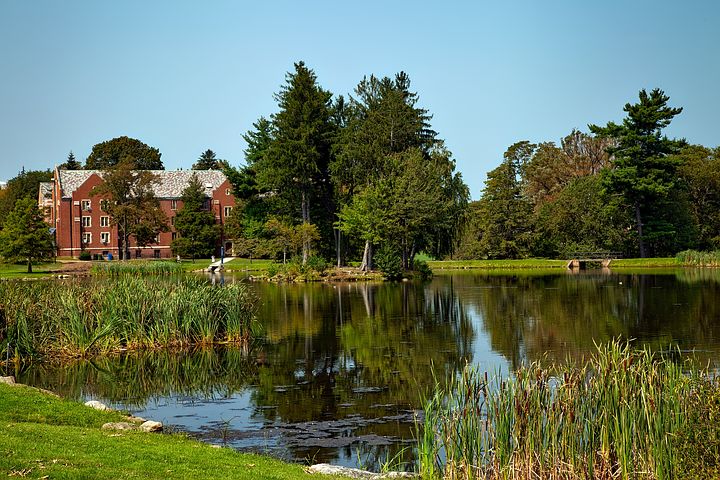
University of Connecticut | Courtesy Photo

The road to college

Seniors are about to have their virtual graduation or have recently done so. Having spent the last semester of their high school sheltering in place, these teenagers have been looking forward to the loosening of the lockdown orders so they can finally get out of the house.  

Businesses, though, are taking a cautious approach to reopening and there will be limited options for these young people on how to spend their summer months. In the past, teenagers went to summer camps, found internships, or joined organizations like Habitat for Humanity or Doctors Without Borders to do service work in impoverished areas of the world.        

Those who had been anticipating to land summer jobs are going to be very disappointed. The coronavirus pandemic upended entire countries’ markets and wiped the economic expansion we had been enjoying here. Experts worldwide are predicting a recession that’s deeper and lengthier than what we saw during the financial meltdown of 2008.   

While we don’t need Challenger, Gray & Christmas to tell us that teen summer jobs outlook this year is pretty grim, I’m including the report they recently released:  

“Teen employment skyrocketed during the summer months of 2019 to the highest number of jobs added since 2001, according to an analysis of non-seasonally adjusted data from the Bureau of Labor Statistics by global outplacement and executive and business coaching firm Challenger, Gray & Christmas, Inc. However, the global pandemic of COVID-19 has changed everything and total jobs added for teens may fall well under 1,000,000, according to one workplace authority.

“A month ago, we would have predicted another summer of massive teen hiring. We had one of the tightest labor markets on record, historically low unemployment, and high consumer confidence – the perfect recipe for companies that traditionally hire teen workers, like retail and entertainment venues, to beef up staff,” said Andrew Challenger, Senior VP of Challenger, Gray & Christmas, Inc.

“Everything has changed. Many of these venues have stopped operating as non-essential businesses with reopening timelines in question. Grocery and department stores that are on a hiring binge now come with an inherent risk that did not exist before the outbreak. If we are able to weather this crisis and get businesses back up and running by June, we may see a surge in teen hiring then, however, teen workers, as well as any job seeker, may be much more wary of accepting public-facing roles,” he added.

Last summer saw 1,737,000 jobs gained by teens, 25% higher than the 1,388,000 jobs gained by teenagers in the summer of 2018. This was the highest number of teen jobs gained since 2001, when 1,742,000 jobs were added.

However, many companies are in a holding pattern and thousands of others are not open for business at all. A recent Challenger survey found 37% of companies have instituted hiring freezes. Another 11% have implemented permanent layoffs and 49% are likely to in the next three months. Meanwhile, 4% report they are revoking internship offers for the summer, many of which tend to go to older teens.

Nearly 10 million workers have filed initial jobless claims over the last two weeks. Challenger predicts job losses in the Leisure sector alone could top 14 million.

“The teen summer job is the first step in people’s careers. It is vitally important to helping young workers gain valuable skills that they will draw upon later in their jobs. Many employers want to see some job experience from even their entry-level workers,” said Challenger.

“The year with the lowest summer hiring since 1998 occurred in 2010, during the recovery from the Great Recession, when 960,000 teen jobs were added in May, June, and July. This year may see even fewer as conservative estimates suggest businesses will likely still be closed for much or part of May,” he added.

| Courtesy Photo

FRESHMAN

The sheltering-at-home order caused an upheaval in all students’ regular schedule. It was tough for 9th graders who were just getting used to high school and the workload associated with it. Remote learning, although helpful in providing continuity in students’ education, could not replace what they would get in the classroom. However, I hope your children were able to keep up with their curriculum.

Some schools may have eliminated final exams and given pass or fail grades in lieu of the letter grades, which must have been a disappointment for straight-A students. But that shouldn’t deter them from continuing to get excellent grades because the student’s GPA is the single, most important component of their transcript. And with the UC system’s decision to drop the SATs and ACTs from their requirements, students’ GPAs have become ever more significant.       

If your children can find summer enrichment activities, they should definitely pursue these. They also need to do a lot of reading to help them prepare for all the essays they will have to write when they start sending out their college application. 
SOPHOMORE

Your children’s end-of-year marks in 10th grade should have improved over last year’s if they didn’t do well in their freshman year. College admissions officers want to see students who continue to better themselves. 

While the UC system has dropped the standardized test requirement, not all universities have. So your children need to take the virtual ACT or June SAT subject tests. This year the College Board eliminated the essay portion and the testing time has been shortened.

JUNIOR

The school year that just ended was a pivotal one for your children as it would be the last full year that college admissions officers will see on your kids’ application. It should reflect your children’s efforts at getting the best marks they could muster, and an improvement over the first two years of high school. 
This is going to be their busiest summer with standardized tests like the ACT, SAT, SAT IIs, and APs. If they have not seen the schools they are considering applying to, they might consider taking virtual tours.

Your children should start thinking about their essay topic; checking in with their school counselor to make sure they have taken all the required courses for graduation and college; and lining up teachers they would like to ask for recommendations.   

SENIOR

It was a disappointing last year for students who were not able to properly say goodbye to their friends and teachers and didn’t get the opportunity to walk across the graduation stage. But I hope you watched their virtual commencement ceremony and celebrated at home with your graduate.       

Your children have accomplished a major milestone – successfully completing high school and getting accepted into a college or university! This period in their life will never again be repeated, so let them revel in what they have achieved. Give yourself a pat on the back while you’re at it, you’ve been a major influence in whatever path they choose to take from here.

Sending Off the Class of 2020

With the Early College program students have a path to college through courses that meet high school graduation requirements and provide college credits simultaneously | Courtesy photo

It’s graduation time for high school seniors across America – the culmination of four years of frenetic juggling of school and extra-curricular activities, finishing homework and long-overdue essays, and preparing for the vortex called college admissions. Graduation is a rite-of-passage for teenagers everywhere.        

But the coronavirus pandemic deprived the class of 2020 of a proper send-off and graduation. It is a crushing disappointment for the thousands who have been looking forward to this momentous occasion with joyful anticipation. They are a smart and resilient lot, though. Many of them realize that being robbed of senior activities and the opportunity to walk across the stage on graduation day is not a devastating loss in the whole scheme of things. In fact, some of them have taken a philosophical attitude about their last year in high school prematurely ending.             

Michelle Dong is the senior class president of Arcadia High School. She, along with the student council, organized various activities for the graduating class much like they would if they had been on campus.

Michelle Dong, Arcadia High School’s senior class president | Courtesy Photo / Arcadia High School

“We have developed several video projects to celebrate and remember the memories of the Class of 2020,” reveals Dong. “First, we recently published a video that celebrated our “snr szn” (senior season) – a common mantra that seniors used during the school year. Senior Council collected videos and pictures from the seniors to highlight our lives as the Class of 2020. I believe this video was a bittersweet reminder that our senior year was beautiful, even if it was cut short.

“The next video we have planned will bring our class through a journey from our childhood to our present selves through pictures submitted by students and parents of baby pictures and memories of grades K-12. Our goal with this video is to commemorate our journey toward reaching a significant milestone.”

Dong says further, “Additionally, we want to uphold a highly anticipated senior activity: Senior Chalking. I have been looking forward to chalking ever since I was a little freshman. As an alternative to this event, we are coordinating a distribution day to give seniors pieces of chalk respective to the colors of their future plans (4-year or 2-year college, technical school, military, etc.). Students will receive the colors they requested prior to the distribution and chalk at the safety of their homes.

“Finally, we are coordinating a ‘Senior Package’ for the seniors. This package will consist of multiple farewell gifts from Senior Council. We have put a lot of time and effort into selecting items that have sentiment and sustainability. I currently do not want to disclose the items because I want it to be a surprise for the seniors!

“We have spent many hours on video calls and text messages trying to come up with the best alternatives to activities we would normally have at school. Hopefully, these efforts will bring our class the closure they deserve.”

I ask Dong to share her thoughts about graduation and she says, “I have felt a bag of mixed emotions ever since the school closed in March. At one end, I felt disappointed that I couldn’t live out the full extent of my senior year, especially since we had a lot of end-of-the-year senior activities. I felt crushed that I couldn’t say a final goodbye to friends in my classes or teachers.

“At the other end, I couldn’t brood over my past and tried to find silver linings amidst quarantine. I have been gifted so much time to work on myself and explore personal interests that I originally didn’t have the time for. I’m also grateful that I can spend so much time with my family before I leave for college. Quarantine has allowed me to be more introspective. Staying home has catalyzed me to make the most out of life when things have settled down. Life isn’t finite, so I am choosing to make the most out of it despite the temporary setbacks I face now, and in the future.”

Arcadia High School’s administrators, likewise, intend to hold a graduation ceremony even as they adapt to the circumstances.

Angie Dillman, Arcadia High School principal | Courtesy Photo / Arcadia High School

Angie Dillman, Arcadia High School principal, declares, “We’re going to broadcast our graduation for our 793 seniors at 6:30 pm on June 4, the date and time originally scheduled. As with previous graduations, there will be several elements to the rite and the first part is ceremonial in nature – the senior class president, the valedictorian, and I give speeches. This is followed by the official recognition of our salutatorians by the board president Lori Philippi and myself. I then certify that the students have met all graduation requirements and then AUSD Superintendent Dr. David Vannasdall accepts the graduating class.

“The second part is the reading of the students’ names which will be pre-recorded. The caps and gowns, honors cords, the valedictorian’s and salutatorians’ stoles were sent out over the past two weeks. Graduates can submit photos of themselves wearing their cap and gown which will be used in the virtual ceremony. If they weren’t able to submit photos, we will use their yearbook picture. All of this will be live-streamed by our school’s news station and students will watch the virtual ceremony with their families from the safety of their homes.

A stunning event at every Arcadia High School graduation is the moment when all graduates toss their mortarboards up in the air, reflecting the jubilation these young people feel after four years of hard work. And while that image cannot be captured at a virtual graduation, they will approximate the act. Says Dillman, “At the end of the ceremony, I think our valedictorian is going to throw up his cap and ask everyone at home to join him.”

Dillman adds, “Because of the restrictions, the high school administrators were not able to do all the things we would like to celebrate the class of 2020. However, we were able to do one thing – we surprised the valedictorian Braden Wong in his house with the announcement, which we livestreamed. We’re hoping to hold a real graduation ceremony when we’re allowed – maybe in the next couple of months.”

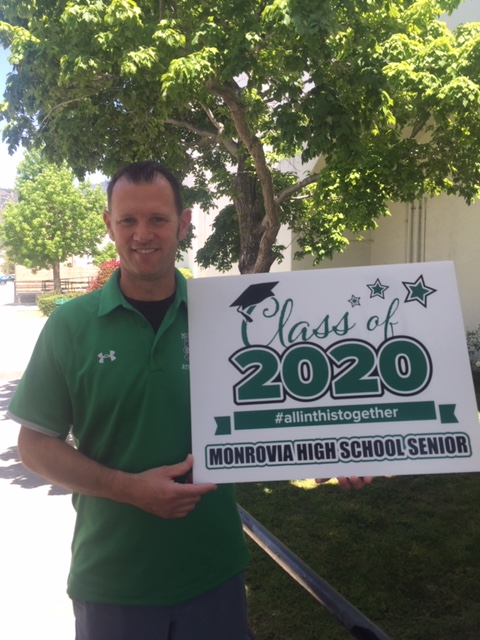
Kirk McGinnis showing a lawn sign for MHS’s graduates | Courtesy Photo / Monrovia High School

Monrovia High School, which U.S. News and World Report has recently ranked in the top 13 percent of schools in the nation because of the early college and career readiness program that Principal Kirk McGinnis instituted three years ago, will be giving their students a memorable send-off.

The district purchased lawn signs for the class of 2020 which they distributed on April 30 from 10 a.m. to noon. McGinnis says, “That day was super fun – we got to see our seniors as they drove through the campus to pick up their signs. A staff member delivered the sign to the home of any family that could not make it at that time.

“We have a long list of senior celebrations planned as well, including graduation banners, a symbolic lighting of our field lights and the M on the mountain each Wednesday in the month of May at 20:20 (8:20 p.m.) for 20 minutes to honor the class of 2020, and a permanent dedication wall at school for the class of 2020 with handprints and signatures.”

Discloses McGinnis, “We thought about having a community parade but feedback around it was lackluster. Likewise, in planning with the city we also understand that the complexity of having 360 graduates and their families parading through our community poses a significant potential impact to our community. So, we adjusted the graduation plan that will help reach the goal of having students cross the graduation stage while still meeting the guidelines of social distancing.”

“We designed a drive-thru graduation platform in the interior of our campus at a spot where families in their cars will stage so they’re not causing congestion on the public road,” describes McGinnis. “I have them broken down to 40 cars every half hour, from 3 to 7 p.m. Each car will be set far from the platform to allow each graduate to safely get out. Parents and family will have a front row seat in their cars. Graduates, wearing their cap and gown, will walk across the graduation stage where I will be standing. They will pick up their diploma cover from the table, walk off the stage, get back into their vehicle, and then head on their way off campus.”

“The school purchased masks to be worn that day for our staff and graduates. A professional photographer will be on site to capture the image of the student receiving their diploma and moving their tassel from one side to the other. Families can order prints of this memorable event.”     

In the works is something that McGinnis says will be distinct to MHS. He says, “Our video production team is working hard to prepare the video component of the graduation ceremony. As students arrive, check in, and prepare to walk across the stage, the school’s team will be queuing each student’s previously prepared graduation stats (awards and recognitions, the school or military branch they will be attending in the fall, as well as their senior portrait) which will be scrolling on the screen below the video of the graduate receiving their diploma. This will all be live-streamed so other relatives of the graduates can watch from the comfort of their own homes, and recorded so they can have it as a keepsake.”

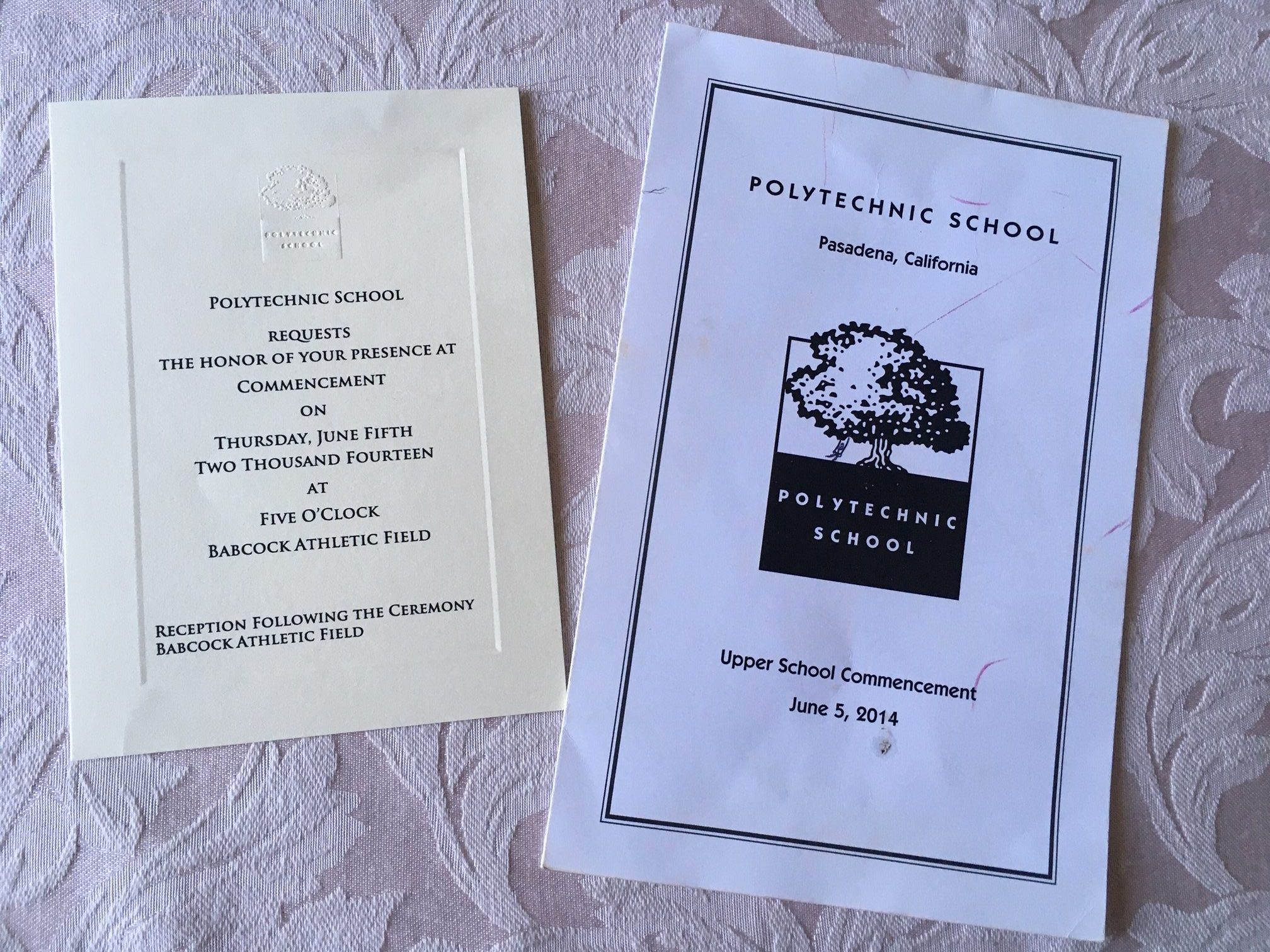
A past Poly graduation invitation and commencement booklet | Photo by May S. Ruiz / Beacon Media News

Polytechnic is an independent K-12 school in Pasadena. Established in 1907, it has the proud distinction of being the first independent school in Southern California. Some students in the class of 2020 are ‘lifers’ and have been dreaming of the first graduation they will experience after spending 13 years on campus. They have been eagerly awaiting the flurry of merrymaking at the Upper School during ‘Senior Week.’ 

Jennifer Fleischer, Upper School director, says, “Ordinarily, we have two weeks of senior week where there are a variety of activities, including the outdoor trip which, unfortunately, had been cancelled. We’re bringing ‘Chalk Day’ to the students. We’re delivering chalk to each house and we’ll come around to photograph the pictures they make. We’ll create a website and some social media presence around the senior celebrations. We’ll try as much as we can to recreate and reimagine celebrations while we’re safer at home. There are about 16 committees – commencement, Honors Day, Senior Weeks, prom, etc. – working on different events and students are a part of each so they are appropriately represented.”

Poly’s 96 seniors will be graduating on June 5. As of this writing, though, Fleischer reports that they “are still pulling together details, pivoting to make sure we are honoring our students and prioritizing safety.”   

John Bracker, head of school, says, “It’s a complicated time and our hearts go out to the seniors and ‘lifers’ because of how much they’ve anticipated senior spring and the rites-of-passage – whether it’s the spring musical or the senior class trip on the Colorado River – which aren’t happening.”

“We’re considering different scenarios for graduation because so much runs into the ‘it depends’ category. We might have a car parade or a drive-thru graduation; or we might do something virtual. Another possibility is to spread people around the field. I know some schools are pushing graduation till later but we’ve made a decision to do something on the day to mark it, then plan something for later. We don’t want to keep pushing off graduation later and later and find ourselves in October. We’ll do the best we can with what we’re allowed to do now and think of what we can do later this summer when, hopefully, the restrictions are eased up and we can do something that’s more community-building and celebratory.”

“I don’t think we can pretend that it’s going to be the same,” continues Bracker. “We have to accept that and then plan something that will be the first time in over a 100 years, and maybe the only time in the next 100 years, that we’ll celebrate graduation this way at Poly. There ought to be something important about that and something that will make that memorable – it will be different than we’ve done before, it won’t feel the same. It won’t be the same experience, but it will be historic.”

These are extraordinary times for us all and we’re having to figure out how to navigate uncharted territory as we go along. But teachers, students, and school administrators have all done a remarkable job of quickly adapting to circumstances. And the Class of 2020 will stand out in our memories as the generation that handled their biggest disappointment with uncommon grace.     

A Noise Within Goes Virtual

Originally published on 15 May 2020 in the Pasadena Independent, Arcadia Weekly, and Monrovia Weekly

A Noise Within’s virtual gala performance on Zoom (clockwise, L-R): Erika Soto, Kasey Mahaffy, and Rafael Goldstein | Courtesy Photo / A Noise Within

The unprecedented stay-at-home orders that were put in place mid-March following the coronavirus outbreak caused a closure of all businesses deemed non-essential. Venues where people usually gather, like theatres, had to shut down practically overnight; events were cancelled and performances were rescheduled. 

For A Noise Within (ANW), however, the show goes on – virtually. Speaking with me by phone, Producing Artistic Directors Geoff Elliott and Julia Rodriguez-Elliott disclose that work doesn’t stop despite the lockdown.   

“We’re essentially doing everything that needs to be done from home – lots of Zoom meetings with the various departments, the executive committee, the board. It’s a different kind of busy but it’s busy,” says Rodriguez-Elliott.

Stay-at-home orders notwithstanding, ANW recently held their first-ever virtual gala. Elliott explains, “A lot of planning went into holding a virtual gala in lieu of having our fundraising annual dinner on stage event. In the past, obviously, the money raised from the dinner on stage went to the educational department. This year it’s a little different because there are other challenges, so it was an overall ask to our supporters that they be a part of the gala. We didn’t know what to expect but it actually went very well – we hit our goal, which was wonderful.” 

Describes Rodriguez-Elliott, “People were able to join Facebook Live for the event. People who purchased tables for the event pre-COVID donated it back to the theatre. That was really incredibly generous. And then pretty much all the activities that we usually would do during the dinner on stage were all done virtually. We had a paddle auction which lasted 48 hours, we had performances of scenes from ‘Alice in Wonderland,’ which people were able to view through Facebook Live and also through Vimeo. Geoff and I paid tribute to the honorees, as we usually do every year during the dinner on stage event. Everything that we would have done at the dinner on stage, we tried to duplicate except that it was all virtual. It was a different experience but it was a wonderful way to stay connected. It’s not a substitute for being together in a room but it was a playful way to do it. I think people appreciate the opportunity – I know we do – to connect even if we’re doing it in a little box.”

“You’re trying to be as normal as possible virtually,” I comment. And Elliott, who thankfully hasn’t lost his sense of humor, quips, “As normal as possible for people who are abnormal generally.”               

Alicia Green at the virtual gala | Courtesy Photo / A Noise Within

After two months in lockdown, Californians are slowly coming out of isolation. But our world will be vastly different from life as we know it. Even when restrictions are lifted for theatres at last, our new normal will probably involve wearing masks in public spaces and distancing in large gatherings. So how will theatre companies navigate this uncharted territory?    

Rodriguez-Elliott says, “Various scenarios for the fall and spring seasons are one of the many things we talk about with our staff, with each other, and with Michael, our executive director. We’re crunching numbers and looking at half capacity – for instance, having every other seat, every other row. And if that were the case, we could have longer runs. We think that’s what’s going to be the scenario for a while in our line of business. We’ll just have to see how it plays out. We’re looking to Gov. Newsom as to the different phases of reopening and we’re paying close attention to the advice of the experts. It’s a day-to-day situation which changes constantly.”

“And we expect that when all is said and done, there will be very specific guidelines that we’ll follow – whether they’re based on national directives or at the local level – about places where people assemble in terms of what you can and can’t do,” Rodriguez-Elliott adds. “As Geoff said we’re trying to determine what that might look like for us. Traffic-wise, how do you get people in, how do you get people to the bathrooms, etc.”

I inquire how they’ll handle the season schedule and Rodriguez-Elliott asserts, “The schedule that we announced is what we’ll uphold and anticipate we’ll be following. That said, things are shifting on a daily basis so we have to be able to adapt to that. We’re looking at multiple contingencies, various plans that would address changes in our ability to get into the space, or in the number of audience members that we’ll be able to accommodate.”

“What message do you want to impart to your audience,” I ask. “We will honor tickets and subscriptions, if and when the schedule changes,” replies Rodriguez-Elliott. “Also, people can help their local arts organizations during these very challenging times by either contributing if they’re able to or by purchasing a subscription.”

“I want to add one thing that picks up on something Julia said earlier,” Elliott interjects. “We’re not going anywhere. We’ll be back healthy and strong. There’s something about live theatre that can’t be duplicated. We’ve been in caves, and rooms, and around fires, for tens of thousands of years telling stories to each other and relating the human experience. And that’s something that’s always going to be with us. We personally are in a very good place – we have a lot of support and supporters. At this moment in time we’ve been able to keep our whole staff on without having to furlough anybody. We have a full staff working from home. Who knows what the future holds, but that’s where we are right now. But we’re feeling pretty confident about it.”

“We have a lot of online content,” continues Rodriguez-Elliott. “We’re hosting classes online. Our ‘Summer with Shakespeare’ (SWS) program is going virtual this year, which should be interesting. We’re doing as much as we possibly can until we can get back into the theatre.”

From June 15 through July 17, students attending SWS can access the dynamic and immersive classes safely while under the tutelage of professional artists working at ANW.

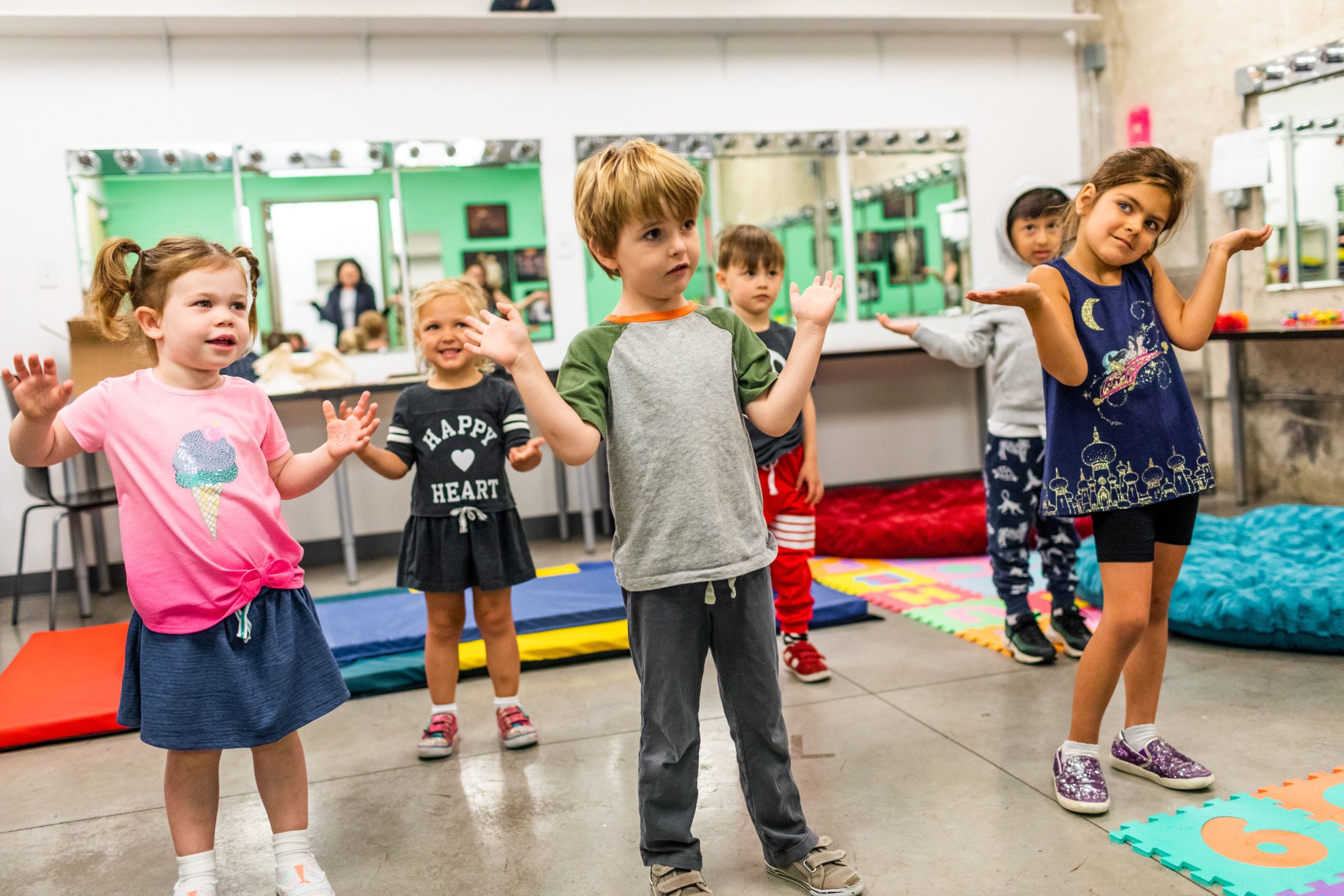
Little kids participating during ‘Summer with Shakespeare’ camp | Photo by Brian Feinzimer / A Noise Within

“Connecting with our community has always been a key component of A Noise Within,” pronounces Alicia Green, Director of Education and Community Outreach. “With health and safety at the forefront of our strategy, we decided to transform our schedules and programming so we can engage with our students from their homes. The online program has been designed so that it can continue to provide unique exposure to a variety of classic plays and guide students through the intricacies of the world of theatre.”

As in years past, the classes will cover a wide range of topics to enrich students and teach them about all aspects of stagecraft and what goes into a stage performance. Campers will learn about swords/stage combat, magic, mask work, voice work, stagecraft and design, and movement. Beyond expanding traditional theatre skills, SWS helps students with public speaking, builds their self-confidence, and connects them with pedagogically trained professionals.

“We’re offering several options for each of our tracks,” Green says. “It’s very flexible so that anyone can do it, and we make it work for every student. With everything being so unknown, we want to make sure to do what we can to provide top-tier theatre education while understanding that a full five weeks is not viable for everyone. Our program is structured so that families can choose what works best for their family, whether that be one week, or three, or attending our entire five-week camp. We want to give children the chance to be creative and collaborate with their peers while still being safe.” 

Even older students have fun at the summer acting camp | Photo by Brian Feinzimer / A Noise Within

There are three tiers of the program broken down into age ranges. Track 1 is for students aged 14 through 18, Track 2 is for students aged 10 through 13, and Track 3 is for students aged 6 through 9. Each track is curated specifically to the age group and can even offer class credit for certain schools. The summer acting camp culminates in a final performance that will be livestreamed on YouTube to share with students’ friends and family.

“Students and families can expect the same quality they have always known with Summer with Shakespeare,” assures Green. “But now we are able to welcome families from across the country and incorporate technical elements via the magic of the digital age we didn’t have available before. Classes are both live and pre-recorded (utilizing platforms that are still engaging even when not live) and the schedule is flexible to allow students breaks from screen time and also provide ease of sharing computers and space. We have built in unstructured fun time to allow students to engage socially. While it’s not the same as being in the same room together, the social component of camp and youth is so important that we did our best to replicate it online!”

By now, parents have spent over eight weeks essentially home-schooling their children. They can take a break by sending their kids to ‘Summer with Shakespeare’ online camp (enroll here). Come fall, maybe schools will reopen and we can slowly get back to normal, whatever that looks like. We may even be able to once again see a play – A Noise Within’s ‘Alice in Wonderland’ would be a great escape from our new reality.

May College Search Guide

Originally published on 1 May 2020 in the Pasadena Independent, Arcadia Weekly, and Monrovia Weekly

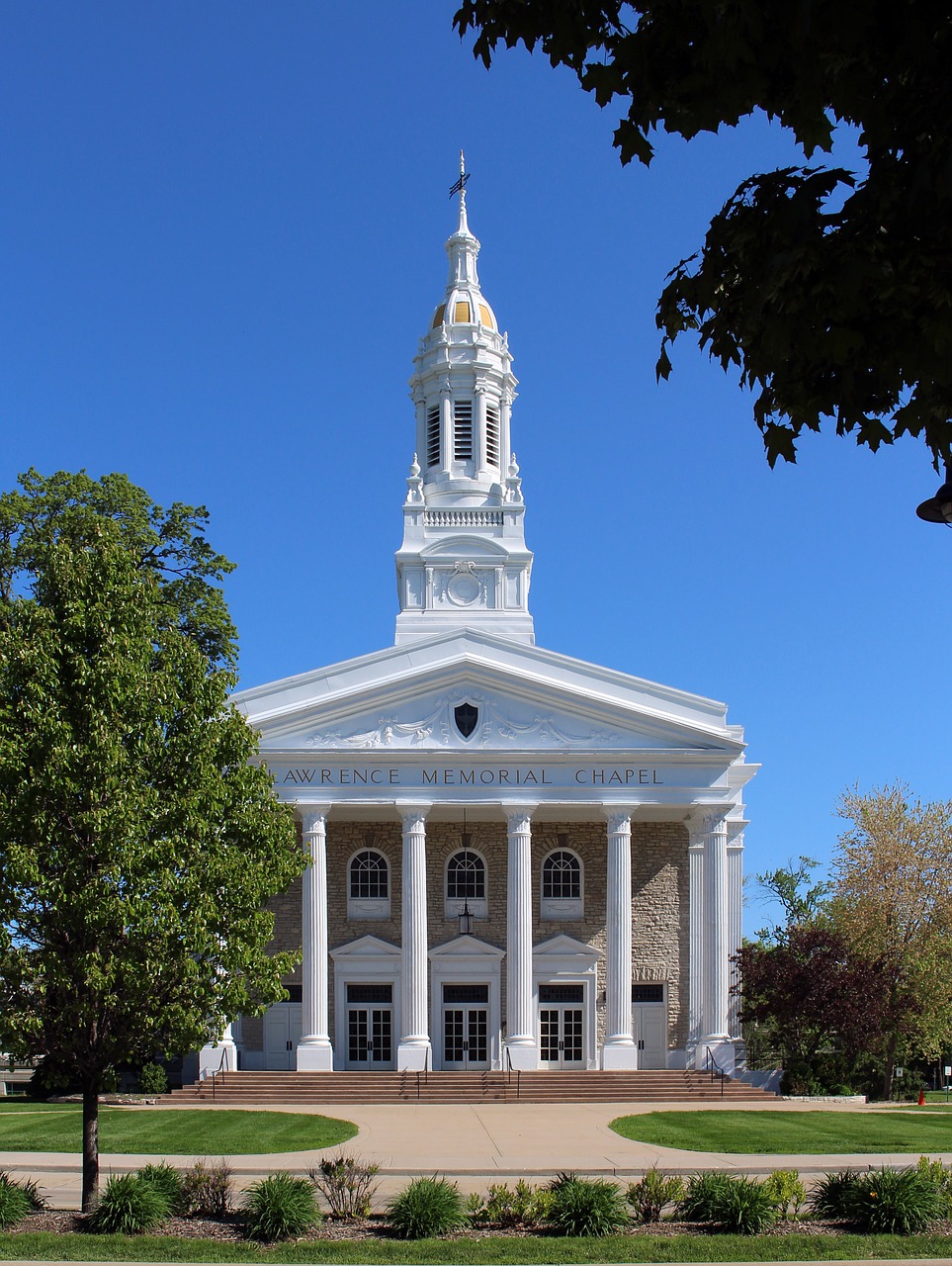
Lawrence University | Courtesy Photo

The road to college

By May S. Ruiz

The last few weeks of the school year is usually an exciting time for students. Freshmen are looking forward to their last month, relieved that they are almost done with 9th grade. Meanwhile, it is a bittersweet time for seniors as they anticipate the end of their high school career and spend the last remaining weeks with lifelong friends.

However, the coronavirus outbreak changed all that. Students have spent six weeks learning from home and seeing teachers and classmates only through teleconferencing. School administrators decided to forgo all final exams and will be holding virtual commencement exercises. The College Board will deliver digital exams for three million AP students this month and if schools don’t reopen in the fall, at-home SAT exams will be offered.

As surreal as everything is, though, parents and students have to keep on track. Now, more than  ever, students need to concentrate on their studies. And it is essential for parents to provide the guidance that teachers used to offer.                       

FRESHMAN

This is the last call for your 9th graders who need to improve their grades! Make them focus on staying on top of school and homework. While they may not be taking final exams this year, their final grades will be on their transcript. Their GPA is the single most important component of your children’s college application.
If their marks are not adequate for college acceptance requirements, they need to confer with their college counselors to arrange for remedial summer classes.

Summer projects might take on a different form this year because of social distancing. They need to speak with their grade level dean to figure out possible alternatives to the usual internships. Get your children to call various local organizations and ask how they can help during this health crisis.     

Admissions officers look for students who have demonstrated sustained community service in a few well-chosen areas. It isn’t the quantity of activities but the quality that’s important – they want to gauge the depth of students’ intellectual and ethical engagement to a given cause. The summer after their freshman year is the time for your children to find activities that truly speak to their interest and passion. Let them choose one that really resonates with them which they should carry through their four years in high school.            

Given that no one can really go out partying because of social distancing, the long summer months ahead will be a great time for your children to read. Encourage them to explore various genres and different authors. At the very least, reading will help them expand their vocabulary and expose them to different writing styles. This will come in handy when they write their personal statement and supplementary essays for their college application.

SOPHOMORE

Sophomore year is when your children have fully transitioned into high school. They are comfortable about how this phase fits into the whole secondary school experience. They have taken the practice PSAT, as a preparation for junior year when the results determine their eligibility for the National Merit Scholarship. They have also taken some AP tests, if they took an AP course.

Hopefully, your children have also done well in their studies, have maintained good grades this entire year, and have prepared for final exams. Admissions officers expect grades that are consistent, and if their freshman marks weren’t that great, their sophomore grades should at least show improvement over last year’s.    

Make sure your children have lined up their summer activities. While it may be difficult to find something that’s an extension or an expansion of what they did in the summer of freshman year because of social distancing, they should try for something related to it. Admissions officers want to see commitment to a particular interest and, given the circumstances, they will really appreciate your children’s effort.   

JUNIOR

Make sure your children have registered to take all the required standardized tests for college admissions. The Cal State and UC systems are making SAT tests optional this admissions cycle but if your children are applying through early action or early decision to other colleges, they need to have taken the SAT or ACT this summer. If your children have not been notified that this requirement is being relaxed because of the coronavirus outbreak, they should call the university’s admissions office for clarification.    

Your children’s final grades are extremely important! Eleventh grade is the last complete year that college admissions officers will see on the application and they expect grades that are either consistent with, or better than the first two years’.

SENIOR

This isn’t the end-of-schoolyear that your 12th grader was looking forward to. There will be no graduation ceremony, a teen’s rite-of-passage that marks their first step into adulthood. I hope that your children’s school has some kind of celebration and a virtual commencement exercise planned.         

If your children are still sweating it on the waitlist of their first-choice college, they need to ensure their final grades are terrific! They should keep up with all their schoolwork and send the college admissions officers any updates on awards and honors they receive. They should ask their college counselor if an additional letter of recommendation might be helpful. Keeping in touch with the admissions office reinforces their interest in attending the school if accepted.

They should have put a deposit on their second-choice school to guarantee them a place for the incoming class in the fall. Although, if they come off the waitlist on their first choice, they will lose this deposit.

Be there for your children to support them whatever the outcome of their college application. It has been a significant phase of reaching adulthood and was a very important learning experience. In the end, what matters is not where they have been accepted; the college they attend will not guarantee success in the real world. It’s how they use their education that determines how well they do in life.

Pasadena Schools Embrace Remote Learning

Originally published on 16 April 2020 in the Pasadena Independent, Arcadia Weekly, and Monrovia Weekly

This image has an empty alt attribute; its file name is PUSD-1.jpg
Pasadena Unified School District Office | Photo by Terry Miller / Beacon Media News

In the midst of health concerns caused by the coronavirus outbreak, safe distancing has been implemented. Schools closed to ensure the safety of students and to help curb the spread of the disease. I set out to determine if there is a system in place to handle this sudden change and how equipped administrators, teachers, and students in Pasadena are to switch to remote learning.

Pasadena Unified School District’s (PUSD) Director of Curriculum, Instruction, and Professional Development, Helen Chan Hill, informs me by email that PUSD initiated its remote learning plan in earnest very shortly prior to the school closures on March 13.

Hill expounds, “We laid out a three-stage plan: Stage 1 would be general, standards-based content that would be made available online and in print, with enough material that students could engage in reinforcement of learning for 2-3 weeks – we were able to get these up and running by March 16. Stage 1 work was completed by a central team of Curriculum & EdTech specialists, with the intent to buy a few weeks of time for teachers to build out their own online classrooms in PowerSchool Learning.

“Stage 2 began officially on April 6, following PUSD’s Spring Break. At this stage, all online classrooms are active and students should be able to take in content and lessons that are custom created for them by their teachers.

“Stage 3 is our transition to interactive learning, with the use of meeting apps and tools that allow for livestreams and more bi-directional communication between the teacher/student/ content.”

“PUSD, fortunately, had three key systems in place for several years that has helped with our readiness,” Hill continues. “The first of these is a network of Instructional Coaches in every school. They are the crux of our professional development design and have been instrumental in providing clarity and training to teachers. While teachers were planning prior to April 6, our Instructional Coaches and Principals/APs have been attending custom tutorials on remote learning that they can use with their staff.

“We have a network of TechLeaders that are early adopters of technology integration in the classroom. These are teachers who are in the classroom, but receive monthly training on apps, tools and best practices for instruction with technology. They too have been key in supporting teachers in this time!”

This image has an empty alt attribute; its file name is school-417612_1920-1.jpg
The school hallway, once a beehive of activity, is eerily quiet | Courtesy Photo

Asked if there are any assessments in place to determine if students are learning, Hill replies, “We have analytics on each online classroom in PowerSchool Learning with respect to usage, but as for assessment, that has not yet been fully determined. In alignment with CDE’s updates, we will be suspending nearly all of our local assessments. However, we want to help teachers to check on student progress and understanding through other means still to be determined.

“Furthermore, we have created a resource page to support our teachers and parents. We also want to emphasize that the well-being of our students and families is the utmost priority – while we are dedicating much work to ensure students’ academic opportunities, we are likewise encouraging grace, patience, and understanding around all of it. We know that families’ (as well as teachers’) lives have been uprooted and we need to take care of each other before we make demands for schoolwork.”

I’ve read articles that highlighted the plight of some students who don’t have computers at home or laptops and, even when they do have them, don’t have WiFi and I ask Hill if this is a problem at PUSD.

“Because of our techequity initiative that began in 2018, our students are already one to one with chromebooks,” Hill responds. “Sixth to 12th grade have already been taking them home, and K – 5 use them in the classroom. Therefore on March 13 when we dismissed, we asked elementary schools to dispatch the chrome books from the classroom for students to take home. We are still working on students with no Internet access – we have deployed all of our hotspots to the majority of those families in need, and are working with others on a solution.”

Speaking with me by email, Dr. Benita Scheckel, principal of Altadena Arts Magnet School, says, “Teachers had two weeks to finish creating their virtual classrooms; students began remote learning four weeks ago with general academic content loaded by our district onto PowerSchool Learning. Our school’s instructional coach, Ms. Hanh Le has really been doing the heavy lifting of training teachers to use all the available online apps to support student learning. The district is working closely with each campus’s administrative team and instructional coach to collect data on how teachers are managing their virtual classroom set up.

“I am trying to keep everything as normal as possible – I am continuing to send them my Sunday updates for staff. I am checking in on them every day formally via email and virtual staff meetings and then informally via text and phone calls.” 

Dr. Scheckel adds, “I’m just so impressed by PUSD’s ability to move from in-person to virtual learning so quickly and seamlessly.  I am also incredibly inspired by our teachers’ aptitude and willingness to jump right in and learn so many new things in such a short amount of time. My teachers and so many across the district are commenting on how sad they are to not be able to see their students in person every day.”  

Ashley Butler teaches World History and AP World History to around 120 mostly sophomore students at John Muir High School Early College Magnet.

She says, “I have been communicating with students through email; surveys and all work is being posted and submitted by students on a Learning Management System called PowerSchool. Next week, after our spring break, I will conduct digital lessons and hold virtual office hours via Google Hangout Meet.

“I am working to create (and modify in real time, due to the situation) lessons and activities to best support student learning and support student needs in this uncertain time. I don’t have a model or a template that I follow, per se, but I am trying to provide instruction that supports my students in the most effective way possible.”

Adds Butler, “I can’t speak for all high school teachers in this case, but speaking for myself, I am learning to communicate with my students in different ways. I am used to in-class conferencing to support student learning. However, with remote learning, this one-on-one time has changed. Now, instead of supporting students individually during class hours, students are being supported at all times during the day.

“Student engagement really depends on the class. Virtual discussions can still take place on various learning management systems and other digital resources like flip grid or padlet. Student engagement can be achieved with different types of assessments, projects, research activities about which students are passionate, or assignments/activities that relate to their lives.

“It is hard to say if high school students are better able to adapt to remote learning, I think time will tell. However, many students have explained that they miss the in-person support their peers and their teachers provide. I think that all students, no matter their age, are able to adapt to remote learning when they have teachers who have integrated technology into their classroom regularly. I think one of the greatest challenges high school students are facing is that many have familial responsibilities outside of school work.”

Asked what has been the biggest hurdle for her, Butler remarks, “Not sure I have had to overcome anything yet; I feel like every day I am faced with a new challenge, but the challenges and new learning experiences are what make education such an enjoyable profession.

Students are adapting to learning from home | Courtesy Photo

Armenui Manasarian, who is one of PUSD’s TechLeaders, teaches at Sierra Madre Middle School. She describes how she conducts her virtual classes. “For about ten years now, I have been using the LMS (Learning Management System) called Powerschool Learning. I post my assignments and content on my class pages; I record myself giving the lessons on screencastify and post them on my page for my students to listen to it and view it. To establish as much connection as possible, I check in with them by conducting polls and using discussion boards on Powerschool. I have embed Nearpod lessons, Listewise lessons, videos, etc. Eventually, I will be using Google Meets to connect to the class for live instruction.”

Continues Manasarian, “I teach five periods – two classes of English, two classes of History, and one elective that is a tech class/Hawk News with a total of 167 students. My elective does the school news broadcast and we are trying to do this remotely and sending them out to the school as a means for all of us to connect.” 

“Every Monday, I post an agenda for the week so students are clear about expectations and are able to manage their time; I film tutorial videos which I send to parents and students to help them along and as to what my expectations are. I create a Dropbox so that students know where to turn in the assignments. My students use various tools such as Kami (lets them type on PDF) so that they can do the work and turn it in. I am also emailing my students/parents. I am available on Google Hangouts whenever students and parents have questions or are confused about lessons.”

“I look for interesting topics to cover. Some discussions are lecture types with only me; some are interactive where they can respond to each other in the class; and there are times when they record their voice response or, using animation, they record a face response. 

“Not being able to explain things in person is a struggle at times, especially since this happened so suddenly that we didn’t really have adequate time to prepare the kids. They all have various types of households with different schedules. Their parents might not be able to help as much or they might not have the best access to internet. I try to make things very clear and set norms, guidelines, and routines so that everyone can follow along. I give them a suggested schedule, but it is up to the family to enforce them.”

While this pandemic brought to light the limitations of remote learning, it also brought out the best in the PUSD. Manasarian notes, “I am proud of my district for the pace, teamwork, and efficiency with which they dealt with the situation. They set up learning materials for two weeks for teachers who needed time to learn, and to transition and plan all of this. They made sure all students had Chromebooks so that they can all access the content and curriculum. Everyone worked together to ensure this to be a success for both teachers and students. We really came together as district leaders and teachers in this time of crisis.”

If teachers are sometimes challenged engaging middle-schoolers, those who teach the youngest learners have their work cut out for them. Five-year-olds need hand-holding and getting solid educational foundation is crucial.

This image has an empty alt attribute; its file name is classroom-2093744_1920-1.jpg
A classroom devoid of students | Courtesy photo

Chelsea Eshnaur is a kindergarten teacher at Madison Elementary and has 19 students in her class. She expounds on how she delivers remote learning, “Using the PowerSchool, my students are able to log on to my page and see the assignments for the week; I am hoping in the upcoming weeks to try out a Google Hangout Meet. I don’t think I can use this to actually teach content because not everyone would be available at the same time to log on. In the past two weeks of online learning, I’ve only had about six students actually log on. But I’m hoping to just do a daily read aloud and just say ‘Hi’ to those who are available.

“As we have switched to this online platform for teaching, I have mostly just been creating my own method for pushing out content. Being in kindergarten has made it harder to adapt my content to a digital platform, but there are so many resources out there from other educators that have made it pretty seamless.

“I have created additional resources on my page that include ‘Enrichment’ and ‘Intervention Practice.’ The goal of the ‘Enrichment’ page is to provide resources that would engage the students outside of the core academics. For example: art, science, social studies, P.E., etc…. In the ‘Intervention Practice’ page, I have a plethora of resources for the students to work on in areas that they might be struggling in, outside of weekly content.”

“Because my students are so young, I cannot expect them to engage the content independently,” Eshnauer says further. “They need the help of someone at home to log on and work through everything with them (reading directions, etc…). I know that this model of school work has been an adjustment, not just for me and my students but for their families as well, many of whom are still working during the day.

“I’ve had a handful of parents reach out for clarification. I’ve sent out emails, phone blasts, and messages on Remind (messaging system), with very few responses. This is the most frustrating part because, like I said earlier, for the younger students, they need someone to help them access all of this. And when I have 4 out of 19 parents respond to any updates, it makes me think that the other 15 students aren’t getting anything.

How do you know if the children are actually taking in the lessons you’re posting online? I query. Eshnaur replies, “That’s a good question! Because I don’t have every student logging on daily, I cannot guarantee that all students are accessing the content. I include an online ‘quiz’ at the end of the week for each main content area (phonics, reading and math).”

While it’s still early days and there isn’t much data available, I nevertheless ask Eshnauer what has worked well and what hasn’t since remote learning has been put in place. She says, “So far I have found that I just need to be as available as possible. For parents that are accessing the content during the ‘school day,’ I’m trying to check emails and messages as often as possible in case of any questions. Also, be willing to troubleshoot everything! Online learning is new for all of us. So I’m constantly checking links and asking parents to let me know if they’re not working on their end, etc…

“What makes me nervous since going to online learning is just the lack of data that I will have. I know people might think, ‘it’s just kindergarten,’ but this part of the year is critical. I still have about half my class that are struggling to master the alphabet (ID and sound). This part of the year would have been more intensive as I worked with them to get them where they need to be. But so far, most of those students are not even logging on. And now they’re going to go to first grade at a disadvantage and the gap will just get wider and wider the more they progress through the grades.”

These are unprecedented times we live in. The world as we know it has been upended and most normal activities have practically ground to a halt. As disconcerting as our conditions are at the moment, however, life has to go on and so we persevere.

And as we have seen on television and read in the papers, during these extraordinarily dire times when our resources are diminished and our spirits are tested, we manage to make the best of our circumstances. Our collective will to fight the odds prevails and makes us soar above adversities.         


Monrovia Schools Adopt Distance Learning

Originally published on 9 April 2020 in the Pasadena Independent, Arcadia Weekly and Monrovia Weekly

This image has an empty alt attribute; its file name is classroom-2093744_1920-954x682.jpg
A classroom devoid of students | Courtesy Photo

On March 13 this year, more than 12,000 public and private K-12 schools in California announced closures to keep children and teachers safe after the coronavirus outbreak. They sent students home for an extended spring break while school administrators and teachers scrambled to put together a curriculum and system for distance learning.

Except for a handful of high schools offering online courses, such as Stanford University’s Online High School which was established in 2006 for grades 7-12, virtual classes were a rarity. But that changed practically overnight.                   

To find out when schools in the western San Gabriel Valley started distance learning and how they are delivering it, I reach out by email to three public school districts and independent schools. What I discover is that local schools, fortunately, have the infrastructure in place to support virtual learning.

Furthermore, based on their responses to my questions, I uncover the amazing dedication and skill of administrators and teachers who, in very short order, found ways to teach and connect with students and parents. I am featuring them separately because I would like to do their work justice. And while each article will never be able to cover the depth and breadth of their efforts, it gives readers a good perspective of what’s going on.                  

Dr. Katherine Thorossian, superintendent of the Monrovia Unified School District (MUSD), says, “Most of our online classes began on Tuesday, March 17, 2020. The few that did not, began with packets. Our schools were fairly well prepared. Our teachers and administrators have been training on various virtual platforms, with special emphases in Google Classrooms and the Google Suite of tools, systemically for the past five years. Our schools distributed devices to those students who did not have a personal tablet at home. We conducted a survey to see where the needs were and have worked diligently to fill those needs.”

I inquire how the district is supporting teachers and students in this new way of schooling. Replies Dr. Thorossian, “Teachers are meeting weekly with their principals in Google Hangouts. Teachers are receiving ongoing professional development from Instructional Specialists who support them with the technology and the content areas. Each school has two to six teachers (depending upon their size) who have been highly trained in technology tasked with being a support to the teachers on the school site. Two technology hotlines have been created – one for teachers and one for students/parents.

“Teachers are contacting students who have not accessed the content to make sure there are no issues with technology and to make sure every student remains connected with their teachers. Additionally, counselors are not only providing office hours, but are reaching out to students with whom they had previously scheduled regular ‘check-ins.’ Counselors are also meeting virtually with existing groups for group counseling sessions.

“Instructional Specialists created two weekly newsletters: one to support teachers and another to support parents. 

“While everyone is working at different times and locations in order to practice the safest of precautions, we are still ‘open.’ Teachers and administrators are still accessible and responding in a timely manner. Schools and offices are still answering and returning calls and emails.

This image has an empty alt attribute; its file name is school-417612_1920-912x682.jpg
The school hallway, once a beehive of activity, is eerily quiet | Courtesy Photo

Dr. Thorossian elucidates on how the district monitors progress, “Principals have been ‘invited’ into the Google Classrooms on their virtual campus and ‘walk through’ classes in order to be aware of how things are going ‘on campus’ and to provide support where needed. Principals have daily check-ins with members of the district office team. We created an online platform that has a lot of information for parents, teachers, and students. It is a dynamic site that we continue to fill with new information and resources. It may be accessed through the main page of our website, and I encourage people to check it out as without it, they will not get a complete picture of the work being done.”

Asked if there is any assessment in place to determine if students are learning, Dr. Thorossian remarks, “An essential element in the learning cycle is feedback. Teachers provide feedback in many ways to their students and, in that way, monitor the progress they are making in class.  Standardized tests have been suspended this year in California. We are still working to determine the best manner in which classroom assessments should be administered.”

Jennifer Maljian, an Instructional Technology Specialist for MUSD who also happens to have two children attending schools in the district, describes her function, “My colleague, Chad Miller, and I have been trying to set up spaces and times that teachers who have questions have a place to have those voiced. We send out a weekly newsletter with distance learning tips and a video message from us. We also hold weekly Q&A sessions via Zoom to discuss topics related to Google classroom, distance learning through the student lens, and time set aside for teacher questions. We’ve had a very good turnout for those, thus far. Our goal is to continue these platforms for teachers throughout the duration of the distance learning.

“We have completed two weeks of distance learning – we’re currently on week three, but it’s officially our Spring Break. I can pretty much bet that teachers are using this week to really plan and prep for the next weeks to come!”

Markiena Madison teaches about 145 students in her 6th and 7th Science and Social Studies classes at Santa Fe Computer Science Magnet School. She explains, “My classes are conducted through Google Classroom, which is the platform I’ve been using for four years now. In addition to that, I screencast a lot of my teaching so students can view it at their own pace and work through it. I use Nearpod lessons for teaching as well. Lastly, I conduct virtual class meetings using Zoom to keep the connection with them, check-in, and to laugh a bit.”

“I have pre-created templates readily available for use and I also make new templates based on what I want them to learn/demonstrate for the day. Those templates include graphic organizers, vocabulary organizers, and fill-in forms using Google.”

As to student participation, Madison says, “It’s not a big issue when we’re using Zoom, but sometimes students don’t want to participate visually, so they close/turn off the camera. However, they do stay social using the audio. The biggest hurdle is motivating the students that were already struggling to do the work at home and the lack of face-to-face contact which makes a huge impact on engagement. In addition to that, making sure they complete all the assignments without the same in-class instruction.”

Madison notes, “Most of my students, during our virtual discussions, have stated that they already want to come back to school – even those students that don’t like to come to school. Which proves the saying, ‘You don’t appreciate something until it’s gone.’”

This image has an empty alt attribute; its file name is Maddie-Micah-3-909x682.jpg
The dining table is now the hub of distance learning | Photo by Jennifer Maljian / MUSD

At Clifton Middle School, Gina Ayala teaches 101 6th grade and 67 8th grade students. She says, “The model I used for teaching was initially quite fluid – it felt like a beta test. Additionally, the first days were focused on assessing which students had access to technology (cell phones only, home WiFi, tablet or computer with full keyboard etc.) The technology access determined my expectation during the first days of quarantine.

“As we enter week three of distance learning (April 6) following our Spring Break, I plan to use more of a template. For example, assignments posted on Monday & Wednesday, activity on Friday with certain ‘office hours’ posted per grade level and specific class Zoom sessions scheduled by period. My hope is that a routine which allows flexibility will suit the academic and social needs of my students.”

Ayala tries to make sure students participate, “During teleconference, I use the same equity cards I used in the classroom to randomly call on students for response or contribution. I also use the private comment feature on Google Classroom to address a student. I’ve called parents and sent emails to families to gather information on why a student may not be responding to a Google Classroom prompt. Additionally, my grade level team (8th grade) has decided to work to get our students on the same schedule so all 8th grade science students will know the expectations for the week ahead. This will help with friends being able to help friends even if they don’t share the same teacher. I believe this will definitely help engage students who aren’t actively participating.”

“Initially, the biggest challenge was determining what type of digital access was available to each and every student. I need to be able to reach EVERY student,” Ayala adds.

“The learning curve for many teachers was very steep – switching, with virtually no notice, from the classroom to the virtual classroom,” comments Ayala. “My colleagues have been extremely helpful and inspiring. The amount of new apps, teleconference platforms, emails regarding distance learning, webinars, YouTube links, in addition to the plethora of resources pushed out by our district can be daunting. I have gone down the internet rabbit hole of amazing resources available. Knowing that too much information can cause a mental shutdown, I want to be mindful that my students aren’t experiencing that with new learning styles necessary in each of their ‘virtual’ classrooms. The silver lining is how much I have learned in such a short amount of time – the most practical, self-directed ‘professional development’ I’ve ever experienced. I cannot overstate the gratitude I feel towards my colleagues who have been both professionally collaborative and personally entertaining (videos, memes, FaceTime, Hangouts, virtual Happy Hours).

Clifton Middle School principal Jennifer Jackson voices her reservations and offers her insights. “Distance learning has its advantages at times, but the circumstances in which we entered into it made it difficult. Teachers are not used to digital platforms of learning but rather rely on technology tools when appropriate during lessons. There is quite a difference here. I feel the Clifton teachers have done a tremendous job embracing their new normal and providing a reasonable and accessible curriculum in all subject areas including physical education and electives.

“However, I do have concerns with accumulated screen time for students as we endure school closures. We will continue to learn and provide teachers the resources they need to become more confident with distance learning in addition to providing support for students. We will have much to reflect upon when this is over and I do wholeheartedly believe schools will benefit from all of this in the long run.”  

The most important component of the remote learning platform are the students and it would be remiss of me not to ask them for their thoughts. I reach out to Maljian’s children – Madison (Maddie) and Micah. 

This image has an empty alt attribute; its file name is Maddie-Maljian-2-909x682.jpg
Madison Maljian | Photo by Jennifer Maljian / MUSD

Maddie is in 5th grade at MUSD’s Plymouth Elementary School. Responding to my question on how she receives her online learning, she writes, “My teacher, Mrs. Kim,  posts an agenda in Google Classroom each day using a Google Doc that includes hyperlinks to each assignment, activity, or Hangout we are to join for the day. She also includes a friendly morning message to us each day. In addition, she also sends the same Google Doc agenda to my parents through the Remind app each morning.

How do you motivate yourself to learn when you’re not actively participating in class? I inquire. Maddie answers, “When we started Distance Learning, I sat down with my parents and we discussed a schedule for each day that would include waking up, getting dressed like I’m going to school. I wrote down on a piece of paper what I needed to complete for the day so I could check items off as I finished them. I also tell myself each day I can do it!”

I ask Maddie if she had any challenges because of this new method and if she reached out to her teacher for help. She discloses, “ I struggled one day with WiFi at my house, and I was unable to join a Zoom with my class. Once my family figured out the WiFi issue, I contacted my teacher through Google Hangout and she filled me in on what I missed. My biggest hurdle is missing my teacher and school friends and trying to find ways to still connect with them.”

This image has an empty alt attribute; its file name is Micah-Maljian-909x682.jpg
Micah Maljian | Photo by Jennifer Maljian/ MUSD

Her brother Micah, who is a 7th grader at Computer Science Magnet School, reports “ I get updates in Google Classroom from all of my teachers. Each teacher posts a check-in question and an assignment or activity as well as a video, almost every day. The videos are awesome – some teachers tell jokes, sing songs, perform Santa Fe cheers. It makes me feel like I’m still at school, even if only for a few minutes.

“My mom and I sit down every morning and we create one sheet that includes all of the items I need to complete that day. As I finish them, I am able to check them off. I also include break times for myself where I can practice baseball, juggle the soccer ball, and play basketball in my backyard.”

“The biggest challenge I’ve had so far was figuring out what format a teacher wanted a document submitted through Google Classroom. I emailed that teacher, and they got back to me very quickly and walked me through exactly how I needed to do that. The most difficult hurdle to overcome in this sudden change in my learning is missing my school, my classmates and friends, and my teachers. I really wish I could go back to school, but my teachers are doing everything to make it the best experience for us,” Micah ends.

Their mom adds, “My two kids have had really positive experiences with online learning. We’ve only run into the WiFi being a bit spotty which requires leaving an assignment for a while until we can get the WiFi up and running and then coming back to the assignment to finish it.

“It’s definitely a quick learning curve for everyone, but on a daily basis I am BLOWN away by how amazing the teachers in MUSD are! We are very lucky to have such rock stars teaching our kids! Their energy is magnetic and is what has continued to make my kids want to get up each morning – to see the video messages they send their students and the fun ways they’re incorporating silly things like crazy hat day, or how many jumping jacks can you do in 90 seconds. The heart of a teacher is nothing short of a miracle to these students right now!”

During this safe-distancing and remote learning period, we are once again reminded that humans are hard wired for social interaction and the classroom experience cannot be virtually replicated. Students, as much as teachers, are in school not only for the academics but for the physical contact and friendship.

However, it is also during trying times that we see human beings come together – school administrators and teachers united to ensure continuity in student learning. We accomplish extraordinary things when we rise to the challenge.       

Altadena Arts Magnet School Aspires to Greatness

Originally published on 9 March 2020 in the Pasadena Independent, Arcadia Weekly, and Monrovia Weekly

Dr. Benita Scheckel with student-created art | Photo by May S. Ruiz / Beacon Media News

Nestled at the foot of the San Gabriel Mountains in Altadena is Altadena Elementary School, established in 1903 from what used to be a trolley stop for the Mount Lowe Trail. Known today as Altadena Arts Magnet School, it is the premier dual language and arts school in the San Gabriel Valley.

That renown, however, is fairly new. The school languished for a few years after its principal left and it became the lowest-rated in the district. It took a grant, a curriculum change, and the guidance of Dr. Benita Scheckel to transform the school into a model of excellence in a relatively short period of time.      

A former actress and opera singer, Scheckel came to the Pasadena Unified School District (PUSD) in 2007 and taught English, drama, and music at Blair IB Magnet School. In 2015, she decided she wanted to go into administration; she got placed as assistant principal for Student Support Services at Marshall Fundamental School.

Scheckel picks up the story, “From there, I applied to Altadena Elementary School when it had just applied for the five-year arts magnet grant. We didn’t know then if we were going to get it, but I took a leap of faith that this would become an arts magnet school. At the same time, it became a French dual language immersion school and I had some experience in that area so I felt it was a dream place to work at.”

The school playground has an unimpeded view of the San Gabriel mountains; a new kiln will be installed in the shed with the blue roof on the right | Photo by May S. Ruiz / Beacon Media News

“It was once a wonderful school of 600 students and they had a long-time principal for 20 years,” relates Dr. Scheckel. “As PUSD began to attract more charter and private schools, the principal left and then the school went under construction. There was a period of instability – they had five principals in three years, enrollment declined from 600 to just under 200, there was low staff morale, and they had very low test scores – it was the lowest performing elementary school in the district.

“I looked at that first year as a chance to get to know the culture and climate and to infuse the school with as much positivity, enthusiasm, and vision. I set out to uplift the staff and support the teachers so that they can begin doing the amazing work they used to do that they weren’t able to do through the years of not having solid leadership.”

Continues Dr. Scheckel, “Before the school year started, the first couple of weeks I was here, I sat down for a two-and-a-half-hour meeting with the entire staff. Having just gotten here, I knew they didn’t trust me initially, so I asked teachers who they trusted and respected. I also met each staff member individually for a half hour. From those meetings and being on campus, I was able to figure out who they trusted and those were the people I put in the leadership team.

“Being used to secondary school, where there’s an assistant principal of curriculum and an assistant principal of discipline, I installed an instructional leadership team consisting of an instructional coach, a coach for discipline, and myself. I also created an extended leadership team – this includes our arts teacher, TOSA (teacher on special assignment), and our magnet grant coordinator.

“Then I brought in ‘Capturing Kids’ Hearts,’ a systemic reform program which our grant pays for. It provides many hours of professional development to teachers and staff around building a relational culture – student to student, teacher to teacher, staff to staff. I spent a lot of our money, resources, and energy forming a relational campus, where people don’t just shut their door and not relate to others but instead get together and hang out, appreciate each other and feel safe.”

Students working on an art project | Photo by May S. Ruiz / Beacon Media News

“Now we have a thriving school – our enrollment is increasing daily,” Scheckel says, beaming with pride. “We closed last school year with 228 students and today we’re at 287. When we came back from winter break, in January and February, 20 students enrolled. Along with enrollment, test scores are up. We’ve increased our math and English scores exponentially – we’re no longer the lowest performing school. We have arts infused into everything we do. Our students receive up to 12 hours per week of discrete art and arts integrated instruction – it runs similar to a conservatory, which is very unusual for an elementary school where normally kids stay in the classroom and do an art project.

“Here, students go to dance, art, music, media arts, and theatre arts classes taught by professionals in that specific field. We have designated arts spaces – we have a state-of-the-art Marley dance floor, fully sprung so that it doesn’t hurt their joints, with ballet barres and mirrors; a black box theatre; a music studio; an art studio, and so on. To complement the dedicated spaces, we have a curriculum that’s structured like a conservatory. All students attend every art class so teachers have had to look at the schedule – take out the time students would have their recess and lunch, and when they’re in art class, and figure out how to teach the core curriculum in that time. I was nervous about it at first but they have done a beautiful job. It’s taken out any wasted time, transitions are tightened. Also, the teachers are following the students to all the art classes so that they can learn how to do these things when we switch to our built-in sustainability plan when the grant expires.”

Scheckel then came up with another great idea. She discloses, “With the grant, we decided we were going to build art spaces out of the classrooms. I thought I needed to bring a little bit of community awareness, community buy-in, and a little glitz and glamour to our campus. I reached out to some local celebrities and community leaders and asked them if we could name these spaces for them. Fortunately, they said yes.”

The Lula Washington Dance Studio | Photo by May S. Ruiz / Beacon Media News

And so, on Wednesday, March 11, Altadena Arts Magnet School will hold a special ribbon cutting and studio dedication event where the art spaces will be named for distinguished arts personalities. The star studded festivities, with Supervisor Kathryn Barger in attendance, will be held from 6 to 8 p.m. and will feature a special performance by vocal artist Lynn Fiddmont.        

“We’ll have a red carpet and a photographer,” says Scheckel. “The Muir Jazz Band will play and we’ll walk around and unveil these seven art spaces – the Matthew Lillard Black Box Theatre; Patrice Rushen Music Studio; Lula Washington Dance Studio; Keni Arts Art Studio; Artis Lane Sculpture Play Yard and Kiln; Bettye Holliday Art Gallery; and the MonteCedro and Dr. Eunice Elizabeth Nash Arts Garden.”

“I would like students to be inspired by knowing that each room is connected to someone who’s really working in that profession,” explains Scheckel. “So every time a student walks into the Patrice Rushin Music Studio I want them to be able to look around and think ‘I could be a four-time Grammy-nominated musician; I can be just like Patrice.’ I’m hoping that the celebrity name will maybe add a little pixie dust to the space, a little inspiration for the children.”

A beautiful mural graces the learning space | Photo by May S. Ruiz / Beacon Media New

Three years into Scheckel’s stewardship, Altadena Arts Magnet School is the only elementary school where little children are travelling throughout the day like middle- and high-schoolers. It has earned a distinct reputation in the area, something she revels in, and not without a sense of relief mixed with wonder.      

“It’s incredible!” enthuses Scheckel. “The first year I was very nervous all the time. It was my first principalship and I was worried; I wanted to be certain I do things correctly and make as few mistakes as possible. Now, this third year feels like ‘we’re okay, we’re cooking with gas.’ Everybody knows what the vision is, the team is phenomenal, everybody’s moving in the right direction.

“It’s amazing what you can do with a school if you add love, grit, and a solid vision for greatness. I think if you have those three things, you can really turn a school around. And we have achieved that. We can’t believe it when families try to come to us from Glendale or La Canada. They’re leaving La Canada schools to come and be a part of our school! Our tours have 40 people on them. There are pregnant mothers who are crying because they think there won’t be space when their baby comes. How fascinating!”

Dr. Scheckel is only just beginning and there’s no stopping her. And students at Altadena Arts Magnet School are the lucky beneficiaries of this indefatigable principal’s grand vision.     

Connecting with the Irish Through Their Music

Originally published on 6 March 2020 in the Pasadena Independent, Arcadia Weekly, and Monrovia Weekly. The show, however, was canceled because Gov. Gavin Newsom ordered a statewide lockdown that lasted about 18 months.

This image has an empty alt attribute; its file name is Eileen-Ivers-2.jpg
Eileen Ivers is Grammy-winning violinist | Courtesy Photo / Eileen Ivers

Connect with the Irish experience with internationally acclaimed fiddler Eileen Ivers and UnIVERSal Roots at Caltech’s Beckman Auditorium on Sunday, March 15, 2020 at 3:00 pm. As in all their previous shows, expect them to bring the audience to its feet with their electrifying  performance which evokes the Irish journey through the years.

The daughter of Irish immigrants, Ivers grew up in New York’s Bronx neighborhood. She picked up the fiddle at the age of eight and went on to win nine all-Ireland fiddle championships, a 10th on tenor banjo, and over 30 championship medals, making her one of the most awarded persons ever to compete in these prestigious competitions.

Having gone on a short visit to Dublin and written about my delightful trip (Visiting Dublin, Ireland), I was very excited to learn that an Irish musical show will be coming to Pasadena. You can just imagine my thrill when I got the chance to talk with Ivers, hailed by the New York Times as ‘the Jimi Hendrix of the violin.’    

‘The Jimi Hendrix of the Violin’ | Courtesy Photo / Eileen Ivers

Speaking with me by phone from New York, Ivers chats about her childhood interest in the fiddle, having a math degree, traveling all over the world, an upcoming new album, and a surprising new venture as a fiddle-playing tour guide.

I begin by telling her that I Googled her and found out she summered in Ireland and played the violin at the age of nine. I ask if her parents are musical. Ivers replies, “Not really, they grew up in rural Ireland so there was no chance of learning it where they were. But going back in the family history, there was music on both sides. Then again, anybody Irish has some music in them as well.

“Even at the age of three, I was going around our Bronx apartment playing a little plastic guitar and a wooden spoon pretending I was in Ireland. Then I asked my mom if they would rent a violin for me. I started playing and I took to the instrument immediately. I loved the sound and the emotion it conveyed – it could be fast and rhythmic, but even at that early age I understood that there was also something lonesome that could be coming out of the instrument.

“In the show you’ll hear tunes that will evoke heartbreak and loss that happen in any folk culture. The band and I, of course, will pull from the Irish experience and play some tunes in the traditional way. Through our music, we tell the amazing story of immigrants, like my parents and many before them, who had to leave Ireland and came to this part of the world – America and Canada – and elsewhere. They brought their music, songs, dance, stories, and even their language with them. And their art form integrated with other music along the way; it really helped birth a lot of Americana music. We like to show the threads and parallels between Celtic and American roots music in our performance and connect all those styles – bluegrass to country and French-Canadian to Cajun.”

While Ivers has made a fulfilling career in music, she holds degrees in mathematics. She discloses, “I attended Iona College and I studied mathematics. Although I kept playing music throughout my studies and started to find a passion in the musical field, I loved the discipline of math dearly. It’s kind of funny because we’re playing at Caltech and I always had a secret dream of being an aeronautical engineer and one day working for NASA in some capacity. However, music pulled at my heart and away from the sciences in a good way, many marvelous things have come out of that.

“I still have a great relationship with the college. In May of 2019 my alma mater conferred upon me an honorary Doctorate of Art degree for what I’ve done in the field of music – bringing people together through the stories and the music in our live concerts and through my records. I had the privilege of giving the commencement speech at the graduation as well. It was such a full circle moment. In early April, Iona College is giving me an award as a ‘Woman of Achievement 2020.’”

Knowing that many children of immigrants go into the math and science fields at the behest of their parents, I ask Ivers if she took math as a back-up in case the music didn’t take off. She responds, “My Irish parents didn’t have the opportunity to pursue higher education – they had to quit school and worked in the fields in Scotland and England to send money back home to help raise their siblings. They were very young when they came to America, my mom was only 18, and they gently made sure my sister and I had the chance of higher education because it was so important that we had this opportunity to advance ourselves as much as we could in America.

“Iona offered me a full scholarship and I worked very hard. A wonderful professor I had told me, ‘Eileen, get a Master’s degree because you could go anywhere with a math background.’ I think that was one of the best advice I’d been given. People ask me if I pull from my math background and I say ‘Absolutely!’ There are many connections between math and music in writing, arranging, or recording. In my education outreach program, I always tell kids to have a balance of academics, arts, and physical activity in life.”

Eileen Ivers and her band | Courtesy Photo / Eileen Ivers

Continues Ivers, “We’ve played at Caltech before and to come back is something we’re really looking forward to. And we’re excited because we’re releasing a brand-new record called ‘Scatter the Light’ which will come out two days before the Caltech show. This is a big deal for us!

“My band and I have been playing all over the world in performing arts centers, symphonies, etc. I formed it at the end of 1999 right after I was in River Dance, the blockbuster dance show which, to this, day is still being performed. The members of the band are: Matt Mancuso, our lead singer, guitarist, fiddler, and trumpeter; Buddy Connolly, who is a three-time champion of the button accordion, a very Irish instrument, plays it and the keyboards and does some background vocals; Lindsey Horner plays electric bass and baritone sax; Dave Barckow, is on percussion and acoustic guitar and also does lead vocals; I play fiddle, mandolin, and an Irish frame drum called bodhran, it’s a Gaelic word and is very much a part of Irish traditional music. There’s quite a range of instruments and songs and we invite participation. We love to break down that fourth wall and get the audience involved in the show.

“People attending our show hear tunes from hundreds of years back – some heartbreaking airs and cathartic laments that are part of the Irish mentality and spirit. We’ll show a little bit of the history – I like to speak between the tunes and really paint the picture of what the life was like during those years. Ultimately, it’s a very celebratory and uplifting show. We certainly demonstrate the resilience of the Irish people who have gone through so much. We talk about the famine and great hunger in Ireland from 1845 to 1849 which devastated the population causing so many to immigrate and that’s why the diaspora is so strong and vibrant throughout the world. Some of the most amazing moments in Irish music happen in places where you would never expect them to, like Australia and Japan, where I’ve traveled to. It’s a great testament to the way the music has gotten around the planet.”

Ivers’s music appeals to all age groups. She expounds, “My fans tend to be a little on the older side but parents and grandparents who come to show say ‘I wish I had brought my children or grandchildren.’ Thankfully, we’re starting to see many young people come to the show now because they are very excited about roots music, acoustic-generated tunes, and unique original songs. The show is truly for all ages, everyone gets something out of it.

“I also like to embrace technology. I run my fiddle through a loop pedal, called a loop station, which enables me to create multiple layers of a song, building on layers that precede each other. For example, I lay down a percussion part (by thumping on the body of the violin) then add a bass line by using an octave divider. A guitar-like rhythm is added through a Wah effects pedal, and a top line melody can then jam on top of the ‘full band’ sound. It displays that the violin is a versatile instrument. The show moves in a lot of directions which is one great thing about it – people jump to their feet at the end of it because they really felt that honest emotion and connection we’ve had throughout the show. It’s something that keeps us going for sure. It’s such a gratifying passion.”

Ivers has built a successful career from her passion | Courtesy Photo / Eileen Ivers

Ivers and her band are touring throughout the year. She reports that January and early February tend to be down times because of the weather and because people are just coming out of big end- of-year holidays. Spring is always a busy time with St. Patrick’s, and March spotlights all things Irish. After the Caltech show, they’ll go back to the East Coast and then they’re off to Alaska for a week-and-a-half.                

Asked if there’s a place she hasn’t toured that she would like to go to, Ivers says, “There always is! There are pockets in Europe that we love performing in – Spain, France, Italy – but we’d love to be able to explore new areas in those countries. We played in Japan a few years ago – it was a very special audience – and we’d love to return there. Maybe one day we’ll perform in China as well. Fortunately, there are a lot of audiences all over the world who are open to hear our music.”

Although she has been to many places, Ivers, not surprisingly, enjoys going back to Ireland most. She reveals, “We have a house we built on my father’s land on the west of Ireland about 19 years ago. I tend to go back there two to three times a year with my family – my husband and young son. We love to recharge there and get inspired. It’s where I do a lot of my writing, more so than  I do here.

“In April this year, I’m actually running a ‘Wild Atlantic Tours.’ A second one, in June, was added because of the enthusiastic response to the April tour. It sold out in one day and we capped it off at one full-load bus of 53 people. I’m looking forward to showing folks the west of Ireland, where my parents were born, which is the ‘Wild Atlantic Way,’ as well as many other cultural and historical sites. There will be daily sessions of music and the tour group will get to see the ‘real’ Ireland and her wonderful people.”

I, for one, am very disappointed that her bus tours are sold out; it’s one adventure I would love to go on. Maybe Ivers can be persuaded to expand her second career as a fiddle-playing tour guide.           

March College Search Guide

Originally published on 2 March 2020 in the Pasadena Independent, Arcadia Weekly, and Monrovia Weekly

college
| Courtesy photo

The road to college

It has been feeling like summer the past couple of weeks but we’re only approaching spring and I’m sure your children are already looking forward to spring break. While it is an opportunity for them to relax, it is also a chance to evaluate where they are on their schoolwork.

Following last spring’s infamous college bribing scandal, several universities, including the UC and Cal State systems, have dropped the standardized tests as a requirement for college application. While some perceive this as leveling the playing field, a great many are not convinced; the jury is still out on this issue. At the same time, several administrators are advocating for a method to gauge college readiness and some form of testing is necessary. Whatever the case may be, your children have to apply themselves to studying and working hard because their GPA may be the only academic benchmark for admission.

I’m including reminders for the ACTs, SATs and APs in the college search guide as they are still requirements at some universities.      

FRESHMAN

Your children should have all their grades on track. They need to concentrate on maintaining good study habits now to be better equipped to handle the rigors of the workload in the coming years. If they haven’t been reading much, they should seriously consider taking up reading as a hobby during spring break to help them increase their vocabulary which they will need to take the SAT, and as preparation for writing their essay. 

They need to line up their summer activities. Their grade dean should have some ideas on how they can explore their passions and research summer opportunities. Consider looking into international experiences.   

SOPHOMORE

Tenth graders who are taking AP courses need to register for the AP exams administered in May. While there is a slew of small independent tutoring schools offering courses to prepare for the AP tests, some children do not need to take on this additional burden on their already busy schedules. Your children have enough on their plate with the intensive homework associated with an advanced placement course. That said, your kids will still have to show competence on the AP exams as all scores are submitted to the College Board; all the colleges to which your children apply will see the AP scores.

Your children should also take the SAT subject test. Your children’s teachers could provide guidance on what they need to prepare for. They might want to ask the teachers in that particular course for study suggestions, review packets, and sample tests. There are also test prep books available in bookstores and online.

It’s also a good time for your children to consult their class dean regarding summer activities – academic enrichment programs, volunteer work, or part-time employment. College admissions officers are looking for students who explored their passions while getting good grades.

There are outside resources for your children to plan ahead for the admissions process. A college preparation service called CollegeVine (www.collegevine.com) offers near-peer mentoring from ninth to 12th graders. Their consultants, who are recent high school graduates themselves, provide expert guidance. They are near in age to the children they are helping and have recently applied to college themselves.   

If you’re looking for a counselor who can meet in person with you and your children, I would recommend Greg Kaplan. He is a native Southern Californian and has been holding free college application workshops in the San Gabriel Valley. He is available for a personal meeting for the initial conference and thereafter confers with you and children via Skype. 

Likewise, Kaplan’s book “Earning Admission: Real Strategies for Getting into Highly Selective Colleges” is a useful resource. It offers your children  a guide on how to best present themselves to admissions officers.

– Courtesy photo

JUNIOR

Besides registering and preparing for the SAT or ACT, your children should use the spring break to visit college campuses. If possible, they should have a prepared college visit checklist with a page or several pages allotted for each school. For each of the schools, they will need to write their overall impressions – what they liked most or least. 

They should write their observations by categories: the intellectual atmosphere (Do students enjoy their courses or are they stressed-out? What is the advising system for freshmen? Are there opportunities for independent study/study abroad?). They should note the social climate (Do students stay on campus or do they leave on weekends? What are the facilities for socializing? Is there an active Greek life?). They should observe the campus life (What are the living arrangements? Is there guaranteed housing for four years? What are the dining options?). 

One major concern for parents and children should be security on campus (Can outsiders gain access to the library, the fitness center or student union? Are there video cameras around the school periphery?). Of course, the most serious threat to students’ well-being may actually be within the confines of the institution. This topic has become part of the national conversation and some universities are addressing the topic up front. I, personally, would want to know if officials have safeguards in place to prevent such crime from occurring. Do administrators disclose information about it or do they hide and blur the facts? What consequences does the school impose on perpetrators?

Some children know right away when they visit a campus that they don’t see themselves thriving there. It could be that it isn’t the right intellectual or academic fit for them; or the environment doesn’t suit their lifestyle. But it’s a good thing to know before they decide to apply.  

SENIOR

As I expounded on last month, some colleges will be sending out decision letters sometime in March or April. Your children should keep their wits about them as they await word from the colleges they applied to. 

After the marathon they finished, your children could be quite restless and anxious to know if they have been accepted to their school of choice. Remind them to use this quiet time productively by keeping their focus on academics and their grades. They should still engage in other worthwhile activities like sports or arts. 

Tell your children that they might be getting letters of rejection from some schools. While you might be more disappointed than your son or daughter, avoid showing it as that sends the wrong message. Not being accepted to their first choice isn’t the end of the world. In fact, while it may not seem like it at first blush, it usually turns out to be a blessing in disguise because, in most cases, they end up in the school that is the right fit for them.     

You and your children should research all scholarships and grants available to them. Many colleges offer merit scholarships to applicants with excellent academic records to motivate them to matriculate. The package usually includes the full cost of tuition and fees and may also cover room and board.

Universities also extend need-based grants to applicants who demonstrate a financial hardship. These reduce the cost of a college education and do not need to be repaid. Your children should complete the Federal Application for Federal Student Aid (www.fafsa.ed.gov). Other schools may also require a college-specific financial aid application.

Here are some useful websites to help you get started in your research: CollegeXpress (www.collegexpress.com/); Fastweb (www.fastweb.com); National Merit Scholarship Corporation (www.nationalmerit.org); Scholarships.com (www.scholarships.com); Scholarships360 (www.scholarships360.org); Student Aid on the Web (www.studentaid.ed.gov).

A Fantastic Journey Awaits Us in ‘Alice in Wonderland’

Originally published on 4 March 2020 in the Pasadena Independent, Arcadia Weekly, and Monrovia Weekly

| Courtesy photo

Be transported to a fantastical universe when ‘Alice in Wonderland’ goes on stage from March 1 through April 18 at A Noise Within. Adapted by Eva Le Gallienne and Florida Friebus from the beloved Lewis Carroll books ‘Alice’s Adventures in Wonderland’ and ‘Through the Looking Glass,’ this production is directed by two-time Los Angeles Drama Critics Circle Award winner Stephanie Shroyer. Erika Soto stars as Alice and is joined by Susan Angelo, Bert Emmett, Rafael Goldstein, Julanne Chidi Hill, Kasey Mahaffy, Justin Lawrence Barnes, and Gabriel Leyva.

The story begins in Victorian England then quickly ventures into the topsy-turvy world that makes Wonderland. There we meet the various creatures that Alice encounters along the way. An ensemble cast becomes the white rabbit, the queen of hearts, the Cheshire cat, the duchess, the caterpillar, the mad hatter, the March hare, the dormouse, and all the other characters.

Rafael Goldstein, who is part of the ensemble, sits down with me one late afternoon to talk about the play and his many roles. In an earlier interview, he mentioned that his father was a teacher and he took home books for the children to read every night. I ask if ‘Alice’s Adventures in Wonderland’ was one of those books.

“I don’t think it was, but we did watch a couple of made-for-TV productions of it,” Goldstein recalls. “Although my father introduced me to the ‘Jabberwocky’ when I was very young because he would use it in his classes to teach parts of speech. For those who are unfamiliar with it, the ‘Jabberwocky’ is a nonsense poem using weird words. But by virtue of the way they sound, and their placement in a sentence, you can apply whatever meaning you wish to the poem. That’s sort of Carroll in a nutshell.”

“If this anecdote is to be believed, when Carroll first started writing ‘Alice’s Adventures in Wonderland,’ he set out to write a children’s story without a moral,” continues Goldstein. “All the children’s tales at the time taught lessons – listen to your parents, don’t talk to strangers, stuff like that. This was pure fancy, it was creating this world around this child that she could disappear into. It’s an interesting take because Alice is being confronted with characters – animals and people – and the rules of that world keep changing so she’s having to adapt. You can’t help but feel that it’s a comment on what the world does to children – people who are thrown into a country where they don’t speak that language so they have to figure out from clues and context what the rules of engagement might be. And it really just points out the fact that the rules in any world can be arbitrary and how, often, children bear the brunt of those arbitrary rules.”

Rafael Goldstein (left) in ‘Rosencrantz and Guildenstern’ Are Dead | Photo by Craig Schwartz / A Noise Within

According to accounts, the original handwritten and illustrated copy is now lost and Carroll made revisions when he gave in to pressure to publish it into a book. Perhaps that was when he added the situations where lessons can be gleaned, I conjecture.

Goldstein explains, “He did mention in subsequent interviews how people were finding meaning and he was cagey about that. There’s a famous riddle in ‘Alice in Wonderland’ – why is a raven like a writing desk? Scholars at Oxford and Cambridge have been speculating whether it’s a math or a literature joke. Carroll was a mathematician so mathematicians claim that it’s clearly a mathematical equation and if you look for the clues you can find out the answer to it. Others were saying that one of the explanations for why a raven was like a writing desk was a reference to Edgar Allan Poe. But Carroll resisted all attempts to explain his work or to assign any meaning. He waffled a lot on it, but, at the end of the day, I think he wanted to maintain this aura of mystery and whimsy. And I think this production succeeds in that – it is a presentation of this world and does a good job of honoring Carroll’s stated intention. But as to the work itself, I think audiences will see what they want to see.”

Asked for his impression, Goldstein confesses, “I’ve read it now a couple of times during this process and I’m guilty of assigning meaning to it. It does feel like he’s preparing Alice for adulthood. And I feel like he’s trying to give her this story that illustrates how difficult it is to navigate the adult world.”

“This play combines both ‘Alice’s Adventures in Wonderland’ and ‘Alice Through the Looking Glass.’” elucidates Goldstein . “The first half is light and whimsical and zany. The second half is much more abstract and a little threatening, a little philosophical. I think that that structure is there on purpose – to put you at ease in the first half so that you’re open and available for the philosophical dissertation that he’s presenting to Alice.

“It’s a cast of eight – Erika Soto is Alice and stays Alice throughout and the other seven of us are taking on the rest of the roles. We’re doubling, tripling, quadrupling and reaching very deep into our bag of character voices and faces. I play the mad hatter, Tweedledee, a crab, which I’m very proud of, a caterpillar, and some Victorian spirits. The characters in this adaptation are straight out of Lewis Carroll’s – they are very colorful and each of them has their own point of view and communicating so they have to be reflected in the performance.”  

“It’s been a wonderful challenge, actually,” Goldstein discloses with a laugh. “It’s been a lot of fun. Because these characters are so iconic and so much a part of the vernacular of the literary world, you’ll find a reference to ‘Alice in Wonderland.’ So people coming to the show will have their own versions of Alice, the mad hatter, the March hare, Tweedles Dee and Dum. Part of what we’ve been exploring and experimenting with is finding a new way of approaching them.

“Yes, this production is recommended for ages six and up but we also have to remember that adults are watching it as well. Tapping into what makes these characters compelling and indelible, and why they’ve lasted for so long has been a joy.”

Rafael Goldstein as ‘Henry V’ | Photo by Craig Schwartz / A Noise Within

How does this production make a fantastic world come to life? I inquire. Rafael says, “We have access to the best designers in town. This play is a director’s and designer’s dream. Actors can only do so much with our physical bodies and everything else will come from the costumes, sets, lighting, music. They are crafting this world around us. In the rehearsal hall, we would be going through a scene and all the actors would be deep in thought about what’s happening in it– she’s going to cry and because she’s a giant, her tears will create an ocean. And all of us are sitting there asking how this is going to happen. Then we get down into the theatre and the designers will say ‘we’ll just throw a light there, we’ll have a sound cue there’ and as we run it, all of a sudden the world becomes clear. And while Carroll might not want us to have a point of view or an attempt at understanding or deconstructing the piece, it is the artist’s job to have a point of view, to have this nonsense make sense. The designer’s work is valuable in communicating that not only to the actors but to the audience as well.”

Goldstein says about the production, “There’s something in the production that will appeal to all ages. For those of us who are older, it’s an opportunity to reclaim a piece of childhood that we think we’ve left behind as we become adults. It’s a chance to live in that fantasy world unapologetically. And I’m reveling in that opportunity right now where play is serious and serious matters are ridiculous. That inversion is fun to experiment with.”

“I think this story is important especially now when the world seems inexplicable. I think this play does a good job of saying ‘It’s okay. No matter how strange, upsetting, unpredictable, or crazy things around you may seem, there’s a very good chance you will prevail because you’re prepared. ‘Readiness is all,’ as Hamlet says,” concludes Goldstein.

Looking at it that way, we can all take life lessons from Alice’s experience and be ready for whatever the world throws at us.