Originally published on 10 March 2016 in the Pasadena Independent, Arcadia Weekly, Monrovia Weekly, and Sierra Madre Weekly
Students of English Drama would all be in agreement that George Bernard Shaw, who wrote over 60 plays in his lifetime, is one of the most revered writers of all time. This Nobel Prize- and Oscar-winning Irish playwright, critic and socialist influenced Western theatre, culture and politics from the 1880s to his death in 1950.
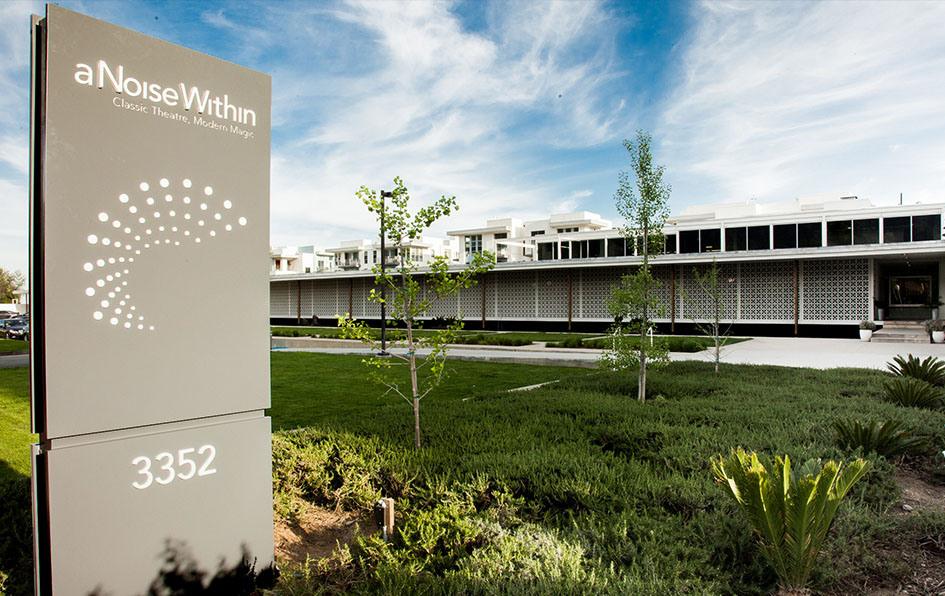
One of Shaw’s earlier plays, You Never Can Tell, provides much hilarity for Drama scholars and theatre enthusiasts alike as it is performed onstage at A Noise Within (ANW), starting March 6 through May 15, 2016.
Stephanie Shroyer, an Associate Professor of Theatre Practice and the Artistic Director at the USC School of Dramatic Arts, takes the helm for this production. She describes what’s in store for its audience, “I believe Shaw is telling us that life is hard and we should cherish every moment because, really, you never can tell what good will come our way. This is a wise, warm, and terrifically funny play – after all, what other play about love opens in a dentist’s office, with a practitioner who becomes the major love interest, pulling his first tooth without using anesthesia because it is an extra five-shilling charge?”
This is Shroyer’s first time to direct You Never Can Tell and she is thrilled. “I’m a big fan of Shaw – I love his wit and provocative thinking. I didn’t know this play intimately well but fell in love with it after reading it.
When we did a bit of research for the play, we found this to have been Shaw’s answer to some people’s request for material with popular appeal for the modern audiences of the late 19th century. While the characters are intellectualizing, it’s lighter in tone. I liken it to serving the play’s message with a spoonful of sugar,” Shroyer enthuses.
Shroyer also imagines some of the characters in this play are what one would expect to see from Commedia dell’arte stock characters, “I want to have the circumstances in the material performed to their fullest – the actors will use overemphasized hand movements and gestures to show the exaggerated points Shaw is making intellectually.”
Longtime ANW company performer, Deborah Strang, who plays Mrs.Clandon, articulates everyone’s sentiment that staging You Never Can Tell is an enjoyable experience, “I loved working with Stephanie when she directed Blood Wedding during ANW’s very early years, and I still enjoy collaborating with her to this day. She is a visual artist and her training as a dancer shows when she asks us to do something that comes from another world, in a way. But eventually we get that her approach is left brain-right brain. And she makes us all laugh. We have way too much fun in rehearsal there must be something wrong. I’m sure it will all fall apart sometime.”
Unlike her director, Strang isn’t particularly the playwright’s fan. She confesses, “In a way Shaw is too smart for me; he’s very much an intellectual. I’m a little stupider than he – I constantly feel like he’s two beats ahead of me. But this piece might have changed my mind and I might have to reread him from this new angle. his play and the people in it are so delightful. Whereas a lot of his work deals with ideas, this one is more about the characters. It’s almost like Oscar Wilde’s The Importance of Being Earnest without the irony. It’s a comedy, it’s fresh and delightful. Every single character is lovable and charming.”
You Never Can Tell is set in a seaside town and follows the story of Mrs. Clandon and her three children – Dolly, Phillip and Gloria – as they return to England after an 18-year stay in Madeira. Mrs. Clandon, a woman whose sensibilities are caught between the tug of restrained Victorian manners and the modern ways, raised her children on her own and never told them their father’s identity. Through a comedy of errors, however, they end up inviting him to a family lunch. Meanwhile, a dentist named Valentine has fallen in love with the eldest daughter, Gloria. But Gloria deems herself a modern woman and declares to have no interest in love or marriage. The play goes about with various scenarios of confused identities, with the wisdom coming from a sage waiter who dispenses it with the phrase “You Never Can Tell”.
This play performs in repertory with Shakespeare’s Romeo and Juliet and Luigi Pirandello’s Six Characters in Search of an Author. Elliott says of You Never Can Tell, “As Romeo and Juliet shows an aspect of love, George Bernard Shaw shows us love – and heartbreak – in an entirely different, bright and very funny way. This early play of his, before Shavian became an adjective, gives us a chance to take great delight in his outrageous situations and voice with a kind of unique wordsmithing that allows us to bathe in his glorious use of English.”
Shaw’s imposing body of work that we find irresistible to read or watch on stage – from acerbic satire to historical allegory – clearly exhibits why his plays endure to this day.
 A San Gabriel Valley Inquirer