Originally published on 11 February 2016 in the Pasadena Independent, Arcadia Weekly, Monrovia Weekly, and Sierra Madre Weekly
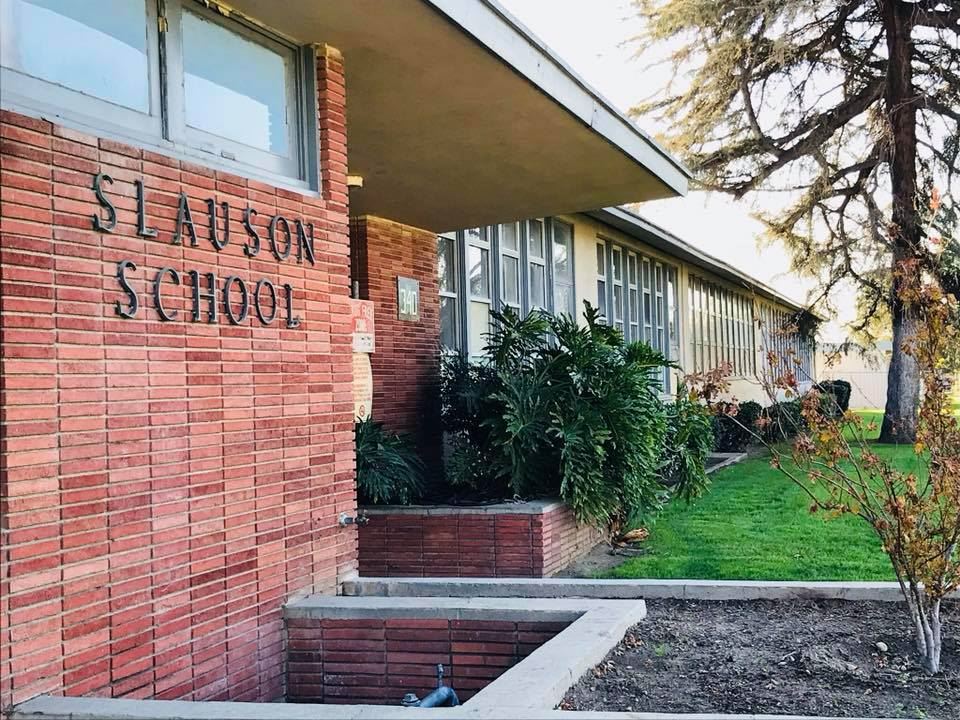
Young students are predictably impressionable creatures who emulate the teachers they admire. And if that were true for middle schoolers at Slauson Middle School in Azusa, they would have the perfect teacher after whom to model themselves in Donna Hawkins.
Hawkins, who has been teaching science for 16 years, has recently been selected as one of 25 educators across the country to be the first participants in Northrop Grumman Foundation’s STEM Professional Development Program. This Teachers Academy is a joint collaboration between the National Science Teachers Association and Northrop Grumman Foundation which aims to elevate STEM education in middle schools in the districts located in Northrop Grumman communities.
This is Hawkins’ third year teaching STEM and has found the experience both stimulating and daunting. Project Lead the Way, an organization that offers training and collaboration for STEM teachers, has helped her immensely. Last summer, she took two classes at Cal Poly Pomona – Flight in Space and Designer Modelling.
“Frankly, I’m slightly terrified. While this is an exciting opportunity, it also is a big commitment. But my children are grown so I have the time to dedicate to STEM training and teaching. STEM education is such an important part of students’ learning and future.”
The 25 science educators taking part in this Teacher Academy will be attending the 2016 National Conference on Science in Education in Tennessee. During the summer they will participate in a five-day workshop at a Northrop Grumman facility to discuss strategies on how to effectively integrate engineering design work in their classroom. They will go through a two-week immersive externship at a Northrop Grumman facility where they will be partnered with an engineer or technologist to observe and experience STEM skills in action. What they take away from these activities will serve as their guide when they develop classroom projects with real-world applications.
Hawkins teaches Physical Science and STEM in 8th grade. This year she started a 6th grade STEM class where, she says, there are more girls than boys. She would like to see girls develop a passion for science.
“That’s what I like about teaching – being able to encourage students to take a real interest in science, technology, engineering and math. I try to make the subject as engaging and real-world as possible. I’ve recently started teaching knitting to make them work with their hands. And there’s some physics involved in that activity even if they’re not thinking it,” Mrs. Hawkins relates.
Throughout her years teaching science, Hawkins has observed, “They either love it or they hate it. STEM is not a required subject and I make them apply for a place in my class. I want to see the students, who really love it, attend my class. With the Common Core in place, I no longer teach to the test. I can slow down a little bit to show my students how science applies to everyday things. We recently learned about mixtures and we broke them down to their basic components. It is such a joy when students’ eyes light up as they absorb what I’m telling them.”
Hawkins has always been interested in science. She relates the winded path that led her to where she is. “I started out at Cal Poly as a pre-med student and took Biology and Chemistry but I switched to Food Science and Nutrition. I thought of becoming a dietitian but it required more schooling, which I really didn’t want to do.
“After graduation, I took a job in quality control at a soup manufacturing firm. Then I worked for ten years at Miller Brewing Company. I loved working there but I didn’t want to do it my entire life – I just couldn’t see myself doing that forever.
“So I quit; my kids were small and I decided to spend some time as a stay-at-home mom. One day I was volunteering in my daughter’s kindergarten class and I helped a little boy write a story. That was my Aha! moment – I want to do this; I want to be a teacher,” Mrs. Hawkins concludes.
Hawkins says she didn’t intend to teach science at first. She went back to school to earn a multi-subject credential and taught 2nd grade. After a year she found she didn’t like it and struggled with the realization that teaching may not be right for her. Nevertheless, she took some science supplemental classes at Mt. San Antonio College at night and then started subbing at Azusa Unified School District. She taught 8th grade science and enjoyed it.
Watching Hawkins today, one would be left with absolutely no doubt that she loves what she does. Recently, she taught her students how to use computer-aided design (CAD) using Autodesk Inventor, a program used by drafters, engineers and architects. By the end of the course, her students will know how to digitally create their own playground equipment.
If science could be this much fun, Azusa students will be breaking the door down to get into Hawkins’ class!
 A San Gabriel Valley Inquirer